
May 20, 2026 - Three seperate whale encounters in one trip!
Two boats left the harbour this morning, battling against the currents to make their way through Dodd Narrows and into the calmer waters of the Southern Gulf Islands, in search of whales. As the ride got smoother, guests soaked up the sunshine whilst enjoying the spectacular scenery which makes this area a favourite amongst both staff and guests alike. At Porlier Pass, the influx of water from the Strait of Georgia had created a fascinating phenomenon known as a halocline. This boundary, formed by a shift in salinity, was visible as a dramatic colour change today.
After continuing as far south as Mayne Island, eagerly scanning as we went, we finally spotted a blow! This big, bushy breath belonged to a Humpback Whale. As the whale travelled alongside us, they lifted their tail and revealed their identity as BCY0458 calf 2024. This youngster will have recently made the long journey from Hawaii to spend their summer here feeding in the nutrient-rich waters of BC. Today, however, this whale appeared to have somewhere to be and travelled swiftly north, seemingly undeterred by the vessel traffic within the area. After a cartwheel goodbye, we left them to their travels and continued our search.
Whilst making our way north, a guest spotted movement along the shoreline of Galiano Island. Our boat slowed and guests waited with anticipation before the towering dorsal fin of a male orca broke the surface, causing a flurry of excitement. At first, there appeared to be two orcas travelling alongside each other, but in the distance more fins began to appear and the on-board Naturalist got to work identifying the whales. With seven whales present, from three different matrilines, we had stumbled upon a T-party!
T087 Harbeson ♂ (~1962)
T101 Reef ♀ (≤1969)
T101A Rush ♂ (1993)
T101B Lagoon ♂ (1997)
T124A Kittiwake ♀ (1984)
T124A6 Kasuun ♂ (2016)
T124A7 Kite ♀ (2021)
The composition of this group offered a great opportunity to see the physical differences between male and female orcas across a range of ages. Adult females weigh in the region of 8,000lb, and their dorsal fins stand at around three feet tall, whereas their male counterparts reach around 12,000lb and their dorsal fins can stand at over 6 feet tall. These physical differences don’t become apparent, however, until the orcas go through puberty, typically between the ages of 12 and 15. Ten year old Kasuun has a lot of growing to do before he catches up in size to the three adult males he was travelling with today, Harbeson, Rush and Lagoon.
Harbeson is believed to be approximately 64 years old, making him the oldest known Transient Killer Whale in the entire population. Matriarch Reef isn’t far behind him at 57 years old or older. Transient Killer Whales often travel in matrilines. Sons typically stay close to mom for their entire lives, while daughters disperse once they have a calf or two of their own to form their own matriline. Having outlived his mom, Harbeson is what we call a ‘lone male’. He can be seen travelling solo around the Salish Sea, but also spends time exploring alongside other lone males, matrilines, or as in today’s case, tagging along with T-Parties. These encounters offer us insight into the complex social dynamics at play within the Transient population. Getting a small glimpse into the vast lives of these whales is always such an honour. In the flat calm waters, our boats glided alongside the whales, and guests fell silent as they listened to the powerful breaths when each whale surfaced. Filled with adrenaline, it was time to leave the whales and decompress on the journey back towards Nanaimo.
The whales, however, had other ideas. As we passed Round Island, more orcas popped up in front of us! This group of four break the traditional association patterns, making them a little trickier to identify. After closer examination, we were able to confirm them as:
T086A1 Nahanni ♀ (~2001)
T086A1B Denali ♂ (2023)
T086A3 Tyndall ♀ (2011)
T100E Tharaya ♀ (2009)
Despite their moms still being around, Tyndall and Tharaya usually travel separately. On this occasion, they had both met up with Tyndall’s older sister, Nahanni. We trailed behind the whales, allowing them space to pass through Dodd Narrows, where people excitedly watched them from land. With only around 70 feet of water separating Vancouver Island from Mudge Island, this area provides a unique opportunity to get incredibly close to the whales from shore. We’re often asked for recommendations on where to watch whales from land, and this is one of our top suggestions. The Cable Bay Trail winds its way down to the oceanfront, and on lucky days like today, you might catch sight of orcas swimming by. Having almost been led home by the whales, our boats swung back into Nanaimo Harbour, concluding a successful tour.
Please enjoy the photographs below taken by Marine Naturalists Hayleigh Hilbert and Jordan Robinson throughout today's trip.
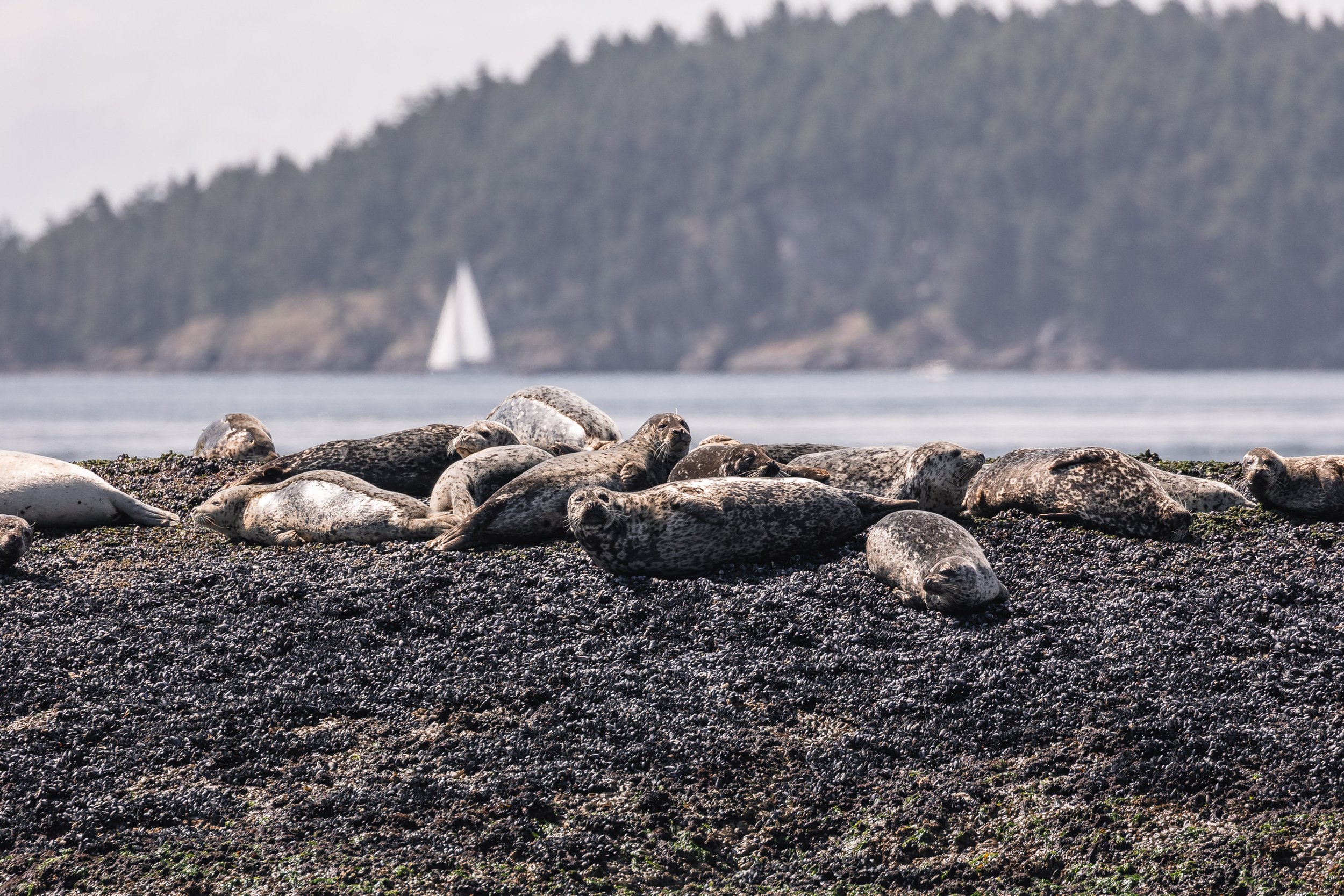
How many Harbour Seals do you see? Photo by Hayleigh Hilbert.
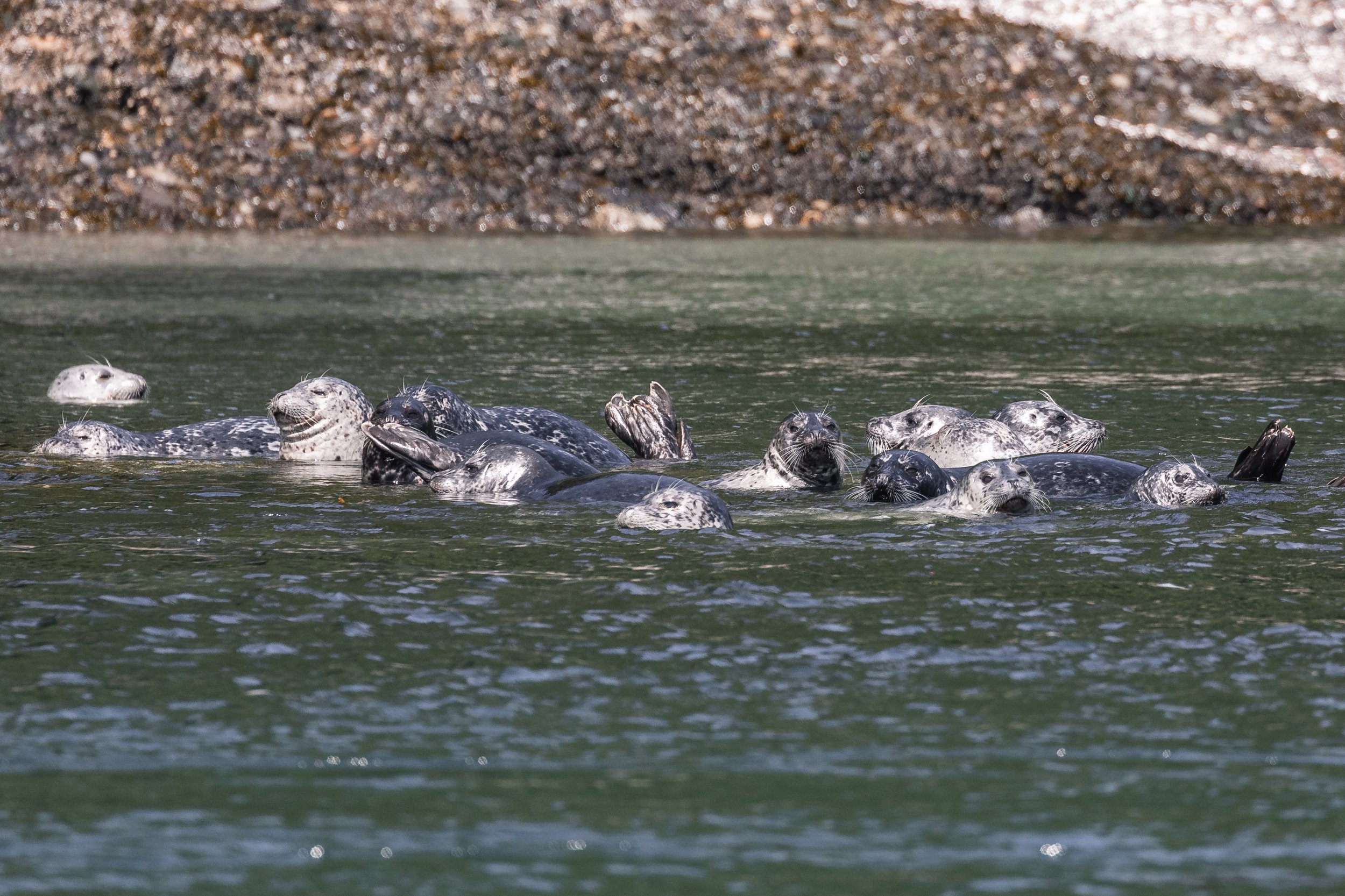
Harbour Seals have extremely sensitive whiskers that can help them detect the movement of prey in the water. Photo by Hayleigh Hilbert.
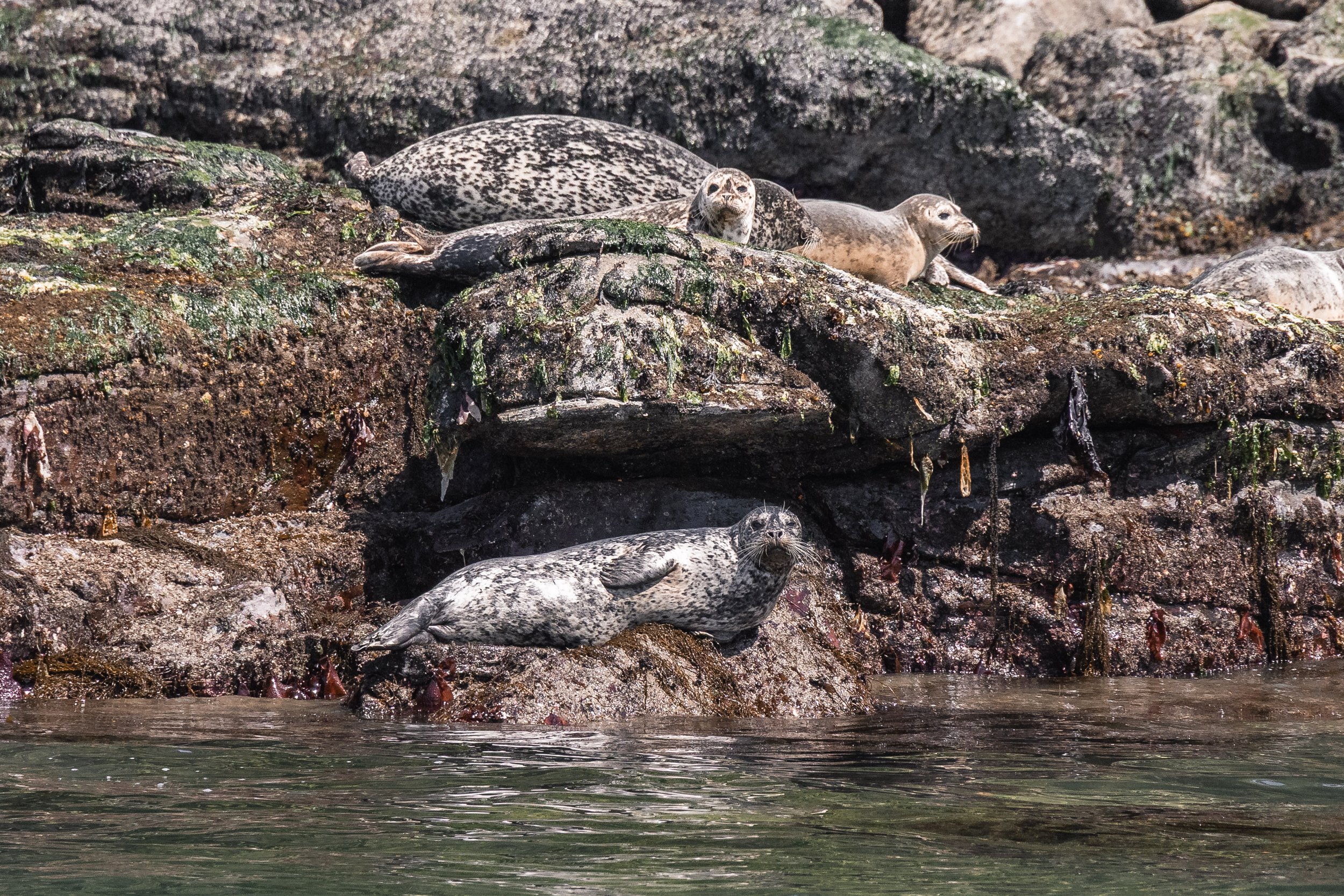
Harbour Seals fur is speckled making them well camoflauged against the rocks. Photo by Jordan Robinson.
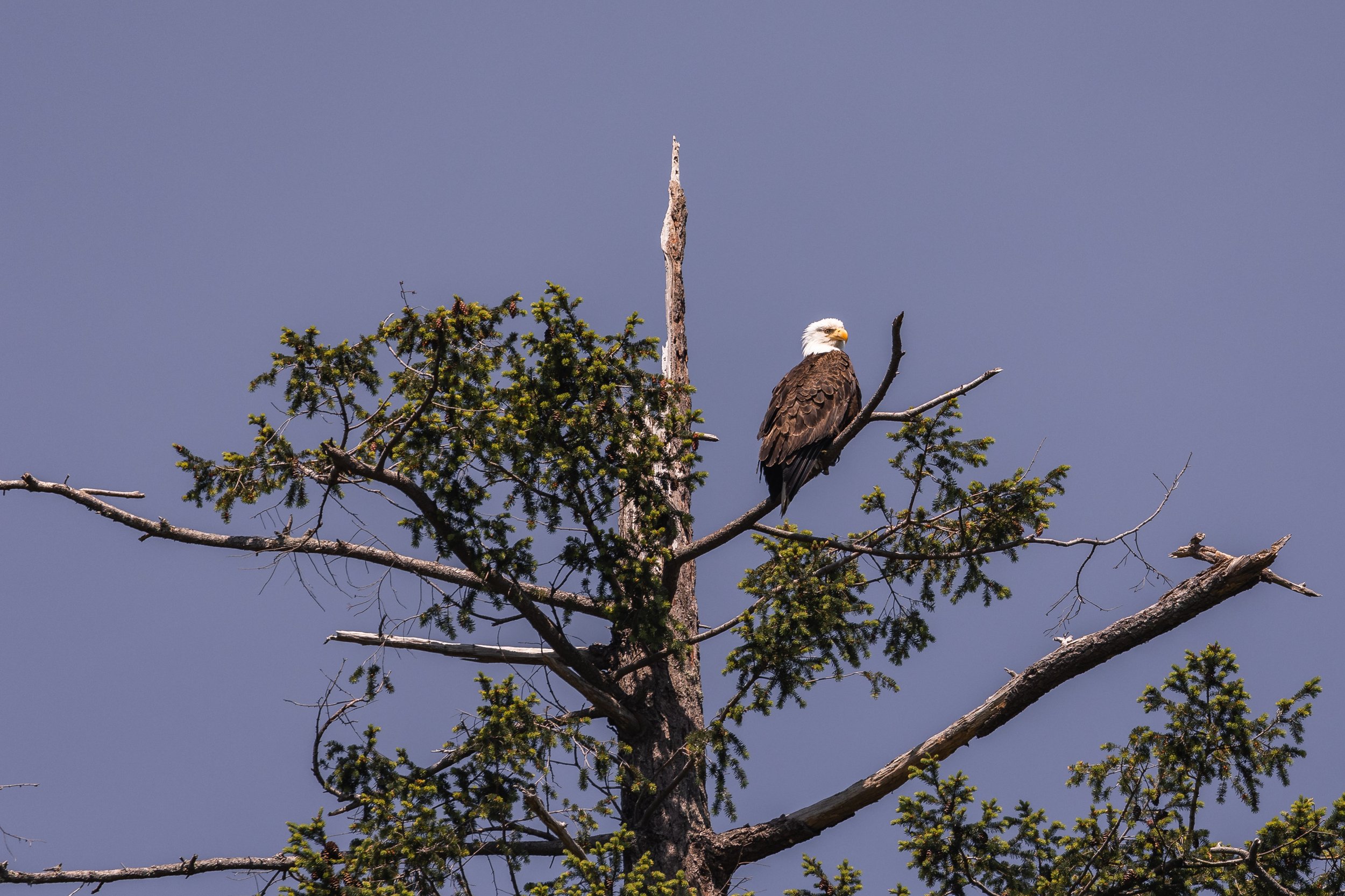
A Bald Eagle surveying the area from the tree top. Photo by Hayleigh Hilbert.
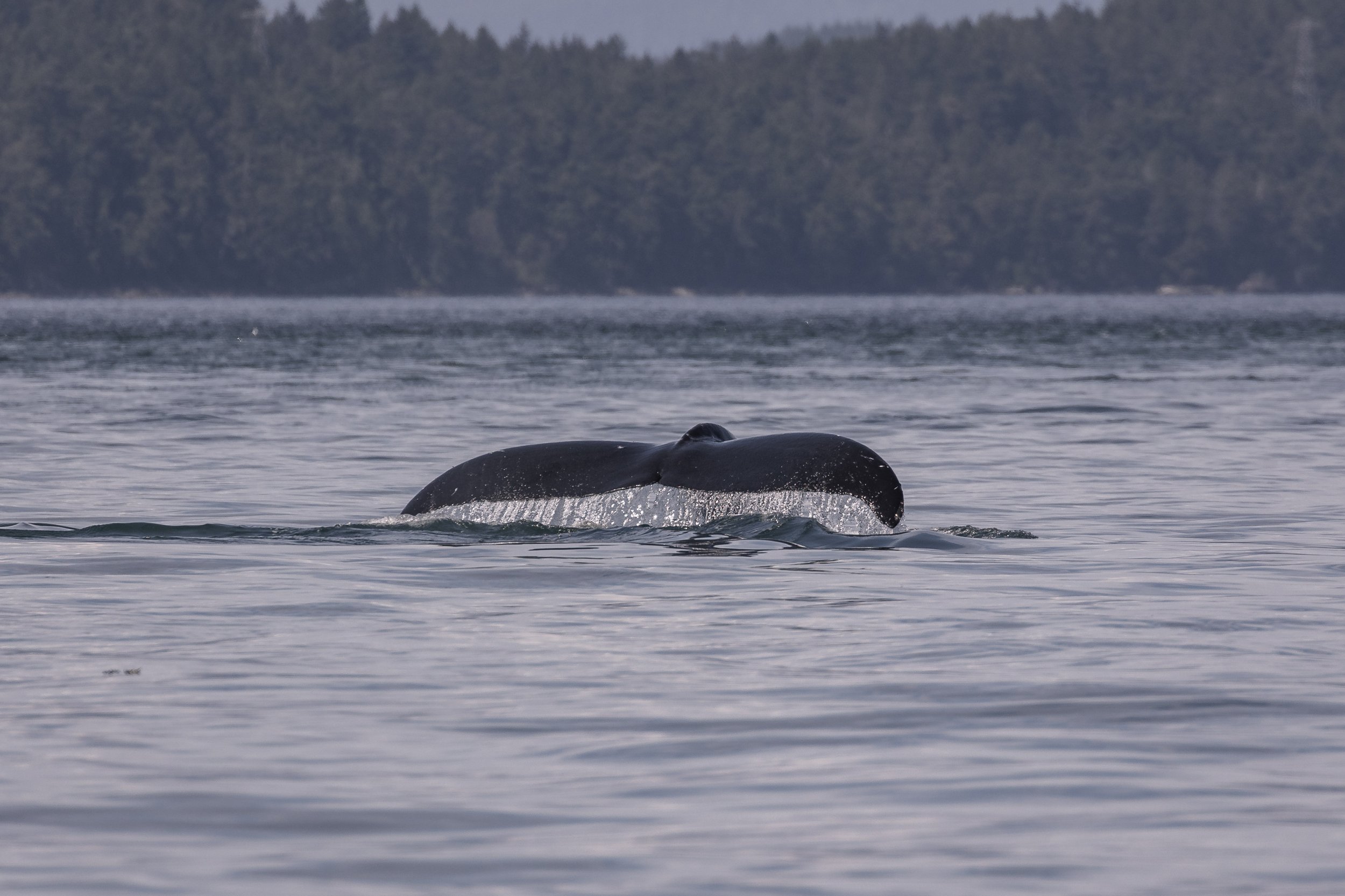
A fluke waterfall from Raptor’s 2024 calf. Photo by Hayleigh Hilbert.
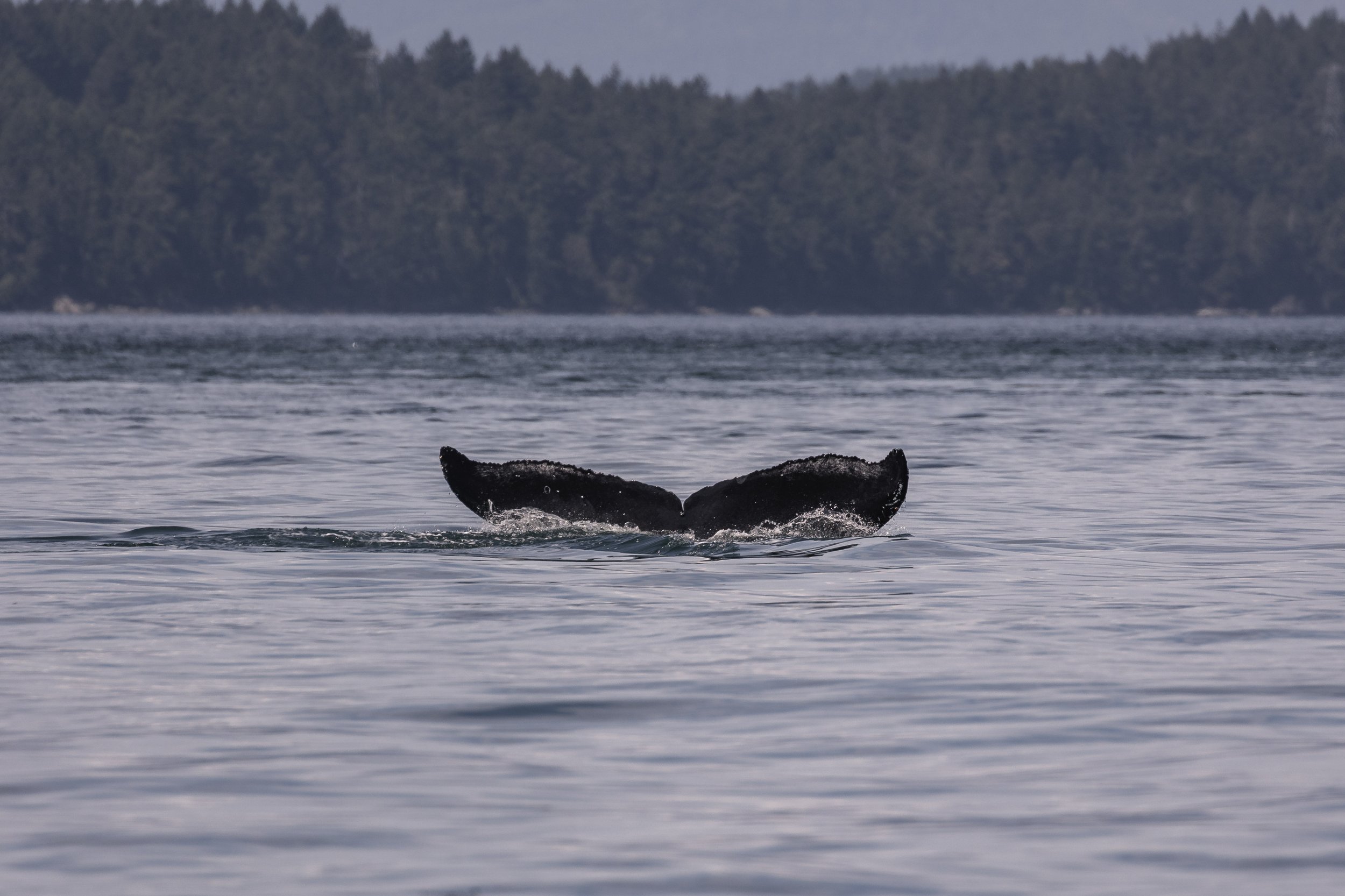
The underside of a Humpback Whale’s tail has unique markings that help us identify them. Photo by Hayleigh Hilbert.
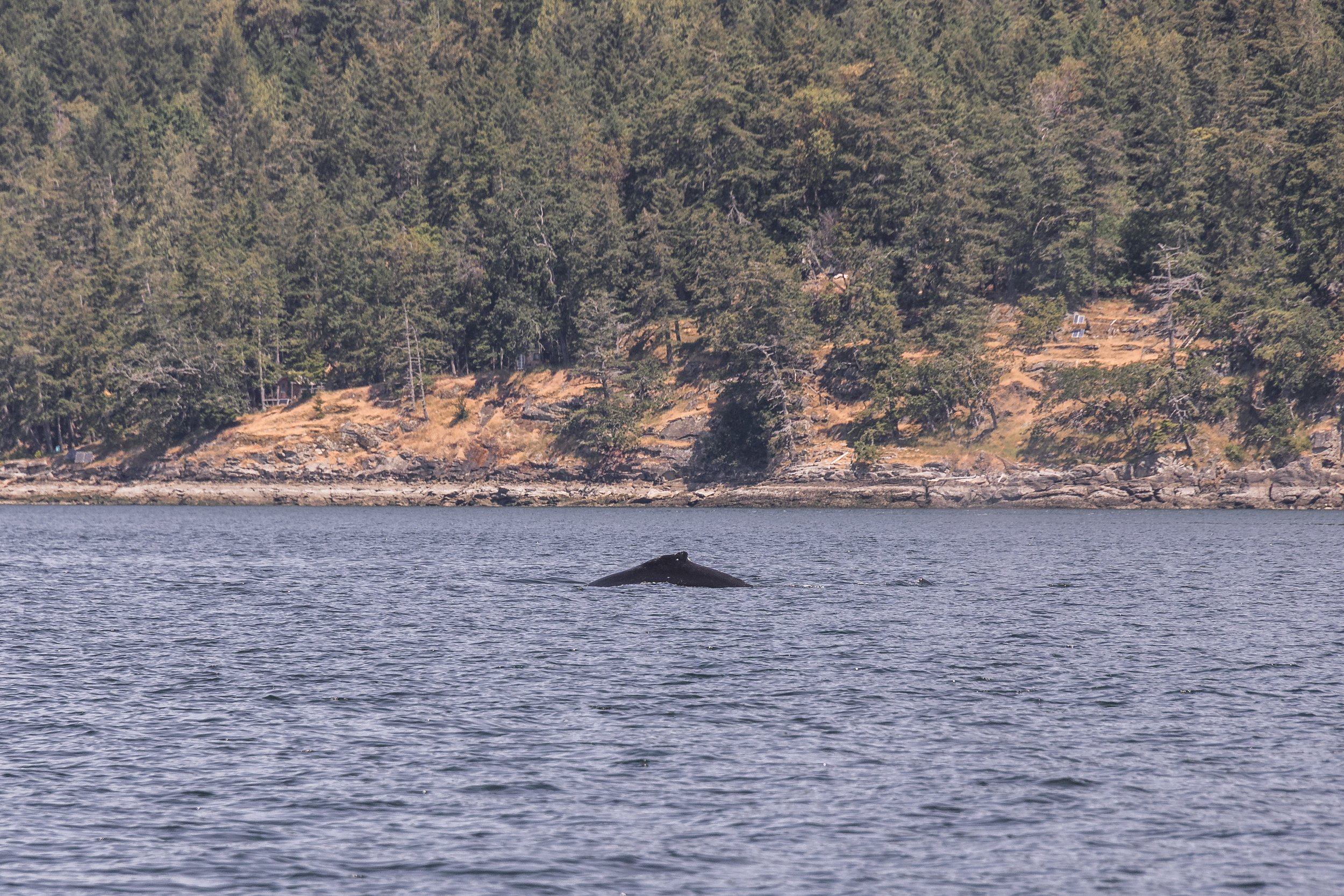
The dorsal fin of our young whale close to the shoreline. Photo by Jordan Robinson.
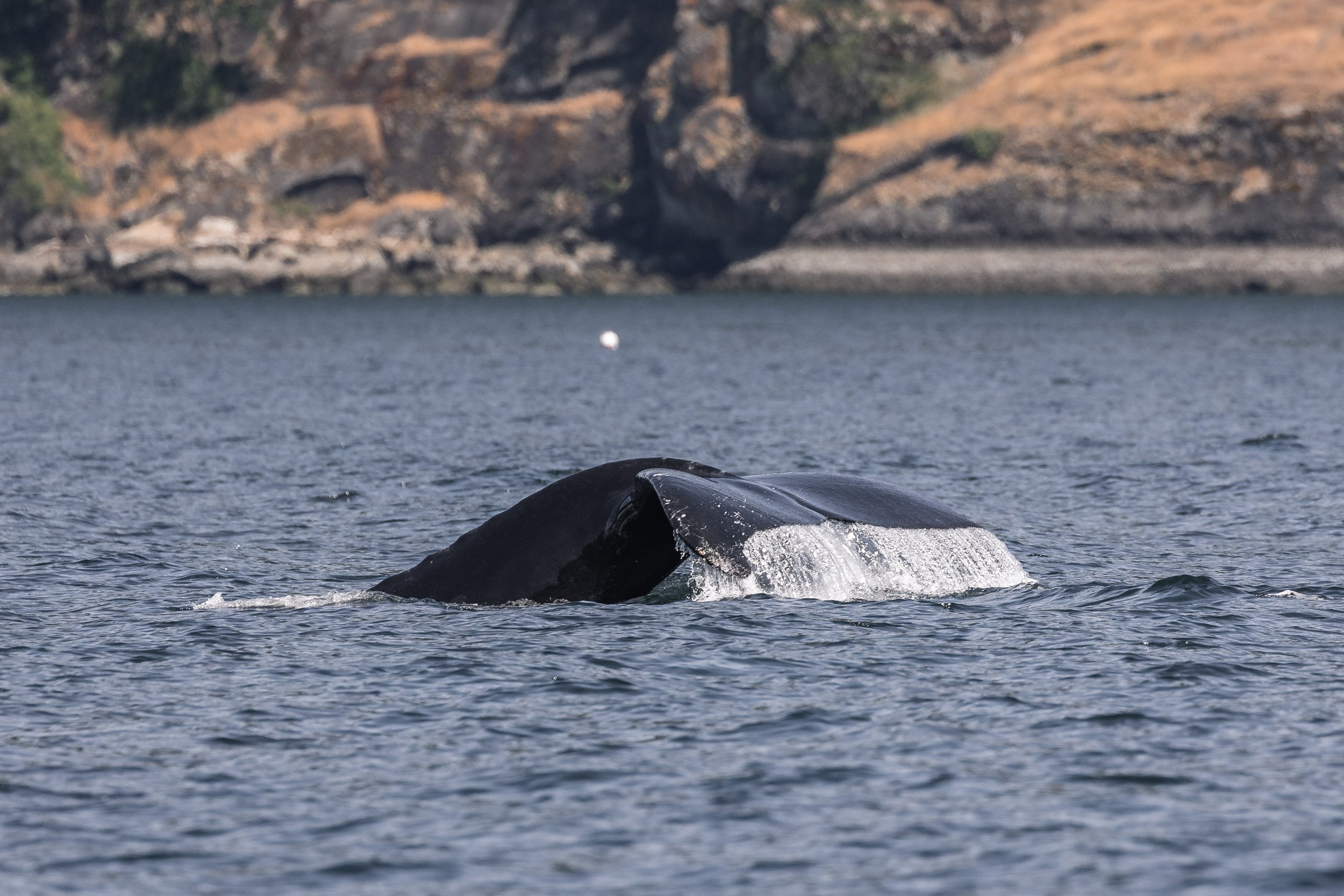
A side on view as our humpback headed down for a dive. Photo by Hayleigh Hilbert.
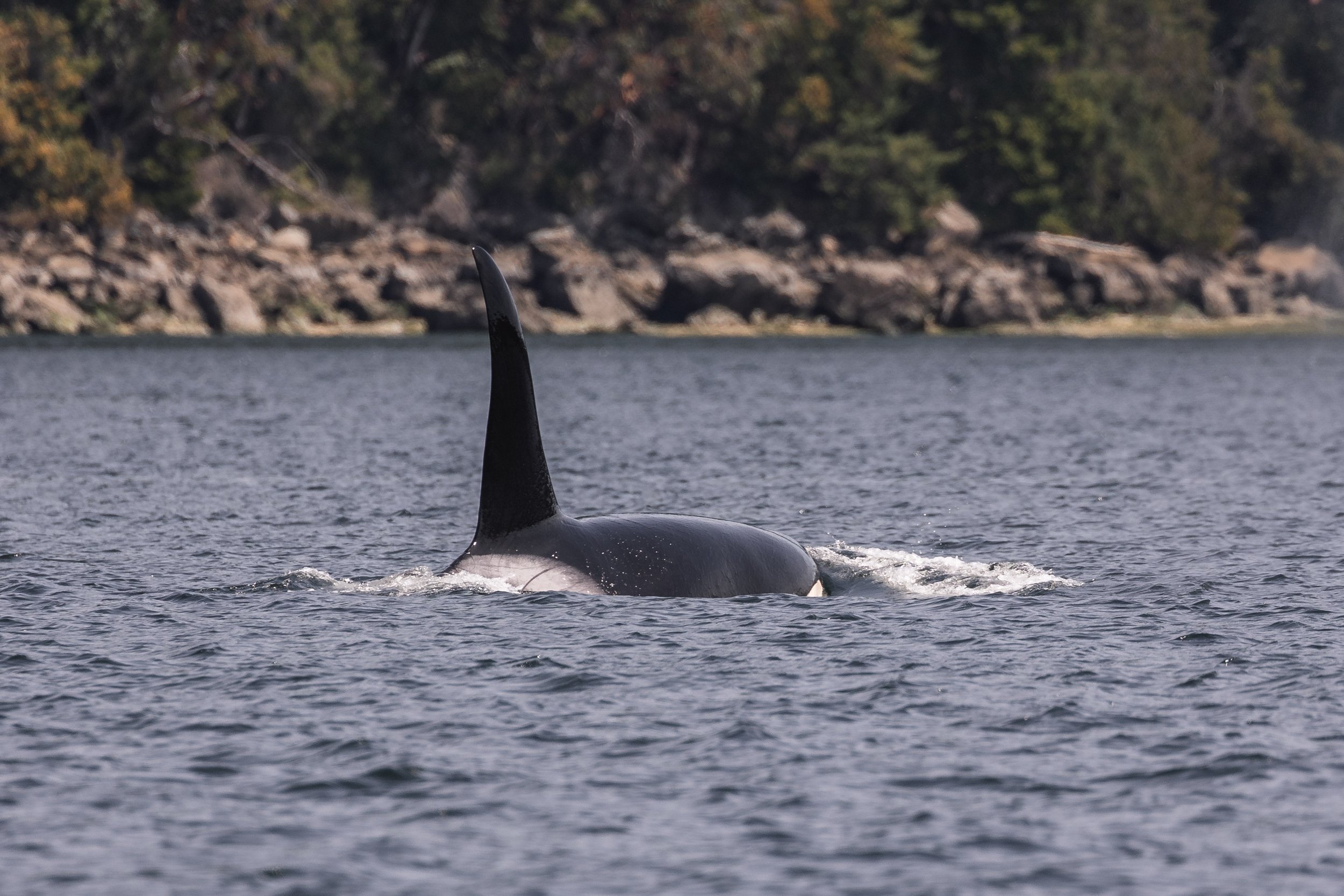
An interesting angle of T101A Rush. We can use the markings on the saddle patch to identify him. Photo by Hayleigh Hilbert.
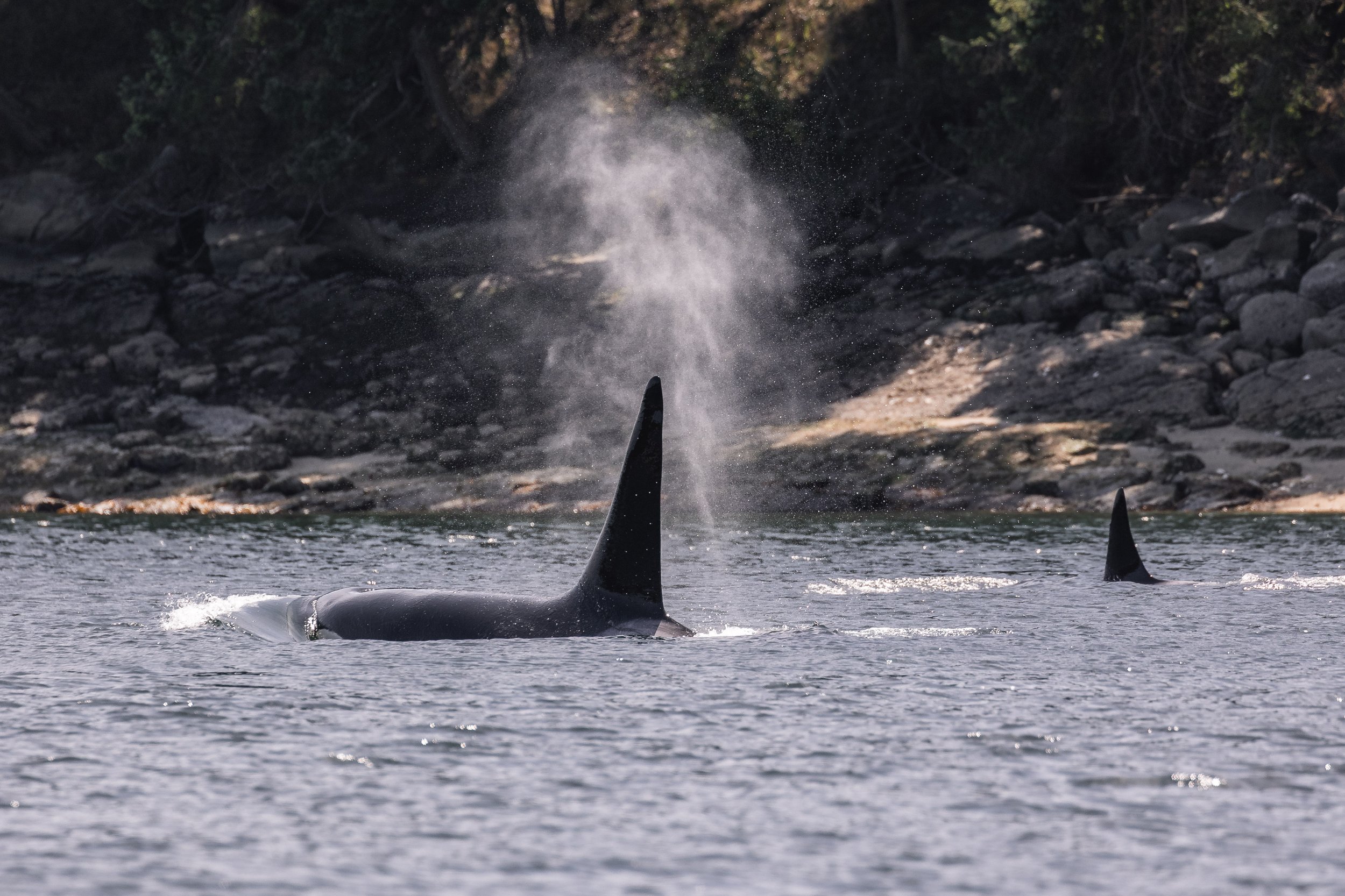
T101B Lagoon travelling beside mom, T101 Reef. Photo by Hayleigh Hilbert.
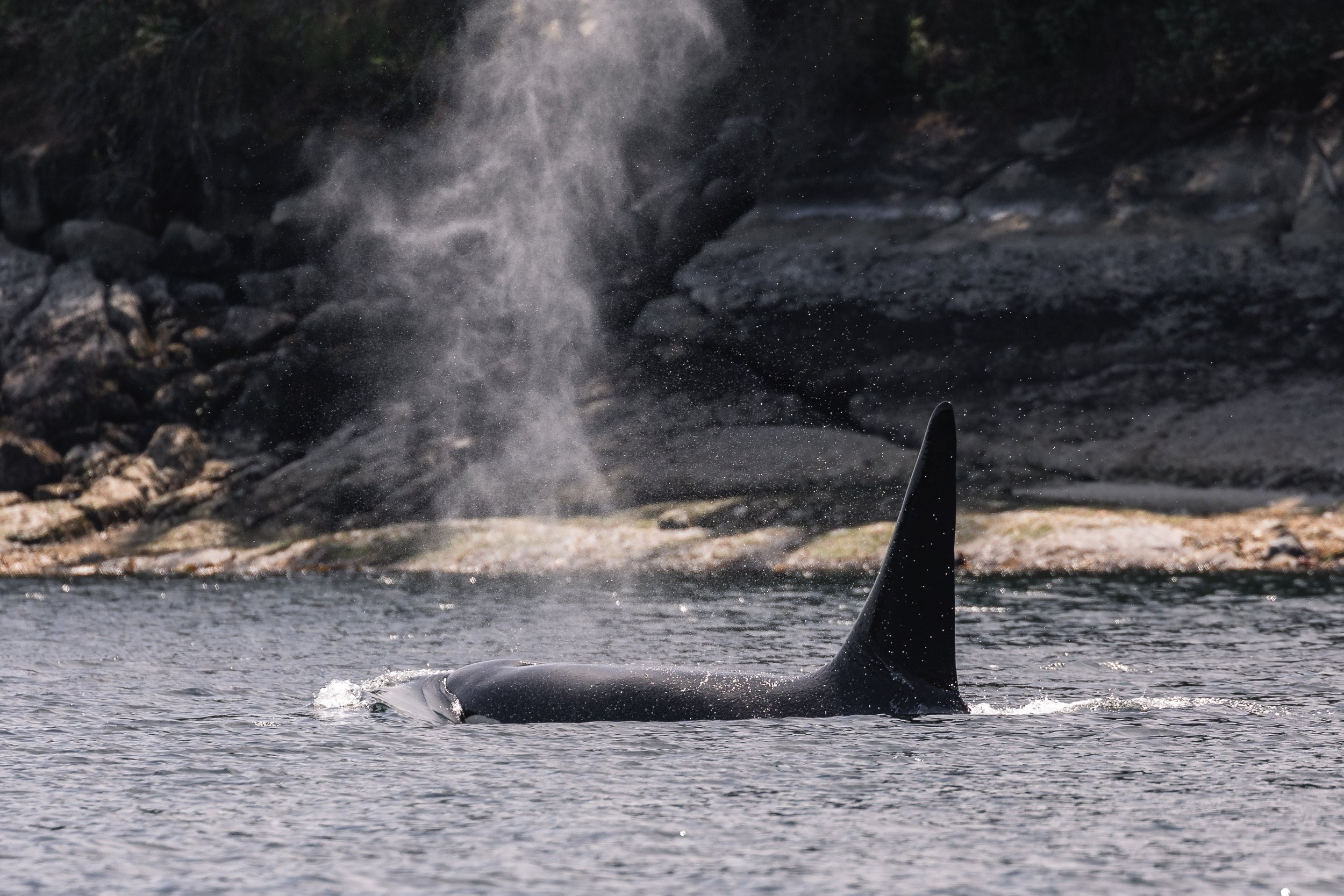
T101B Lagoon providing a beautiful backlit blow. Photo by Hayleigh Hilbert.
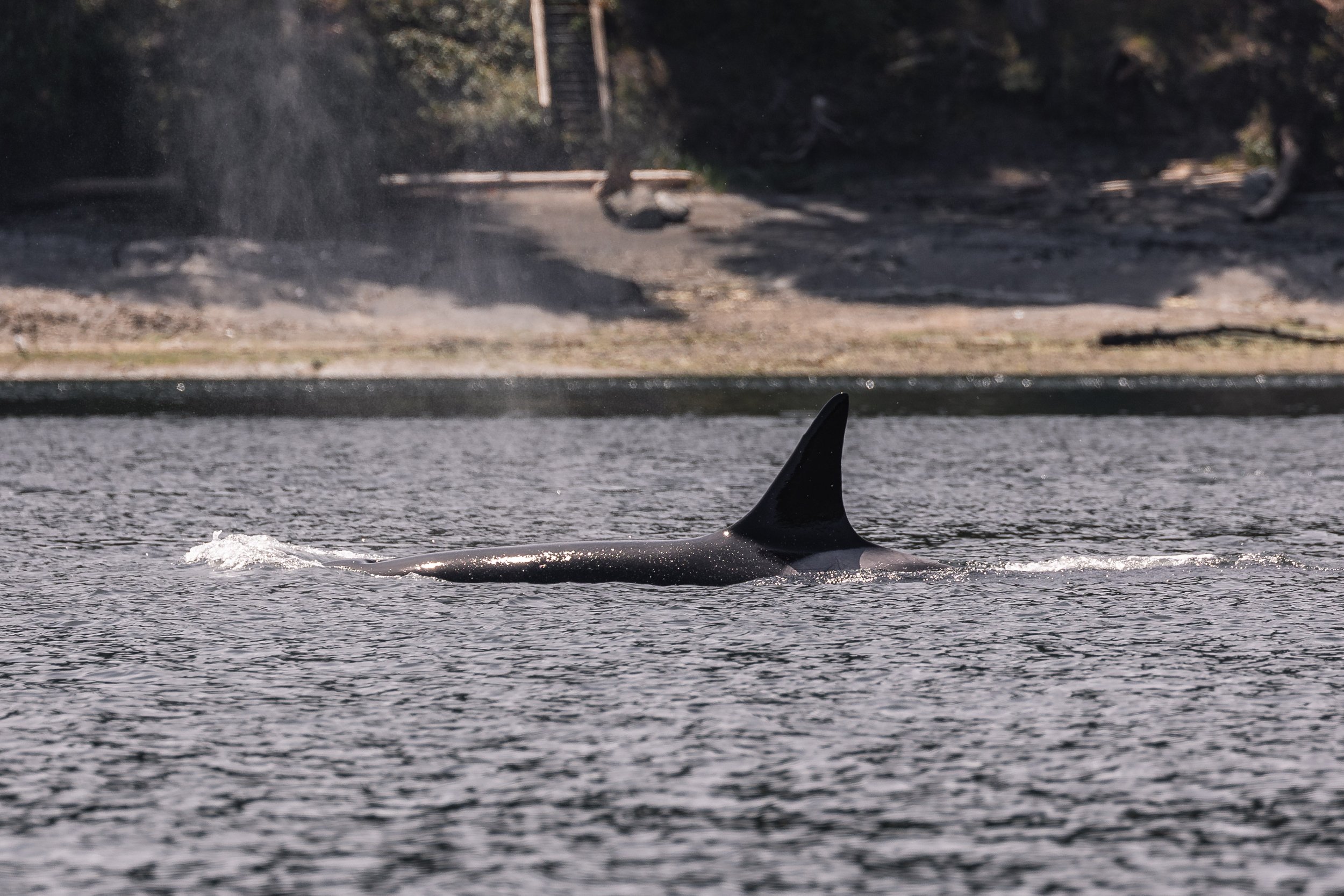
T101 Reef. Photo by Hayleigh Hilbert.
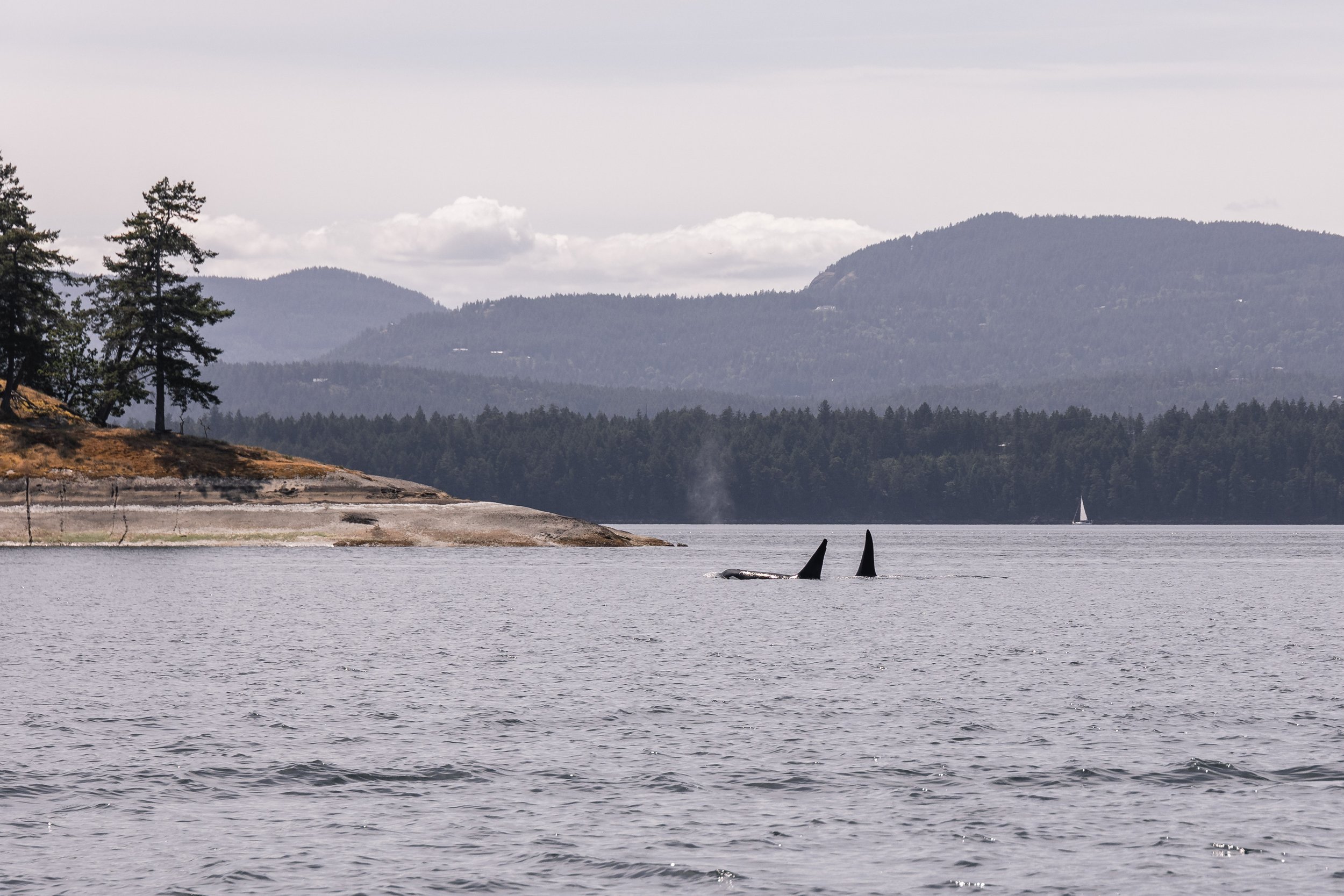
T087 Harbeson and T101A Rush were hanging out closely. Photo by Jordan Robinson.
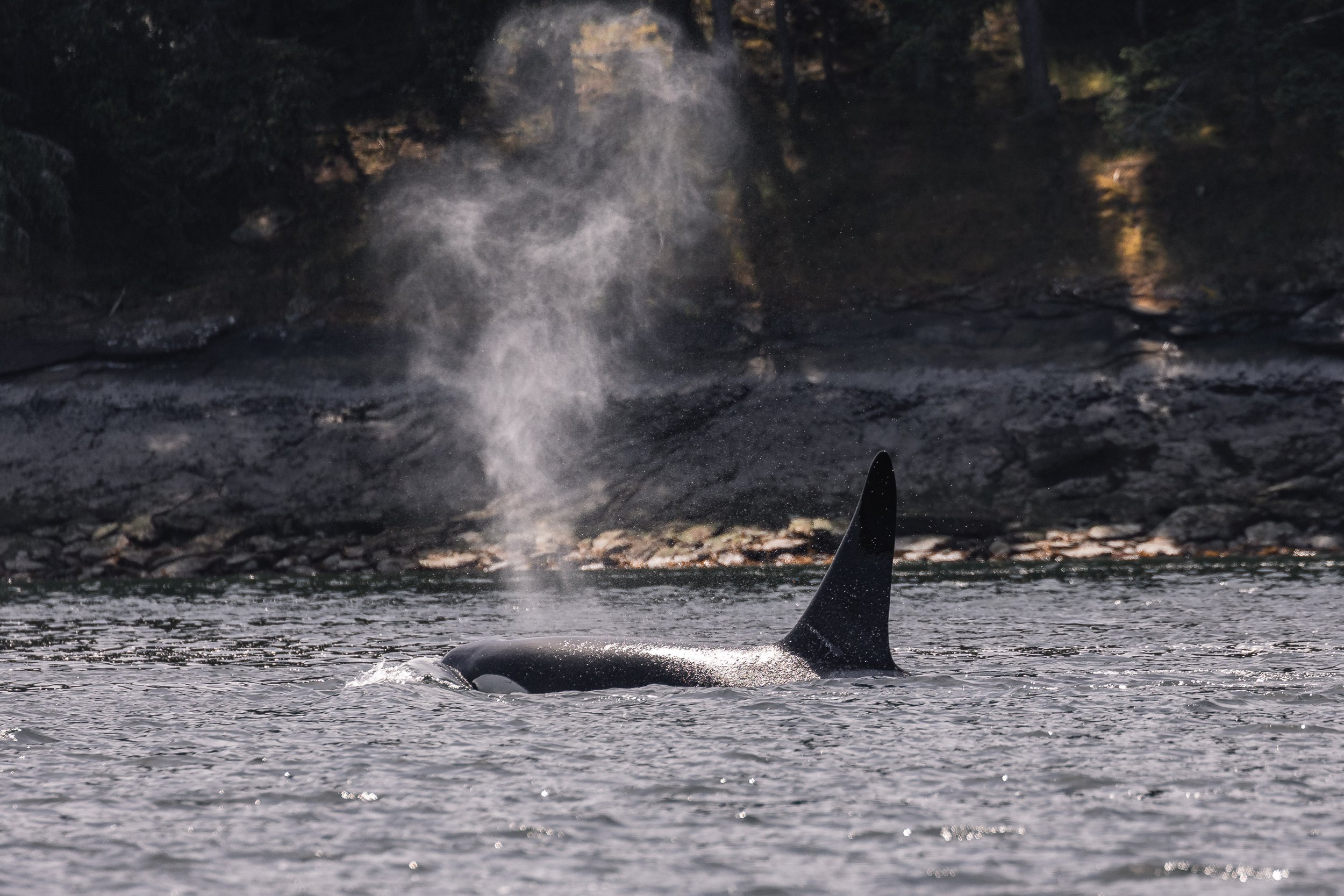
T101A Rush has a freckle in his eyepatch which helps identify him. Photo by Hayleigh Hilbert.
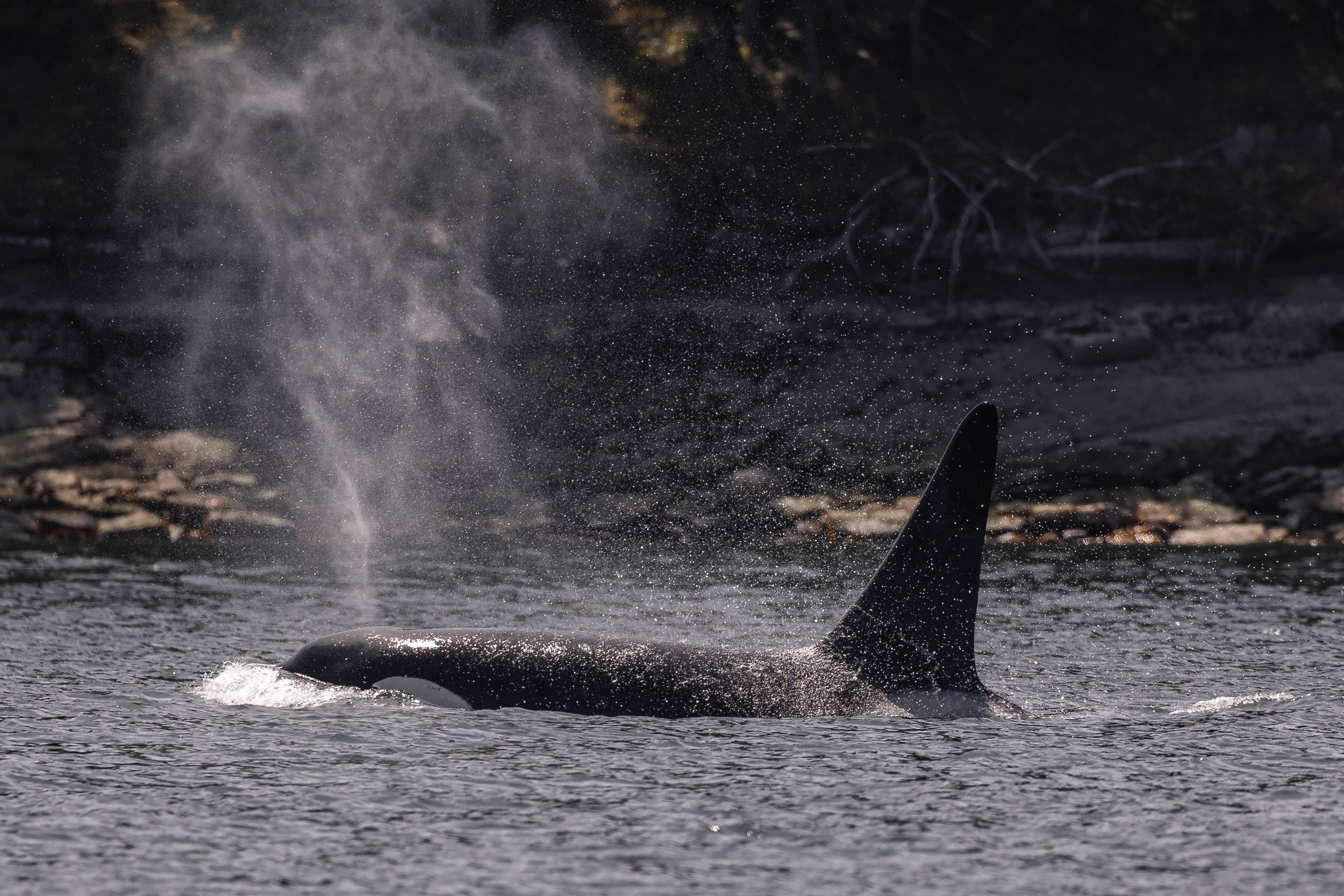
T101A Rush coming up for air. Photo by Hayleigh Hilbert.
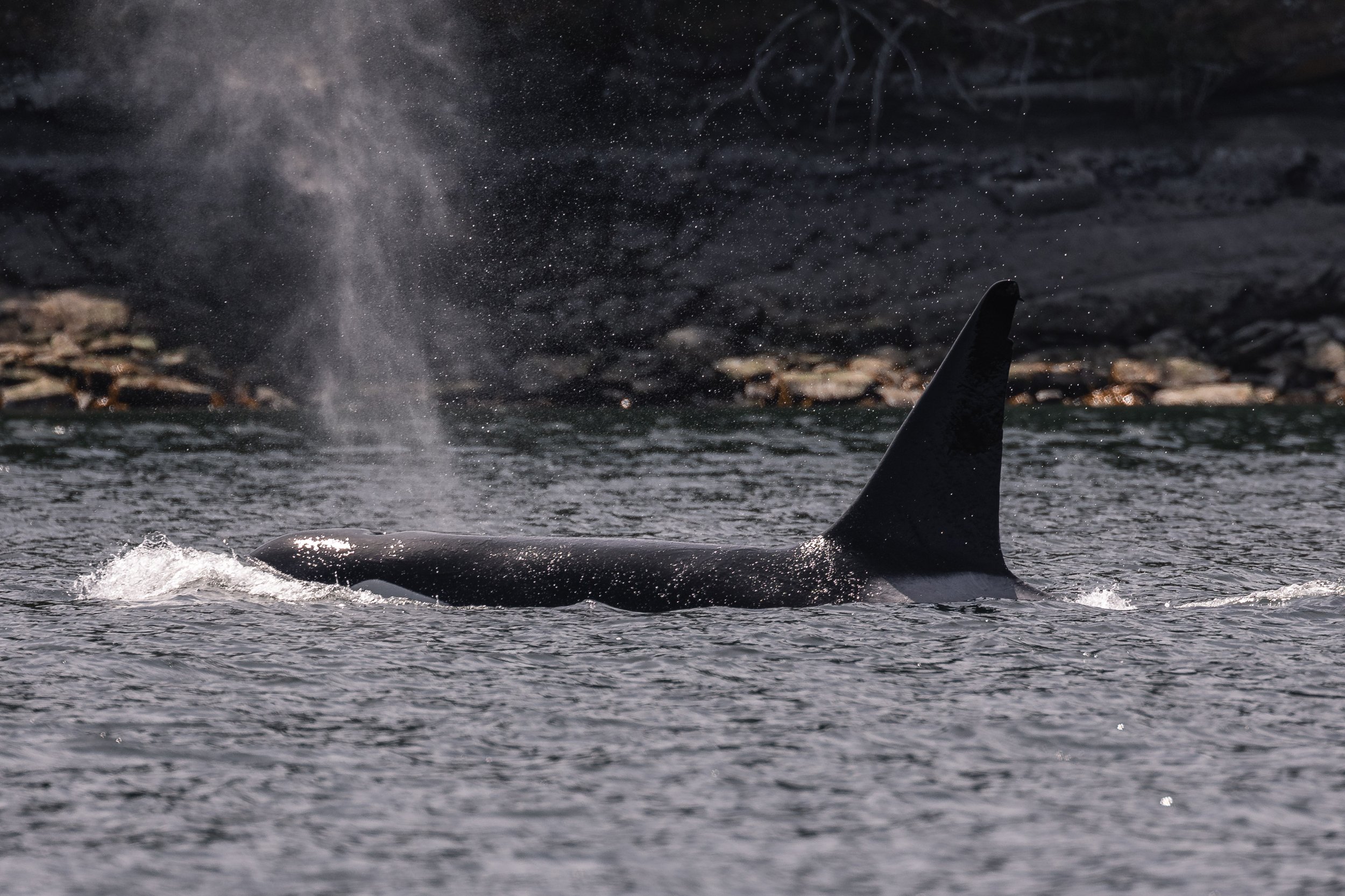
Old man Harbeson, T087. Photo by Hayleigh Hilbert.
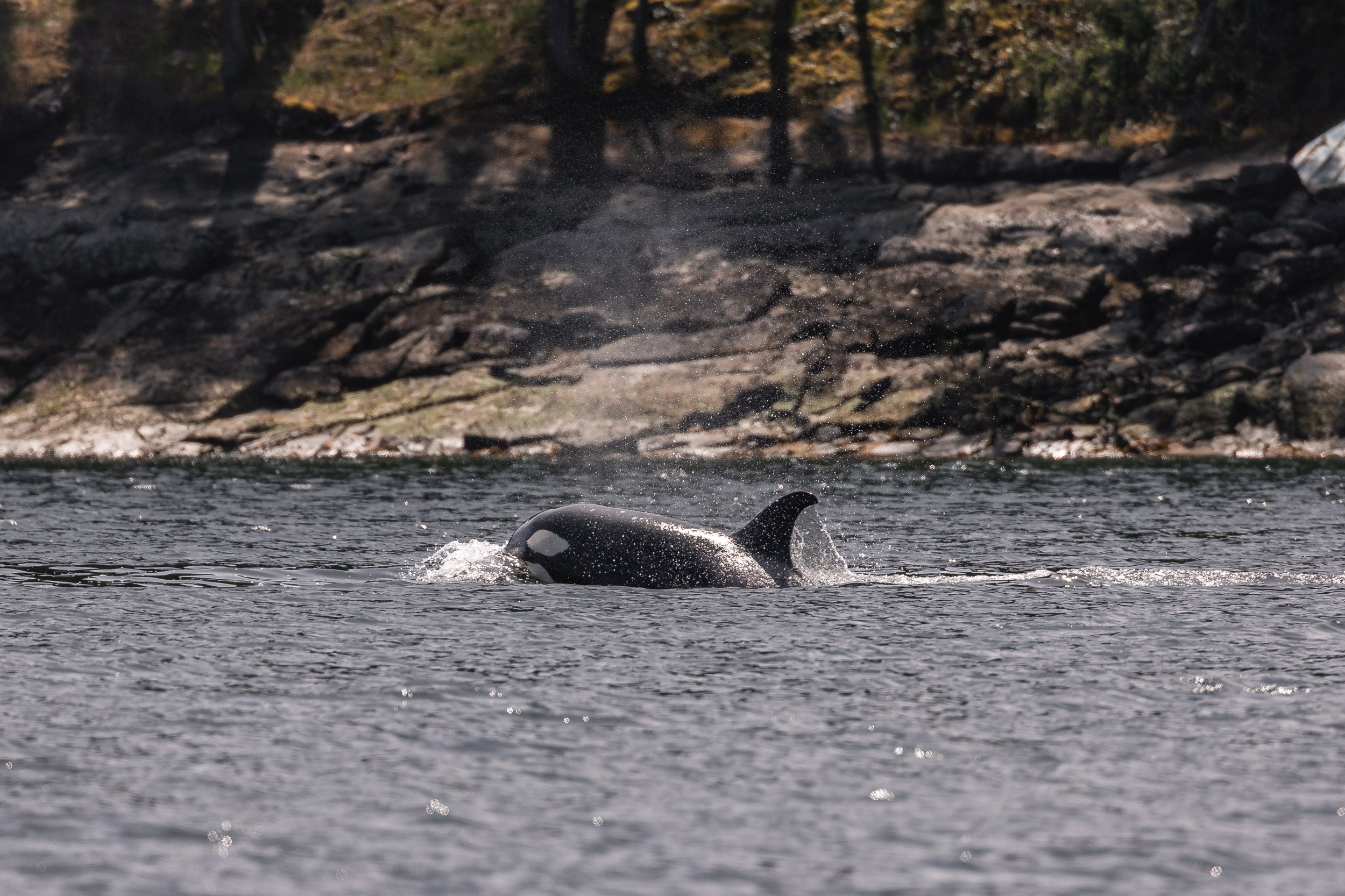
The youngest whale of the group, T124A7 Kite. Photo by Hayleigh Hilbert.
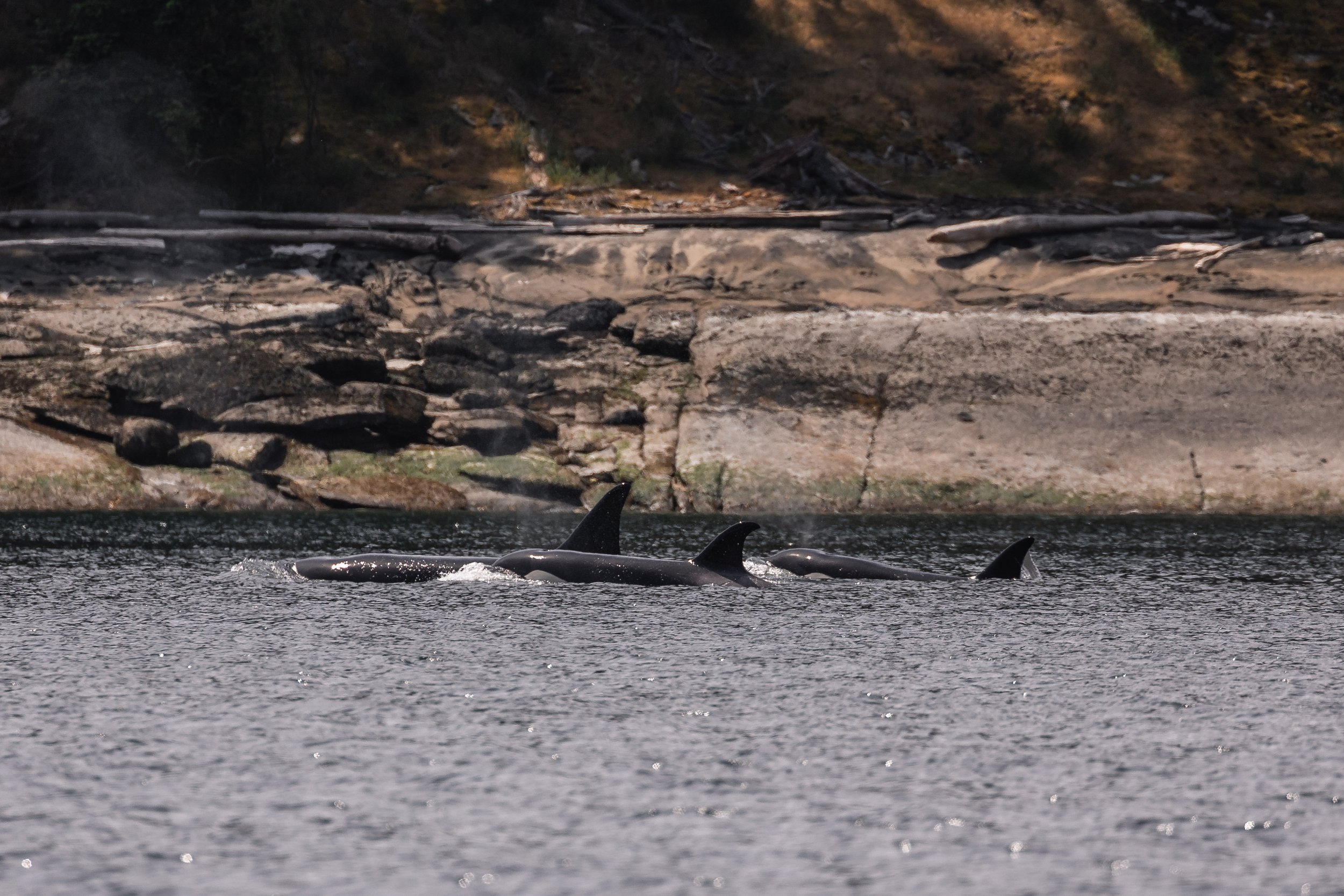
The T124A family travelling together with matriarch T124A Kittiwake leading on the left of the image, T124A7 Kite in the middle and T124A6 Kasuun on the right. Photo by Hayleigh Hilbert.
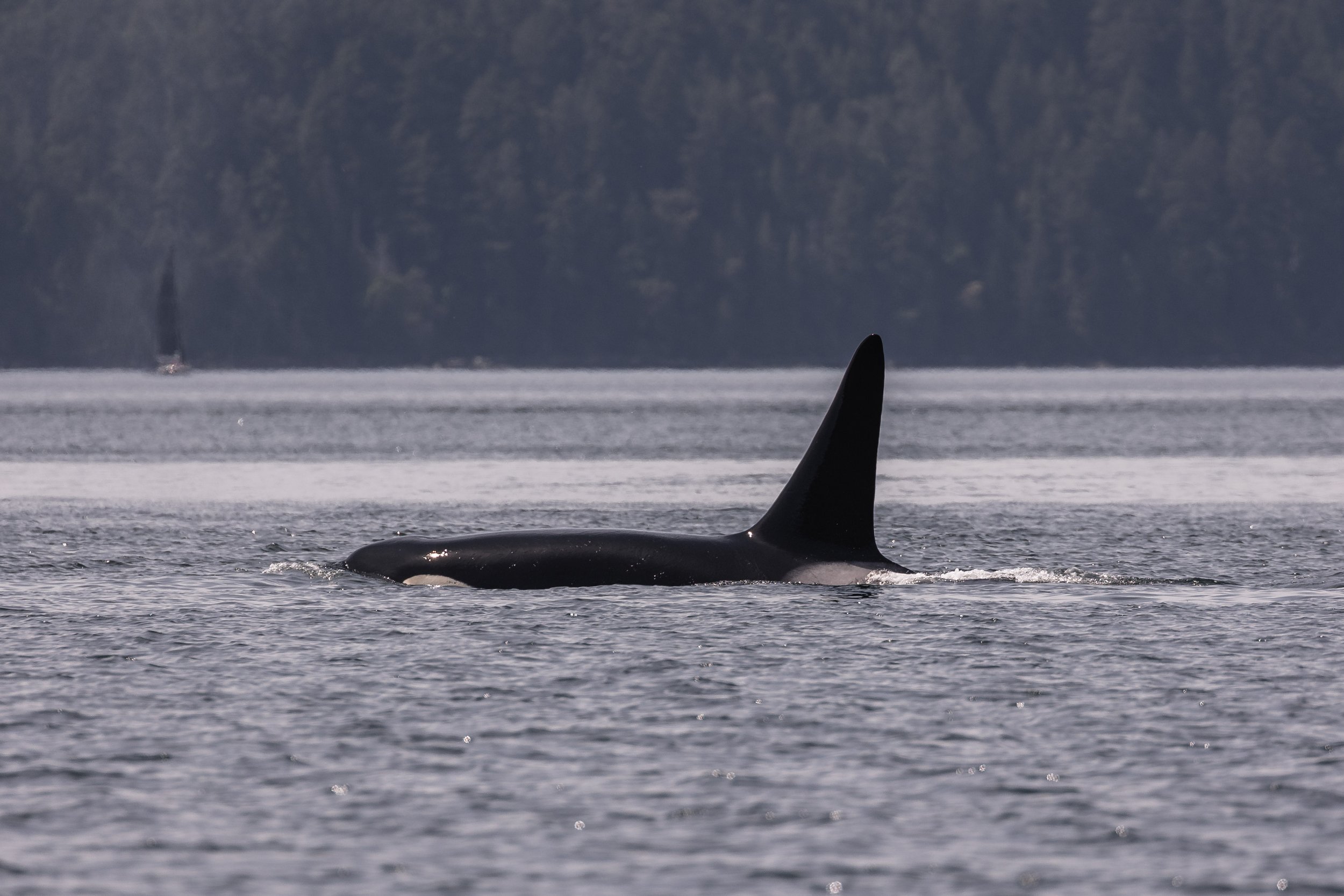
T101A Rush in the calm waters. Photo by Hayleigh Hilbert.
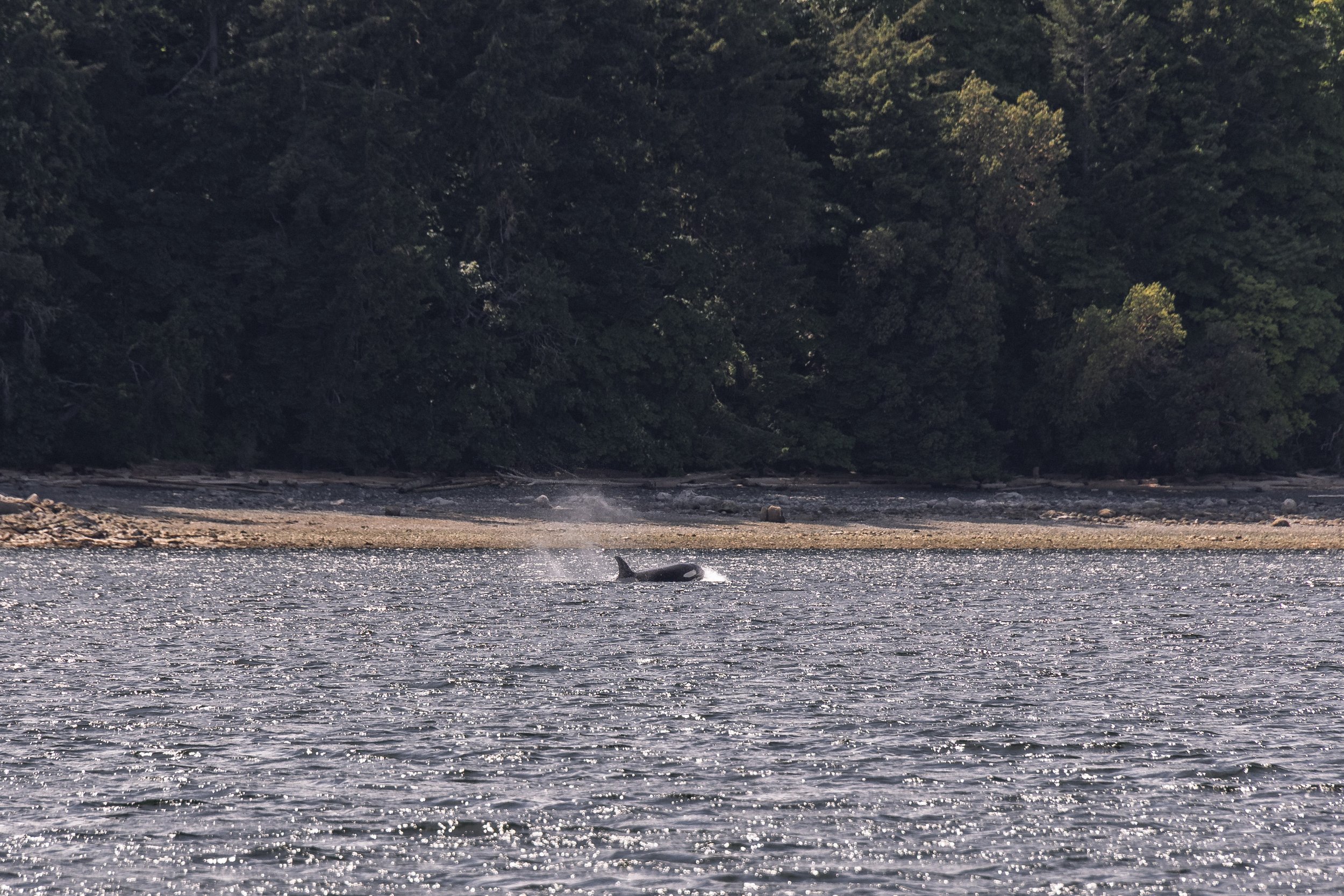
T086A1B Denali racing towards Dodd Narrows. Photo by Jordan Robinson.
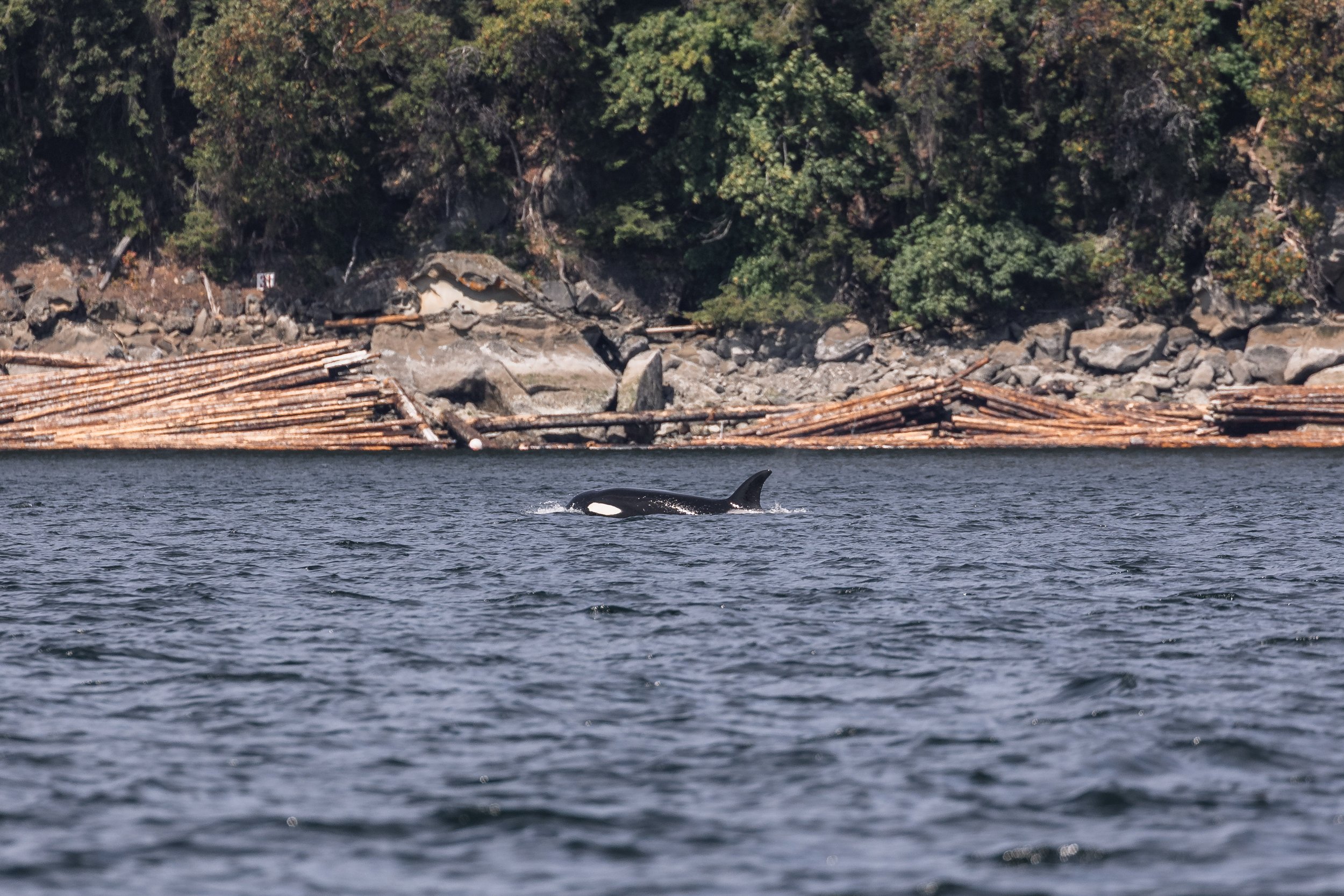
T086A1 Nahanni. Photo by Hayleigh Hilbert.
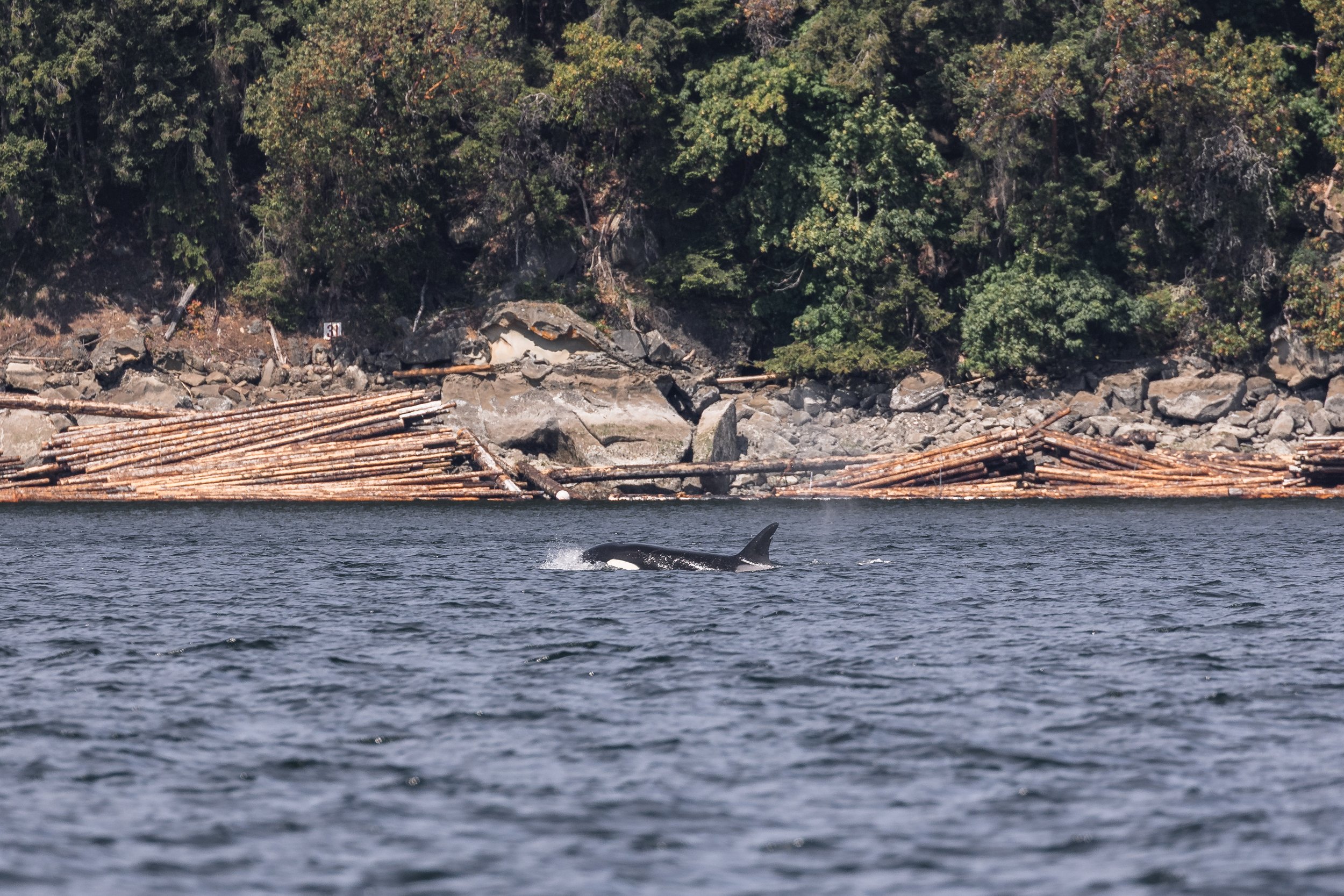
T086A3 Tyndall close to Gabriola Island. Photo by Hayleigh Hilbert.
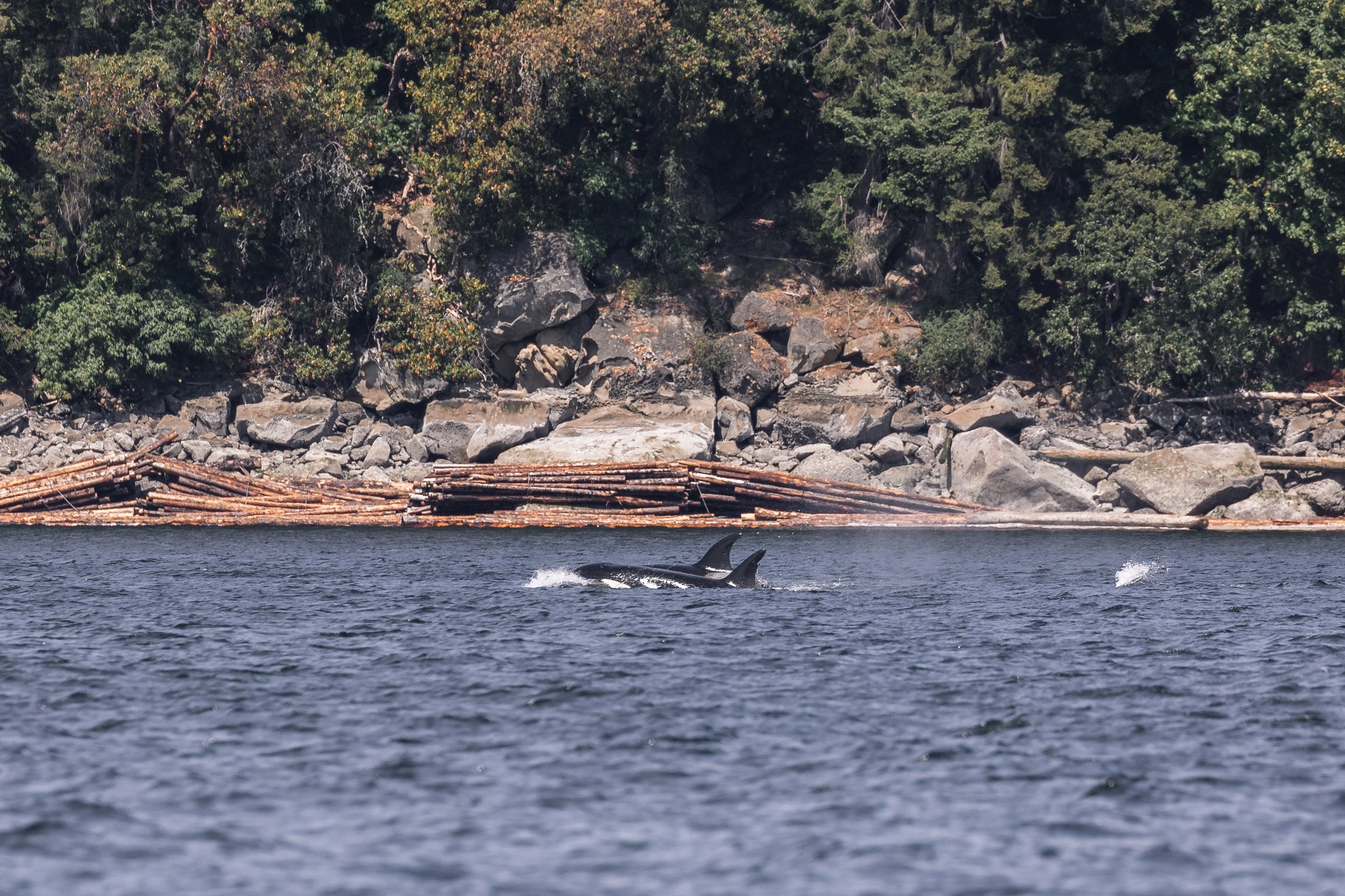
Our non-conformists, T086A3 Tyndall and T100E Tharaya, travelling side by side. Photo by Hayleigh Hilbert.
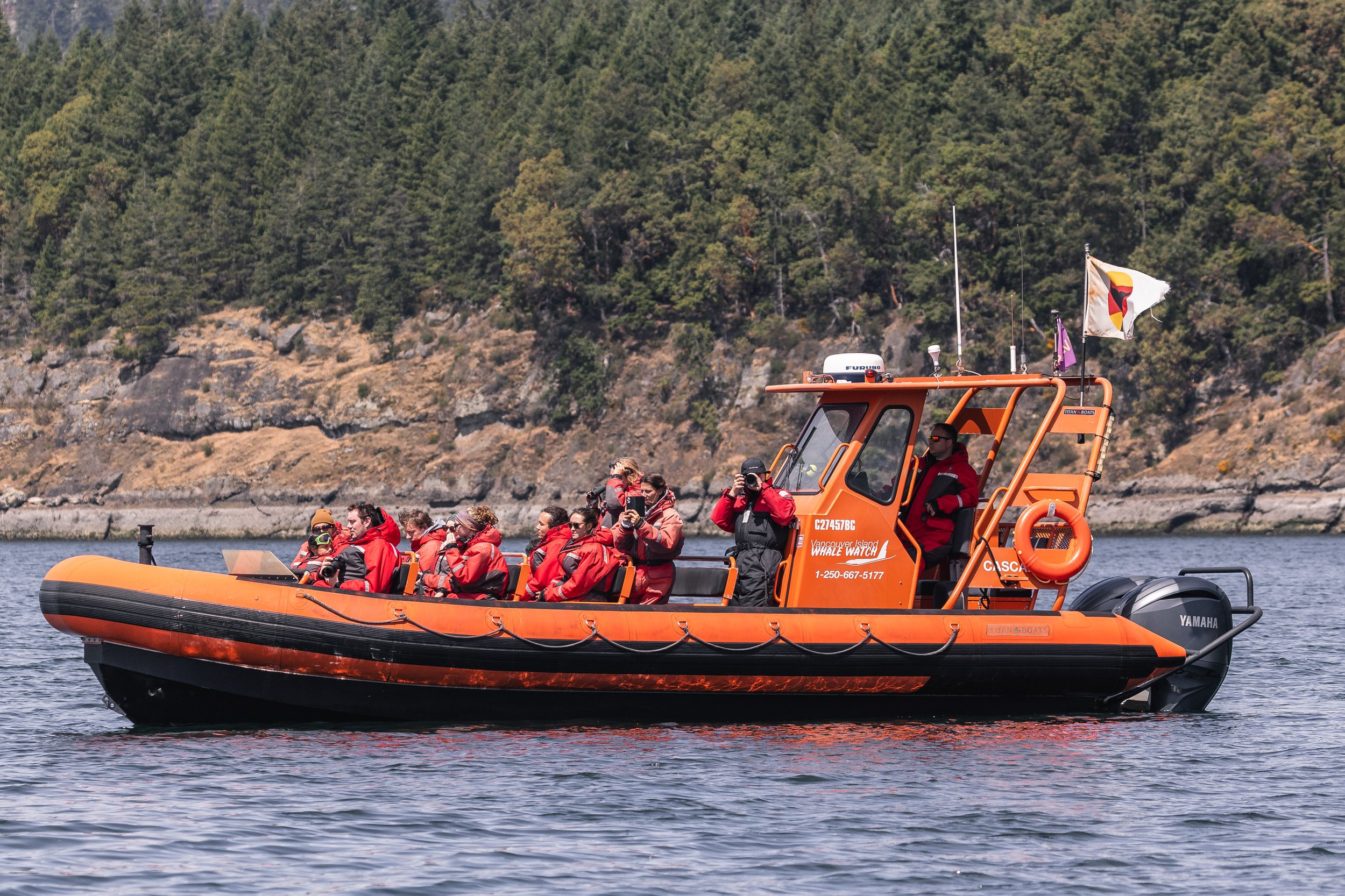
Guests enjoying the whales from the open boat. Photo by Hayleigh Hilbert.
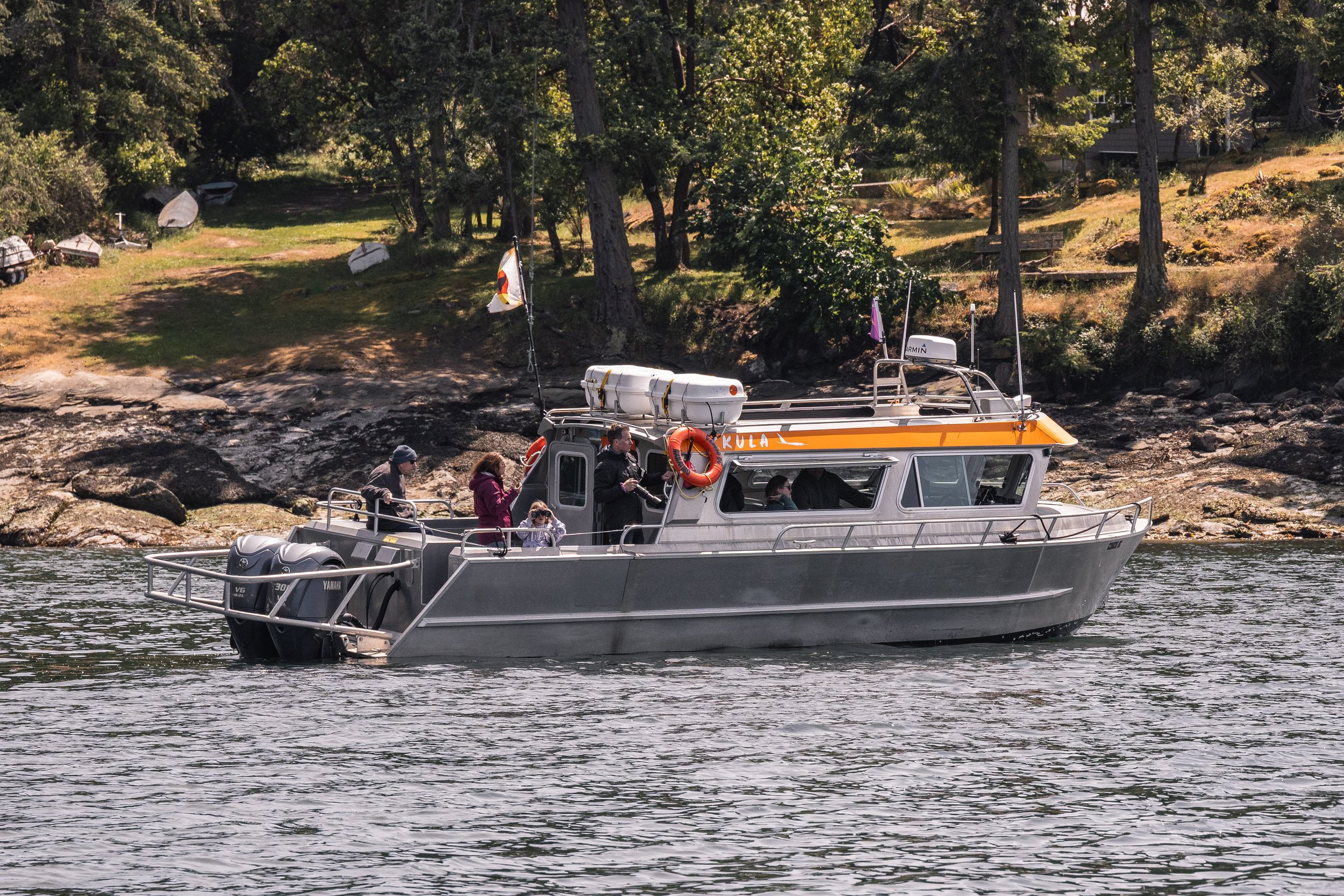
Our semi-covered vessel watching the whales. Photo by Jordan Robinson.