
May 23, 2026, 10:30 AM - Patience Pays Off in the Salish Sea!
It was with great excitement that we began our tour, departing from the dock aboard our two vessels, Kula and Keta, with sunny skies overhead. We started our search looking for whales moving south of Nanaimo through the Northumberland Channel before heading through Dodd Narrows between Mudge Island and Vancouver Island. These Narrows are one of our favourite spots to pass through. As currents change, water rushes through the narrow passage, moving nutrients through the water column and increasing the chances of seeing tonnes of wildlife, such as seabirds and sea lions.
After passing through the Narrows, we continued our search south, before making a big loop to the East to come to Porlier Pass and making our way into the Georgia Strait. While the waves were a bit rougher outside the protected Gulf Islands, our decision proved to be the right one as, in the distance, we began to see blows of a Humpback Whale! Our naturalist, Jordan Robinson, was on the scene first and managed to get some photographs of the dorsal fin and fluke and quickly identified the individual we were seeing, BCX1800 Gretzky! Shortly after, our other vessel, Kula, arrived on scene, and both boats were treated to a great view of BCX1800 Gretzky, who was taking many short dives, giving us plenty of time to view their dorsal fin and impressive size, with even a few great looks at the flukes as they dove under the water!
During the last couple of dives, a reddish-pink colour was spotted at the surface behind BCX1800 Gretzky’s tail fluke. Gretzky was lightening their load by defecating before diving down to feed! The colour of a humpback whale’s feces can provide valuable insight into its diet. Humpback whales primarily feed on krill, small schooling fish, and plankton. When whales consume large amounts of krill, their feces often appear dark red or pink in colour. This coloration comes from pigments found in krill, tiny shrimp-like crustaceans rich in carotenoids. These same pigments are responsible for the pink coloration seen in animals such as flamingos and salmon, which also obtain them through their diet. Because these pigments pass through the whale’s digestive system, the colour of the feces can indicate that the whale has recently been feeding heavily on krill.
After our time with Gretzky’s concluded, our vessels continued northward towards a rocky outcrop off the coast of Valdes Island. The outcrop has been granted the nickname “Stinky Rock” by us here at Vancouver Island Whale Watch for a very practical reason. Those unfortunate enough to be downwind of the Sea lions that hang out there get to find out why the rock has this nickname. Since there are so many animals eating, sleeping, feeding, and defecating together on one small rock, the smell is as bad as you imagine it to be!
The Steller Sea Lions that haul out there are the largest sea lion species in the world. They exhibit Sexual Dimorphism, in which males and females have different physiological characteristics. Females only grow to be one-third the size of mature males, with males reaching 11 feet long and weighing upwards of 2500 pounds, whereas females max out at around 800 pounds and reach 8 feet long. The size difference is a crucial advantage for the males during the breeding season, which has just begun and runs through mid-July. During this time, dominant males claim and defend harems of females on rocky haul-outs. Incredibly, these males will fast and remain on land, without entering the water to feed, for the entire two-month period. When they get the chance to feed, they’re feeding on schooling fish, squid and octopus.
Guests and crew aboard Kula and Cascadia set northward in search of more spectacular wildlife. Our vessels travelled all the way past Nanaimo, venturing towards Nanoose Bay in search of a shore-based orca report. After travelling over 25 nautical miles from “Stinky Rock” all the way to Nanoose Bay, our patience paid off! Off in the distance, crew and passengers aboard Cascadia had spotted some small blows and tall dorsal fins; it was the orcas from the shore-based report!
When identifying which orcas are present, our naturalists photograph the shape of each whale’s dorsal fin, the pigmentation of the saddle patch, and any unique markings or scars. These features are unique to every individual and act much like fingerprints, helping distinguish one whale from another. After marine naturalist Jordan Robinson photographed the dorsal fins of the orcas present, the orcas were identified as the T086As and the T086A1s!
T086A Eider ♀ (1988)
T086A3 Tyndall ♀ (2016)
T086A4 Akia ♀ (2016)
T086A5 Siku (2024)
T086A1 Nahanni ♀ (~2001)
T086A1B Denali (2023)
This wonderful group of orcas was observed socializing, swimming closely together, and even playing in the wake of a passing vessel. But off in the distance, two larger dorsal fins then caught our attention. As we moved closer, it became clear that the pair were two adult males travelling together. One of the males was immediately recognizable by his distinctive bent dorsal fin, being T049A2 Jude. Travelling alongside him was an older male who has been seen accompanying him over the years: T051 Roswell!
T049A2 Jude ♂ (2007)
T051 Roswell/Loner ♂ (~1981)
Typically, orcas will travel within tightly bound pods composed of a matriarchy! A mature mother will travel with her sons, daughters and even grandkids for the duration of her life! The matriarchal foundation of a typical orca pod allows for strong family bonds between individual orcas and provides emotional enrichment that these orcas need to thrive. Jude, on the other hand, comes from a much larger family originally led by his mother, Nan. Over time, Nan’s matriline has grown significantly and now includes eight offspring, seven of them male. As Bigg’s orca families expand, social dynamics within the group can change. Without a mature breeding female within Jude’s immediate branch to form the centre of a new matriline, he appears to have gradually branched off and begun travelling more independently. Noah, another of Nan’s sons, shows a slightly different pattern, often travelling solo, but still frequently rejoining the family. These flexible social dynamics highlight just how complex and adaptable orca relationships can be!
Before departing back to the Nanaimo Harbour, both the males, the T086As and T086A1s, met up together for some socializing! Hurrying this time, a couple of tailslaps and even some spyhopps were spotted! After this, Captains Rodrigo and Tino slowly pulled away from the orcas and set off back to Nanaimo, wrapping up a wonderful morning spent exploring the Salish Sea!
Please enjoy all the photos below, taken by Marine Naturalist Evan Hessels and Jordan Robinson.
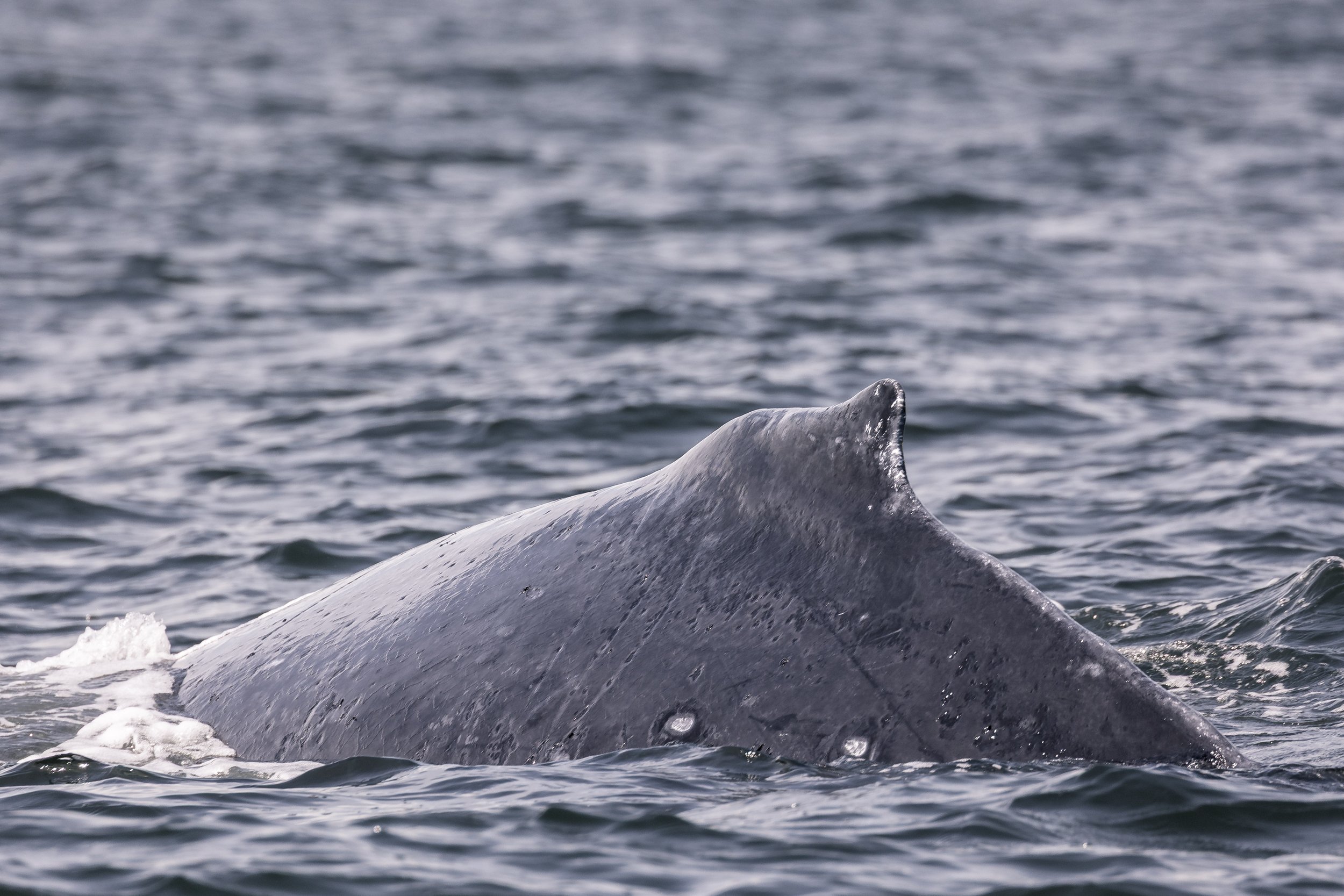
A great close view of the dorsal fin of BCX1800 Gretzky. Photograph by Jordan Robinson.
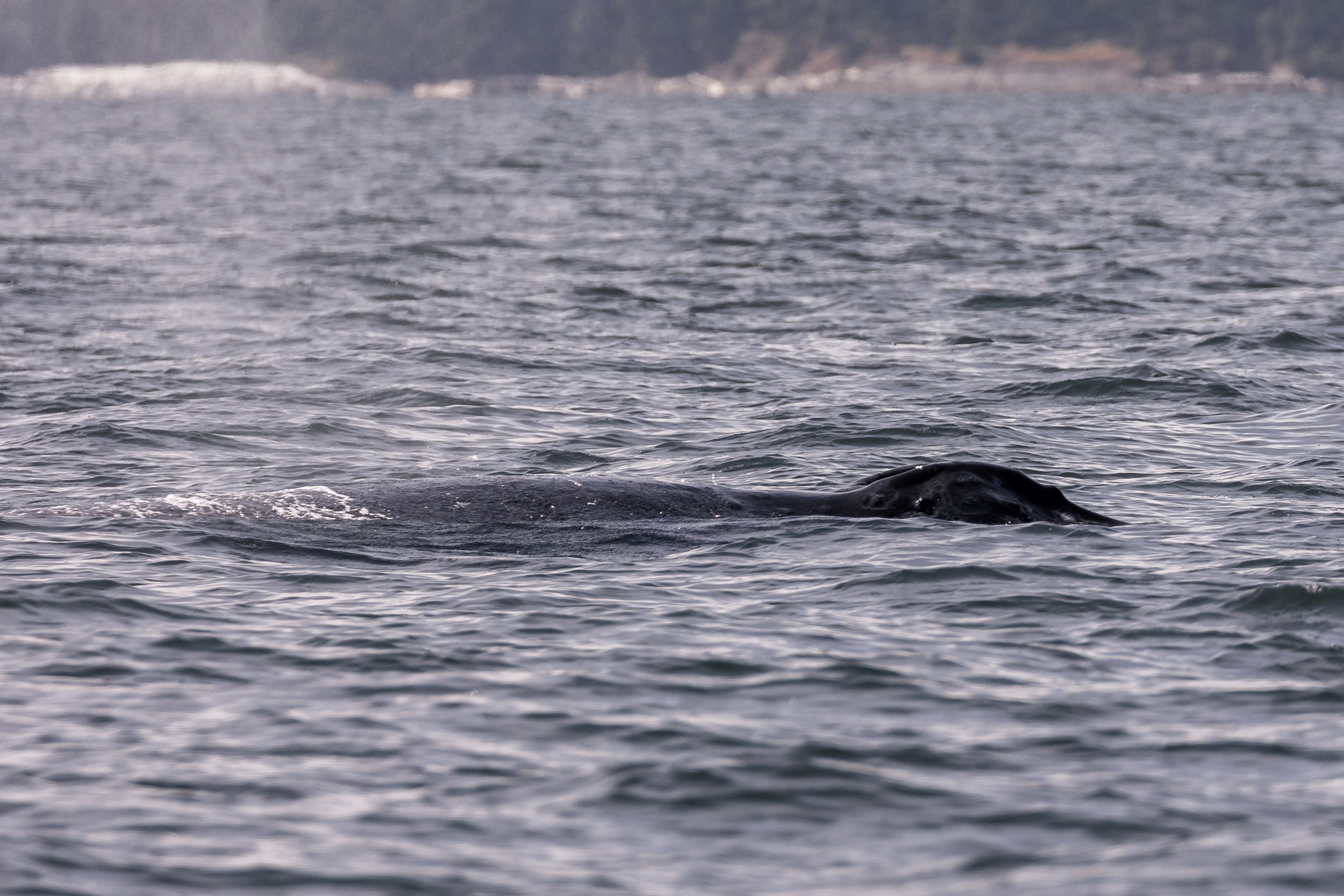
A look at BCX1800 Gretzky’s blowhole as they surface. Photograph by Jordan Robinson.
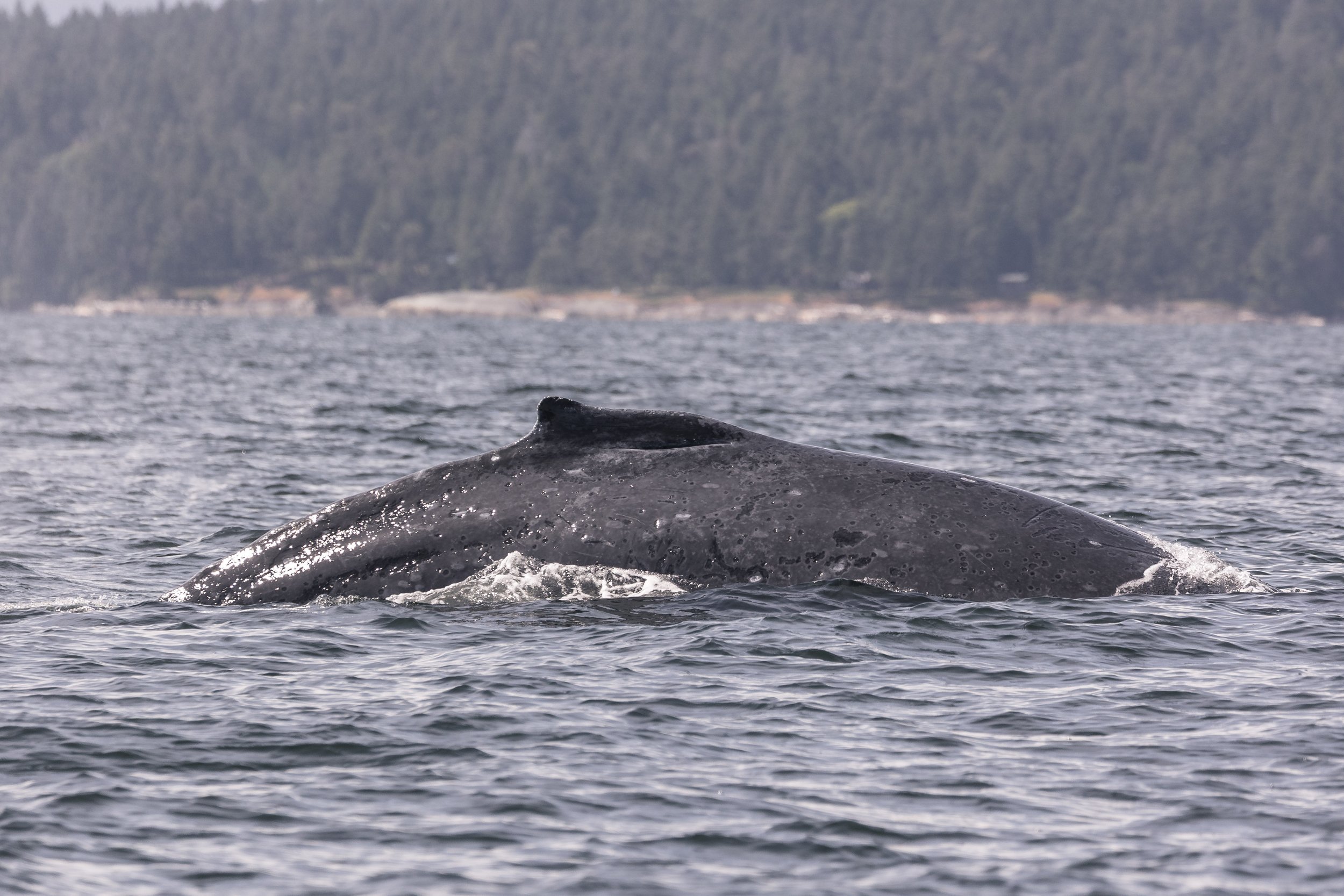
At look at the other side of BCX1800 Gretzky. Photograph by Jordan Robinson.
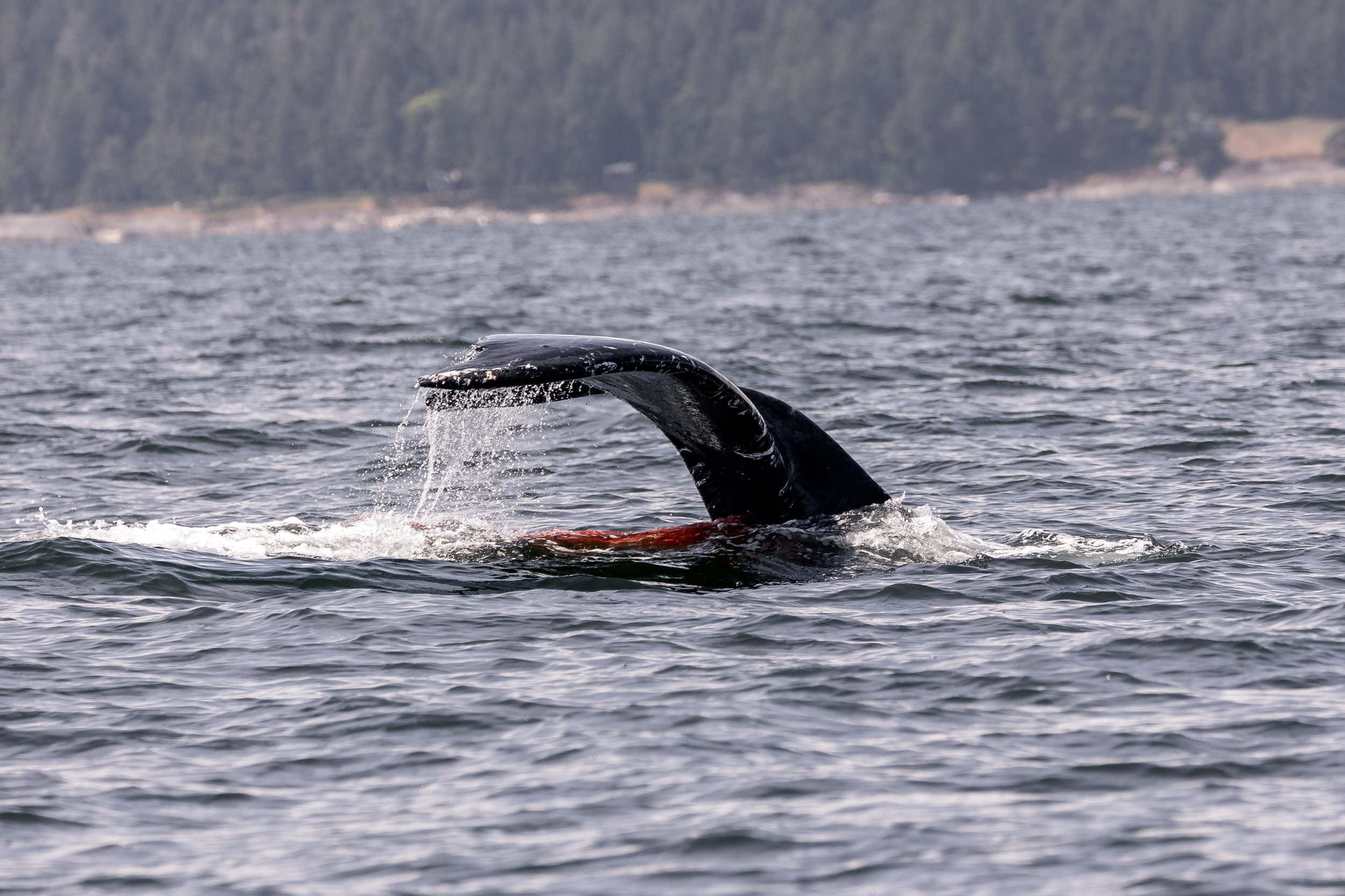
BCX1800 Gretzky fluking (and pooping!) just before a dive. Photograph by Jordan Robinson.
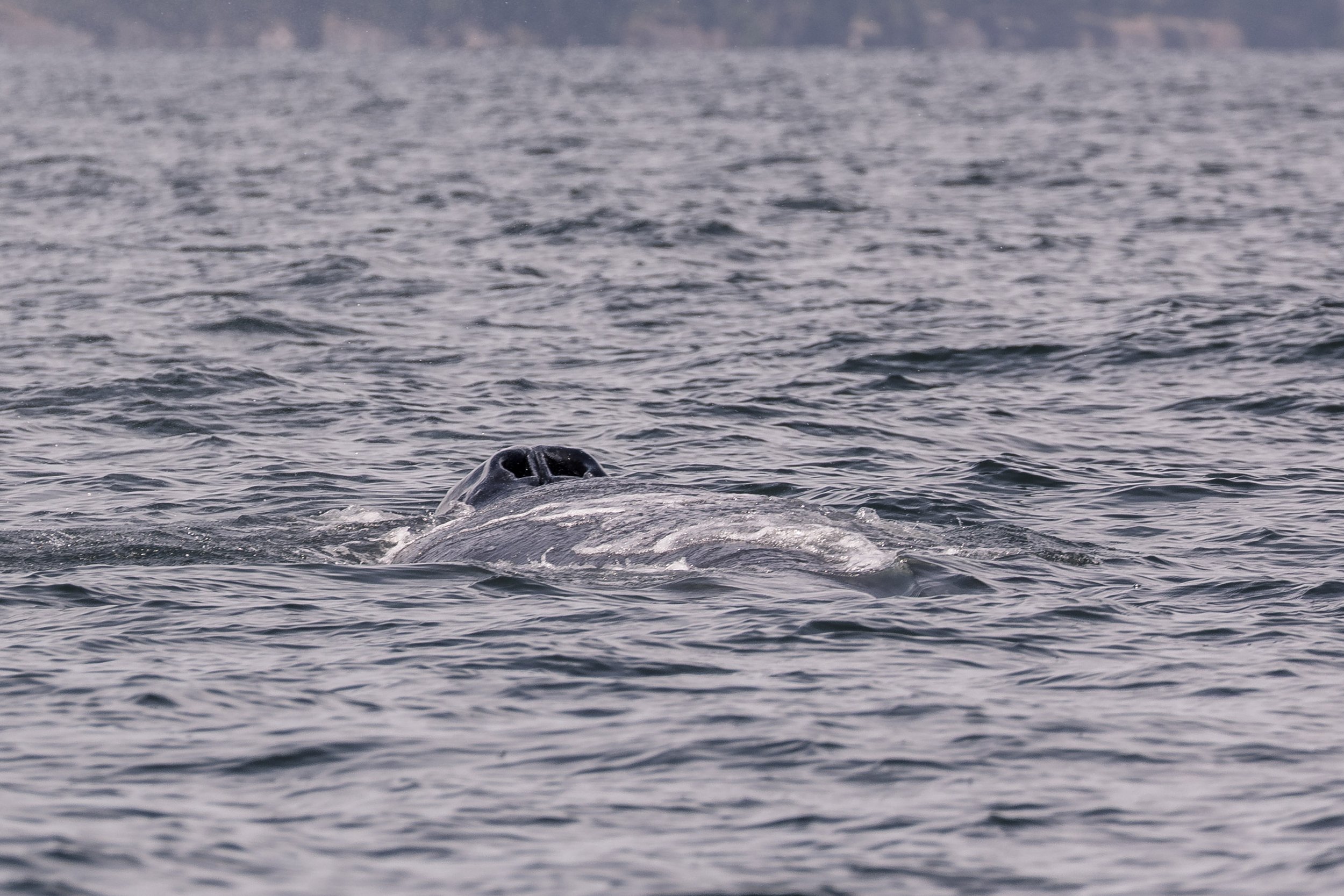
A look at BCX1800 Gretzky’s blowhole from behind. Photograph by Jordan Robinson.
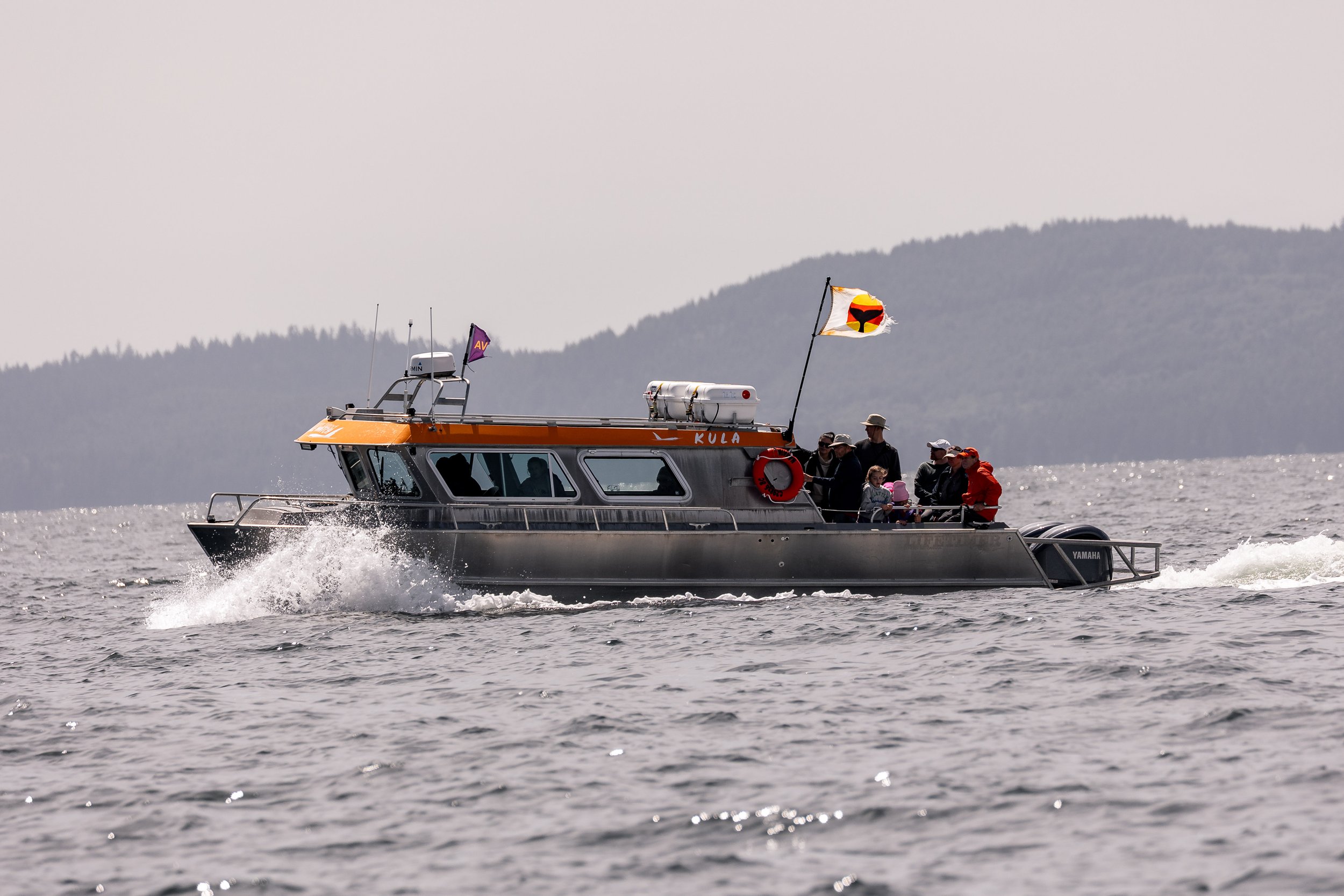
Our Passengers on Kula enjoying some nice views of BCX1800 Gretzky. Photograph by Jordan Robinson.
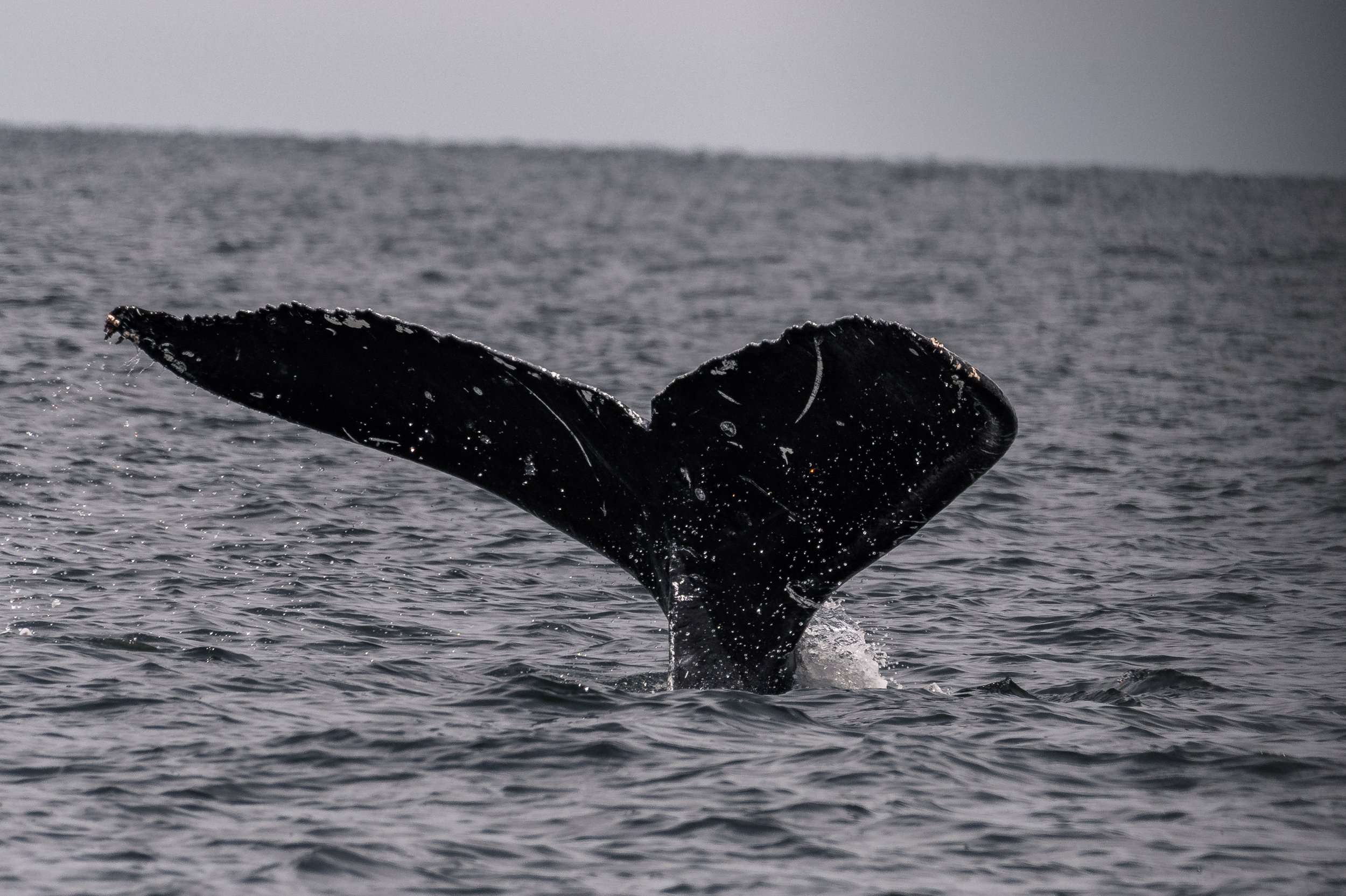
BCX1800 Gretzky showing off their distinct x type fluke pattern. Photograph by Evan Hessels.
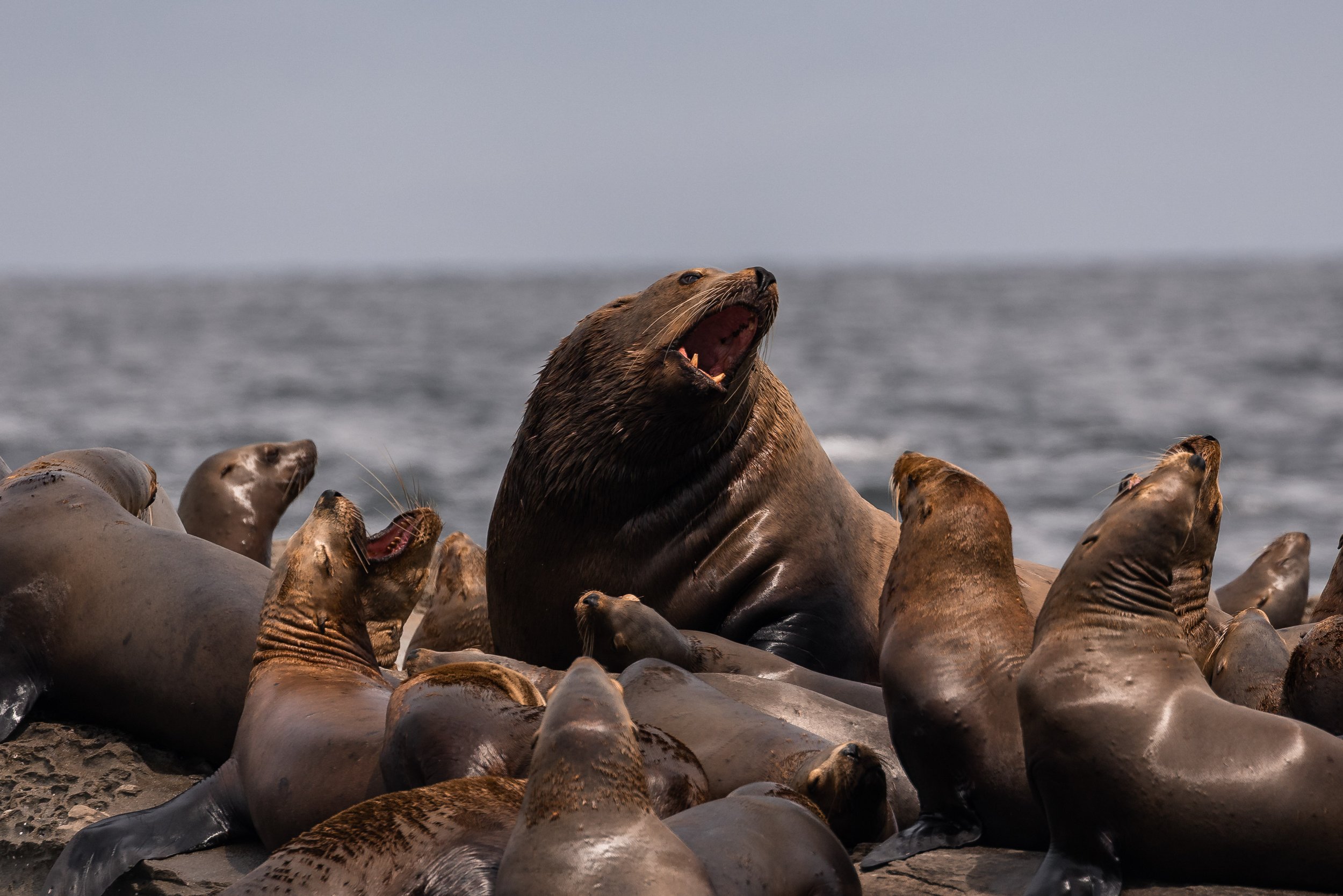
A large male Steller Sea Lion roaring on the haul out. Photograph by Jordan Robinson.
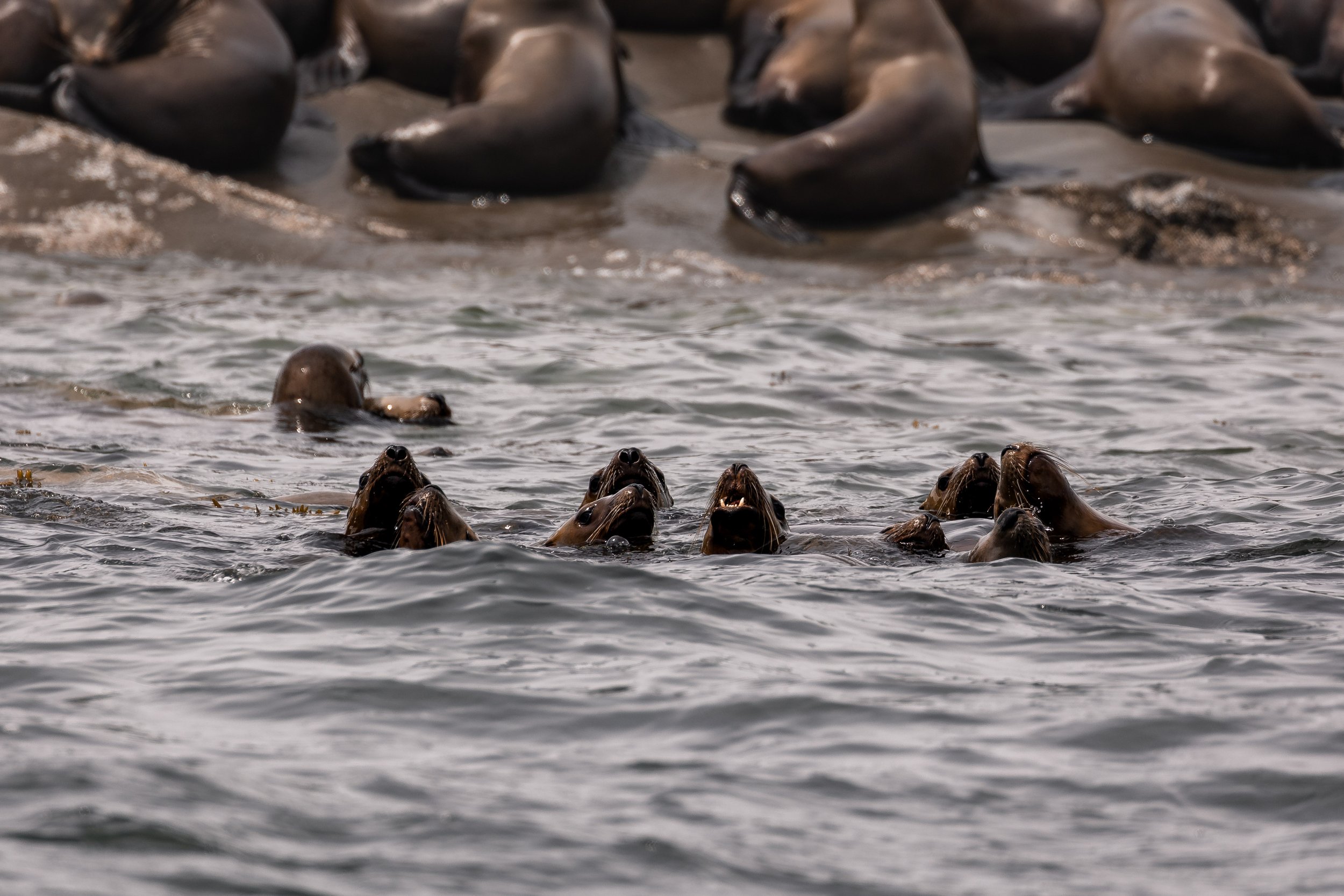
A number of Steller Sea Lions in the water checking out our vessel as we pass by. Photograph by Jordan Robinson.
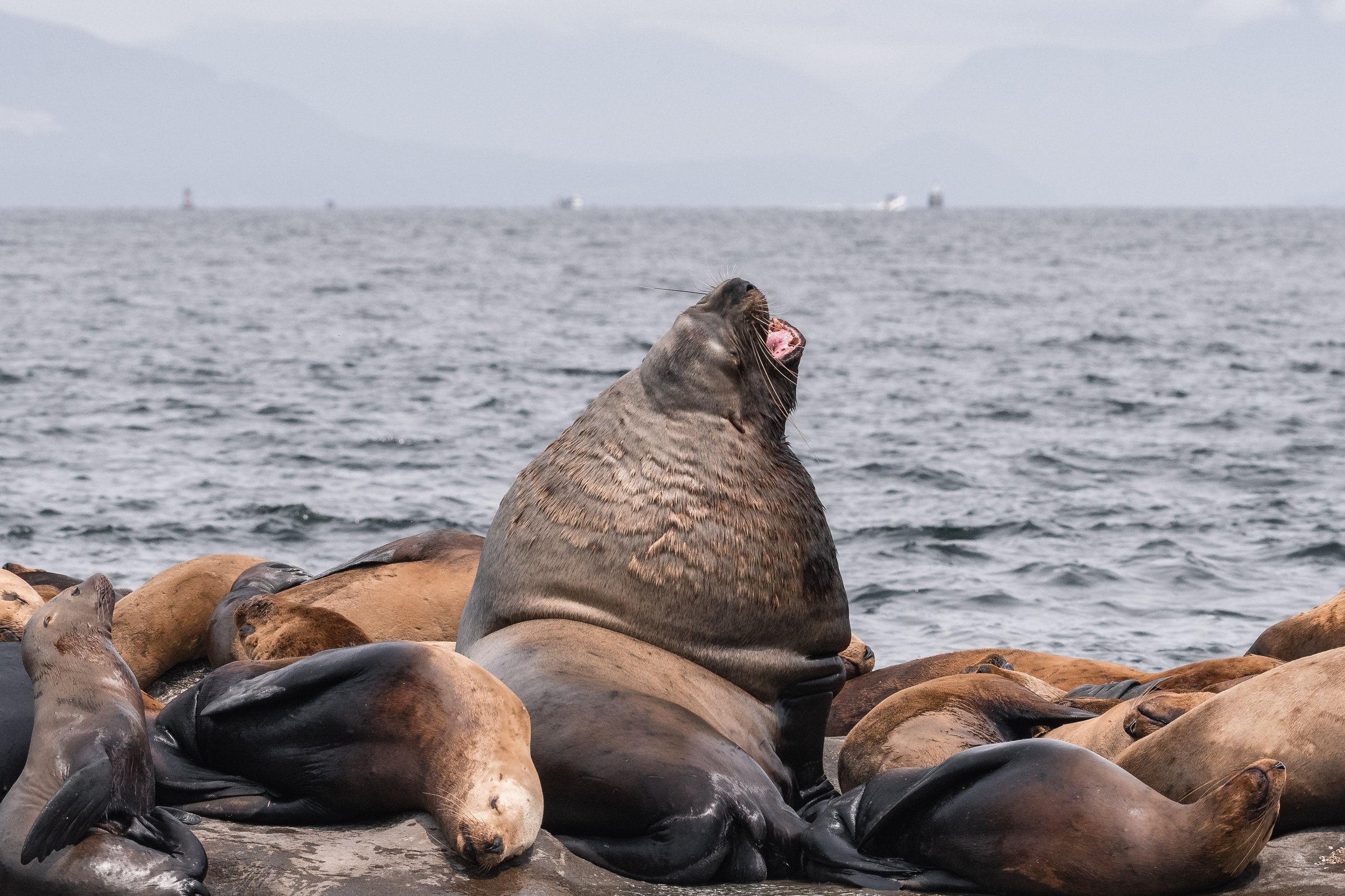
Another view of the large male Steller Sea Lion showing off his impresive figure. Photograph by Evan Hessels.
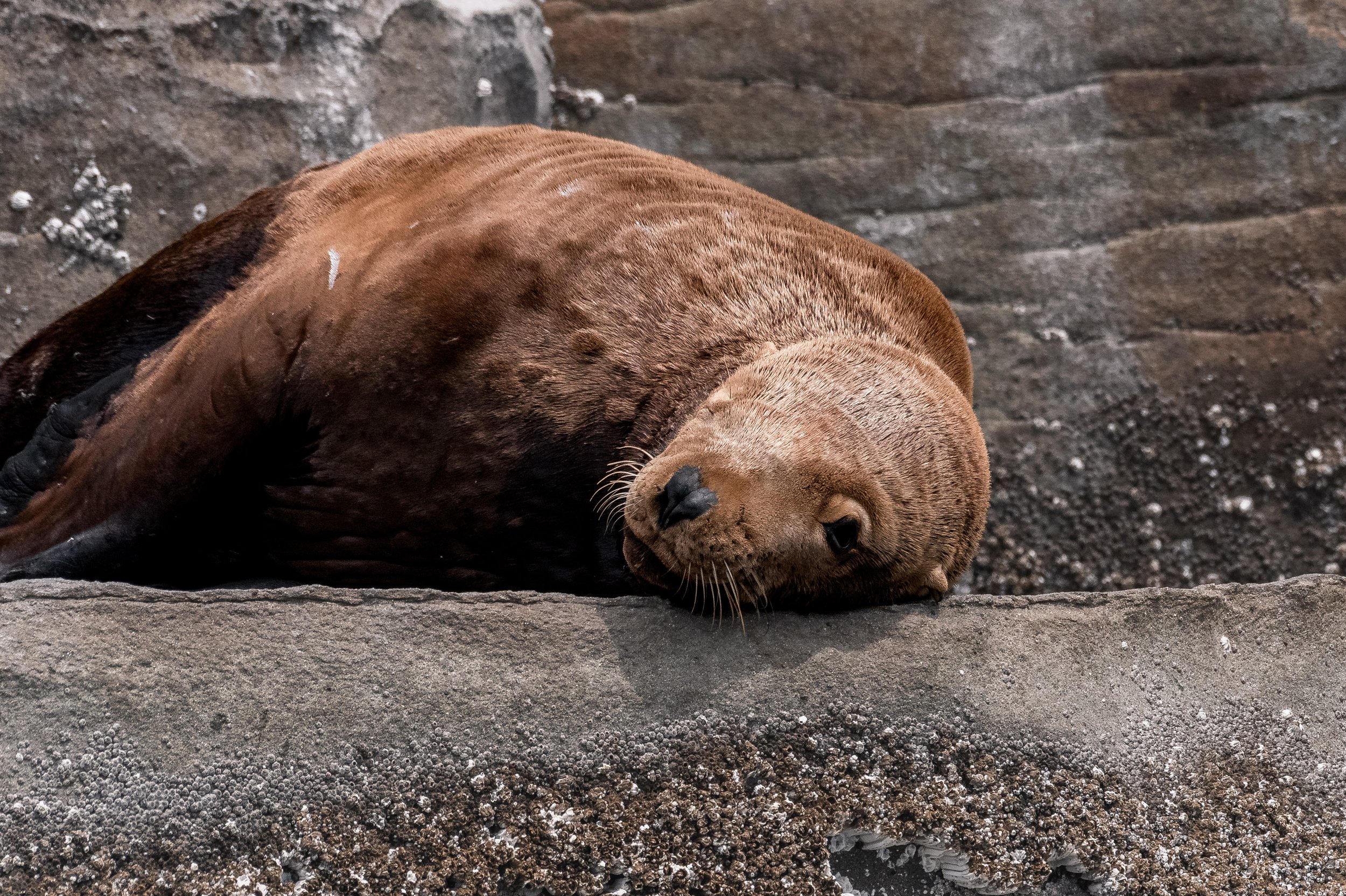
A sleepy Steller Sea Lion lounging on the rocks. Photograph by Evan Hessels.
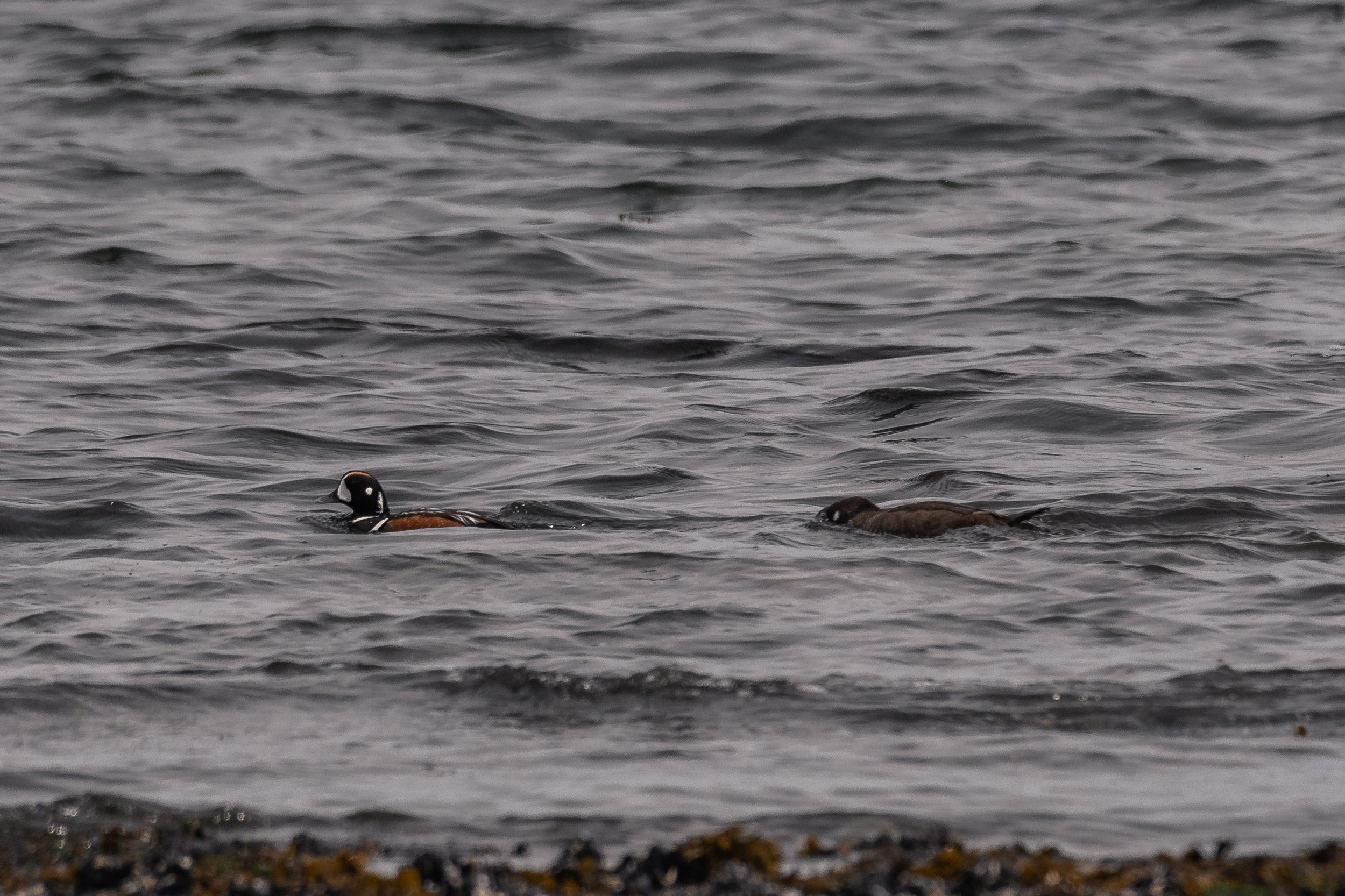
A couple Harlequin Ducks swimming by. Photograph by Evan Hessels.
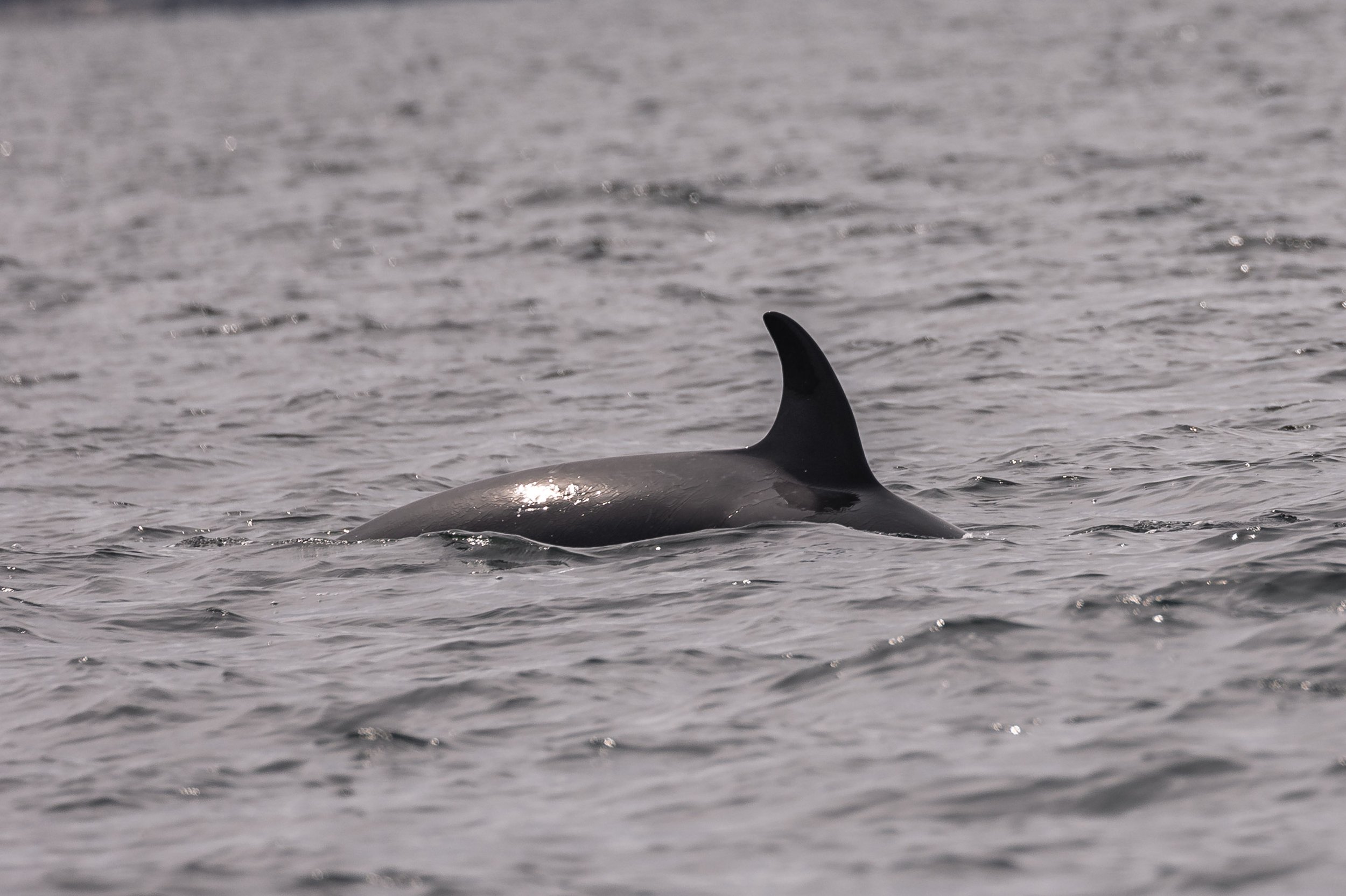
T086A1B Denali giving us a good look at their dorsal fin and saddle patch. Photograph by Jordan Robinson.
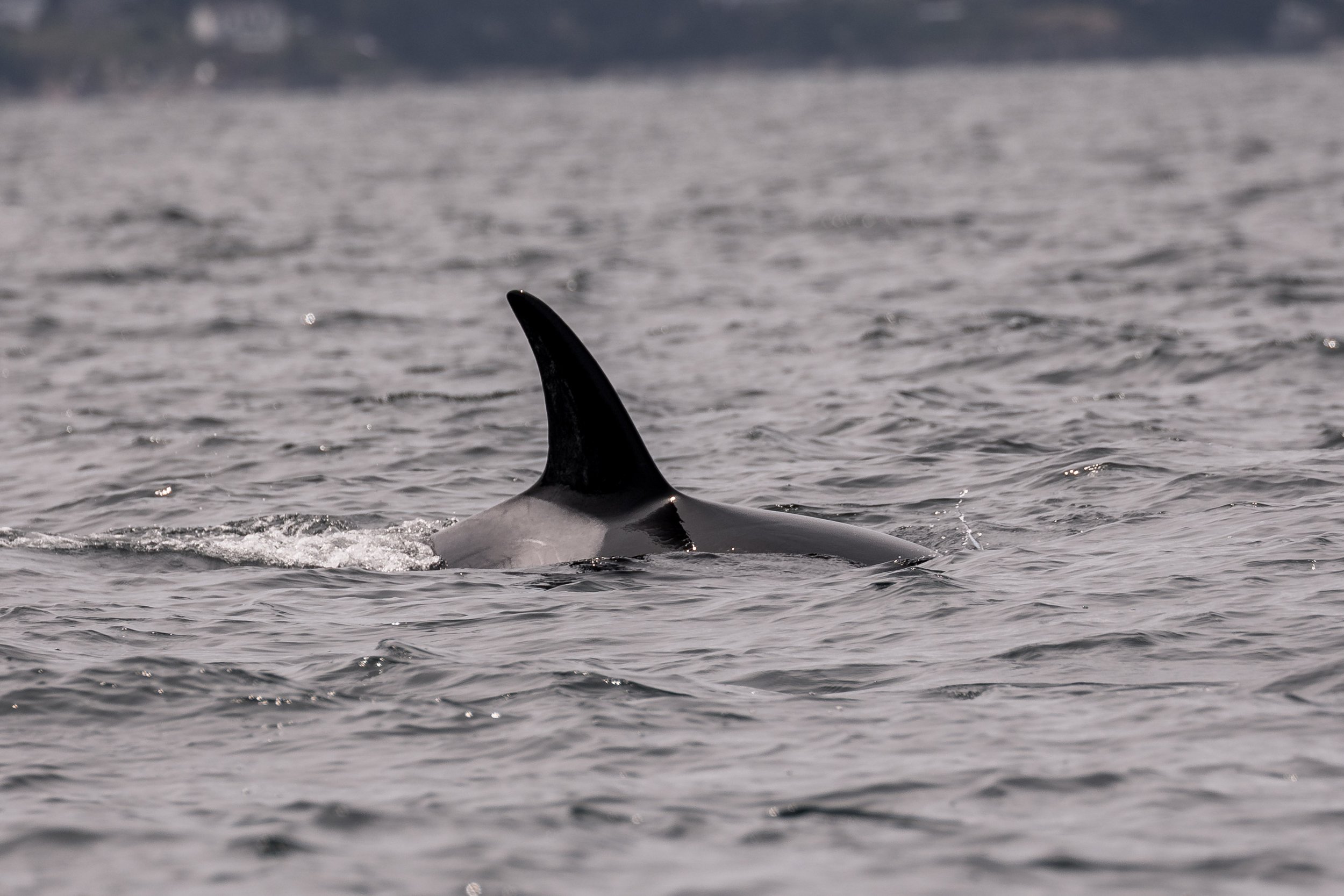
T086A1 Nahanni showing off her dorsal fin and saddle patch. Photograph by Jordan Robinson.
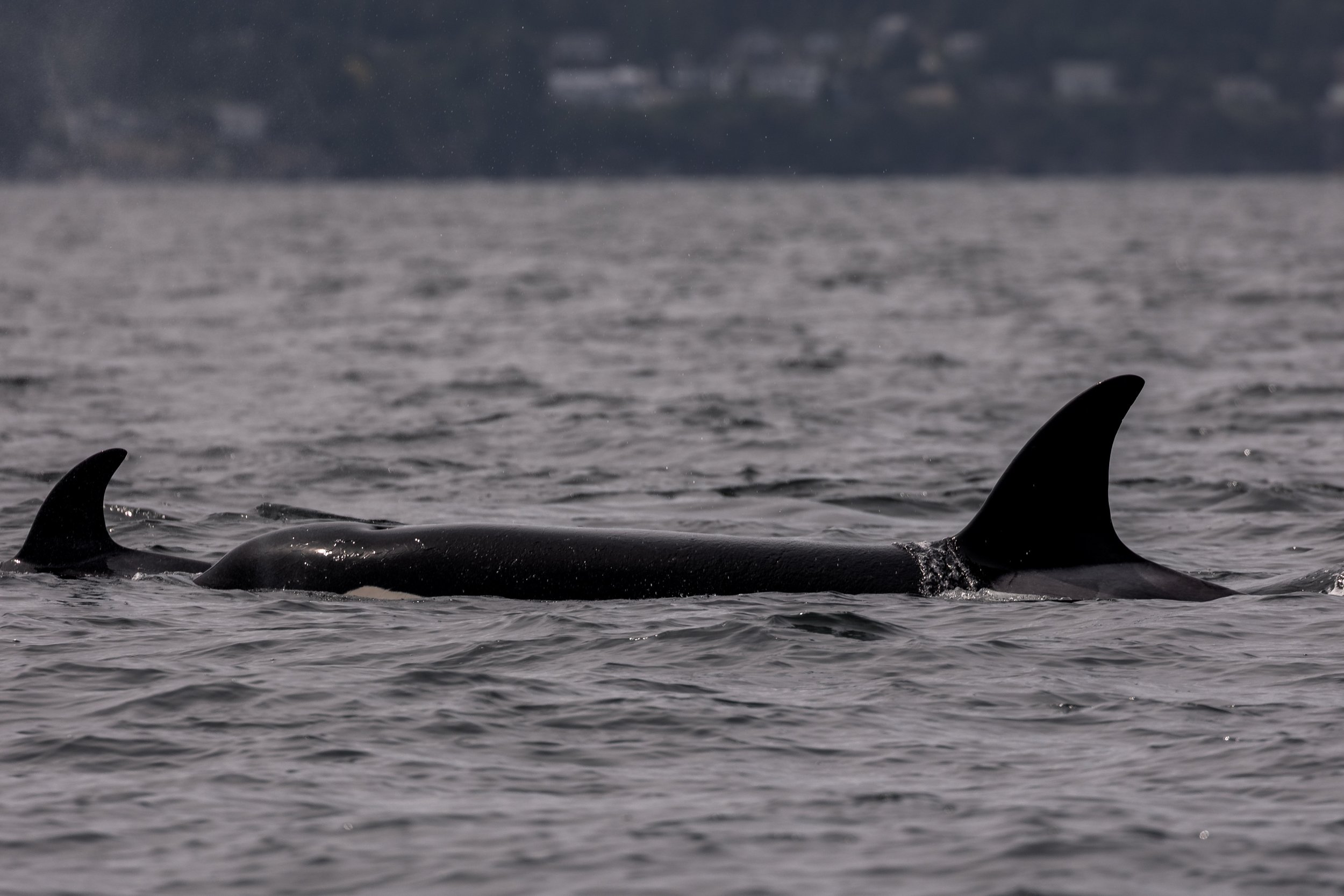
A peek at the top of T086A1 Nahanni’s eyepatch as she follows behind T086A1B Denali. Photograph by Jordan Robinson.
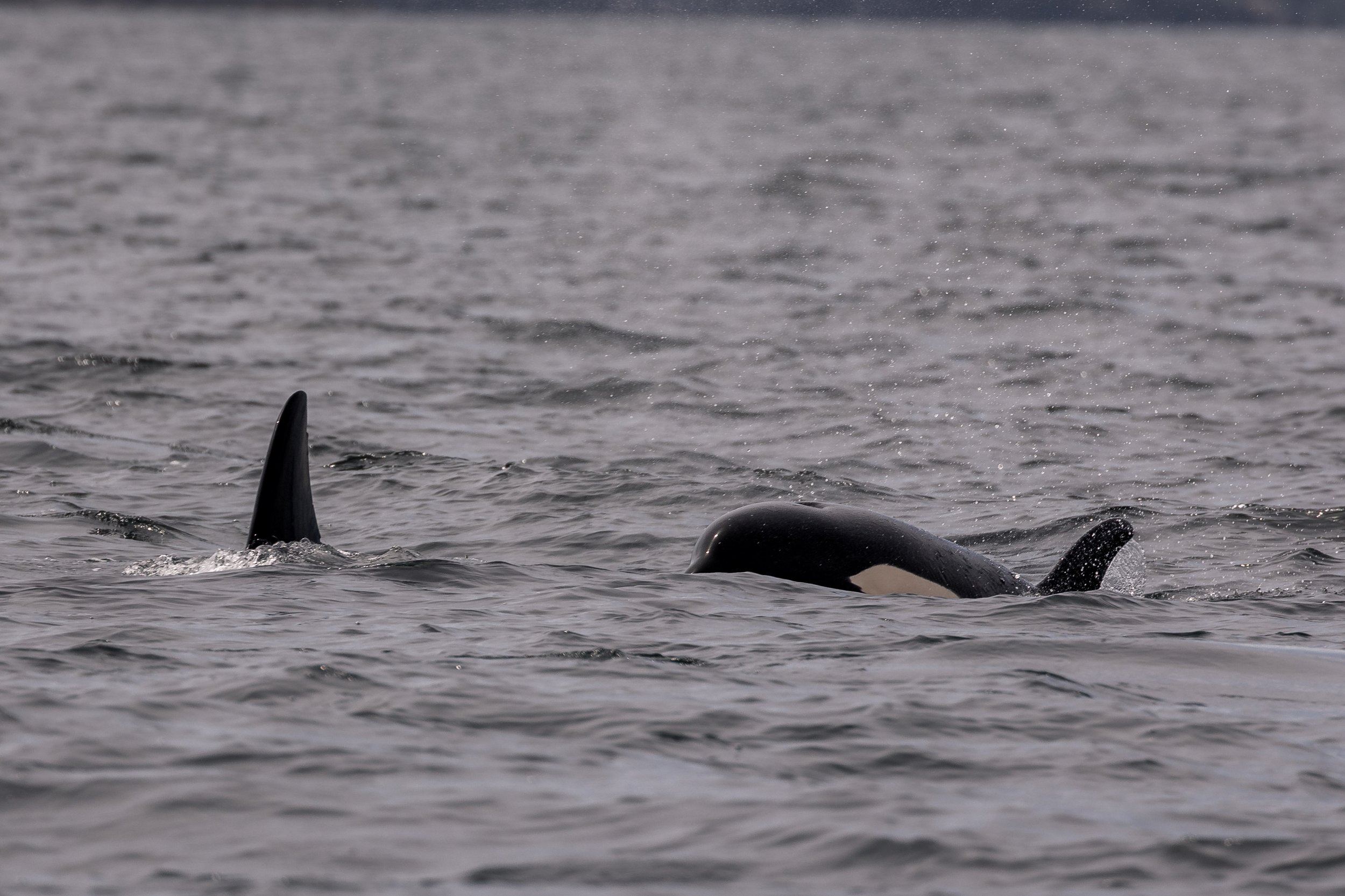
T086A5 Siku following behind his mother T086A Eider. Photograph by Jordan Robinson.
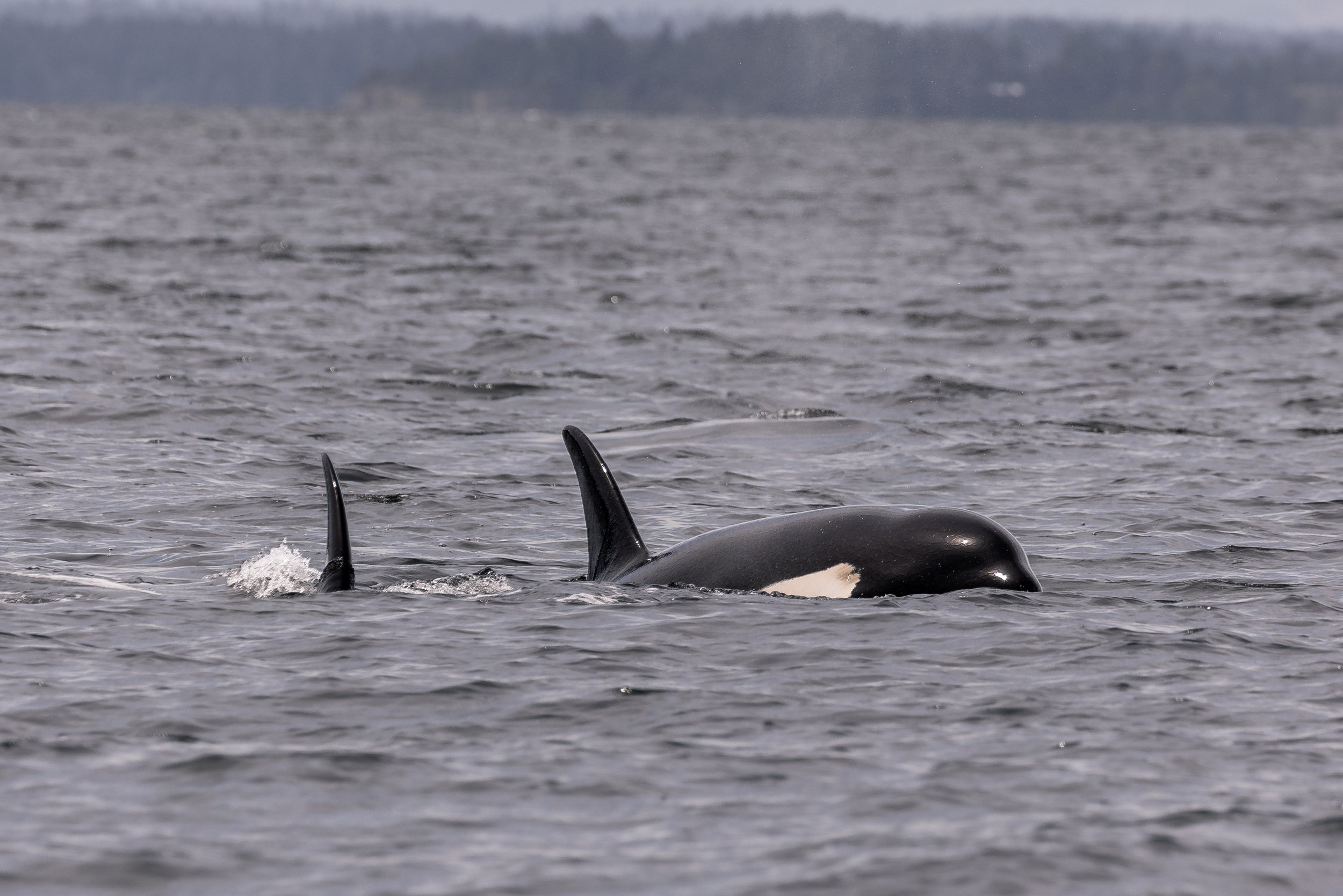
T086A1 Nahanni showing off her very distinct eyepatch. Photograph by Jordan Robinson.
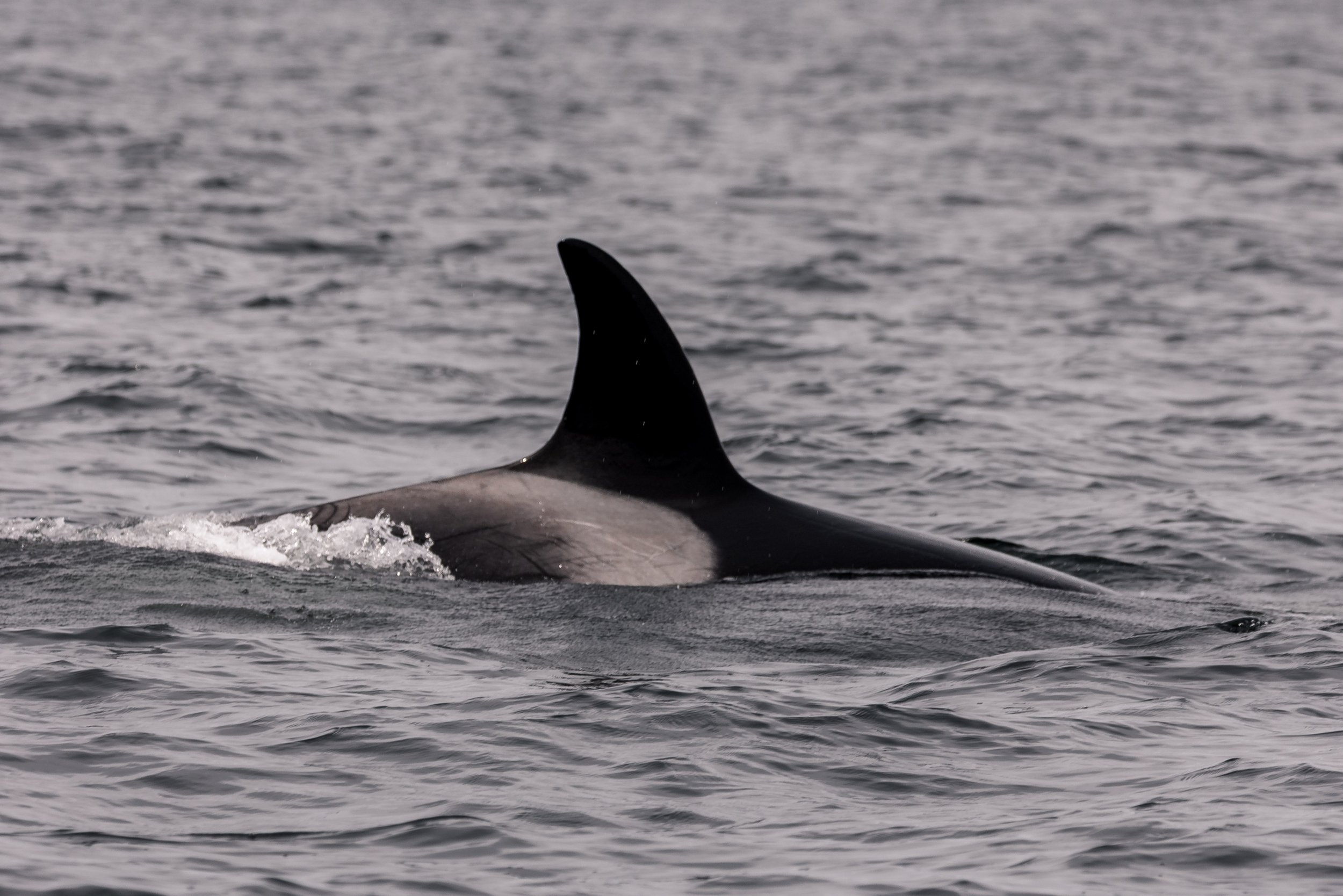
T086A4 Akia giving a good look at the unique scarring on her saddlepatch. Photograph by Jordan Robinson.
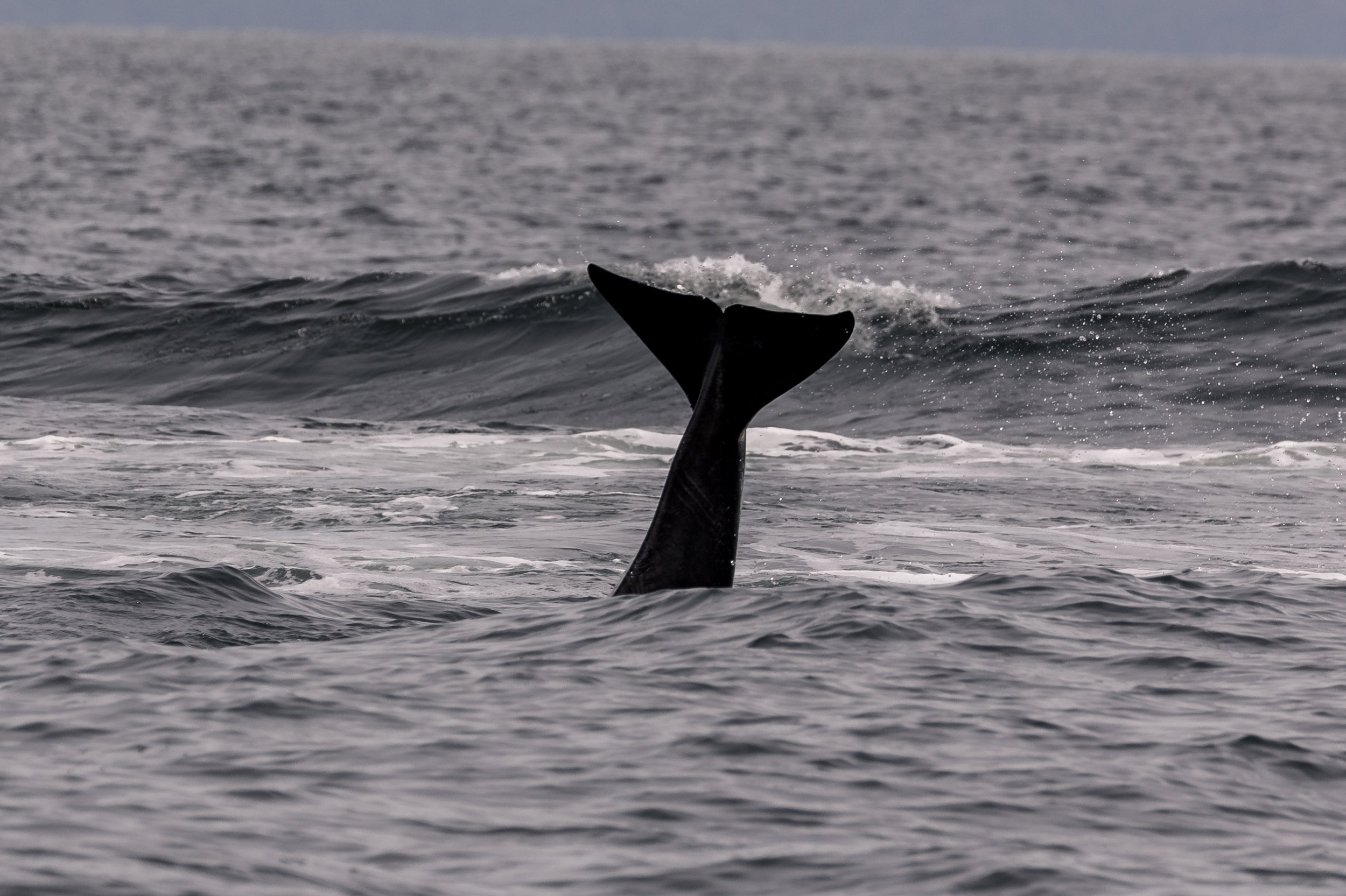
One of the T086As headstanding as a wave goes by. Photograph by Jordan Robinson.
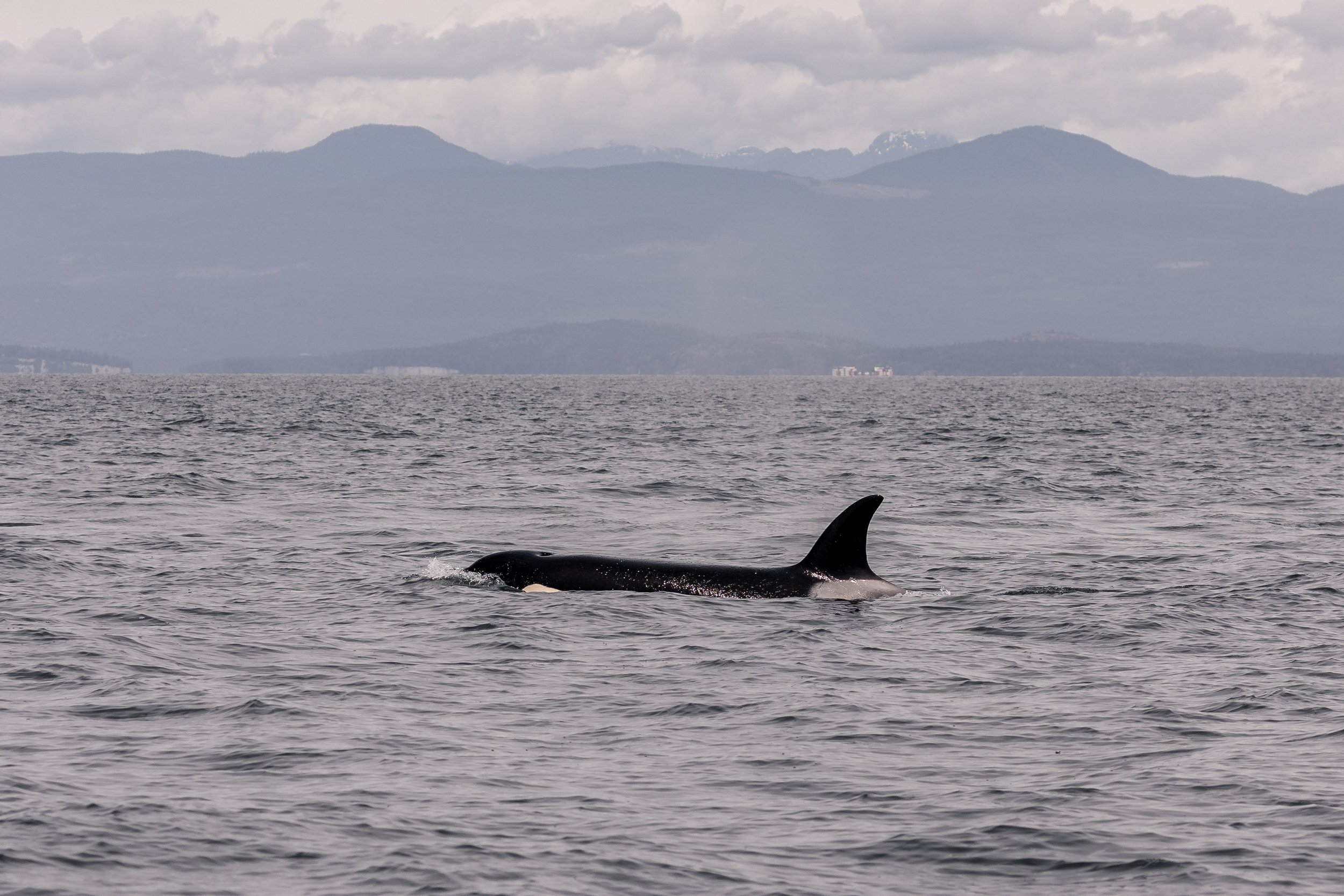
Another good look at T086A1 Nahanni as she passes by. Photograph by Jordan Robinson.
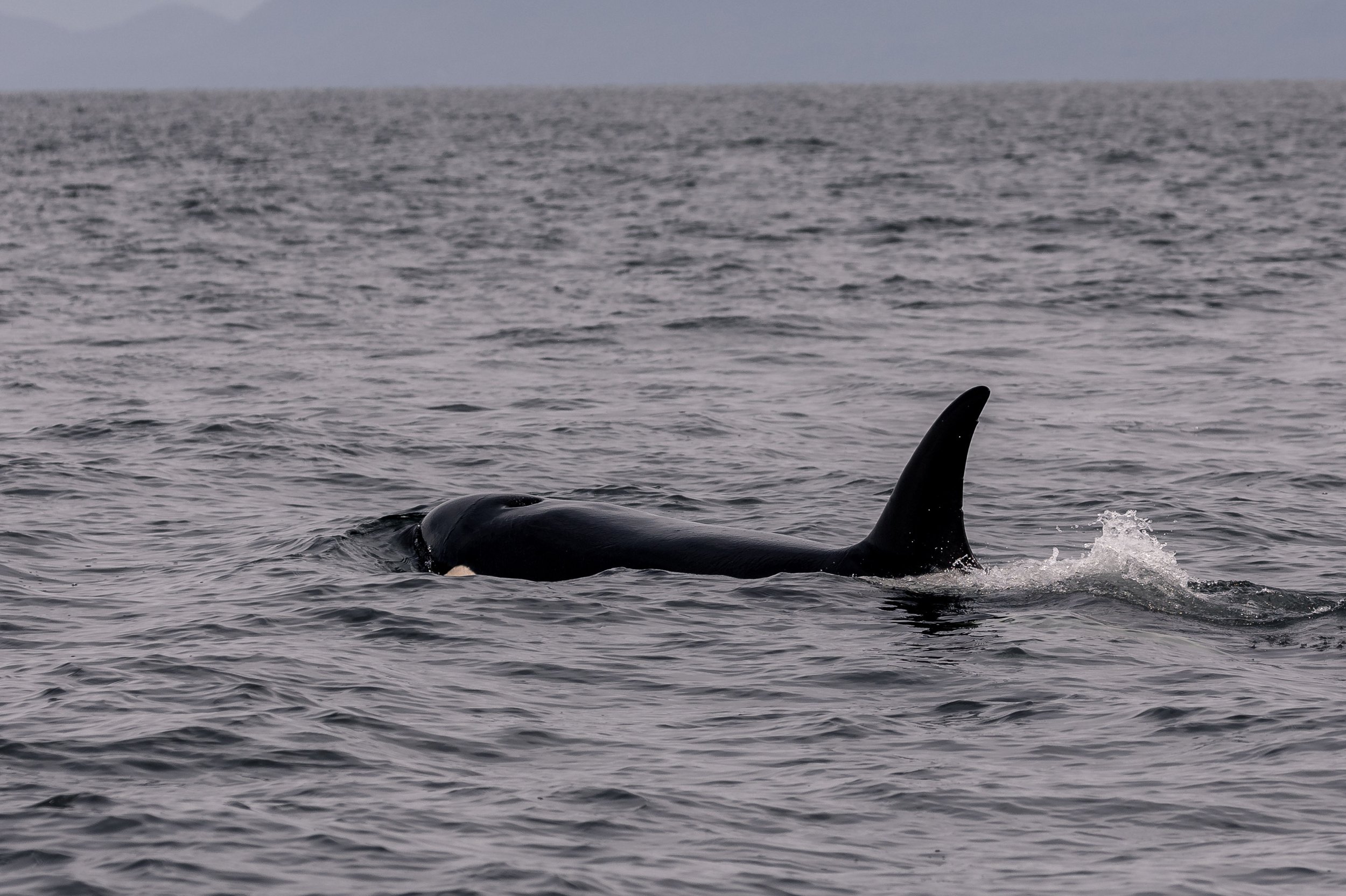
A peek at T086A Eider’s eyepatch. Photograph by Jordan Robinson.
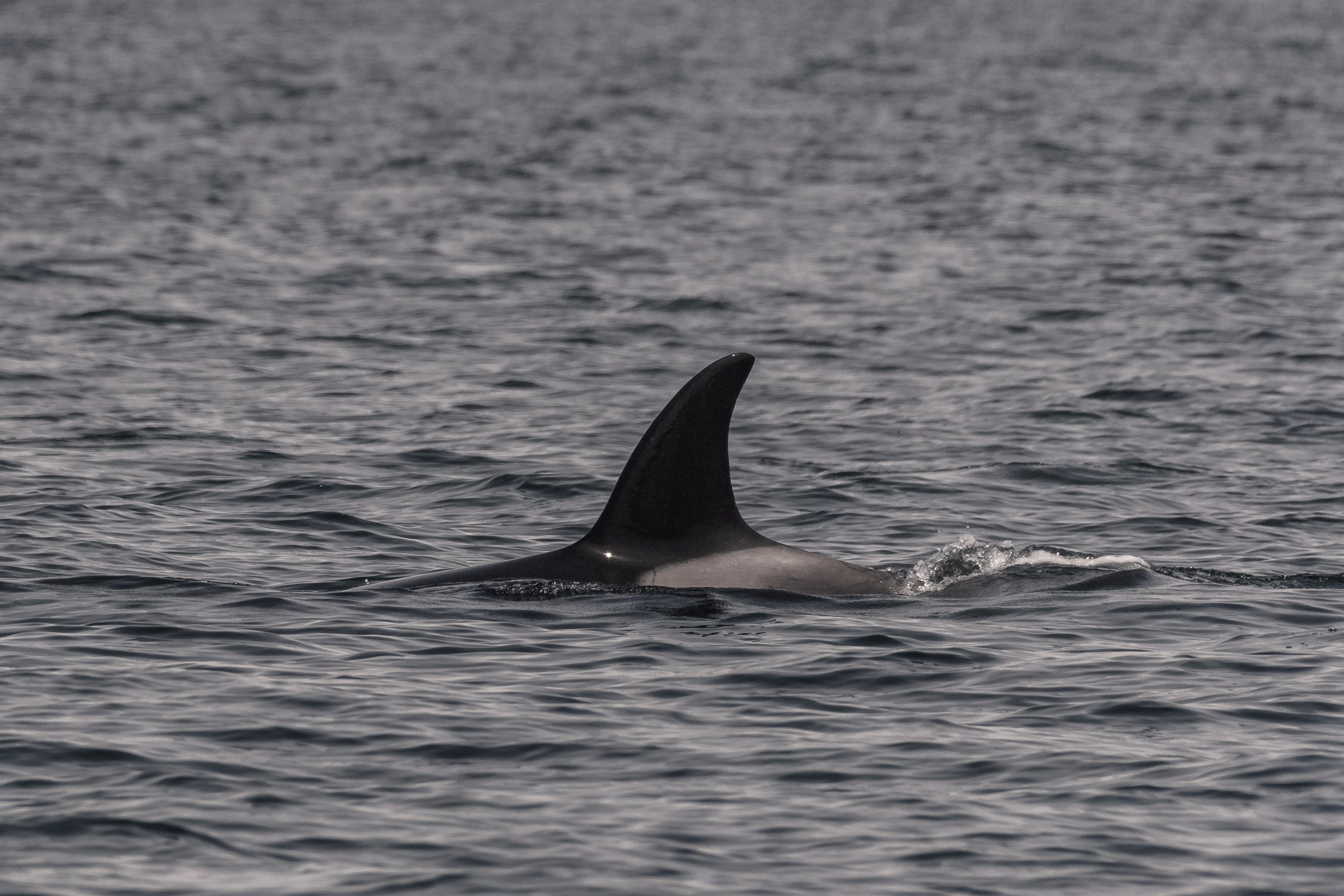
Another view of T086A1 Nahanni’s dorsal fin and saddlepatch. Photograph by Evan Hessels.
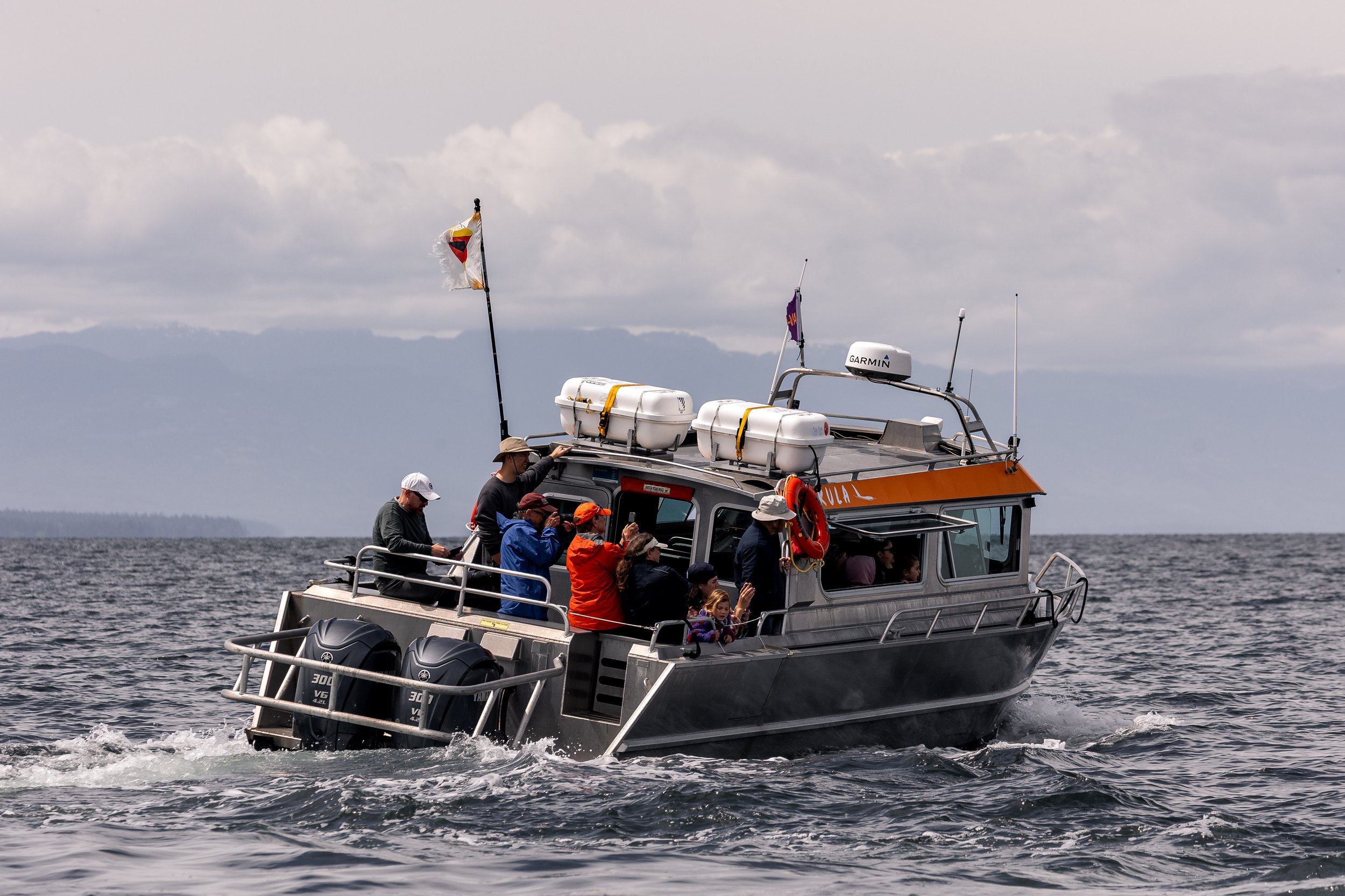
Our passengers aboard Kula waiting for the next surface of the T086As. Photograph by Jordan Robinson.
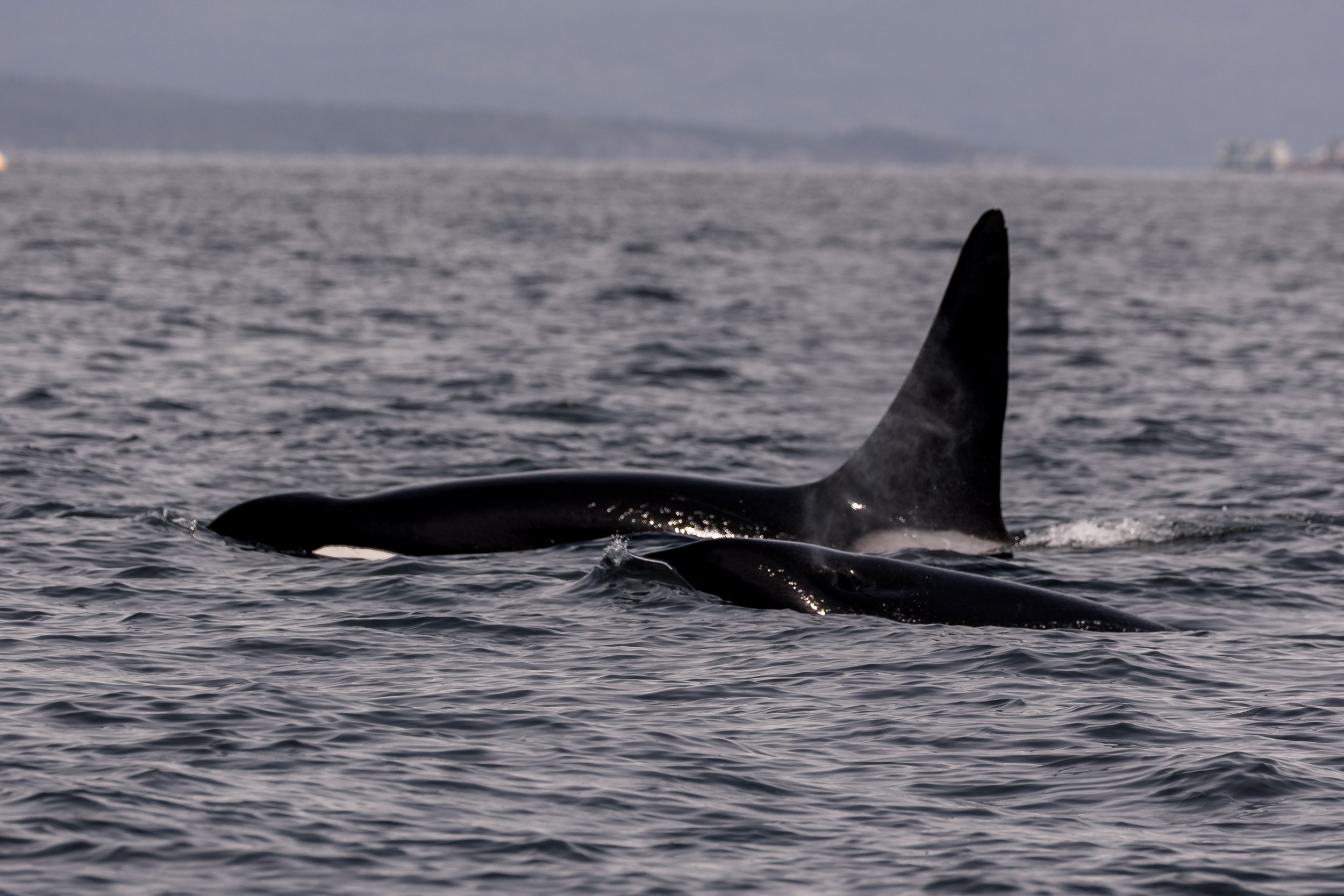
T051 Roswell surfacing just behind T049A2 Jude. Photograph by Jordan Robinson.
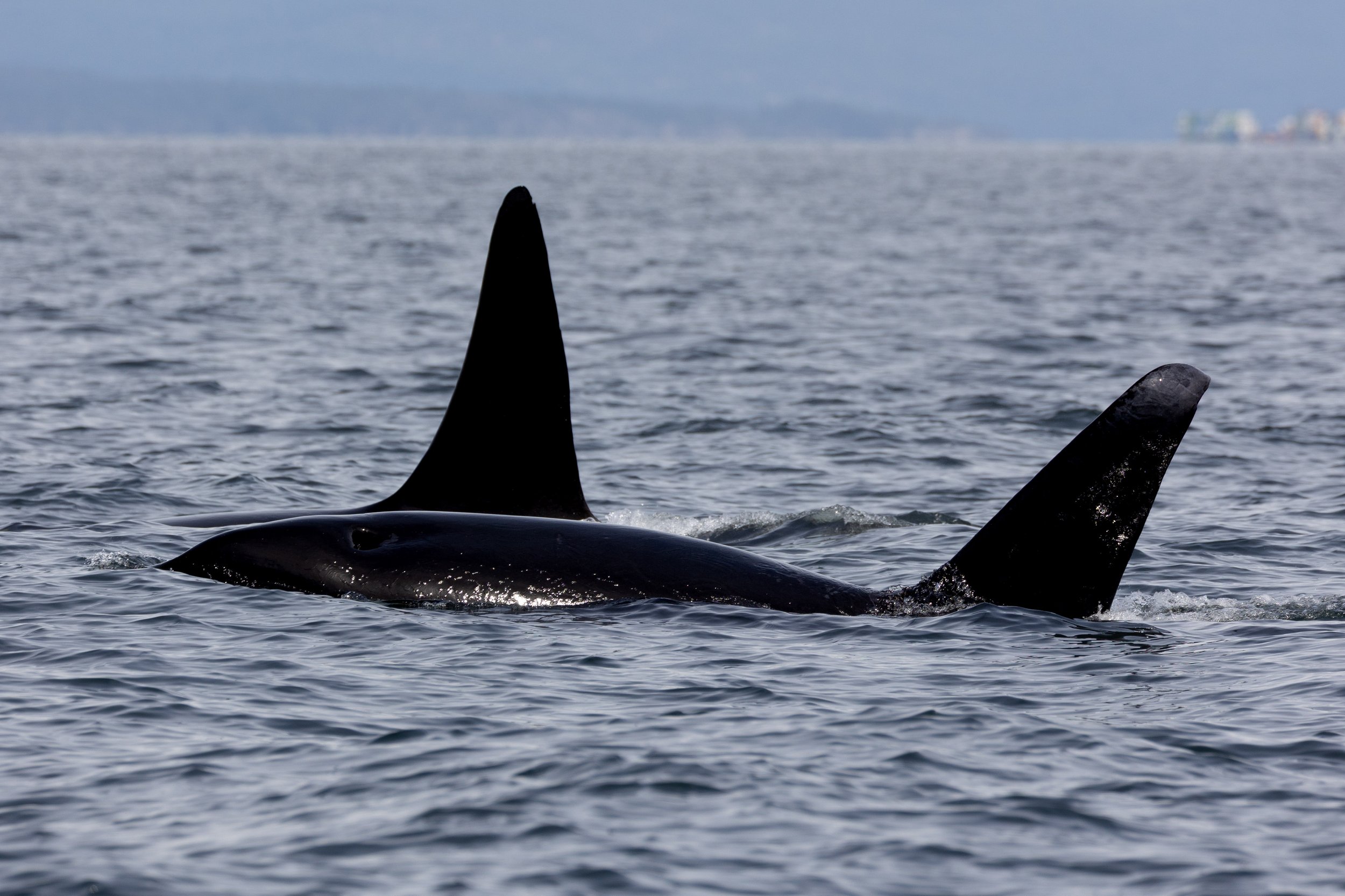
A better look at T049A2 Jude surfacing in front of T051 Roswell. Photograph by Jordan Robinson.
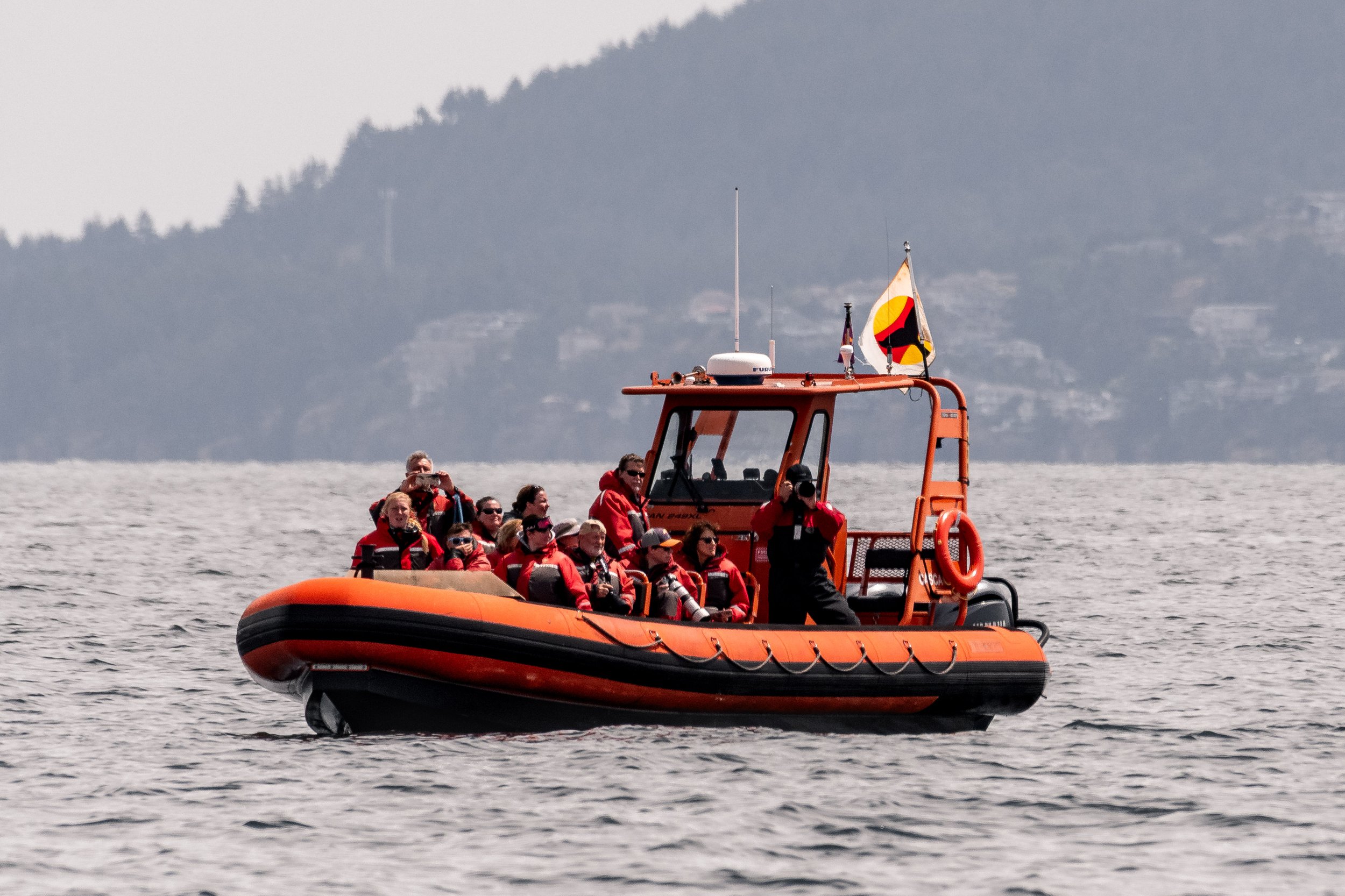
Our guests on Cascadia enjoying the great views of Orca. Photograph by Evan Hessels.
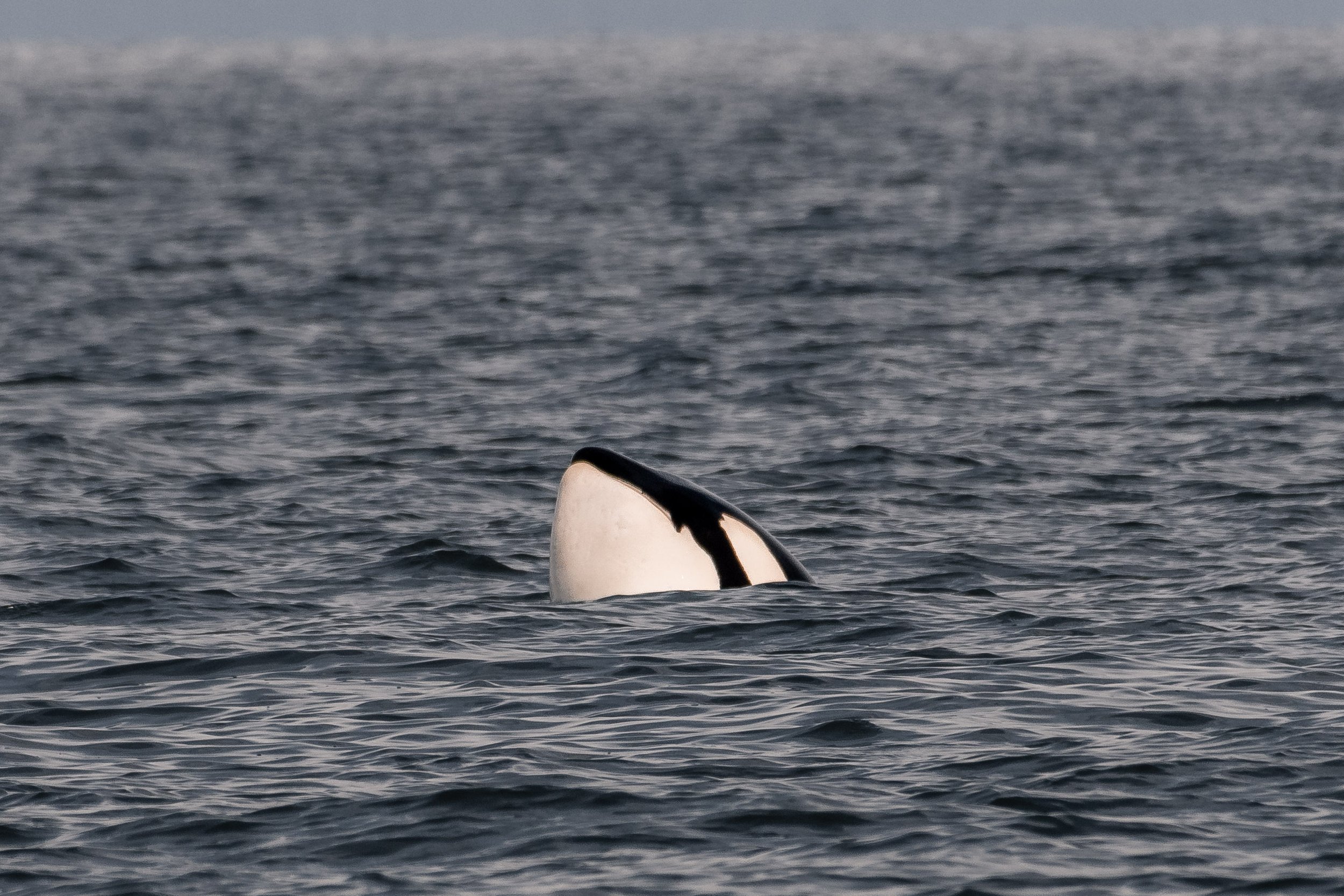
A little spyhop from T086A1B Denali. Photograph by Evan Hessels.
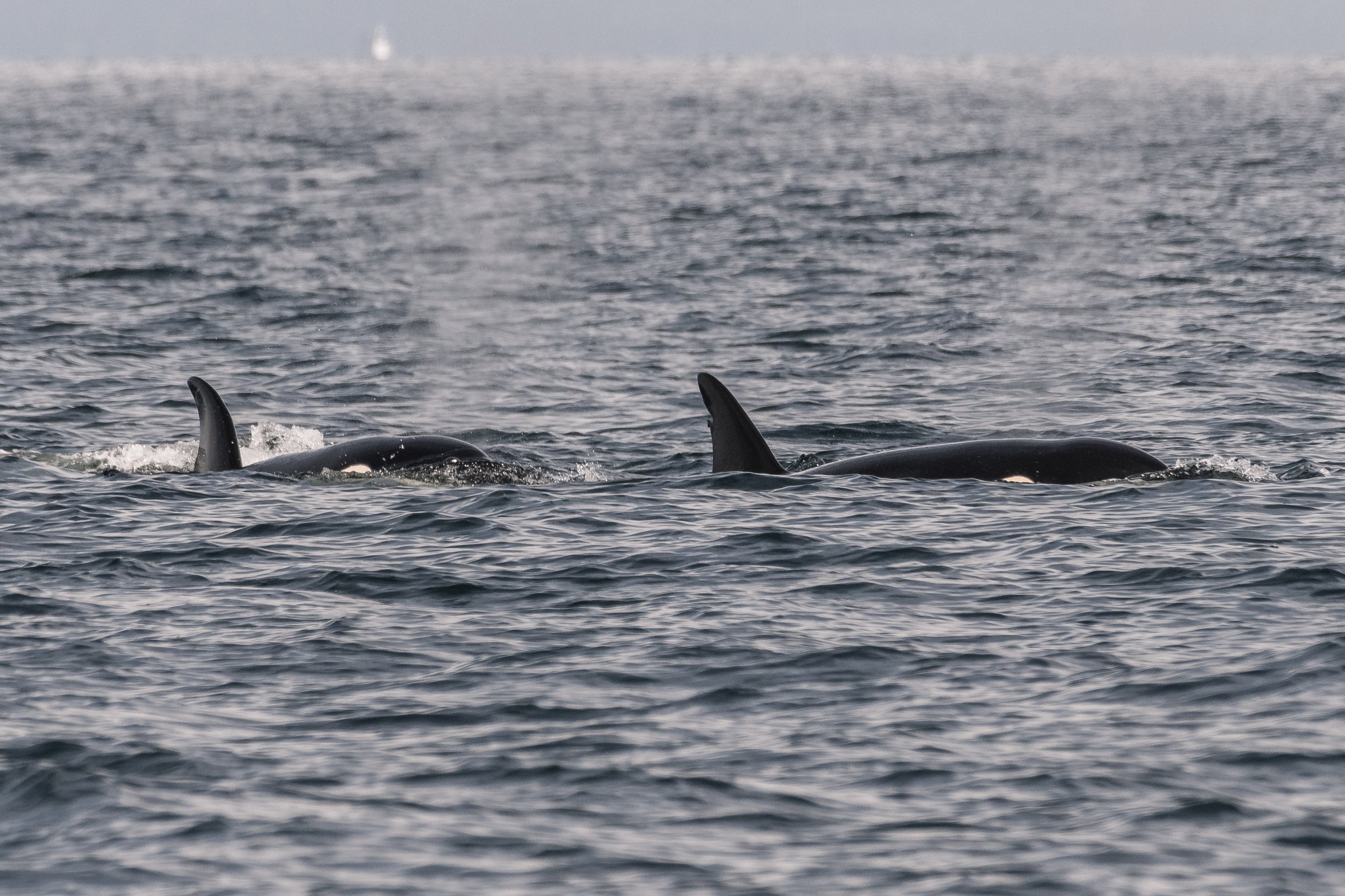
T086A3 Tyndall leading ahead of T086A4 Akia. Photograph by Evan Hessels.
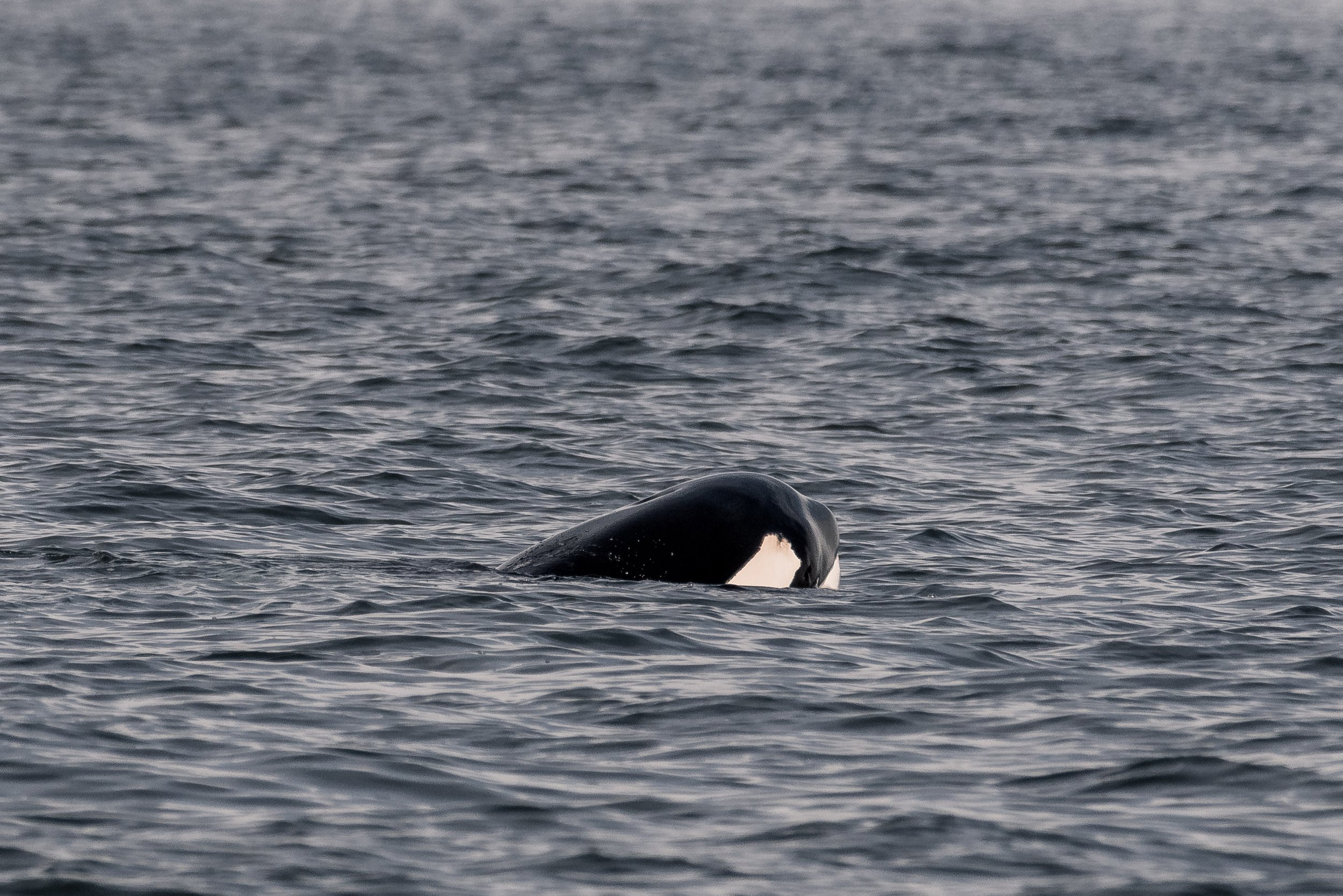
T086A1 Nahanni giving a little spyhop. Photograph by Evan Hessels.