
May 23, 2026, 3:30 PM - 'Porpoising' along for lunch plus a dozen humpbacks too!
After an exciting morning trip, our vessels Cascadia and Kula prepared for another great trip on the water! Our tour started the day by heading north to search for shore-based sightings in Nanoose Bay, close to where our morning tour had ended. Captains Rodrigo and Tino worked together to cover a large area, searching far and wide for any tall dorsal fins or small blows. We searched and searched, but to no avail - the whales were no longer in this area. Considering some whales will travel over 100 kilometres in a single day, this isn’t too surprising! Our captains soon received word of another pod of orcas on the other side of the Strait of Georgia, close to Vancouver. Captains Rodrigo and Tino turned us around, and we set off, pointing towards the distant Vancouver skyline.
On the journey over, passengers and crew aboard Kula had spotted some large, bushy blows - it was a humpback whale travelling along! This individual was identified as Pingu (BCY1110) from their unique barnacle-encrusted dorsal fin. While barnacles are not as permanent a marking as pigmentation differences on the flukes, if we have seen a whale recently, we can compare their barnacles to confirm their identity, especially in encounters such as this one, where Pingu did not fluke. Pingu was travelling along, staying relatively close to the surface. Pingu did have a friend travelling with them at first, but as we got in position, they went down for a dive and were not seen again. Marine Naturalist Evan, aboard Kula, snapped some photos, and soon after, Kula continued onward towards Vancouver.
Upon approaching the south end of Bowen Island, numerous small blows were spotted in the distance: It was the orca! One in position, Marine Naturalist Jordan aboard Cascadia quickly grabbed some ID photos. After a quick comparison to our catalogues, it was confirmed that these were the T124A1s and the T124A2s:
T124A1 Bonapartes ♀ (1996)
T124A1B (2026)
T124A2 Elkugu ♀ (2001)
T124A2A Agafia ♂ (2013)
T124A2B Litton ♀ (2016)
These orca were bursting with energy as we observed them. Shortly after we arrived, a small, dark creature darted through the waters ahead of us. Suddenly, the orca exploded into action, and the chase was on. The small creature was a Harbour Porpoise, and it appeared that they were now hunting it. While hunting can be sad to witness, it is important to remember that even predators need to eat!
We did not witness whether the hunt was successful; we suspect it was, as evidenced by the joyous breaching and tail-slapping that soon followed. Hunts largely take place under the surface, so while the action is going on, we don’t actually see much of it ourselves. If they are able to catch their prey, they typically divide it among the prey members beneath the surface. Once their bellies are full, they will often celebrate, as they did here. Tail slapping, breaching, and back dives were all observed as they frolicked away. The youngest member of the group, T124A1B, was also seen being pushed along by their presumed mother, T124A1 Bonapartes, during the excitement.
While researchers are usually confident which calf belongs to which mother, T124A1 Bonapartes is a bit of a special case. This is believed to be her second calf; however, her first calf, T124A1A Sabine (born 2024), is still young and should, in theory, still be by her side. During initial encounters, Sabine was seen travelling in echelon position, or slightly behind Bonapartes’ dorsal fin during the first few encounters. Typically, this is the position we expect to see calves in while with their mothers. However, it was noted that the calf soon started to look sickly. It was losing weight, and there was fear that it would soon pass away. That’s when it all changed, though, when suddenly, Sabine was spotted travelling with one of Bonapartes’ sisters - T124A4 Sabio. Sabio has often been travelling away from her natal matriline in recent years, with her calf, T124A4A Strix (born 2021), by her side. Since this ‘adoption’, Sabine has recovered and now looks healthier than ever. There is some speculation that she may always have been Sabio’s calf, and that Bonapartes may simply have had her maternal instincts kick in, wanting to travel with a calf herself. Now 30 years old, Bonapartes is considered quite old to be producing her first calves - most females give birth to their first calf between 10 to 15 years of age. If Sabine is, in fact, Bonaparte’s calf, she may have failed to produce milk, leading to the calf’s sickly state. With Sabio’s calf, Strix, being relatively close in age to Sabine, she may still have been lactating, allowing her to start caring for Sabine herself. While we will never truly know what happened, we are hopeful that this new calf survives and that Bonapartes may finally live her life as a mother!
Soon our time was up with the orca, and we had to make our way onward. We started making our way back across the Strait, eyes scanning the waters ahead. Soon after, large dark shapes could be seen slicing through the surf all around. These were humpbacks, and there were a lot of them all around! Evan and Jordan once again took up their cameras and began documenting the scene. Many of the humpbacks were fluking at suboptimal angles, making IDs tricky. After comparing photos to our various catalogues, we confirmed that the following humpbacks were present: Cirque’s 2024 calf (BCY1059calf2024), X_pialidocious (BCY1540), Ghost’s 2025 calf (BCX1333calf2025), Kelpie (BCY1276), Neptune (BCY1021), Pyramid/Monarch/Kraken (BCZ0180), Wiggins (BCY1469), Hendrix (BCY1278), and Blizzard (BCX1817), but there likely were more around that were travelling just out of our line of sight. We estimate that there were at least a dozen humpbacks in the immediate area - a very impressive number for this time of year!
Many of these whales were associating as we observed them, travelling and fluking side by side. The early season is critical for these gentle giants, as they begin their summer feeding. After migrating back to our waters from Mexico or Hawaii, they are famished, having used large amounts of their fat reserves to sustain them during their journey. Now they are busy rebuilding their weight to do it again next winter. In our waters, humpbacks have a variety of prey available to them, from krill (a small crustacean) to schools of fish, including sand lance, herring, anchovies, hake and mackerel. Eating upwards of 3,000-6,000 pounds of food daily, they spend a large portion of their day foraging or travelling from feeding area to feeding area.
We enjoyed our time with these whales before saying goodbye and soon leaving the scene. Cascadia continued back towards our home port, while Kula had one more surprise encounter in store. A bunch of splashing was spotted, and as we approached, it was noted that this was a humpback whale tail slapping away at the surface. Naturalist Evan grabbed a couple of photos of the whale slapping away, and we confirmed that this whale was BCX2504 (AKA CRC-22673). Tail slapping is an interesting behaviour, as it allows us to see more of the peduncle (tail stock) and sometimes lets us determine the individual's gender. This is because one of the only physical characteristics on a humpback whale that is different between males and females is located here - a bump found on the underside of the peduncle. This grapefruit-sized lump, known as the Hemispherical Lobe, is only present on females. After peeking at our photos, we believe BCX2504 is male because we did not see a lobe.
Concluding the tour, we made our way back to Nanaimo, pulling back into the harbour and wrapping up an incredible double species day in the Salish Sea.
Please enjoy these photos taken by Marine Naturalists Jordan Robinson and Evan Hessels, showcasing the beauty of the area and its many inhabitants!
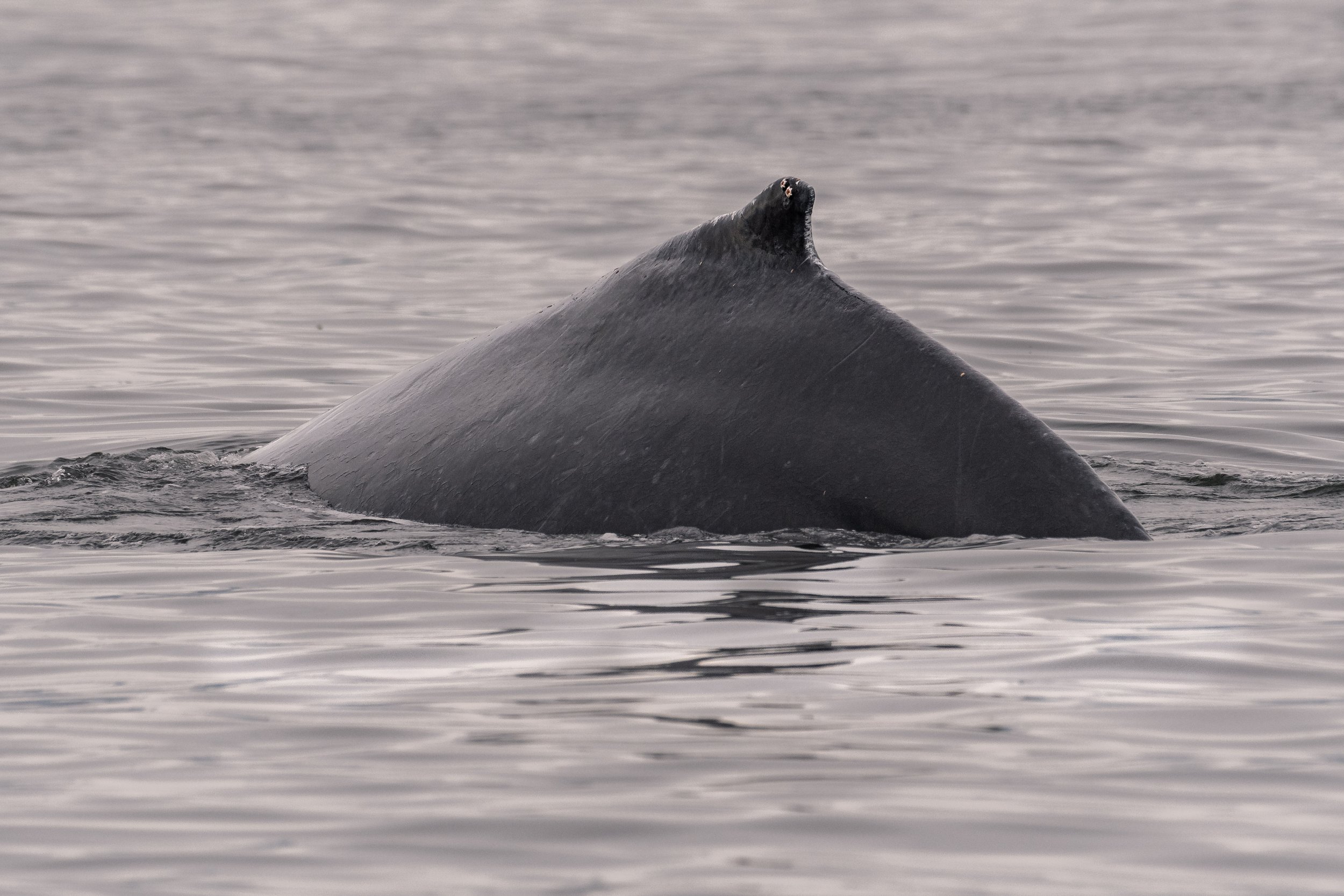
The first whale of the day - Pingu travelling along. Photo by Evan Hessels.
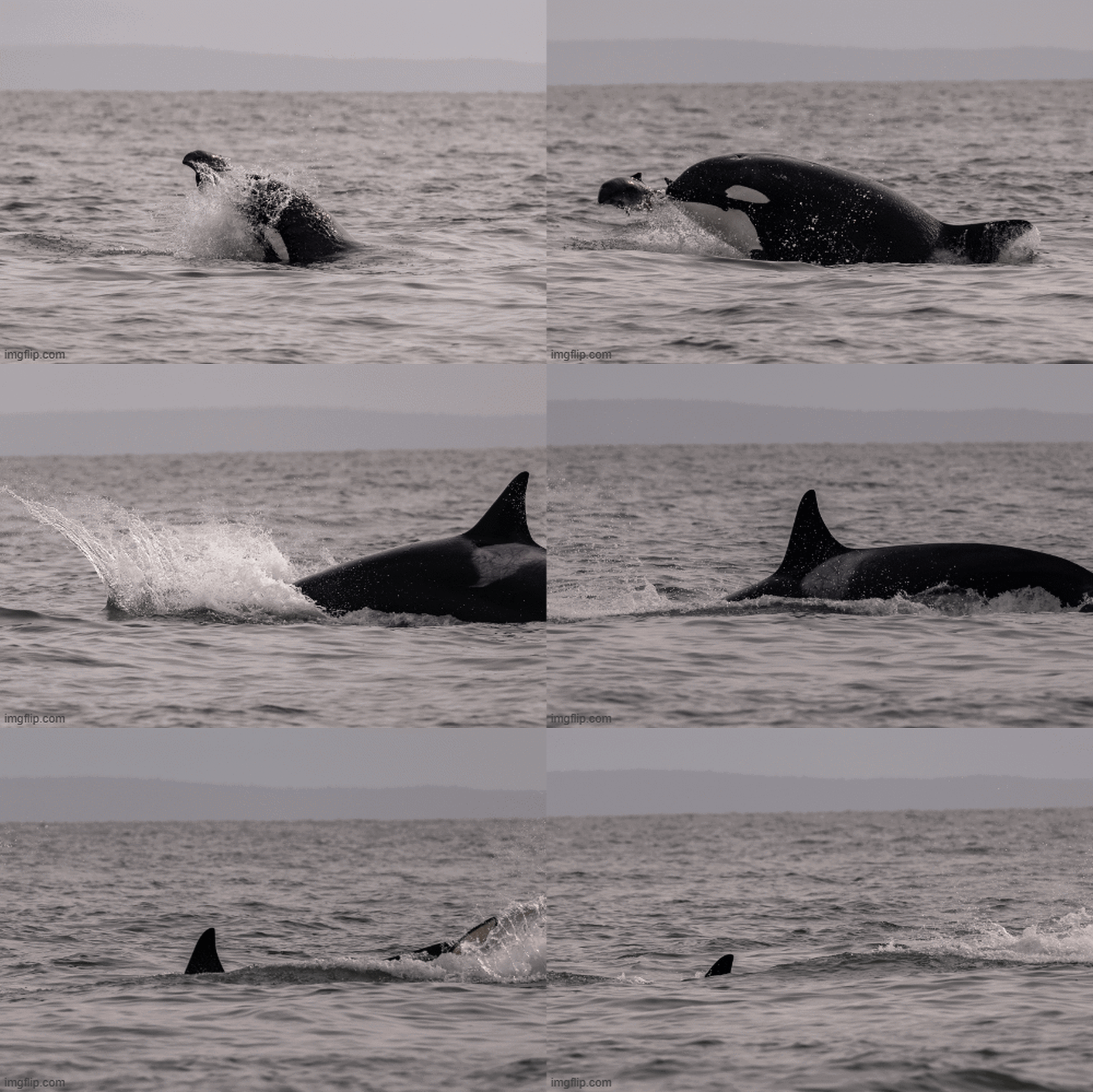
T124A2 Elkugu with the Harbour Porpoise in front of her. Photo sequence by Jordan Robinson.
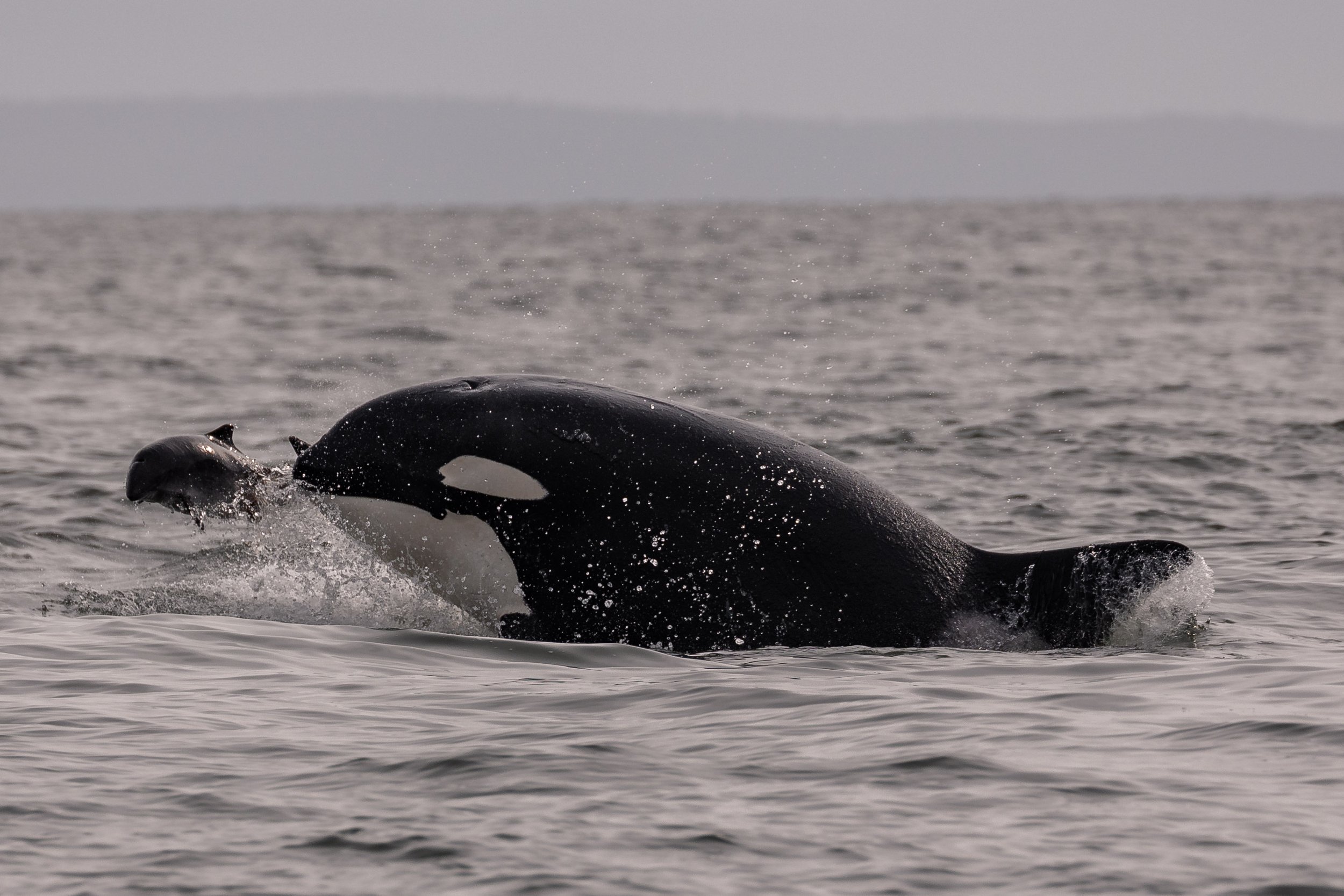
A still from the above sequence of T124A2 Elkugu with the Harbour Porpoise. Photo by Jordan Robinson.
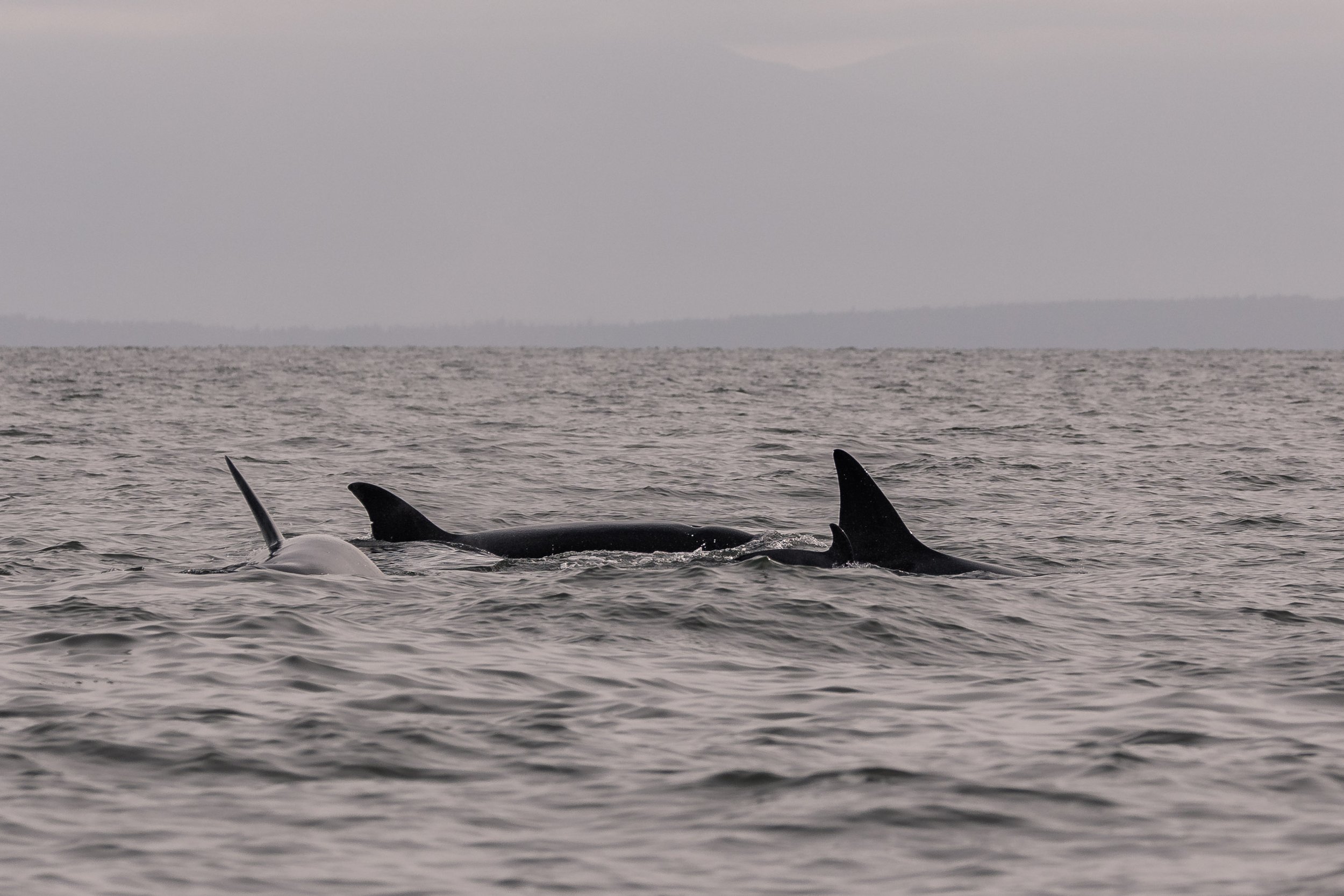
T124A2 Elkugu, T124A2B Litton, T124A1 Bonapartes, and T124A1B (in front of T124A1). Photo by Jordan Robinson.
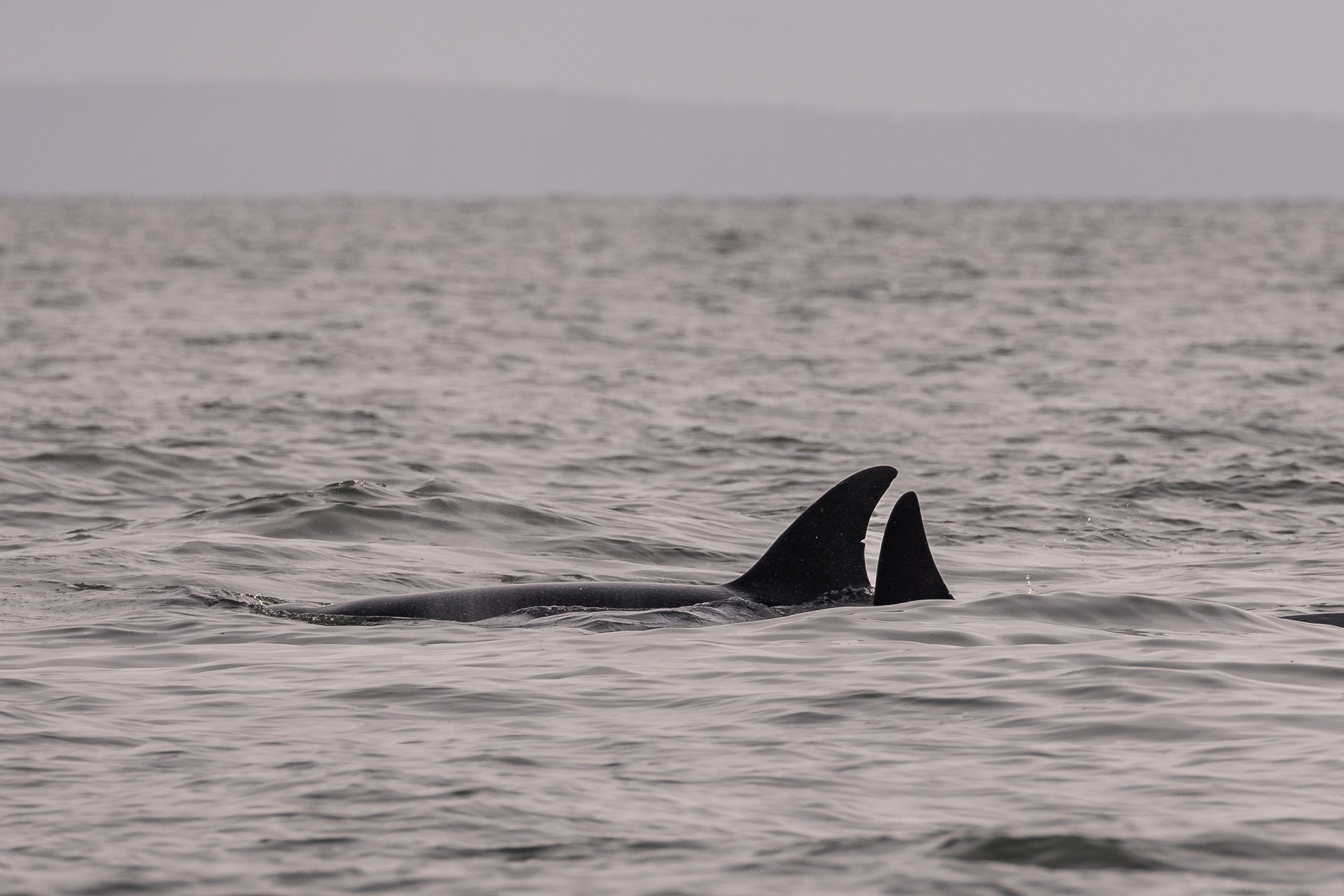
T124A2B Litton and T124A2 Elkugu. Photo by Jordan Robinson.
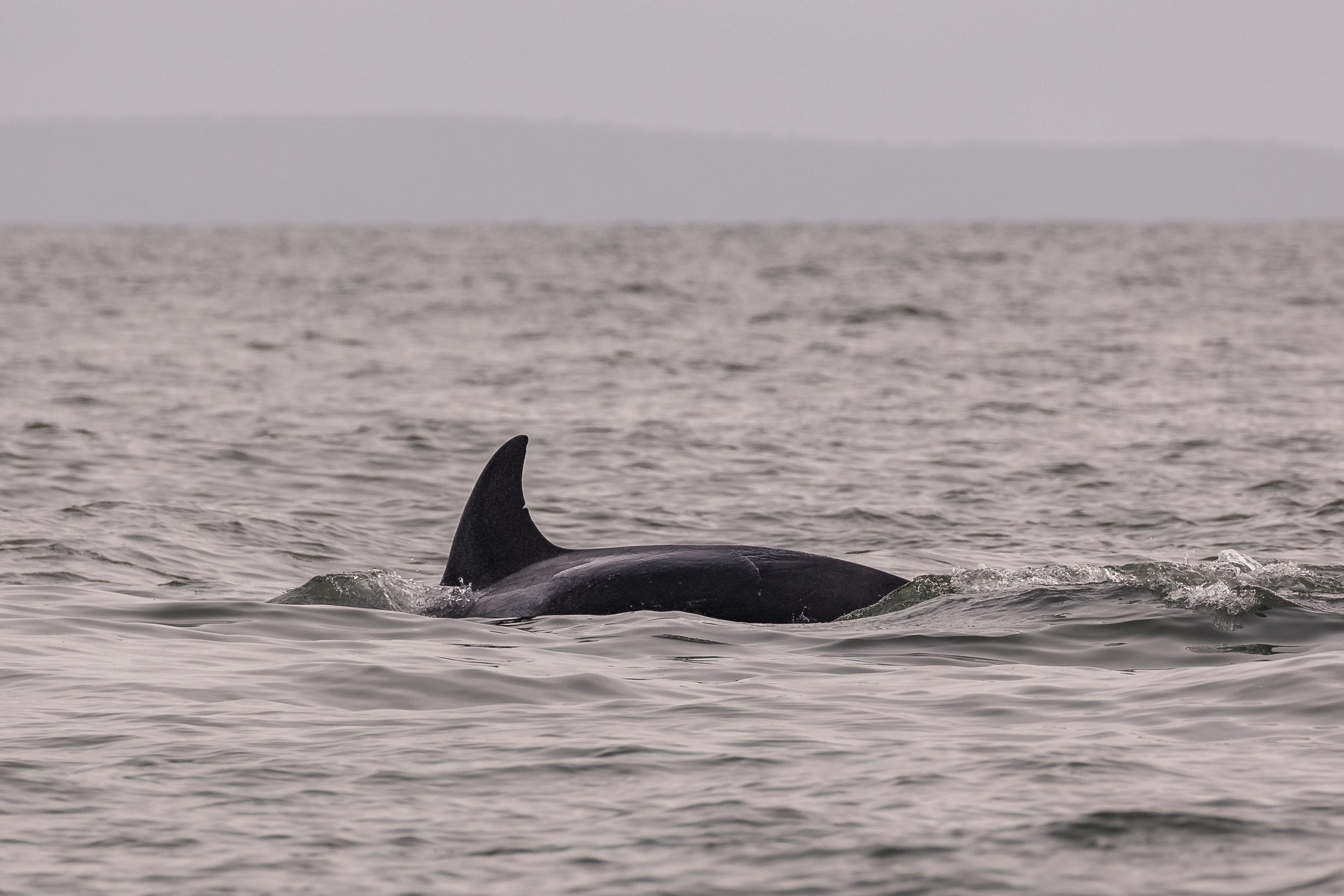
T124A2B Litton diving. Photo by Jordan Robinson.
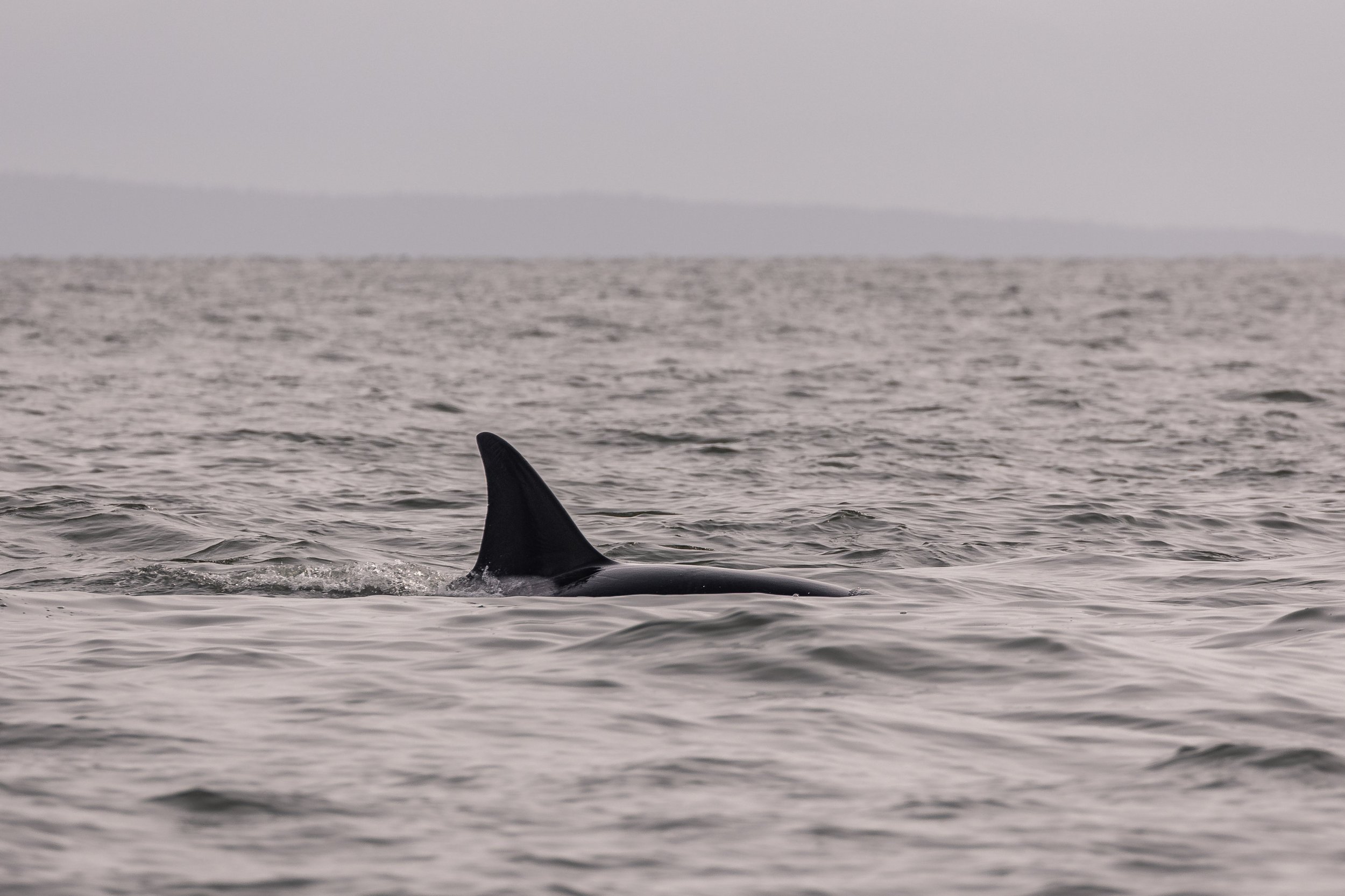
T124A2 Elkugu. Photo by Jordan Robinson.
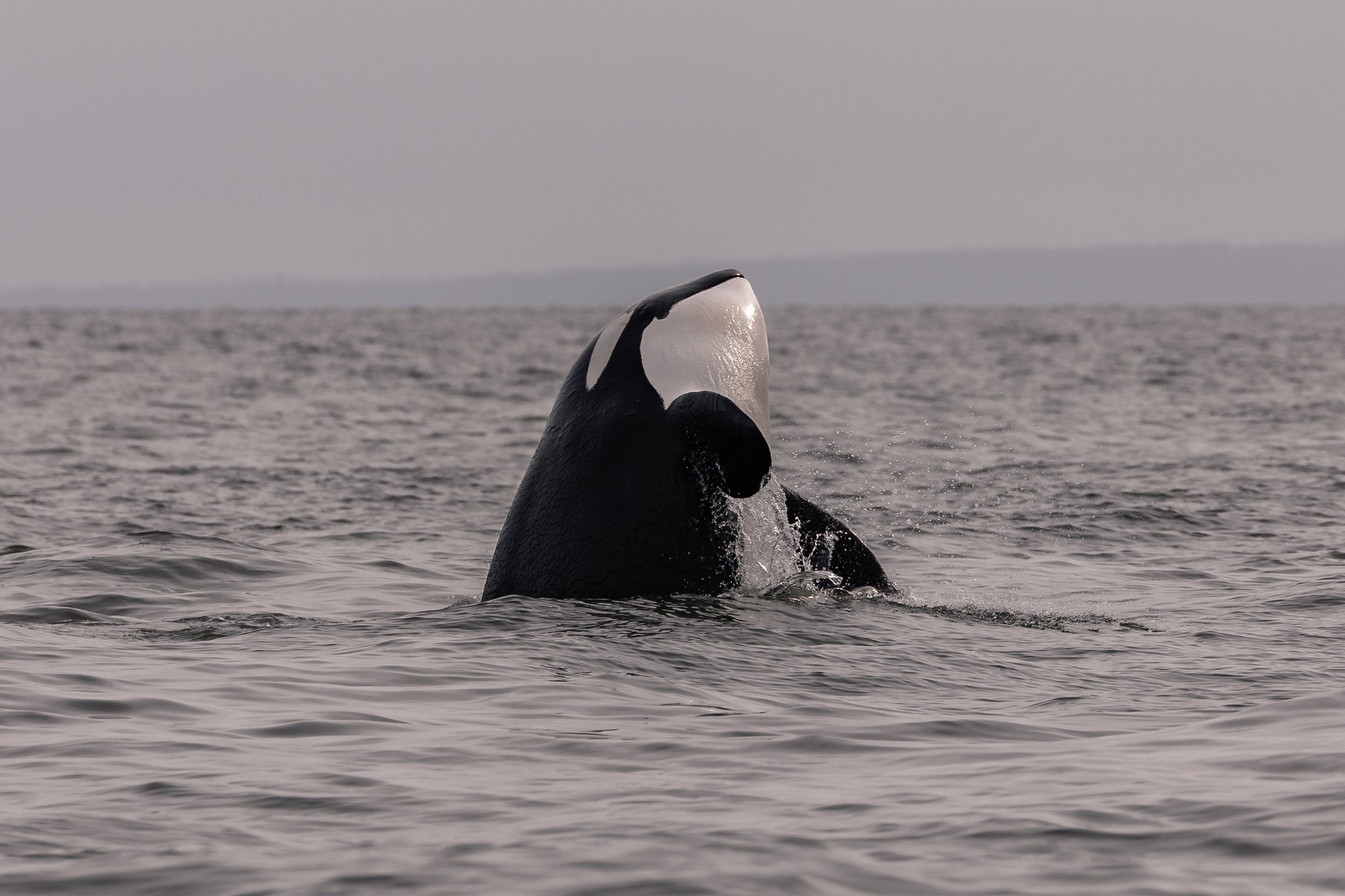
T124A2 Elkugu backdiving. Photo by Jordan Robinson.
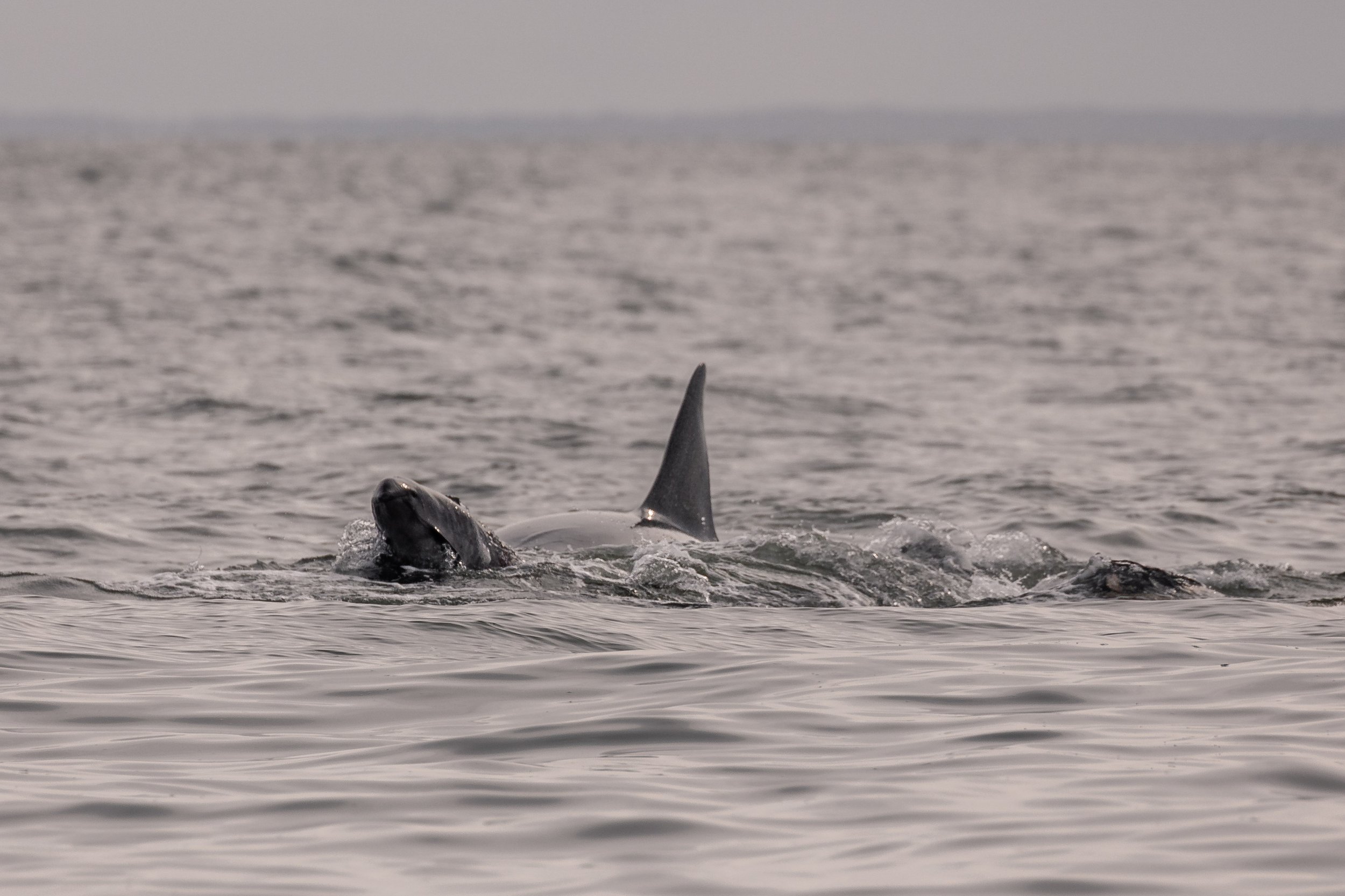
The Harbour Porpoise porpoising along, with the orca in hot pursuit. Photo by Jordan Robinson.
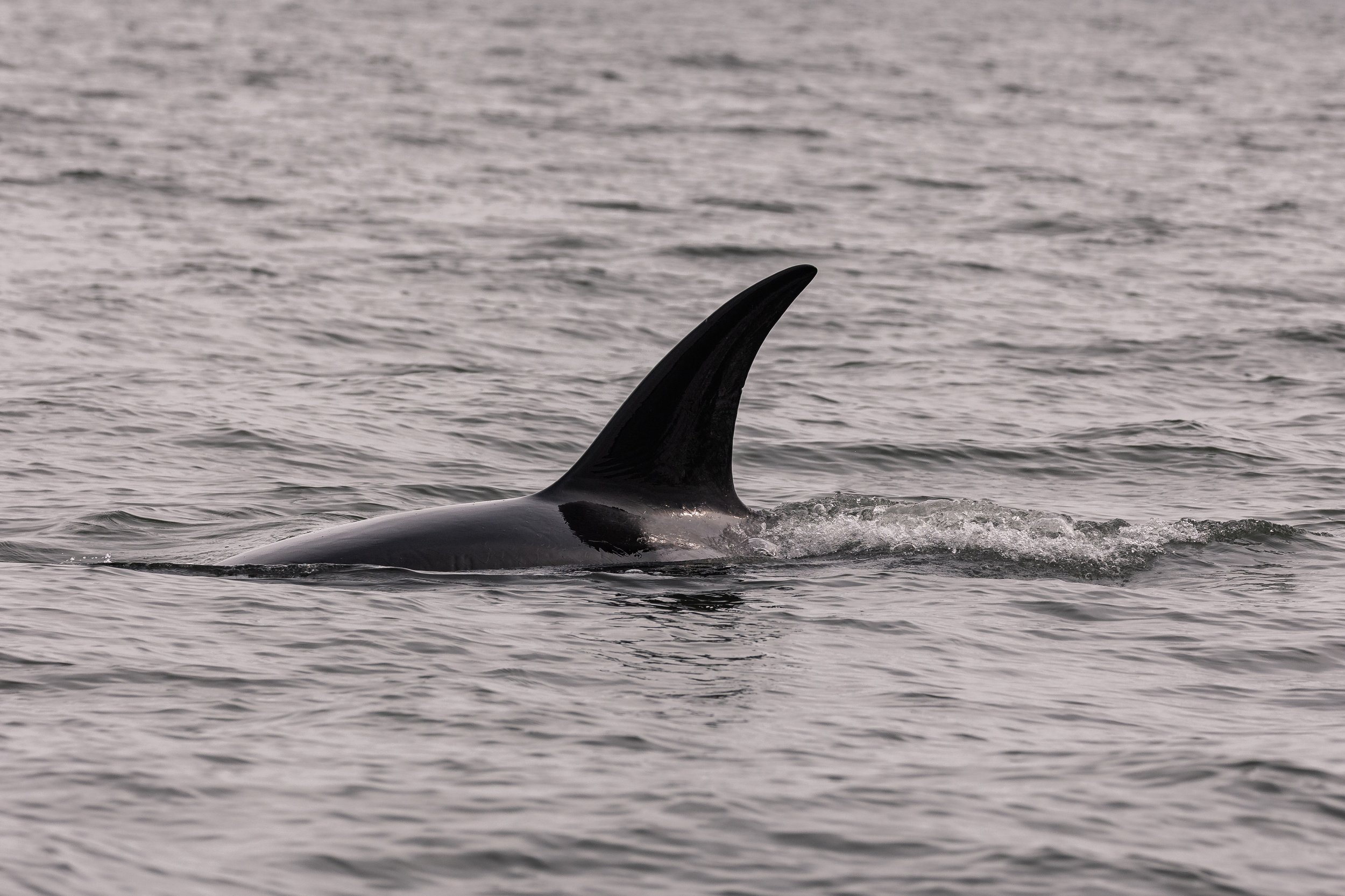
T124A2A Agafia. Photo by Jordan Robinson.
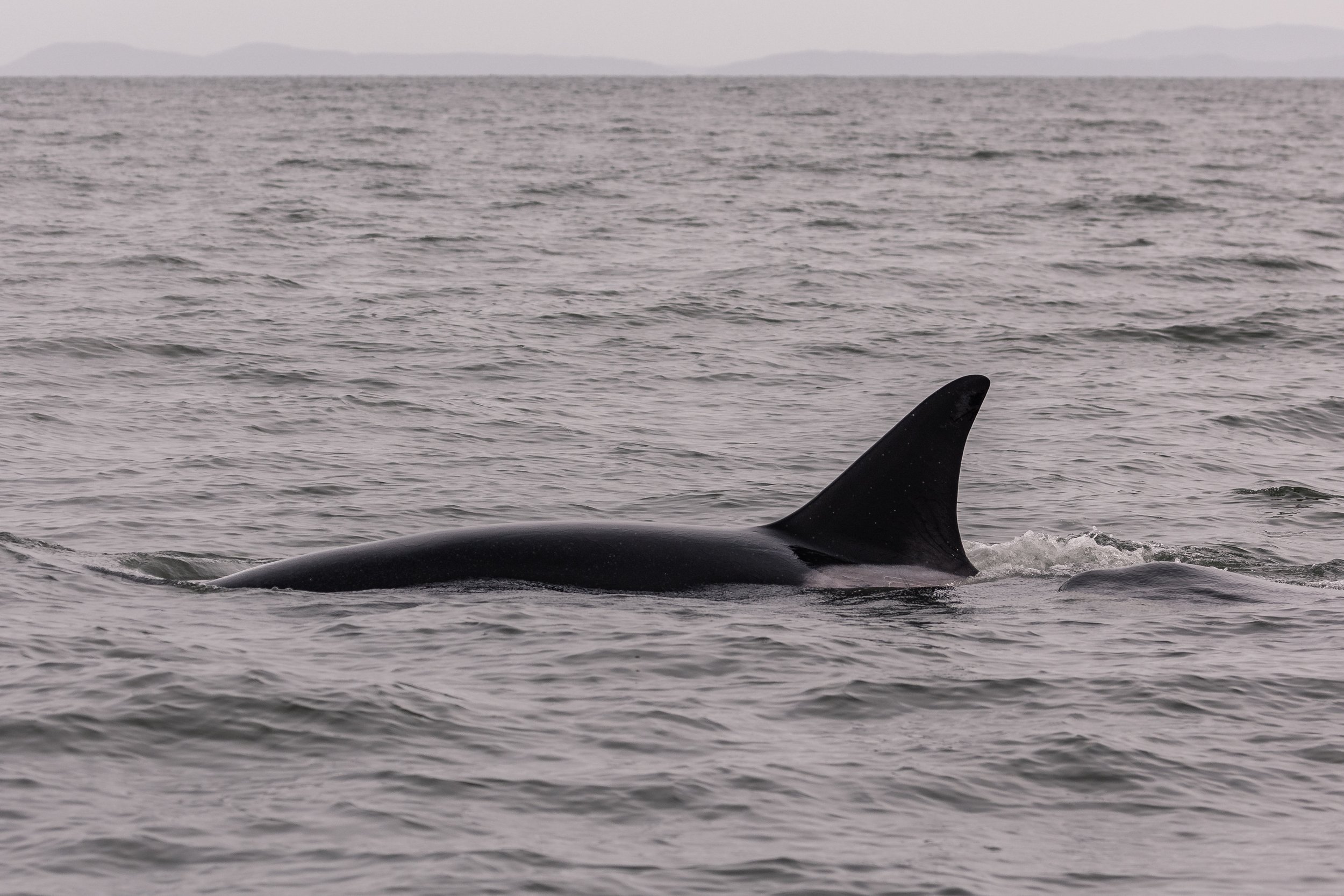
T124A2 Elkugu. Photo by Jordan Robinson.
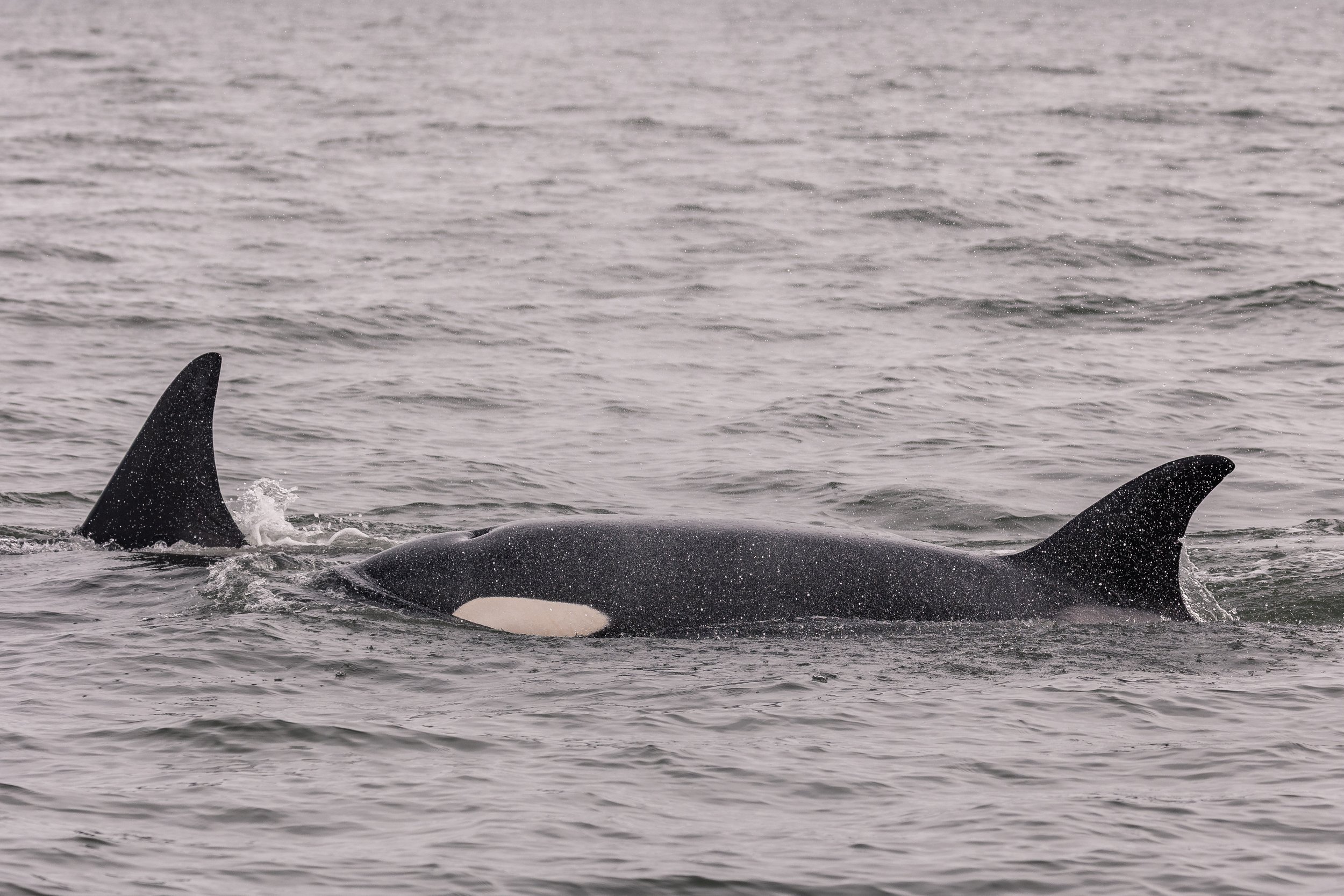
T124A2 Elkugu with T124A2B Litton behind her, eyepatch visible. Photo by Jordan Robinson.

T124A1 Bonapartes and T124A2B Litton, with T124A1B tucked in between them. Photo by Jordan Robinson.
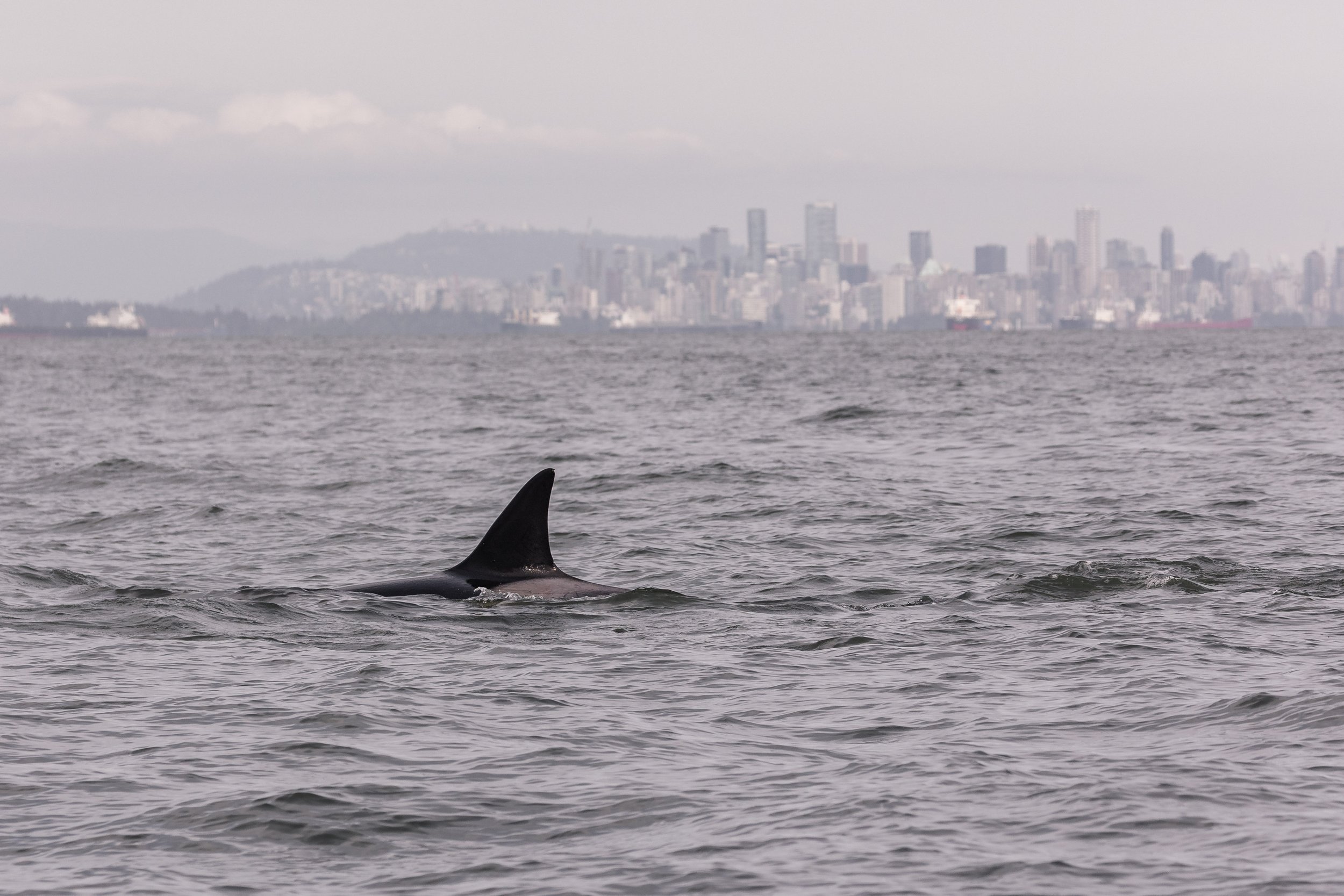
T124A1 Bonapartes with the Vancouver skyline behind her. Photo by Jordan Robinson.
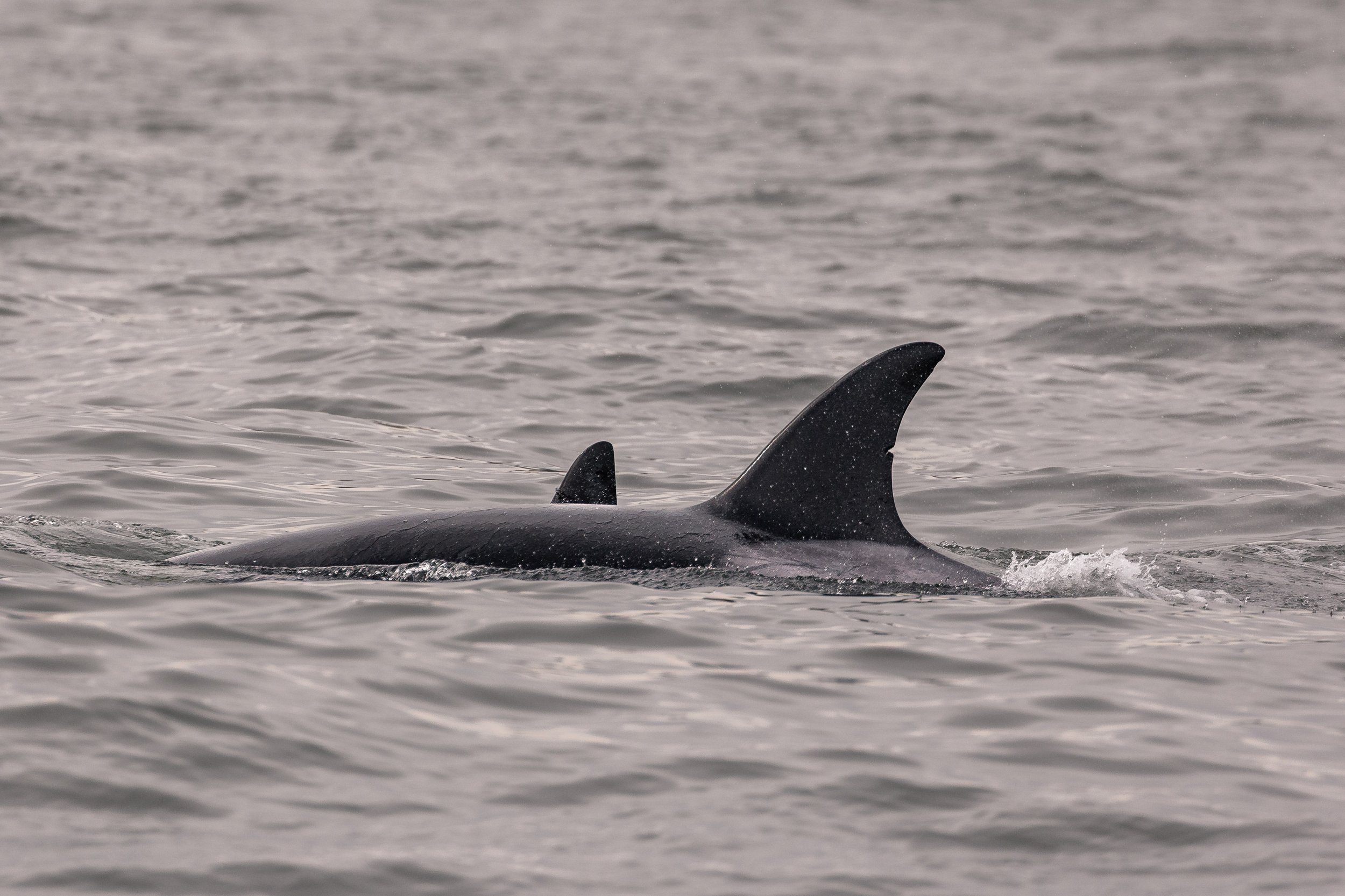
T124A2B Litton with water rolling off her back. Photo by Jordan Robinson.

T124A1 Bonapartes with tiny T124A1B beside her. Photo by Jordan Robinson.
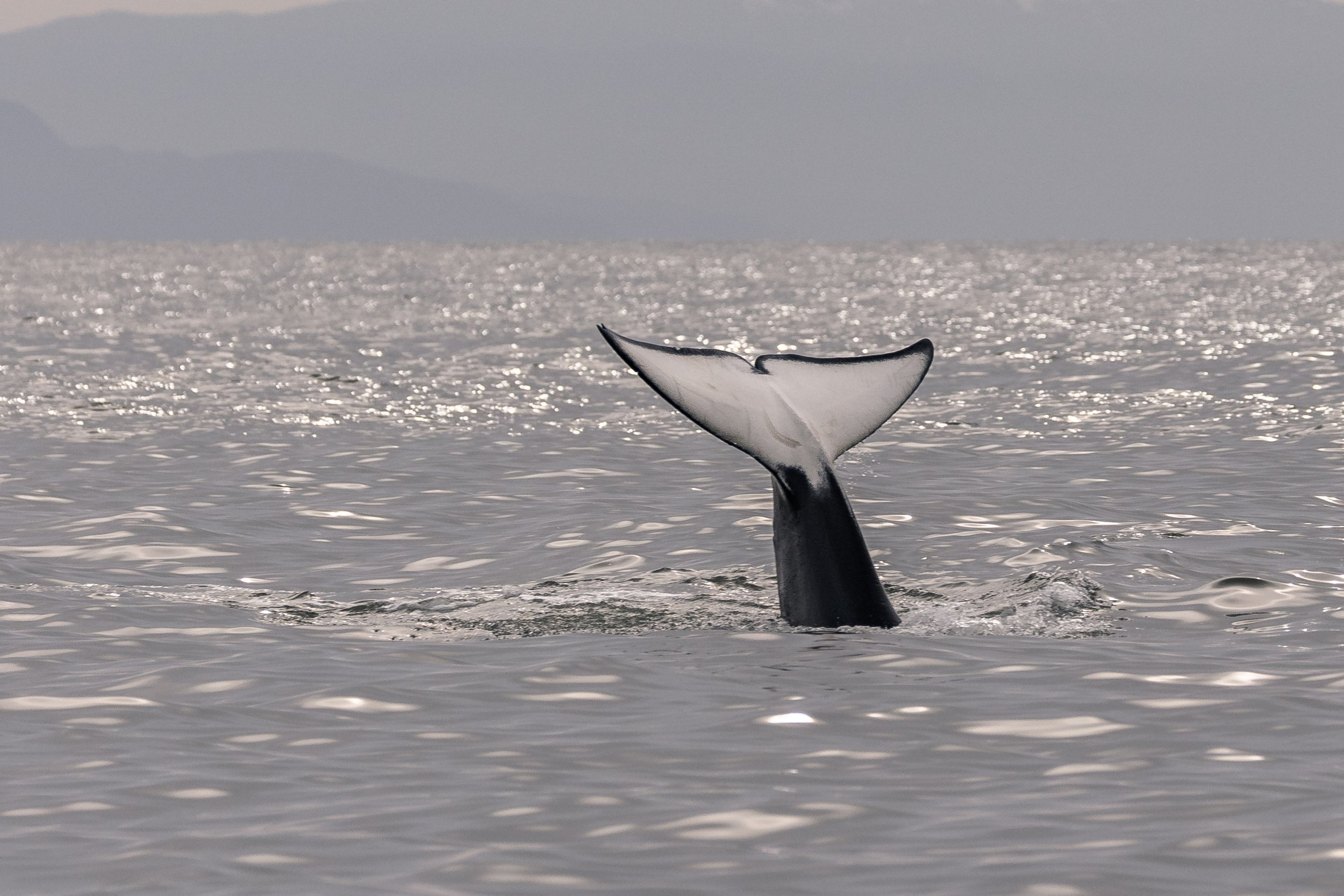
T124A2 Elkugu waving her tail around while headstanding. Photo by Jordan Robinson.
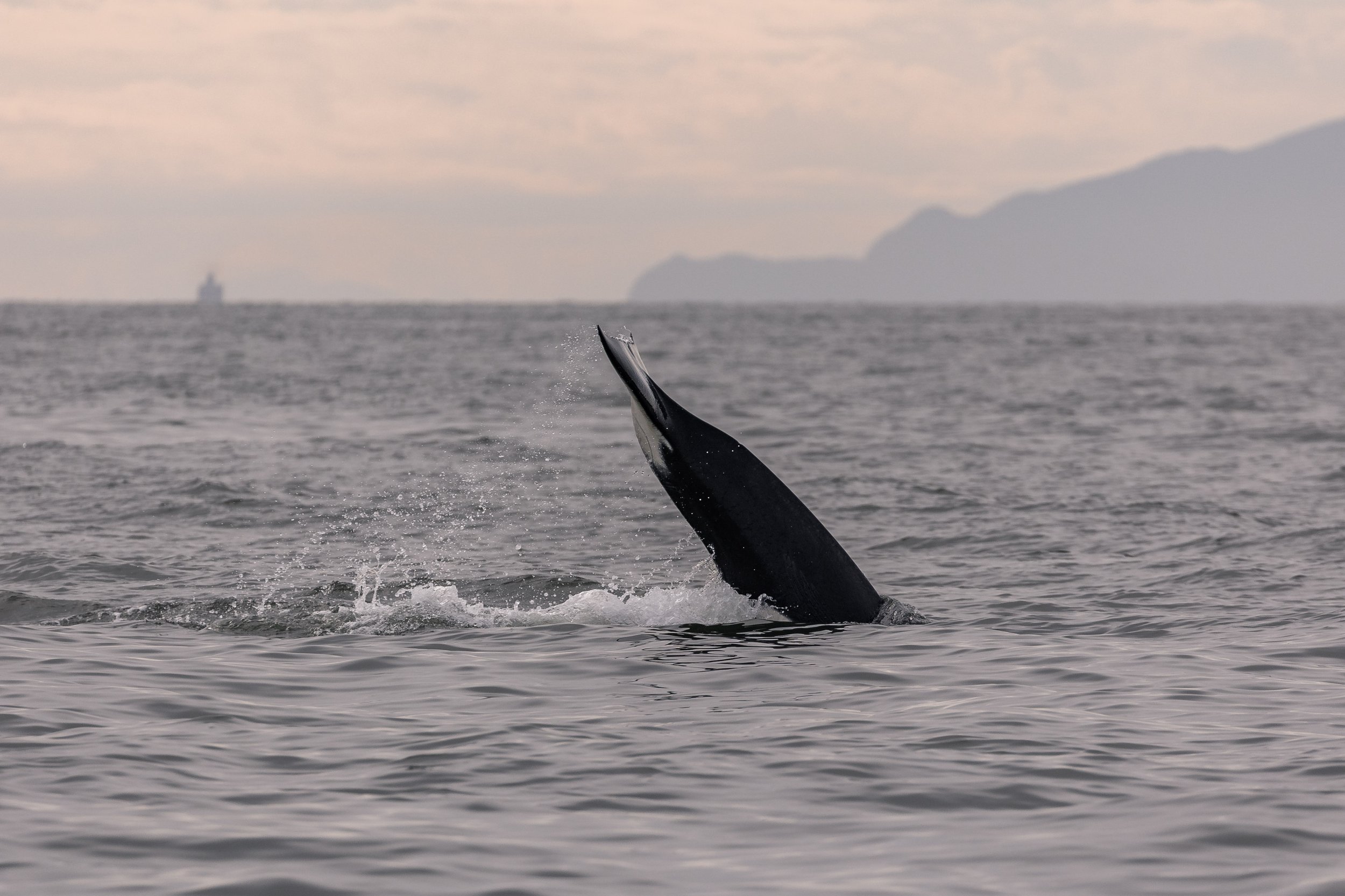
Tail slapping away! Photo by Jordan Robinson.
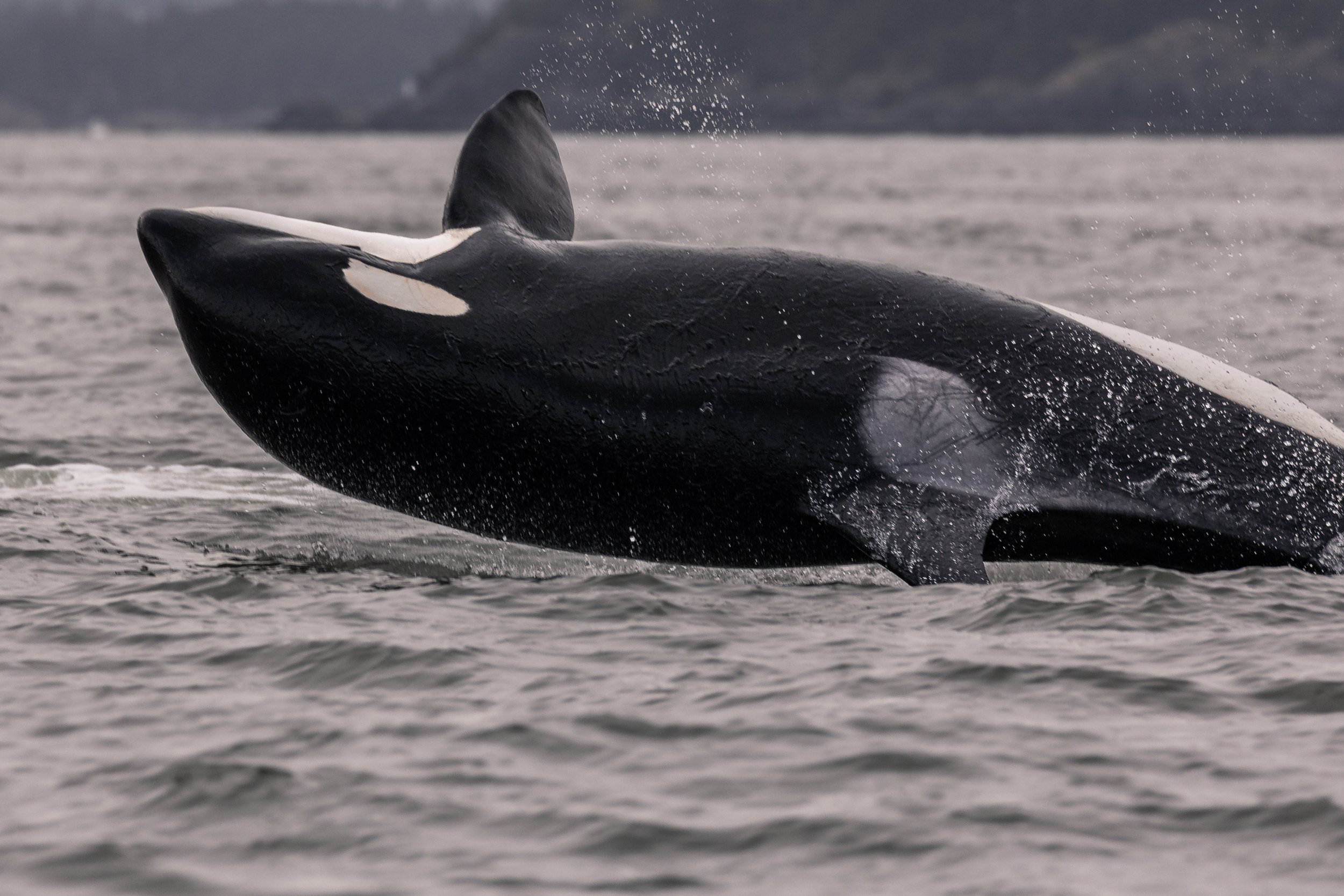
T124A2A Agafia coming in for a landing after a big breach. The trade off of having a telephoto lens is sometimes you get a bit too zoomed in when they do unexpected behaviours like this! Photo by Jordan Robinson.
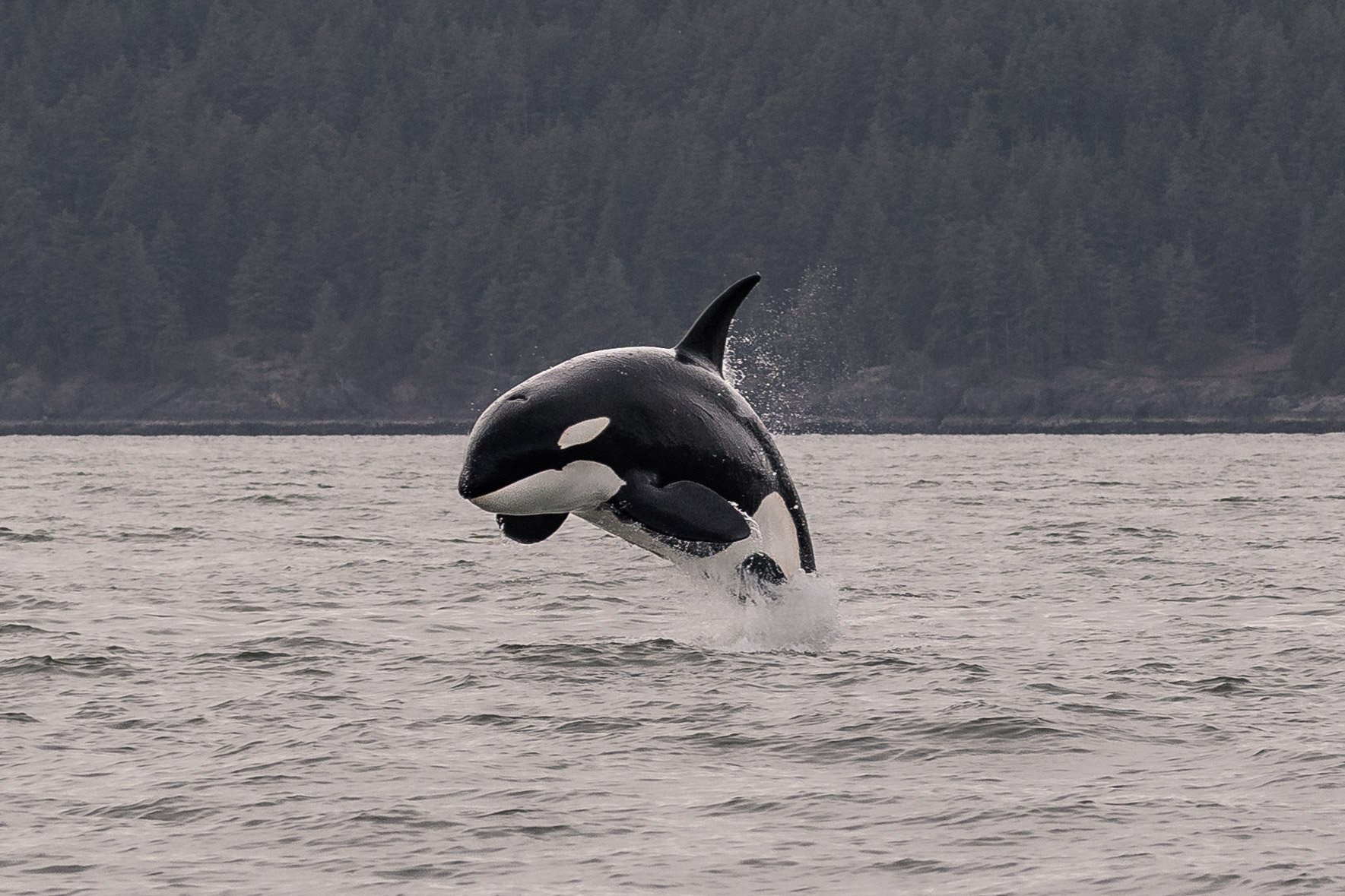
T124A2A Agafia breaching - his ID can be confirmed from this angle by his eyepatch shape, as well as the freckle in his eyepatch! Photo by Jordan Robinson.
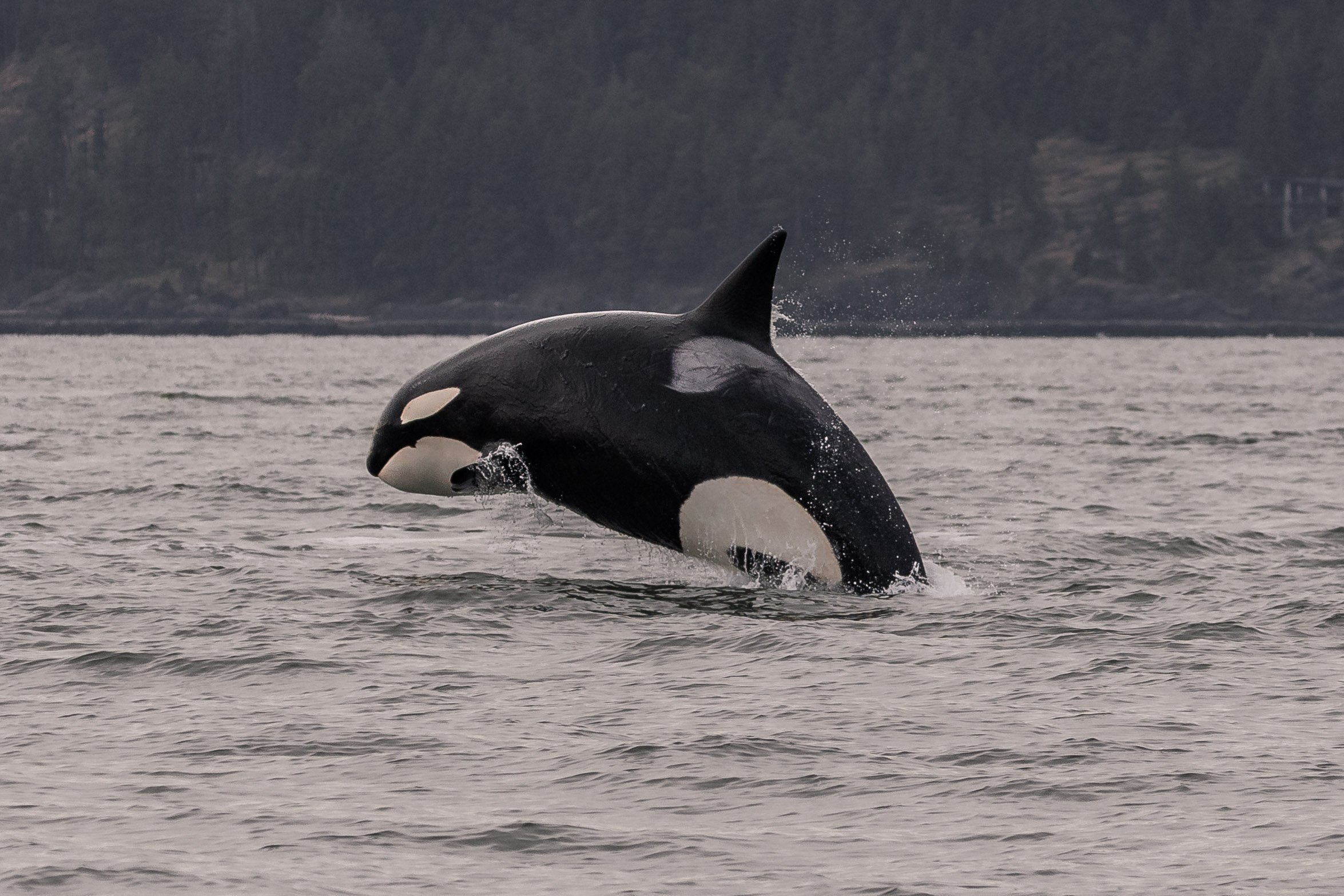
A side angle of T124A2A Agafia breaching. Photo by Jordan Robinson.
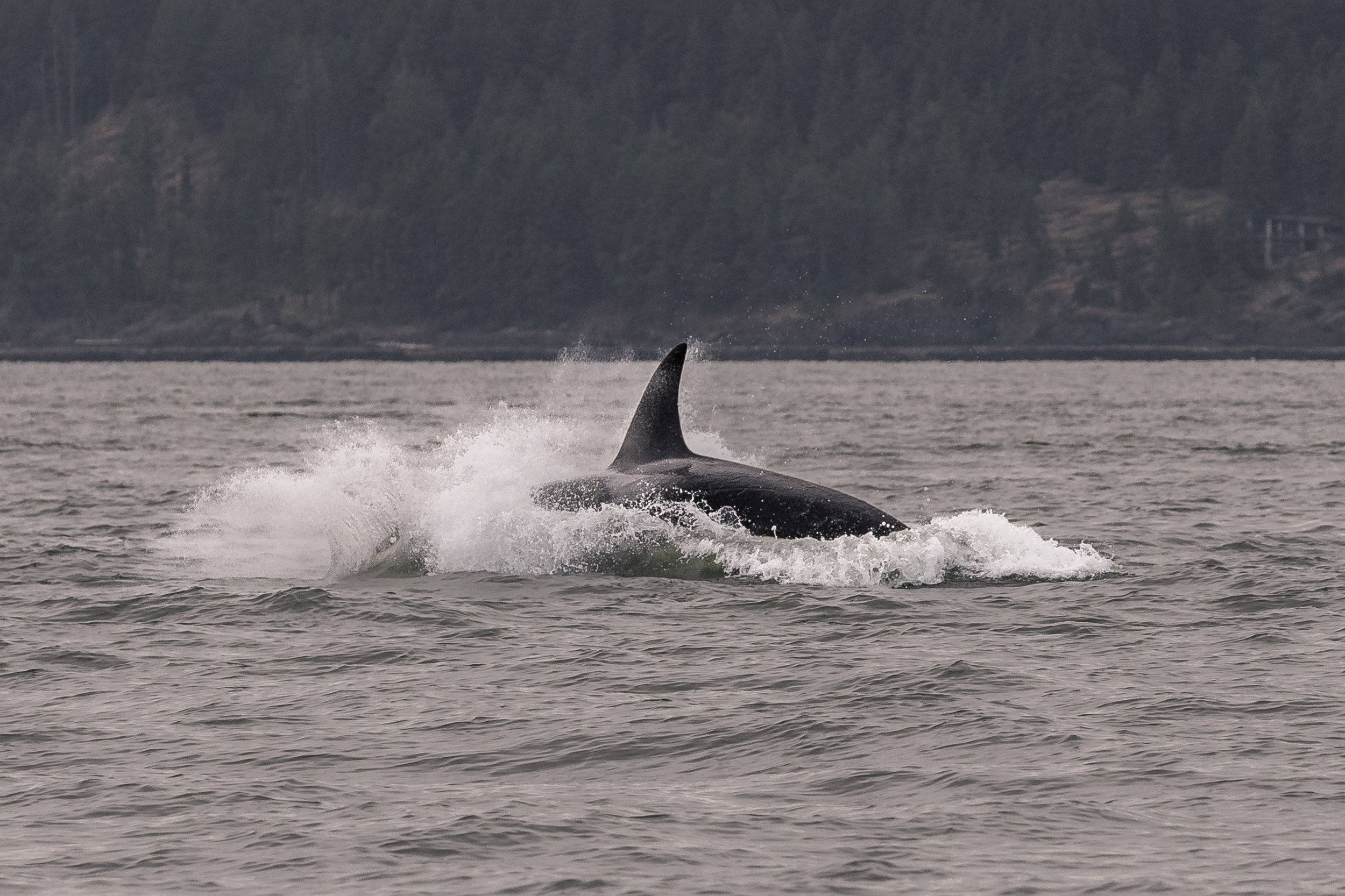
T124A2A Agafia landing. Photo by Jordan Robinson.
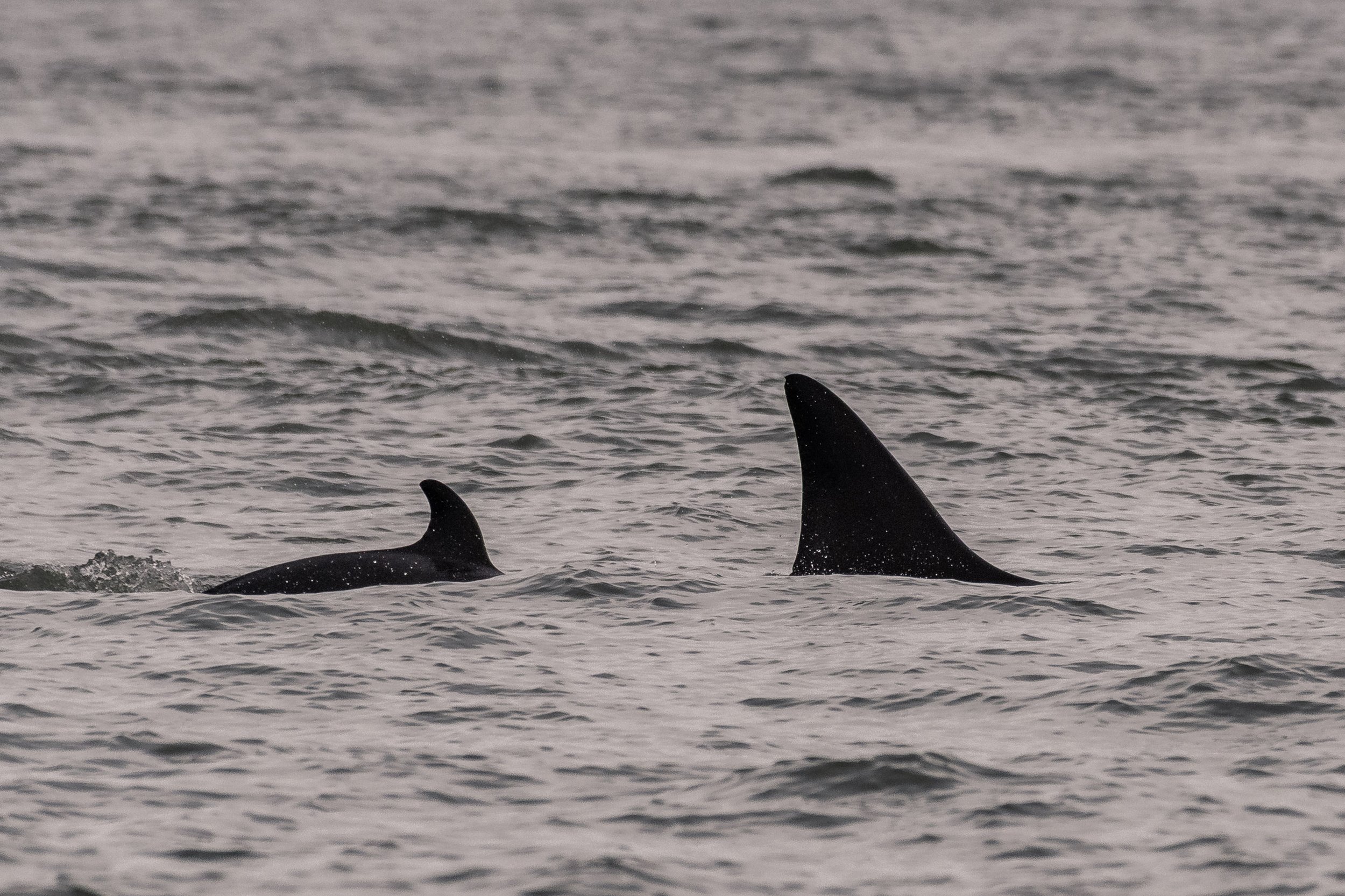
T124A1B behind their mother T124A1 Bonapartes. Photo by Evan Hessels.
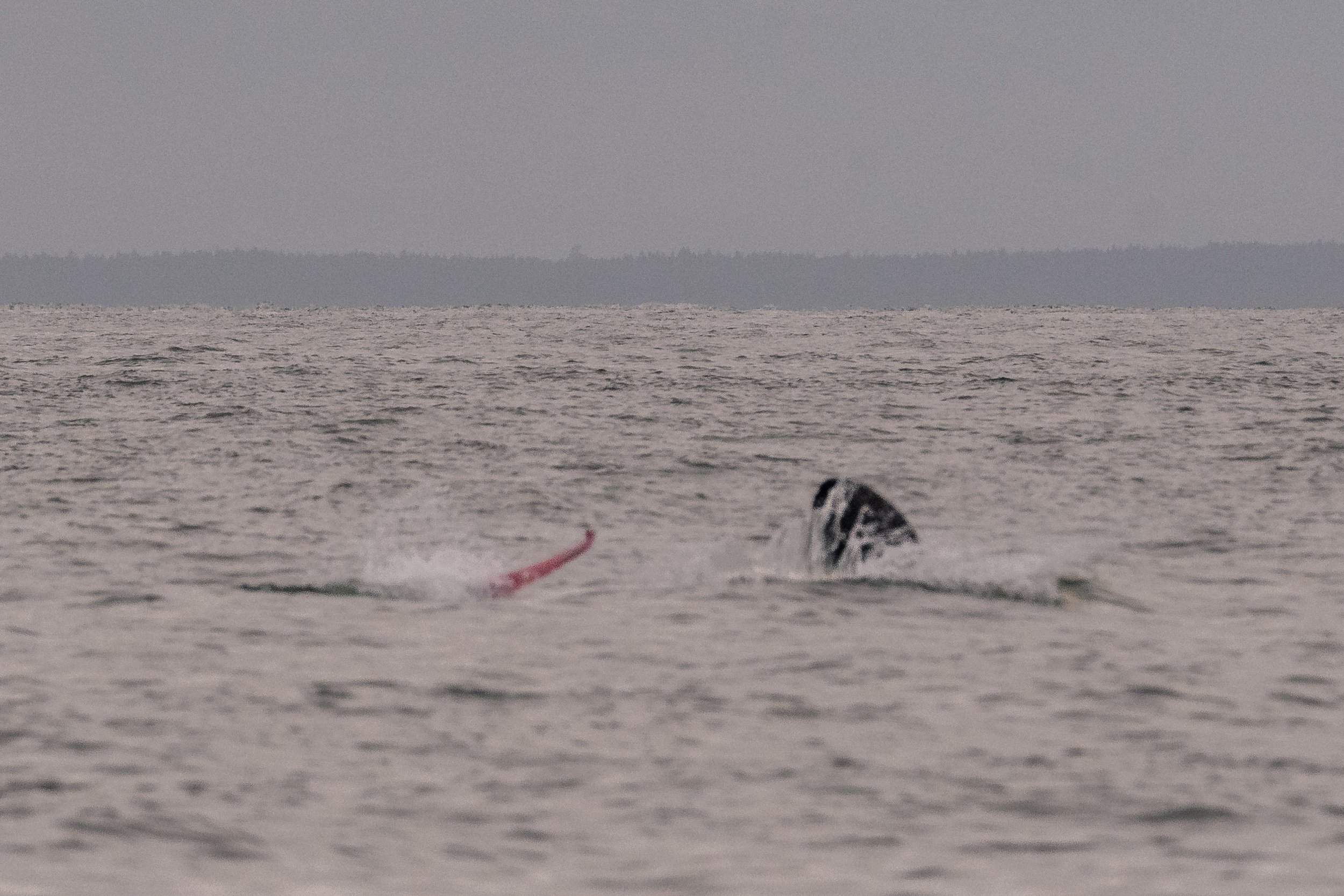
An elusive ‘sea snake’! Photo by Evan Hessels.
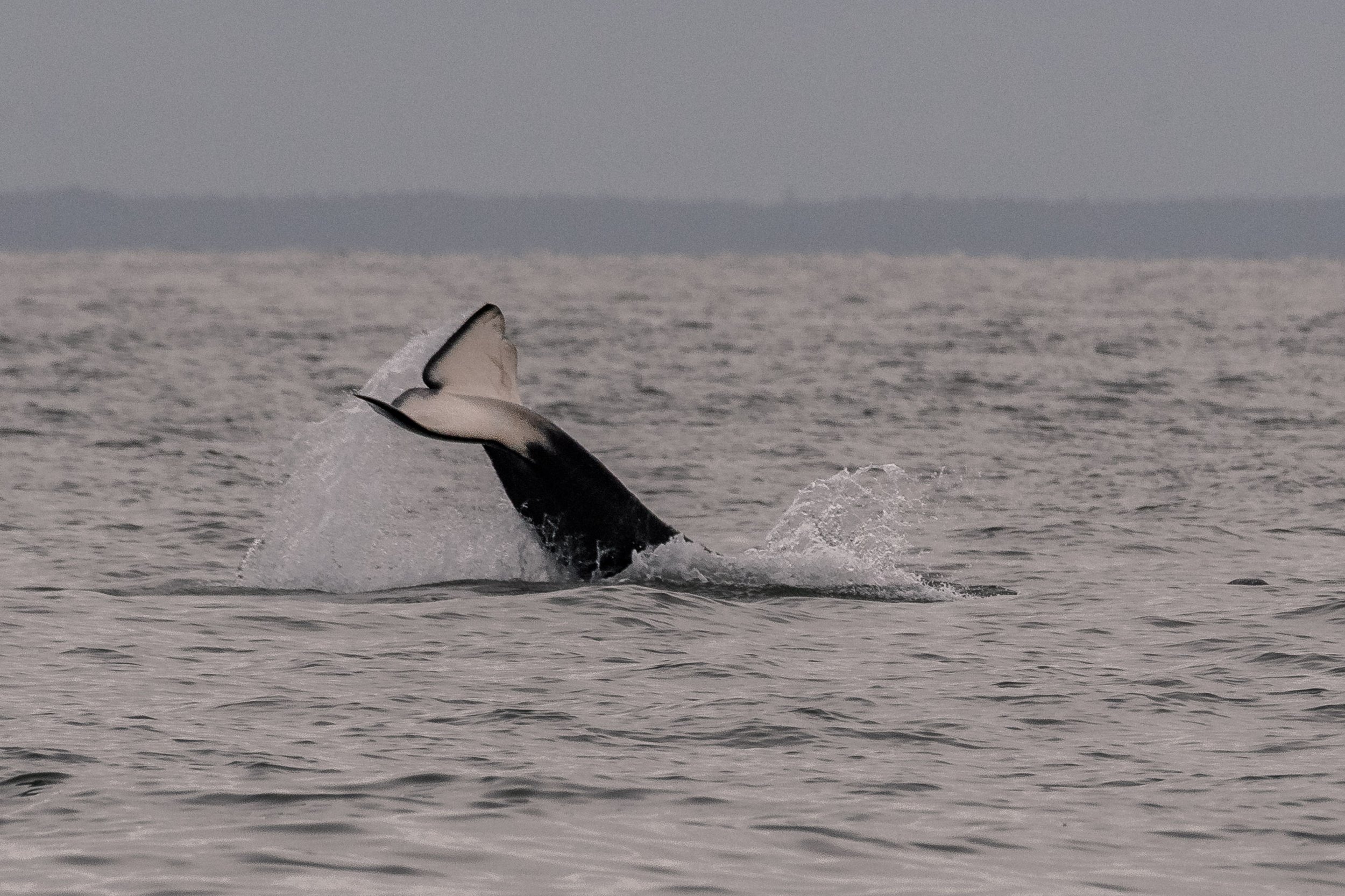
While uncommon, sometimes we can confirm IDs from orca flukes - this whale is T124A2A Agafia! Photo by Evan Hessels.
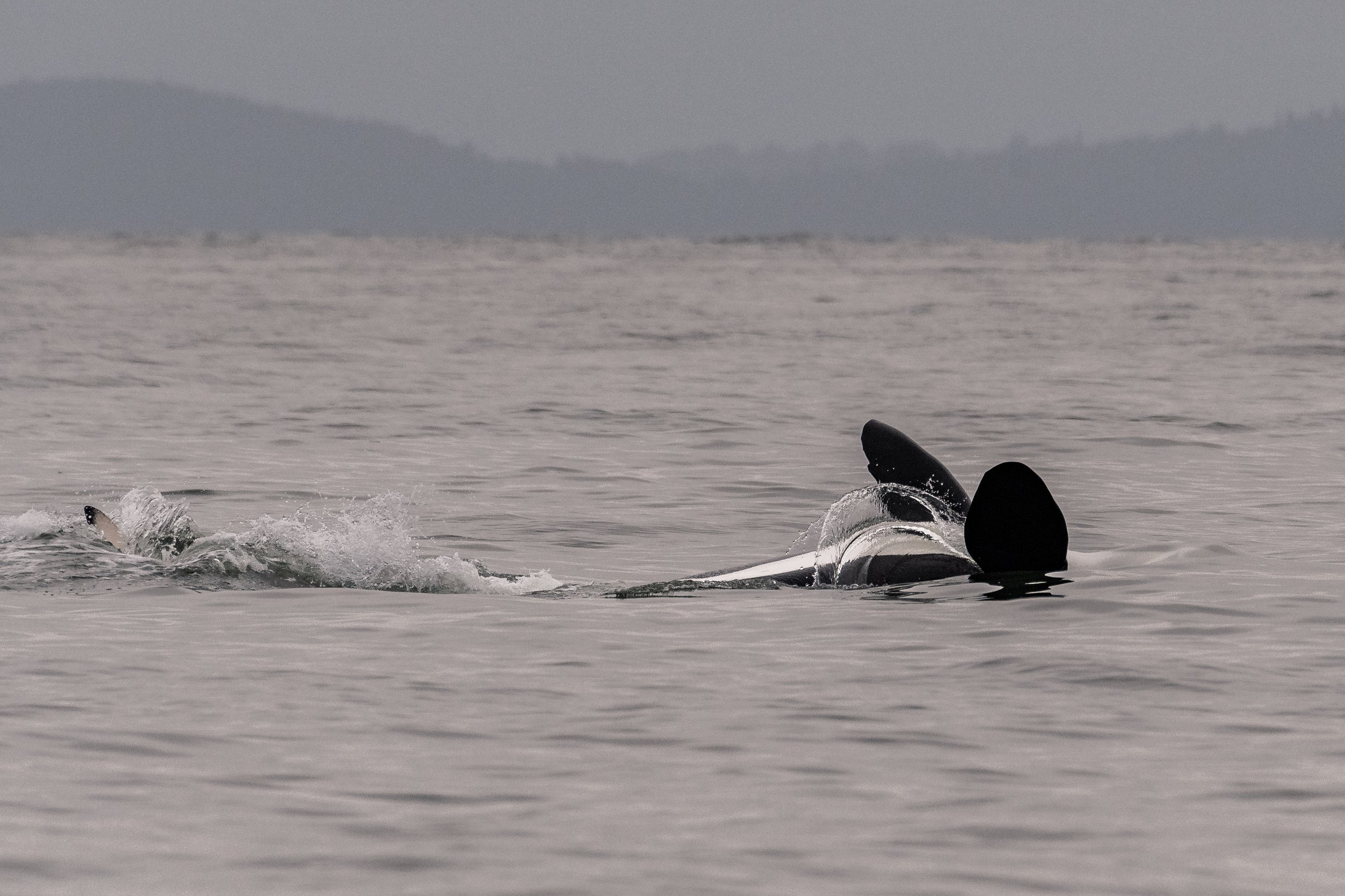
Doing the backstroke! Photo by Evan Hessels.
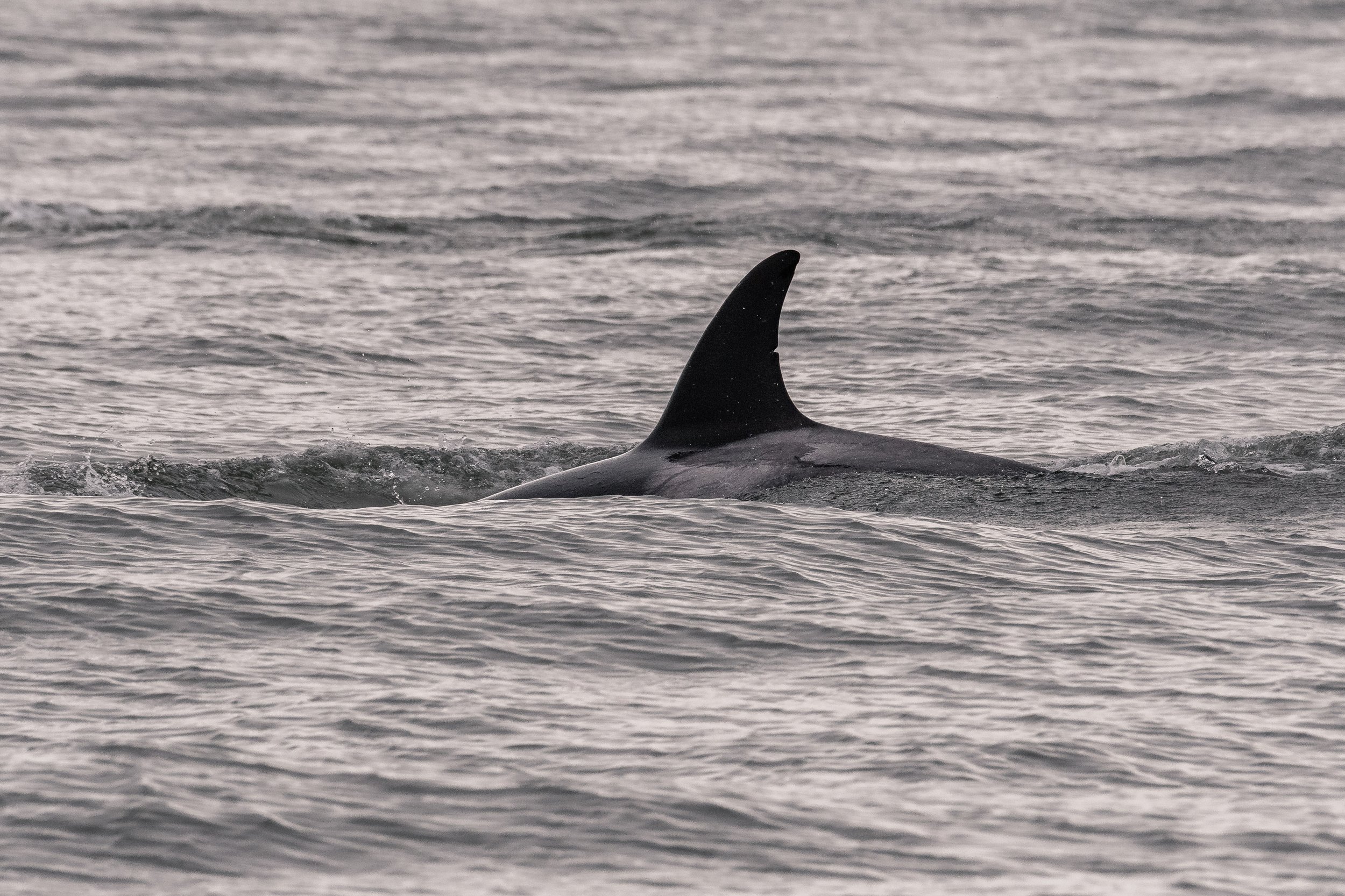
T124A2B Litton with her distinctly notched dorsal fin. Photo by Evan Hessels.
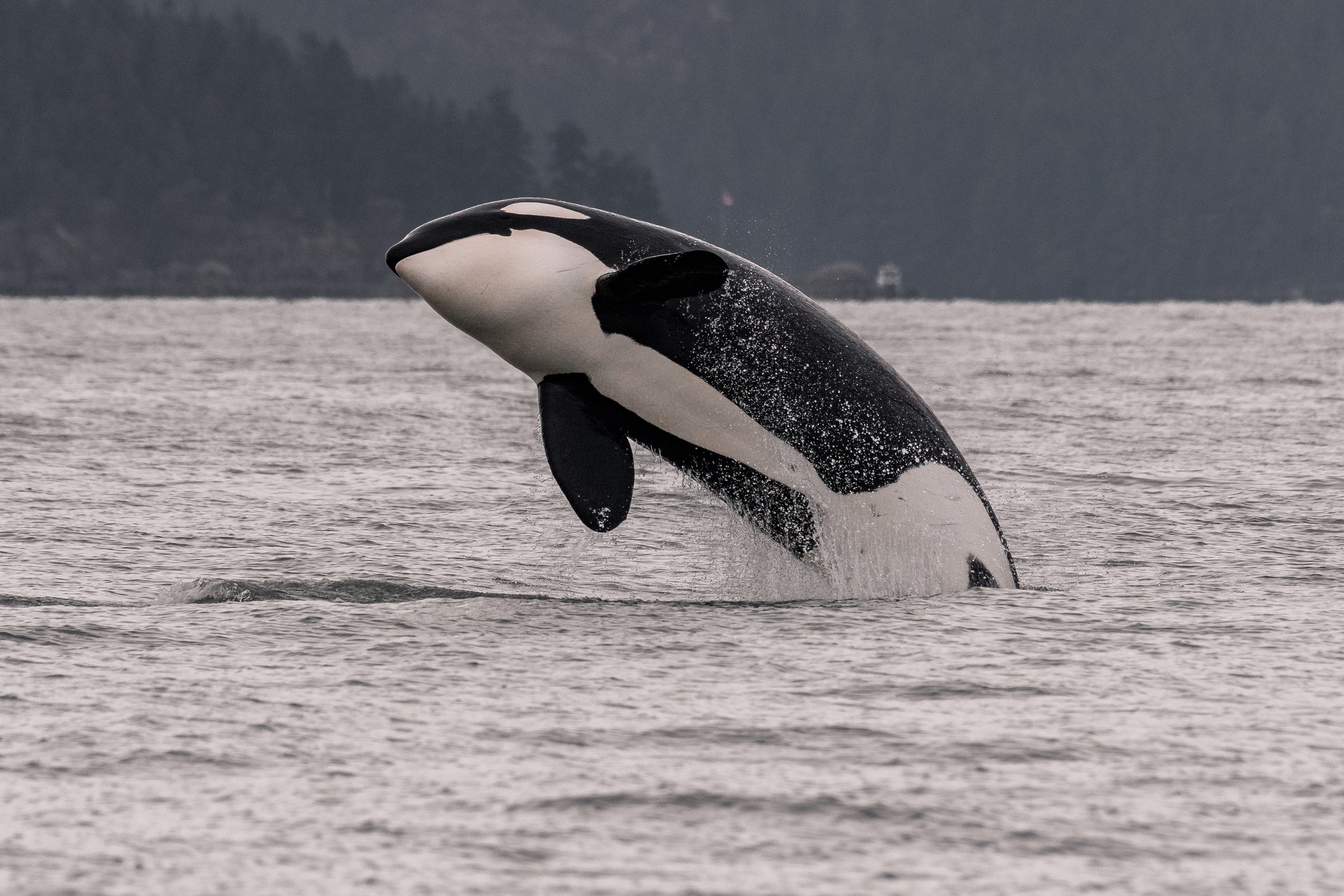
A breach from T124A1 Bonapartes. Photo by Evan Hessels.
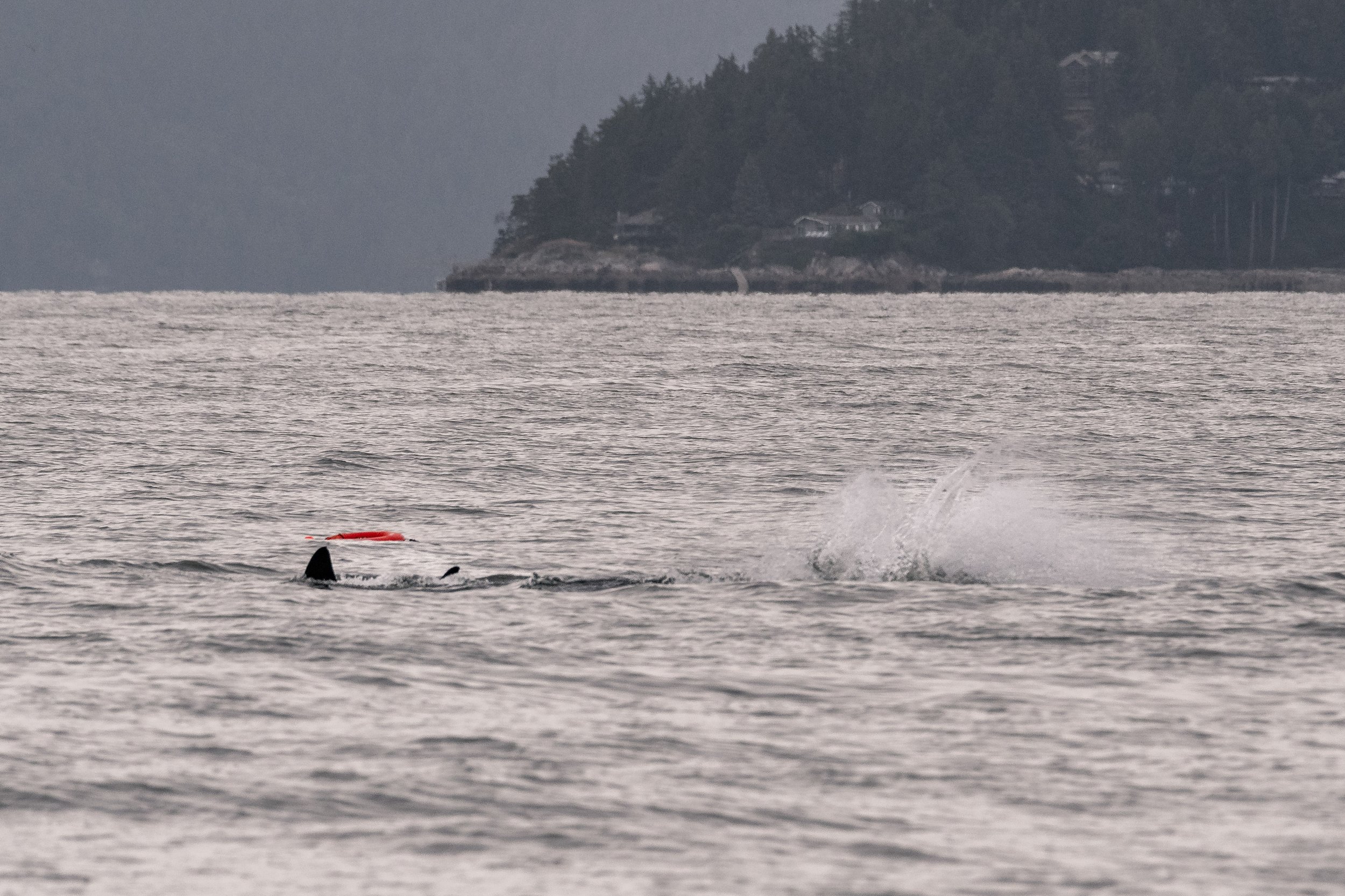
T124A1 Bonaprtes diving with something odd behind her - a brand new life ring. Photo by Evan Hessels.
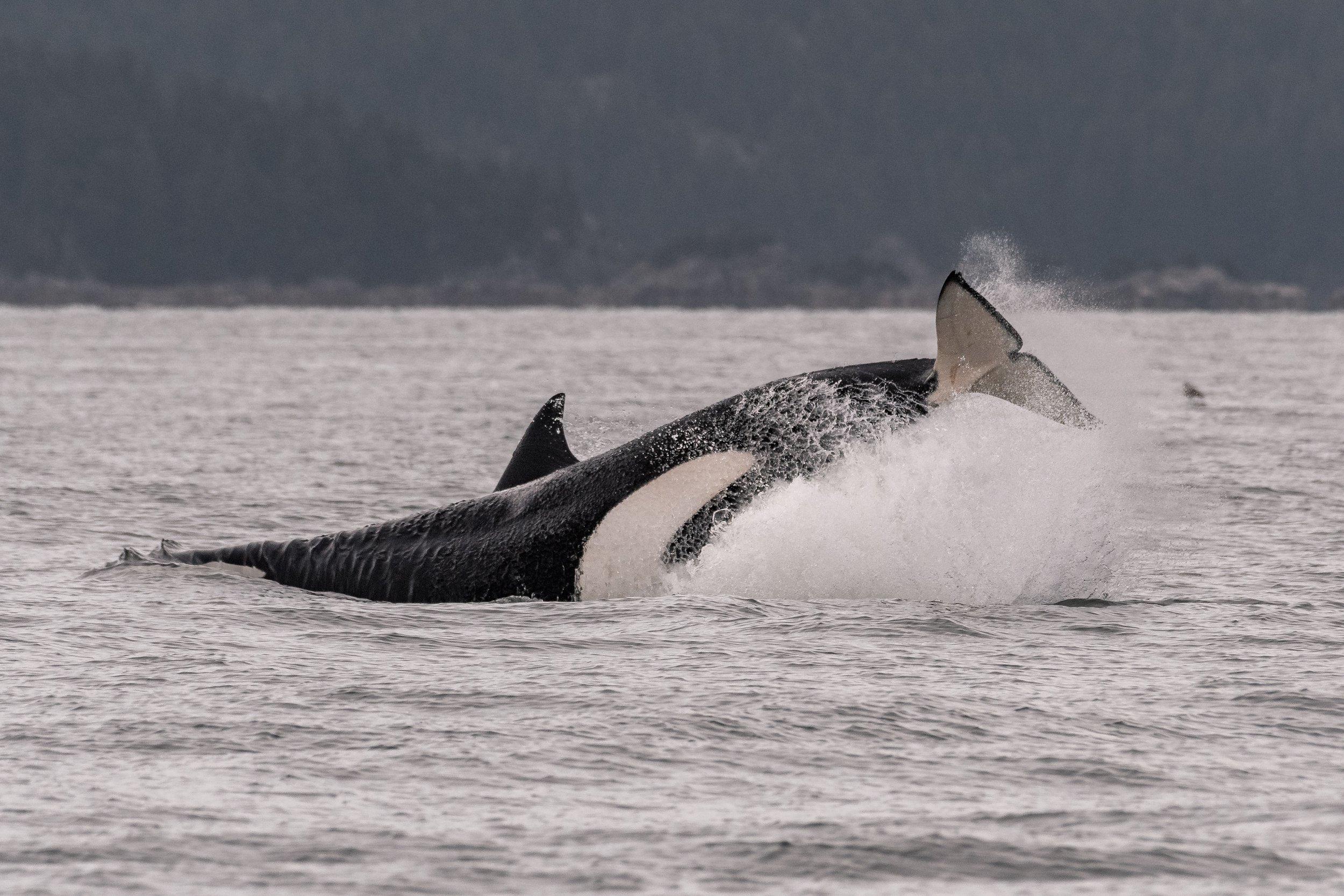
T124A2 Elkugu making a splash! Photo by Evan Hessels.
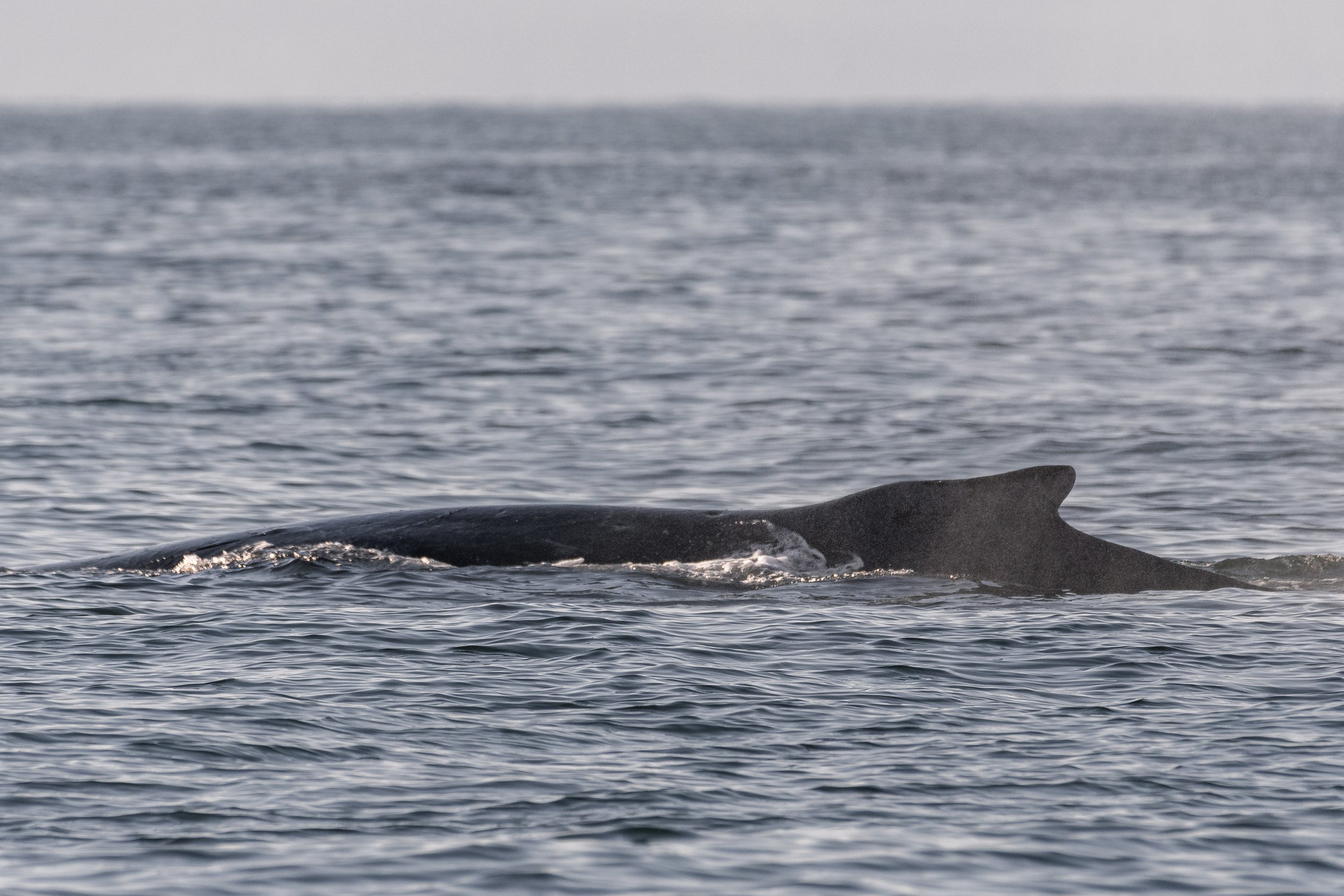
Wiggins travelling. Photo by Evan Hessels.
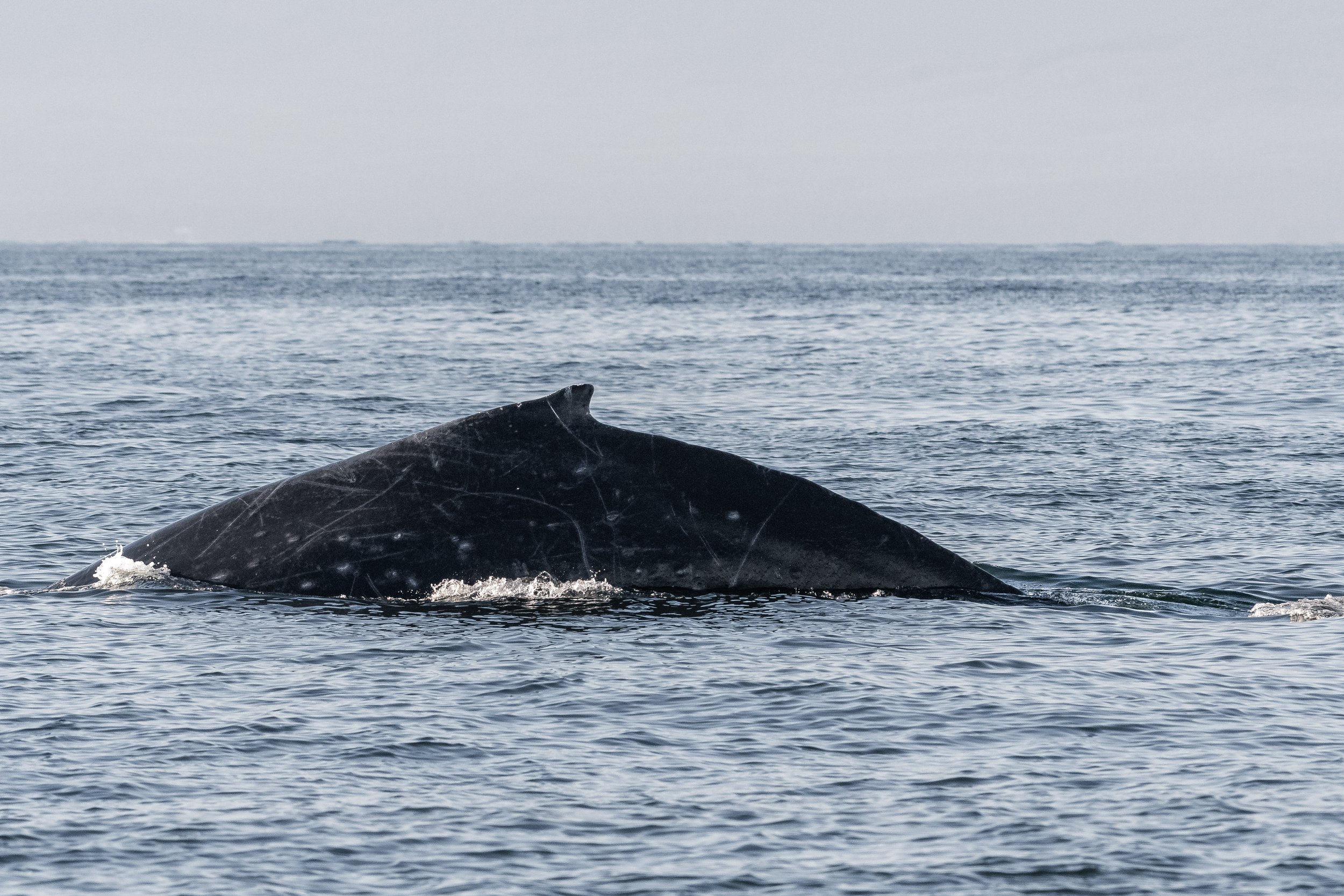
Neptune travelling. Photo by Evan Hessels.
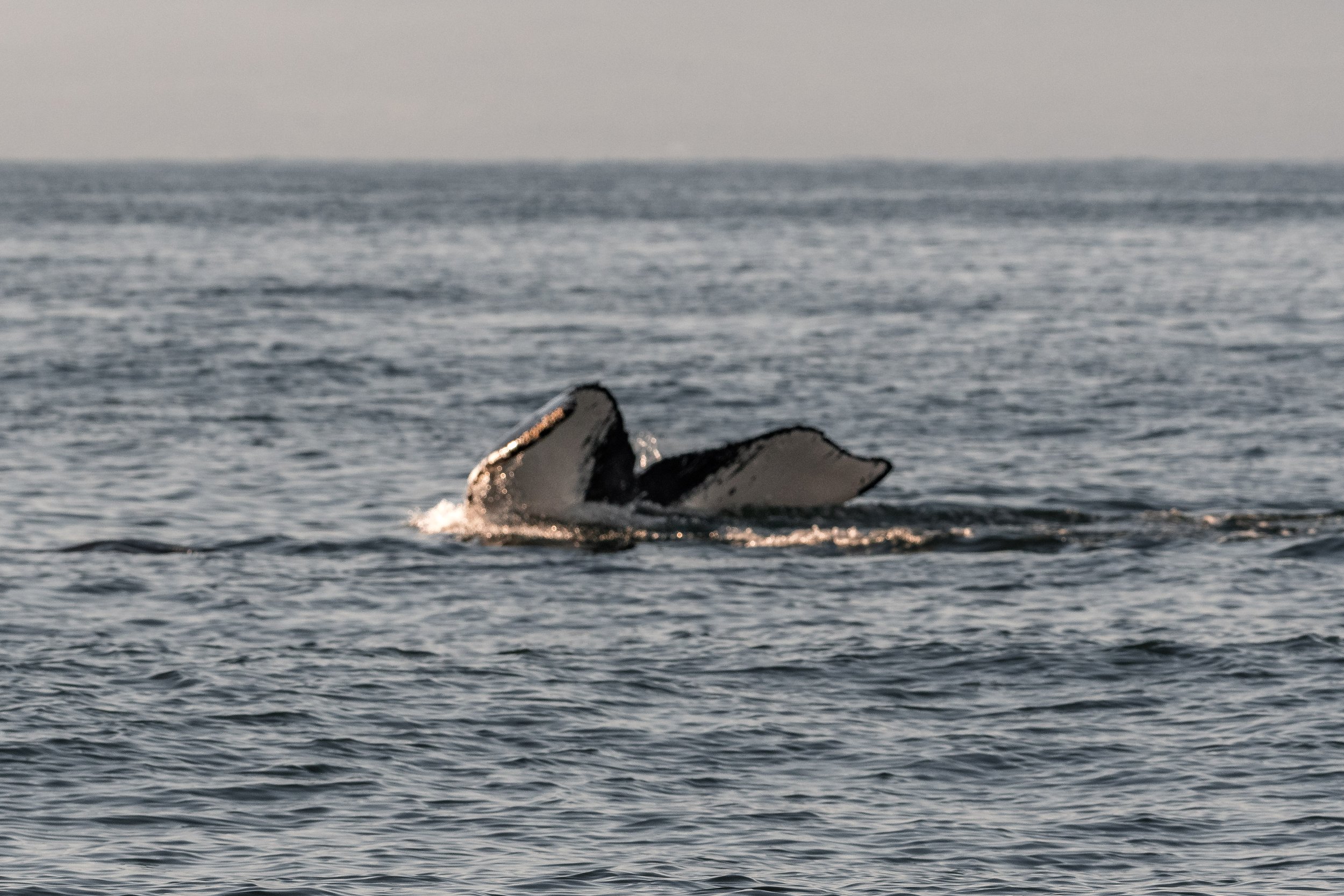
Elusive Neptune going for a dive - while not fully in focus, their markoings are visible enough here to confirm teir ID. Photo by Evan Hessels.
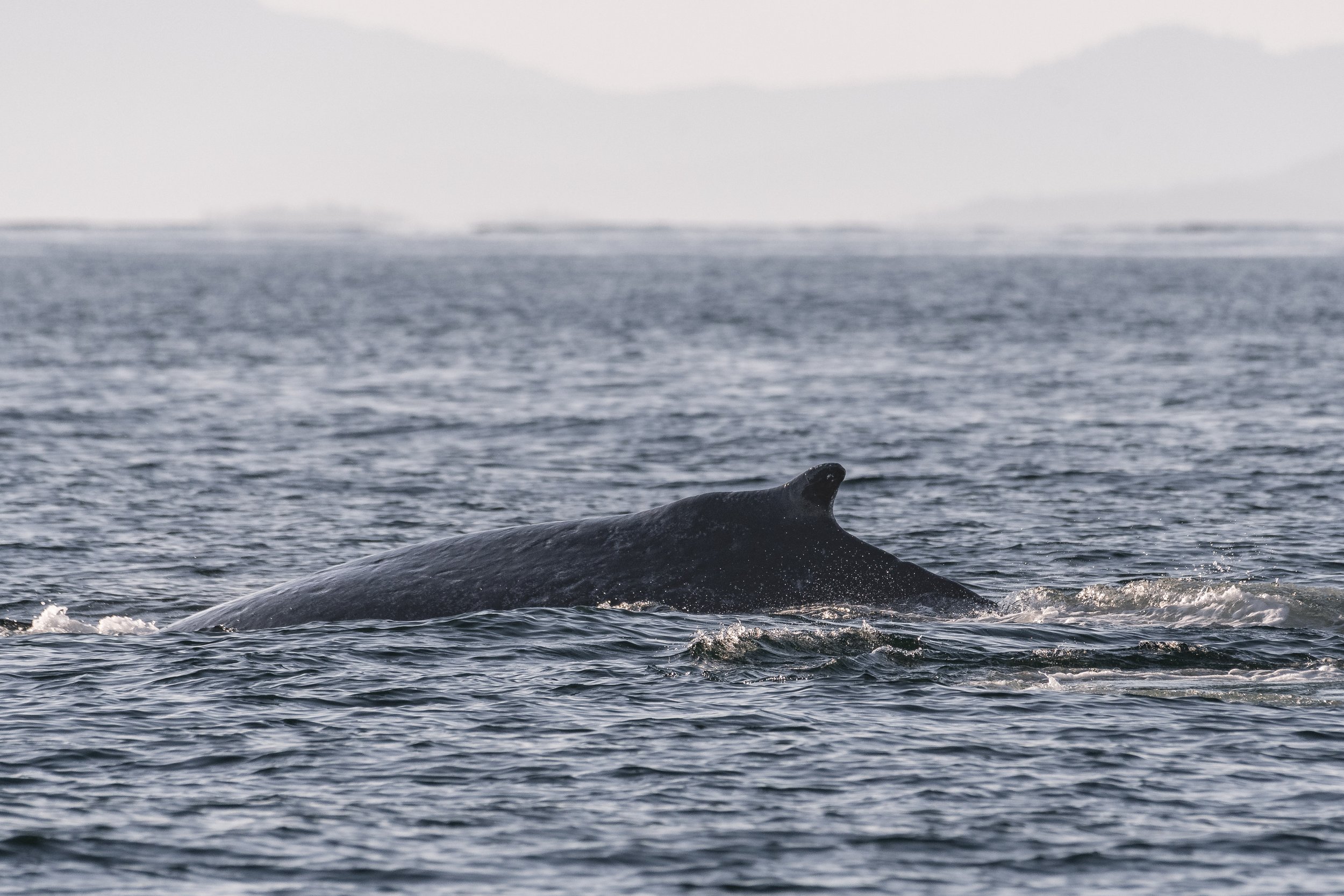
Kelpie travelling. Photo by Evan Hessels.
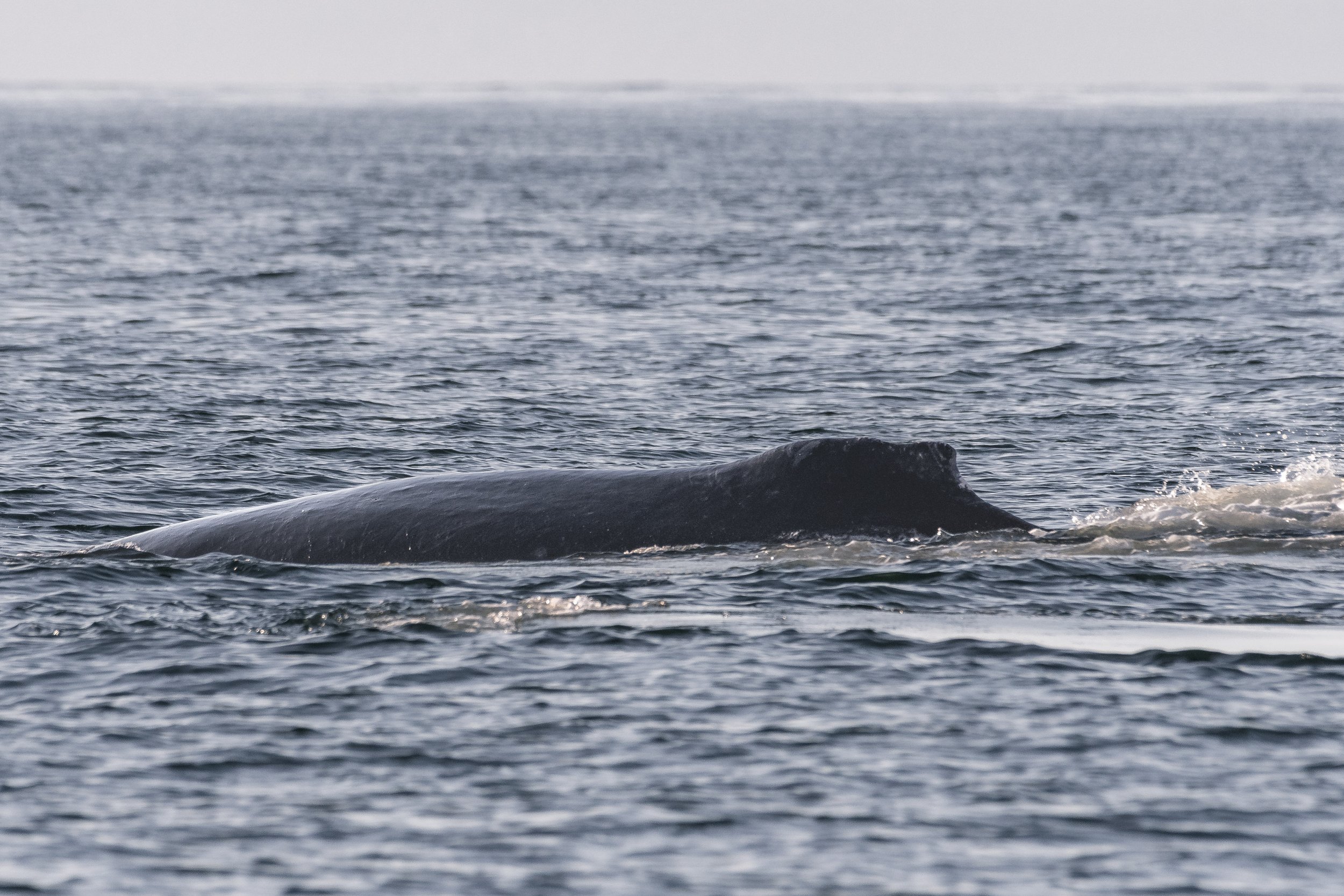
Kraken travelling along. Photo by Evan Hessels.
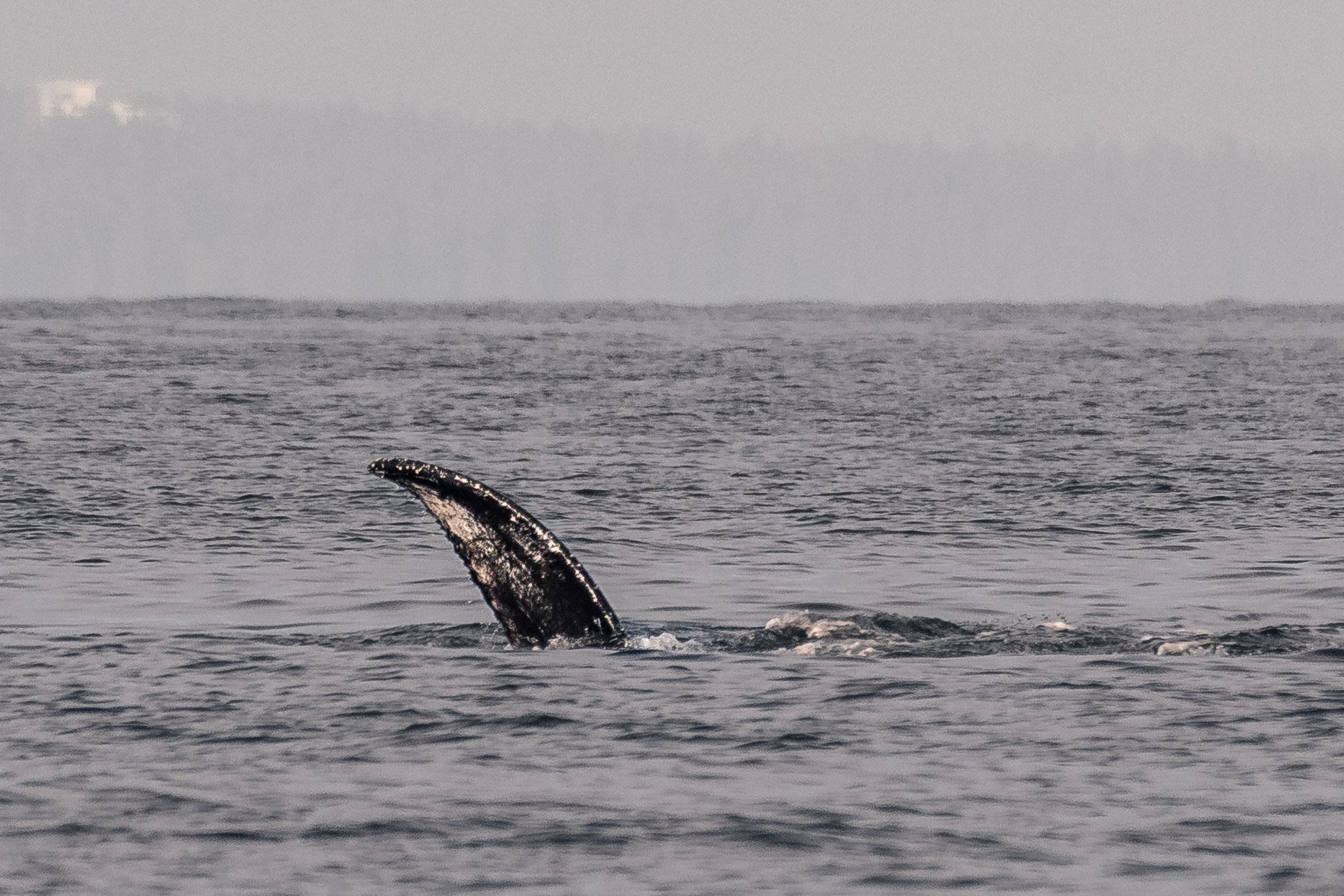
The corner of Wiggins’ fluke. Photo by Evan Hessels.
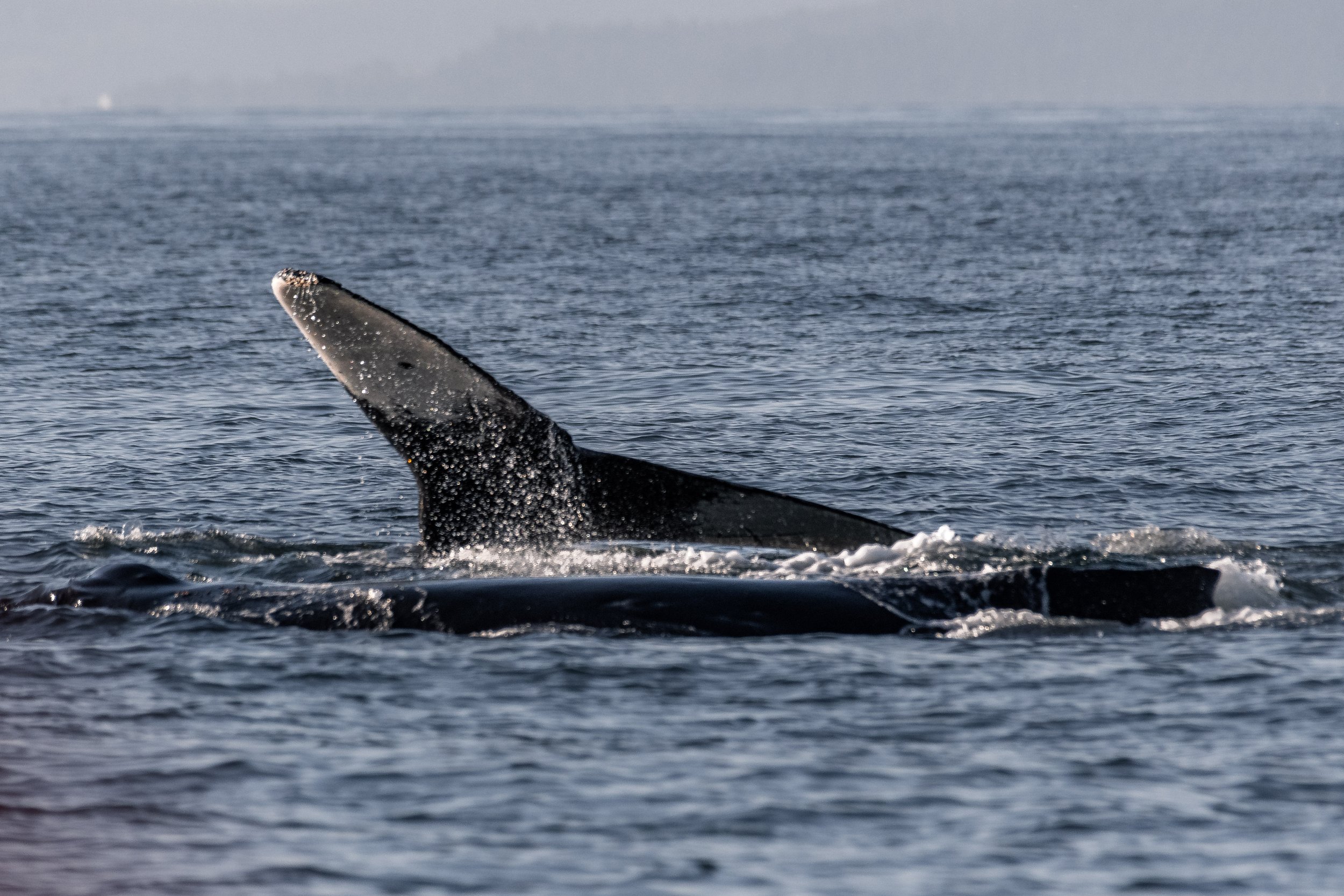
X_pialidocious’ fluke as they begin to dive beside Neptune. Photo by Evan Hessels.
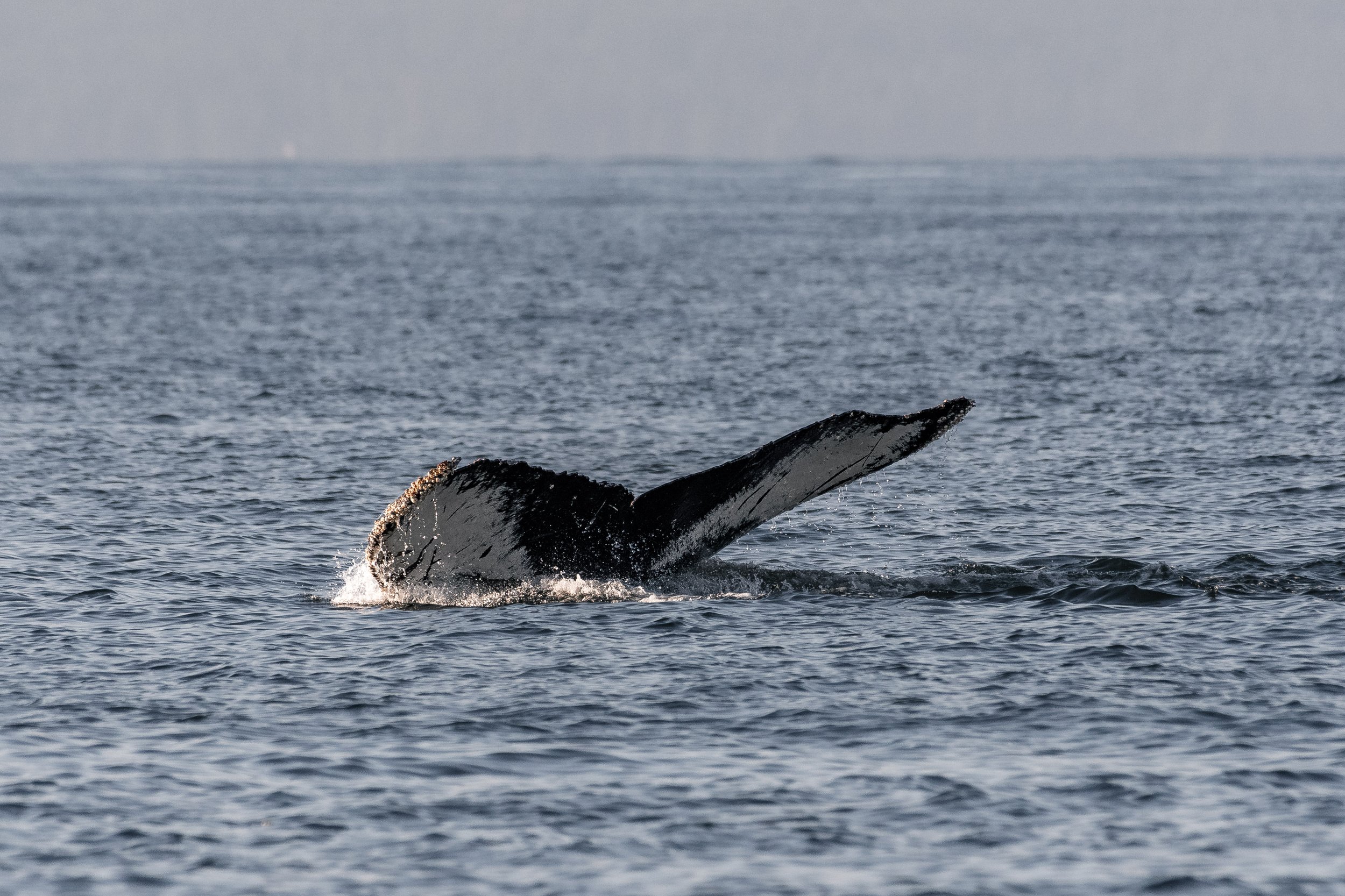
Kraken’s fluke as they dive. Photo by Evan Hessels.
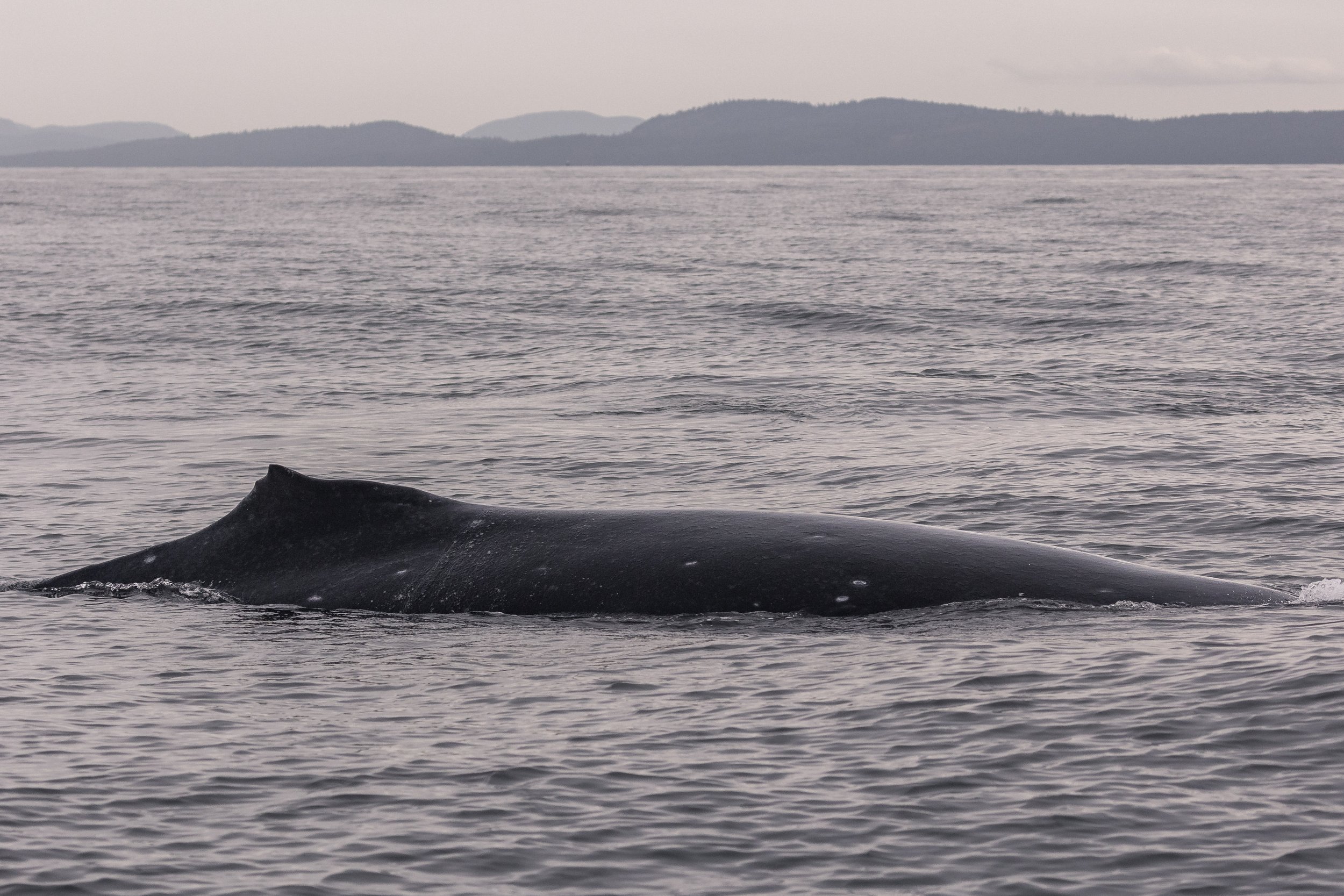
Ghost’s 2025 calf’s dorsal fin as they travel along. Photo by Jordan Robinson.
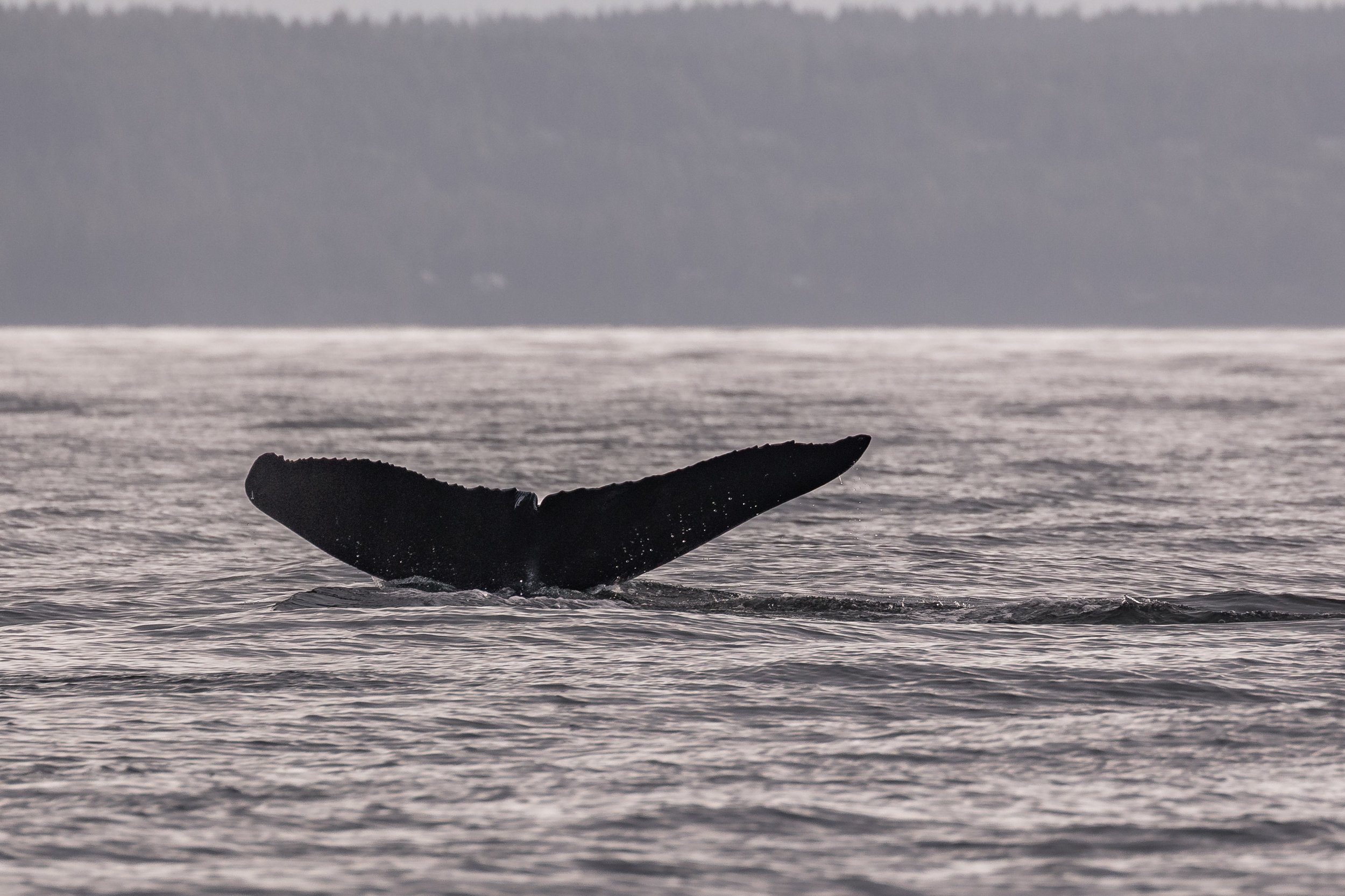
Ghost’s 2025 calf’s fluke. Photo by Jordan Robinson.
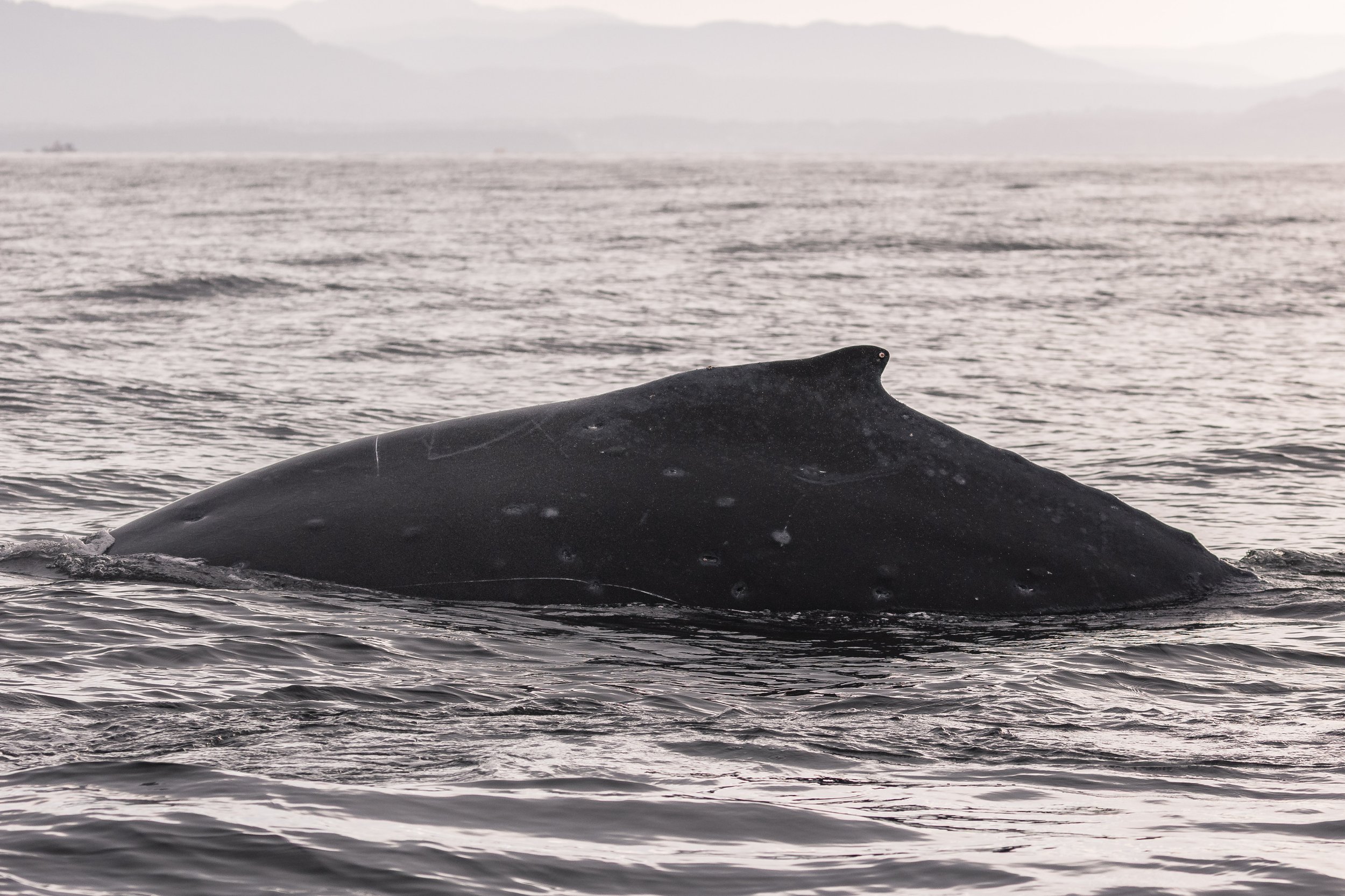
Blizzard travelling. Photo by Jordan Robinson.
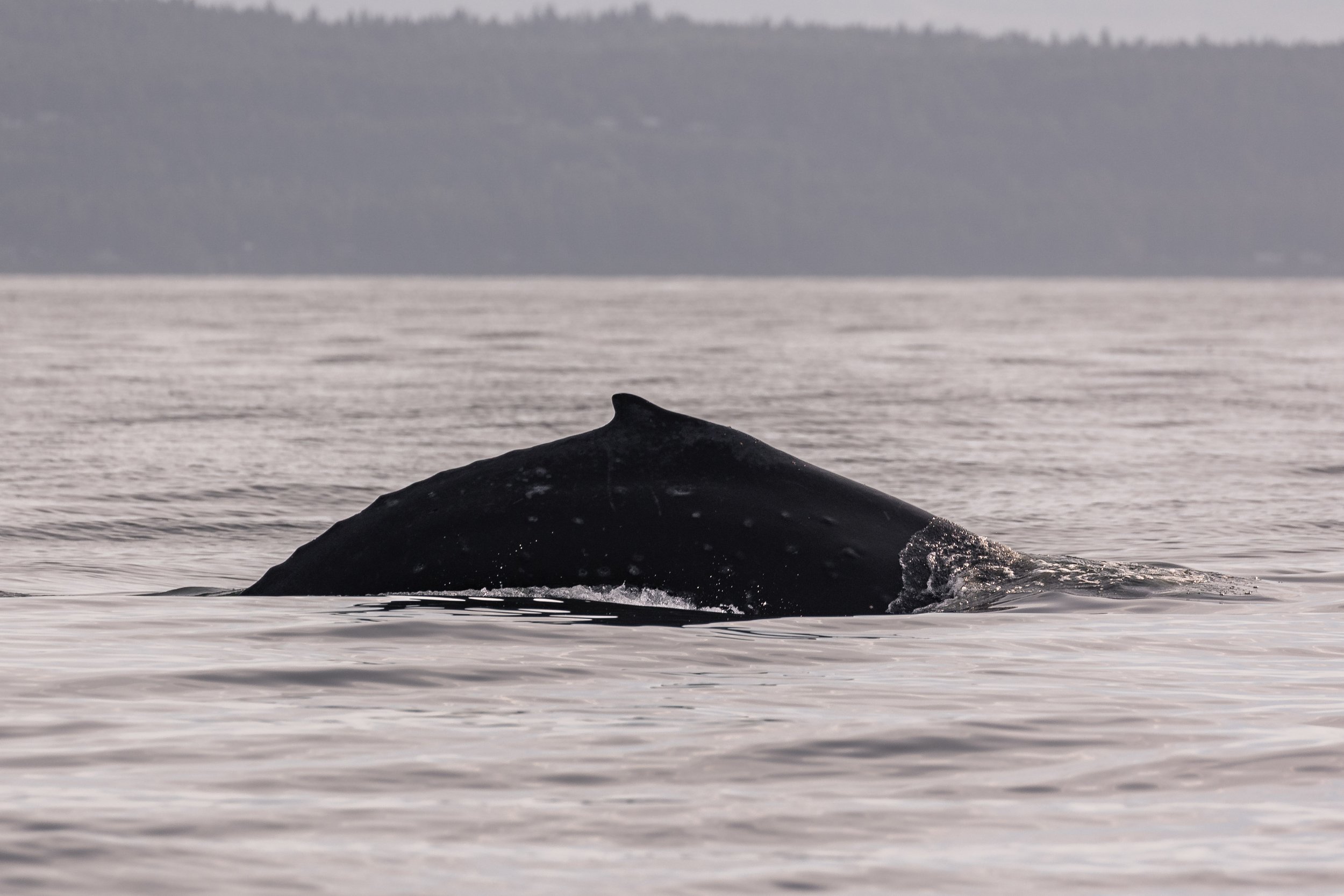
The other side of Blizzard’s dorsal fin. Photo by Jordan Robinson.
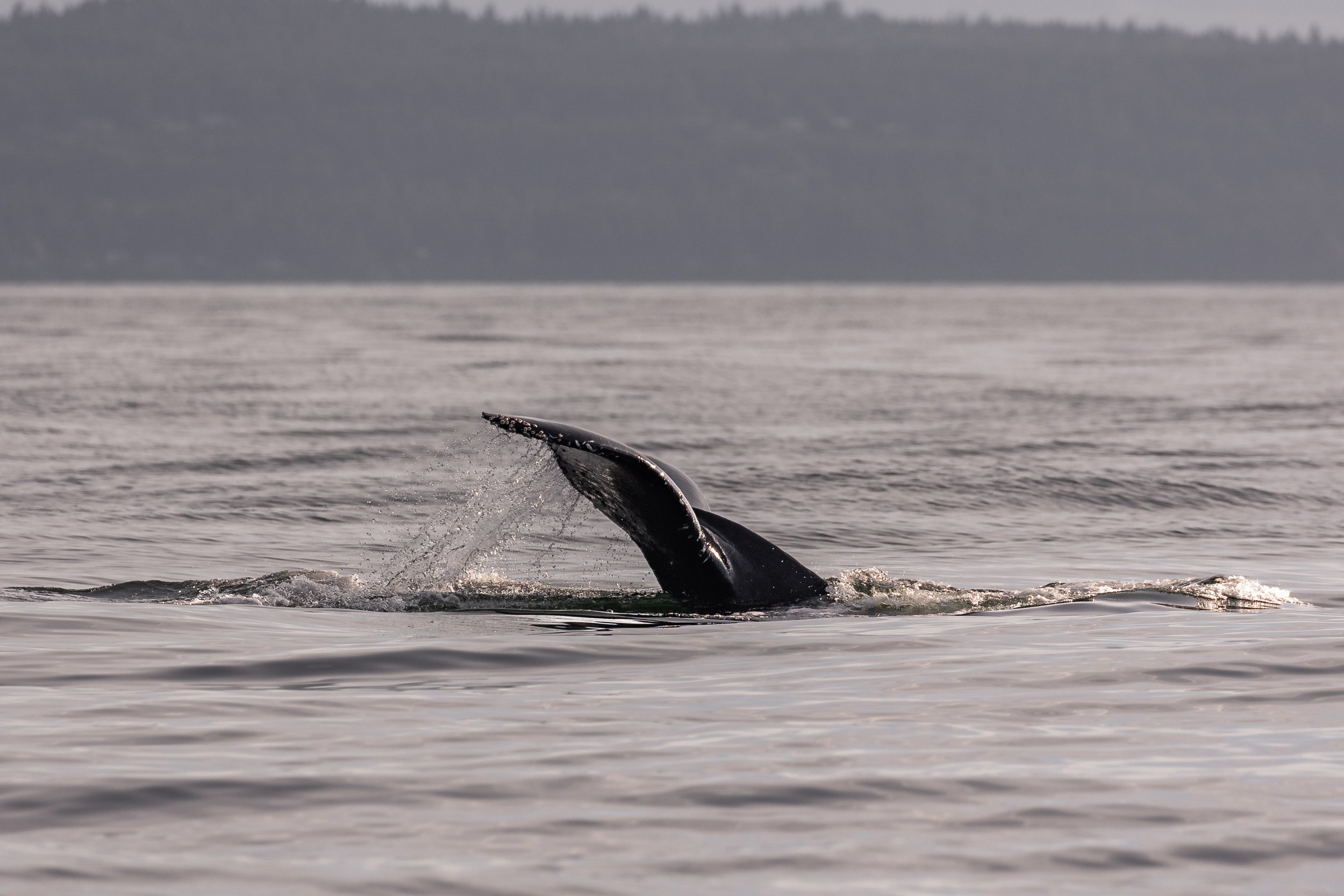
Blizzard diving. Photo by Jordan Robinson.
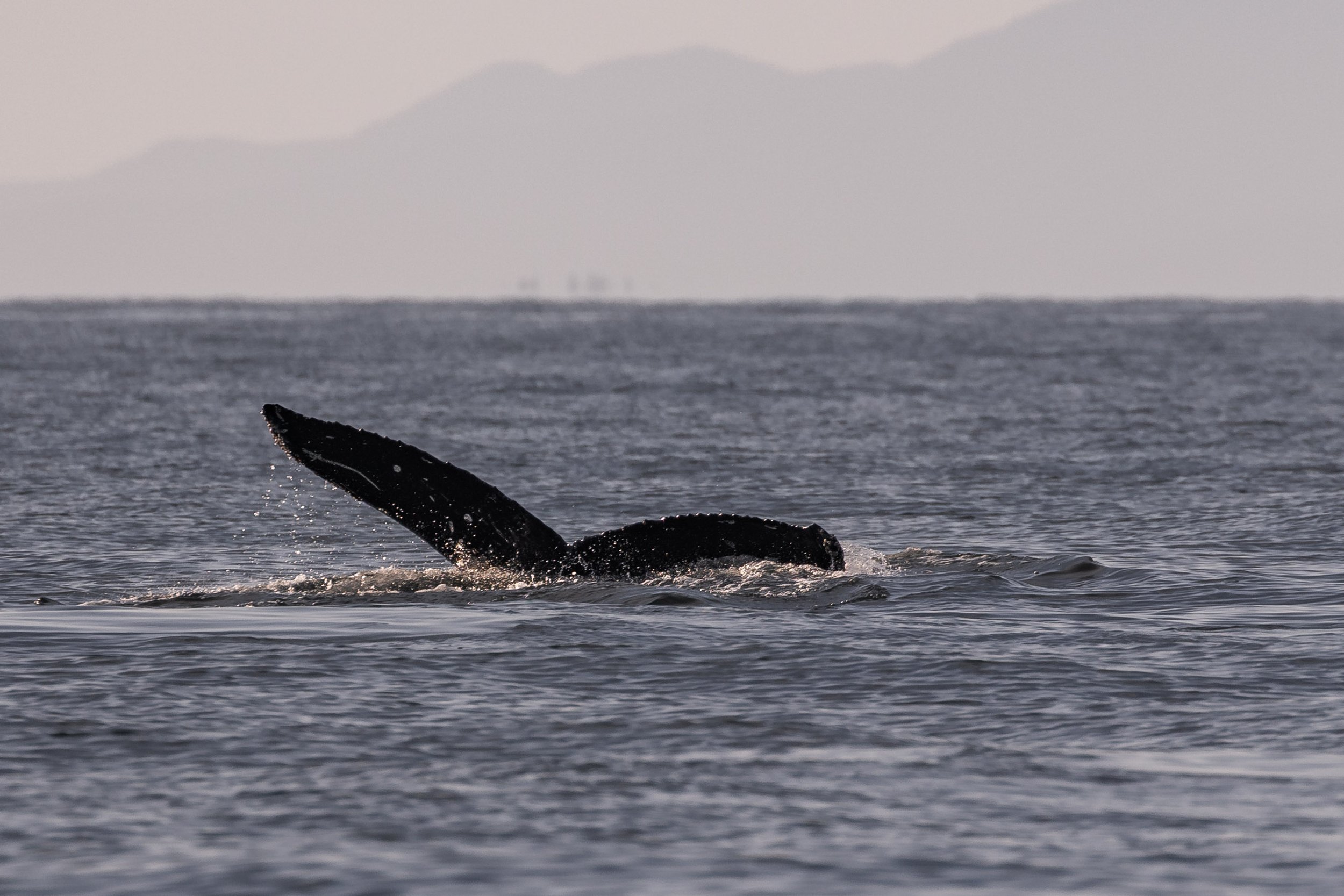
Cirque’s 2024 calf’s fluke as they go down for a dive. Photo by Jordan Robinson.
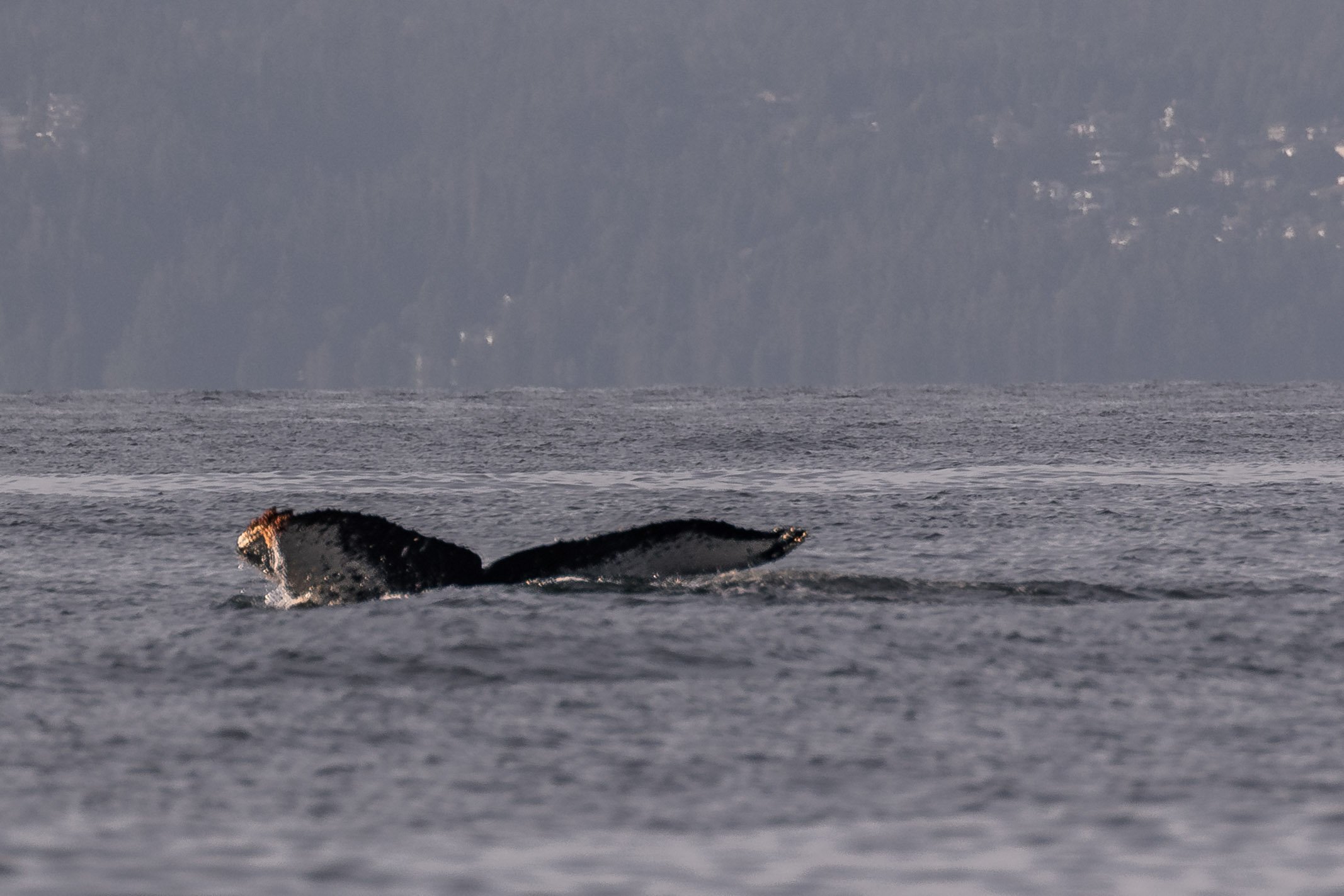
Kelpie diving with his flukes visible. Photo by Jordan Robinson.
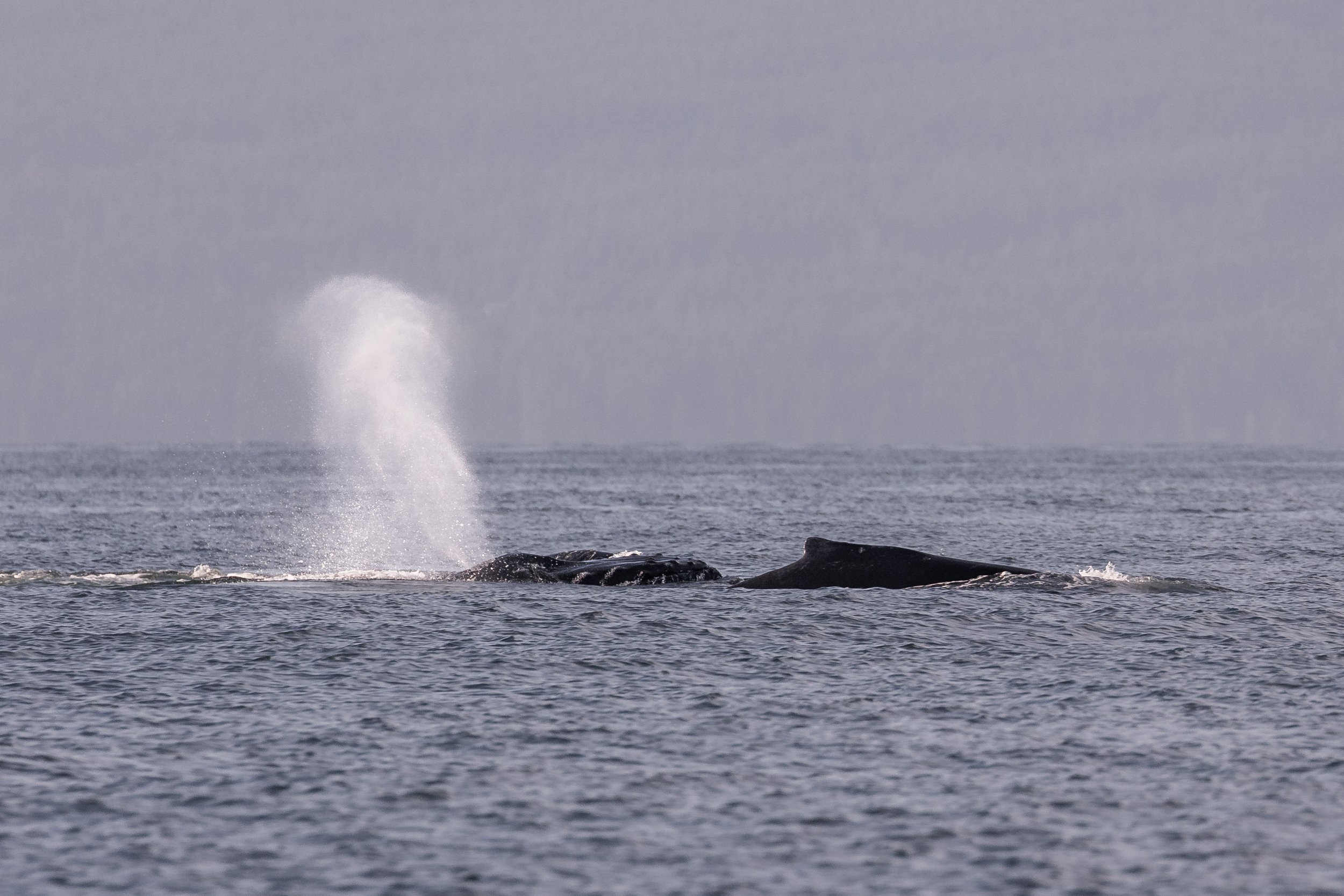
Hendrix travelling with another behind them. Photo by Jordan Robinson.
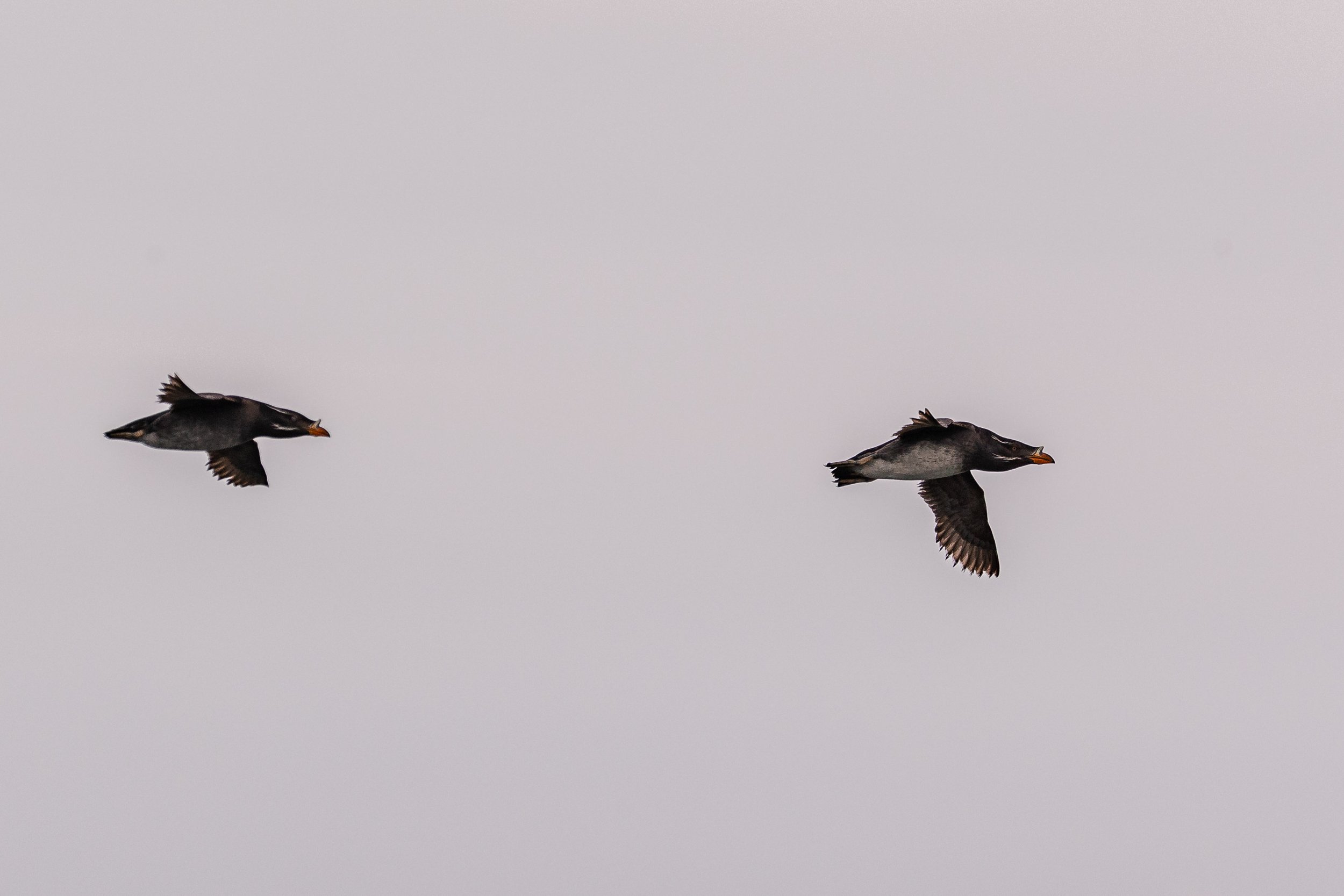
A pair of Rhinoceros Auklets in flight. Photo by Jordan Robinson.
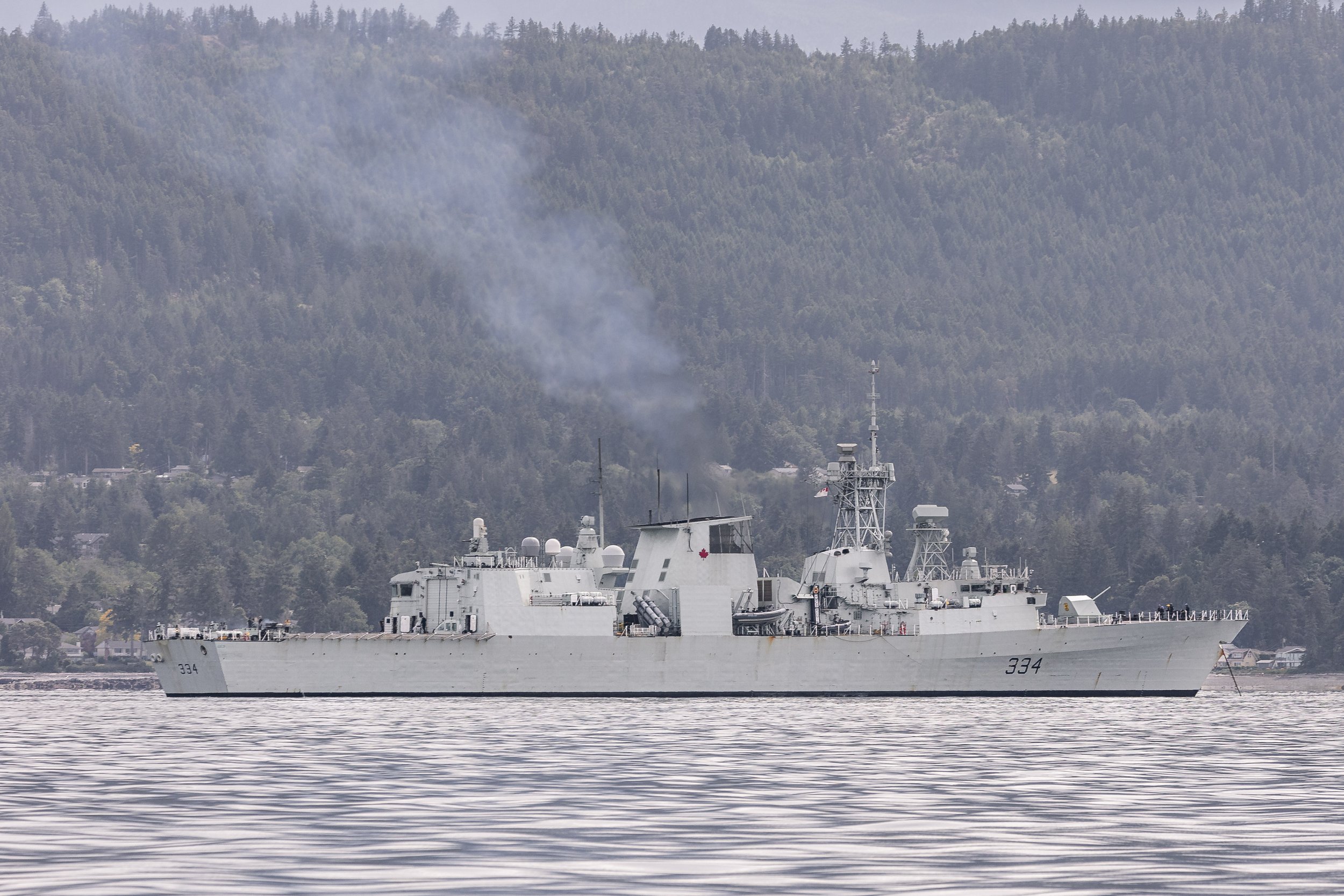
The HMCS Regina. Photo by Jordan Robinson.