
June 16, 2026, 3:30 PM - Searching the Southern Gulf Islands
The sun was shining overhead as we headed out on the water to search for whales for the afternoon. We headed south, into the Southern Gulf Islands via Dodd Narrows. Dodd Narrows is a very special place, having strong currents that run through with the changing tides. These currents can be very important for local wildlife, as they introduce more oxygen into the water, which helps them grow and reproduce at a higher rate. This is well showcased by the abundance of wildlife visible in the intertidal zone as we passed through the narrow passageway on our way into the Southern Gulf Islands, where we continued our search. From here, we continued south, heading into Ruxton Pass, Gabriola Pass and out into the Strait of Georgia. Here, we took a quick break from our search at Stinky Rock, where we found both Harbour Seals and Steller Sea Lions spending their drinking in the sunshine.
This time spent out of the water is very important for pinniped species, as they need to regulate their body temperature. Even though they have nice, thick fur and blubber, the cold water still takes its toll on them. If they spent their entire day in the water itself, they would likely be unable to meet the energetic demands of maintaining their body temperature, since so much heat is lost to the environment. When they’re outside of the water, not only do they get the sun to warm them up along the rocky shorelines, but air conducts heat much less efficiently than water, so they hold on to more of it than they would swimming. Because of this, they tend to spend around half of their time hauled out on rocky islets like this.
The Harbour Seals are slightly restricted on where they can spend their time since they aren’t as good at moving on land as their cousins, the sea lions, are. This is because of the fusion of their hind hips. It allows them to move efficiently in the water and gives them greater maneuverability, which is important when they are chasing down their prey and avoiding predators like the transient orca. On land, though, it means that they can’t actually walk and instead have to gallumph, or basically do the worm to bounce around on the land. This awkward movement means they can typically haul themselves up only where the rock slope is very shallow. The Sea Lions, on the other hand, have great movement on both land and water, thanks to larger, rotating flippers. They can walk on the rocks thanks to this adaptation, or even over their buddies, as we saw today.
After enjoying our time with the pinnipeds, we continued the search, heading south along Valdes Island, our eyes on a sharp lookout for any signs of whales in the area. This is typically a blow or a dorsal fin, depending on the whale species. We continued all the way down to Porlier Pass, where we headed back inside the protection of the Southern Gulf Islands. We searched our way along the inner shores here, enjoying the scenery as we went. From the steep cliffs to the sandy beaches, there is a wide variety of scenery throughout the islands, partly due to how they were formed. The Southern Gulf Islands were once part of the seafloor, with all the sandstone formed over hundreds of thousands of years by pressure on the sandy bottom. This area has a lot of tectonic activity, and the islands are formed by the pressure of the subduction of the Juan de Fuca plate beneath the North American plate, crumpling the crust. Those crumples are now the islands that we get to travel through. It’s not always such a nice, smooth surface, though; sometimes those folds tear, and we are left with impressive cliff systems, like the one we saw along Gabriola Island. Differences in the layers of the rock lead to varying levels of erosion, creating cracks and crevices in the sandstone that many animals take advantage of. In the case of the Gabriola Bluffs, it's mostly birds that we see nesting along the cracks. From the small swallows that build their nests in the smaller caves to the cormorants that build theirs in the more open parts of the cliff, it's an impressive sight to behold. Both birds have unique ways to keep their nests in place. Cormorants will use their own feces as cement, pooping all over their nests to help hold them together. Swallows will use mud stead, gathering it from nearby ponds, marshes, or rivers in lumps, bringing it back to their nests and placing it down to dry into a cave-like formation. Both tactics work quite well, and we see them flying in and out, working on building their homes. It was a great way to end the tour.
Unfortunately, we didn’t find any whales on this trip, but all the guests on board received vouchers that will let them try again in the future! Throughout the adventure, Marine Naturalist Hayleigh Hilbert captured some great photos of all the wildlife, which are available to view below.
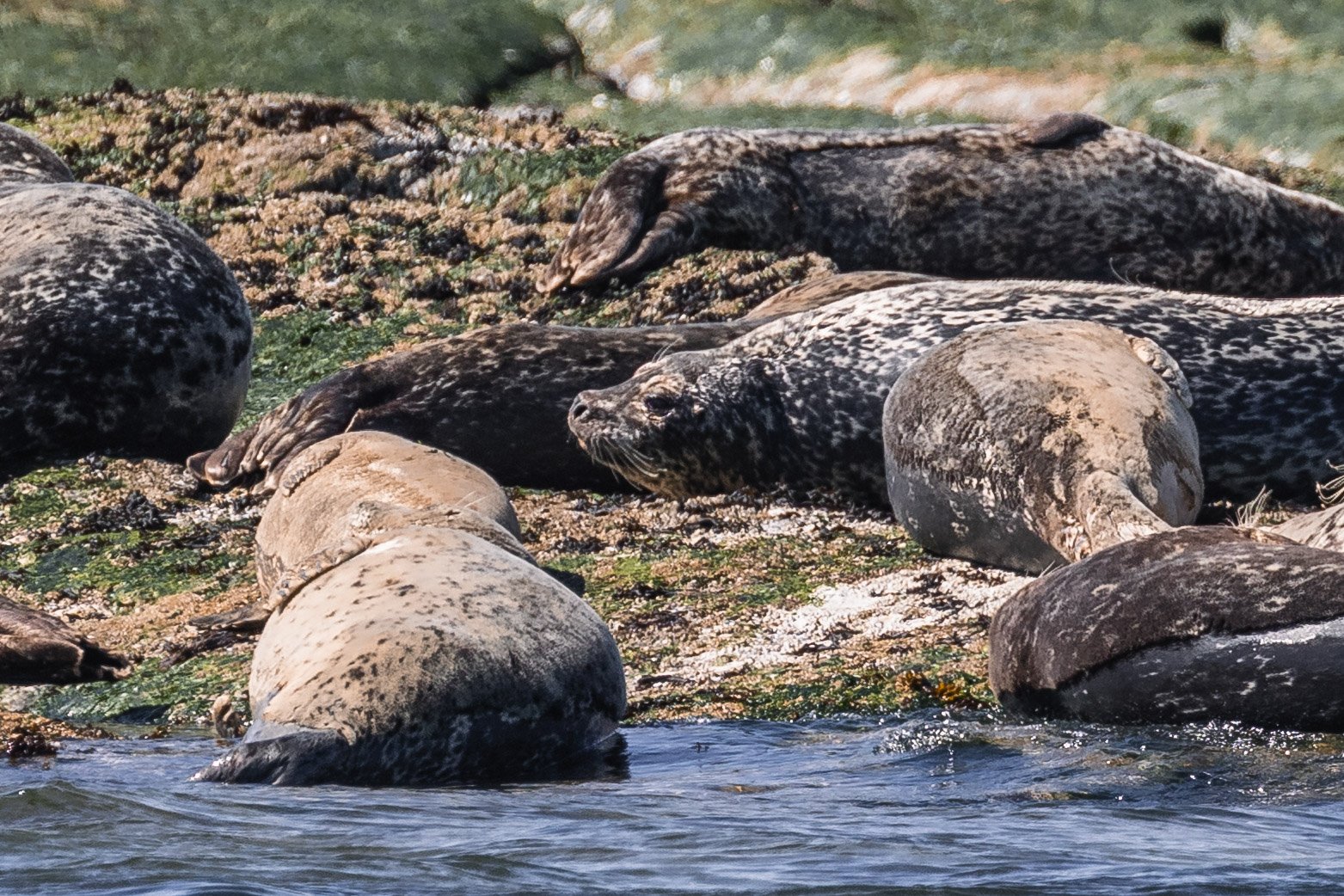
Harbour seals enjoying the sun.
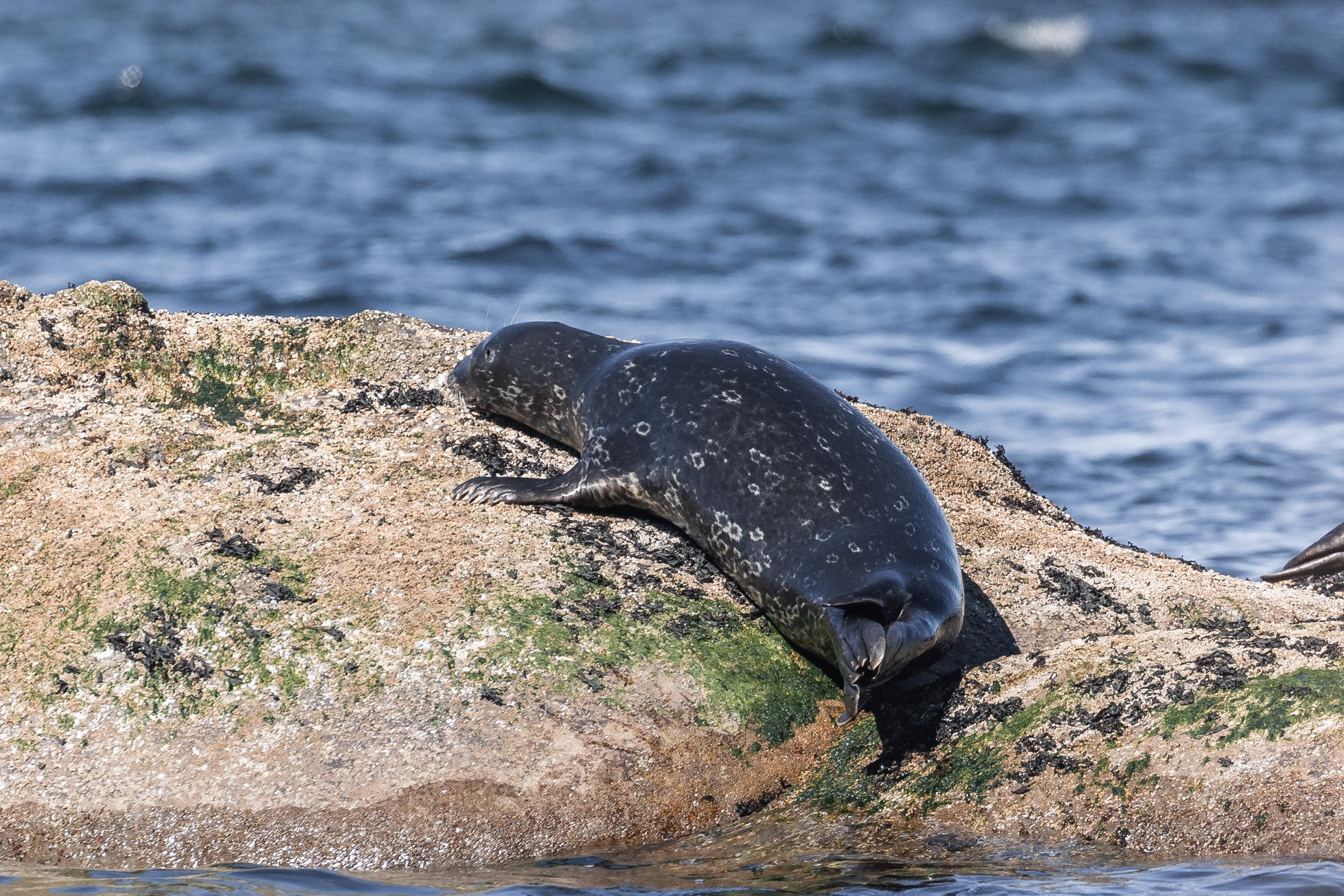
Pulling themselves onto the sun warmed rocks.
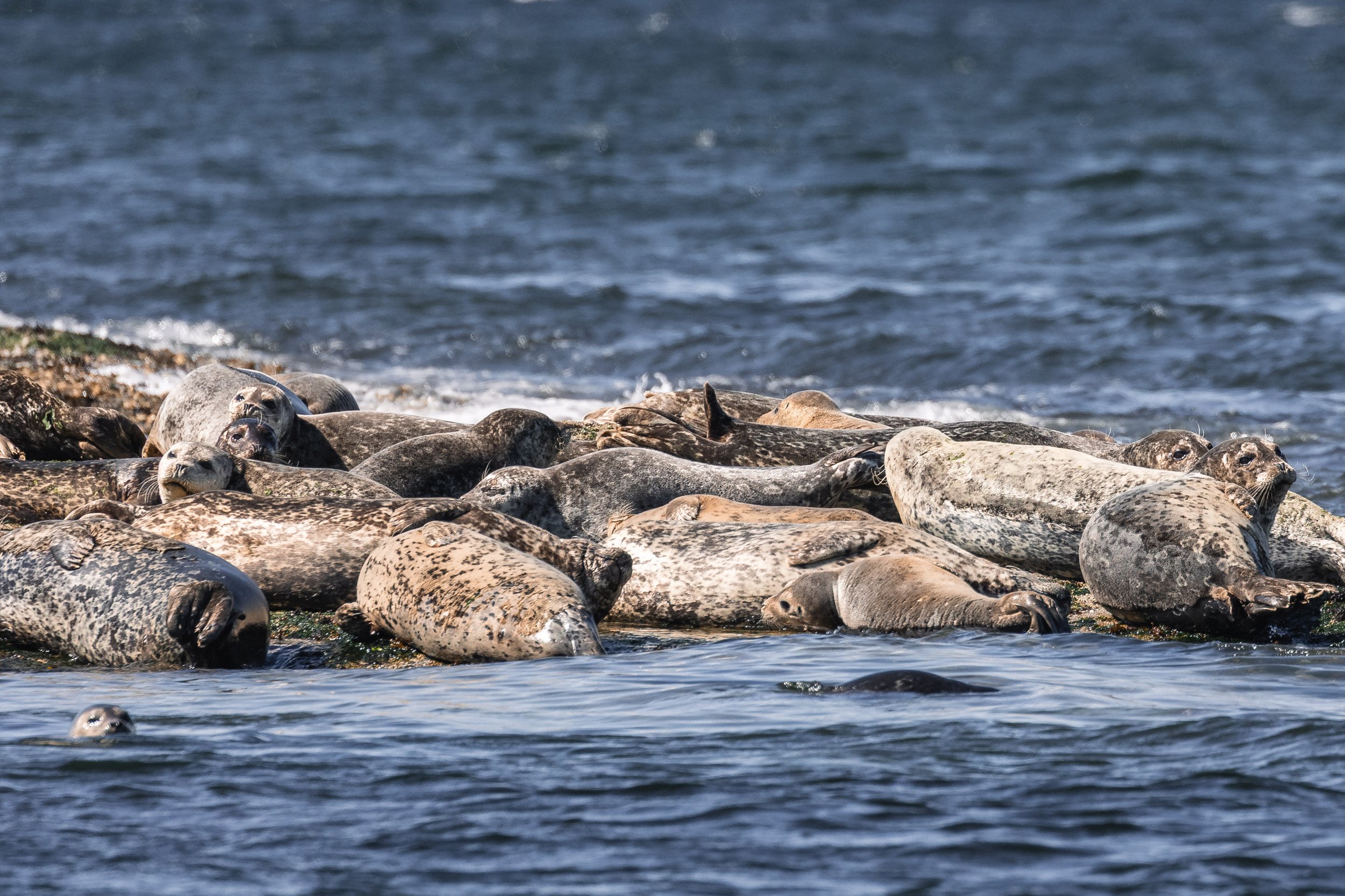
A cuddle puddle of harbour seals.
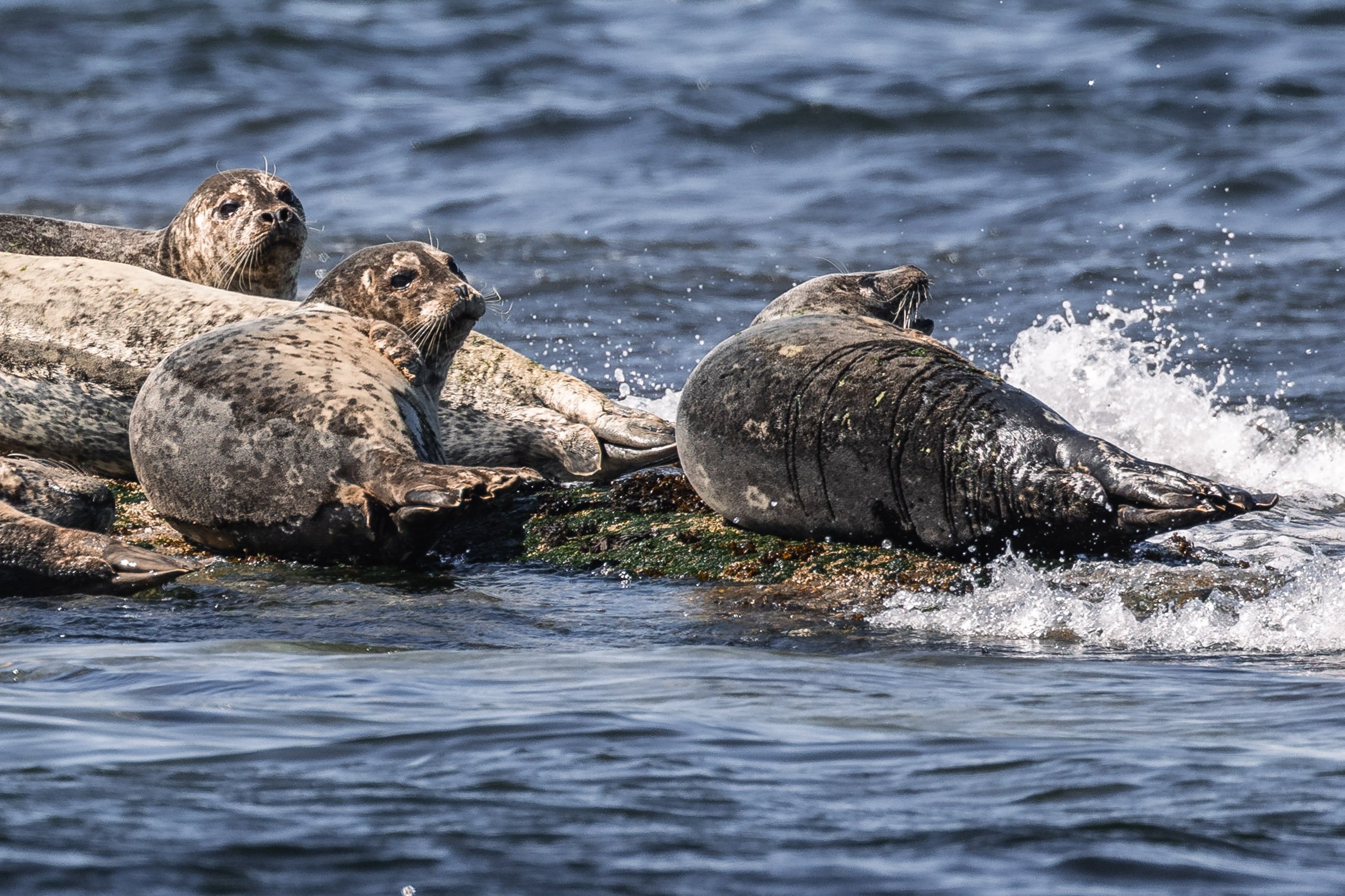
This seal looks a little upset about the cold splash!
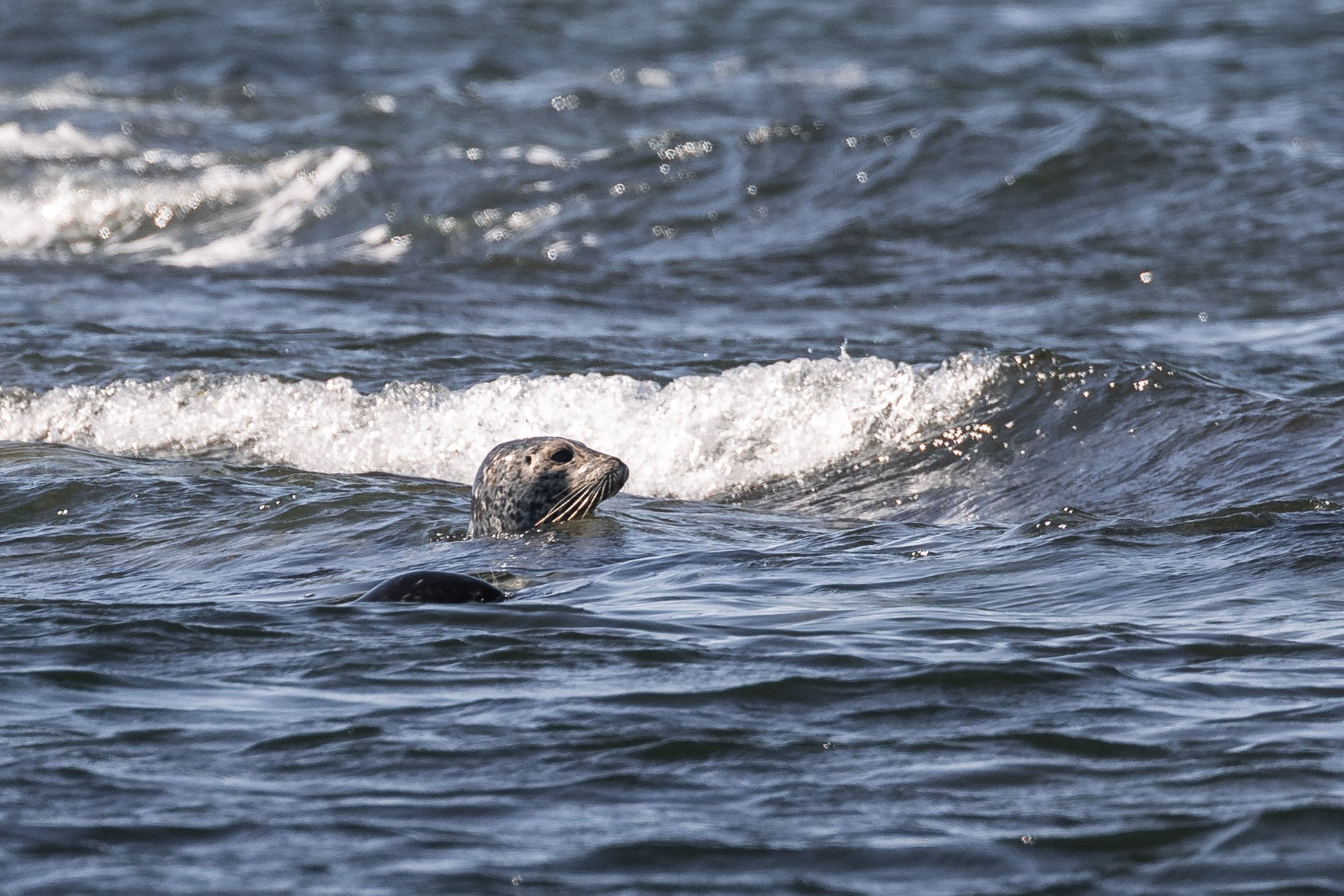
Can you spot both seals in this photo.
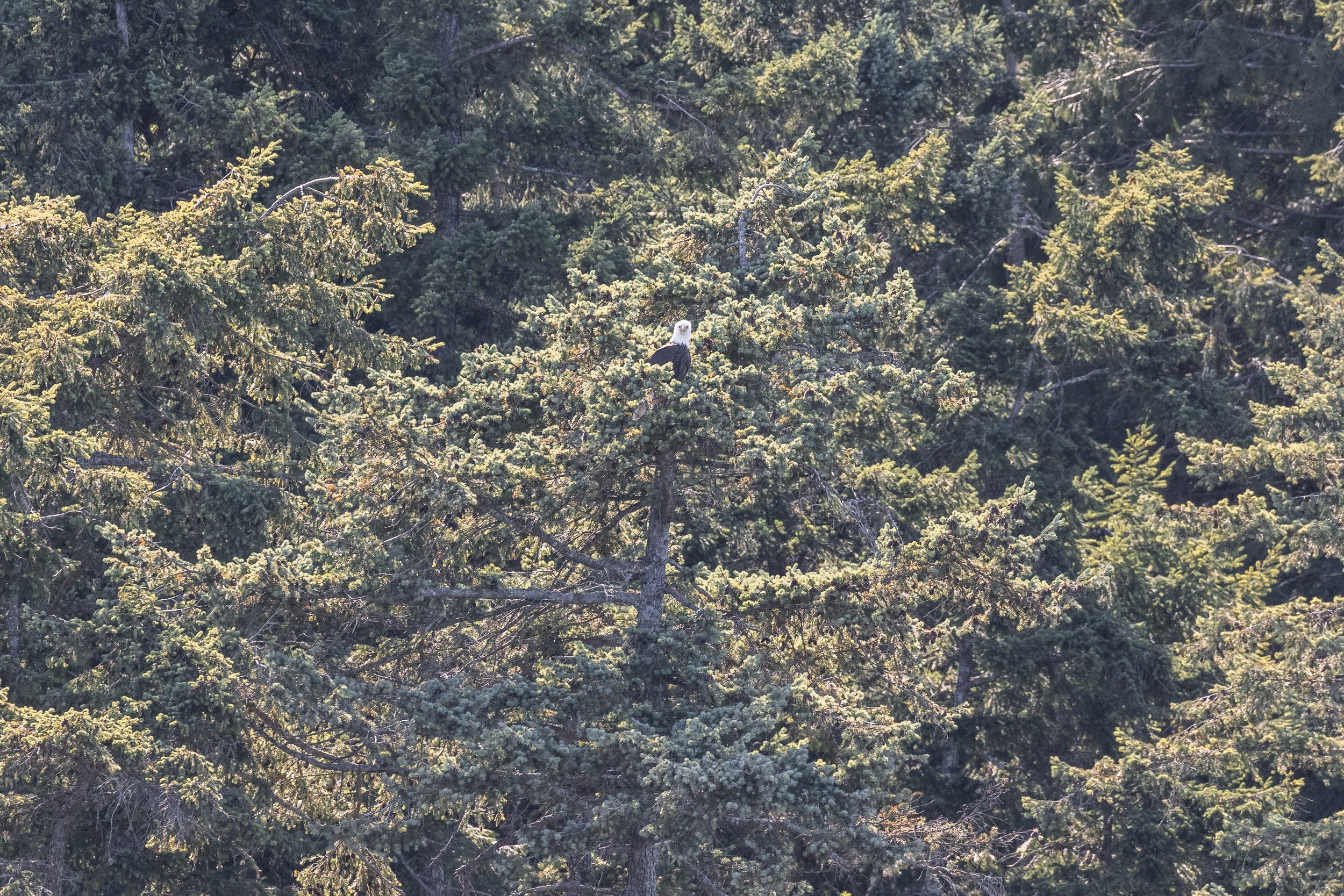
A bald eagle perched in the trees.
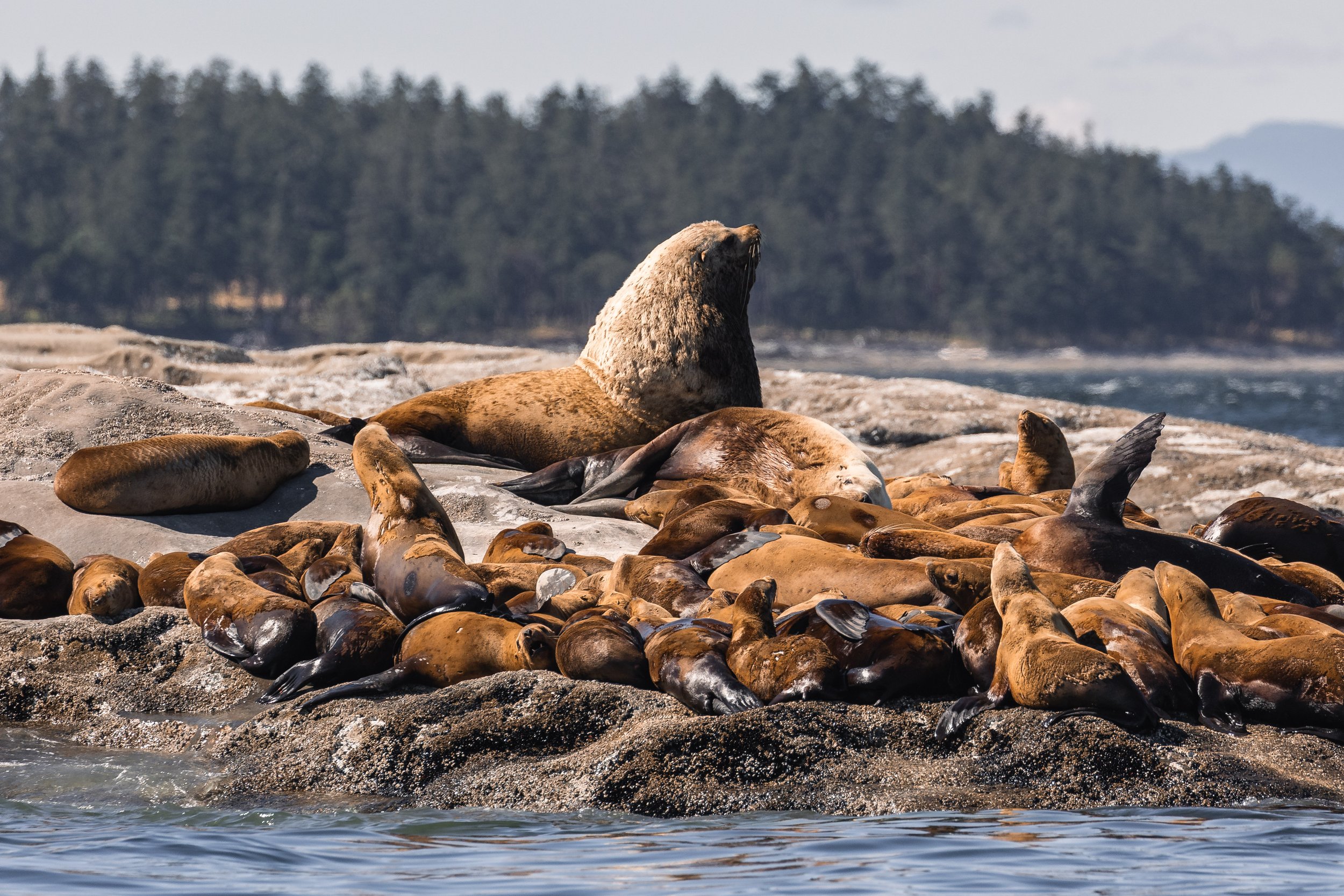
A large male Steller Sea Lion towers above the rest.
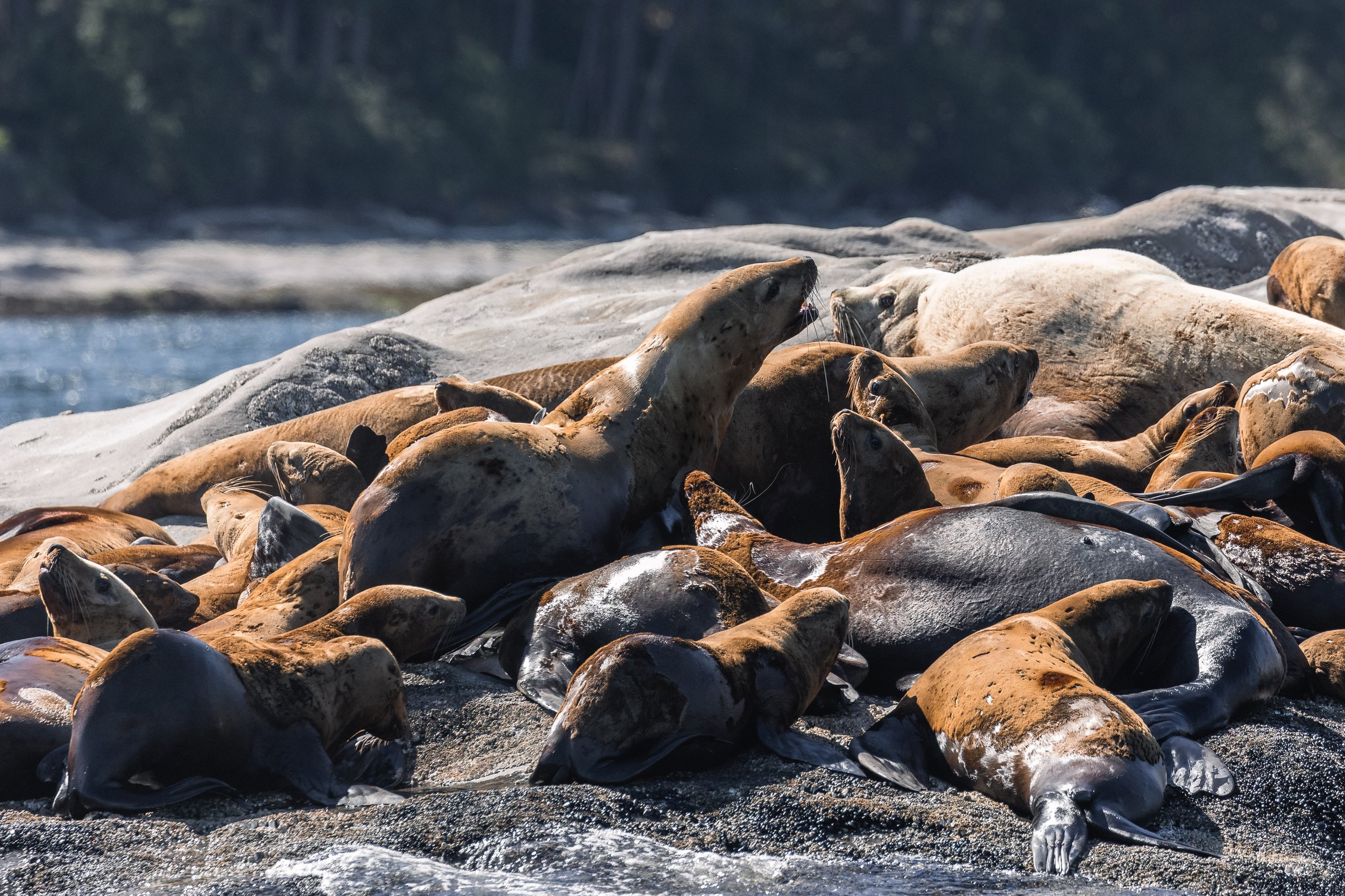
A pile of Steller Sea Lions.
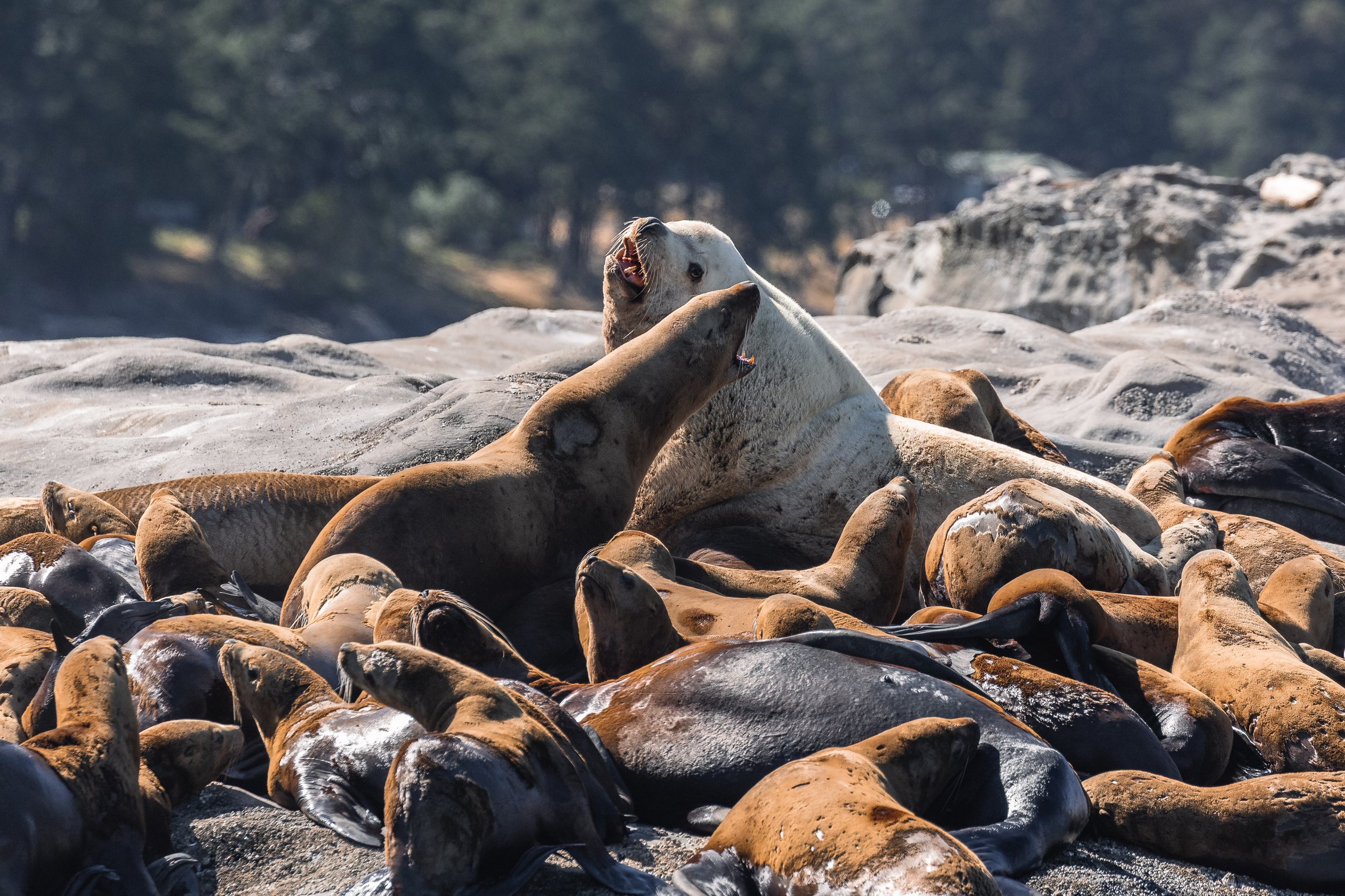
Stellers bickering over the best spot.
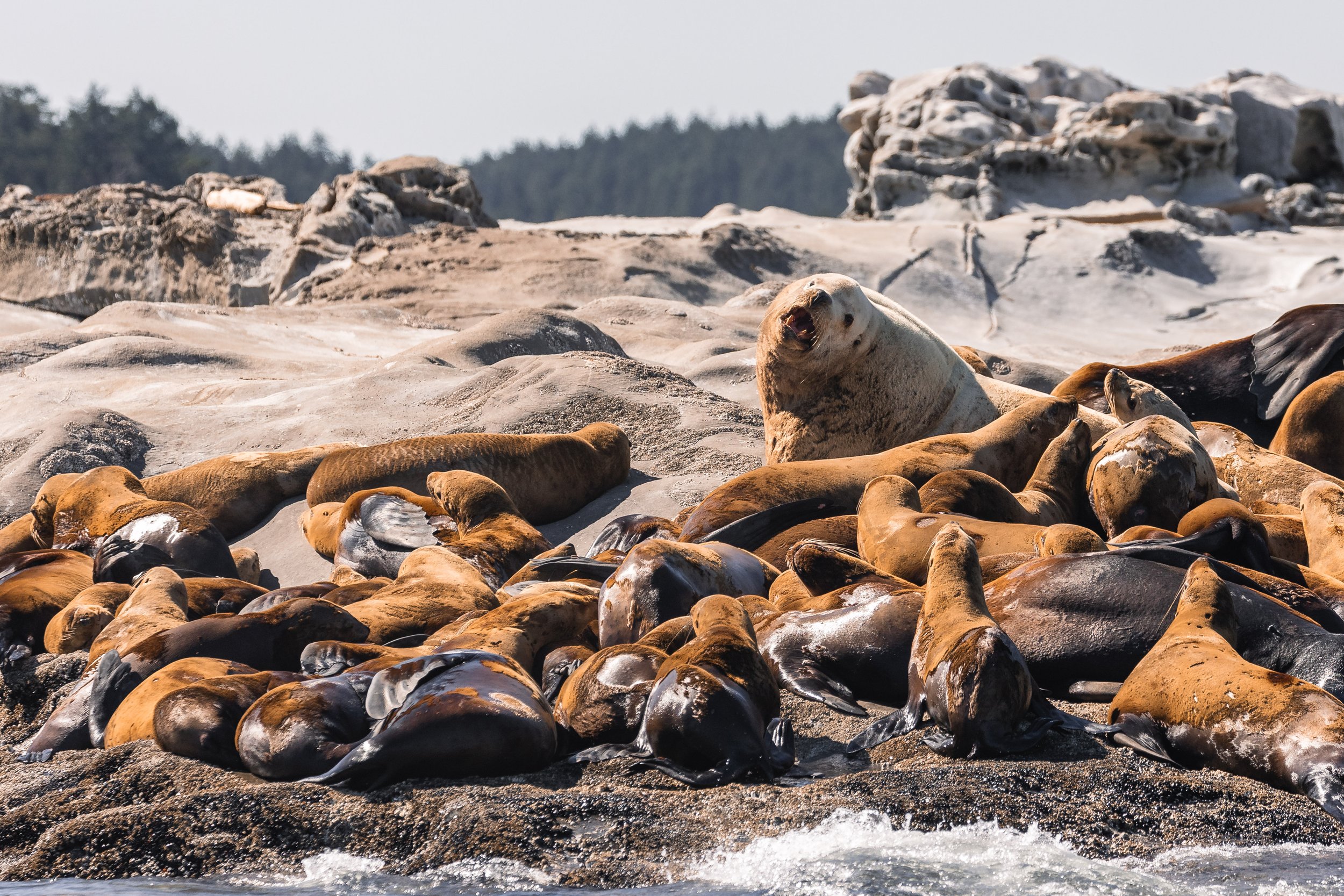
A large male growling away while others try to sleep.
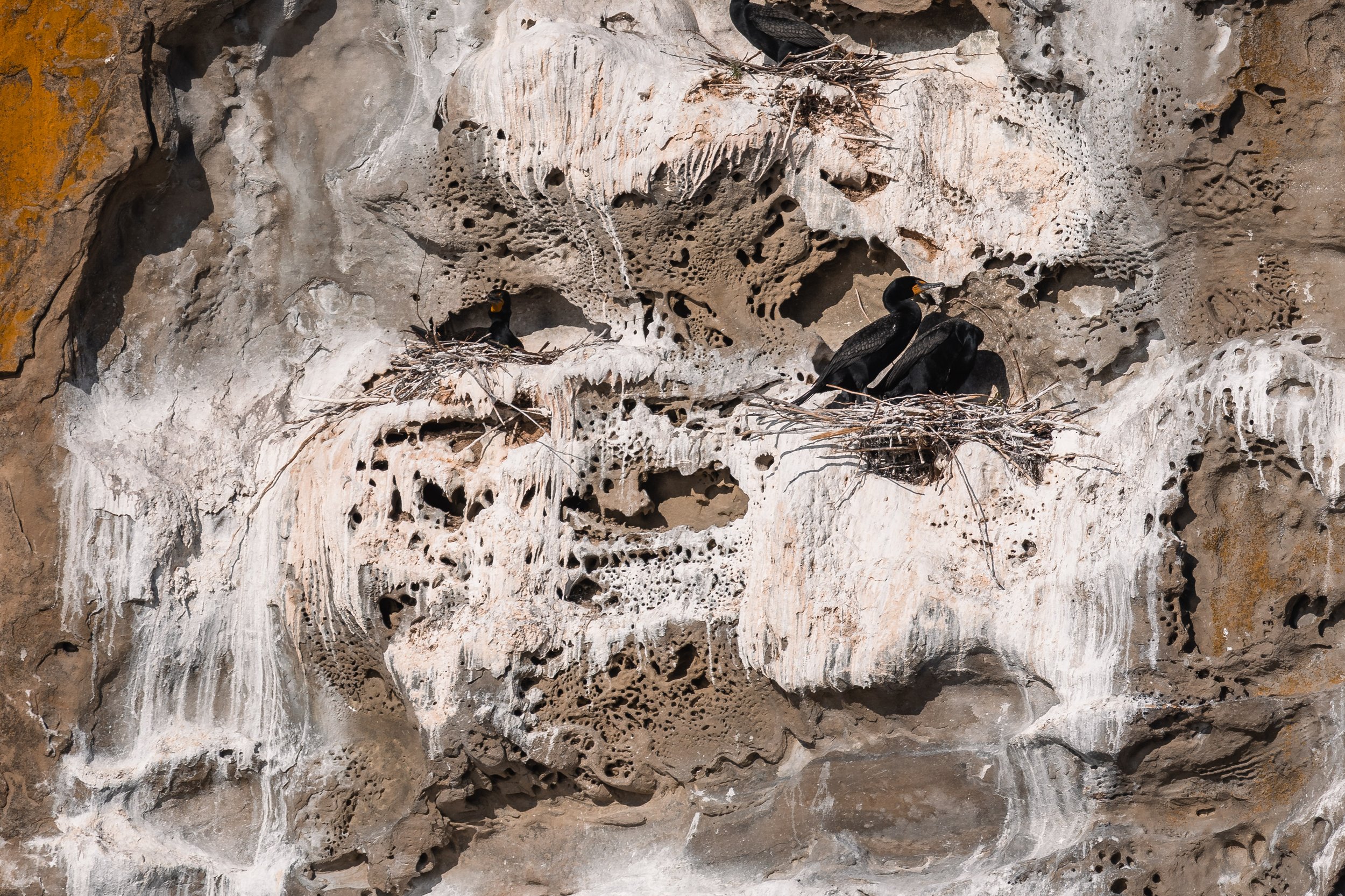
Cormorants in their nests.
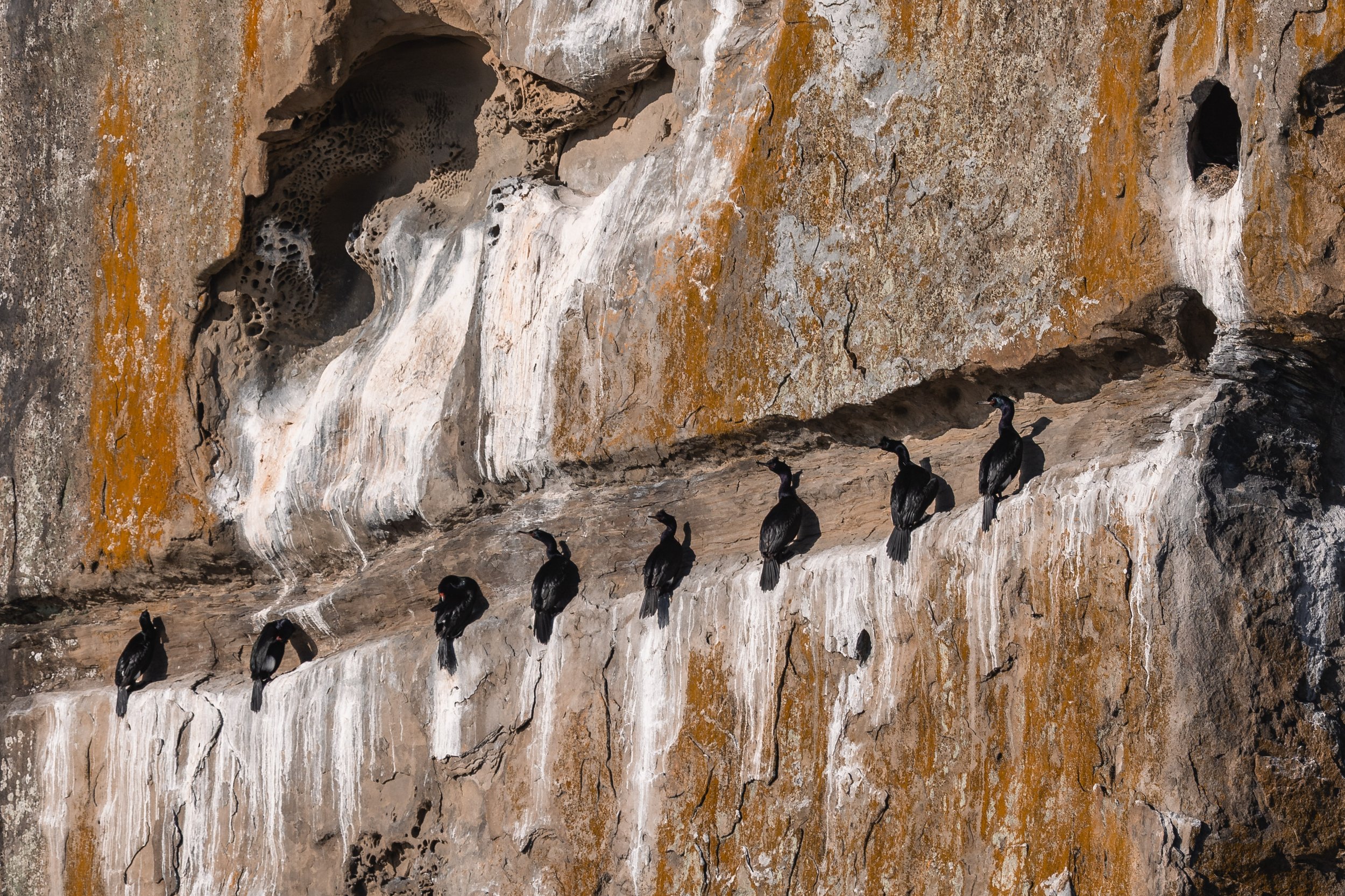
All lined up in the sunshine.
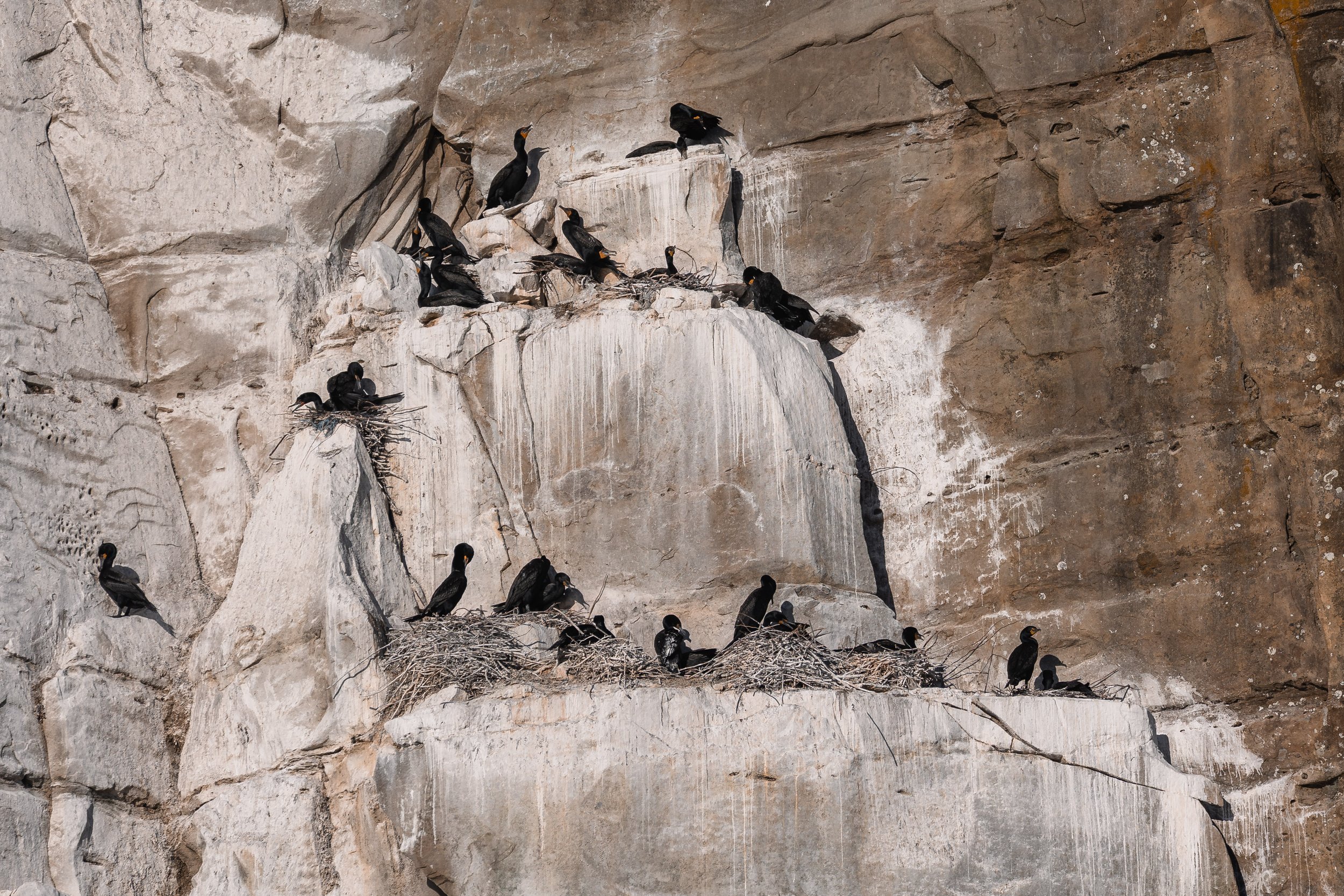
Did you know cormorants use their guano in the nest like a cement?
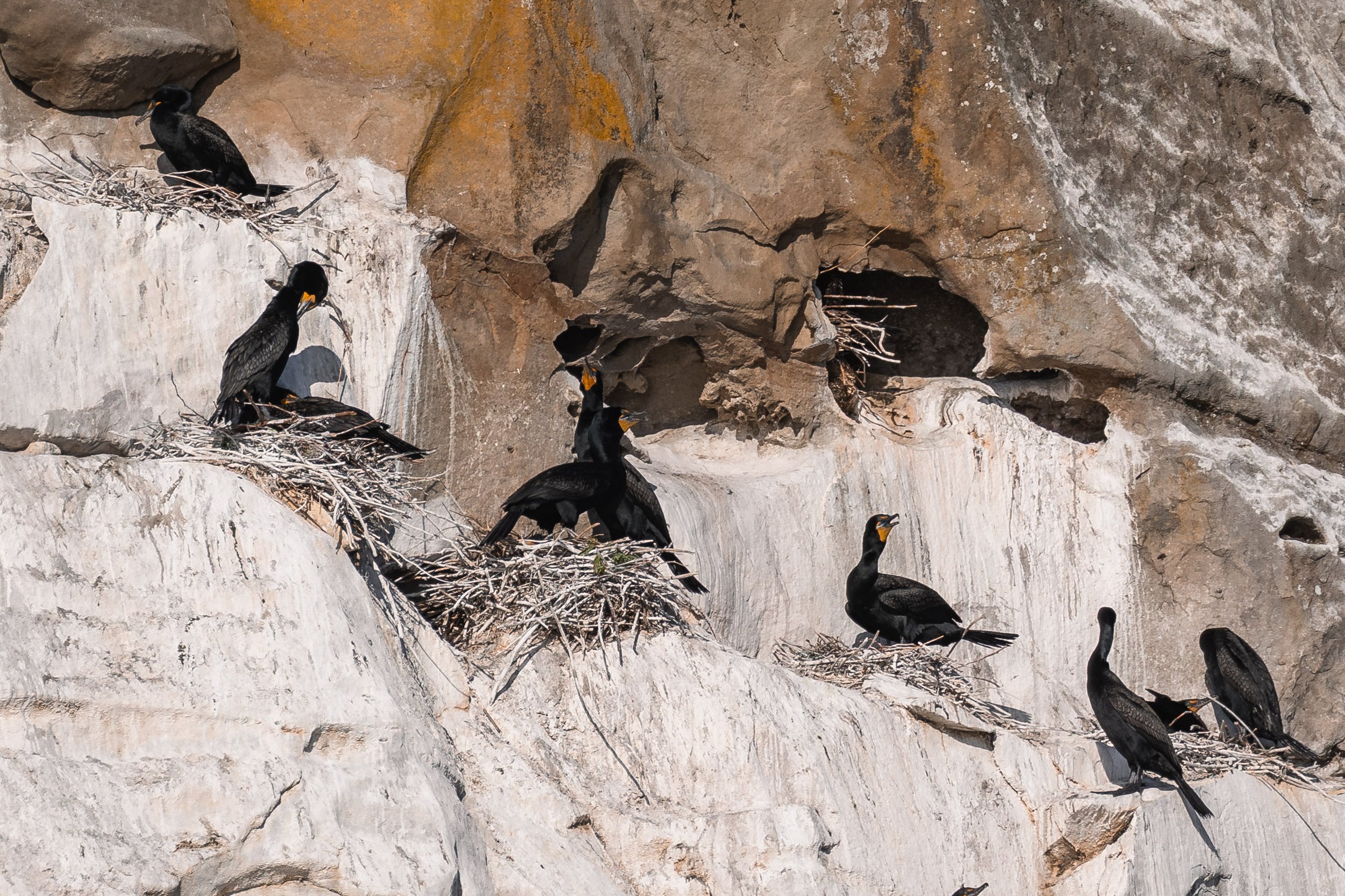
Cormorants nesting.
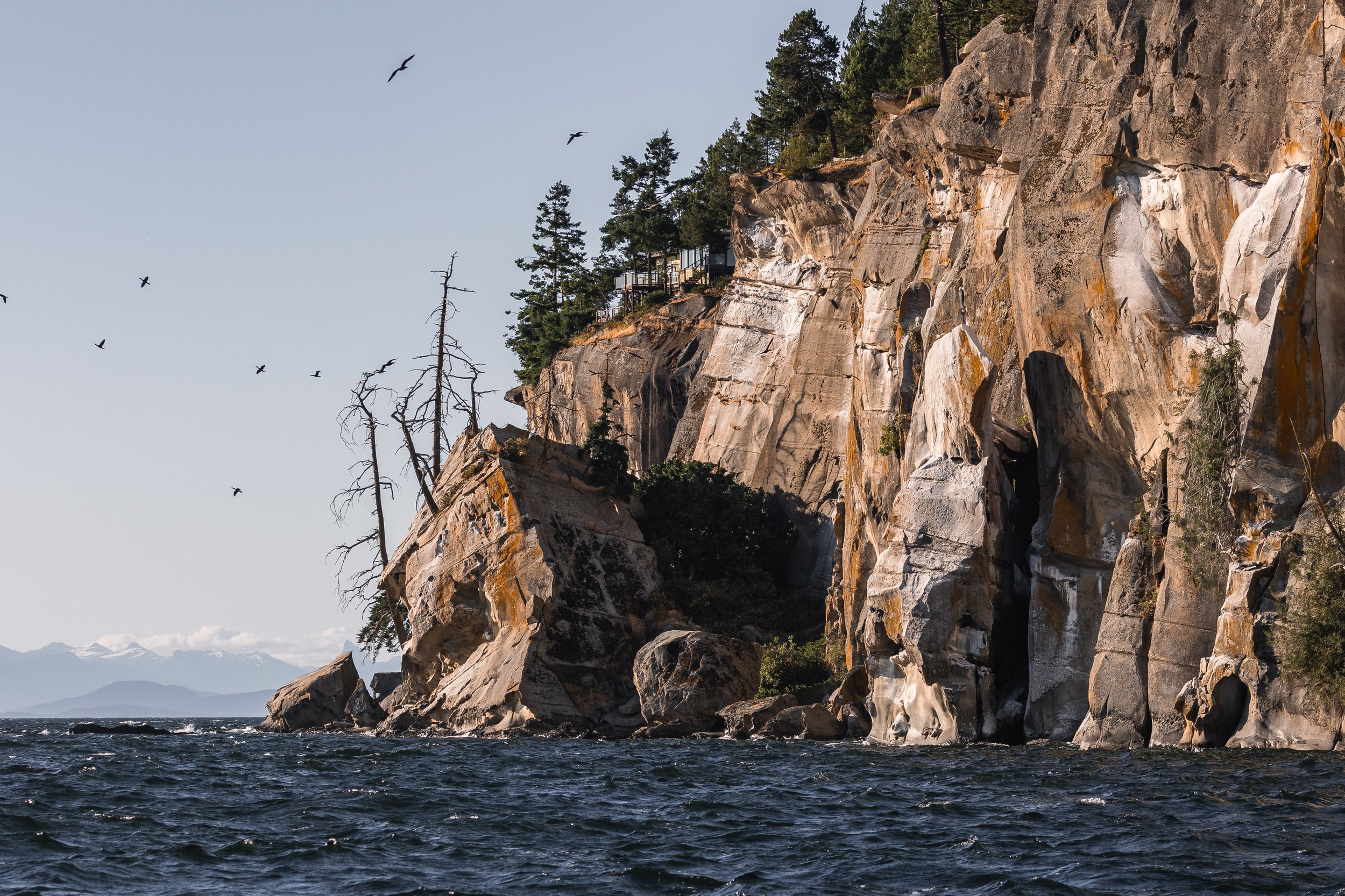
The Gabriola Bluffs.