
June 18, 2026, 10:30 AM - Exploring the Gulf Islands
It was another beautiful day on the water, the wind offering a welcome reprieve from the morning heat. We loaded onto our open boat, Keta, and started the day's journey after a quick safety briefing and an explanation of the wildlife we would be keeping an eye out for along the way.
Of course, our main goal on the tours is to locate whales for the day, but sometimes the whales have other ideas and might not be within our range or make themselves visible as we search for them. Luckily, even when the whales aren’t around, there is plenty of wildlife to observe! This morning's tour was one of those instances: we searched all through the Southern Gulf Islands and even out into the Strait of Georgia for a little while, but no whales ever showed up for us. That’s okay, though, since all the guests on board will get to come out with us again to try for whales for free in the future!
Today, they still get to experience many parts of the Salish Sea Ecosystem. This started as they headed south through Dodd Narrows, a beautiful tidal passage that separates Vancouver Island, more specifically Joan Point, from Mudge Island. This area is known for its high biodiversity thanks to the currents that run through it throughout the day. As the tides change, water is forced through the area, and the mixing introduces high levels of oxygen that can support abundant life. We got to see some of it peeking over the water's surface, like the colourful starfish, white barnacles, and mussel beds that caught our eye. Continuing from here, we went south, travelling through Stuart Channel, Ruxton Pass, Gabriola Pass, and out into the Strait of Georgia. Before making it too far, we spotted a bundle of sticks high in the treetops, which the crew immediately recognized as a Bald Eagle Nest. Sure enough, upon closer inspection, we could see the head of the chick poking up over the nest. A local wildlife group called GROWLS keeps track of the development of local eagles, and this chick is right on schedule, with the next stage being to sit on the edge of the nest before hopping from branch to branch. This trains their wings, and by the end of July, they should be flying on their own.
After seeing the chick, we jumped over to “Stinky Rock,” where we saw both Harbour Seals and Steller Sea Lions hauled out on the rocks. Although close together in the Mammal Family tree, these two species are still quite different from each other. The Sea Lions have a few unique characteristics, such as external ears, rotating hips, and a distinct growl. Seals, on the other hand, don’t have external ears, have a fusion of their hip bones, and they are very quiet sitting on the rocks. Another big difference is that the Harbour Seals spend their whole lives in the same space, typically travelling no more than 15 miles from their home haul-out site, and their entire life cycle is carried out here. Sea lions, on the other hand, will soon be leaving us to head to their rookeries, where they will breed and raise their pups. Some juveniles will stick with us, though, but the adults, like the big impressive male we got to see this morning, will continue on. Both pinnipeds enjoy our waters because of the rich biodiversity and biomass found here; lots of things to eat and lots of them! These pinnipeds are not picky about what they eat and will snack on most things in the water, from Crustaceans to Fish to Cephalopods.
As we were admiring the pinnipeds, something else caught our eye: a pair of white birds soaring overhead, coming in to land on the rocky islet. These birds, quickly identified by Marine Naturalist and bird enthusiast Evan Hessels, aren’t very common visitors to our area. They are the largest species of tern in the entire world, with a massive wingspan of 128 cm (50.4 inches)! Seeing them firsthand put into perspective just how large these birds really are, and we marvelled at them for a while before continuing our search.
From Stinky, we continued south, surfing the waves until we reached Porlier Pass, taking the opportunity to pass back into the more protected waters of the Southern Gulf Islands. We searched all the way down Galiano Island to the South end of Saltspring, then back to the northern tip of Saltspring, up Stuart Channel to Dodd Narrows, and with a final stop at the Gabriola Bluffs before heading back into the Harbour. Although there were no whales, it was still amazing to spot all the wildlife that we did and to explore the beautiful waters of the Southern Gulf Islands. Please enjoy the photos taken throughout the tour by Marine Naturalist Evan Hessels, included below.
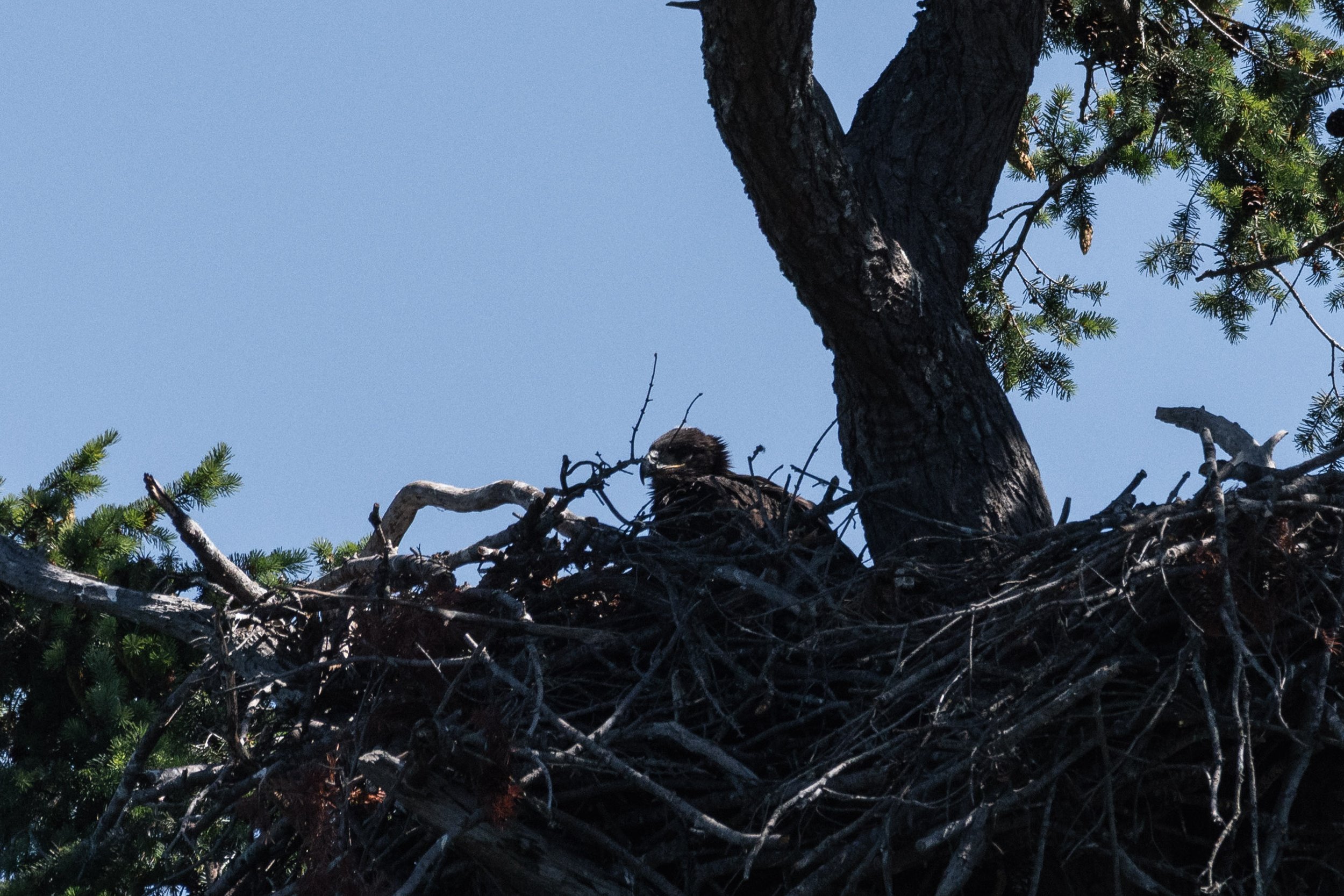
The Bald Eagle chick in the nest.
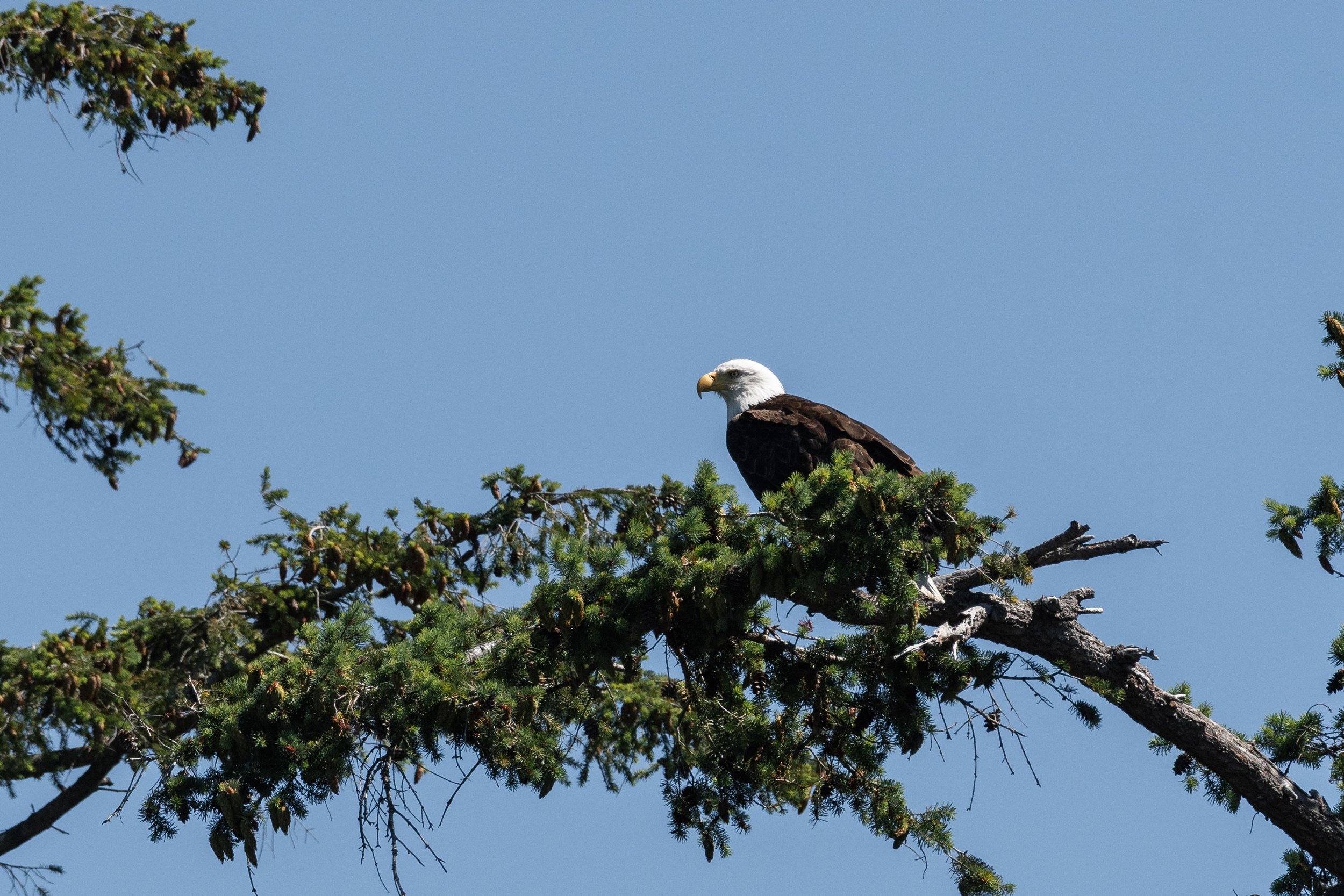
The Adult Bald Eagle spending time in the treetop above the nest.
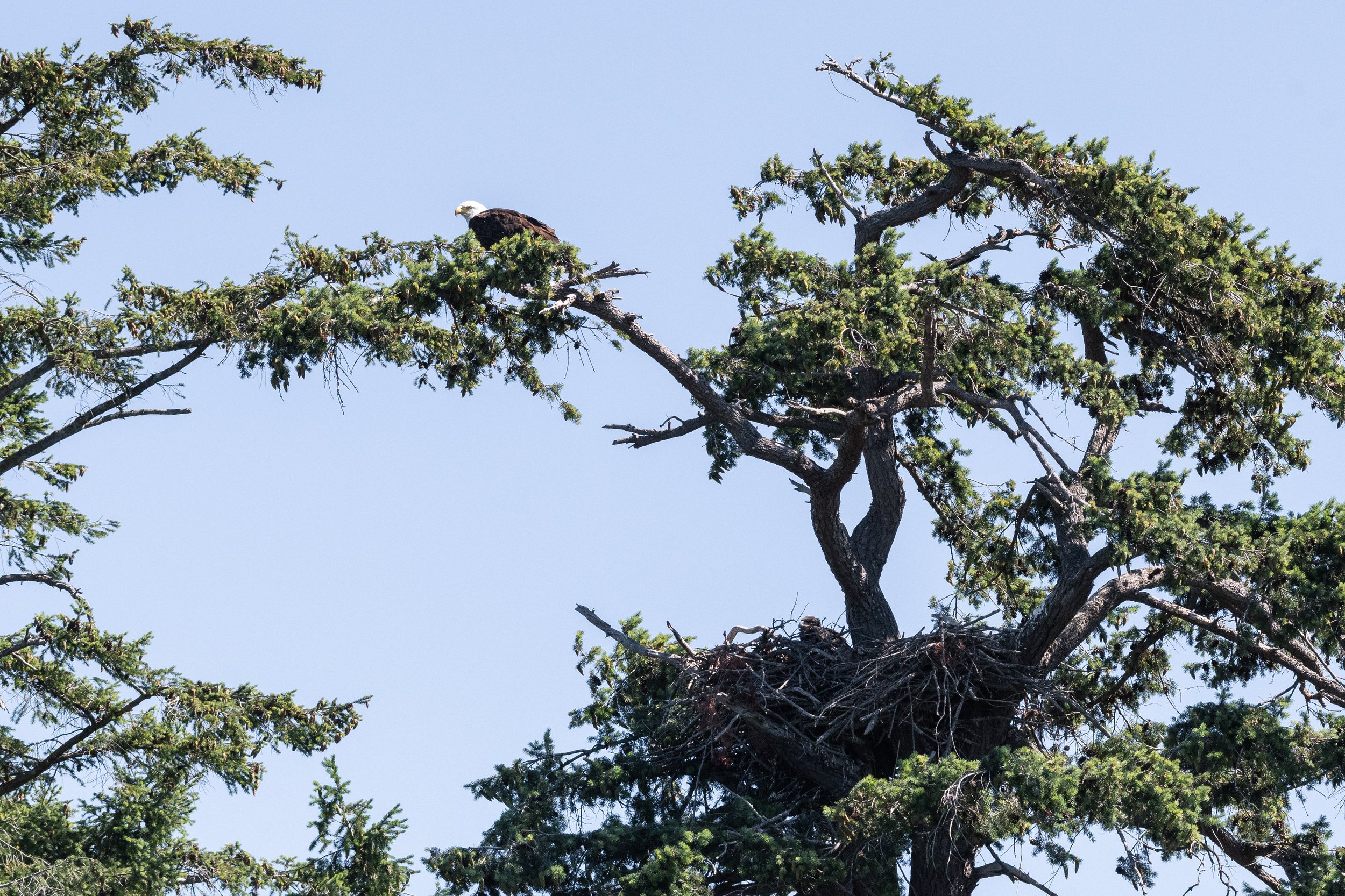
The Adult Bald Eagle and the chick in the same frame.
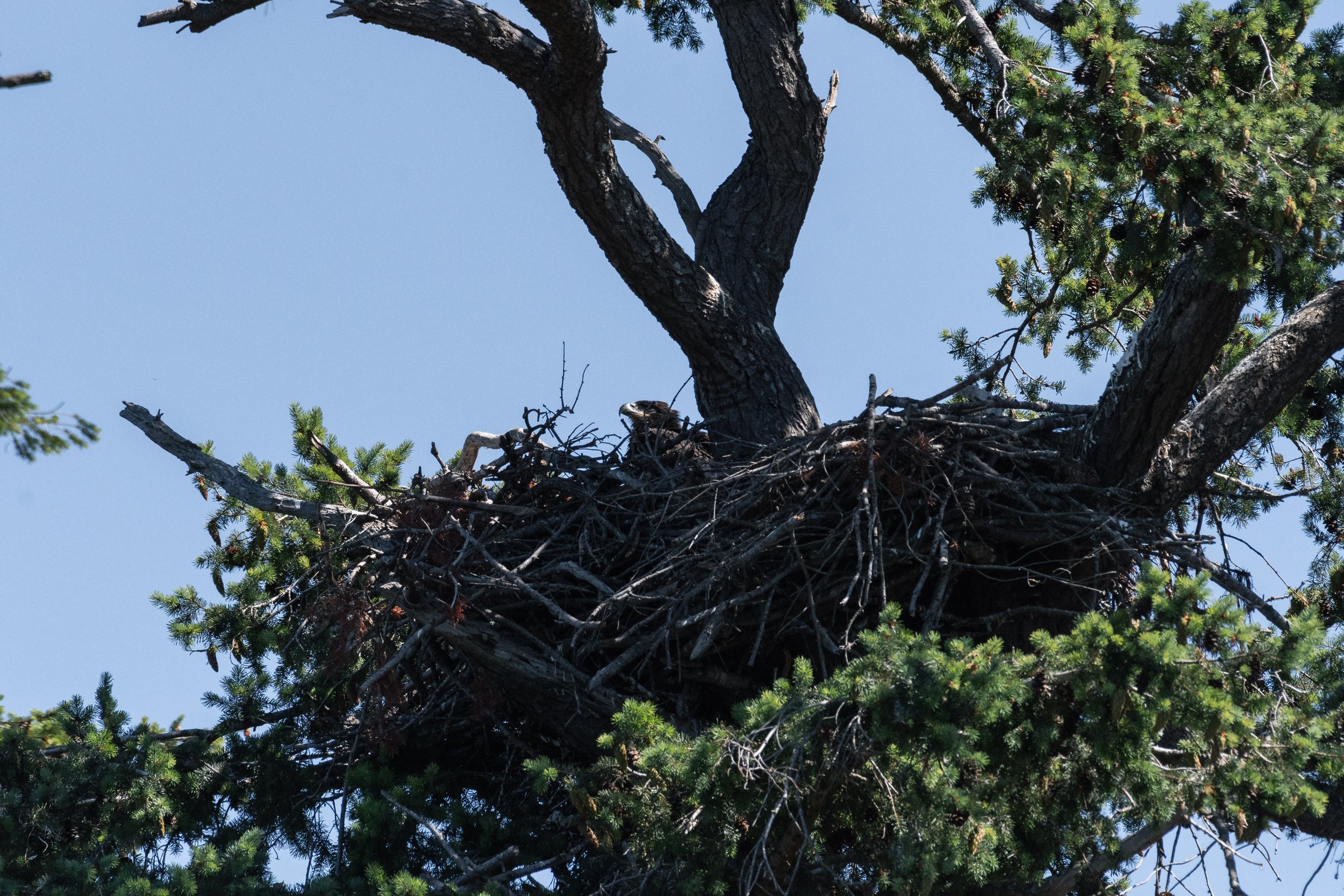
Another look at the baby eagle.
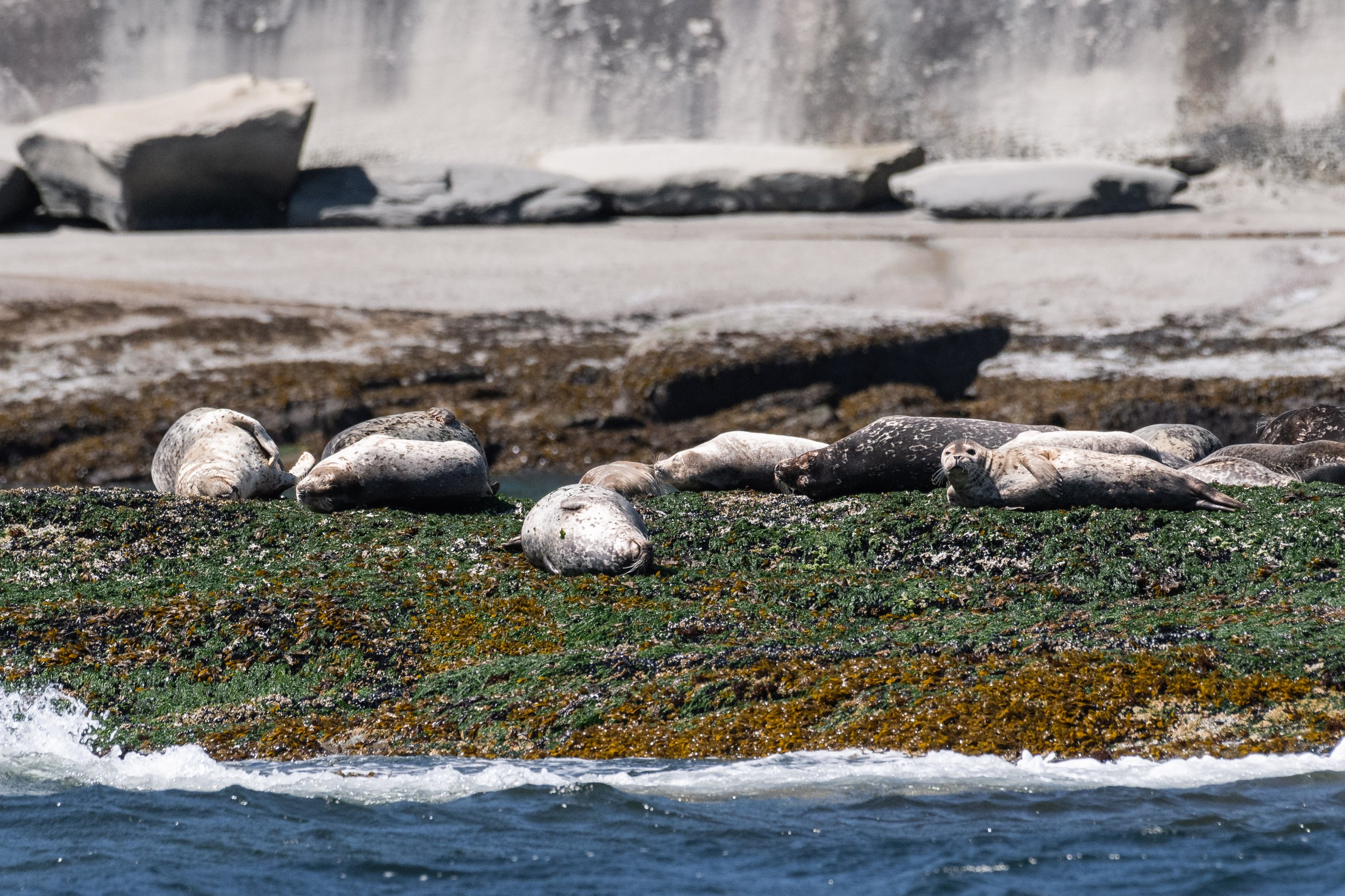
Harbour Seals hauled out on the rocks.
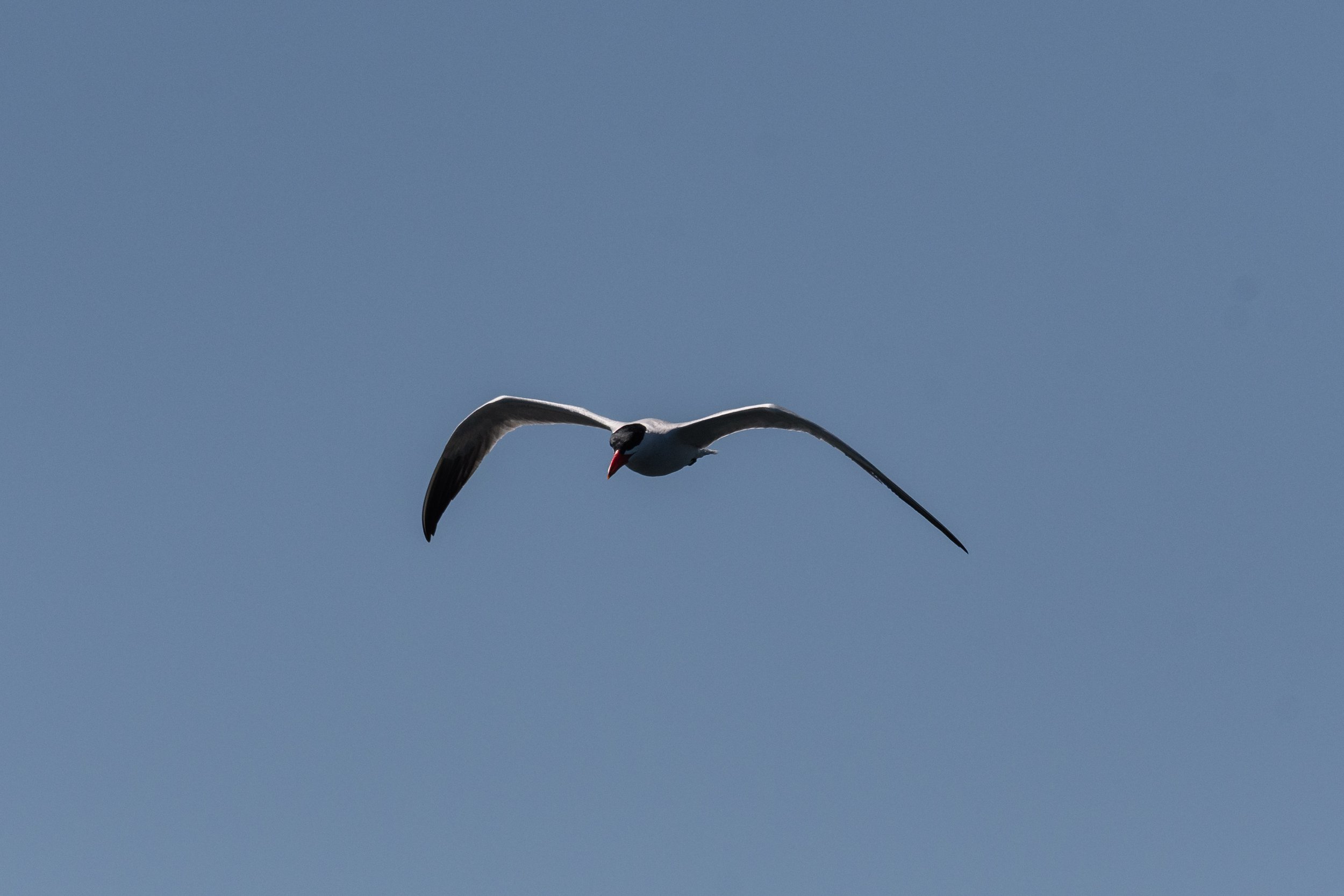
A Caspian Tern flying overhead.
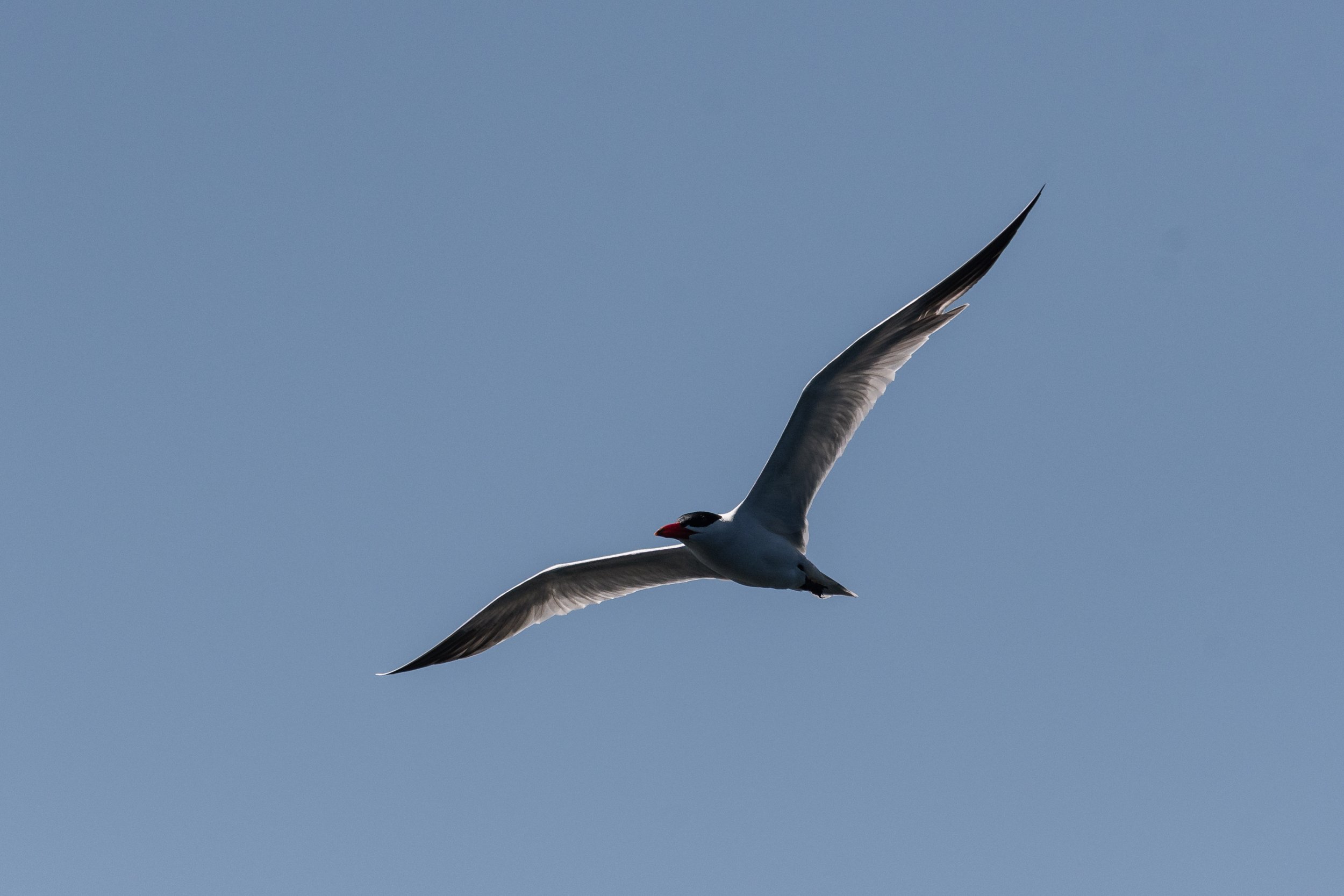
Just look at that wingspan!
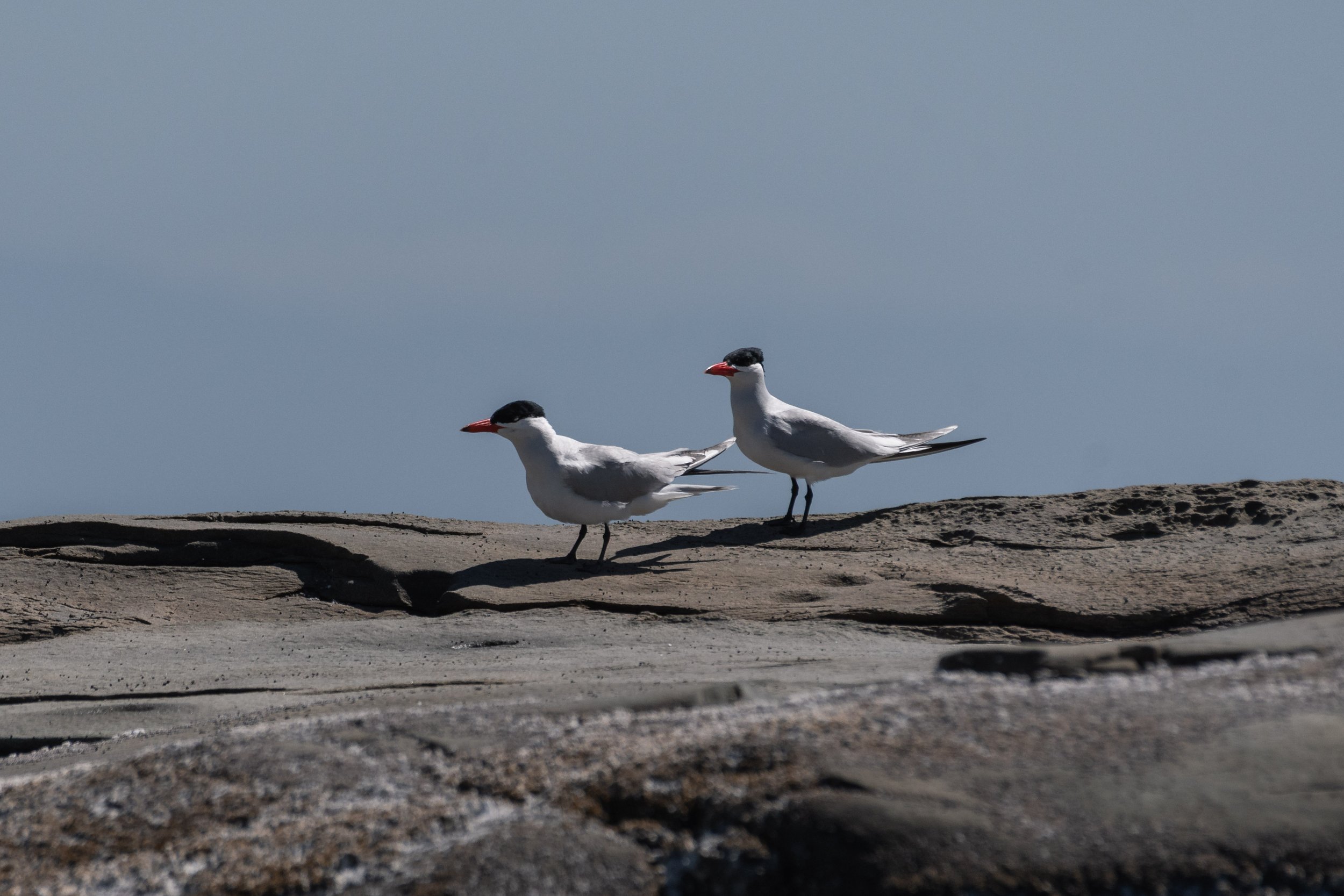
The pair of Terns on Stinky Rock.
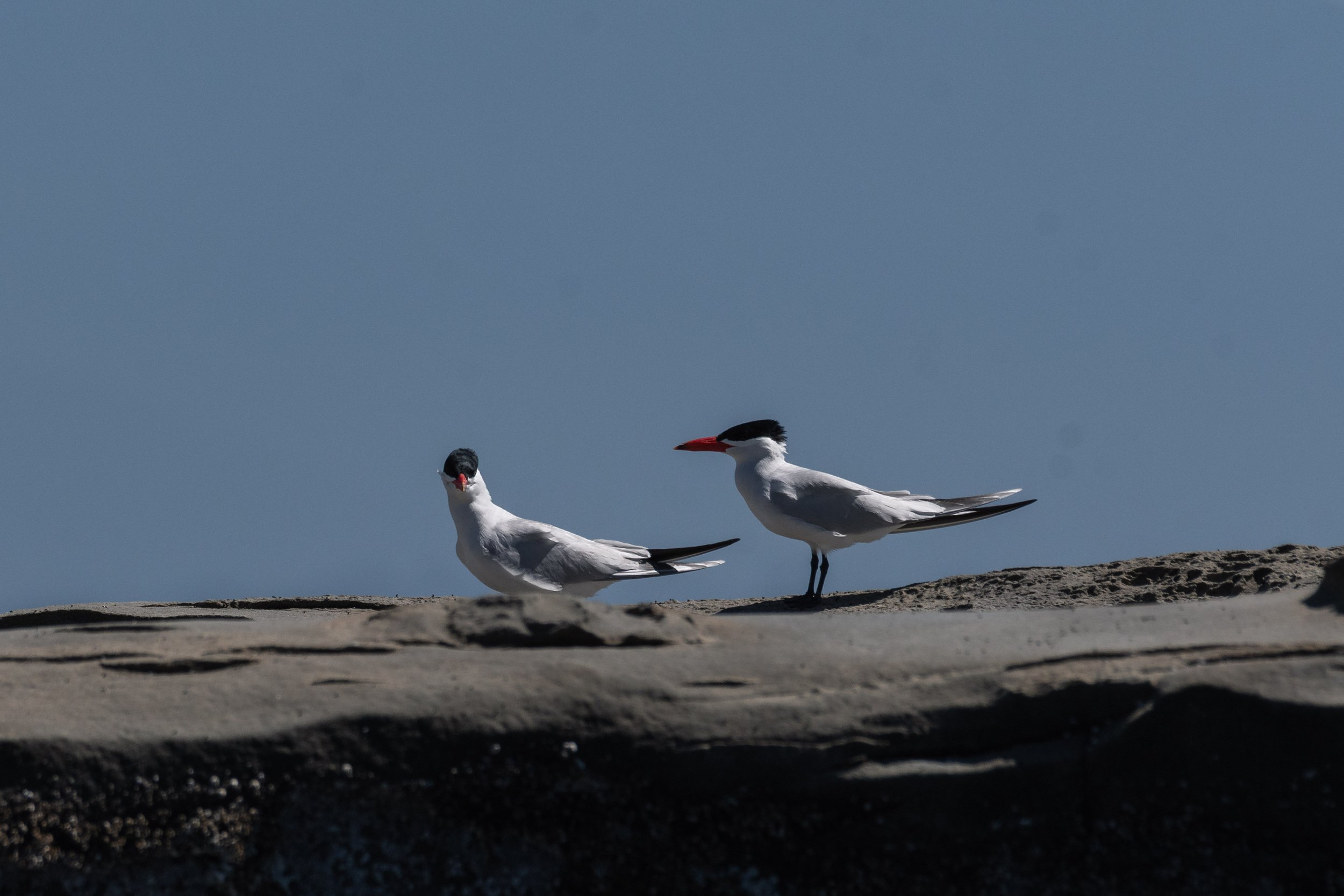
The pair of terns with one mean mugging the camera.
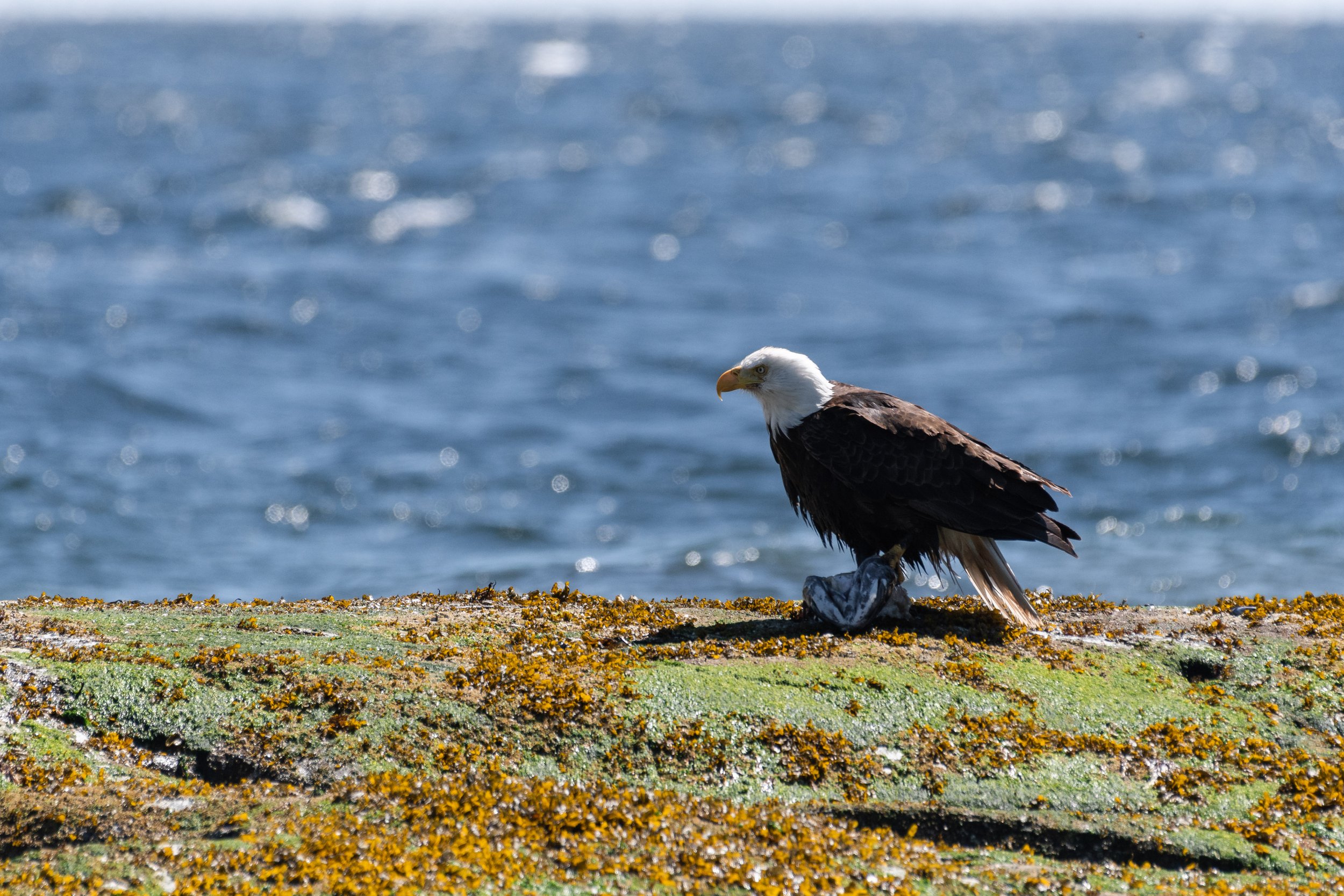
A Bald Eagle with a fish head snack.
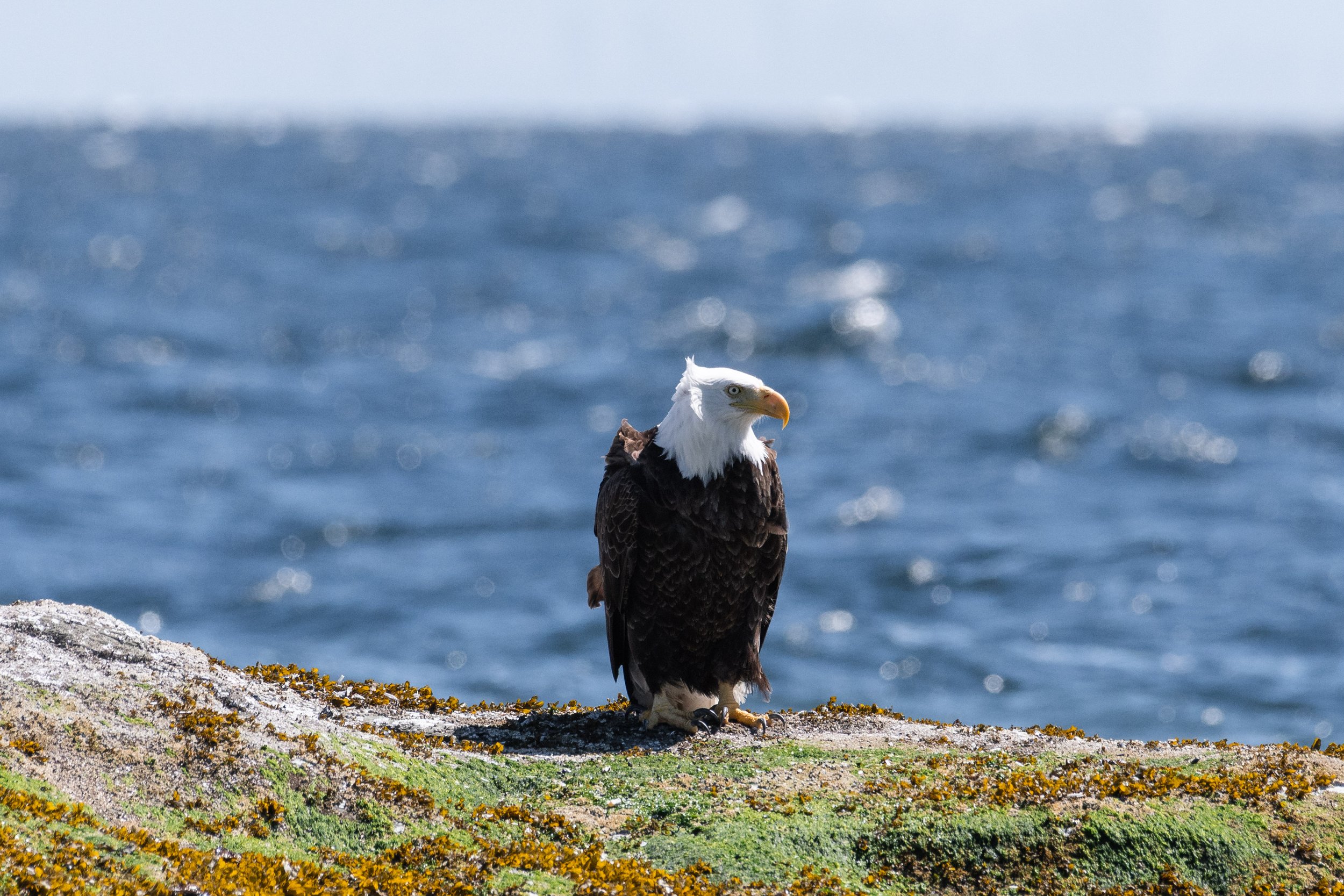
An Adult Bald Eagle hunkered down in the wind.
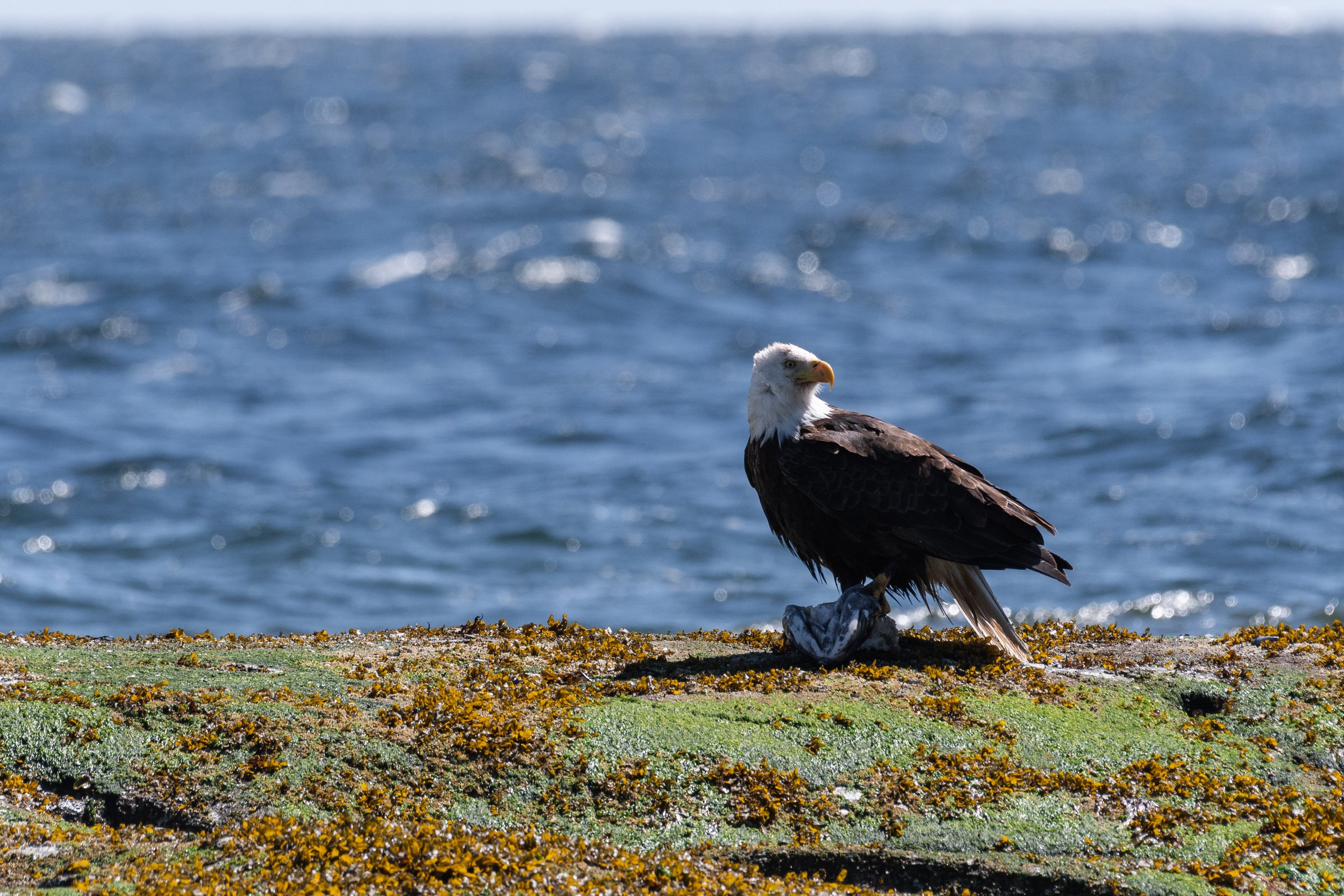
Another look at the Eagle with their fish head.
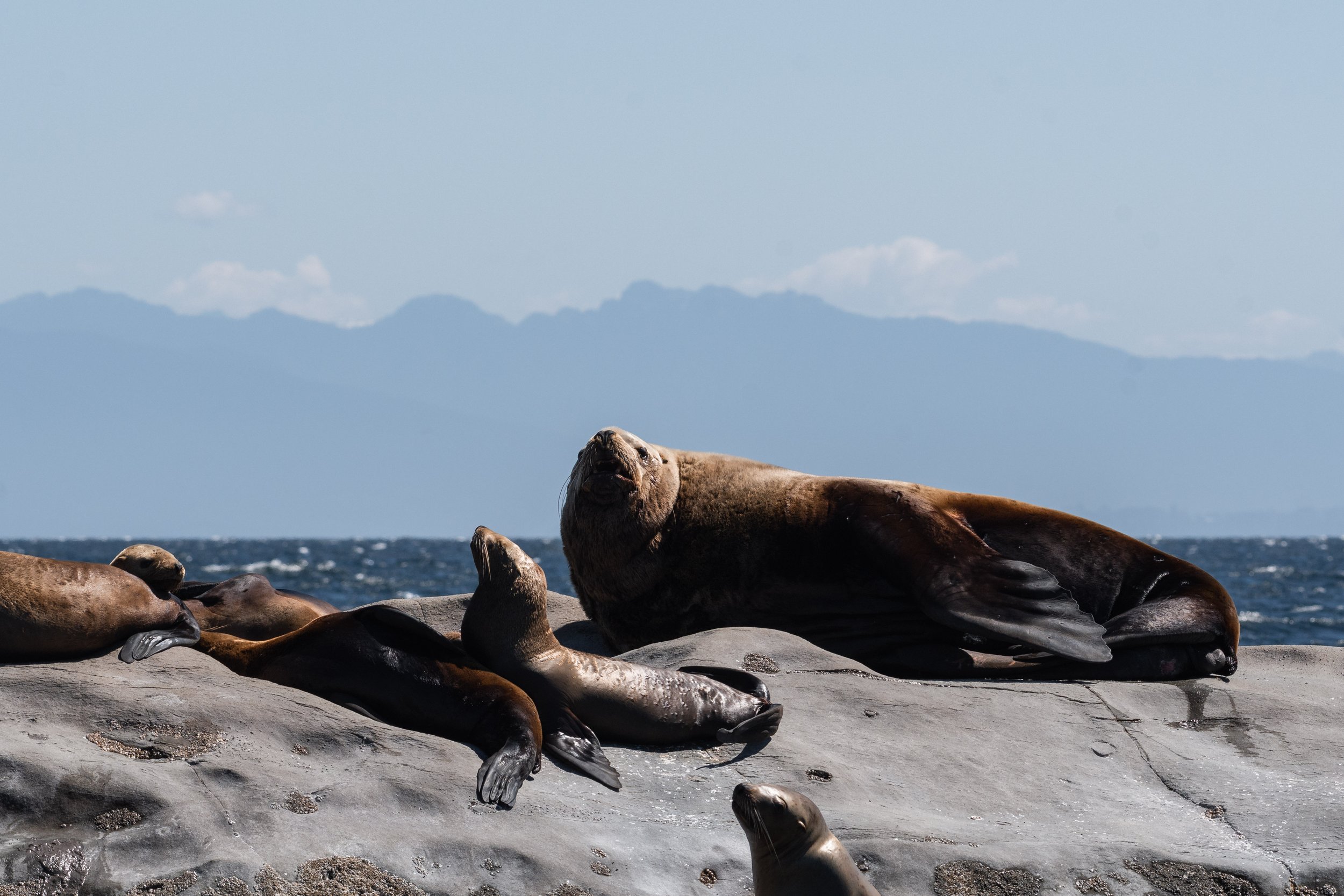
Stinky Steve relaxing on the rocks.
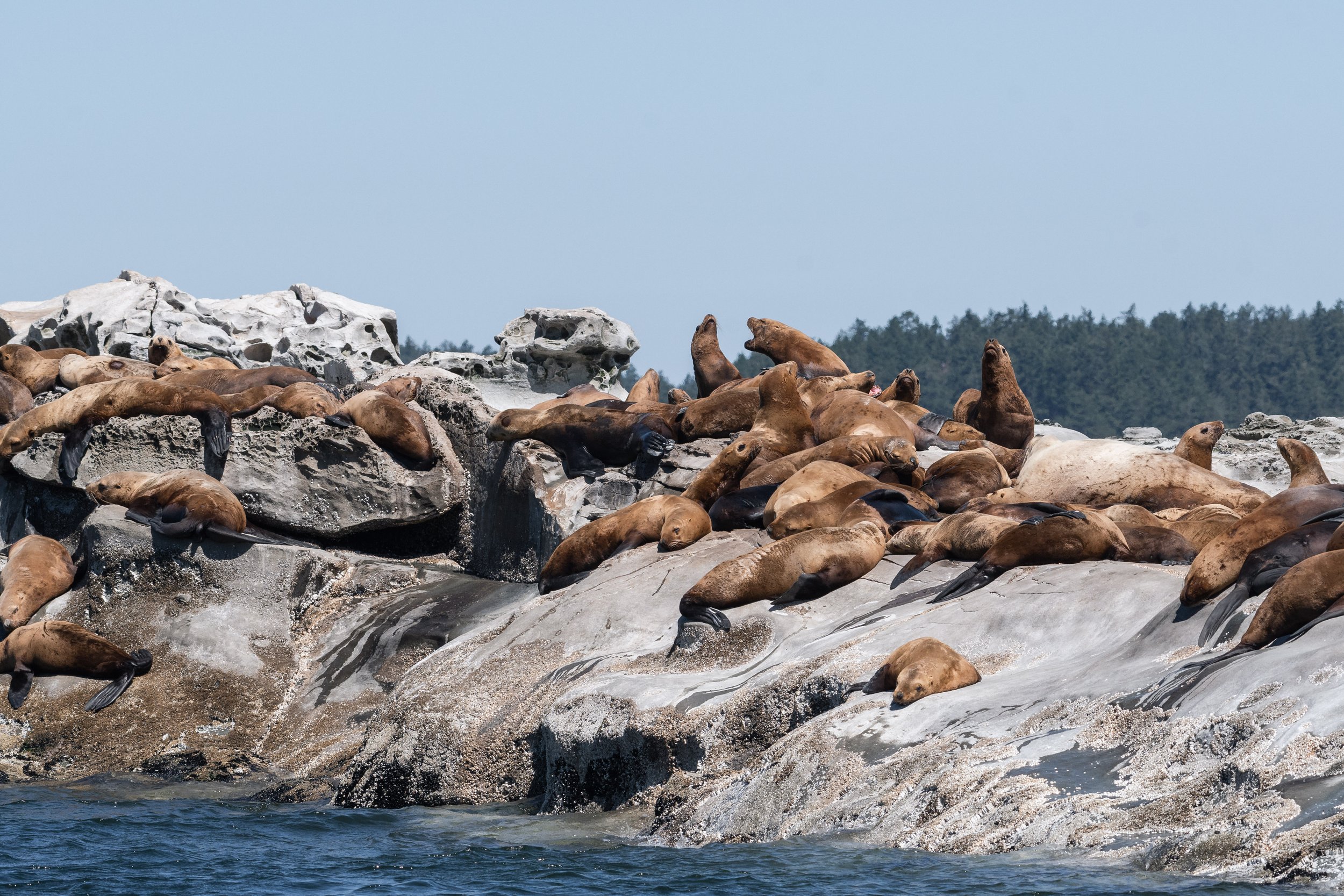
A wide look at the Steller Sea Lions hauled out on Stinky Rock.
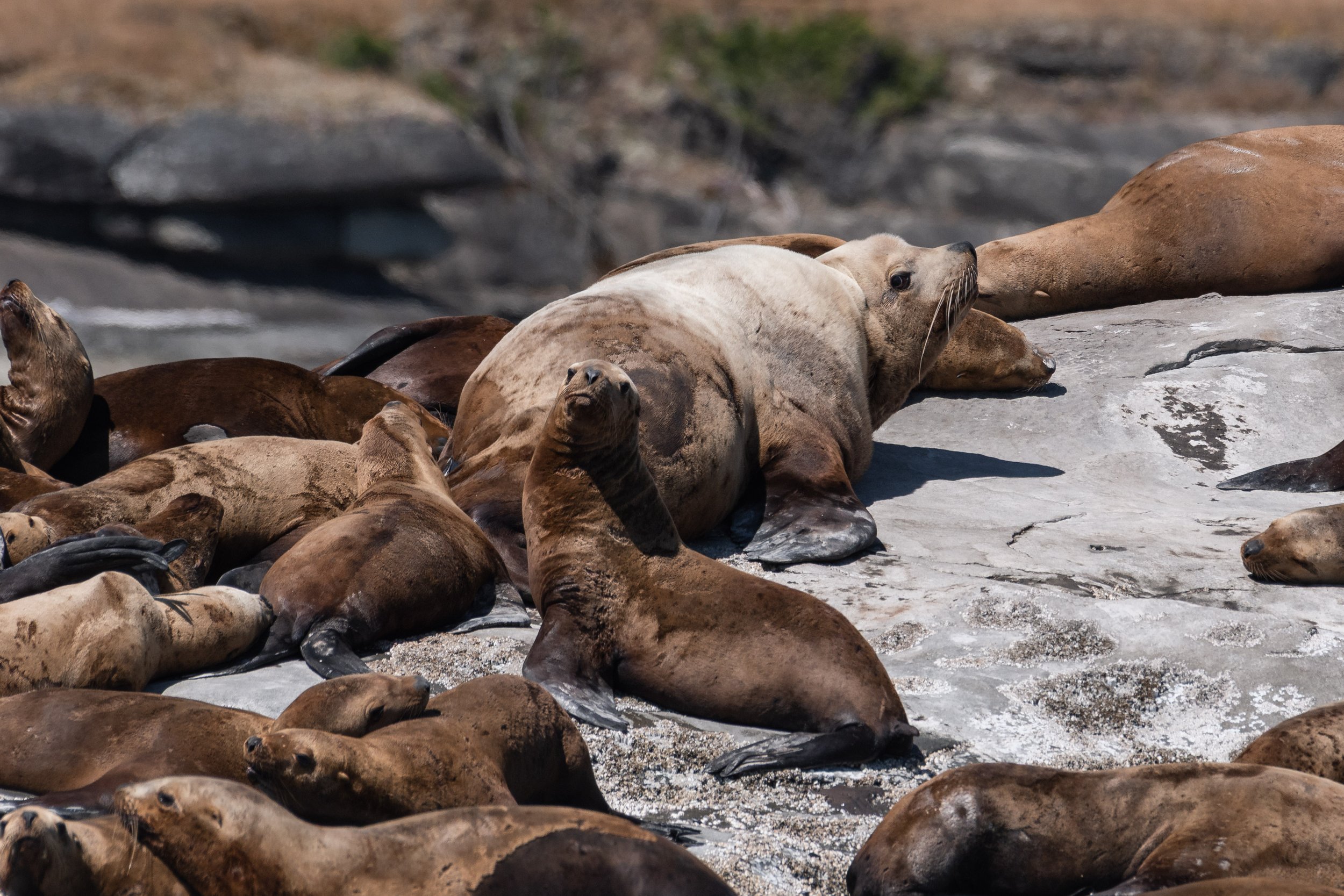
A funny look from one of the Steller Sea Lions on Stniky Rock.
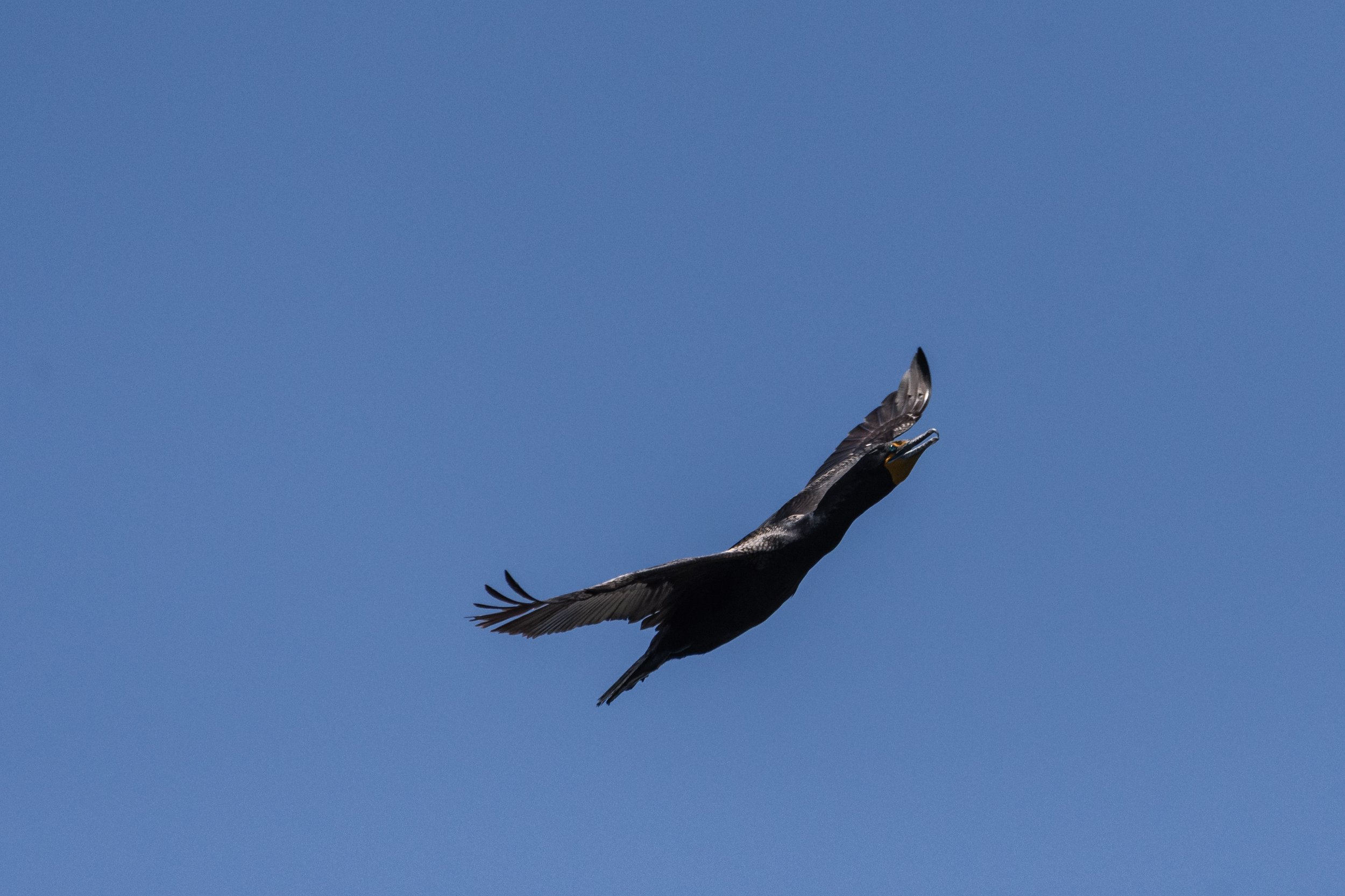
A cormorant flying overhead.
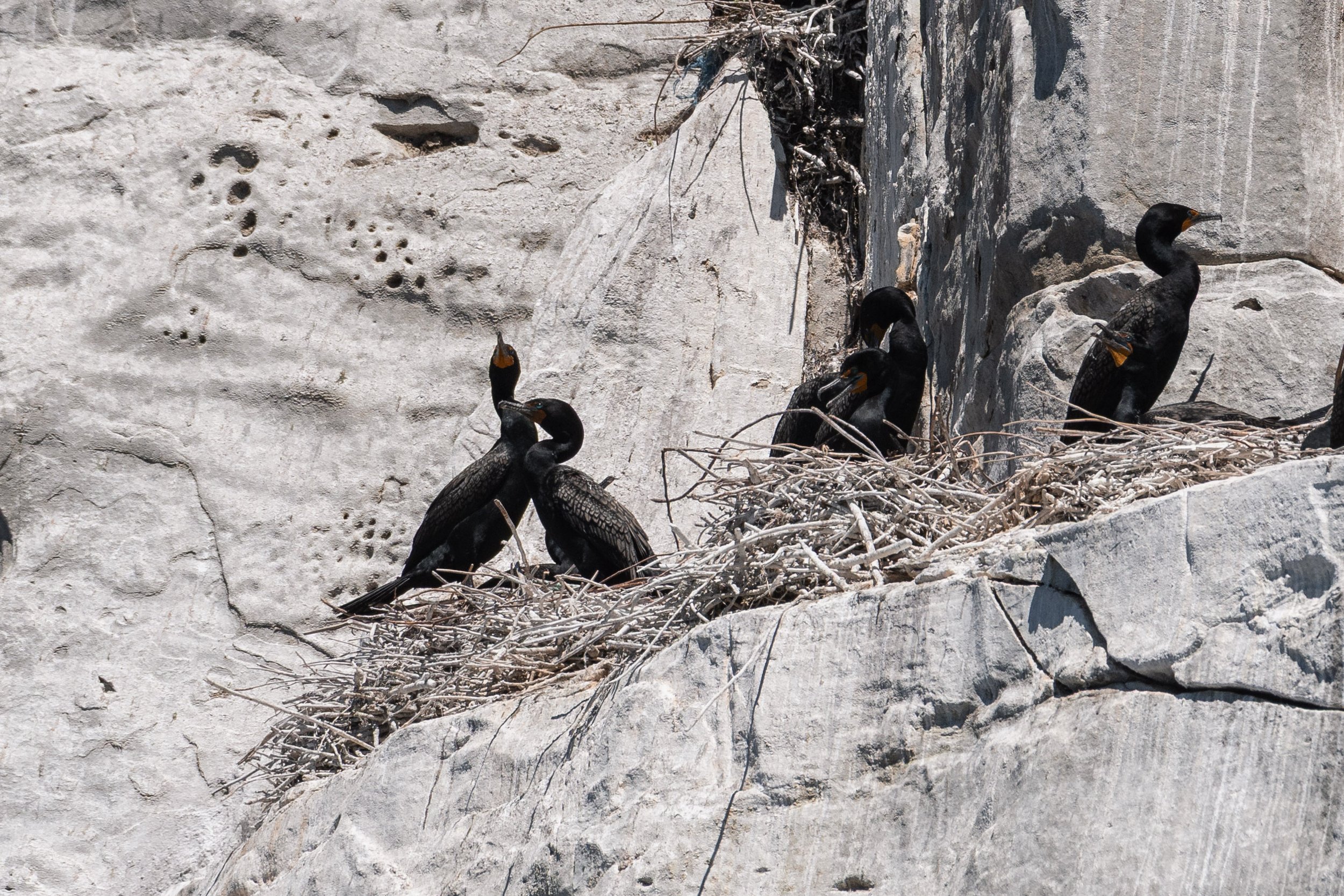
Cormorants spending time on their nests.
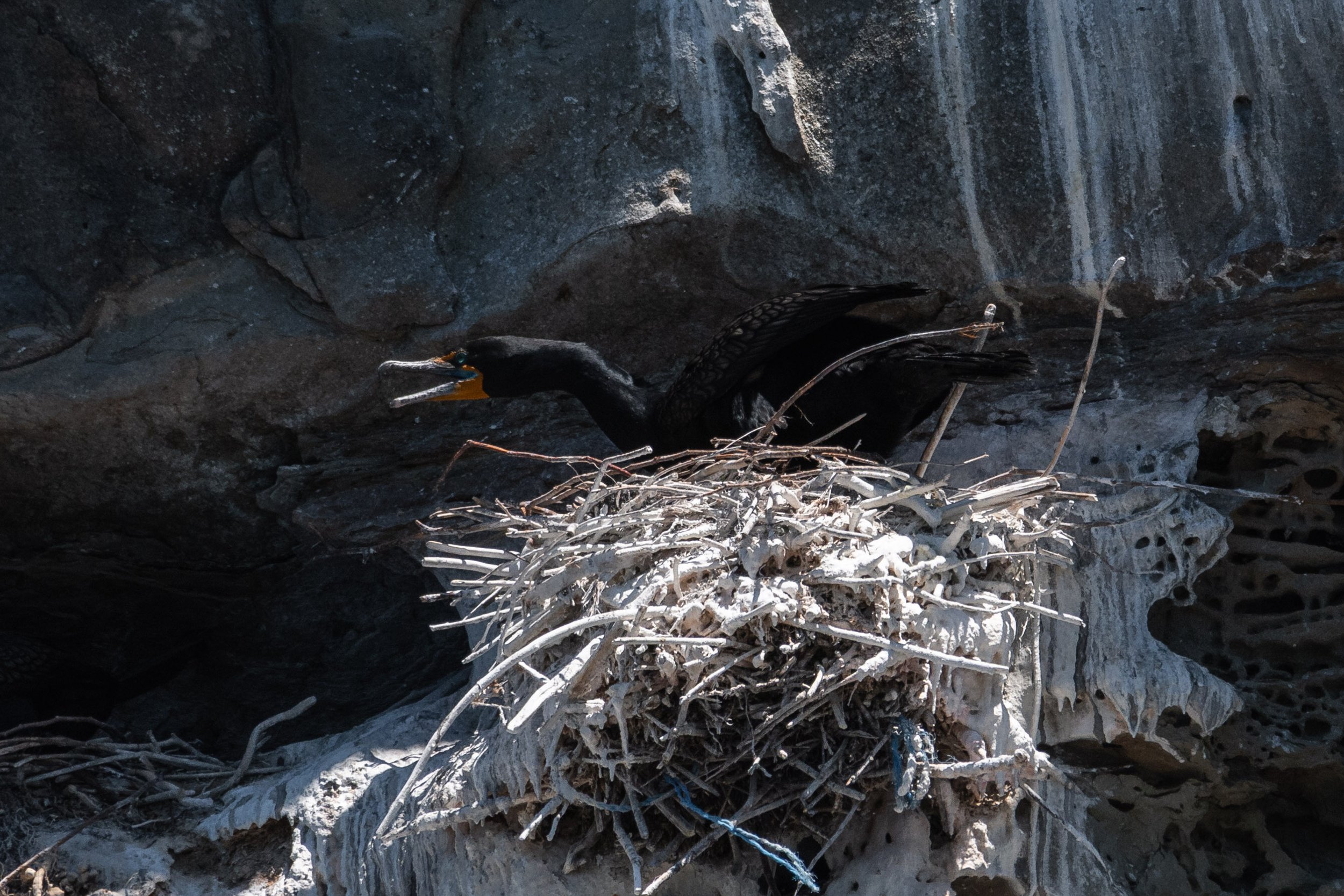
It can get noisy at the bluffs sometimes.