
June 18, 2026, 3:30 PM - The T124A2s right outside of Nanaimo!
Every day on the Salish Sea is different, and one of the things that makes whale watching so exciting is that wildlife never operates on a schedule. Sometimes sightings come quickly, while other days require patience, persistence, and a little bit of luck.
Our tour began under sunny skies with a brisk breeze blowing across the water. Conditions were a little rougher than we've been experiencing lately, but we had received reports of a pod of orca travelling north nearby. With that information in hand, we set off aboard Kula, eager to see if we could locate them.
The search was on.
As we scanned the horizon, our Naturalist and Captain carefully watched for any sign of activity. Looking for whales is a bit like searching for a needle in a haystack. The Salish Sea covers thousands of square kilometres, and even large animals can disappear from sight surprisingly quickly between surfacing sequences.
After spending some time searching without success, we began considering a change of plan. As the vessel turned to explore another area, one of our guests suddenly spotted a dorsal fin slicing through the waves in the distance.
There they were.
A pod of orca was travelling steadily through the chop, their tall black dorsal fins appearing and disappearing among the swells. The excitement on board was immediate as we carefully approached and confirmed the sighting.
Naturalist Evan quickly pulled out his camera and began taking identification photographs. Every orca possesses unique markings that allow researchers and experienced Naturalists to identify individuals throughout their lives. The shape of the dorsal fin, nicks along the trailing edge, and the grey saddle patch behind the fin all act like fingerprints.
After reviewing the images, Evan was able to cross-match the whales to the T124A2s, a close-knit group of three Bigg's orcas that frequently travel together throughout the coastal waters of British Columbia.
T124A2 Elkugu ♀ (2001)
T124A2A Agafia ♂ (2013)
T124A2B Litton ♀(2016)
Bigg's orcas, also known as transient orcas, are marine mammal specialists. Unlike fish-eating resident orcas, Bigg's orcas primarily hunt seals, sea lions, porpoises, and occasionally larger prey such as young whales. They travel in relatively small family groups and can cover enormous distances in search of food. Individual Bigg's orca families are often seen throughout the Salish Sea, from the Strait of Georgia to the Gulf Islands and beyond.
The rougher conditions provided an unexpected advantage for viewing. As the whales travelled through the larger waves, more of their bodies were revealed during each surfacing. We frequently caught glimpses of their backs, saddle patches, and even portions of their flukes as they navigated through the rolling seas. While calm water often provides beautiful reflections and easy spotting conditions, rougher weather can sometimes give us a better appreciation of just how large these animals truly are.
For some time, we travelled alongside the pod as they continued northward with purpose. Their movement suggested they were on a mission, steadily covering ground while remaining tightly grouped. Watching a family of orcas travel together is always a reminder of the strong social bonds these animals share. Family connections in Bigg's orcas are incredibly important, with offspring often remaining with their mothers for life.
Eventually, the whales approached Neck Point, and it was time for us to leave them to continue their journey.
With one incredible wildlife encounter already behind us, we pointed the bow south and began exploring the intricate waterways of the Southern Gulf Islands.
One of the great joys of whale watching around Vancouver Island is that the experience encompasses so much more than whales alone. The islands, channels, and shorelines of the Salish Sea support an incredible diversity of marine life, birds, and coastal ecosystems.
Our route carried us through several of the region's fascinating passages, including Dodd Narrows, Ruxton Passage, and Gabriola Pass. These narrow waterways are shaped by powerful tidal currents that move vast volumes of water between the Strait of Georgia and the surrounding inlets. As tides flood and ebb, nutrients are stirred from deeper waters, helping fuel the productive marine food web that supports everything from plankton to whales.
A stop at Stinky Rock provided another opportunity to observe wildlife up close.
Despite its amusing name, Stinky Rock is one of the area's most reliable haul-out sites for pinnipeds. Harbour seals lounged comfortably across the rocks, many appearing completely unconcerned by our presence. Several were stretched out in classic seal fashion, enjoying an afternoon nap between feeding excursions.
Harbour Seals are among the most common marine mammals in the Salish Sea and play an important role in the ecosystem. Unlike sea lions, they lack external ear flaps and tend to be smaller and more streamlined. Although they may appear sleepy while hauled out, they are highly capable predators beneath the surface, feeding on a variety of fish and invertebrates.
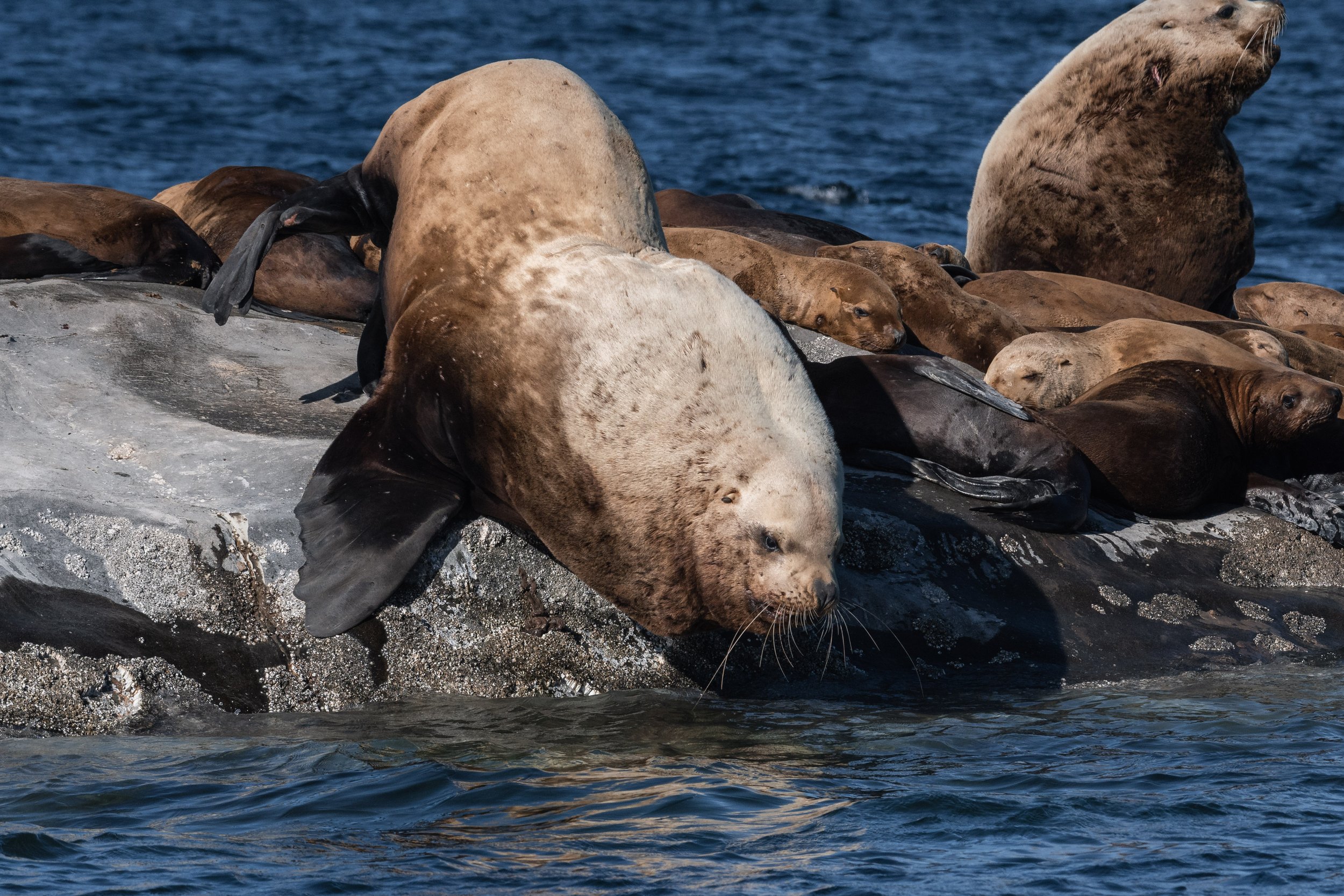
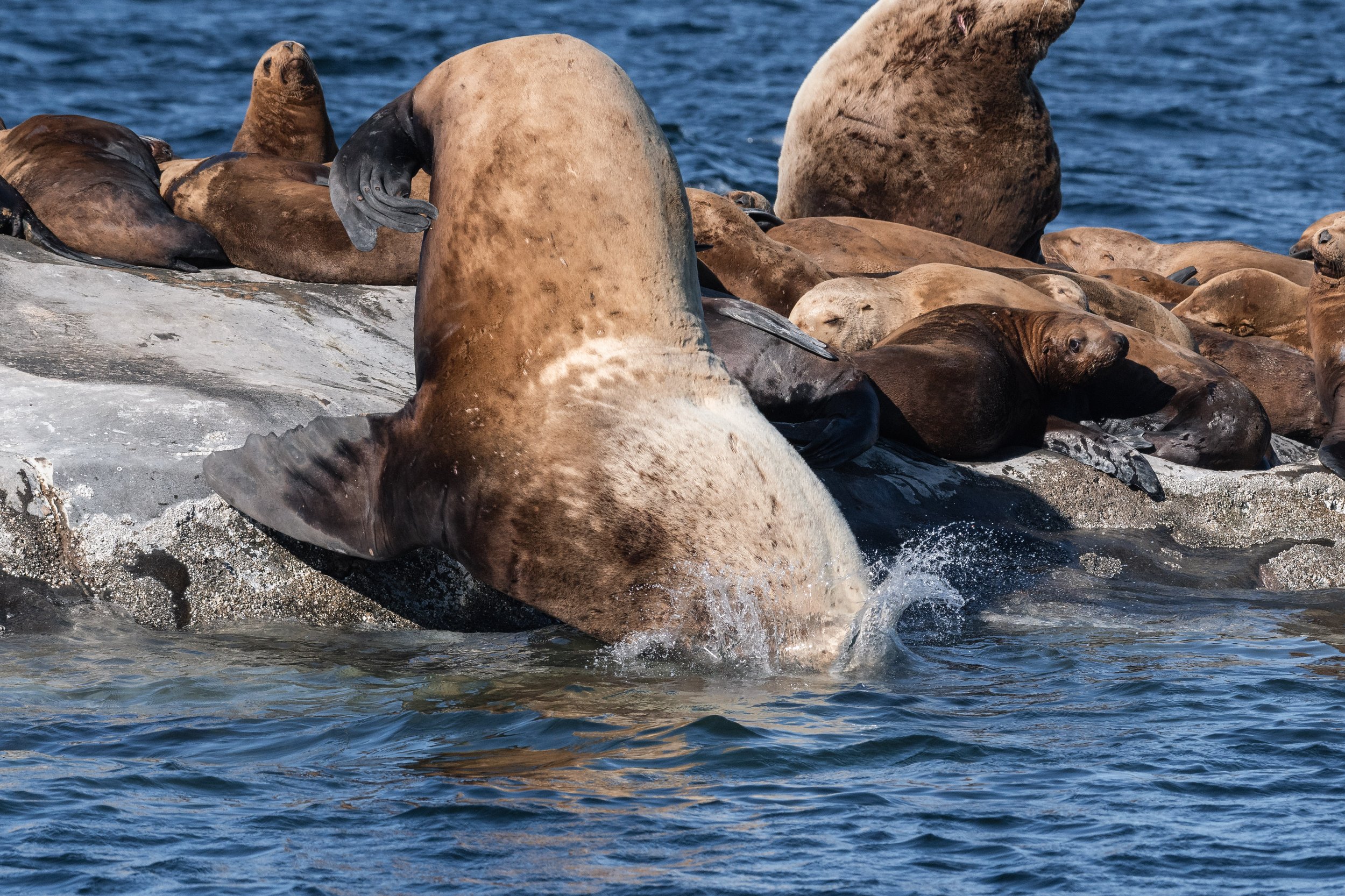
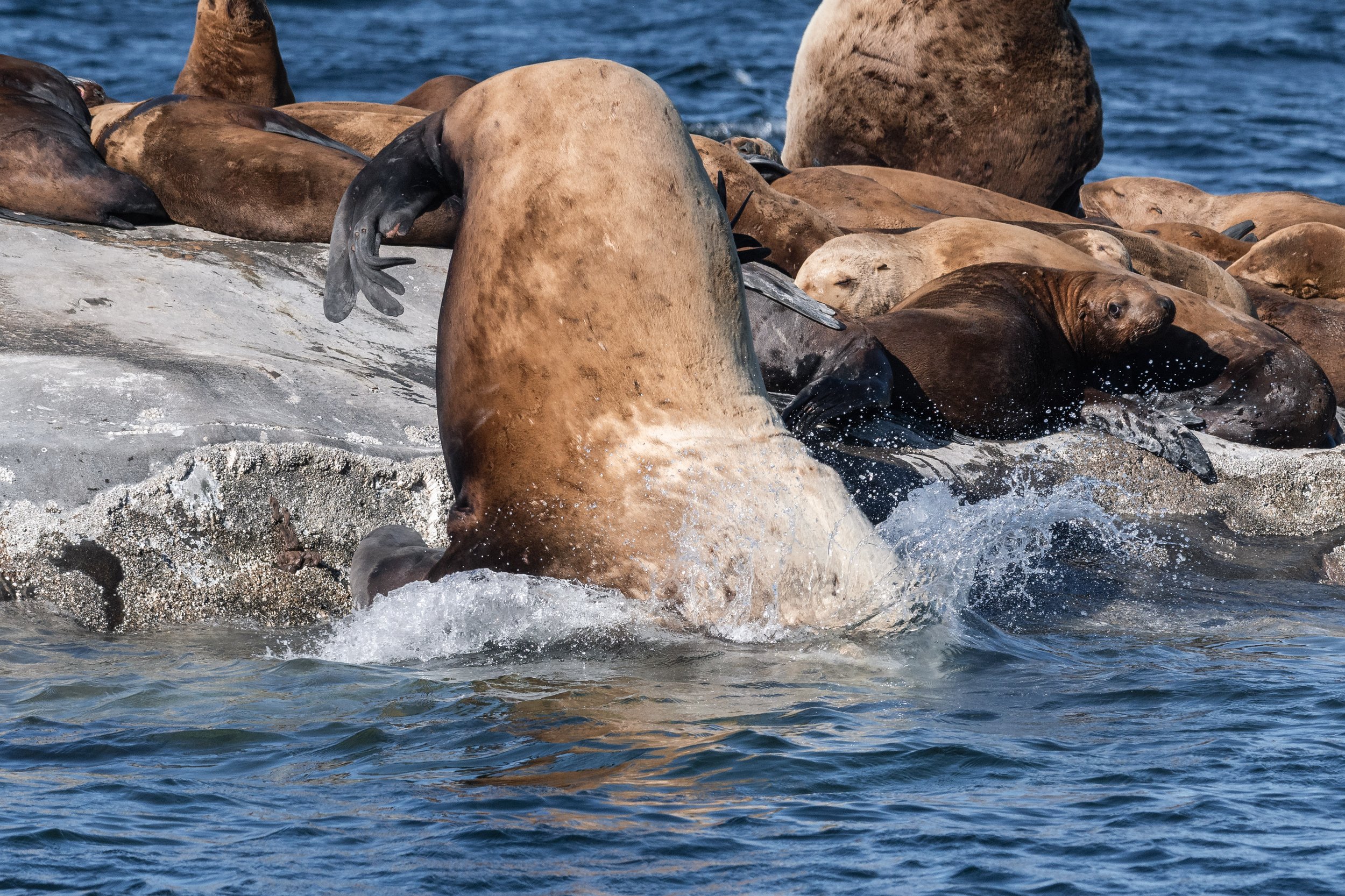
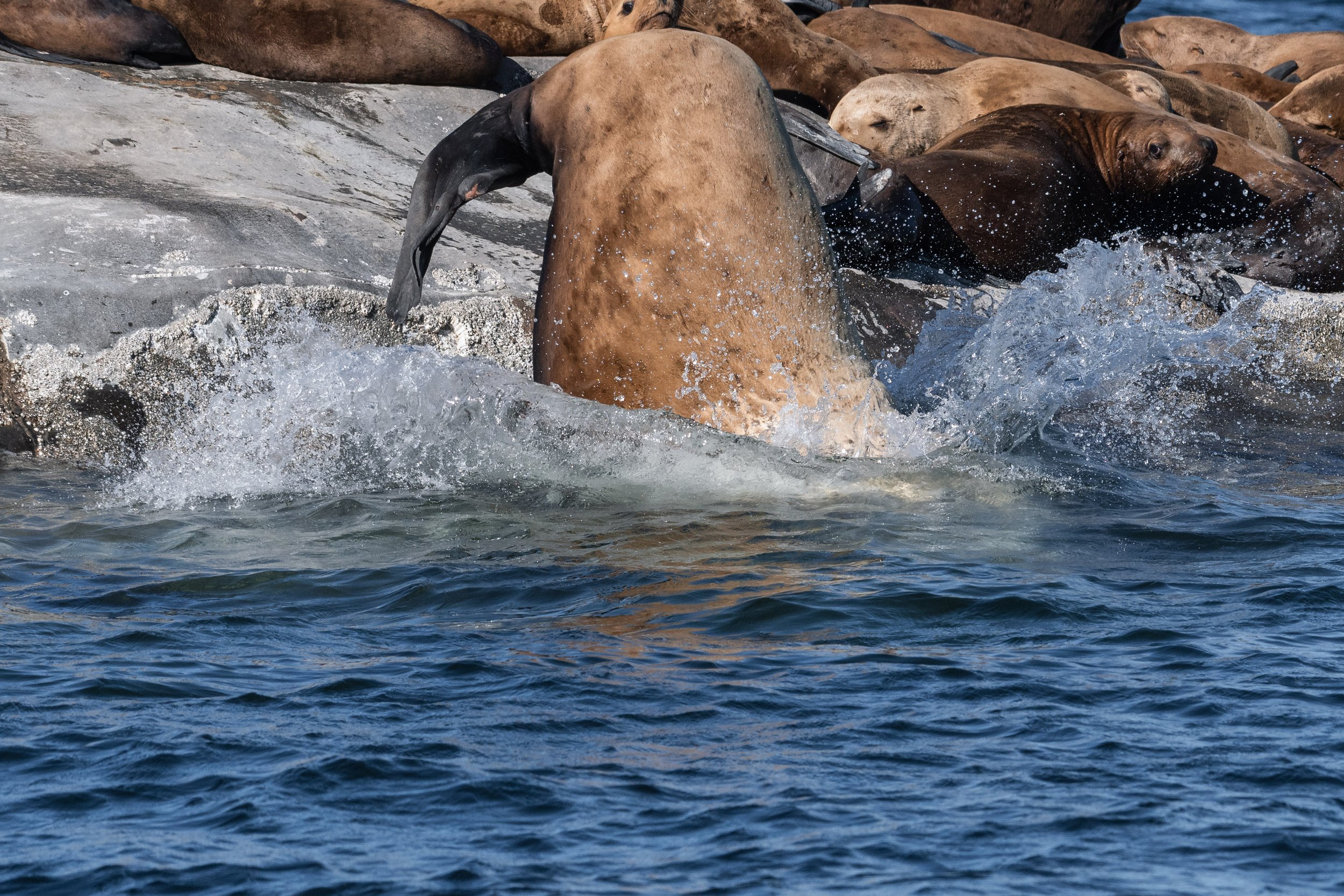
Sharing the haul-out site were several Steller Sea Lions, the largest sea lion species in the world. Their significantly larger size and boisterous personalities stood in stark contrast to the quieter harbour seals nearby. As often happens at haul-out sites, some of the sea lions engaged in noisy disputes over preferred resting spots, filling the air with their unmistakable roars and barks.
Male Steller Sea Lions can weigh over 1,000 kilograms and are among the most impressive marine mammals regularly encountered in our region. Watching these massive animals interact provides a fascinating glimpse into the social dynamics that play out on coastal haul-out sites every day.
Continuing our journey, we visited one of our favourite bald eagle nesting areas.
Perched near the nest, one of the adult eagles stood watch over its home. Bald eagles are remarkable success stories throughout British Columbia. Once facing significant population declines due to habitat loss and environmental contaminants, they have rebounded dramatically and are now a common sight throughout the Salish Sea.
Eagle nests are among the largest nests built by any bird in North America. Many are used year after year, with adults continually adding new material. Over time, some nests can reach several metres in diameter and weigh hundreds of kilograms.
Observing an eagle tending its nest offers a valuable reminder of the importance of healthy coastal forests. The towering trees that line our shores provide critical nesting habitat for these iconic birds, linking marine and terrestrial ecosystems together.
As our tour drew to a close, we made one final stop at the impressive Gabriola Bluffs.
The steep sandstone cliffs are not only beautiful geological features but also important nesting habitats for seabirds. Here, we observed cormorants actively building and maintaining their nests along the cliff faces.
Cormorants are exceptional diving birds, capable of pursuing fish underwater using powerful feet to propel themselves through the water. Unlike many seabirds, their feathers are less waterproof, allowing them to dive more efficiently. This is why they are often seen perched with their wings extended, drying out after a successful fishing trip.
Watching these birds busily transport nesting material and tend to their colonies was a fitting way to end the day.
From a patient search that led to an unforgettable encounter with the T124A2s to seals, sea lions, bald eagles, and nesting cormorants, the day served as a wonderful reminder of the incredible diversity that calls the Salish Sea home. Every corner of these waters holds a story, and every tour offers the chance to discover something new.
The whales may have been our original goal, but as is often the case in the Pacific Northwest, the journey itself proved just as rewarding. Please enjoy all the photos taken throughout this adventure by Marine Naturalist Evan Hessels, included below.
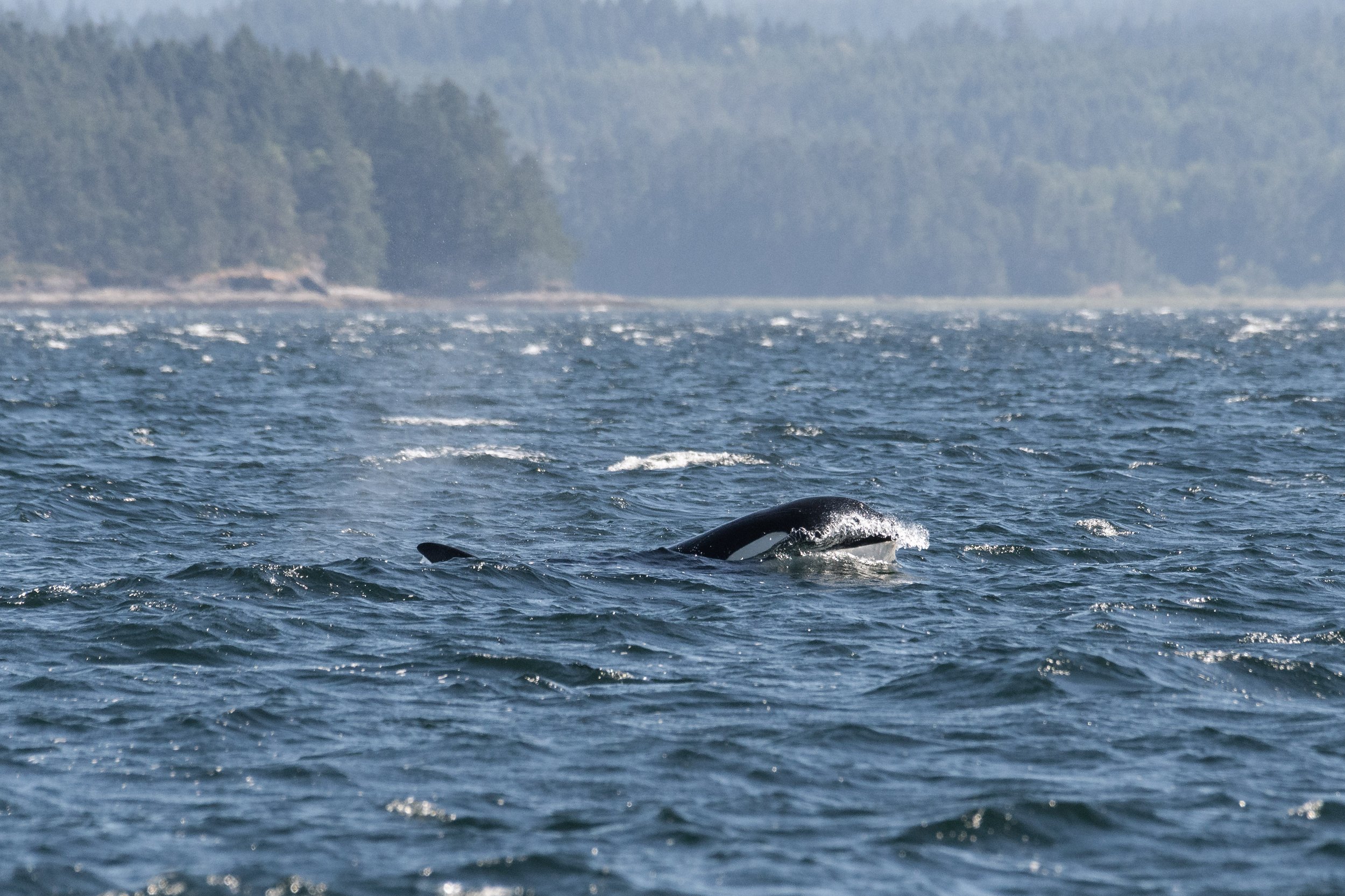
T124A2A Agafia surfacing in the waves.
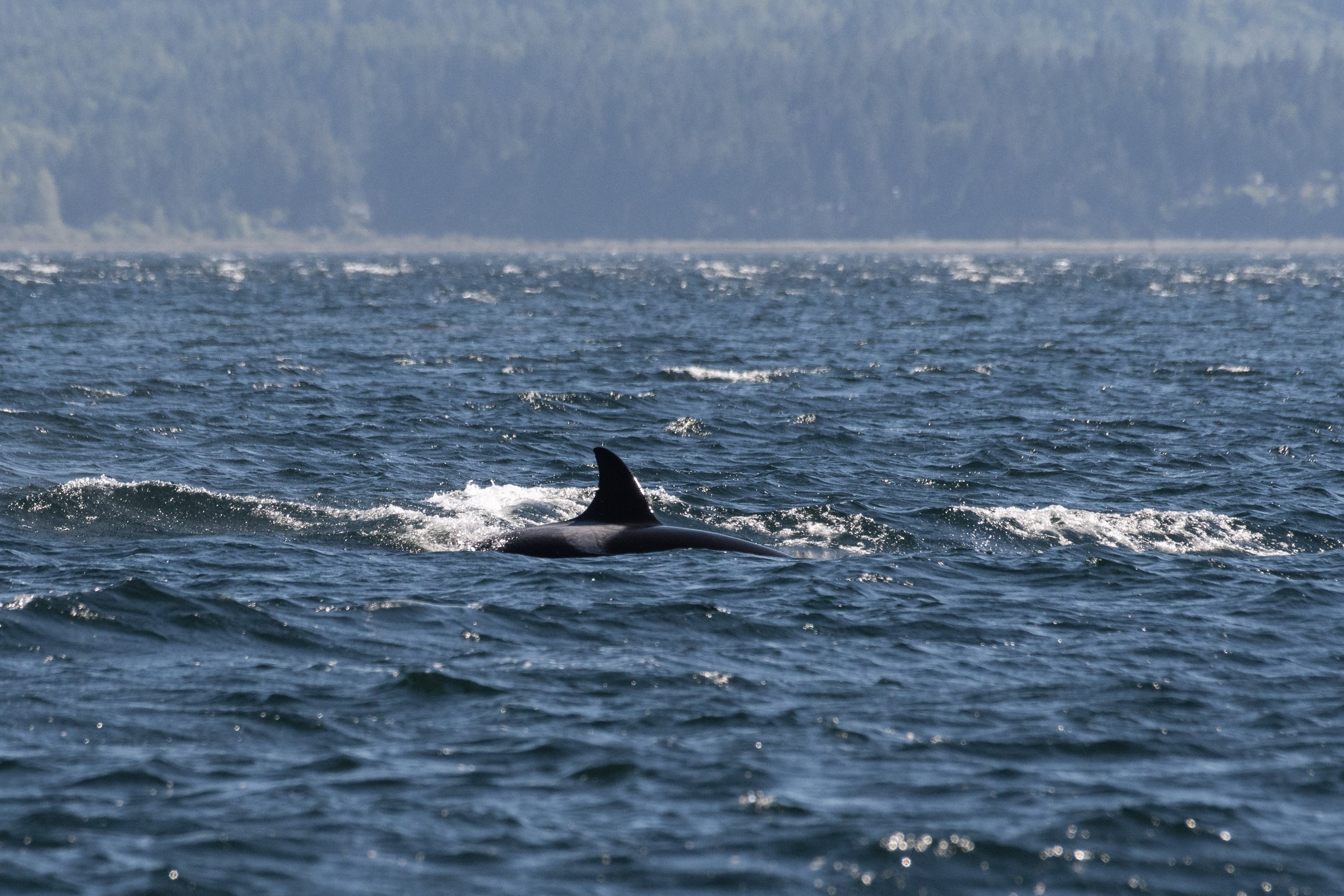
T124A2B Litton has a distinct notch in her dorsal fin.
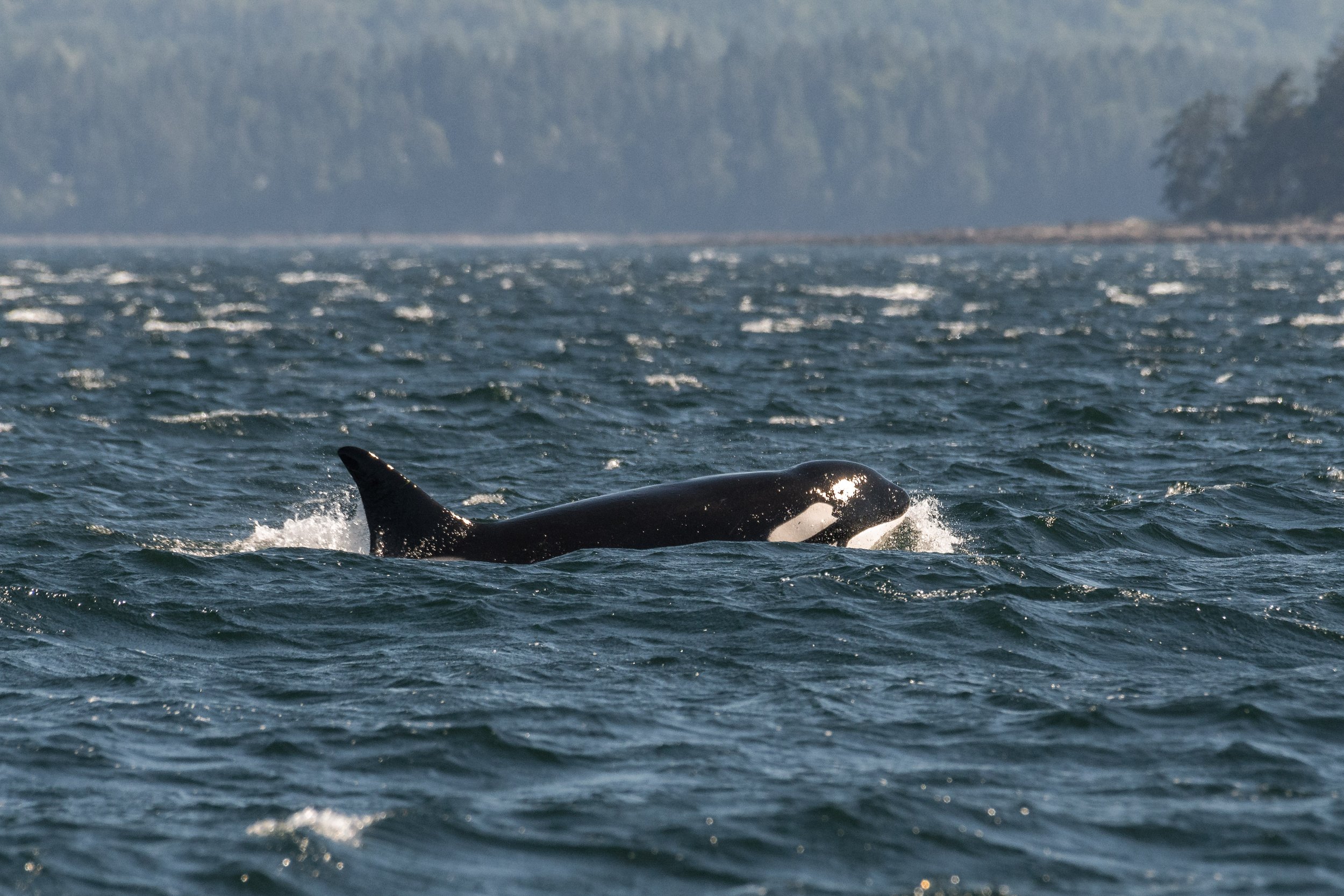
T124A2 Elkugu showing off her eye patch as she moves through the waves.
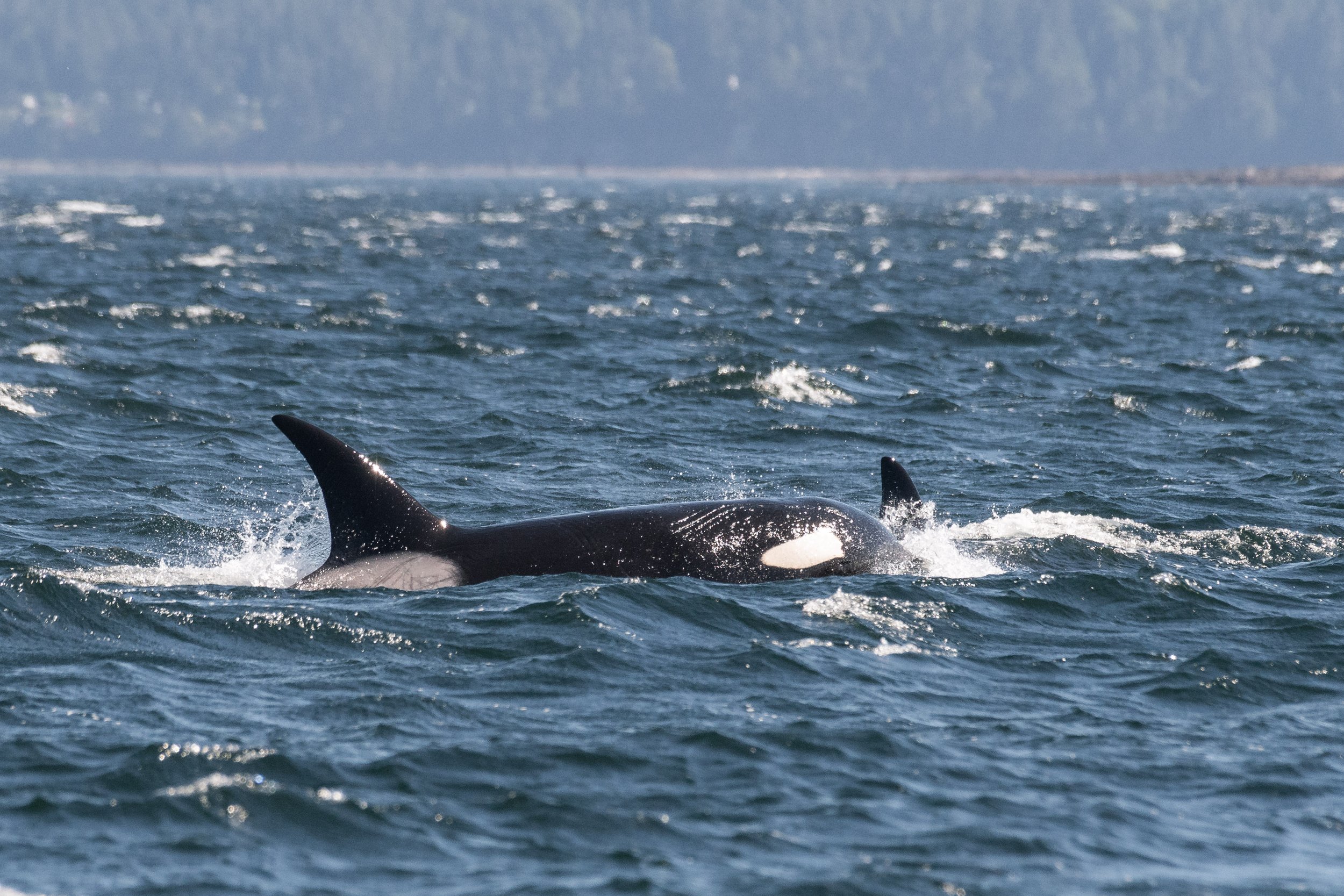
This angle shows the new rake marks on T124A2A Agafia’s body.
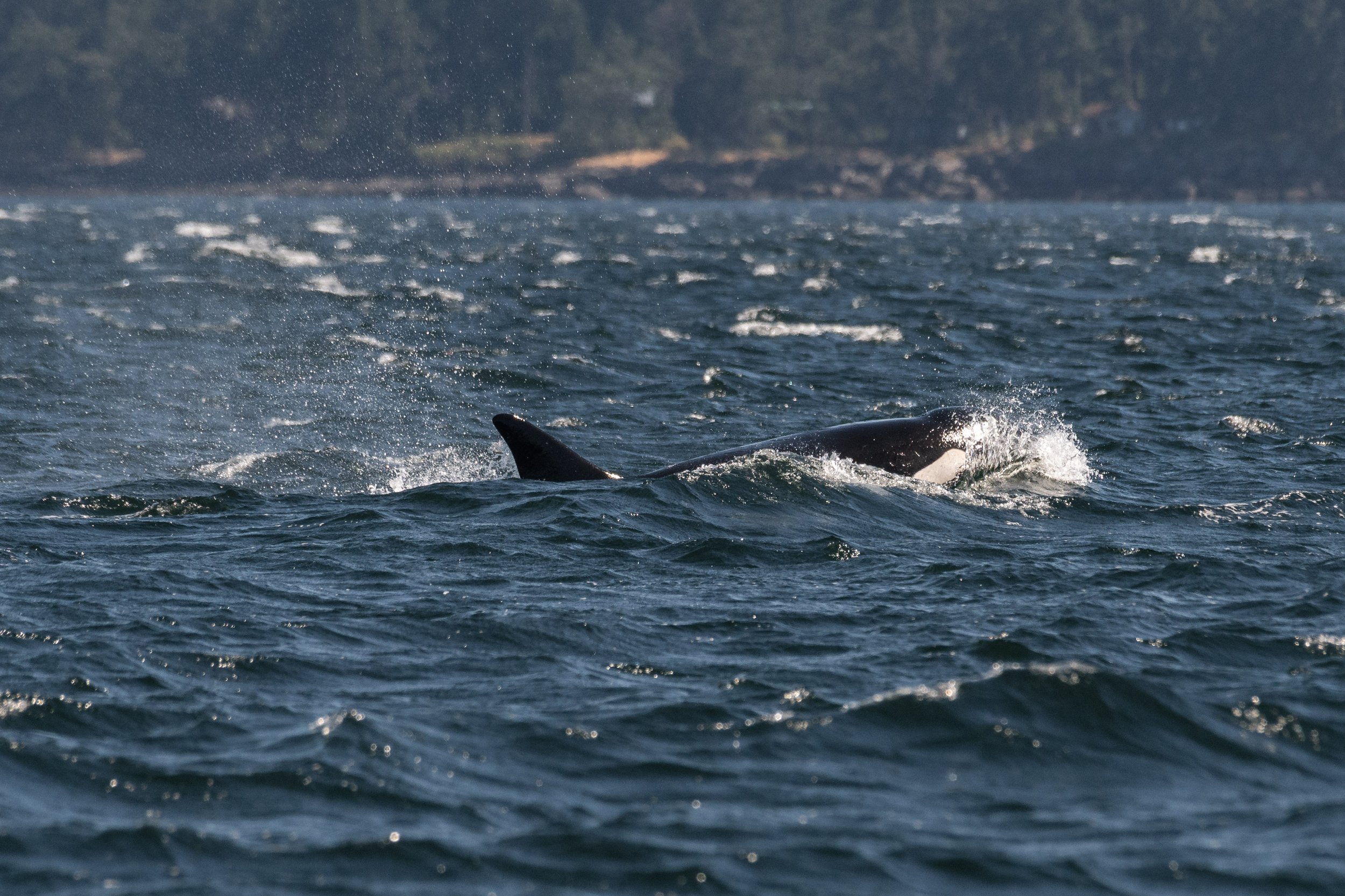
T124A2 Elkugu breaking through the waves.
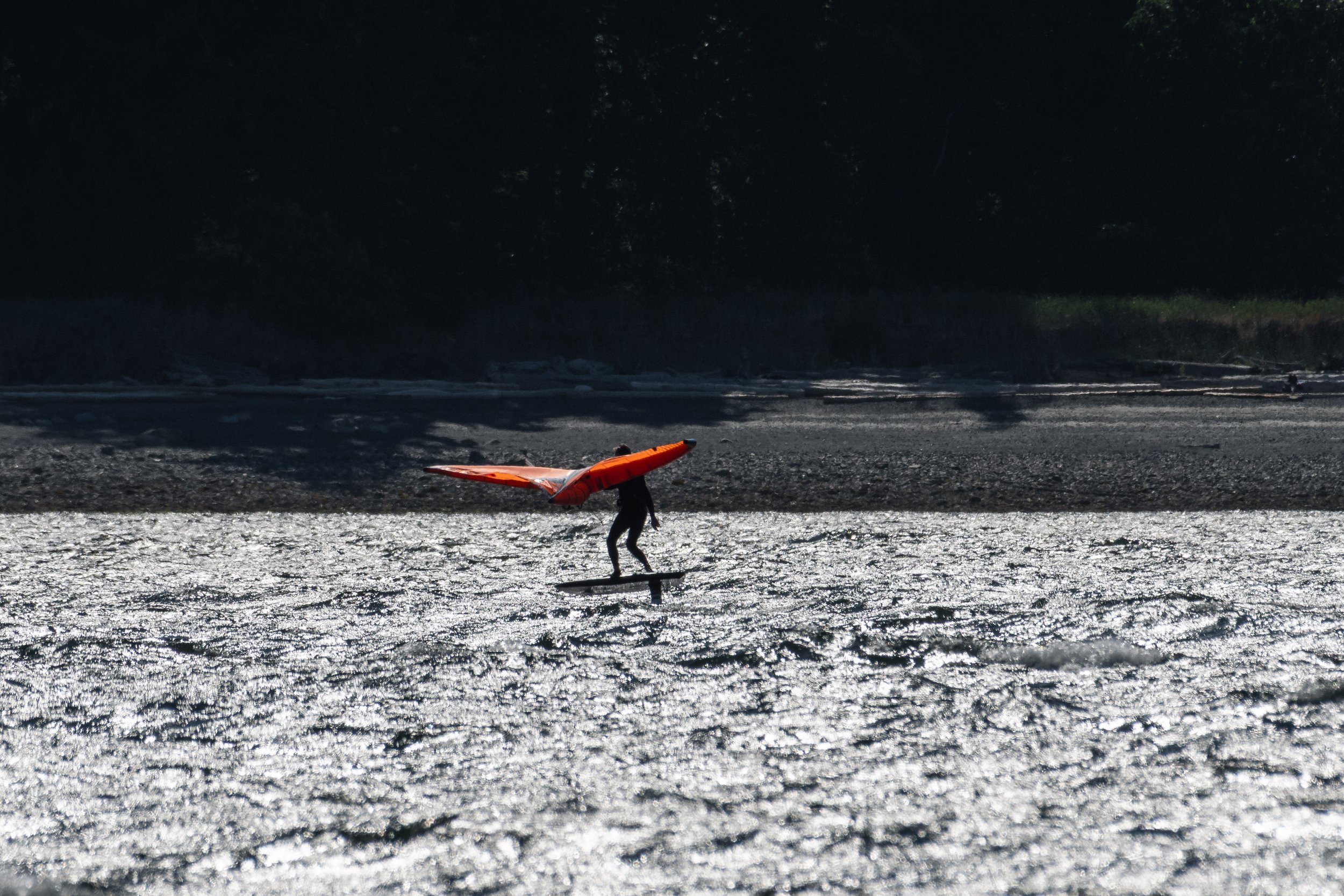
A wind surfer near Pipers Lagoon.
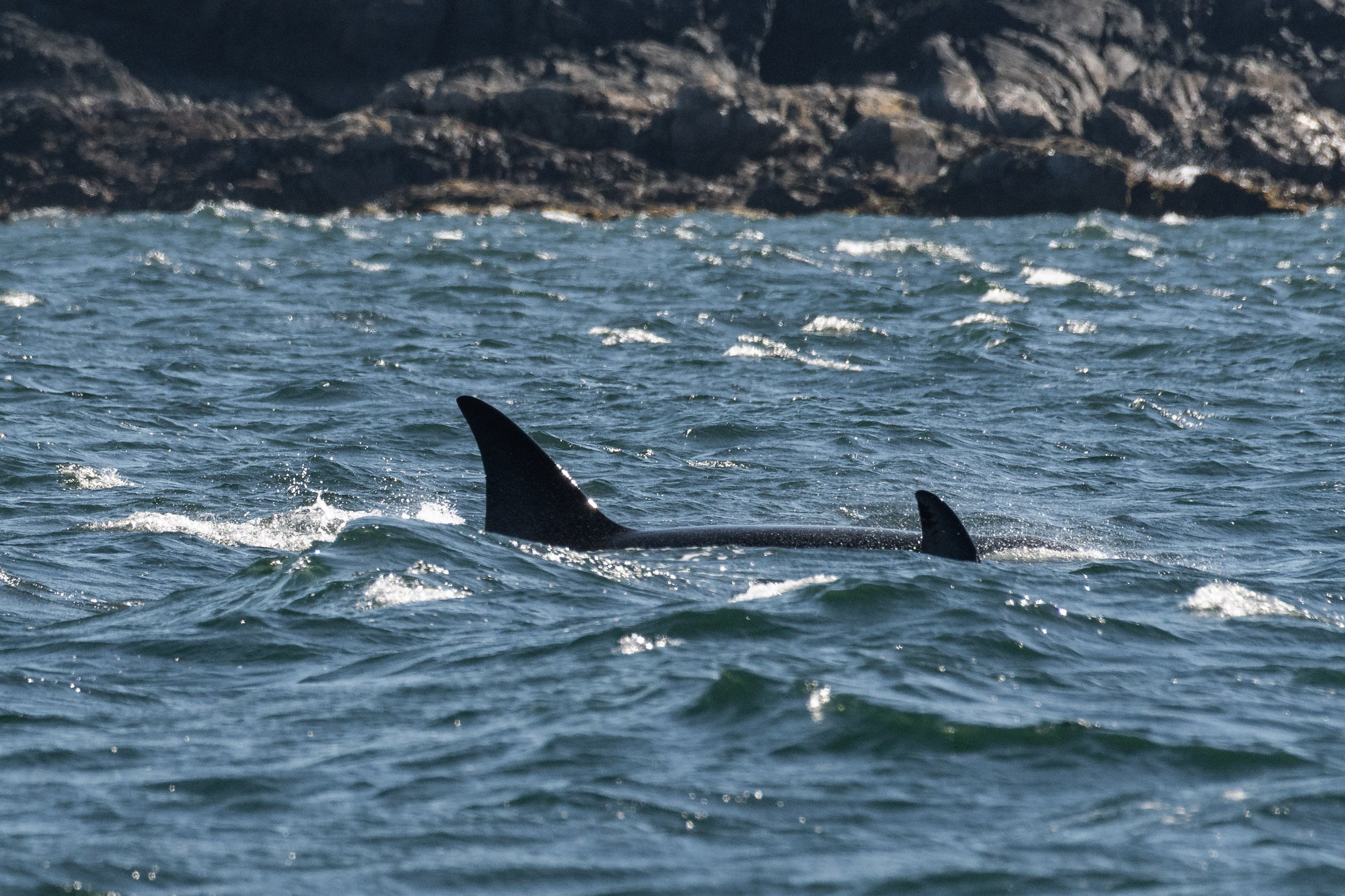
T124A2A Agafia and T124A2B Litton surfacing side by side.
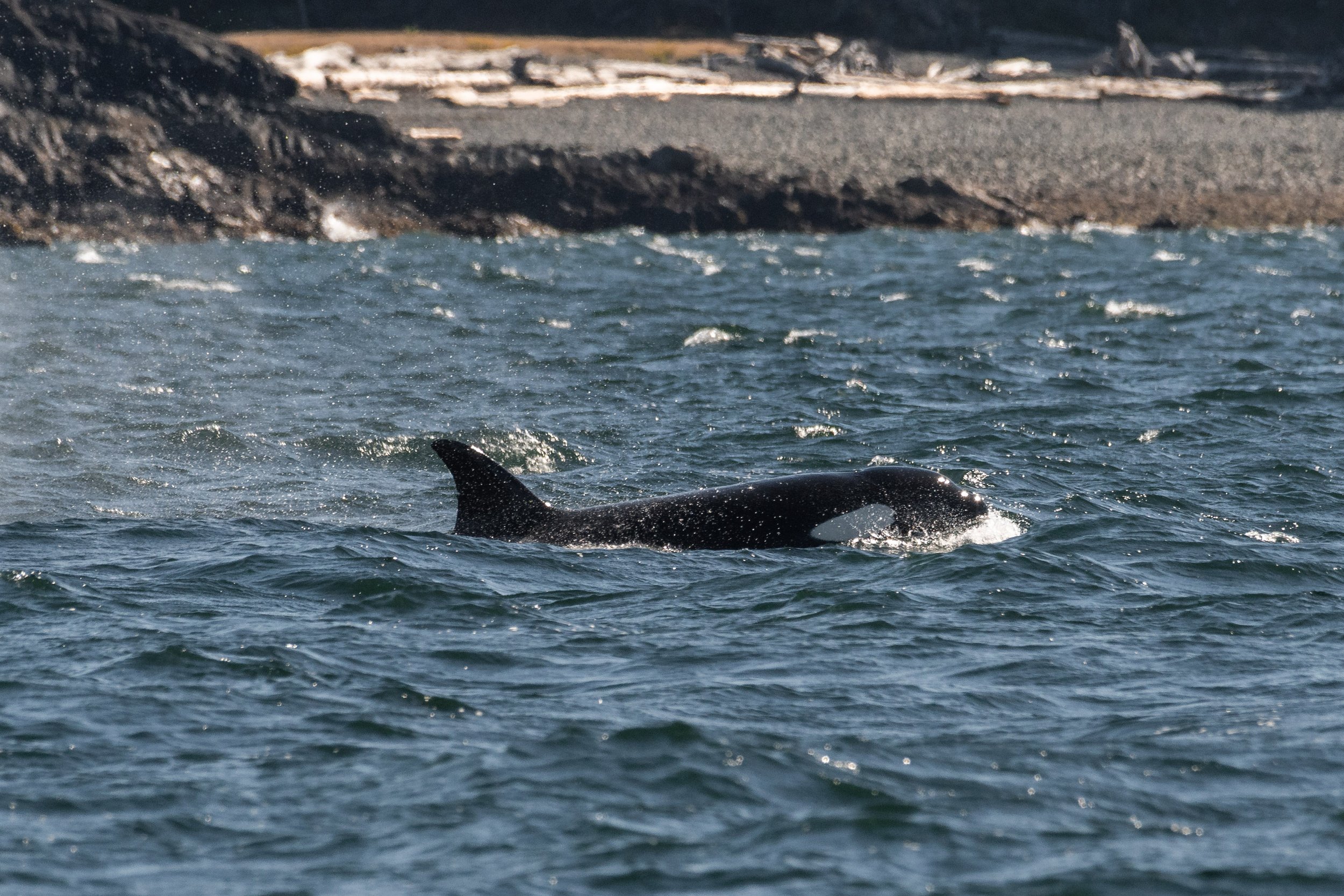
T124A2B litton surfacing in the waves.
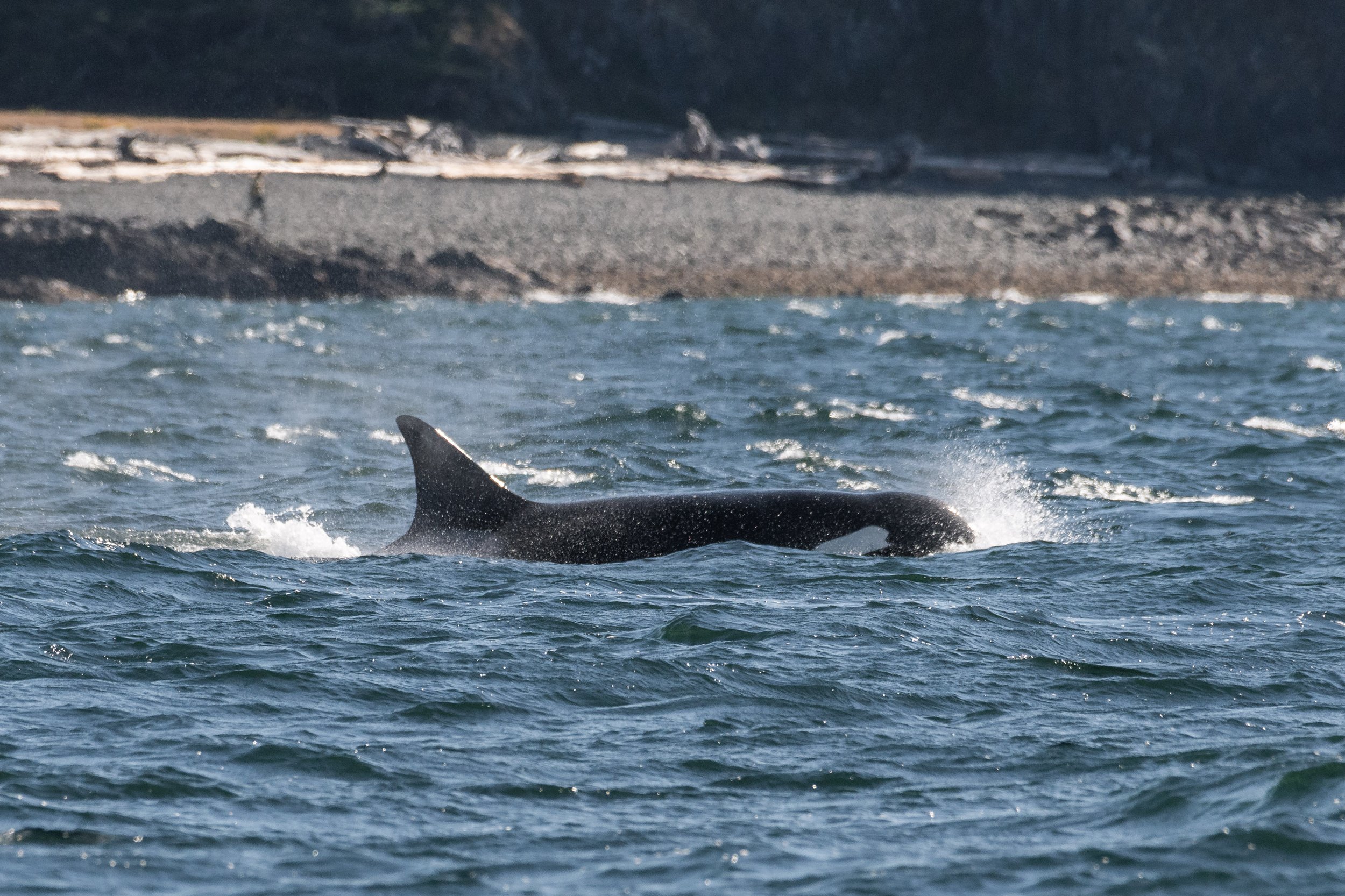
A great look at T124A2 Elkugu.
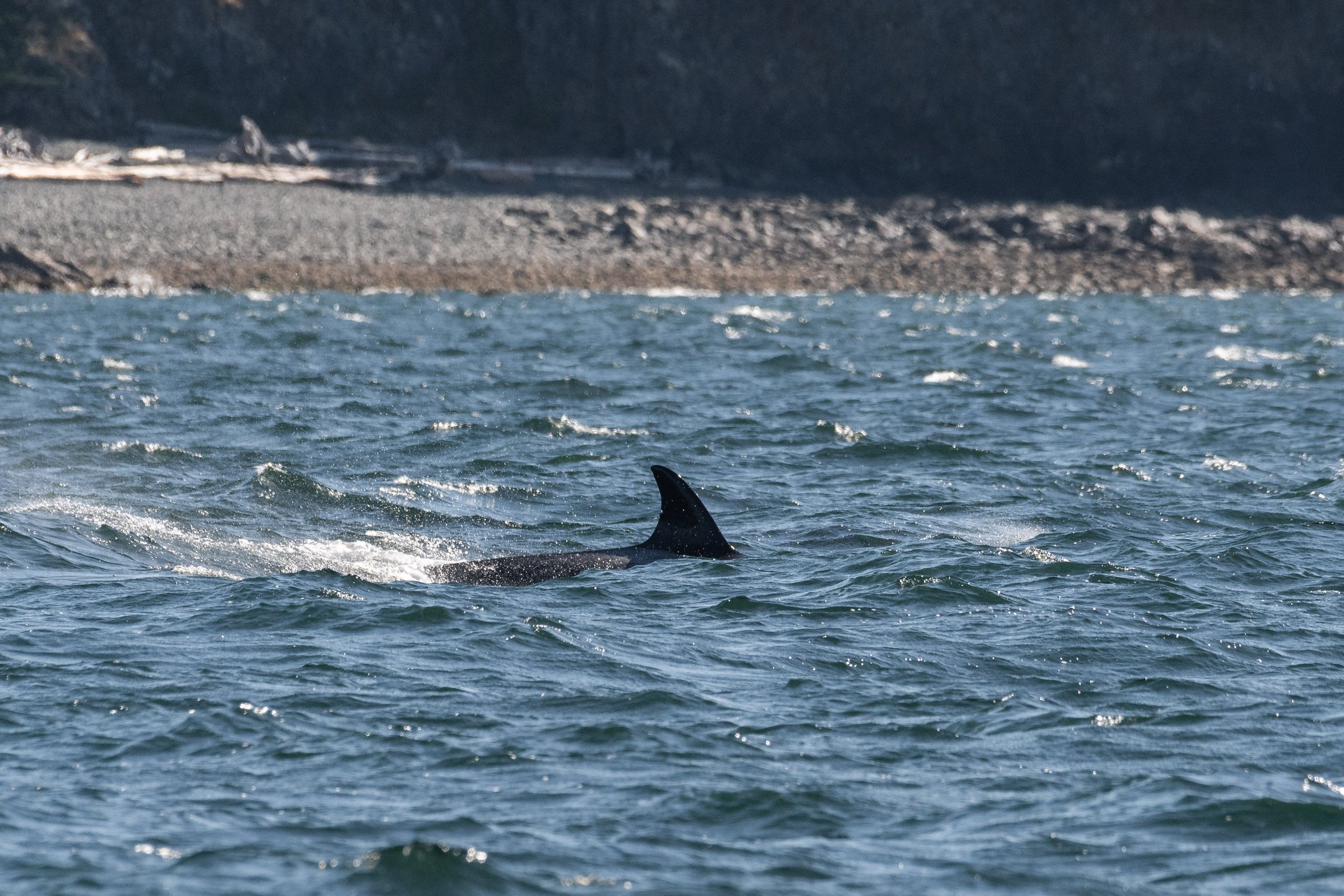
T124A2B Litton going for a dive.
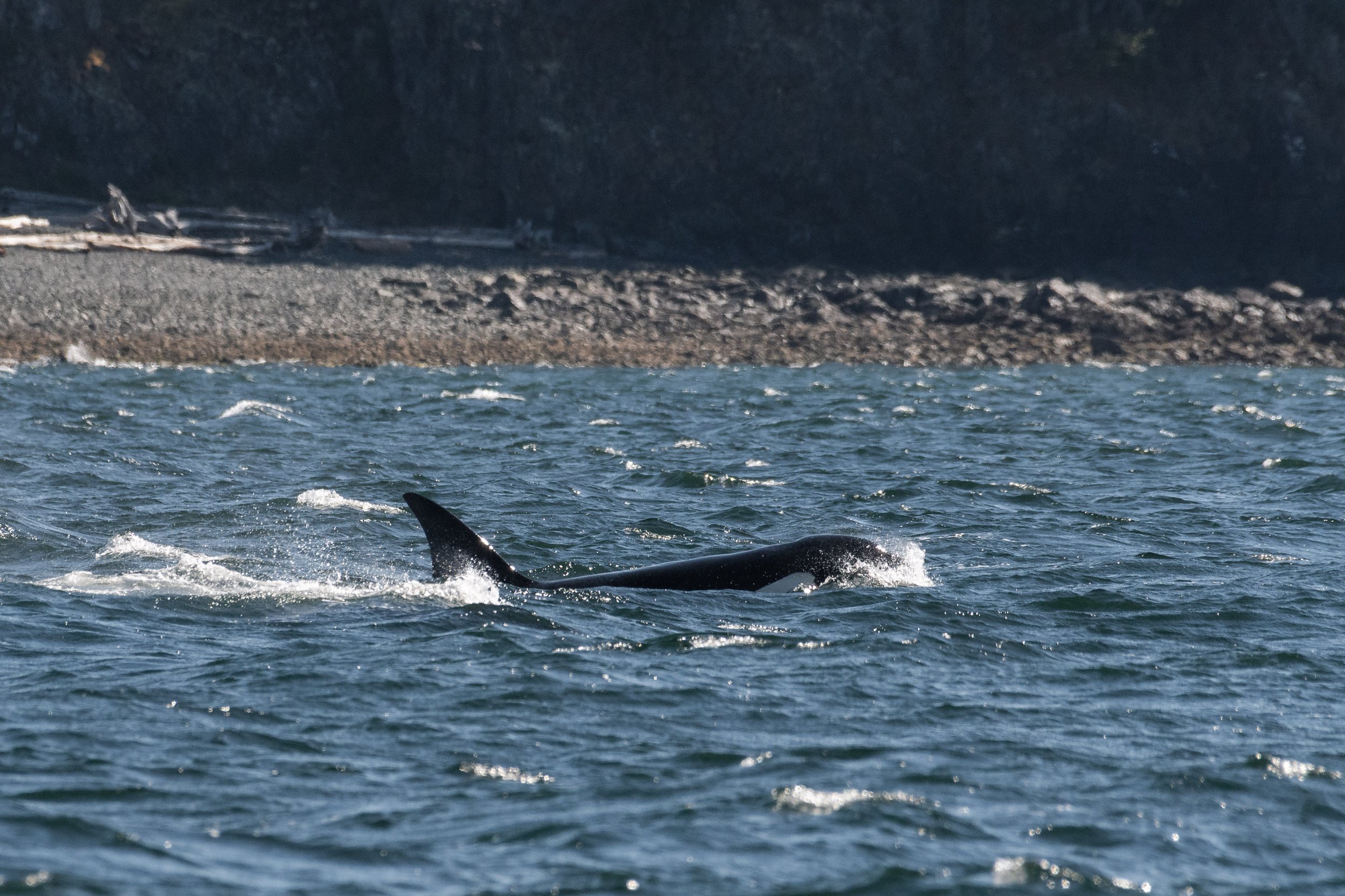
T124A2A Agafia pushing through the waves.
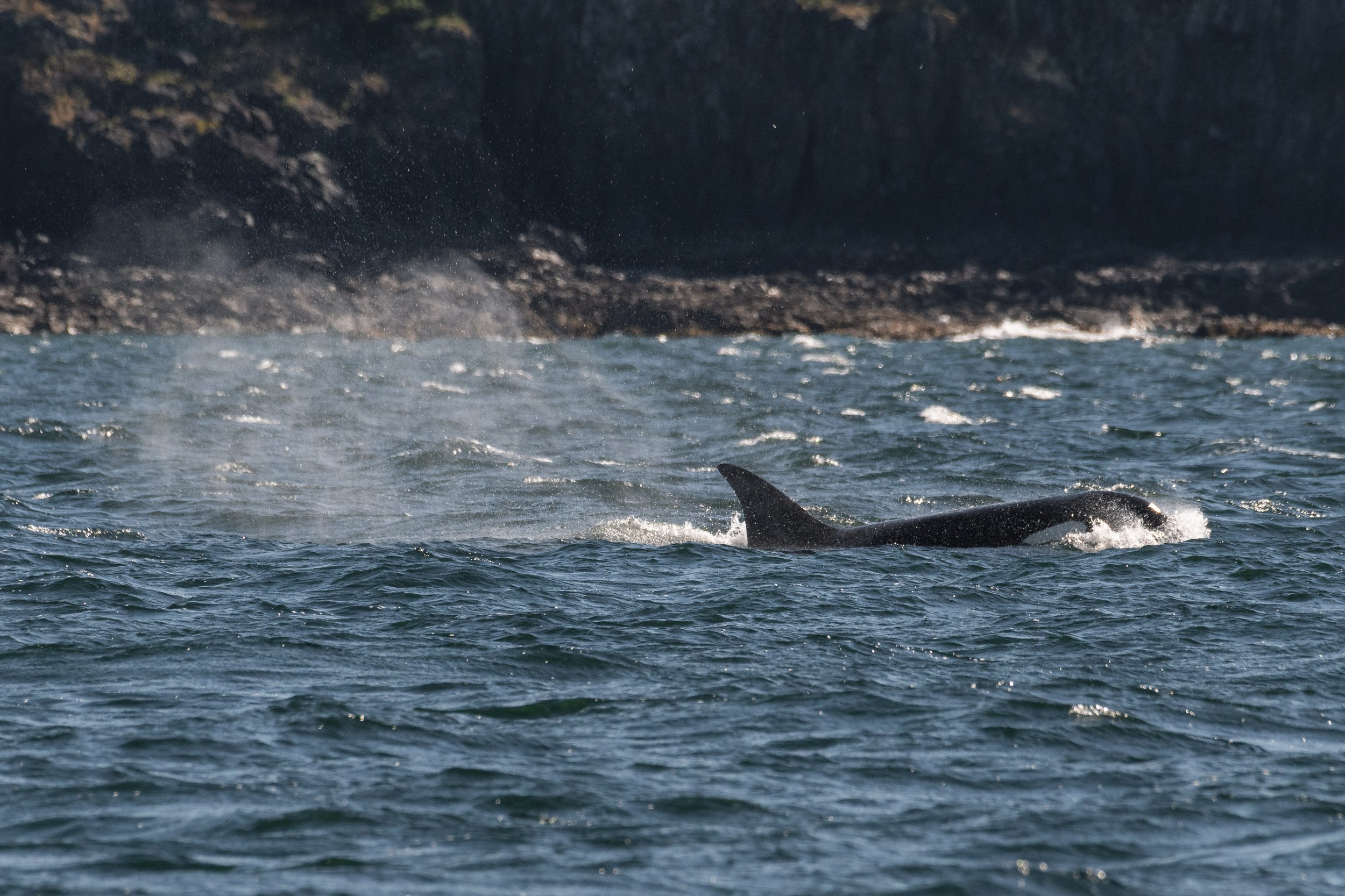
T124A2A Agafia’s blow being carried away by the wind.
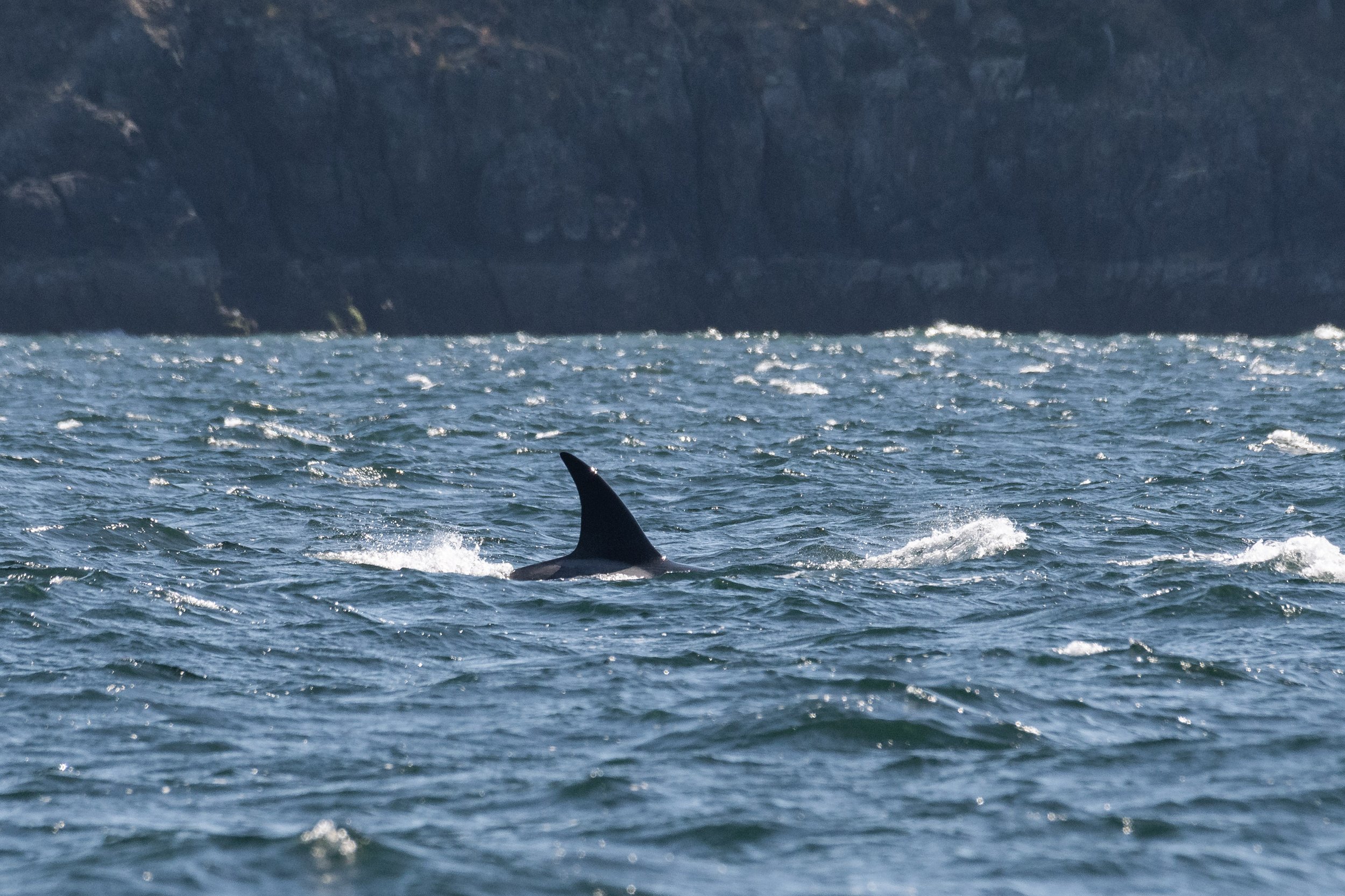
A final look at T124A2A Agafia.
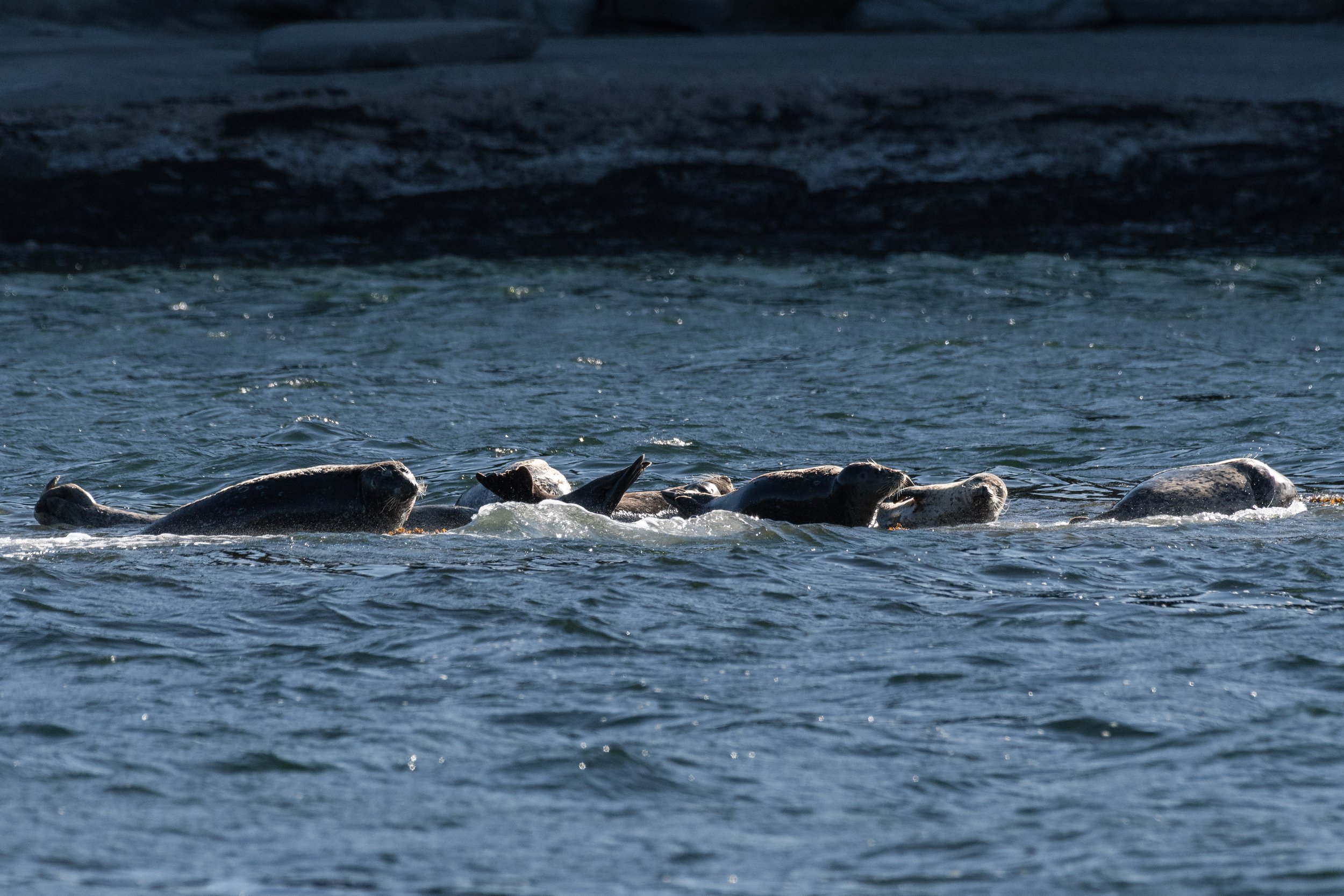
Harbour Seals hauled out at Stinky Rock.
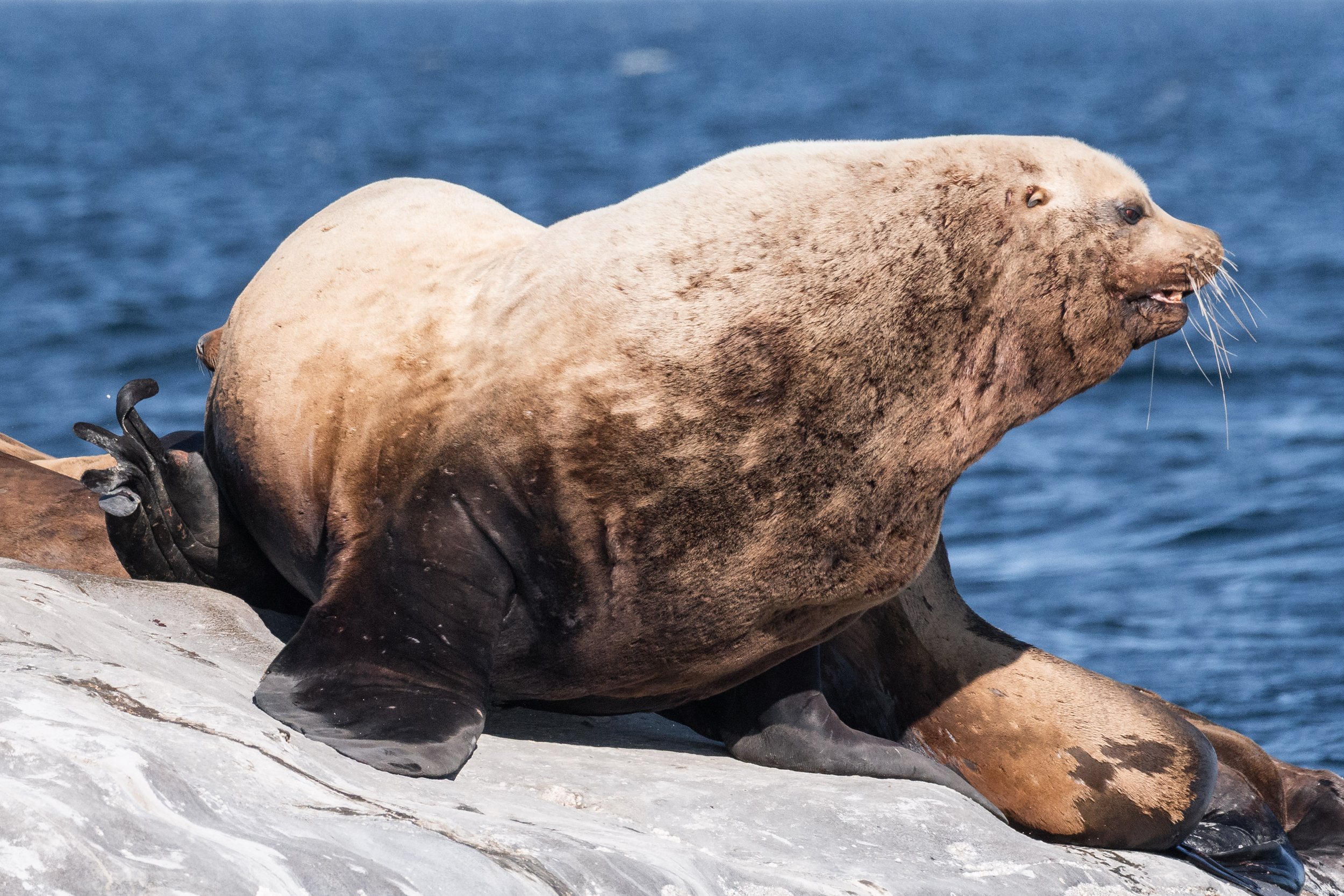
Stinky Steve preparing for a swim.
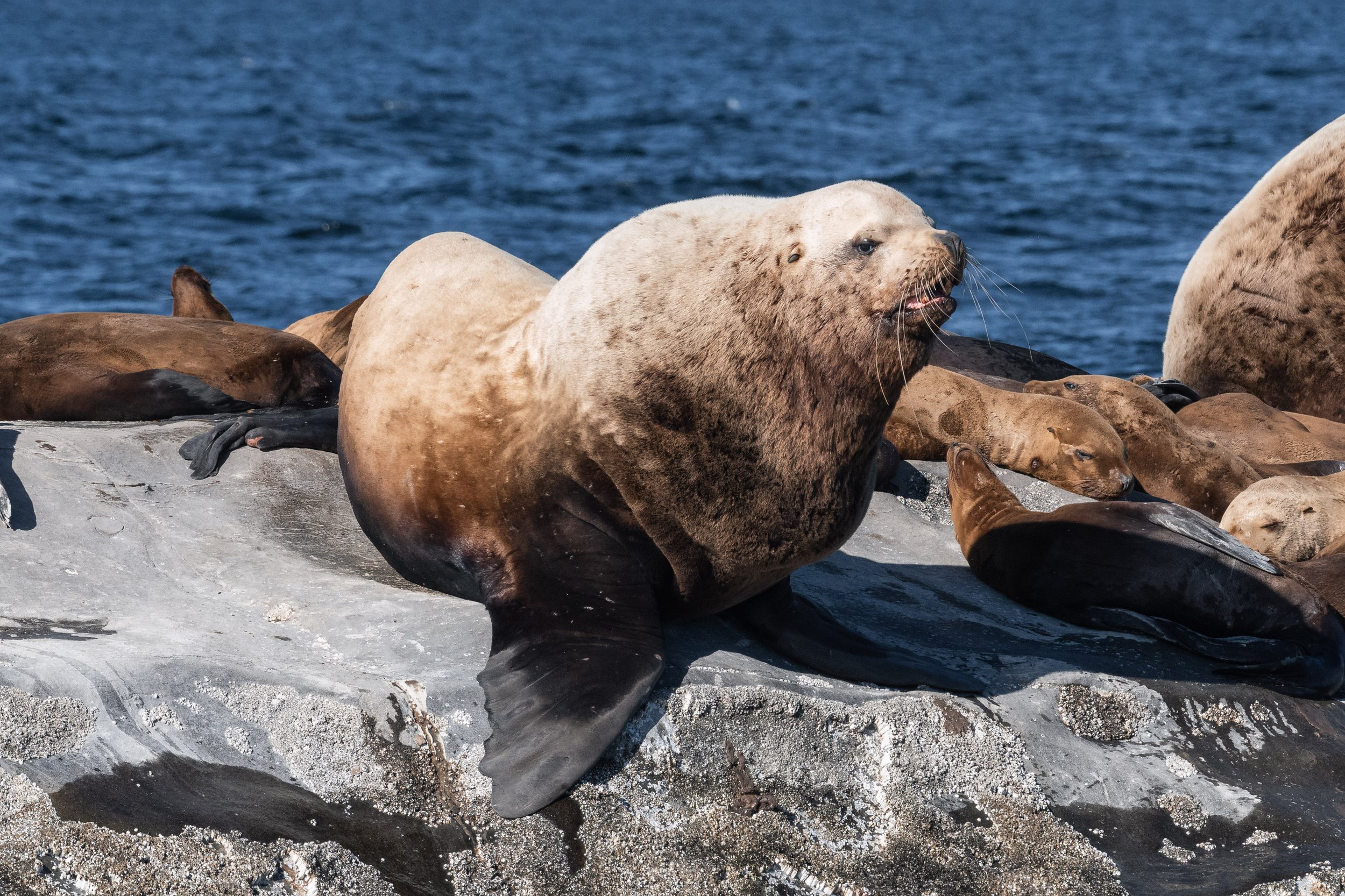
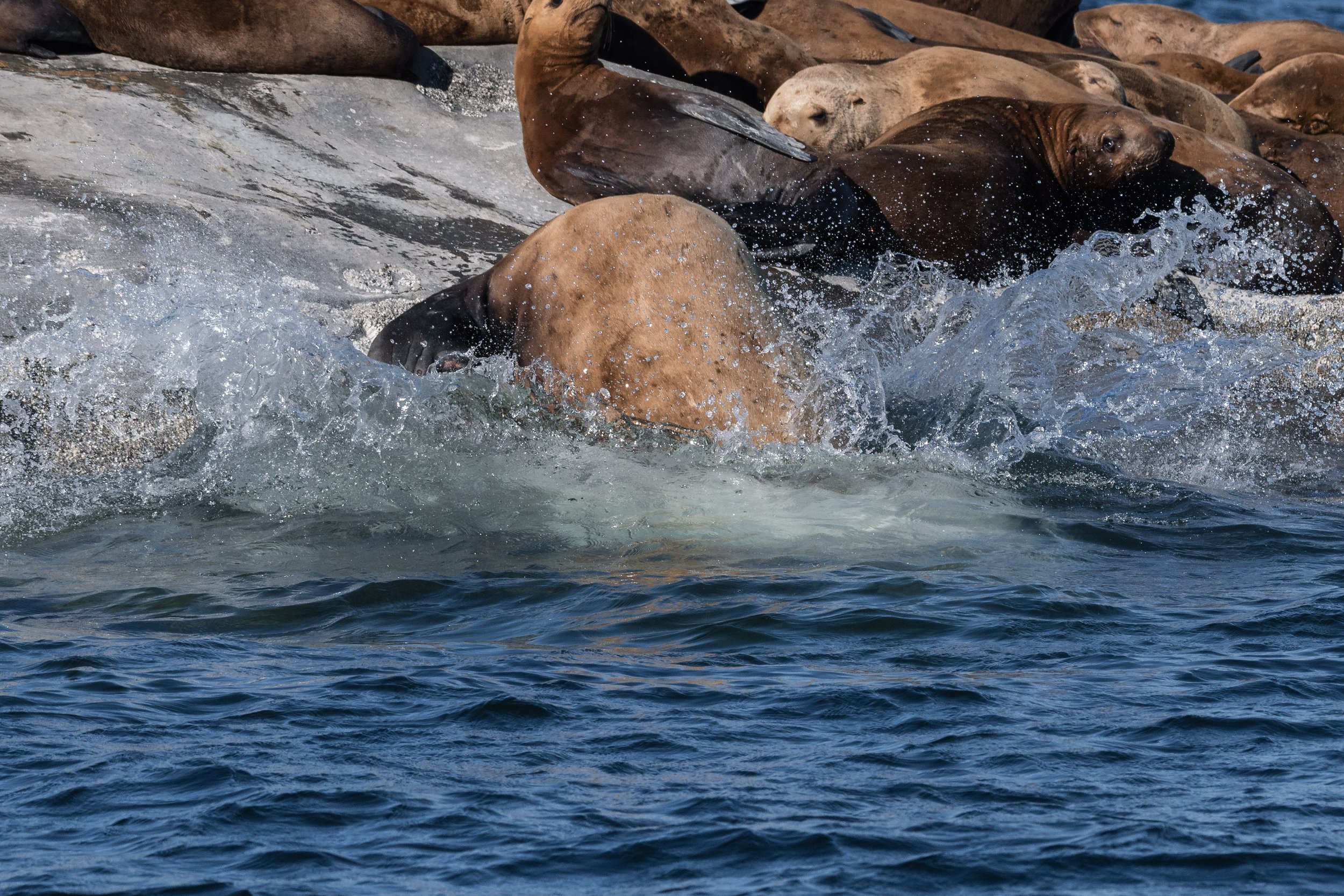
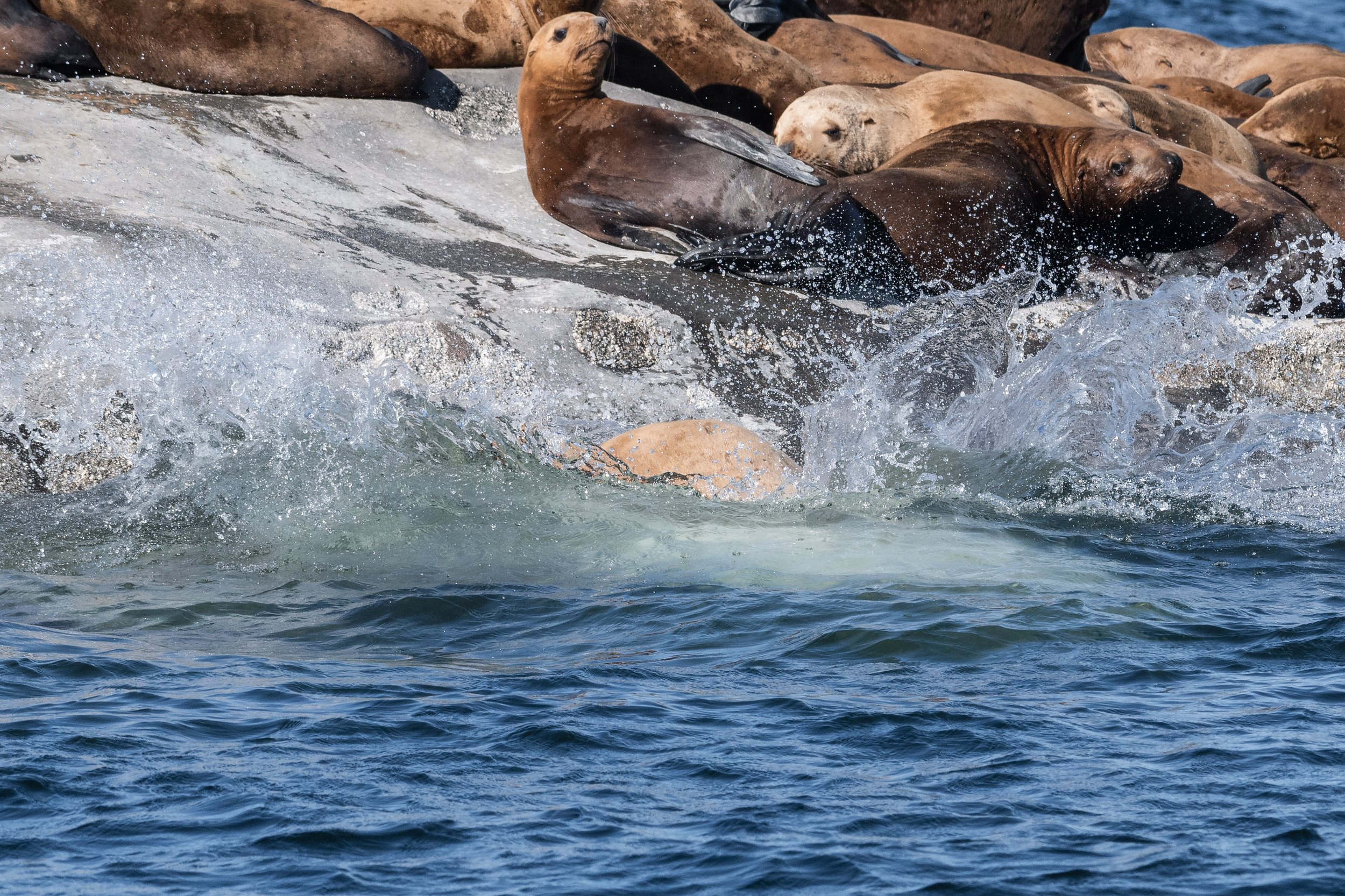
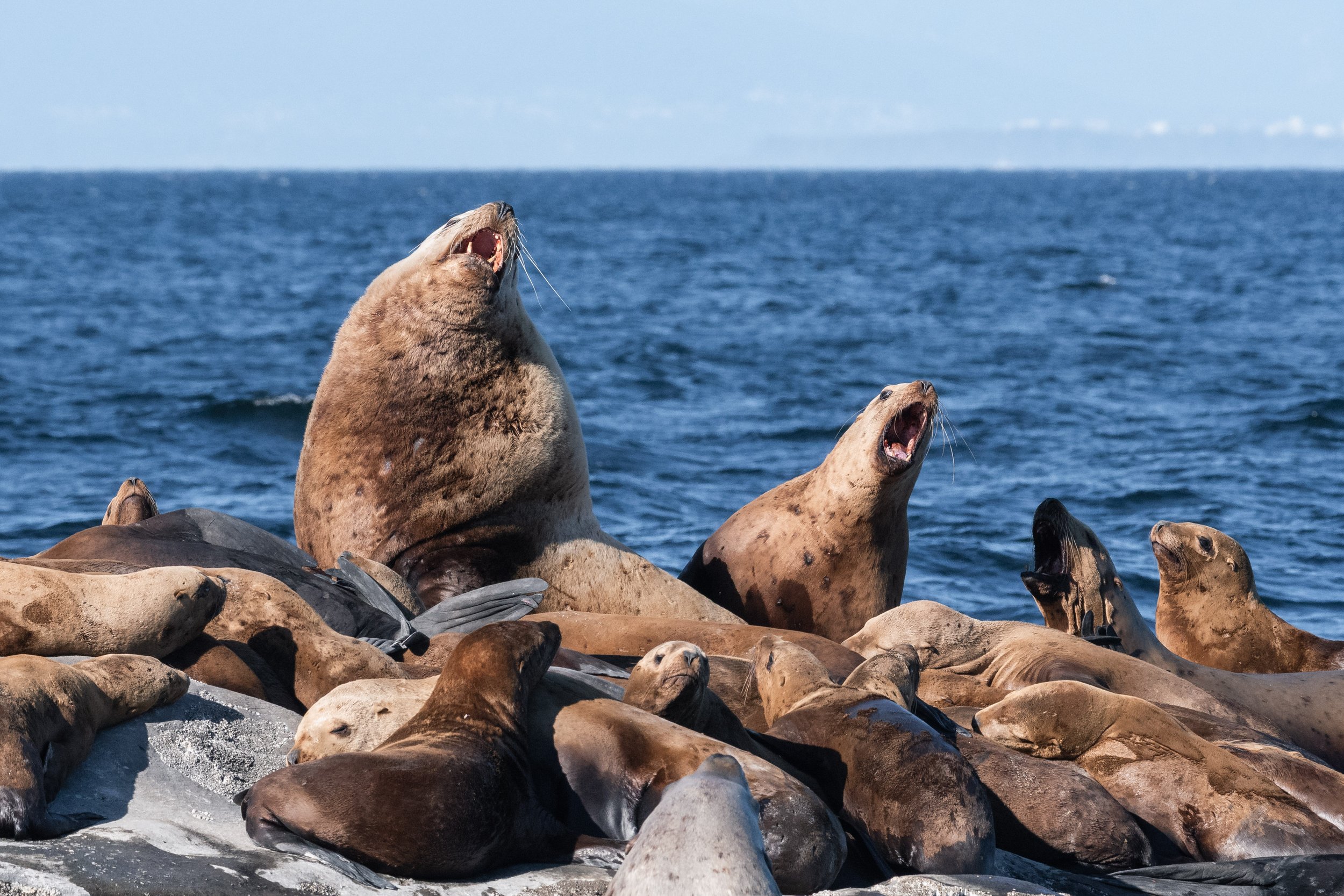
Lots of fighting on the rocks today.
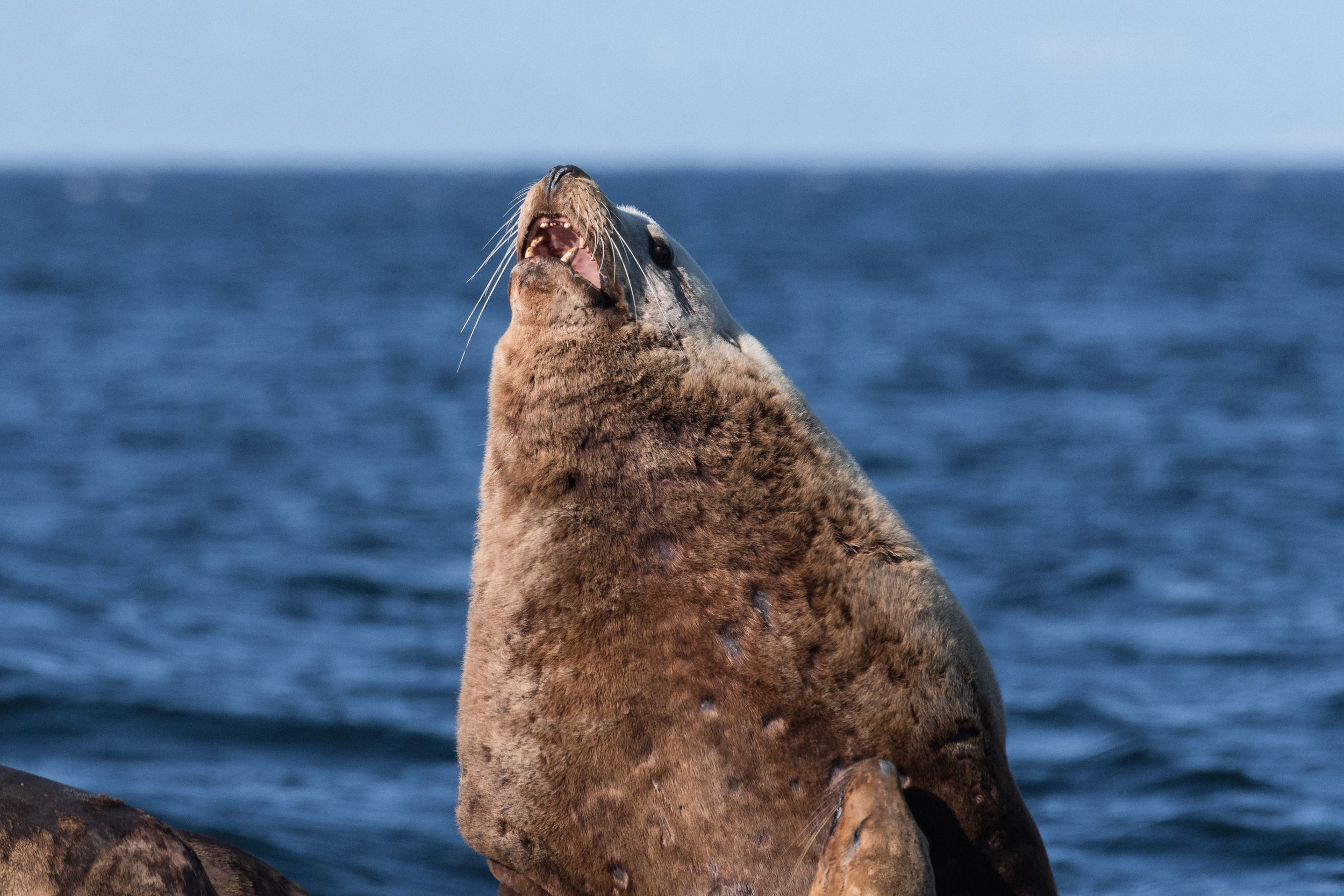
A very fuffy Steller Sea Lion on Stinky Rock.
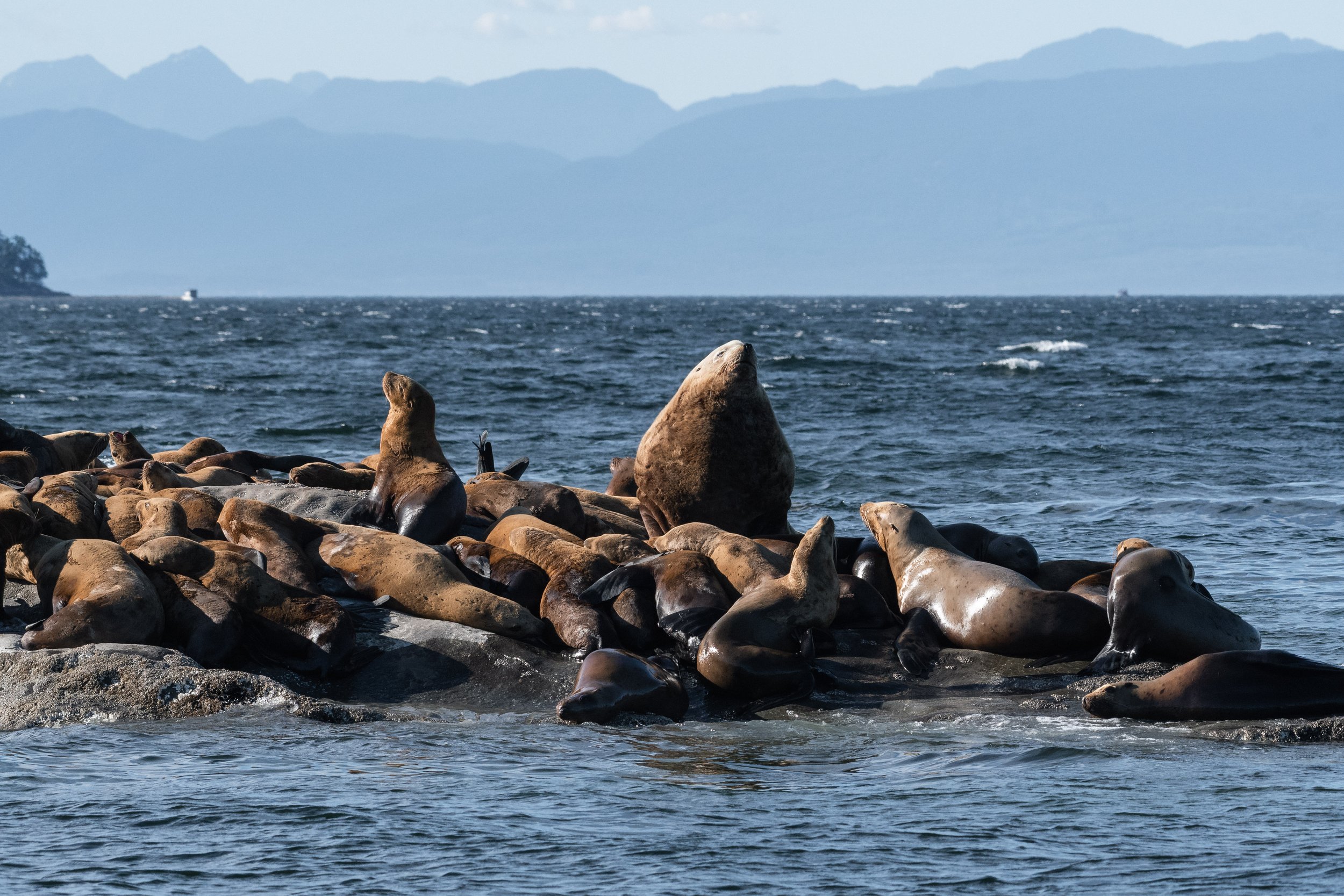
Look at the size difference between this adult male and the rest of the Steller Sea Lions.
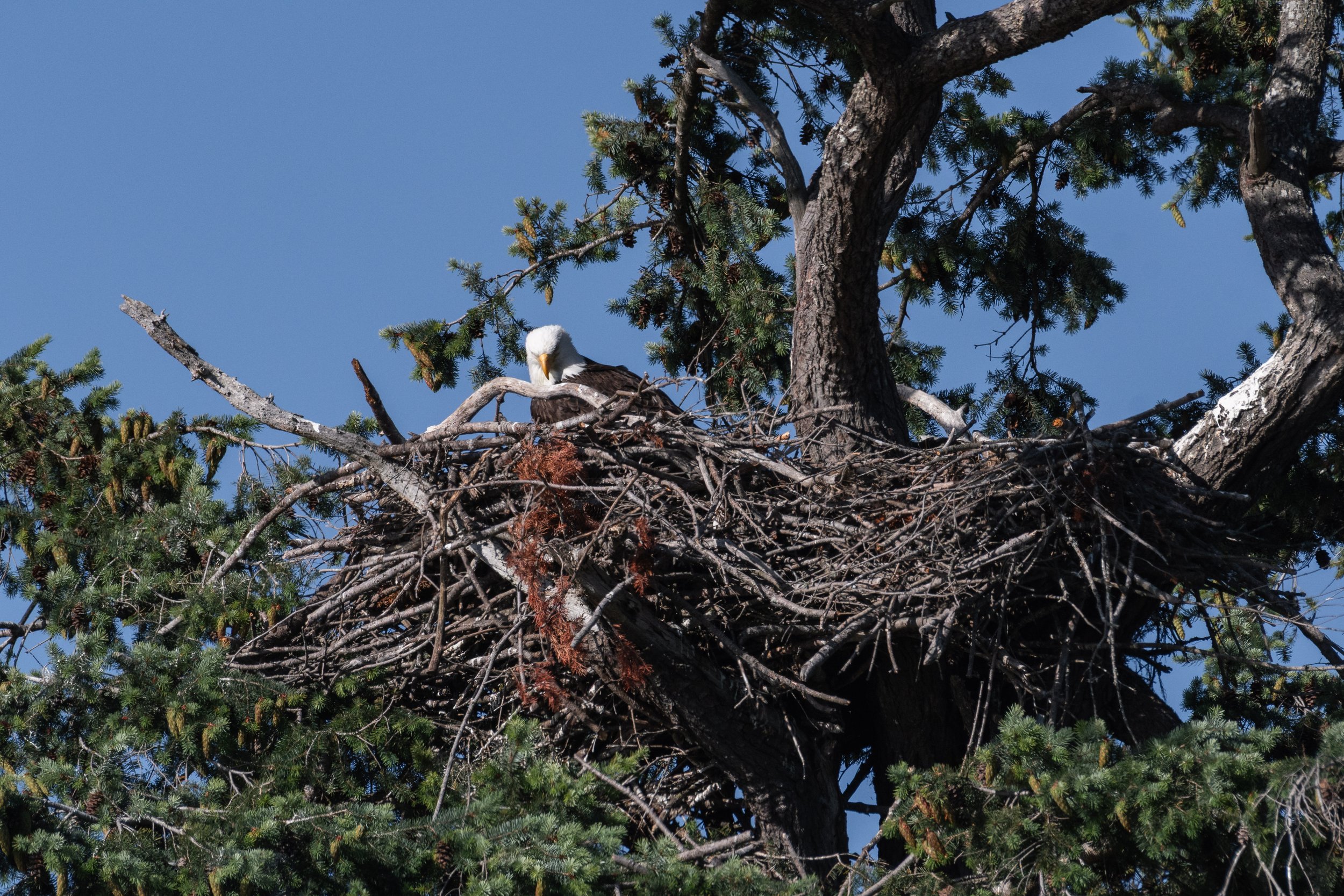
An Adult Bald Eagle tending to the nest.
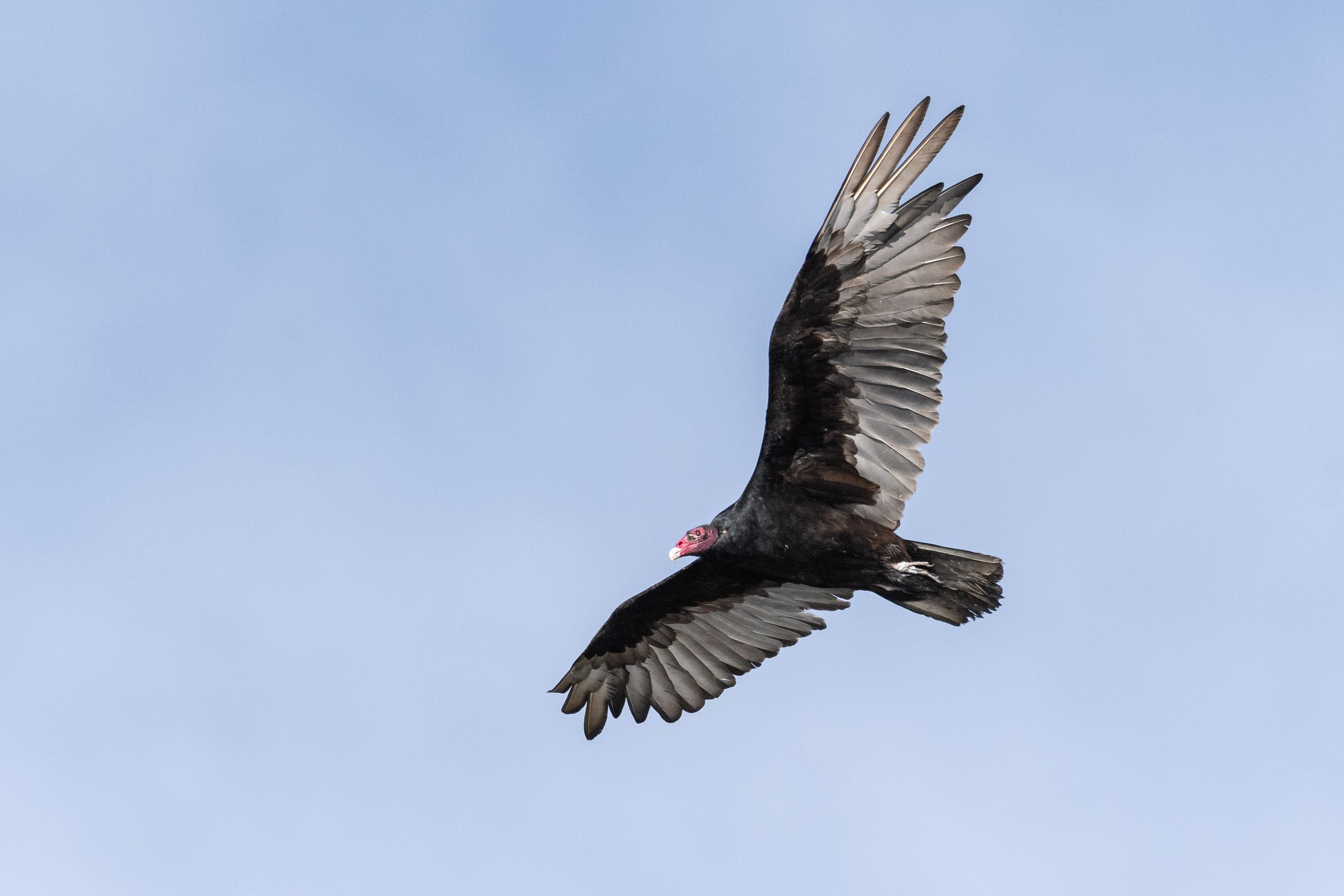
A Turkey Vulture flying by overhead.
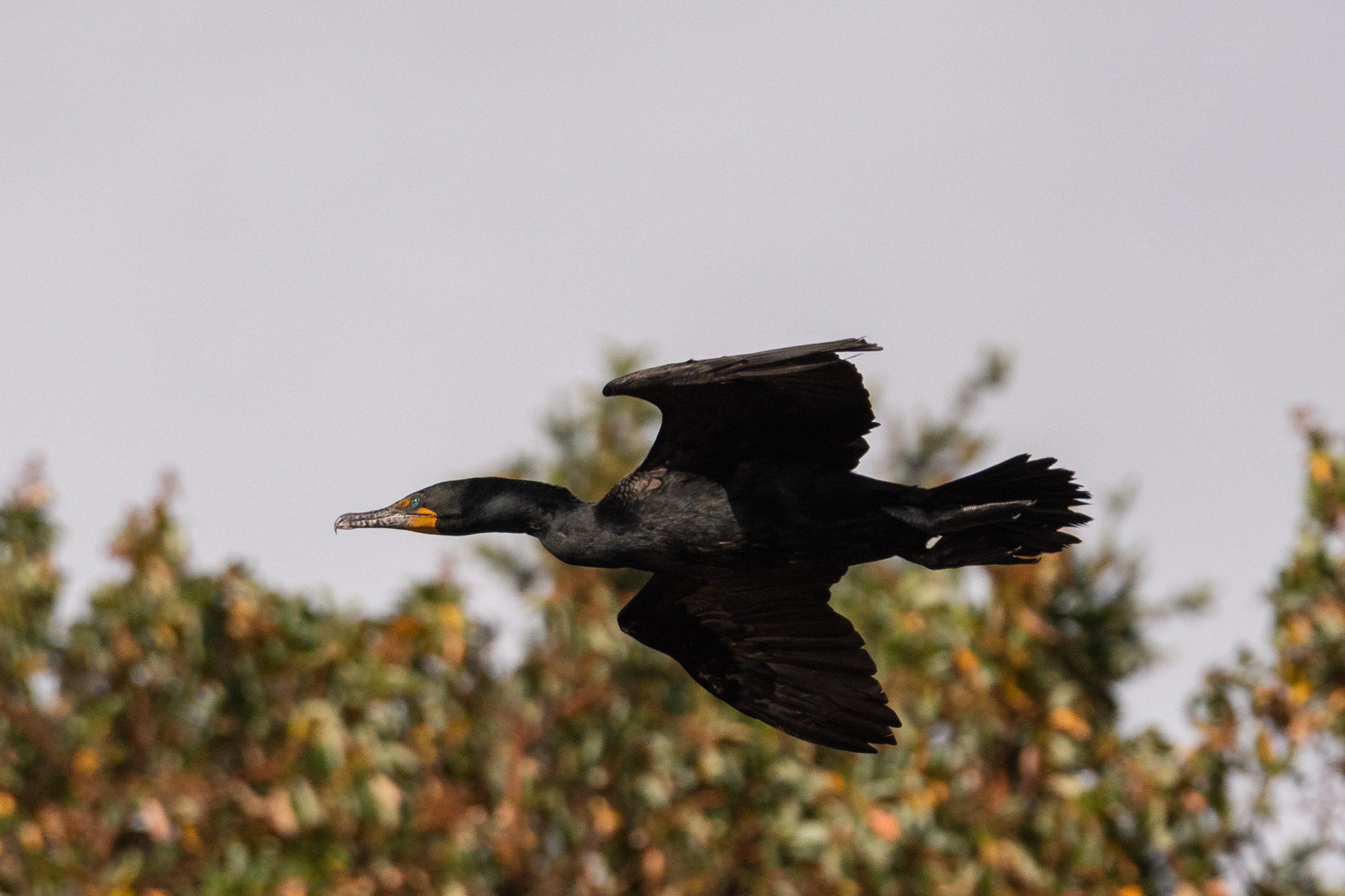
A comorant flying by.
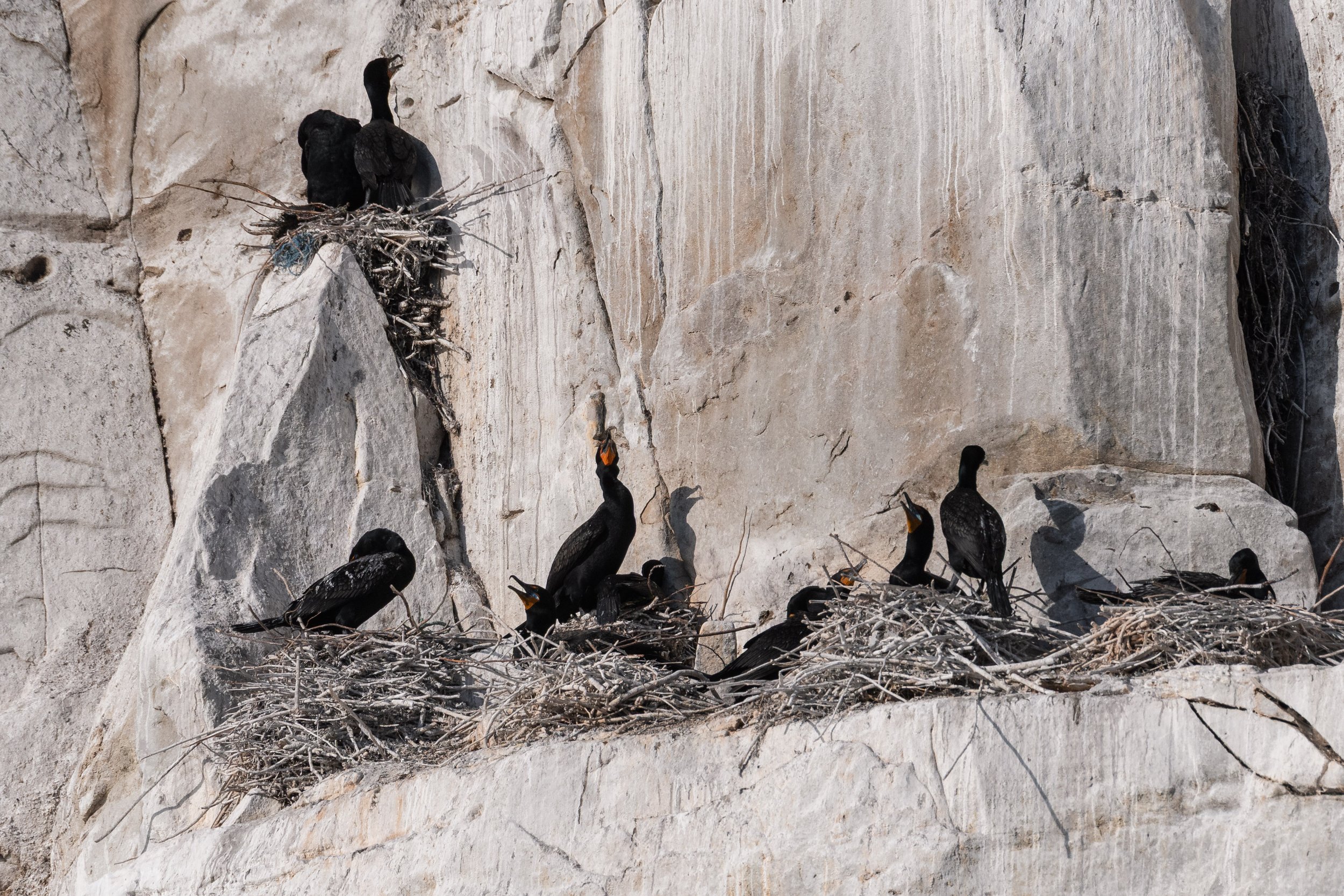
Cormorants sitting on their nests.
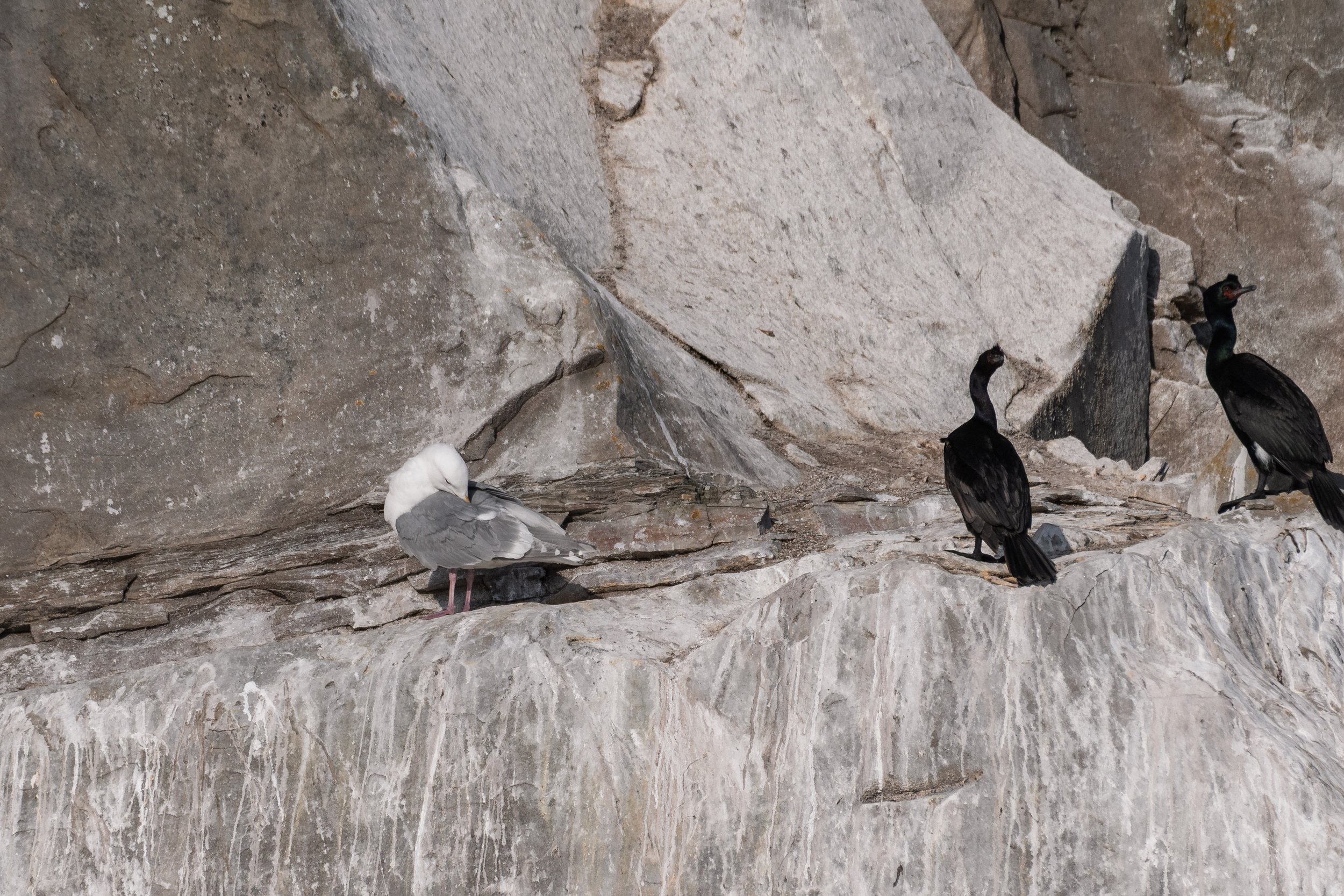
A preening gull next to the cormorants.
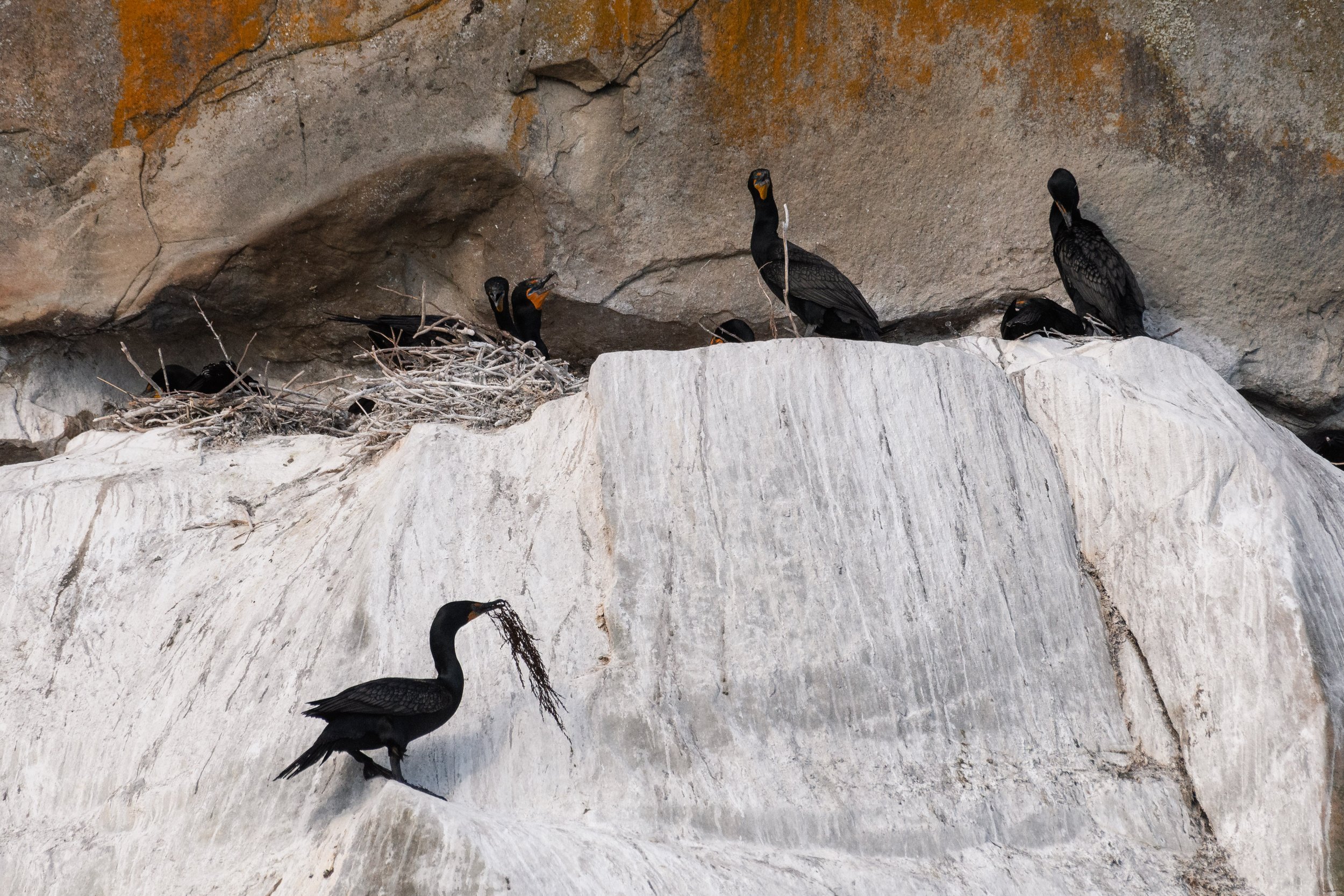
A gull with some seaweed geting ready to add it to the nest.