
June 1, 2026, 3:30 PM - The party continues, plus some humpbacks!
The winds had calmed, and we were ready for adventure as we headed into the Strait of Georgia in search of the whales that we had seen earlier in the day. Shore reports had let us know that the group had passed through Dodd Narrows and was continuing north, so northward we went. It wasn’t long before we spotted the towering black dorsal fins of the orca that we were looking for. It was the same T-party that we saw this morning, a group of 10 travelling together: The T101s, T123s, and T124A4s.
T101 Reef ♀ (≤1969)
T101A Rush ♂ (1993)
T101B Lagoon ♂ (1997)
T123 Sidney ♀ (~1985)
T123A Stanley ♂ (2000)
T123C Lucky ♀ (2012)
T123D Darcy ♀ (2018)
T124A4 Sabio ♀ (2010)
T124A4A Strix ♀ (2021)
T124A1A Sabine (2024)
This large group of whales was spread out over a fair distance, which is quite typical when they gather in groups of this size. Whales are often divided by age and gender, with the matriarchs of the group spending time with the younger whales, while the large males are away from them. Today, it seemed that T101A Rush was spending time with T124A4 Sabio and her kids. These kids are actually a bit of a mystery in the area. You might notice that Sabine doesn’t have the same name as the rest of their family. This is because initially, they were travelling with Sabio’s sister, T124A1 Bonepartes. While in Bonaparte's care, Sabine started to look worse and worse, but eventually Sabio entered the picture and took over the role of caretaker for Sabine, who immediately started to show improvement. It’s unclear whether Sabio adopted Sabine or if the calf was always hers, and Bonepartes borrowed them for a little while to give parenting a shot, but either way, we were happy to see their health improve once they started travelling with Sabio.
Interestingly, Bonepartes has once again been recorded travelling with a calf, so we will see whether her parenting skills have improved much over time.
While we were watching this T-party unfold, there was a surprise amongst the dorsal fins of the orca; the blow of a humpback whale! This whale surfaced twice in the middle of the group before diving again. Since this whale was spending their time in the glare of the sun on the surface, we aren’t sure who they are, but seeing them in the midst of the orca was interesting nonetheless. It raised the question: Do orca and humpback whales get along? The answer is complicated, since it seems to depend on the individual, but most of the time it happens as it did today: the two pass each other without any acknowledgement, though sometimes it can be a more dramatic interaction. The orca sometimes chase the humpbacks; the humpbacks can chase the orca; and we’ve even seen the humpbacks jump out of the water as a warning to the orca not to get too close. As both of their populations increase, I’m sure we will see more and more instances of the two species having interactions.
We ended up finding more humpbacks as our tour progressed, just southeast of Halibut Bank in the Strait of Georgia. The first humpback we found was feeding in the area, sporadically coming to the surface for a breath or two before heading back below the surface in search of small schooling fish and krill. This area is quite good for humpbacks since Halibut Bank creates upwelling, mixing the water column and increasing the amount of oxygen it can hold by lowering the temperature. This all combines to make it a hotspot for animals in the vast waters of the Strait.
It wasn’t just that first humpback that was taking advantage of these feeding grounds; we saw three more humpbacks not too far from the first. The first of these three was travelling solo, feeding close to the surface. They lifted their tail with each dive, allowing us to identify them as Specter (KEY0057). Specter is only three years old now, so they still have a lot of growing to do. As a male, once fully grown specter may be up to 15 meters long and weigh around 30 tonnes. This massive size is supported by filter feeding, taking in nearly 3,000 pounds of food every day. This massive amount of food fuels not only their time here but also their time in their breeding grounds, when they have to burn through their fat reserves as their main energy source. That’s why their feeding time here is so important; they only feed for half the year, yet still have massive energy requirements when they migrate and spend time in either Hawaii or Mexico over the winter months.
Not too far from Specter was a pair of whales also feeding, but a little deeper because of their dive times. They also perfectly showed off their tails, and we recognized them as Eros (BCX2201) and Split Fluke (BCX1068). Even though they were separate when we first saw them, these three whales eventually got together and travelled as a trio for our last surface with them, and we left them to it.
Next up for us was seeing the Steller Sea Lions spending time on Stinky Rock. At high tide, we see more fighting from this already aggressive species. As they prepare to migrate south to their breeding grounds over the summer months, some of those hormones are already flowing, making them more inclined to start a fight. We saw one such fight at the south end of this group, as one of the large males was chasing a smaller one, who was fighting back by biting at the male’s neck. Although it looks dangerous, the male's neck is well adapted for fights like this, with thick blubber and fur in the area that helps protect the important arteries and veins.
From these fighting sea lions, we headed towards Nanaimo, only making one quick stop at the Bald Eagle nest to check on the family. We saw one of the parents keeping watch over the nest while the chick spent time inside, waiting for more food to be brought to them for dinner.
As the sun set behind the mountains, we reflected on how lucky we were to spot so much wildlife throughout today's tour. The onboard Marine Naturalist, Val Watson, captured some great photos throughout the tour, which are available below!
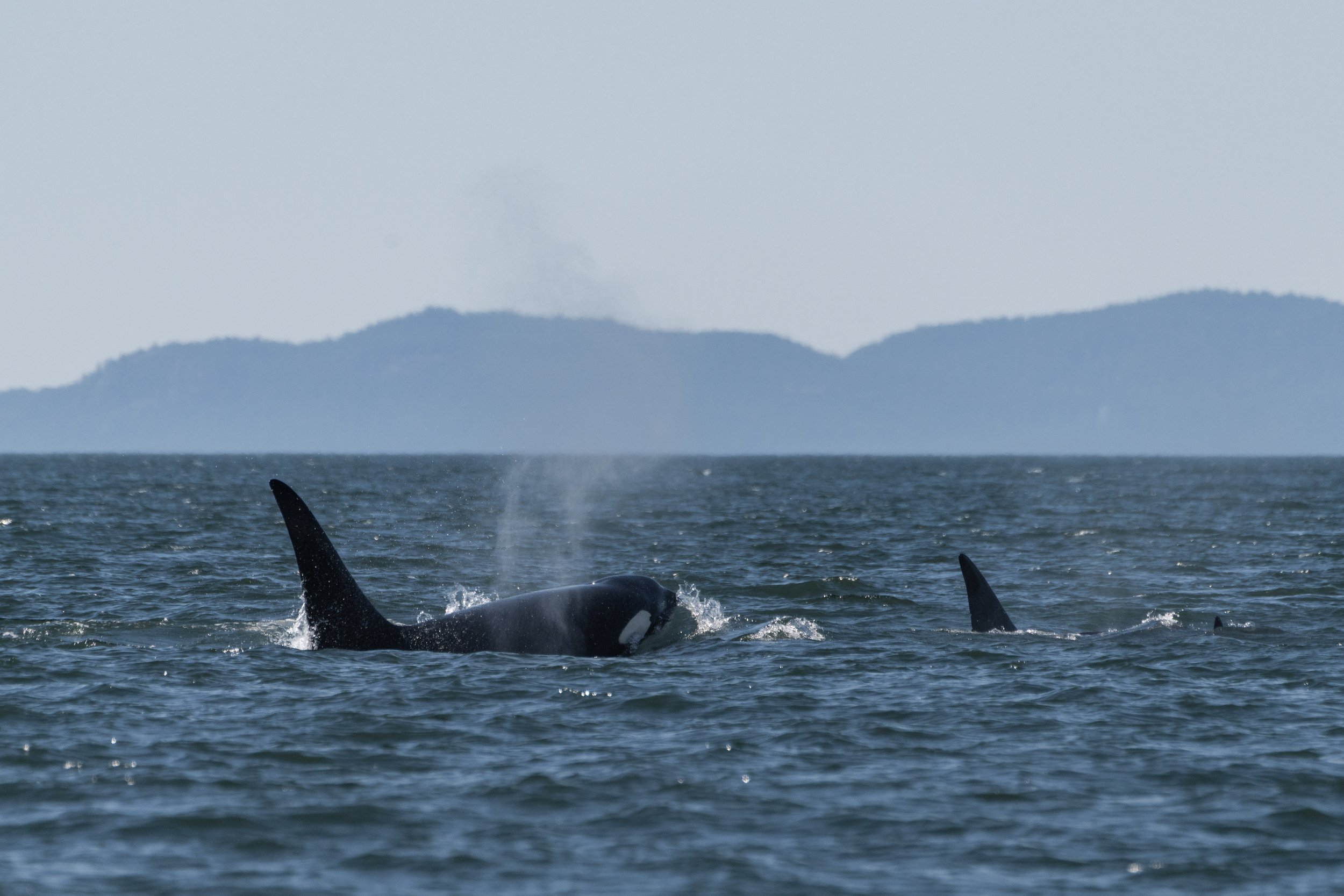
T101A Rush surfacing in the waves.
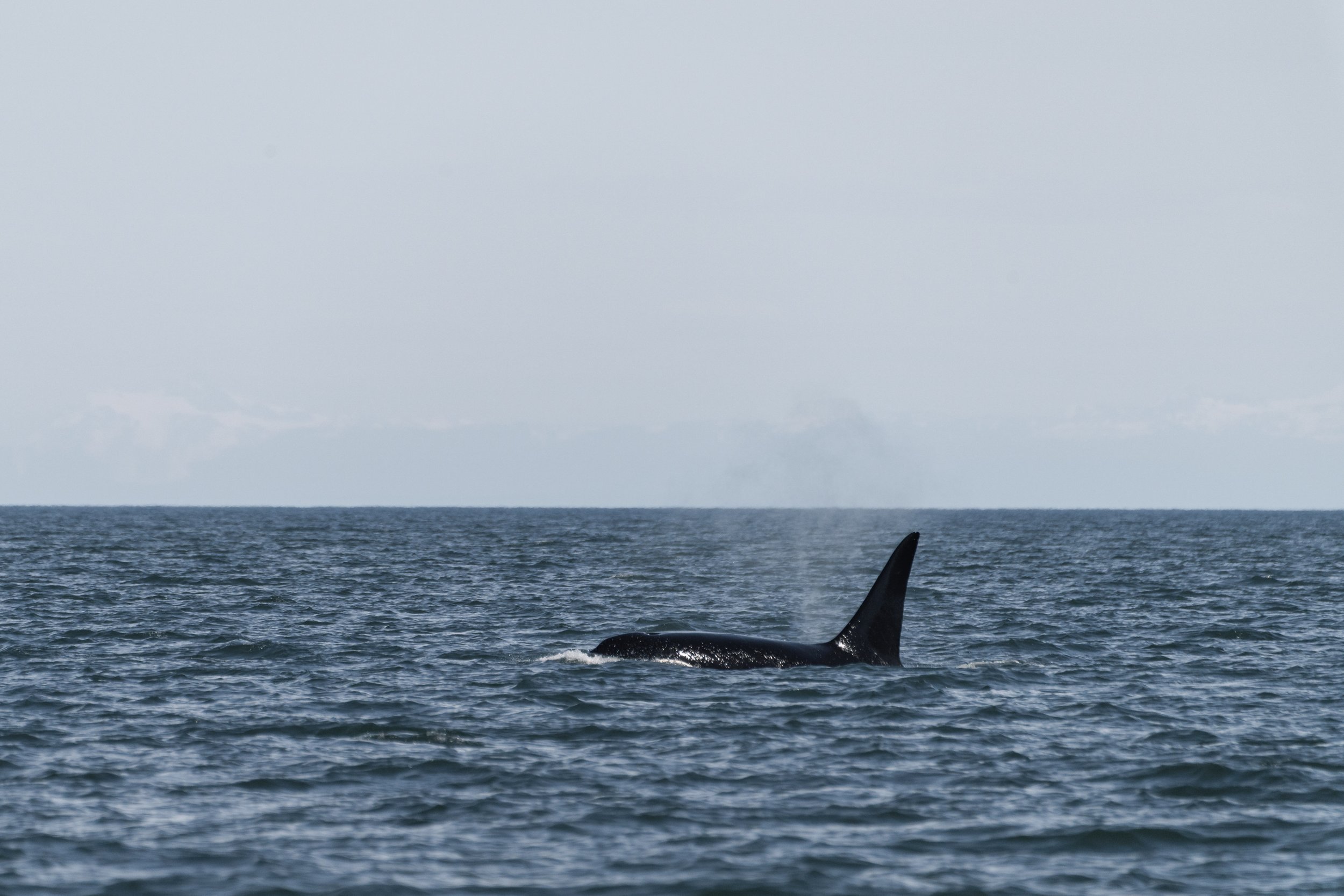
T101A Rush surfacing.
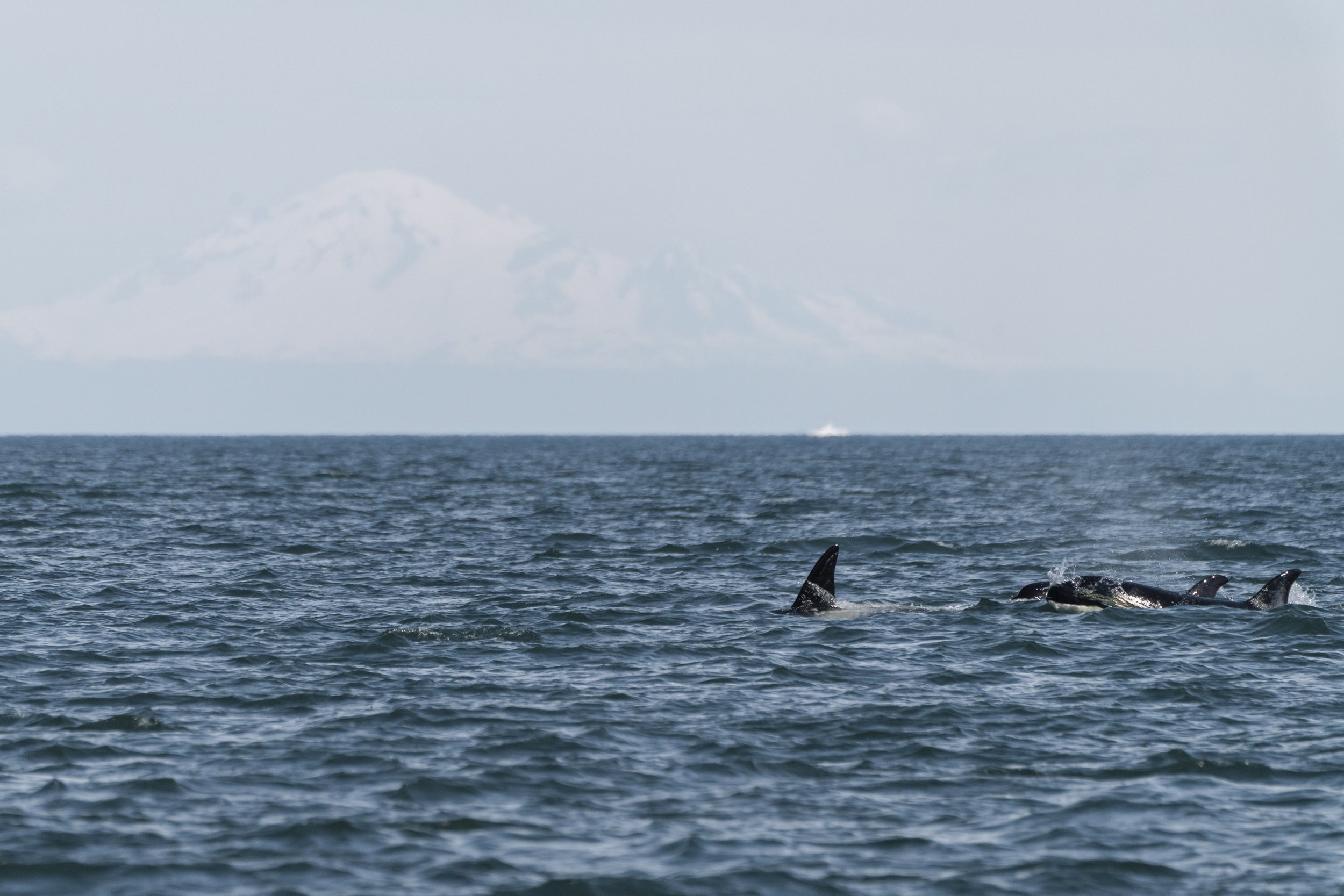
The T124A4 gang surfacing with Mt. Baker in the background.
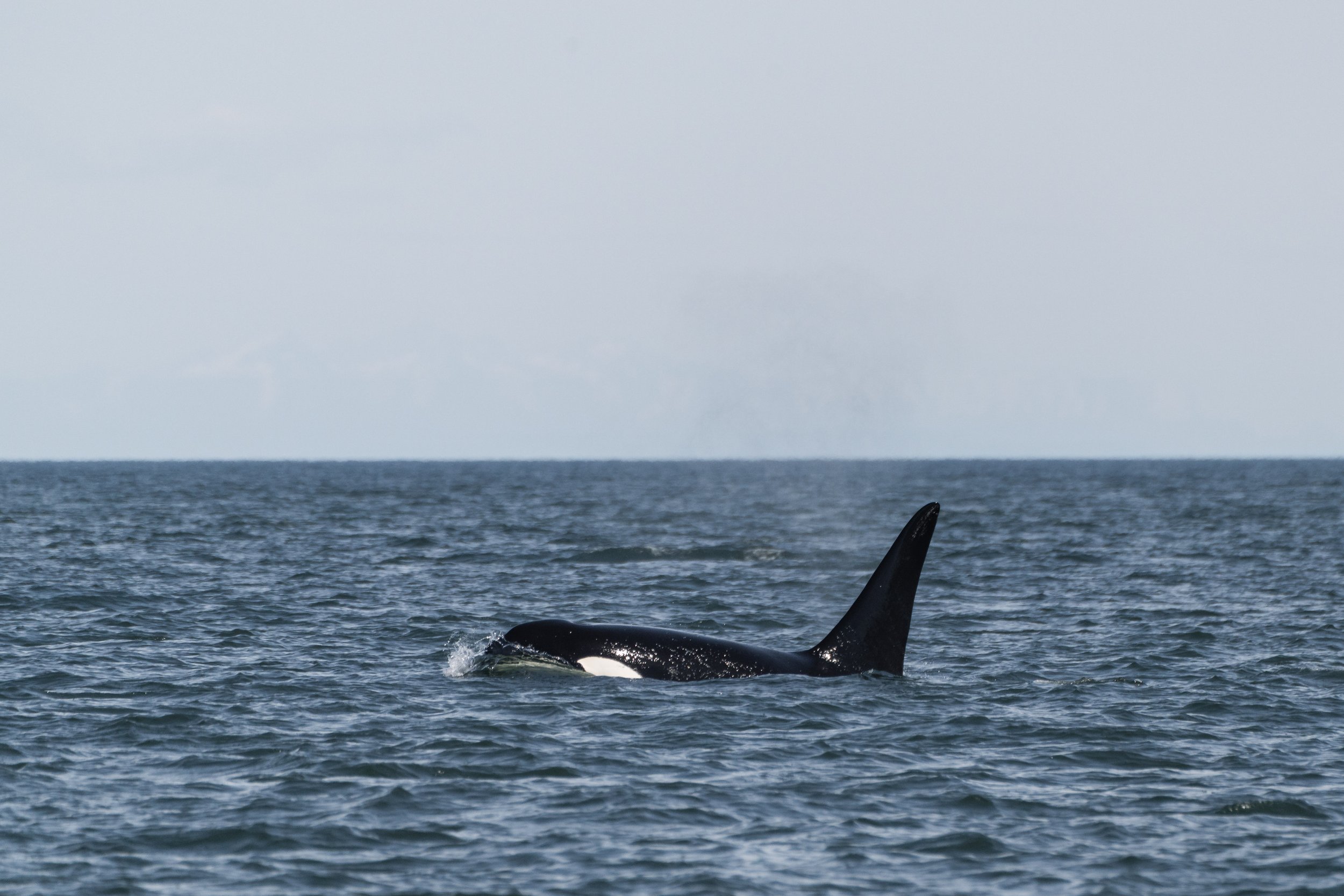
T101A Rush surfacing with his eye patching showing.
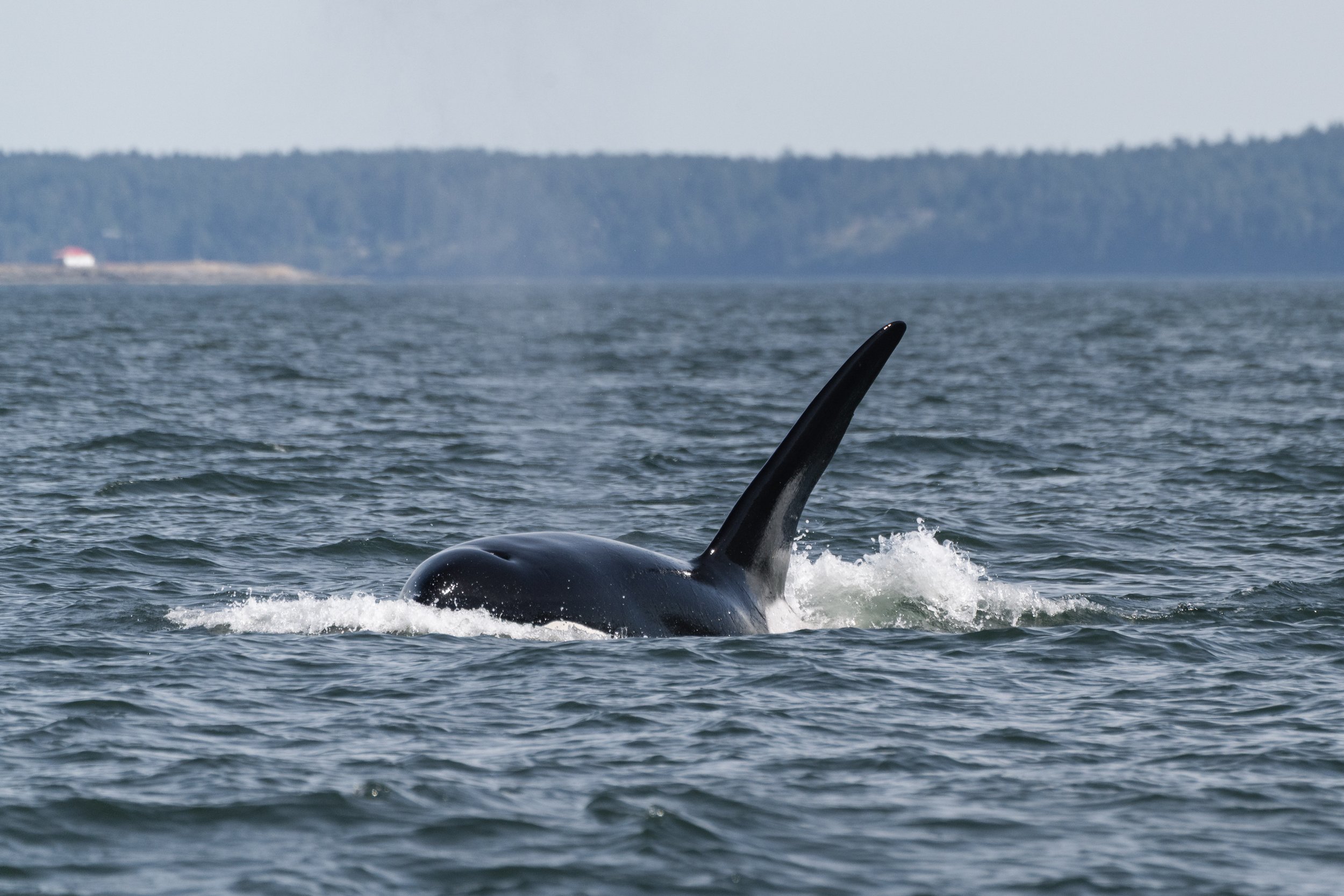
T123A Stanley surfacing so you can see his blowhole!
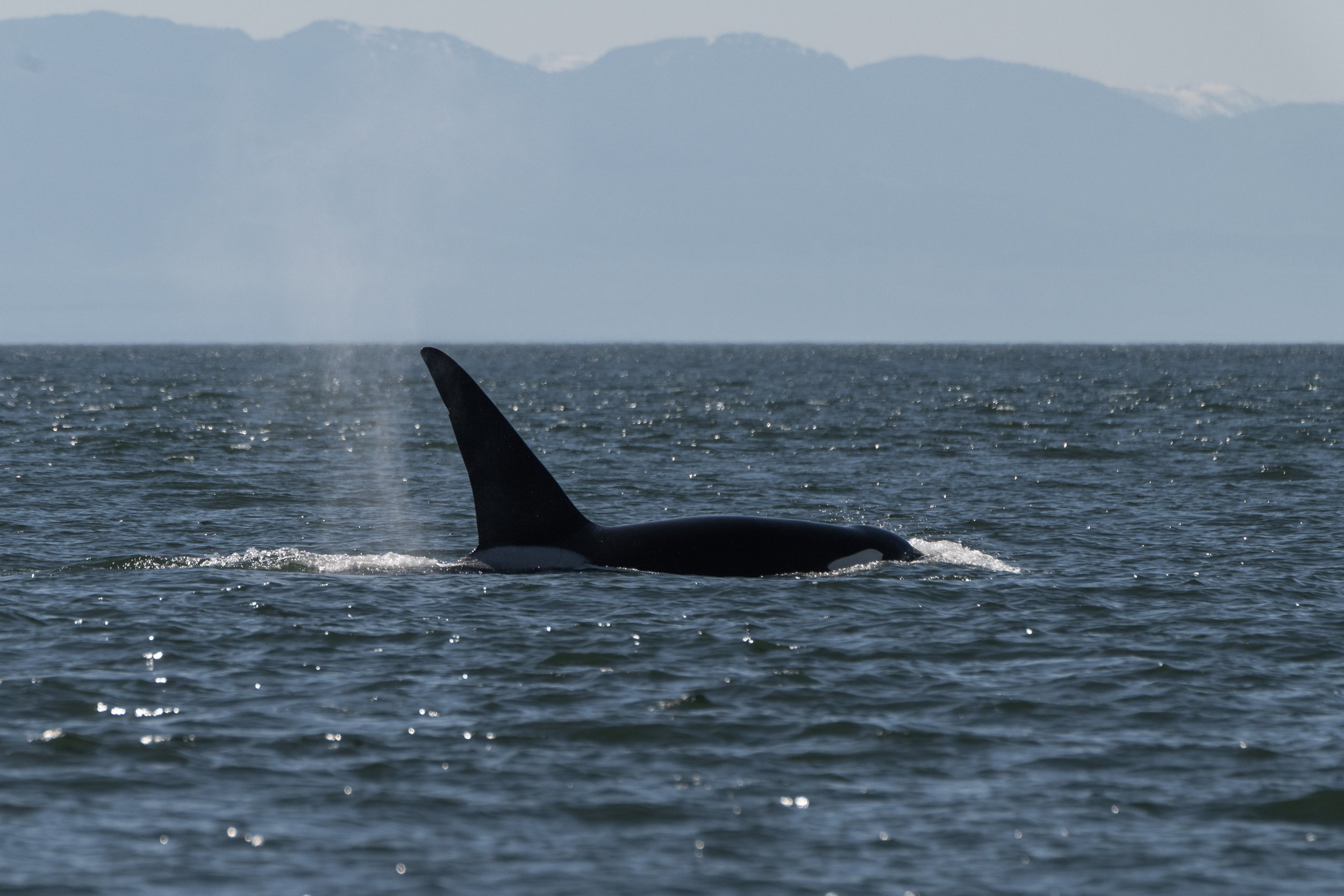
A great look at T123A Stanley as he surfaces.
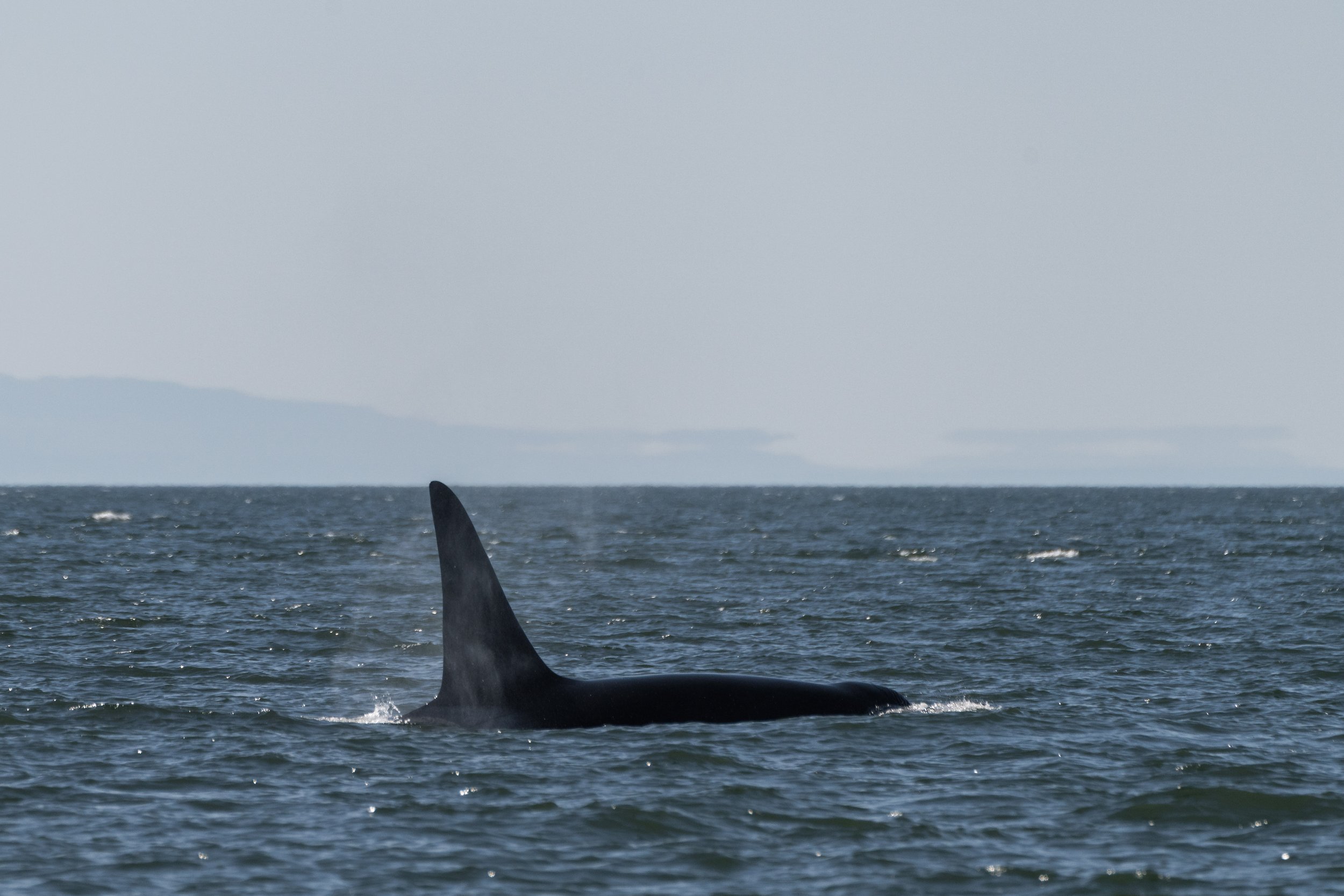
T101A Rush with his blow backlit in the sun.
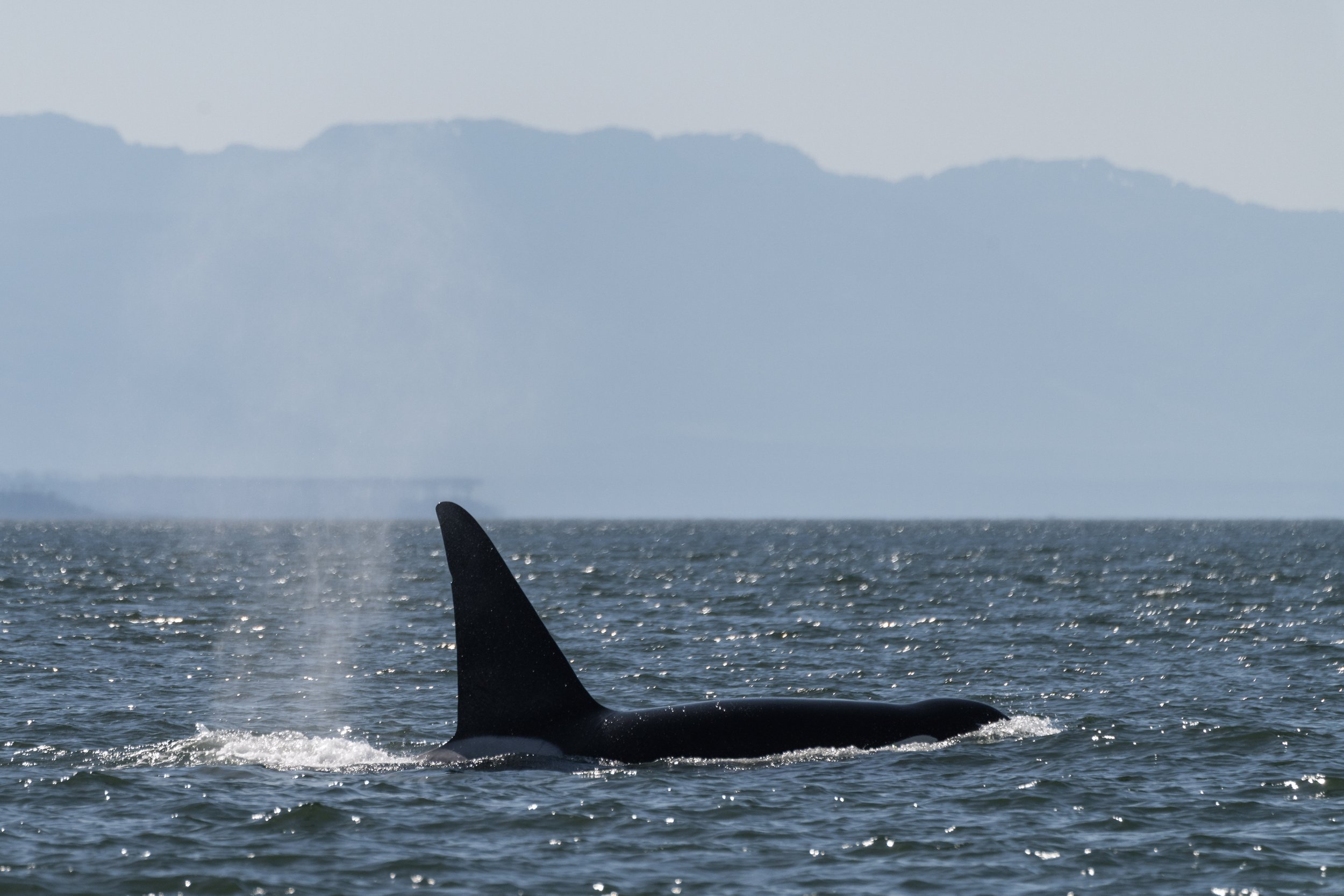
Can you see the notch in Stanley’s fin that helps us ID him?
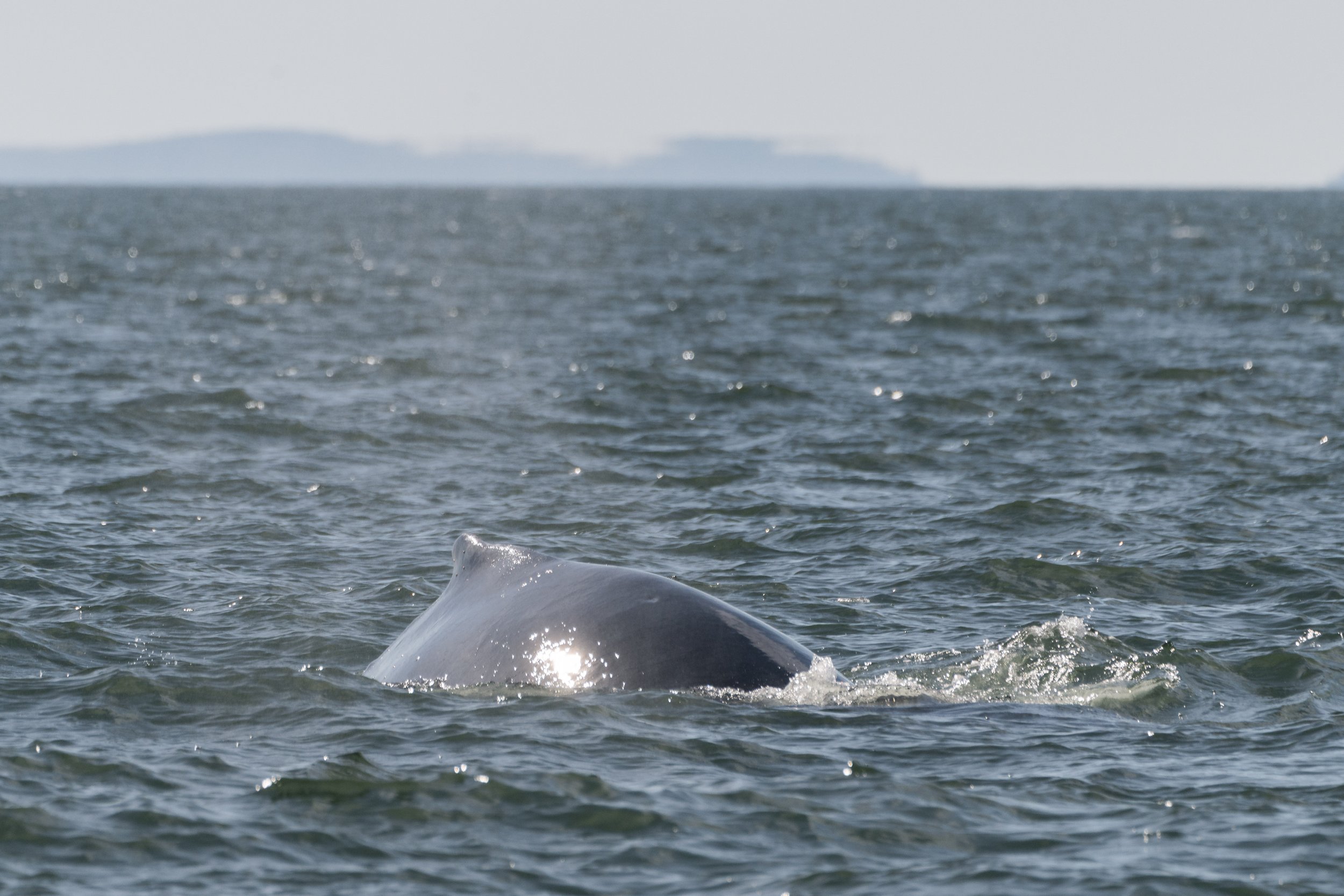
The mystery Humpback surfacing.
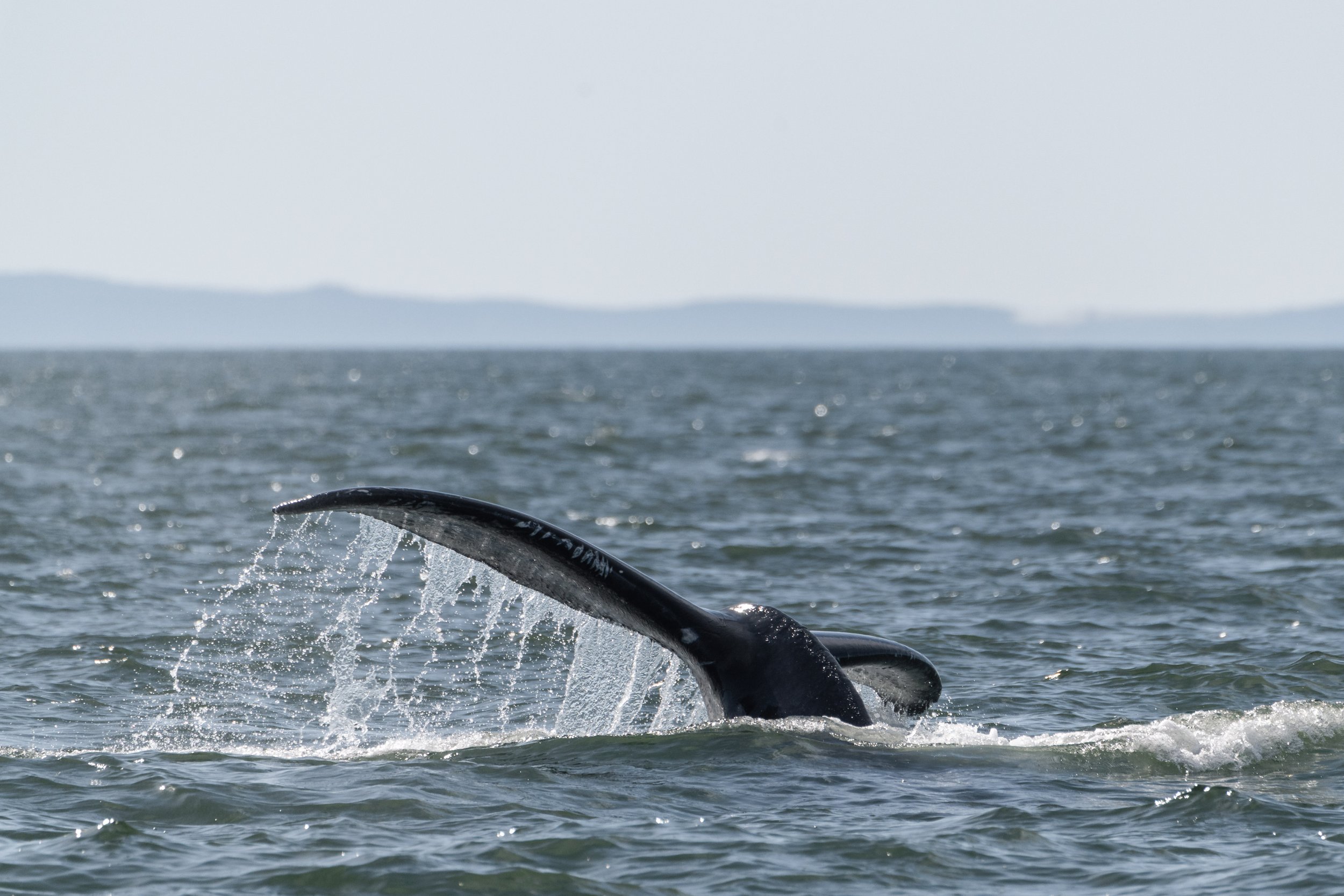
Going for a dive!
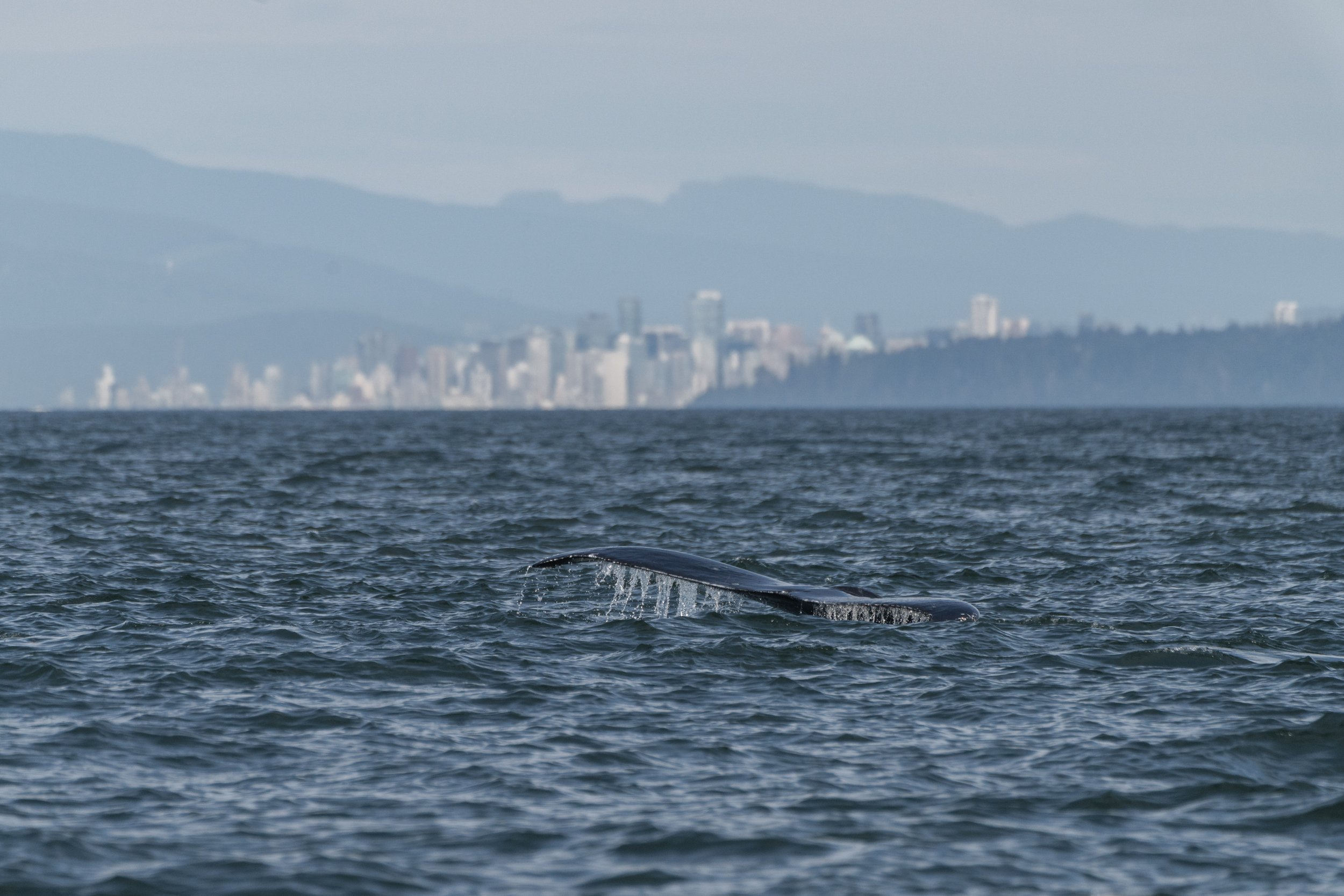
Specter diving with the city of Vancouver behind them.
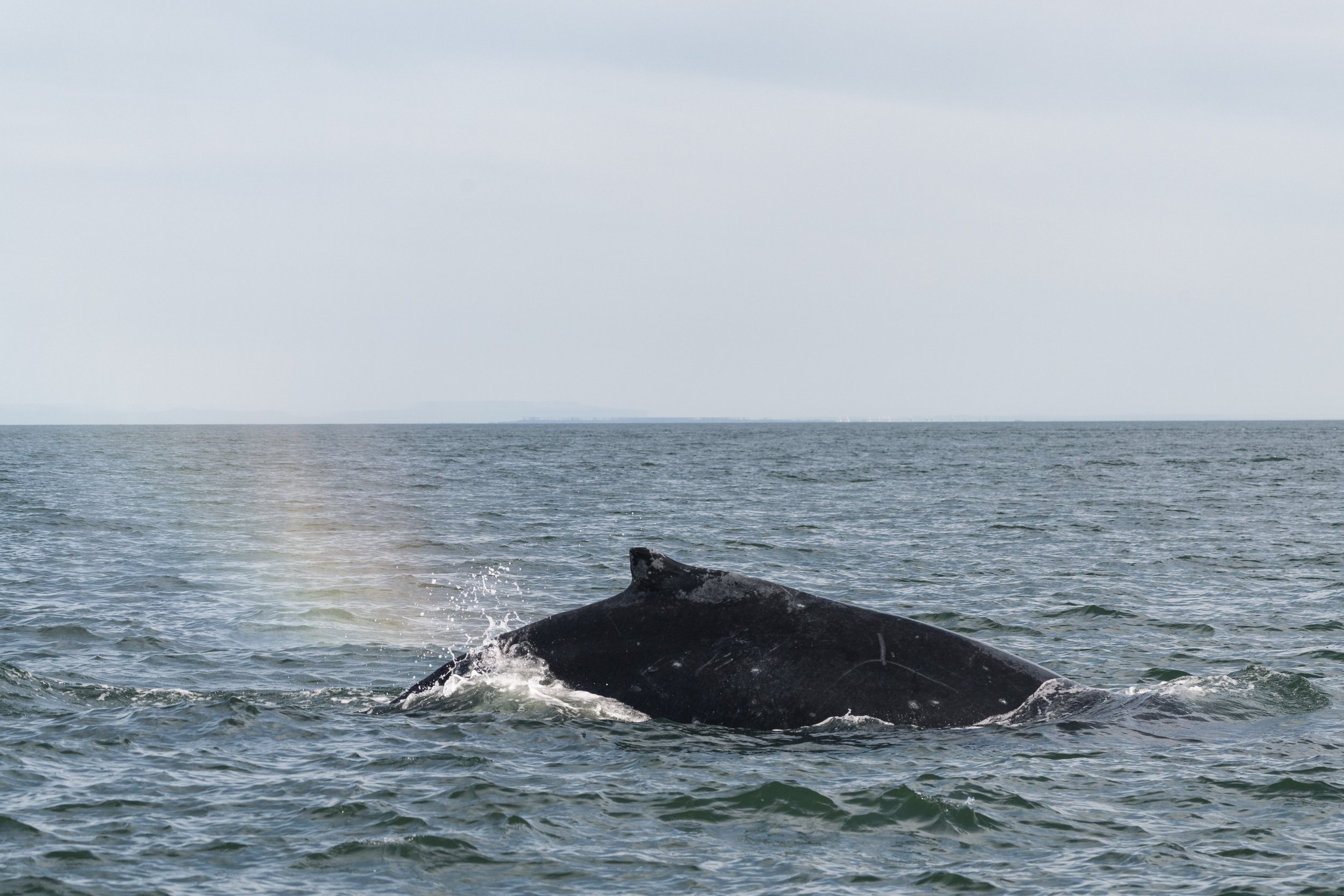
Specter creating what we call a “rain-blow”.
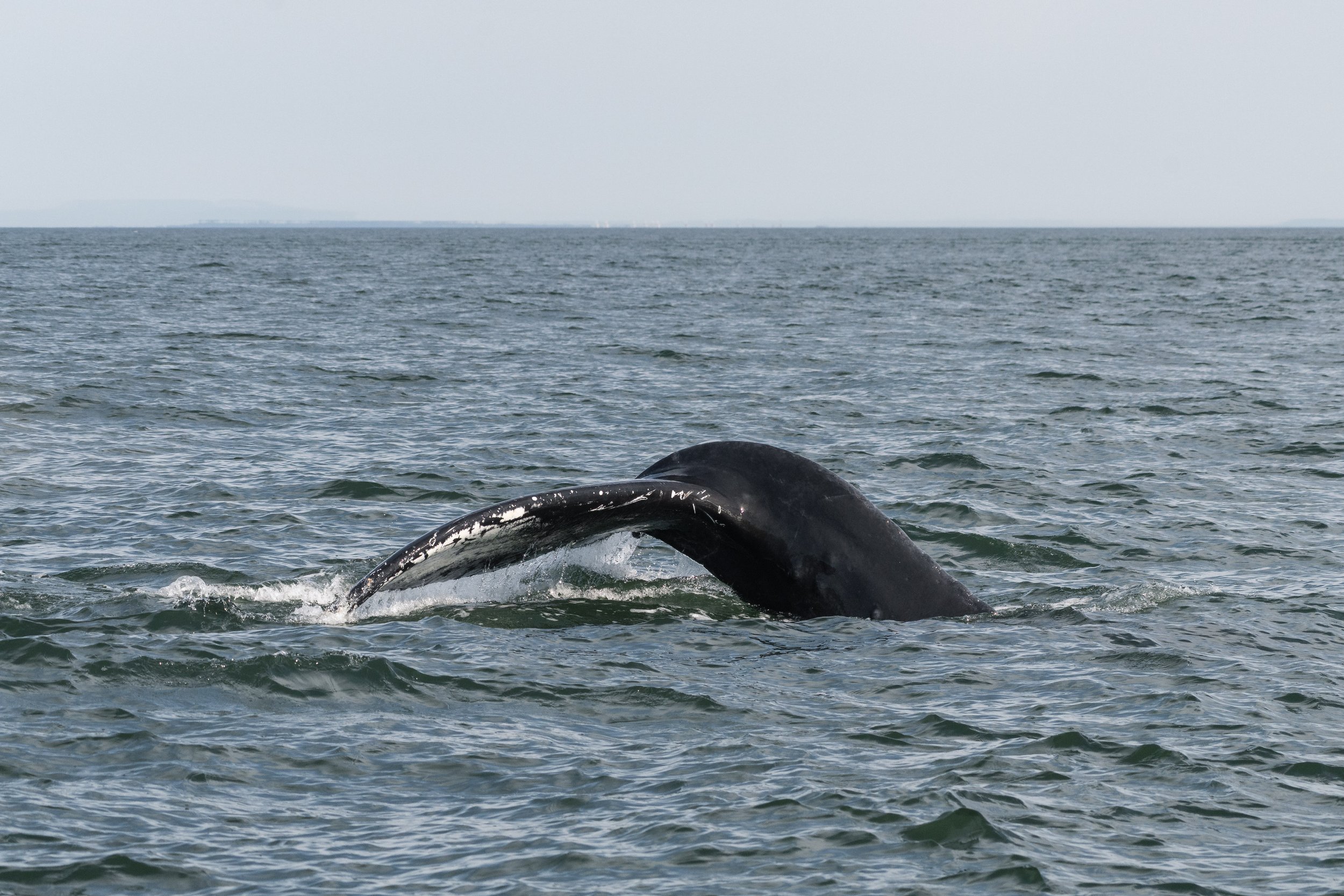
Specter lifting their fluke for a dive.
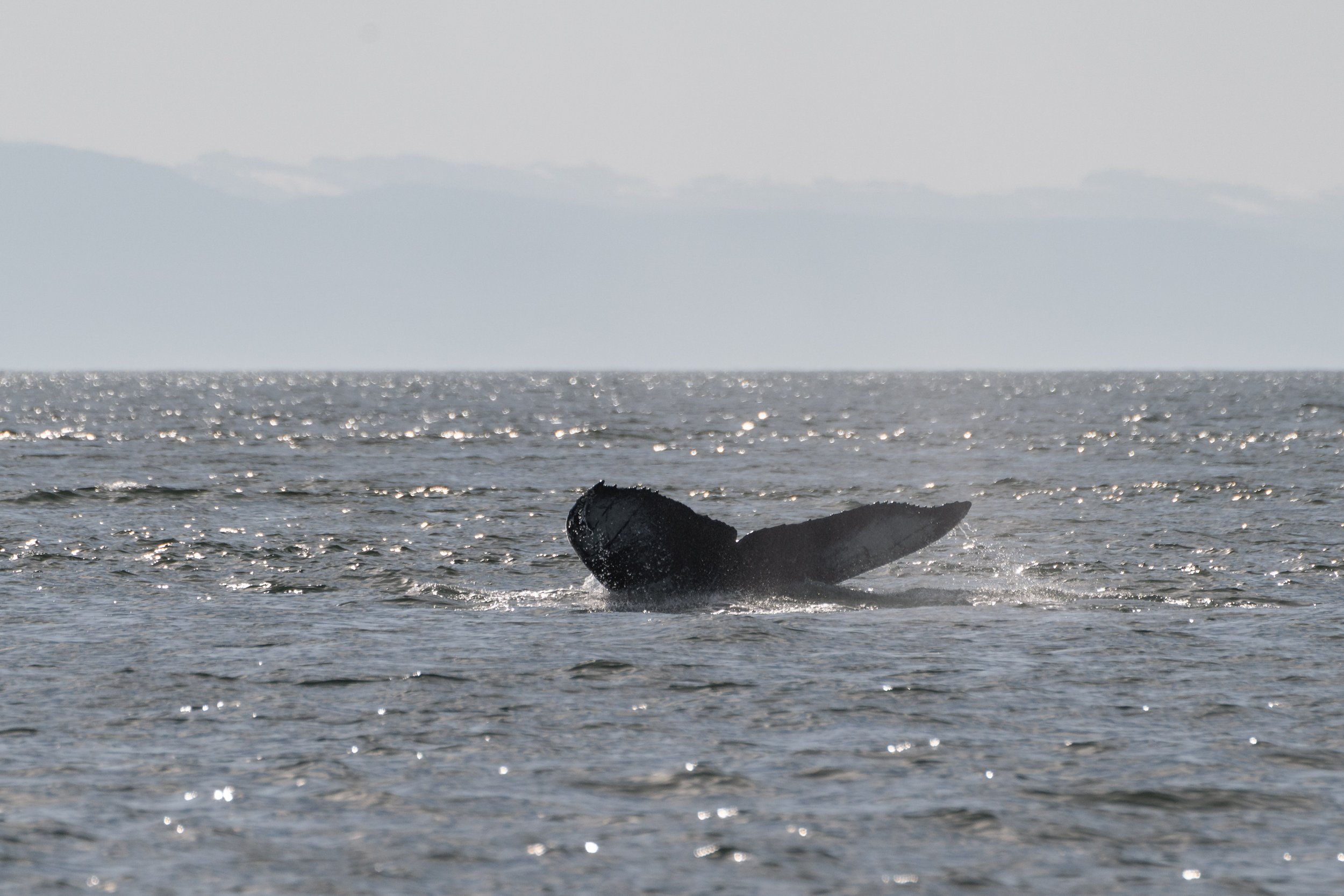
The underside of Specter’s tail.
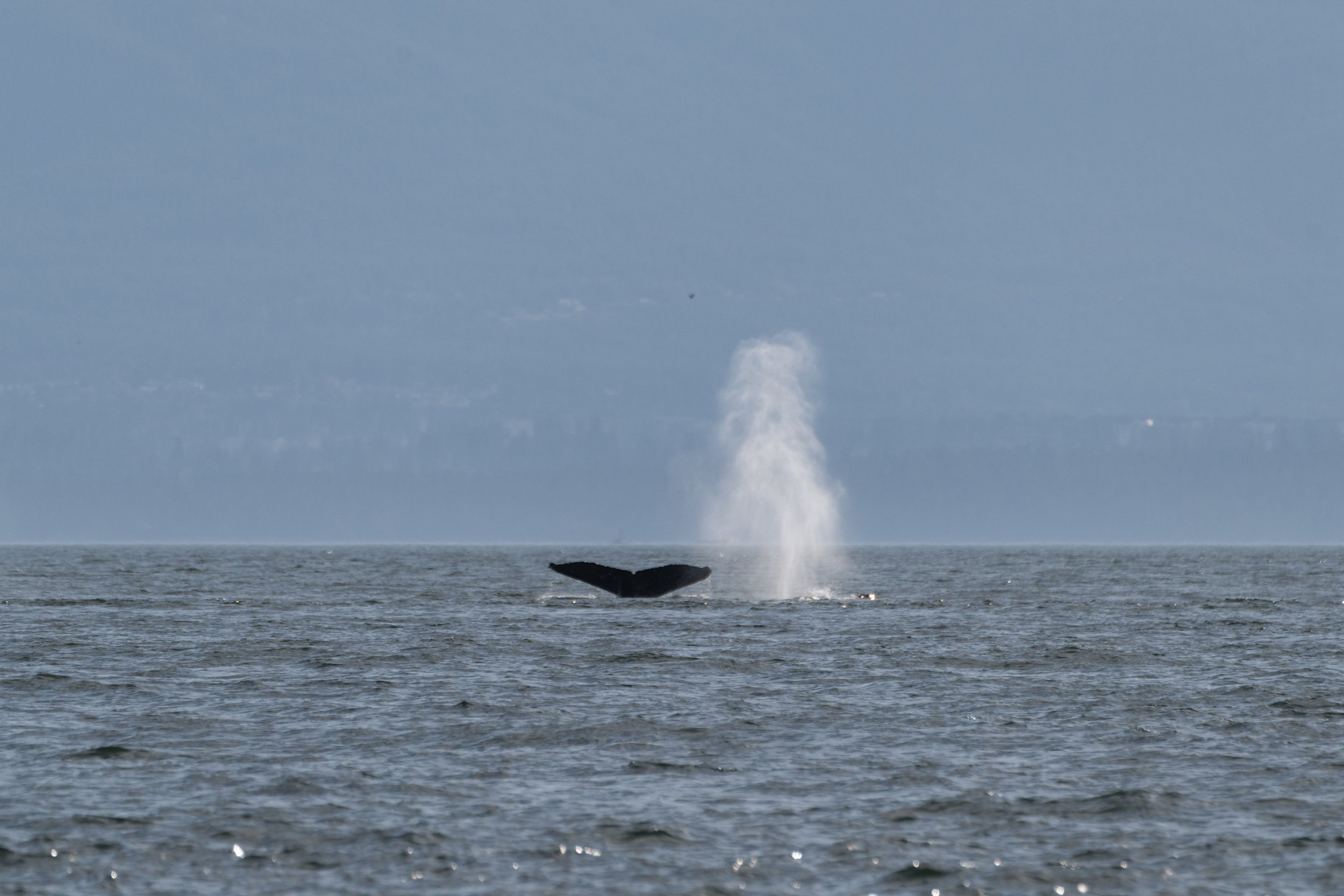
Eros fluking with Split Fluke’s blow beside him.
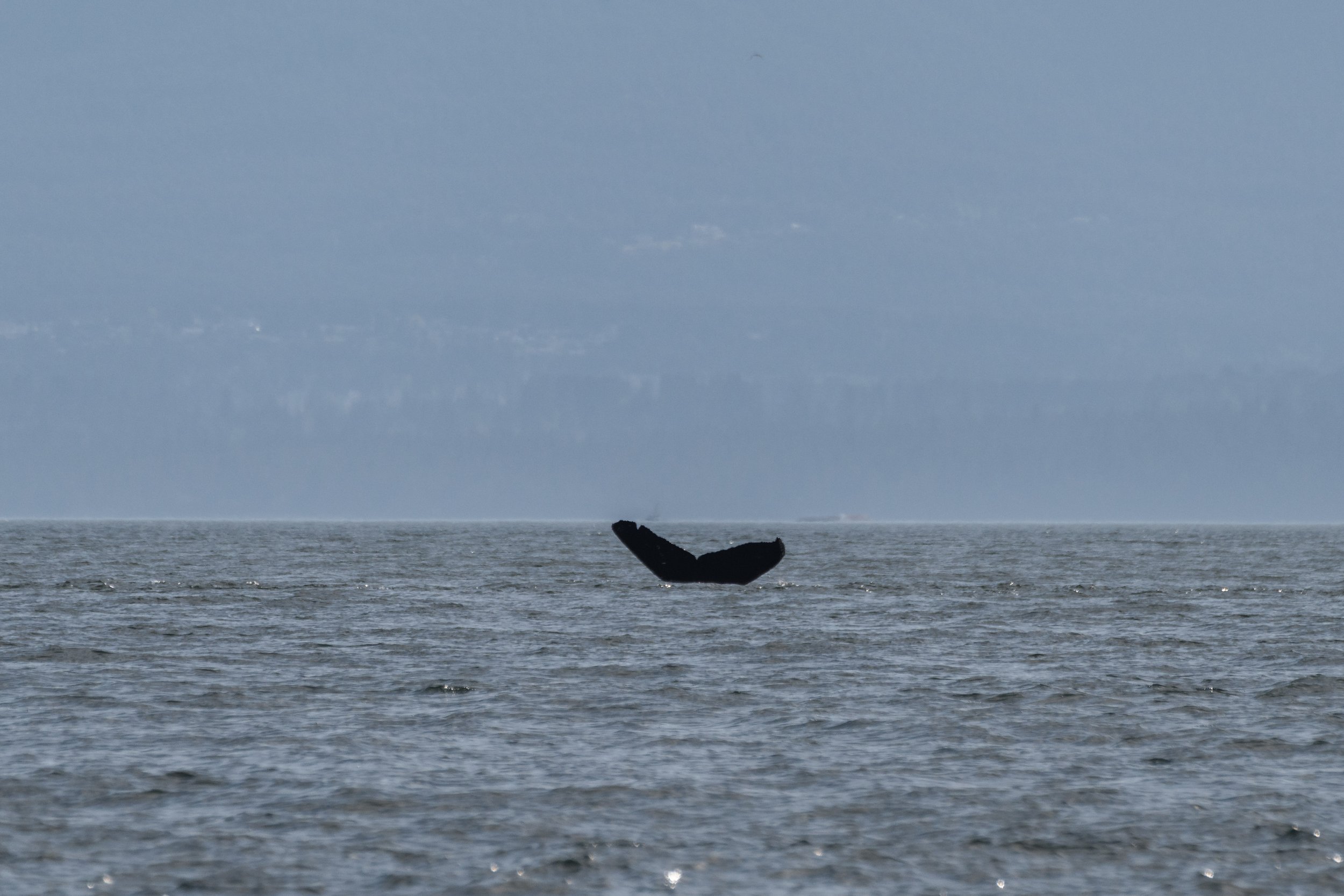
The distinct notch in the left side of Split Fluke’s tail is her namesake.
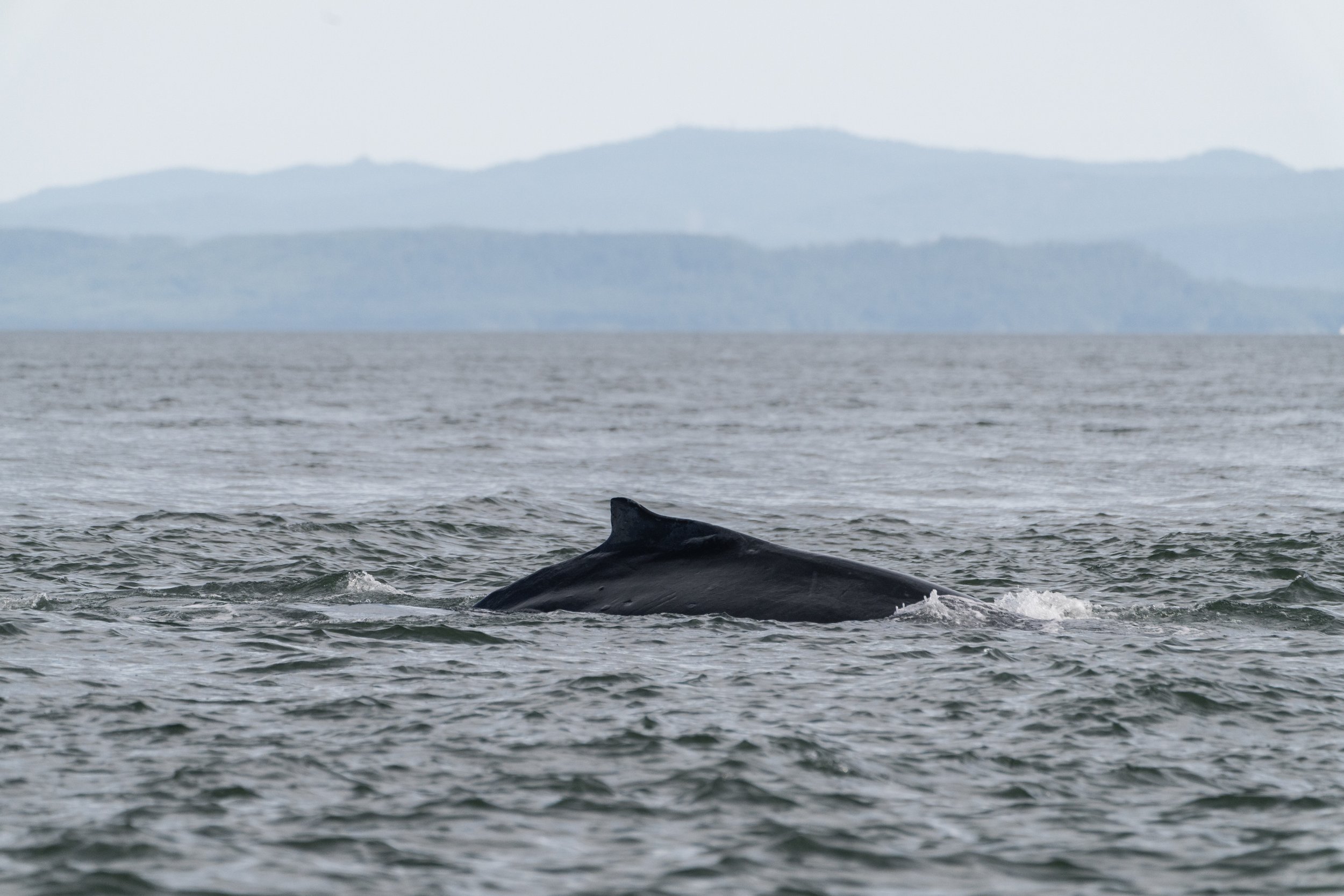
Specter surfacing in the waves.
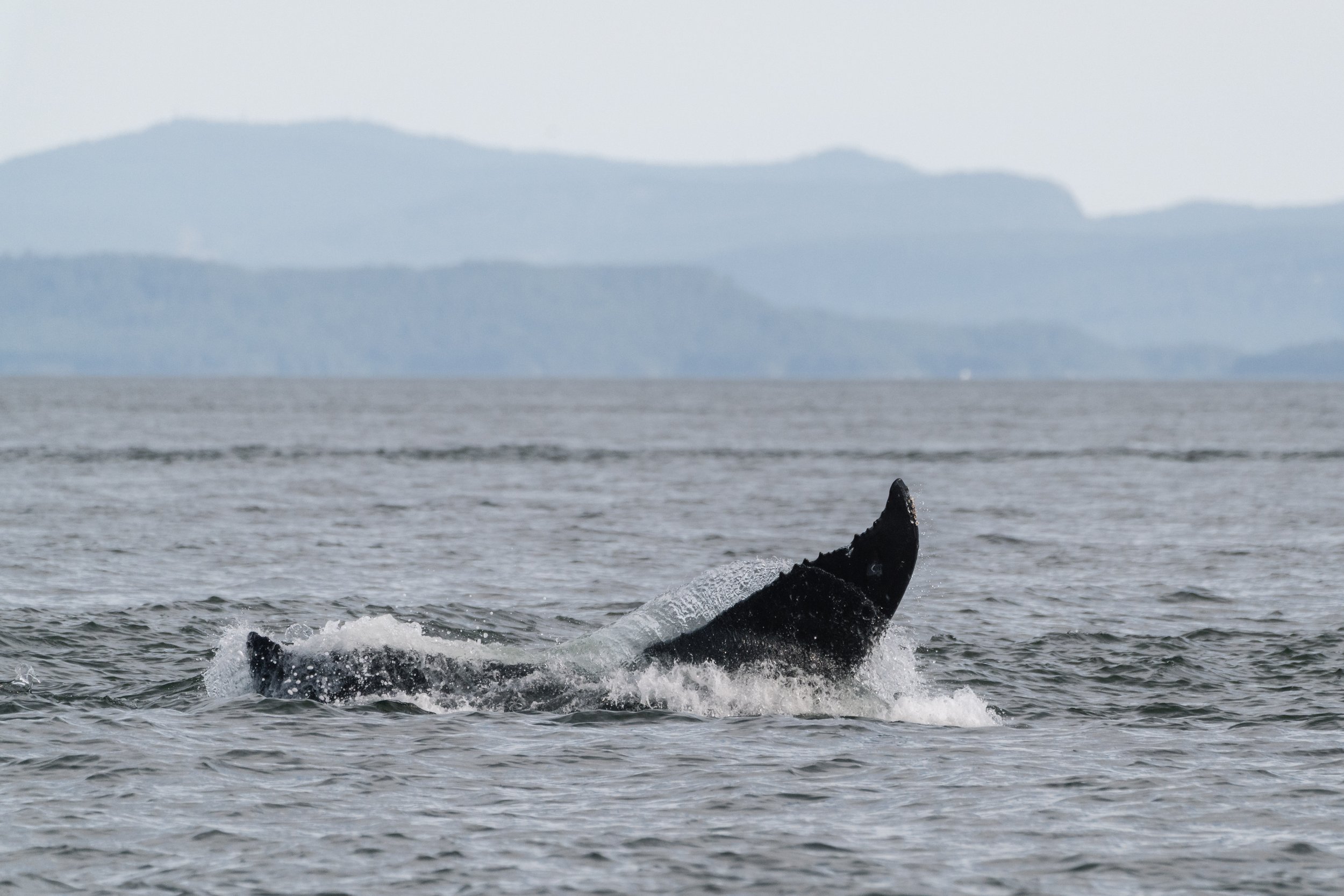
Specter Flicking their tail, maybe in a greeting for Eros and Split Fluke?
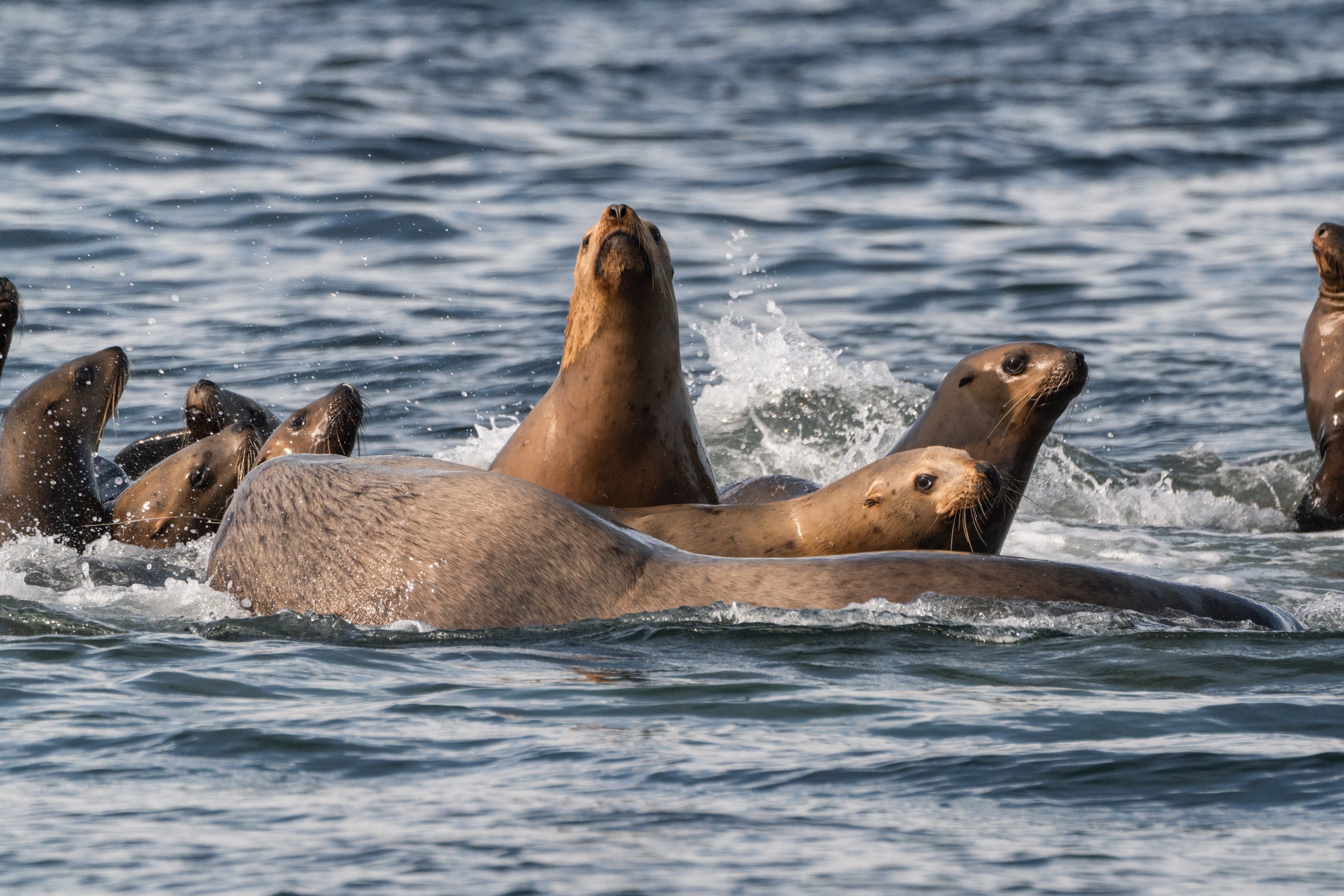
Fighting amongst the Steller Sea Lions.
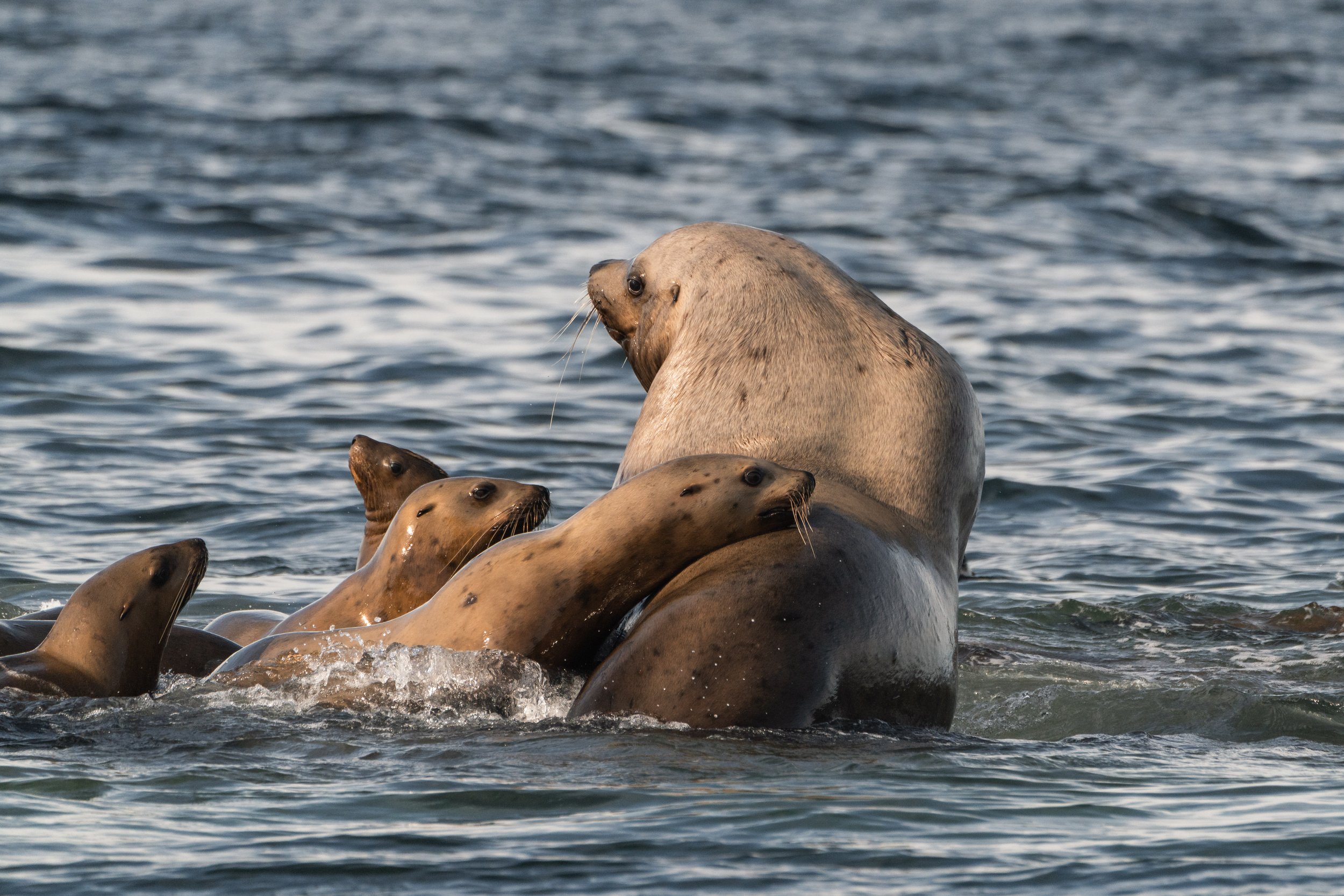
I think these two should be in different weight classes.
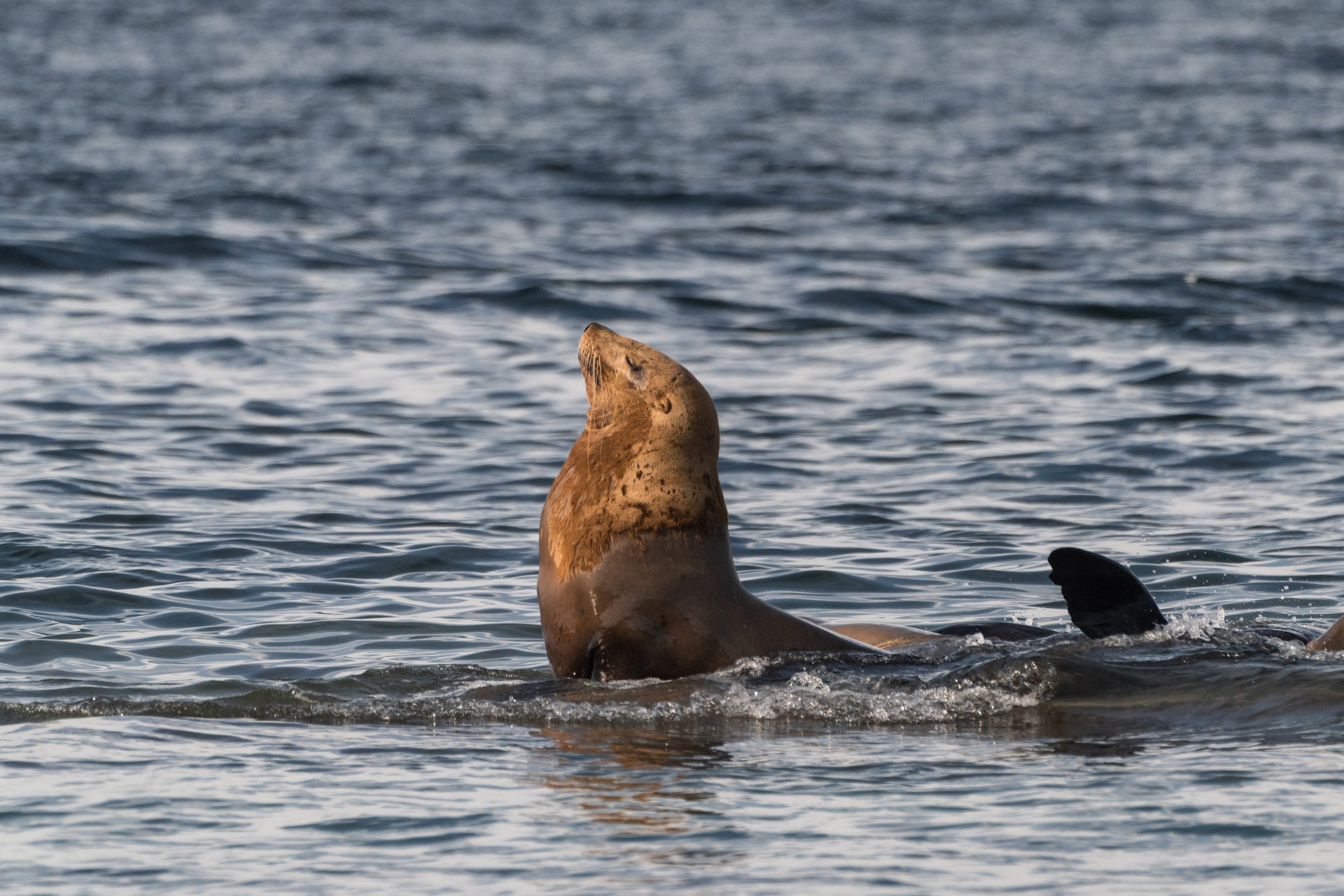
A Steller Sea Lion striking a pose.
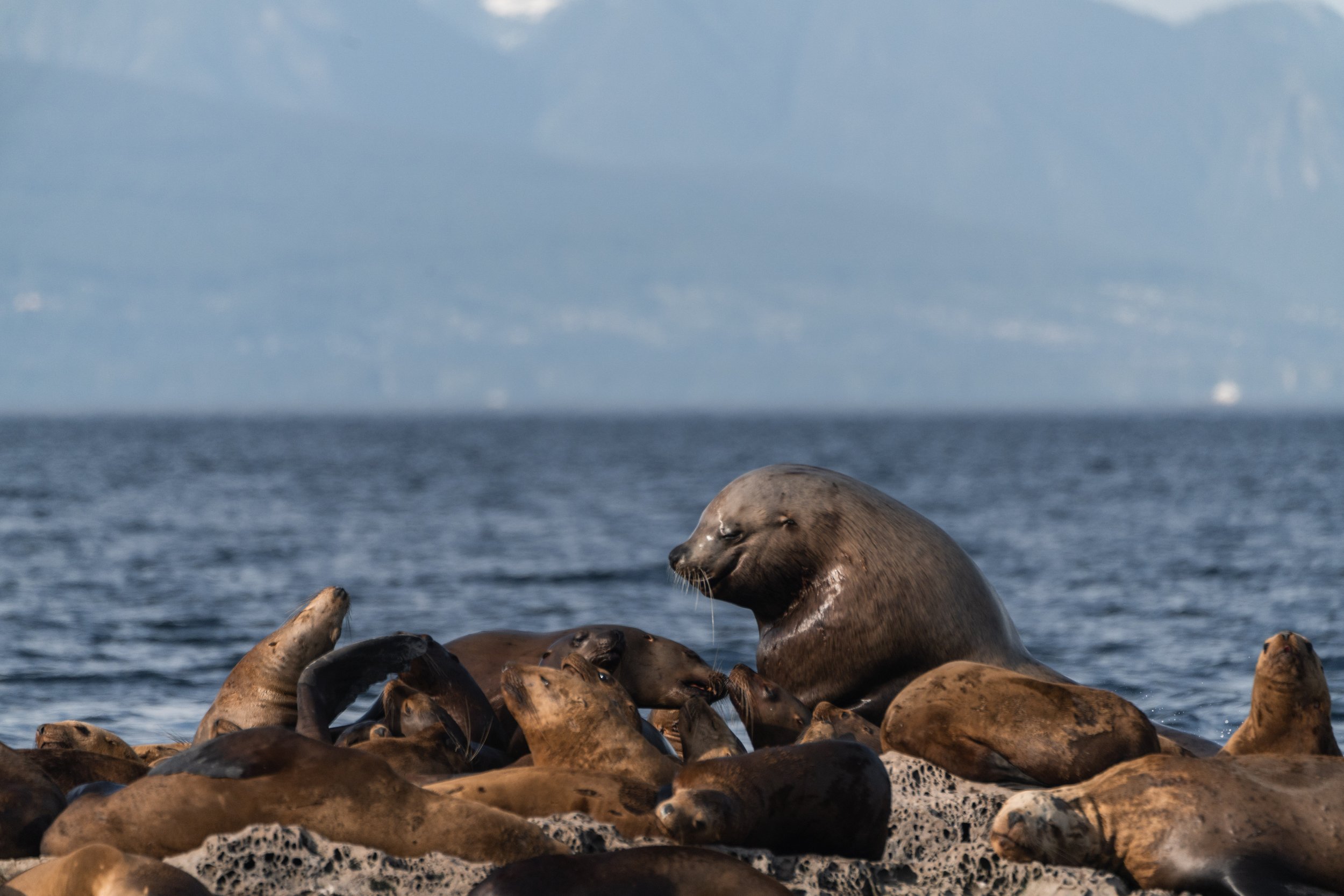
Look at the size difference betwen Stinky Steve and the younger ones.
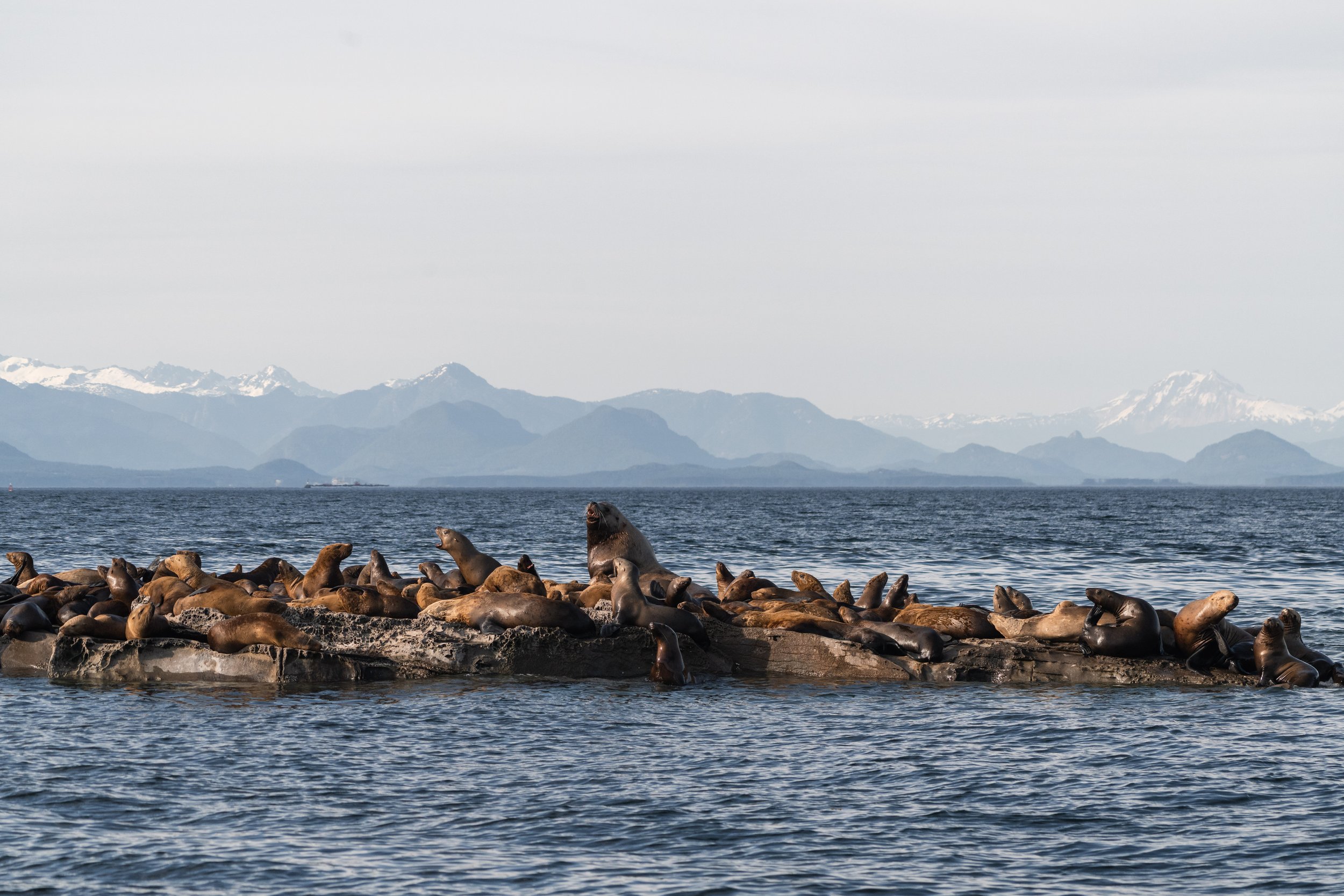
The Steller Sea Lion haul out at Stinky Rock with the Coastal Mountains in the background.
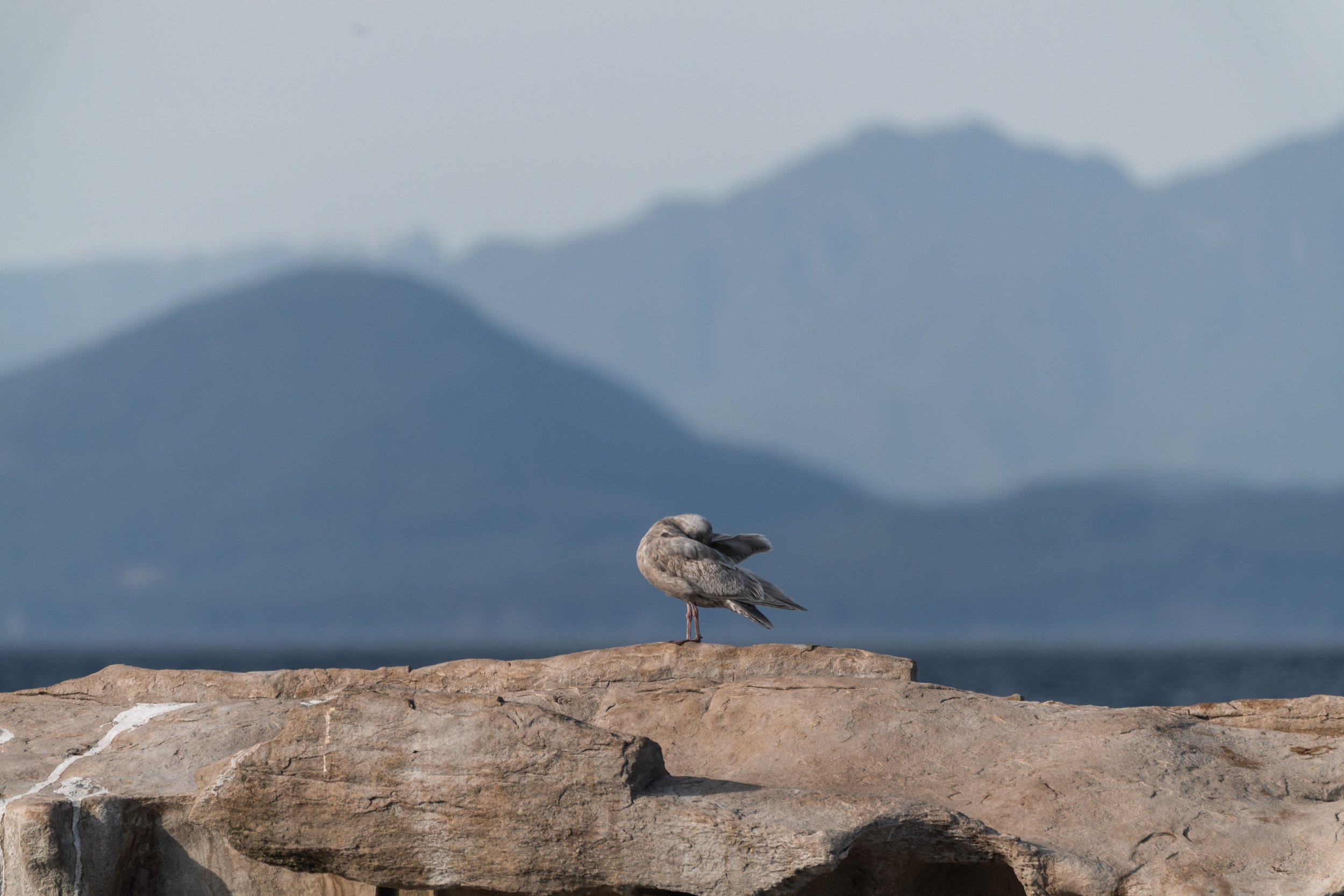
A gull cleaning themselves on Stinky Rock.
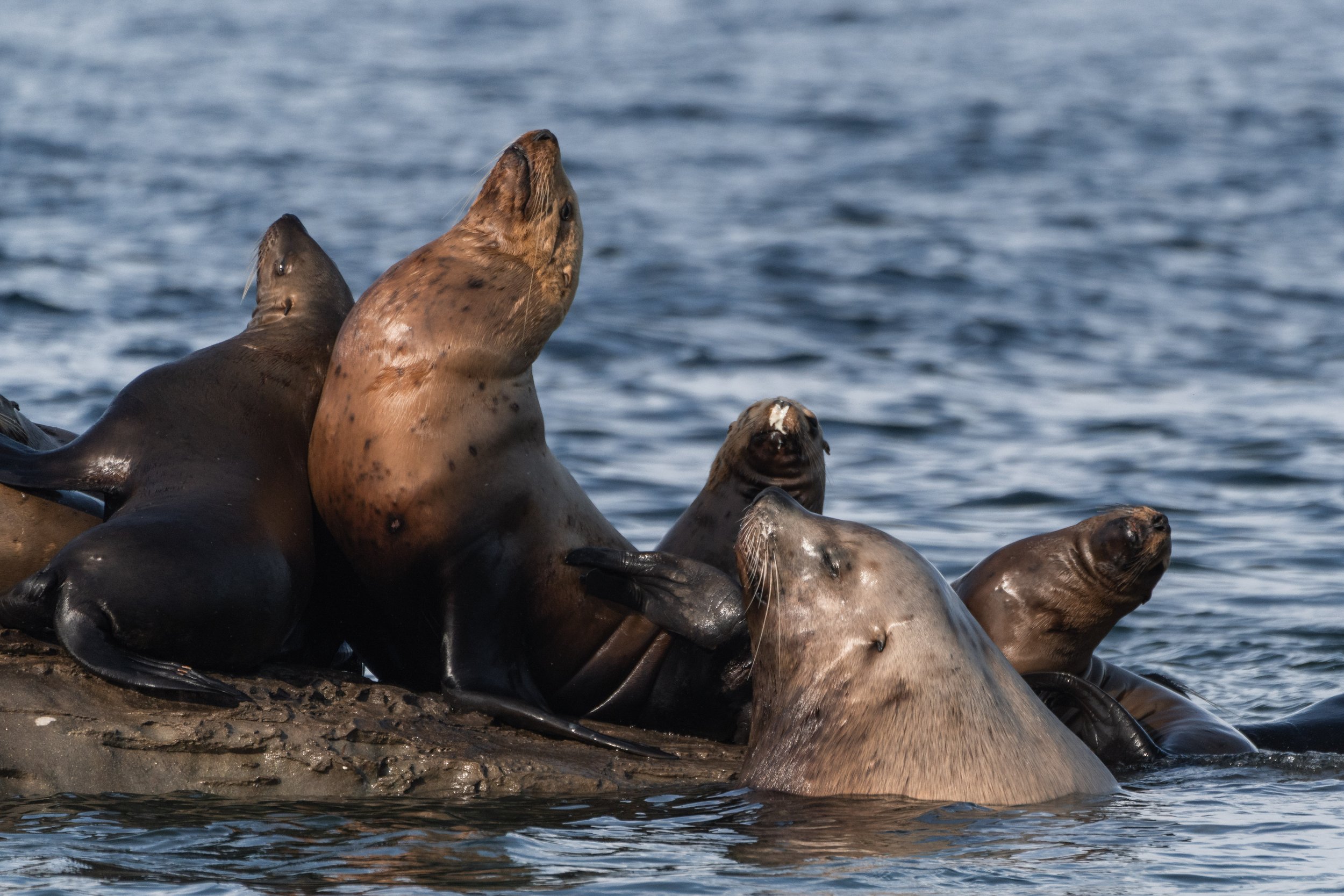
A relaxed group of Steller Sea Lions. May we get you a tissue?
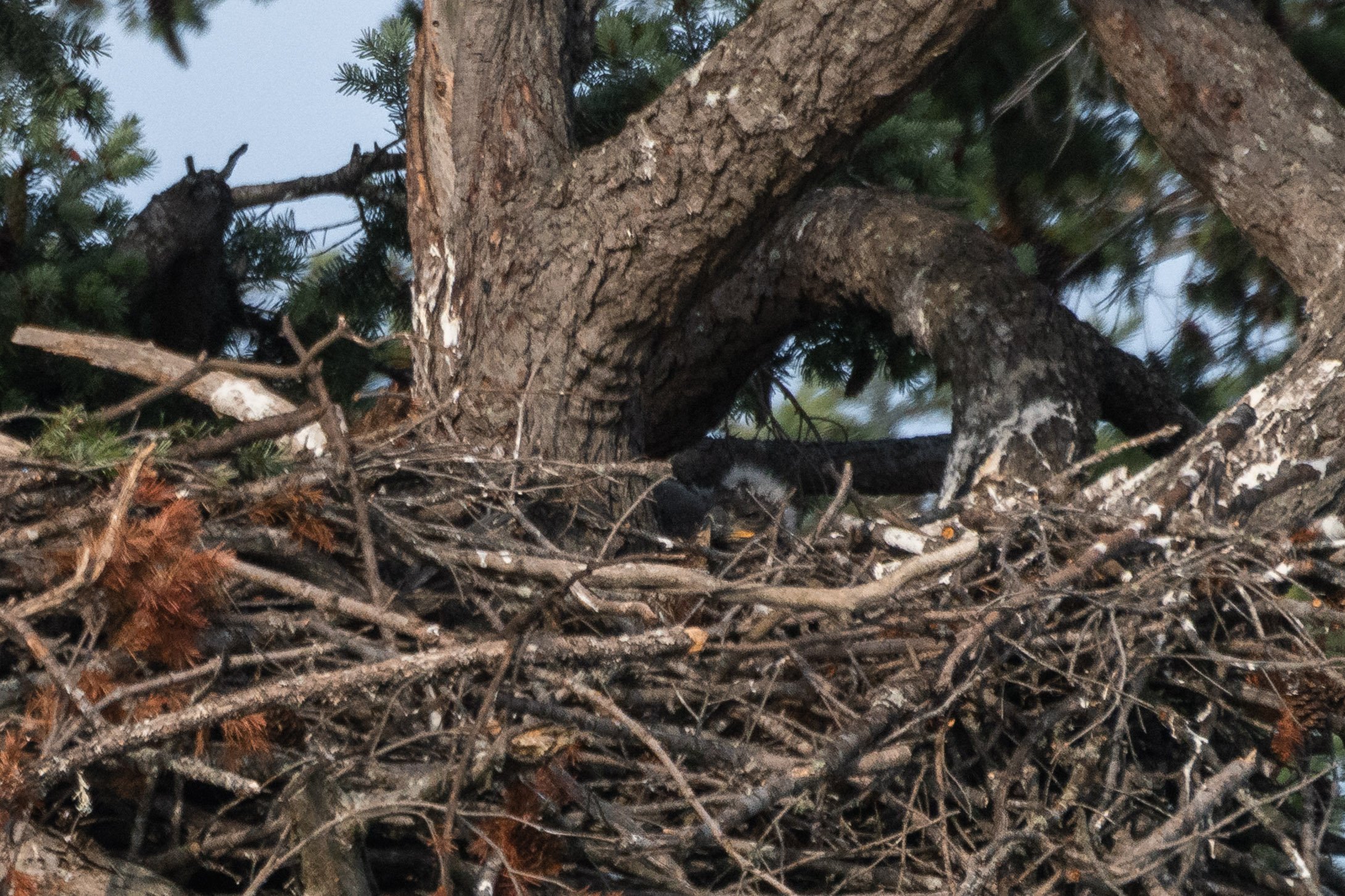
A close up look at the baby eagle in the nest.
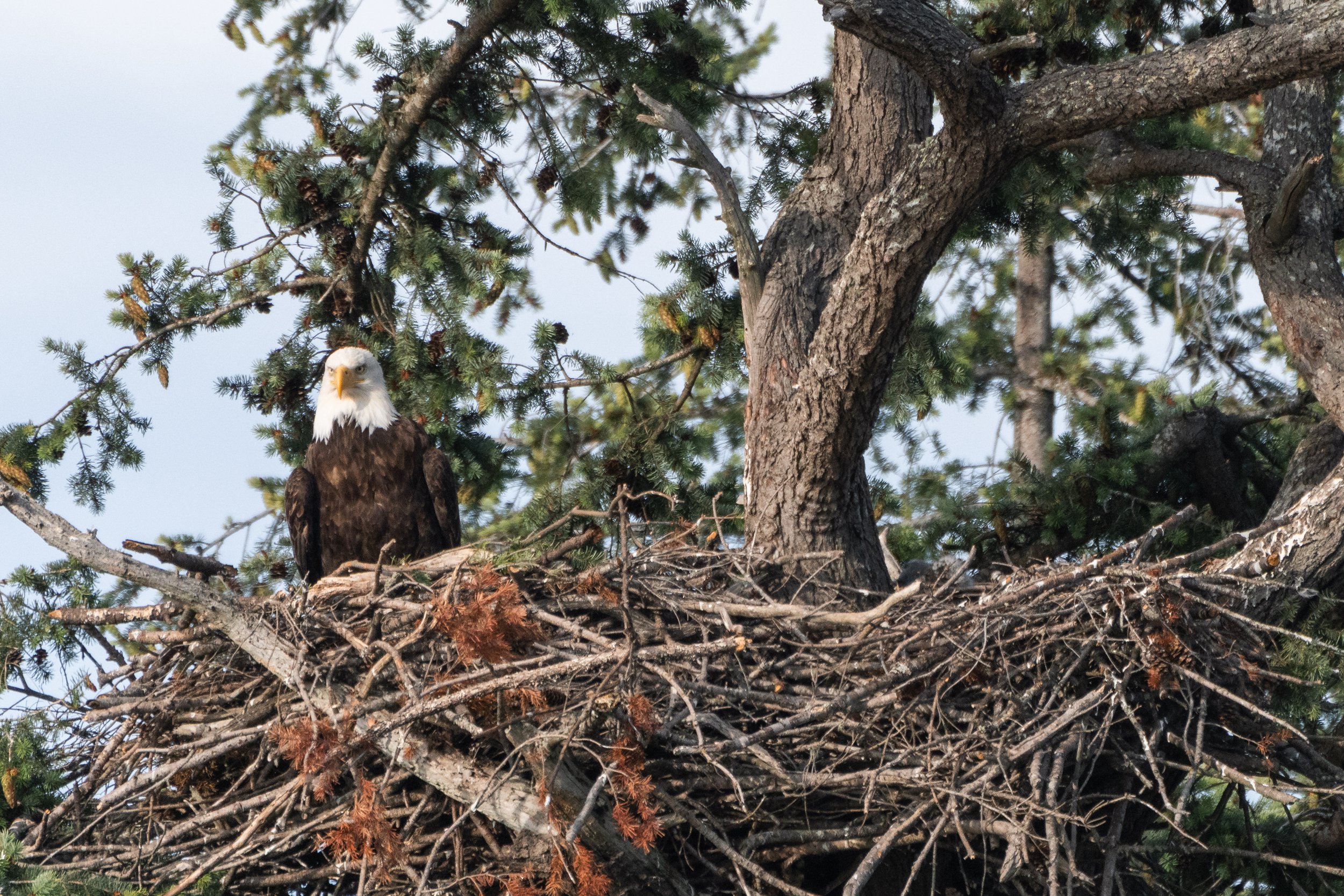
The adult bald eagle tending to the chick.
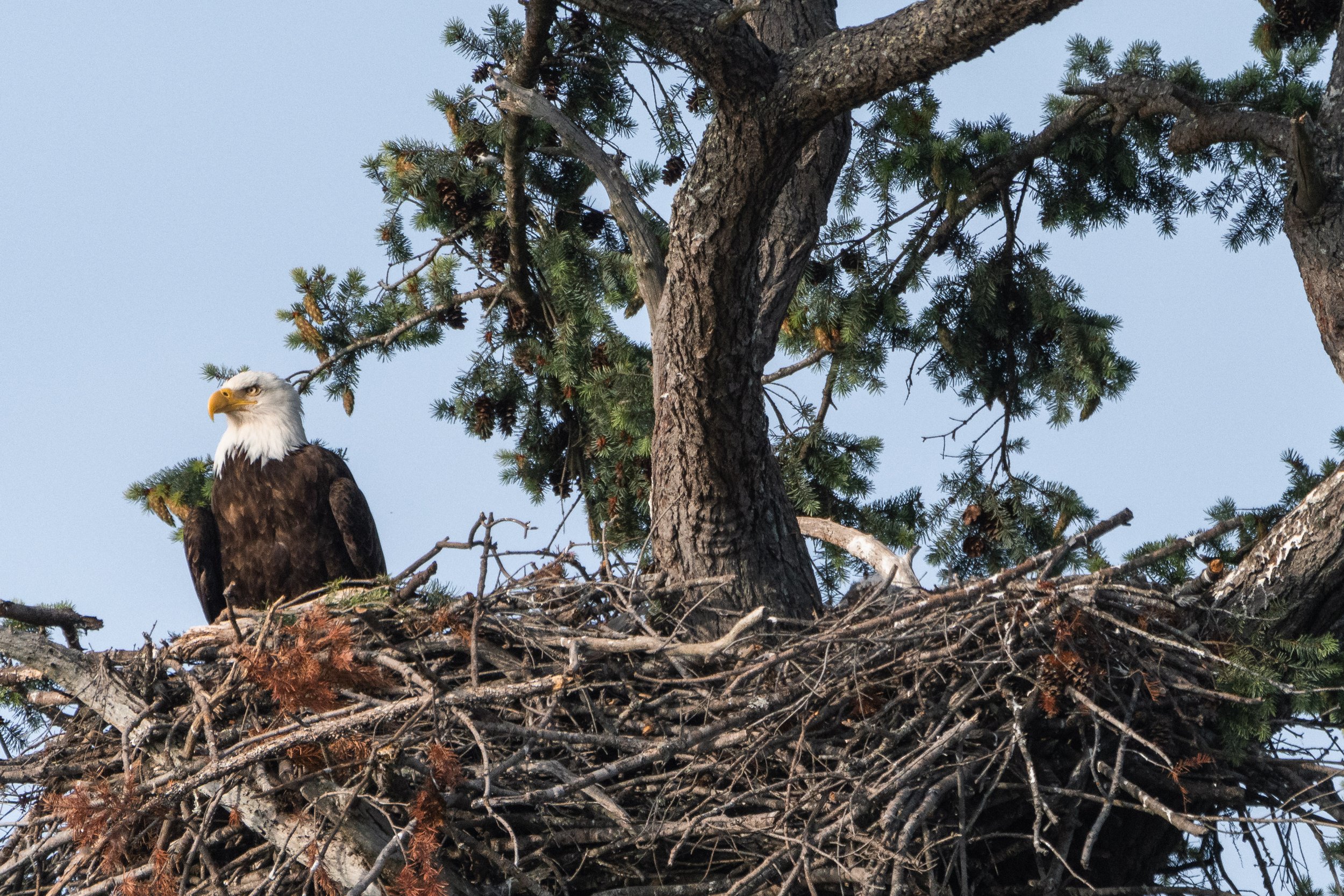
A beautiful look at the nest.