
June 2, 2026, 10:30 AM - A species extravaganza in the Salish Sea!
The sun was shining, the ocean was as calm as it could be, and excitement filled the air as we cast off the dock aboard Kula and Keta. Days like this are what every whale watcher dreams of. The forecast was perfect, visibility stretched for miles, and the glassy waters of the Salish Sea promised excellent conditions for spotting wildlife.
We knew we would see something out there, after all, the Salish Sea is teeming with life, but what unfolded throughout the day exceeded even our highest expectations.
With the Strait of Georgia lying nearly flat before us, we wasted no time crossing toward the Sunshine Coast. Calm seas not only make for a comfortable ride but also greatly improve our ability to spot wildlife. Every ripple, splash, and distant blow becomes easier to detect when the ocean isn't covered in waves.
It wasn't long before we spotted our first sign of excitement. A large black dorsal fin appeared near shore, steadily slicing through the calm water. Aly quickly reached for her camera to get a closer look and confirm the whales' identities. Fortunately, she didn't need long. These familiar fins belonged to the T101s:
T101 Reef ♀ (≤1969)
T101A Rush ♂ (1993)
T101B Lagoon ♂ (1997)
But wait…there was more.
As we continued observing, three additional fins emerged from the group. Who were they spending time with today? The newcomers turned out to be the T124A4s:
T124A4 Sabio ♀ (2010)
T124A4A Strix ♀ (2021)
T124A1A Sabine (2024)
The six transient orca travelled south together in a remarkably relaxed formation, with the matriarch of the T101S, Reef, trailing slightly behind the younger whales. Was she simply enjoying her own space? Was she giving her grown sons a little privacy? Could Sabio be preparing for another calf in the future?
The truth is, we can speculate all day long about what these whales are doing and why. That's part of what makes studying and observing orcas so fascinating. Every encounter offers us a glimpse into their lives, but it is only a tiny piece of a much larger puzzle. Researchers and whale watchers alike continue learning new things about these incredible animals every year, yet so much remains unknown beneath the surface.
The orcas eventually made their way deeper into Howe Sound, and with plenty of daylight remaining, we left them to continue their journey while we resumed our search for more wildlife.
Our next stop brought us to the White Islets, home to one of our favourite pinniped hangouts: Steller Sea Lions. These impressive marine mammals are the largest members of the eared seal family and can weigh over 1,000 kilograms (2,500 pounds). Males are especially impressive, sporting thick necks and a lion-like mane that inspired their common name. Despite their immense size, Steller’s are surprisingly agile swimmers and can dive hundreds of feet beneath the surface while hunting fish and squid.
One of the easiest ways to distinguish a sea lion from a seal is by looking at their ears. Sea lions have visible external ear flaps and can rotate their hind flippers beneath their bodies, allowing them to "walk" on land. Seals, on the other hand, lack visible ear flaps and move with a much less graceful wriggling motion when hauled out.
Speaking of seals, we were also greeted by several harbour seals resting nearby. Harbour seals may be smaller than their sea lion cousins, but they are perfectly adapted to life in coastal waters. Unlike many marine mammals, harbour seal pups can swim almost immediately after birth.
As we continued our journey, an unusual bird caught our attention. At first, we weren't quite sure what we were looking at. The silhouette seemed out of place. Once we got a better look, however, the mystery was solved immediately. That enormous bill could belong to only one bird: a Brown Pelican! Brown pelicans are not commonly seen in British Columbia, making every sighting special. These remarkable birds are famous for their dramatic plunge-diving behaviour. Unlike many seabirds that simply snatch fish from the surface, brown pelicans fold their wings and dive headfirst into the water from impressive heights. The expandable pouch beneath their bill can hold several gallons of water, which they drain before swallowing their catch. Despite their large appearance, pelicans are surprisingly lightweight thanks to extensive air sacs throughout their bodies and even within some of their bones. These adaptations help them stay buoyant and enable their spectacular dives. After enjoying this unexpected visitor, it was time to pick up speed and return to search mode.
Fortunately, we didn't have to search for long. Ahead of us, the commotion of the ocean caught our attention. Then we saw it, a large, bushy blow rising into the air. Humpbacks! It was Split Fluke (BCX1680) and Eros (BCX2201). These two humpback whales were more than likely feeding near Halibut Bank, one of the most productive marine habitats in our region. Located near the mouth of the Fraser River, Halibut Bank is famous for its nutrient-rich waters, which support incredible marine biodiversity. Strong tidal currents and underwater topography help create upwelling, a process that brings cold, nutrient-rich water from the depths toward the surface. These nutrients fuel blooms of plankton, which in turn support baitfish such as herring and sand lance, the very species that attract feeding humpback whales. It's no surprise that this area regularly becomes a buffet for marine life. After spending time with the humpbacks, we turned our bows toward home.
Even then, the wildlife wasn't finished with us.
As we cruised through this productive feeding area, several harbour porpoises appeared nearby. These shy and often overlooked cetaceans are among the smallest whales found in the Salish Sea. Unlike dolphins, harbour porpoises rarely leap or create dramatic splashes. Instead, they surface quietly with a gentle rolling motion, often disappearing before many people notice them. Most likely, they were taking advantage of the same abundance of fish that had attracted the humpbacks earlier in the day.
With the clock ticking, we thought our final wildlife encounter had already happened.
We were wrong.
Just before reaching home, a pod of Pacific white-sided dolphins burst onto the scene. These energetic dolphins seemed to appear out of nowhere, racing around and delighting everyone on board. Known for their playful nature, Pacific white-sided dolphins frequently leap clear of the water and travel in highly social groups. Many people wonder what the difference is between dolphins and porpoises, and this encounter gave us the perfect opportunity to explain.
Although they may appear similar at first glance, dolphins and porpoises belong to different families. Dolphins generally have longer, more pronounced beaks, curved dorsal fins, and cone-shaped teeth. They are often highly social and known for acrobatic behaviours.
Porpoises, on the other hand, have shorter faces, more triangular dorsal fins, and distinctive spade-shaped teeth. They tend to be much more reserved and are rarely seen performing the energetic leaps and aerial displays commonly associated with dolphins.
Watching the contrast between our earlier harbour porpoise encounter and these lively Pacific white-sided dolphins perfectly highlighted those differences. To learn more about their differences, go here! https://www.fisheries.noaa.gov/feature-story/it-dolphin-or-porpoise
As the sun continued to shine and the Nanaimo shoreline grew closer, we reflected on what had been an extraordinary day on the Salish Sea. Orcas, humpbacks, sea lions, seals, a rare pelican, harbour porpoises, and Pacific white-sided dolphins, all in a single trip.
Some days on the water remind us just how rich and diverse our coastal ecosystem truly is. With smiles on our faces and memories that will last a lifetime, we tied up at the dock after yet another unforgettable adventure.
Photos by Aly Kohlman and Hayleigh Hilbert.
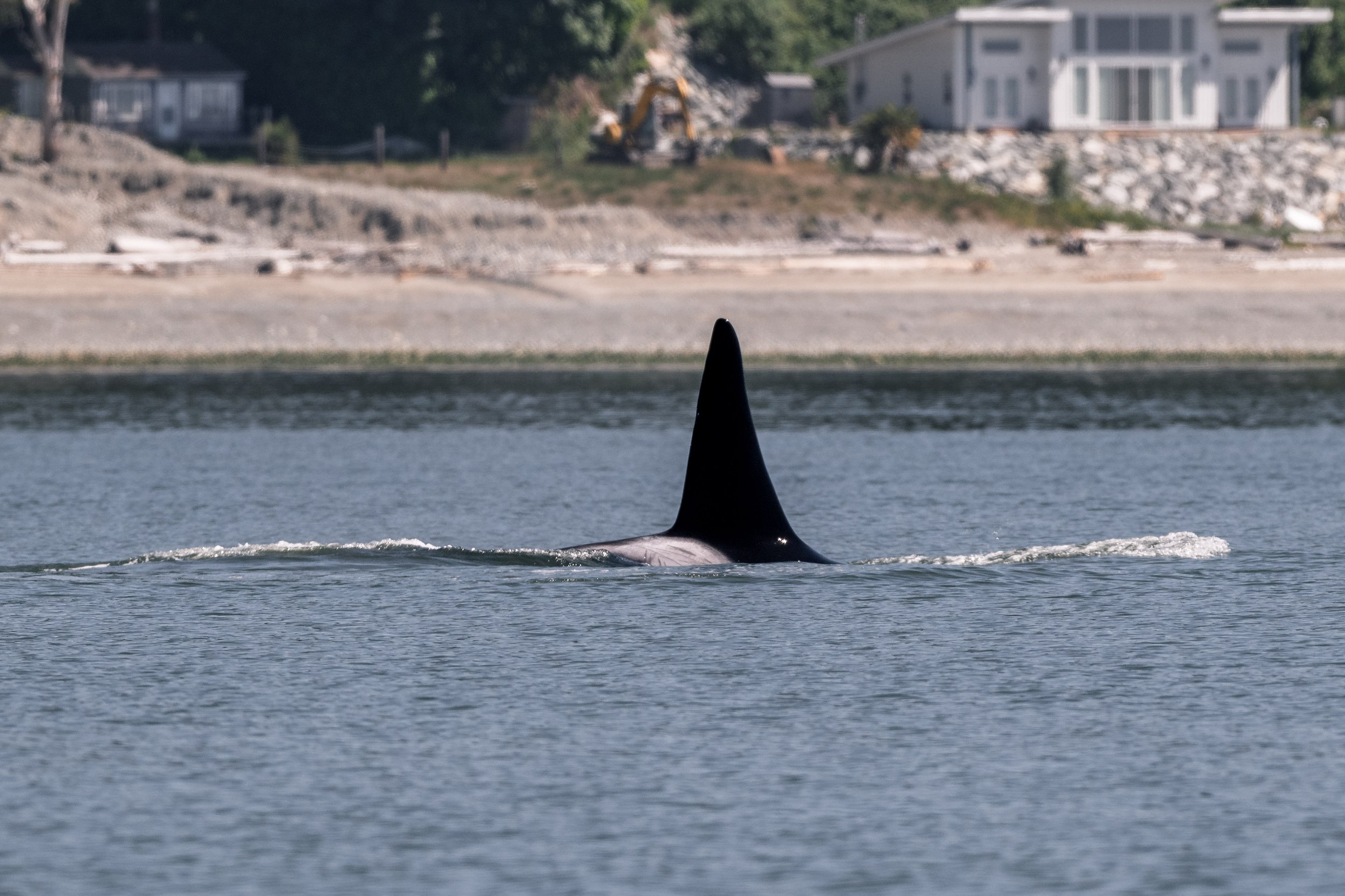
Lagoon surfacing. Photo by Aly Kohlman.
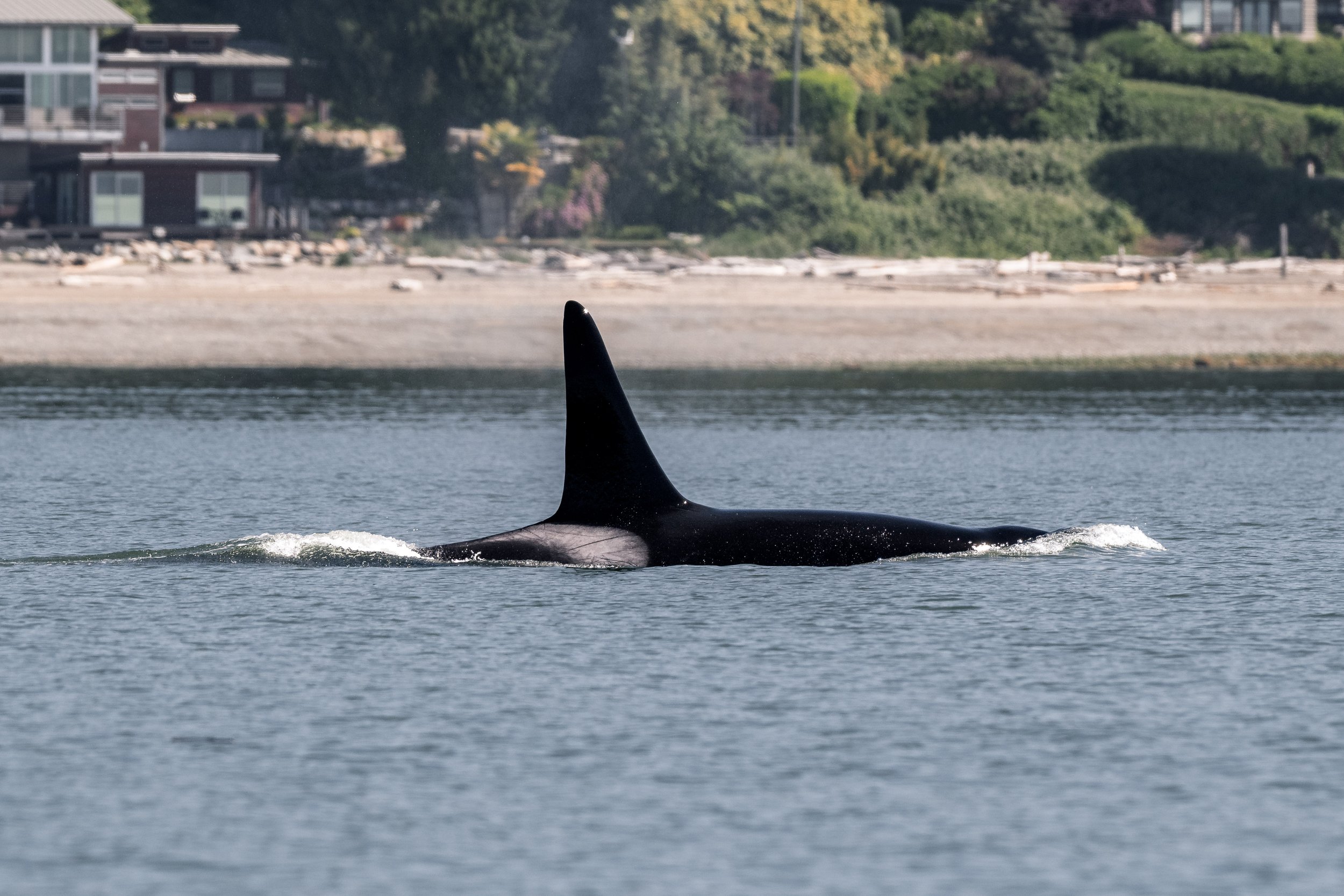
Rush surfacing. Photo by Aly Kohlman.
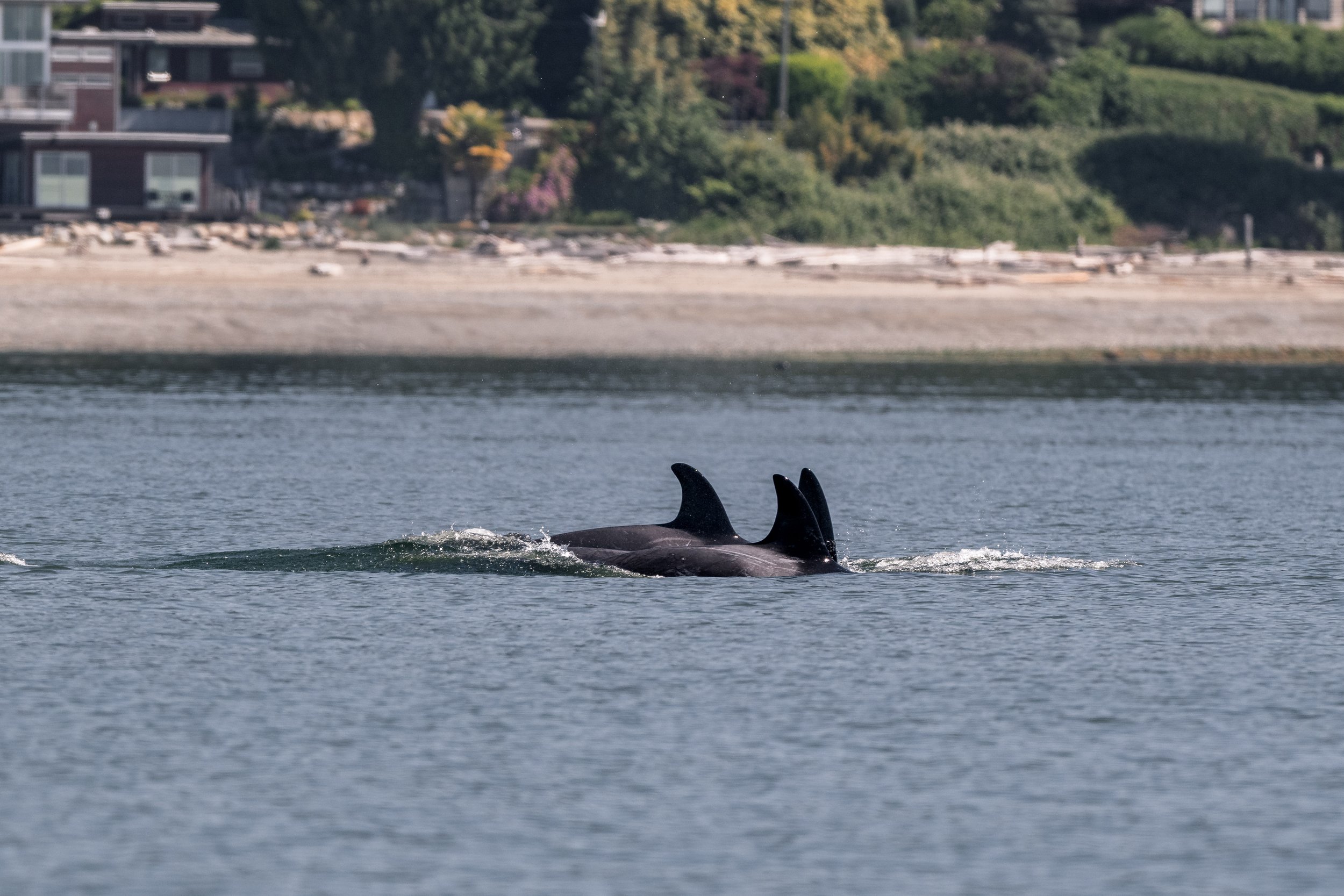
Sabio in the lead, Strix and Sabine in the rear. Photo by Aly Kohlman.
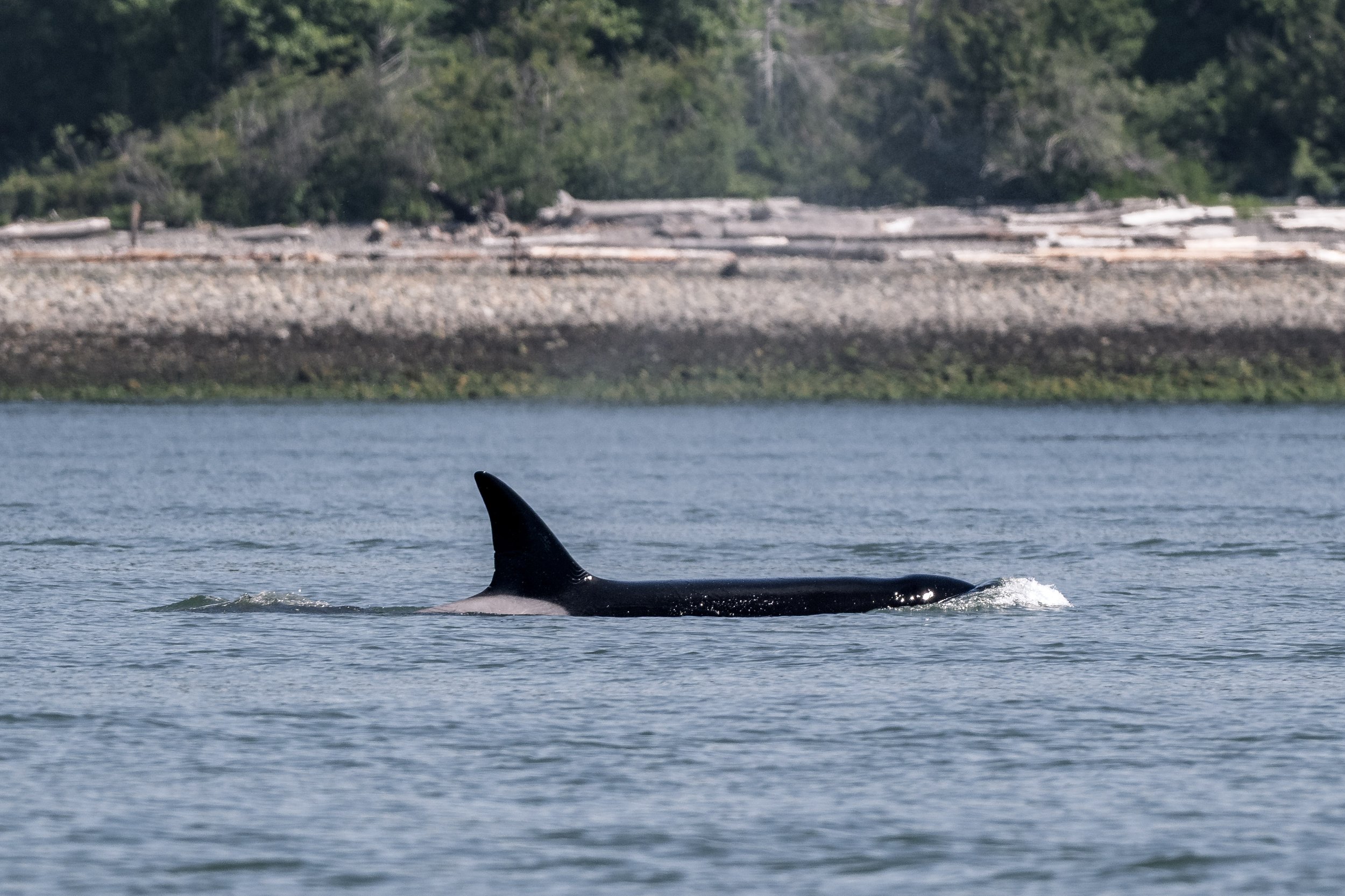
Sabio. Photo by Aly Kohlman.
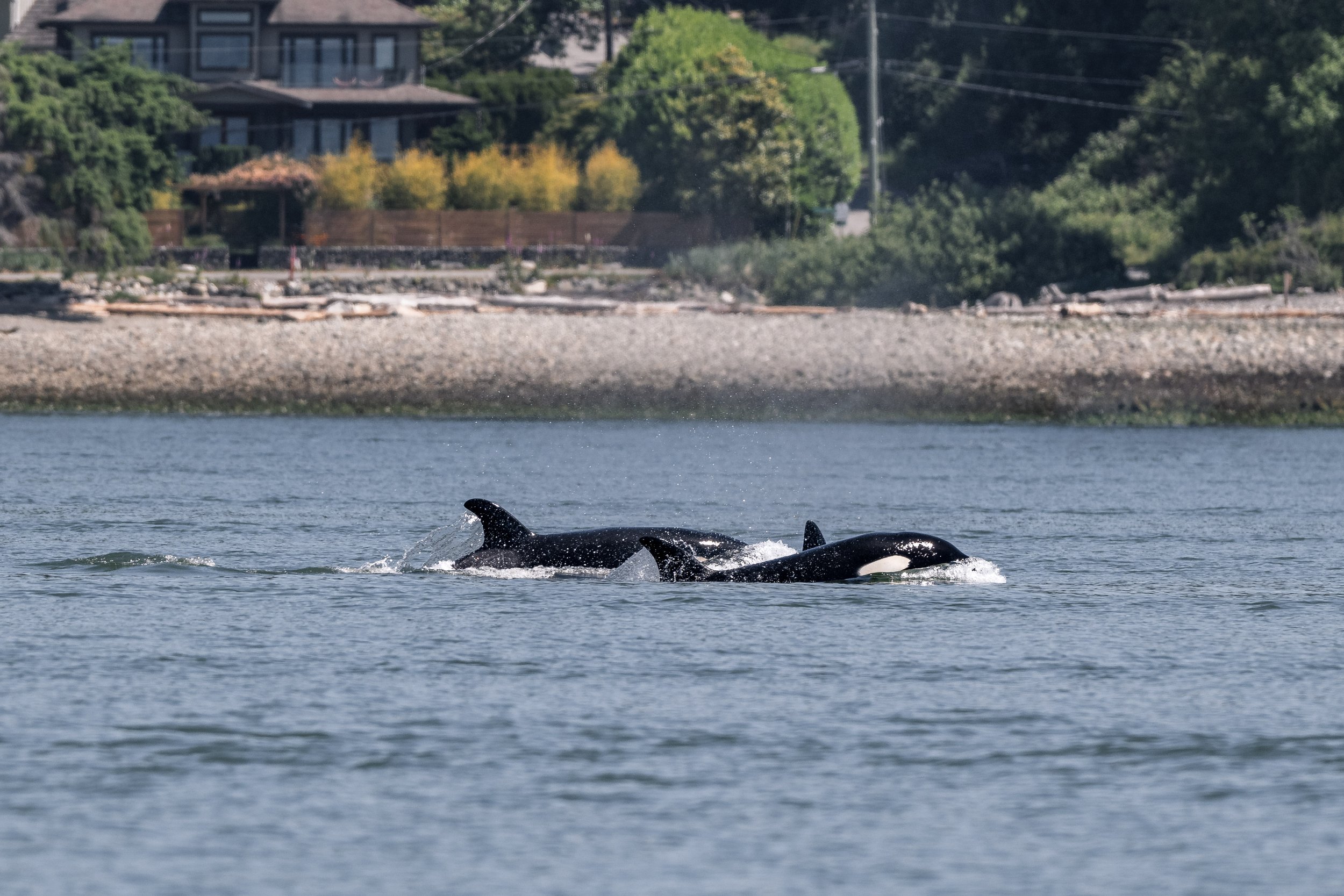
Surfacing together! Photo by Aly Kohlman.
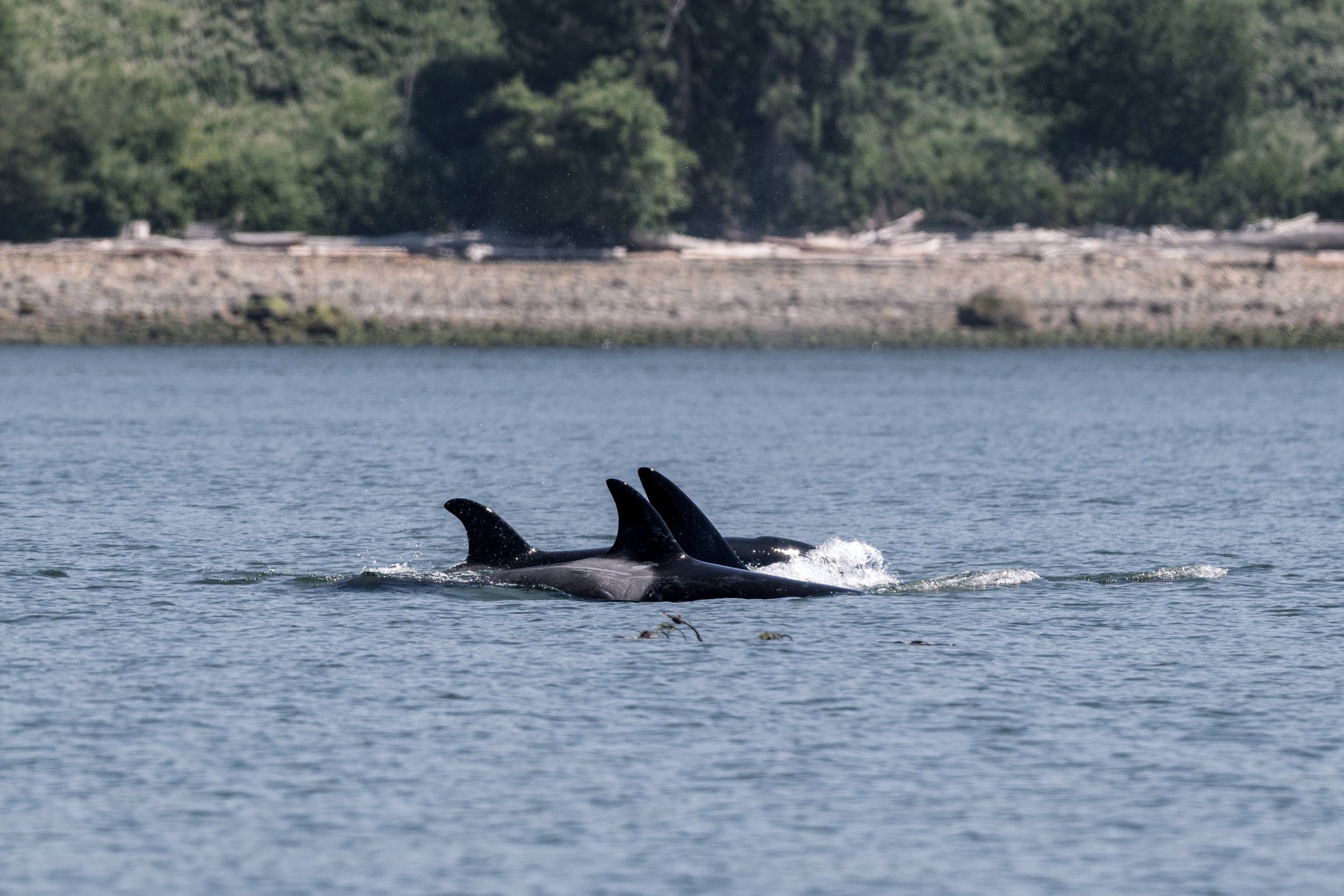
Sabio surfacing with Strix and Sabine in tow. Photo by Aly Kohlman.
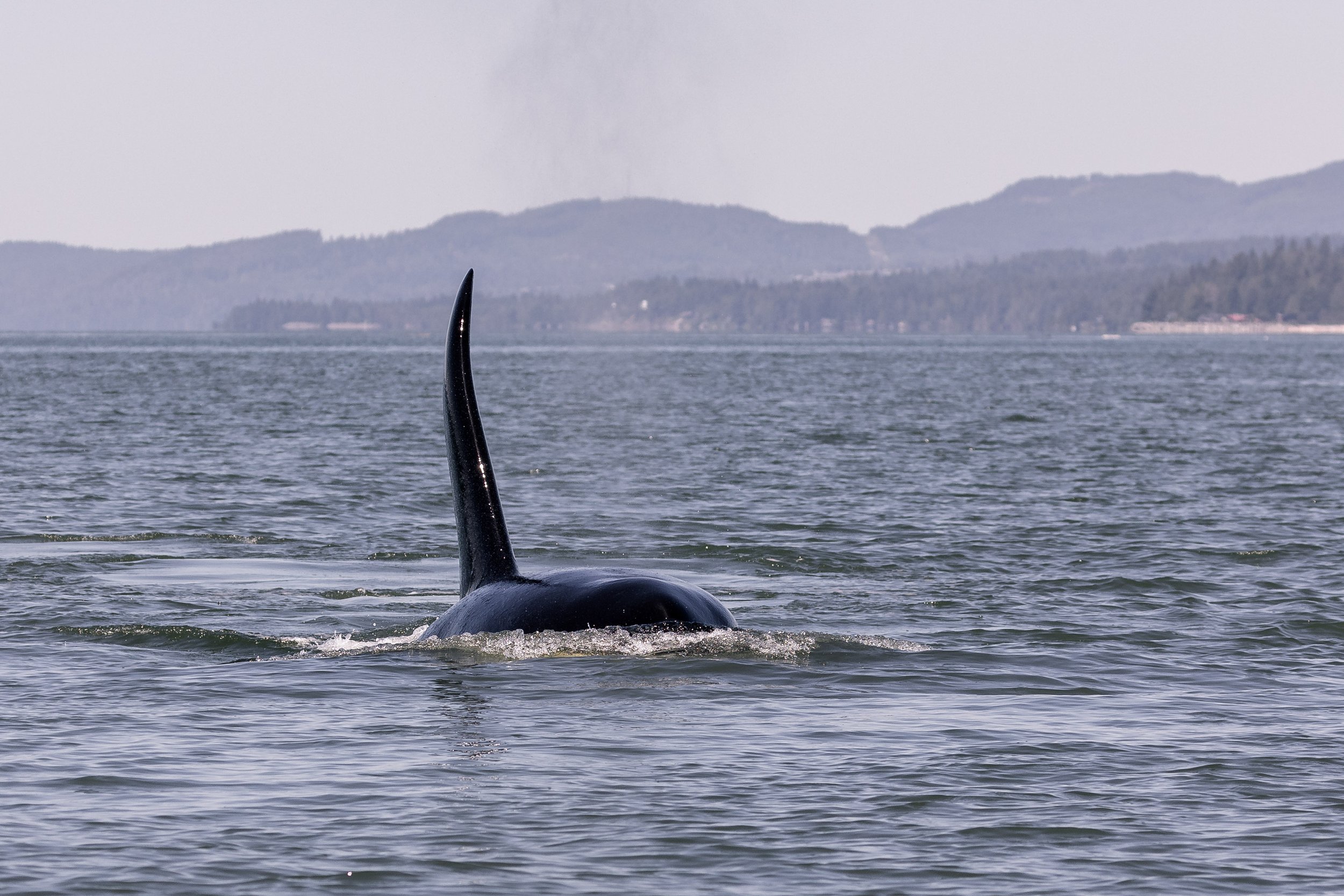
Heading towards us. Photo by Hayleigh Hilbert.
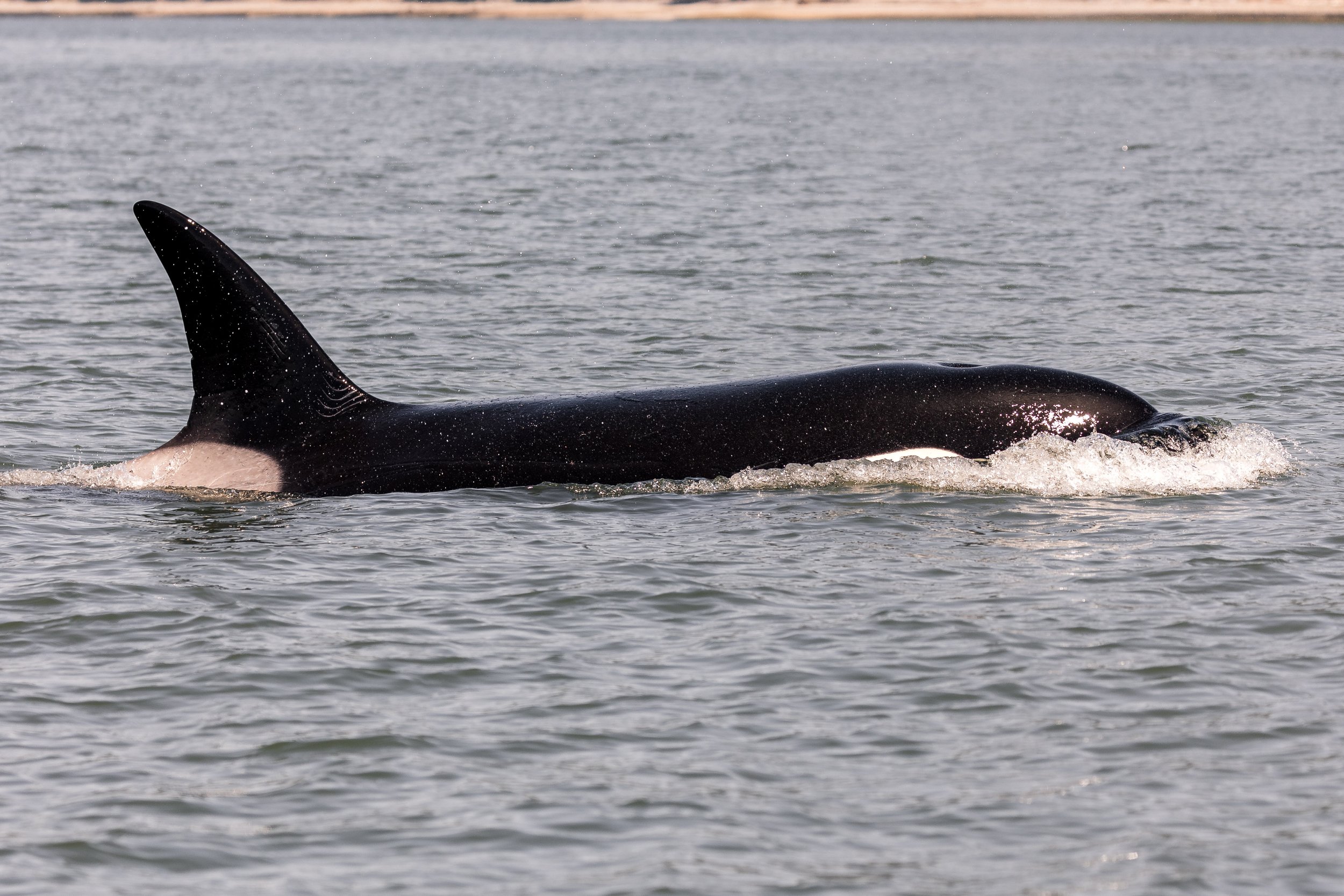
Sabio, can you see the scars on her dorsal fin? Photo by Hayleigh Hilbert.
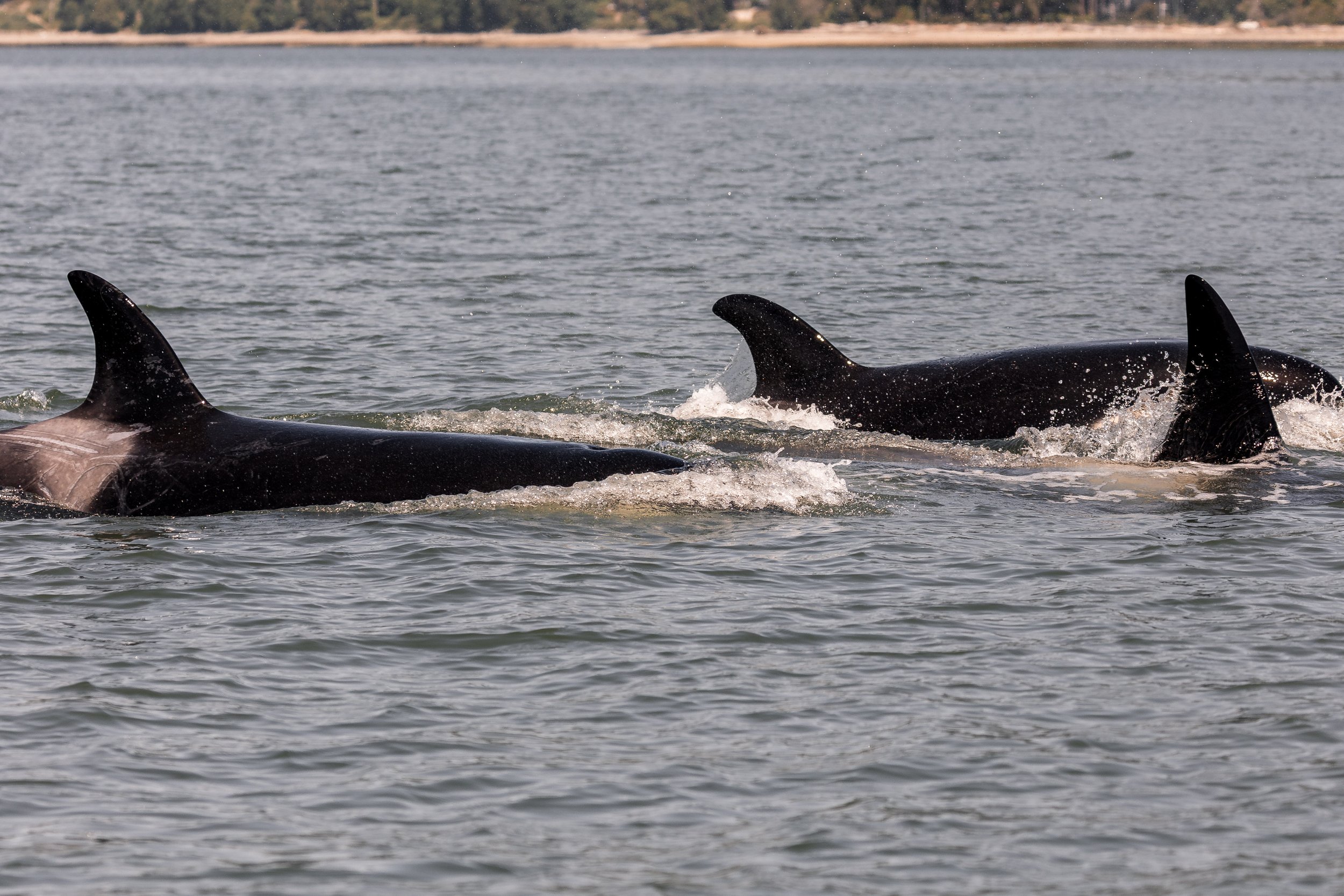
Sabio in the front, Sabine alongside and Strix behind. Photo by Hayleigh Hilbert.
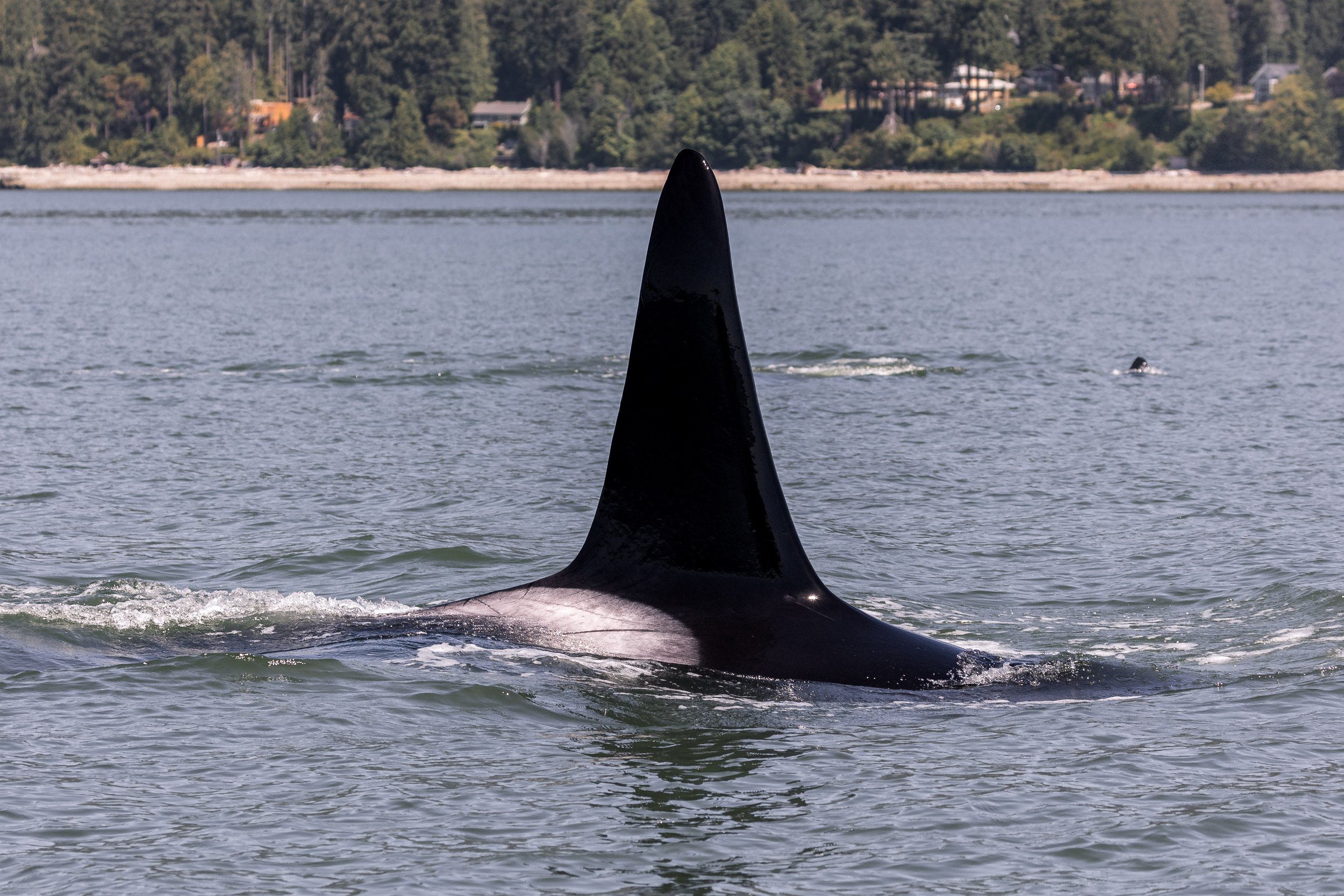
Rush’s towering dorsal fin. Photo by Hayleigh Hilbert.
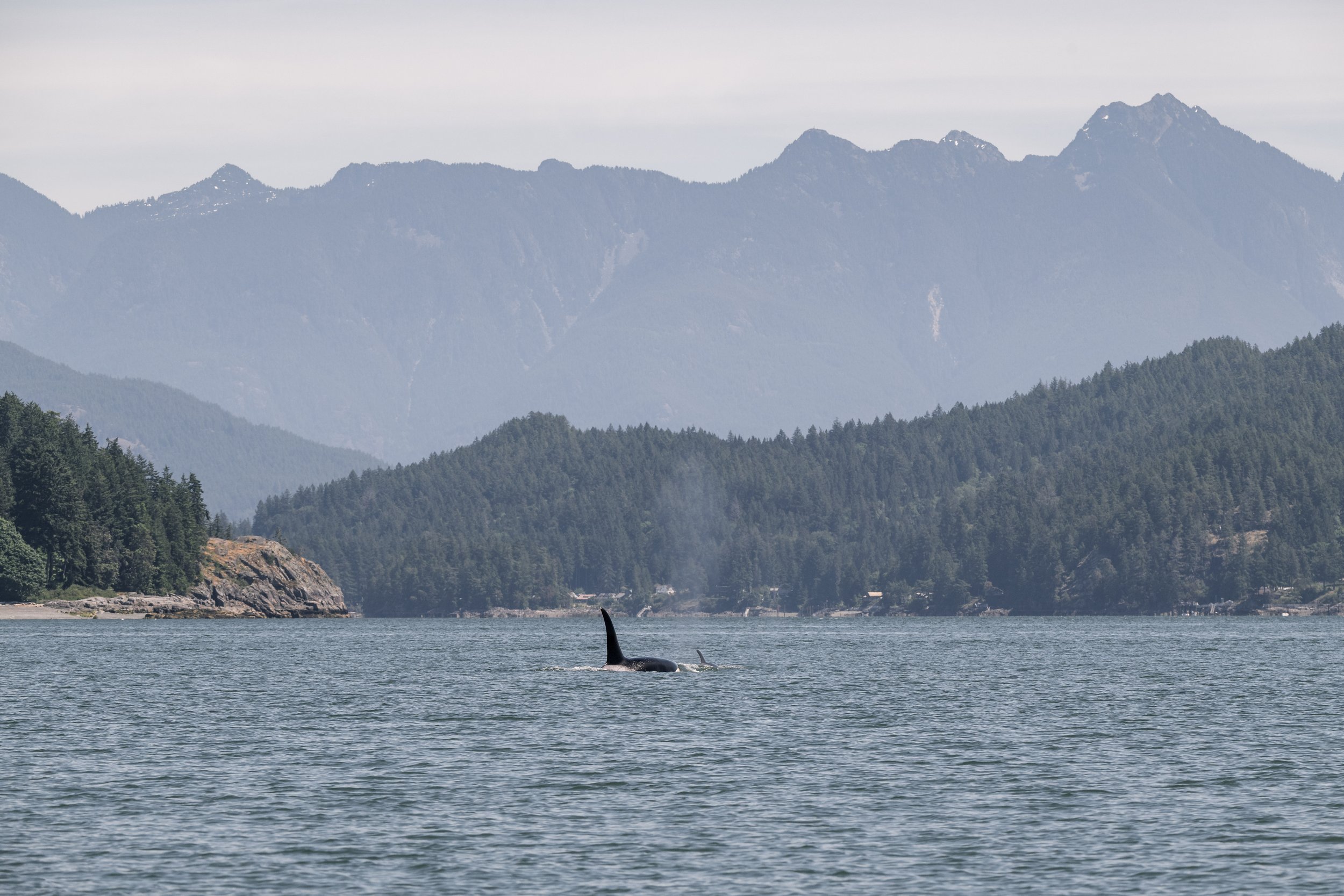
Surfacing with the Sunshine Coast on the horizon. Photo by Aly Kohlman.
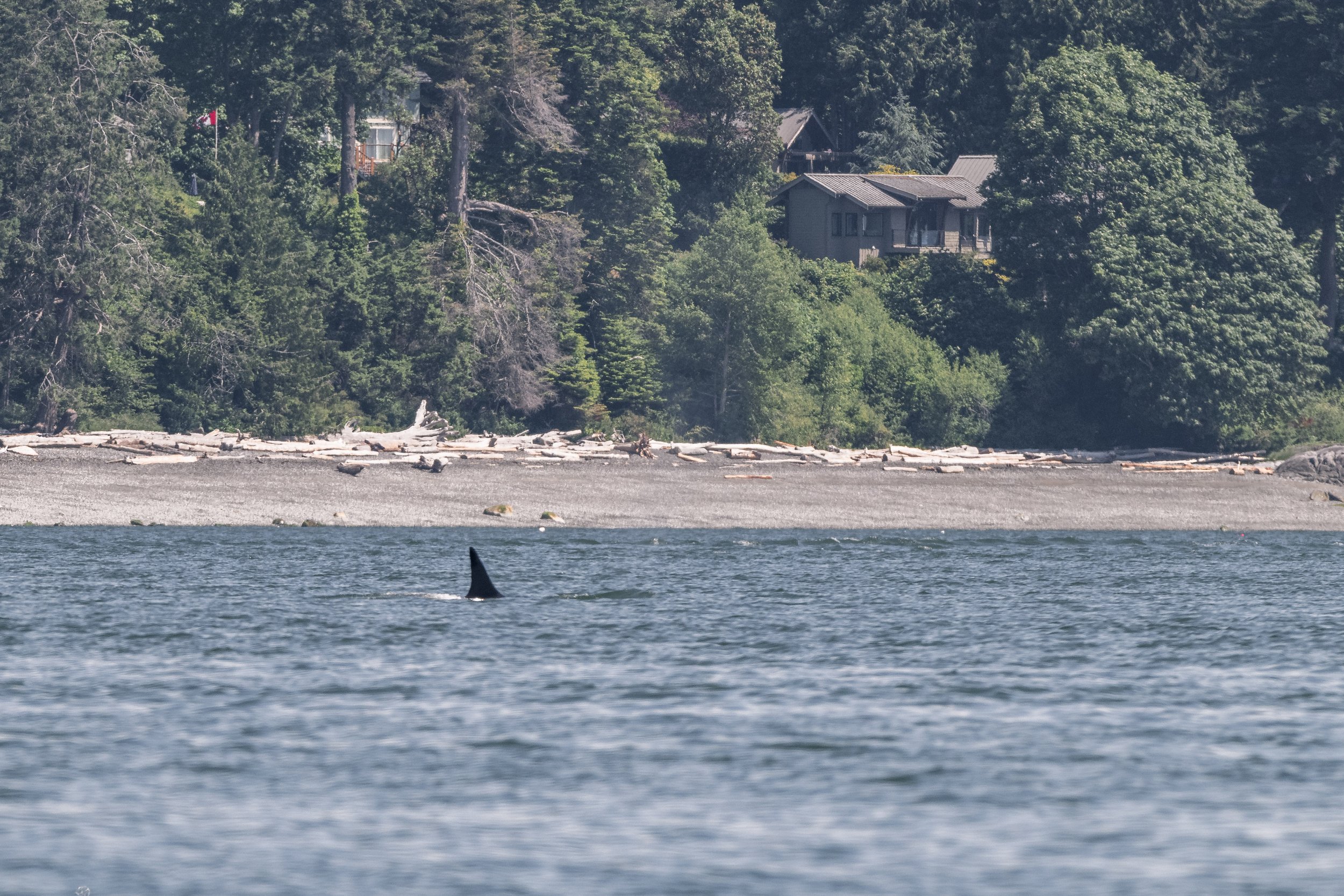
A very brief peek at Reef who was lagging at the back of the group. Photo by Aly Kohlman.
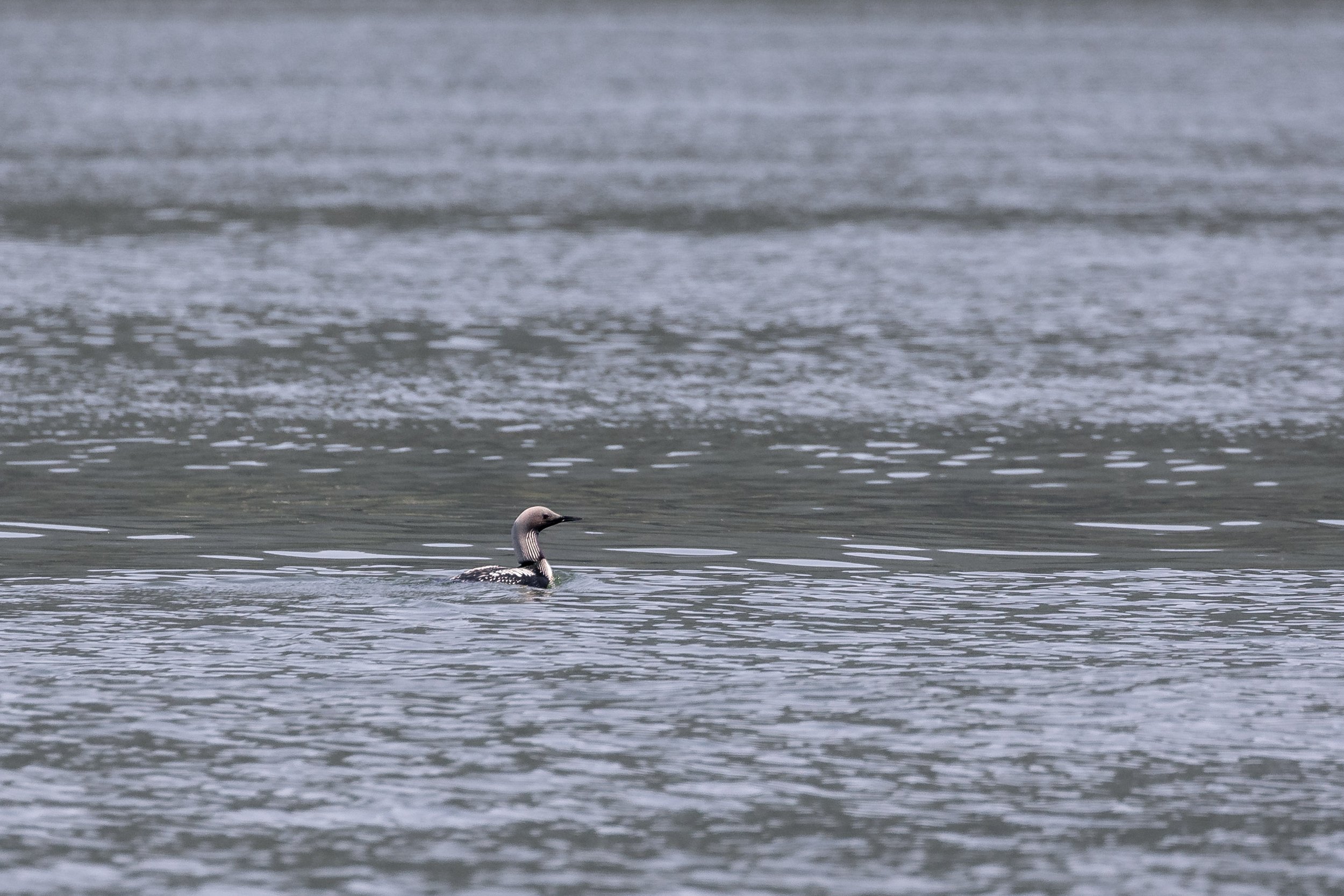
A pacific loon. Photo by Hayleigh Hilbert.
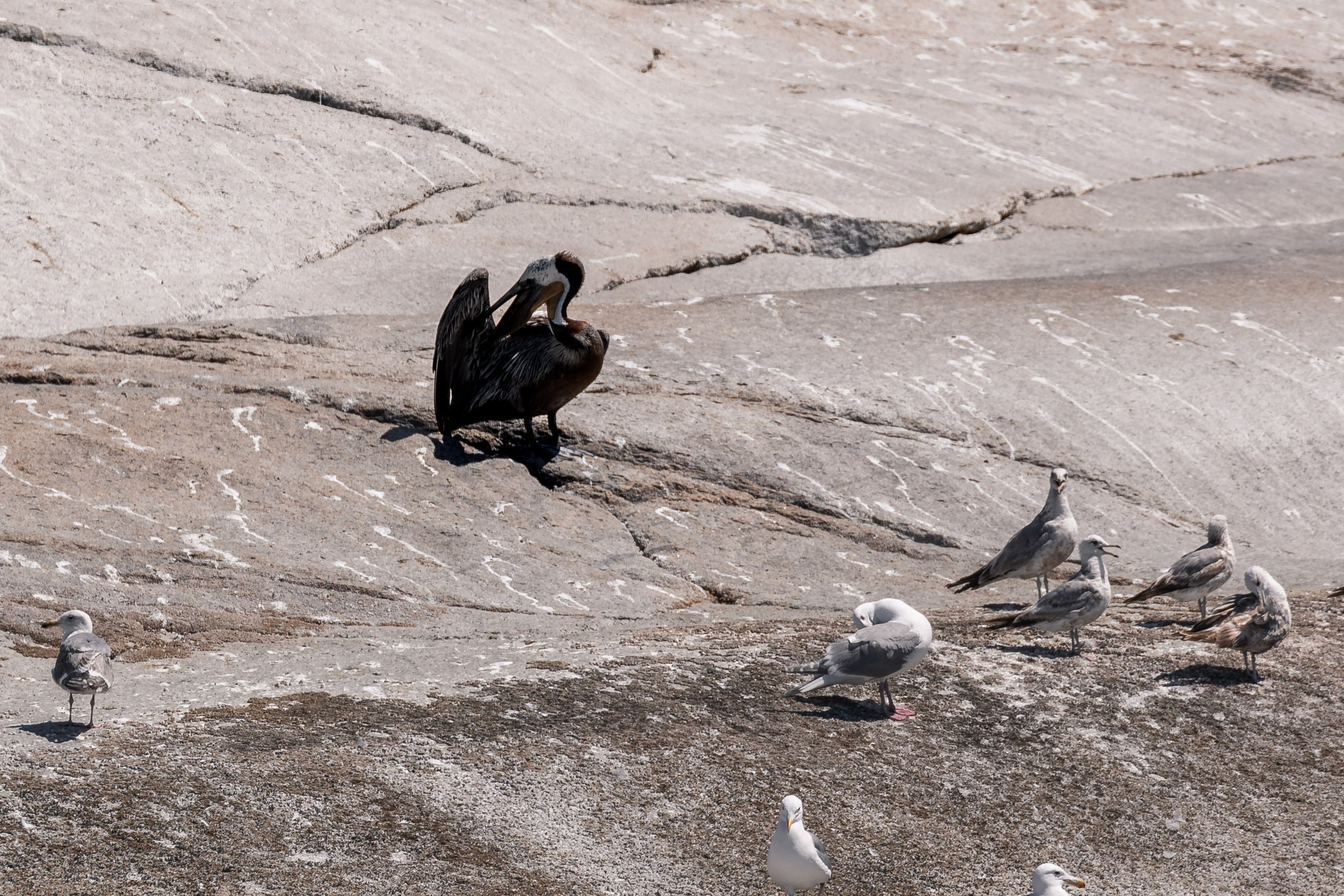
A brown pelican among the gulls. Photo by Hayleigh Hilbert.
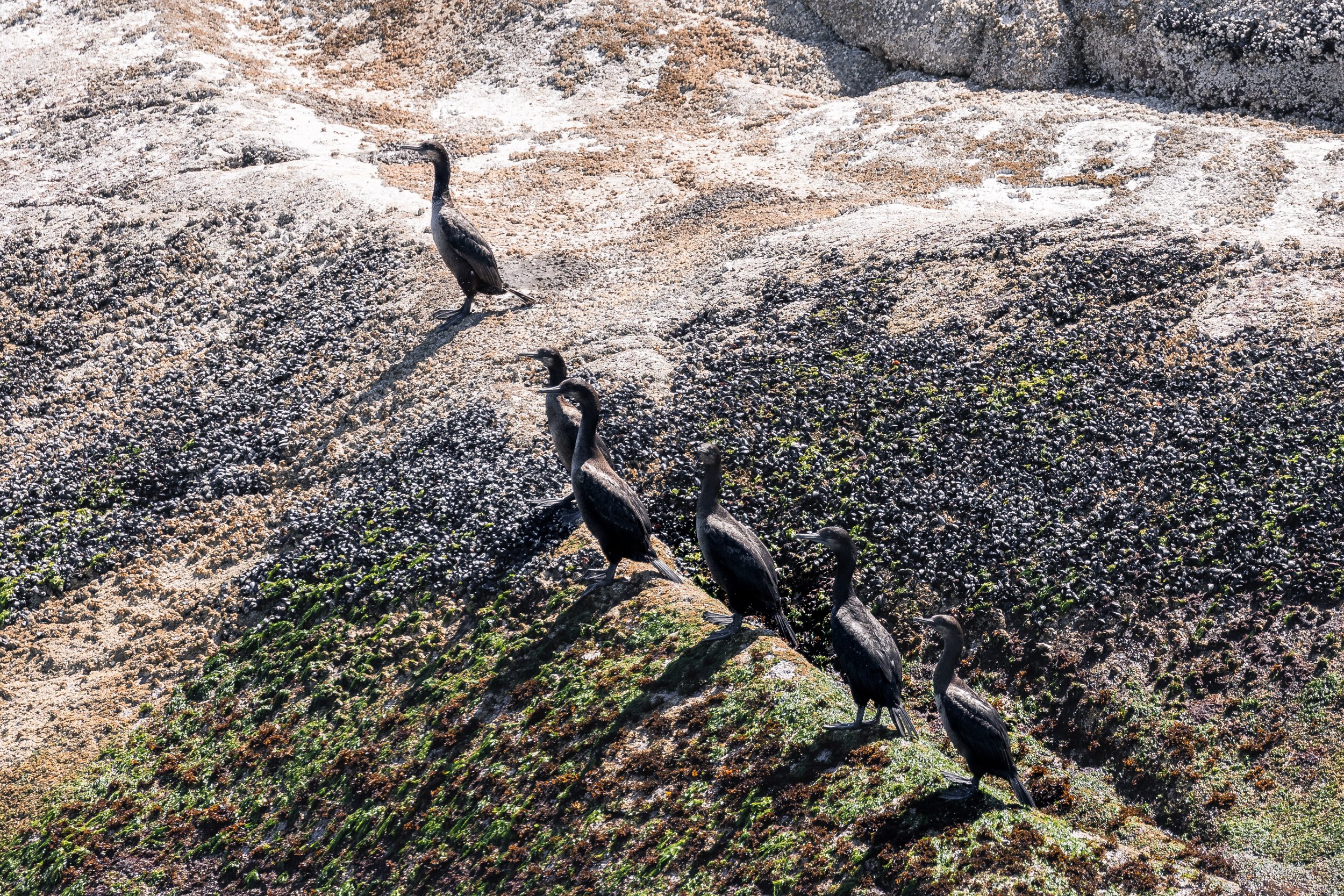
Cormorants soaking up the sun. Photo by Hayleigh Hilbert.
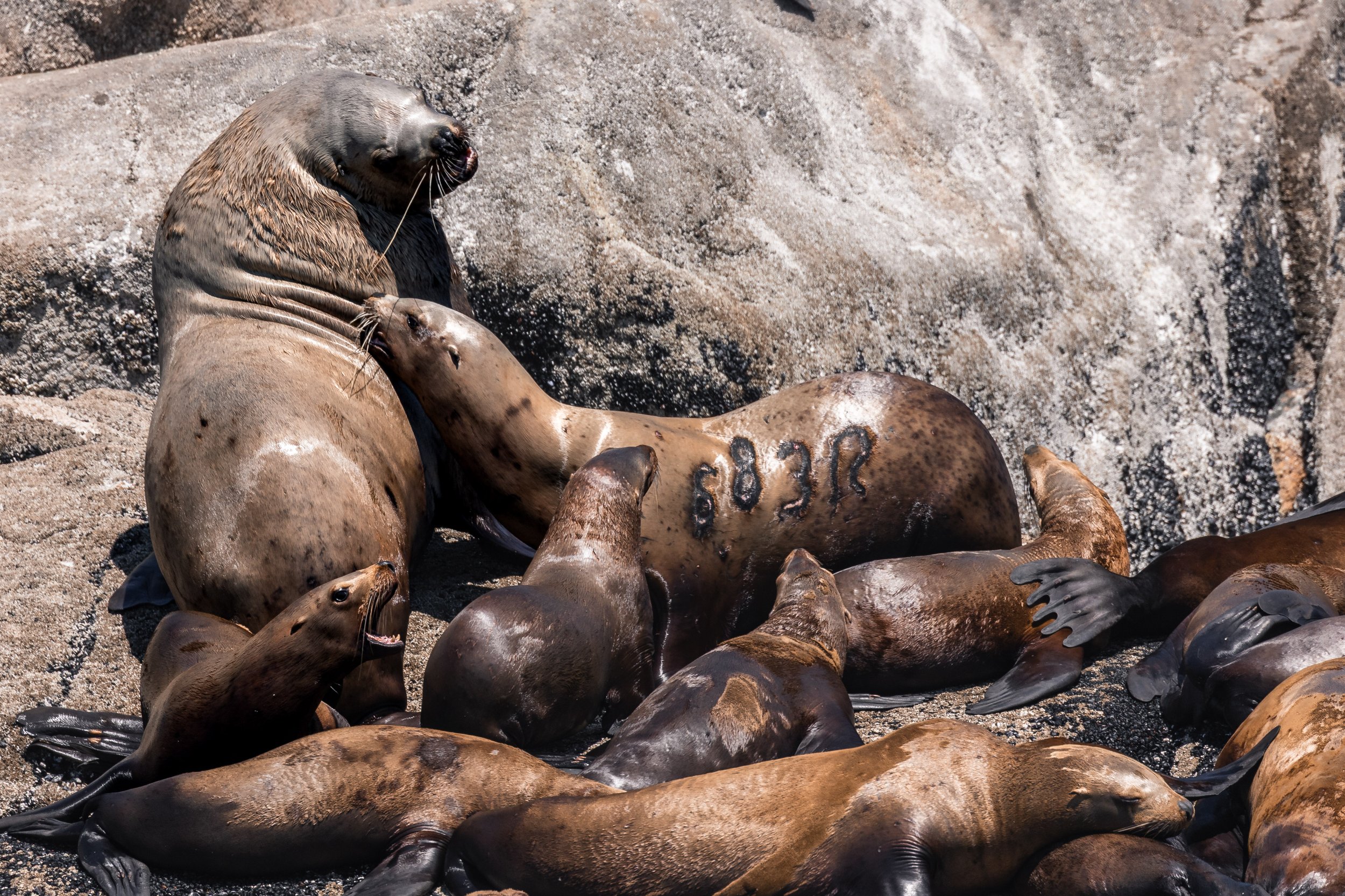
Steller Sea Lions. Can you spot the brand on the female? She was branded in 2009 at Rogue Reef in Oregon according to NOAA. Photo by Hayleigh Hilbert.
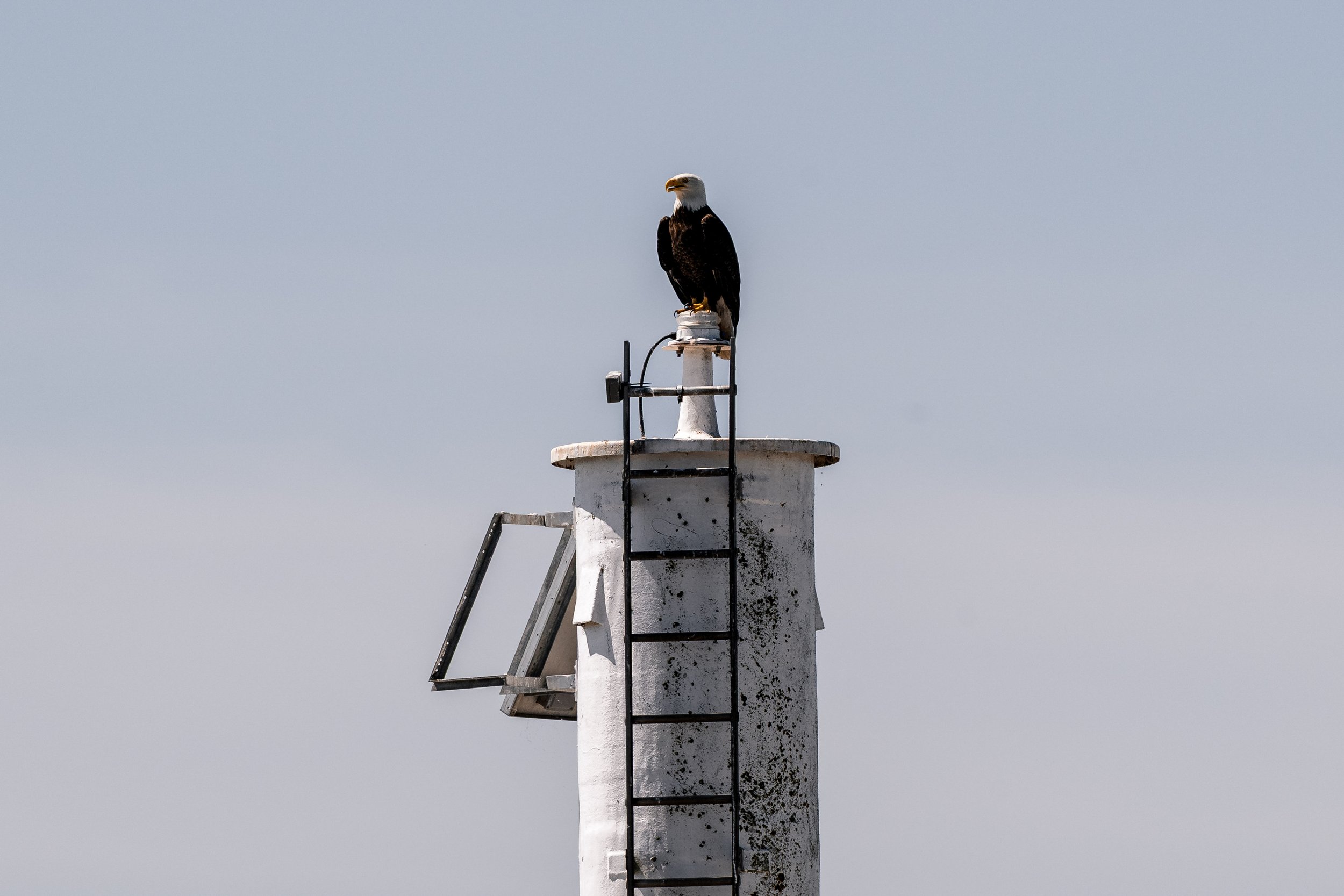
A bald eagle perched and watching. Photo by Aly Kohlman.
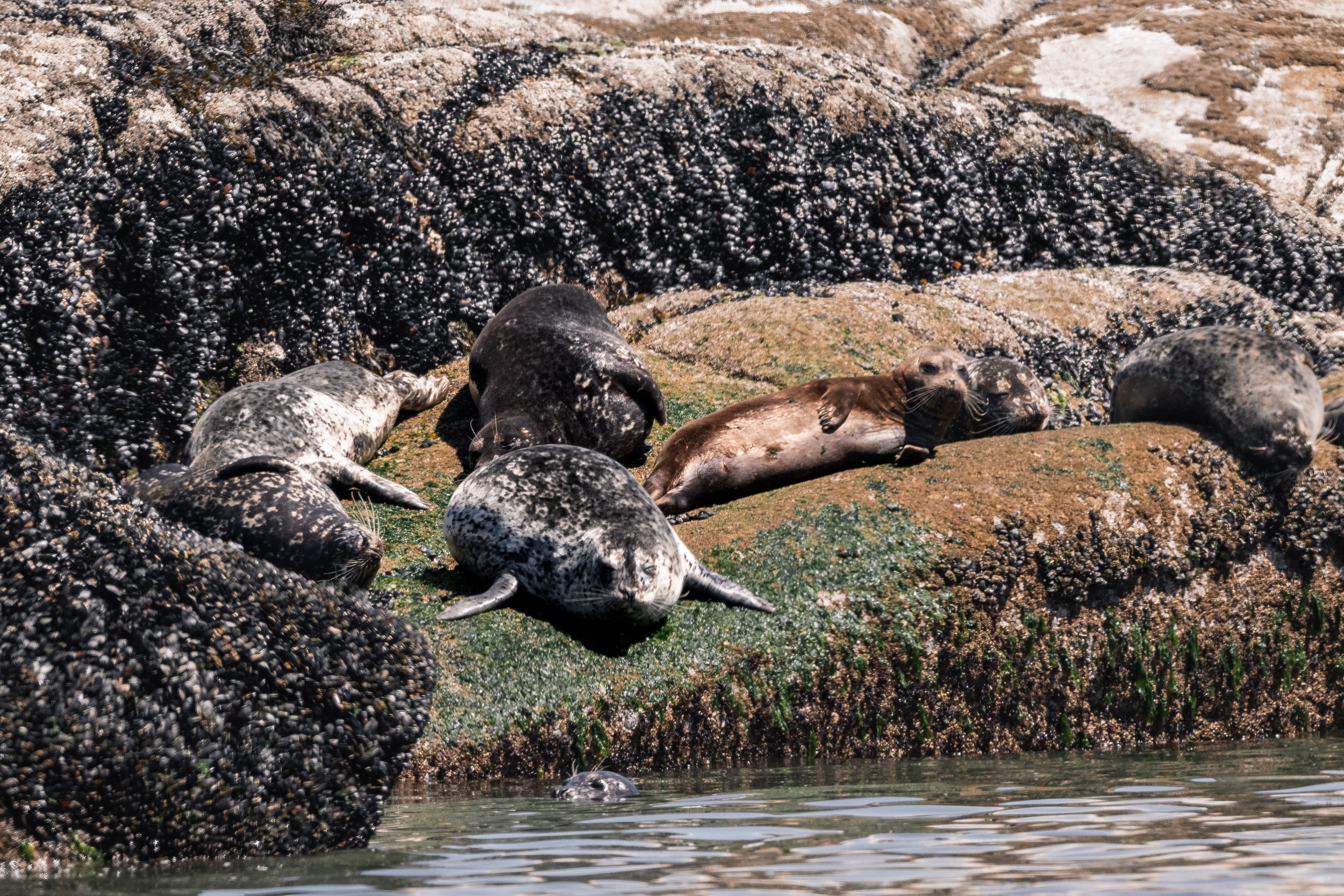
Plump harbour seals at the White Islets. Photo by Aly Kohlman.
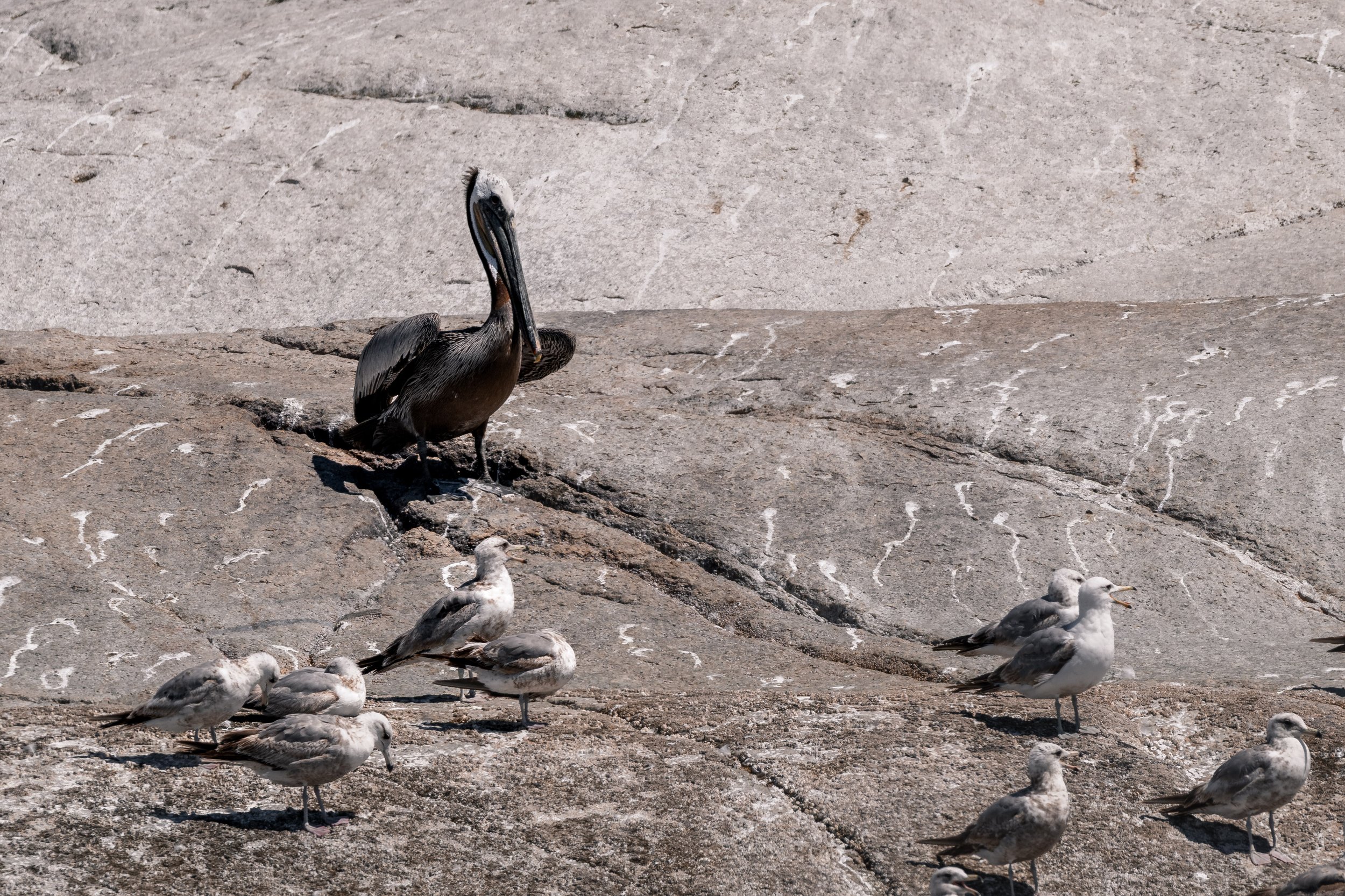
Another look at the pelican. Photo by Aly Kohlman.
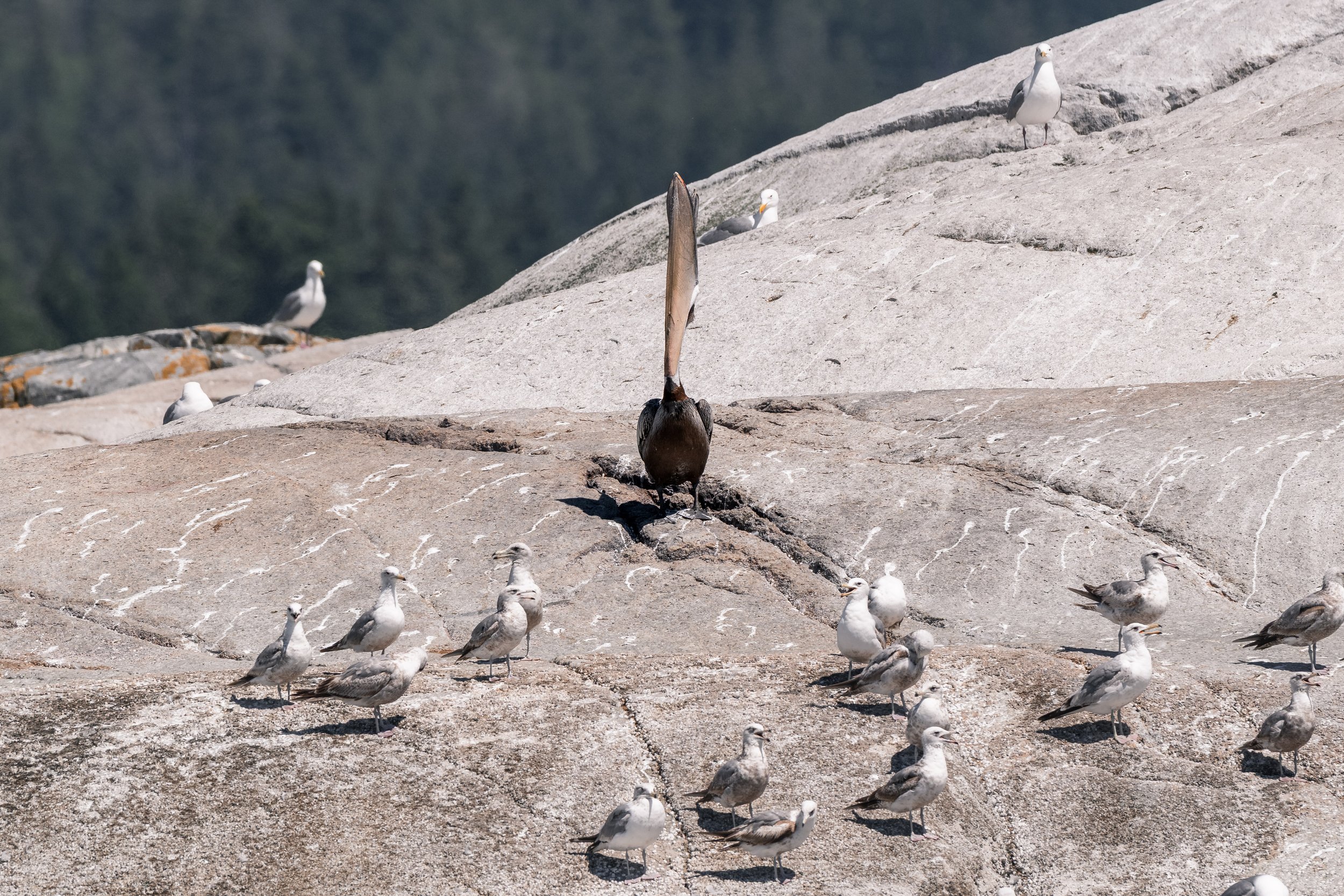
Check out that throat pouch! Photo by Aly Kohlman.
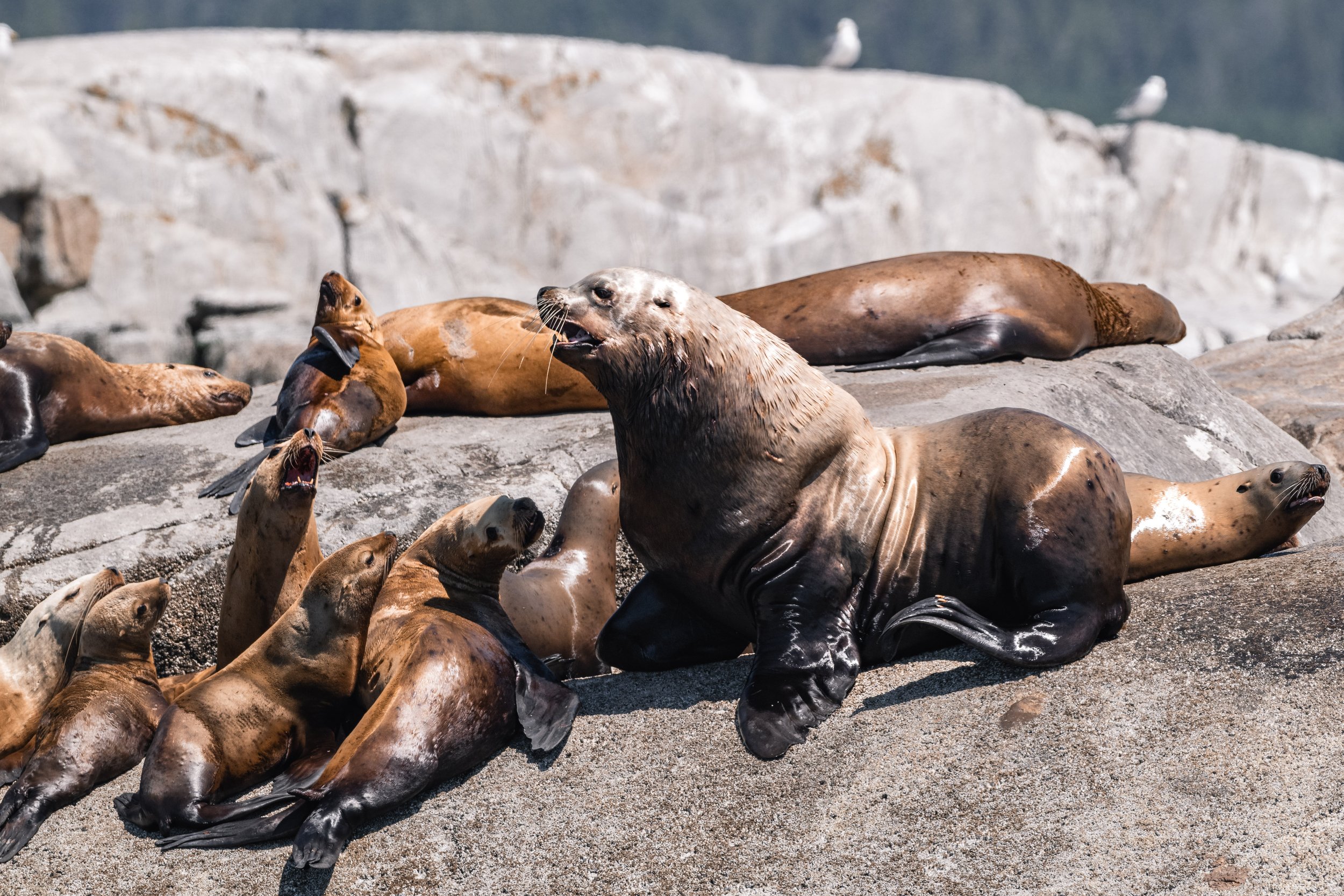
Can you see the mane on this Steller? Photo by Aly Kohlman.
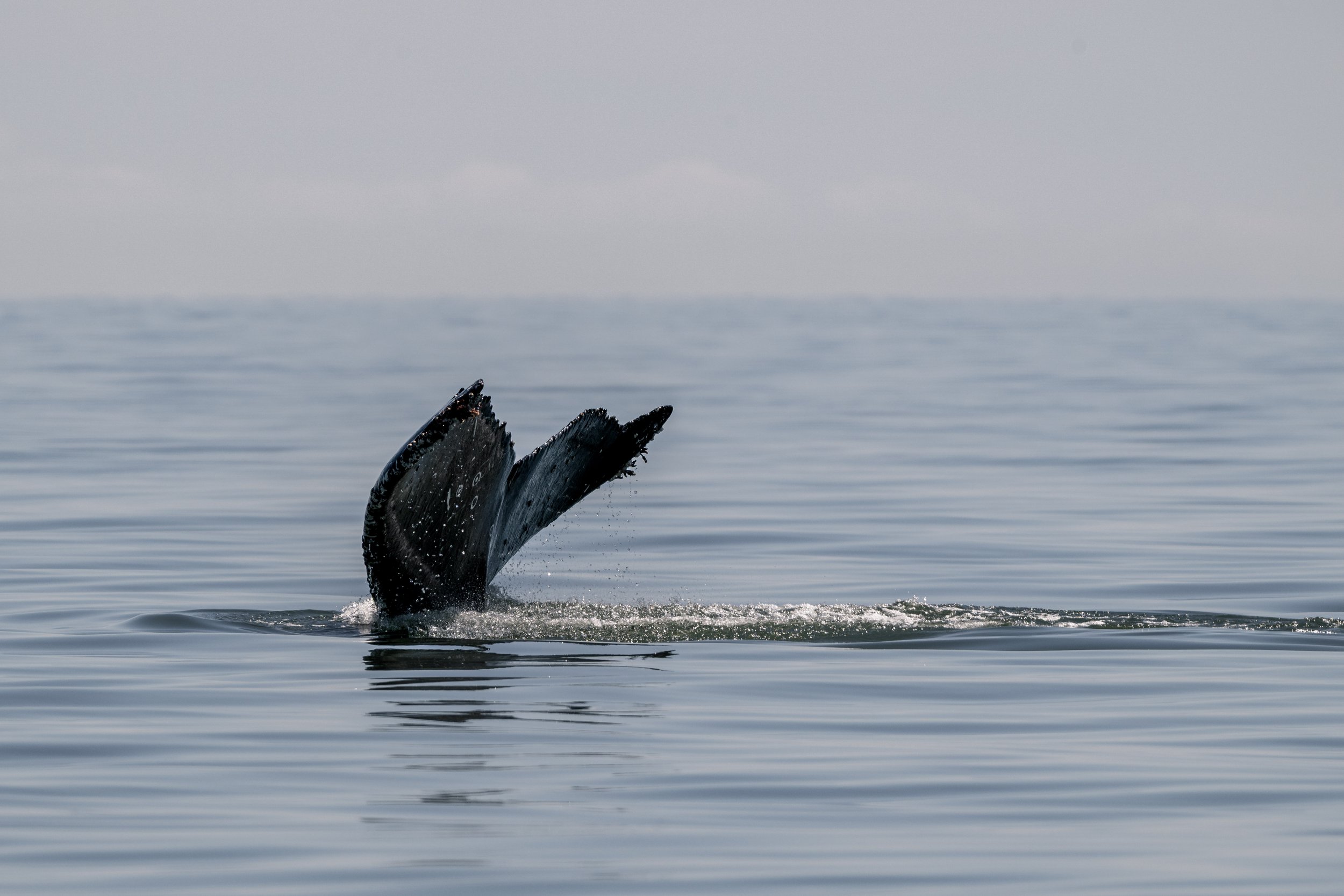
Eros’s tail reflecting on the calm surface. Photo by Aly Kohlman.
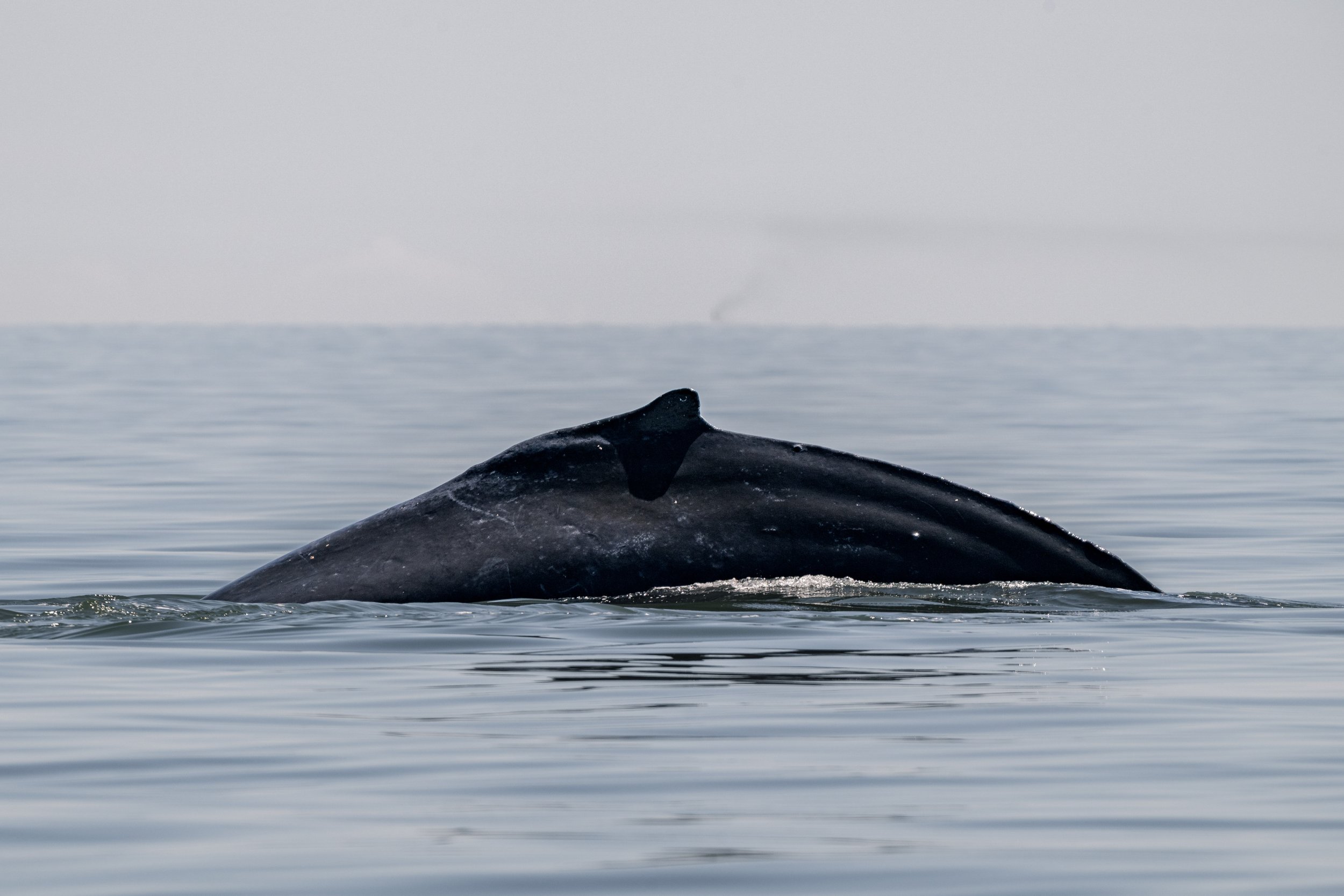
Split Fluke preparing to dive. Photo by Aly Kohlman.
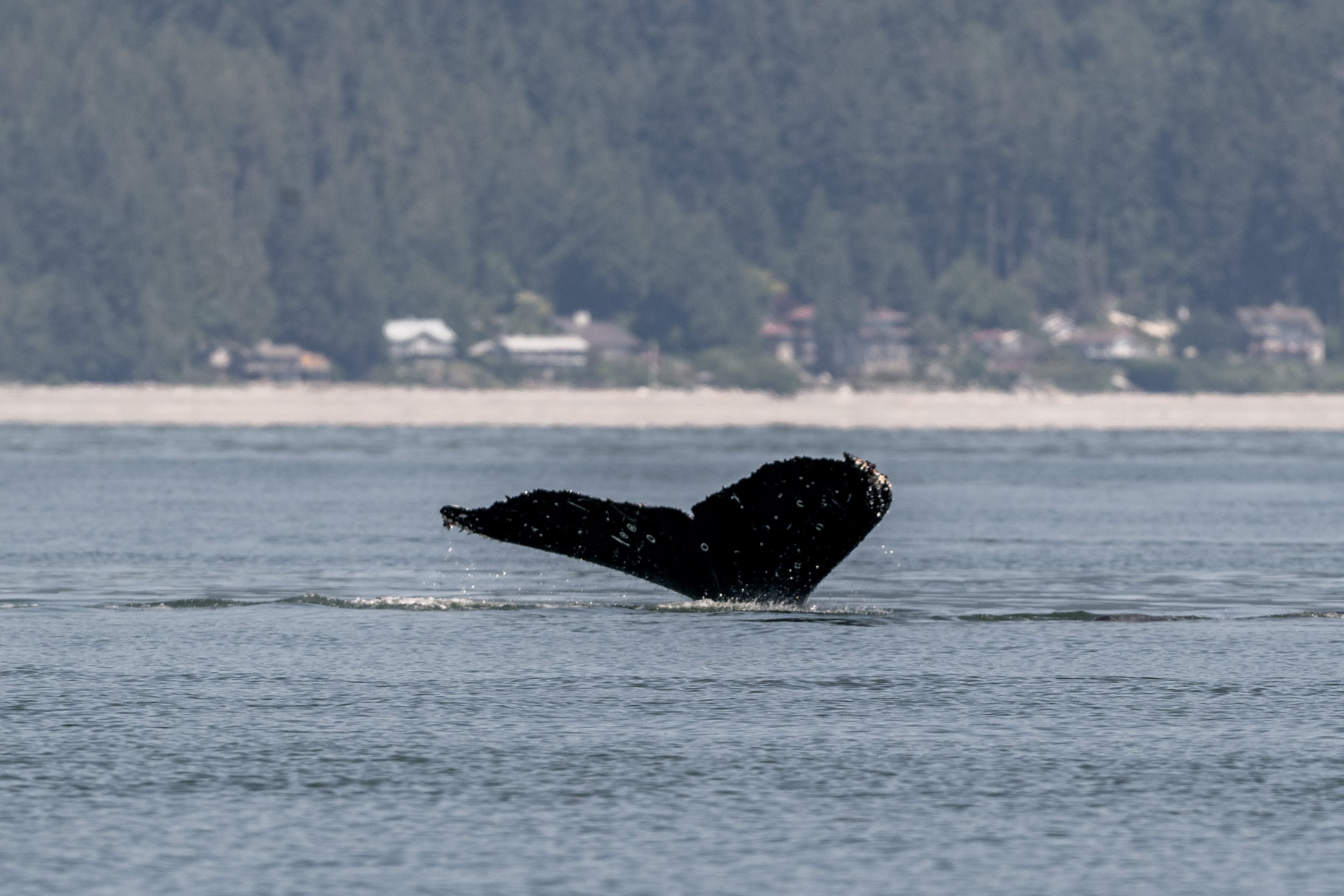
Eros going down. Photo by Aly Kohlman.
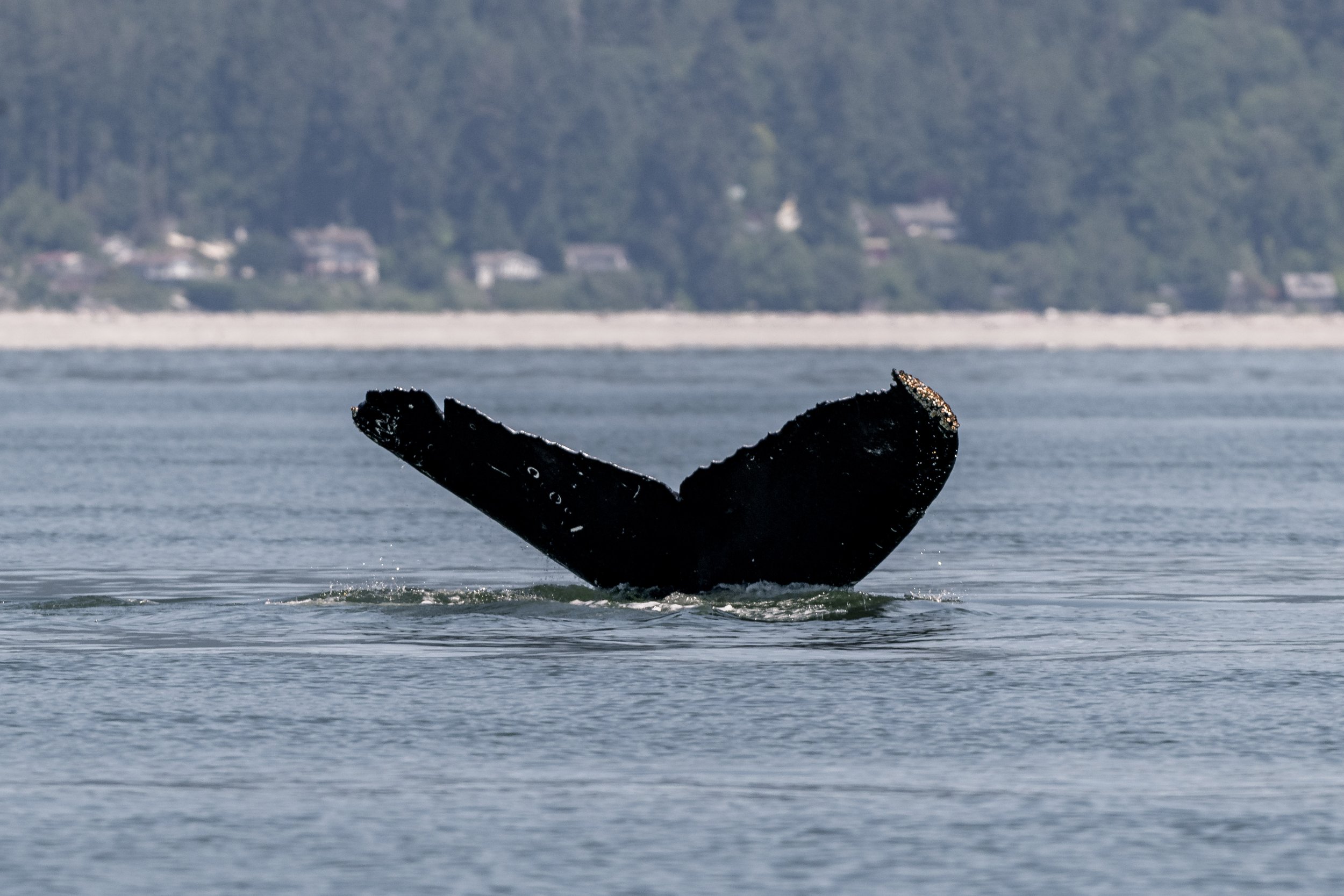
Split Fluke fluking. Photo by Aly Kohlman.
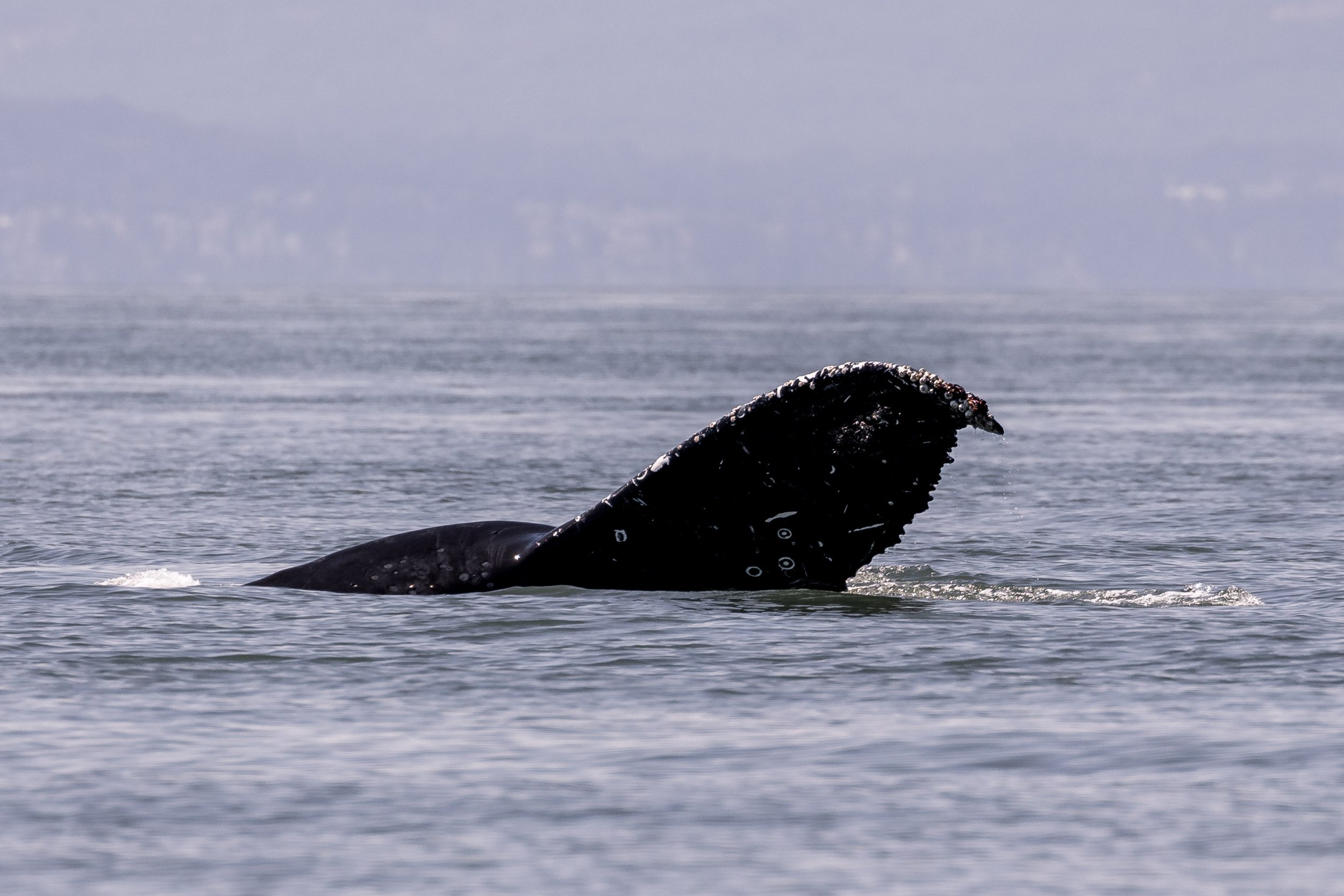
Eros preparing to dive. Photo by Hayleigh Hilbert.
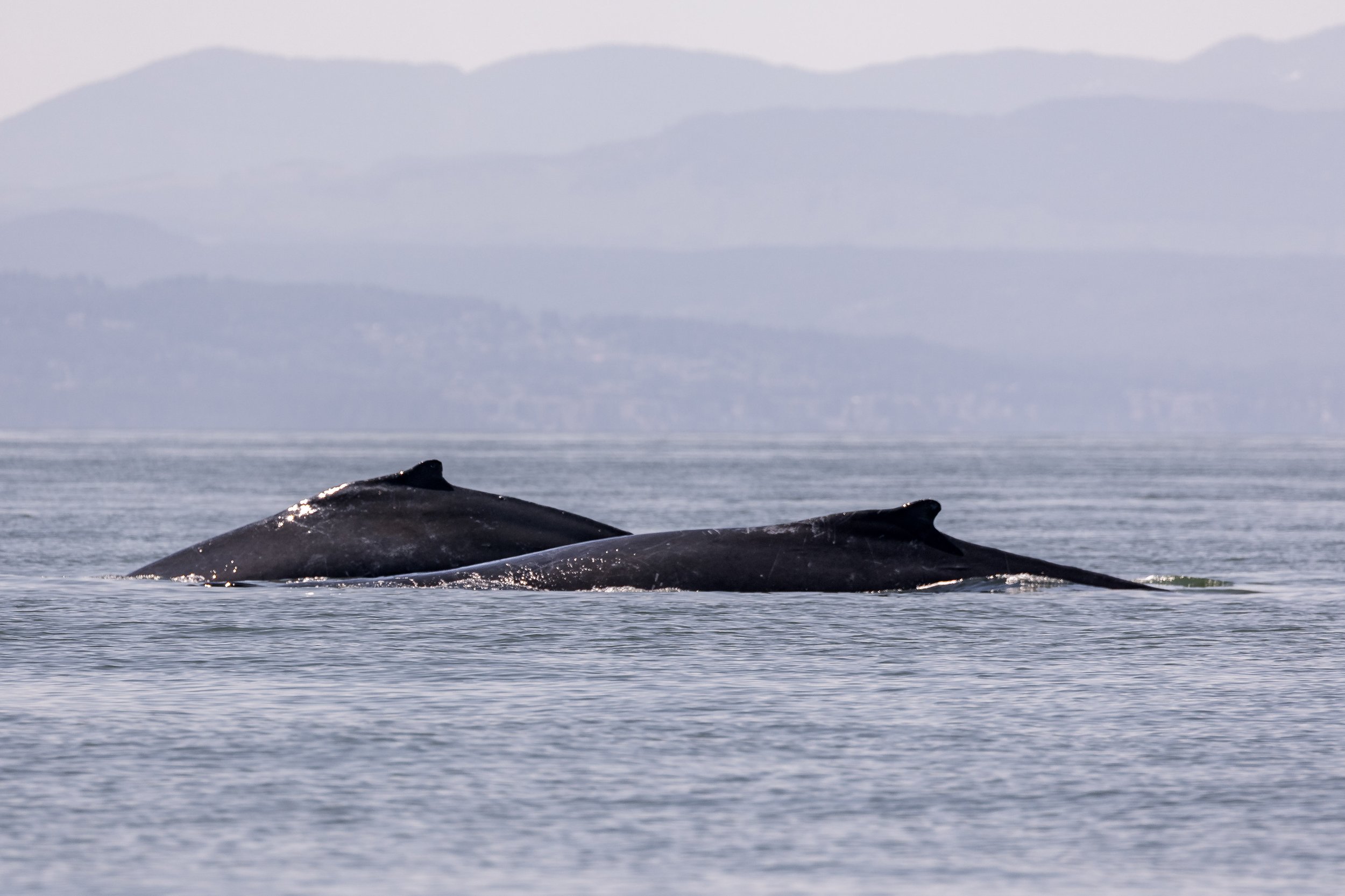
Split Fluke in the fron with Eros in tow. Photo by Hayleigh Hilbert.
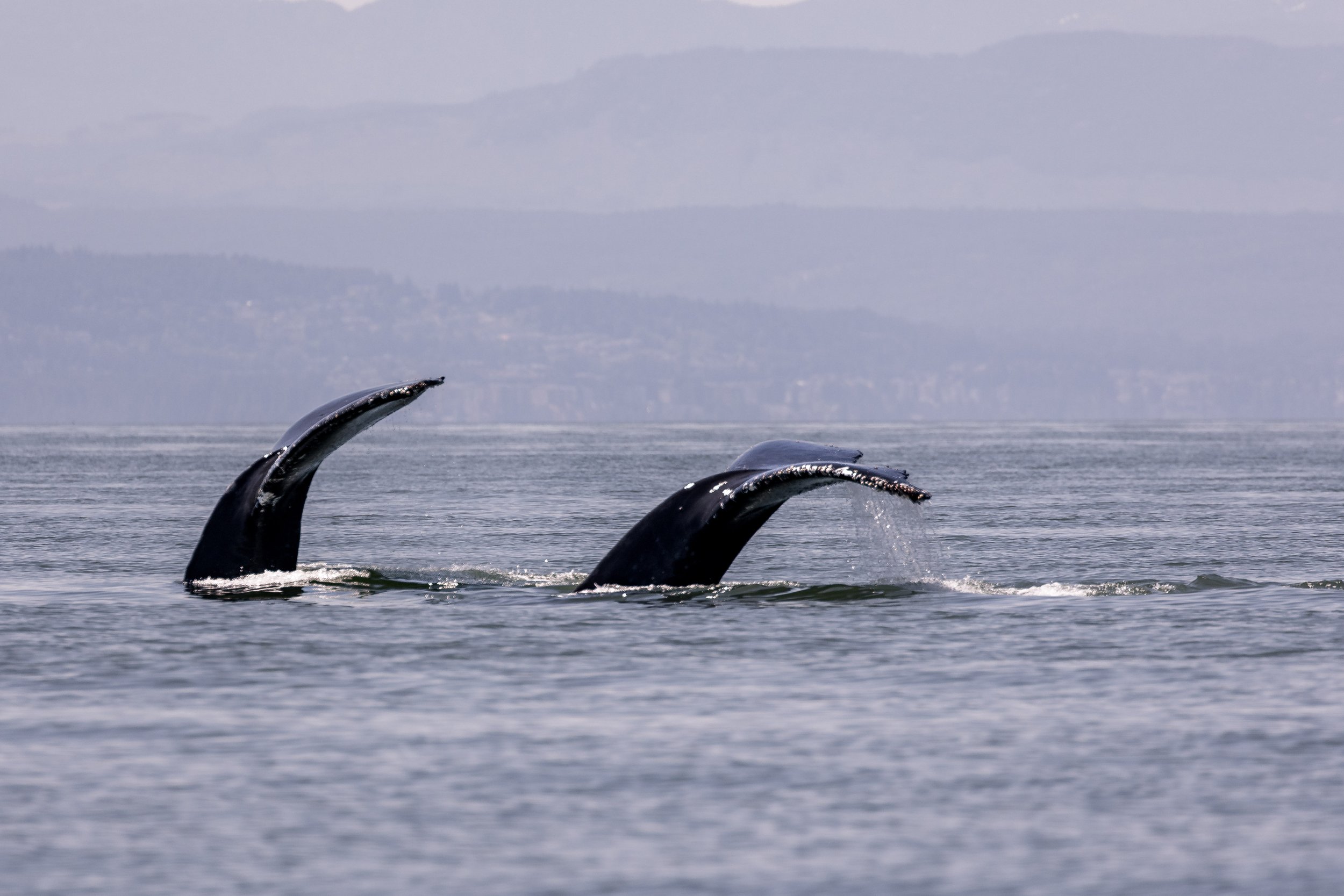
Diving together. Photo by Hayleigh Hilbert.
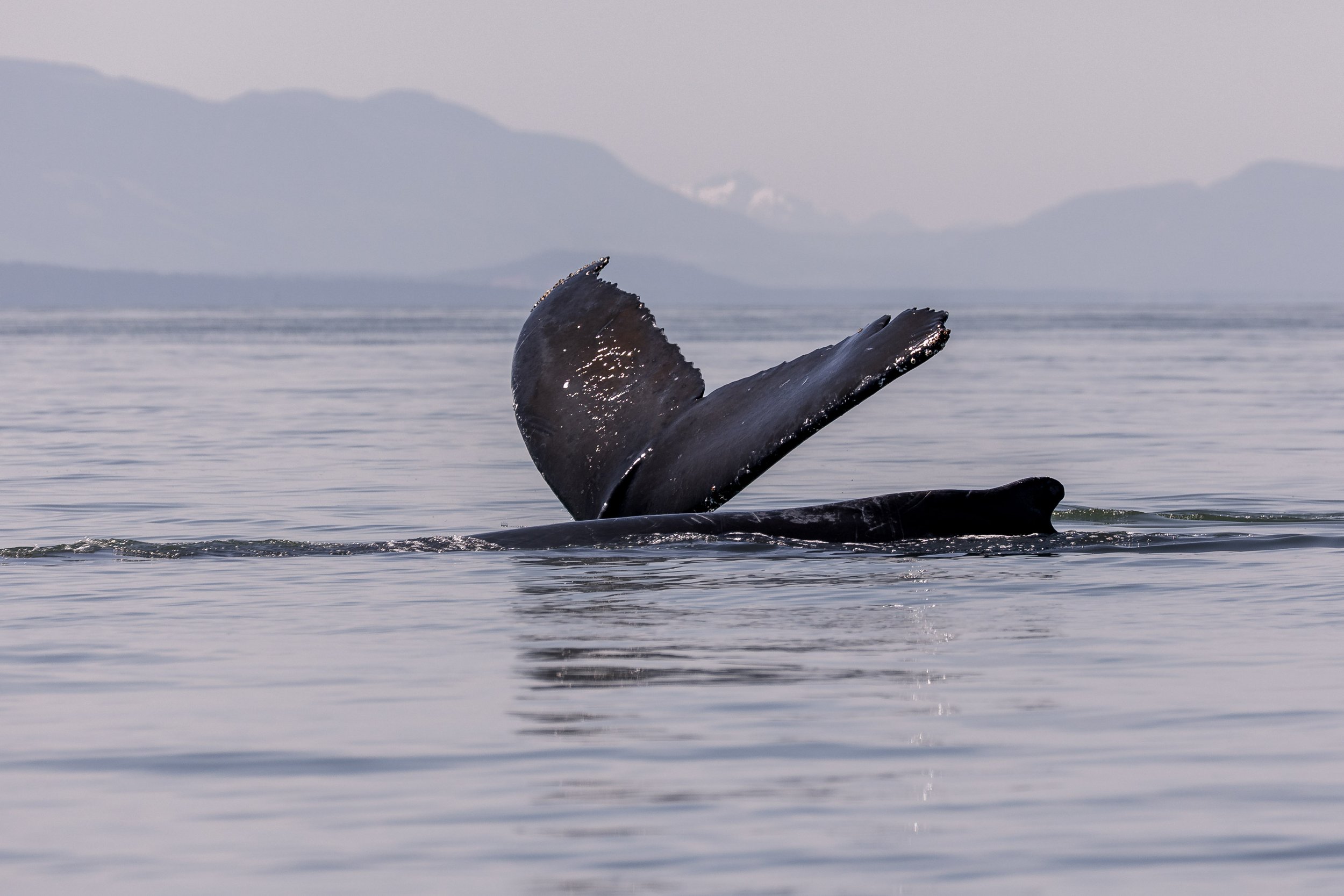
Split Fluke lifting their tail as Eros surfaces beside. Photo by Hayleigh Hilbert.
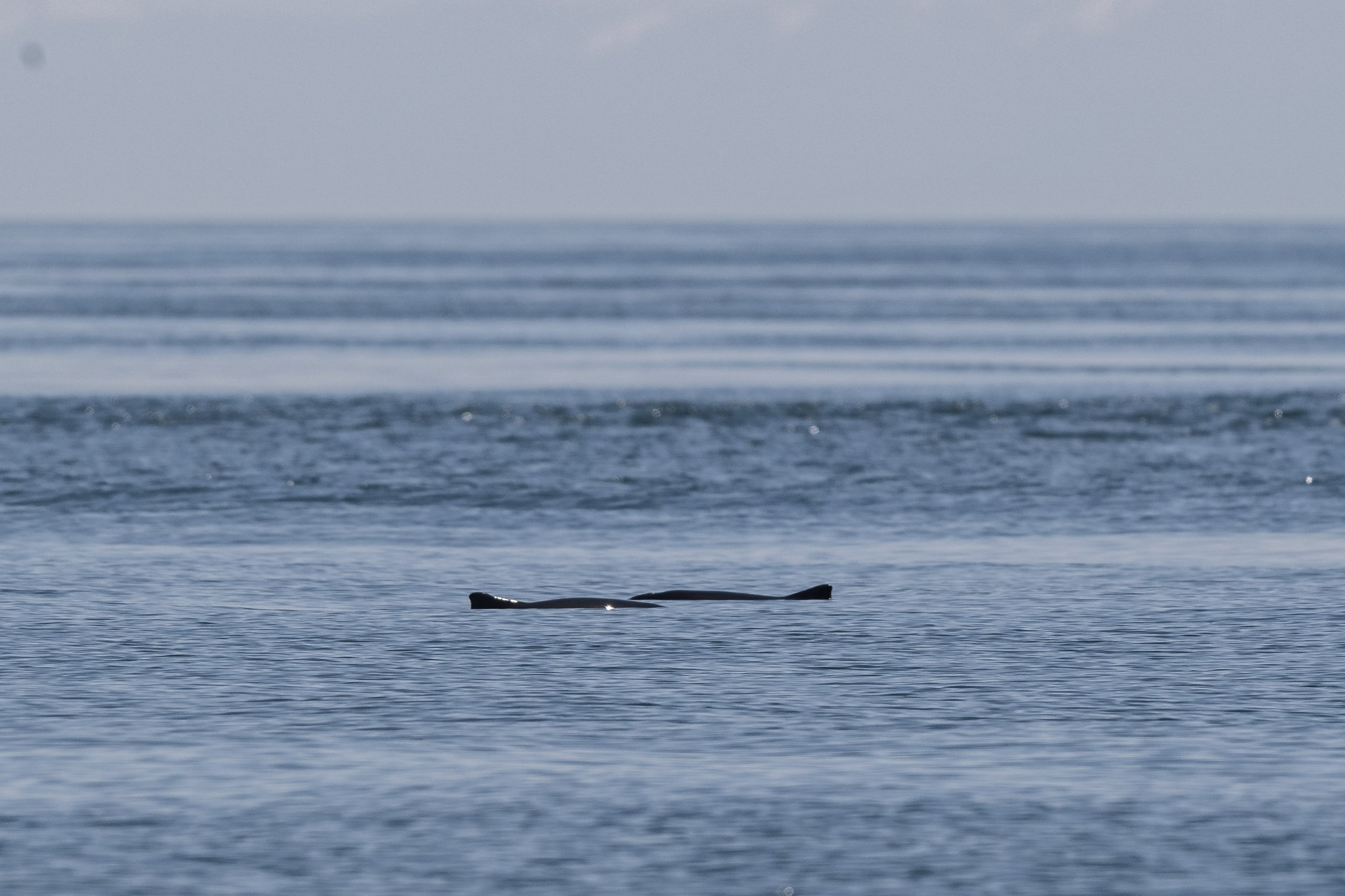
Two harbour porpoises. Photo by Aly Kohlman.
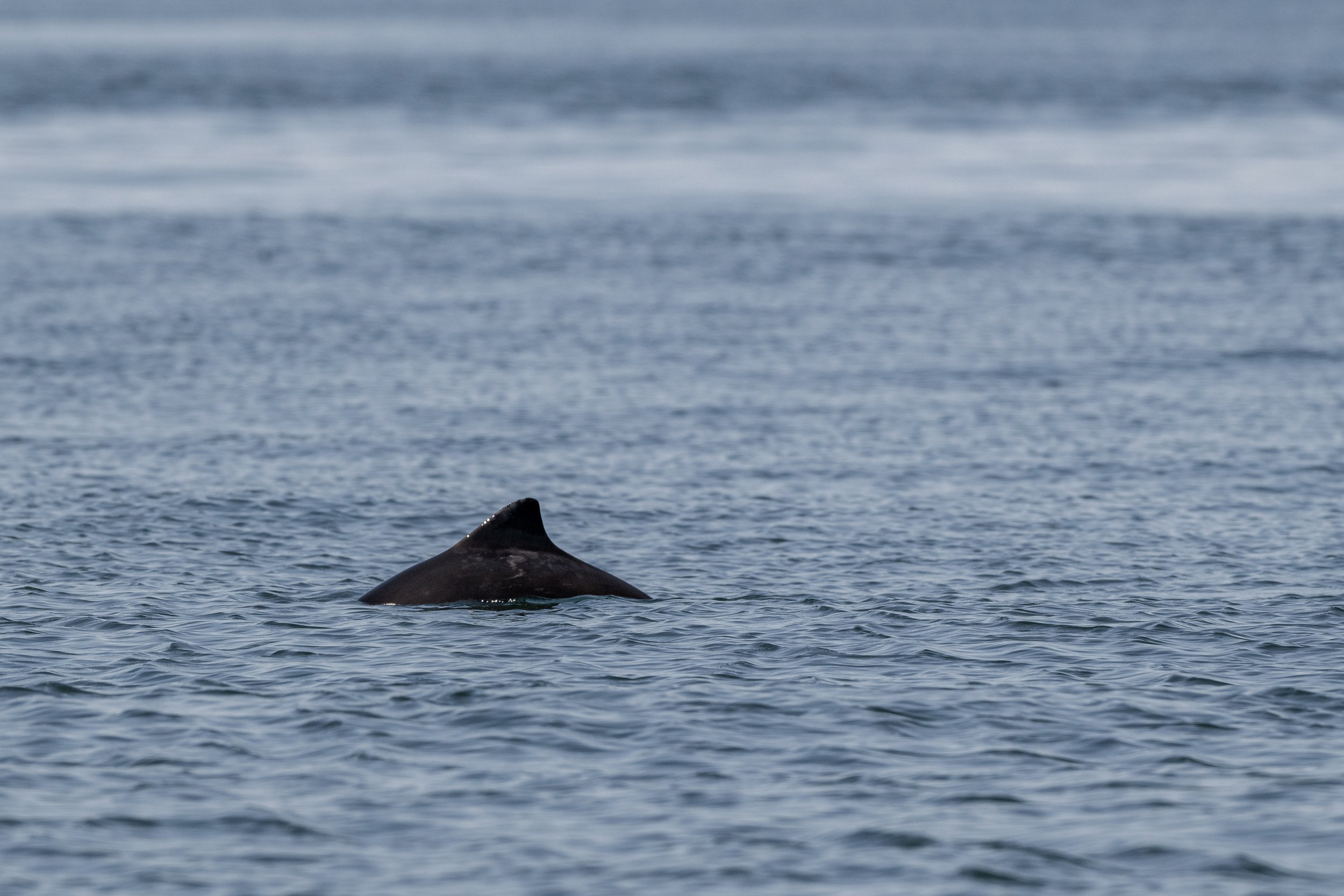
A harbour porpoise surfacing. Photo by Aly Kohlman.
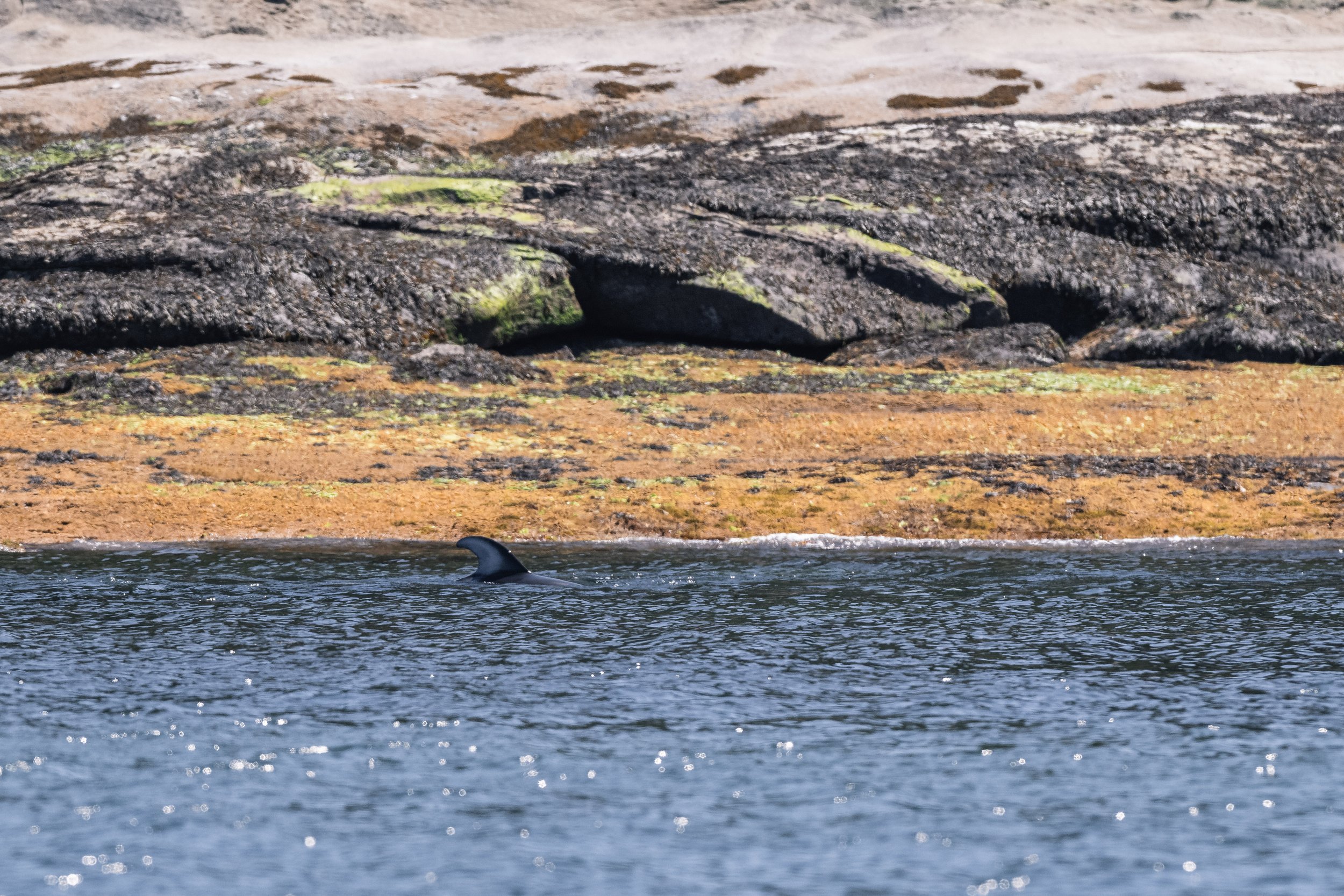
A Pacific White-Sided Dolphin. Photo by Aly Kohlman.