
June 2, 2026, 3:30 PM - The orca mingle in Howe Sound - Ulli lunges through the Strait!
Boarding on Cascadia and Kula , we got situated and excited as our onboard Naturalists discussed the plan for the day. After an action-packed morning, we eagerly scanned the horizon, curious about where our whales would be spotted this time.
With glassy sea conditions, we took off at speed, able to see for miles in all directions. After a quick zoom into the waters off Nanaimo’s coast, we dipped towards Gabriola Island and took a quick peek at a handful of dual-toned dorsal fins hugging the shore. These interesting individuals were a pod of Pacific White-Sided Dolphins, a cetacean species not commonly spotted in our waters. While our climate is perfect for them, we tend to only see them here a handful of times before they disperse.
Soon after we departed, trekking along once more. Cascadia crossed all the way over to Howe Sound, with Kula following behind. They were almost across when they spotted a big bushy blow off to the side. Kula and crew took a quick peek at this whale, curious to see who was around. As we approached, we noticed they were swishing their tail along the water's surface before continuing on. Usually, we identify humpback whales by the unique pattern located on the underside of their flukes. This pattern can consist of scratches, notches, pigmentation or holes, all making each fluke as unique to each whale as a fingerprint is to a human. Unfortunately, this whale was uncooperative and did not fluke while we observed them. Naturalist Hayleigh secured a couple of photos of their dorsal fin, though, which we promptly began cross-referencing to our ID catalogues. While we have not found a match at this time, we are hopeful that as we continue to look, we will find a match in the future!
Once Hayleigh had grabbed her photos, Kula kept heading onward, joining Cascadia. The vessels headed into Howe Sound, a beautiful glacial fjord. Travelling along, the Coastal Mountains loomed all around us as we journeyed further and further into the Sound. Travelling up and up, we soon approached Squamish Harbour. We slowly travelled through the emerald-green waters, and soon we saw what we had come here for. Two giant dorsal fins leisurely travelled along, with a handful of smaller fins popping up nearby. After snapping a few photos, we soon confirmed that we were with two pods - the T101s and the T124A4s:
T101 Reef ♀ (≤1969)
T101A Rush ♂ (1993)
T101B Lagoon ♂ (1997)
T124A4 Sabio ♀ (2010)
T124A4A Strix ♀ (2021)
T124A1A Sabine (2024)
The eldest of the males, T101A Rush, was travelling with T124A4 Sabio, T124A4A Strix, and T124A1A Sabine. The other two orca, T101 Reef and T101B Lagoon, were travelling further behind the pods.
This one pod, the T124A4s, may seem a bit confusing, as the youngest member’s code does not match Sabio’s. Typically, calves are assigned alphanumeric codes in order of birth. For example, T124A4 Sabio’s first calf, Strix, was given the code T124A4A, where the A indicates that they are the firstborn calf. With Sabine travelling with Sabio and Strix, you would think their code would be T124A4B. However, during initial sightings, it was believed that Sabine was actually T124A1 Boneapartes’ calf, leading to the designation T124A1A. Soon after the calf’s initial sighting, though, it was no longer travelling with Bonapartes and would be seen by Sabio’s side from then on. While we will never truly know what happened or why Sabine was originally travelling with Bonapartes, we are happy to see the little family of three healthy as they adventure around the Salish Sea.
The T101s are a commonly spotted pod in our area, and are always iconic to see. Consisting of matriarch T101 Reef and her two surviving sons, T101A Rush and T101B Lagoon, they are a great example of the extreme sexual dimorphism orca display. While females retain shorter, often curved dorsal fins throughout their lives, male orca undergo incredible growth spurts when they enter puberty. Their hooked dorsal fins begin to straighten and lengthen, reaching incredible heights of up to 6 ft (1.8 m)! This results in very interesting shots as Reef pops up between her sons, a fraction of their size, but the leader of the pod, regardless.
After visiting with the T101s and T124A4s for a bit, Captains Rob and Joseph turned the boats once more, and we slowly began to depart from Howe Sound. Once more, we looked around us, taking in the area's natural beauty before it faded behind us as we entered the Strait of Georgia. With the sun starting to set on the horizon, we would soon head back towards Vancouver Island, but there was one last place we wanted to peek at first.
We turned north, venturing back into the wider waters of the Strait. We didn’t need to travel long, though, for soon we saw an explosion of splashes ahead of us. We transited over, curious as to what was causing the commotion. As we approached, a large dark shape rose from the depths, followed by a huge splash as the creature re-entered the water. This was a very active humpback whale who was lunge-feeding. Lunge-feeding is a feeding technique sometimes used by humpbacks to capture large amounts of prey at once. They swim fast towards the surface, where small fish or krill school together, jaws wide open, before snapping them shut to capture a huge mouthful of food. While this is an energy-intensive feeding technique, it can be ideal when prey density is high. While this feeding display was amazing to see, identifying individuals during lunge feeding is nearly impossible as their dorsal fins and flukes are often fully concealed. Thankfully, this whale changed their behaviour shortly after, and we were able to capture a photo of their beautiful fluke as it rose above the water. This whale was confirmed to be Ulli (BCY0946calf2024), the 2024 calf of Slits (BCY0964).
Interestingly, Slits has not been cross-matched to either the Hawaiian or Mexican breeding grounds at this time. Ulli, however, had their first crossmatch back in March. Thanks to Happywhale, we now know that Ulli resides in the Mexico breeding grounds during the winter months. Because humpback whales show strong site fidelity, this likely means Slits also travels to the same breeding grounds as well.
After a spectacular viewing with Ulli, we soon had to depart and began crossing back towards Vancouver Island. We zoomed across the flat calm waters before entering back into the Nanaimo Harbour, concluding a beautiul evening adventure to Squamish and back!
Please enjoy these photos taken by Marine Naturalists Aly Kohlman and Hayleigh Hilbert.
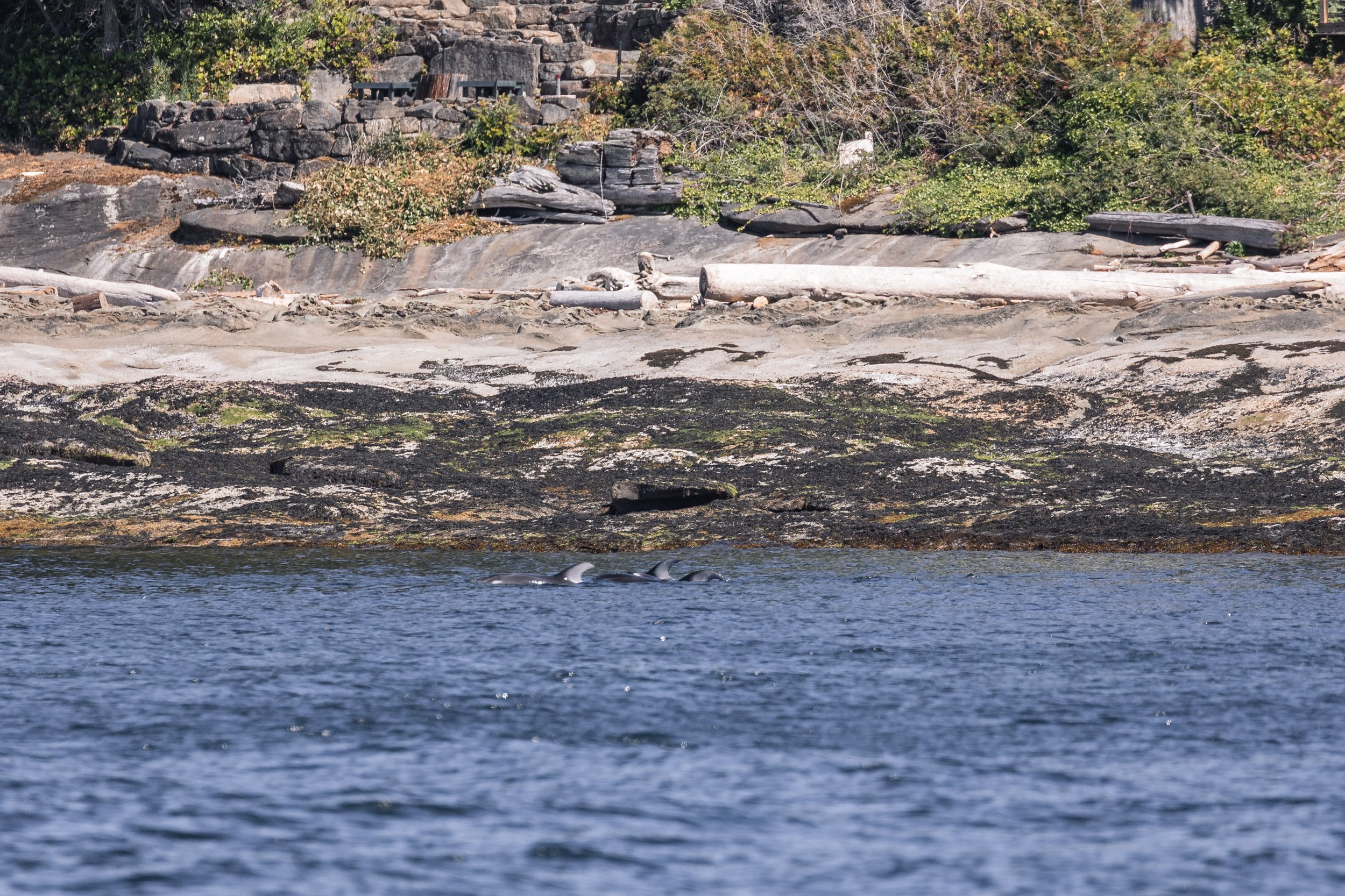
The dolphins were tucked very close to shore as we observed them. Photo by Hayleigh Hilbert.
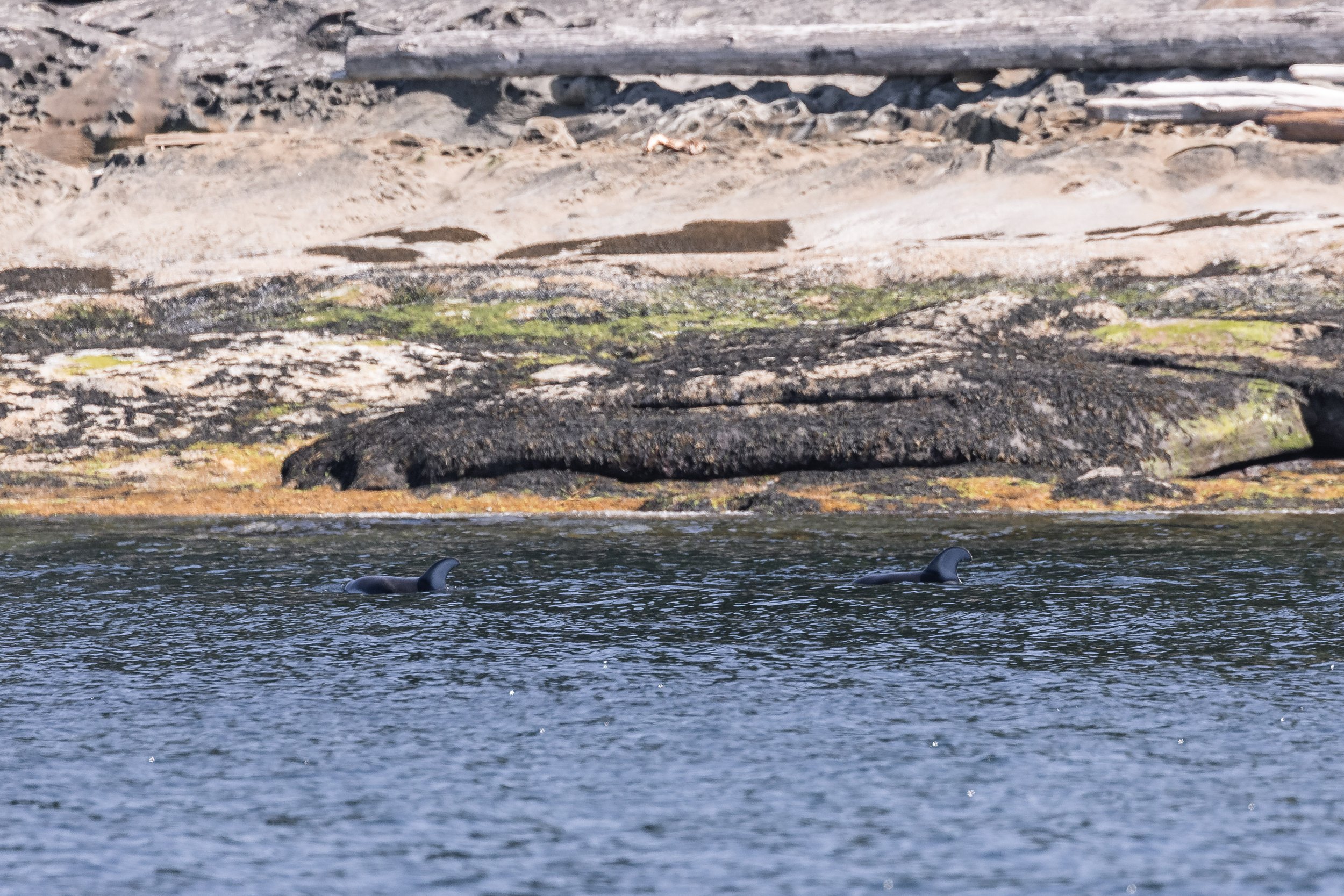
These uncommon visitors are always a treat to see on a trip! Photo by Hayleigh Hilbert.
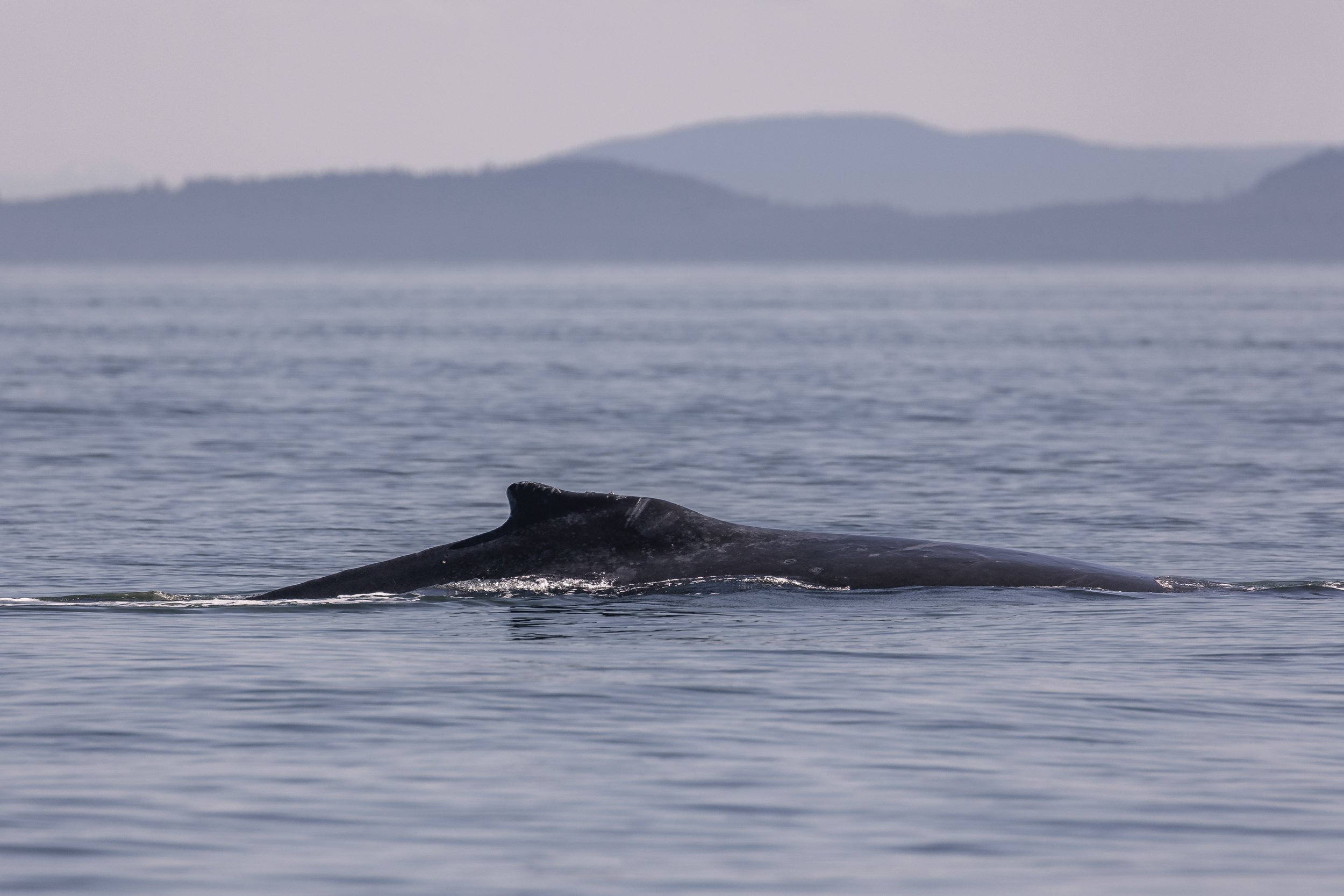
The Unknown humpback travelling along. Photo by Hayleigh Hilbert.
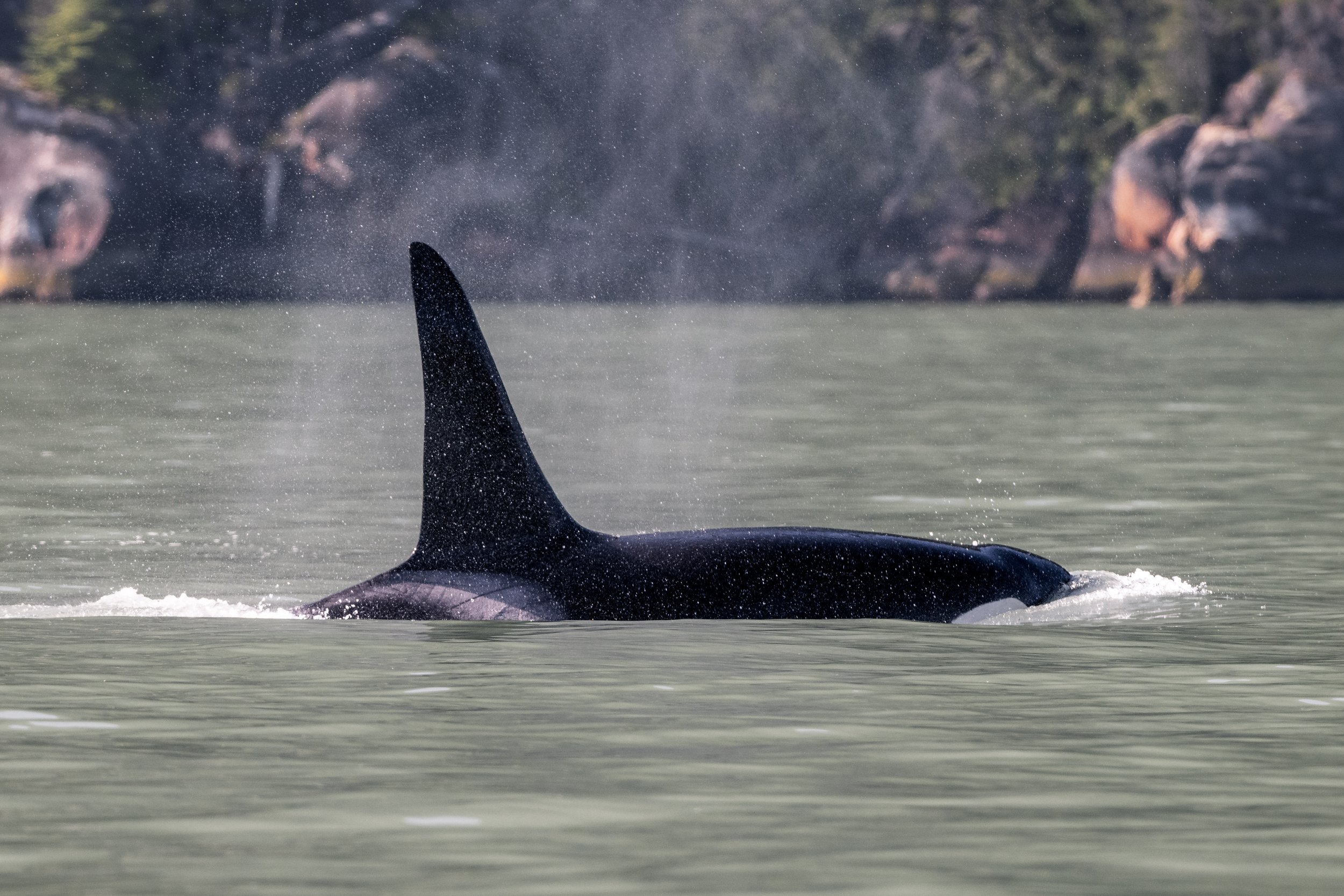
T101A Rush rushing along. Photo by Aly Kohlman.
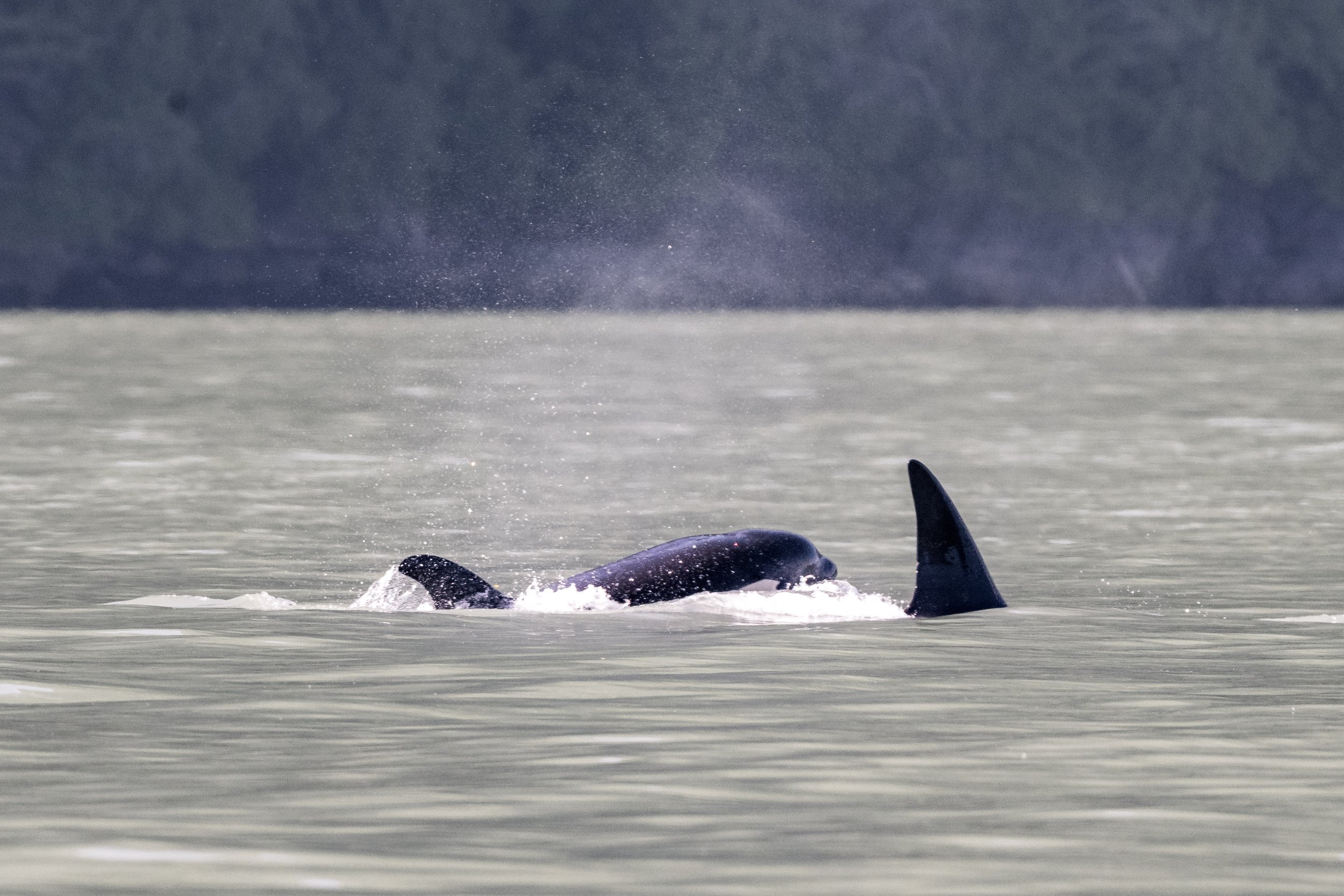
T124A1A Sabine and T124A4 Sabio. Photo by Aly Kohlman.
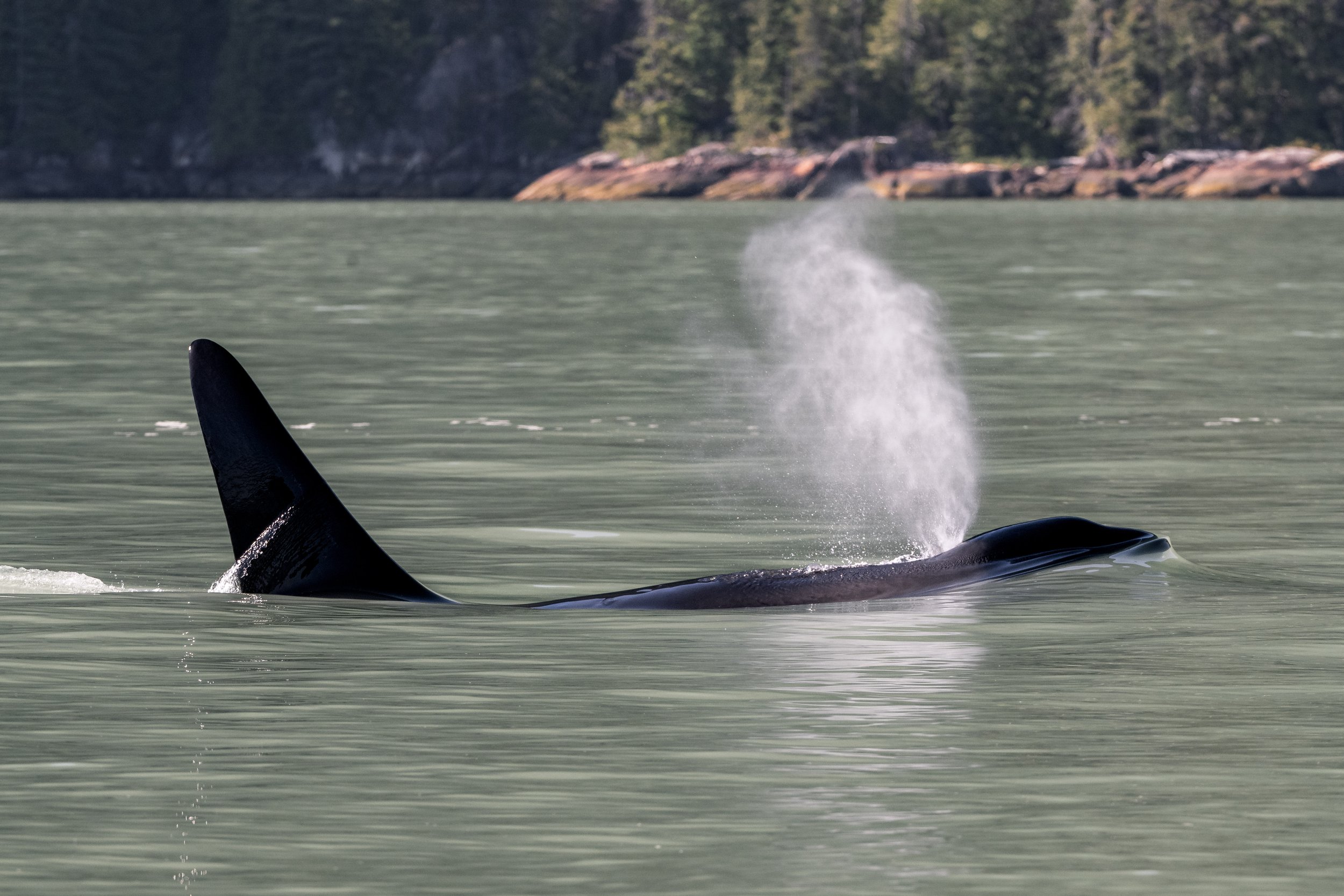
A beautifully backlit blow from T101A Rush. Photo by Aly Kohlman.
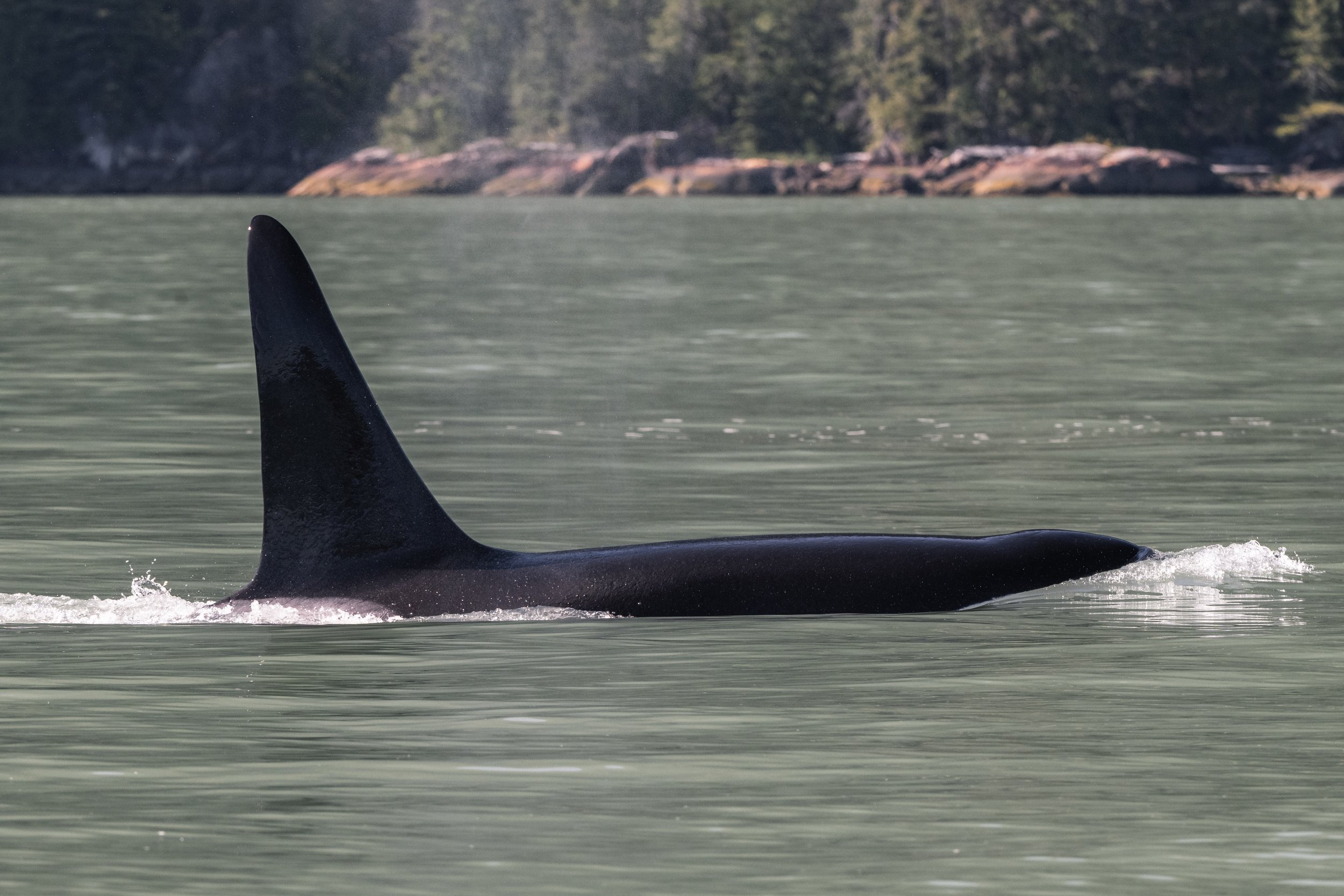
T101A Rush cruising. Photo by Aly Kohlman.
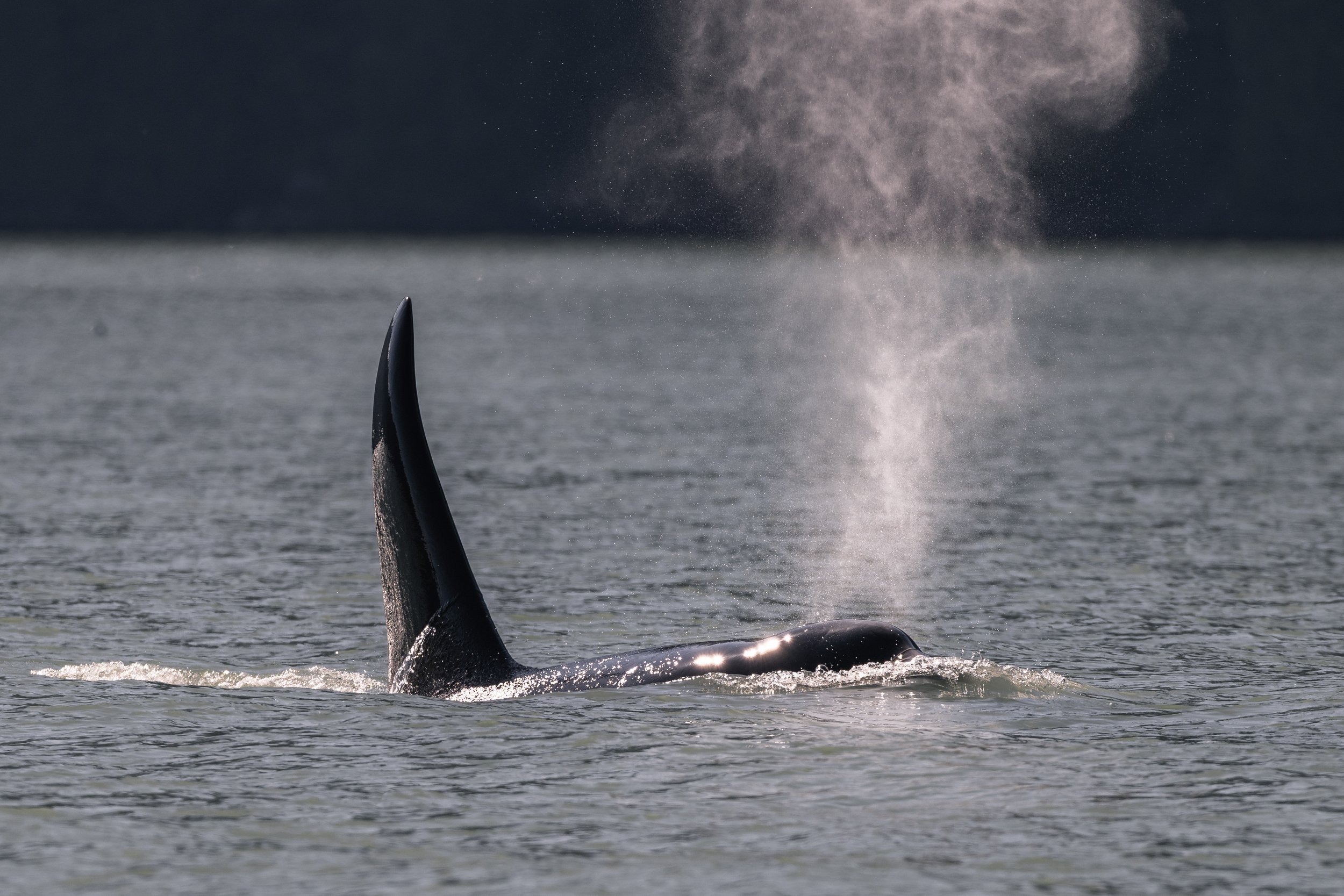
T101A Rush with his slightly bent dorsal fin visible. Photo by Aly Kohlman.
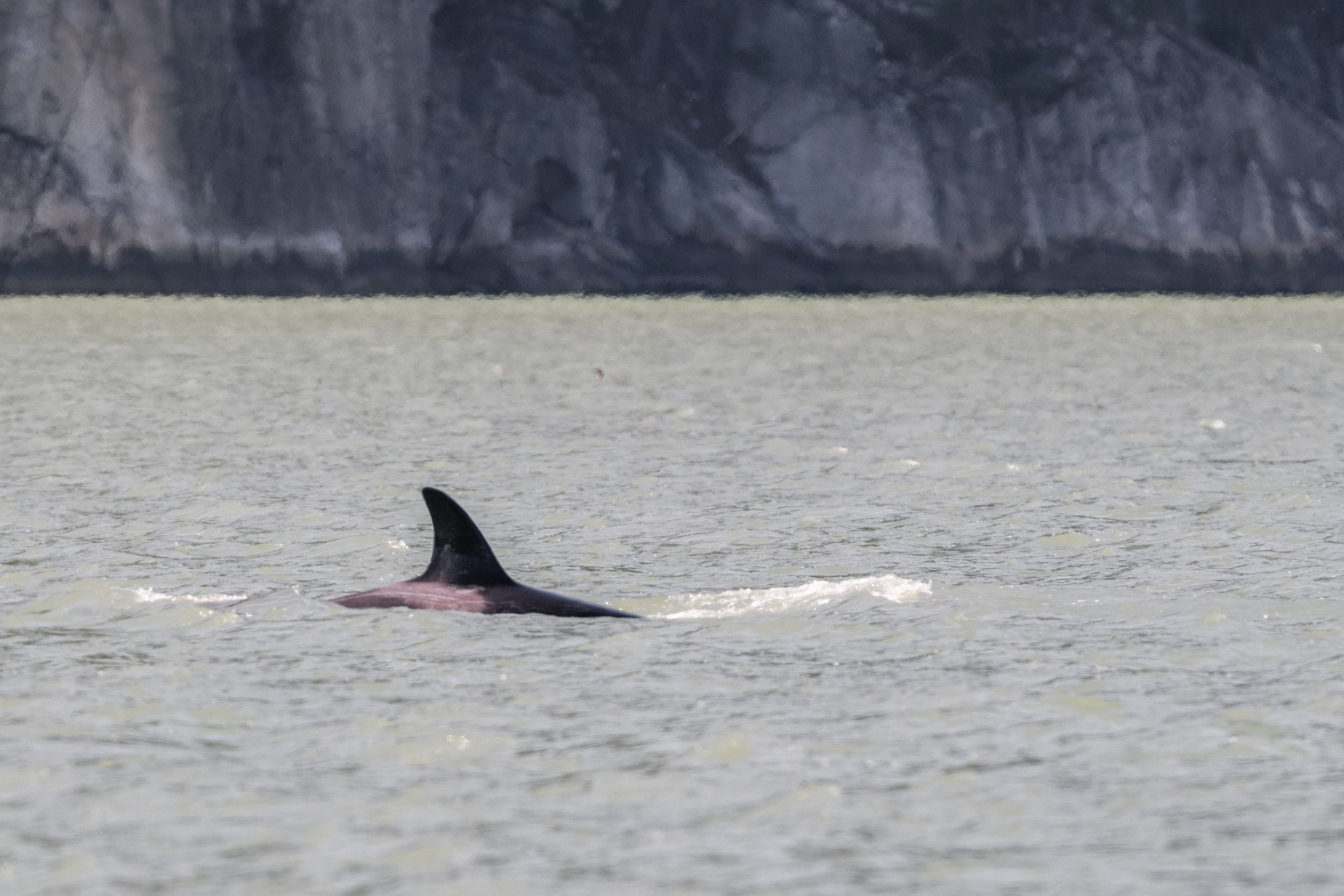
T124A4A Strix by herself. Photo by Aly Kohlman.
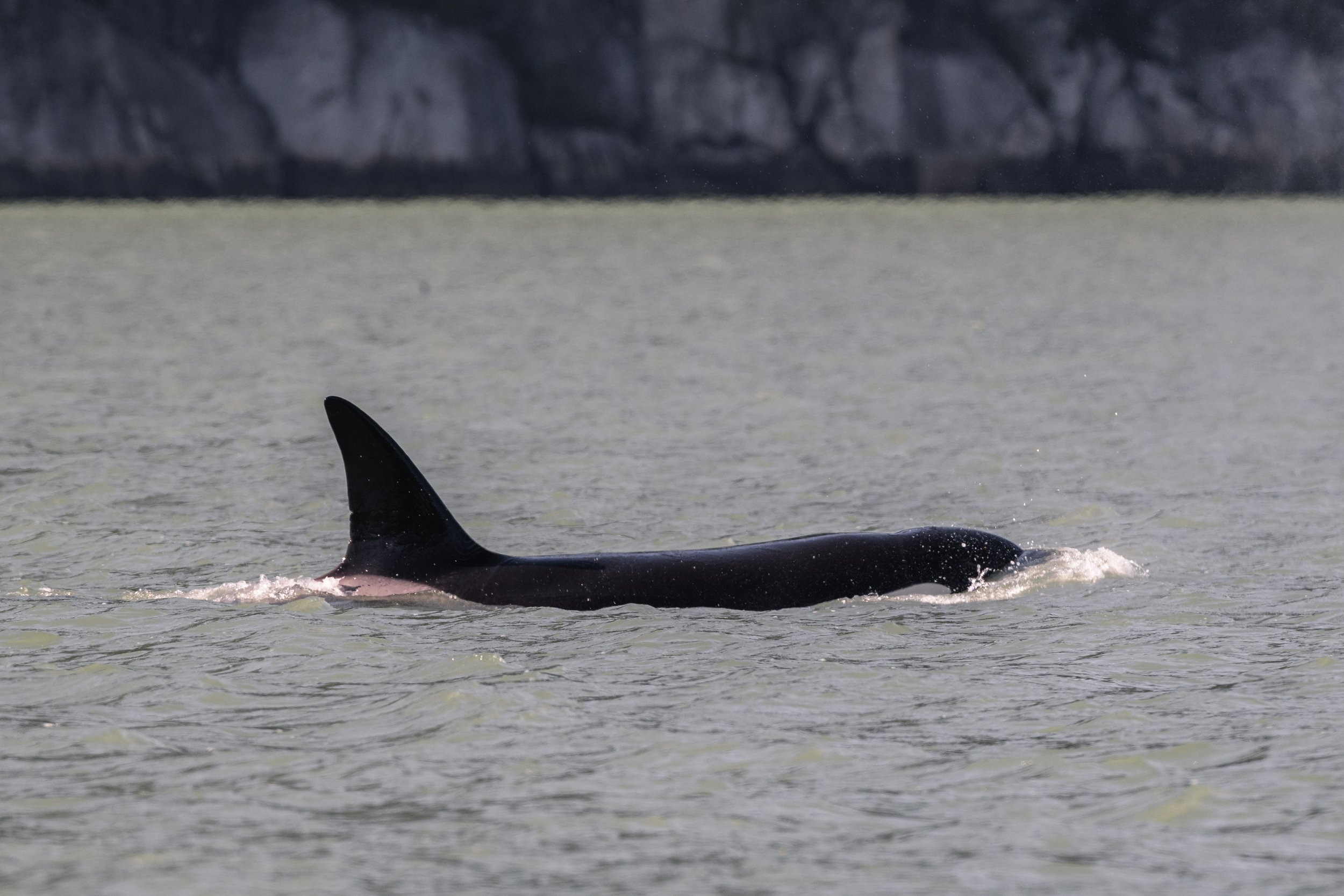
T124A4 Sabio - her dual notched dorsal fin is how we identify her! Photo by Aly Kohlman.
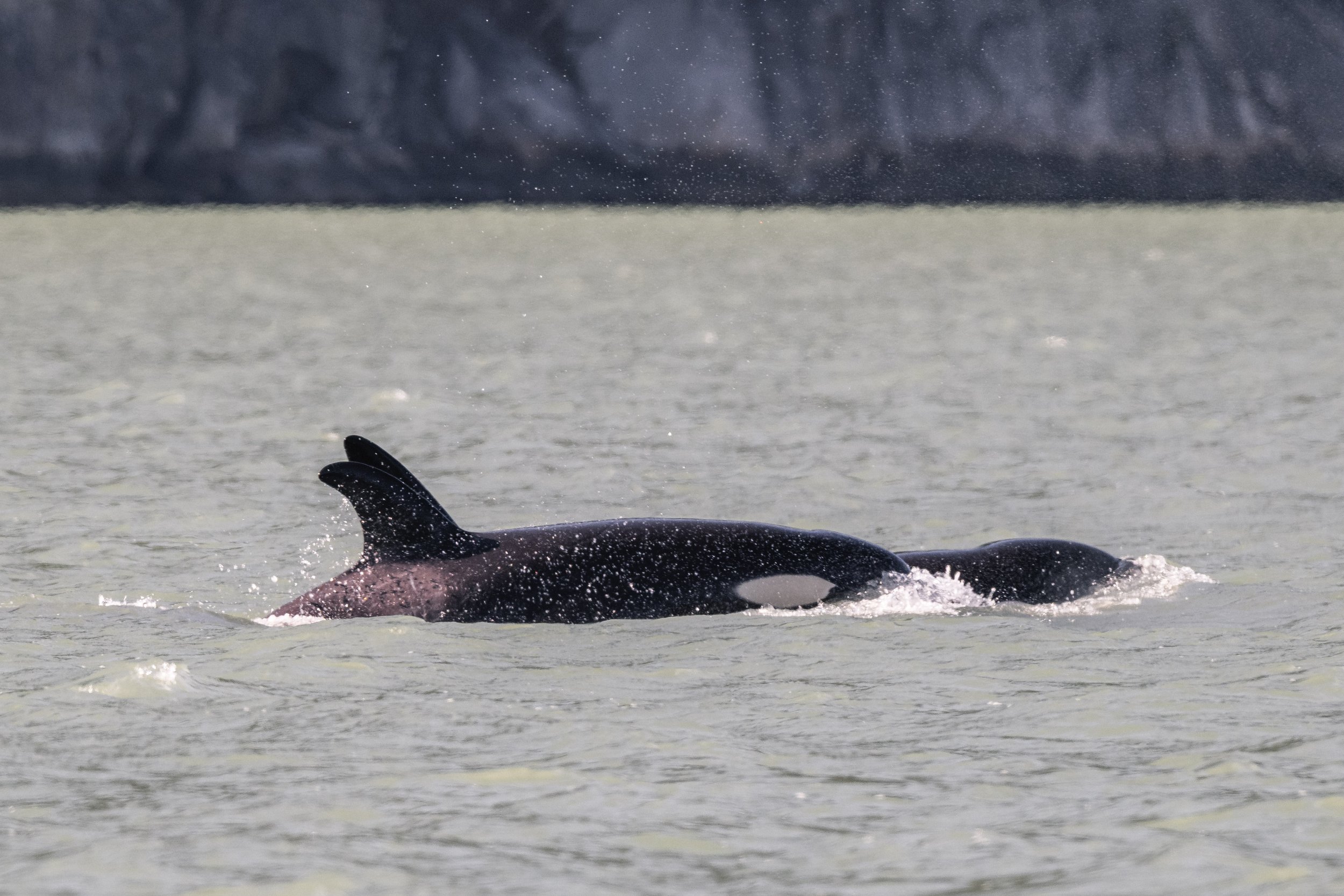
T124A1A Sabine with T124A4 Sabio behind her. Photo by Aly Kohlman.
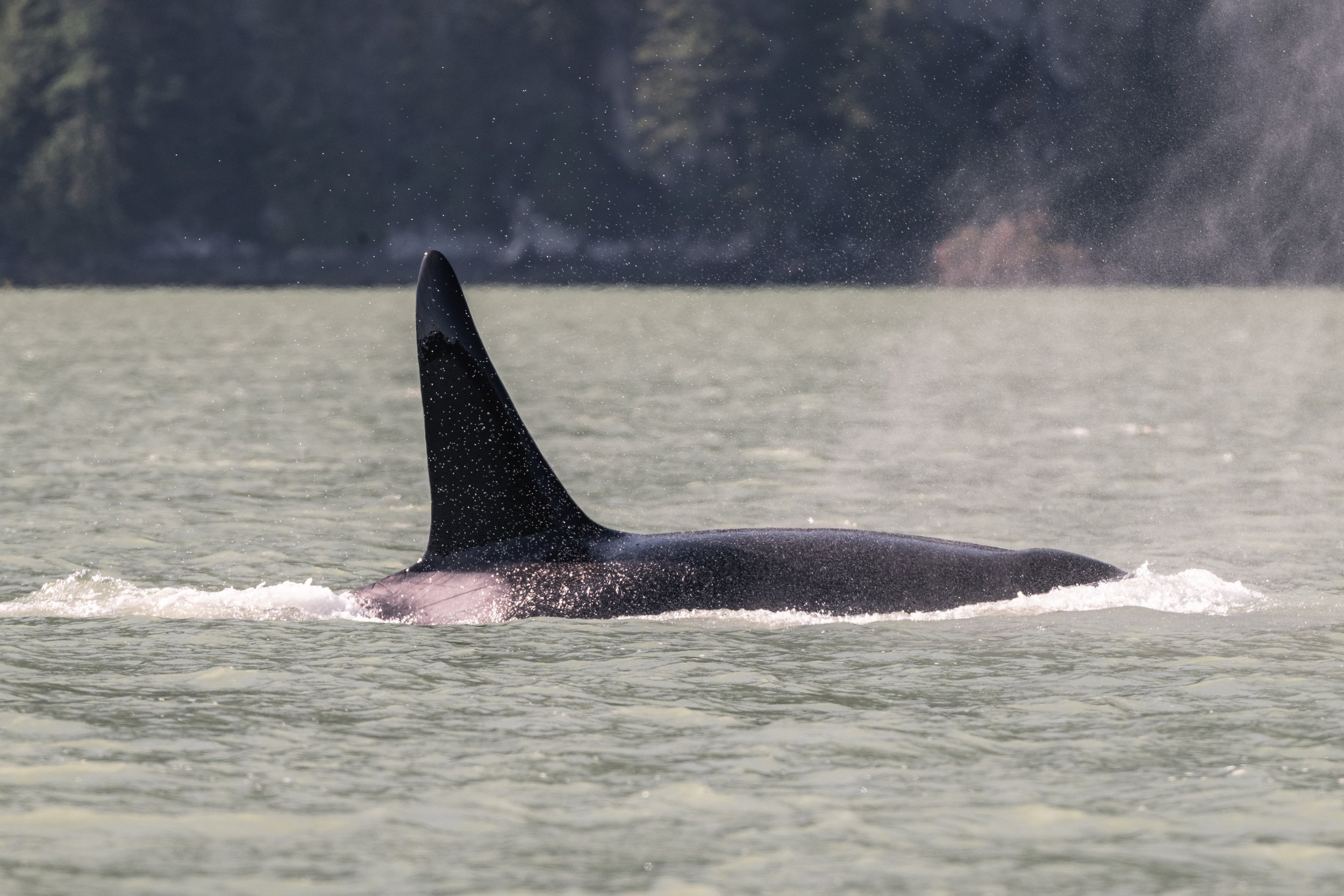
T101A Rush. Photo by Aly Kohlman.
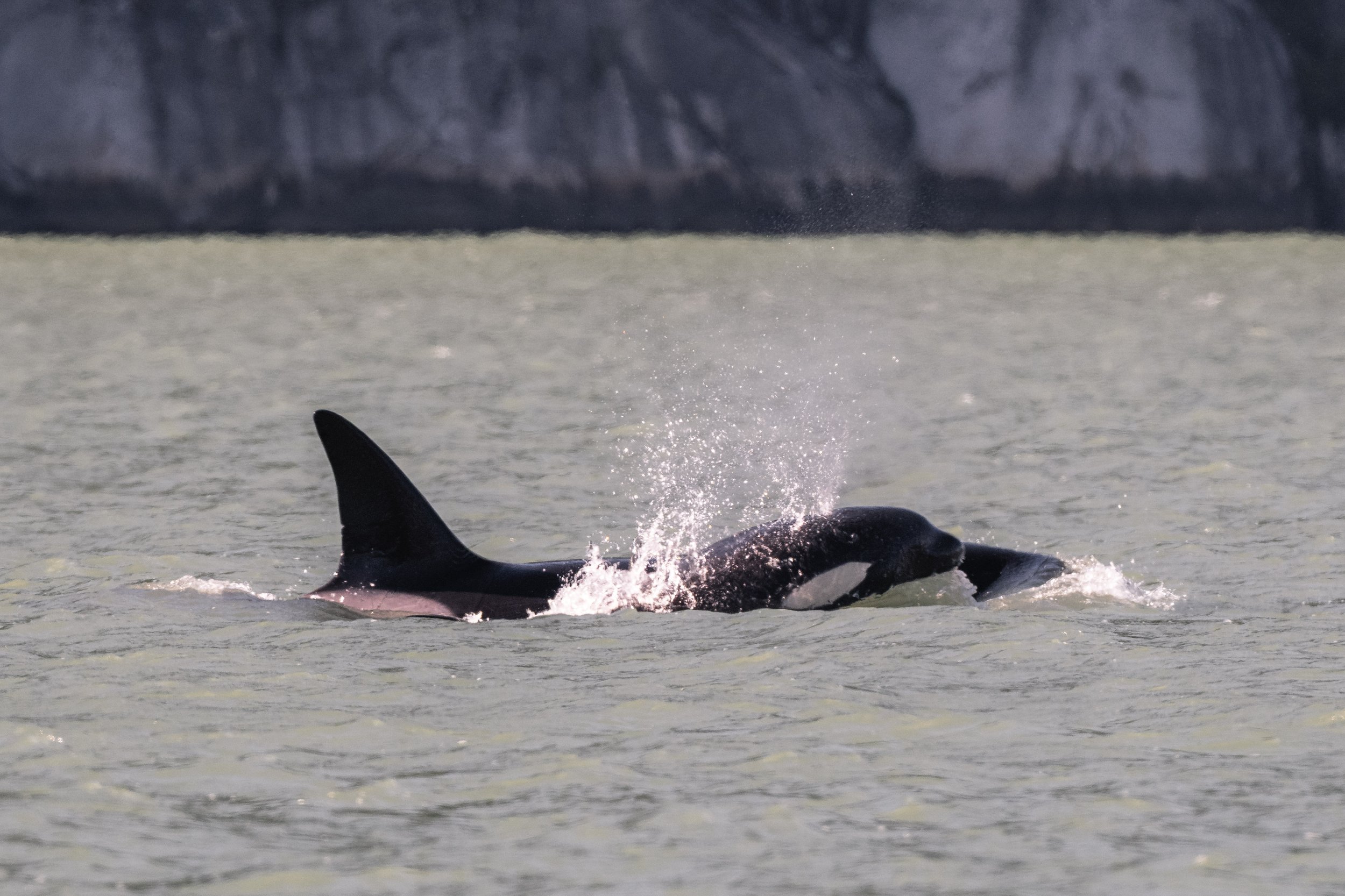
T124A4 Sabio with T124A1A Sabine, with their eyepatch visible above the surface. Photo by Aly Kohlman.
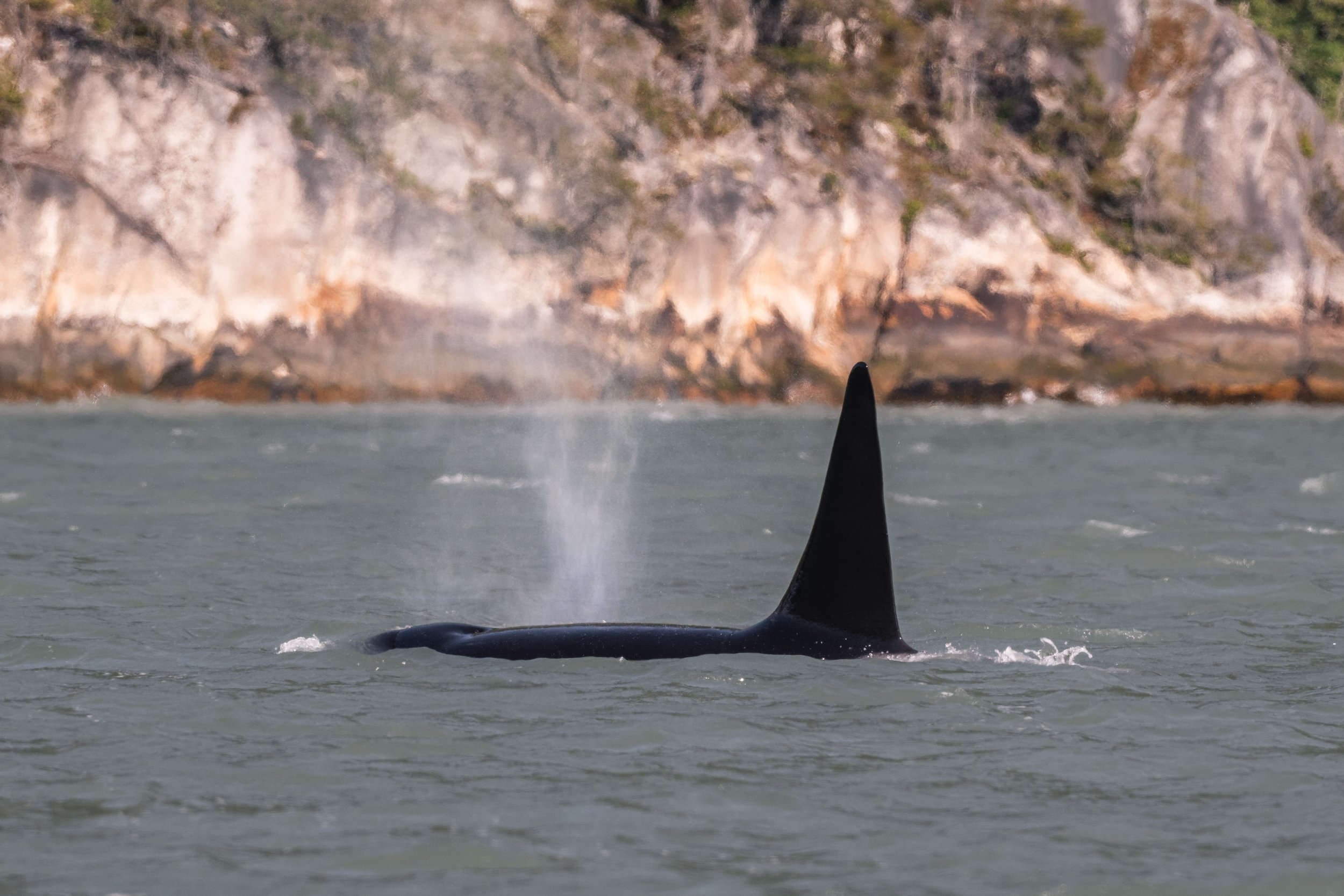
T101B Lagoon with a blow behind him. Photo by Aly Kohlman.
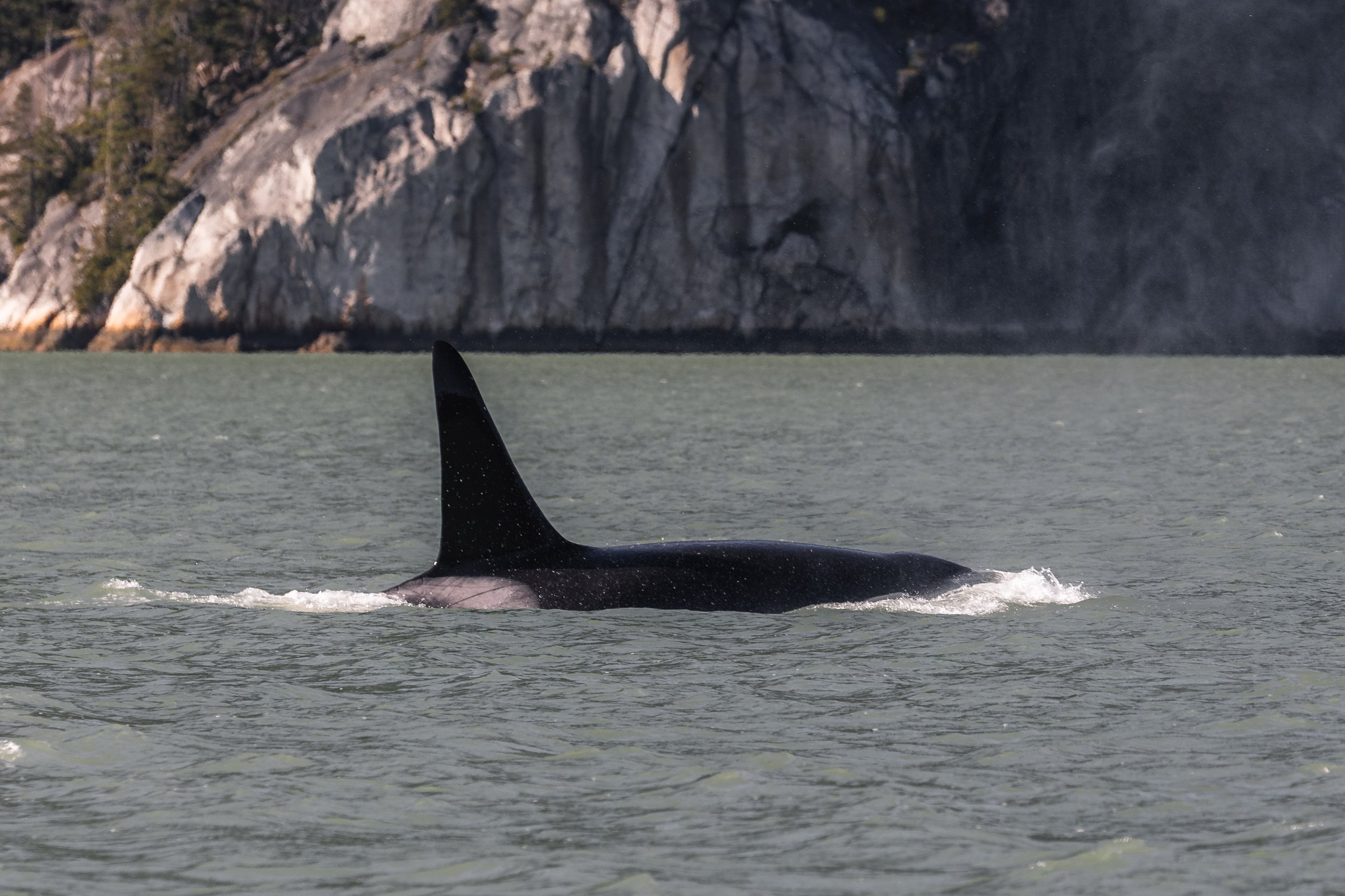
T101 Rush with his distinctly scarred dorsal fin. Photo by Hayleigh Hilbert.
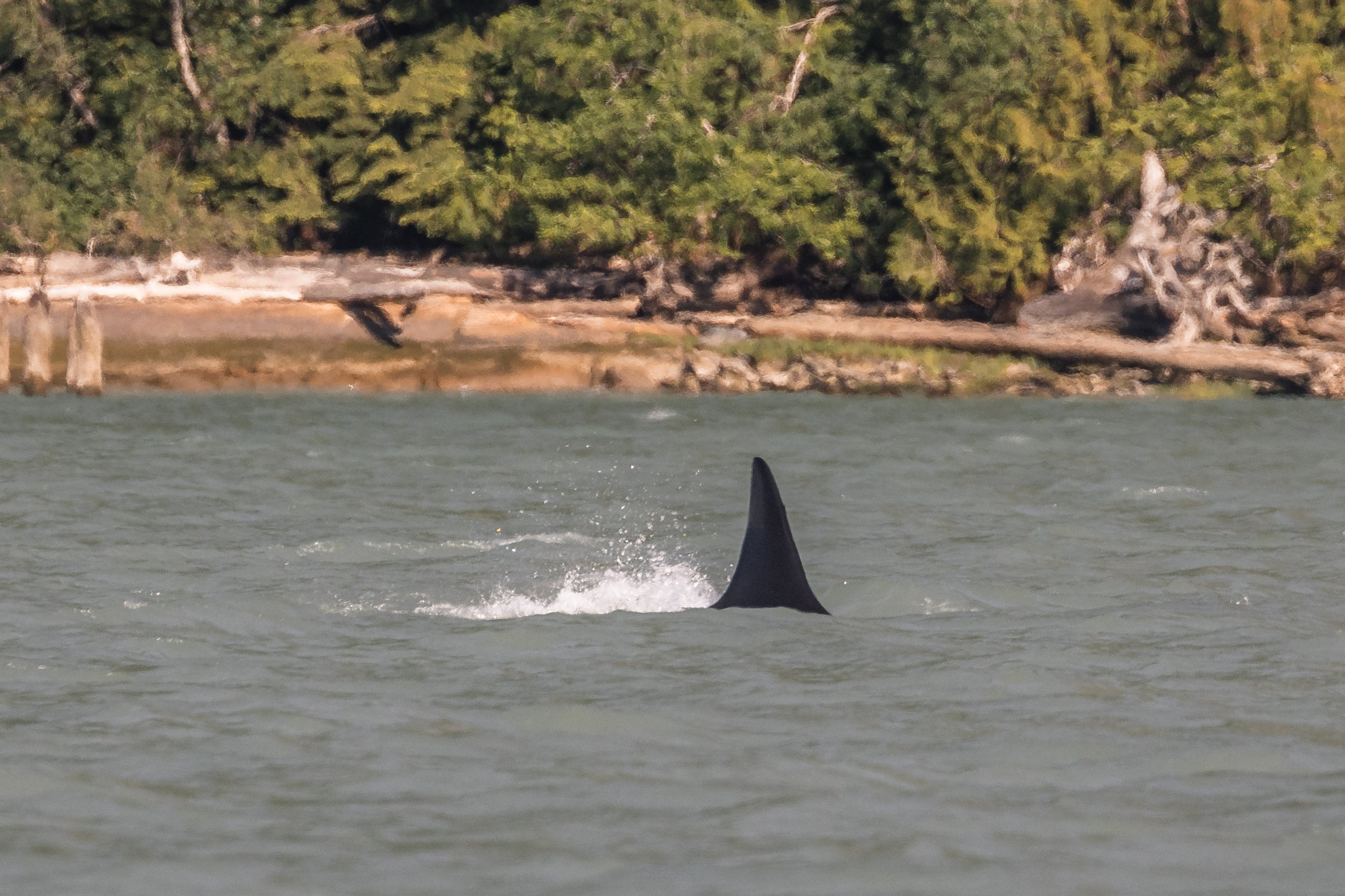
T101 Reef charging along. Photo by Hayleigh Hilbert.
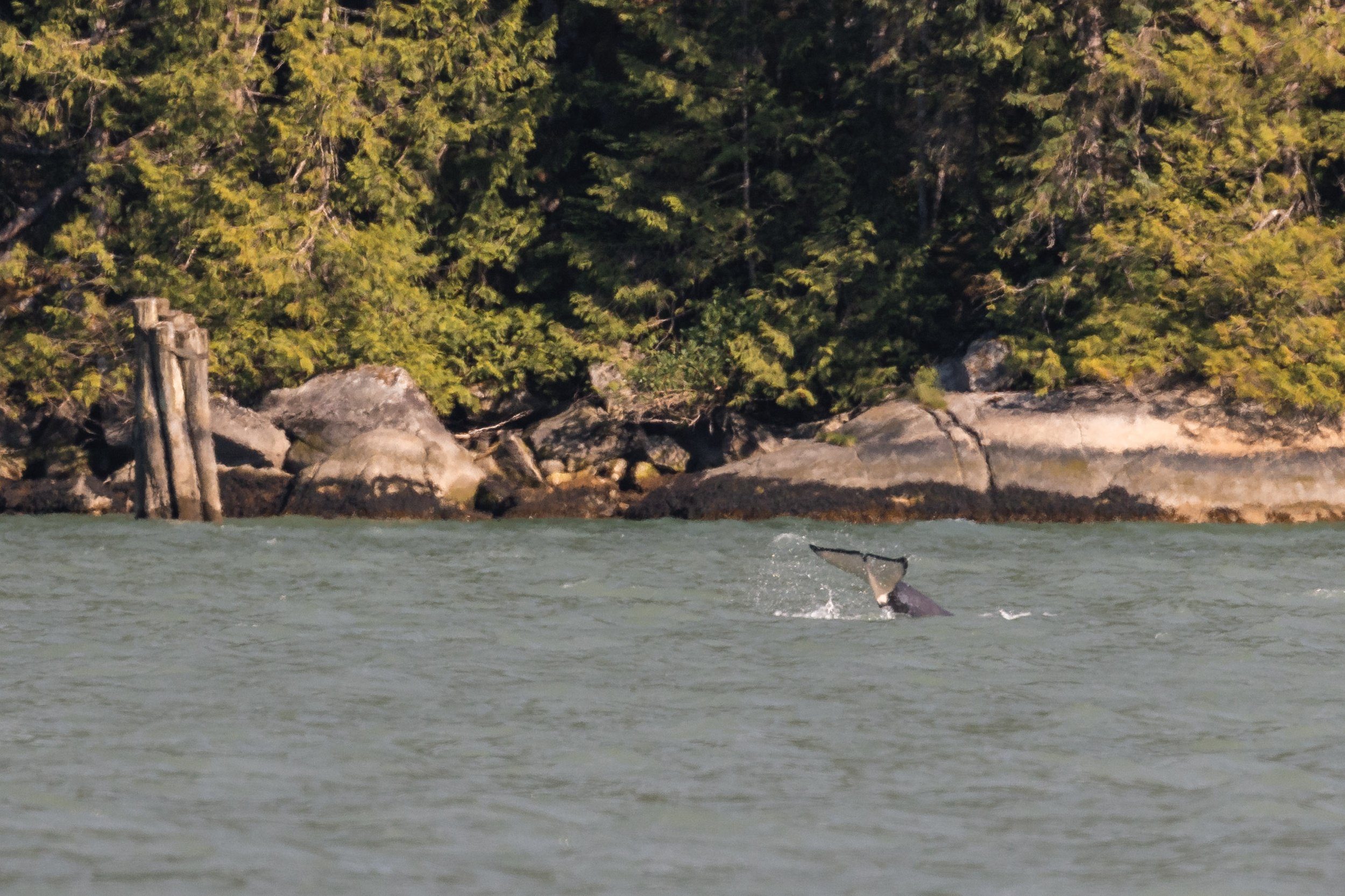
A tiny tail slap! Photo by Hayleigh Hilbert.
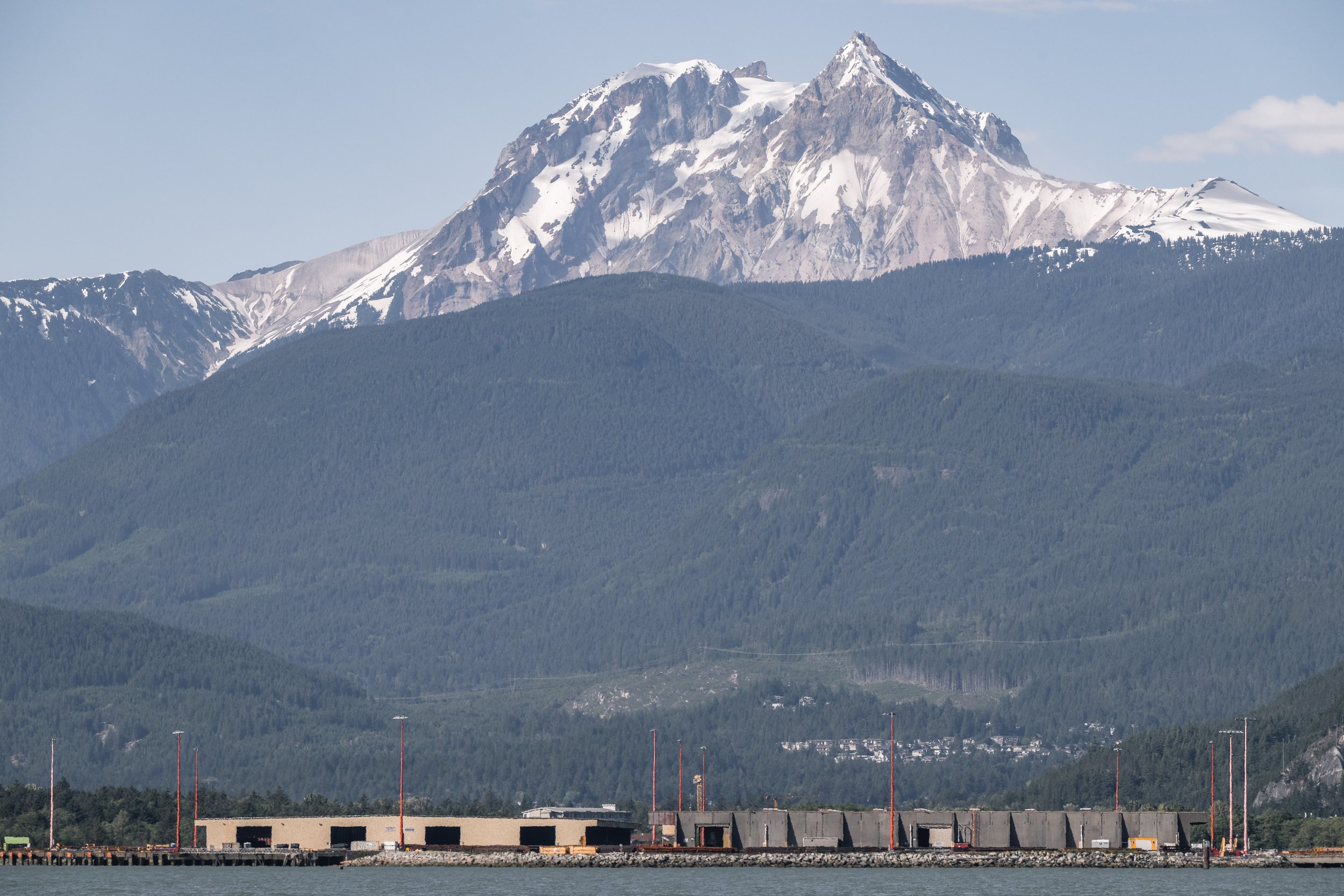
A beautiful view of Mount Garibaldi. Photo by Aly Kohlman.
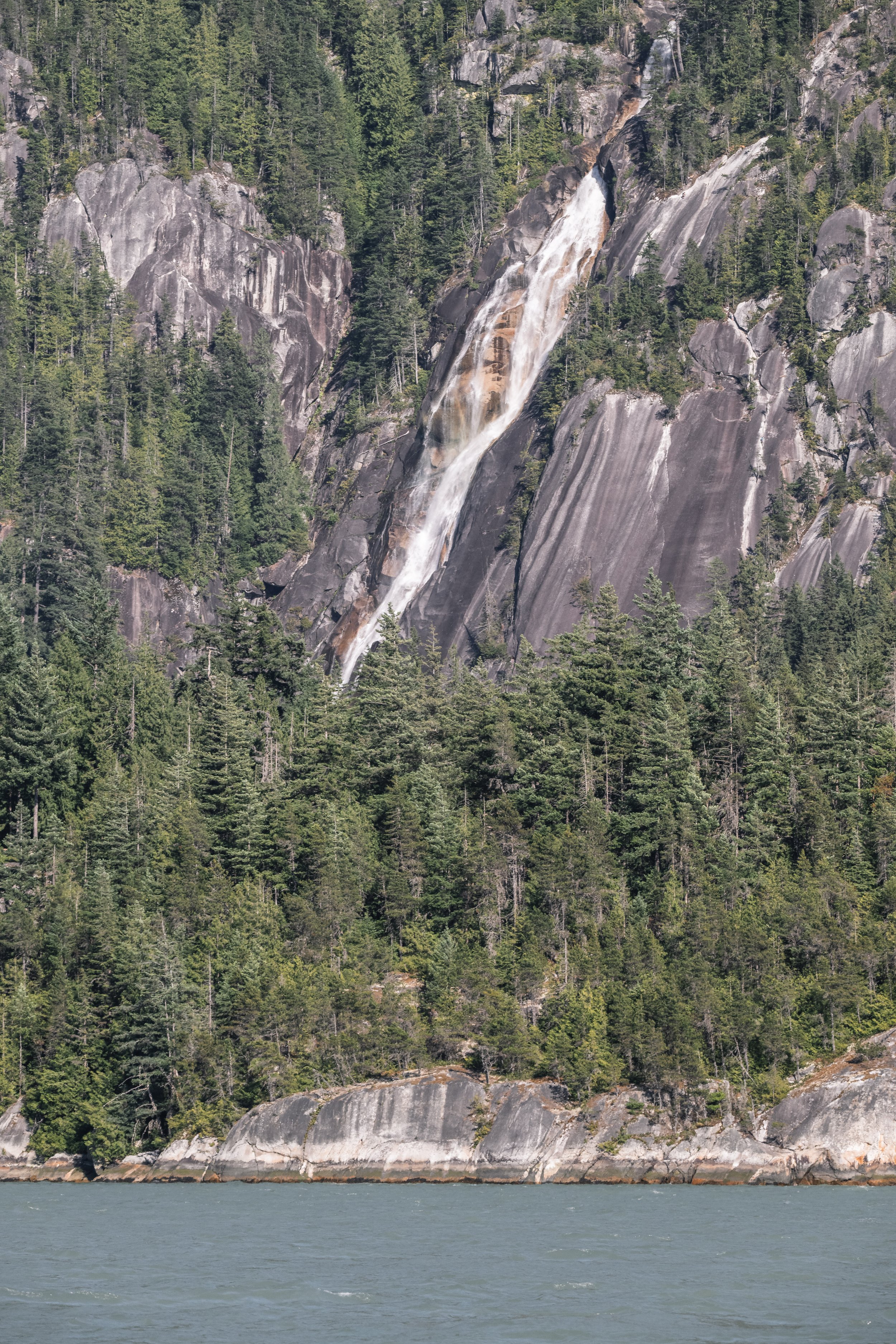
A waterfall cascading down the rocks in Howe Sound. Photo by Aly Kohlman.
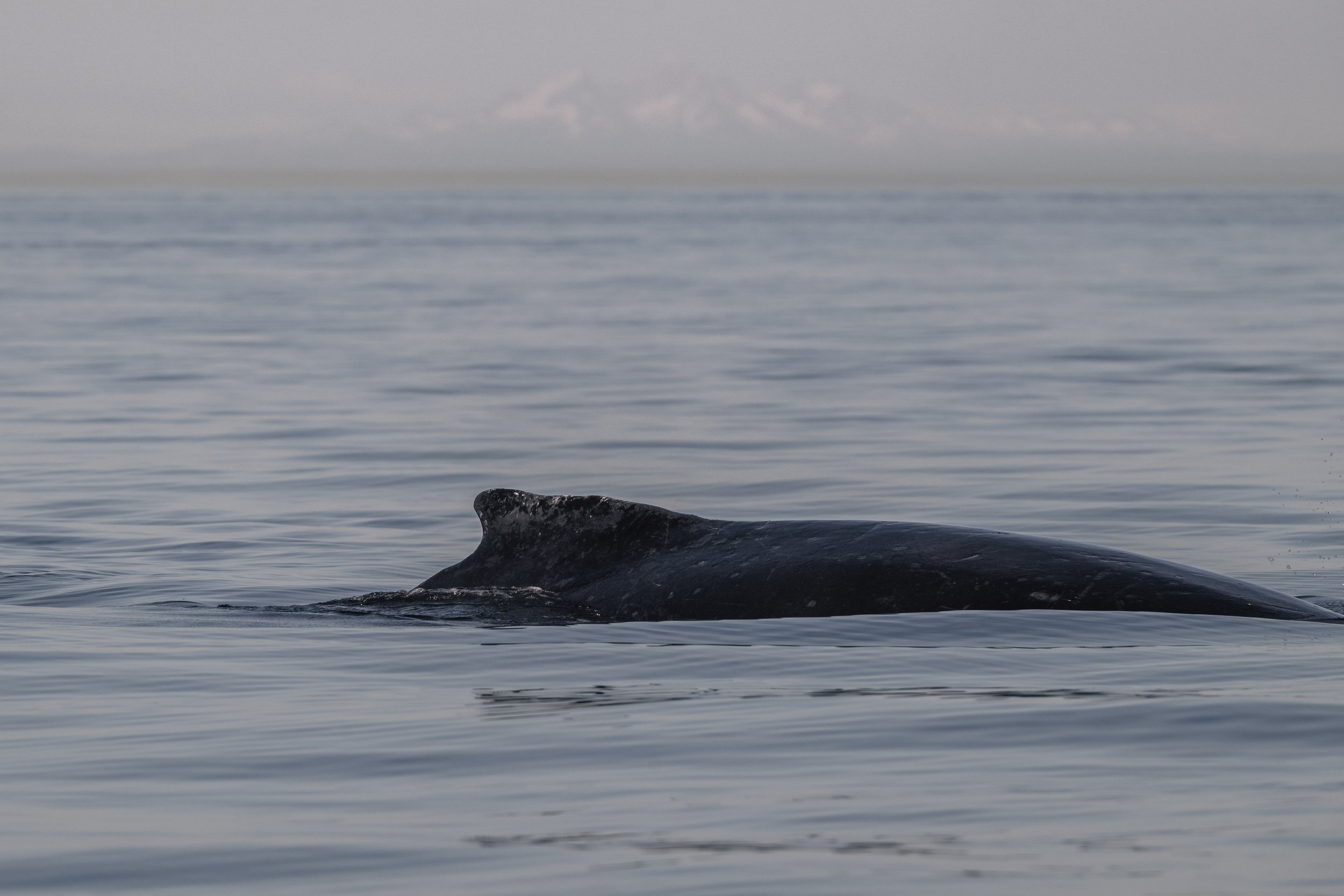
Ulli’s uniquely scarred dorsal fin. Photo by Aly Kohlman.
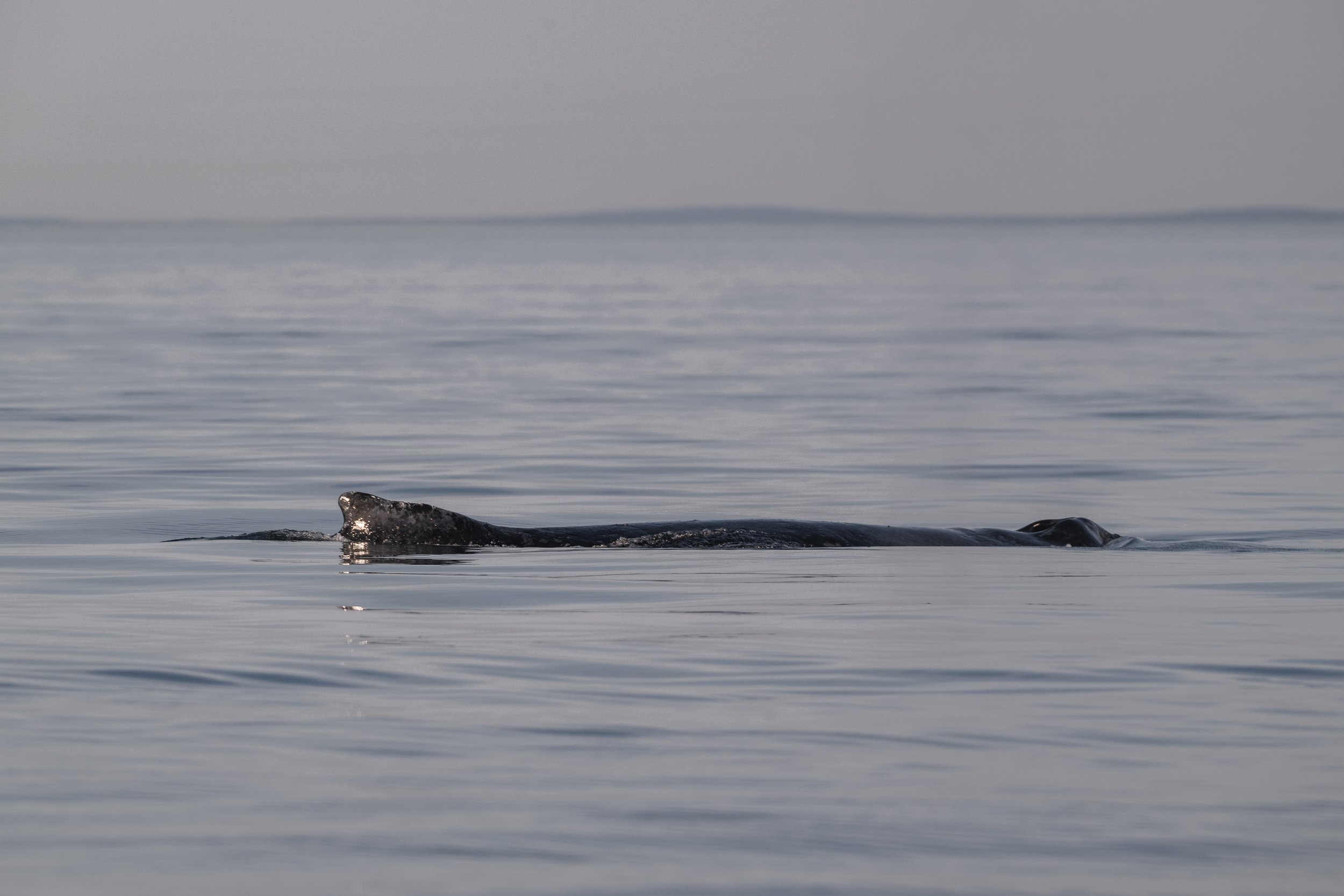
Ulli travelling with their nostrils visible above the surface. Photo by Aly Kohlman.
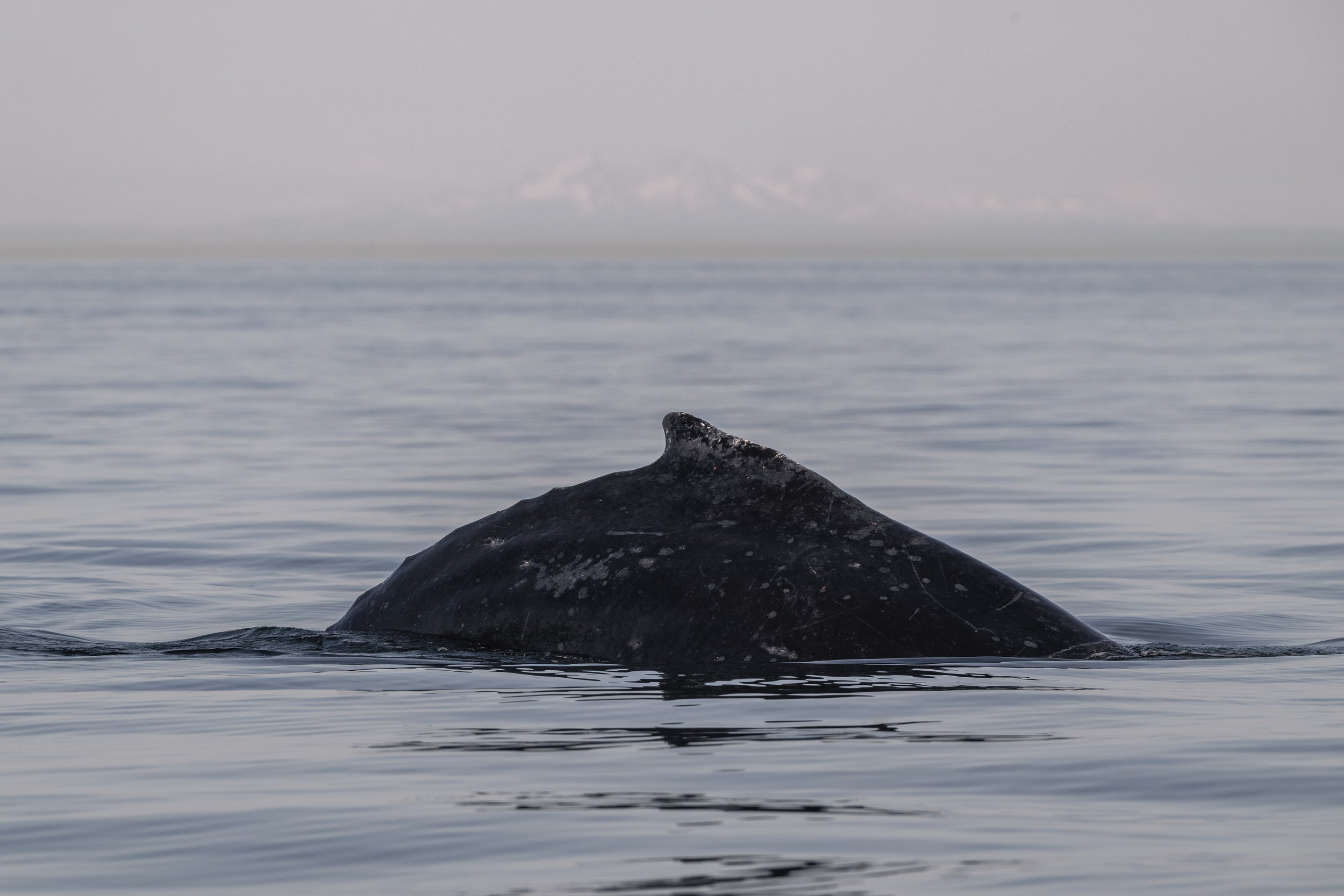
Ulli preparing to dive. Photo by Aly Kohlman.
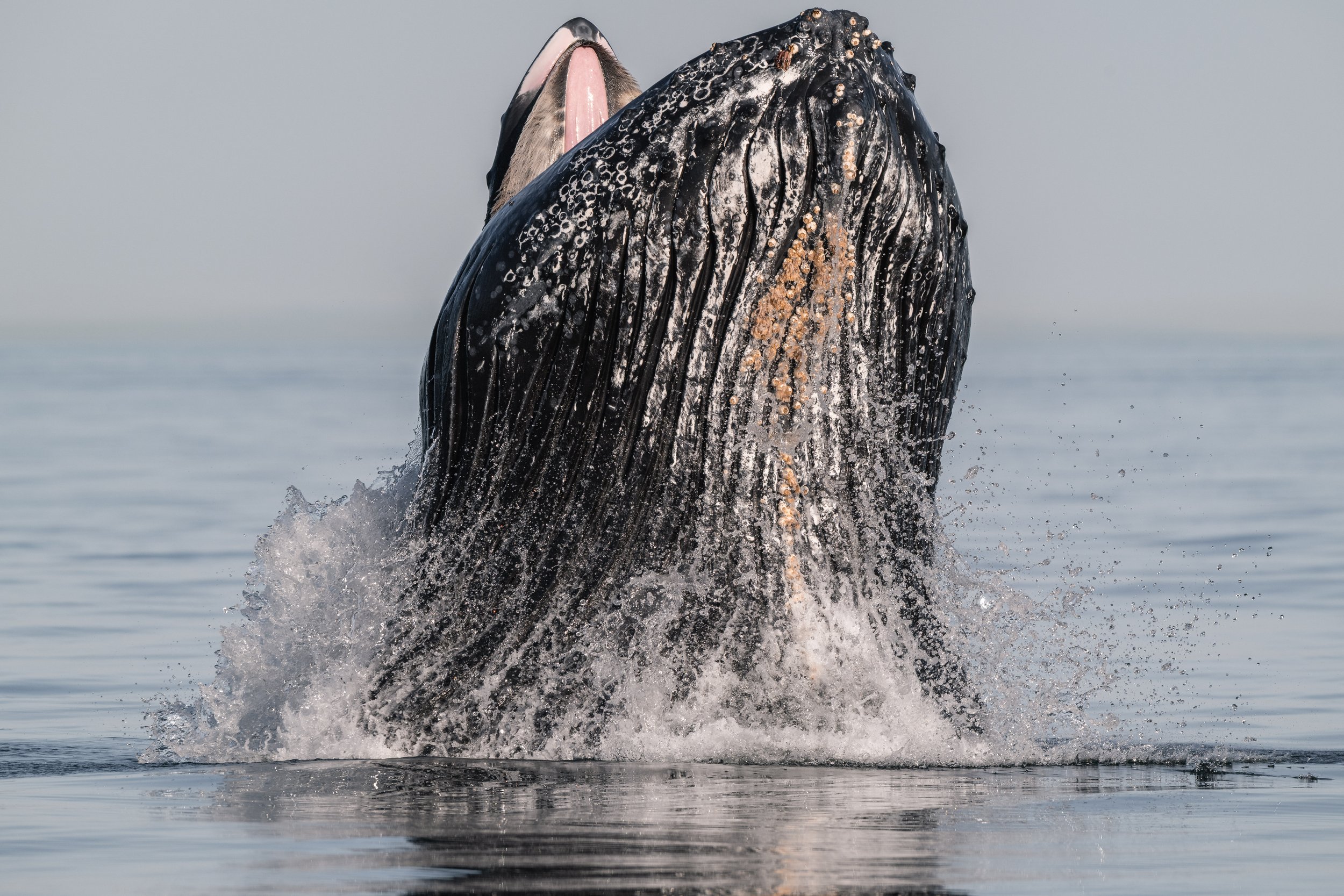
A dramatic lunge from Ulli - you can see their baleen plates in their mouth, as well as a multitude of barancles on their throat and their throat pleats expanding! Photo by Aly Kohlman.
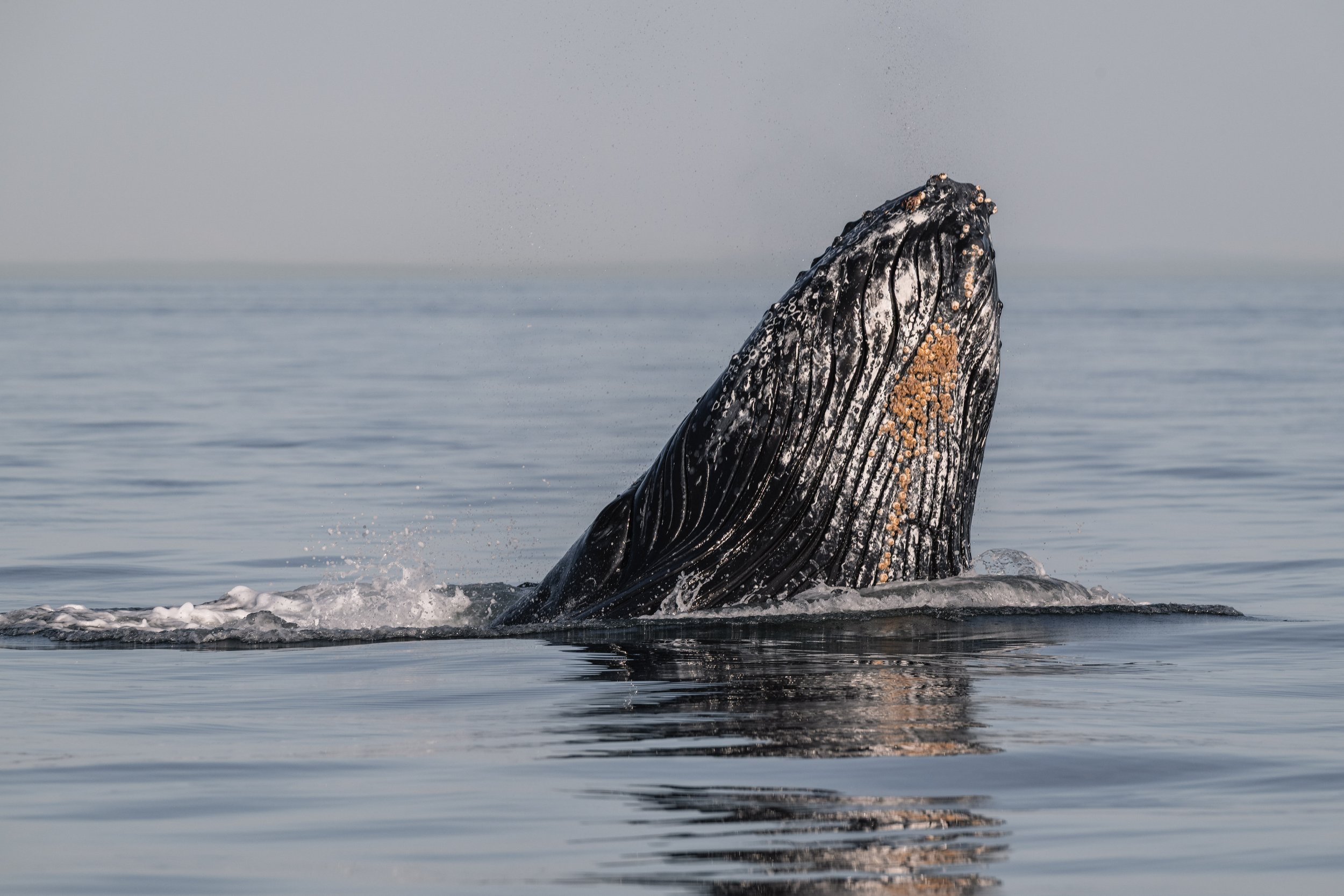
Coming back into the water. Photo by Aly Kohlman.
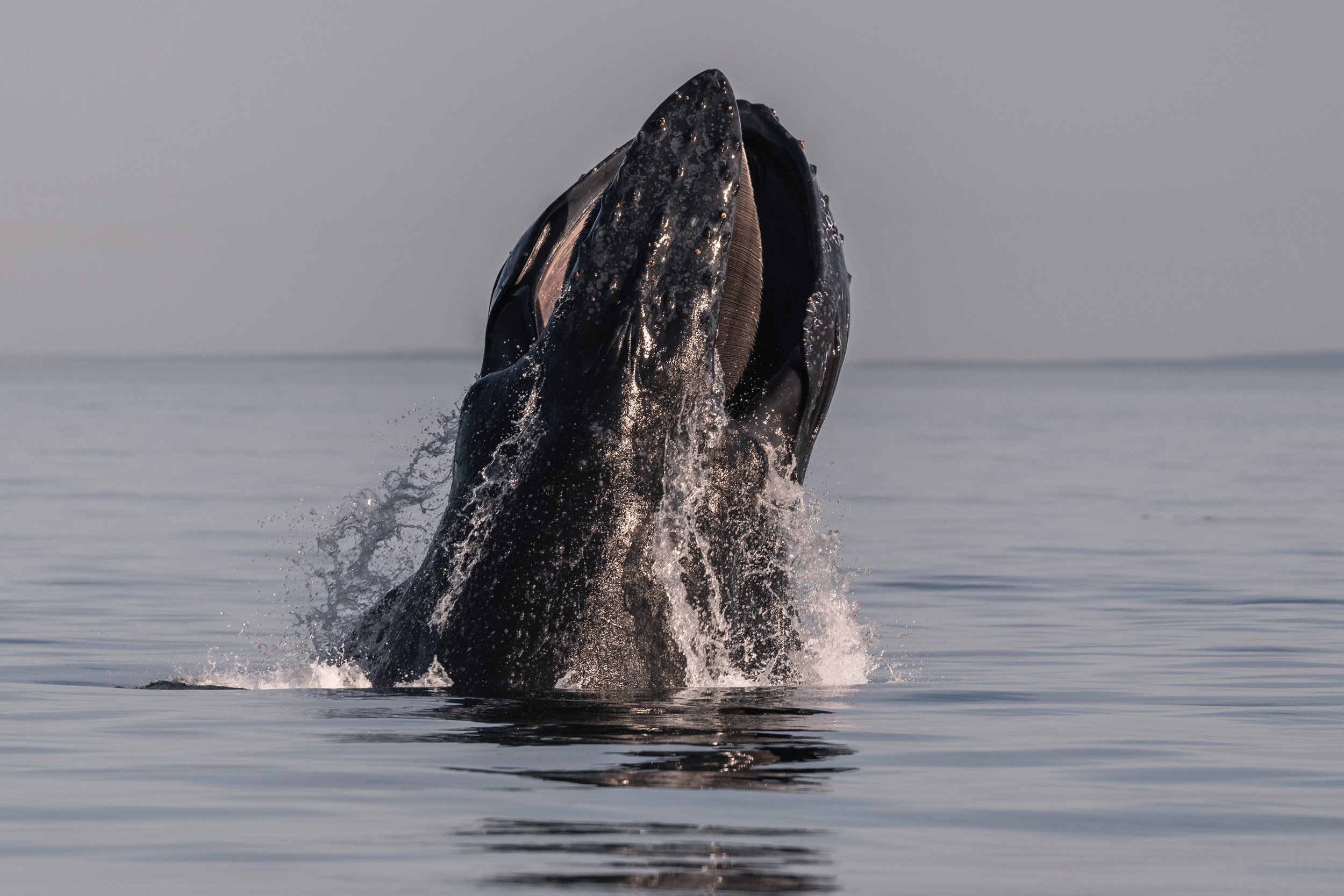
A different angle for a lungefeed! The water is visible streaming from the corner of their mouth. Photo by Aly Kohlman.
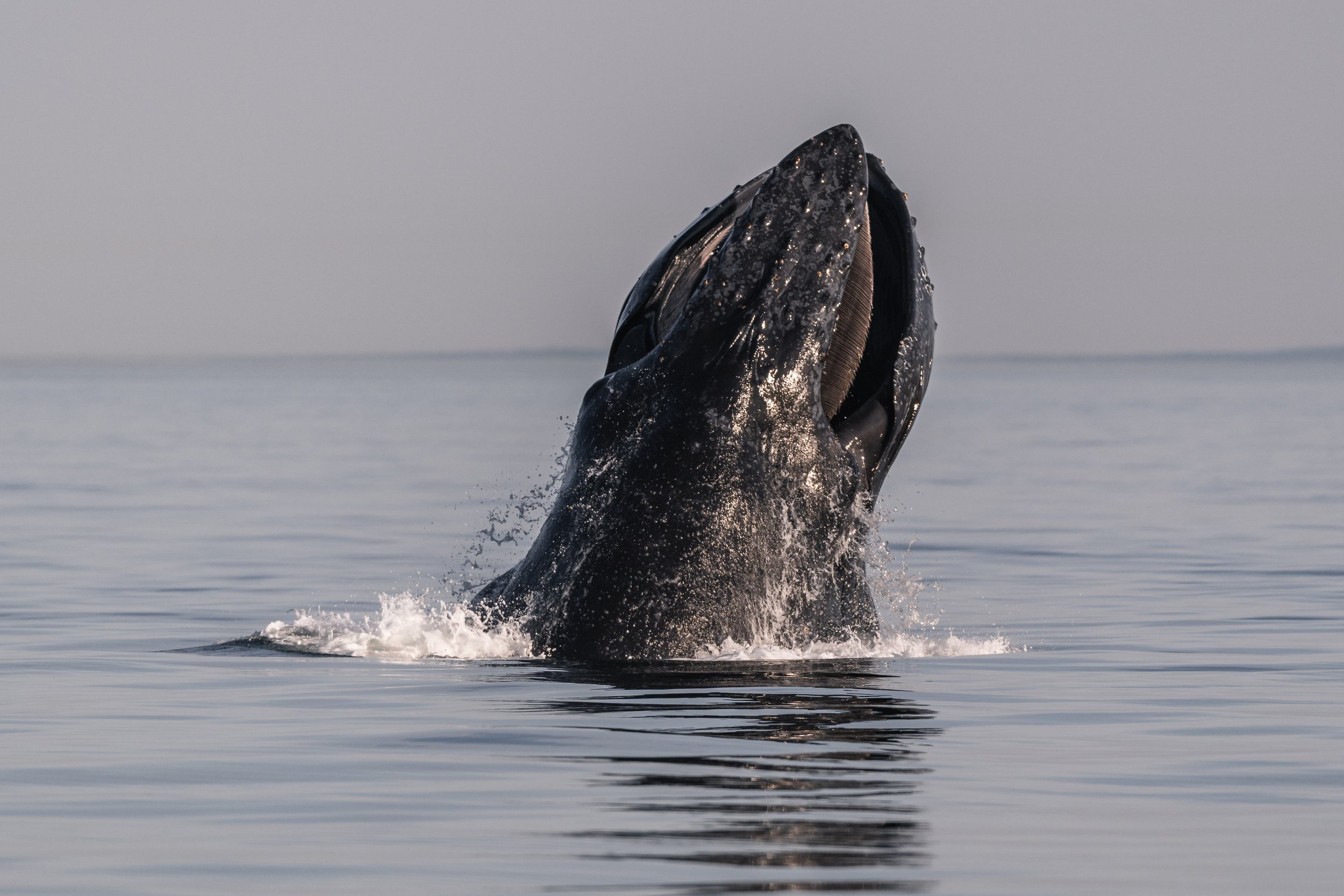
Can you spot the baleen from this angle? Photo by Aly Kohlman.
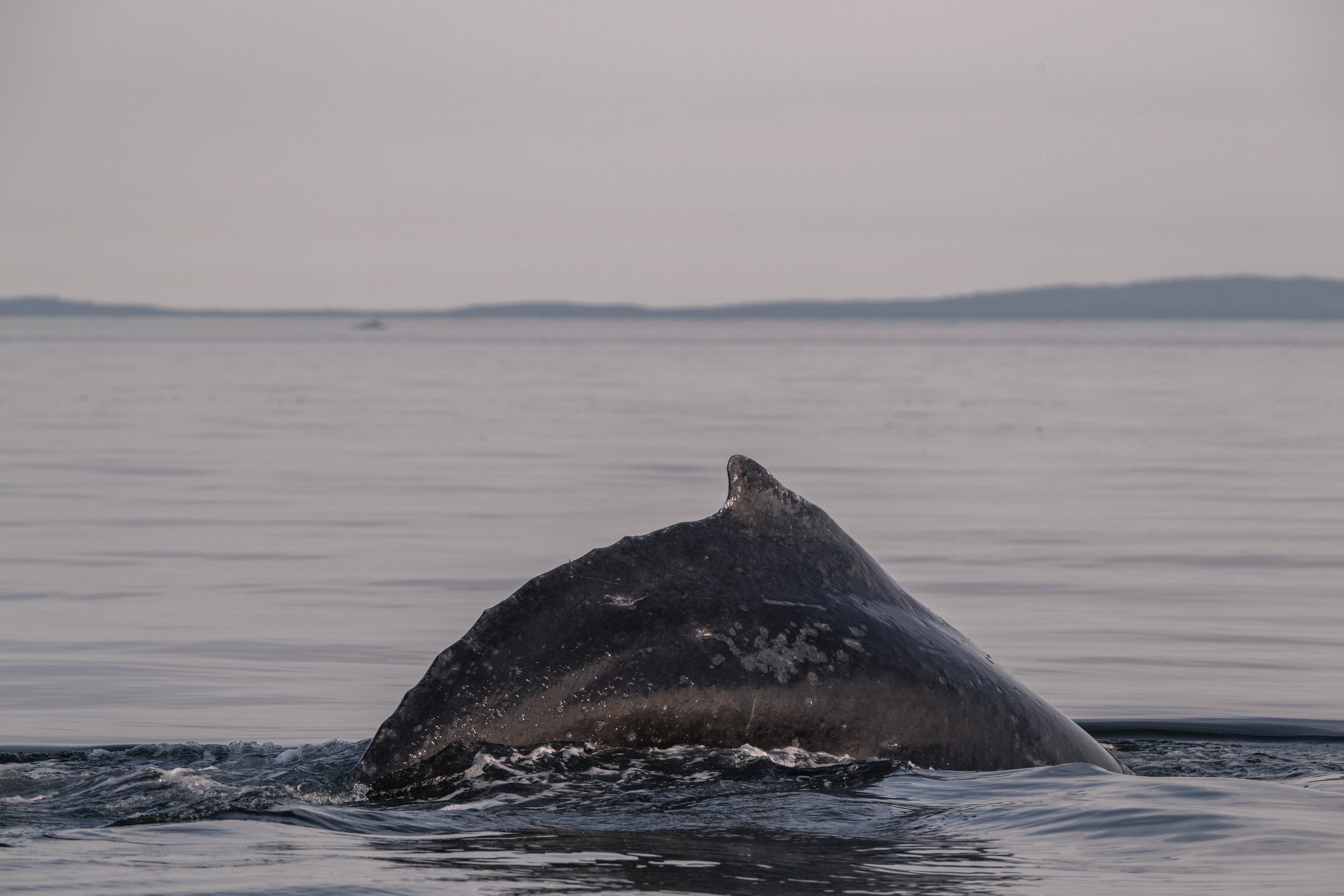
Arching their back as Ulli prepares to go down again. Photo by Aly Kohlman.
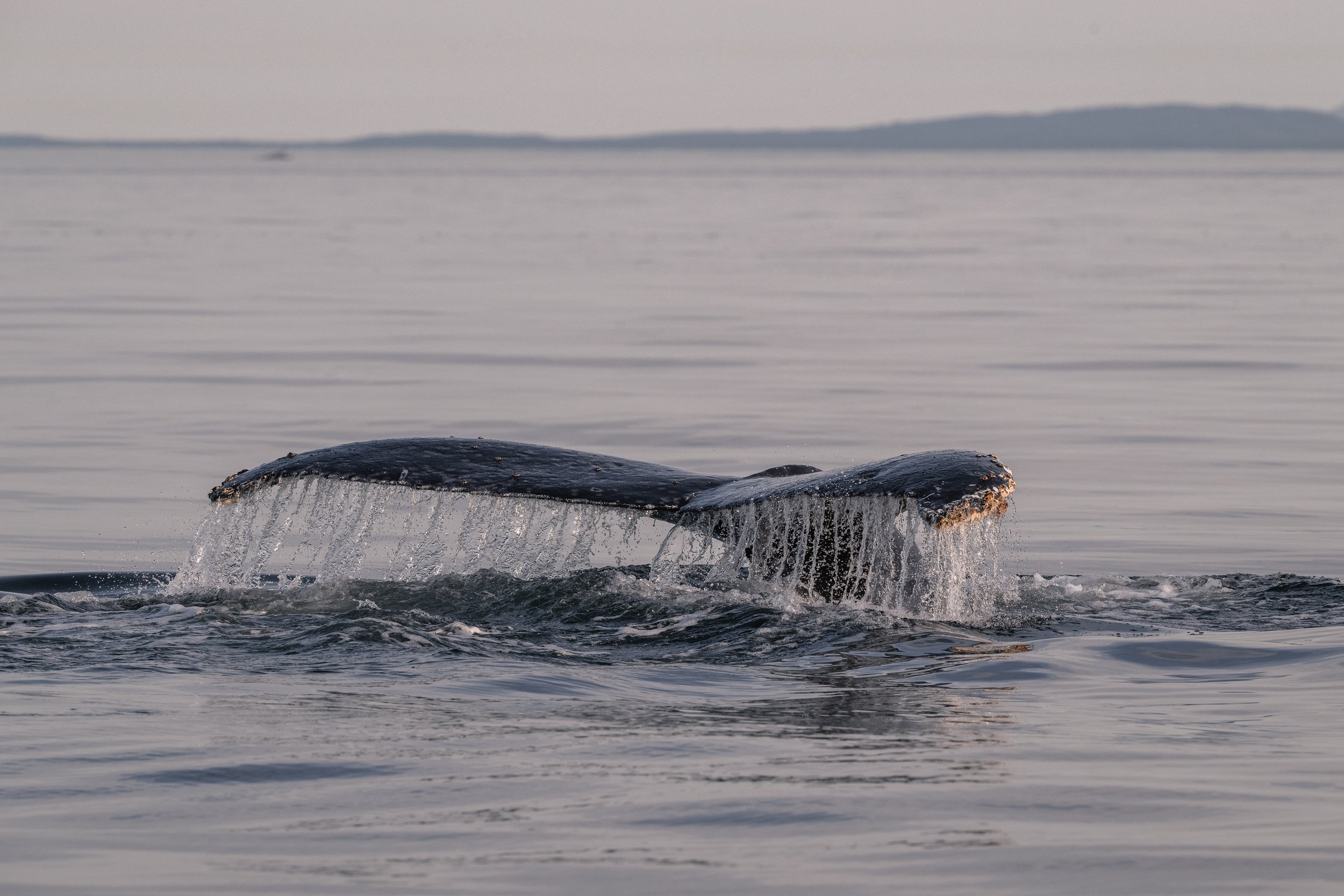
The top of Ulli’s fluke is pitted, with many lice and barancles visible on its surface. Photo by Aly Kohlman.
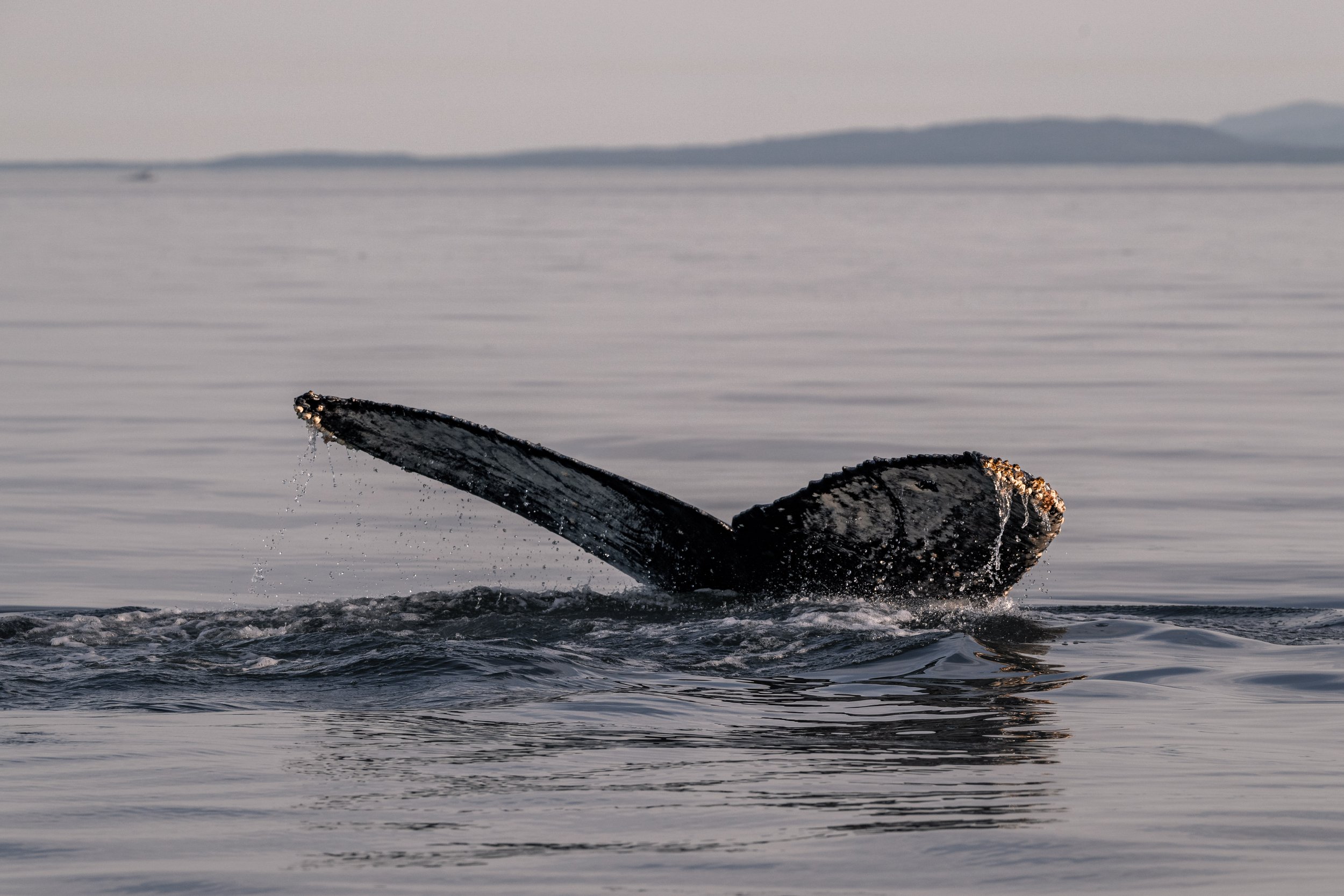
Ulli’s beautiful watercolour-esque fluke. Photo by Aly Kohlman.
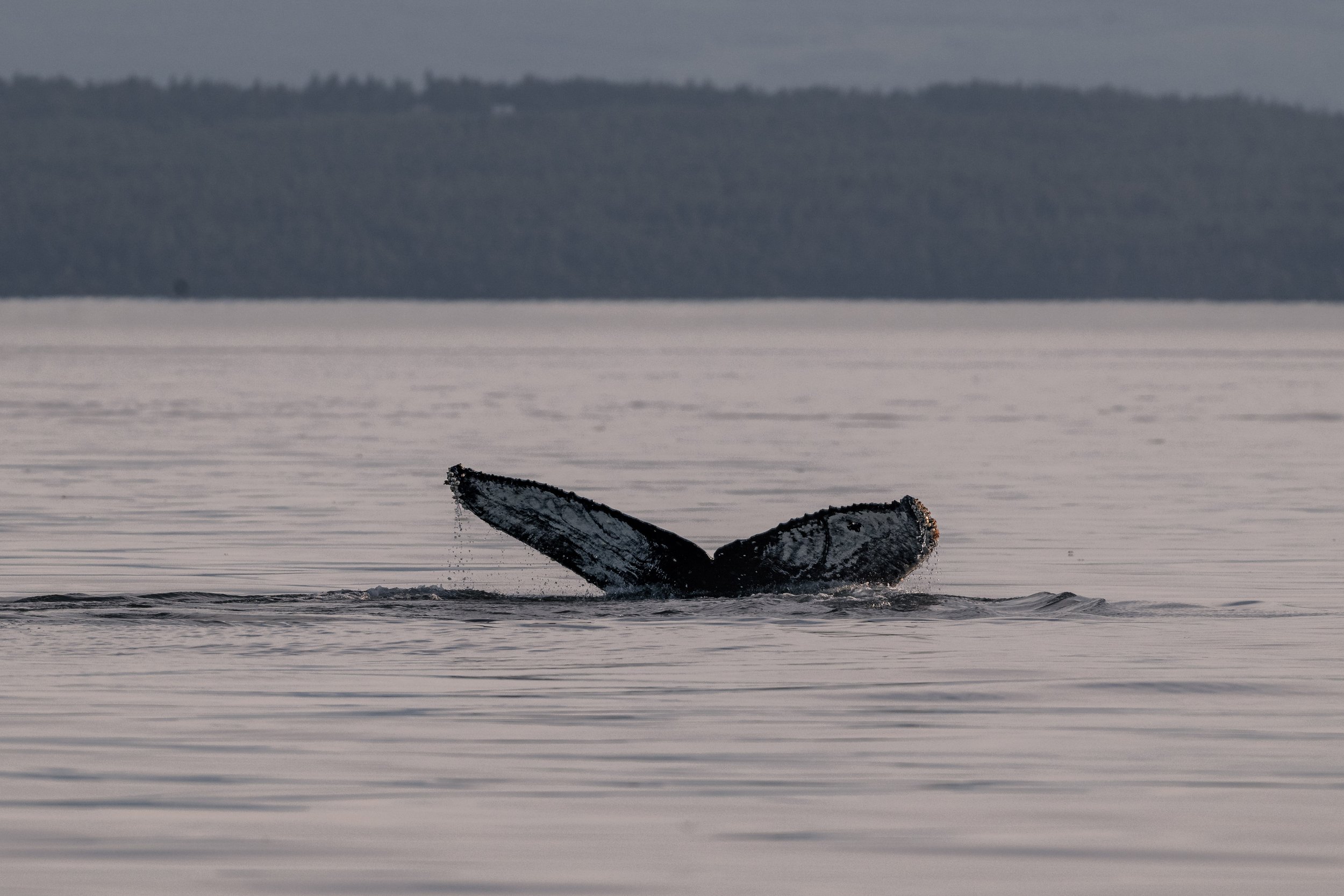
A final dive from Ulli. Photo by Aly Kohlman.
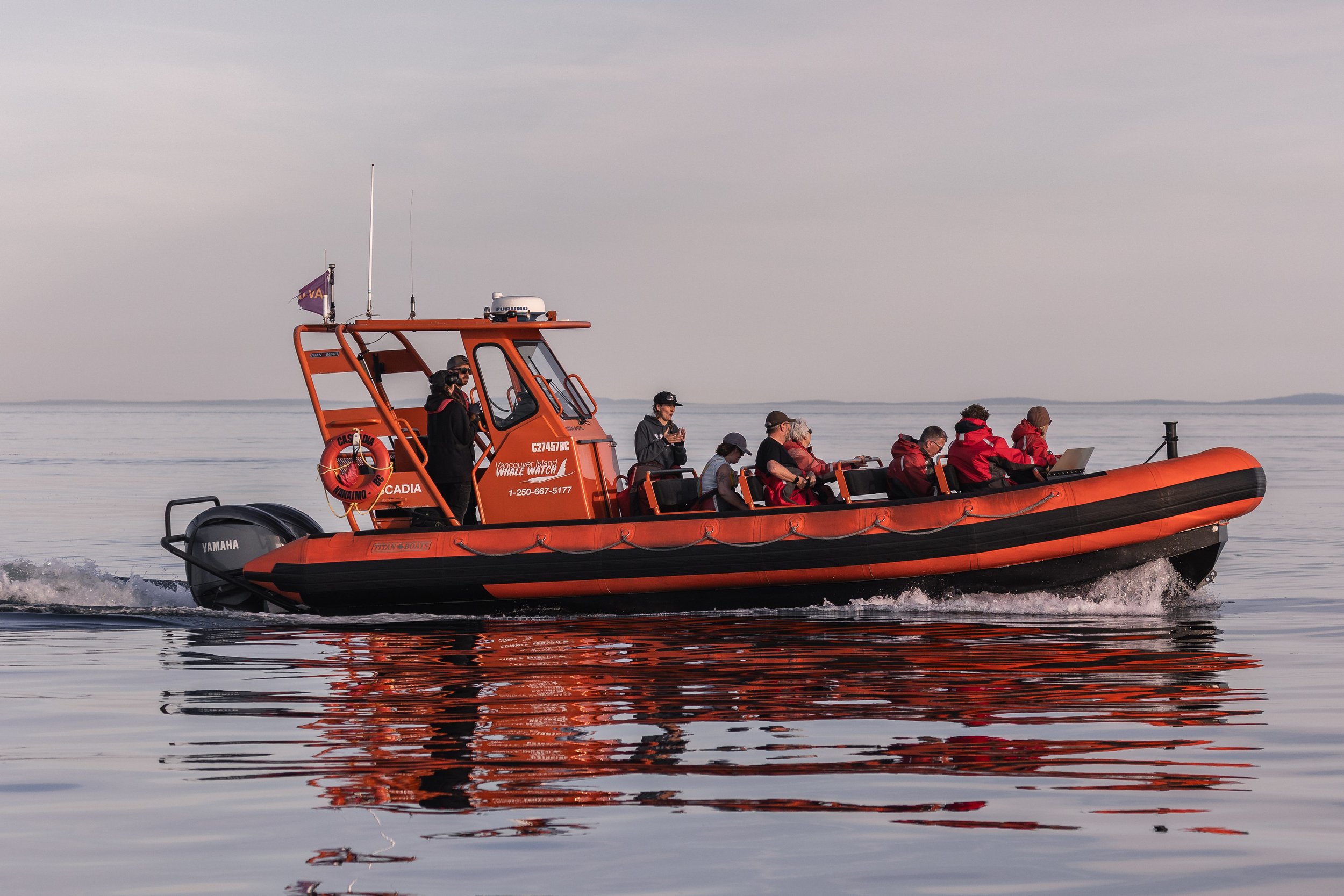
Cascadia during the tour. Photo by Hayleigh Hilbert.
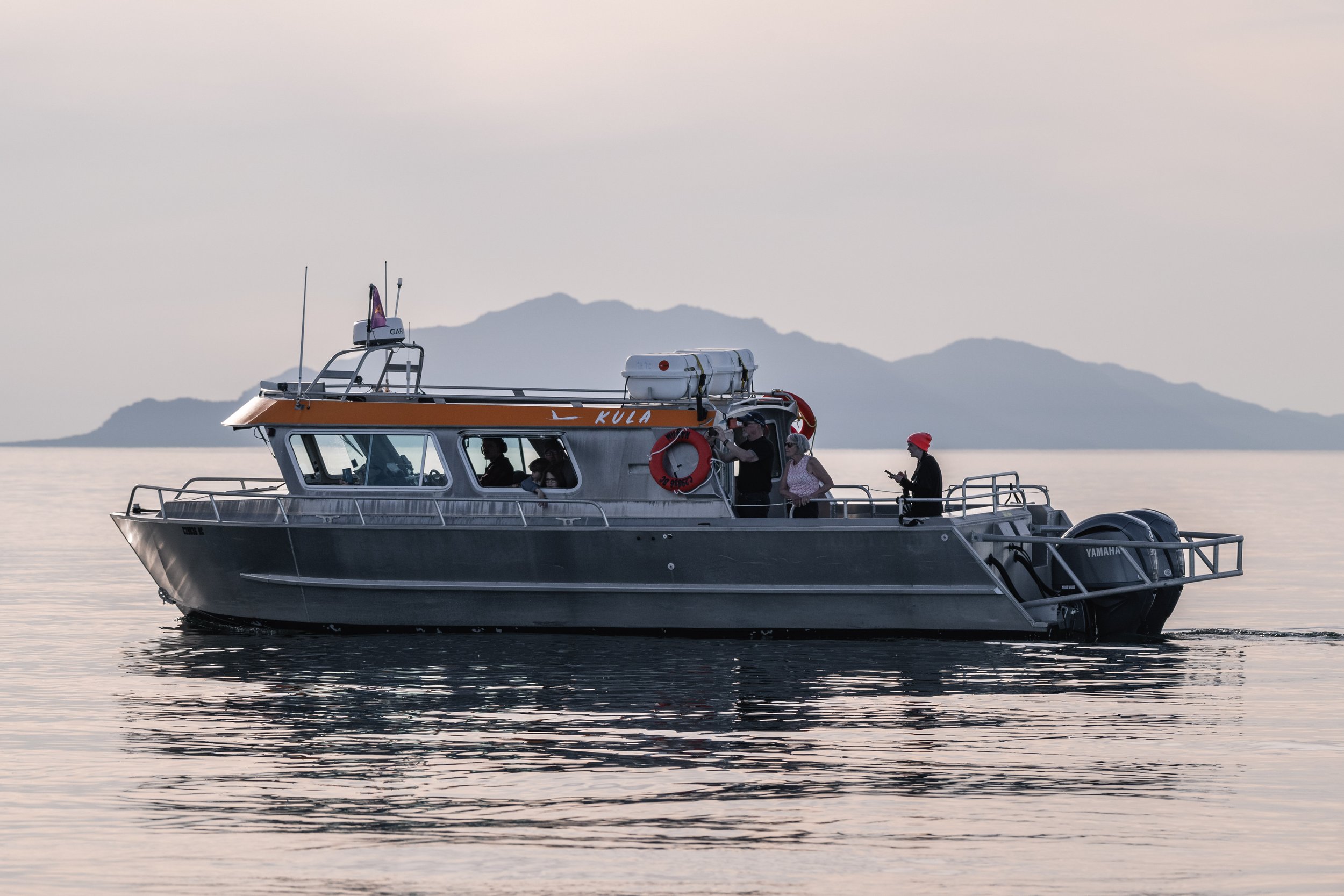
Kula on scene with the whales. Photo by Aly Kohlman.
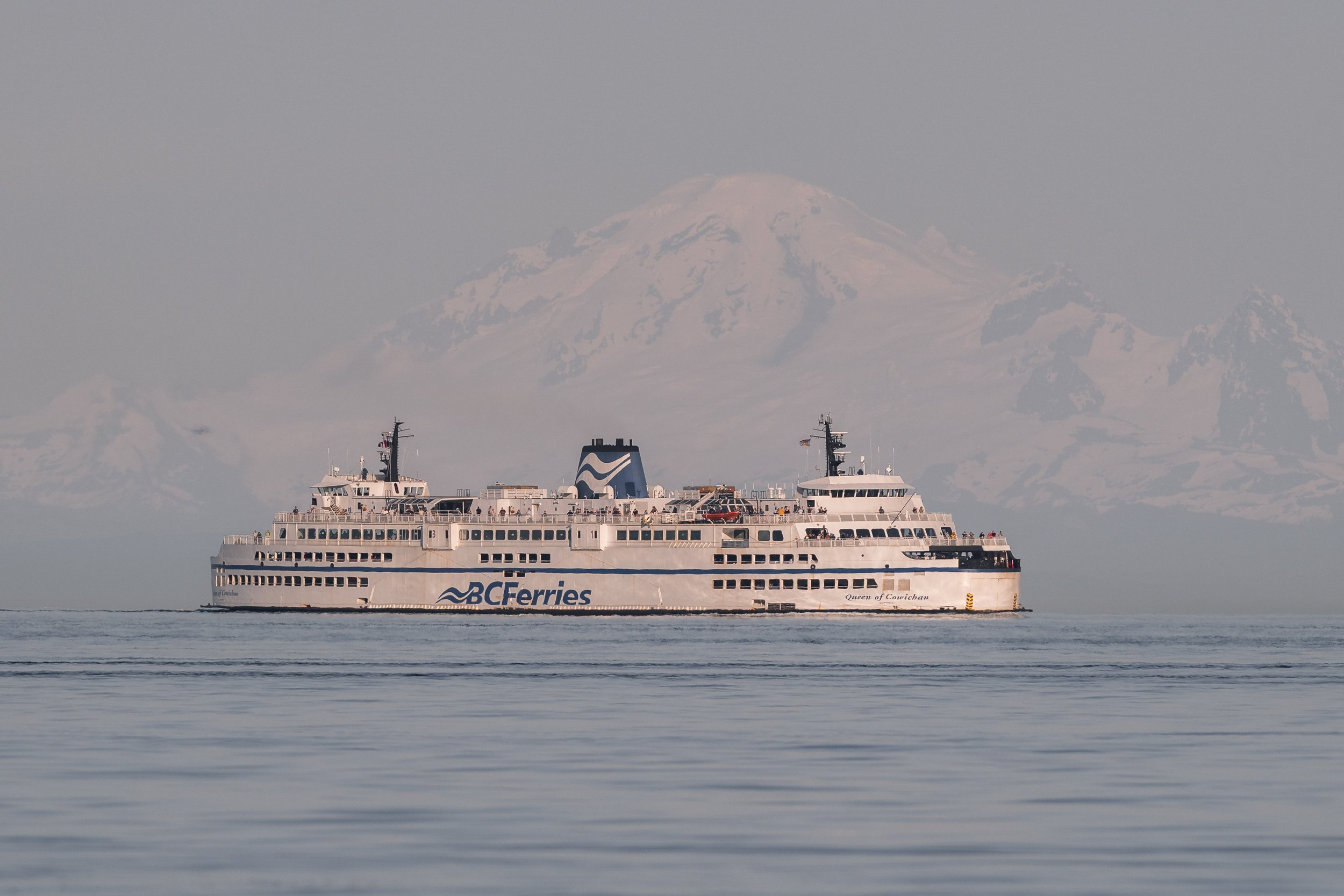
The Queen of Cowichan with Mt.Baker behind them. Photo by Aly Kohlman.
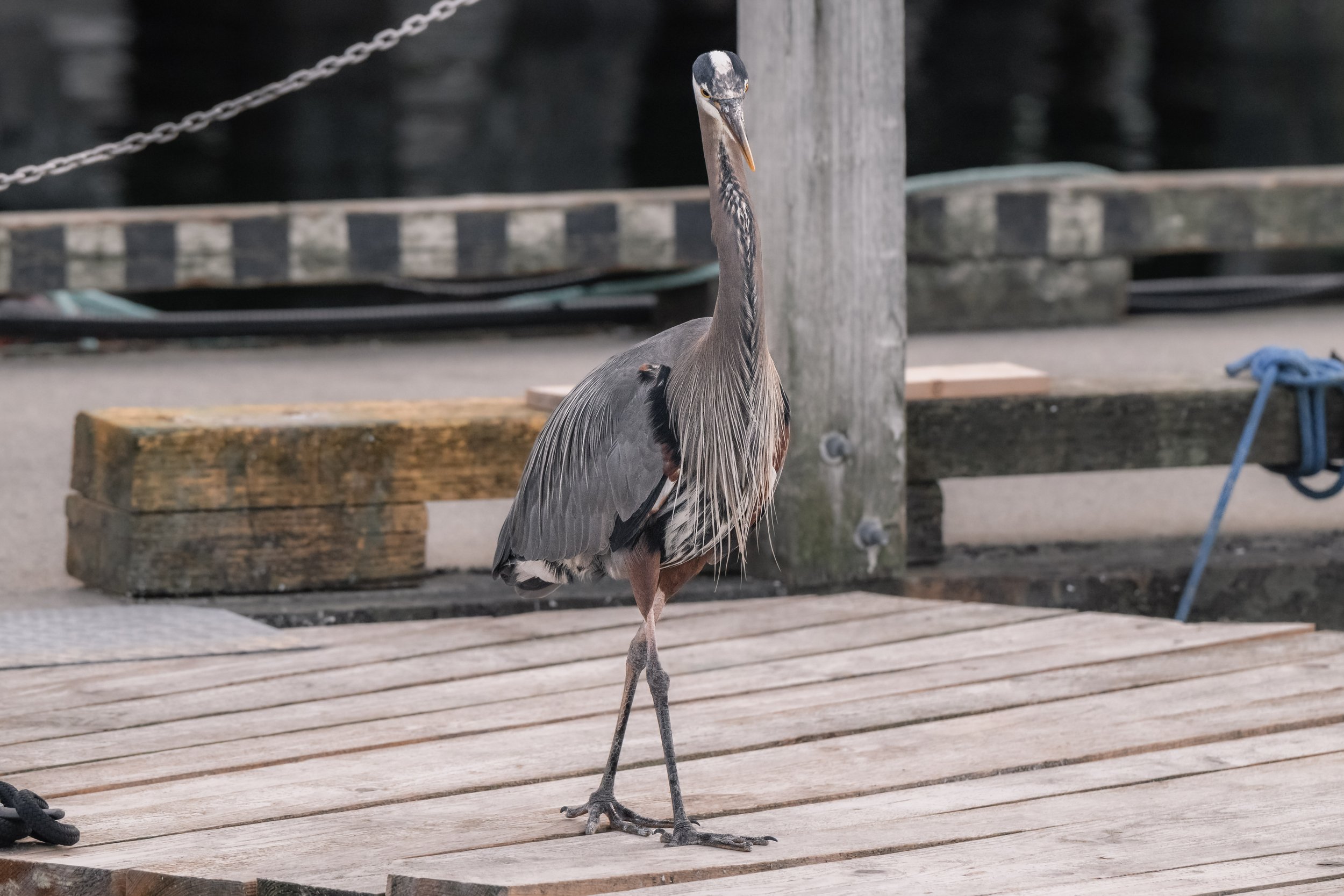
A Great Blue Heron strutting on the docks. Photo by Aly Kohlman.