
June 20, 2026, 10:30 AM - Travelling the Strait of Georgia with Whidbey II, Chainsaw, and Humpback Whales
Another beautiful day awaited us on the water, filled with sunshine, whales, and wildlife. The adventure began with two of our vessels departing Nanaimo Harbour and heading into the Strait of Georgia. This expansive body of water, separating Vancouver Island and the Southern Gulf Islands from mainland British Columbia, is one of the best places to encounter whales. Its rich waters are fueled by an influx of nutrients from rivers, tidal mixing, and even the animals that call this ecosystem home.
We travelled through these productive waters until we received word that another nearby vessel had come across exactly what we were hoping to find: a pod of Transient Orca! We made our way over and were greeted by two of the most recognizable whales in the area: T065 Whidbey II and her iconic son, T063 Chainsaw.
T065 Whidbey II ♀ (~1971)
T063 Chainsaw ♂ (~1978)
Although female orcas are the leaders of their society, it is often the males that receive the most attention from the whale watching community thanks to the species' striking sexual dimorphism. Male orcas are considerably larger than females, particularly when it comes to their dorsal fins. A mature female's dorsal fin typically reaches 3 to 4 feet in height, while a male's can tower up to 6 feet tall. These impressive fins are often the first thing people notice, and when you add distinctive features like the large notches found in Chainsaw's fin, they become impossible to miss. You don't need to be an orca expert to recognize that silhouette on the horizon.
Whidbey II also carries a notch in her dorsal fin, though it is much smaller and more difficult to spot from a distance. Thankfully, our vessels are equipped with high-powered camera equipment that allows us to photograph individuals and confirm their identities, even when the differences are subtle.
Whidbey and Chainsaw also illustrate another fascinating aspect of orca society: despite their impressive appearance, adult males remain deeply dependent on their mothers throughout their lives. Most males never permanently leave their mother's side, travelling with her for decades. While there are occasional exceptions, this lifelong bond is one of the defining characteristics of resident and transient orca populations alike. It also helps researchers identify individuals, as certain whales are so consistently seen together. If you spot Chainsaw, chances are Whidbey II is nearby.
Today, the pair stayed remarkably close to one another, which was a welcome sight. They are often spread out over several hundred metres while travelling, but seeing them side-by-side really highlighted the dramatic size difference between them. After spending some time with the pair, we left them continuing northward and carried on south through the Strait toward one of our favourite pinniped hotspots: Stinky Rock.
The rocky outcrops here were alive with activity. Harbour Seals lounged on sunlit rocks exposed by the tide, while massive Steller Sea Lions competed for the best resting spots farther south. Among the sea lions, we witnessed something particularly unusual: mating behaviour.
This is not something we commonly observe in our area, as the Salish Sea is typically considered a winter feeding ground for many of these animals. During the cooler months, Steller Sea Lions gather here to feed on a variety of fish species and build up energy reserves before returning to their breeding rookeries. These rookeries, where mating and pupping take place, are generally located either much farther north in Alaska or farther south along the Pacific Coast.
Through photo-identification work, we have matched several of the Steller Sea Lions we see in our area to rookeries in Oregon, making it entirely possible that some of the animals we observed today will eventually make that journey south. With mating activity now occurring here in the Salish Sea, it raises an interesting question: could their breeding range be expanding as the population continues to recover?
As Steller Sea Lions remain protected and their numbers grow, it will be fascinating to see whether their distribution and breeding behaviour continue to shift over the coming years. Wildlife populations are never static, and we are fortunate to witness these changes firsthand.
From here, we headed back into the Strait of Georgia in search of some of the larger whales in the area: humpback whales. These giants are among the key species responsible for making this ecosystem so productive, earning them the title of ecosystem engineers. While the changes they create may not be as immediately obvious as those of a beaver building a dam, their influence on the marine environment is profound.
Before long, we found some familiar fins: Forge (BCX2499), Astroboy (BCX2152), Sage (BCX2073), and Sage's brand-new calf! The group was actively feeding and travelling through the Strait, each whale contributing to the health of the ecosystem in ways that extend far beyond simply being part of it.
Humpback whales play an important role in mixing the water column. Every time they dive hundreds of feet beneath the surface to feed, they move nutrients between different layers of the ocean. Their powerful movements help circulate the water, bringing nutrients from deeper depths into areas where sunlight allows plankton to grow.
They also contribute through what scientists affectionately call the "whale pump." After feeding at depth, humpbacks return to the surface and release nutrient-rich waste. These nutrients, including iron and nitrogen, fertilize surface waters and encourage the growth of phytoplankton. In turn, phytoplankton support zooplankton and krill populations, which become food for the whales themselves.
It's a remarkable positive feedback loop. The whales help create conditions that allow more food to grow, which in turn supports the whales and countless other species throughout the food web.
Watching Forge, Astroboy, Sage, and her calf feeding today was a reminder that every whale we see is actively shaping the environment around it. Even more remarkable is the fact that humpback calves return to the same feeding grounds their mothers use. Years from now, Sage's calf will likely still return to these same waters to feed and contribute to this cycle of nutrient recycling and ecosystem productivity.
In a way, whales like Forge and Astroboy have already been helping prepare this habitat for the next generation. Through years of feeding, diving, and recycling nutrients, they have been enhancing the productivity of these waters long before this calf was born. Now, a new generation has joined the cycle, continuing a process that has helped sustain ocean ecosystems for millennia.
With one final look at these incredible animals, we began our journey back toward Nanaimo, reflecting on a day filled with wildlife, discovery, and a deeper appreciation for the countless ways whales help shape the world beneath the waves. Please enjoy the photos taken throughout the tour by the onboard Marine Naturalists Jordan Robinson and Evan Hessels, included below!
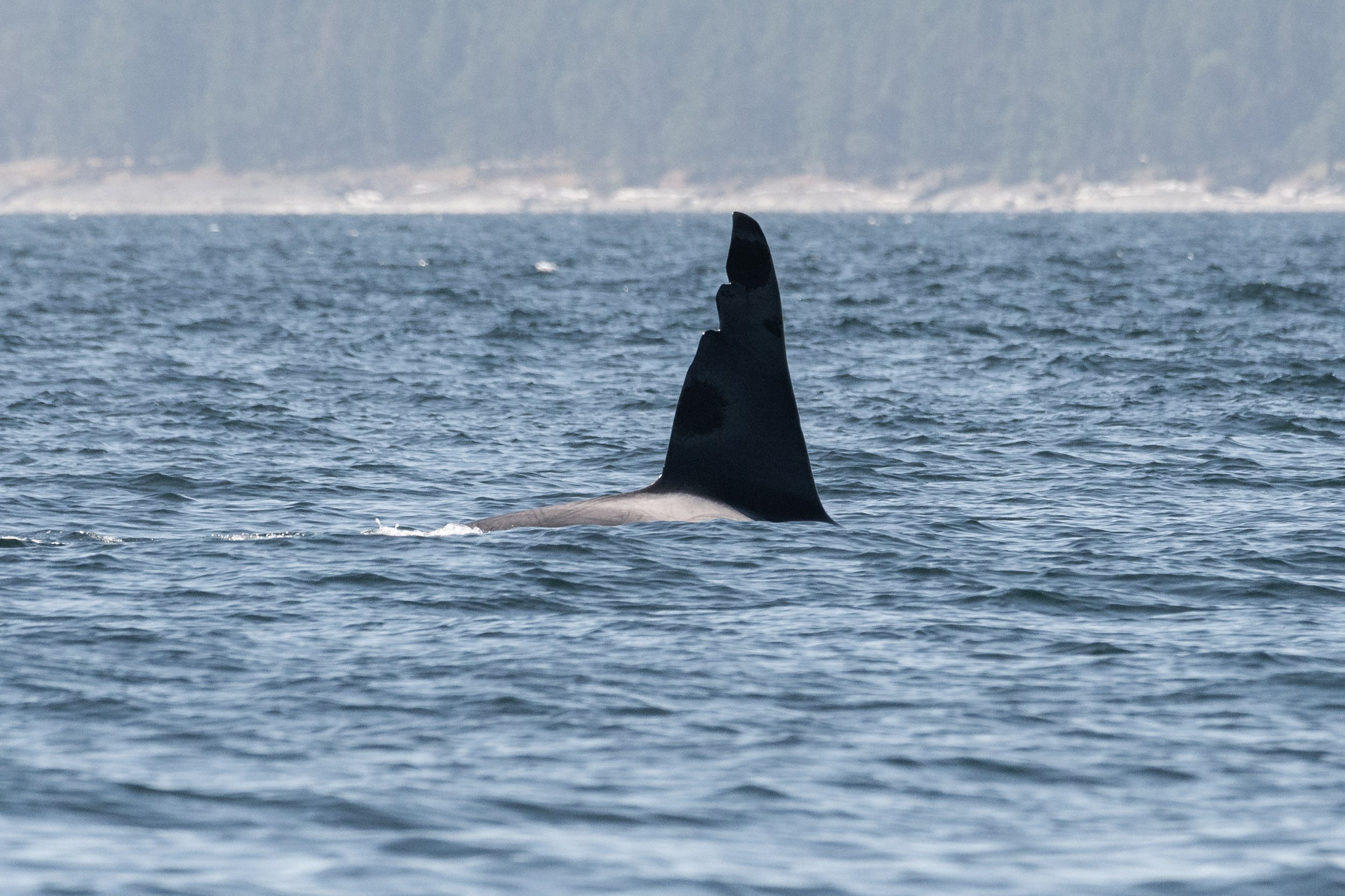
T063 Chainsaw surfacing, giving a great look at this iconic dorsal fin. Photo by Evan Hessels.
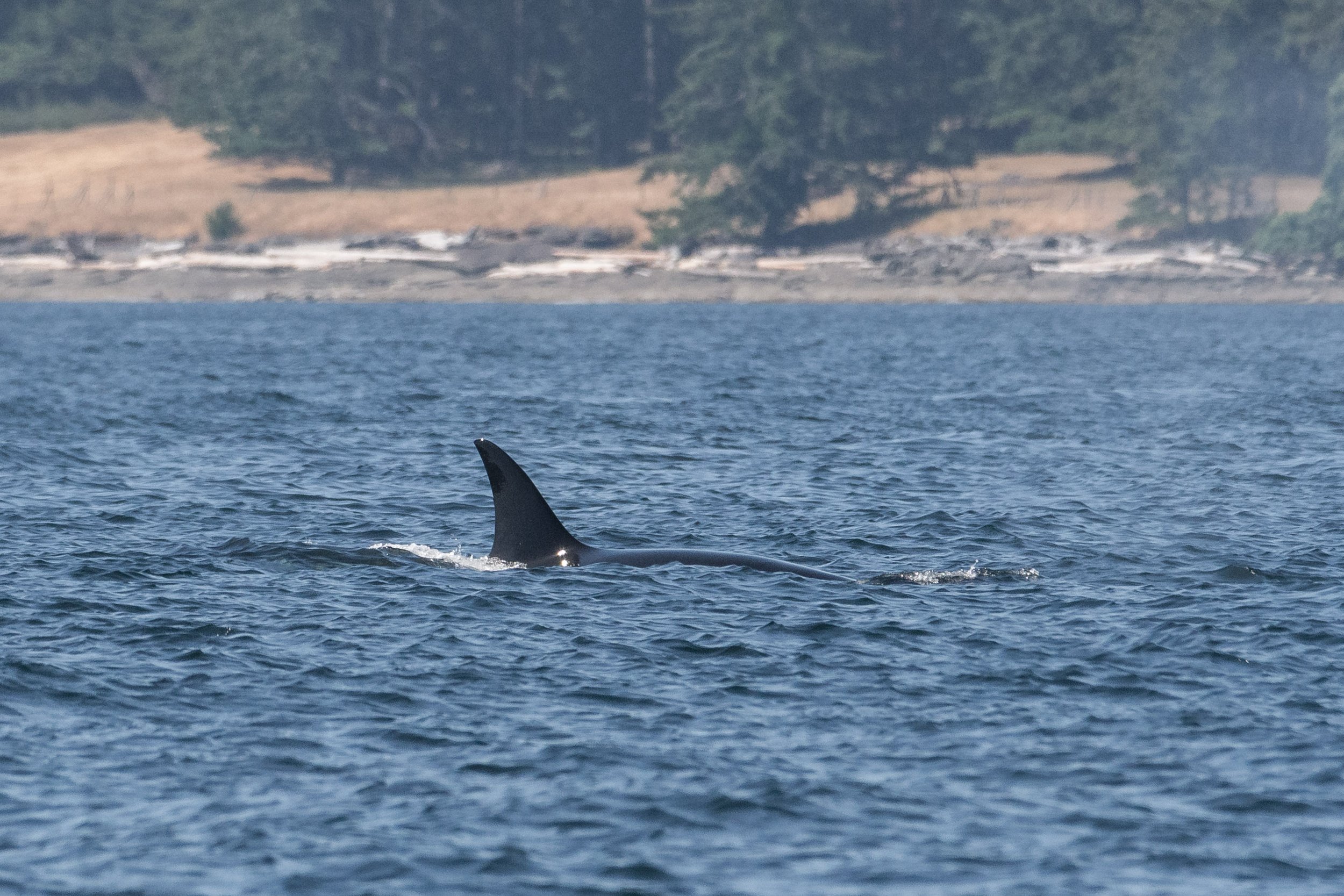
T065 Whidbey II surfacing. She also has a notch, it’s just much harderto spot. Photo by Evan Hessels.
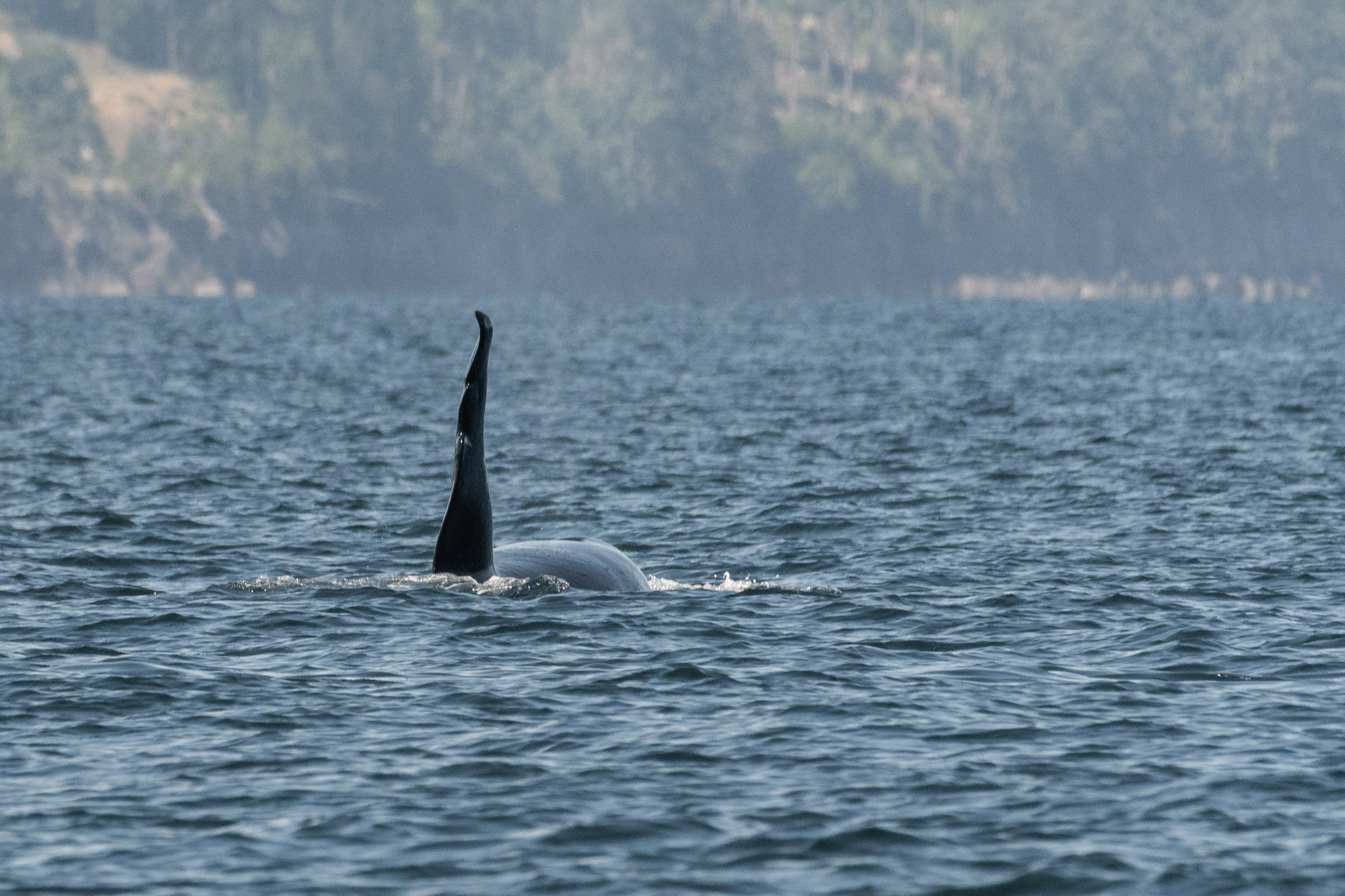
T063 Chainsaw swimming away from camera. You can see how much his dorsal fin is affeted by the damage that caused those notches. Photo by Evan Hessels.
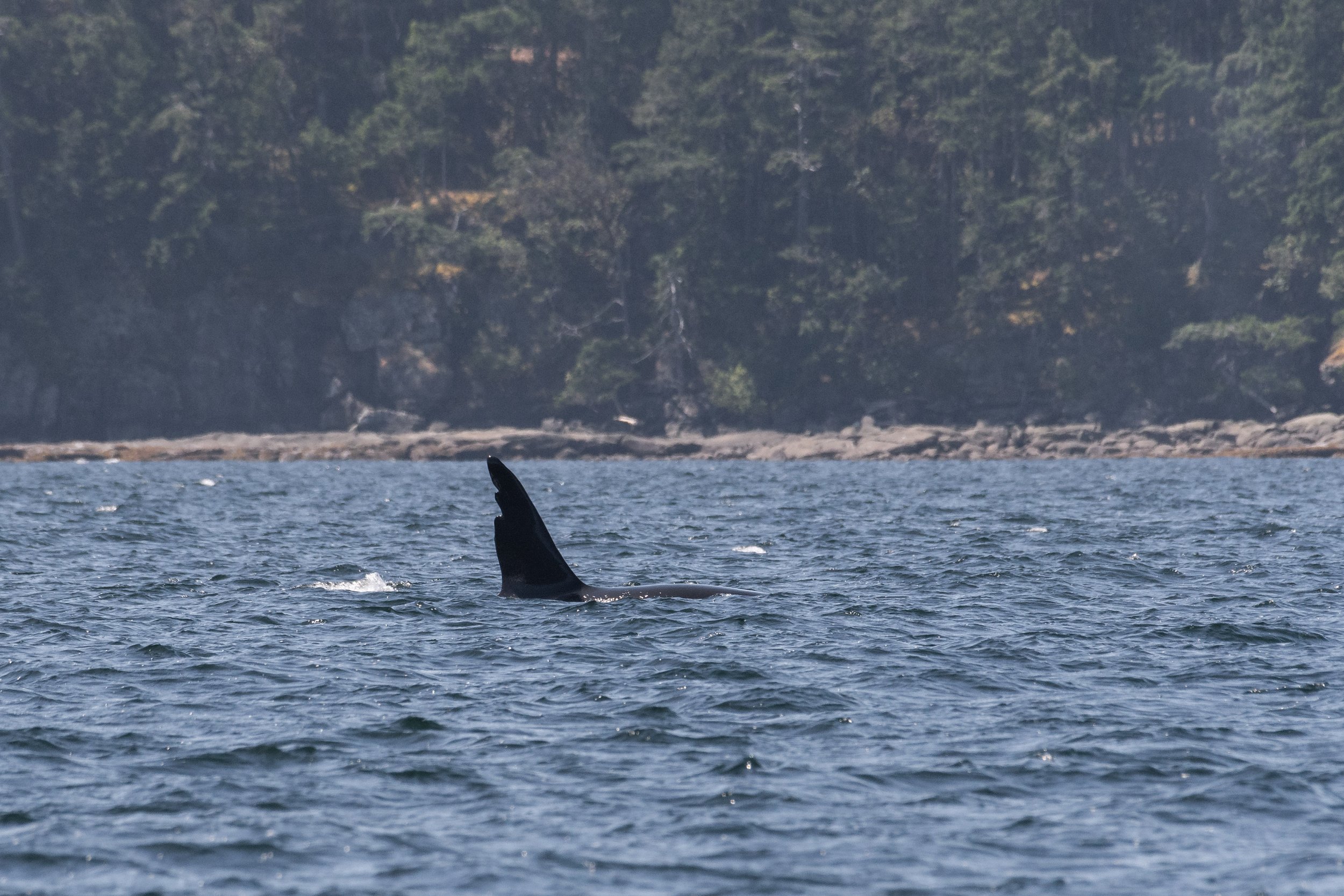
Another great look at T063 Chainaw. Photo by Evan Hessels.
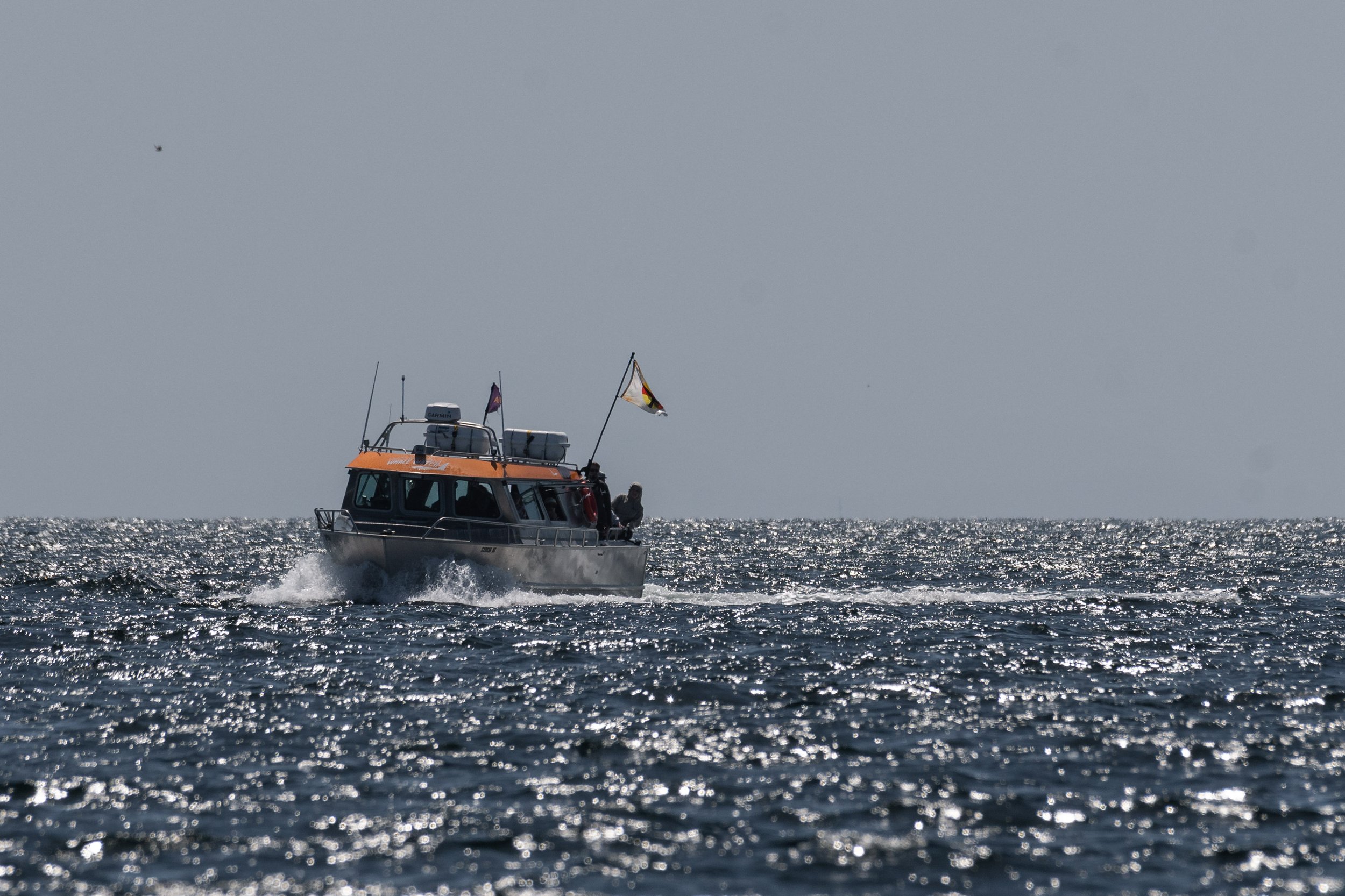
The semi-covered boat coming in to watch the whales as well. Photo by Evan Hessels.
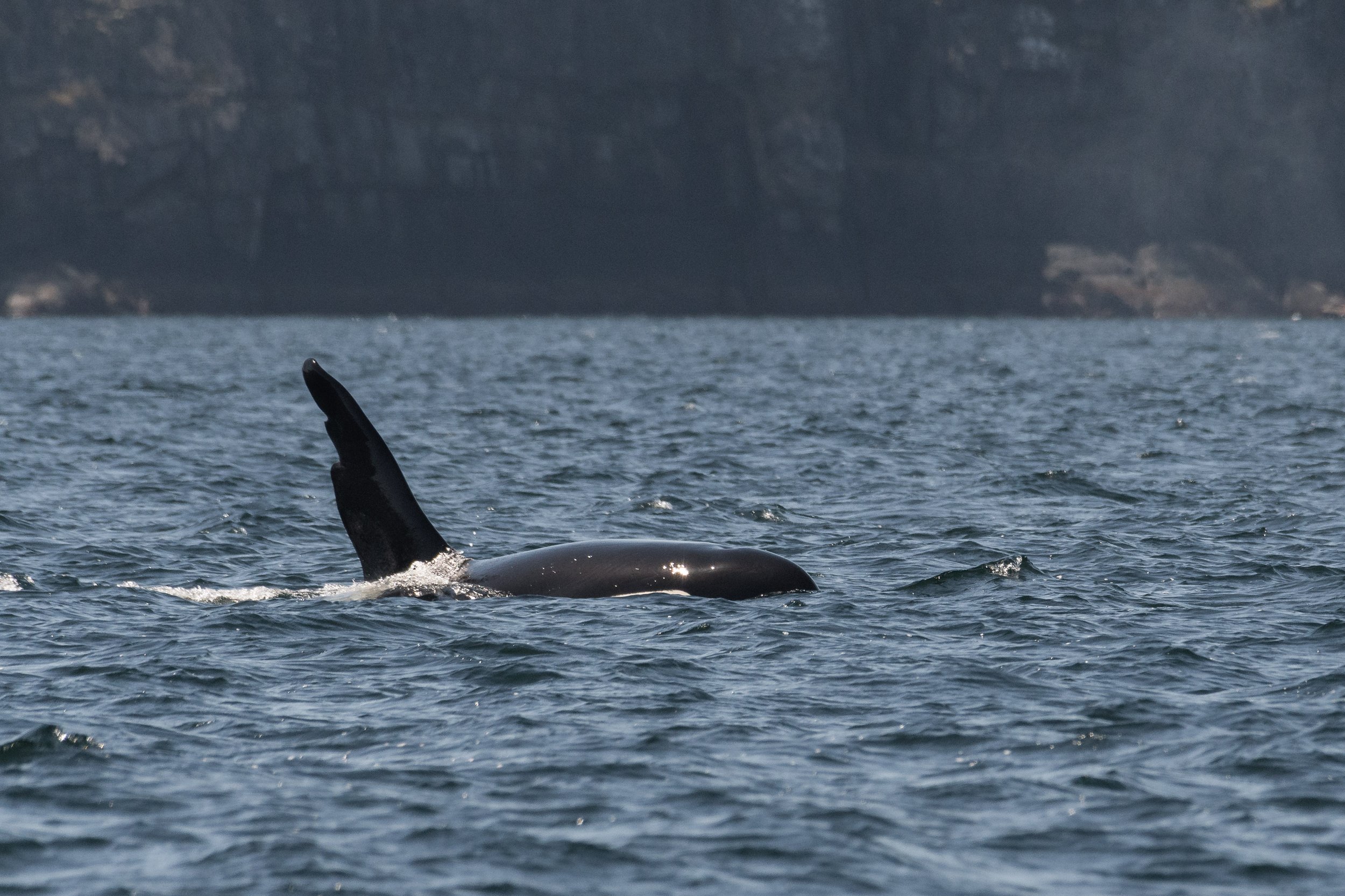
Can you see T063 Chainsaw’s eyepatch poking just above the waves? Photo by Evan Hessels.
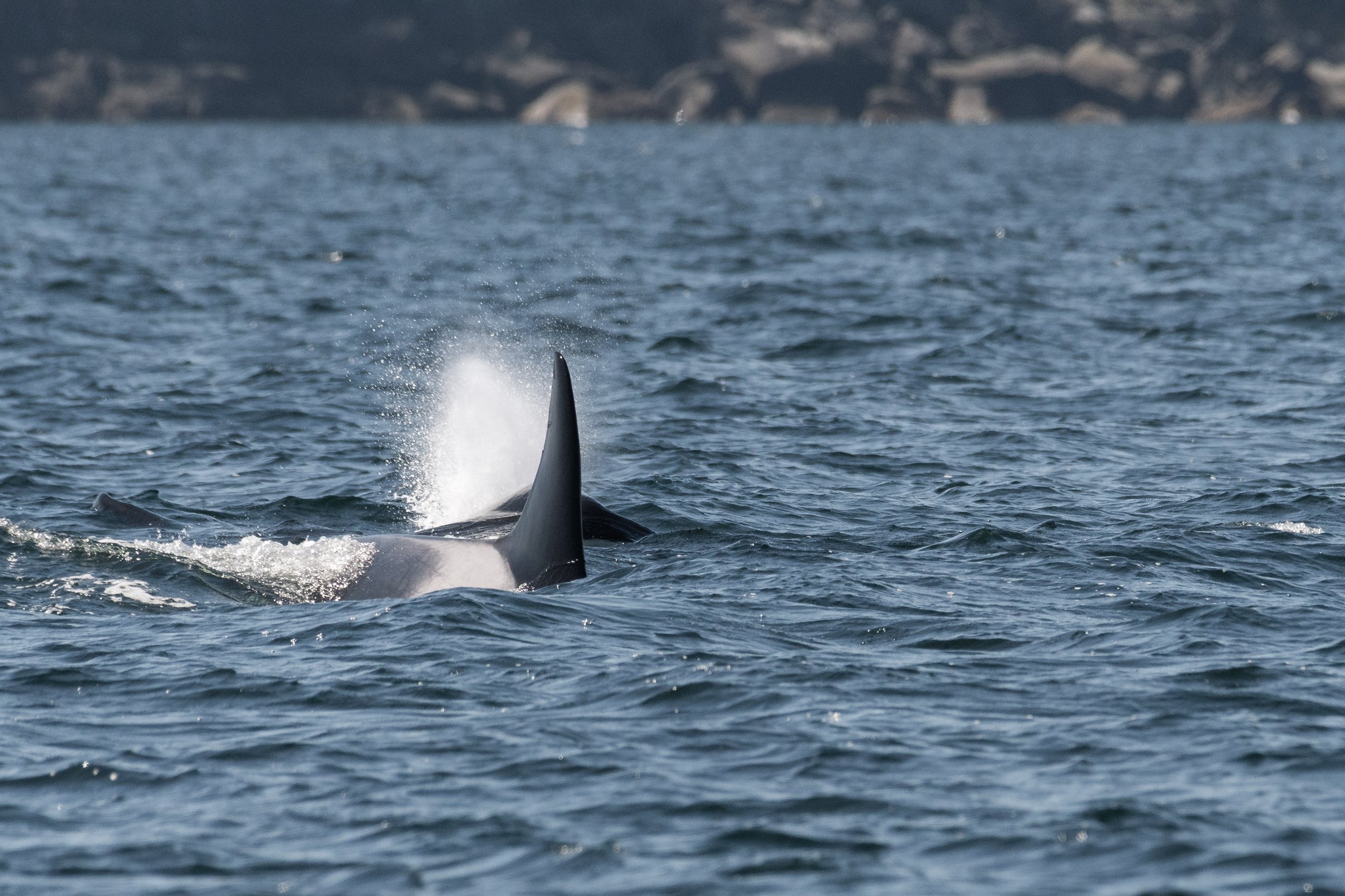
Whidbey going for a dive with Chainsaw surfacing just behind her. Photo by Evan Hessels.
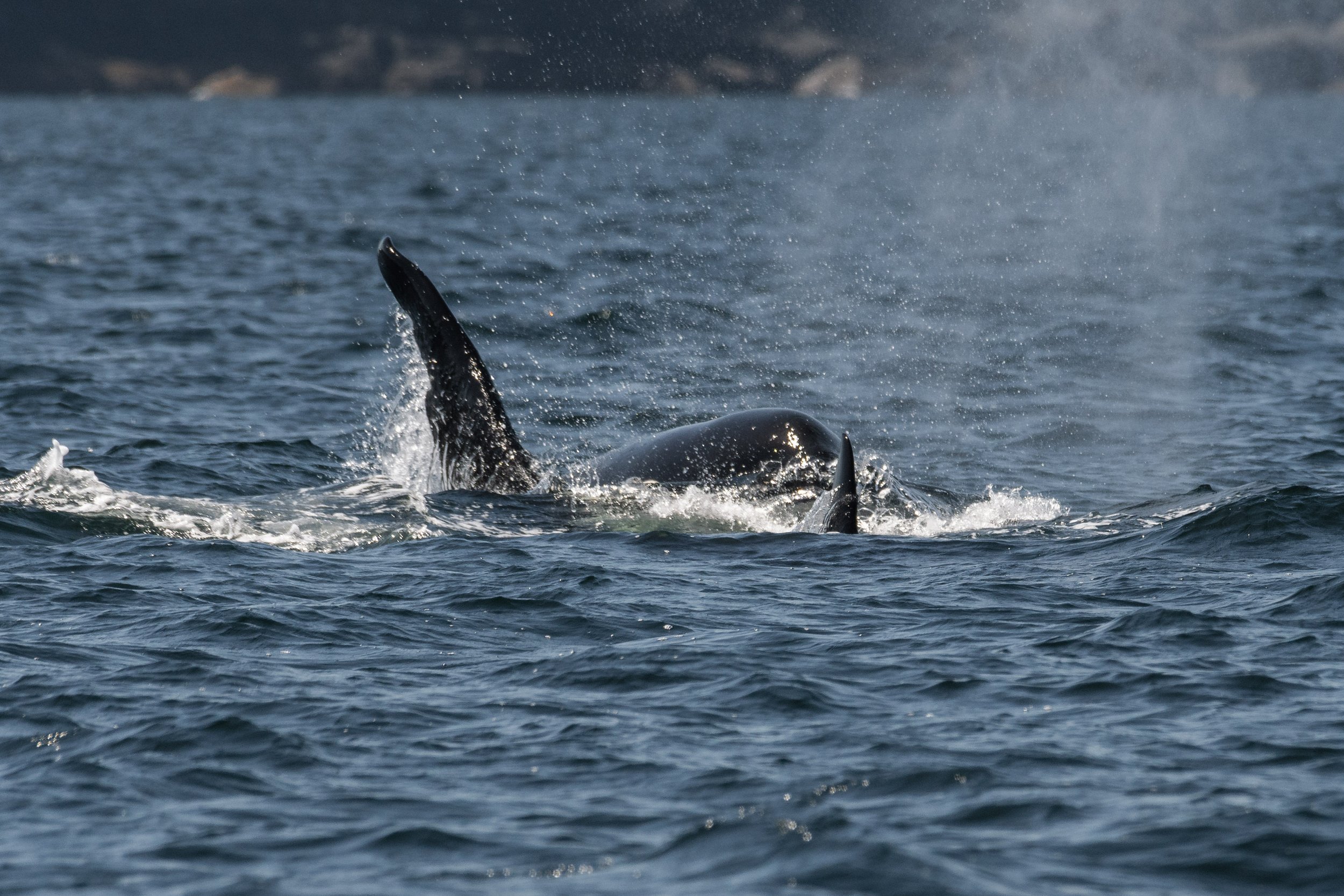
T063 Chainsaw breaking through a wave just behind his mom. Photo by Evan Hessels.
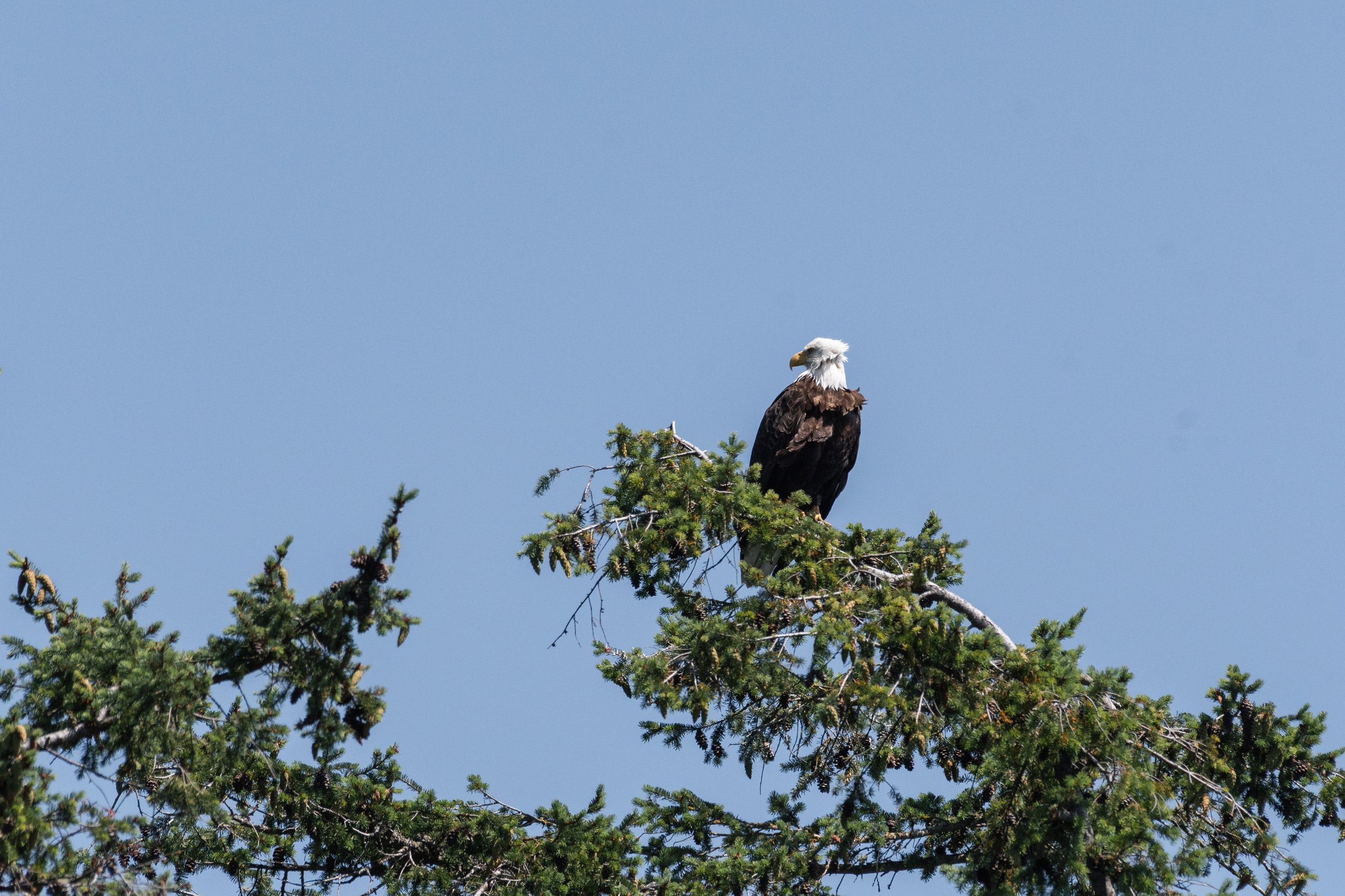
A Bald Eagle keeping an eye on things from the treetop. Photo by Evan Hessels.
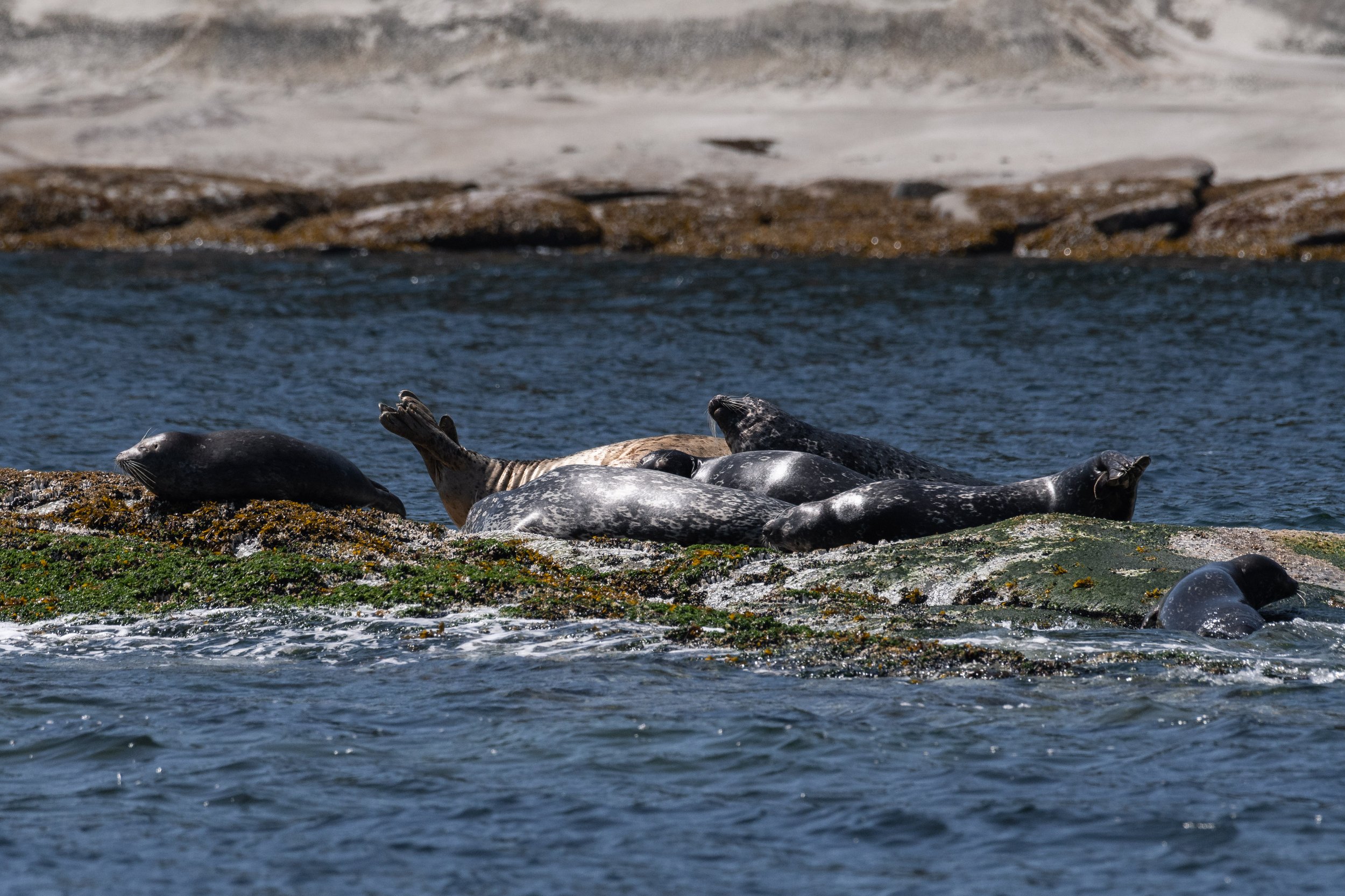
Some very cozy looking Harbour Seals enjouing the sunshine. Photo by Evan Hessels.
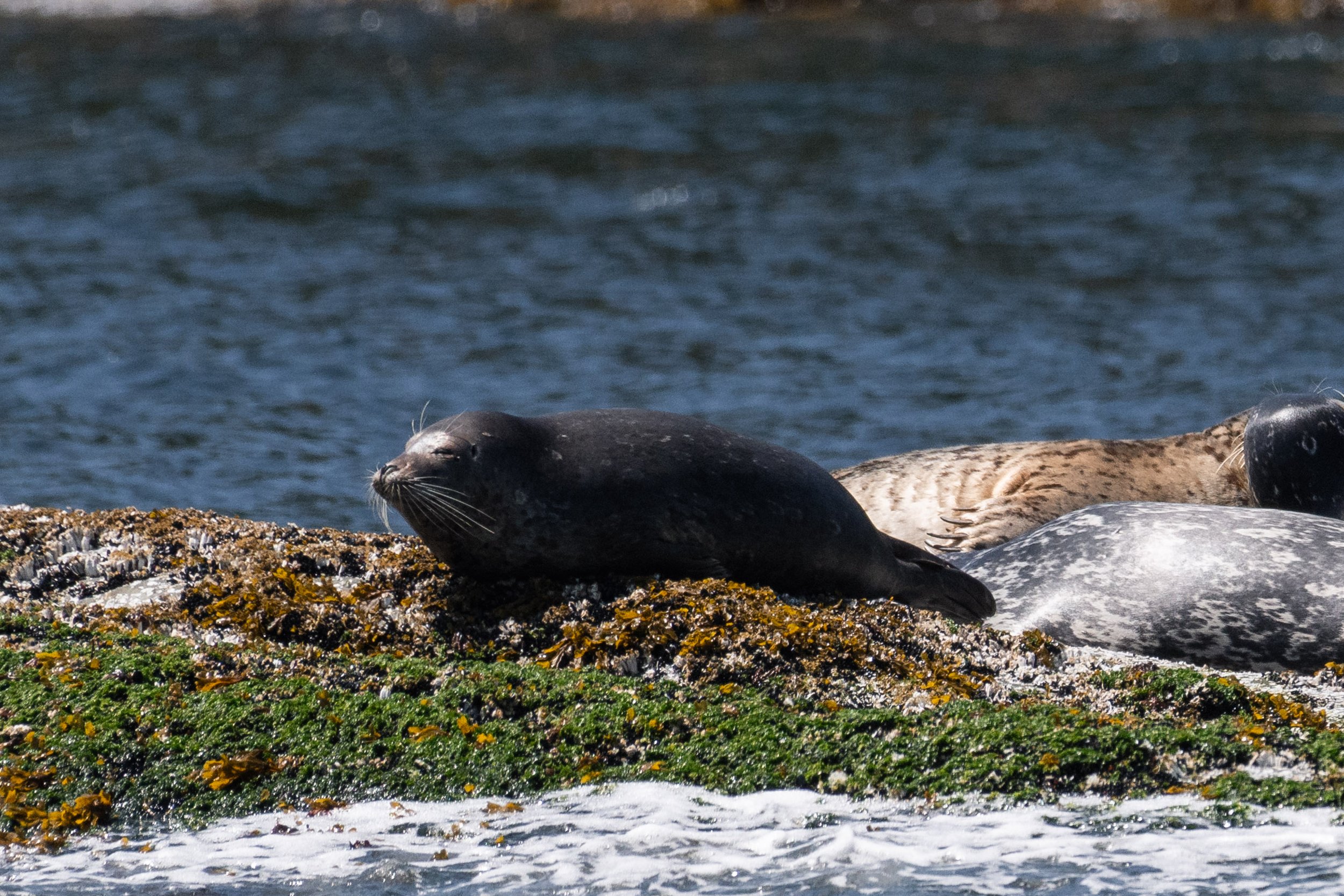
Just look how long those sensitive whiskers are! Photo by Evan Hessels.
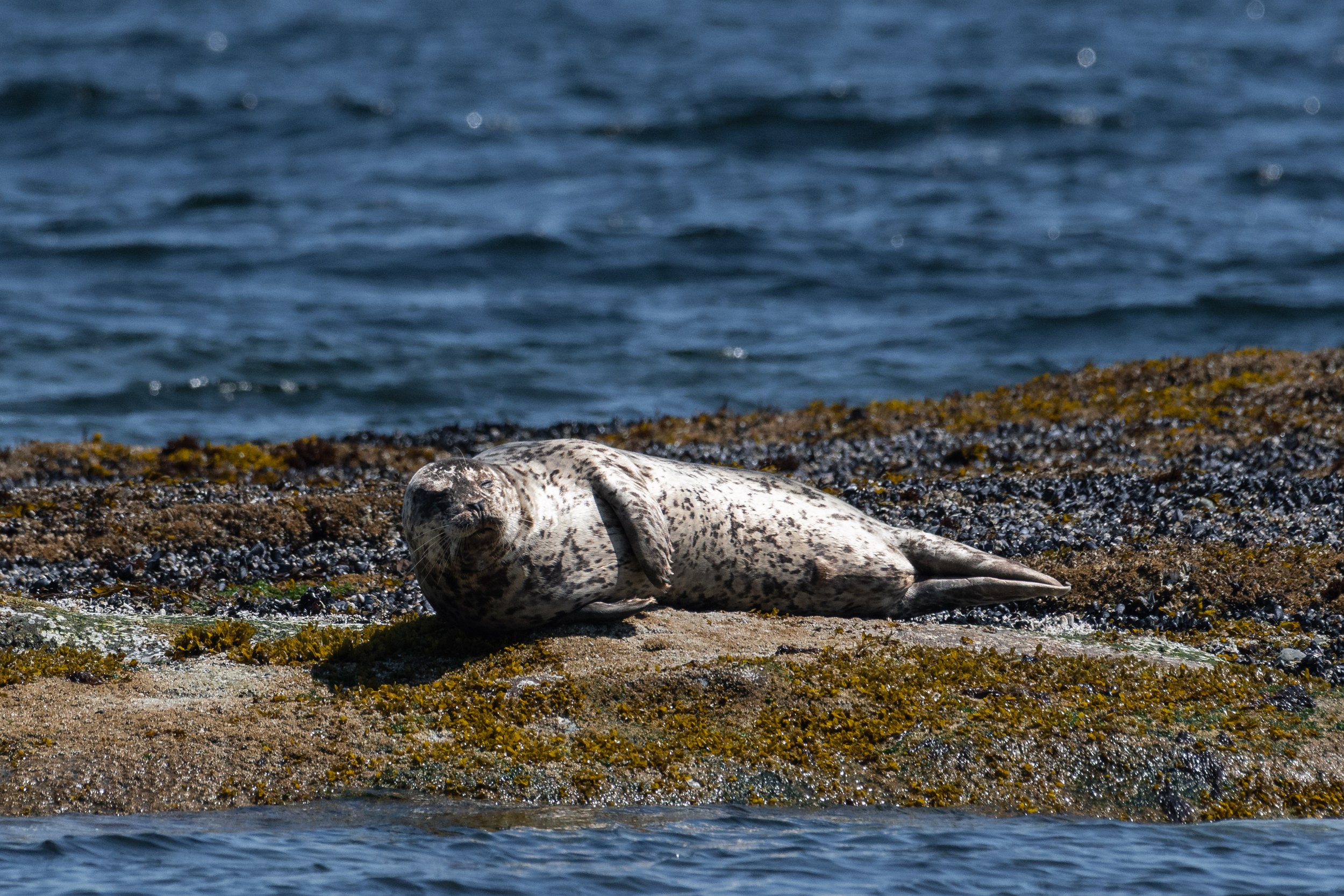
Another content looking Harbour Seal. Photo by Evan Hessels.
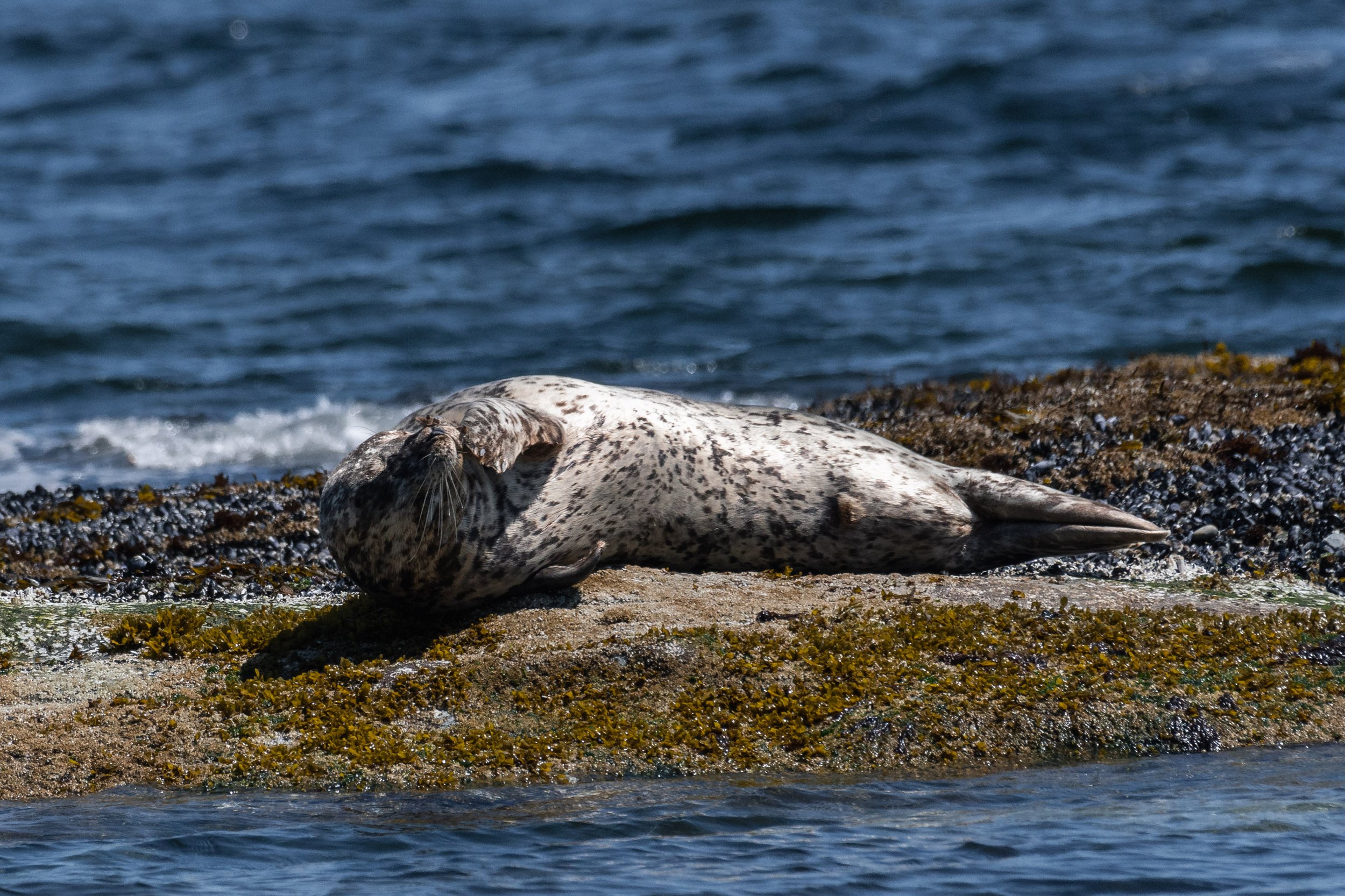
Giving a little itch. Photo by Evan Hessels.
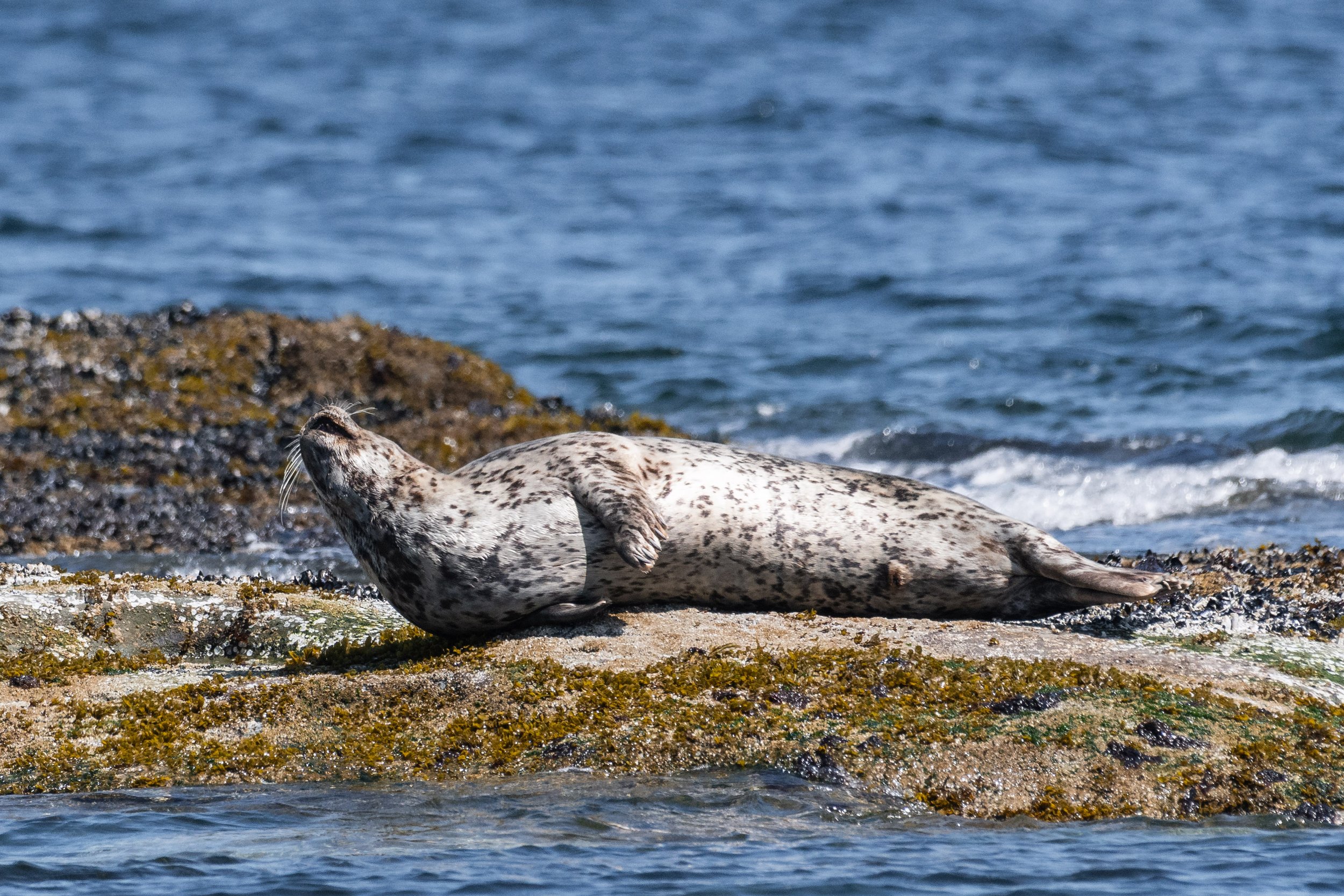
And finally, a big yawn! Photo by Evan Hessels.
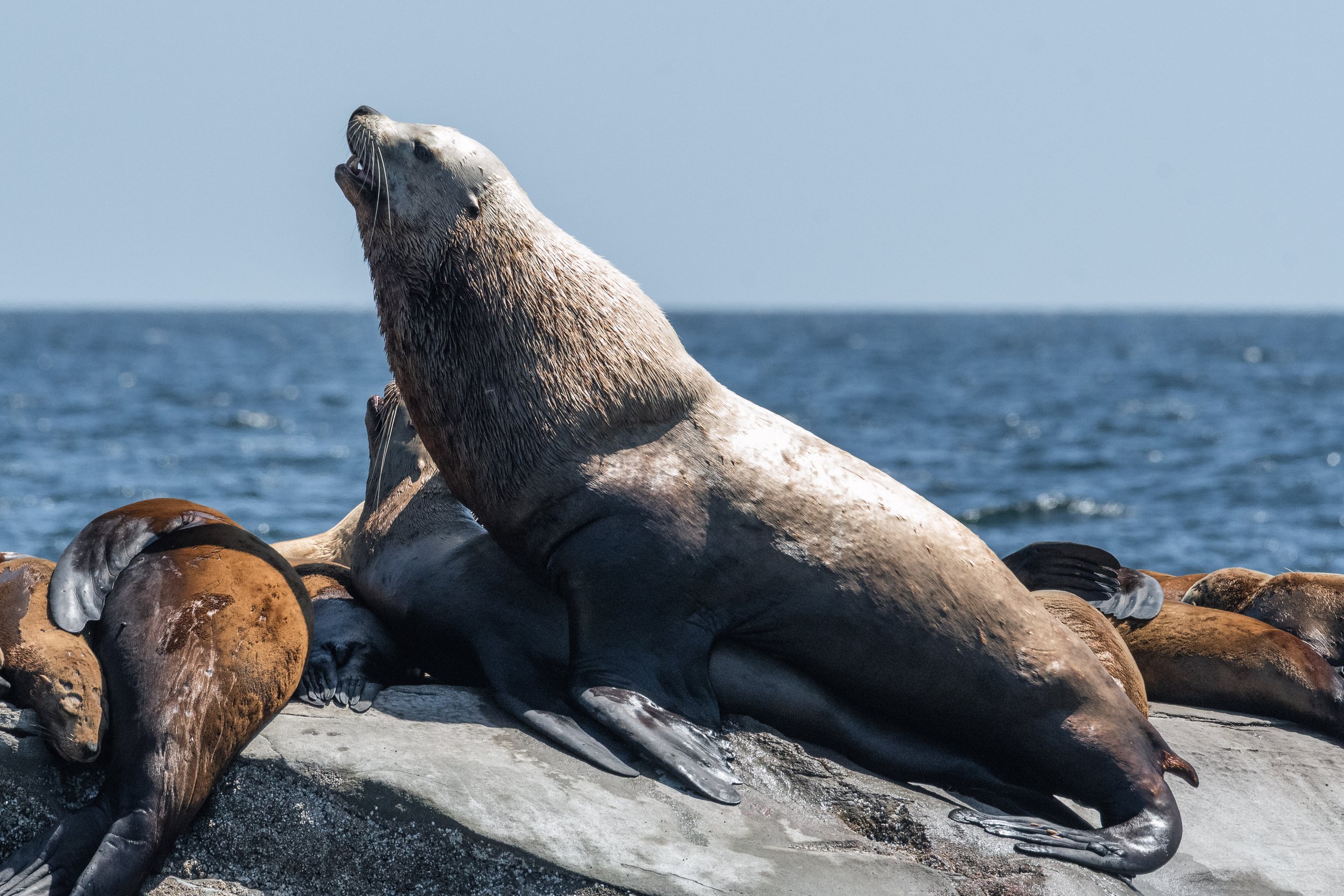
There was some breeding spotted on Stinky Rock from the Steller Sea Lions, perhaps a sign that we may see their breeding range extend? Photo by Evan Hessels.
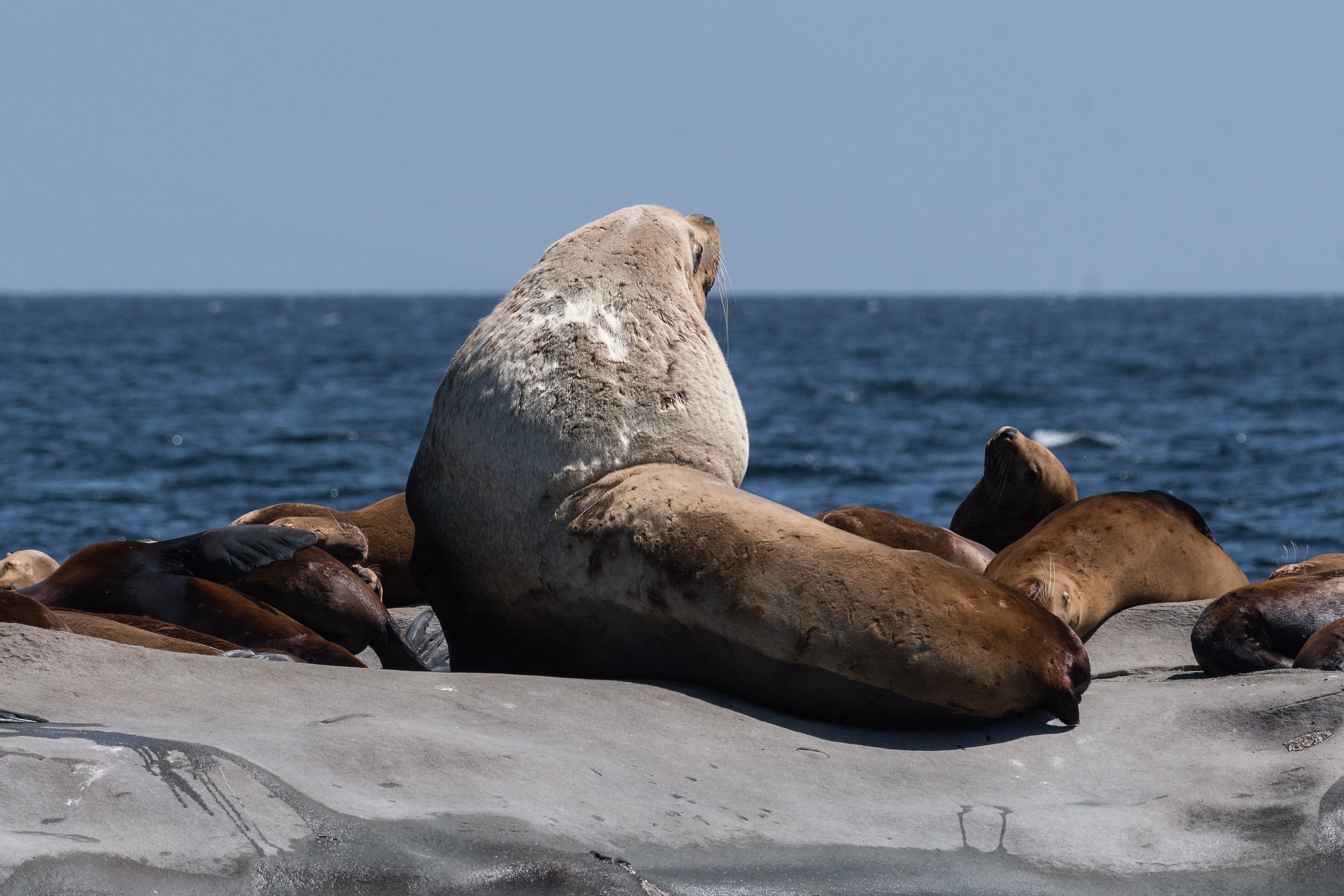
Another large male Steller Sea Lion on Stinky Rock. Photo by Evan Hessels.
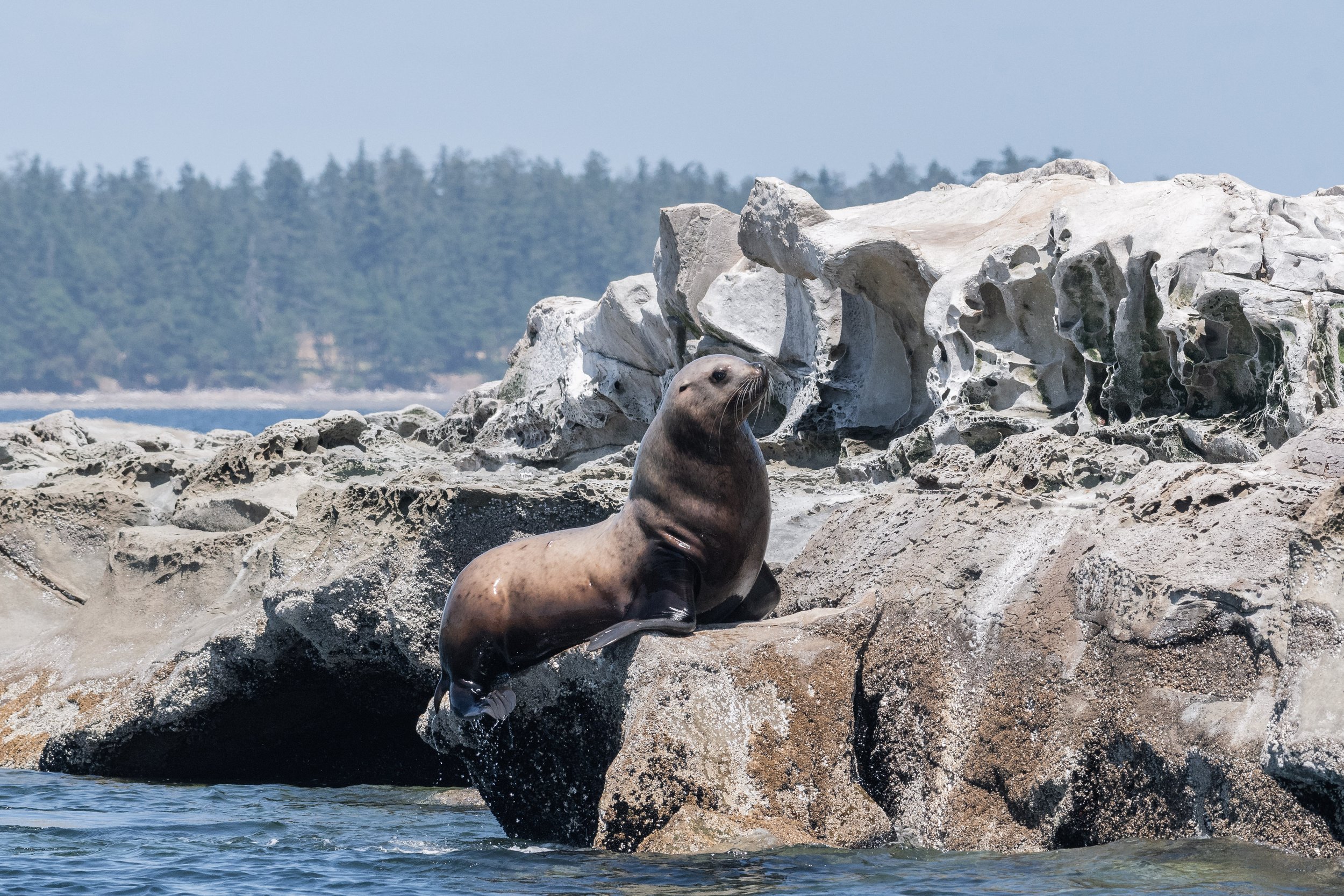
One of the younger individuals further down the haul-out in front of the lovely sandstone formations. Photo by Evan Hessels.
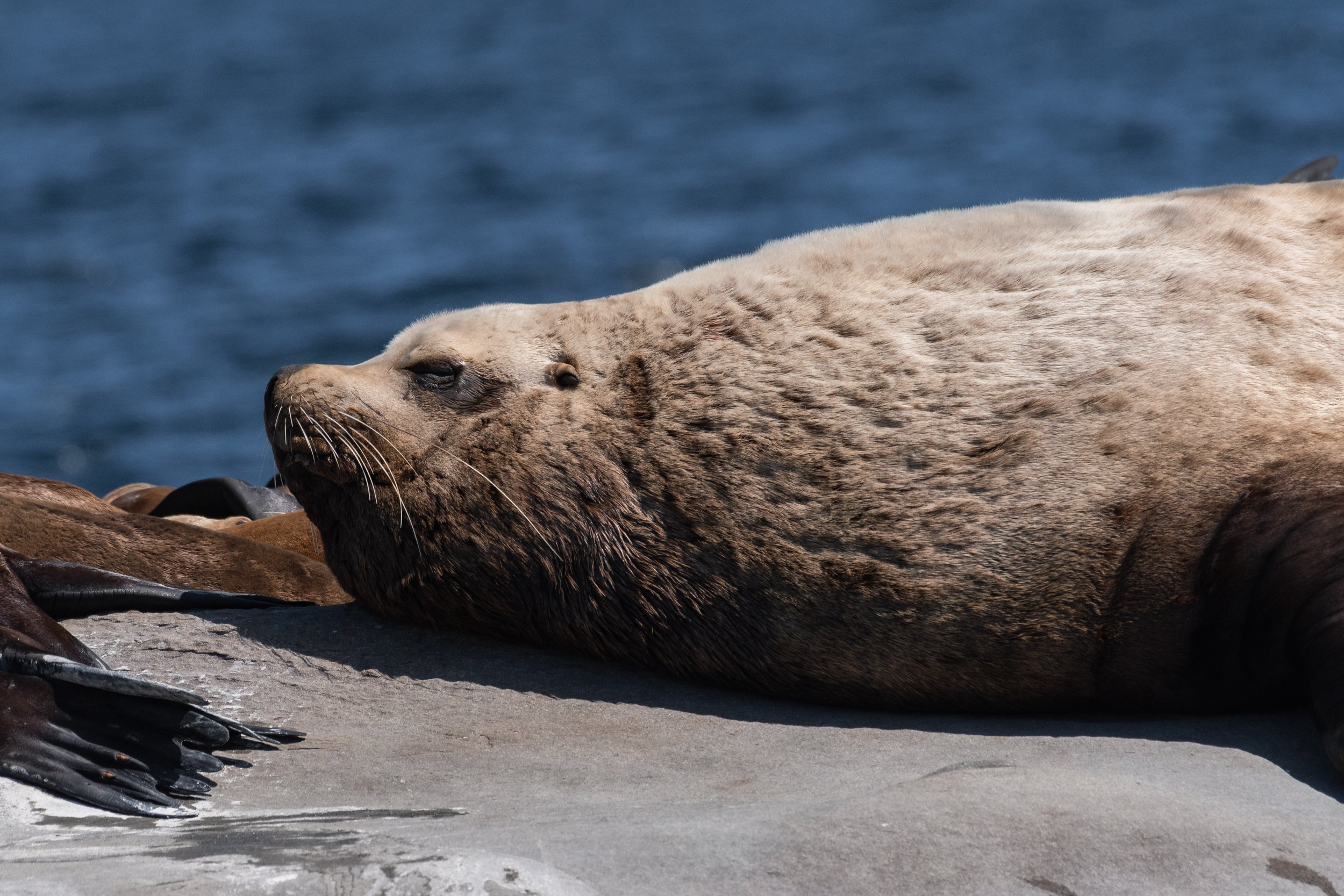
A very fluffy male Steller. Photo by Evan Hessels.
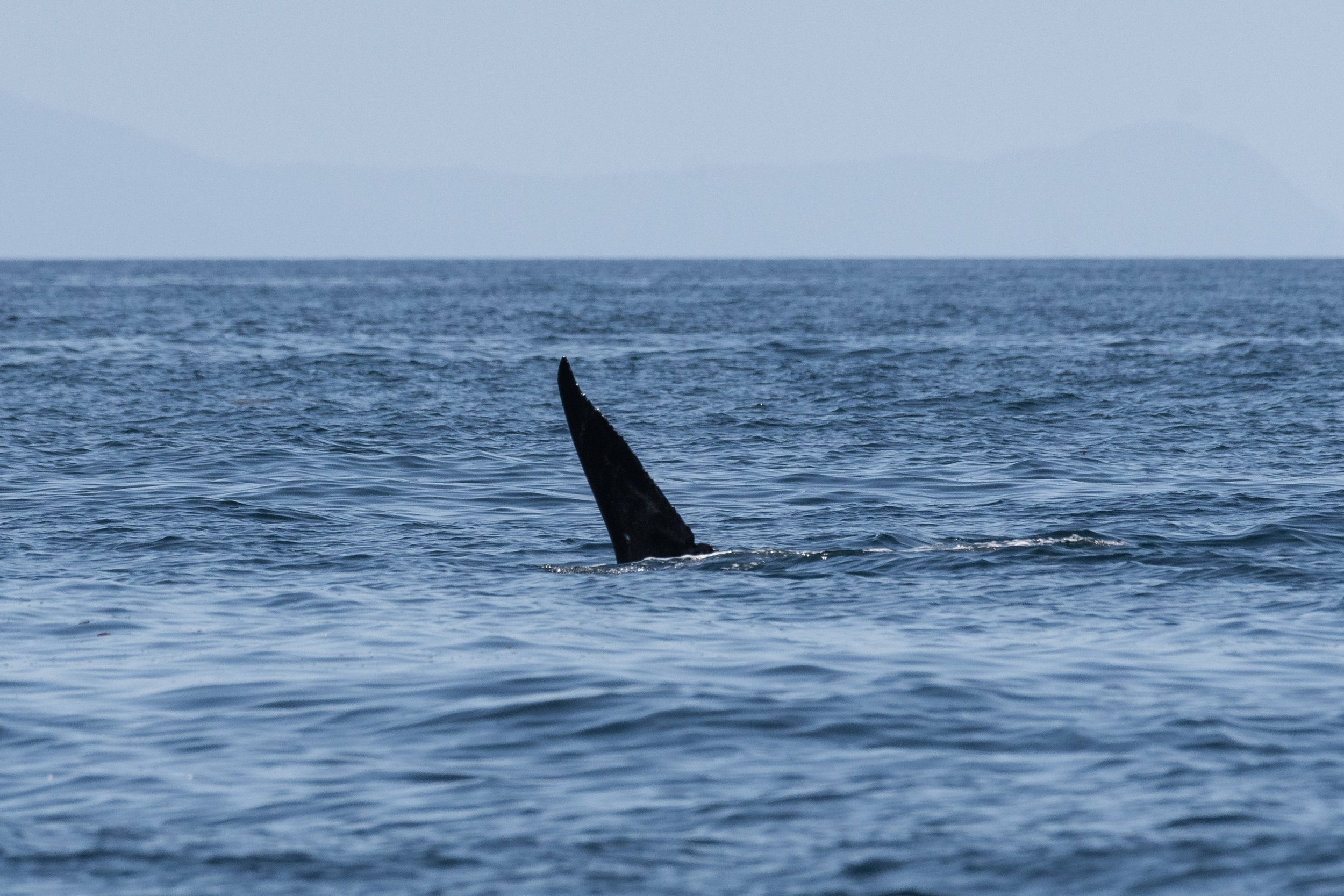
Sage’s 2026 calf with their fluke sideways at the surface. Photo by Evan Hessels.
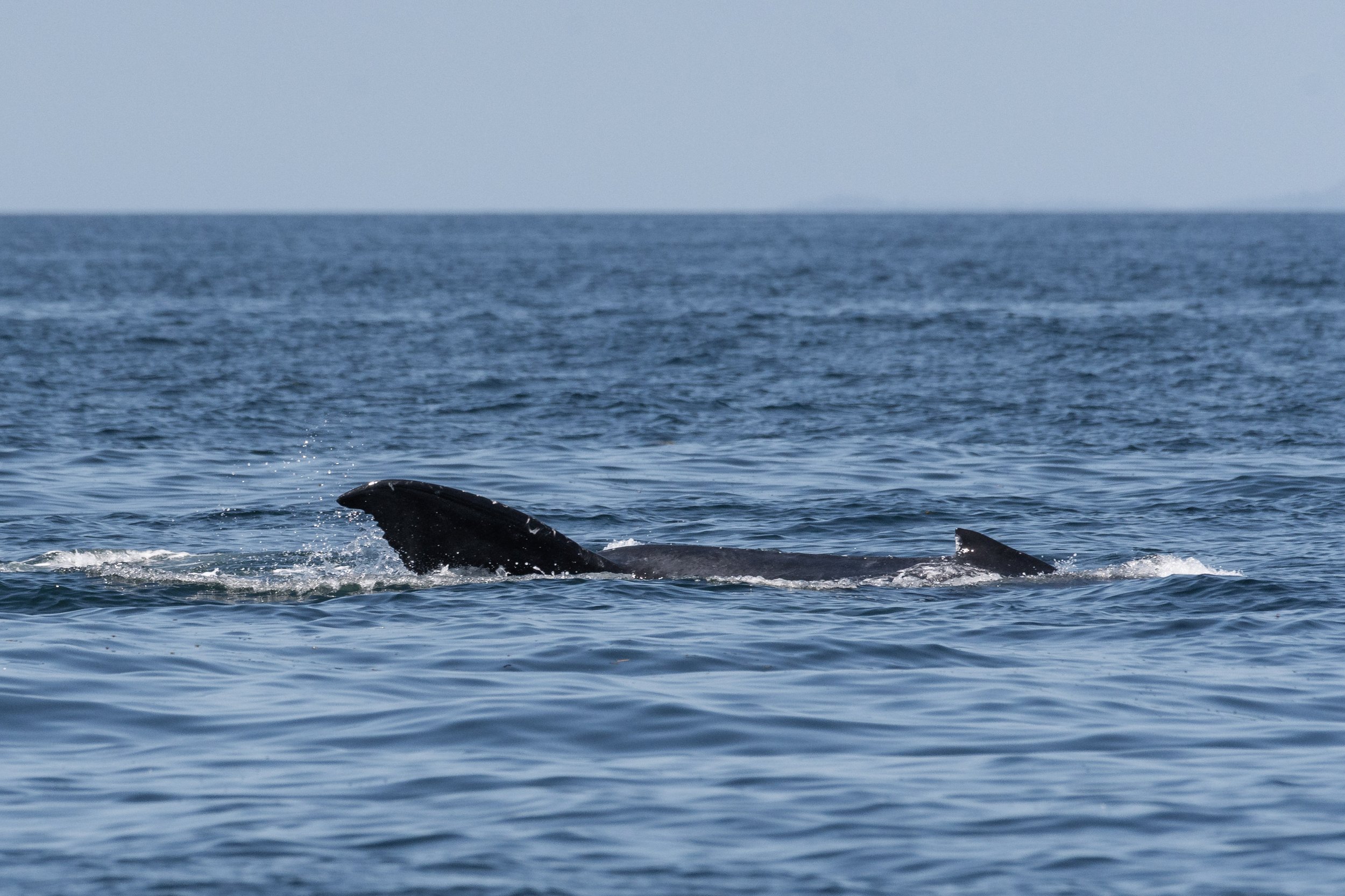
Sage’s calf playing at the surface. Photo by Evan Hessels.
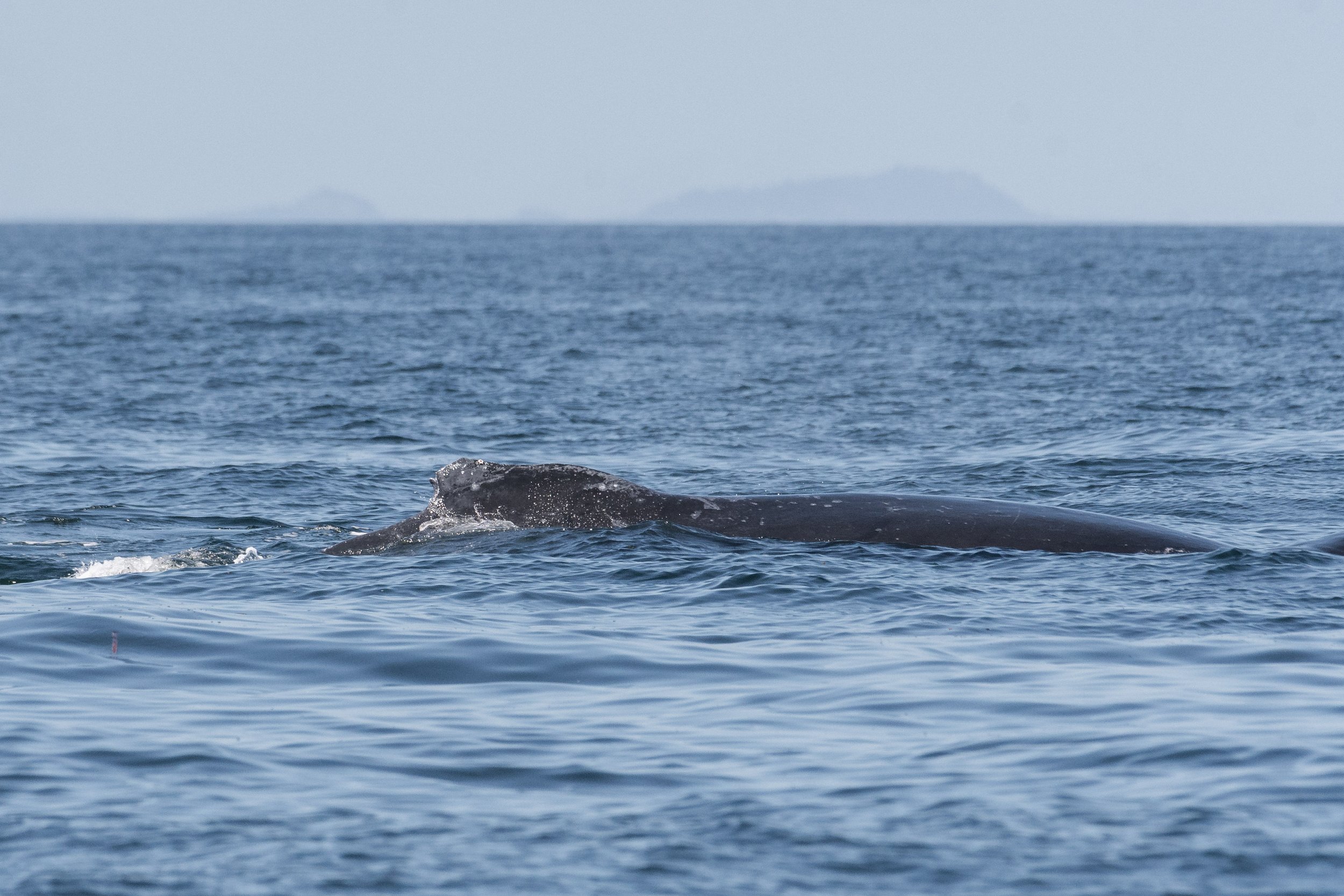
Forge has a very unique, flat dorsal fin. Photo by Evan Hessels.
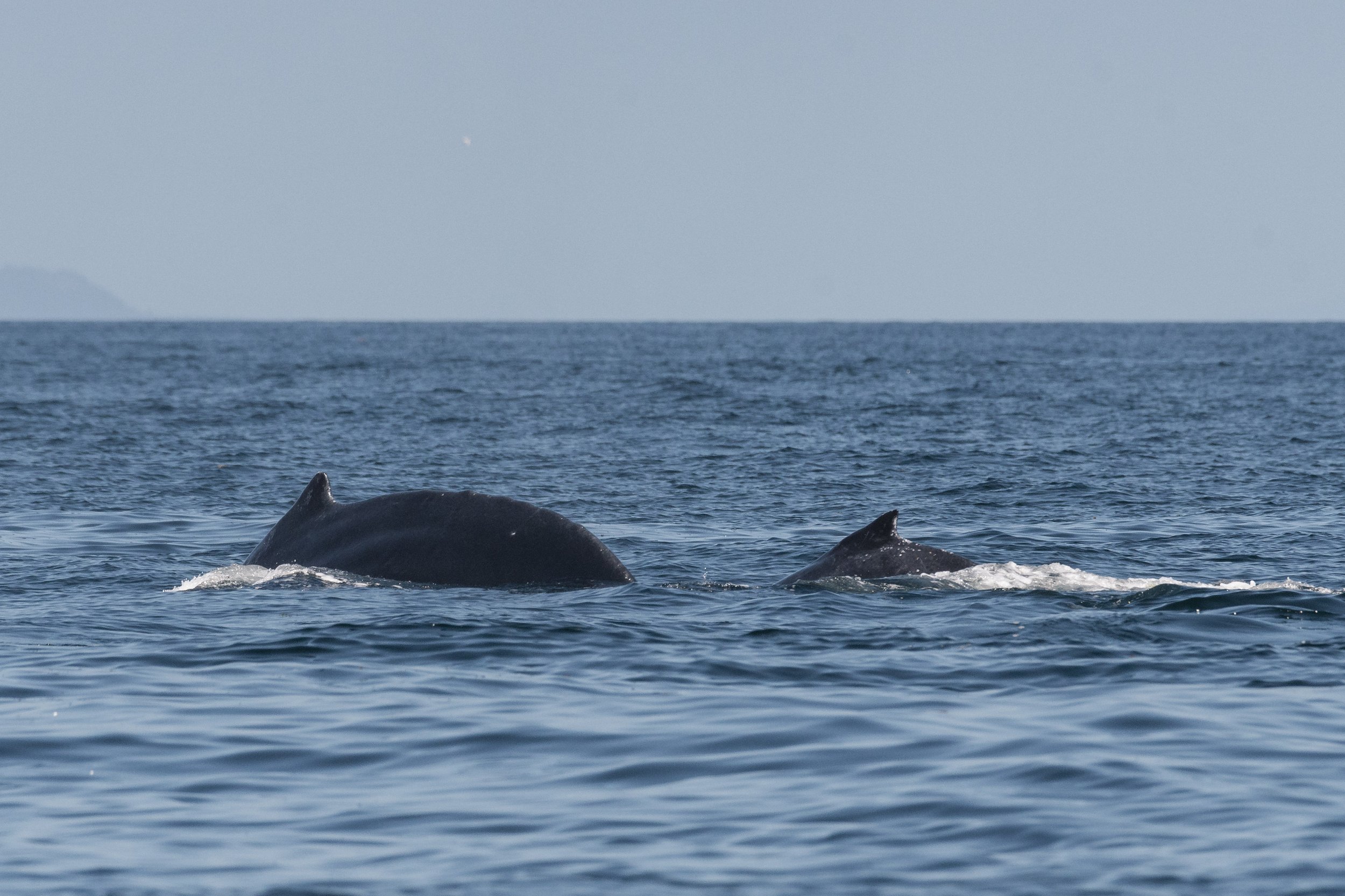
Sage diving, closely followed by her calf. Photo by Evan Hessels.
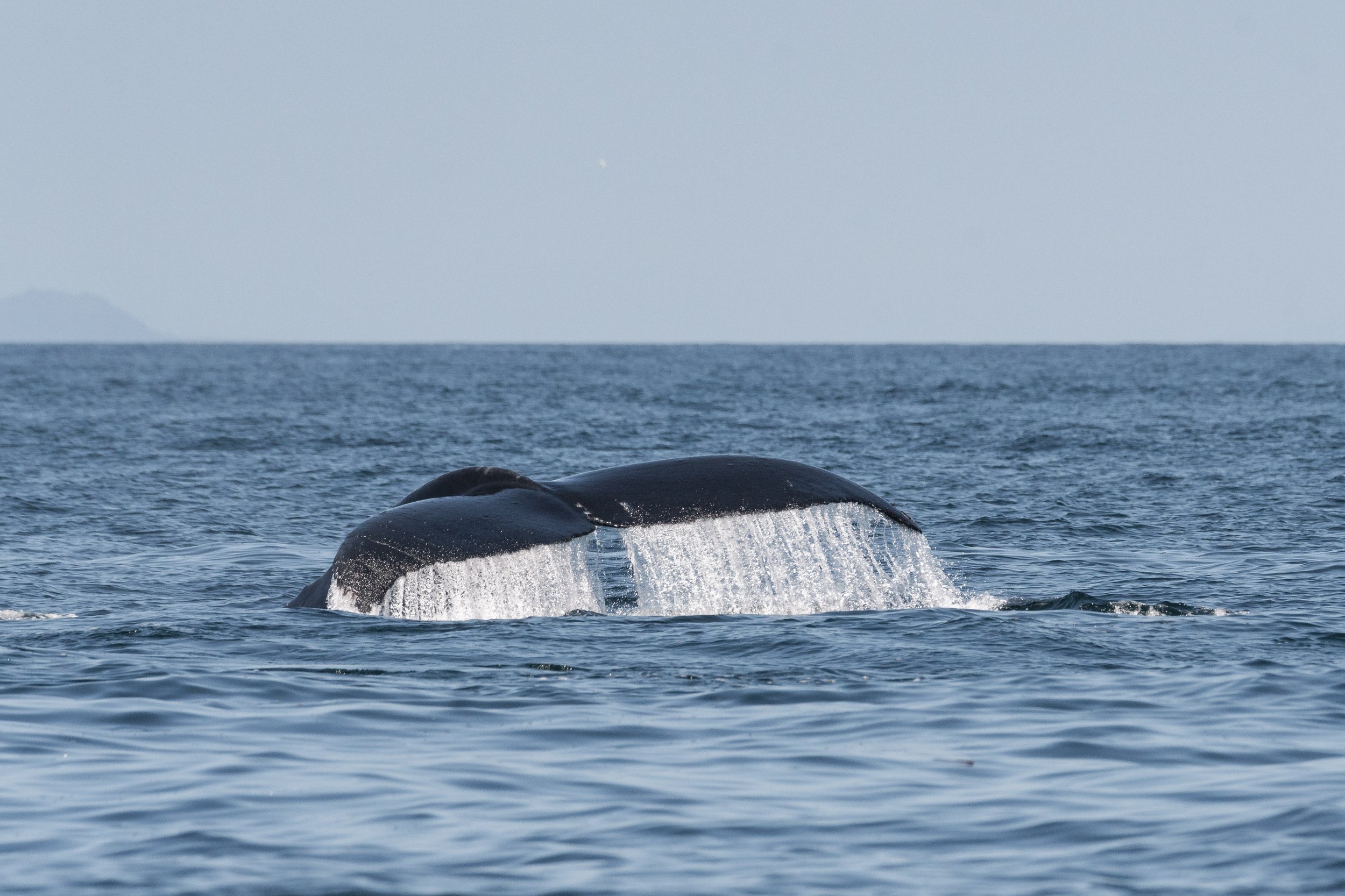
A big fluke waterfall from Sage. Photo by Evan Hessels.
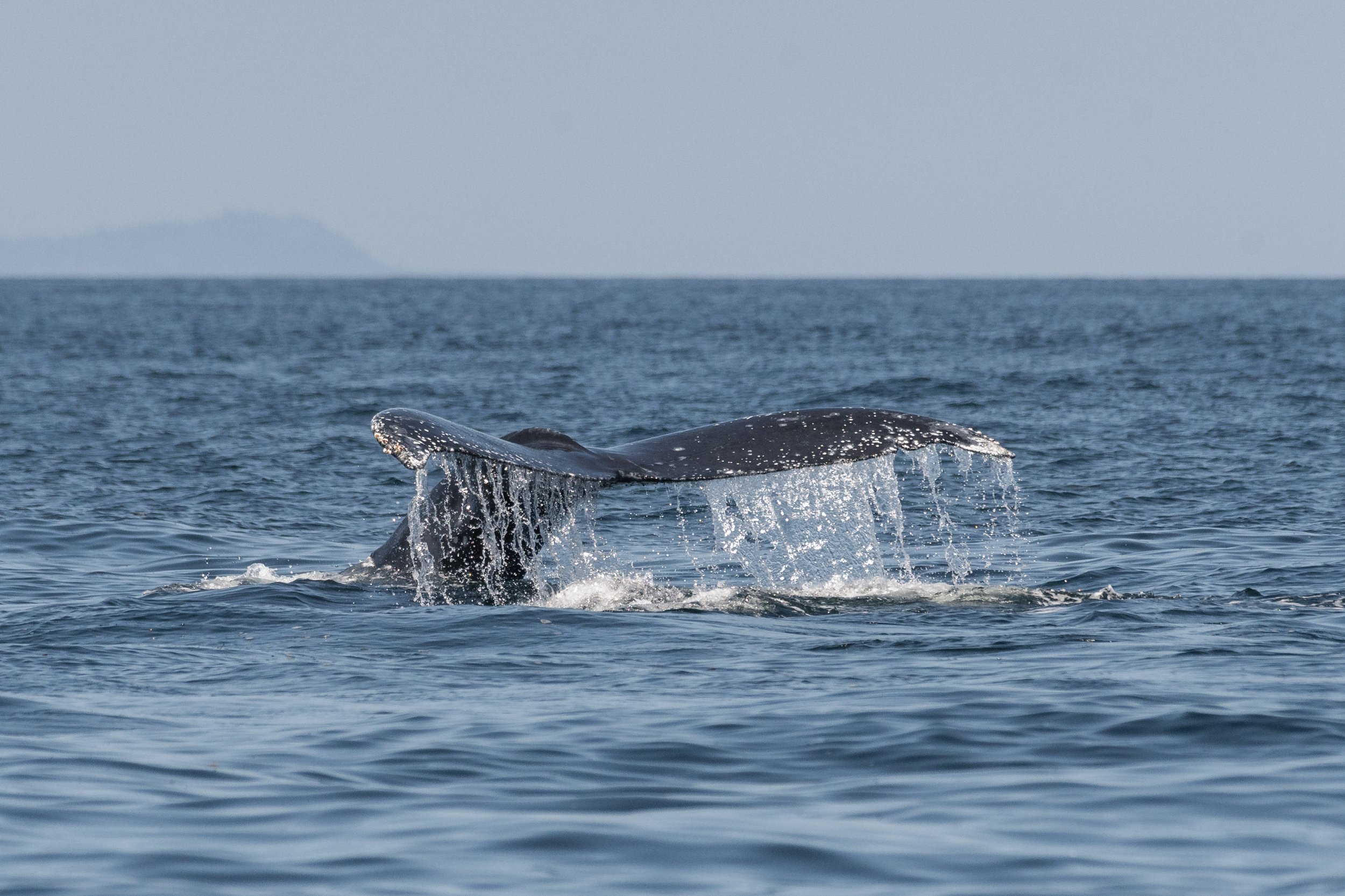
A fluke waterfall from Forge. Photo by Evan Hessels.
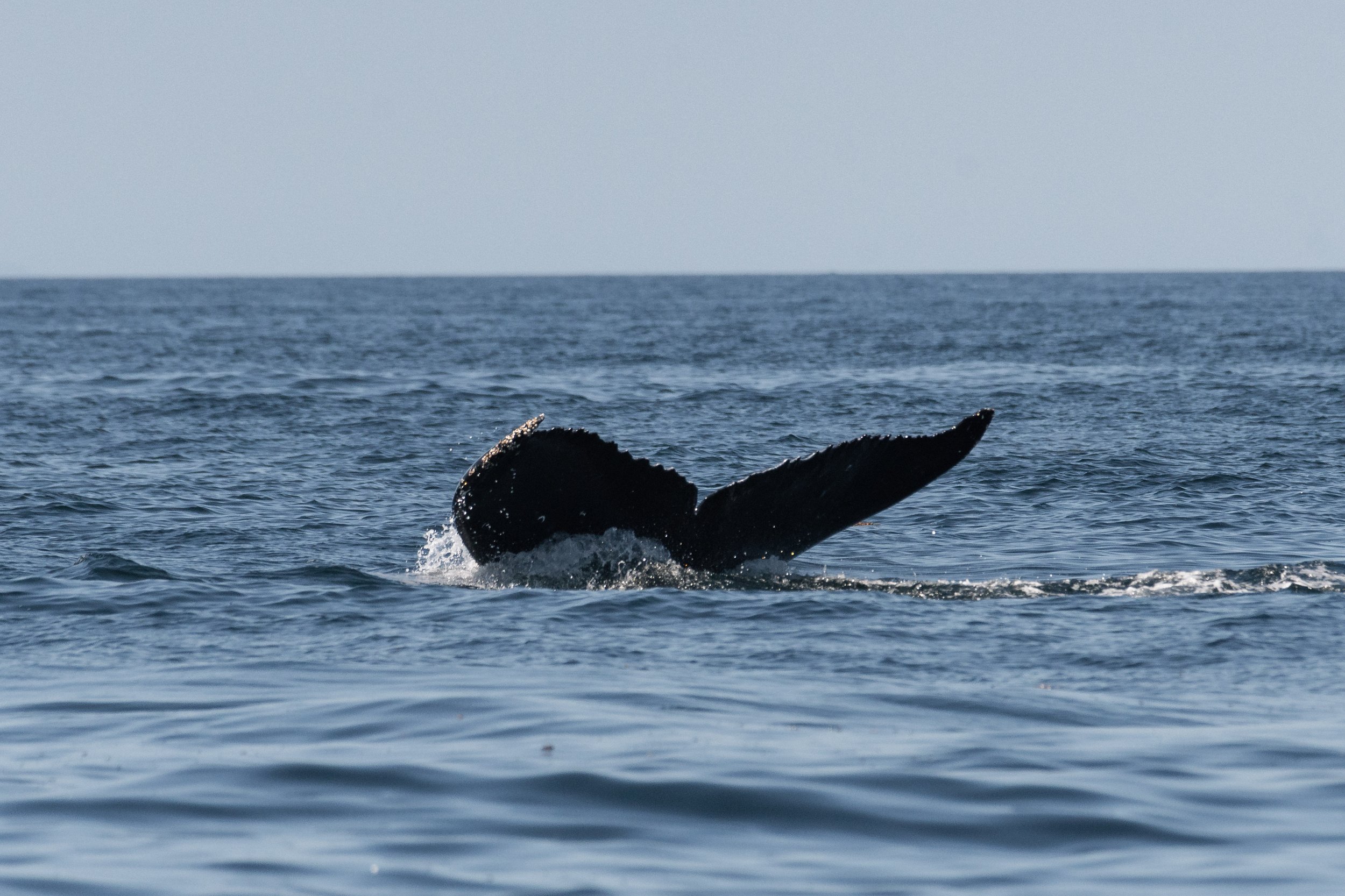
The underside of Astroboy’s dorsal fin as they go for a dive. Photo by Evan Hessels.
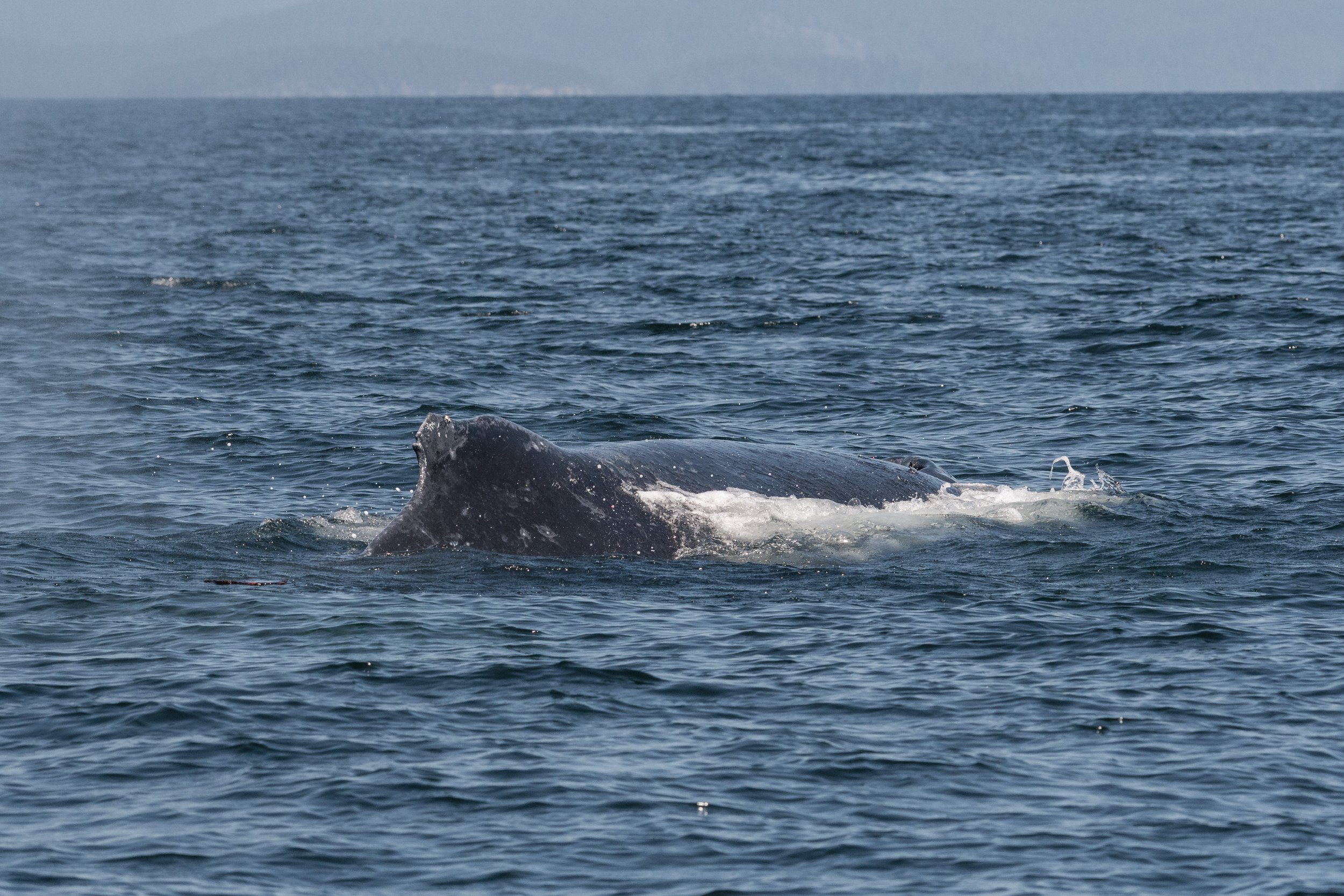
A great look at Forge’s dorsal surface covered in scars. Photo by Evan Hessels.
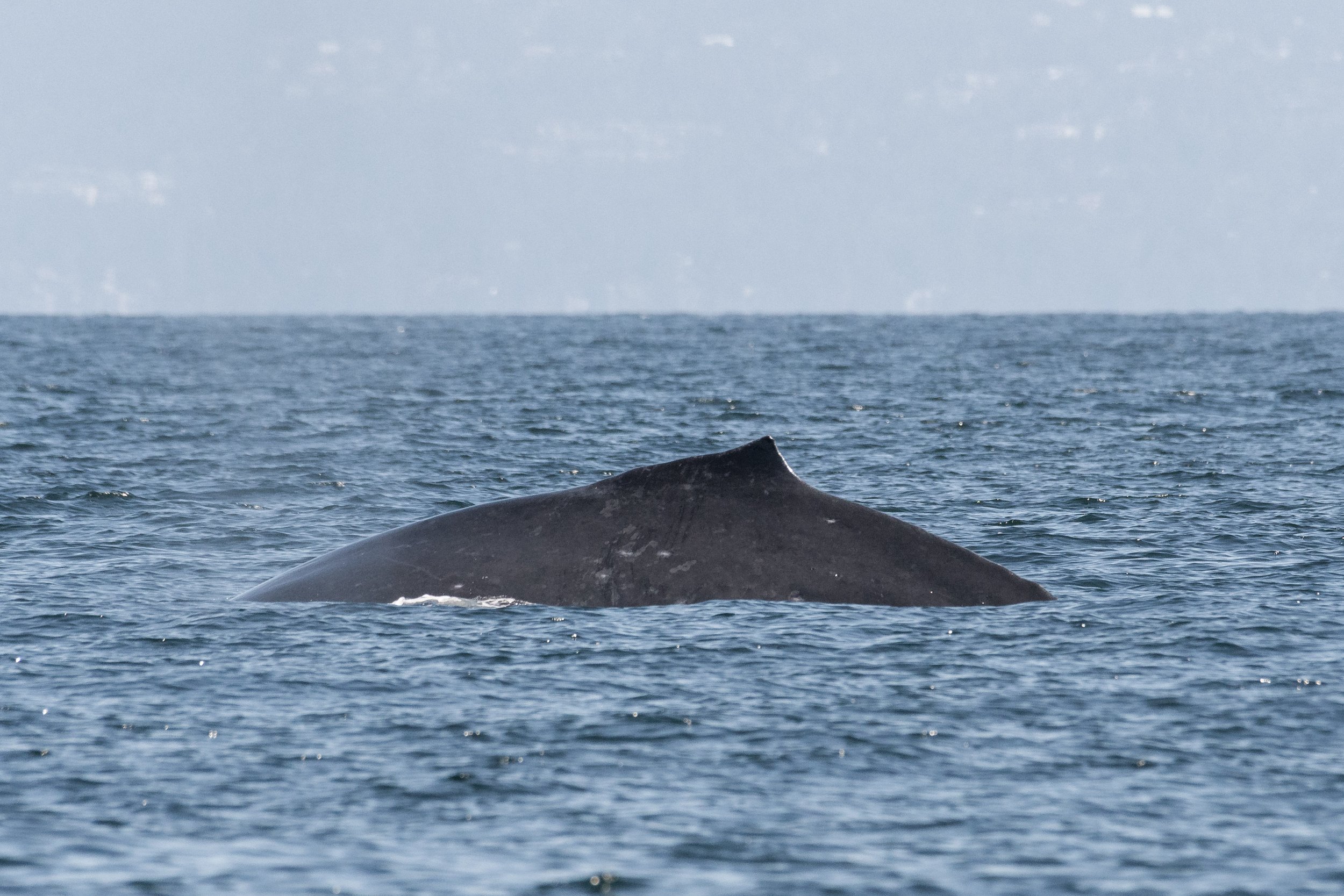
Astroboys very unique, pointy dorsal fin. Photo by Evan Hessels.
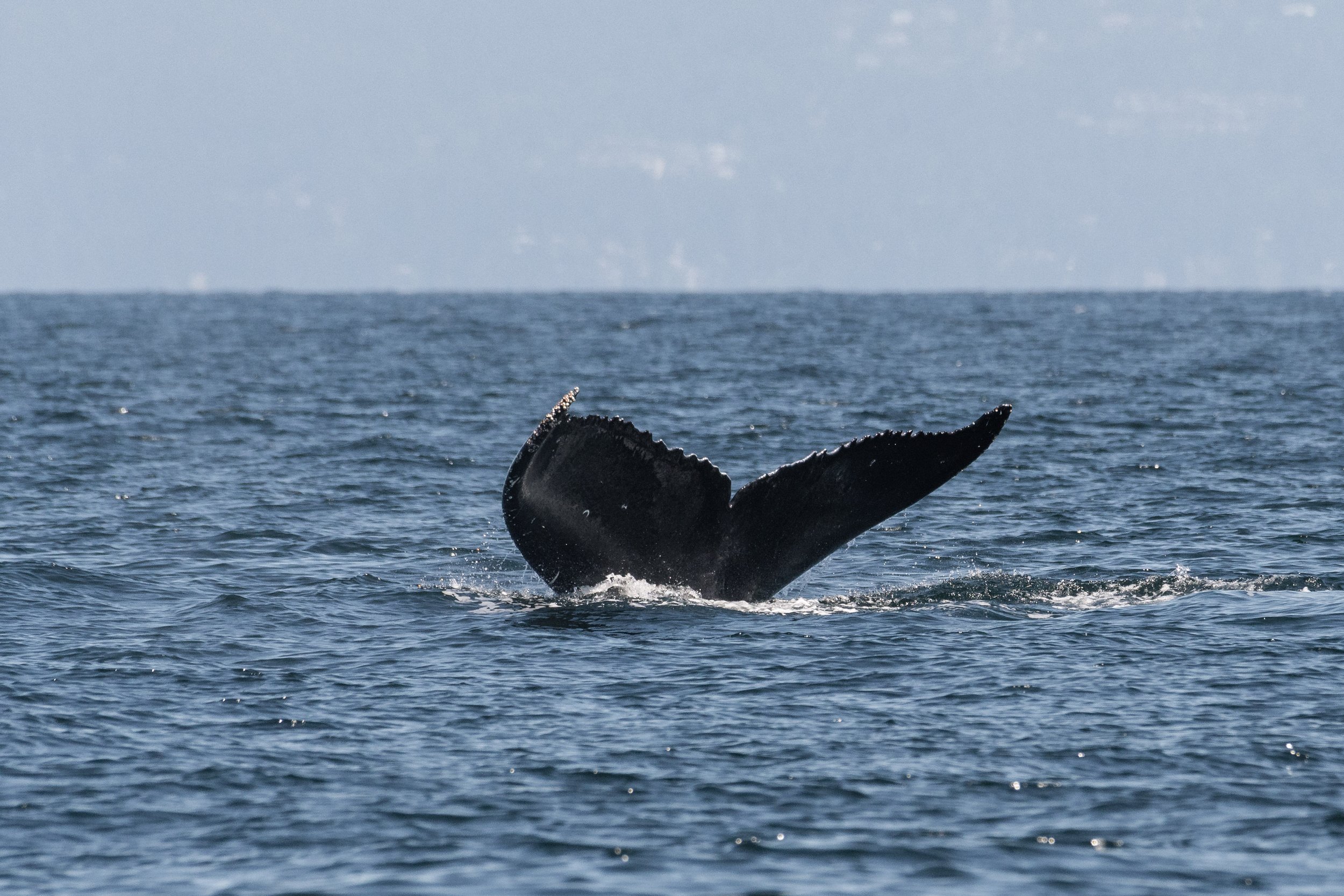
A great look at Astroboy’s fluke. Photo by Evan Hessels.
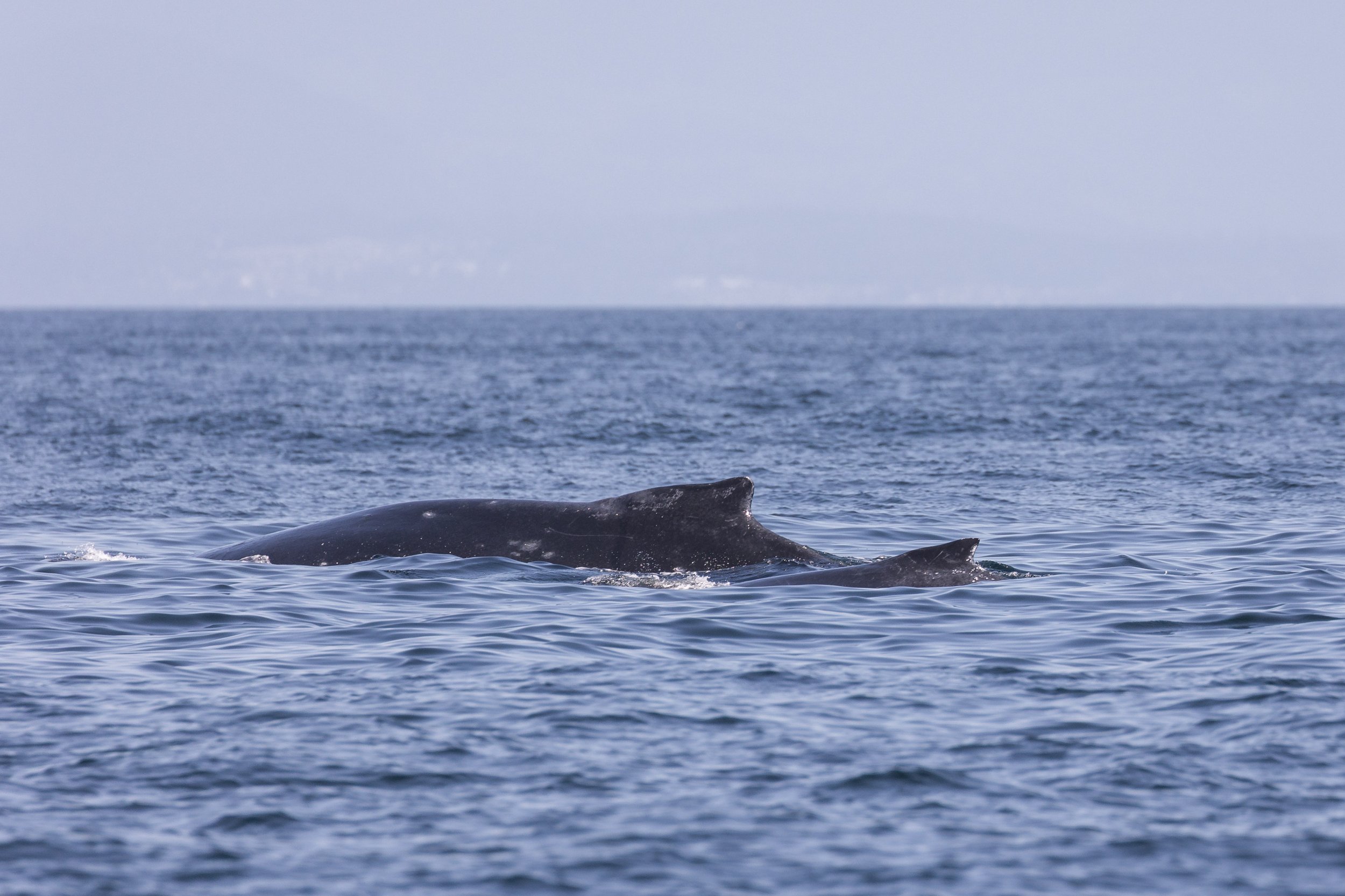
Sage surfacing beside her calf. Photo by Jordan Robinson.
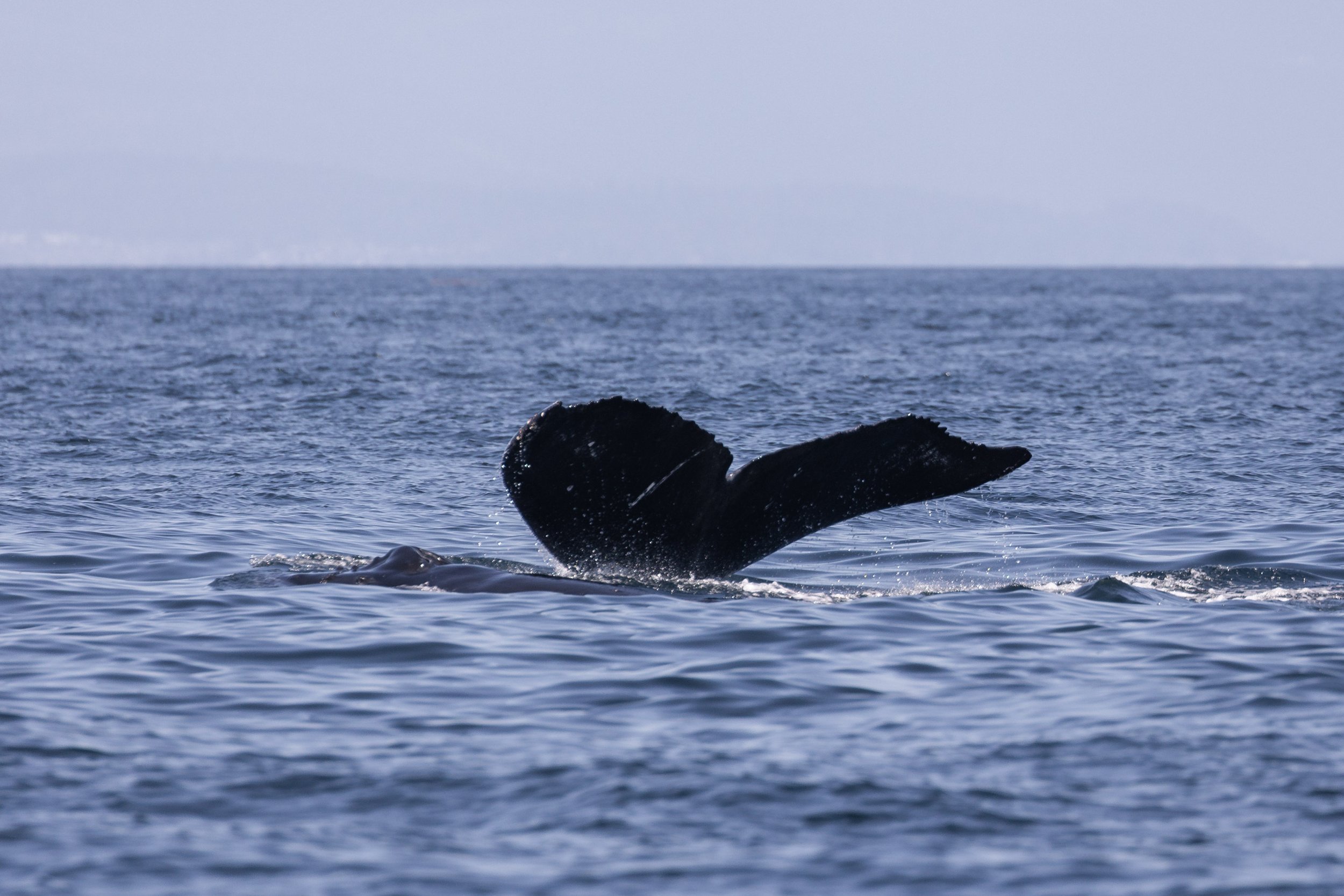
Sage diving with her calf at the surface just ahead of it. Photo by Jordan Robinson.