
June 20, 2026, 3:30 PM - Chainsaw, Whidbey, and the T086As
High hopes and mild seas awaited passengers and crew aboard our semi-vessel Kula. Our adventure started with Captain Rodrigo taking us into the Strait of Georgia, scanning the horizon for any distant whale blows, dorsal fins, or tail flukes! Along the way, guests and crew make a stop at a spot called White Islets.
This collection of small islands serves as a seasonal haulout for some of our furry friends, sea lions! The Steller Sea Lions that haul out on these rocks are the largest sea lion species in the world. With this species, females grow to be one-third the size of mature males, with males reaching 11 feet long and weighing upwards of 2500 pounds, whereas females max out at around 800 pounds and reach 8 feet long. The large stature of males is a crucial advantage during the breeding season, which begins mid-May and runs through mid-July. The rotundity of male Steller sea lions aids in posturing and fighting against other males who compete for groups of breeding females. Their size also carries all their metabolic energy and water since males will need to haul out on land for upwards of two months to defend their harem of mates.
As our search continued, Captain Rodrigo got a report of some orcas in the middle of the Strait of Georgia, north of Gabriola Island. The report mentioned two black dorsal fins; they were orcas! Upon arriving on the scene, marine naturalist Jordan snapped some photos of the dorsal fins. Amongst the orcas, one small dorsal fin was seen on their own, whilst a larger dorsal fin appeared further in the distance. Using photo-identification, Jordan identified the large dorsal fin as that of a male known as Chainsaw. Chainsaw has two large notches in the top of his dorsal, making him one of the easiest orcas to identify. Travelling with Chainsaw was his mother, Whidbey II!
T063 Chainsaw ♂ (~1978)
T065 Whidbey II ♀ (~1971)
Within a typical orca pod, a mother will be travelling with her sons and daughters. These children usually stay with the matriarch for life, strengthening their family bonds through socializing and sharing meals with one another. Within the transient/Biggs orca ecotype, pods are known to fragment into smaller pods once daughters of the original matriarch start having their own children. It’s theorized that the transient orcas do this to make hunting their prey easier. Since the transient/Bigg's orcas hunt other marine mammals, they need every advantage they can get. By limiting the number of individuals in their pod, they maintain a stealth advantage while searching through the water. Fewer orcas mean a lower chance of disturbing their prey, such as seals, sea lions and porpoises. Whibey does have other children, being T065A Artemis and T065B Chunk. These mature females have fragmented from their mother to form their own successful matriarchies. It’s estimated that Whidbey has three living children (Chainsaw, Chunk and Artemis) and 8 living grandchildren!
Although Whidbey is a grandmother, she’s still spry and strong! She and Chainsaw were seen moving fast through the waves. Since the orcas were moving with purpose, they expended more energy as they travelled faster. Using more energy means using more oxygen, so these two didn’t stay down for long! Frequent surfaces with full view of their eyepatches and saddlepatches were seen as they went through the waves!
After our time with Chainsaw and Whidbey concluded, Captain Rodrigo slowly pulled away, and passengers and crew continued their search!
While we were cruising through the Strait of Georgia, a land-based report of unknown orcas was made just north of the outer Nanaimo Harbour! Rodrigo adjusted course to head back towards the Nanaimo area to search for these mysterious orcas. Upon arriving at Snake Island, just outside Nanaimo, guests and crew scanned the horizon for dorsal fins or blows. The low sun and clear skies make whale blows especially easy to spot from a distance. After some time, we decided to take a break from searching to watch some harbour seals! These cute little pinnipeds are considered true seals because they belong to a different evolutionary lineage compared to sea lions. One of the key differences lies in their anatomy: true seals lack external ear flaps (pinnae) and have smaller front flippers. Additionally, their pelvic bones are fused, which limits their ability to move on land, but it gives them a decisive advantage in the water. This adaptation enhances thrust and agility, crucial when evading killer whales!
After the cute little harbour seals, the search for the orcas continued. The original report was updated to identify which orcas these were. It was transent orcas from the T086A pod! This means that three small dorsal fins were present somewhere in the area. As the search continued, Captain Rodrigo spotted them in the distance! As crew and passengers approached the scene, the whales had disappeared once more. Many moments later, they were spotted at our 6 o’clock! After positioning the boat a second time, marine naturalist Jordan photographed the small dorsal fins and confirmed the pod was the T086A’s using the matriarch’s dorsal fin notches.
T086A Eider ♀ (1988)
T086A4 Akia ♀ (2016)
T086A5 Siku ♂ (2024)
This pod was spending much less time at the surface than Chainsaw and Whidbey. This pod was seen zig-zagging throughout the outer Nanaimo harbour, swimming in close unison. After a couple of surfaces with the T086A’s, our tour was coming to an end! After a fintastic day on the water in the Salish Sea, guests and crew found themselves close to home.
In no time, we found ourselves back in the Nanaimo Harbour after an amazing tour! Please enjoy all of the photos below, captured throughout the tour by Marine Naturalist Jordan Robinson.
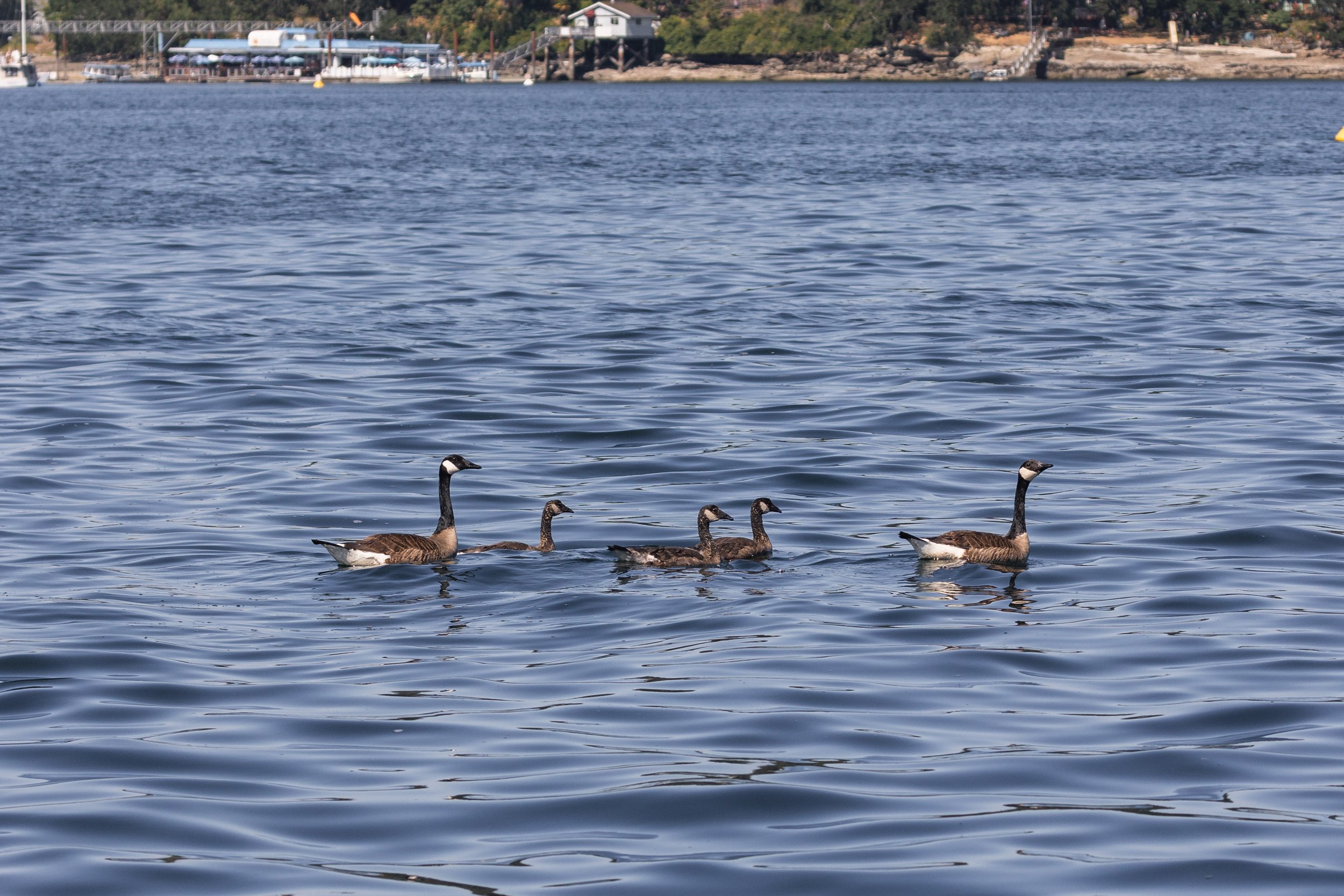
A family of Canada Goose in the Nanaimo Harbour.
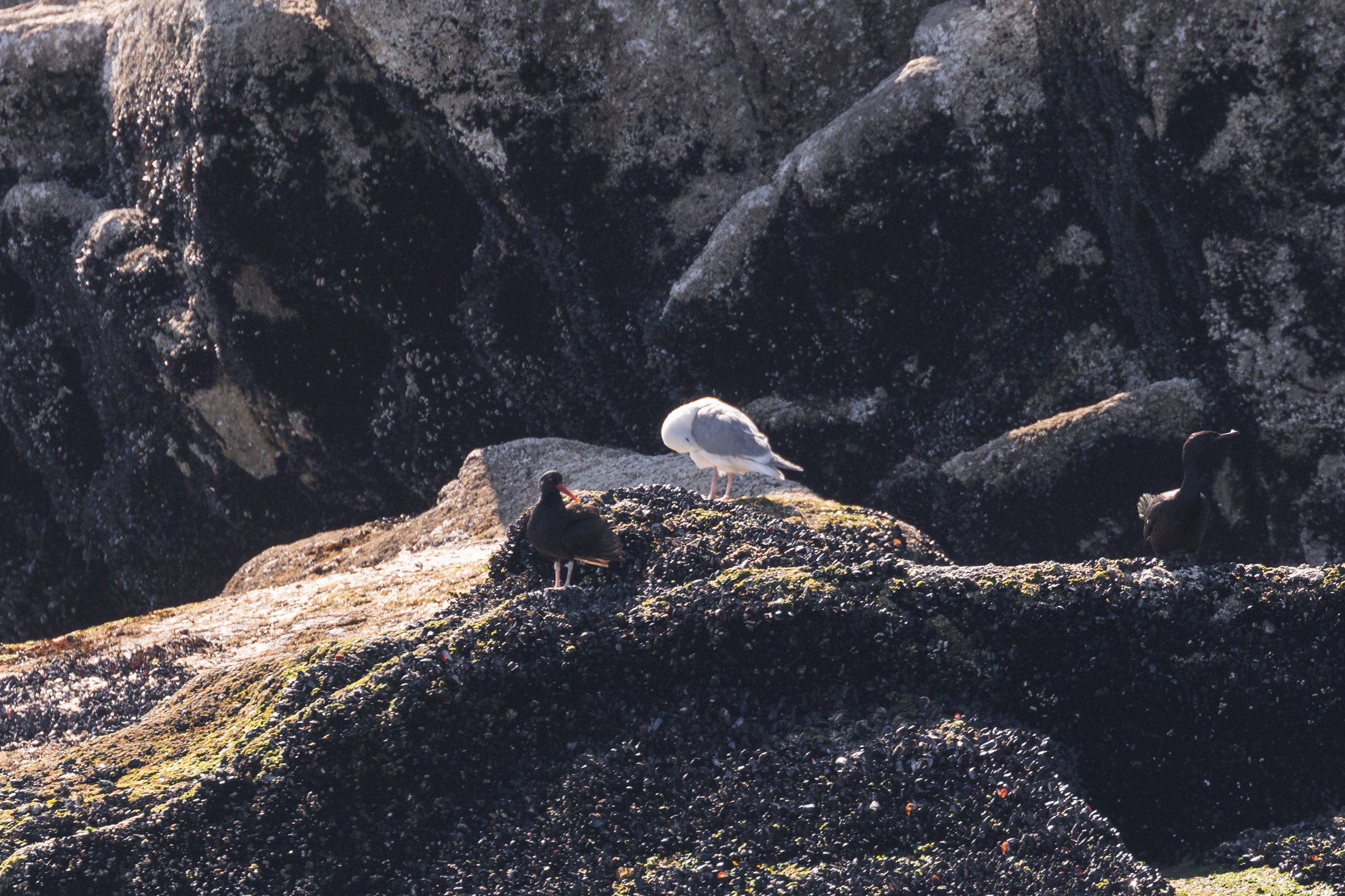
Three bird species in one photo: an oystercatcher, a gull, and a cormorant.
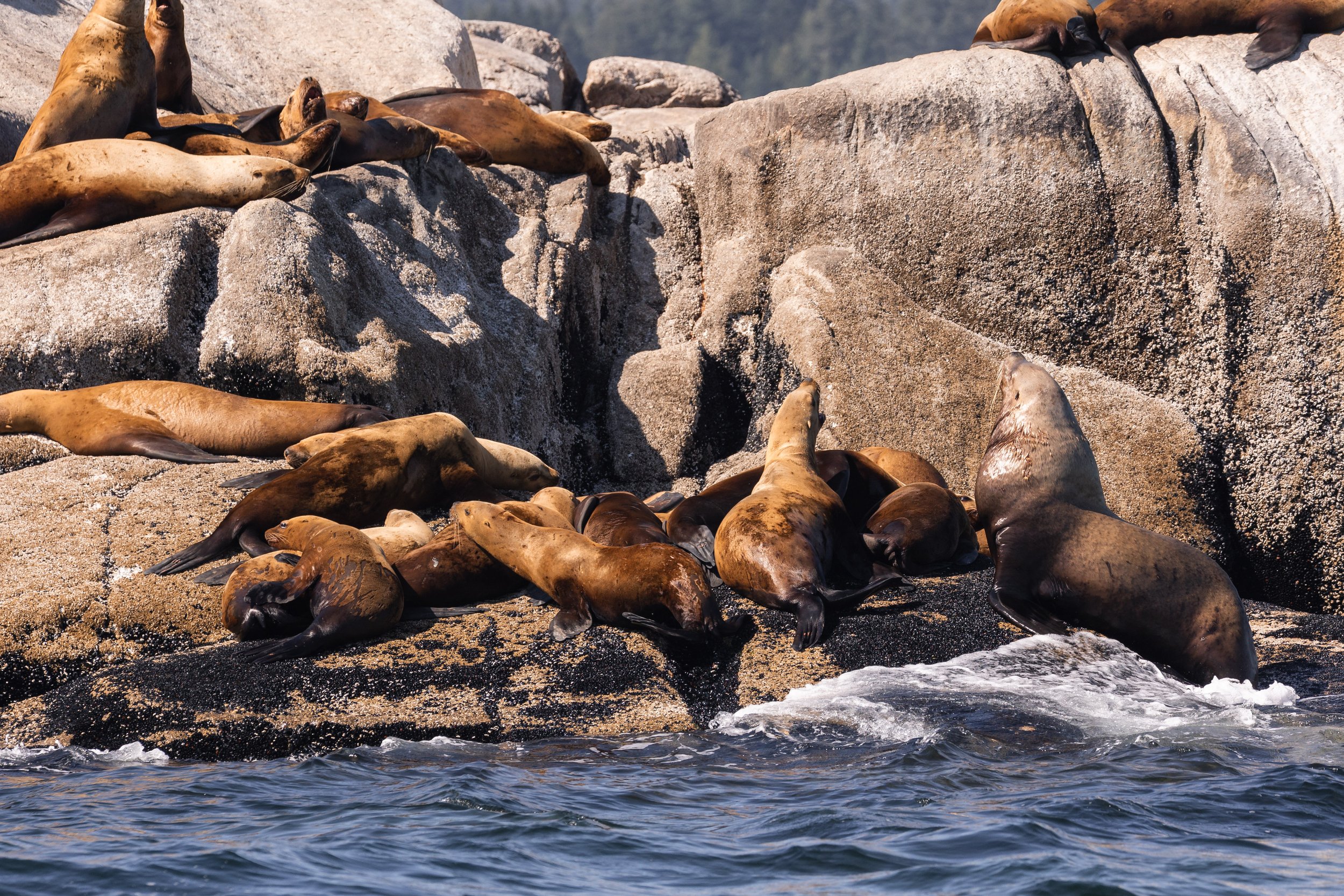
A lively group of Steller Sea Lions hauled out on the rocks.
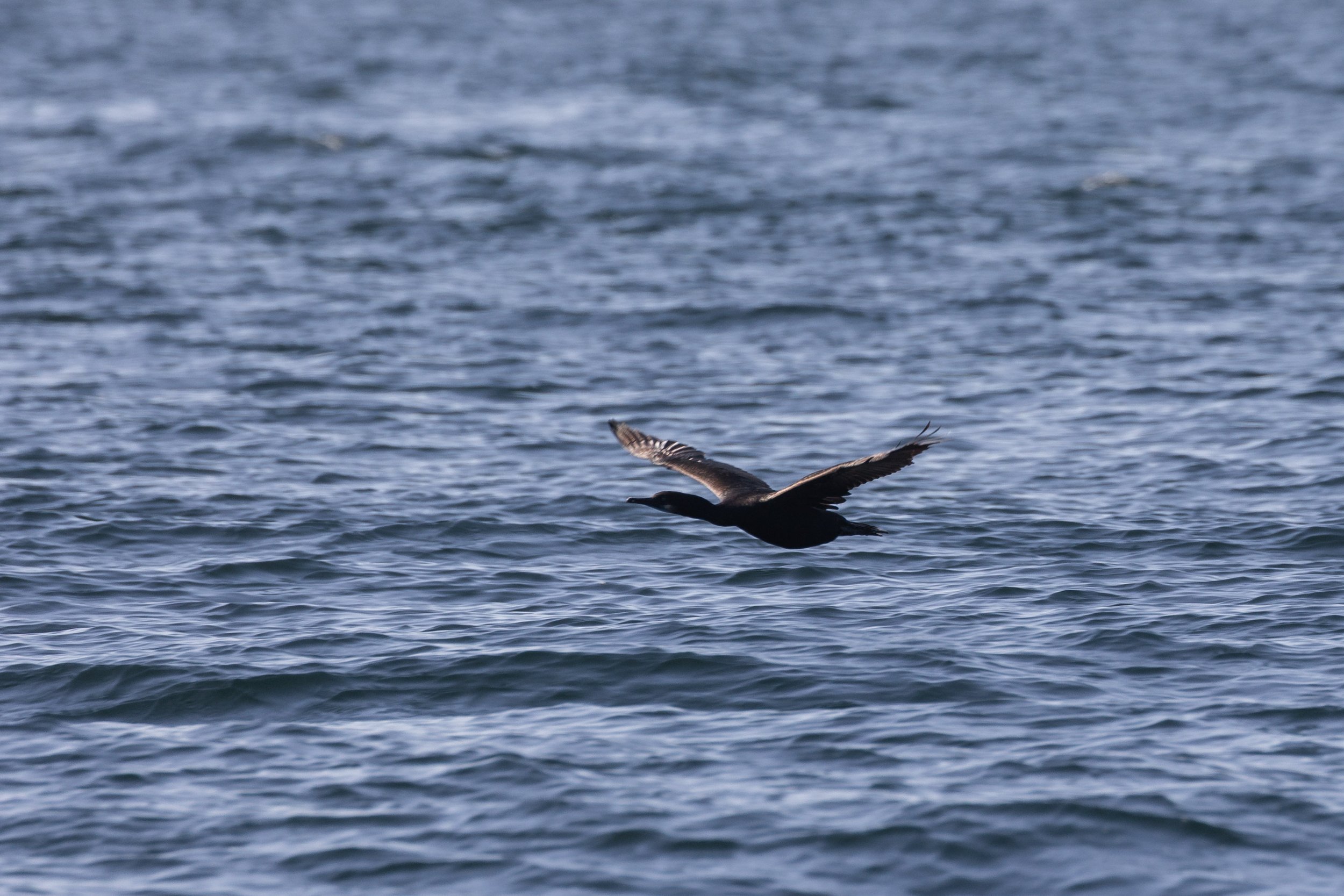
A Brant’s Cormorant flying by!
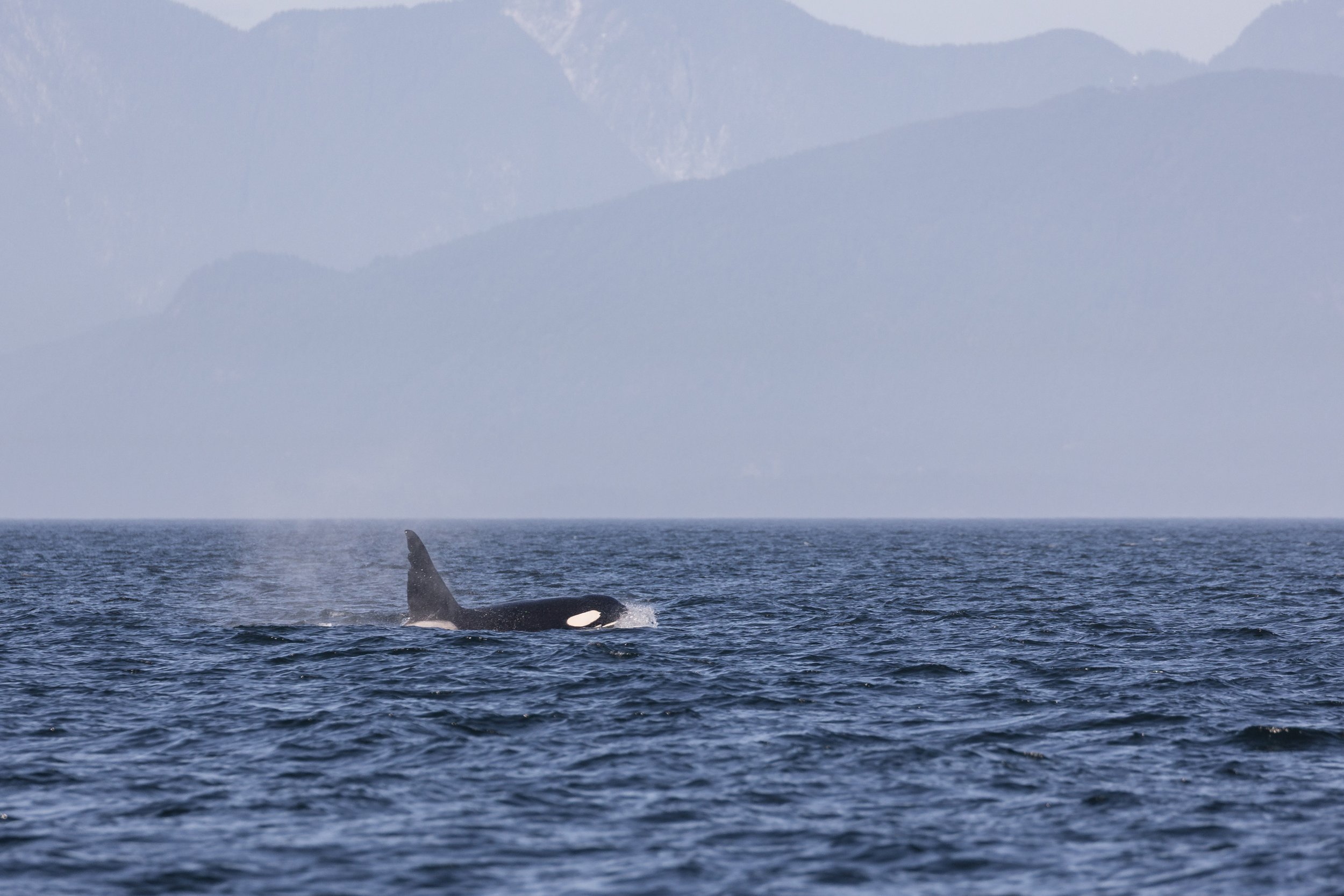
A beautiful photo of T063 Chainsaw surfacing with the mountains in the background.
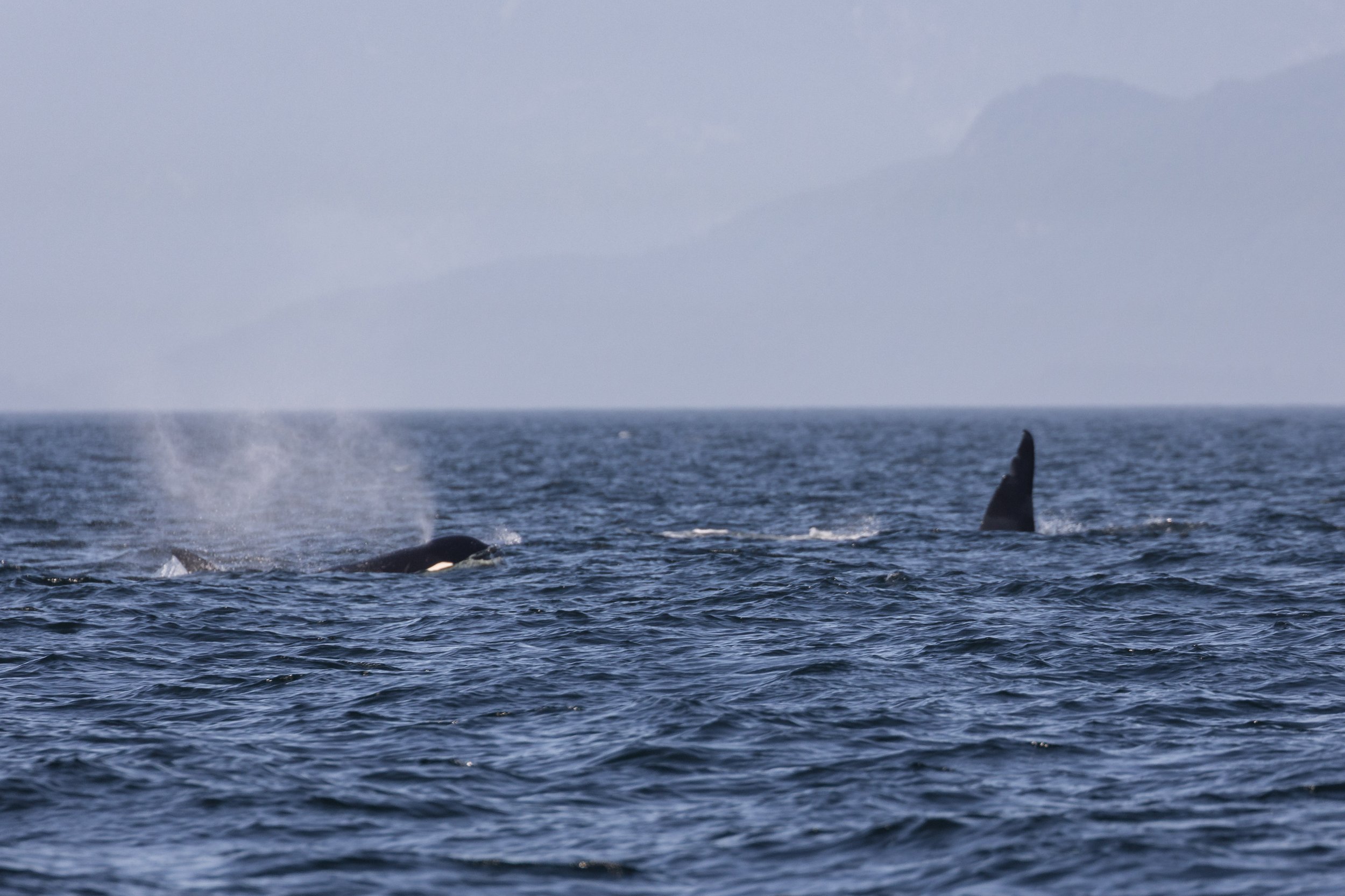
T063 Chainsaw surfacing just ahead of his mom, T065 Whidbey II.
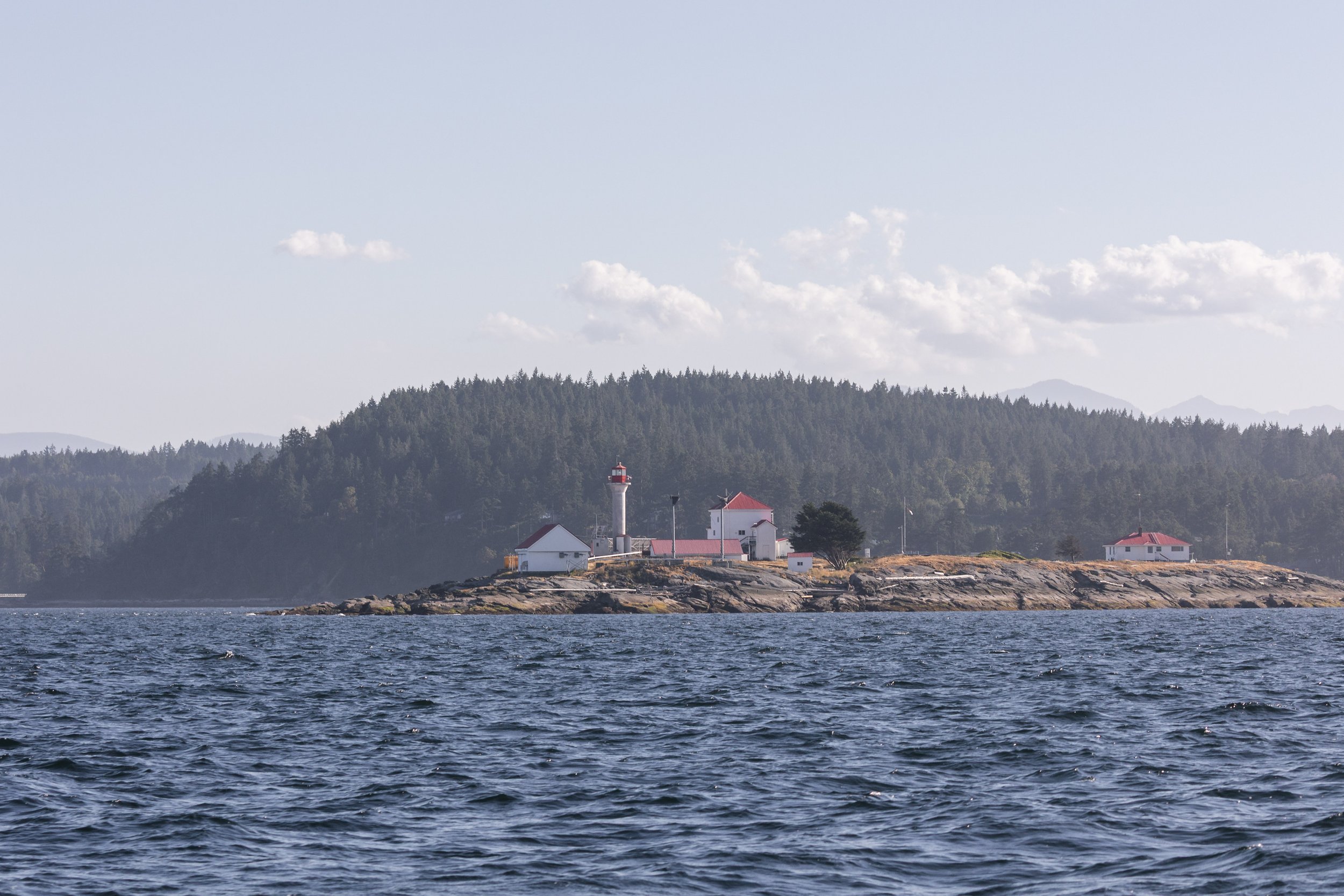
The Entrance Island lighthouse, with Gabriola Island in the background.
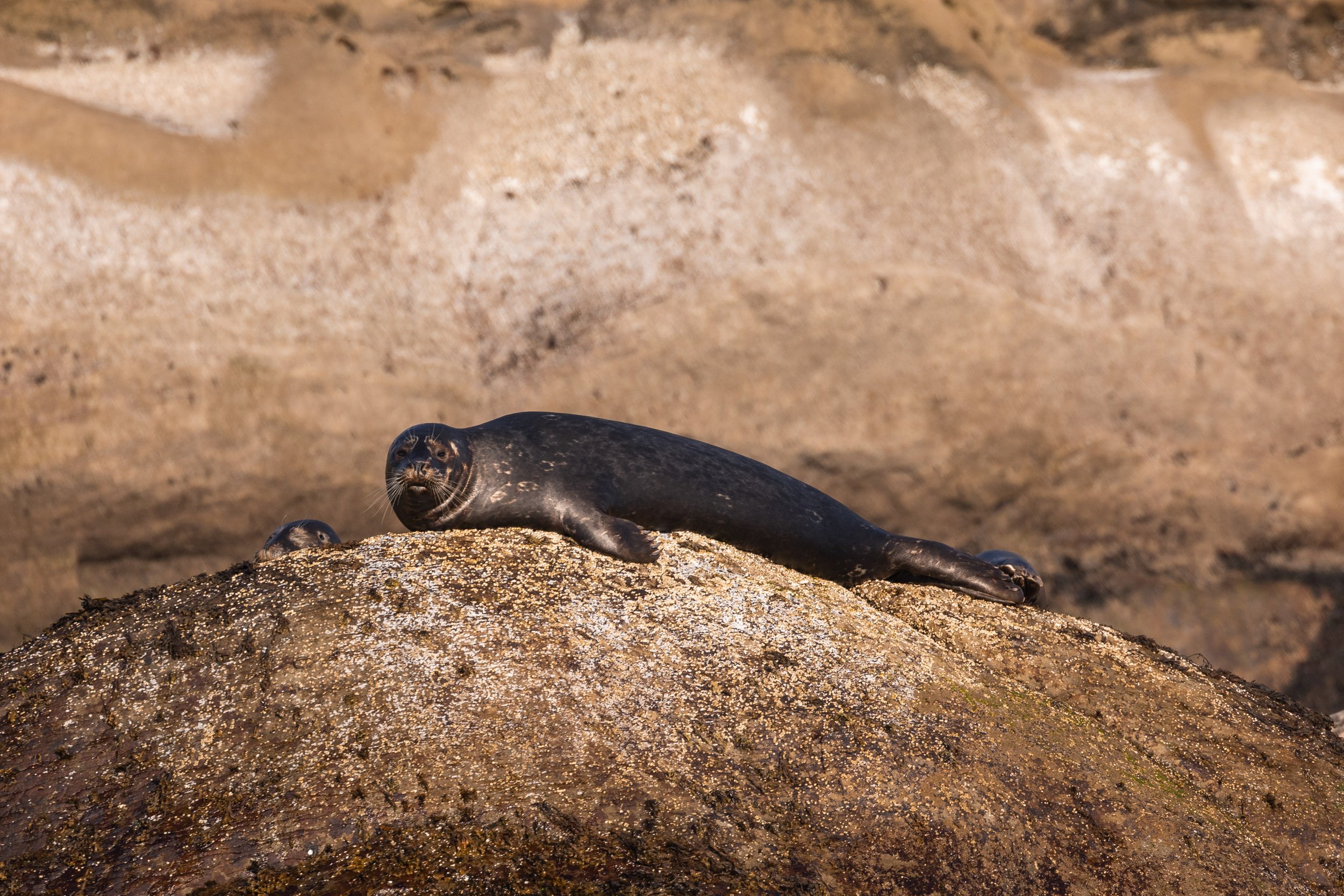
A Harbour Seal lounging on the rocks.
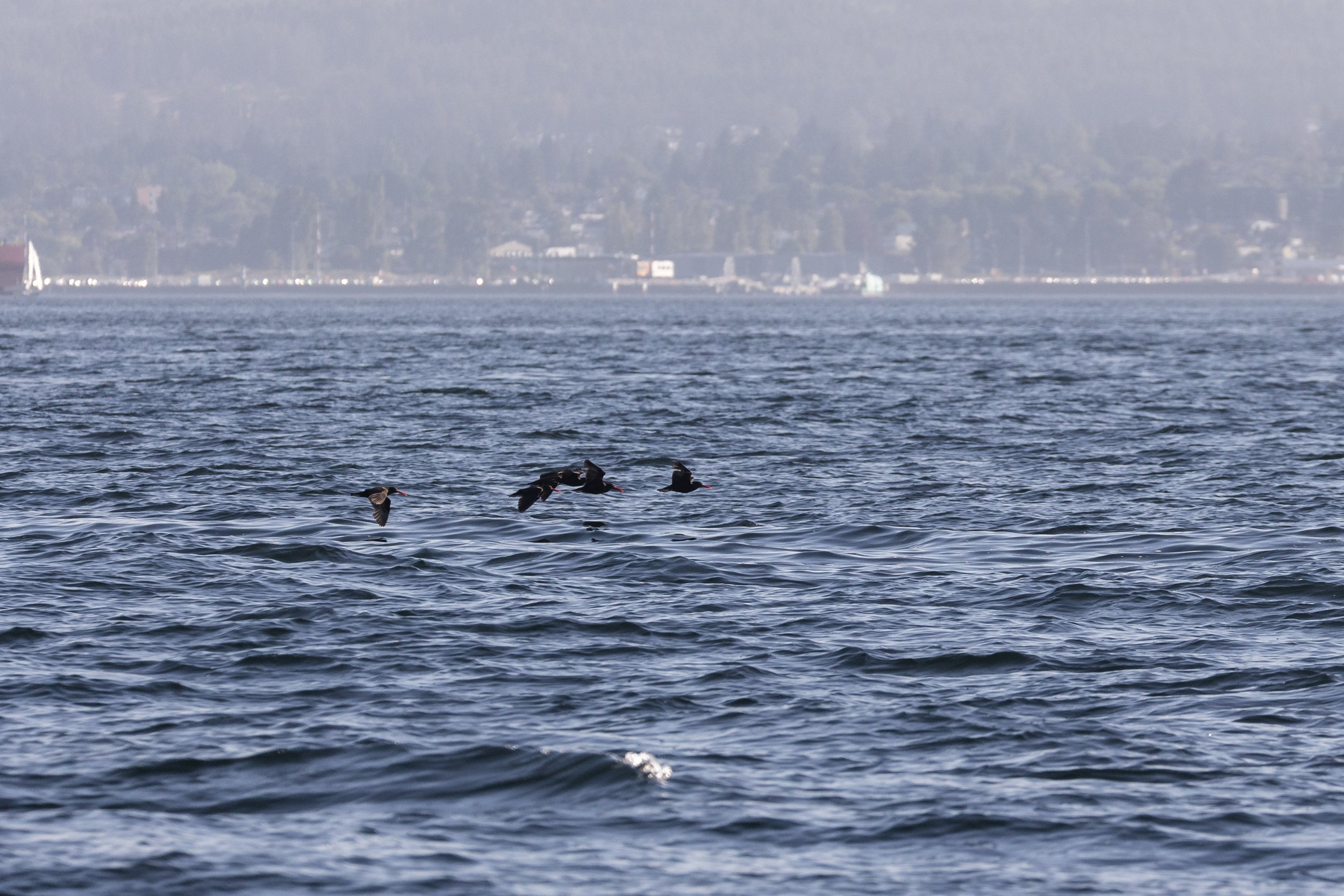
A group of Black Oystercatchers flying by.
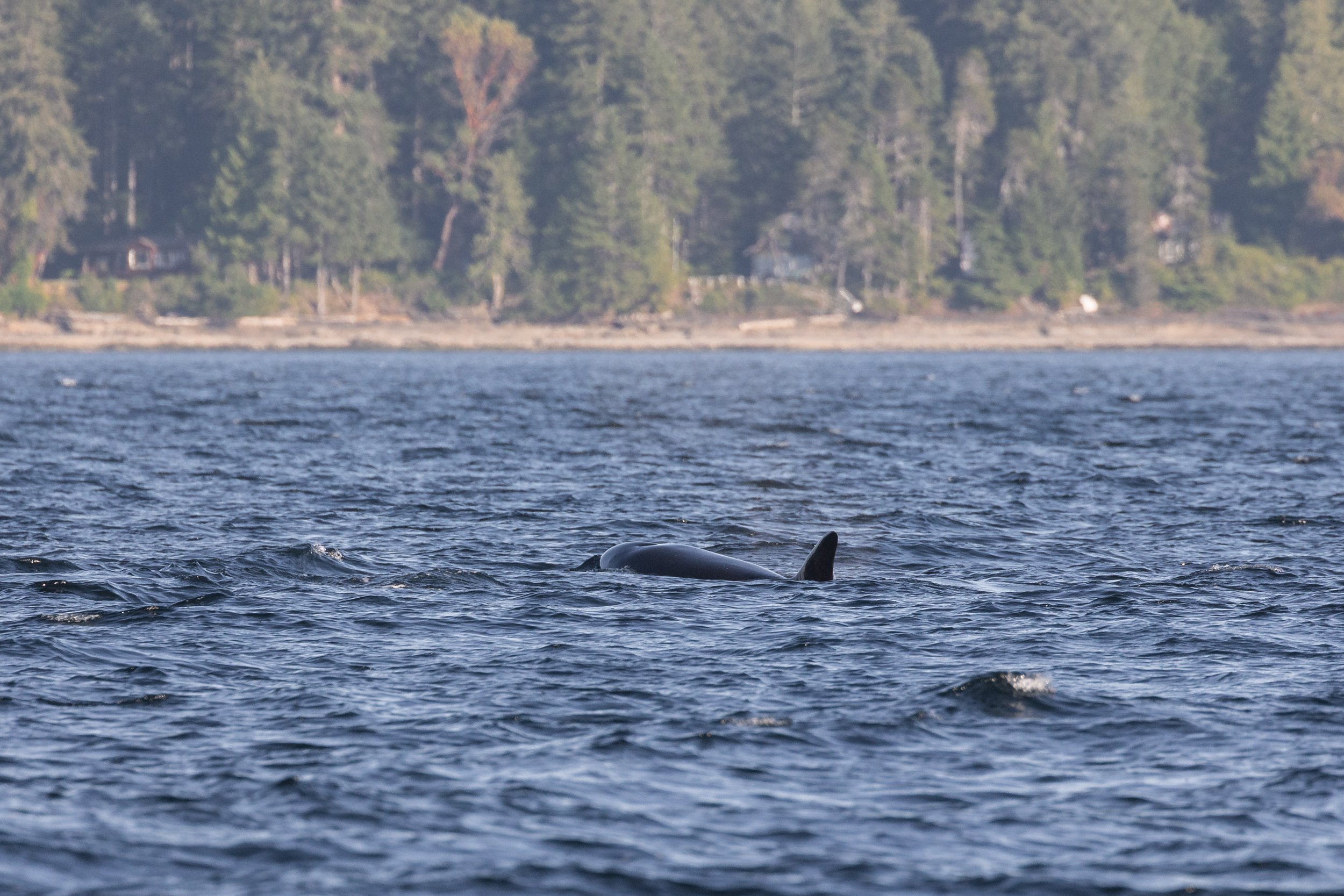
T086A4 Akia surfacing in the waves.
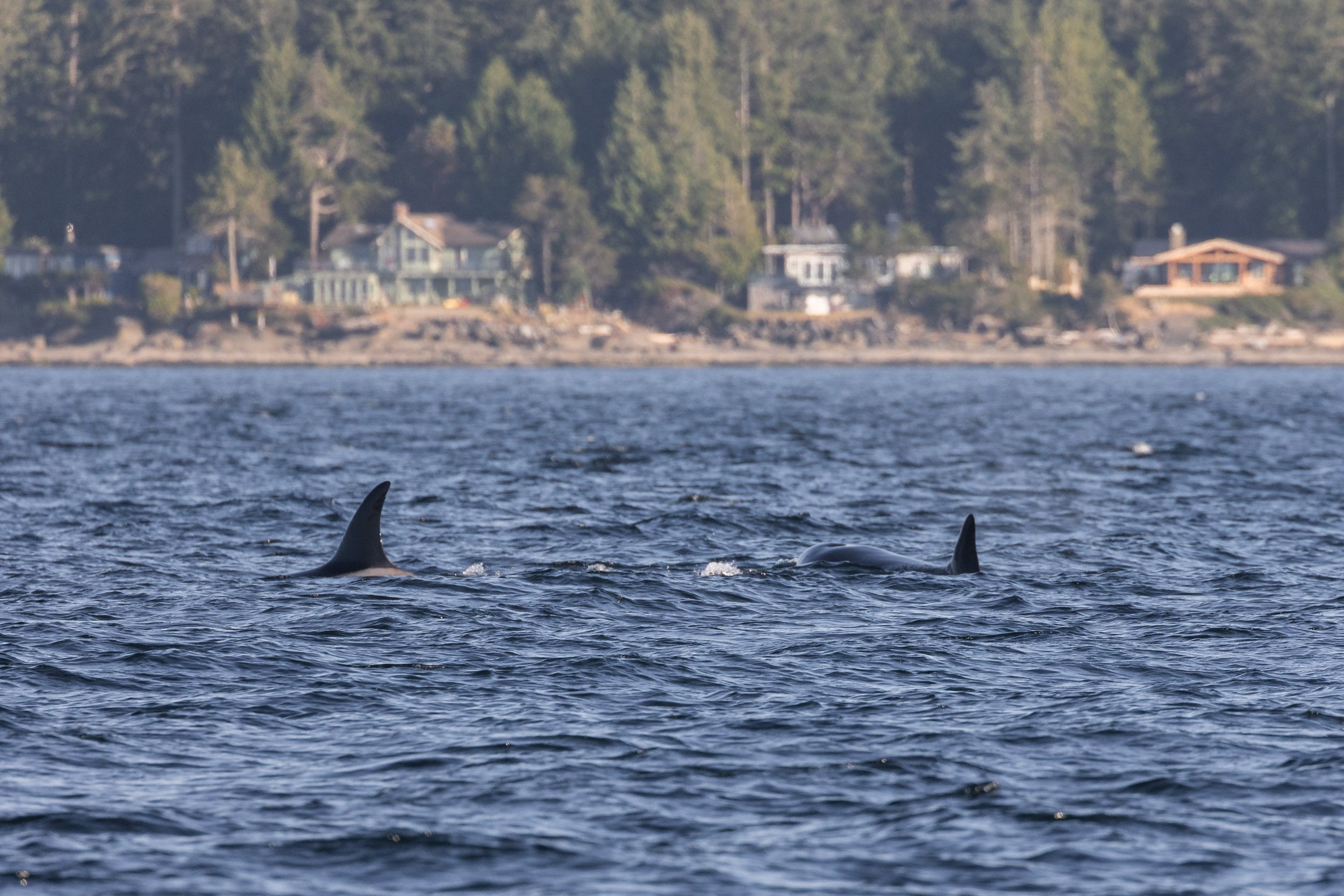
T086A Eider and T086A4 Akia surfacing together.
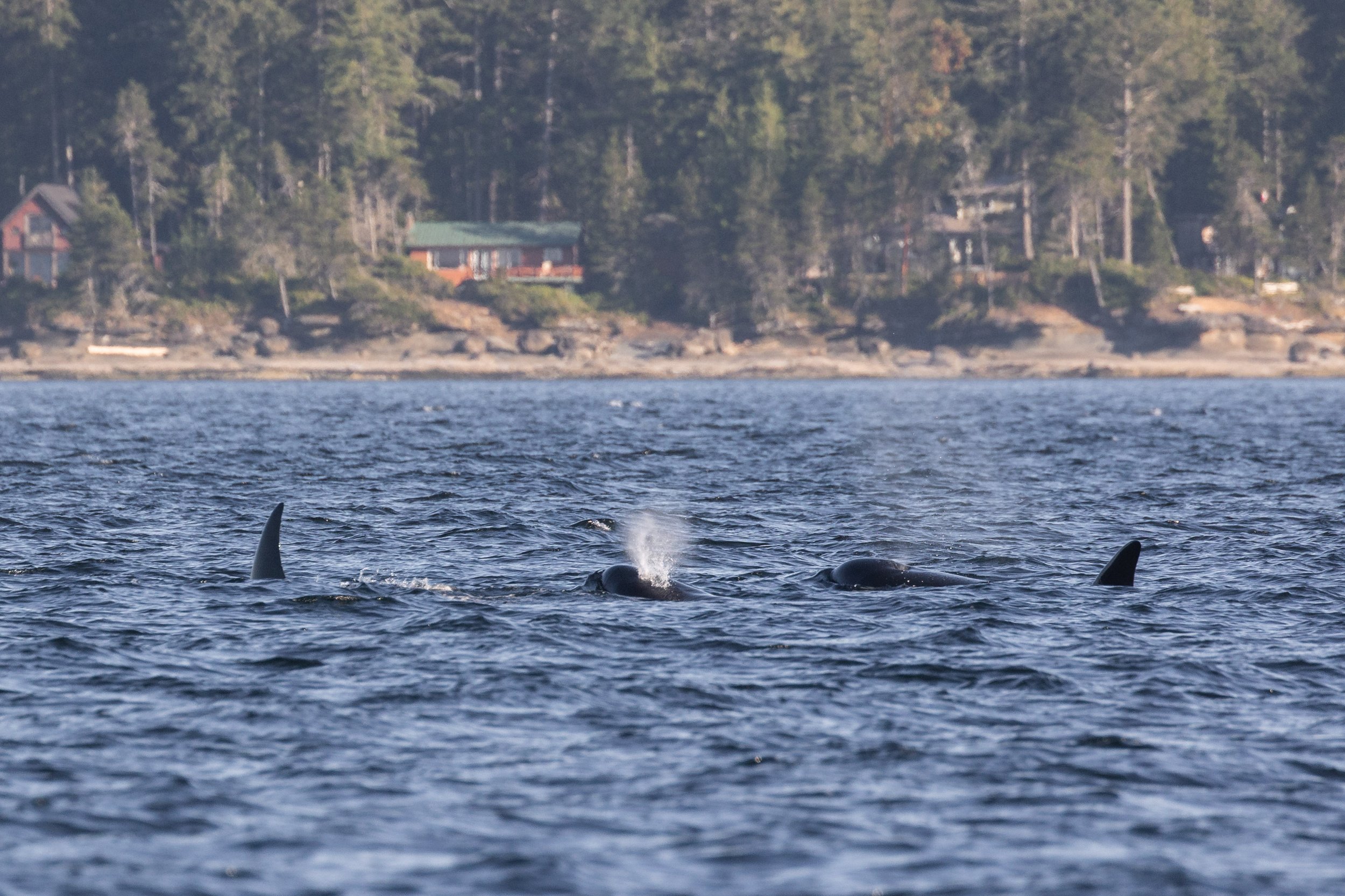
The whole T086A family surfacing together: T086A Eider on the left, T086A5 Siku in the middle, and T086A4 Akia on the right.