
June 21, 2026, 10:30 AM - Over a dozen humpbacks in one trip!
On this sunny morning, the full fleet pushed off the dock! Calm seas and light winds greeted guests and crew aboard our Zodiac-style vessels Cascadia and Keta, as well as our semi-covered vessel Kula. Our adventure began by spreading the fleet to maximize our search area. Captain Rodrigo aboard Keta set off into the Southern Gulf Islands, while captains Ally and Joseph aboard Cascadia and Kula set off into the Strait of Georgia!
Along the way, vessel Keta made their way out into the Strait of Georgia through Porlier Pass, between Valdes Island and Galiano Island. Along the way, they stopped at a rocky outcrop along the shoreline of Valdes Island. As we got closer, the fuzzy blurs in the distance turned out to be Steller sea lions! These sea lions were hauled out on a rocky outcrop dubbed “Stinky Rock” because of the smell they create. Those unfortunate enough to be downwind of the Sea lions that hang out there get to find out why the rock has this nickname. Since so many animals are eating, sleeping, feeding, and defecating together on one small rock, the smell is as bad as you can imagine!
While Keta enjoyed the pinniped party at “stinky rock,” the vessels Kula and Cascadia had also found other wildlife. It was two humpback whales! Marine Naturalists Evan and Vanessa snapped some photos of their small dorsal fins and tail flukes. To confidently identify a humpback, a good photo of the underside of the humpback’s tail fluke is the gold standard for photo identification. Each humpback whale developed a unique coloration of white and dark areas on the tail. This coloration, combined with damage to the tail, such as notches and scratches, allows us to catalogue and compare all humpback whales. A humpback can sometimes be identified by its dorsal fin, but this can be challenging because new scratches and marks can appear between seasons. This method is less consistent than the widely used tail method, but experienced whale watchers can sometimes use it!
Upon analyzing the photos, the humpback whales were identified as Arial (BCY0767) and Scuba (BCY1225)! These two humpback whales were seen surfacing together and diving one after the other.
Unfortunately, Arial was documented earlier in the morning with a monofilament fishing line on his dorsal fin. While we did not see the line still on him in our photos, we always aim to avoid potentially distressed animals whenever possible. Since there was a chance Arial may still be entangled, Captains Ally and Joseph waited for a safe opportunity to create more distance from Arial and Scuba.
When humpback whales become entangled in fishing gear, crabbing gear, or are struck by vessels, it is always alarming. Unfortunately, here in British Columbia, one in two humpback whales observed retain scars from vessel strikes or entanglements. These types of threats grow larger each season, with more people and whales out in the water. Understanding the signs and signals of whale presence out on the water extremely important not just for whale watchers but also for fishermen, kayakers, everyday boaters, and jet skiers. To safely navigate our waters, all captains need to recognize whale warning signs and know when to slow down and watch their surroundings. Scanning the horizon for any whale blows, dorsal fins, tail flukes, or humped backs is something every captain should be doing out on the water. Watching for large clusters of birds feeding at the surface could indicate schools of fish that could attract baleen whales, so caution is warranted. Other vessels may also fly a whale-flag, which functions similarly to a diver-down flag and also warrants caution. Vessels should slow down if they see a fleet of whale-watching vessels slowed down in a line, which is a great indication of whales in the area.
Any injured or distressed marine mammal should be reported to the Department of Fisheries and Oceans Canada (DFO), which has a 24/7 hotline at 1-800-465-4336.
The vessel that identified Arial’s entanglement immediately contacted the DFO and provided photos for additional documentation. Although it appeared that the monofilament line had detached, our vessels soon departed from Arial and Scuba just in case. The day was young, though, and we continued our search to find more whales.
Off in the distance, Kula, Keta, and Cascadia had all found more whales! Vessels Cascadia and Kula had found humpbacks Slice (BCX2487) and Poptart (BCY1014).
After some time, two more humpbacks had joined Slice and Poptart: it was Hammer (BCY1222) and Seabird (BCX1774)!
All the while, Keta had found their own whales! Humpbacks Allusion (BCY1300), Valiant (BCX1773), Kelpie (BCY1276), Scrimmage (BCZ0488), and Watson/Cerulean (BCY1461) were all hanging out within a small area, darting around while guests and crew aboard Keta enjoyed the view. After some time, Captain Rodrigo aboard Keta set his sights on finding more whales. Off in the distance, guests and crew aboard Keta had spotted some more blows. After slowly creeping through humpback-infested waters, Keta had arrived with the other whales. It was Chinook (BCY0996) and Frankenstein (BCX1358)! In the time it had taken to reach the distant blows, Keta was joined once again by Valiant and Kelpie, who had caught up to Chinook and Frankenstein. Additionally, Seabird and Hammer introduced themselves to guests and crew aboard Keta.
After all our guests and crew had their fill of humpback soup out in the Strait of Georgia, our vessels continued on their venture back towards Nanaimo. Along the way, vessels Kula and Cascadia stopped at “stinky rocks” to watch some Steller sea lions. This species is the largest of all the sea lions in the world! Steller sea lions exhibit sexual dimorphism, in which males and females of the same species differ markedly in anatomy. The difference between male and female Steller sea lions is their size. Females grow to be only a third the size of mature males, with males reaching 11 feet long and weighing upwards of 2500 pounds, whereas females max out at around 800 pounds and reach 8 feet long. The large stature of males is a crucial advantage during the breeding season, which begins mid-May and runs through mid-July. During this time, dominant males claim and defend harems of females on rocky haul-outs. Incredibly, these males will fast and remain on land, without entering the water to feed, for the entire two-month period.
Shortly after, the fleet found themselves back in the Nanaimo Harbour after an amazing tour! Please enjoy all of the photos below, captured throughout the tour by Marine Naturalists Evan Hessels, Vanessa Vereschahen, and Jordan Robinson.
Arial and Scuba
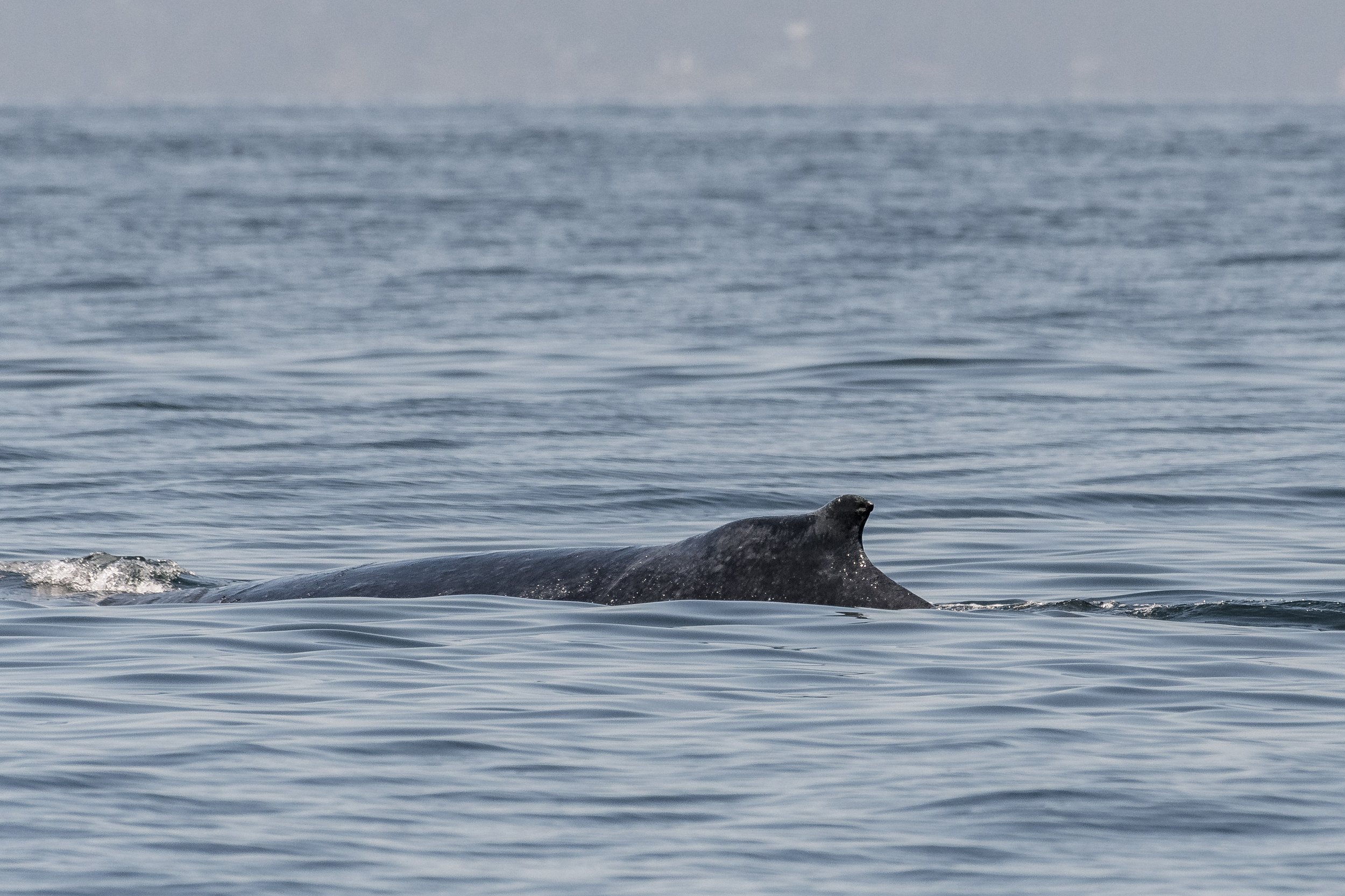
Scuba travelling along. Photo by Evan Hessels.
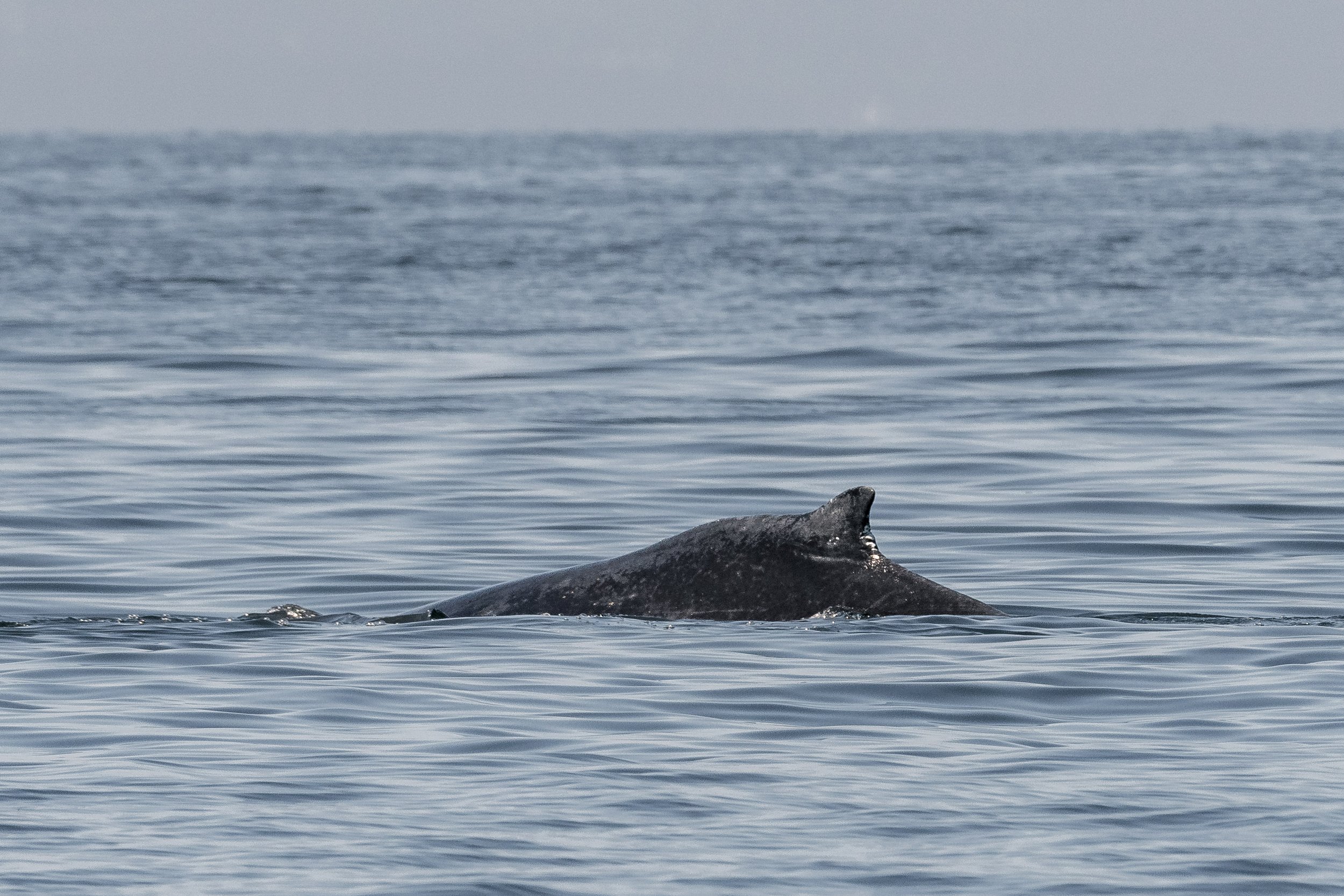
Arial travelling. Photo by Evan Hessels.
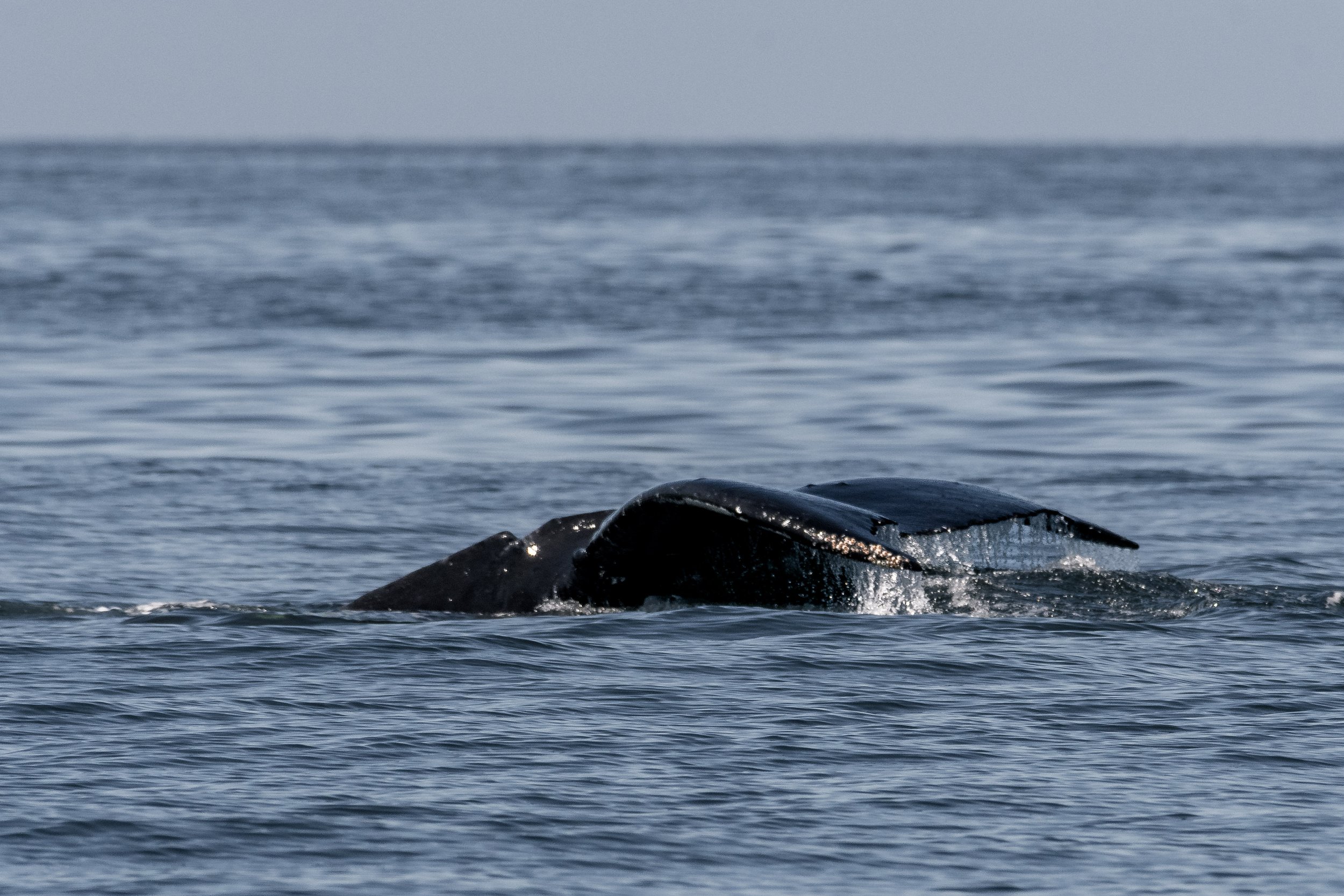
Scuba diving - they have a distinct notch out of their peduncle as seen here. Photo by Evan Hessels.
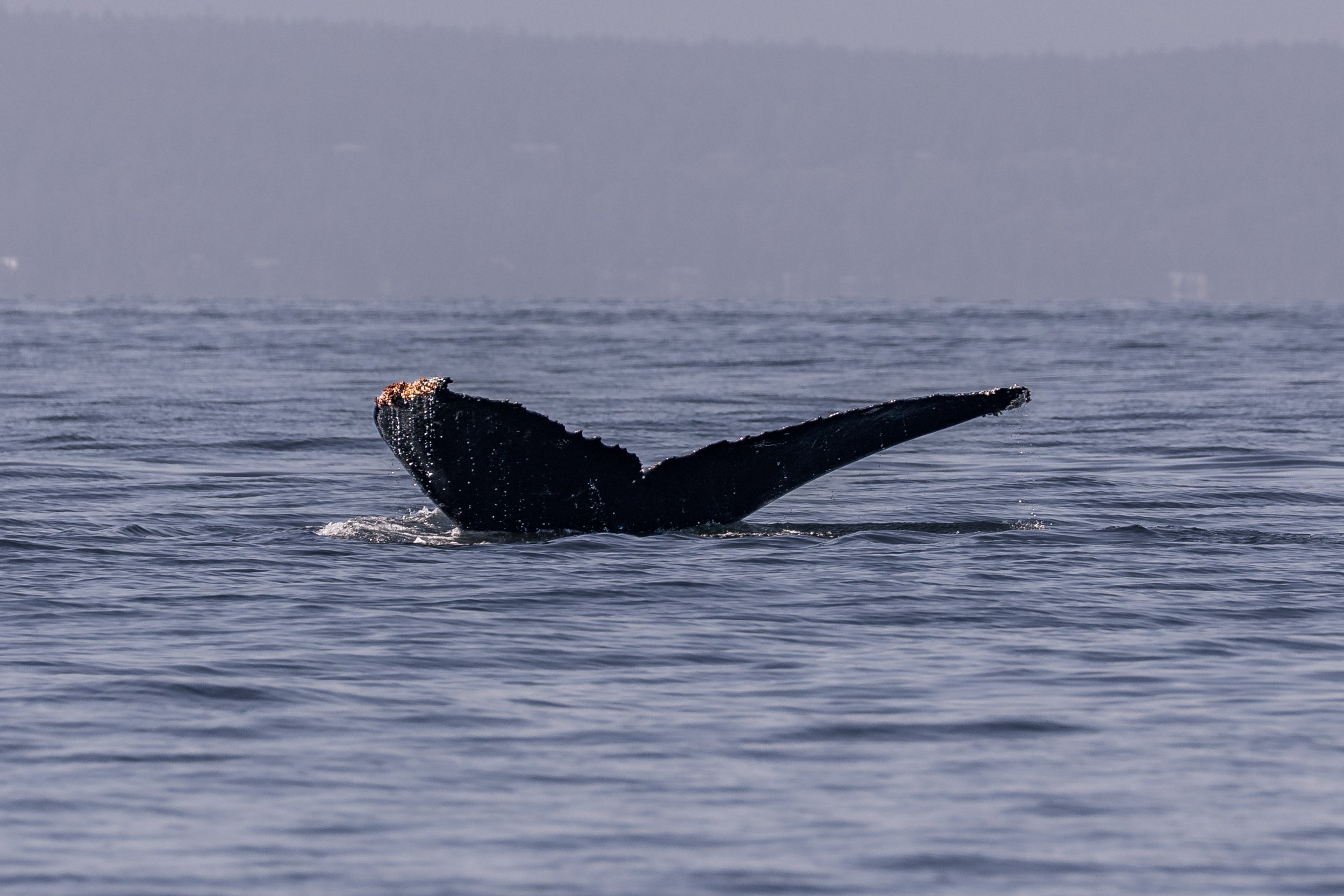
Arial diving. Photo by Vanessa Vereschahen.
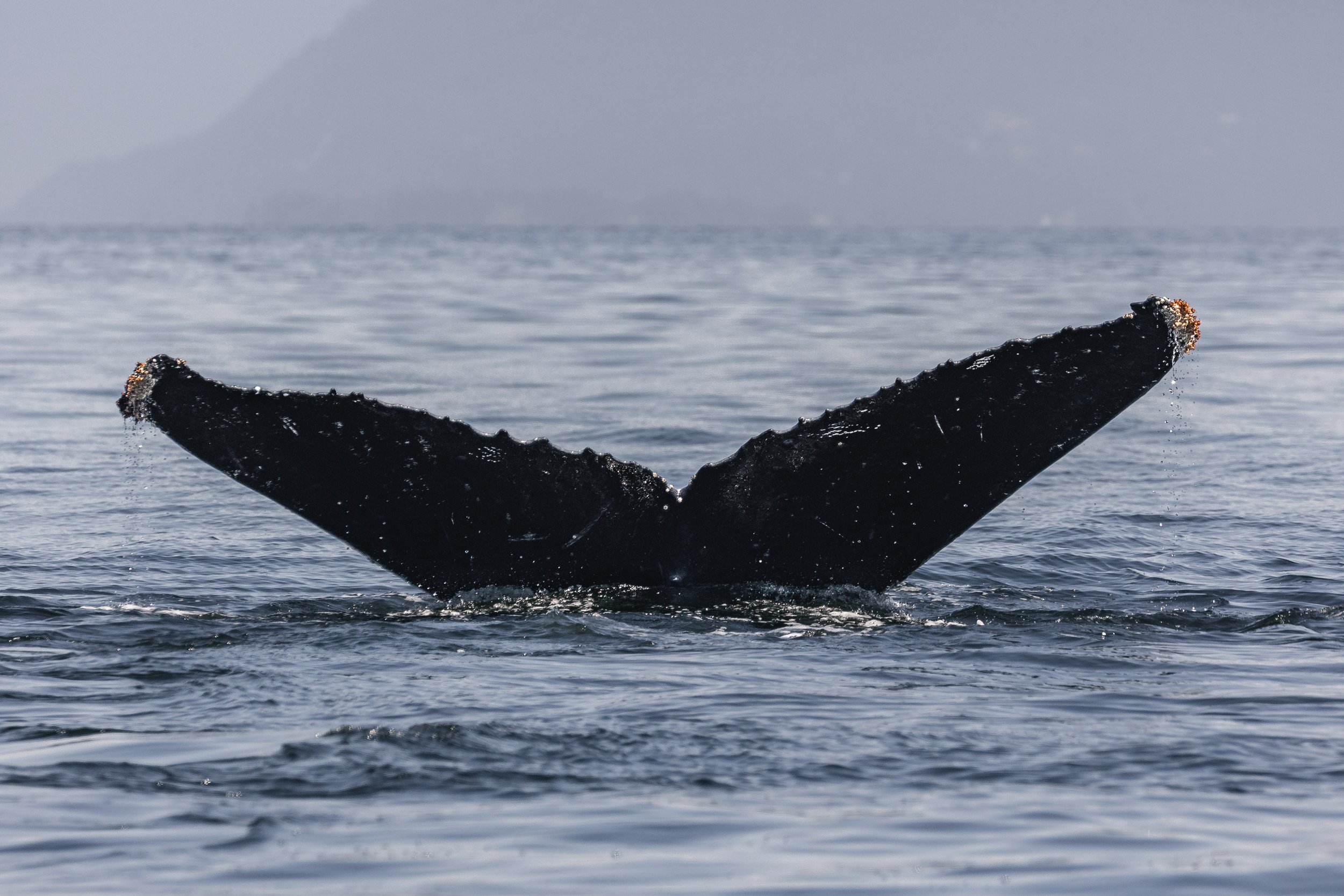
Arial with his interesting markings visible. Photo by Vanessa Vereschahen.
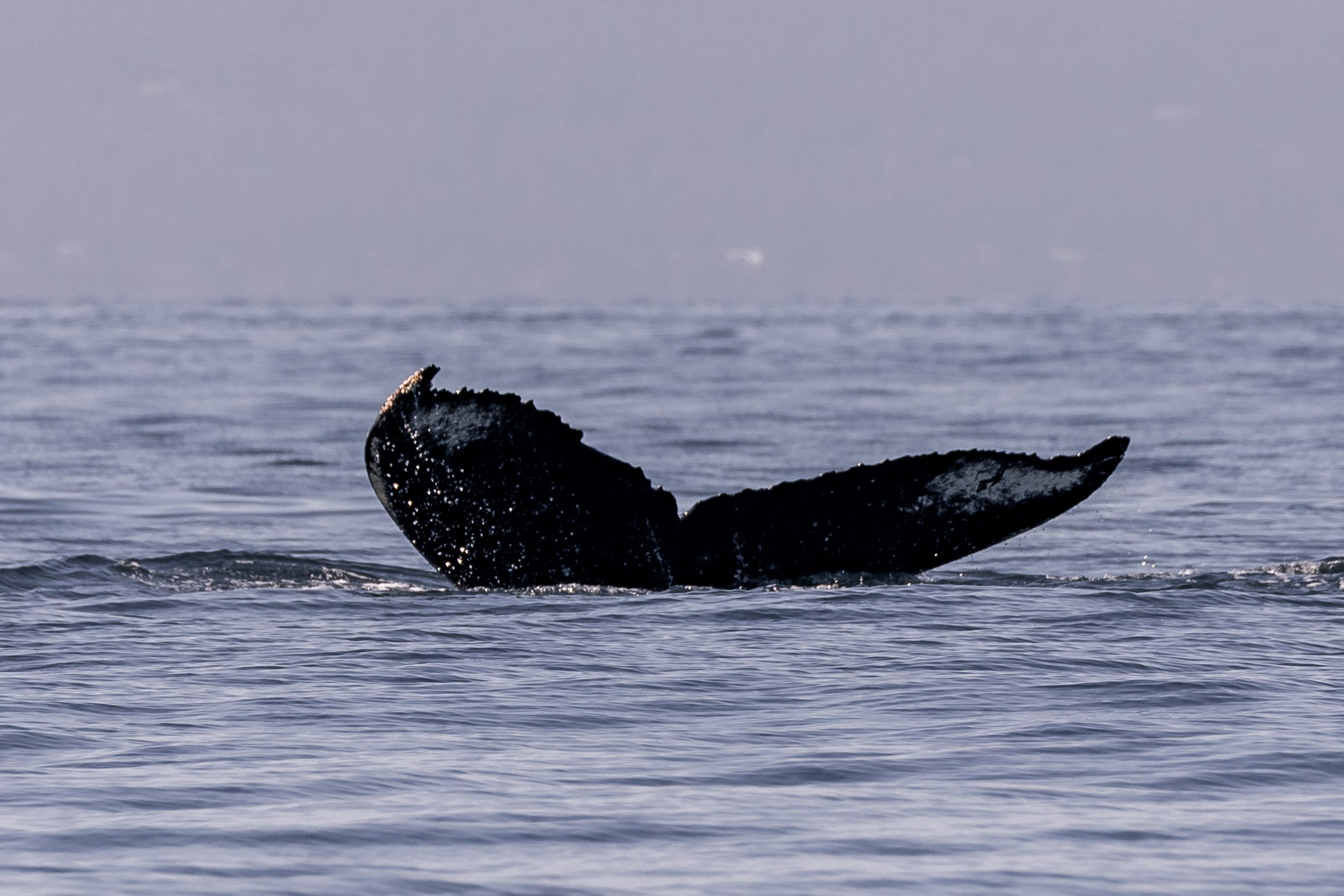
Scuba diving. Photo by Vanessa Vereschahen.
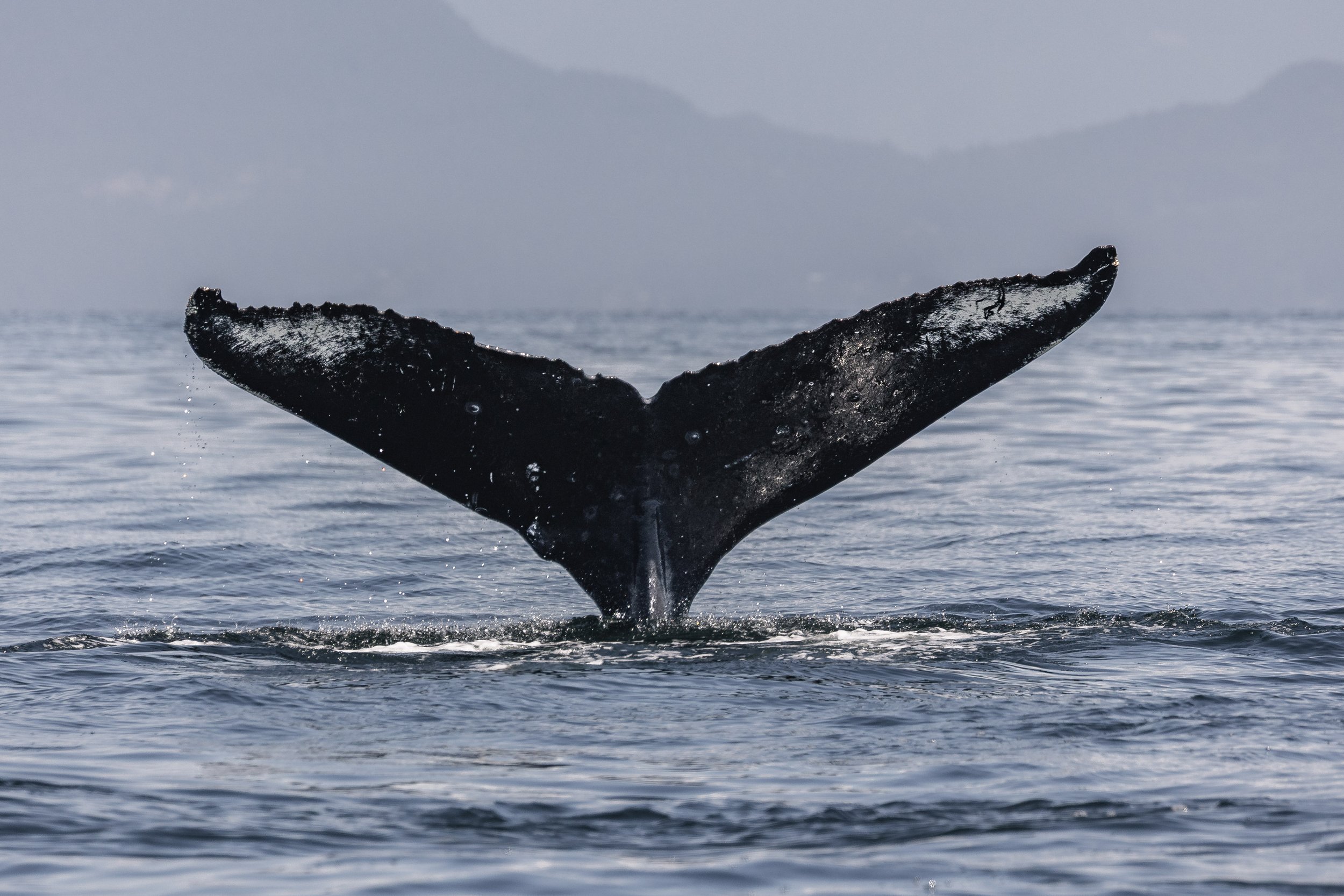
Scuba with their flukes high up in the air. Photo by Vanessa Vereschahen.
Slice and Poptart
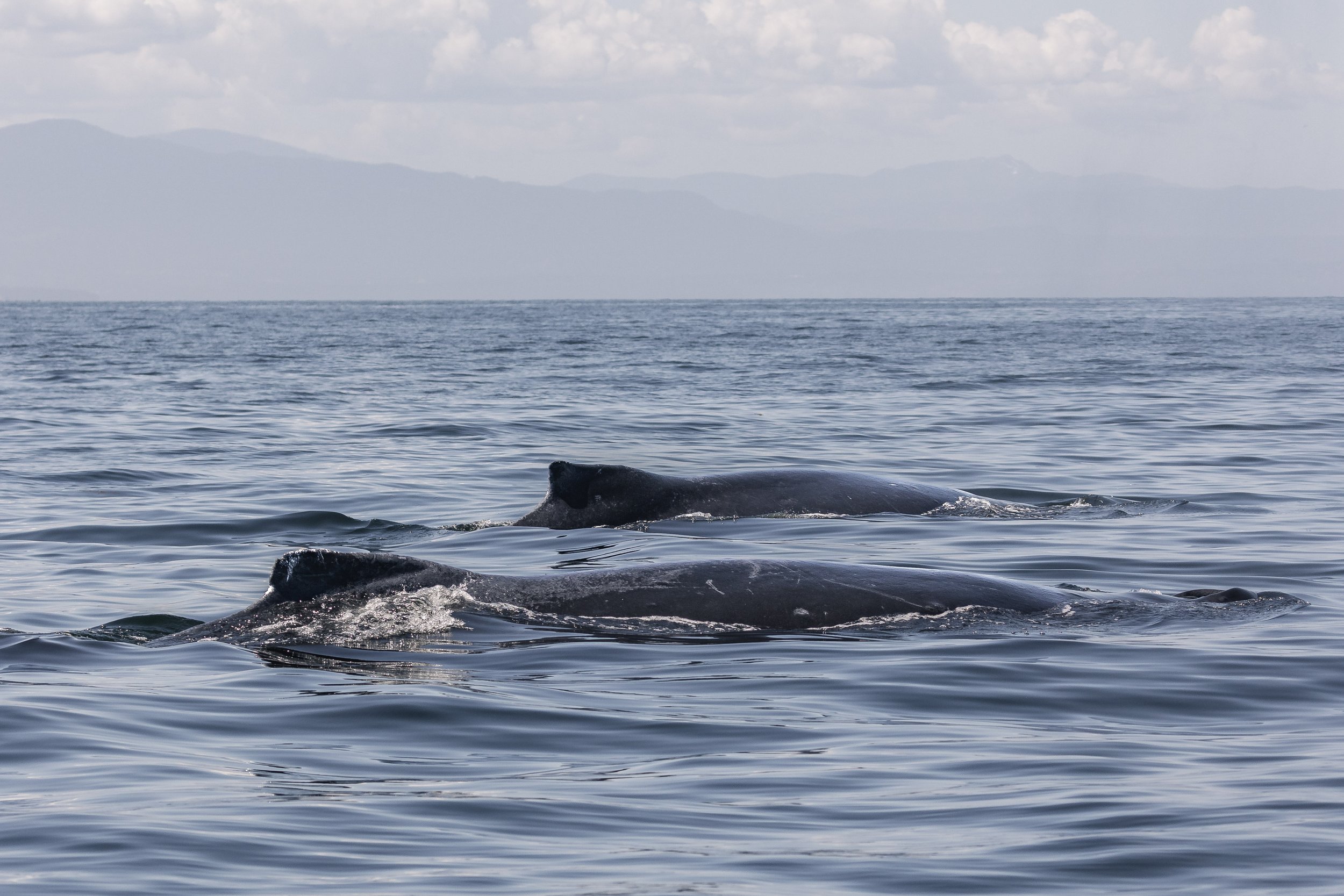
Slice and Poptart. Photo by Vanessa Vereschahen.
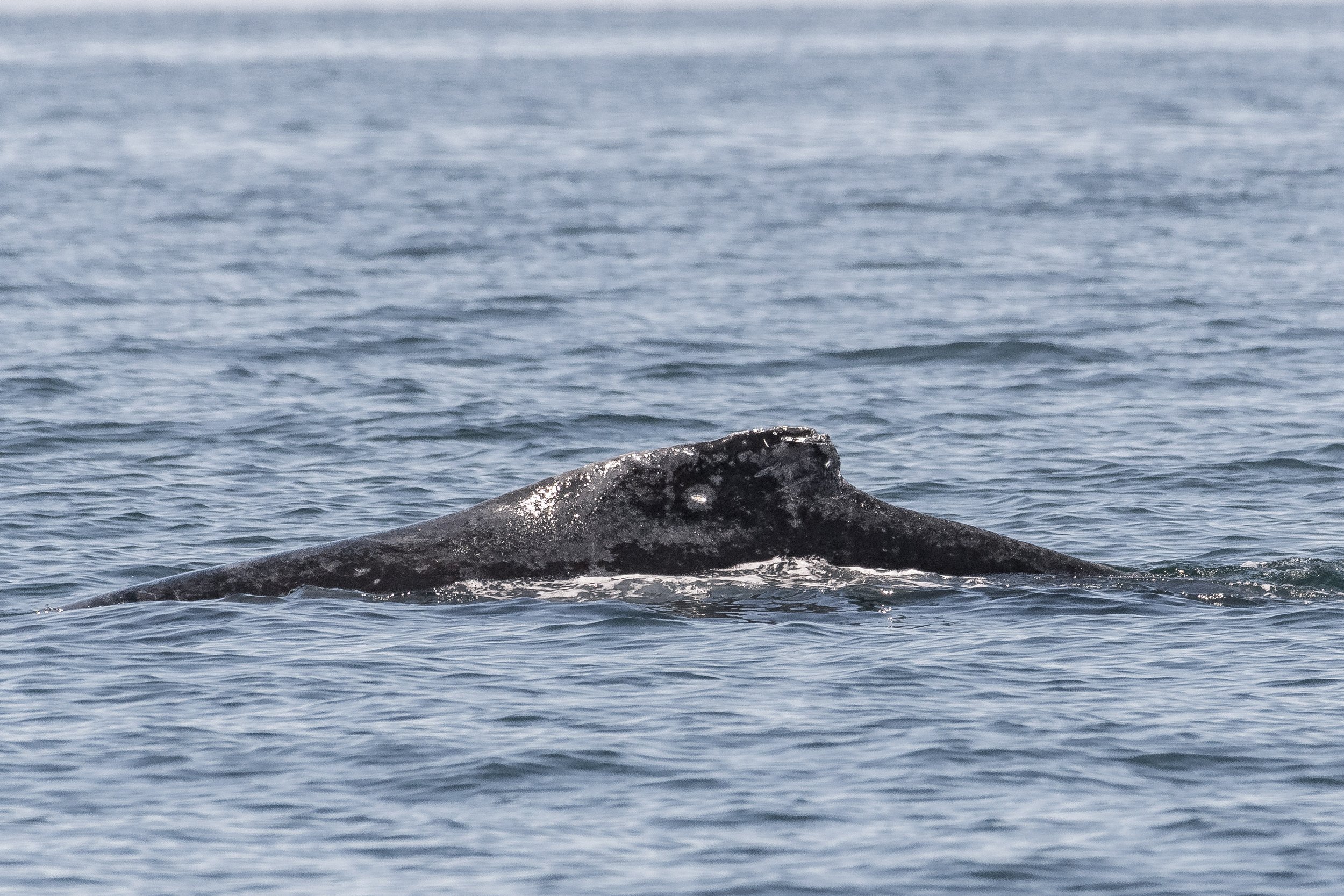
Slice’s dorsal fin. Photo by Evan Hessels.
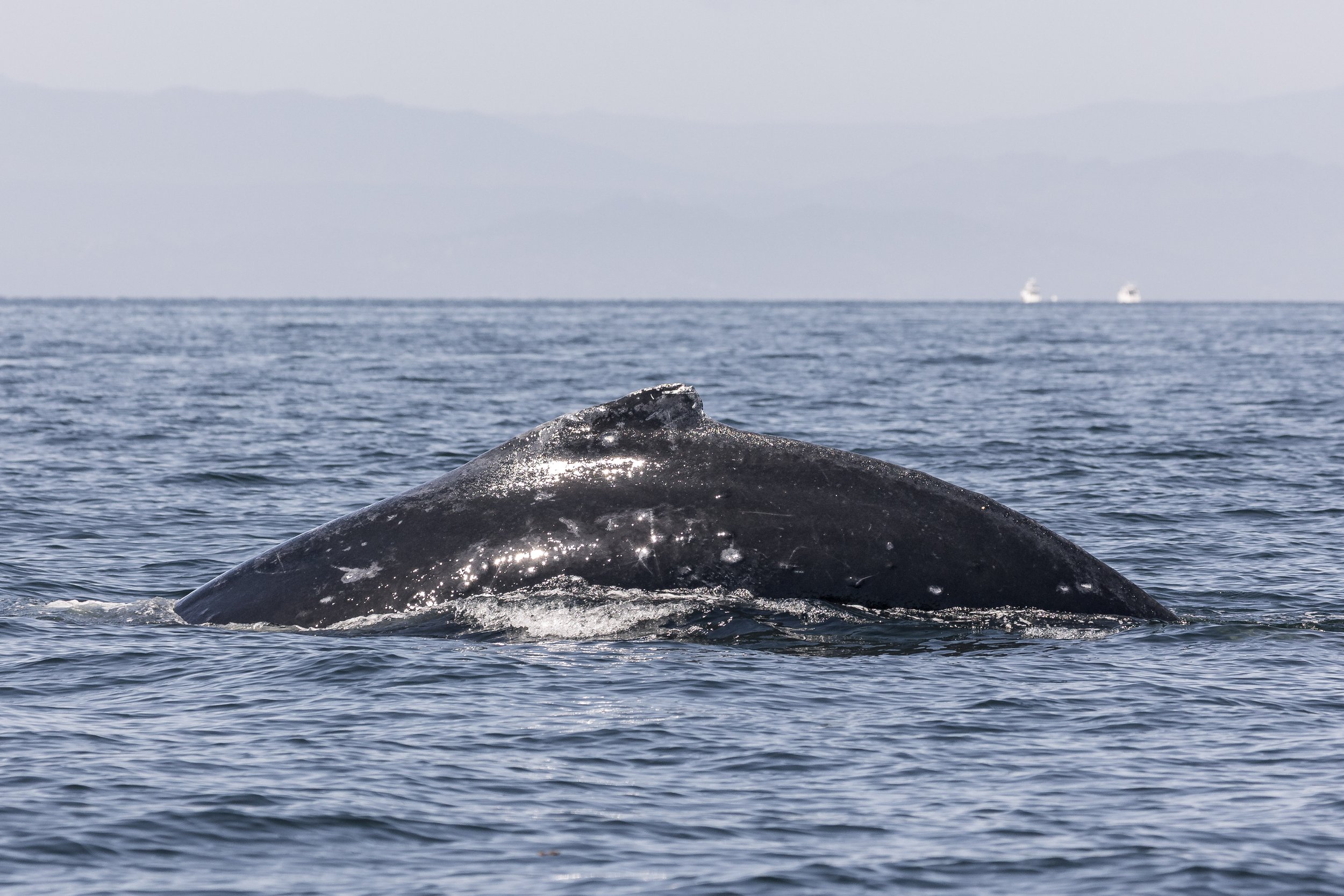
Slice travelling along. Photo by Vanessa Vereschahen.
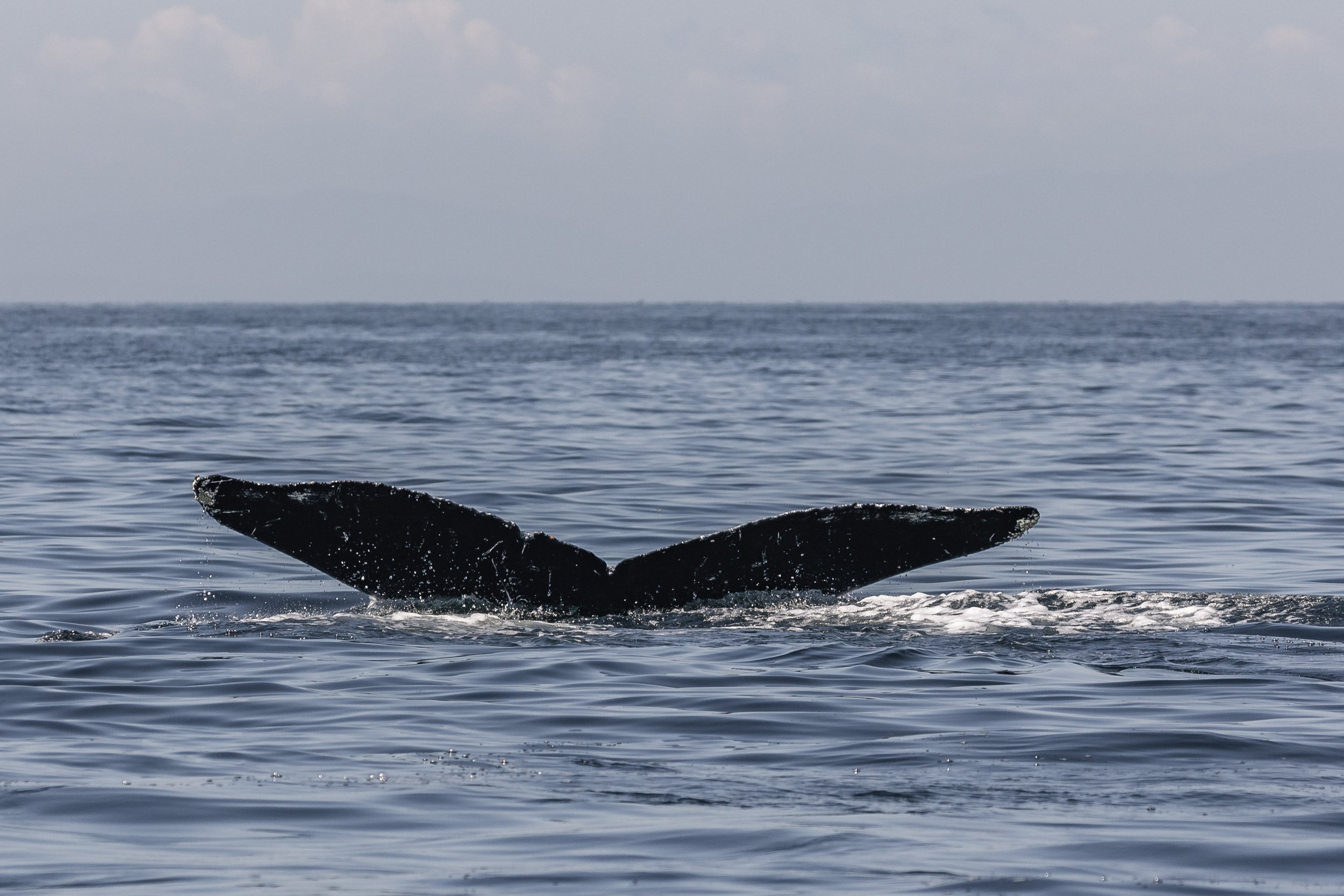
Slice diving. Photo by Vanessa Vereschahen.
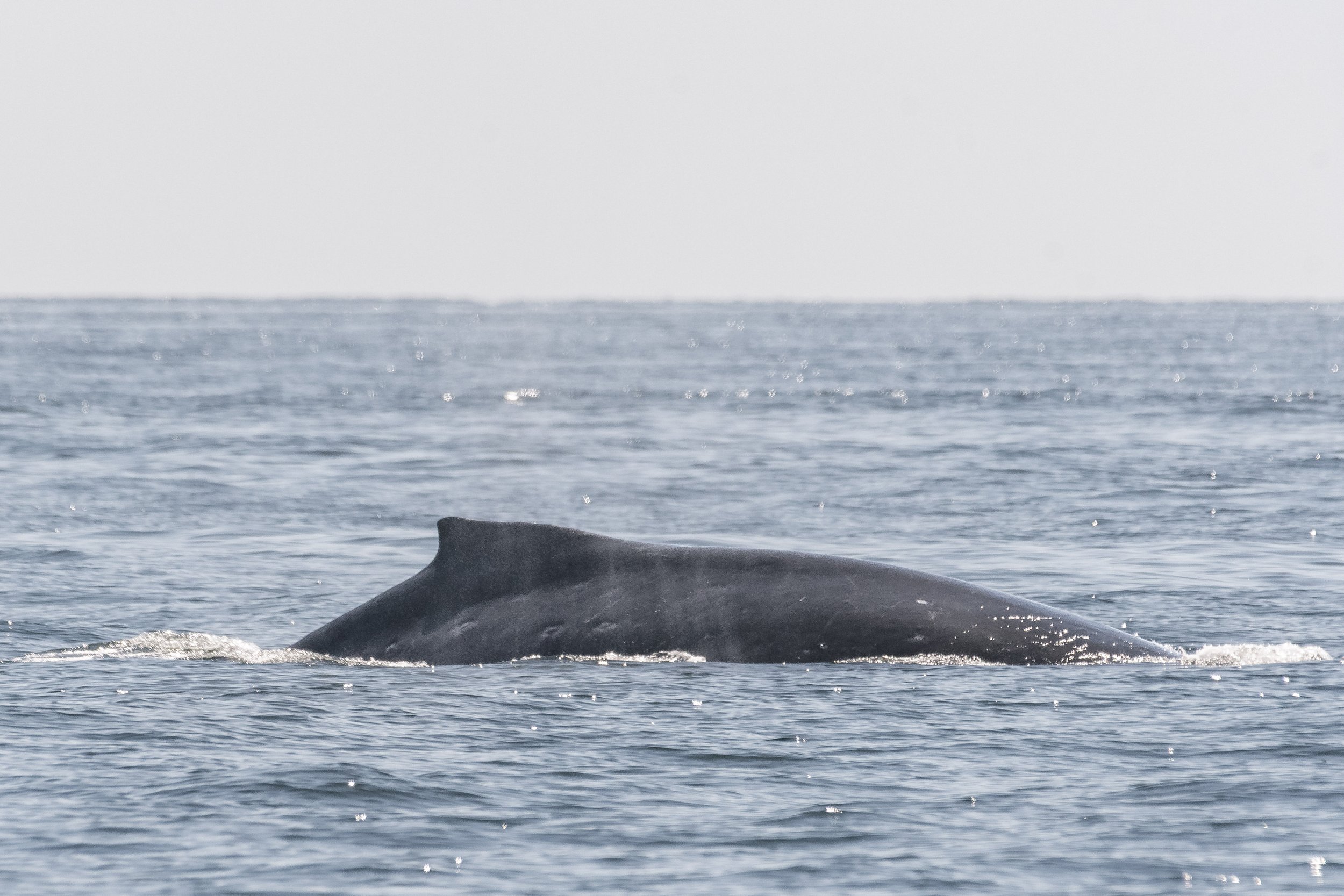
Poptart travelling. Photo by Evan Hessels.
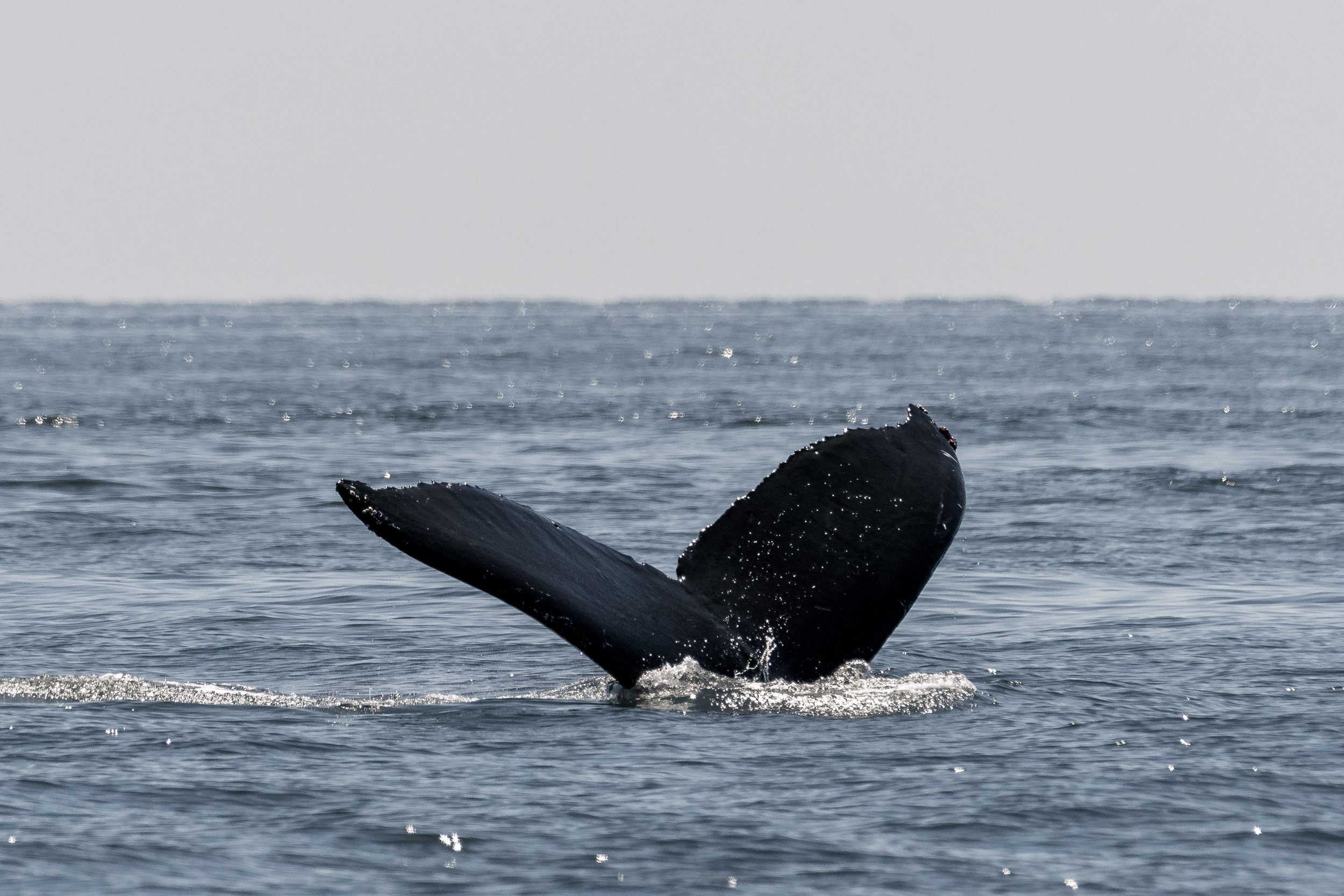
Poptart diving. Photo by Evan Hessels.
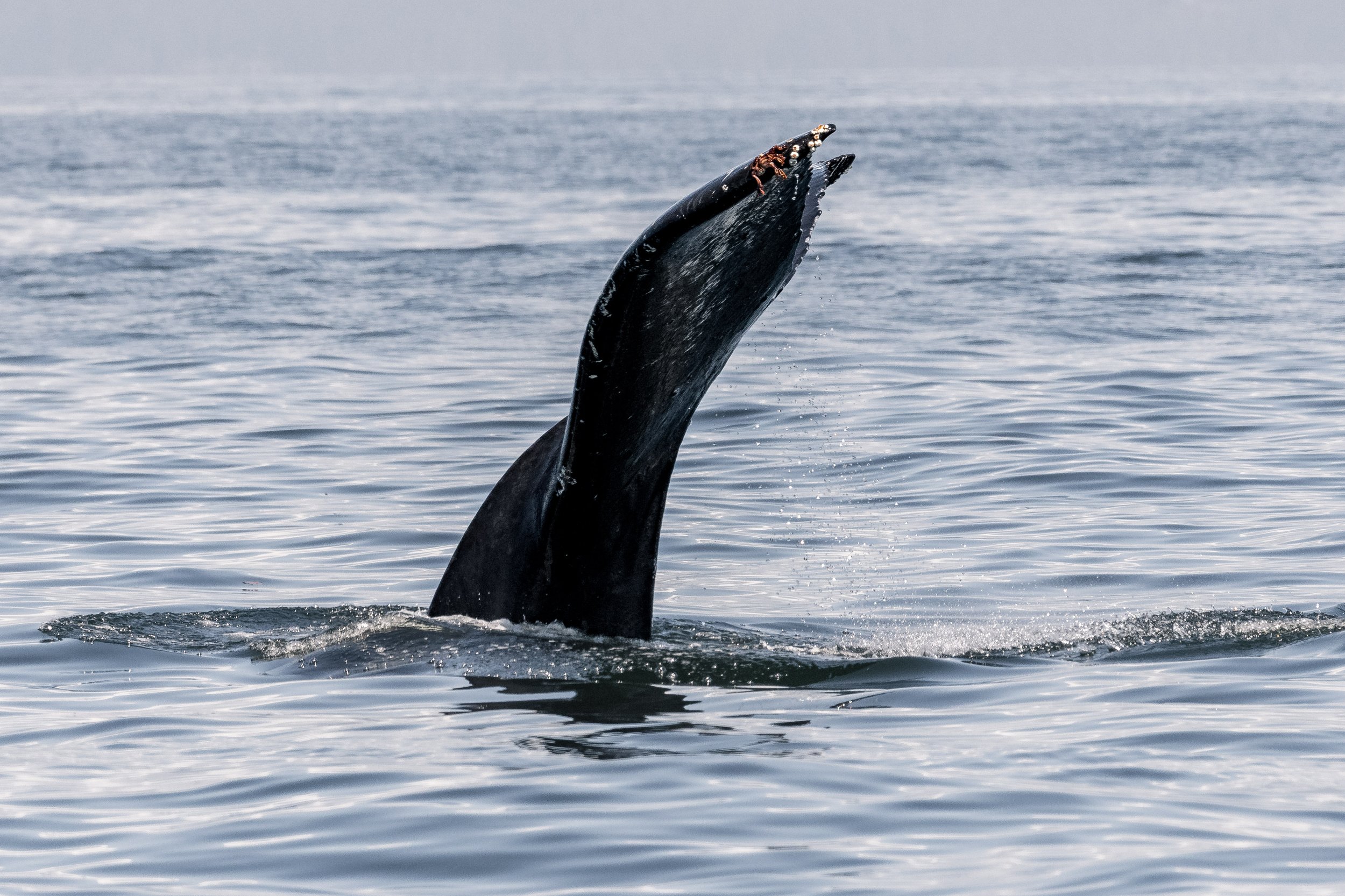
Poptart diving. Photo by Evan Hessels.
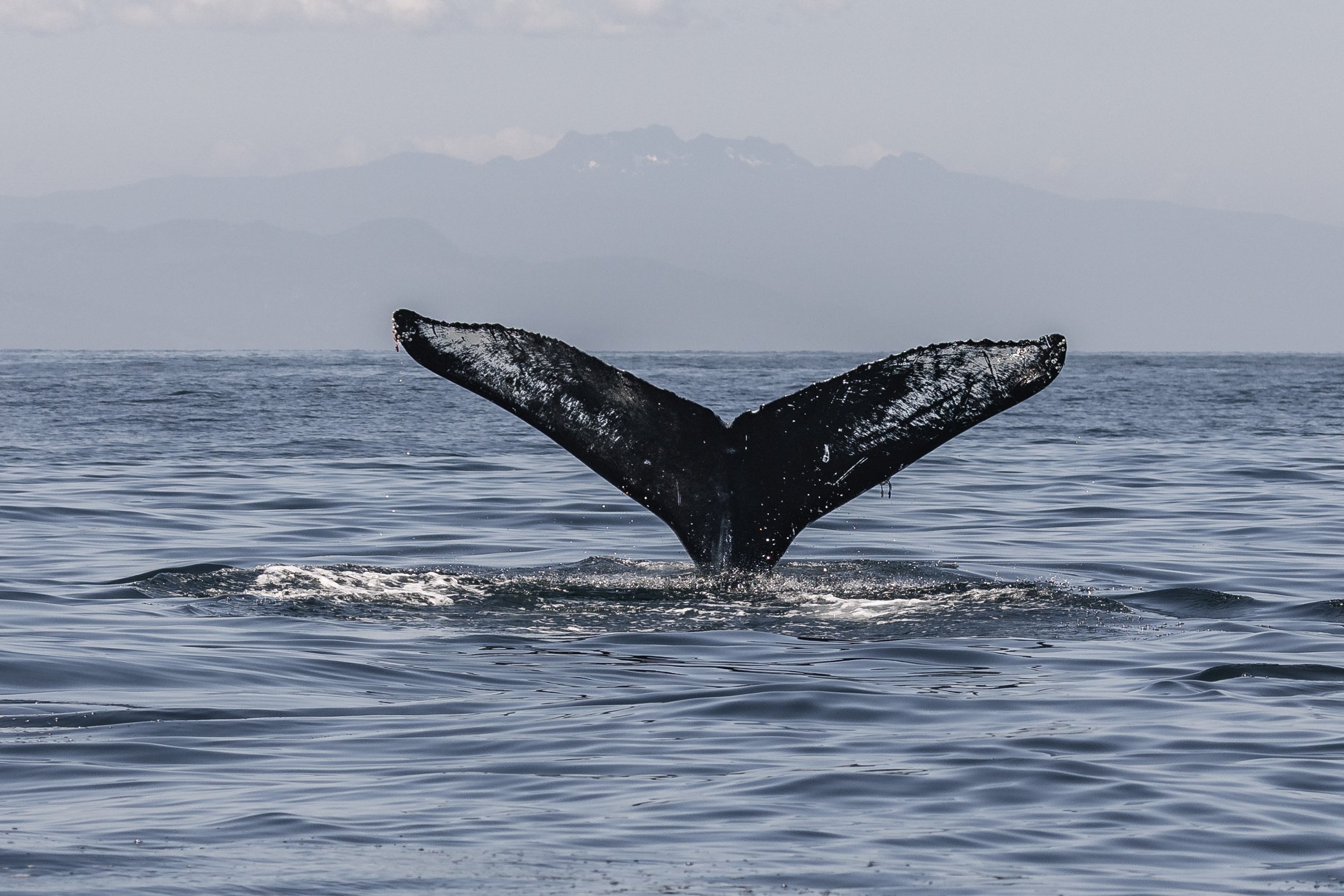
Poptart fluking. Photo by Vanessa Vereschahen.
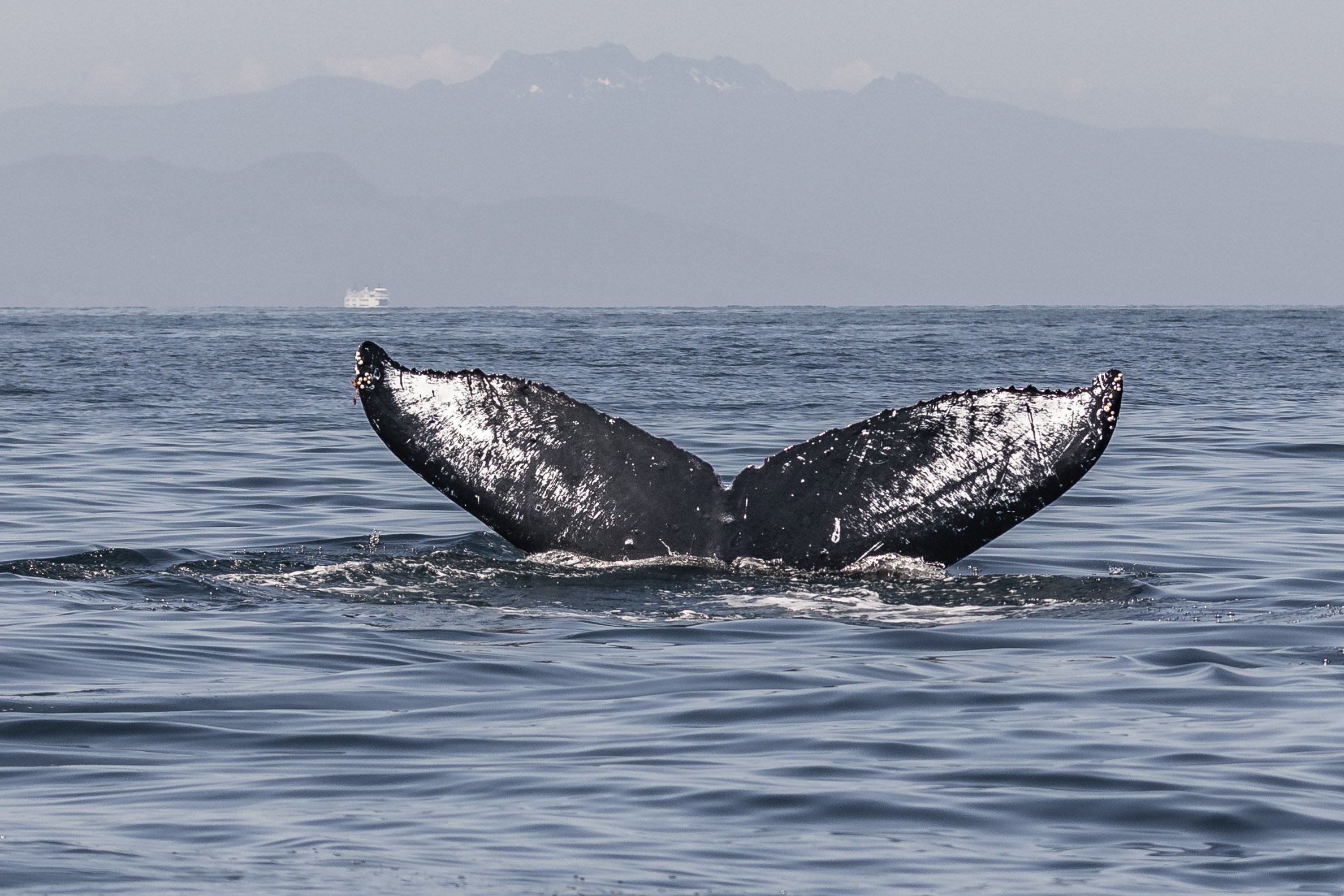
Poptart going for a dive. Photo by Vanessa Vereschahen.
Hammer and Seabird
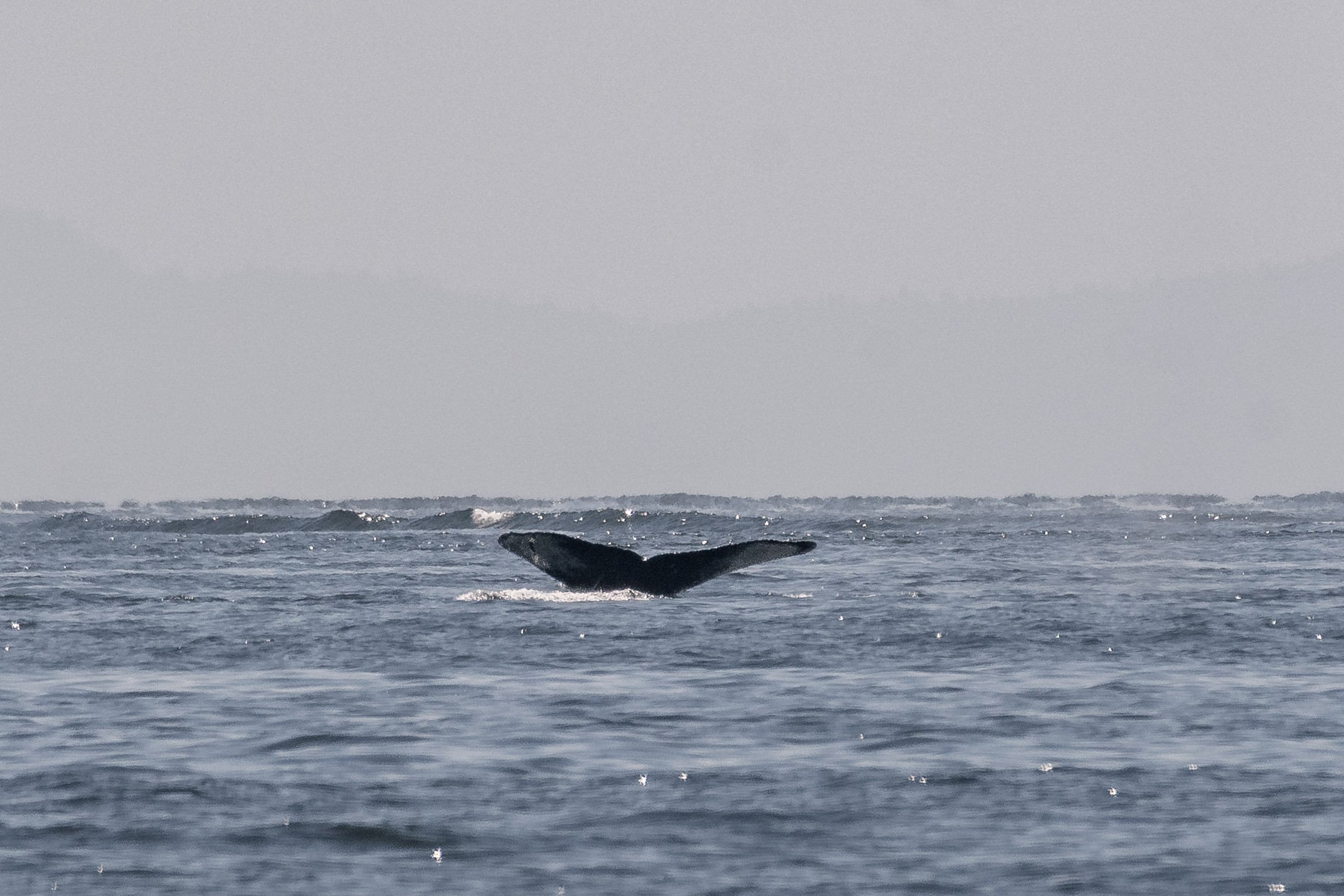
Hammer diving in the distance. Photo by Evan Hessels.
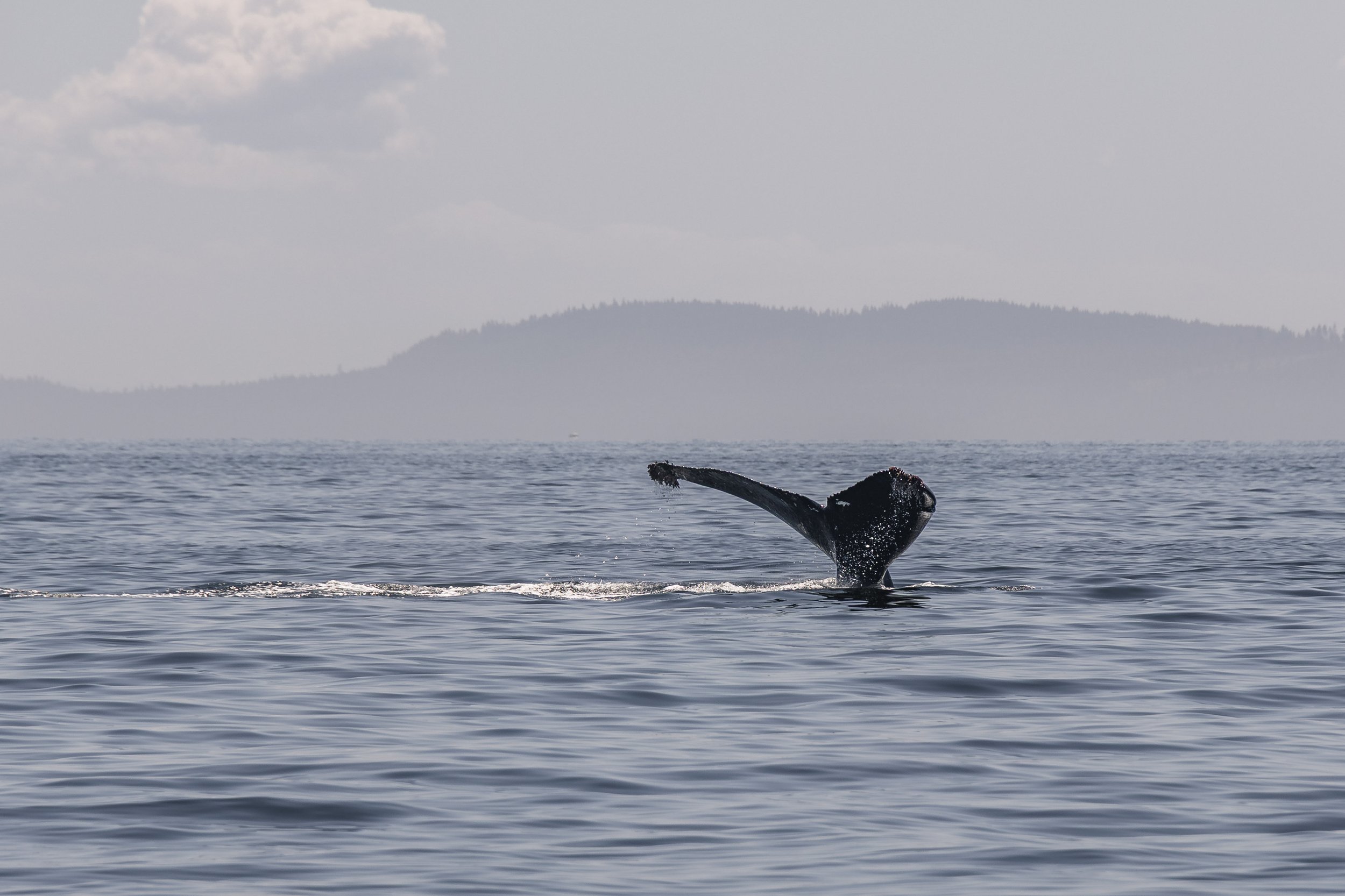
Seabird fluking. Photo by Jordan Robinson.
Allusion, Valiant, Kelpie, Scrimmage, and Watson/Cerulean
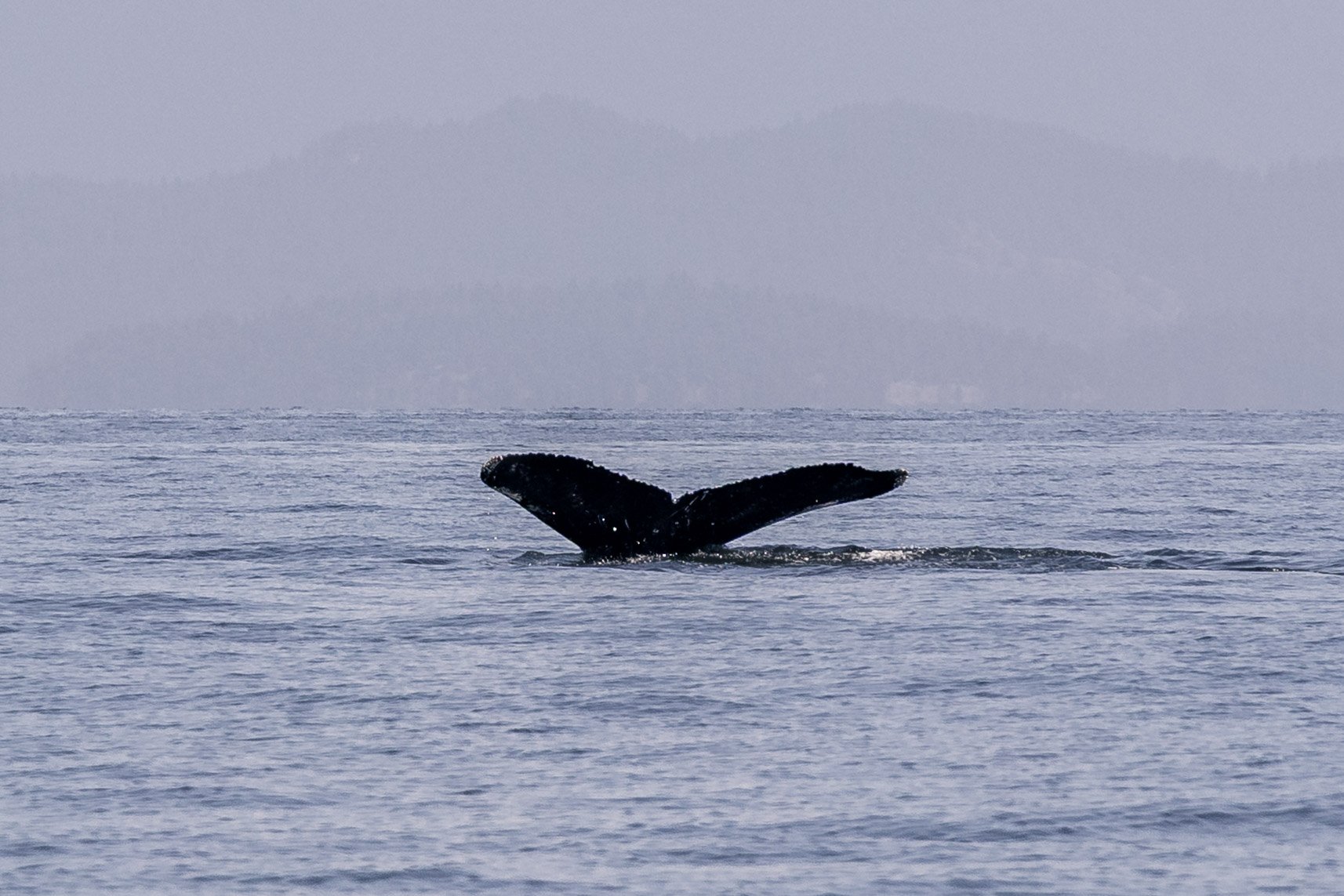
Allusion diving. Photo by Jordan Robinson.
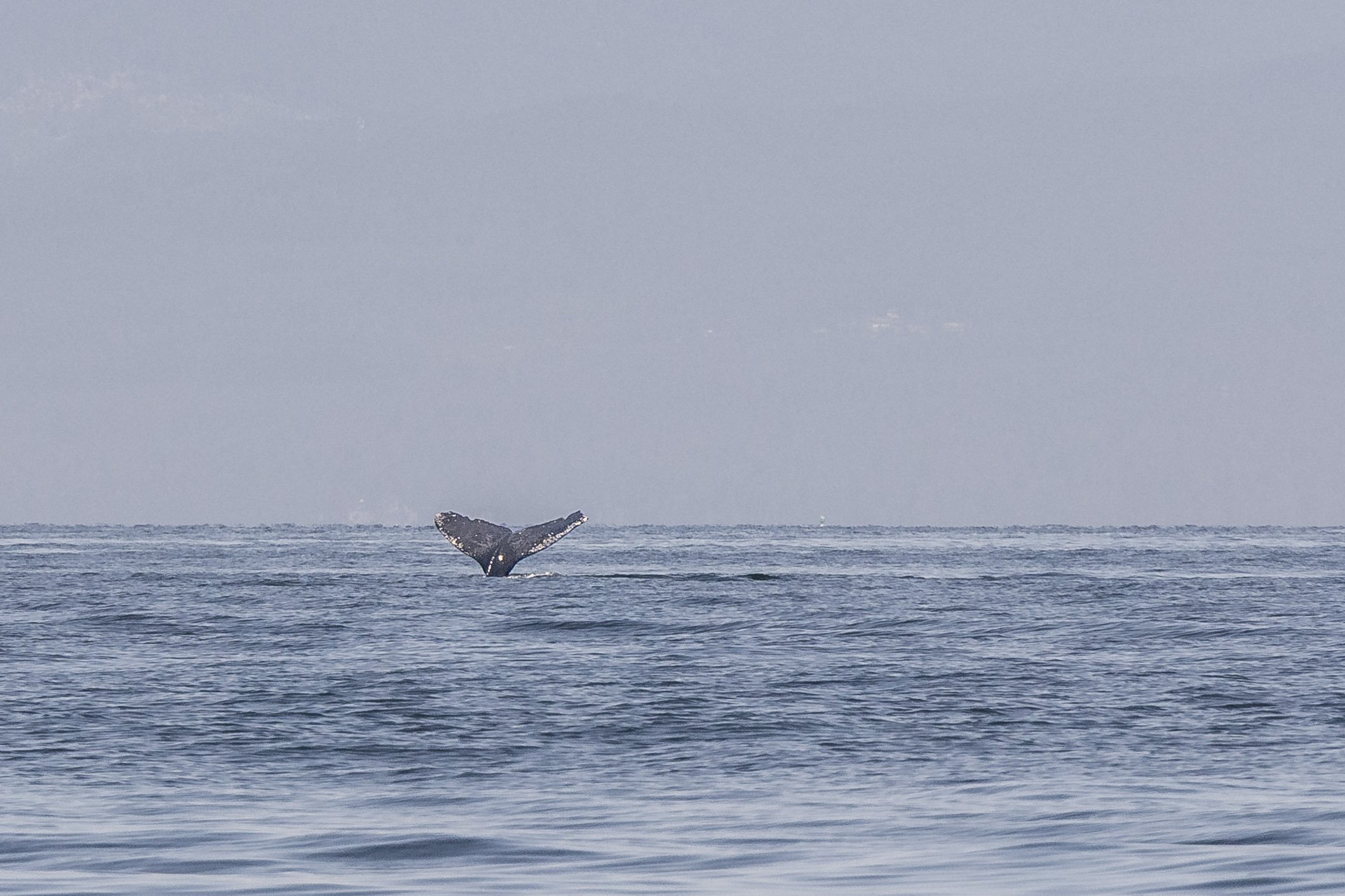
Valiant fluking in the distance. Photo by Jordan Robinson.
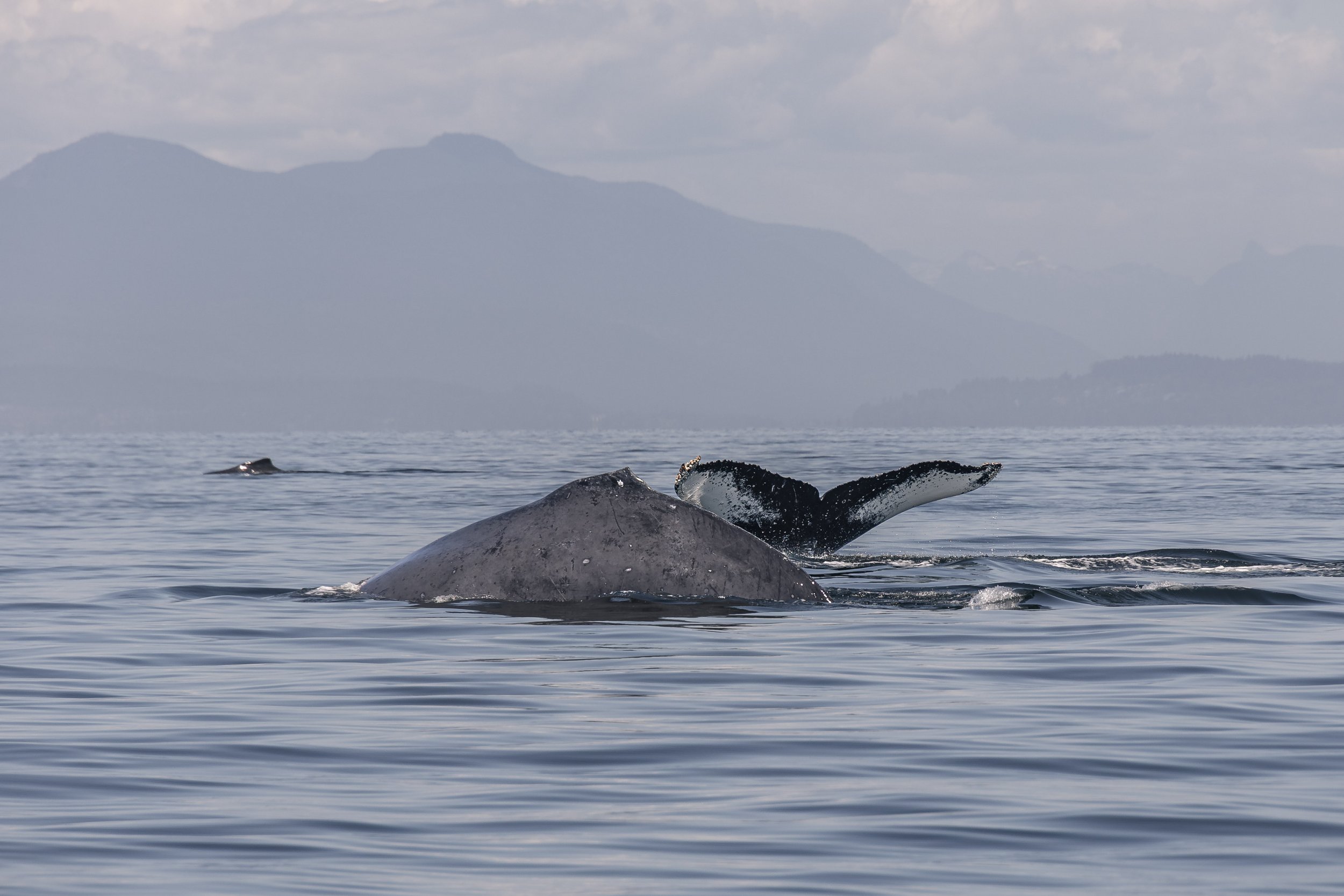
Valiant travelling, with Kelpie beside her, and another further away. Photo by Jordan Robinson.
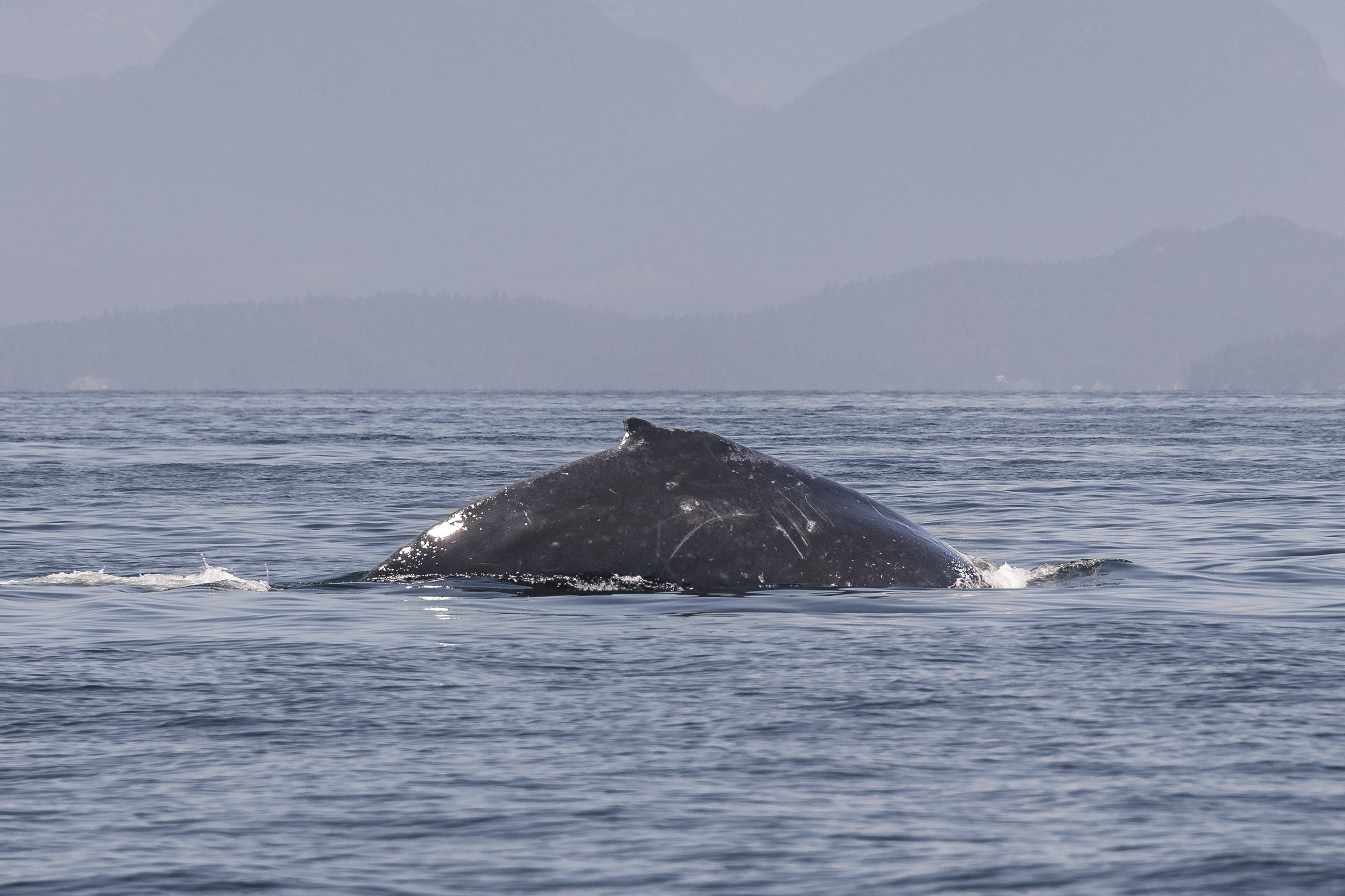
Scrimmage arching, beginning to dive. Photo by Jordan Robinson.
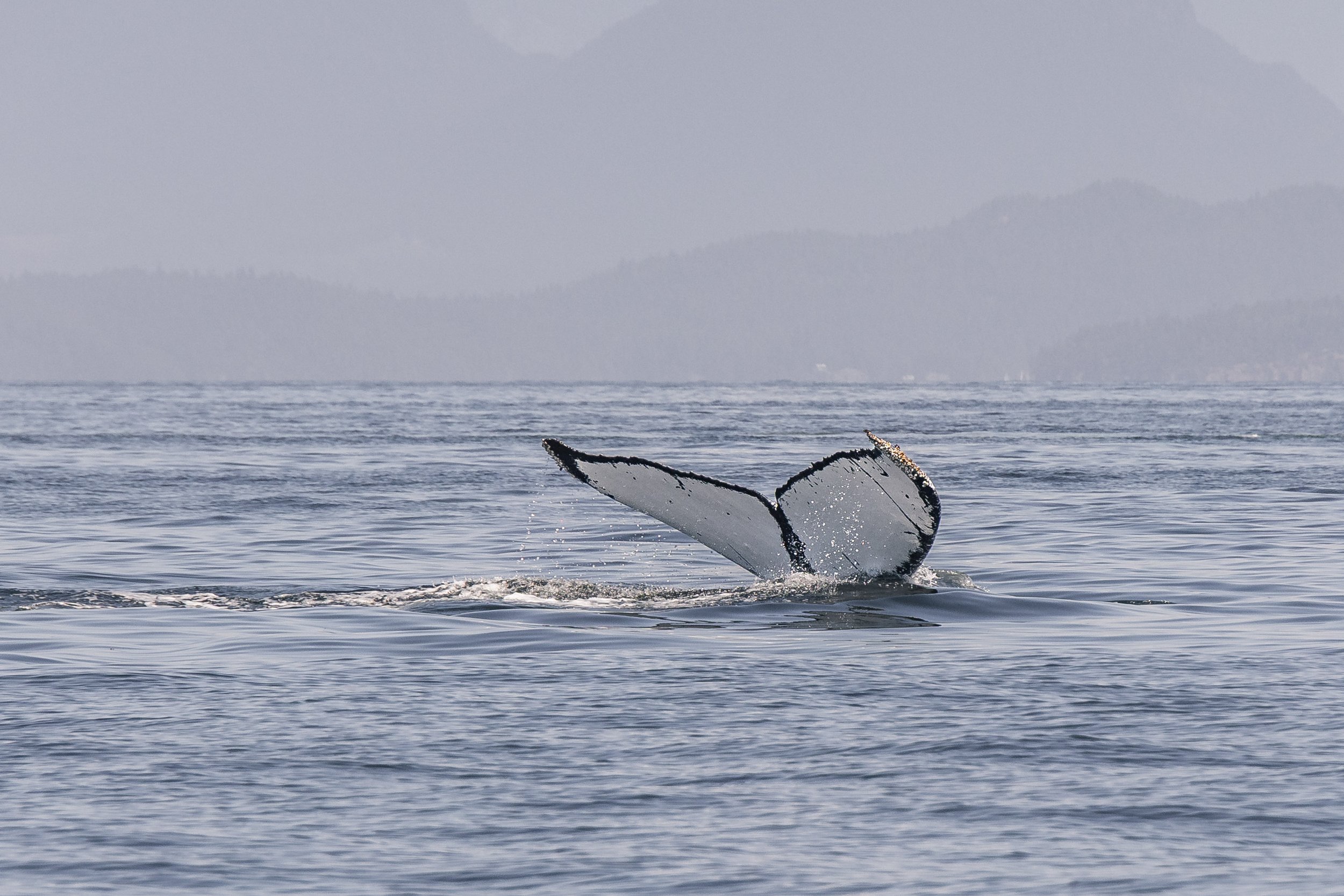
Scrimmage’s fluke. Photo by Jordan Robinson.
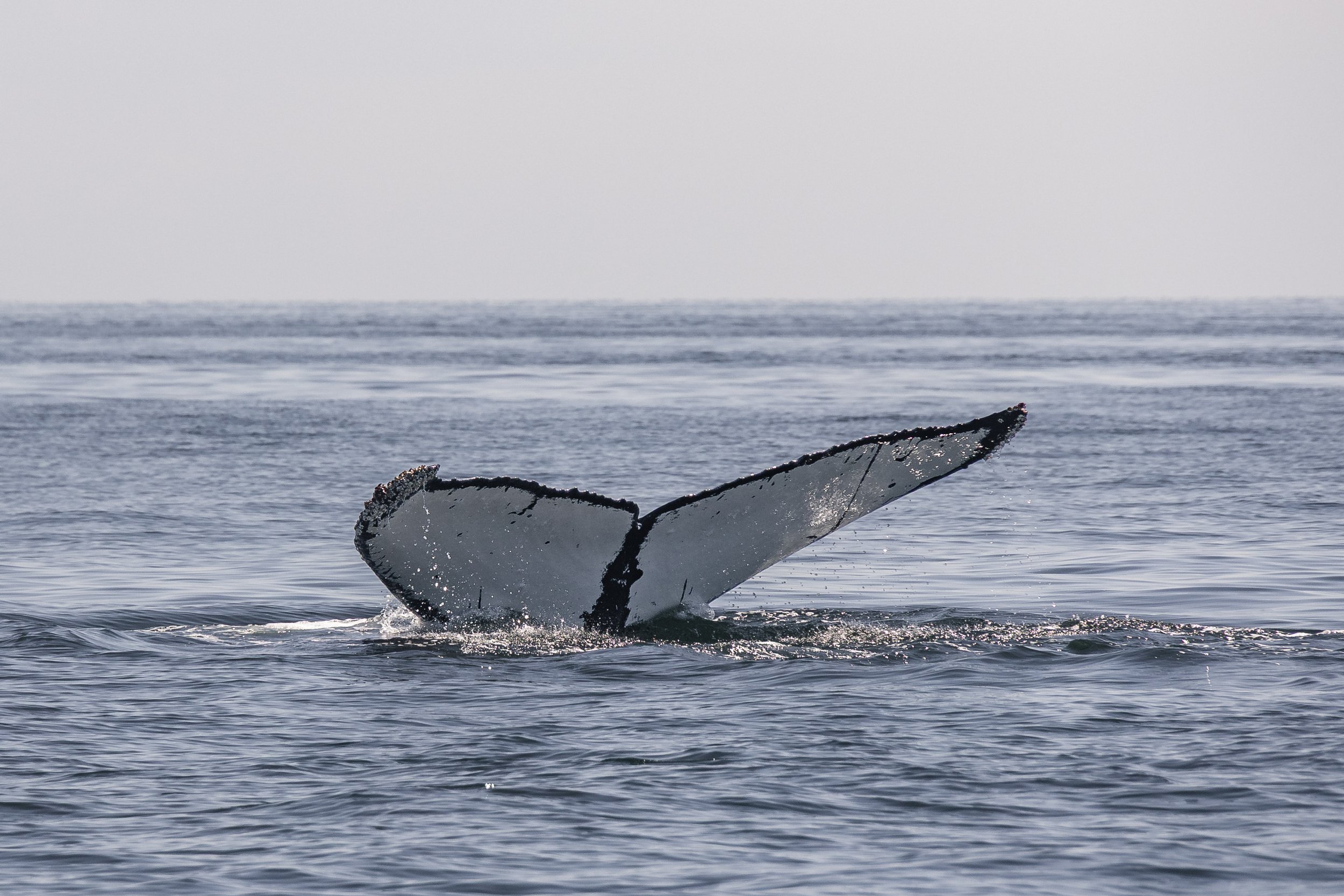
Another angle of Scrimmage’s fluke. Photo by Jordan Robinson.
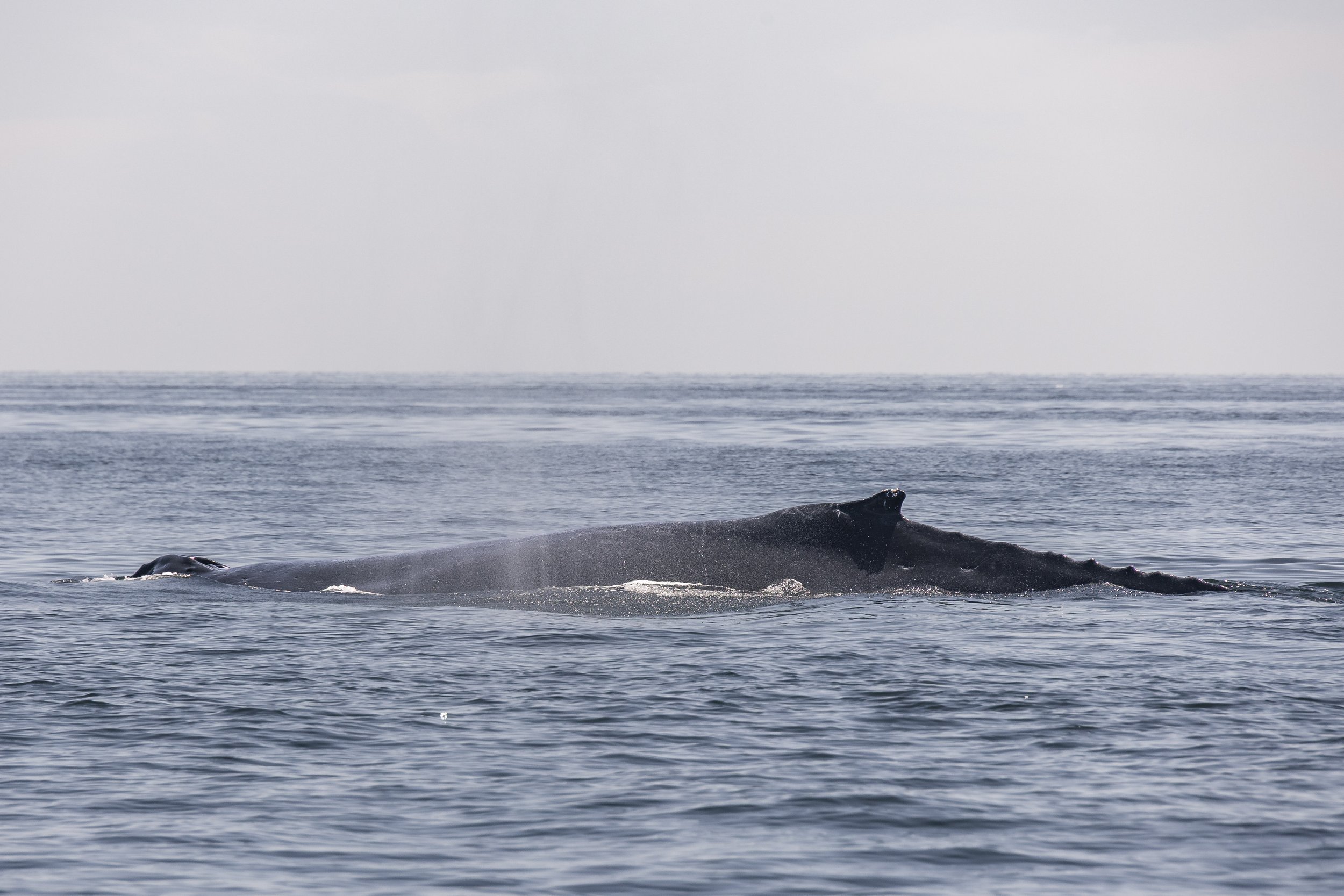
Watson/Cerulean’s dorsal fin as they travel. Photo by Jordan Robinson.
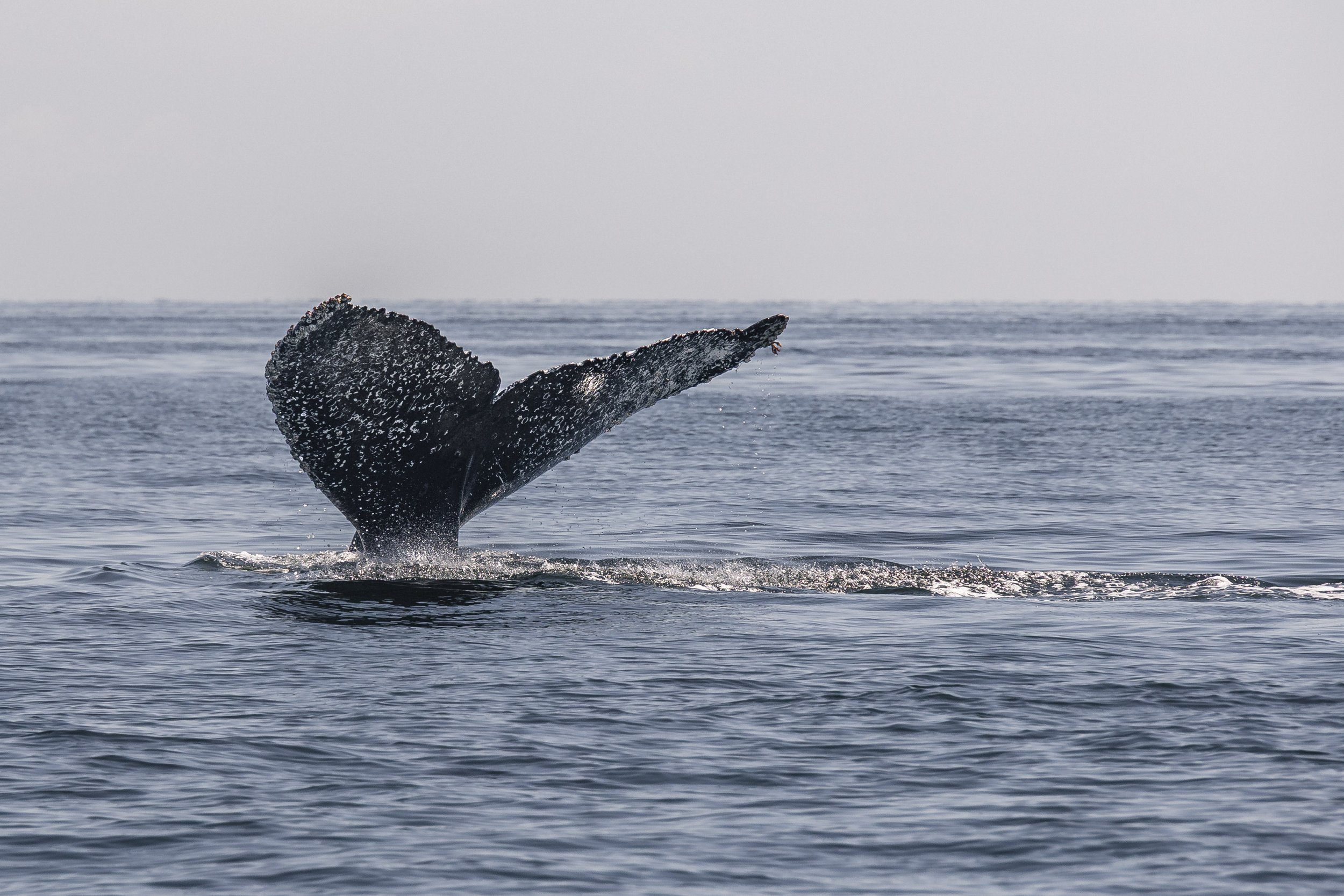
Watson/Cerulean’s fluke. Photo by Jordan Robinson.
Frankenstein and Chinook
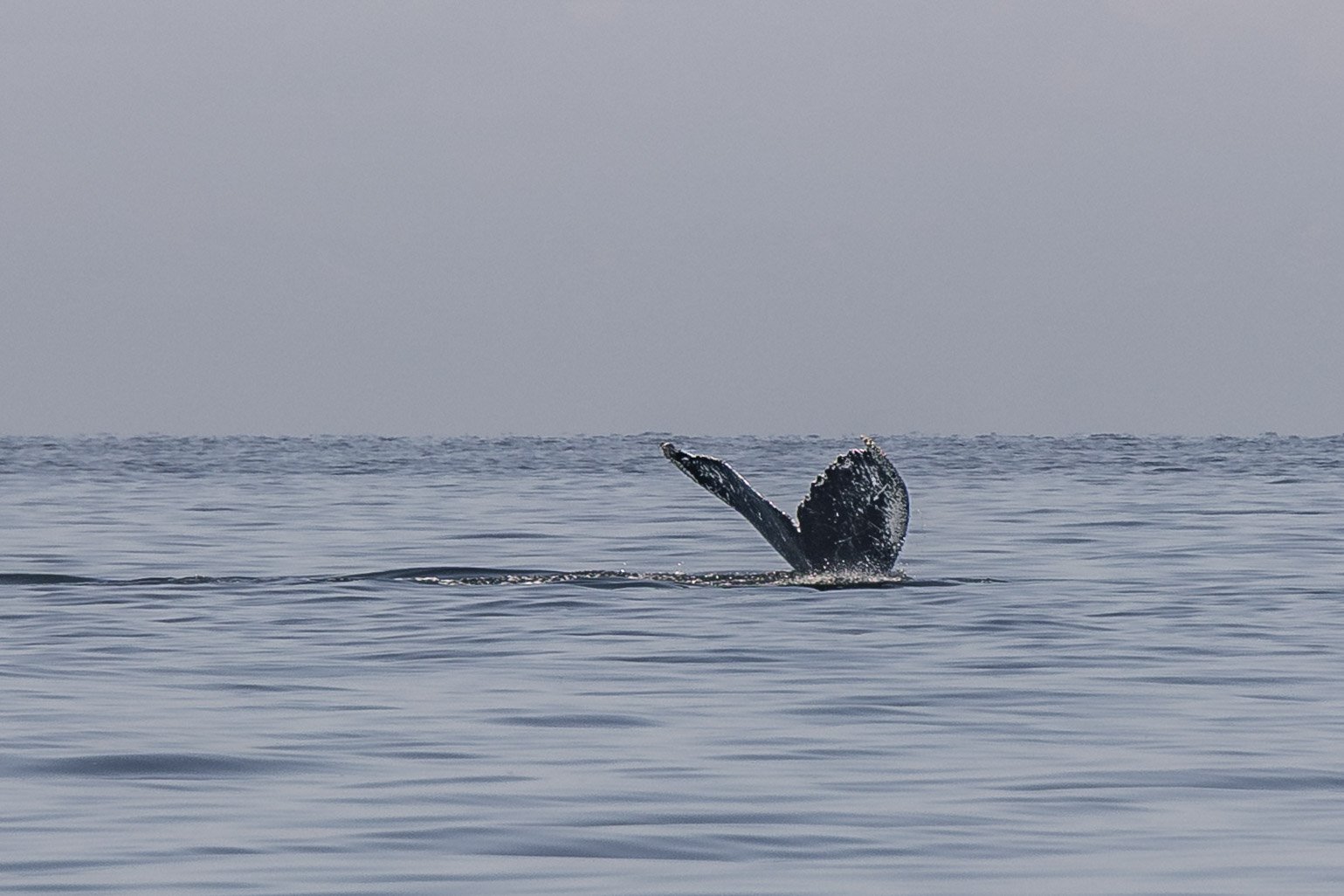
Frankenstein fluking in the distance. Photo by Jordan Robinson.
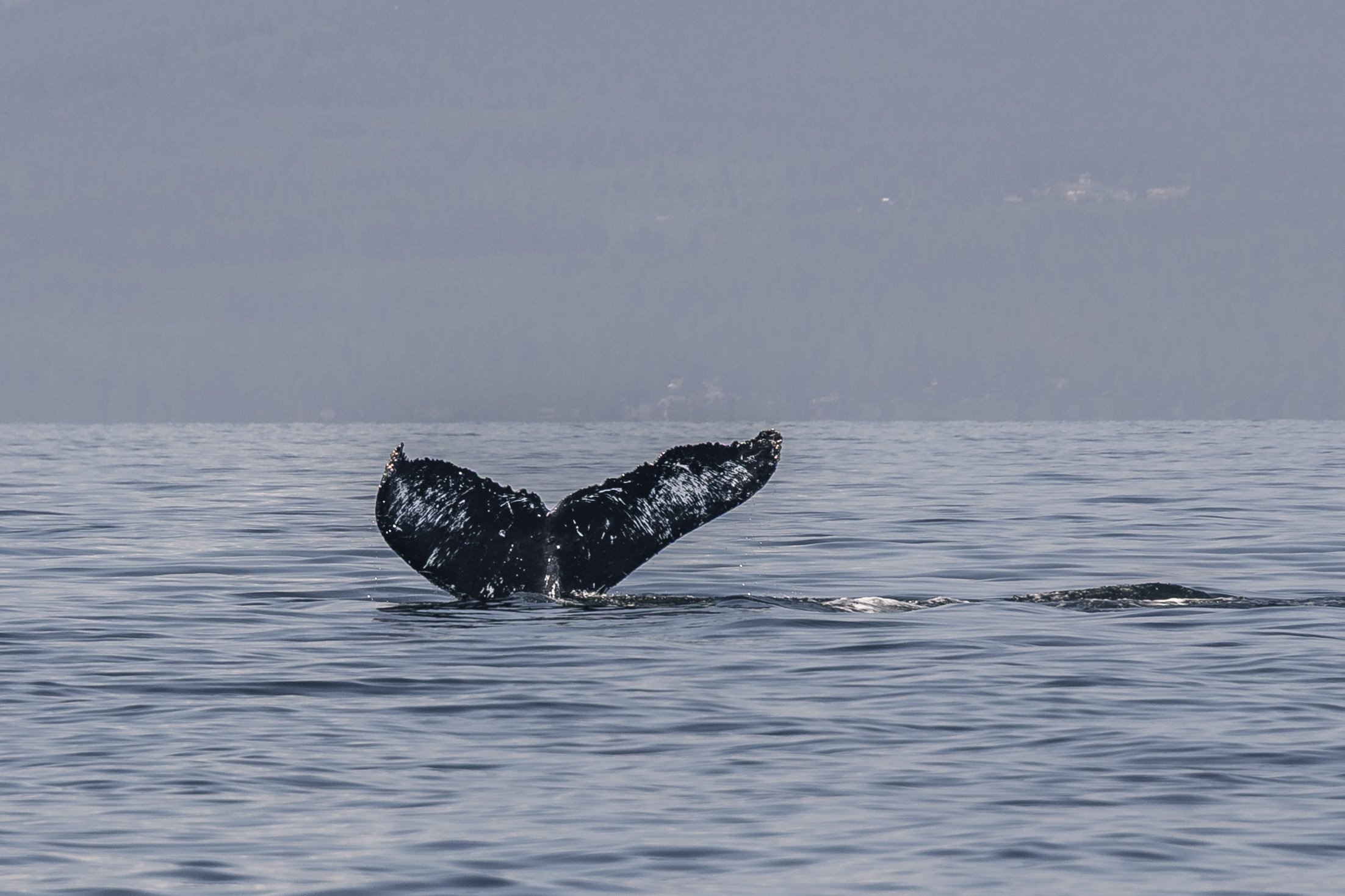
Chinook fluking. Photo by Jordan Robinson.
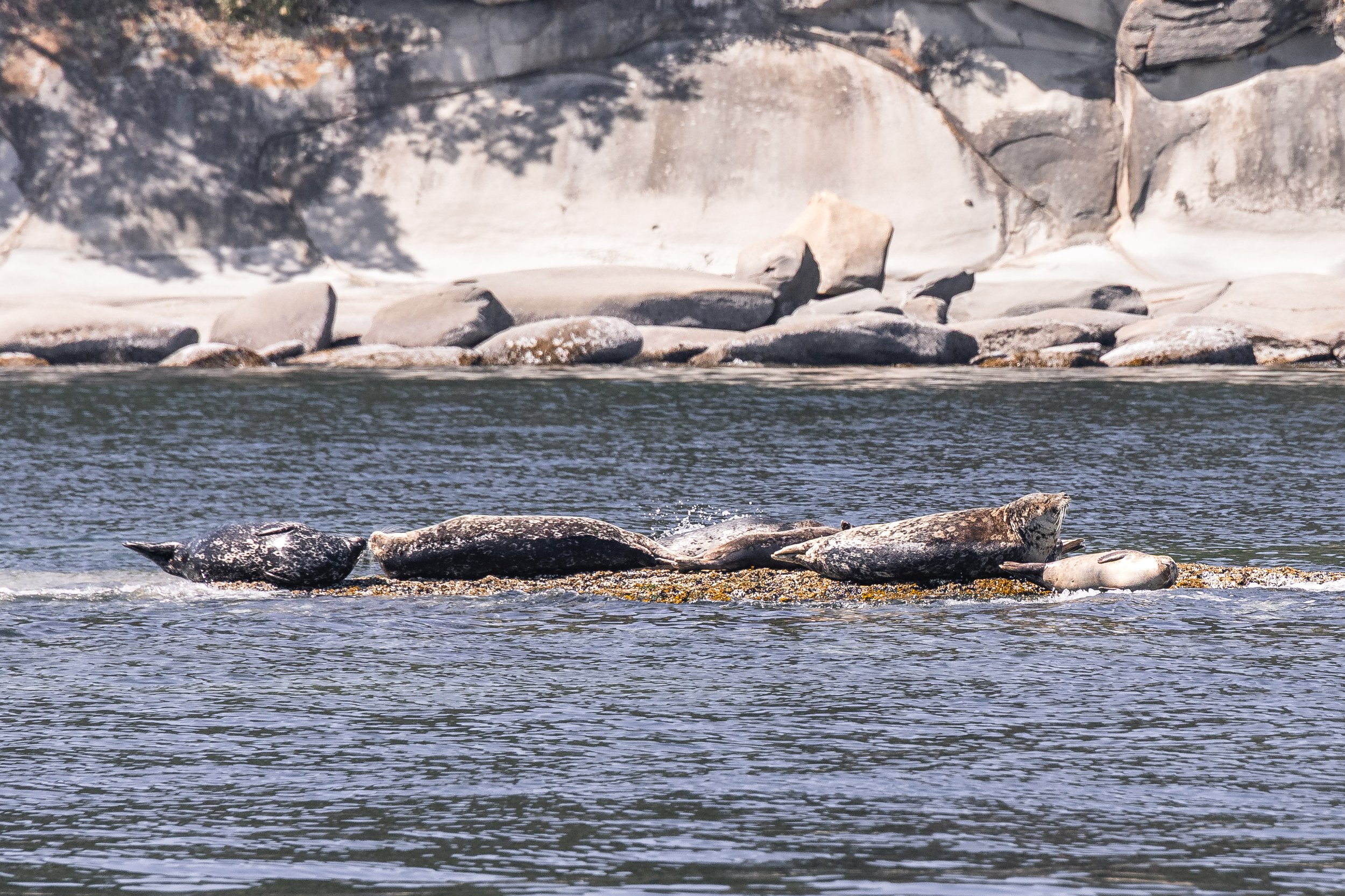
Harbour Seals living up to their nickname, rock sausages, as they bask/bake in the sun. Photo by Jordan Robinson.
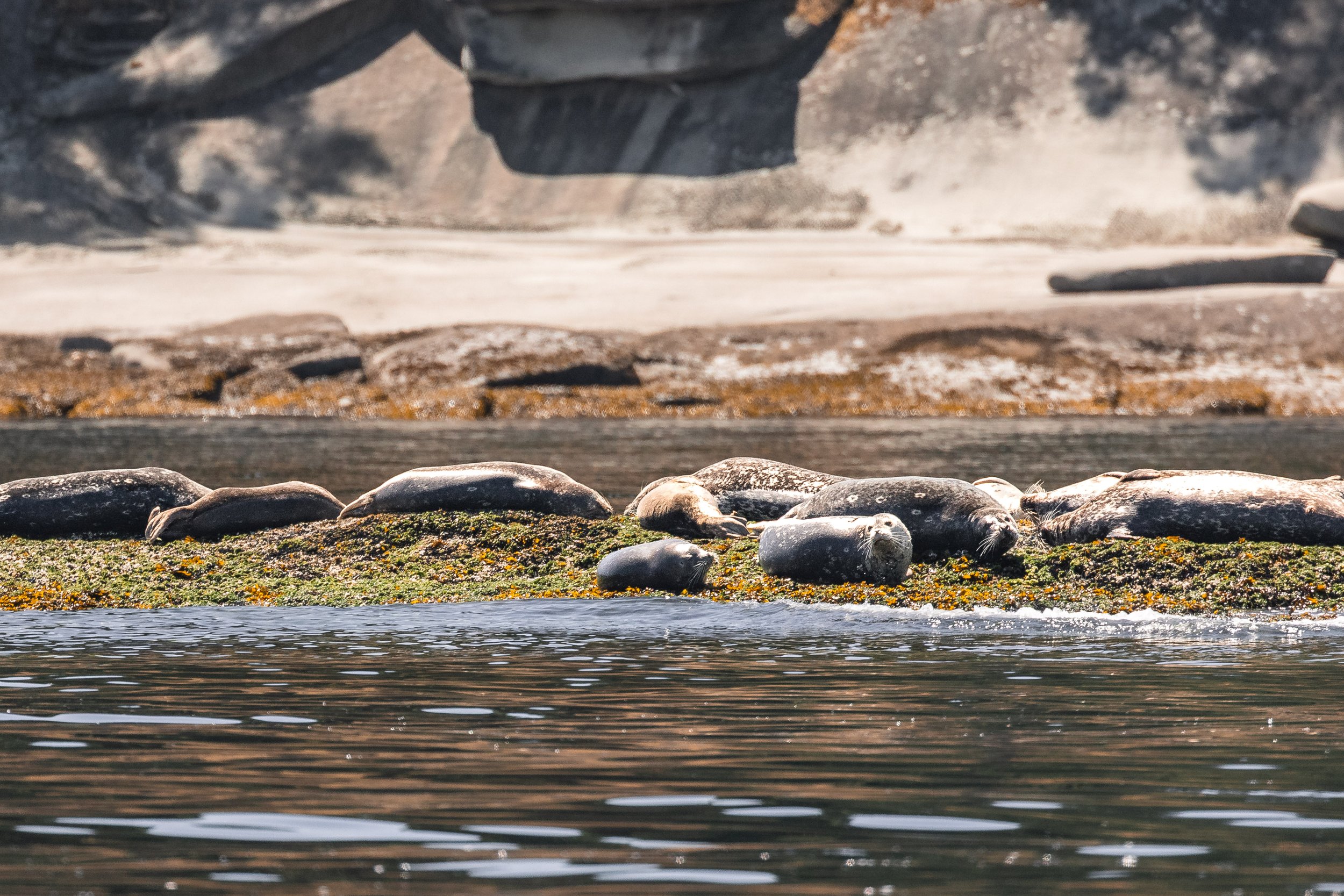
Enjoying the warm weather. Photo by Vanessa Vereschahen.
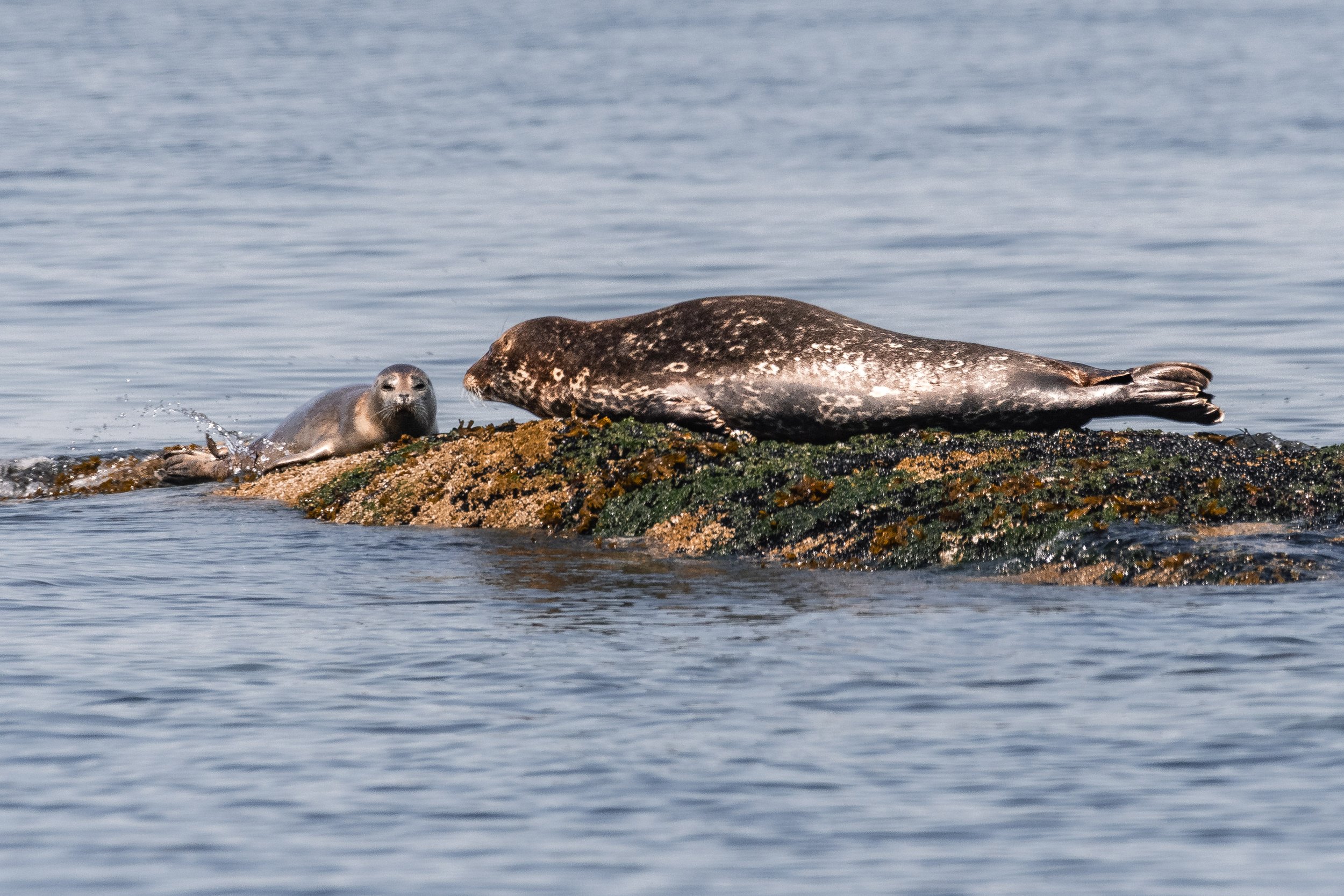
A young pup with their mother. Photo by Evan Hessels.
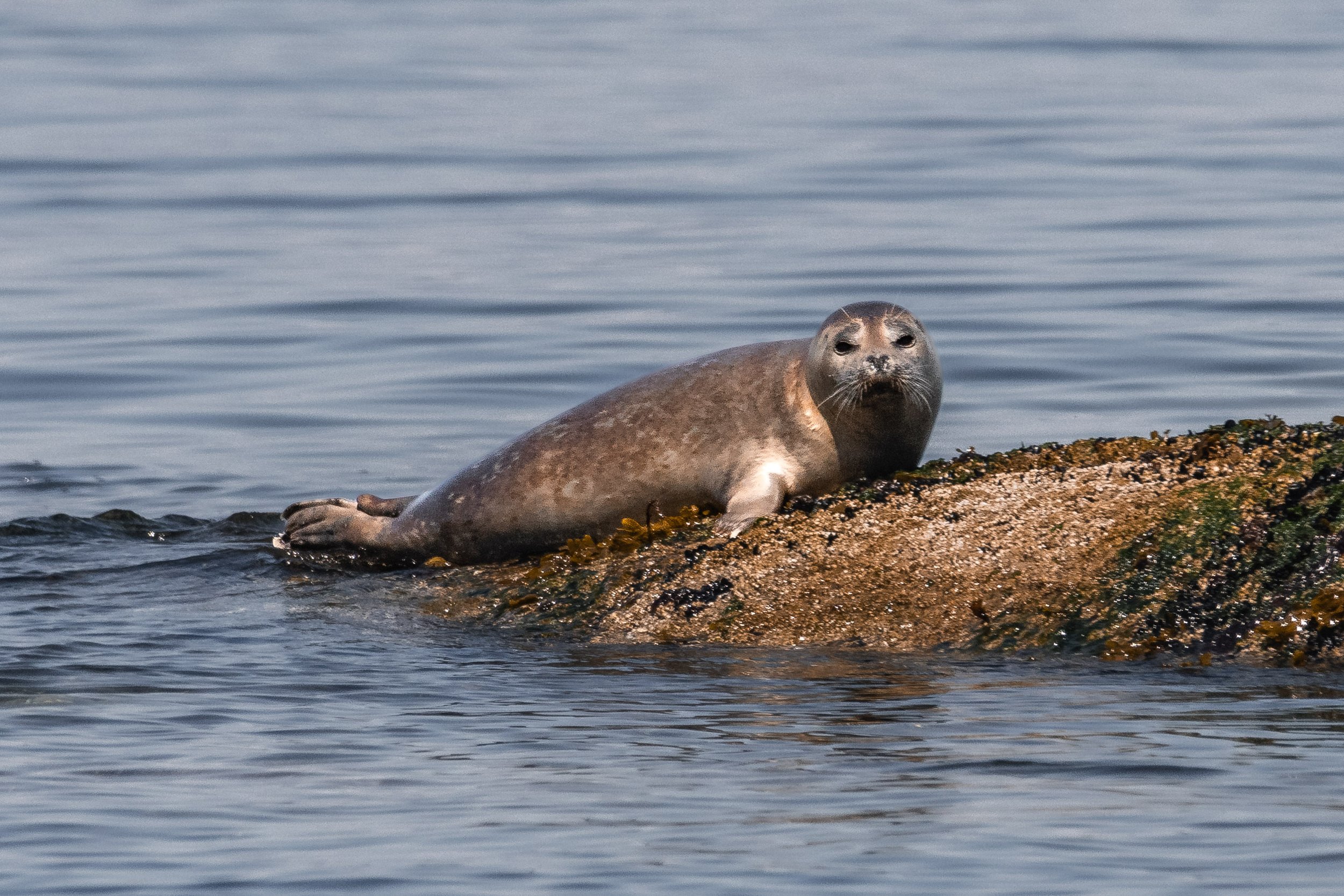
Look at how cute the little one is! Photo by Evan Hessels.
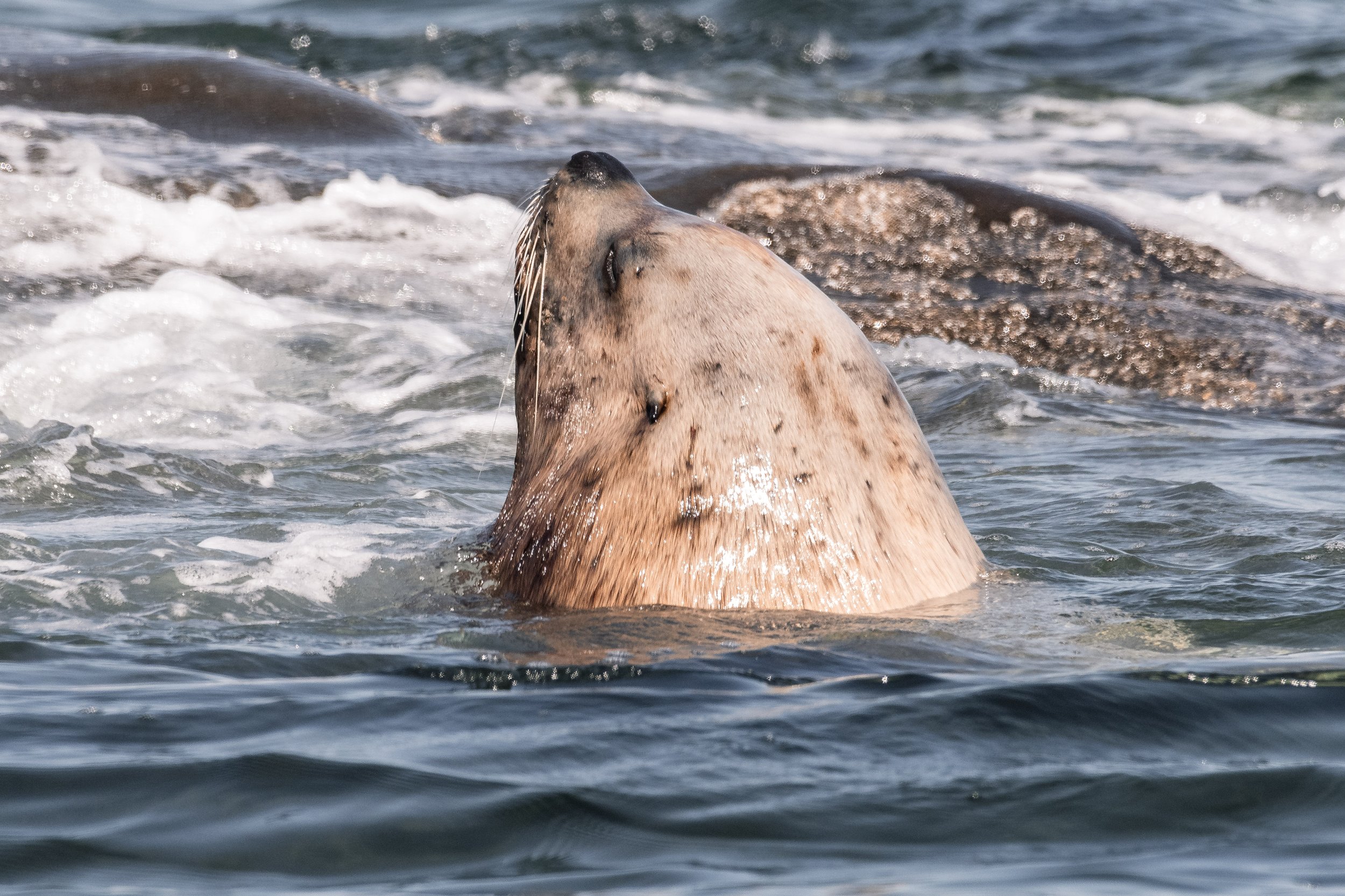
From this angle, it almost looks like this sea lion is in a jacuzzi! Photo by Evan Hessels.
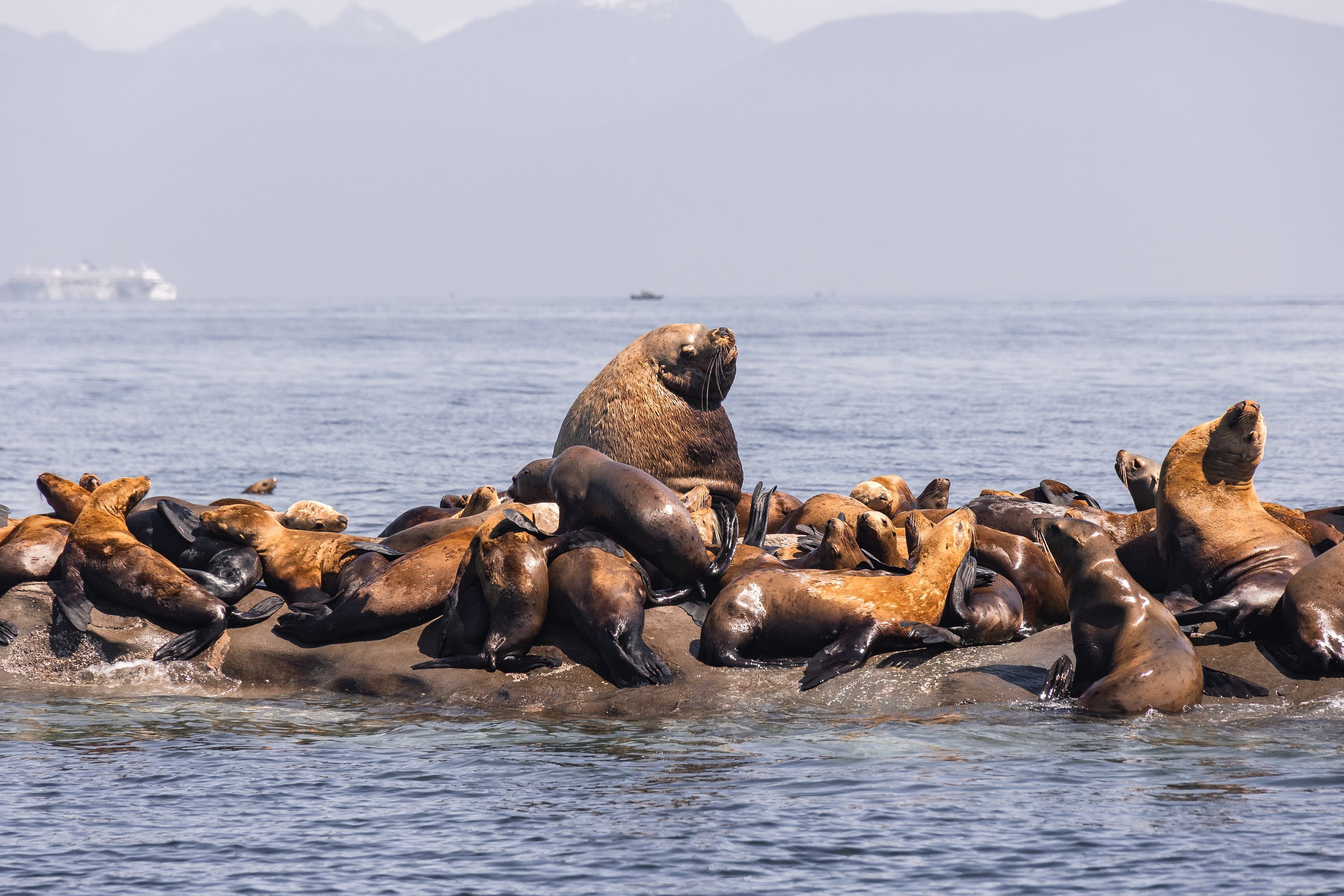
A towering male Steller Sea Lion surrounded by many young sea lions. Photo by Jordan Robinson.
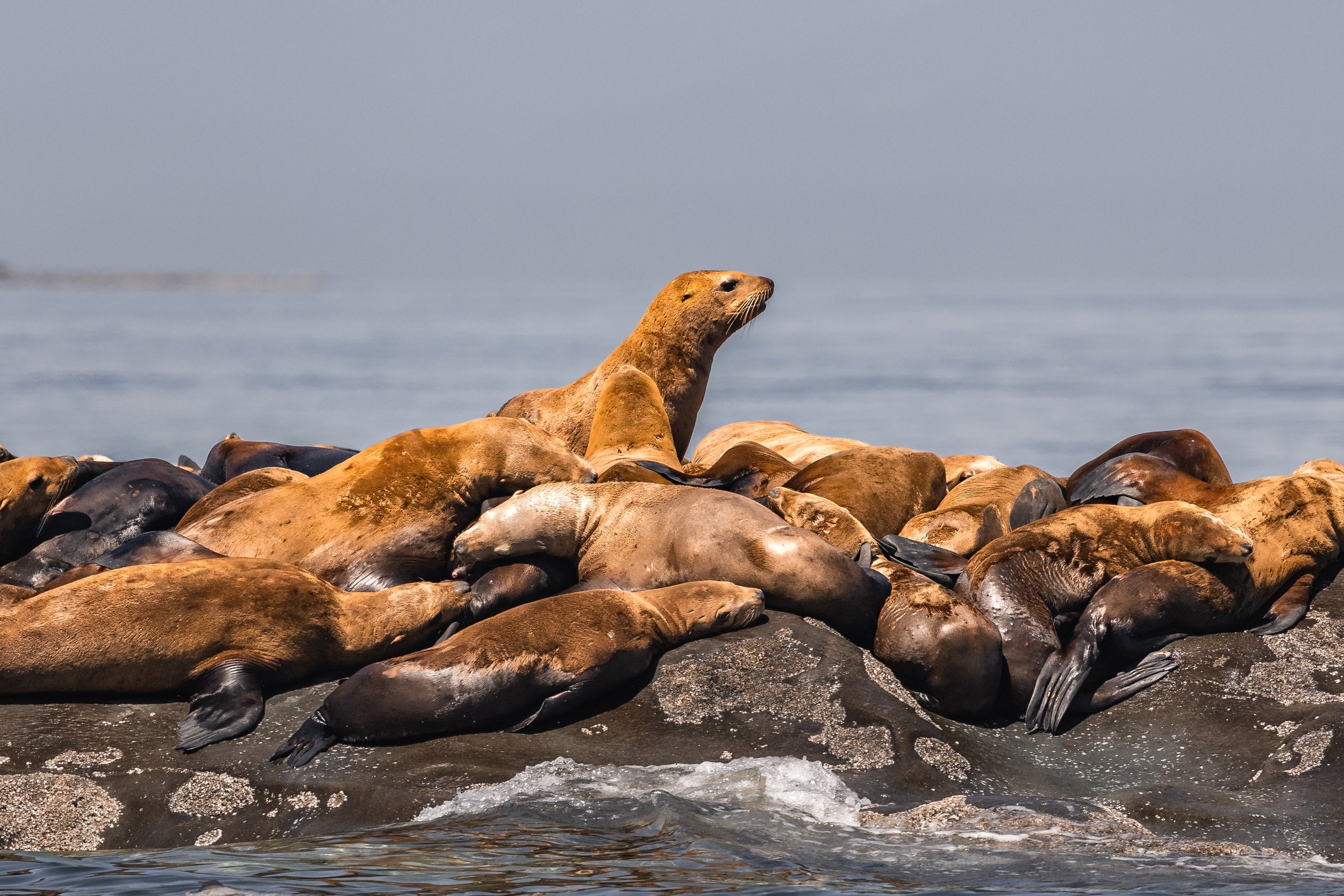
Dramatically draped over the rocks. Photo by Vanessa Vereschahen.
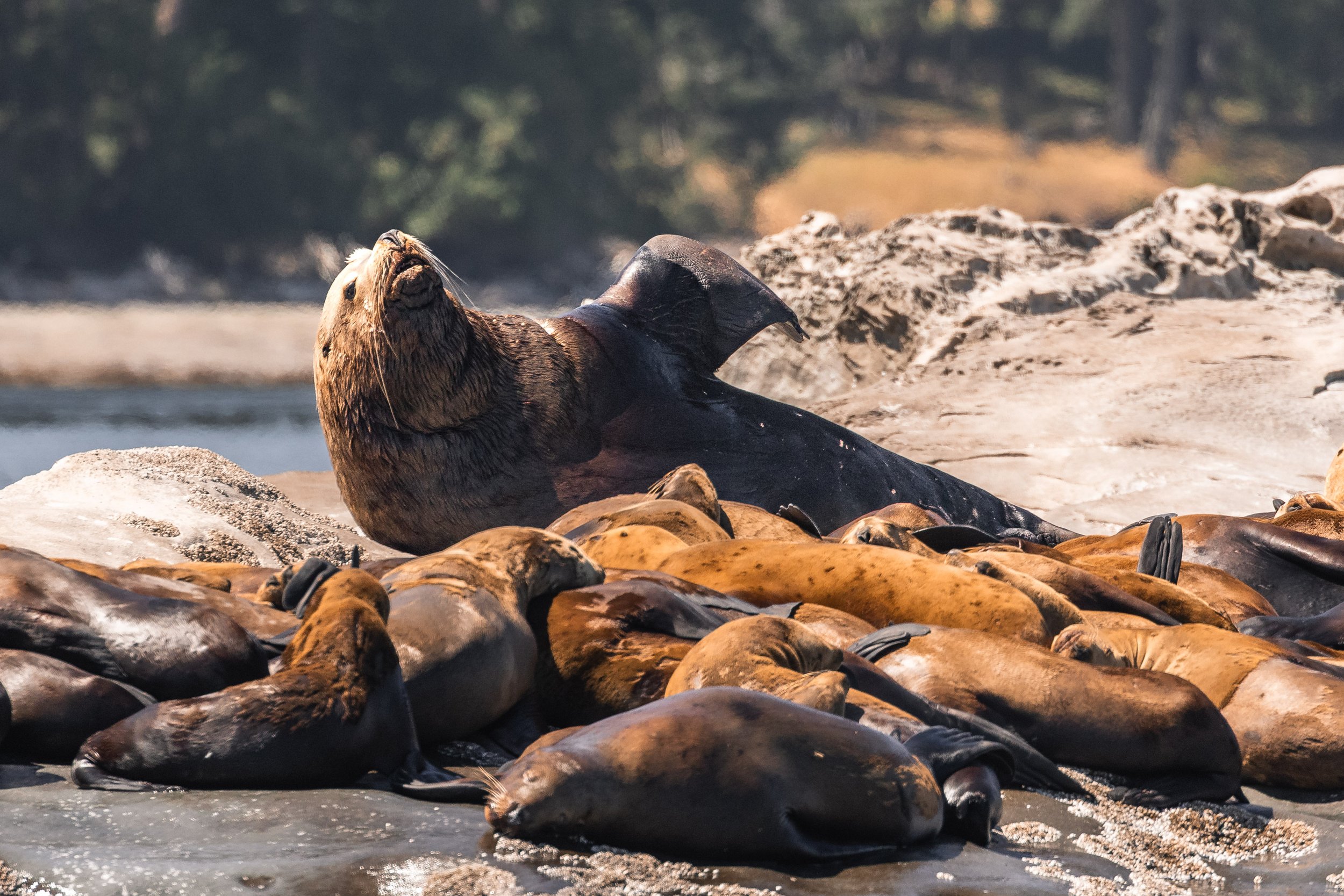
A big stretch from one of the big males. Photo by Vanessa Vereschahen.
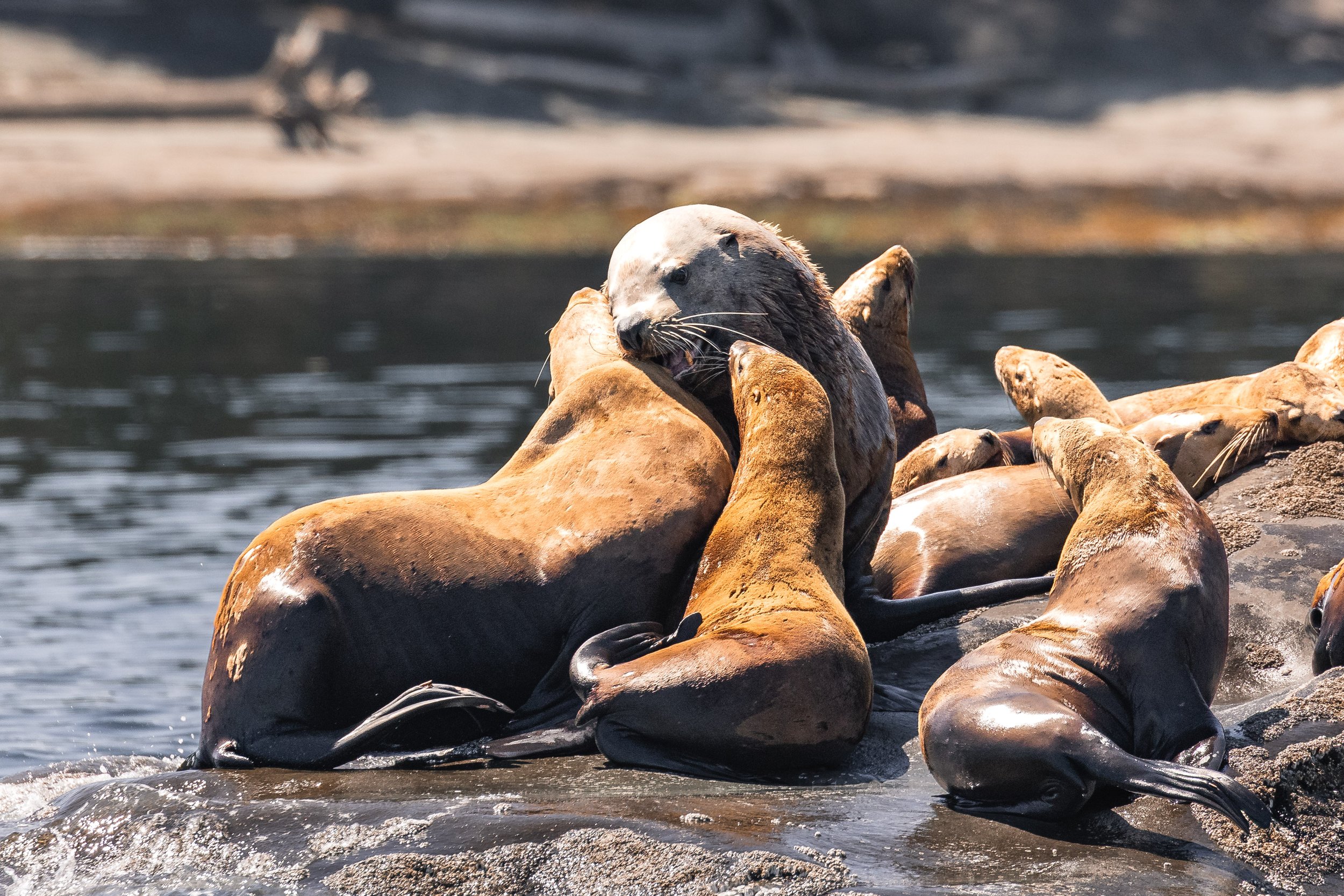
Aww what a cute little moment… Photo by Vanessa Vereschahen.
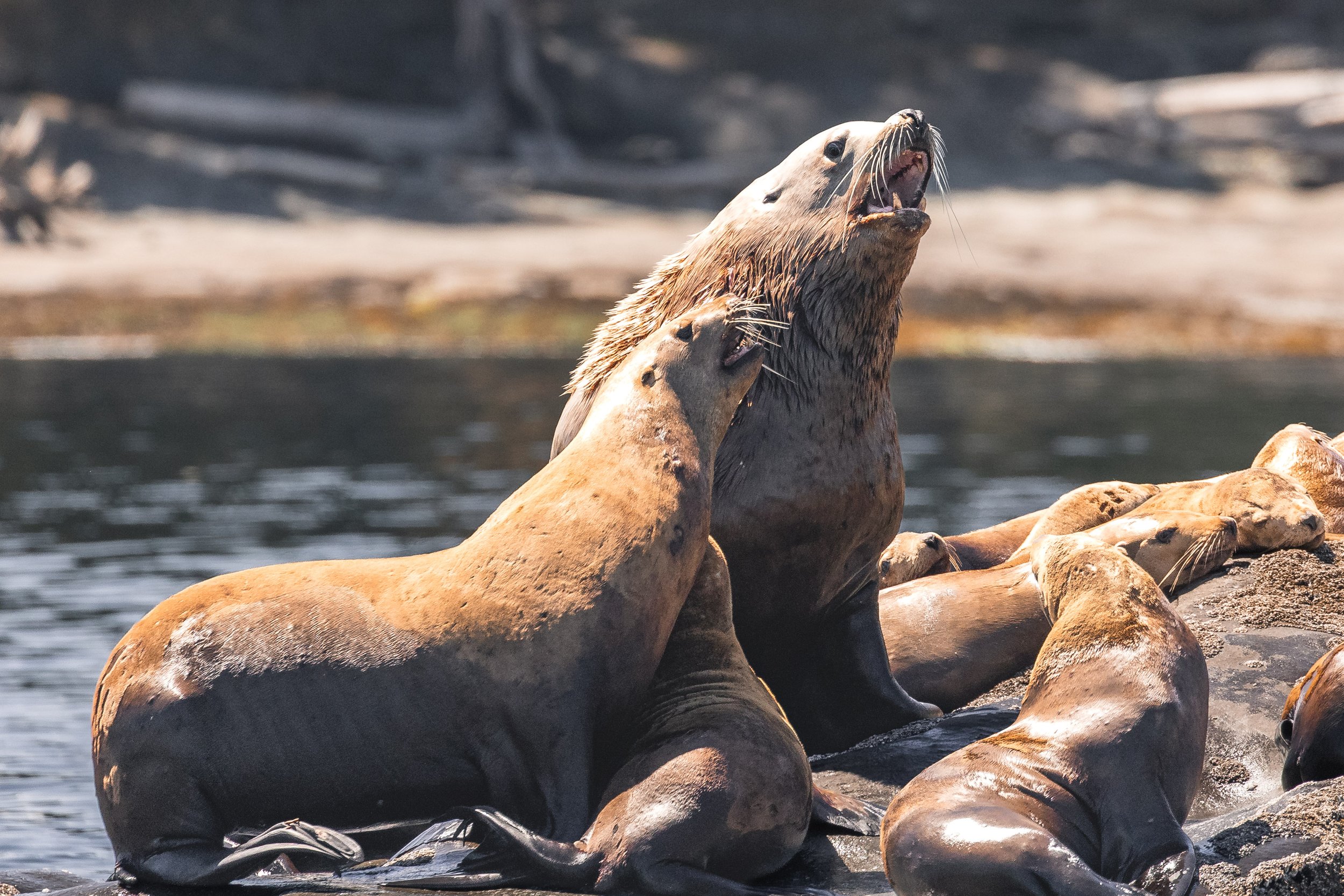
Oops nevermind. Photo by Vanessa Vereschahen.
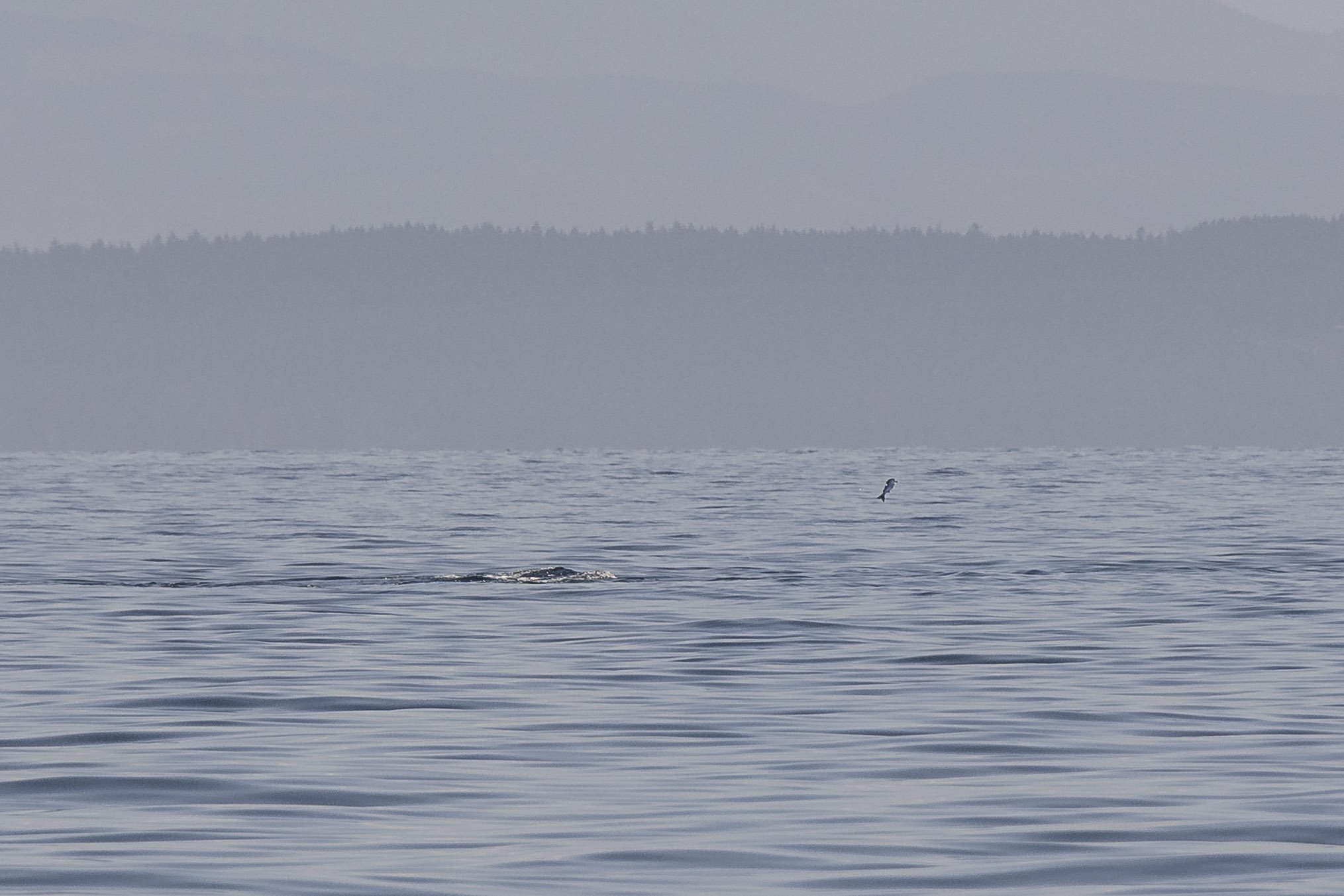
A breach! Though not a whale one - this one was a salmon! Photo by Jordan Robinson.
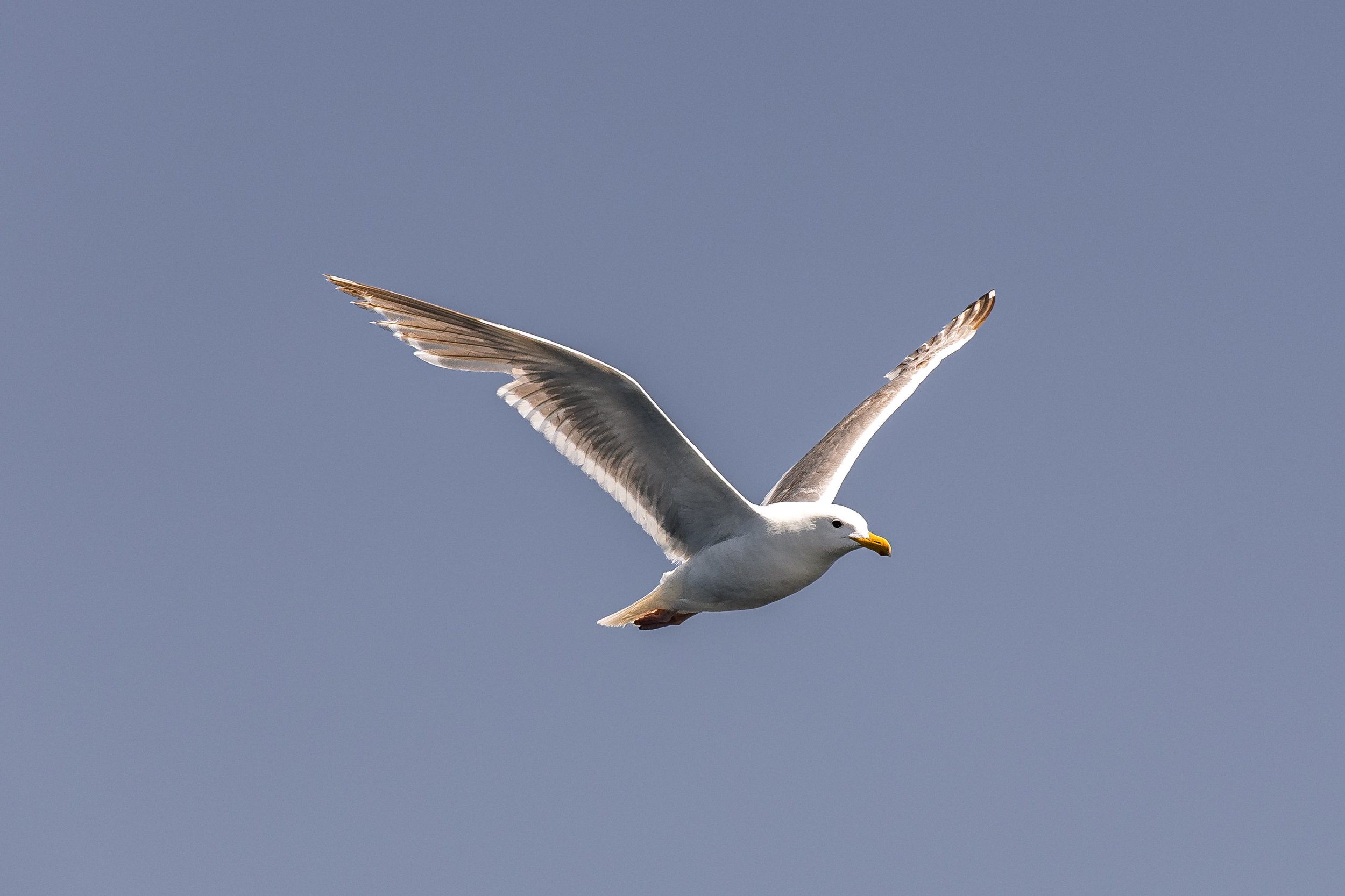
A gull flying by. Photo by Jordan Robinson.
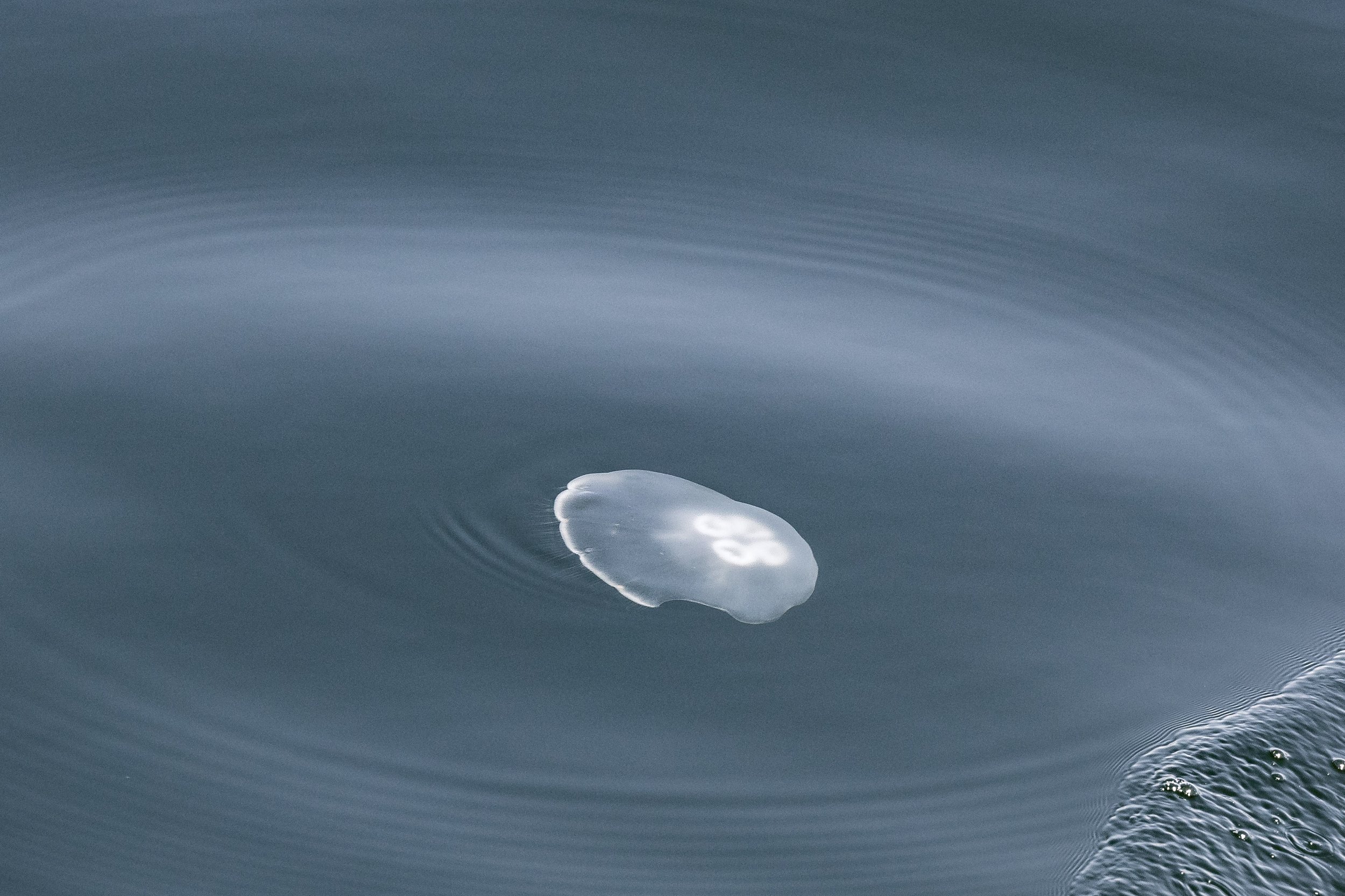
A moon jelly floating by. Photo by Jordan Robinson.
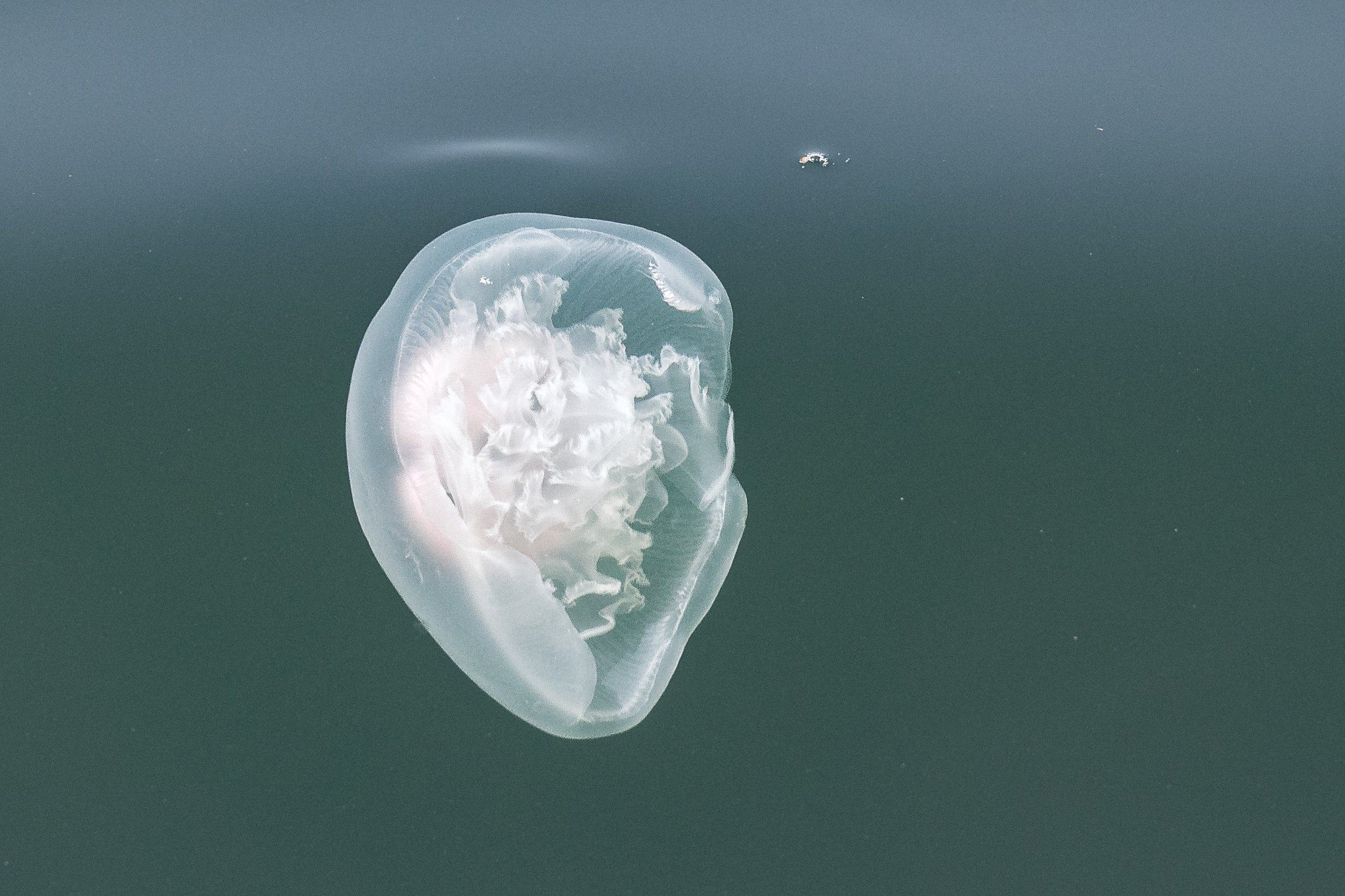
The short, wispy tentacles of a moon jelly. Photo by Jordan Robinson.