
June 22, 2026, 10:30 AM - Kelping Helen and Kelpie with Poptart
It was a warm, sunny day as guests and crew loaded onto our two vessels for the morning, thankful for the wind that was keeping things cool. Our search started by taking us south, through Dodd Narrows and into the Southern Gulf Islands. We searched our way through the passageways between the islands, heading towards Gabriola Passage. Here, we left the protection of the Gulf Islands and headed into the more open waters of the Strait of Georgia. Here, the boats split up to cover more ground, one heading Northeast while the other headed SE, stopping briefly at Stinky Rock to view the Pinnipeds that were there.
The Harbour Seals are typically the calmer of these two species, quietly spending their time on the rocks basking in the sun, while the Steller Sea Lions will fight for the best spot on the rocky islet, growling and grunting as they go. Both are Pinnipeds, or flipper-footed mammals, making them very smooth in the water, but they differ quite a bit on land. Here, evolution had different paths, and the Harbour Seals developed a fusion of their hips that limits their mobility on land, whereas the sea lions can use their flippers to walk, making them much more mobile. This difference, along with their size difference, makes seeing the two close together even more special.
While the open boat was enjoying views of the pinnipeds, the semi-covered boat had ventured into the Strait in search of whales. Lucky for them that they did, since after a bit of searching, they saw what they were looking for: the splashing of a whale in the distance! As they approached, the whale jumped out of the water and smacked its pectoral fins on the surface. As they got into position, this whale settled down a bit but was still playfully rolling in the debris line, dangling the kelp and seaweed floating there across its body as it went. This is called Kelping and can be important for whales to maintain healthy skin. Eventually, playtime ended, and this whale, which we identified as Helen (BCX2494), returned to feeding dives in the area. The open boat eventually made it to Helen as well, and enjoyed watching them lifting their tail high out of the water to propel themselves downward on those feeding dives.
As they were spending time with Helen, some other splashing in the distance caught their eye, and they decided to head over and see what was causing the rucus. It turned out to be another pair of Humpback Whales, Kelpie (BCY1276) and Poptart (BCY1014), which were being very active at the surface. Once again, as they approached, they saw breaching in the distance, followed by some cartwheels and chin slaps as they got closer. This level of activity isn’t very common from the humpbacks while they are here in their feeding grounds, since they are trying to build up their fat reserves to prepare for next season’s migration. With such energetic behaviour, they would reduce their daily contribution to these reserves, potentially impacting the amount of energy available to them when they do eventually migrate down south once again. But, they aren’t doing this for no reason. They may have a buildup of barnacles or lice on their bodies that increases drag, making it more expensive overall since they have to work harder to swim through the water. It can be a trade-off: a big energy expenditure now to keep barnacle levels lower, or a bigger expense to constantly swim with the increased drag. The other reason we think we see whales active at the surface may be for communication, since those impressive impacts are very loud. This sound will travel great distances underwater, since water conducts sound 3 times better than air. Something that fed into the idea we saw today was another whale in the distance splashing around, seemingly in response to these two, and later in the encounter, a third whale made its way over to Kelpie and Poptart, perhaps drawn in by the earlier activity.
No matter why, it was an amazing experience to have seen that display of power, and to have enjoyed the rest of the time with them as their behaviour returned to feeding below the surface.
From here, it was the semi-covered vessels' turn to view some pinnipeds, which they did at the ODAS buoy located at Halibut Bank. Here, a group of Steller Sea Lions was lounging on the buoy itself, while a smaller group was spending time in the water nearby. As they had seen at Stinky Rock, the haul-out site the open boat had visited, fights were breaking out among this group of sea lions as they fought over the limited space at this interesting spot.
From here, the two boats converged again on their return to the Harbour, the excitement palpable on both after their amazing experience on the water spent with the wildlife. Throughout the tour, the Marine Naturalists on board, Val Watson and Aly Kohlman, captured some amazing photos, which are available to view below!
Stinky Rock
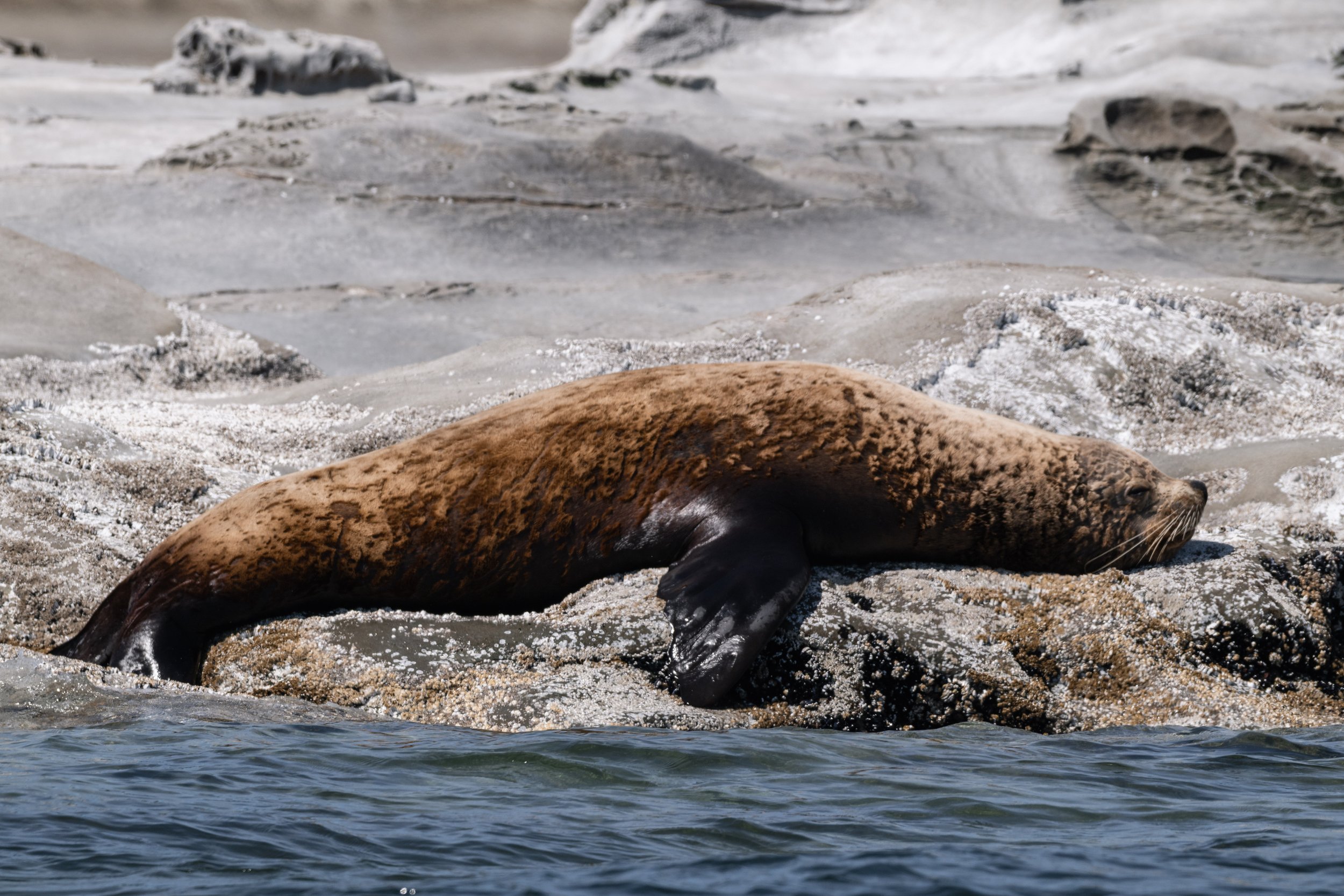
An Adult male Steller Sea Lion at Stinky Rocks. Photo by Aly Kohlman.
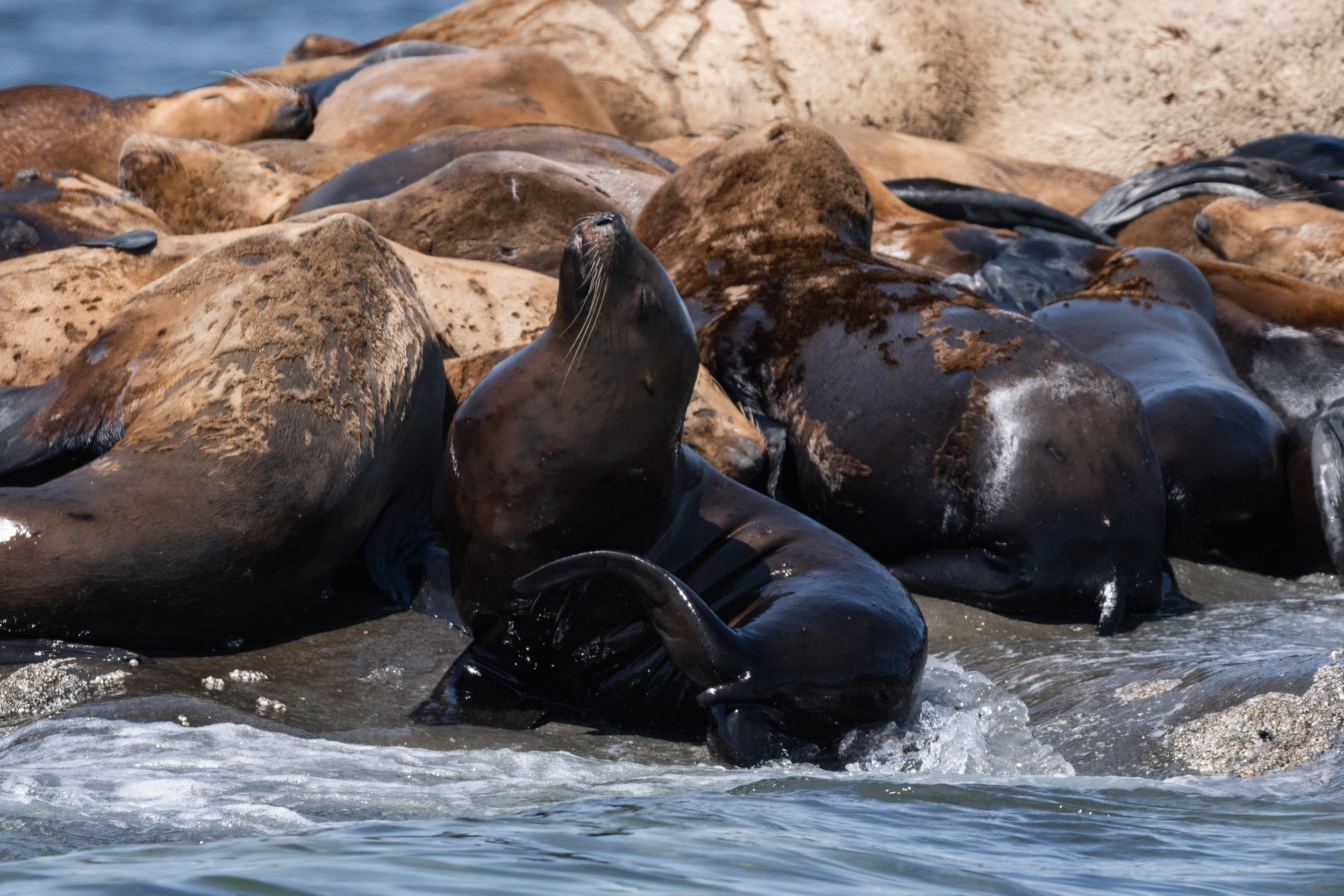
An itchy Sea Lion. Photo by Aly Kohlman.
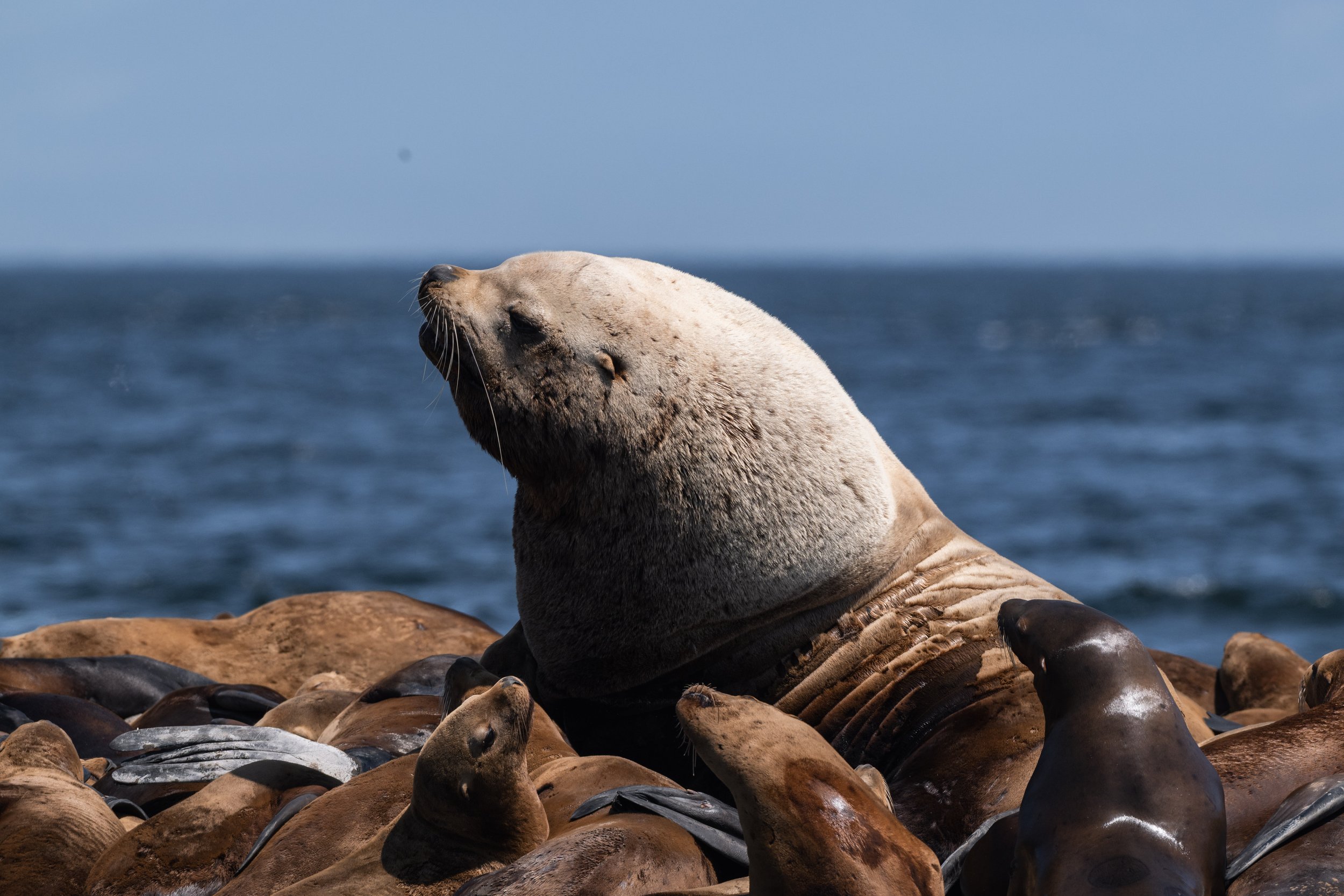
This male shows the sexual dimorphism found in Steller Sea Lions very nicely. Photo by Aly Kohlman.
Helen
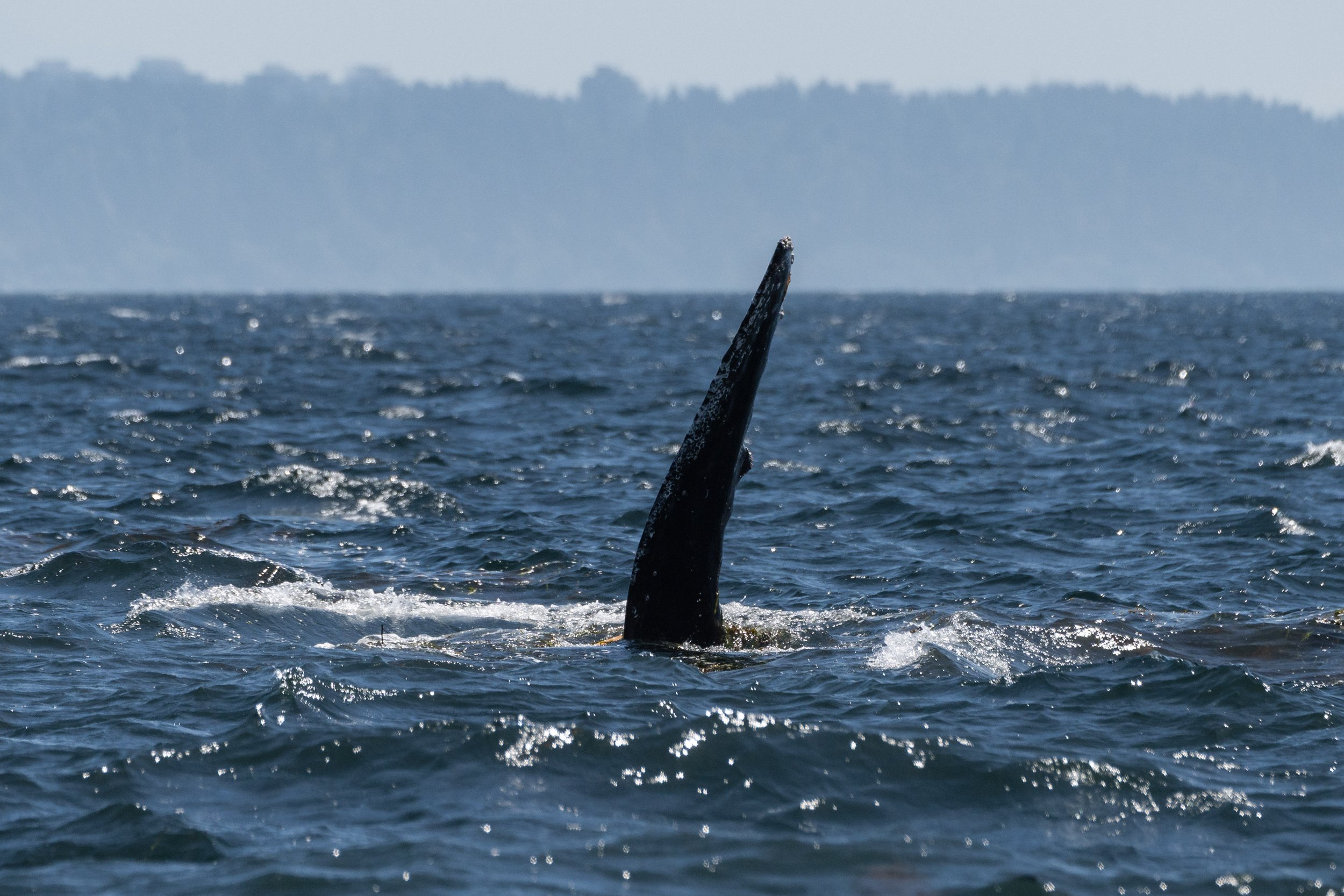
Helen playing with the kelp at the tide line. Photo by Val Watson.
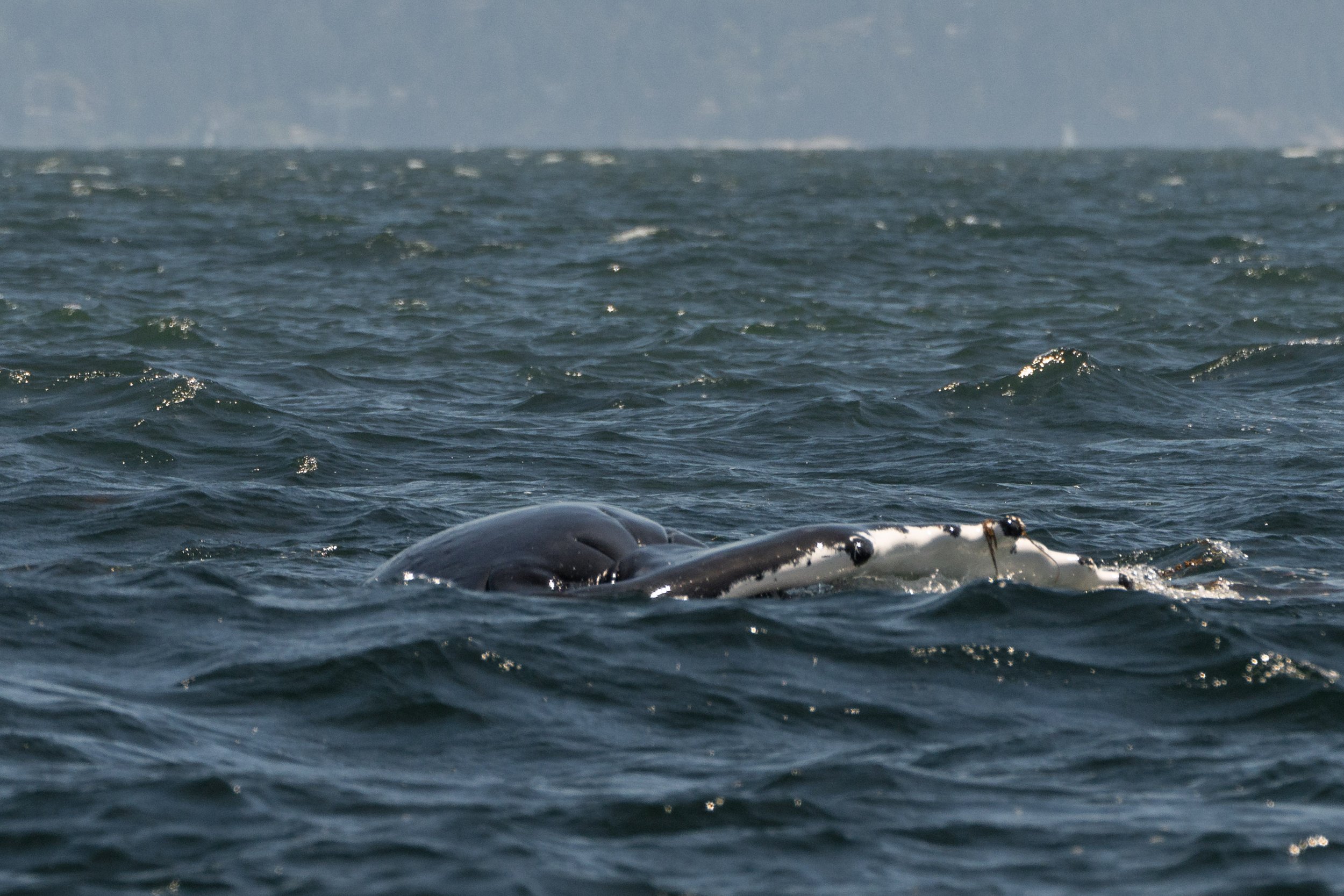
Can you spot the seaweed drapped over Helen’s pectoral fin? Photo by Val Watson.
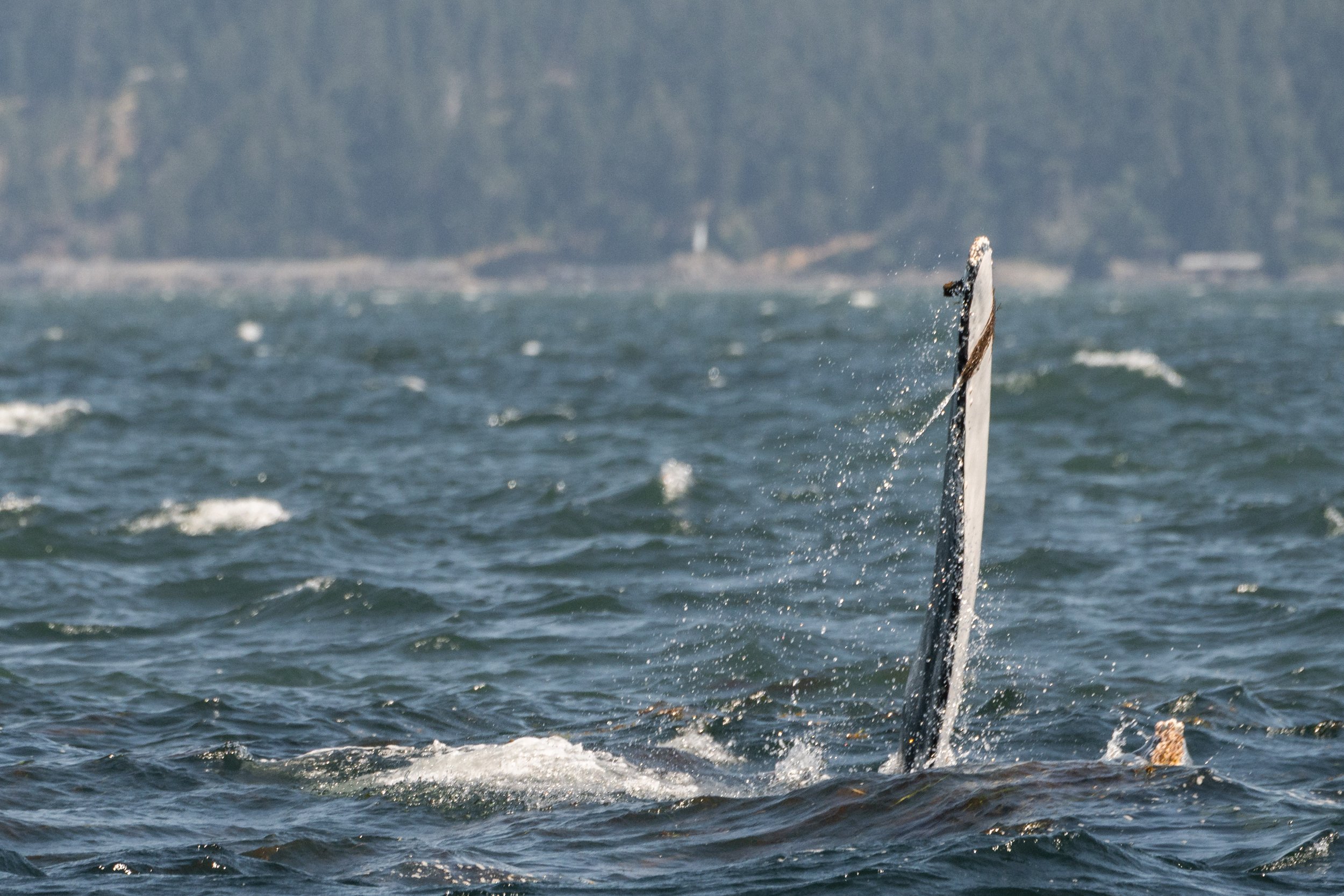
A slightly blurry look at Helen rolling in the Seaweed. Photo by Val Watson.
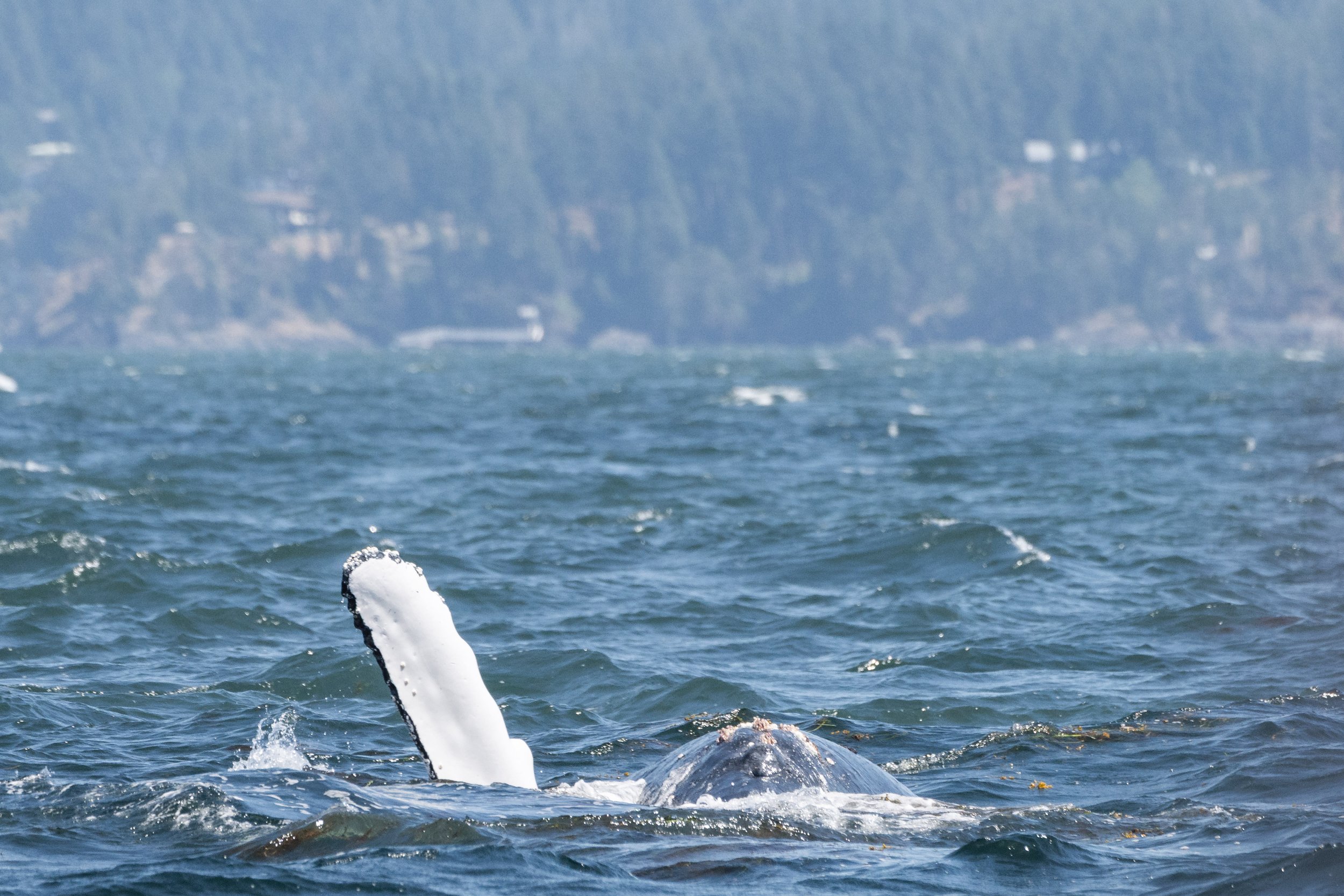
This shot can be used to figure out Helen’s gender…looks like a girl! Photo by Val Watson.
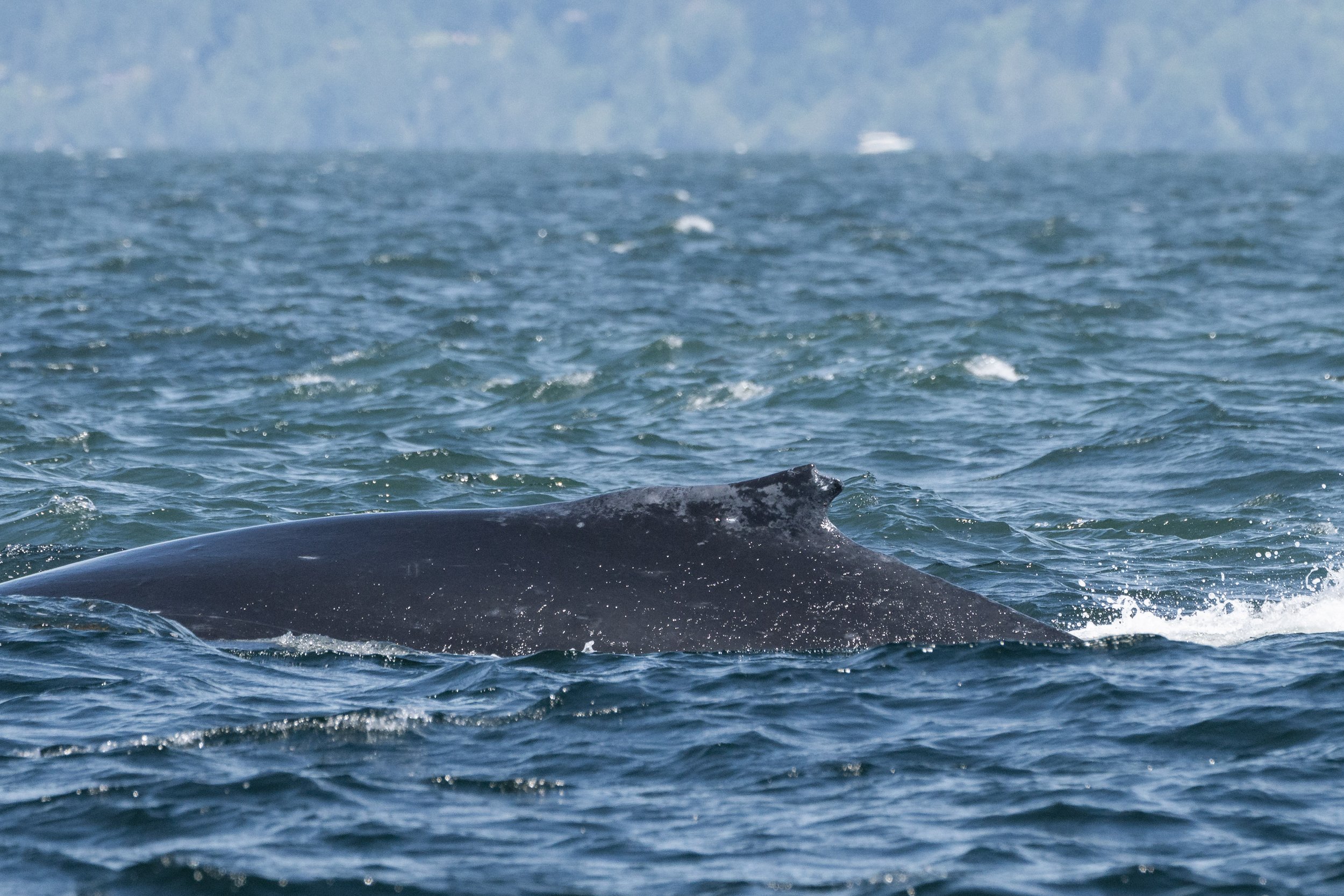
This very distinct dorsal fin is how Helen got her name. Based on Mt. Saint Helens, a local volcano! Photo by Val Watson.
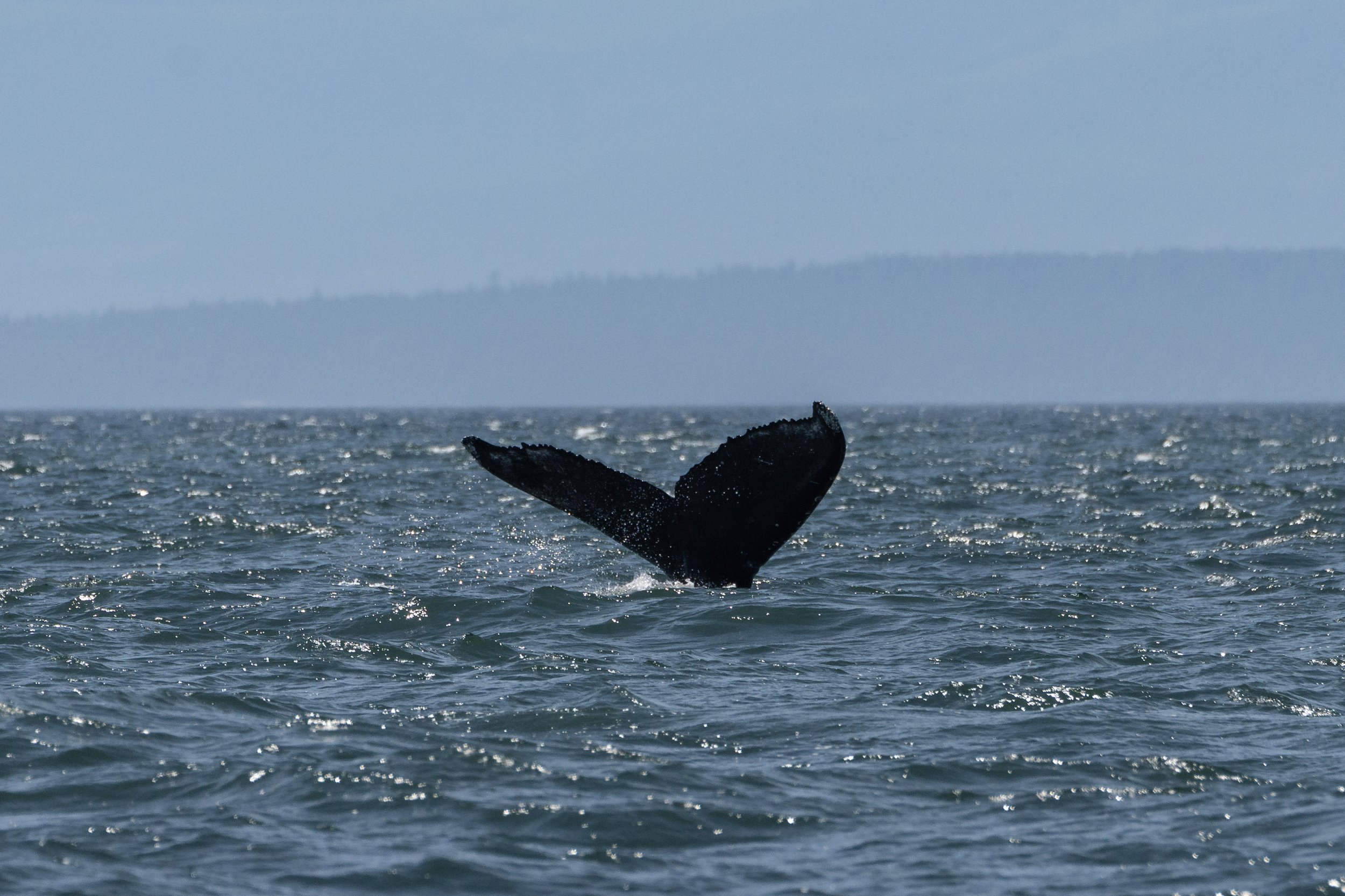
The underside of Helen’s tail. Photo by Val Watson.
Kelpie and Poptart
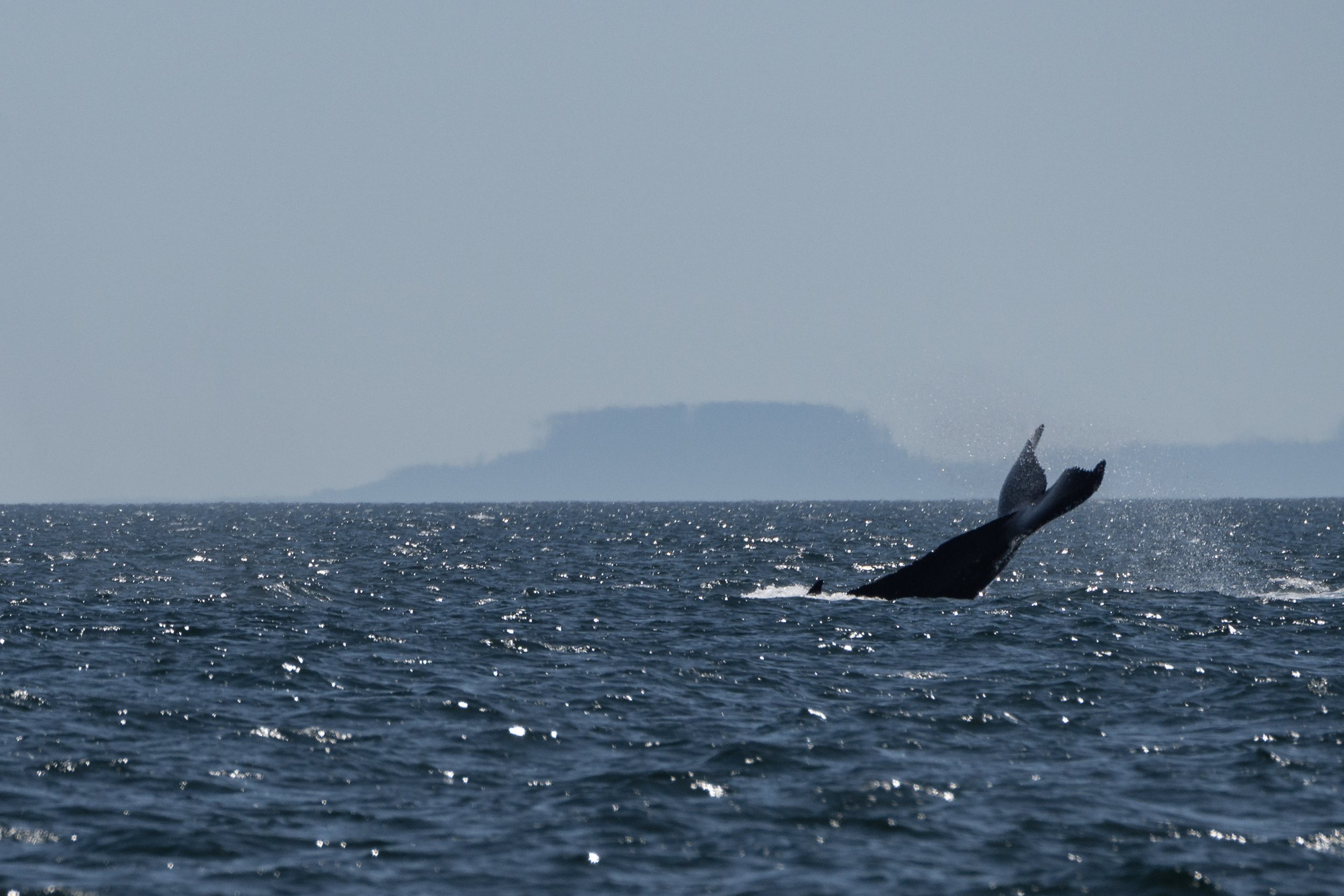
Kelpie Cartwheeling in the distance. Photo by Val Watson.
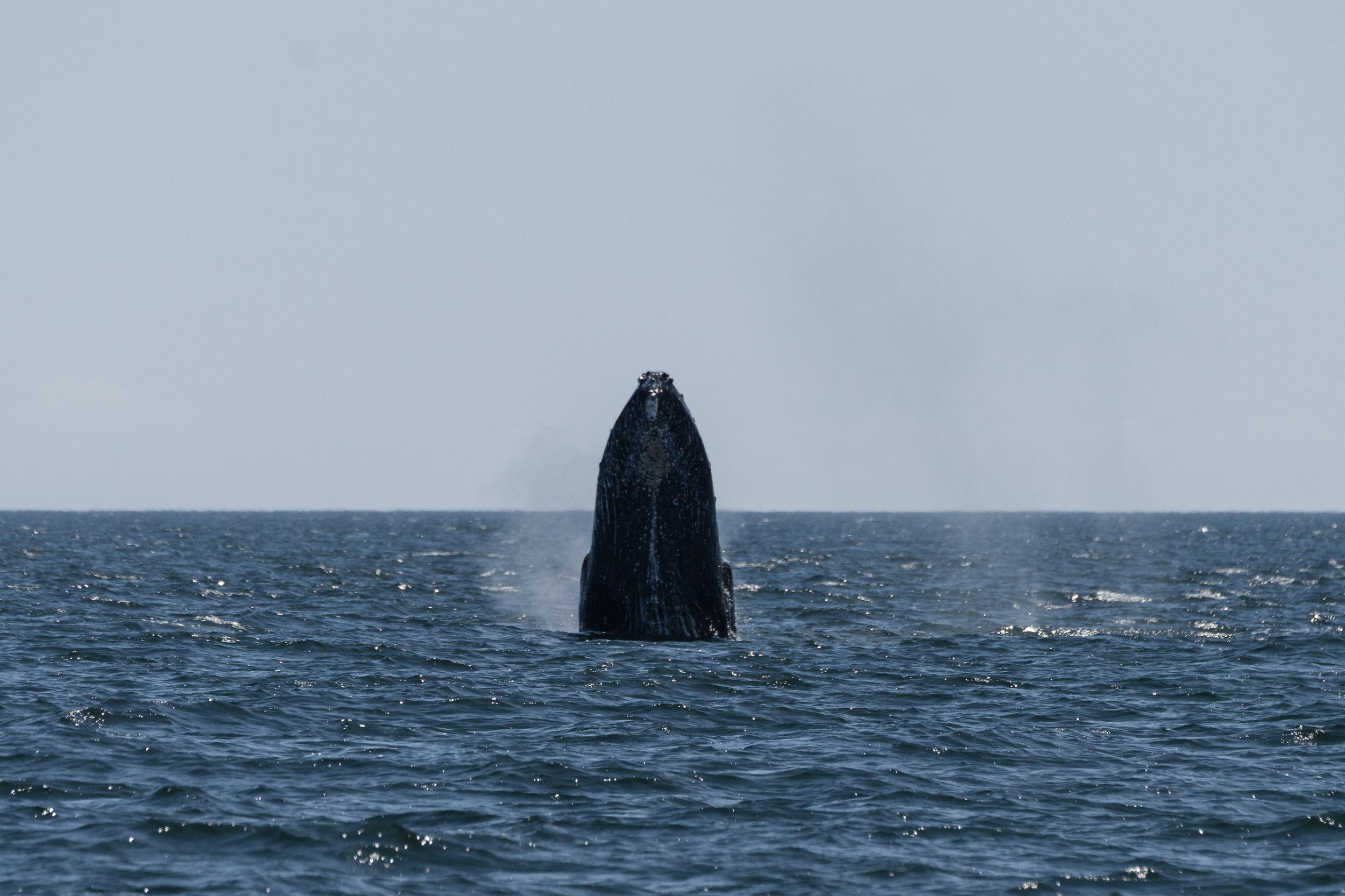
One of the whales gearing up for a chin slap. Photo by Val Watson.
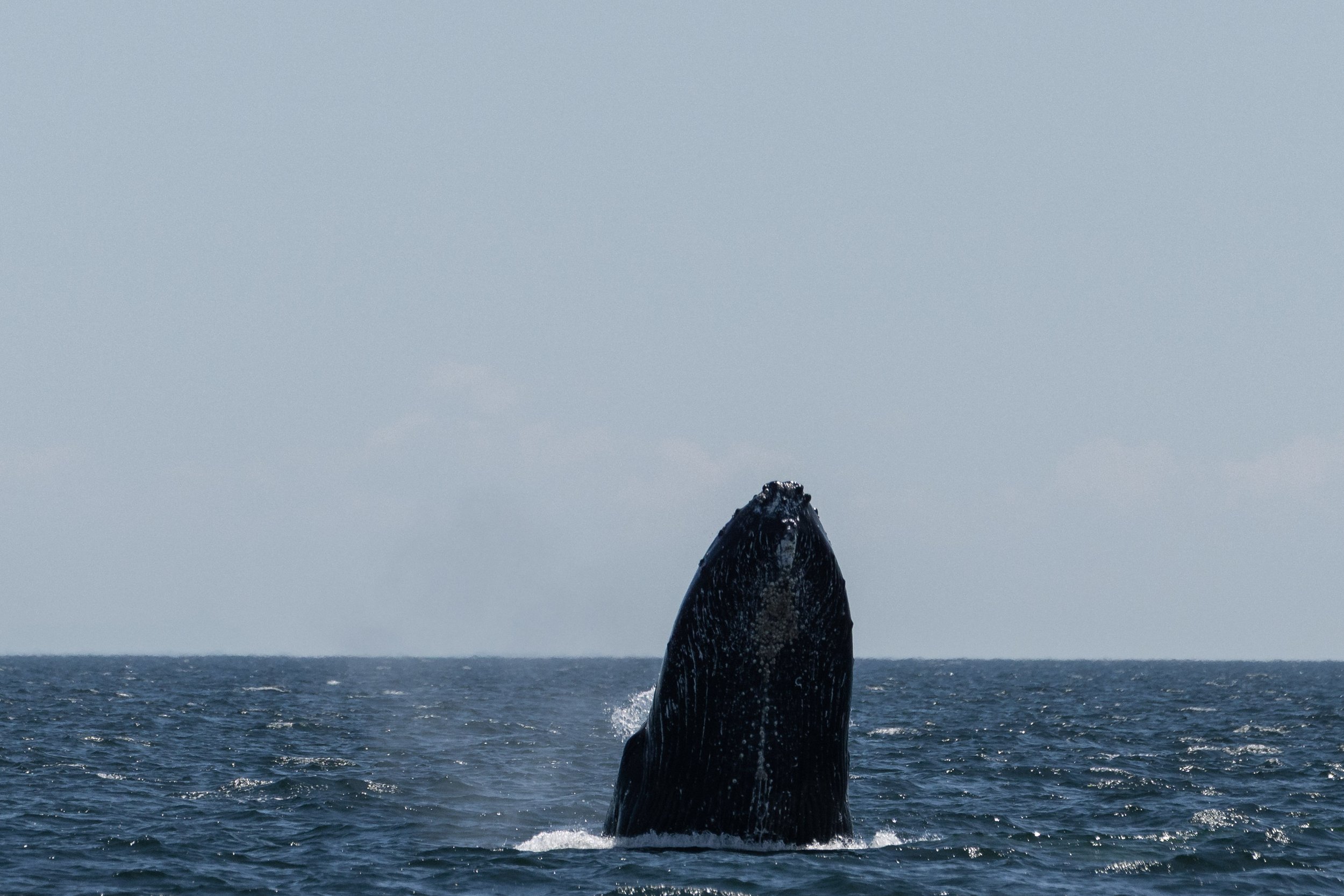
Can you spot all the barnacles on the chin of this chin slapping humpback? Photo by Val Watson.
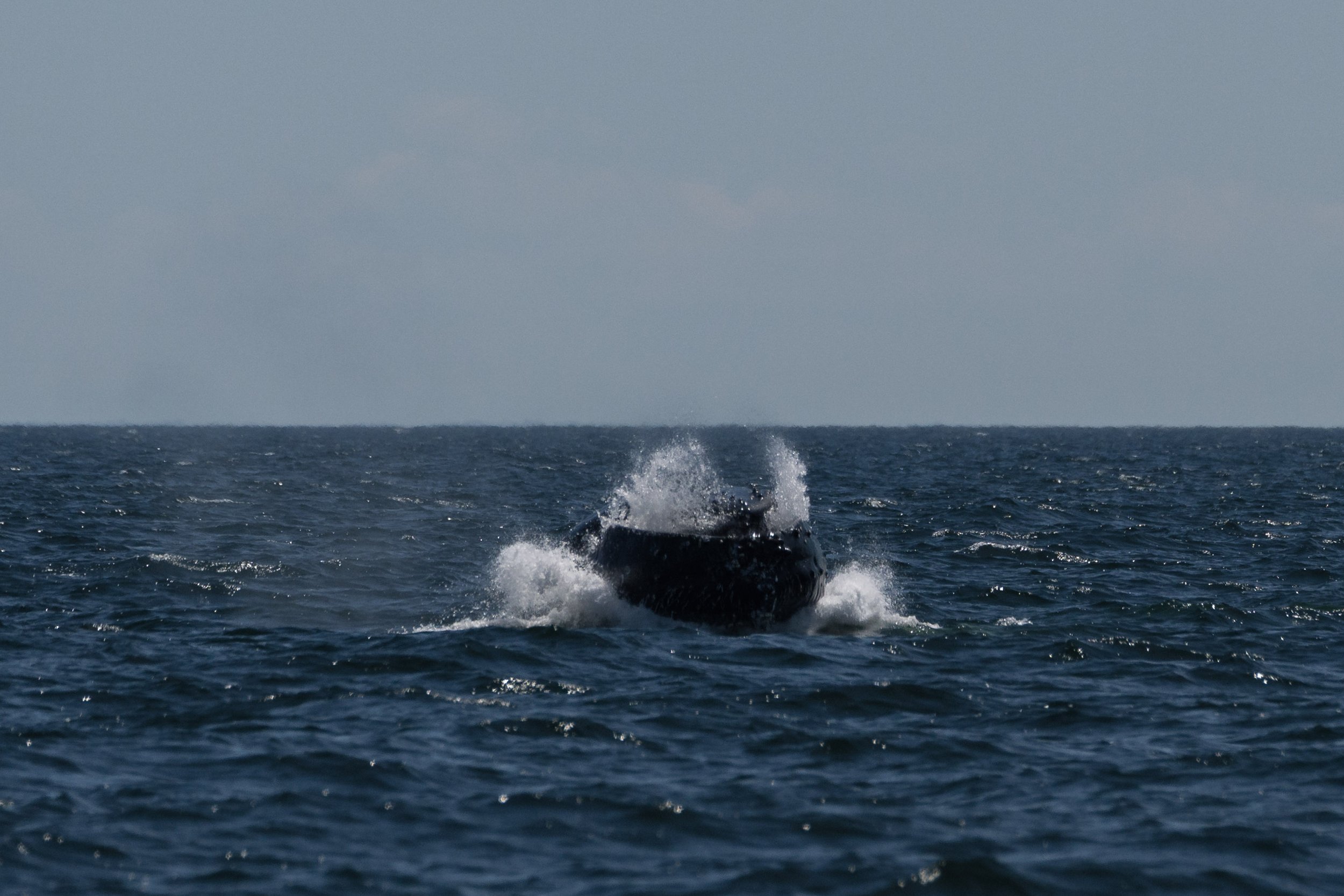
Water cascading from their mouth at touchdown! Photo by Val Watson.
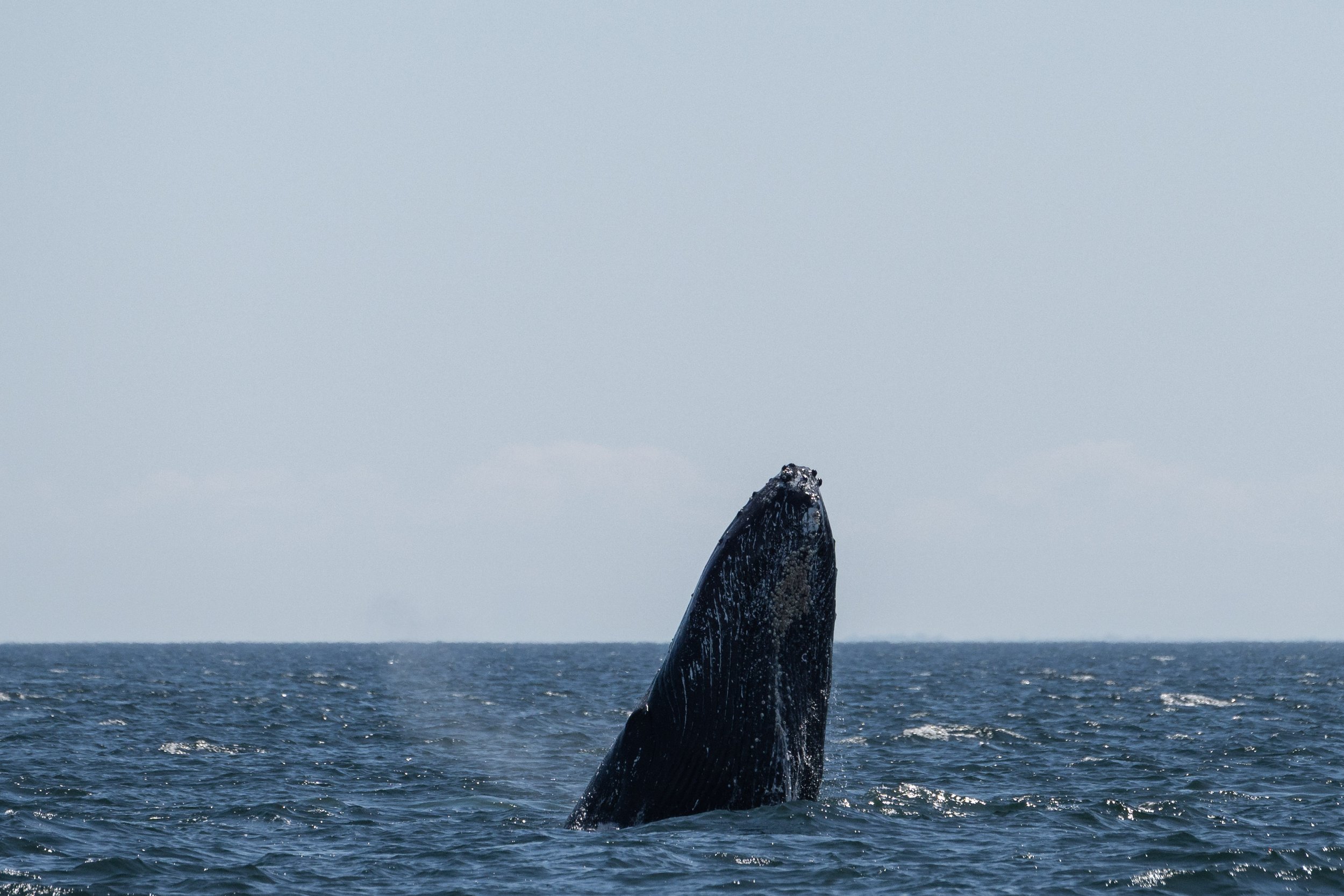
Another chin slap from these very active whales. Photo by Val Watson.
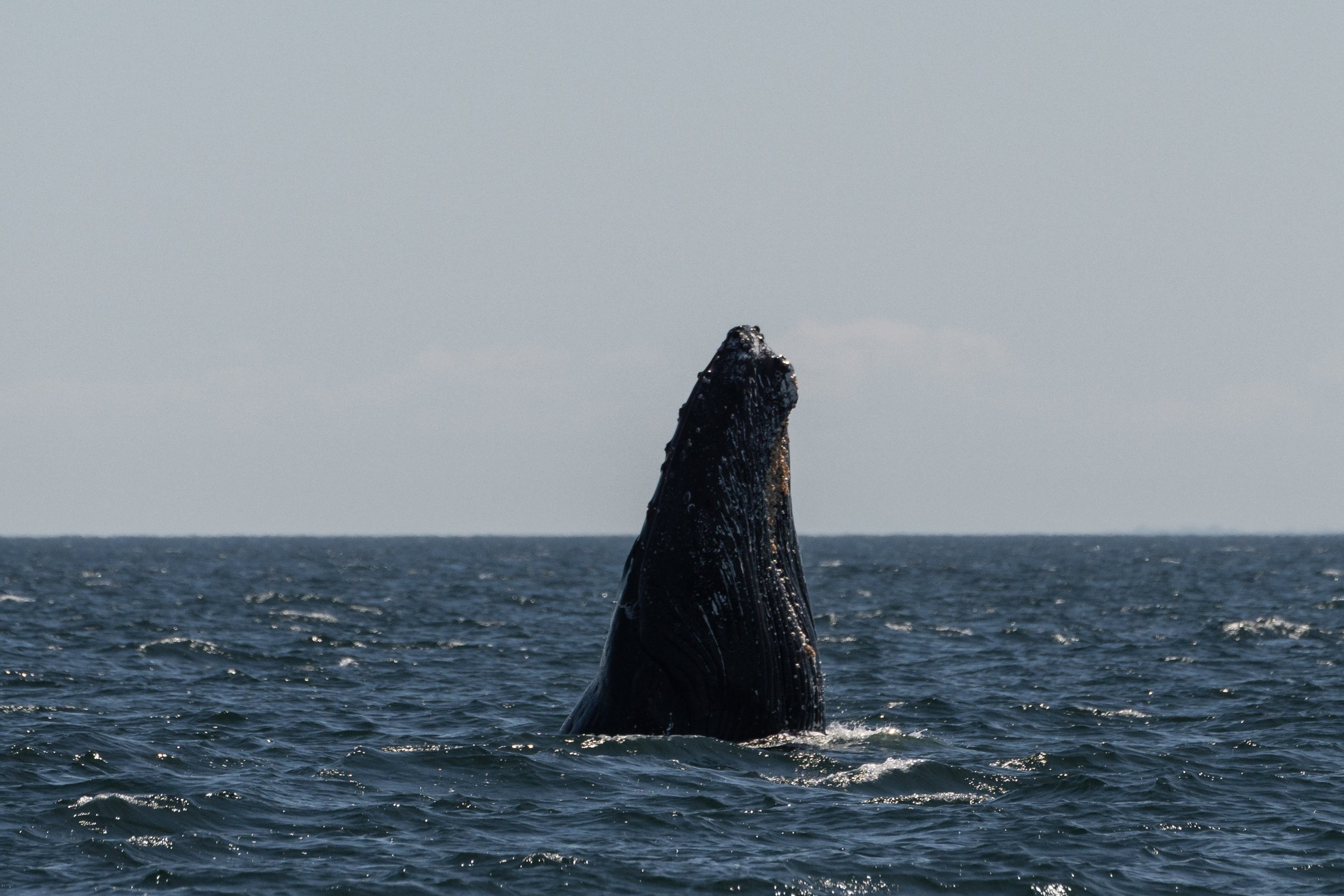
This angle shows off their Tubercles very well! Those are the little bumps on their rostrum. Photo by Val Watson.
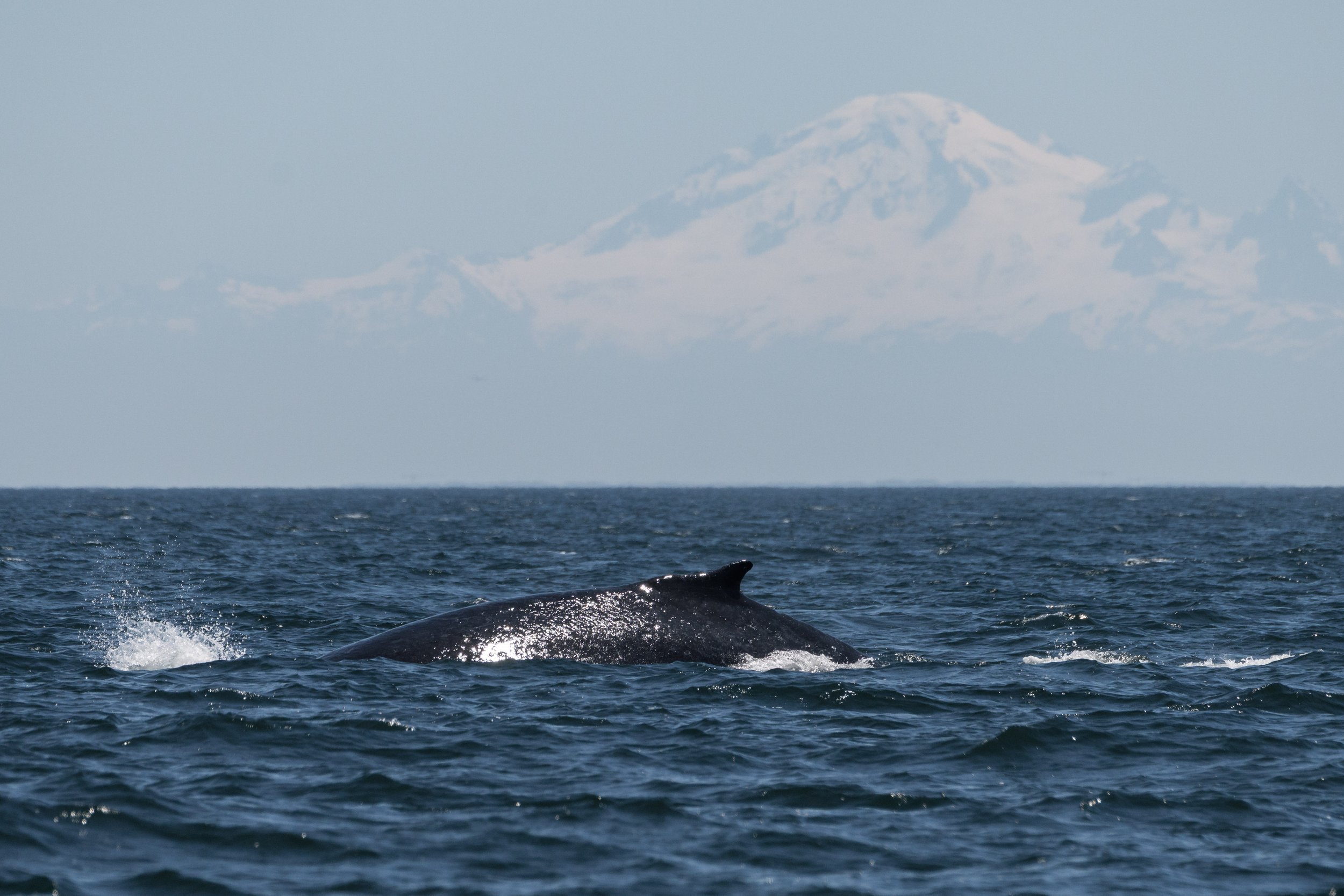
Kelpie surfacing in front of Mt. Baker. Photo by Val Watson.
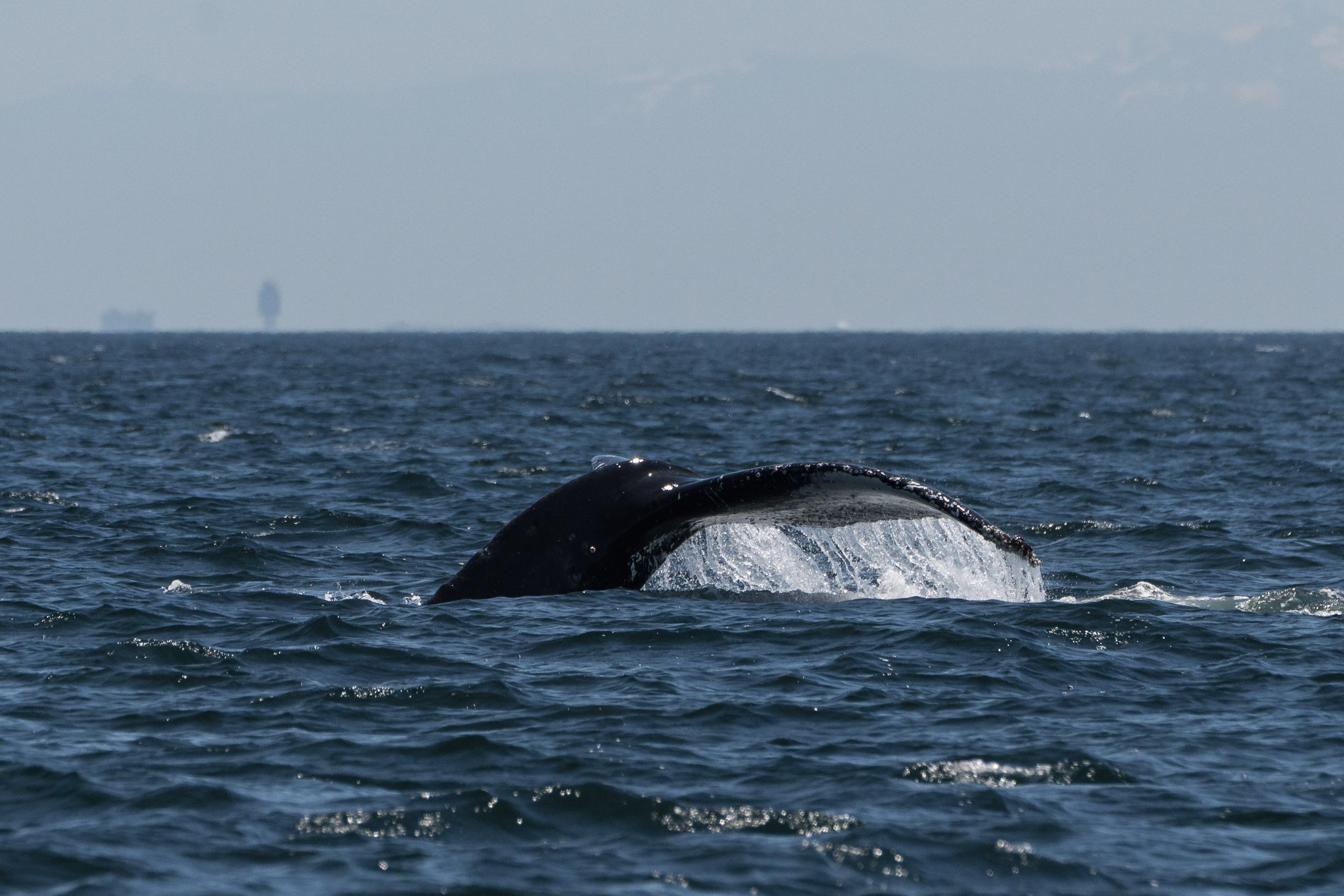
Kelpie going for a dive. Photo by Val Watson.
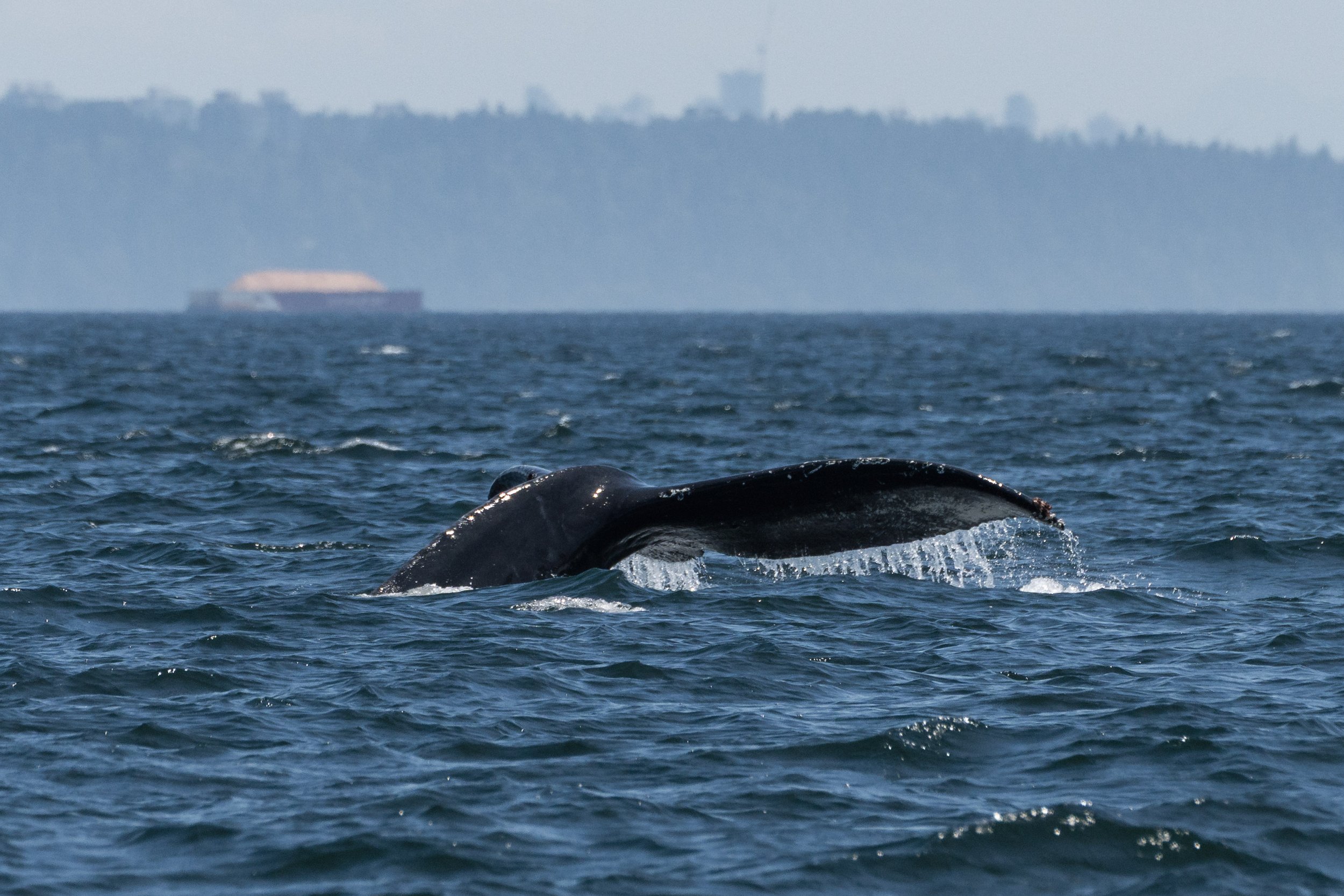
Poptart going for a dive. Photo by Val Watson.
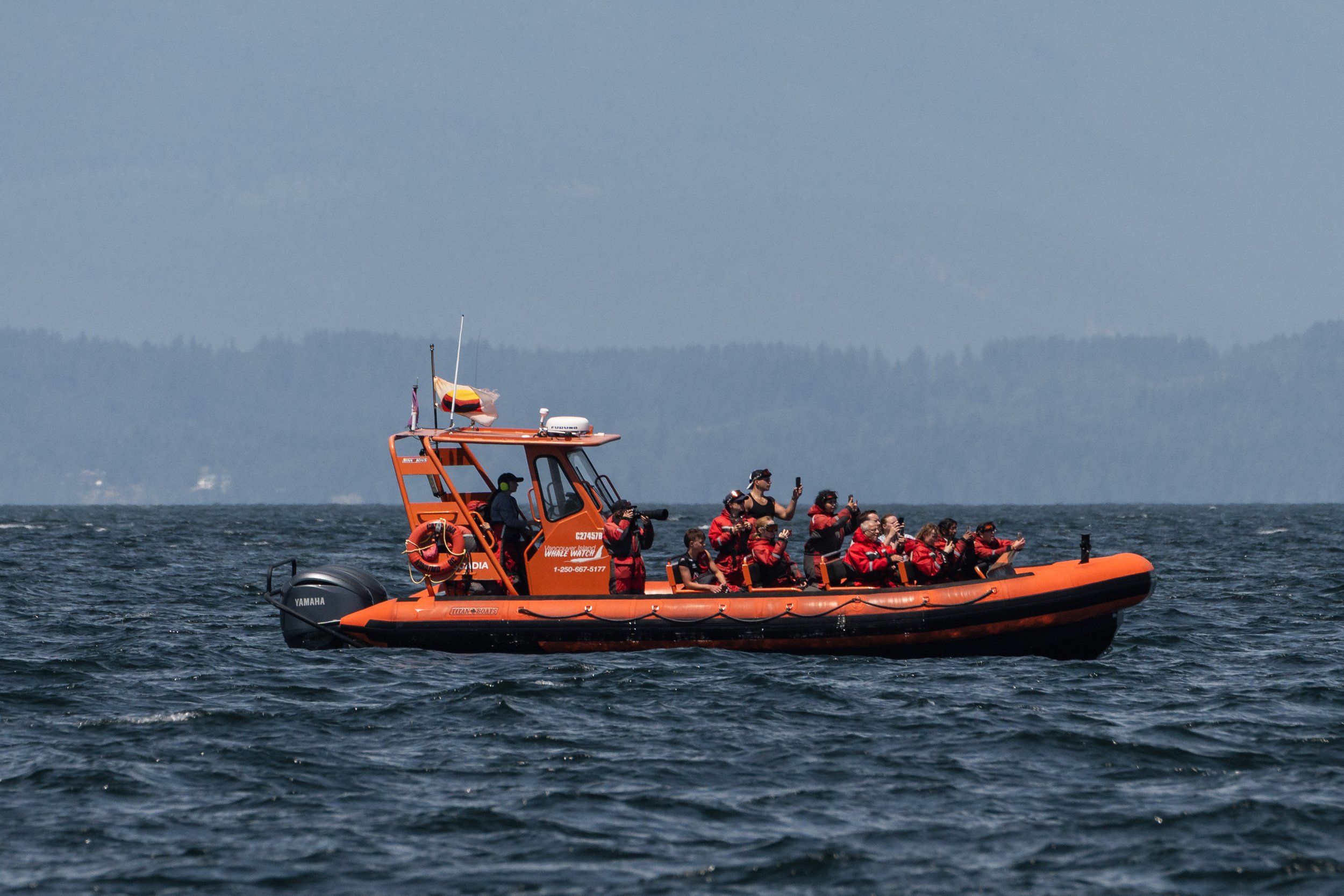
Whale Watchers on Cascadia watching Kelpie and Poptart. Photo by Val Watson.
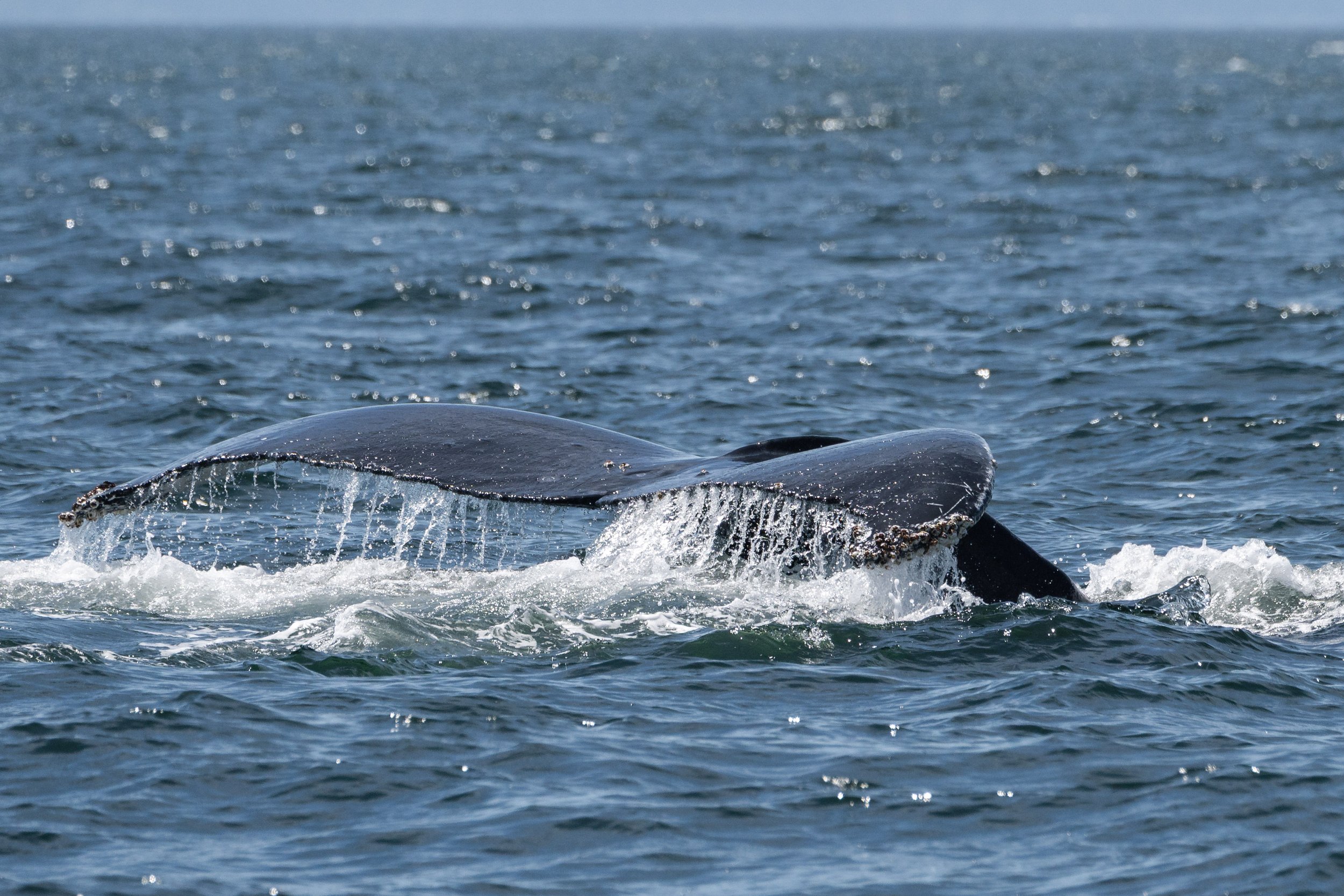
A fluke waterfall from Kelpie. Photo by Val Watson.
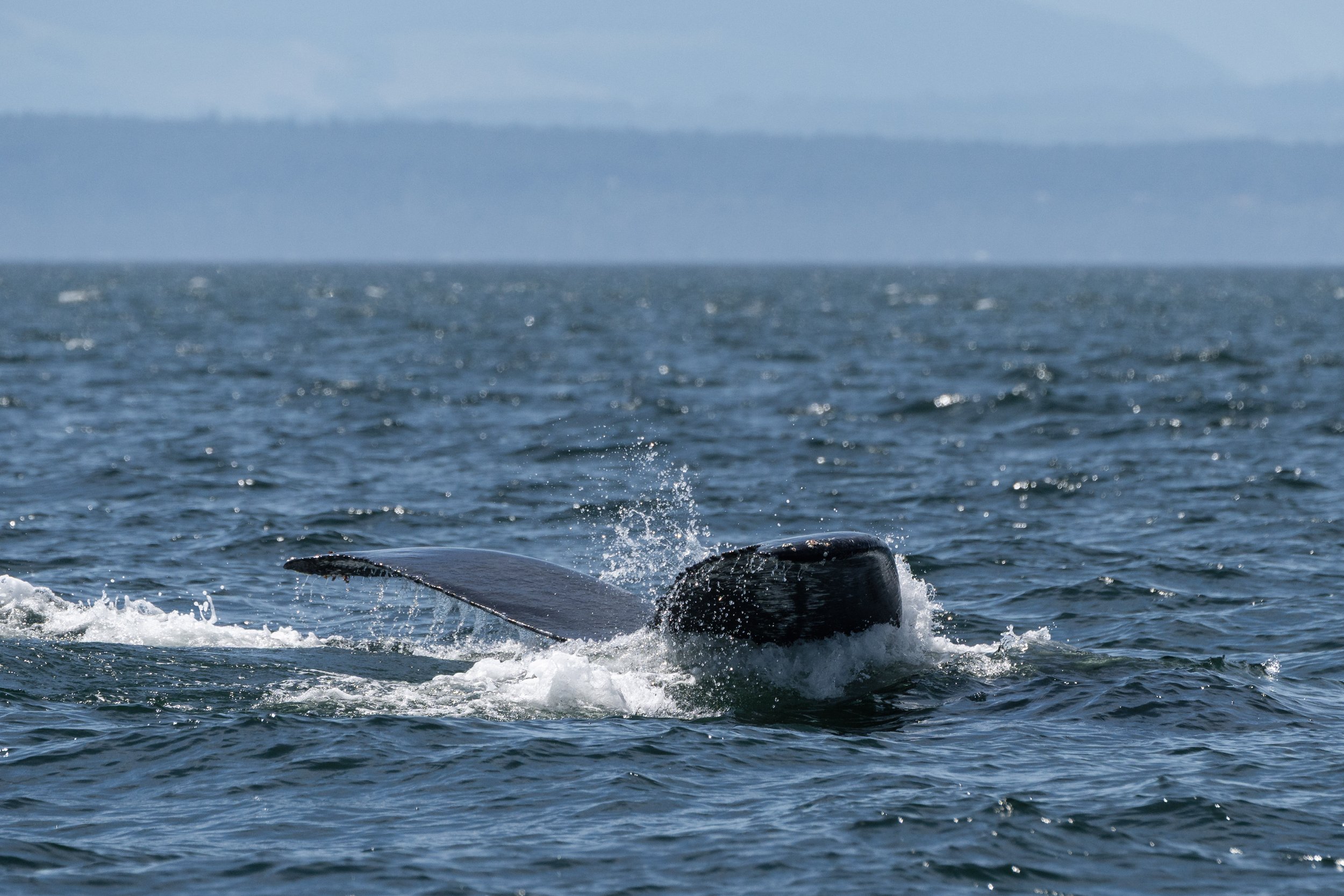
Poptart dipping beneath the surface. Photo by Val Watson.
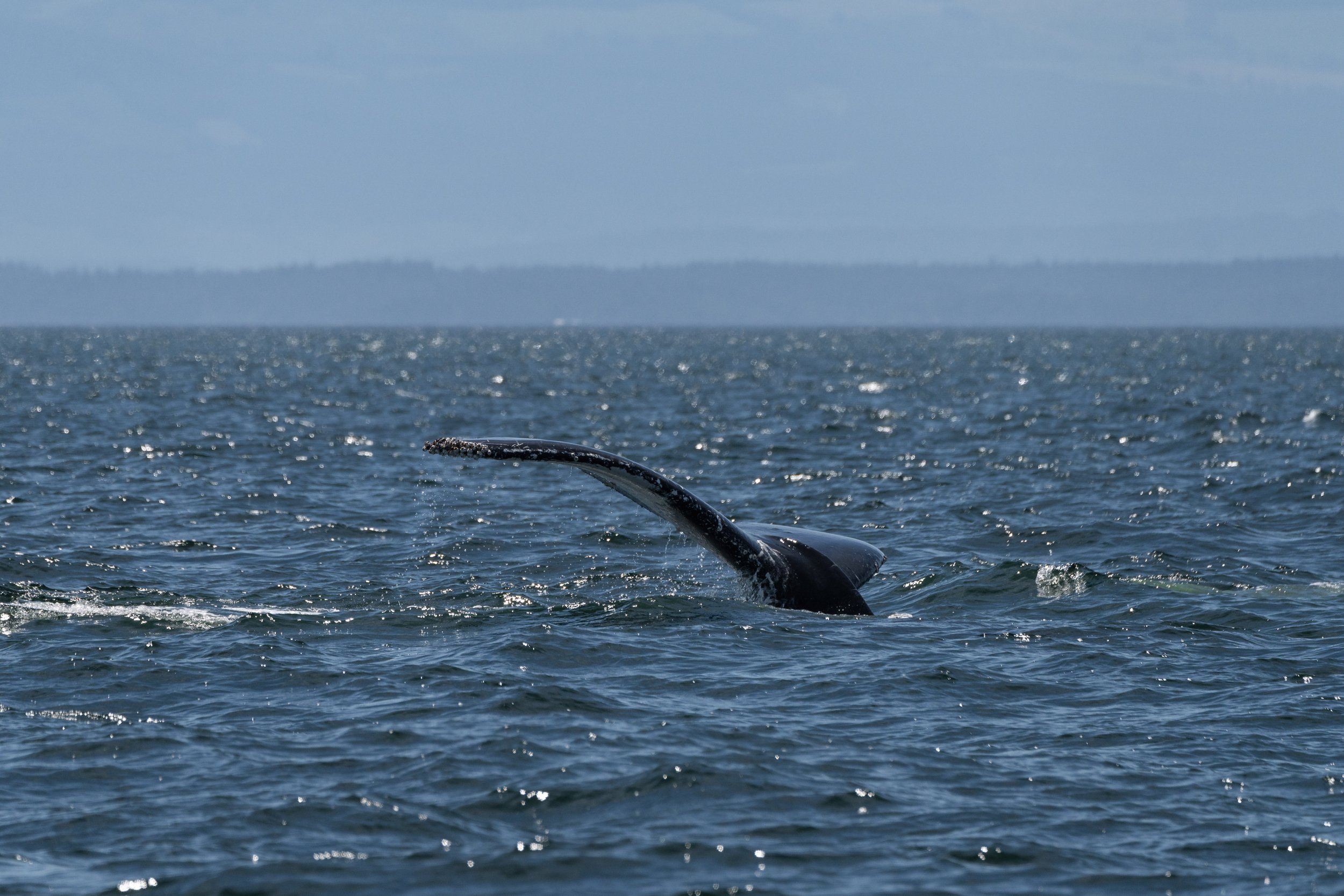
Kelpie lifting his tail to dive. Photo by Val Watson.
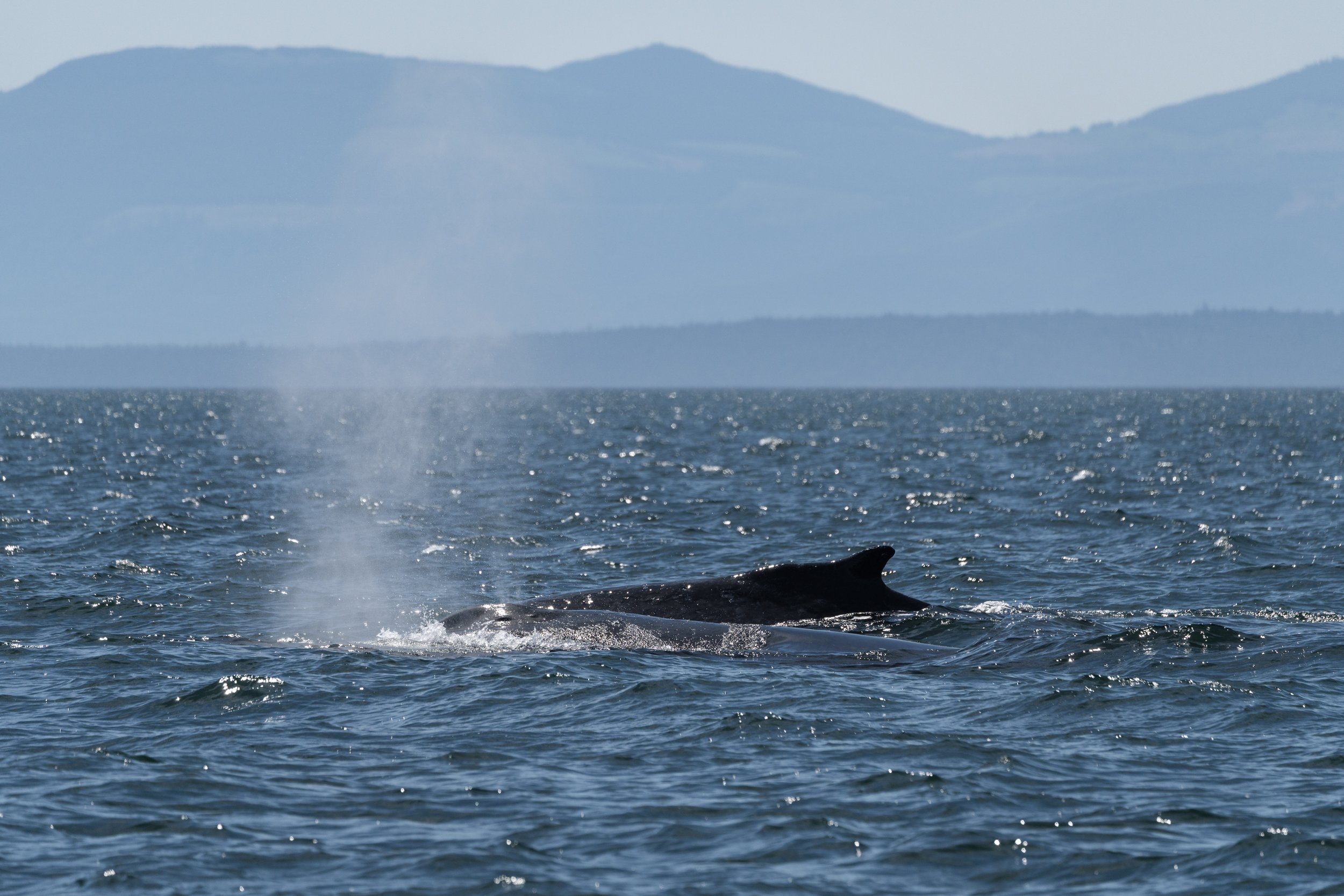
Poptart surfacing just ahead of Kelpie. Photo by Val Watson.
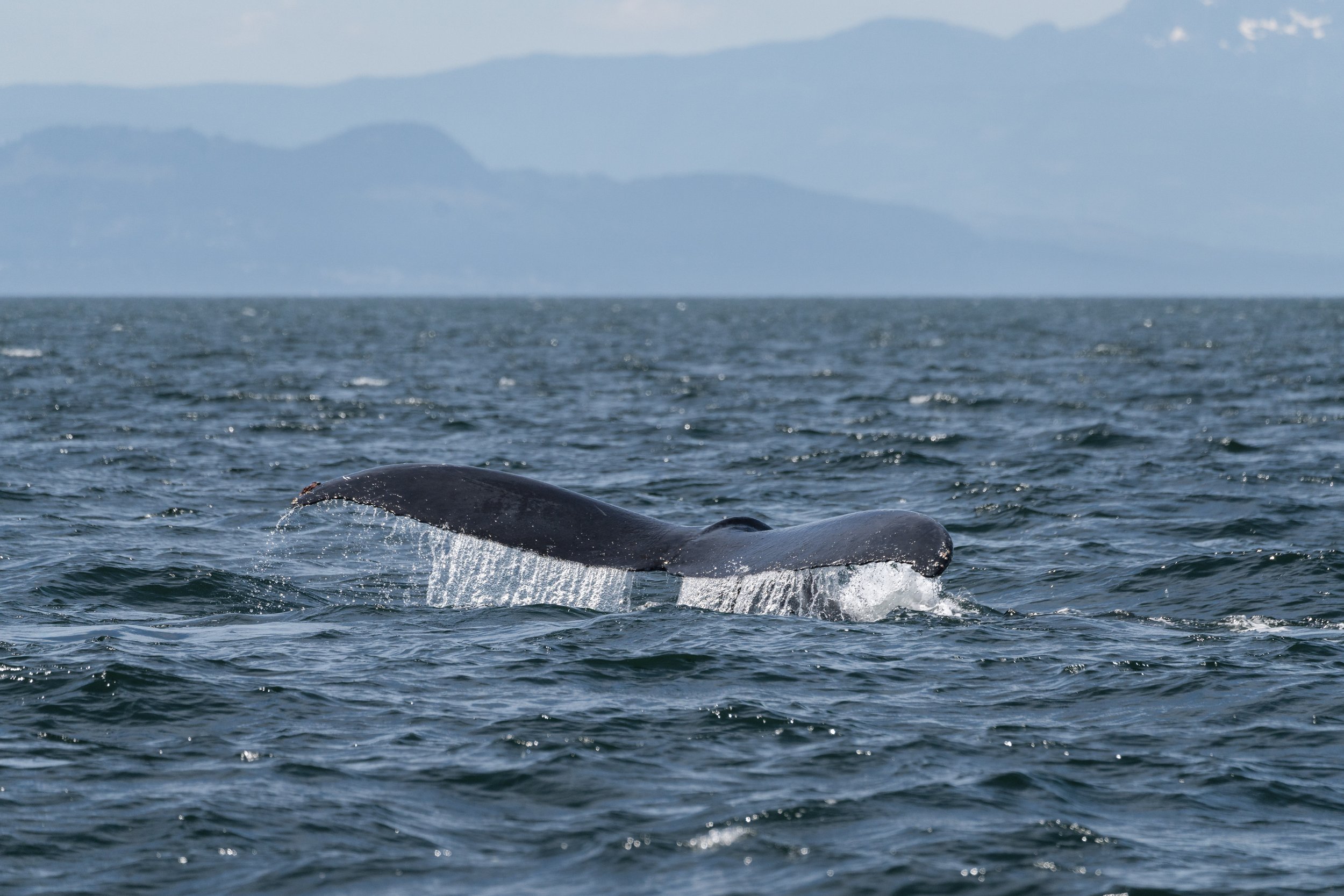
A lovely fluke waterfall from poptart as she dives. Photo by Val Watson.
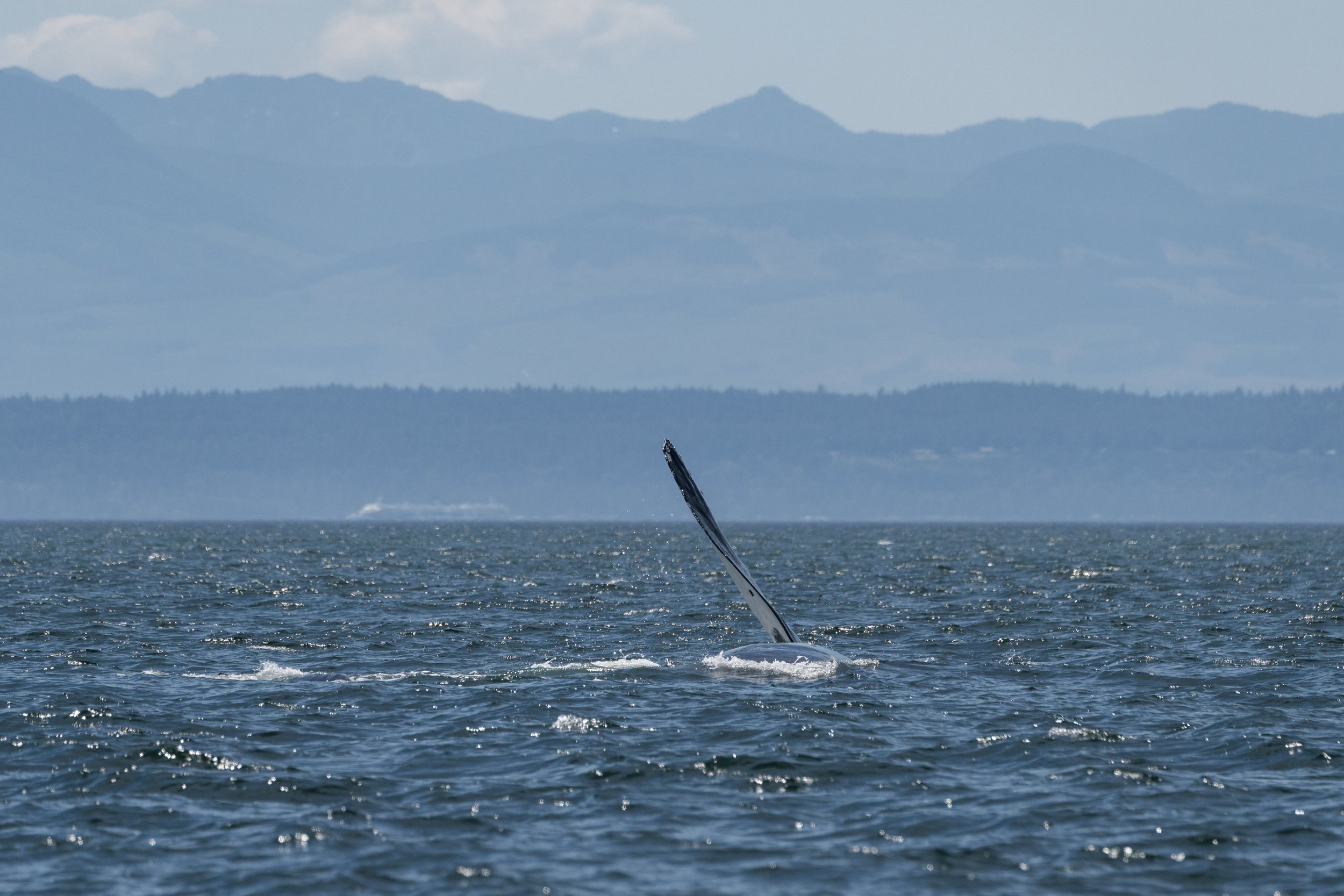
Poptart with her pectoral fin in the air. Photo by Val Watson.
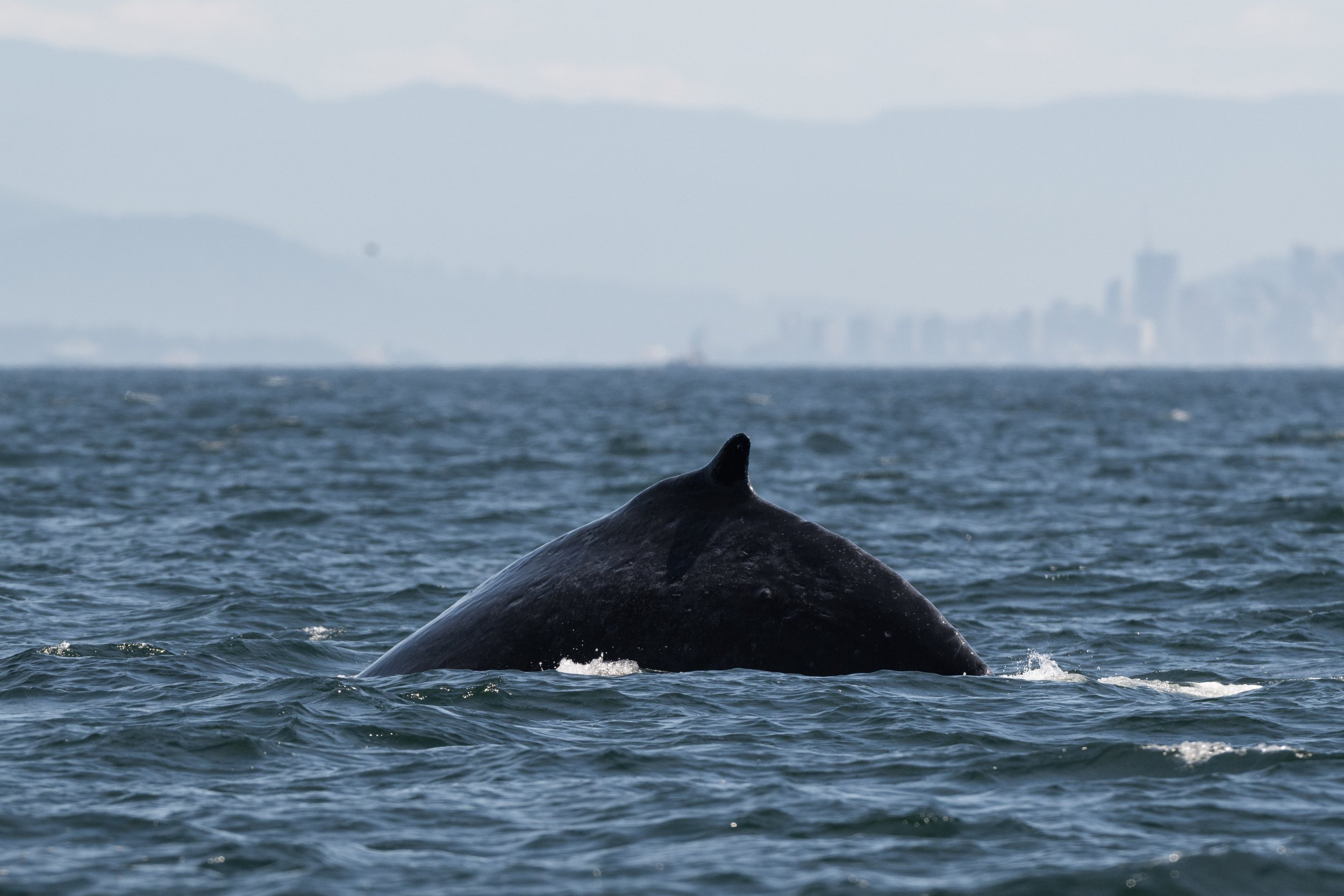
Kelpie going for a dive with Vancouver in behind him. Photo by Aly Kohlman.
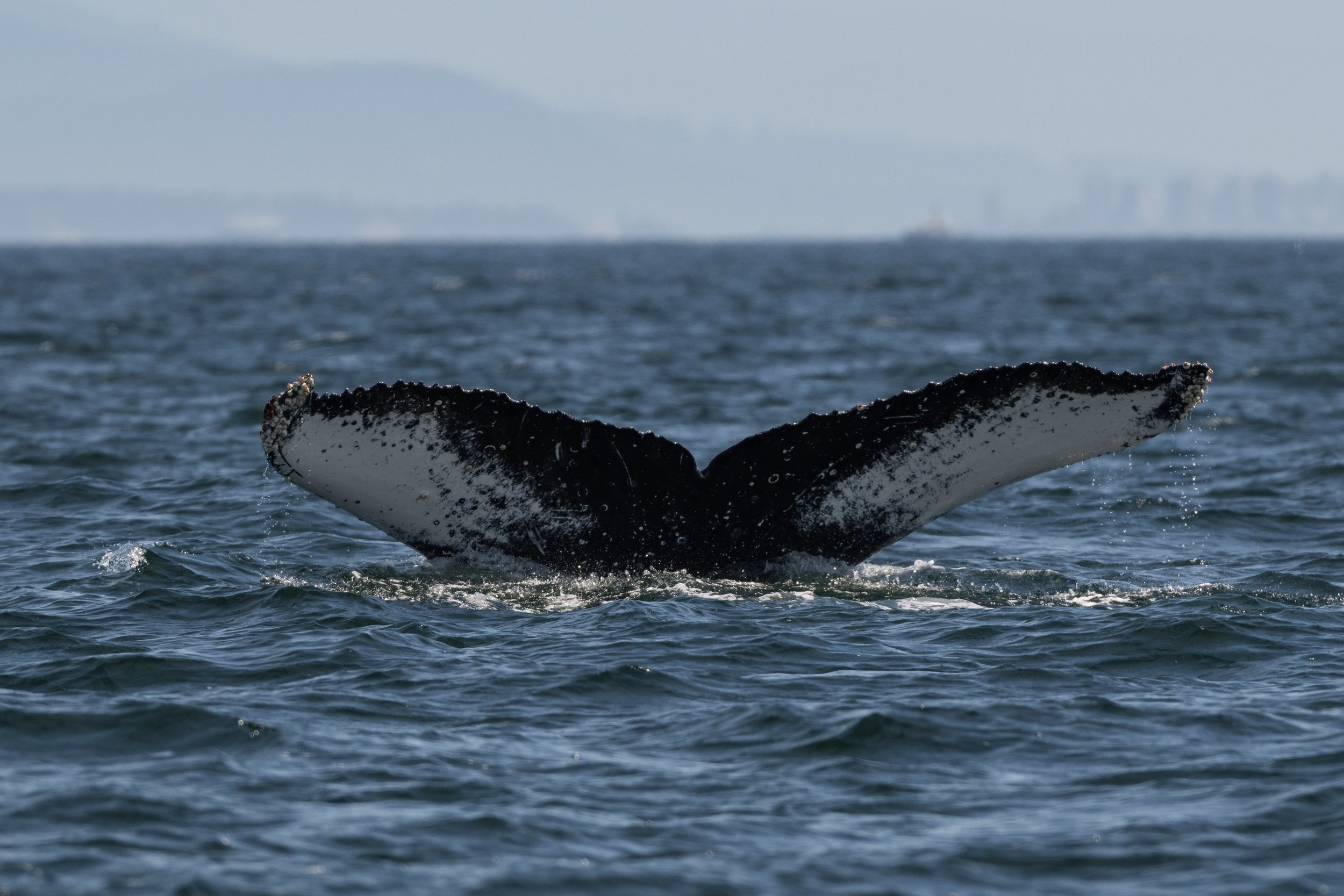
The striking underside of Kelpie’s tail. Photo by Aly Kohlman.
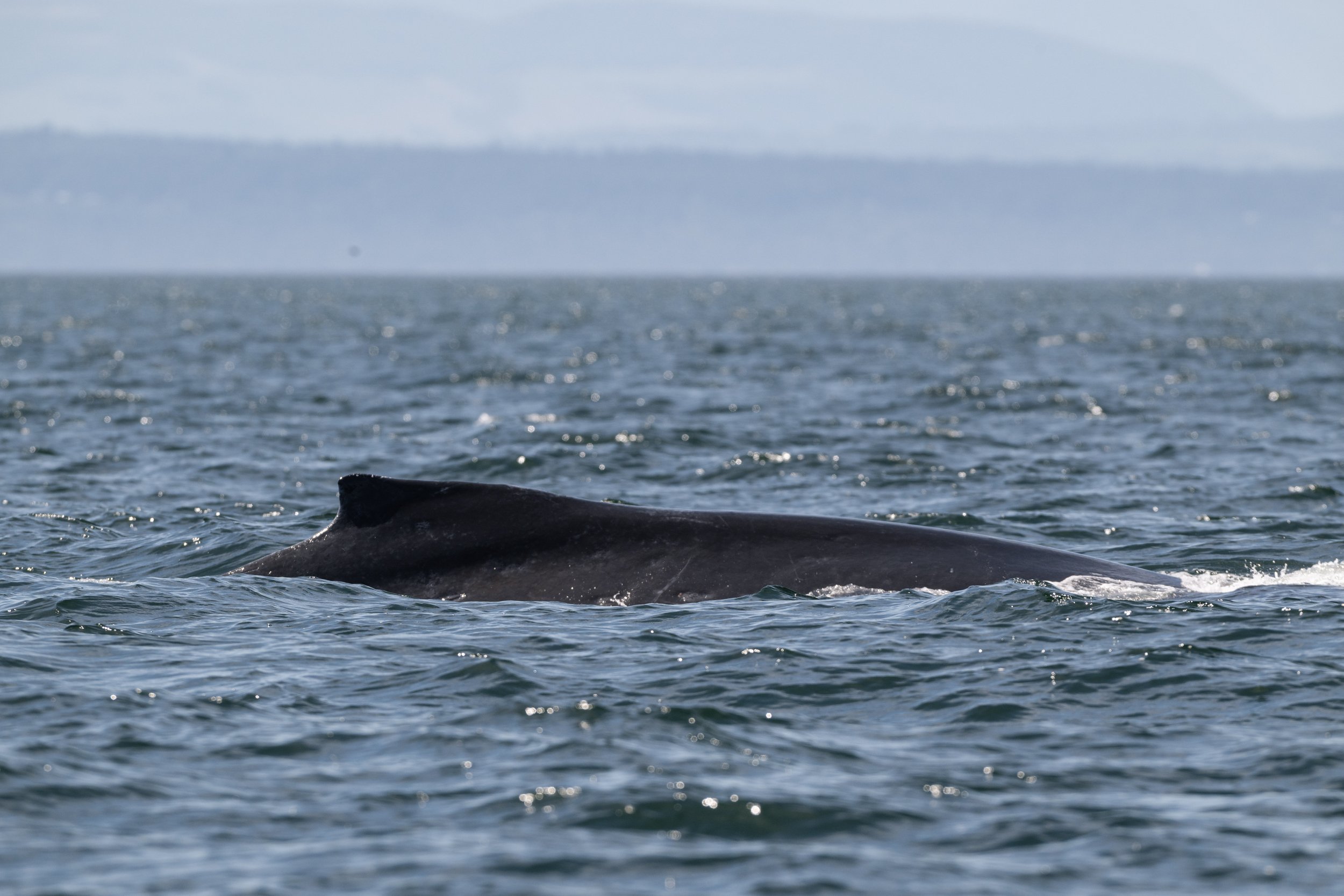
Poptarts Dorsal fin as she surfaces. Photo by Aly Kohlman.
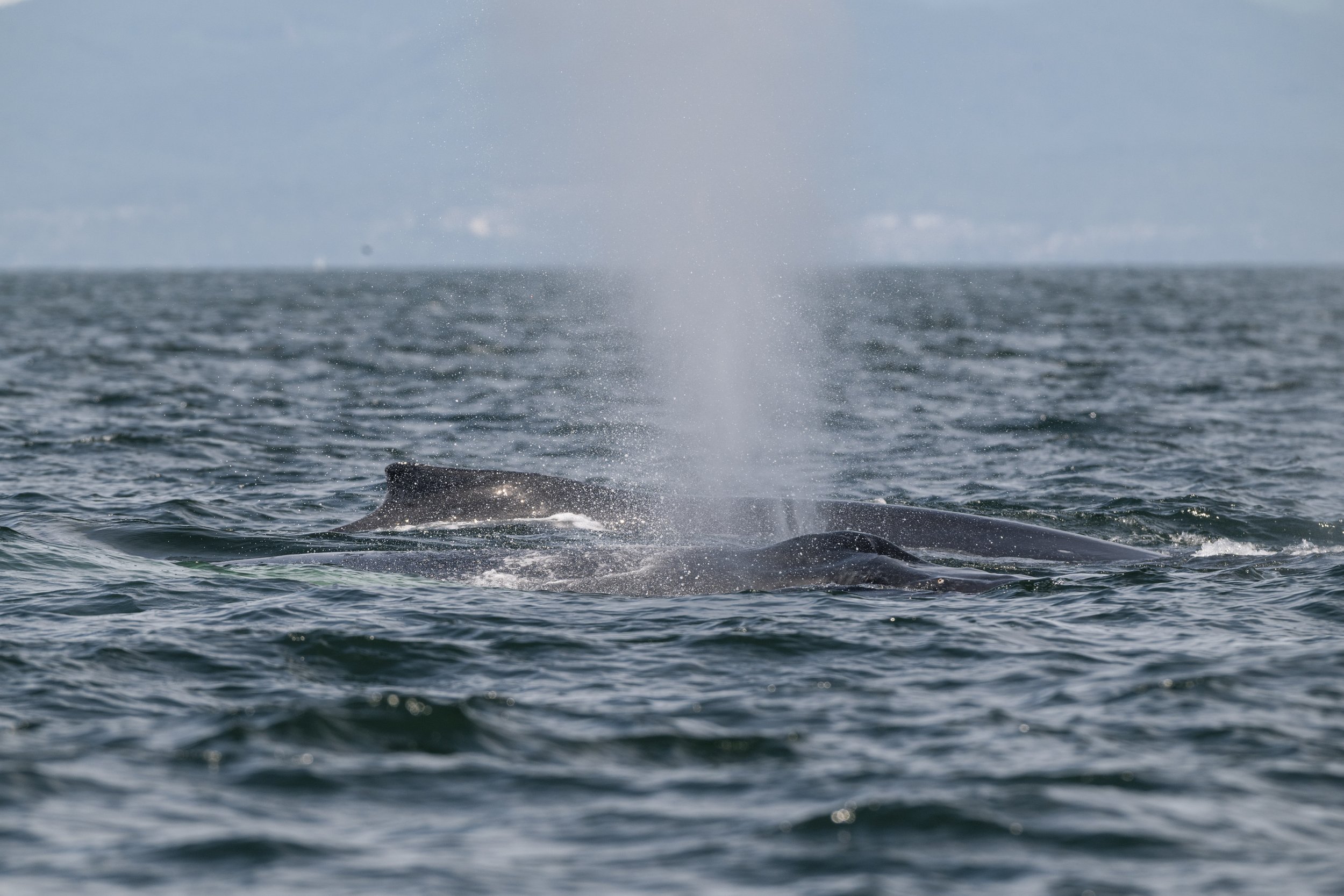
Kelpie exhaling just in front of Poptart. Photo by Aly Kohlman.
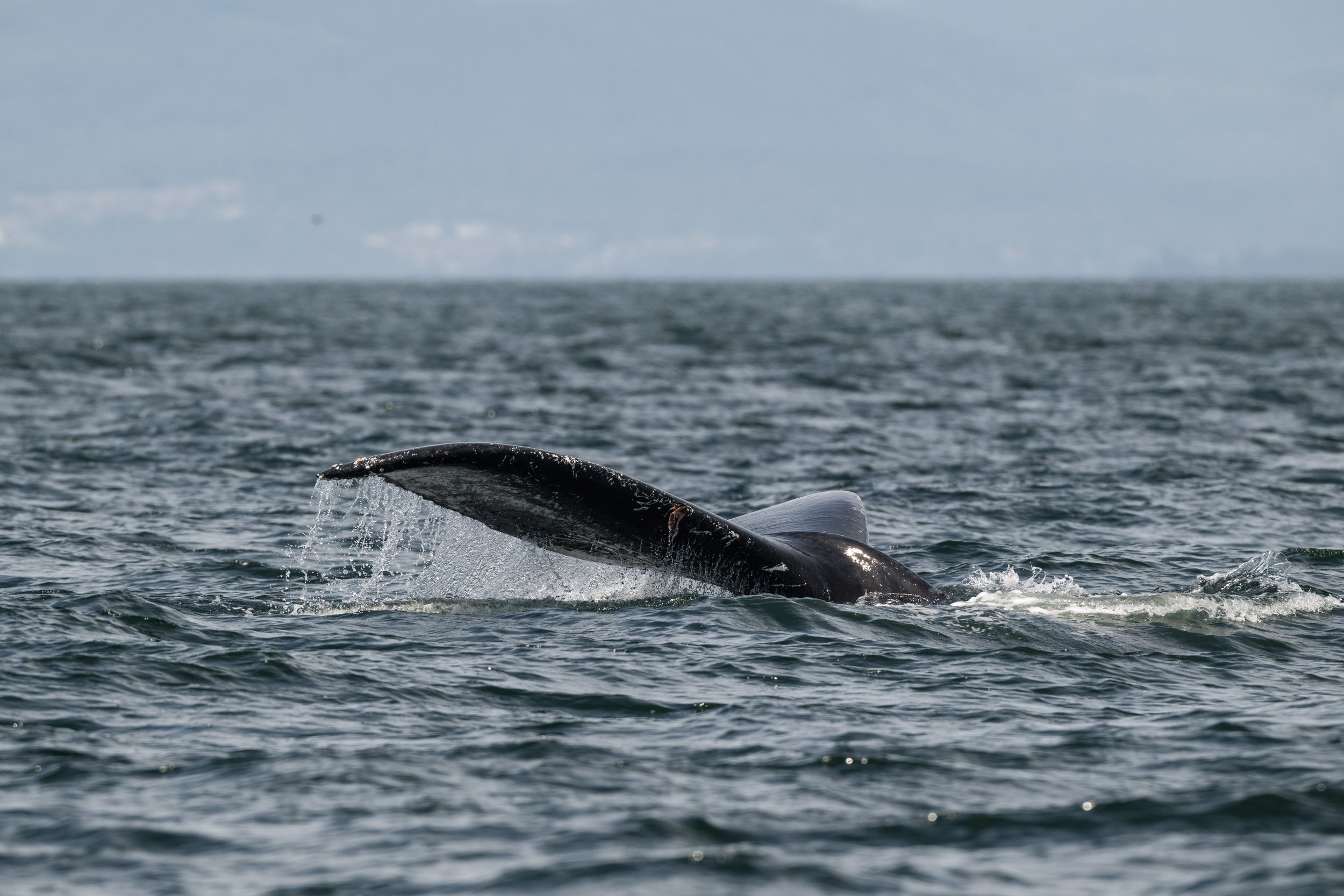
Poptart going for a dive. Photo by Aly Kohlman.
Halibut Bank ODAS Buoy
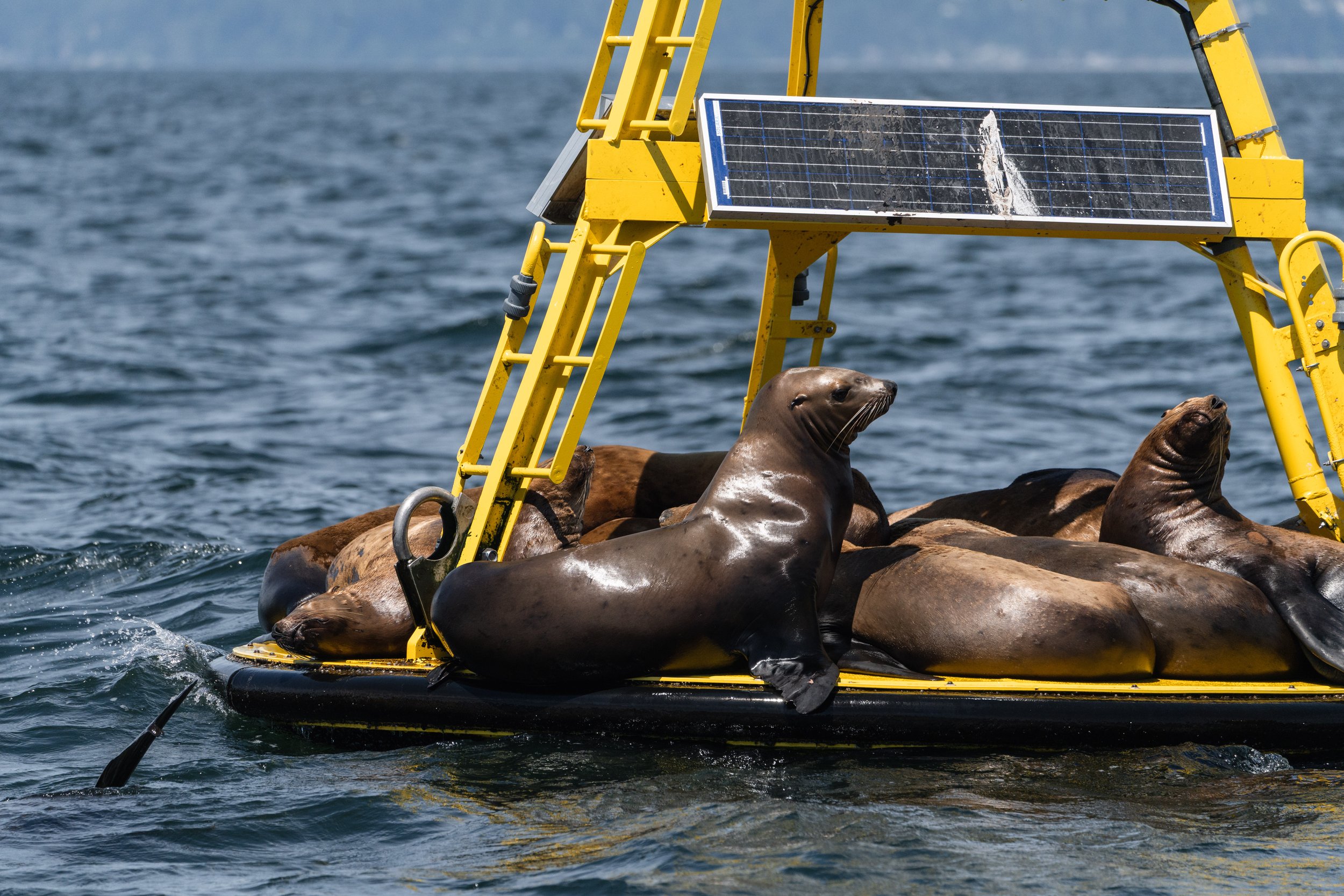
Steller Sea Lions on the ODAS (Ocean Data Acquisition System) buoy. Photo by Val Watson.
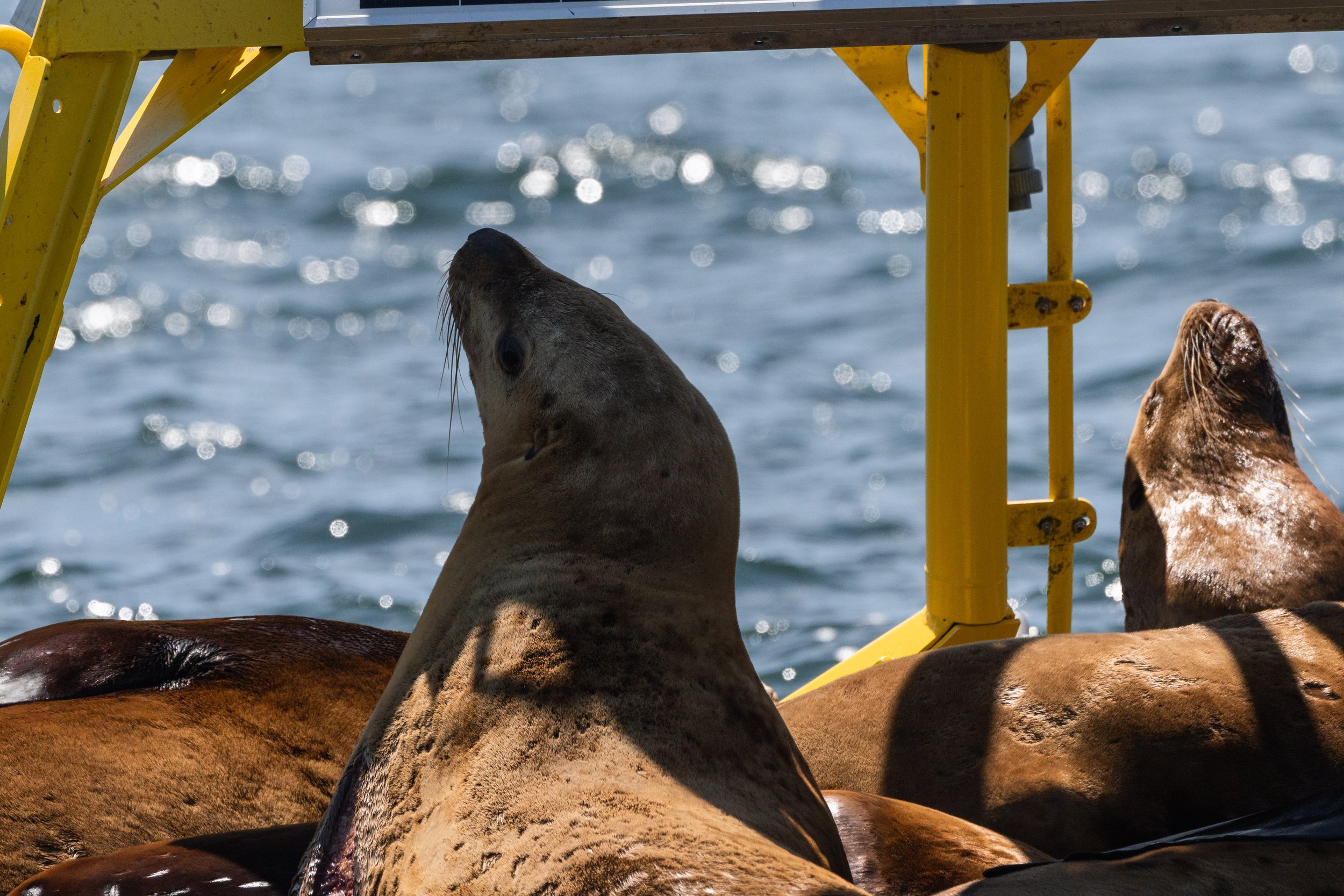
A close look at one of the Steller Sea Lions on the buoy. Photo by Val Watson.
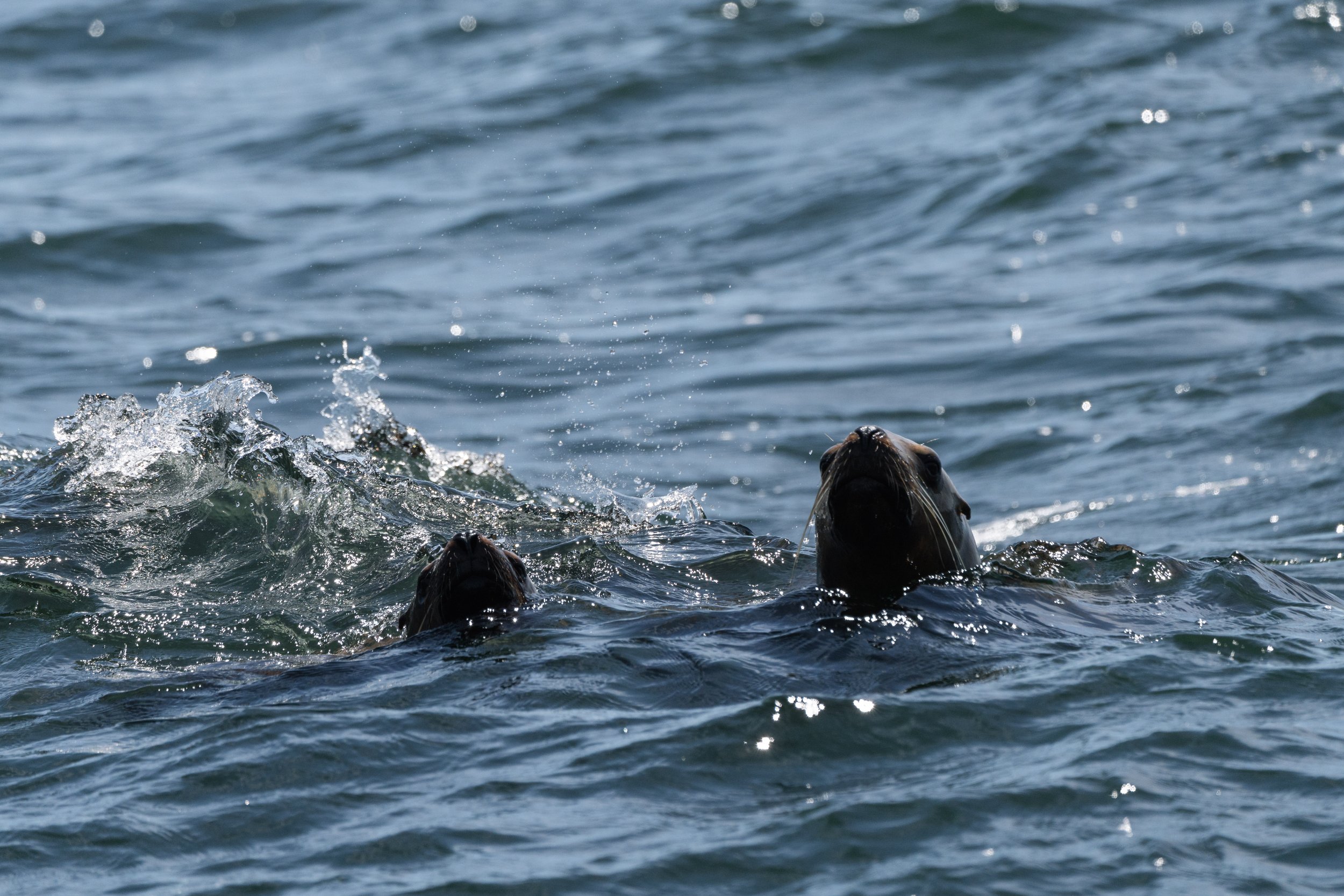
Some curious onlookers from the water. Photo by Val Watson.
Nanaimo Harbour
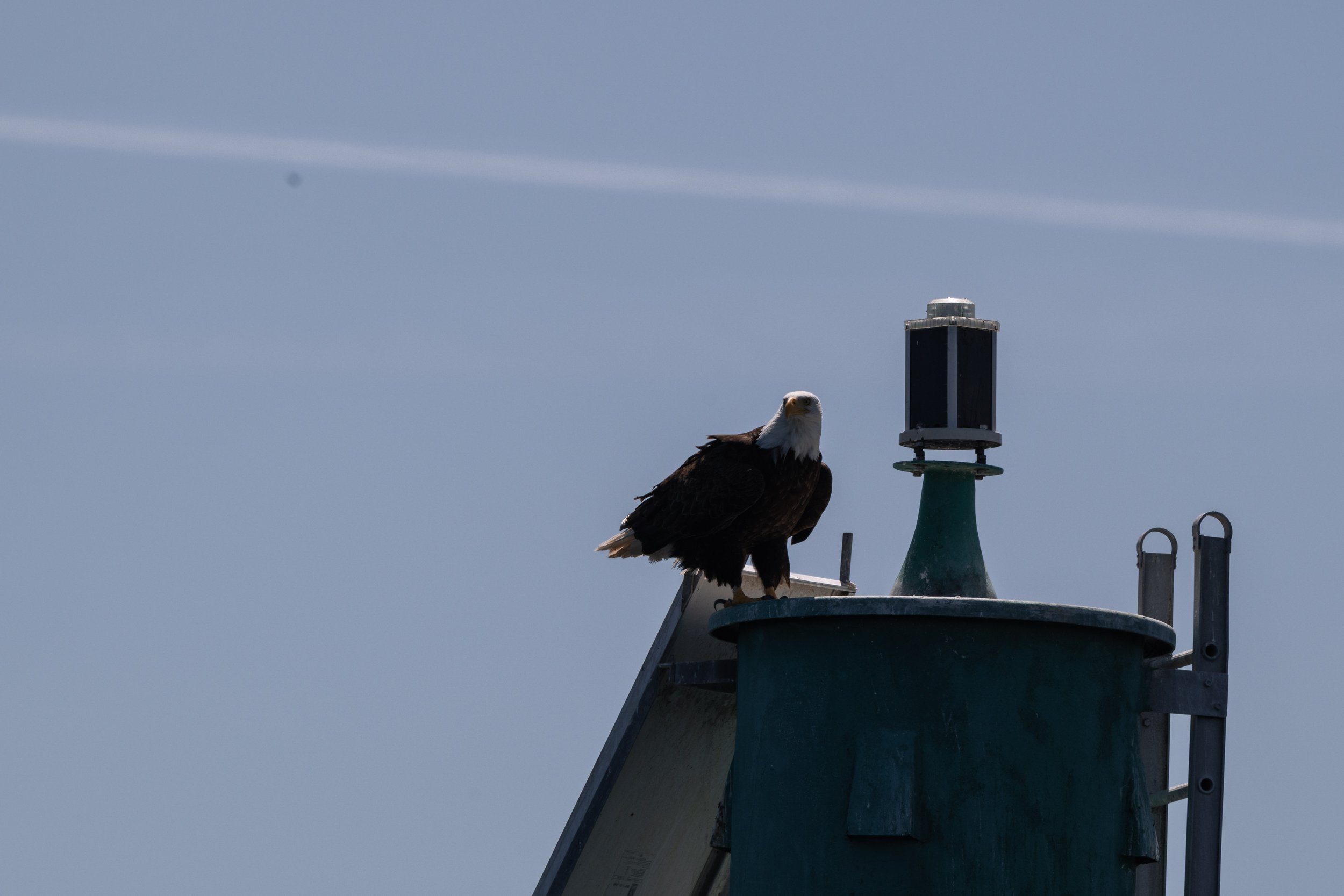
A Bald Eagle watching from the marker. Photo by Aly Kohlman.