
June 22, 2026, 3:30 PM - A Tale of 7 Whales
As we prepared for the afternoon trip, you could feel the excitement buzzing through the boats, Kula and Cascadia, as we set out from Nanaimo in search of whales. We had success finding humpback whales in the Strait of Georgia in the morning, so we decided to try our luck there for the afternoon and see if that luck continued. The two boats spread out, heading over the top of Gabriola Island with our eyes peeled for any signs of whales in the area.
There are a few things that might catch your eye and alert you to the presence of whales. For humpback whales, the blow is typically the most obvious, as it can reach heights of 3 to 4 meters. In the right lighting conditions, this can be spotted from miles away! You might also spot parts of the whales themselves, the tails being the most obvious for humpbacks, being 20 feet across. If there's an orca around, it might be the dorsal fin you spot first, with males' dorsal fins reaching up to 6 feet.
It was the blows we spotted today, and as we got closer, it became clear they were humpback whale blows! Each boat ended up spotting its own whales for the trip, with one of their sightings shared between them.
The guests onboard Kula found a pair of Humpbacks travelling together: Scuba (BCY1225) and Frankenstein (BCX1358). These two seemed to be feeding in the area, lifting their tails high out of the water, then dipping below the surface for a few minutes before returning to the surface to catch their breath and filter through the food they had just caught. When they exchange their breath, they do so at a much more efficient rate than we humans do, and at much larger volumes as well. While humans are breathing, about 10 to 15 percent of our ~6-litre lung capacity is exchanged, while whales exchange nearly 90% of their 5,000 litres! This exchange, in addition to much more efficient oxygen uptake, allows these whales to hold their breath for long periods while they’re below the surface, with dive times recorded at over 45 minutes. We don’t often see dives that long, though; we typically have dives between 5 and 10 minutes.
While Kula guests were enjoying their time with Scuba and Frankenstein, the open-boat guests were enjoying an encounter of their own with a different humpback whale: X_pialidocious (BCY1540)! X_pialidocious also seemed to be feeding in the area, but with a bit of flair when they dove. Each time they lifted their tail to propel themselves down for a feeding dive, they flicked it backwards, sending a cascade of water into the air! It added an extra layer of excitement to the encounter. While watching X_pialidocious, they noticed more blows in the distance. Naturalist Vanessa pointed her camera in that direction, snapping more photos, and upon review on the bigger screen in the office, we realized there were two more whales there than we had noticed on the water: Sage (BCX2073) and a brand-new calf! It was a pleasant surprise upon review of the photos.
Finally, the boats came together for one whale sighting of the day: Coyote (BCX2484)! Coyote was playful at the surface when the open boat first spotted him in the distance, with big splashes initially drawing their attention, but as they approached, he seemed to run out of energy and began to feed again. Coyote was taking advantage of the increased efficiency of oxygen exchange and spending around 15-20 minutes below the surface. Neither boat stuck around much longer after this change; the semi-covered boat headed to the White Islets to see some other wildlife, while the open boat had one more humpback encounter: Forge (BCX2494). Forge was also feeding in the area, but we enjoyed seeing them a few times before, also making the journey to the White Islets to view the wildlife there.
The White Islets are home to a variety of wildlife, from the boisterous Steller Sea Lions that lounge in the sun-warmed rocks, to the gulls that nest in the cracks of the rocks, to the various other seabirds that spot the shoreline today. Its rich biodiversity is partly due to its location in the Salish Sea, with the waters surrounding the islands refreshed daily by ocean tides, and to the influx of nutrients from rivers that drain into the area. This increases the level of productivity available here, creating a strong base for the food chain that supports all the wildlife we saw today. What stole the show was the Steller Sea Lions themselves, with their massive size and loud arguments. They show very obvious sexual dimorphism, with the males weighing up to 2,500 pounds and females only reaching around 800 pounds. This size difference, along with the thick fur and blubber that forms around the male's neck, makes them very easy to tell apart.
While watching the sea lions, we noticed that one of them was sporting a brand on its side with a number, indicating that it is part of the population-tracking program in the Pacific Northwest. We checked the available records to see if we could match this individual, and found that this female was branded back in 2009 at a major haul-out site in Oregon called Rogue Reef. They were young when they were branded, which likely means this sea lion is at least 17 years old. Studies have shown that Sea Lions typically return to the same rookeries where they were born to breed, so she will likely be leaving us soon to head south, back to Rouge Reef. Given that the Salish Sea is known to only have overwintering haulouts, we don’t expect to be seeing these adults here for much longer before they travel to their rookeries to breed,
After the time at White Islets, both boats pointed their bows to Nanaimo, with one final stop in store for the semi-covered boat: the Gabriola Bluffs! This impressive sandstone cliff system hosts a wide variety of bird life, from the black cormorants nesting on the cliff face to the cliff swallows flying in to tend their nests. Although it was a quick stop, it was a nice way to end the tour!
Both boats returned to Nanaimo, the sun dropping low as the tour concluded. Throughout the tour, the onboard Marine Naturalists, Val Watson and Vanessa Vereschahen, captured photos for you to enjoy, which are included below!
Scuba & Frankenstein
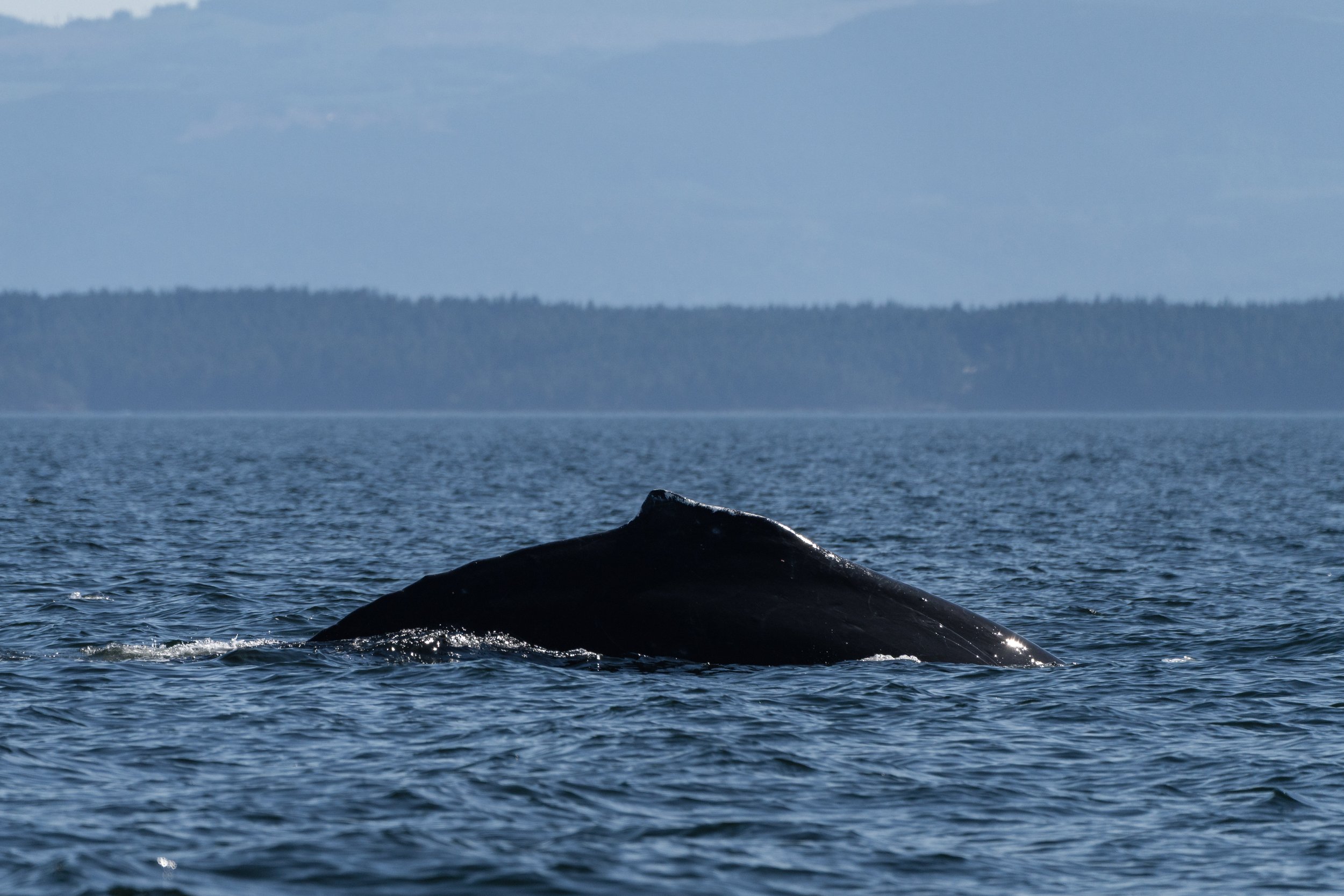
Frankenstein arching to go for a dive. Photo by Val Watson.
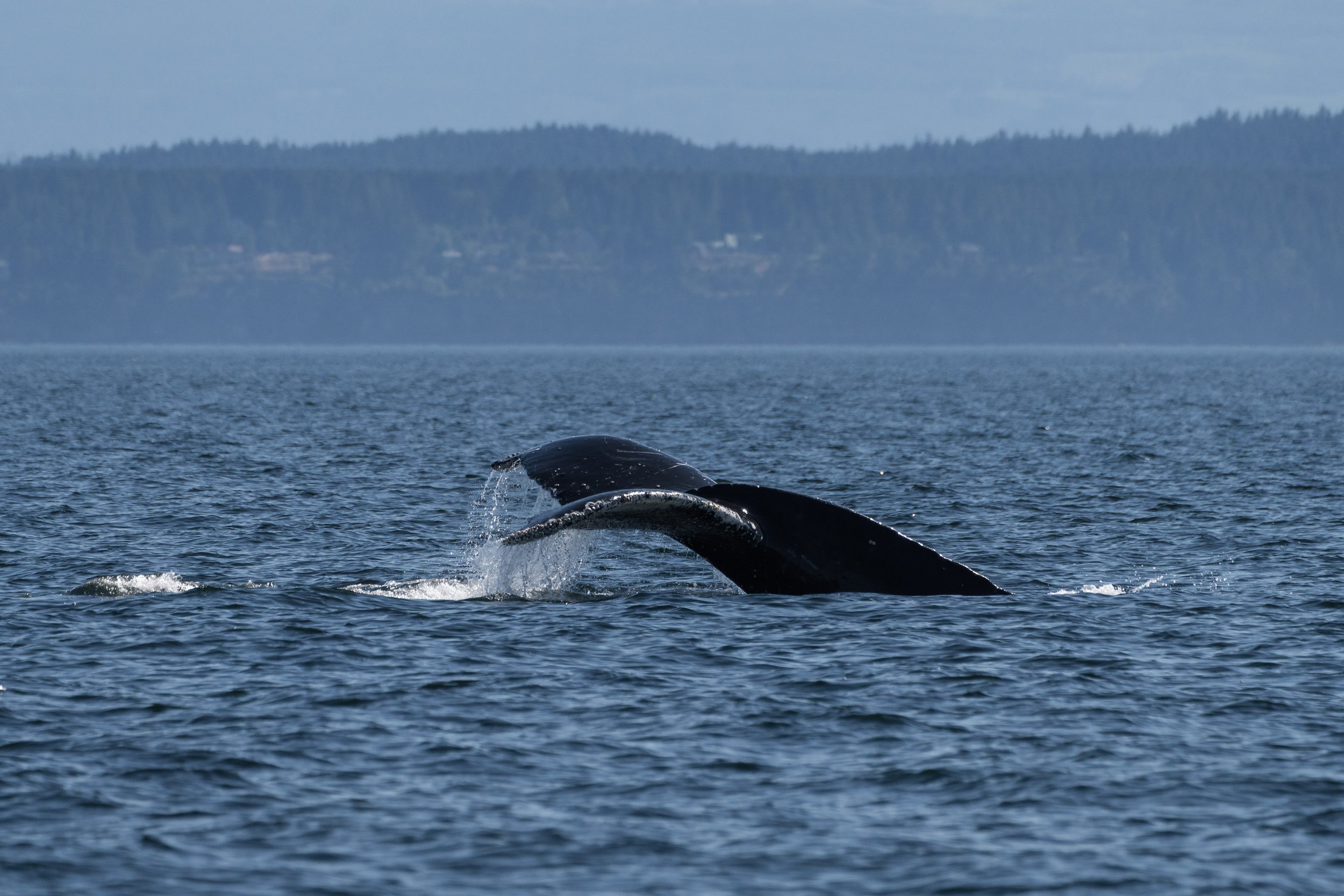
Frankenstein going for a dive. Photo by Val Watson.
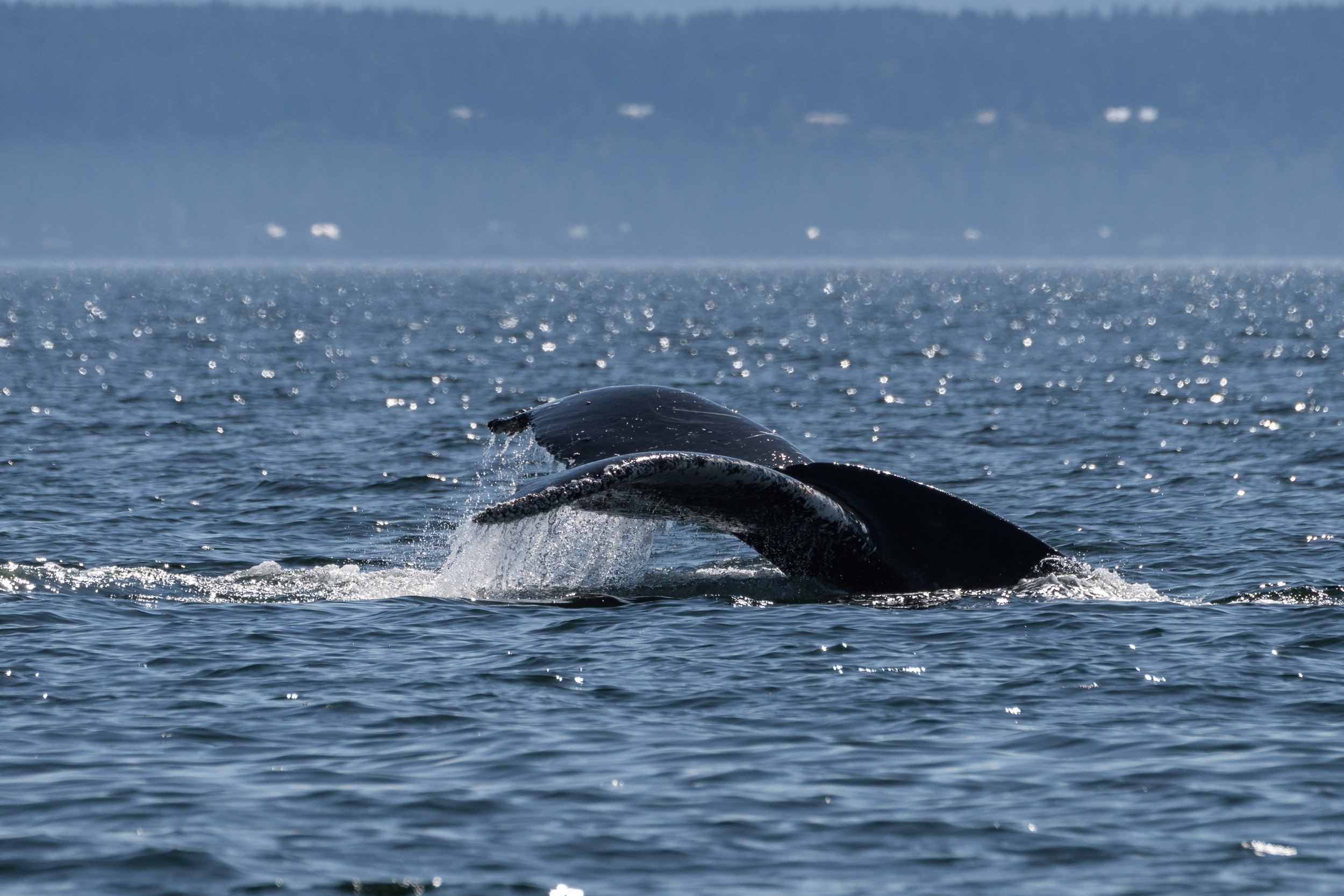
A fluke waterfall from Frankenstein. Photo by Val Watson.
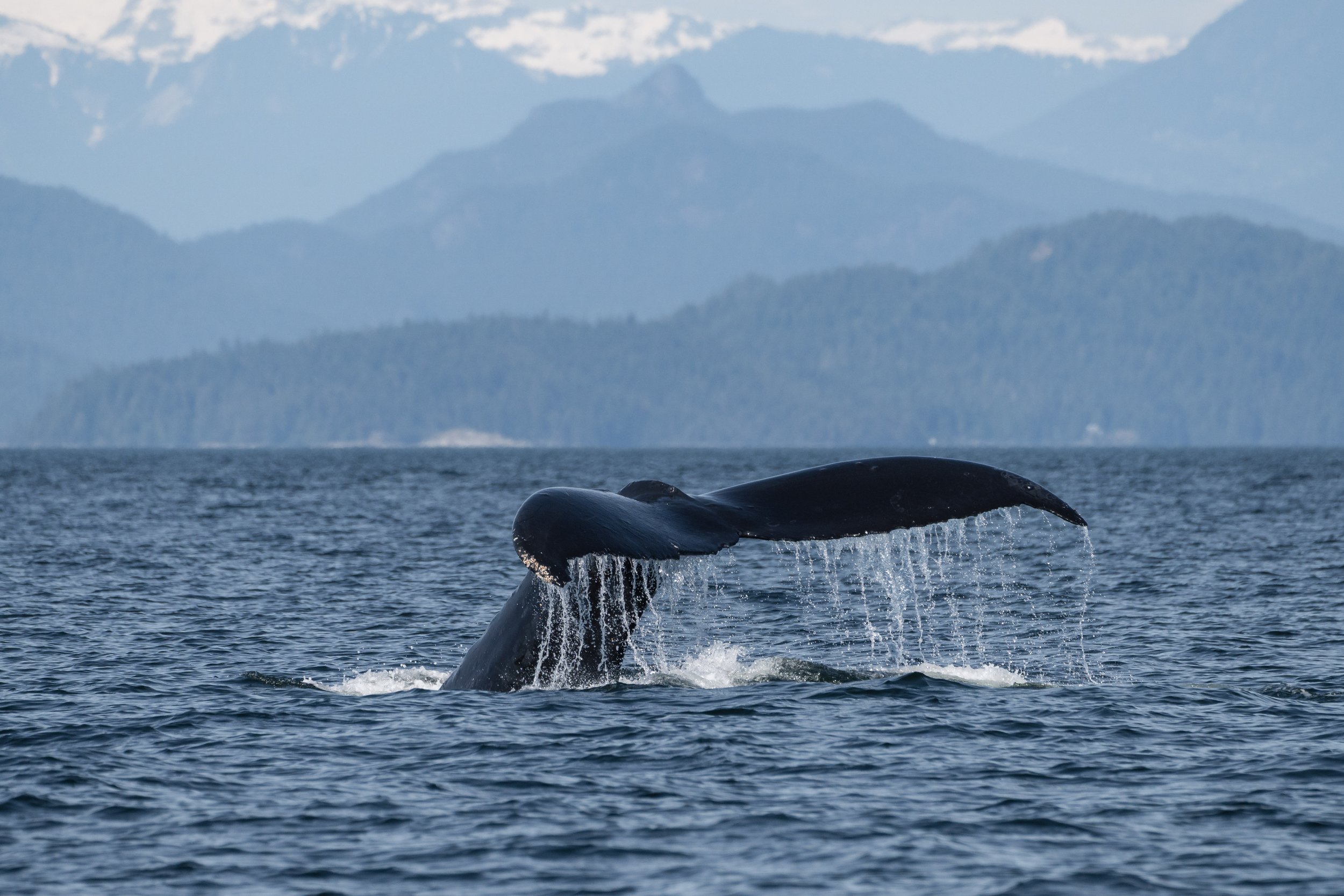
A beautiful waterfall from Scuba, lifting their tail high to dive. Photo by Val Watson.
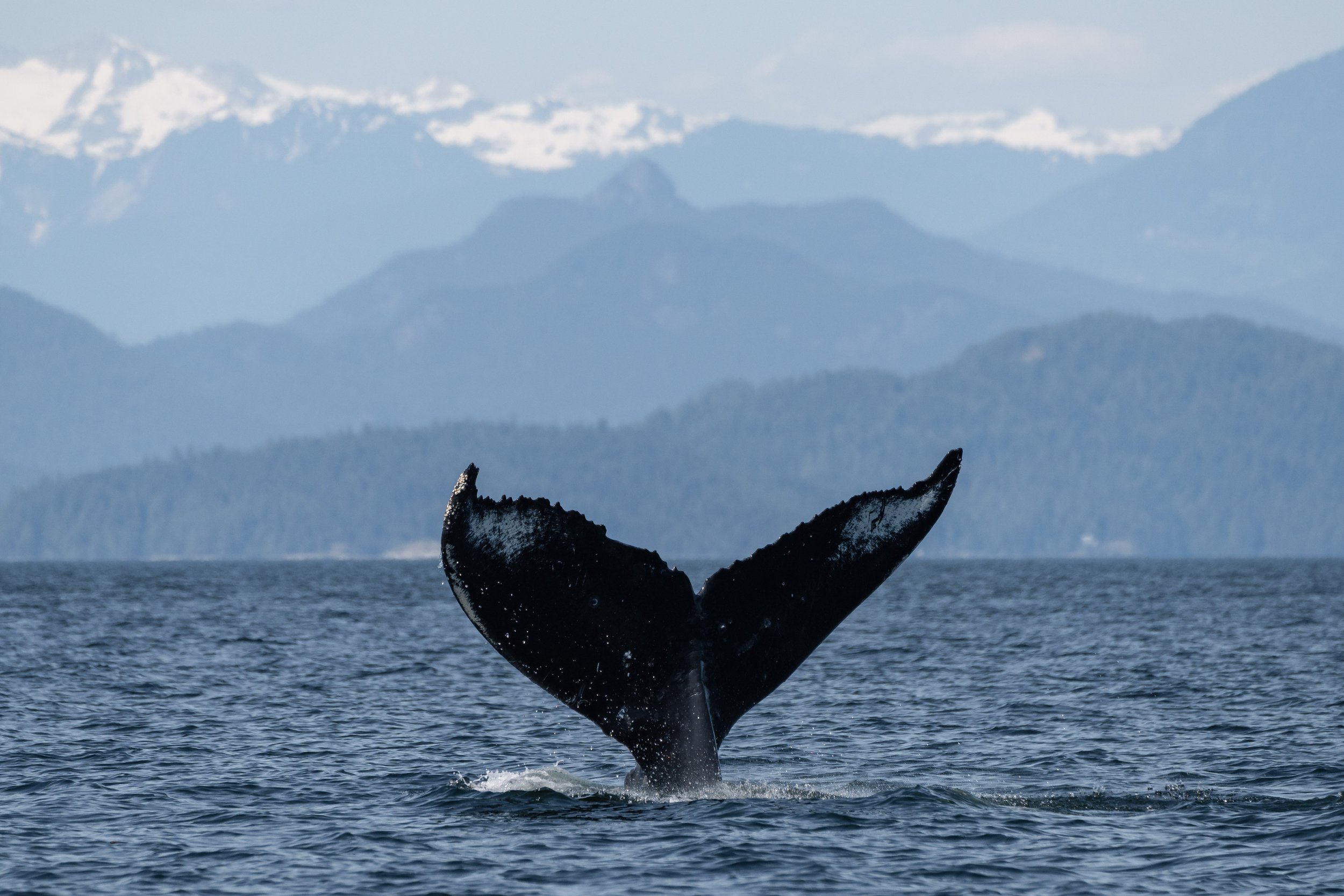
The underside of Scuba’s tail. Can you spot the scuba diver marker on the right side that the name comes from? Photo by Val Watson.
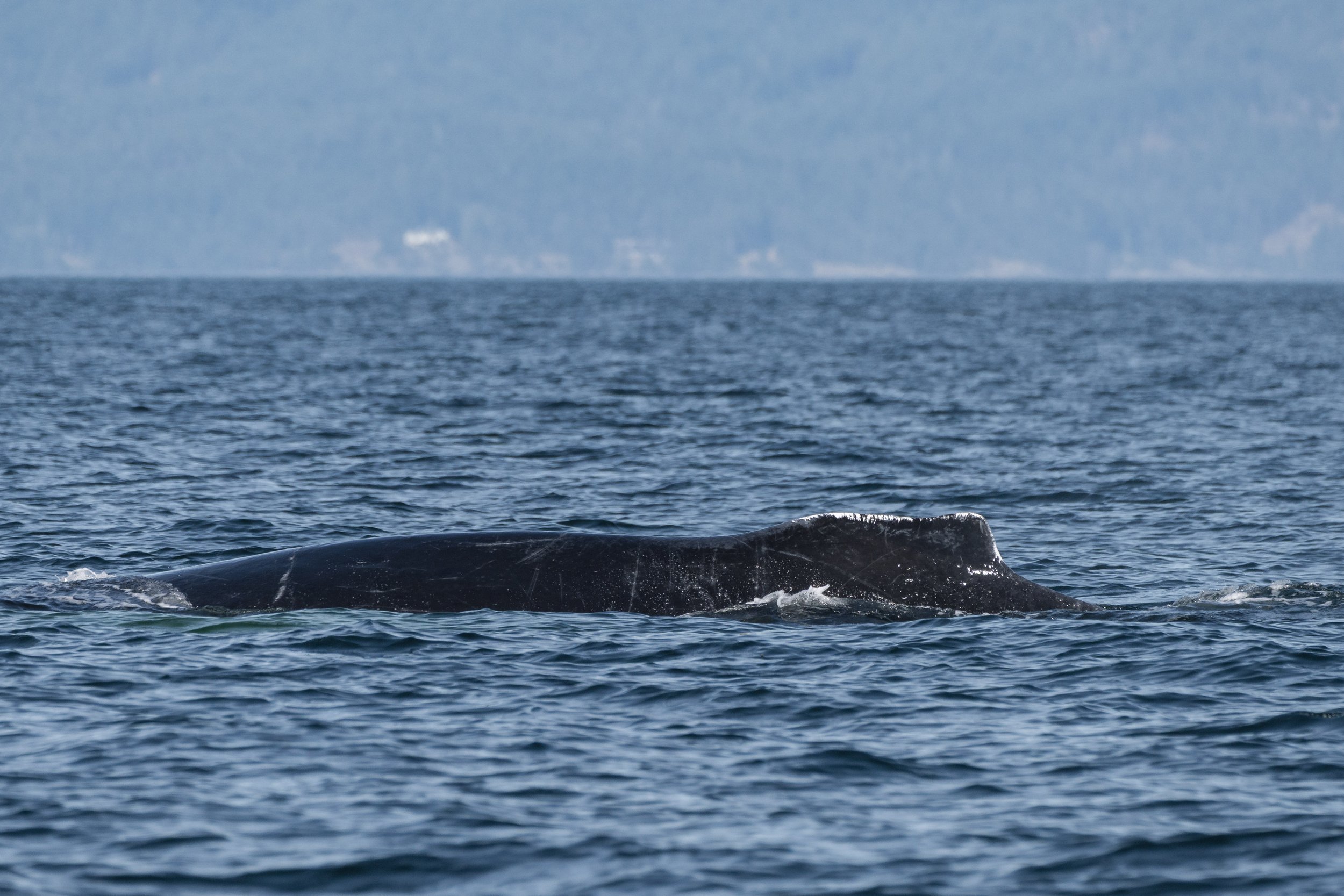
Frankenstein has a very distinctly scarred dorsal fin. Photo by Val Watson.
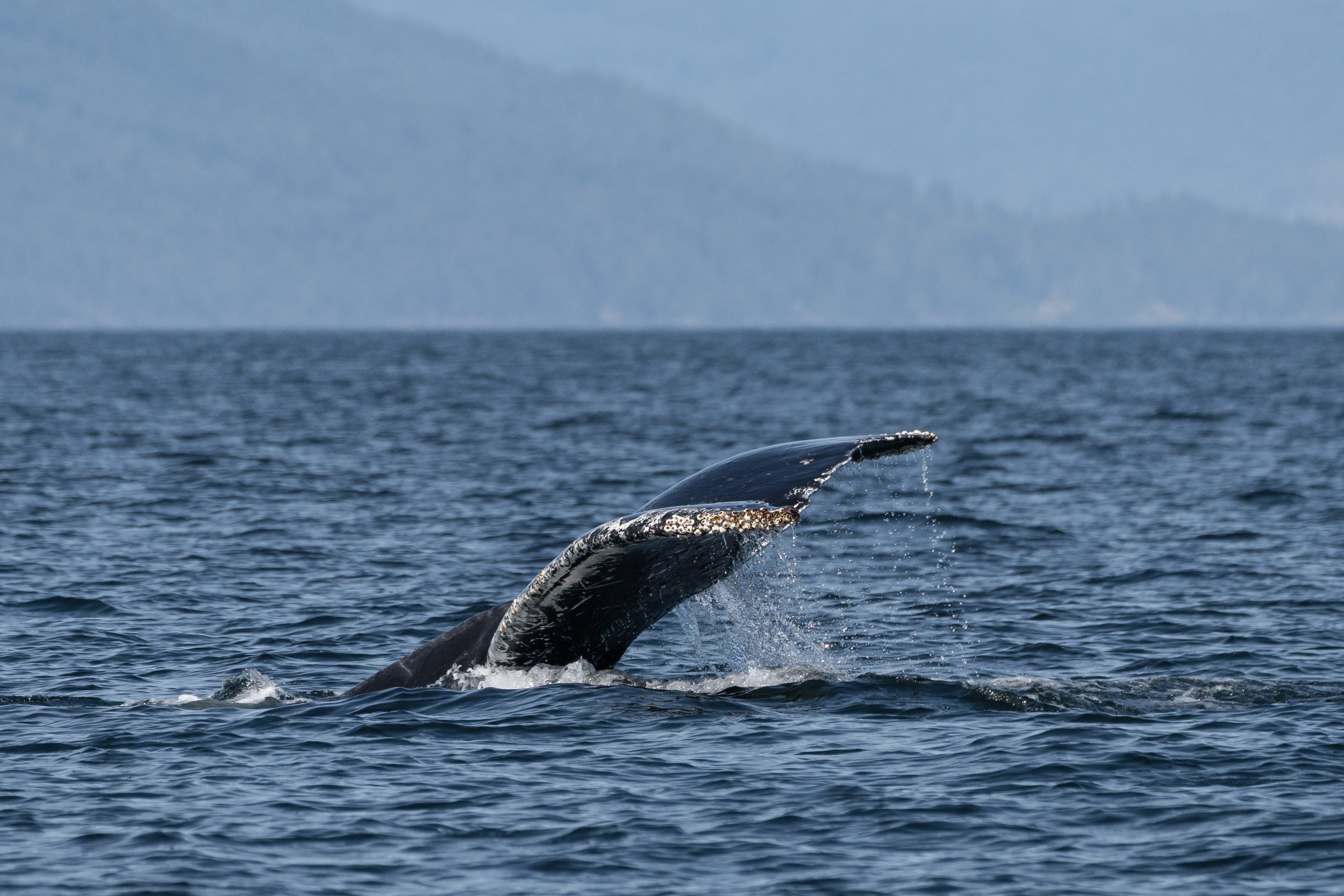
Frankenstein going for a dive. Photo by Val Watson.
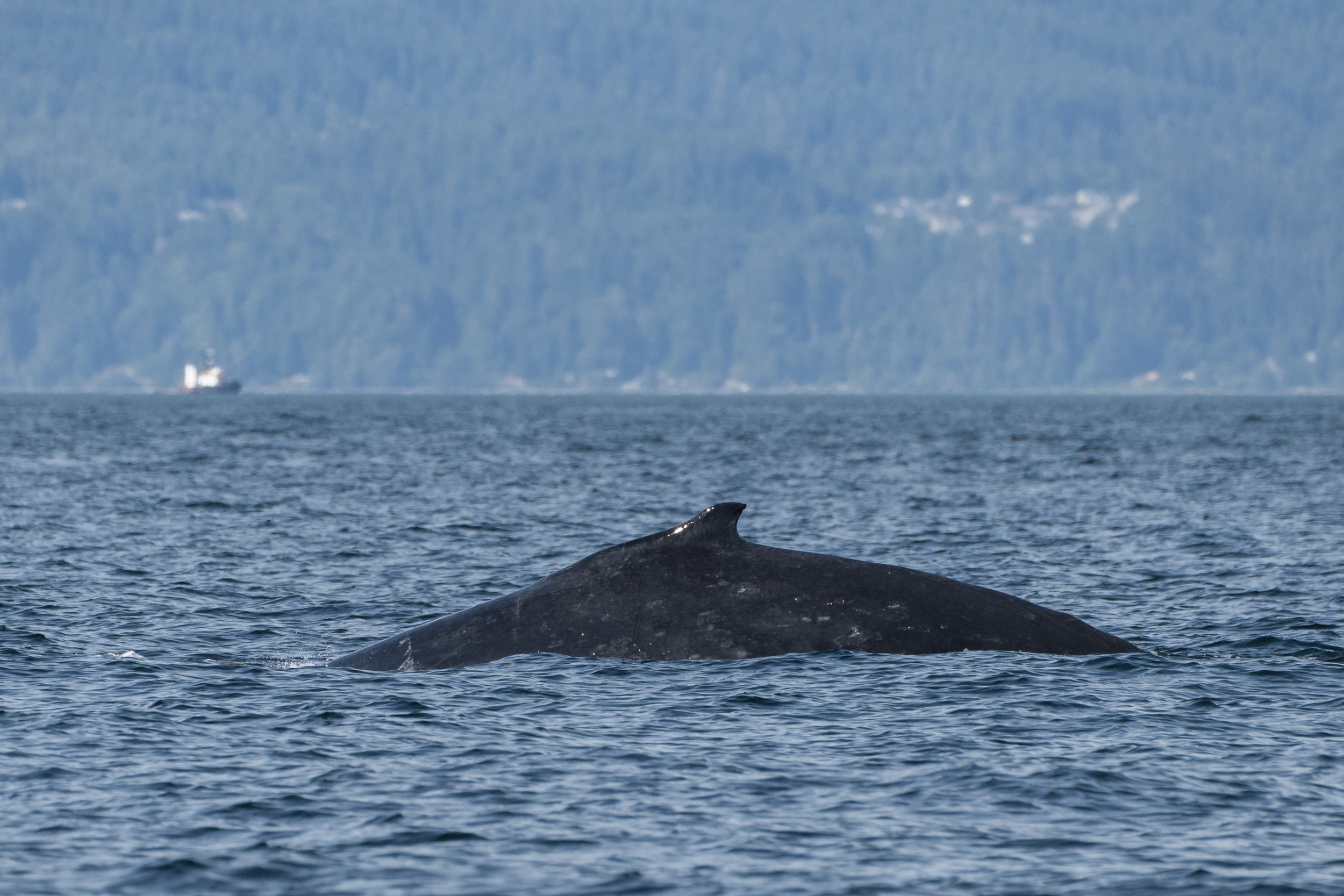
Scuba has a very distinct dorsal fin as well. Photo by Val Watson.
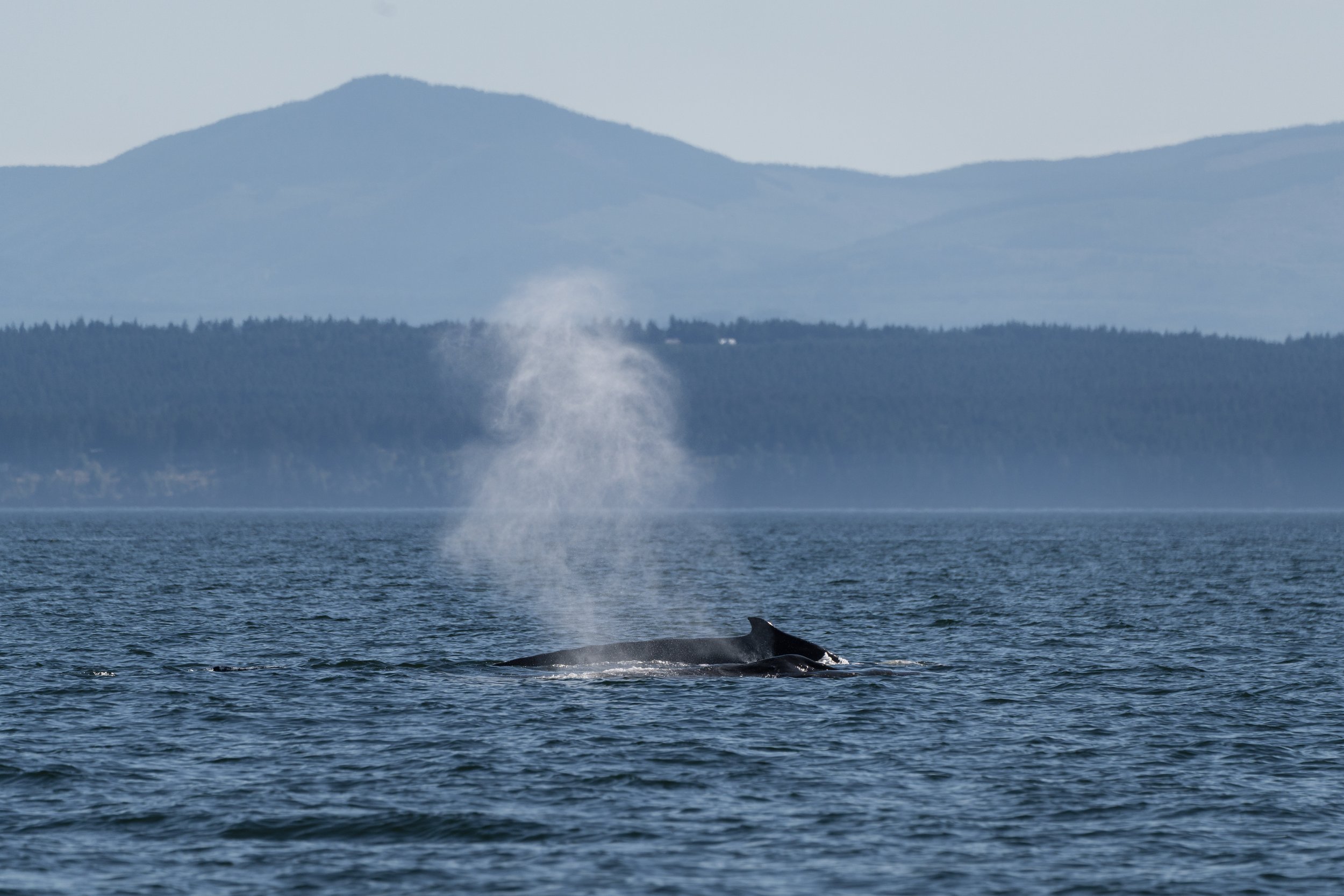
Frankenstein exhaling at the surface while Scuba surfaces behind him. Photo by Val Watson.
X_pialidocious & Sage and calf
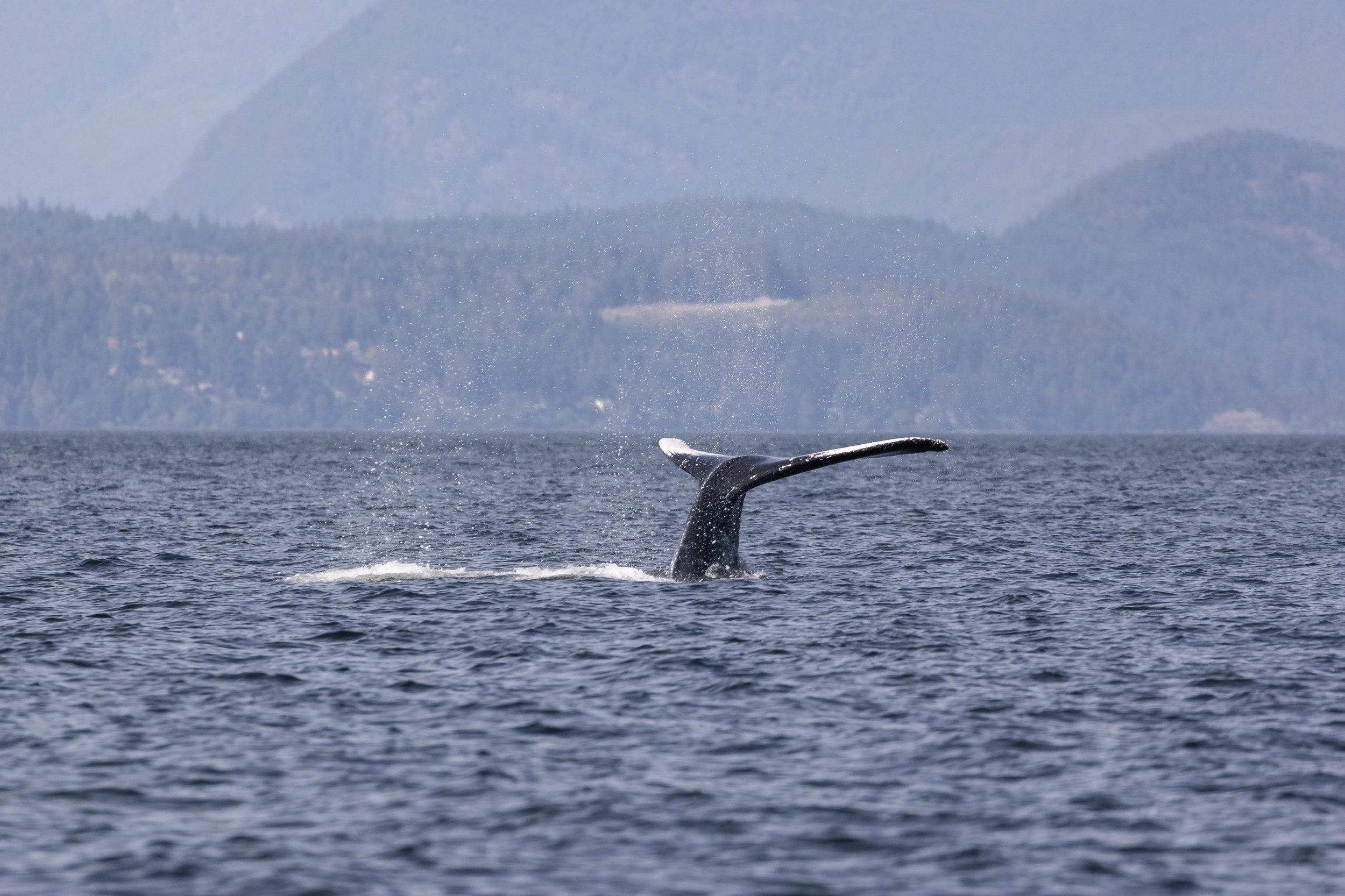
X_pialidocious flicking their tail at the surface. Photo by Vanessa Vereschahen.
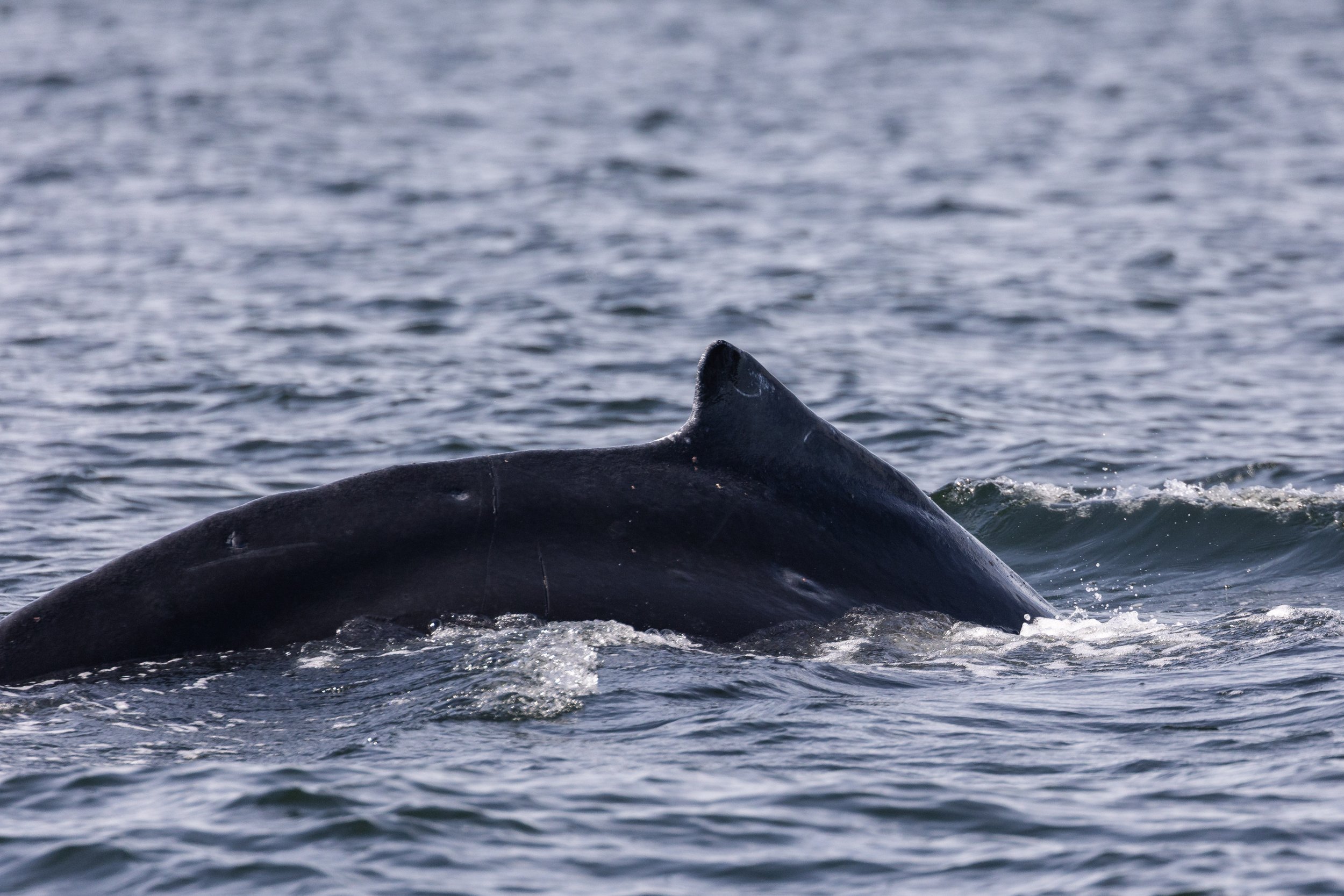
X_pialidocious going for a dive. Photo by Vanessa Vereschahen.
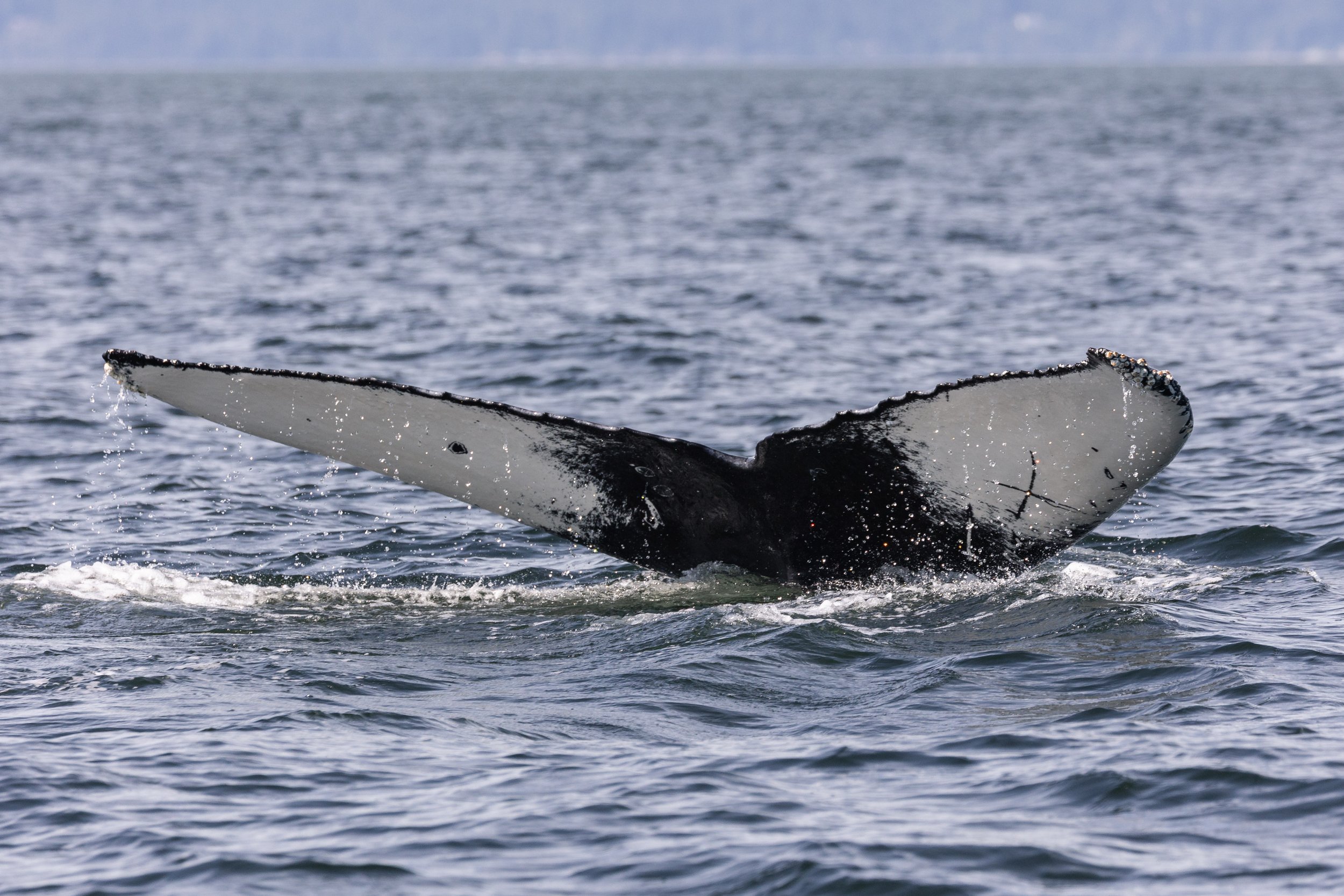
The lovely underside of X_pialidocious’ tail. Photo by Vanessa Vereschahen.
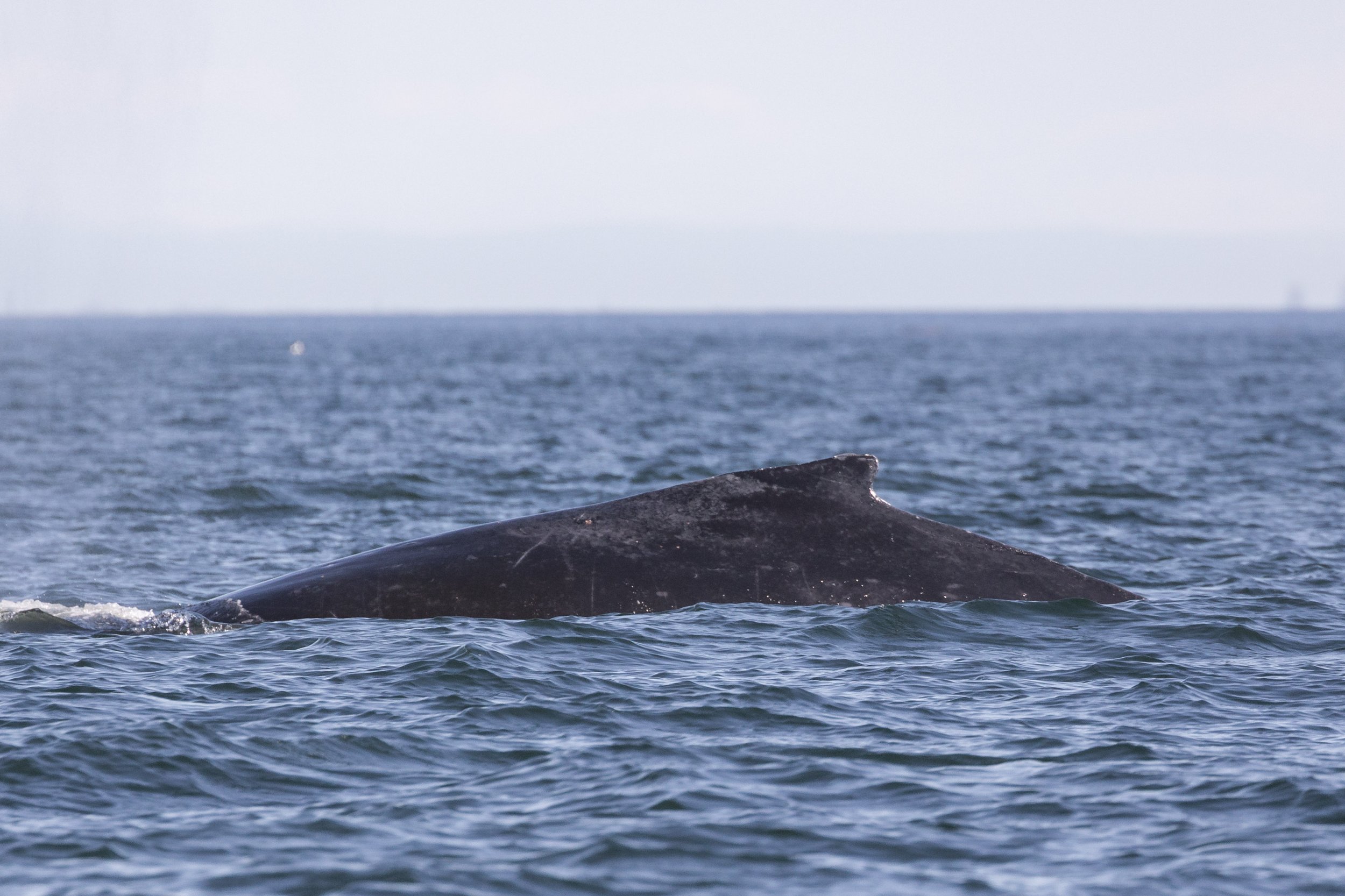
X_pialidocious’ dorsal fin as they surface. Photo by Vanessa Vereschahen.
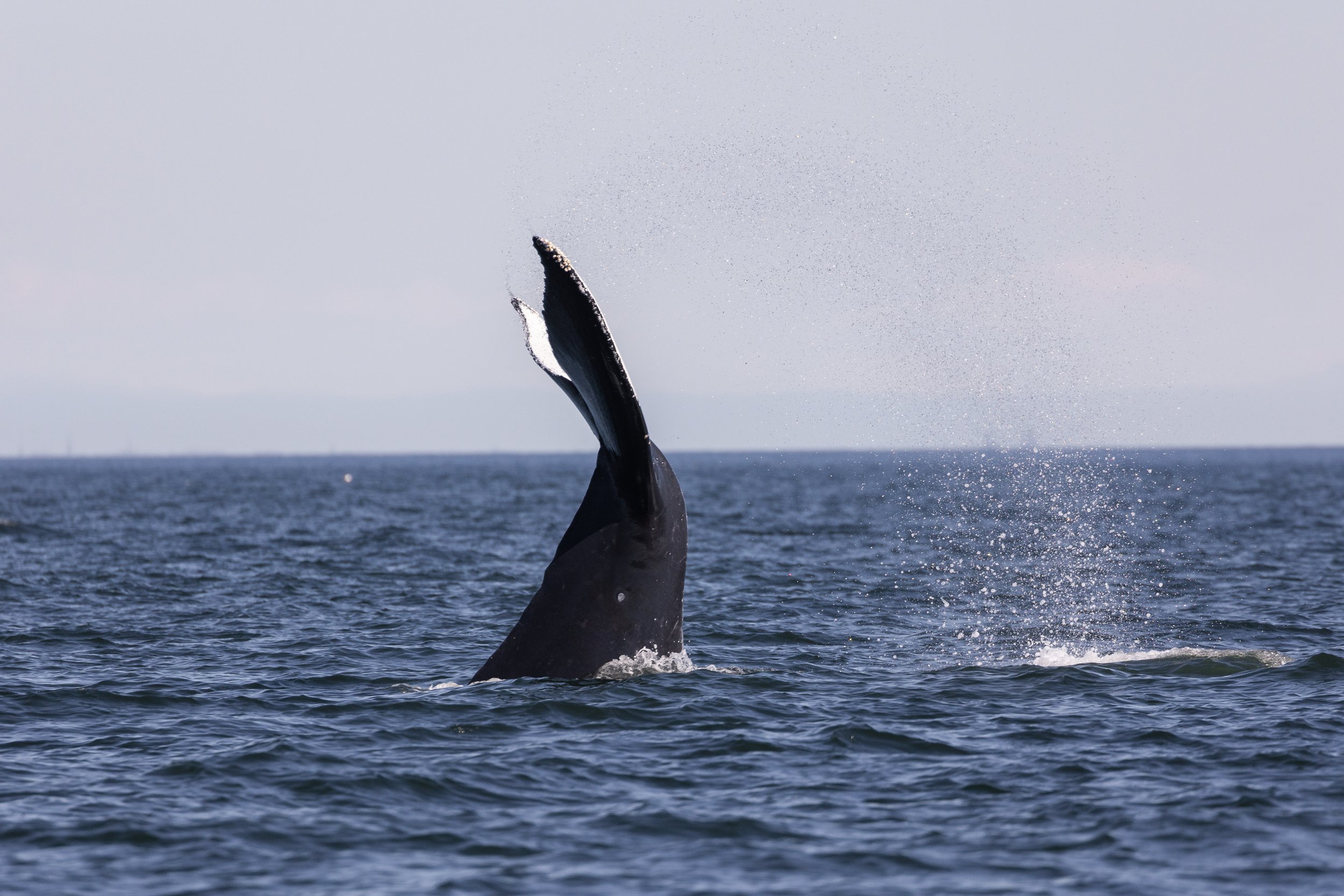
A big tail flick from X_pialidocious. Photo by Vanessa Vereschahen.
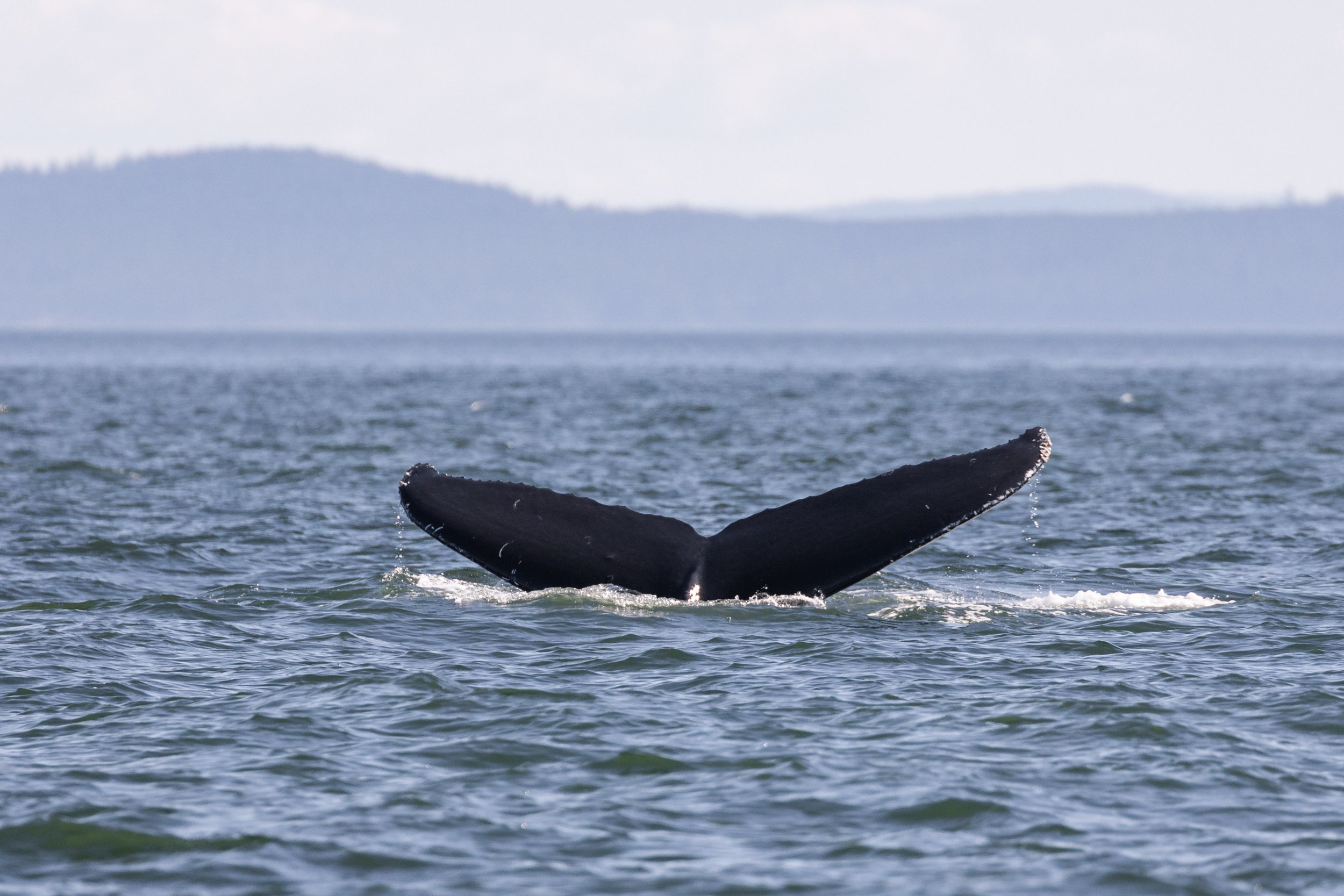
The top side of X_pialidocious’ tail. Photo by Vanessa Vereschahen.
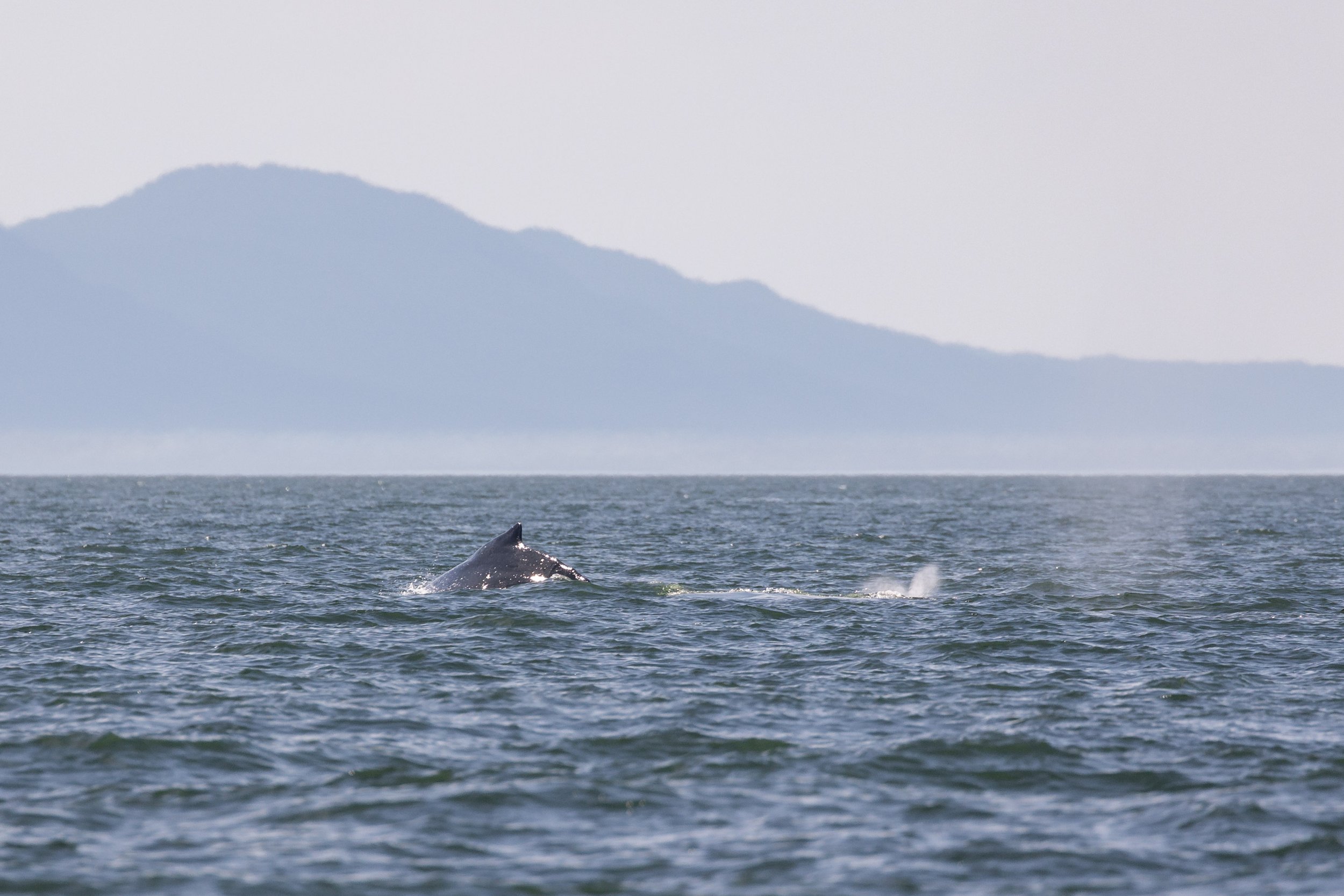
A surprise going through our photos: Sage (left) and her calf (just breathing on the right). Photo by Vanessa Vereschahen.
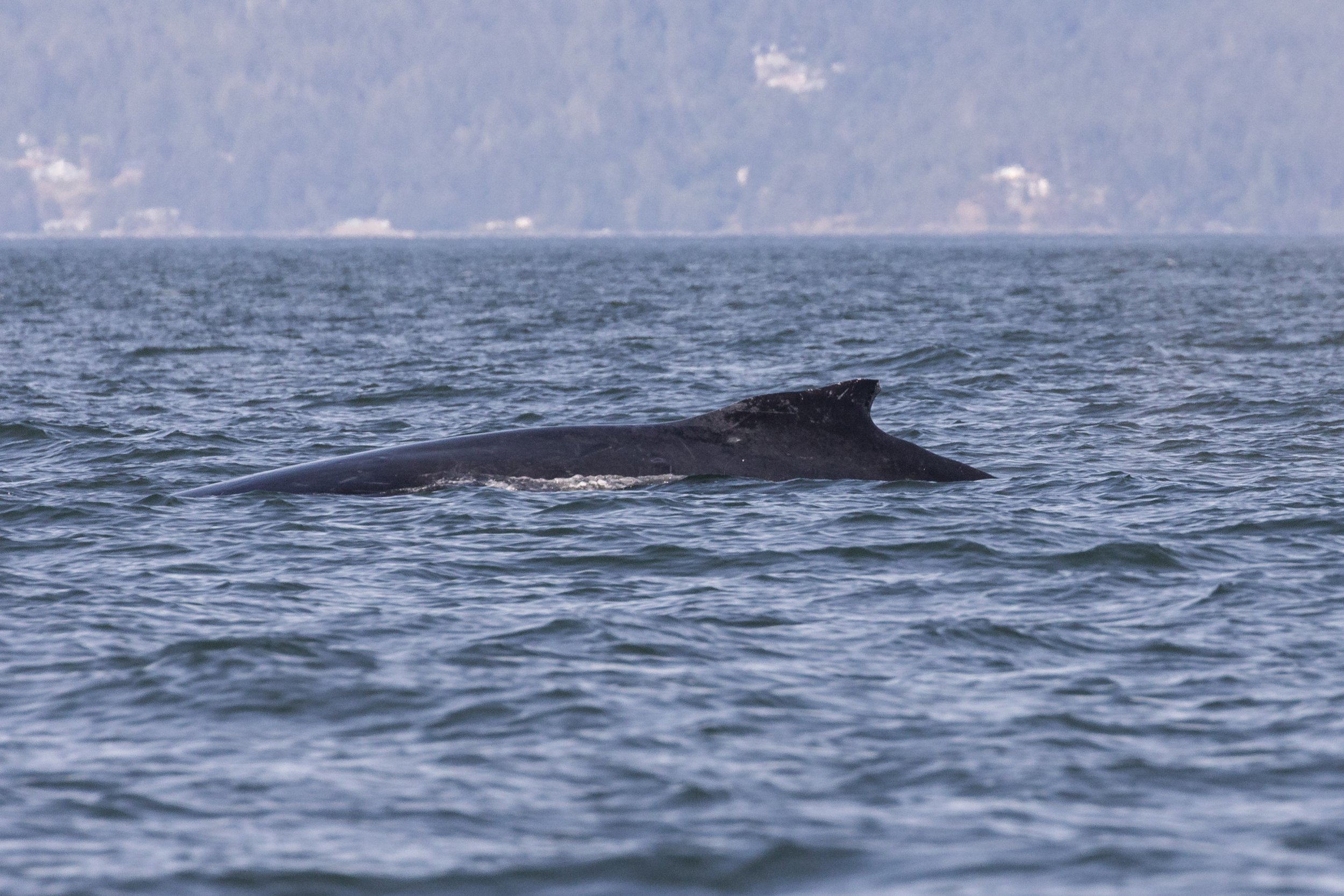
Coyote’s dorsal fin. Photo by Vanessa Vereschahen.
Coyote
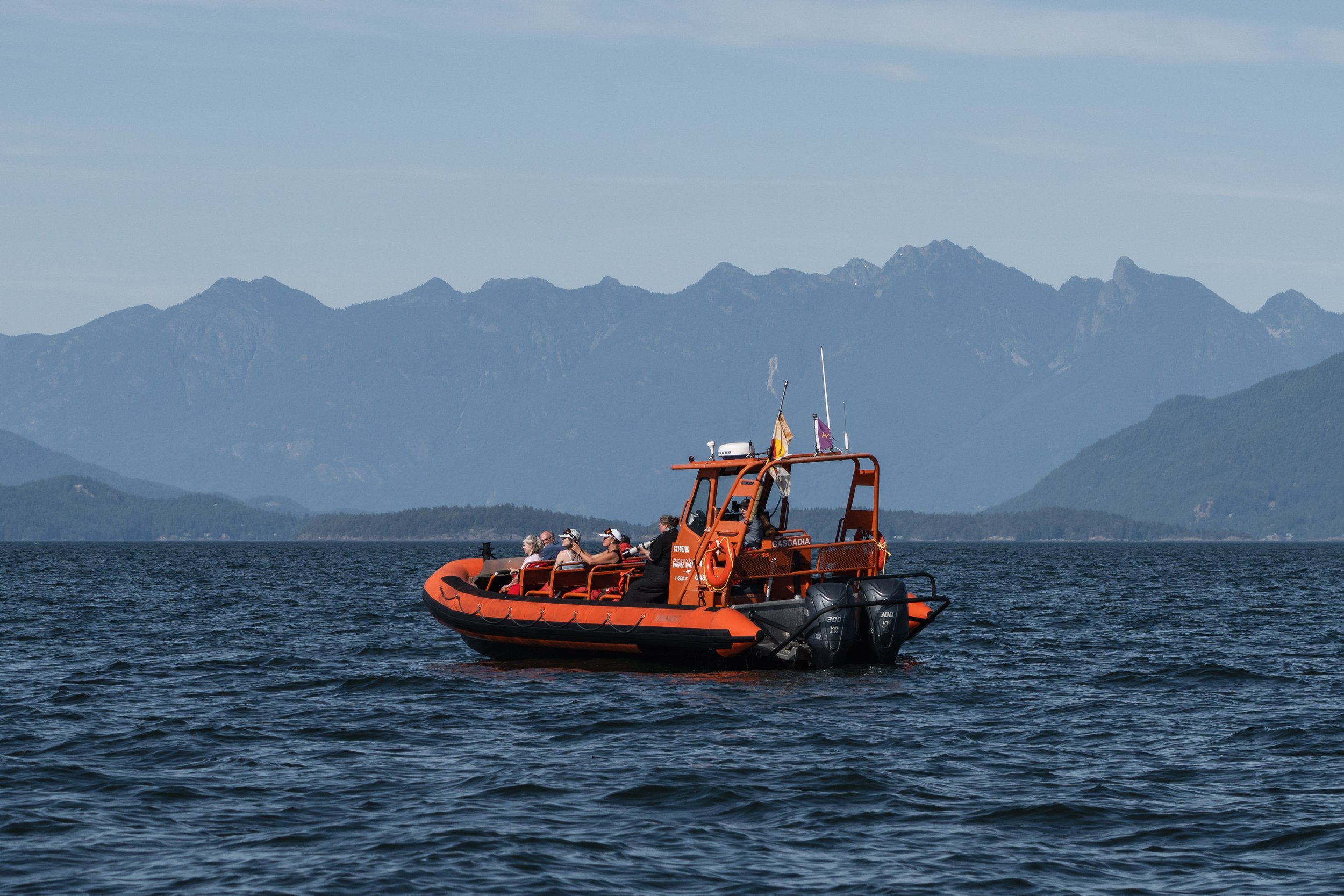
Whale Watchers on Cascadia Watching Coyote. Photo by Val Watson.
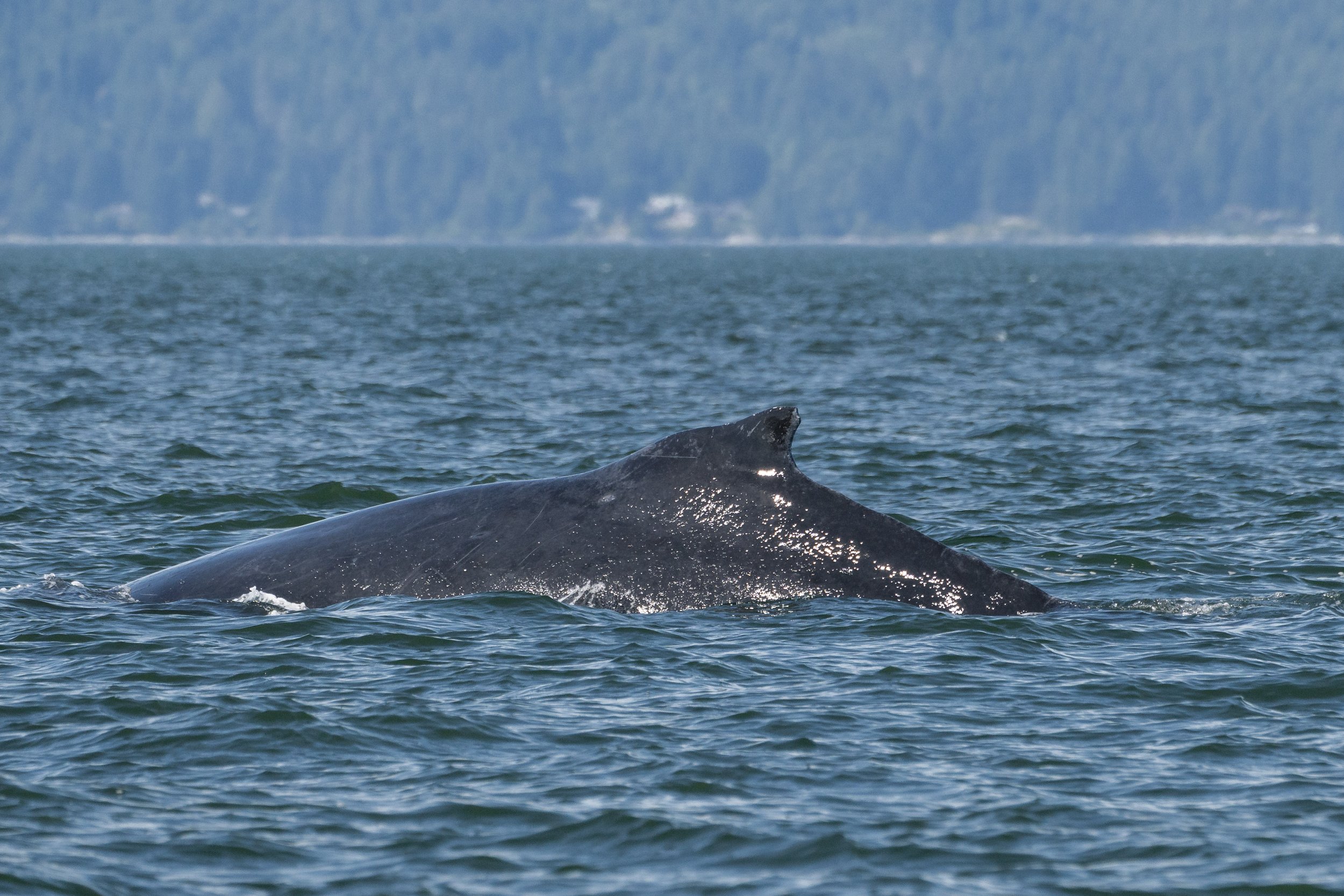
Coyote’s dorsal fin. Photo by Val Watson.
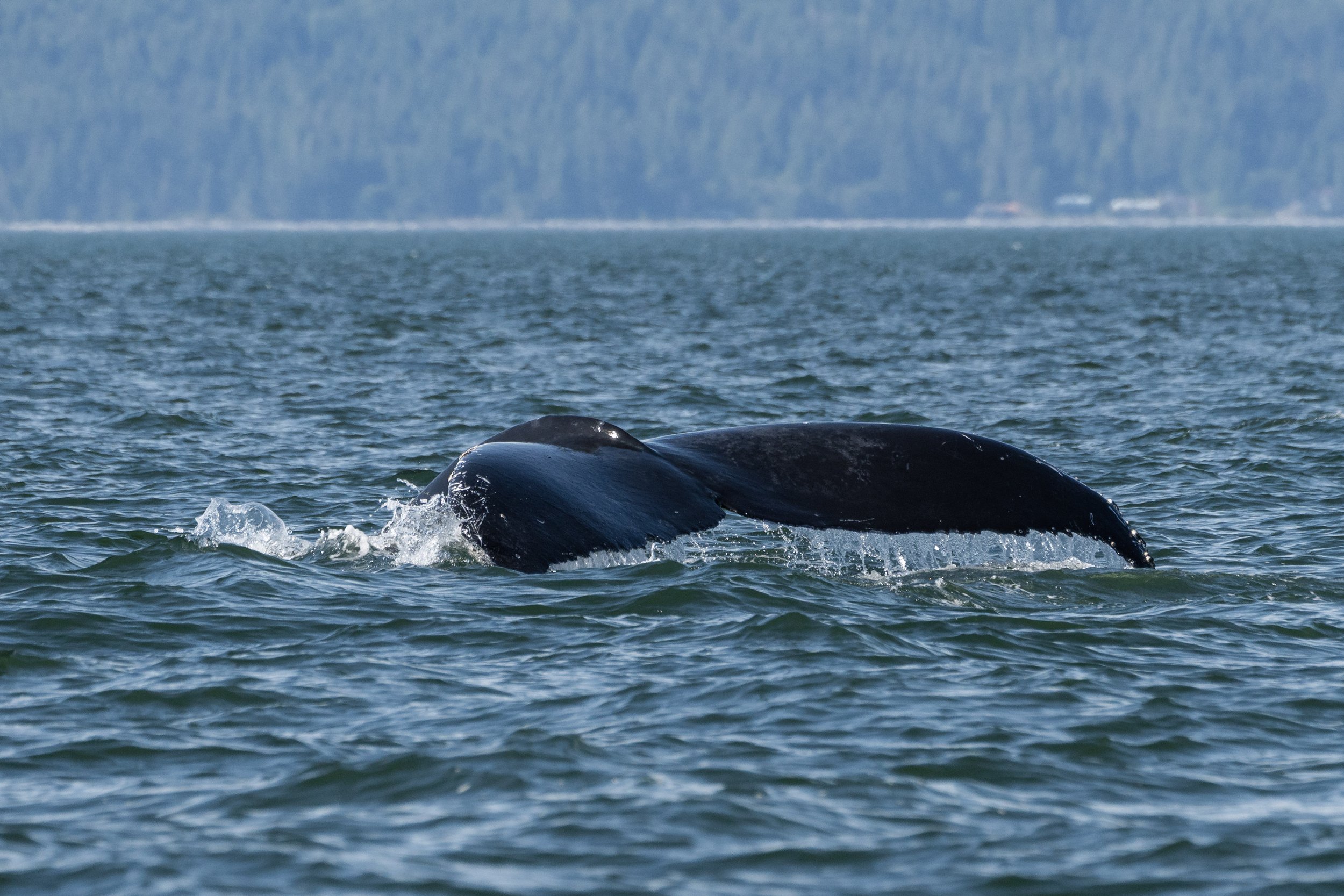
Coyote lifting his fluke for a dive. Photo by Val Watson.
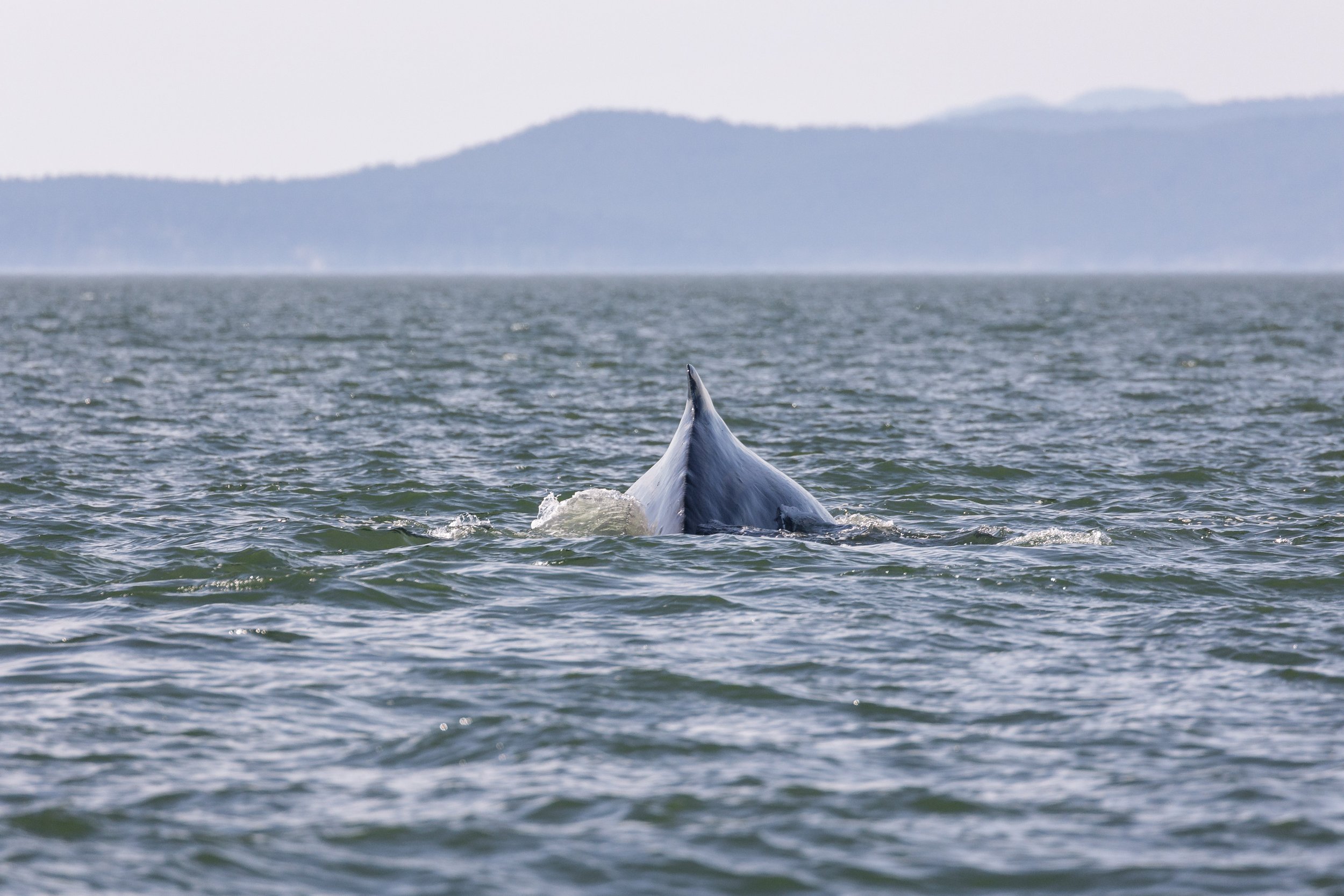
Coyote going for a dive. Photo by Vanessa Vereschahen.
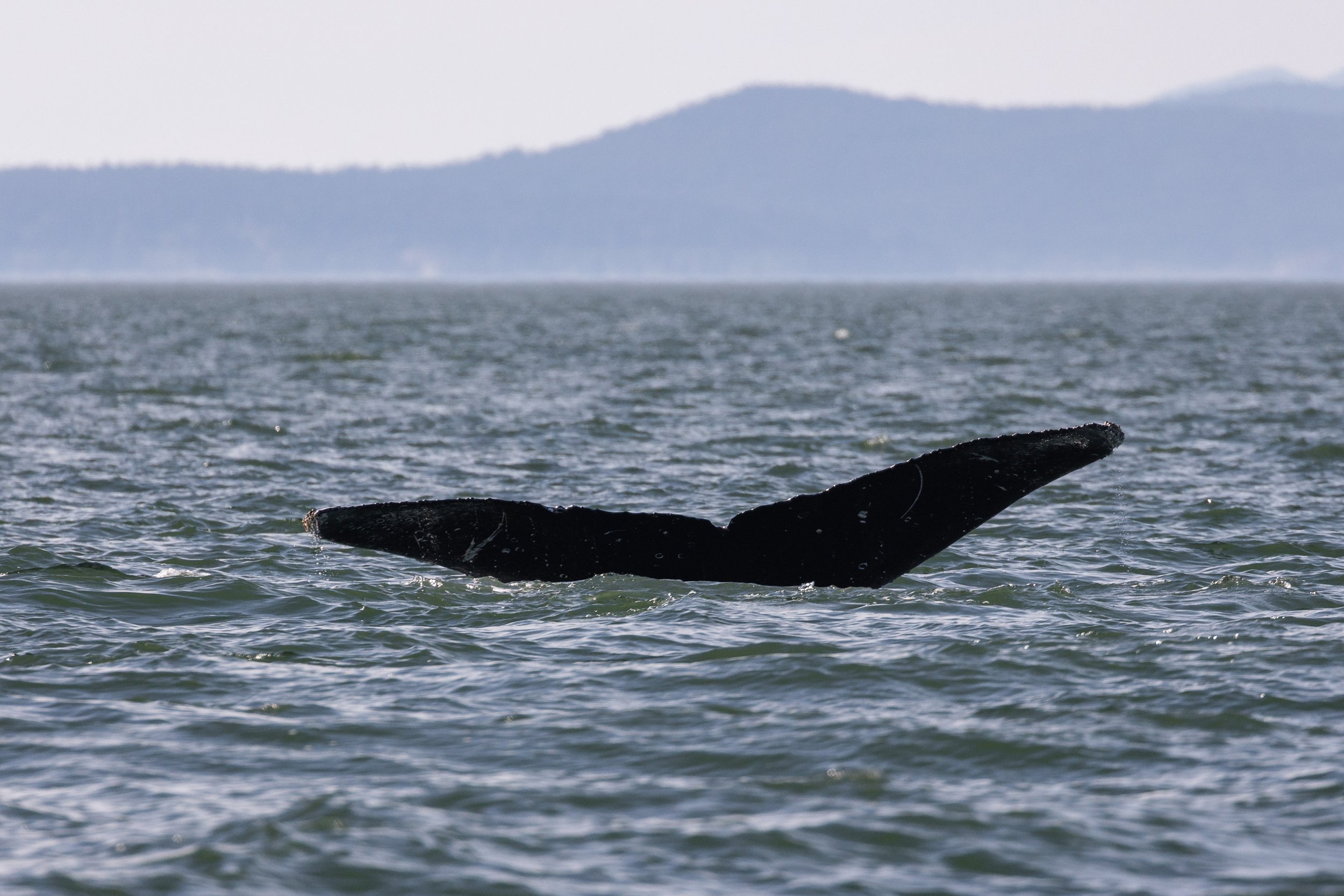
The underside of Coyote’s tail as he dives. Photo by Vanessa Vereschahen.
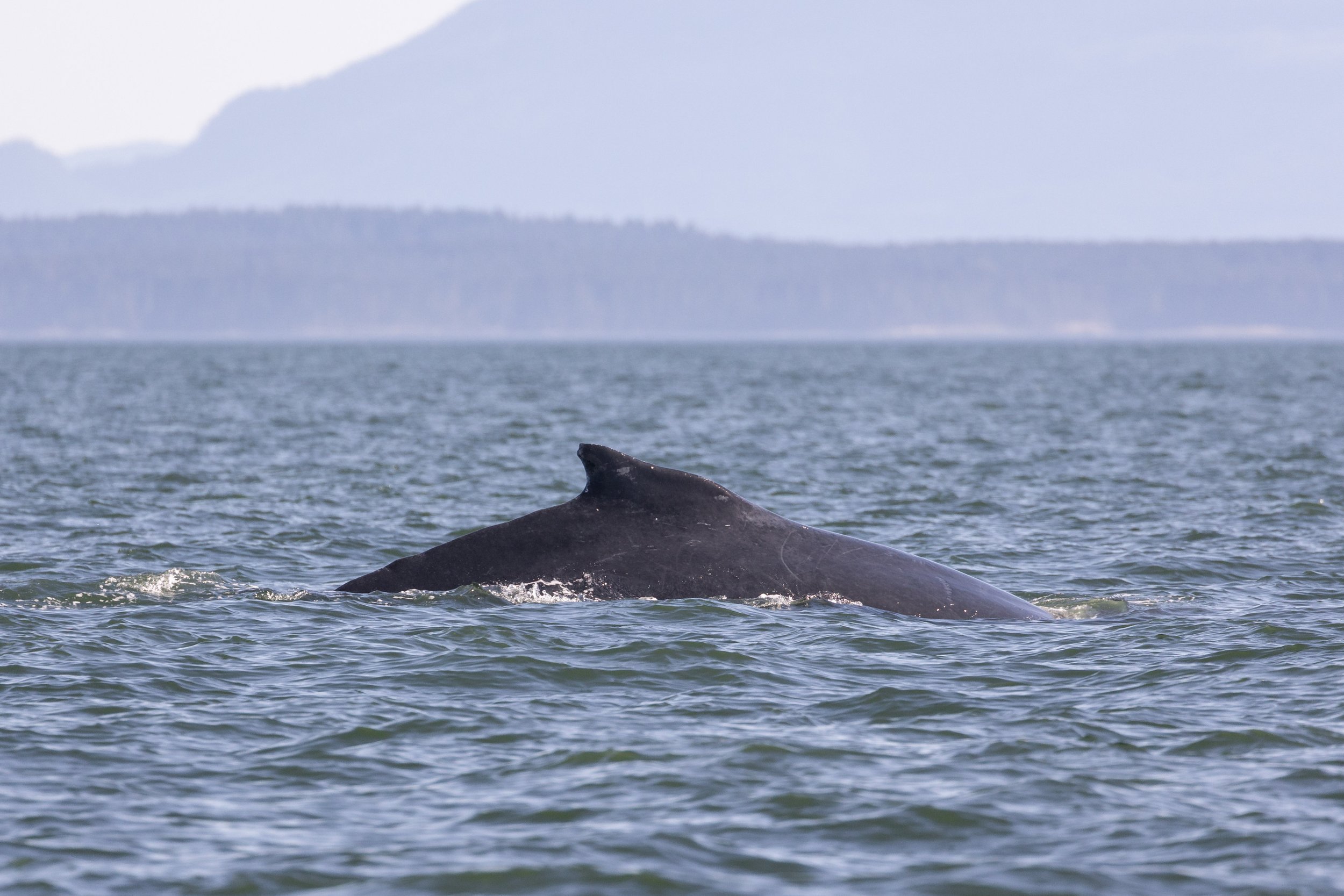
Coyote’s dorsal fin has a notch right at the tip! Photo by Vanessa Vereschahen.
Forge
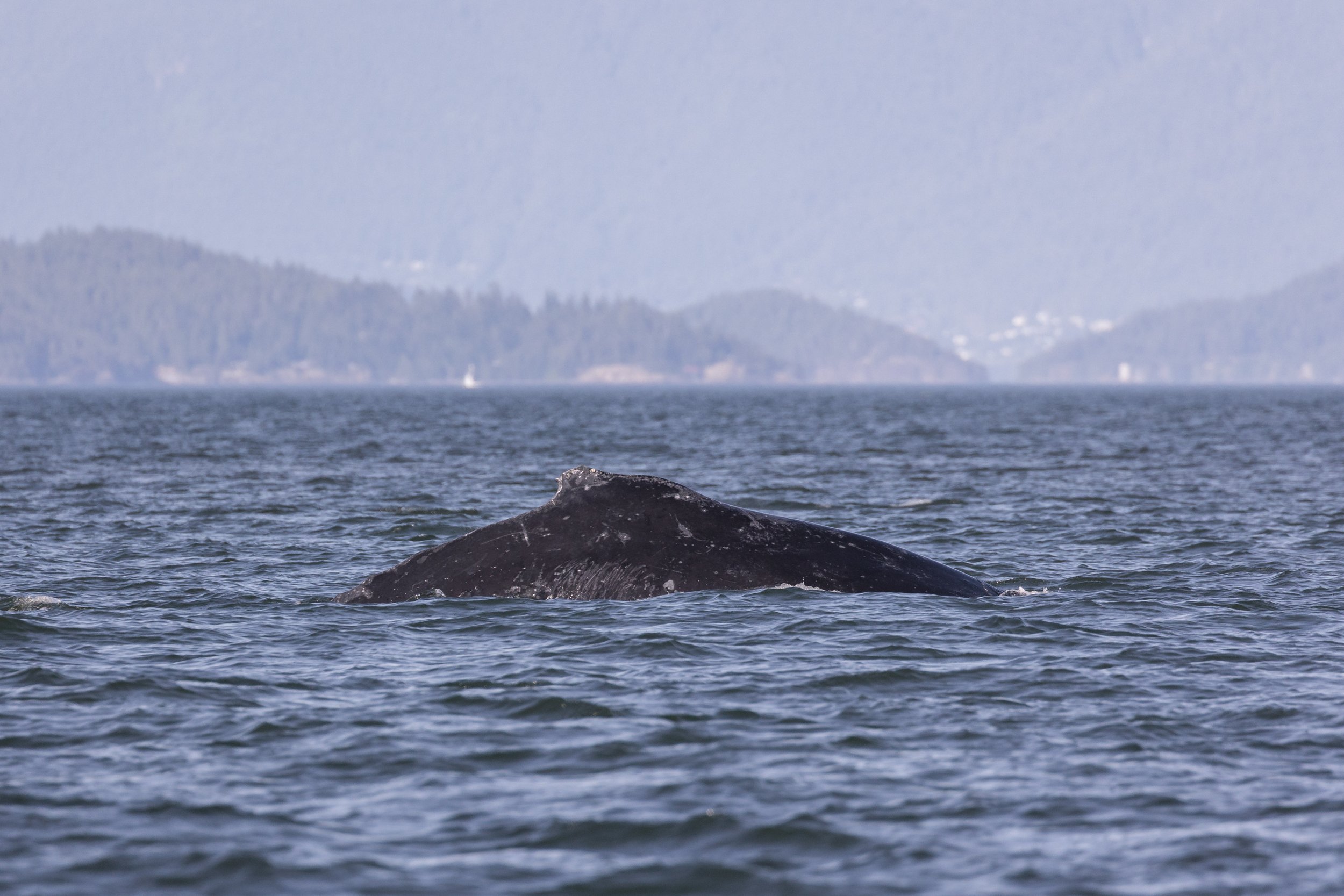
Forge’s dorsal fin as they surface. Photo by Vanessa Vereschahen.
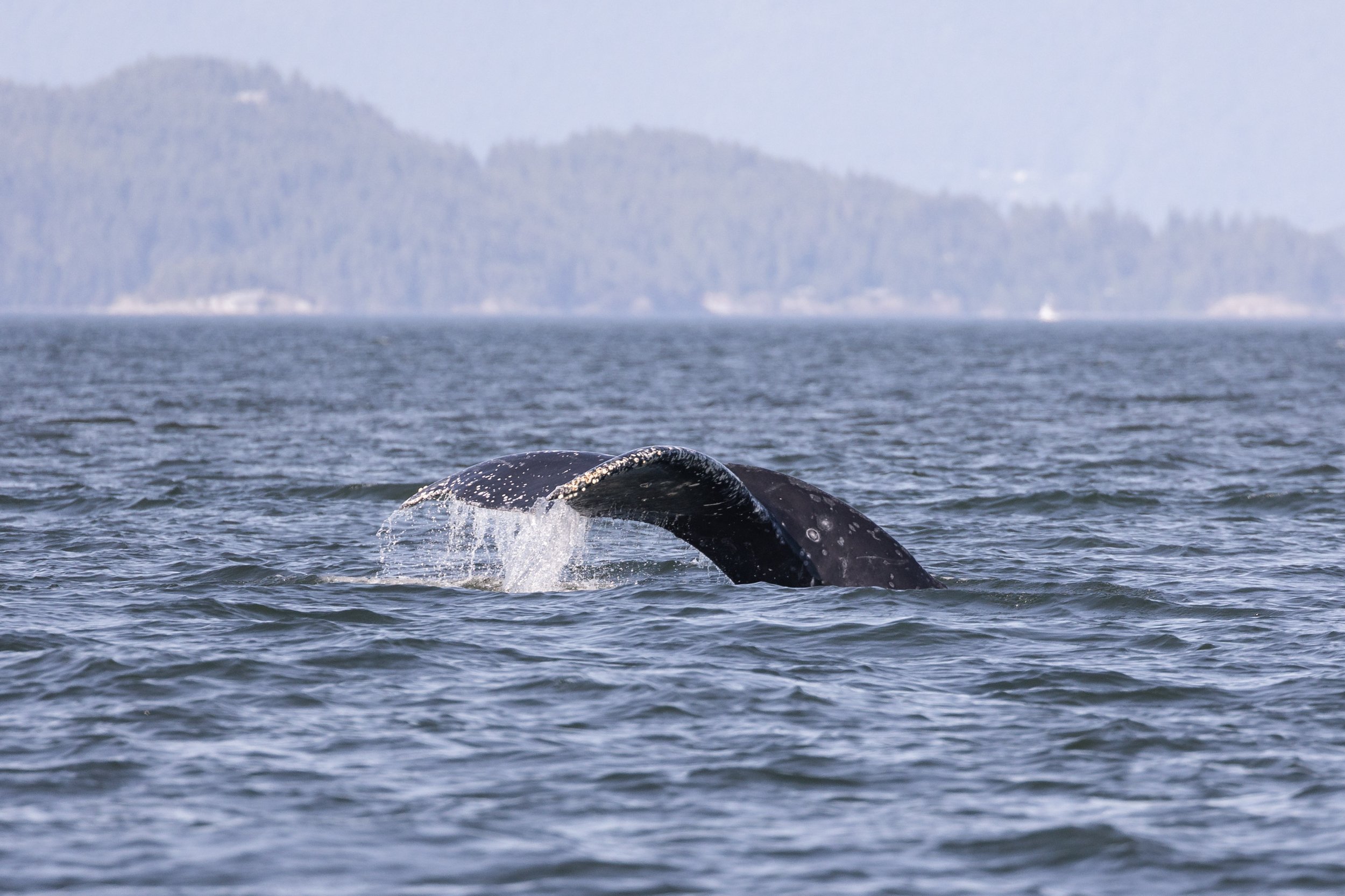
Forge going for a dive. Photo by Vanessa Vereschahen.
The White Islets
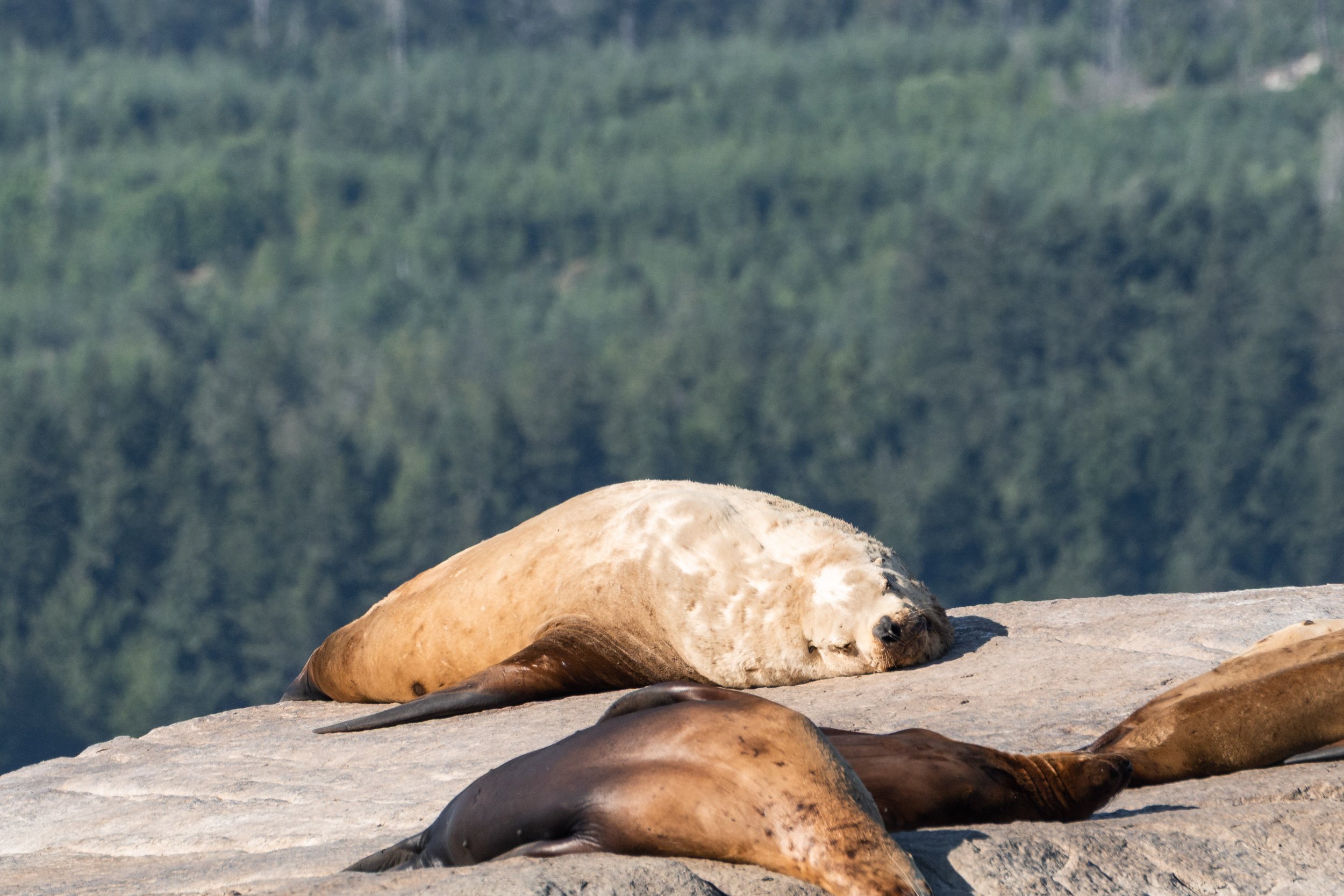
A large male Steller Sea Lion at the White Islets. Photo by Val Watson.
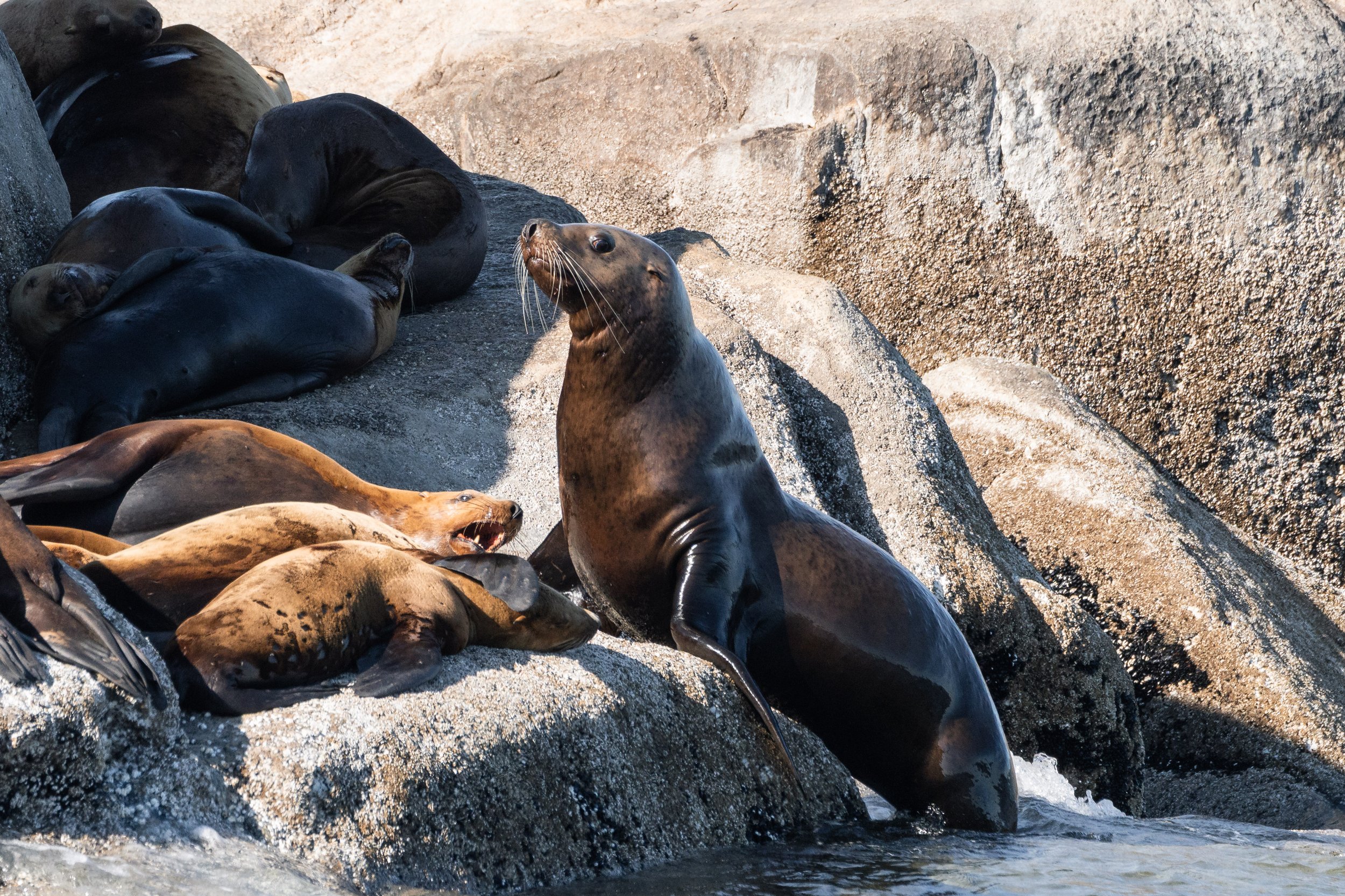
A Steller Sea Lion hauling itself out of the water. Photo by Val Watson.
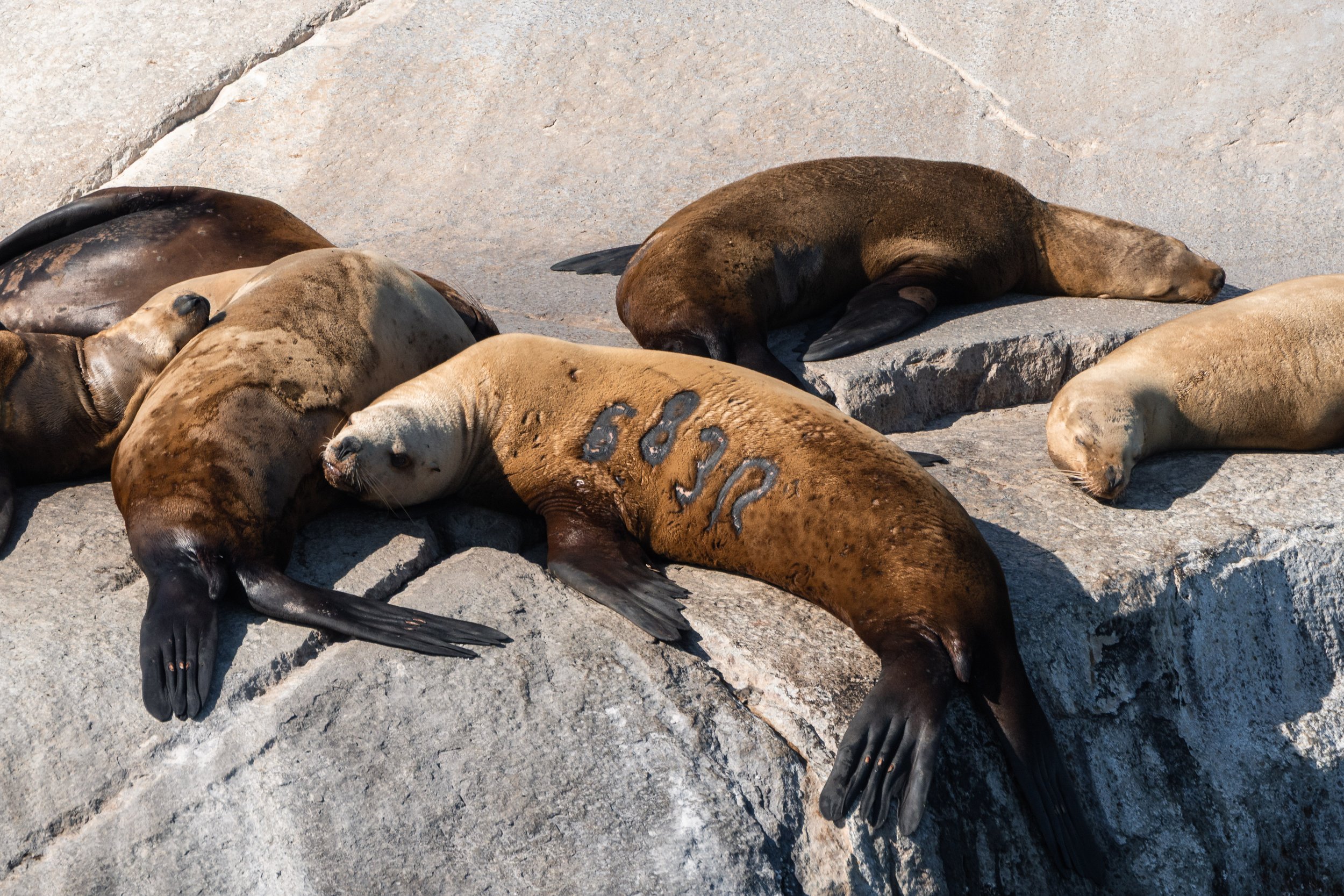
This branded Sea Lion was cross-matched to Rouge Reef in Oregeon, and was branded in 2009! Photo by Val Watson.
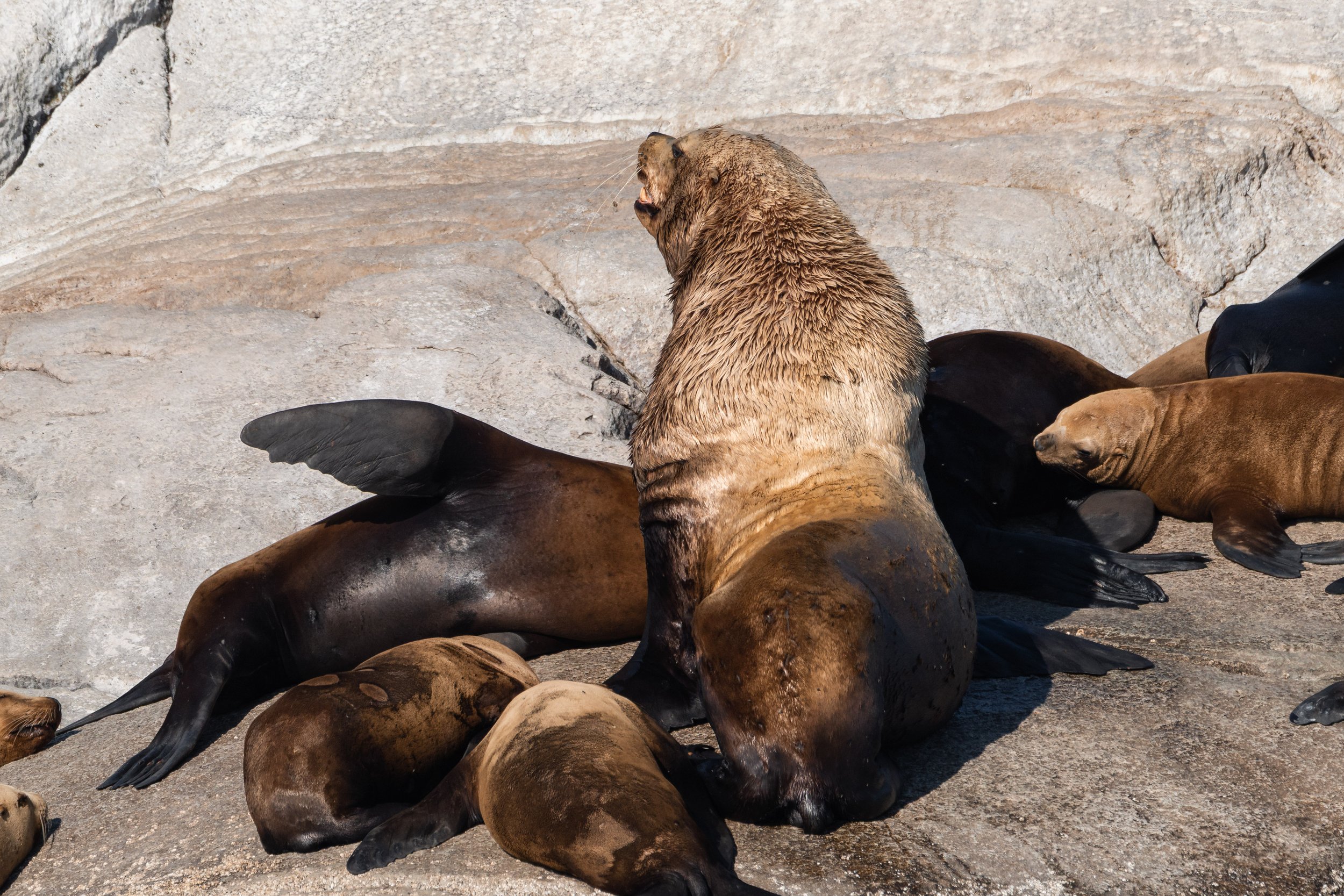
Just look at the mane on this Steller Sea Lion. Photo by Val Watson.
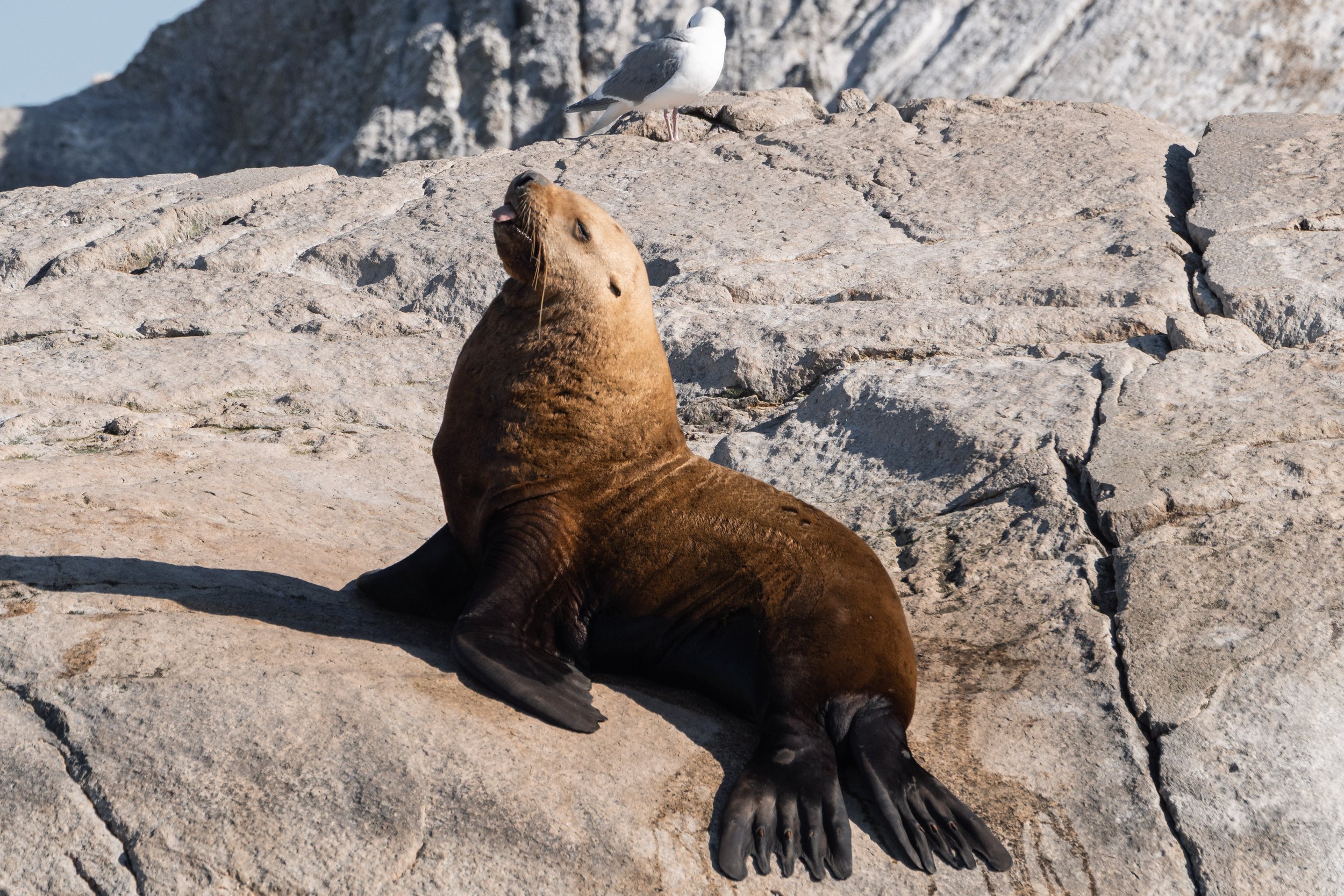
This female was posing with her tongue out. Photo by Val Watson.
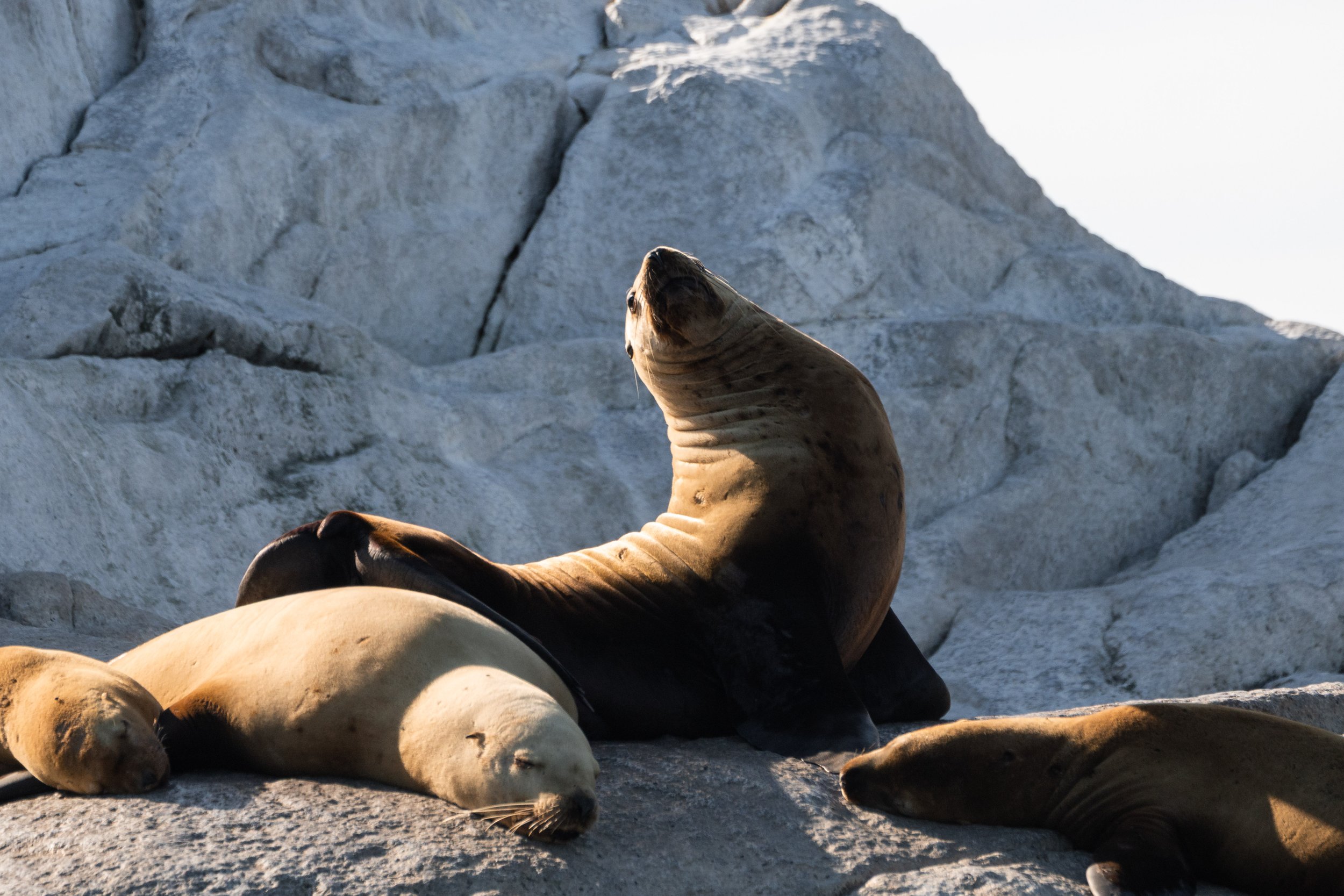
Another interesting pose from one of the Steller Sea Lions at White Islets. Photo by Val Watson.
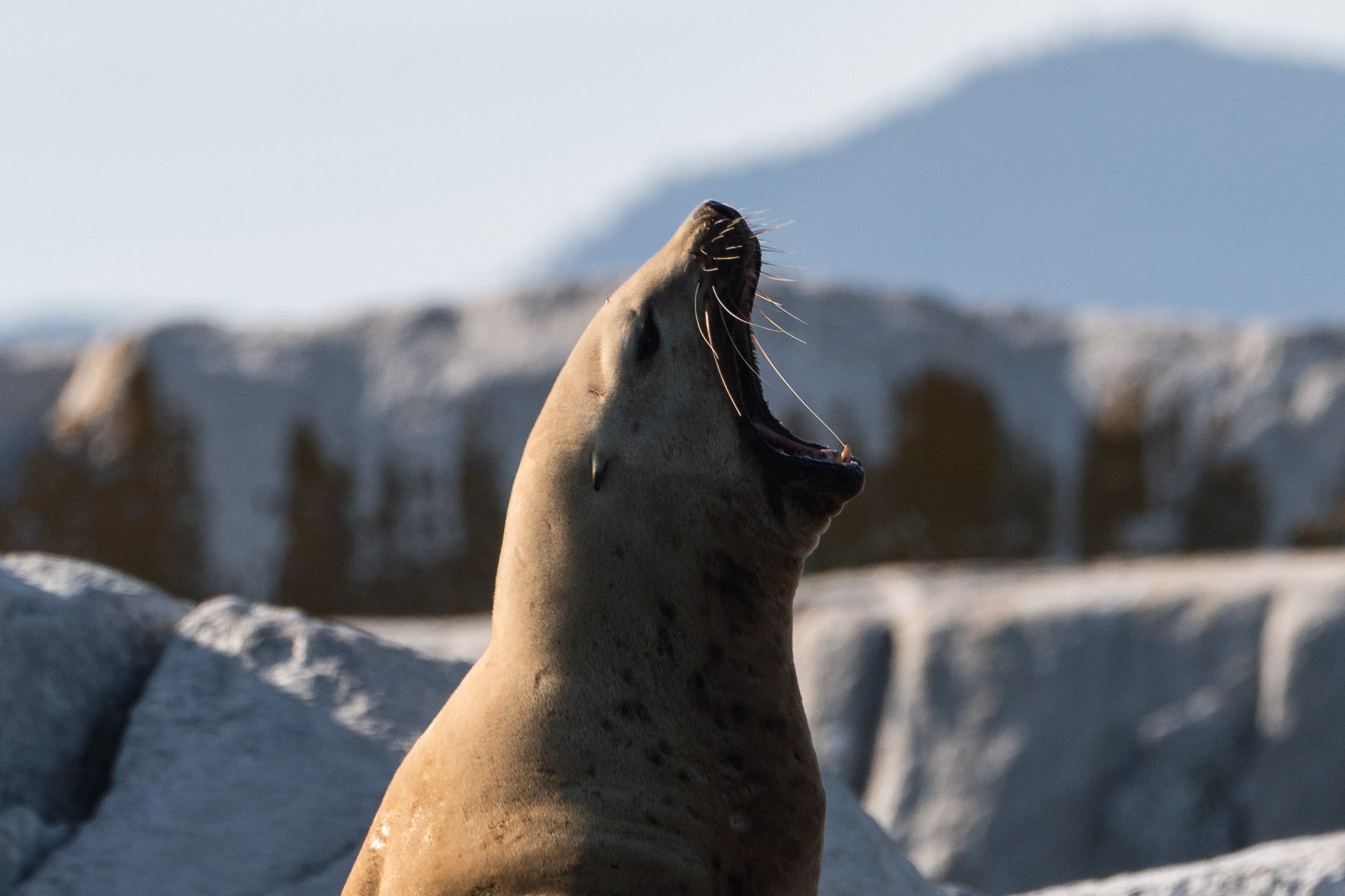
A big yawn from a big Steller Sea Lion. Photo by Val Watson.
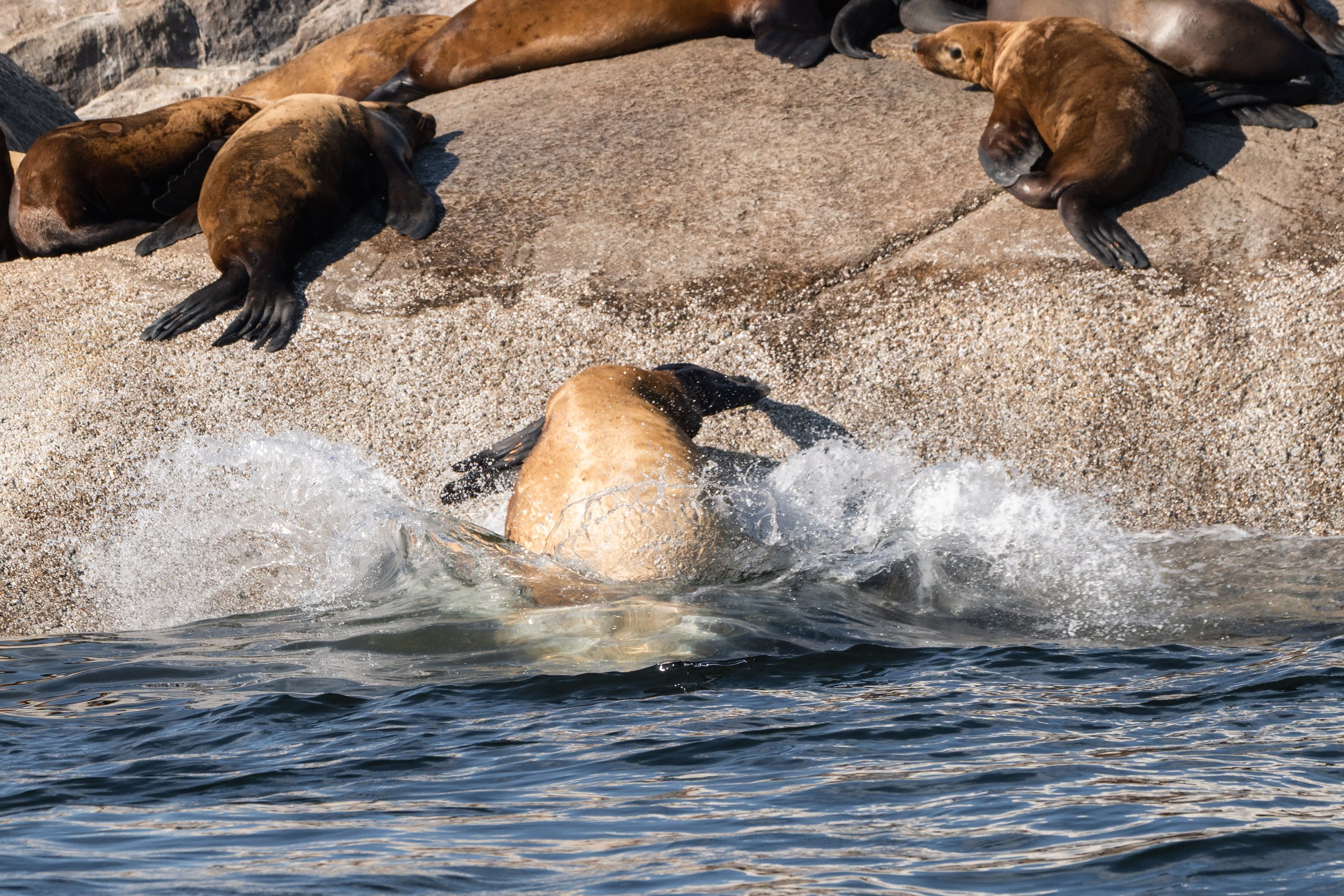
The male Steller Sea Lion going for a swim. Photo by Val Watson.
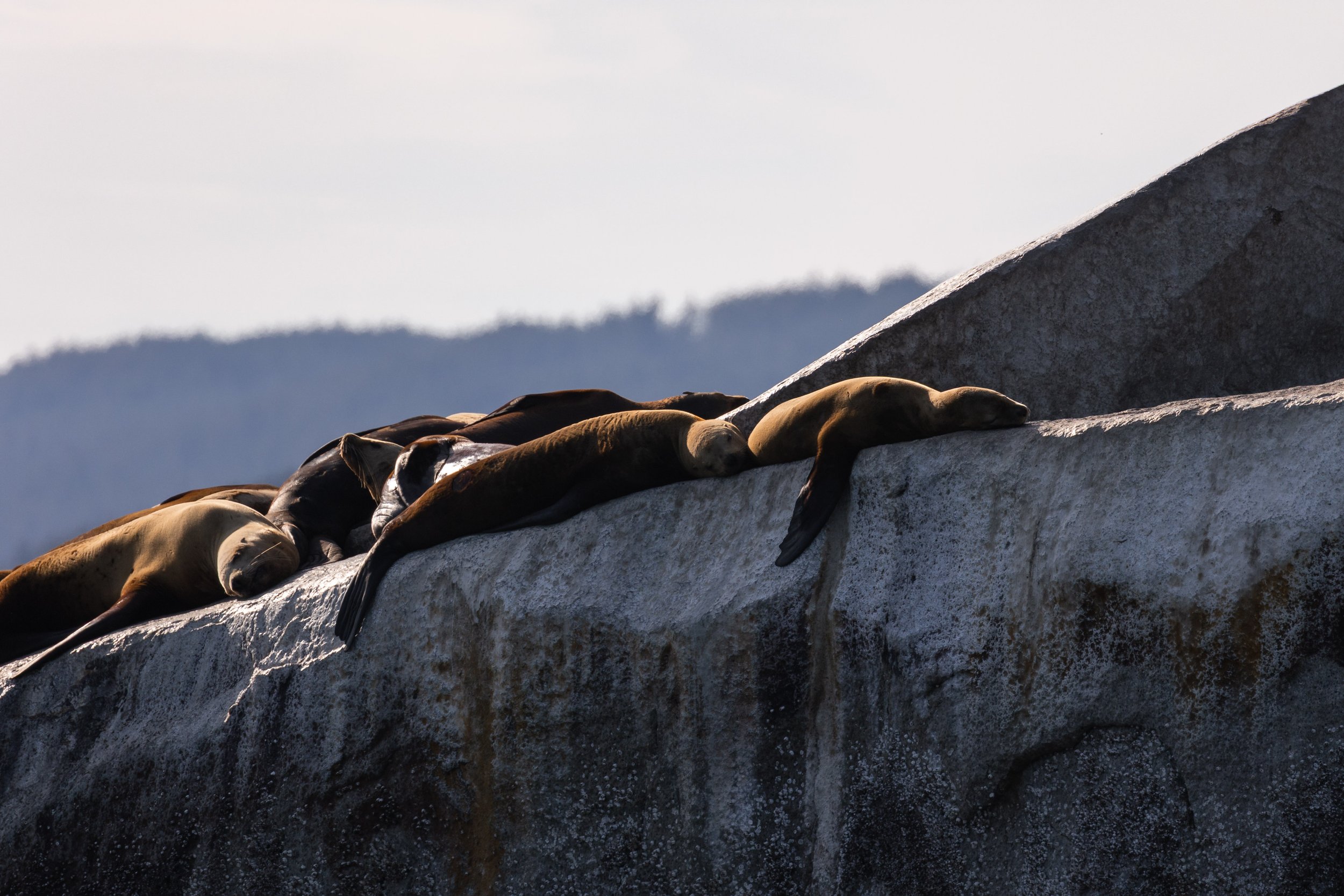
Steller Sea Lions lounging on the White Islets. Photo by Vanessa Vereschahen.
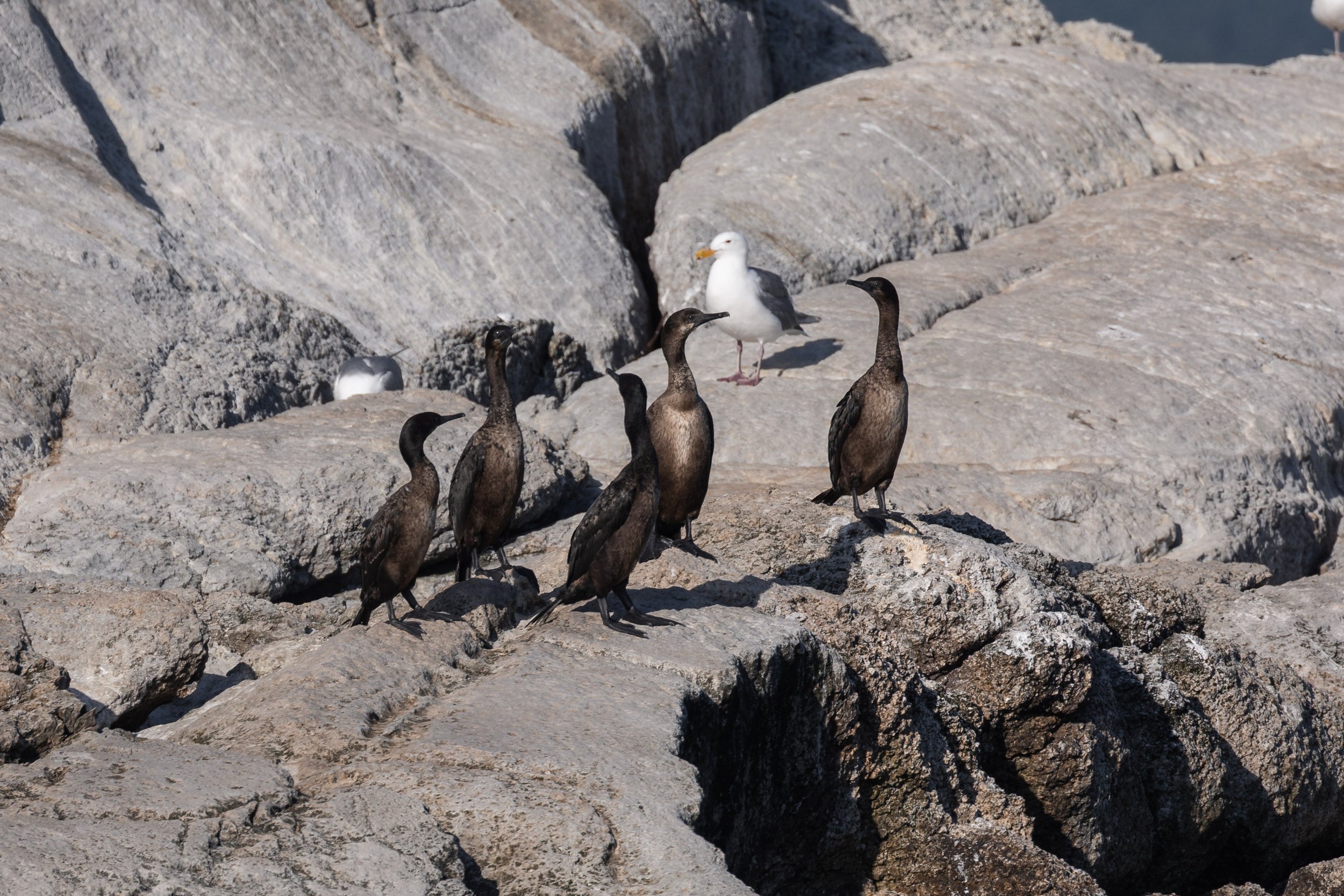
Cormorants hanging out on the rocks. Photo by Vanessa Vereschahen.
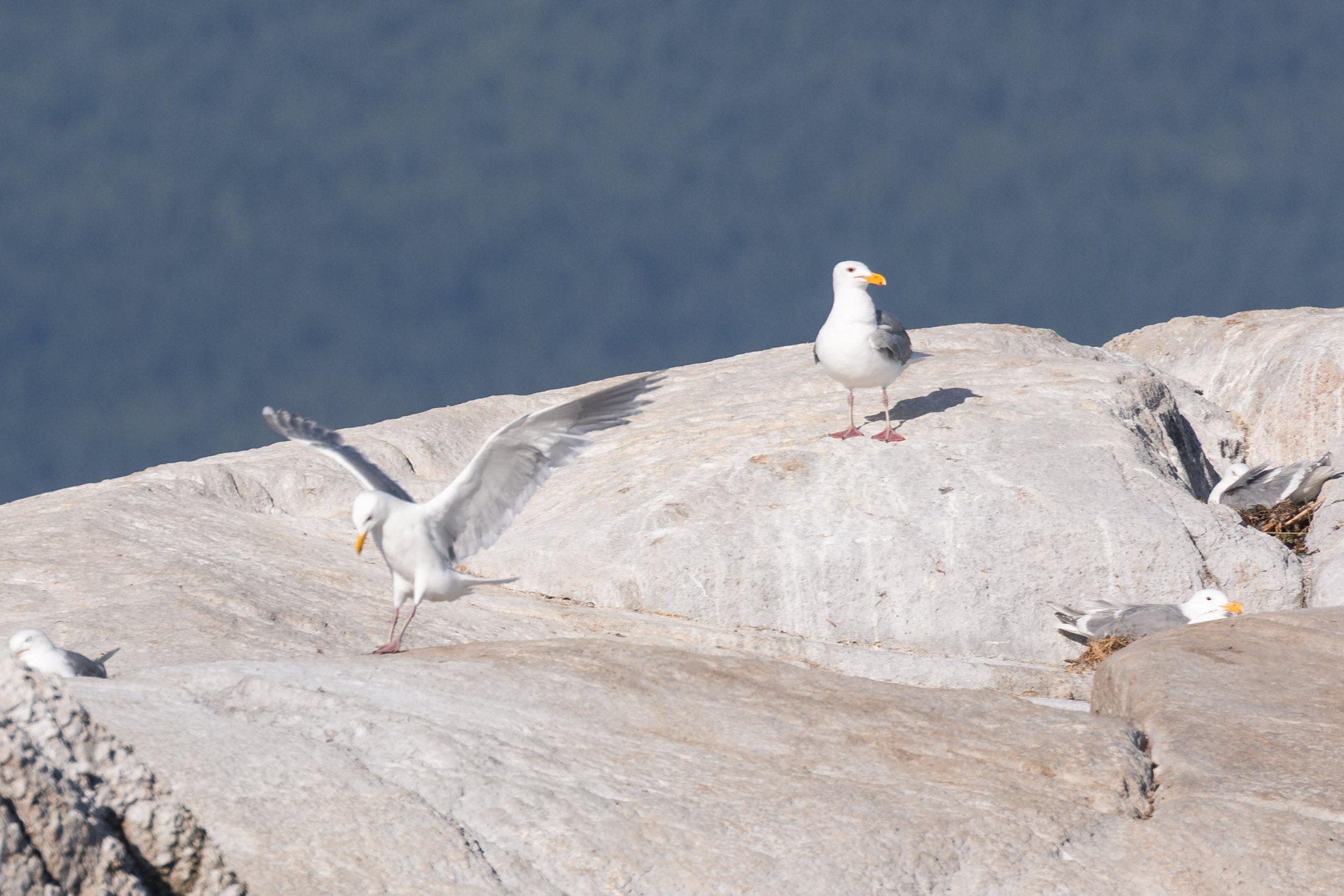
Nesting gulls on the White Islets. Photo by Vanessa Vereschahen.
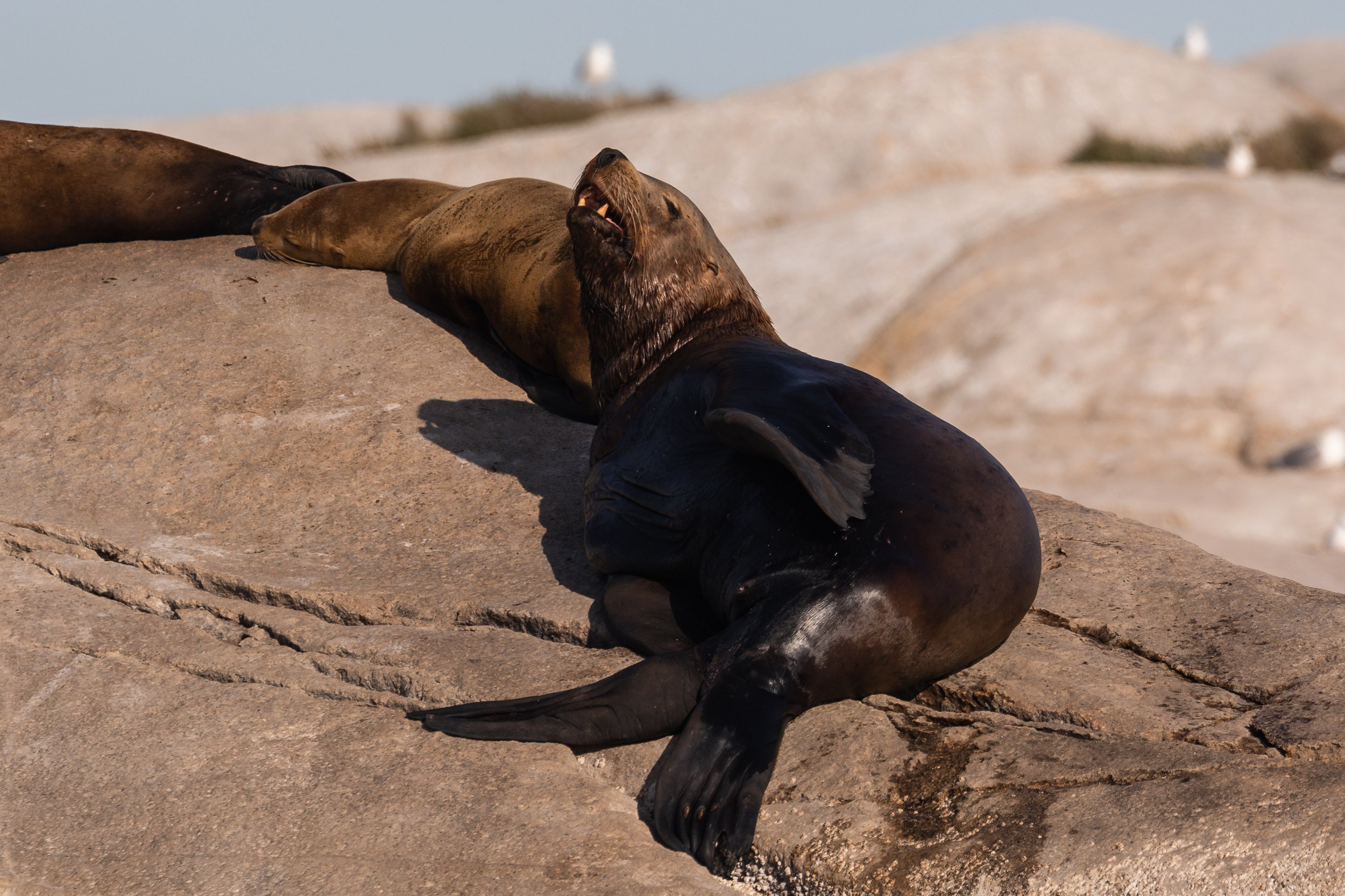
A lazy looking Steller Sea Lion. Photo by Vanessa Vereschahen.
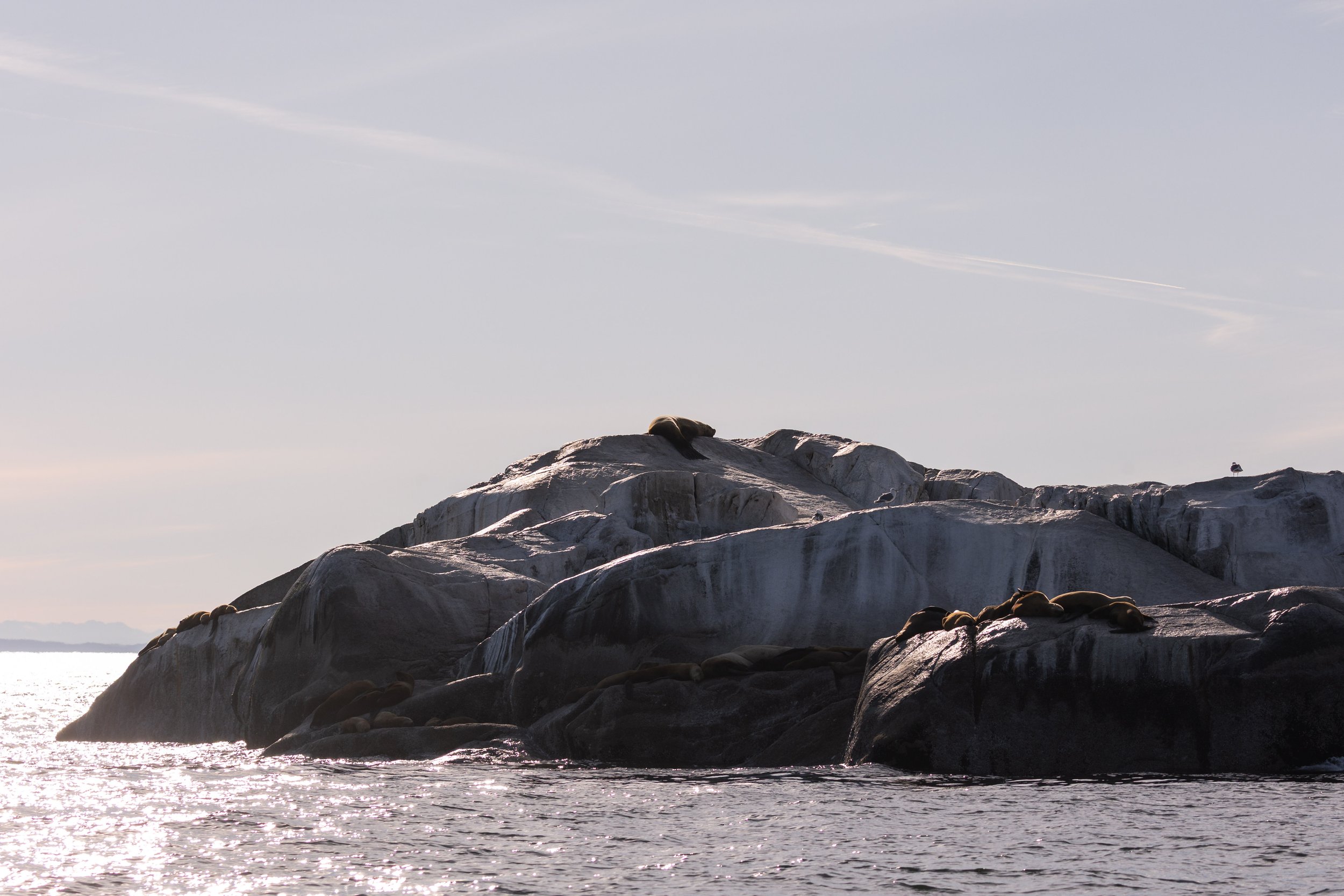
A overview of the White Islets. Photo by Vanessa Vereschahen.
The Gabriola Bluffs
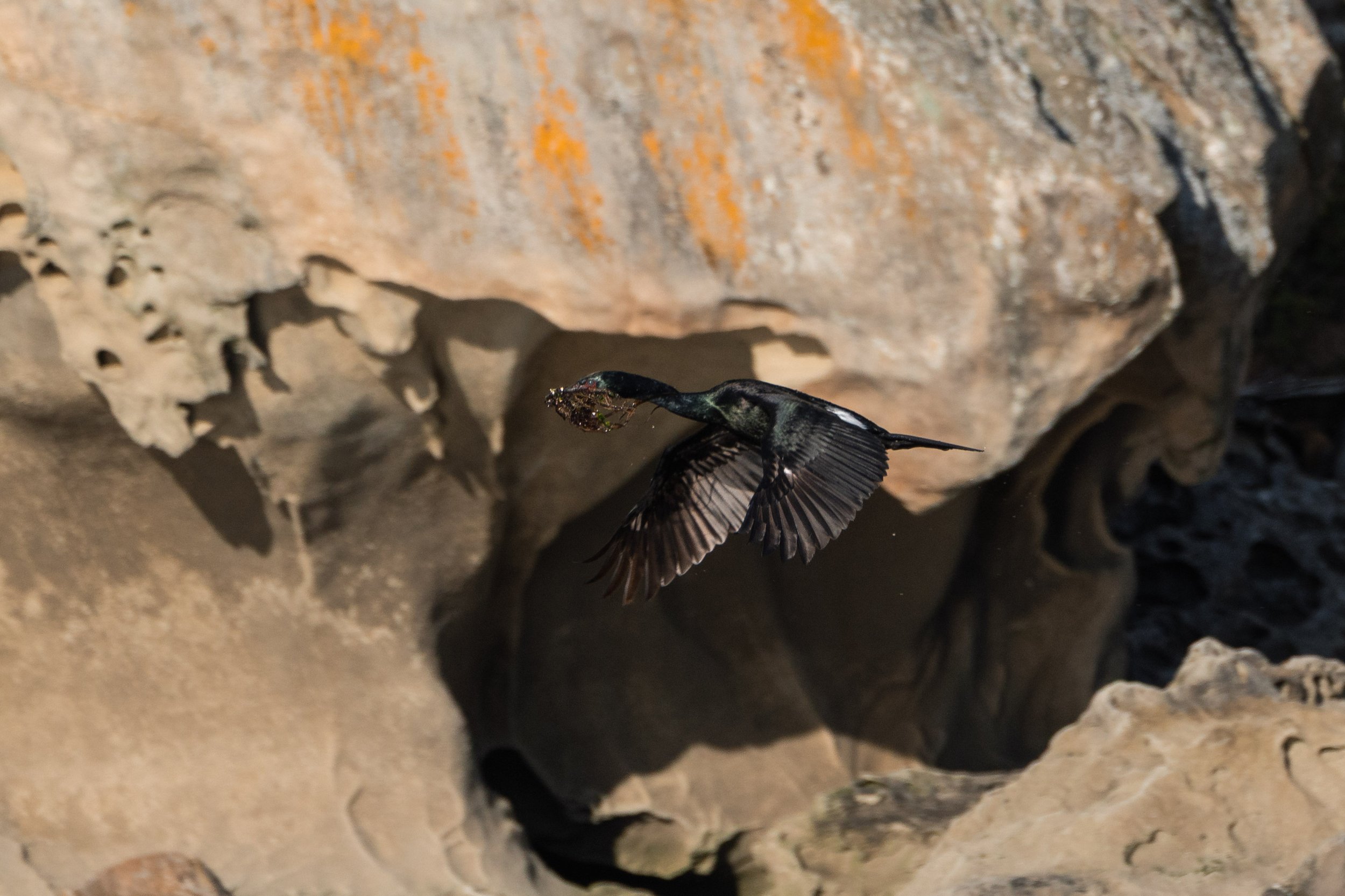
A Pelagic Cormorant flying in with some seaweed for their nest. Photo by Val Watson.
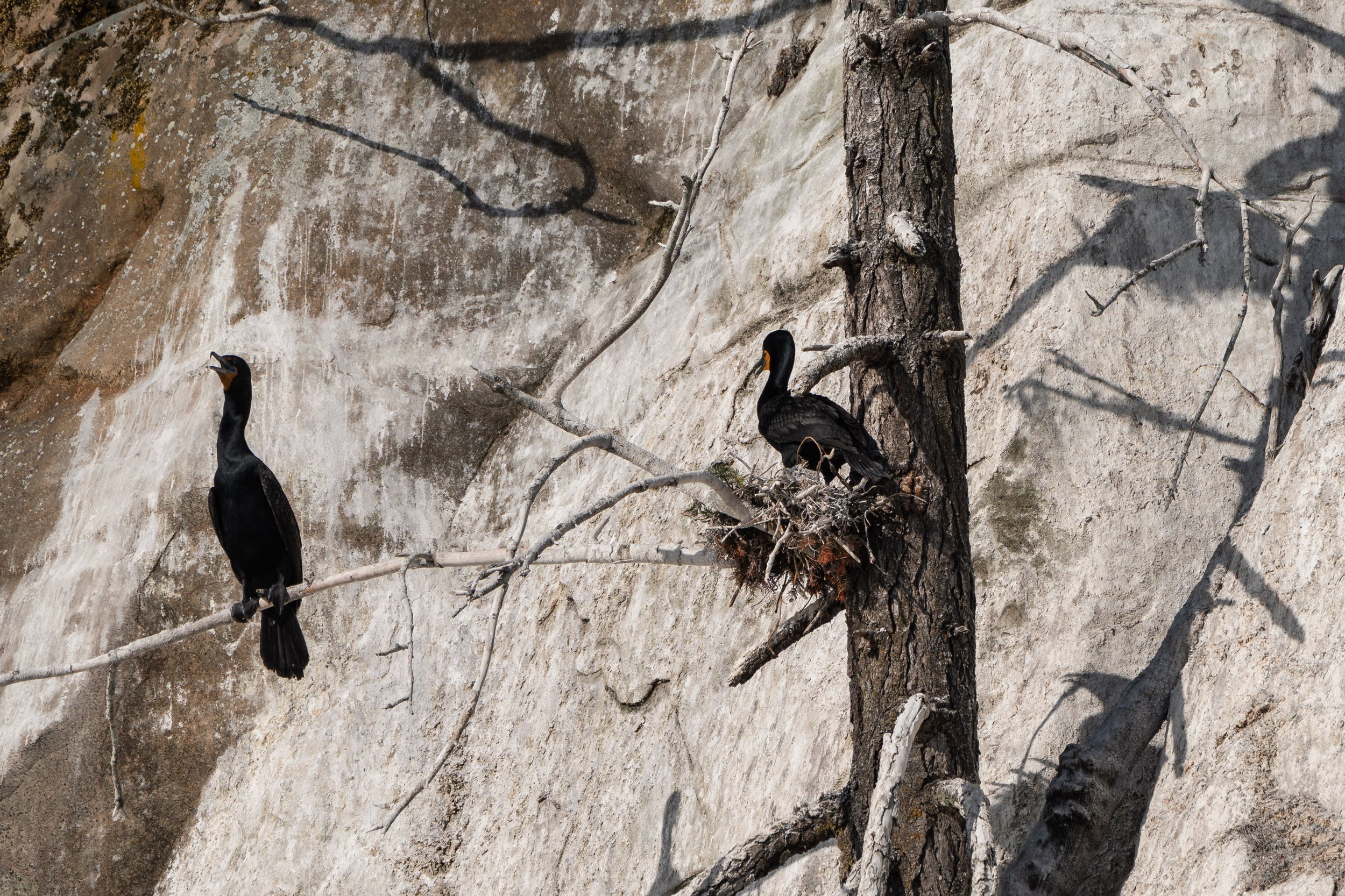
Cormorants hanging out on their nest in the tree. Photo by Val Watson.
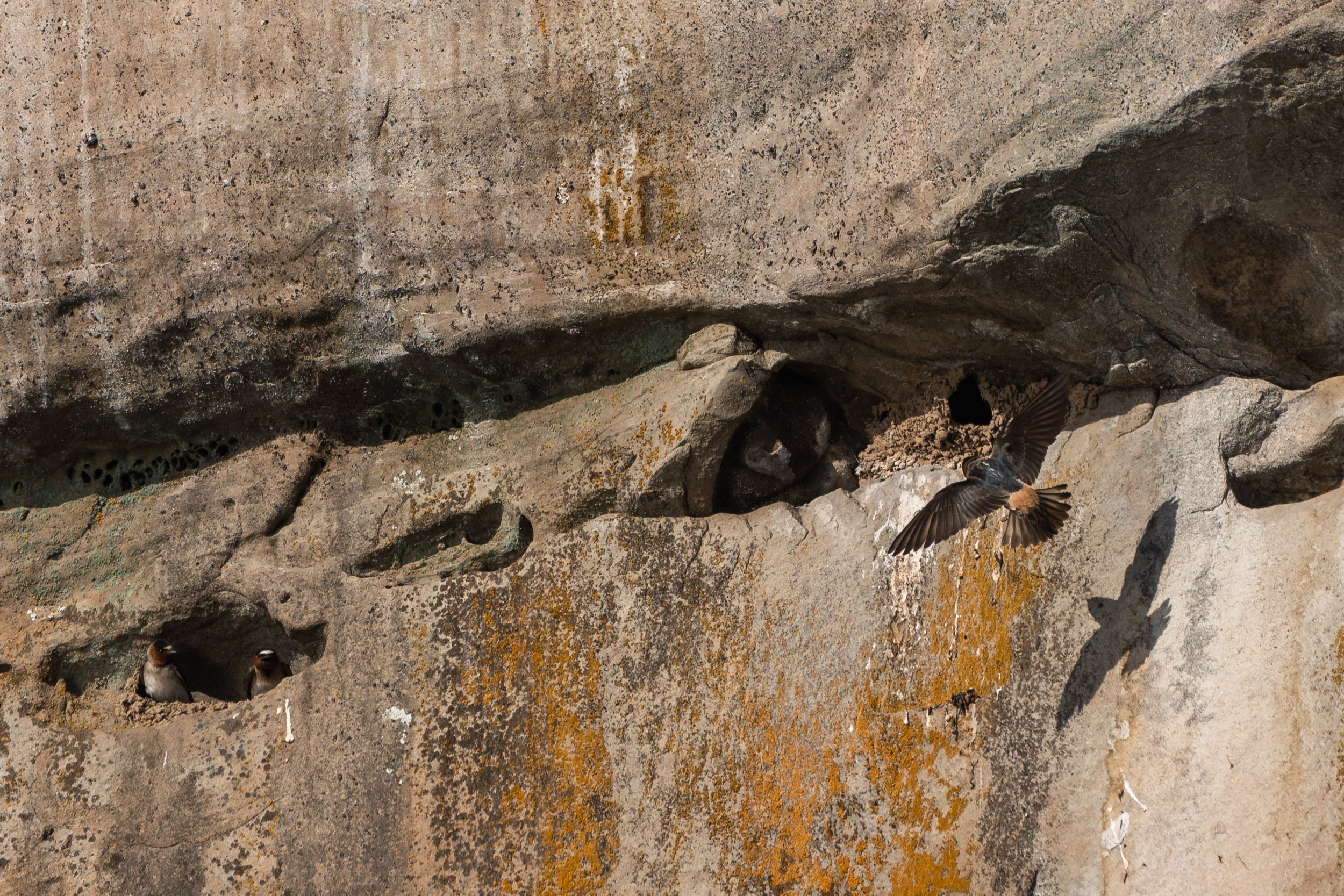
Cliff swallows nesting at the Gabriola Bluffs. Can you spot all three in his photo? Photo by Val Watson.