
June 23, 2026, 10:30 AM - Splashing into the day with the T046B1s
The summer heat was in full swing as we boarded and set off for our trip. Setting off on Keta, we had caught word of an early orca sighting right outside the harbour. We set off, scanning the waters, eager to see what we could spot.
With a bit of a breeze all around us, splashing ensued as we continued onward. After a bit of searching, we spotted them - a small pod of orca consisting of a handful of short dorsal fins.
T046B1 Tread ♀ (2003)
T046B1A Tsakani ♀ (2015)
T046B1C Tide ♂ (2022)
T046B1D Tashi (2025)
T046C2 Sam ♀ (2009)
While we did not spot T046C2 Sam with the family, she often travels farther from the pod, and we heard she was seen farther ahead of it. This may seem odd from a normal matriline perspective, as individuals will often travel fairly close together, but Sam is an odd exception herself. Usually, a matriline consists of a female and her children, but if you peek at Sam’s code, you will notice they are related, but she is not one of Tread’s calves. They are actually cousins! While we do not know why this unique arrangement formed, we are happy to see Sam continue to travel with them.
And travelling is exactly what they were up to today, while we were observing them. The youngest member of the pod, T046B1D Tashi, could be spotted popping high out of the water beside their mother, T046B1 Tread. At only a year old, Tashi is still heavily reliant on their mother and is still often seen tucked close by her side while they travel. T046B1C Tide was also travelling just behind them, with T046B1A Tsakani holding up the rear. Orcas can travel long distances daily in search of food, and travel takes up a large portion of their day, so it isn’t too much of a surprise when we do see them engaging in this behaviour!
We left the T046B1s behind to continue their journey, and we set off to continue ours. With a vast ocean of options ahead of us, we once again continued our journey. We swung out into the Strait of Georgia, leaving the forested coastline of the Gulf Islands behind, and changing our scenery to the open waters ahead. The waters between the northern section of Gabriola Island and Vancouver have been teeming with humpback whales lately, and we wanted to try our luck at finding one today. We did a thorough sweep of the area, scanning the entire time, but the humpbacks eluded us this time!
That wasn’t the last stop for our day, though, as we started pointing back towards the Southern Gulf Islands. Soon, Valdez Island came into view, along with the many tiny islets that dot its shoreline. One group of islets in particular is a popular stop for us, and we quickly made our way over. Here, in an area dubbed “Stinky Rocks”, many creatures take advantage of the remote spot to rest and relax. Closer to Valdez, on a nearly submerged section, many rotund creatures stretched, yawned, and wiggled away. These were Harbour Seals, one of British Columbia’s smaller pinniped species. These seals reside along our shores year-round and can be spotted sporting a variety of coat colours. From very dark with light spots to very light with dark spots, this variety of colourations is a form of natural camouflage. Many species (including Transient orca such as the T046B1s) hunt these round creatures, meaning staying out of sight is of utmost importance to them.
Further out in deeper waters, a different, larger and louder pinniped species could be seen. Steller Sea Lions, the largest sea lion species in the world, dominate the majority of Stinky Rock’s southern tip. At this time of year, we would normally have seen most of the males leave our area to migrate to their breeding grounds. However, we are seeing more and more of them remain here late into the summer. With some behaviours, such as mounting and suckling, being observed amongst individuals, we have been watching with curiosity, wondering whether this area will become a rookery (breeding site) in the future. Nothing is set in stone yet, but we shall continue to observe and document any interesting behaviours that happen here!
Another tall, limber species was slowly stalking along the rocks as we watched, picking through the shallows for a bite to eat. It was a Great Blue Heron, a giant bird standing 3.5 to 4.5 feet (100 to 138 cm) tall. Their height, paired with their 6-foot wingspan, makes them massive, but interestingly, they are very light for their size. Because of their hollow bones, they tend to only weigh around 7 lbs (3.2 kg) total! Similar to the Harbour Seals, Great Blue Herons also reside in our area year-round; however, many populations east of the Rocky Mountains do migrate seasonally.
After our stop at Stinky Rocks, we decided to turn south and try once more to find a humpback whale. Arching a bit further into the Strait, we glided along, scanning and scanning until we reached Porlier Pass. Still having no luck, we decided to conclude our search, turning back into the sheltered waters of the Gulf Islands and heading back up the island.
Cruising along, we passed through Dodd Narrows, a beautiful waterway located on the outskirts of Nanaimo. From here, we crossed to the other side of Northumberland Channel, where we slowed down for our last stop of the day. Here we stopped at the Gabriola Bluffs, a tall, rocky cliffside home to numerous avian species. Many small black birds were spotted dashing back and forth among the rocks or nestled tightly in the many hollows of the cliffside. These birds, mostly consisting of Double-crested Cormorants and Pelagic Cormorants, nest and raise their chicks here. Similar to the Great Blue Heron and Harbour Seals, these birds often also reside in our area year-round, unlike many other populations that migrate.
With one last peek, we turned away and set off. After another few brief minutes, we were back in the inner harbour, with Nanaimo’s skyline high above us, concluding another splash-tastic adventure!
Please enjoy these photos by Marine Naturalist Hayleigh Hilbert.
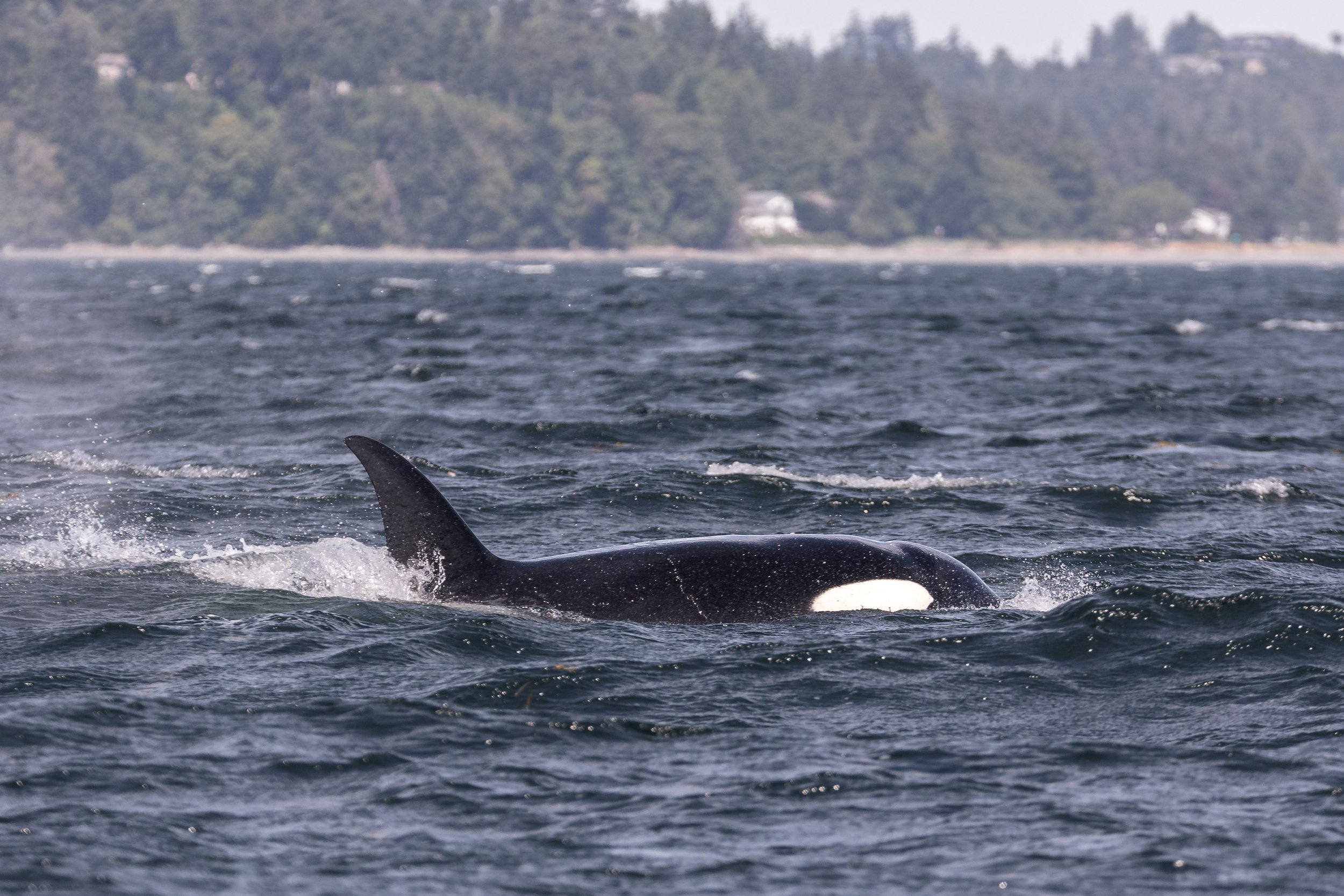
T046B1A Tsakani travelling along.
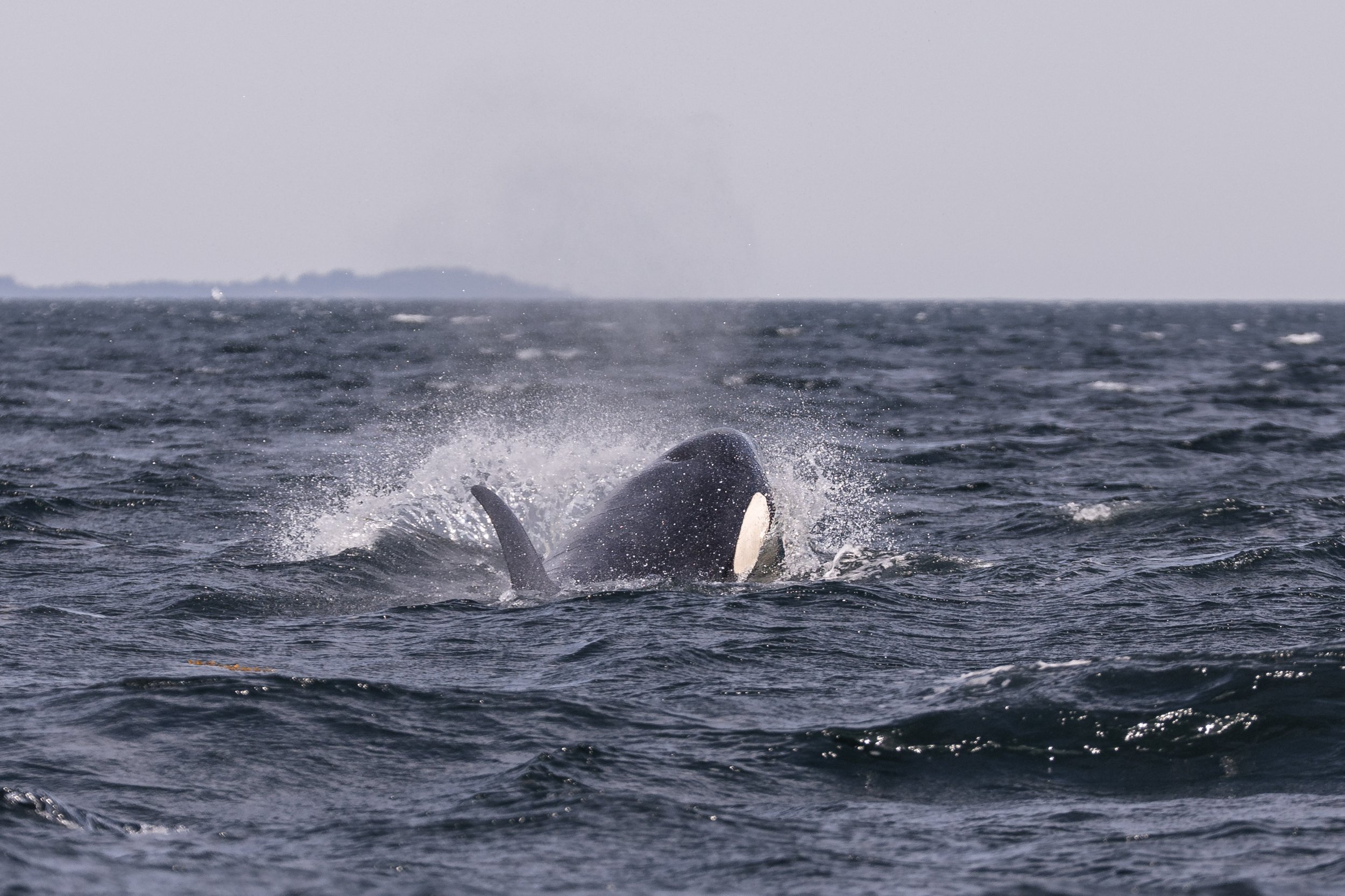
Crashing through the waters.
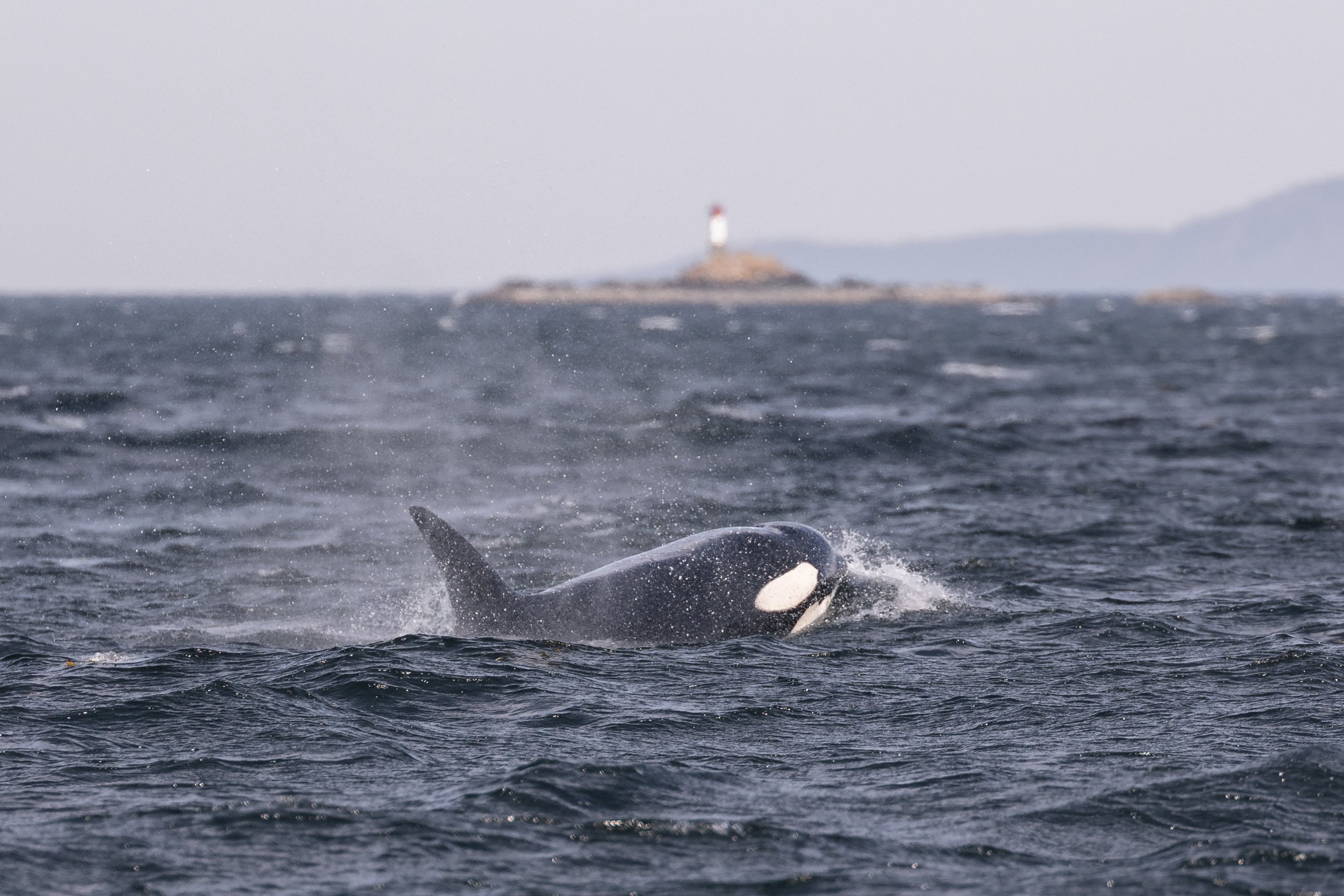
T046B1 Tread splashing along.
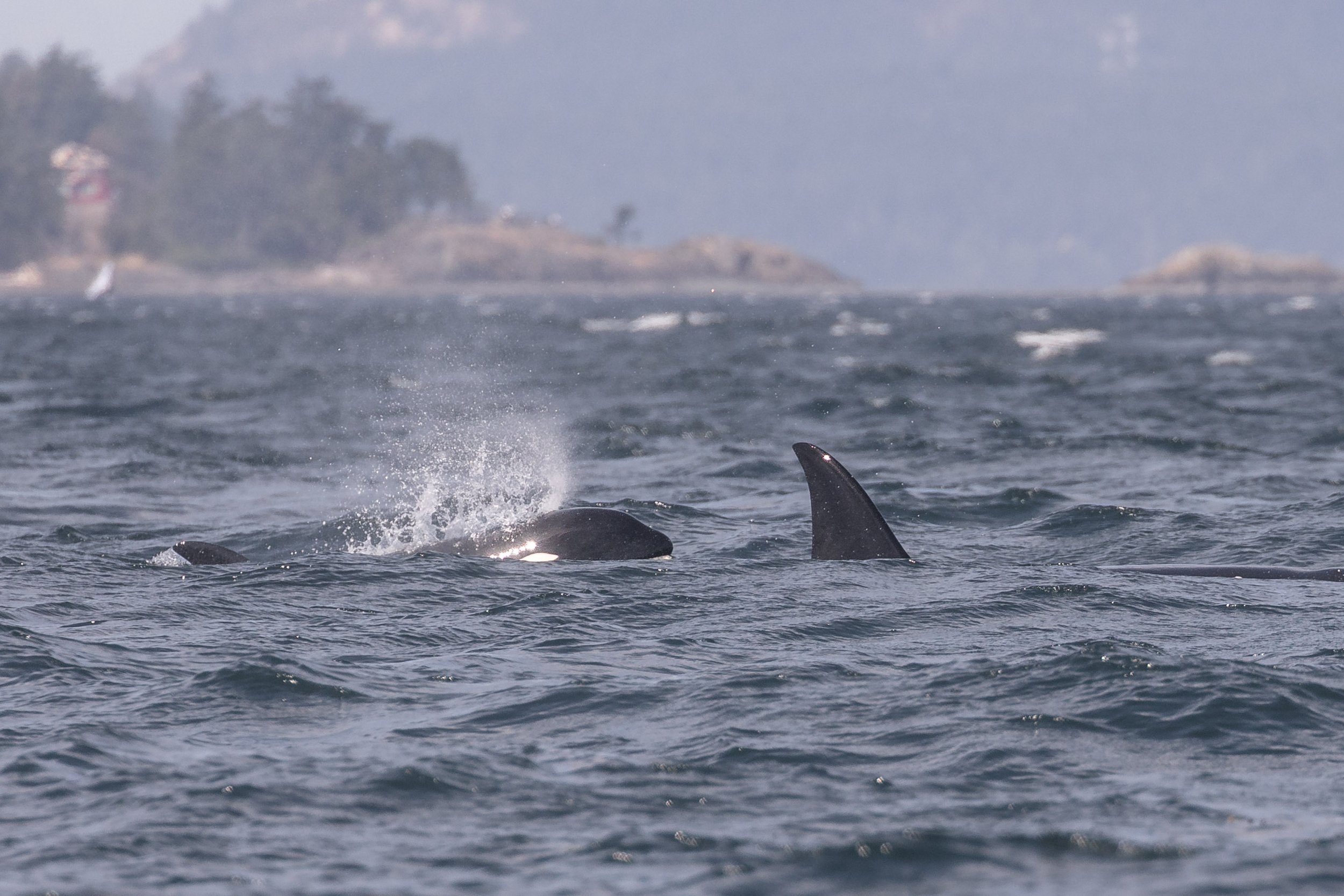
T046B1A Tsakani with T046B1C Tide behind her.
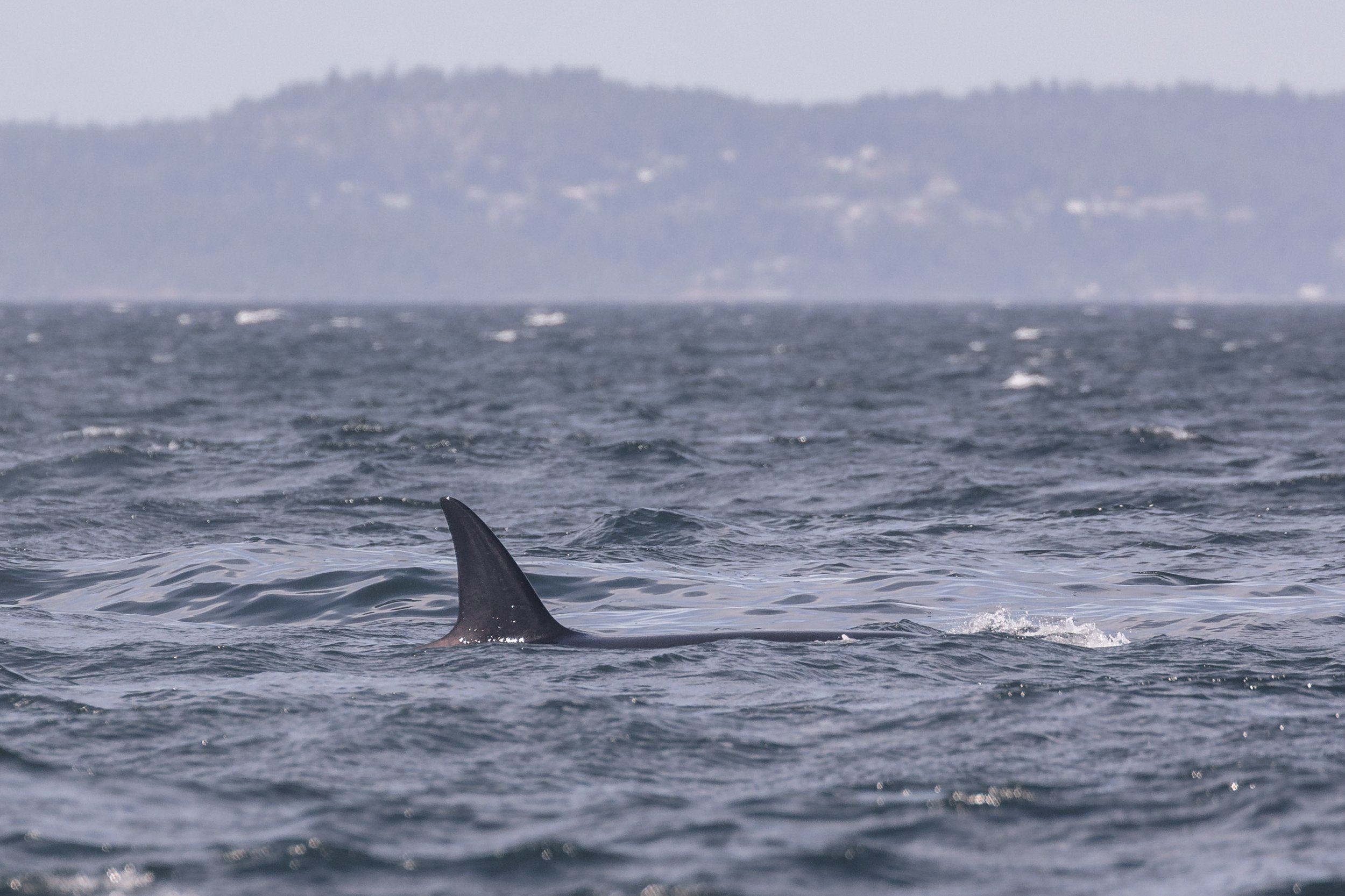
T046B1 Tread sitting low in the water.
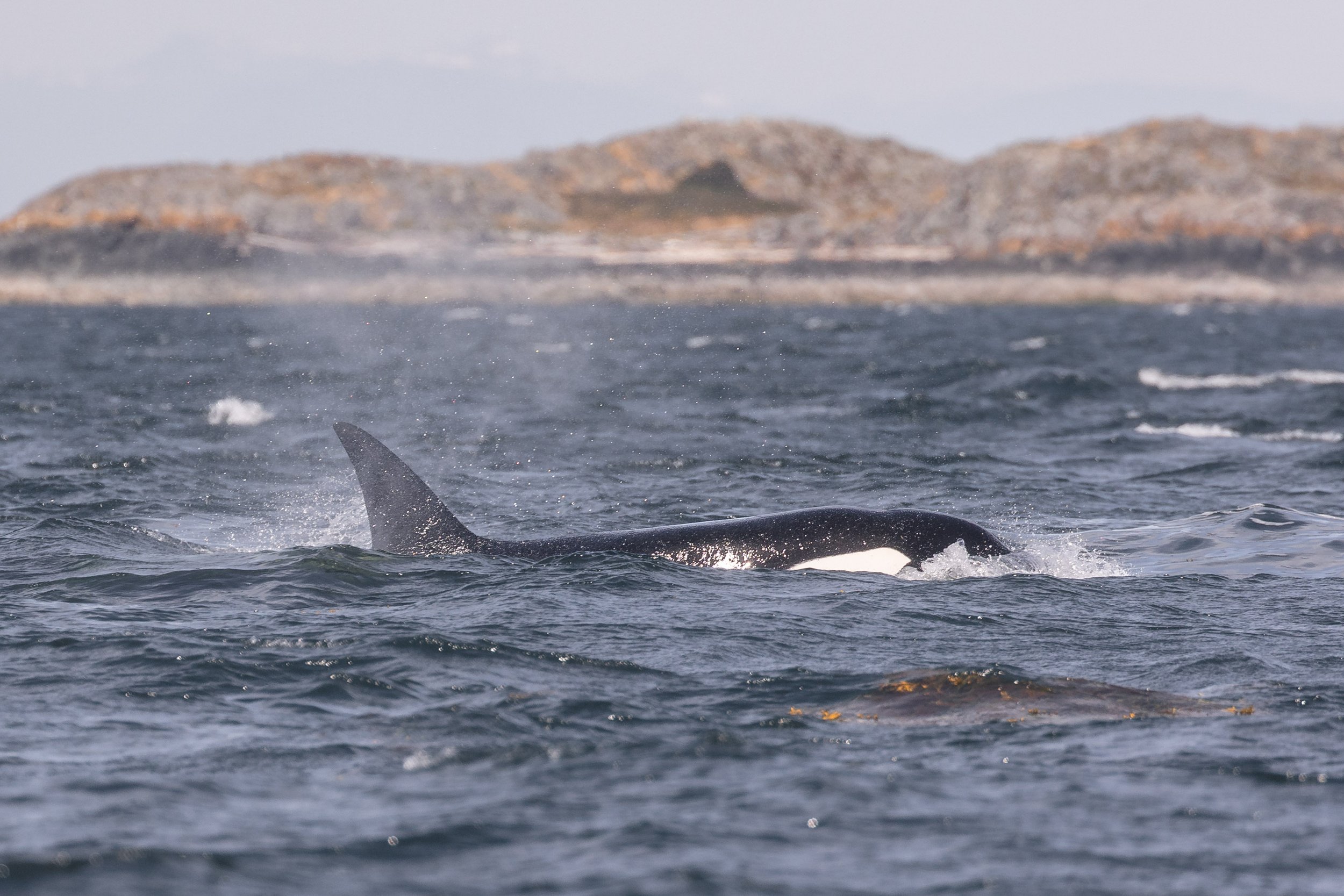
T046B1 Tread travelling.
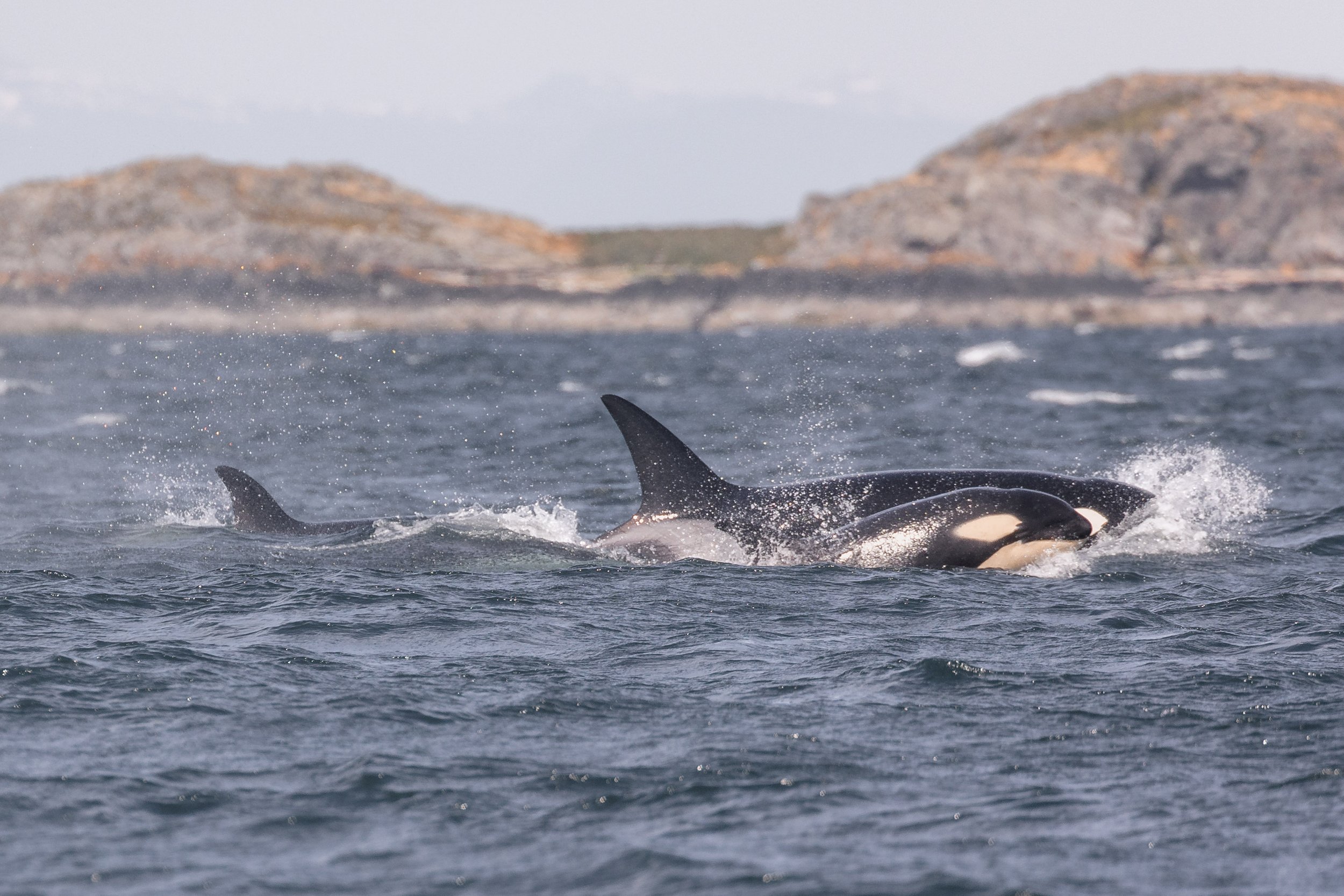
T046B1 Tread with T046B1D Tashi beside her and T046B1C Tide behind her.
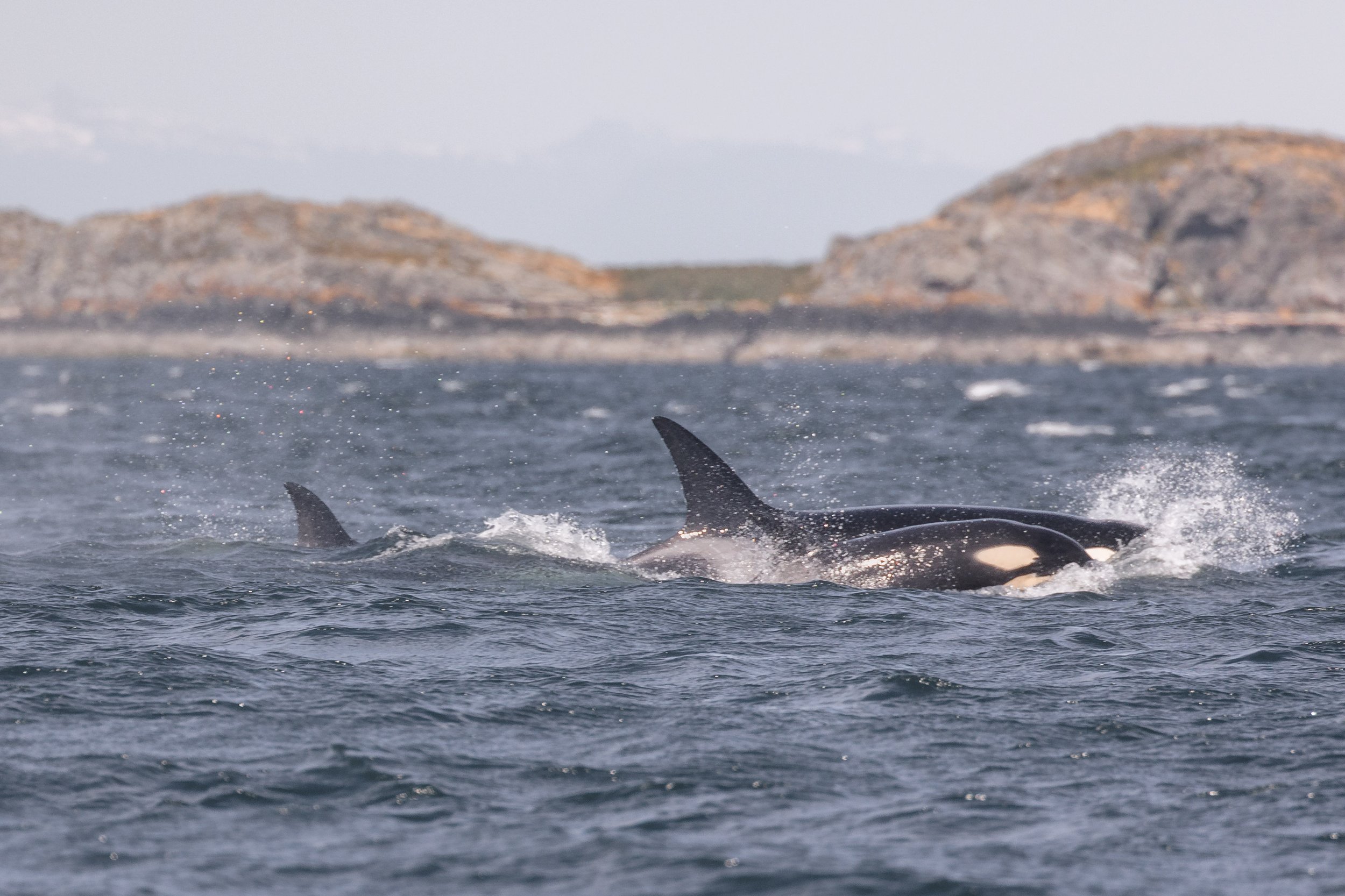
T046B1D Tashi with their eyepatch above the water.
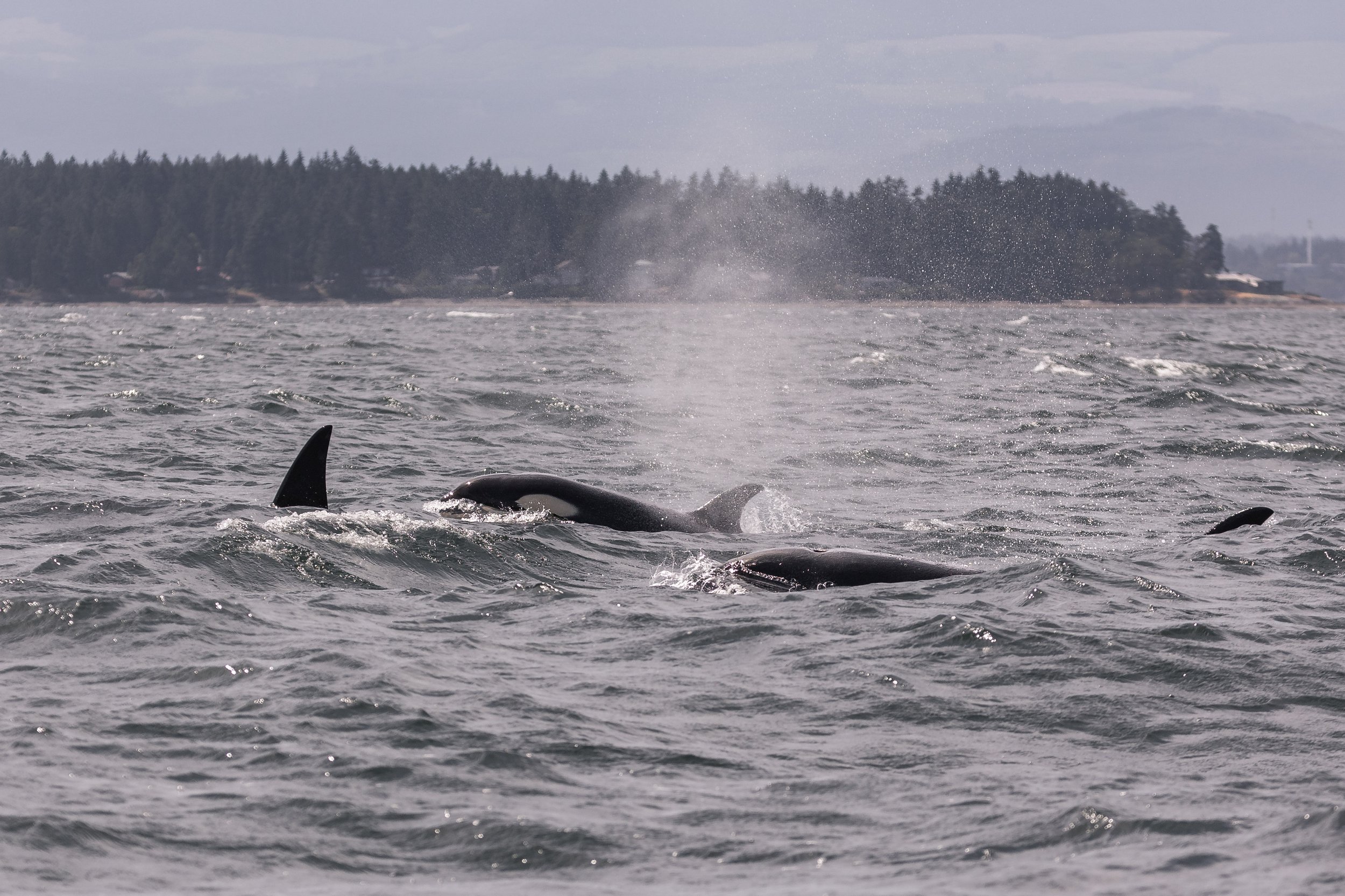
T046B1 Tread with T046B1D Tashi behind her, and T046B1A Tsakani beside them.
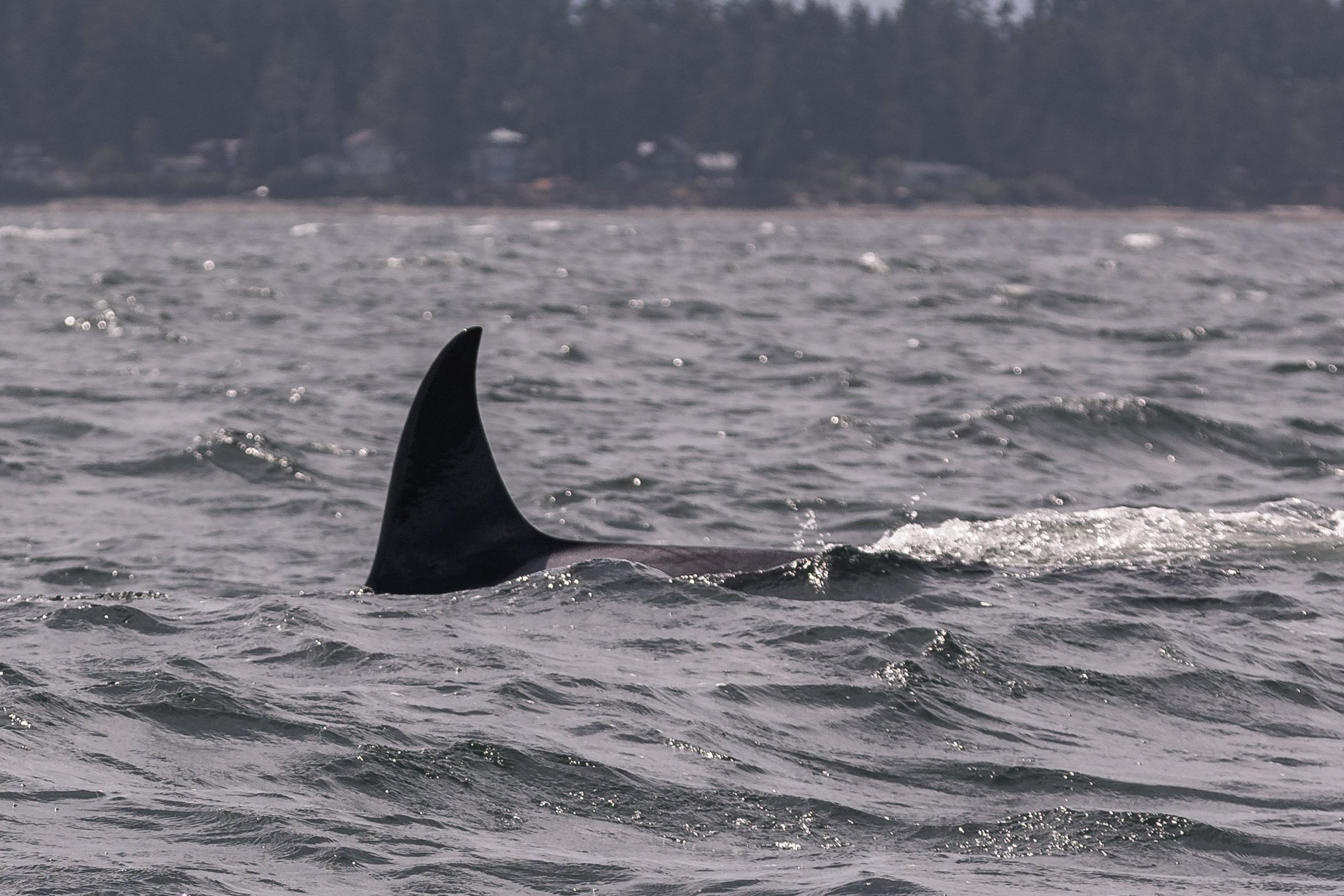
T046B1A Tsakani going for a dive.
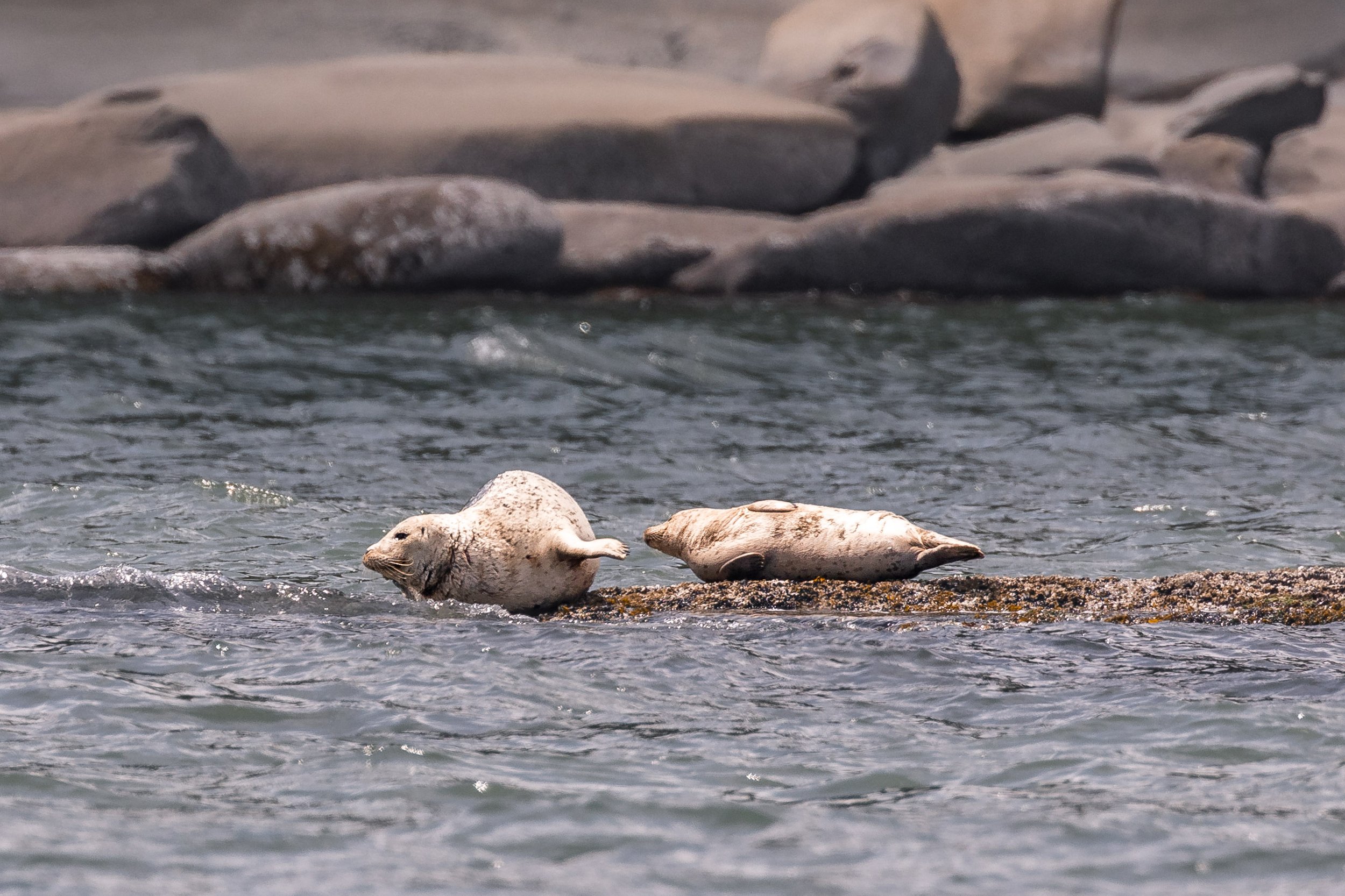
Harbour Seals plopped on the shore.
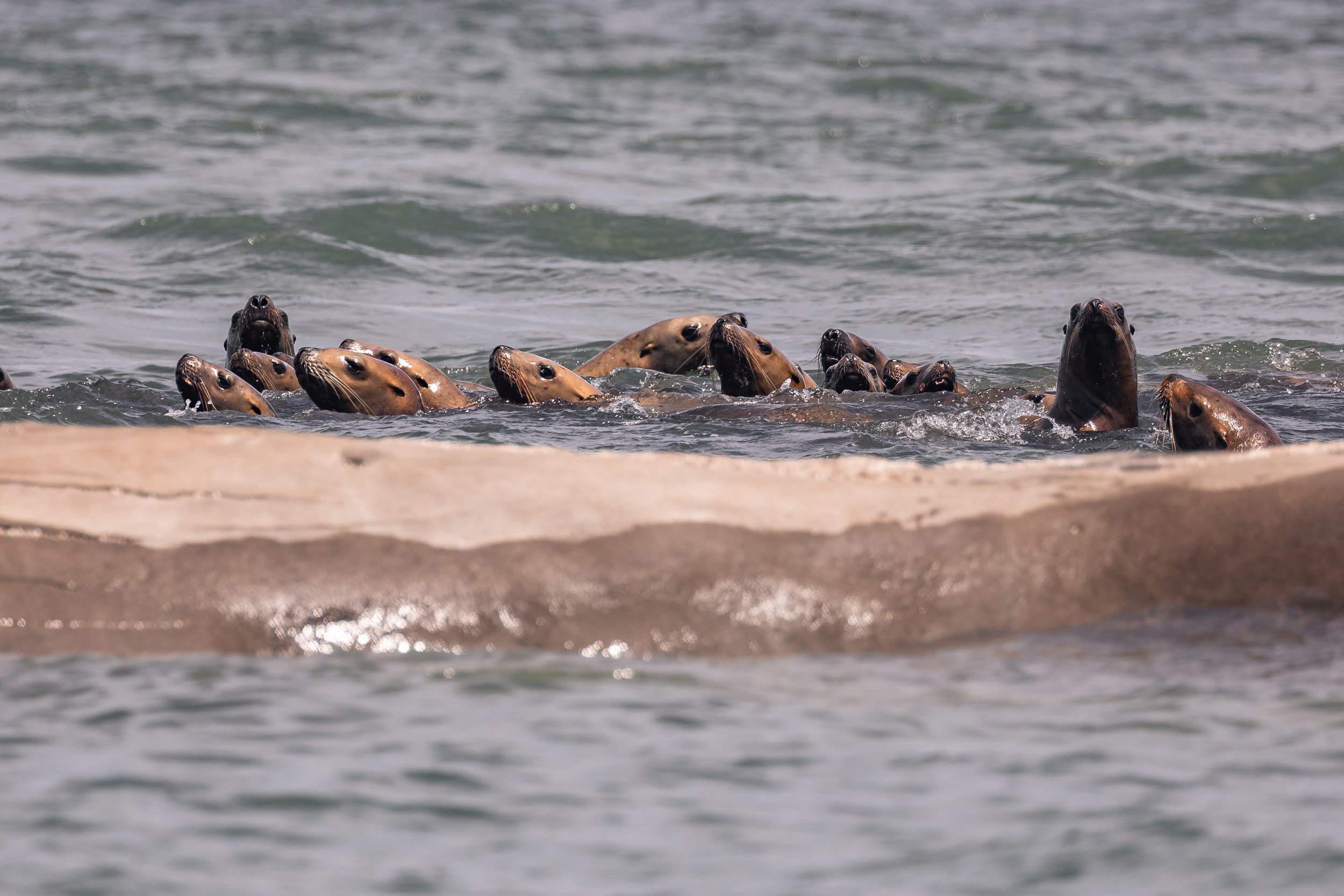
A raft of curious Steller Sea Lions.
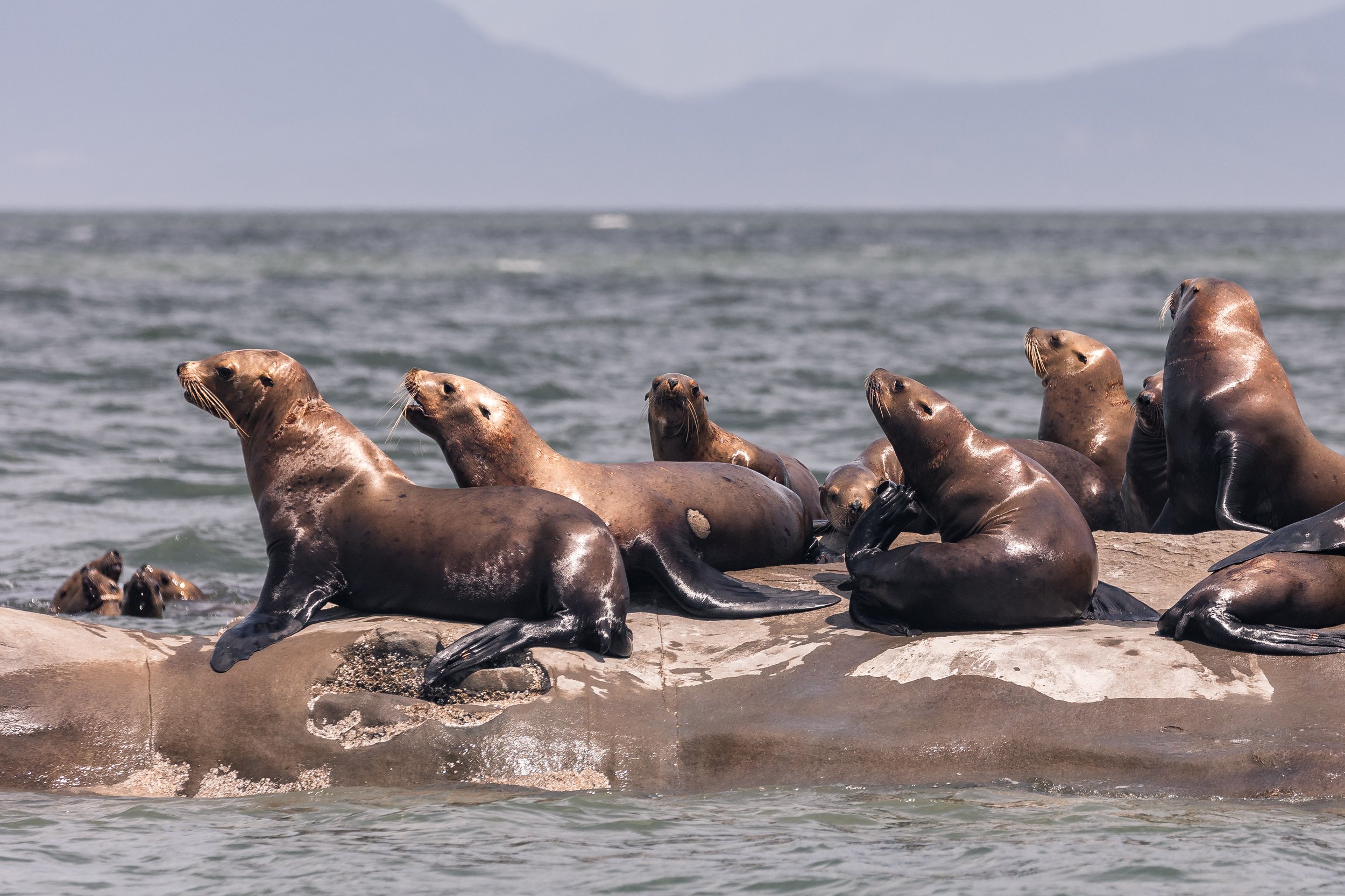
Steller Sea Lions bickering on the rocks.
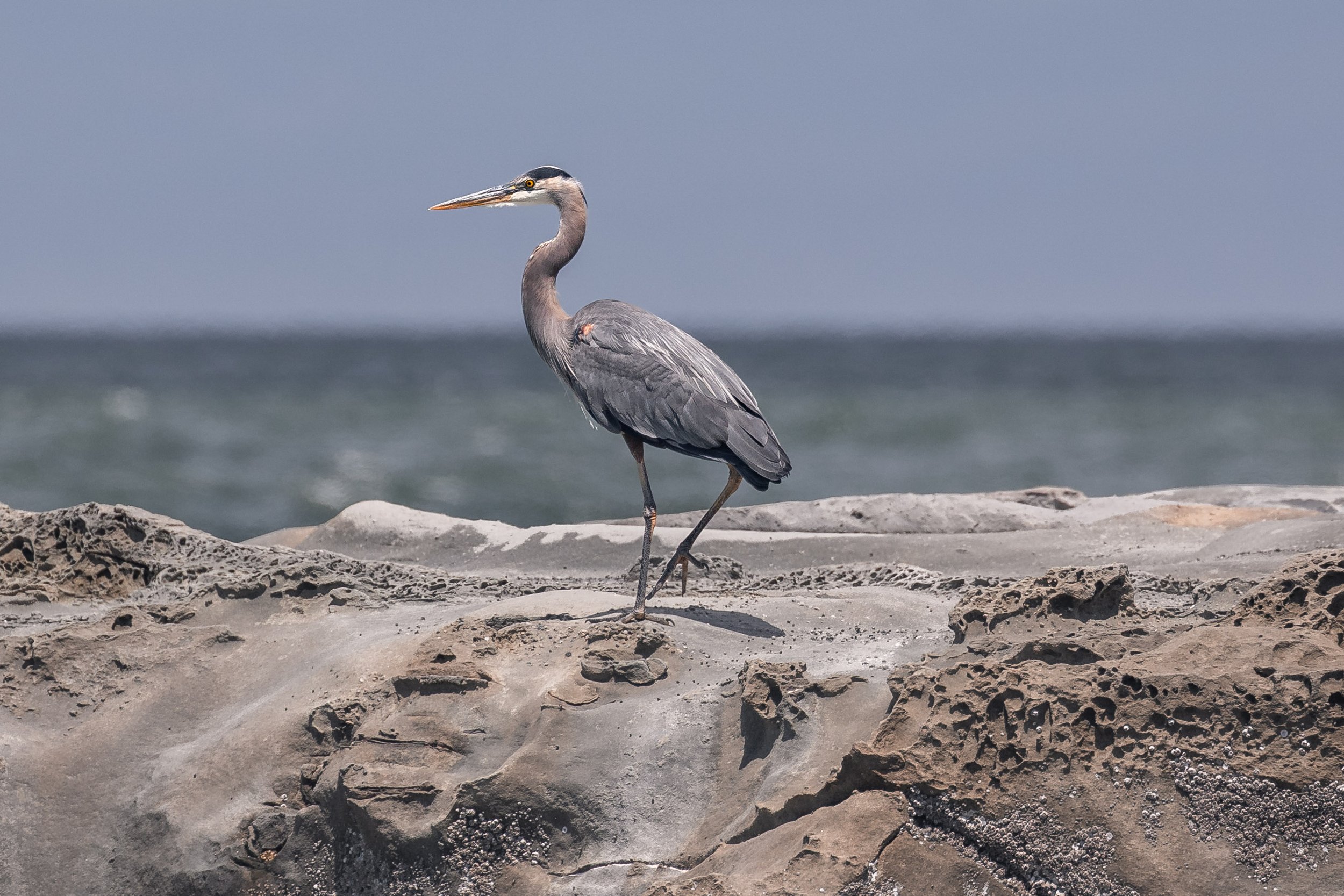
A Great Blue Heron walking along.
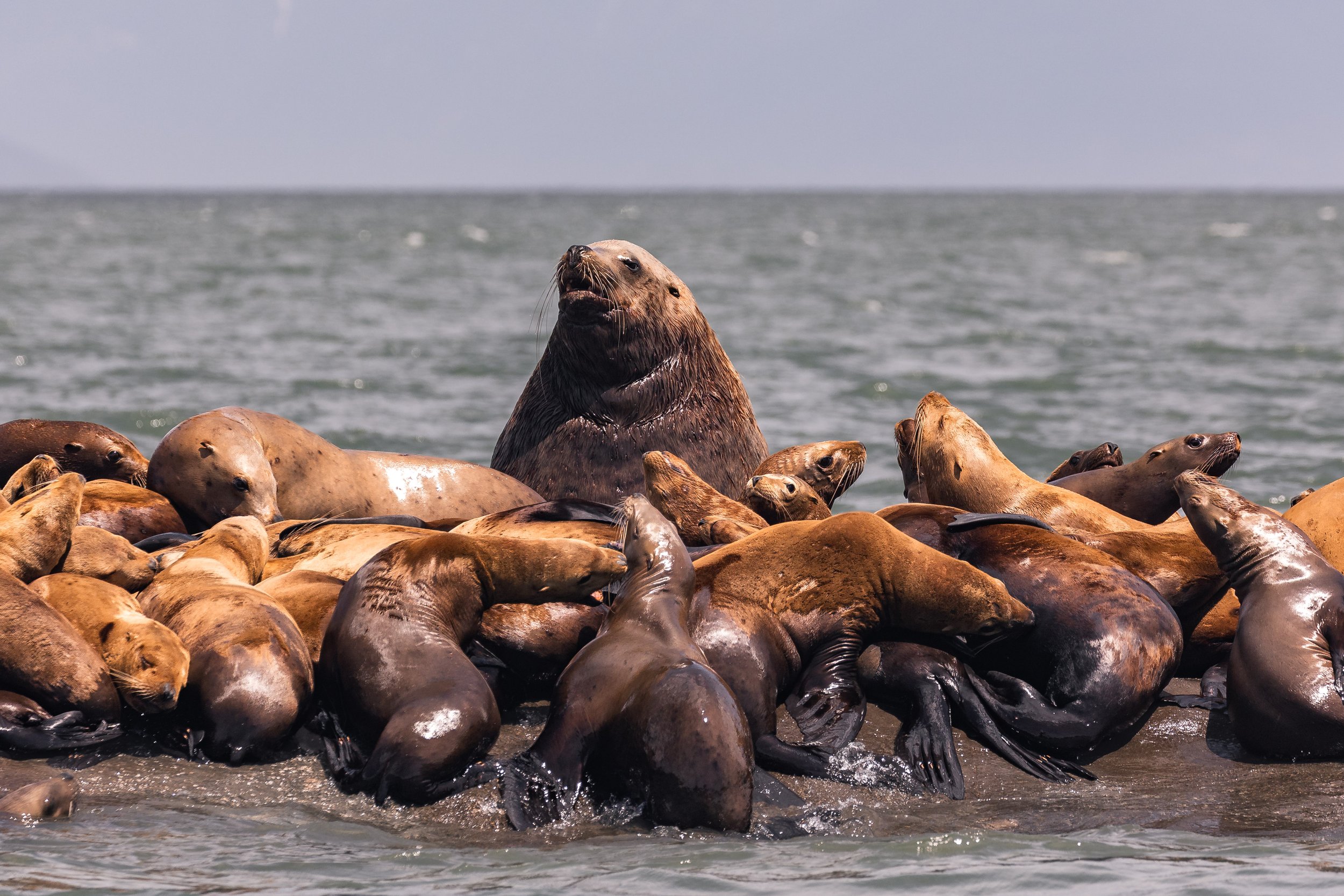
A large male Steller Sea Lion tucked between many smaller individuals.
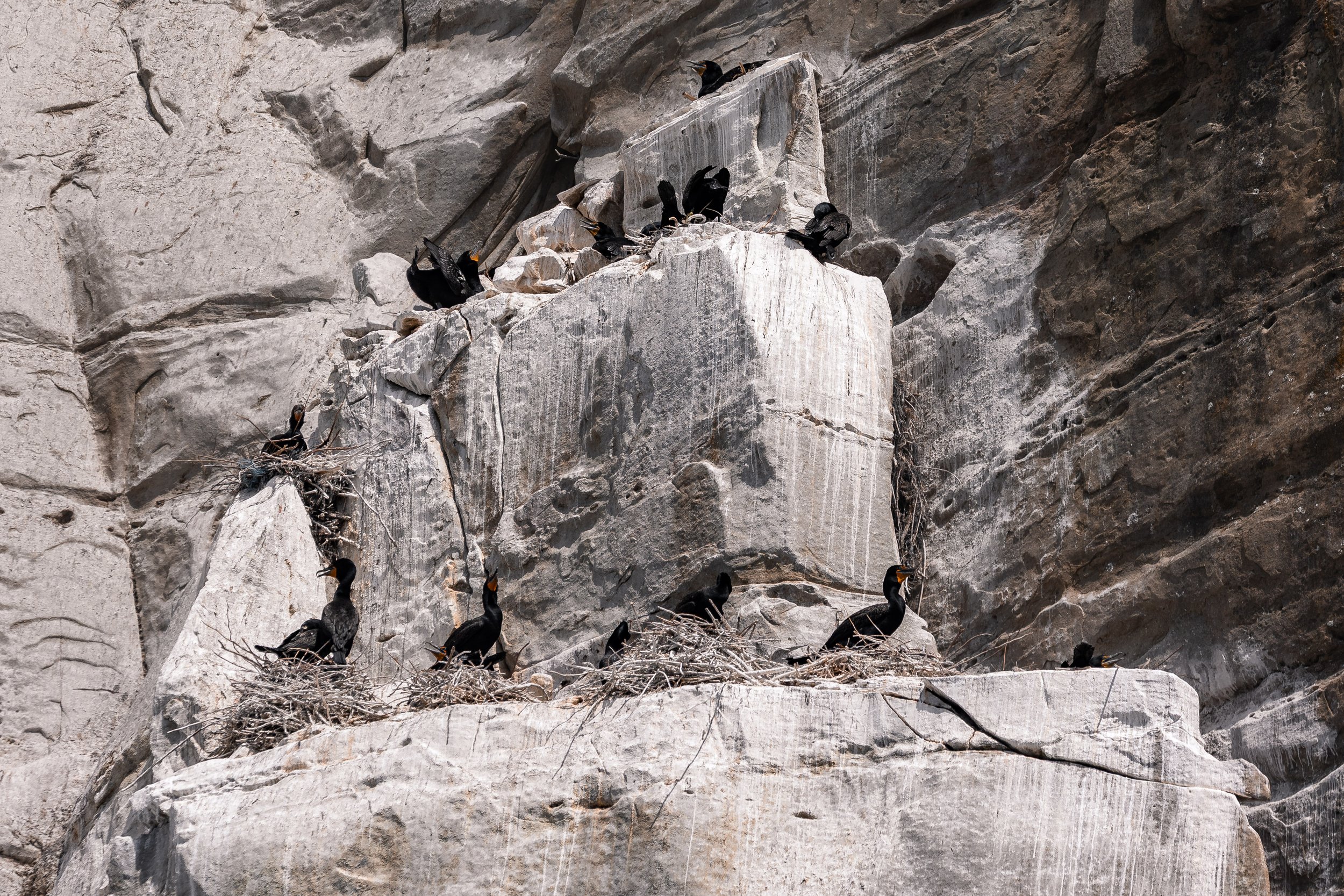
Some of the many nests along the Gabriola Bluffs.
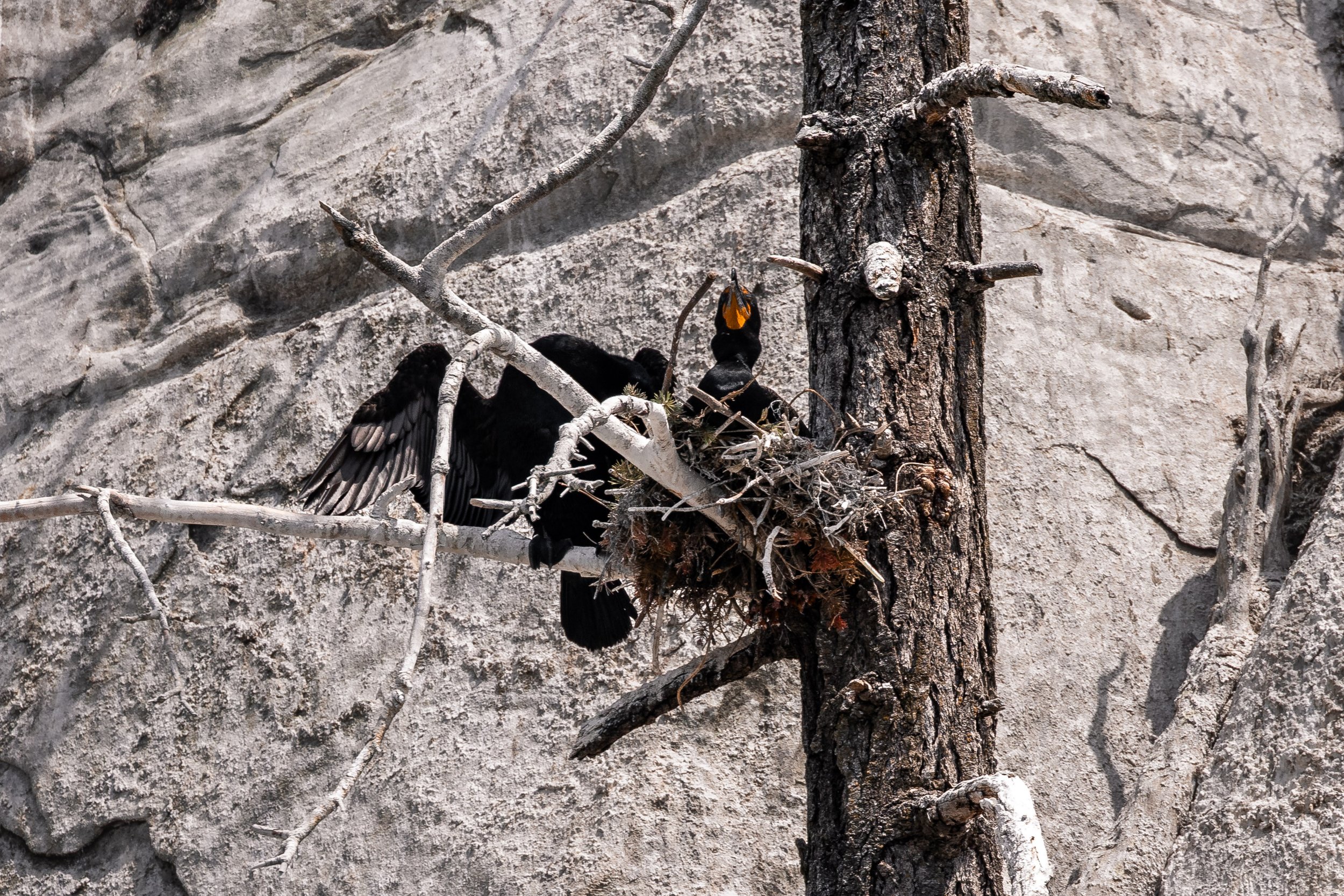
Some interesting angles of the cormorants on their nests.
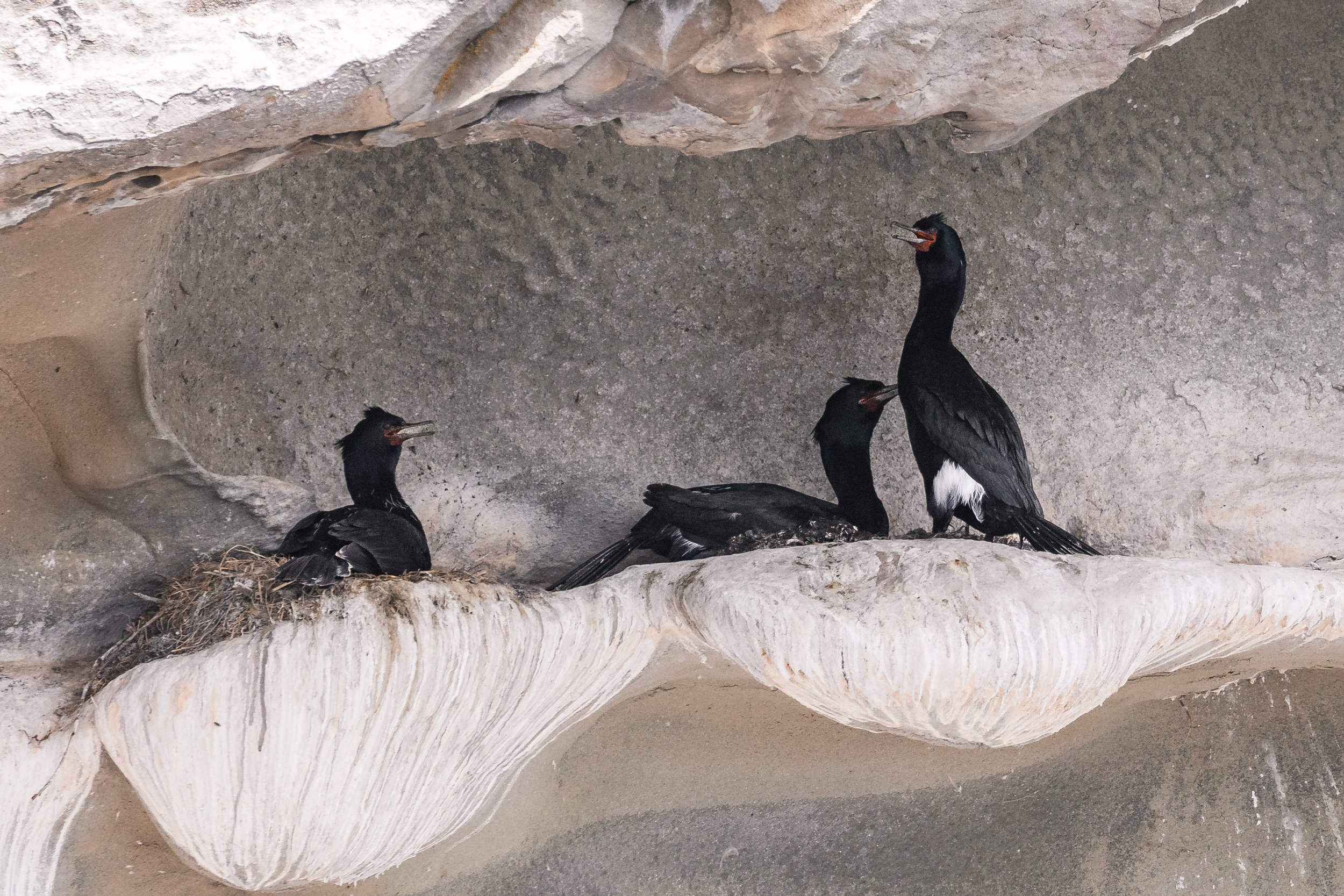
Pelagic Cormorants on one of the many ‘shelves’ found on the Bluffs.
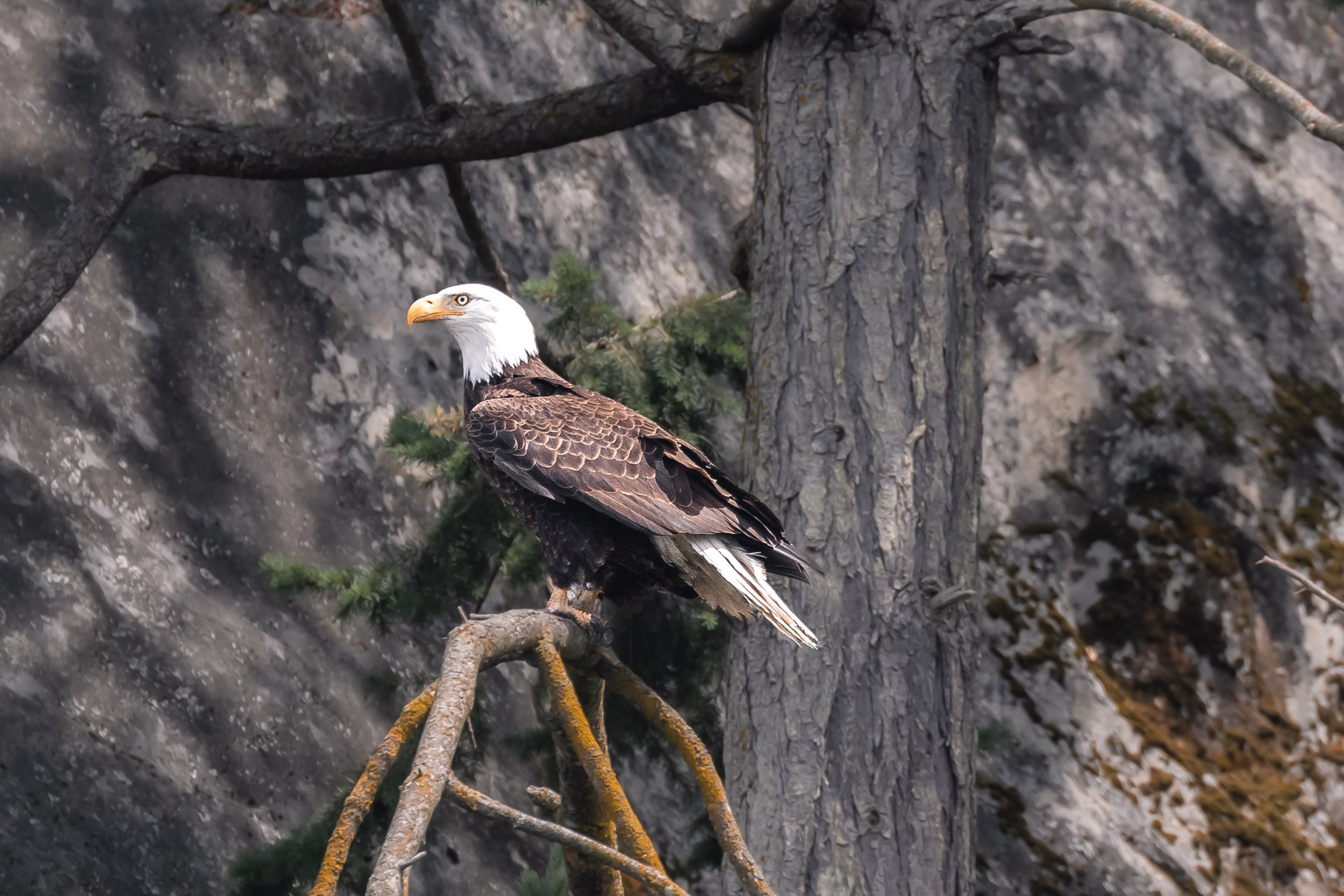
What a majestic Bald Eagle…
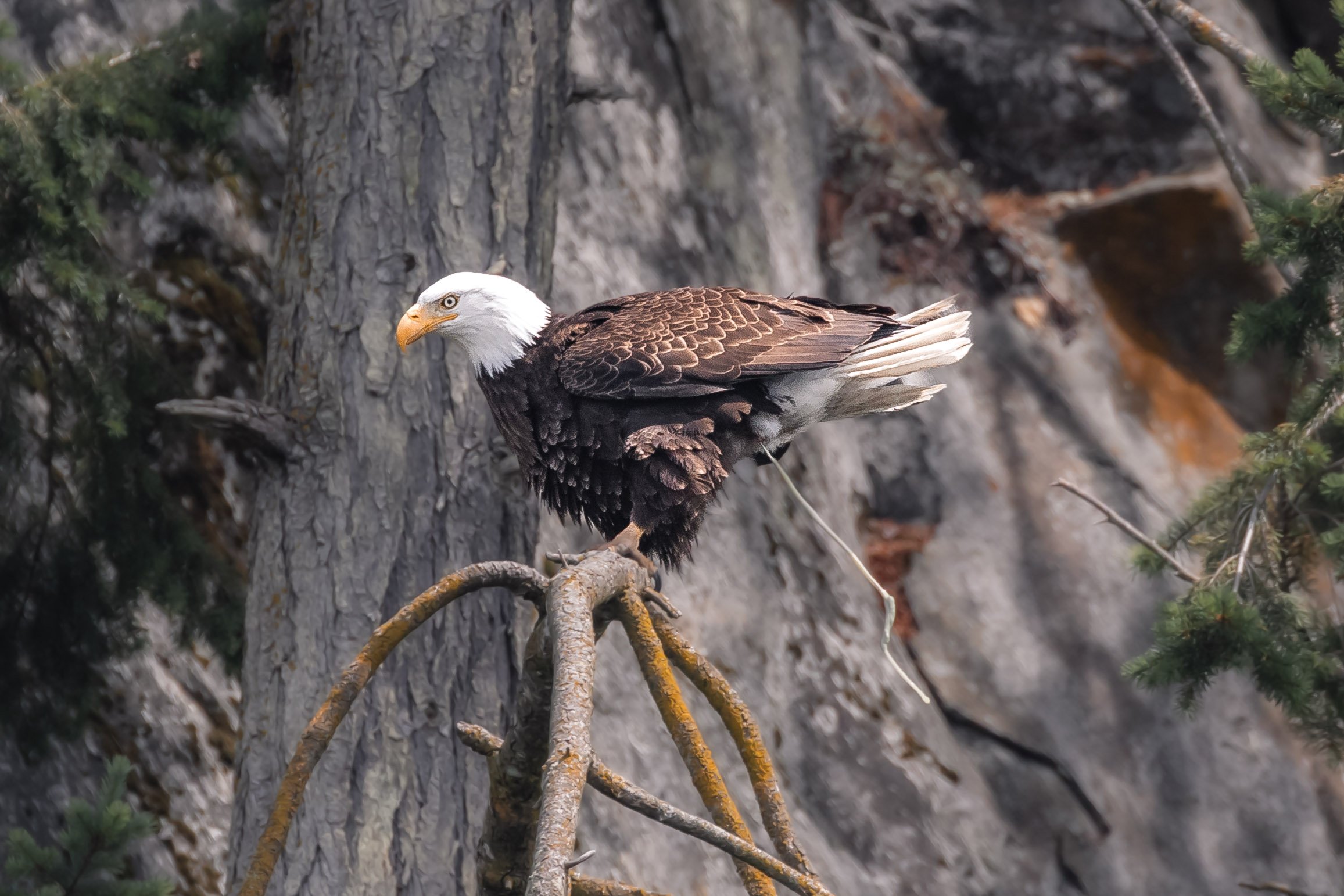
Just kidding nevermind.
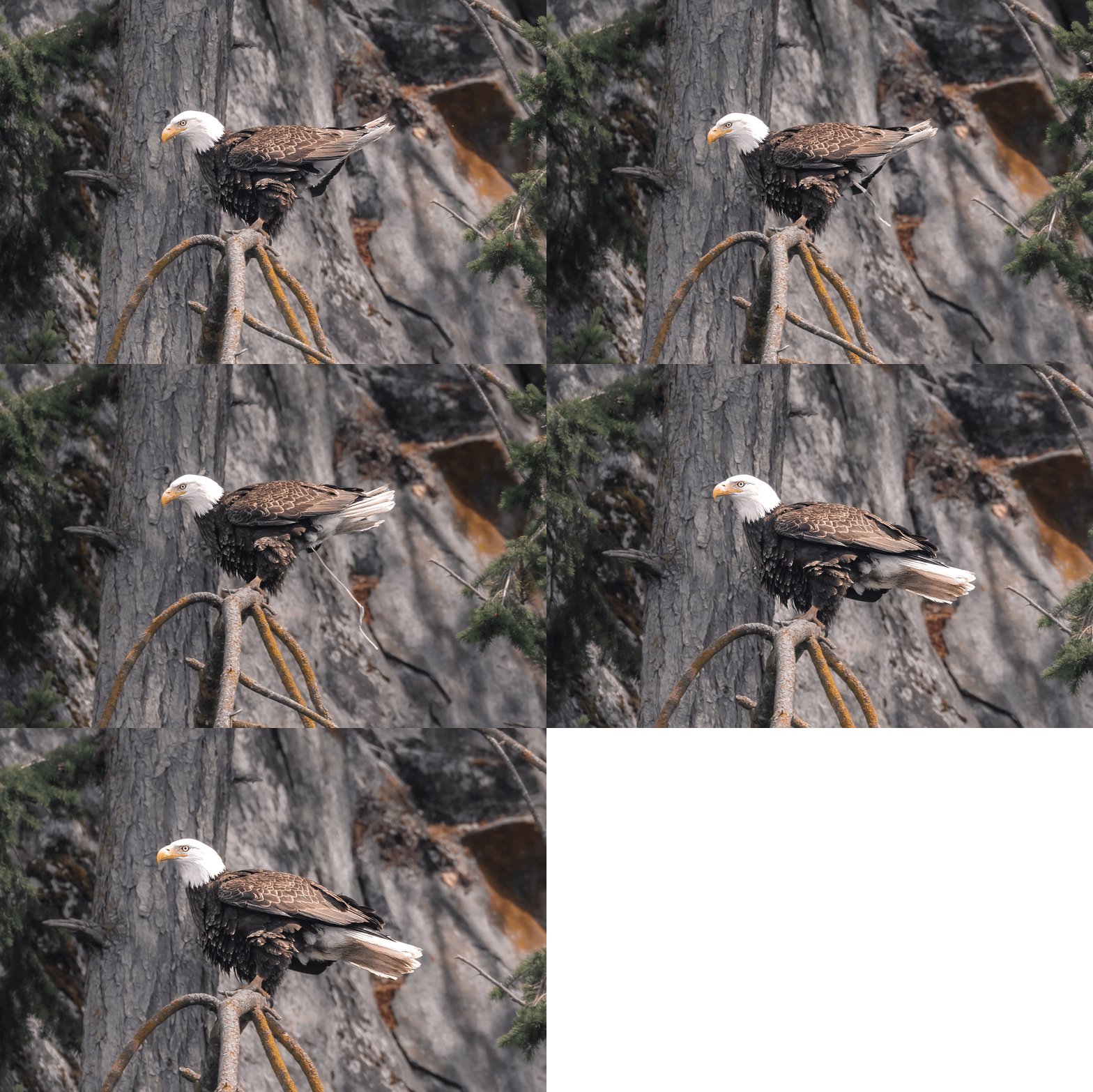
The whole sequence from elegant to not as elegant.