
June 24, 2026, 3:30 PM - A boisterous T-Party and a handful of Humpbacks
A blanket of low cloud hung over the Salish Sea as we slipped away from the dock aboard our open vessel, Cascadia. The slightly overcast skies painted the coastline in classic West Coast fashion, moody, dramatic, and undeniably beautiful. With cameras ready and binoculars in hand, we pointed our bow toward the Strait of Georgia and the rugged silhouette of the Sunshine Coast, eager to see what the afternoon would bring. Search mode did not last long. Far off on the horizon, at least two towering blows broke the calm surface. Captain Joseph adjusted course while naturalist Evan lifted his telephoto lens, already clicking away as dark dorsal fins and broad tails appeared between the soft ripples. As we closed the distance, our initial pair of whales became three. We had arrived at Halibut Bank, one of the Strait of Georgia's most productive humpback feeding grounds.
This remarkable area owes its productivity to what lies beneath the surface. Halibut Bank is actually an underwater mountain, or seamount, rising dramatically from the surrounding seafloor. As tidal currents sweep across this submerged feature, deep, cold water is forced upward in a process known as upwelling. These waters carry nutrients that have accumulated in the depths back toward the sunlit surface, where phytoplankton flourish. Tiny zooplankton feed on the phytoplankton, schools of baitfish gather to feed on the zooplankton, and before long, the giants of the sea arrive to take advantage of the feast. It's a perfect example of how the shape of the ocean floor can influence an entire marine ecosystem.
For quite some time, we watched our trio of humpbacks surface rhythmically, each massive breath sending a misty column high into the cool afternoon air. Their dives revealed the beautiful underside of tail flukes, nature's fingerprint. No two humpbacks have the same pigmentation patterns, allowing researchers to identify individuals throughout their lifetimes. Thanks to Evan's photographs, these distinctive markings will help us confirm exactly which whales we were fortunate enough to encounter today. We had Dalmatian (BCY0994), X_pialidocious (BCY1540), and Malachite (BCY1463) at the afternoon feast.
Eventually, it was time to continue the search. Reports had come in of transient orca on the opposite side of the Strait, so Captain Joseph turned Cascadia westward once again. Before long, excitement spread through the boat. Fins. Everywhere! We had stumbled into what whale watchers affectionately call a T-party.
The "T" stands for transient orca, also known as Bigg's killer whales, a population that specializes in hunting marine mammals. A T-party occurs when several family groups come together, creating a rare opportunity to witness dozens of these apex predators interacting. Unlike fish-eating resident orca, transient orca typically travel in much smaller family groups, making these larger gatherings especially exciting. The energy on the water was incredible. Individuals surfaced in every direction, porpoising rapidly across the surface as they travelled together. Several whales spyhopped, lifting themselves vertically out of the water to take a better look around. Although scientists are still studying exactly why orca spyhop, it is thought they use both their exceptional eyesight and hearing above the surface to gather information about their surroundings. Then came the tail slaps. One powerful smack after another echoed across the Strait, sending spray high into the air. Tail slapping can serve several purposes, from communication between pod members to stunning prey or expressing excitement during social interactions.
As if that wasn't enough, a few of the orcas launched themselves completely clear of the water in spectacular breaches. For an animal weighing several tonnes, the sheer athleticism is breathtaking. Scientists believe breaching may help dislodge parasites, strengthen social bonds, or simply be another form of communication, but regardless of the reason, it never fails to amaze. Between bursts of activity, the whales slowed to socialize, swimming close together, rolling beside one another, and surfacing almost in perfect synchronization. These moments remind us that orca are not only highly intelligent predators but also deeply social animals, maintaining lifelong family relationships and complex communication within their groups. Eventually, as all unforgettable encounters do, our time with the T-party came to an end, but not before we grabbed the ID’s of the members present! Well, with all the action, we did not get photos of all the fins. We assume we had all the members of these pods:
T065 Whidbey II ♀ (~1971)
T063 Chainsaw ♂ (~1978)
T075B Pebbles ♀ (1995)
T075B2 Jasper ♀ (2015)
T075B3 Rubble ♂(2017)
T075B4 Petra ♀ (2021)
T077 Asja ♀ (1981)
T077D Alcyon ♀ (2009)
T077E Misneach (2016)
T100 Hutchins ♀ (~1979)
T100C Laurel ♂ (2002)
T100F Estrella (2014)
T101 Reef ♀ (≤1969)
T101A Rush ♂ (1993)
T101B Lagoon ♂ (1997)
T124A2 Elkugu ♀ (2001)
T124A2A Agafia ♂ (2013)
T124A2B Litton ♀ (2016)
We pointed the bow back toward Nanaimo, reflecting on what had already been an incredible afternoon.
Then, one final surprise. Ahead of us, the familiar flukes of Beak (BCX1606), the humpback whale broke the surface. As if offering one last farewell, Beak lifted his enormous tail high above the water before disappearing beneath the surface once more. It was the perfect ending to an already remarkable day.
Well... almost. Before returning to the harbour, we stopped to visit some of our local pinniped neighbours. Curious harbour seals poked their heads above the surface, watching us with their large, dark eyes before quietly slipping beneath the water again. Harbour seals are perfectly adapted for stealth. Unlike sea lions, they lack external ear flaps and propel themselves primarily with their hind flippers, making them graceful and efficient underwater hunters. They can remain submerged for up to 30 minutes and possess remarkably sensitive whiskers that detect the tiny water movements left behind by passing fish.
Just around the next corner, we could already hear them before we saw them. The unmistakable growls and grumbles of our Steller Sea Lions echoed across the rocks. The largest sea lion species on Earth, male Stellers can exceed 1,000 kilograms (2,500 pounds). Unlike seals, sea lions rotate their large hind flippers beneath their bodies, allowing them to "walk" surprisingly well on land. Their loud vocalizations help establish dominance for the best spot on the rocks.
Together, harbour seals and Steller sea lions play an important role in the Salish Sea ecosystem. As predators, they help maintain healthy fish populations, while also serving as prey for transient orca, illustrating the intricate balance of life in these coastal waters.
As Cascadia eased back toward the dock, the afternoon served as a perfect reminder of why the Salish Sea is one of the world's most extraordinary marine ecosystems. From nutrient-rich underwater mountains that feed giant humpbacks to social gatherings of apex predators and bustling pinniped colonies along the shoreline, every encounter is connected by the same thriving web of life.
No two days on the water are ever the same, but days like today remind us why we keep coming back.
Photos below by Evan Hessels.
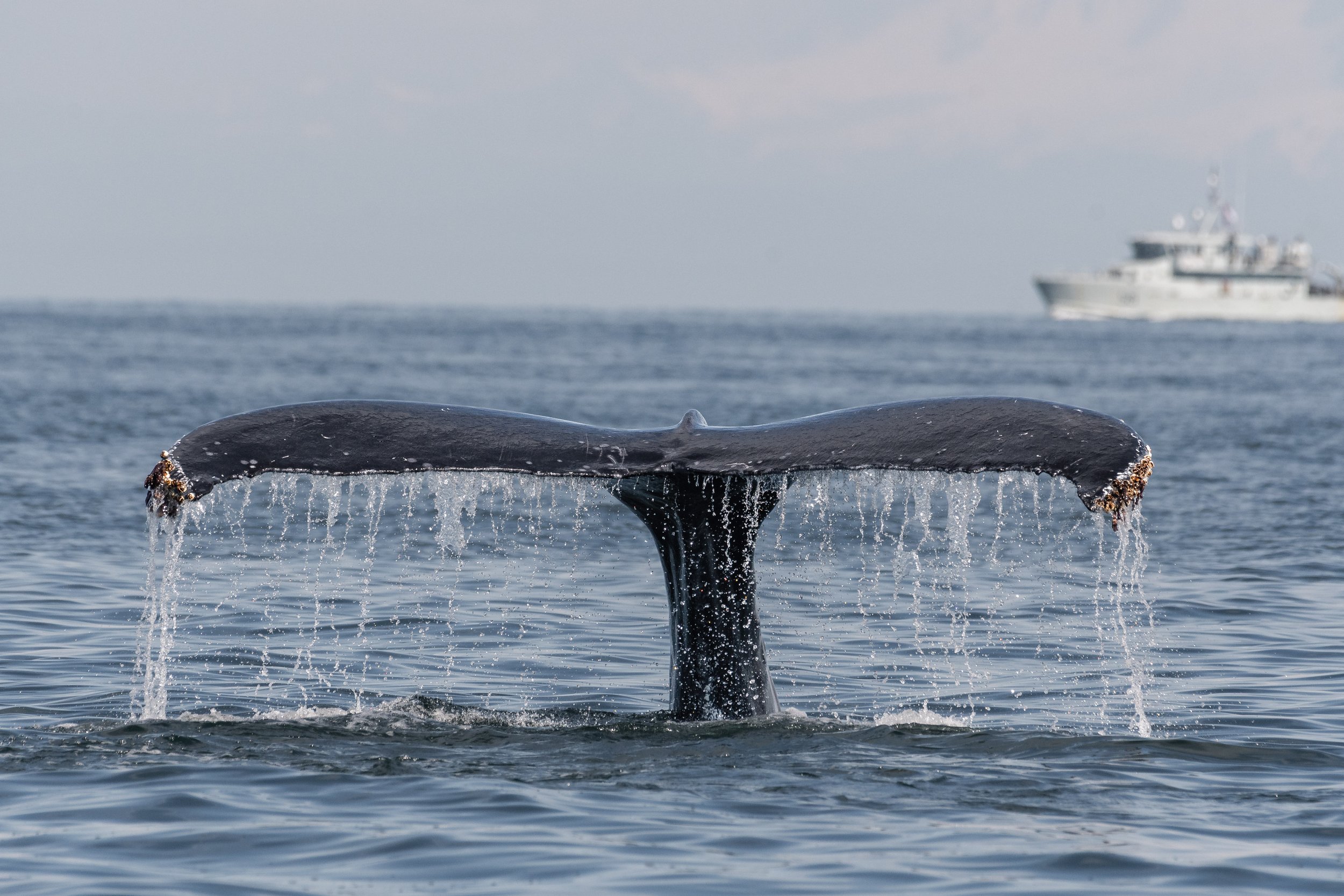
Dalmatian diving with a Navy vessel behind him.
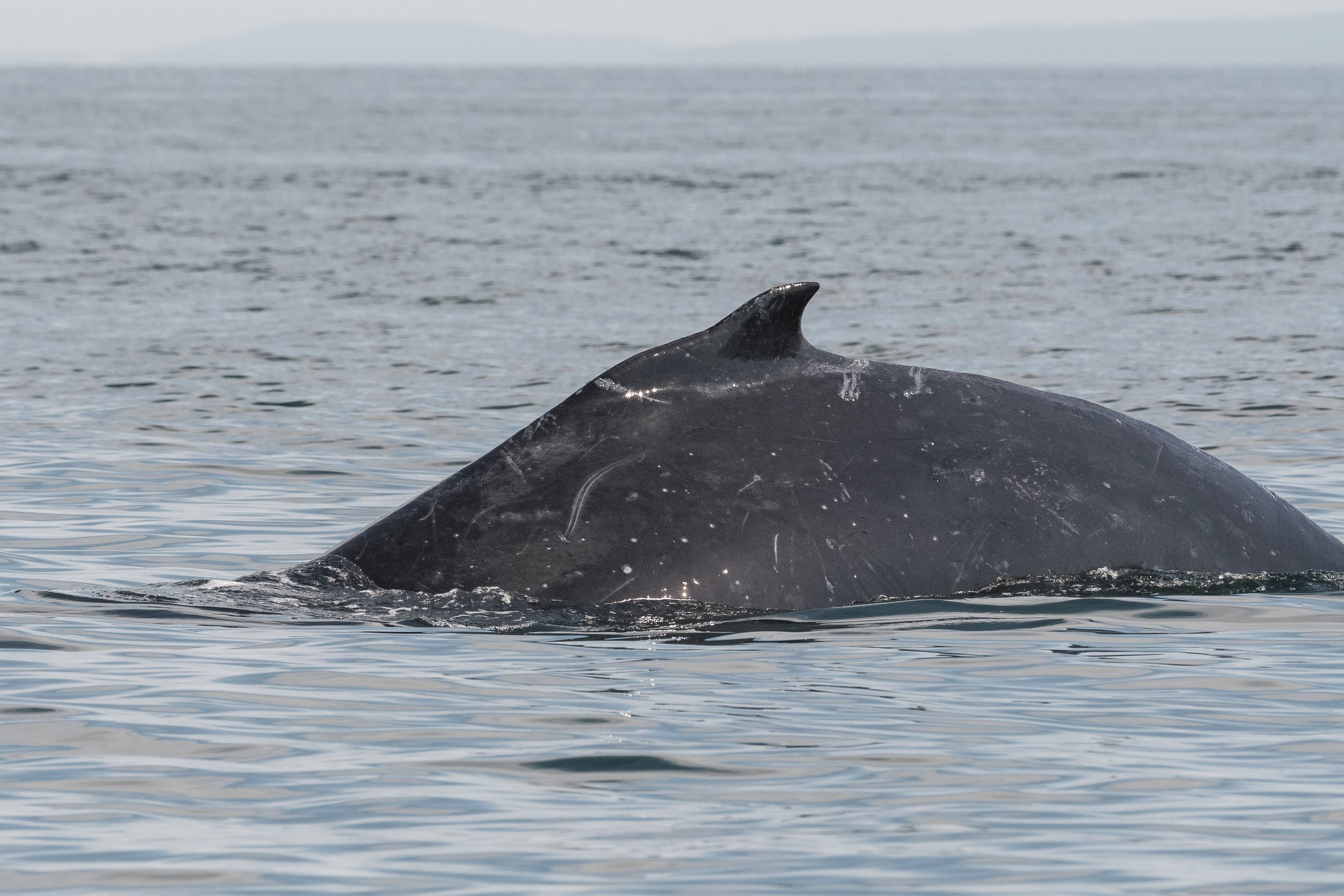
Malachite’s dorsal fin.
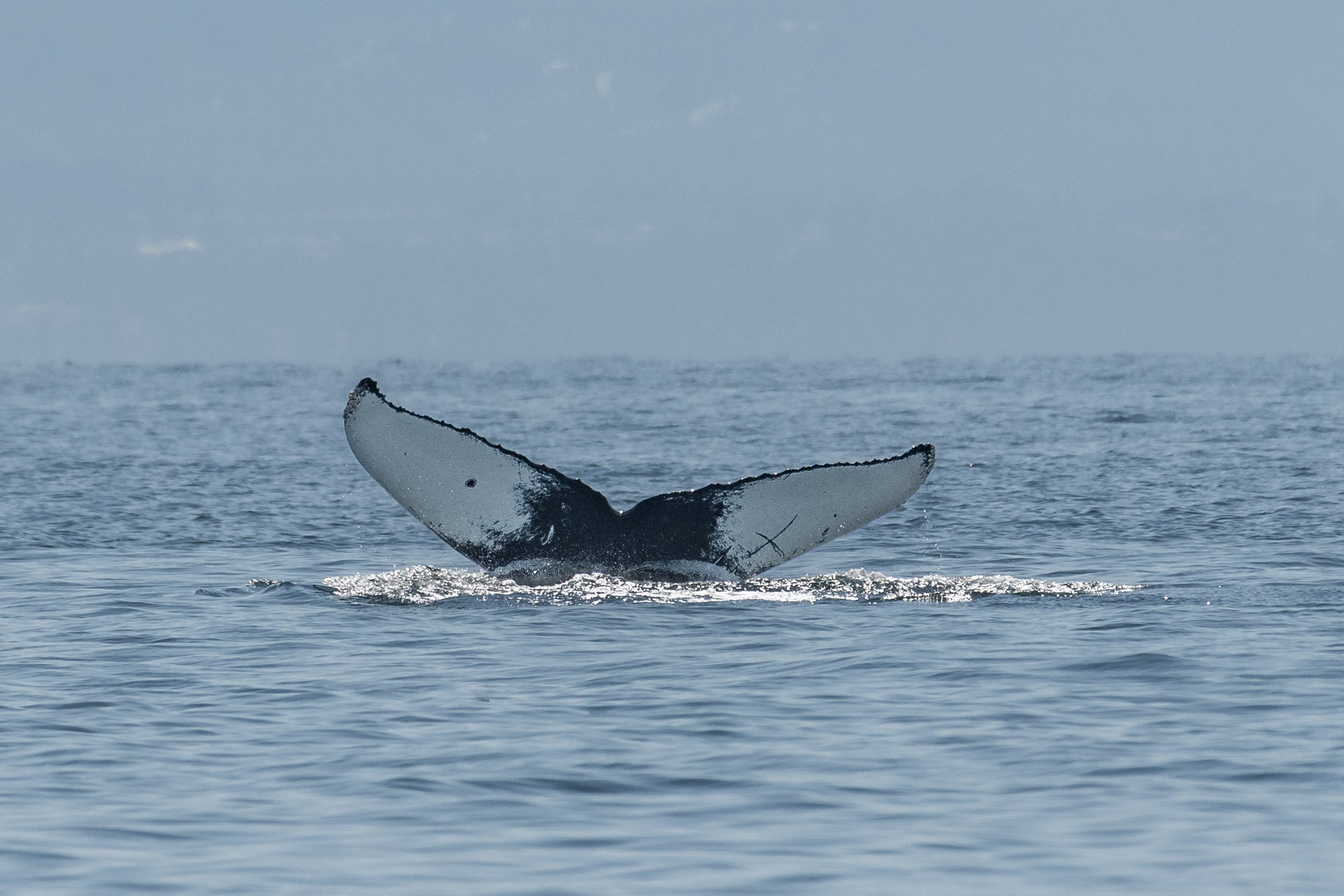
X_pialidocious’s fluke as they dive.
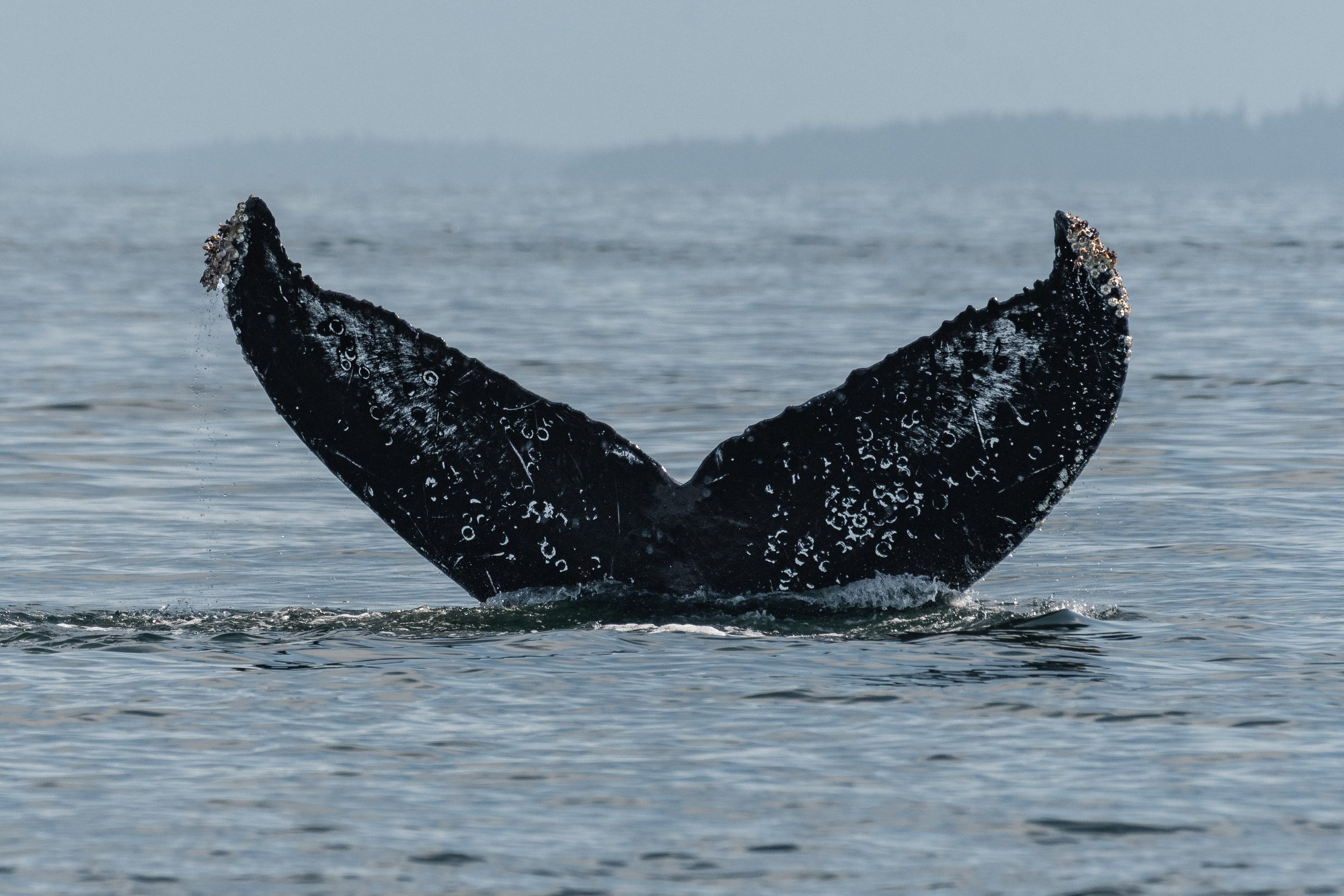
Dalmatian’s beautiful fluke.
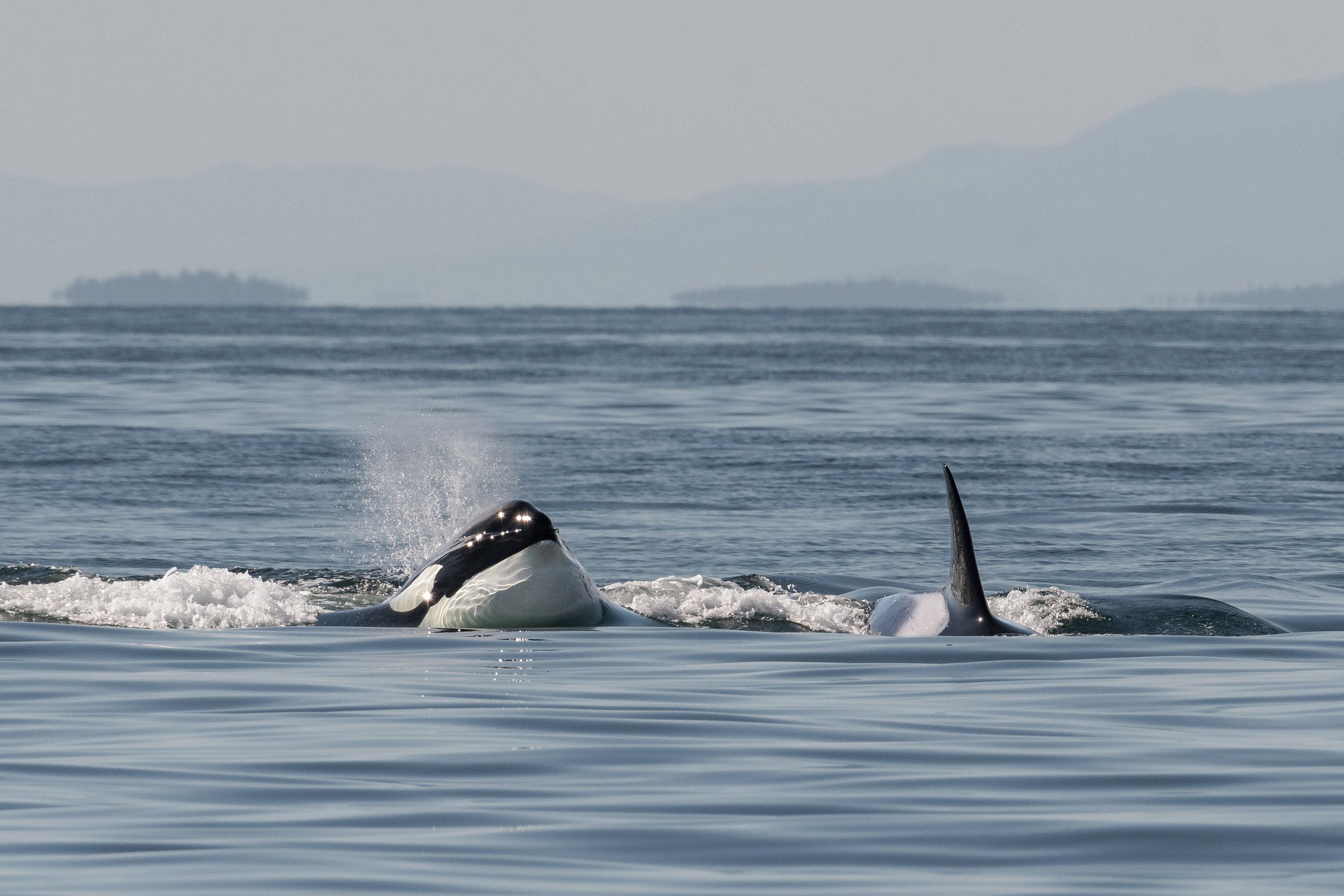
The water tension making this whale’s face look very wide.
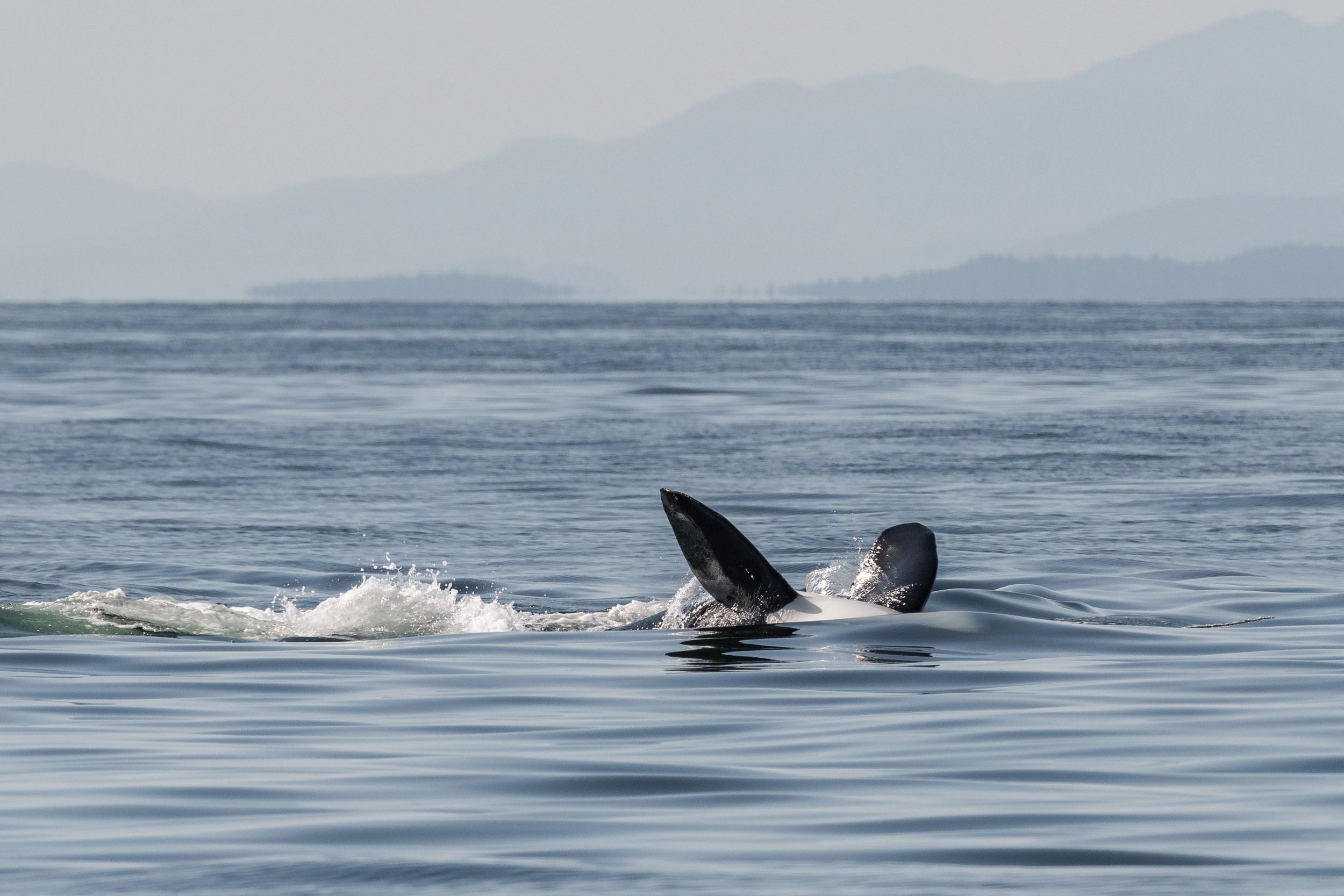
Doing the backstroke!
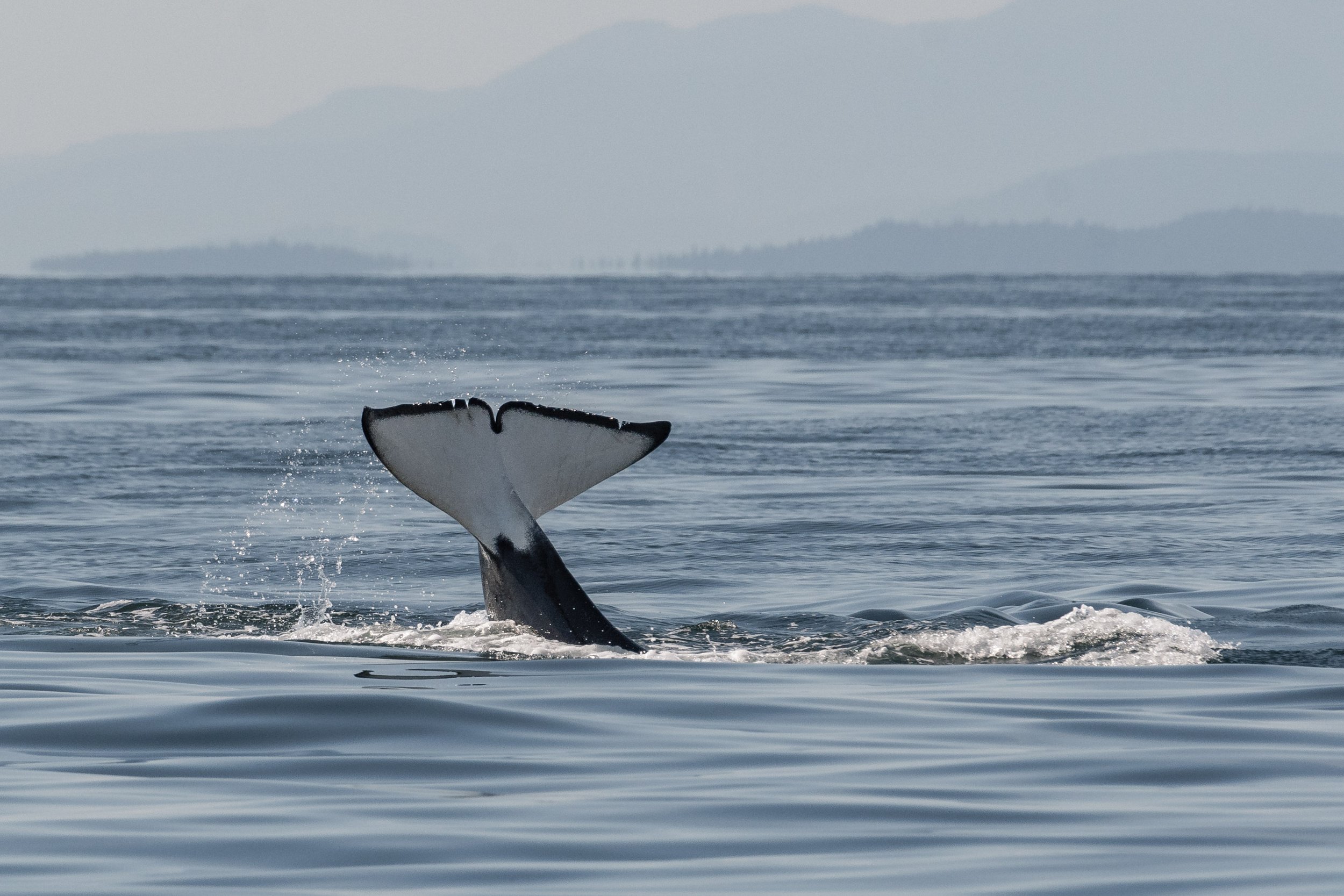
A very ragged fluke from one of the party members.
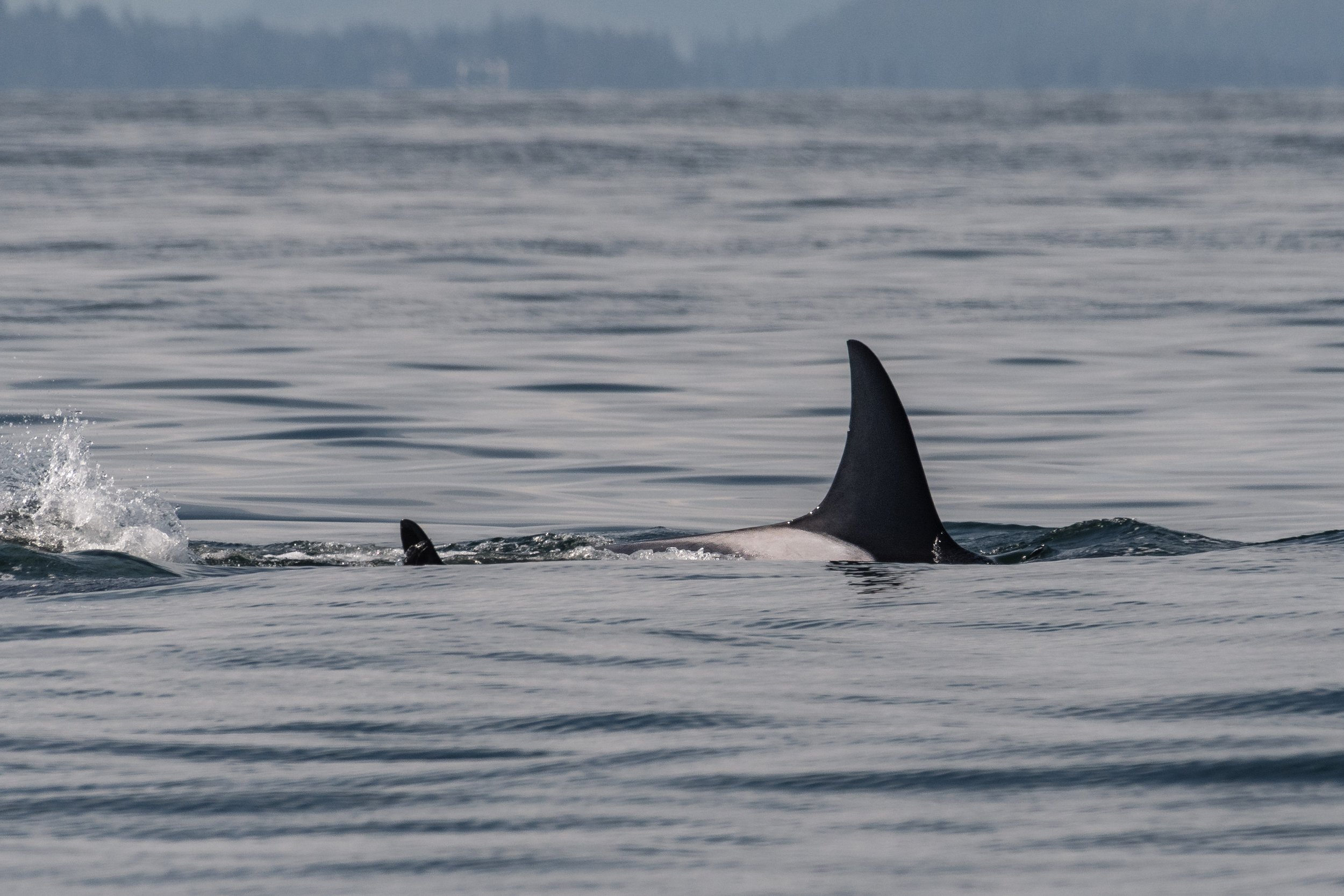
T065 Whidbey diving.
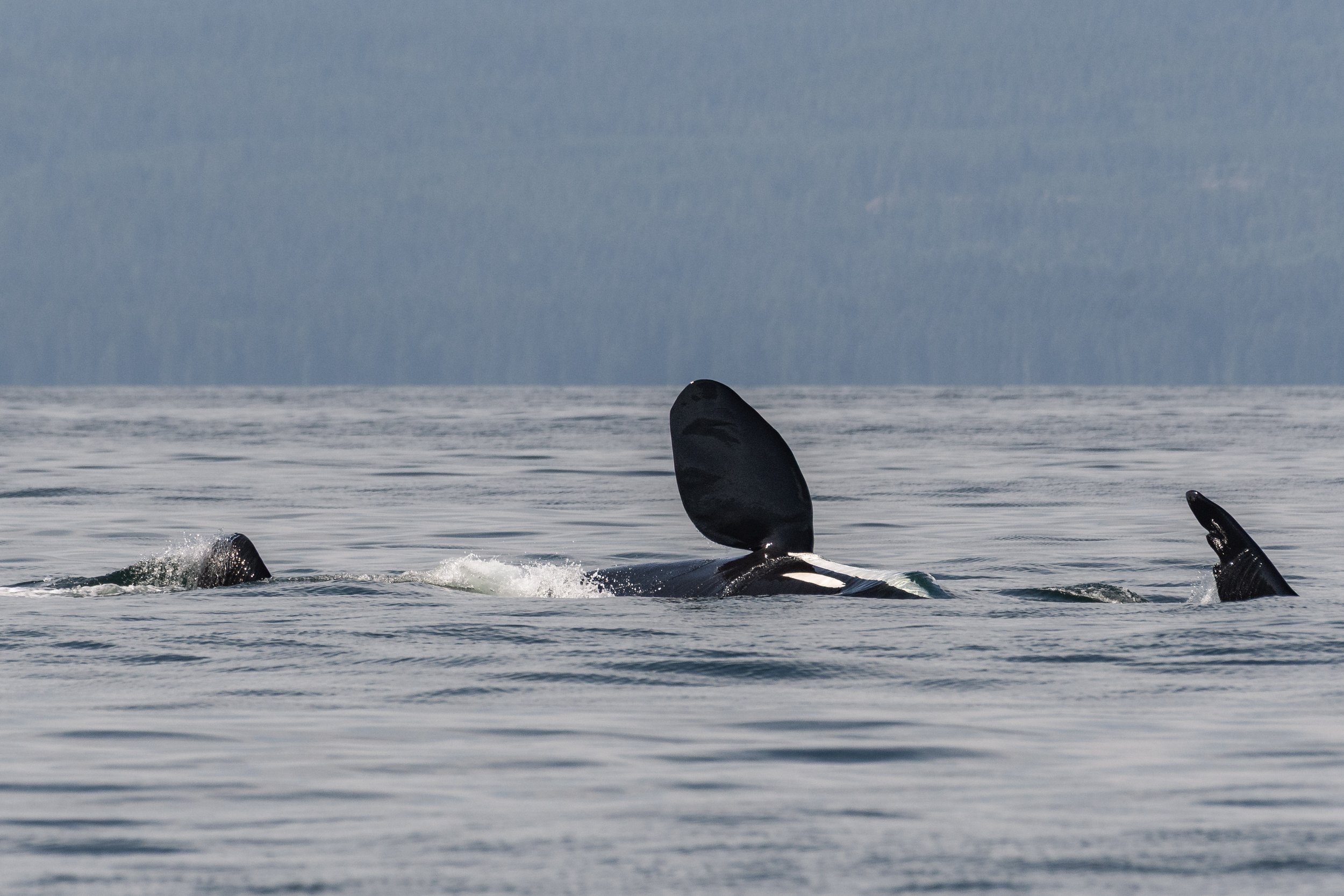
T100C Laurel coming in hot, pectoral in the air, behind T063 Chainsaw.
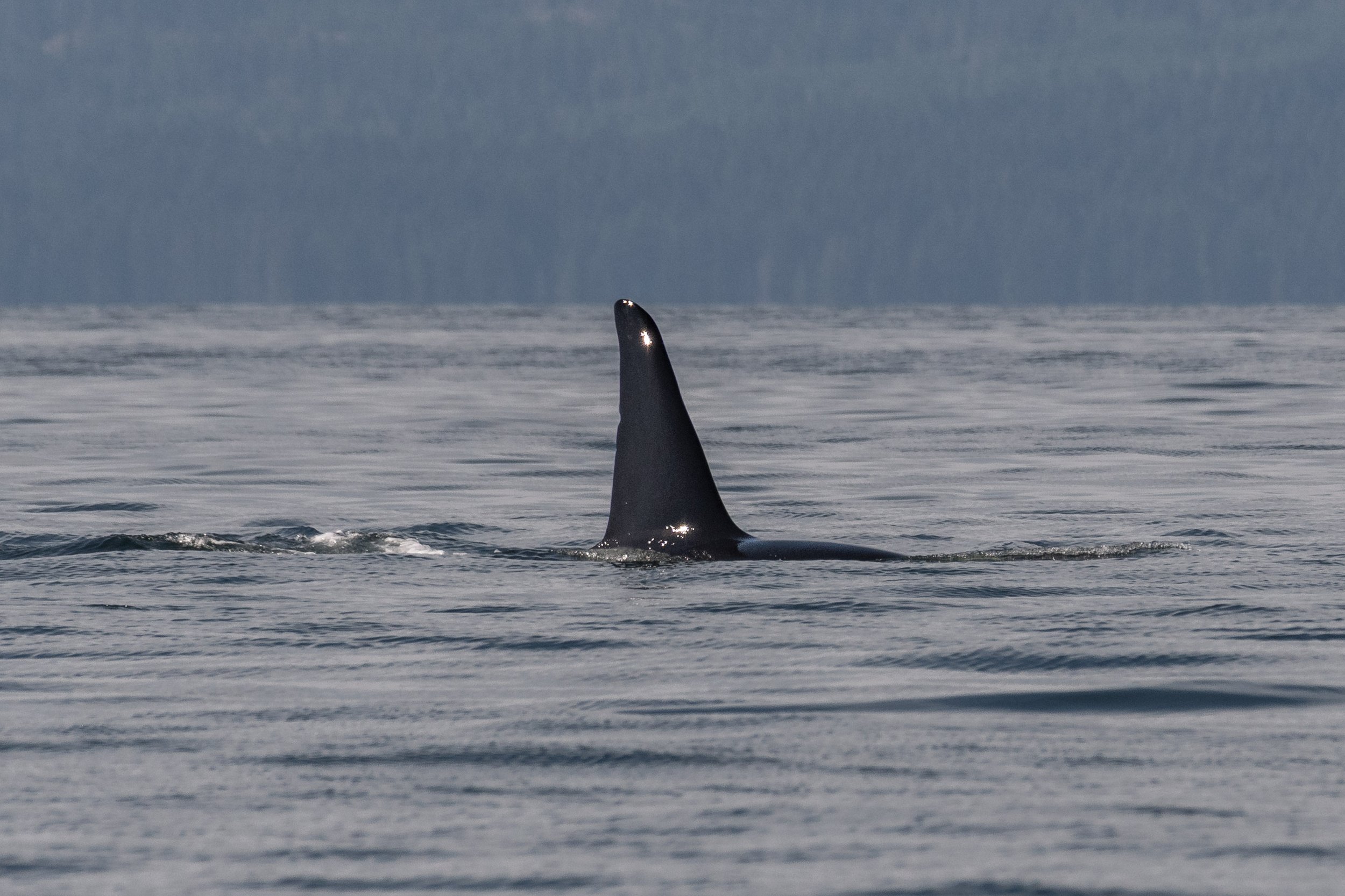
T100C Laurel travelling.
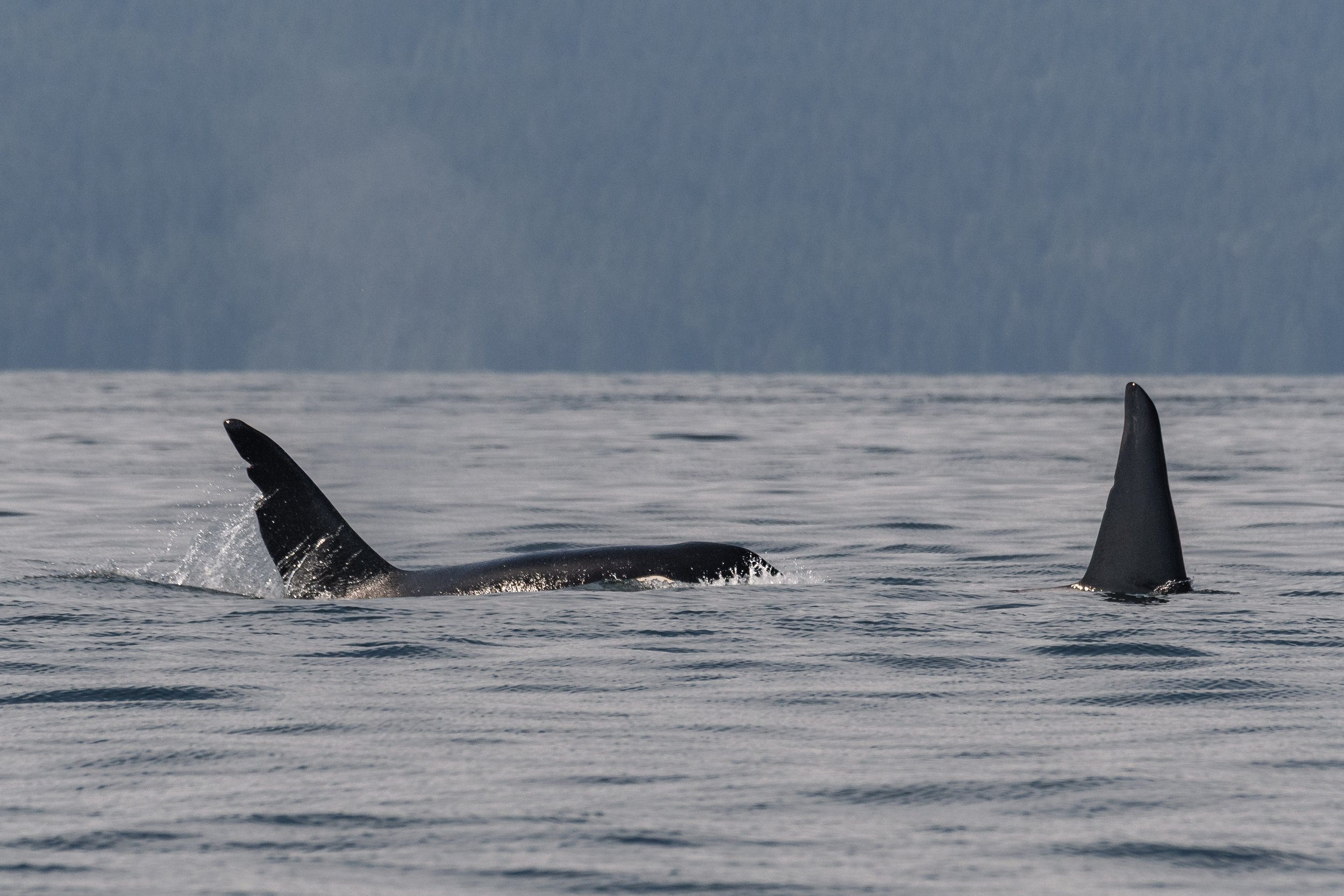
T100C Laurel with T063 Chainsaw behind him.
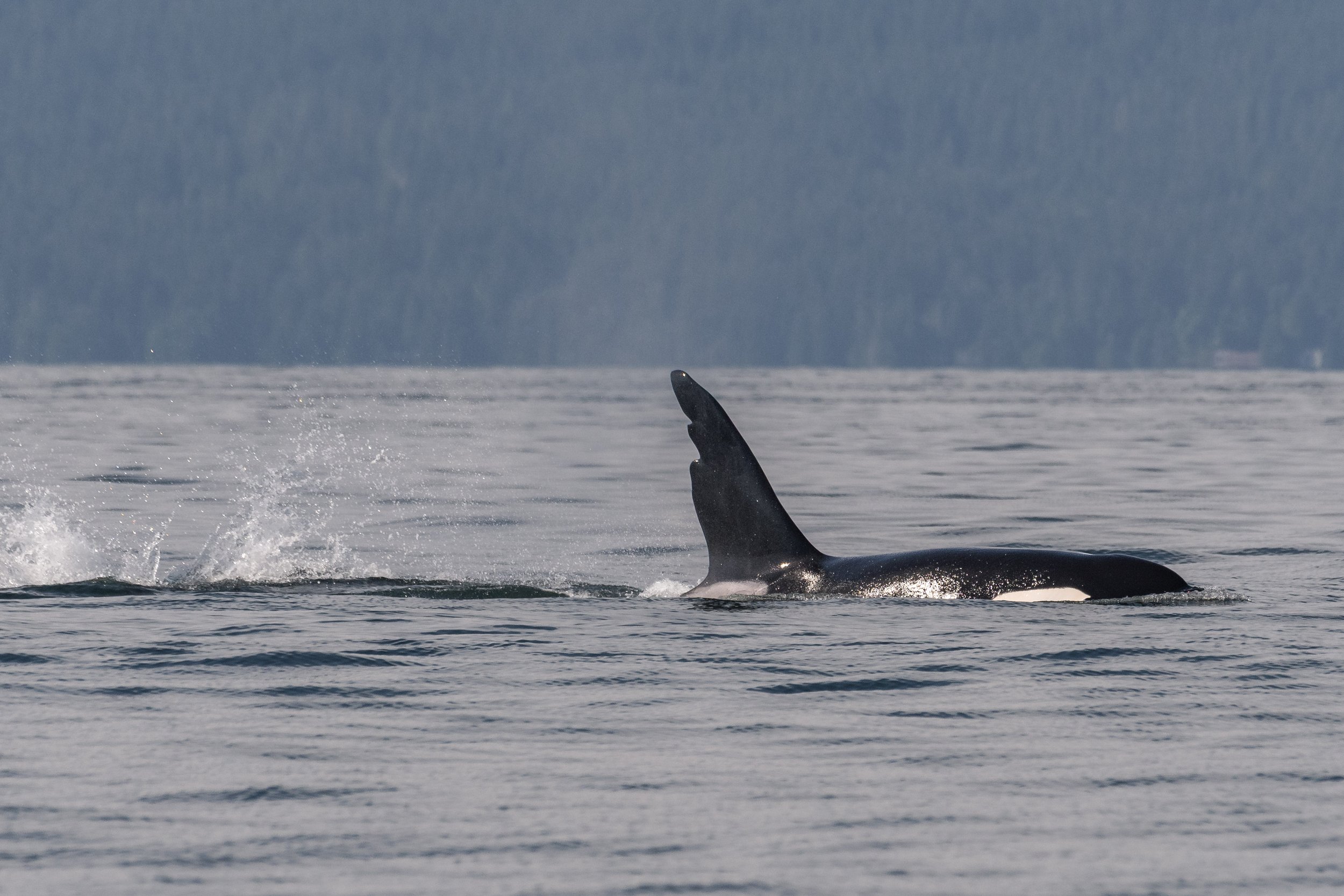
T063 Chainsaw with T100C Laurel making quite the splash.
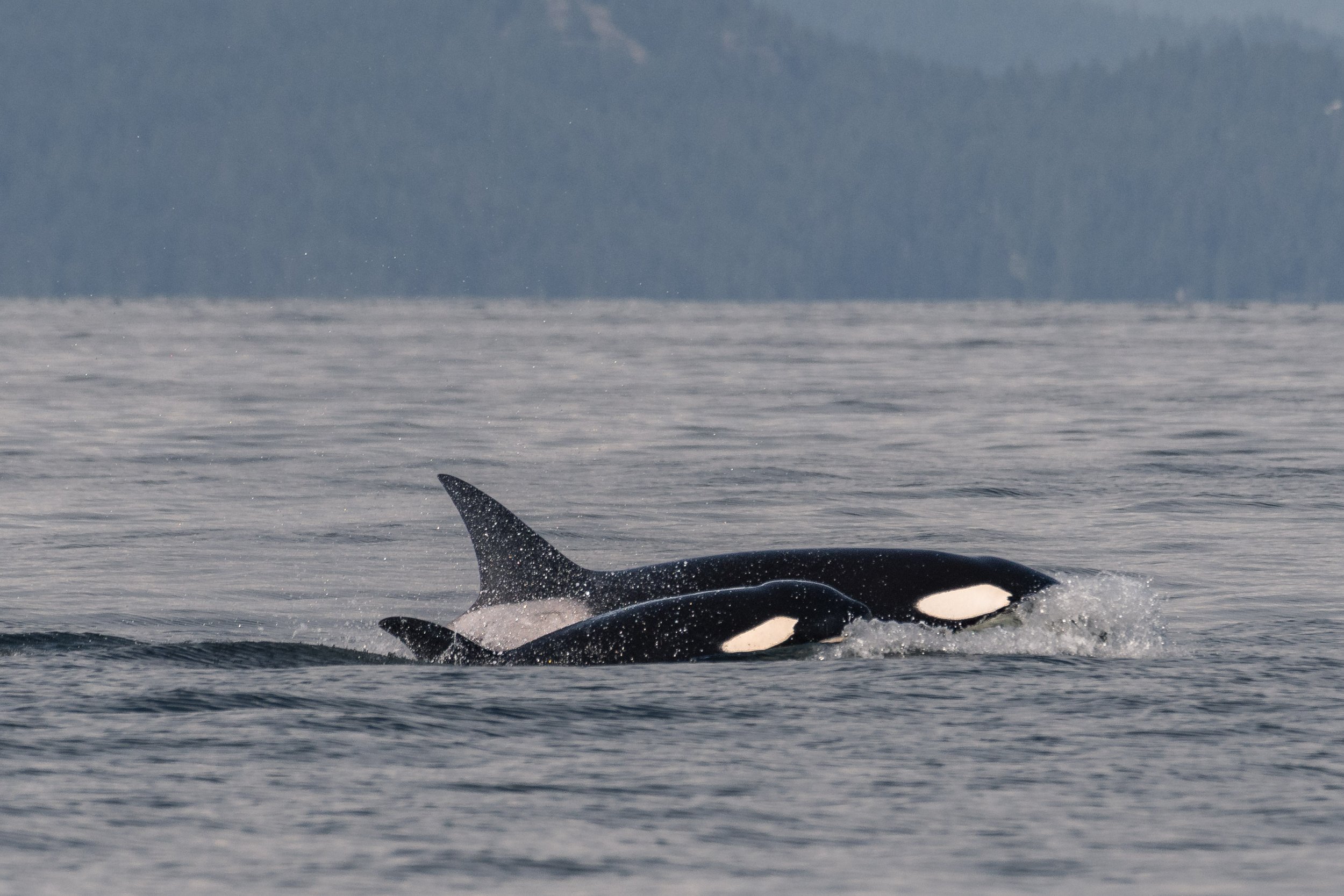
T077D Alcyon with T077E Misneach.
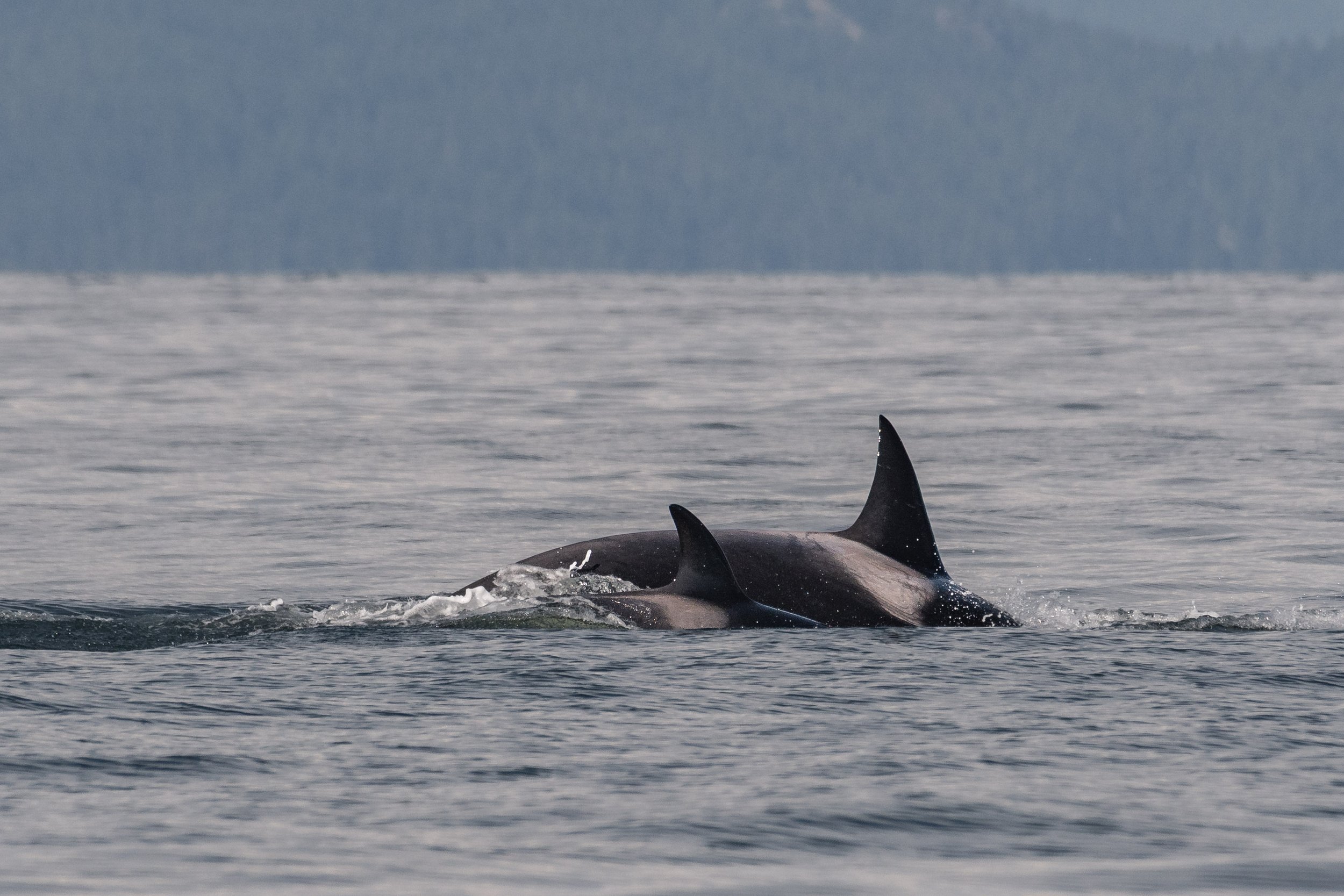
T077D Alcyon with T077E Misneach showing off their saddle patches.
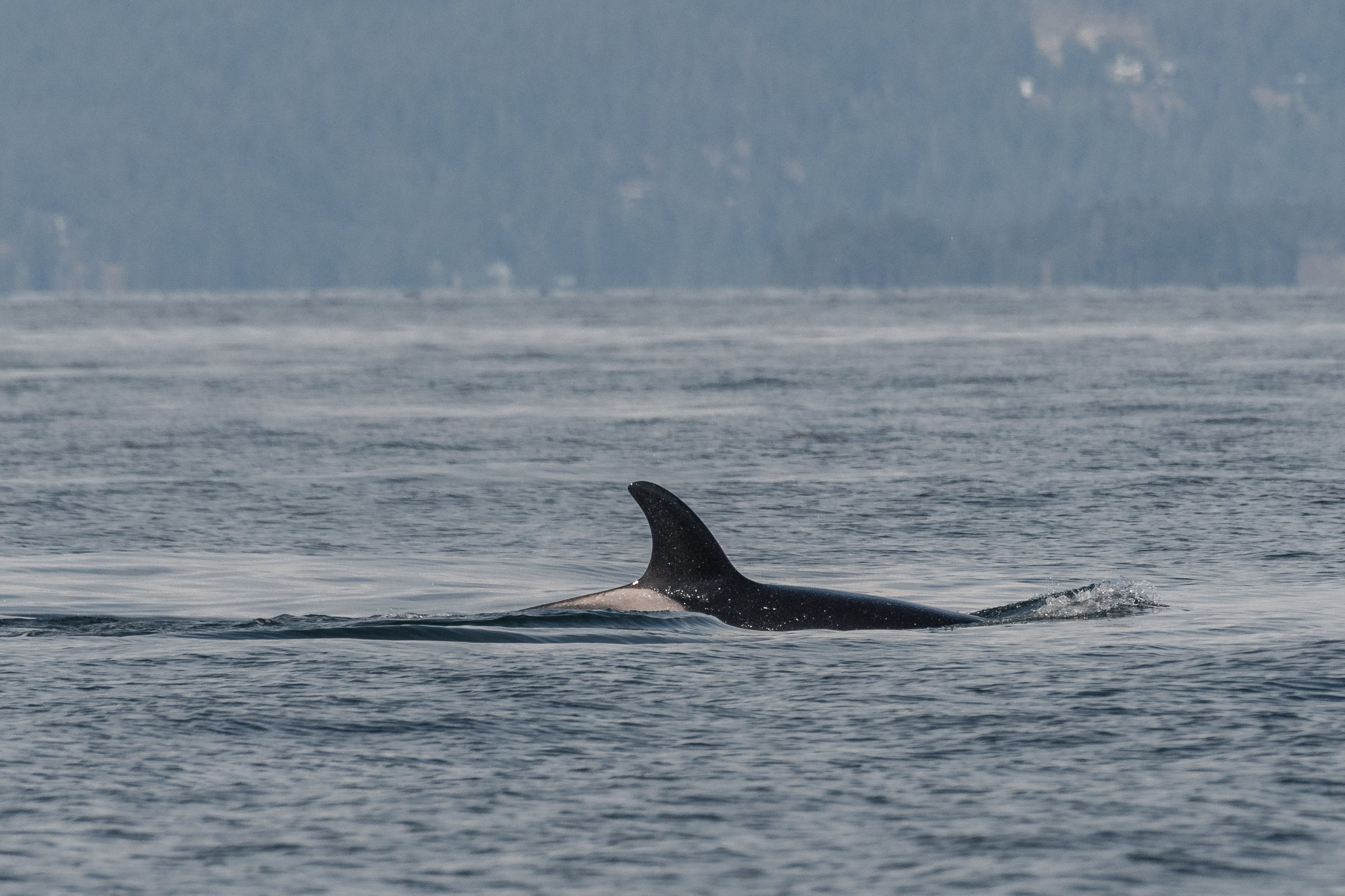
T100F Estrella.
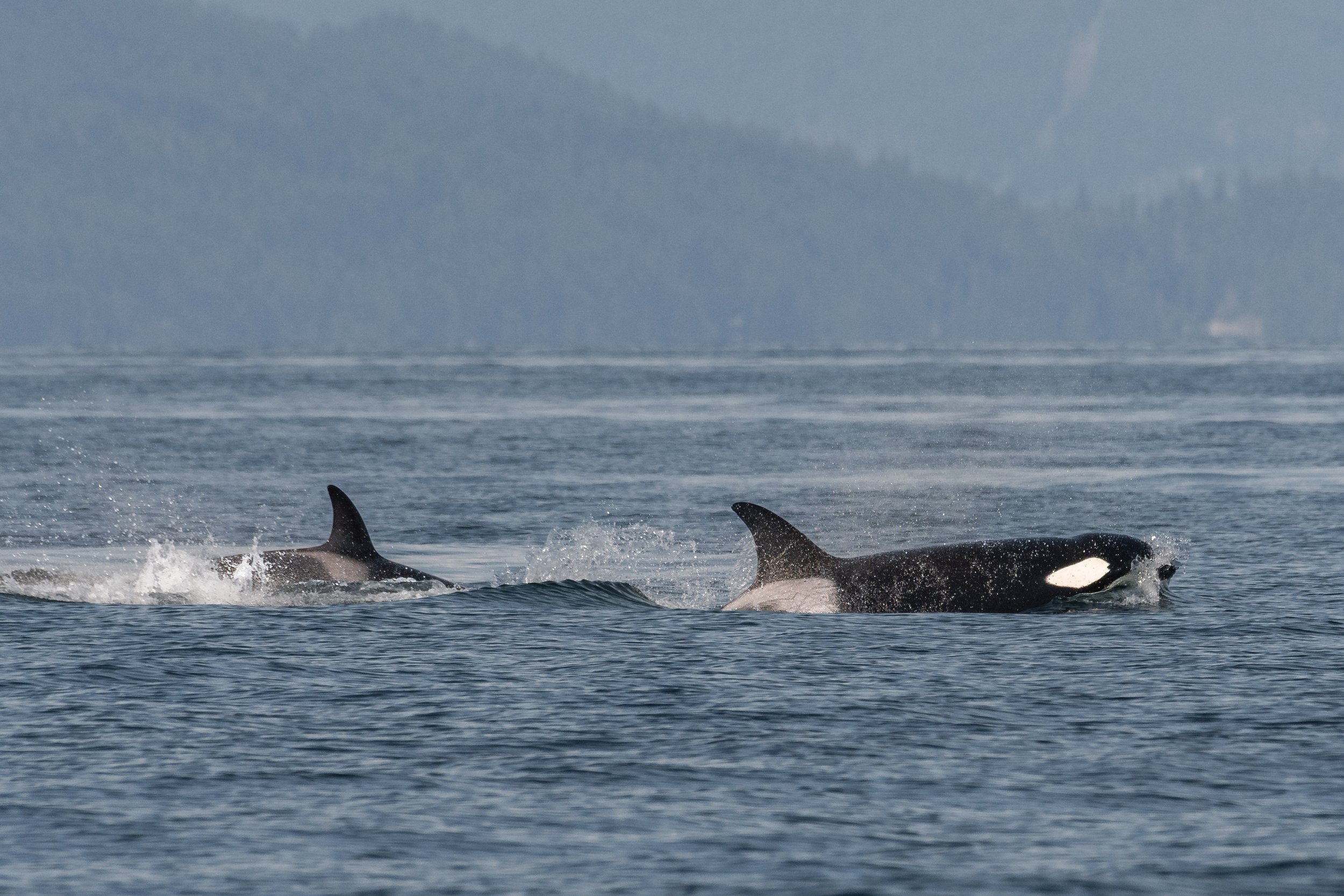
T124A2B Litton leading the way.
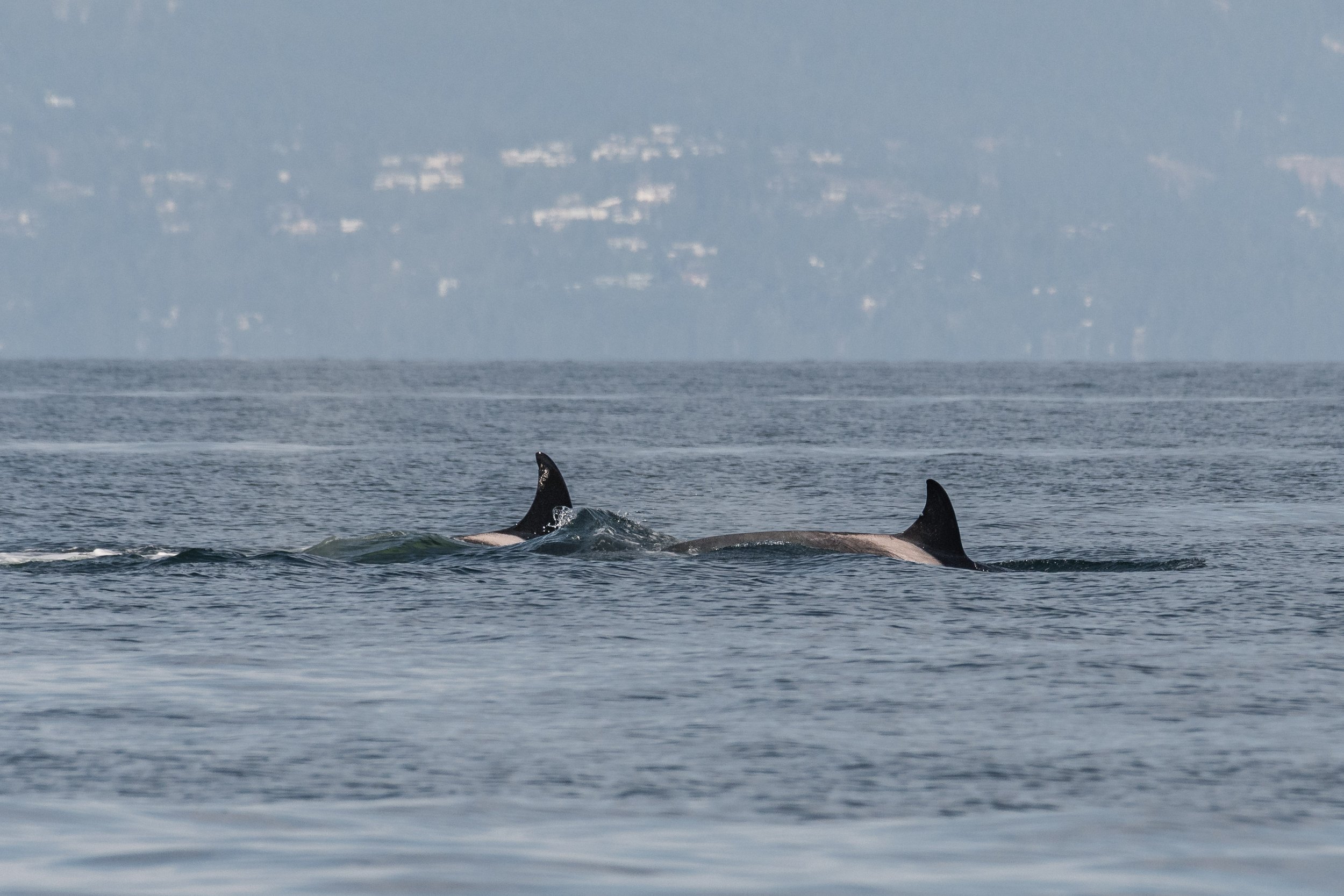
T124A2B Litton followed by T100 Hutchins.
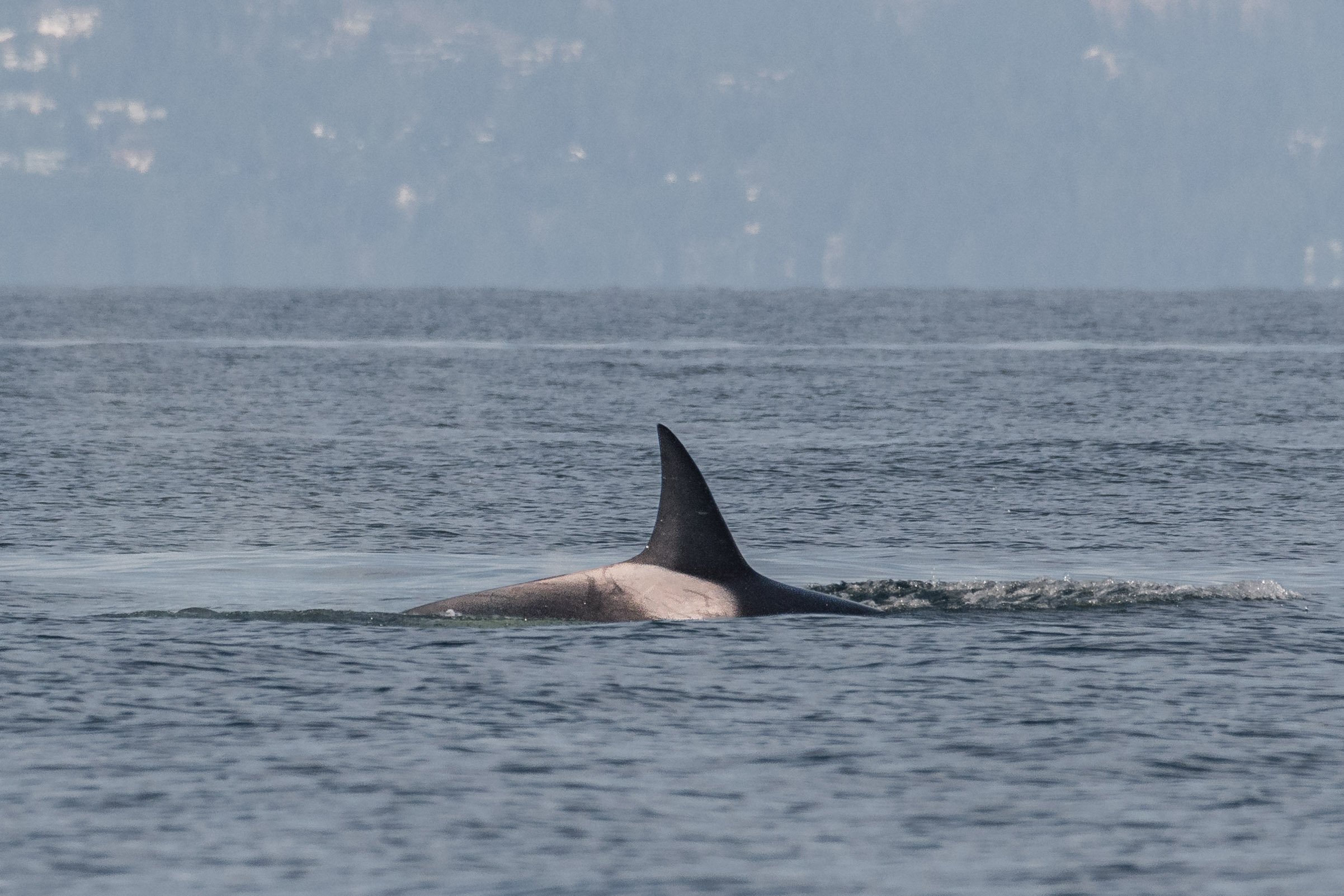
T077D Alycon has some distinctive saddle patch scarring.
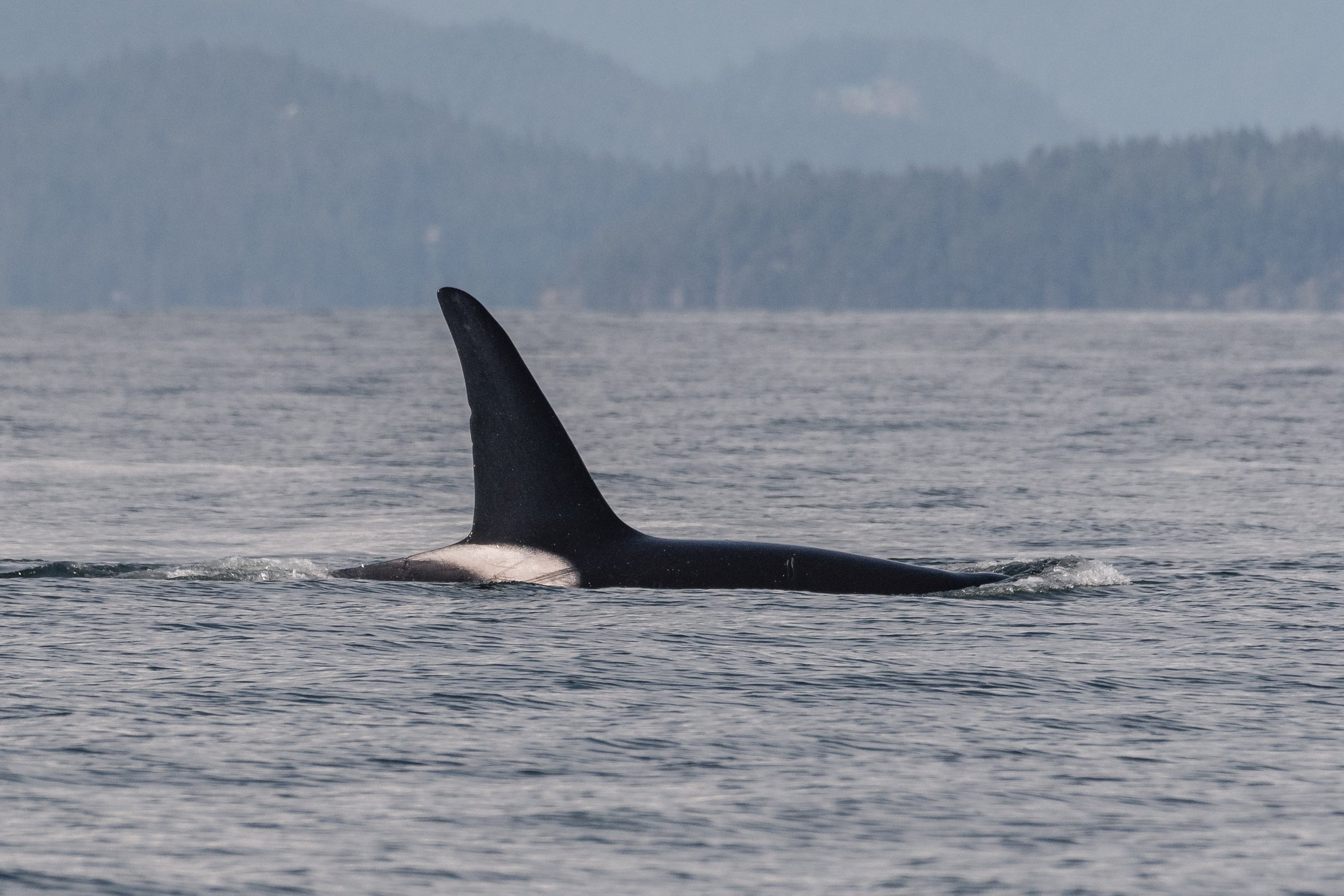
T100C Laurel.
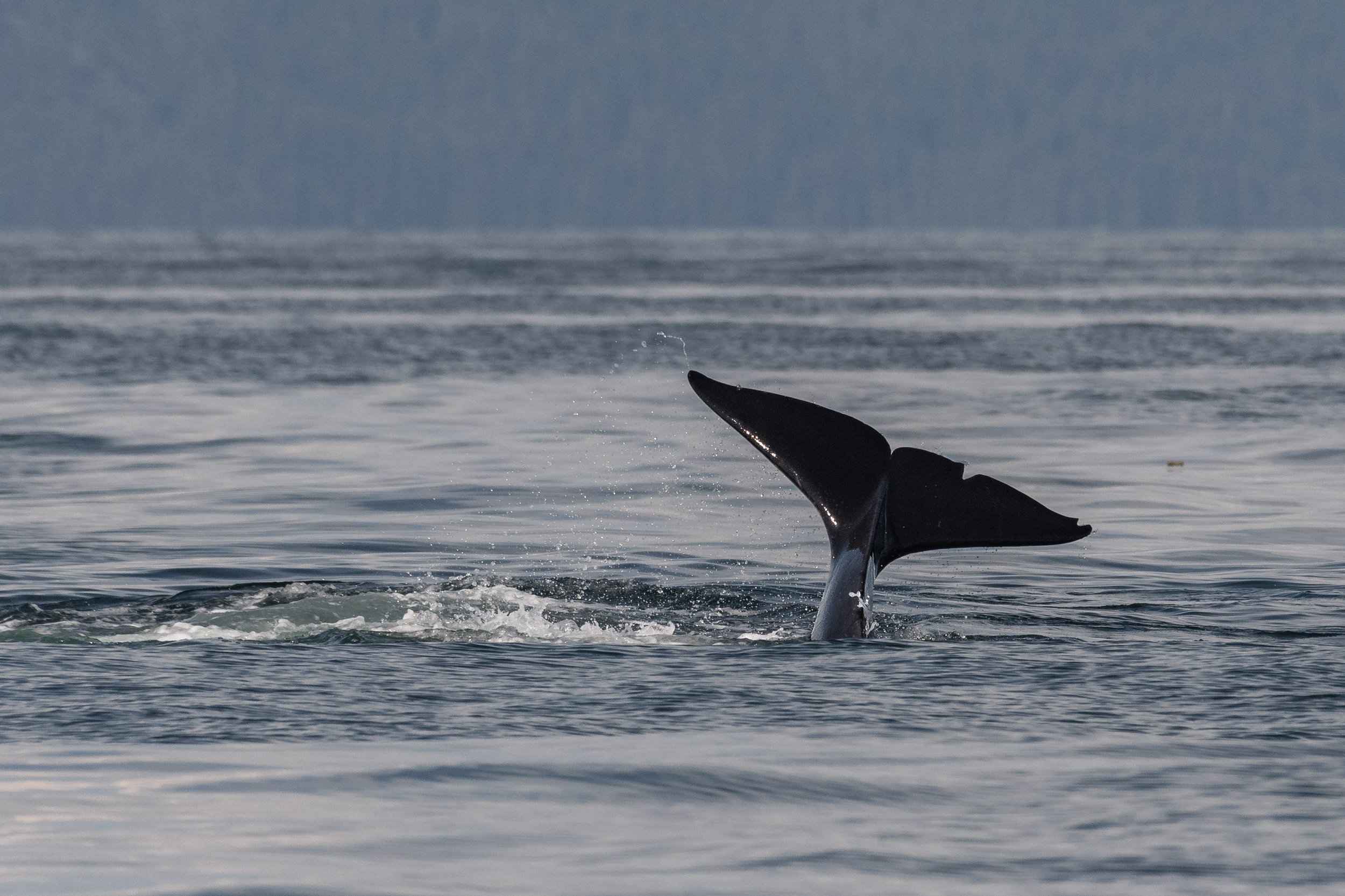
A tail with some chunks missing!
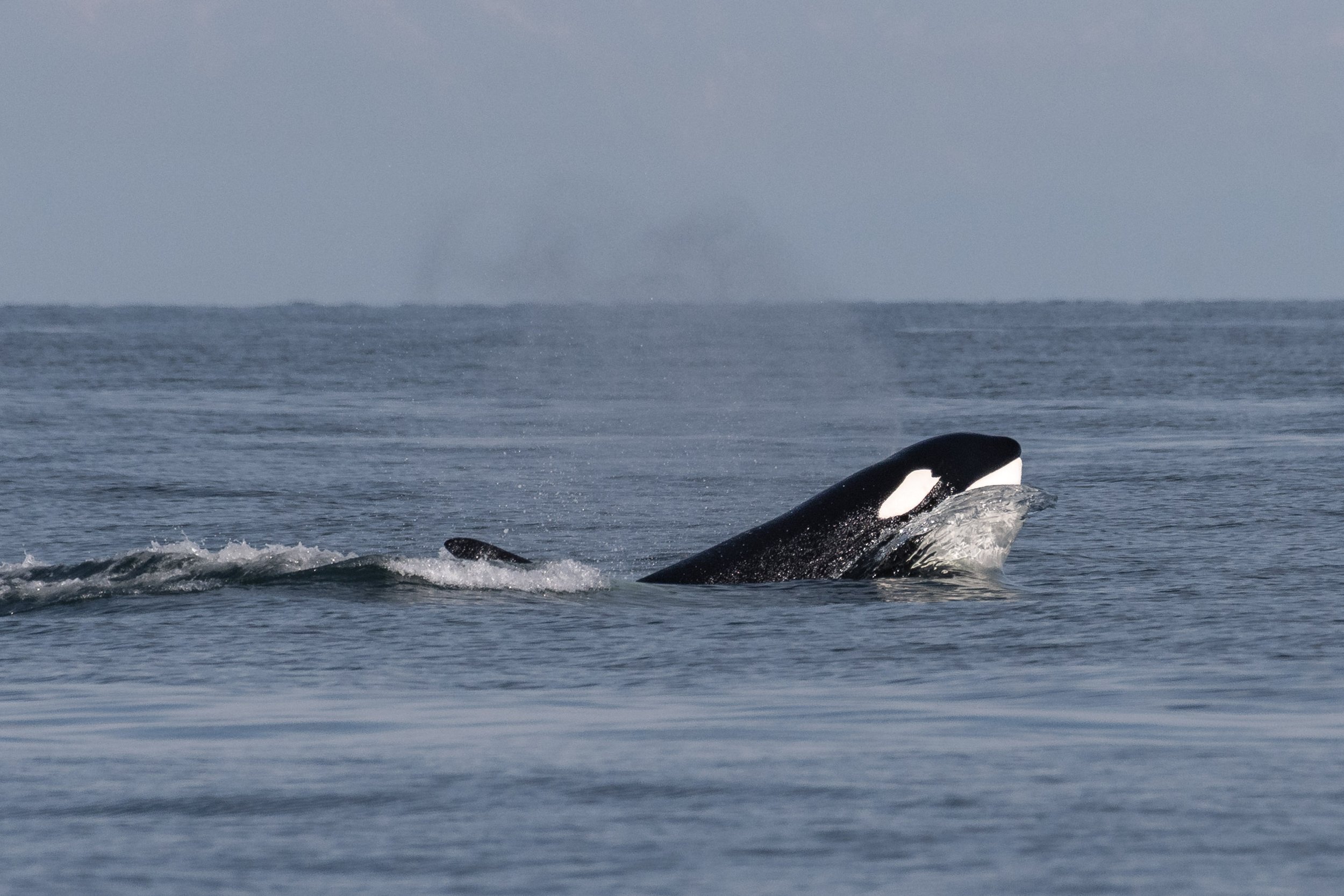
A beautiful look at T124A2 Elkugu’s face.
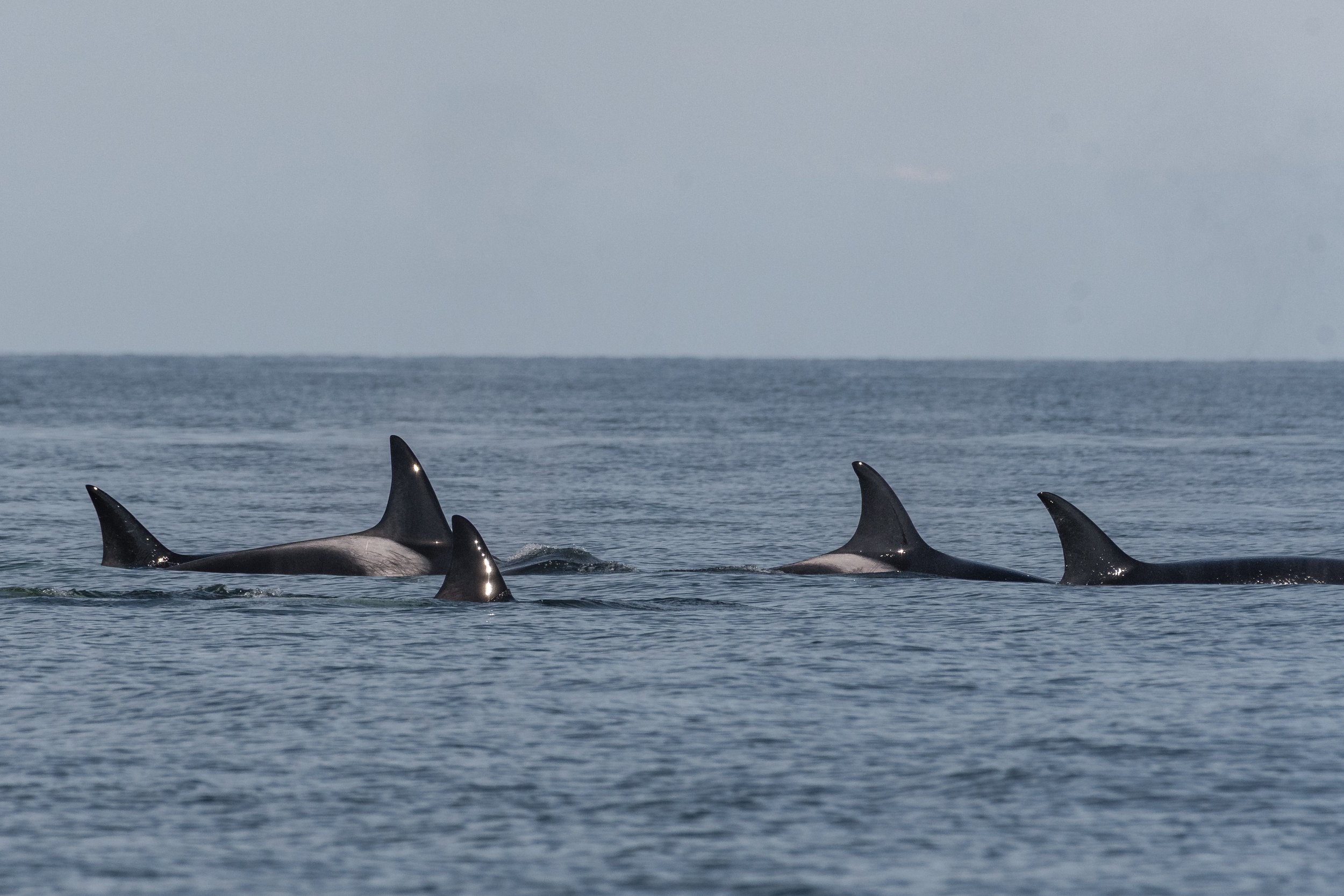
From right to left, T065 Whidbey II, T100 Hutchins, T124A2 Elkugu, T077 Asja and T077D Alycon.
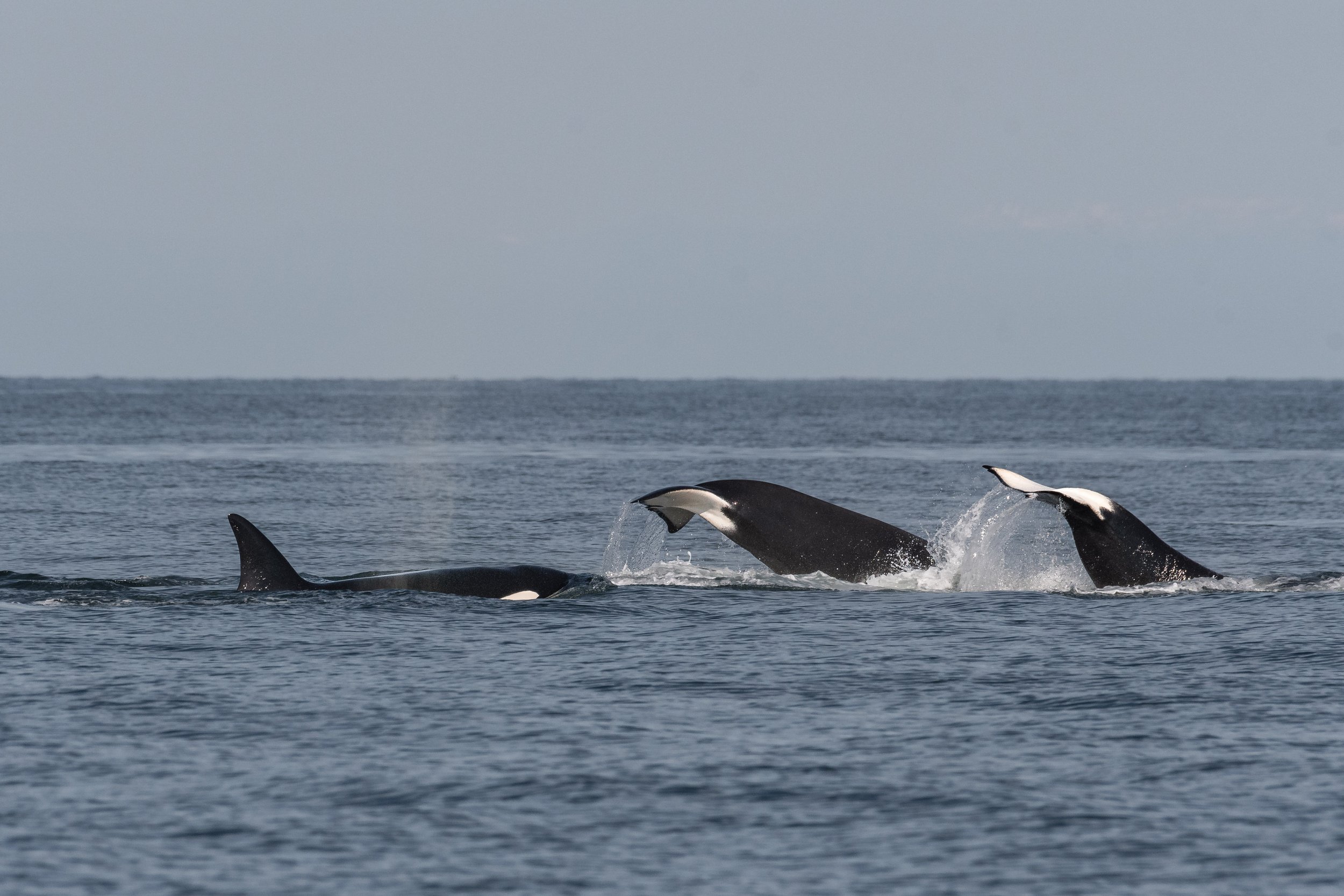
A double double tail slap.
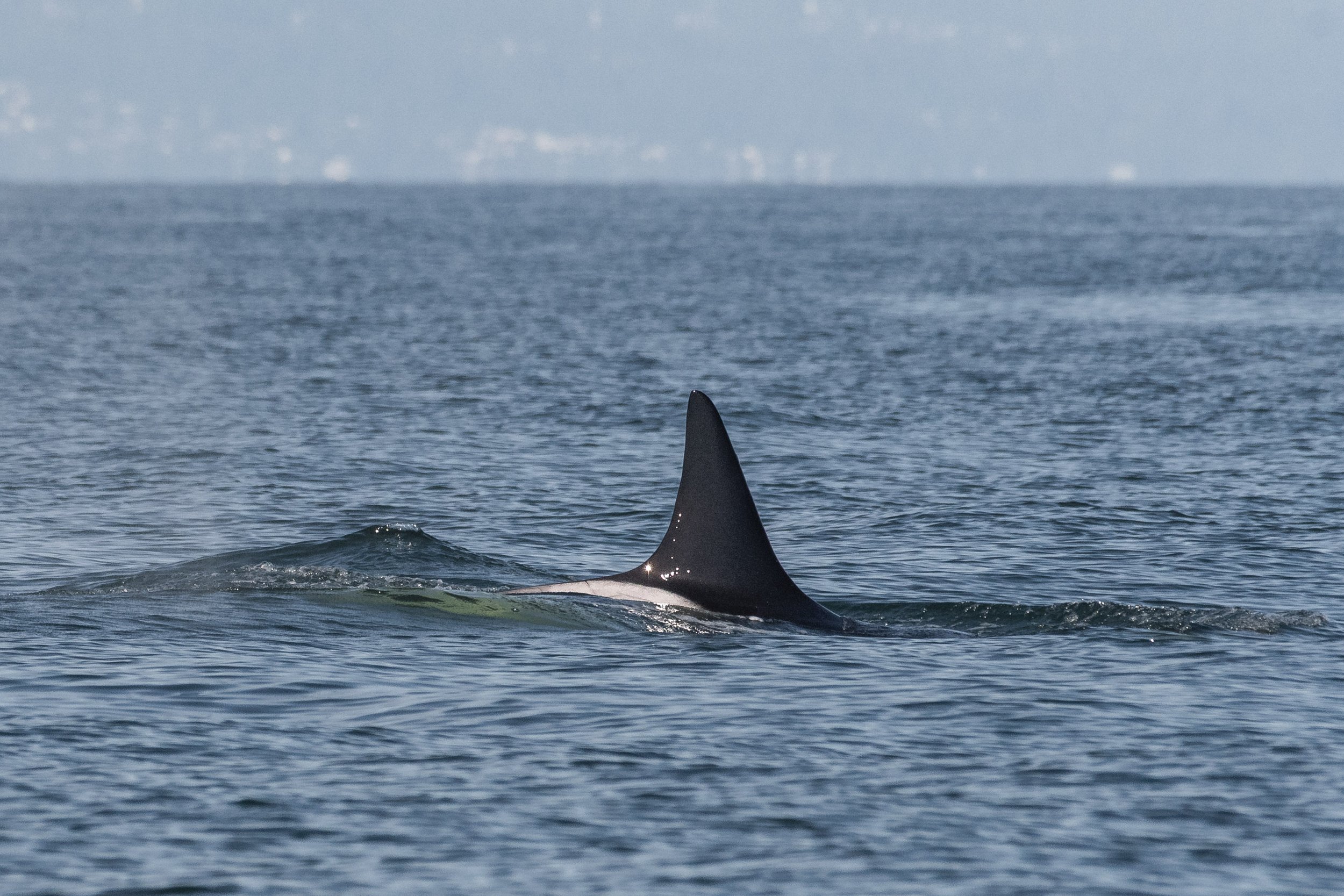
T101 Reef, the eldest of our matriarchs.
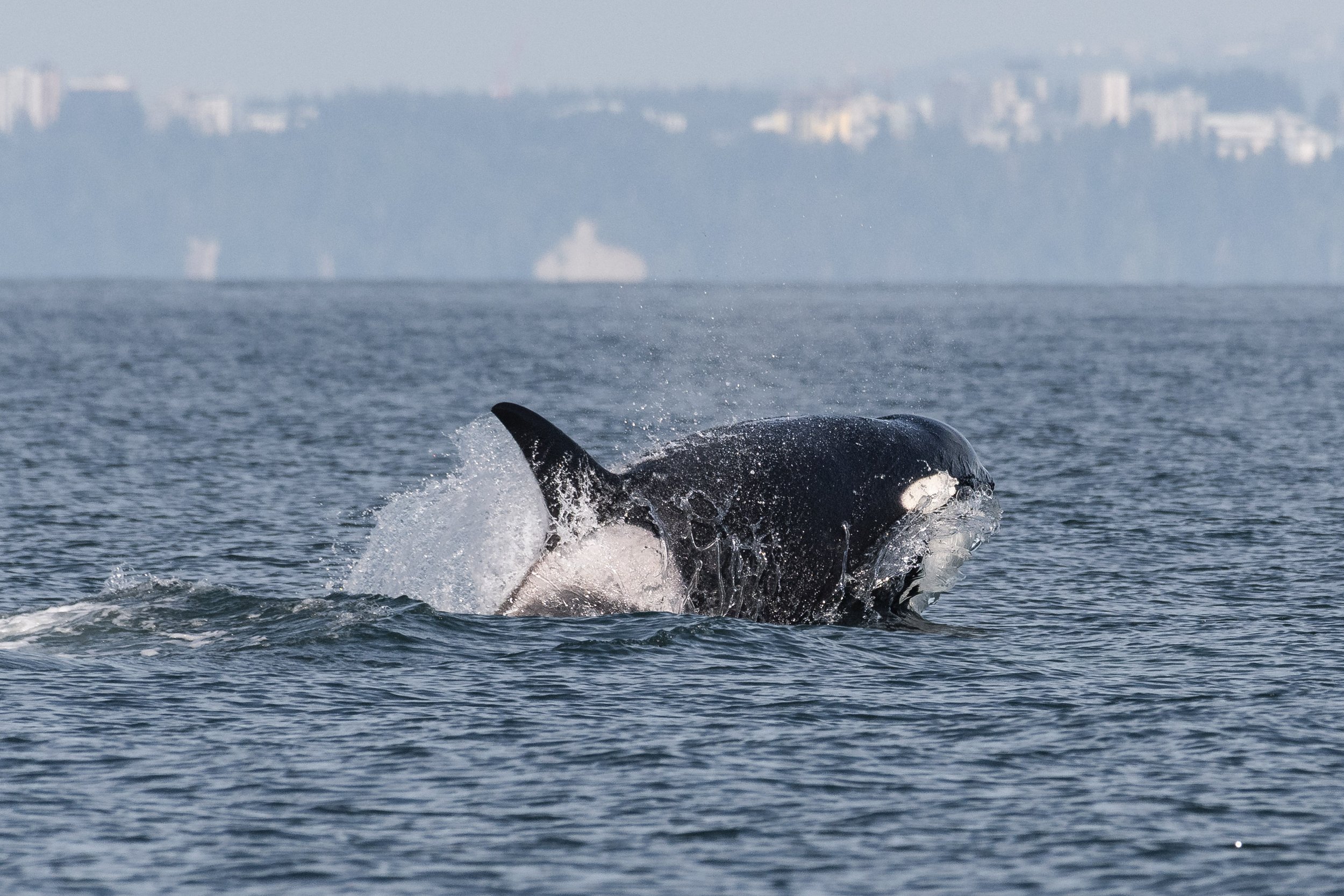
Porpoising above the surface.
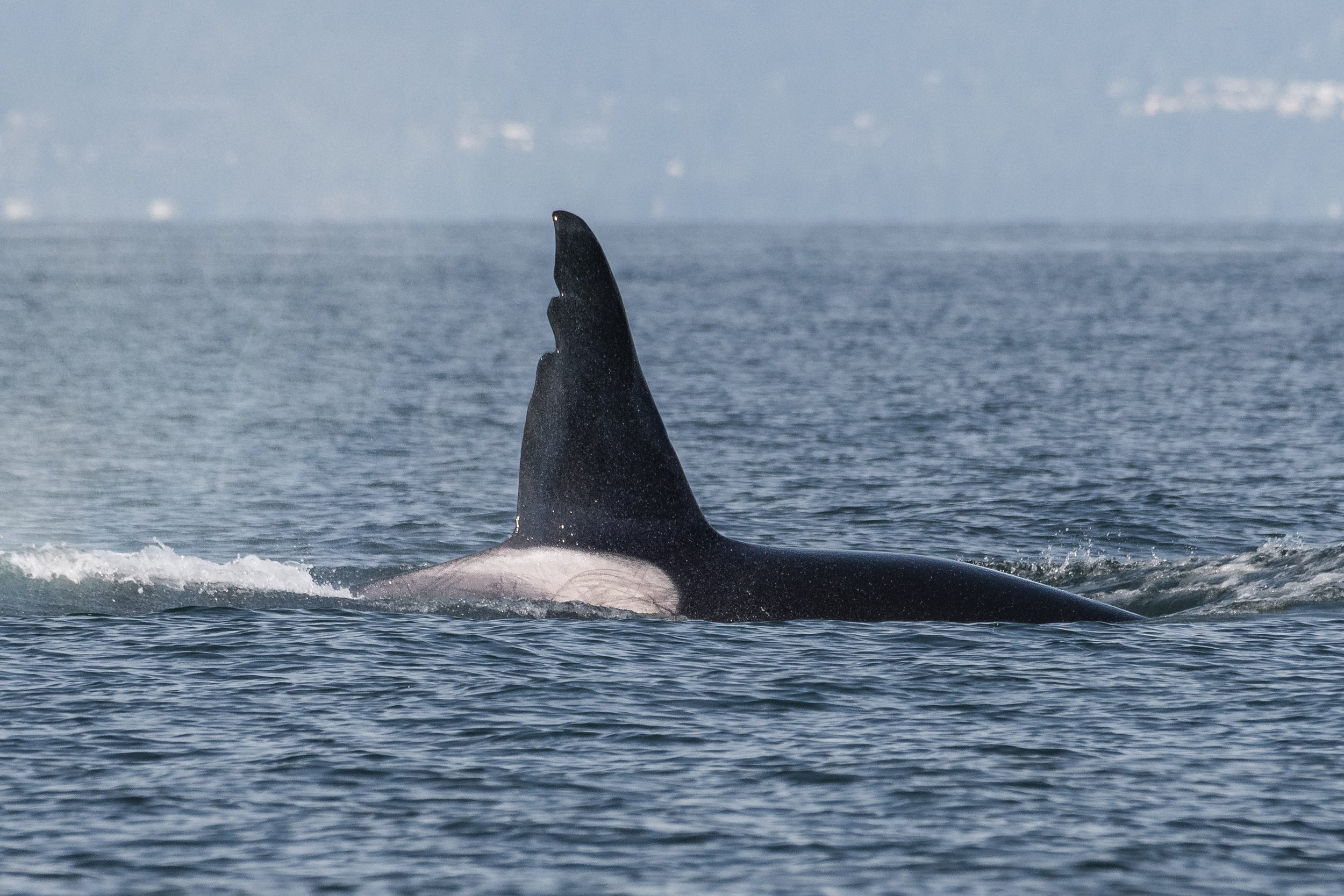
T063 Chainsaw’s dorsal fin will be around 6 feet tall!
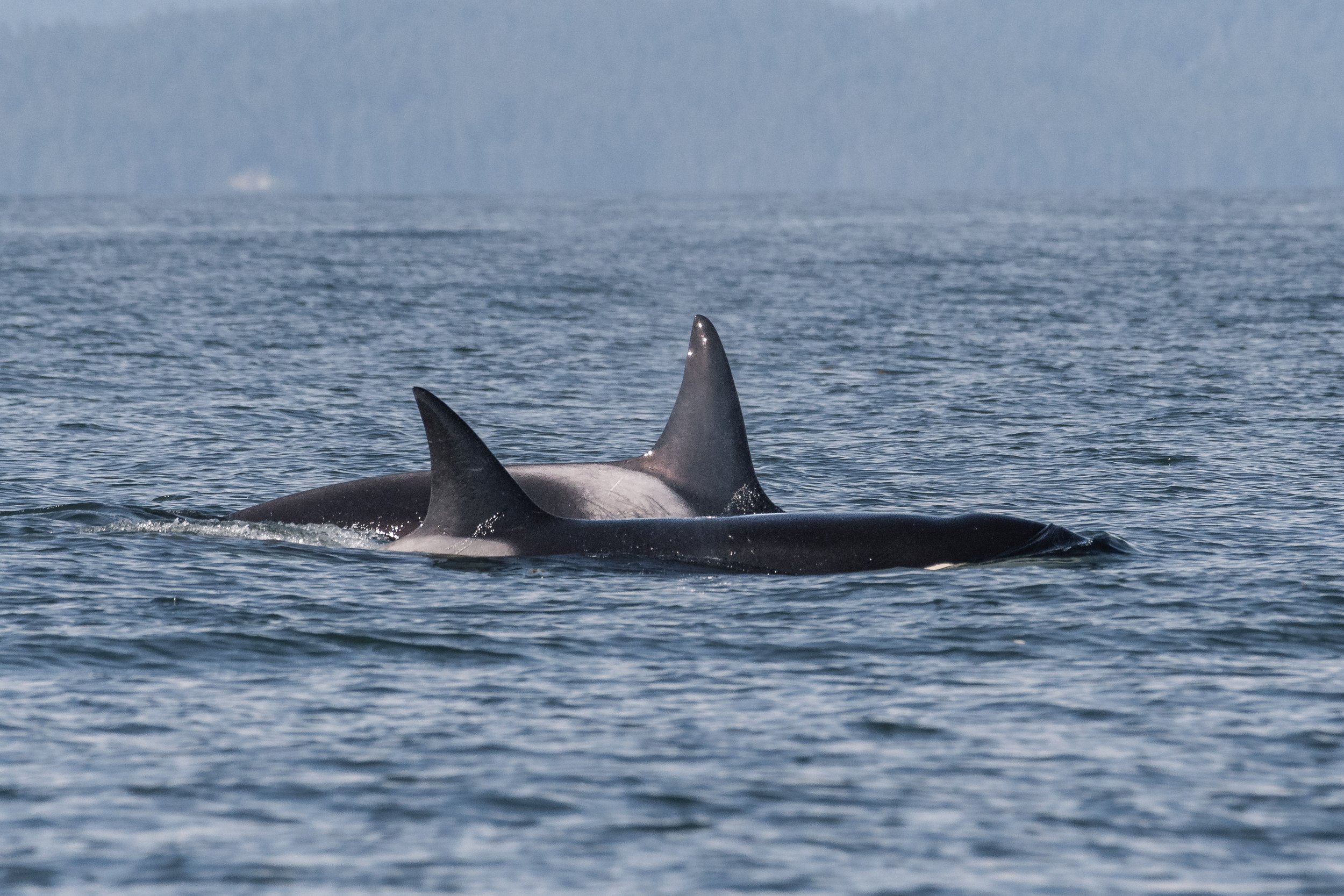
T077D Alycon with mom, T077 Asja in the background.
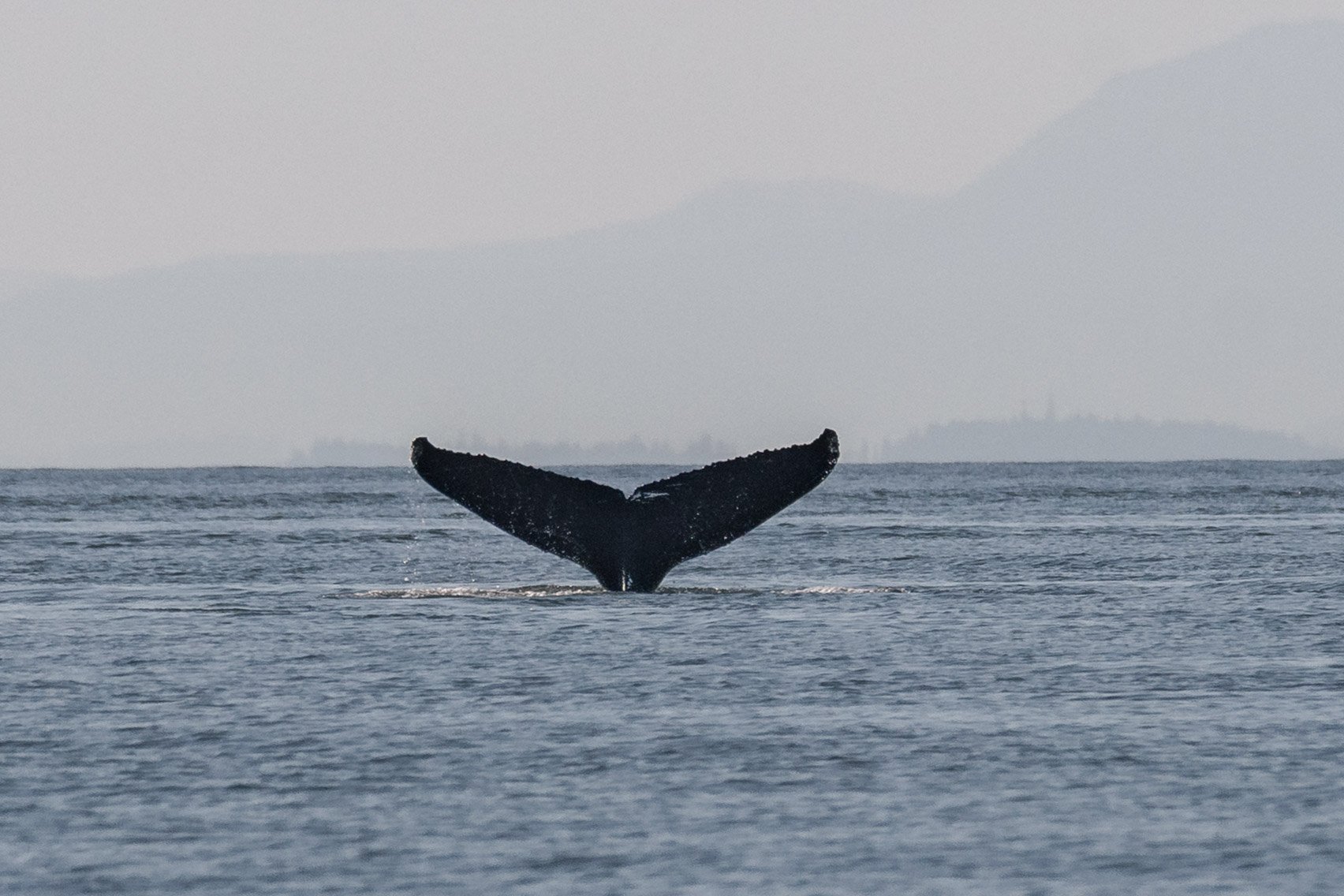
Beak heading down for a dive.
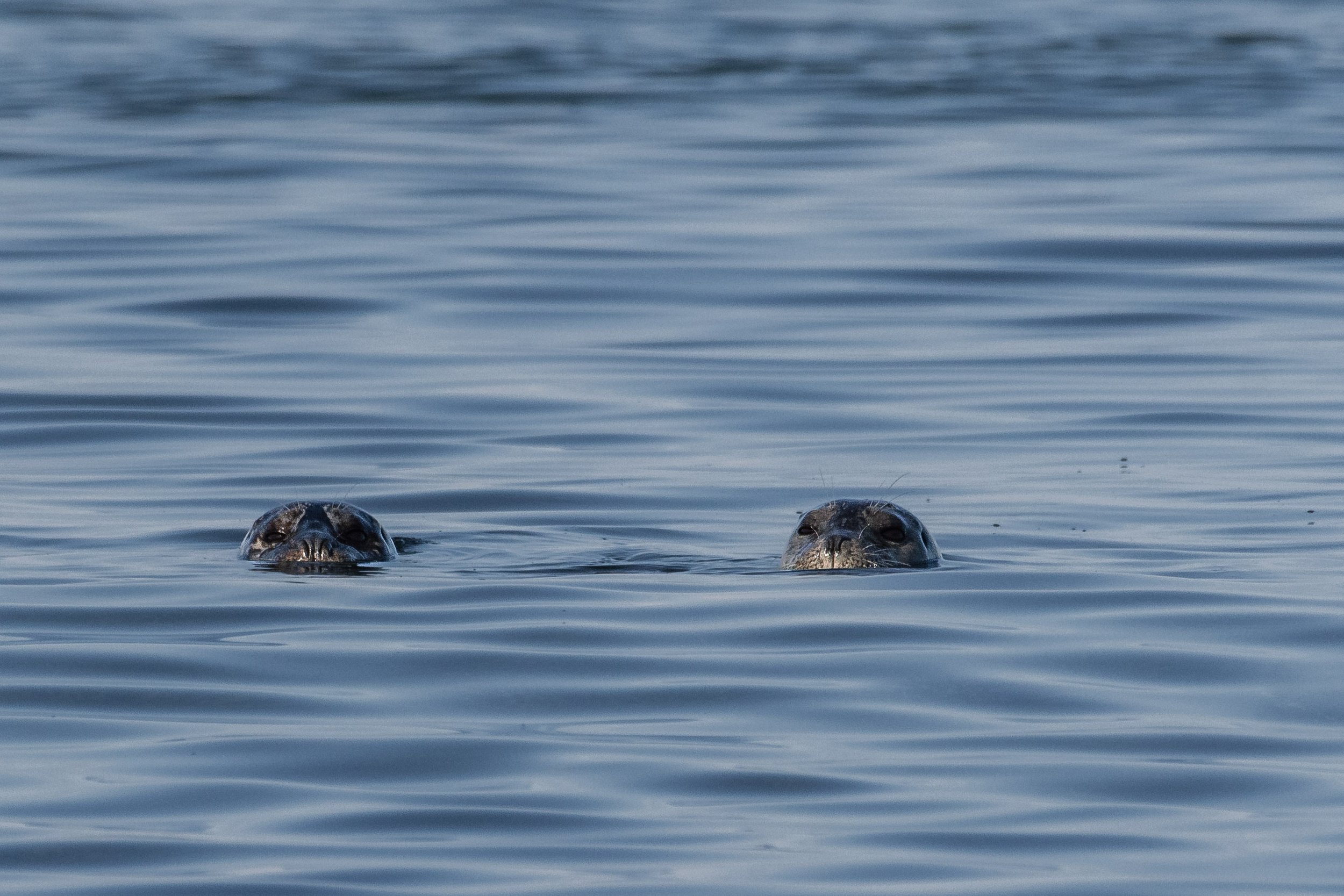
Two bobbing Harbour Seal heads.
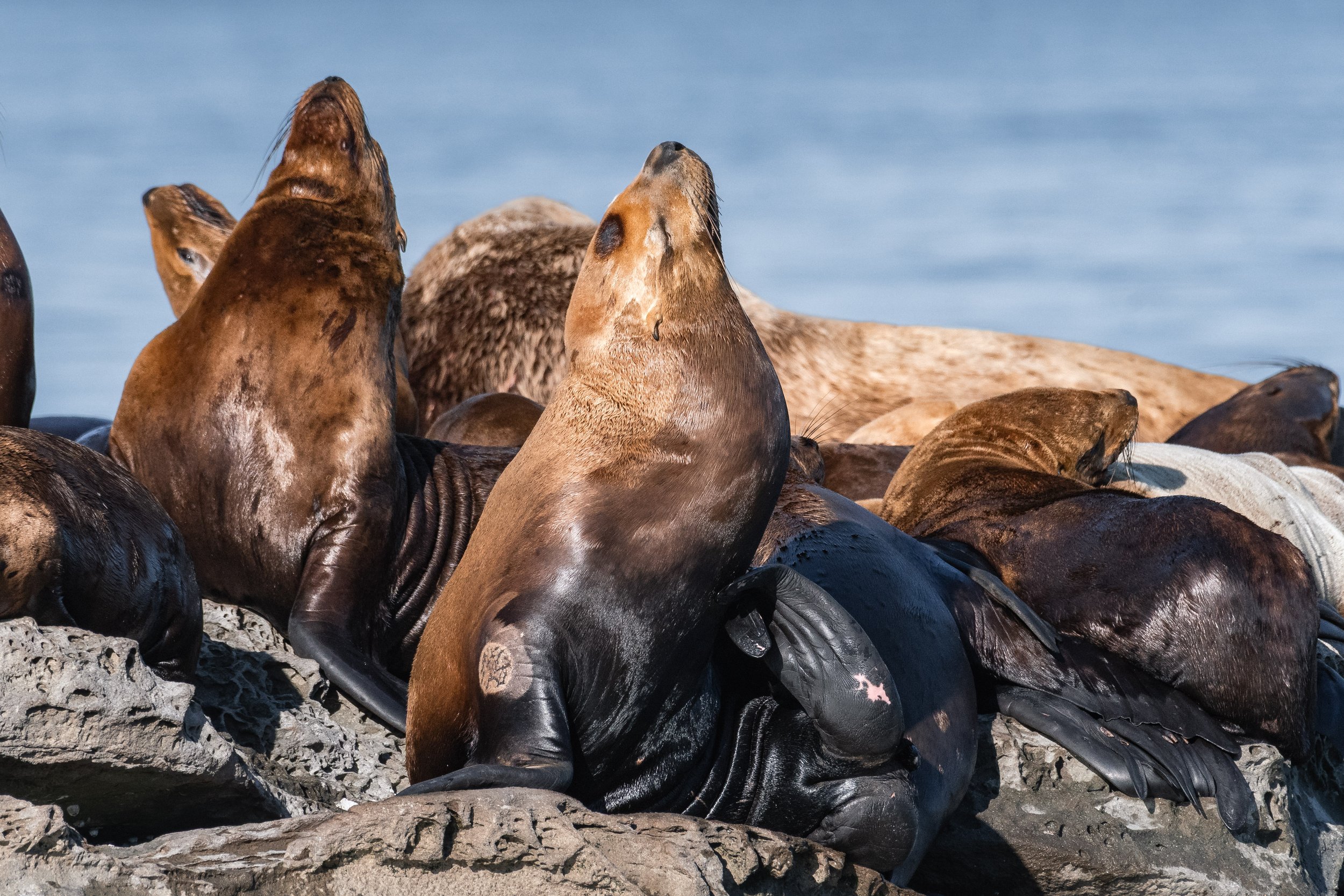
A Stellar Sea Lion having a scratch.
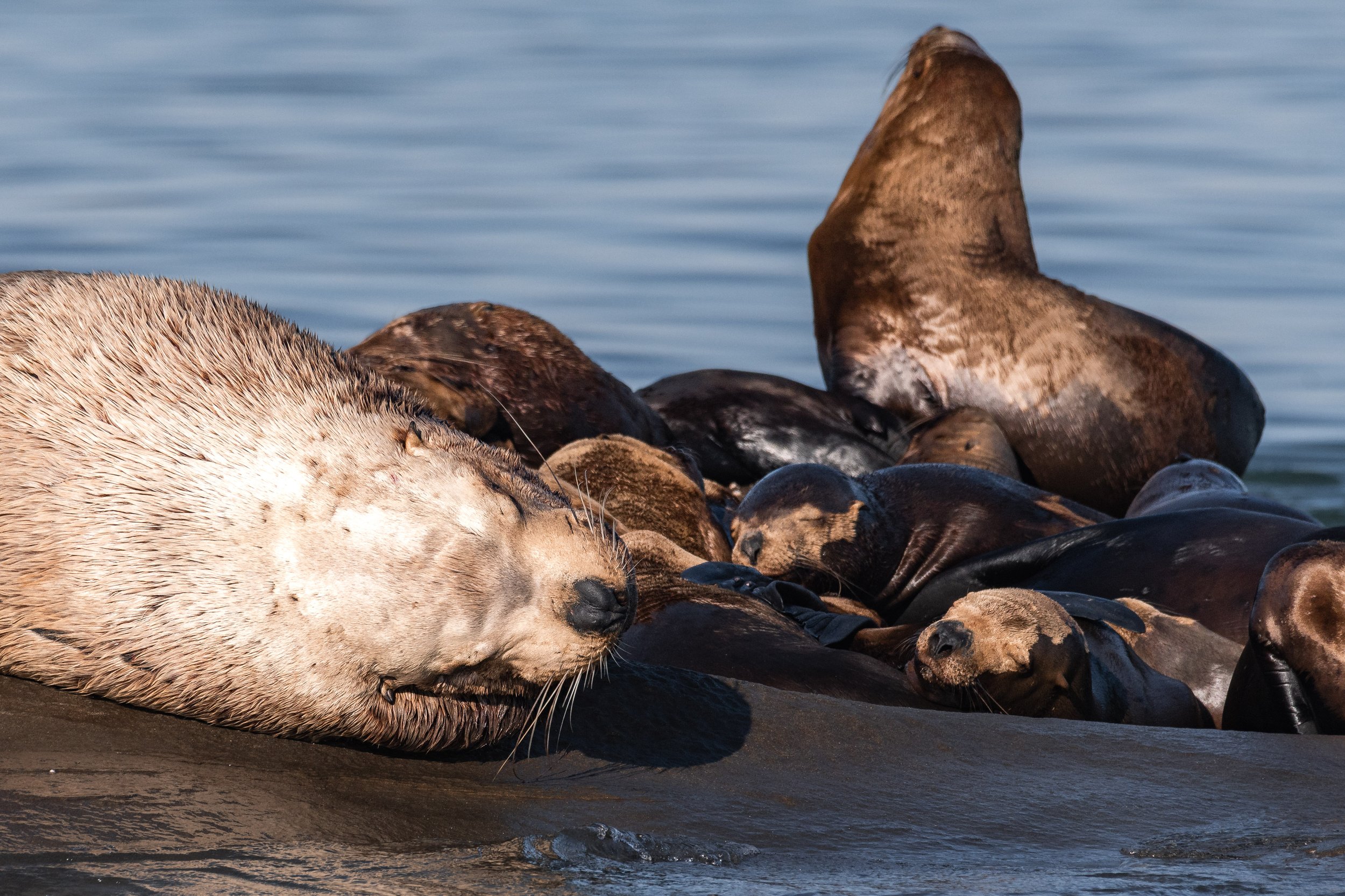
This large male makes the rest of the sea lions look tiny!