
June 29, 2026, 3:30 PM - Surpise encounters with the T065s, T100s, and a handful of Humpbacks
We were ready for another adventure this afternoon as guests and crew boarded both our semi-covered vessel and our open boat, eager to get out on the water in search of whales and other wildlife. Earlier in the day, there had been a report of orca seen from shore near Parksville, so we fired up the engines and set our course north.
As we were transiting through the Strait of Georgia, an excited shout rang out from the deck of the semi-covered boat: "Whales!" While they weren't the whales we had originally set out to find, the distinctive black dorsal fins slicing through the waves were unmistakable: we had just found orca!
These kinds of surprises are what make whale watching in the Salish Sea so special. Since the whales aren't fitted with tracking devices, every day begins with a fresh search. We never truly know where they'll be until we find them. With several families potentially travelling throughout the area, it's not uncommon to encounter a group entirely different from the one we were originally searching for.
In this case, it was immediately obvious who we had found as we approached the regulated viewing distance. Towering above the water was a massive dorsal fin with two large notches through the middle: it was Chainsaw! Alongside him was his mother, Whidbey II. This pair is among the most recognizable transient orca in the Salish Sea, and you may even recognize Chainsaw from our company logo. Every encounter with this famous duo is memorable, but unexpected sightings like this make them even more special.
T063 Chainsaw ♂ (~1978)
T065 Whidbey II ♀ (~1971)
When we first arrived, the pair was travelling side by side close to shore, heading south from Neck Point. After surfacing together a few times, however, they did what they often do best; they spread out. Roughly 500 metres separated the two as they continued south. While that may seem like a considerable distance, it's still well within the range over which they can communicate.
Unlike the fish-eating Northern and Southern Resident orca, transient orca are generally much quieter. Their prey, marine mammals, have excellent hearing, so excessive vocalizing could easily alert a potential meal to their presence. Because of this, they communicate sparingly, usually only when necessary or after a successful hunt. As apex predators, maintaining a high hunting success rate is essential, and stealth plays a huge role in that success. At their impressive ages, Chainsaw and Whidbey II are seasoned hunters who have perfected the art of staying quiet.
After spending some quality time with these two, we continued toward the middle of the Strait to Halibut Bank, a well-known hotspot for humpback whales and other marine wildlife that take advantage of its rich productivity.
Before we even made it there, another excited guest pointed off the side of the boat—we had found more orca!
This family may not be quite as iconic, but they were just as recognizable thanks to the smaller, yet distinctive notch in the male's dorsal fin. We had found the T100s.
T100 Hutchins ♀ (~1979)
T100C Laurel ♂ (2002)
T100F Estrella (2014)
Like Chainsaw and Whidbey II, this family was spread out over a fairly wide area. Laurel and Hutchins periodically regrouped while Estrella remained farther to the south, travelling independently.
After watching them surface several times, another familiar blow appeared nearby. A humpback whale surfaced less than 300 metres away from the orca. This individual turned out to be Incognito (BCX2053).
When humpback whales and transient orca encounter one another, the interactions can sometimes become quite dramatic. Adult humpbacks have been observed actively harassing orca, while transient orca may occasionally investigate or pursue younger humpbacks. More often than not, however, both species simply continue on their way with little interest in one another.
This behaviour stems from the fact that humpback calves can occasionally become prey for transient orca, particularly farther south along migration routes before they reach British Columbia. By the time young humpbacks arrive in the Salish Sea, they have generally grown too large to be practical prey for the local transient population. Although Incognito shows no obvious scars from previous encounters, we've observed this whale interacting with orca before and know that he doesn't seem particularly bothered by them. Today was no exception, as both species simply carried on with their own activities.
Incognito was feeding, as most humpback whales are this time of year. The nutrient-rich waters off the coast of British Columbia provide an abundant buffet of small schooling fish, allowing these gentle giants to replenish the energy they lost during migration and the winter breeding season. Using their baleen plates like giant strainers, humpbacks filter enormous quantities of prey from the water. While each fish may only be a few inches long, an adult humpback can consume roughly 3,000 pounds (about 1,400 kilograms) of food in a single day. Reaching that total requires nearly constant feeding, interrupted only by brief periods of rest, socializing, and travel.
Incognito wasn't the only humpback taking advantage of the area's productivity. We also encountered Crackle (BCY1227) travelling alone, along with Thunderbolt (BCY1517), Dolphin (BCY1468), and Forge (BCX2499) travelling together. Incognito and Crackle appeared to be making longer, deeper dives in search of prey, while the trio seemed to be finding fish closer to the surface, allowing for much shorter dive times.
The final stop for our open boat was Halibut Bank itself, where the bright yellow Halibut Bank ODAS Buoy was covered with Steller Sea Lions. Dozens of these impressive pinnipeds lounged on the floating platform while many more swam in the surrounding waters.
Like the humpback whales, the sea lions are drawn here by the abundance of fish. Halibut Bank is essentially an underwater mountain that forces tidal currents upward, mixing nutrient-rich waters through the water column. This process creates ideal feeding conditions for countless marine species, making it one of the most productive marine habitats in the region. For the sea lions, it offers not only an excellent hunting site but also a convenient haul-out where they can rest between fishing trips.
Before long, it was time for both boats to begin the journey back to Nanaimo. It was an incredible afternoon on the water, highlighted by encounters with two different families of transient orca, multiple humpback whales, and plenty of other marine life. Throughout the tour, our naturalists Val Watson and Vanessa Vereschahen captured some fantastic photographs, which you can enjoy below.
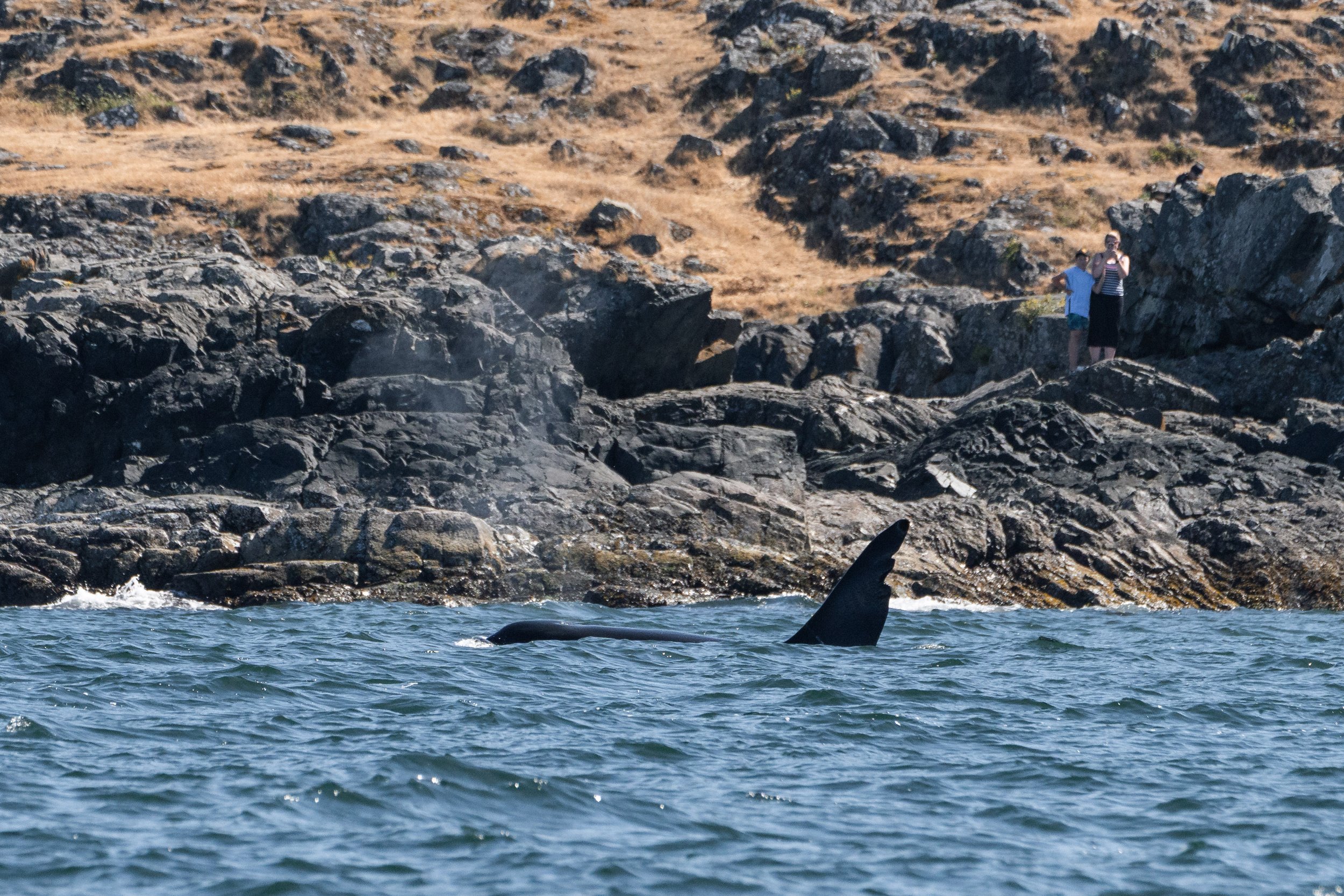
T063 Chainsaw surfacing in front of Neck Point. Photo by Val Watson.
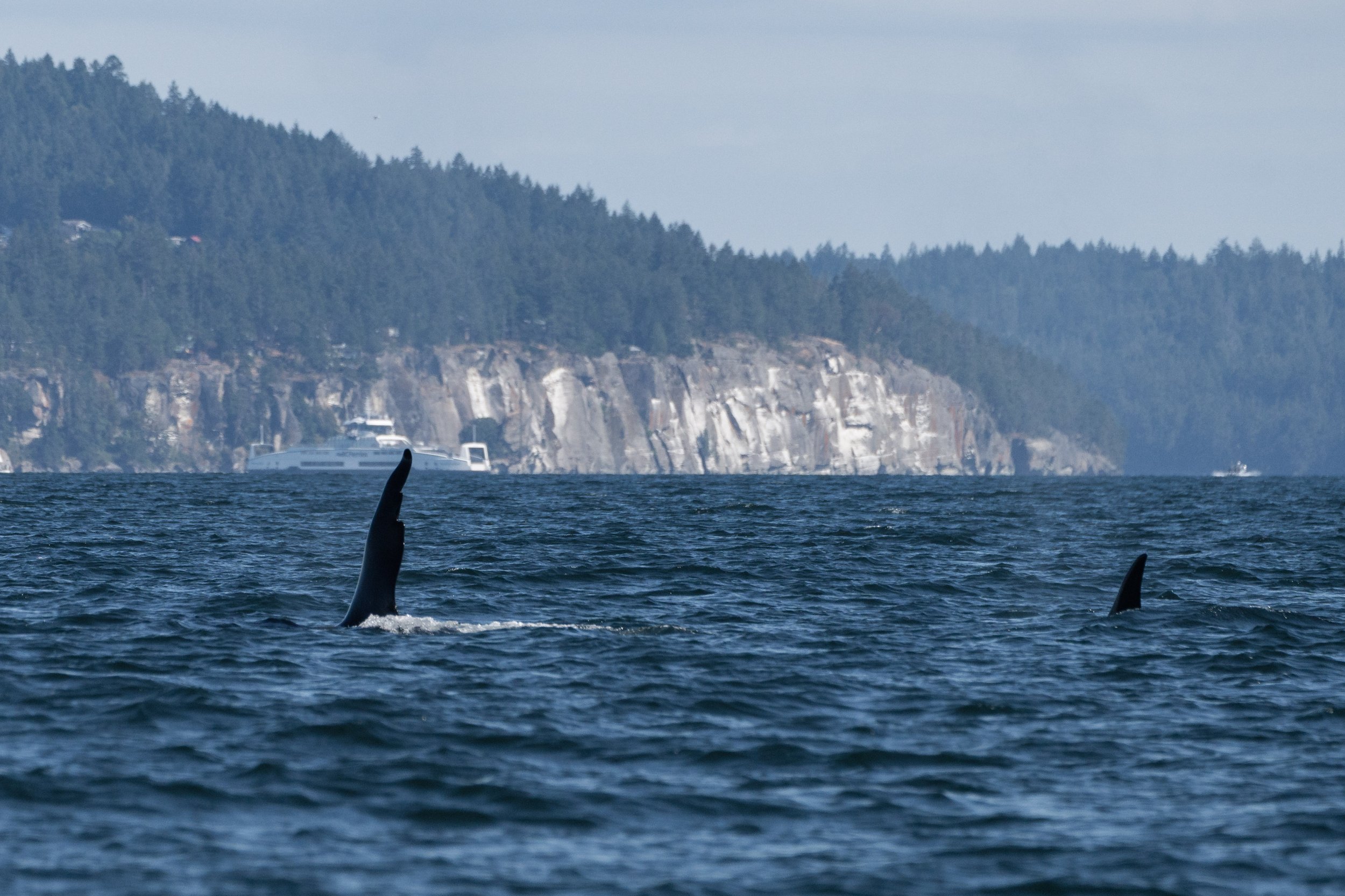
T063 Chainsaw (left) surfacing beside his mom, T065 Whidbey. Photo by Val Watson.
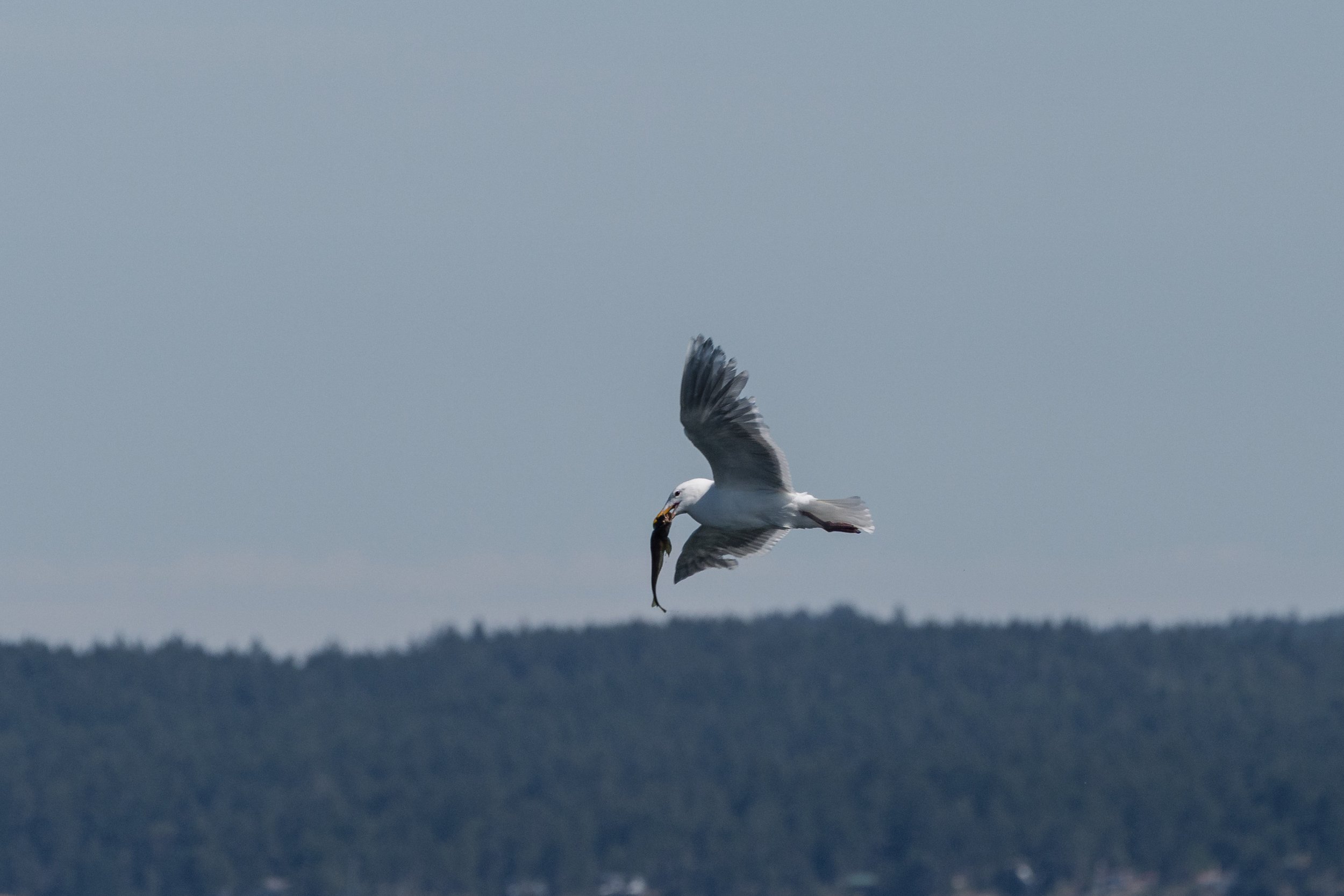
A gull flying by with it’s fresh catch. Photo by Val Watson.
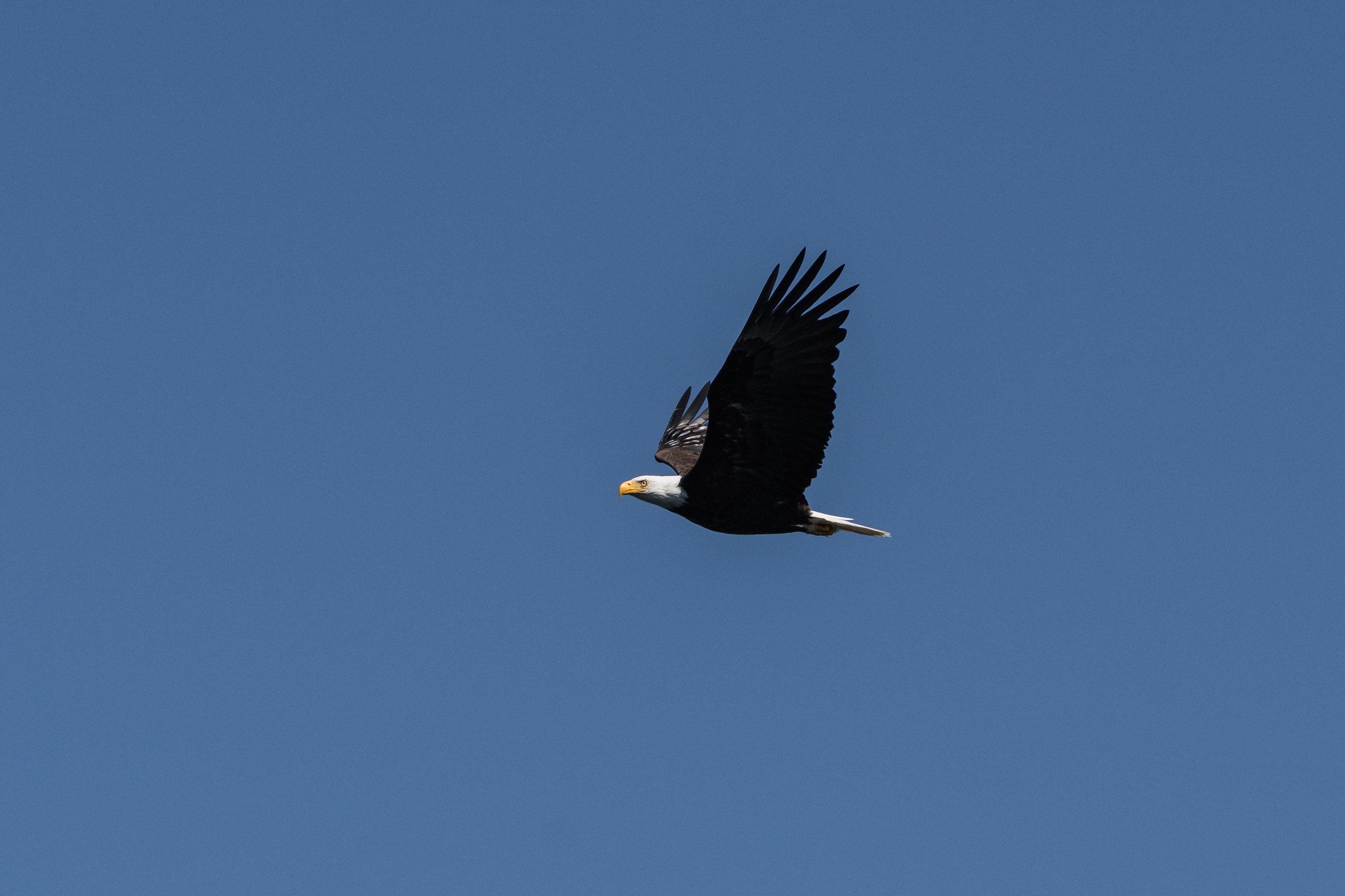
A Bald Eagle soaring overhead. Photo by Val Watson.
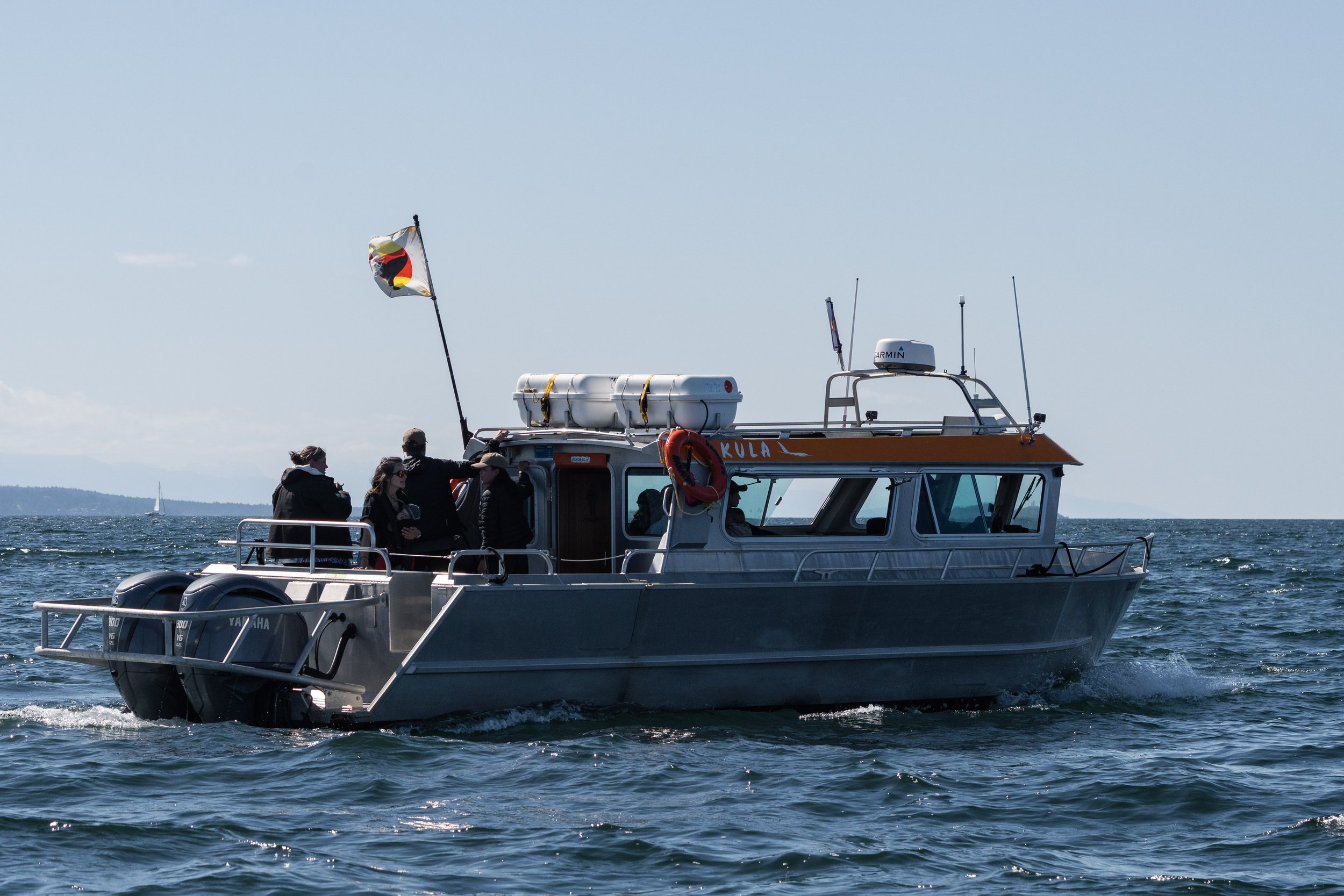
Whale watchers on Kula spending time with Chainsaw and Whidbey. Photo by Val Watson.
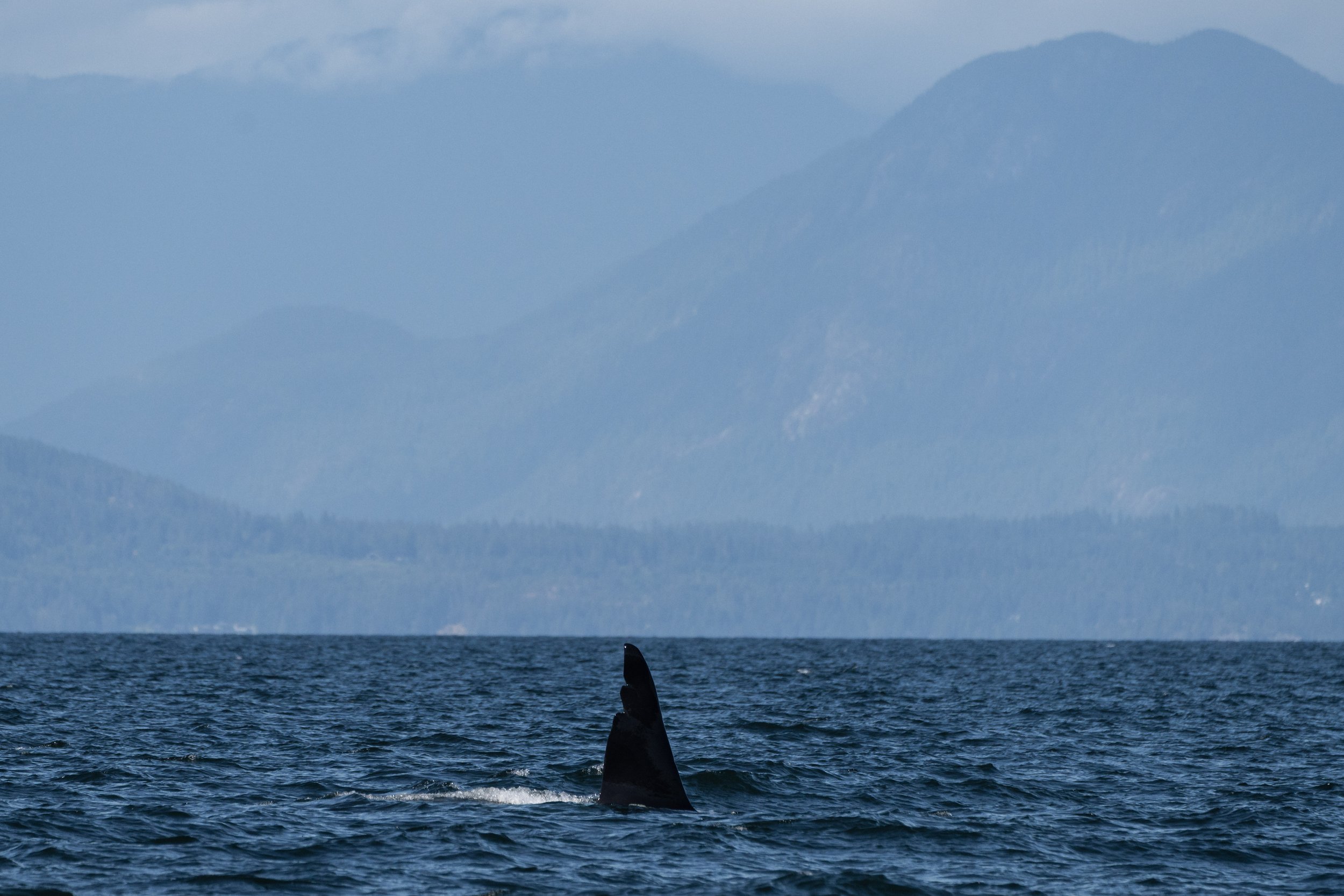
A beautiful look at T063 Chainsaw. Photo by Val Watson.
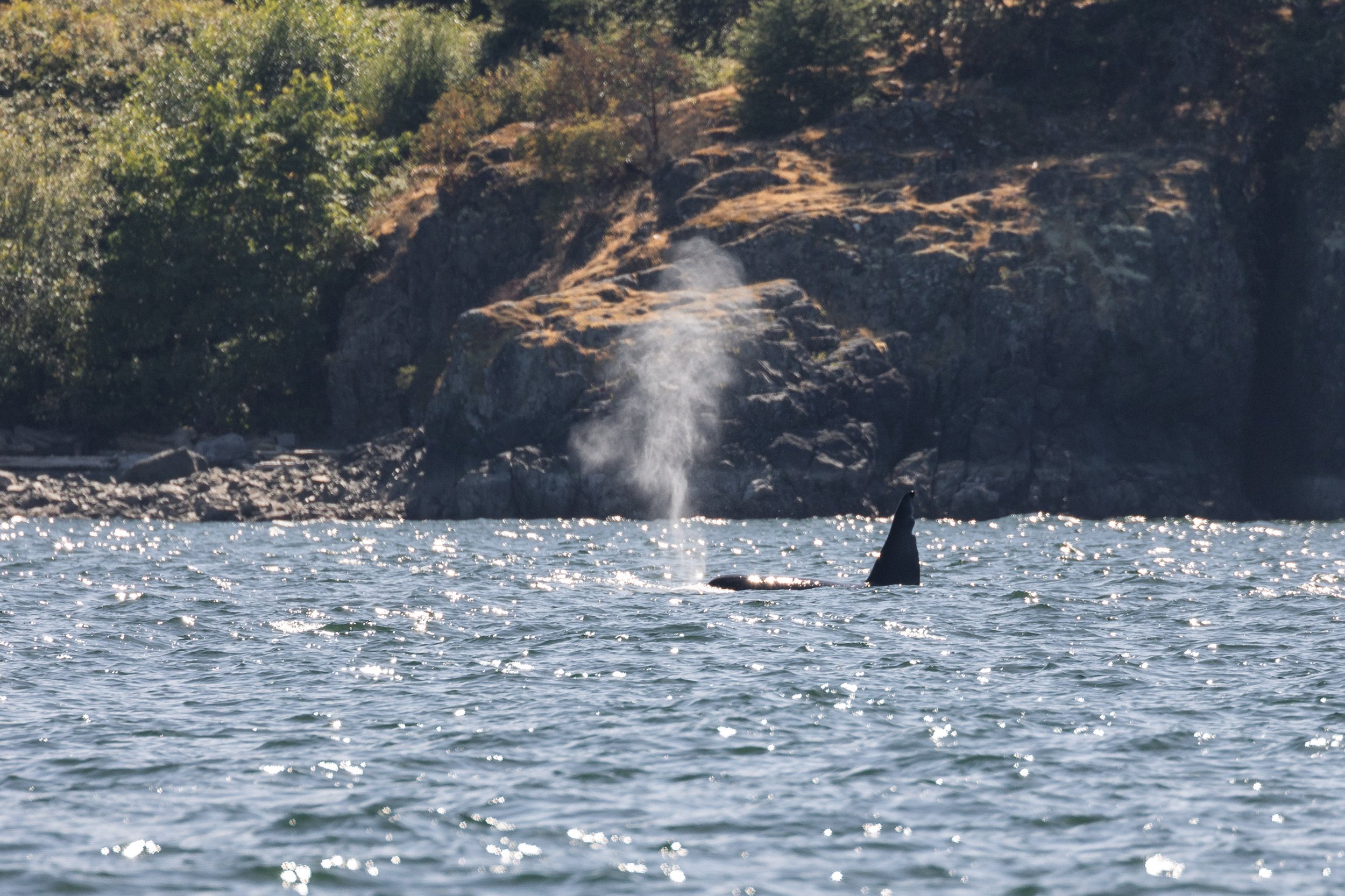
A beautiful backlit blow from T063 Chainsaw. Photo by Vanessa Vereschahen.
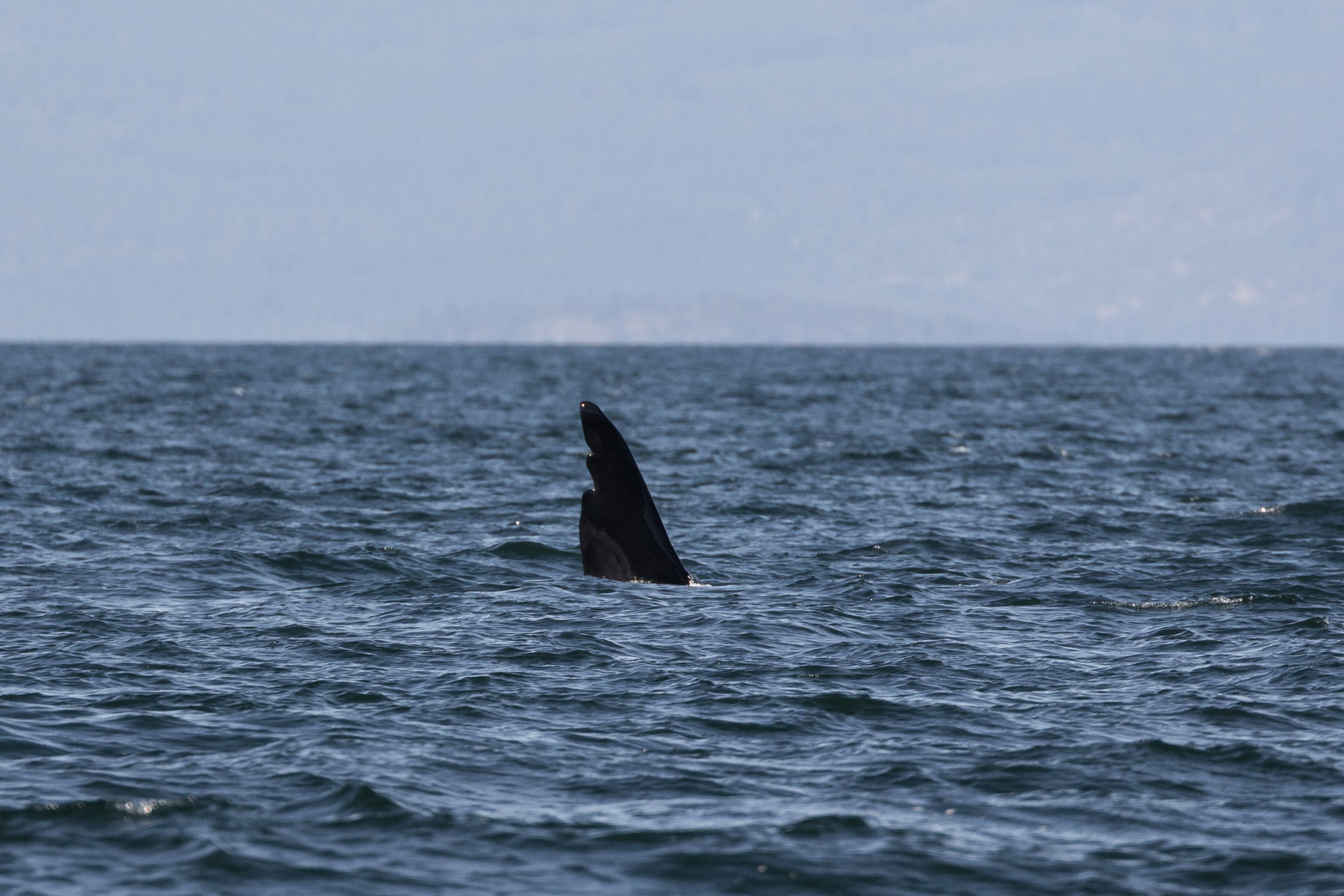
Chainsaw surfacing in the waves. Photo by Vanessa Vereschahen.
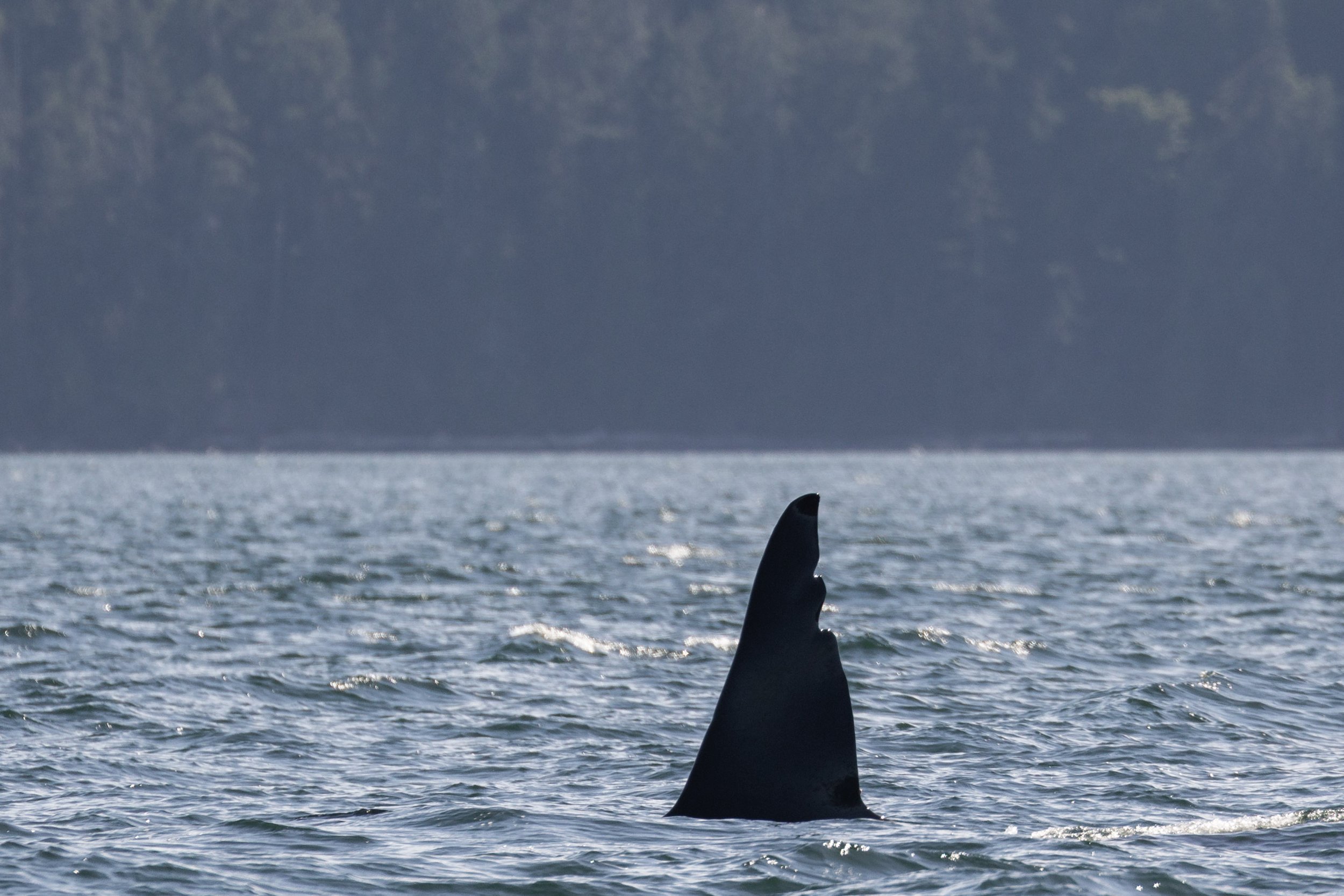
A great look at T063 Chainsaw. Photo by Vanessa Vereschahen.
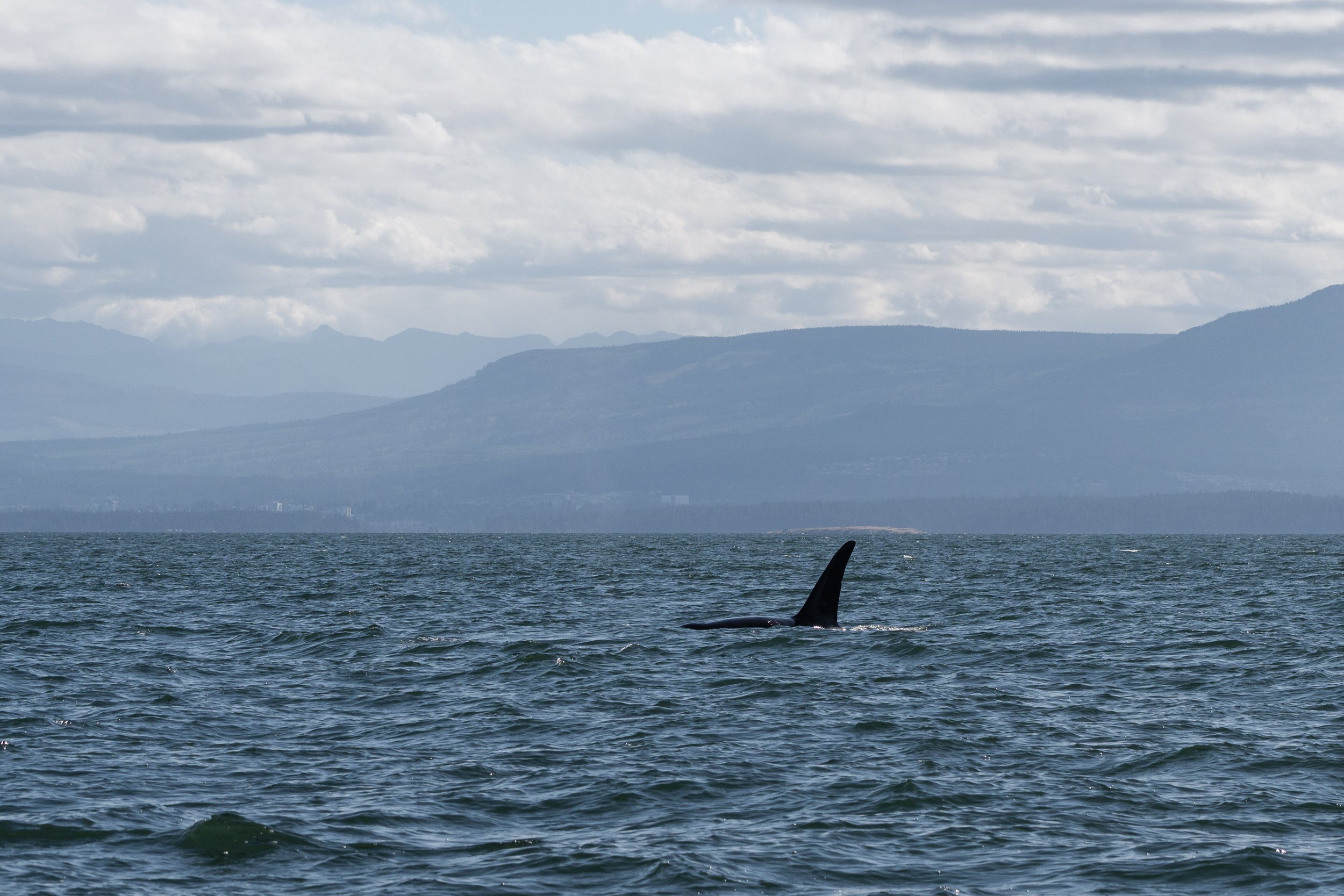
T100C Laurel surfacing in the waves. Photo by Val Watson.
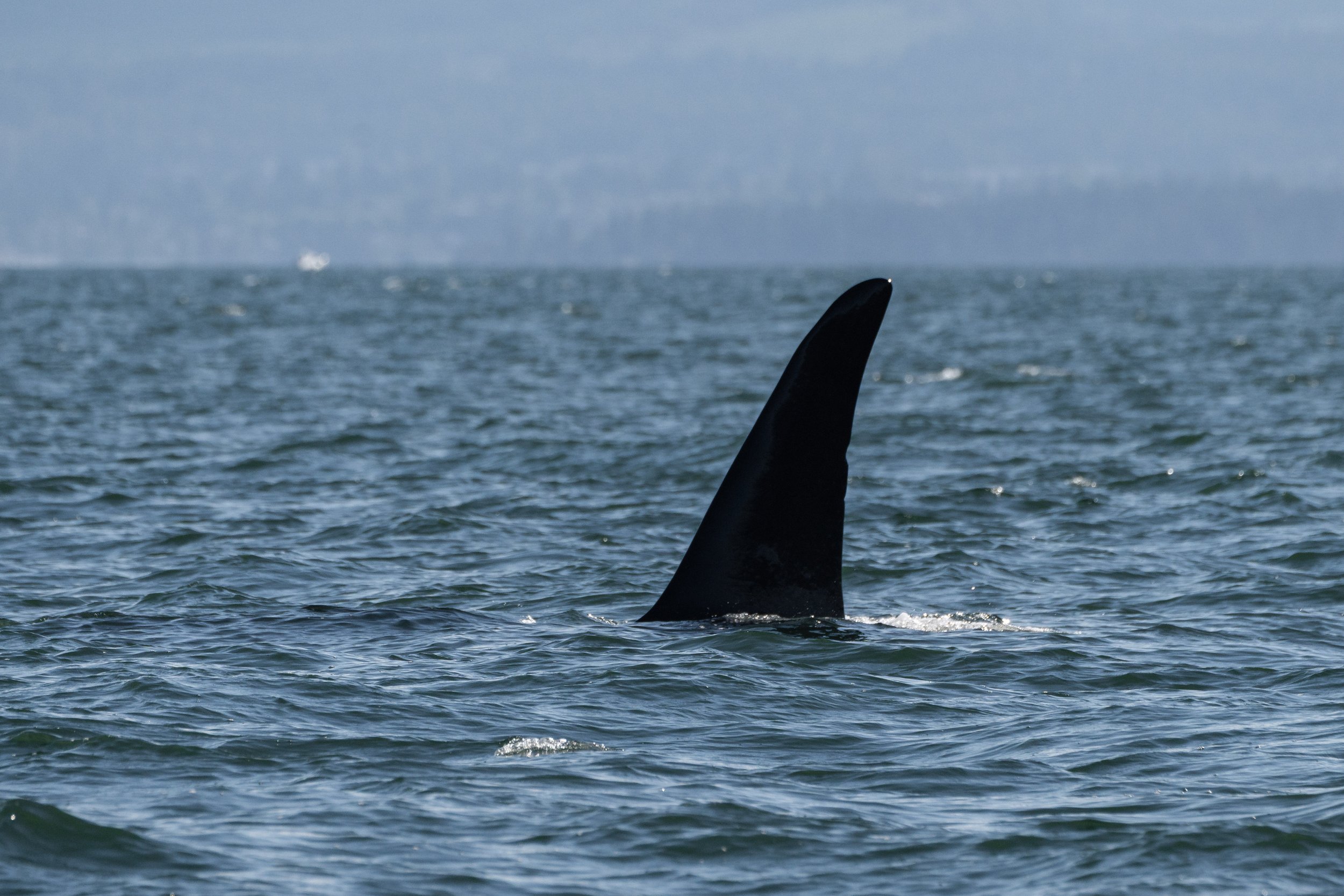
A closer look at T100C Laurel’s distinct notches. Photo by Val Watson.
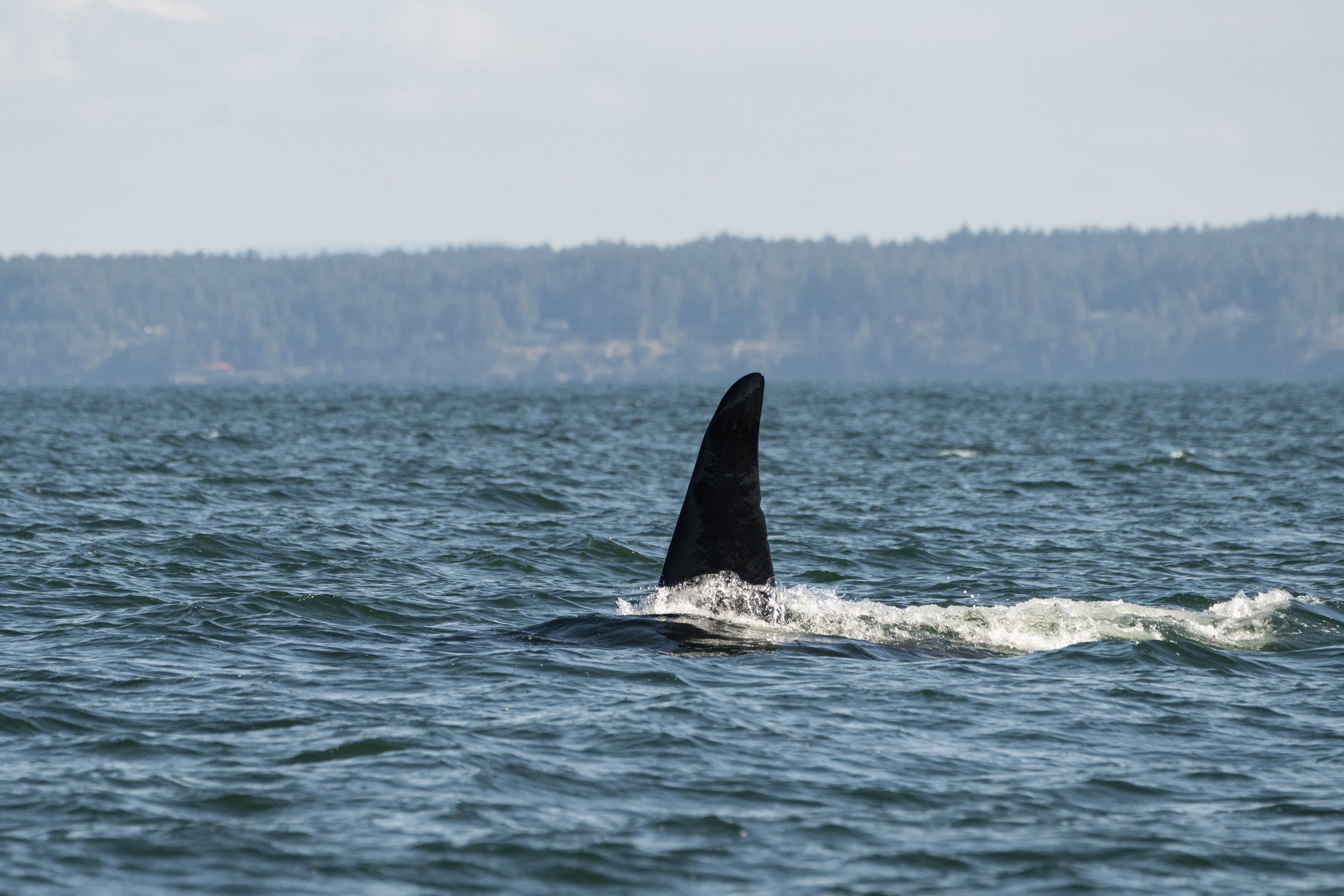
T100C Laurel causing a wave as he moves through the water. Photo by Val Watson.
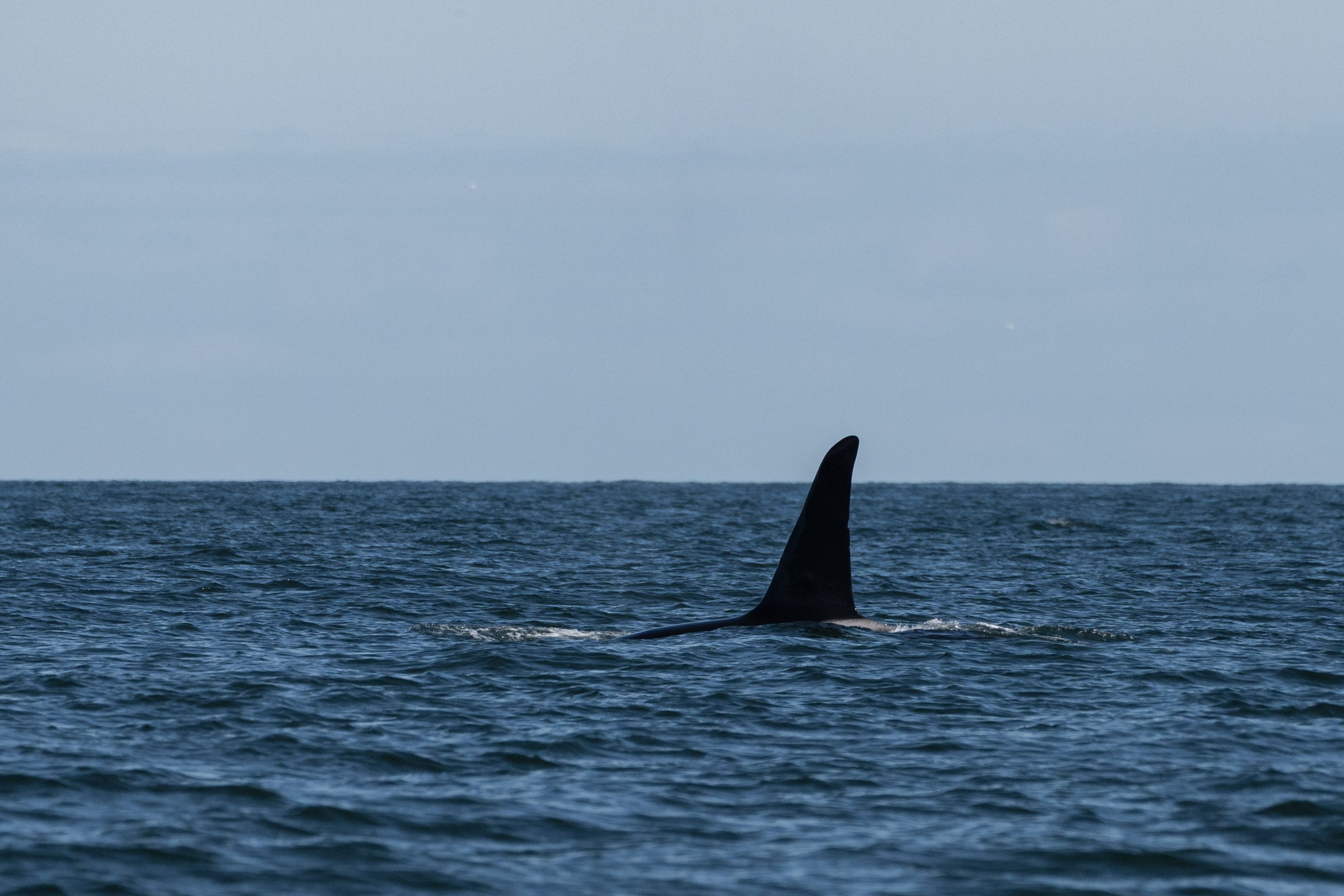
T100C Laurel surfacing with a bit of his saddle patch visible. Photo by Val Watson.
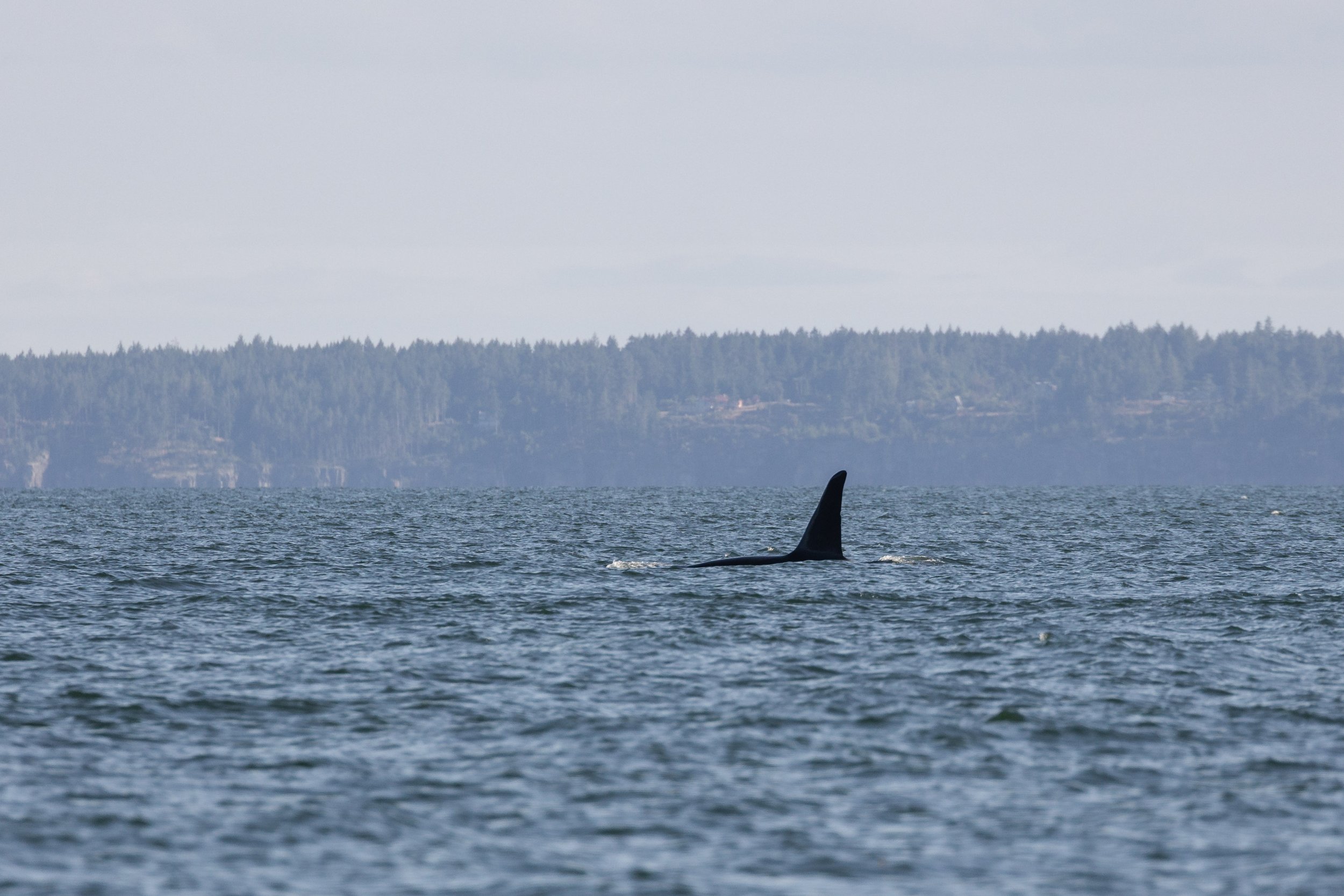
T100C Laurel surfacing. Photo by Vanessa Vereschahen.
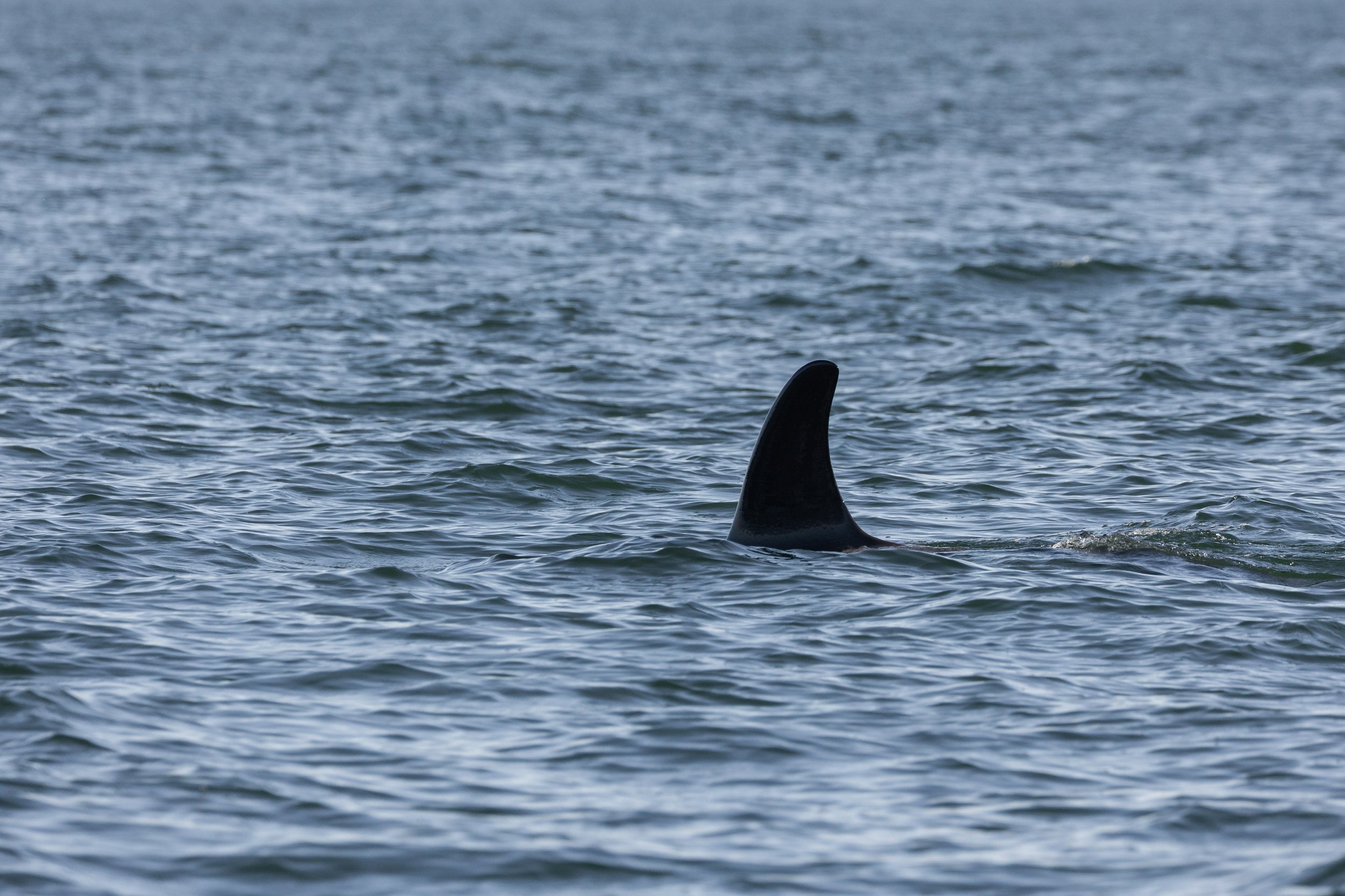
T100F Estrella’s dorsal fin. Photo by Vanessa Vereschahen.
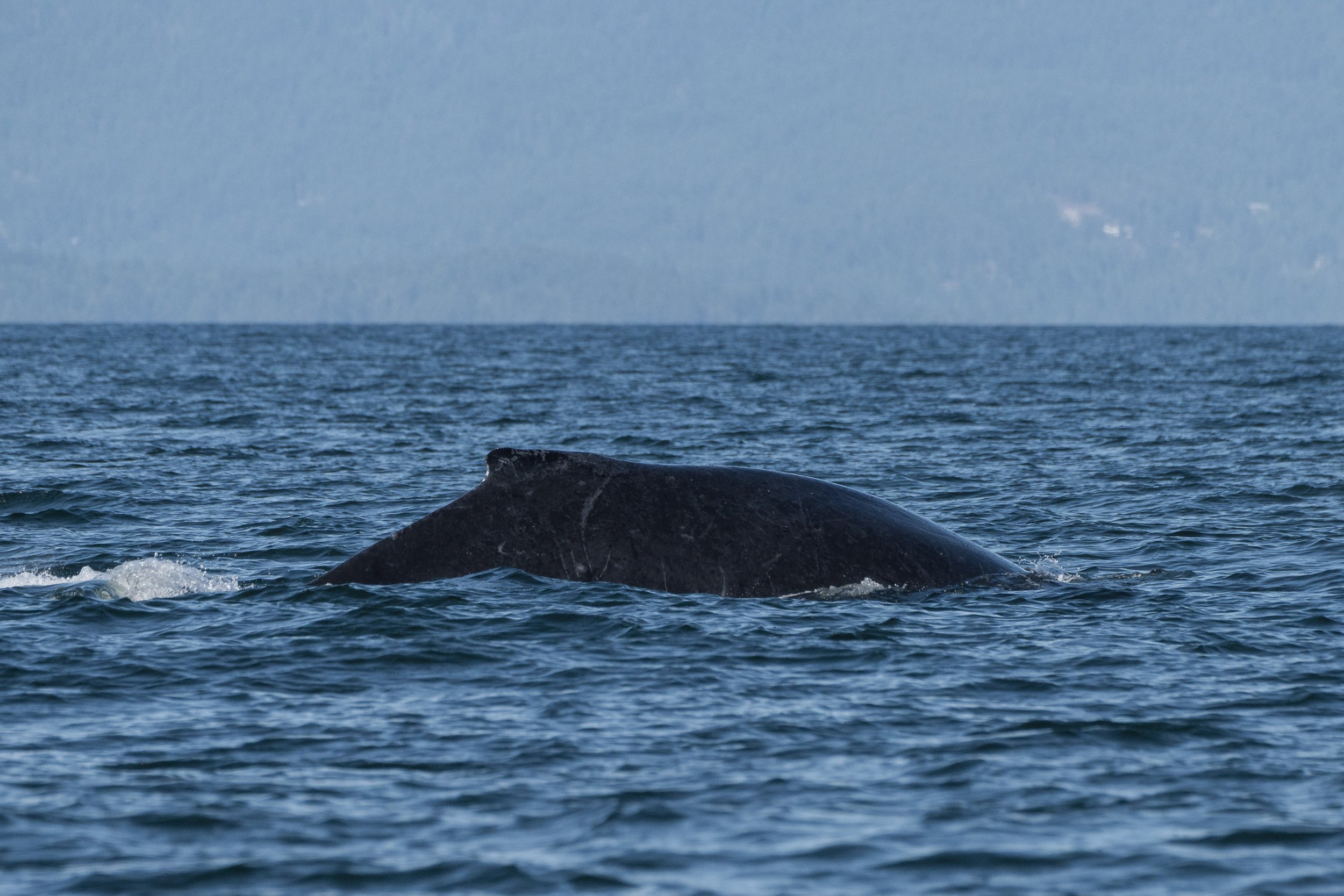
Incognito’s dorsal fin as they surface close to the orca. Photo by Val Watson.
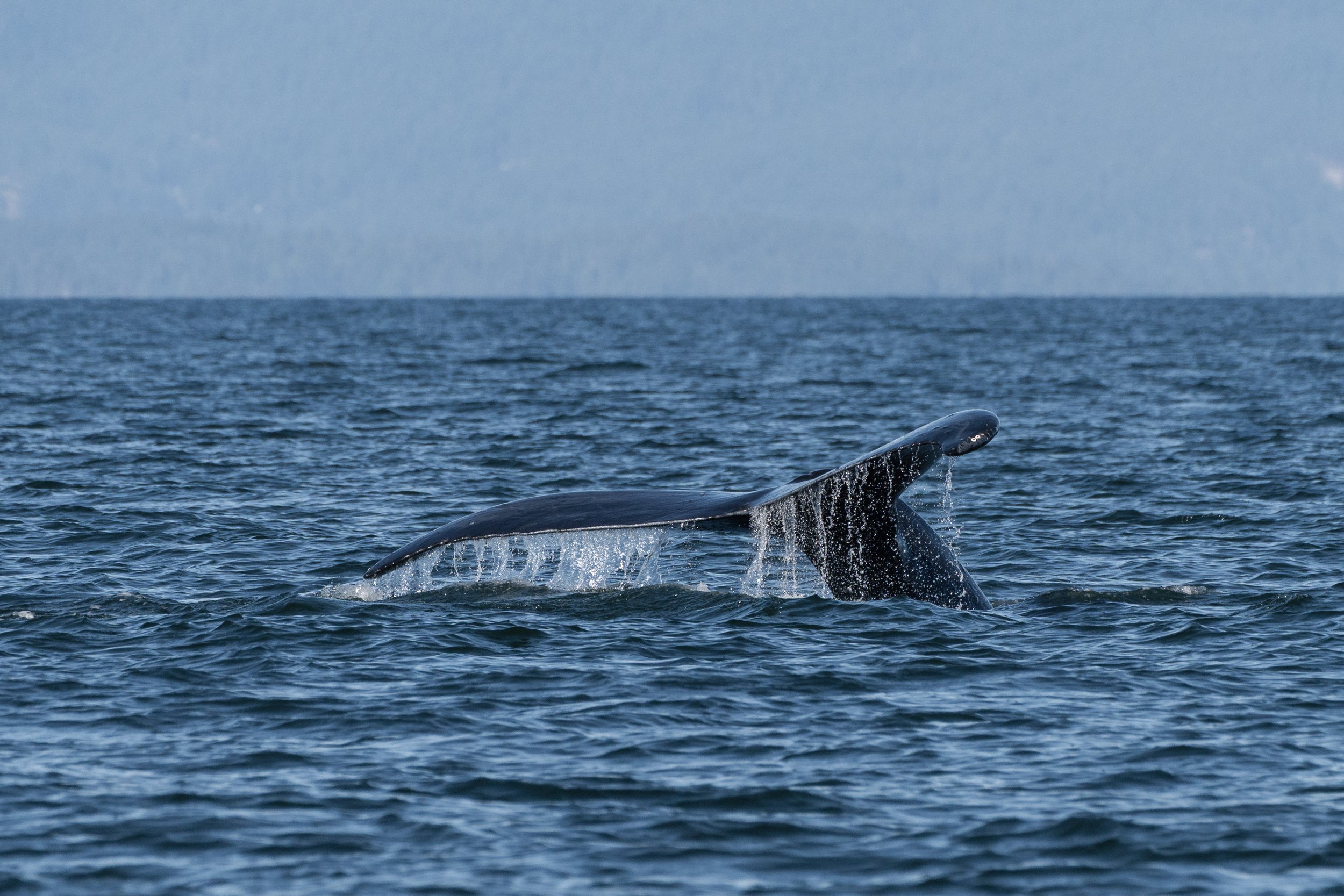
A lovely fluke waterfall from Incognito. Photo by Val Watson.
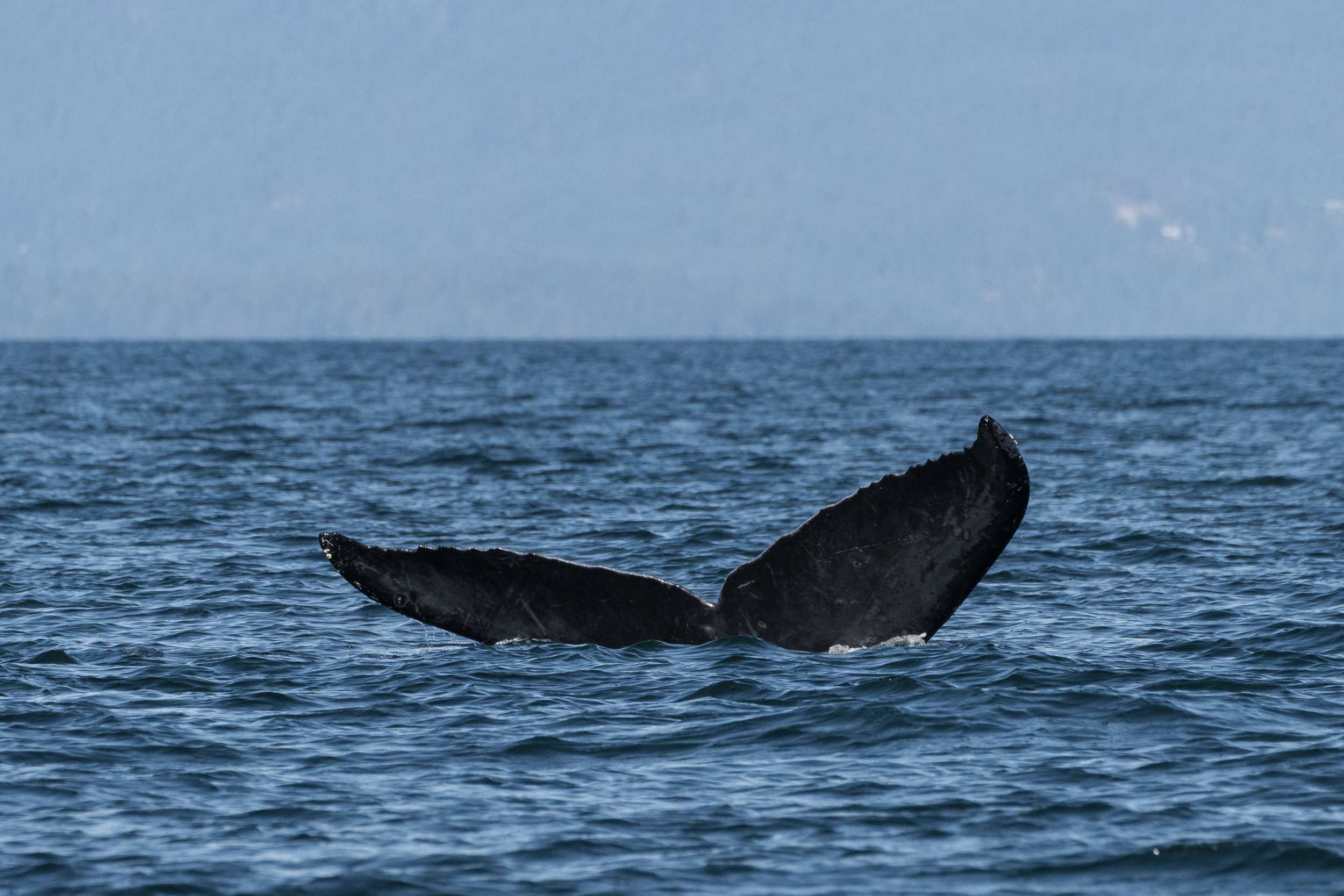
The distinctly indistinct fluke of Incognito. Photo by Val Watson.
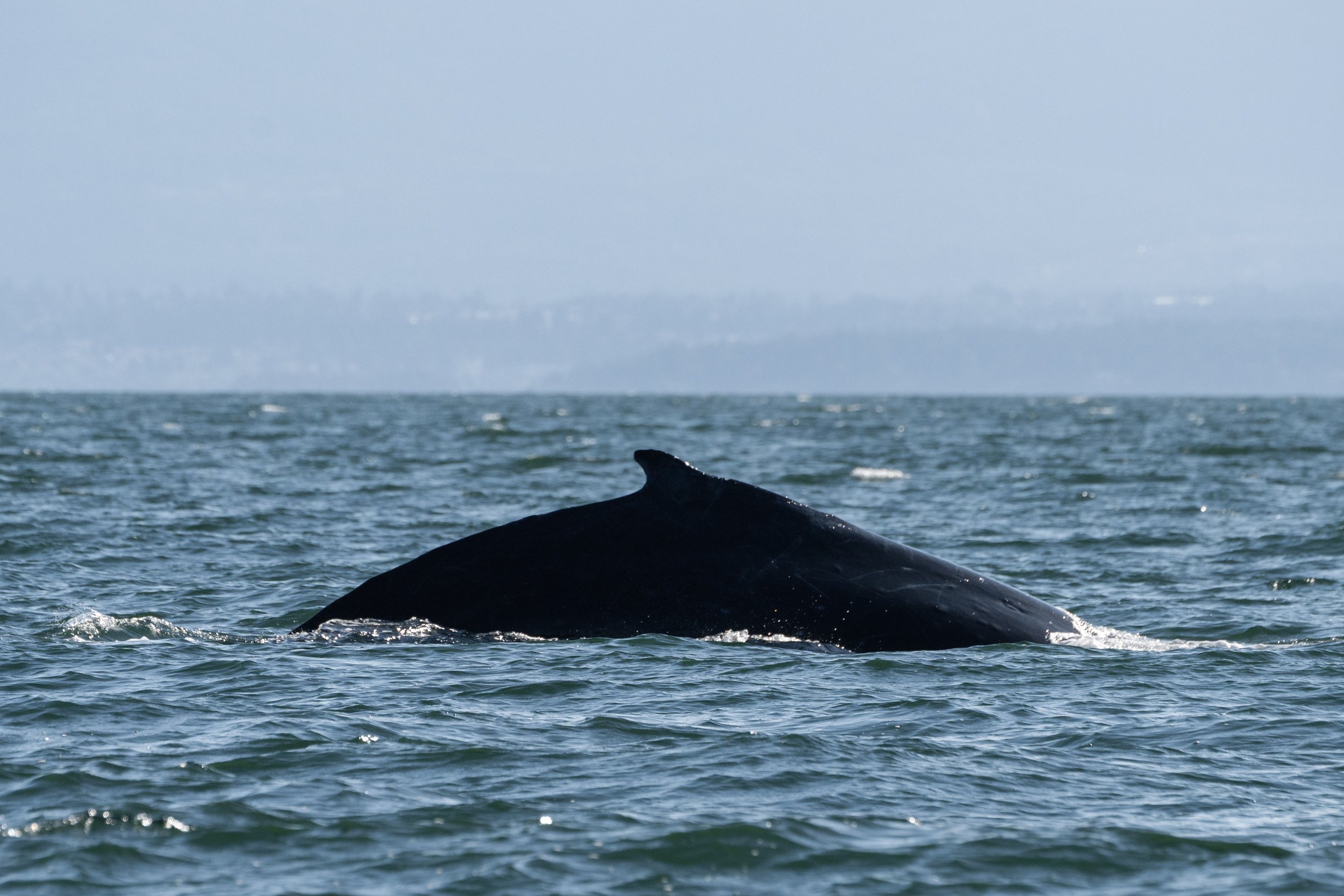
Crackle’s dorsal fin. Photo by Val Watson.
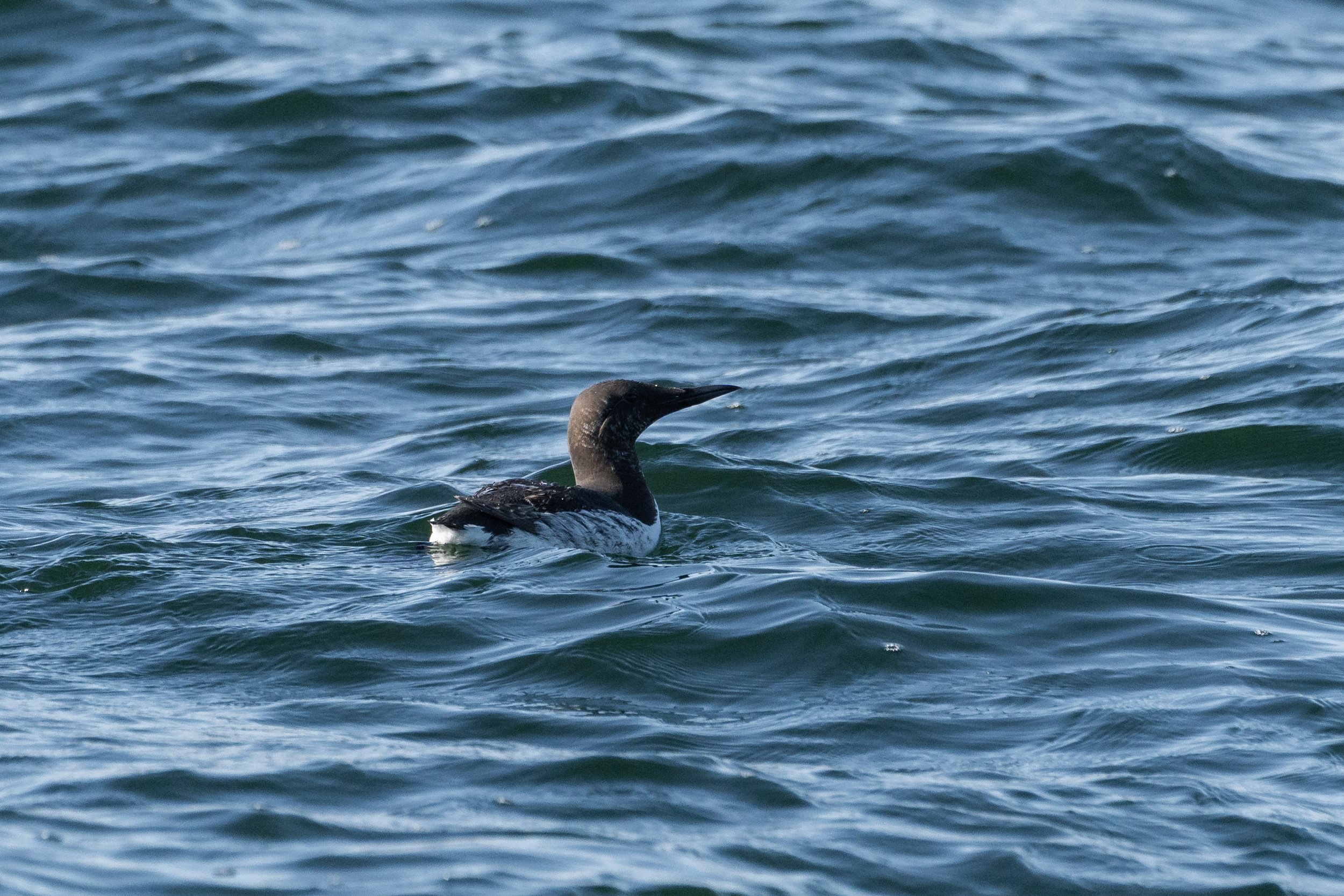
A common murre floating by. Photo by Val Watson.
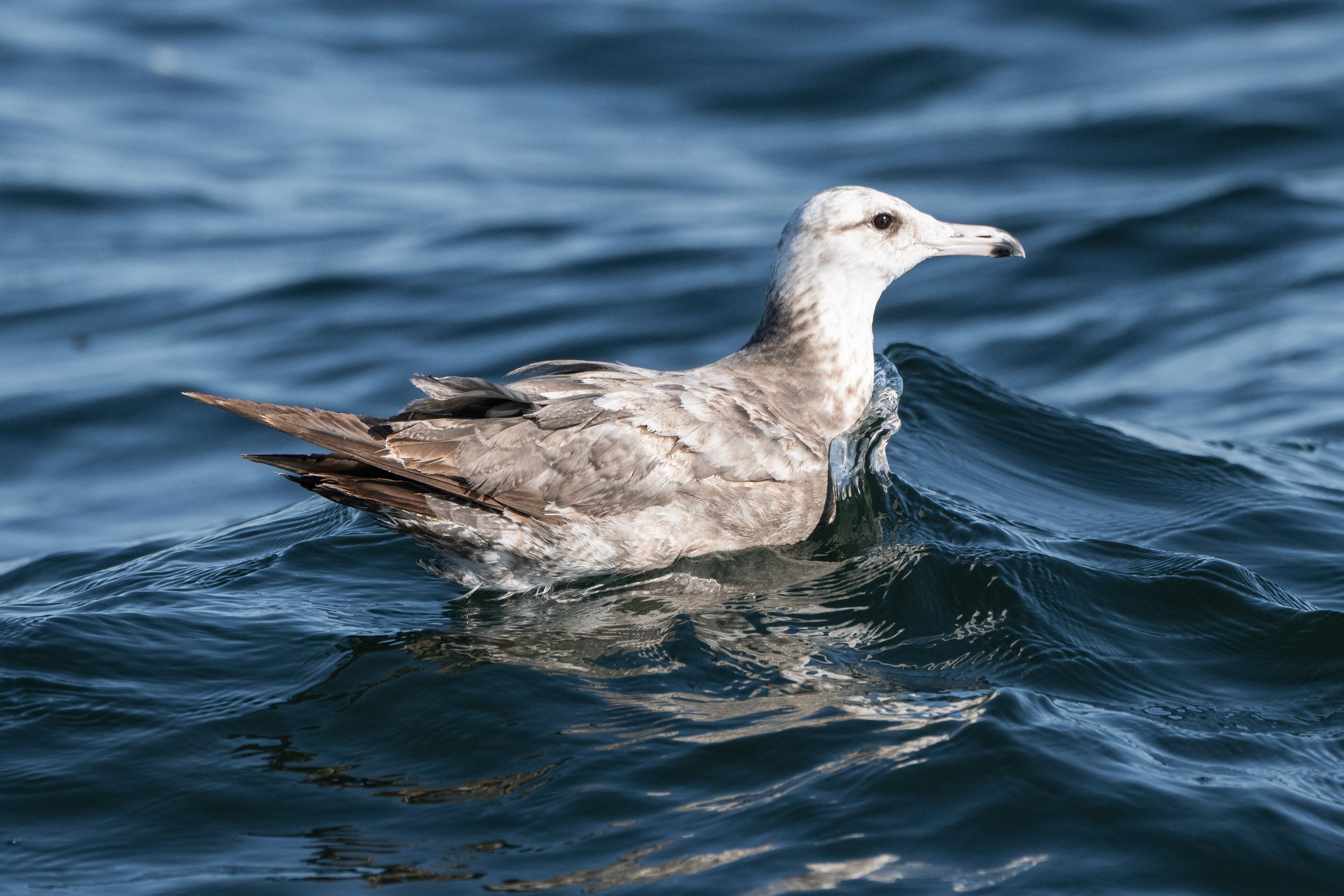
A wave hitting a swimming gull. Photo by Val Watson.
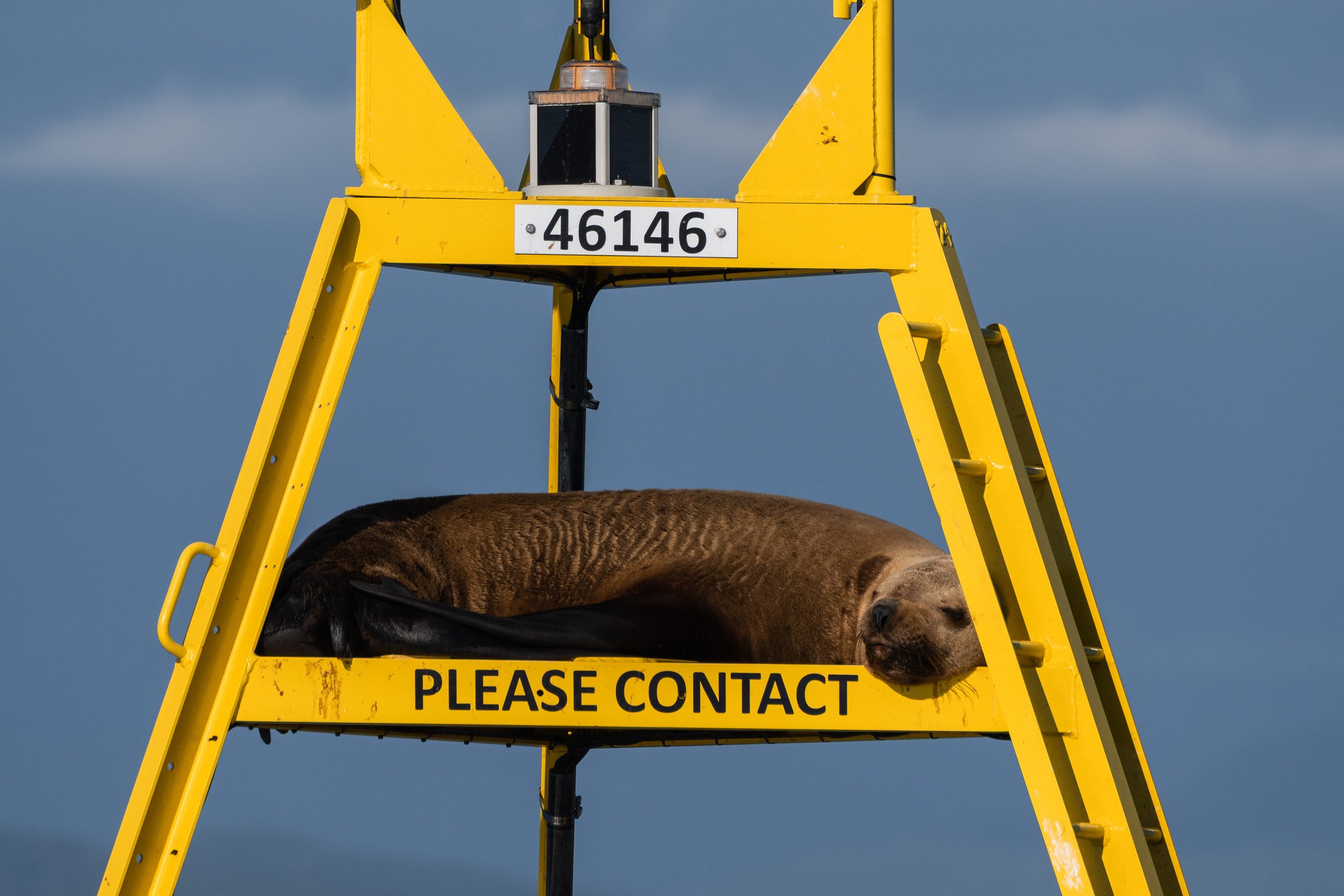
A Steller Sea Lion with sitting on his high rise, a benefit of being a good climber. Photo by Val Watson.
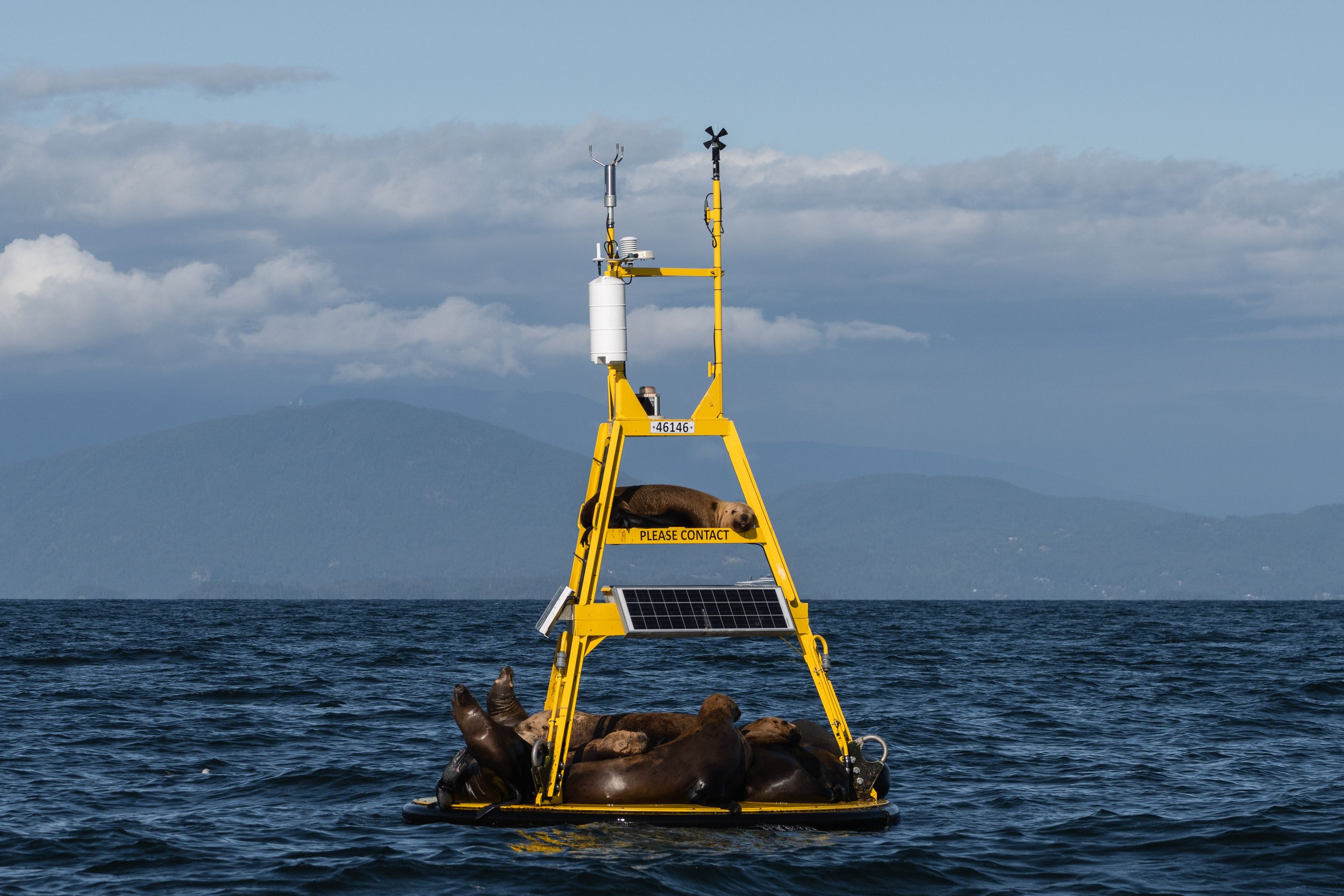
A full look at the Halibut Bank Buoy. Photo by Val Watson.
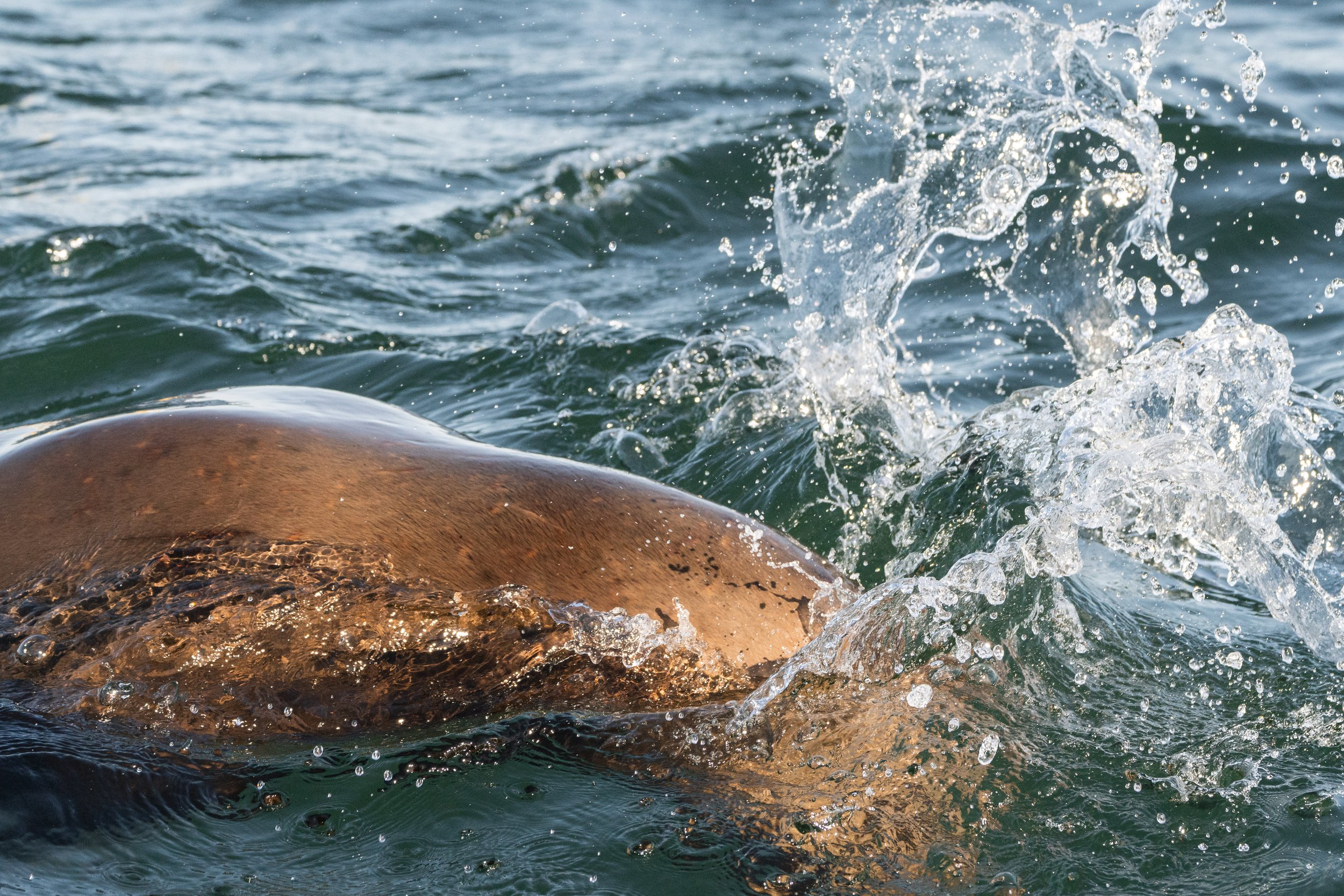
A sea lion splashing by. Photo by Val Watson.
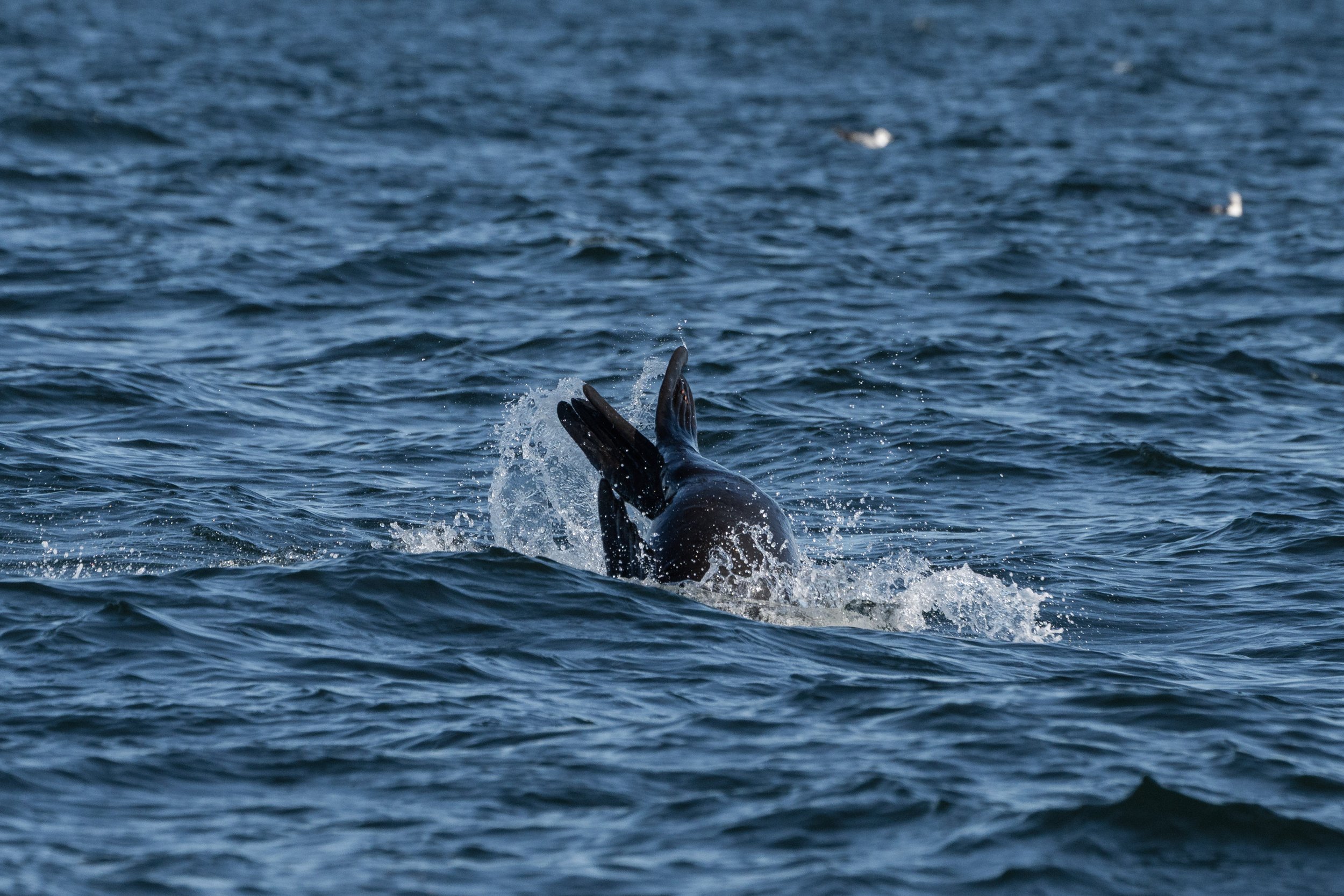
A porpoising Steller Sea Lion. Photo by Val Watson.
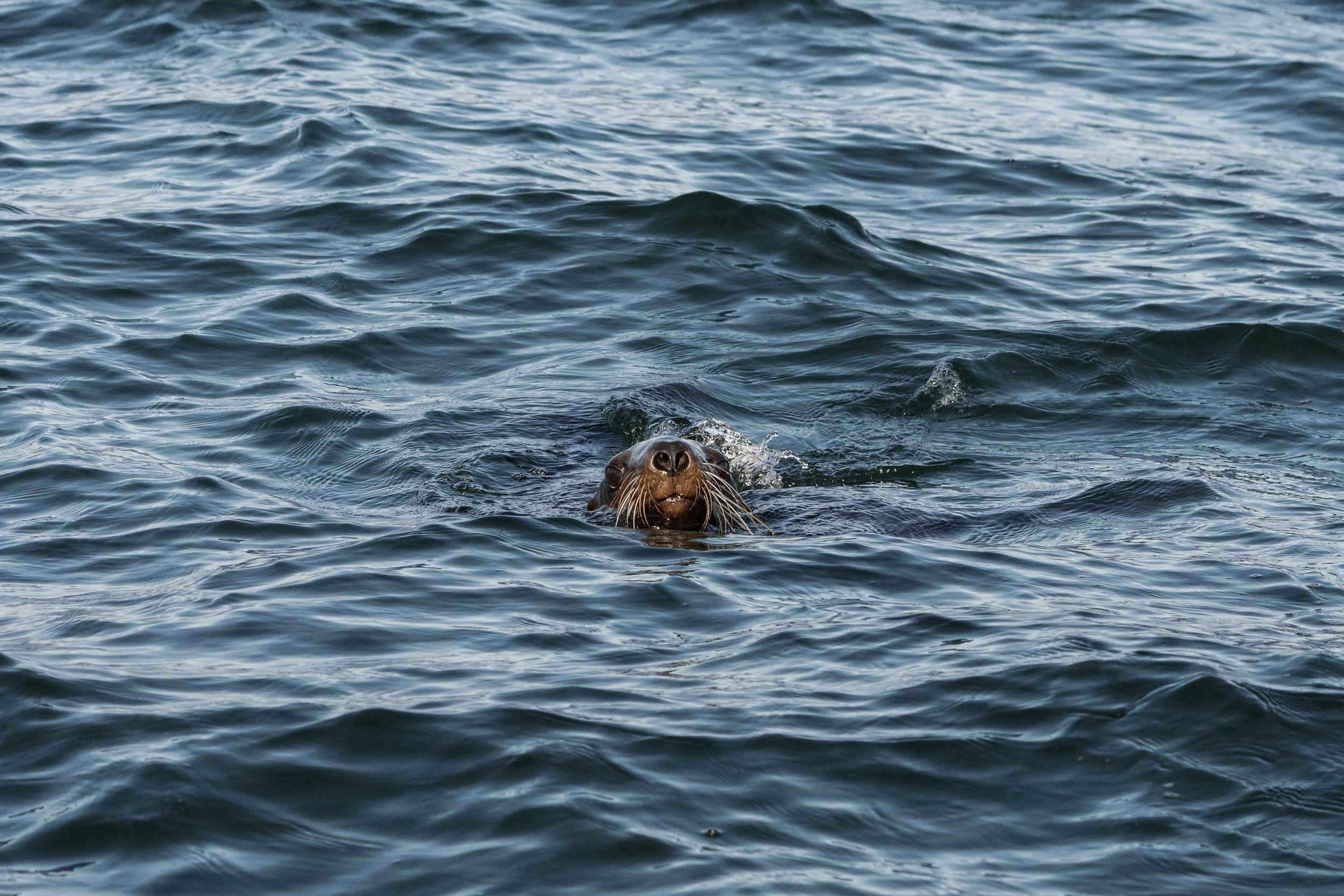
They can be curious! This one was checking us out from the water. Photo by Val Watson.
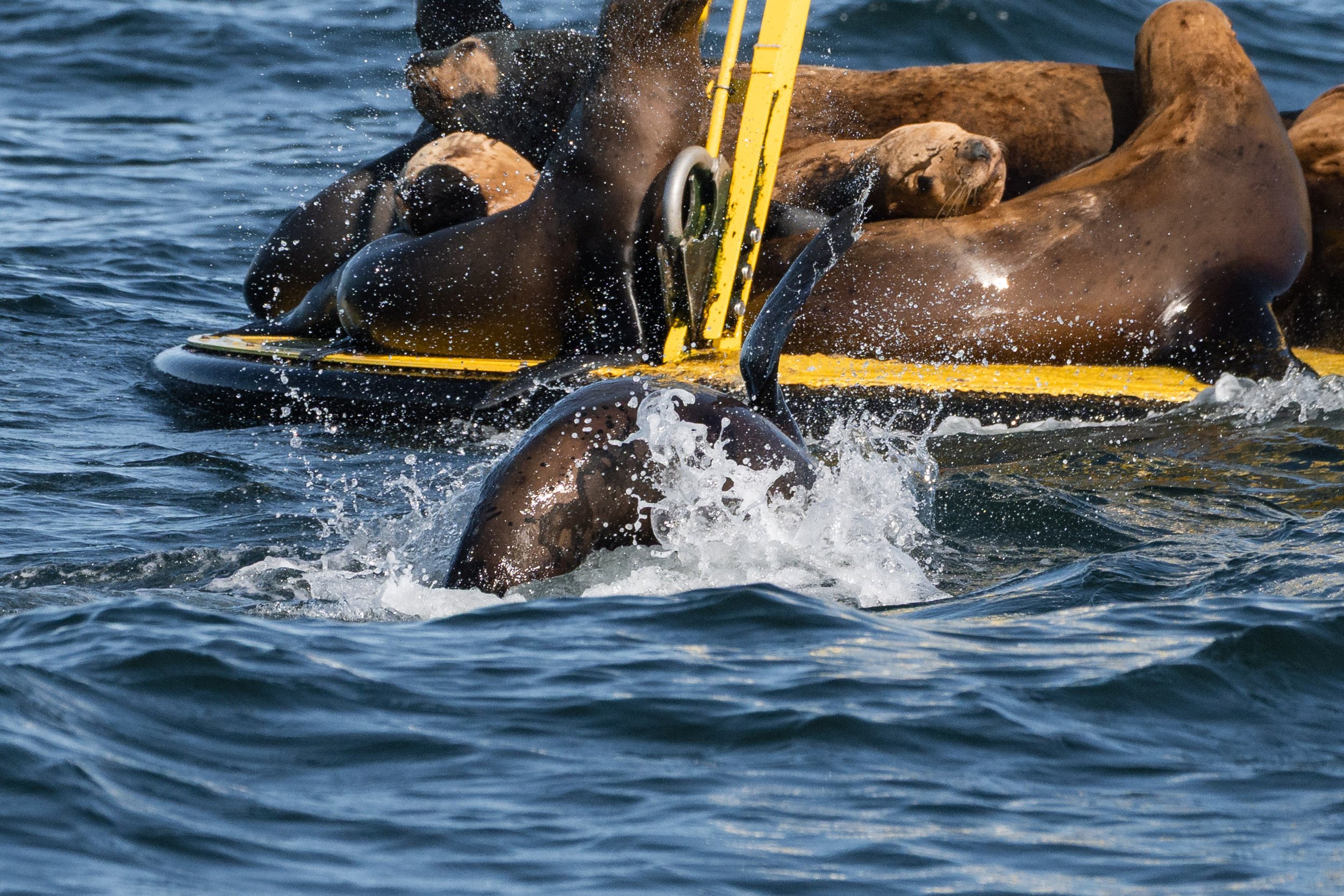
Another porpoising sea lion.Photo by Val Watson.
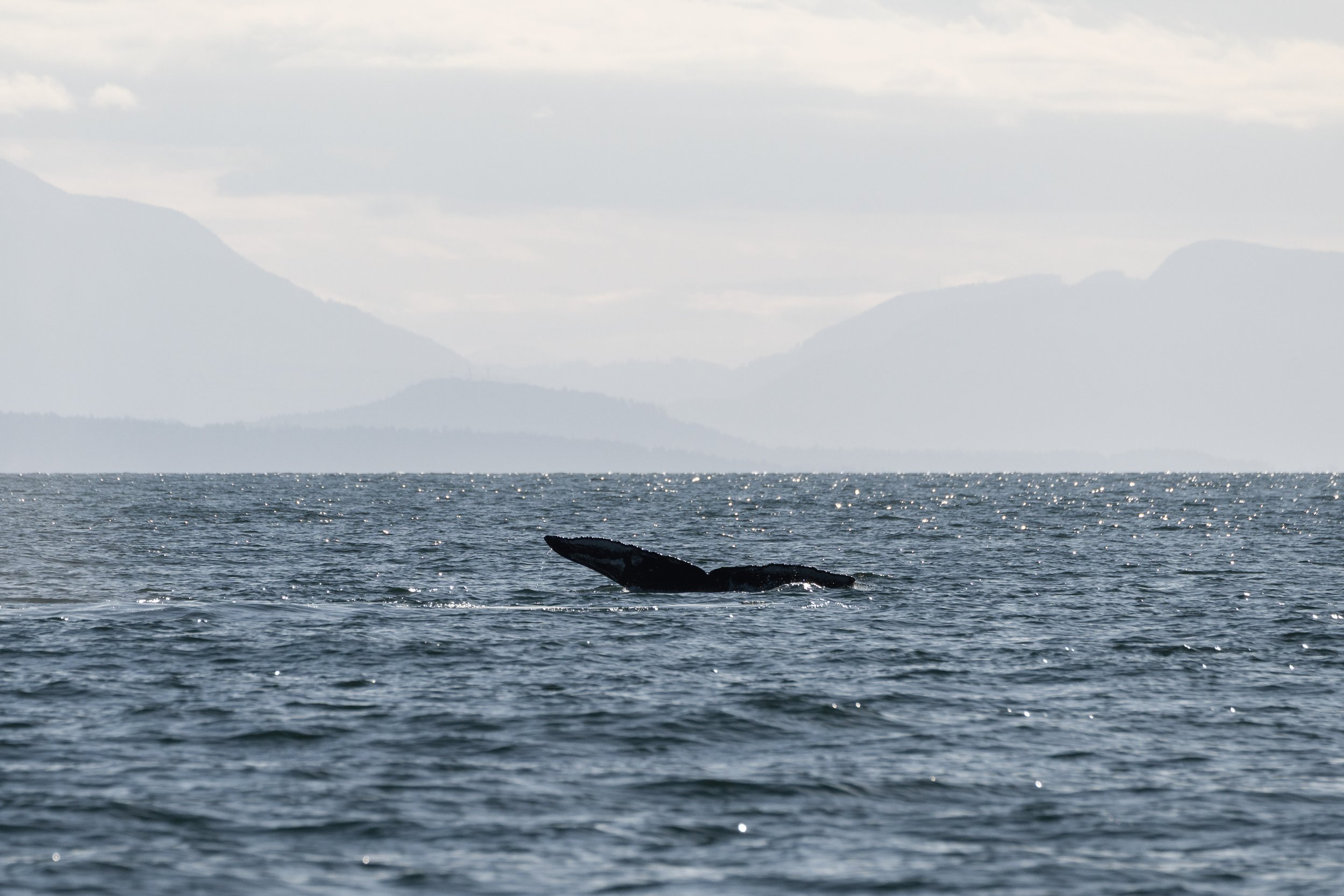
The underside of Dolphin’s tail. Photo by Val Watson.
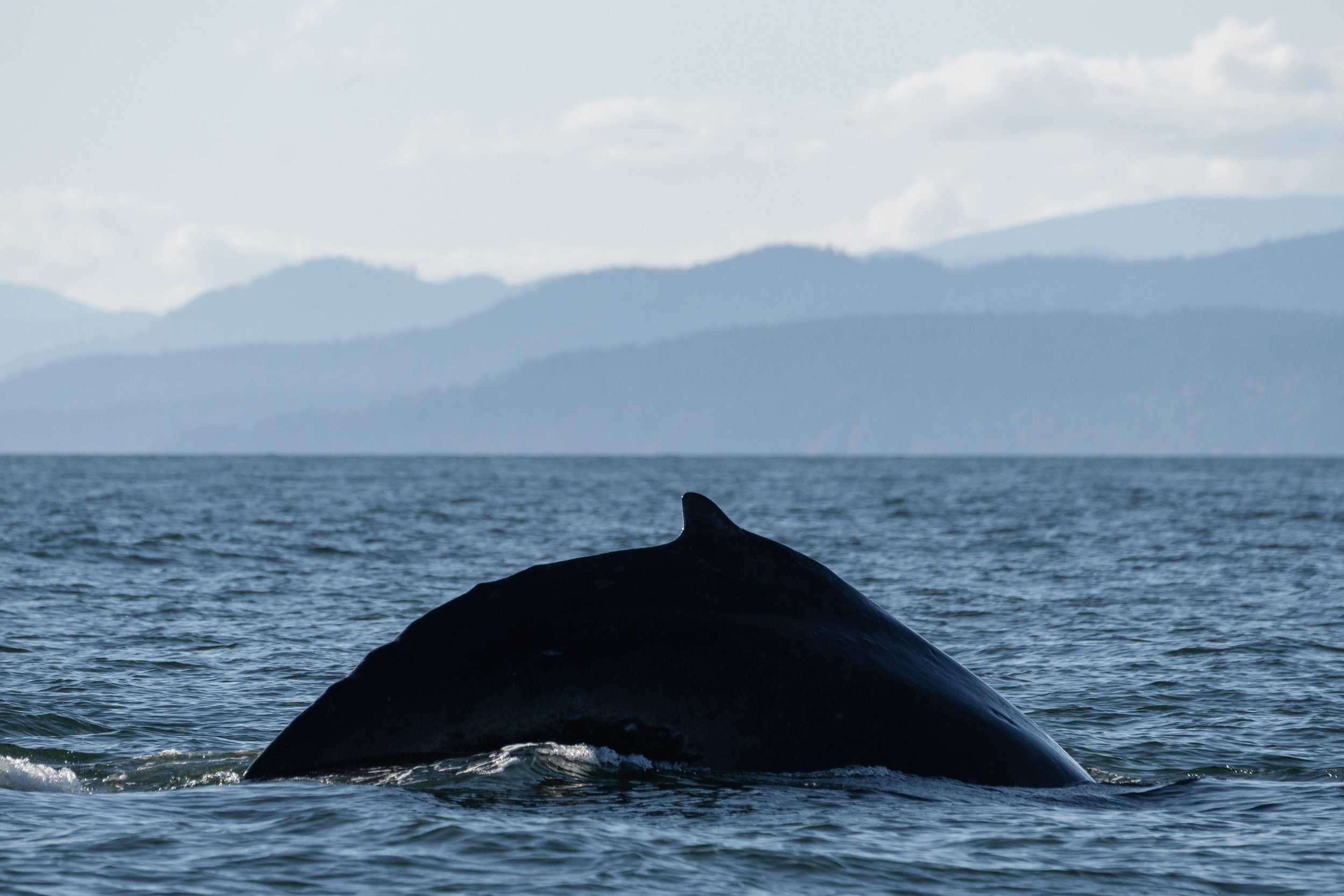
Thunderbolt arching for a dive. Photo by Val Watson.
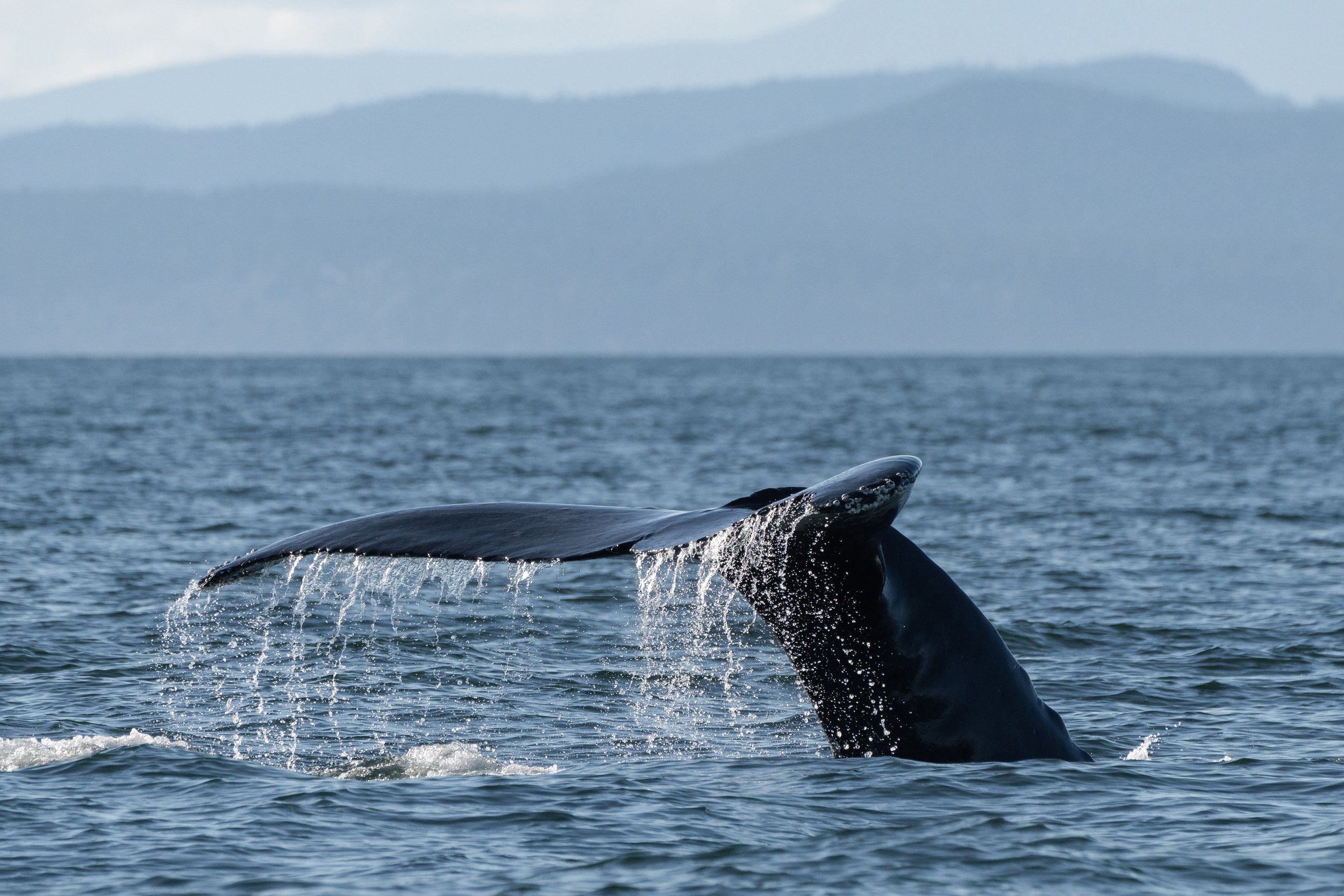
A fluke waterfall from Thunderbolt. Photo by Val Watson.
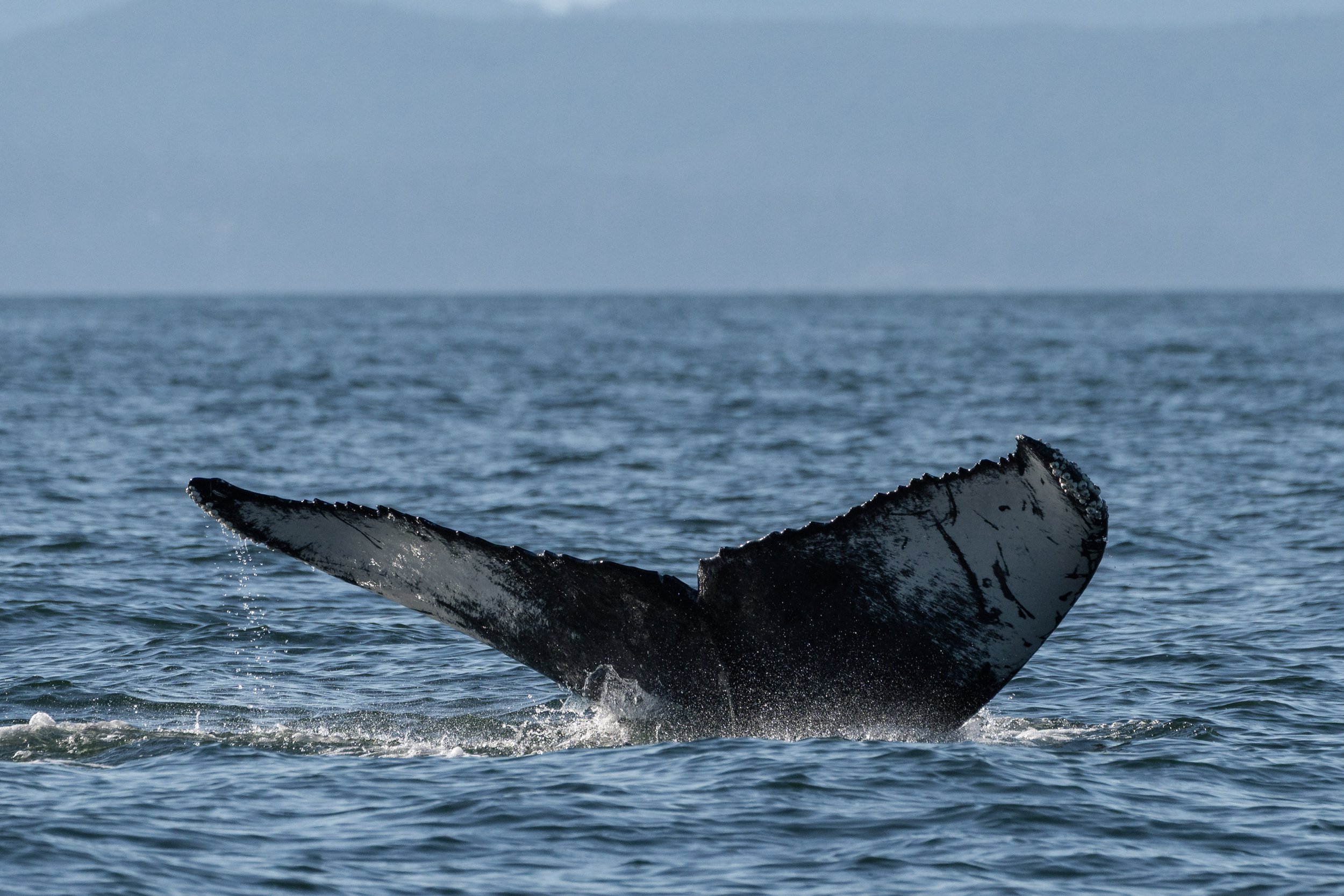
Thunderbolt’s beautiful white tail. Photo by Val Watson.
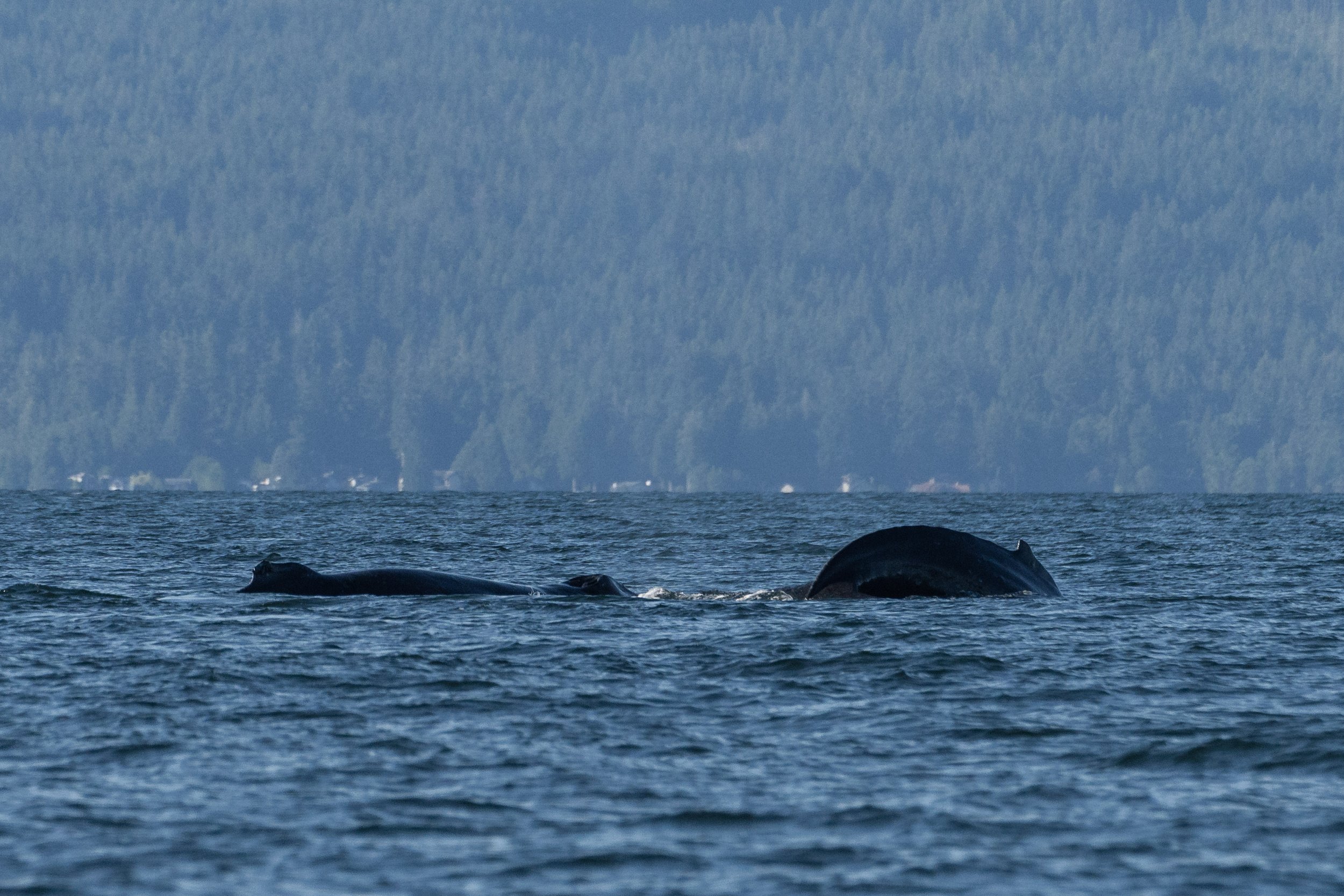
Dolphin arching with Forge surfacing beside them. Photo by Val Watson.
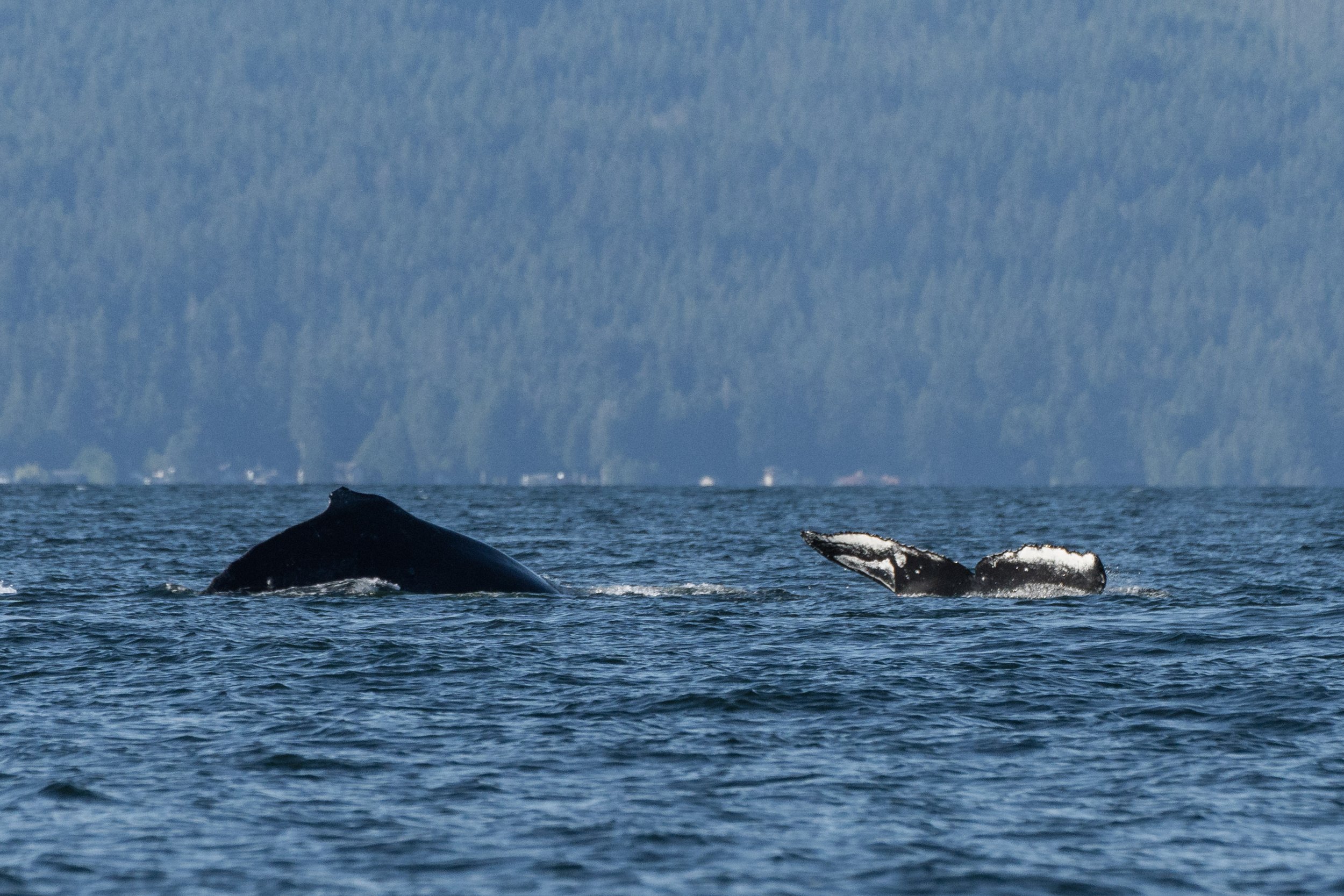
The underside of Dolphin’s tail with Forge arching beside them. Photo by Val Watson.
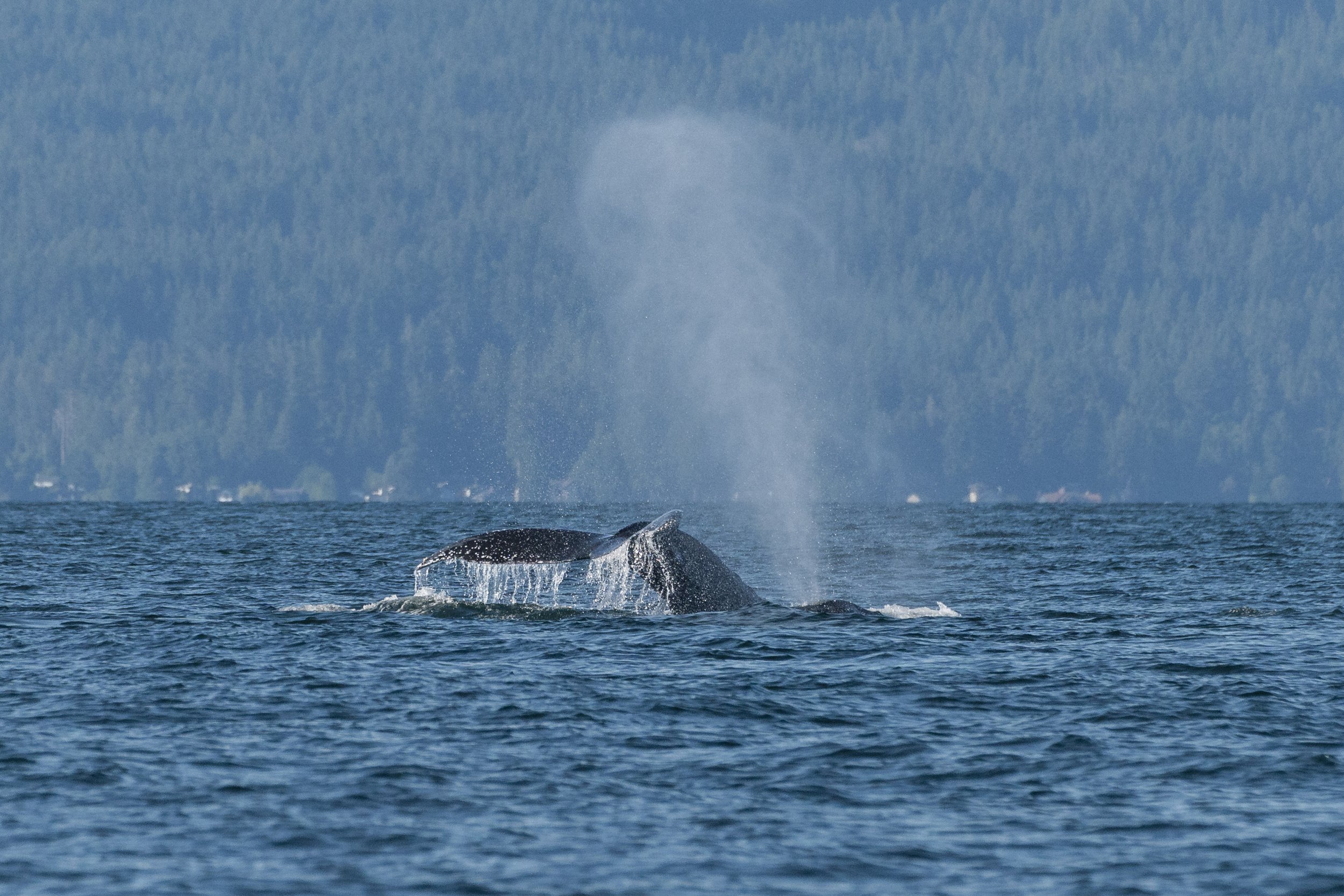
Forge lifting their tail to dive with incognito exhaling next to them. Photo by Val Watson.
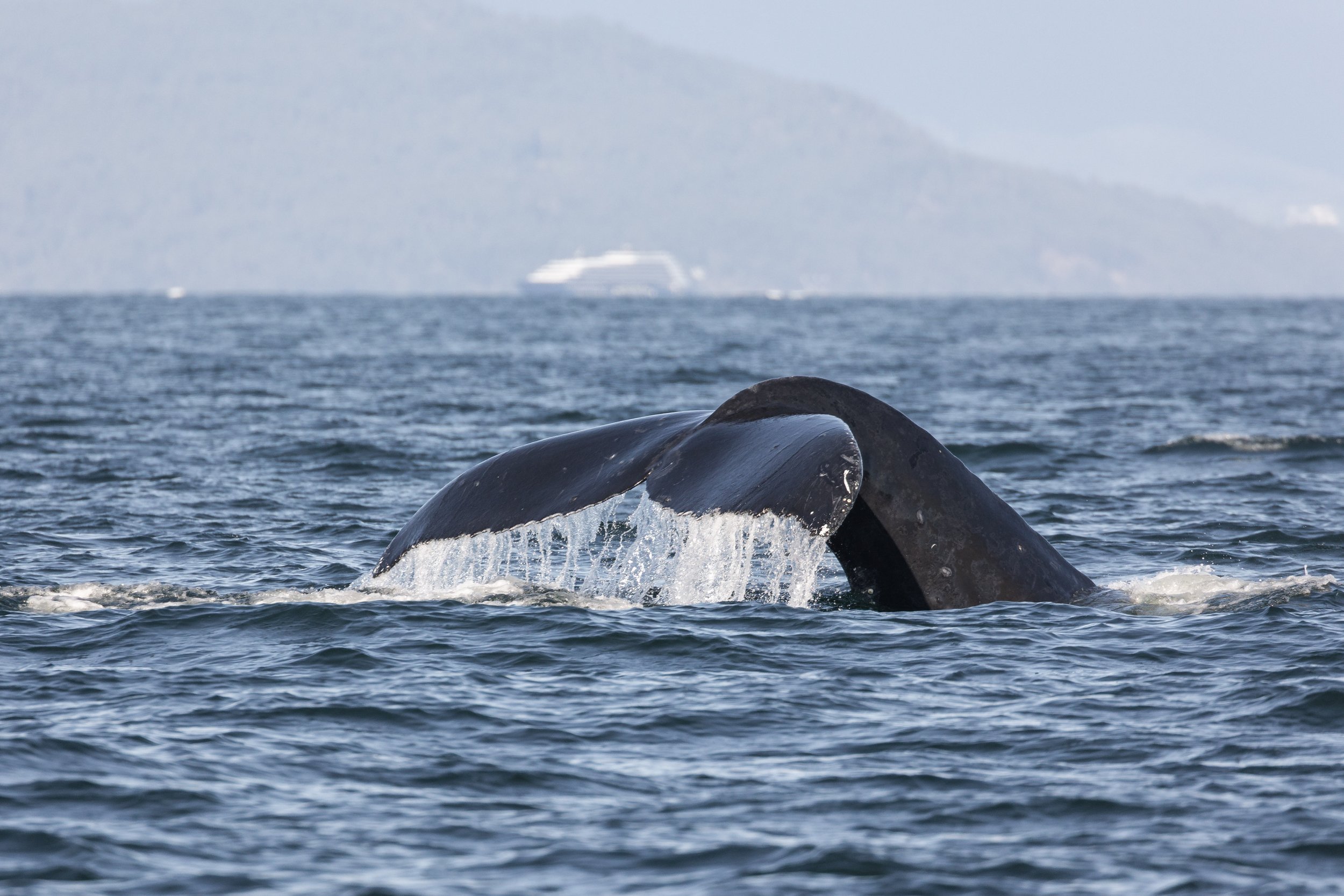
A fluke waterfall from Dolphin. Photo by Vanessa Vereschahen.
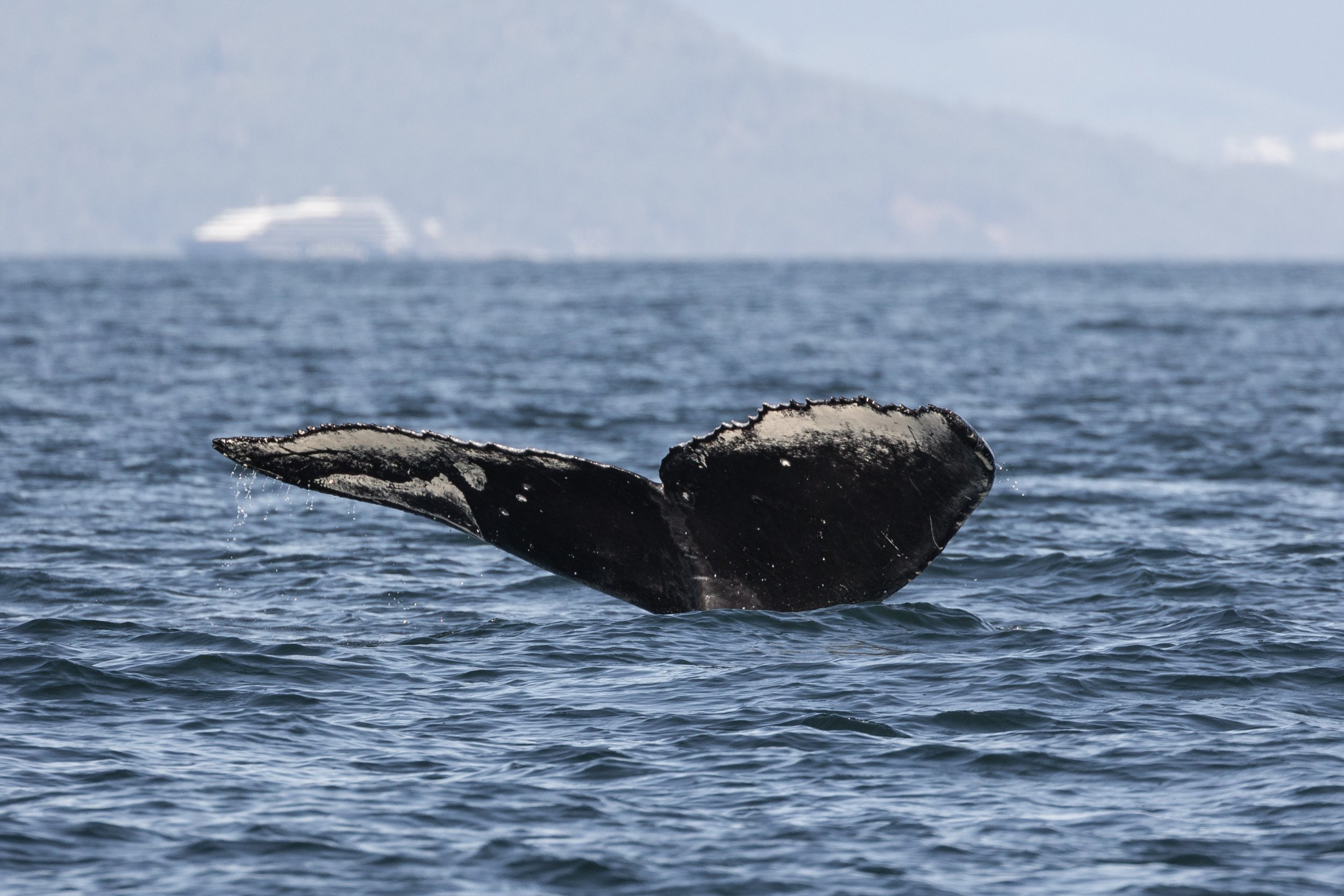
A nice high fluke from Dolphin. Photo by Vanessa Vereschahen.