
June 4, 2026, 3:30 PM - Some wind and some whales in the Salish Sea.
The afternoon greeted us with a classic West Coast mood. Low clouds drifted overhead, the wind ruffled the surface of the Salish Sea, and rolling swells reminded us that nature is always in charge out here. It was the kind of day that makes you appreciate just how wild this coastline truly is.
Bundled up in our bright red anti-exposure suits, we cast off from the dock and headed into the open water. While the conditions weren't quite as calm as some summer days, there is something special about being out on the ocean when it shows a little more personality. The breeze carried the scent of saltwater as waves rolled beneath the hull, and everyone aboard settled in for an adventure. We cruised a little slower than usual as we searched the horizon, carefully scanning every patch of water and every distant shape. Whale watching often requires patience, and on afternoons like this, the challenge becomes even greater as whitecaps and swells can easily disguise wildlife.
Fortunately, there was plenty to enjoy while we searched. The Salish Sea is breathtaking in all weather conditions, but there is something particularly beautiful about it when the skies turn moody. The rugged shorelines, forested islands, and distant mountains create a landscape that feels both untamed and timeless. Bald cliffs plunge into dark waters while ancient forests cling to the hillsides above. Looking around, it is easy to understand why this region is considered one of the most spectacular marine ecosystems on the planet.
As we cruised along, seabirds accompanied us on our journey. Gulls rode the wind effortlessly while murres and auklets bobbed among the waves. Cormorants flew low over the water, their silhouettes appearing and disappearing against the grey backdrop. Every species plays a role in this rich ecosystem, and their presence often hints at the abundance of life beneath the surface.
Then suddenly, someone spotted it. A fin. Not just any fin. Chainsaw!
Few orcas are as recognizable to our crew and many of our guests as Chainsaw. His towering dorsal fin rises dramatically above the water and is unmistakable even from a considerable distance. As our vessels approached, excitement spread quickly throughout the boat.
Whenever we find Chainsaw, we can usually make an educated guess that his mother, Whidbey, may not be far away. Transient killer whales maintain some of the strongest family bonds found anywhere in the animal kingdom, and Chainsaw is no exception. As we continued watching, more fins began to appear amongst the rolling waves. One dorsal fin became two. Two became several. The encounter was becoming even more exciting. While steadying himself against the swell, Evan managed to capture photographs of the other large dorsals surfacing nearby. Once the images were reviewed, the mystery was solved. Travelling alongside Whidbey and Chainsaw were members of another iconic local family, the T019S. We had a total of 5 orca!
T065 Whidbey II ♀ (~1971)
T063 Chainsaw ♂ (~1978)
T019 Nootka ♀ (~1965)
T019B Galiano ♂ (1995)
T019C Spouter ♂ (2001)
Seeing two such well-known matrilines together made for an unforgettable encounter. The more we learn about orca, the more we appreciate the importance of the matriarchs that lead these families.
Unllke many mammals, orca societies revolve around mothers and grandmothers. Sons and daughters remain with their mothers for their entire lives, creating stable family groups that can persist for generations. The matriarch serves as far more than simply a parent. She acts as the family's leader, teacher, and repository of knowledge. Her experience helps guide the pod toward productive feeding grounds, safe travel routes, and important social connections. Perhaps one of the most fascinating aspects of orca society is the relationship between mothers and their sons.
Male orca can grow to be over 25 feet long and weigh several tonnes, yet they remain closely connected to their mothers throughout their lives. Research has shown that mothers continue sharing food with their adult sons and often provide support long after the sons have reached full maturity.
Why invest so much energy into grown offspring?
Scientists believe there may be an evolutionary advantage. While daughters invest significant energy into raising calves, sons can potentially father offspring in other pods. By helping her sons survive and thrive, a mother may increase the chances of passing on her genes without having to bear and raise additional calves herself. This remarkable strategy may help explain why female killer whales are one of the few species on Earth that experience menopause.
Even after they stop reproducing, older females continue to play an essential role within their families. Their decades of knowledge become increasingly valuable, especially during difficult years when food may be scarce. Studies have shown that pods led by experienced post-reproductive females often have improved survival rates because these matriarchs remember where and when food can be found. In many ways, the wisdom of the grandmother may be one of the greatest survival tools a pod possesses.
After spending time travelling alongside these incredible families, it was time to continue our search for more wildlife.
Our next stop was a location affectionately known as "Stinky Rocks." The nickname becomes obvious long before you arrive. Perched atop the rocks were dozens of Steller Sea Lions, whose distinctive aroma drifted across the water. Despite their pungent reputation, Steller’s are remarkable animals. They are the largest sea lions in the world, with mature males weighing over 2500 pounds. Their massive necks and broad shoulders give them a lion-like appearance, particularly during the breeding season when males develop thick manes. As we watched these giants lounge on the rocks and occasionally tumble into the water, it was easy to see why they are among the most entertaining marine mammals to encounter. Leaving the sea lions behind, we tucked into the more sheltered waters of the Gulf Islands.
Here we made a stop at one of our favourite eagle nests. The resident pair has become something of a celebrity among our crews, earning the nicknames Bonnie and Clyde. Year after year, these bald eagles return to the same nesting site and continue expanding it. Bald eagle nests are among the largest nests built by any bird in North America. A pair may use the same nest for decades, adding sticks and branches each season until the structure becomes enormous. Some eagle nests have been documented weighing over a tonne. Watching Bonnie and Clyde perched near their nest served as another reminder that many wildlife species return to familiar locations year after year, creating stories that unfold over generations.
Our final wildlife stop brought us to the Gabriola Bluffs, where another busy nesting colony was hard at work. Cormorants filled the rocky ledges, gathering materials and tending to their nests. These fascinating seabirds have developed a unique building strategy. While they collect sticks, seaweed, and vegetation, their nests are also reinforced by layers of guano, the scientific term for bird droppings. Over time, the guano helps cement nesting material together, creating surprisingly durable structures that can be reused and expanded from season to season. The white-streaked cliffs found beneath many cormorant colonies stand as evidence of generations of nesting activity.
As the afternoon drew to a close, we reflected on the incredible variety of wildlife we had encountered. From iconic killer whale families led by wise matriarchs, to massive Steller Sea Lions, returning bald eagles, and industrious cormorants, every stop highlighted the interconnected lives of the animals that call the Salish Sea home. The weather may have been moody, but the wildlife was spectacular.
Days like these remind us why we love exploring this wild corner of the world. The Salish Sea is raw, beautiful, and endlessly fascinating. Every outing offers another opportunity to learn something new, and every encounter deepens our appreciation for the remarkable creatures that share these waters with us.
Photos below by Evan Hessels.
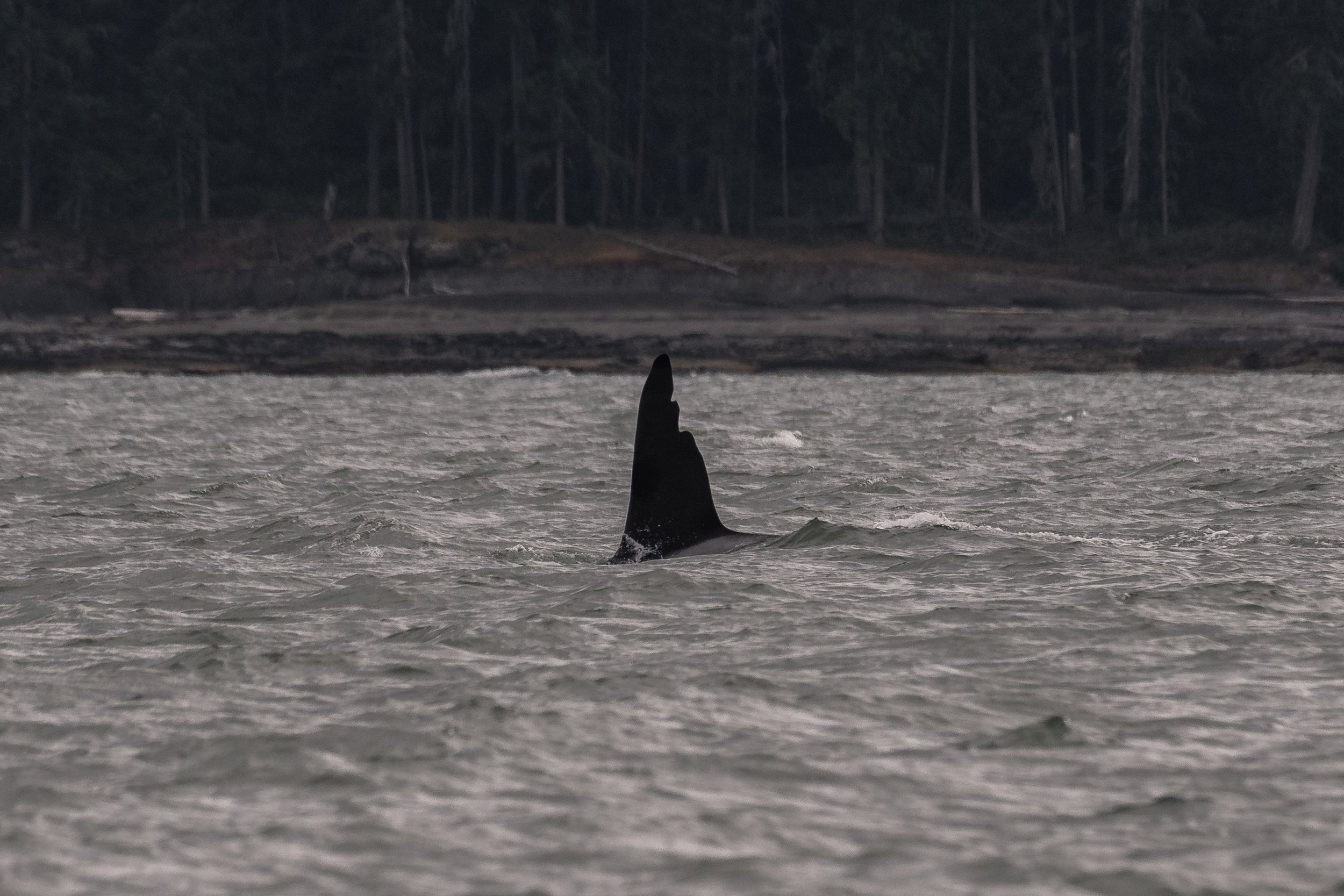
Chainsaw surfacing in the waves.
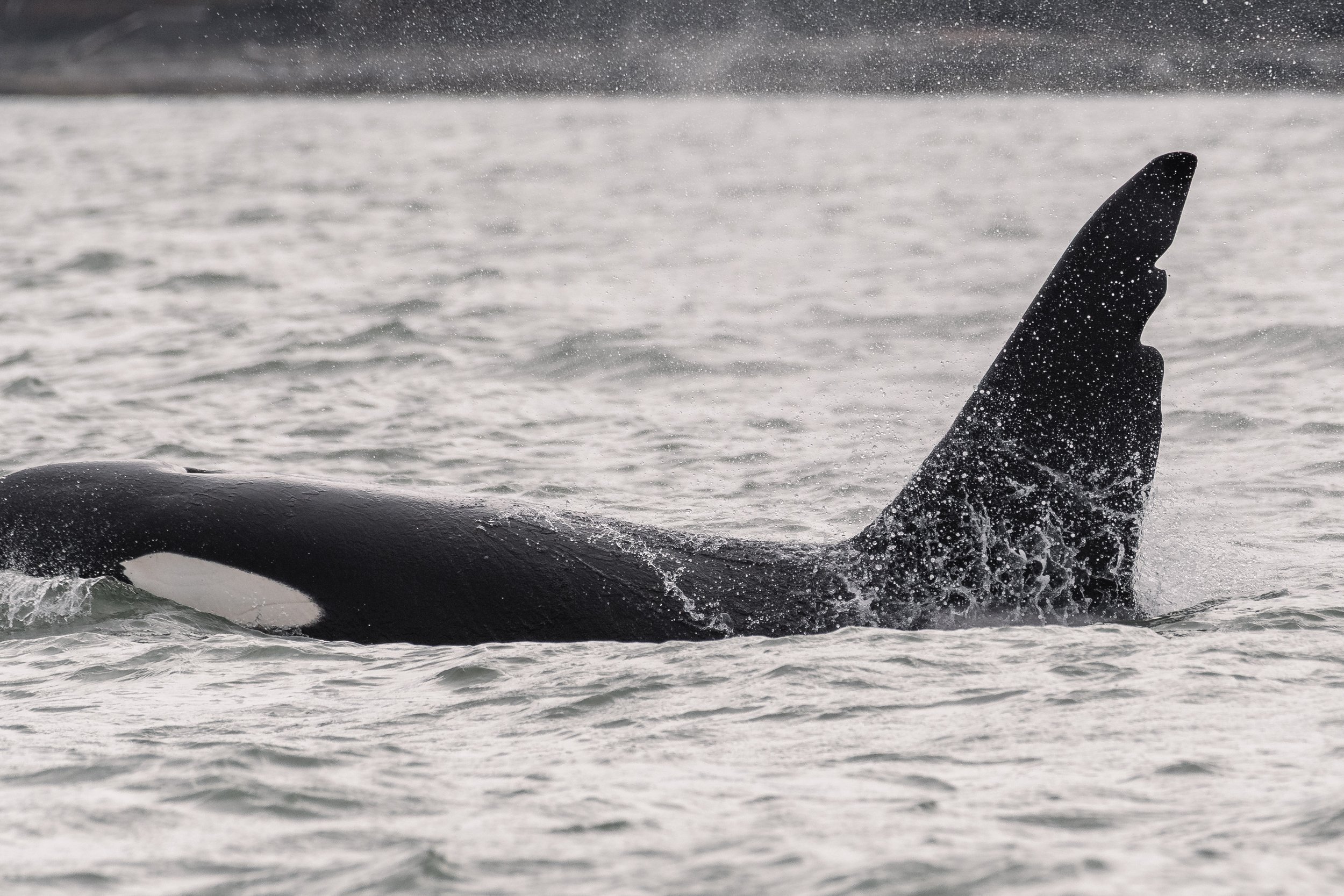
A great look at Chainsaw’s eye patch.
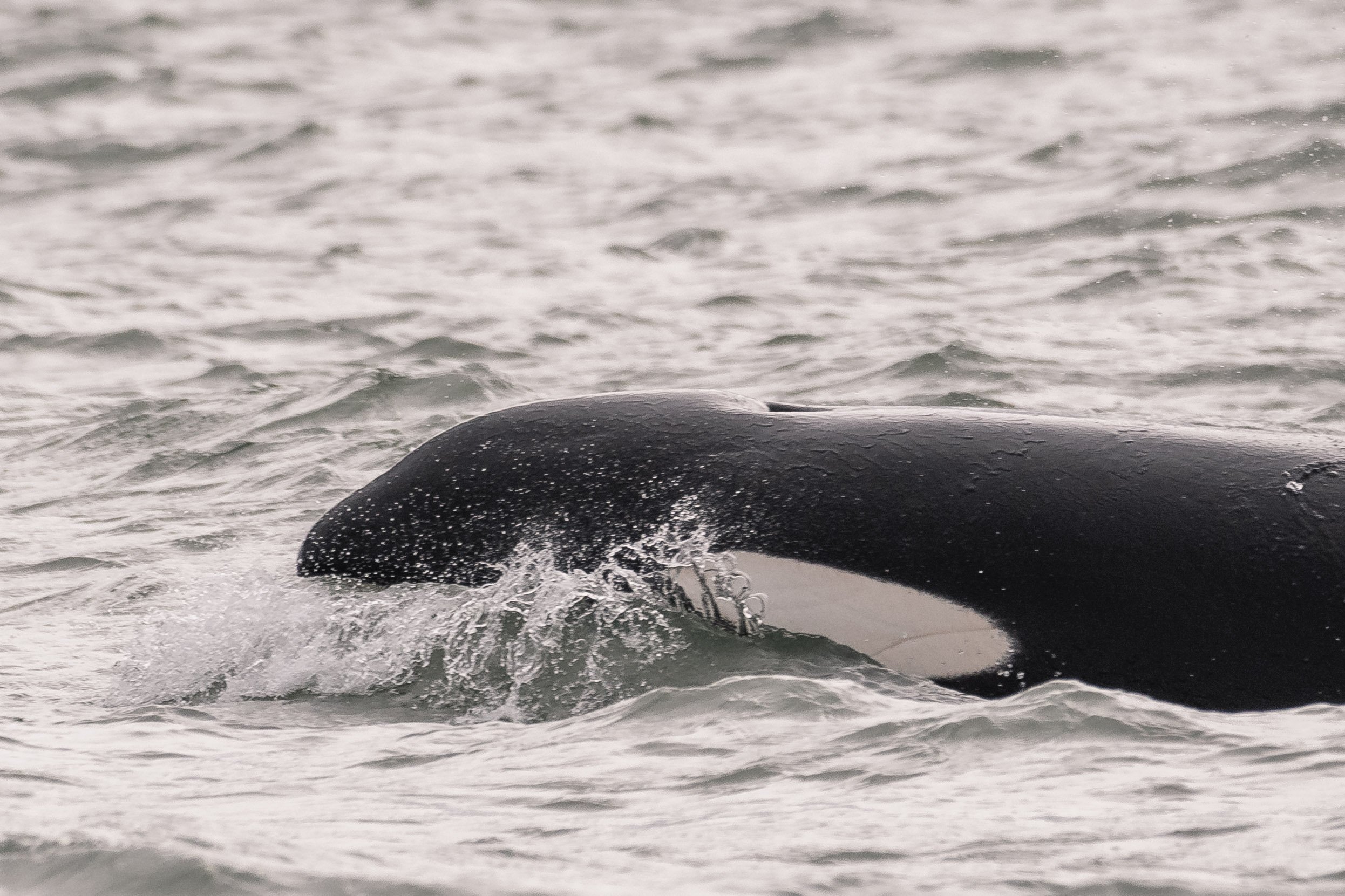
Chainsaw making waves.
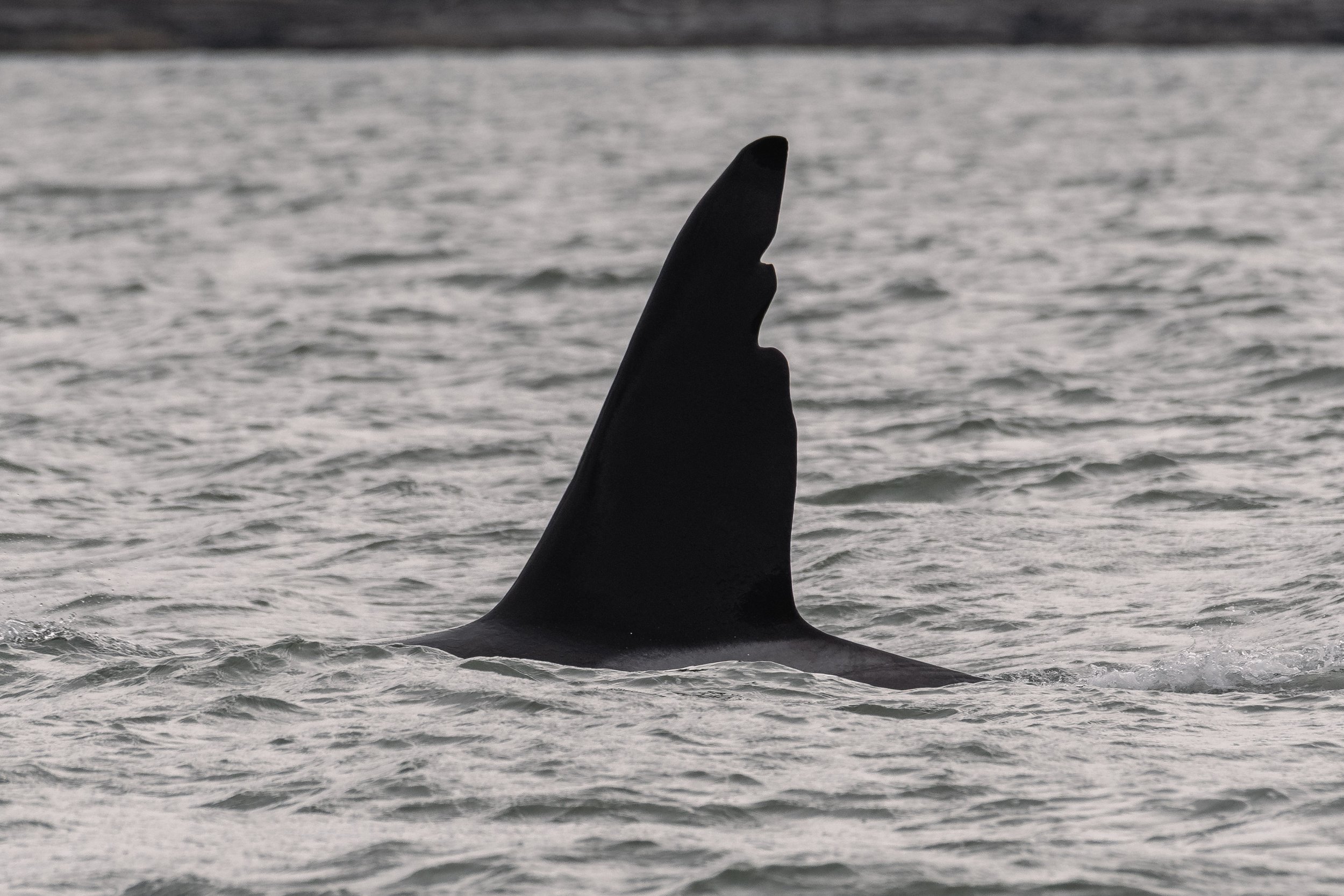
Chainsaw crusing along.
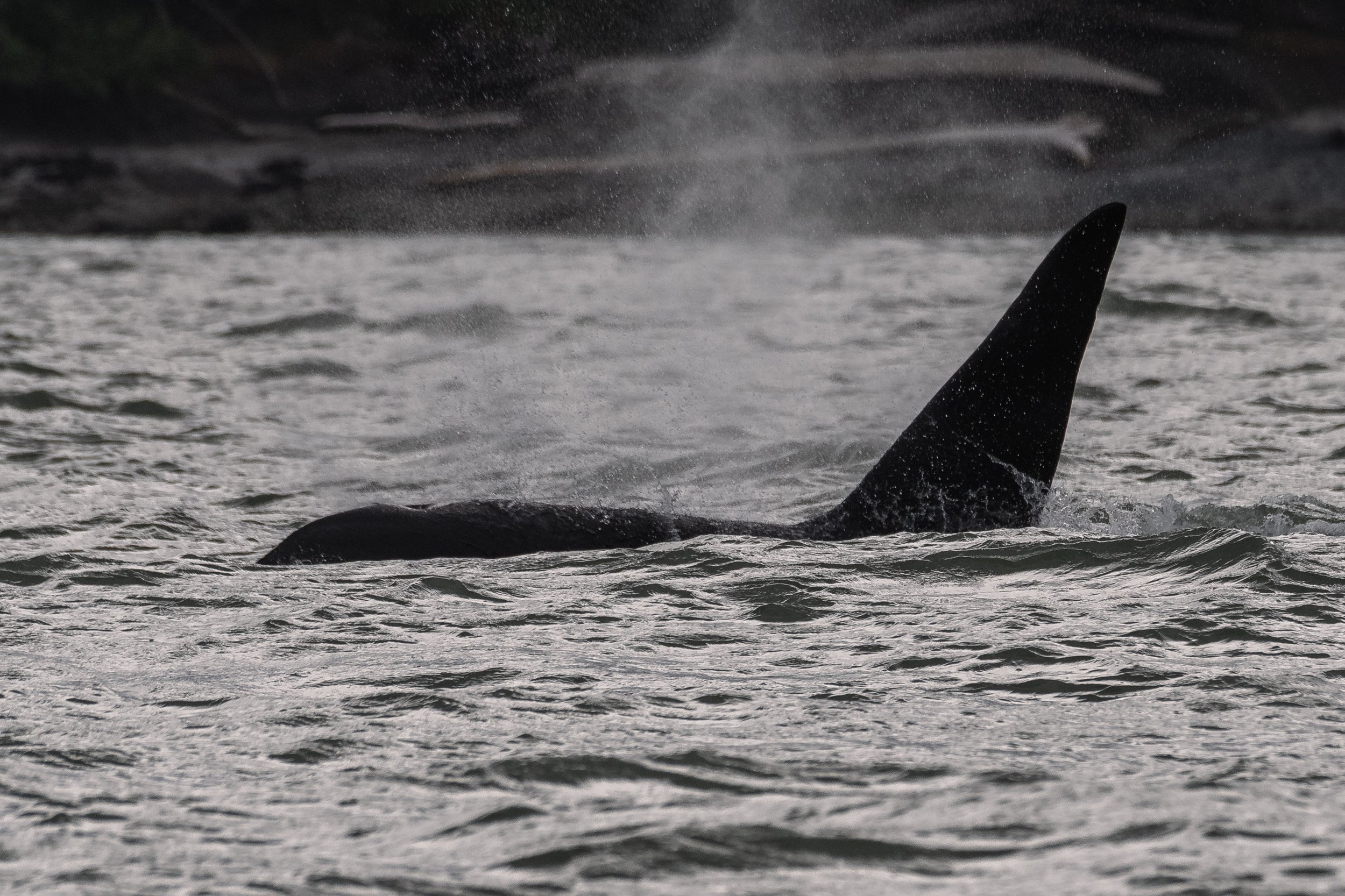
Spouter surfacing.
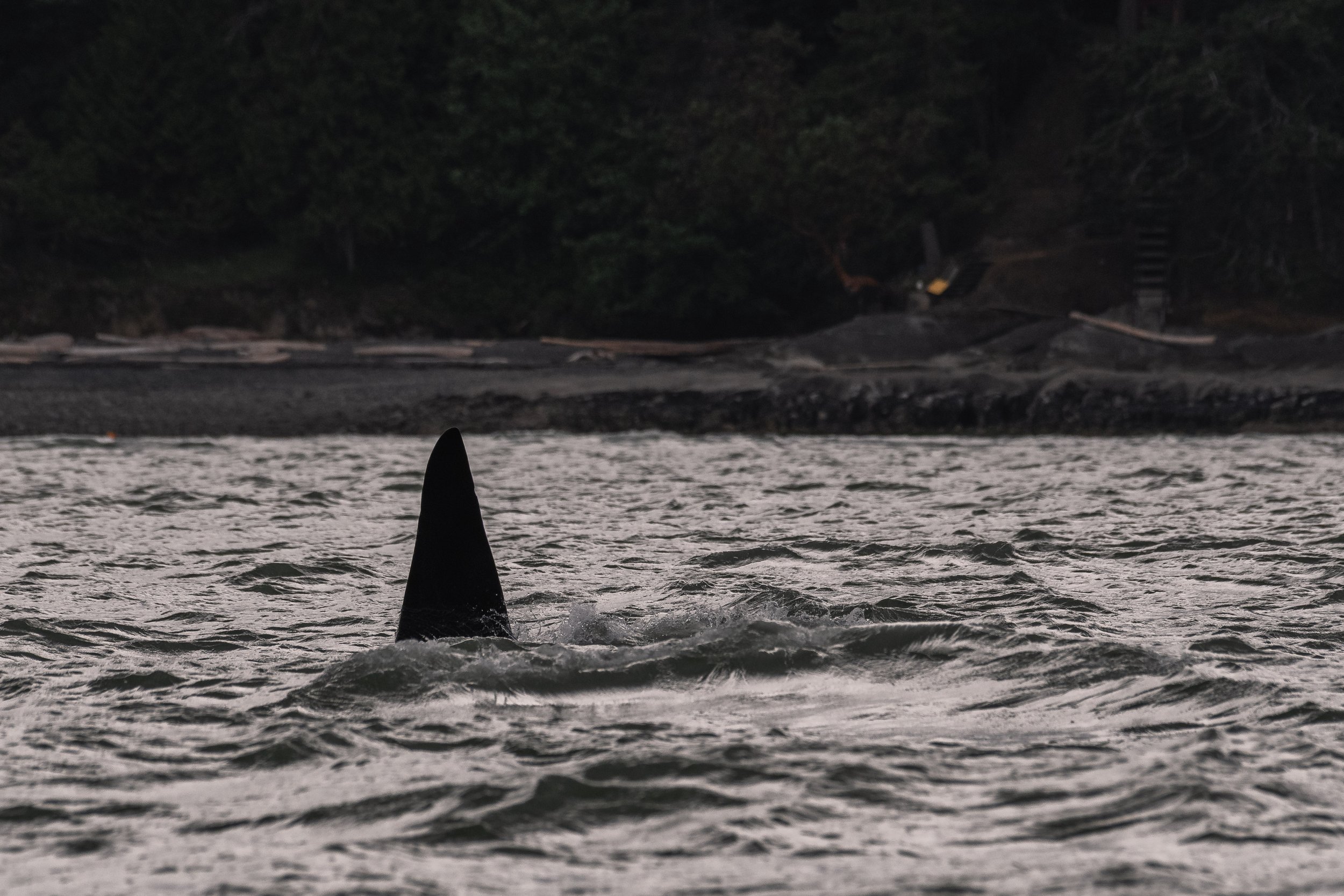
Spouter on his way back down.
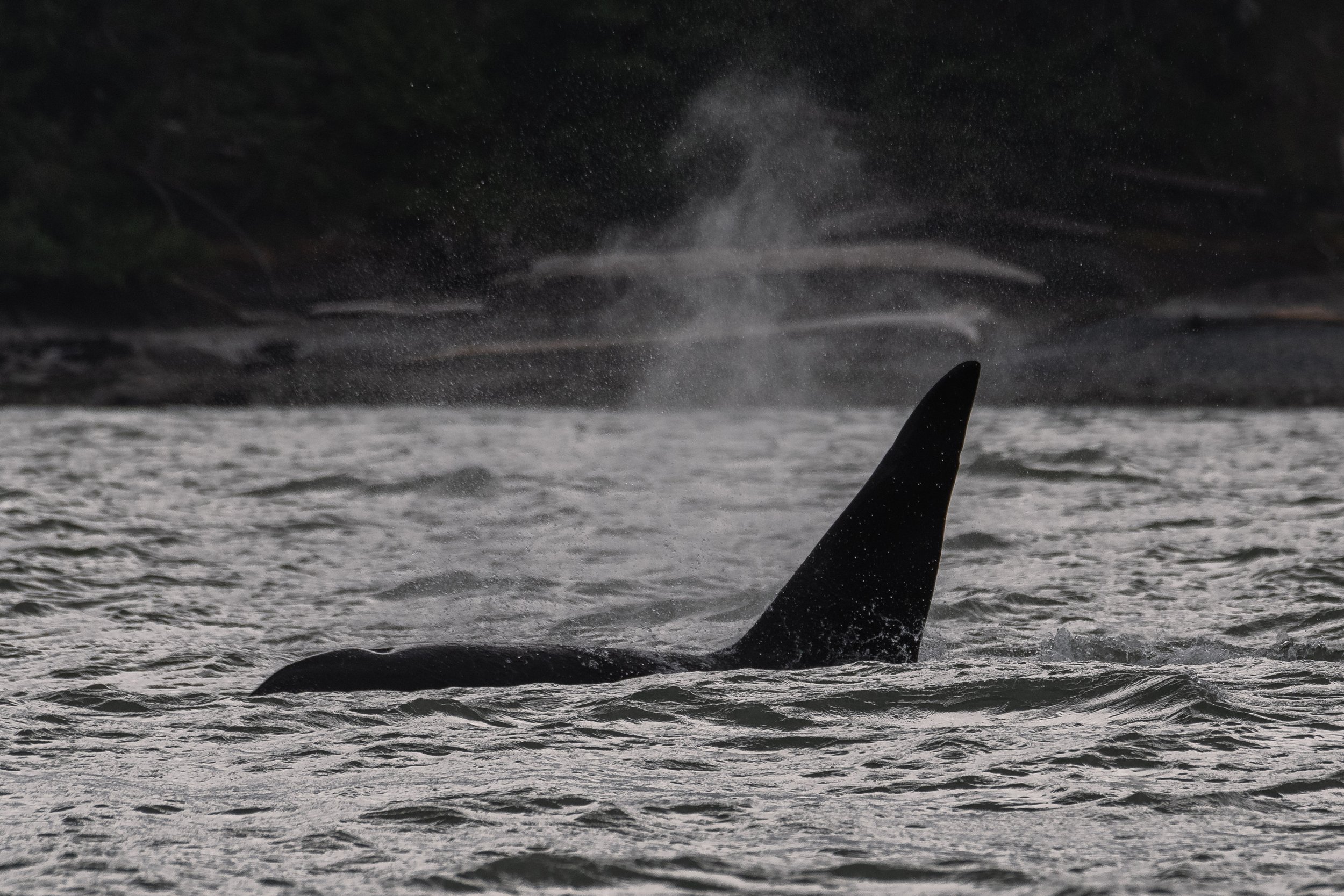
Spouter coming up for a breath.
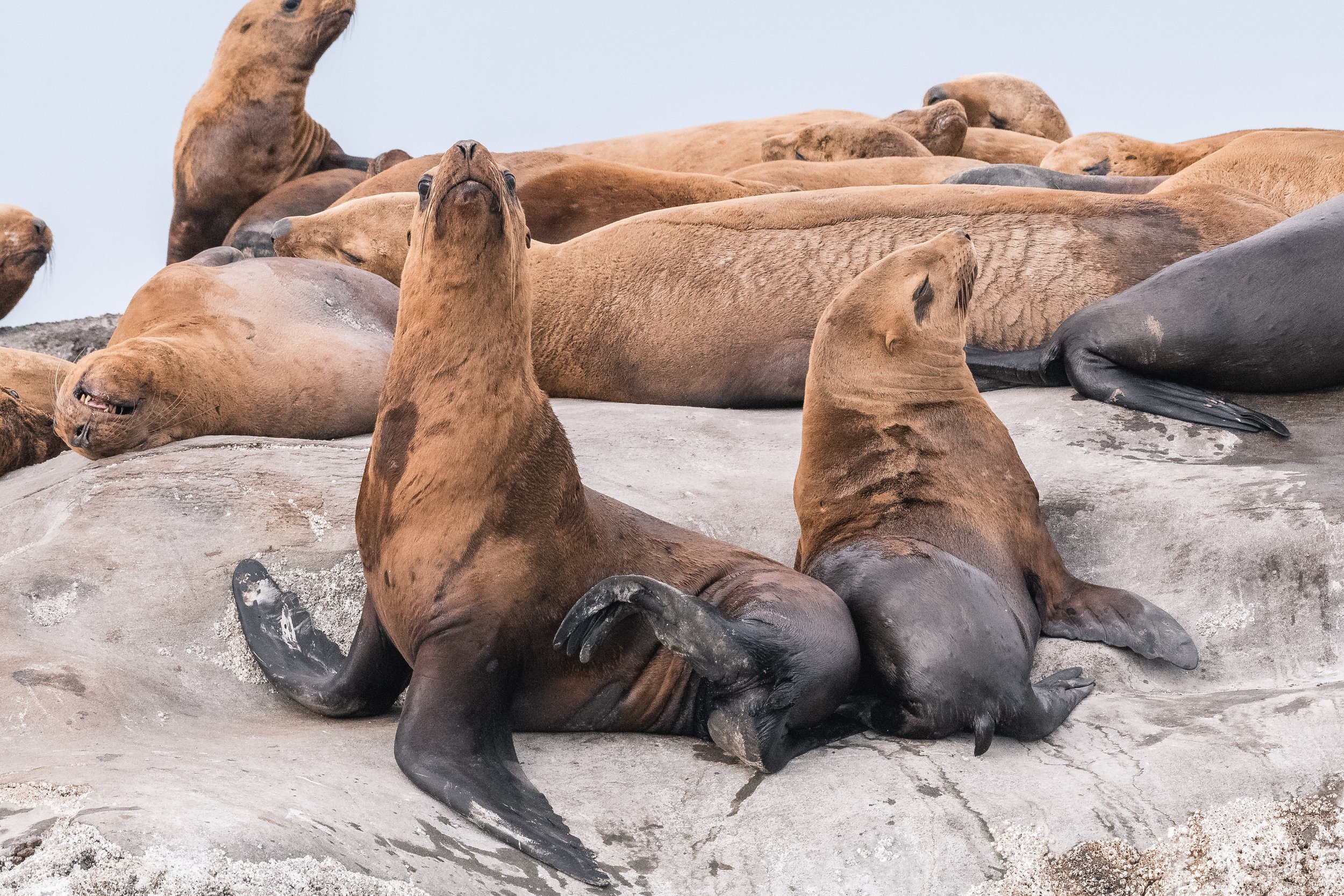
A curious Steller Sea Lion.
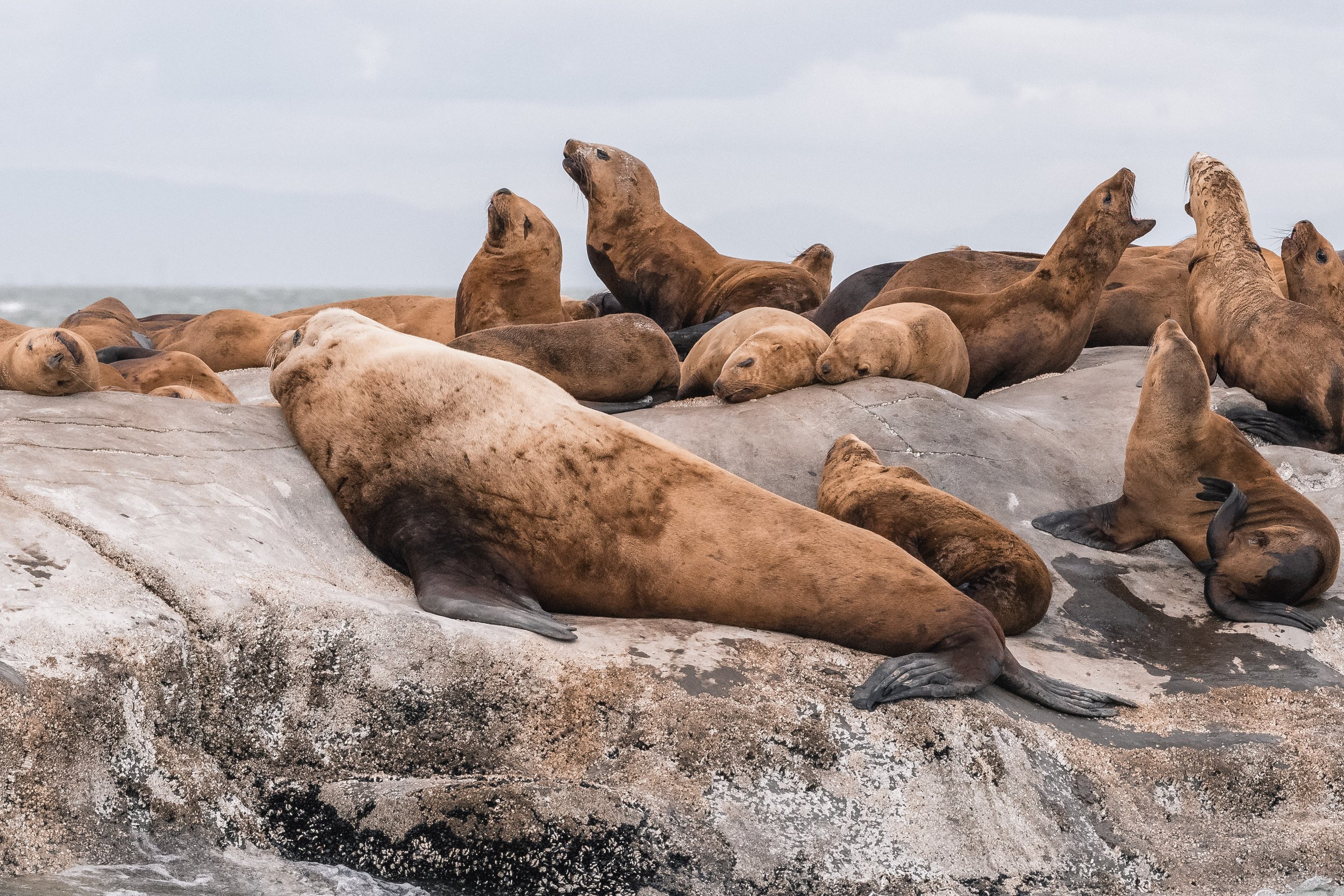
Check out the size of this male Steller sprawled out!
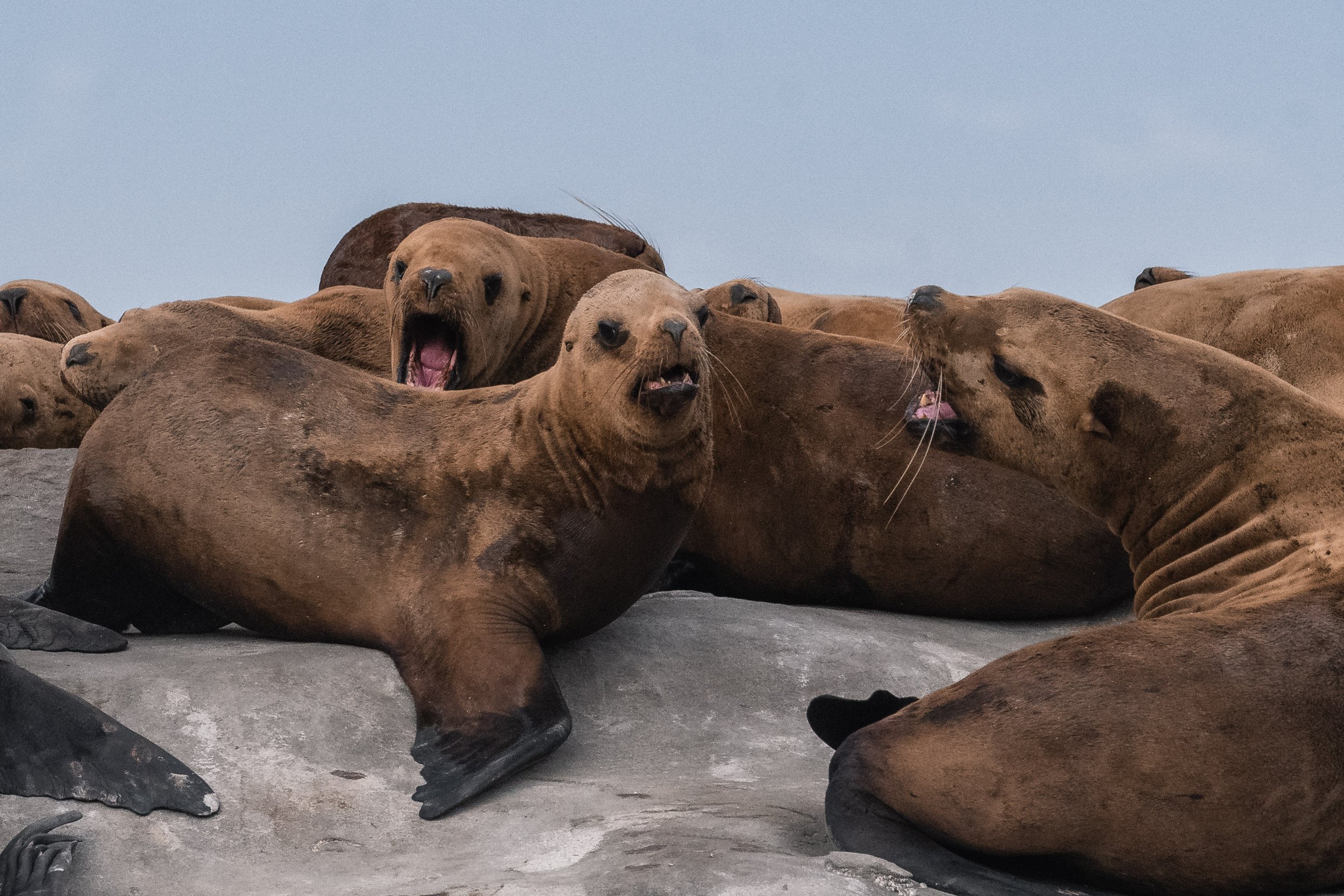
These Steller’s ae fighting over the best spot.
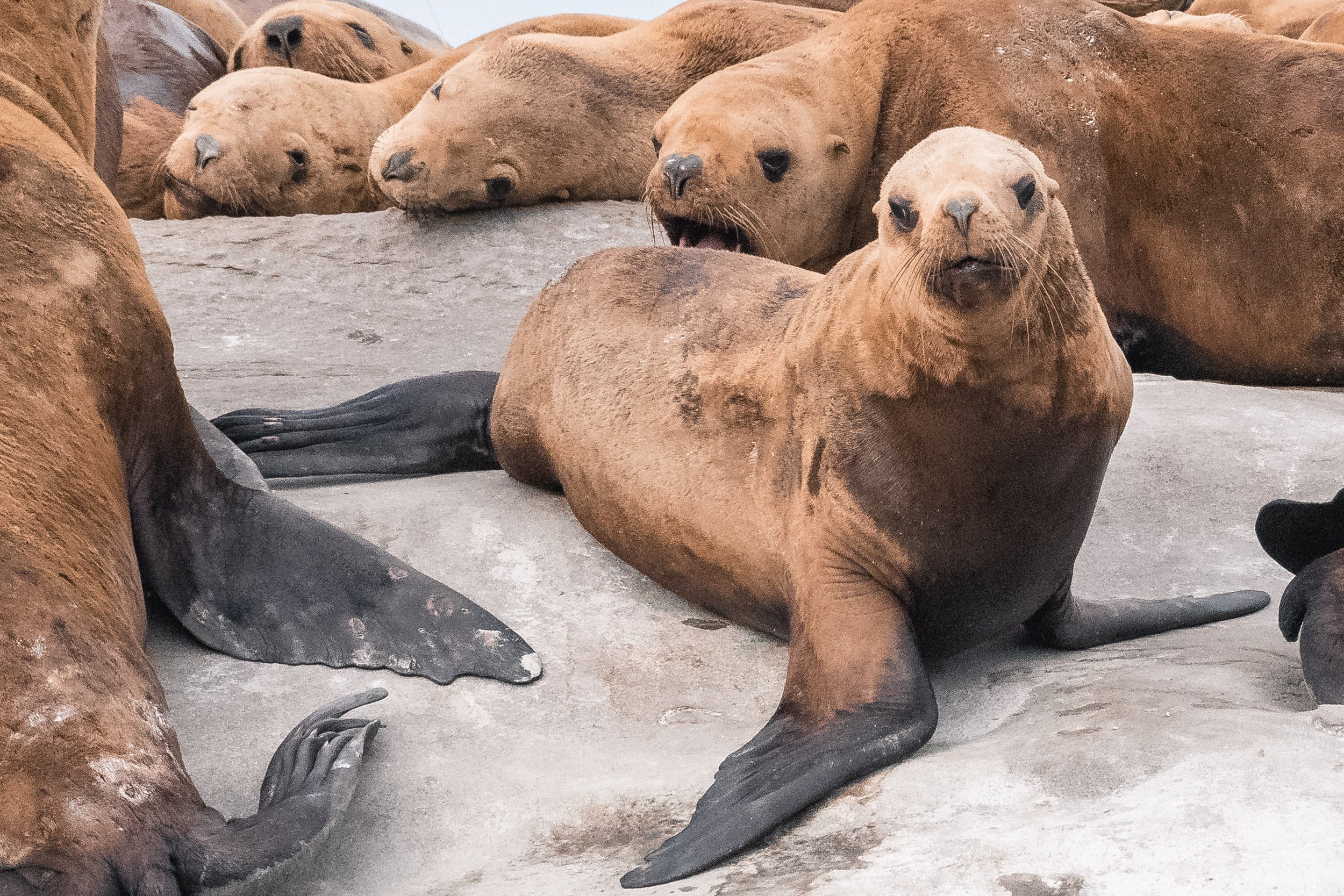
Watching us back!
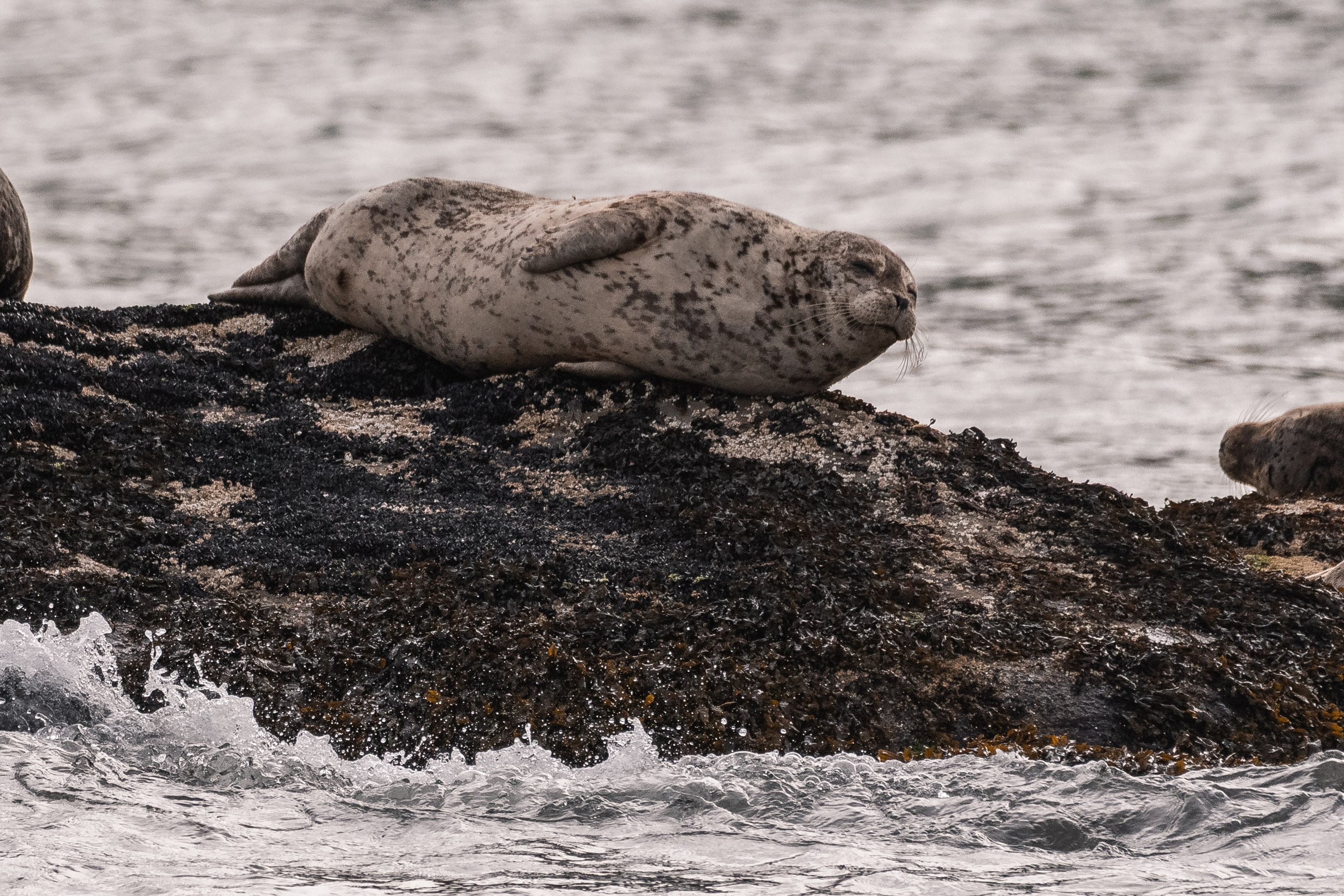
A plump harbour seal resting.
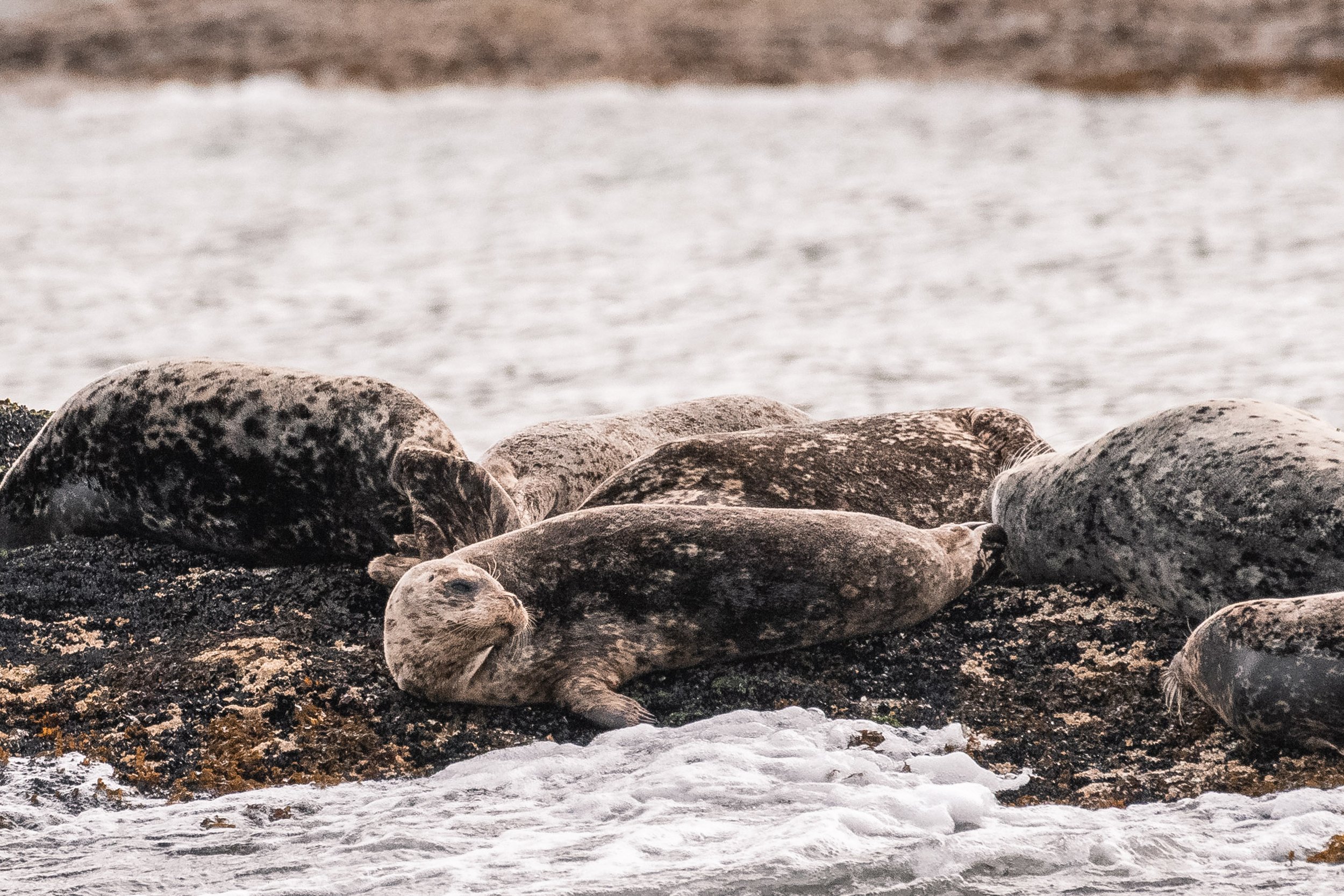
Look how well the harbour seals blend in with the rocks.
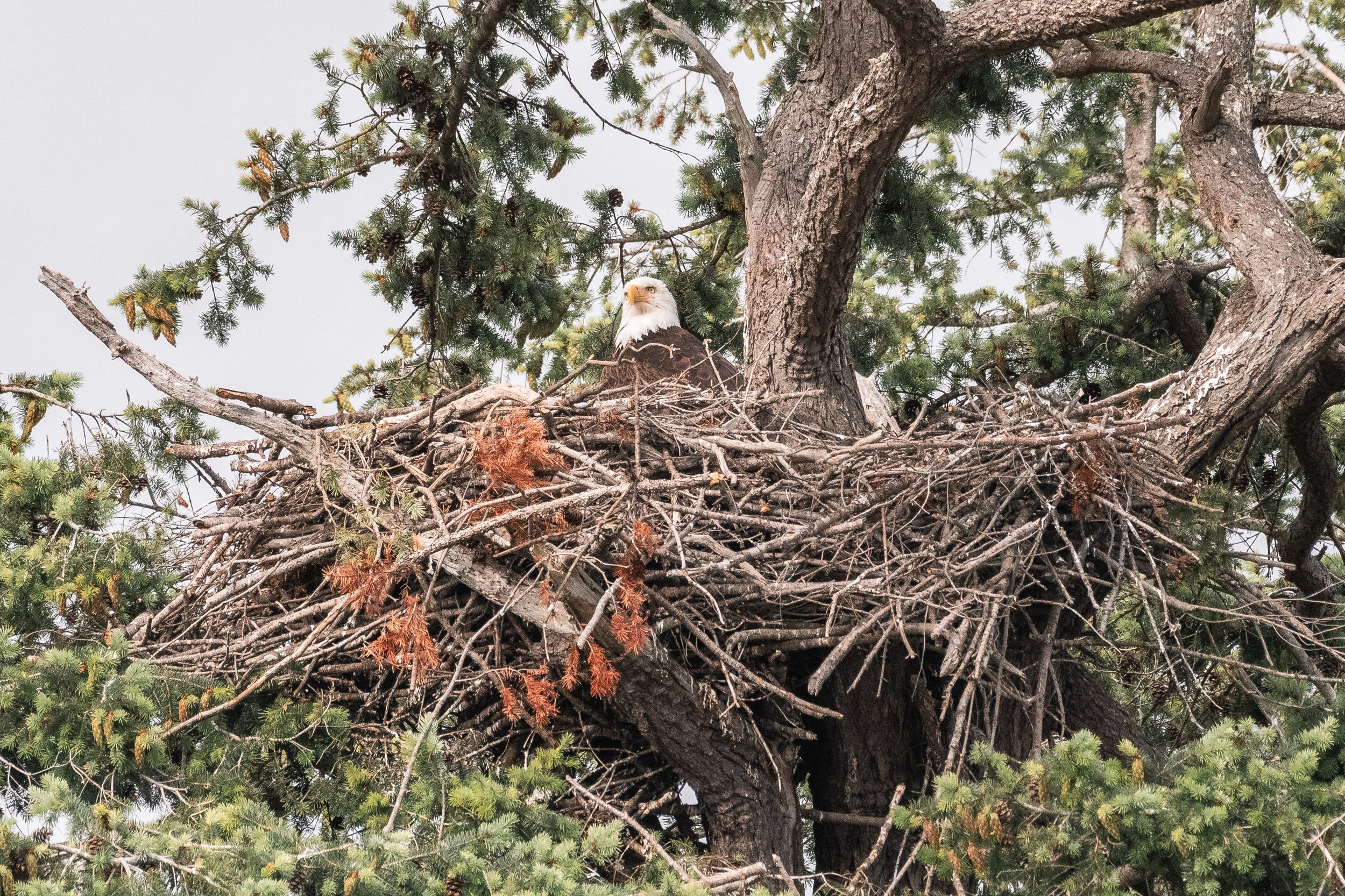
A bald eagle in her nest.
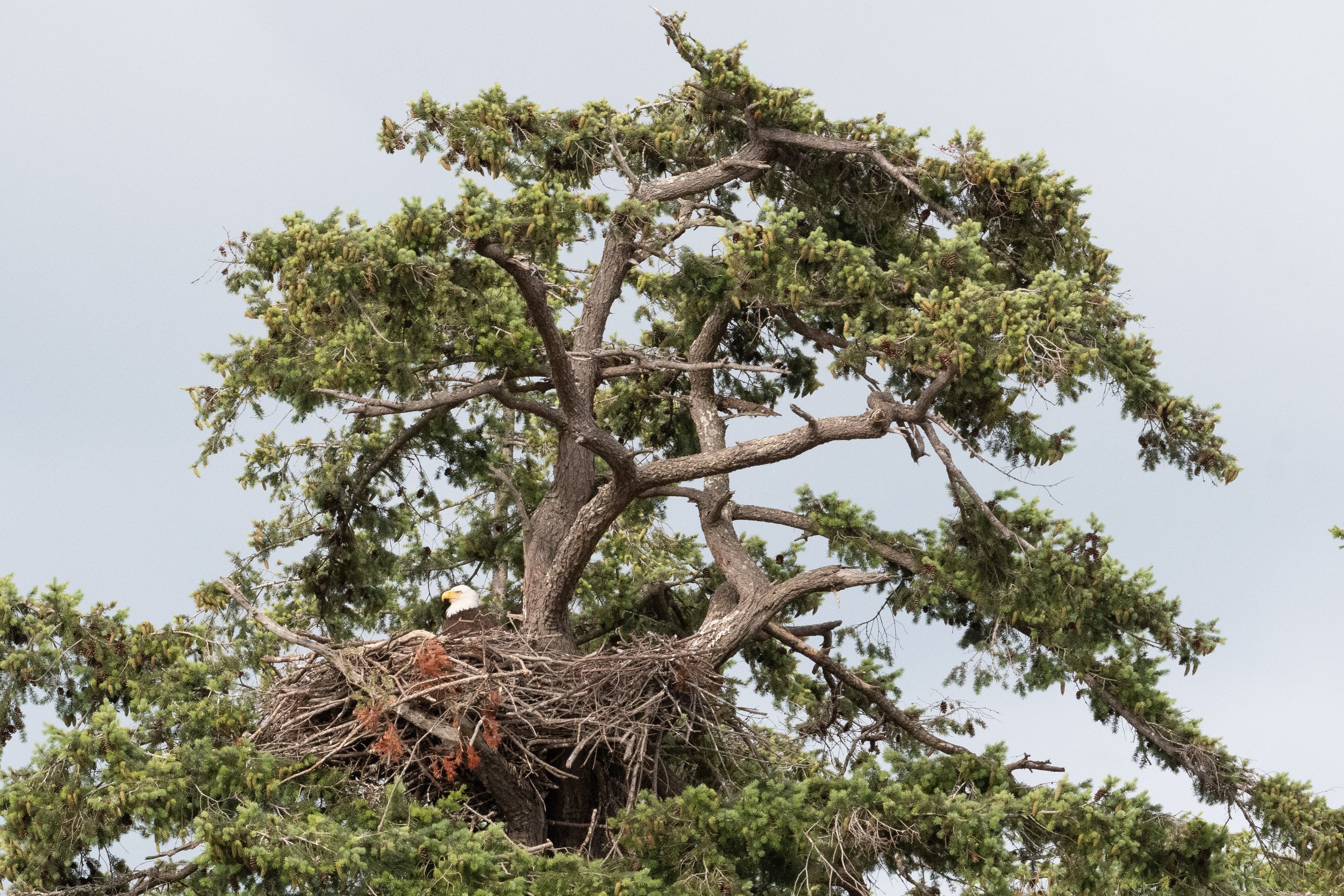
Did you know an eagles nest can weigh over 1000 pounds?
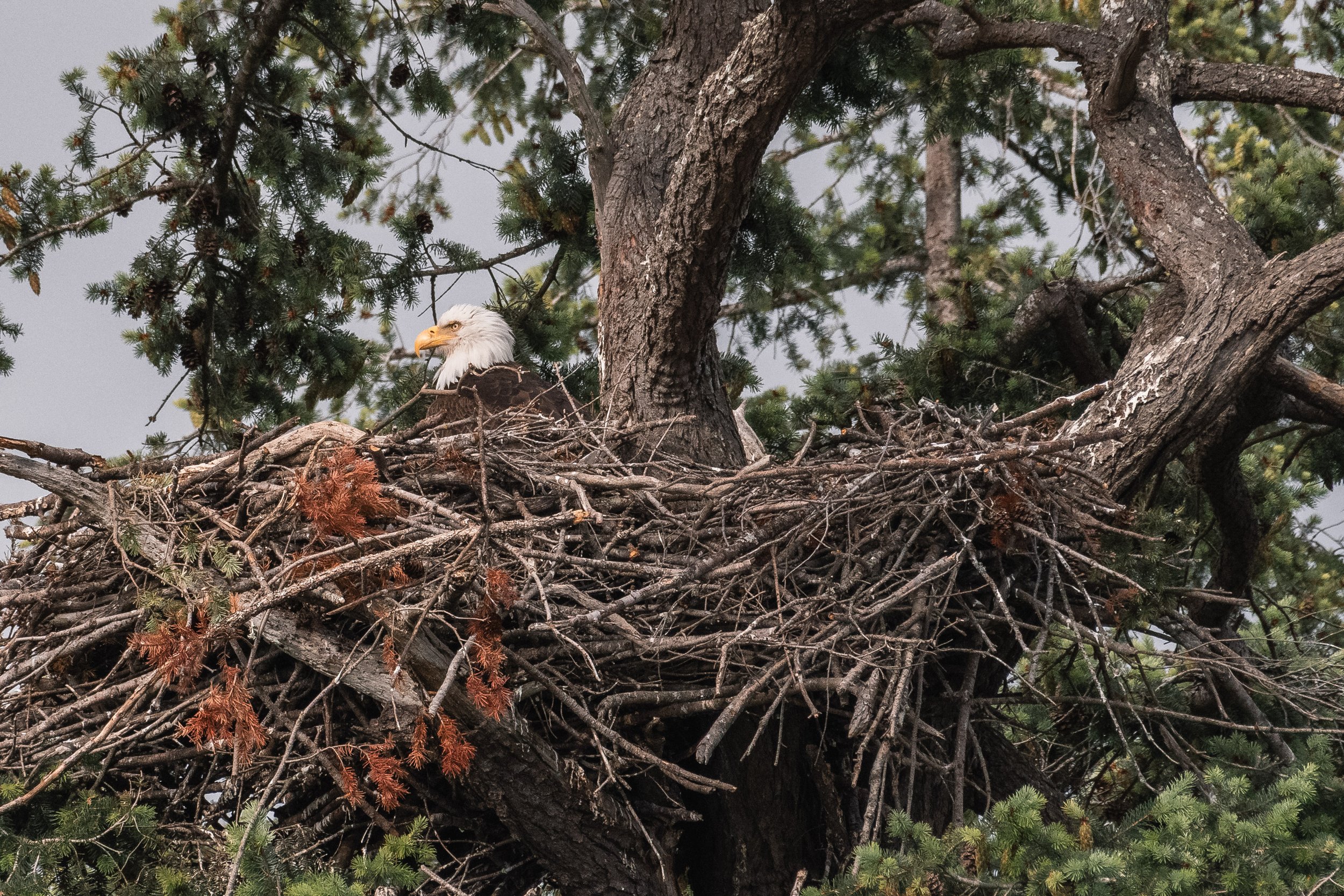
A bald eagle looking majestic in her nest.
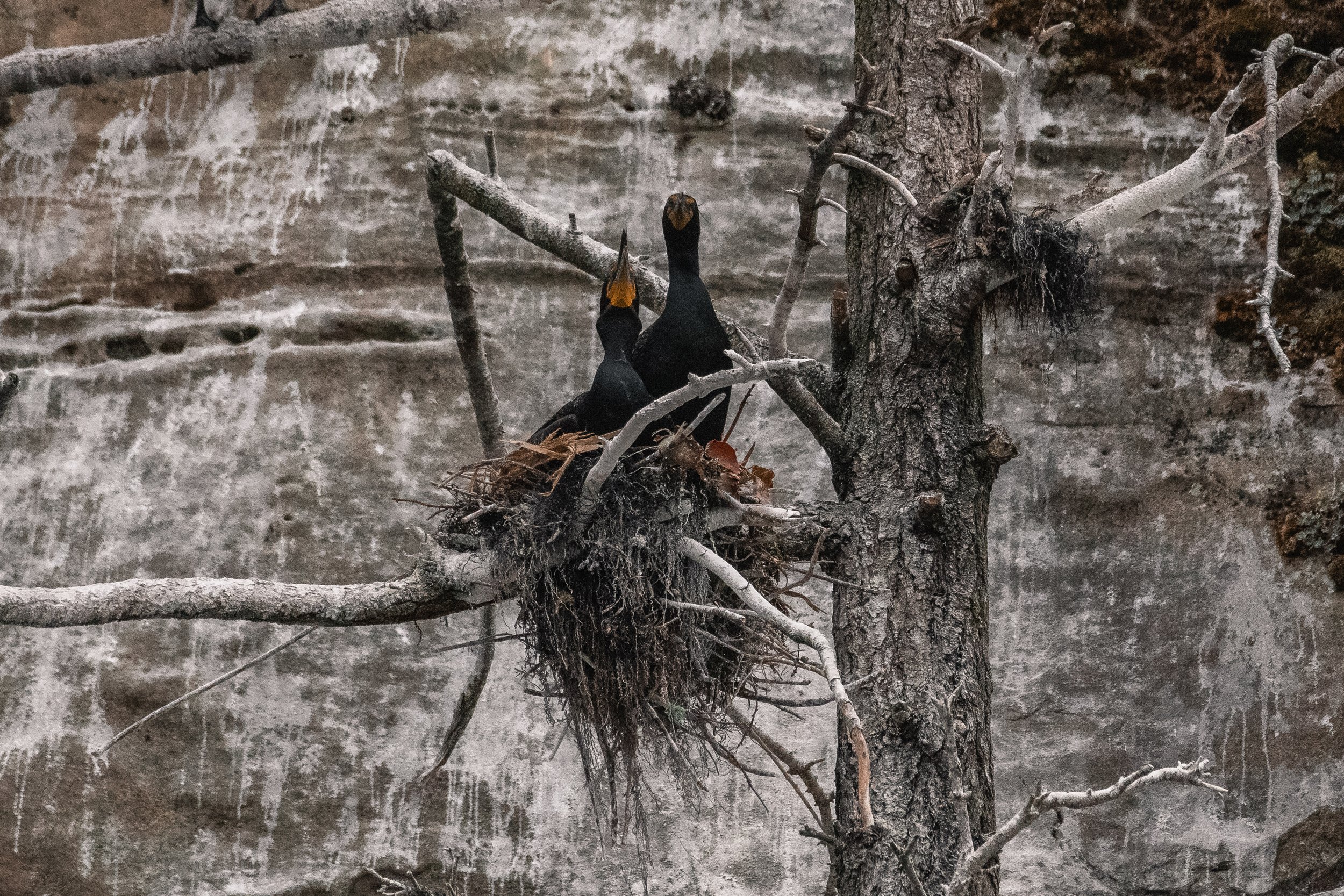
Cormorants in their nest at the Gabriola Bluffs.
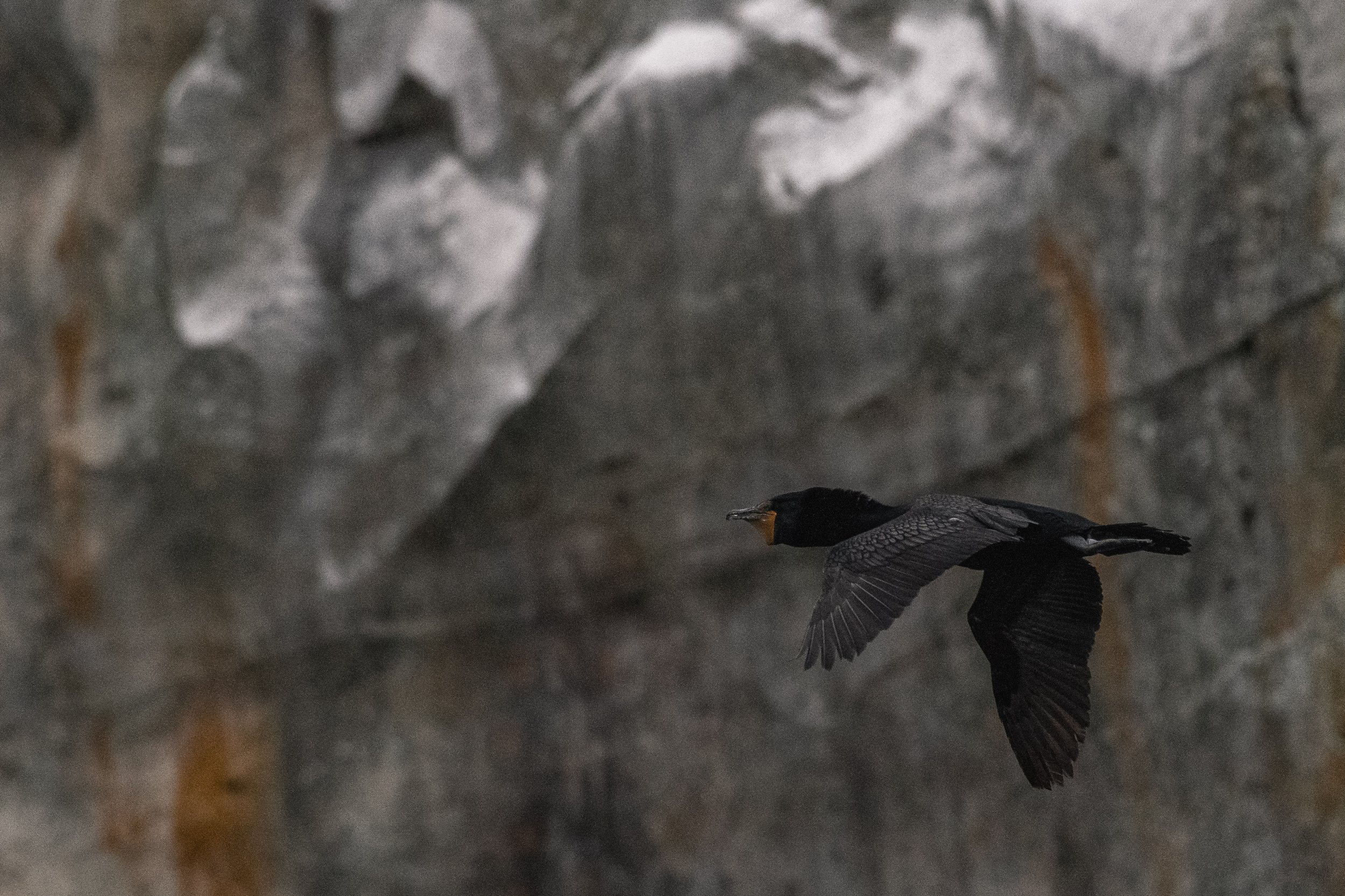
A cormorant flying above.
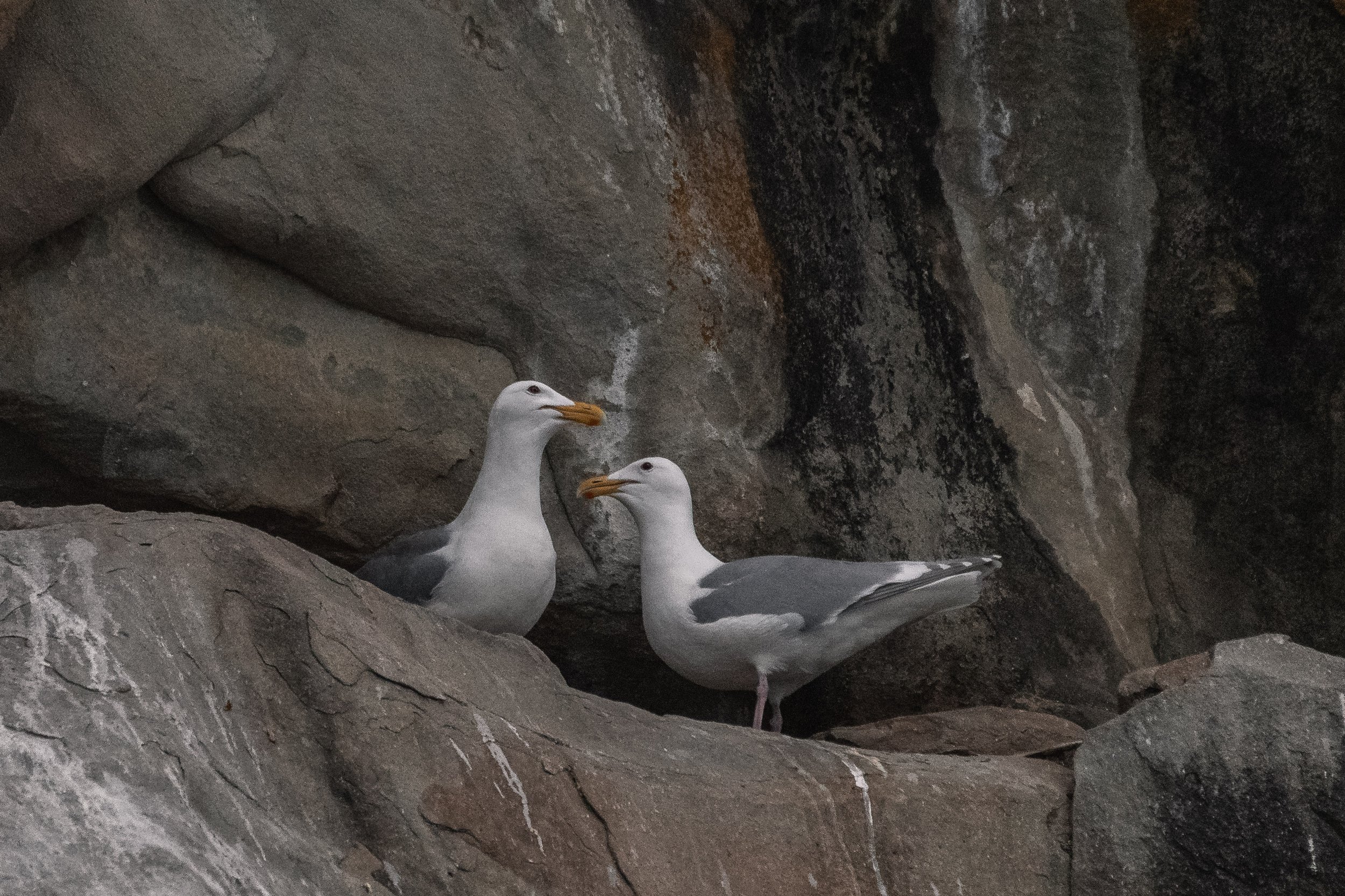
Gulls also nest at the Bluffs!