
June 5, 2026, 10:30 AM - A lazy friday T-party through the Gulf Islands.
We began our trip this morning greeted by a classic West Coast day, a bit of a bite in the air and gray skies. With these conditions, we decided to start our search for whales making our way south down the Northumberland Channel before coming to Dodd Narrows. These Narrows are one of our favourite locations to pass through in the area. As currents rush through the narrow passage between Mudge Island and Vancouver Island you can get great views of the eddying waters and feel the currents push the boat around as we pass through. These currents also cause nutrients to circulate throughout the water column which in brings good numbers of wildlife such various seabirds, seals, and sea lions.
After passing through the Narrows we continued our search making our way south into the Gulf Islands, and we soon realized this was the right call! As we travelled past Round Island, we soon began to see a number of tall dark dorsal fins off in the distance! As we approached, our naturalists quickly identified the orca, and determined it was actually two pods, the T100s and the T086As!
T100 Hutchins ♀ (~1979)
T100C Laurel ♂ (2002)
T100F Estrella (2014)
T086A Eider ♀ (1988)
T086A4 Akia ♀ (2016)
T086A5 Siku ♂ (2024)
The T100s and T086As are both members of the Bigg's (transient) killer whale population, a group of orca that specializes in hunting marine mammals such as seals, sea lions, and porpoises. Unlike the fish-eating Southern Resident killer whales, Bigg's killer whales travel in smaller family groups and can often be found exploring the intricate waterways of the Gulf Islands in search of their next meal.
The T100 matriline is led by T100, also known as "Hutchins," while the T086A matriline is led by T086A Eider. These family groups have become familiar faces throughout the Salish Sea, and it is always exciting to encounter them. During our visit, the whales appeared relaxed, milling about and travelling steadily south along the Yellowpoint area. Watching them surface amongst the water provided an excellent opportunity to appreciate the close family bonds that define Bigg's killer whale society. Sons and daughters remain with their mothers for life, creating multi-generational family groups that can persist for decades. When multiple pods associate like they are today, it is called a T-party. These associations are thought to happen for a number of reasons. These gatherings may provide opportunities for social interaction, information sharing, or simply reflect overlapping travel routes and feeding areas. While the exact purpose of T-party formations is still not fully understood, they remain one of the more fascinating behaviours observed within Bigg’s killer whale ecology, offering a glimpse into the complexity of their social world.
After spending time with the orca, we continued on through Gabriola Passage toward one of our favourite wildlife viewing locations, affectionately known as "Stinky Rock." As the nickname suggests, you can often smell the residents before you see them! Hauled out across the rocky shoreline were both Steller sea lions and harbour seals enjoying a break from life at sea.
One individual immediately stood out from the crowd: a massive male Steller sea lion. The largest species of sea lion in the world, mature males can weigh over 1,000 kilograms and develop thick muscular necks and broad shoulders that give them a distinctly lion-like appearance. This particular male towered over the others, occasionally lifting his head to survey his surroundings while smaller sea lions rested nearby. Sharing the haul-out were several harbour seals, the smaller and quieter cousins of sea lions. Unlike sea lions, harbour seals lack external ear flaps and are generally much more reserved, often preferring to quietly observe from the safety of the rocks.
Our next stop brought us to a nearby small island, where we were fortunate to spot a bald eagle sitting in its nest. Bald eagles often return to the same nesting site year after year, adding new sticks and branches each season. Over time, these nests can become enormous, with some of the largest eagle nests ever recorded weighing well over a tonne. Seeing one of these magnificent birds perched high above the water is always a reminder of the incredible recovery bald eagle populations have made throughout British Columbia over the last several decades.
With the wildlife encounters continuing, we began our journey back through the picturesque Gulf Islands, eventually returning through Dodd Narrows. Before heading home, we made one final stop at the stunning Gabriola Bluffs. These unique sandstone cliffs have been shaped by wind, waves, and geological processes over thousands of years, creating one of the most recognizable landscapes in the region.
The bluffs were also bustling with birdlife. Both pelagic and double-crested cormorants were busy tending to their nesting colonies along the cliff faces. These remarkable seabirds are expert divers, capable of pursuing fish underwater using their powerful feet for propulsion. Their nests cling to the rocky ledges, creating bustling colonies that return to the same locations year after year.
With killer whales, sea lions, seals, eagles, and nesting seabirds all making an appearance throughout the day, it was another fantastic adventure exploring the rich and diverse ecosystems of the Salish Sea.
Photos by Aly Kohlman and Val Watson.
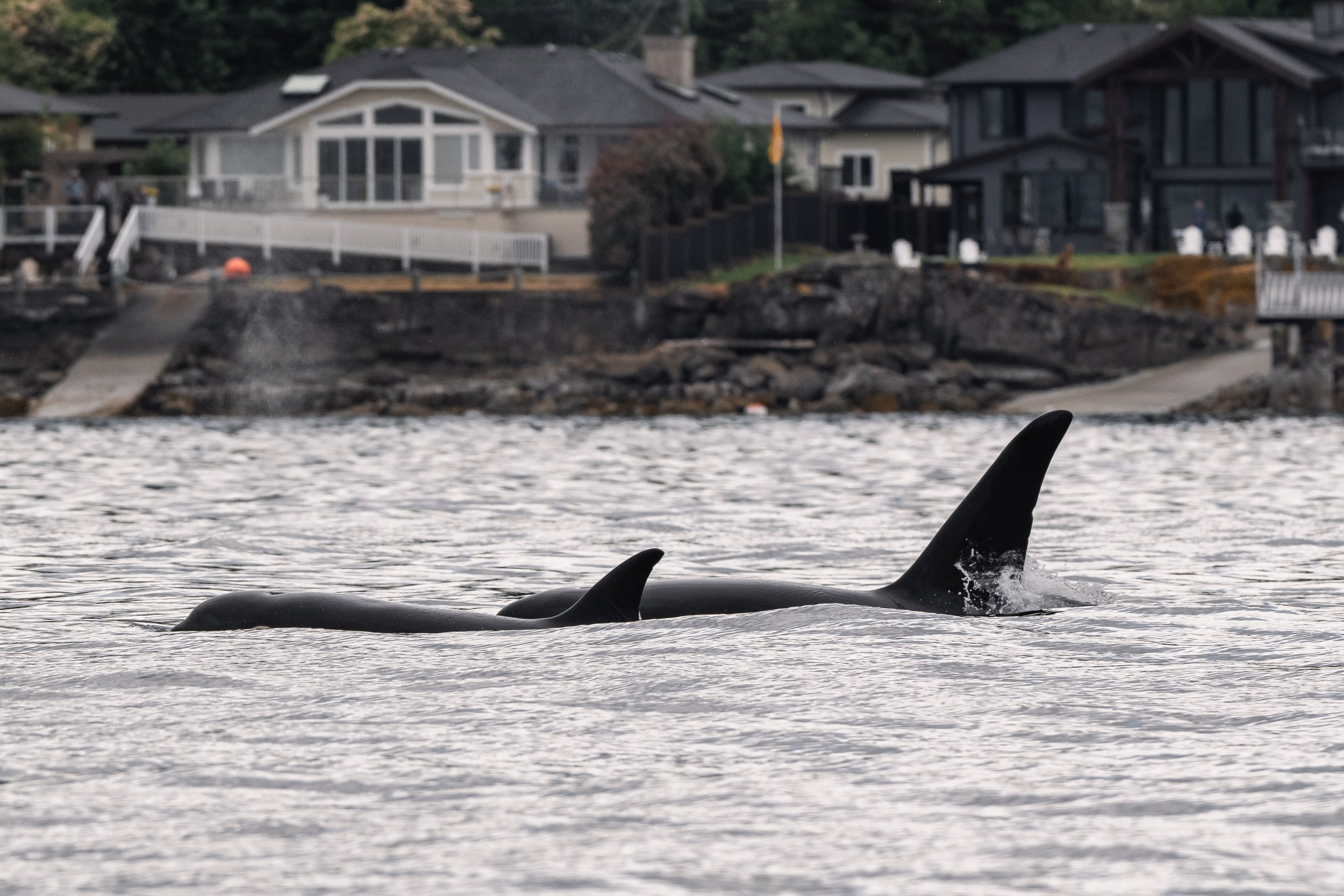
T100C Laurel following behind his mother T100 Hutchins. Photograph by Aly Kohlman.
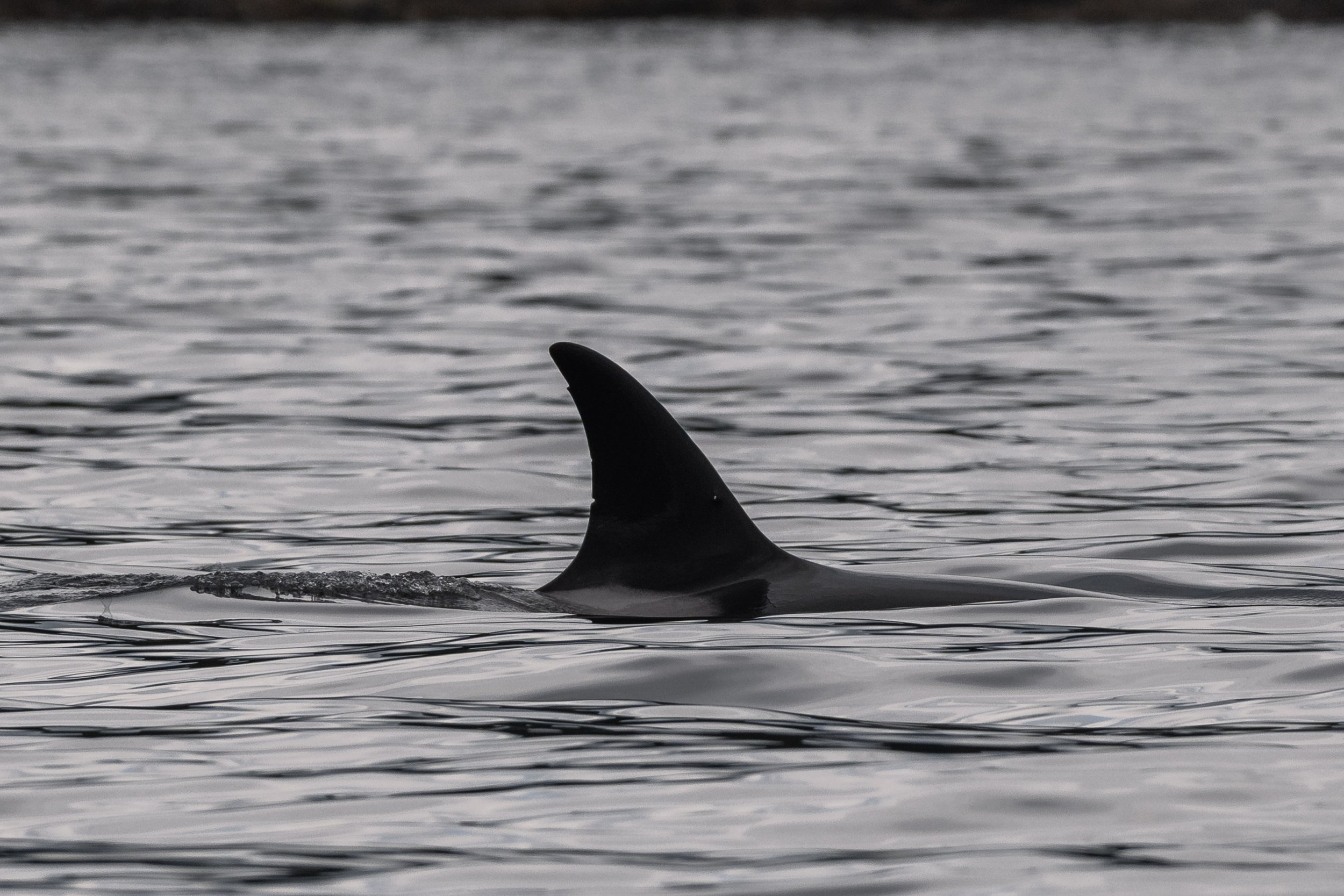
A great view of the distinctive notches on T086A Eider’s dorsal fin. Photograph by Aly Kohlman.
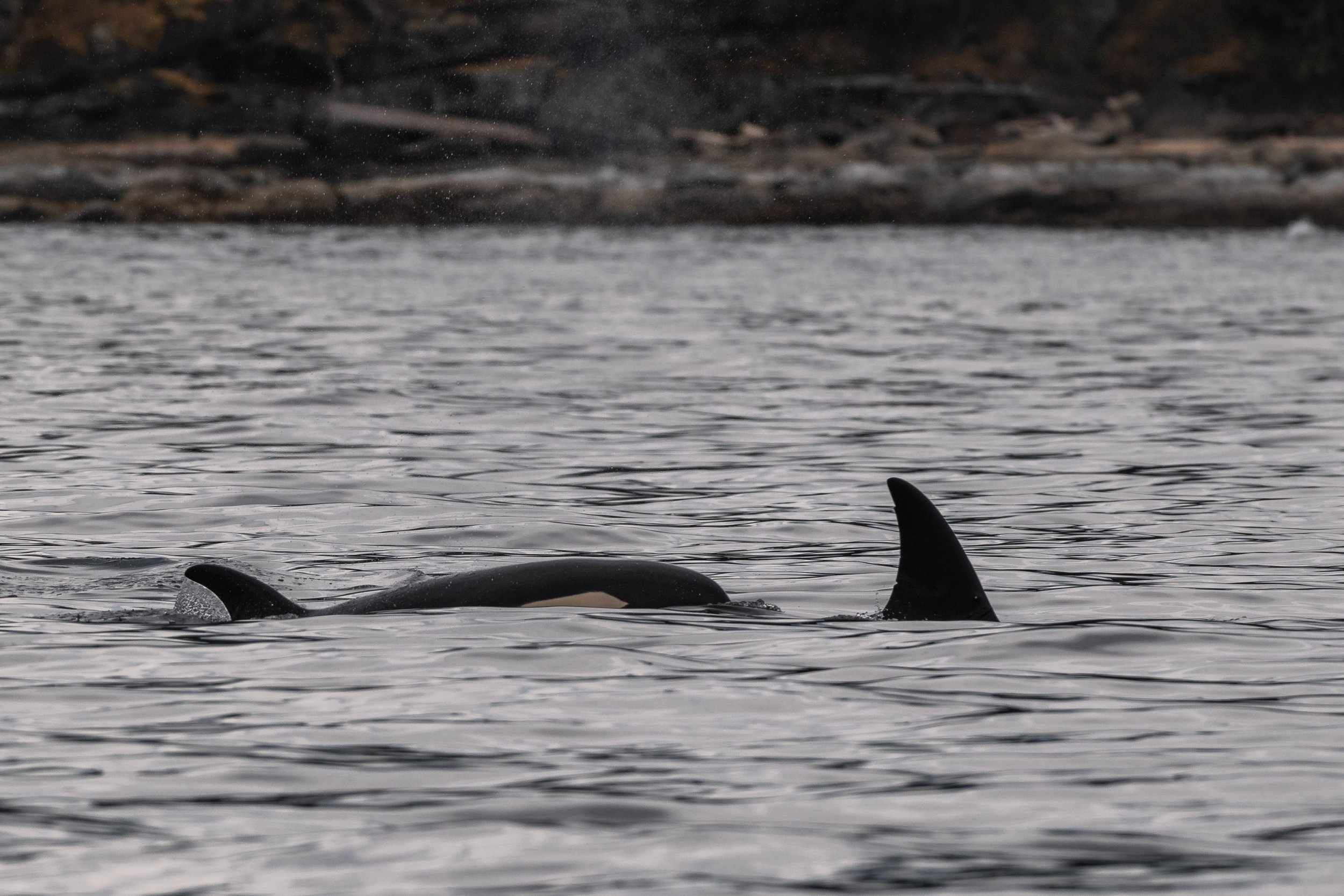
T086A Eider traveling ahead of her youngest T086A5 Siku. Photograph by Aly Kohlman.
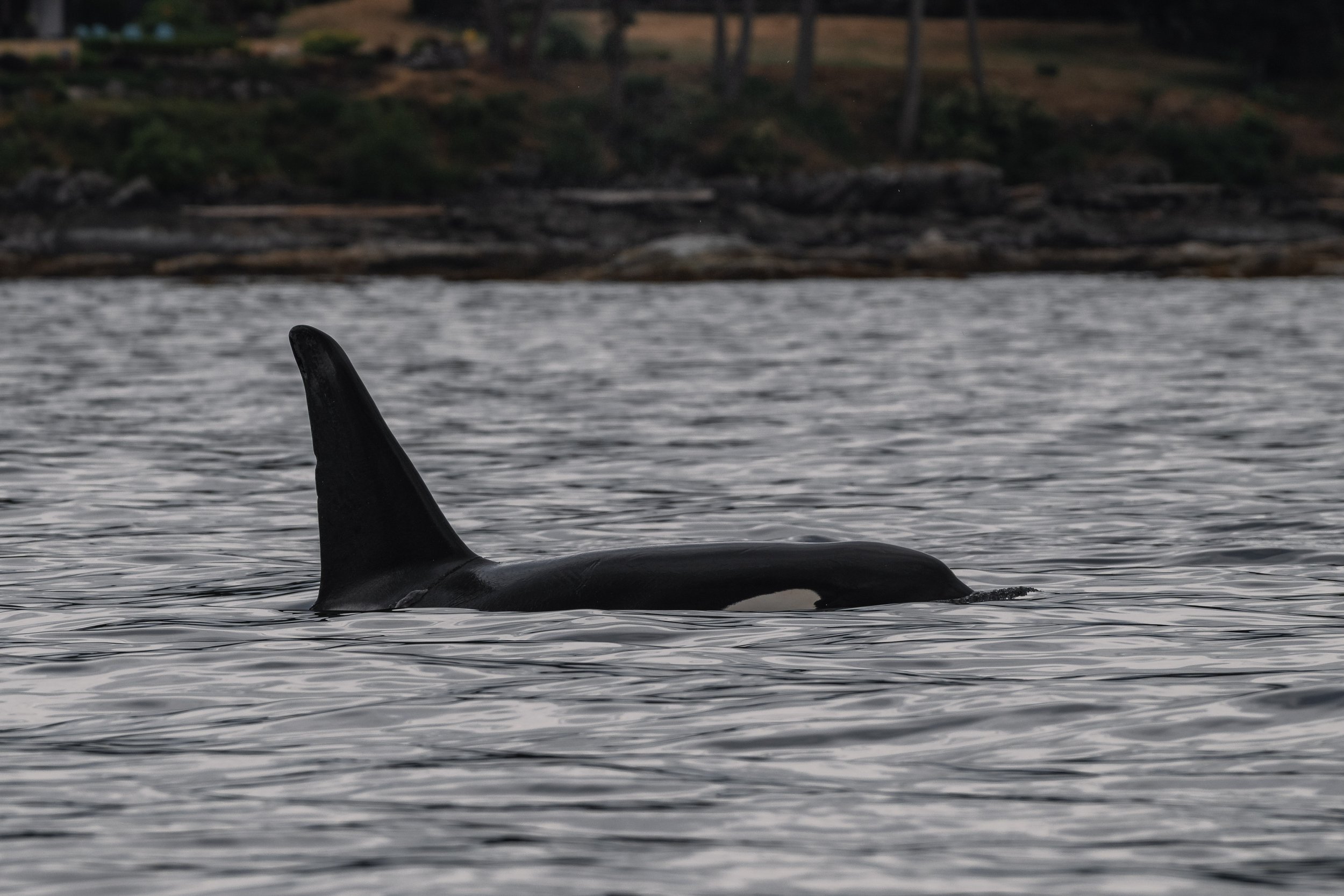
T100C Laurel showing off his impressive size. Photograph by Aly Kohlman.
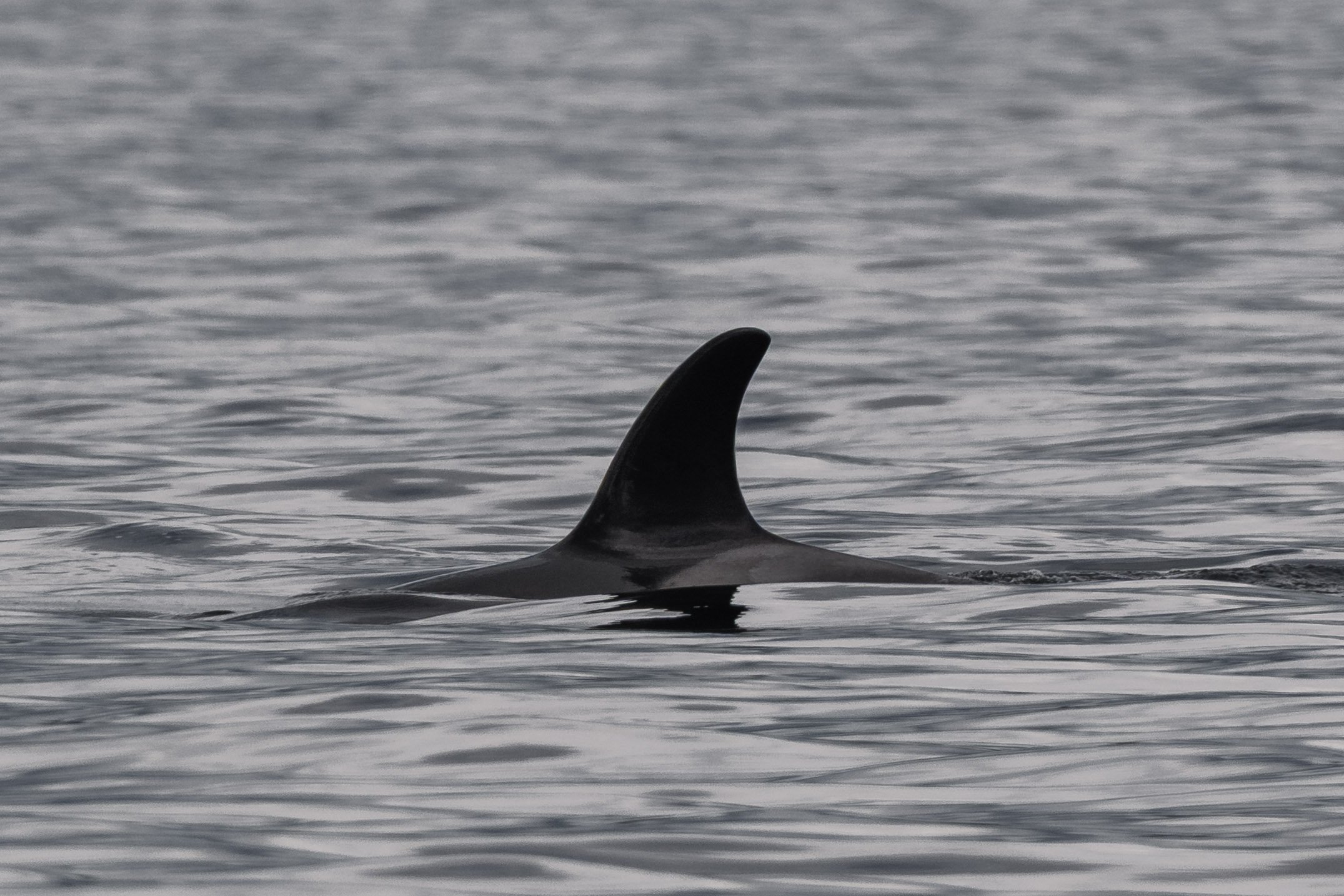
T100F Estrella giving a good look at their pale saddle patch. Photograph by Aly Kohlman.
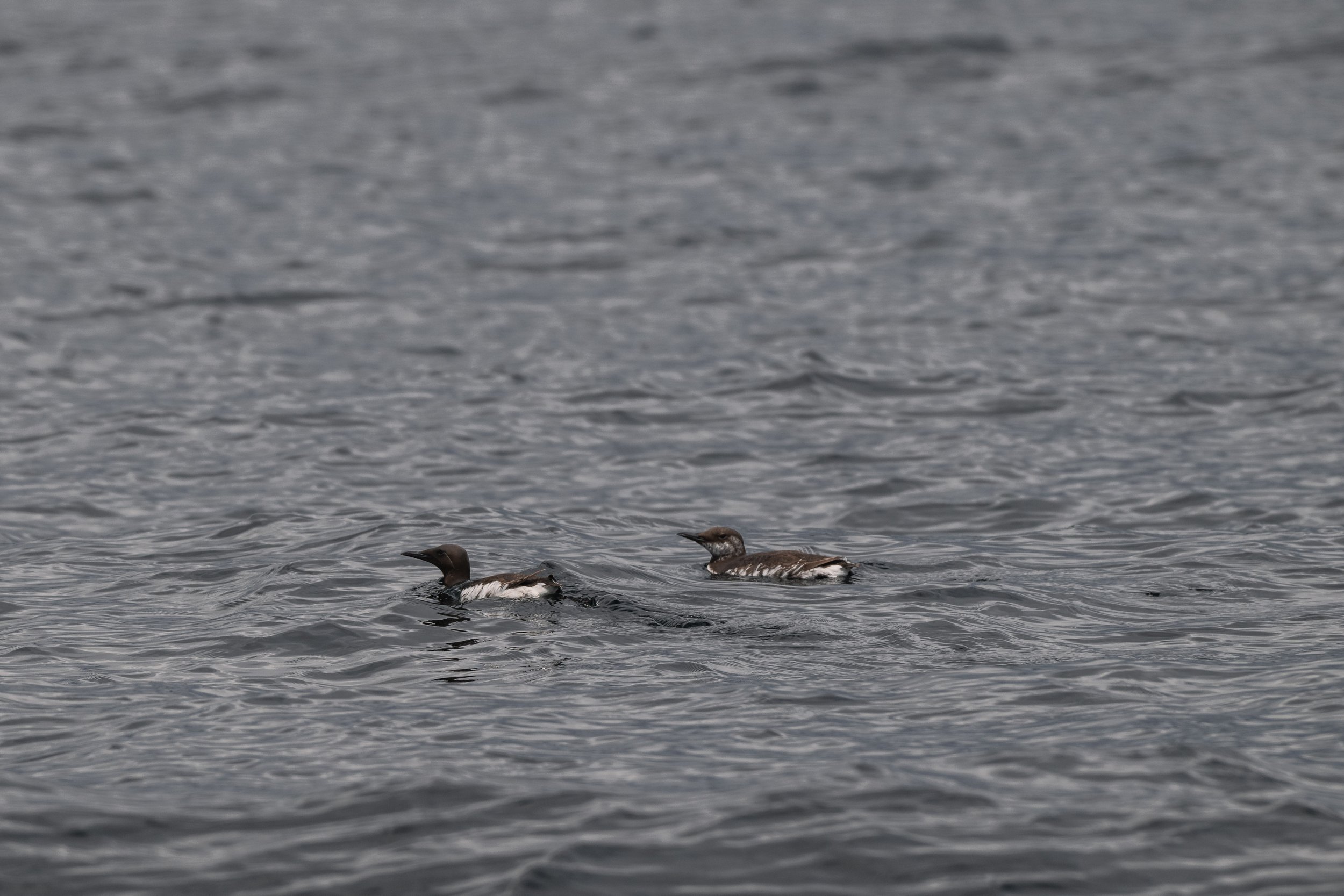
A couple Common Murres swimming along. Photograph by Aly Kohlman.
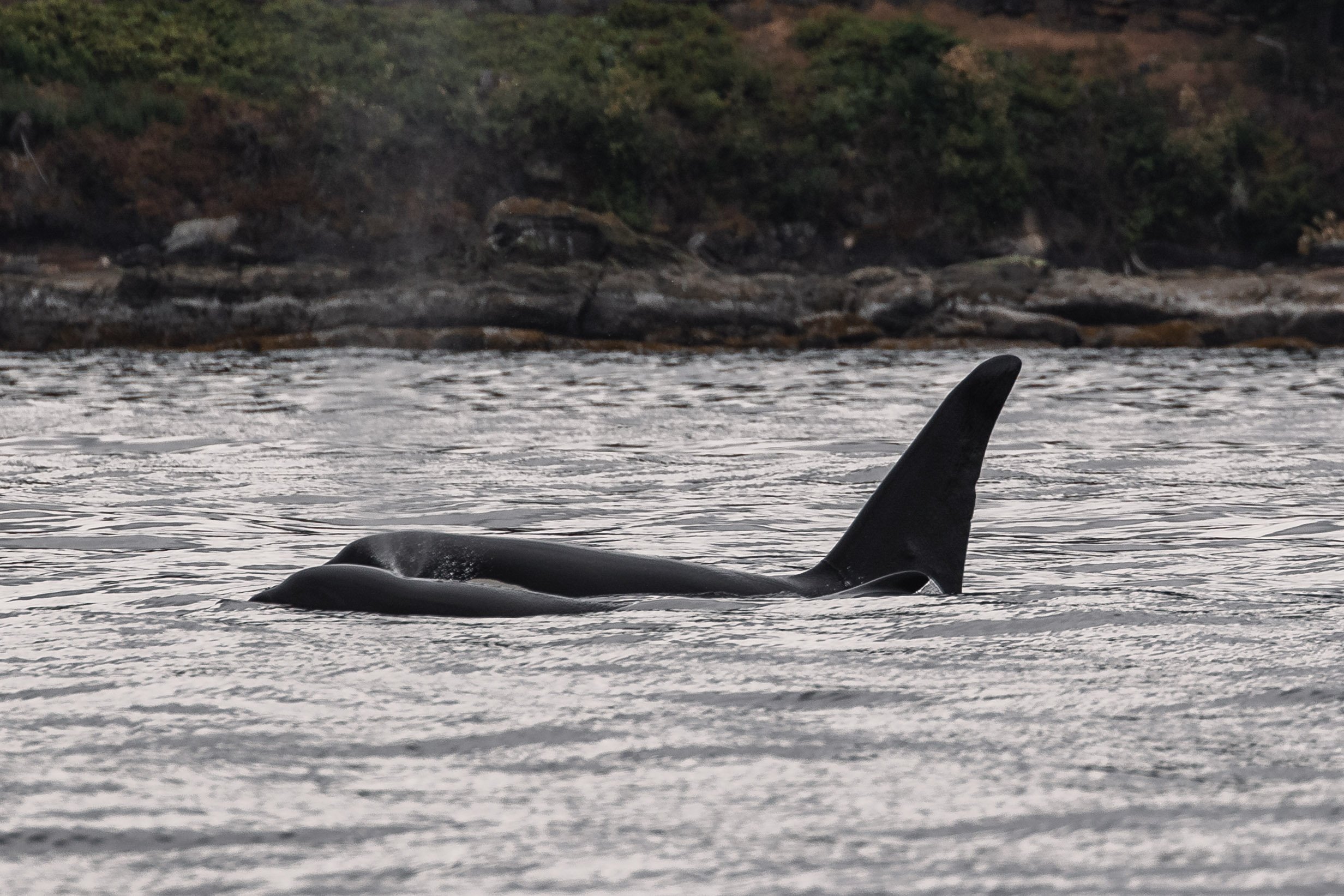
T100C Laurel coming up just behind T100E Hutchins as she gives a blow. Photograph by Val Watson.
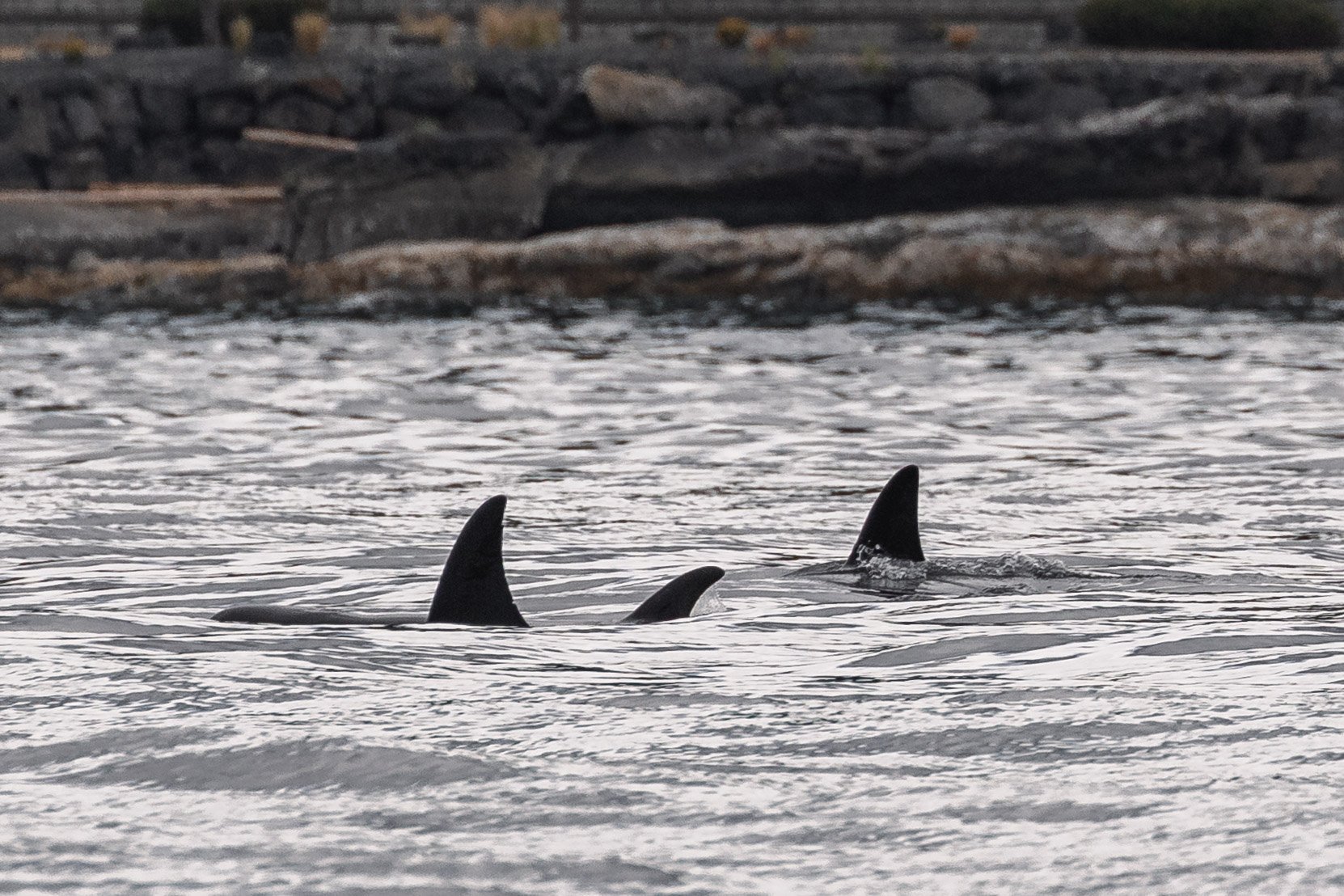
T106A Eider surfacing ahead of T086A5 Siku and T086A4 Akia. Photograph by Val Watson.
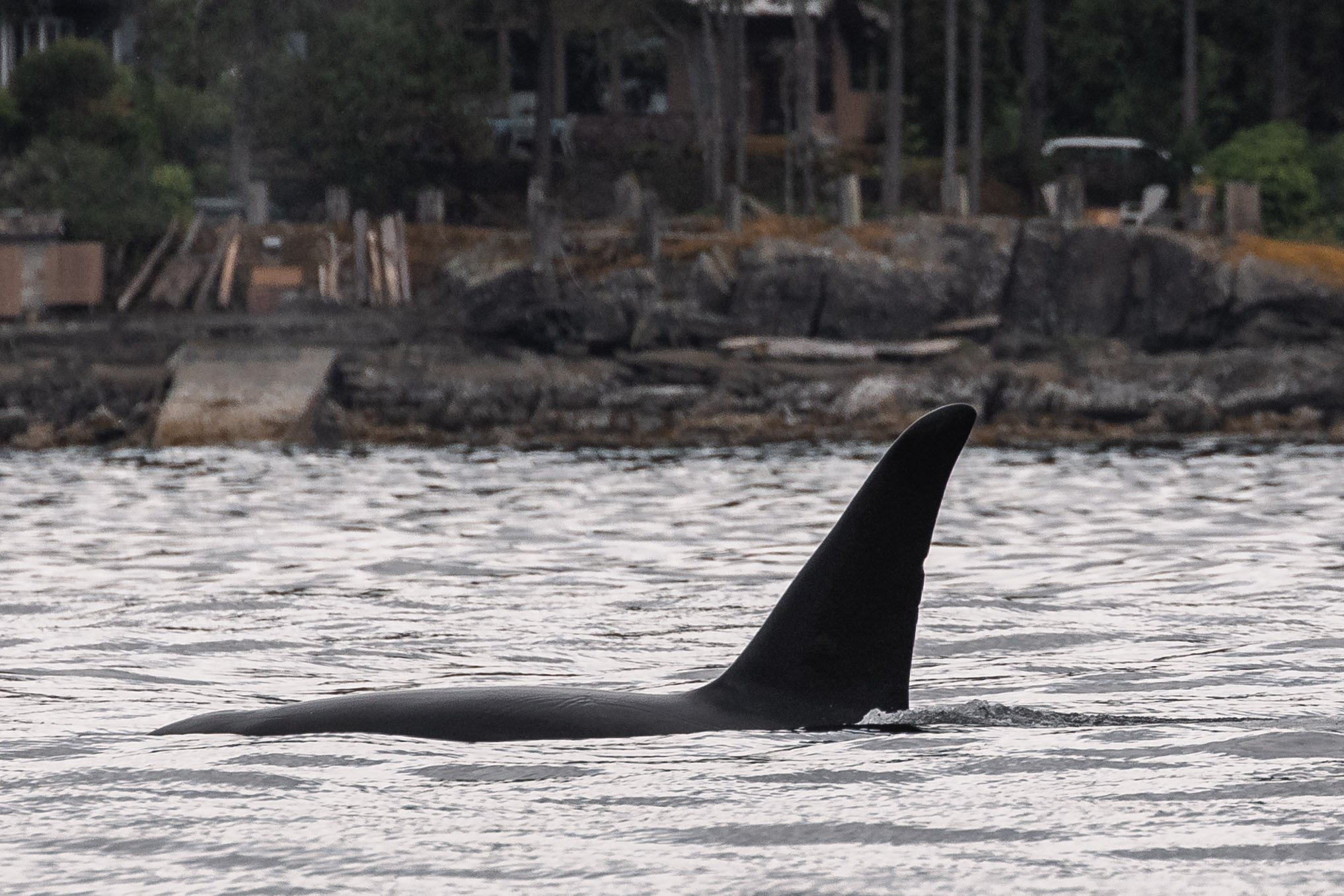
A good look at the other side of T100C Laurel’s dorsal fin. Photograph by Val Watson.
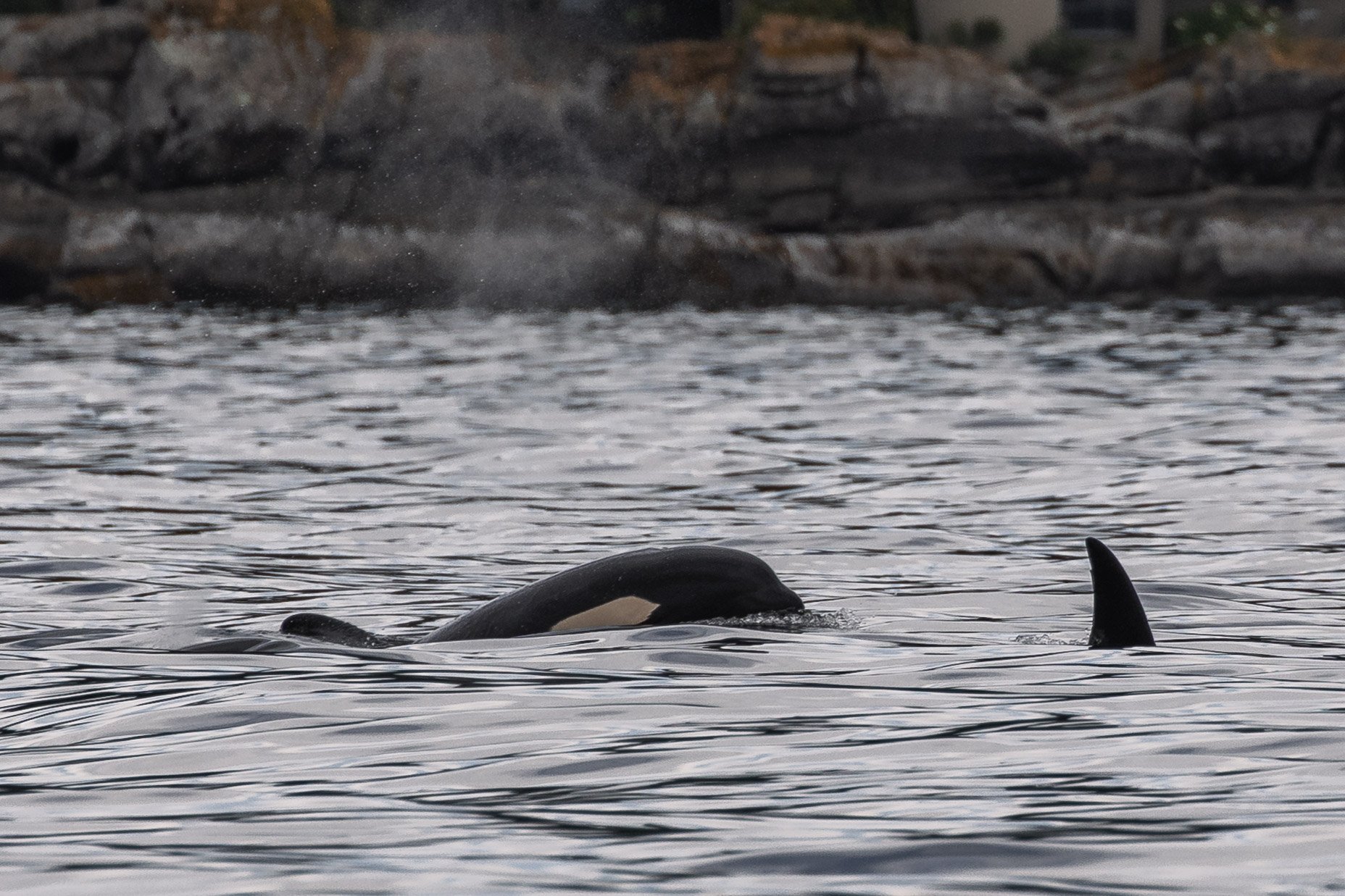
T086A4 Akia giving a good look at her eyepatch as she surfaces behind T086A Eider. Photograph by Val Watson.
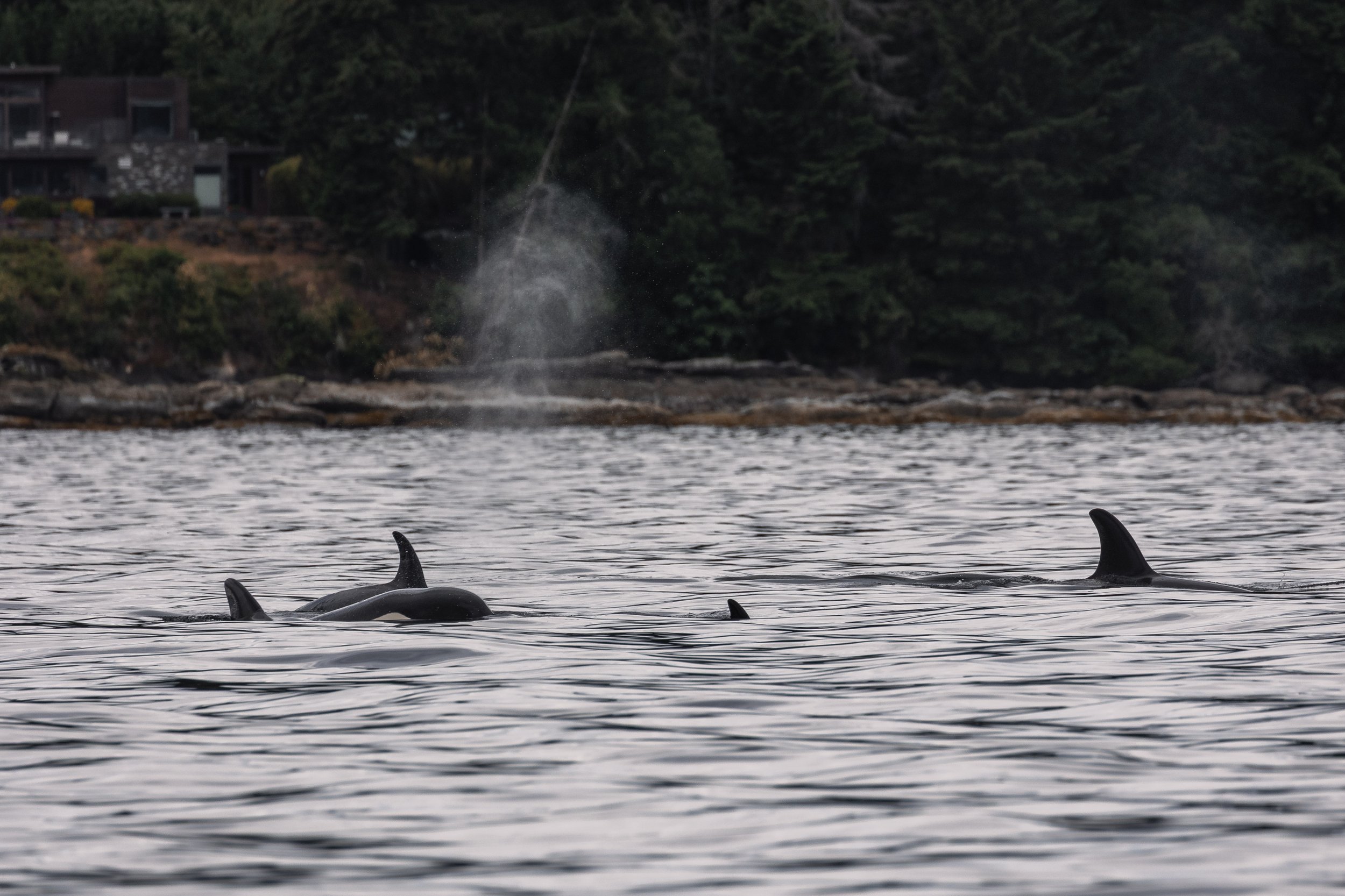
From left to right: T086A4 Akia, T086A5 Siku, the tip of T100 Hutchins dorsal fin, and T100F Estrella. Photograph by Val Watson.
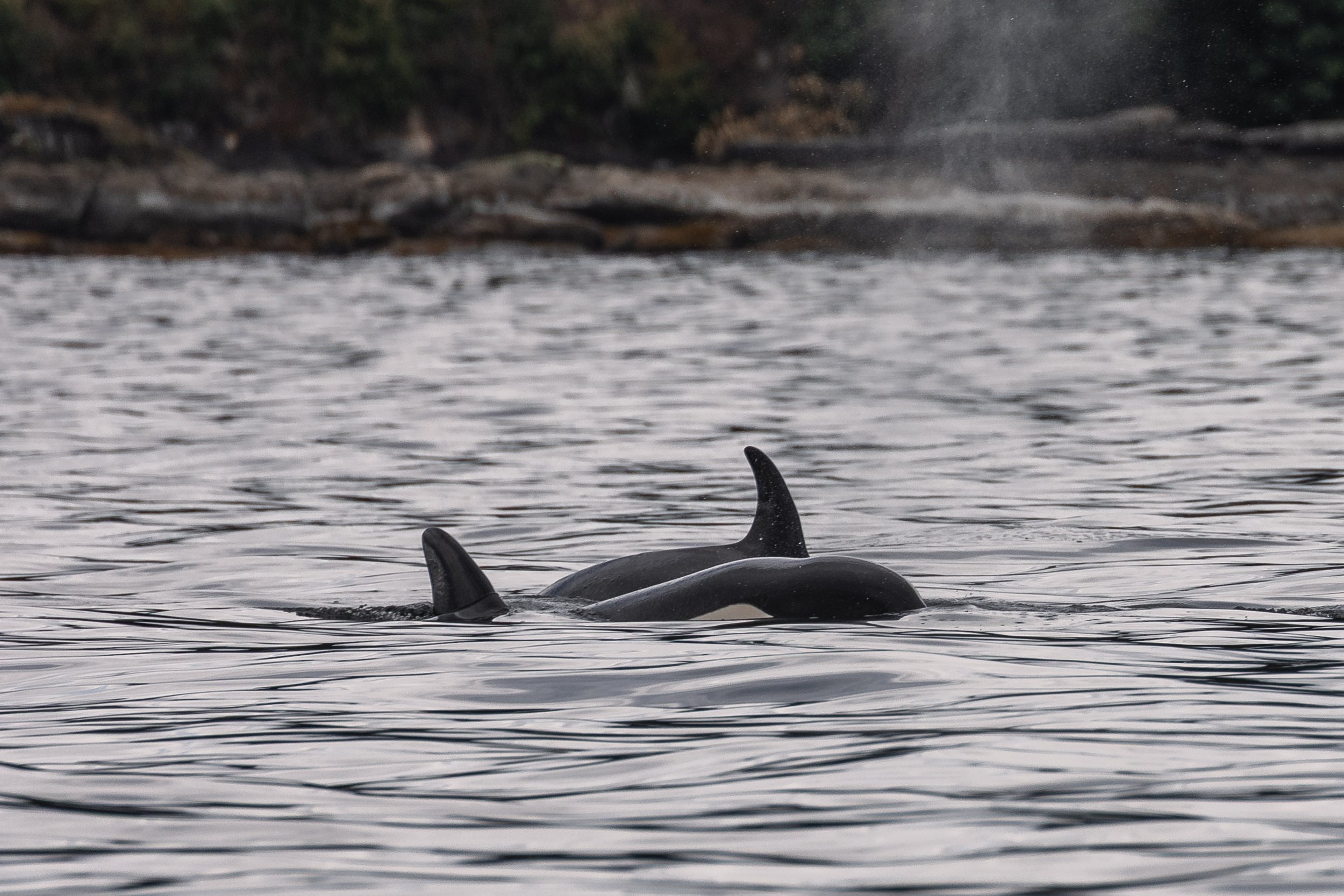
A closer look at T086A4 Akia and T086A5 Siku. Photograph by Val Watson.
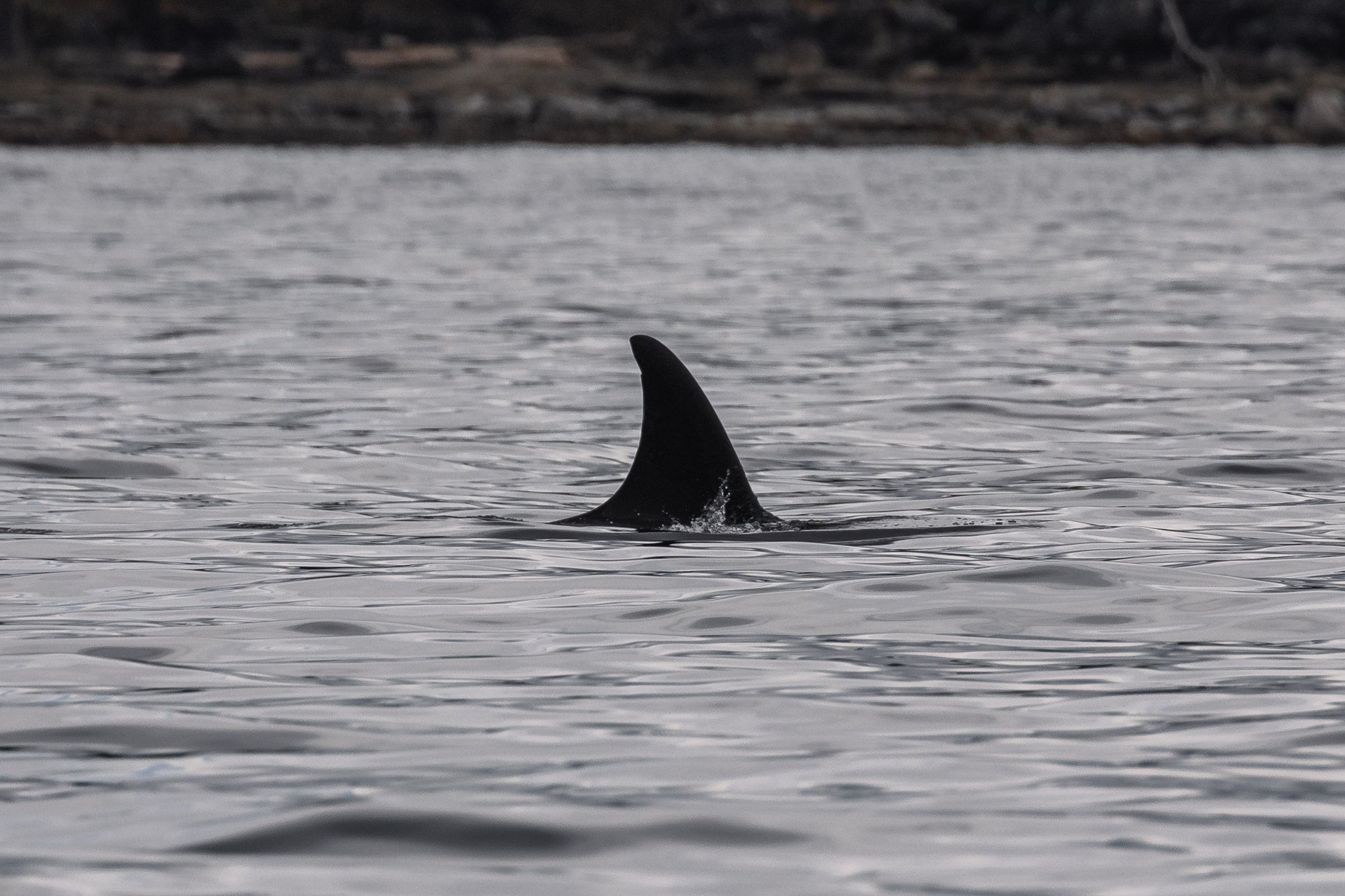
T100 Hutchins cruising along. Photograph by Val Watson.
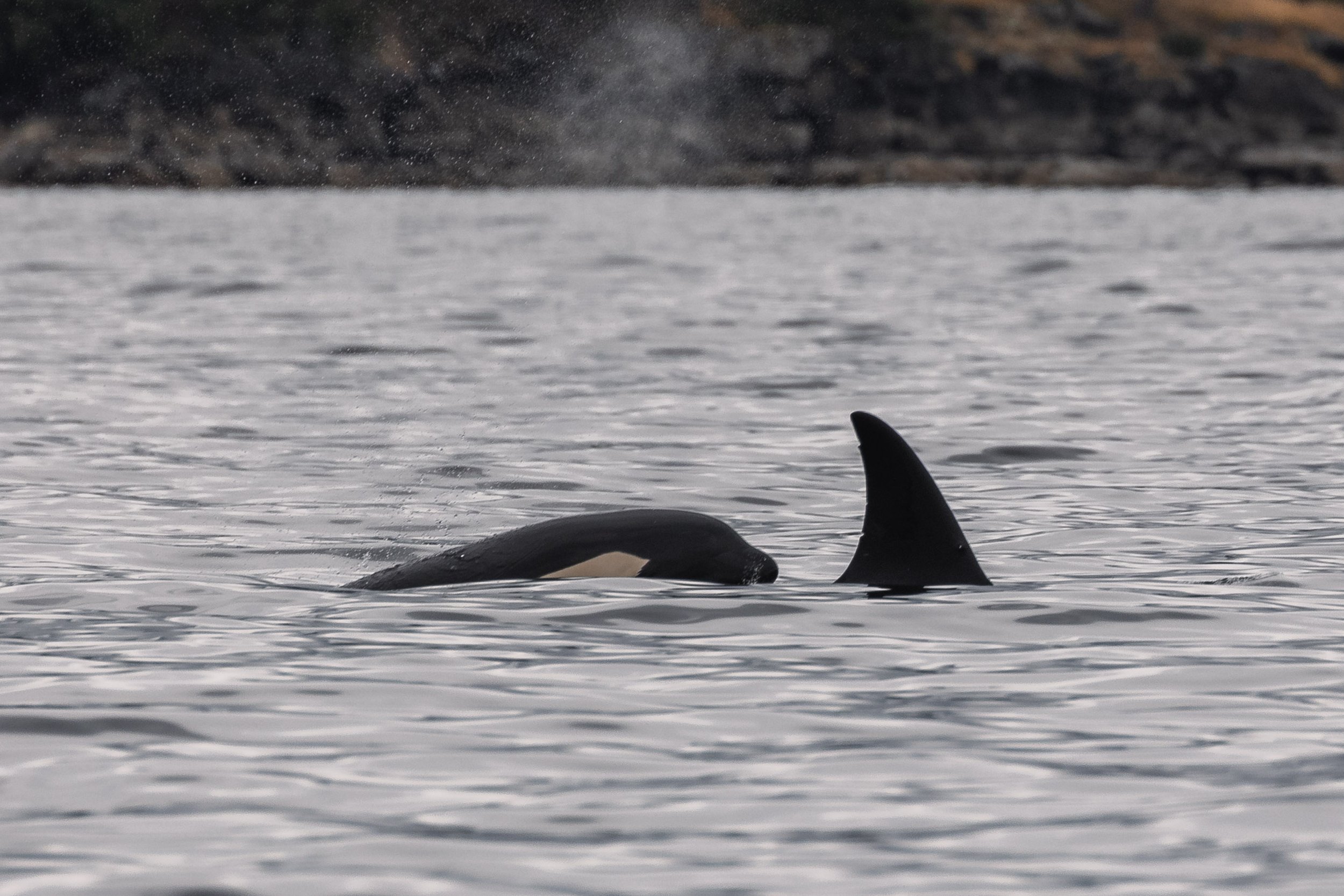
T086A4 Akia giving a blow at the surface just behind T086A Eider. Photograph by Val Watson.
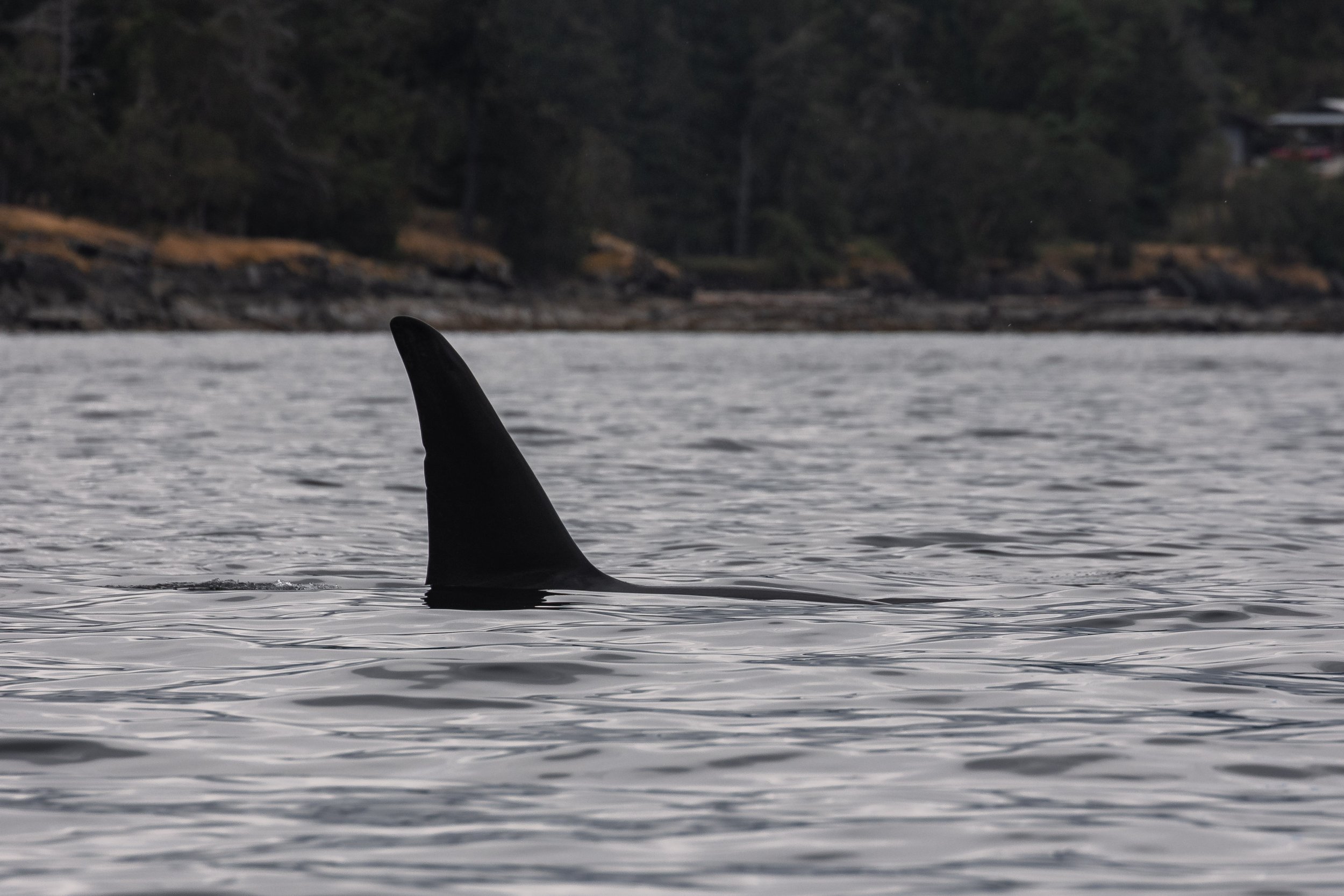
Another look at T100C Laurels impressive dorsal fin. Photograph by Val Watson.
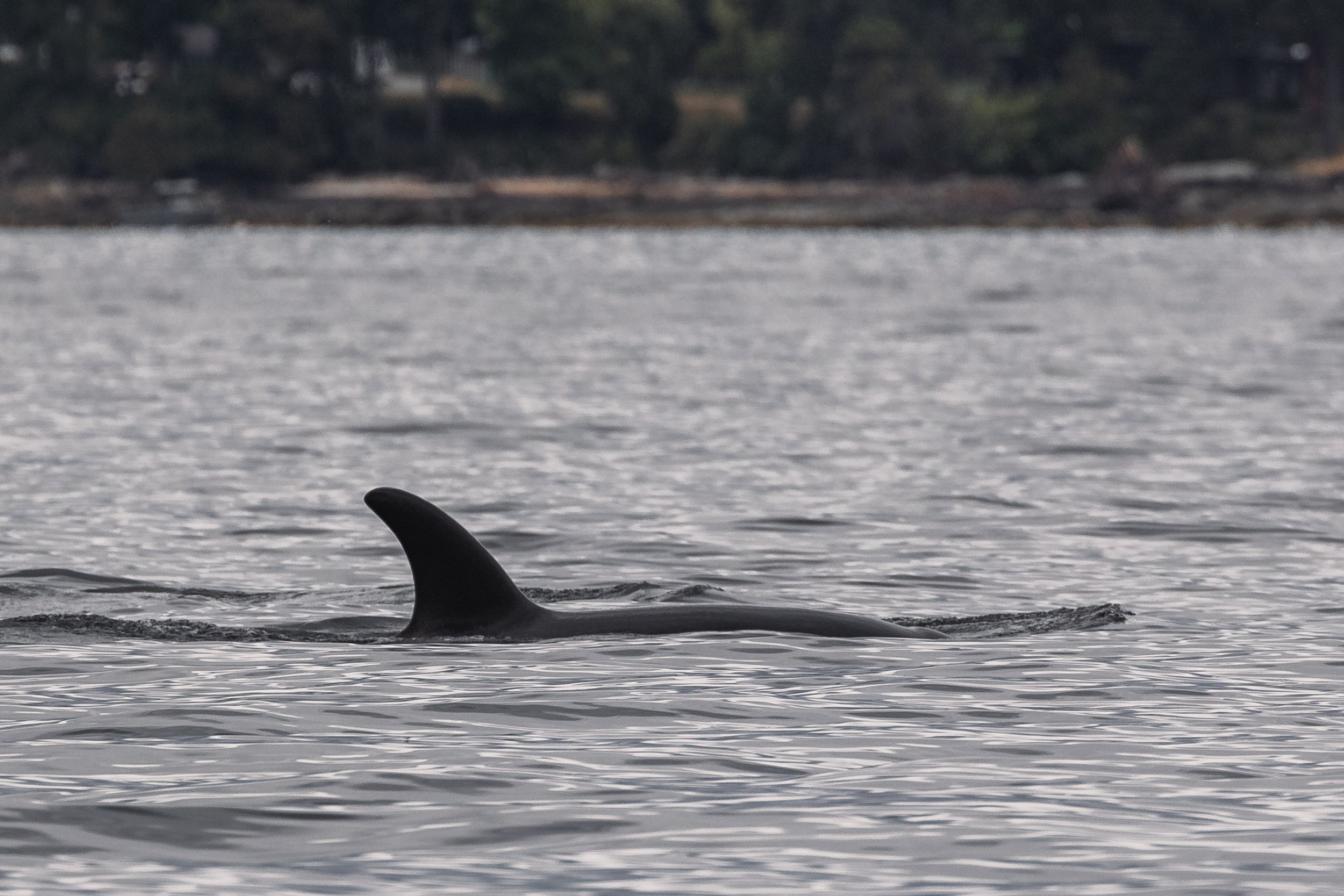
Another look at one of the younger orca in the group, T100F Estrella. Photograph by Val Watson.
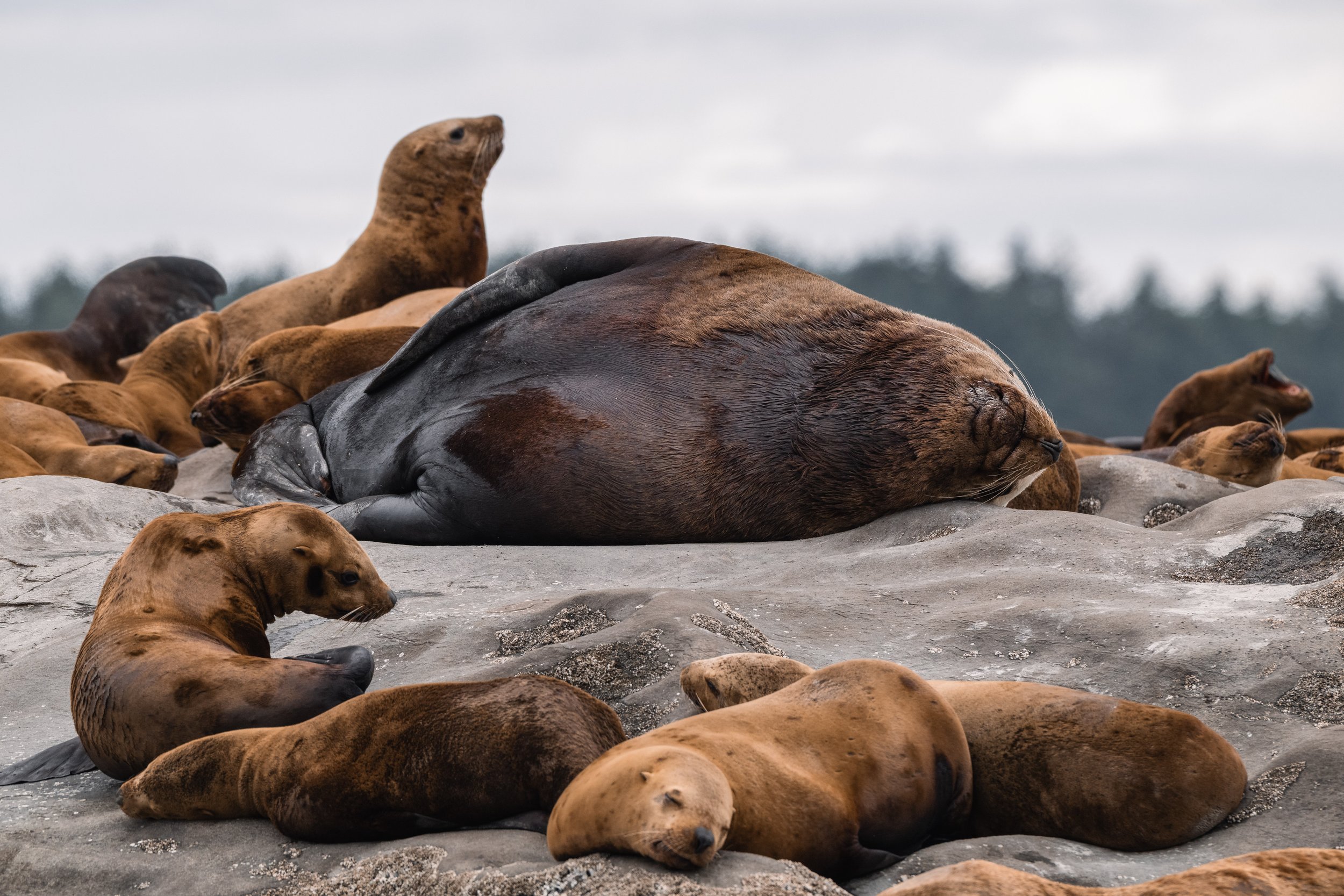
A large male Steller Sea Lion lounging amongst a number of other Steller Sea Lions. Photograph by Aly Kohlman.
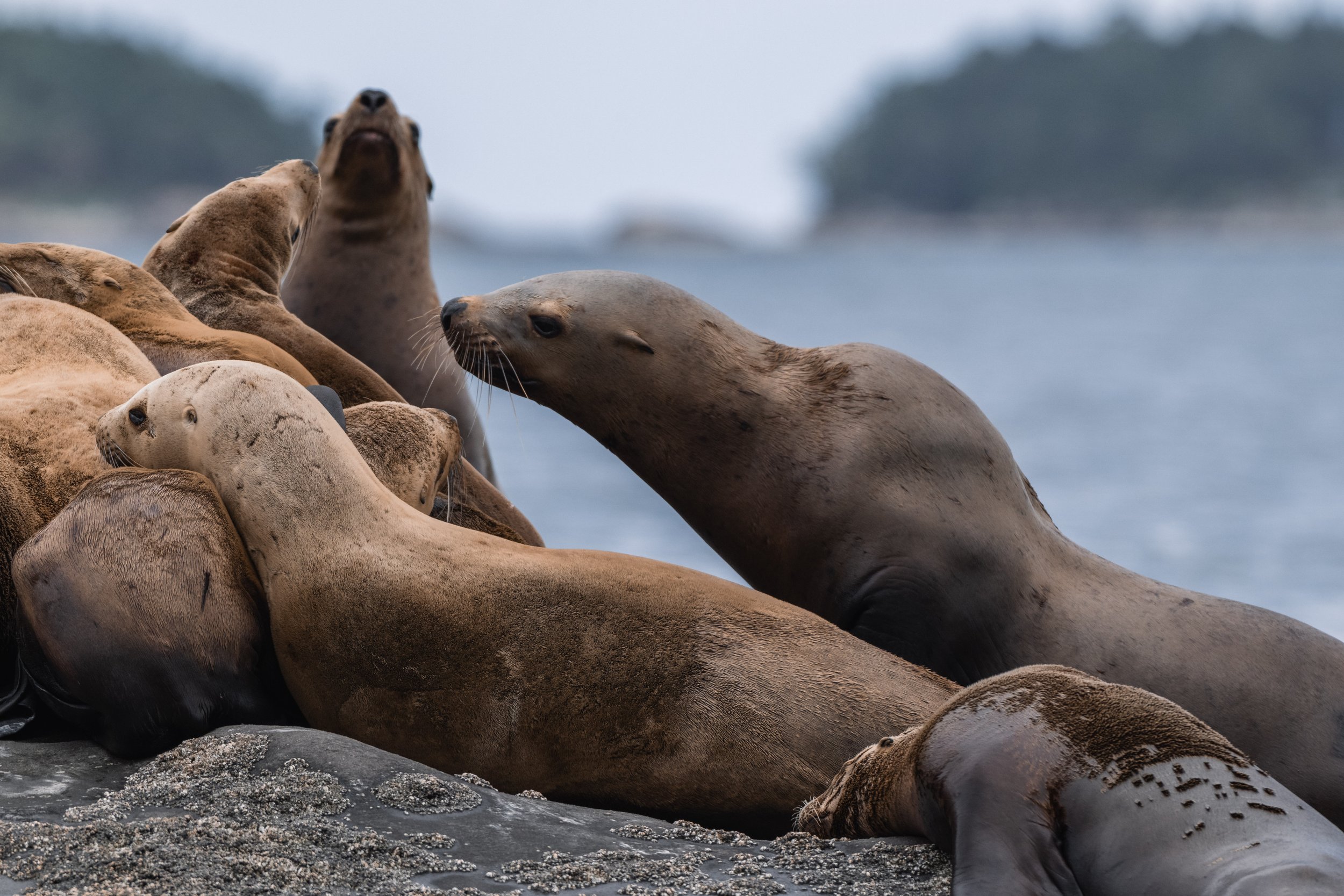
A Steller Sea Lion making its way to lay on with the others. Photograph by Aly Kohlman.
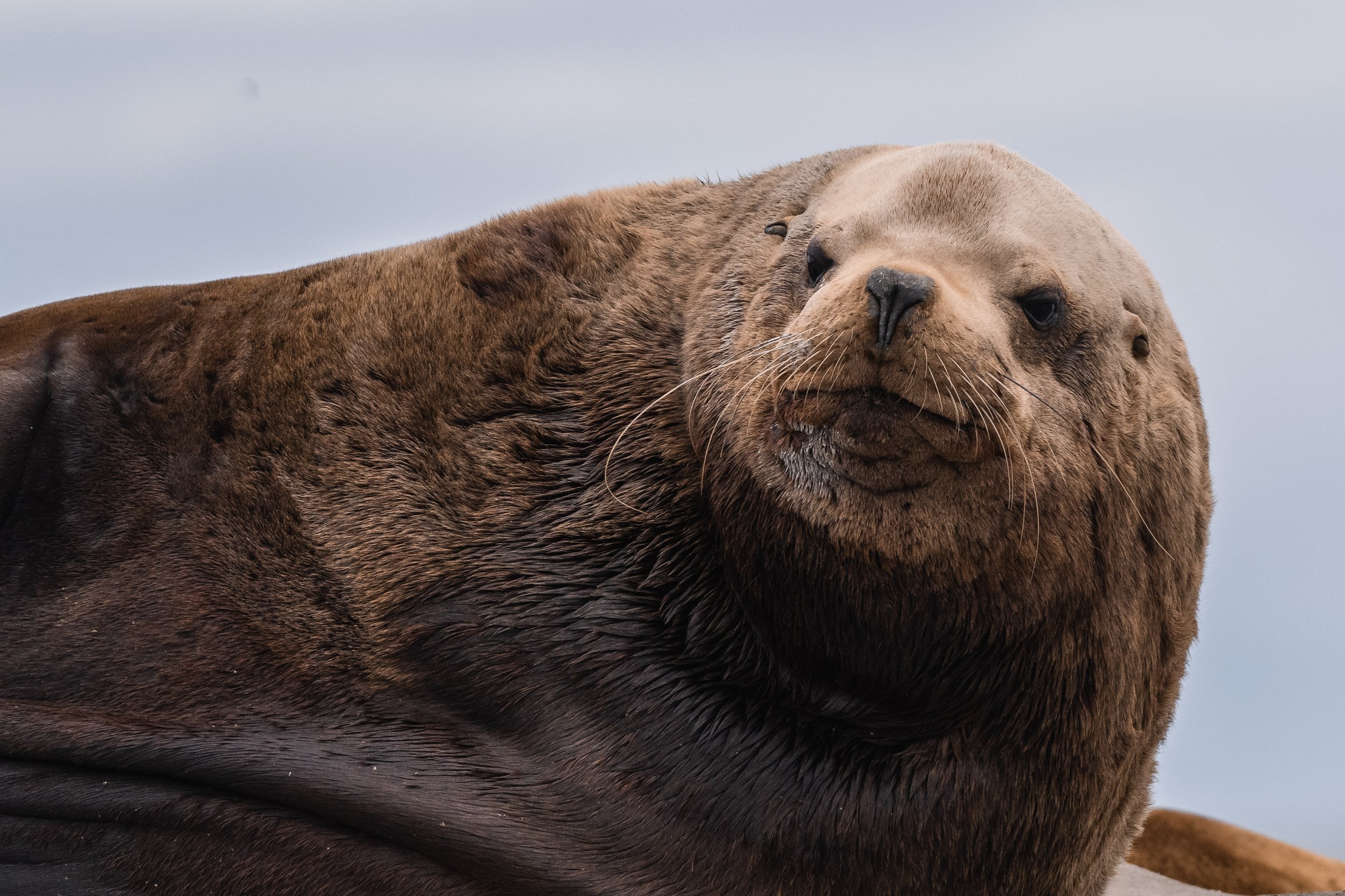
The large male Steller Sea Lion mean mugging. Photograph by Aly Kohlman.
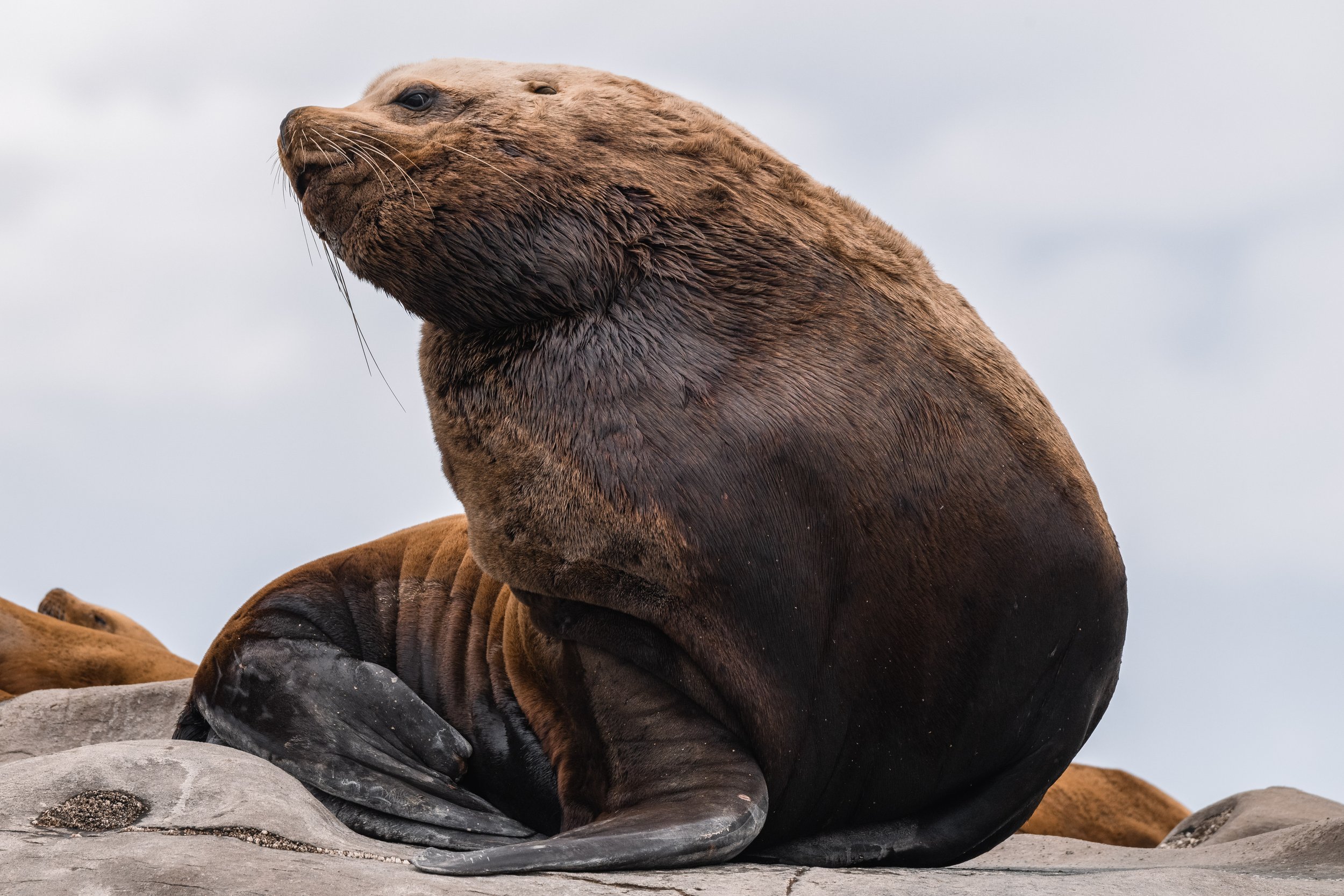
The Steller Sea Lion showing off his impressive size. Photograph by Aly Kohlman.
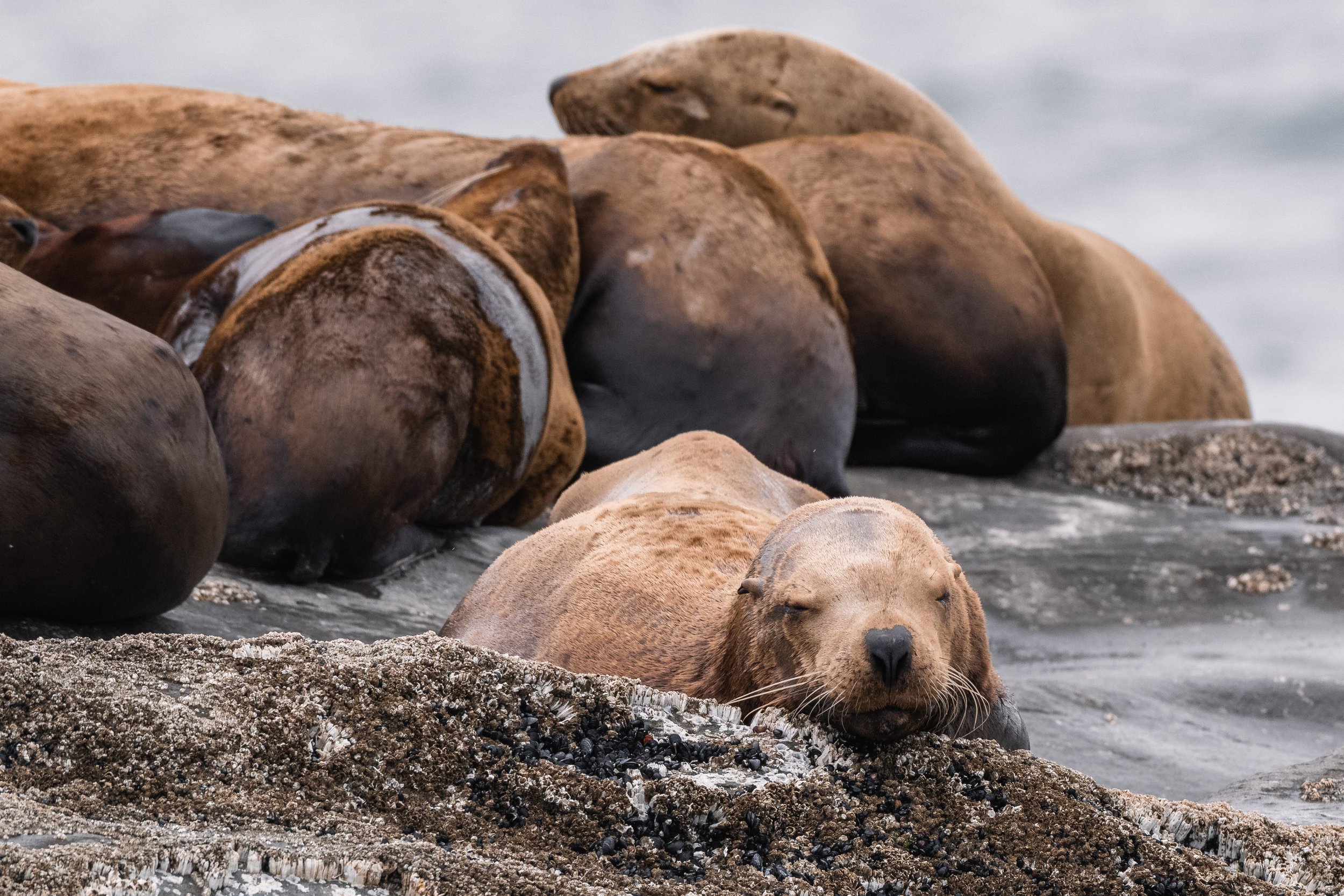
A napping Steller Sea Lion on the barnacles. Photograph by Aly Kohlman.
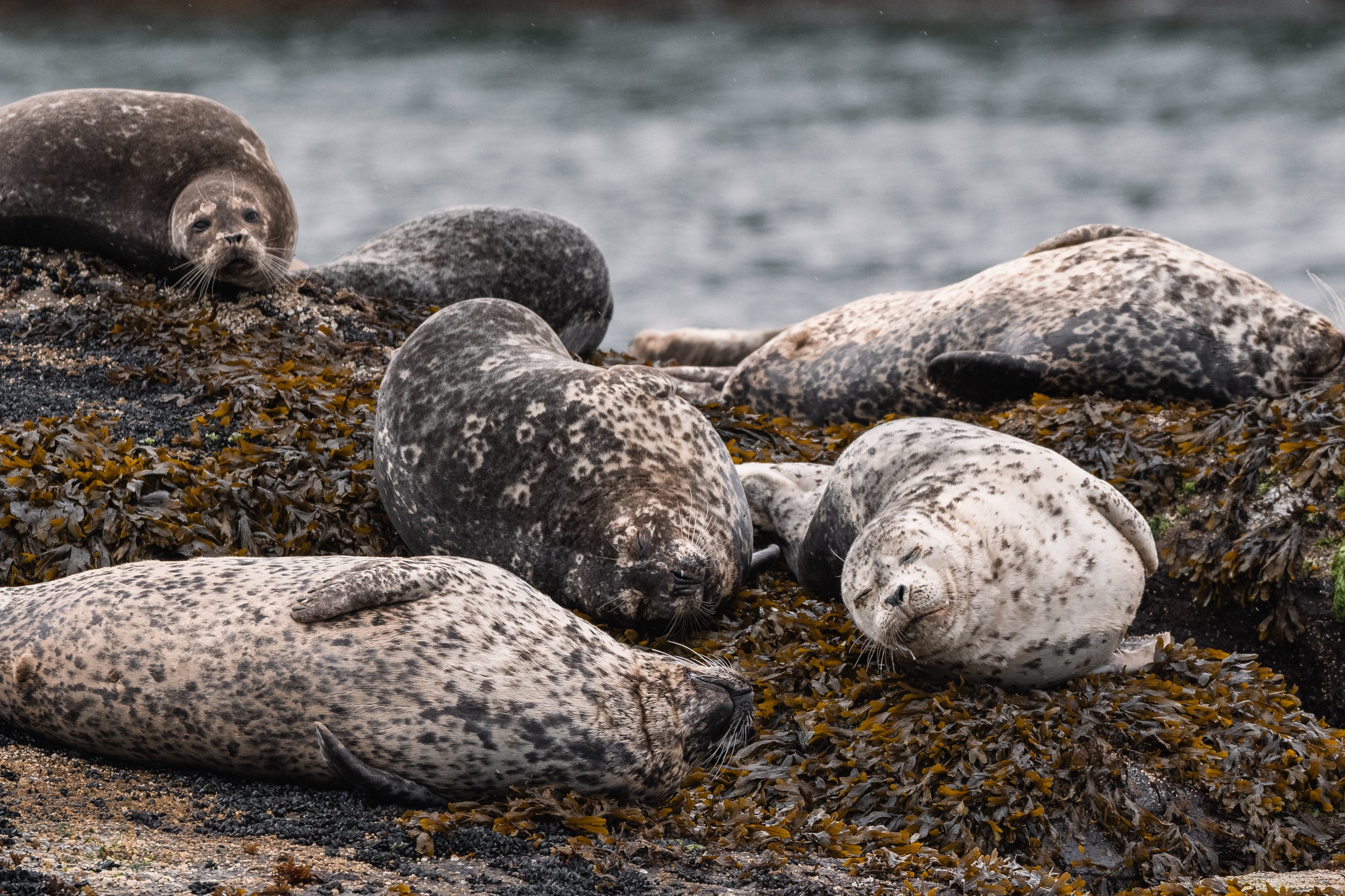
A group of Harbour Seals lounging on the bed of Kelp. Photograph by Aly Kohlman.
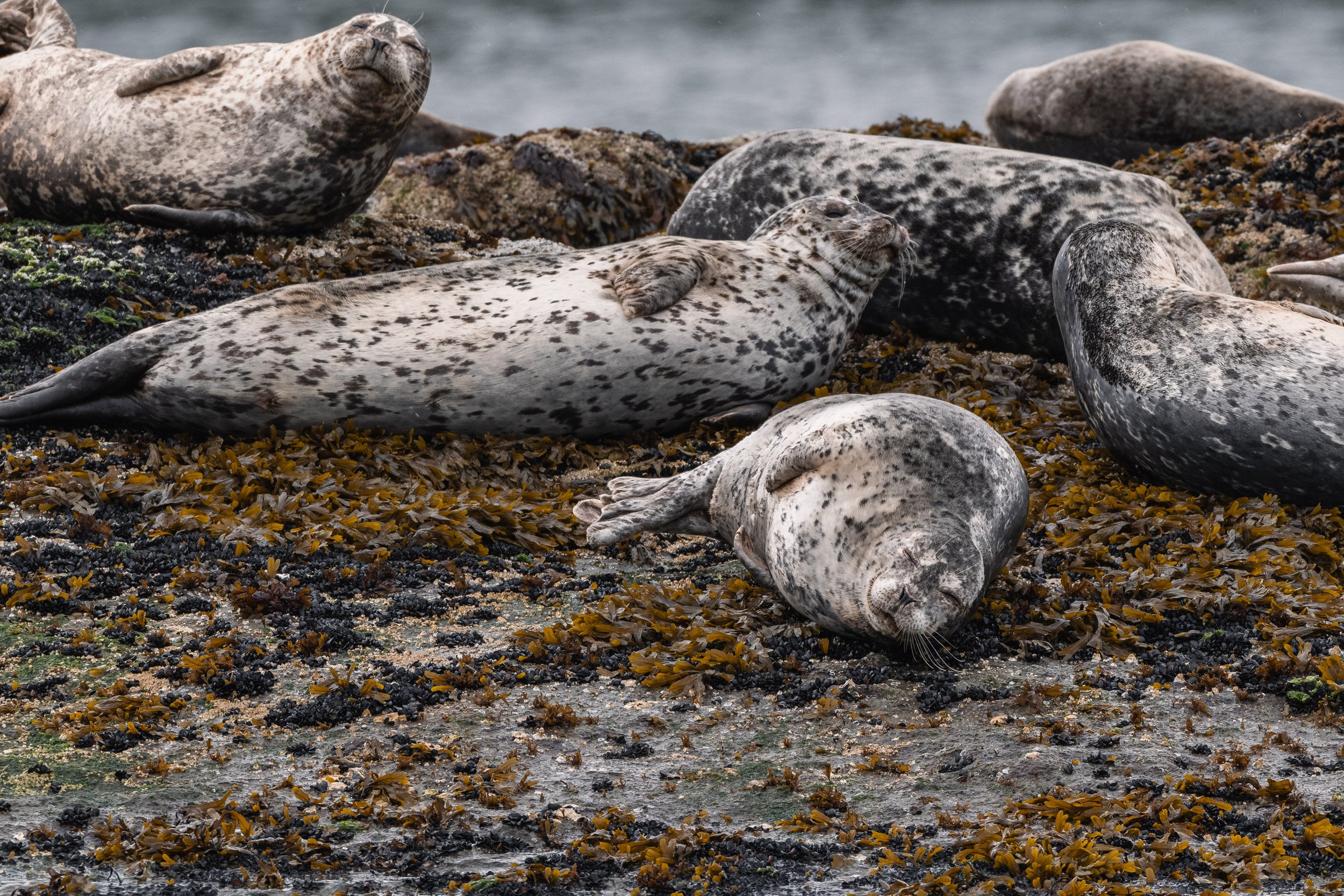
More Harbour Seals lounging out of the cold waters. Photograph by Aly Kohlman.
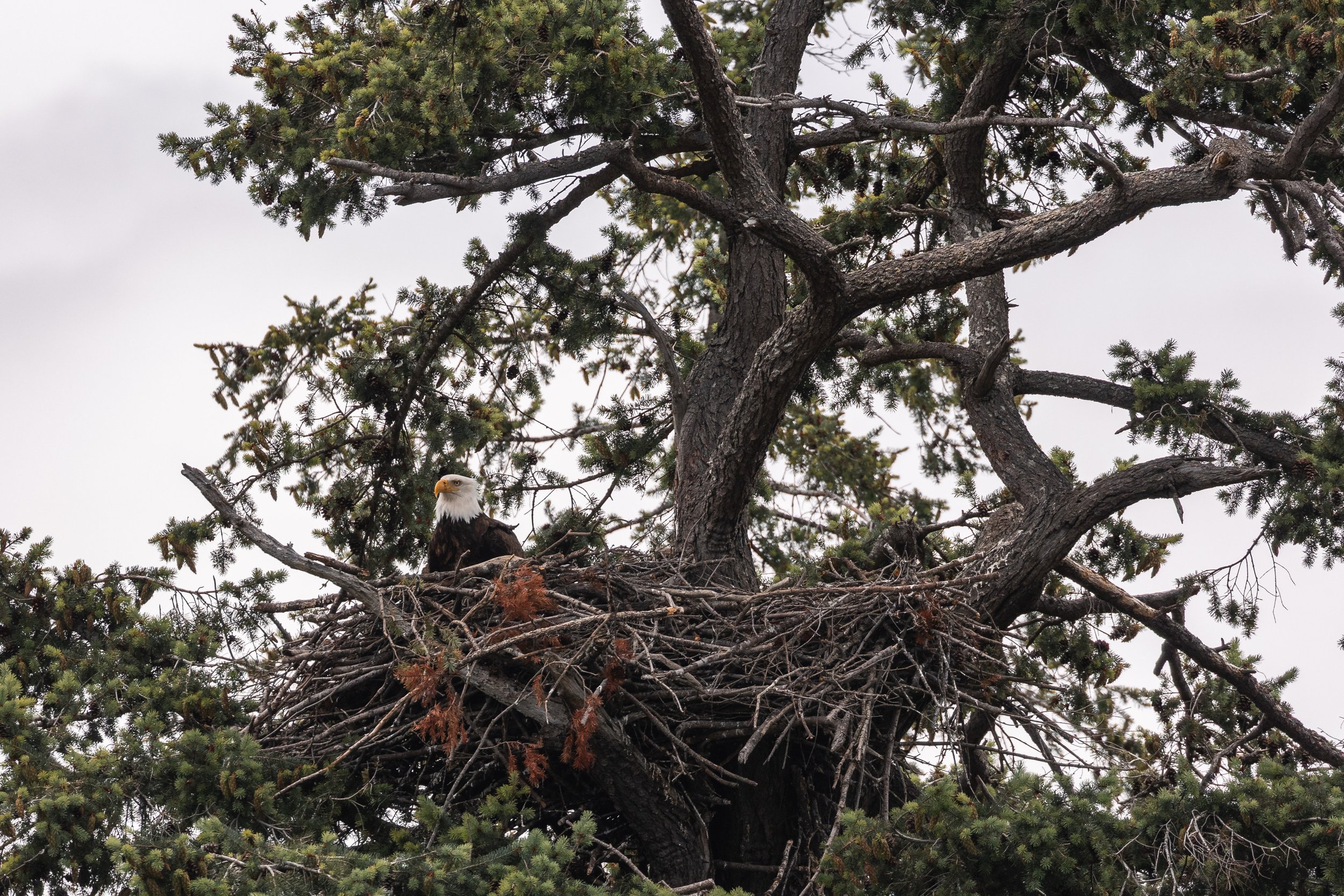
An adult Bald Eagle on its massive nest. Photograph by Val Watson.
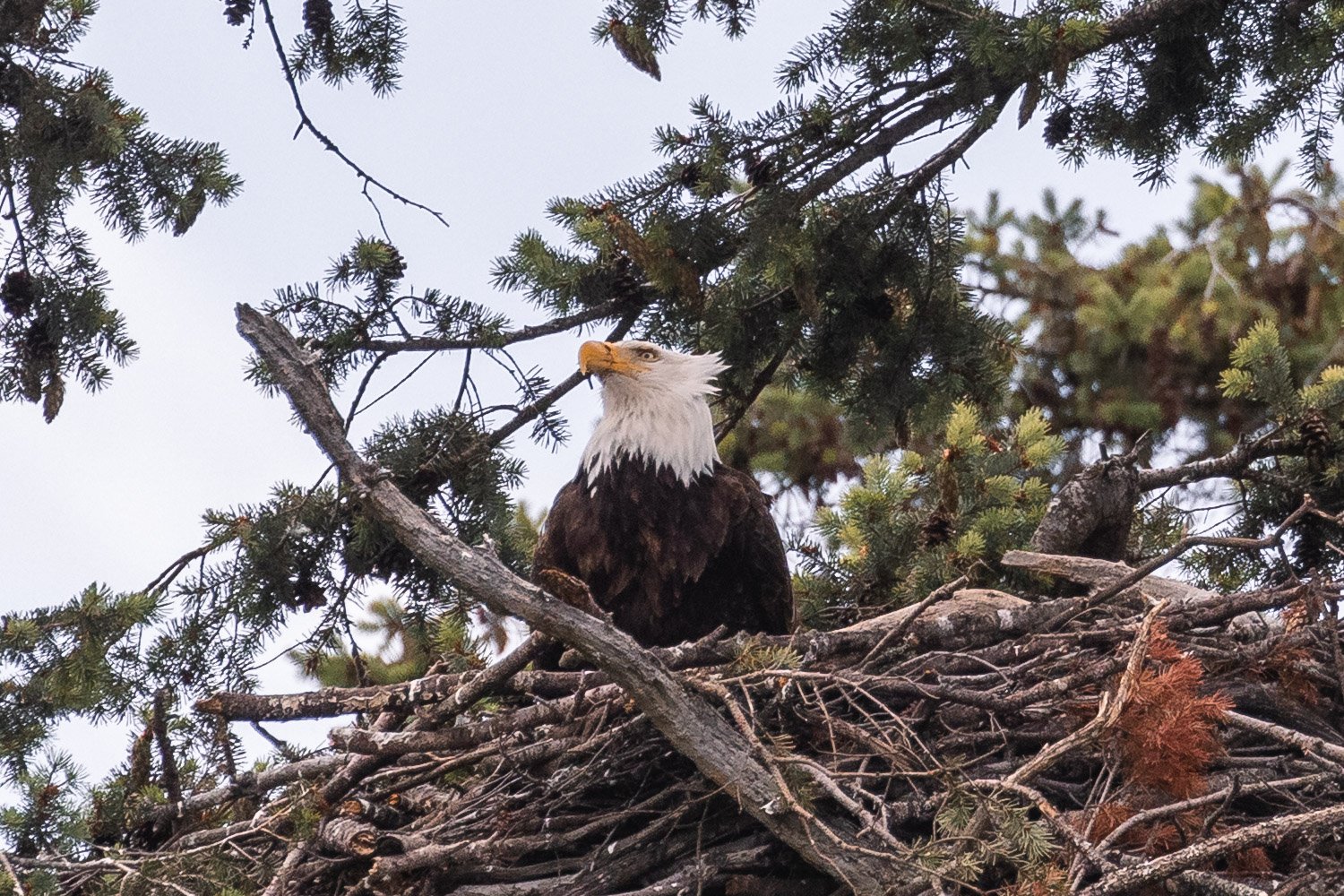
A closer look. Photograph by Val Watson.
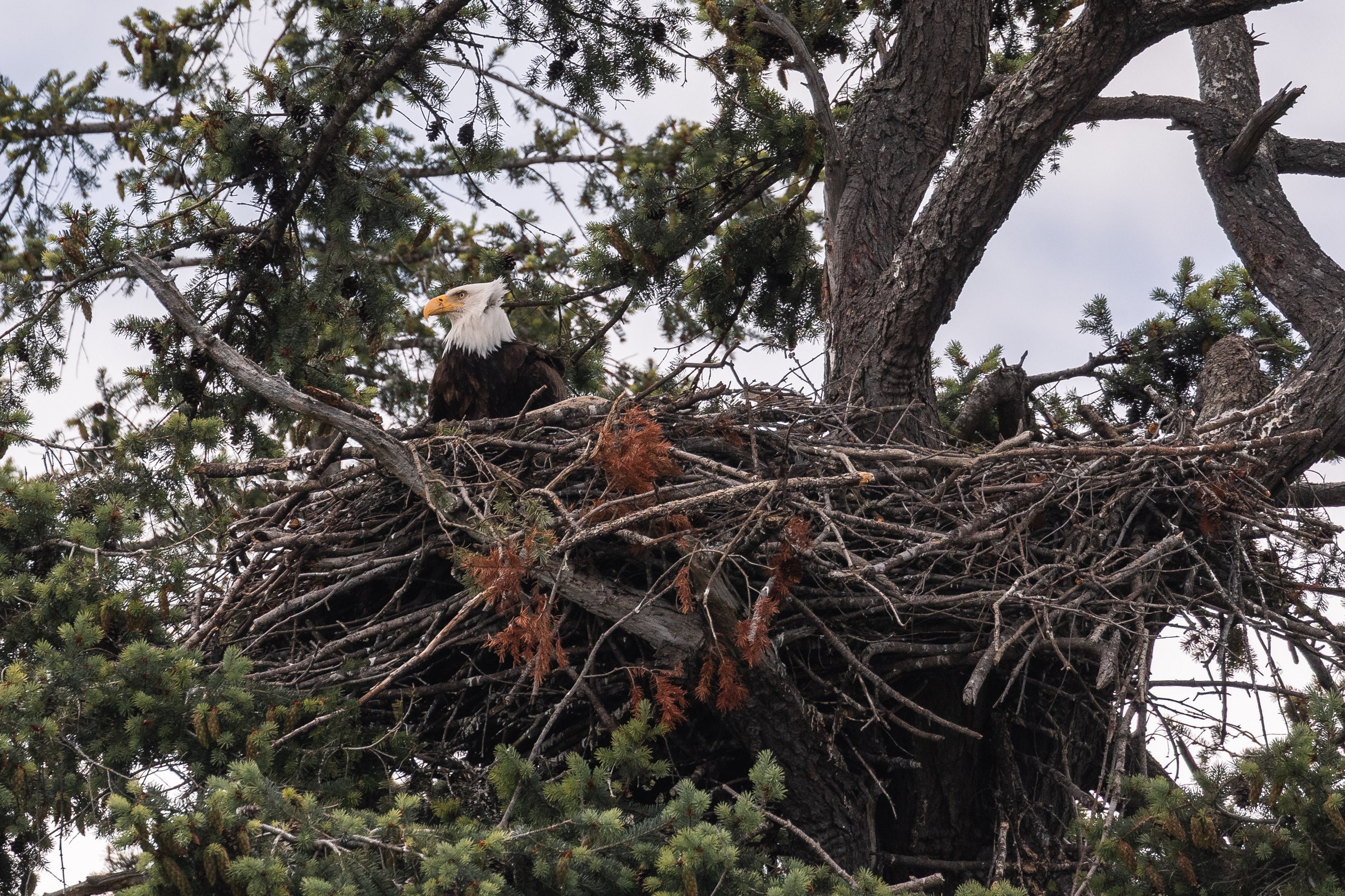
Wind ruffling the feathers of the Bald Eagle upon its nest. Photograph by Val Watson.
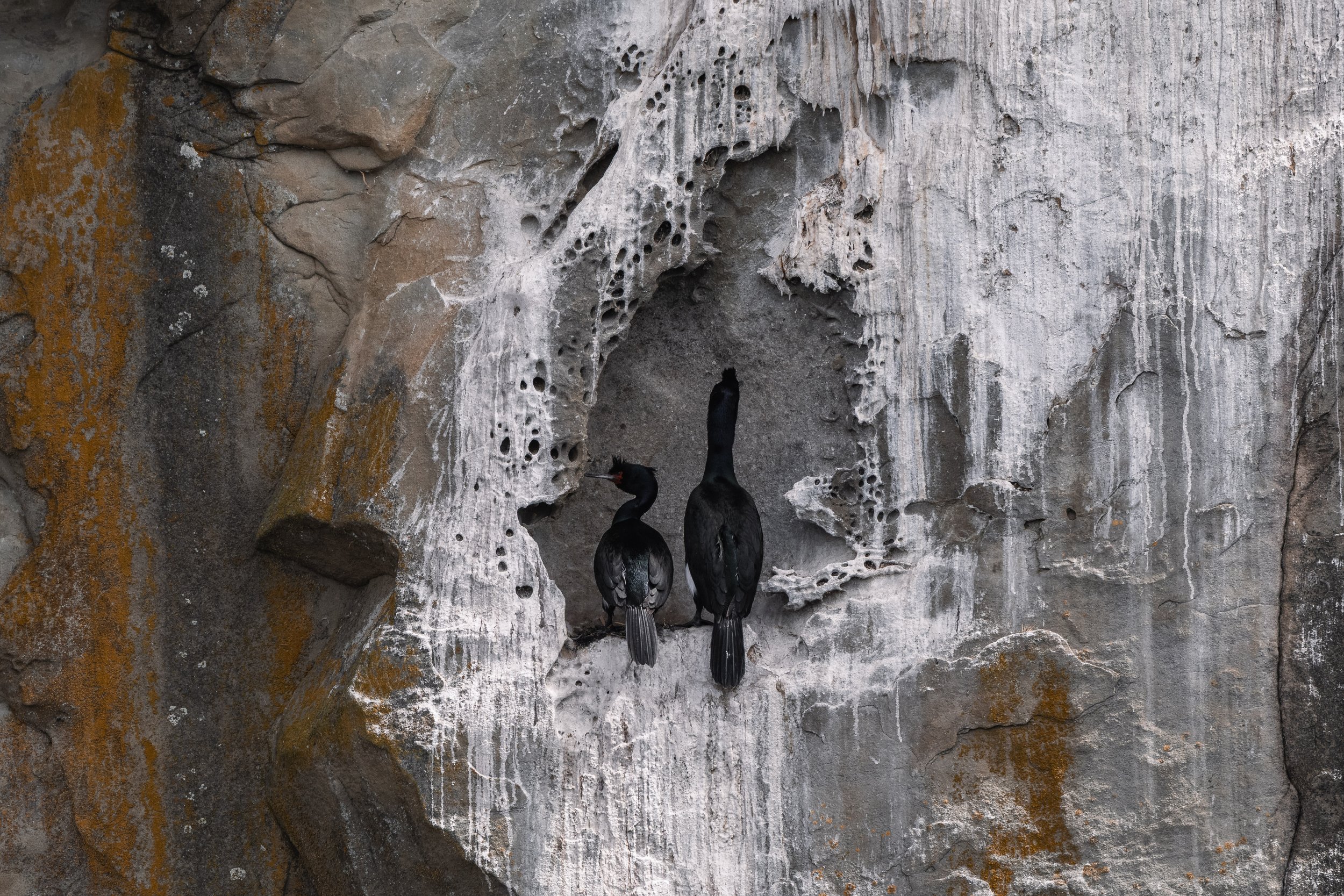
A couple Pelagic Cormorants perched precariously on the Gabriola Island Bluffs. Photograph by Aly Kohlman.
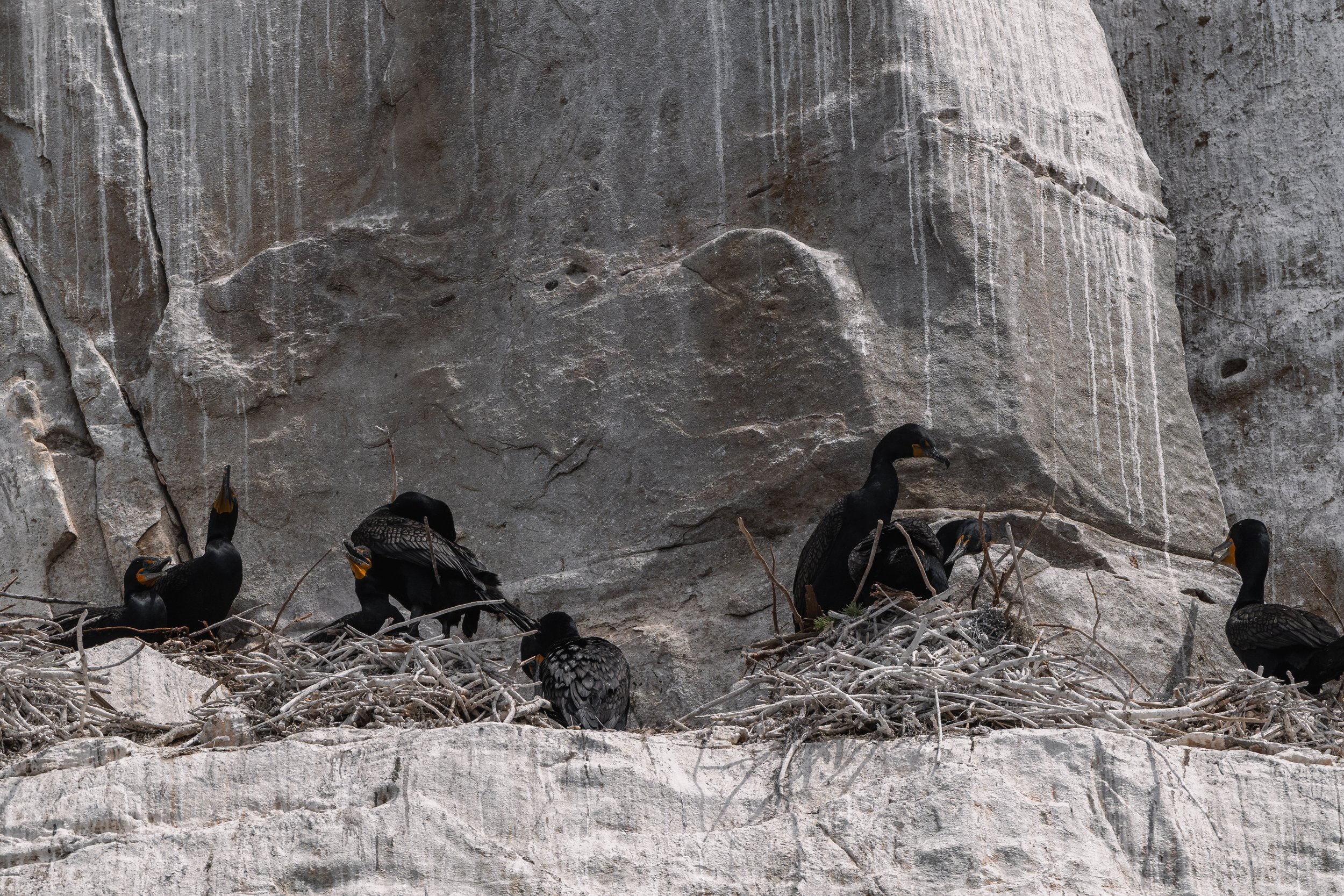
A number of Double-Crested Cormorant nest on the bluffs. Photograph by Aly Kohlman.
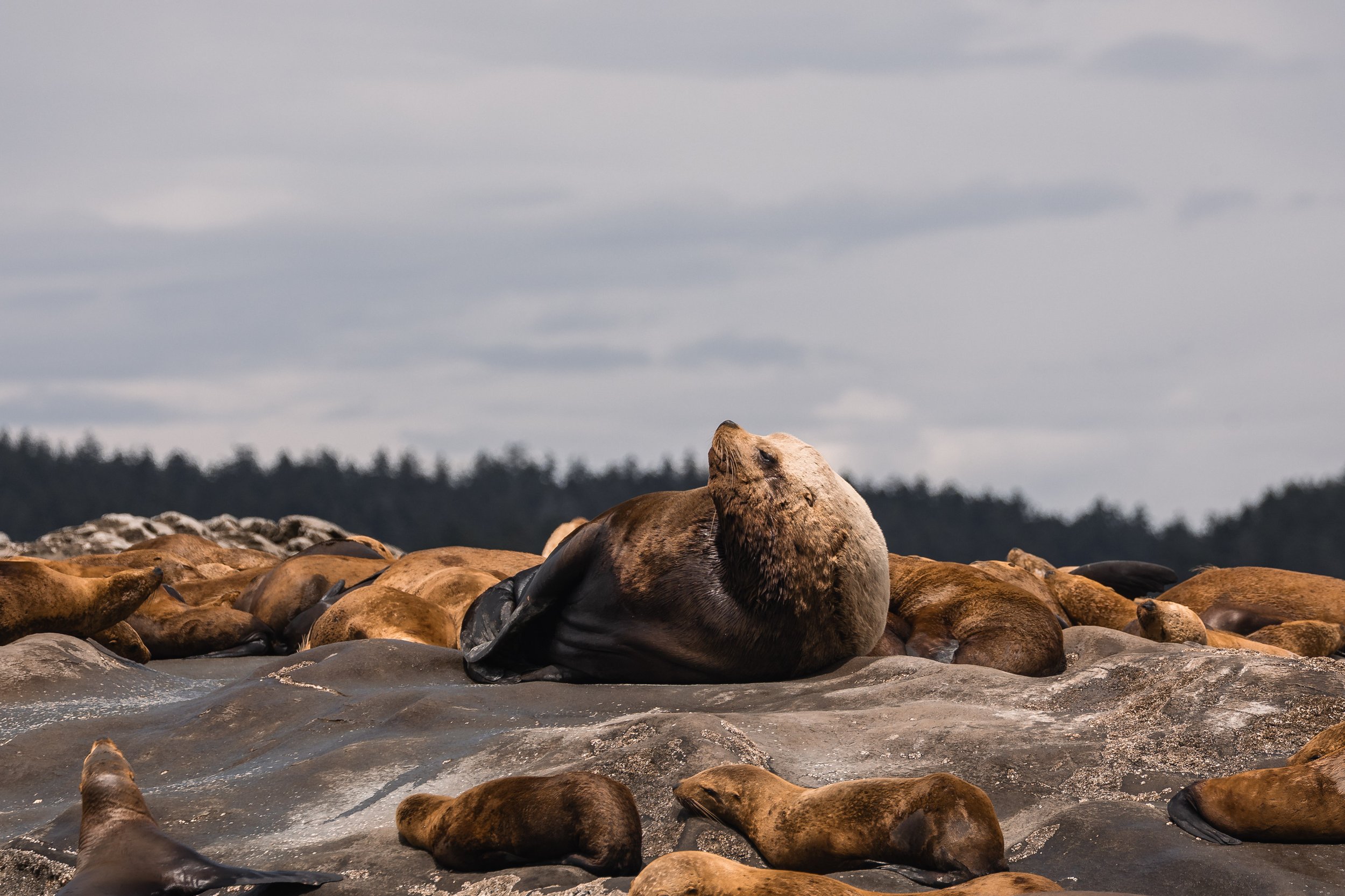
The large male Steller Sea Lion taking a look around while it lounges in the sun. Photograph by Val Watson.
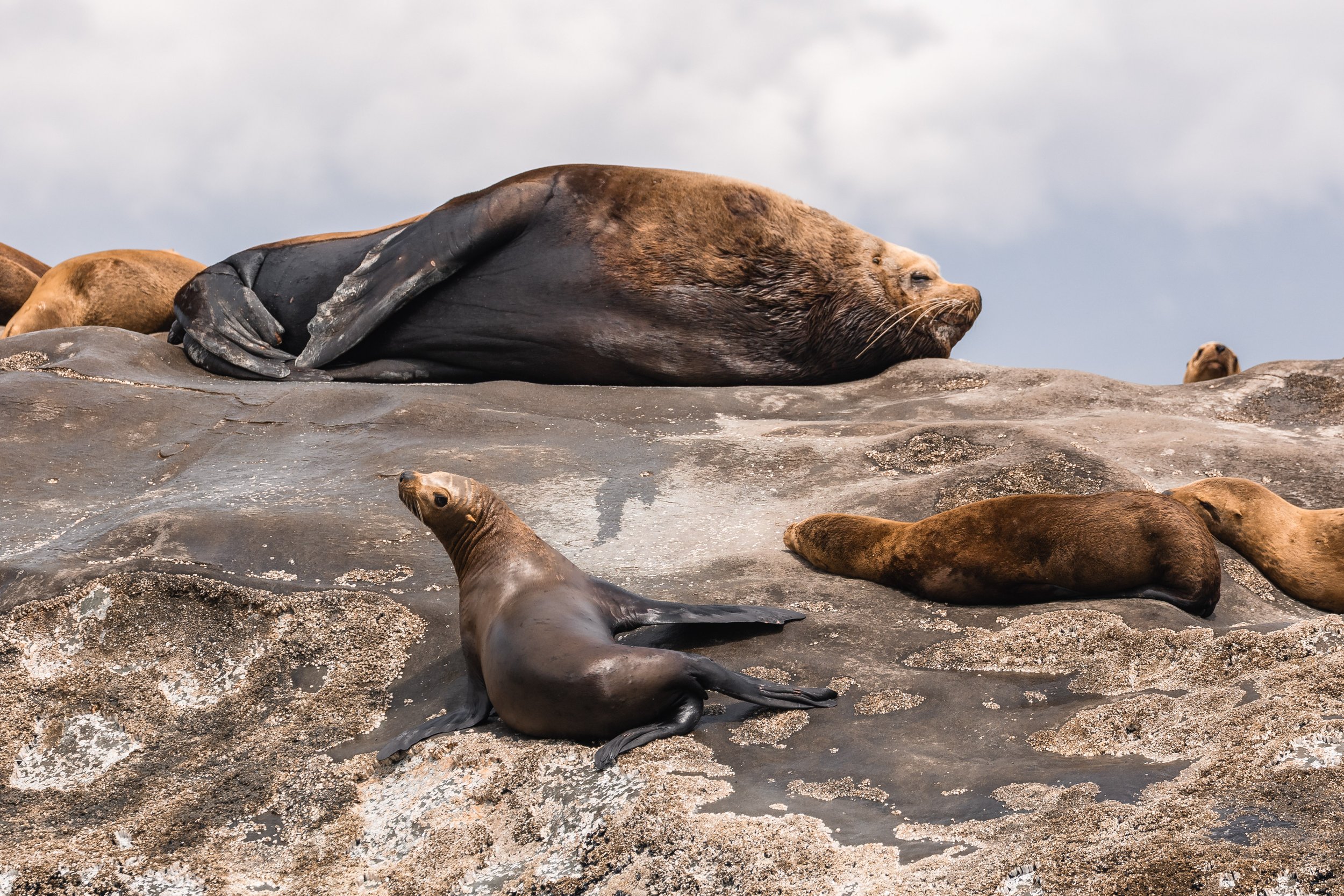
Back to napping. Photograph by Val Watson.
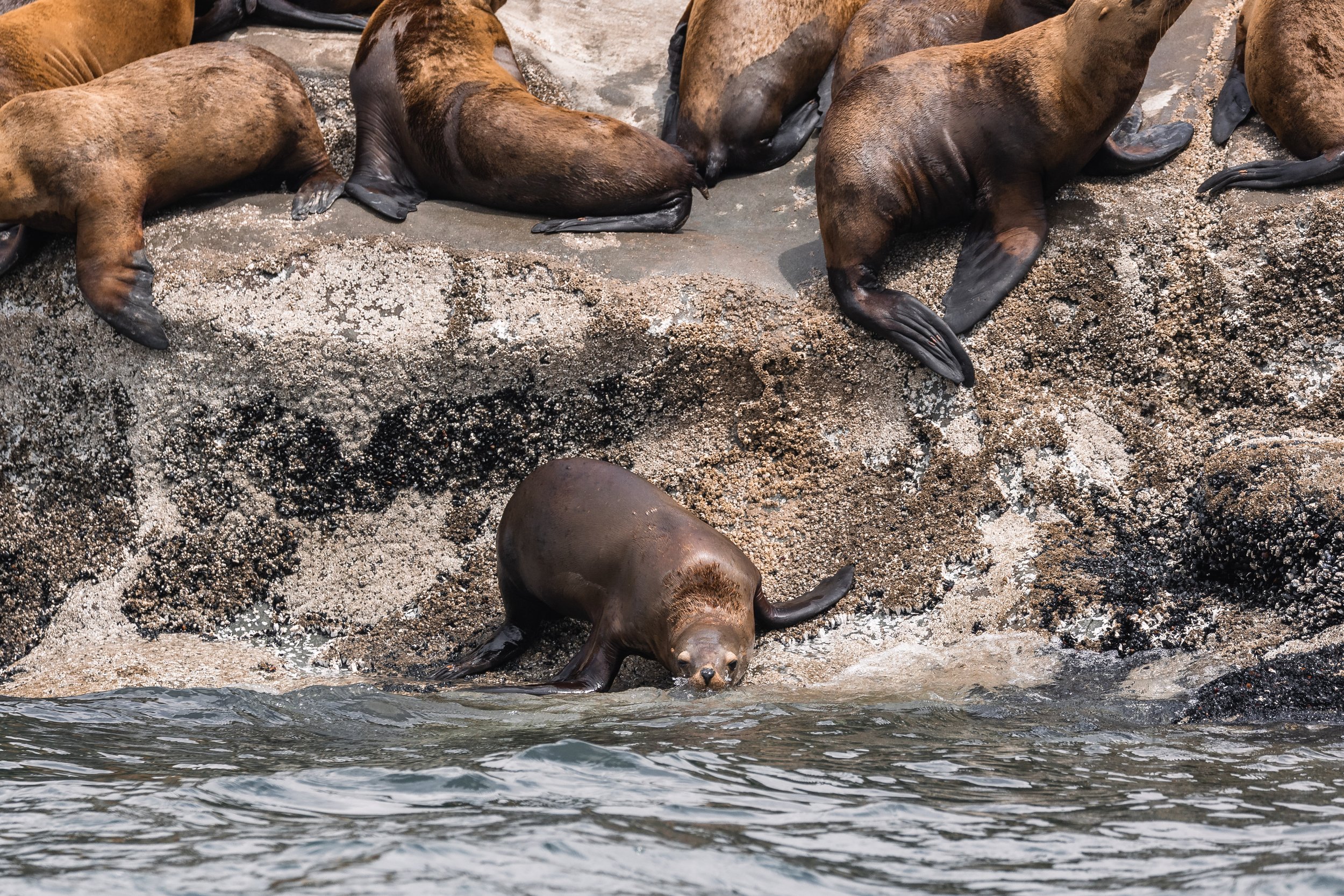
A wet Steller Sea Lion preparing to dive back into the water. Photograph by Val Watson.
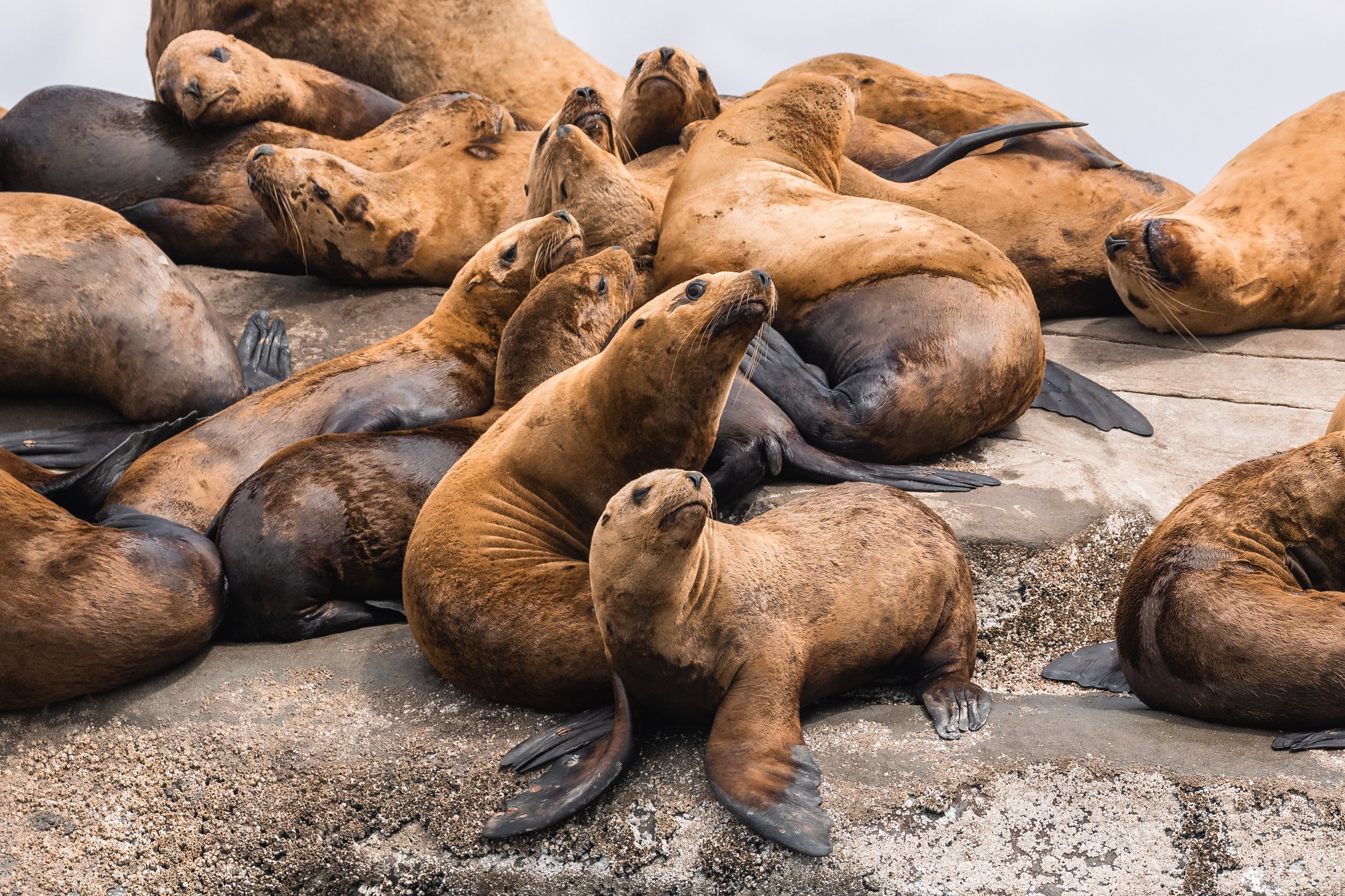
a bunch of Steller Sea Lions taking a look at us as we boat by. Photograph by Val Watson.
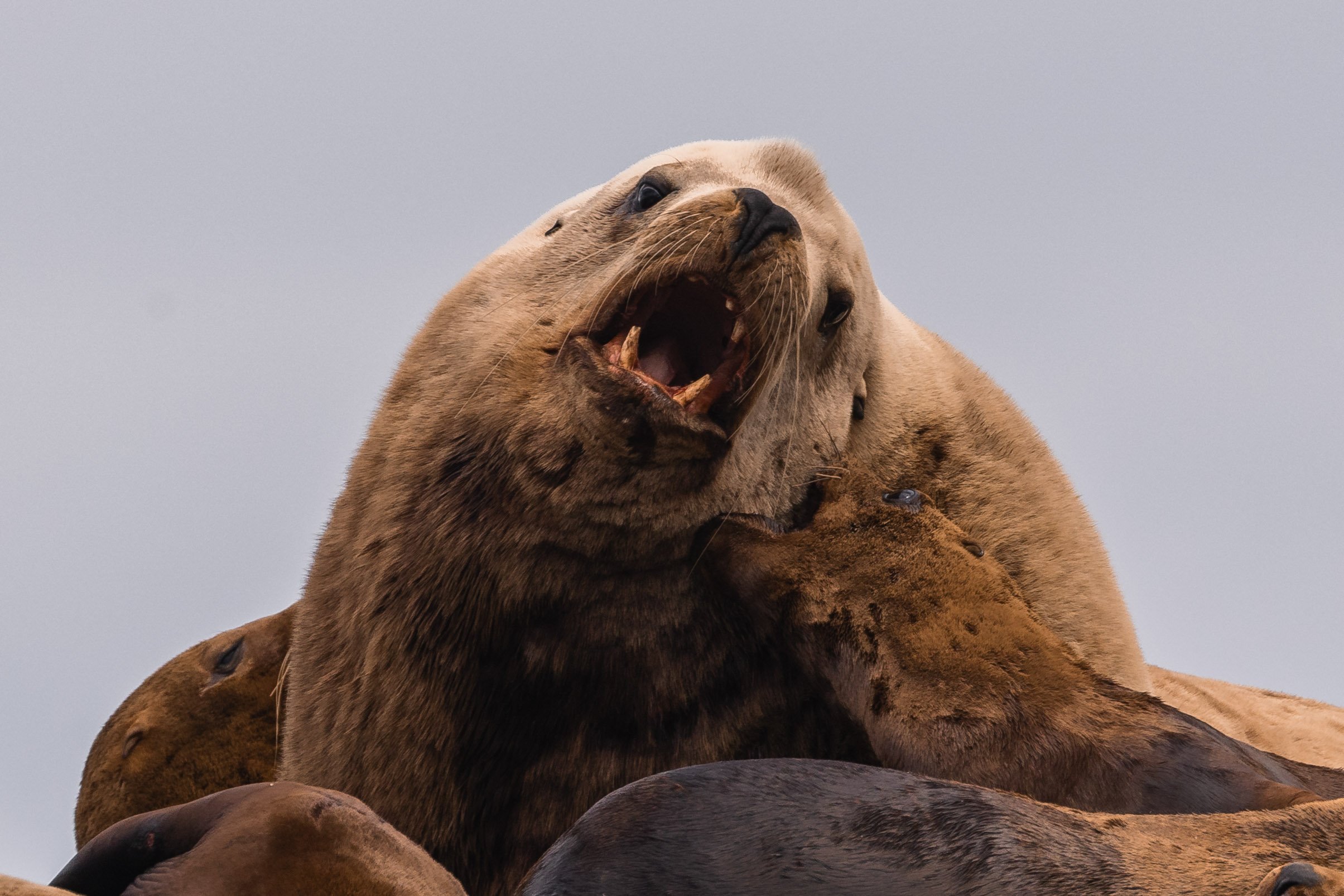
The large male Steller Sea Lions giving us a look at his large teeth as he roars. Photograph by Val Watson.
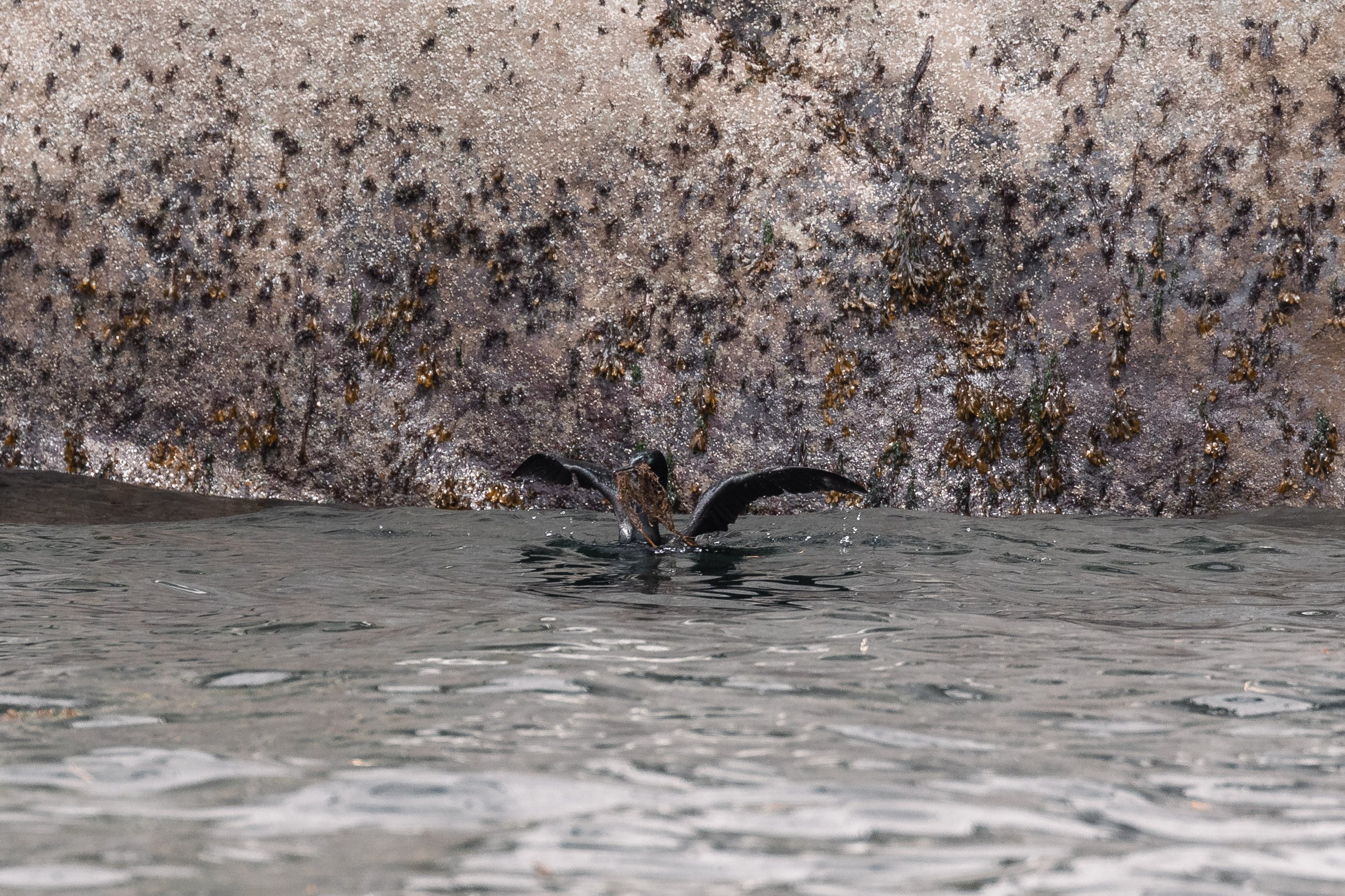
A Pelagic Cormorant collecting nest material from the water. Photograph by Val Watson.
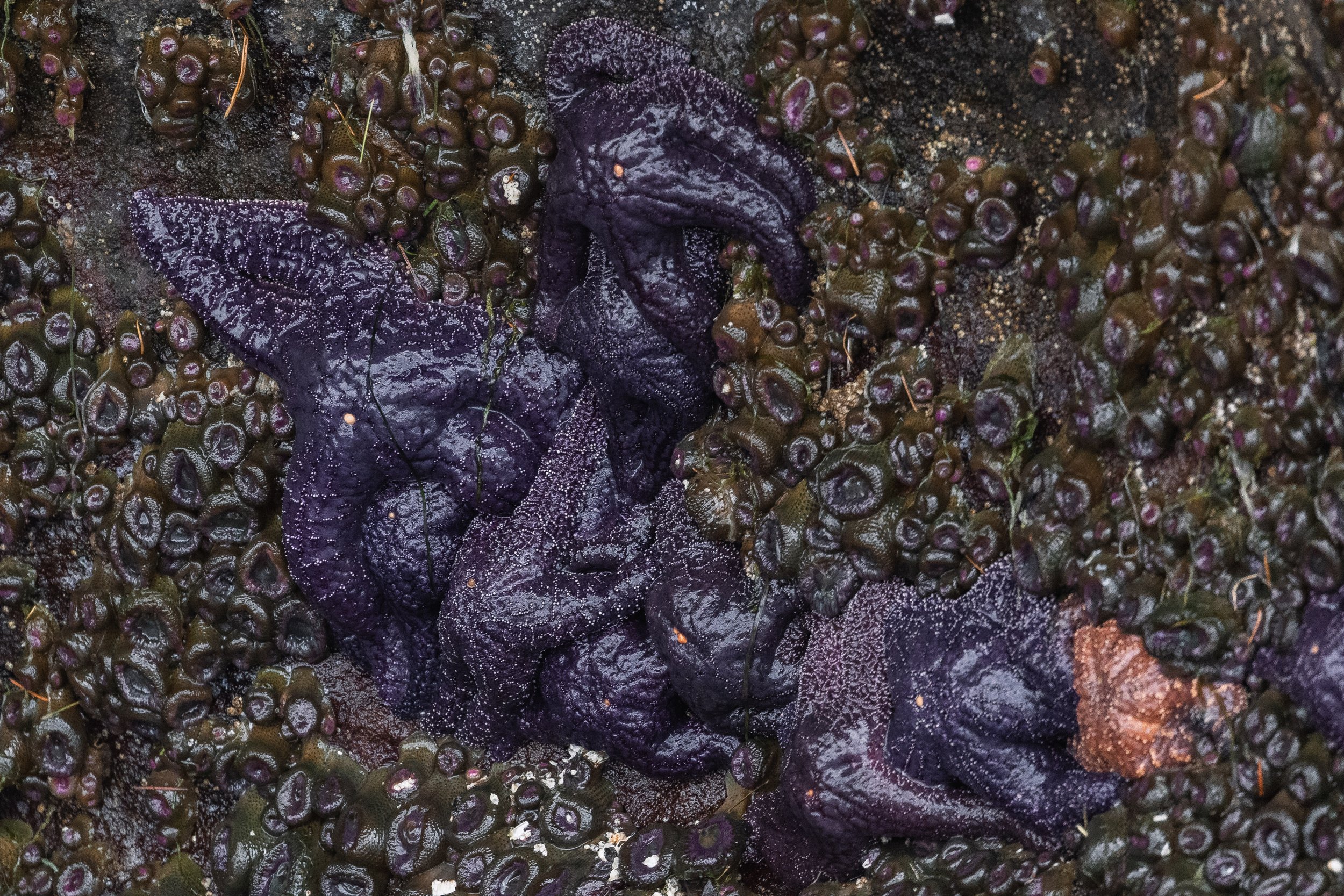
Ochre Sea Stars amongst a large number of closed Sea Anemones. Photograph by Val Watson.