
July 1, 2026, 10:30 AM - Travelling with the T099s in the Strait
Another day on the Salish Sea promised a new round of adventure! We left the Nanaimo Harbour ready to start after learning about the wildlife we might encounter during our travels and the best ways to look for it along the way.
Every animal here in the Salish Sea is part of a complex ecosystem; from the smallest phytoplankton to the huge whales that spend their time in these waters, everything is interconnected. With this in mind, our vessels began their search to the South, entering Northumberland Channel and following it until they reached Dodd Narrows. This area highlights the importance of all the small, interconnected pieces. It’s not only the animals here that can make a difference, but the landscape as well. This narrow stretch that lies between Mudge and Vancouver Island is a prime example of this. As the tide surges through this small area, it creates a lot of currents that swirl and mix the water, introducing oxygen at the surface and pulling the surface waters to the depth, displacing that colder water back to the surface; a constant mix that is important for the life that lives here. Species like Giant Barnacles, Surf Anemones, and beds of California Mussels can be found here, an unusual sight on the east coast of Vancouver Island since we don’t get the wave action from the open ocean that the west coast does. These species are much more common there, but in special places like Dodd, they can be spotted thanks to tidal currents that introduce oxygen into the rich waters instead.
We couldn’t linger and admire these currents for too long though, since we had heard word of a pod of orca to the south that had just passed through Active Pass to head into the Strait of Georgia. We decided to try our luck and head that direction to see if we would be able to find them in the open waters of the Strait. It seemed we weren’t the only ones to have this idea, either, since another boat from the States joined in the search. It’s one of the best things about Whale Watching in the Salish Sea: not only are we home to a wide variety of creatures to see, but while whale watching there is a collaborative effort on the water to share sightings and knowledge, making the experience better for all those who join the tours. This collaboration paid off today, as the boats spread out to search and ended up spotting those dorsal fins cutting through the waves. After a quick call on the radio, our boats headed over and got to share in the sighting: it was the T099s!
T099 ♀ Bella ( ~1984)
T099B ♀ Holly (2007)
T099C ♂ Barakat (2009)
T099D ♂ Puck (2015)
T099E ♀ Qwiin qwiin oo qwii la (2021)
These whales were spread out as they traversed the Strait, heading north. As Apex predators, these amazing creatures play a very important role in this ecosystem, as they have a significant impact on the prey species here. Transient Orca have a wide variety of species that they can hunt, including Harbour Seals, California Sea Lions, Steller Sea Lions, Harbour Porpoises, and even Pacific White-sided Dolphins! The predator-prey relationship is complex, especially when there's such a variety of prey species involved, but at its core the two populations help to regulate each other. For prey, it’s pretty obvious how that happens: if they get too abundant, there's more opportunity for their predators to find them and be able to eat them. For predators, it can be a little harder to figure out, but when prey are super abundant and easy to catch, they have extra energy to put toward reproduction, and more of those offspring can survive given the amount of food. When food gets scarce, such a high number of predators wouldn’t be able to survive, and so some members of the population would start to die off. With fewer predators, prey populations can increase again, and over time the two populations rise and fall together around the ideal population for both. This ideal population is called the carrying capacity for the ecosystem, and in a natural state, both predator and prey numbers will oscillate around that number.
Although we didn’t see it today, the T099s would need to consume about 2,000 pounds of food each day, with 5 members in their group, which would mean hunting several times throughout the day to meet those needs. Their favourite food source, the Harbour Seal, weighs in at about 300 pounds each, so that’s nearly 7 meals throughout the day. It’s no surprise, then, that much of the behaviour we see from the whales is to help them find prey more easily, from spreading out to increase their chances, to travelling calmly through the waters, and even the overall group size staying small to remain less detectable. Both predators and prey are shaped by those around them and by the pressures exerted over time.
Seeing some of those prey was the next thing in store for our vessels, as they left the T099s to their travels and headed to Stinky Rock, where they found a large group of Steller Sea Lions spending their time on the rocks. Just like how the orca and their prey have a special relationship that drives each other’s population numbers, so do the sea lions. They are important not just as prey for the orca, but also as predators of a wide variety of fish and cephalopod species here in BC. Each one we saw atop the rocks needs to consume about 6% of their body weight per day, so for the big males, that can be close to 100 pounds!
From this haul-out, we continued on the outside of Gabriola Island, heading north until we eventually found ourselves back in the Nanaimo Harbour. It was an amazing day, getting to see all the animals that call the Salish Sea home and learning more about how interconnected they are. Please enjoy the photos included below, captured throughout the tour by Marine Naturalists Vanessa Vereschahen and Jordan Robinson.
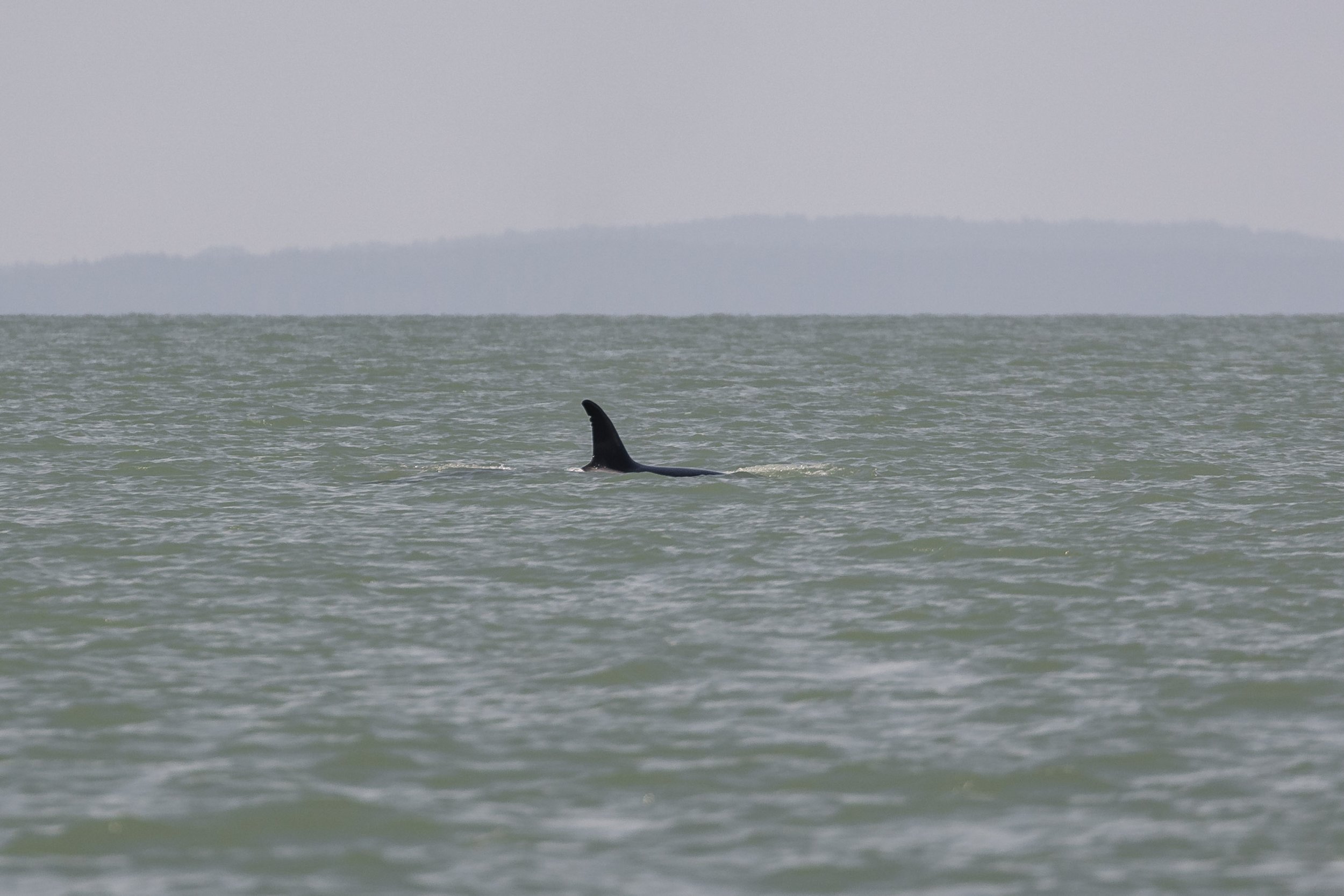
T099B Holly has distinctive notches in her dorsal fin. Photo by Jordan Robinson.
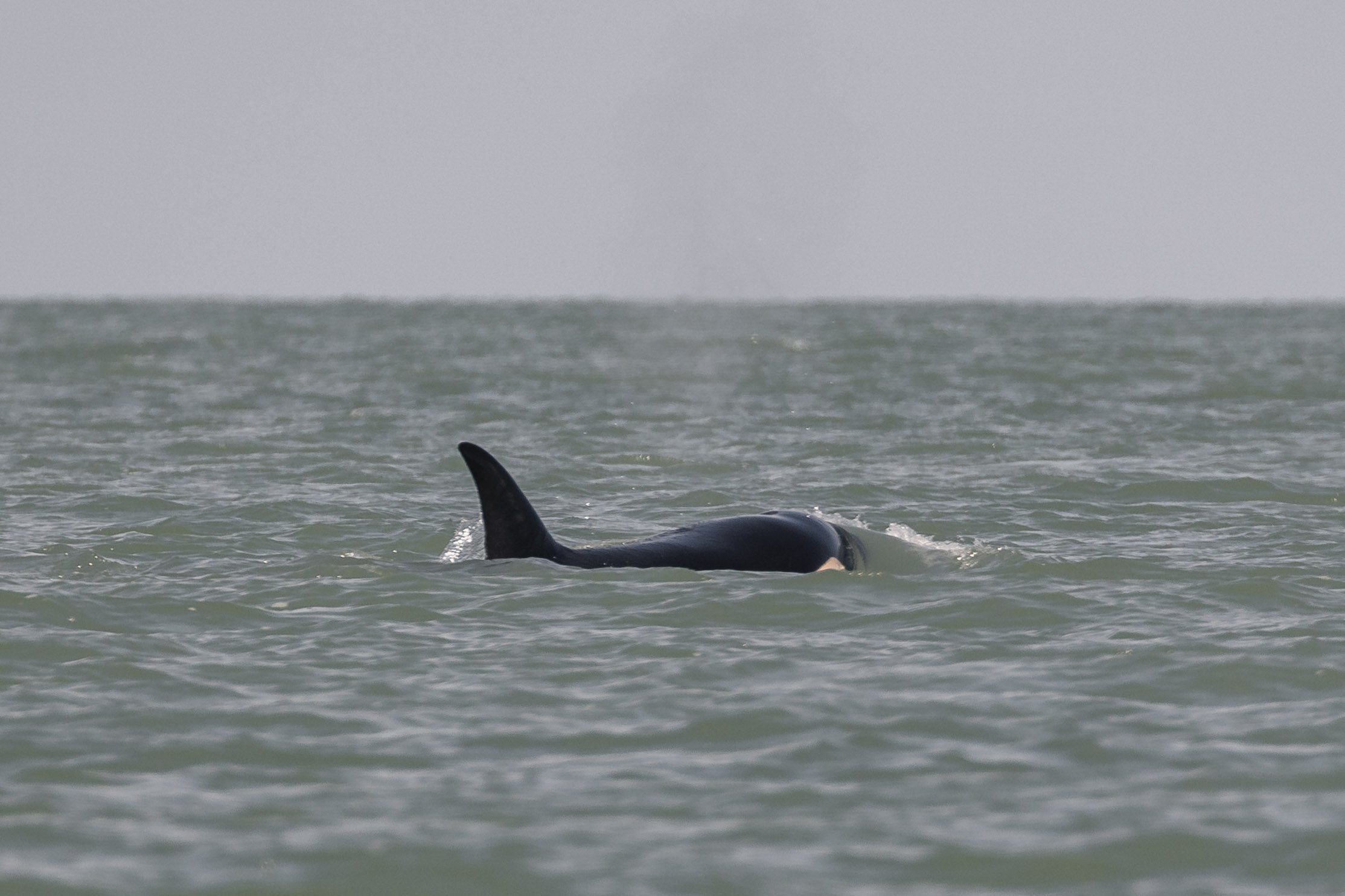
The matriarch of this family, T099 Bella. Photo by Jordan Robinson.
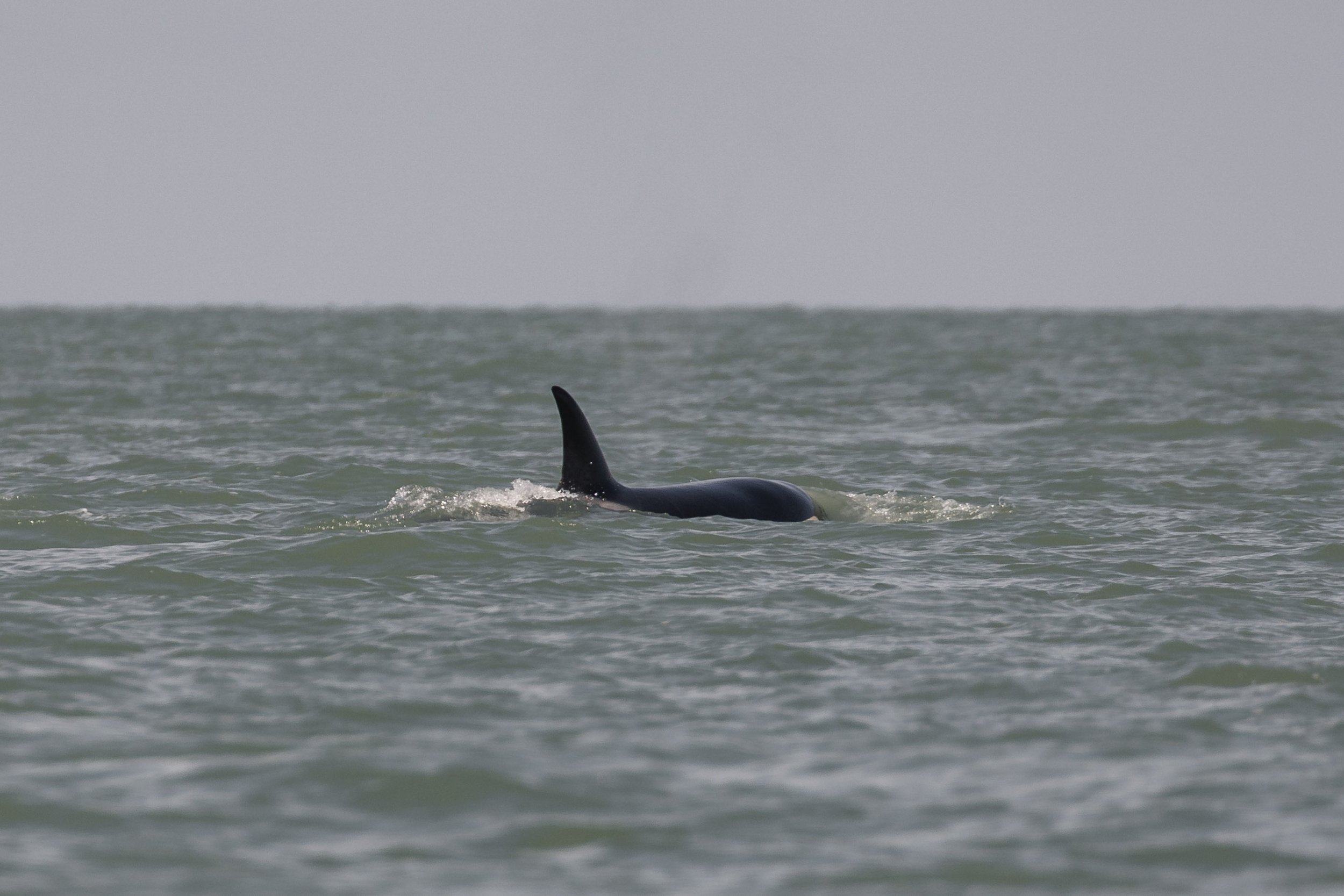
T099 Bella is estimated to be 42 years old. Photo by Jordan Robinson.
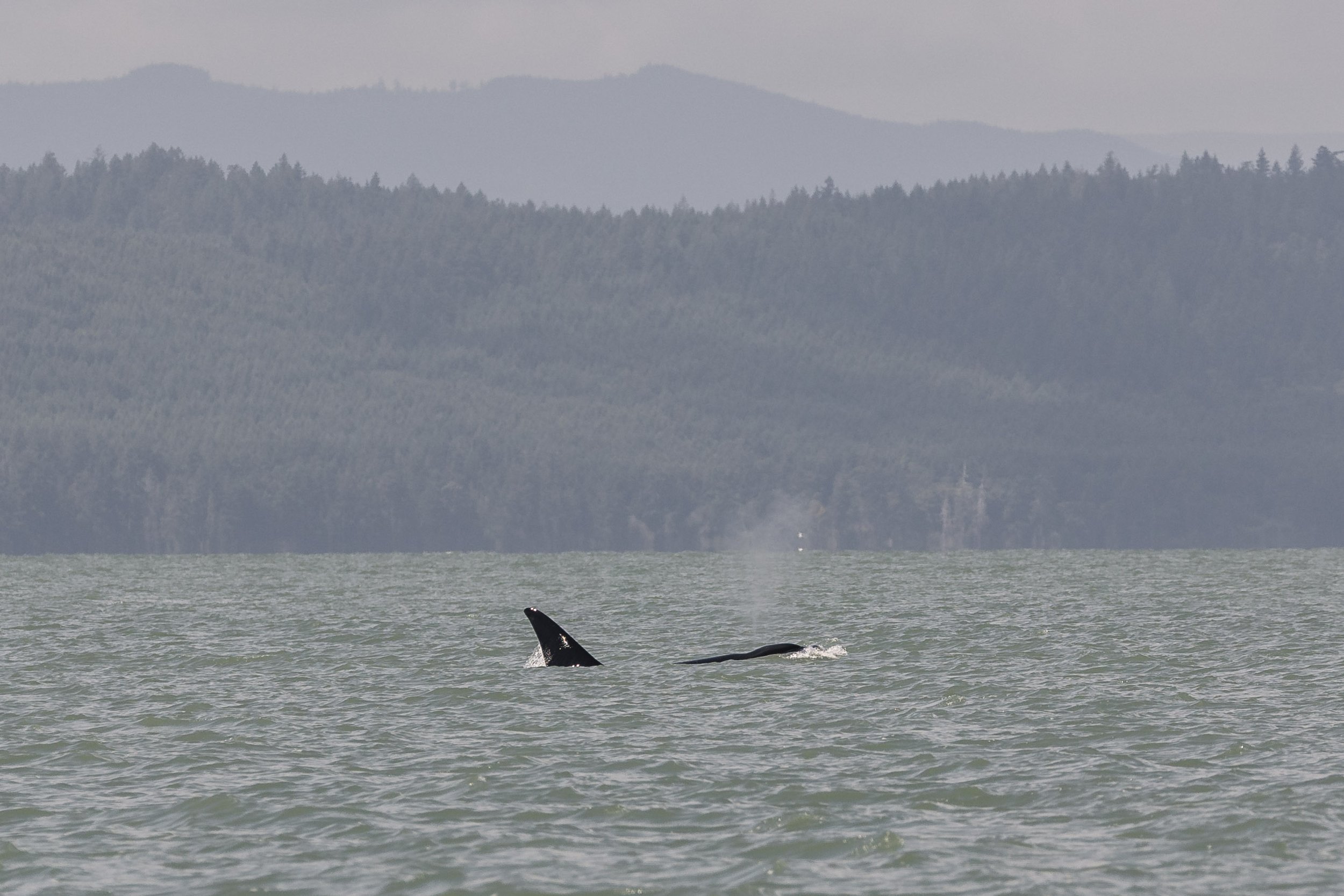
T099C Barakat just breaking the surface. Photo by Jordan Robinson.
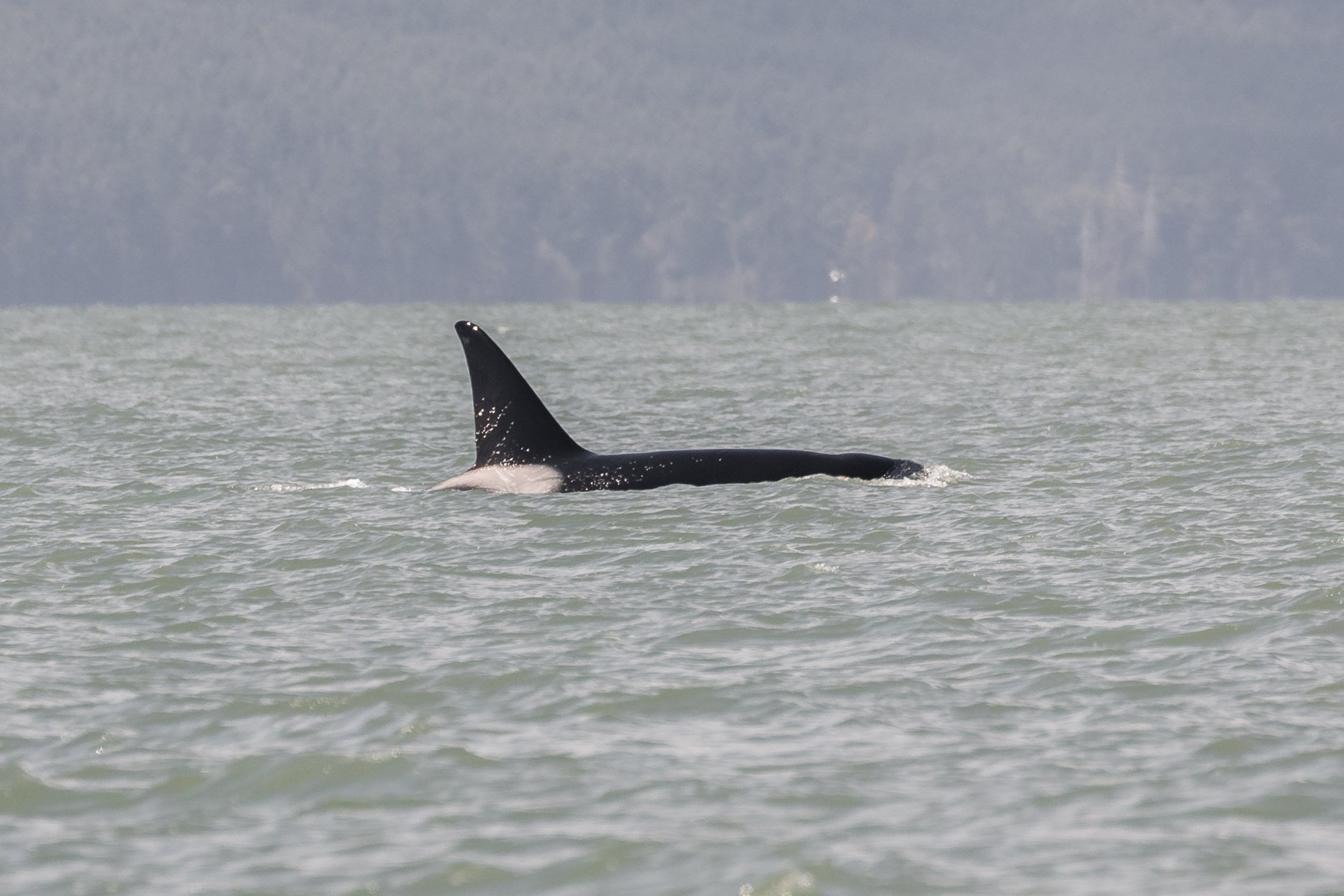
A good look at T099C Barakat’s saddle patch. Photo by Jordan Robinson.
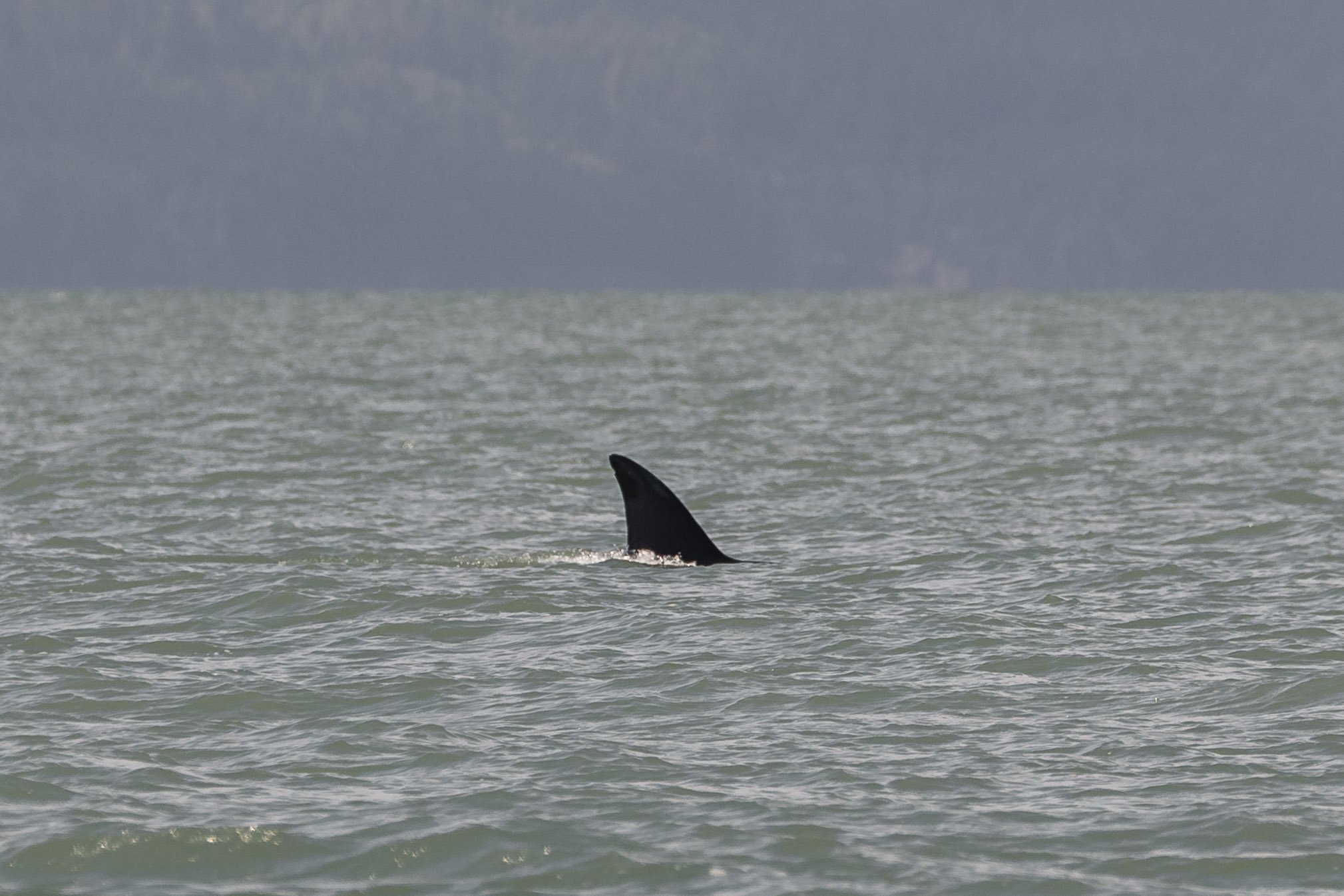
T099D Puck. Photo by Jordan Robinson.
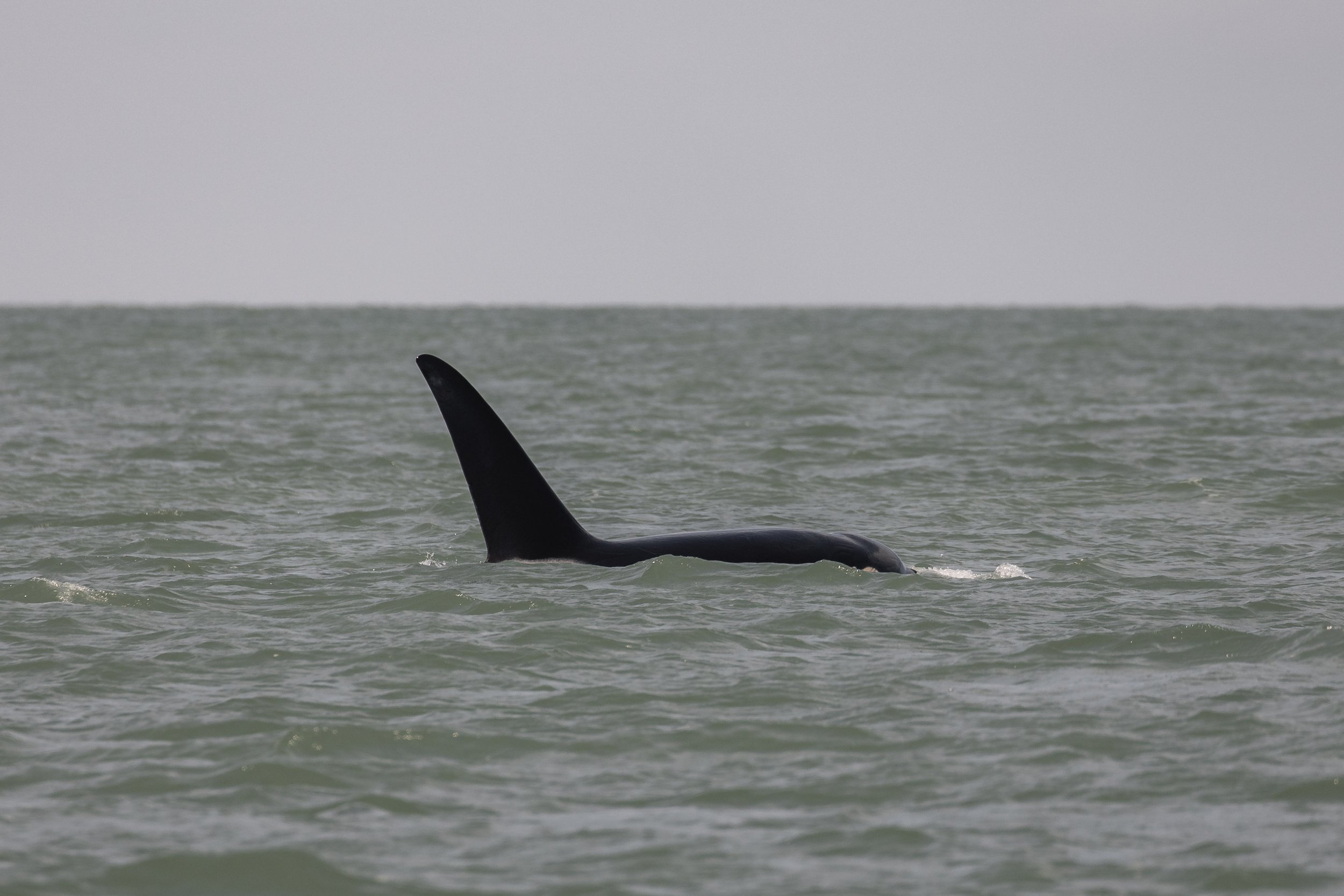
T099C Barakat is going through a growth stage where his dorsal fin is getting taller, we call this sprouting! Photo by Jordan Robinson.
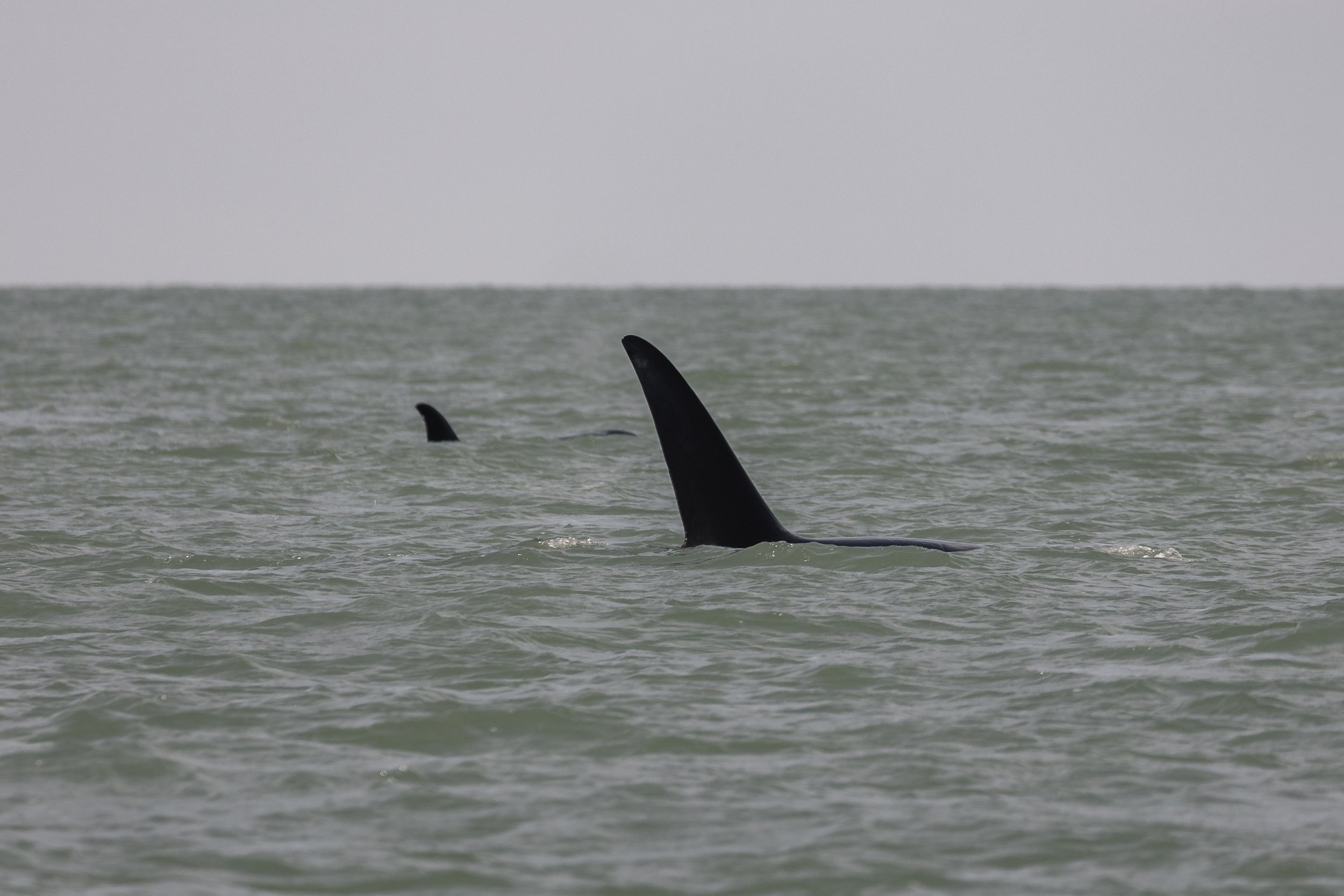
T099C Barakat with big sister, T099B Holly behind him. Photo by Jordan Robinson.
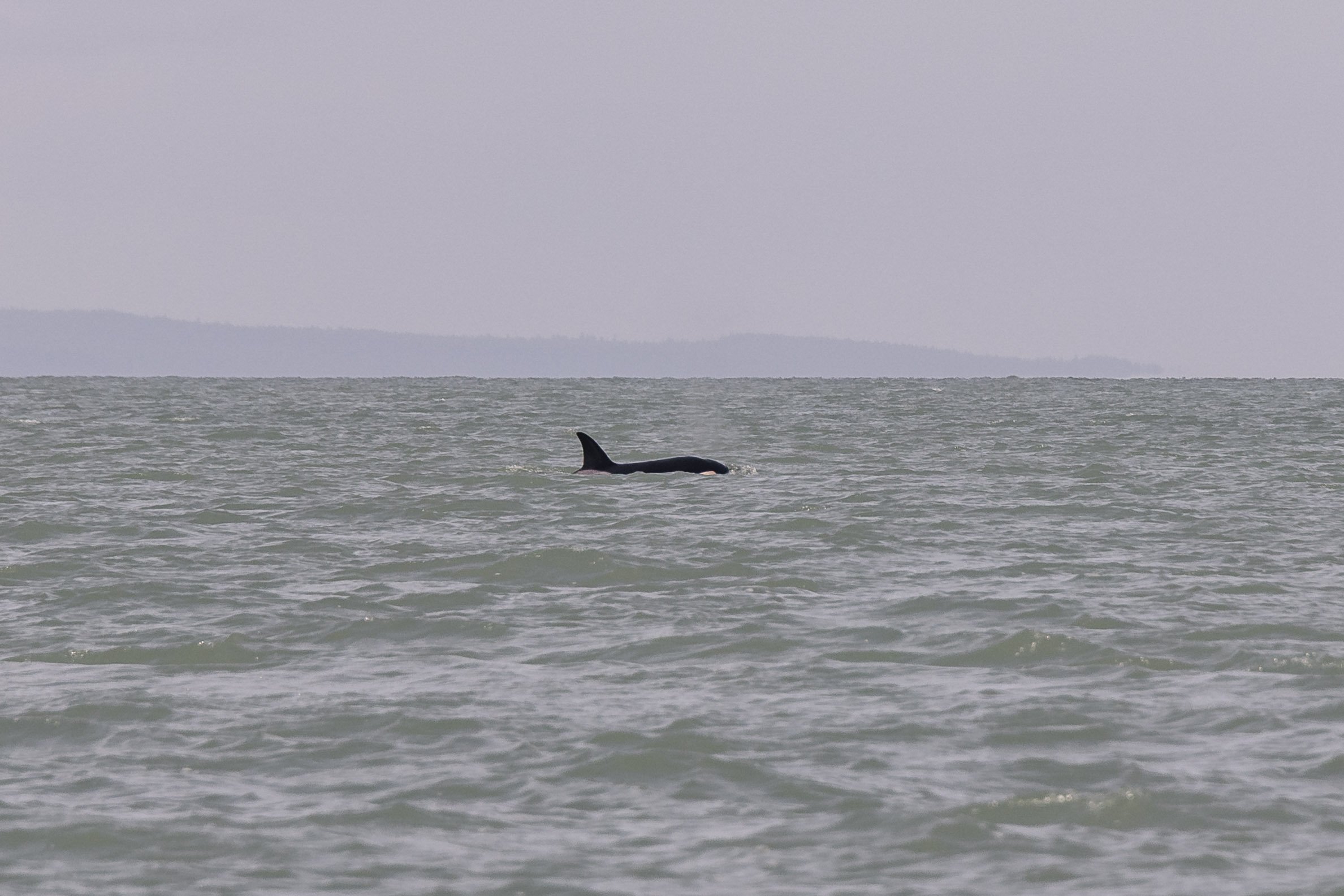
The youngest member of the family, T099E Qwiin qwiin oo qwii la. Photo by Vanessa Vereschahen.
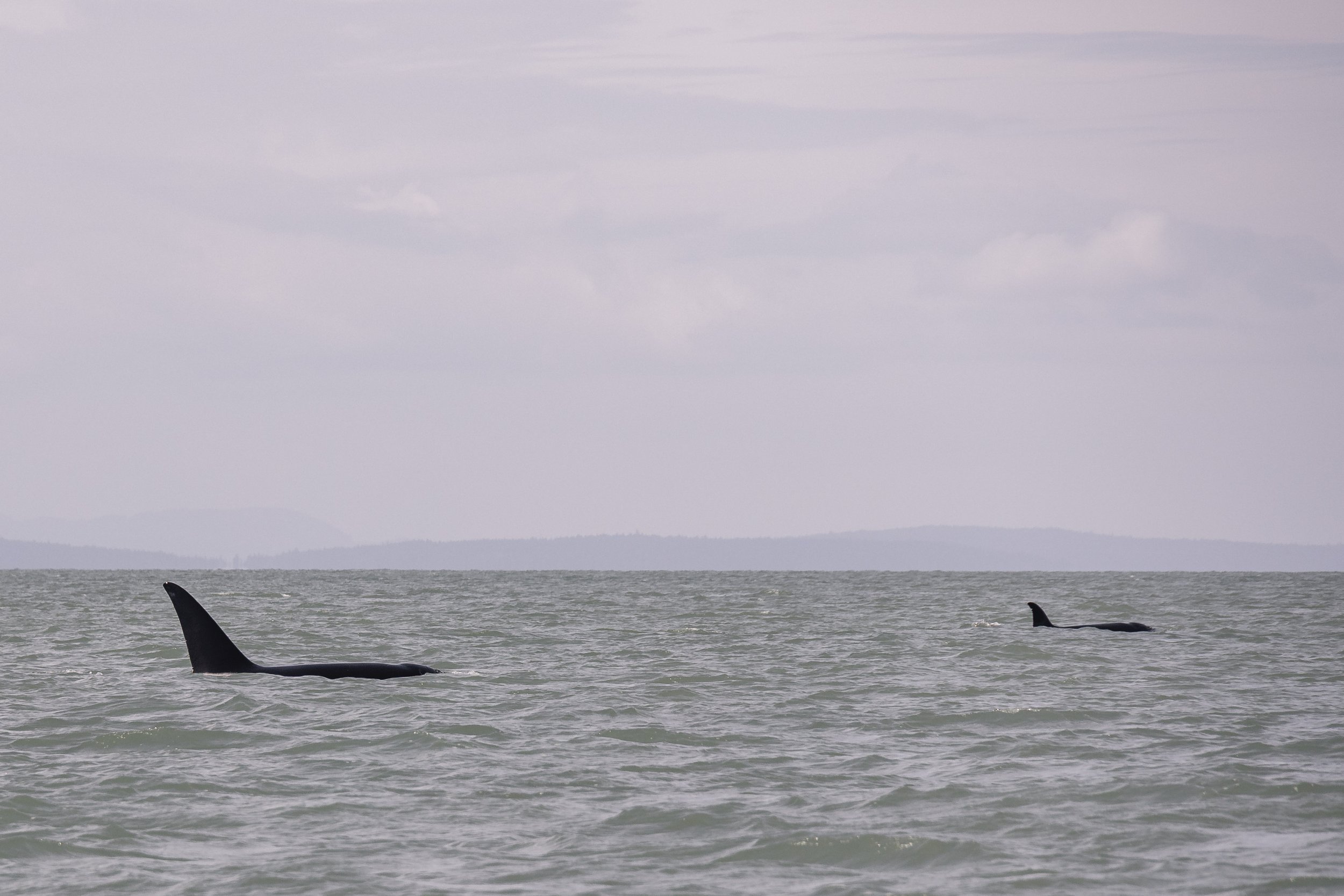
T099B Holly leading with T099C Barakat following. Photo by Vanessa Vereschahen.
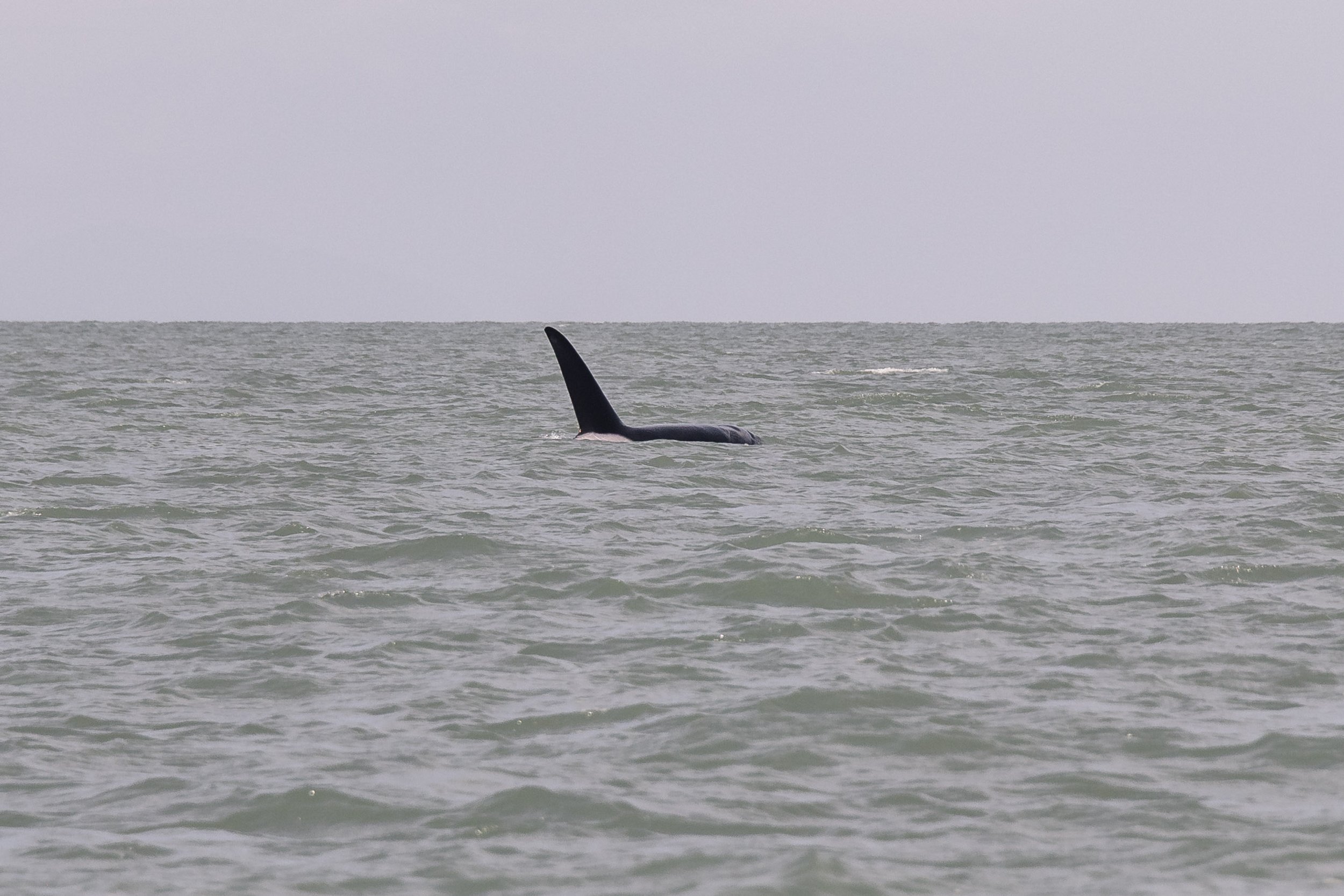
T099C Barakat was hogging the camera today. Photo by Vanessa Vereschahen.
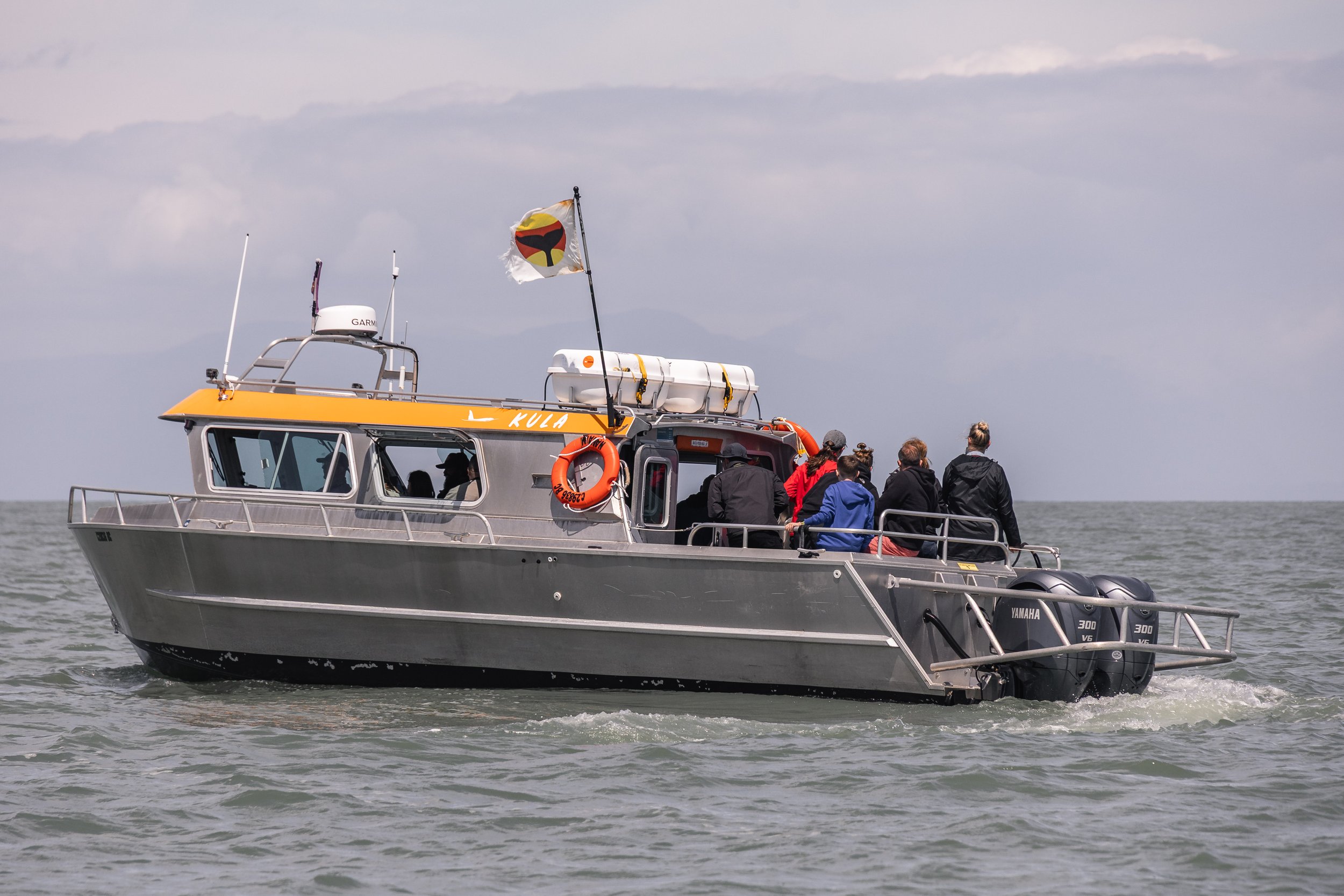
Guests on Kula enjoying the whales. Photo by Vanessa Vereschahen.
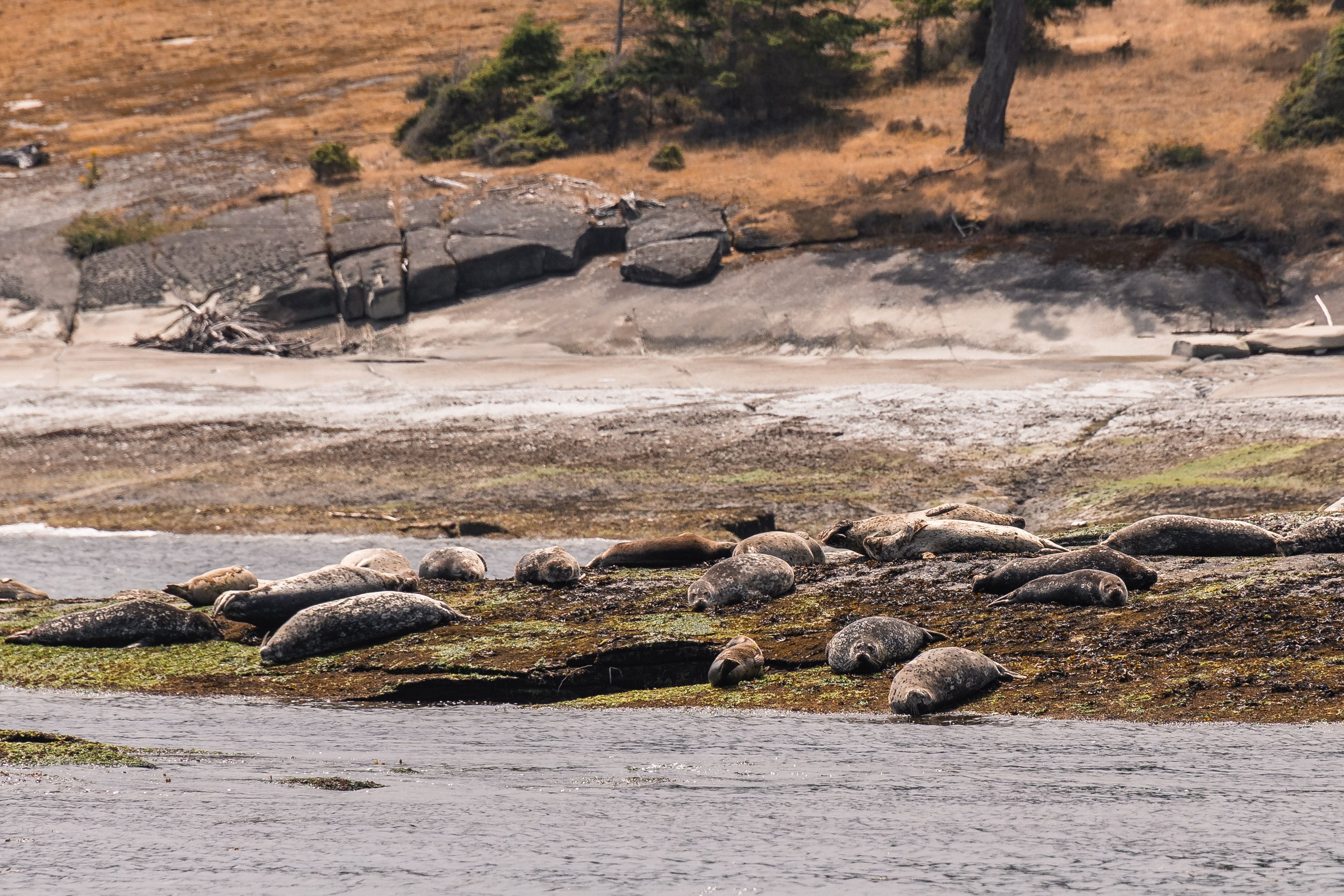
Harbour Seas hauled out on the rock. Photo by Vanessa Vereschahen.
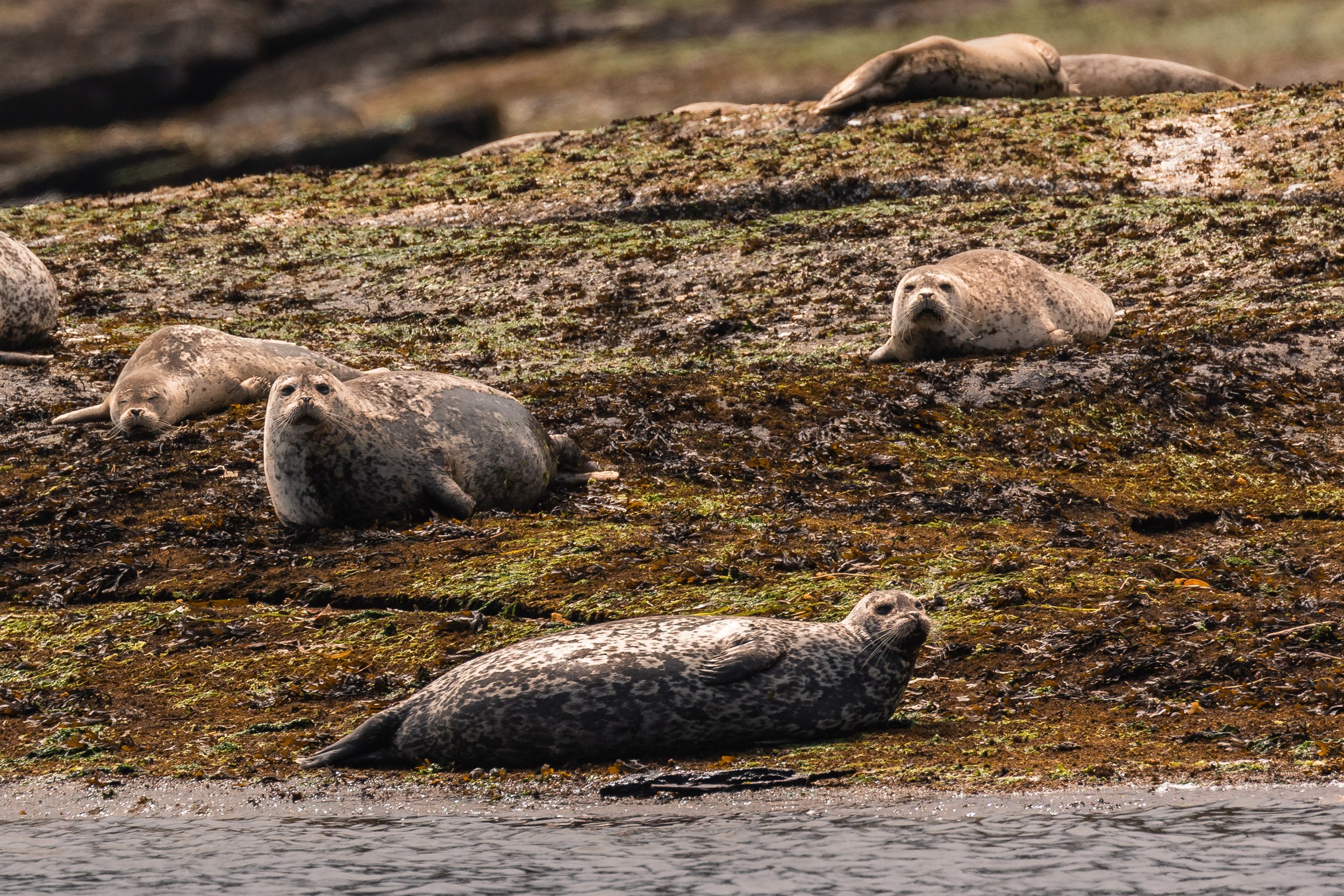
Some of the seals are looking very round. It’s almost pupping season - could these ones be pregnant? Photo by Jordan Robinson.
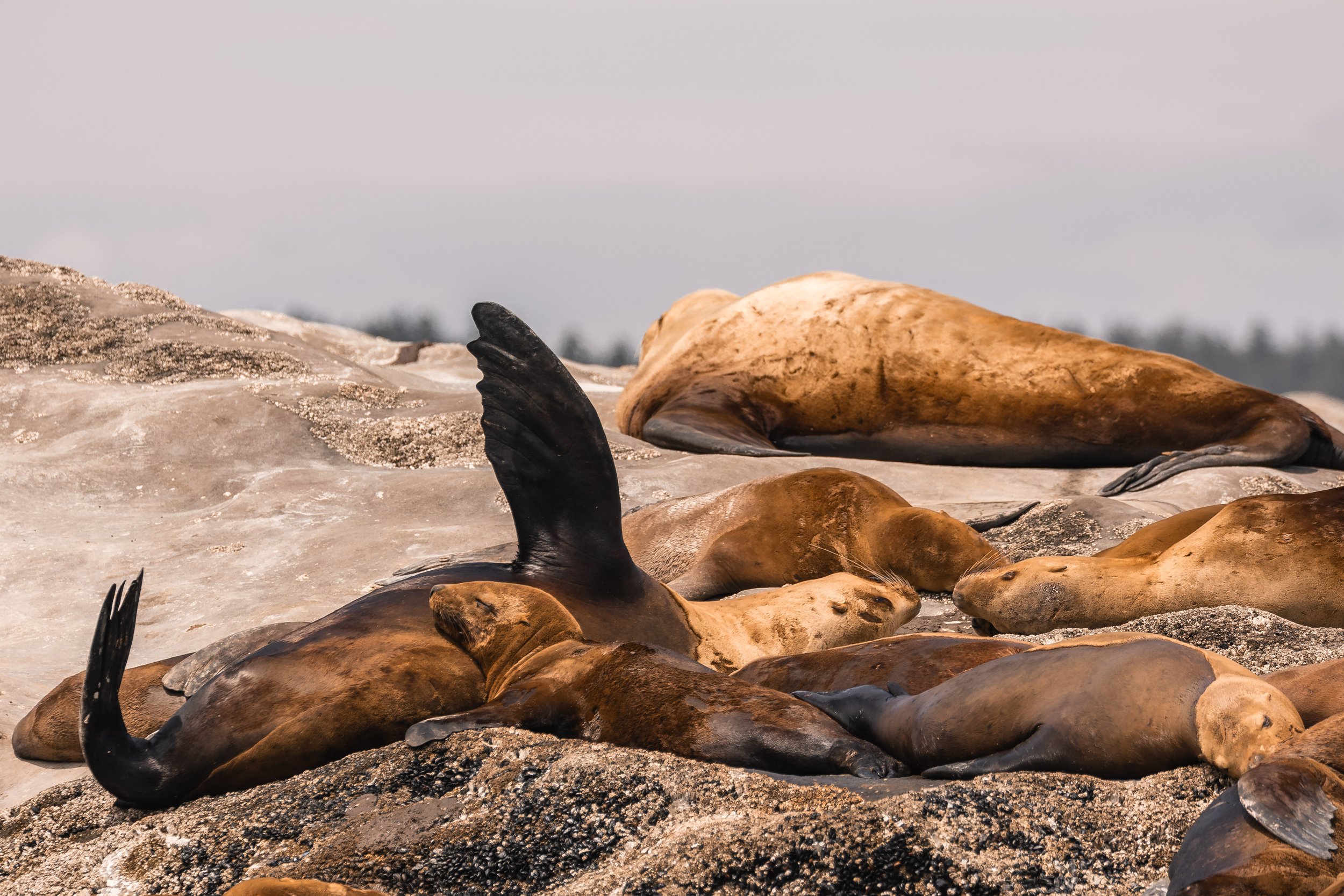
Giving us a wave. Photo by Jordan Robinson.
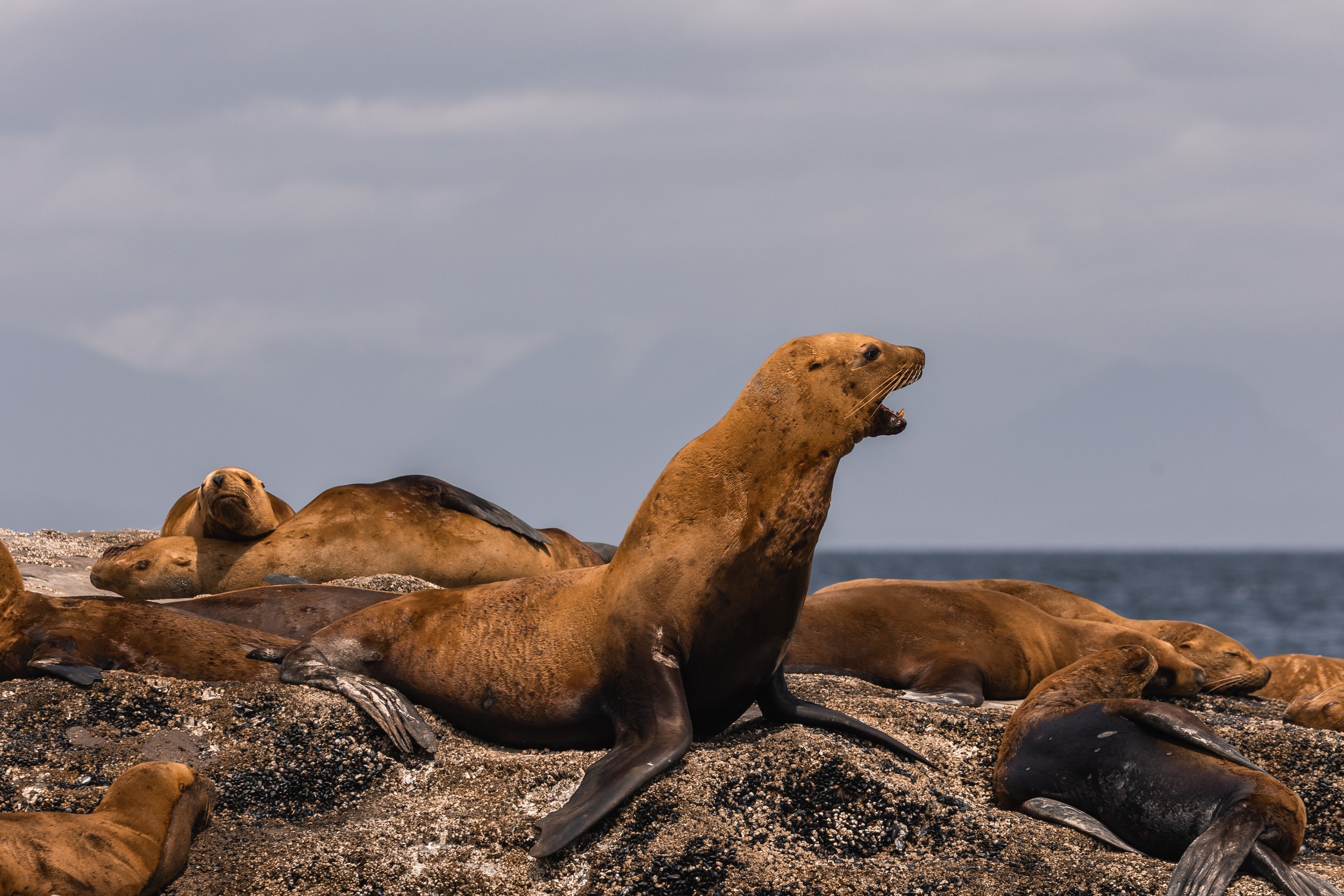
The Stellar Sea Lions are always very vocal. Photo by Jordan Robinson.
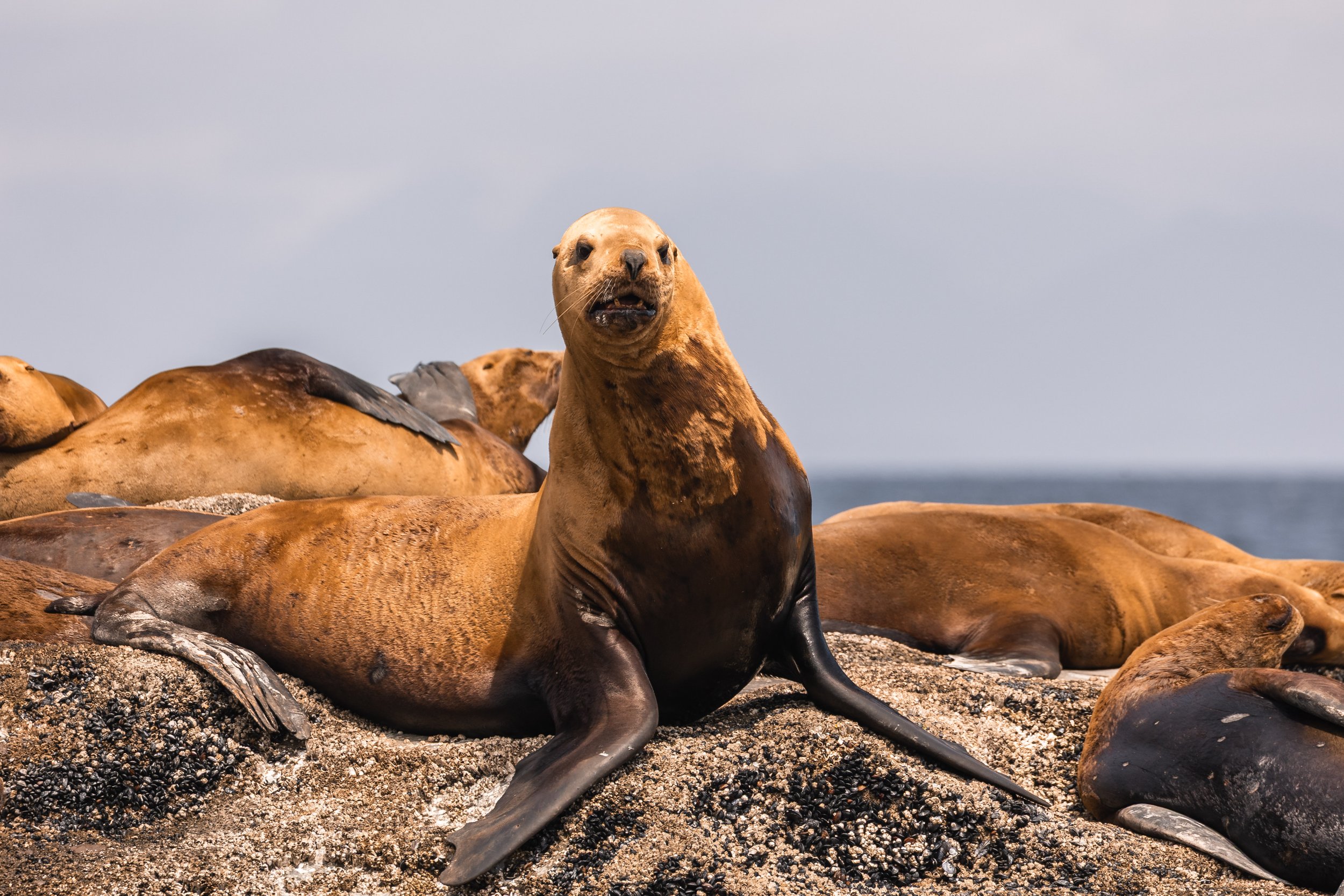
A lovely pose for the camera. Photo by Jordan Robinson.
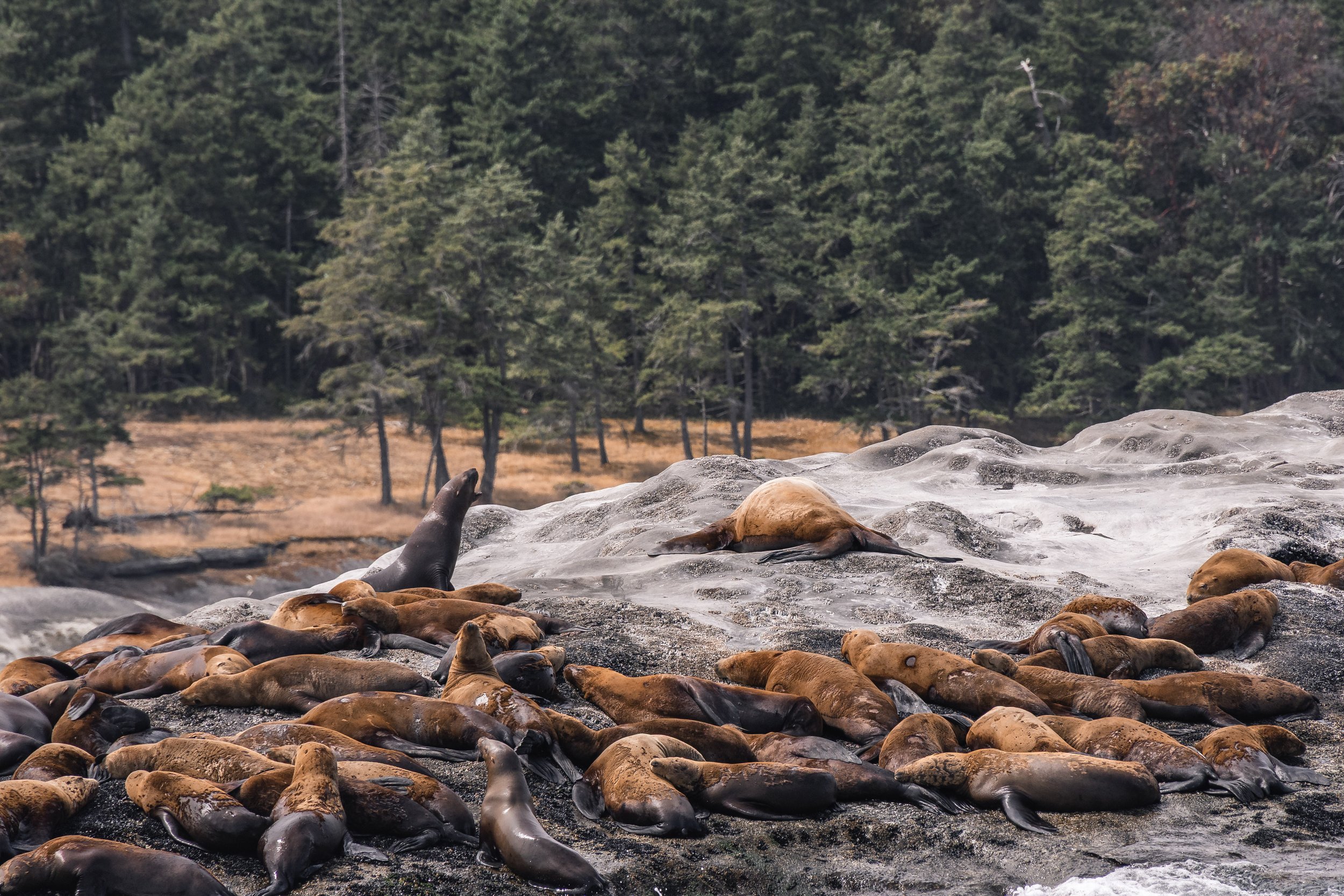
So many Stellars! Photo by Vanessa Vereschahen.
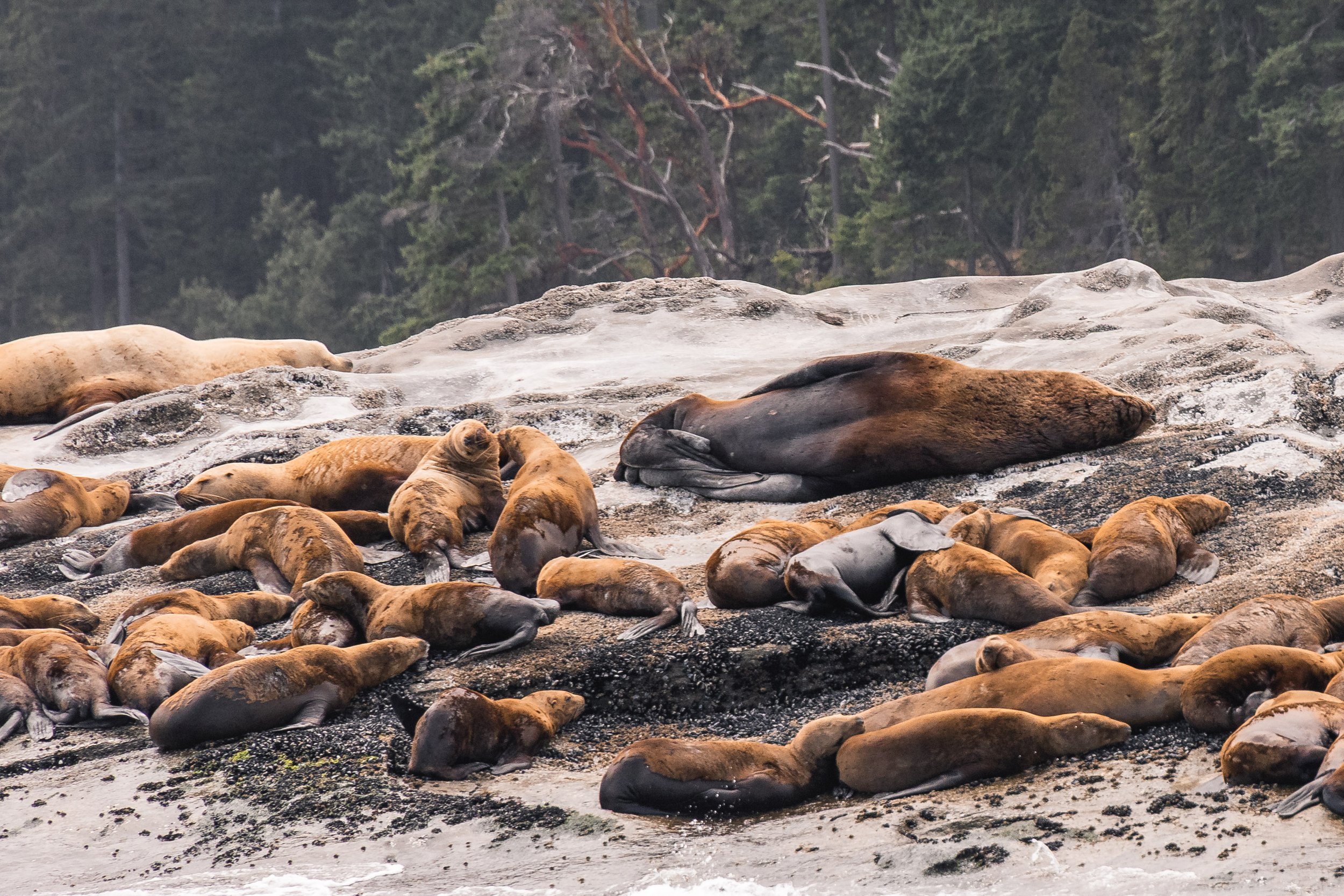
Look at the size of the large male in comparison to the others! Photo by Vanessa Vereschahen.
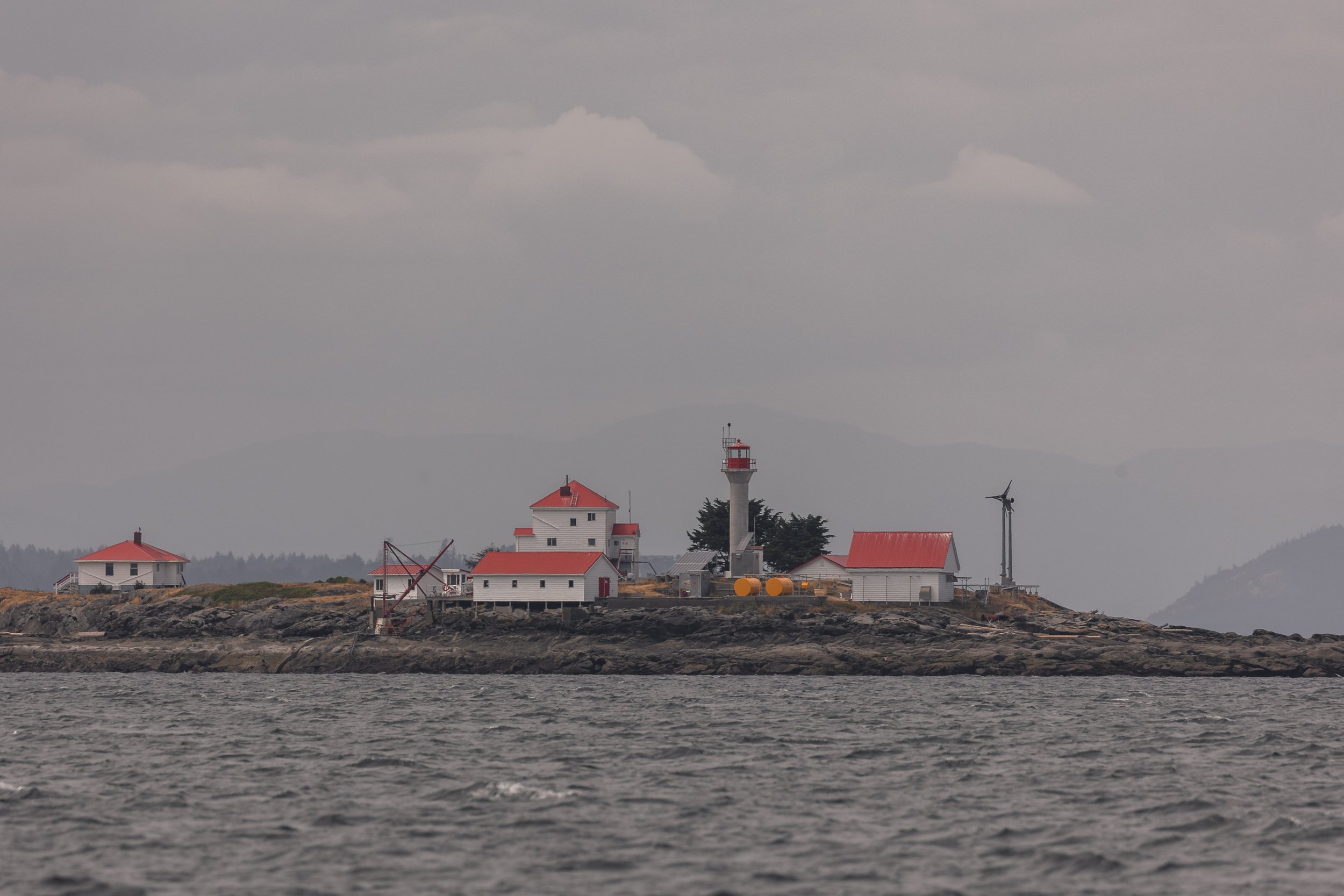
A look at Entrance Island as we passed by. Photo by Jordan Robinson.