
July 1, 2026, 3:30 PM - A T-party with a side of Humpback!
Our open boat, Cascadia, pushed off the dock this afternoon, and guests were grateful for the clouds overhead, preventing them from overheating in their cozy anti-exposure suits. The boat followed the coastline north after reports from excited whale watchers on shore that whales had been seen in that direction earlier in the day. As we travelled, the Captain and Naturalist carefully scanned the horizon, searching for the telltale puff of a blow or the unmistakable silhouette of a dorsal fin. By the time we reached the Ballenas Islands, the search paid off in spectacular fashion. Ahead of us were Transient Killer Whales! Typically, Bigg's (Transient) Killer Whales travel in small, close-knit family groups known as matrilines. At the heart of each family is an experienced mother, who travels alongside her offspring for many years, often for life. Sons, in particular, remain with their mothers permanently, while daughters usually stay with the family as well, even after having calves of their own. These matrilines generally consist of just two to nine whales, making them much smaller than the large pods of fish-eating Resident Killer Whales. It quickly became apparent that this was no ordinary family outing. The whales were having a T-Party! The pods we identified were:
T023C Cindy ♀ (1990)
T023C3 Durban ♀ (2009)
T023C4 Bunzie (2013)
T023C5 Grym ♀ (2018)
T023C6 Cascade (2023)
T086A Eider ♀ (1988)
T086A4 Akia ♀ (2016)
T086A5 Siku ♂ (2024)
T101 Reef ♀ (≤1969)
T101A Rush ♂ (1993)
T101B Lagoon ♂ (1997)
A T-Party is the nickname researchers have given to large social gatherings of transient orca in which several families come together. Unlike their usual small-group lifestyle, these events can bring together well over a dozen whales at once. During our encounter, we identified three families travelling together, a remarkable sight, considering these whales spend much of their time spread across the Salish Sea hunting independently.
These gatherings are thought to serve several important purposes. Socializing is certainly one of them, allowing individuals to maintain relationships with whales outside of their immediate family. They also provide opportunities for young whales to interact with others, learn social behaviours, and perhaps most importantly, find potential mates. Since offspring typically remain with their mothers throughout their lives, transient orca families are incredibly tight-knit. This presents an obvious challenge: how do new families ever begin?
The answer lies in gatherings like these. When an adult male from one matriline encounters an adult female from another, mating may occur. If that female later gives birth, her calf becomes the beginning of the next generation within her own family. Over time, as daughters have calves of their own, that matriline continues to grow and branch out, while sons remain lifelong members of the group. Every thriving family we see today traces its roots back through generations of these social connections.
As transient orca populations continue to recover along the West Coast, researchers have documented T-Parties becoming more common. They provide a fascinating glimpse into the complex social lives of these apex predators and remind us that even animals known for their incredible hunting abilities also need time to simply be social. Eventually, it was time to leave the party behind and continue our own search.
Fortunately, we did not have to travel far before another pair of familiar blows appeared on the horizon. Towering, bushy exhalations rose high above the water, announcing the arrival of two humpback whales. Now came the detective work. Our first goal whenever we encounter humpbacks is to photograph the underside of their tail flukes. Much like a human fingerprint, every humpback has a unique black-and-white pigmentation pattern that allows us to identify individuals year after year. Today, however, our whales had other plans. They seemed perfectly content swimming just beneath the surface, showing little interest in lifting their tails before diving.
No flukes? No problem.
Fortunately, humpbacks have more than one identifying feature. The shape of the dorsal fin, along with scars and markings along the back, can also help us determine who we're looking at. After reviewing our photos, we identified the pair as Slice (BCX2487) and Graze (BCY0523).
Slice is a young male born in 2021, while Graze is an adult female. Like many of the humpbacks that visit our waters each summer, both make the incredible journey to Hawaii during the winter months to breed and give birth before returning to the rich feeding grounds of British Columbia each spring.
What made this encounter particularly interesting wasn't just who they were, it was who they were with.
Unlike transient orca, humpbacks have traditionally been considered relatively solitary animals. For decades, researchers believed that after leaving their mothers, humpbacks mostly travelled and fed alone, only coming together briefly for mating or when food was particularly abundant. As humpback populations have recovered and more individuals return to the Salish Sea every year, that picture has started to change.
Researchers and our own Naturalists have begun to notice that certain whales repeatedly spend time together. These relationships are known as temporary associations, and they can last anywhere from a few hours to several months. Some whales seem to repeatedly seek out the same companions across feeding seasons, while others form short-lived partnerships before moving on. Exactly why these associations form is still one of the many mysteries surrounding humpback behaviour. Perhaps they improve feeding success, provide safety through additional awareness, or maybe some whales simply tolerate, or even enjoy, the company of certain individuals more than others. Whatever the reason, watching Slice and Graze travelling side by side offered another reminder that the social lives of whales are often far more complex than we once imagined.
Every season, we learn something new. The transient orca continue to teach us about lifelong family bonds and remarkable social gatherings, while humpbacks are slowly revealing that they, too, may have friendships and relationships we are only beginning to understand.
That's one of the greatest joys of spending time on the Salish Sea. Every encounter answers one question while raising another, and every trip reminds us that these animals still have countless stories left to tell. We can't wait to head back out tomorrow and discover what the next adventure has in store.
Photos taken by Marine Naturalist Jordan Robinson.
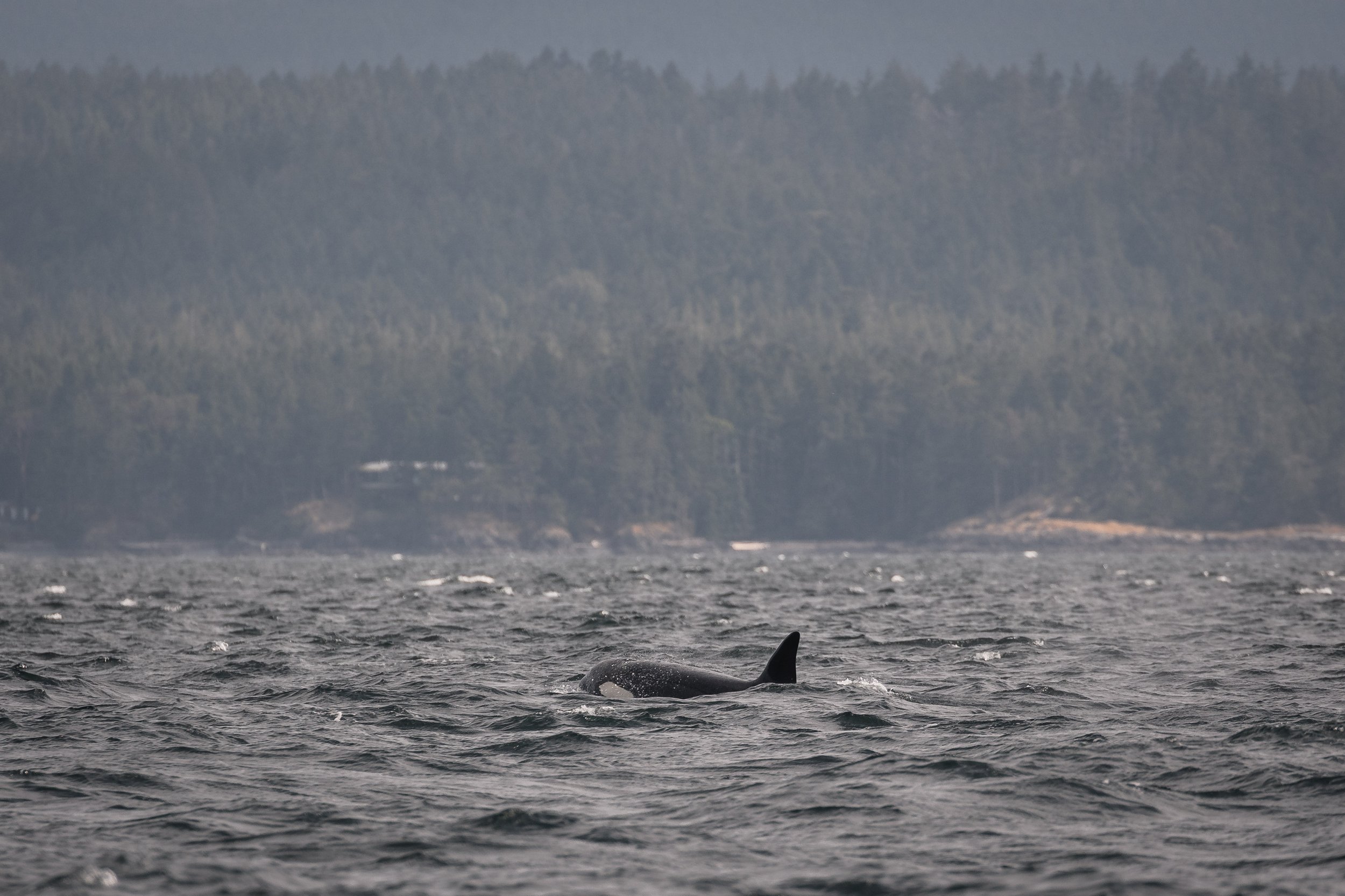
T086A4 Akia.
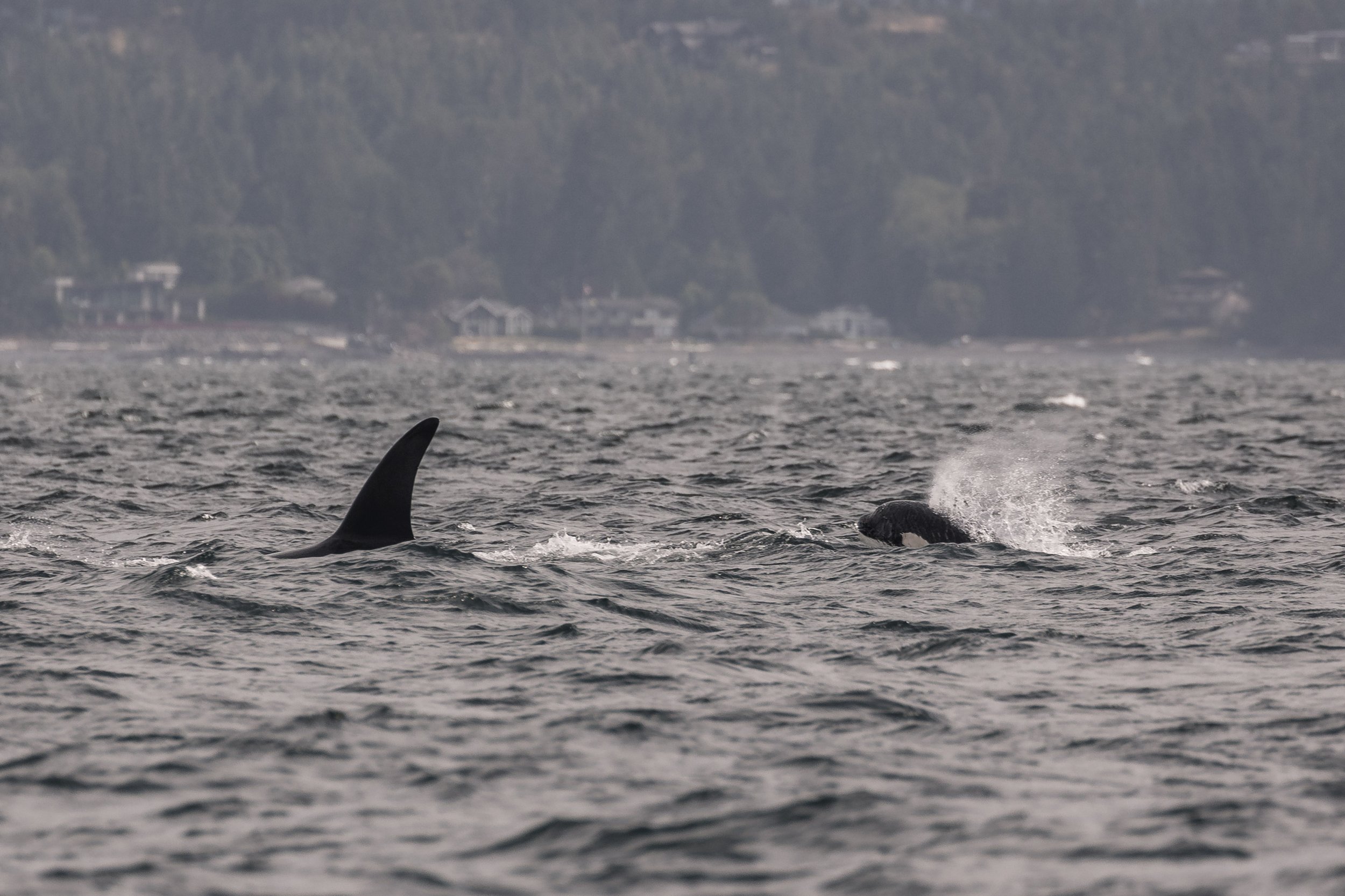
T023C4 Bunzie with the face of another breaking thesurface behind.
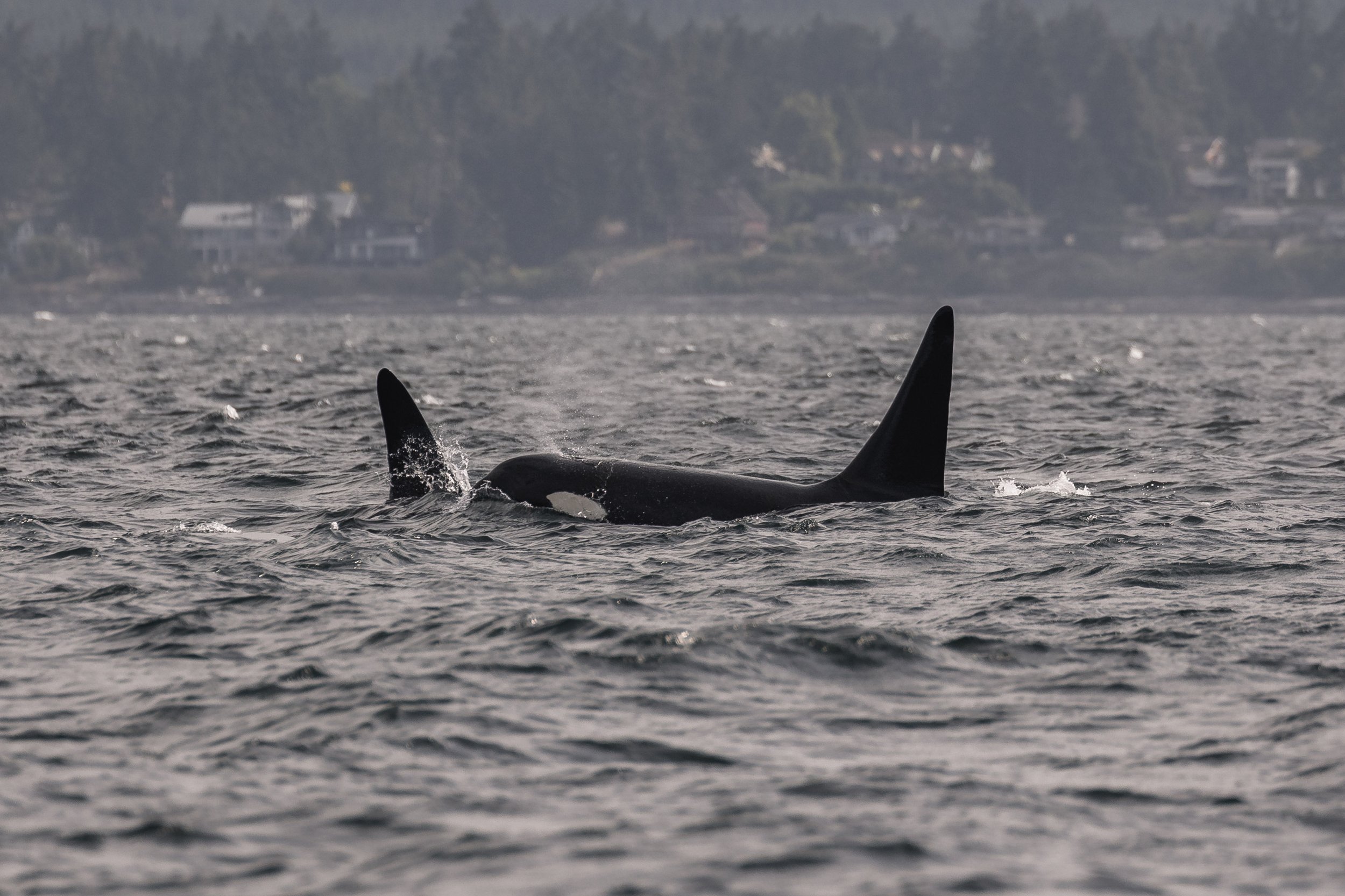
A good look at T101B Lagoon with T101A Rush’s dorsal fin ahead of him.
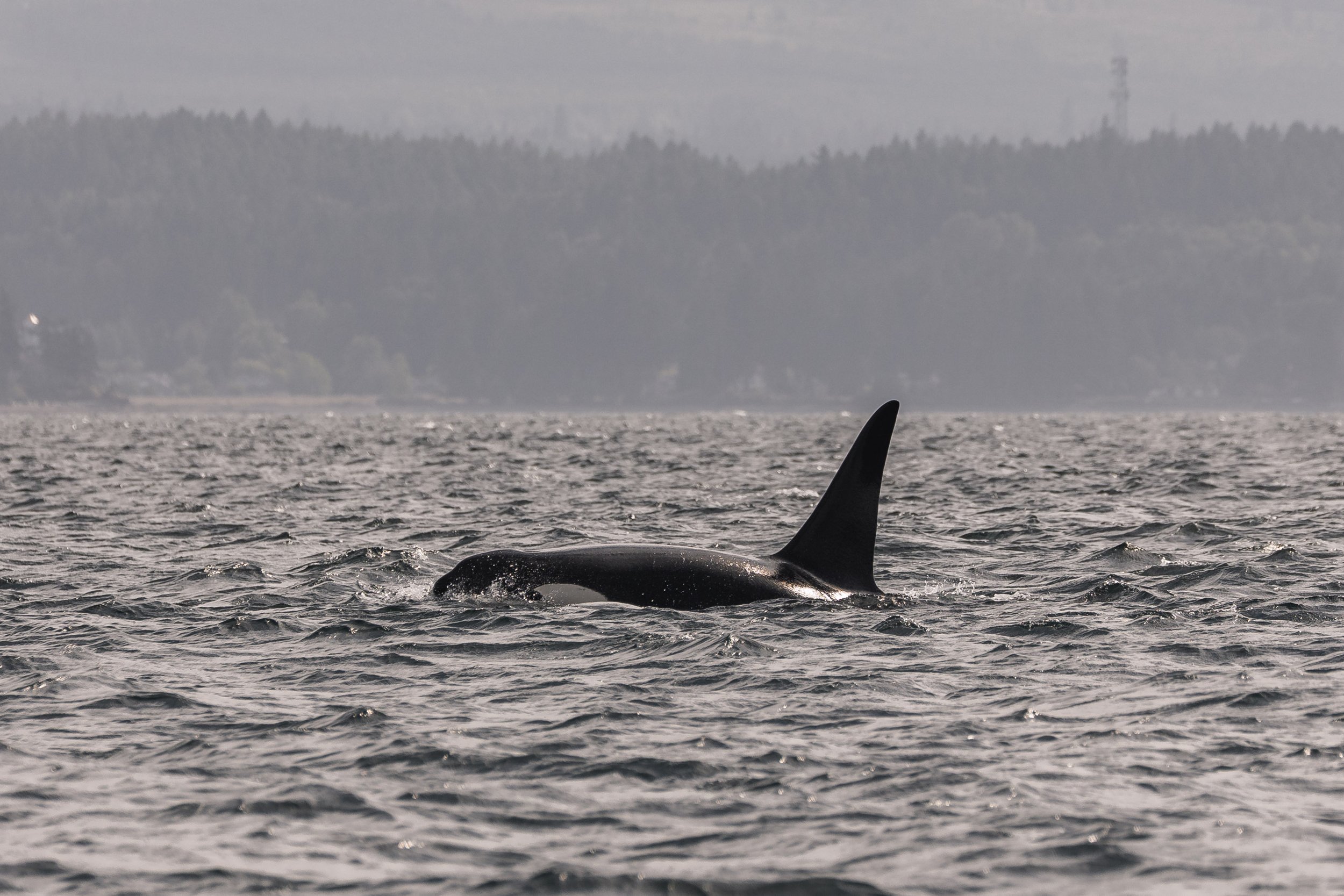
T101A Rush has a freckle in his eyepatch. Do you see it?
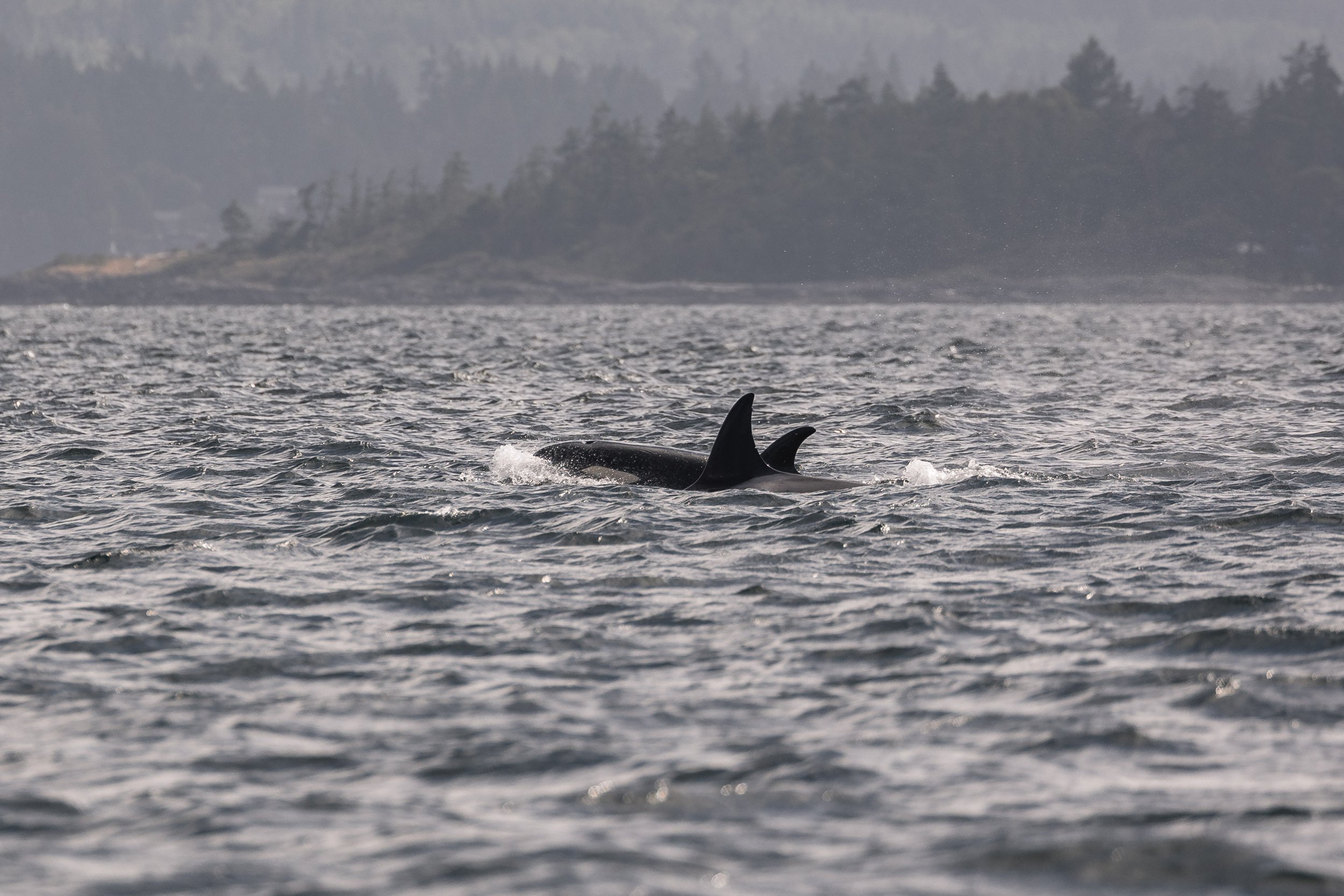
The dorsal fin of mom, T086A Eider, with her youngest, T086A5 Siku, beside her.
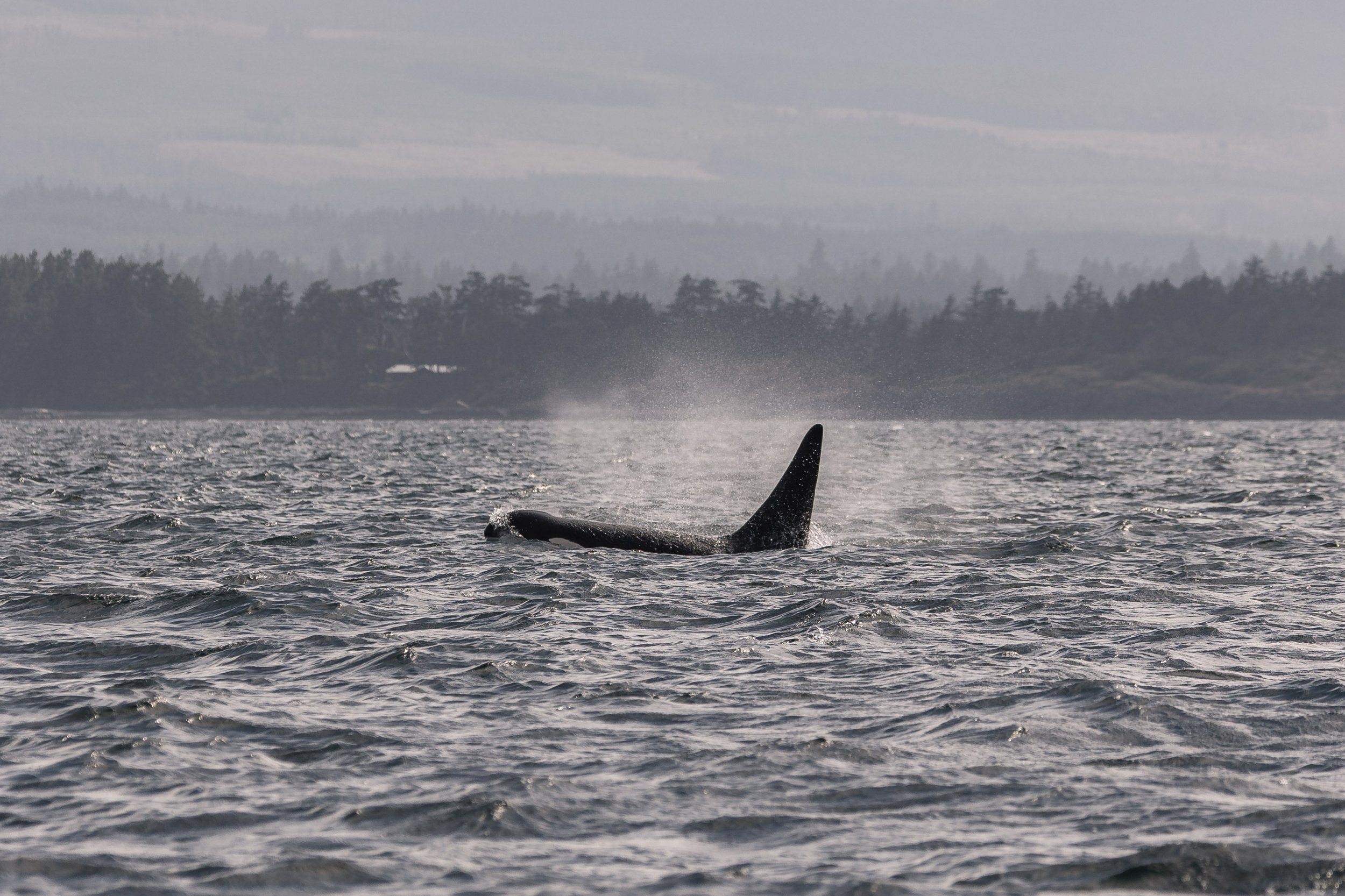
T101B Lagoon.
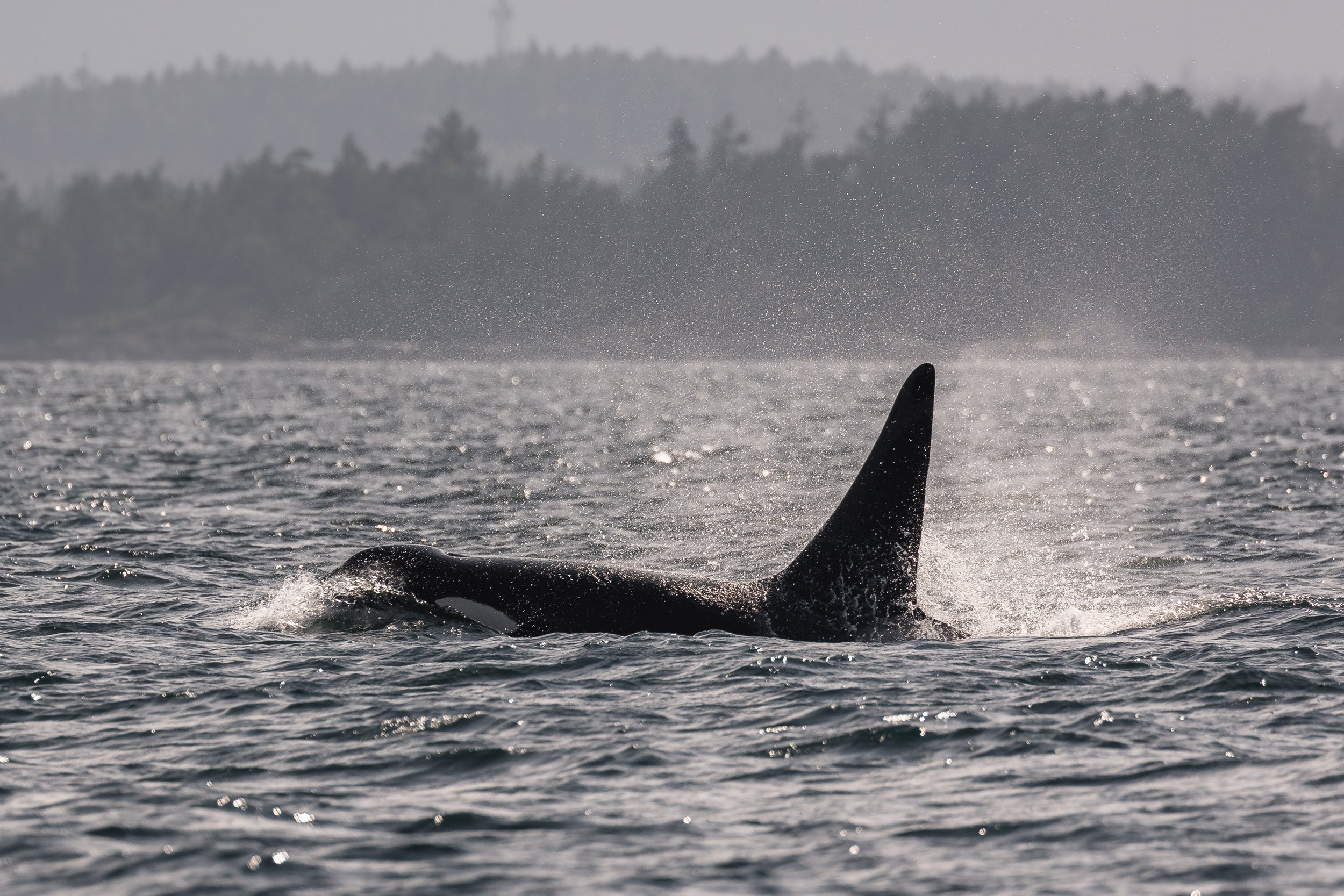
T101B Lagoon.
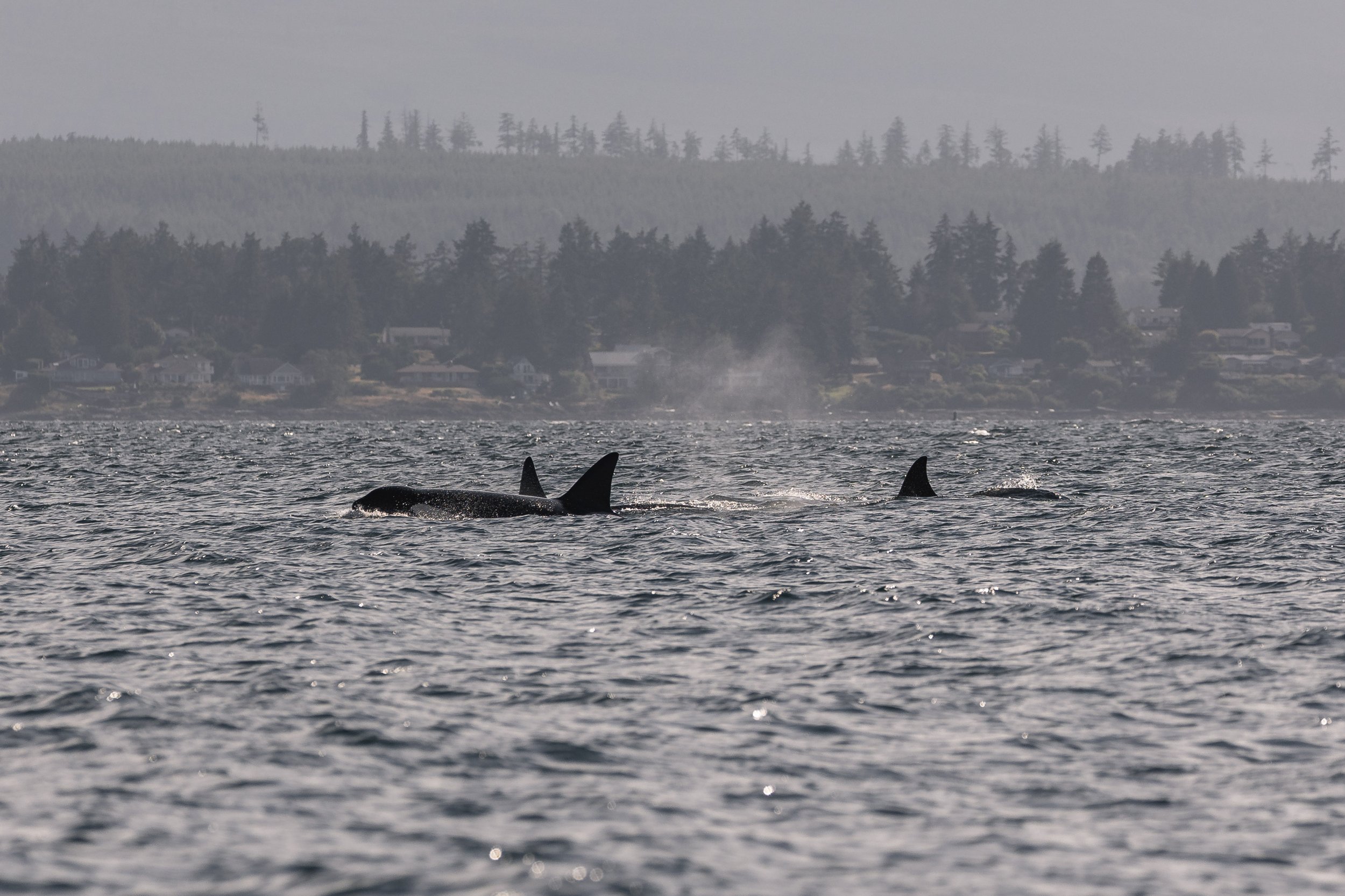
Matriarch T023C Cindy with T023C4 Bunzie behind her, followed by T023C5 Grym.
Surfacing side by side.
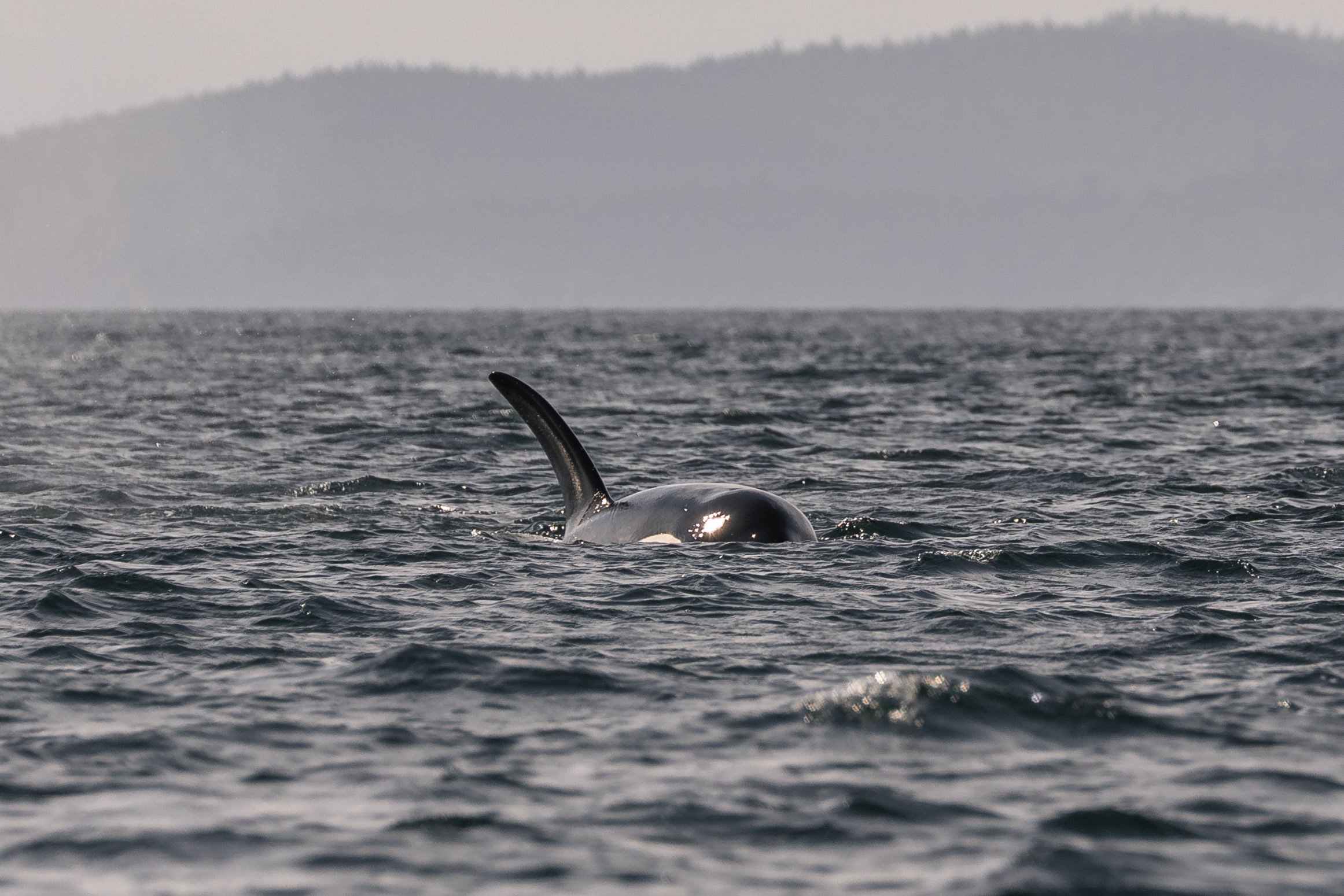
An interesting angle of one of our whales.
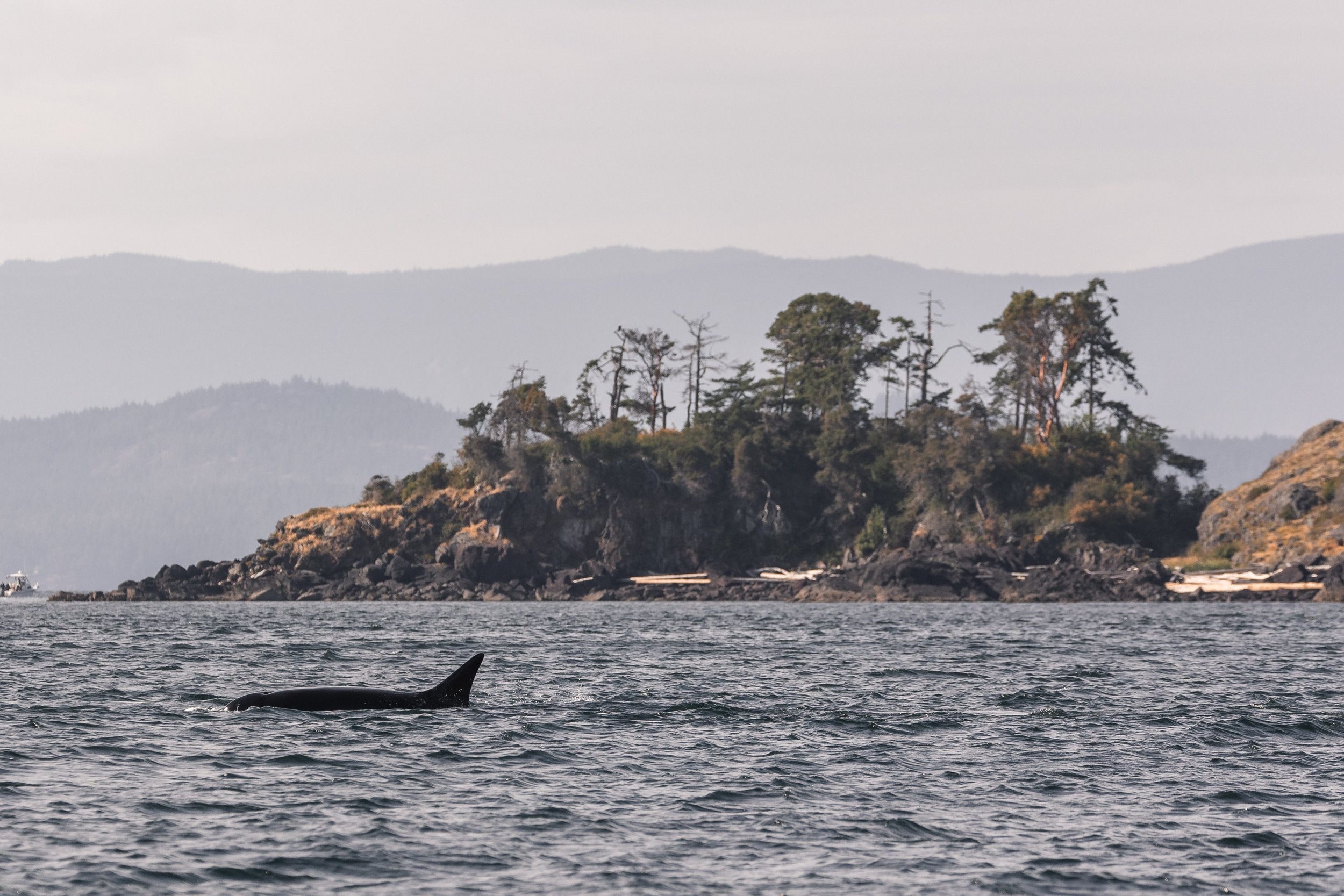
T101 Reef looking lovely in front of the scenery.
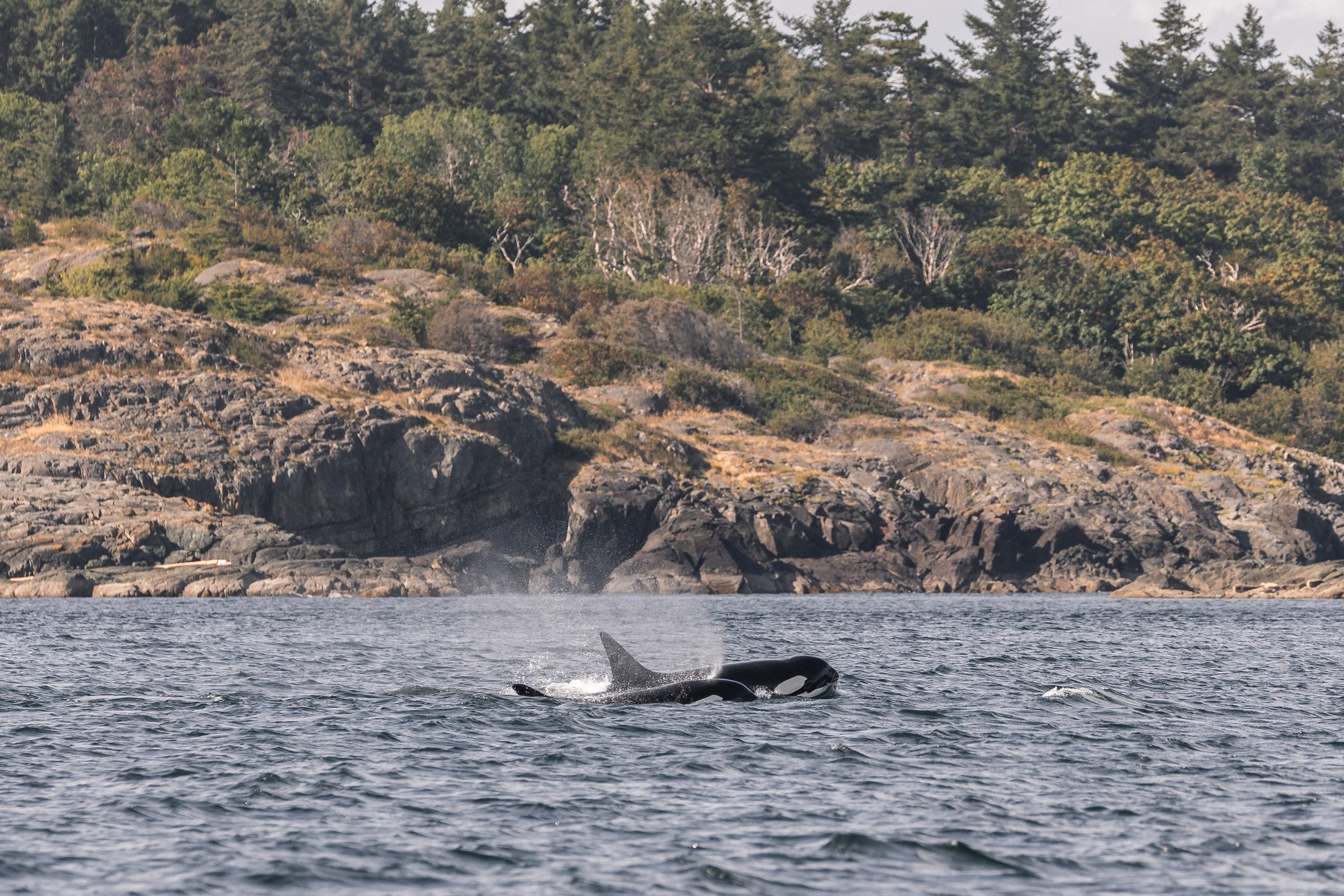
T101 Reef surfacing ahead of T086A Eider.
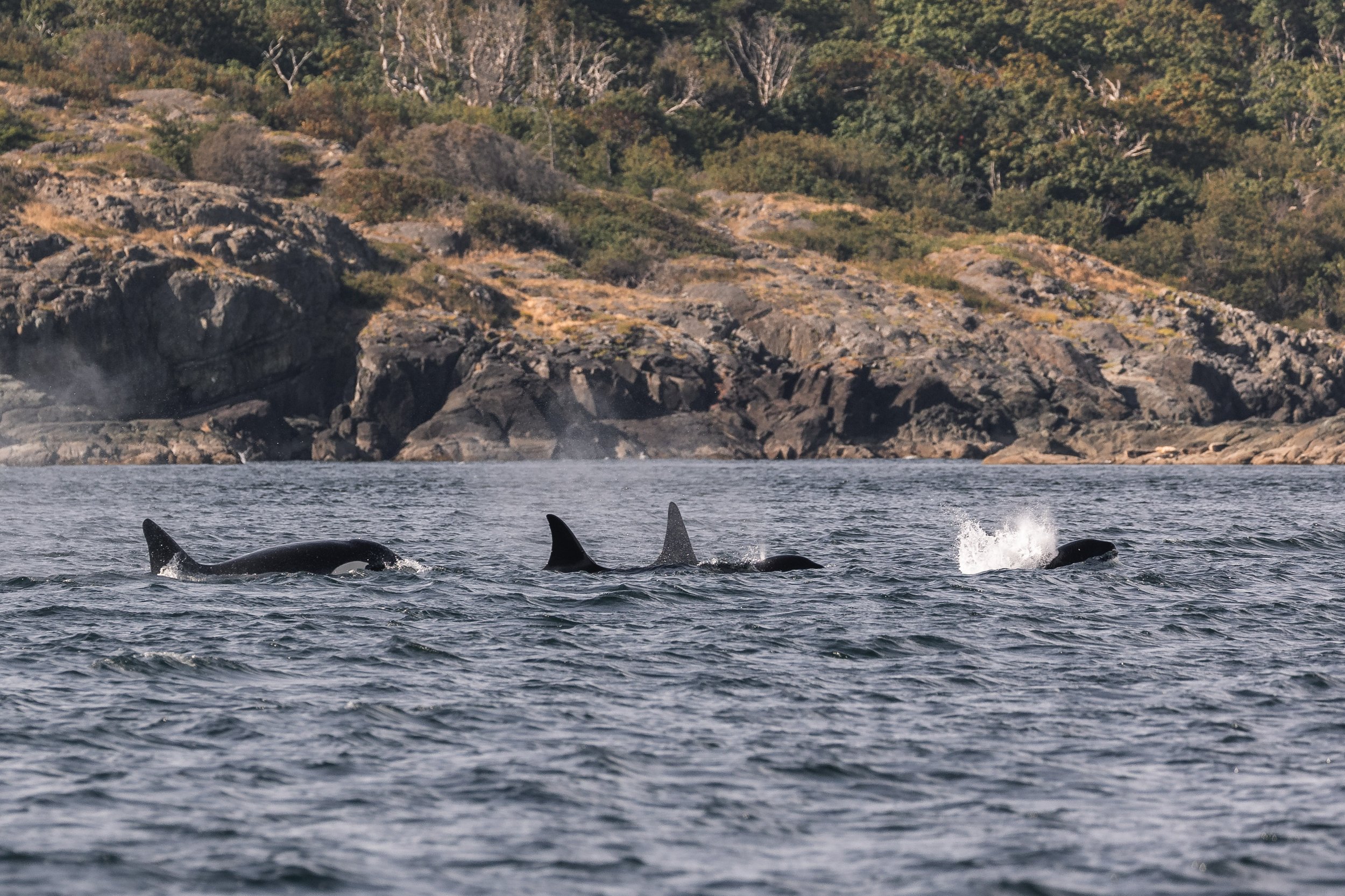
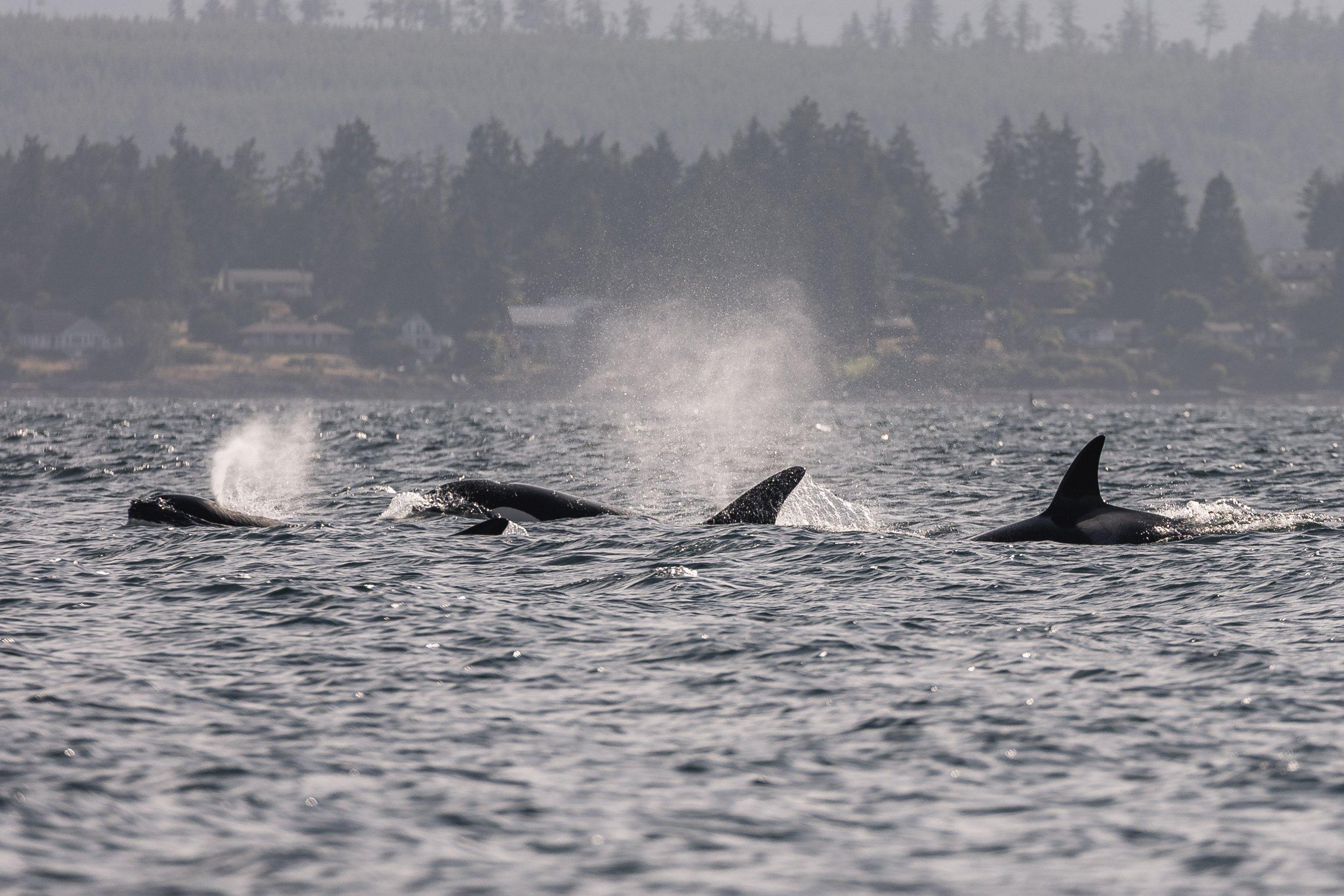
Left to right: T023C4 Bunzie, T086A Eider and T101 Reef with another breaking the surface.
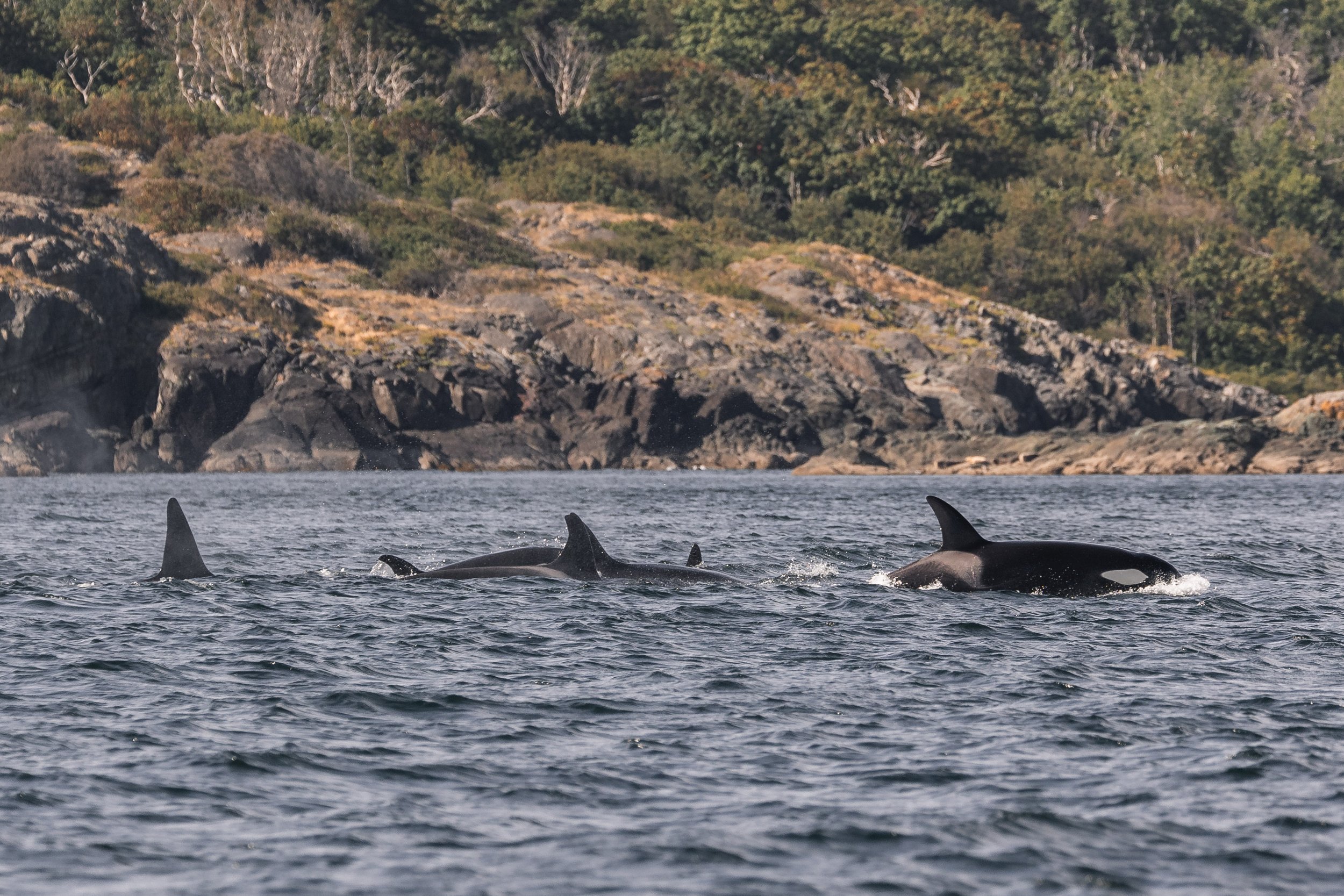
T086A4 Akia leading the pack.
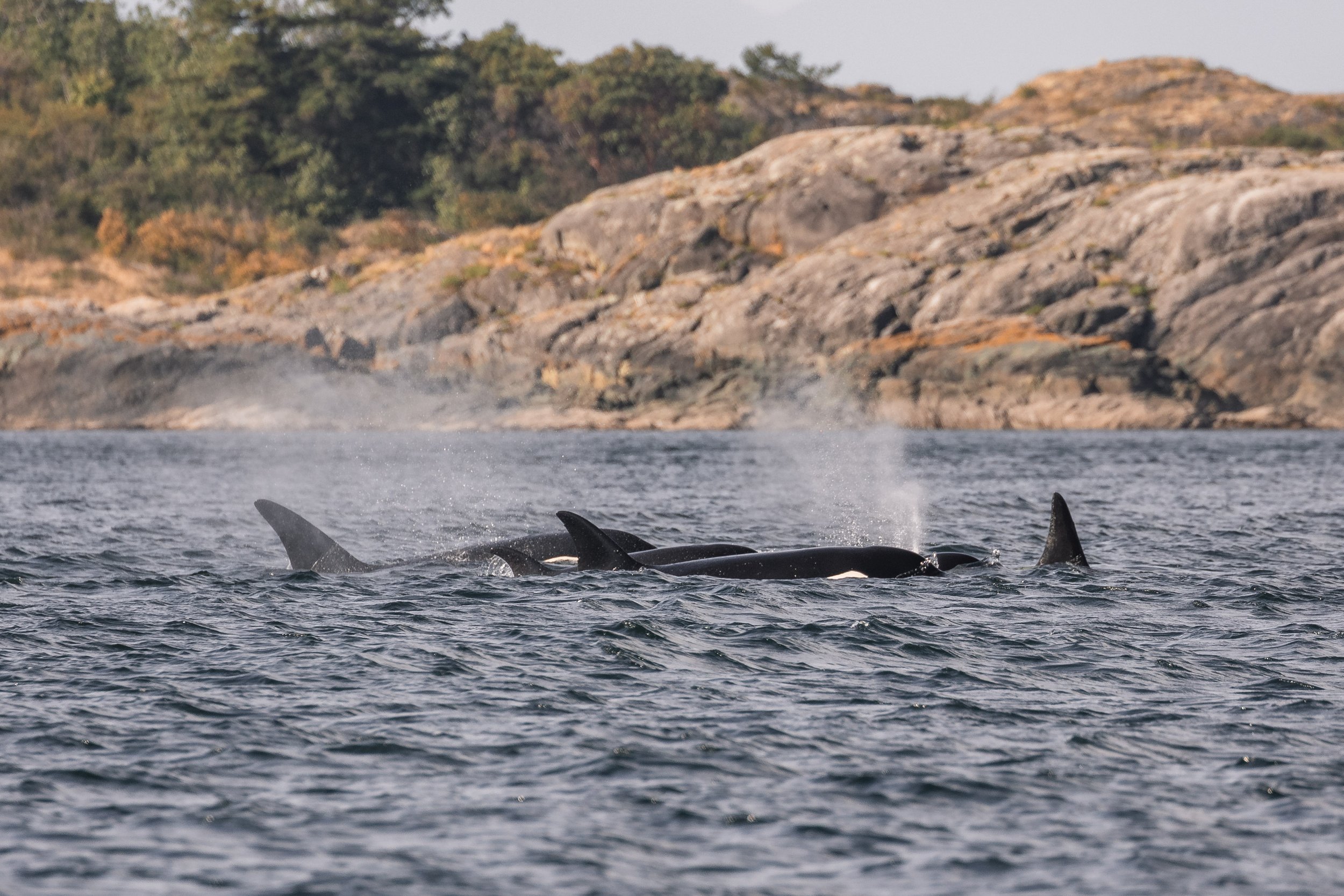
How many orca can you spot?
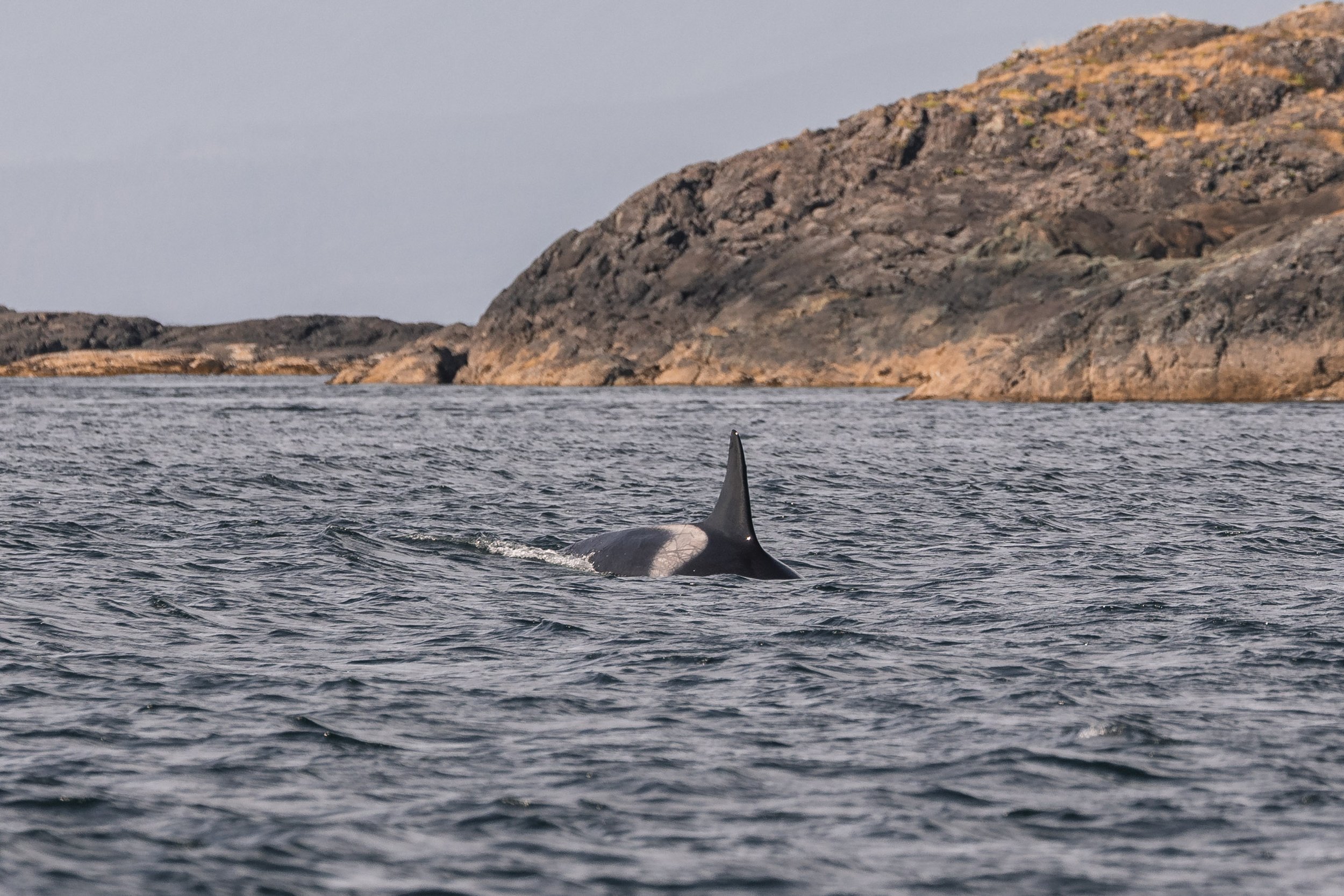
A good look at T101 Reef’s saddle patch.
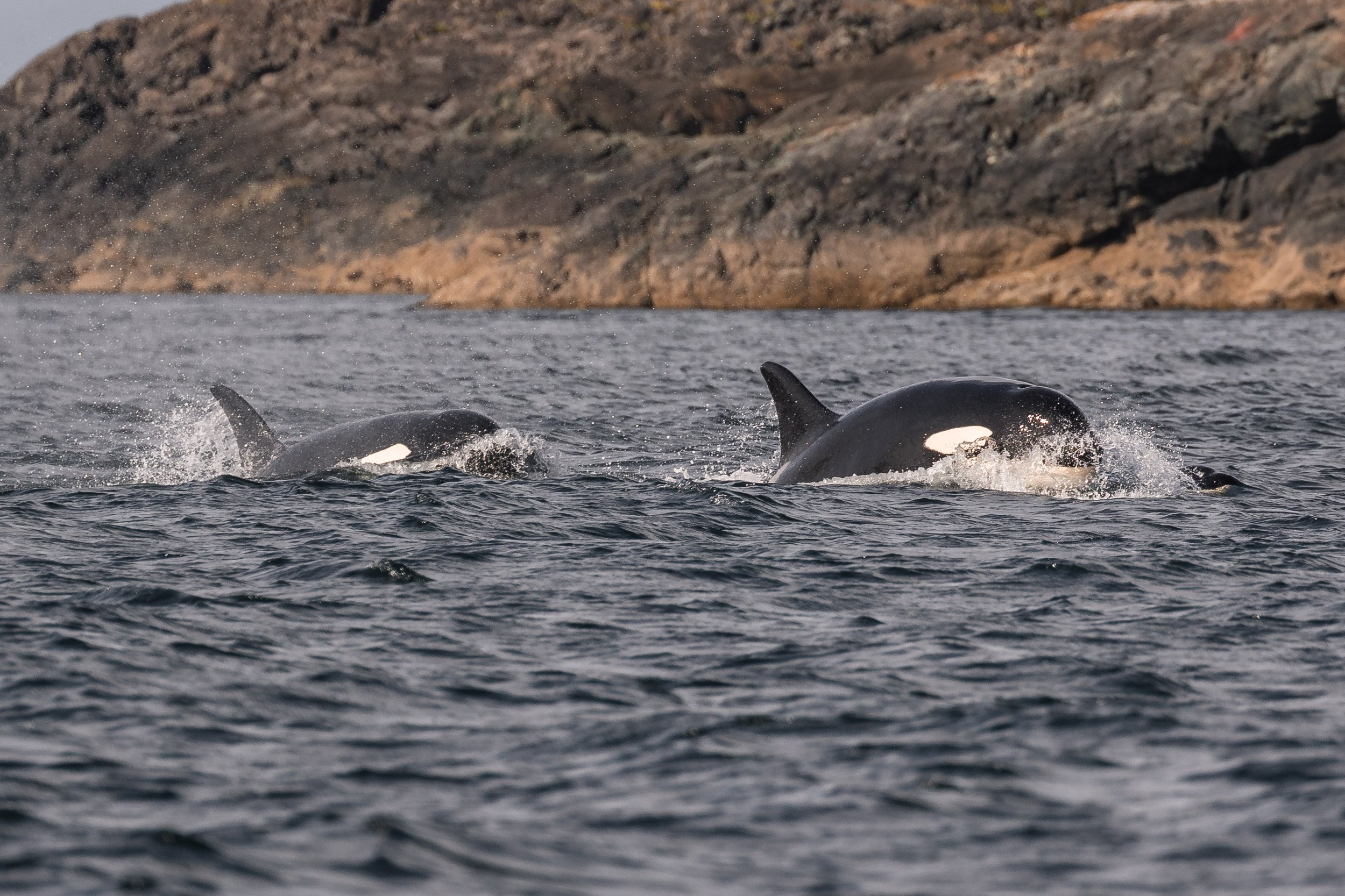
Making waves!
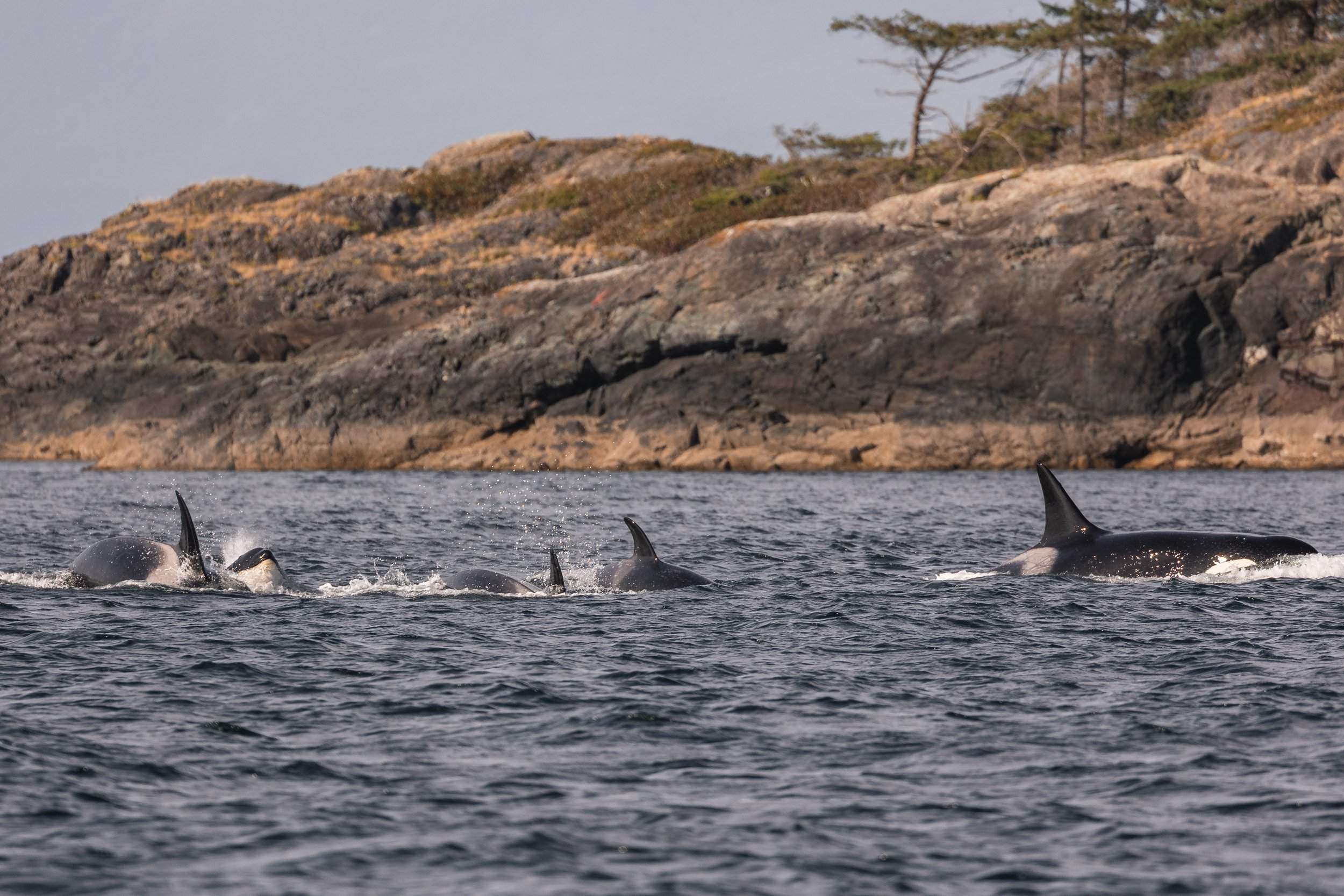
Charging ahead.
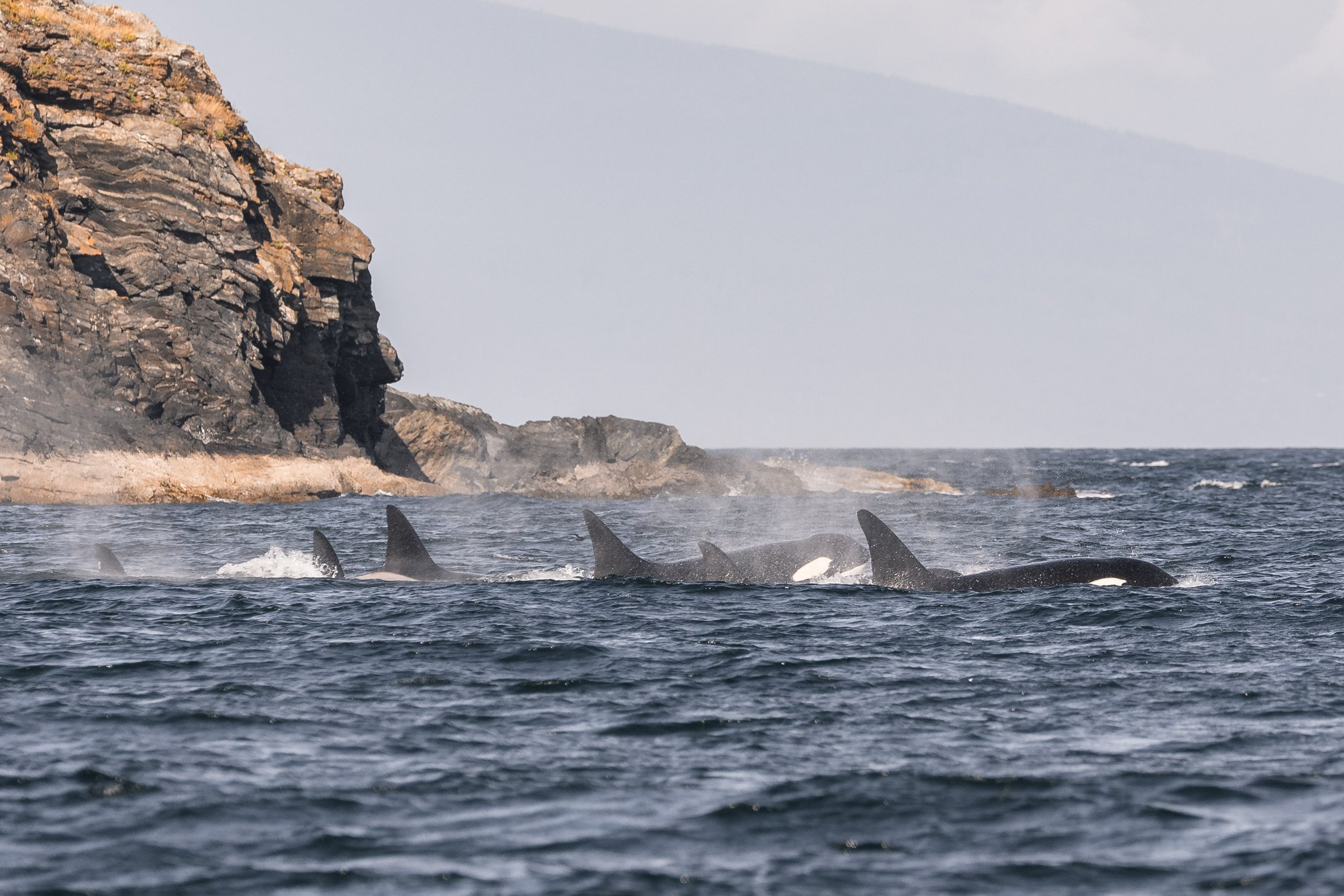
The T-party in front of the rocks!
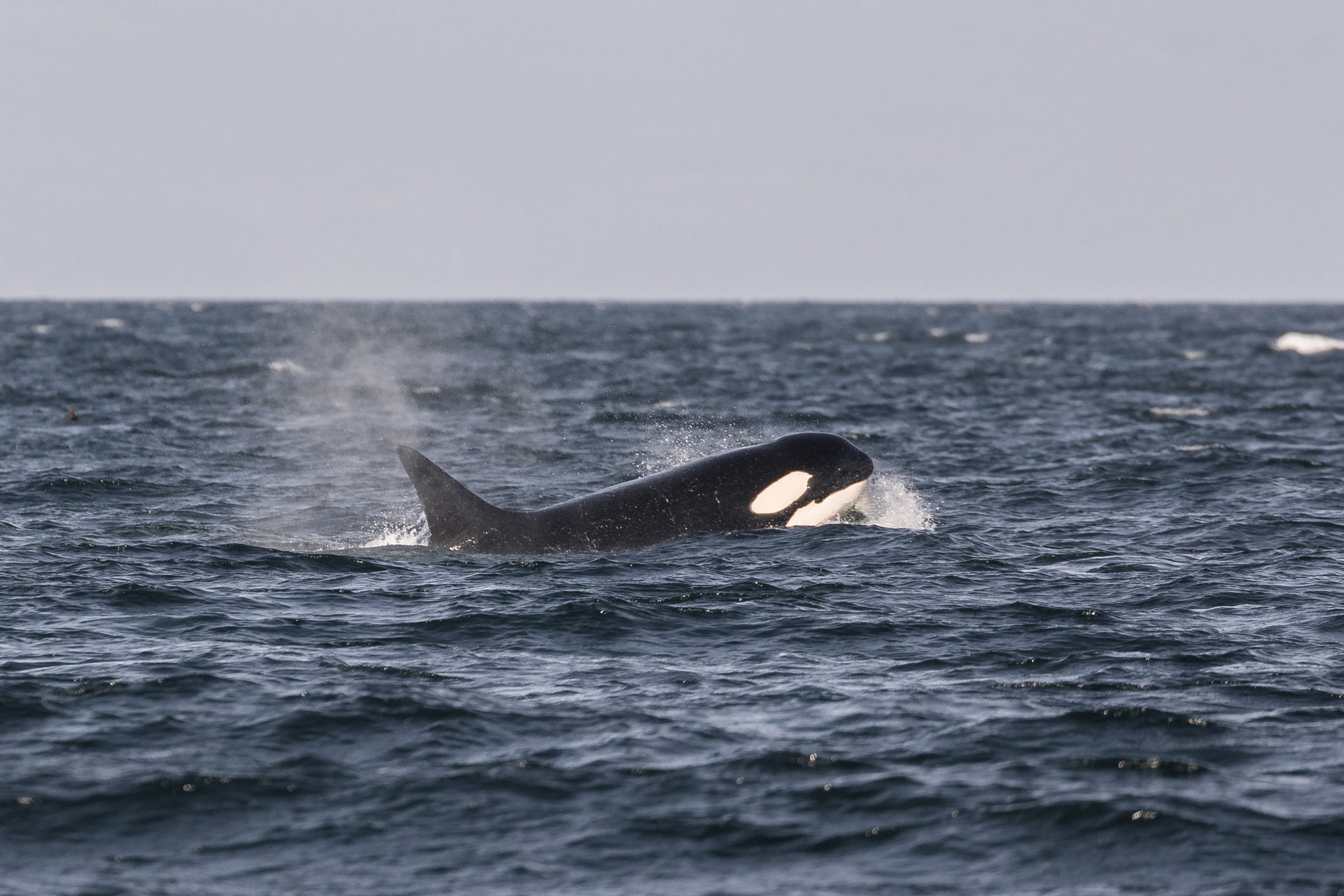
T101 Reef lifting her face out of the water.
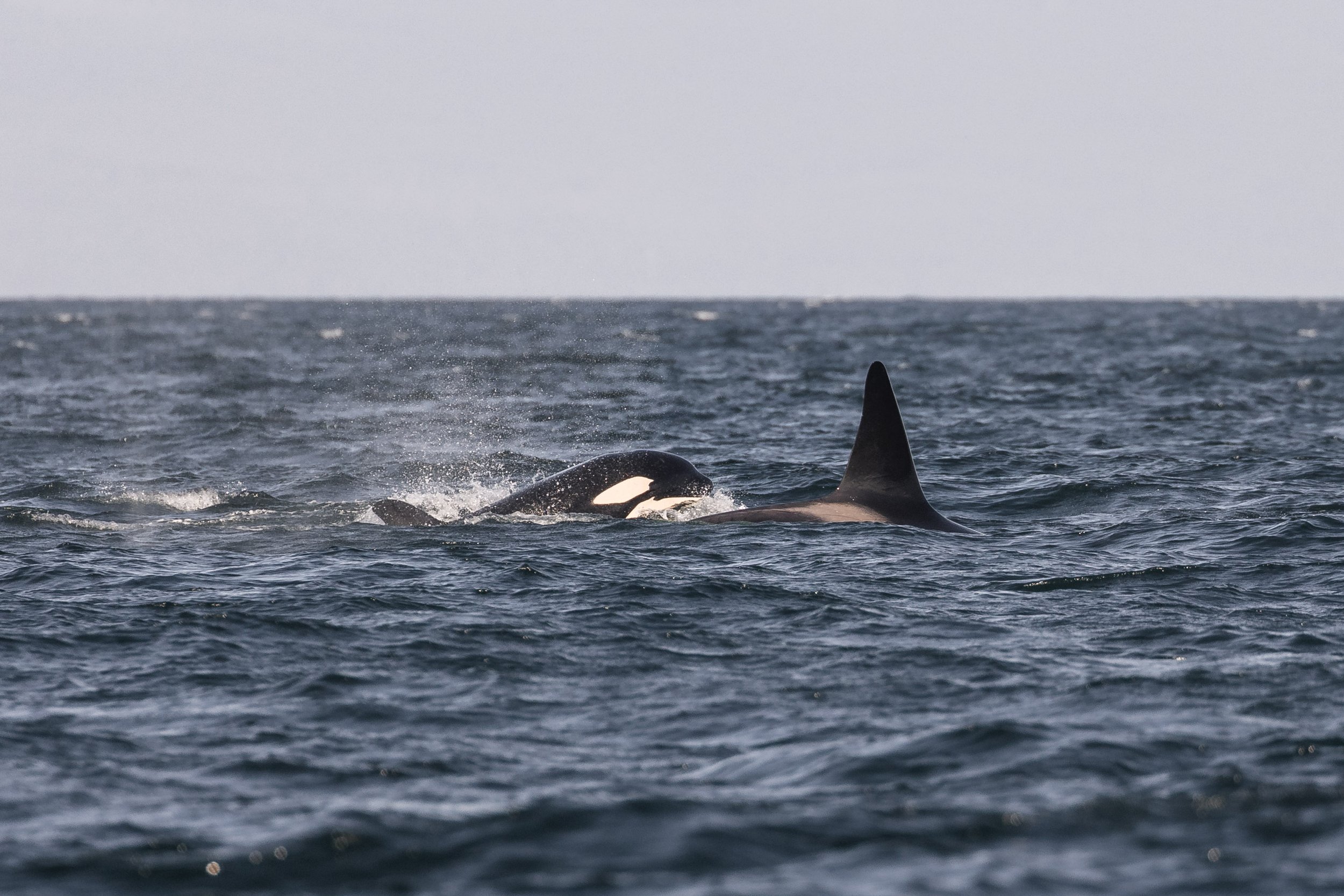
T023C4 Bunzie followed by younger sibling, T023C6 Cascade.
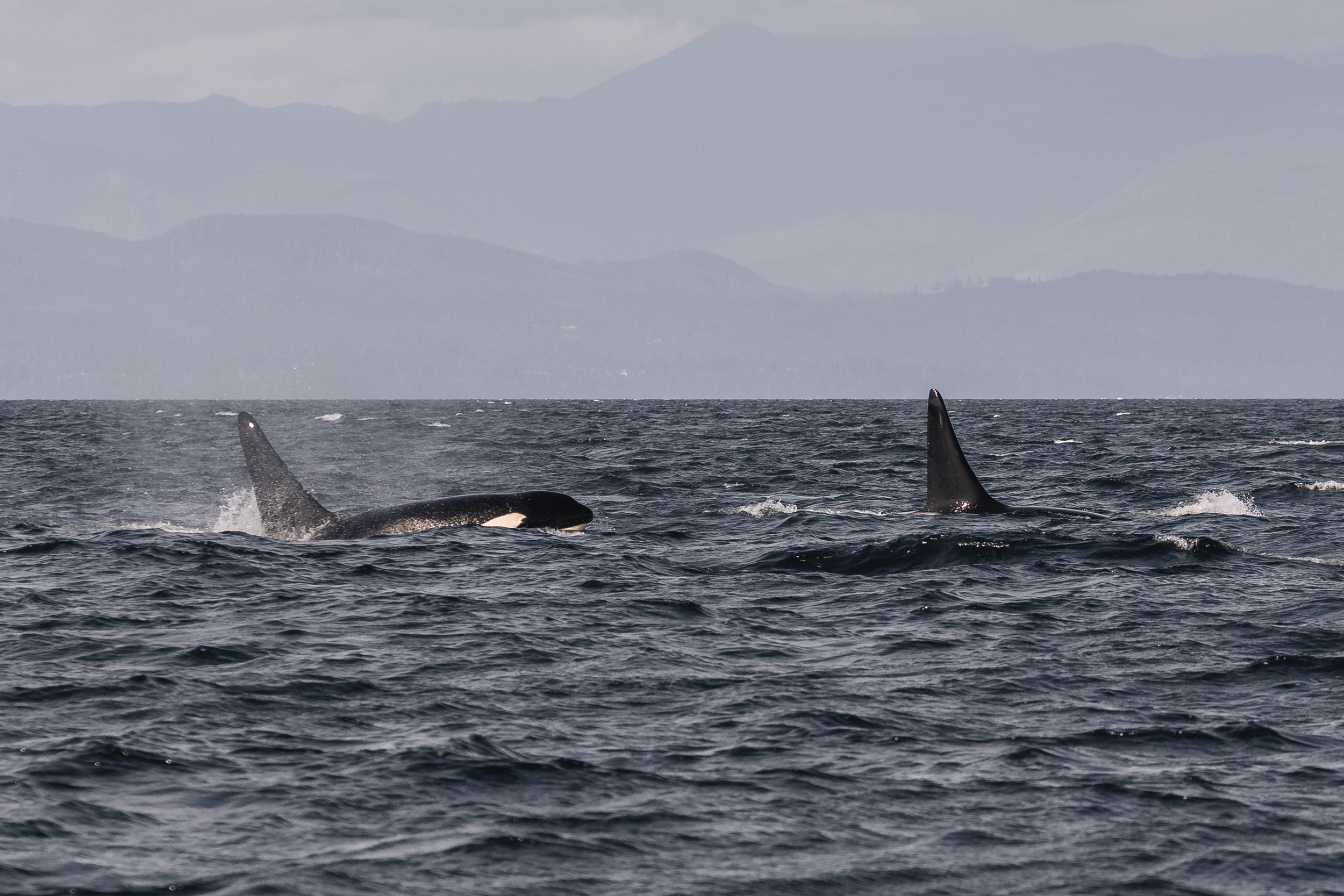
Brothers, T101A Rush and T101B Lagoon ahead of him.
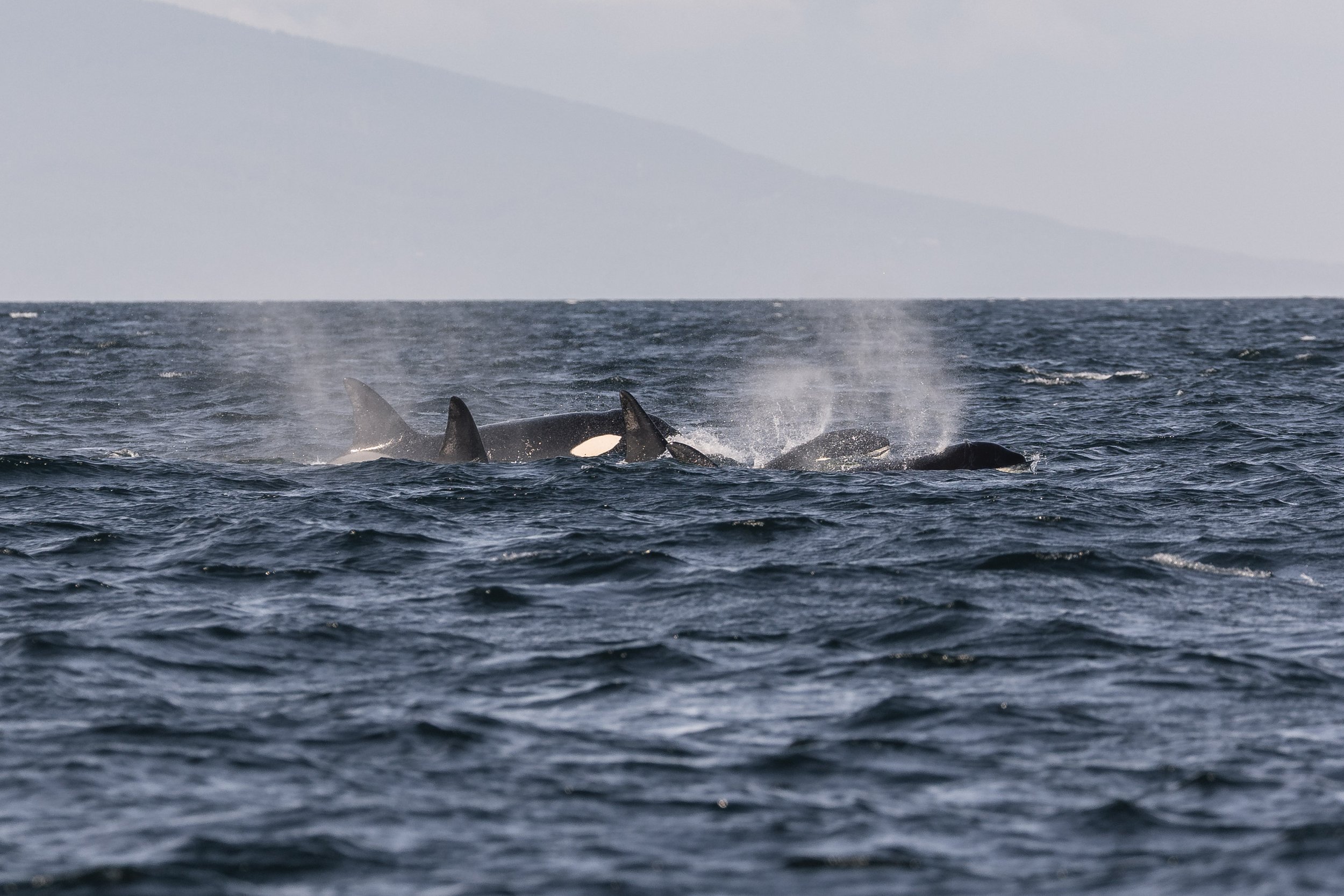
Take note of how close they are to eachother.
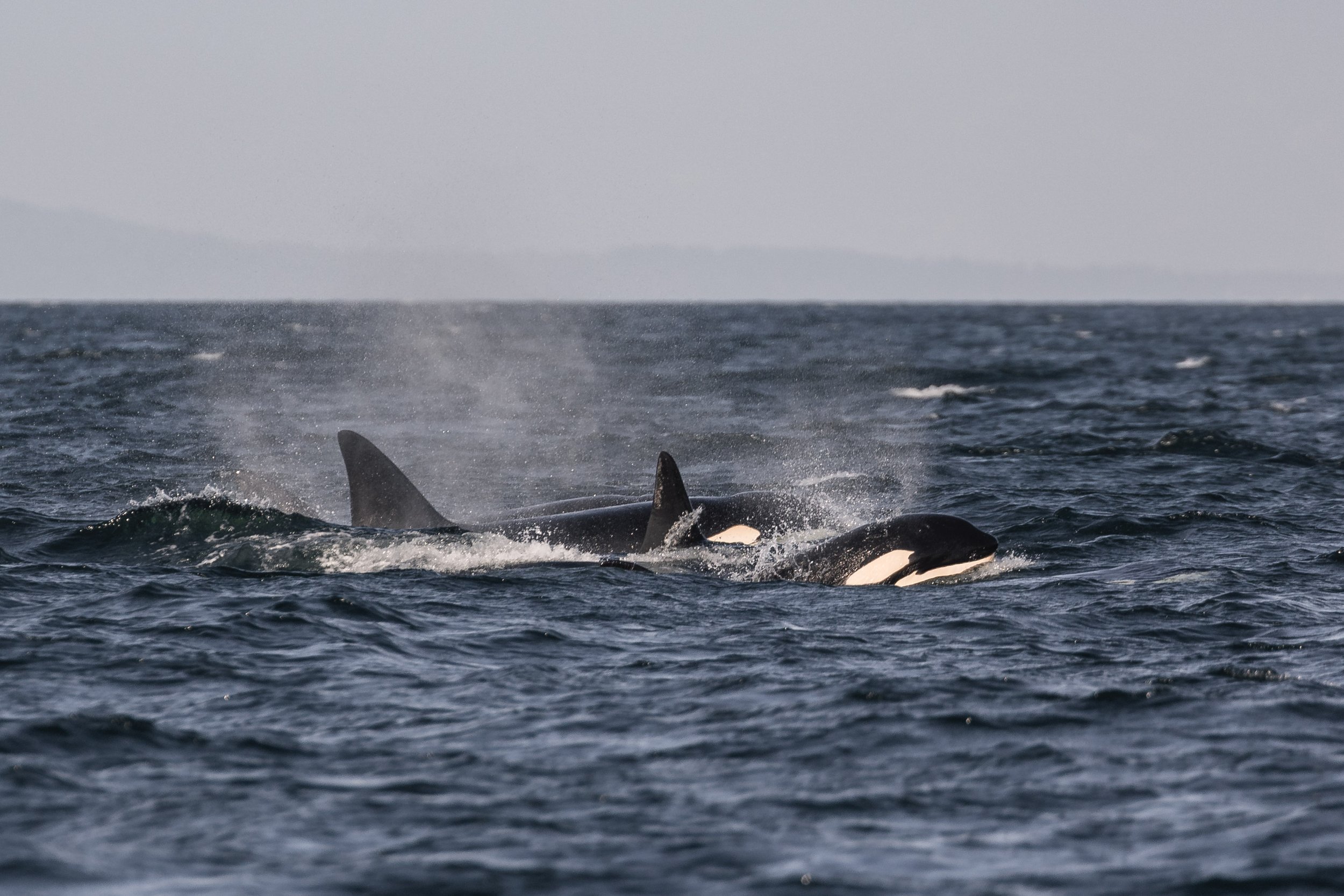
Can you spot all 4 in this photo?
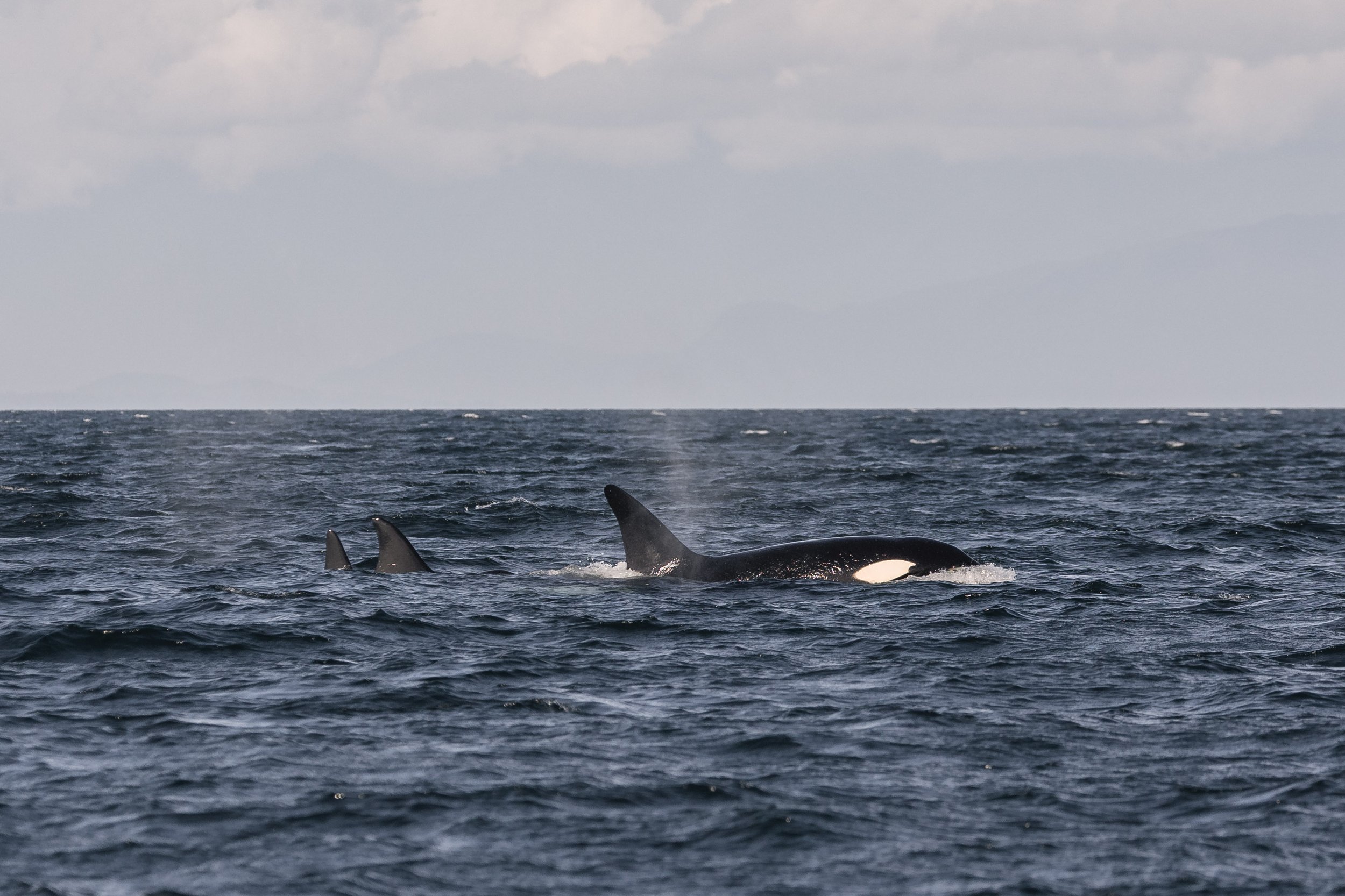
T023C4 Bunzie leading the way.
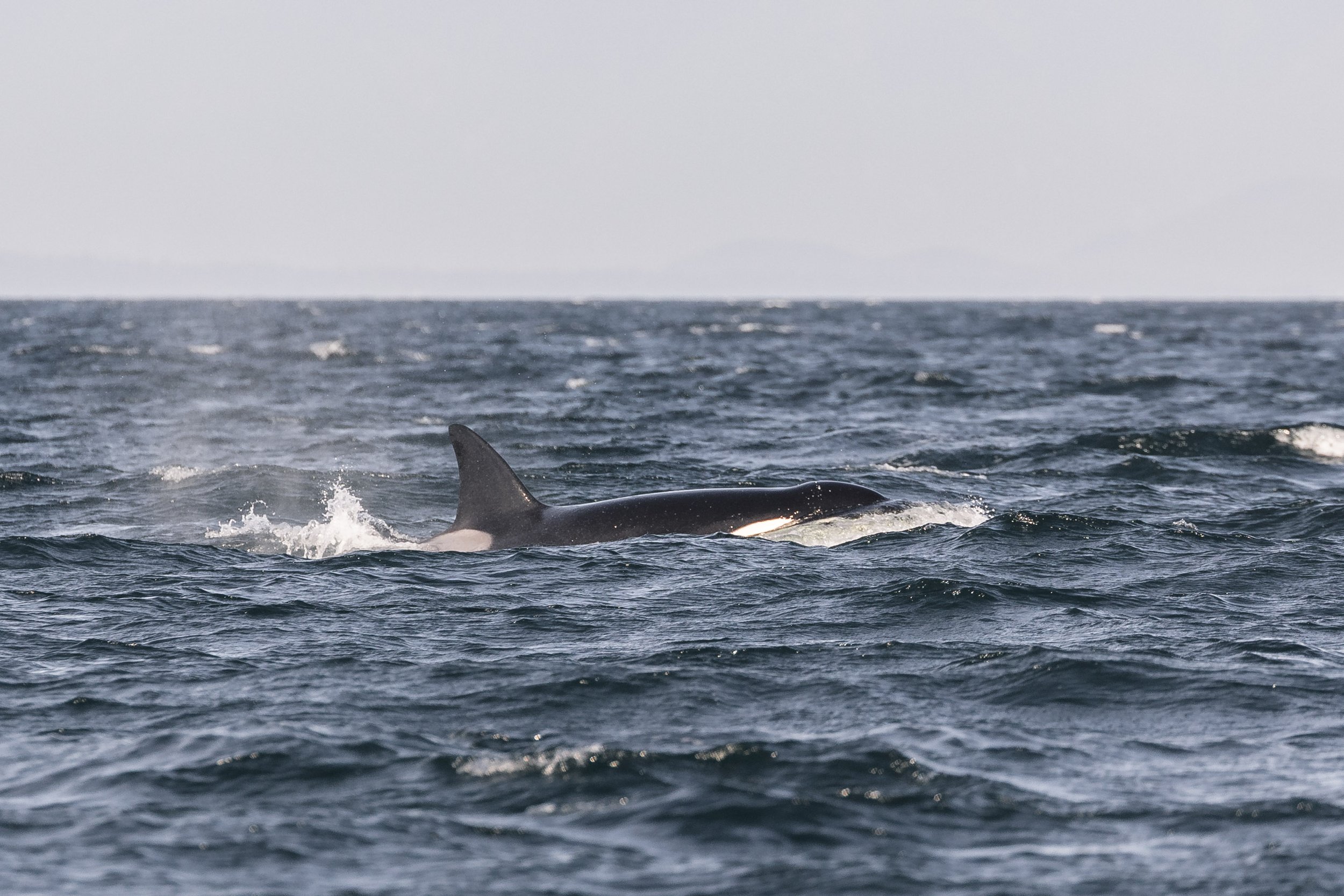
T023C3 Durban.
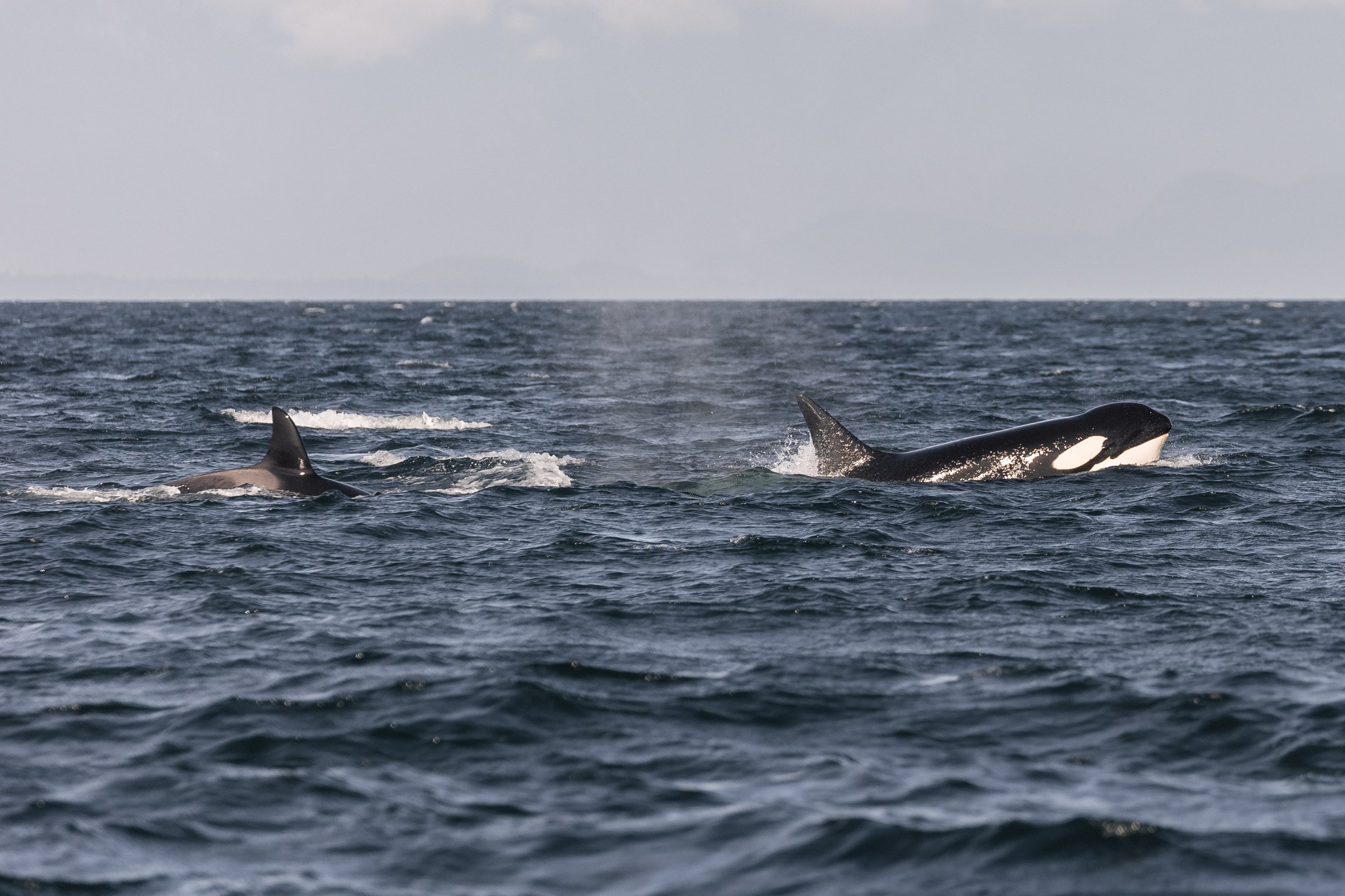
T101 Reef followed by T023C5 Grym.
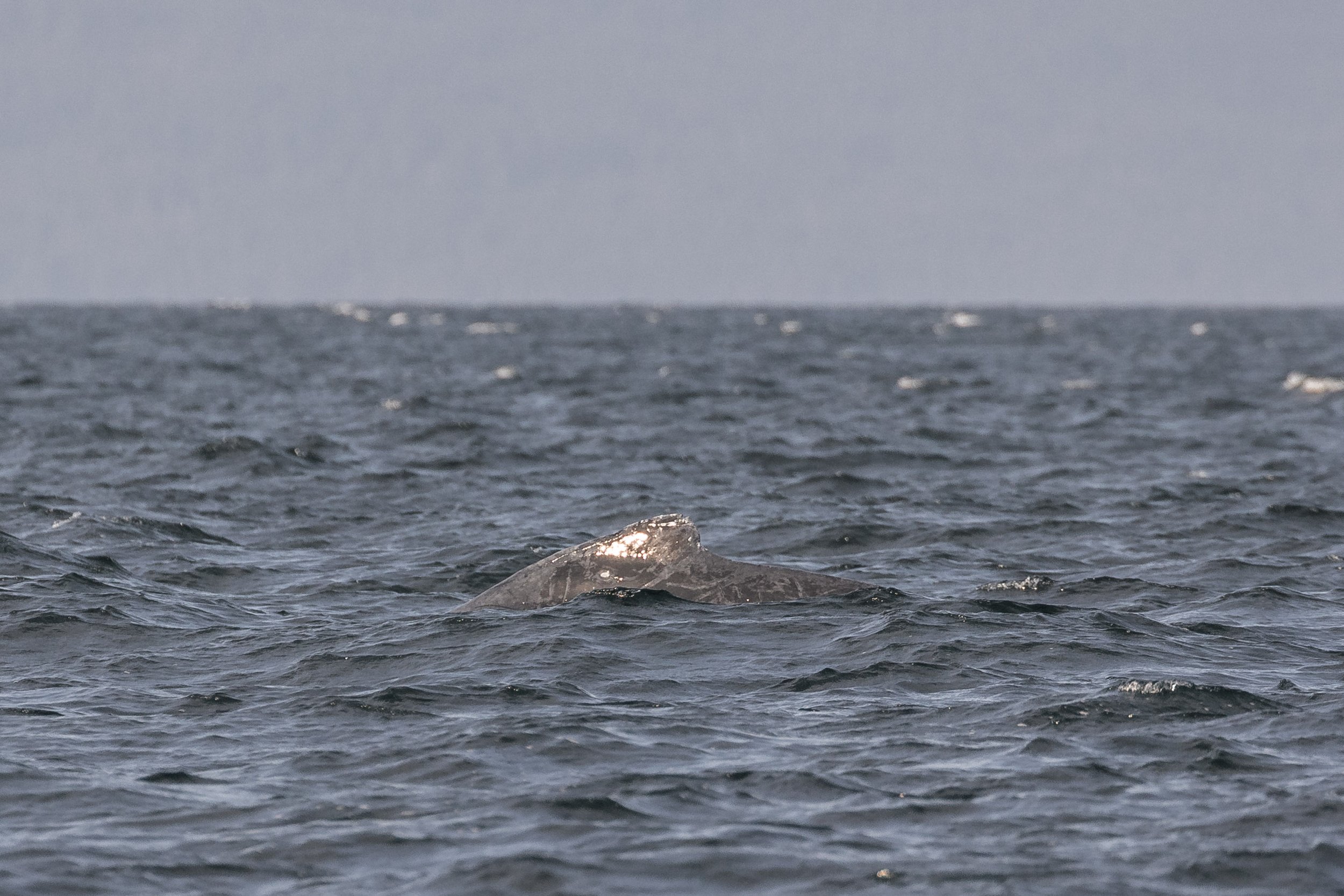
Slice’s dorsal fin.
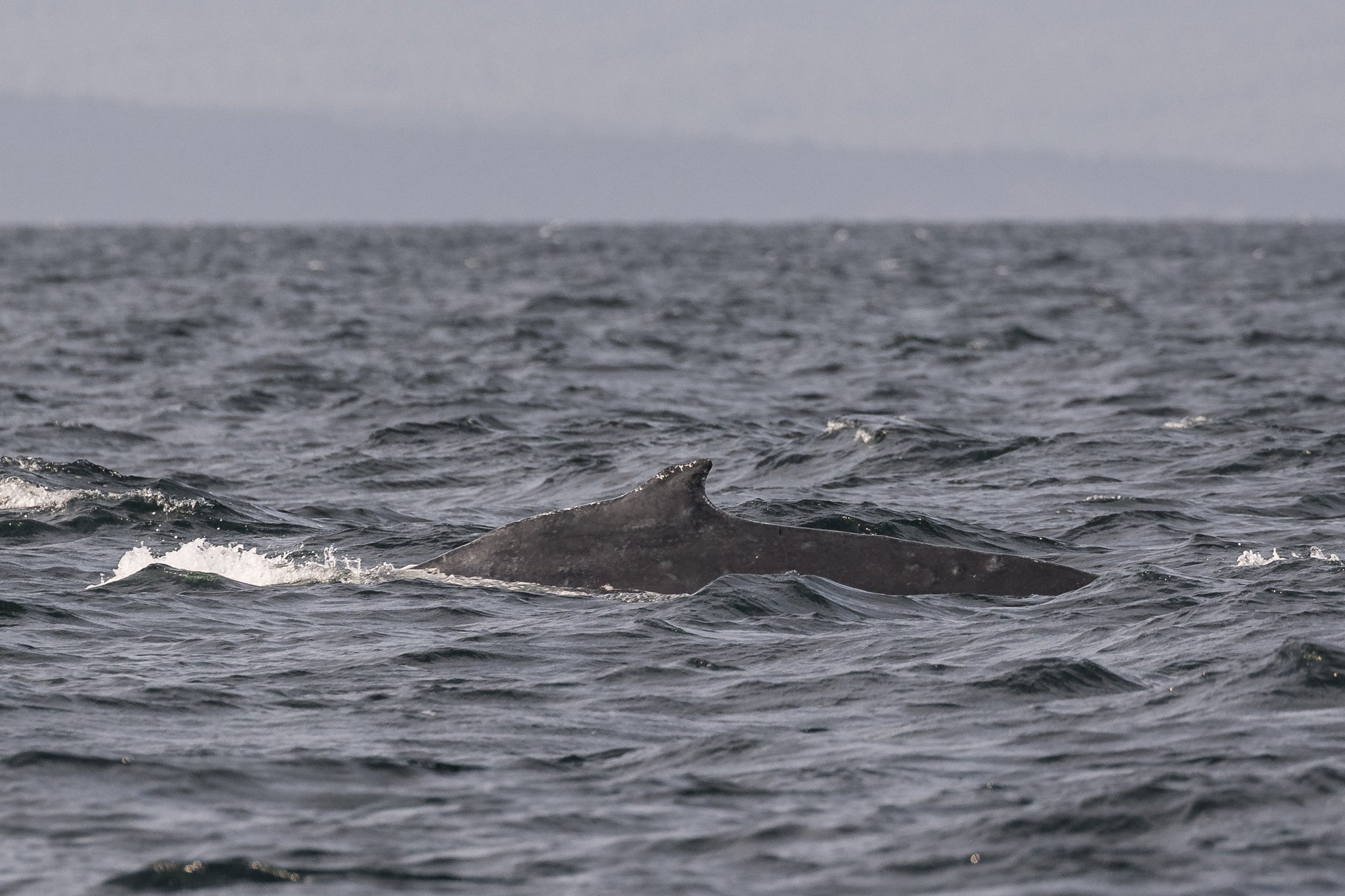
Graze travelling through the waves.
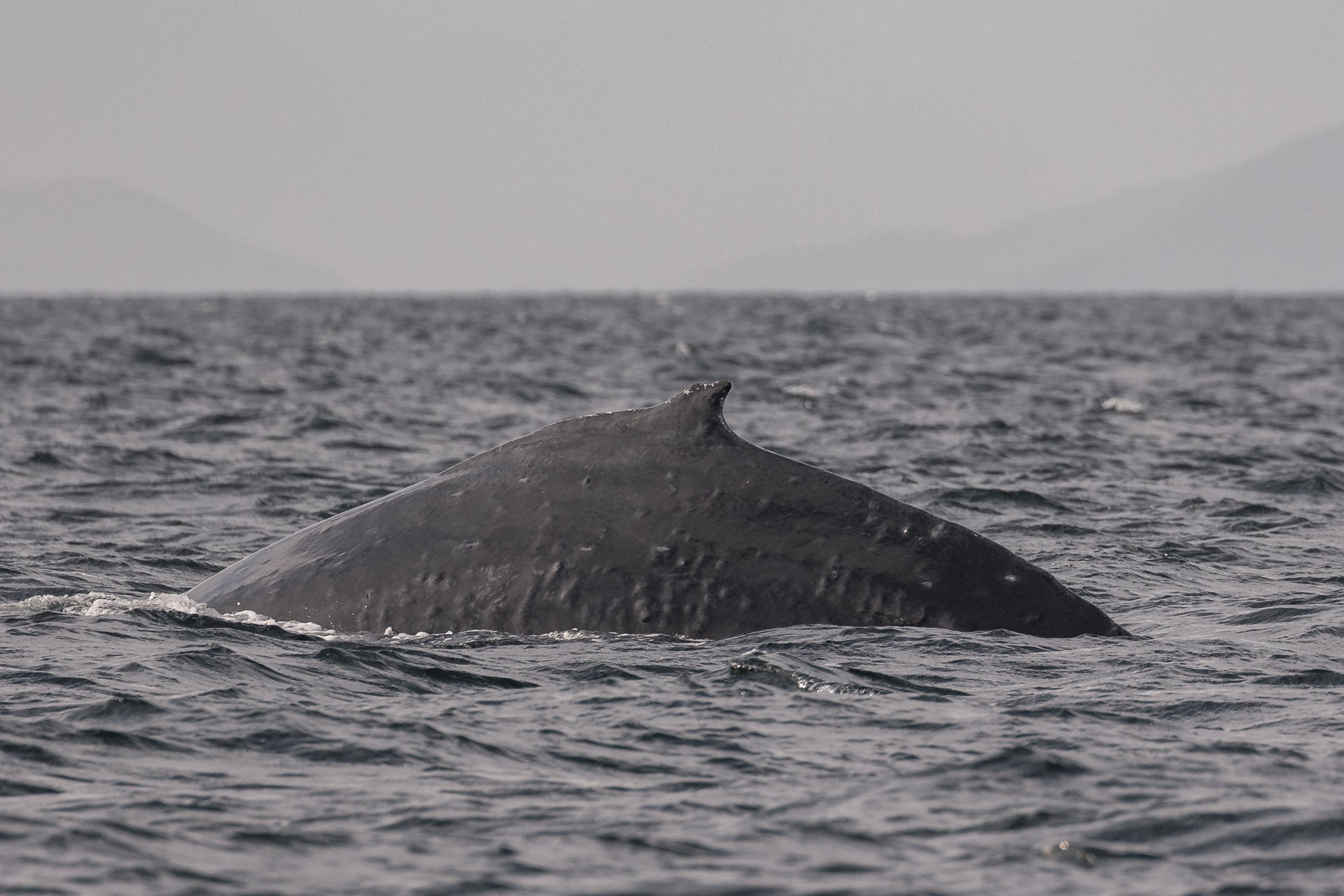
Graze’s dorsal fin.
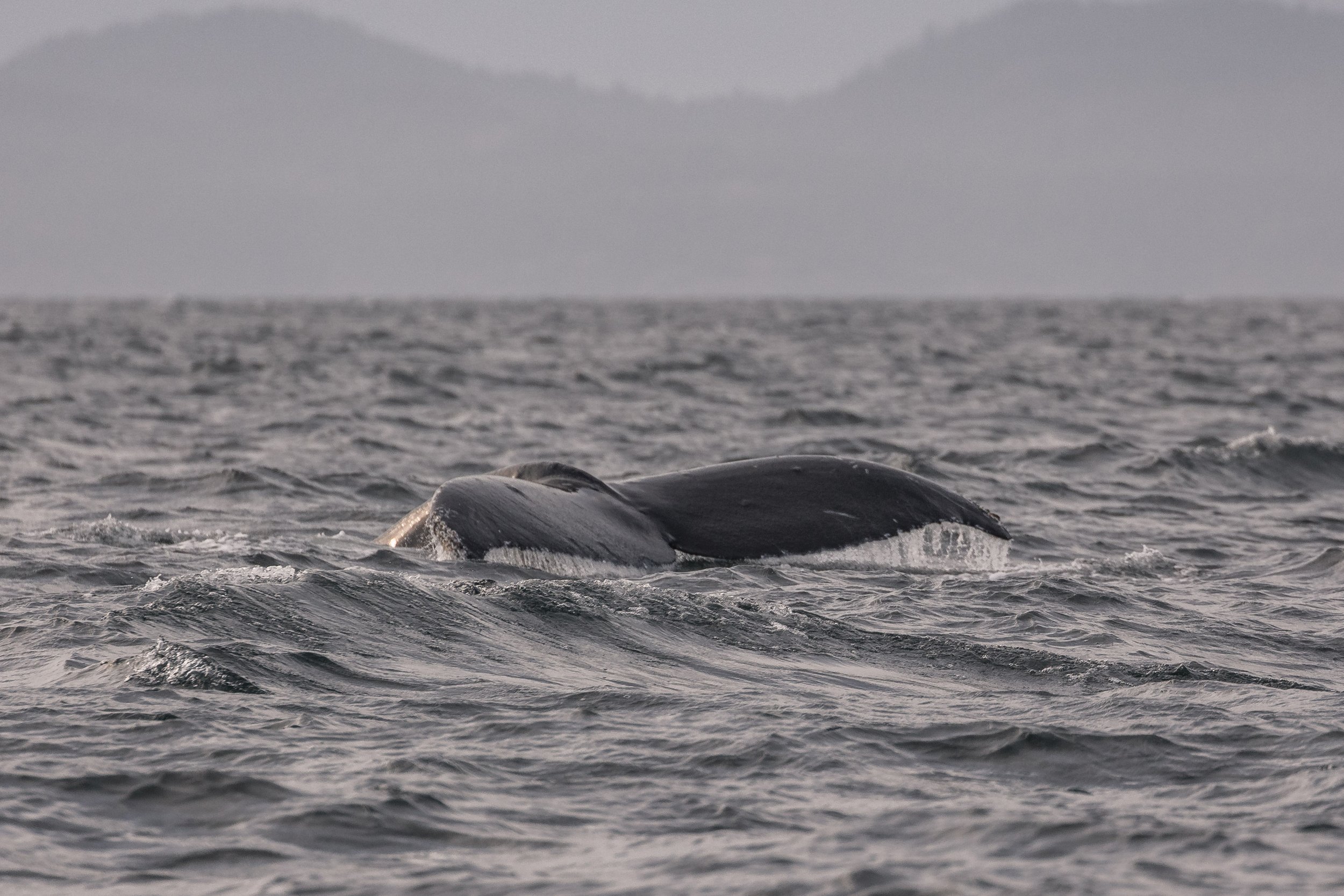
Slice lifting his tail for a dive.
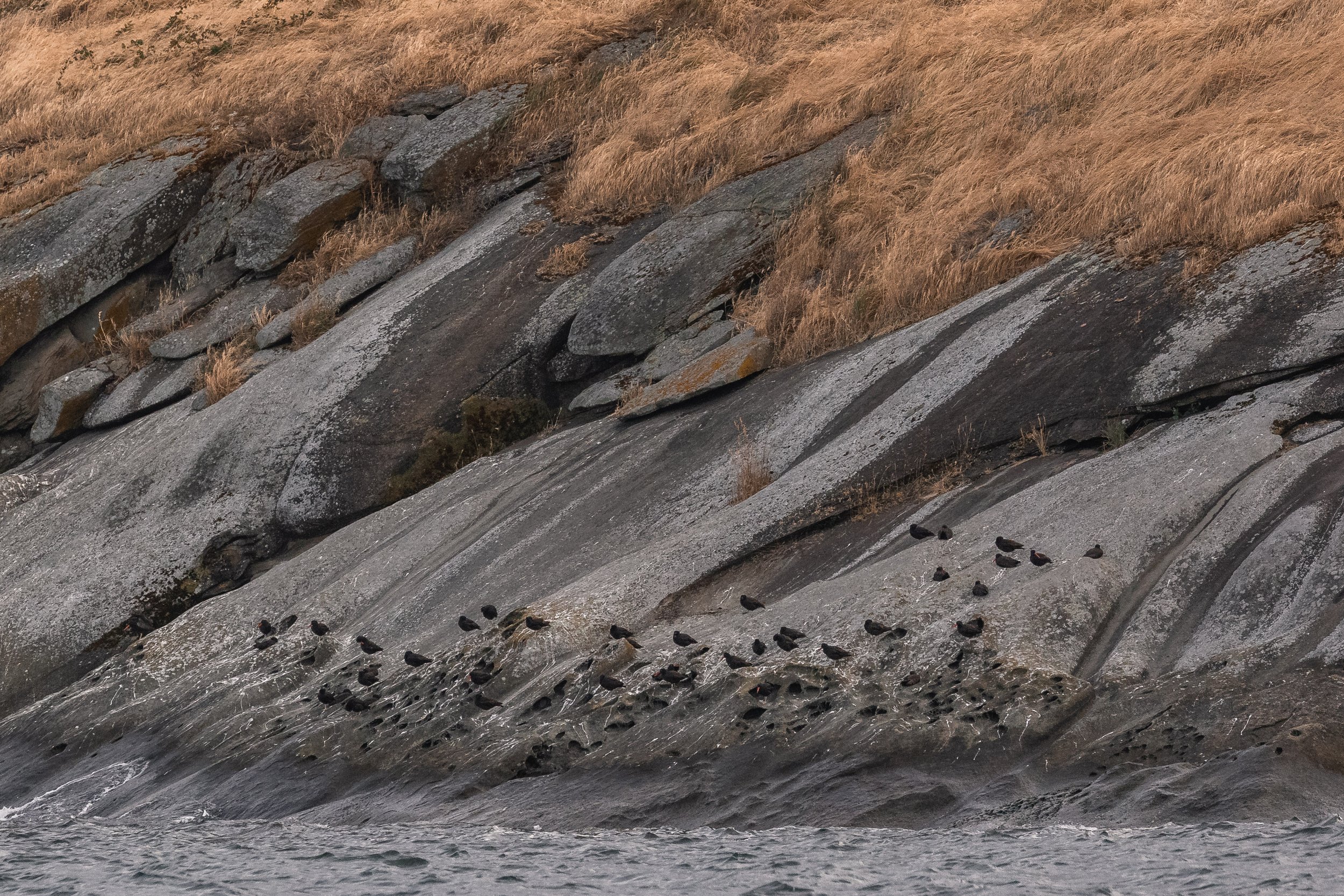
Black Oystercatchers along the shoreline.