
July 2, 2026, 10:30 AM - Orca everywhere!
Grey skies and steady rain greeted us as both Kula and Cascadia slipped away from the dock this morning. While some might think this type of weather puts a damper on a whale watching adventure, those of us lucky enough to spend our days on the Salish Sea know that rainy days often bring some of the most atmospheric experiences. Rather than heading into more exposed waters, our captains decided to tuck into the sheltered maze of the Southern Gulf Islands, where the forested shorelines offer protection from the wind and create some of the most beautiful scenery on the coast.
Our journey began by threading our way through Dodd Narrows, one of the most fascinating waterways on the British Columbia coast. Every day, powerful tidal currents surge through the passage, sometimes exceeding 9 knots as millions of litres of seawater are funnelled through this spot. Timing is everything here, as vessels often plan their transit around slack tide when the currents briefly calm. For our guests, passing through Dodd Narrows is always a highlight; the towering rocky cliffs seem close enough to touch as the boat glides carefully through one of Canada's busiest tidal passages.
Beyond the narrows, we entered the incredible world of the Southern Gulf Islands. Stretching between Vancouver Island and the British Columbia mainland, these islands are unlike anywhere else in Canada. Thanks to the rain shadow created by the Vancouver Island and Olympic Mountains, this region enjoys one of the driest climates in the province. Warm summers, mild winters, and rocky outcrops covered with Garry oak meadows have even earned the area comparisons to a Mediterranean climate. While today's weather was certainly more West Coast than Mediterranean, the dramatic combination of mist, low clouds, and dense evergreen forests gave the islands an almost mystical appearance as we continued our search.
Our perseverance paid off as we reached the waters off Salt Spring Island, where several dark fins broke the surface ahead of us. Cameras were immediately brought out as our naturalists began identifying the whales. Unlike humpback whales, whose tail flukes are their primary identifying feature, transient orca each possess a unique combination of characteristics that allows researchers to recognize individuals throughout their lives. The tall dorsal fin is often the first clue, with every whale displaying a slightly different shape, height, and pattern of nicks or scars. Just behind the dorsal fin sits the saddle patch, a grey marking that varies greatly between individuals in both shape and shading. Even the white eye patches can differ subtly in size and angle. By combining all of these features, experienced researchers and naturalists can confidently determine exactly which whales we're watching.
This morning's group turned out to be the T086A family, a trio we were delighted to spend time with.
T086A Eider ♀ (1988)
T086A4 Akia ♀ (2016)
T086A5 Siku ♂ (2024)
They moved steadily through the islands, surfacing together as the rain continued to fall around us. Against the backdrop of dark skies and mist-covered shorelines, the black-and-white whales seemed to emerge from the water almost silently before disappearing beneath the surface once again. The moody conditions gave the entire encounter a uniquely Pacific Northwest feeling, one that photographs simply can't fully capture. Eventually, we left the T86As to continue their travels and resumed our search.
Not long afterwards, Cascadia made an exciting detour after spotting a single, towering dorsal fin slicing through the water. It didn't take long to recognize the whale; this was Noah.
T0491 Noah ♂ (2001)
Noah is a familiar fin in the Salish Sea and the son of Nan, who was fittingly named after Nanaimo because her family is frequently encountered in the area. Today, however, Noah was travelling alone. This behaviour is fairly typical for young adult male transient/Bigg's killer whales. As they mature, males often spend more time away from their mothers and siblings, venturing out on their own or occasionally joining other relatives before eventually returning to their maternal family. Despite these periods of independence, the bond between mother and son remains strong throughout their lives, and we're sure Noah and Nan will cross paths again before long.
As the afternoon continued, we worked our way back toward home, scanning every stretch of water between the islands. Near Galiano Island, more black dorsal fins appeared ahead of us. This time, we had stumbled upon not one but two families travelling together: the T002C family alongside the T124A2 family.
T002C Tasu ♀ (1989)
T002C1 Rocky ♂ (2002)
T002C3 Lucy ♀ (2011)
T002C5 Zippy/Guardian (2020)
T002C6 Yukon (2025)
T124A2 Elkugu ♀ (2001)
T124A2A Agafia ♂ (2013)
T124A2B Litton ♀ (2016)
Watching multiple Bigg's killer whale families travel together is always fascinating. Although they typically hunt in small, tight-knit maternal groups, temporary associations between families are not uncommon. These gatherings may provide opportunities for social interaction, allow related whales to maintain family bonds, or simply occur as the whales travel through the same productive feeding areas. Whatever the reason, it offered us another incredible opportunity to observe these apex predators moving effortlessly through the calm waters while the rain quietly drummed against the decks of our boats.
As the day began drawing to a close, we turned our bows toward Nanaimo, making a couple of final wildlife stops along the way. Perched high in the towering trees were several bald eagles, looking noticeably wetter, and perhaps slightly less impressed, than usual. Their soaked feathers and stoic expressions suggested they were just as ready for a return to sunshine as the rest of us. Fortunately, summer is only just beginning, and brighter days undoubtedly lie ahead.
Rain or shine, every day on the Salish Sea tells a different story. Today's adventure reminded us that some of the most memorable experiences come beneath dark skies, where mist hangs over the islands, waterfalls appear on every cliff, and every surfacing dorsal fin feels like a discovery waiting to happen. Between navigating the remarkable currents of Dodd Narrows, exploring the sheltered beauty of the Southern Gulf Islands, and spending time with four different groups of familiar orca, it was another unforgettable reminder that wildlife doesn't wait for perfect weather, and neither do we.
Photos below by Aly Kohlman and Evan Hessels.
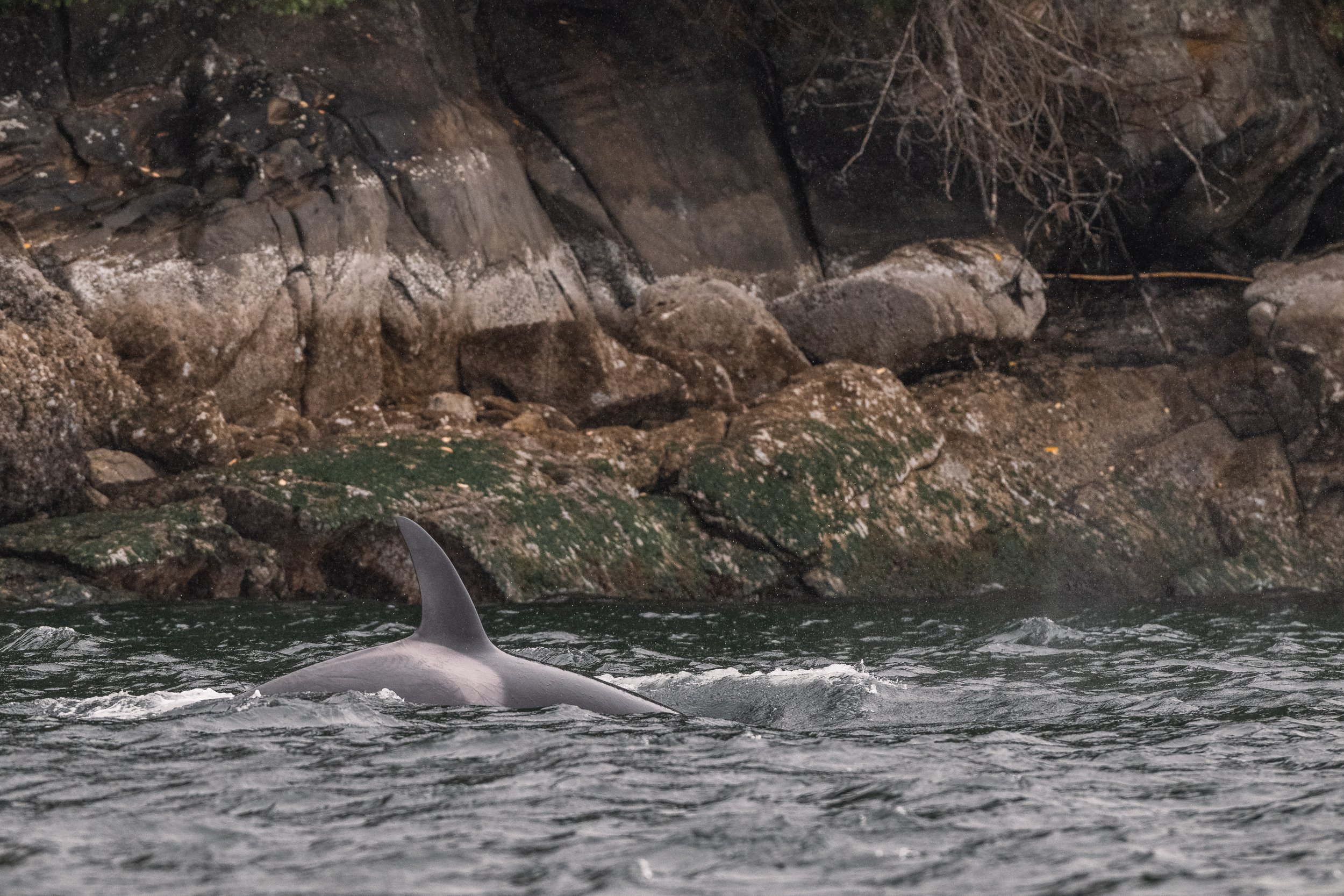
Akia surfacing in front of the rocky shoreline. Photo by Aly Kohlman.
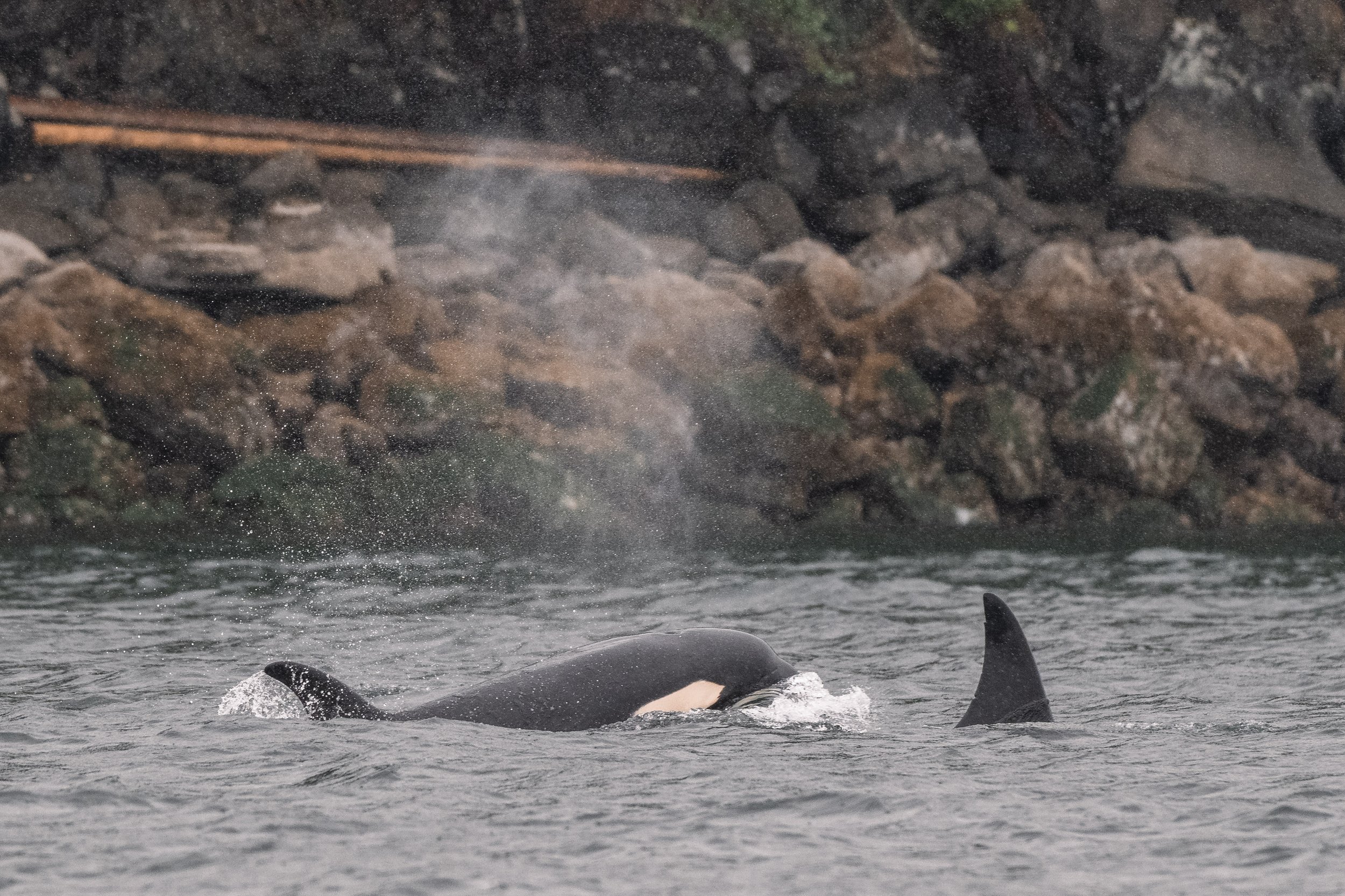
Eider followed by her youngest Siku. Photo by Aly Kohlman.
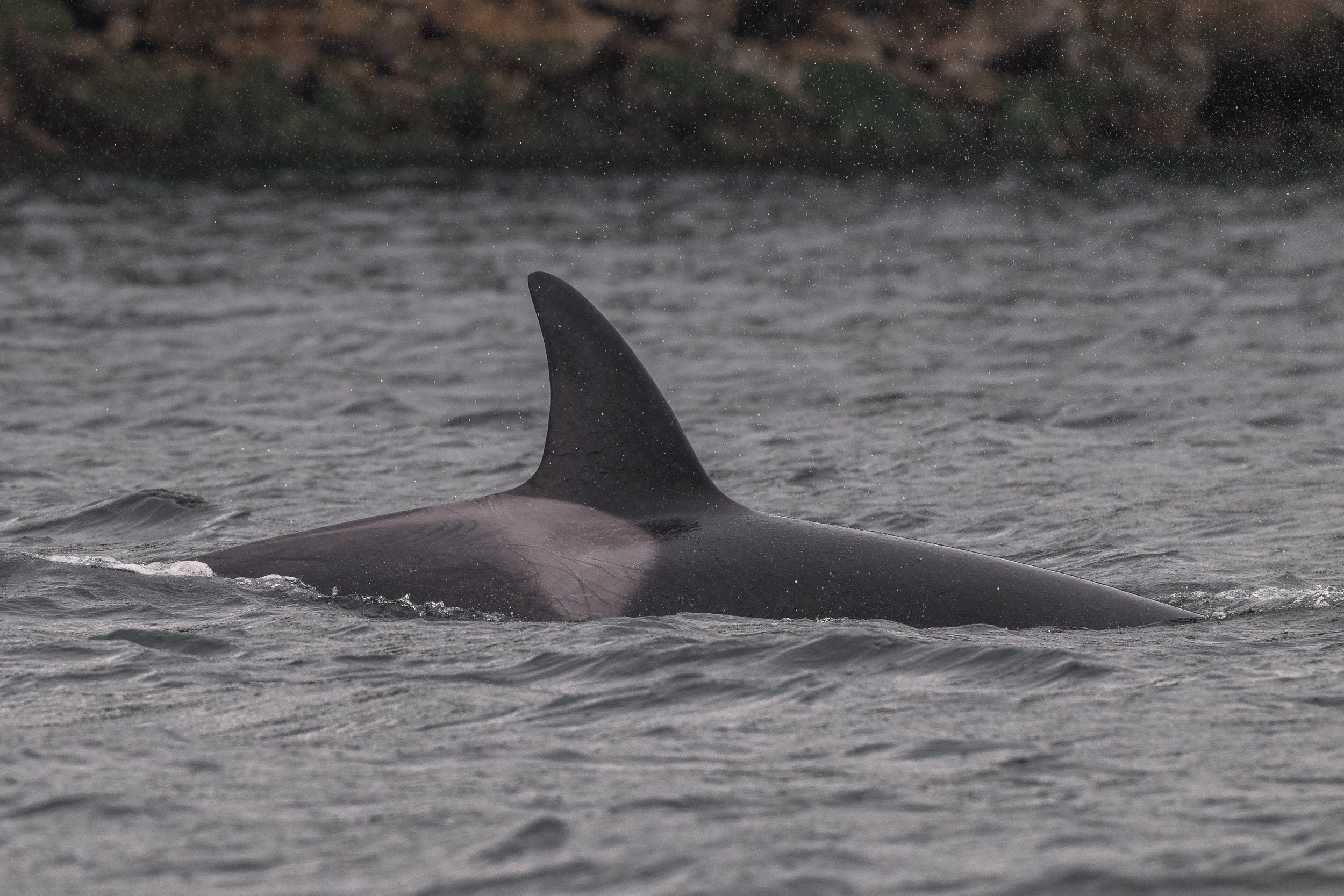
A good look at Akia’s saddle patch. Photo by Aly Kohlman.
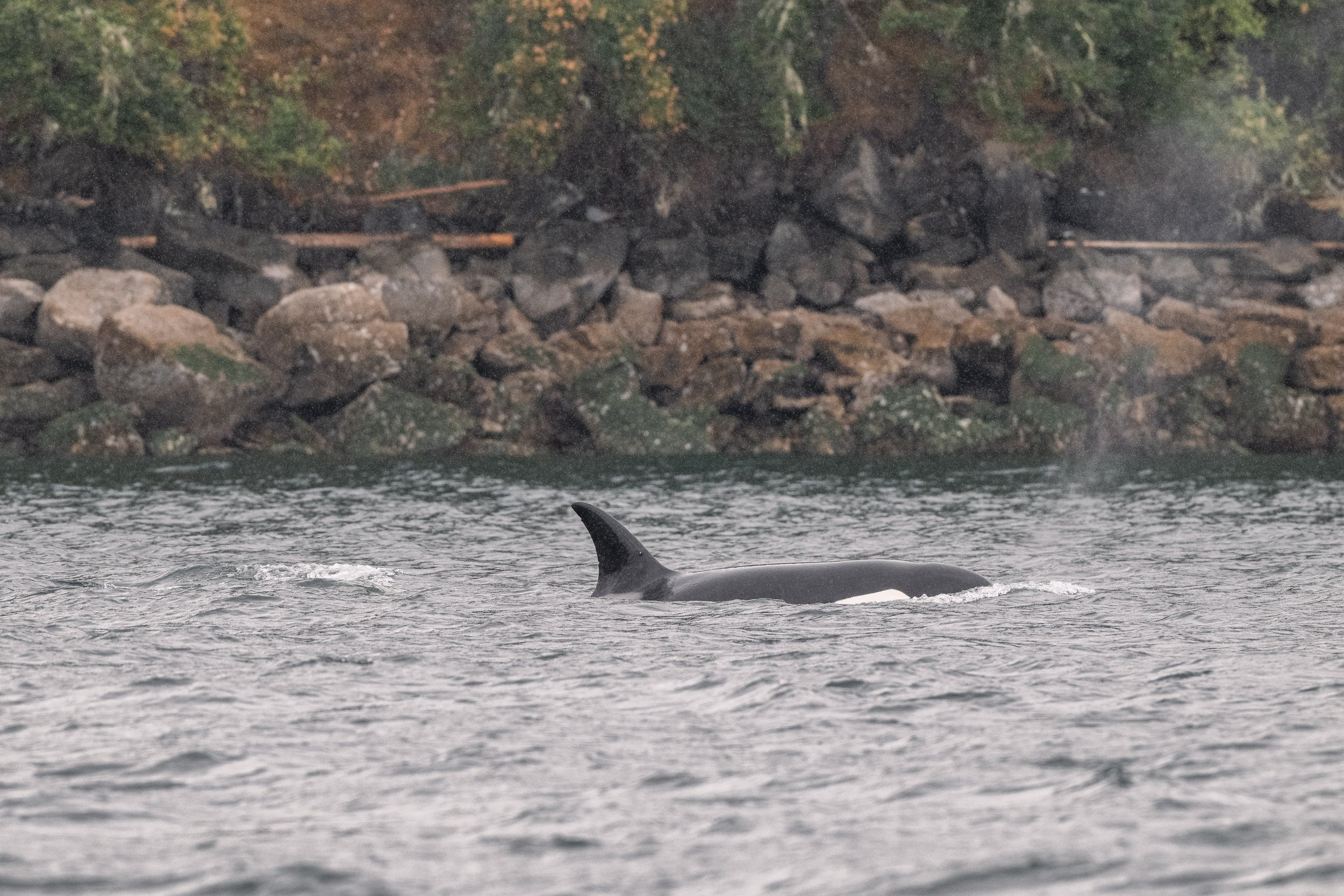
Eider surfacing. Photo by Aly Kohlman.
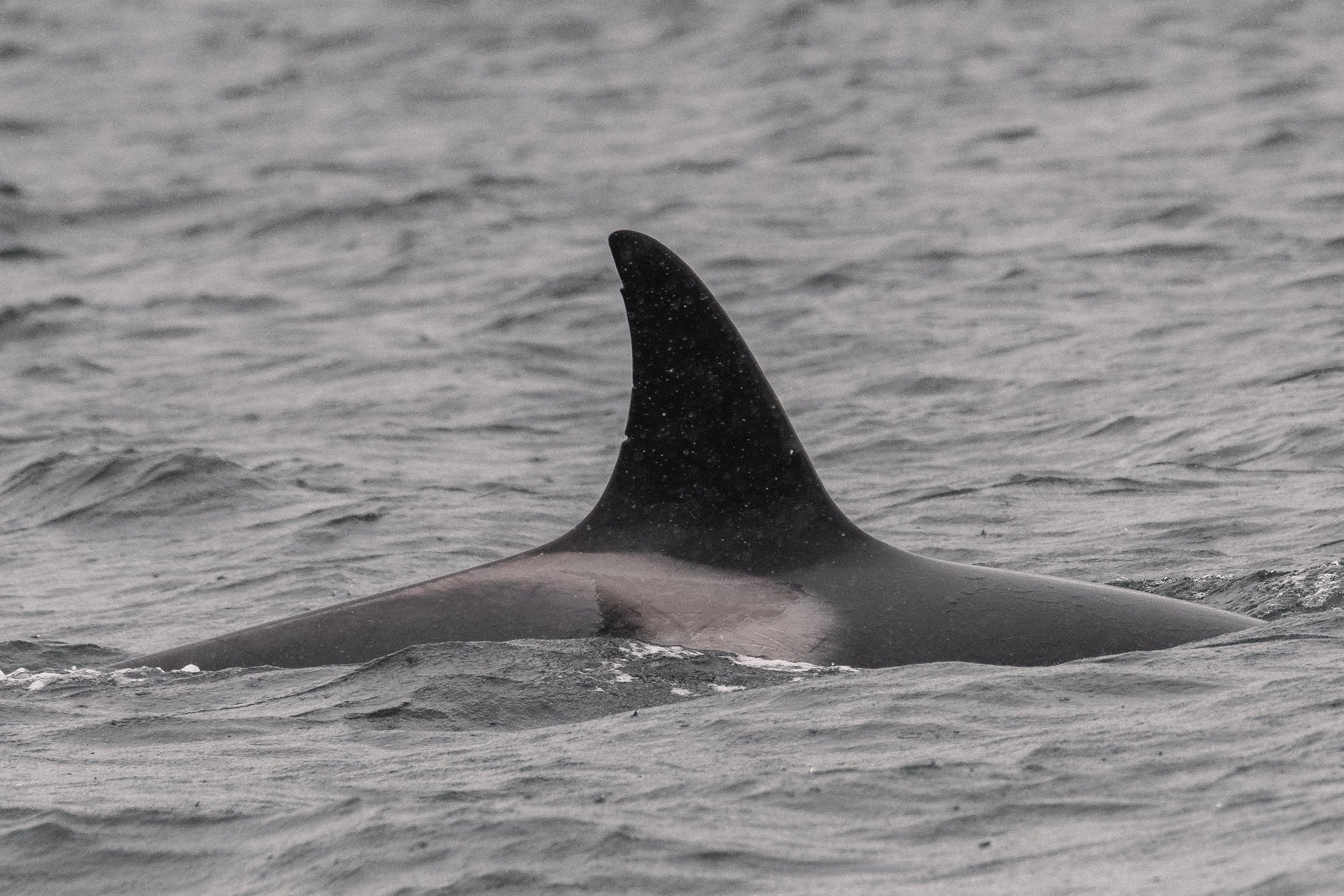
Eider surfacing. Photo by Evan Hessels.
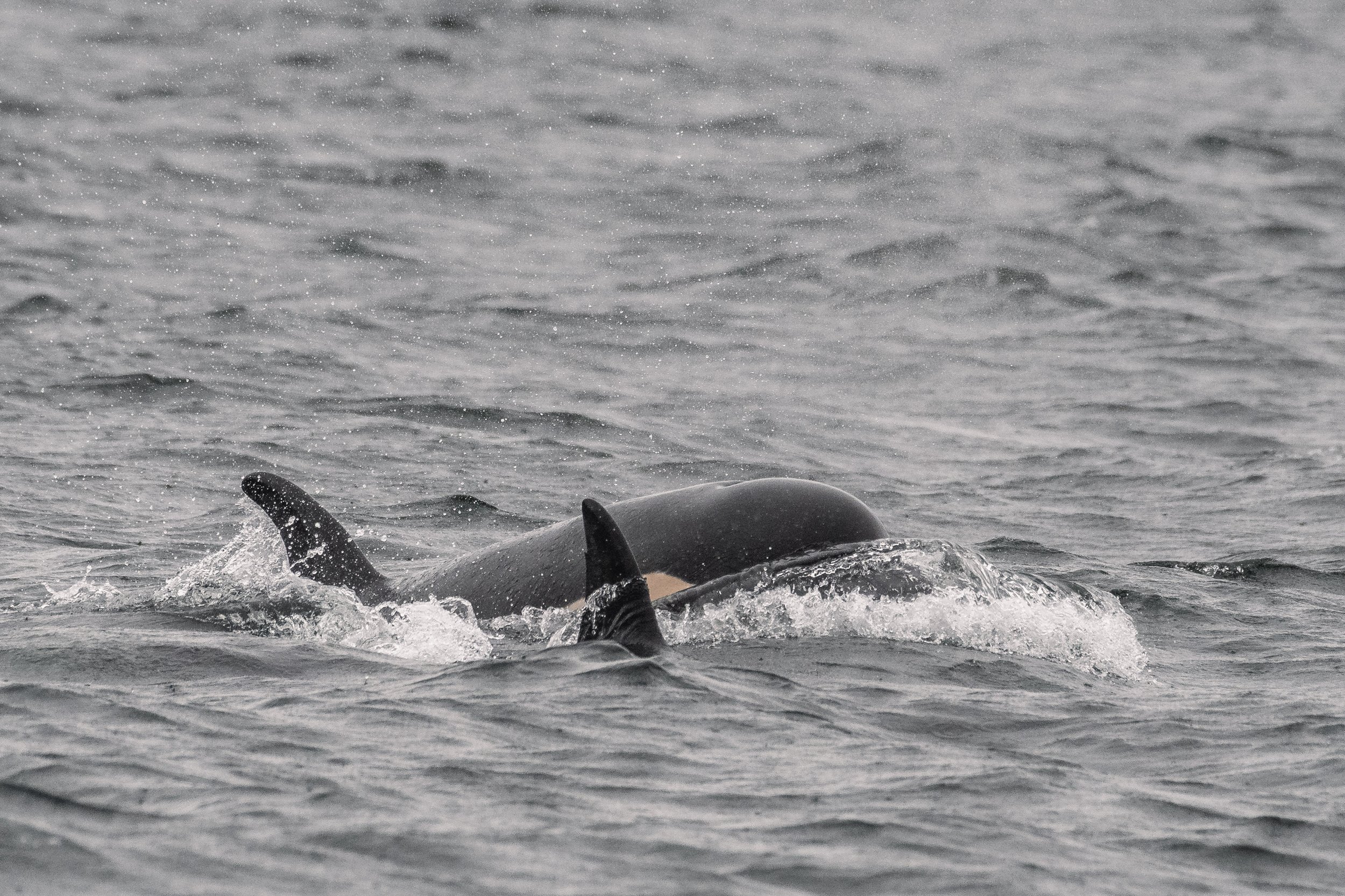
Eider and Siku. Photo by Evan Hessels.
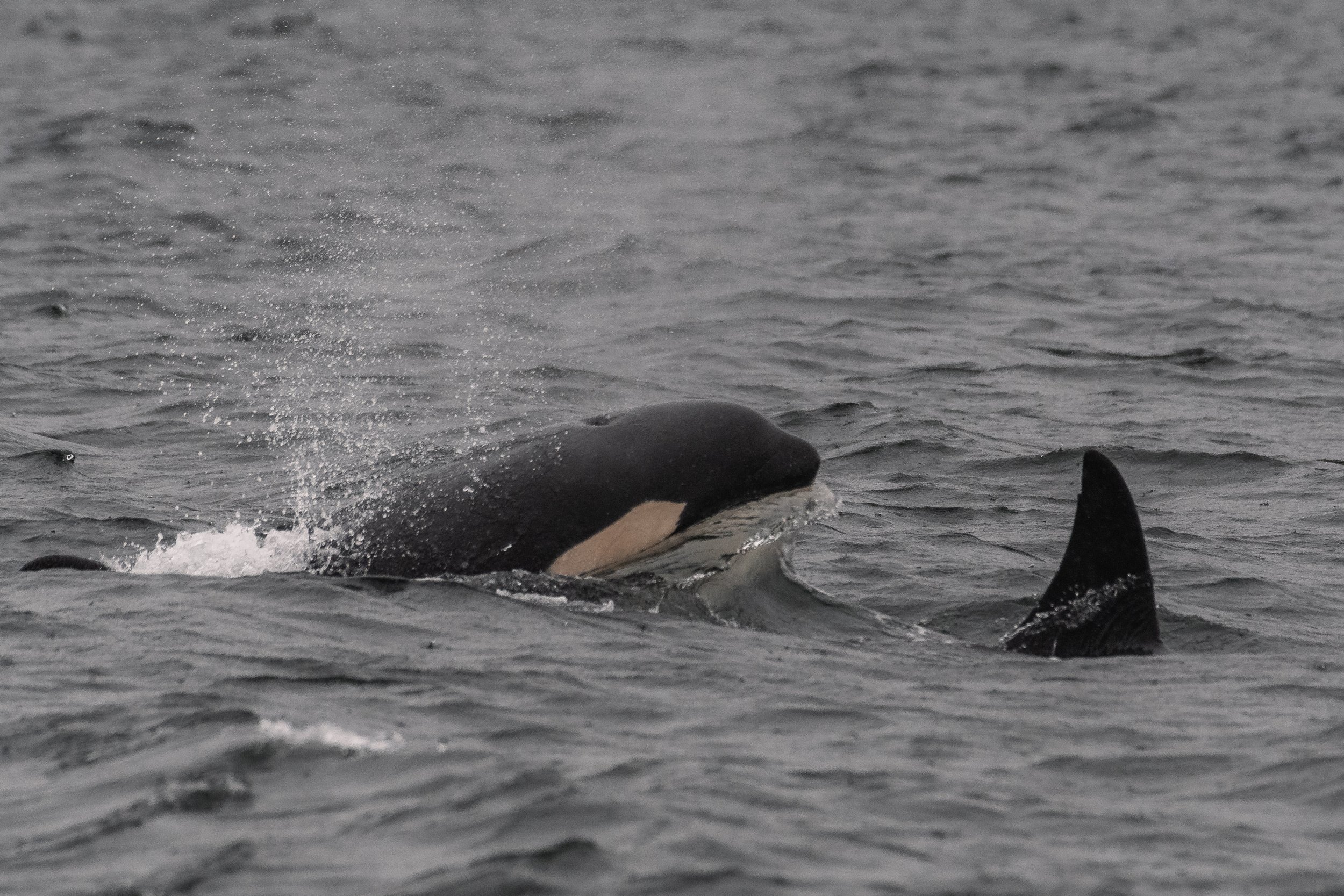
Siku following Eider. Photo by Evan Hessels.
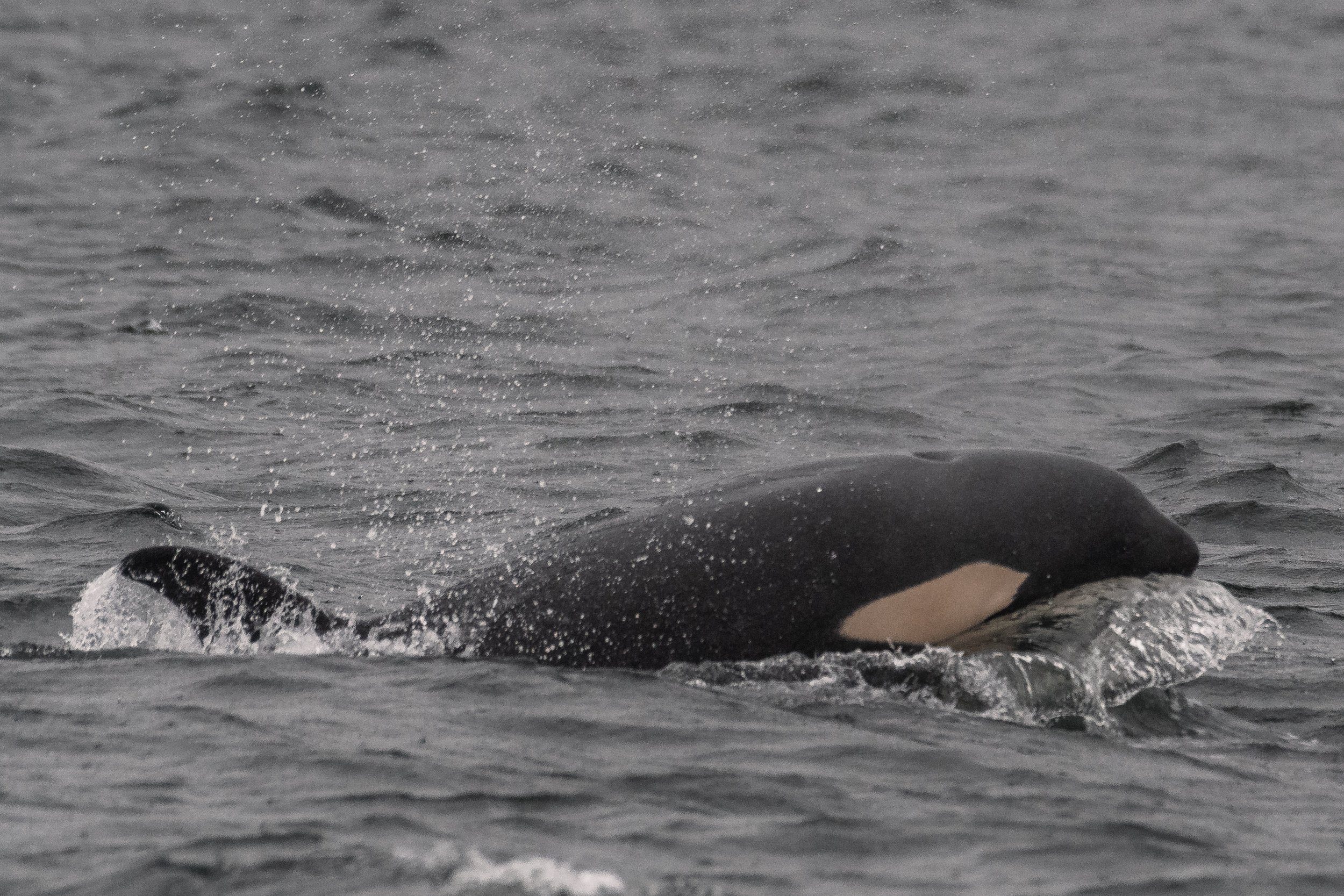
Siku making waves. Photo by Evan Hessels.
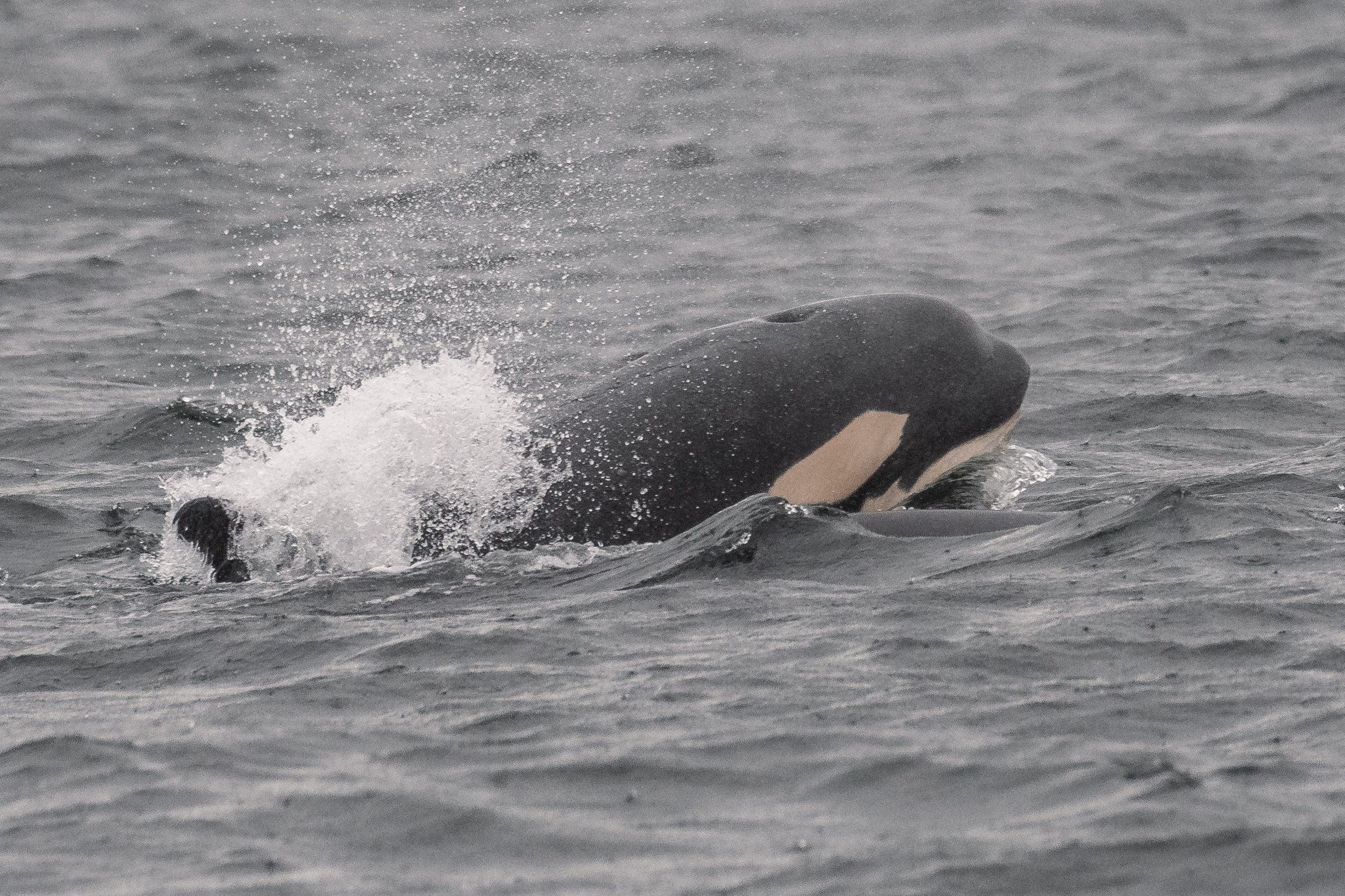
Siku splashing up a storm. Photo by Evan Hessels.
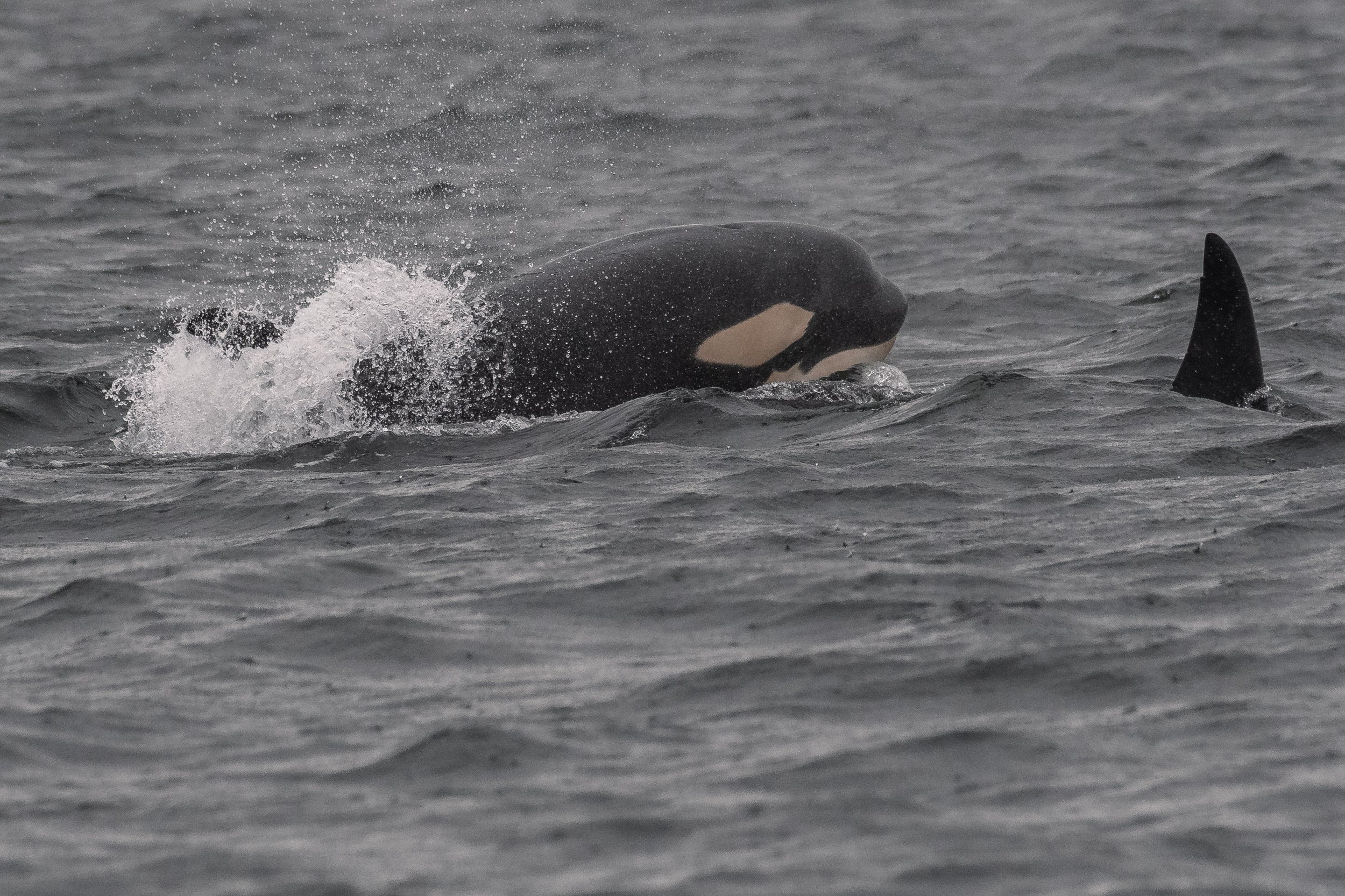
Siku keeping up with mom. Photo by Evan Hessels.
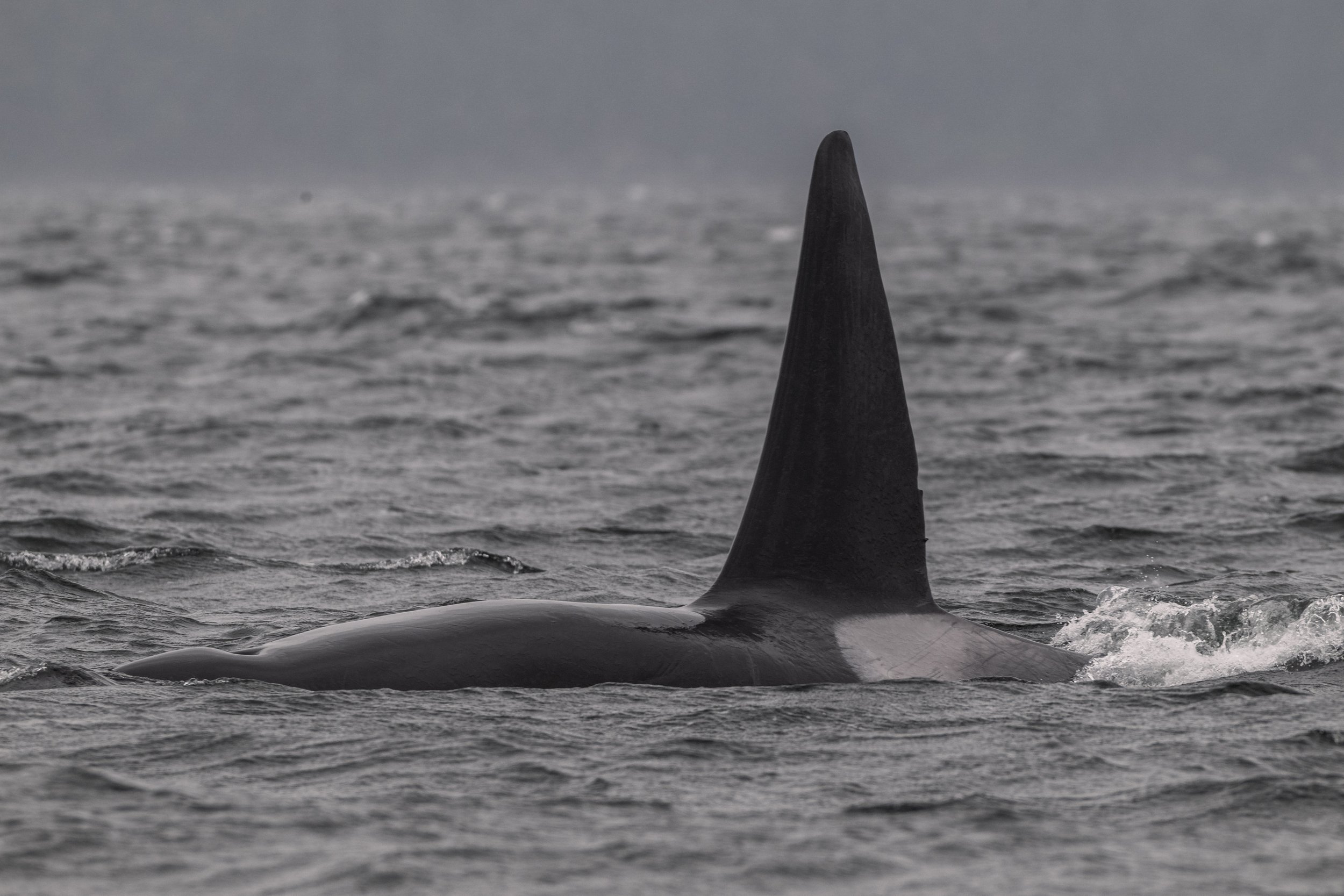
Noah cruising past. Photo by Aly Kohlman.
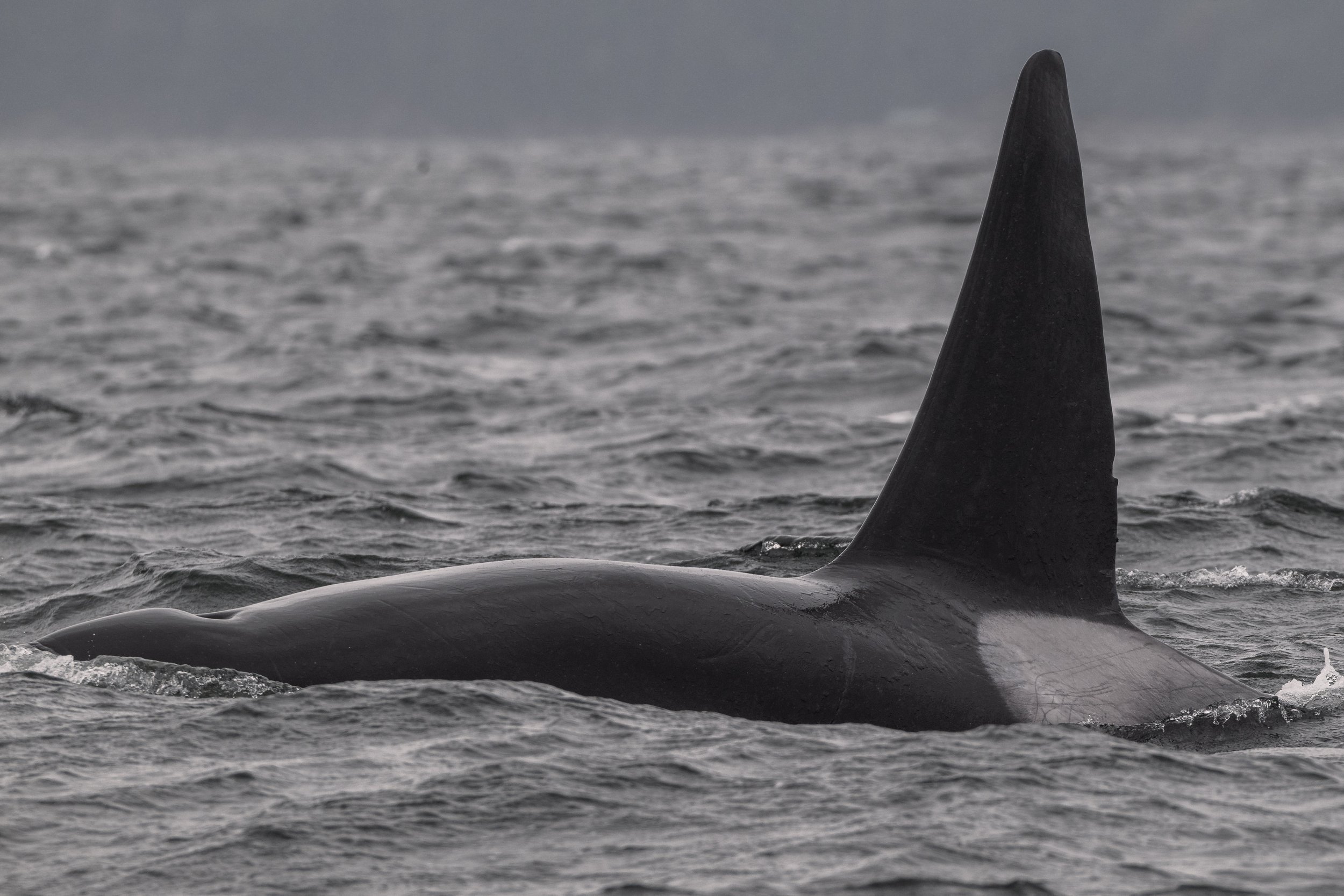
Noah surfacing. Photo by Aly Kohlman.
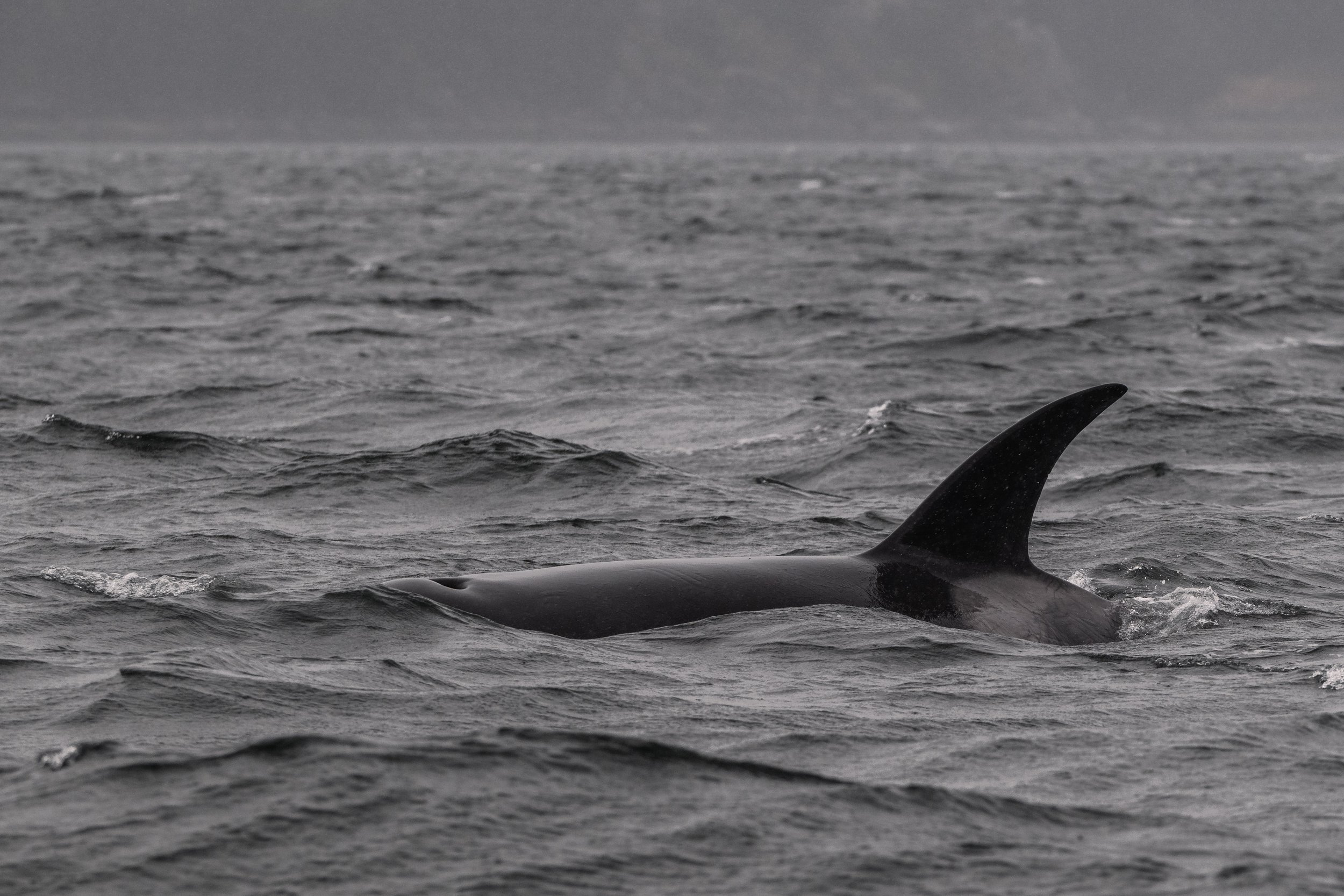
Agafia surfacing. Photo by Aly Kohlman.
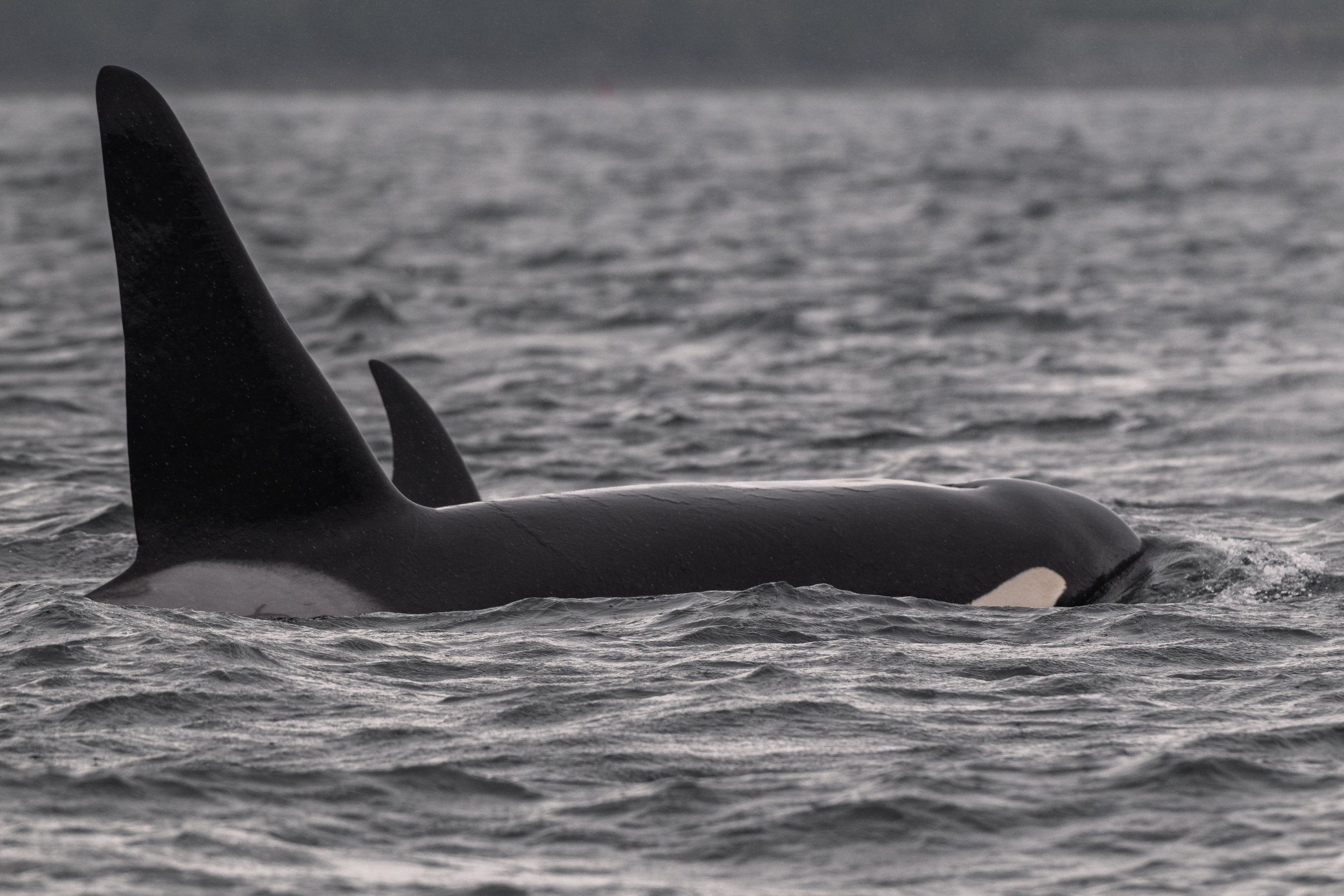
Rocky surfacing with Agafia alongside. Photo by Aly Kohlman.
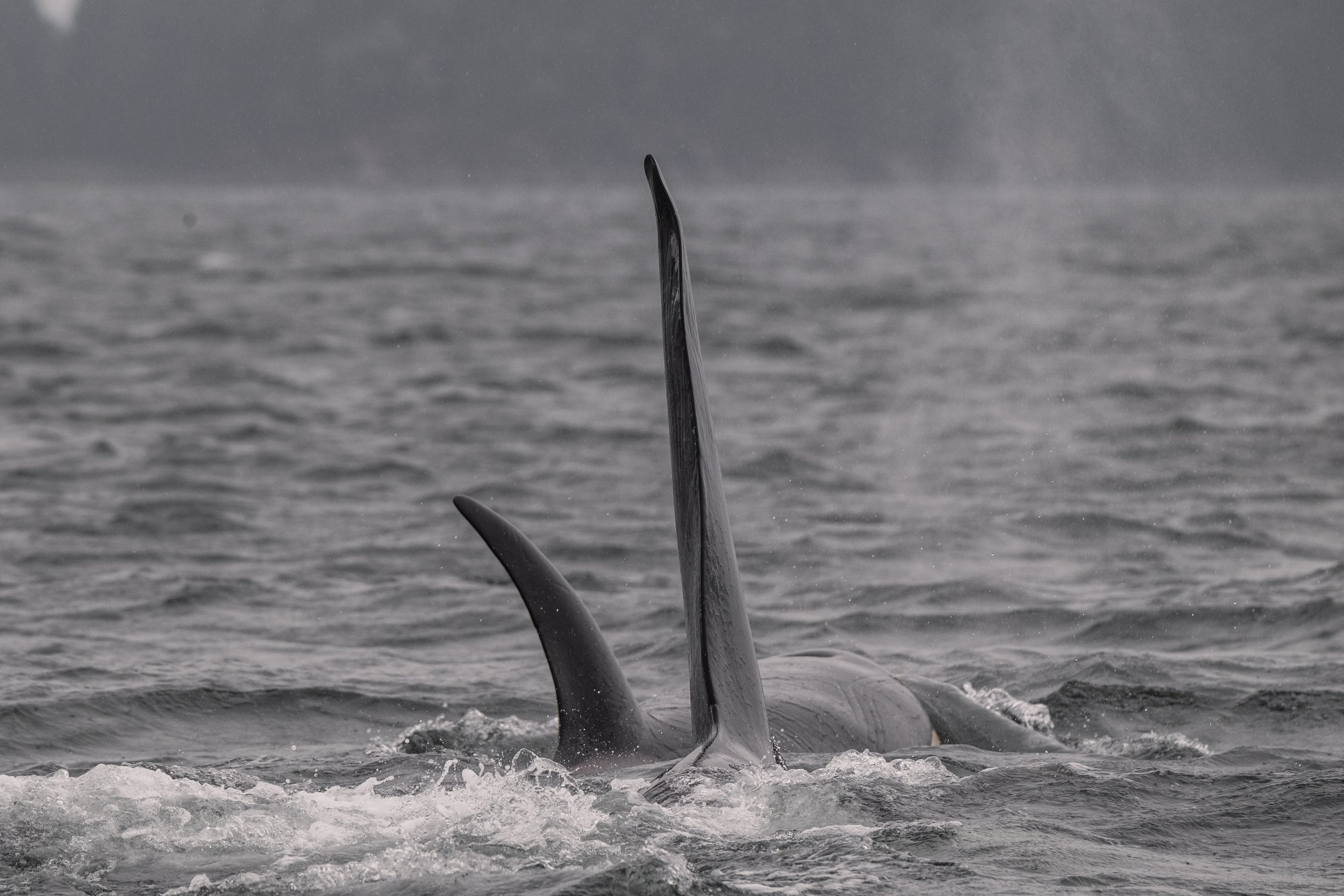
Agafia on the left, Rocky on the right. Photo by Aly Kohlman.
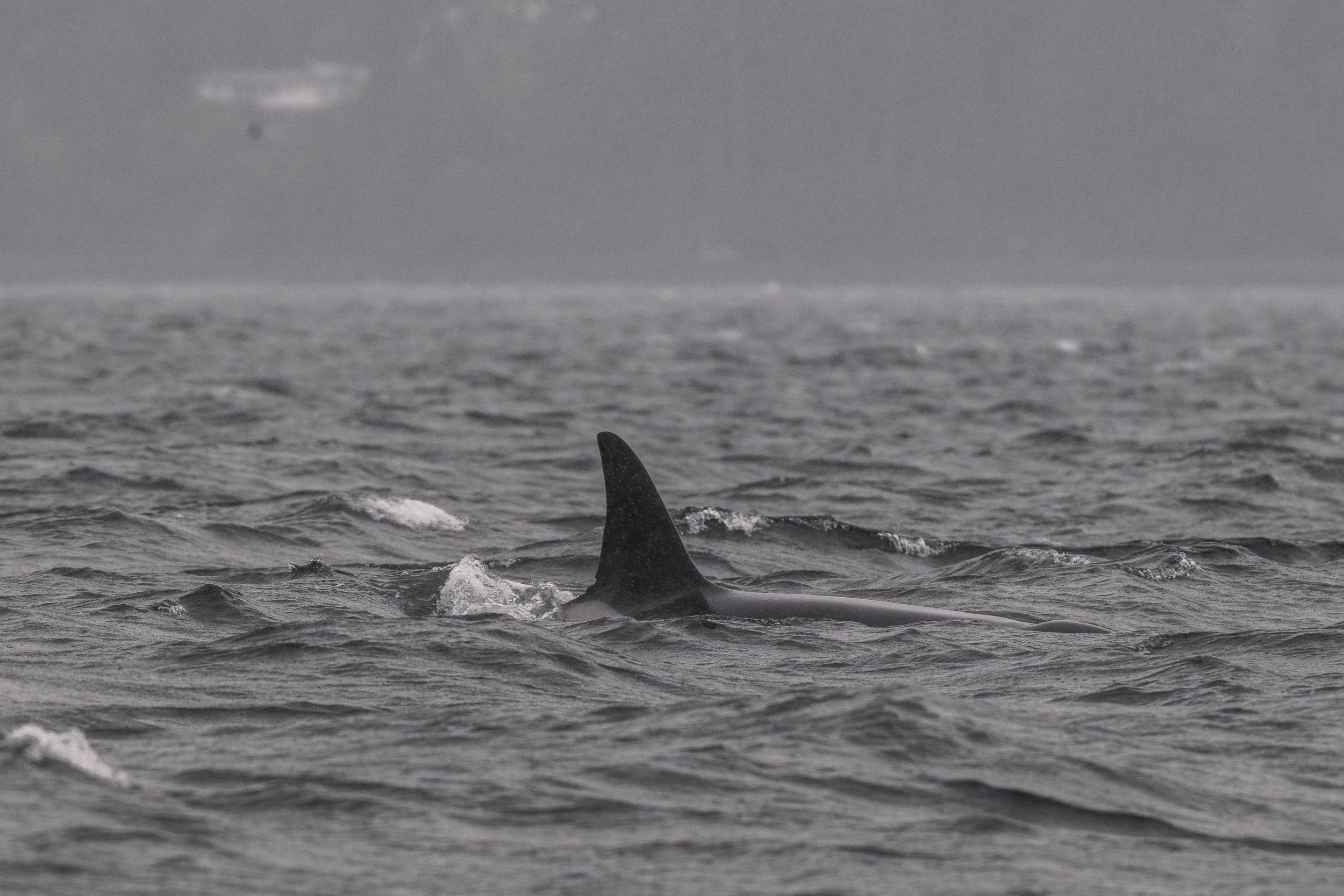
Tasu in the waves. Photo by Aly Kohlman.
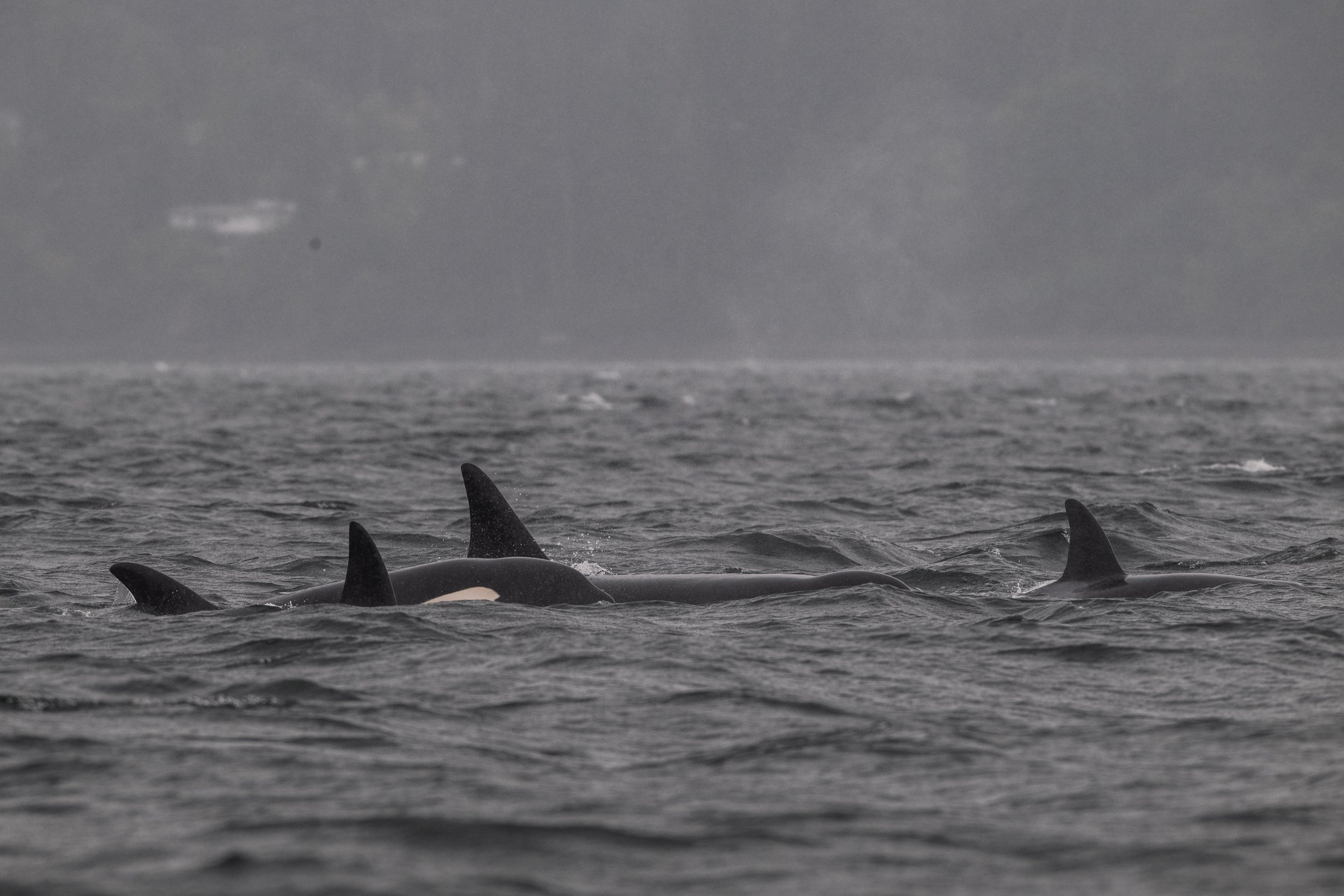
Surfacing together. Photo by Aly Kohlman.
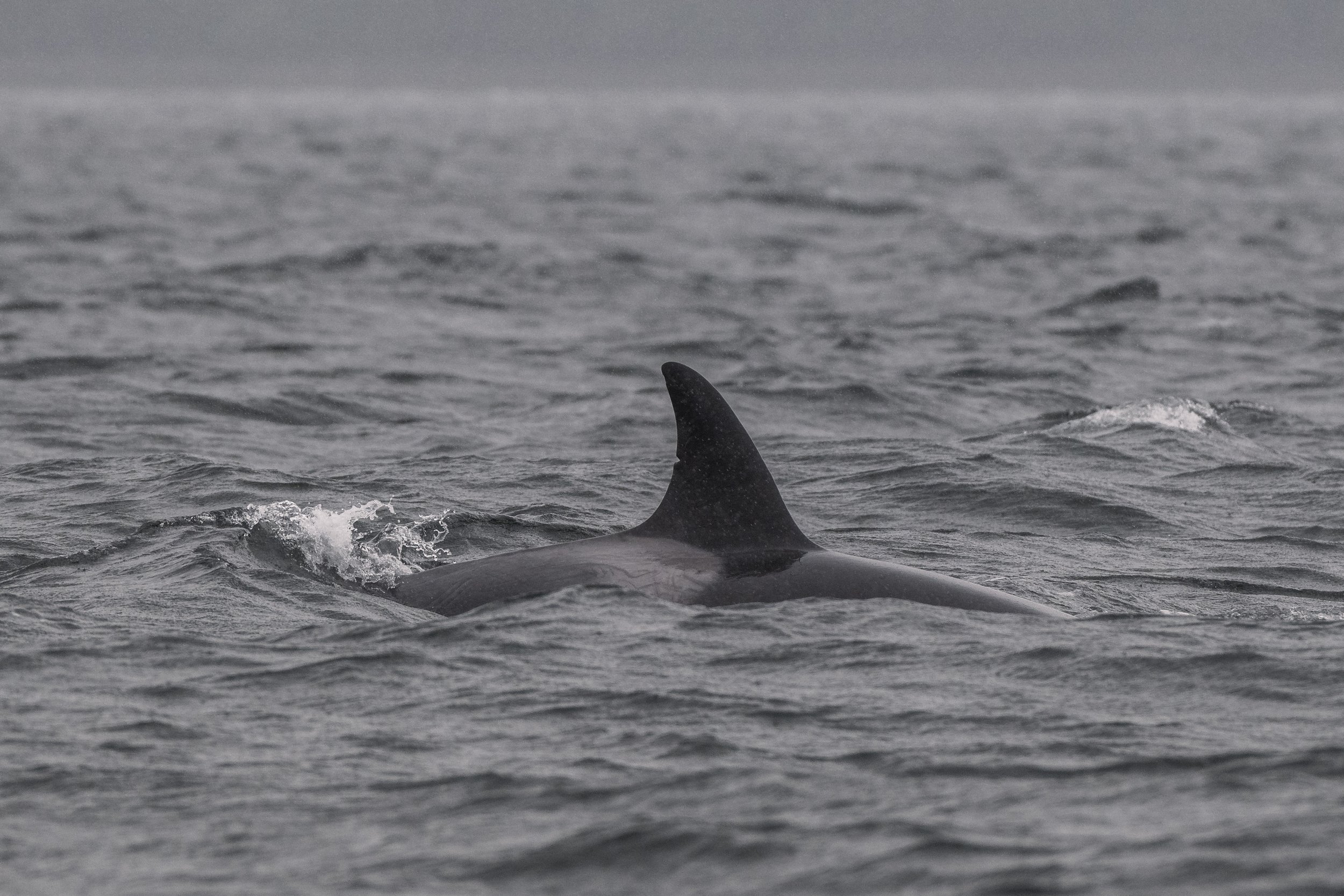
Litton in the waves. Photo by Aly Kohlman.
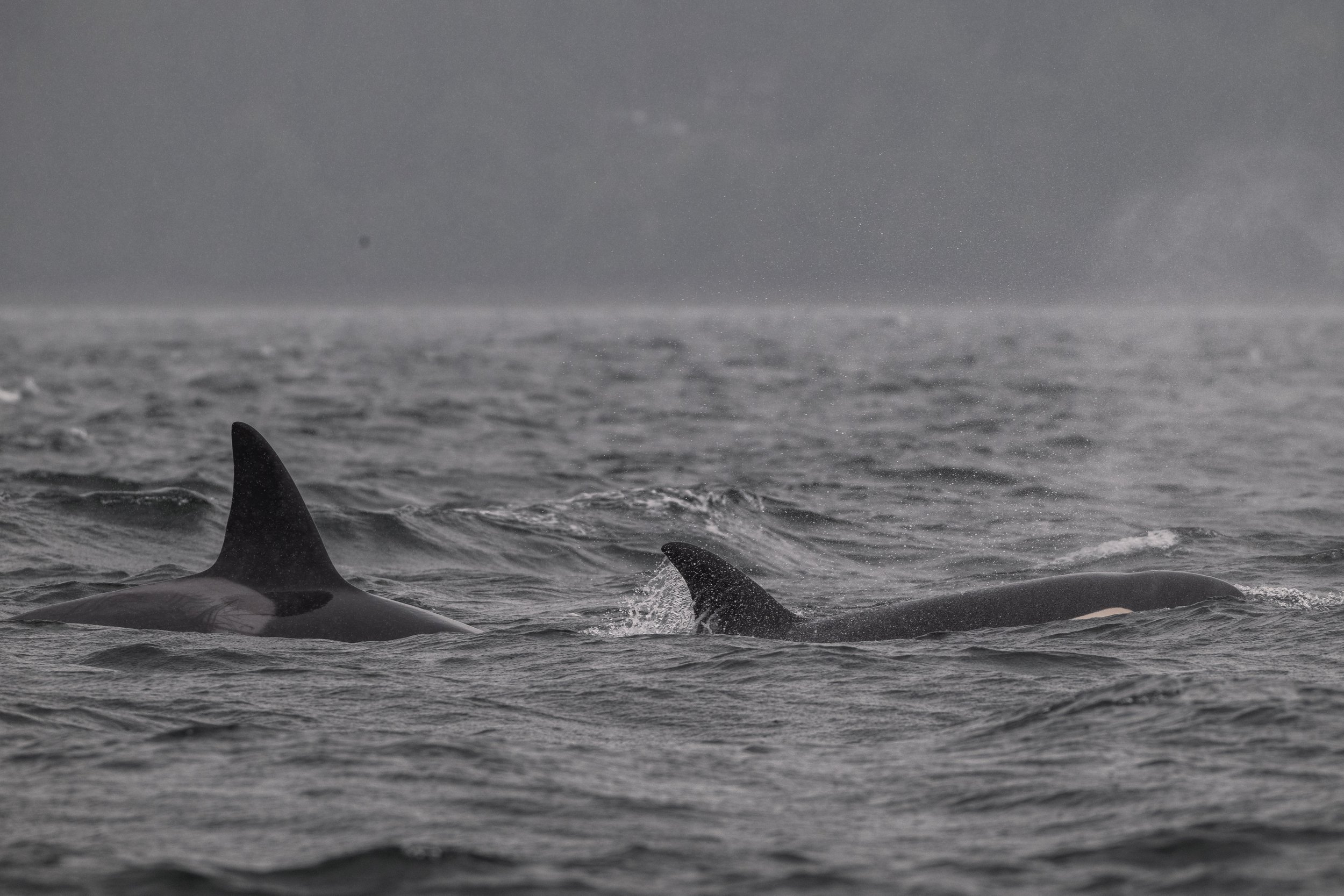
Elkugu following Litton. Photo by Aly Kohlman.
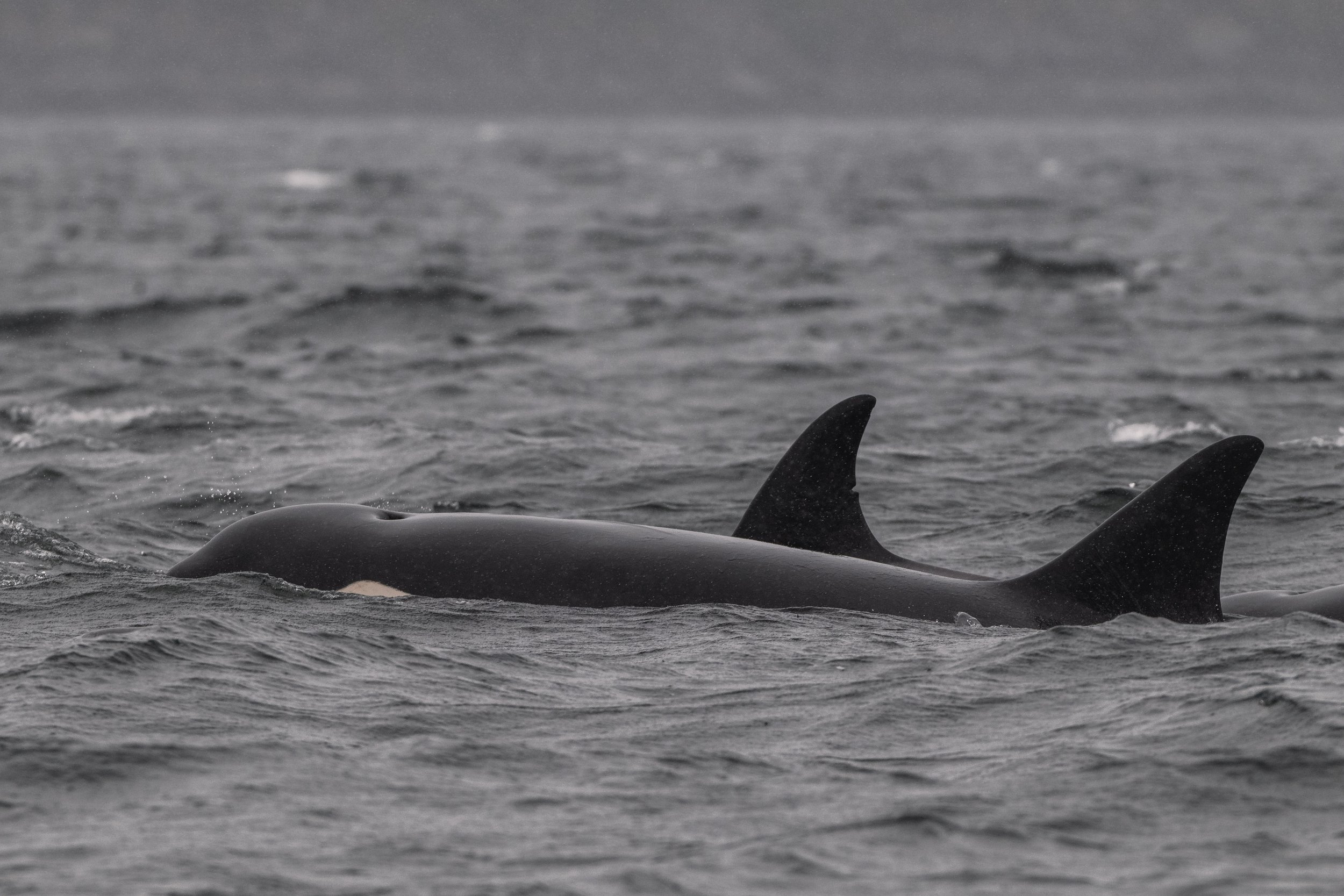
Elkugu with Litton at her side. Photo by Aly Kohlman.
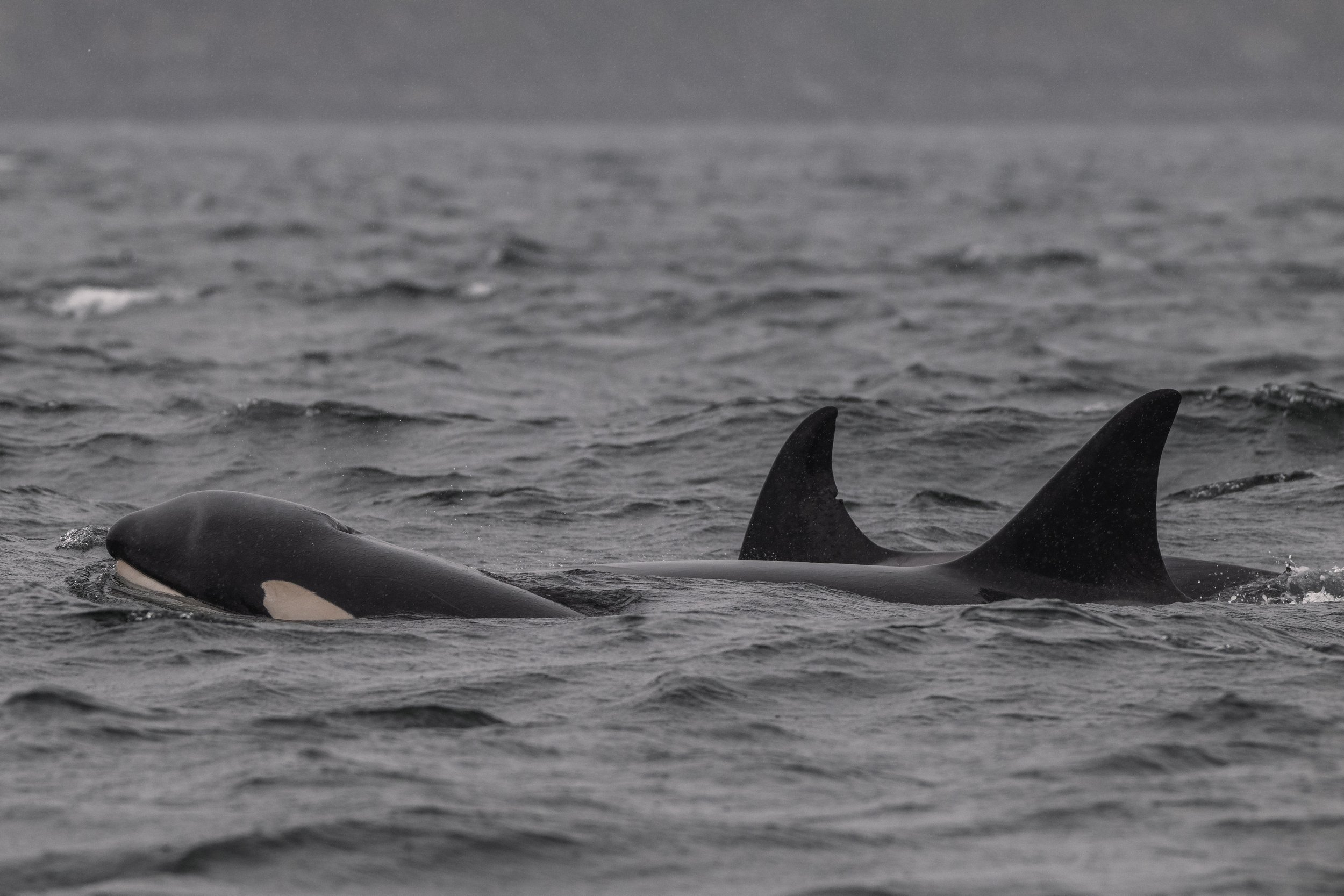
Tasu showing her eye patch, Litton with the chip in the dorsal and Elkugu in the rear. Photo by Aly Kohlman.
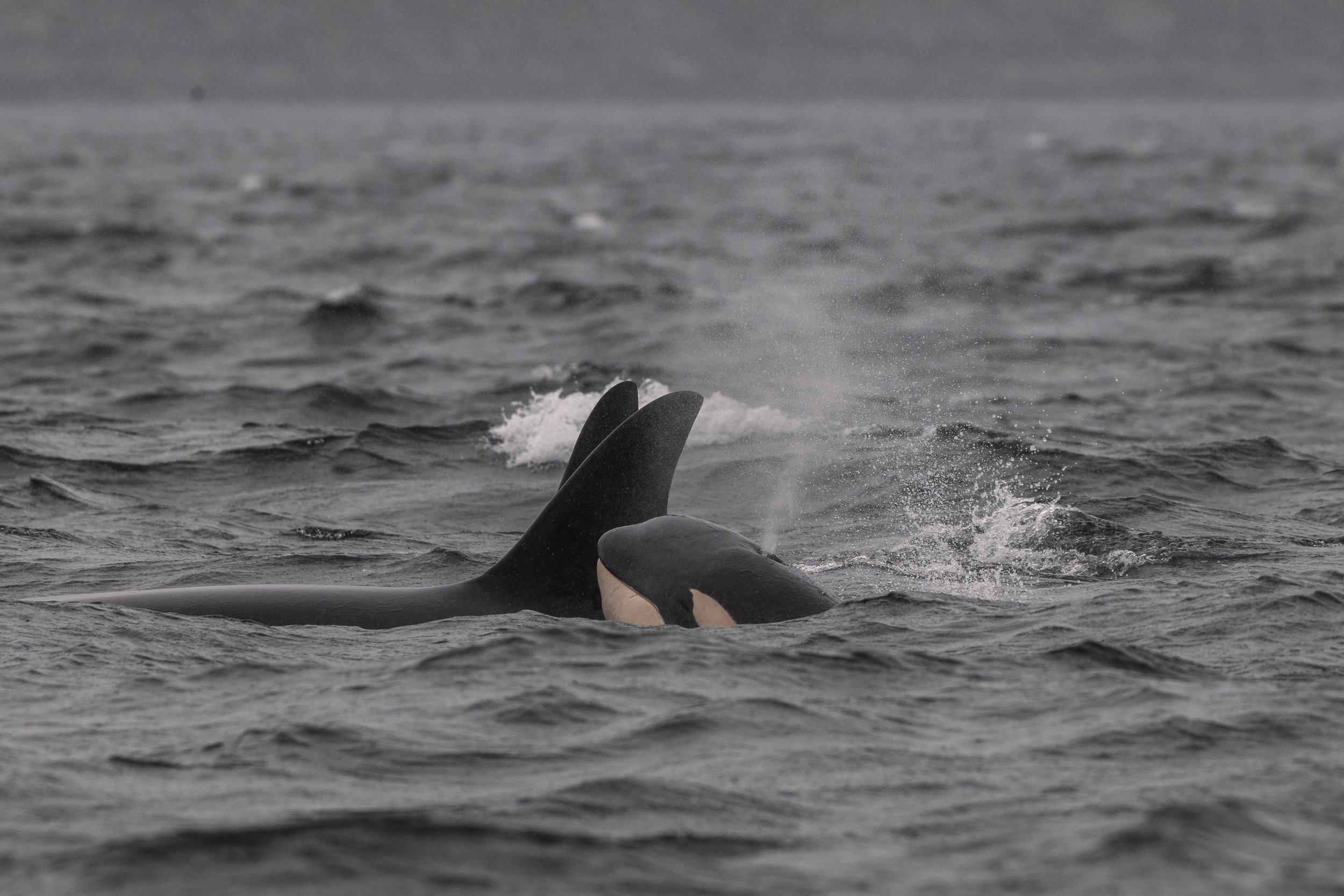
Elkugu, Tasu and Yukon showing off their eye patch. Photo by Aly Kohlman.
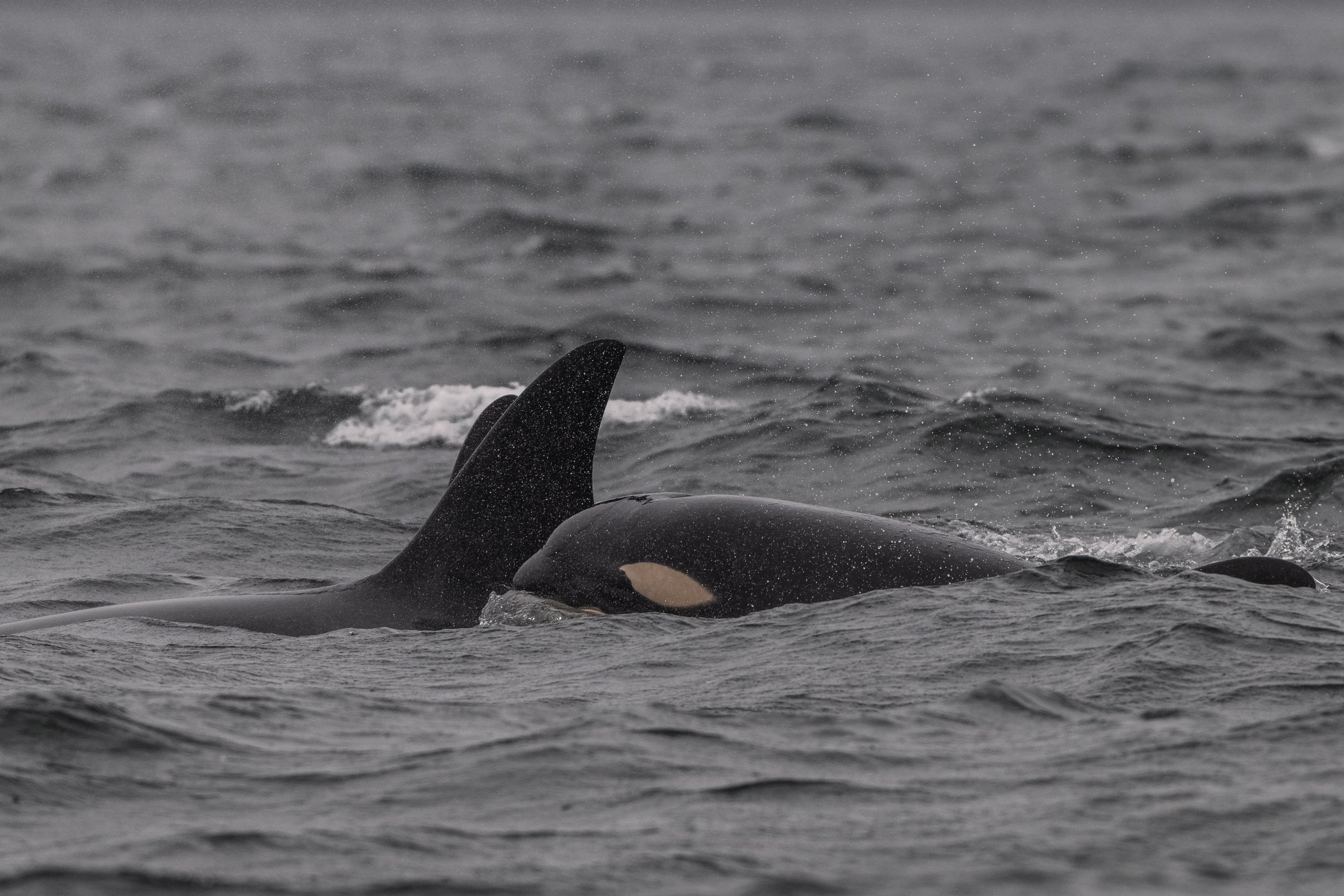
A good look at Yukon’s eye patch. Photo by Aly Kohlman.
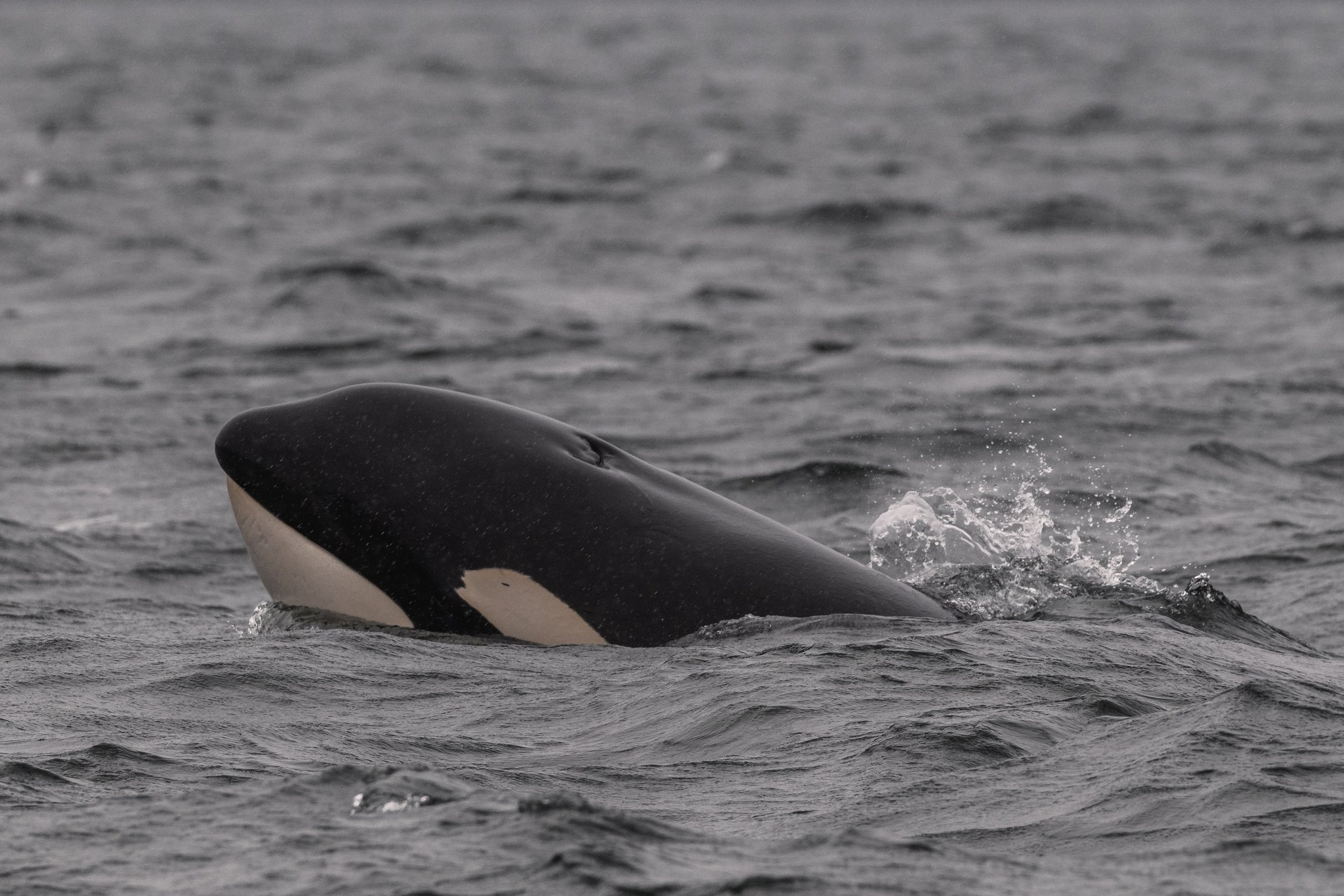
Agafia’s eye patch. Photo by Aly Kohlman.
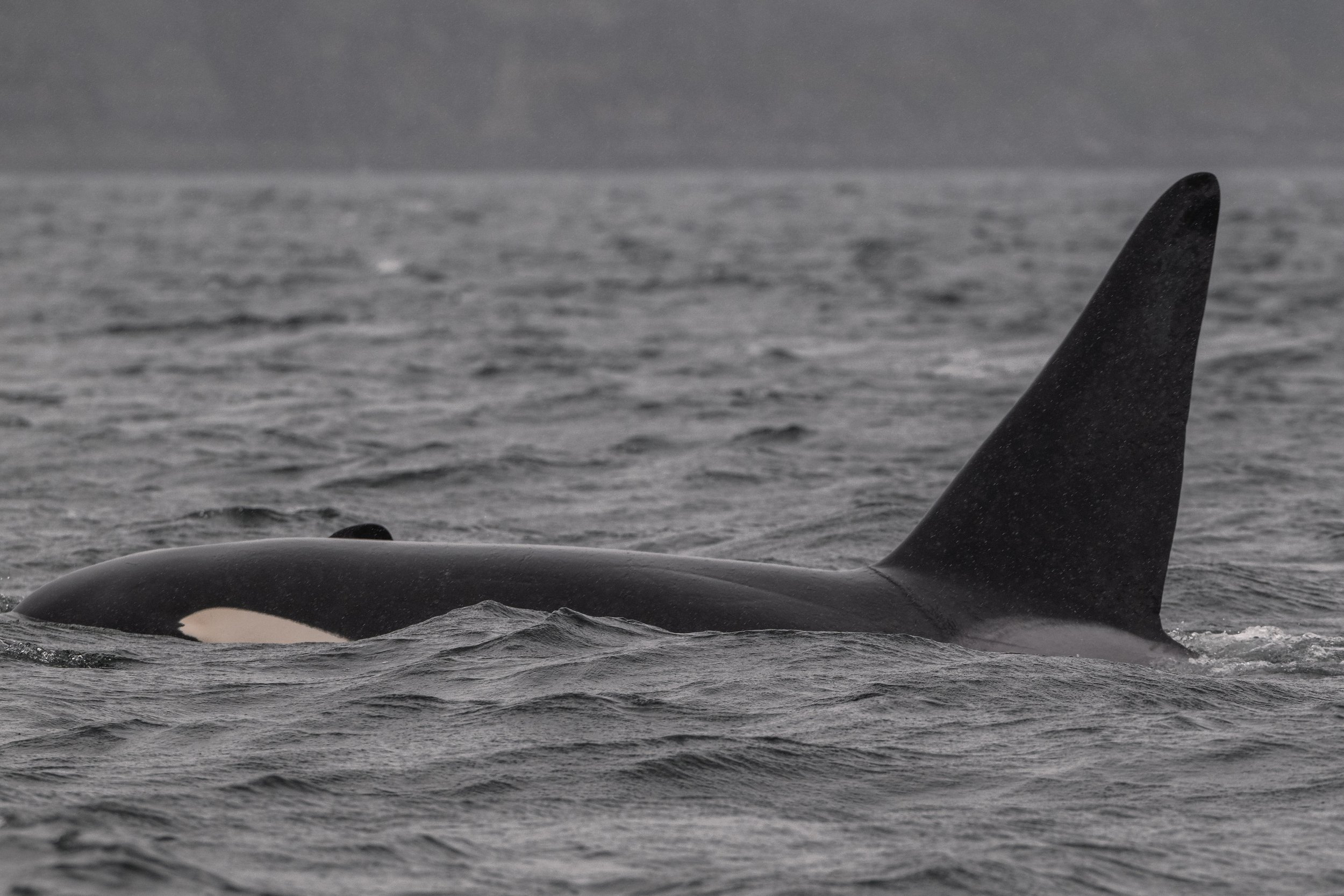
Rocky surfacing. Photo by Aly Kohlman.
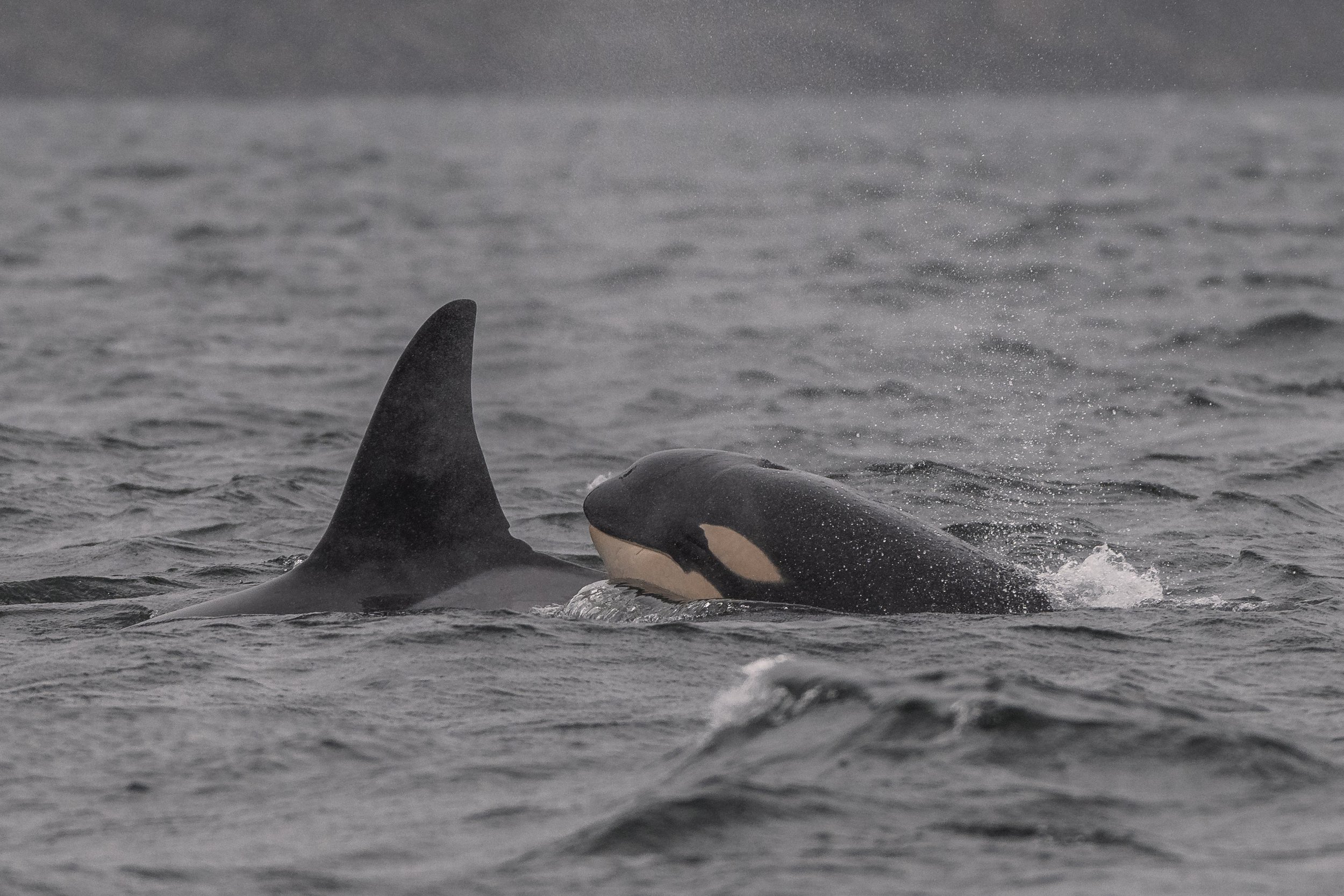
Tasu with Yukon in tow. Photo by Aly Kohlman.
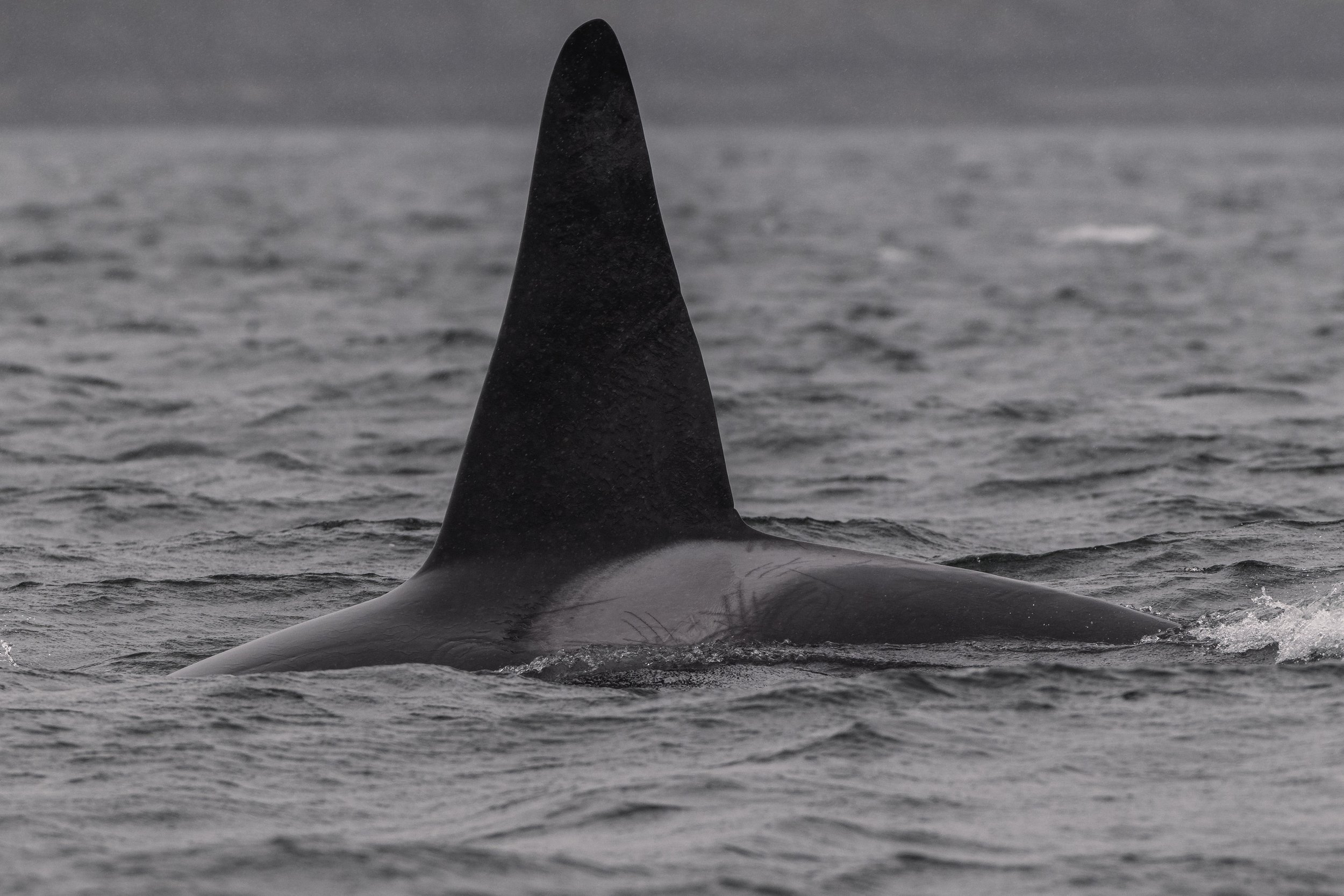
Rocky with his giant dorsal fin. Photo by Aly Kohlman.
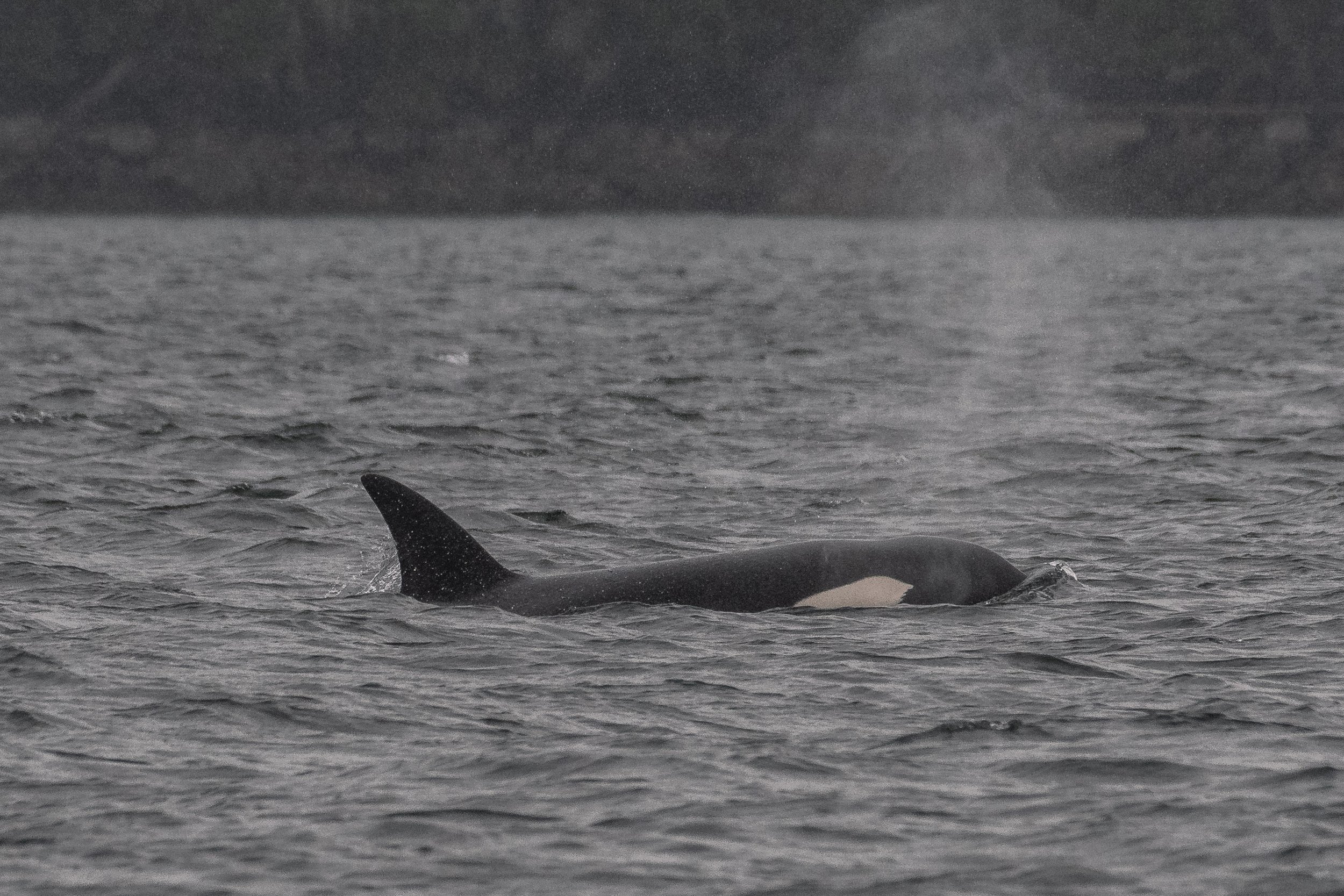
Akia’s eye patch. Photo by Evan Hessels.
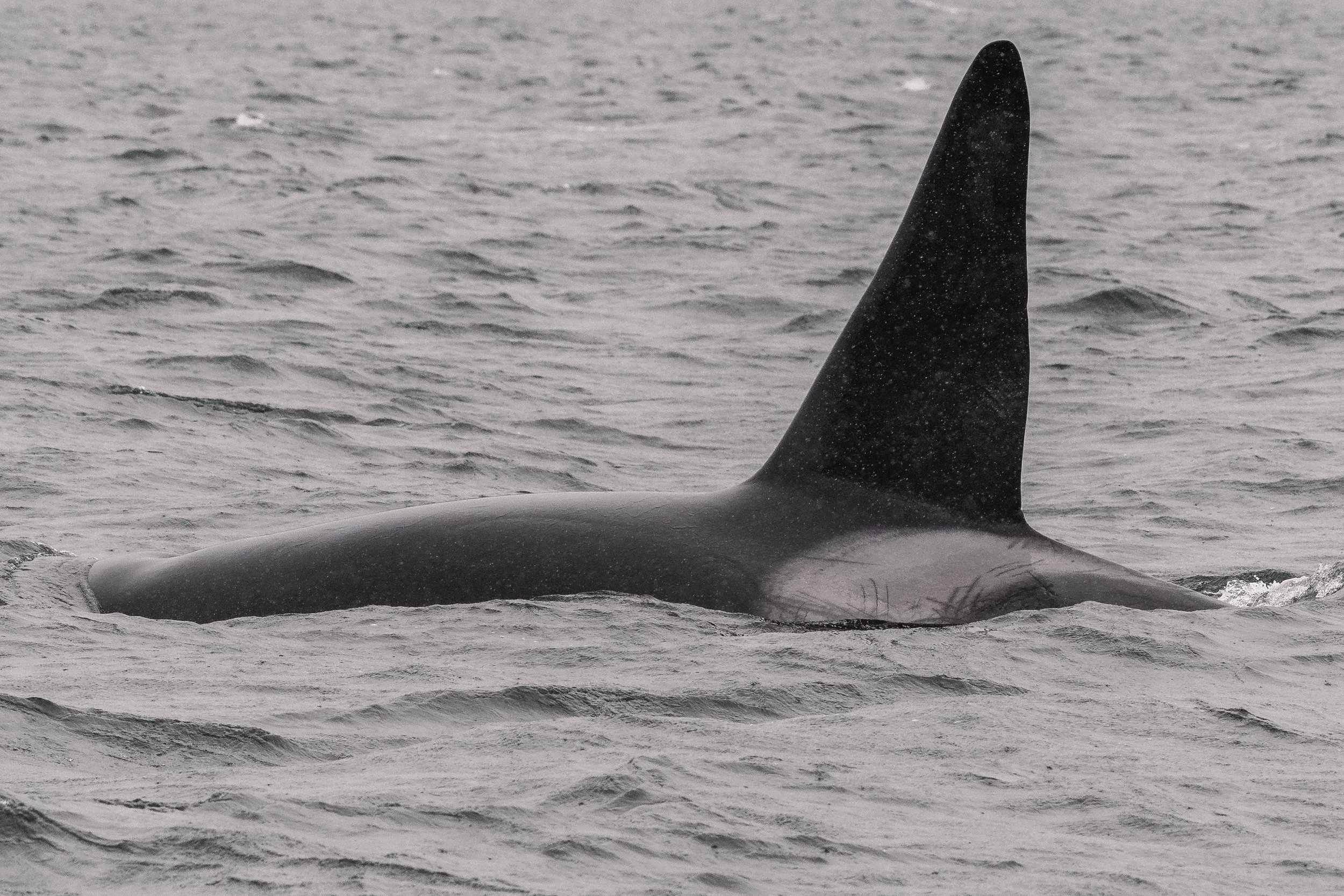
Can you spot all the scars on Rocky’s saddle patch? Photo by Evan Hessels.
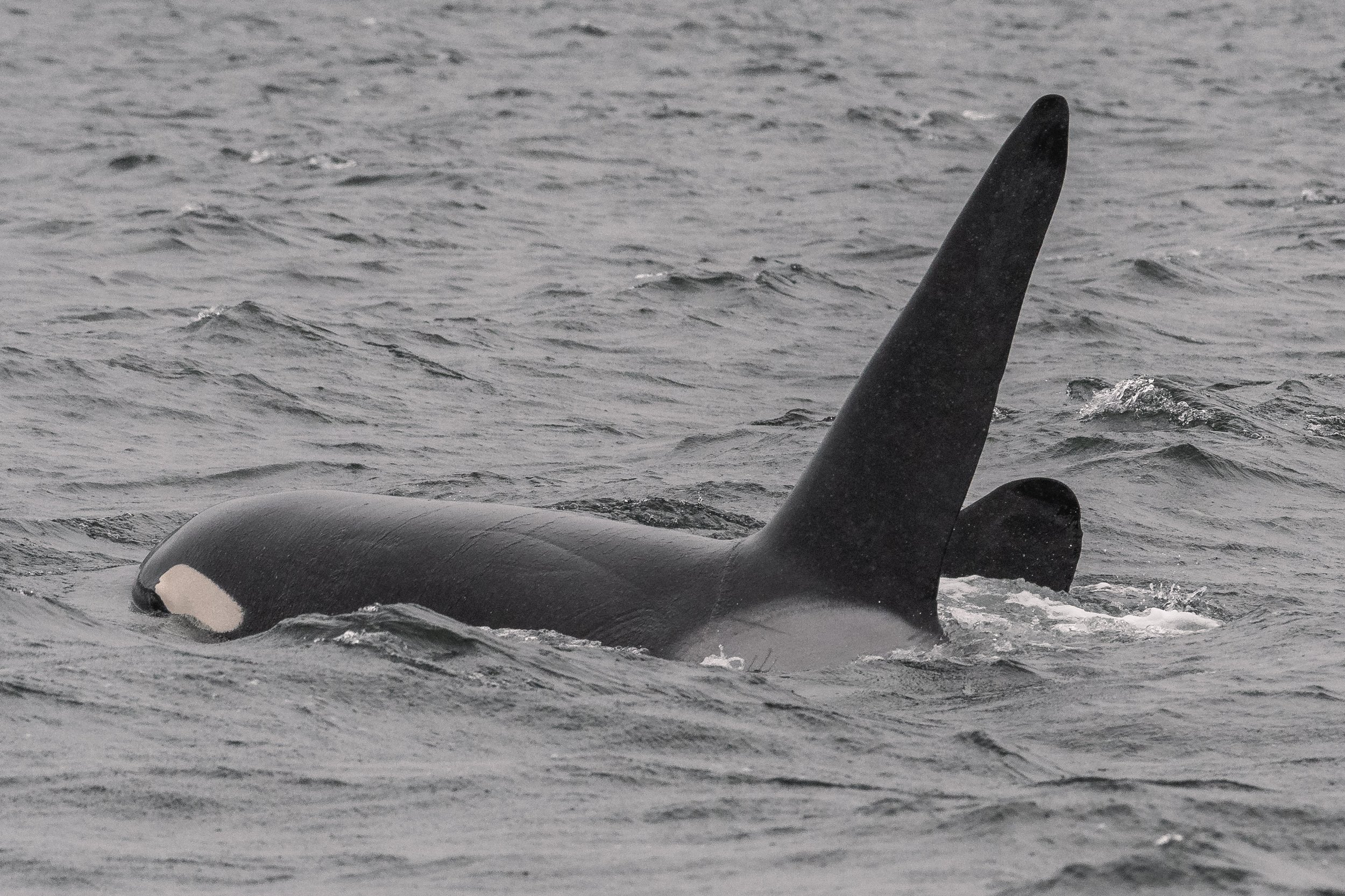
Rocky surfacing with soomeones pectoral fin beside him. Photo by Evan Hessels.
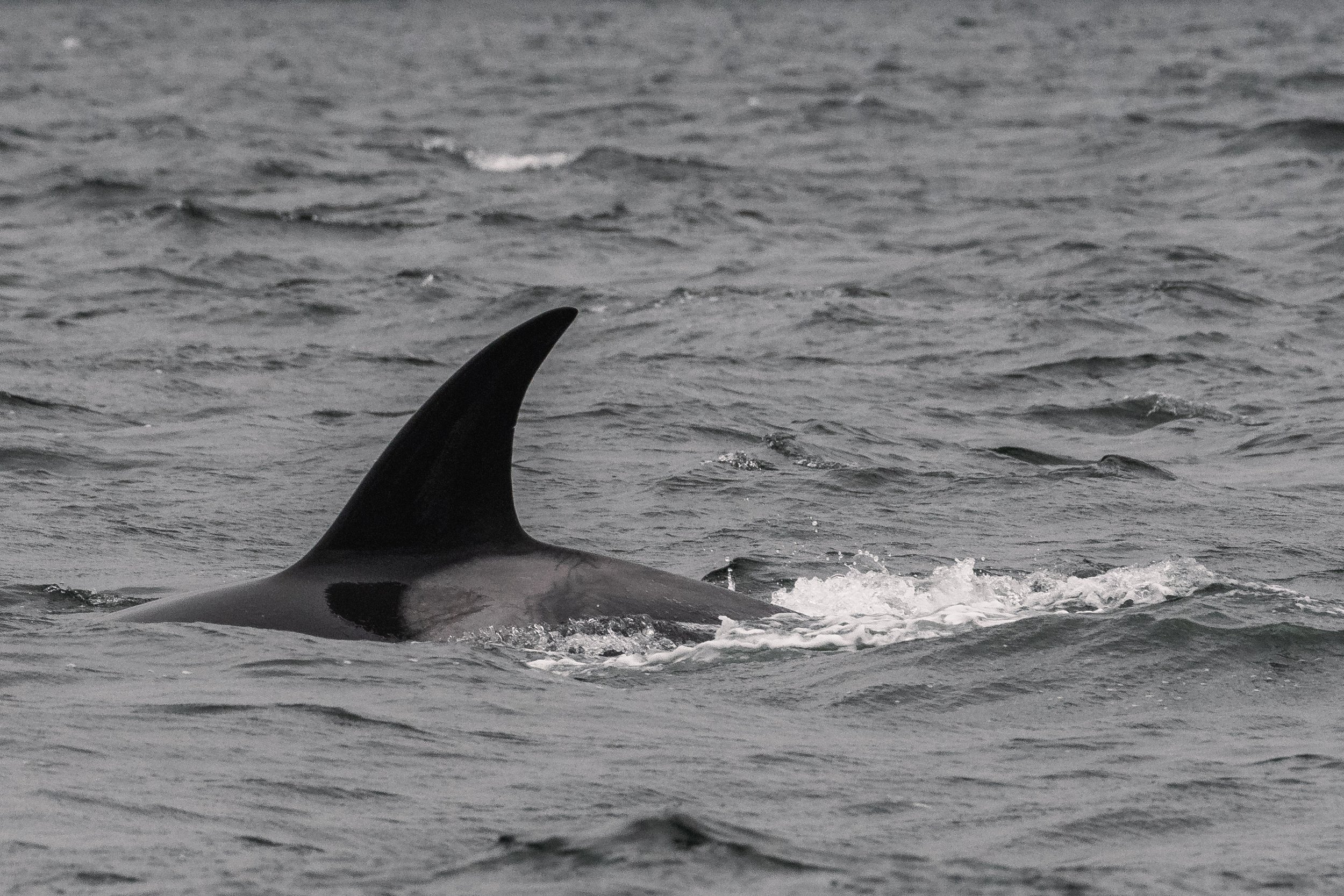
Akia making waves. Photo by Evan Hessels.
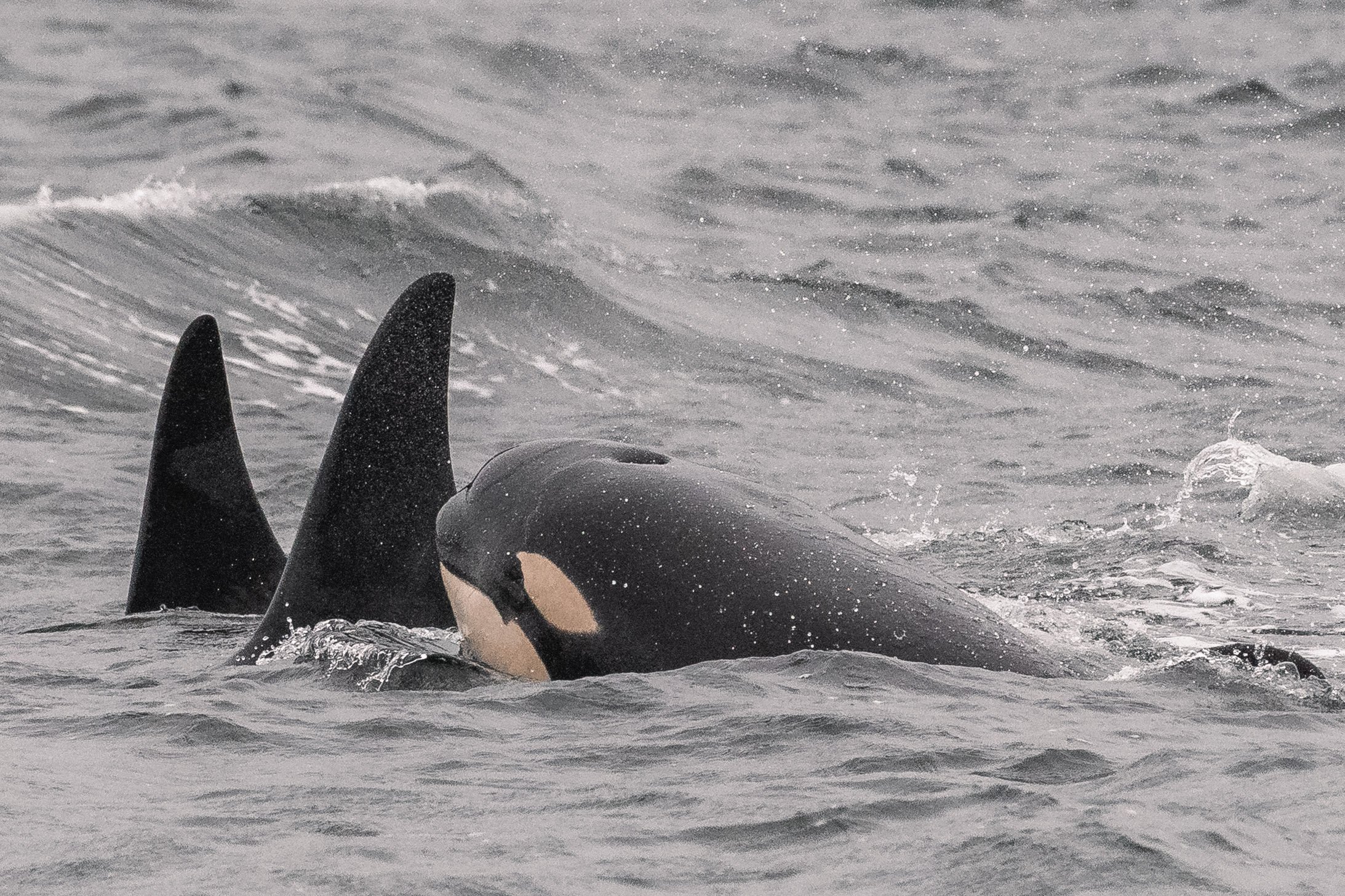
Yukon showing off their eye patch. Photo by Evan Hessels.
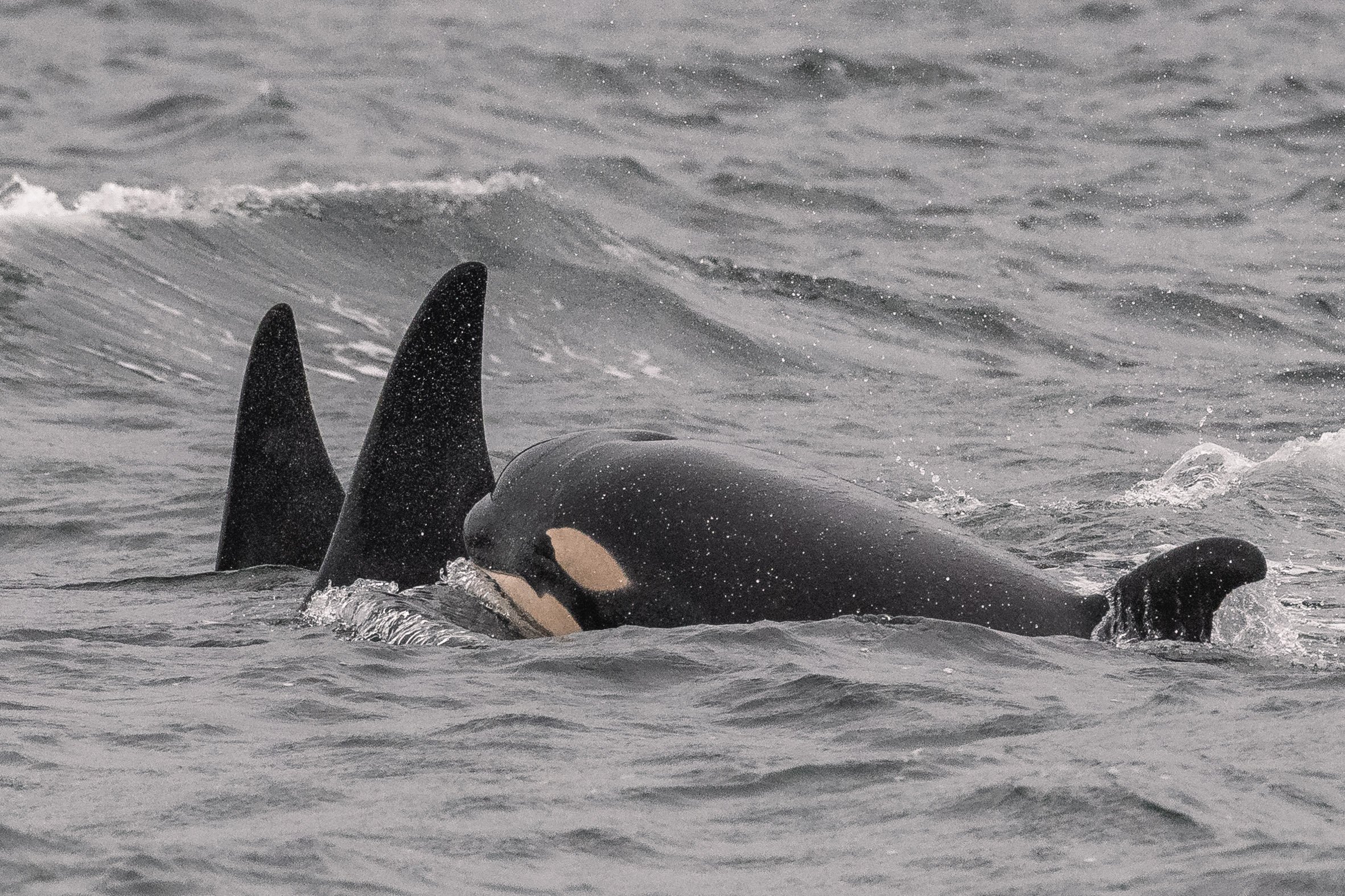
Yukon surfacing behing Tasu. Photo by evan Hessels.
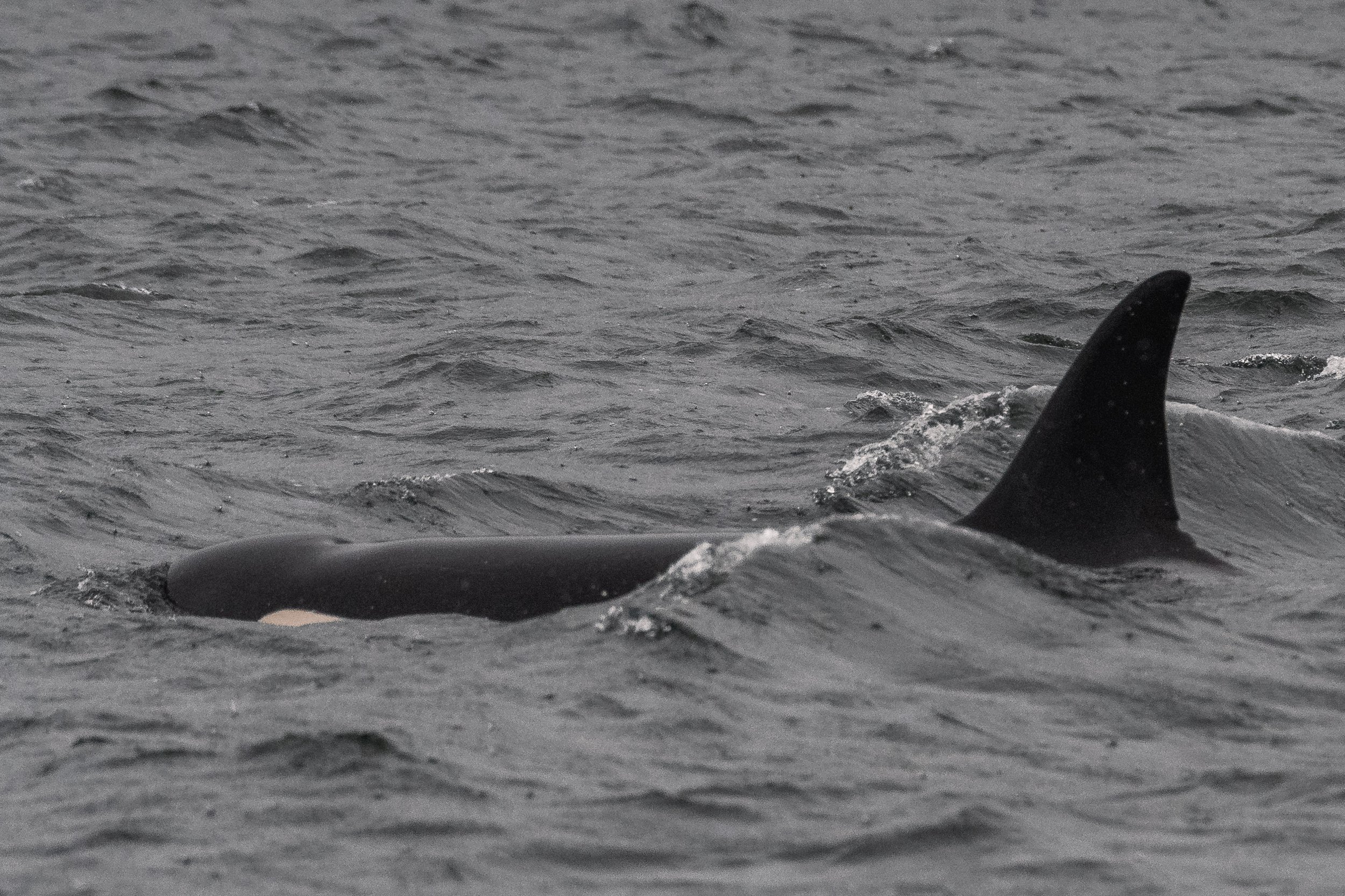
Tasu in the rain. Photo by Evan Hessels.
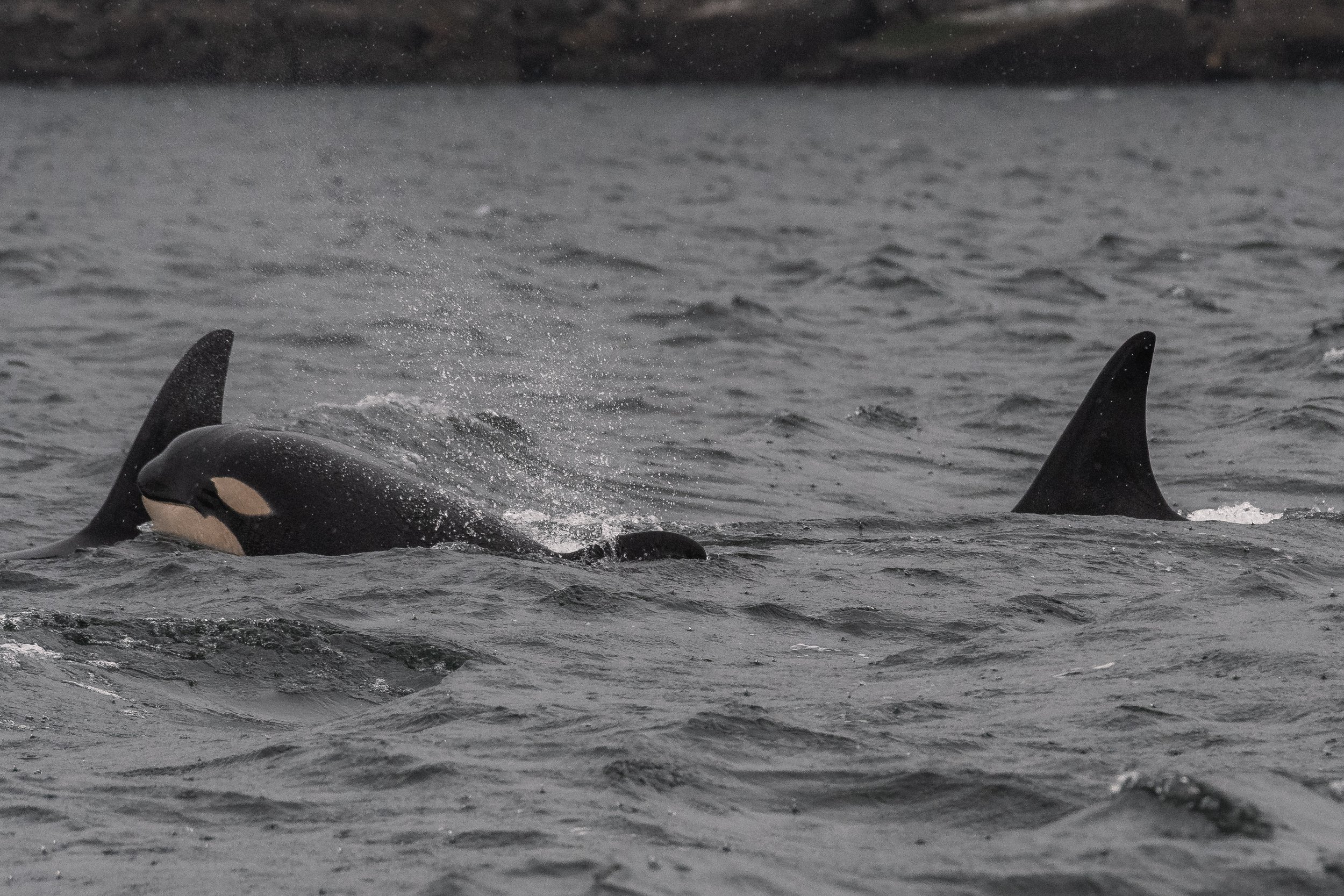
Tasu in the lead, Yukon and Guardian in the rear. Photo by Evan Hessels.
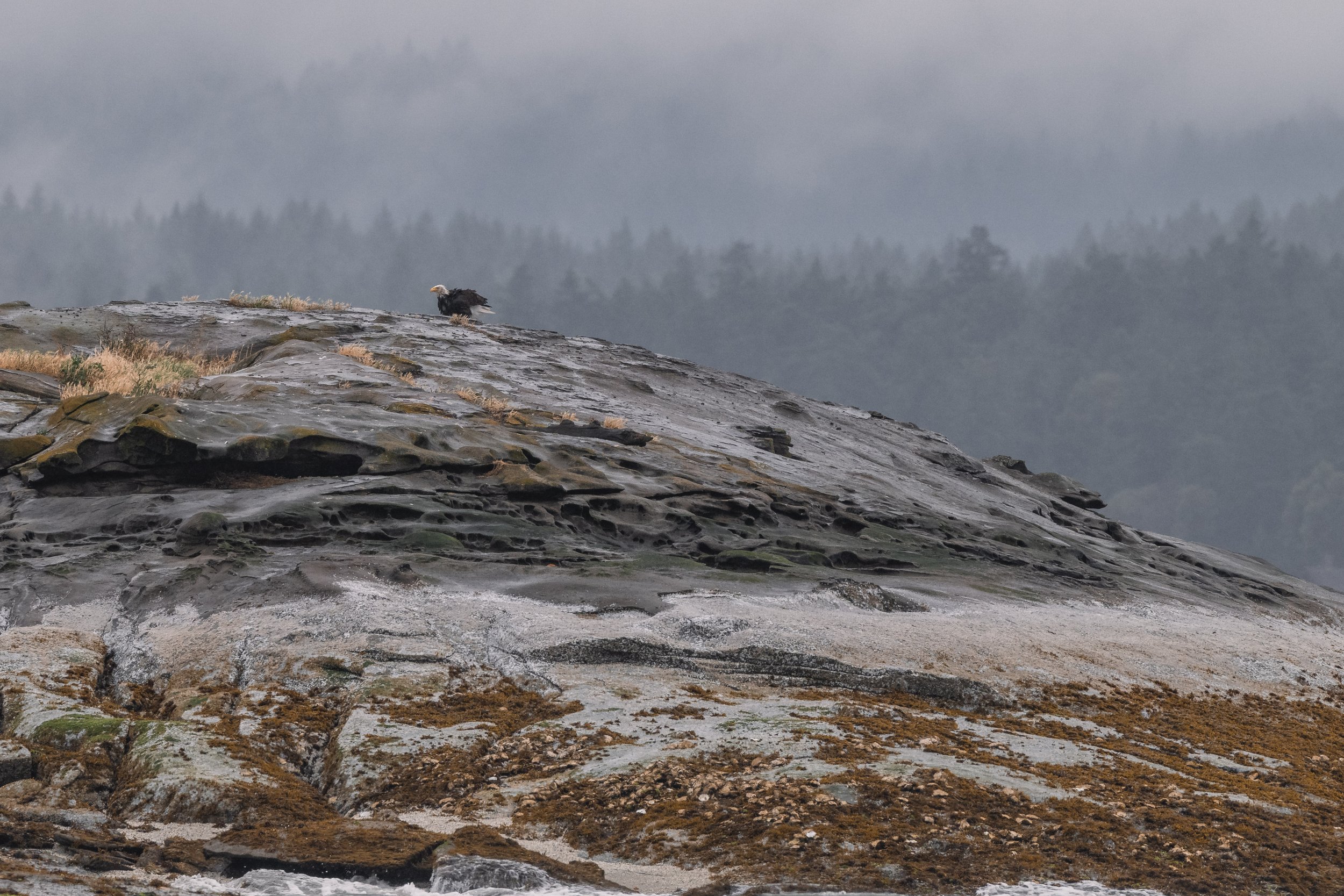
A bald eagle with a misty forest background. Photo by Aly Kohlman.
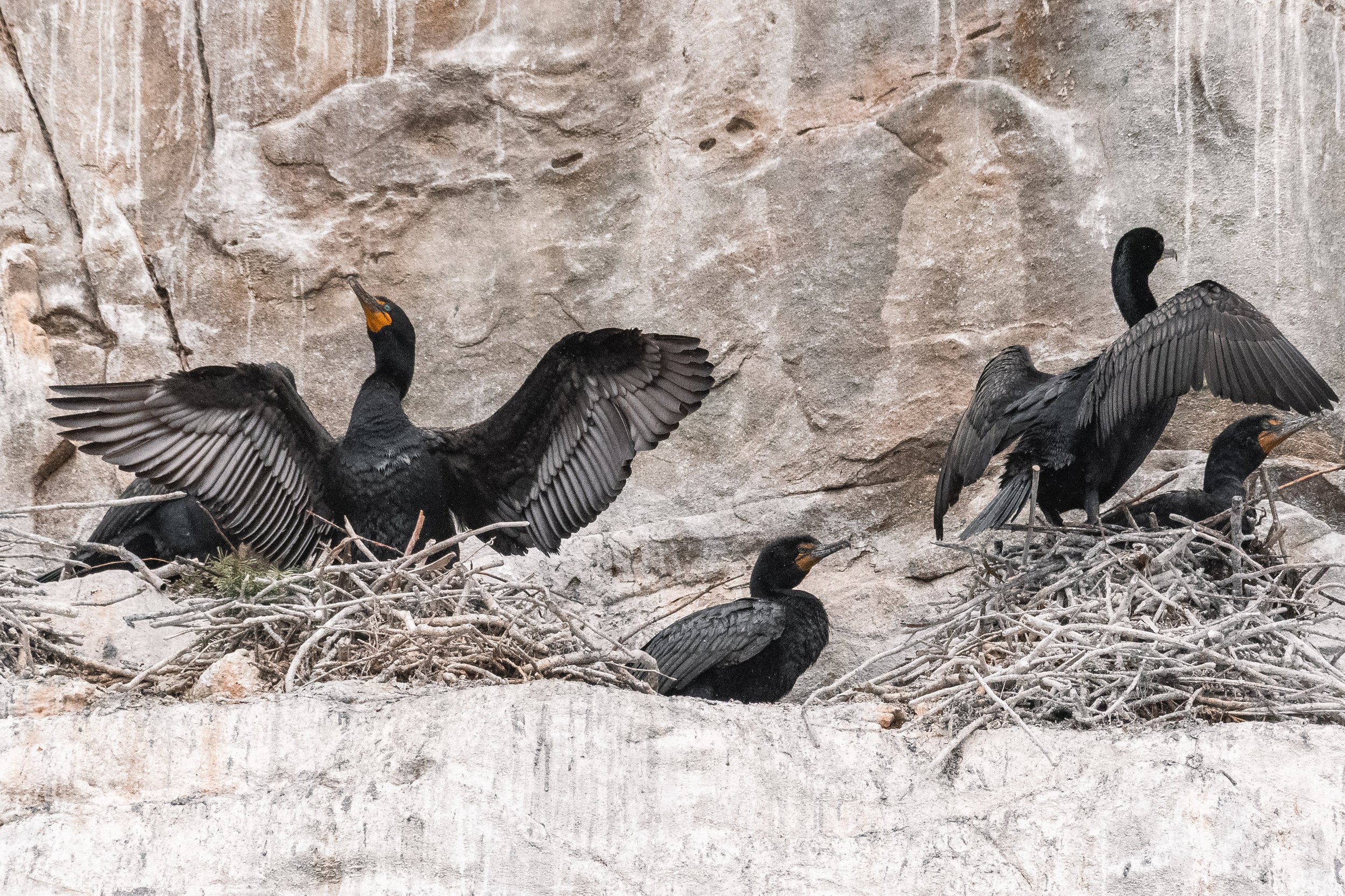
Cormorants in their nests. Photo by Evan Hessels.
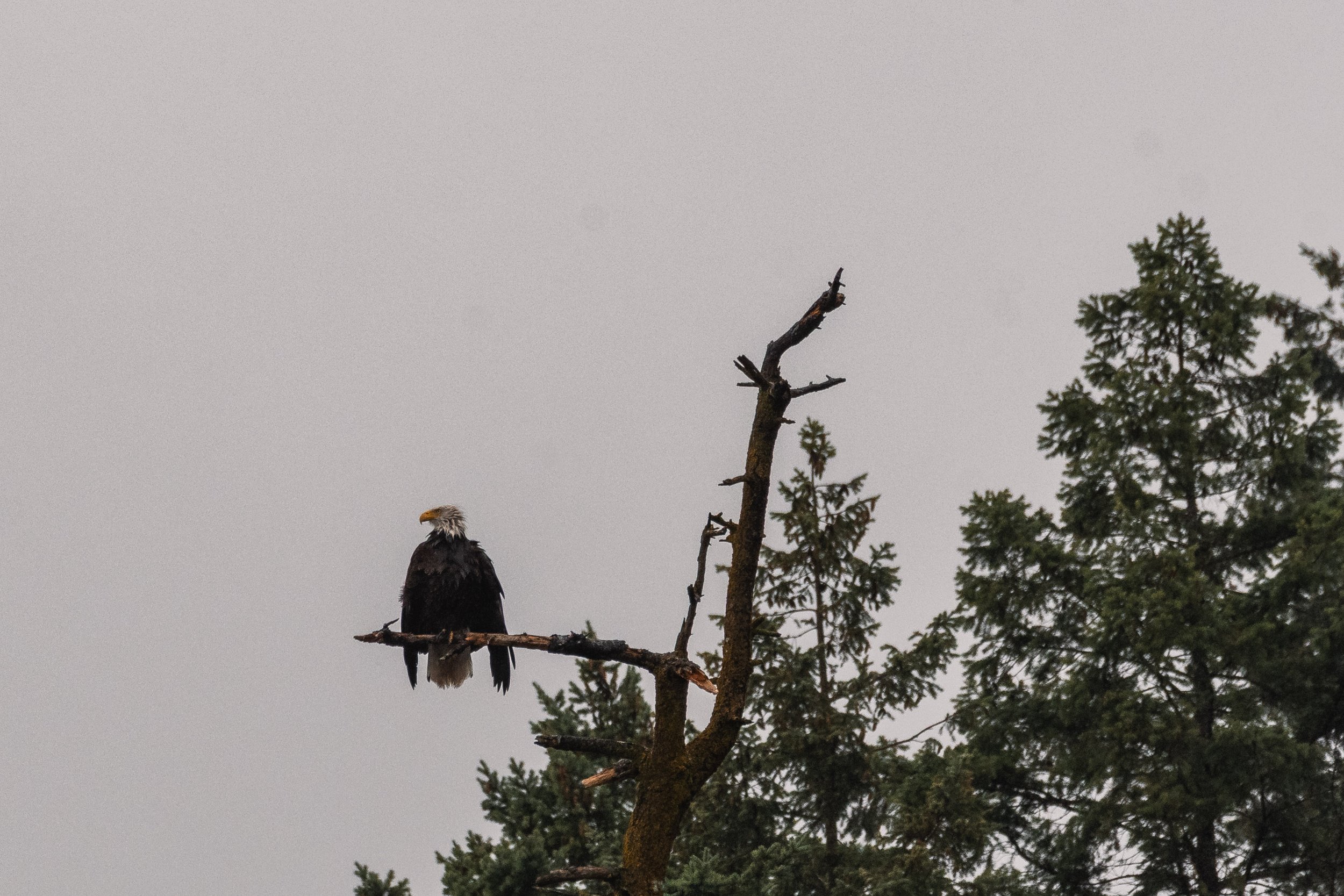
A soaked bald eagle. Photo by Evan Hessels.
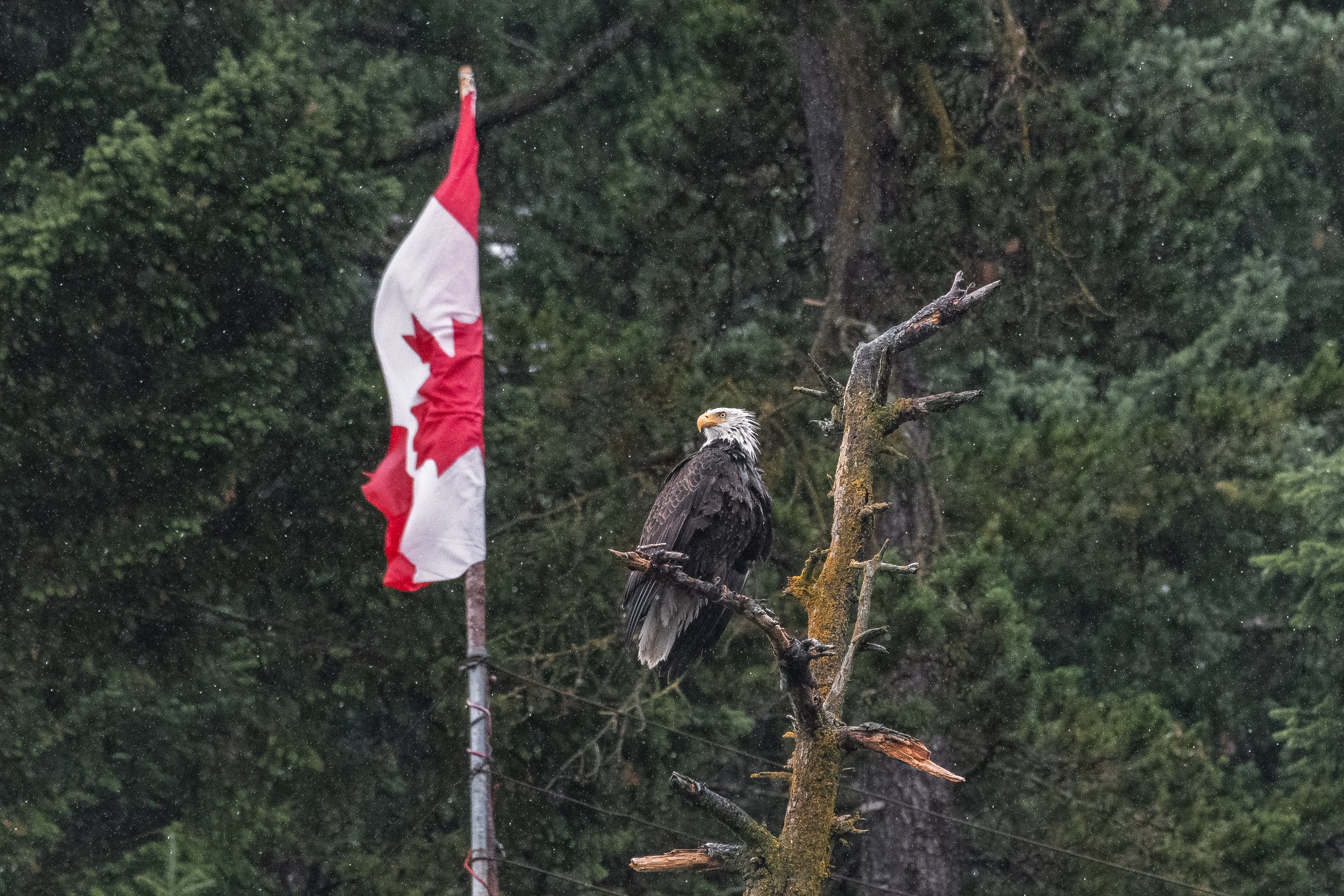
A bald eagle and our flag, both looking a little wet and wind blown! Photo by Evan Hessels.
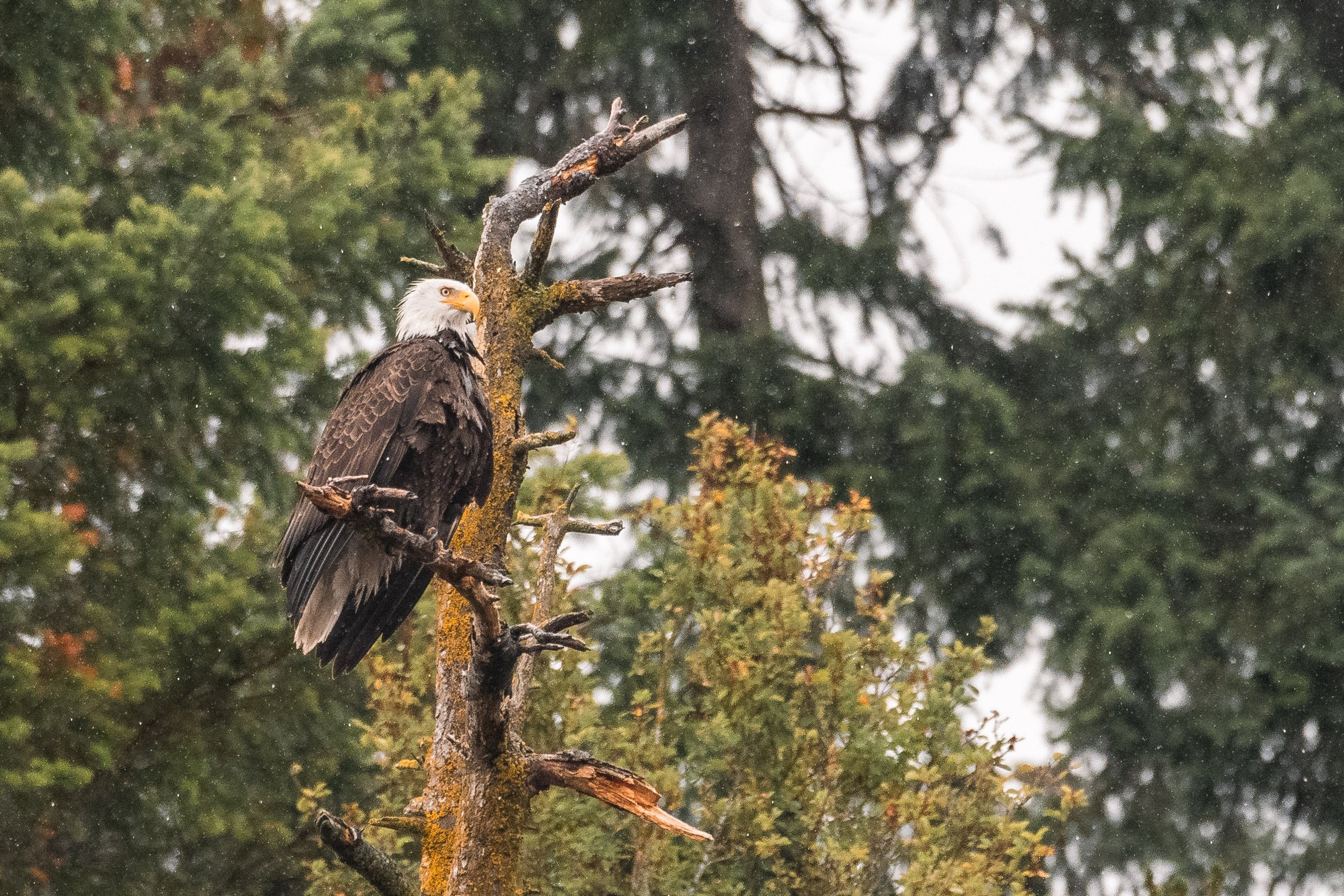
A bald eagle perched. Photo by Evan Hessels.