
July, 22, 2026, 3:30 PM - The T077 siblings continue their adventures (plus a handful of humpbacks too)
On this sunny, calm evening, our semi-covered vessel Kula and one of our open zodiac boats, Keta, set off from the dock in search of megafauna and apex predators! Vessel Kula set off into the Strait of Georgia, scanning the horizon for blows, fins and tails, while our other vessel, Keta, searched through the southern Gulf Islands.
While Kula adventured through the open water, a blow had been spotted on the horizon; it was a humpback whale! While Captain Joseph positioned the vessel, marine naturalist Hayleigh snapped some photos of the whale and identified it as Chi (BCZ0575)! Chi returns to the Salish Sea each year for his summer feeding and winters down in Hawaii! Chi is the great-grandchild of a very famous humpback whale known as Big Mama, who was the first documented back in 1997 off the coast of Victoria. Big Mama was the first documented humpback whale to return to the Salish Sea after her population was extirpated by commercial whaling. As the primary target species for commercial whaling, humpbacks were wiped out and locally absent for numerous decades along the eastern coast of Vancouver Island until Big Mama returned! Ever since the gentle giants started returning to the area, their numbers have recovered beautifully, allowing for a very lucky second chance with these wonderful creatures.
While guests and crew aboard Kula enjoyed their gentle giant, Keta was searching the island for whales until a shore-based report near Active Pass came through. The report detailed two black dorsal fins and small blows; it was orcas! Captain Ally aboard Keta set course for Active Pass to find some apex predators. Upon reaching Mayne Island, just south-east of Active Pass, the transient orcas had been acquired! Marine naturalist Jordan photographed the dorsal fins and identified the orcas as siblings, Neftali and Misneach!
T077C Neftali ♂ (2006)
T0077E Misneach (2016)
These siblings have been travelling separately from the rest of their matriarchy since the passing of their older brother, T077B The Church, in 2023. It’s not known why the T077s have fragmented their pod in such a manner, as it's not the norm with this population of orcas. In transient (Bigg’s) killer whales, pod fragmentation more commonly occurs when mature daughters begin raising calves of their own, gradually forming smaller family groups while maintaining close social bonds. In this case, however, these two siblings have remained together, while their middle sister, T077D Alcyon, continues to travel with their mother and matriarch, T077 Asja.
This orca duo was following the shoreline of Mayne and Staurna island, most likely looking for a quick seal snack! Each transient orca eats, on average, 100-400 lbs (45-180 kg) of food every single day! That's around 1-2 harbour seals or 2-4 harbour porpoises per individual orca. This means our transient orcas will almost always take the opportunity to search around for a meal as they travel along.
After some time with the transient orca siblings, Kula had left Chi and made their way over to enjoy the show. Upon arriving, Neftali and Misneach started making their way out into open water, heading for the San Juan Islands. Captain Ally aboard Keta slowly created distance from the orcas and guests, and the crew aboard Keta continued their search by heading through Active Pass. All the while, Kula watched the orcas moving through open waters, by each other's side.
As Keta ventured through the Strait of Georgia, along the eastern coastline of Galiano Island, some humpback blows had been spotted. Although the humpbacks were staying down for quite a while, eventually one popped back up, and naturalist Jordan was able to get a photo of the underside of the tail fluke. It was Windy (BCY0893)! Additionally, Hendrix (BCY1278) was also spotted nearby, surfacing and returning to the depths to feed. Captain Ally slowly headed toward the humpback whale area and aimed for a small rocky outcrop off the coast of Valdes Island.
Both vessels, Kula and Cascadia, met up off the coast of Valdes at what we call “Stinky Rock”. Hauled out on the rock were some fuzzy friends, sea lions! Those unfortunate enough to be downwind of the sea lions that hang out there get to find out why the rock has this nickname. Since so many animals are eating, sleeping, feeding, and defecating together on one small rock, the smell is as bad as you can imagine! The species of sea lions that call this place home for portions of the year are called Steller Sea lions; the most widespread species of sea lion in the North Pacific and the largest species in the world!
After enjoying the loud sea lions, both vessels made their way through Gabriola Pass and entered the calm waters of the southern Gulf Islands. Upon reaching a location known as Dodd Narrows, two mature Bald eagles were spotted roosting together, with their light heads contrasting the dark forest of Mudge Island. Their iconic white heads represent adulthood in the species, as individuals acquire them after 5 years of maturation. Juvenile Bald Eagles will appear all brown with traces of light spots on their underside. Upon maturation around the 5-year mark, juveniles will also lose their white splotches on their bodies and tails, developing dark brown bodies and white tail feathers. As bald eagles age, their feathers are not the only thing changing colour! The eyes of immature bald eagles will initially appear brown or grey and change to a stunning yellow as they age. The diet of bald eagles can vary, but consists of fish, small mammals and other birds! In addition to the Bald Eagles, Turkey Vultures were also identified flying along the tree line. These scavengers are easily identified by their small, red, featherless heads.
After some time, one eagle flew away to continue on their evening as our vessels made their way back to the port after an amazing evening out on the waters of the Salish Sea. Enjoy the photos below, taken by Marine Naturalists Hayleigh Hilbert and Jordan Robinson!
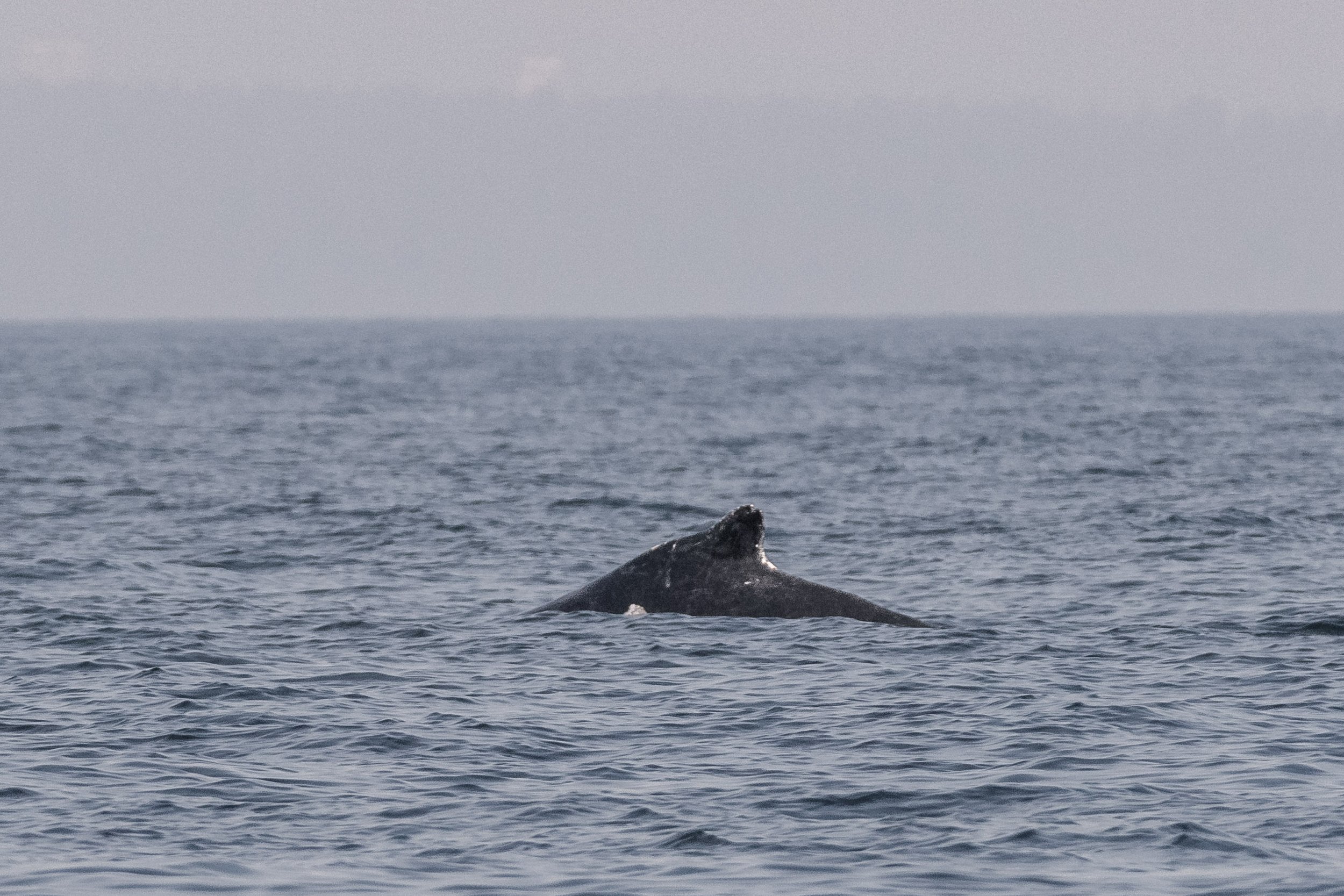
Chi’s dorsal fin. Photo by Hayleigh Hilbert.
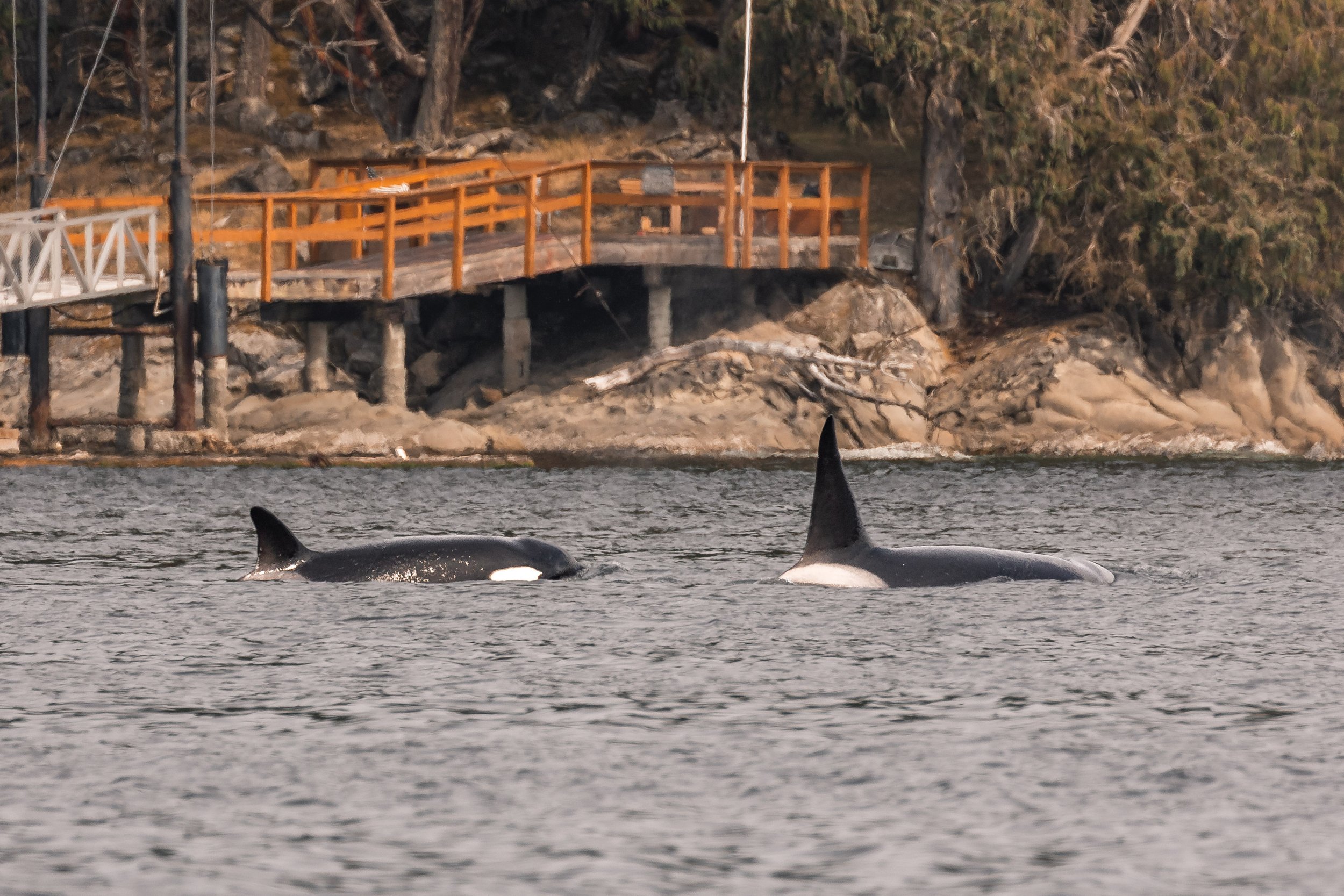
T077E Misneach and T077C Neftali together. Photo by Jordan Robinson.
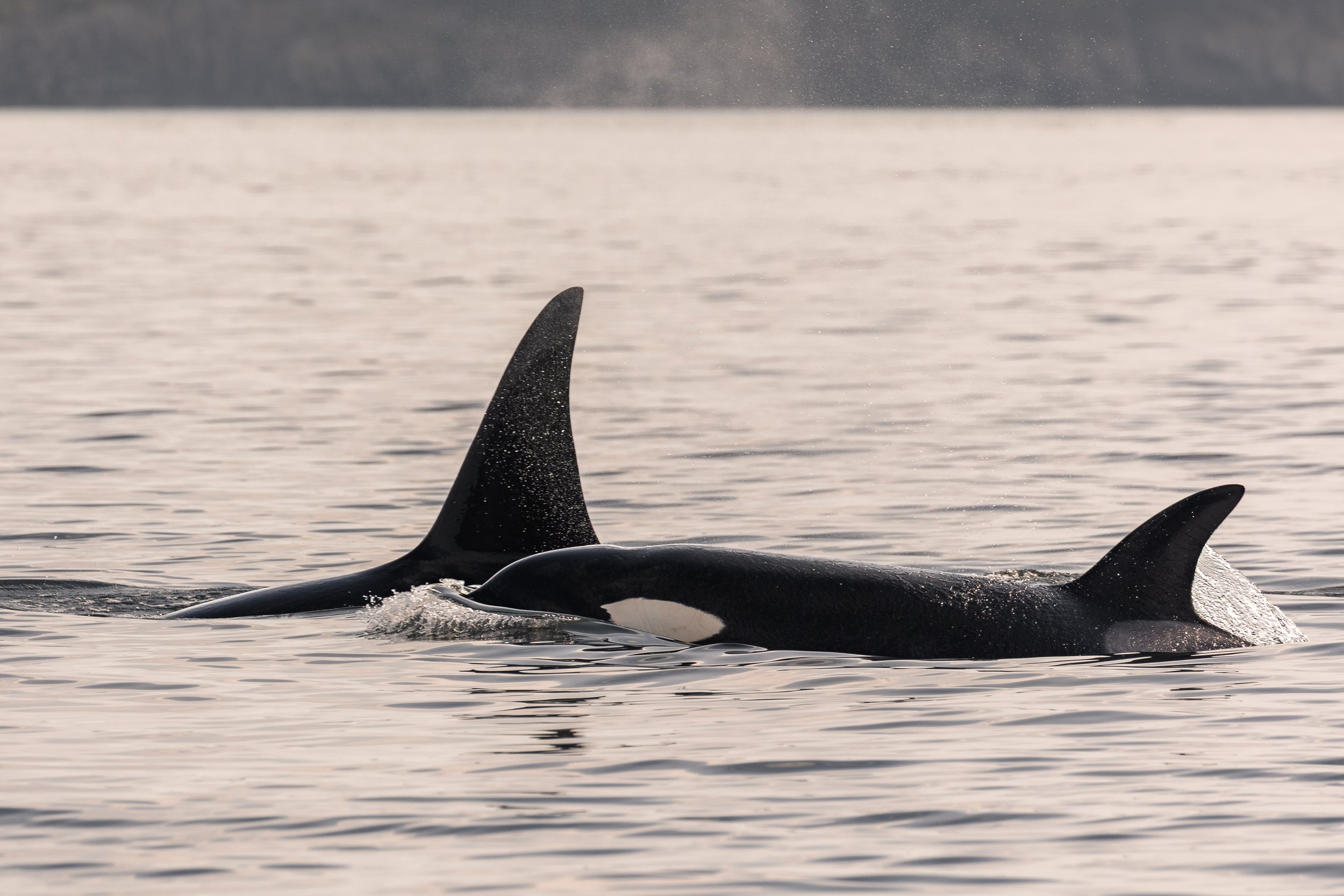
T077C Neftali with T077E Misneach beside him, with their eyepatch above the water. Photo by Jordan Robinson.
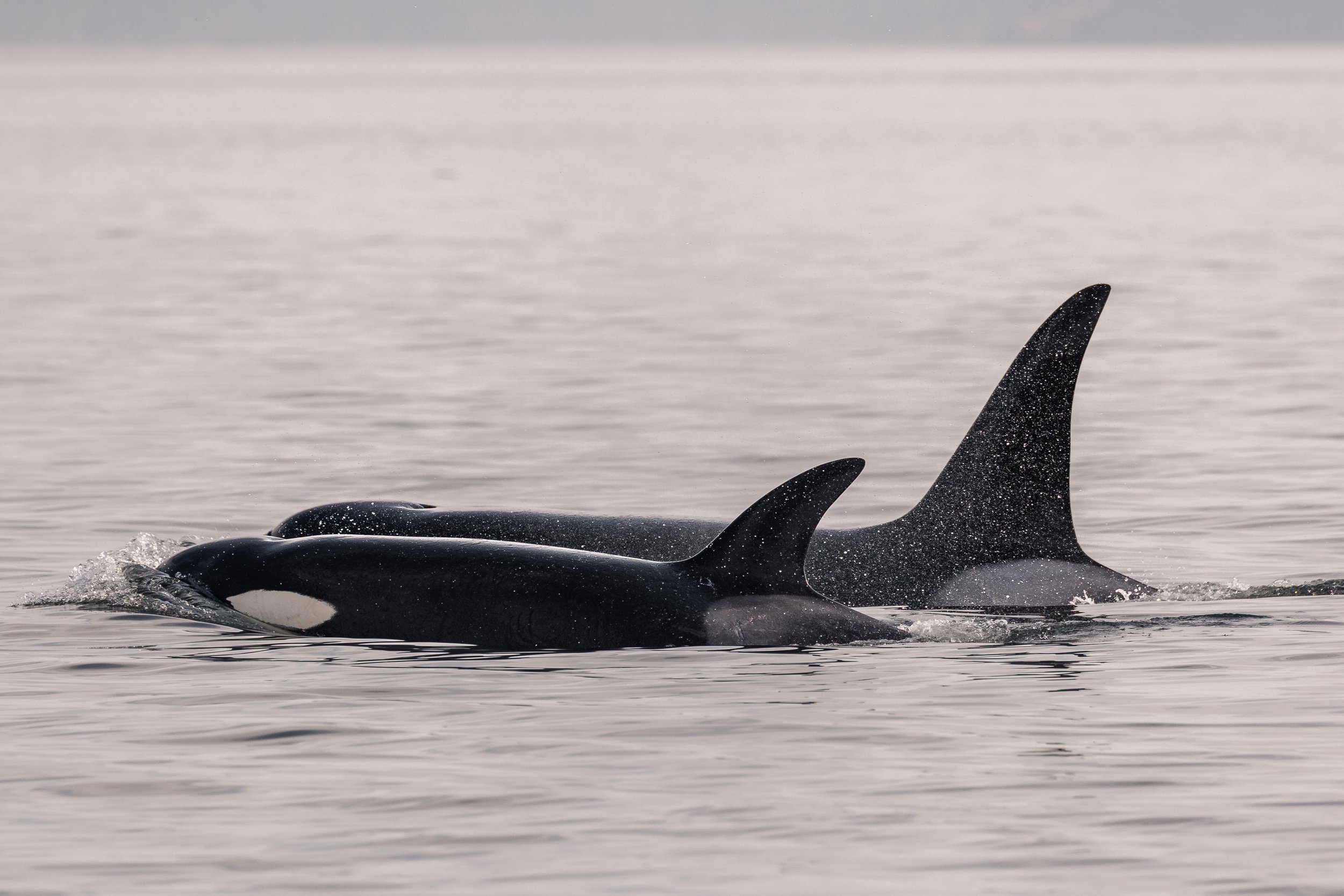
Little T077E Misneach and T077C Neftali side by side. Photo by Jordan Robinson.
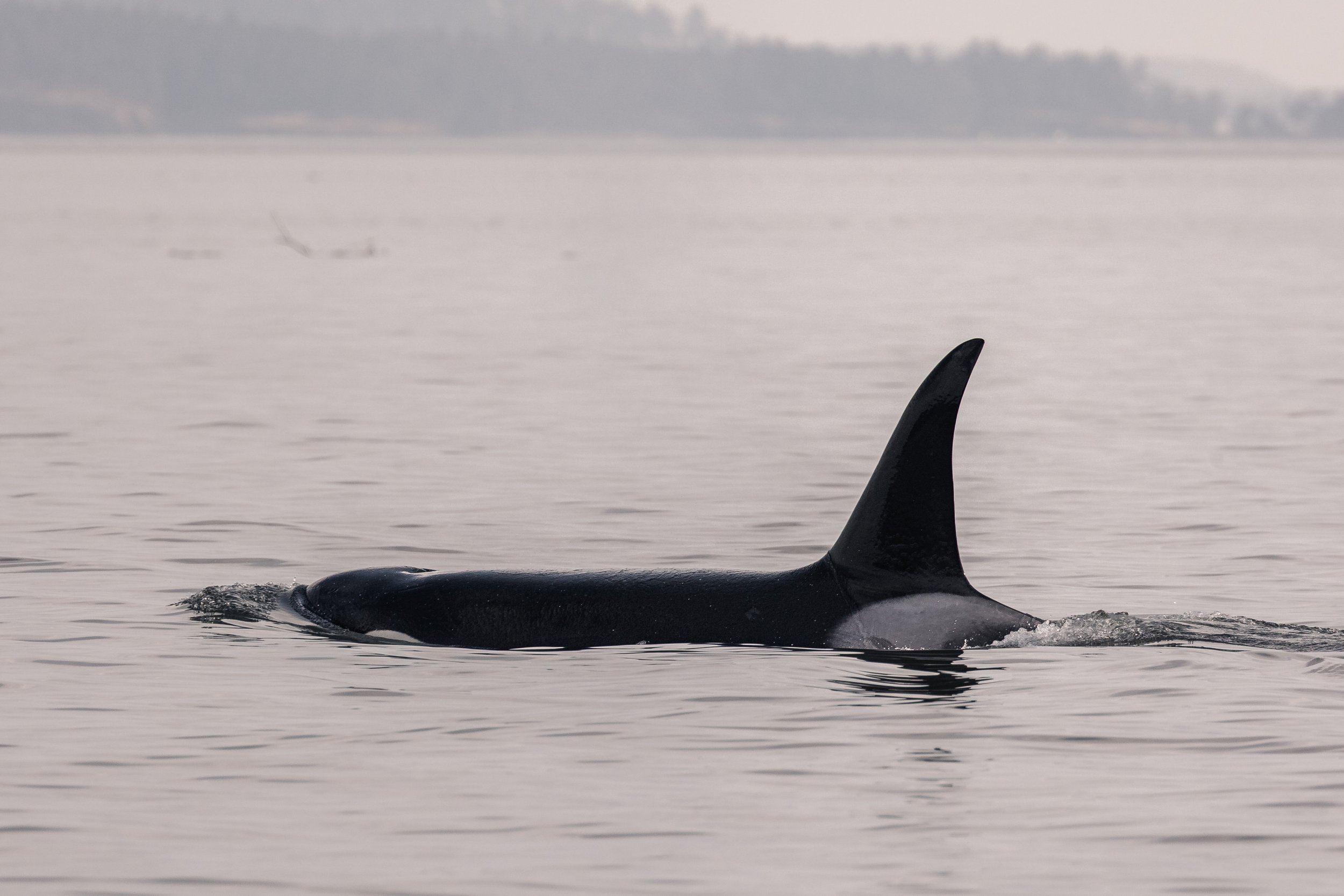
T077C Neftali. Photo by Jordan Robinson.
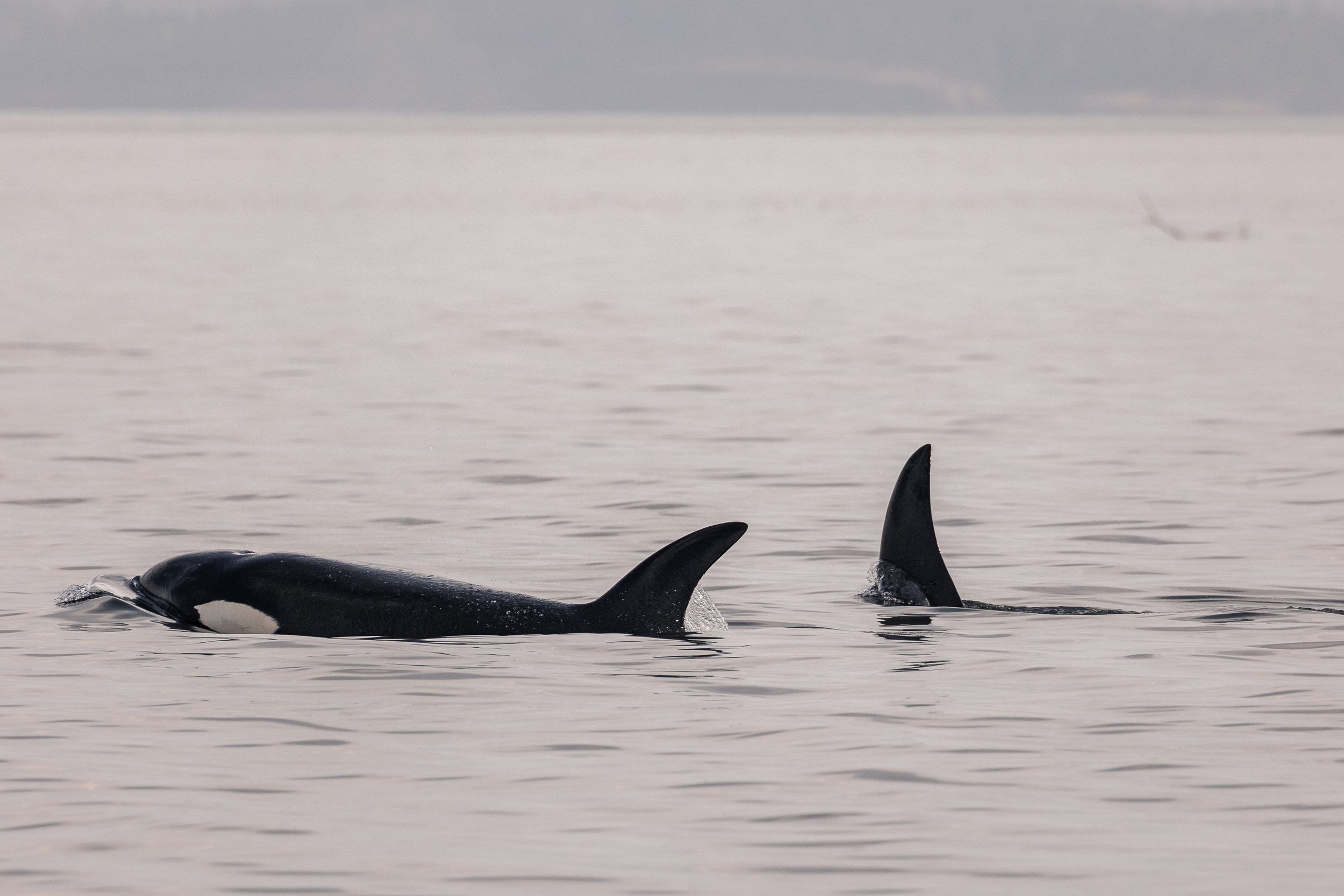
T077E Misneach travelling along. Photo by Jordan Robinson.
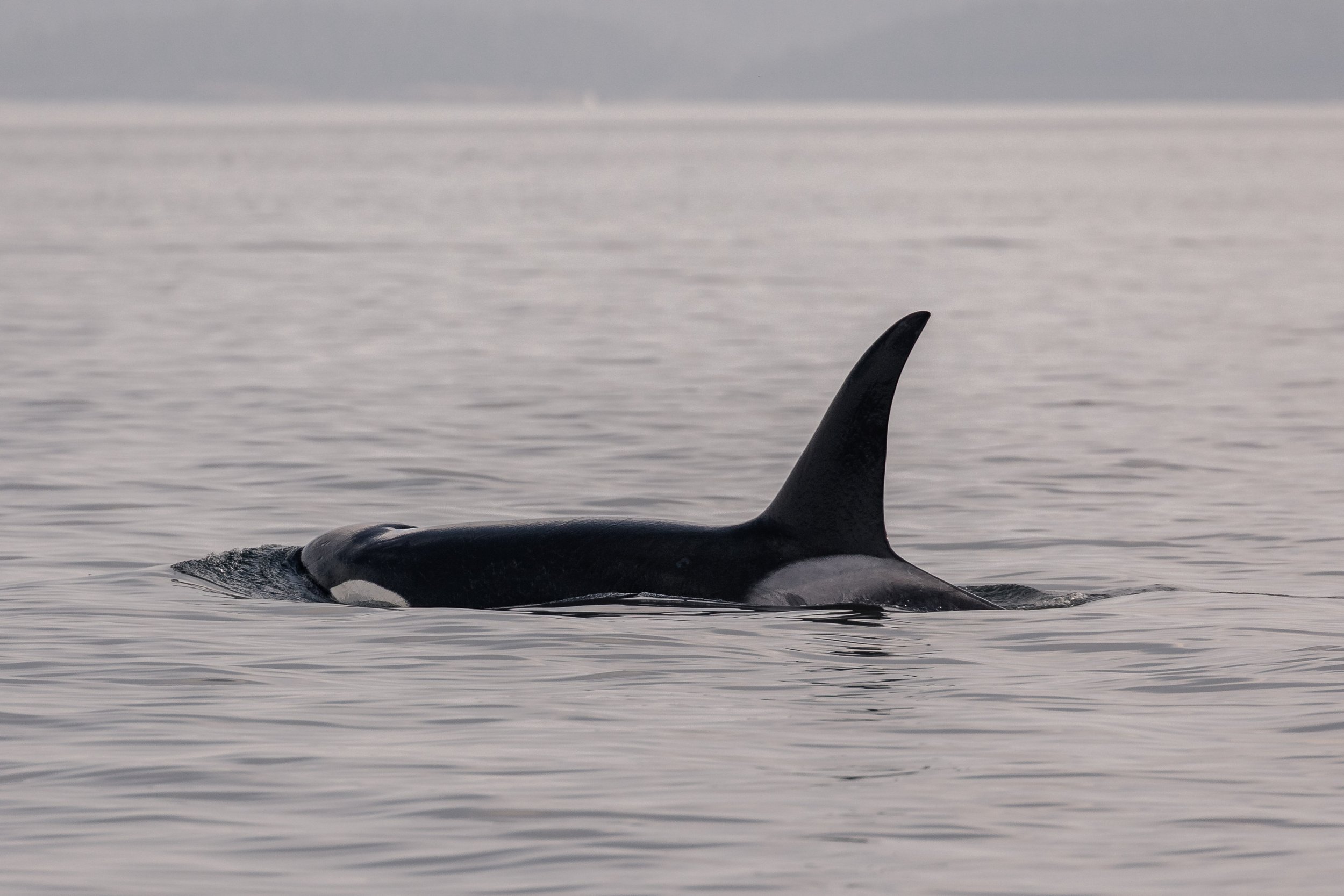
T077C Neftali has quite a bit of new scarring on their saddlepatch. Photo by Jordan Robinson.
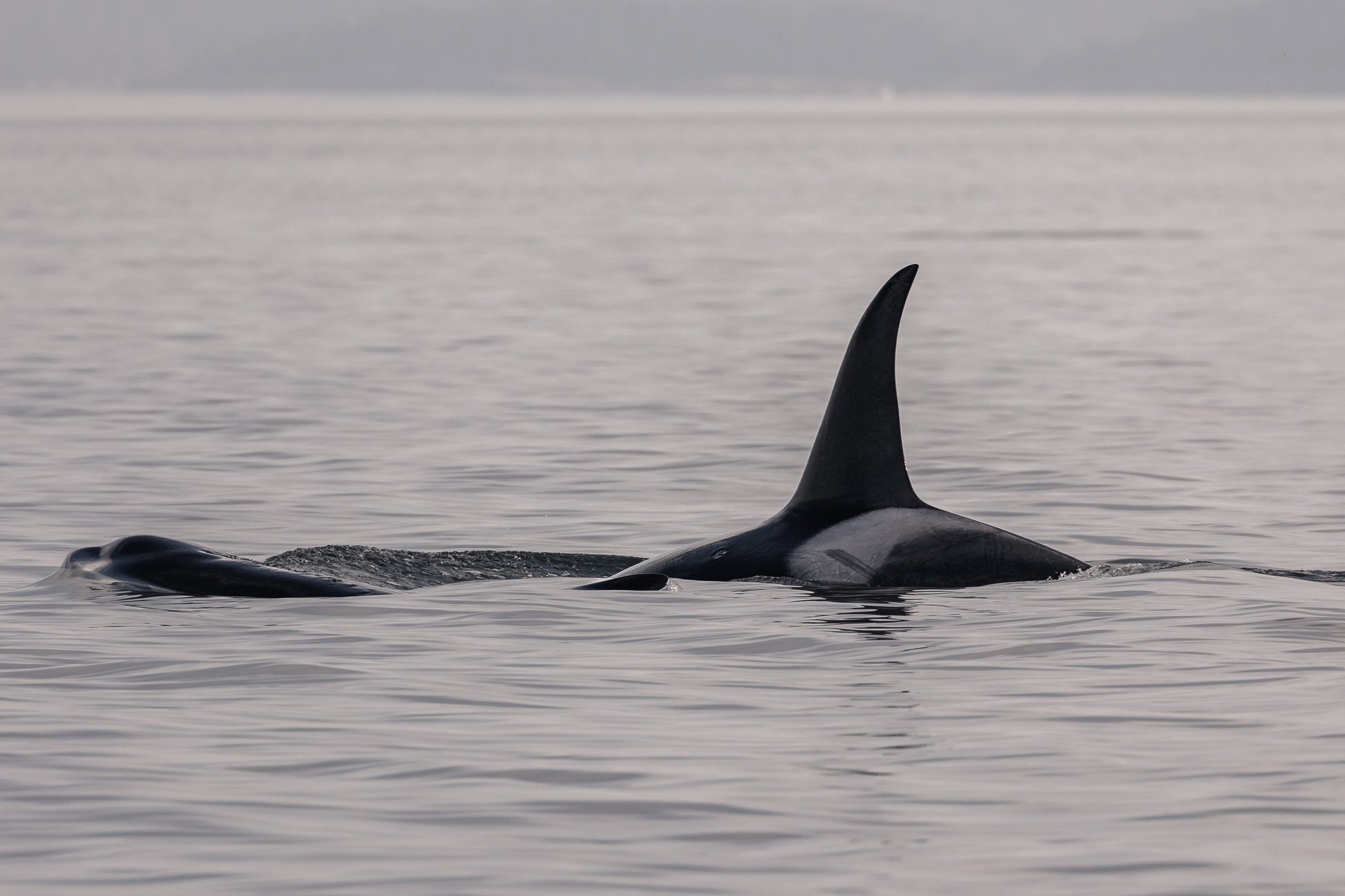
T077C Neftali with T077E Misneach surfacing beside him. Photo by Jordan Robinson.
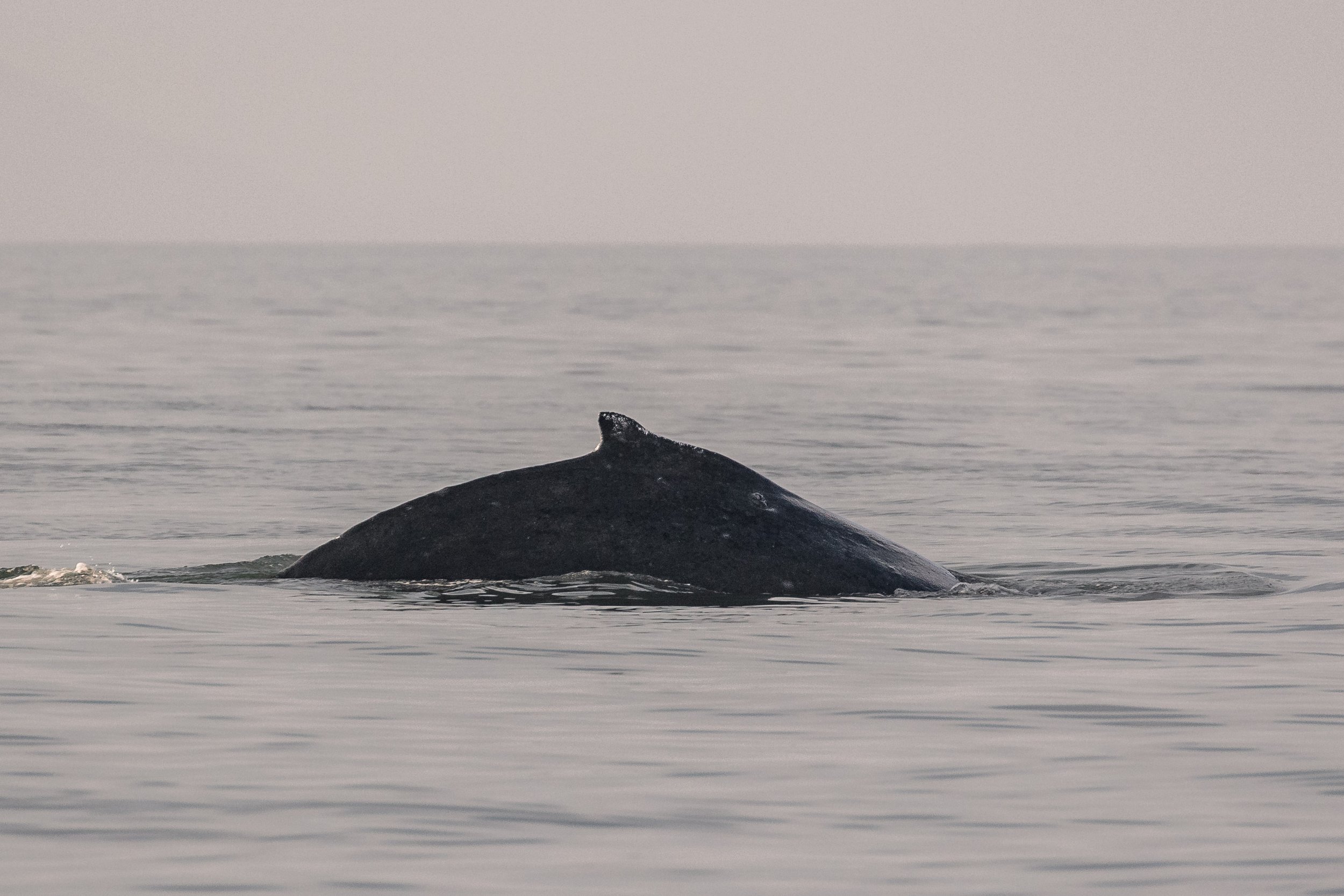
Windy’s dorsal fin. Photo by Jordan Robinson.
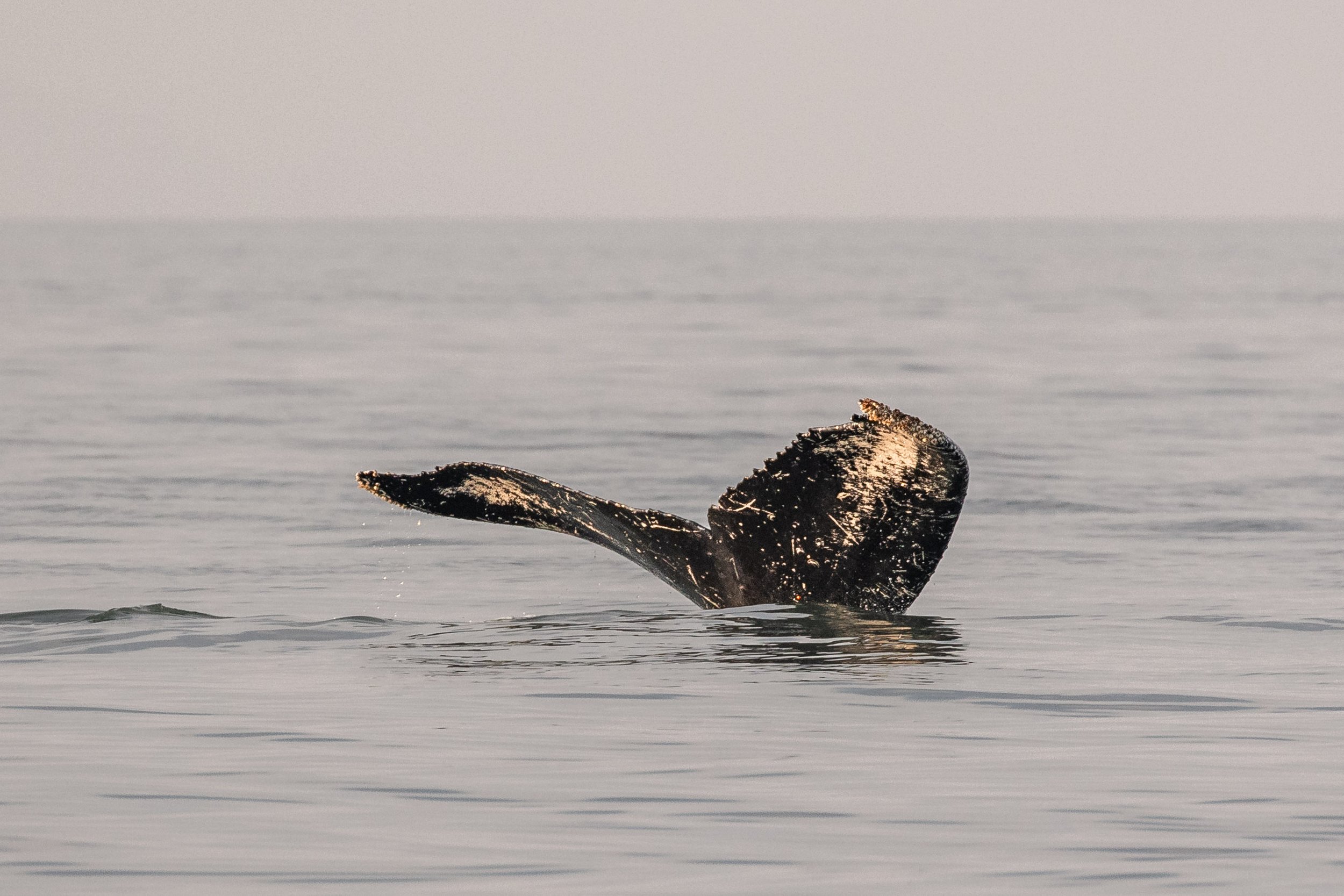
Windy fluking. Photo by Jordan Robinson.
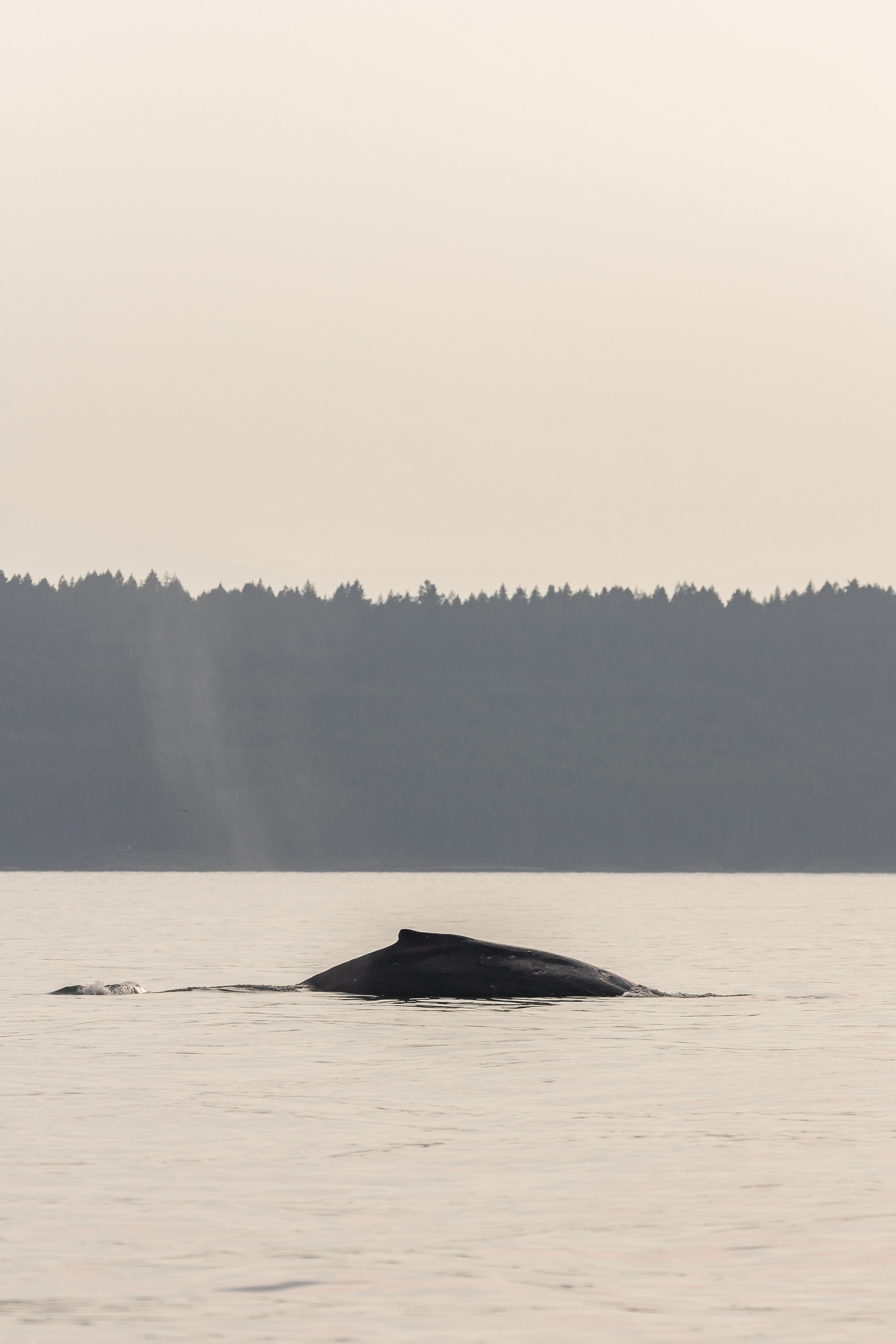
Hendrix off on the horizion. Photo by Jordan Robinson.
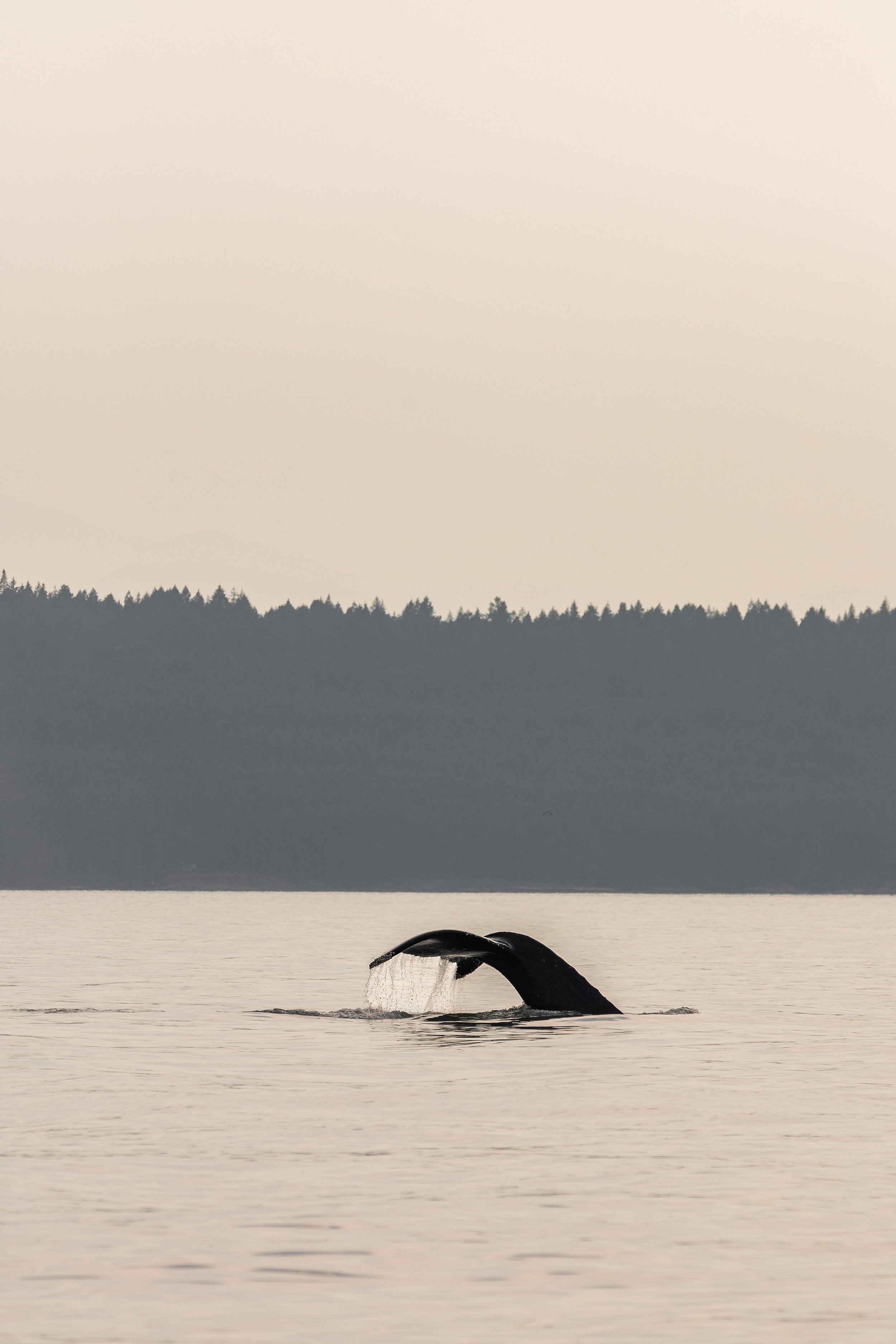
Hendrix going down for a dive. Photo by Jordan Robinson.
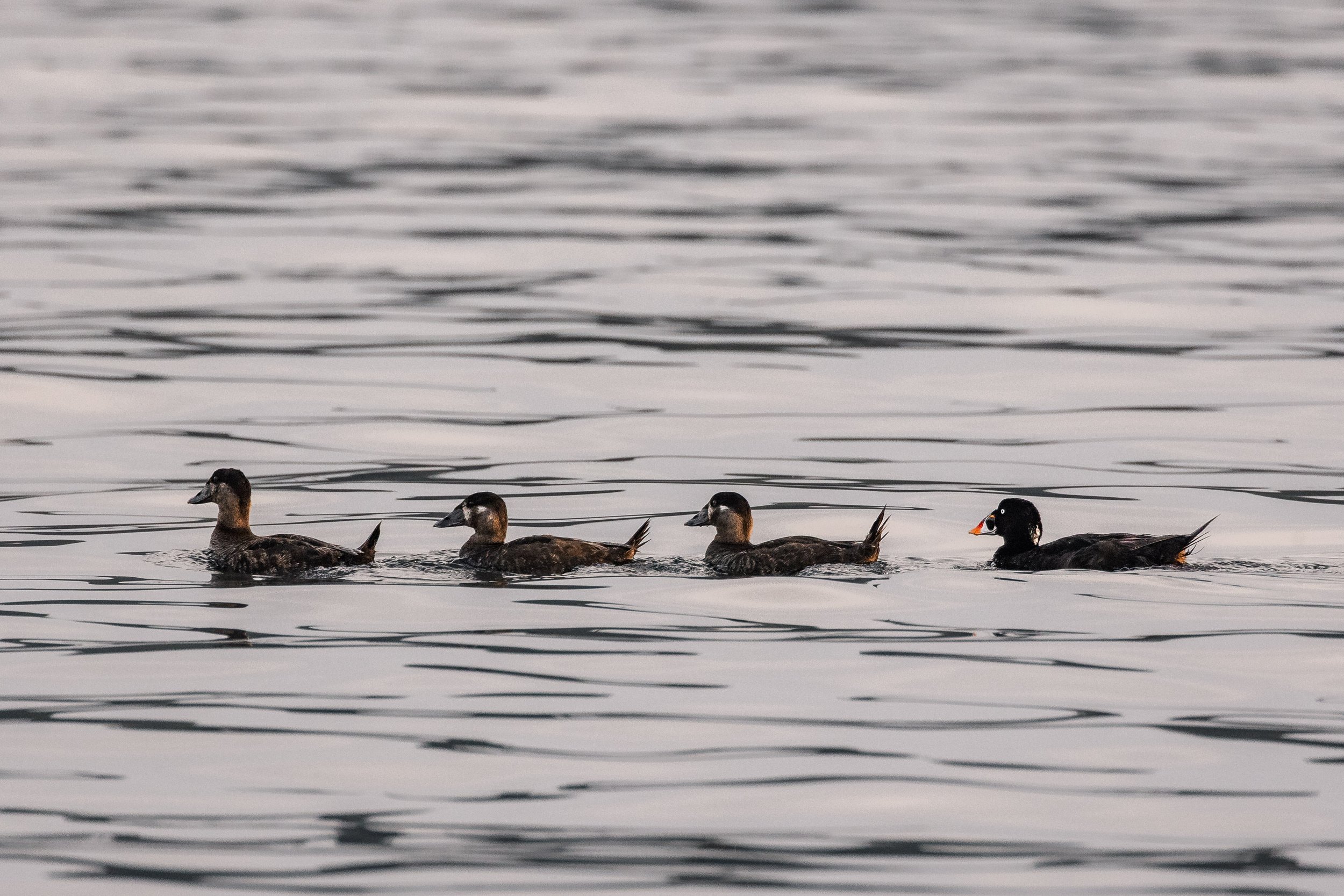
A raft of Surf Scoters. Photo by Jordan Robinson.
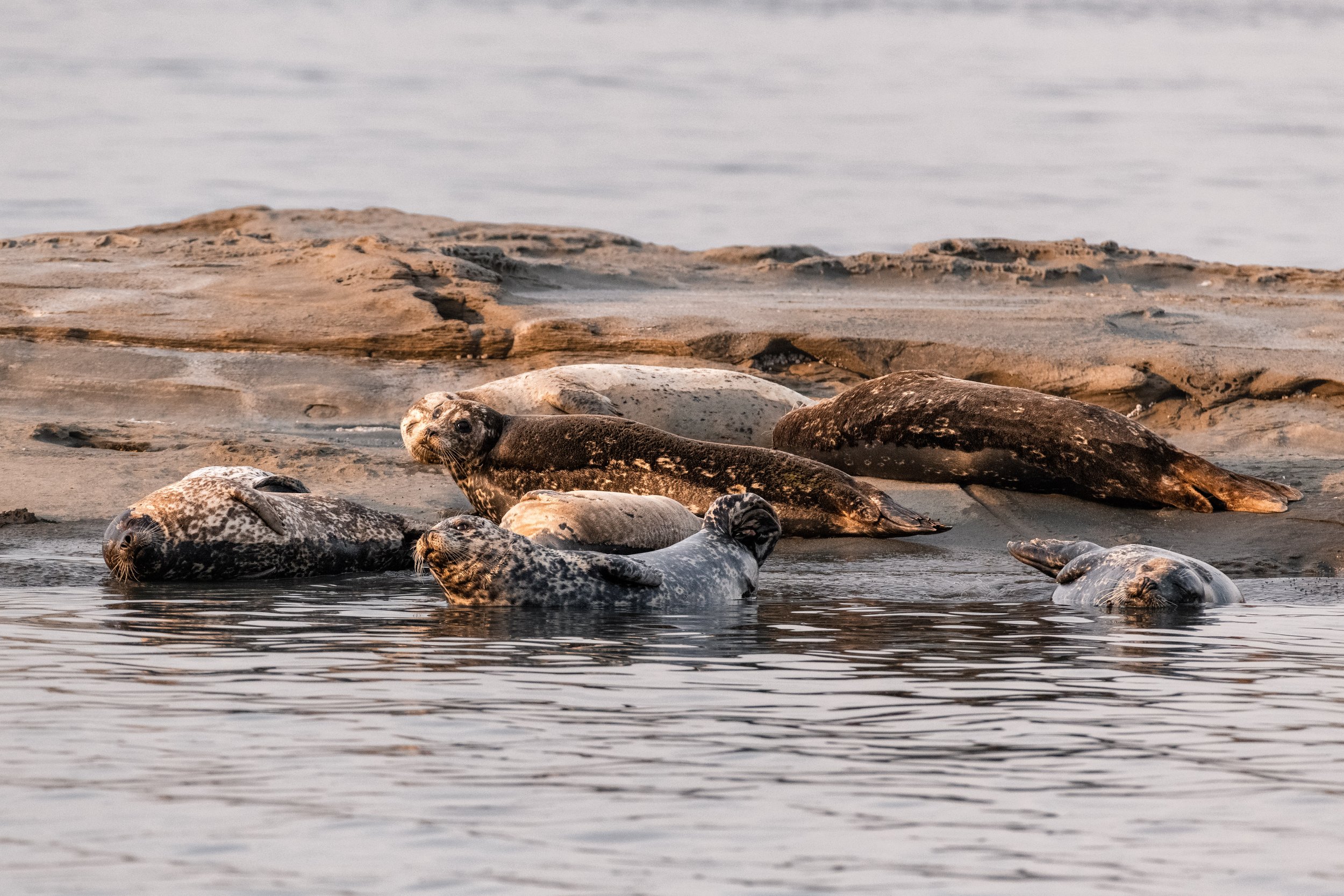
Harbour Seals hauled out together in the afternoon sunlight. Photo by Hayleigh Hilbert.
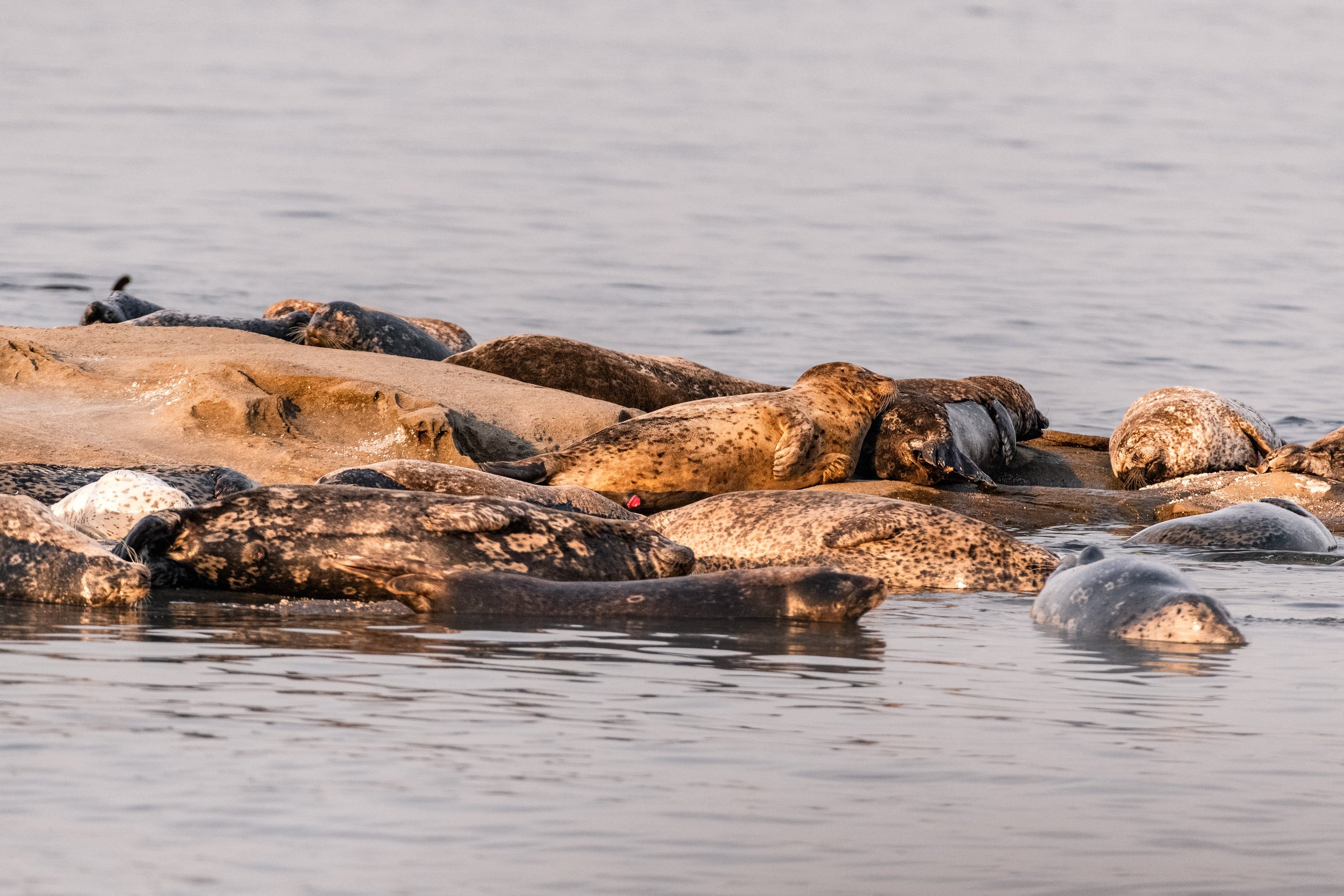
Snoozing the evening away. Photo by Hayleigh Hilbert.
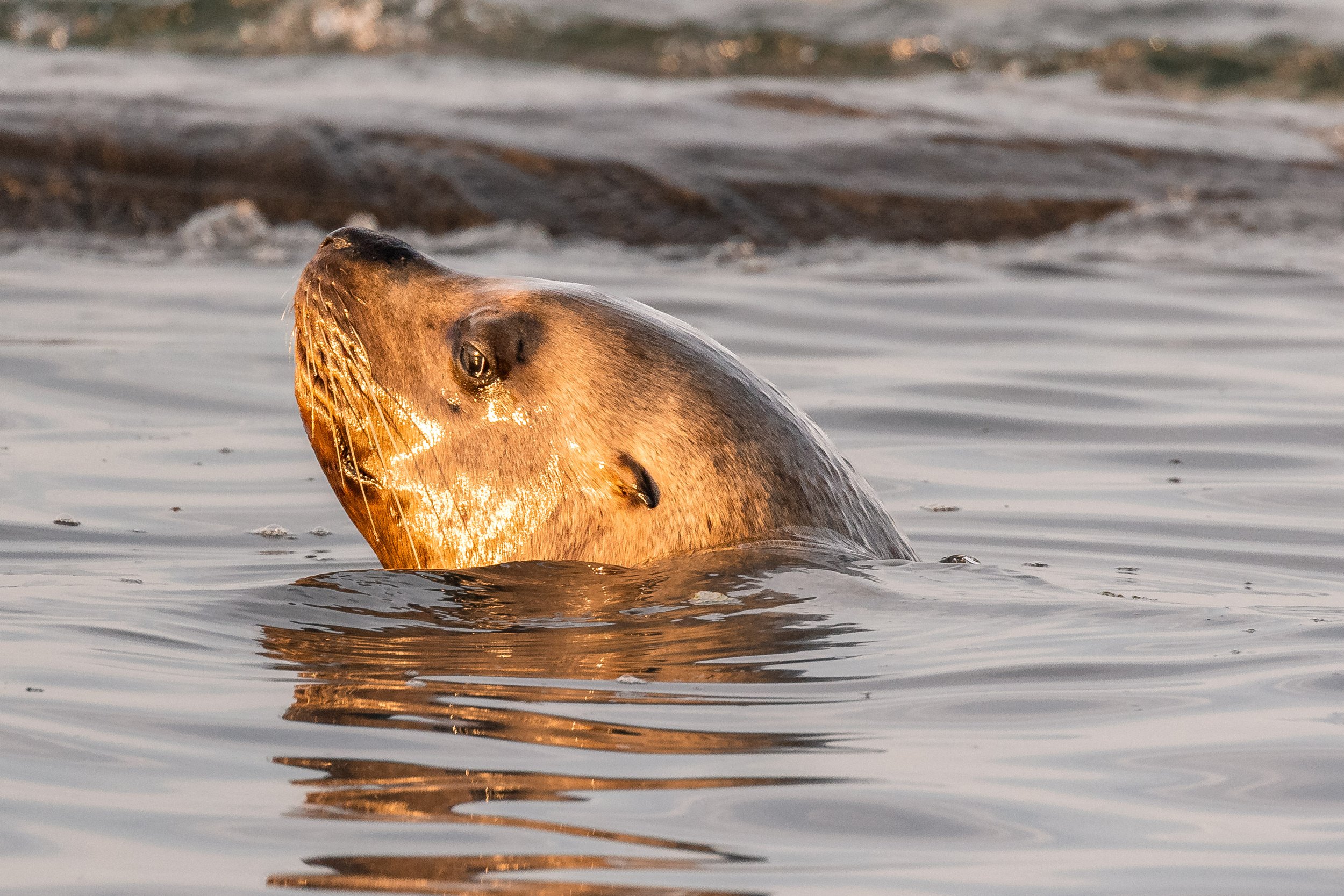
A Steller Sea Lion swimming along. Photo by Jordan Robinson.
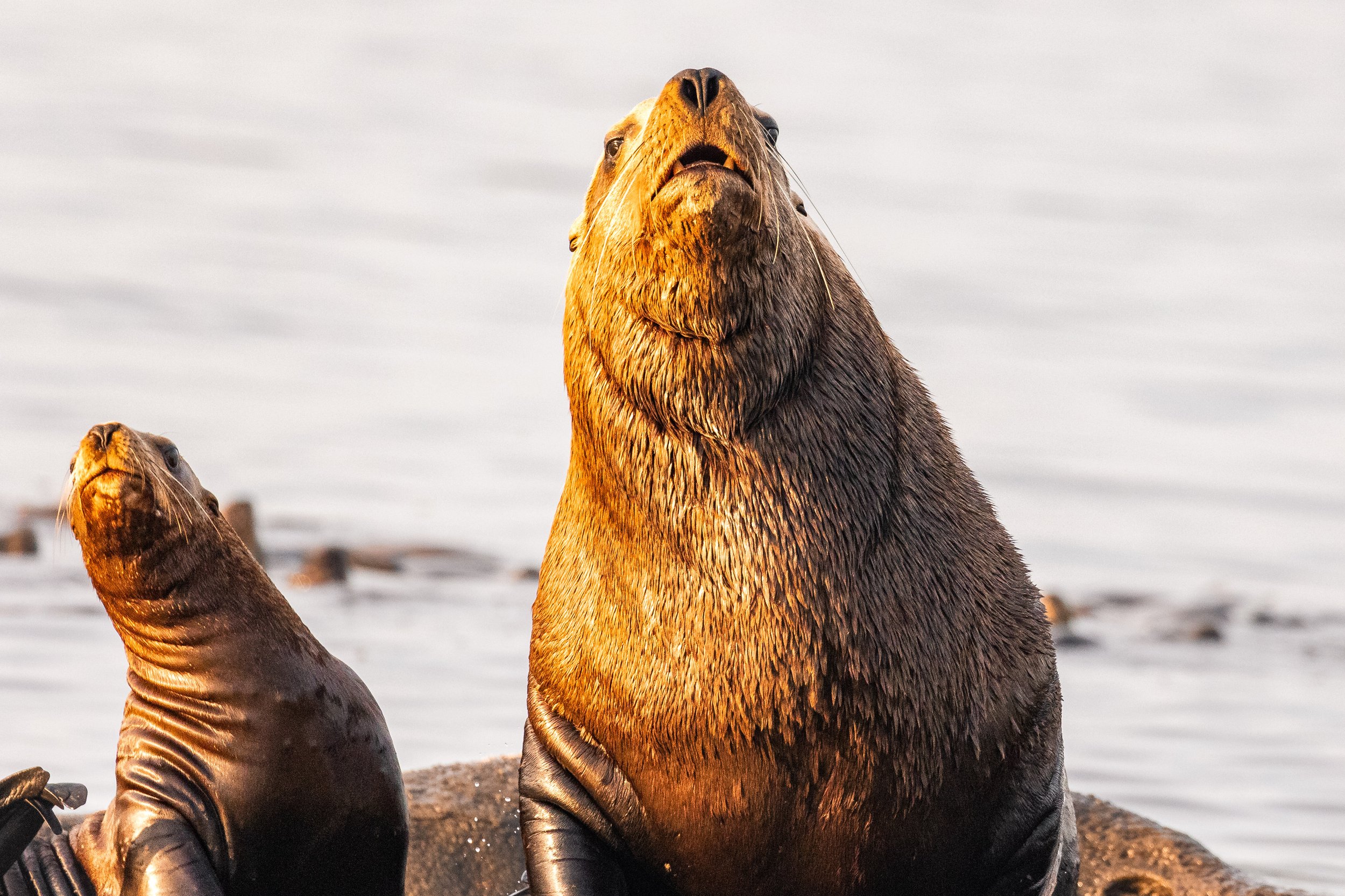
Steller Sea Lions peeking at us. Photo by Jordan Robinson.
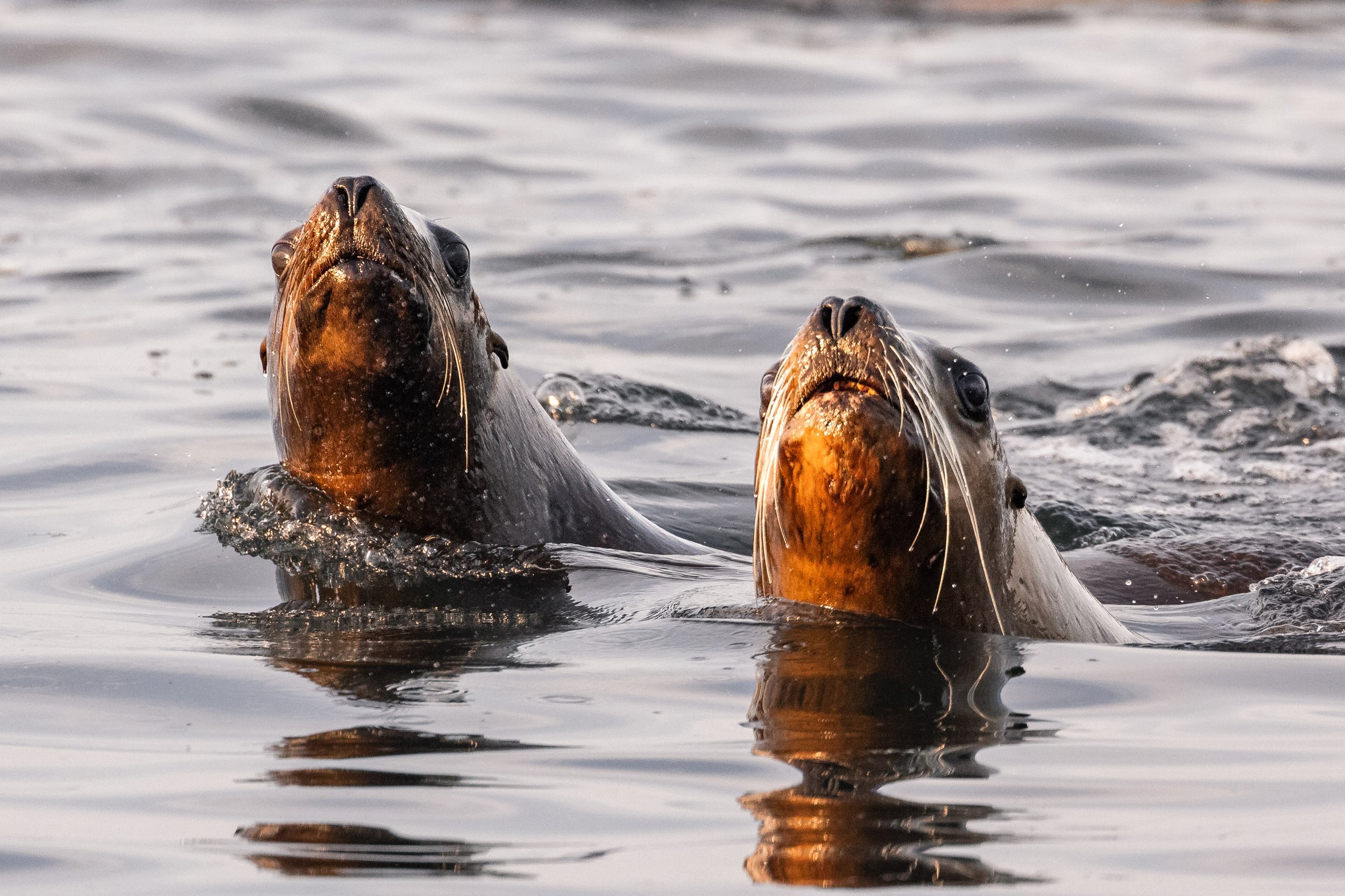
A pair of sea lions swimming on by. Photo by Jordan Robinson.
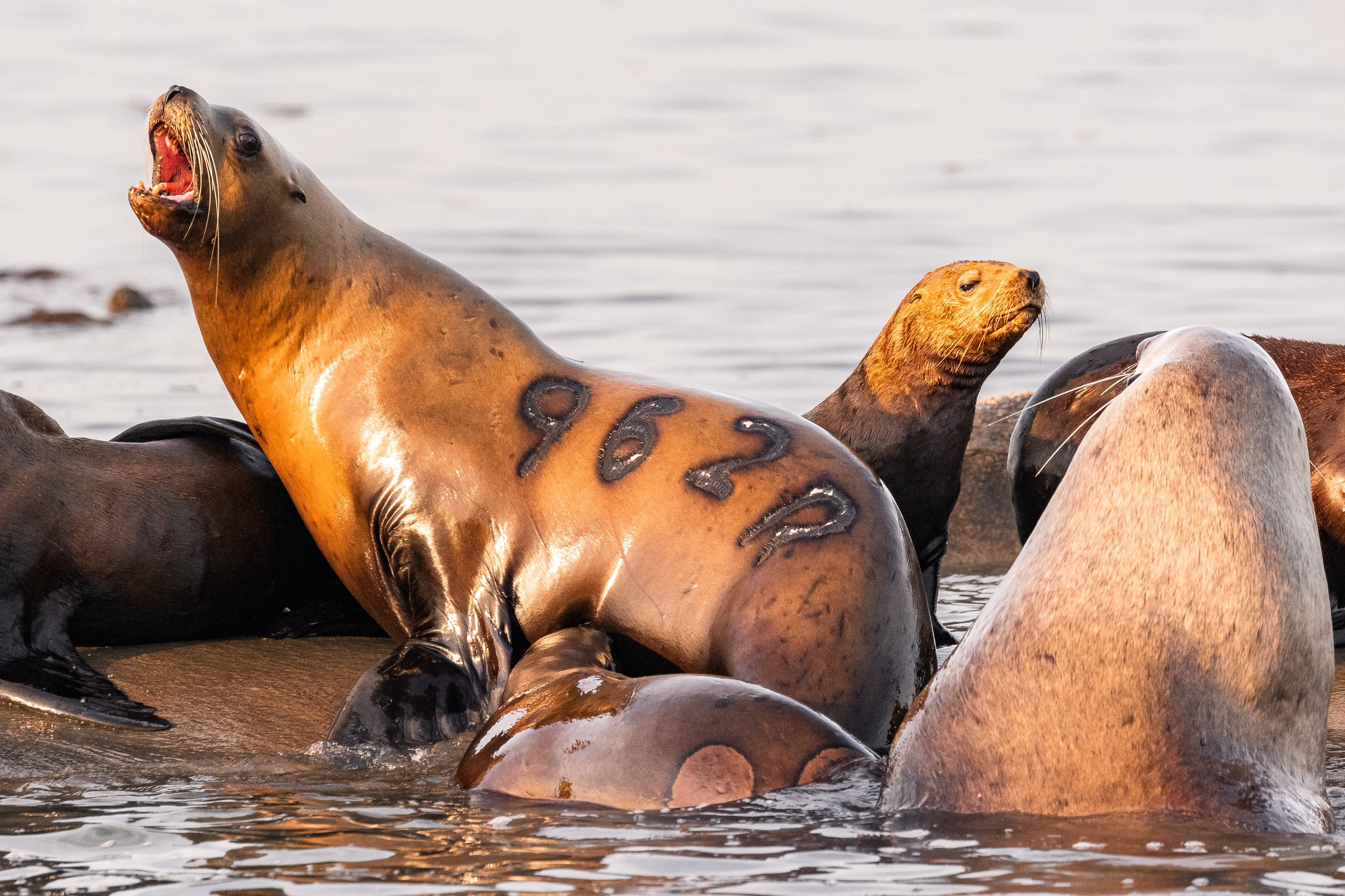
A female branded Steller Sea Lion. This one was branded in Rogue Reef, OR in 2011! Photo by Jordan Robinson.
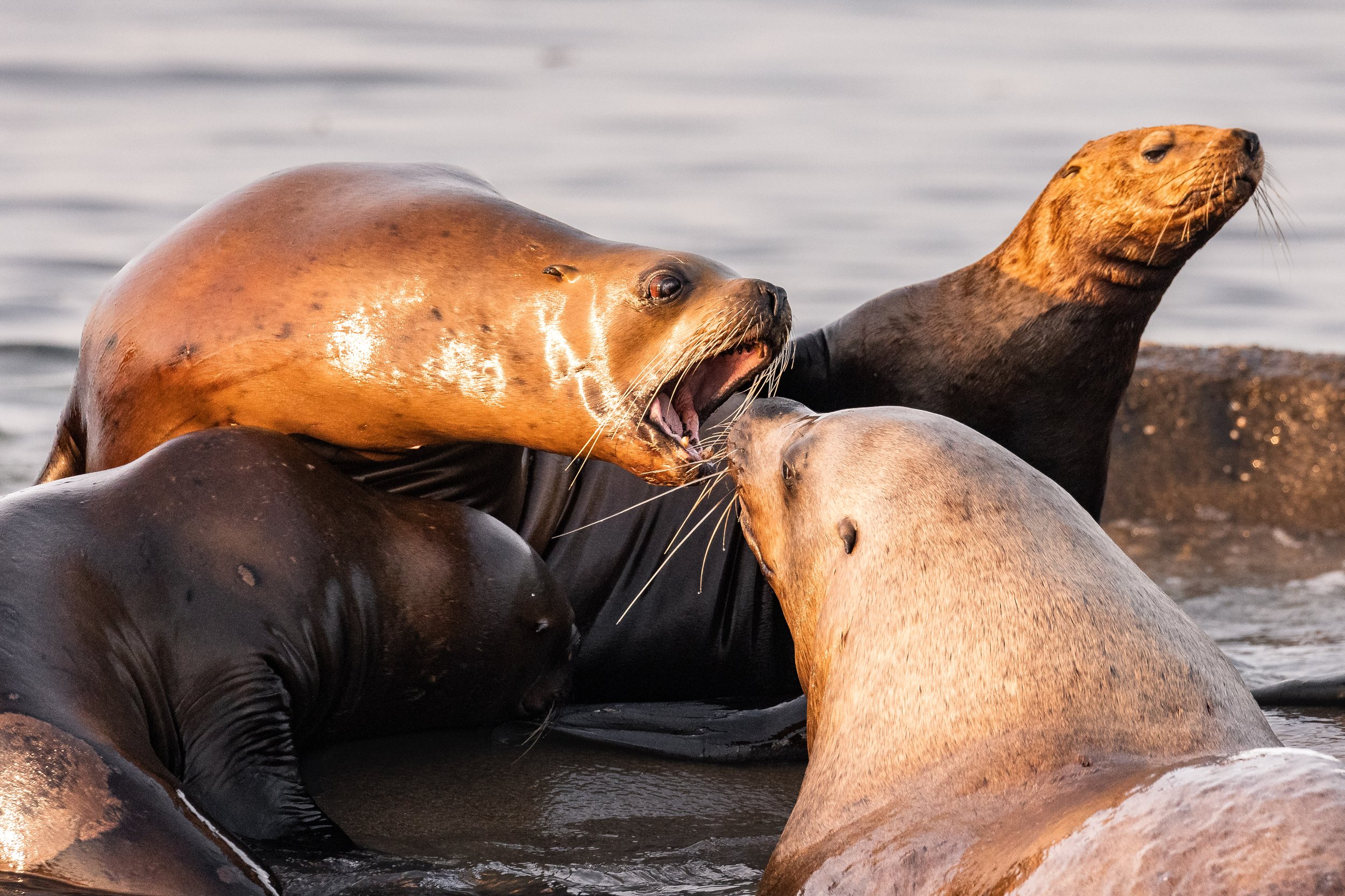
Fighting amongst the sea lions. Photo by Jordan Robinson.
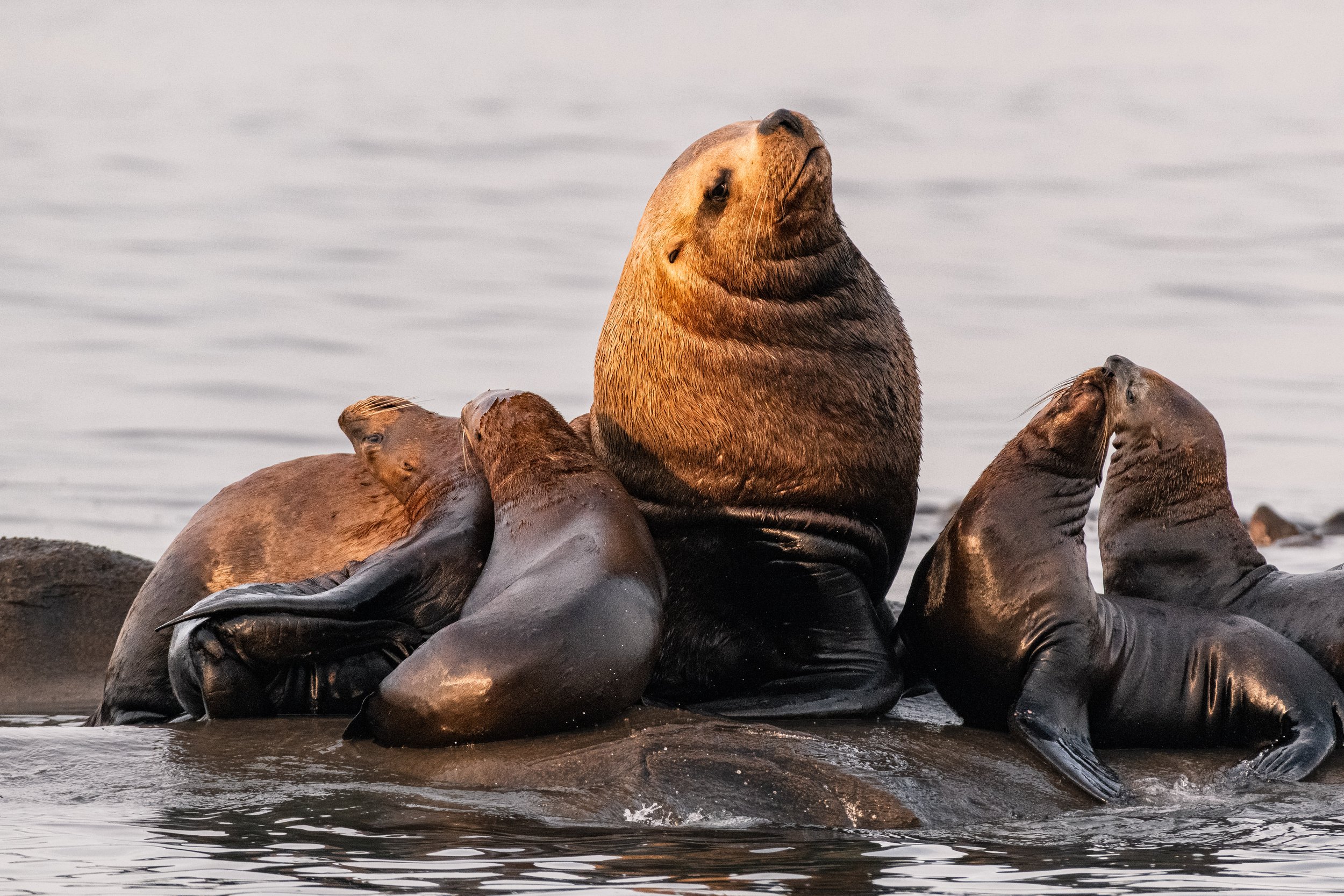
Look at how chunky this large Steller Sea Lion male is! Photo by Hayleigh Hilbert.
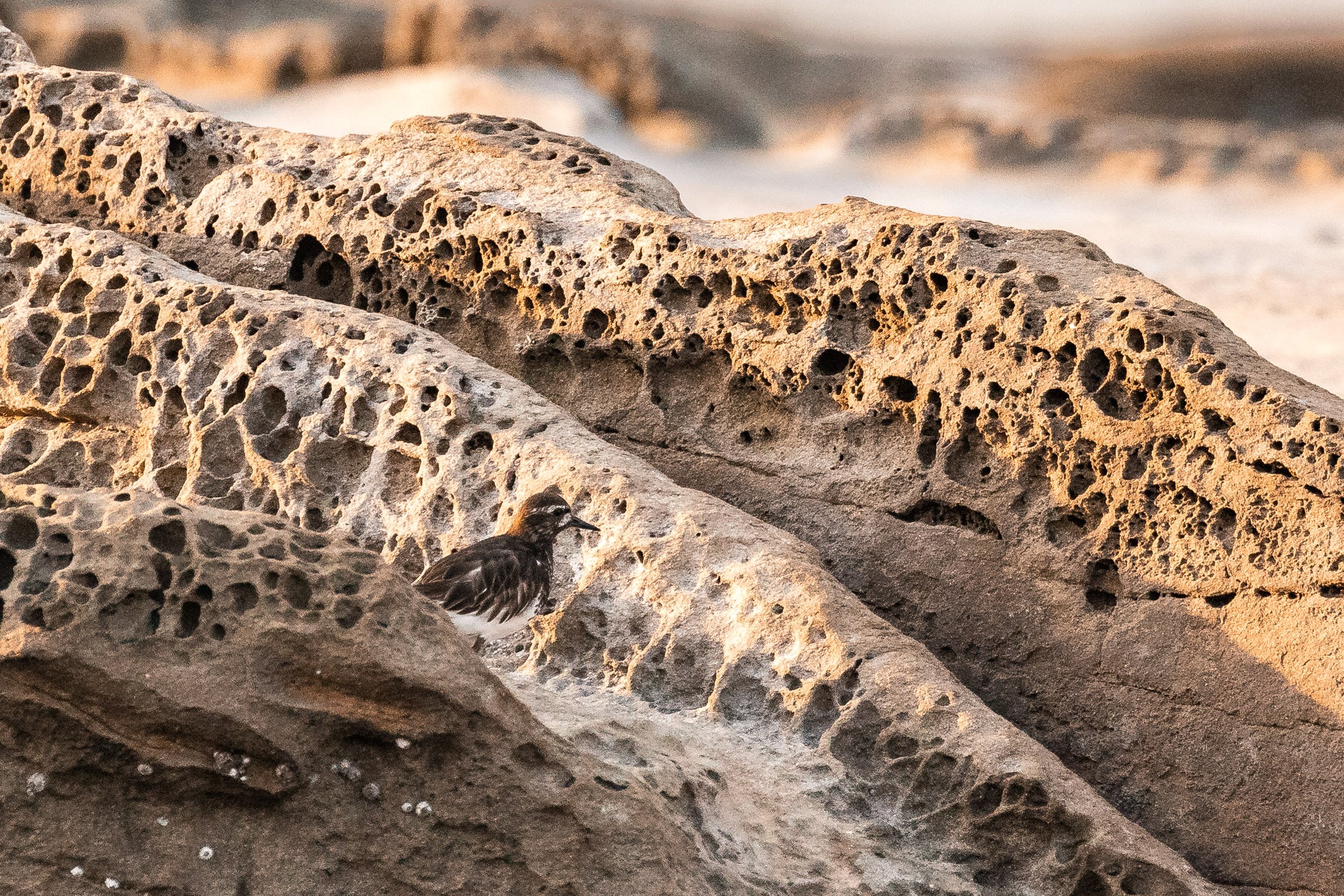
A Black Turnstone wandering the shoreline. Photo by Jordan Robinson.
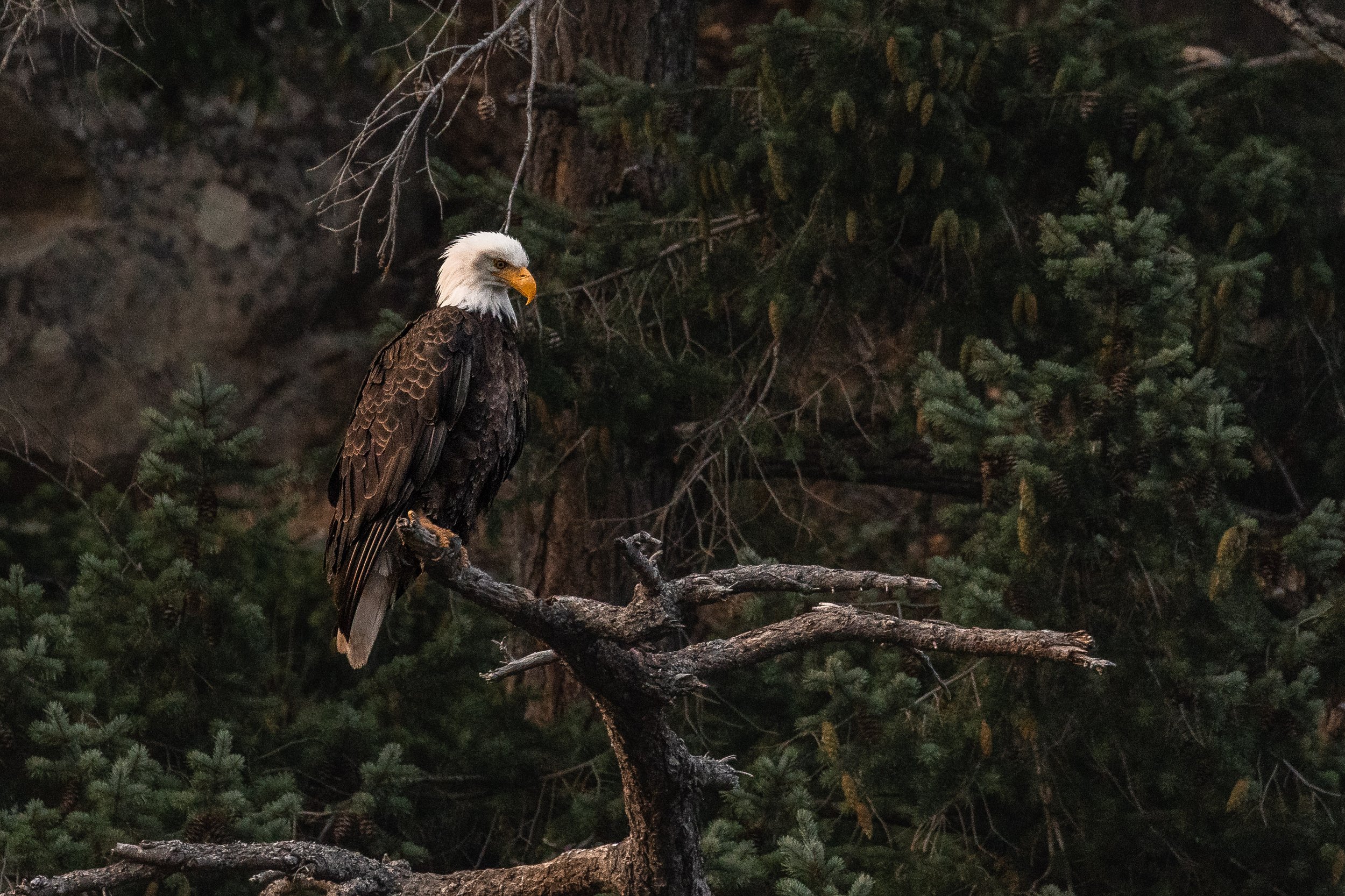
A Bald Eagle perched up in a tree. Photo by Jordan Robinson.
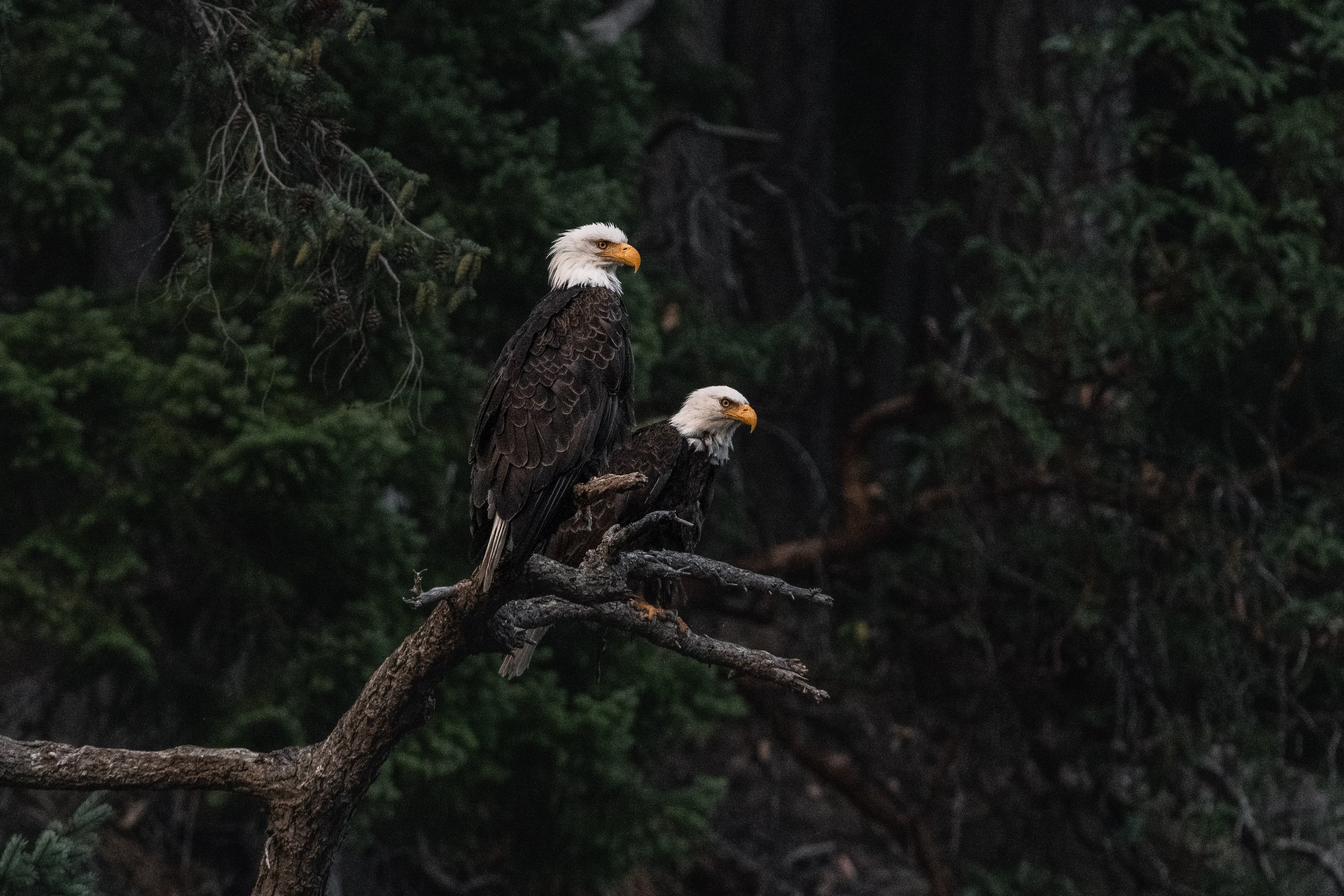
A pair of Bald Eagles roosting in the tree. Photo by Hayleigh Hilbert.
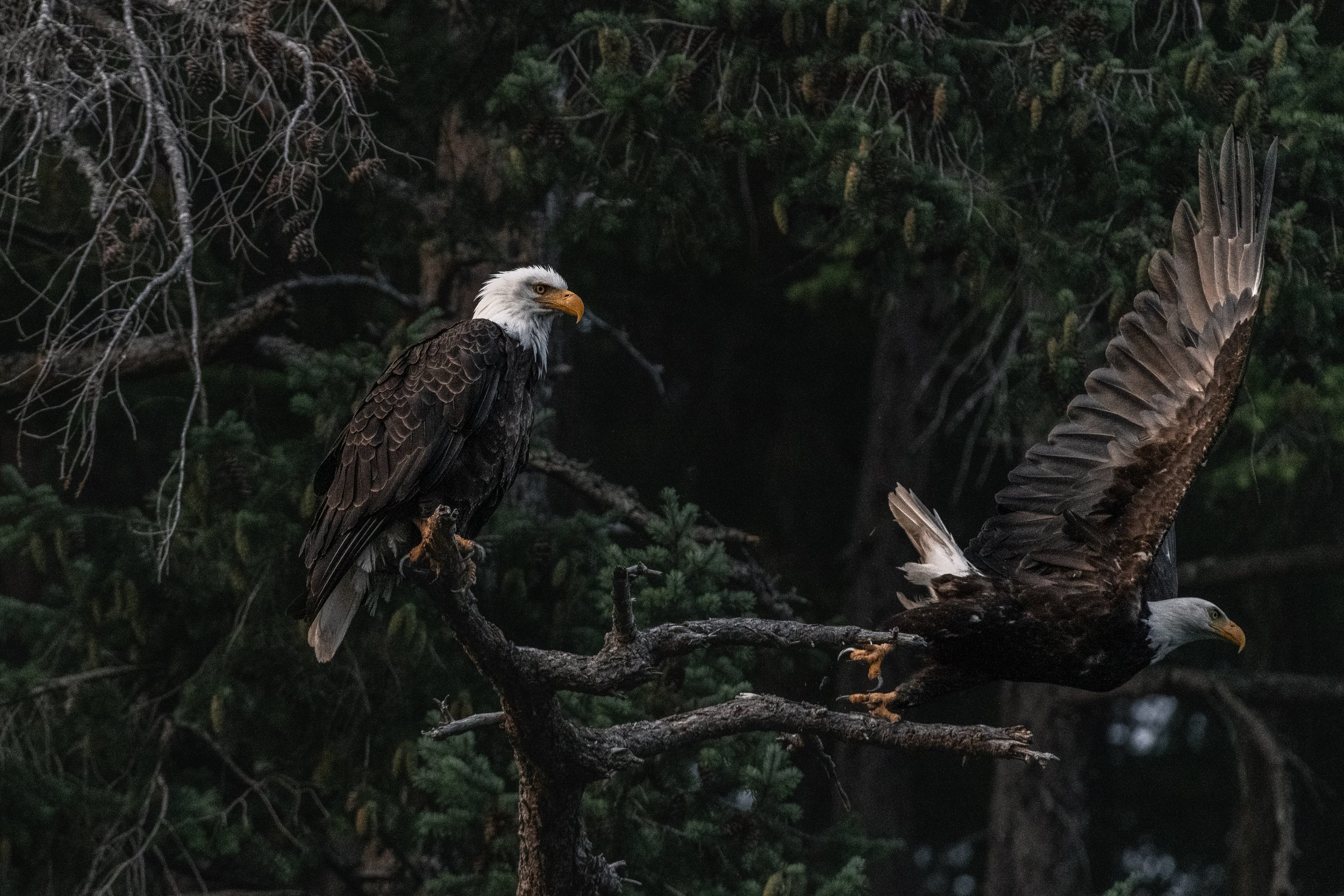
Taking flight. Photo by Hayleigh Hilbert.