
July 23, 2026, 3:30 PM - Charter - Spending time with the T100s off of Pender Island
It was another wonderful West Coast day as we had a private charter preparing to leave Nanaimo. These guys were hoping for one thing: to see some of the most iconic marine mammals in these waters: orcas!
We knew of a pod seen farther south in our range, so we decided to head that way and hope for the best. This paid off, since after travelling all the way south through the Southern Gulf Islands, we ended up catching up with the T100s as they travelled east along Pender Island. The T100s consist of 3 individuals:
T100 Hutchins ♀ (~1979)
T100C Laurel ♂ (2002)
T100F Estrella (2004)
Today, these whales were focused on travel, doing so very close to shore. Since transient orca eat other marine mammals, primarily pinnipeds who spend most of their time close to shore, they aren’t shy about getting in close themselves. The shorelines of the Southern Gulf Islands are perfect for getting in close to shore, as well, given the steep cliffs that line many of these islands. Some whales are even known to use the shoreline to assist with their hunting, cornering their prey in a restricted area to limit their movements and make hunting more efficient. For this afternoon, though, it didn’t seem like they were using the shoreline in this way, instead steadily travelling east as we watched them.
This is what we see from whales the majority of the time: travel. Each day, this pod may travel over 100 nm, with their range extending from southern Alaska to northern California. This pod seems to utilize the more northern part of this range though, being a common sight in the Salish Sea and around Glacier Bay in Alaska.
Seeing them travelling today was a special sight, especially with the beautiful island behind them, but eventually it was time to leave and continue back north. Along the way we made a final stop with some hauled-out Harbour Seals. These little guys are some of the favourite food sources for the transient orca, given their size and availability. With an estimated population size of 50,000 here in the Salish Sea, there are lots of opportunities both for us to spot them, and for the orca to try and snack on them. The recovery of this population is thought to have led to the increase in the population of Transient orca in the area as well.
Finally, we were lucky enough to spot some Bald Eagles on our way home from the Harbour Seals. These large raptors were keeping watch over the tree branches, likely hoping for their prey, fish, to surface close enough to the surface for them to swoop in and grab it with their talons. It was a lovely sight to see the two adults sharing the tree branch overhead.
Finally, we found ourselves back in the harbour, pleased to have accomplished our goal of seeing orca, even if we had to go quite a distance to find them! Please enjoy all the photos below taken throughout the tour by Marine Naturalist Evan Hessels!
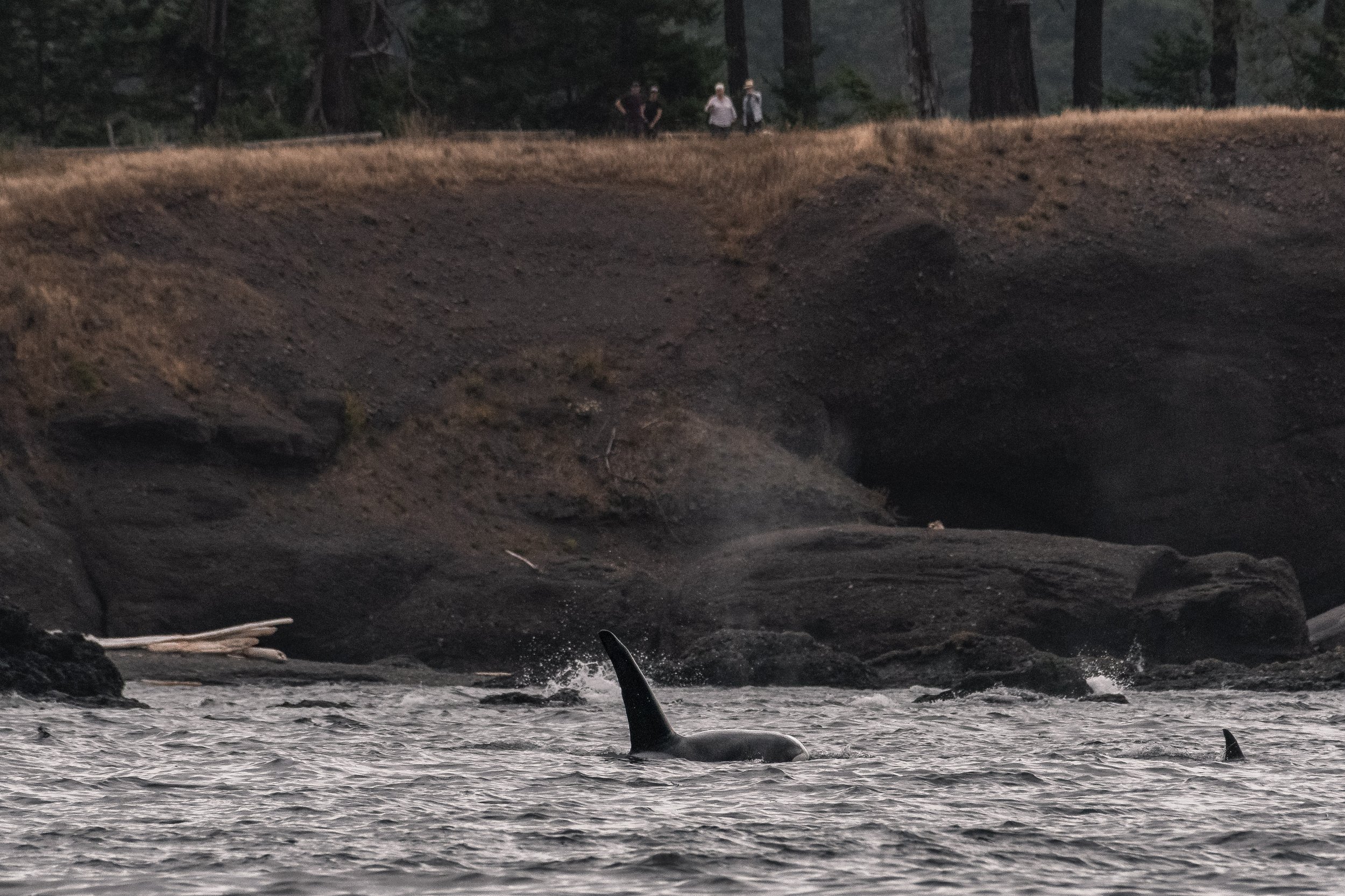
T100C Laurel close to shore, with onlookers above him.
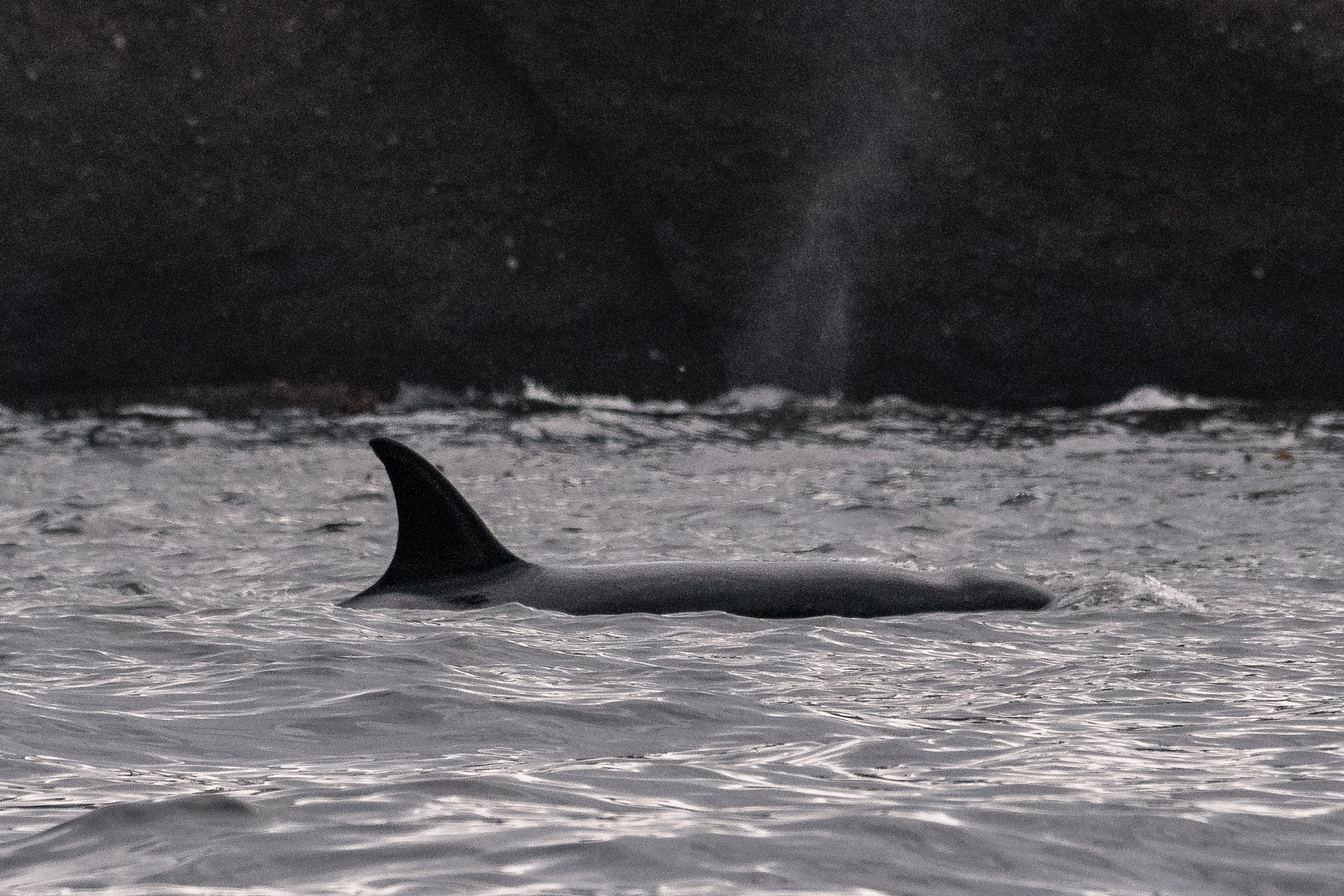
T100 Hutchins travelling.
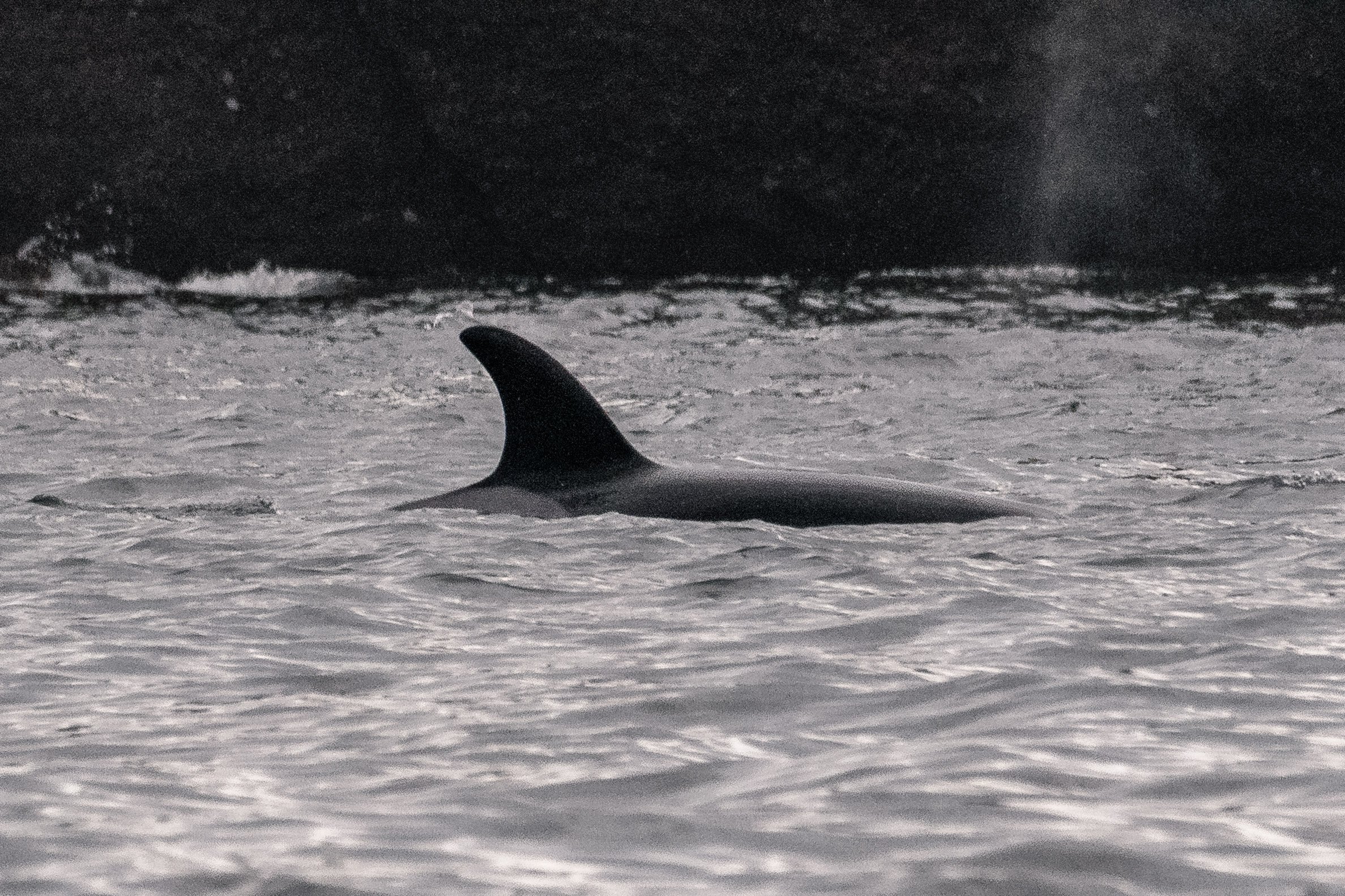
T100F Estrella, the youngest of the pod.
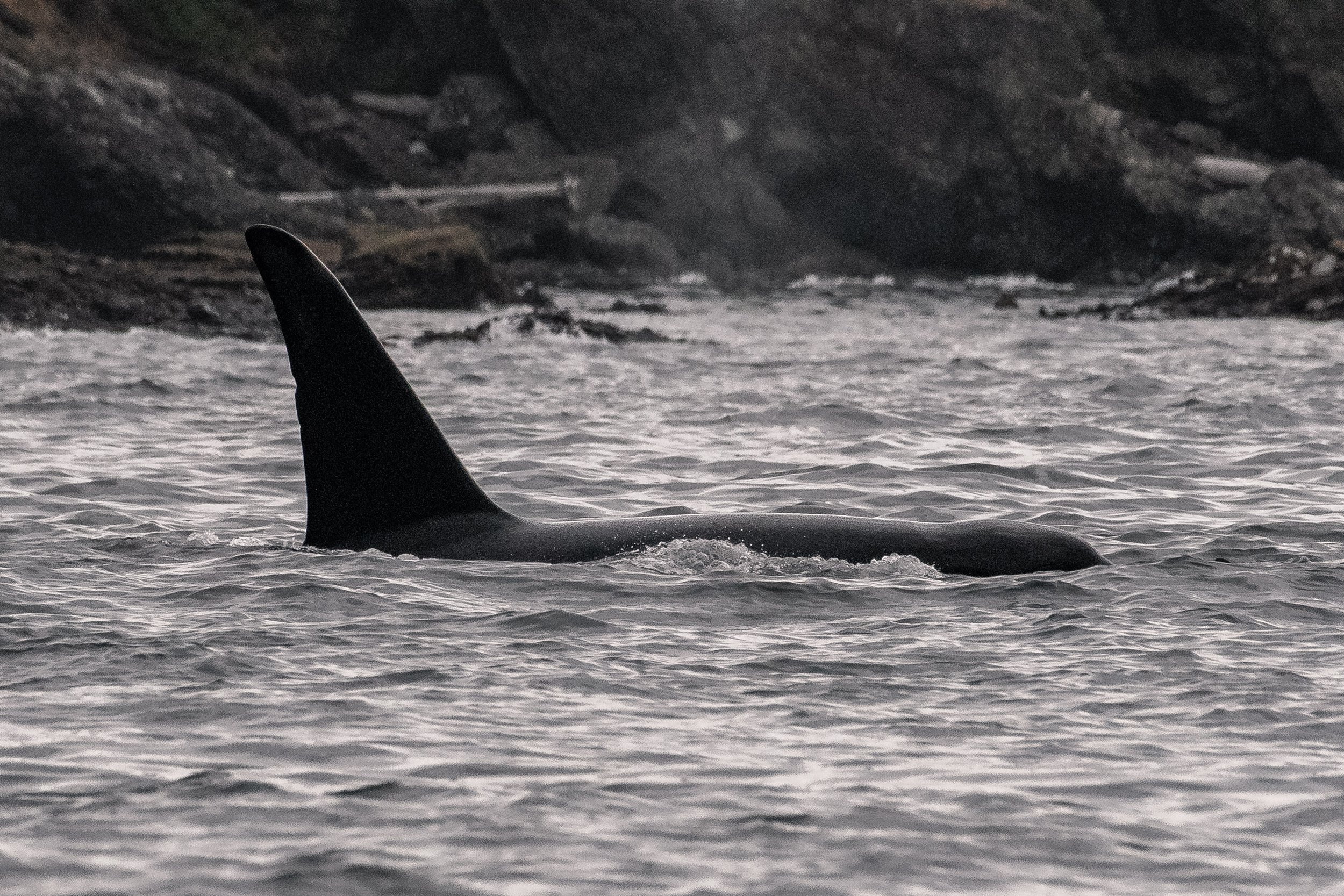
T100C Laurel with his large double notched dorsal fin visible.
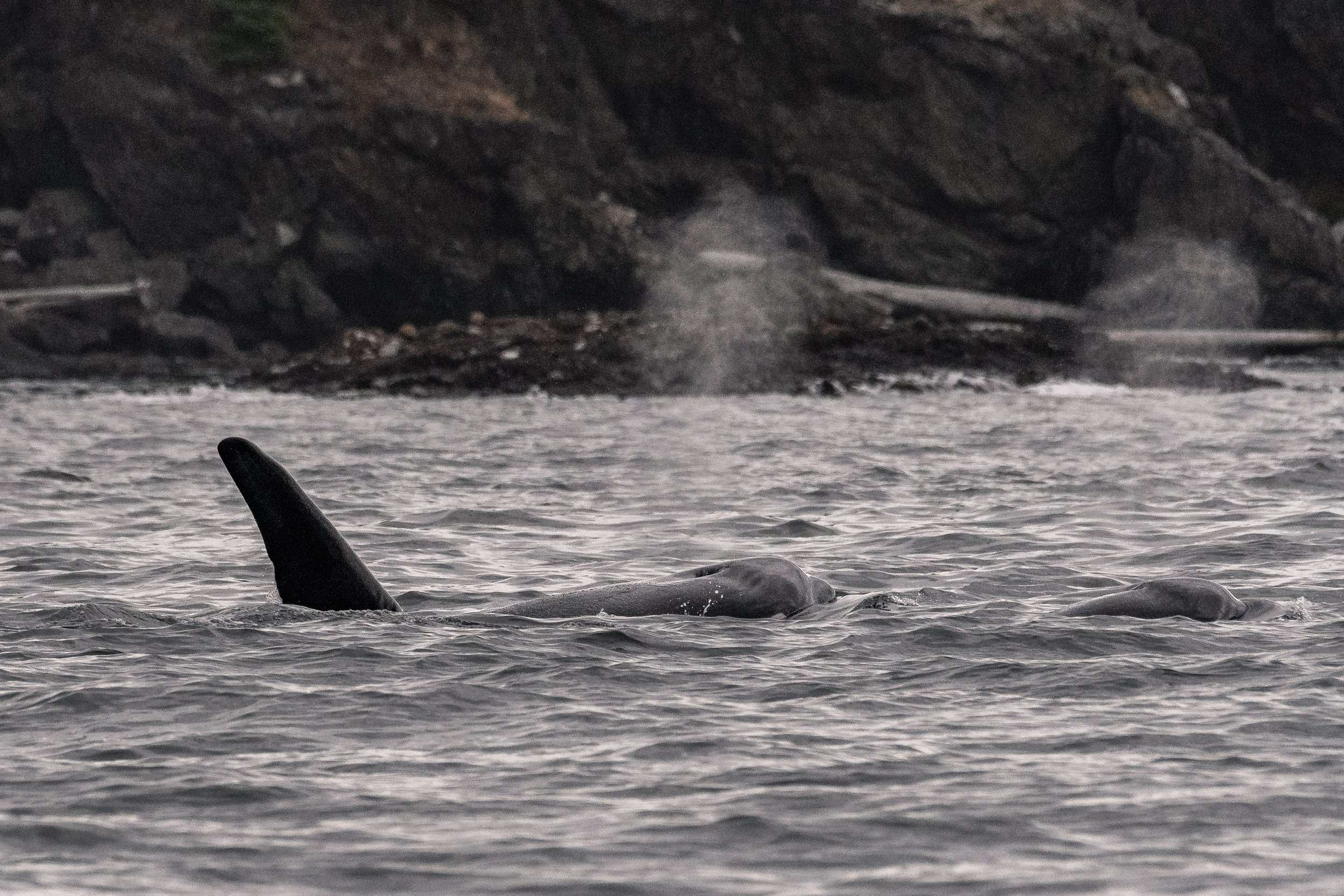
T100C Laurel surfacing with another beside him.
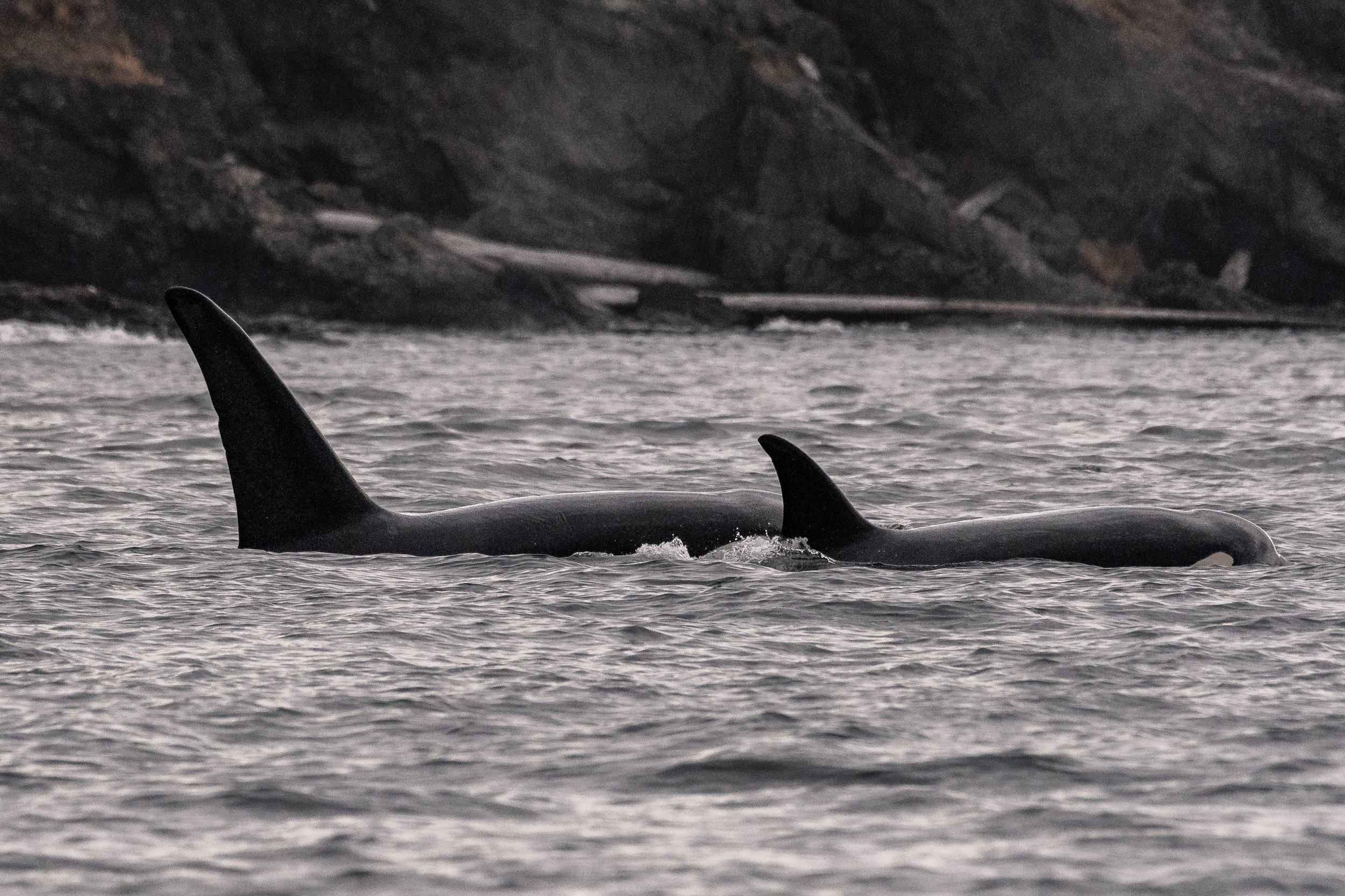
T100C Laurel and T100 Hutchins.
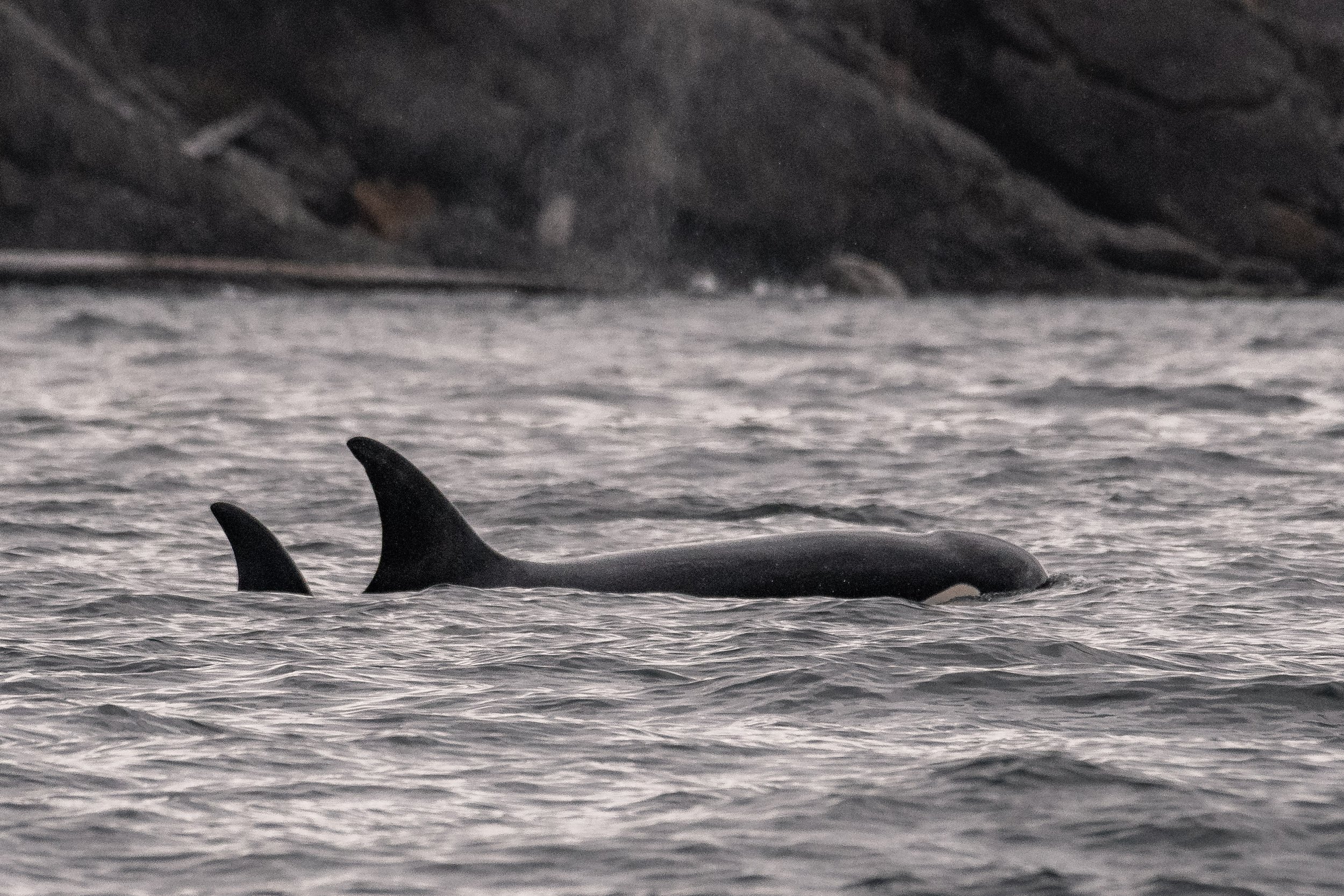
T100F Estrella with their mother T100 Hutchins.
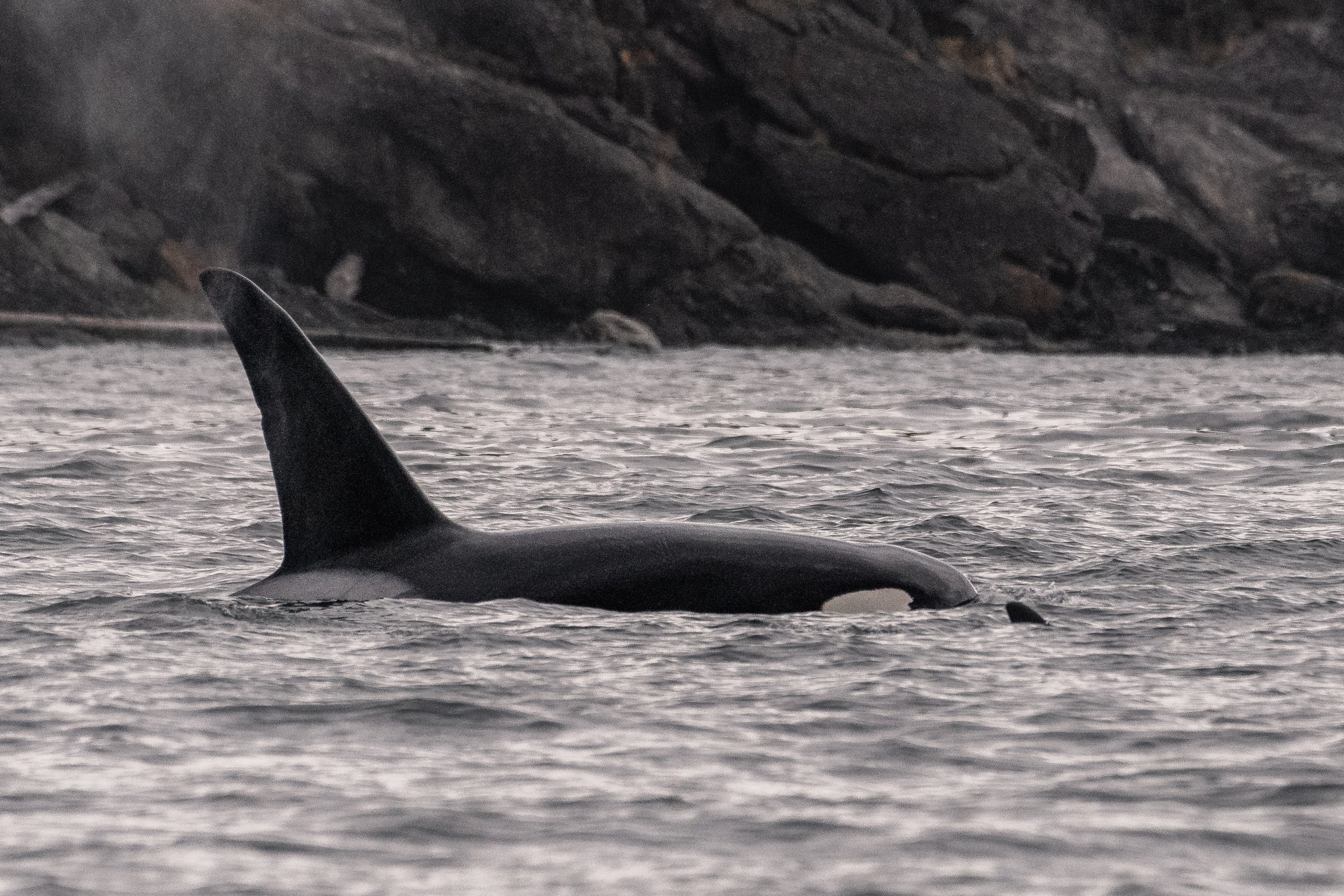
T100C Laurel with his eyepatch above the surface.
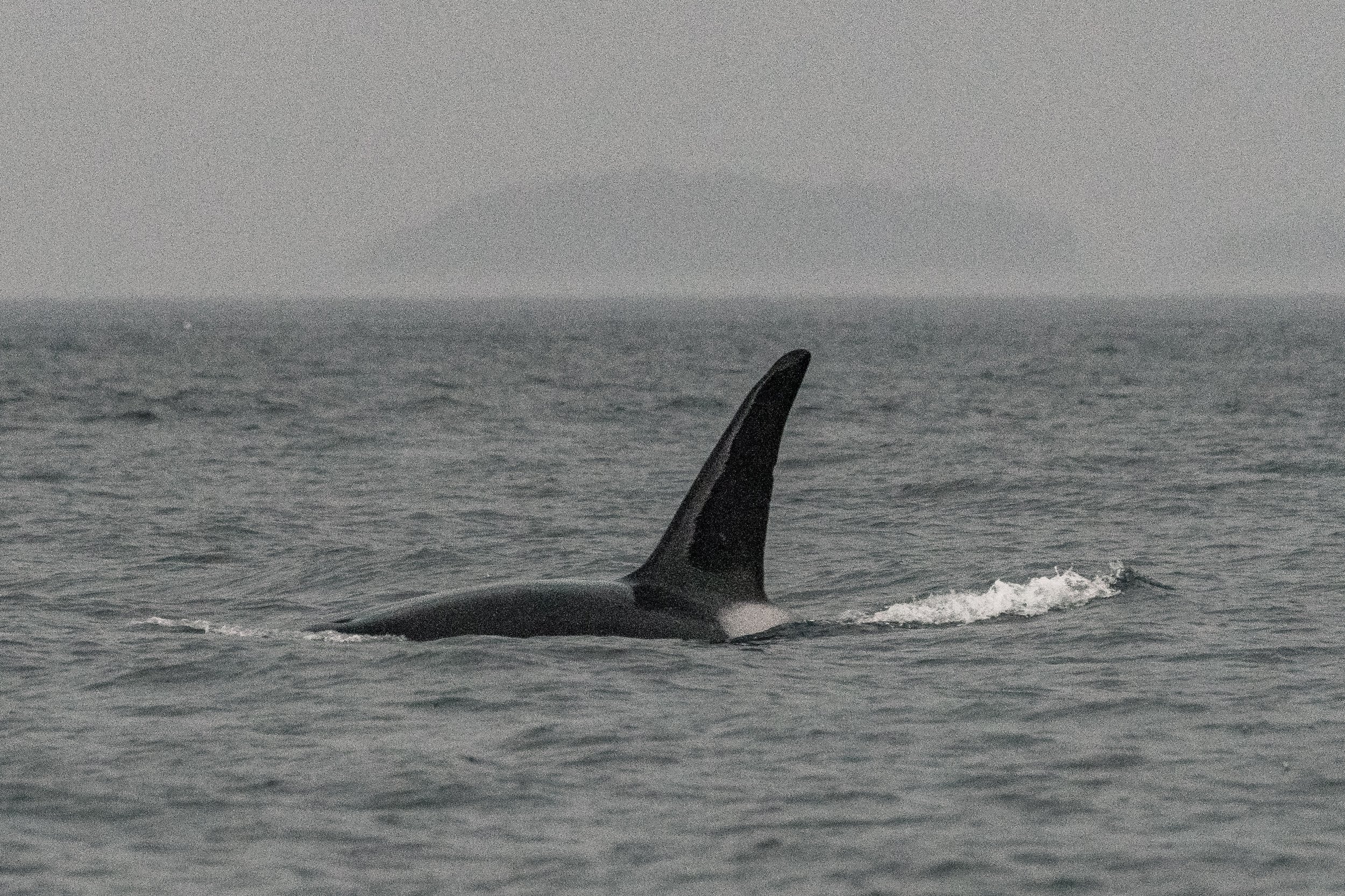
T100C Laurel travelling along.
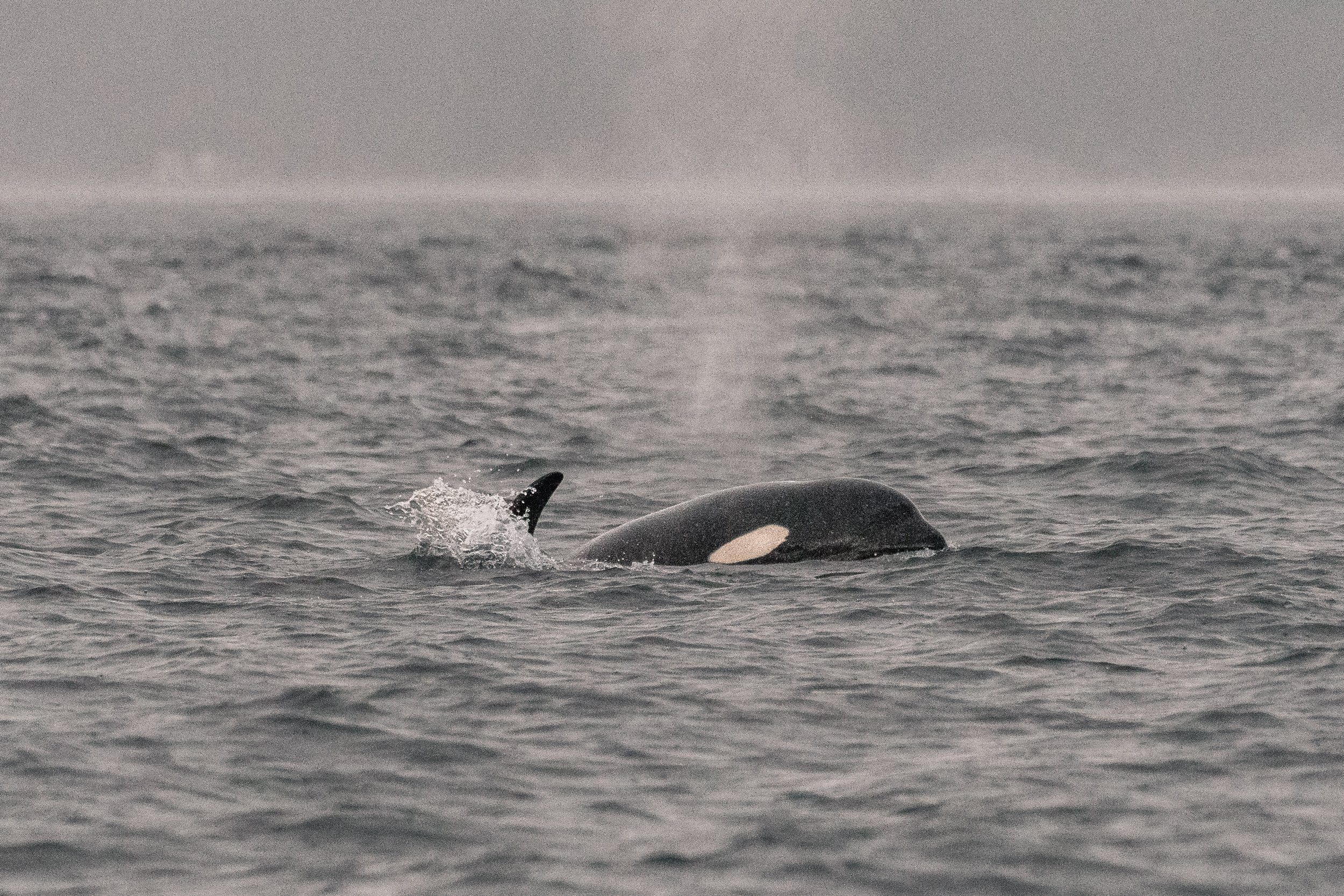
T100 Hutchins - we can confirm this is her from her eyepatch.
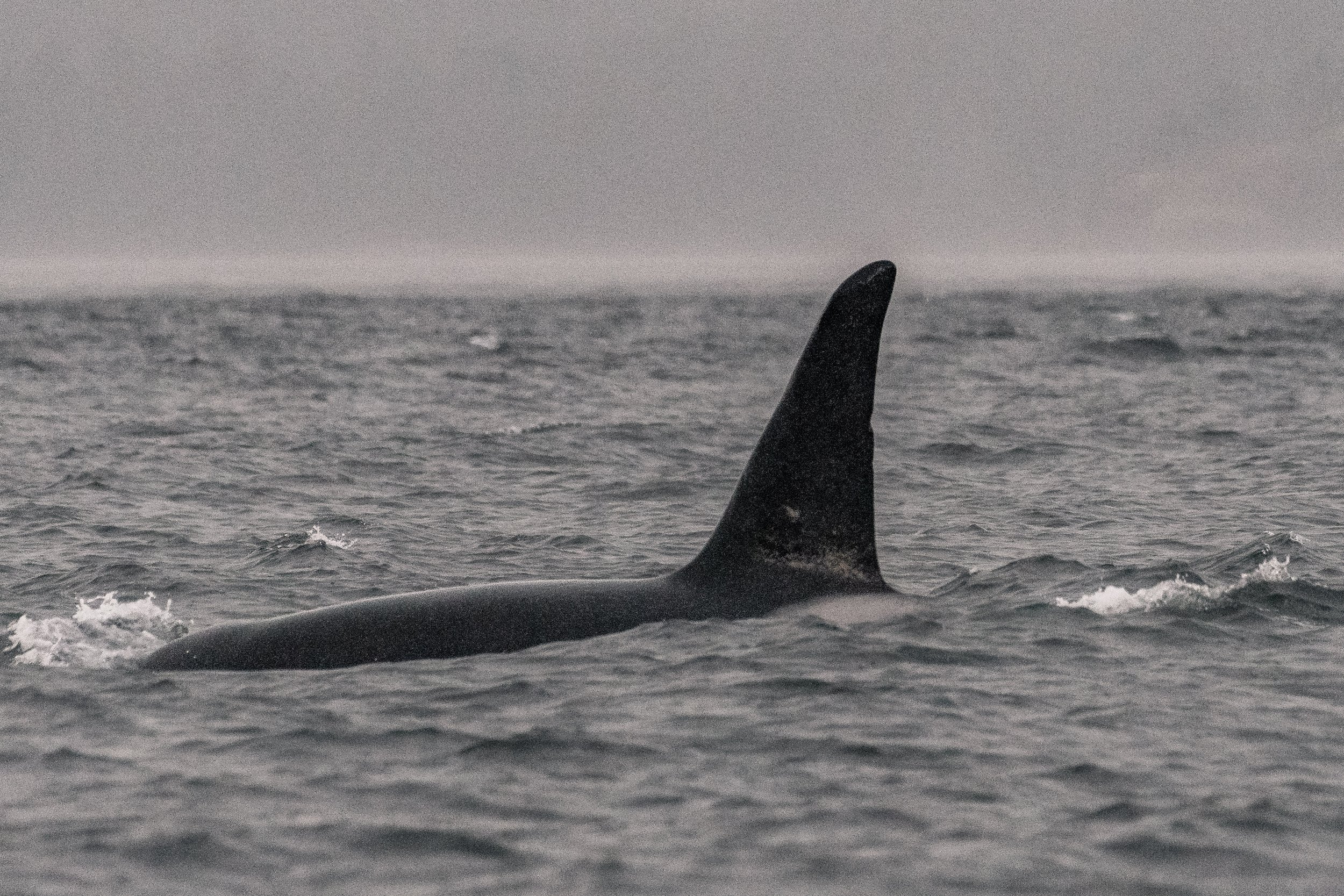
T100C Laurel making his way along.
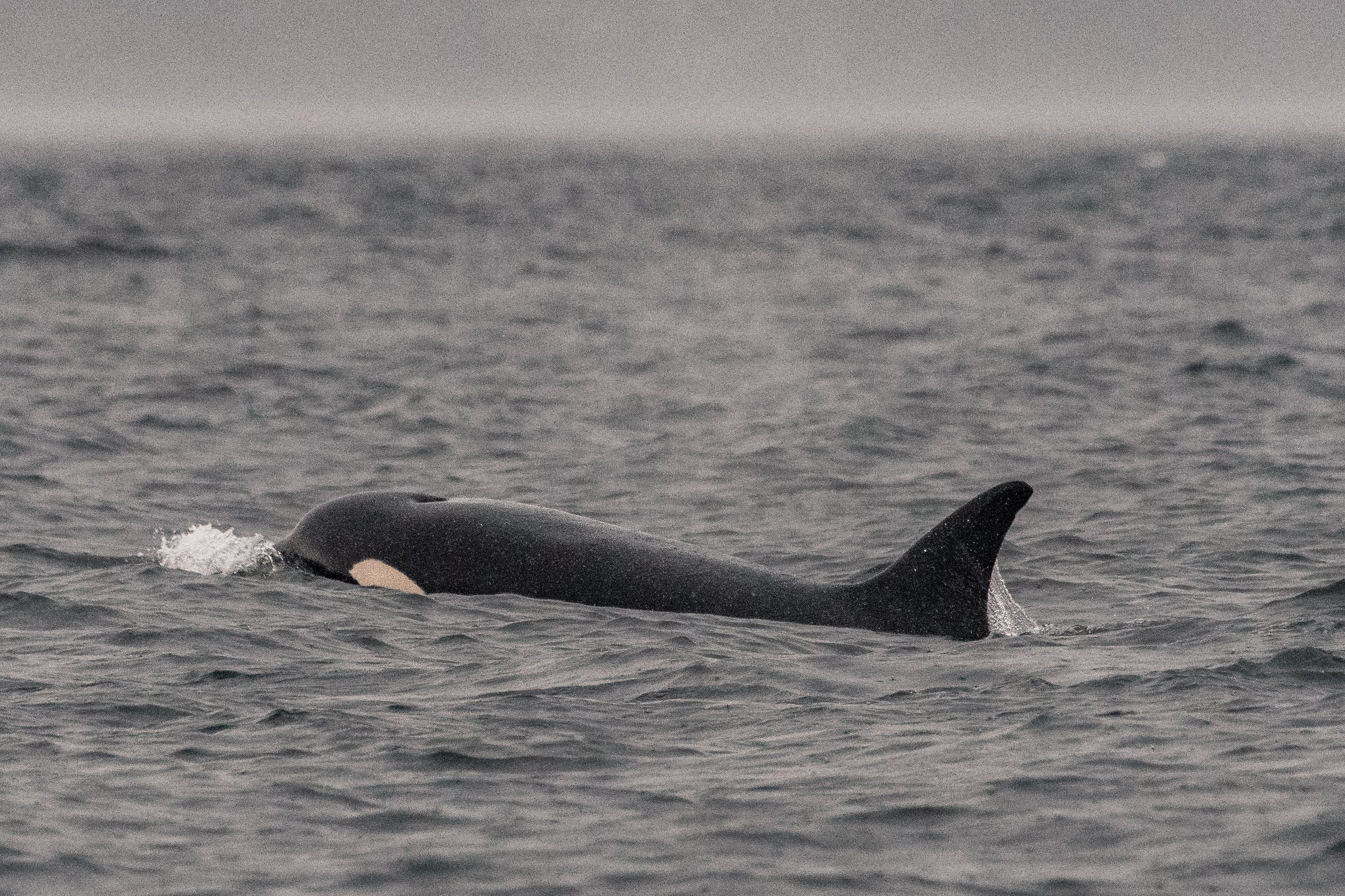
T100 Hutchins peeking her head out of the water.
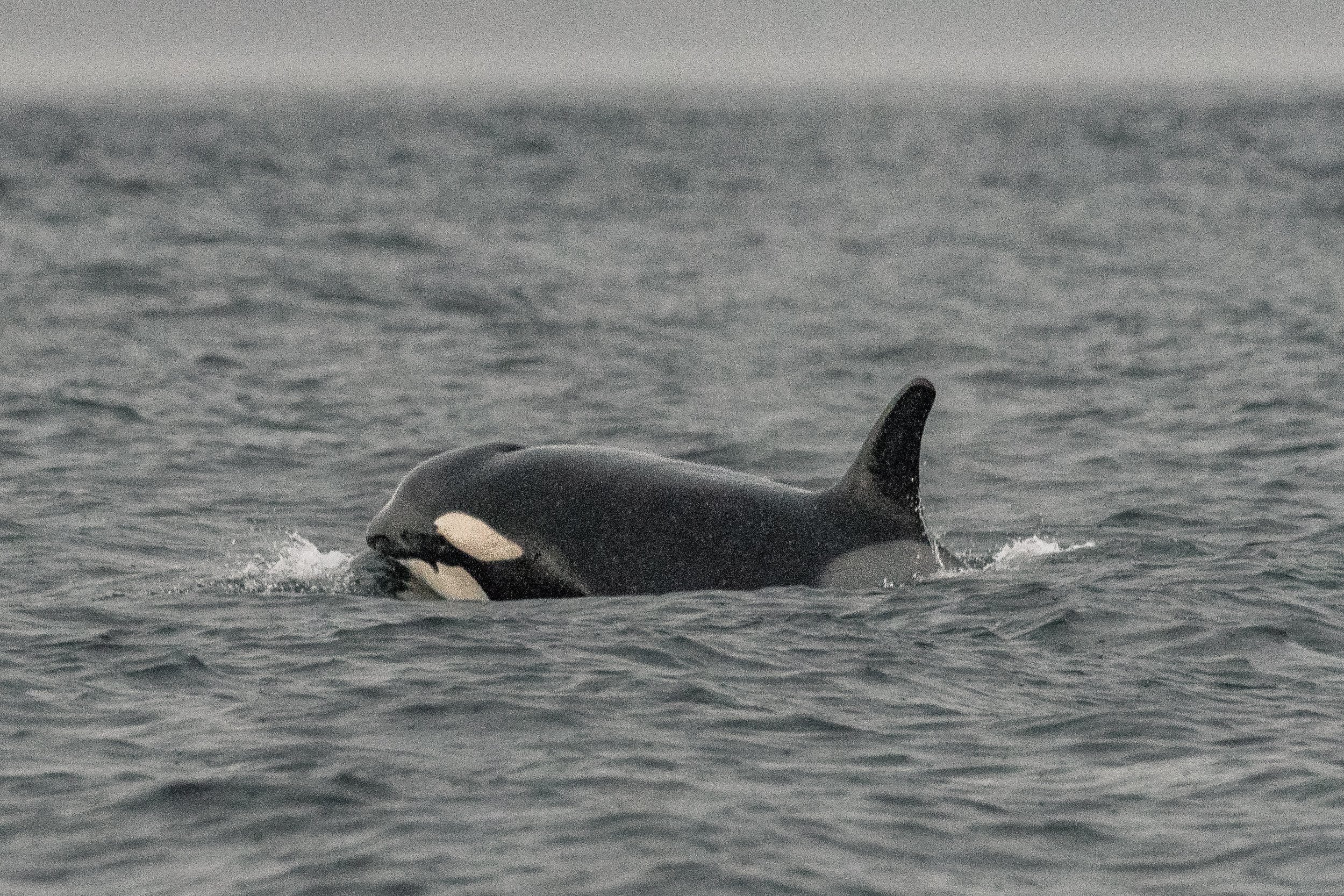
T100F Estrella speeding by.
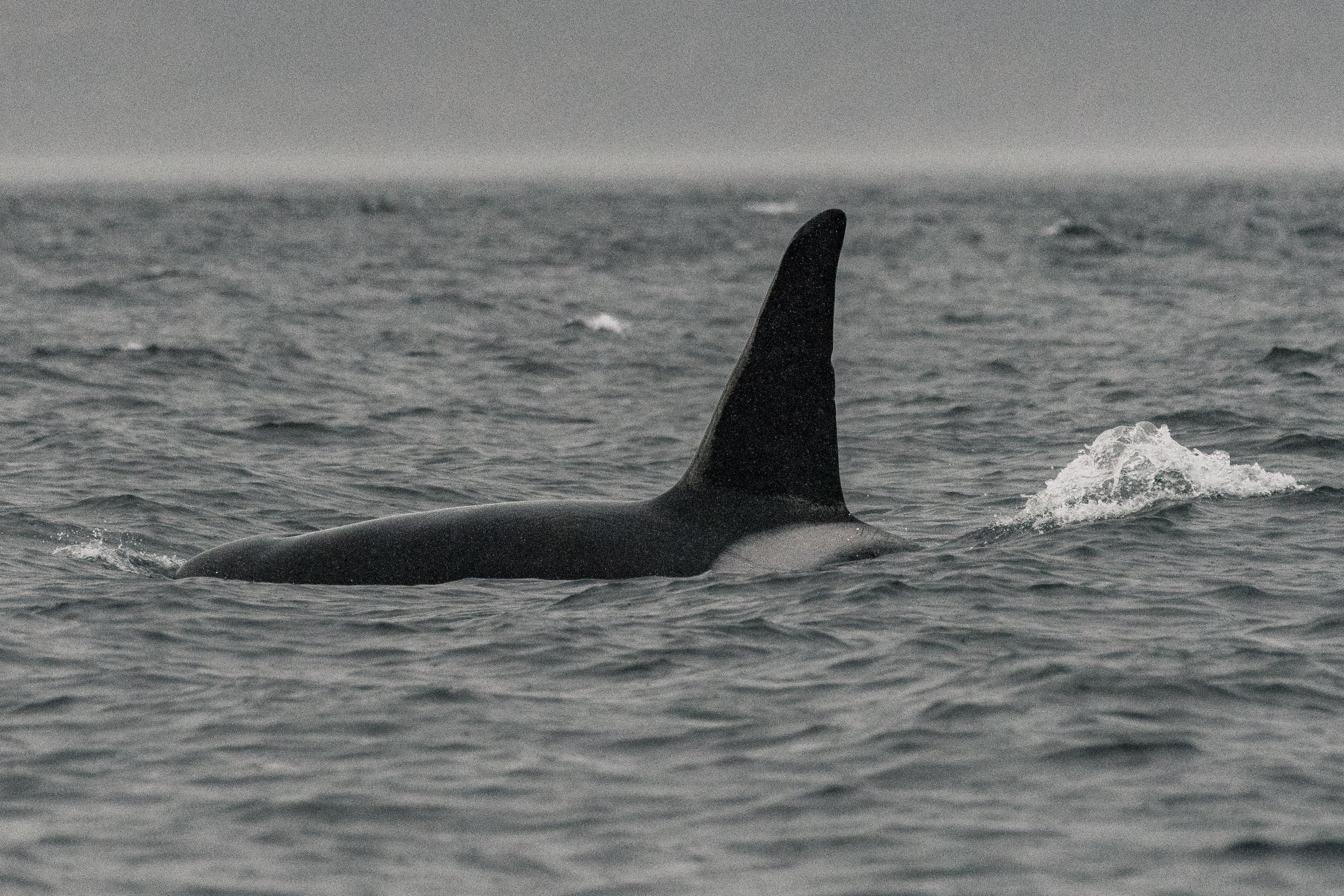
T100C Laurel with his saddlepatch scarring visible.
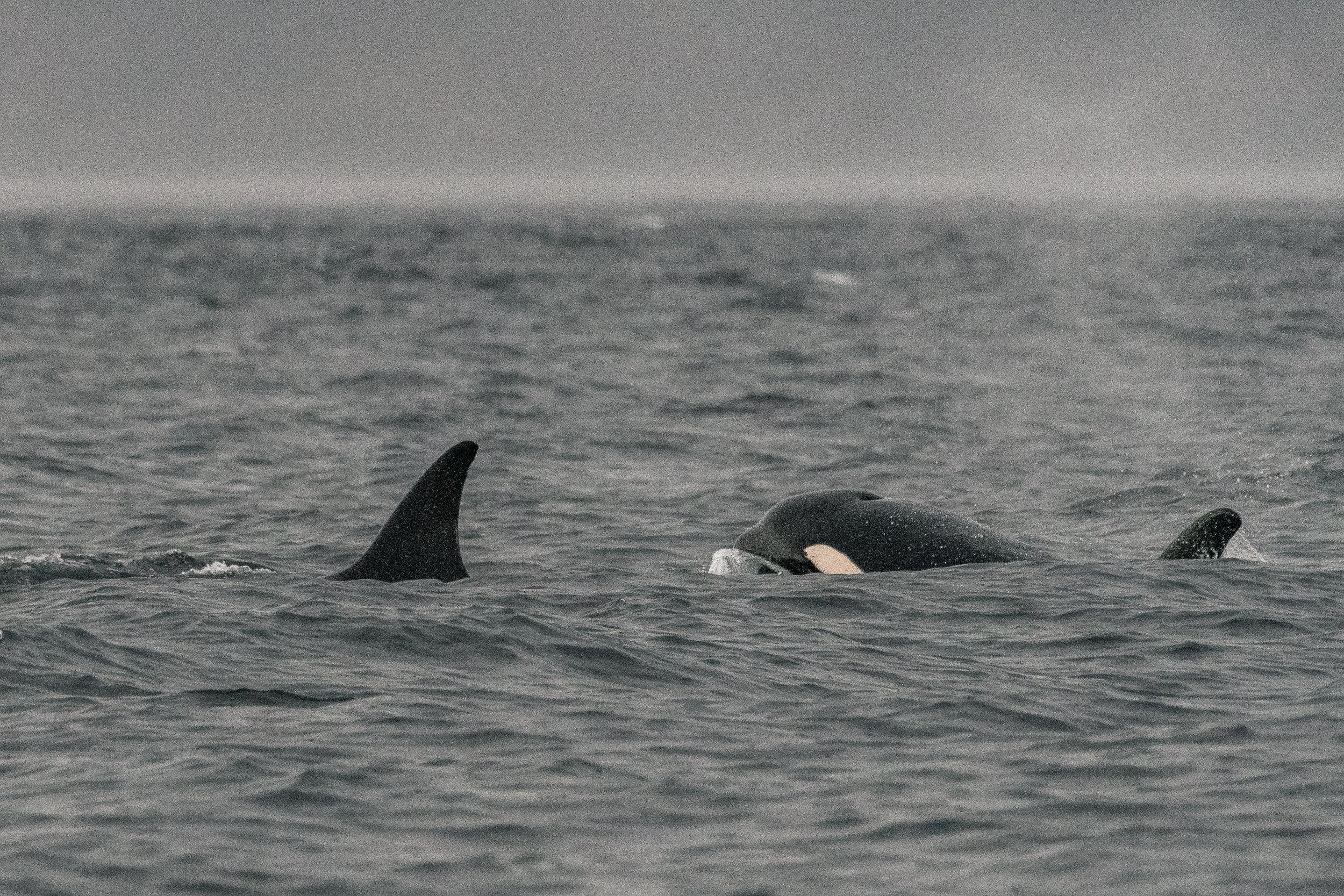
T100 Hutchins with their youngest calf T100F Estrella.
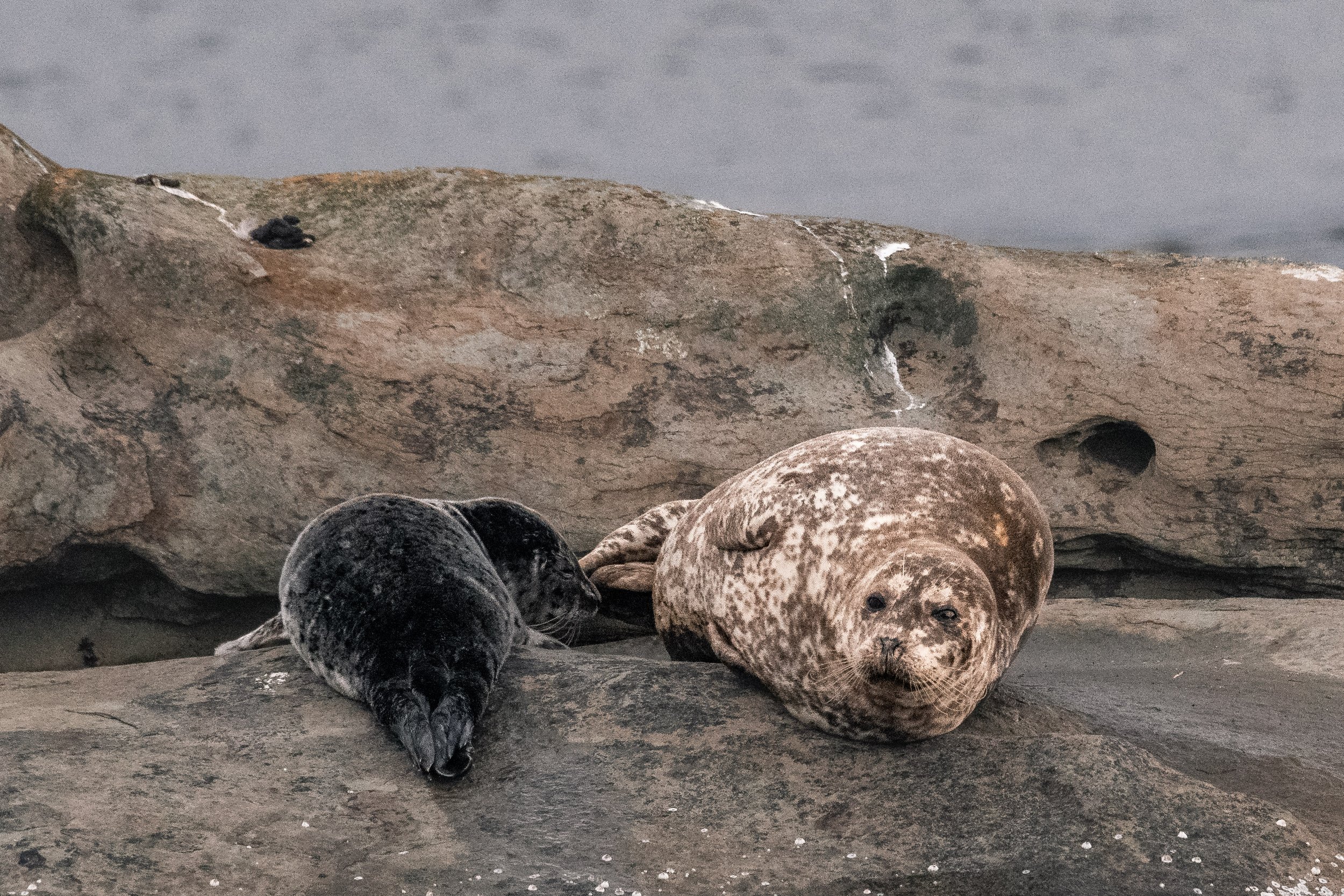
Our Harbour Seals are looking extra plump and precious right now!
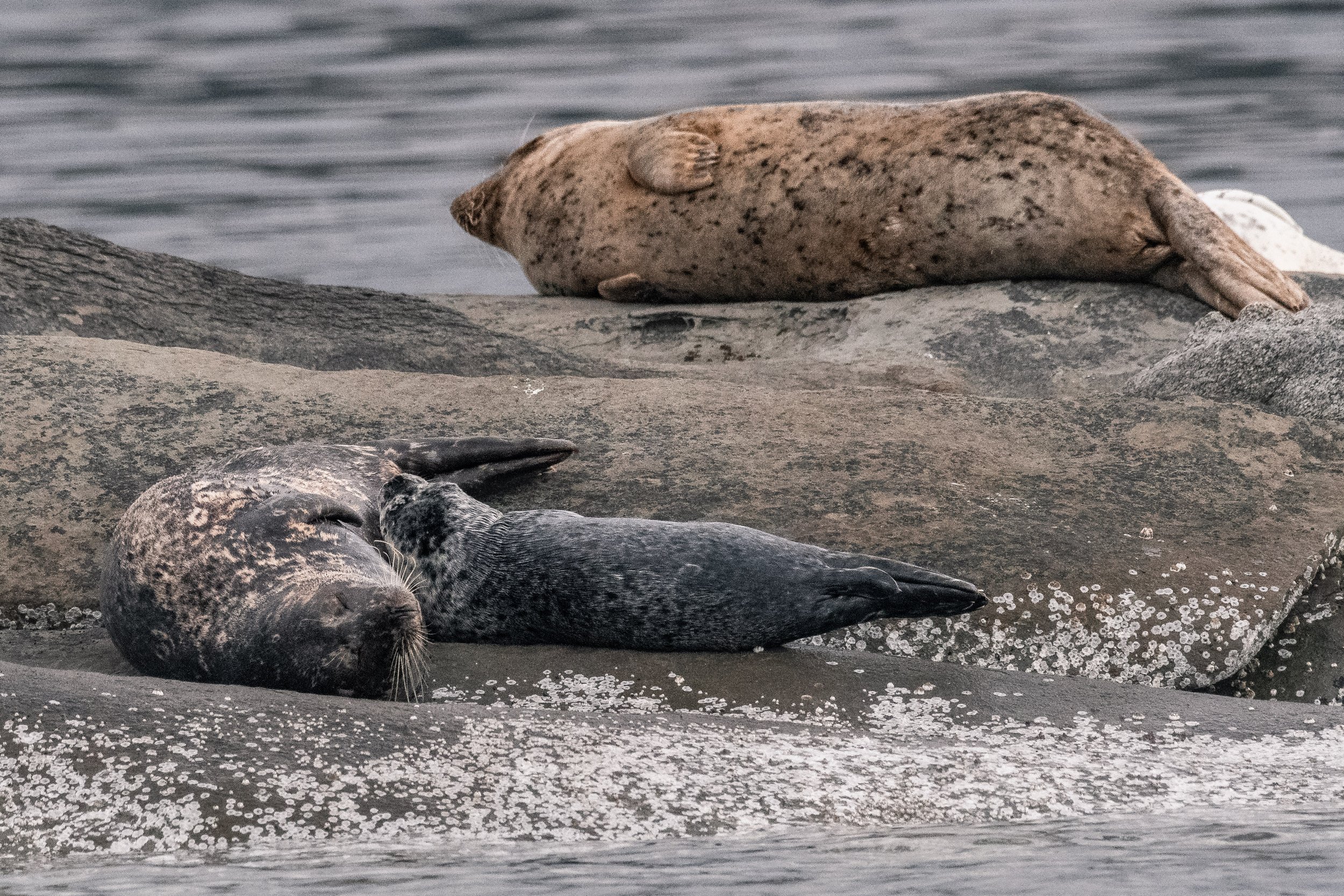
Snoozing at the haulout.
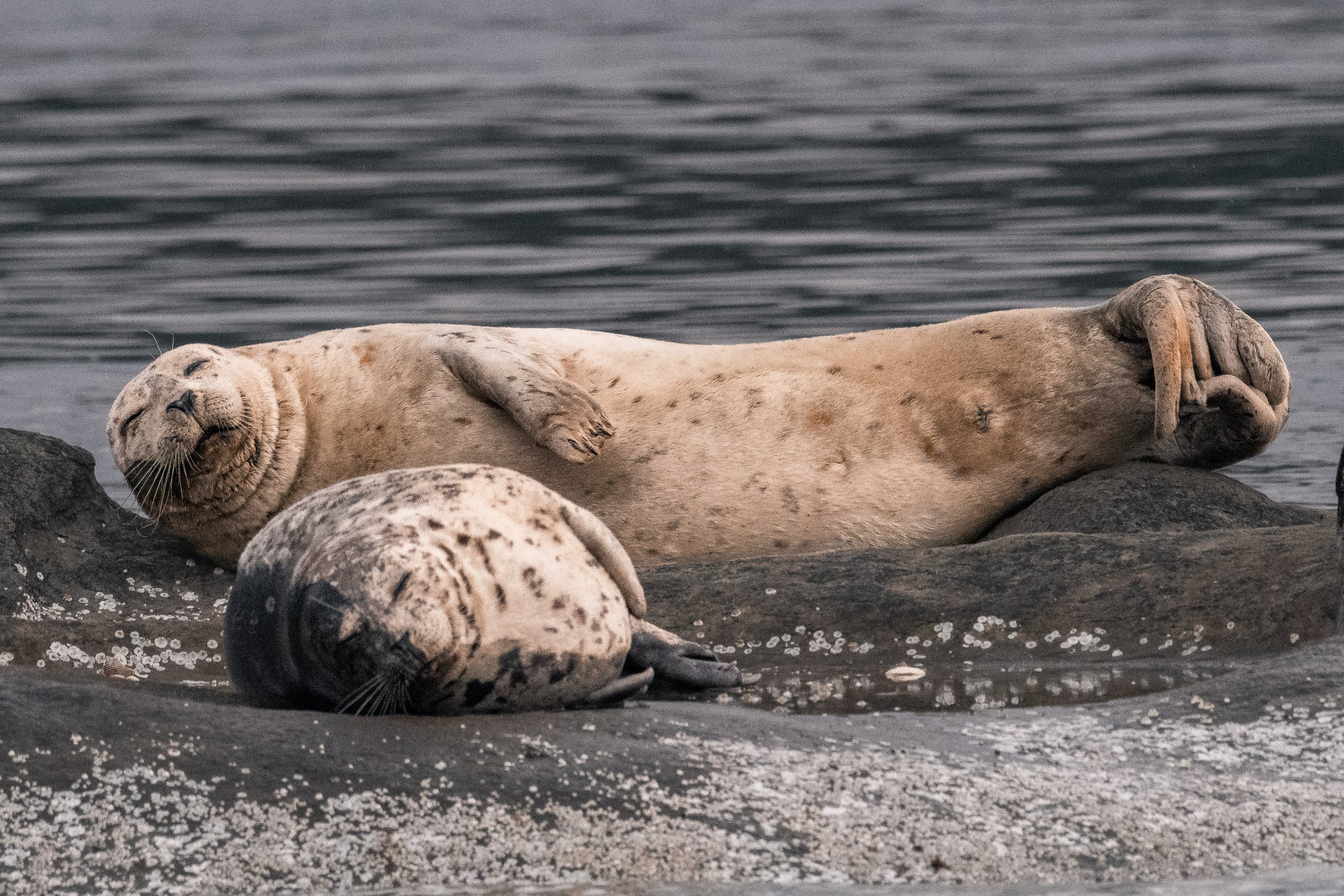
A biiig stretch after a nap!
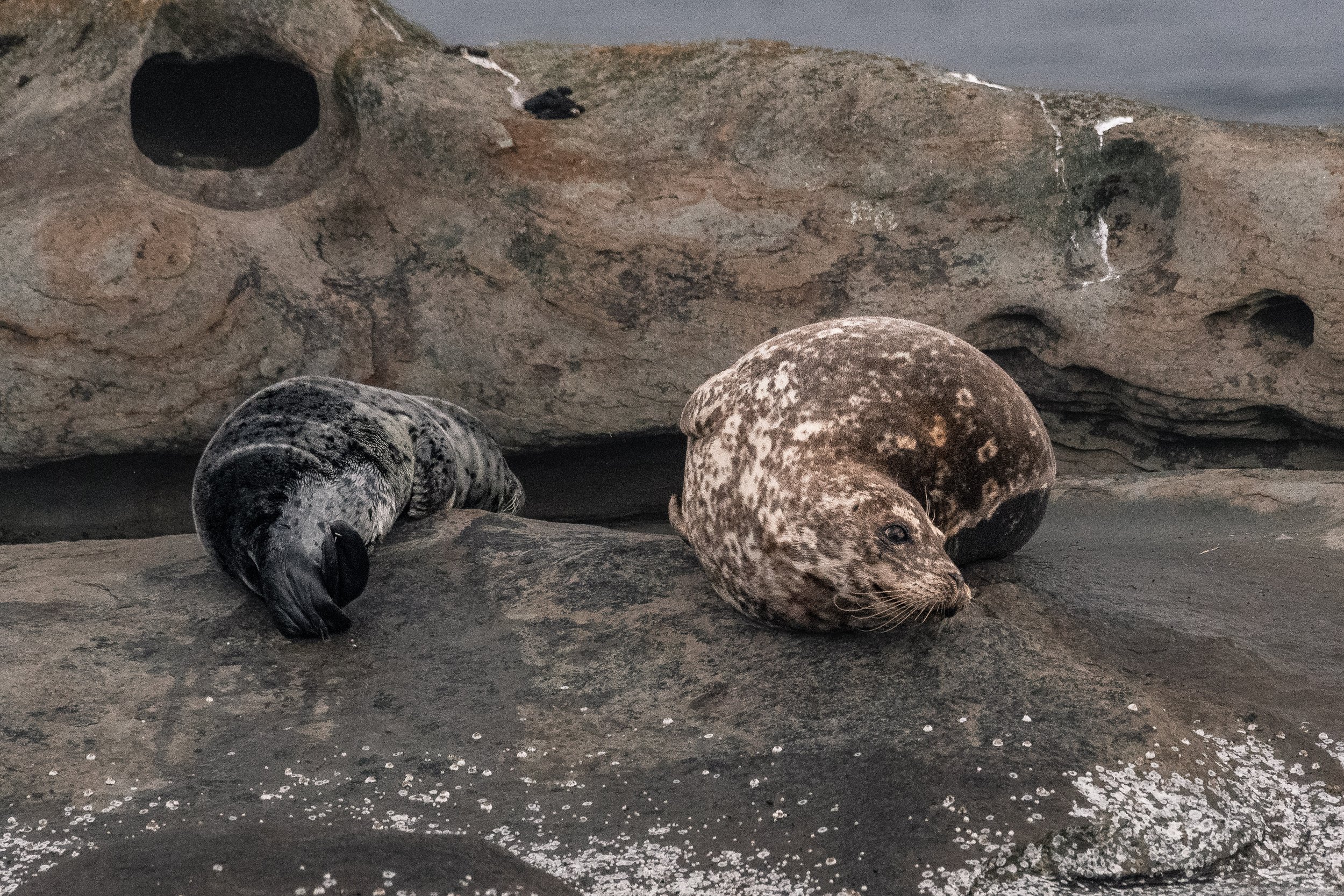
Curiously looking around.
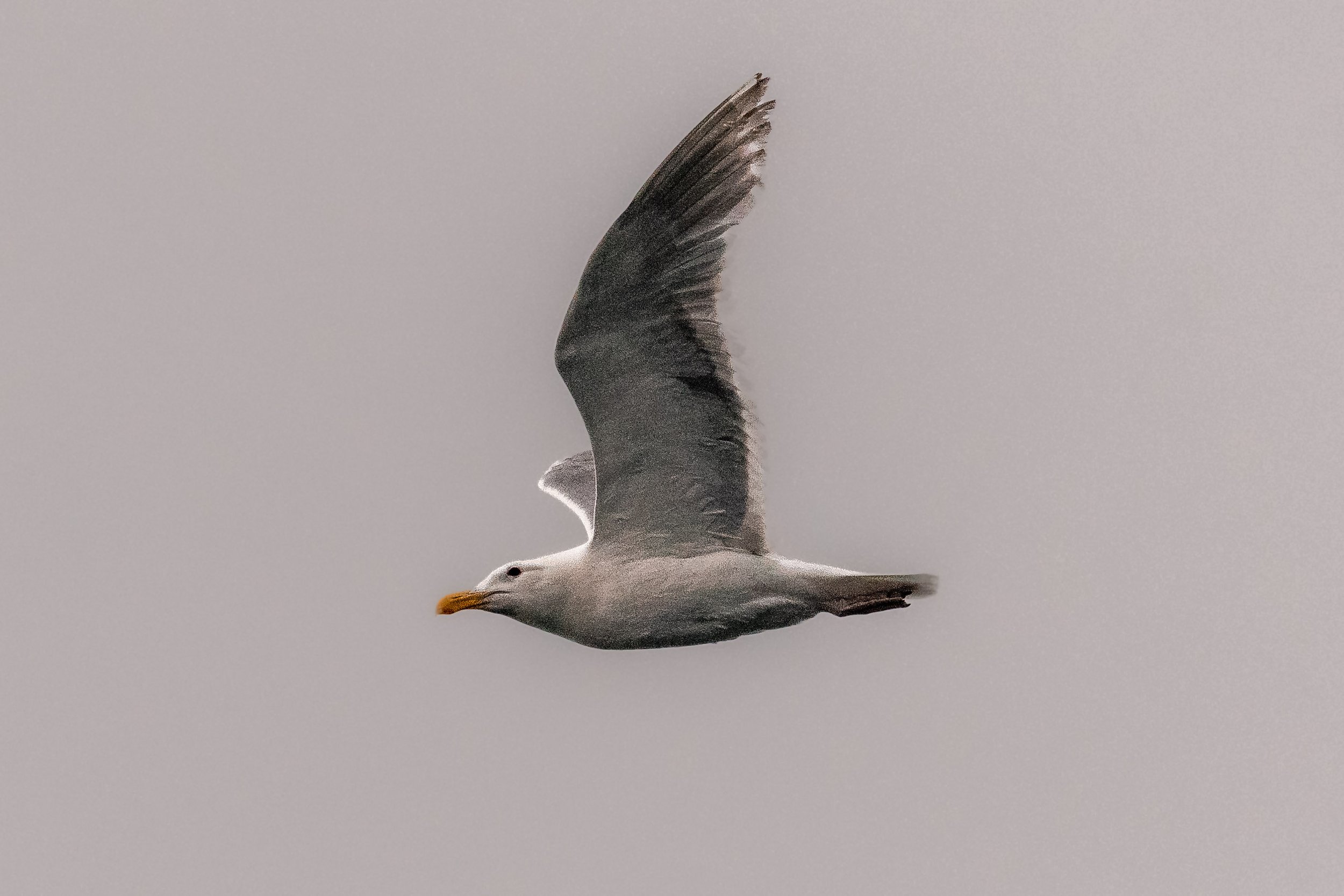
A Gull flying overhead.
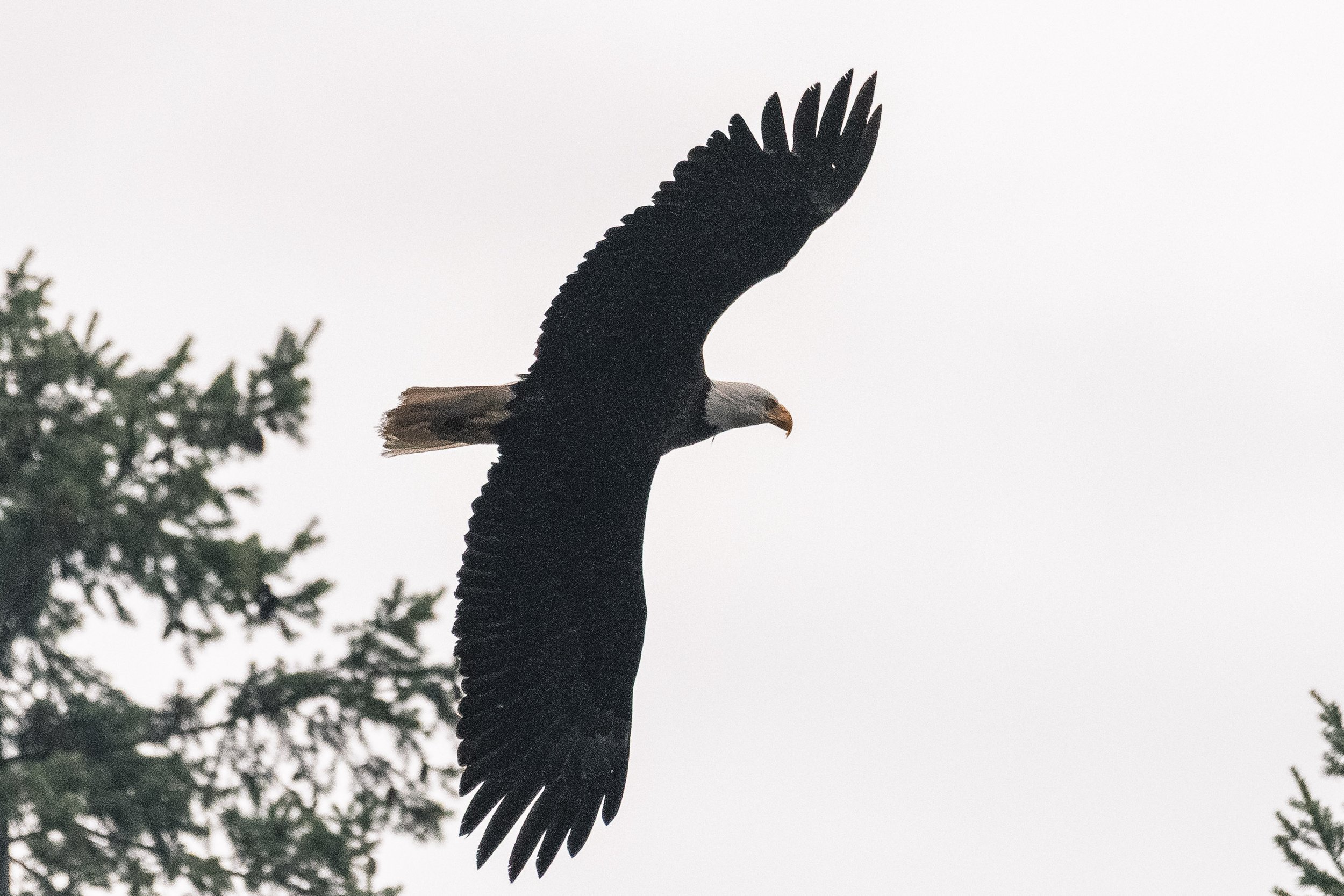
A Bald Eagle swooping by.
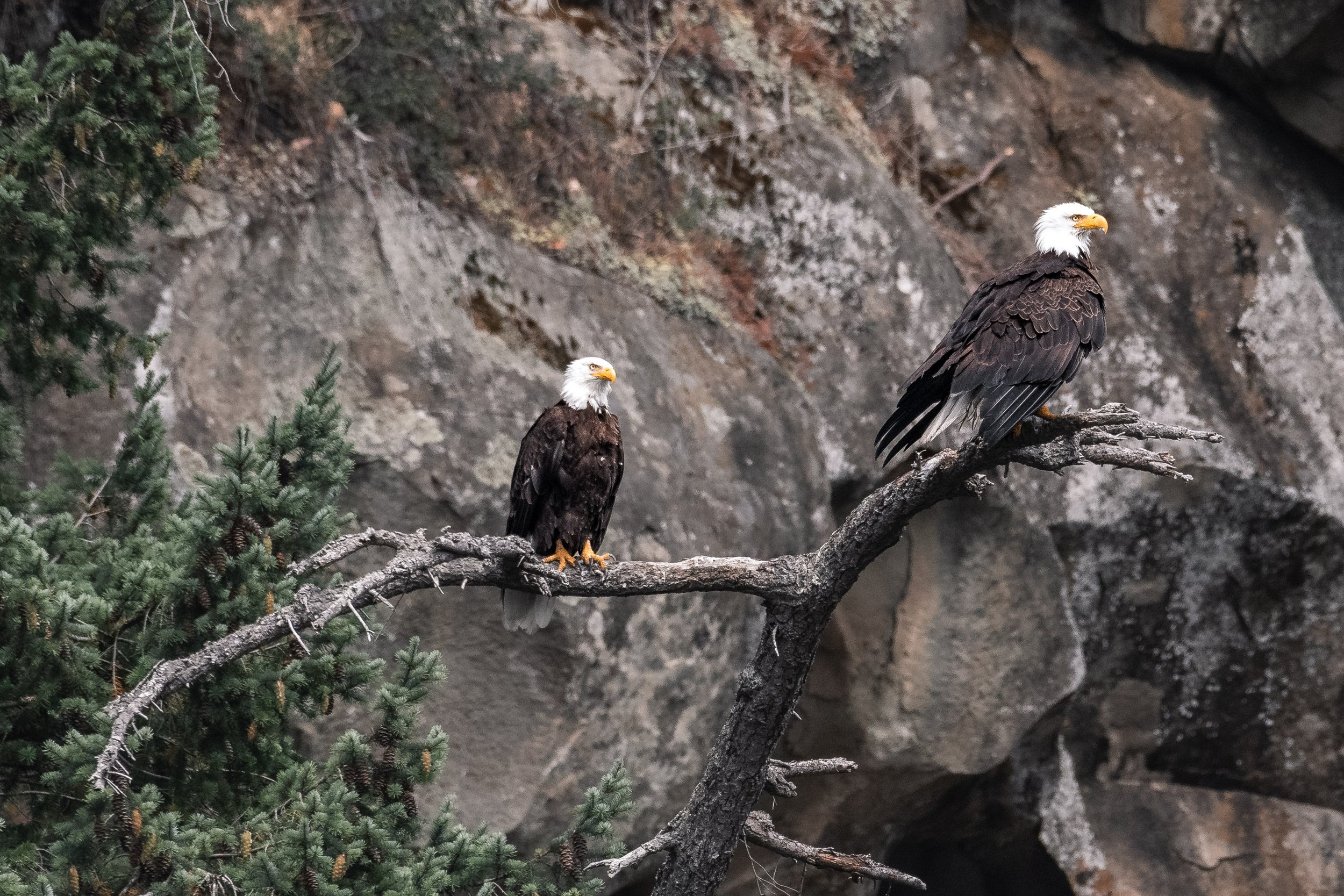
A pair of Bald Eagles together in the trees.