
August 7, 2026, 10:30 AM - Double species, double the fun!
This day started like most of our tours: our boats headed out on the water, and we weren't sure what the day would bring. Over the last few days, there have been lots of whale sightings in the area, so we were hopeful, but knowing the whales are constantly on the move keeps things exciting; you never know what you'll find!
Both boats started their searches in the Strait of Georgia, a very productive body of water that separates the mainland of BC from the southern half of Vancouver Island and the Southern Gulf Islands. This area has particularly high productivity thanks to the influx of nutrients from the various large rivers that feed into it, plus the mixing of the water column caused by the many islands as the tides push through the area. This high productivity brings many animals here to feed throughout the year, including the whales that we were searching for today.
The humpbacks are here seasonally, taking advantage of the plankton blooms that come in the summer months with the increased sunlight to feed as much as possible, while the orca can be found here year-round feeding on the various marine mammals that make it into their diet.
Our boats spotted humpback whales first today, though, as each one came across a different group at first. The open boat found a whale travelling by itself at first, and when it lifted its tail, they immediately recognized this individual as a commonly seen whale in the area: Wiggins (BCY1469). Unfortunately, this whale made it into the news only a few days before we spotted him on our tour because he was entangled near Campbell River and required a special unit to free him. Here is a link to a news article that shared the video captured by the disentanglement team:
While Wiggins' behaviour seemed normal during our encounter, our policy is not to watch whales that may be under additional stress, such as healing from a recent entanglement, so we quickly left Wiggins behind after snapping a few photos to track his healing over time.
Meanwhile, the semi-covered boat had found a pair of whales travelling together: Raptor’s 2024 calf (BCY0458calf2024) and Dalmatian (BCY0996). These two have become very familiar fins for our tours as they seem to be favouring the area between Nanaimo and Vancouver for their feeding grounds. We have no complaints about this, though, as they are pretty special whales. Dalmatian is a whale that we have seen nearly every year since opening our doors in 2018, and is a beautiful whale, named after the circular barnacle scars along his tail fluke, reminding researchers of the breed of dog. Raptor's calf, on the other hand, hasn’t been around as long, but at least this year they have been making a name for themselves. They have a less white fluke than Dalmatian does, with just a frosting on the edges. Their mother, Raptor, is more like Dalmatian, one of the whales that we see nearly every year. Interestingly enough, there was an entire summer where Raptor and Dalmatian's mom, Heather, spent time together, and they were dubbed the “Best Friends of the Salish Sea” by us. Maybe their genetics mix well and help form connections like this one? Another great example of Raptor and Heather's past calves getting along well is Neowise (Heather's 2020 calf) and Harpy (Raptor's 2020 calf), who were buddies for 2021 and 2022, and can still be spotted together less frequently now.
Although this is a very interesting idea, it also involves observational bias, since humpbacks have high site fidelity, meaning they return to the same general area each year to feed. Since Heather and Raptor were both whales who very strictly returned to the same area, it can be argued that their kids would be the same way from their teachings during the year they spend together, so they are just more likely to be found in the same area and be spotted together because of that, but that’s not quite as fun to ponder!
Our time with these two was interesting, as there was a moment among their normal feeding behaviour when these whales showed some curiosity about our vessels. They came over for a quick inspection before moving on. While it’s not something we aim for or encourage, it puts into perspective just how gigantic these animals are.
While we were watching these humpbacks, we got an exciting call over the radio that a nearby boat had found the other species of whale we were searching for: orca! We decided to leave the humpbacks to their continued feeding and head over to the other boat to share in that sighting as well.
As we approached, we could see the fins of about 7 whales cutting through the waves, and we were quickly able to identify them as a bit of a mismatch of whales:
T036 Flapjack ♀ (1970)
T036B Tattertip ♀ (1998)
T036B1 Bhotia ♀ (2009)
T036B1A Maple ♀ (2025)
T036B2 Greenfelder ♀ (2013)
T036B4 Auk ♂ (2024)
T137A Jack ♂ (2002)
Seeing whales from different matrilines travelling together isn’t unheard of with the Transient Orca, but it’s a little bit strange to still be seeing Jack travelling away from the rest of his family. He sometimes goes off with his sister T137D Darcy for short periods, but usually returns to his mother’s side after a bit. However, he has now been travelling solo (or with random pods intermittently) since the start of June. He may be exploring the Salish Sea for potential breeding opportunities; however, he may also be enjoying the bachelor life. Either way, it is always exciting to spot him, and interesting to see who he's decided to associate with.
As the afternoon progressed, it was time for us to depart. With a few final glances at the T036Bs and T137A, we turned and headed out. It was time to cross the Strait of Georgia once more. Once situated in our seats, we set off. Gliding along, soon the coast of Vancouver Island was back in our sights. After a few more minutes, we had re-entered the outer Nanaimo Harbour, and soon the city was visible. We headed back into the docks as we chatted about the day, reminiscing about the giant Humpback whales and the always intriguing Transient orca we had seen throughout the day.
Photos from this trip were taken by Marine Naturalists Hayleigh Hilbert and Aly Kohlman - please enjoy!
Wiggins
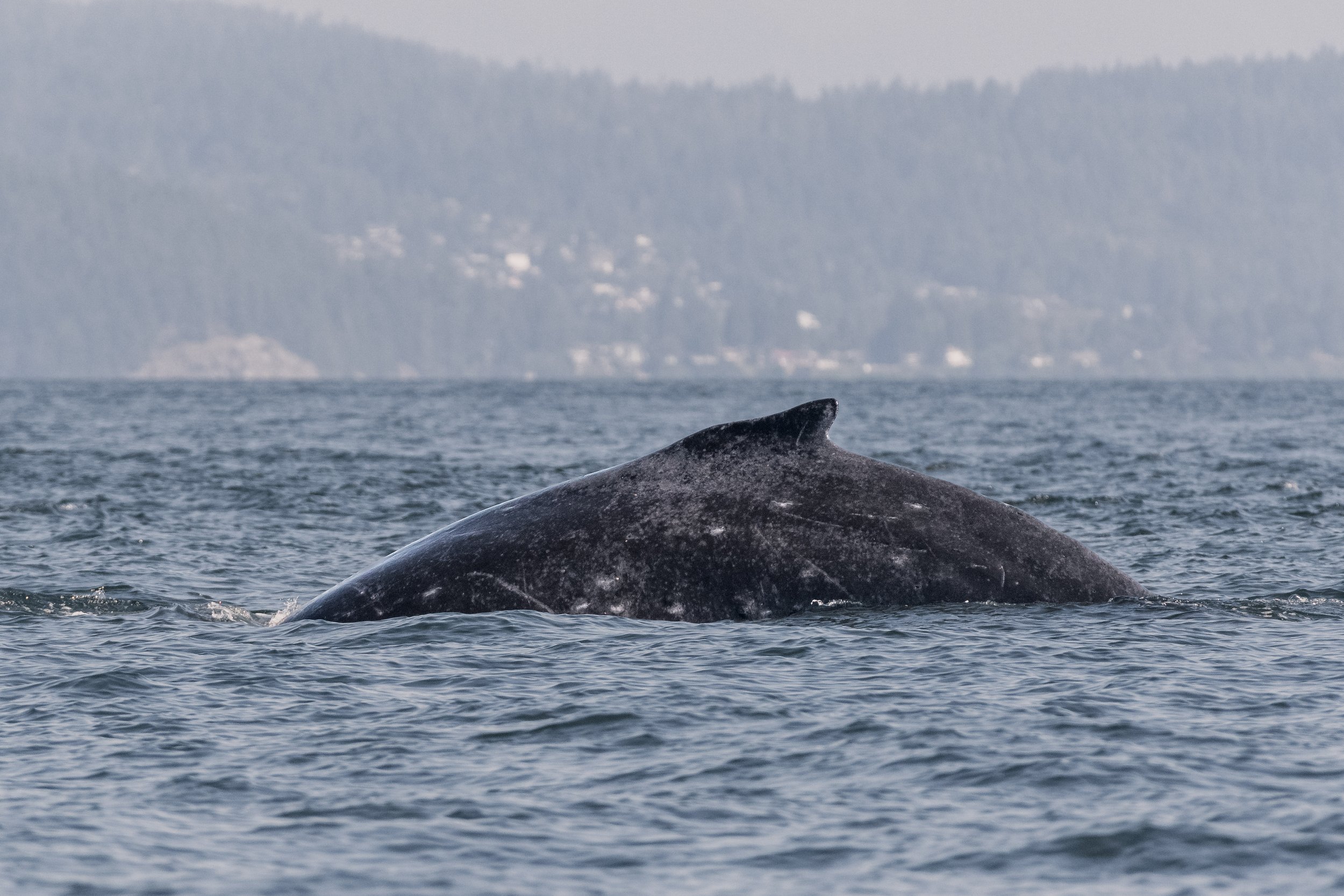
Wiggins travelling. Photo by Hayleigh Hilbert.
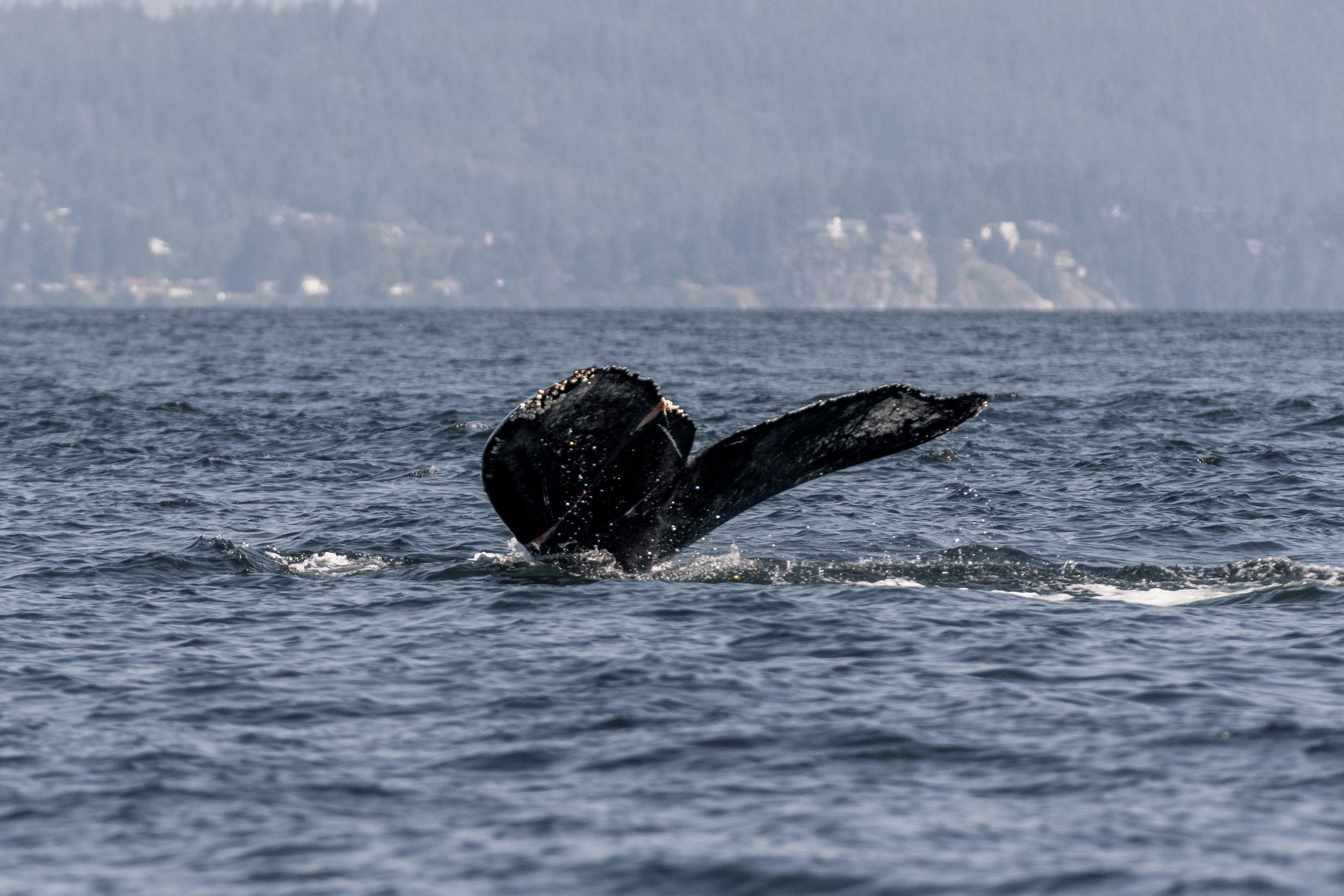
Wiggins’ fluke, showing damage from their recent entanglement. Photo by Hayleigh Hilbert.
Dalmatian and Raptor’s 2024 calf
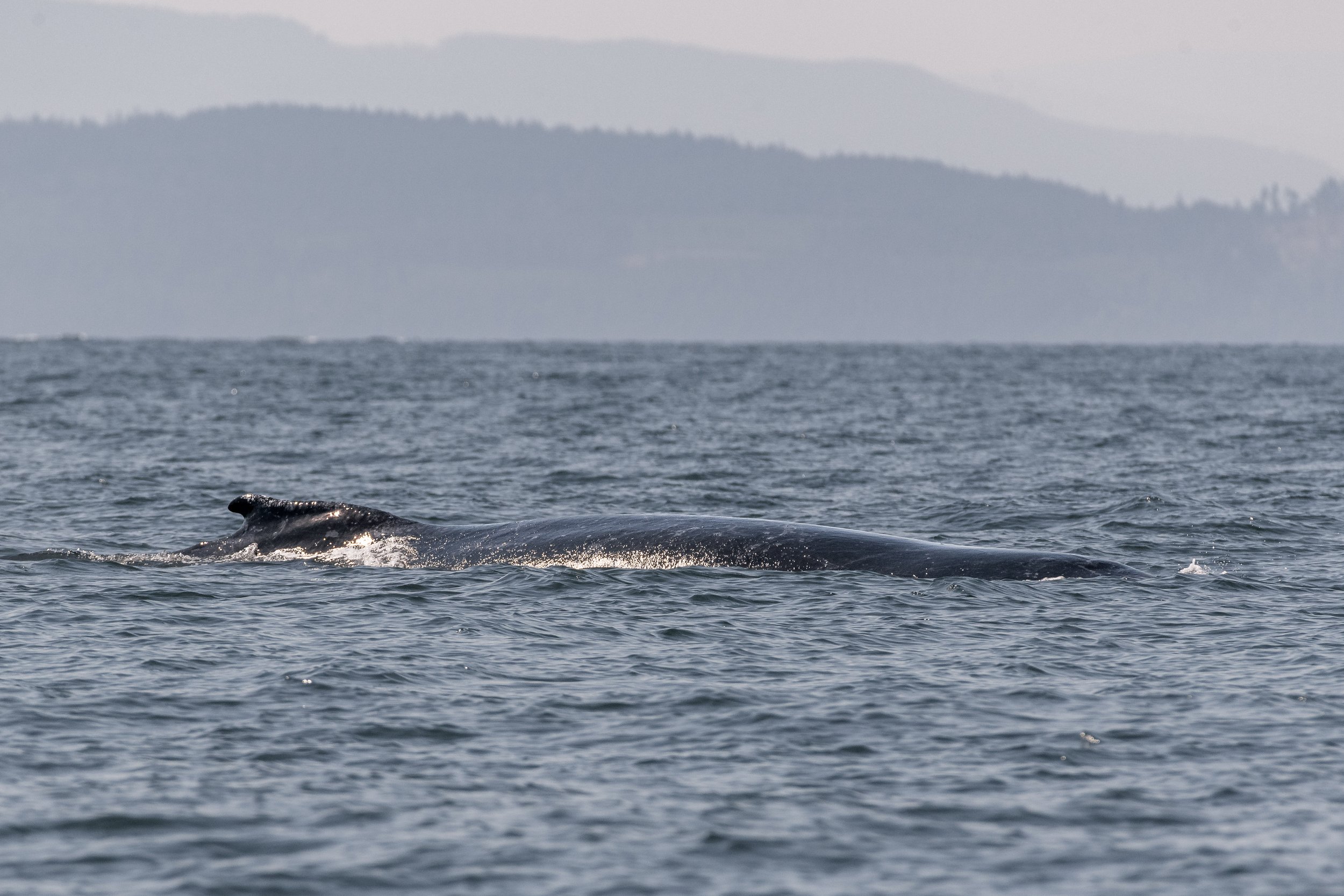
Dalmatian travelling. Photo by Hayleigh Hilbert.
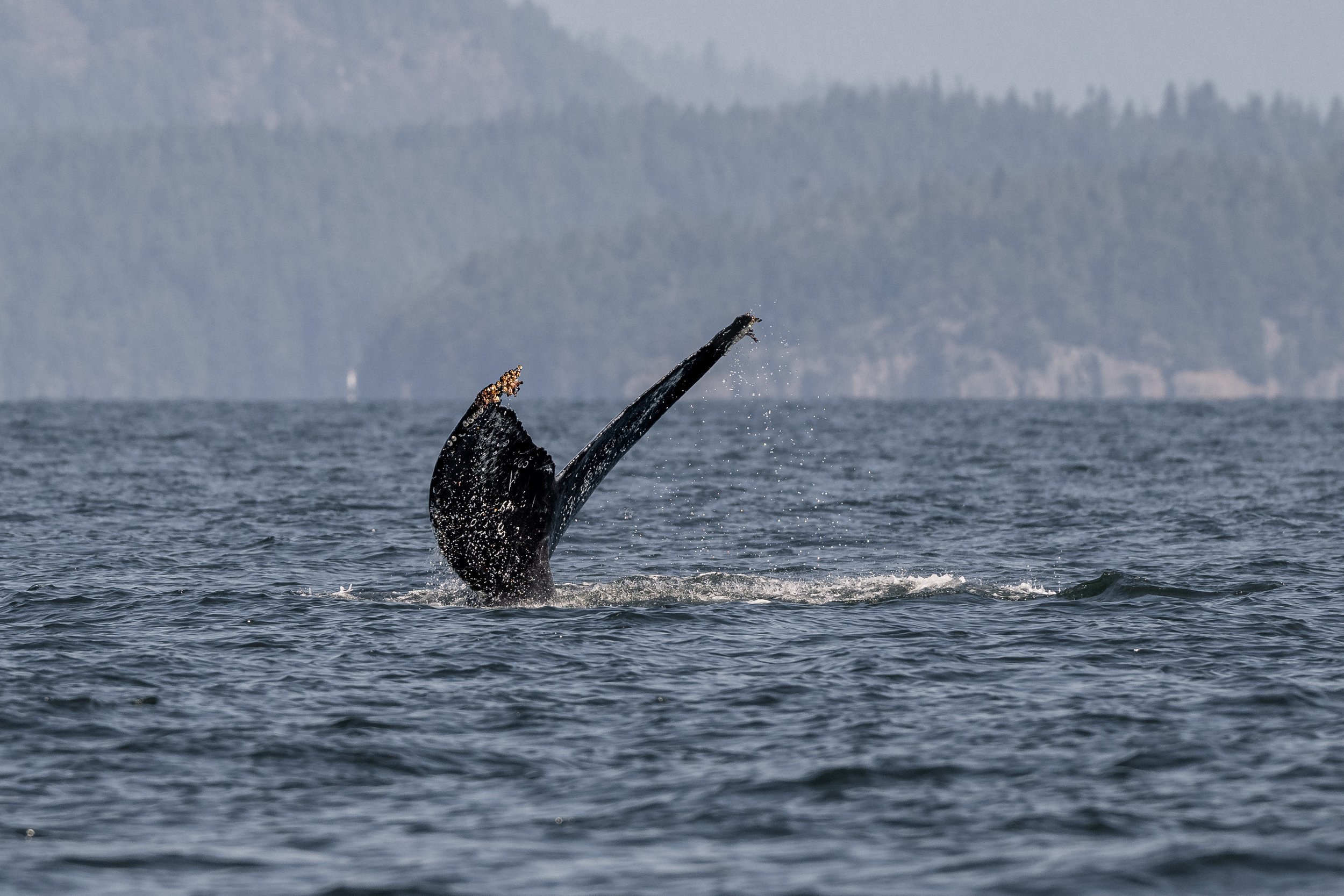
Dalmatian fluking high. Photo by Aly Kohlman.
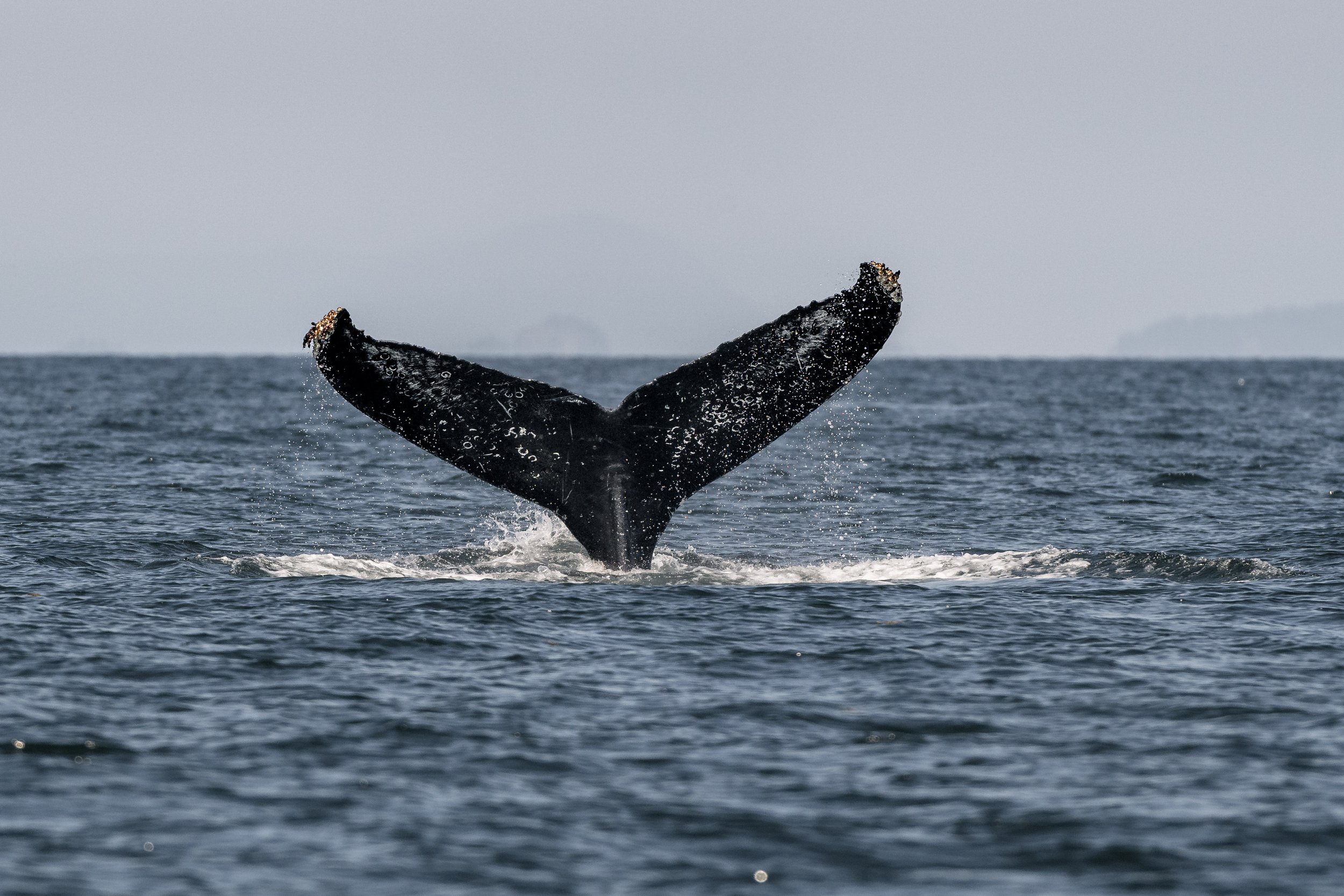
Water raining off of Dalmatian’s fluke. Photo by Aly Kohlman.
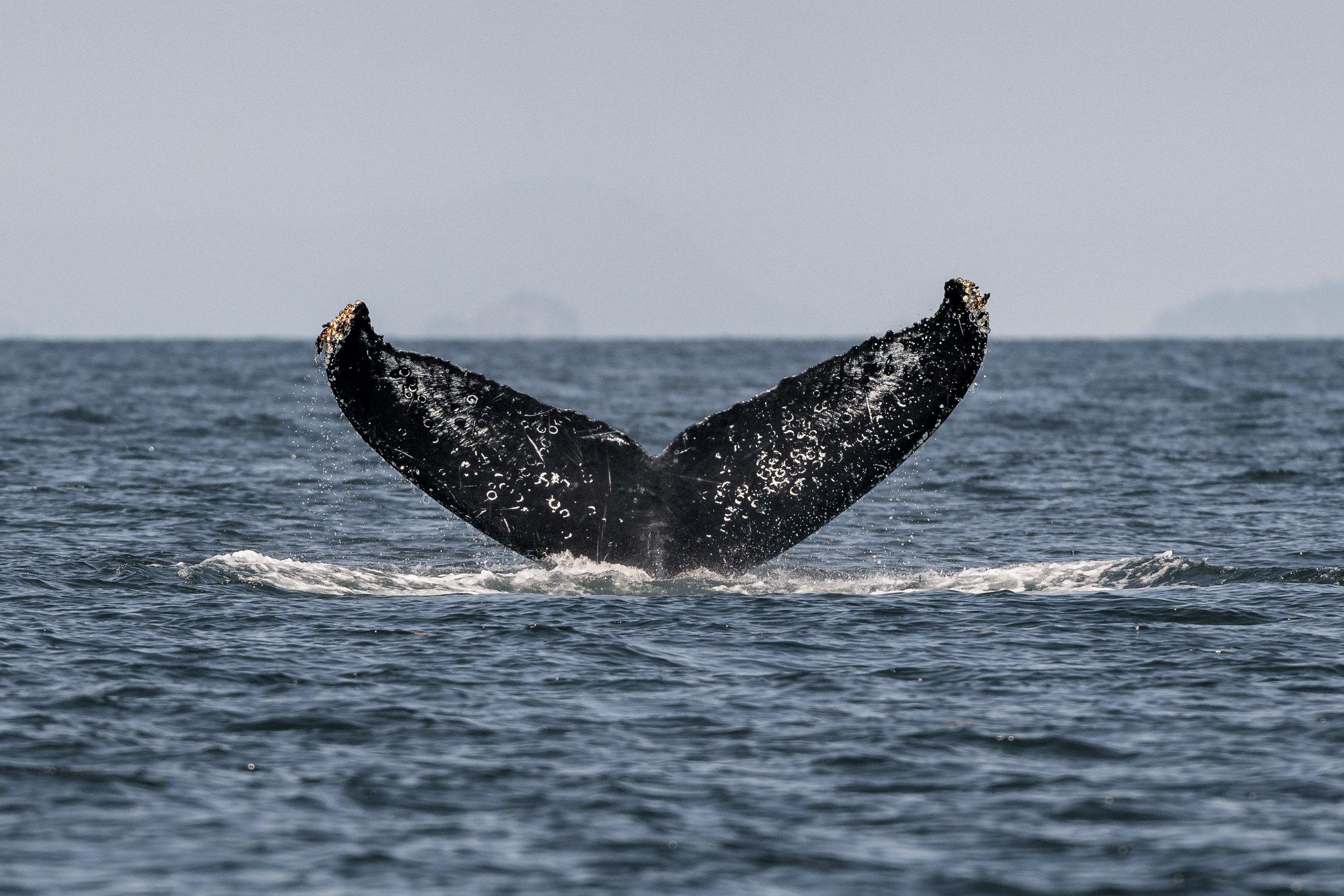
Dalmatian has many intricate markings all over his fluke. Photo by Aly Kohlman.
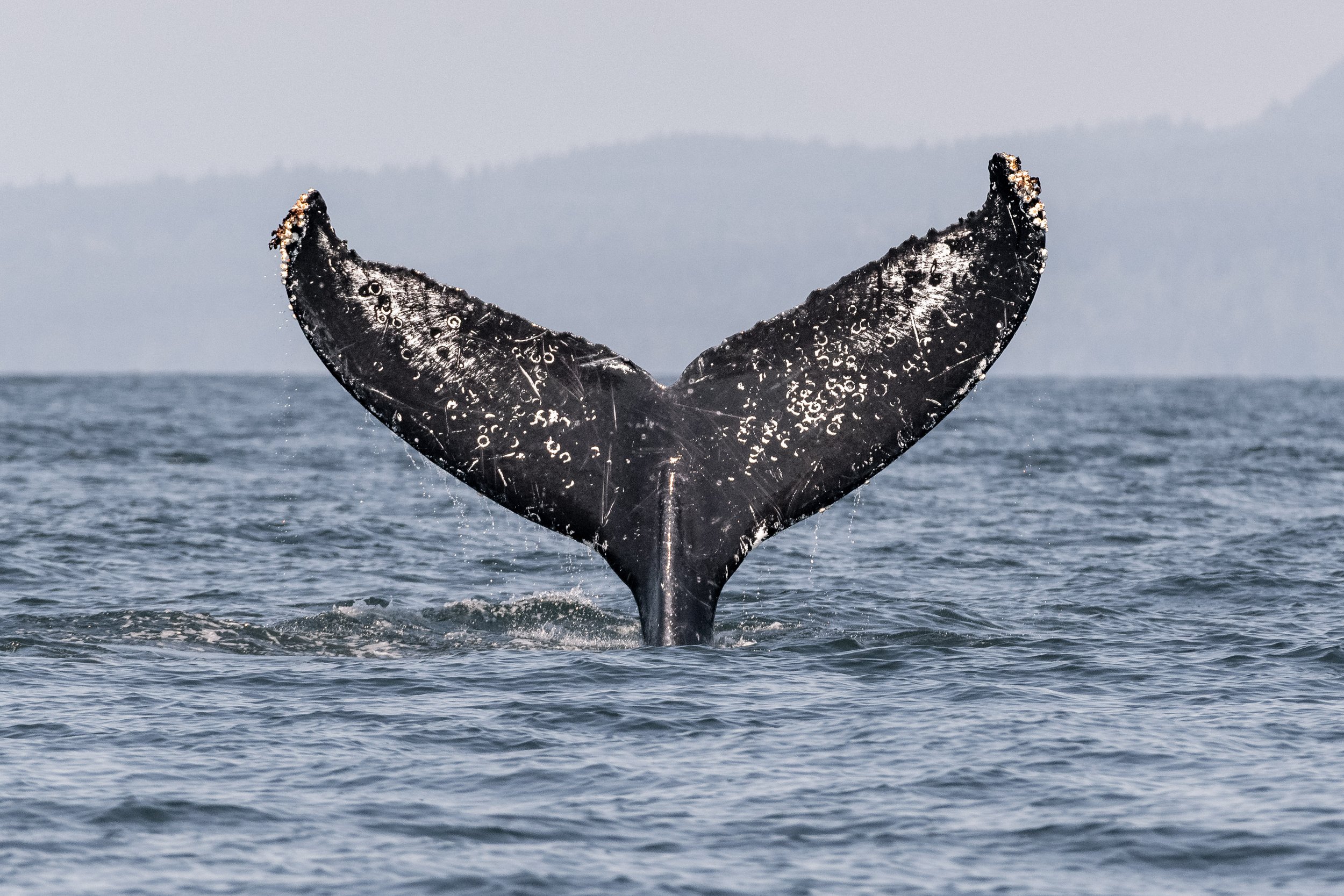
Dalmatian waving his fluke around. Photo by Hayleigh Hilbert.
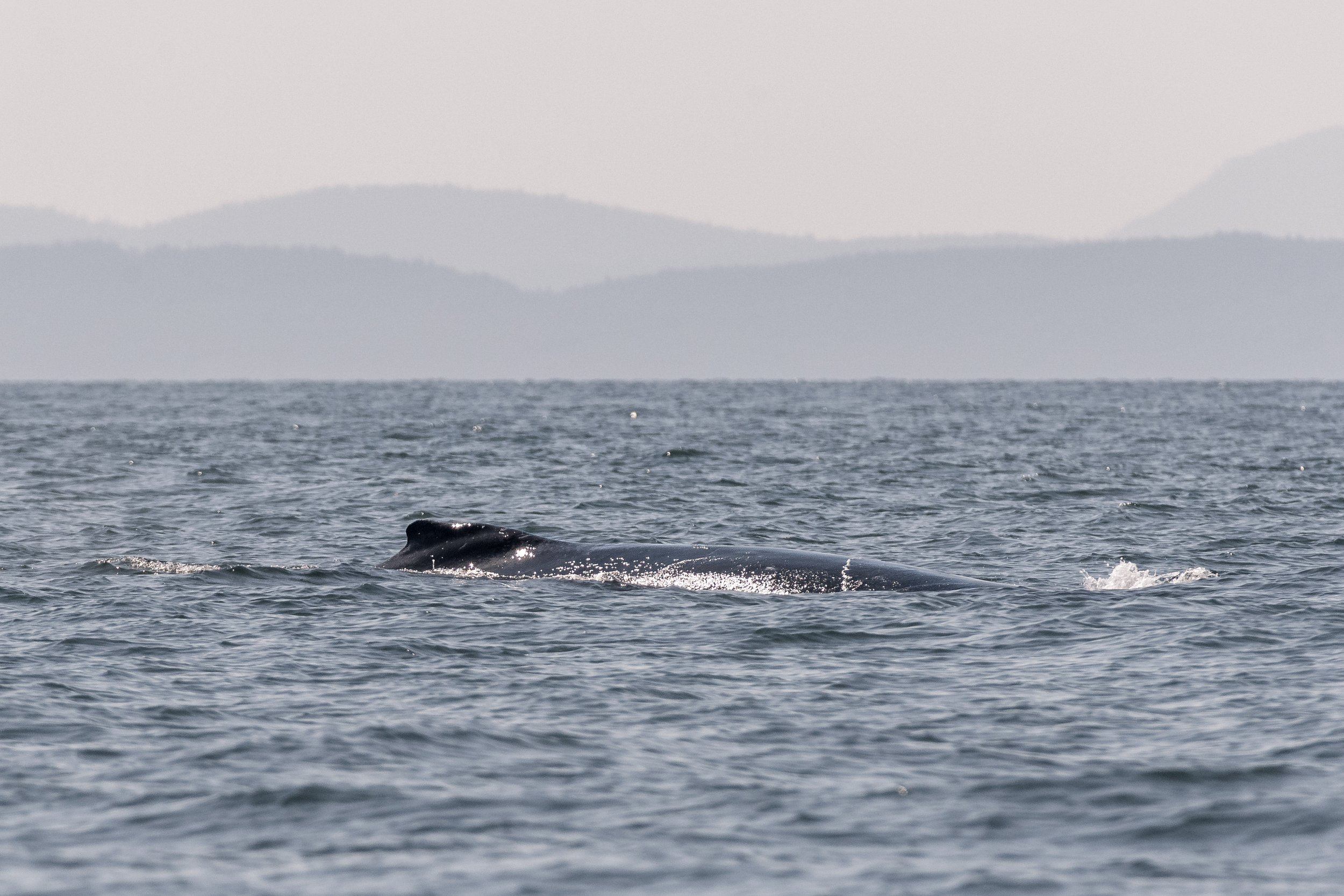
Raptor’s 2024 calf travelling. Photo by Hayleigh Hilbert.
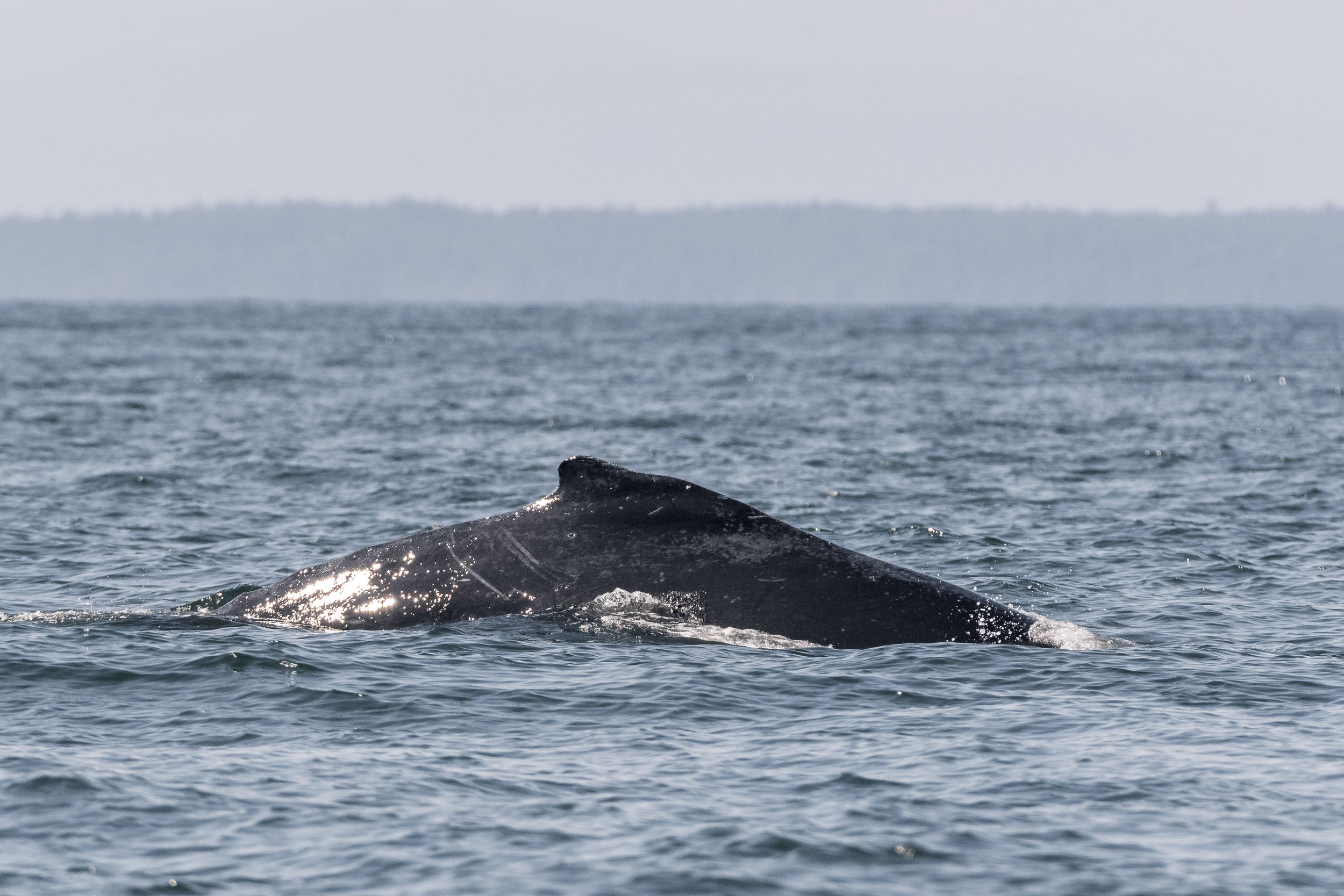
A good view of Raptor’s 2024 calf’s dorsal fin. Photo by Hayleigh Hilbert.
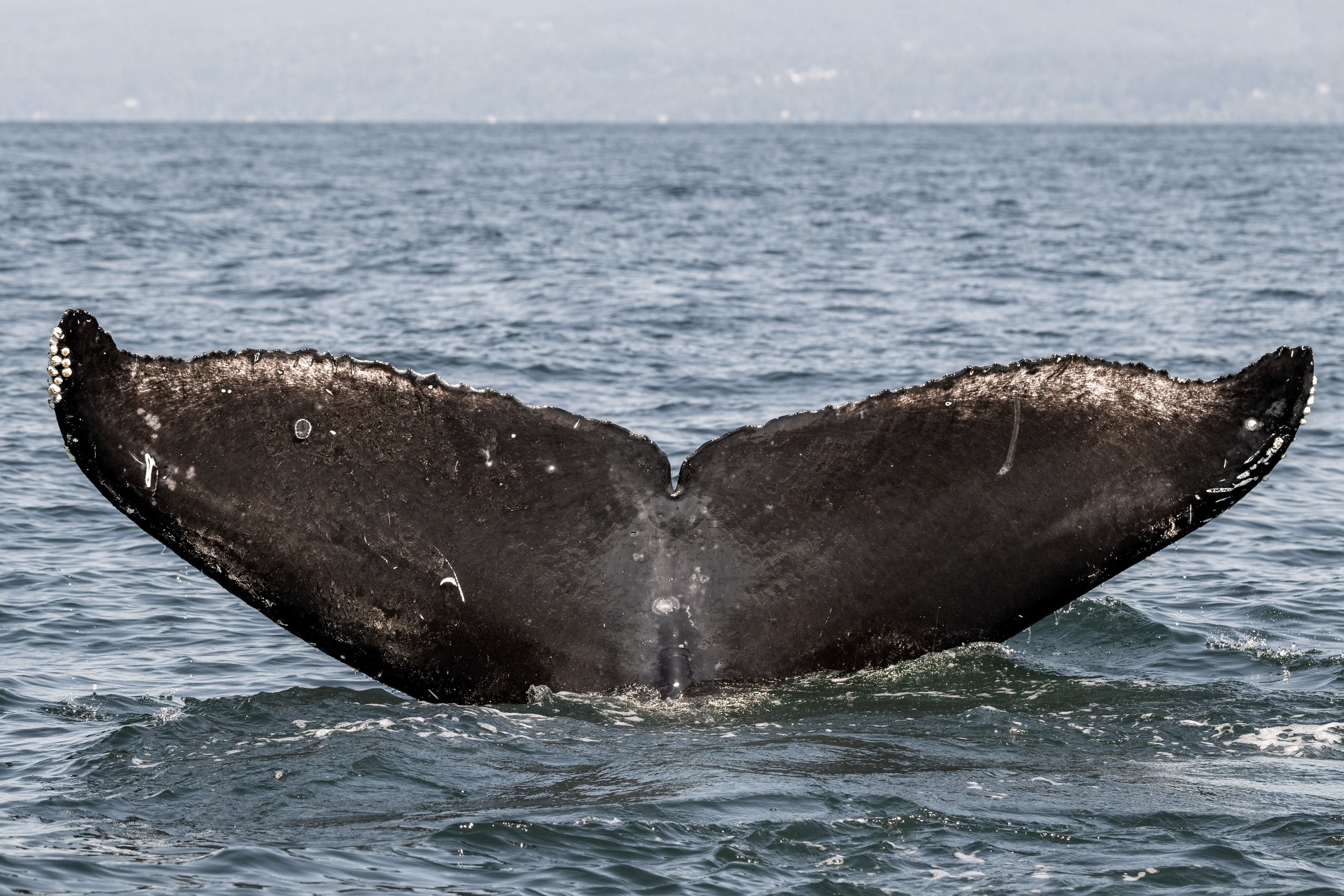
Raptor’s 2024 calf’s has may interesting fluke markings, as seen here. Photo by Aly Kohlman.
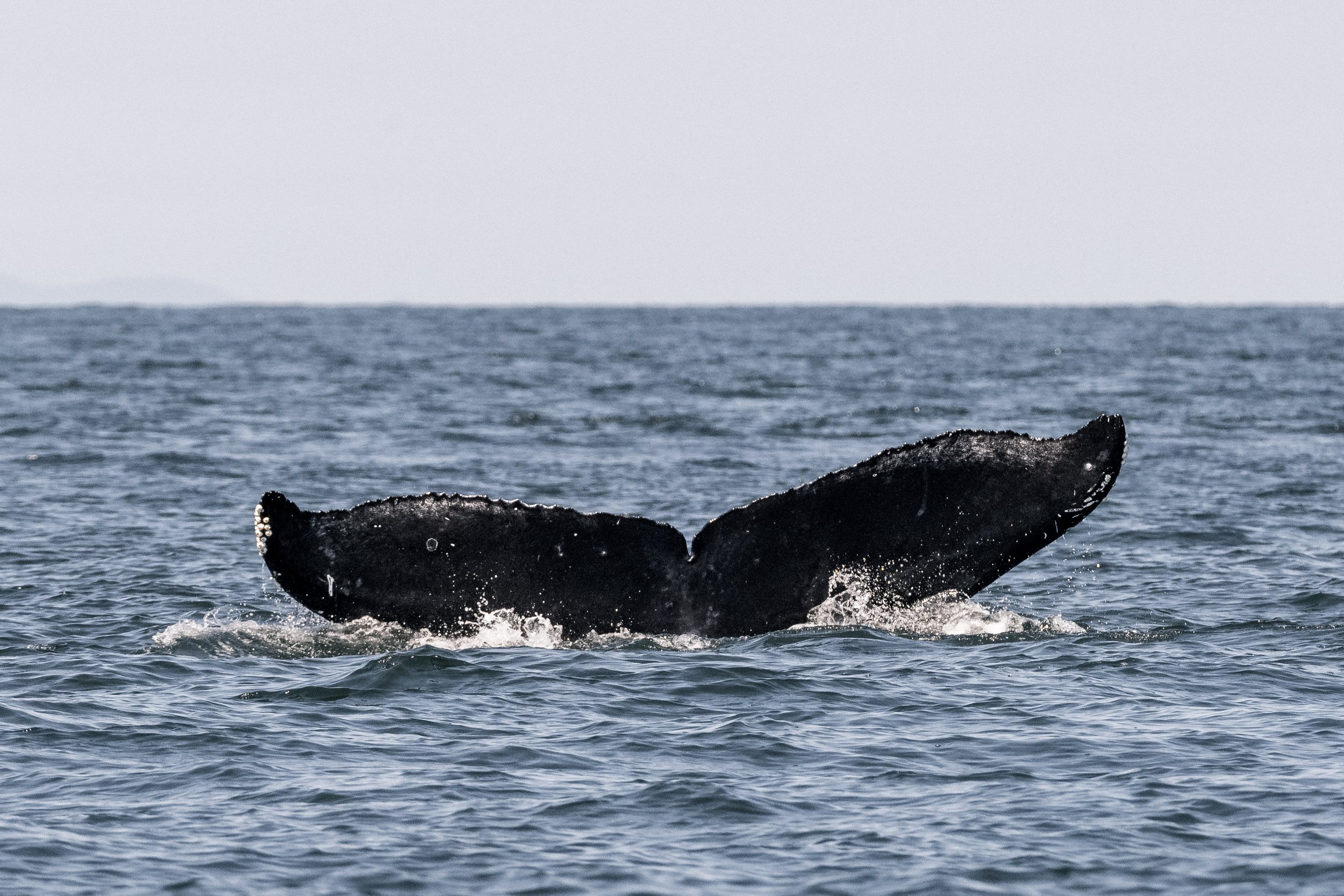
Raptor’s 2024 calf diving. Photo by Hayleigh Hilbert.
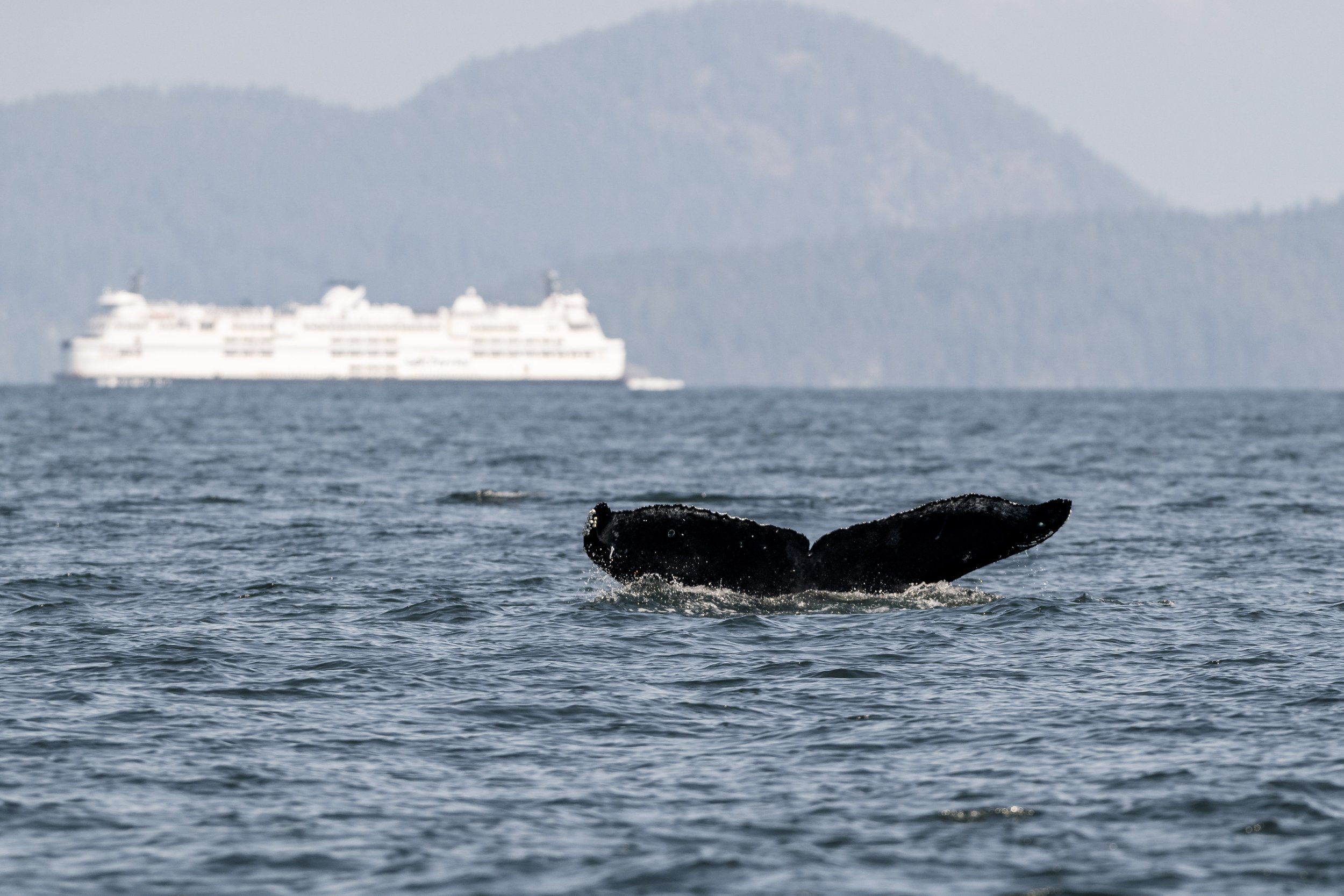
Raptor’s 2024 calf with a BC Ferry behind them. Photo by Aly Kohlman.
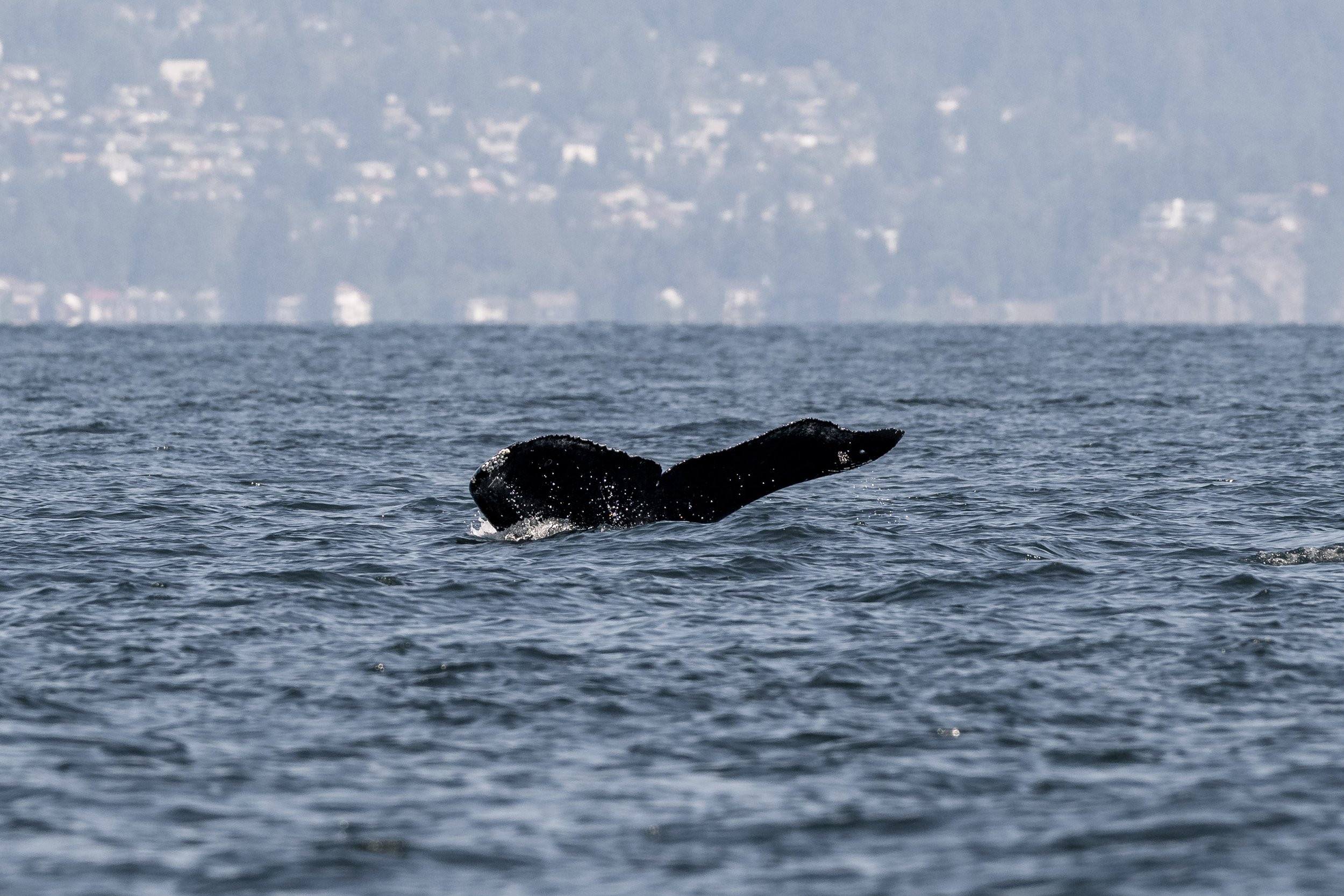
A final peek at Raptor’s 2024 calf. Photo by Aly Kohlman.
T036s and T137A
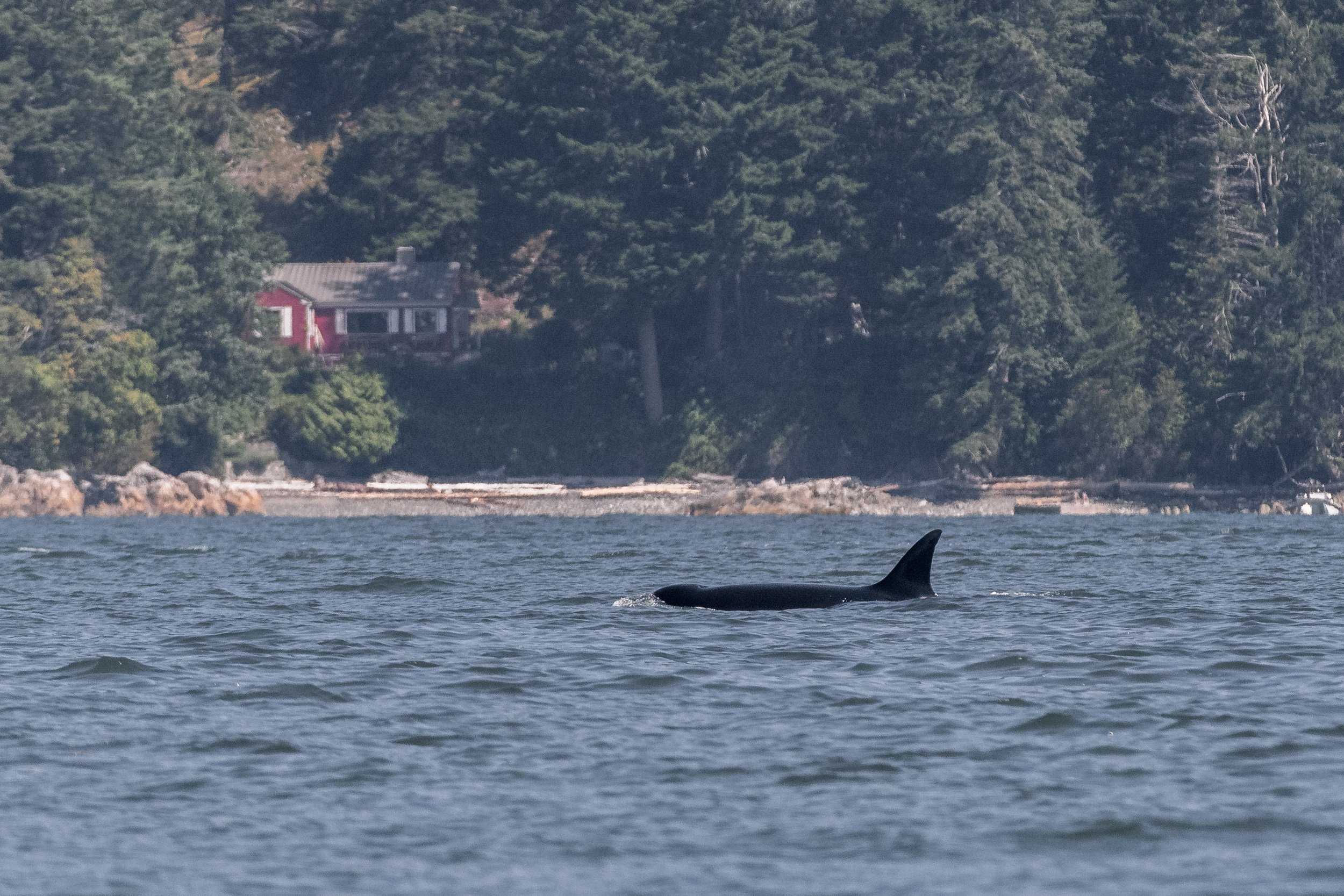
T036 Flapjack leading the way. Photo by Hayleigh Hilbert.
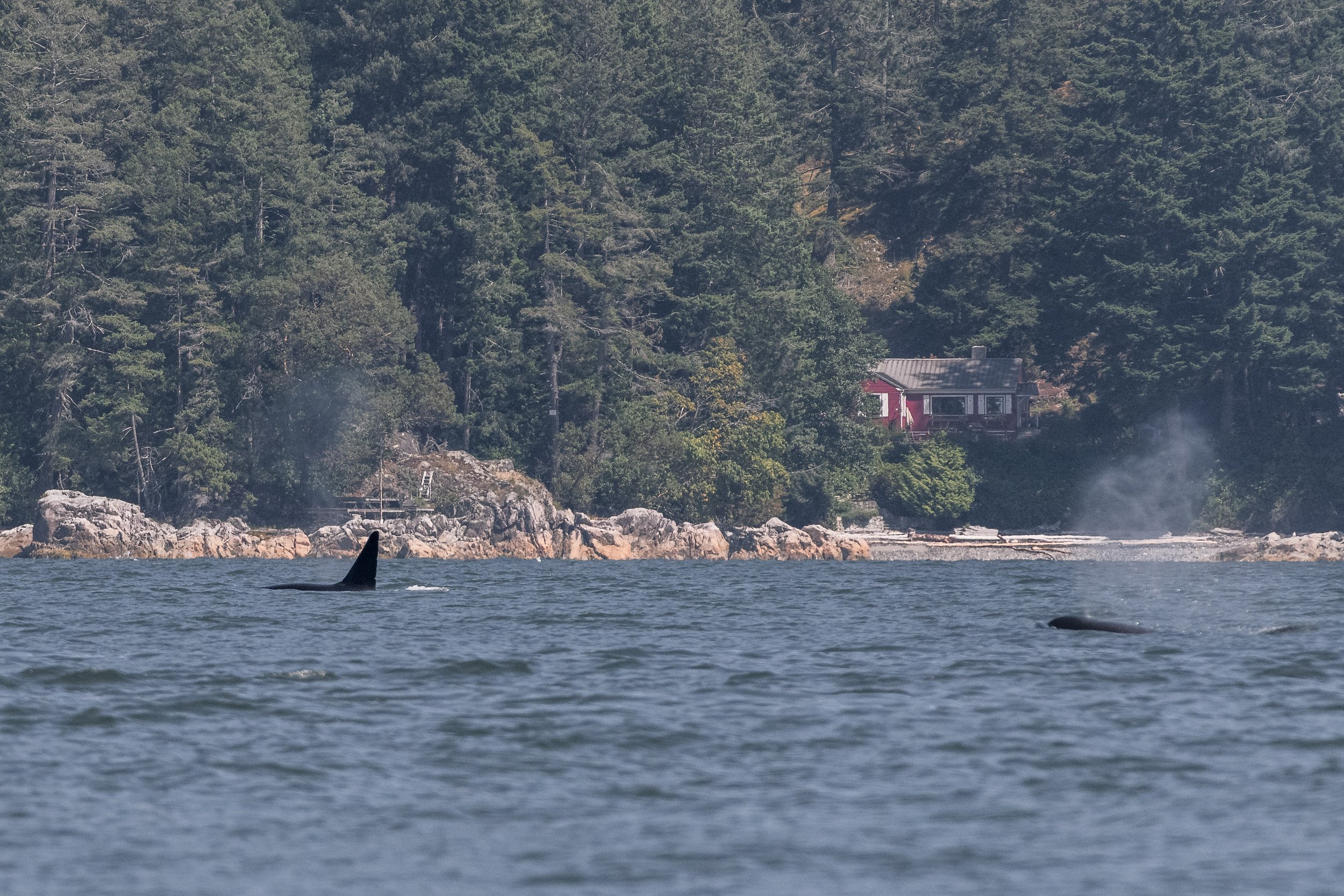
T137A Jack close to shore. Photo by Hayleigh Hilbert.
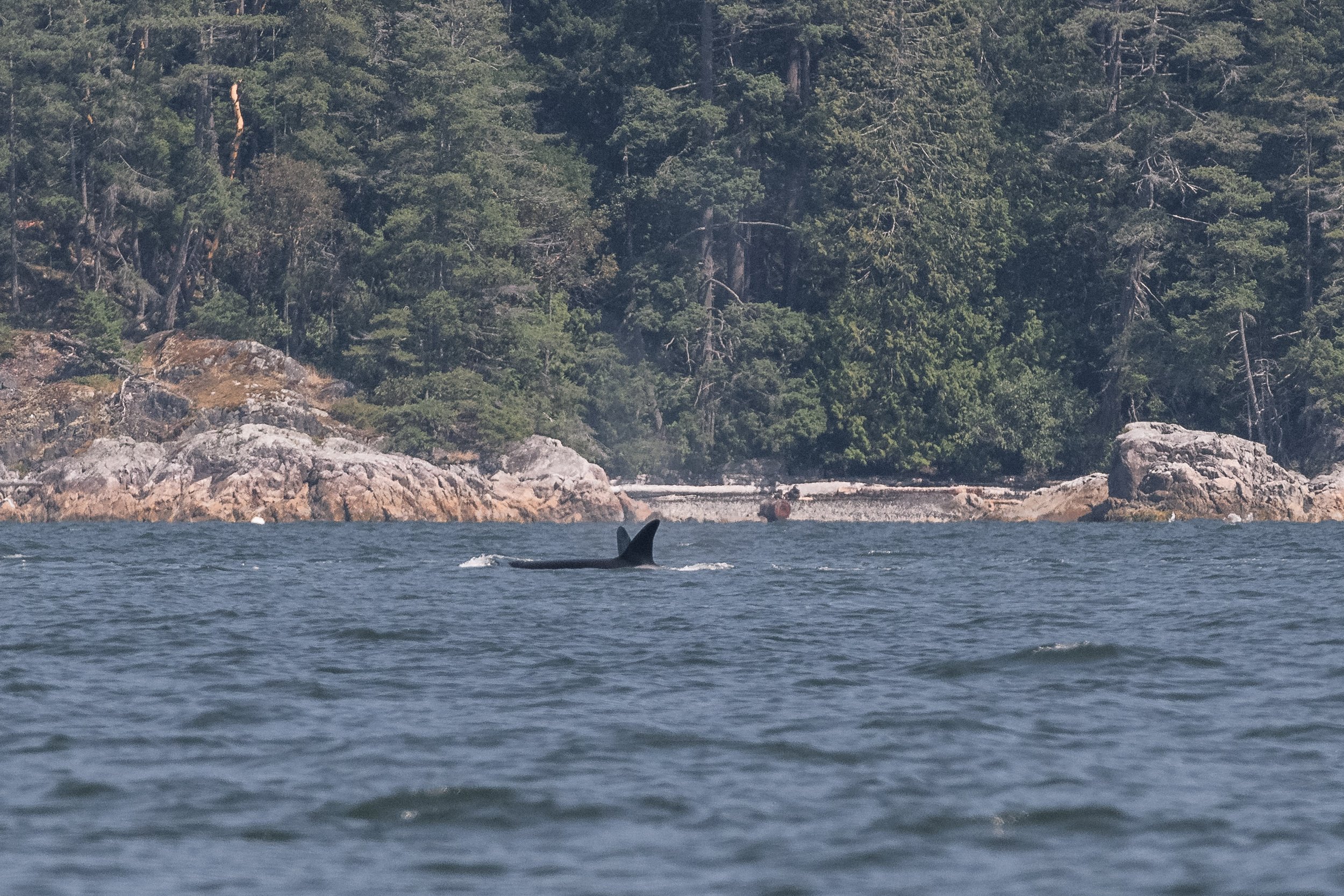
T036B2 Greenfelder with T137A Jack. Photo by Hayleigh Hilbert.
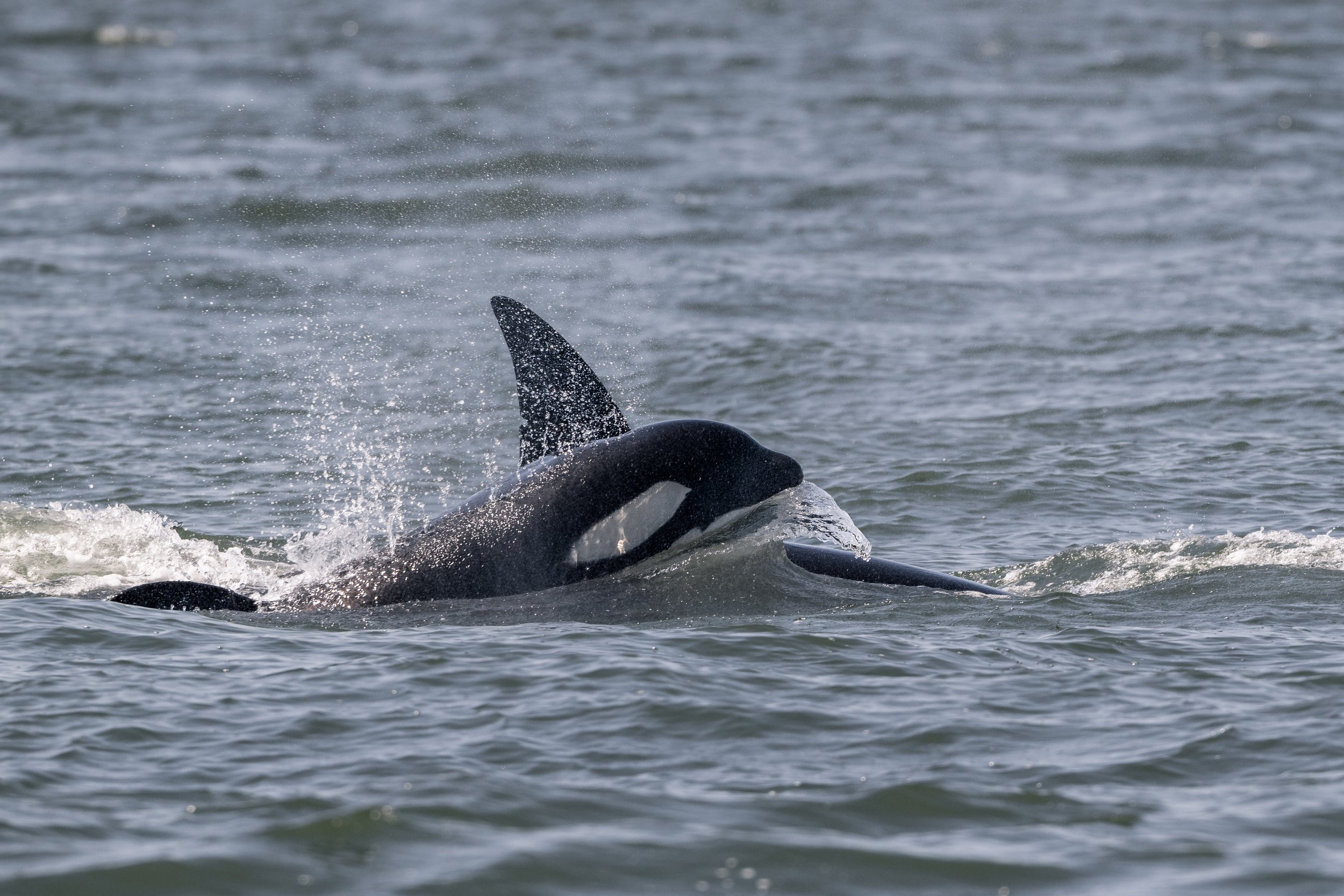
T036B1 Bhotia with her calf T036B1A Maple. Photo by Aly Kohlman.
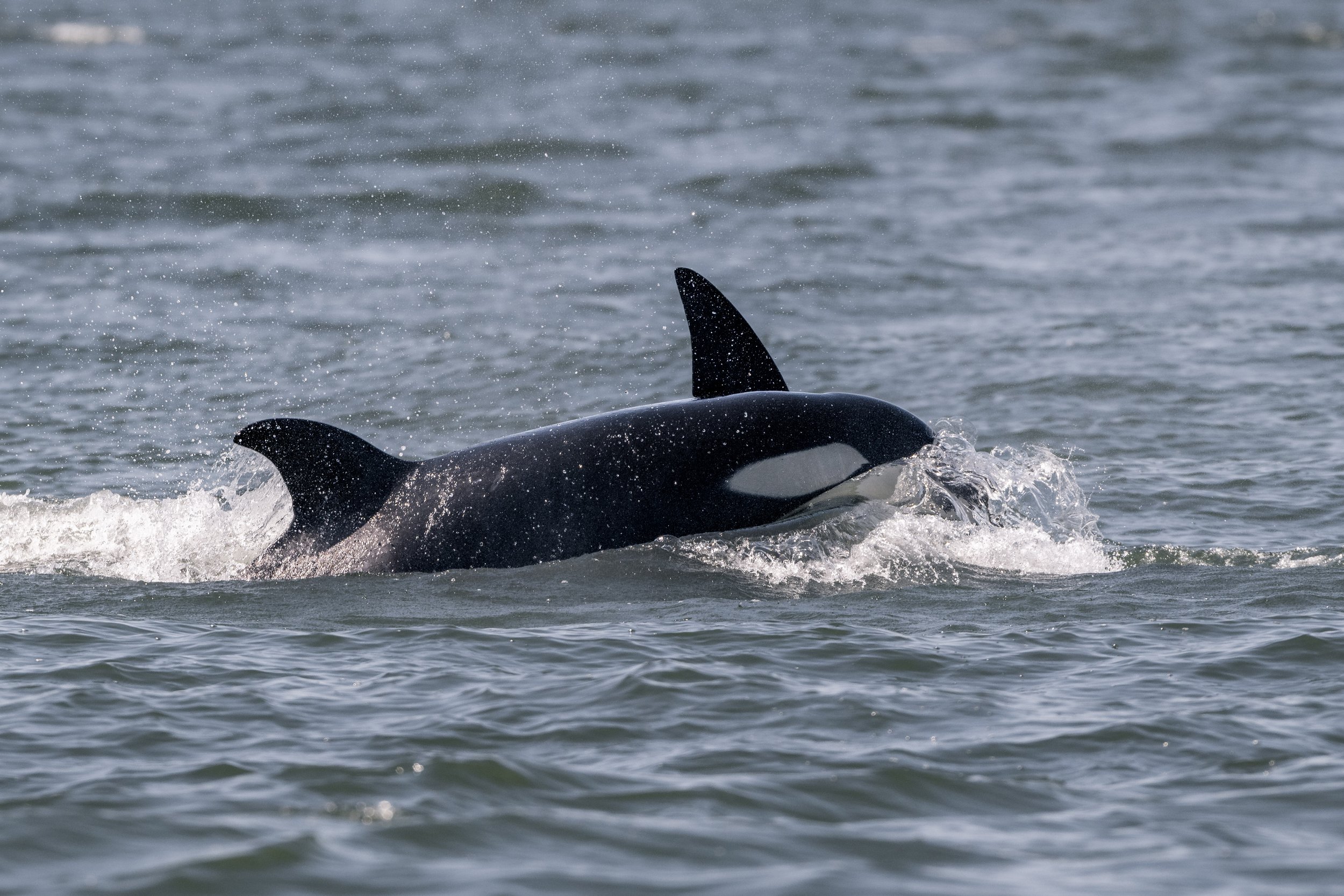
T036B1A Maple making waves beside their mother T036B1 Bhotia. Photo by Aly Kohlman.
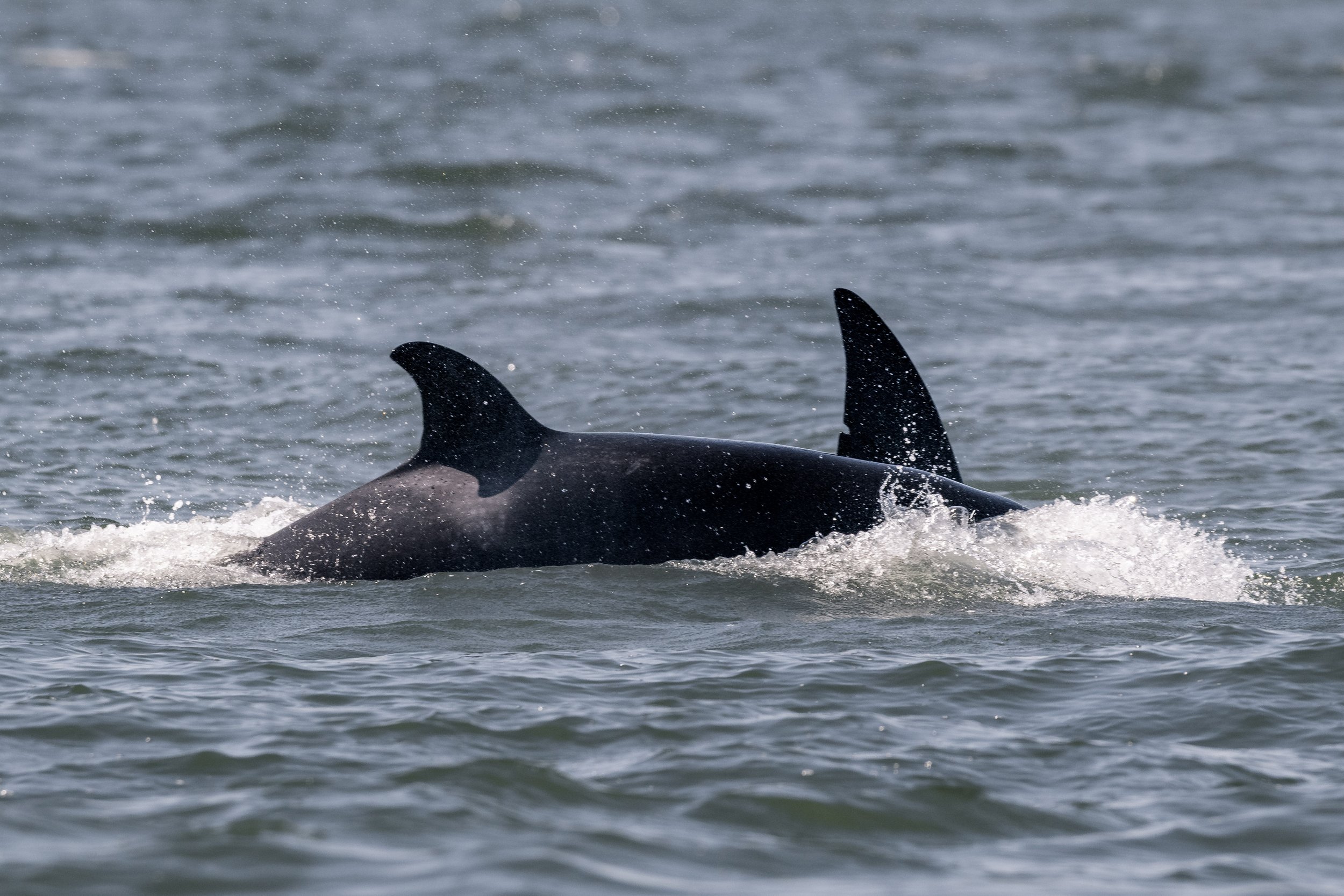
Born just last year, T036B1A Maple tends to race along to keep up with the pod! Photo by Aly Kohlman.
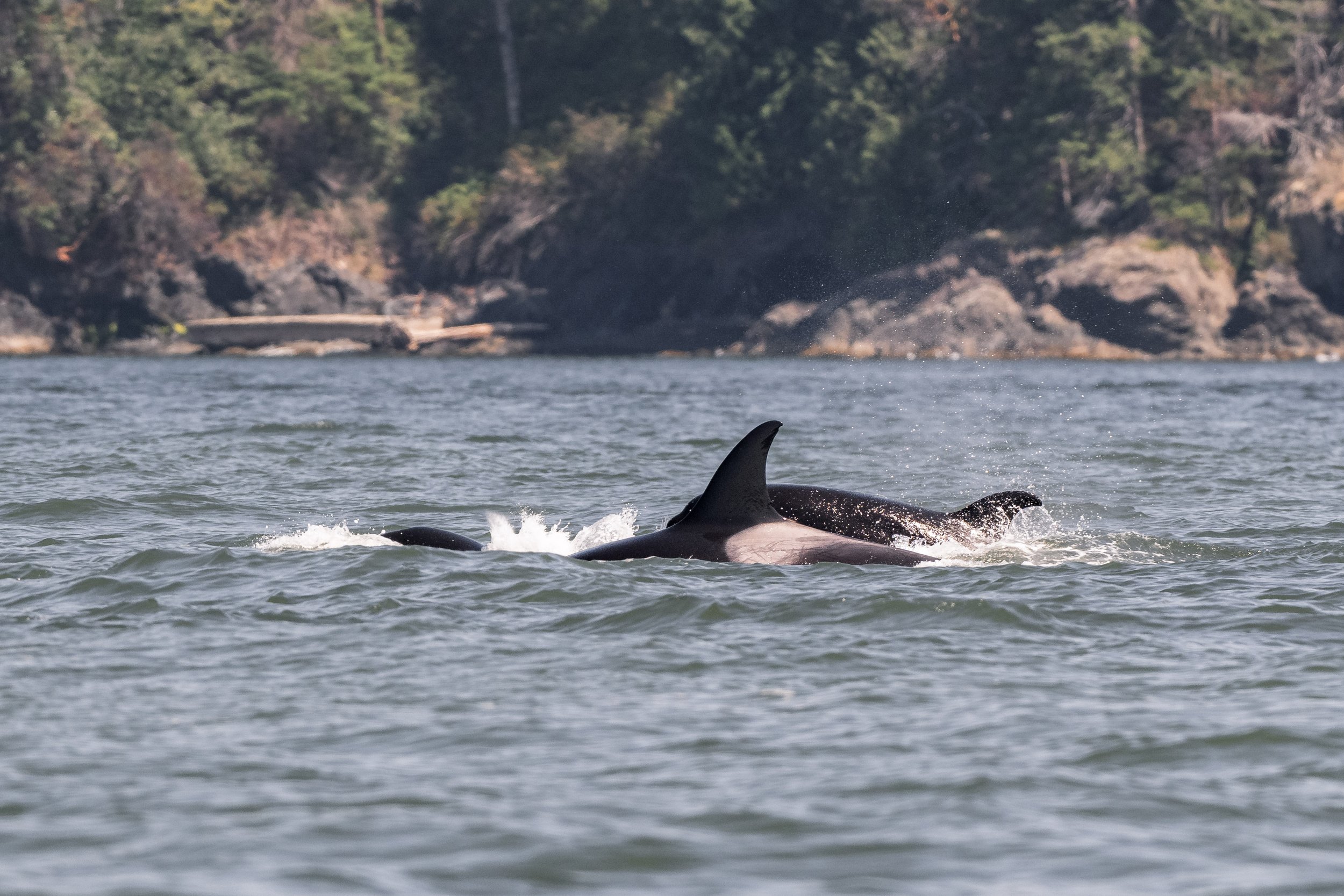
T036B Tattertip with her youngest calf T036B4 Auk. Photo by Aly Kohlman.
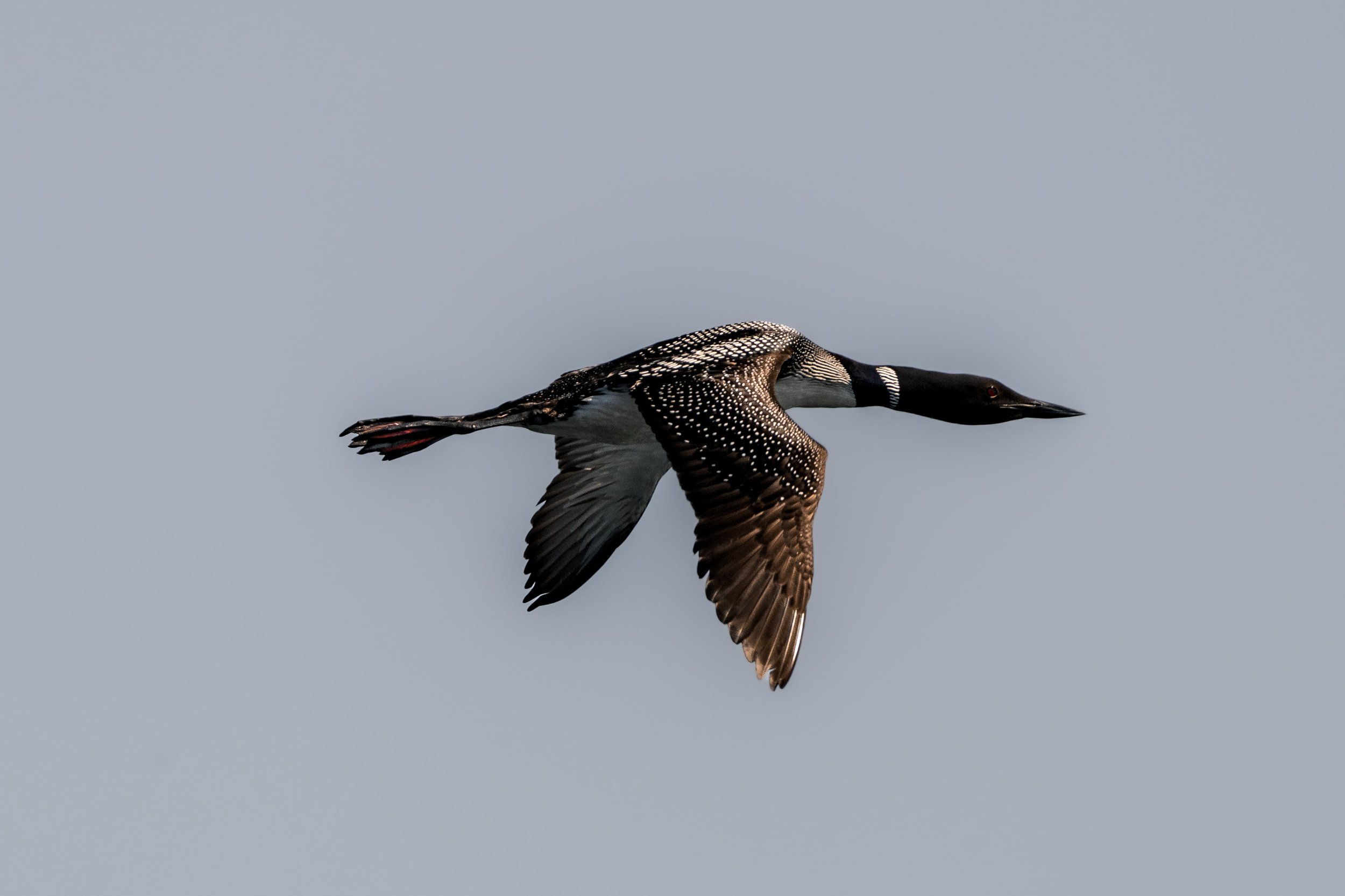
A Common Loon flying by. Photo by Aly Kohlman.