
August 8, 2026, 3:30 PM - Partying with the Transient Orca, plus some humpbacks close by
It was another beautiful day as we had both an open boat, Keta, and our semi-covered boat, Kula, out beginning a new search for whales.
We decided to head north, hoping to pick up some of the whales we had spotted earlier that day that had headed north. With our bows pointed in that direction and our eyes peeled, we started the adventure. After travelling in the Strait of Georgia for some time, we found ourselves close to Lasqueti Island, and that’s where we spotted our first blow of the day. The blow we spotted belonged to Olympus (BCX2075), a well-known female humpback in the area. She was travelling and lifting her tail high out of the water to propel these feeding dives. She is likely chasing down schools of krill or potentially small schooling fish, as most humpbacks are this time of year. They come to BC specifically to feed in our rich waters over the summer months, building their fat reserves so that when they migrate south to Hawaii or Mexico, they have energy. There isn’t much food for them while they are there, so it’s important to have this fat reserve; otherwise, they run the risk of starving. As it is, a humpback might lose 50% of its body mass during this migration, so it’s very important to be successful while they’re here. To build this mass, the humpbacks may spend 20 hours or more of their day feeding.
After some time spent with Olympus, we continued our search and ended up finding the whales that we were hoping for, plus more! While we had spotted the T036s earlier in the day, it seemed that they had picked up a few friends during the afternoon, and there was a full-blown T-party in action!
There was lots of excitement from the whales as we approached, with spyhopping, tail slapping, and even some “sea snakes” visible. As we snapped more photos, and more fins seemed to surface, we slowly put together the list of pods that were present:
T036 Flapjack ♀ (1970)
T036B Tattertip ♀ (1998)
T036B1 Bhotia ♀ (2009)
T036B1A Maple ♀ (2025)
T036B2 Greenfelder ♀ (2013)
T036B4 Auk ♂ (2024)
T100 Hutchins ♀ (~1979)
T100C Laurel ♂ (2002)
T100F Estrella (2004)
T101 Reef ♀ (≤1969)
T101B Lagoon ♂ (1997)
T137A Jack ♂ (2002)
Orca, being the largest species of dolphin, are very social animals and gatherings like this are very important for them. They not only get a chance to meet up with those outside of their typical matriline, but it can also be a time to reacquaint themselves with whales that they used to be closer to. When matrilines get too large, females who are becoming reproductive will often leave to start their own pods, keeping the group small enough to maintain the stealth they rely on. A long time ago, this happened when T100 Hutchins left T101 Reef’s pod and started out on her own. Typically, you would be able to tell this lineage based on the alphanumeric code in their name. Looking at that, you can tell some things about the younger whales in this group. For example, we know that T036B1 Bhotia is the firstborn to T036B Tattertip, but for older whales like T101 Reef, some information is lost and then found later. Looking at the number, you might think T101B Lagoon is Reef’s second-born, but he is actually fourth. In addition to Hutchins, Reef also had another son, T102 Beardslee, who unfortunately passed away but was another of her kids that ended up with their own number. Unlike Hutchins, though, he always travelled with his mother, so their relationship was very clear.
In addition to the mini family reunion with the T101s and T100s, there is another family connection here, since T036 Flapjack is believed to be T137A Jack’s grandmother! Although initially missed in the naming system, they became clear over time as these gatherings continued. Although they may be travelling away from each other, their family bond remains, and they will be seen travelling together more often than unrelated whales. Today’s encounter was a fascinating glimpse into these animals' social lives. But all good things must come to an end, so we left them to their socializing and pointed our bow back towards Nanaimo.
As we approached Nanaimo, we had time for another couple of stops, the first of which being at Snake Island. Here, we were able to spot a group of Harbour Seals spending their time along the rocky Island, warming up and relaxing after a long day of fishing. These little animals are an important part of our ecosystem, acting as predators for many fish and cephalopod species as well as prey for larger animals like the Transient Orca we had spotted earlier.
Our final stop was at the Gabriola Bluffs, just across from the Nanaimo Harbour. It’s a beautiful way to end the tour, as the sunset lights up the towering Sandstone Cliffs and all the birds that use these cliffs for their nests. Throughout these exciting encounters, our Marine Naturalists onboard, Hayleigh Hilbert and Evan Hessels, captured some amazing photos, which are included below!
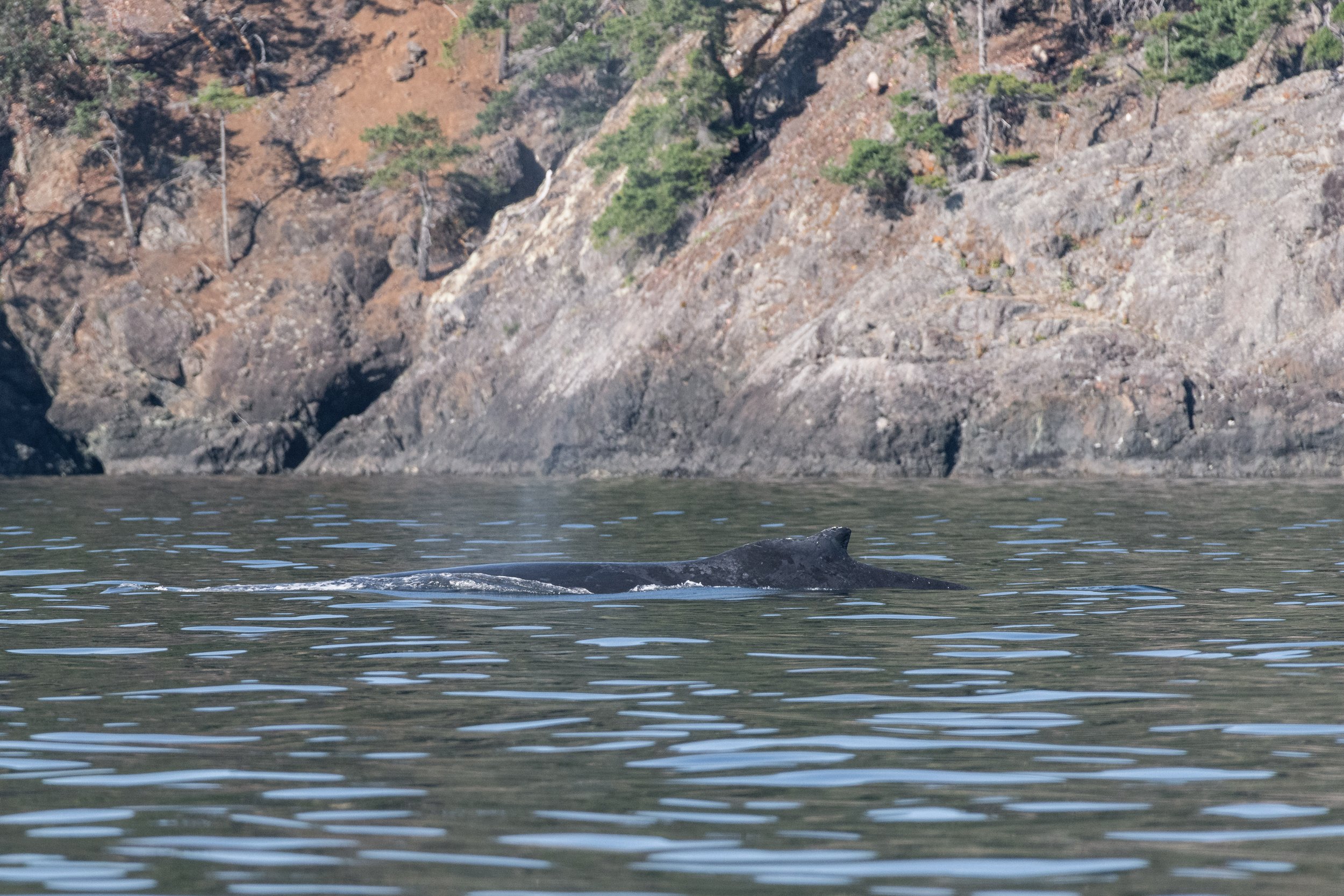
Olympus surfacing with the Lasqueti Island shoreline behind her. Photo by Hayleigh Hilbert.
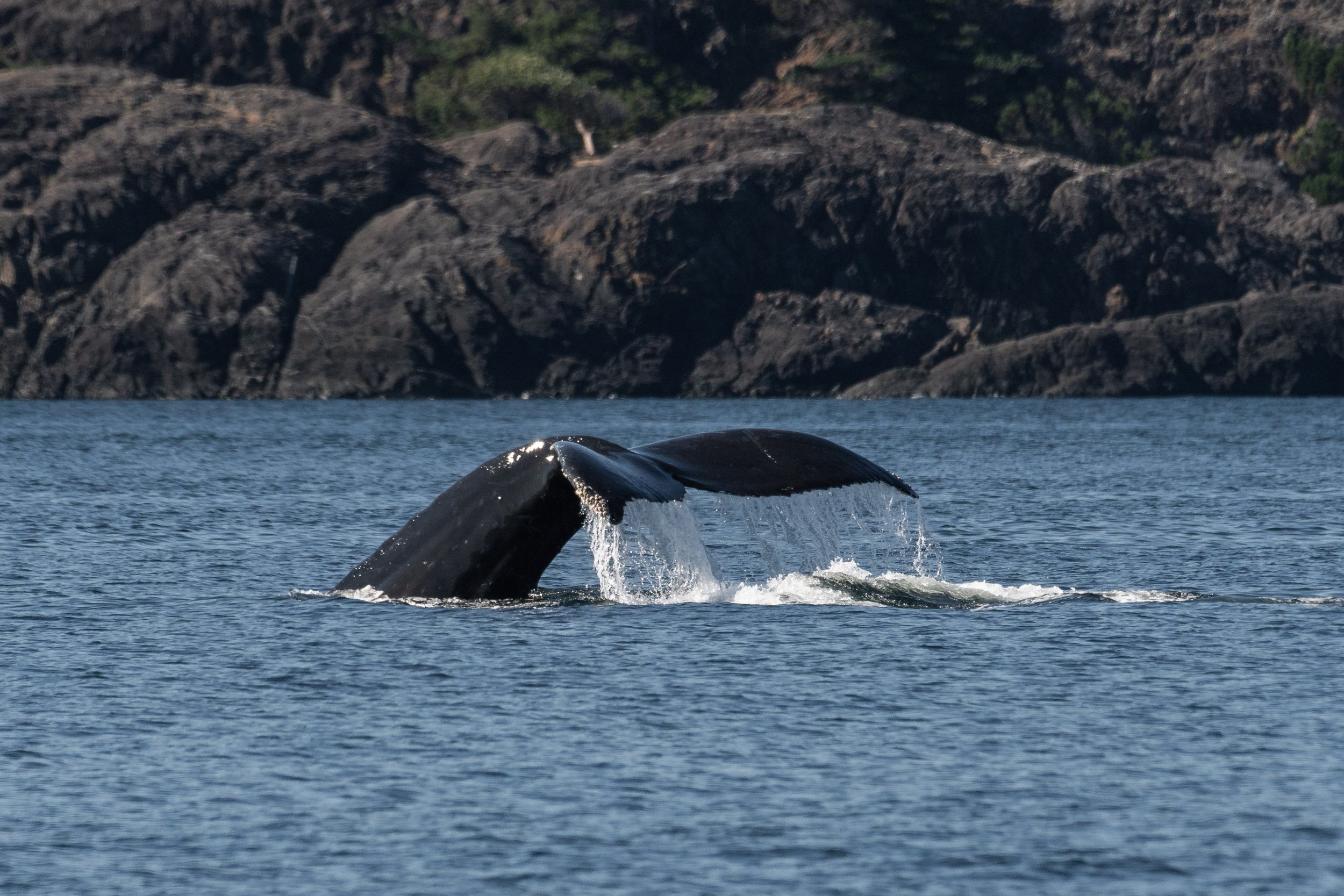
Olympus going for a dive. Photo by Evan Hessels.
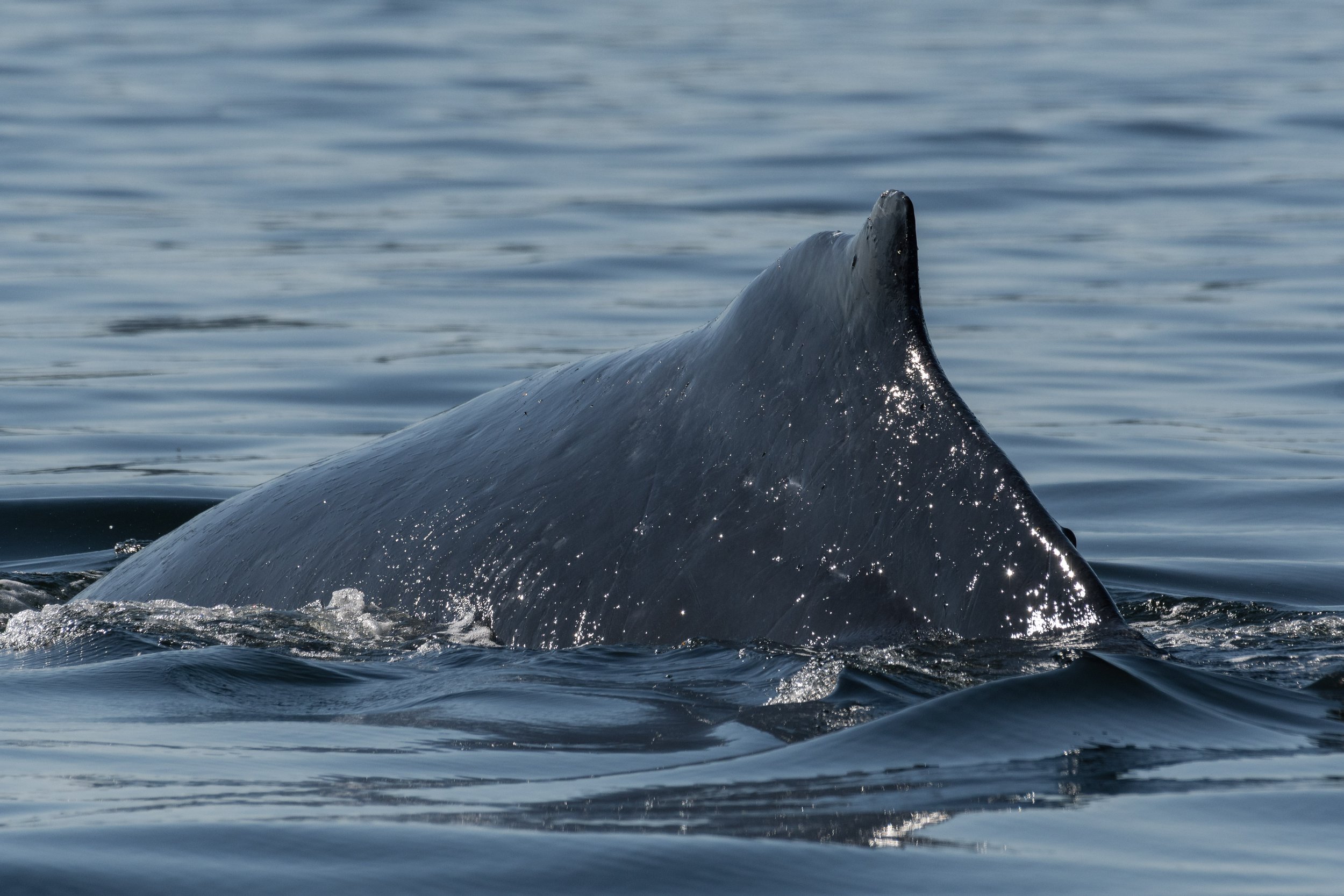
A close up of Olympus’ dorsal. Photo by Evan Hessels.
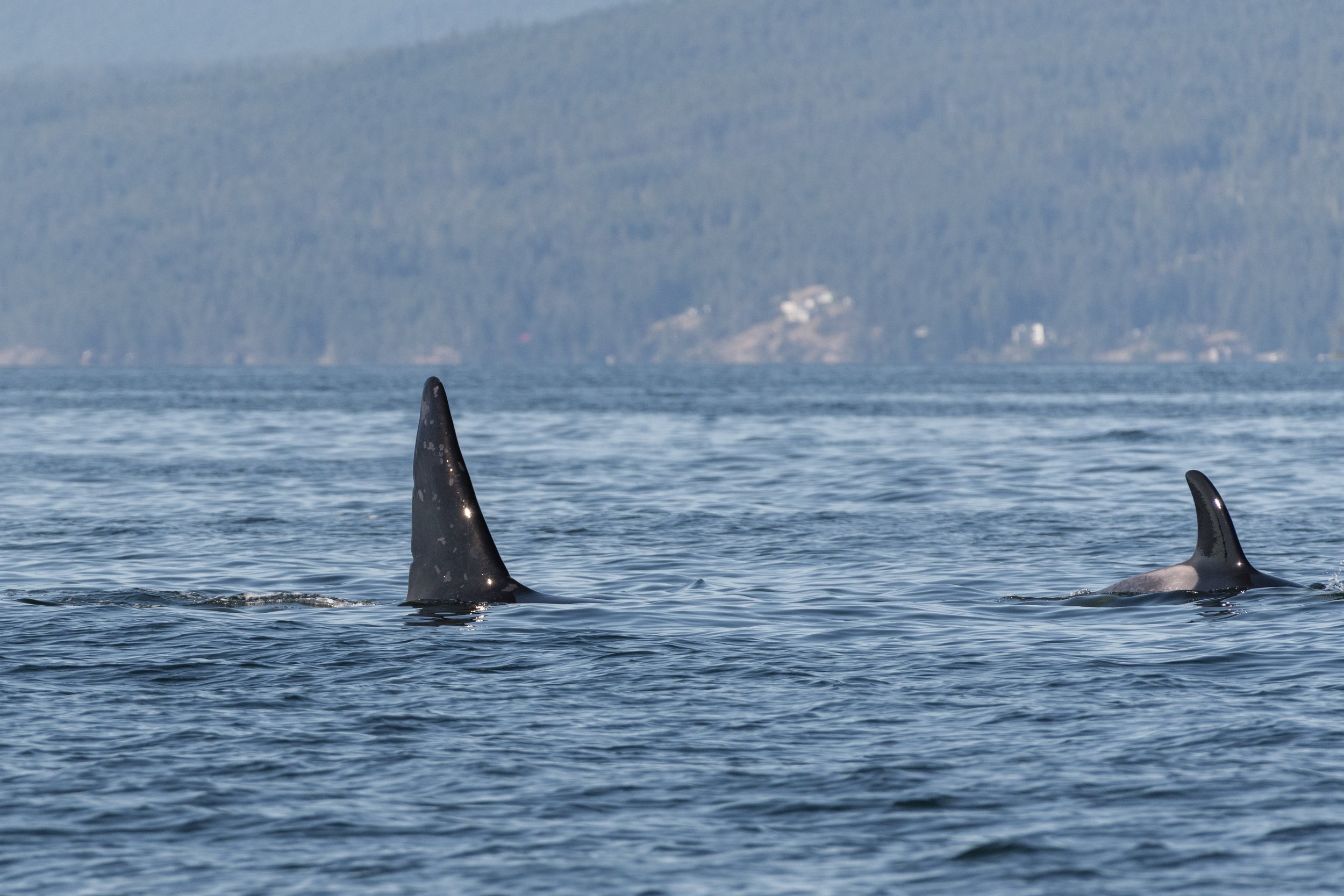
T137A jack (left) and T100F Estrella (right) surfacing together. Photo by Hayleigh Hilbert.
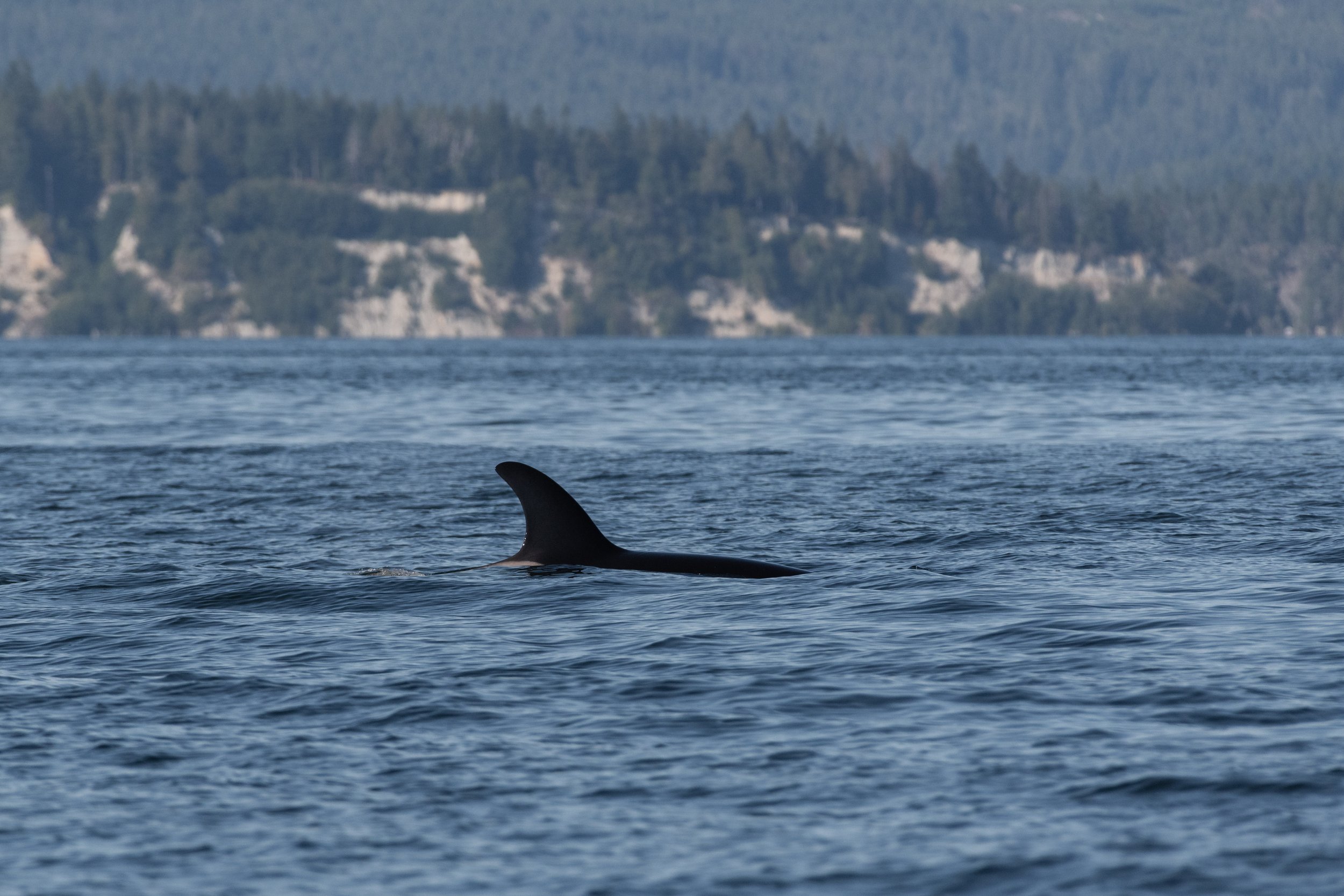
A great look at T100F Estrella swimming by. Photo by Hayleigh Hilbert.
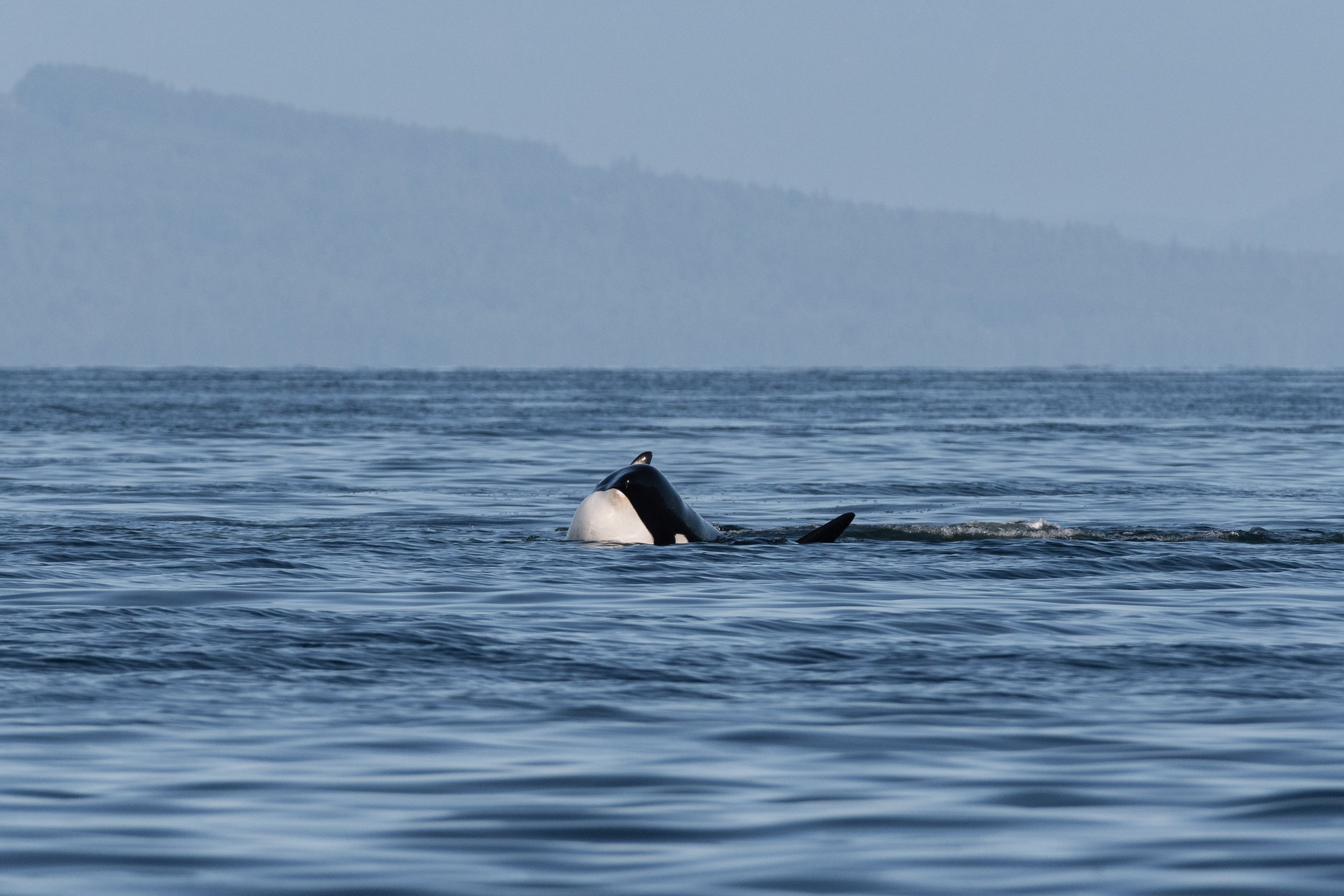
One of the whales lifting their face out of the water. Photo by Hayleigh Hilbert.
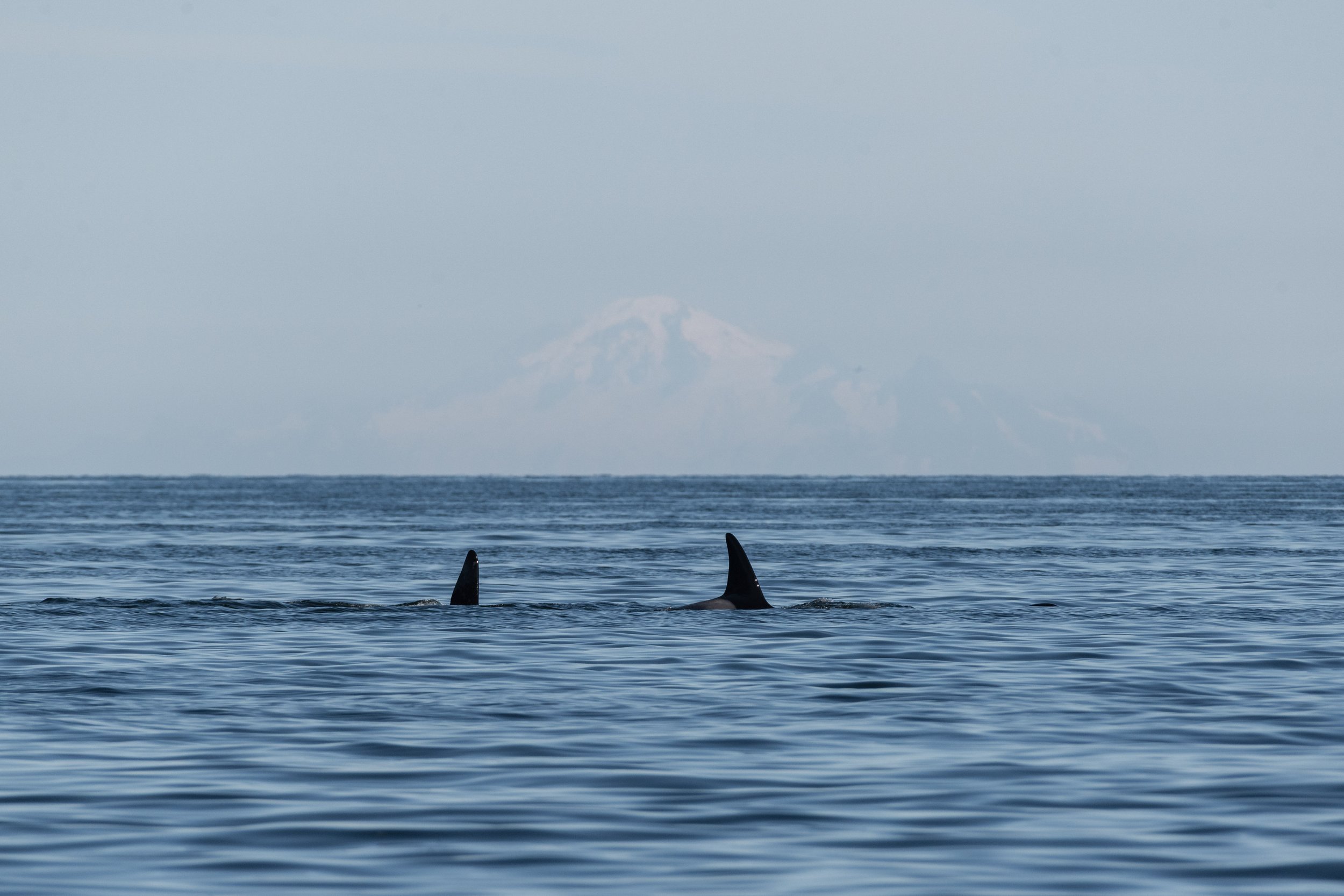
T100F Estrella and T137A Jack surfacing with Mt. Baker behind them. Photo by Hayleigh Hilbert.
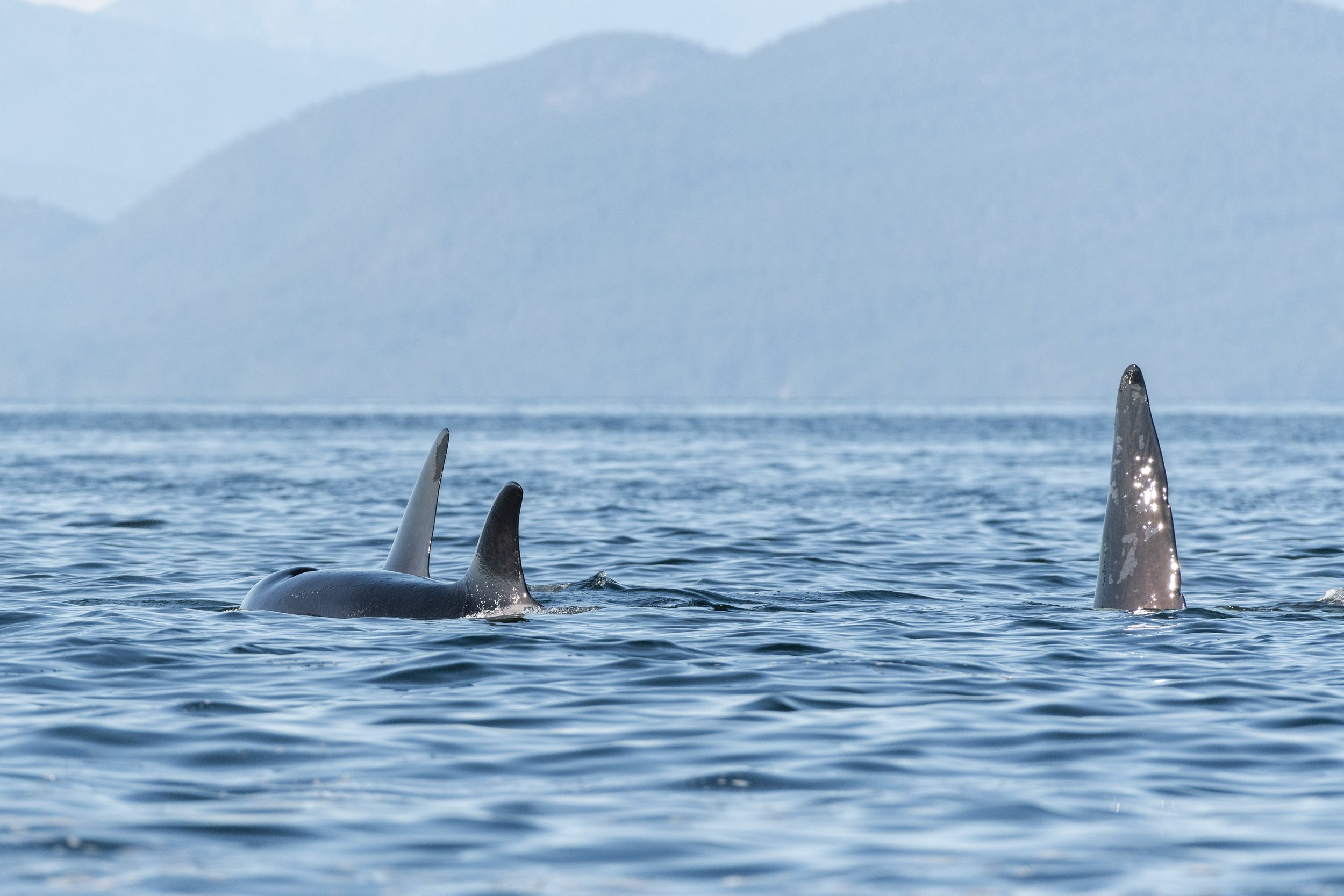
A group photo with T100F Estrella, T100 Reef, and T137A Jack. Photo by Hayleigh Hilbert.
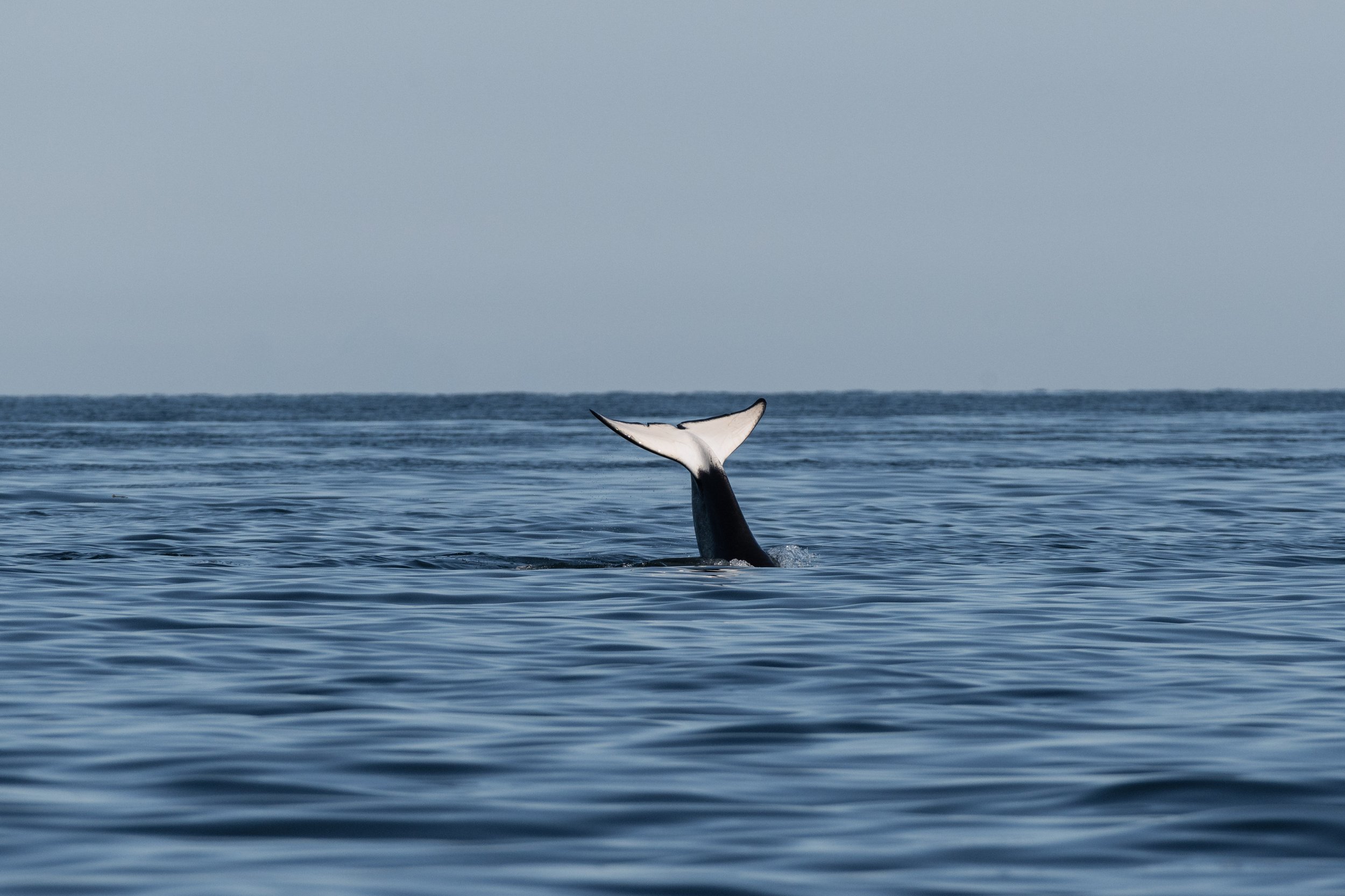
An upside down tail lob from one of the orca. Photo by Hayleigh Hilbert.
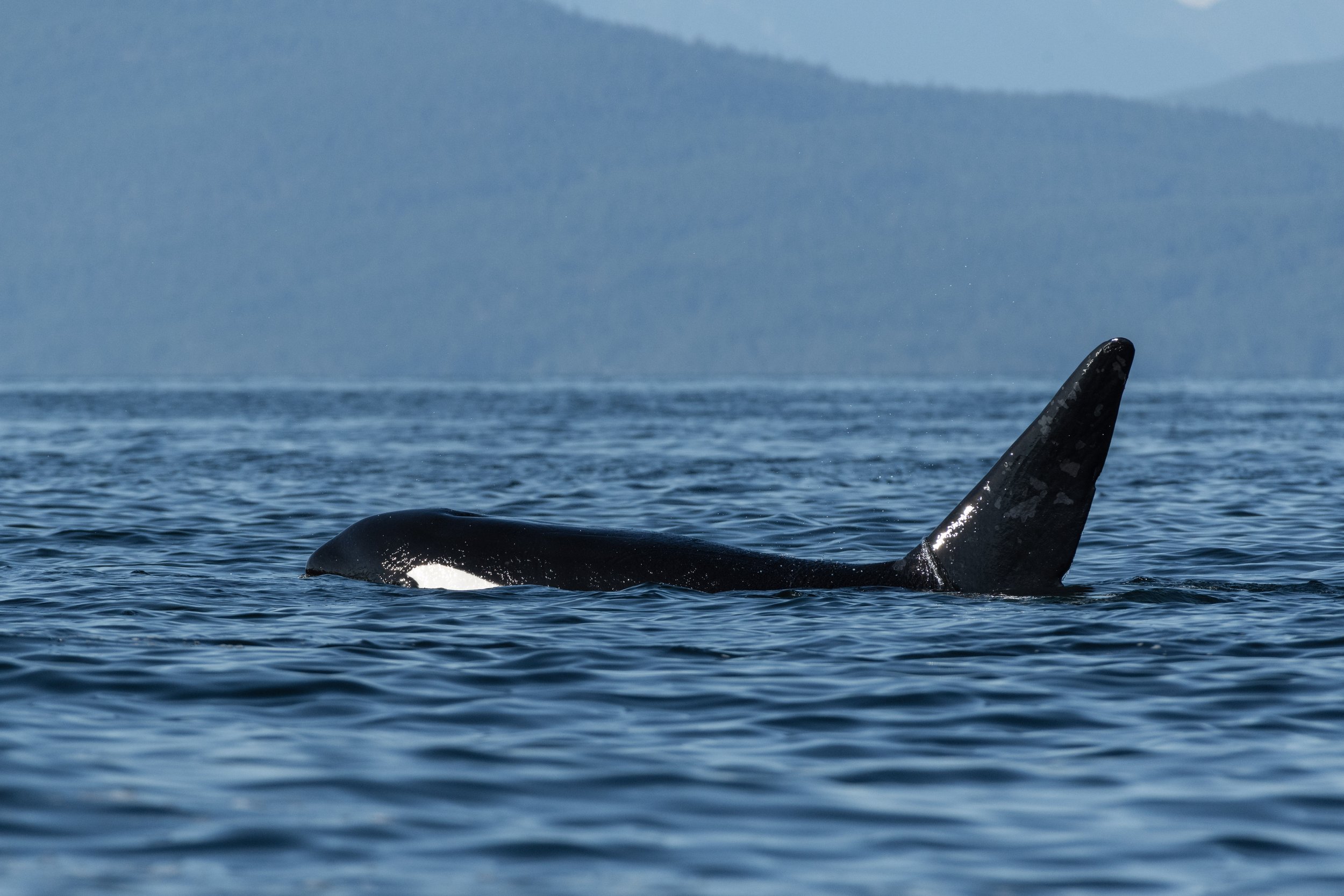
A great look at T137A Jack surfacing. Photo by Hayleigh Hilbert.
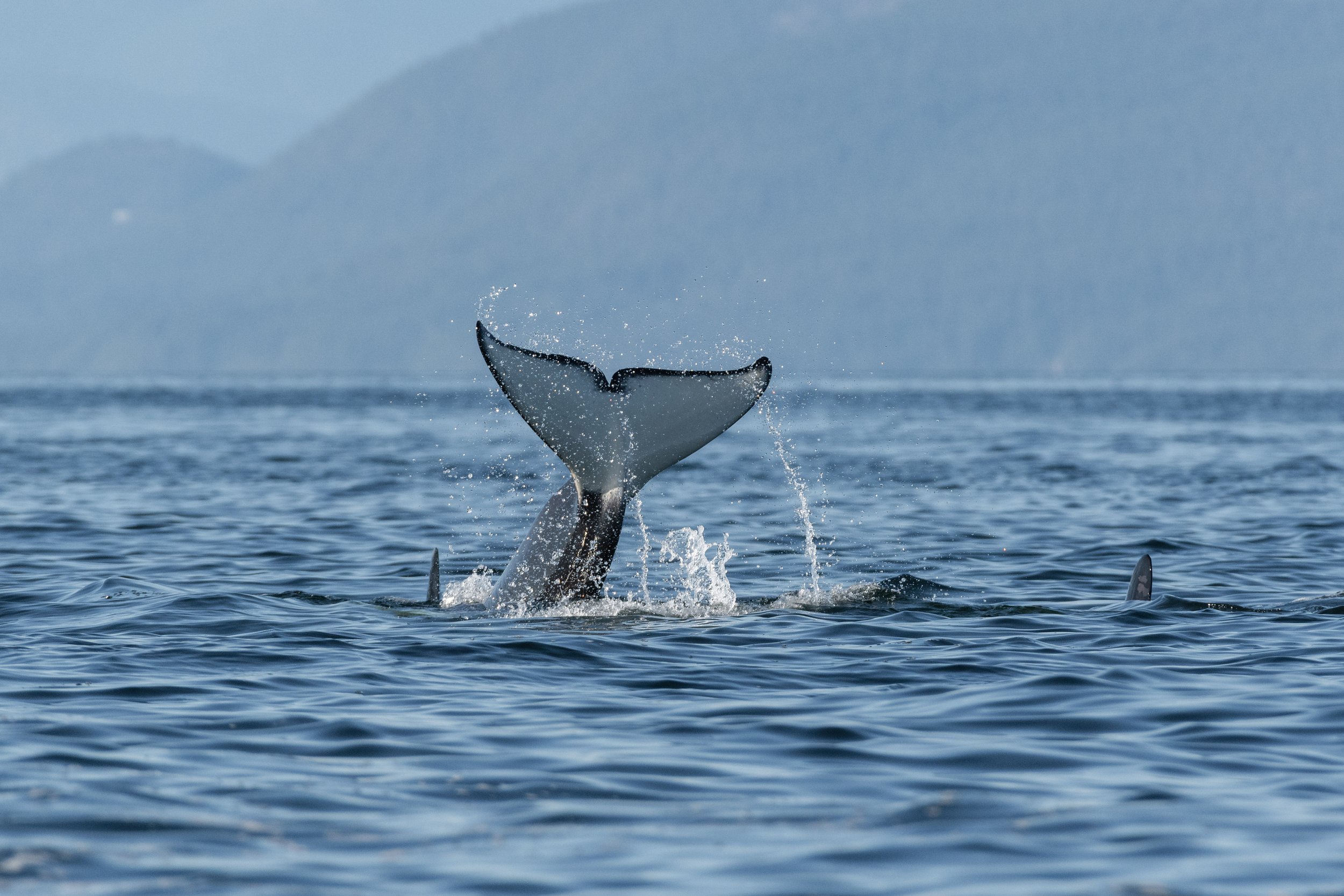
Another big tail sla from one of the whales. Photo by Hayleigh Hilbert.
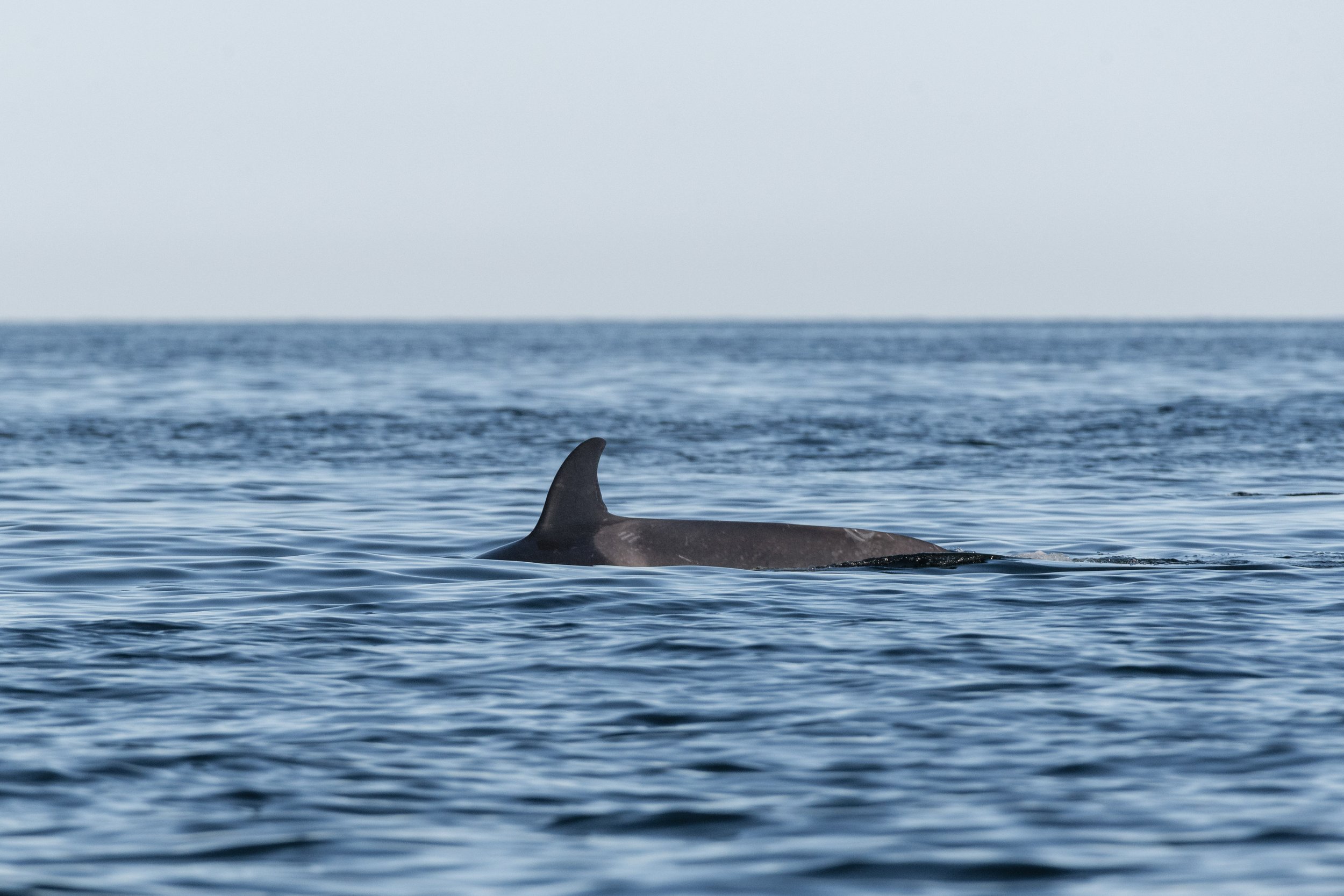
T036B1A Maple surfacing. Photo by Hayleigh Hilbert.
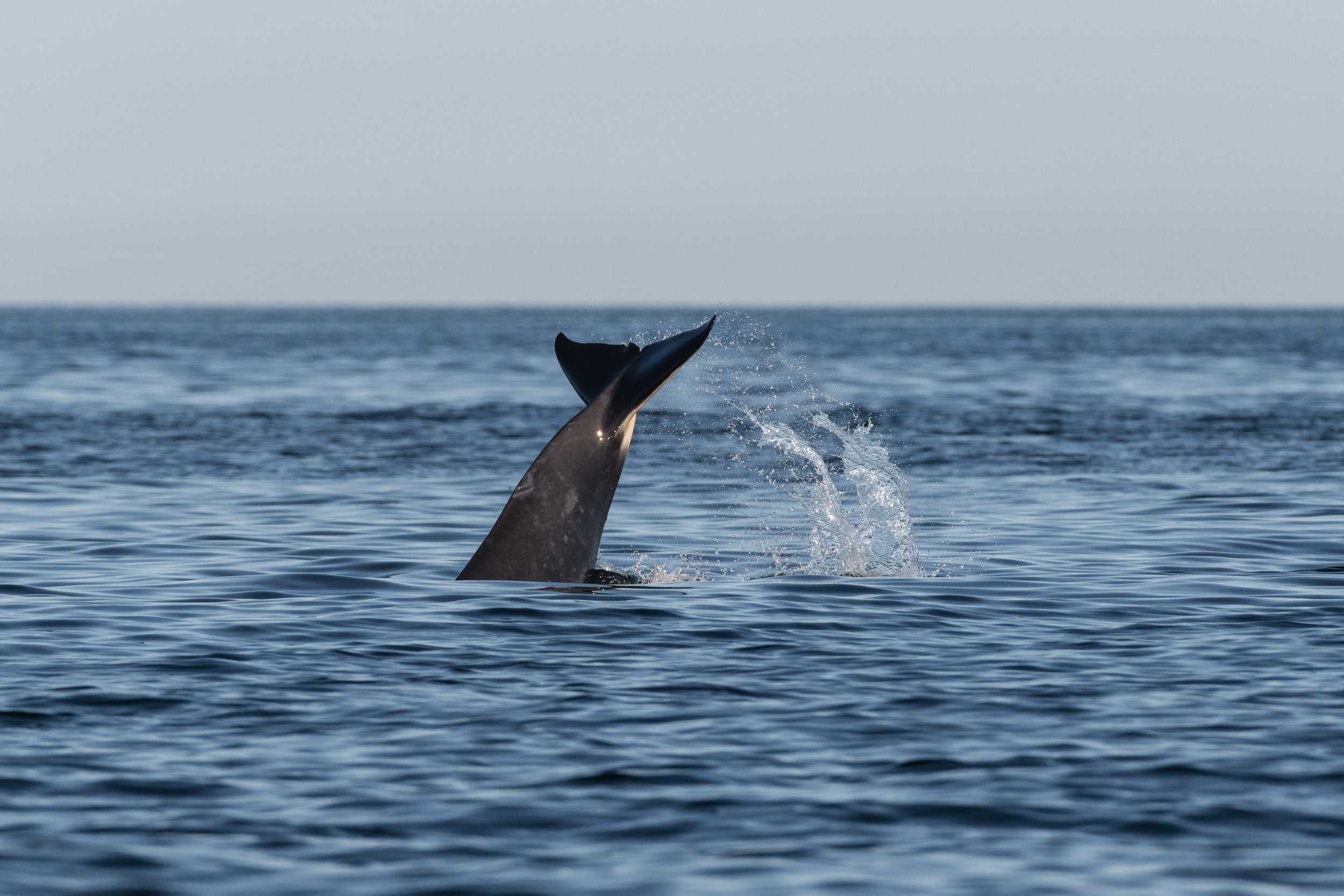
A tail slap from one of the younger whales. Photo by Hayleigh Hilbert.
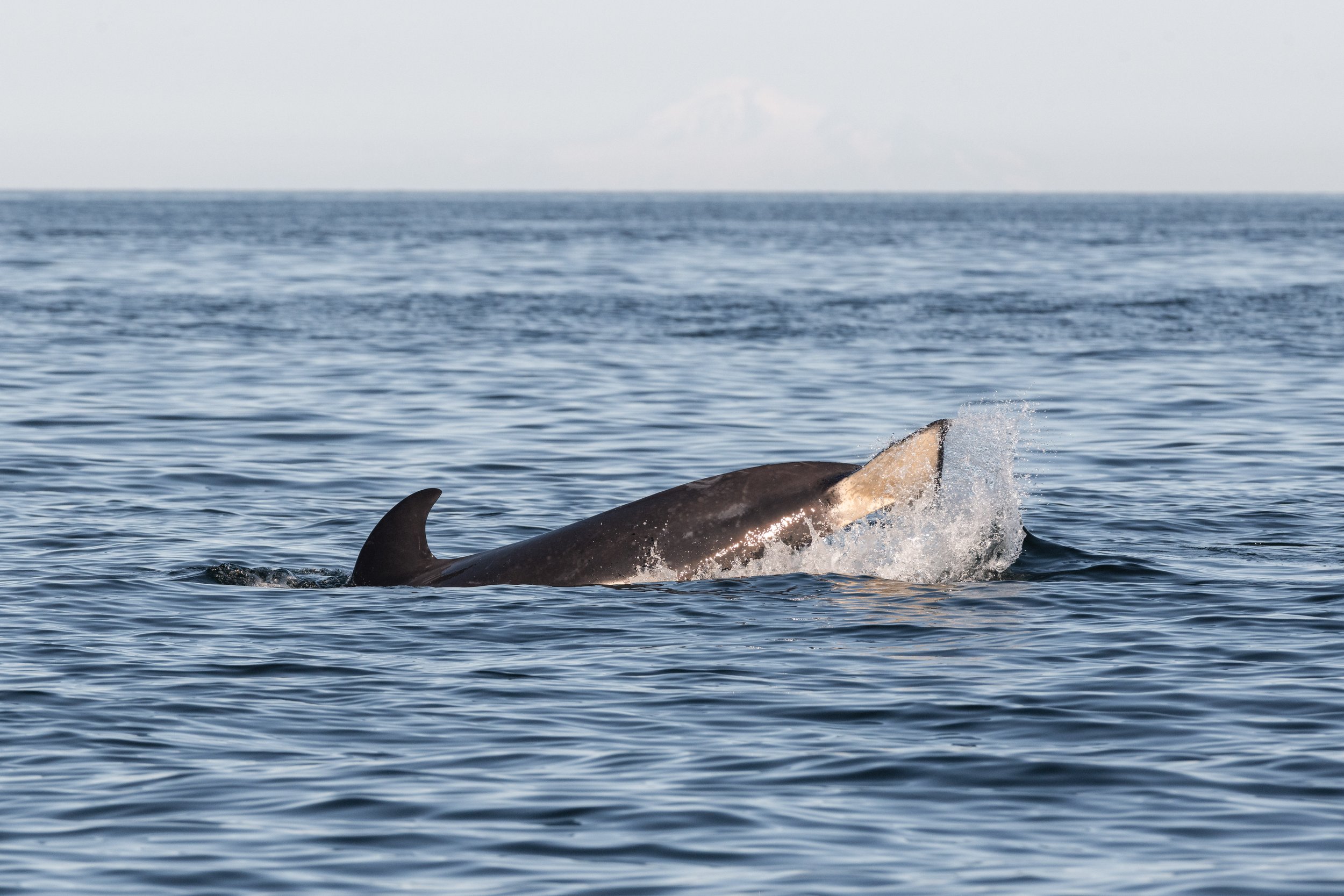
T036B1A Maple flicking their tail. Photo by Hayleigh Hilbert.
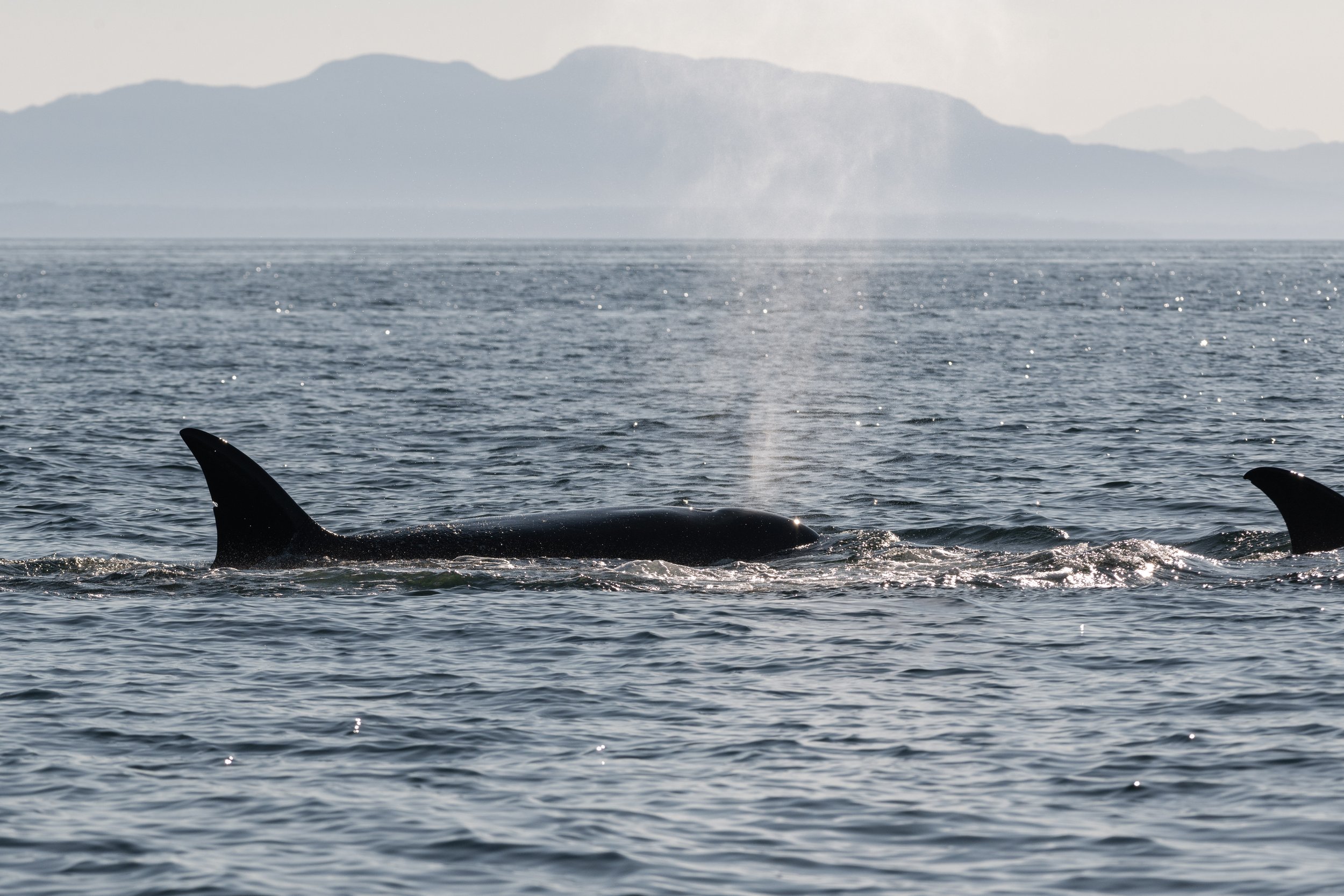
T036B1 Bhotia surfacing with her mom, T036B Tattertip. Photo by Hayleigh Hilbert.
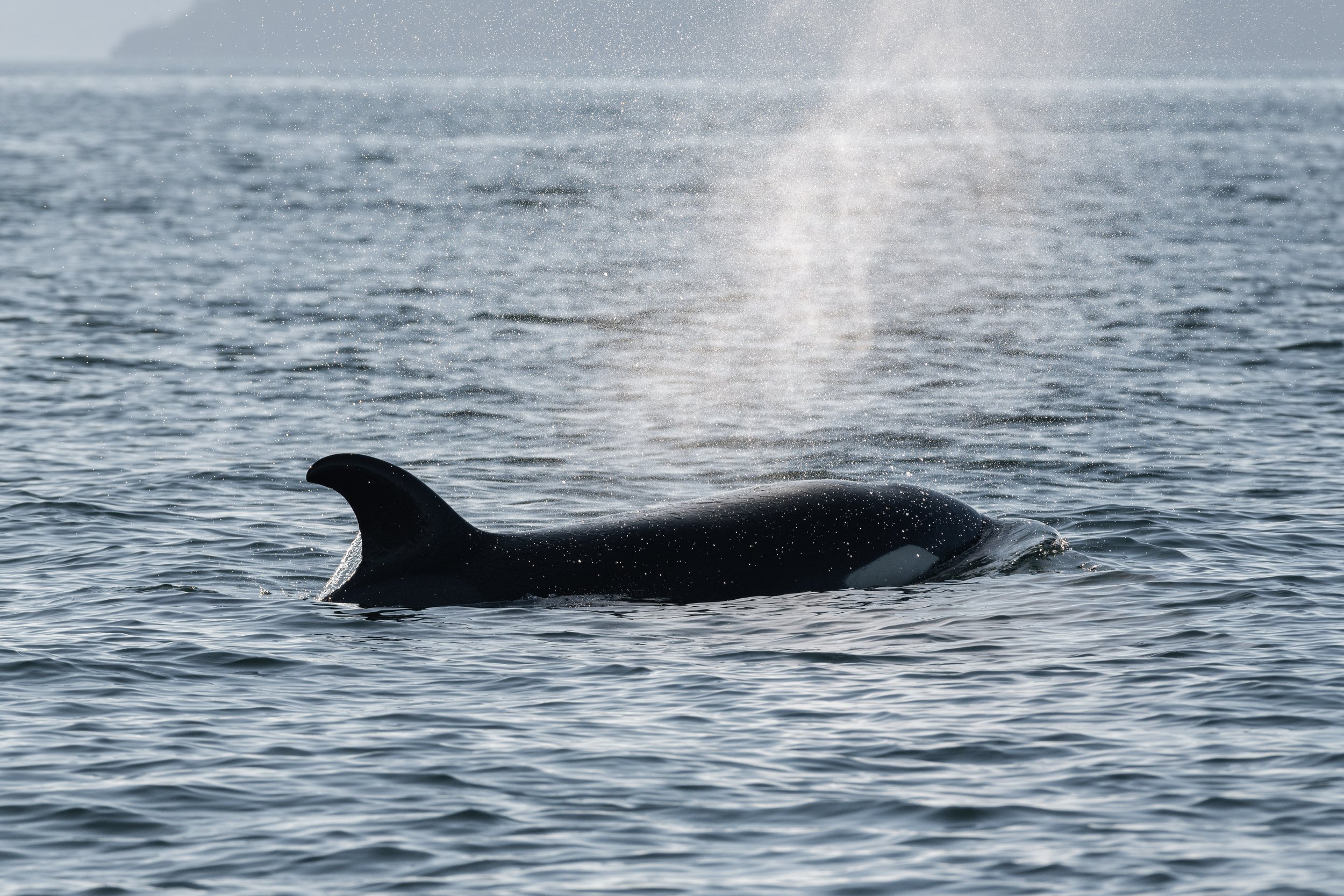
T36B1A Maple showing off their eye patch. Photo by Hayleigh Hilbert.
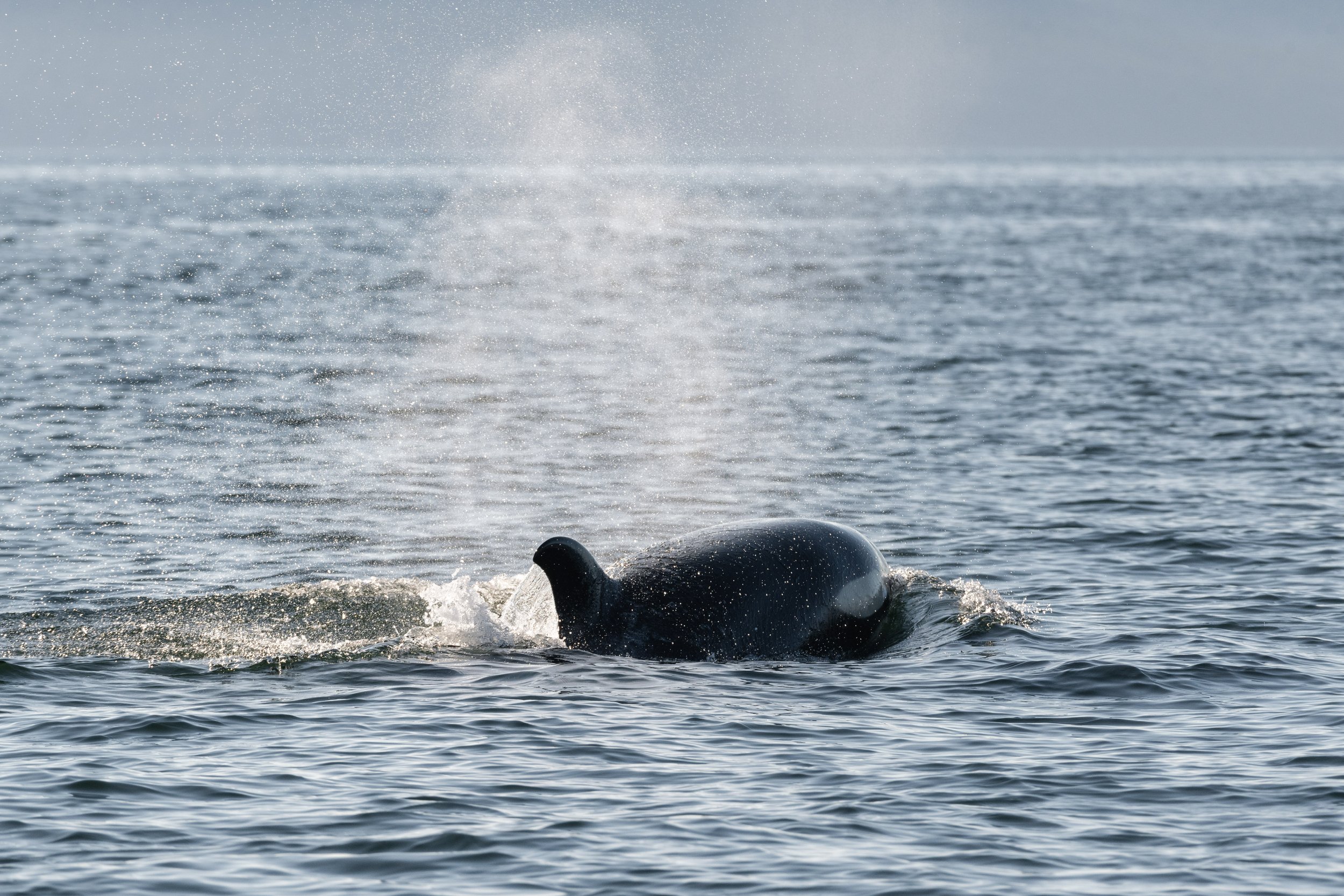
T036B1A Maple swimming away in the sun. Photo by Hayleigh Hilbert.
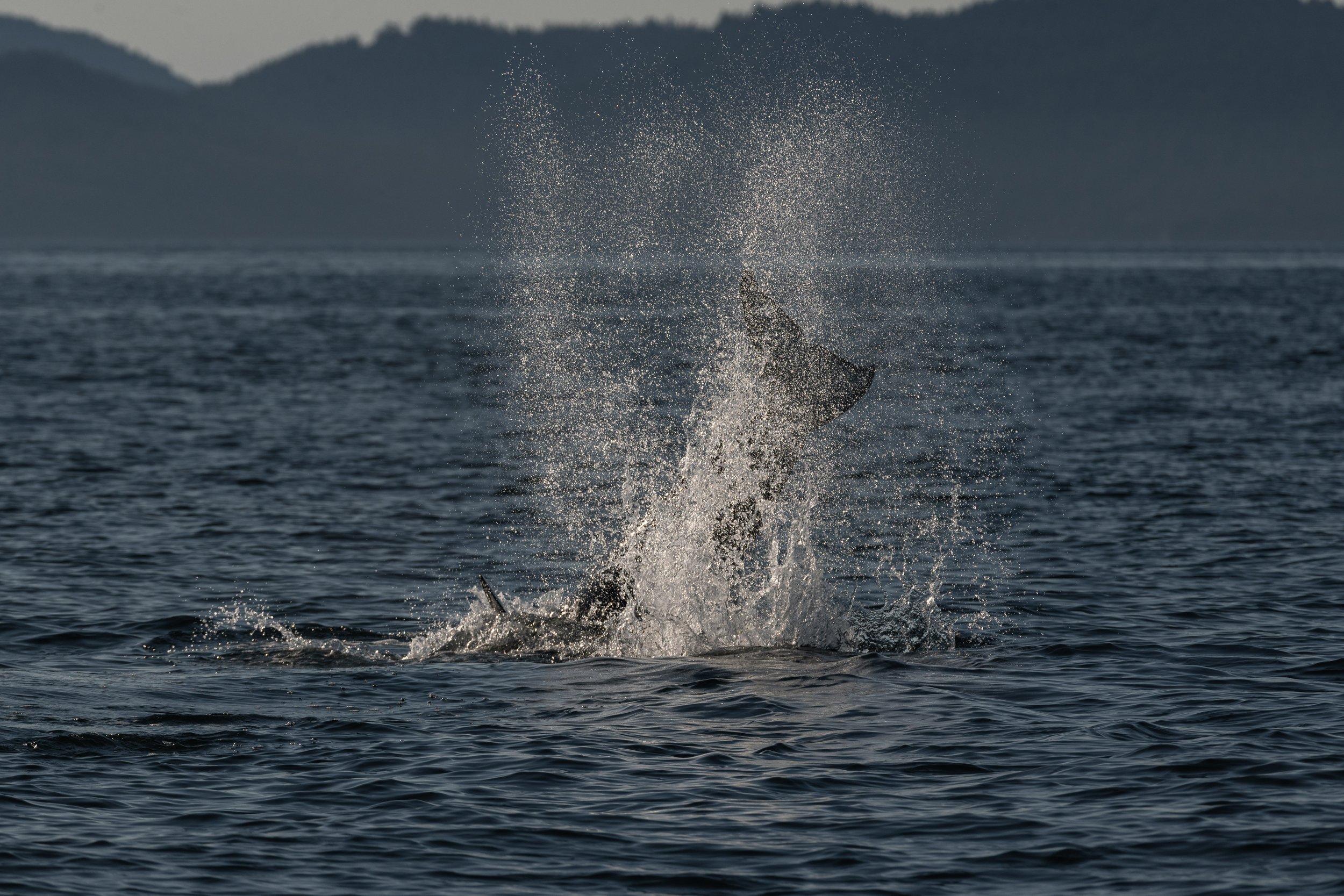
One of the youngsters tail lobbing. Photo by Hayleigh Hilbert.
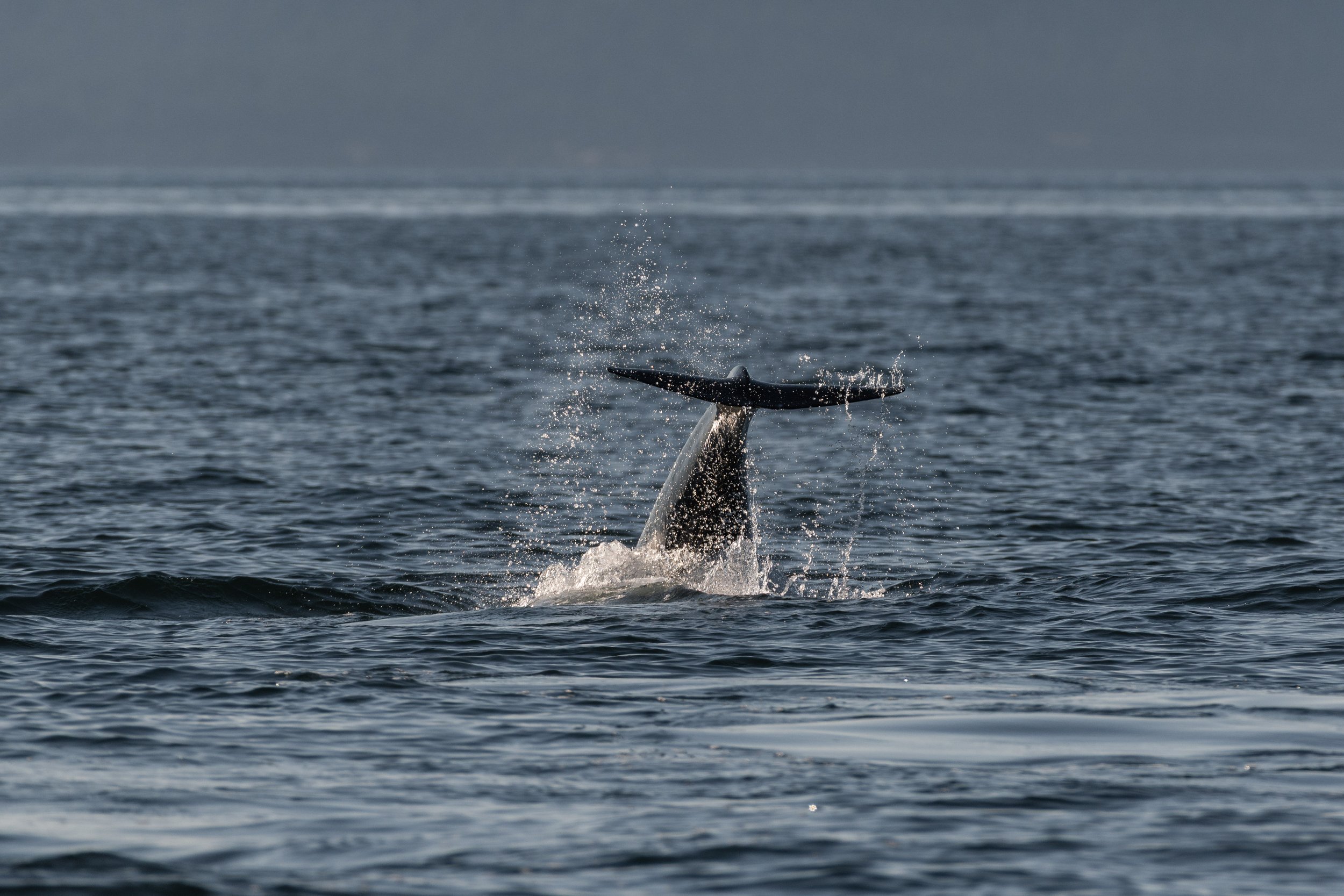
A big tail slap from a little whale. Photo by Hayleigh Hilbert.
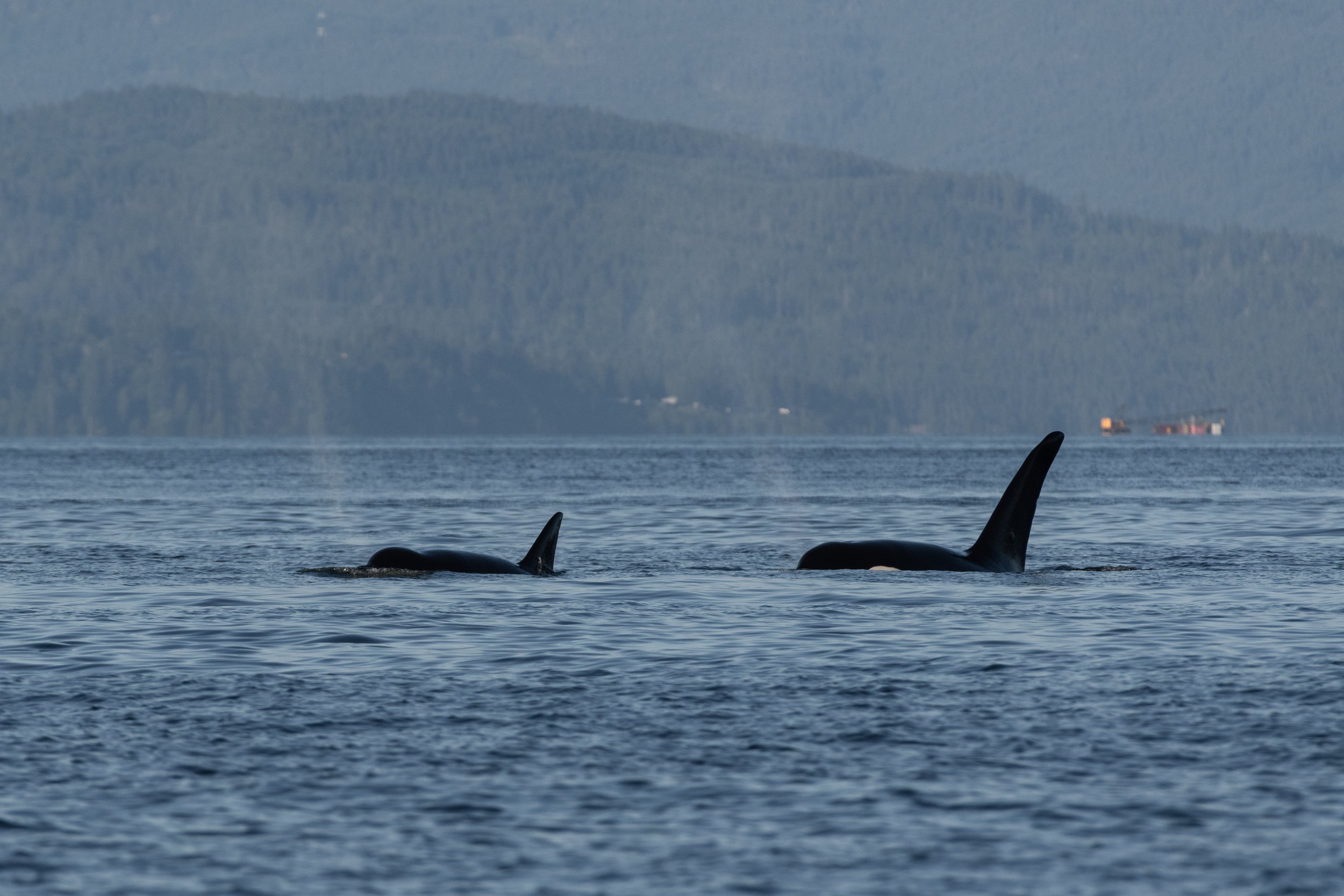
T100 Hutchins and T100C Laurel swimming to the party. Photo by Hayleigh Hilbert.
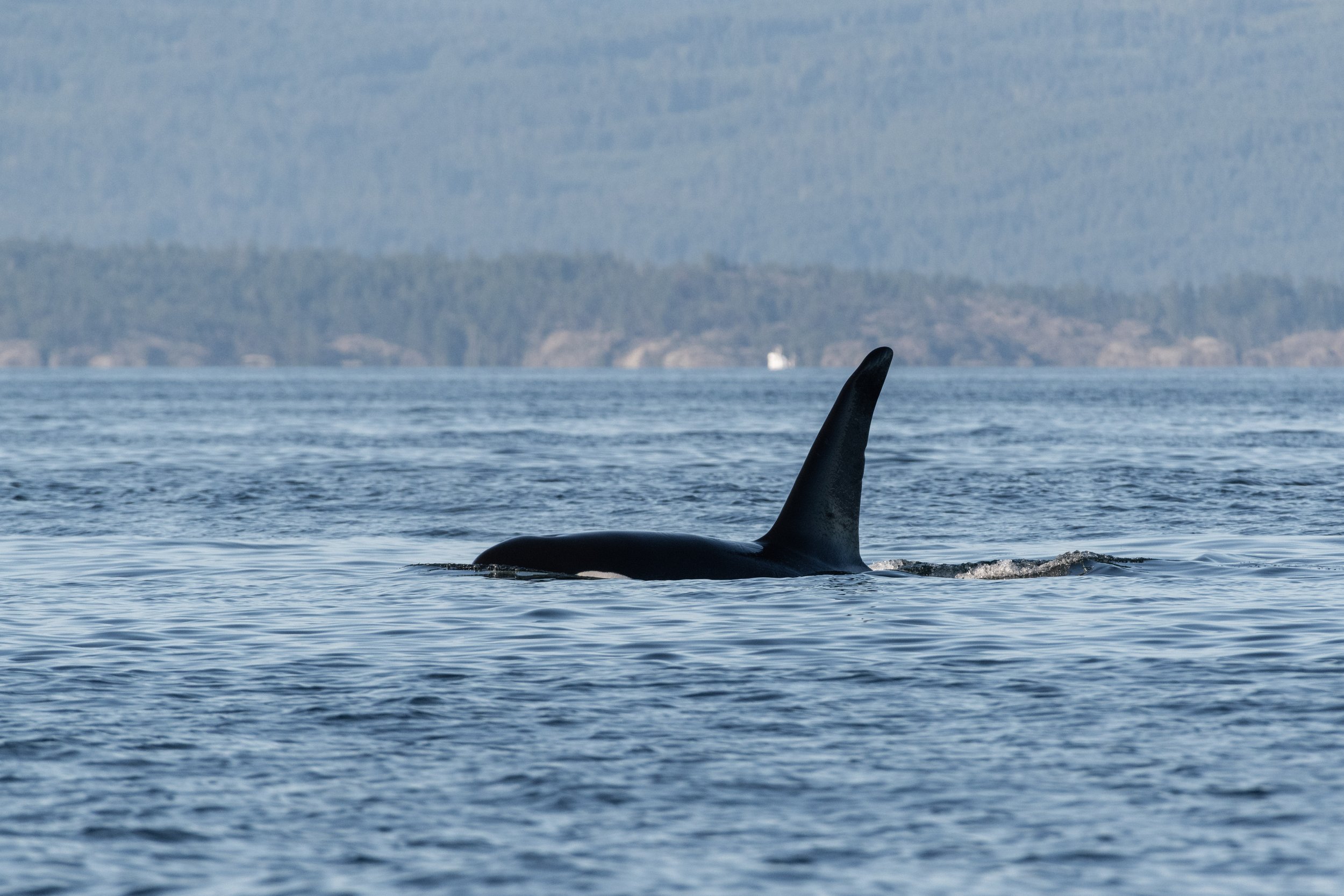
A great look at T100C Laurel. Photo by Hayleigh Hilbert.
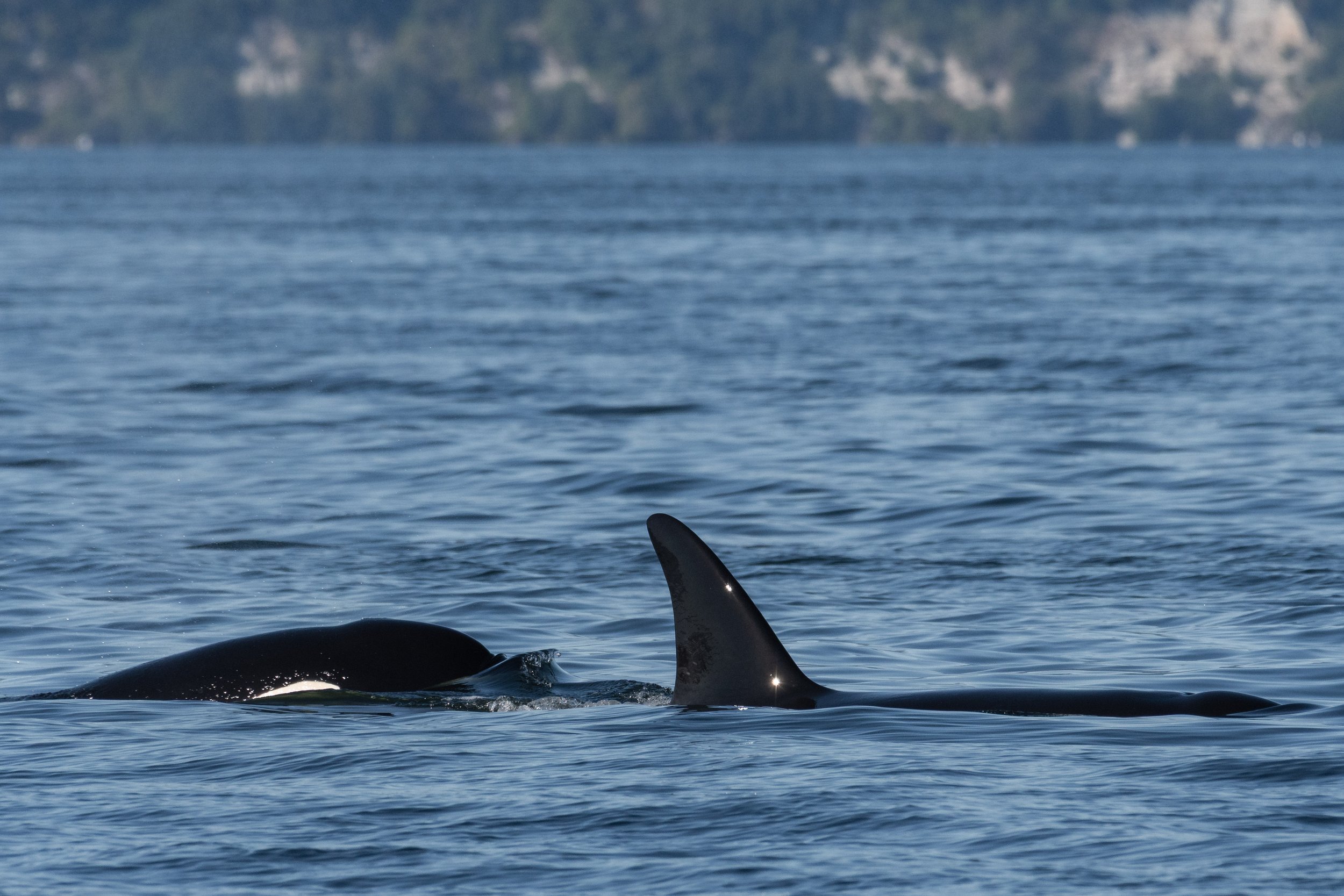
T100F Estrell breaking the surface beside T101 Reef. Photo by Evan Hessels.
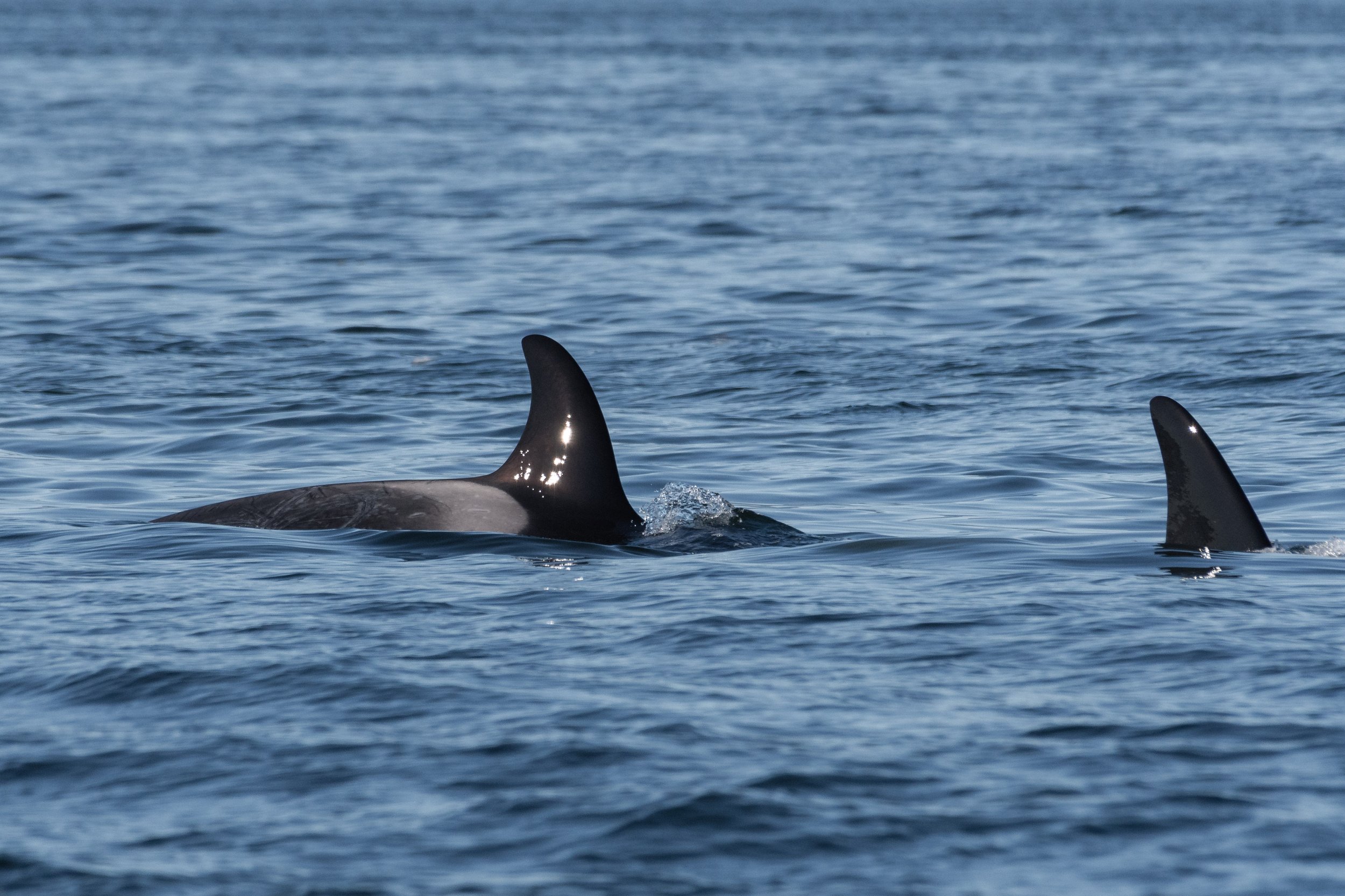
A great look at T100F Estrella’s saddle patch as he dves beside T101 Reef. Photo by Evan Hessels.
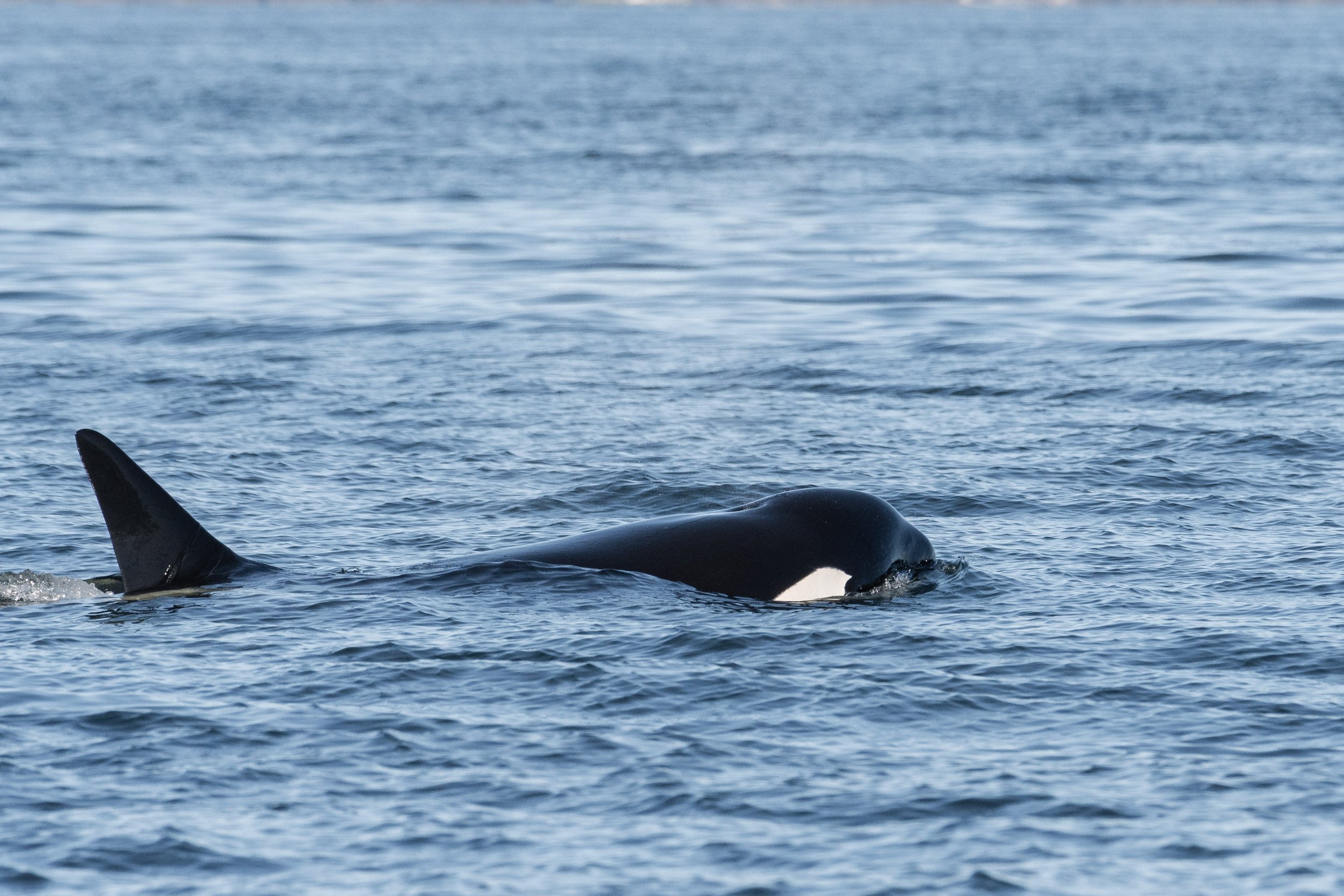
T101 Reef with her eye patch poking out of the water. Photo by Evan Hessels.
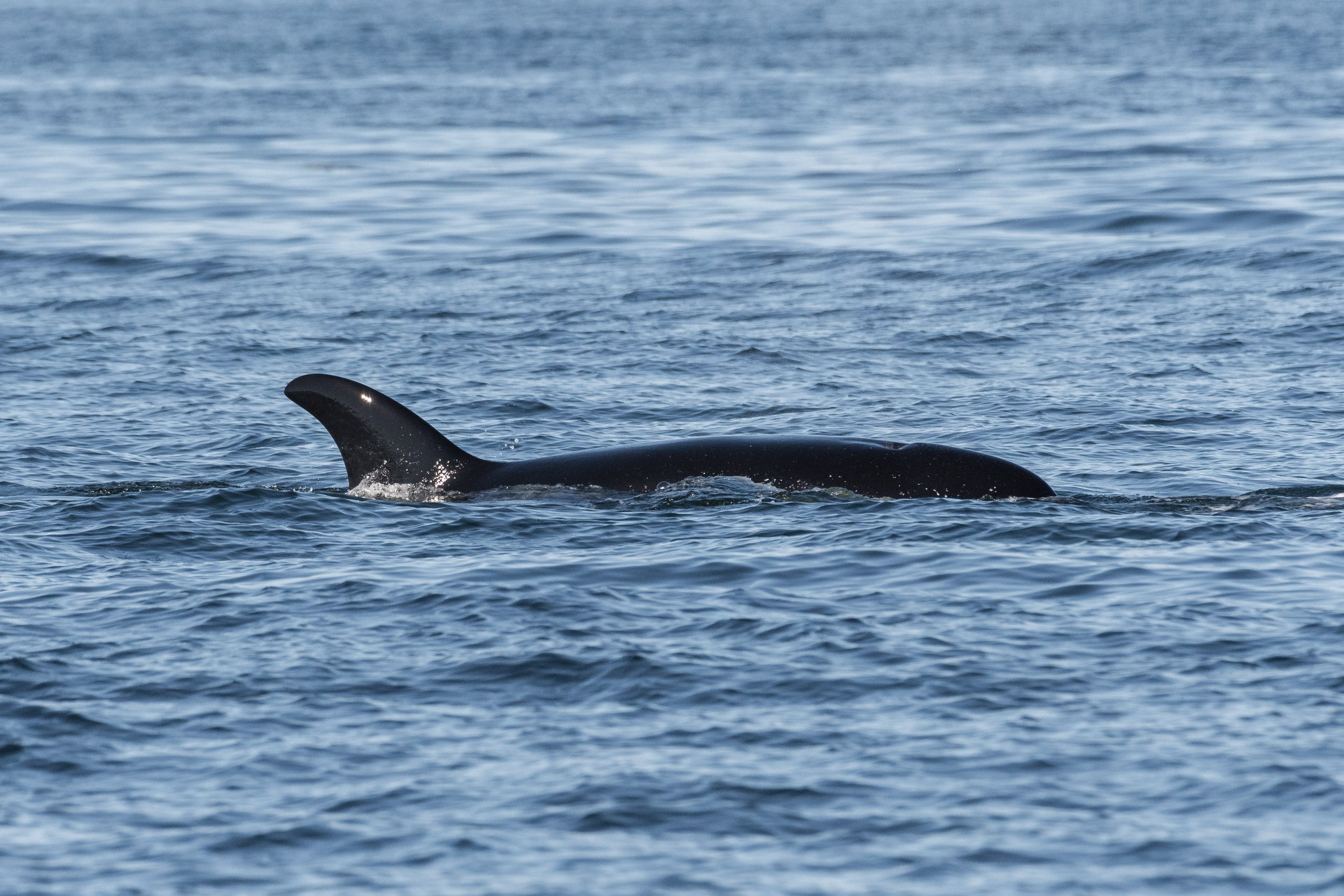
T100F Estrella surfacing. Photo by Evan Hessels.
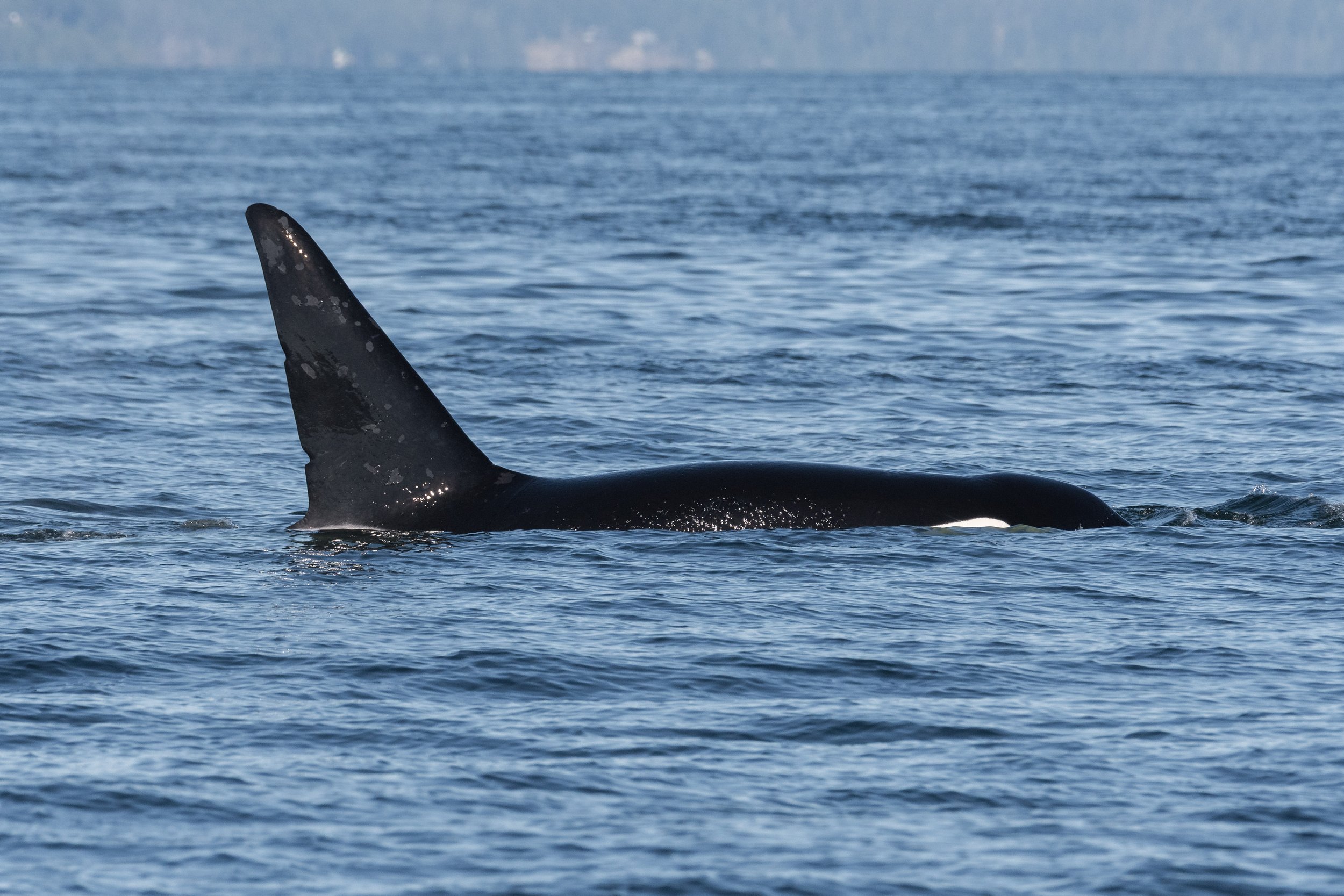
You can see T137A Jack has skin irritation going on. Photo by Evan Hessels.
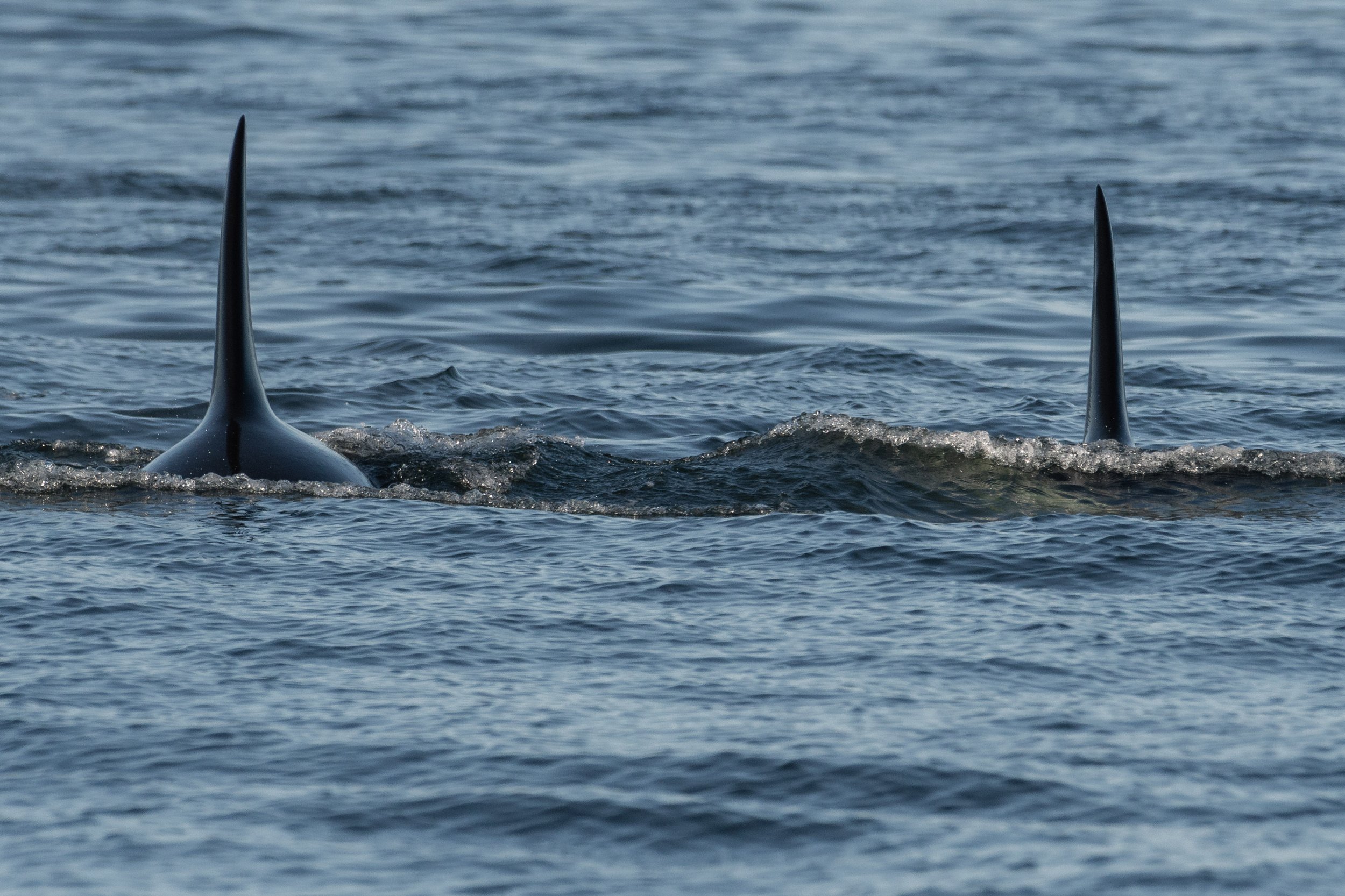
A pair of whales aimed right at the camera. Photo by Evan Hessels.
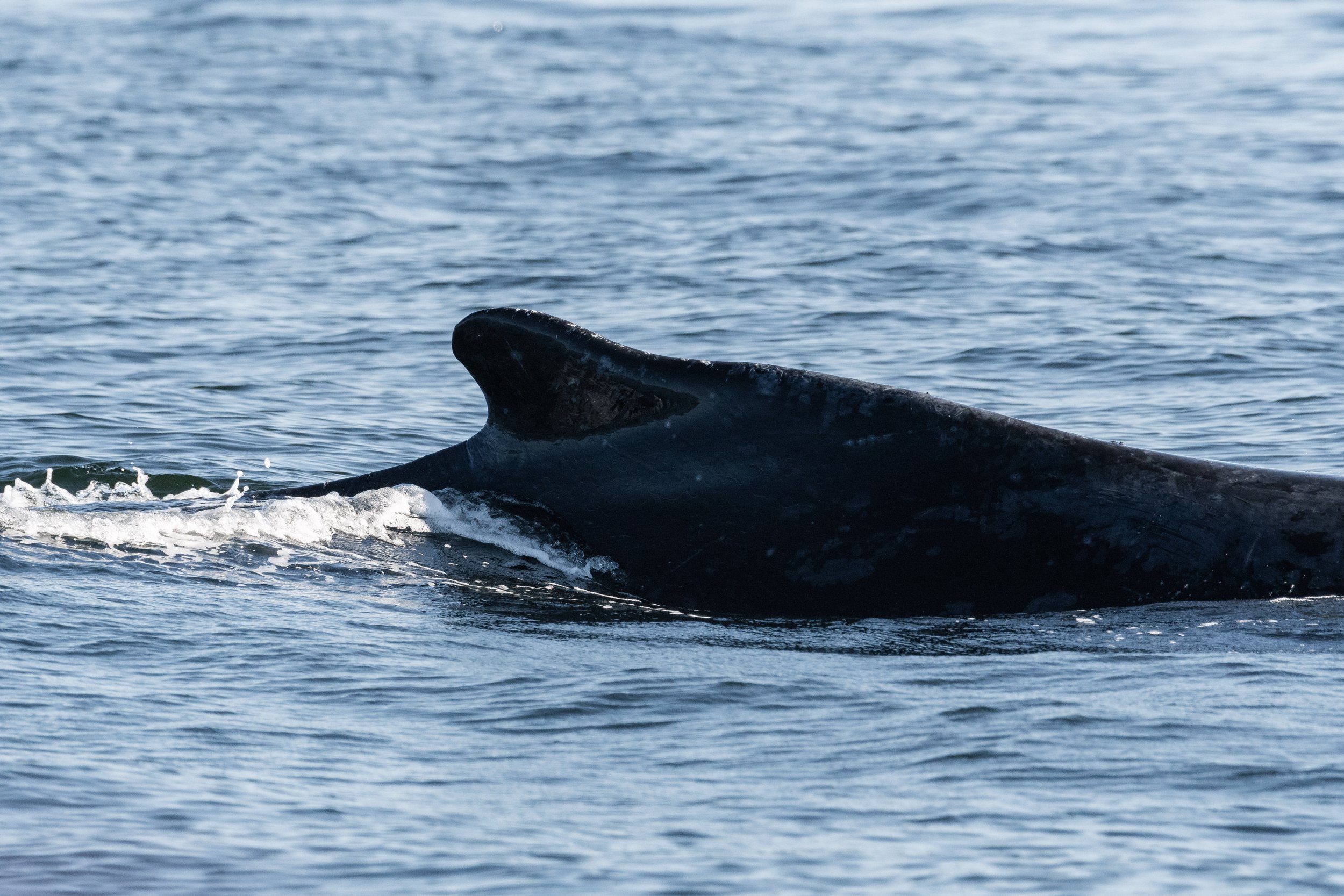
Eros surfacing in the T-party. Uh Oh. Photo by Evan Hessels.
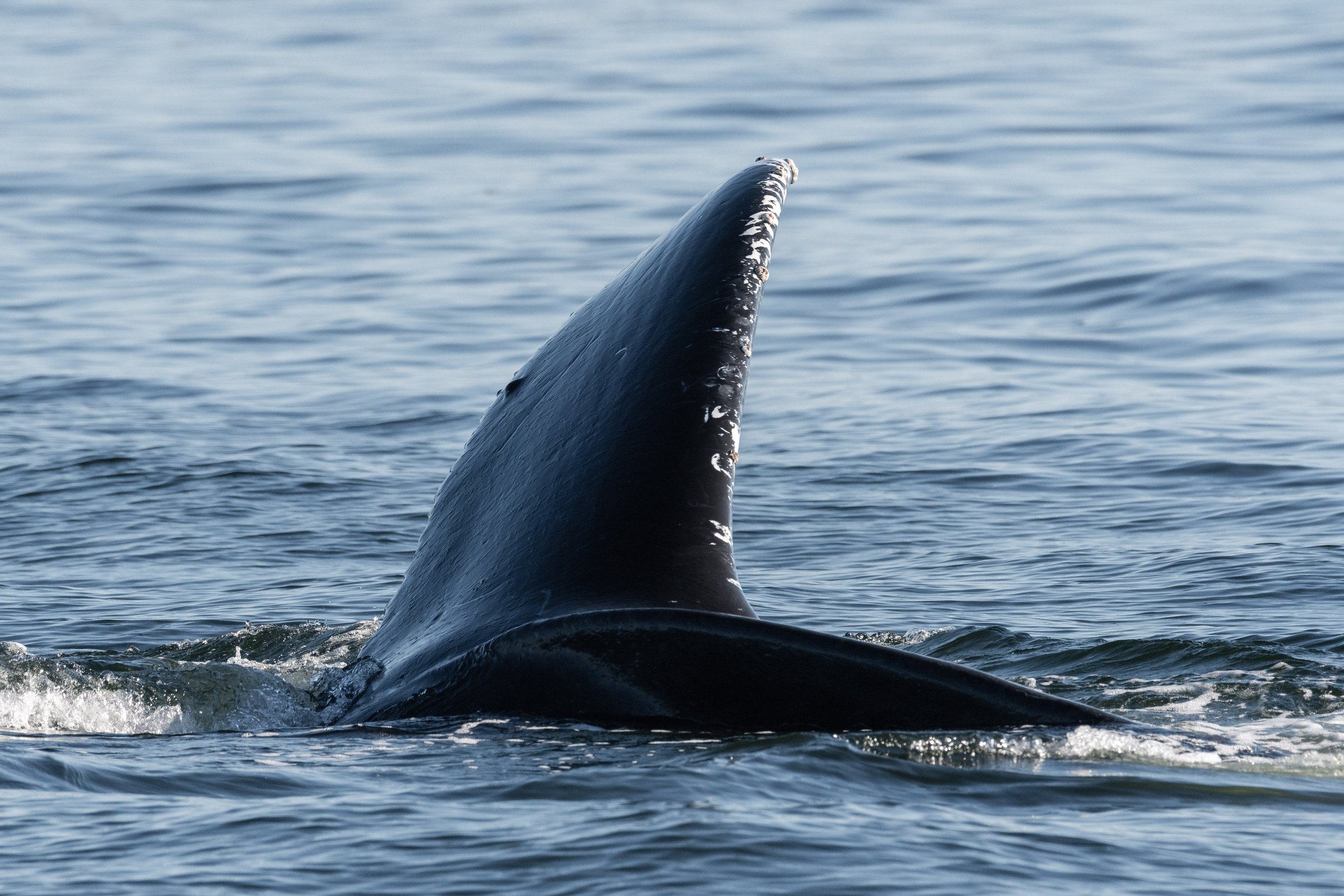
Eros rolling his tail. Photo by Evan Hessels.
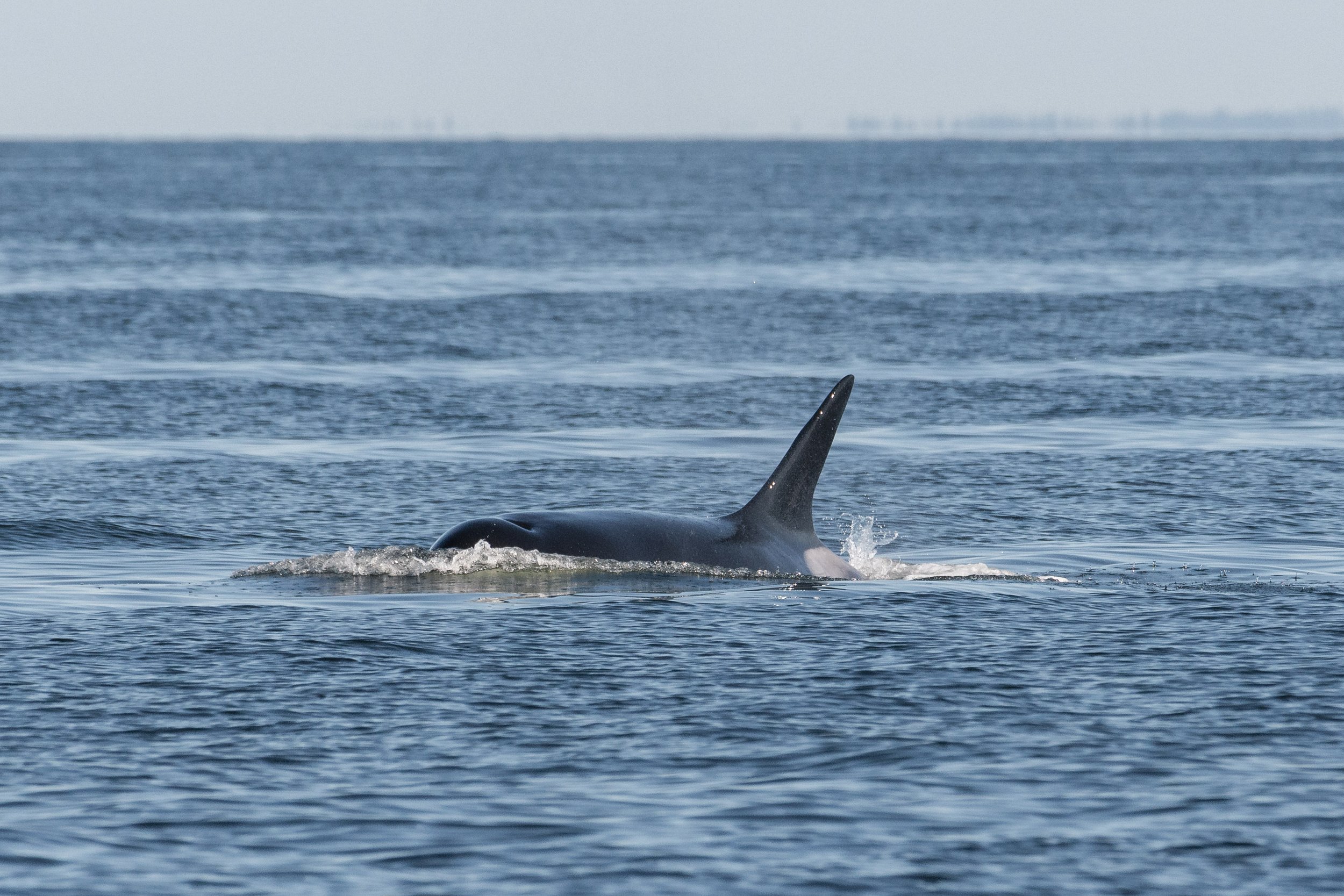
T101 Reef moving in quickly. Photo by Evan Hessels.
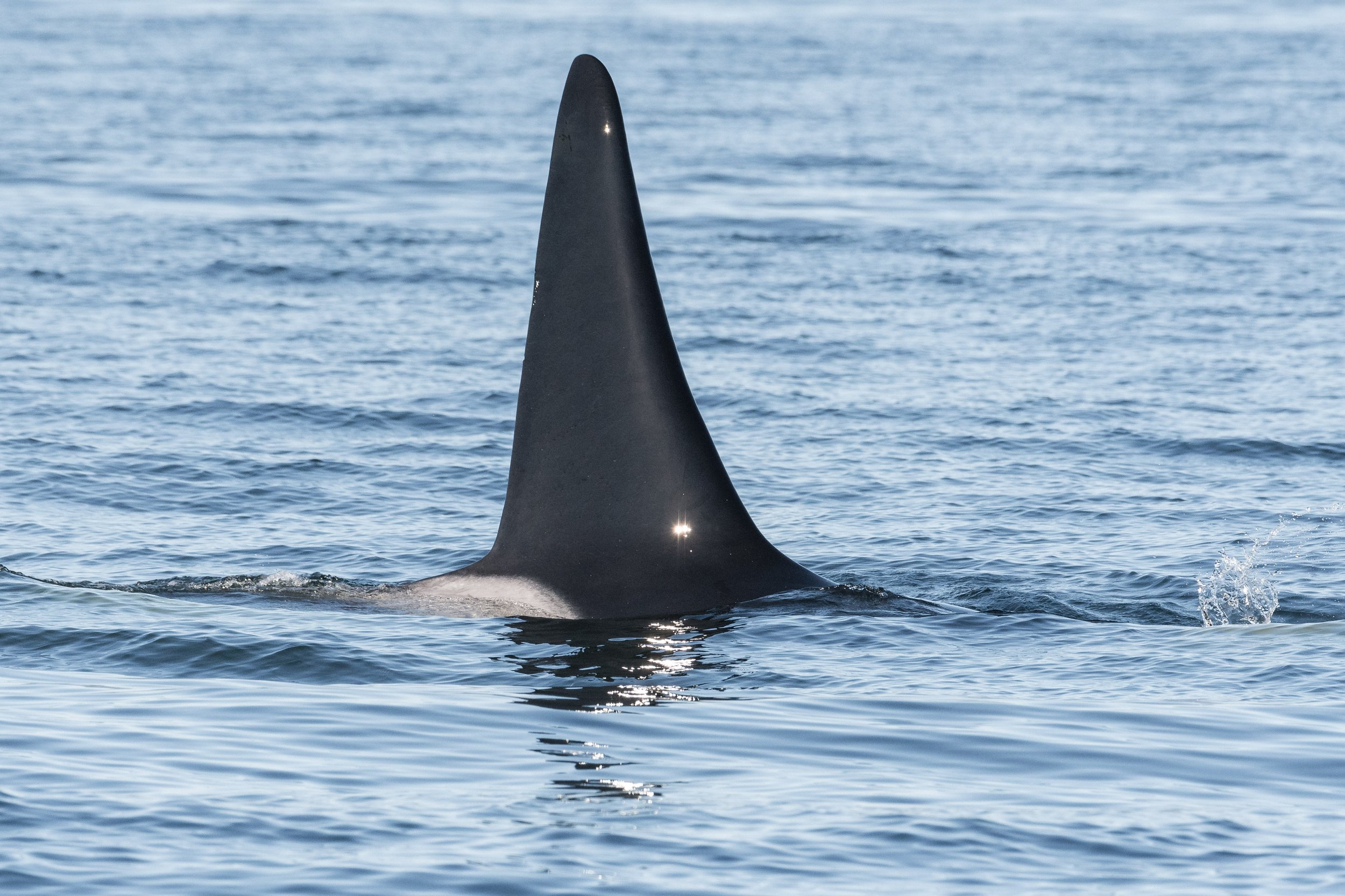
T101B Lagoon surfacing in the calm. Photo by Evan Hessels.
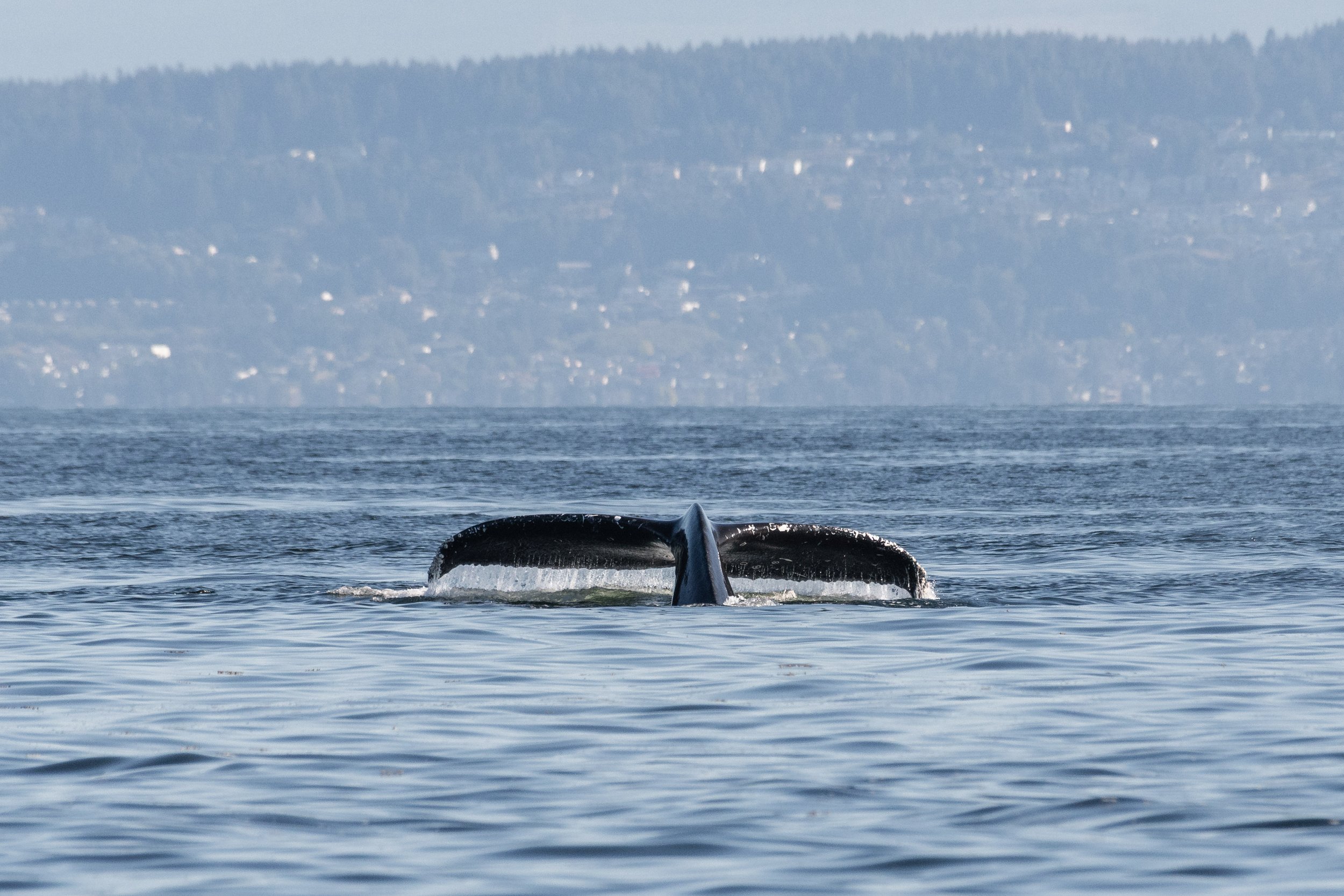
A lovely fluke from Eros. Photo by Evan Hessels.
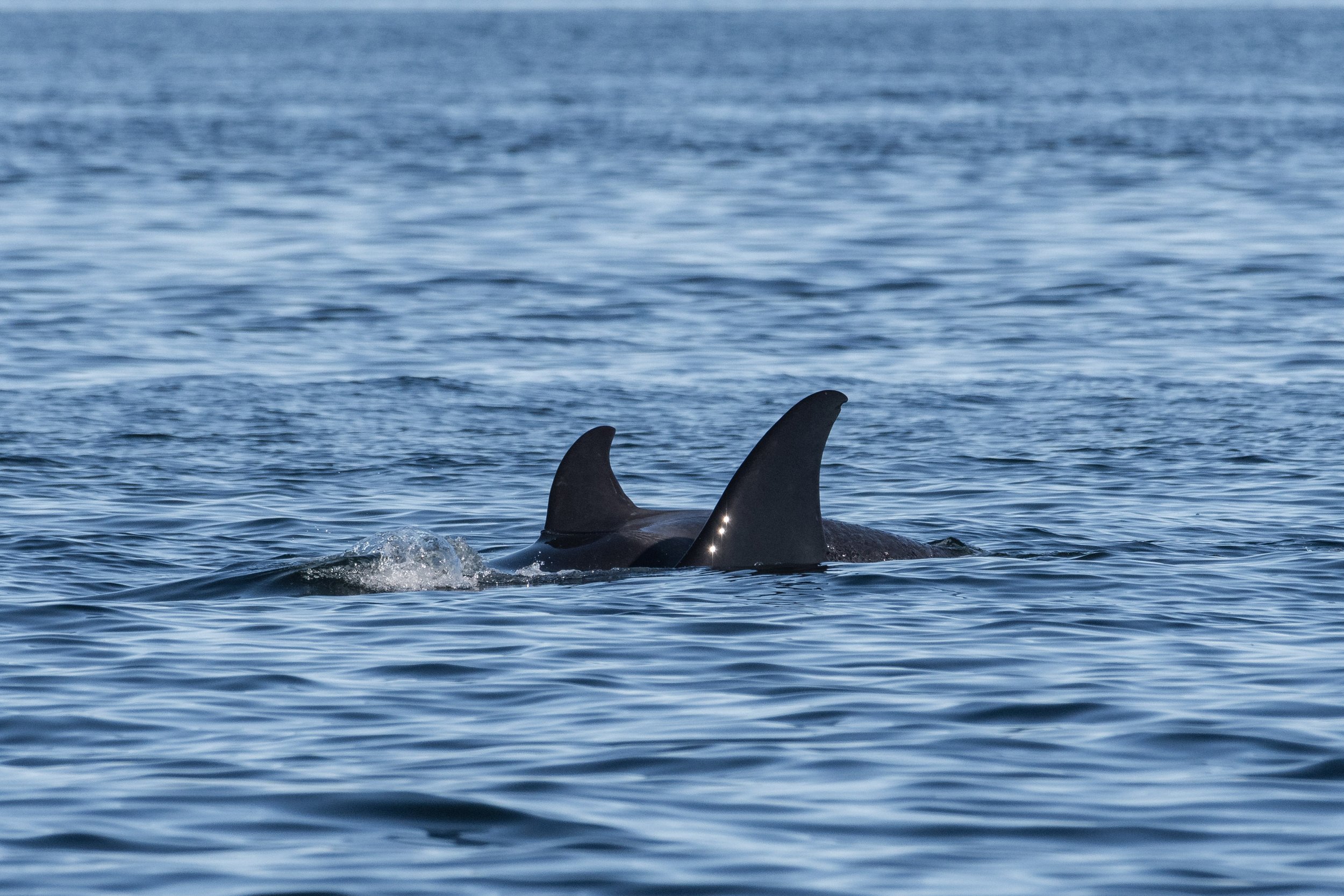
T36B Tattertip and T036B4 Auk surfacing together. Photo by Evan Hessels.
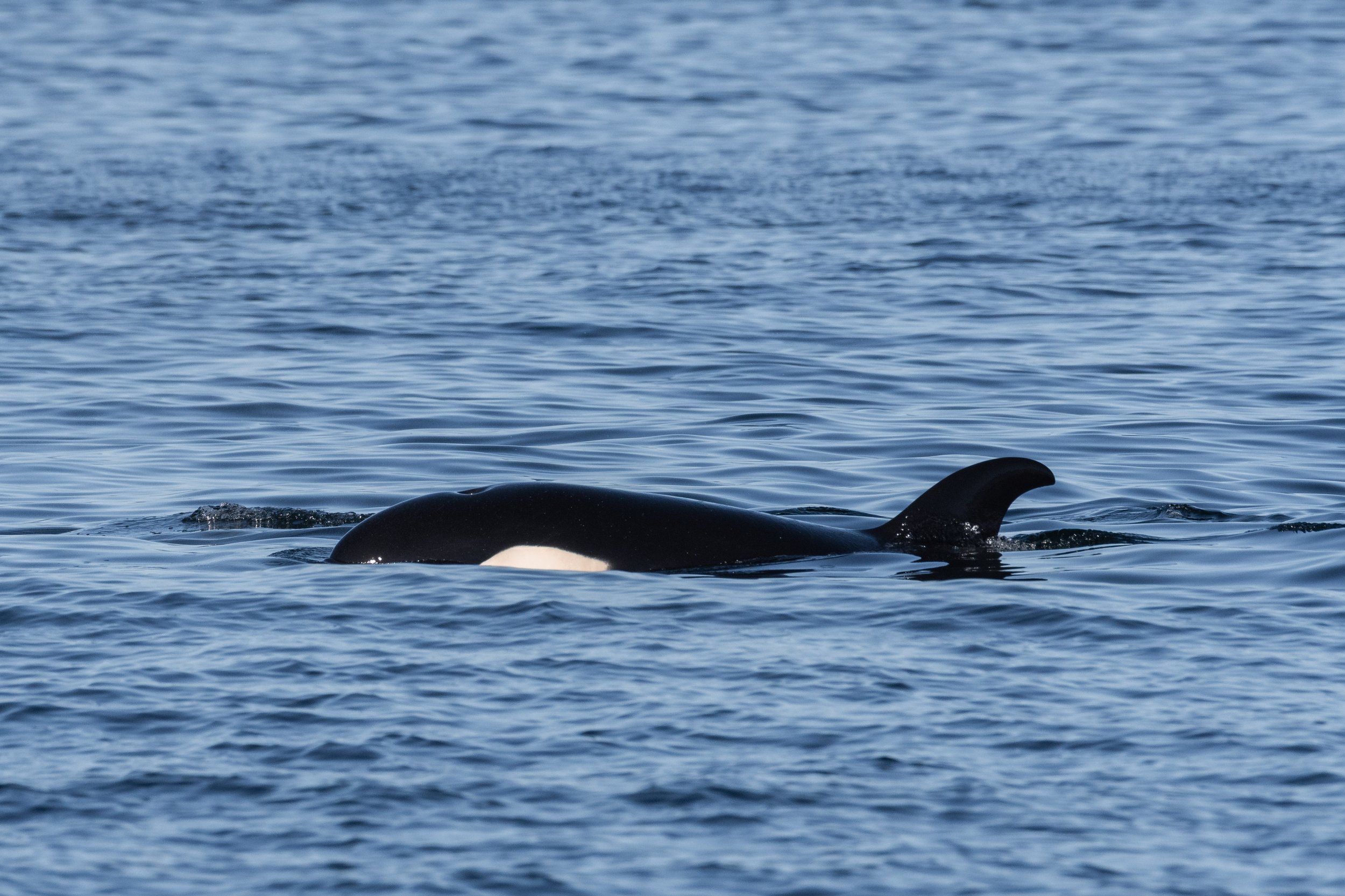
A great look at T036B4 Auk. Photo by Evan Hessels.
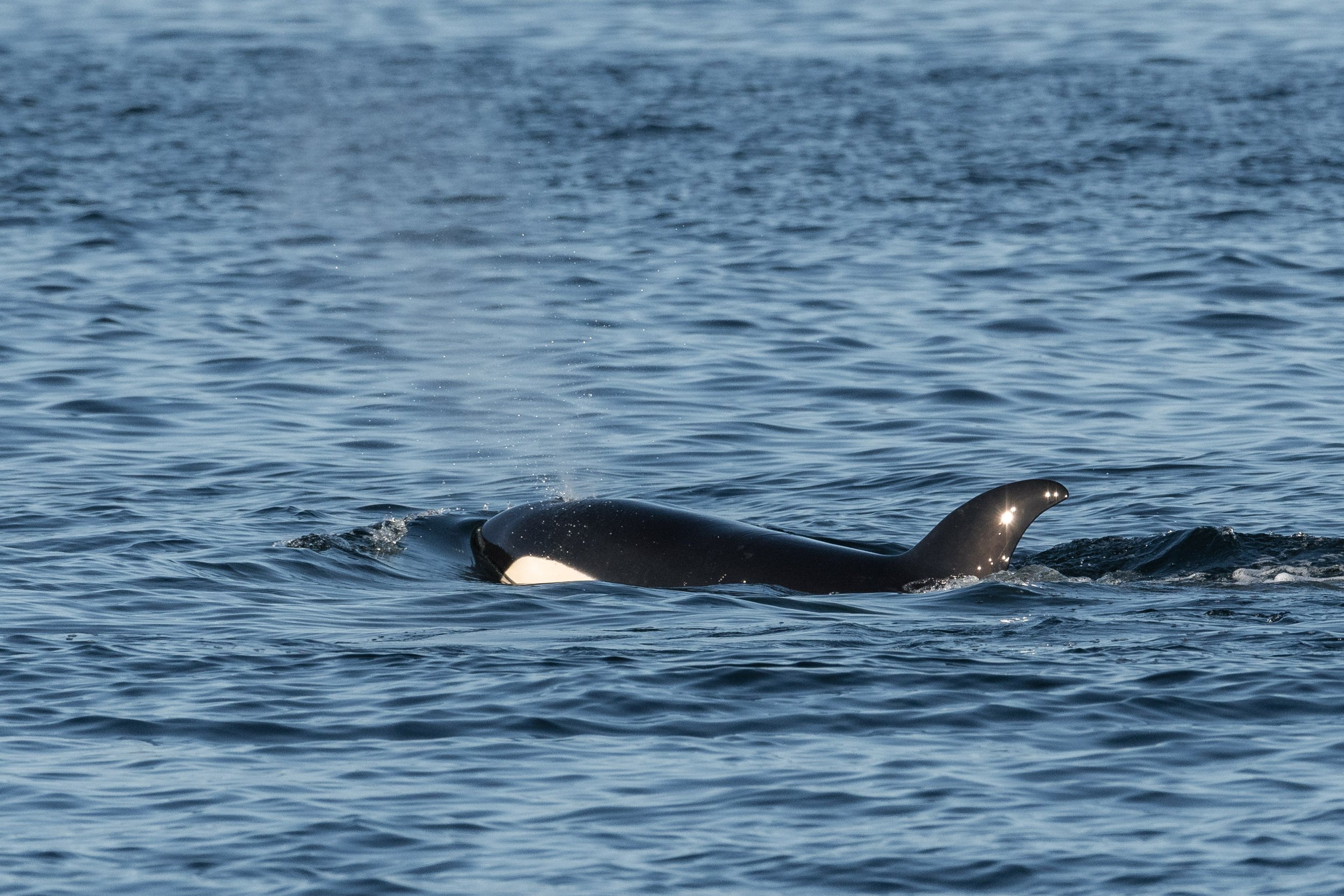
A big exhale from T036B4 Auk. Photo by Evan Hessels.
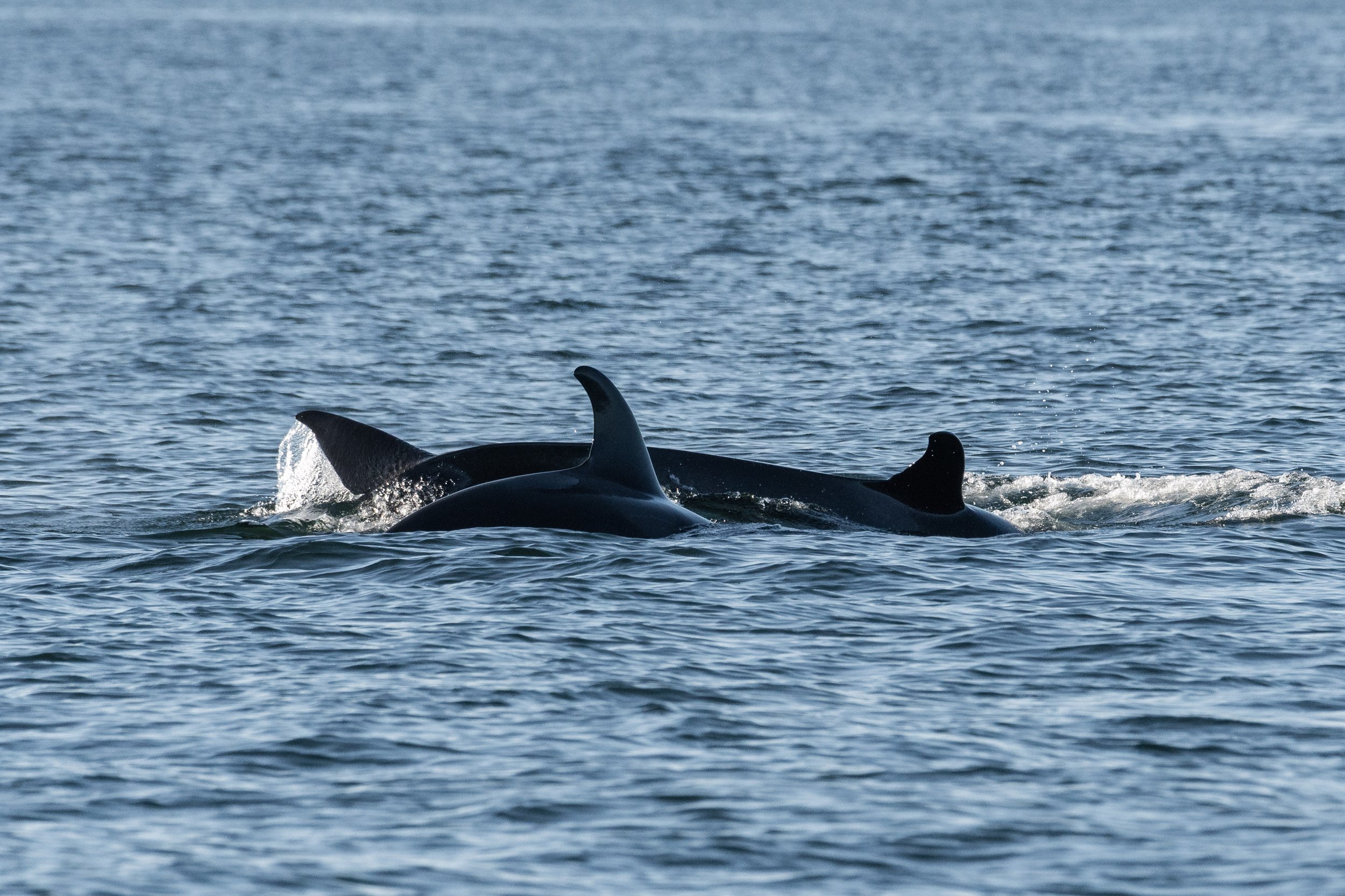
A couple of the whales rolling around at the surface. Photo by Evan Hessels.
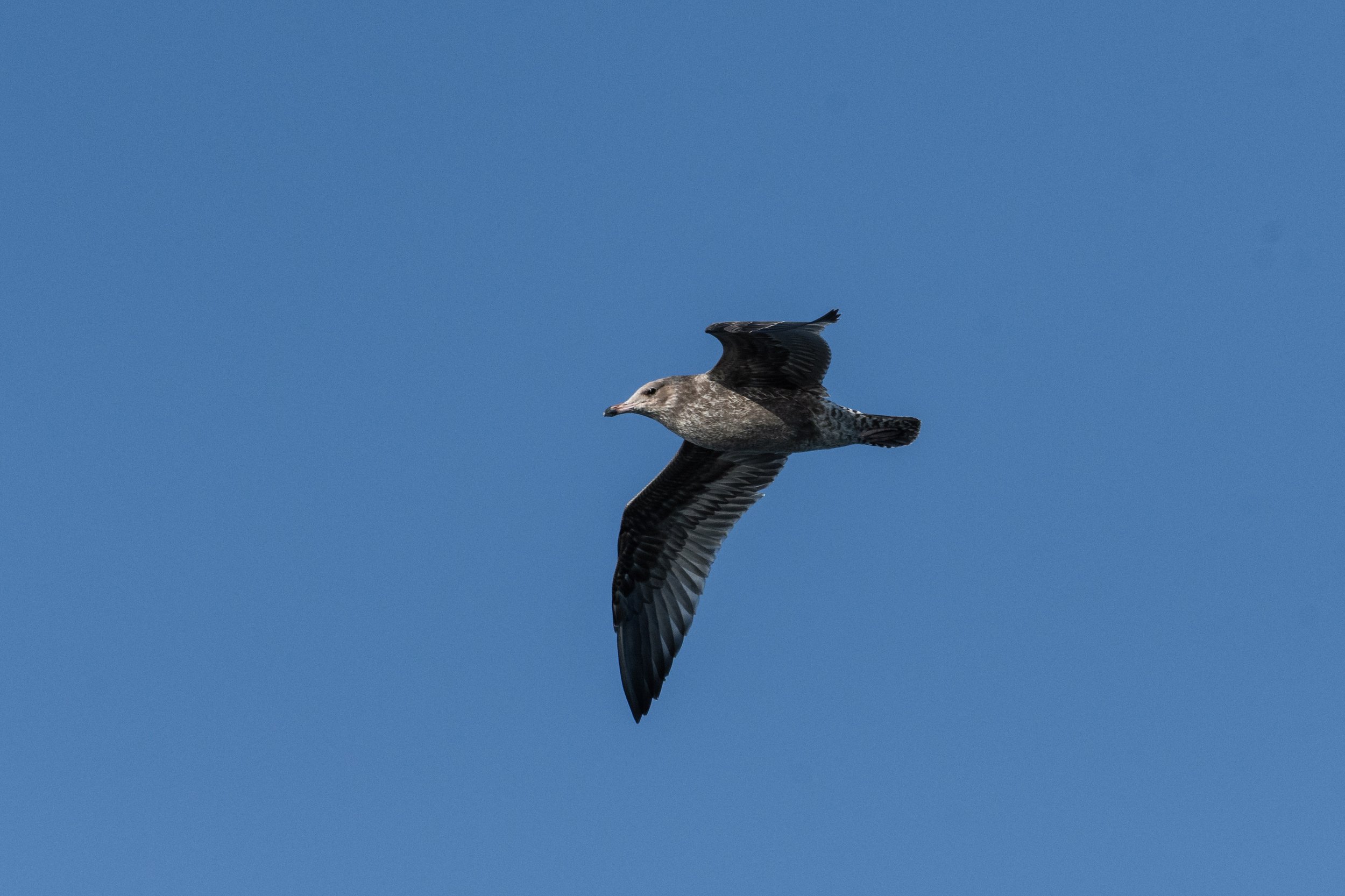
A gull flying overhead. Photo by Evan Hessels.
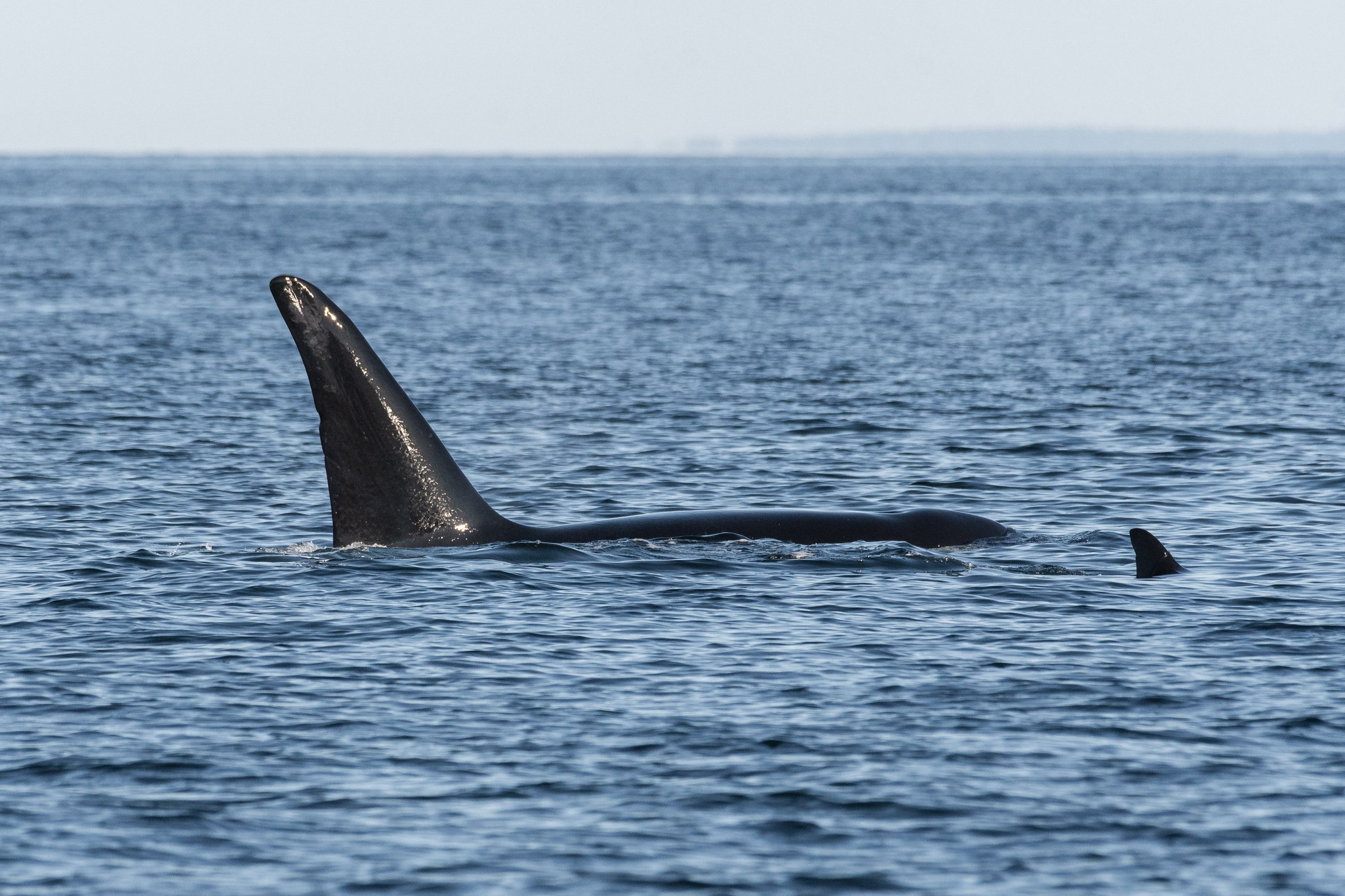
T100C Laurel surfacing next to his mother. Photo by Evan Hessels.
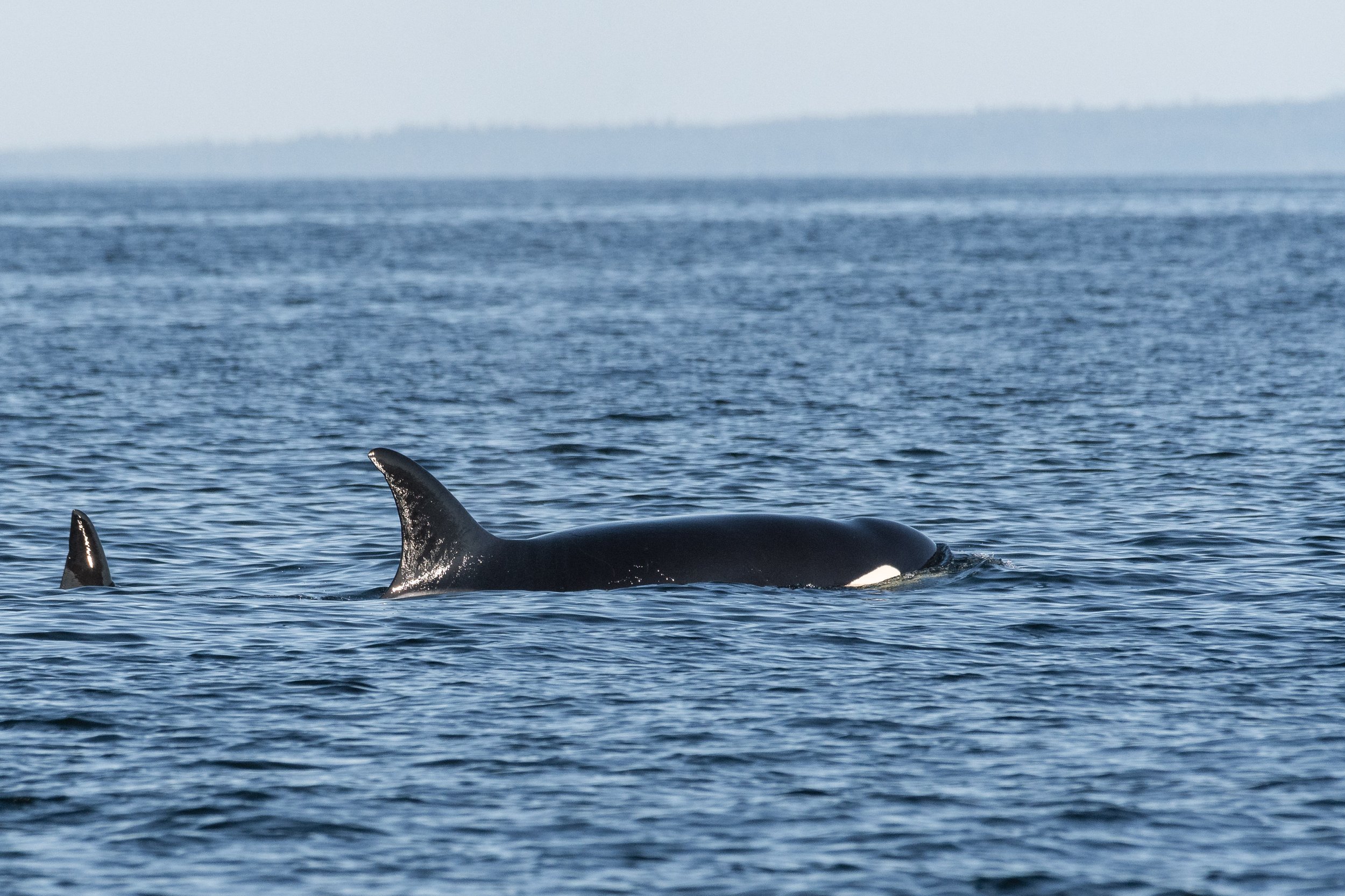
T100 Hutchins and T036 Flapjack surfacing together. Photo by Evan Hessels.
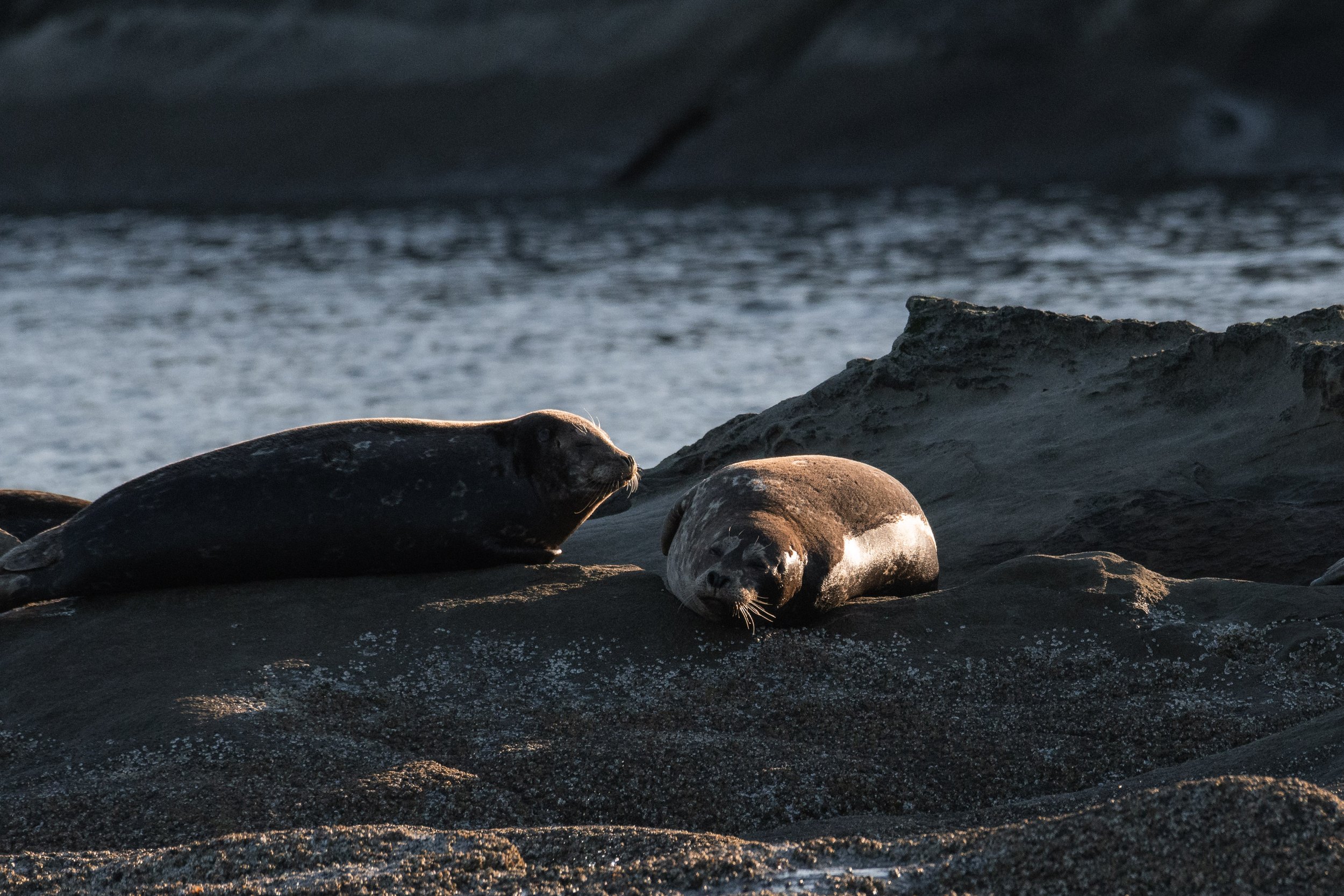
Harbour Seals relaxing on the rocks. Photo by Evan Hessels.
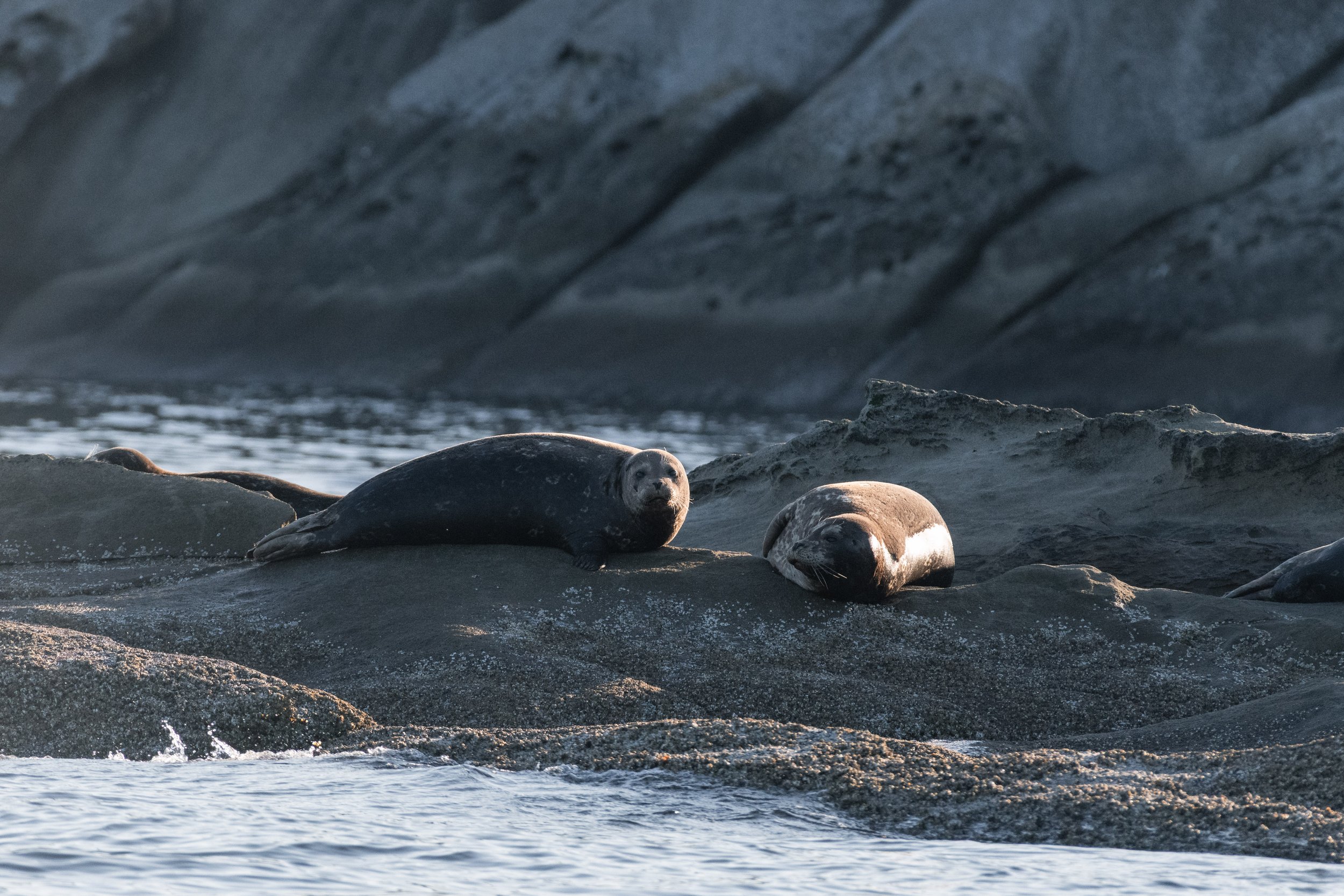
A curious Harbour Seal watching us as we float by. Photo by Hayleigh Hilbert.
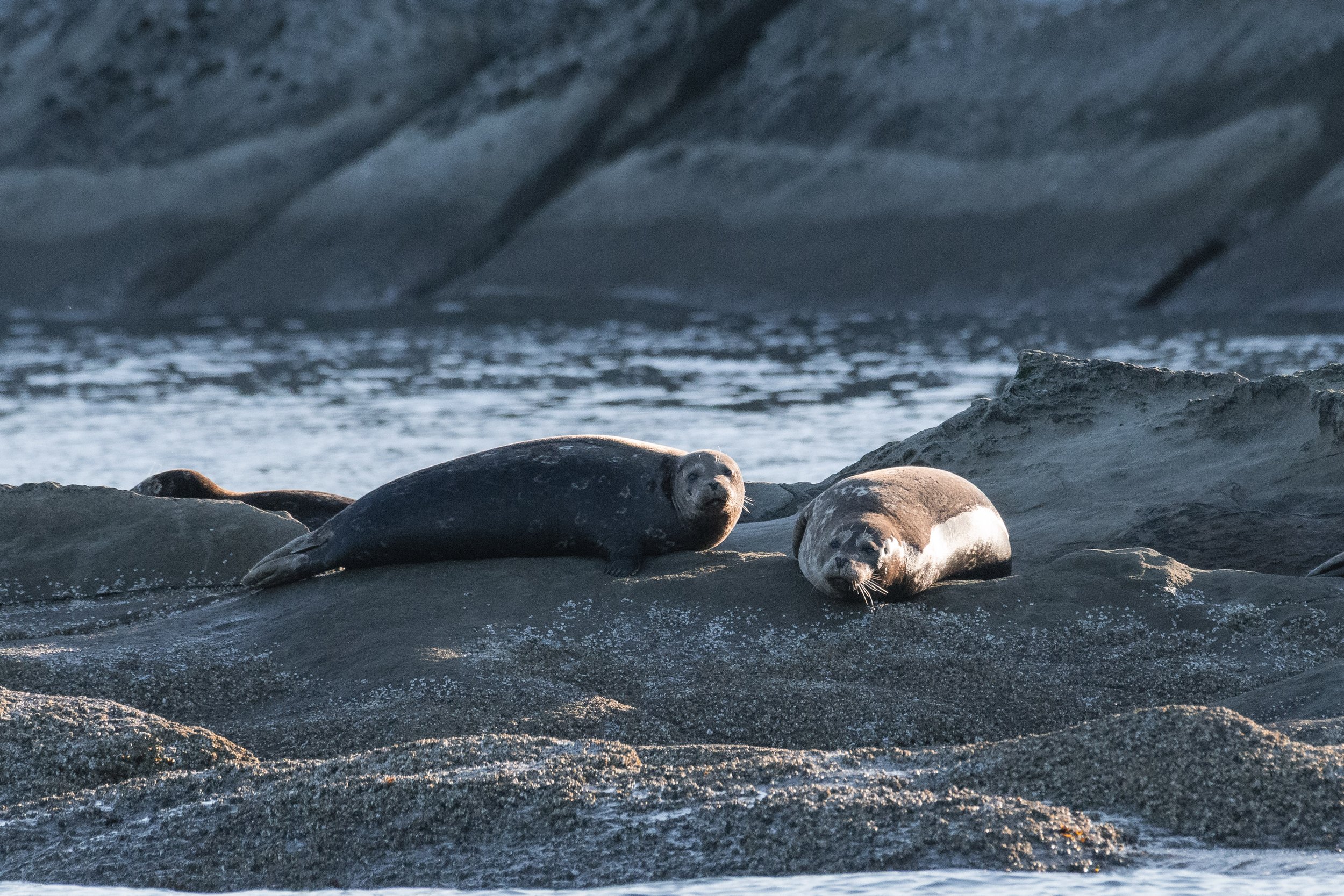
Another look at the cute little Harbour Seals. Photo by Evan Hessels.
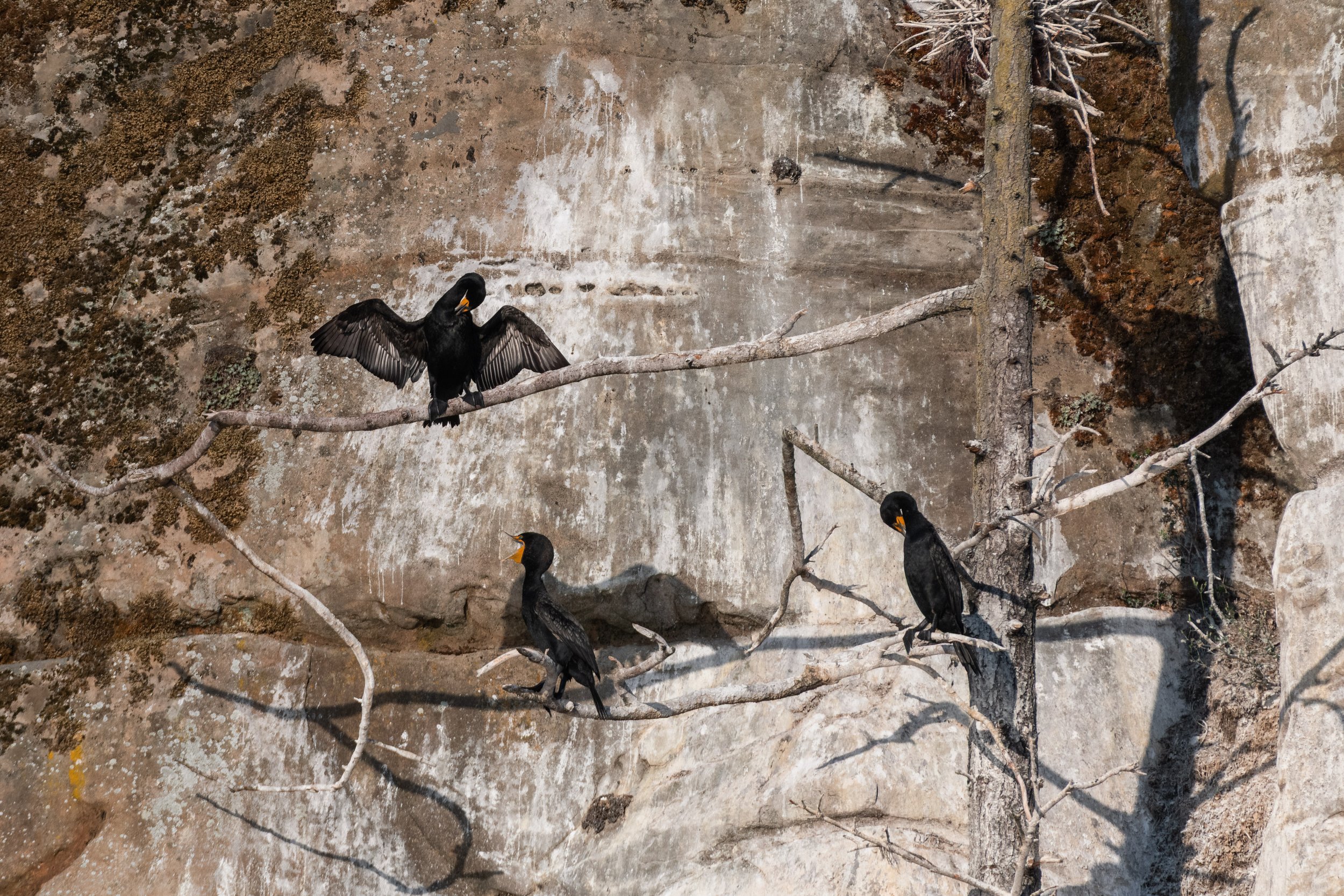
Cormorants spending their time at the Gabriola Blufs. Photo by Hayleigh Hilbert.
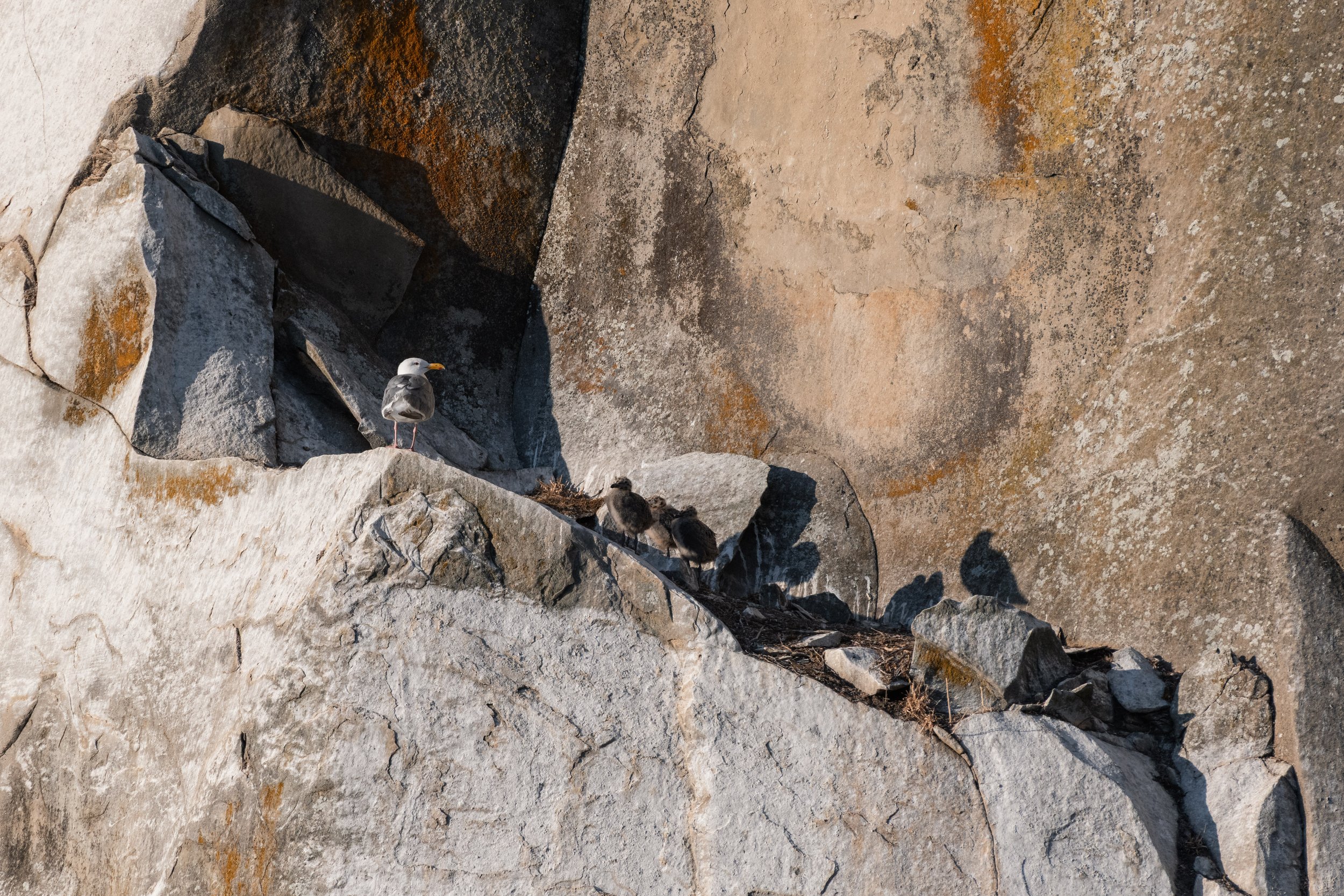
A gull family at the Gabriola Bluffs. Photo by Hayleigh Hilbert.
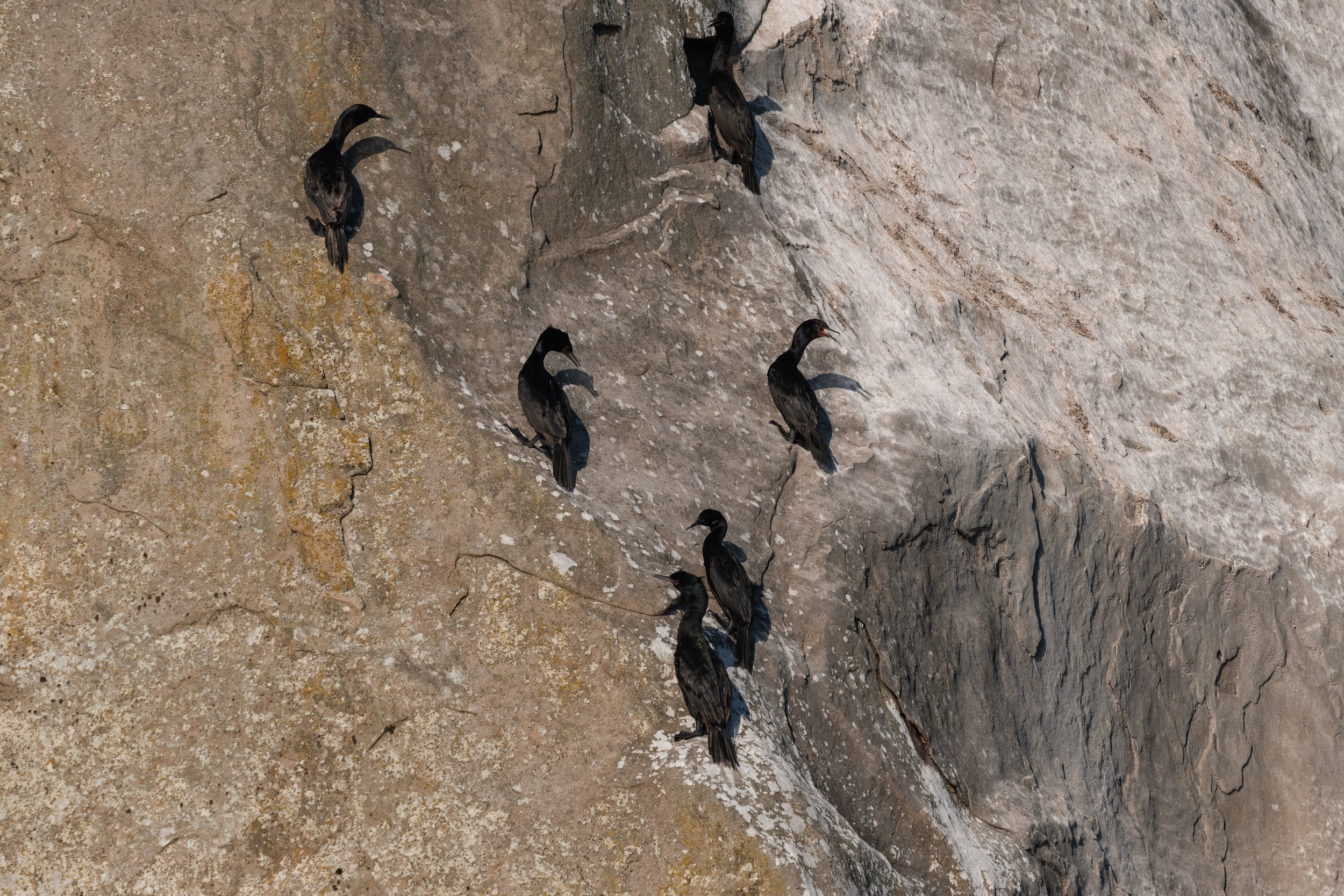
Cormorants on the bluffs. Photo by Hayleigh Hilbert.
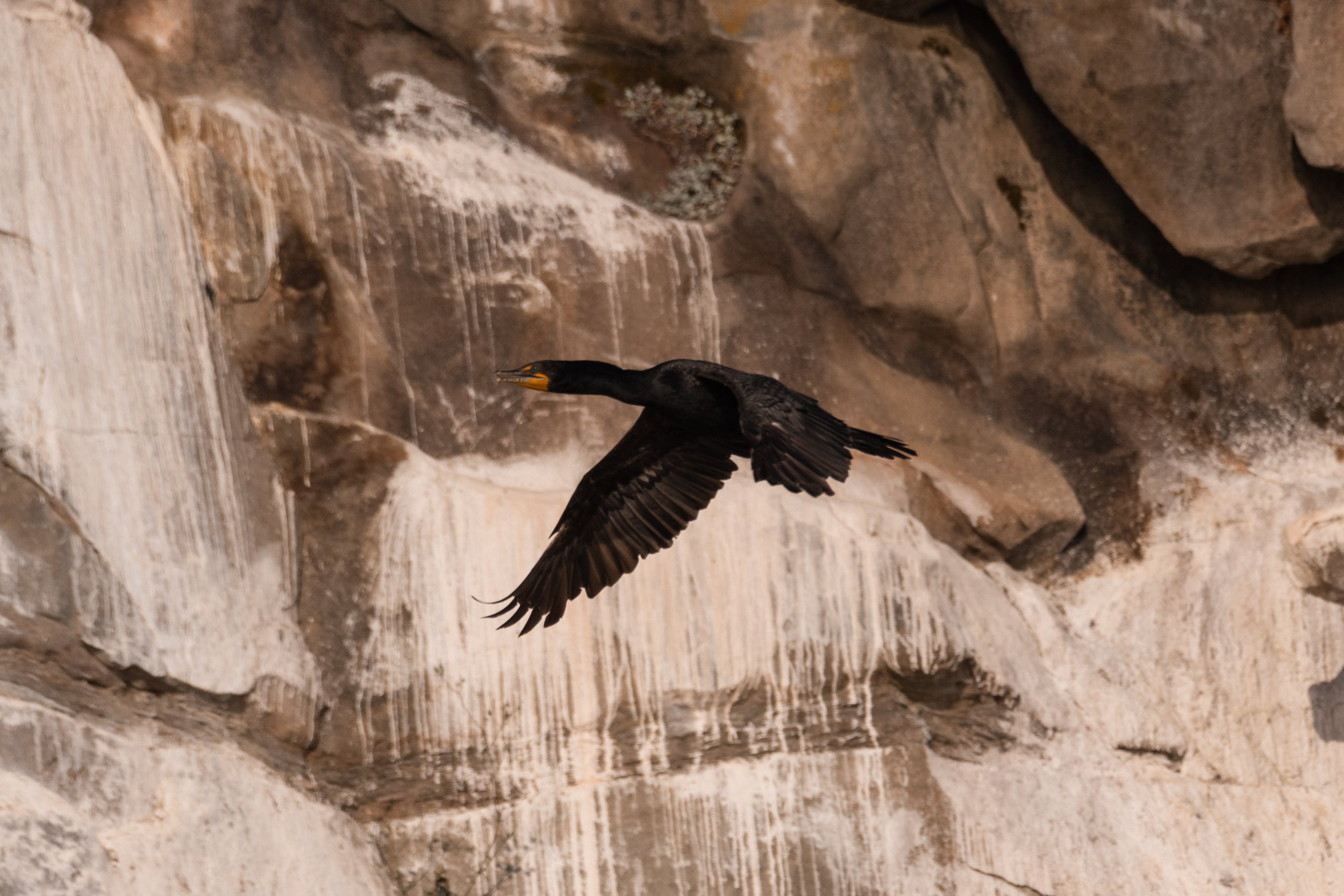
A cormorant flying overhead. Photo by Evan Hessels.