
August 9, 2026, 3:30 PM - Humpback Soup plus the T065As and T077s
It was another exciting afternoon on the water, getting to spot not only a bunch of humpback whales that were spending their time in the Strait of Georgia, but also a t-party that was happening between the T065As and the T077s!
Our day on the water started with the boats heading into the Strait of Georgia, where there have been lots of whales spotted lately. We were hoping that the luck would continue, and boy did it! We started by spotting a pair of humpback whales travelling together: a cow-calf pair that we were able to identify as Sherwina (BCY0961) and her 2026 calf (BCY0961calf2026)! These two were travelling closely together, as these pairs usually do. This first year of the calf’s life is very important since they have an impressive growth rate, directly related to mom providing them with super-rich milk as they travel together. During their first year, a humpback whale calf increases in length by nearly 60%, while their weight increases by nearly 395%. This impressive growth rate for humpback calves is due to the high fat content in the milk that the females produce. This milk may be up to 60% fat, which requires a lot of energy. Because of this high energy expenditure, female humpbacks won’t often have calves more than every two years, although it can happen occasionally. The energy required to produce this milk is about 50% higher than normal, and while pregnant, it's estimated to increase by another 50%. Therefore, if whales are lactating and pregnant at the same time, they would require nearly double the energy they normally do. Sherwina doesn’t seem to want to have this extra energy, and she waits a fair amount of time between each calf. Her last known calf was spotted in 2021 and still returns to the area. Hopefully, we will keep seeing all members of this family line as time goes on! While this calf will only be with Sherwina for the first summer, they will likely return to the same general area that sherwina teaches them about during this time period.
Next up for humpback sightings was an individual travelling alone for the day: Fader (BCY0195). Fader was up to all sorts of activity while we were approaching: slapping his pectoral fins, slapping his chin against the water, and then he proceeded to go back to feeding dives afterwards. It’s great to see Fader so full of energy, since last year we actually helped him during a time when he was entangled. One of our tours spotted him towing a buoy behind him, indicating he was likely caught up in some crab or prawn gear. We stuck with him until DFO could arrive on scene, and they successfully attached a sat tag to it so they could find and free him the next day. We are reminded of his resilience every time we see him since this event. Today was no different, and we enjoyed our time with him before it was time to head out.
There was two more solo whales spotted feeding in the area, one by each boat as we continued travelling in the Strait of Georgia: Poptart (BCY1014) and Beak (BCX1606). Interestingly, these two show off well what we were talking about earlier about humpbacks returning to the same area that their mom did when they were young. These two are actually a sister and brother, and they are both common sights to see in the Strait of Georgia. Big Mama, their mom, has a huge family tree with over 20 members, although not all of them are still alive today. Sometimes it can be hard to cross-match calves past their first year, and sometimes they pass away, but it’s usually difficult to know for sure if they are no longer with us or if they’ve decided to feed elsewhere, where they might have avoided being documented. Luckily for us both of these whales made it easy for us today, and we got some great looks at them before it was time to continue on our way.
We had a destination in mind, since another boat had been able to find the pod of orca that had been spotted earlier in the day. This group is what we call a T-party, since there was multiple family groups spending time together: the T065As and the T077s.
T065A Artemis ♀ (1986)
T065A2 Ooxjaa ♂ (2004)
T065A3 Amir ♂ (2007)
T065A4 Ellifrit ♀ (2011)
T065A6 Callisto ♀ (2018)
T077 Asja ♀ (1981)
T077C Neftali ♂ (2006)
T077D Alycon ♀ (2009)
T077E Misneach (2016)
T-parties are important times for the orca, as it gives them a chance to socalize with those outside of their own family group. As very intelligent and social creatures, this is important for their development and for their continued growth, as well as being thought to be a chance for pods to exchange knowledge. These two matriarchs are likely through menopause and won’t be having any more calves, but their knowledge is still important to share with their offspring and she will help them continue to develop their skills over time. This increased knowledge base is even more important with changing conditions with climate change, as changing food distribution and availability might force them to go try new places that she might remember from other instances when things had changed. Having an extra experienced hunter with them is always a plus as well!
It seemed most of these whales were focused on socializing while we watched them, although the two adult males, Ooxjaa and Amir, were travelling a bit further away from the group, perhaps tired out from all the social activity. Every once in a while, these two males are known to travel away from the rest of their pod, sometimes together, sometimes with other younger males, or sometimes striking out on their own. They might not have the social battery that these other whales do. Each whale is unique, and the more time you spend with them, the more this becomes clear. This time spent here was a great look into the social lives of these two pods, but eventually it came time to leave.
We travelled back towards Nanaimo, happily reflecting on all the amazing encounters we had throughout the trip. Please enjoy the photos of these moments captured throughout the tour by Marine Naturalists Hayleigh Hilbert and Jordan Robinson.
Open Boat
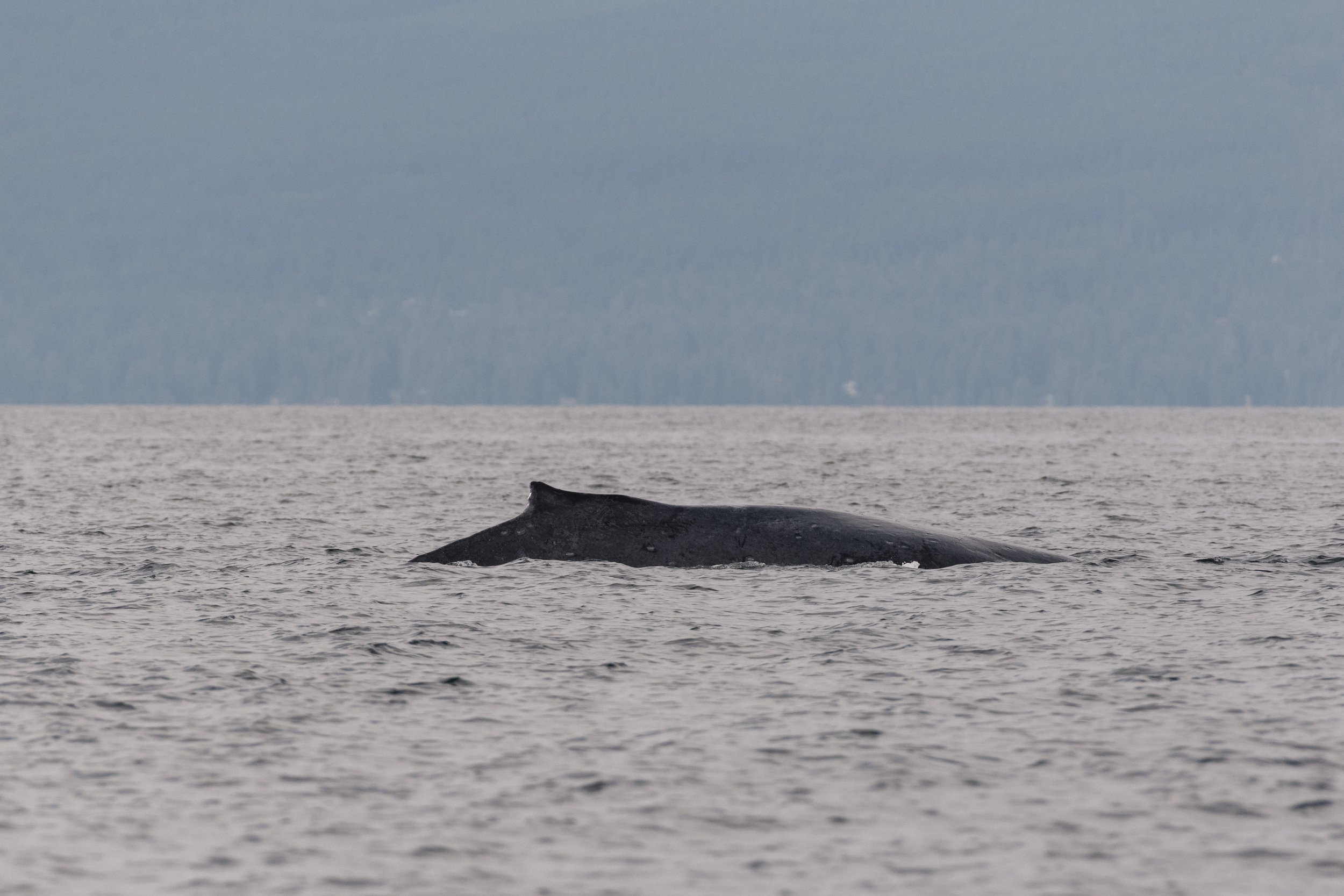
Sherwina’s very distinct dorsal fin as she surfaces in the waves. Photo by Hayleigh Hilbert.
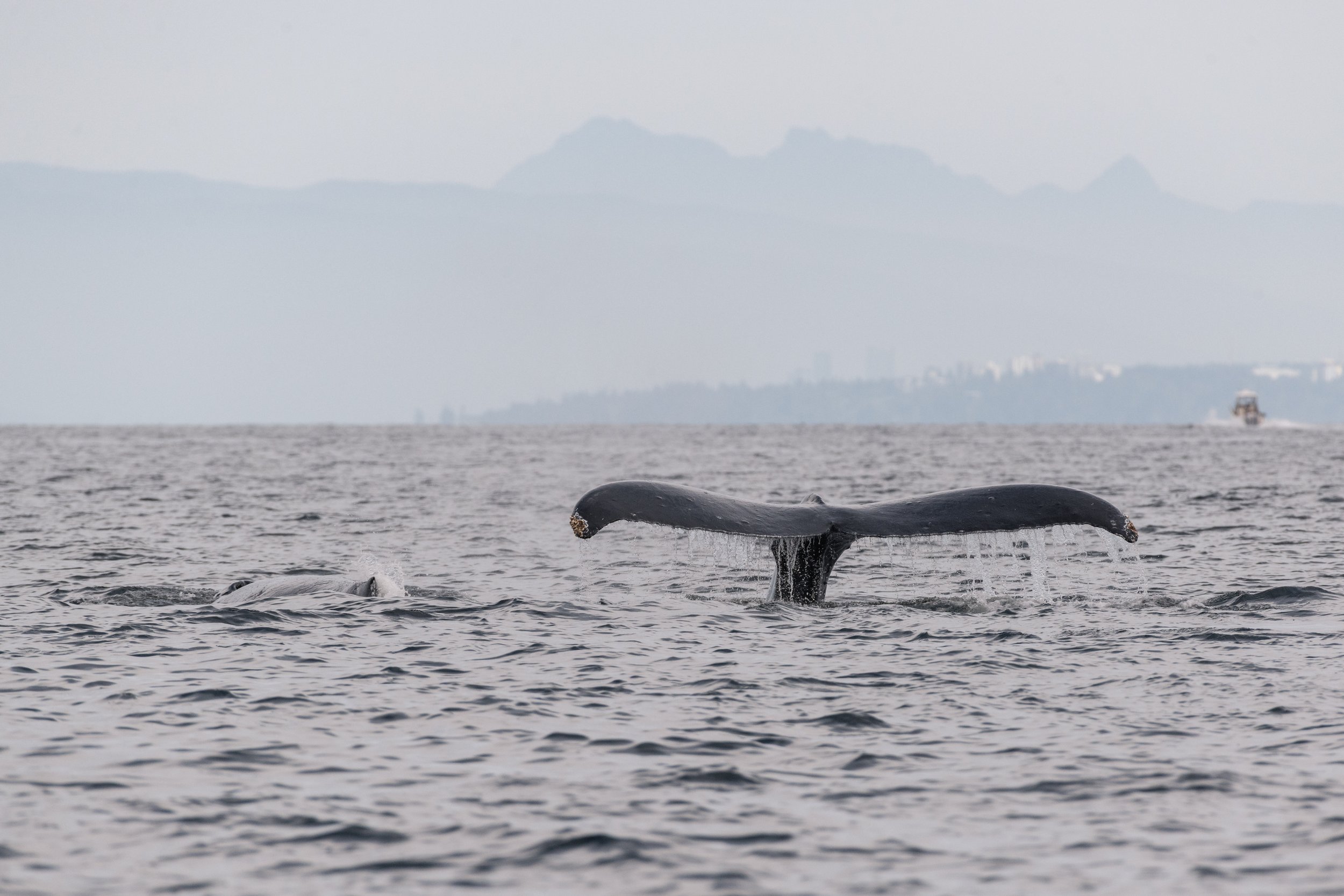
Sherwina lifting her tail to dive beside her calf. Photo by Hayleigh Hilbert.
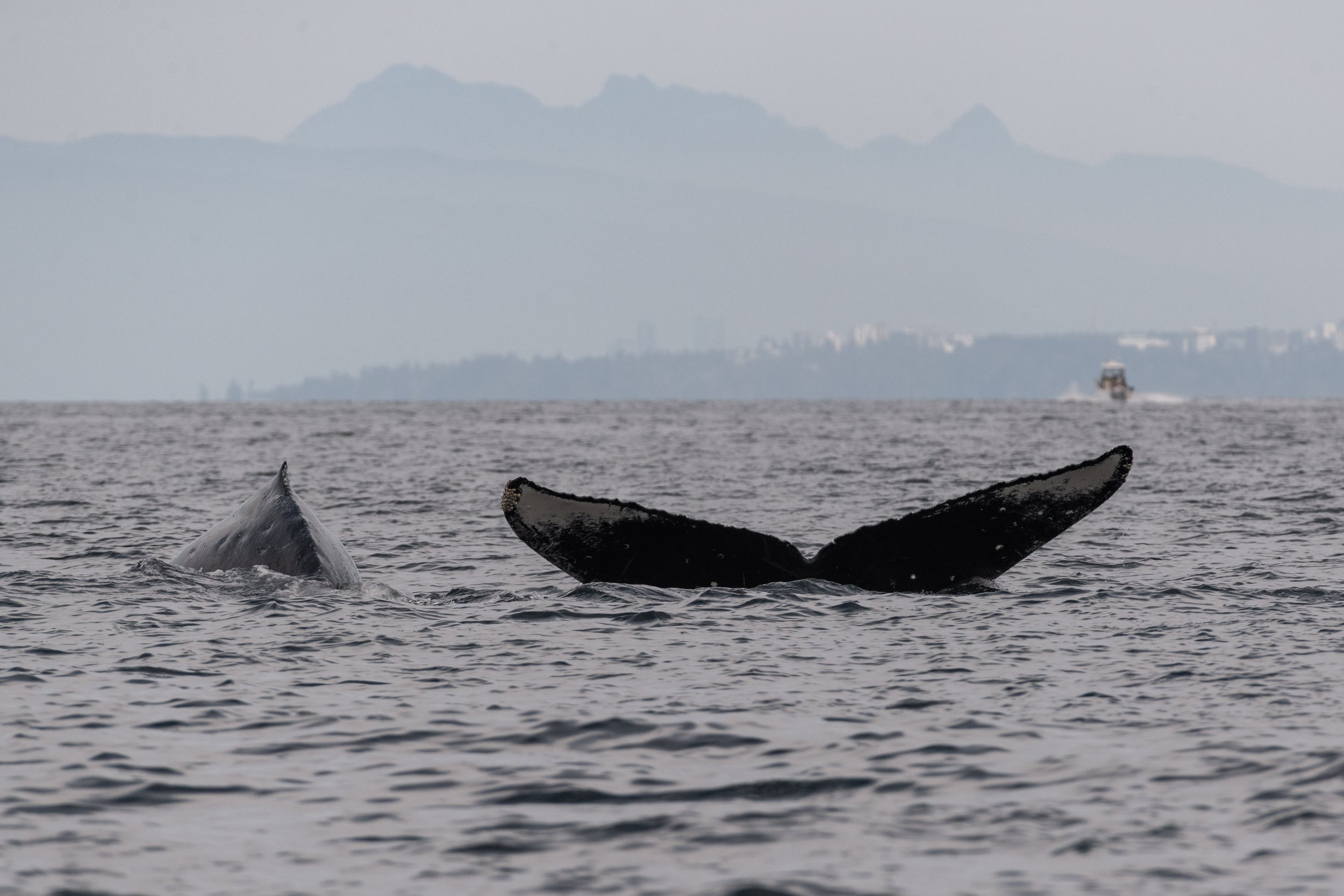
The underside of Sherwina’s tail as she dives besider her calf. Photo by Hayleigh Hilbert.
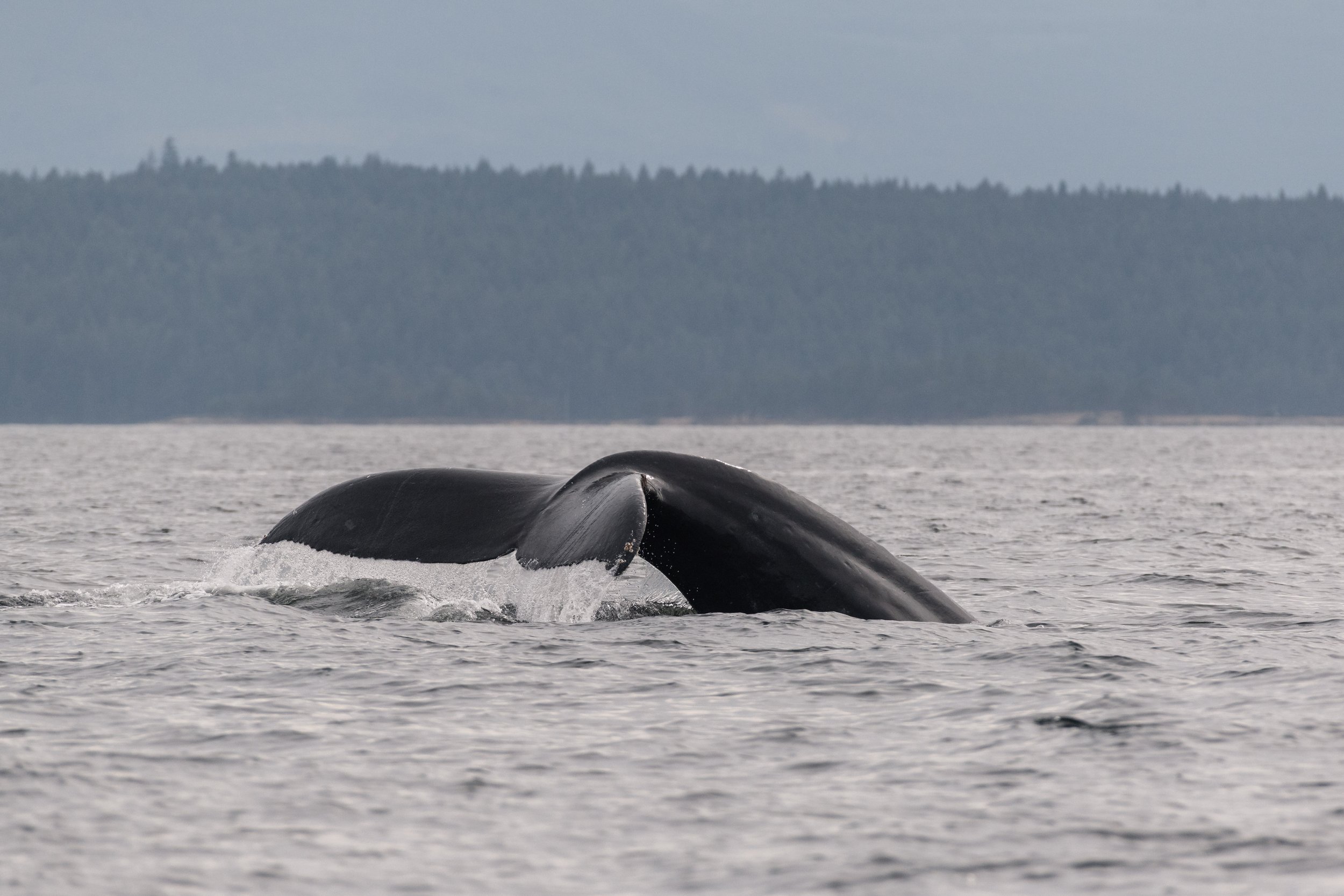
A lovely fluke waterfall from Poptart. Photo by Hayleigh Hilbert.
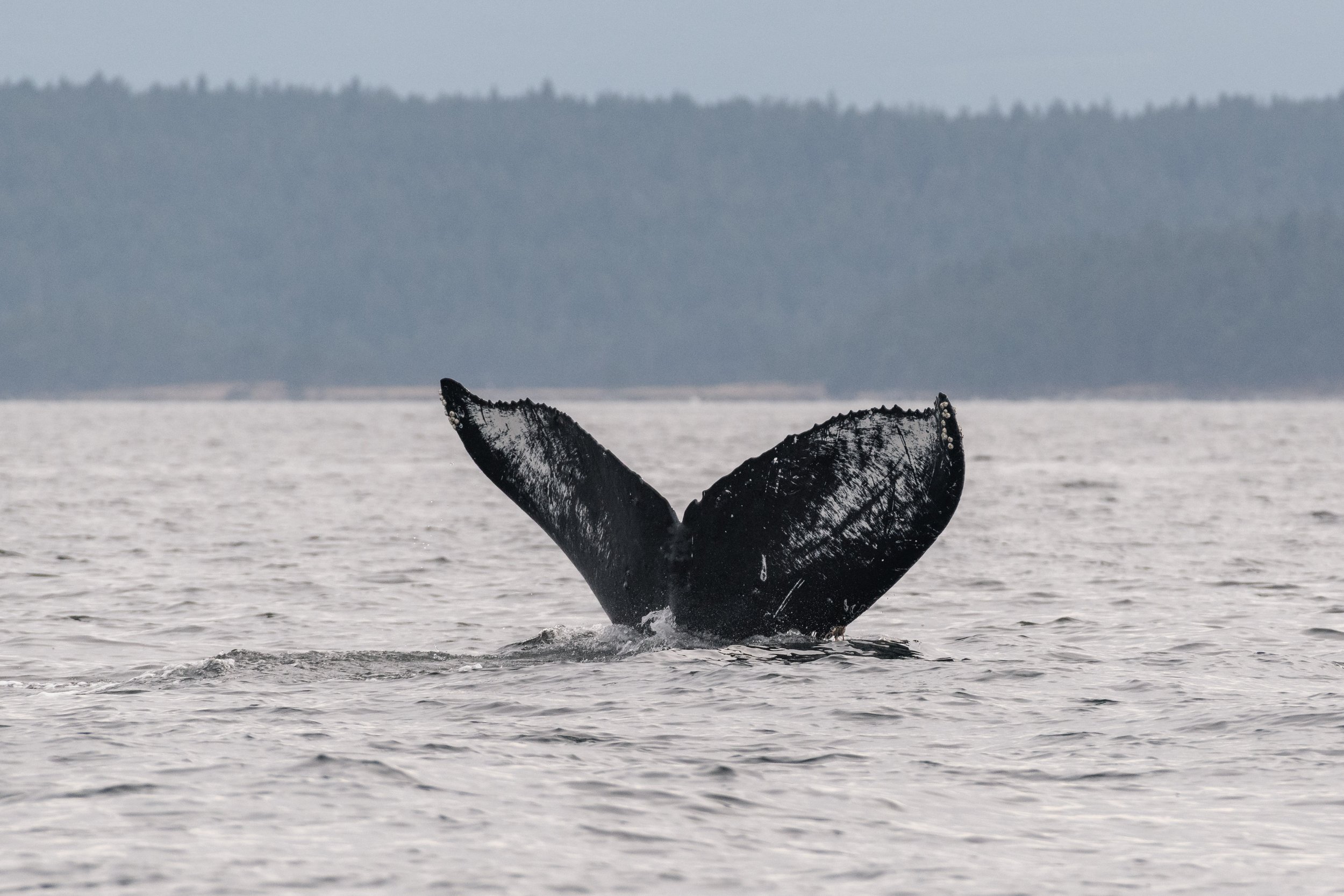
Th underside of Poptart’s tail as she dives. Photo by Hayleigh Hilbert.
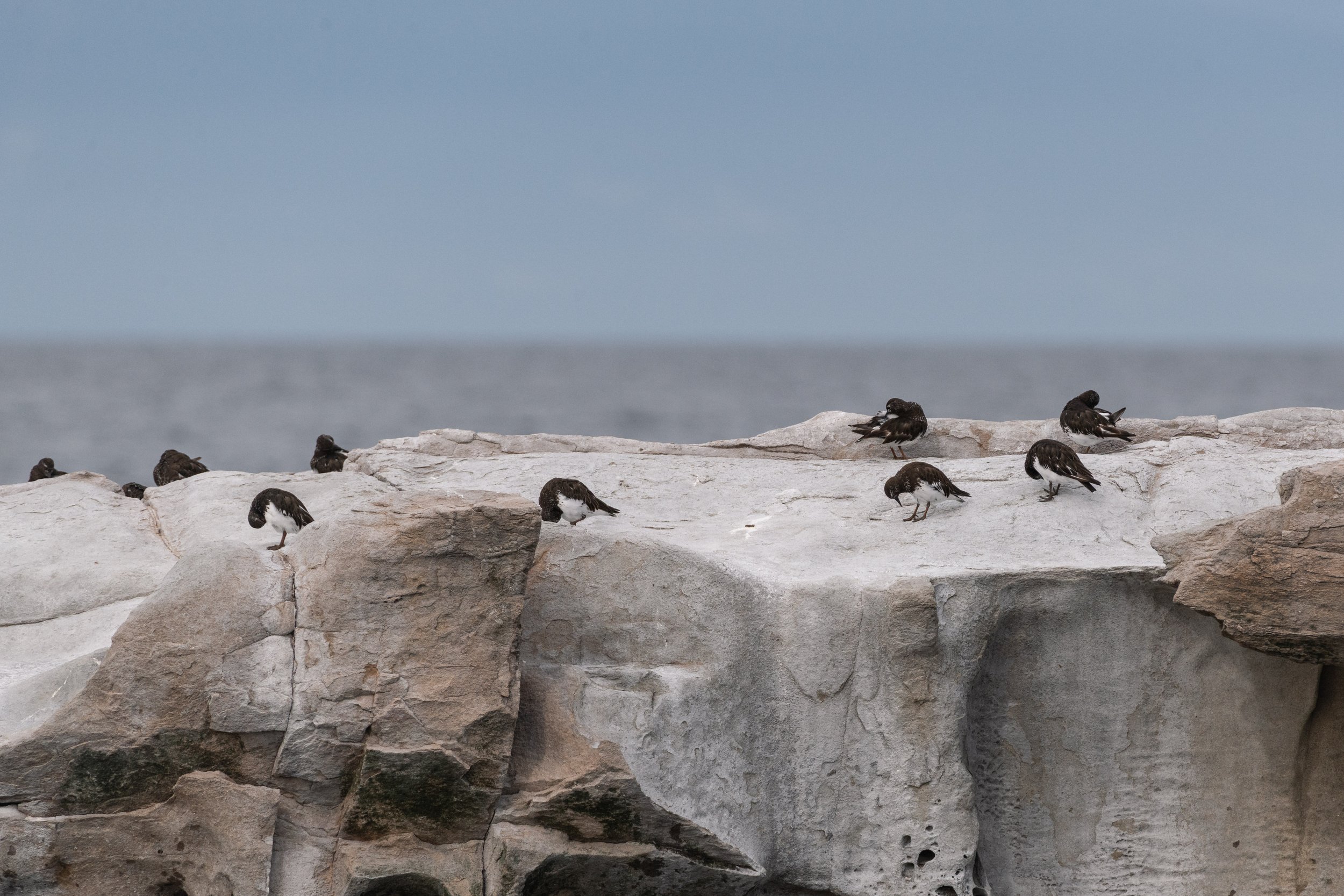
Black turnstones cleaning themselves on the rocks. Photo by Hayleigh Hilbert.
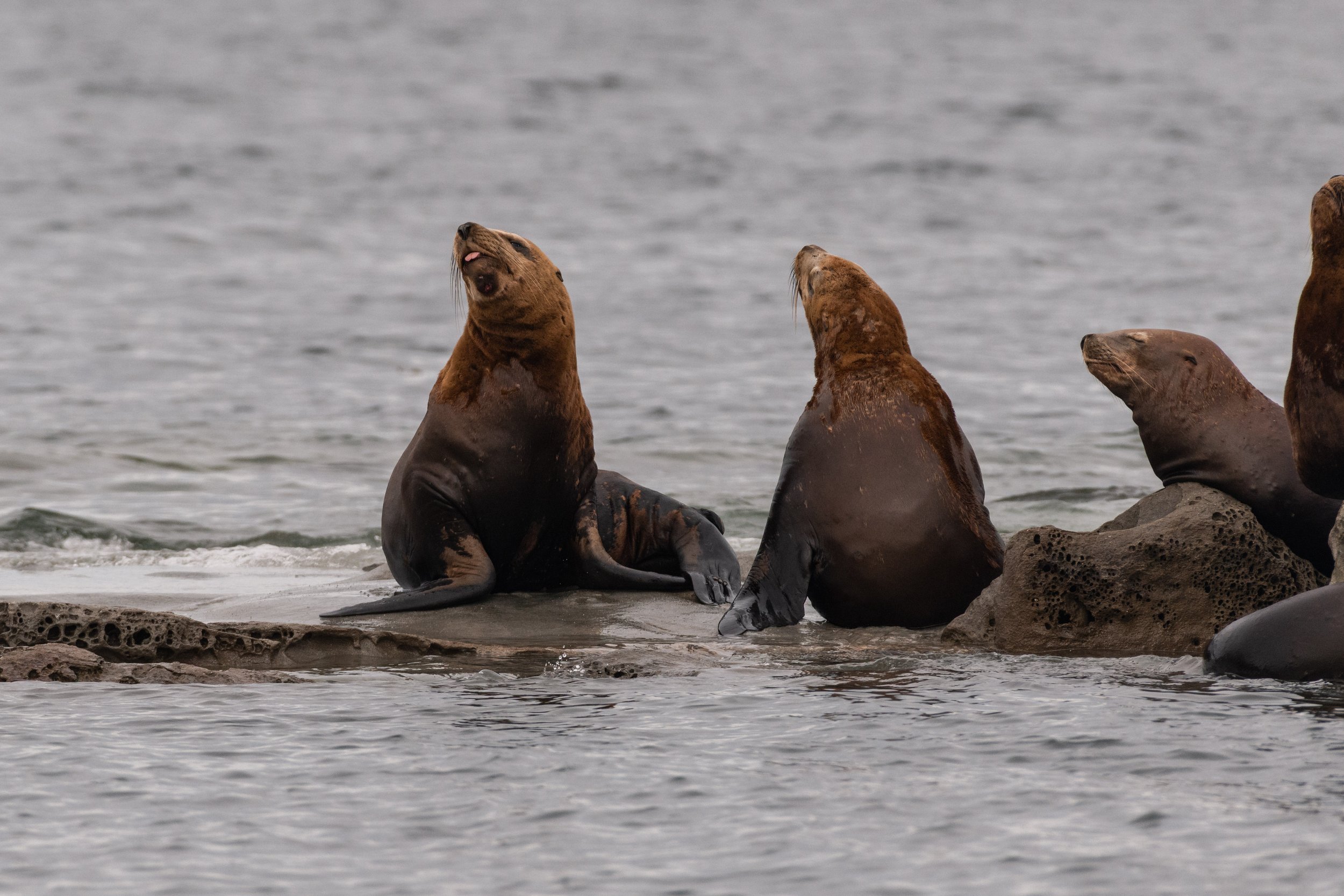
Steller Sea Lions on Stinky Rocks. Photo by Hayleigh Hilbert.
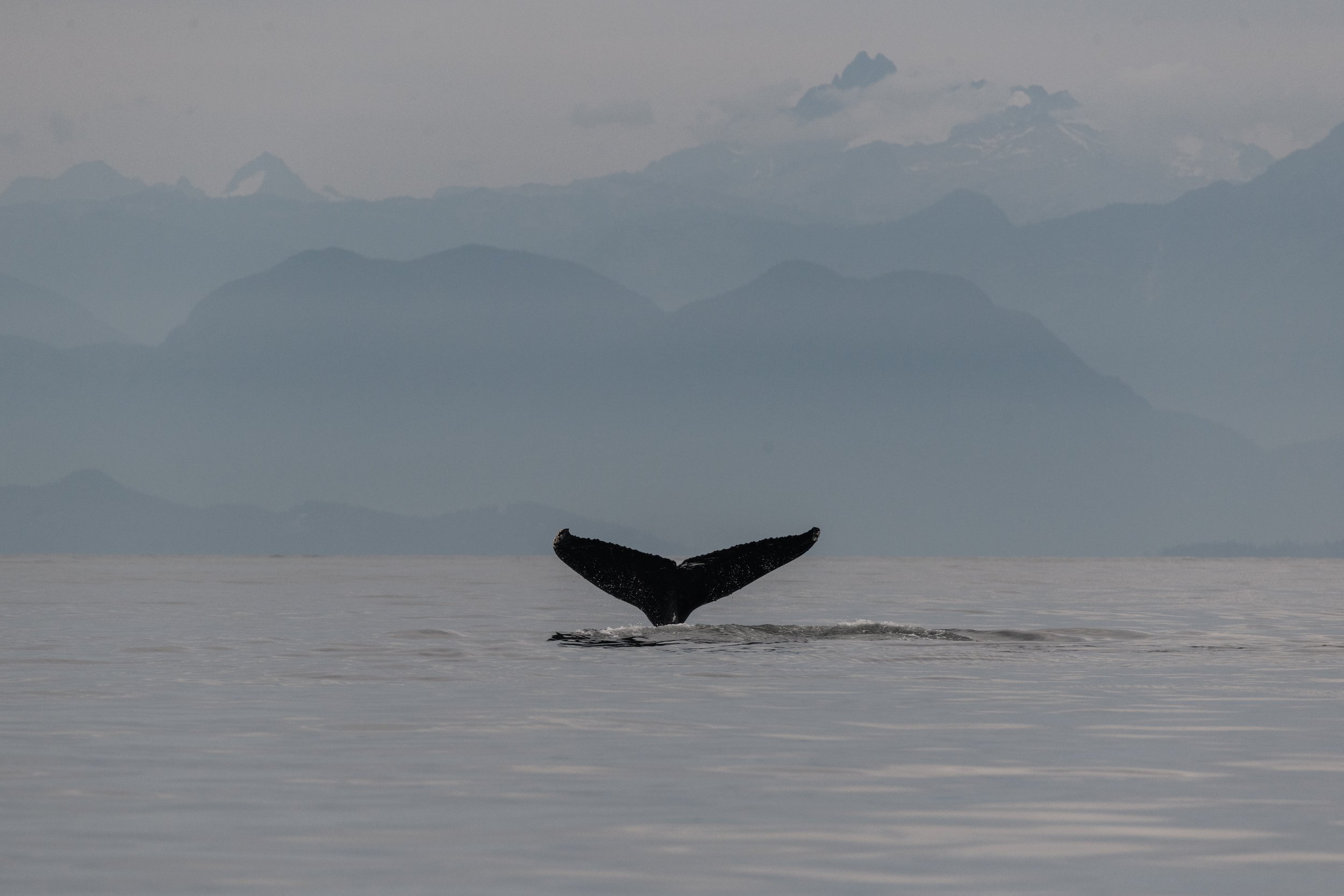
Beak going for a dive. Photo by Hayleigh Hilbert.
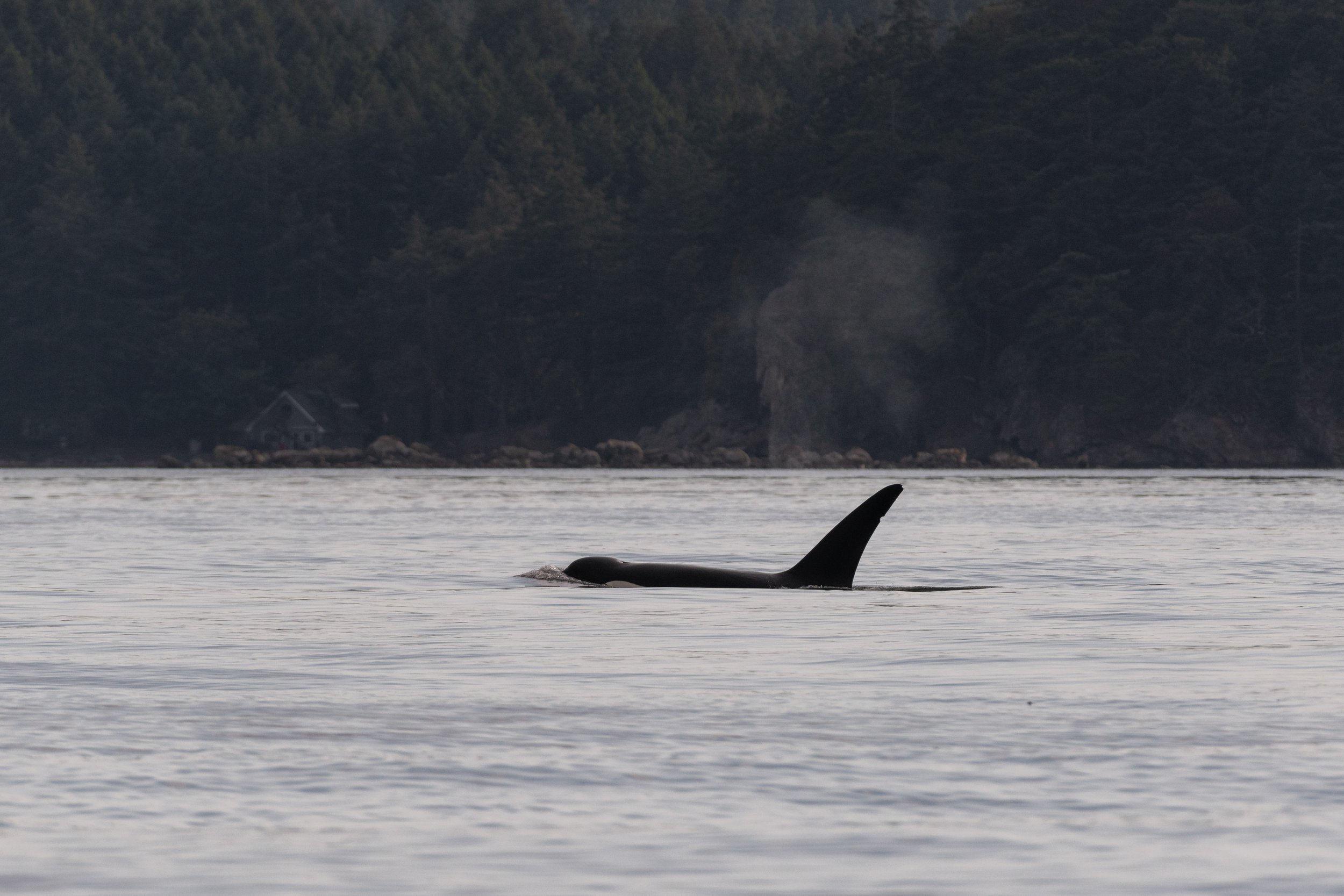
T065A2 Amir surfacing nicely in the calm waters. Photo by Hayleigh Hilbert.
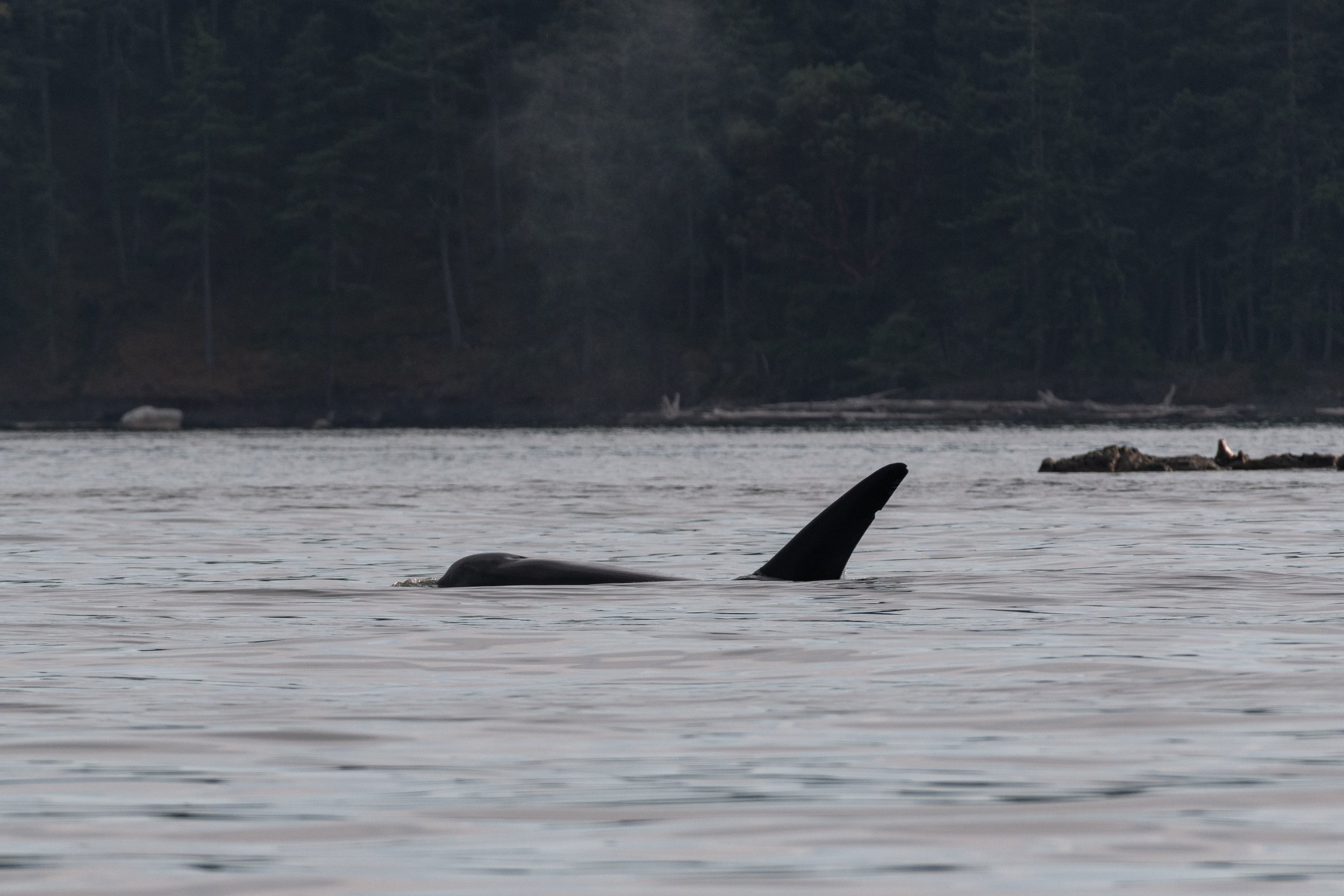
T065A3 Amir is easily distinguished by these notches on his dorsal fin. Photo by Hayleigh Hilbert.
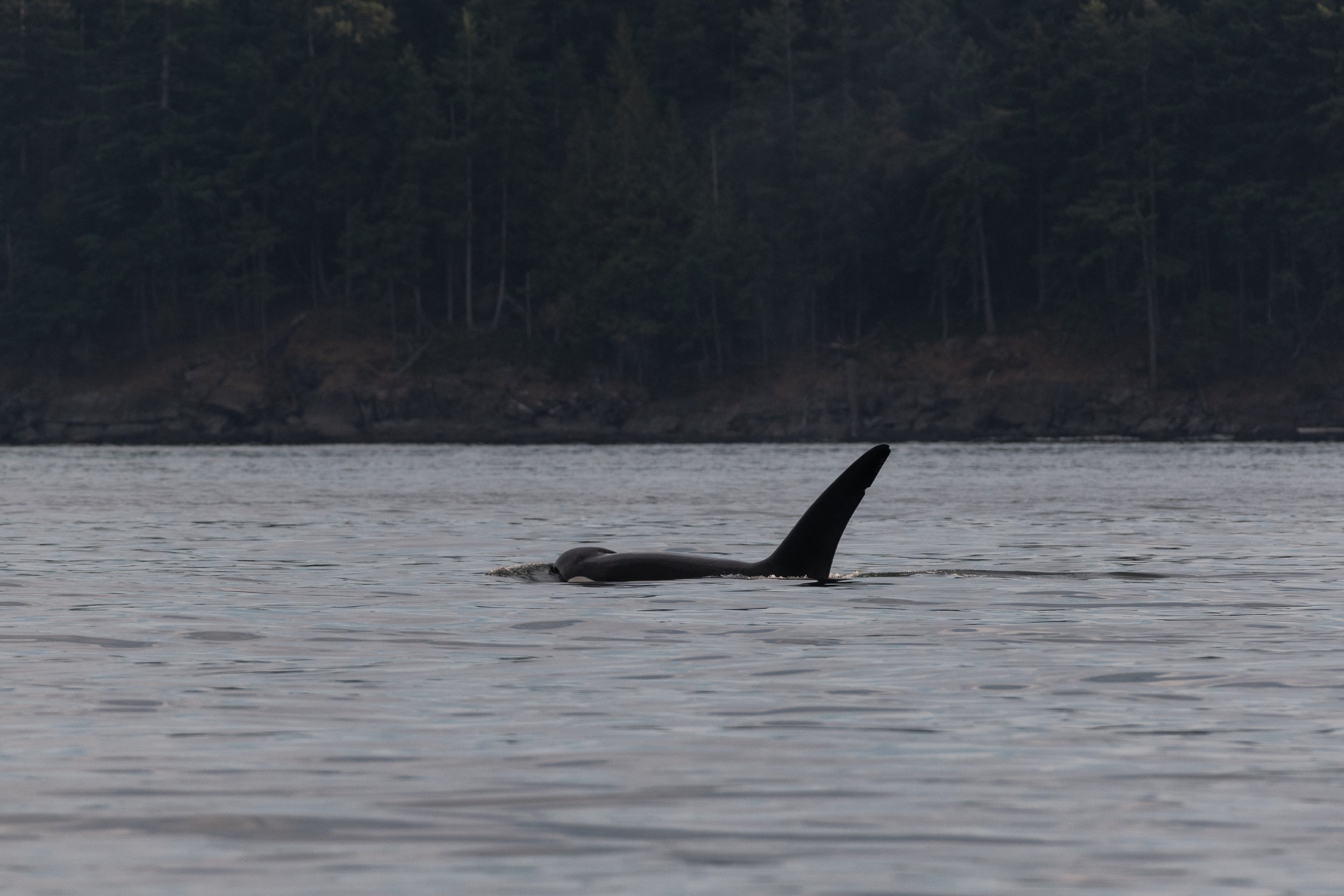
You can see some of T065A3 Amir’s eye patch poking above the water. Photo by Hayleigh Hilbert.
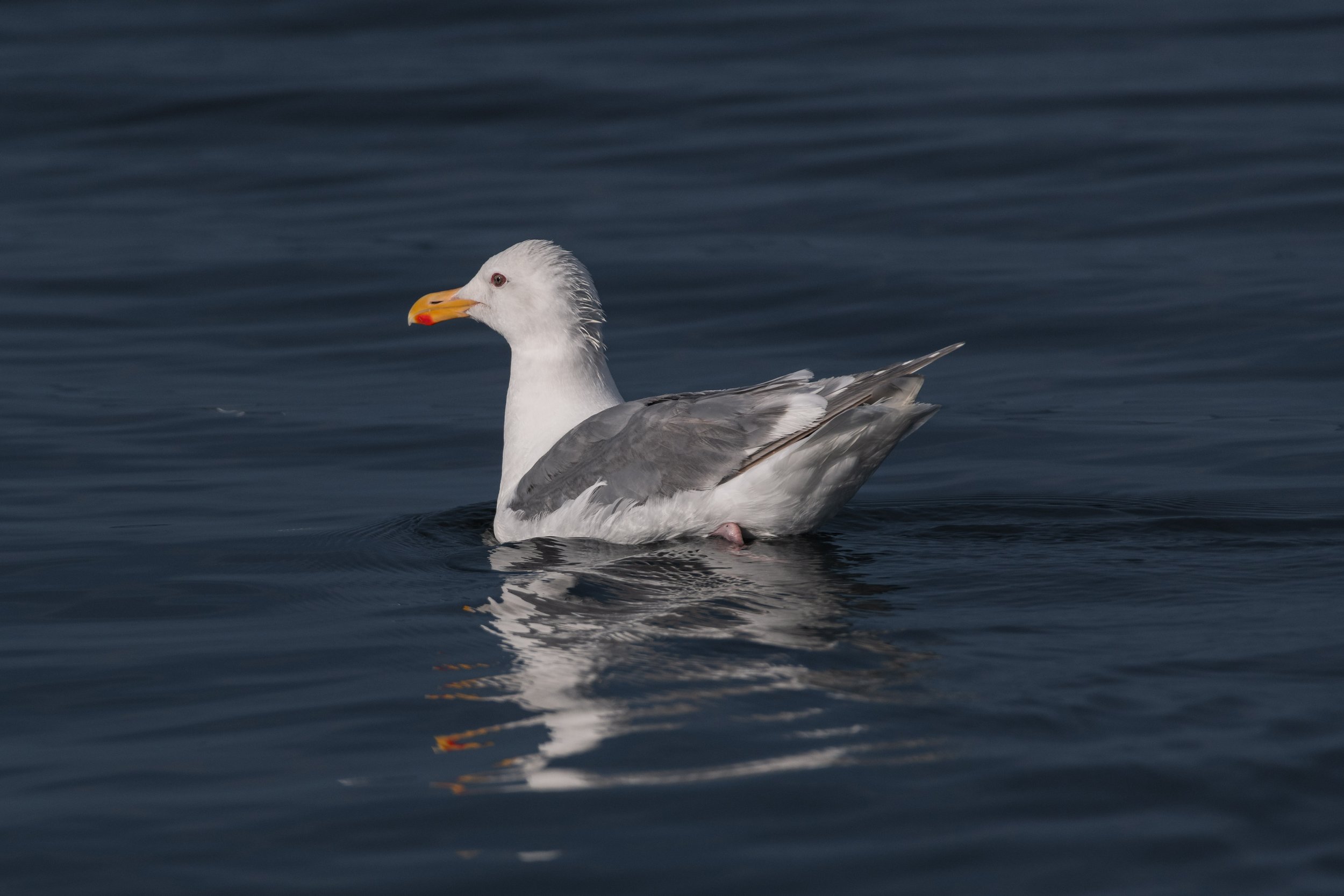
A lovely photo of a gull floating by. Photo by Hayleigh Hilbert.
A look at some of the fish close to the surface. Photo by Hayleigh Hilbert.
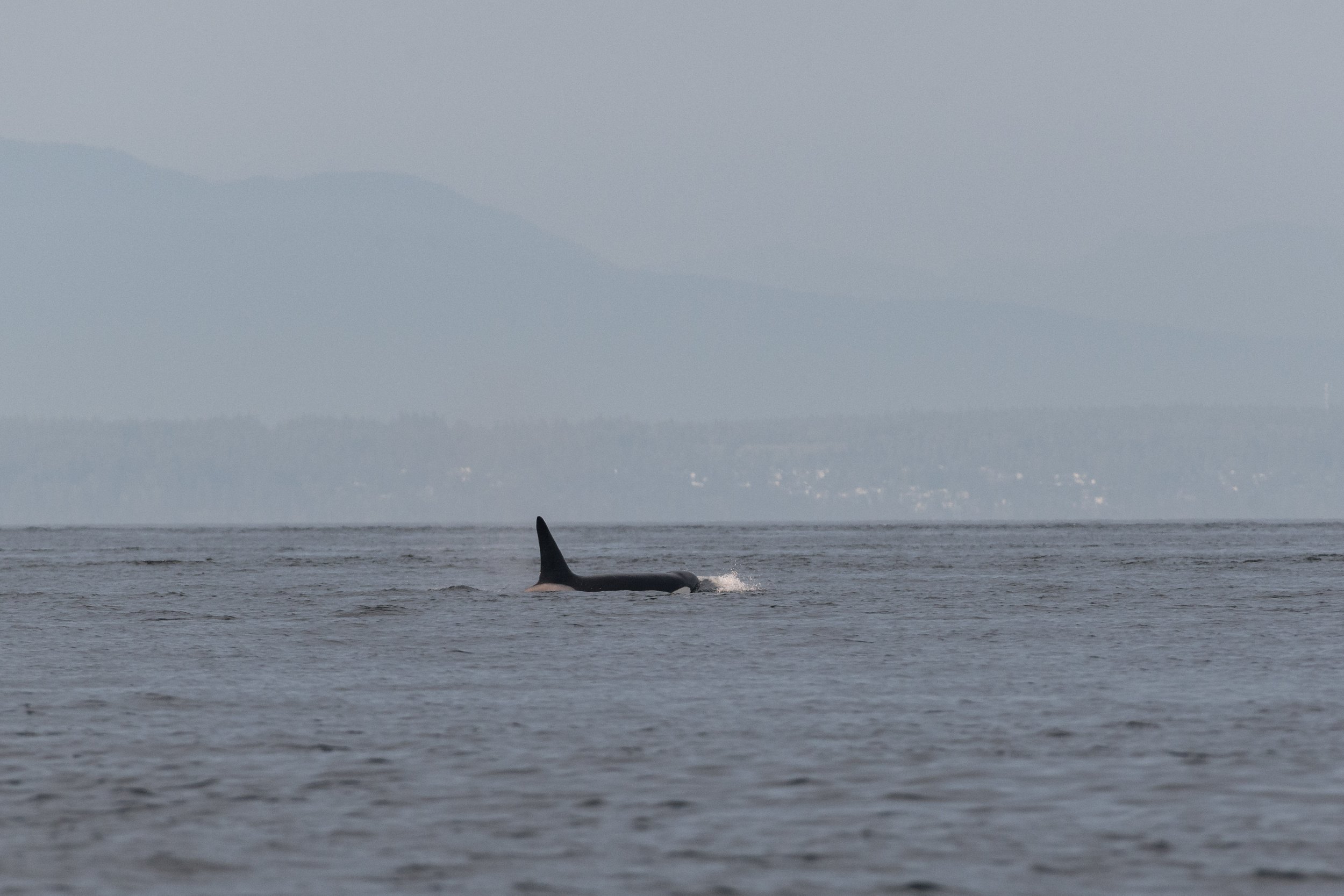
T077C Neftali surfacing in the distance. Photo by Hayleigh Hilbert.
Semi-Covered Boat
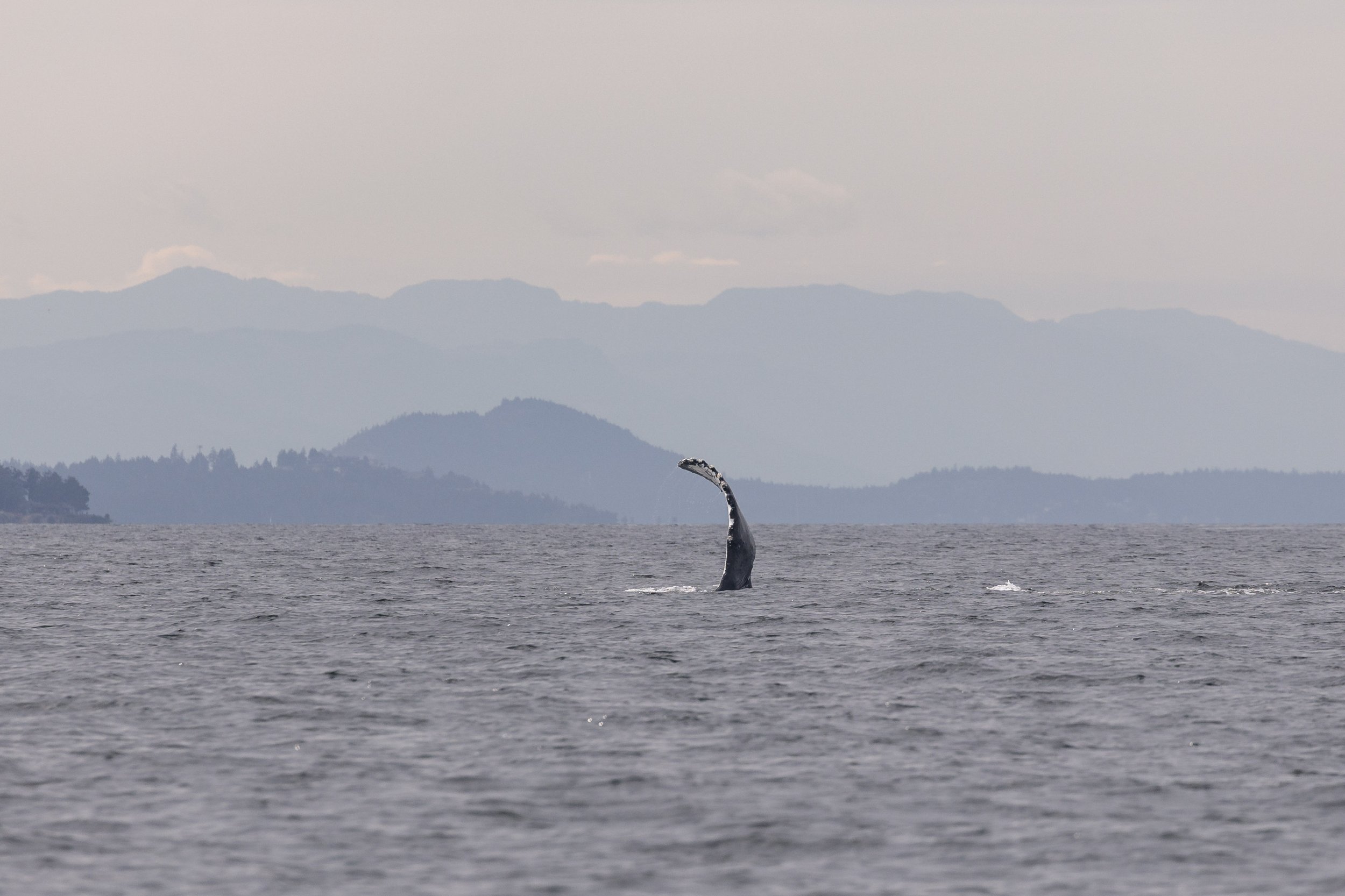
Fader with his pectoral fin in the air. Photo by Jordan Robinson.
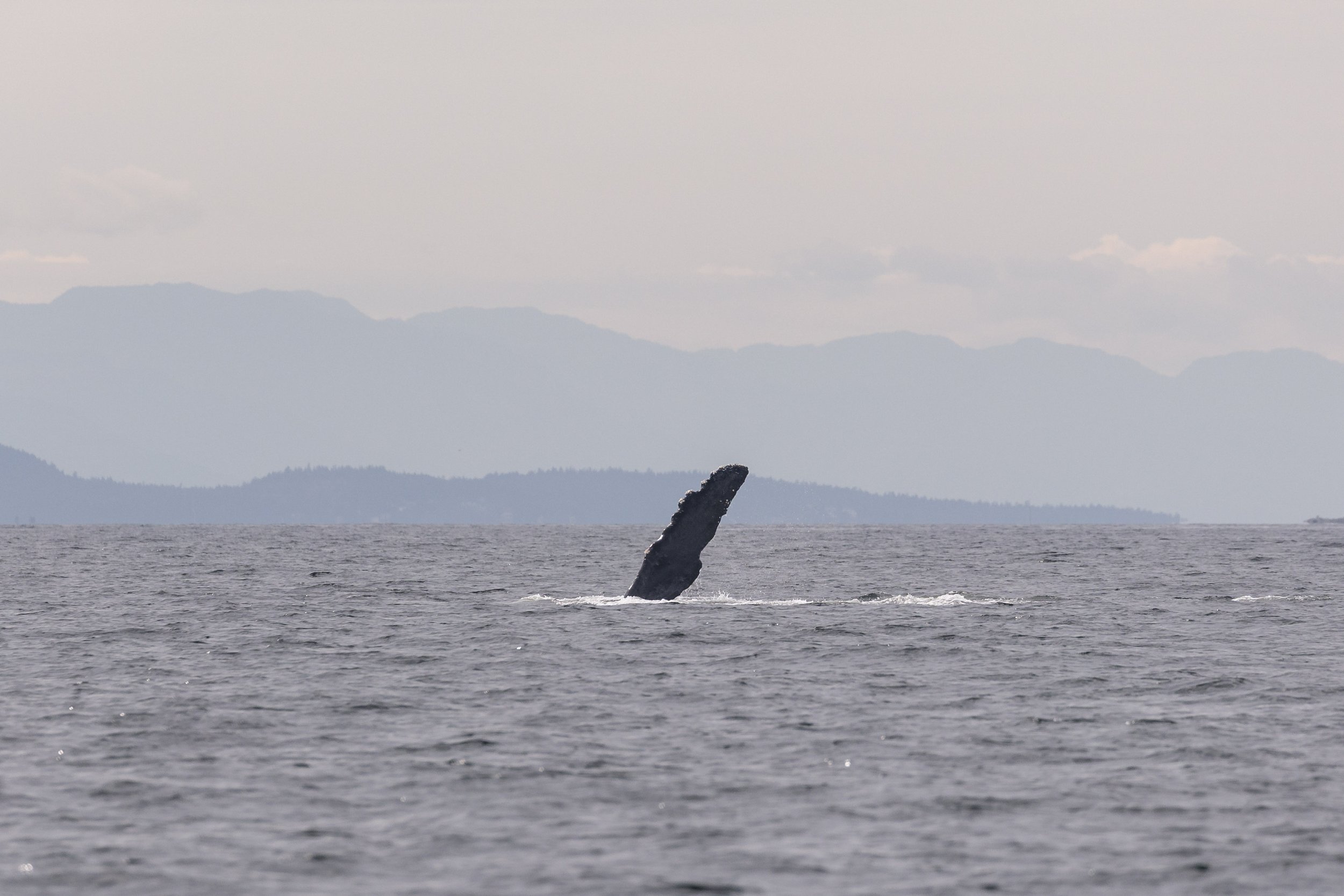
Fader’s pectoral could be up to 5 meters long! Photo by Jordan Robinson.
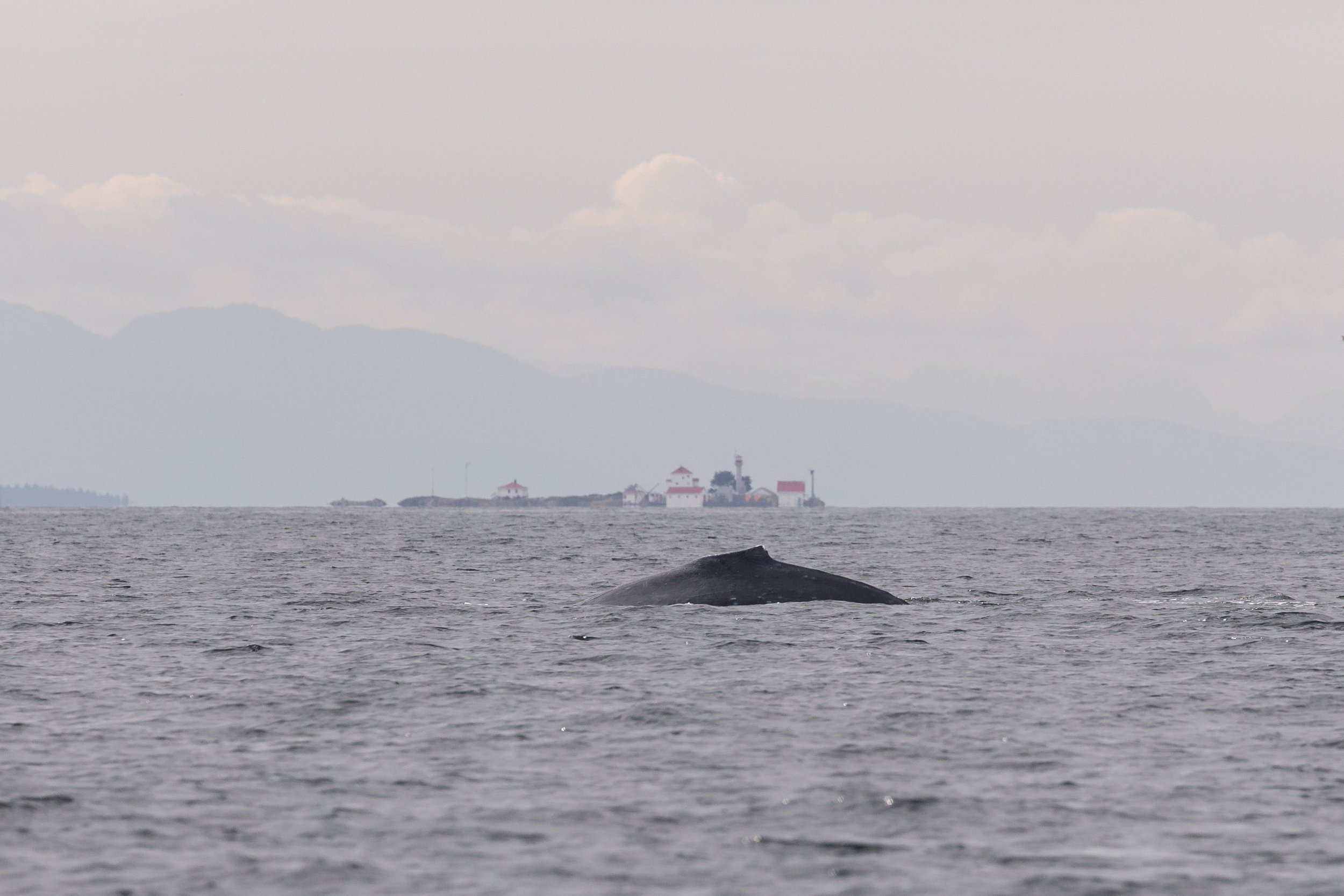
Fader surfacing in front of Entrance Island. Photo by Jordan Robinson.
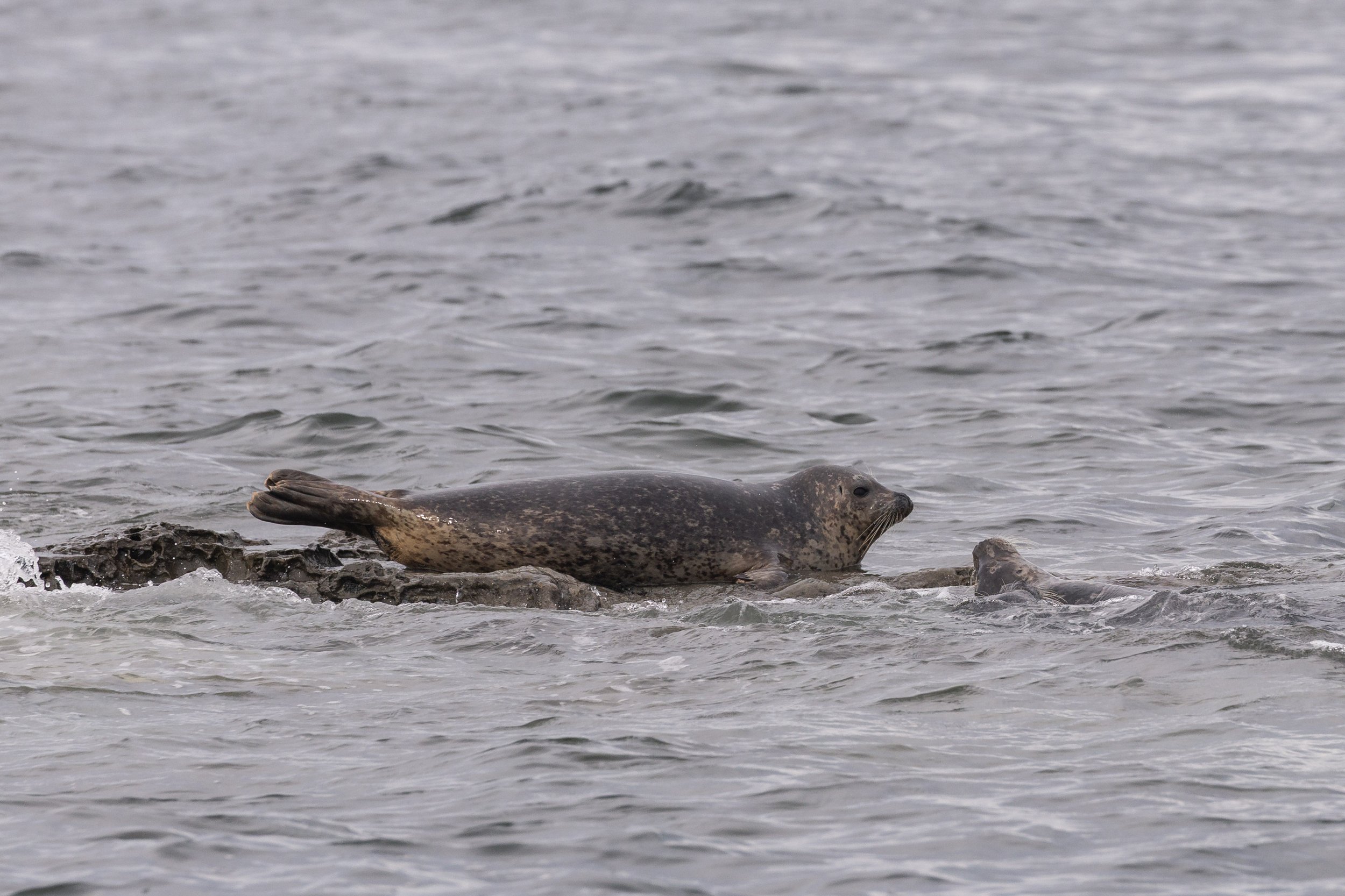
A harbour Seal balancing on the rocks. Photo by Jordan Robinson.
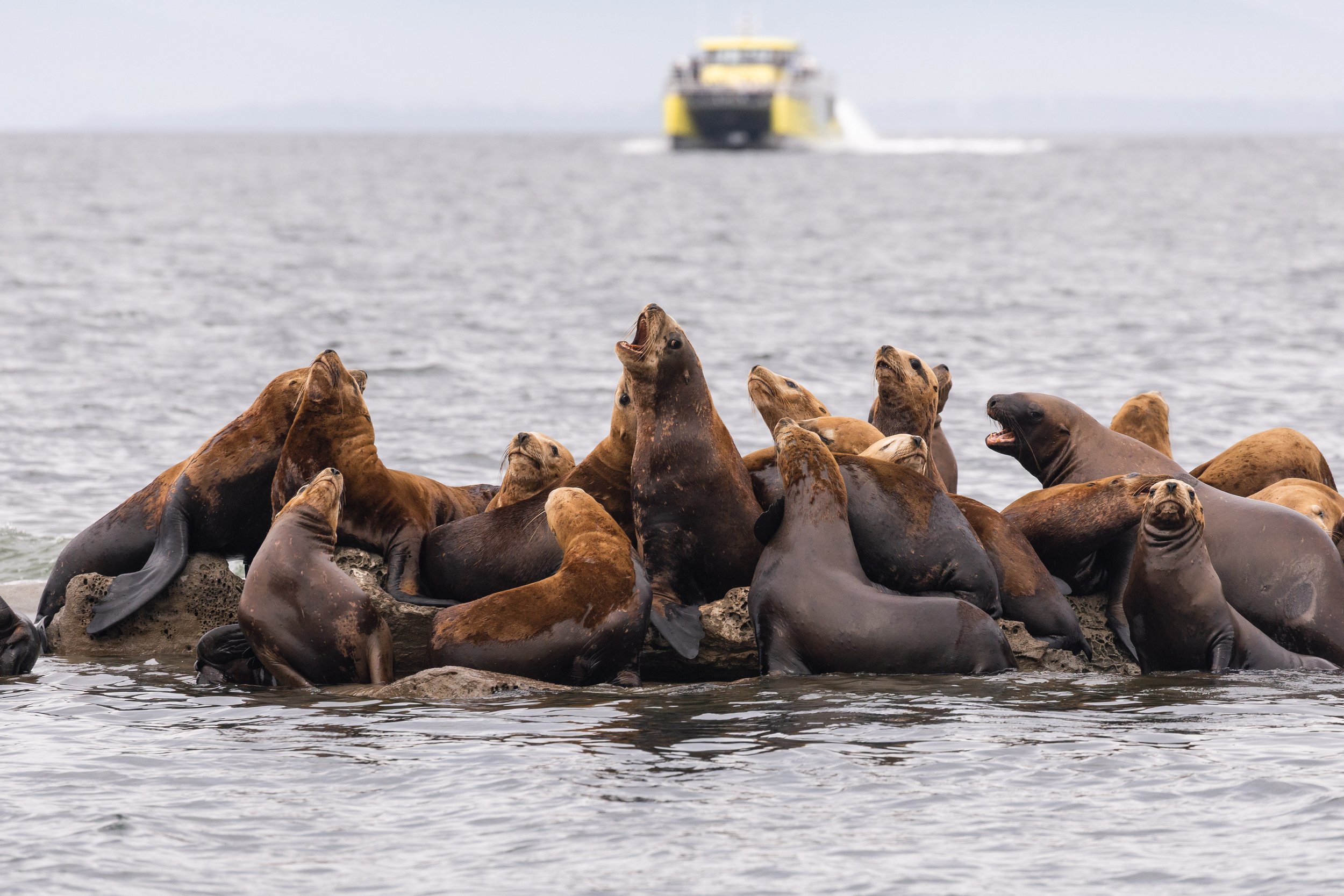
Fighting amongst the Steller Sea Lion on Stinky. Photo by Jordan Robinson.
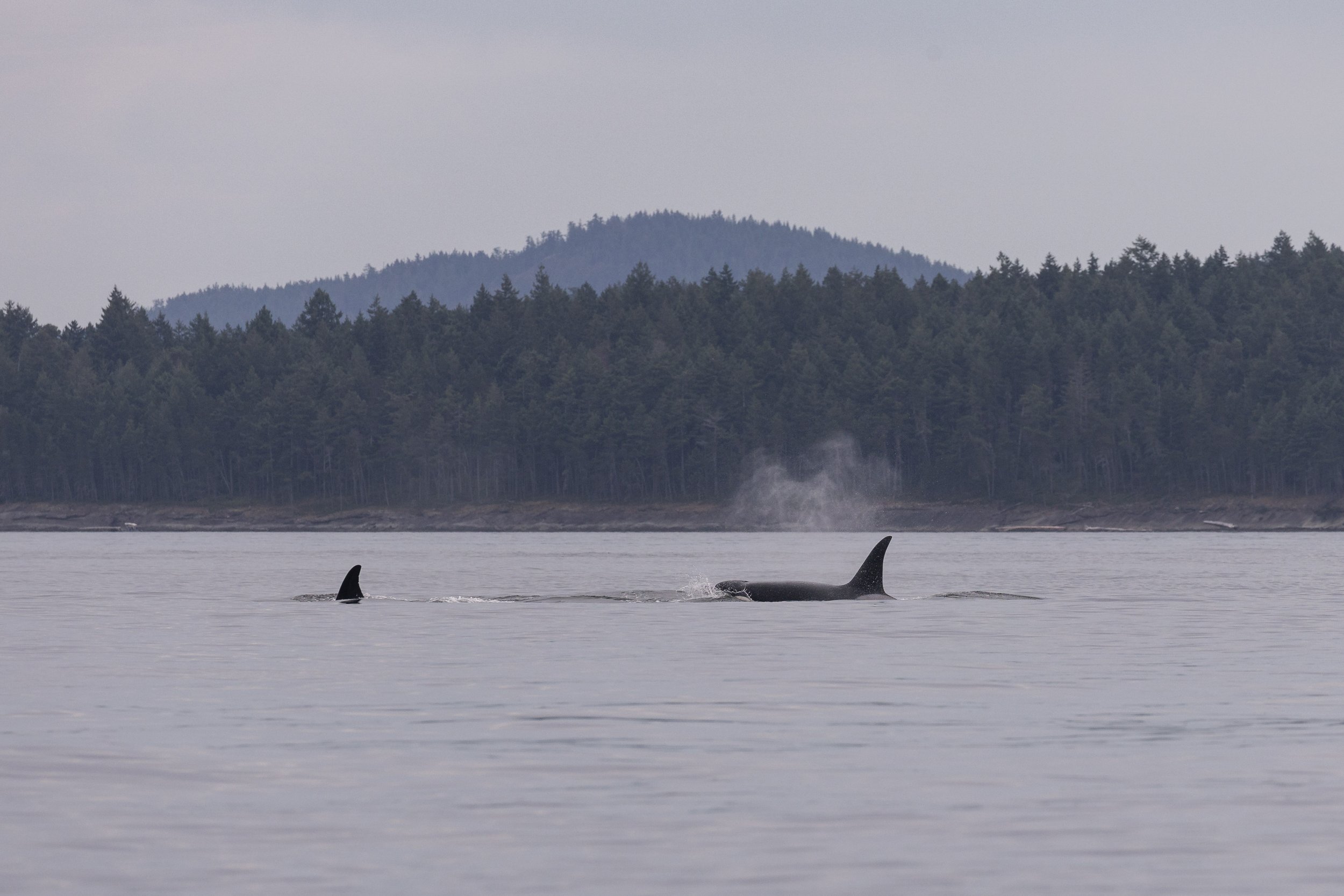
T065A4 Ellifrit and T077C Neftali surfacing together. by Jordan Robinson.
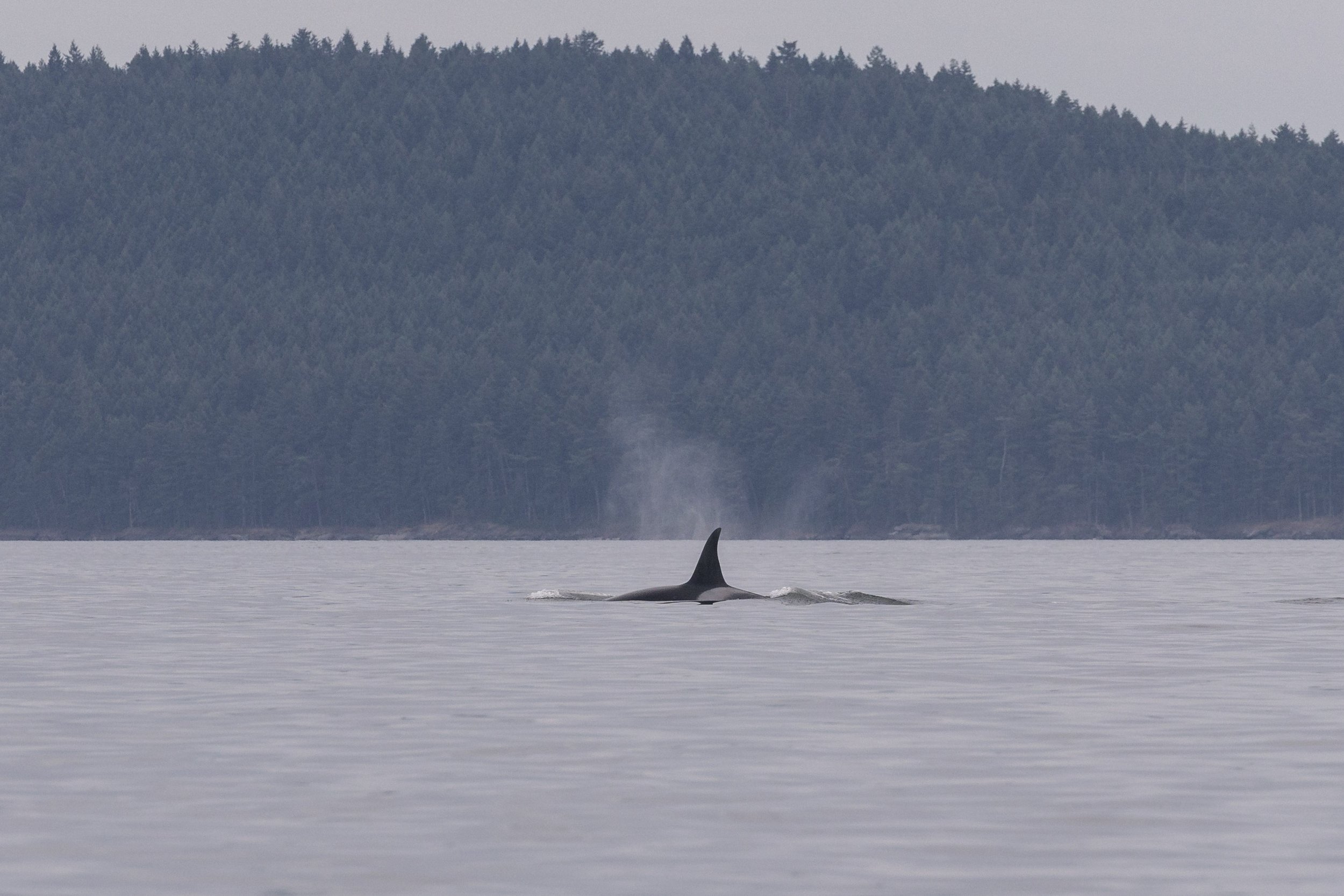
T077C Neftali creating waves as he surfaces. Photo by Jordan Robinson.
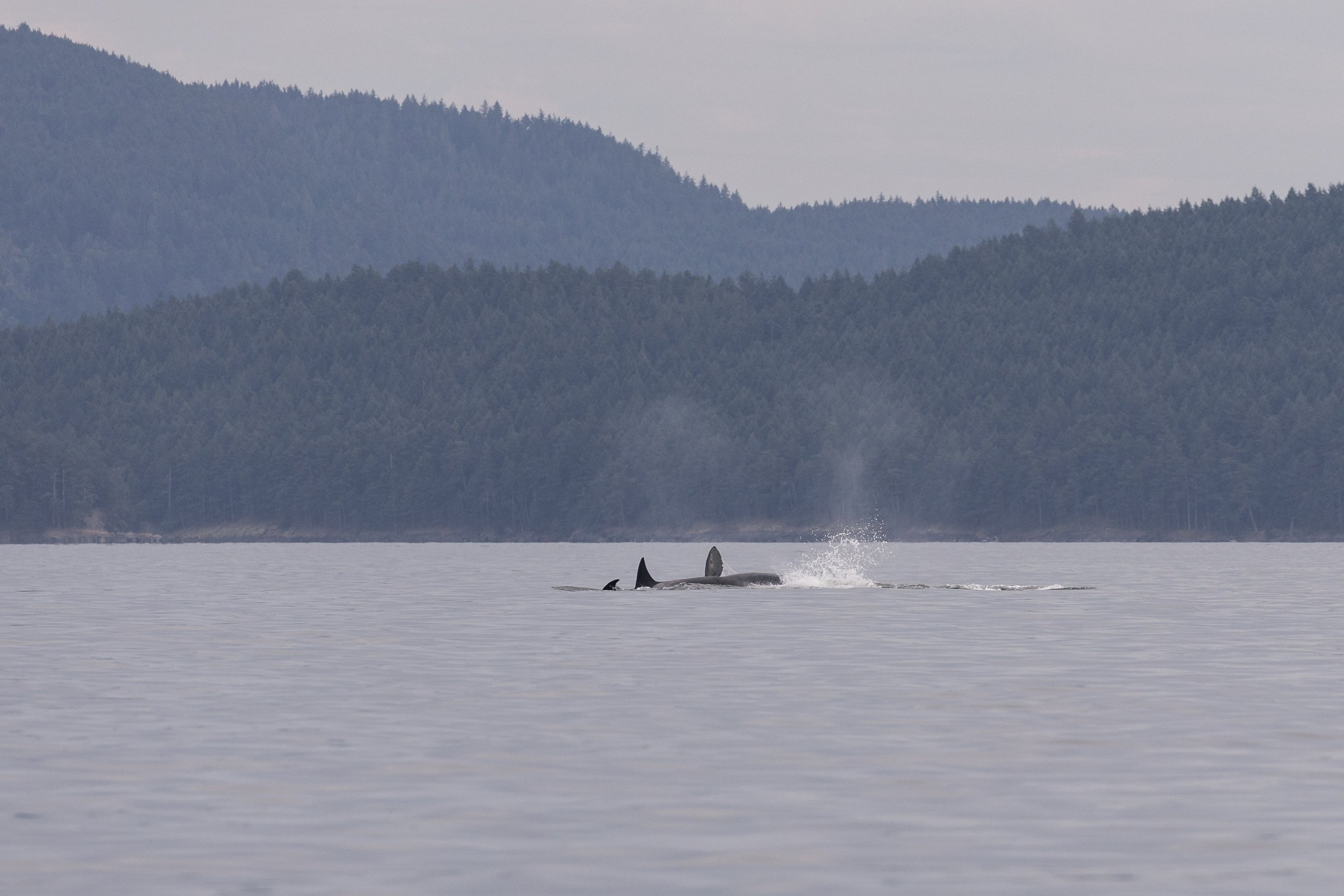
T077D Alycon swimming with another sideways beside her. Photo by Jordan Robinson.
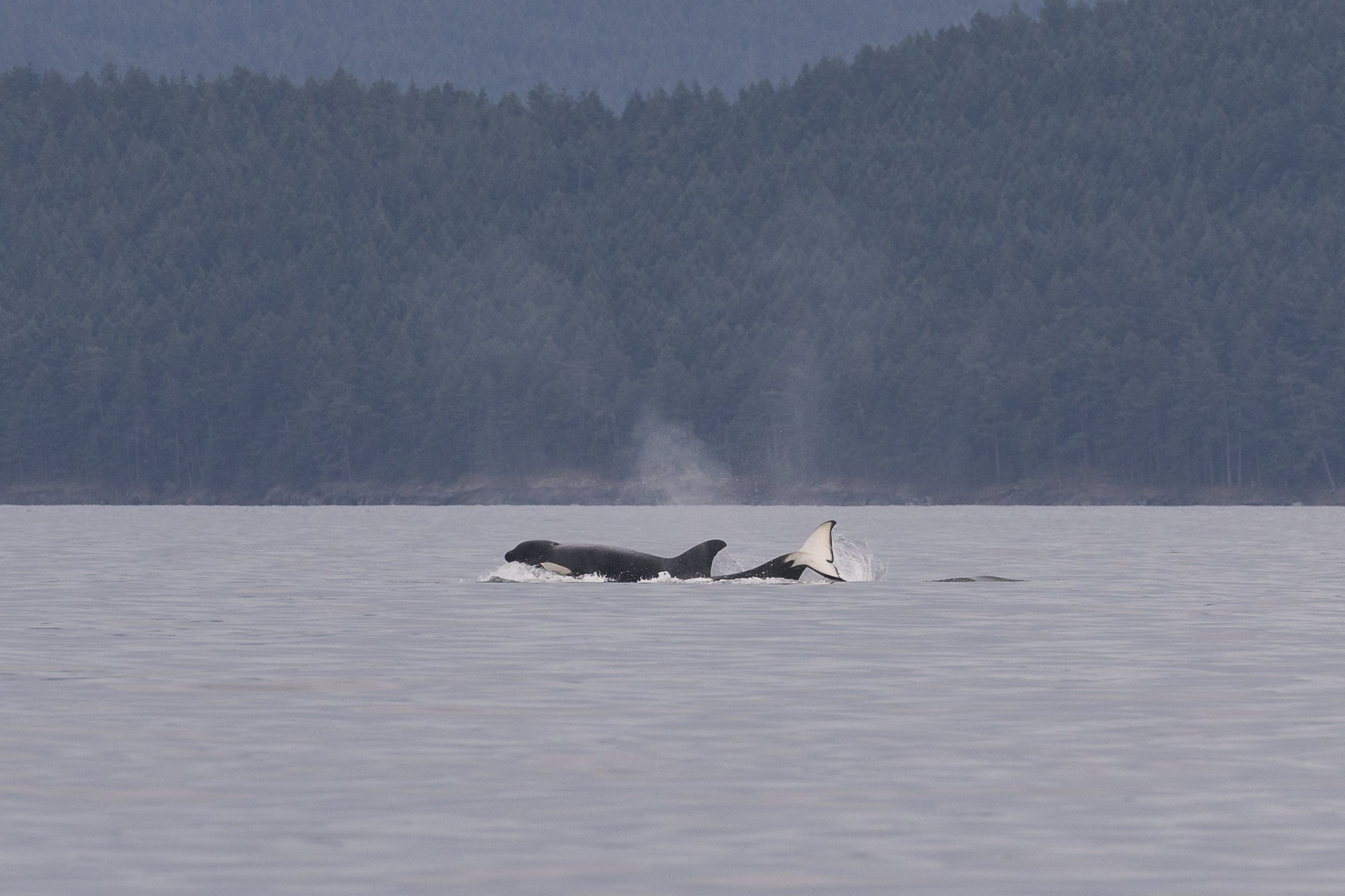
T065A4 Ellifrit With her face out of the water with someone’s tail beside her. Photo by Jordan Robinson.
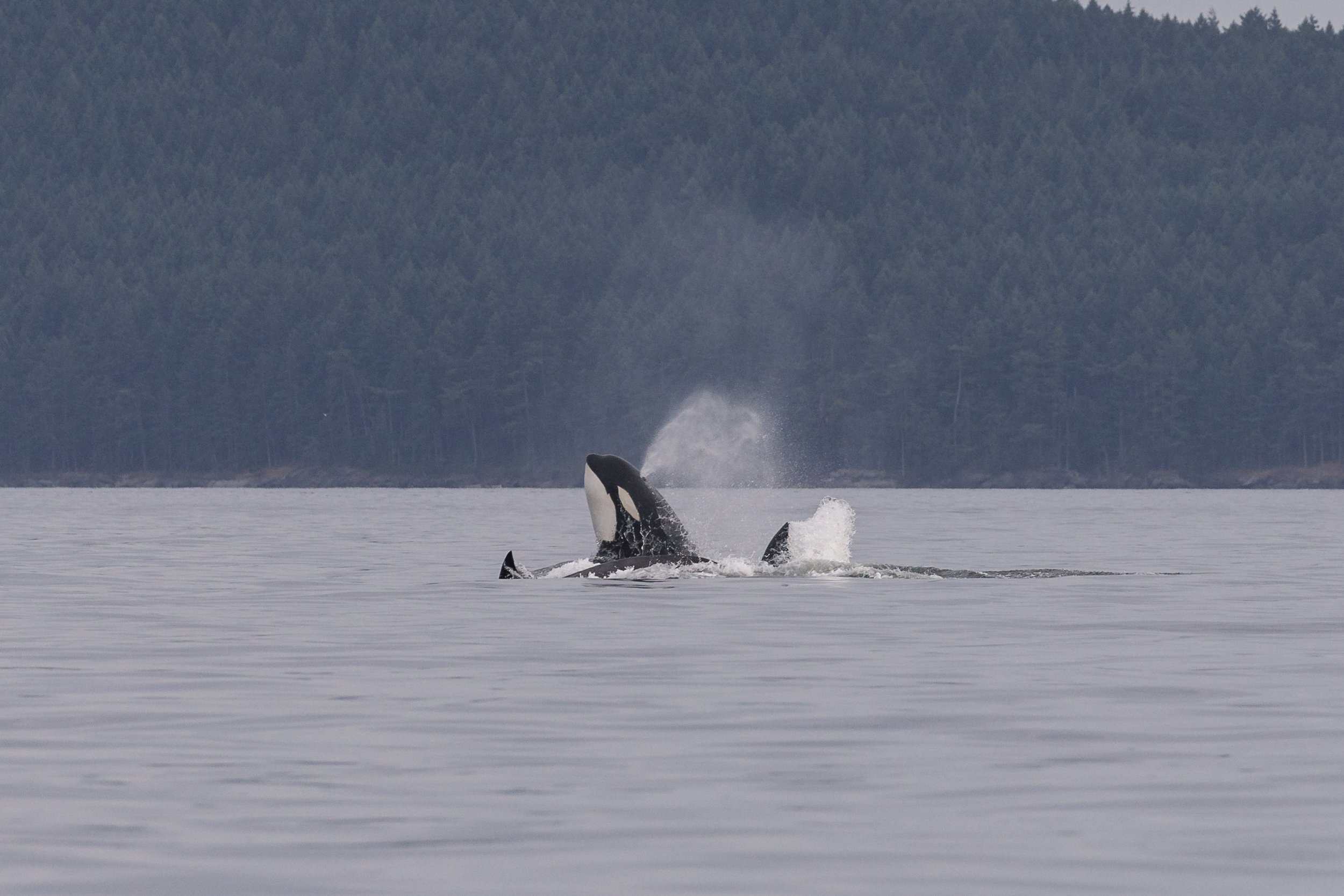
T065A4 Ellifrit with her face out of the water, surrounded by activity. Photo by Jordan Robinson.
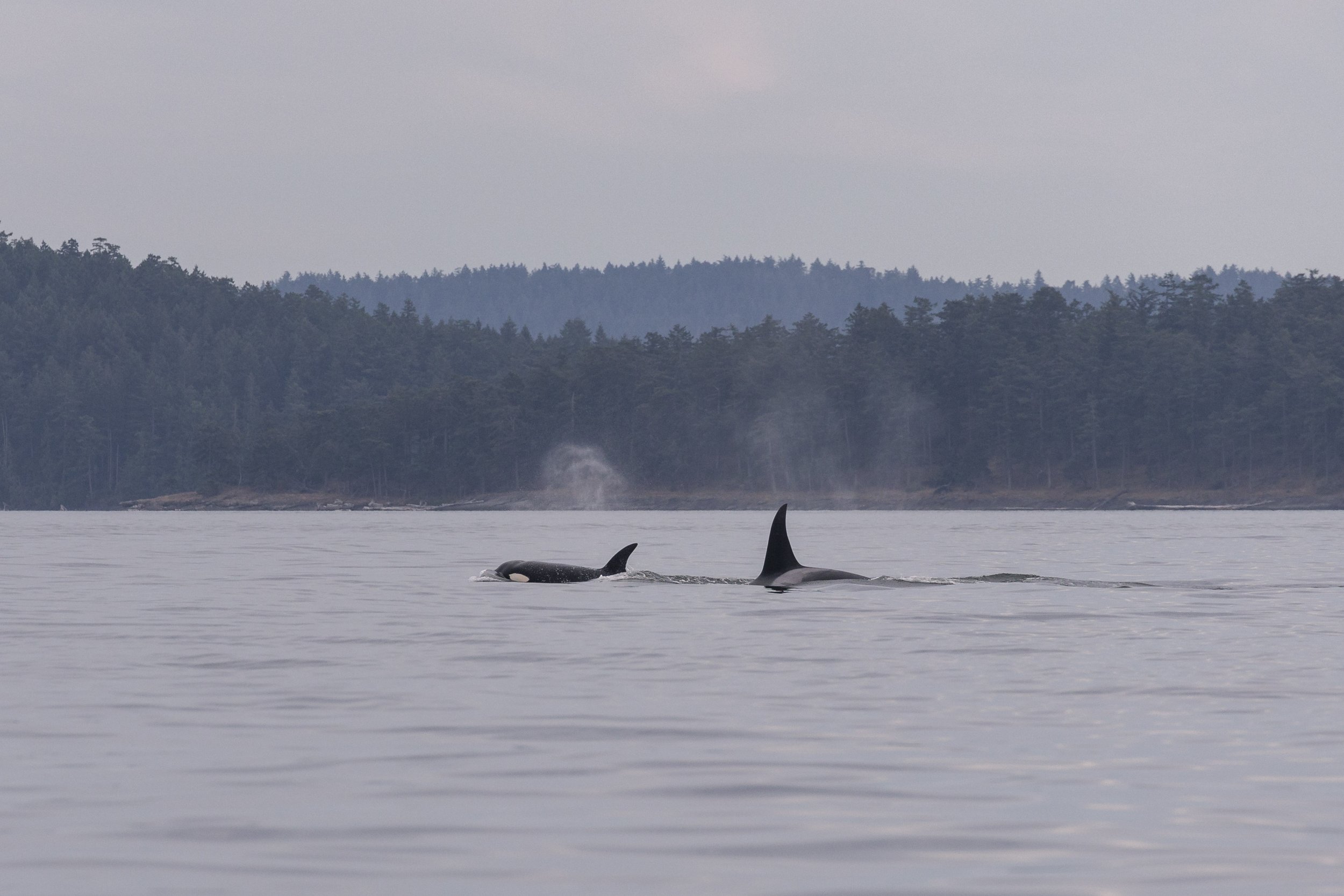
T077E Misneach andT077C Neftali surfacing together. Photo by Jordan Robinson.
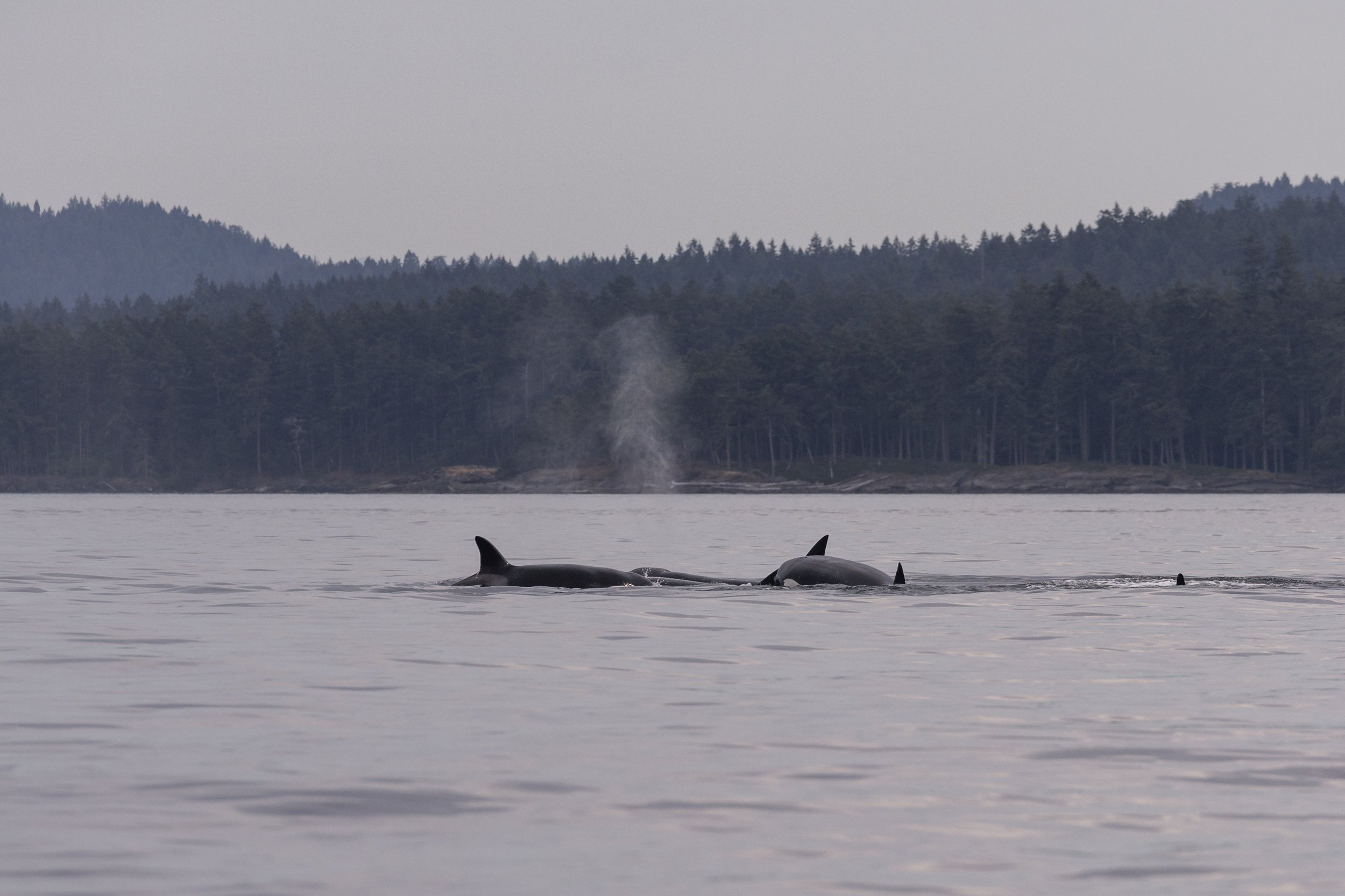
A cuddle puddle of Orca. Photo by Jordan Robinson.
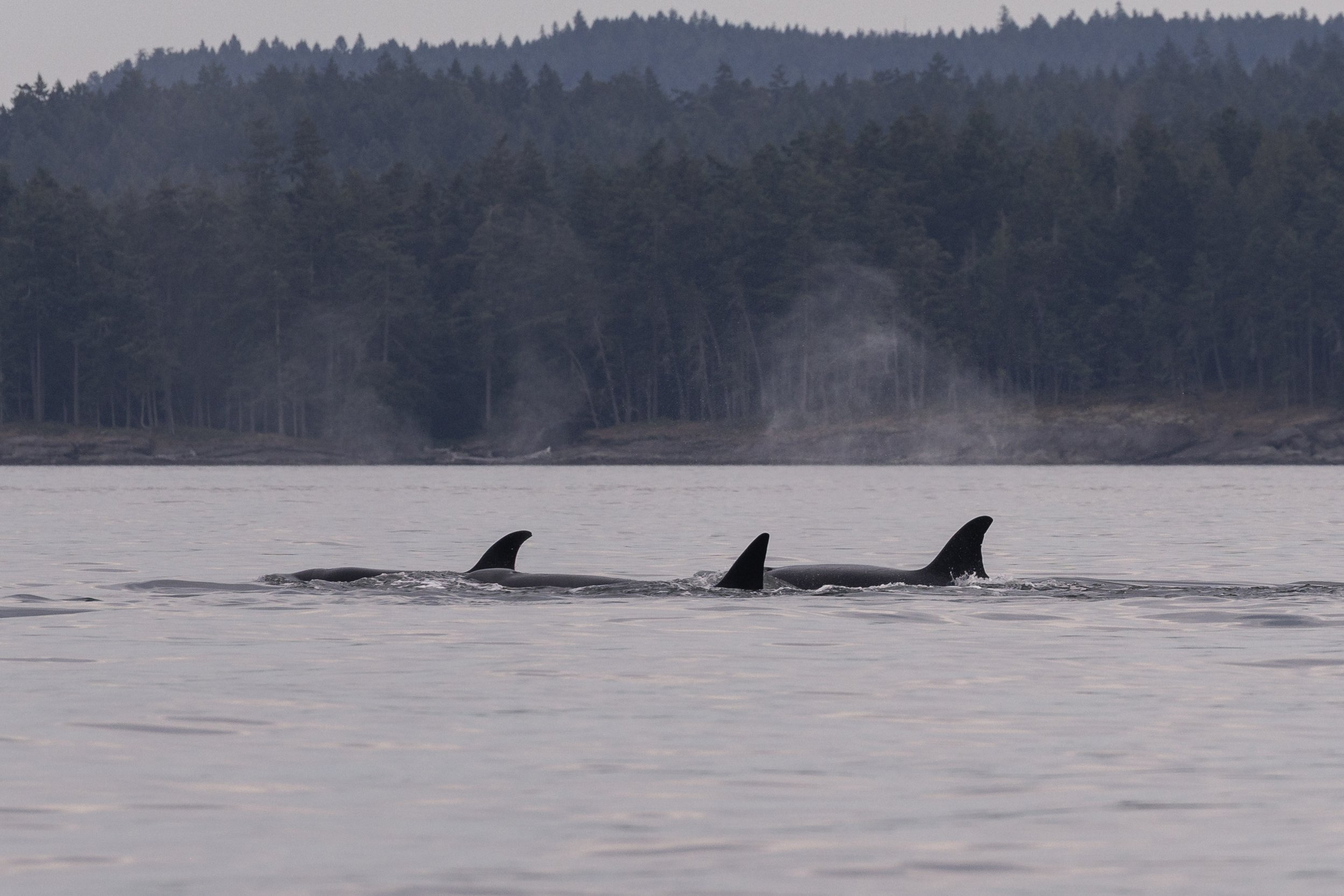
T065A6 Callisto, T077 Asja, and T065A4 Ellifrit surfacing together. Photo by Jordan Robinson.
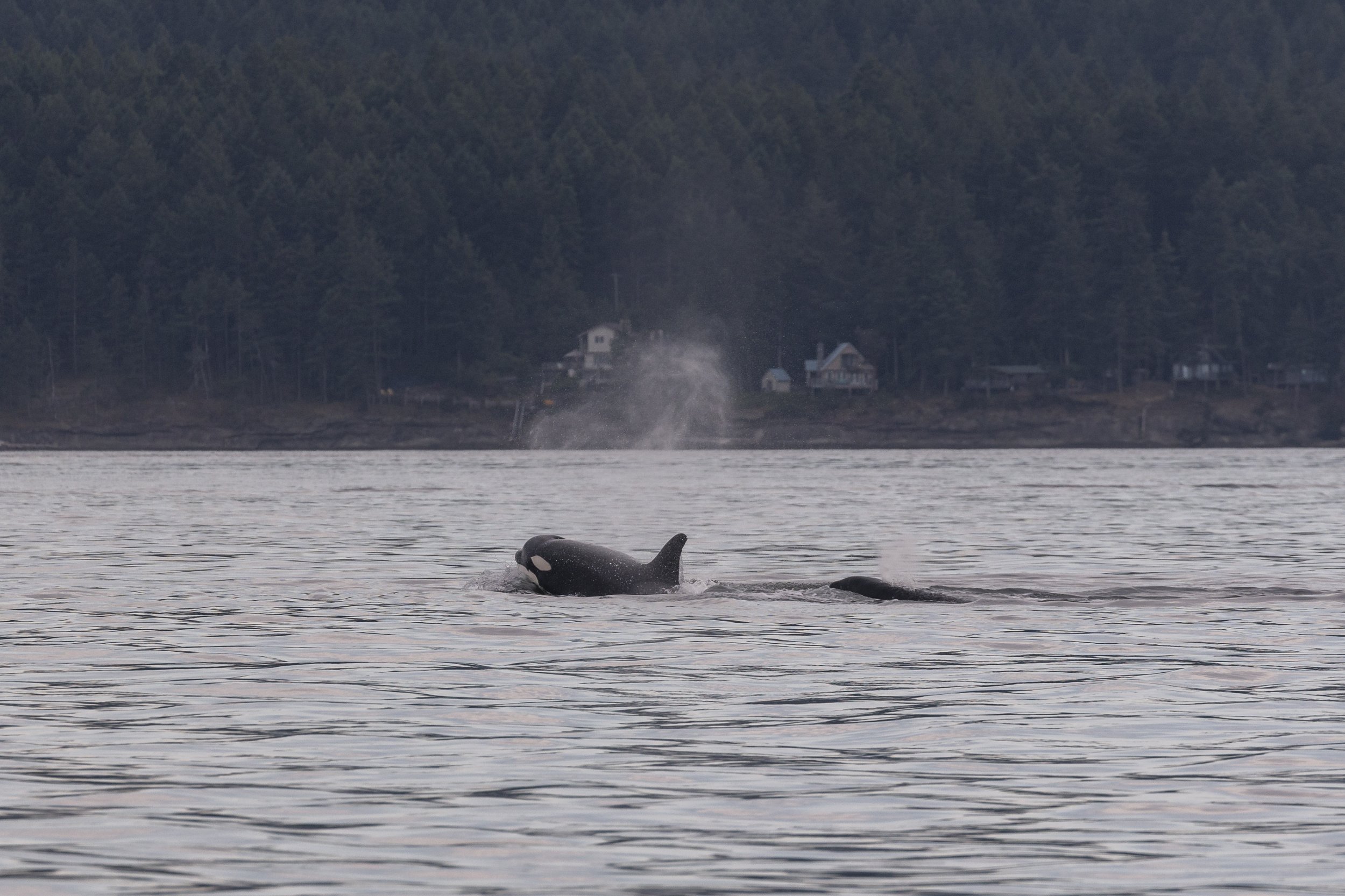
T065A4 Ellifrit coming high out of the water as she surfaces. Photo by Jordan Robinson.
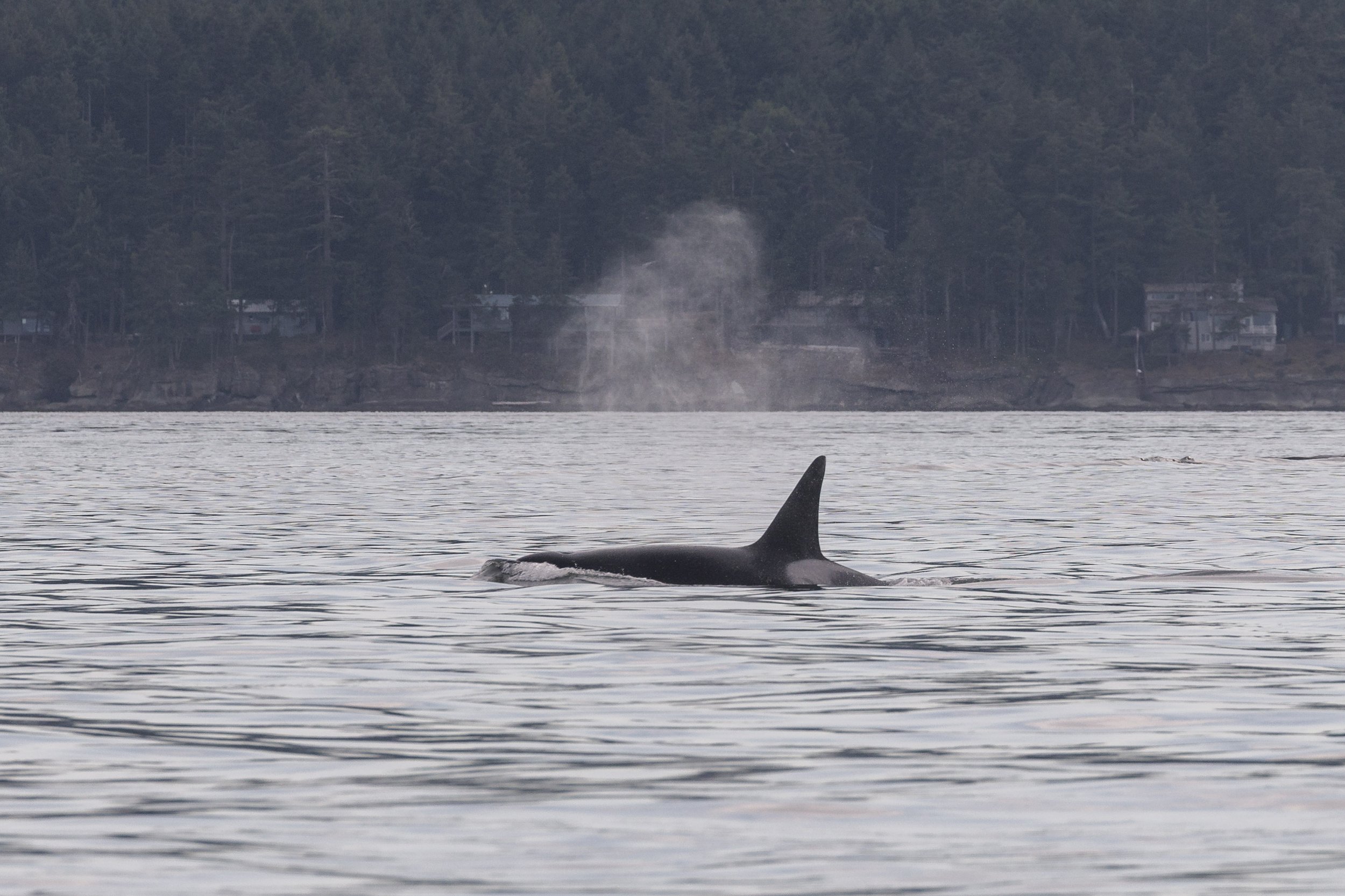
T077C Neftali surfacing. Photo by Jordan Robinson.
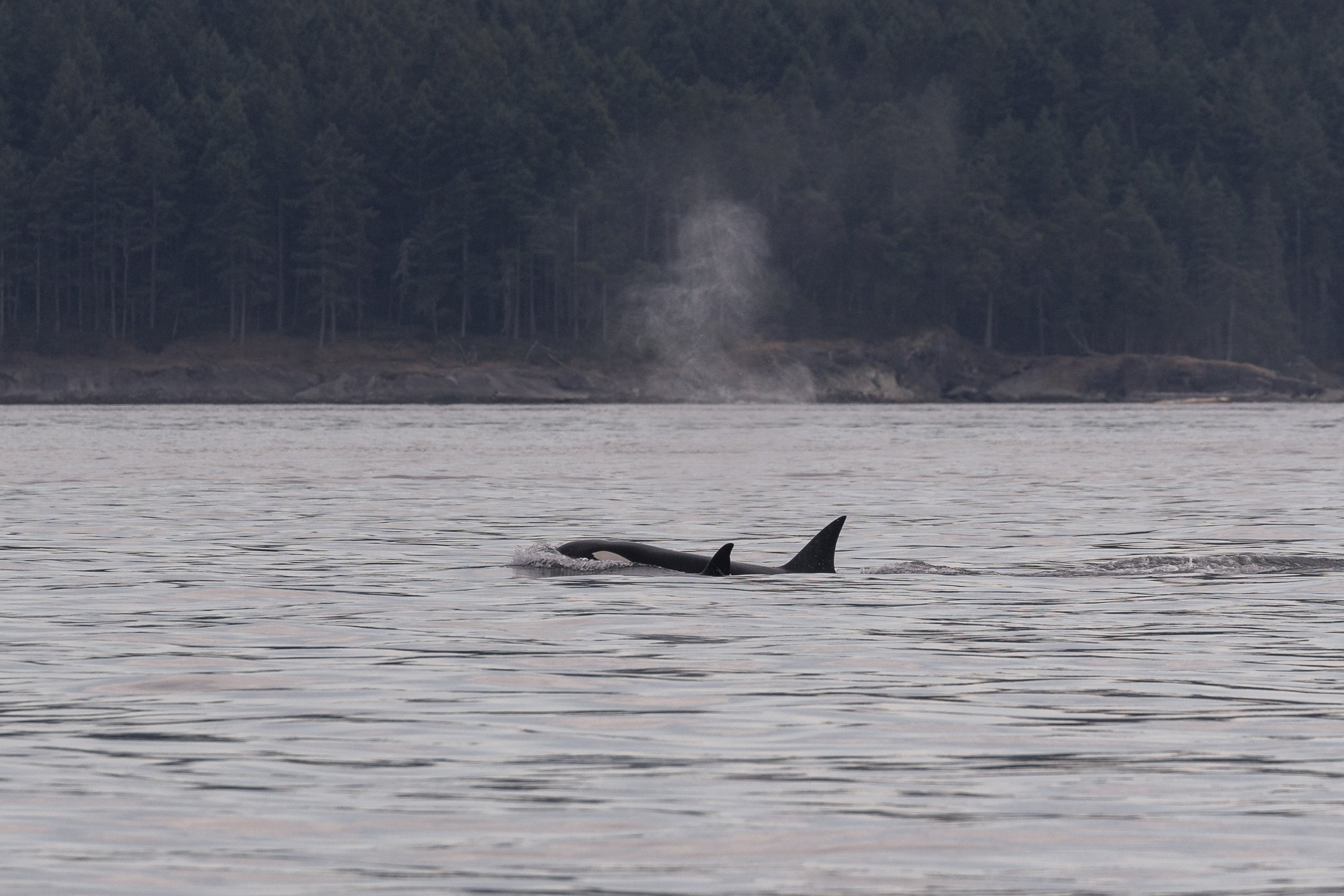
T077D Alycon surfacing with T065A Artemis. Photo by Jordan Robinson.
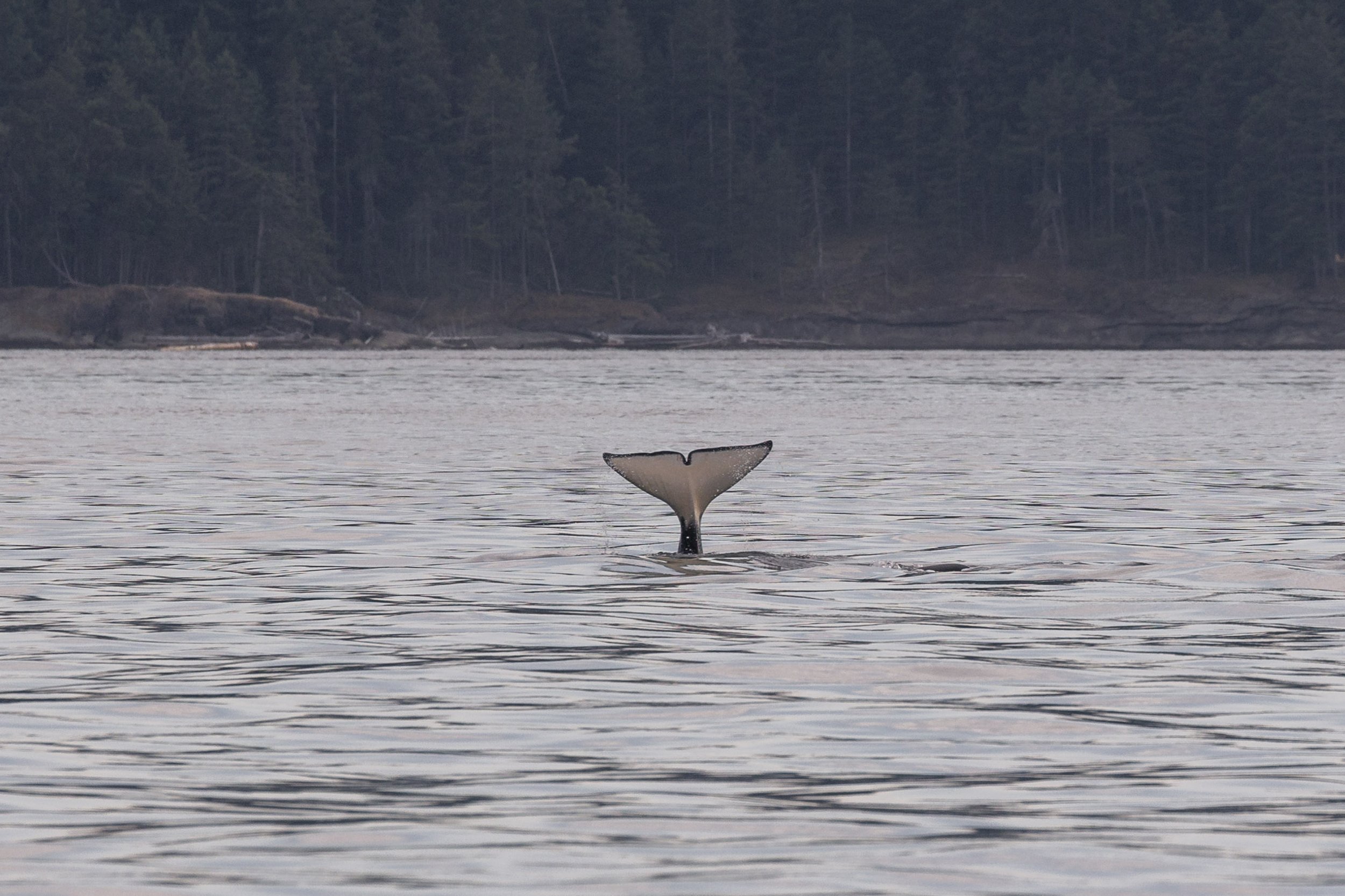
A lovely tail flick during the activity. by Jordan Robinson.
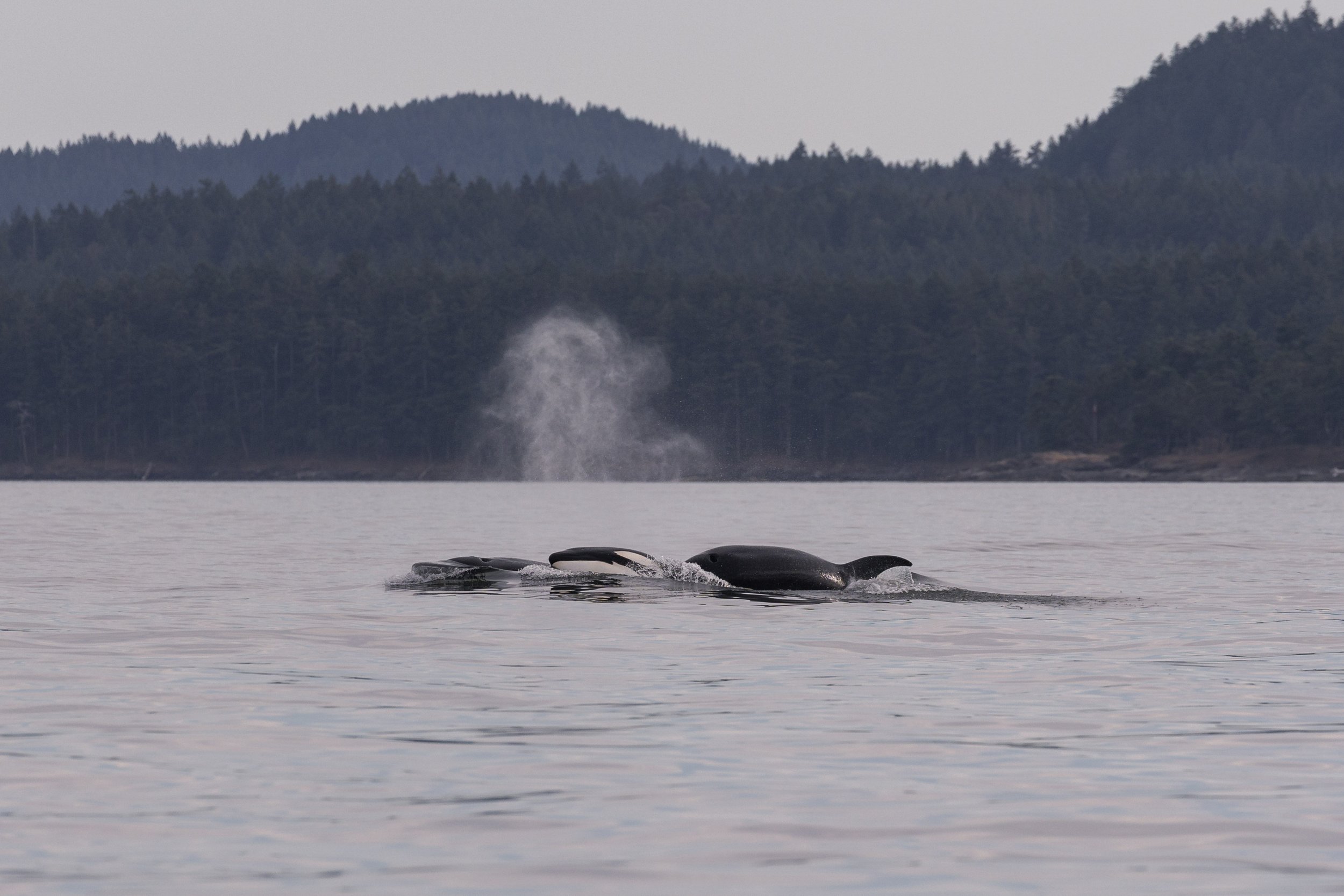
Another cuddle puddle with the T-party. Photo by Jordan Robinson.
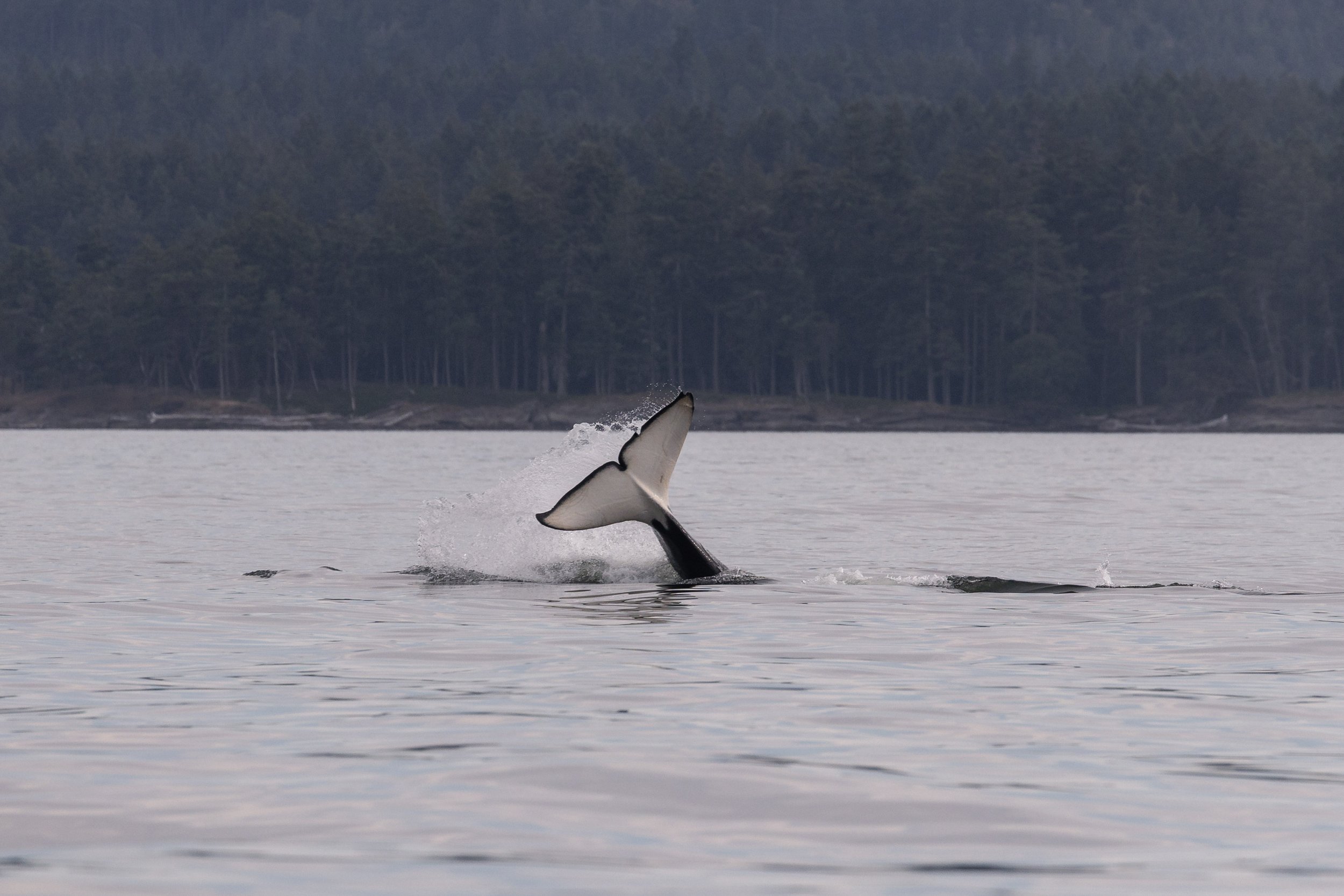
A lovely tail flick from another whale. Photo by Jordan Robinson.
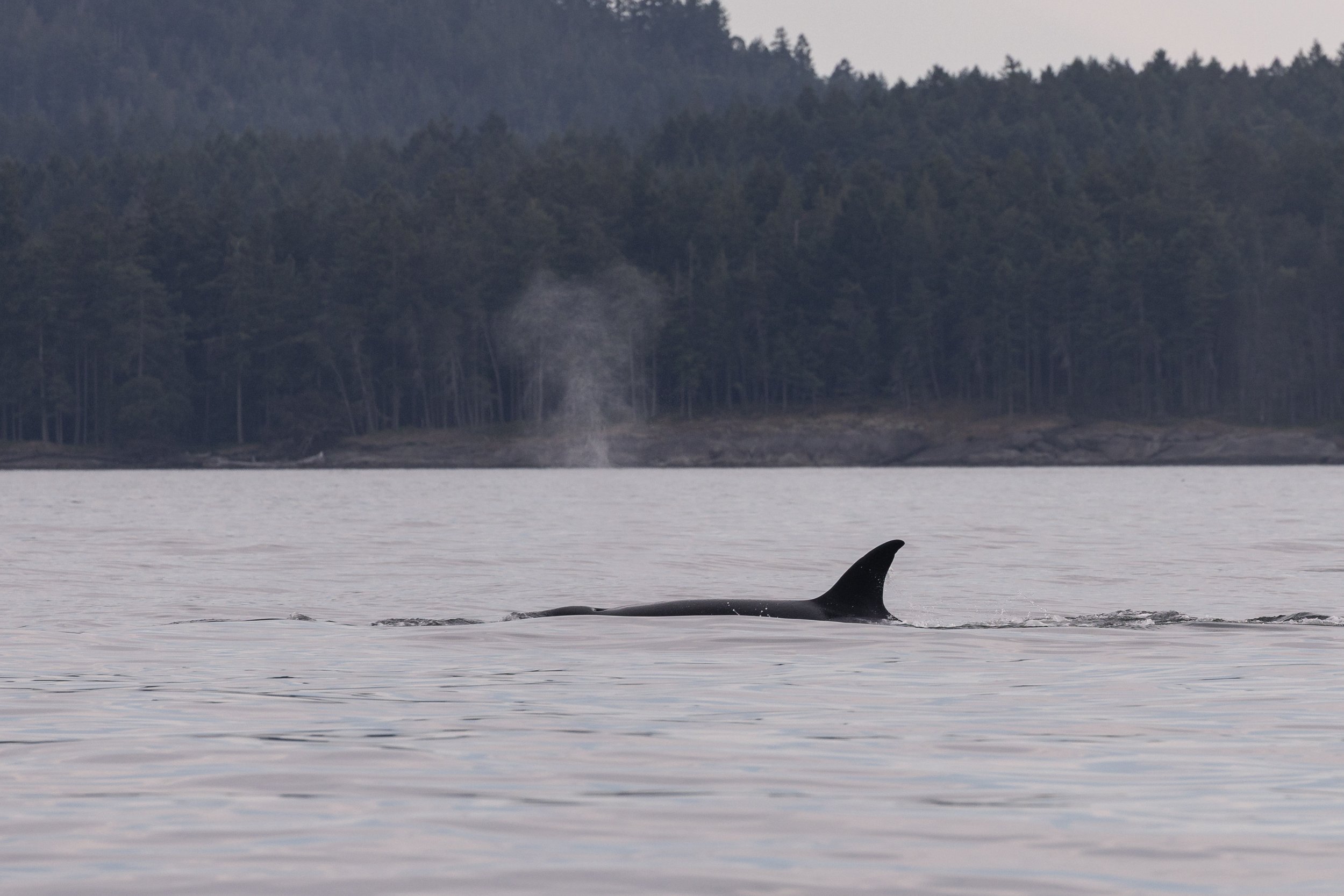
A great look at T065A Artemis swimming by. Photo by Jordan Robinson.
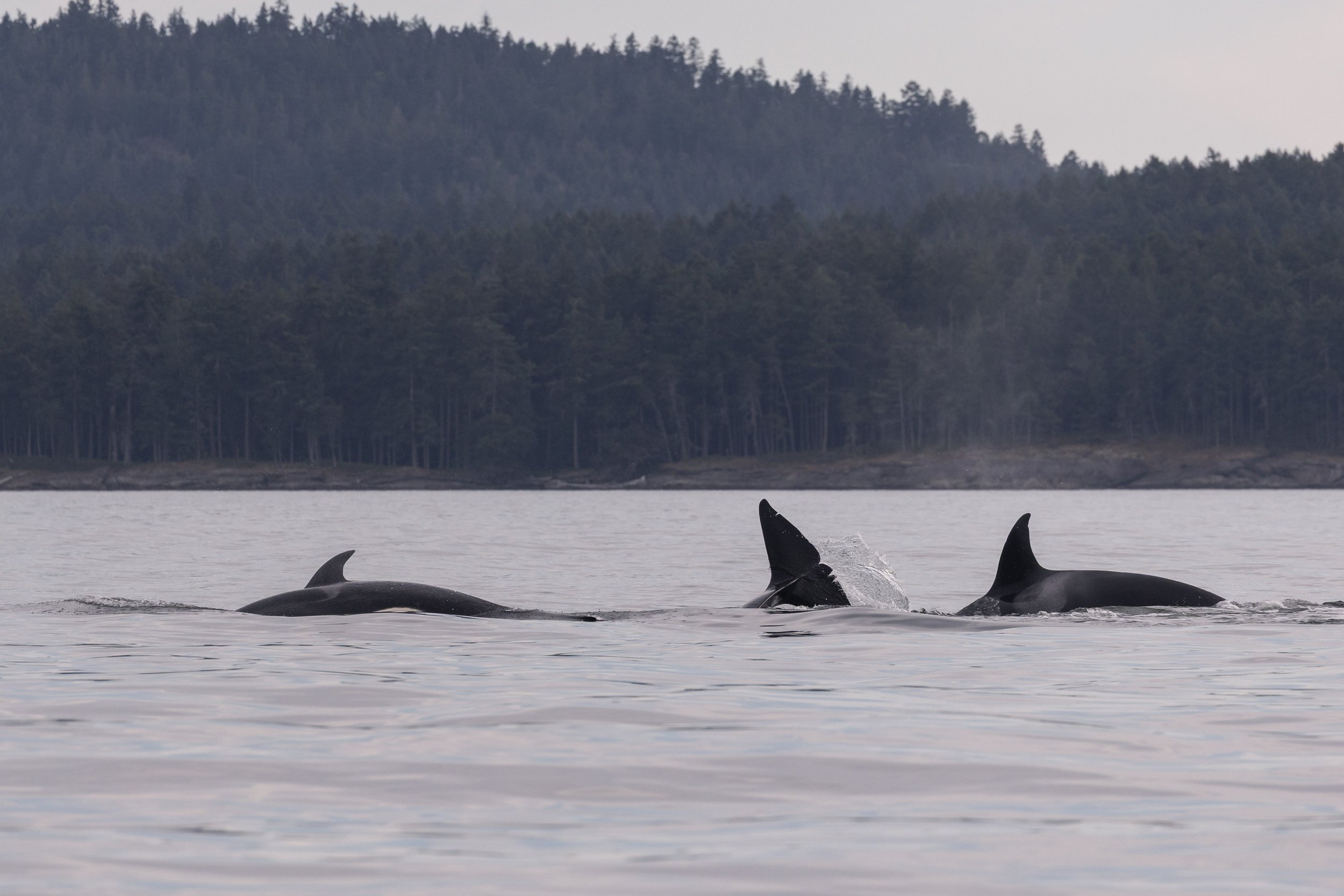
More excitement from the group of whales, showing T077E Misneach, a tail, and T065A Artemis. Photo by Jordan Robinson.
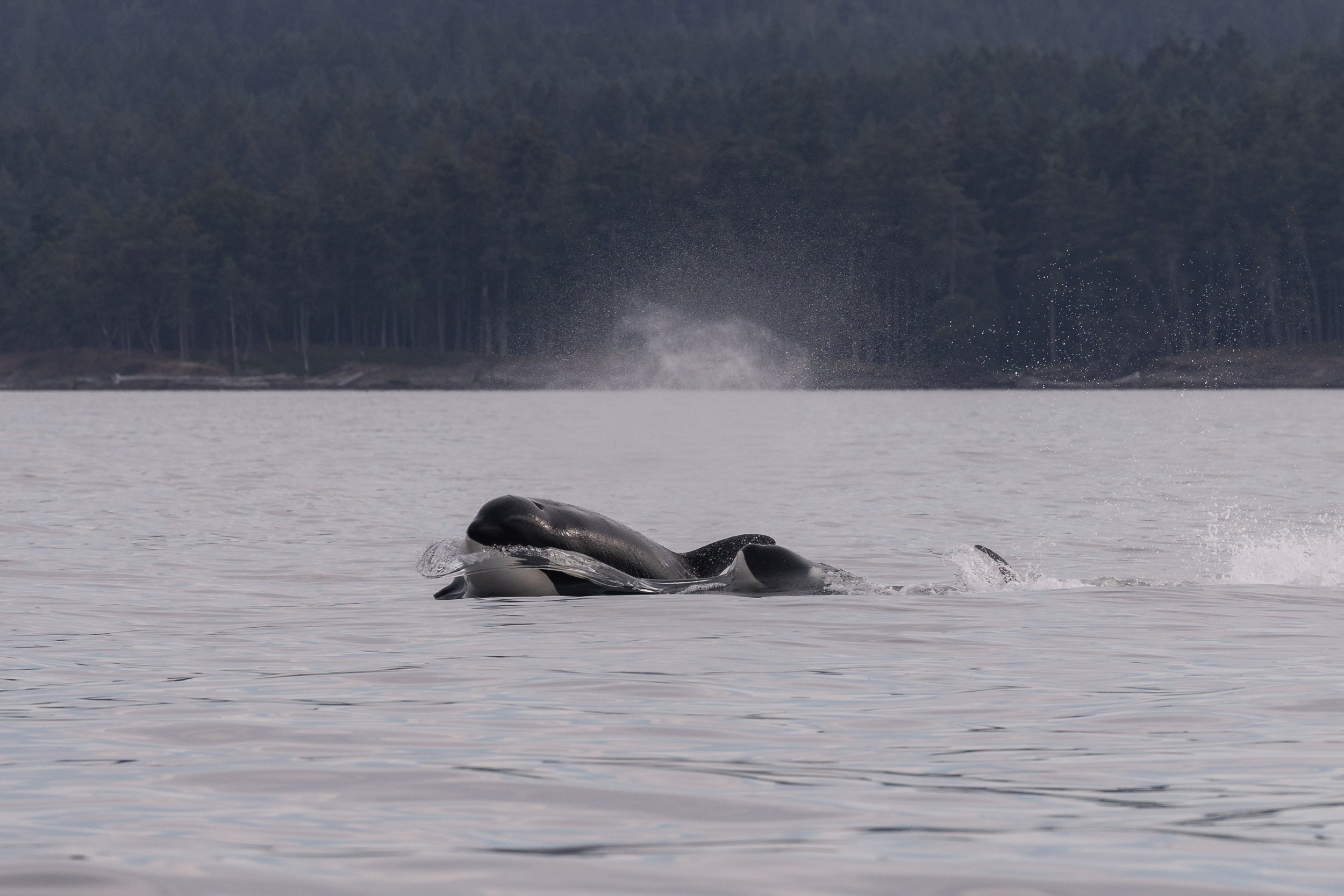
Just look at that surface tension in action! Photo by Jordan Robinson.
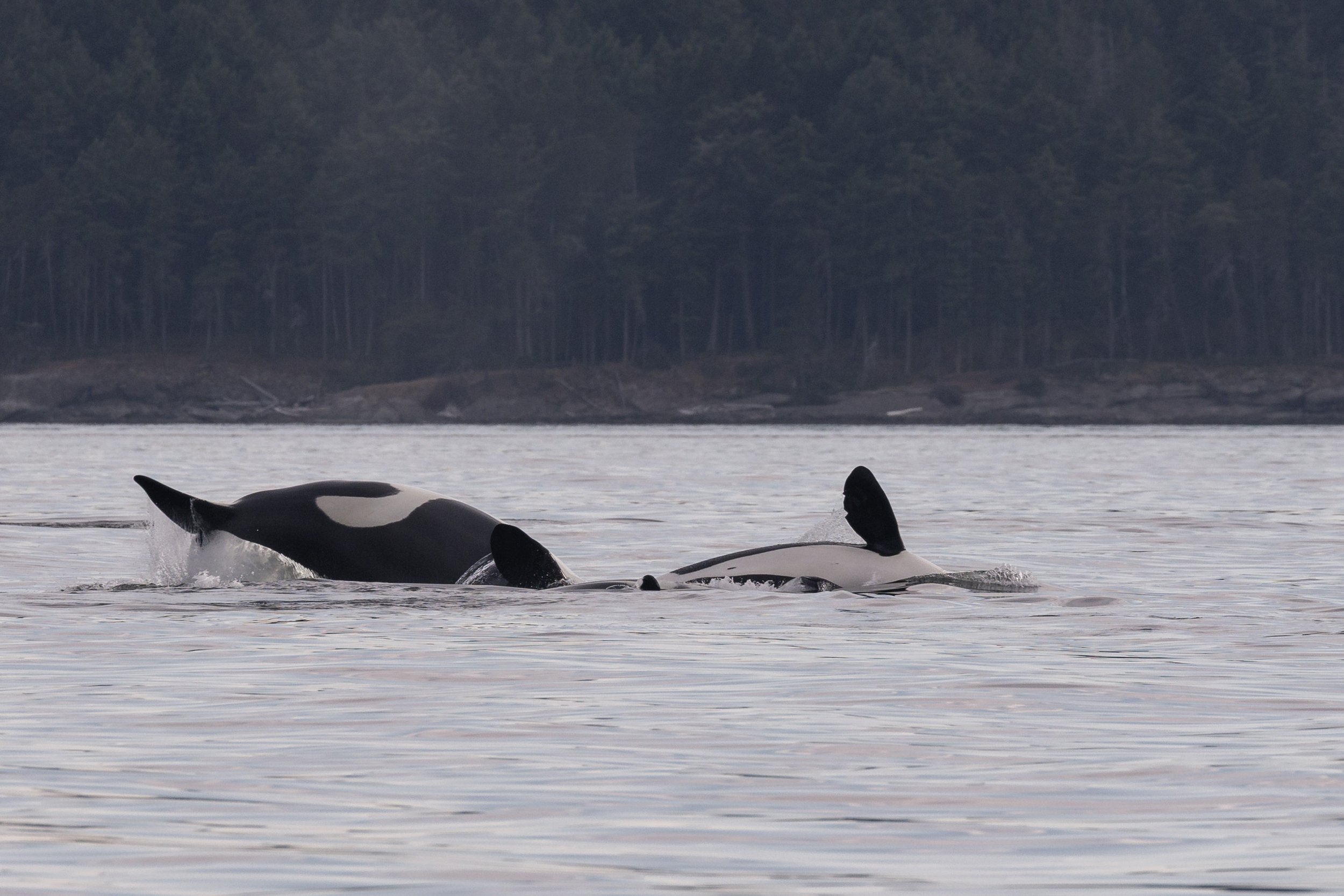
A few upsidedown whales together. Photo by Jordan Robinson.
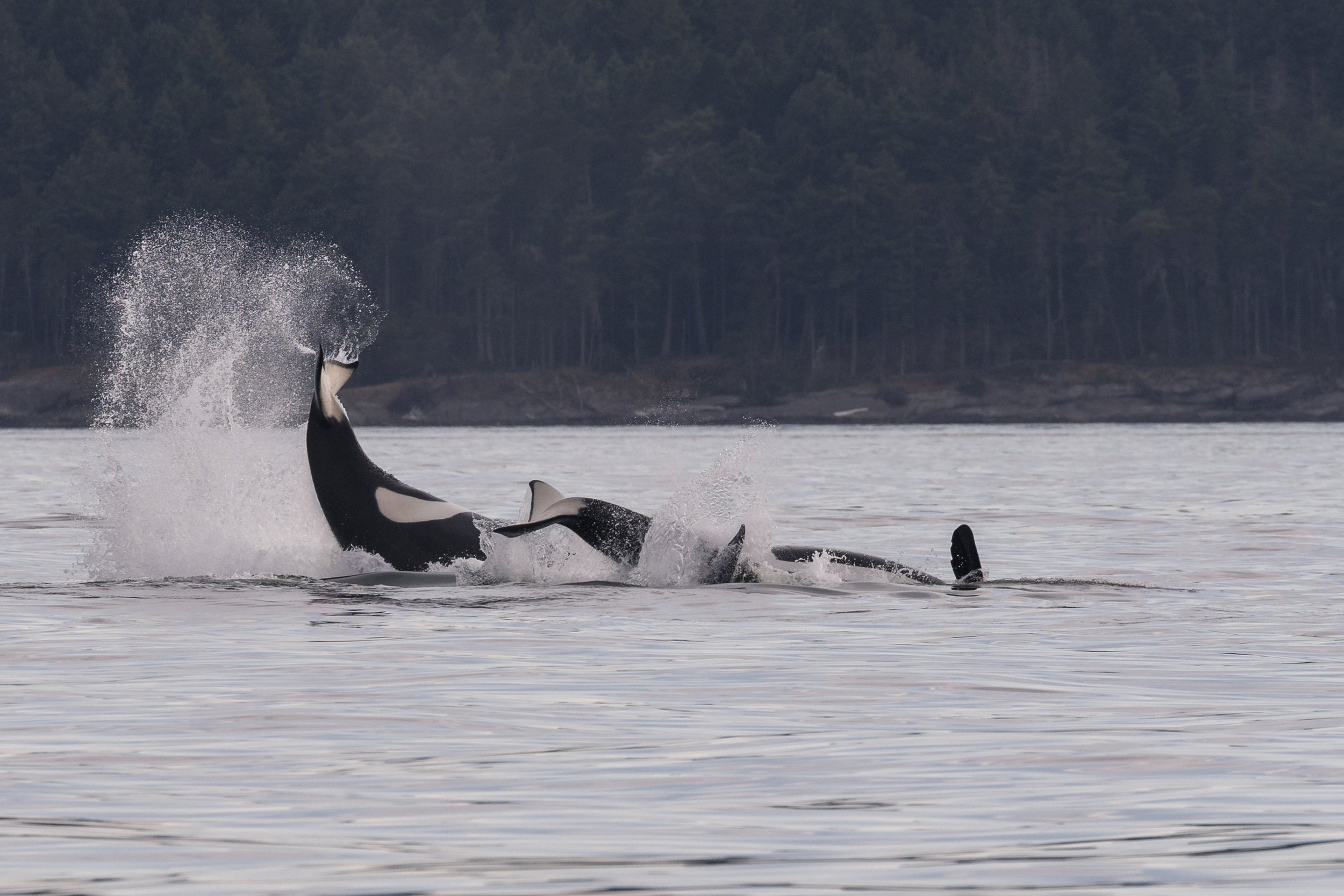
And a bunch of tail lobs from them. Photo by Jordan Robinson.
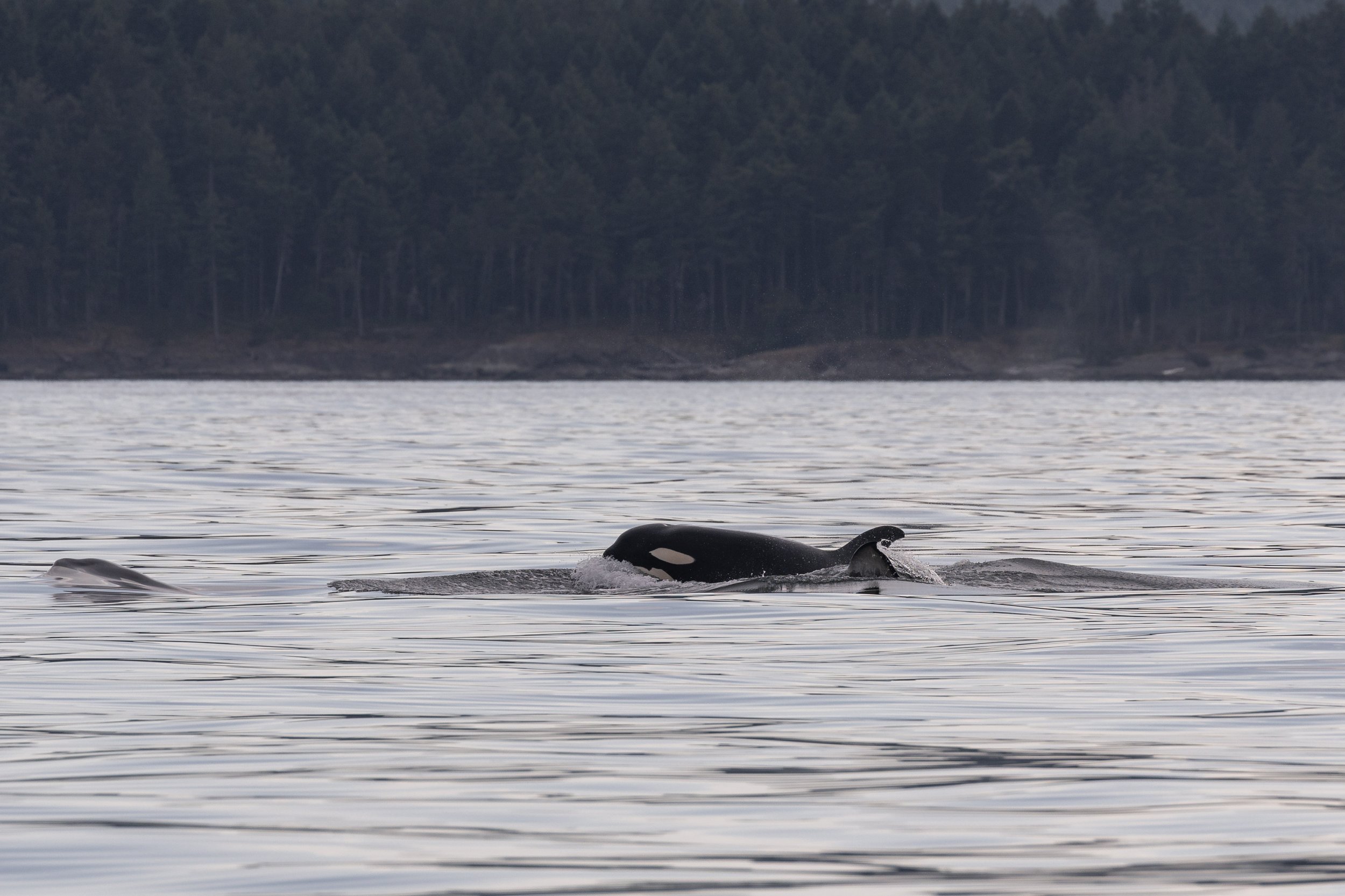
T065A6 Callisto showing off her eye patch. Photo by Jordan Robinson.
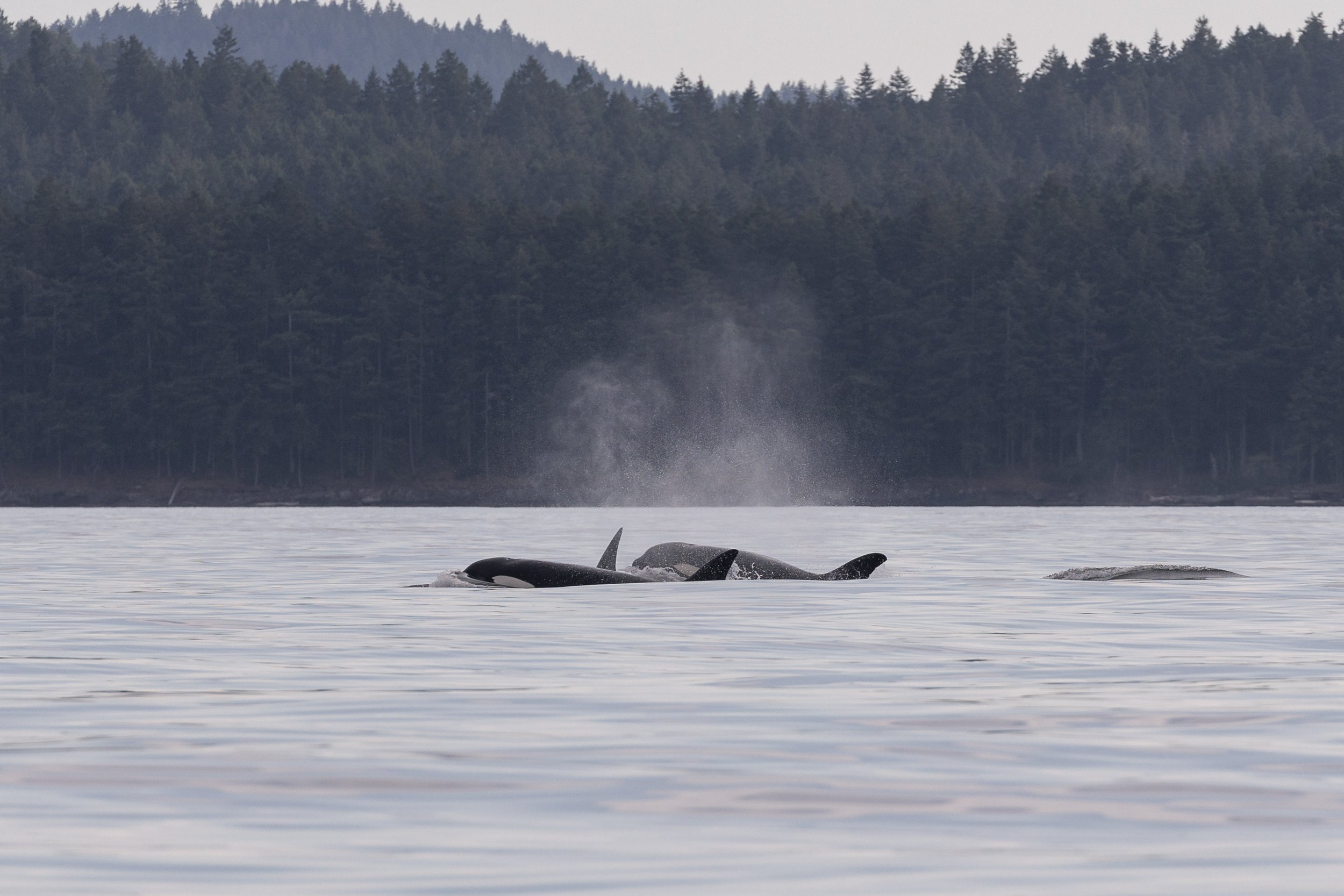
T077 Asja surfacing with T077D Alycon and T065A4 Ellifrit. Photo by Jordan Robinson.
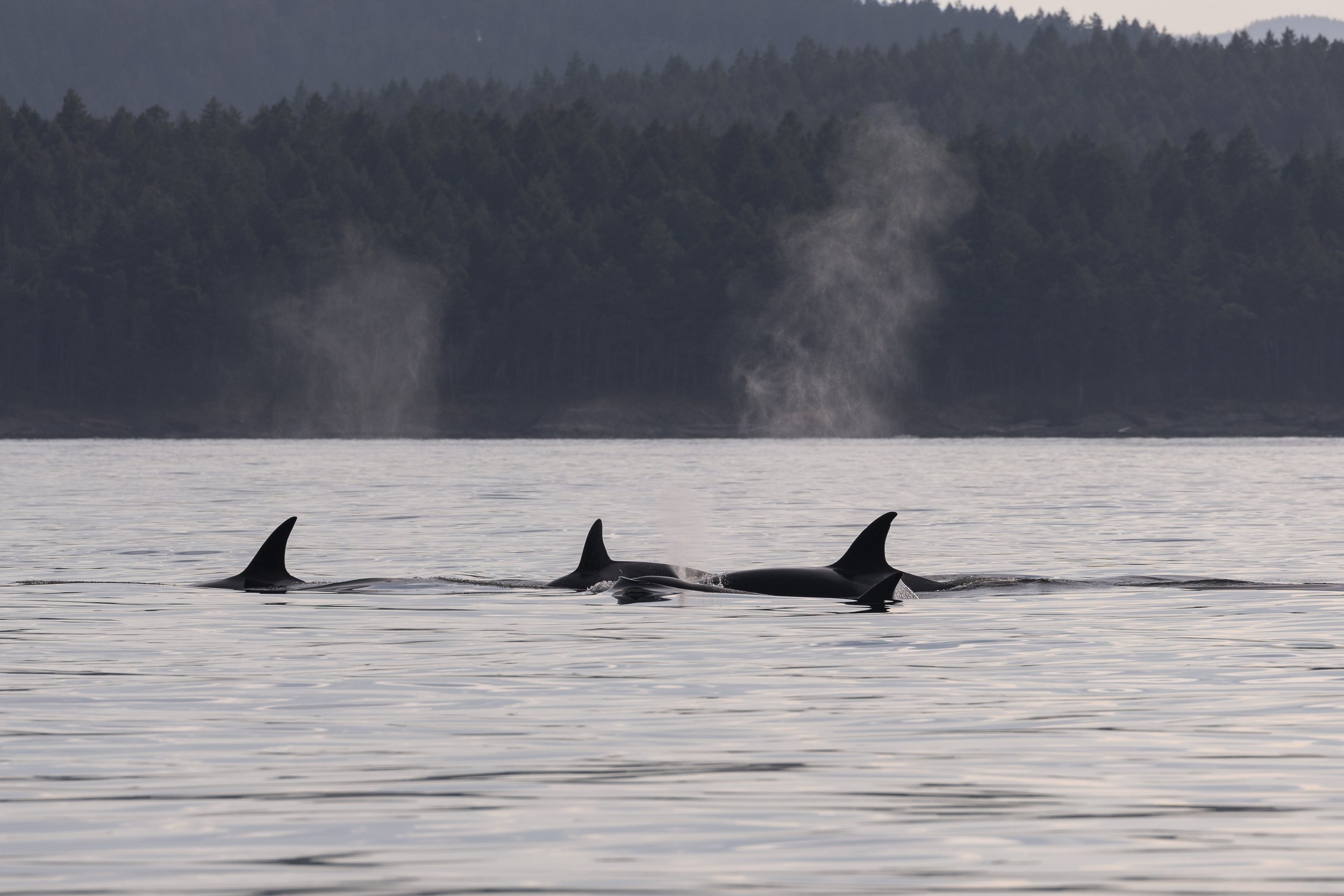
T077 Asja, T077E Misneach, T065A Artemis ad T077D Alycon surfacing together. Photo by Jordan Robinson.
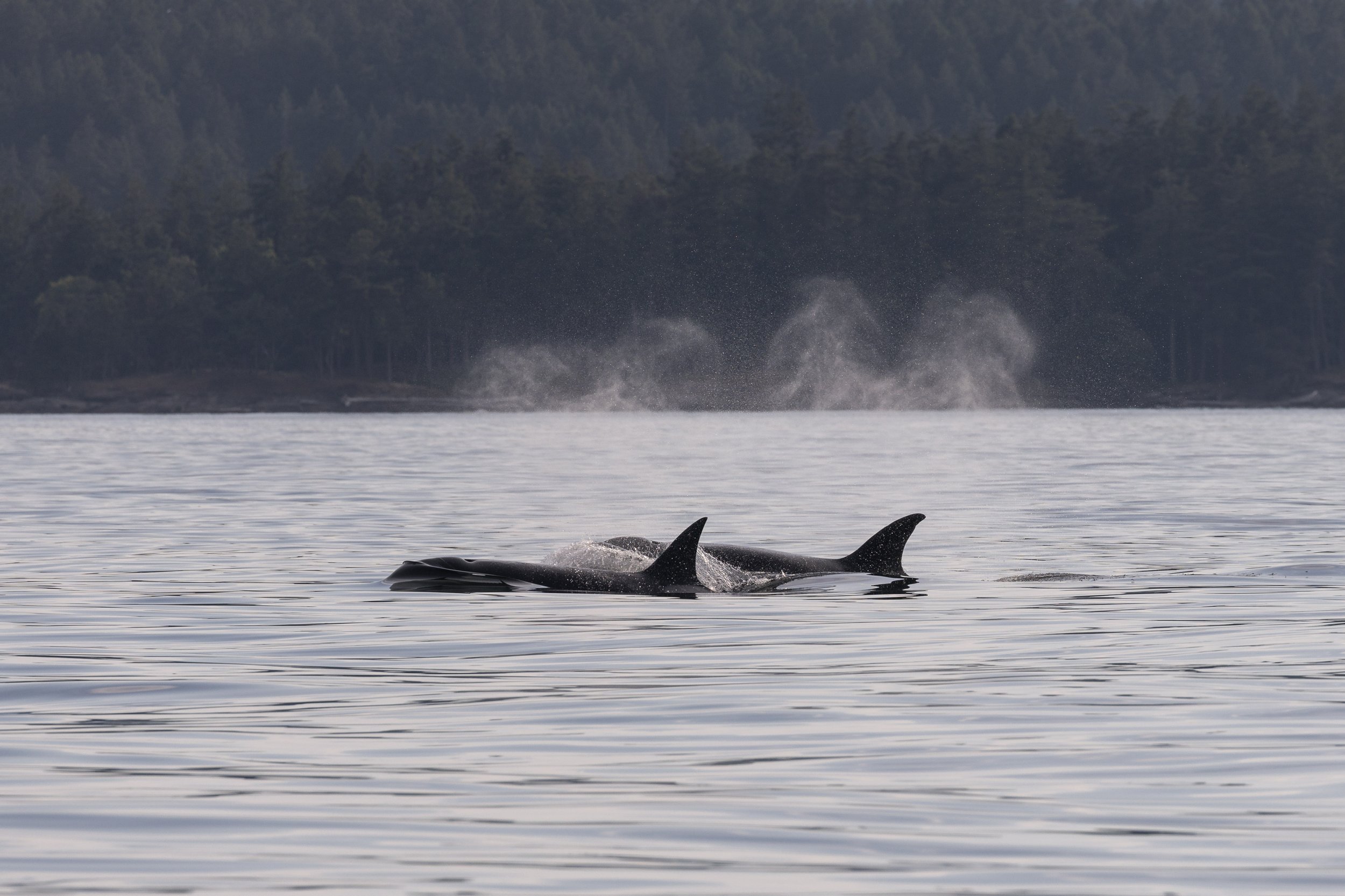
A great final look at T065A Artemis and T077D Alycon. Photo by Jordan Robinson.