
August 10, 2026, 10:30 AM - A morning spent with Humpbacks in the Strait
There was plenty to see on the water this morning as our two boats set out from Nanaimo, each taking a different route to spread out across the Salish Sea. With two boats searching independently, we could cover more ground and explore different waterways around the Southern Gulf Islands.
One boat headed over the top of Gabriola Island toward Thrasher Rock, where the search quickly paid off with a pair of humpback whales travelling together. The other boat took the inside passageways before making its way out through Porlier Pass, where another pair of humpbacks was waiting.
Near Thrasher Rock, the first pair turned out to be Orion (BCX1251) and Barge Boy (BCX2514). The two humpbacks were initially travelling together, moving through the area in the same direction. Humpbacks can be surprisingly social at times, but these temporary associations can change quickly. During our time with them, Orion and Barge Boy eventually separated and continued travelling on their own.
Meanwhile, the pair we found beyond Porlier Pass gave us a very different experience. Chi (BCZ0575) and BCX2316 remained together for the entire time we watched them, travelling side by side through the area.
Seeing humpbacks travelling together is always an interesting behaviour to witness. Humpback whales are not generally considered a highly social species in the same way that some toothed whales, such as orcas, are. Instead, most associations between humpbacks are relatively temporary. Two whales may come together because they are moving in the same direction, feeding in the same area, or simply happen to cross paths. Sometimes they stay together for minutes or hours, while other associations can last considerably longer.
That means every pair we encounter has its own story, and we don't always know exactly why two whales have decided to travel together.
While watching humpback whales, you may notice something else hitching a ride: barnacles.
Humpback whales can carry hundreds, and sometimes thousands, of small barnacles attached to their skin. These aren't parasites in the traditional sense. The barnacles are filter-feeding crustaceans that take advantage of the whale's enormous body as a place to live, allowing them to travel through nutrient-rich waters while filtering food from the surrounding ocean.
If you look closely at the photographs of the whales, you can spot clusters of barnacles around their tails and other parts of the body. Here are some barnacles from all the whales we spotted today:
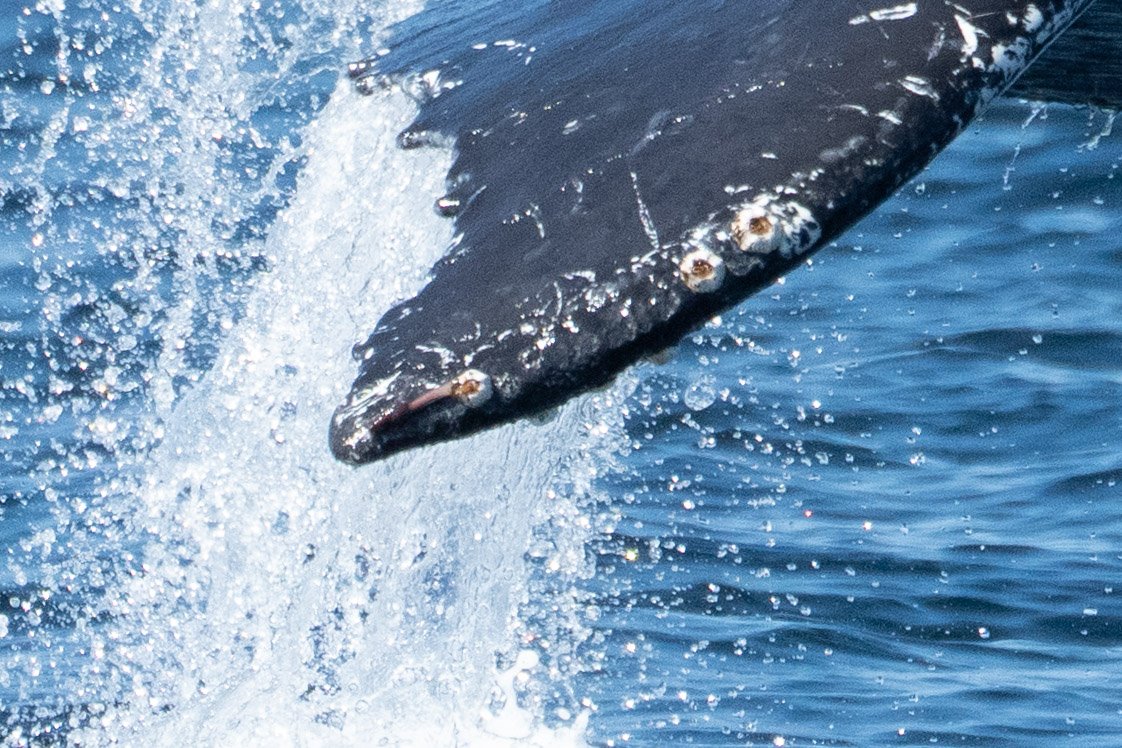
Orion. Photo by Val Watson.
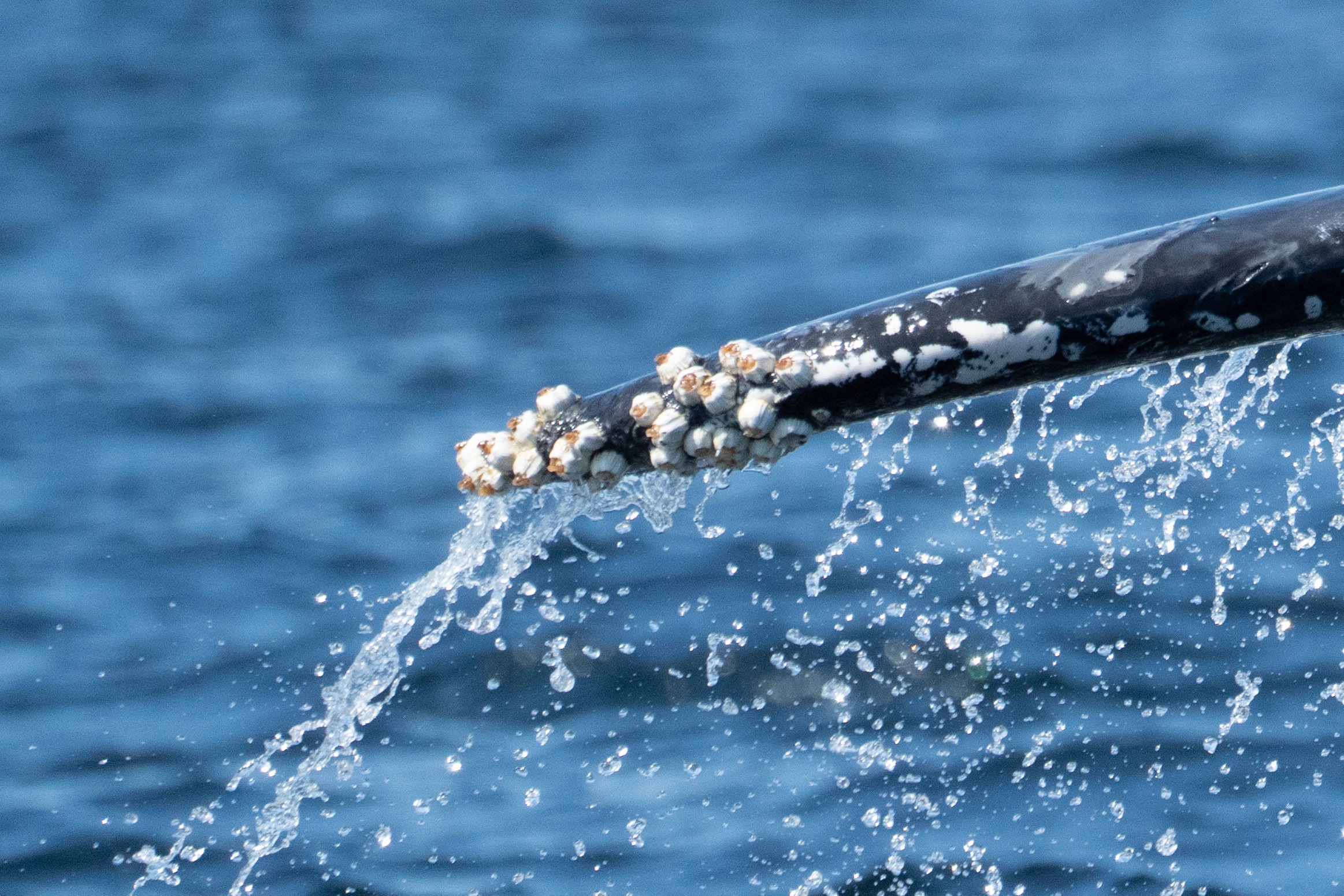
Barge BoyPhoto by Val Watson.
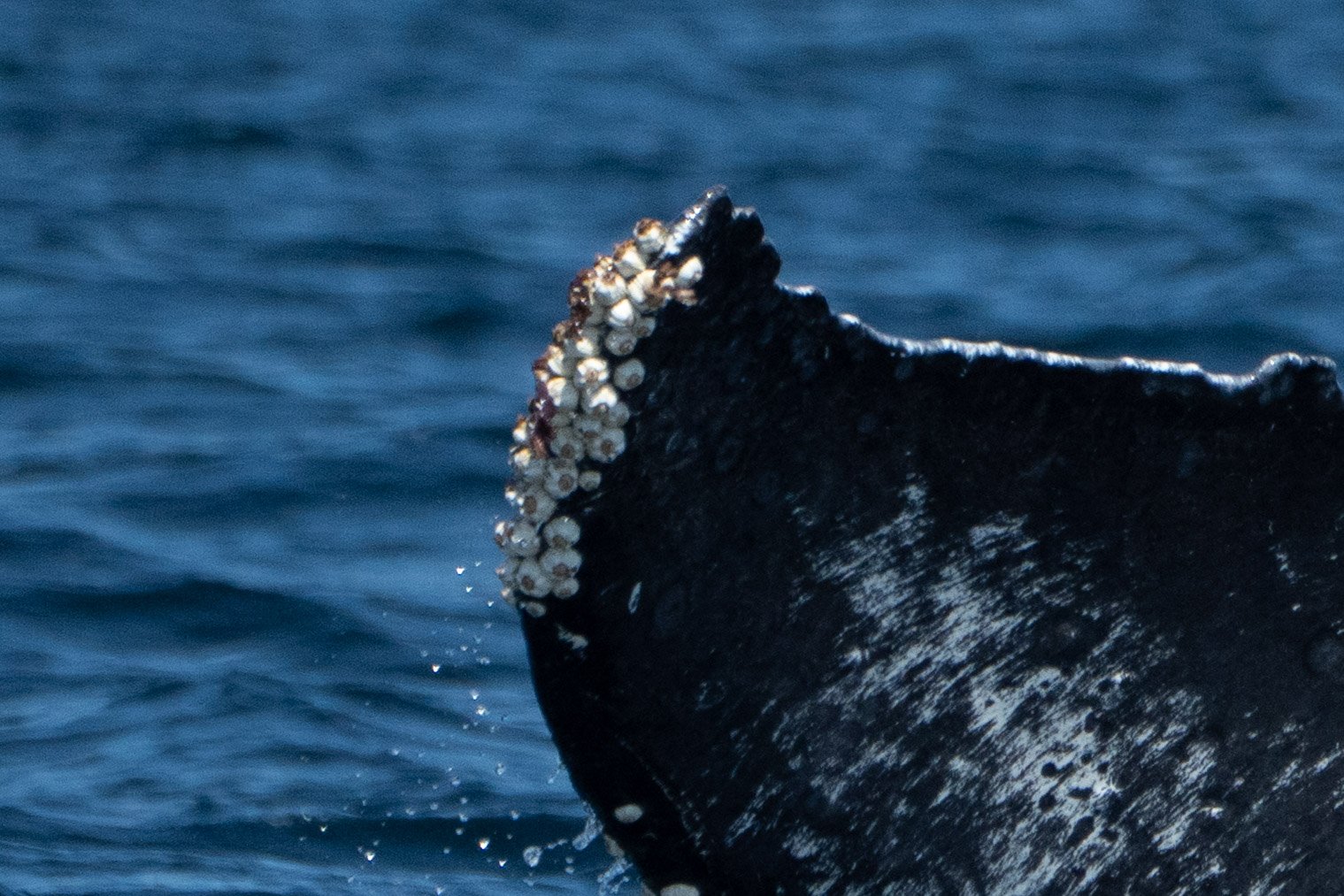
Fader. Photo by Val Watson.
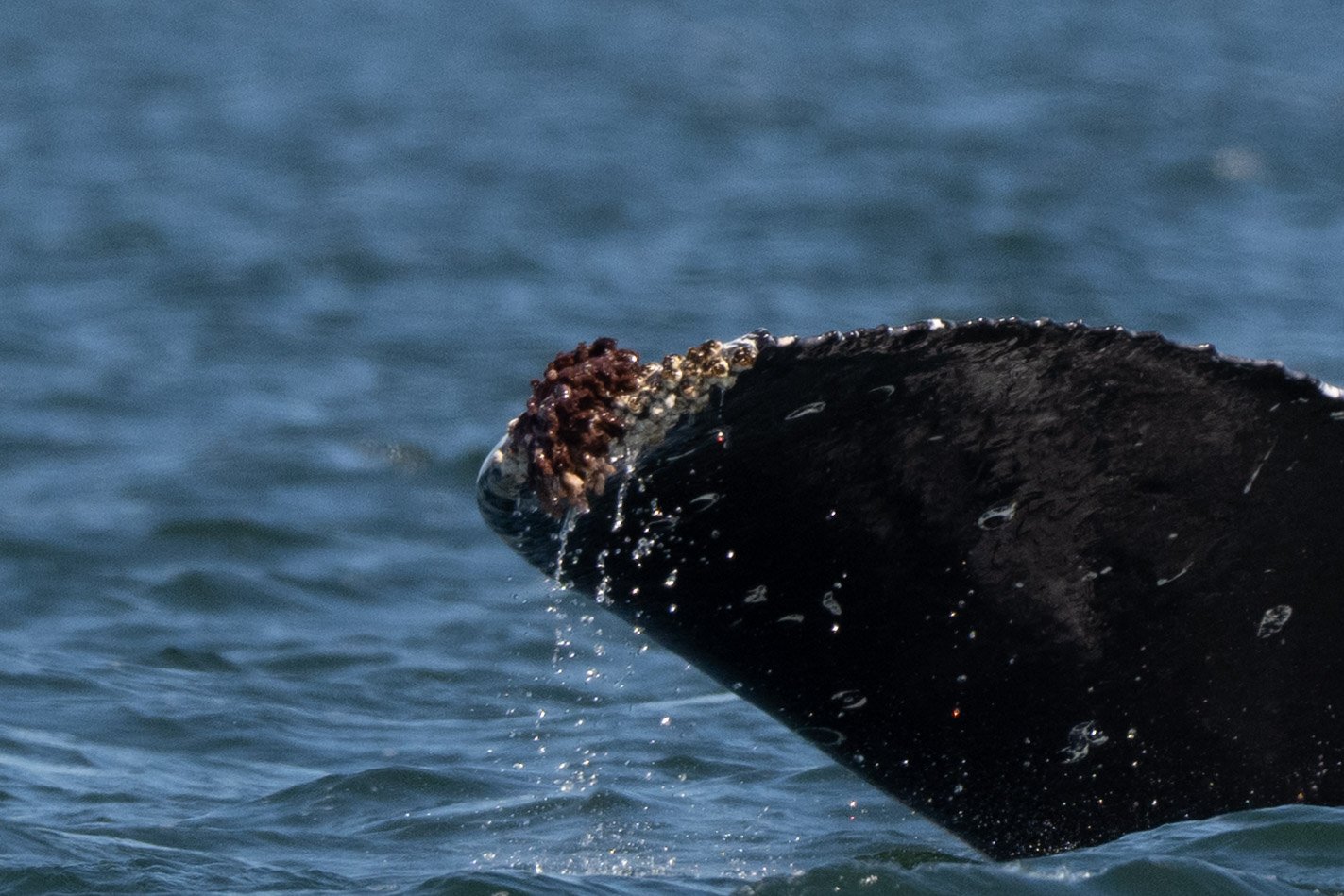
BCX2316. Photo by Aly Kohlman.
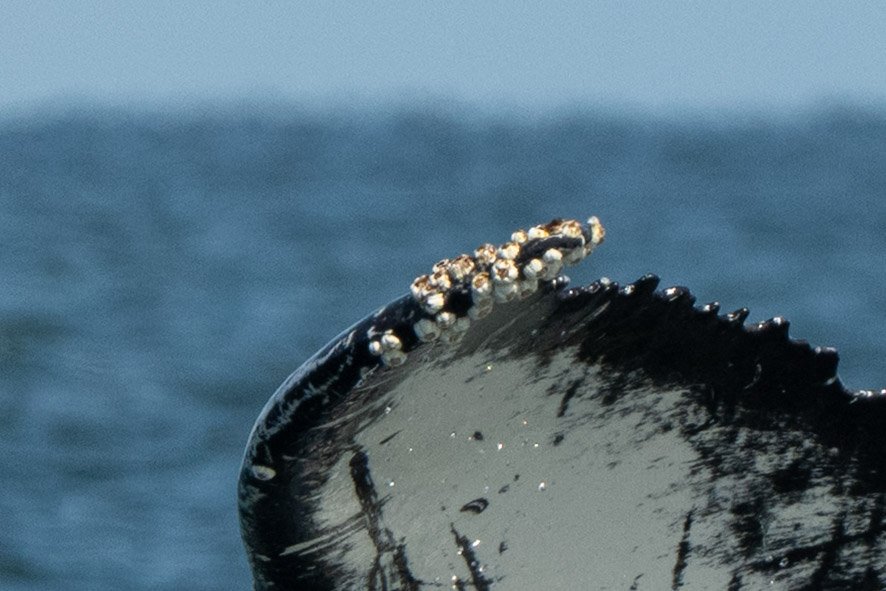
Chi. Photo by Aly Kohlman.
Over time, however, those barnacles can become worn, damaged or simply loose.
This is where things can get interesting.
Every so often, a humpback whale will appear to deliberately rub, roll, breach or slap against the surface of the water. These behaviours can create enough force to help dislodge some of the barnacles attached to its body. Watching a whale suddenly roll onto its side or throw itself partially out of the water can make for an impressive sight, and it may sometimes be more than just a dramatic display.
But there is an important distinction here: we don't need to see a whale doing these behaviours for it to be carrying barnacles.
Humpback whales can carry barnacles for long periods, and much of their time at the surface is spent quietly travelling, resting or feeding. Most of the whales here carry hundreds to thousands of pounds of barnacles on them at any given point in time.
So while a spectacular roll or breach might give a whale the opportunity to knock some barnacles loose, the absence of that behaviour doesn't mean the whale is barnacle-free. Sometimes they're simply along for the ride, tucked away beneath the surface or hidden from our view.
Although these encounters were amazing, the morning wasn't finished with the humpbacks yet.
Later, while exploring around Gabriola Island, the boat encountered another familiar individual near Thrasher Rock: Fader (BCY0195).
Fader was travelling through the area while also spending time feeding, so rather than lingering for an extended viewing session, the boat continued on after enjoying a few looks at this solo whale.
With so much water to explore and plenty of other wildlife to look for, there was no shortage of places to go next.
Both boats also stopped at one of our favourite local wildlife-viewing spots: Stinky Rock.
Despite the name, Stinky Rock is anything but boring when it comes to wildlife. The rocky outcrop provides an important haul-out area for marine mammals, and today both Steller Sea Lions and Harbour Seals were making use of the rocks.
Steller Sea Lions are particularly hard to miss. These enormous pinnipeds can pile onto the rocks together, vocalizing, jostling for space and occasionally slipping into the water before climbing back out again. Nearby, Harbour Seals often offer a much quieter contrast, resting on the rocks and keeping a watchful eye on the activity around them.
One boat even got an excellent look at a Bald Eagle feeding on something around the rocks. Eagles are frequent sights throughout the Salish Sea, but getting to watch one actively feeding is always a special bonus.
After a morning of exploring, the two boats took different routes back toward Nanaimo once again.
One headed around the outside, offering a change of scenery and a more open-water perspective on the return journey. The other made its way back through the inside passageways, weaving between the islands on the route home.
It's one of the things we love about spending time on the water around Nanaimo: even when the destination is the same, there are countless ways to get there.
Between four humpbacks travelling in two very different pairs, another solo whale near Thrasher Rock, Steller Sea Lions, Harbour Seals and a Bald Eagle enjoying breakfast, it was a morning that showcased just how much life can be found throughout the waters surrounding Gabriola Island.
Please enjoy the photos taken throughout the trip by Marine Naturalists Val Watson and Aly Kohlman, included below!
Orion and Barge Boy
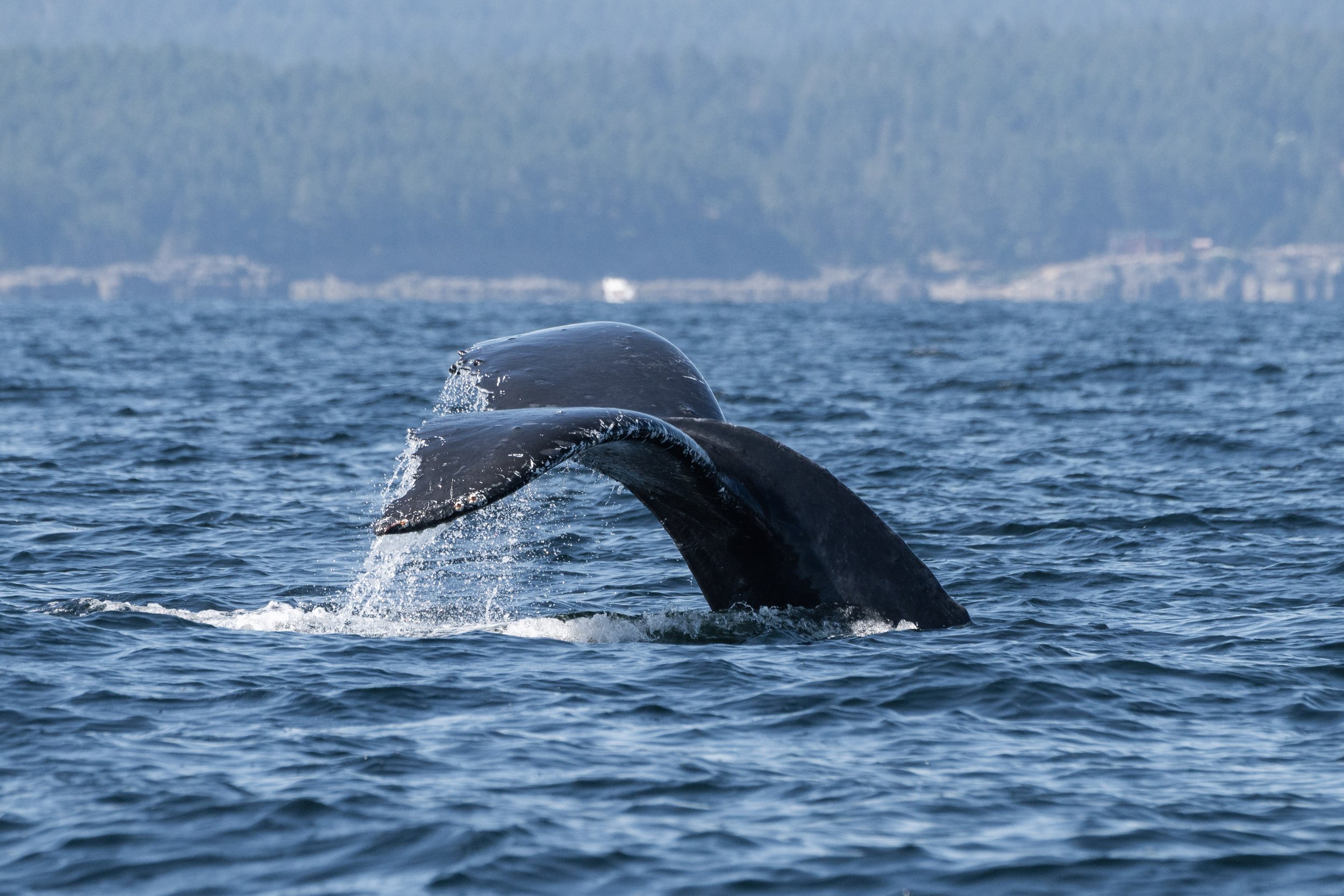
Orion going for a dive. Photo by Val Watson.
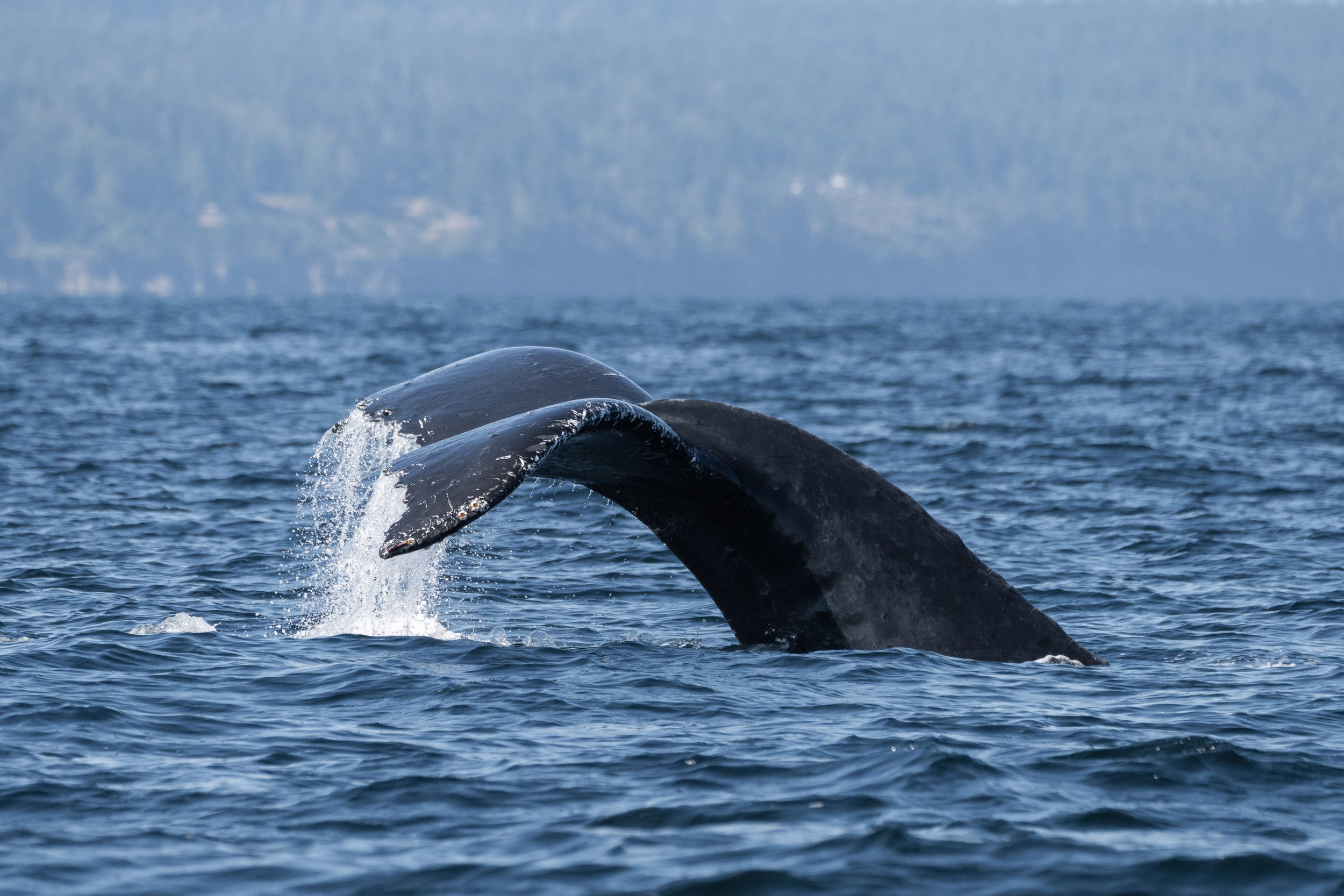
A lovely fluke waterfall from Orion as he dives. Photo by Val Watson.
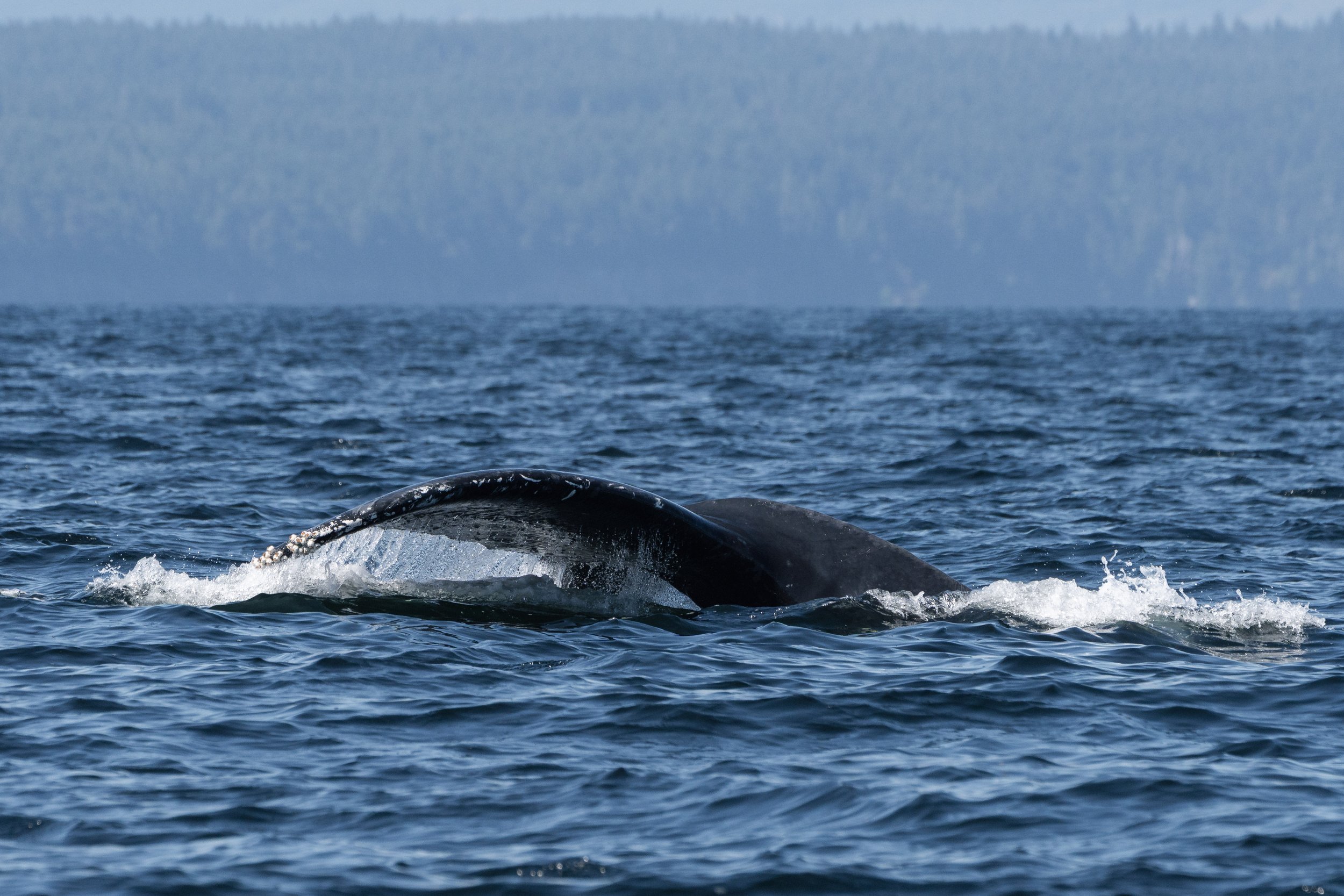
Barge Boy going for a dive. Photo by Val Watson.
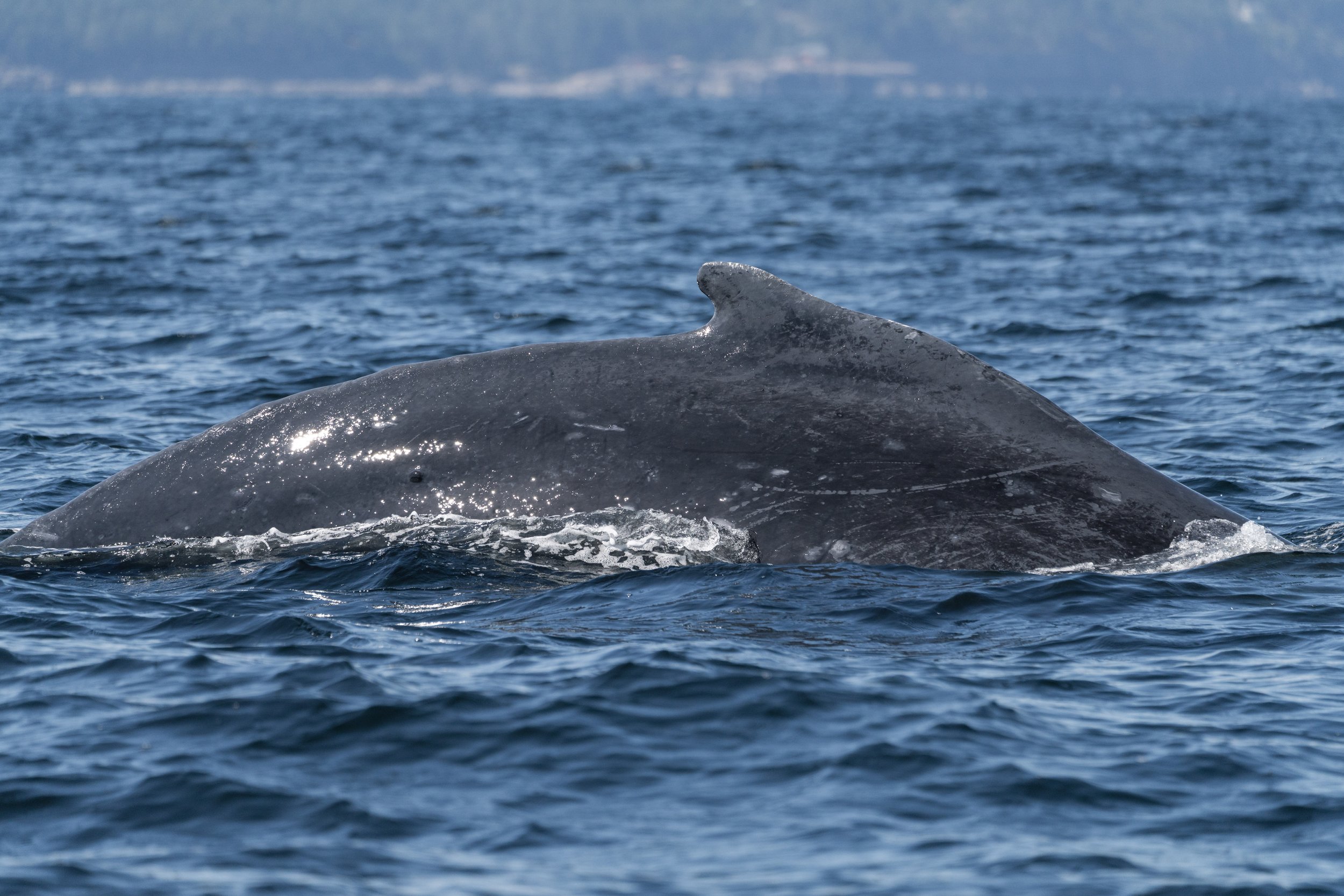
Barge Boy’s dorsal fin as they arch to dive. Photo by Val Watson.
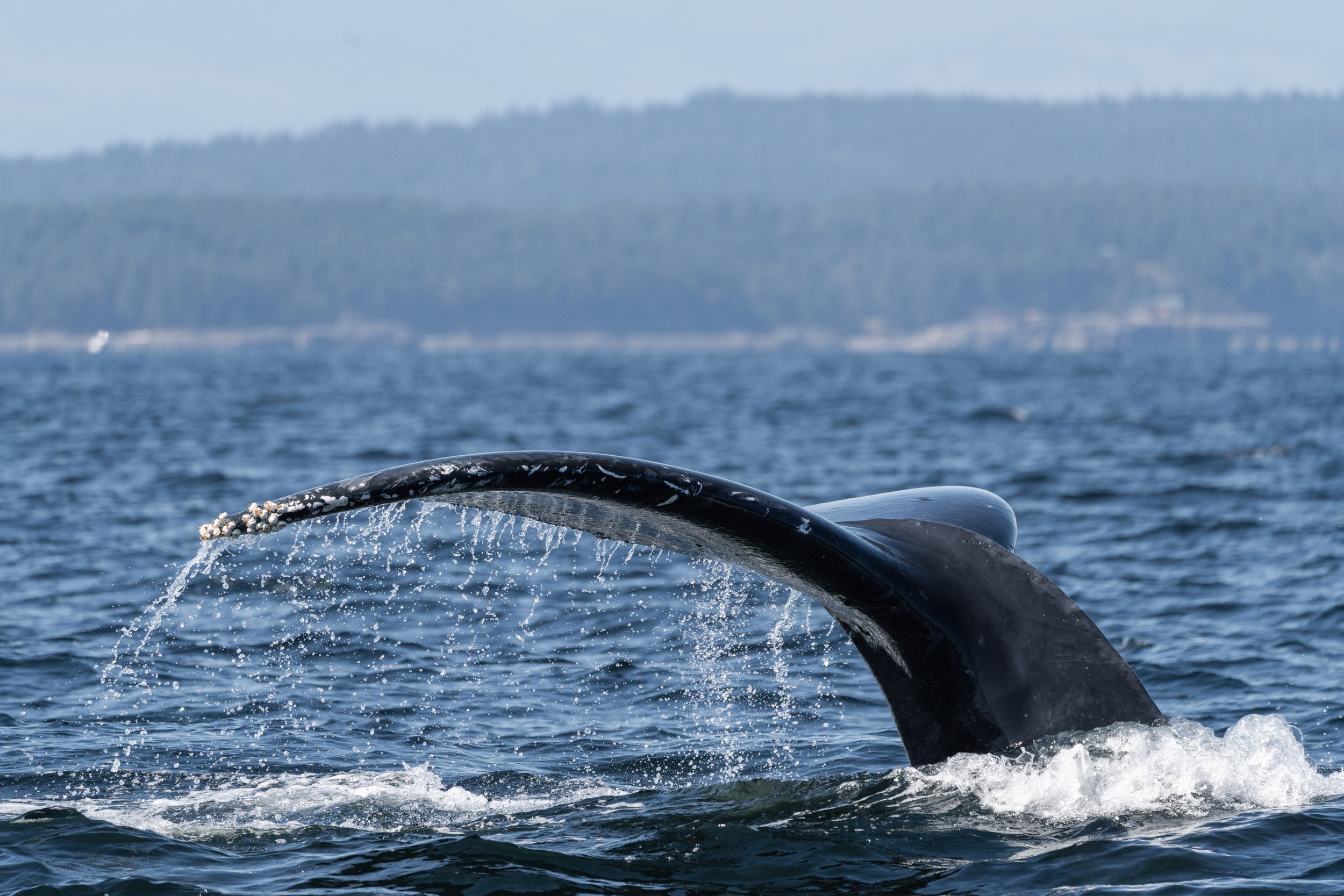
A lovely fluke waterfall from Barge Boy as they dive. Photo by Val Watson.
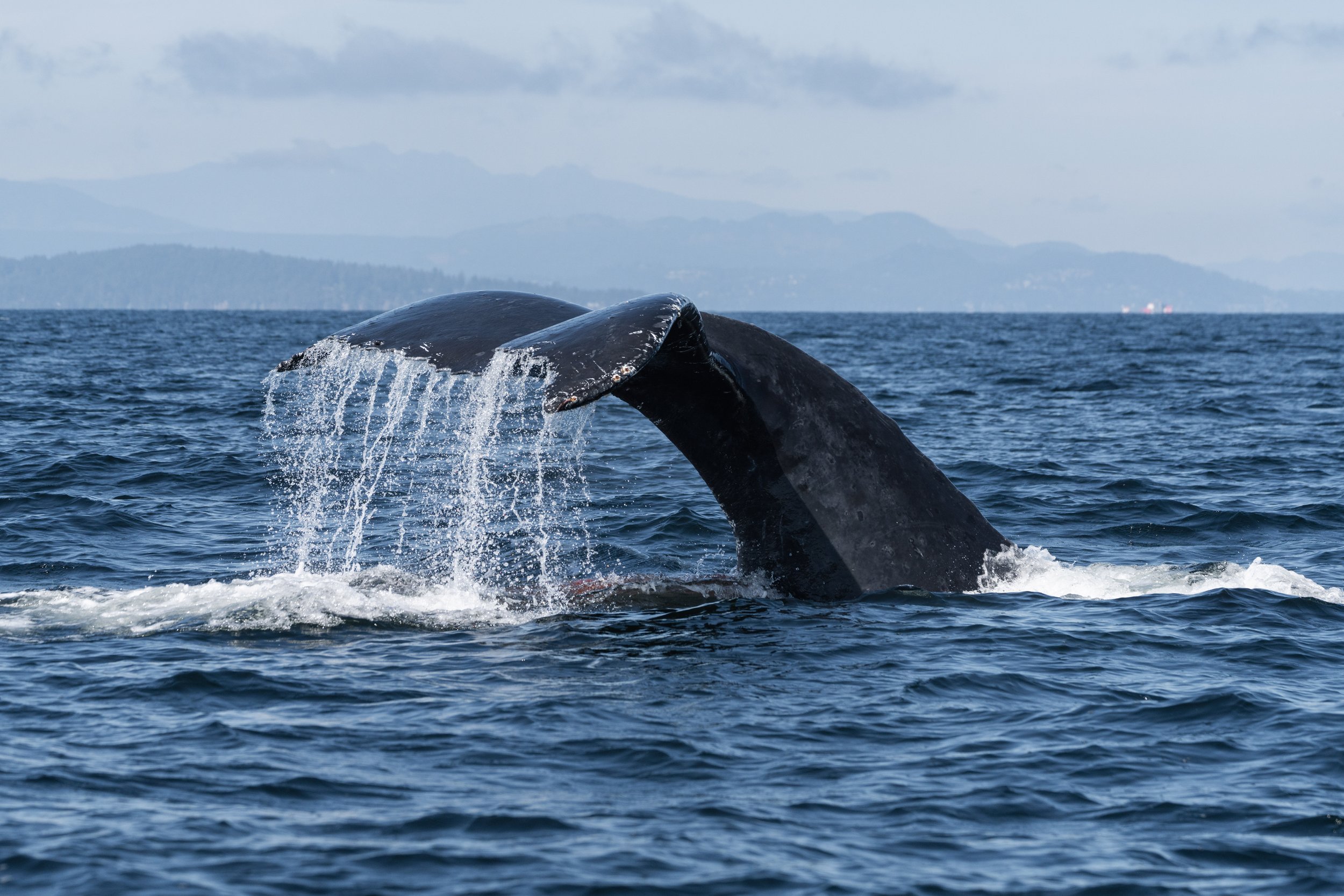
Orion pooping as he dives. Photo by Val Watson.
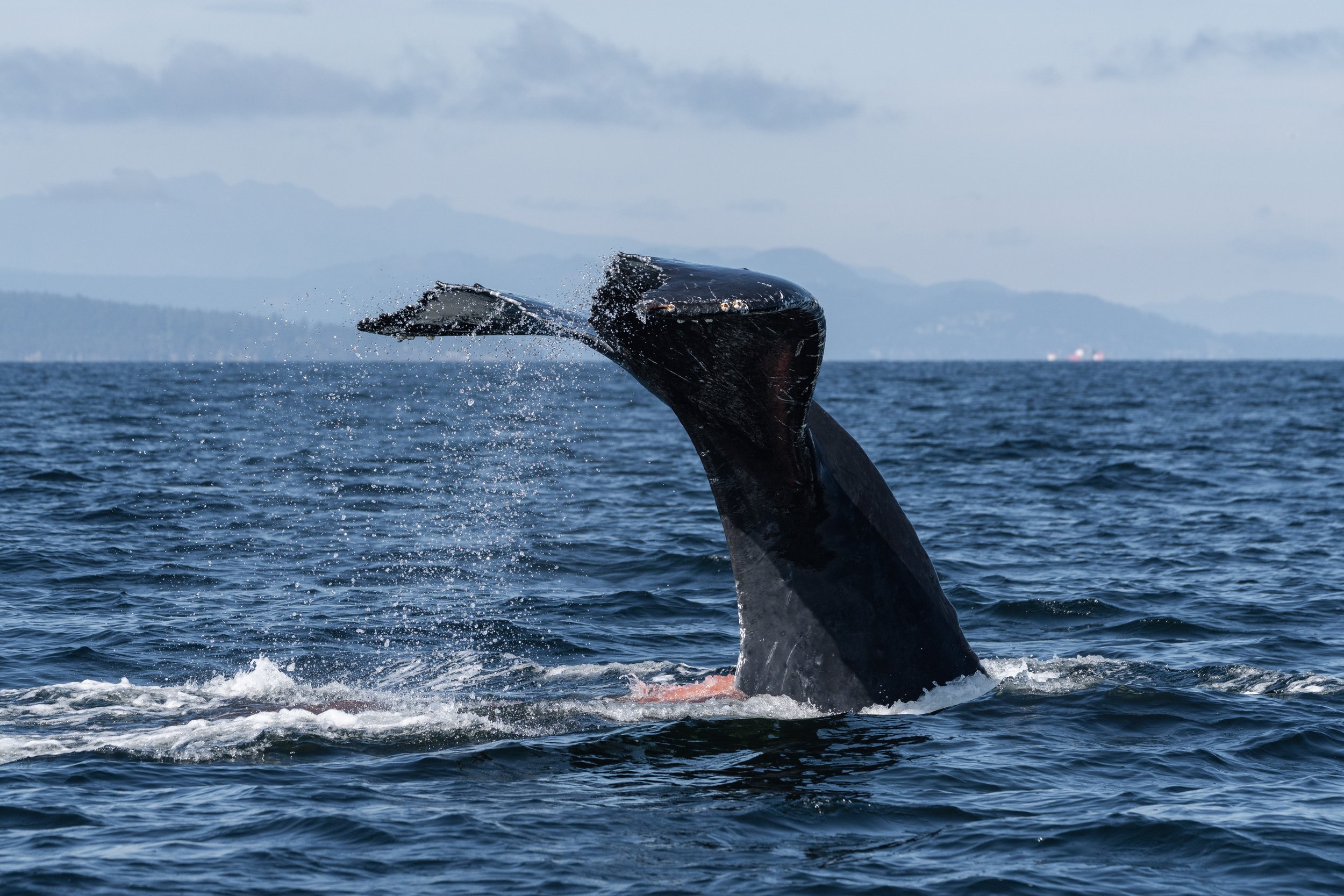
From the red colour, we know hes been eating lots of krill! Photo by Val Watson.
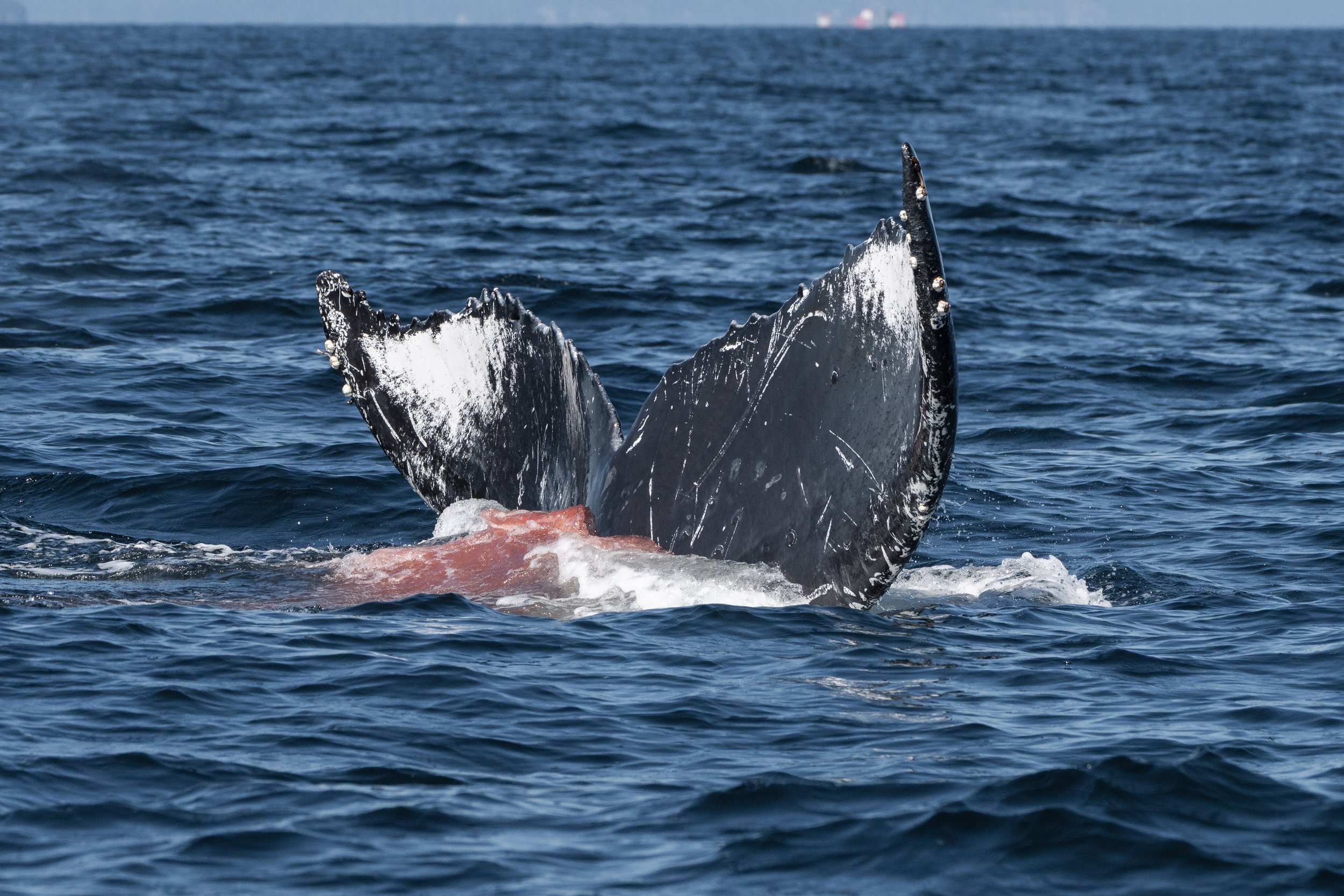
A poopy picture of Orion as he dives. Photo by Val Watson.
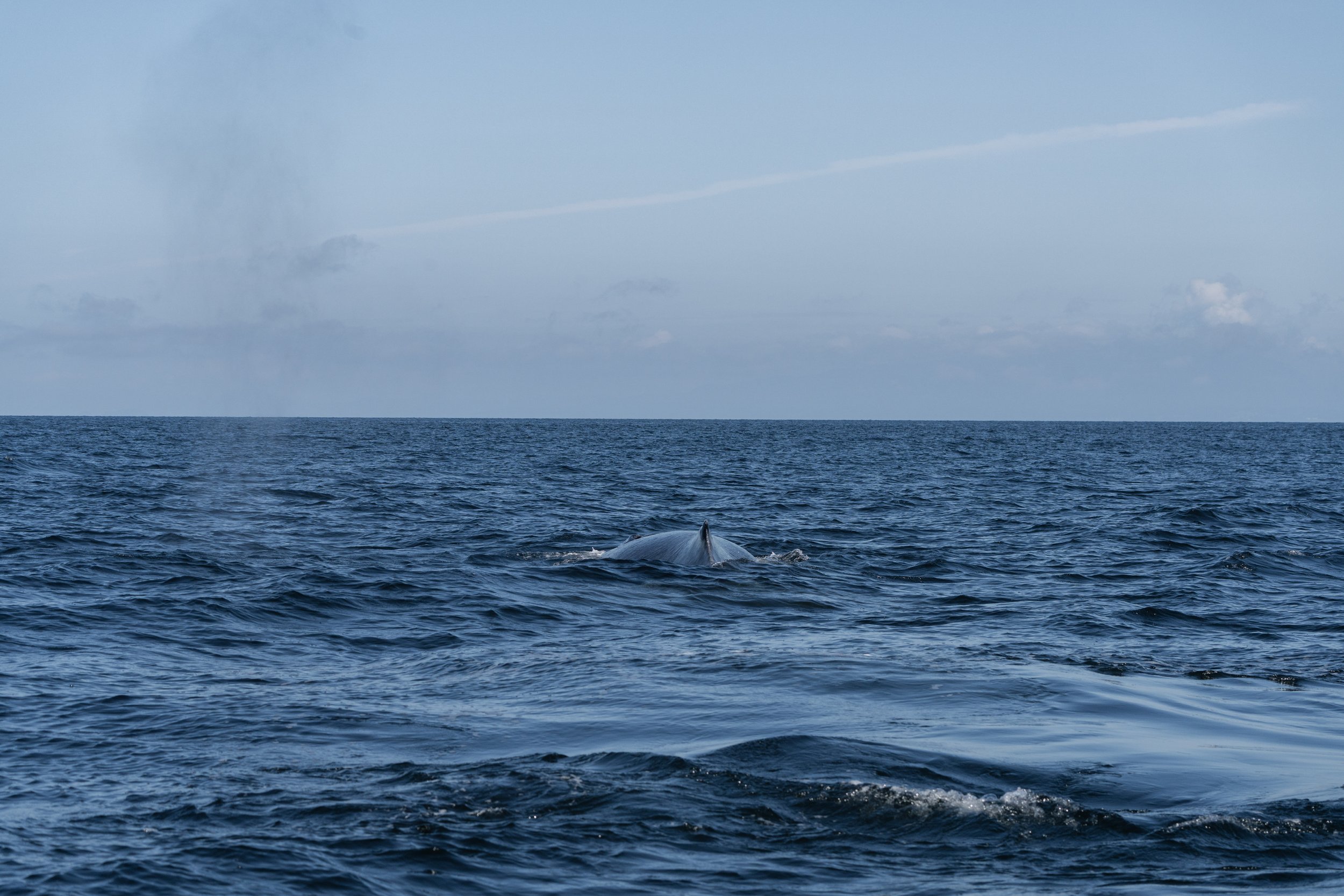
A look at Orion fluke print (the soothed out bit of water) as he swims away from the camera. Photo by Val Watson.
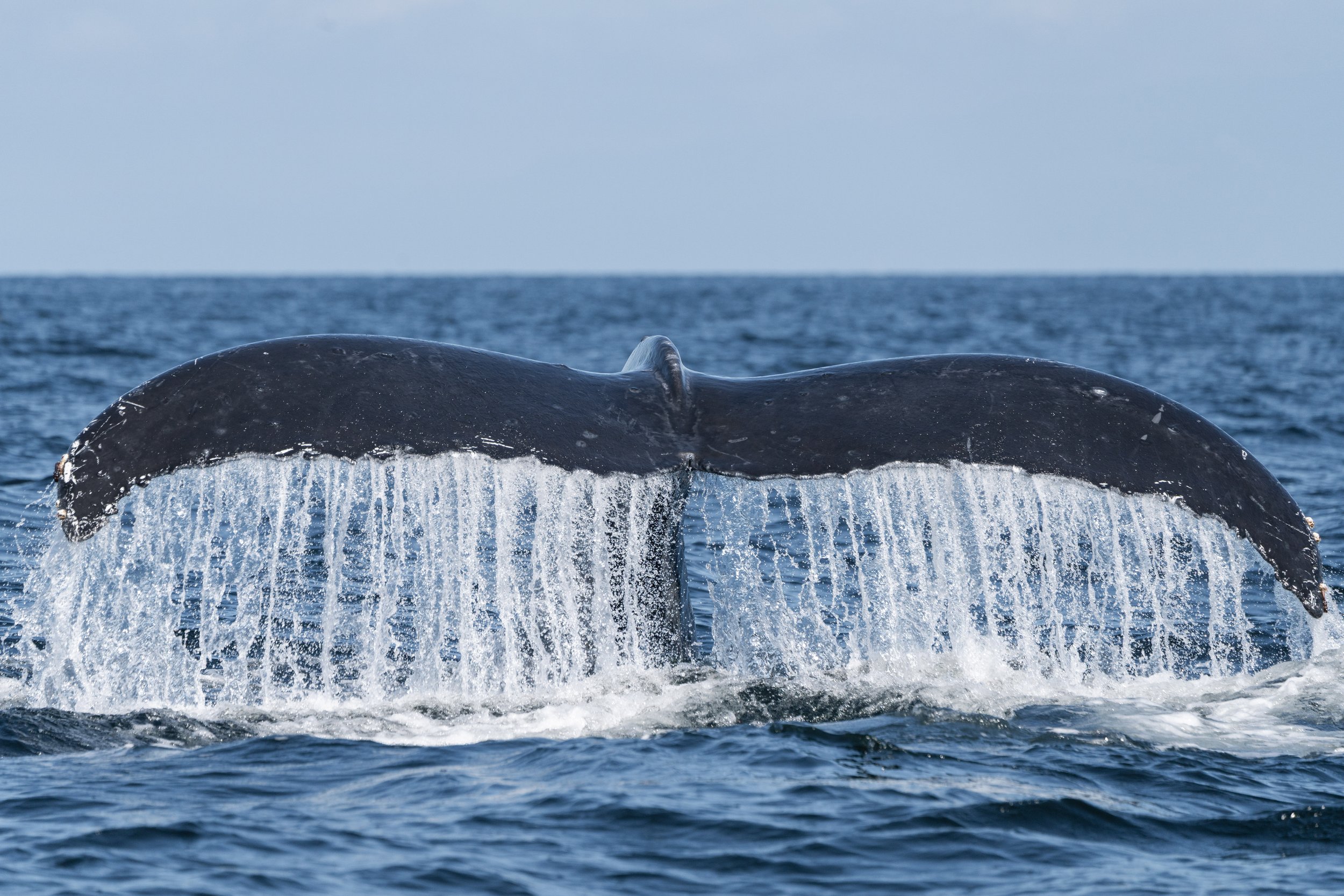
Alovely fluke waterfall from Orion. Photo by Val Watson.
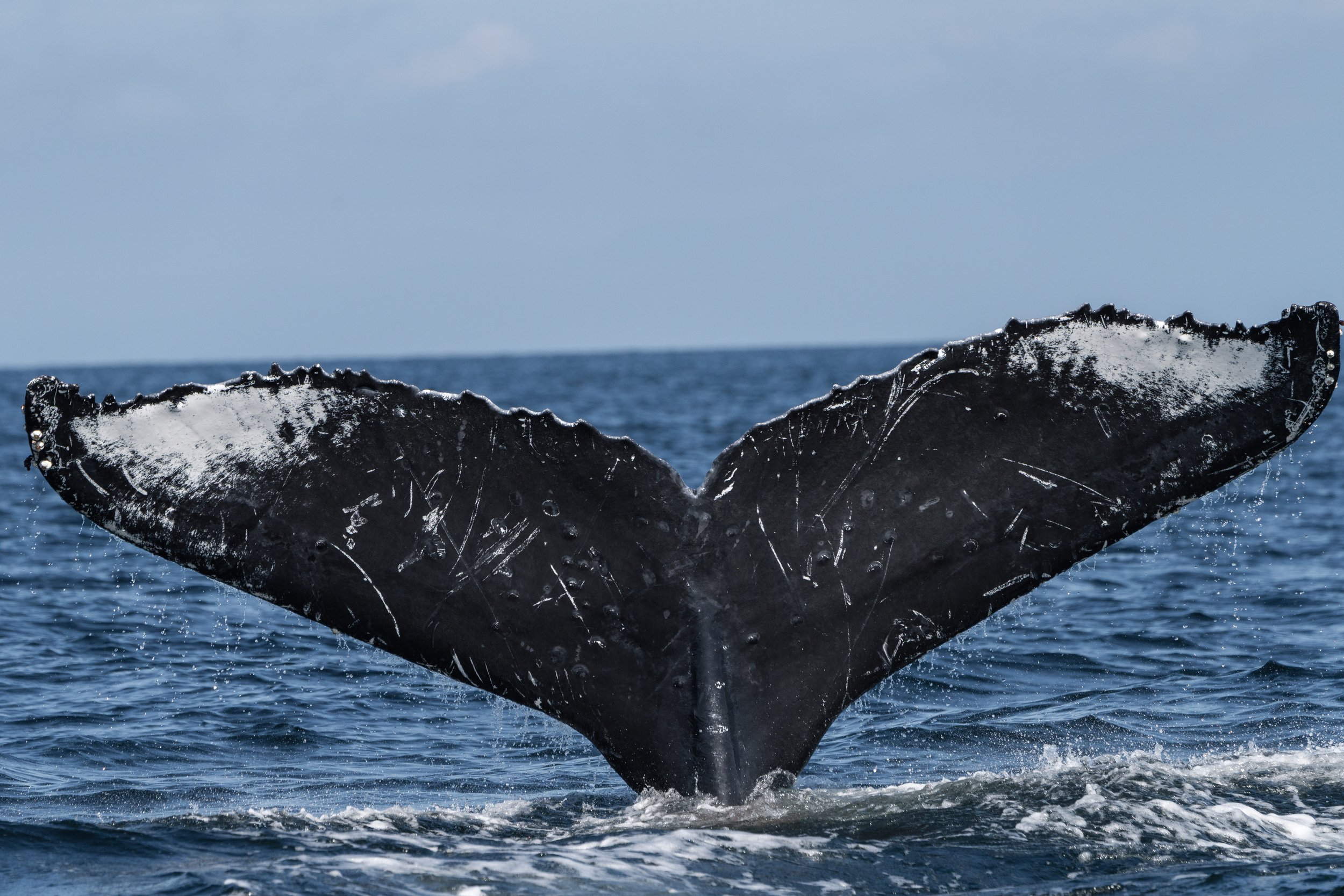
A great look at the underside of Orion’s tail as he dives. All those scars and bits of pigmantation is how we ID him. Photo by Val Watson.
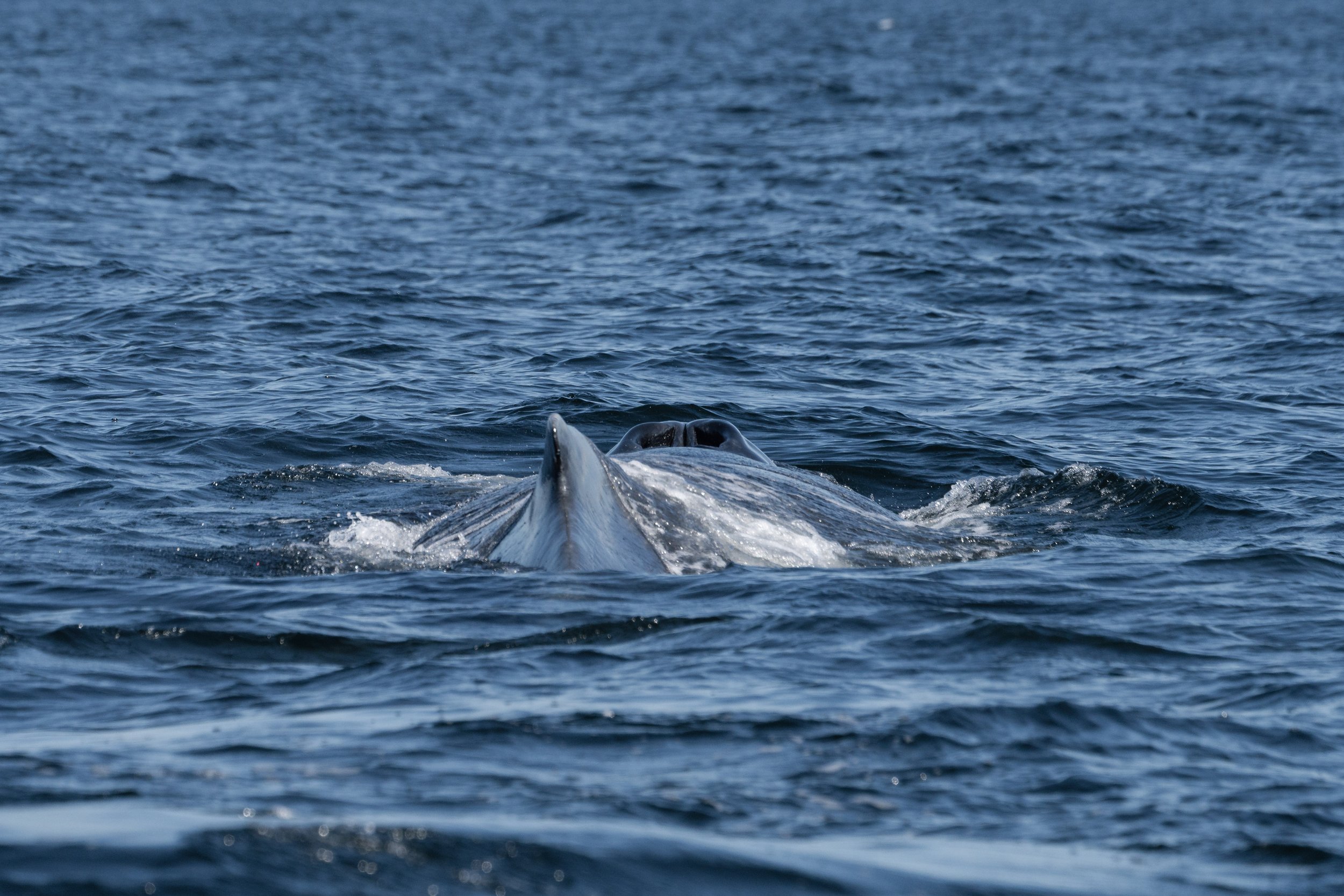
A look up Barge Boy’s nostrils. Photo by Val Watson.
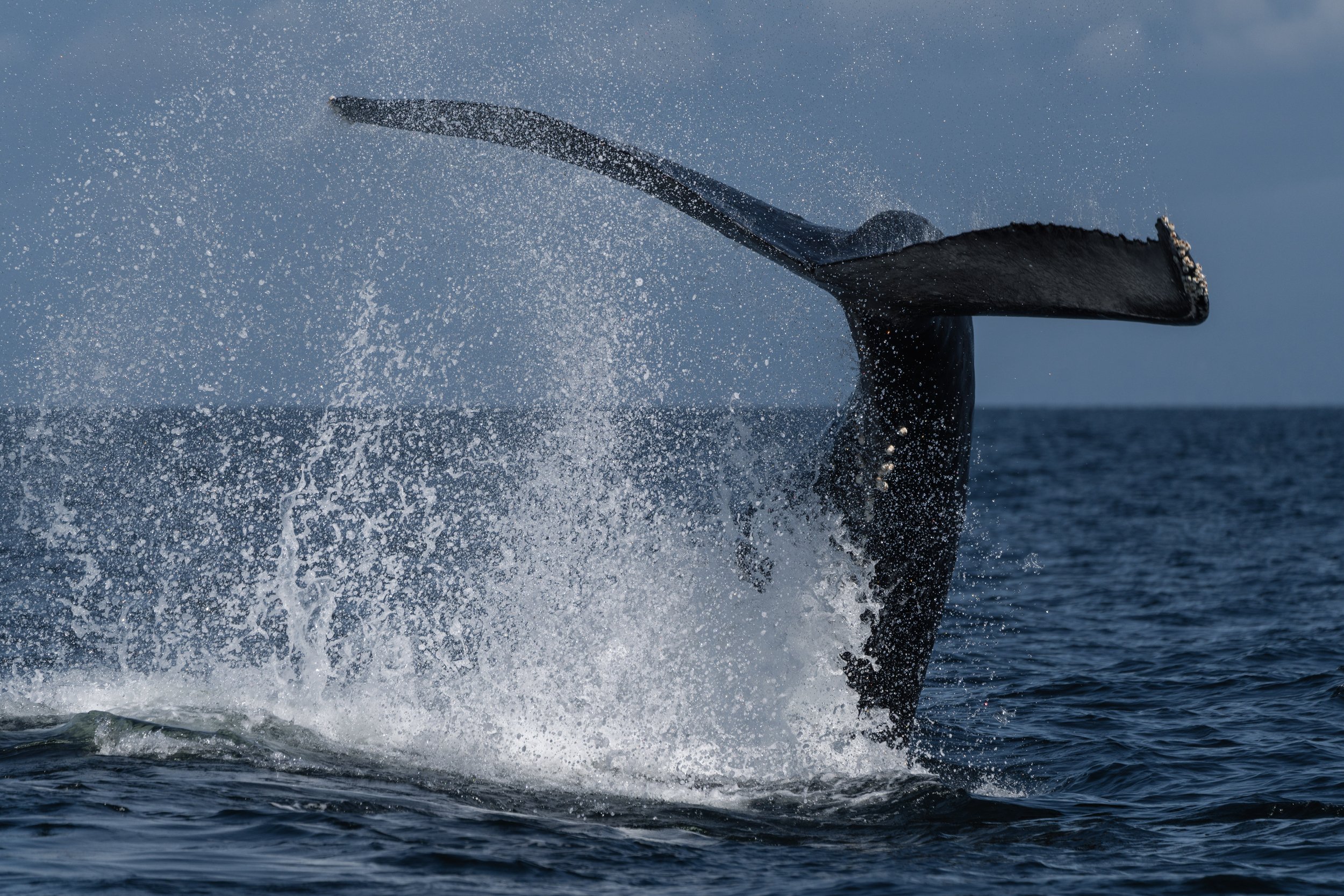
A little cartwheel from Barge Boy. Photo by Val Watson.
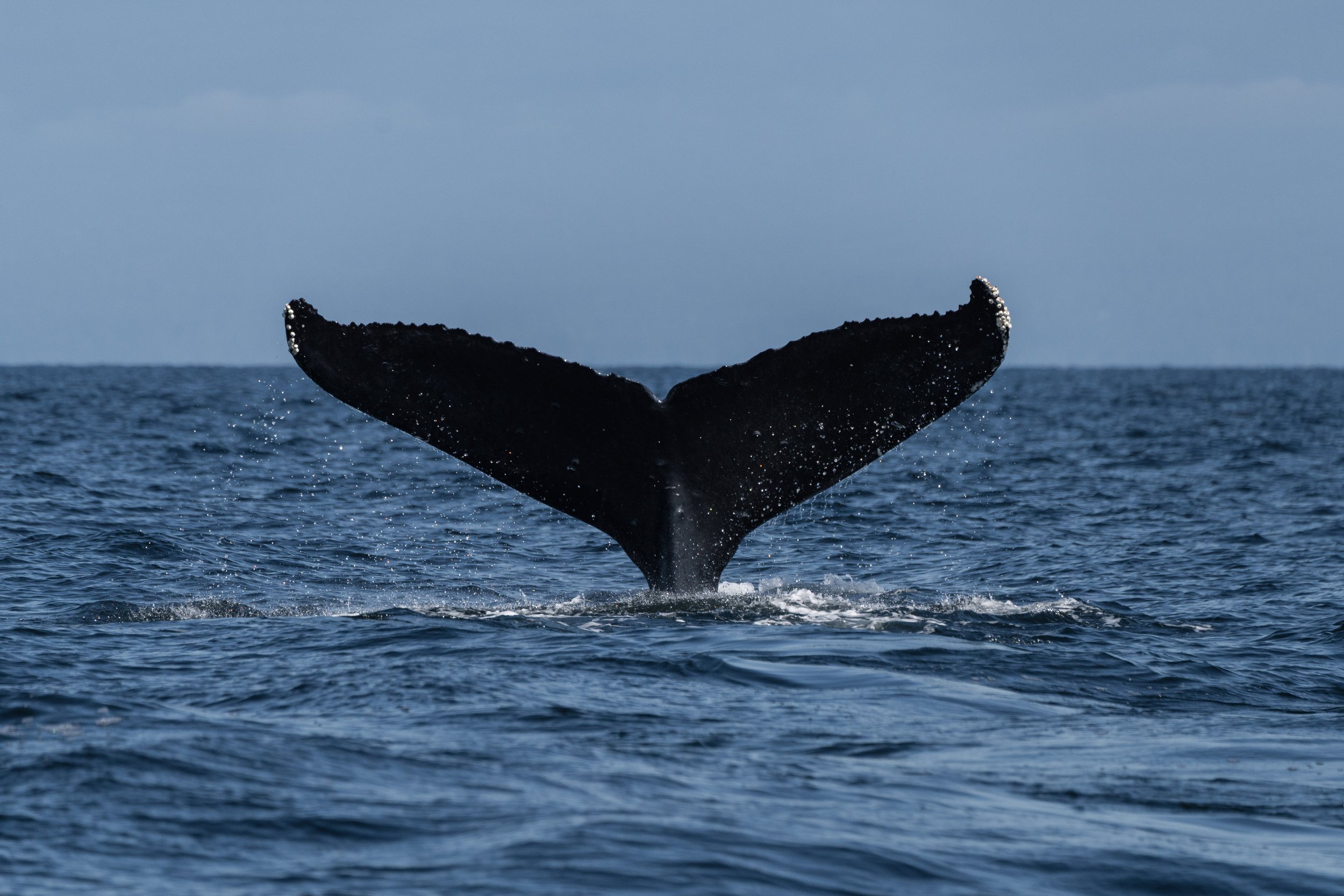
The plain black underside of Barge Boy’s tail flukes. Photo by Val Watson.
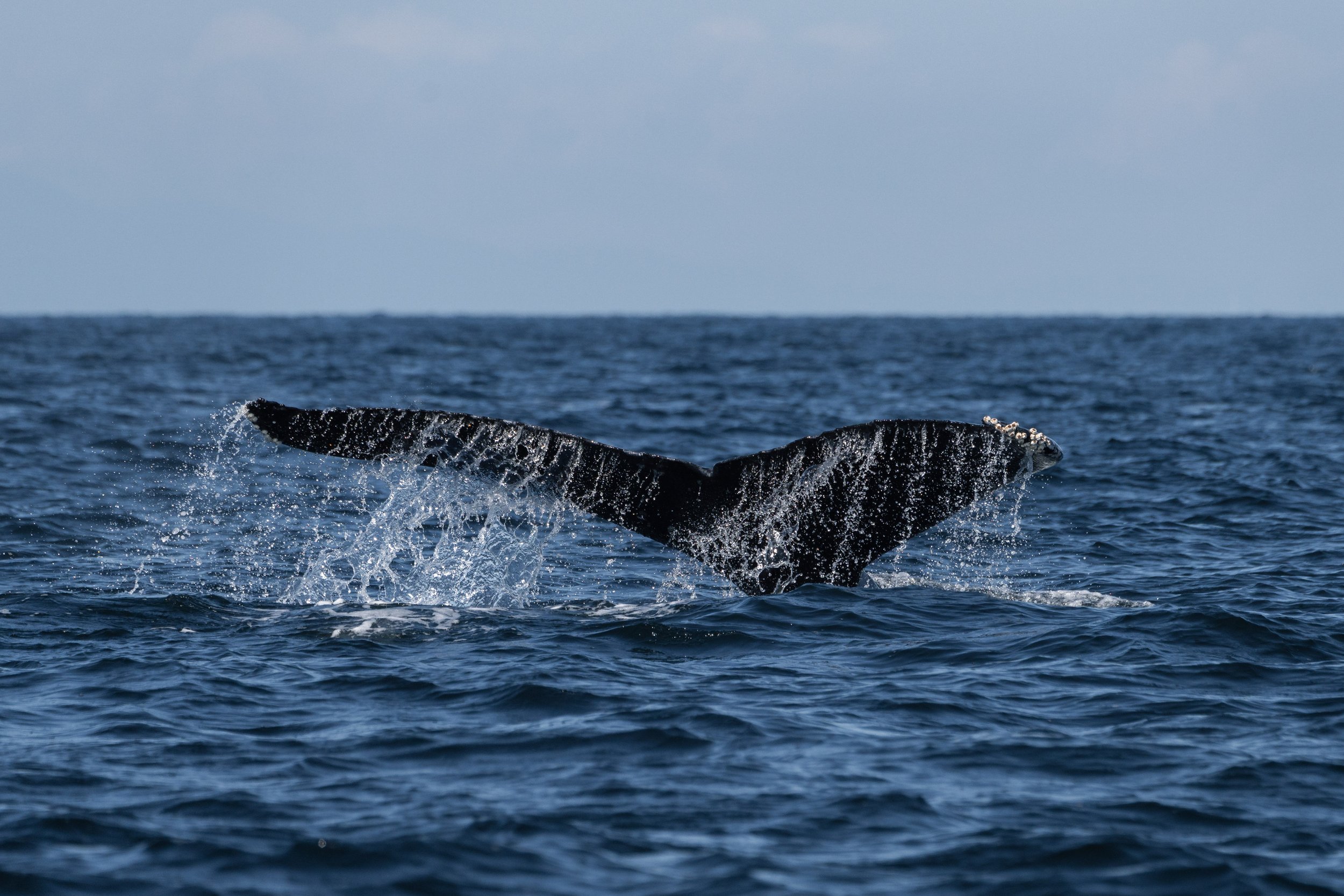
A mini-fluke waterfall as Barge Boy dives. Photo by Val Watson.
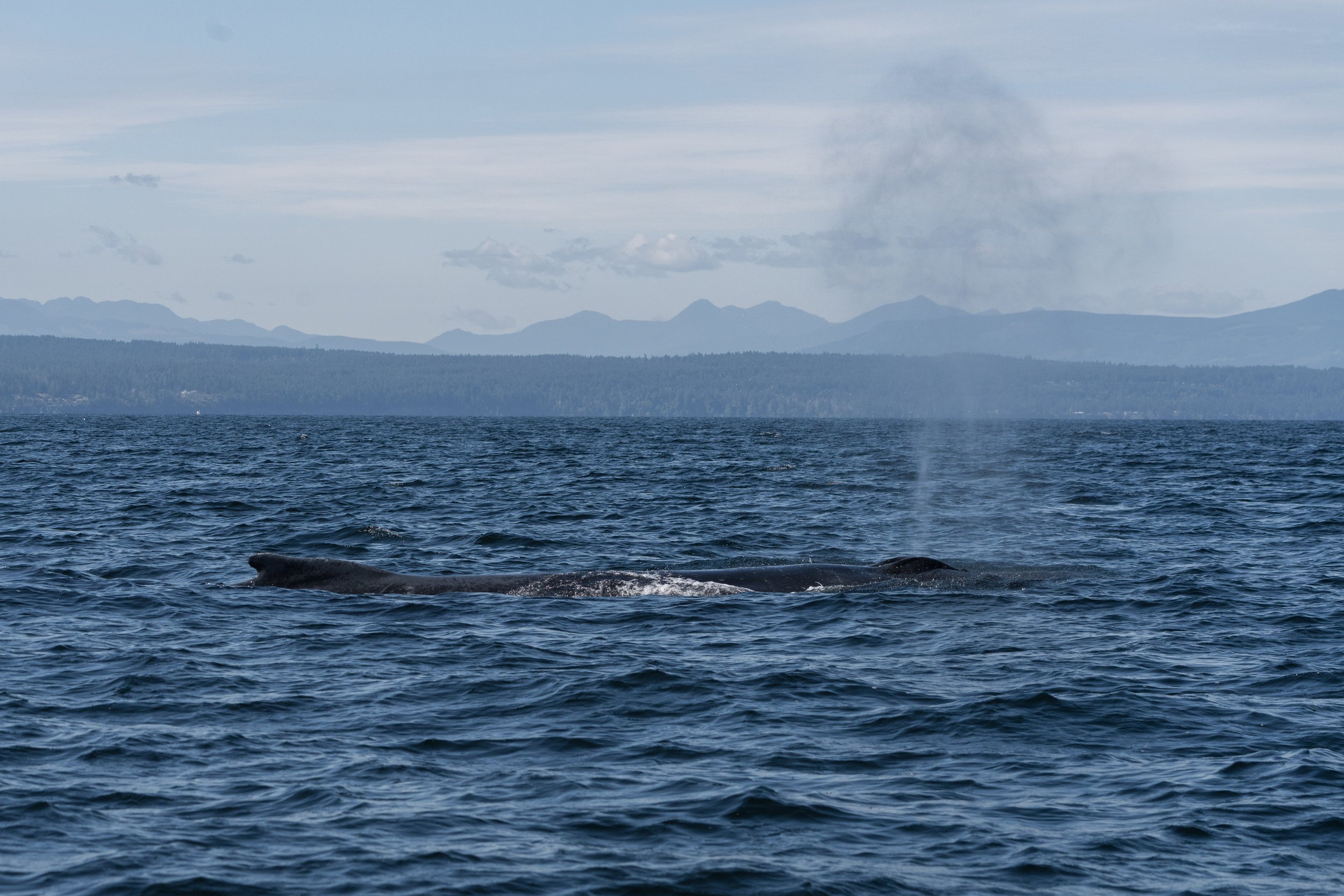
A lovely look at Barge Boy’s blow as they surface. Photo by Val Watson.
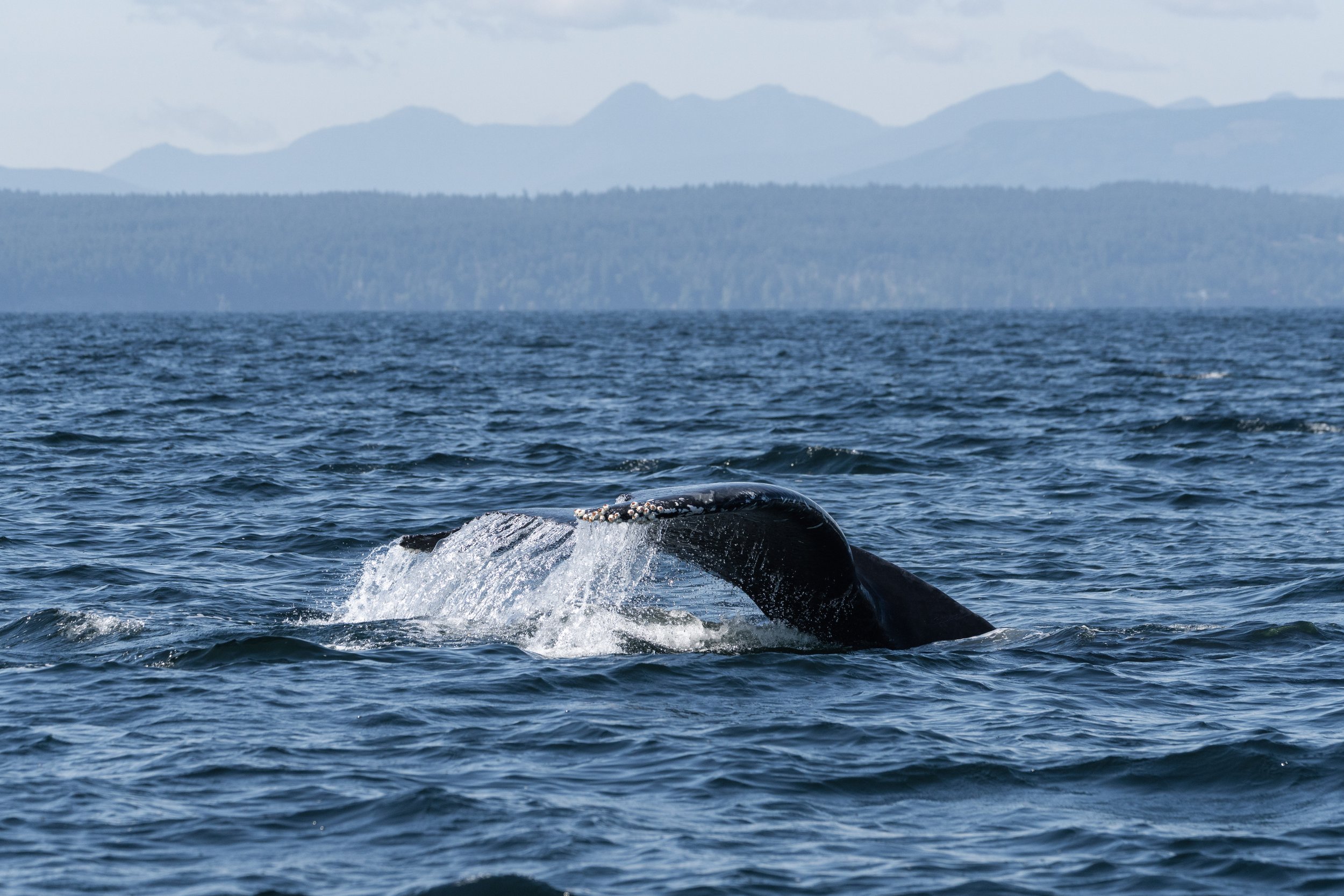
A dive from Barge Boy. Photo by Val Watson.
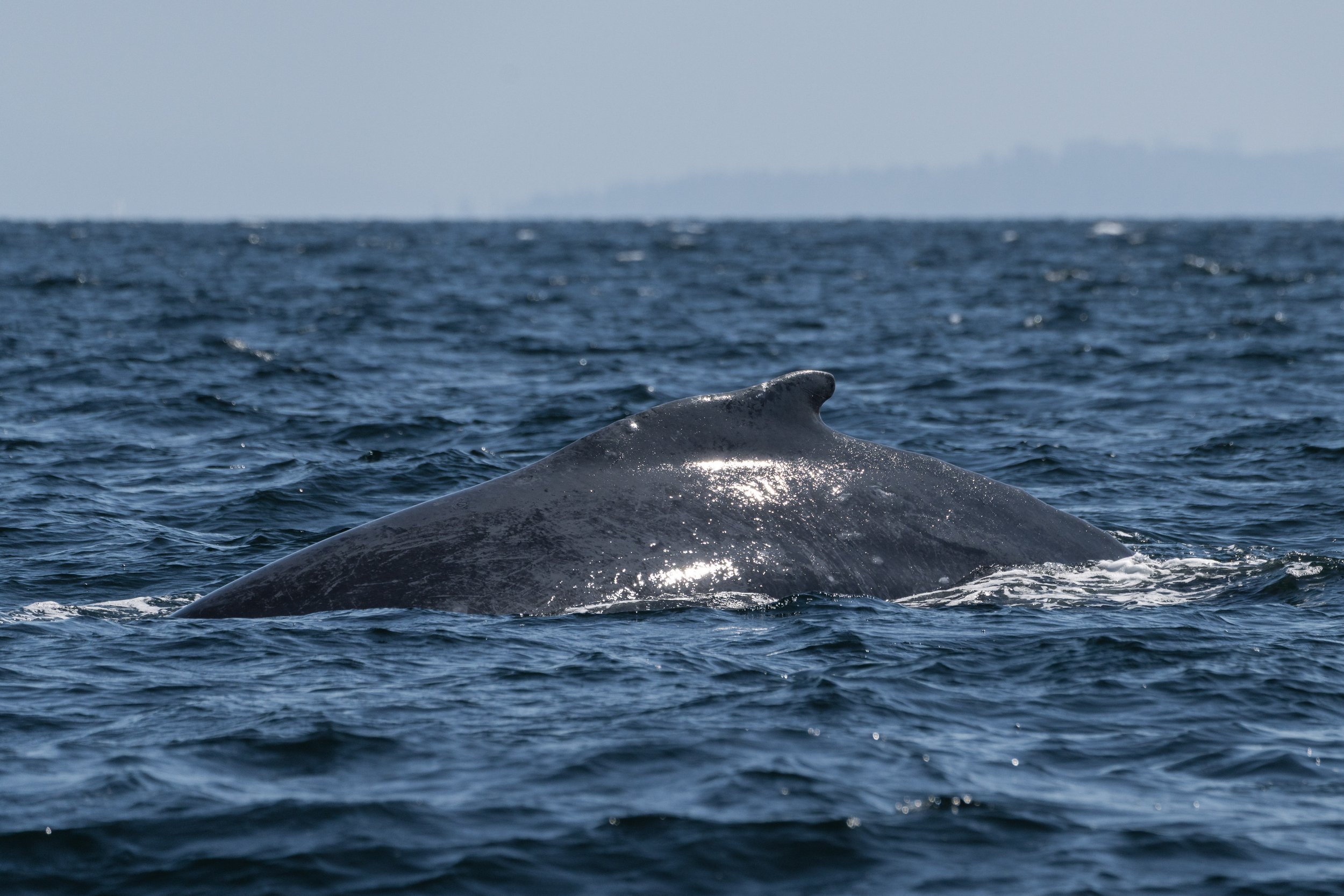
Barge Boy’s dorsal fin as they surfcae in the waves. Photo by Val Watson.
Chi and BCX2316
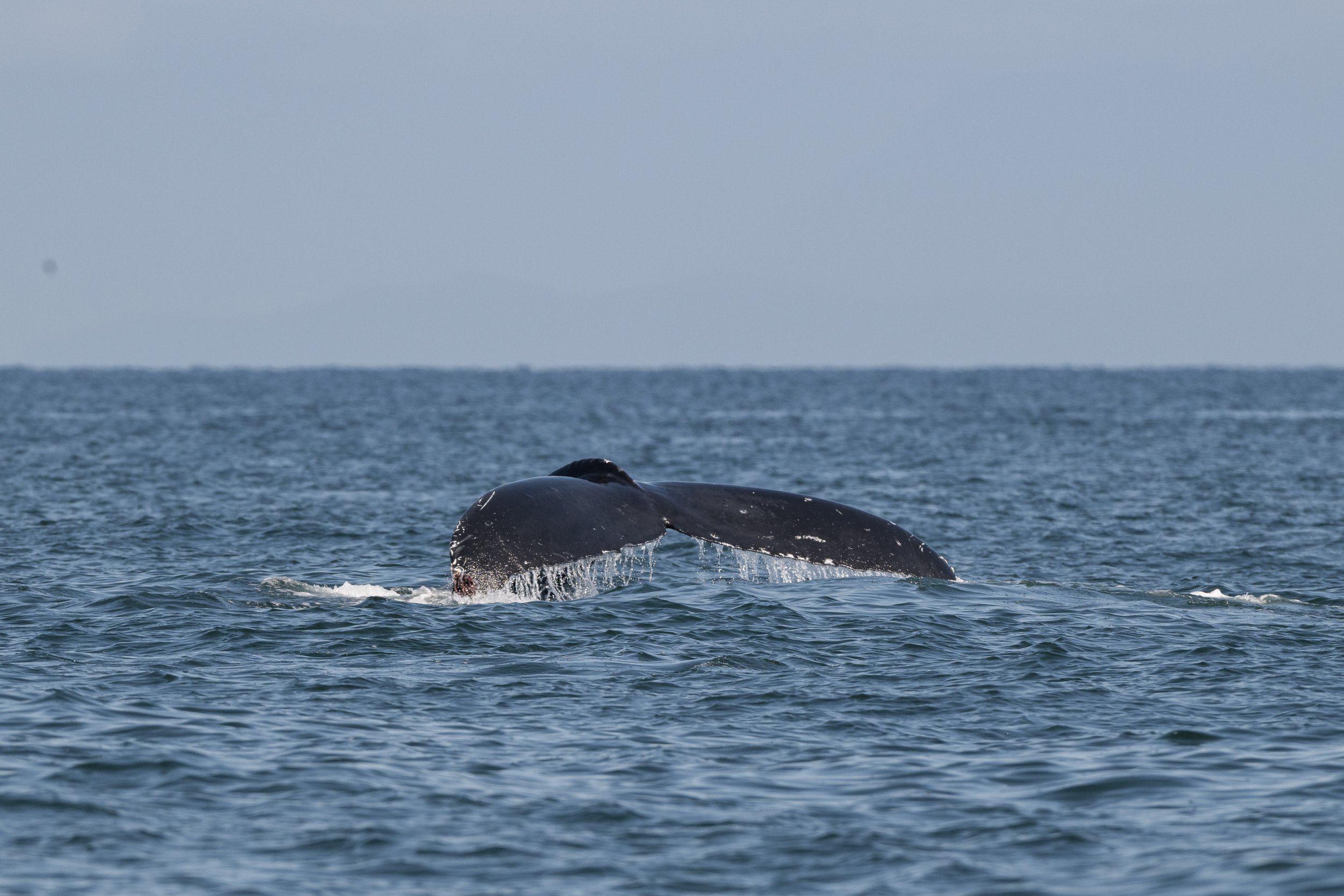
Chi going for a dive. Photo by Aly Kohlman.
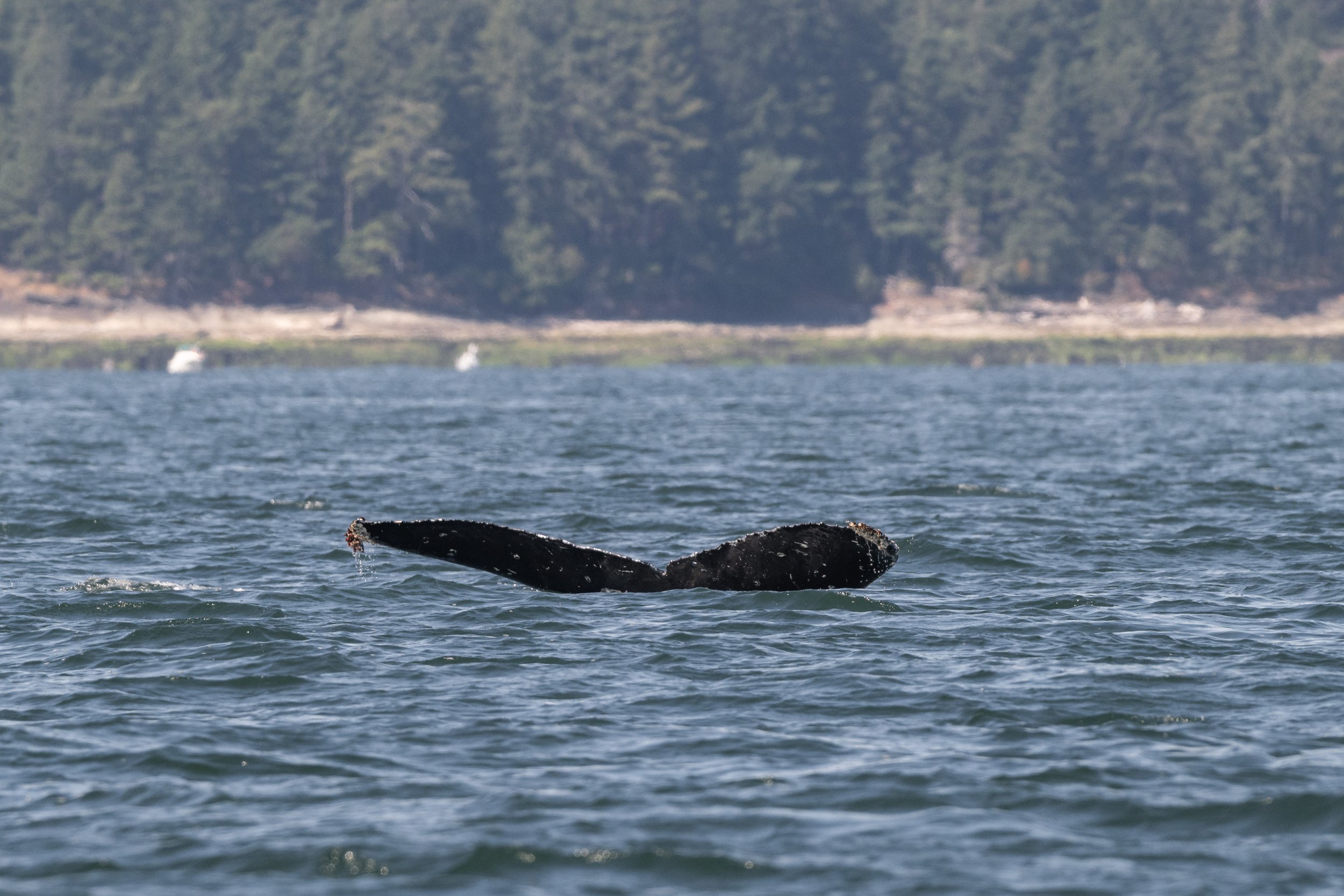
BCX2316 going for a dive. Photo by Aly Kohlman.
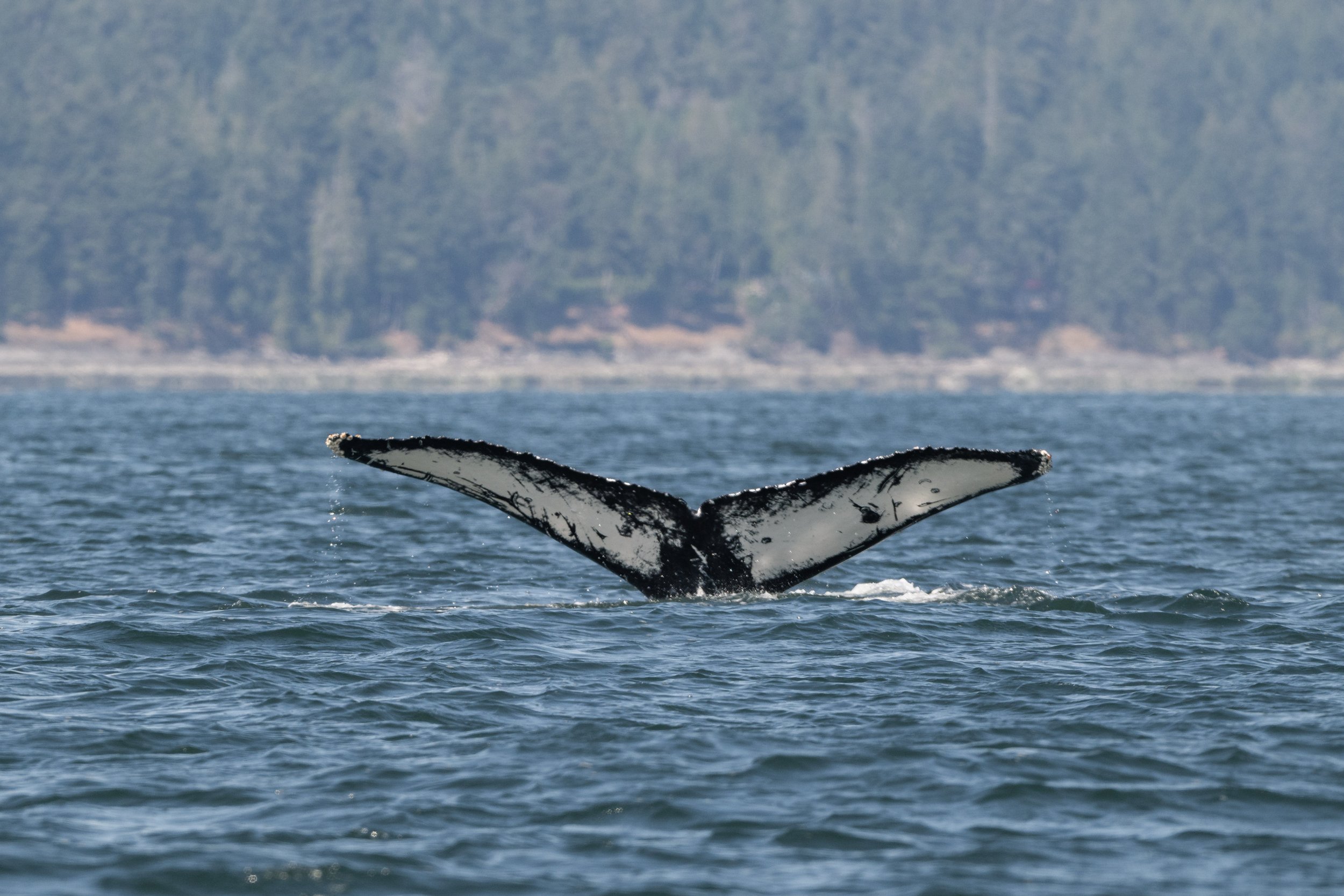
The beautiful white underside of Chi’s tail. Photo by Aly Kohlman.
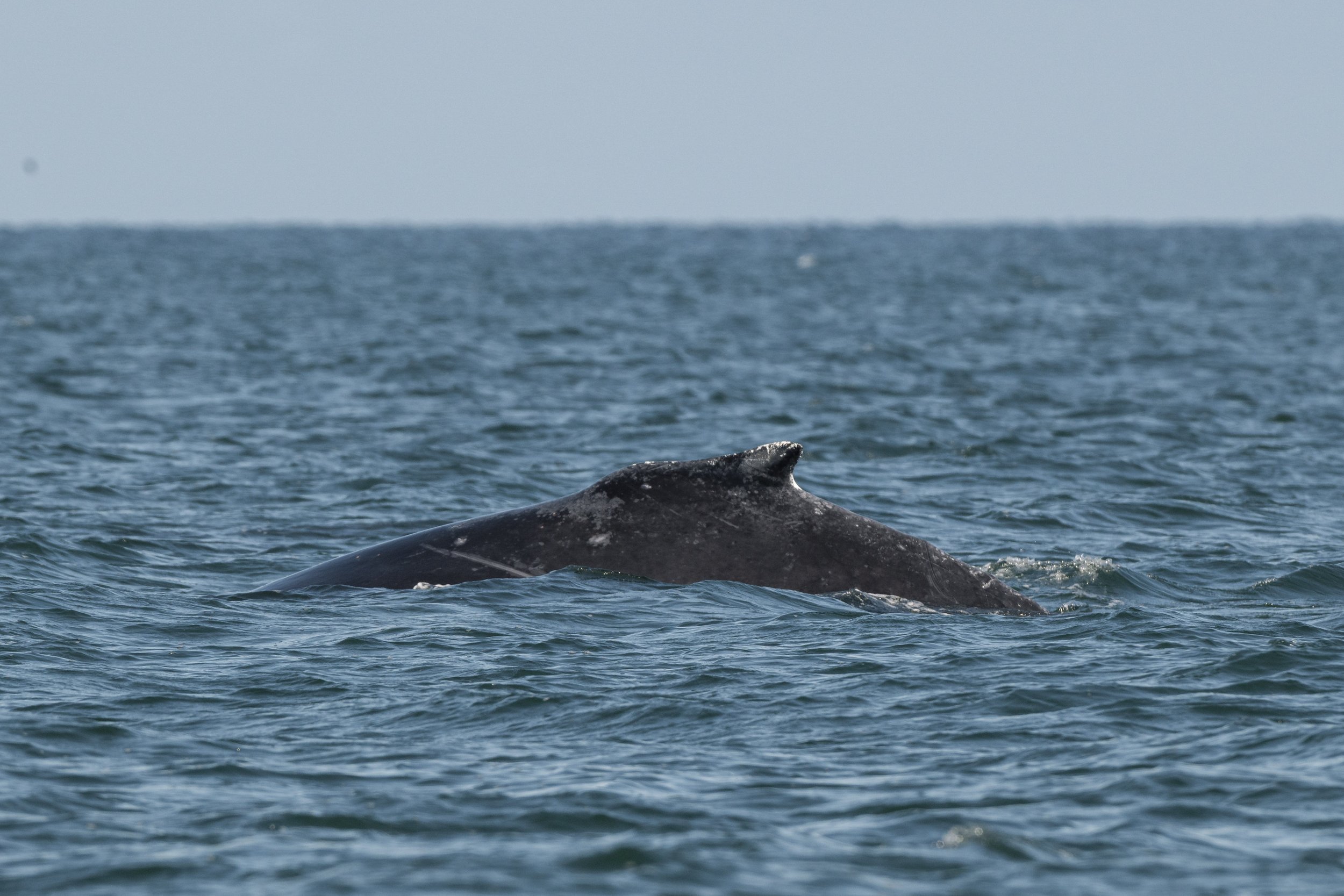
BCX2316’s unique dorsal fin. Photo by Aly Kohlman.
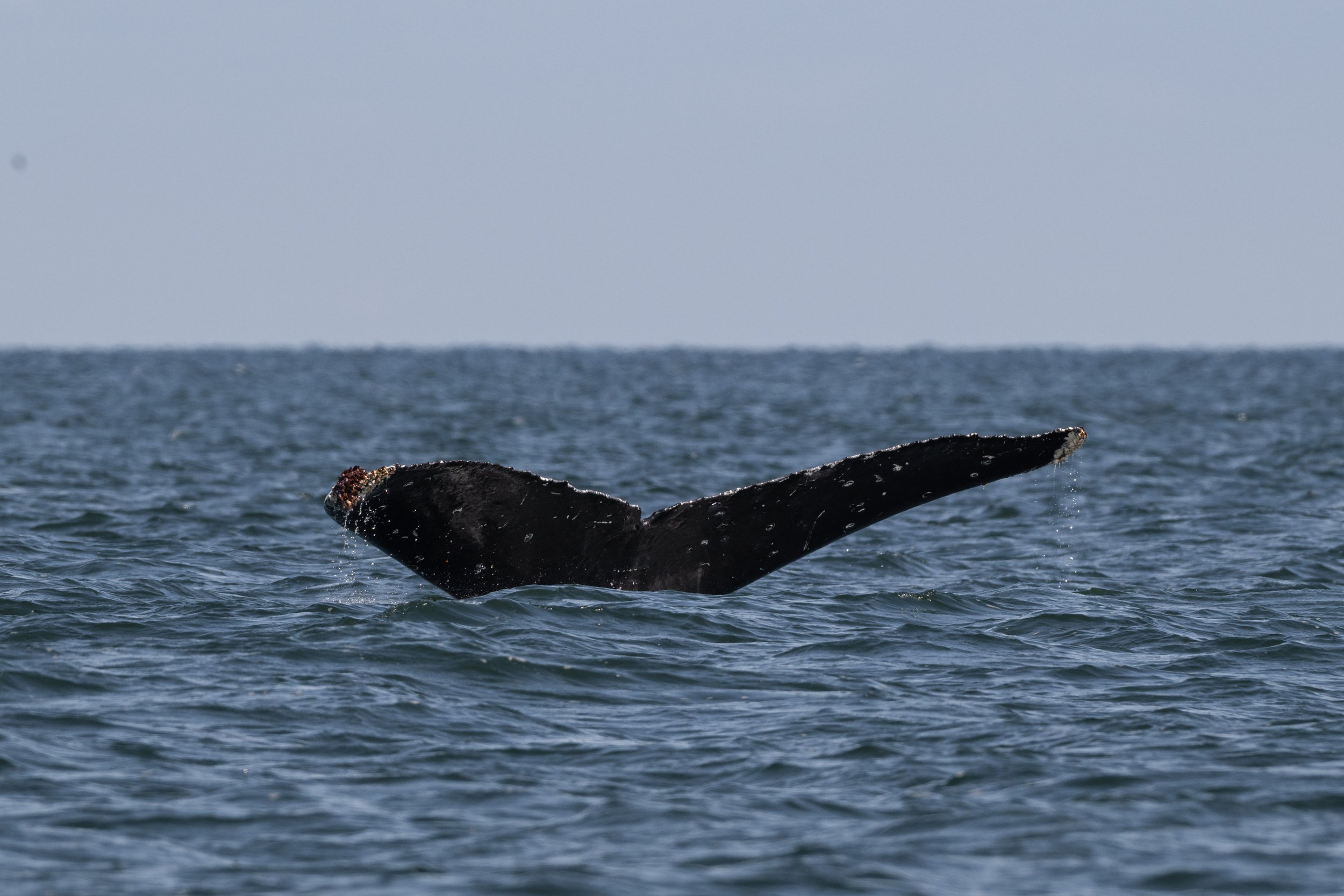
The unique underside of BCX2316’s tail. Photo by Aly Kohlman.
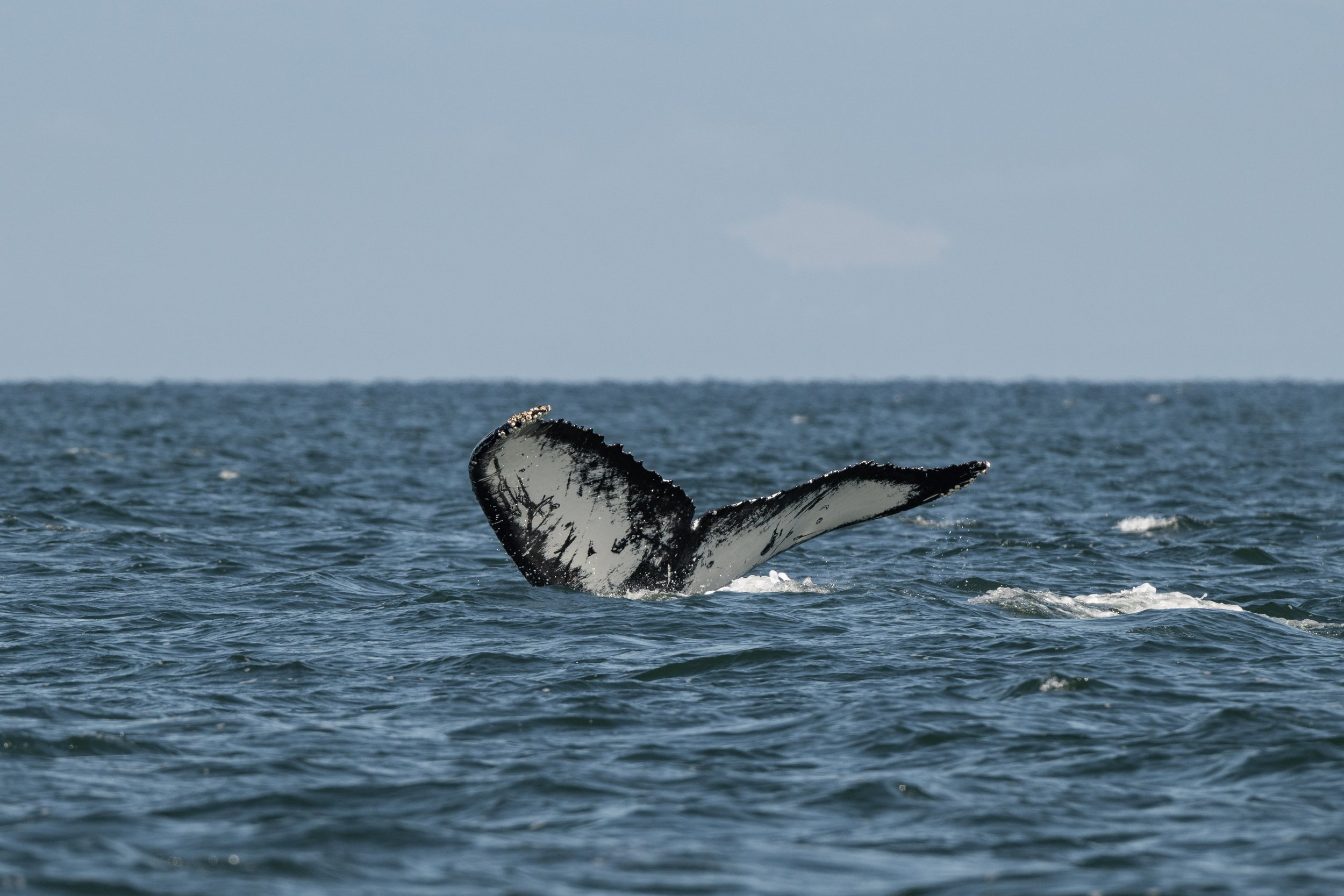
Chi is a Z-type whale with all this white. Photo by Aly Kohlman.
Fader
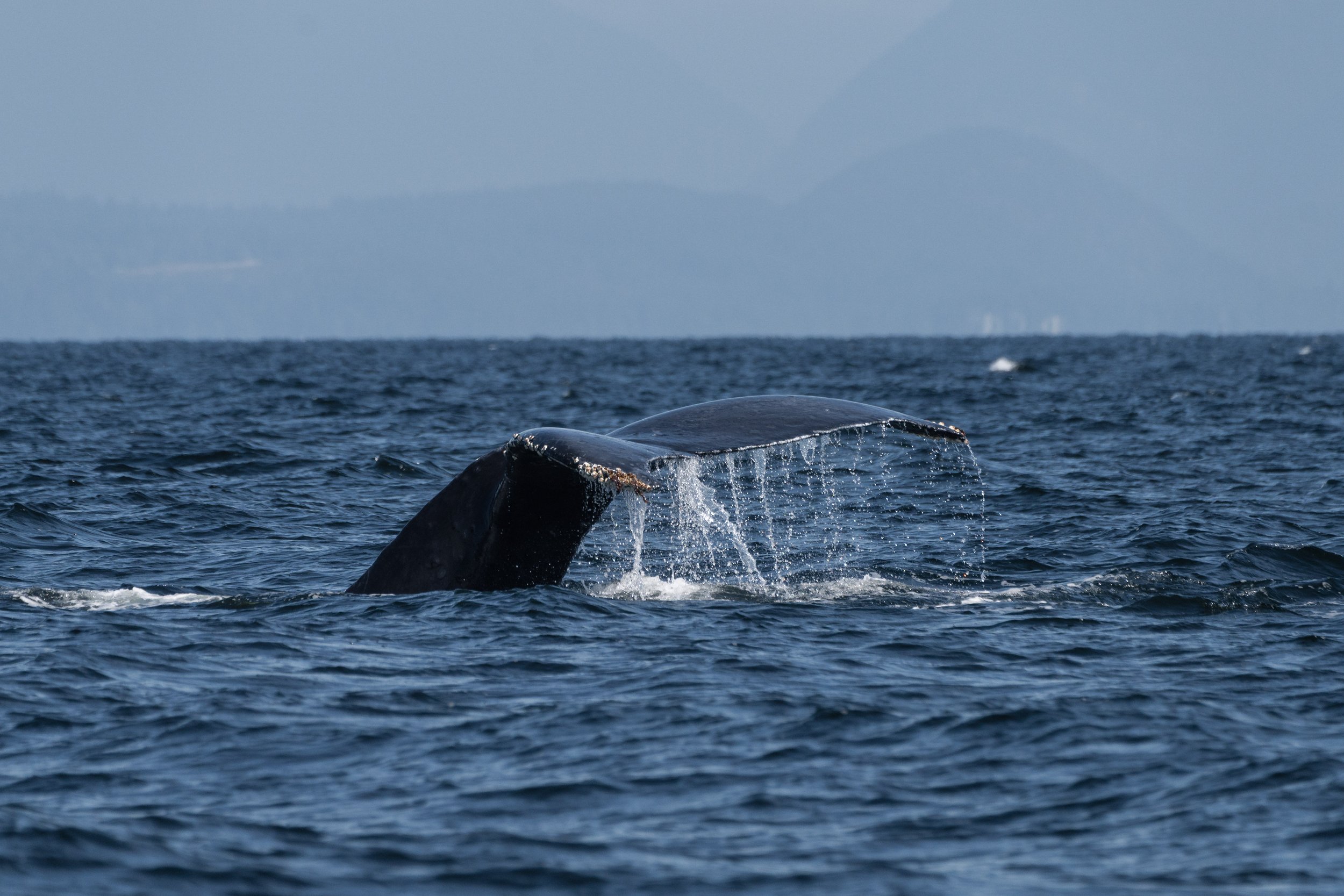
Fader going for a dive. Photo by Val Watson.
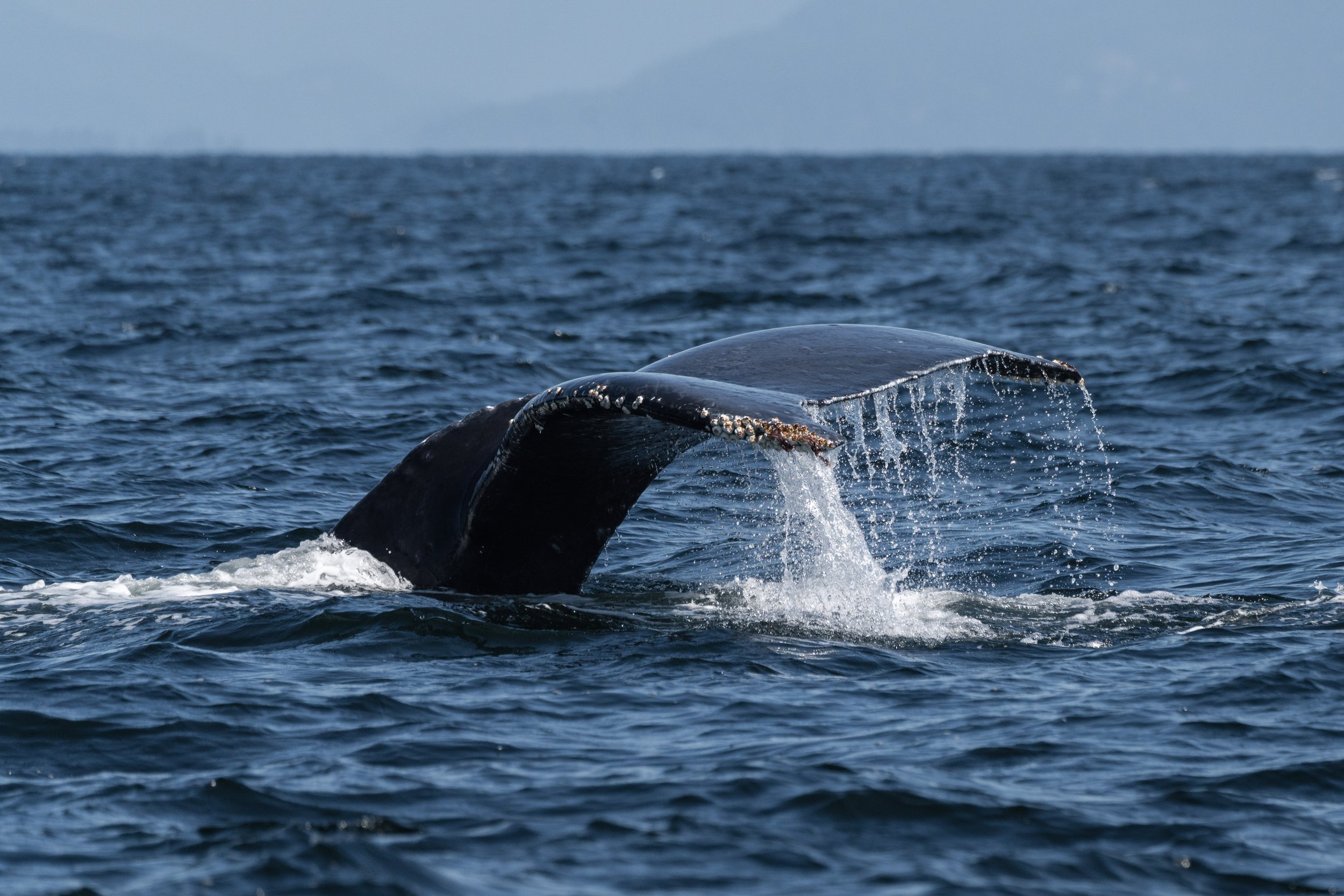
Just look at all those Barnacles! Photo by Val Watson.
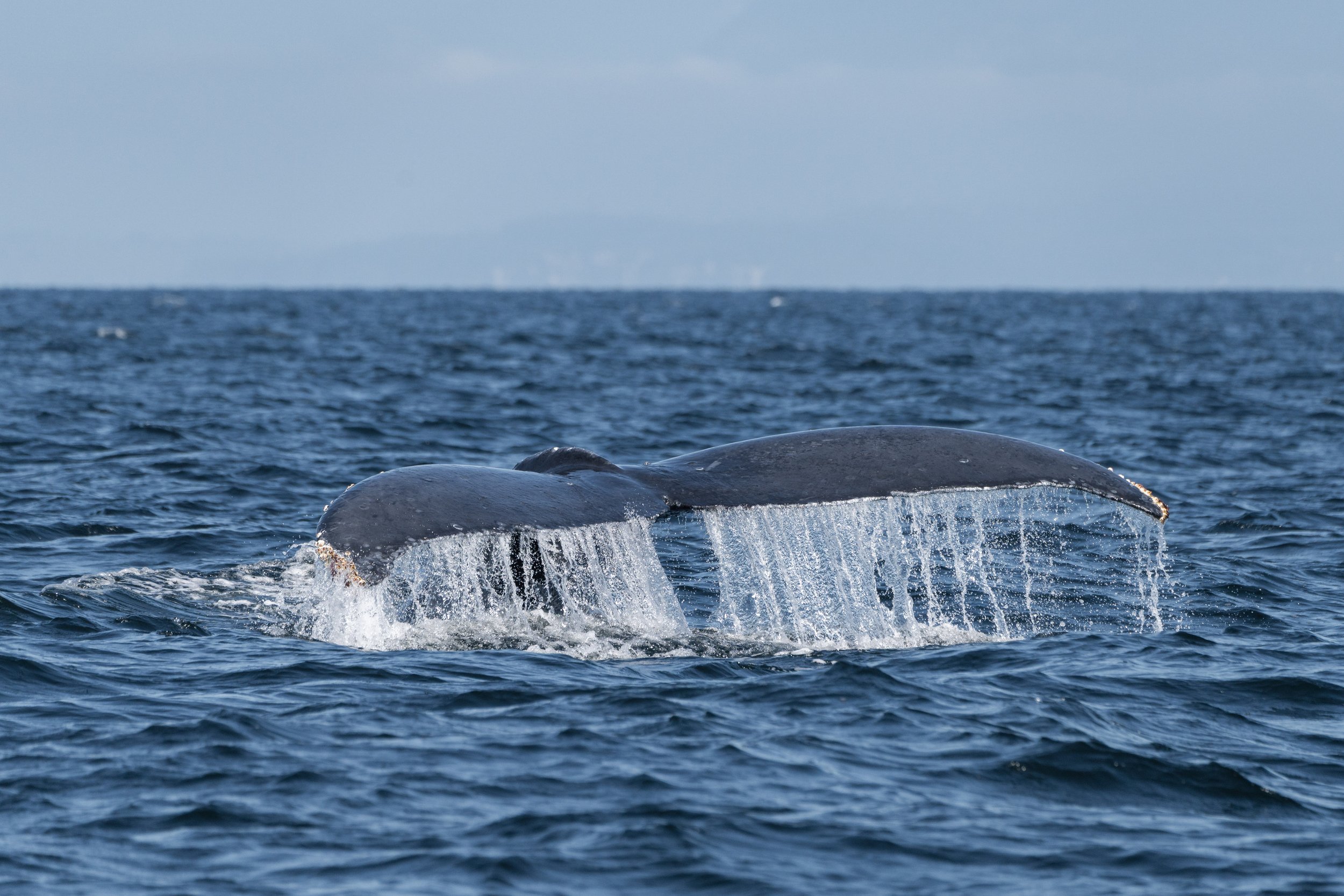
A fluke waterfall from Fader as he goes for a feeding dive. Photo by Val Watson.
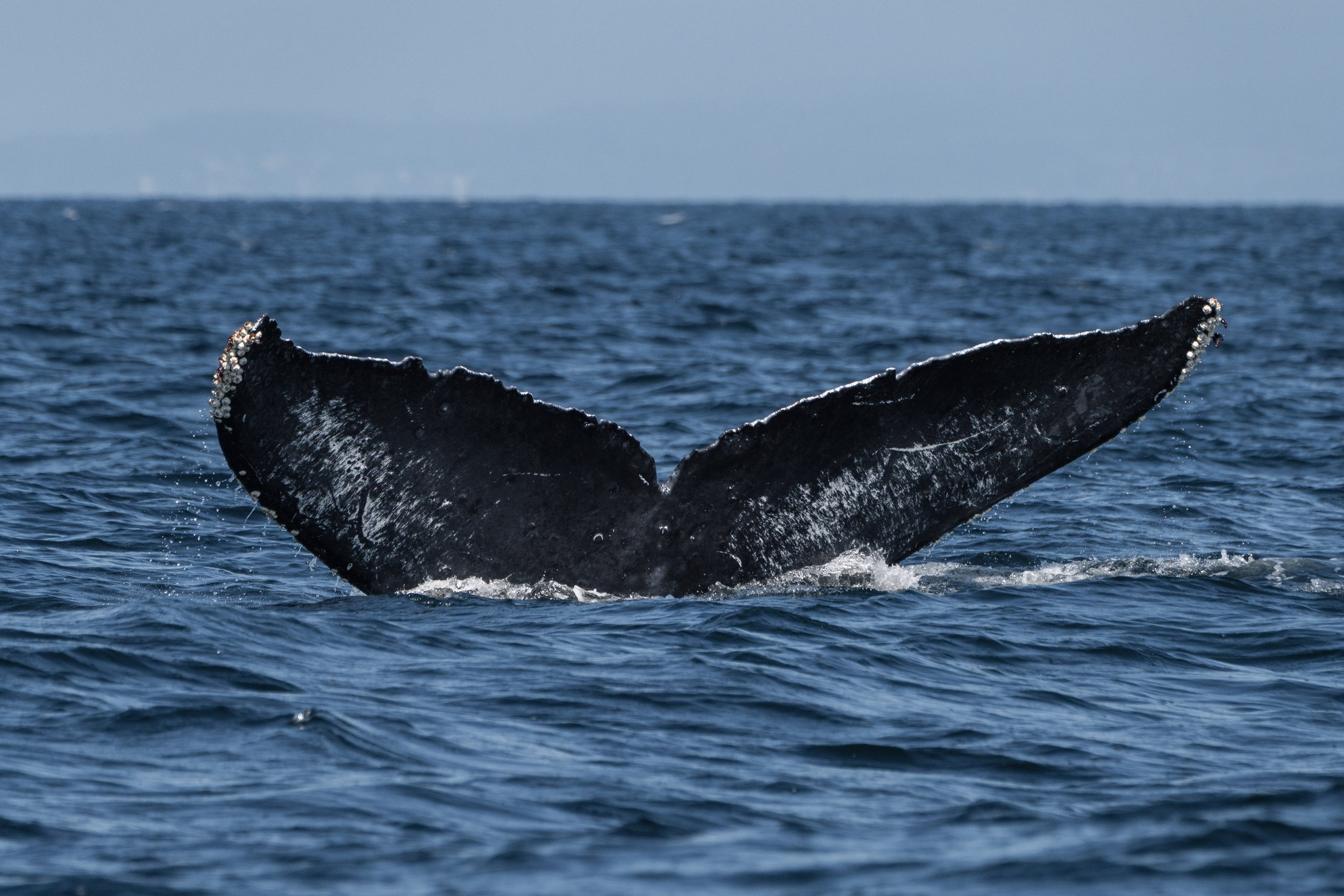
The unique underside of Fader’s tail. Photo by Val Watson.
Other wildlife
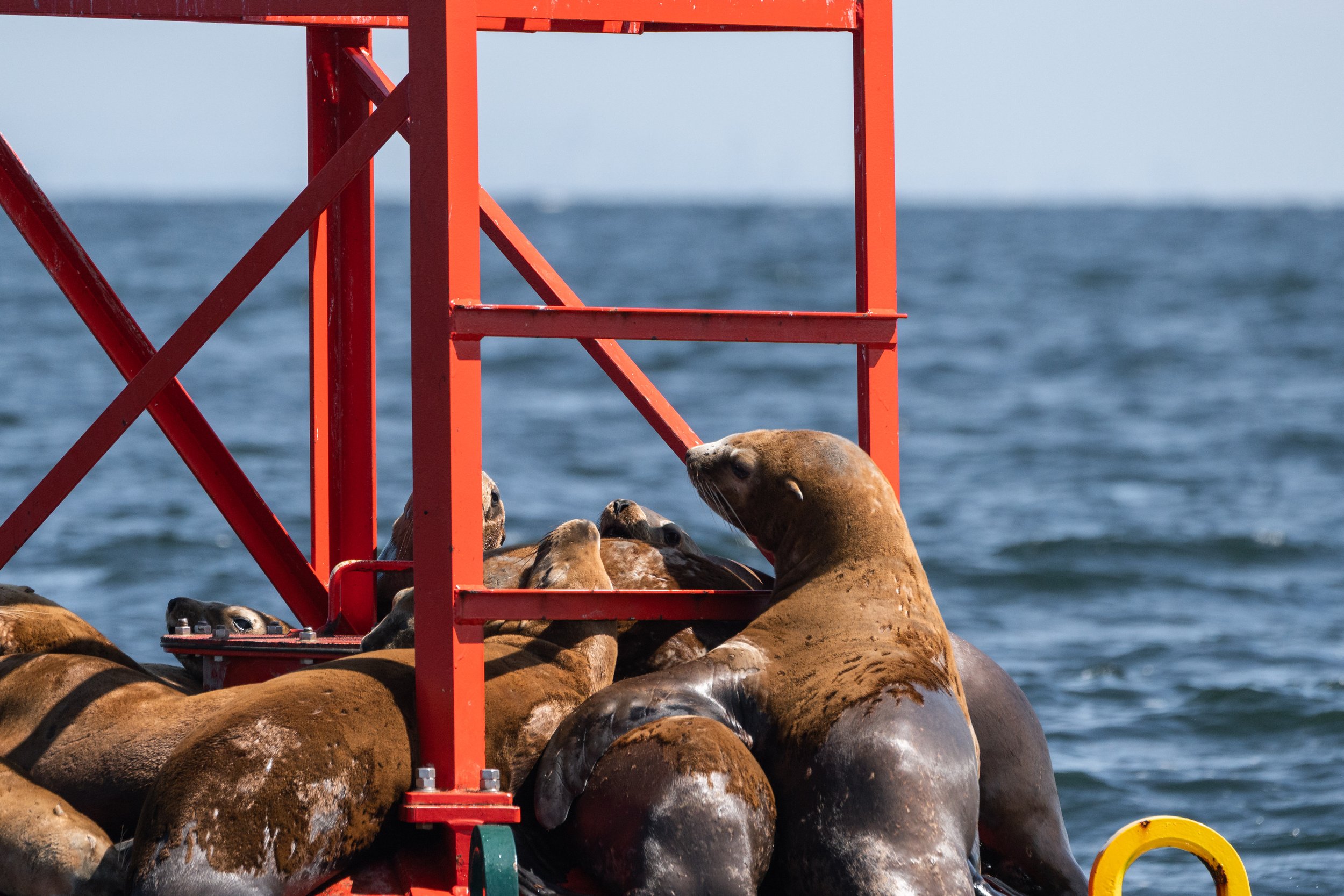
Steller Sea Lions on the buoy. Photo by Val Watson.
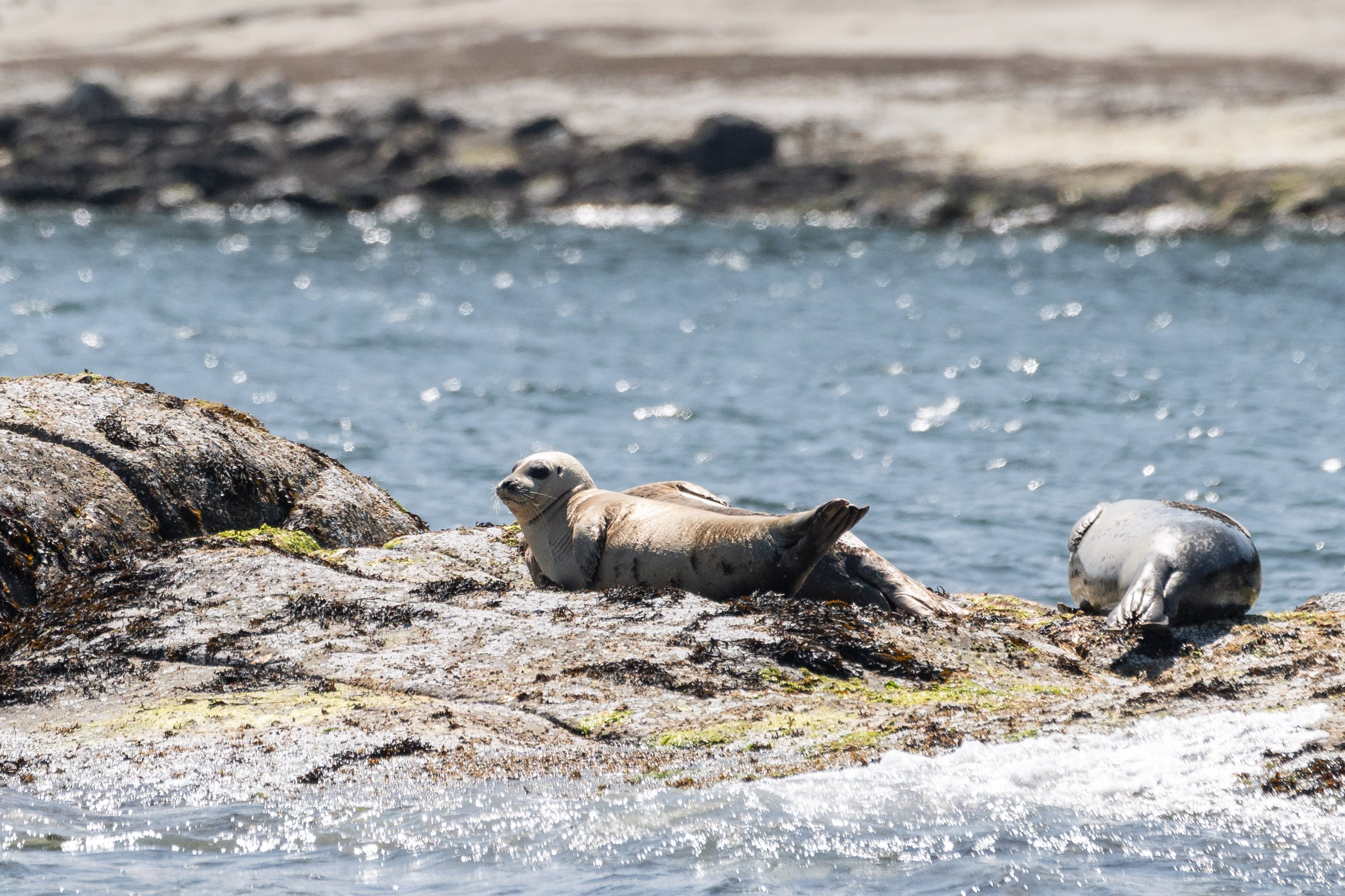
A Harbour Seal in Banana pose. Photo by Val Watson.
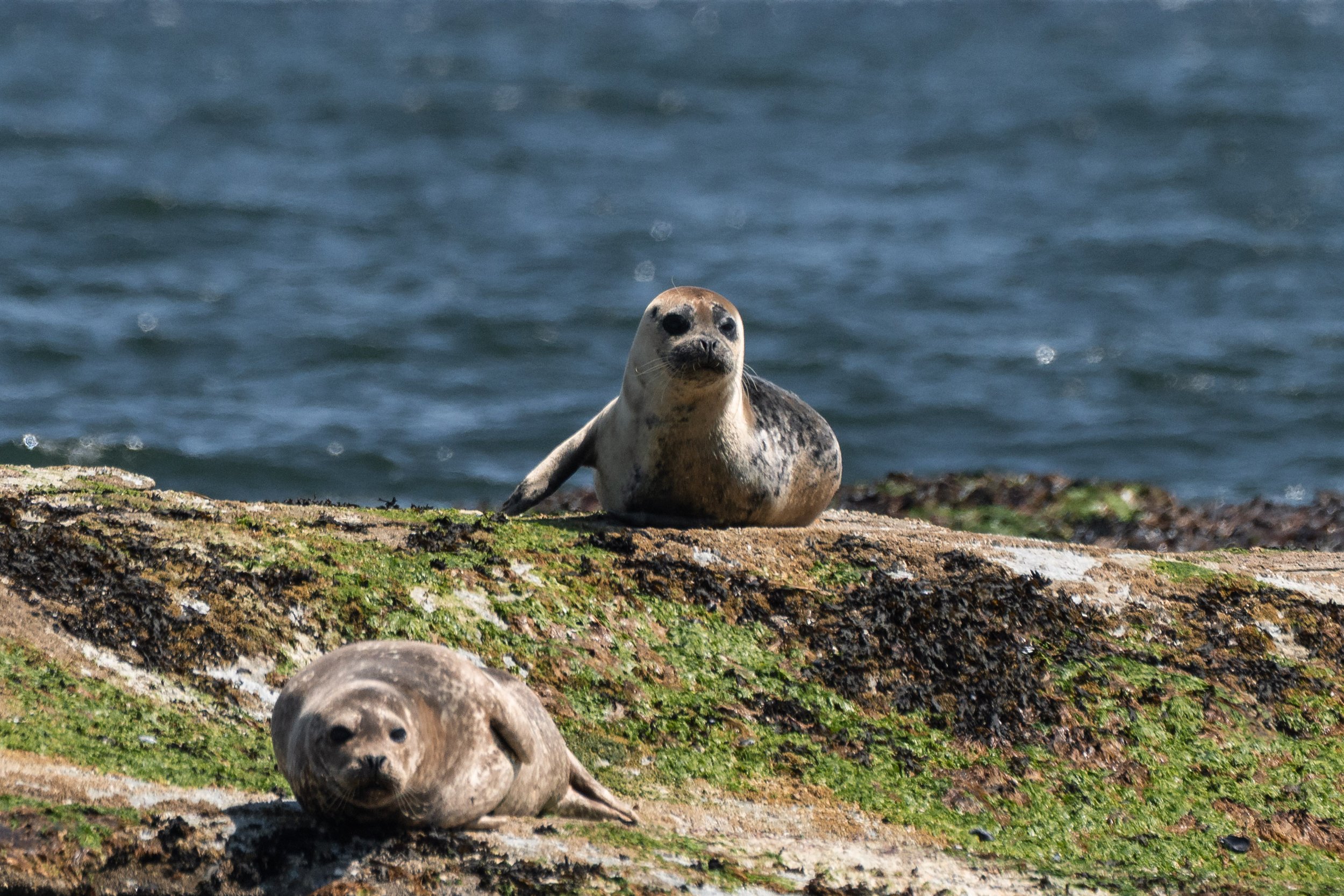
Harbour Seal checking us out as we float by. Photo by Val Watson.
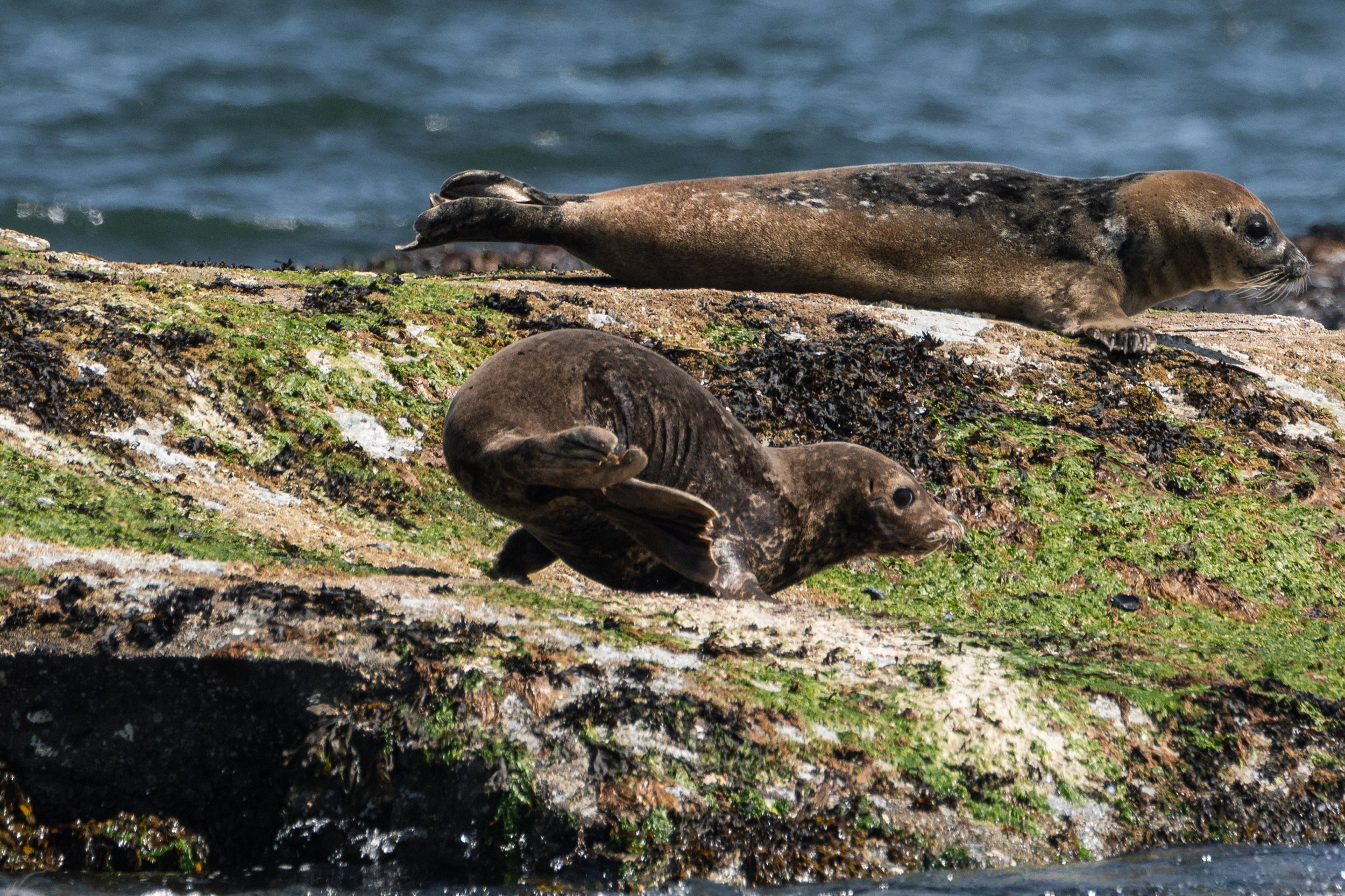
“Parkour!” - This seal, probably. Photo by Val Watson.
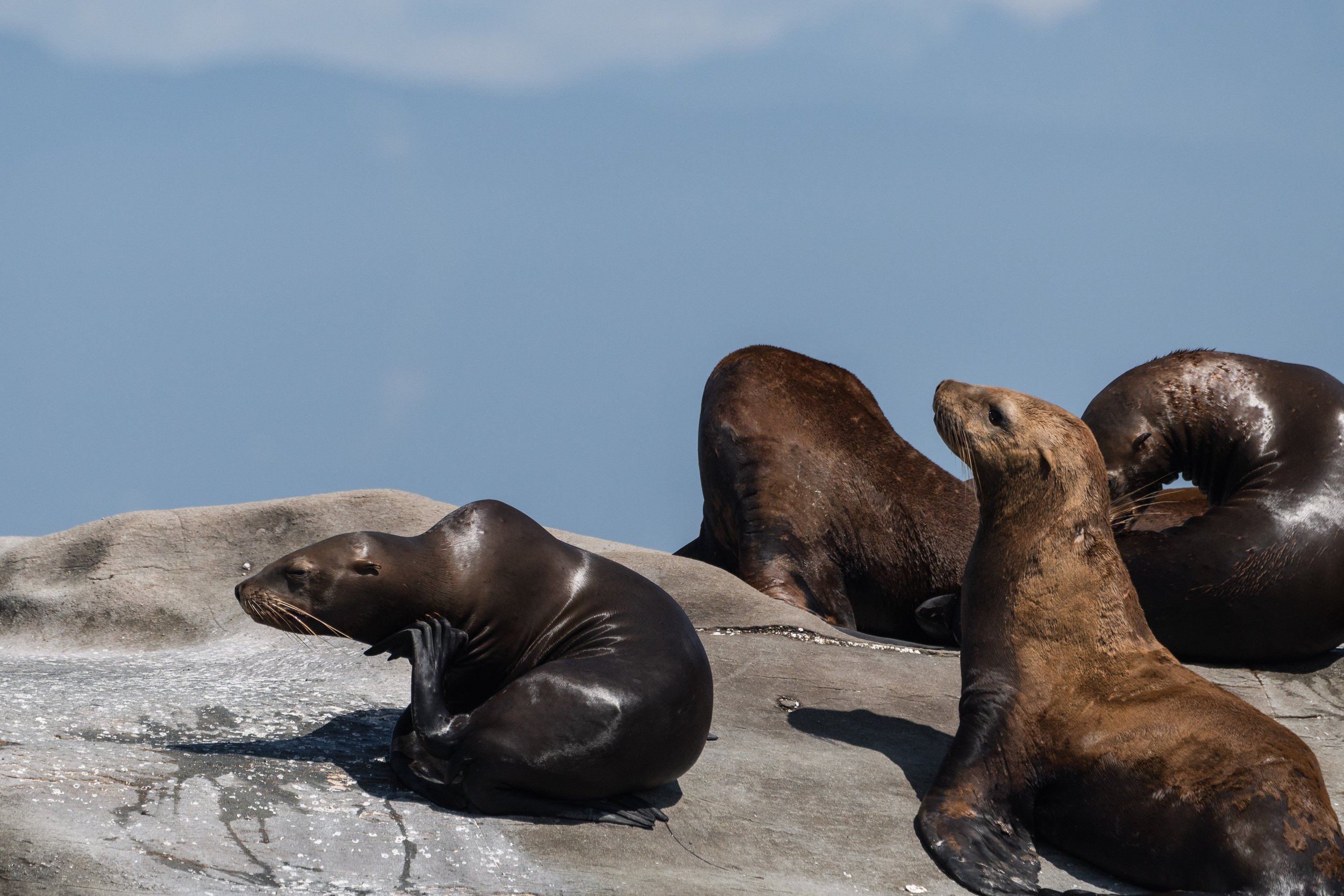
An Itchy Steller Sea Lion on the rocks. Photo by Val Watson.
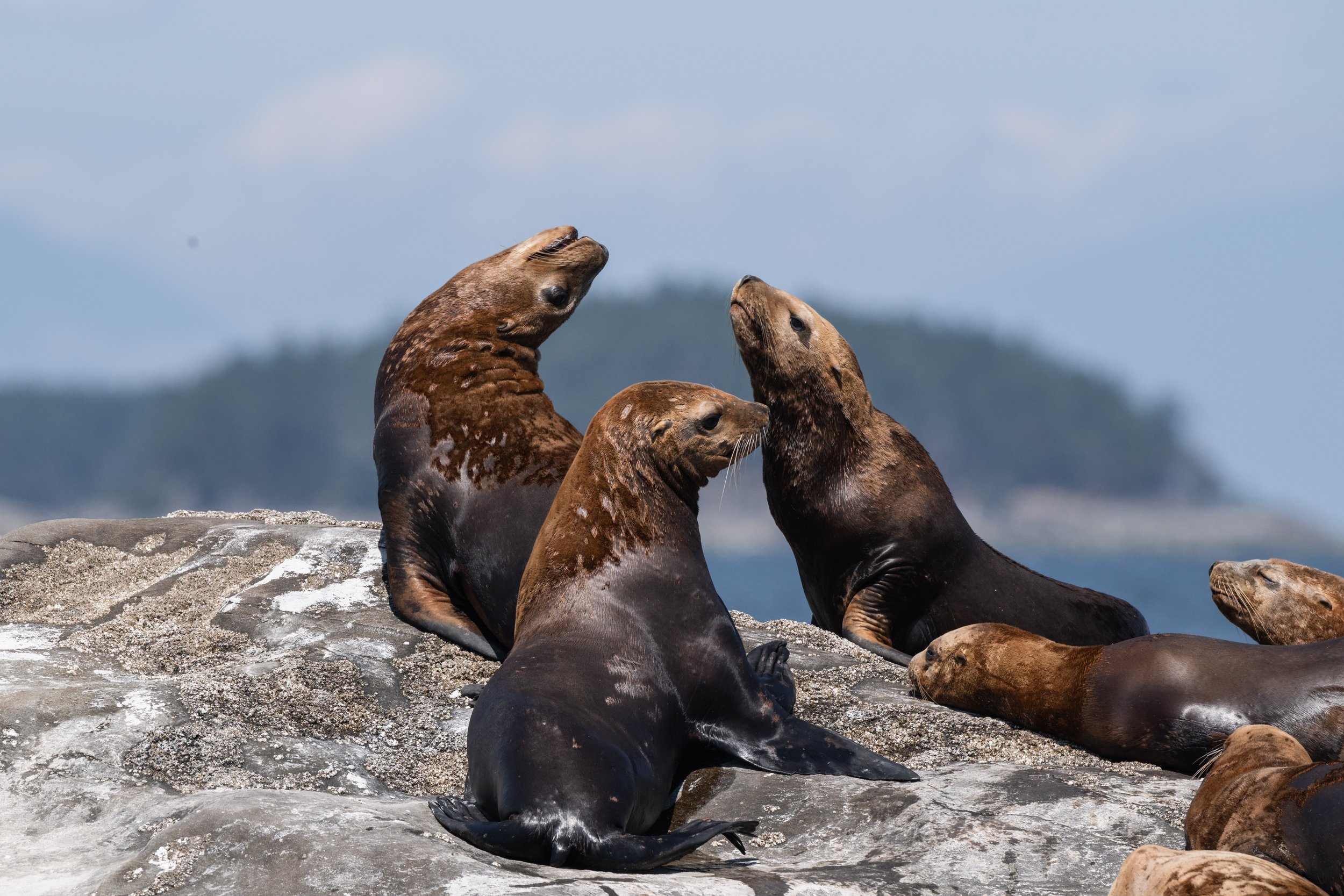
Steller Sea Lions striking a pose on Stinky Rocks. Photo by Aly Kohlman.
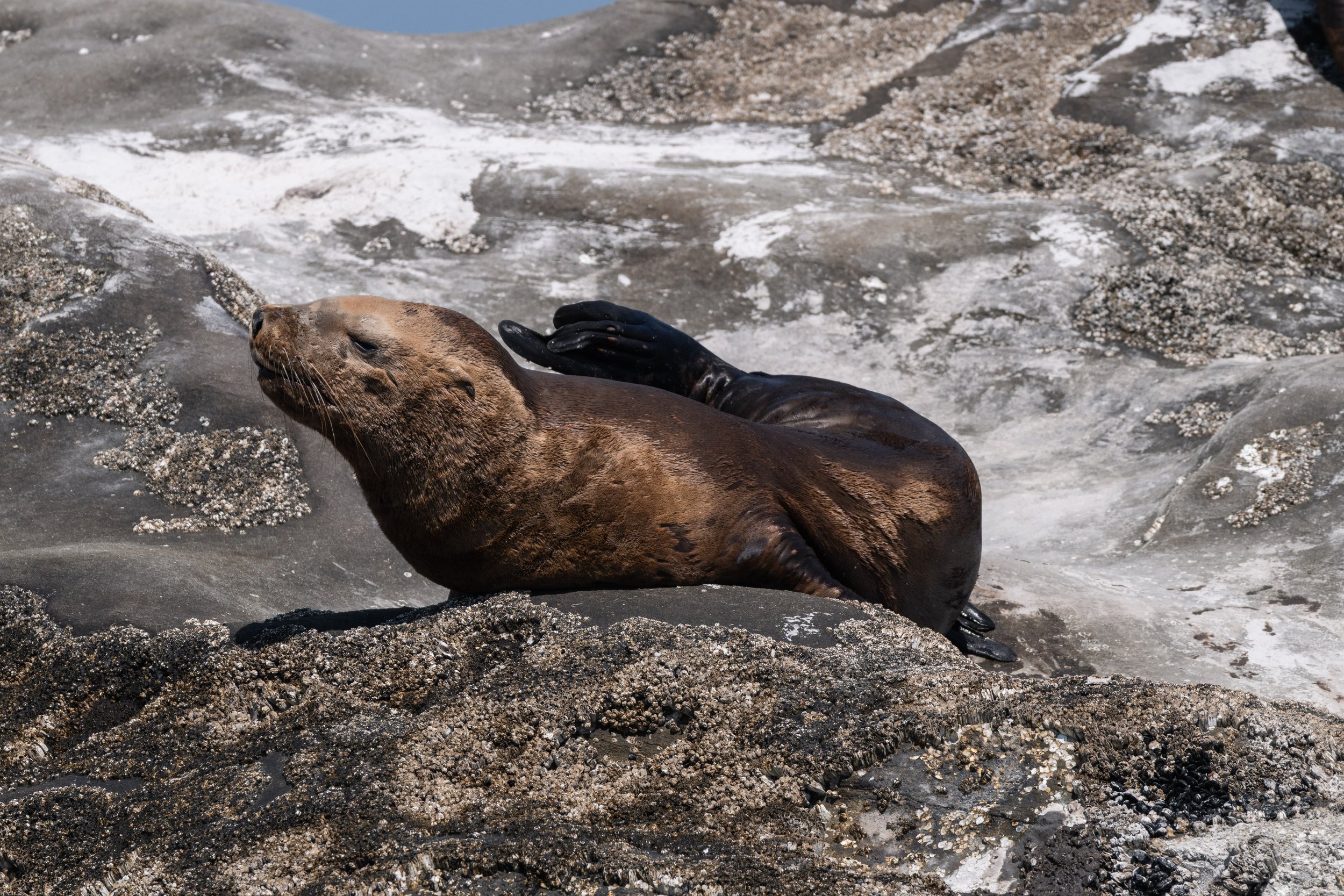
Steller Sea Lions doing Yoga. Photo by Aly Kohlman.
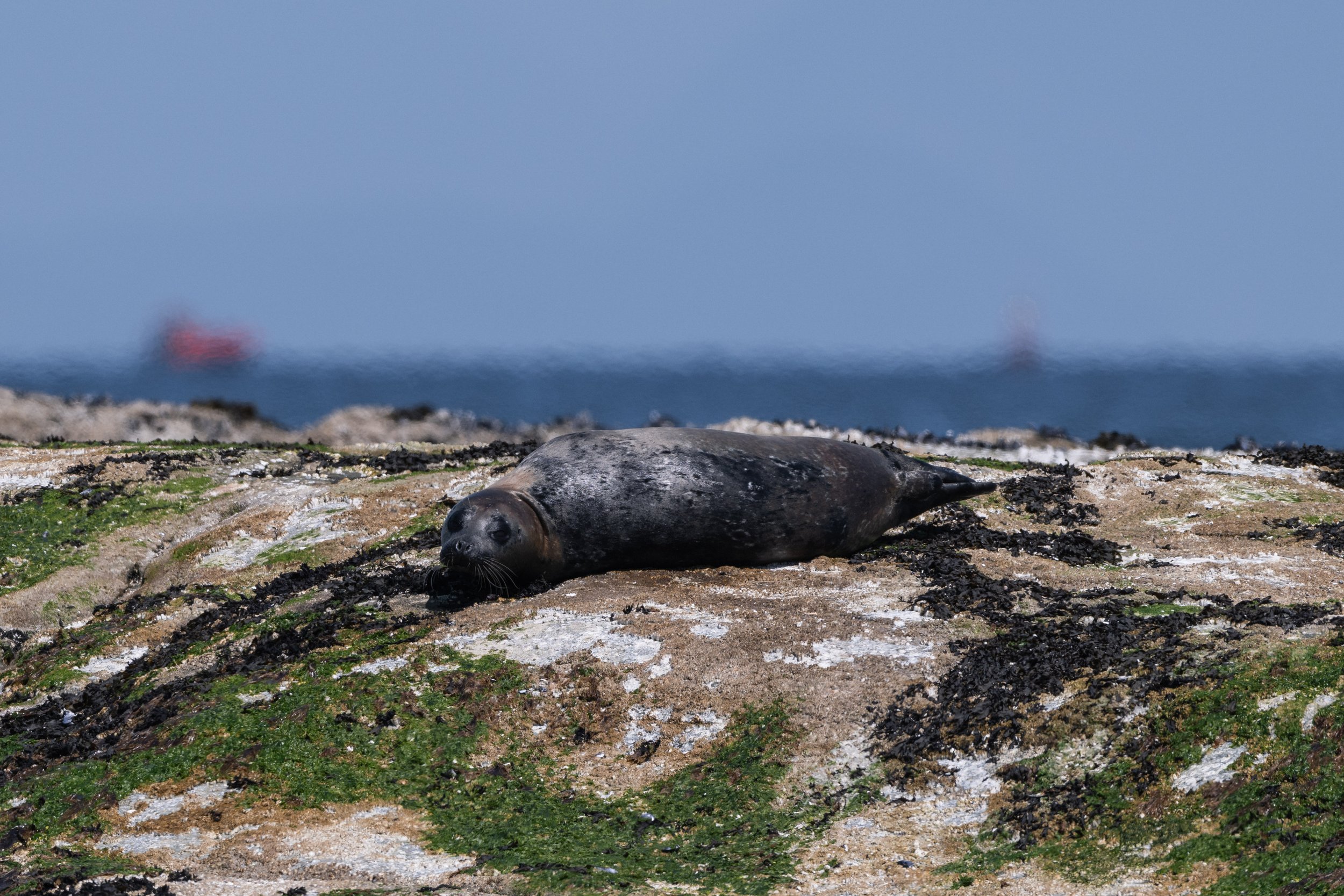
A happy looking Harbour Seal. Photo by Aly Kohlman.
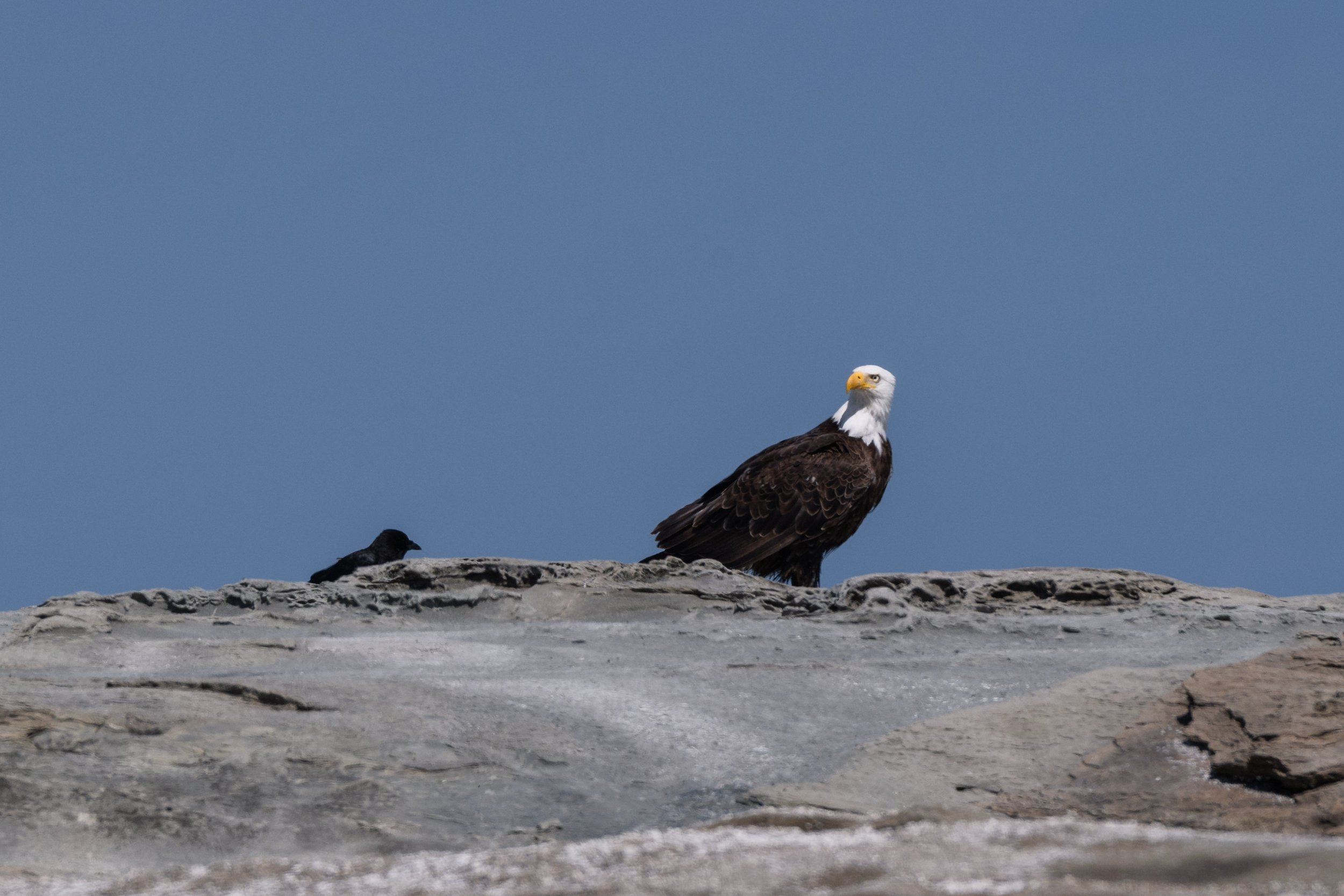
A Bald Eagle having a snack. Photo by Aly Kohlman.
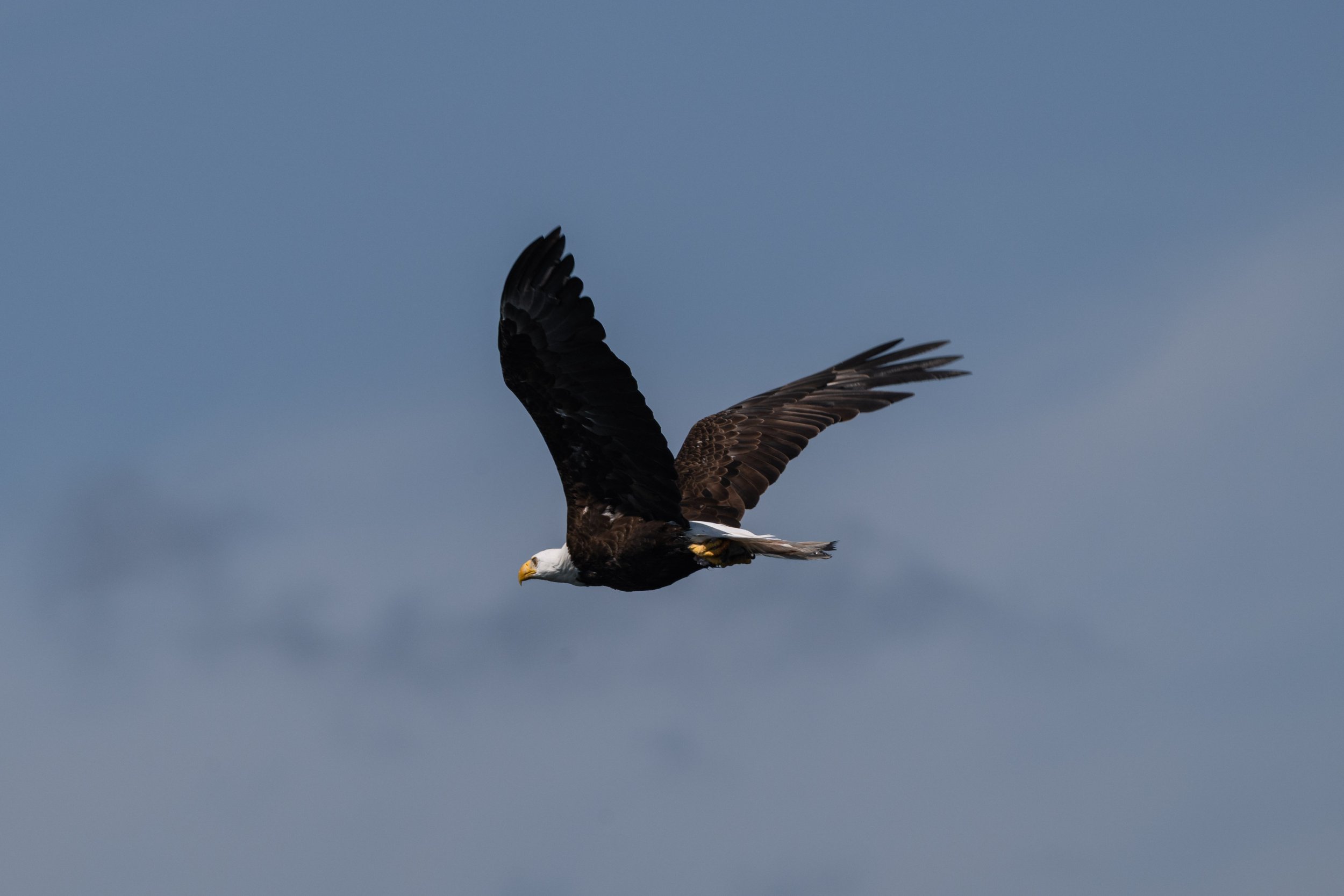
The Bald Eagle flying off with their snack. Photo by Aly Kohlman.
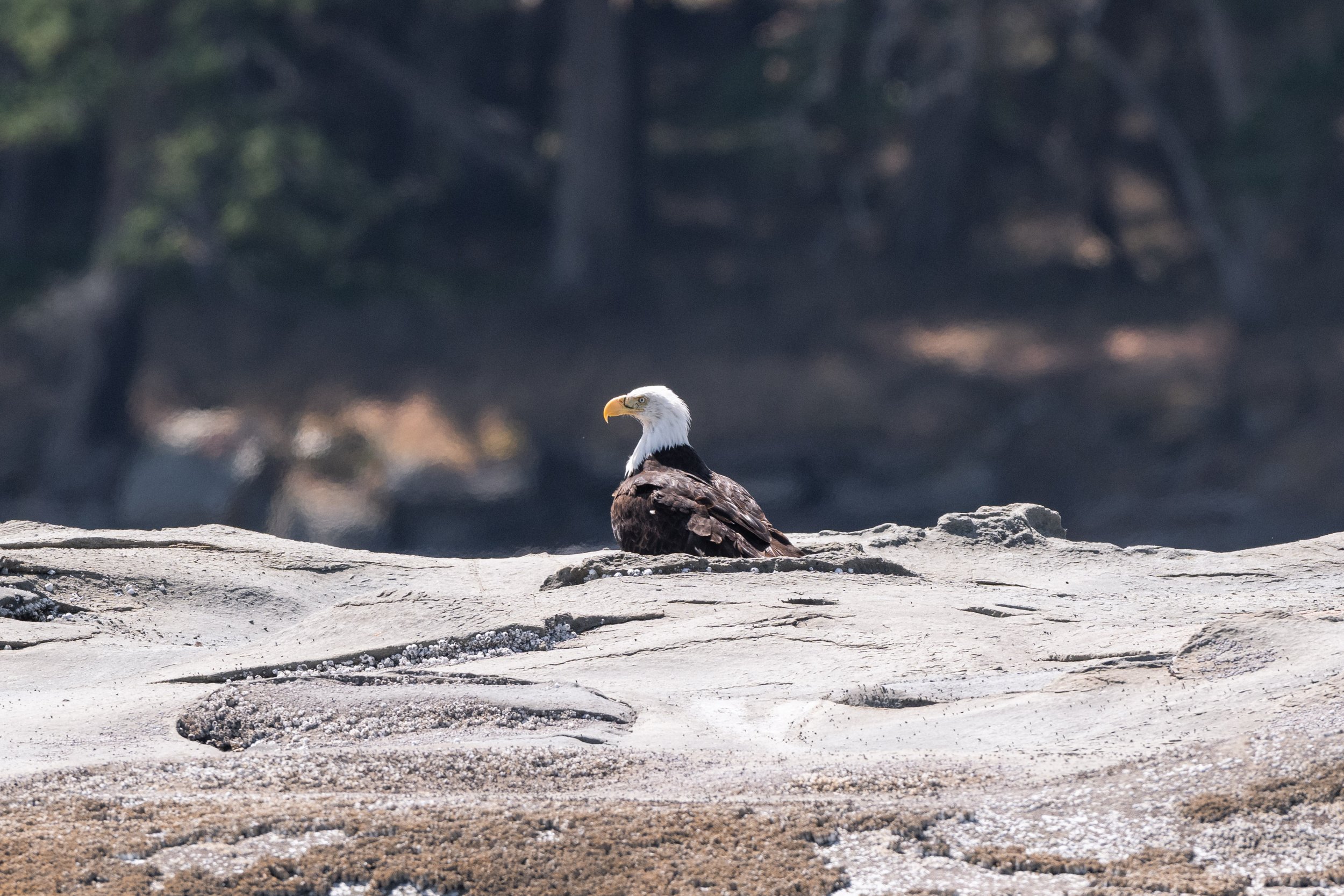
A great look at the Bald Eagle on Stinky Rock. Photo by Aly Kohlman.