
August 11, 2026, 10:30 AM - Humpbacks for all, then the T049As traverse Galiano Island's shoreline
This morning the three of our boats – Keta, Cascadia and Kula – were out on the water ready to find out what the Salish Sea had planned. With a lot of ground to cover and excellent searching conditions, the three boats spread out north of Gabriola Island to start the day's adventure.
The search did not take long, though, and within a half hour of departing, both Keta and Kula had their own encounters with humpbacks. Cascadia kept on searching and exploring new areas to the south as the other two began their first encounters of the day.
On Keta, two humpback whales were spotted travelling together. The whales moved steadily through the water, leading to beautiful views of their flukes as they surfaced and dived. With these ideal angles of their tails, Naturalist Hayleigh identified them as Fader (BCY0195) and X-Ray (BCX1851).
Fader is a whale that is well known in these waters and has been coming to the area for more than two decades. Since Fader has never been documented travelling with a calf for so long, they are thought to be male. X-Ray, by contrast, is a more recent addition to our local list of whales. As this is only our first year of getting to know them, there is still a great deal to learn as we continue recording sightings.
At the same time, Kula began documenting its own solo humpback sighting.
This whale was fluking beautifully, raising its tail well above the surface with each deep dive, and its unique dorsal fin also provided a significant clue that enabled Naturalist Aly to identify them as Orion (BCX1251). They appeared to be busily travelling along as we observed.
Cascadia kept going south and reached the middle of the Strait of Georgia while Keta and Kula were spending time with their own whales. They ended up finding a group of humpback whales themselves as they travelled through the southern part of our range.
These whales were incredibly surface active: rather than appearing calmly and predictably, they made a great deal of noise at the surface with breaches, slaps of their pectoral fins, and even cartwheels, which kept the water around them in constant motion.
To anyone present, it was incredible to witness. For a naturalist who wants to identify individual whales, on the other hand, it can be a bit of a challenge!
The identification of humpback whales depends a great deal on being able to see the underside of the whale's tail fluke. It can be difficult to get a clear view of this key feature if the whale repeatedly comes out of the water on less predictable surfaces. Thankfully, these individuals all had unique dorsal fins, which allowed us to confirm their identities this way!
Naturalist Jordan identified three of the whales in the area: Forge (BCX2499), Nike (BCX1377), and Strike (BCX1675). While their IDs were a mystery on scene, two other humpbacks were later confirmed to be present: Octo (BCX1920) and Seltzer (BCY1274).
Soon afterwards, it was reported that a group of orcas were near Galiano Island. The fleet said farewell to the humpback whales they had previously found, then headed toward the new sighting. However, Keta managed to include one more humpback sighting along the way.
A single whale was seen passing ahead, prompting the crew to stop briefly to identify them before proceeding. The whale turned out to be Poptart (BCY1014), a female who is well known for regularly returning to the waters around Vancouver Island.
Adding another well-known humpback to the list for the morning, Keta moved on towards the orcas.
When the boats reached the scene, cameras were pulled out again to identify the whales present. Six distinct orca were here, rising and falling in the tides.
One dorsal fin that was especially notable drew our attention; although it was large, it had a distinctly hooked shape, unlike many other male orca. This was a younger male, just starting to sprout or entering puberty. This individual, paired with the other smaller fins in the area, helped us confirm that this was the T049A matriline:
T049A Nan ♀ (1986)
T049A3 Nat ♂ (2011)
T049A4 Neptune ♂ (2014)
T049A5 Nebula ♀ (2017)
T049A6 Charlie II ♂ (2022)
T049A7 Nimbus (2026)
The T049As are a matriline we have been lucky to meet regularly in our waters over the years; this season, however, they have been a bit scarcer, which is why it was so special to see them again. That wasn’t the only reason why this encounter was extra interesting, though!
T049A Nan, the matriarch of the pod, was travelling with a very small little one tucked close to her side: T049A7 Nimbus, a calf that was born earlier this year.
It's always a remarkable thing to spot a new orca calf. At this early stage, Nimbus is still getting used to the family's routine and stays close to their mother as they move around the Salish Sea. We hope they continue to thrive and that we see them again for many years to come!
The T049As seemed by no means in a rush and just travelled along Galiano’s shoreline together as we observed them. With travelling taking up a large portion of an orca’s daily life, it was no surprise to see them doing just that. They stayed very close to shore as well, and it is possible they were scoping the area out, looking for a seal or sea lion to hunt for lunch.
Eventually, after having spent some time with the T049As, it was time to say goodbye and start the trek back to our home port. However, before we went home, we still made one more stop to make.
This time the wildlife was a bit smaller and was situated high up on land: Harbour Seals.
Harbour Seals are one of the most familiar of the pinnipeds along our coast and can be found all throughout the Salish Sea year-round. Although they now seem like a normal part of the coastal scenery, their history reminds us of the dramatic impact human pressures can have on marine wildlife.
Harbour Seals were previously hunted extensively throughout the area. Since marine mammal protection acts have changed so much over the decades, their numbers have recovered considerably, and they are now a common sight along the shores and on the islands of British Columbia.
After our short venture to see the seals, we headed toward home and returned to Nanaimo.
The morning was a great example of the wide variety of wildlife in the Salish Sea, including sightings of many humpback whales, a familiar family of Transient orca, and some seals as well!
We hope you enjoy these photos captured by Marine Naturalists Hayleigh Hilbert, Aly Kohlman, and Jordan Robinson!
Fader and X-Ray
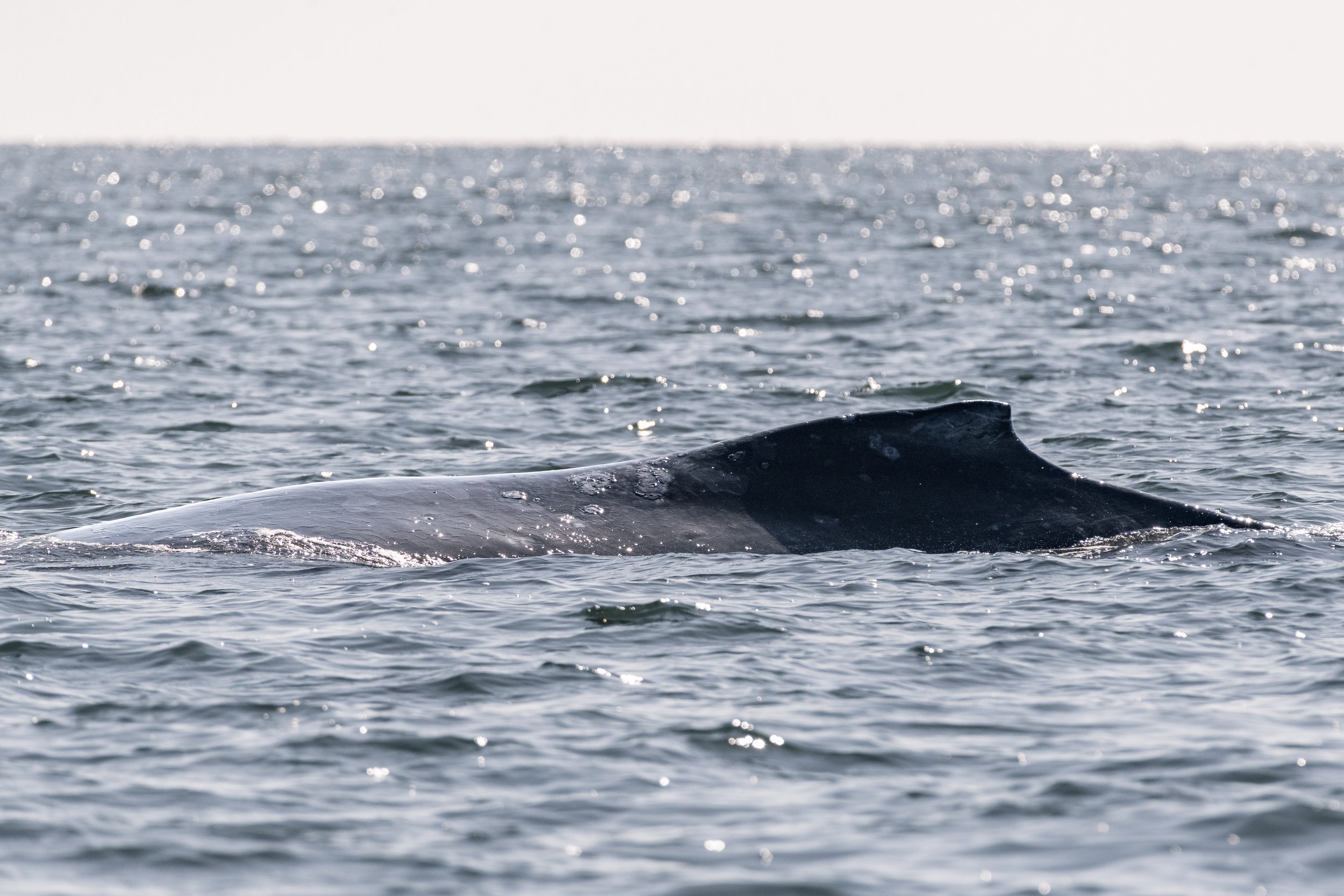
X-Ray underway. Photo by Hayleigh Hilbert.
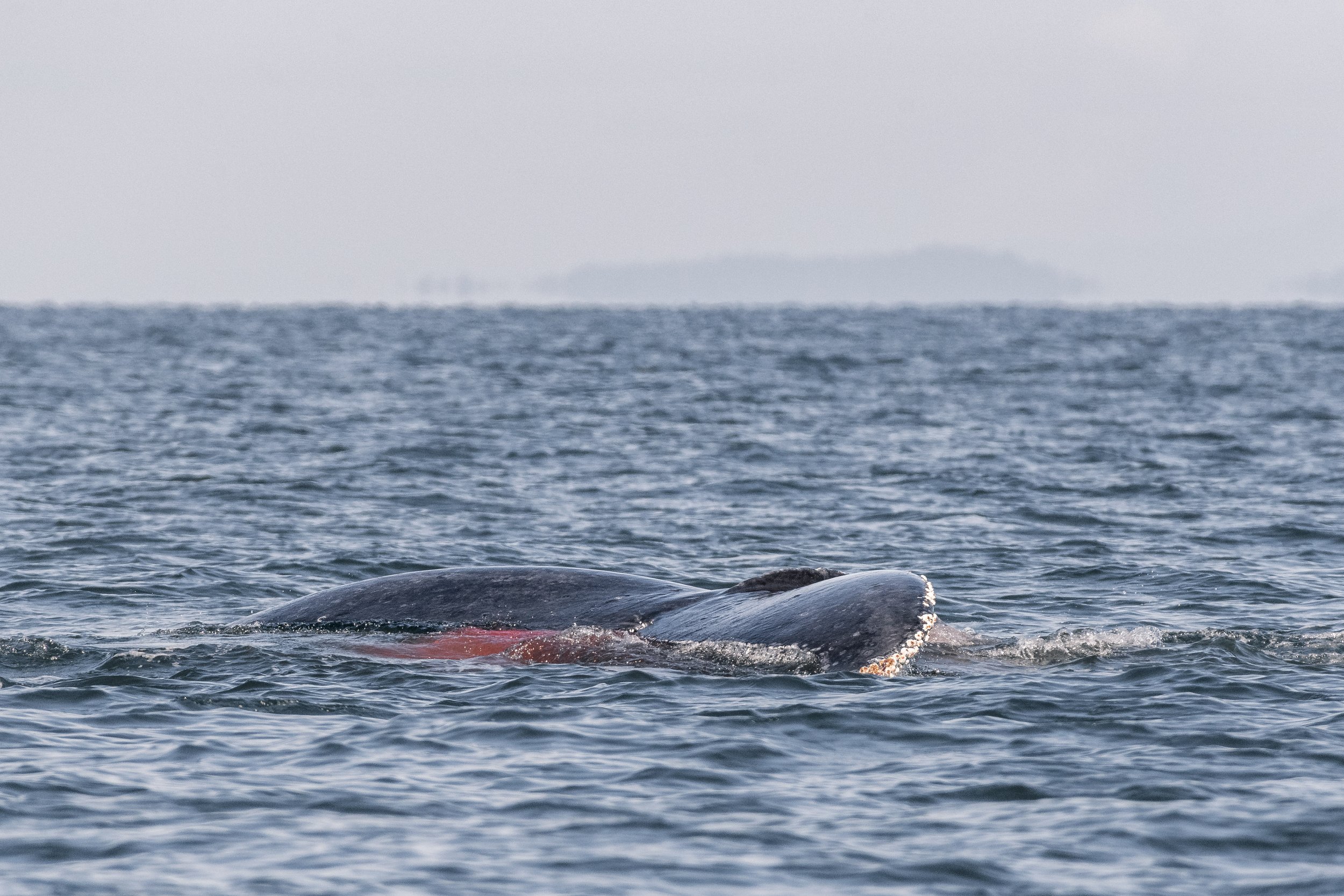
While this may look like blood, it is actually poop! Photo by Hayleigh Hilbert.
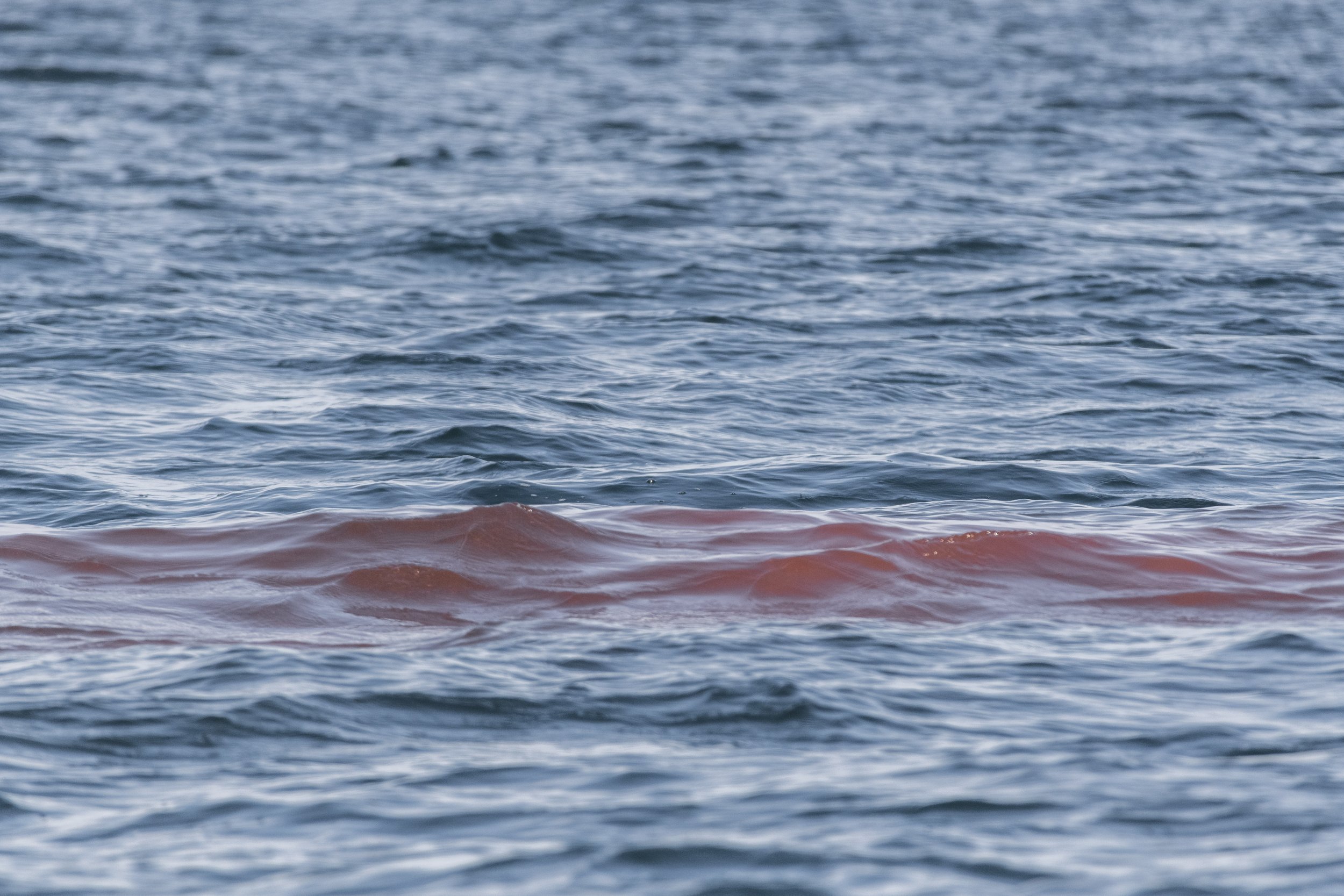
A reddish-orange tinge to their feces means their diet is currently very krill heavy. Photo by Hayleigh Hilbert.
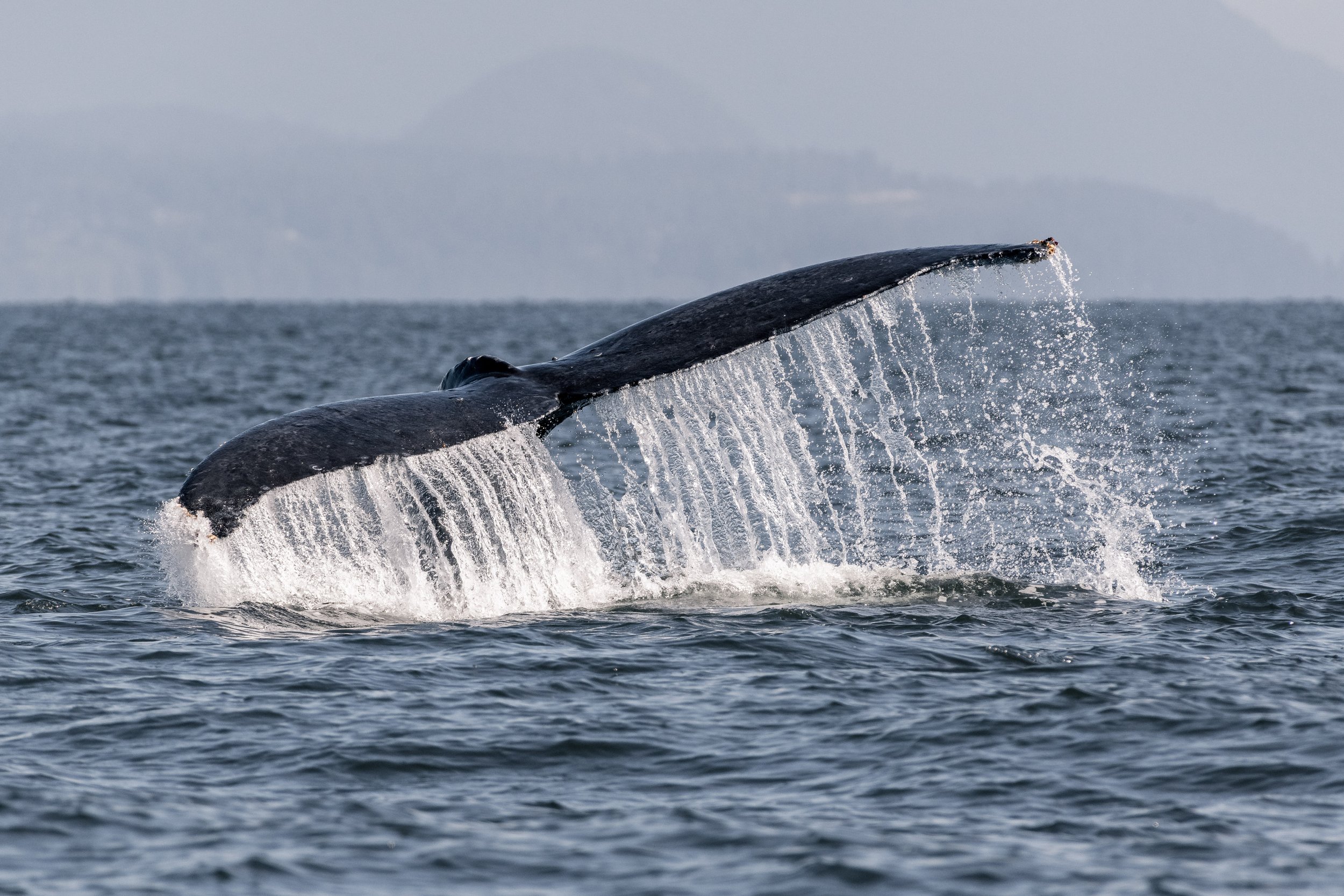
A fluke waterfall! Photo by Hayleigh Hilbert.
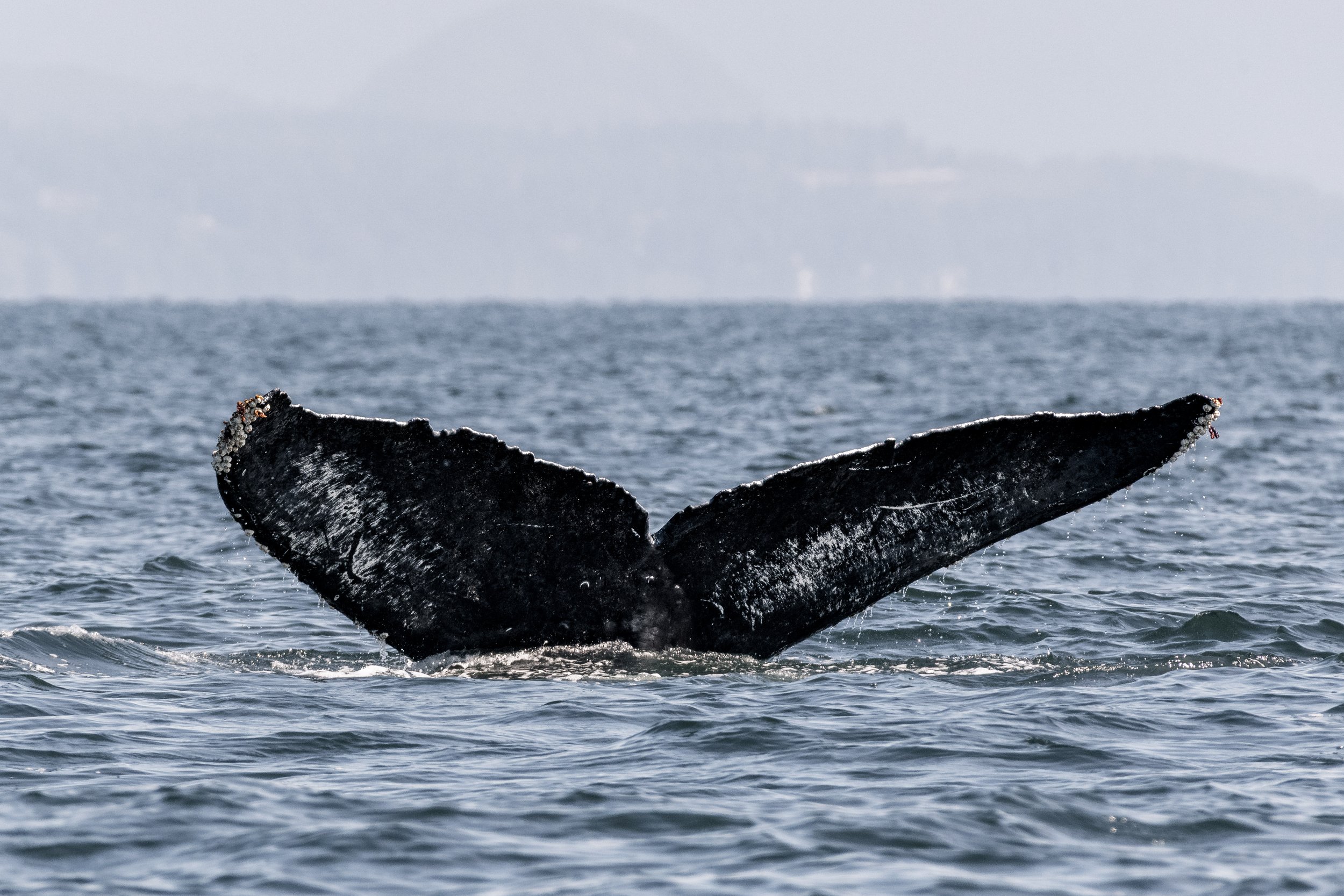
Fader’s uniquely marked fluke. Photo by Hayleigh Hilbert.
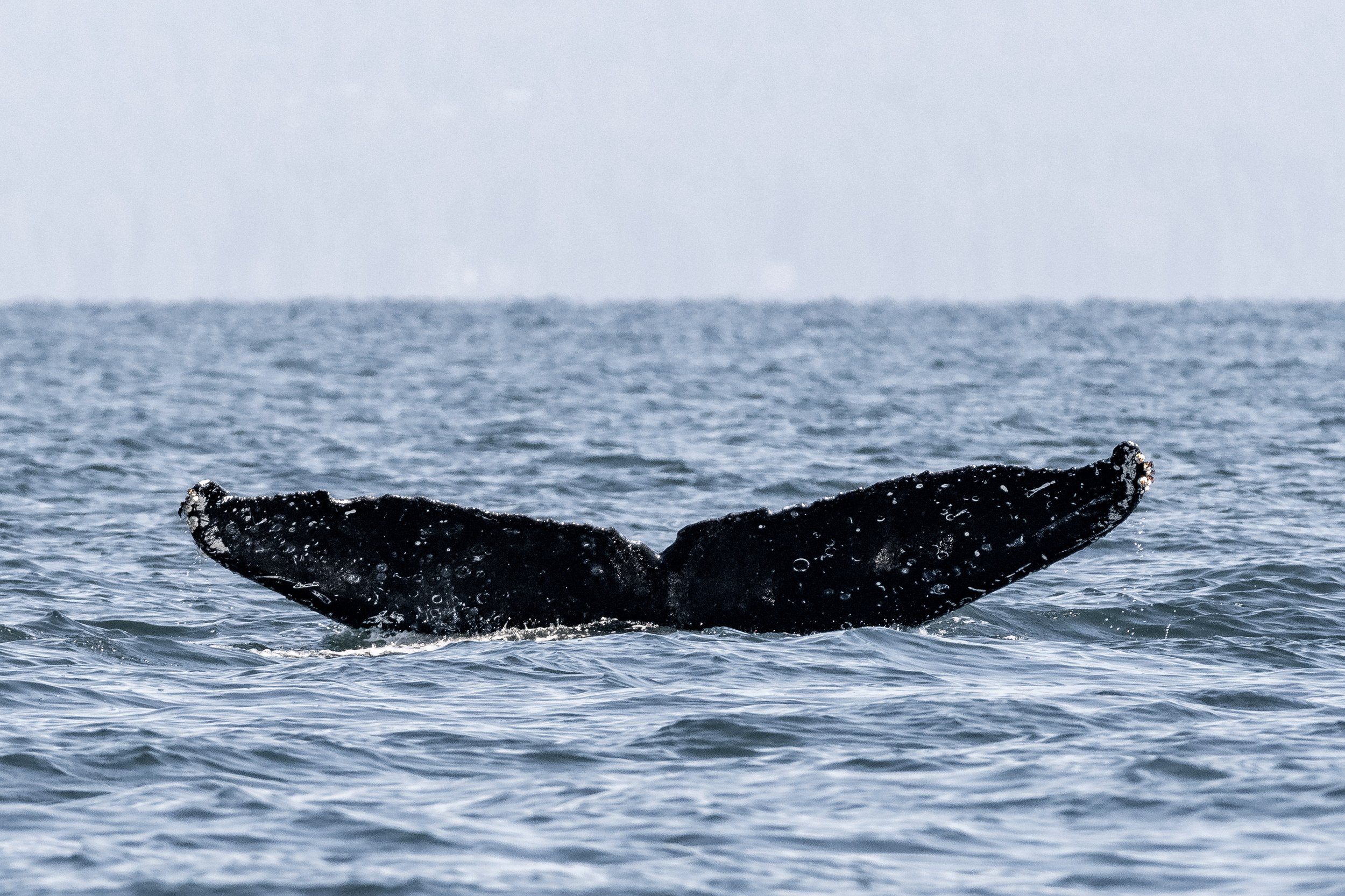
X-Ray’s fluke has many small striations on it. Photo by Hayleigh Hilbert.
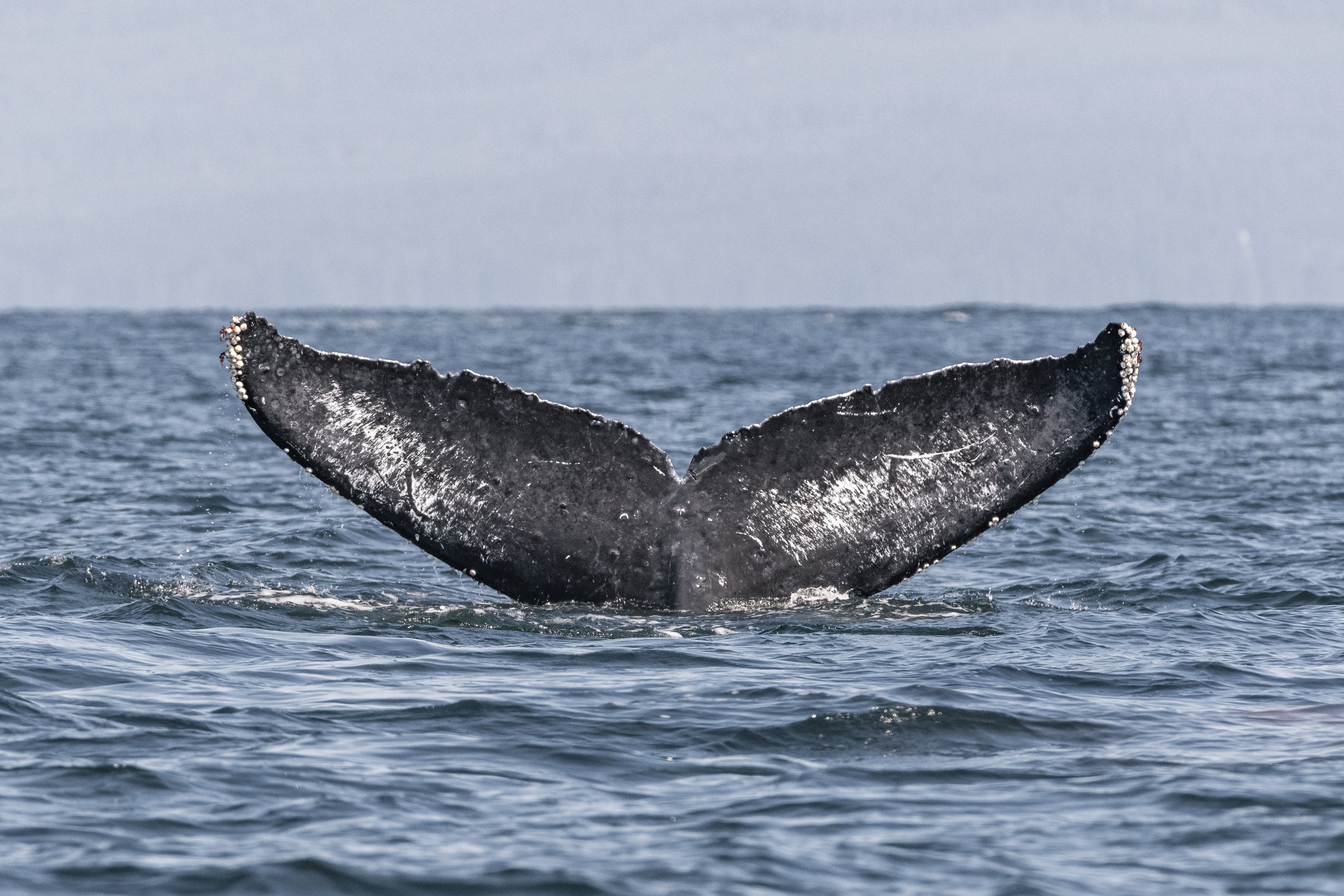
A final peek at Fader. Photo by Hayleigh Hilbert.
Orion
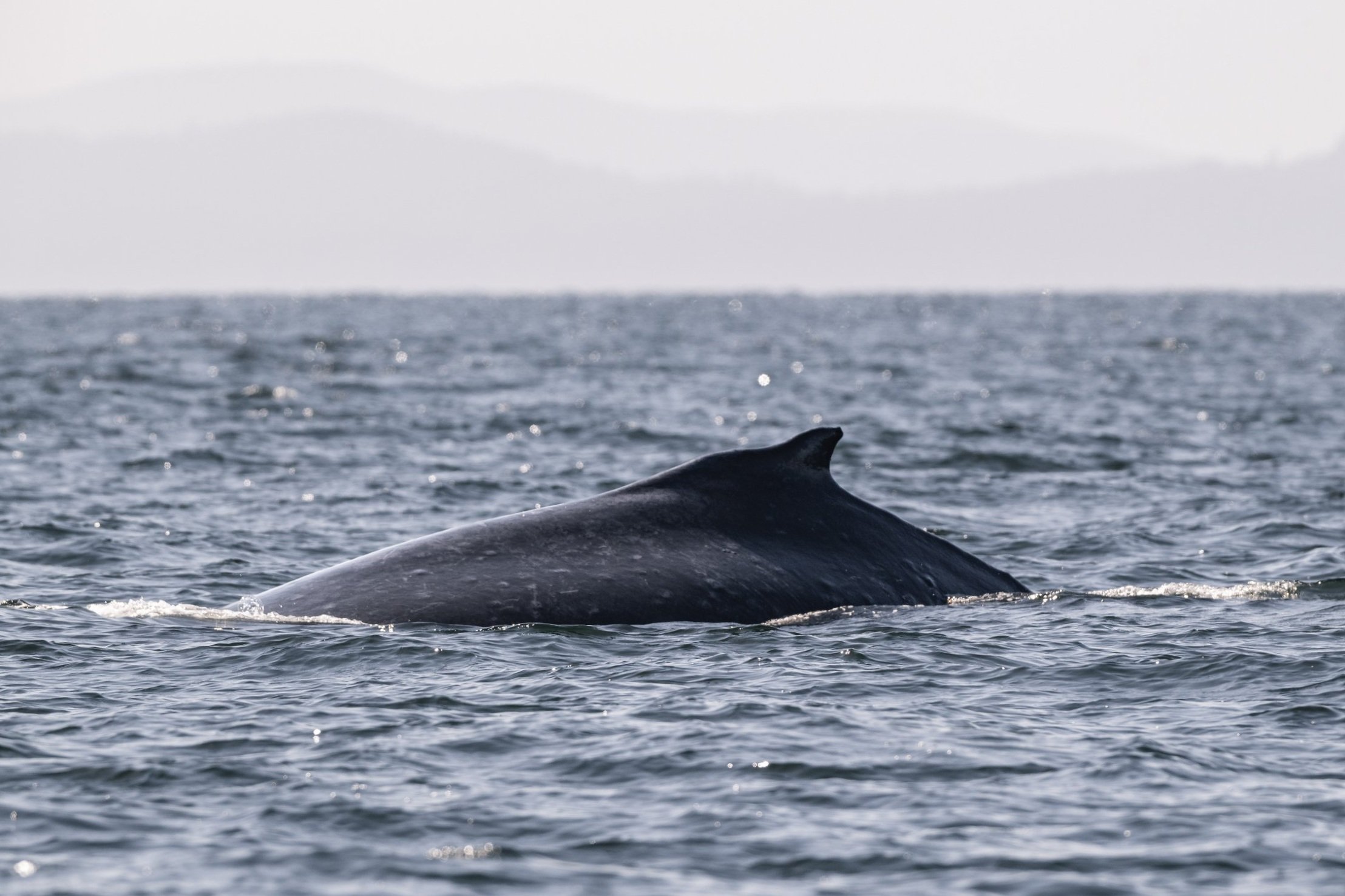
Orion cruising along. Photo by Aly Kohlman.
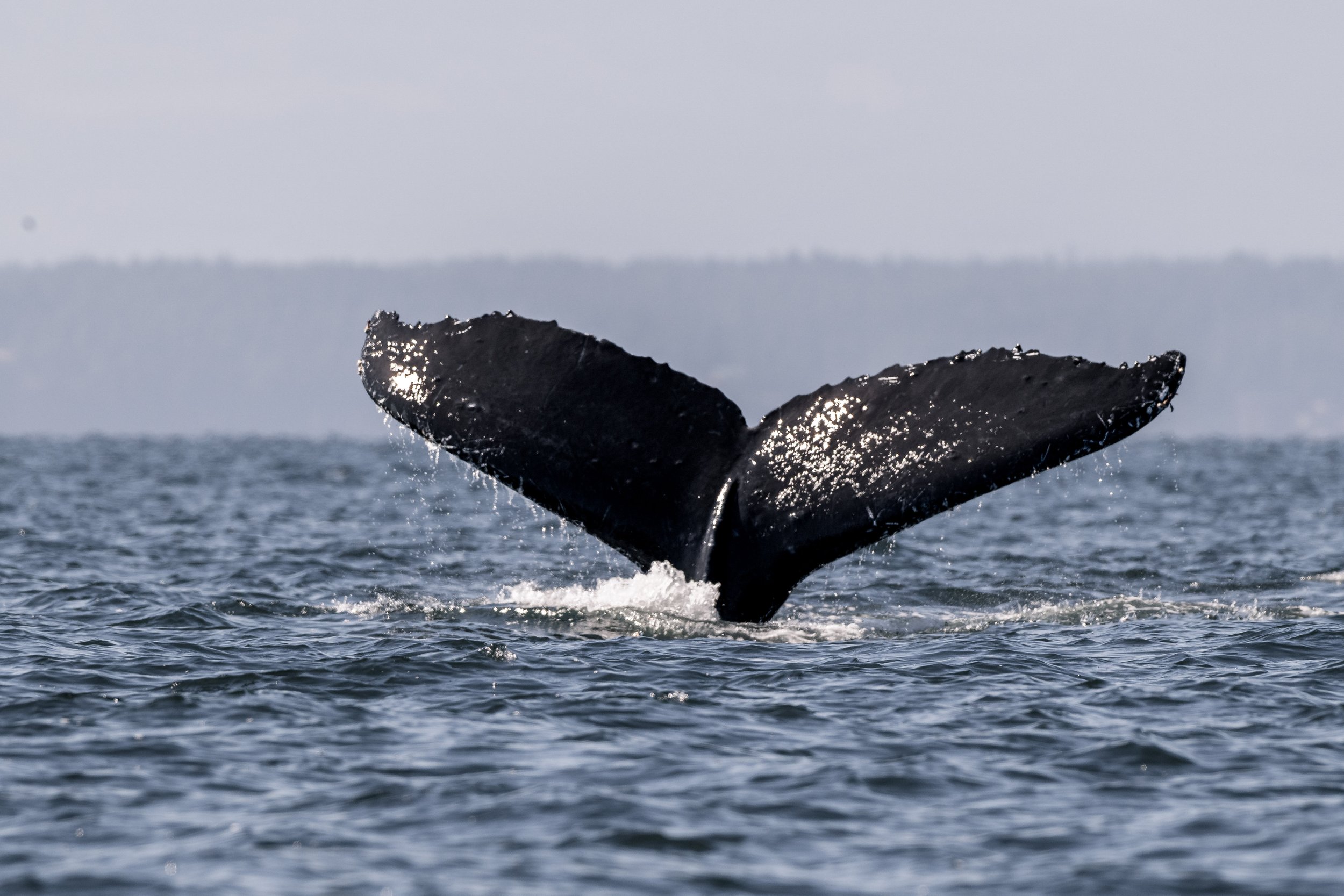
A beautiful top fluke from Orion. Photo by Aly Kohlman.
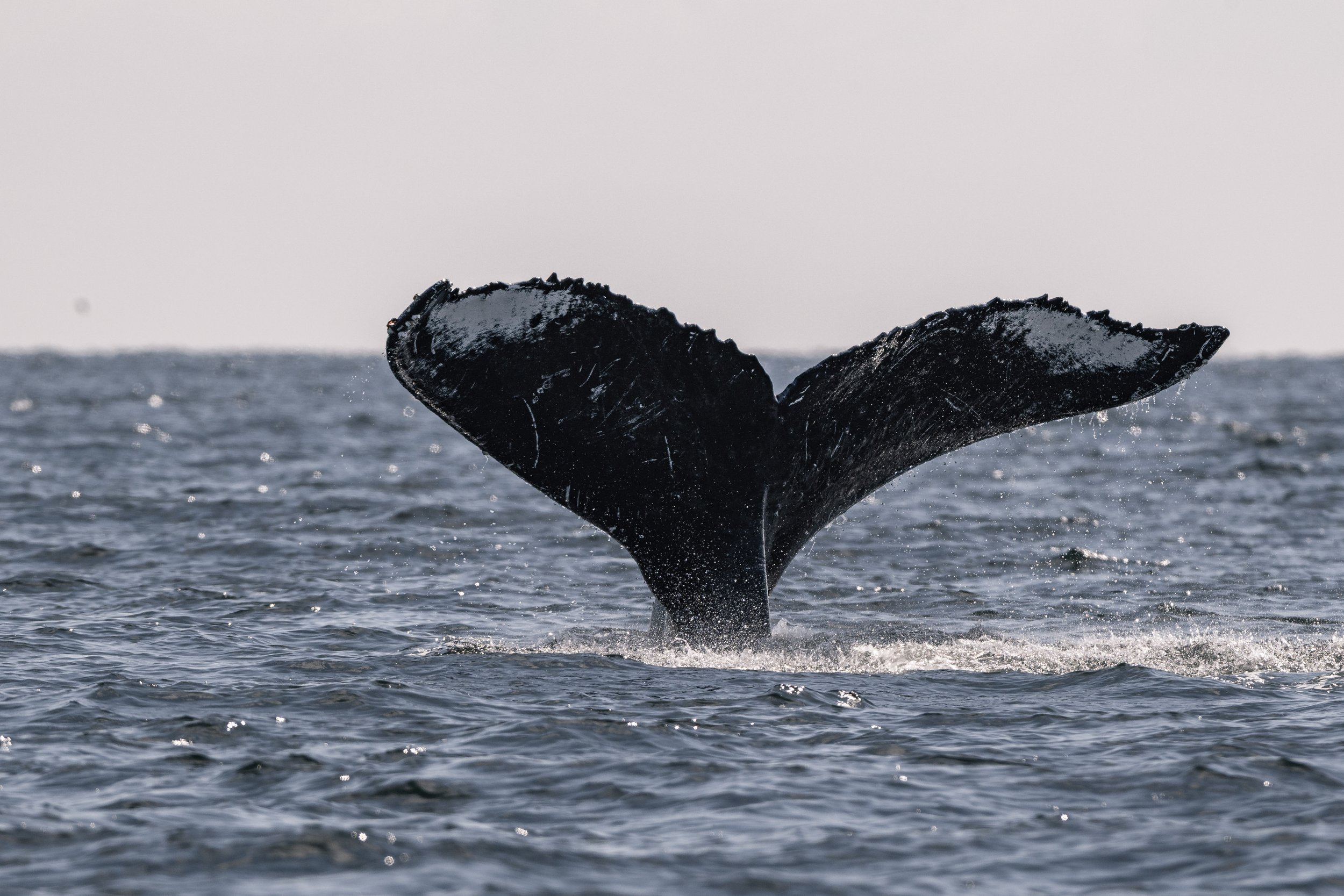
Orion’s fluke is covered in many unqiue dots, speckles, and scratches. Photo by Aly Kohlman.
Forge, Nike, Strike, Octo, and Seltzer
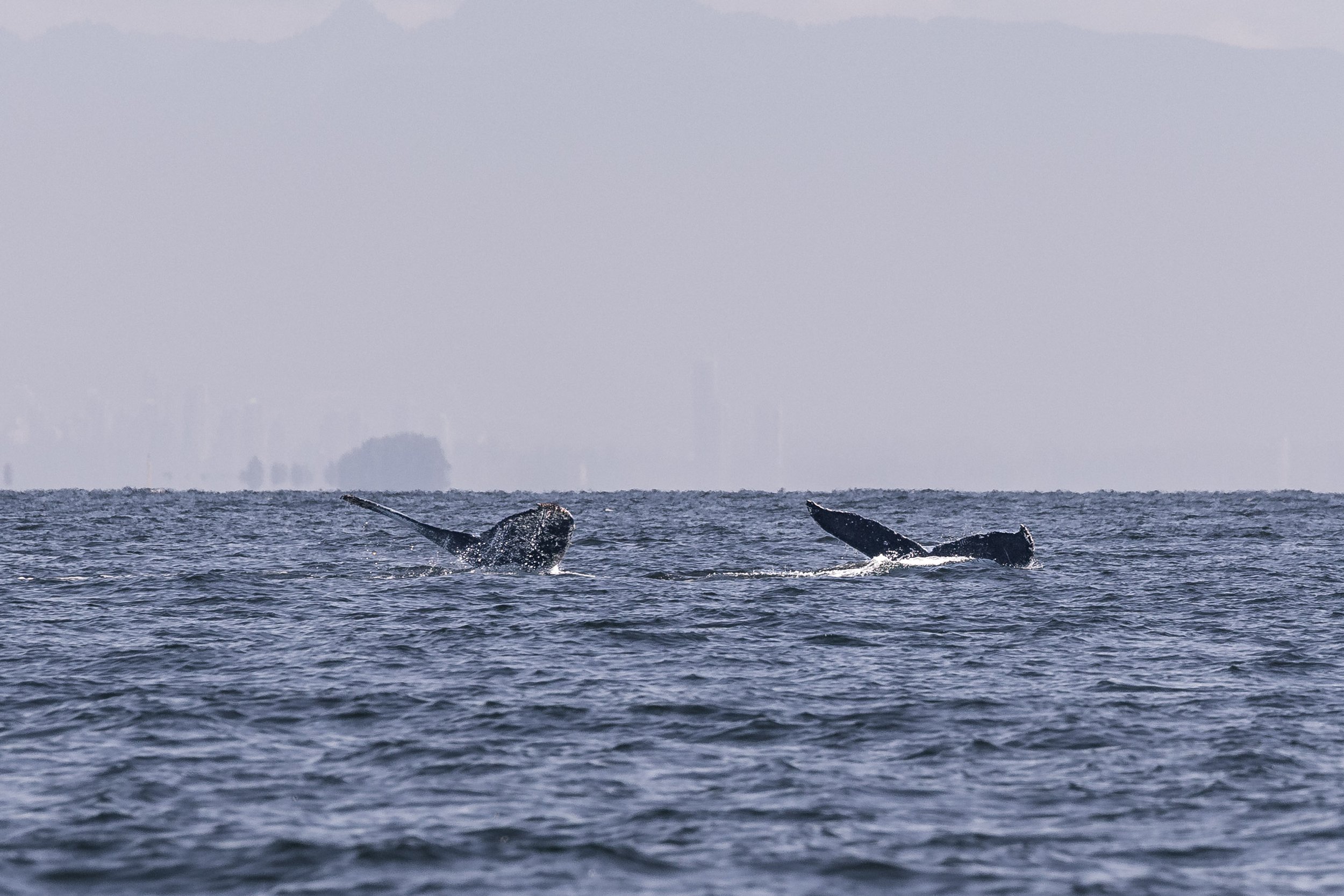
Fluking together - Seltzer and Octo. Photo by Jordan Robinson.
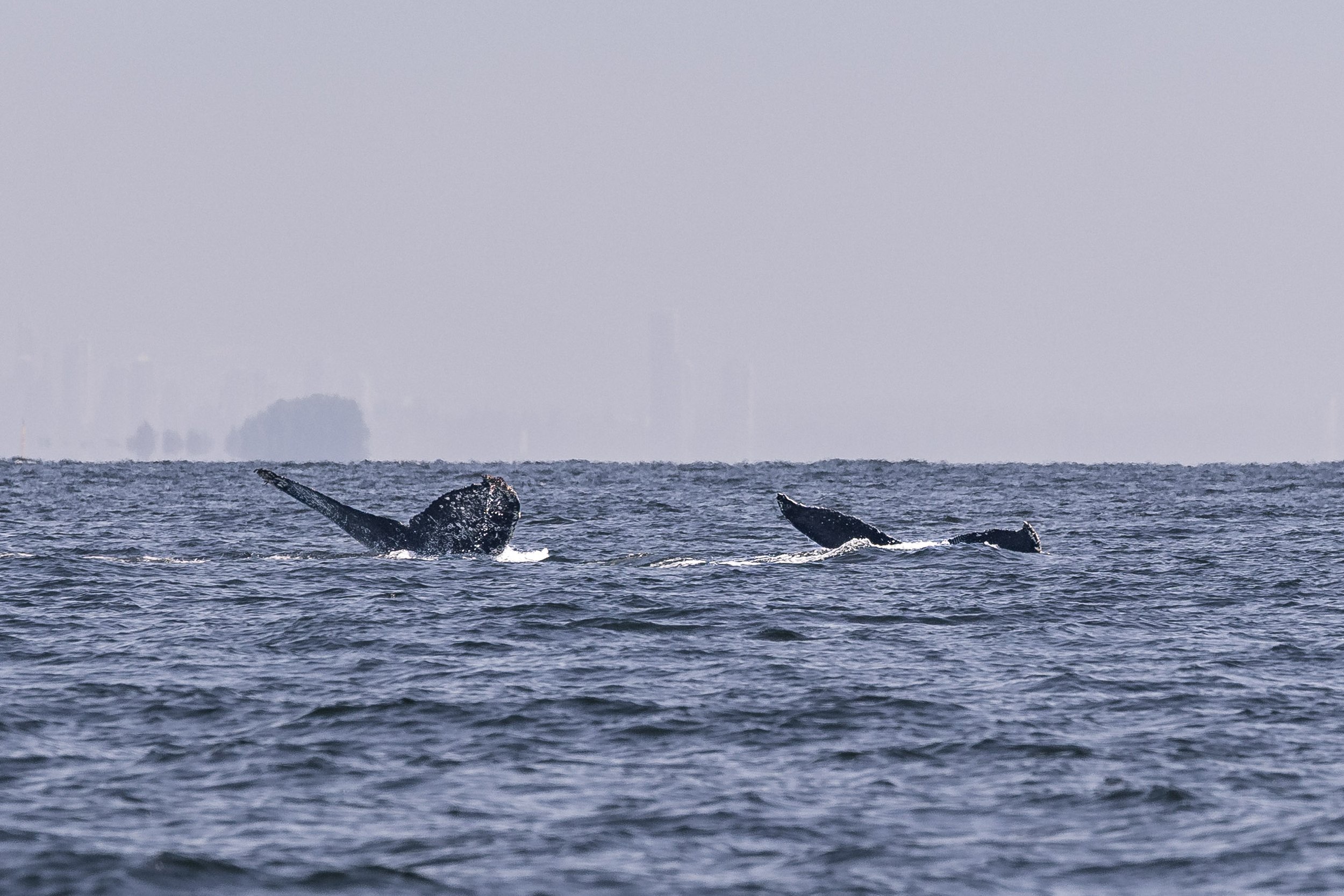
Seltzer and Octo side by side. Photo by Jordan Robinson.
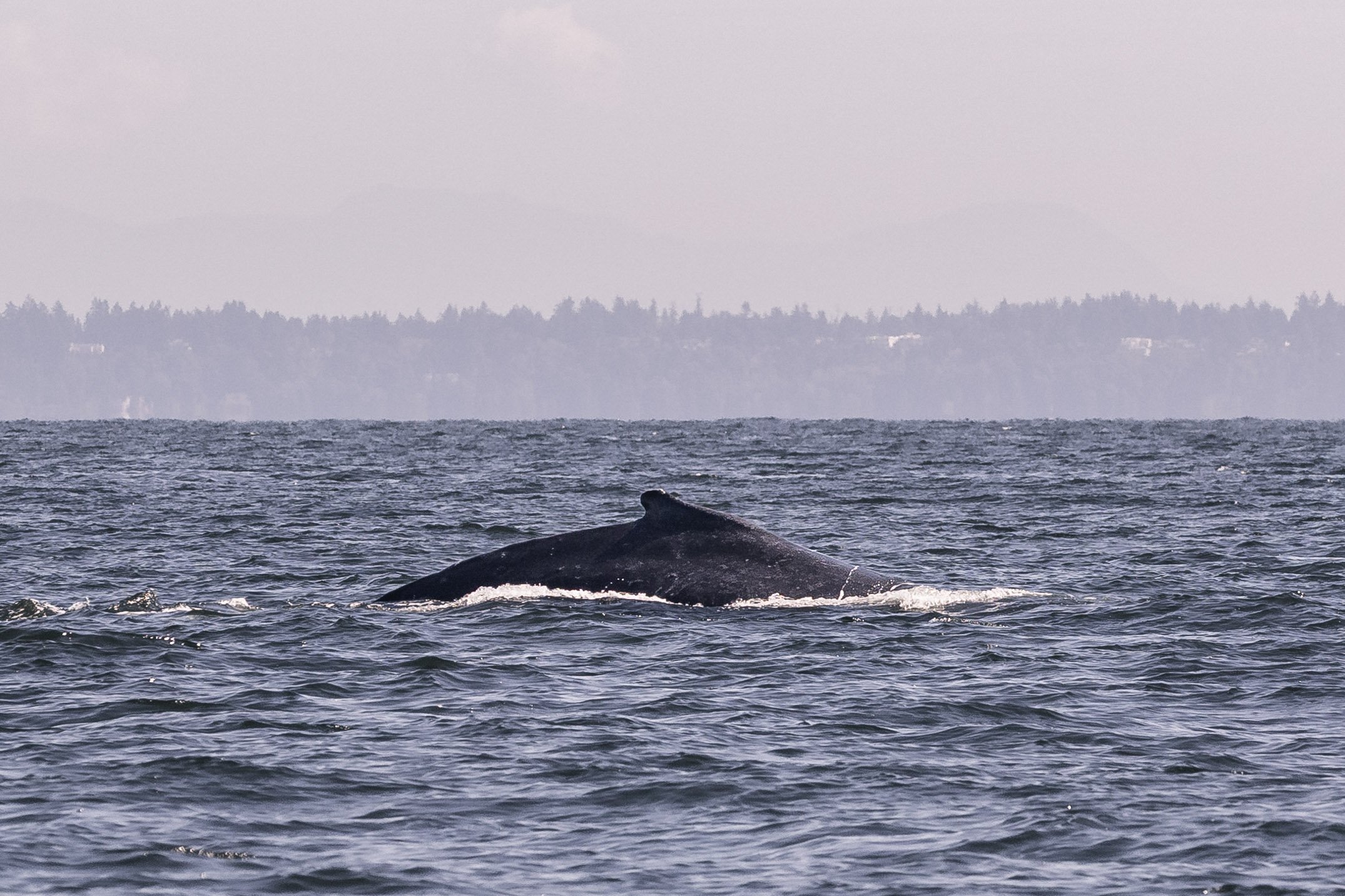
Strike zipping by. Photo by Jordan Robinson.
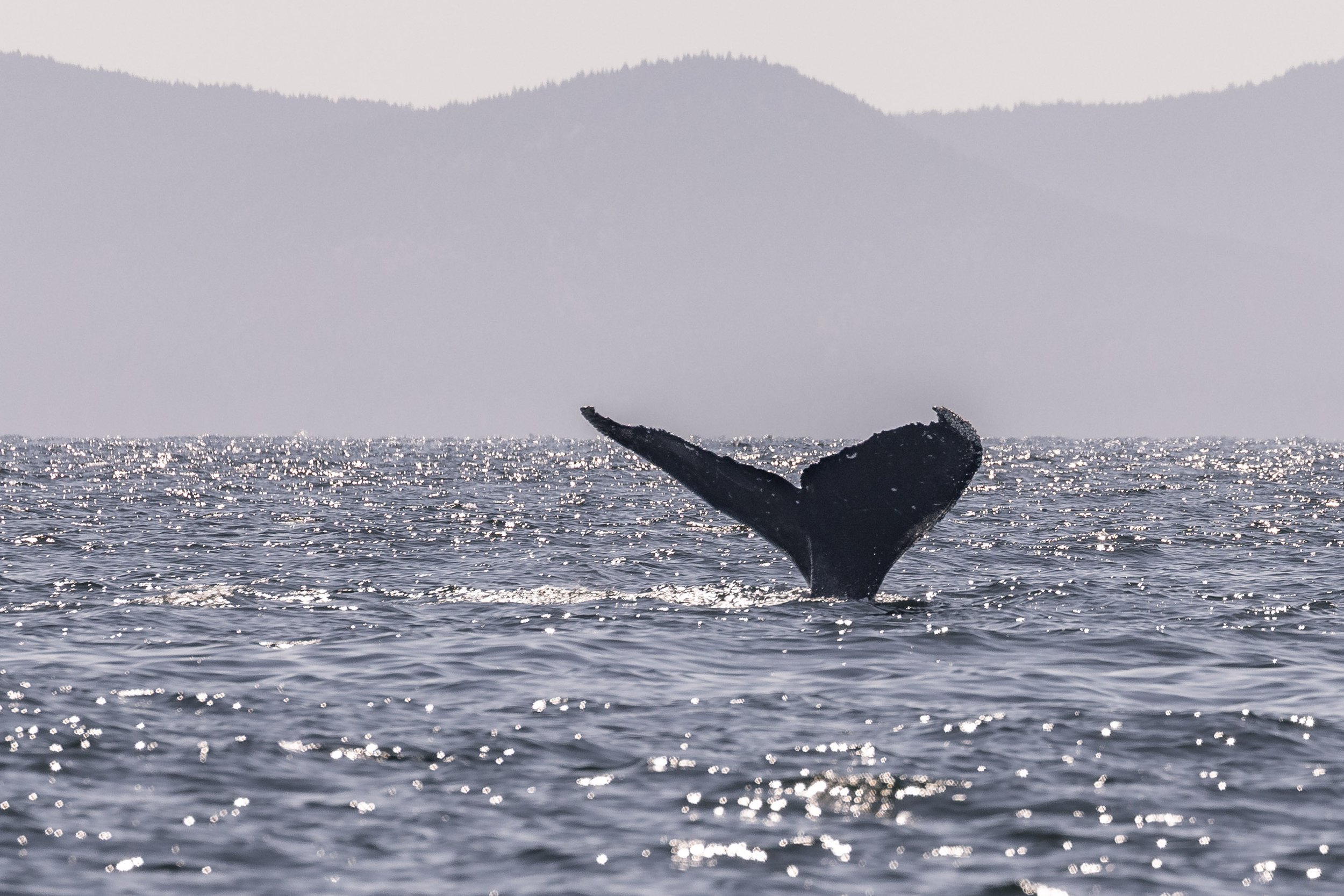
Nike preparing for a dive. Photo by Jordan Robinson.
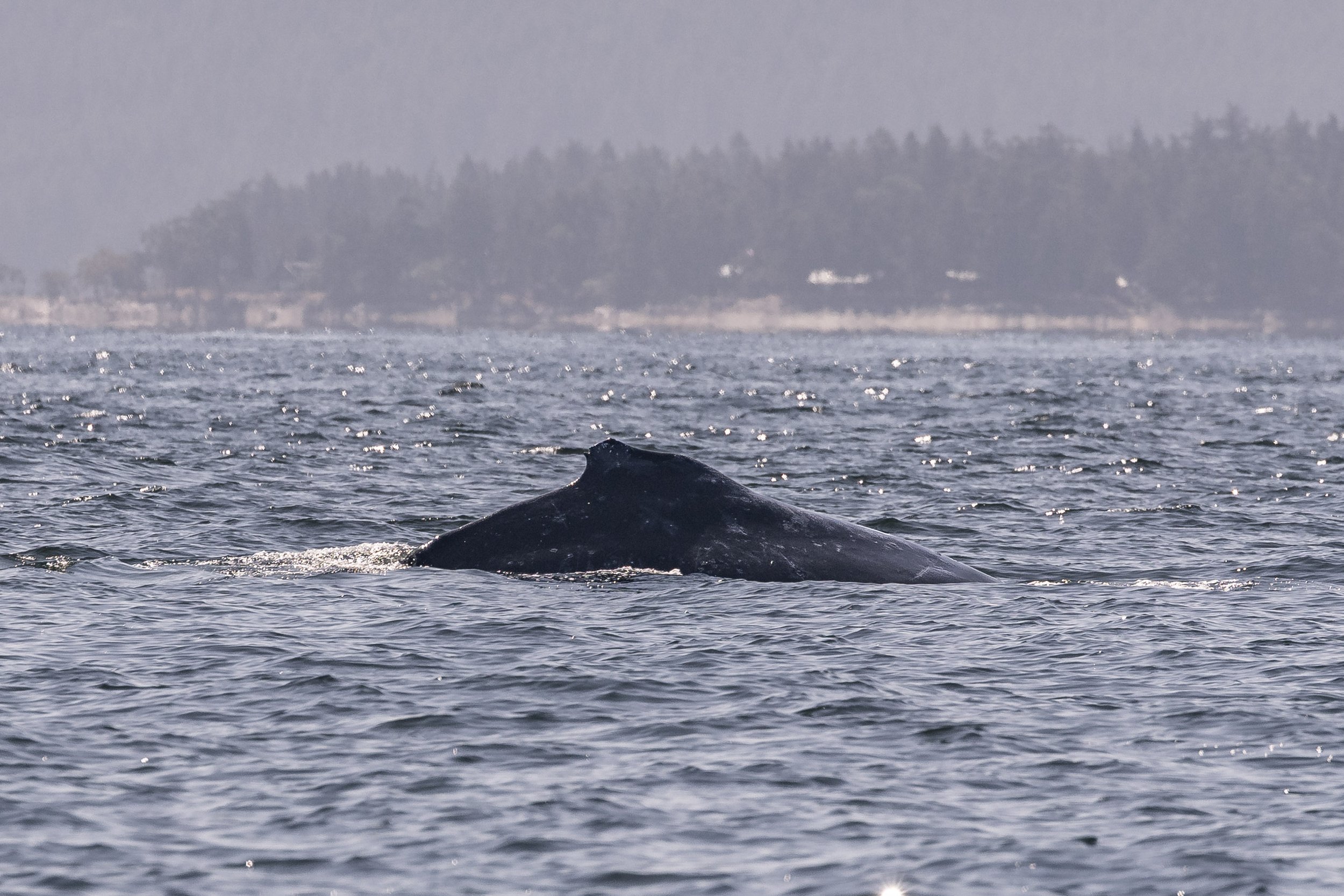
Forge with their uniquely blunted dorsal fin. Photo by Jordan Robinson.
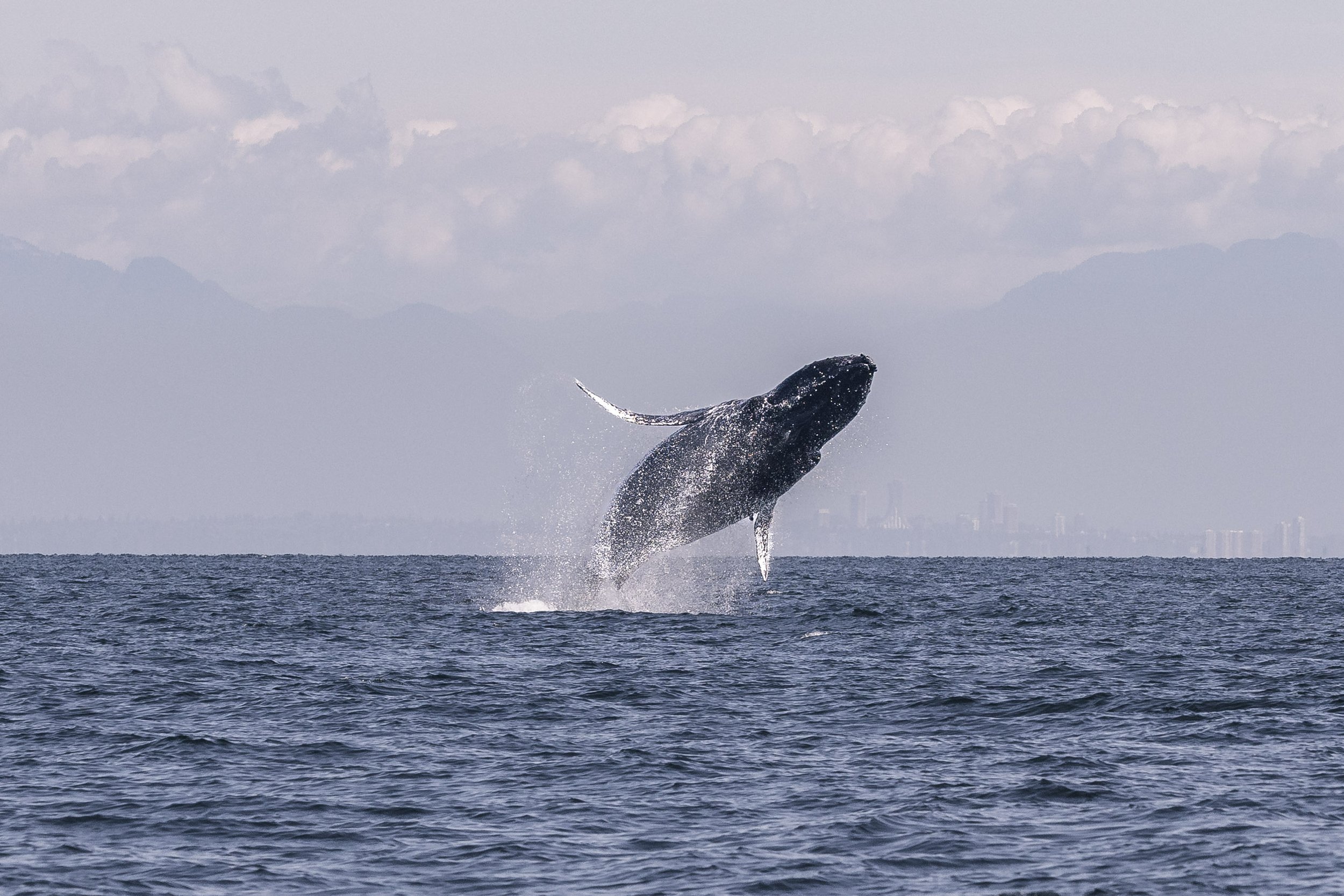
Breaching away. Photo by Jordan Robinson.
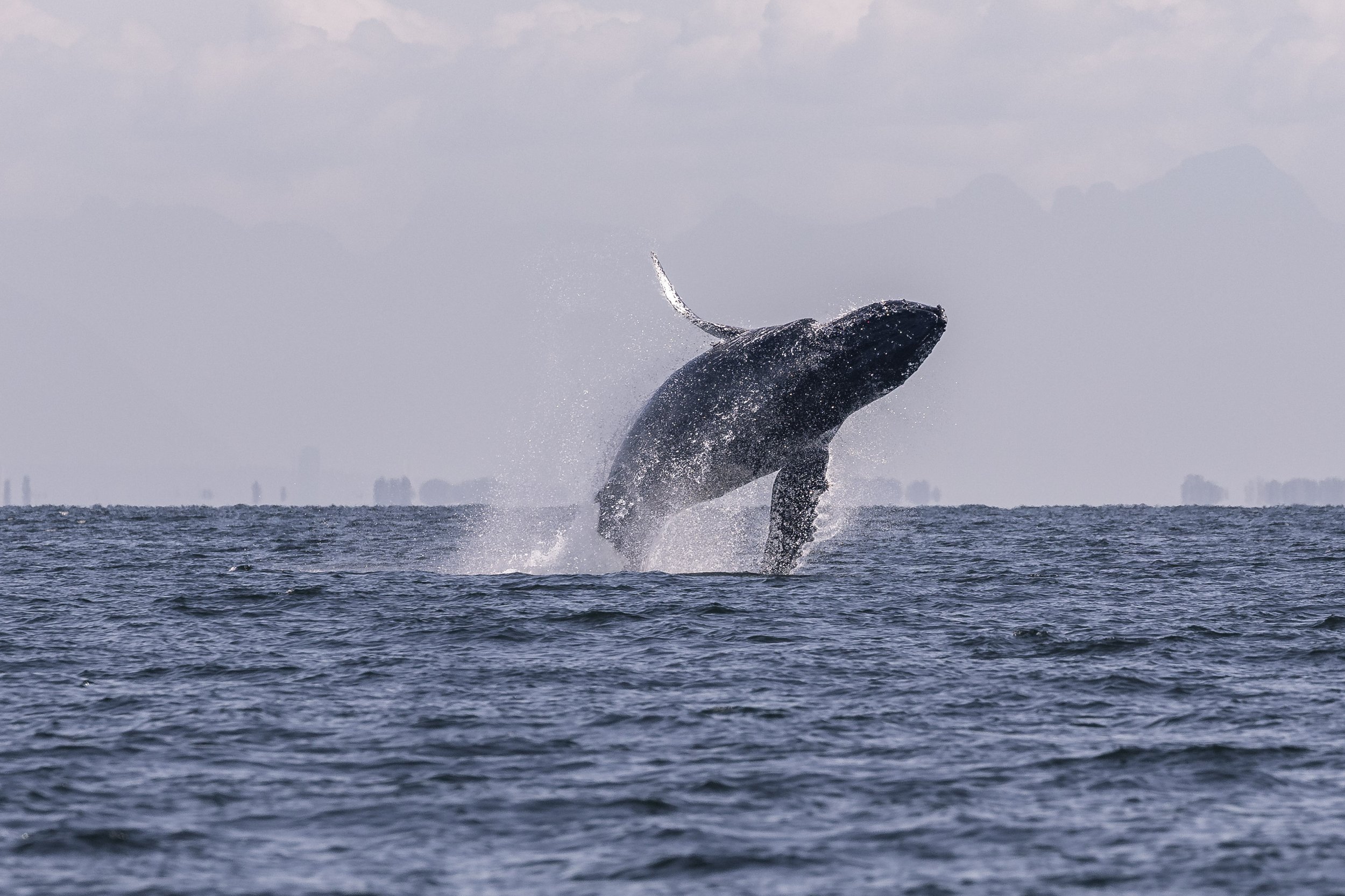
Humpbacks are very interesting porportioned when you see them out of the water. Photo by Jordan Robinson.
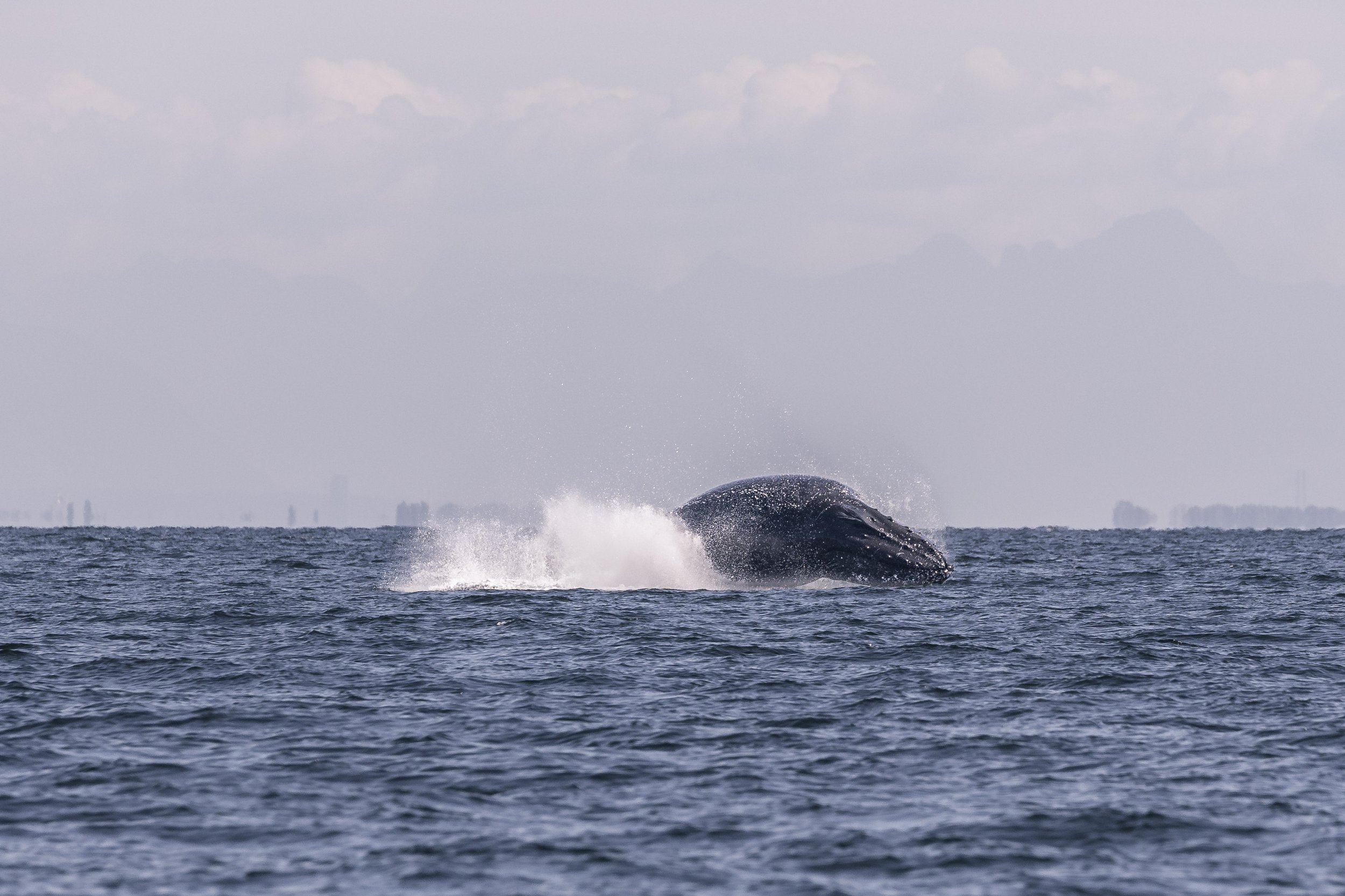
Coming in for a landing. Photo by Jordan Robinson.
Poptart
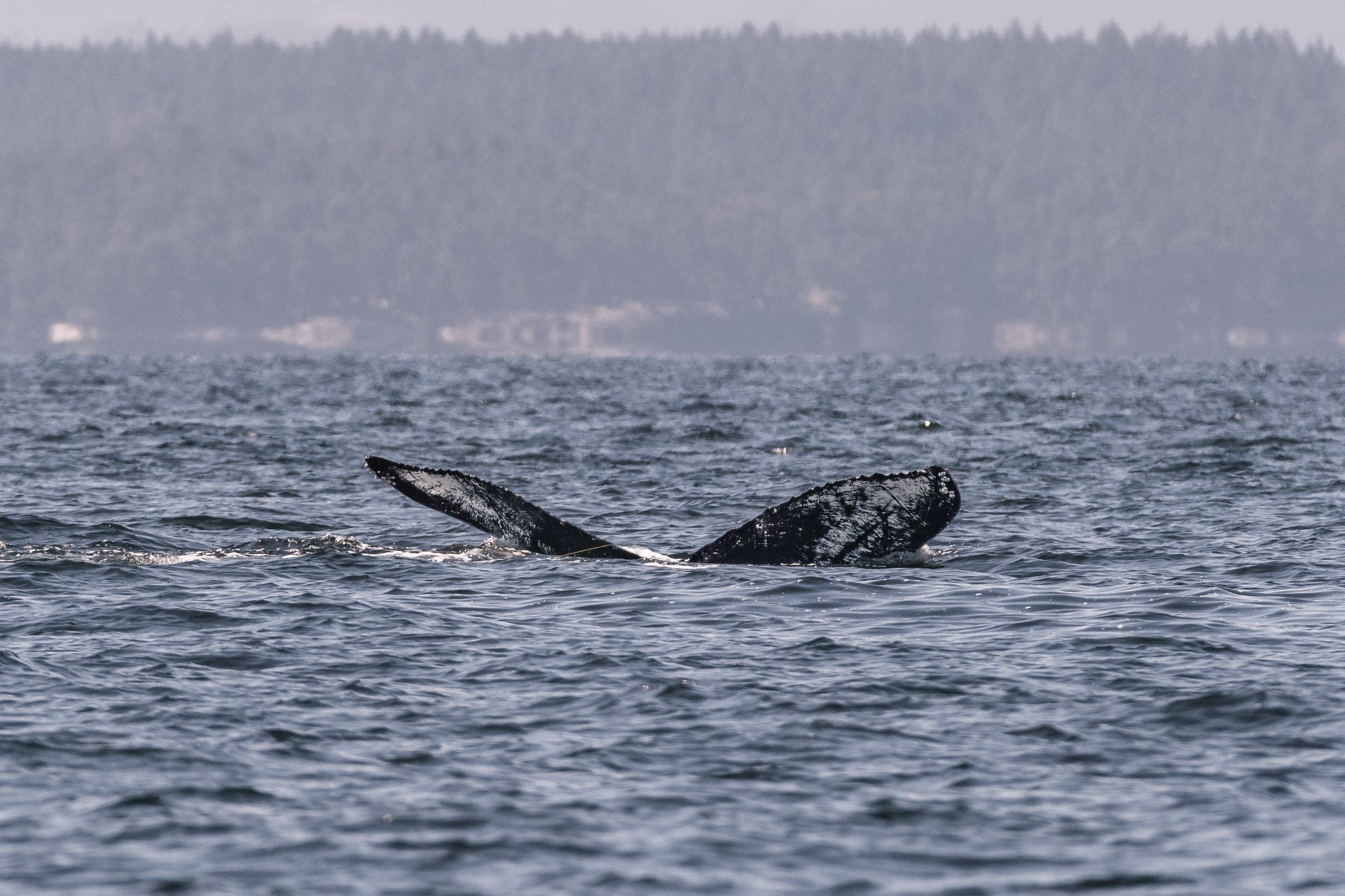
Poptart diving. Unfortunately, a chunk of fishing line was visible on her fluke during this encounter. Thankfully she has been documented since with no line present on her. Photo by Hayleigh Hilbert.
The T049As
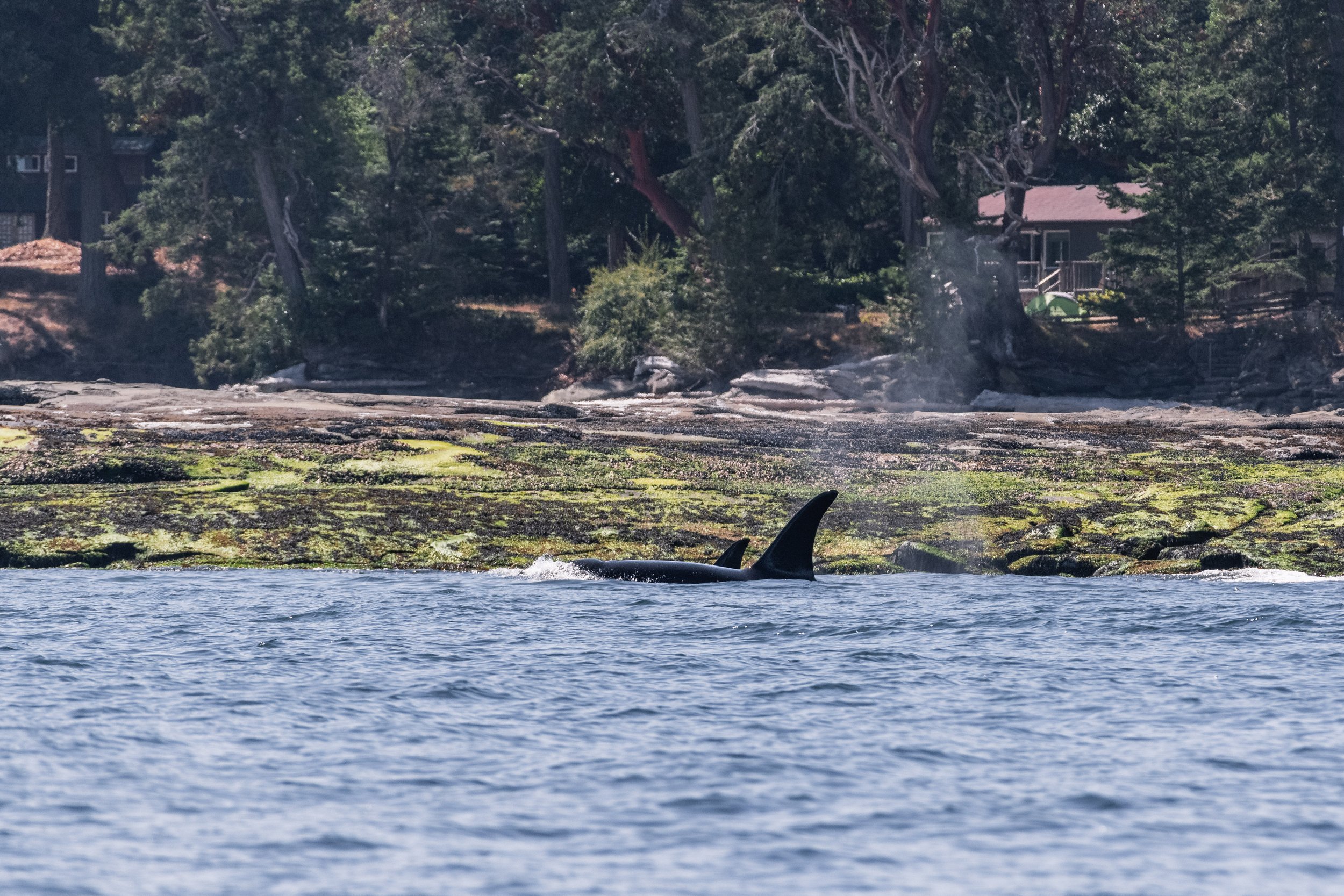
T049A3 Nat skirting the shoreline. Photo by Hayleigh Hilbert.
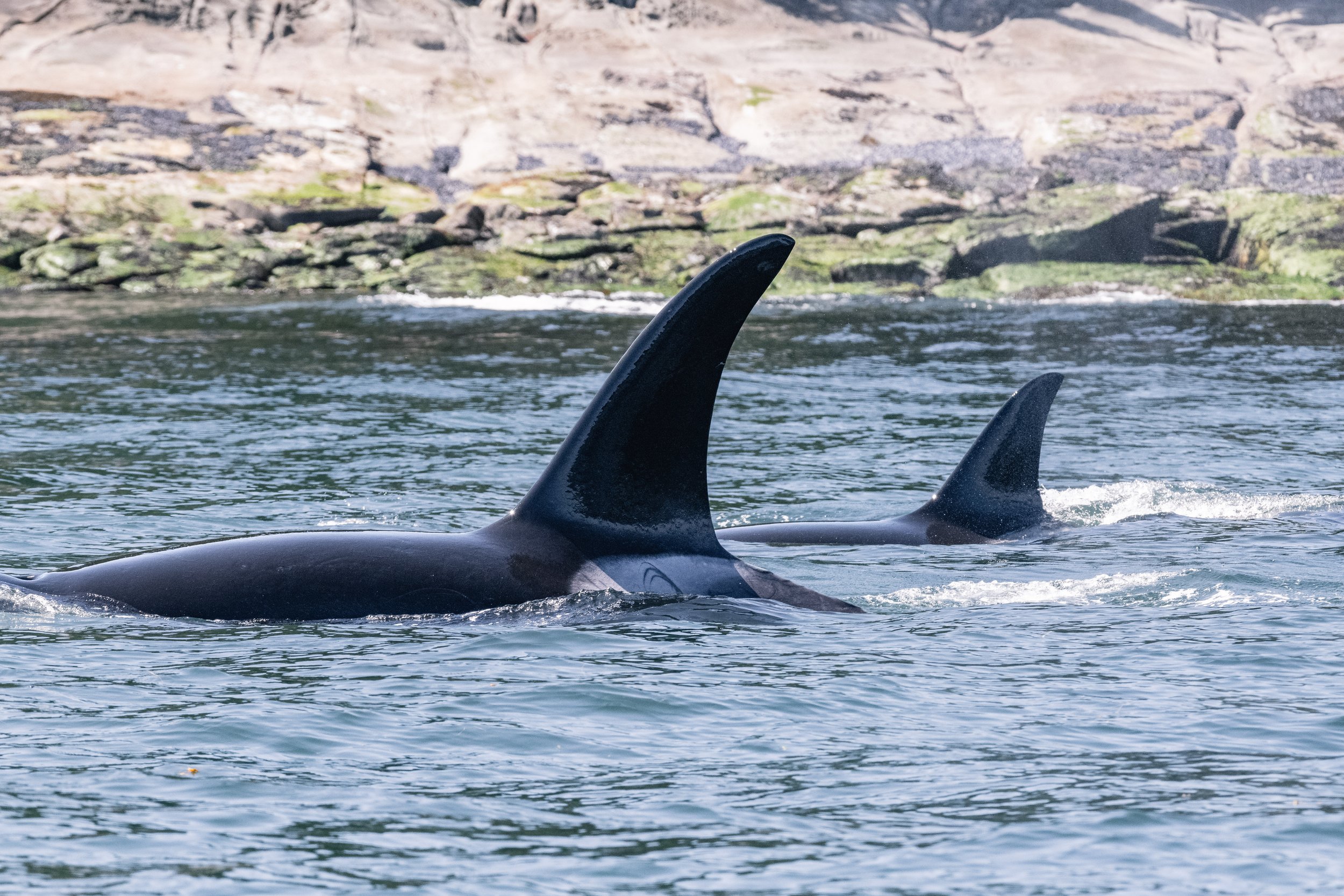
T049A3 Nat (front) is starting to tower over his mother T049A Nan (back). Photo by Hayleigh Hilbert.
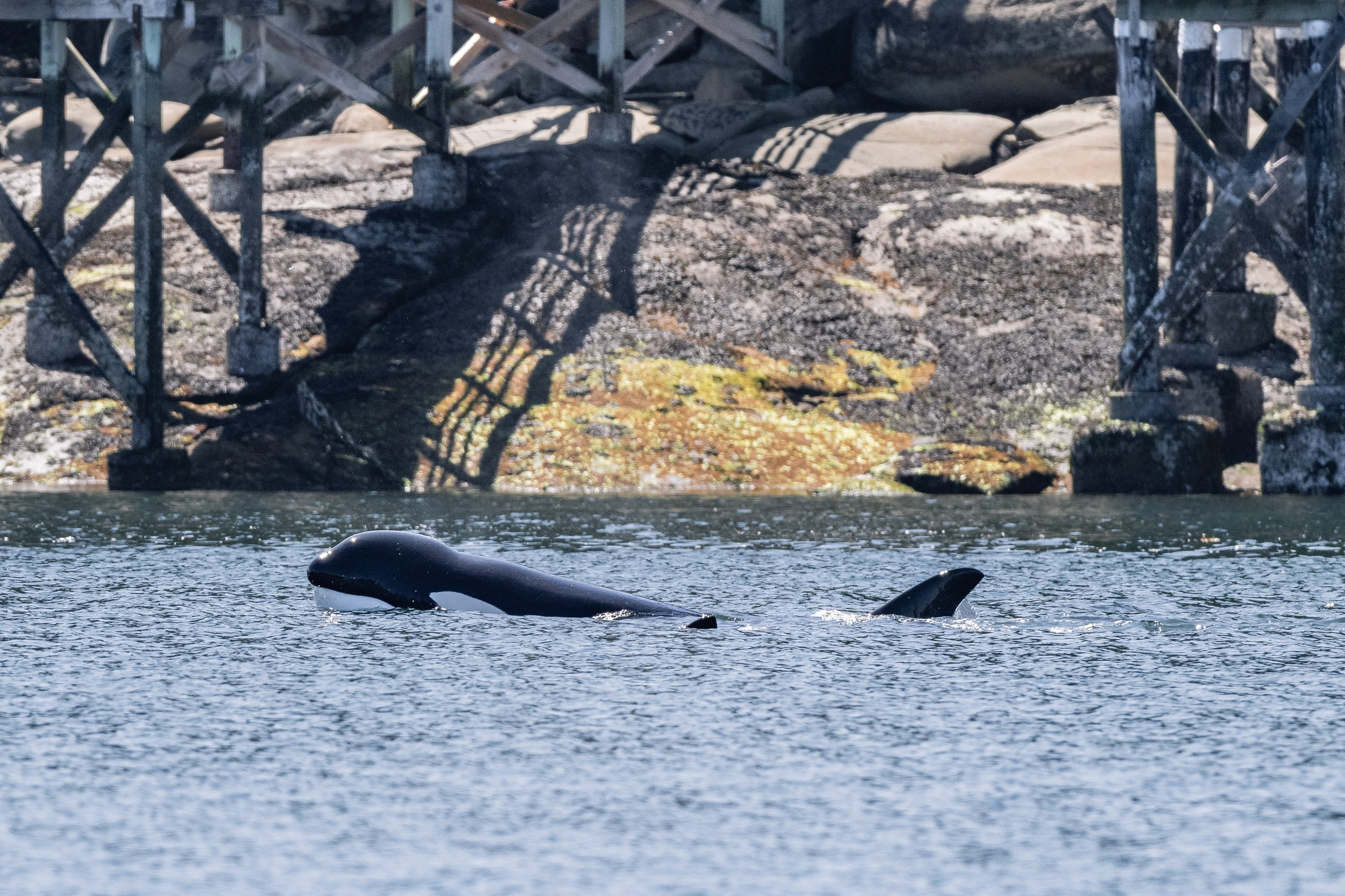
T049A Nan with her face clear of the water. Photo by Aly Kohlman.
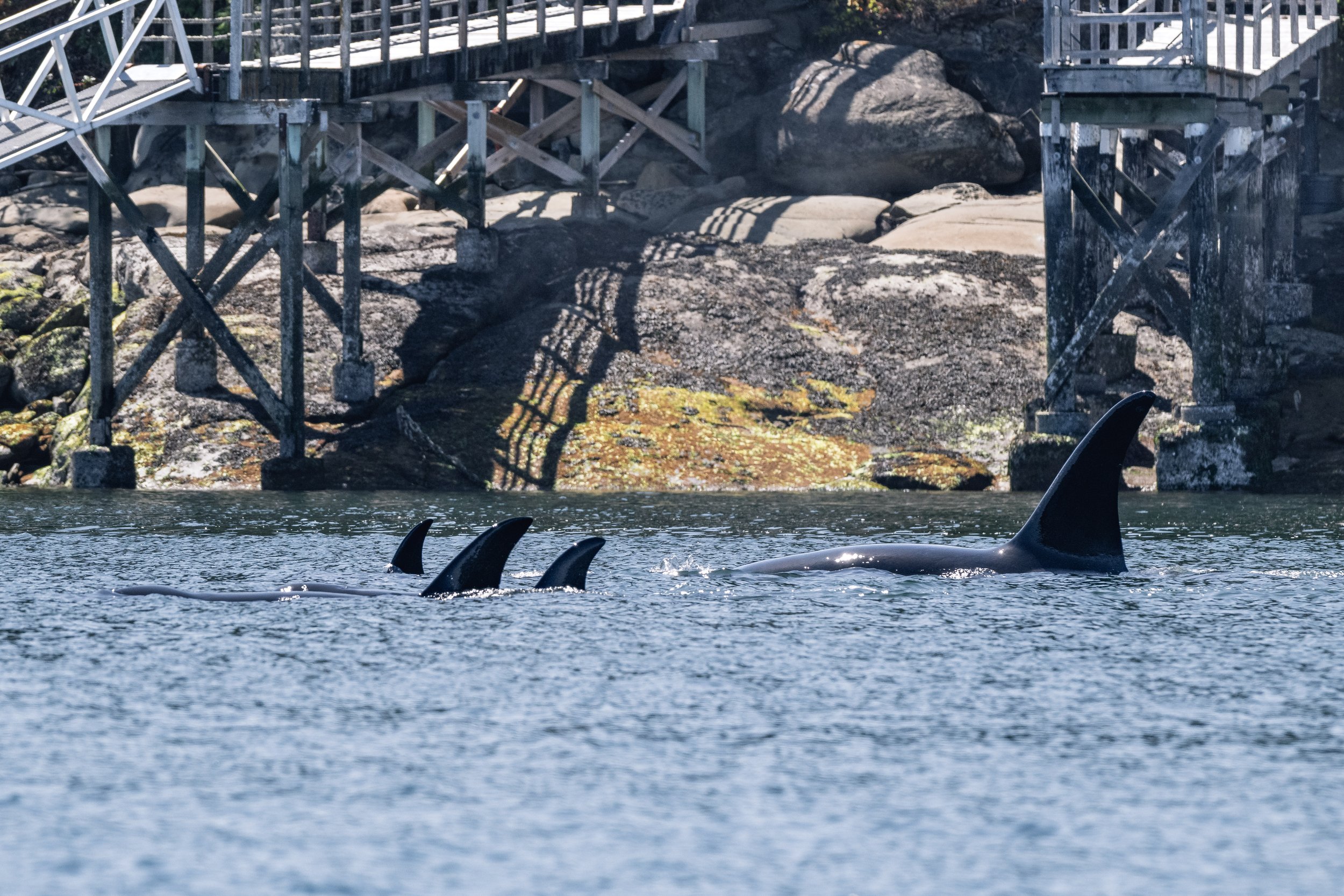
T049A3 Nat holding up the rear, with T049A Nan, T049A4 Neptune, and T049A6 Charlie II visible ahead of them. Photo by Aly Kohlman.
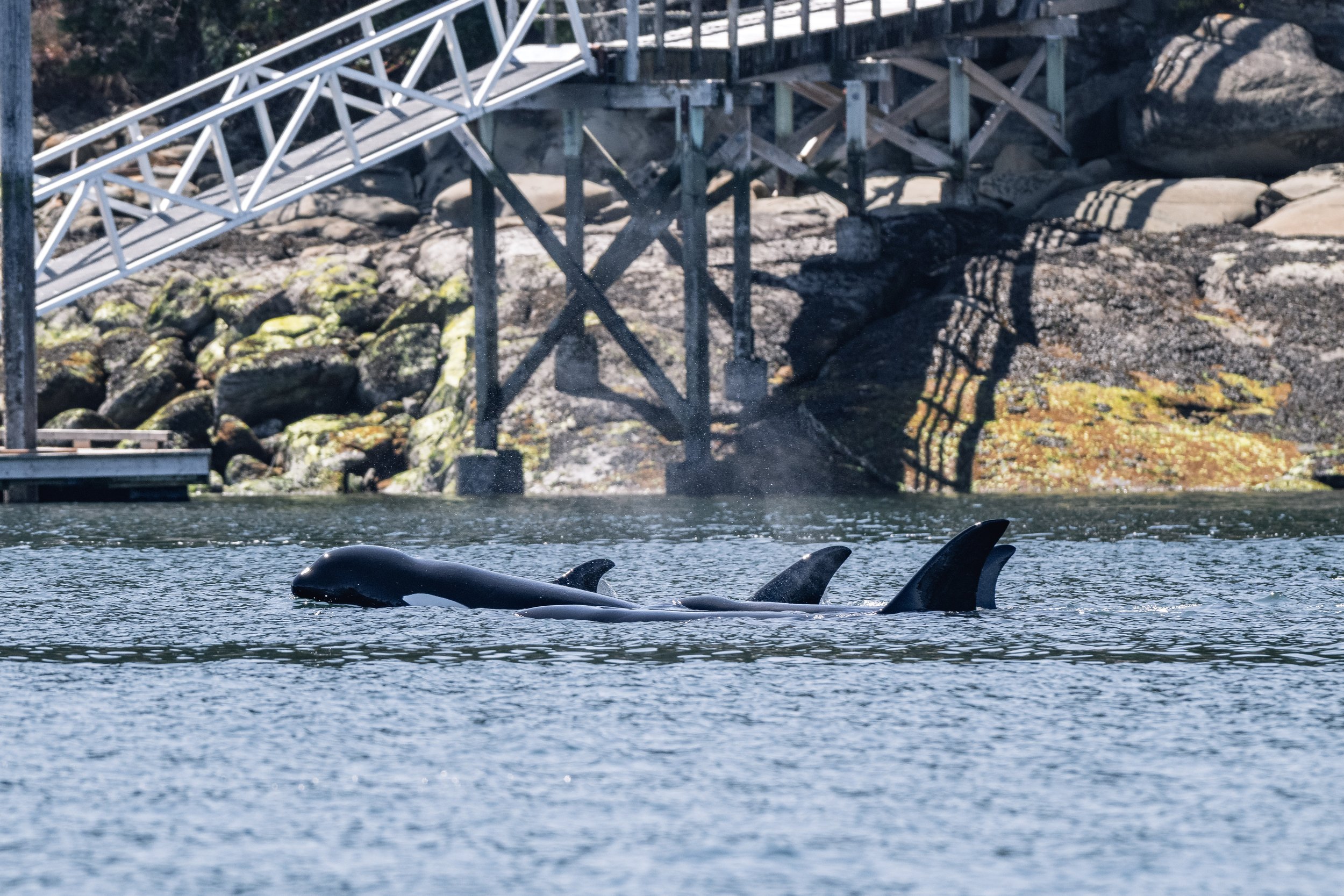
The family was travelling very tightly together. Photo by Aly Kohlman.
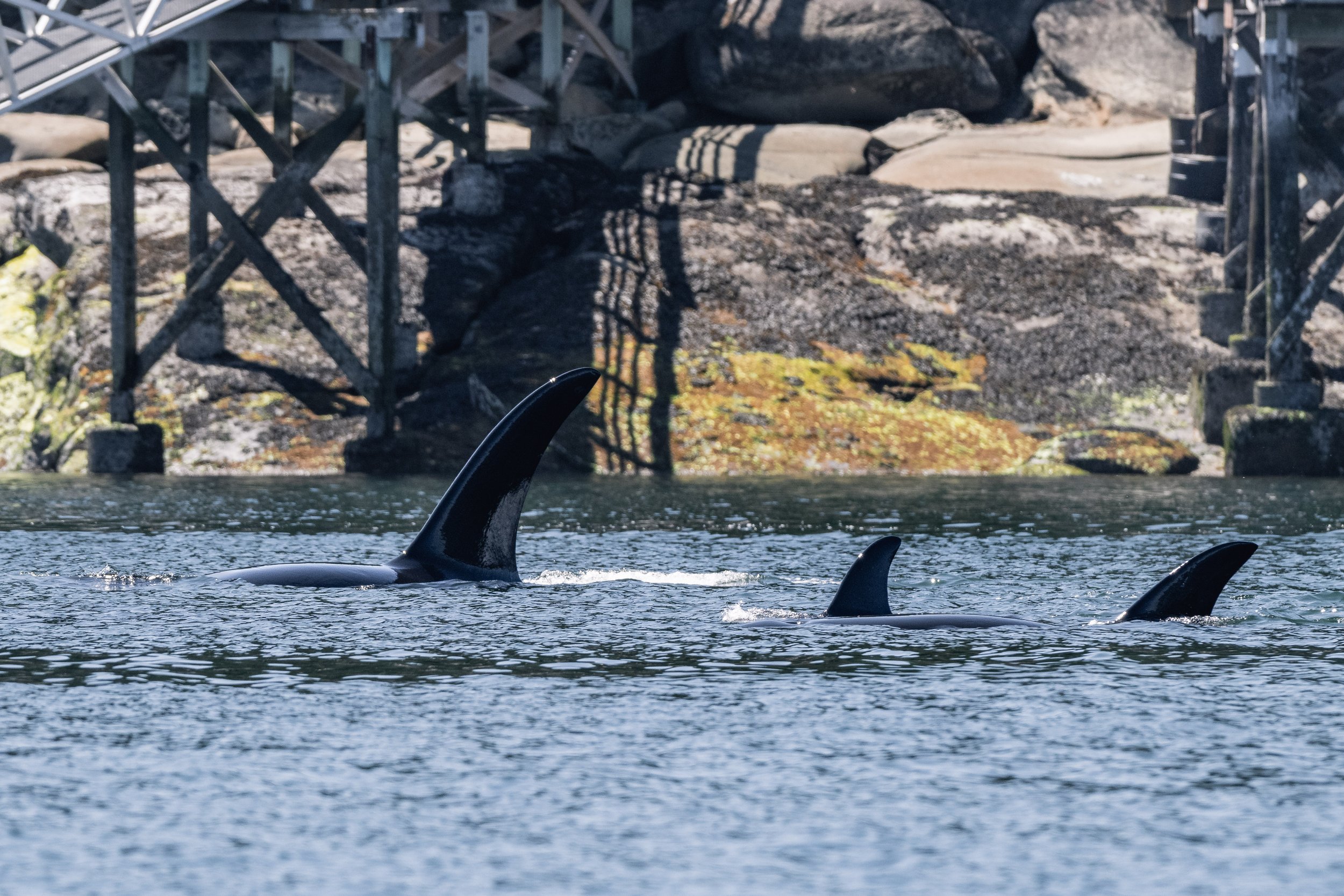
T049A3 Nat with T049A4 Neptune and T049A6 Charlie II. Photo by Aly Kohlman.
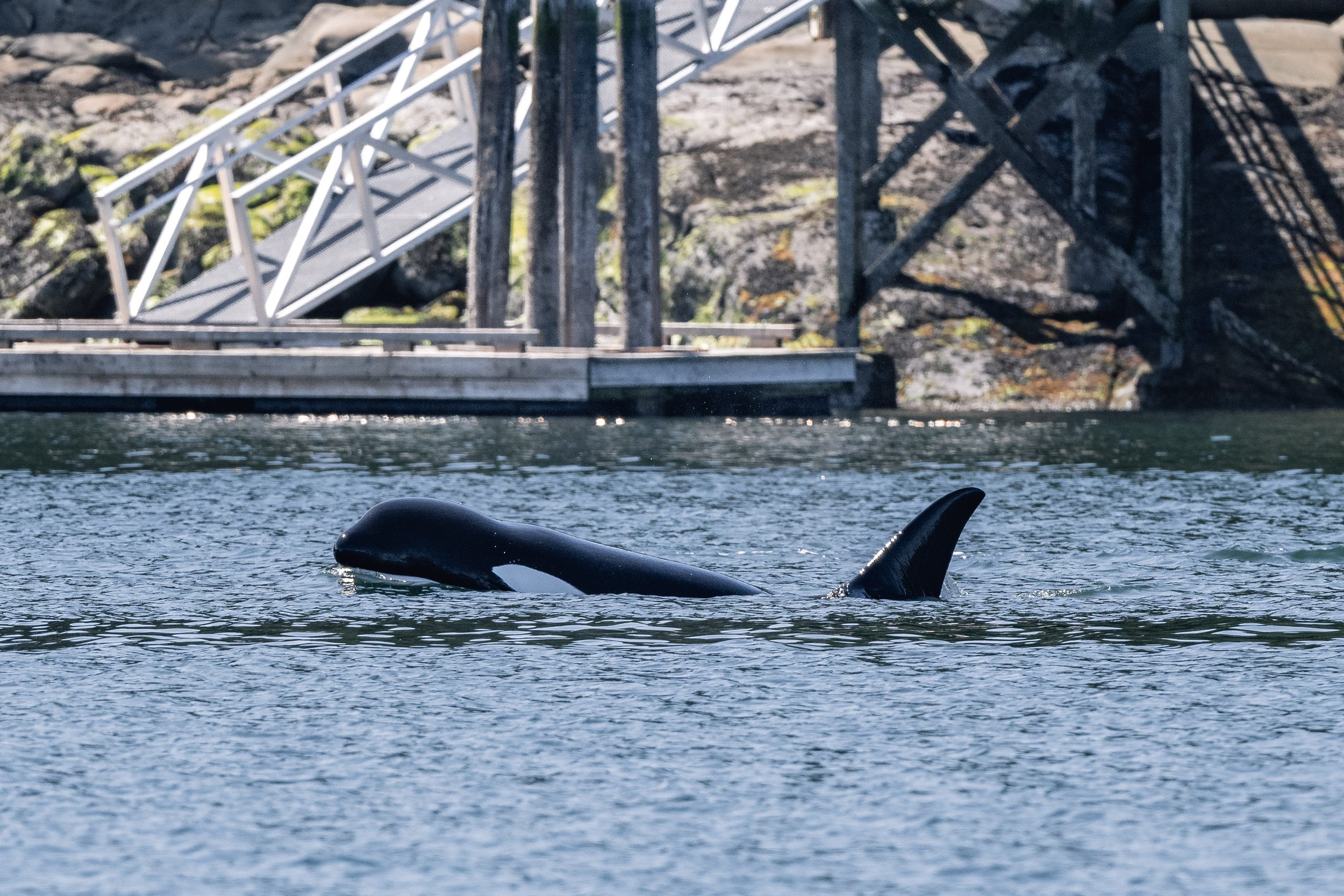
T049A Nan once more peeking above the surface. Photo by Aly Kohlman.
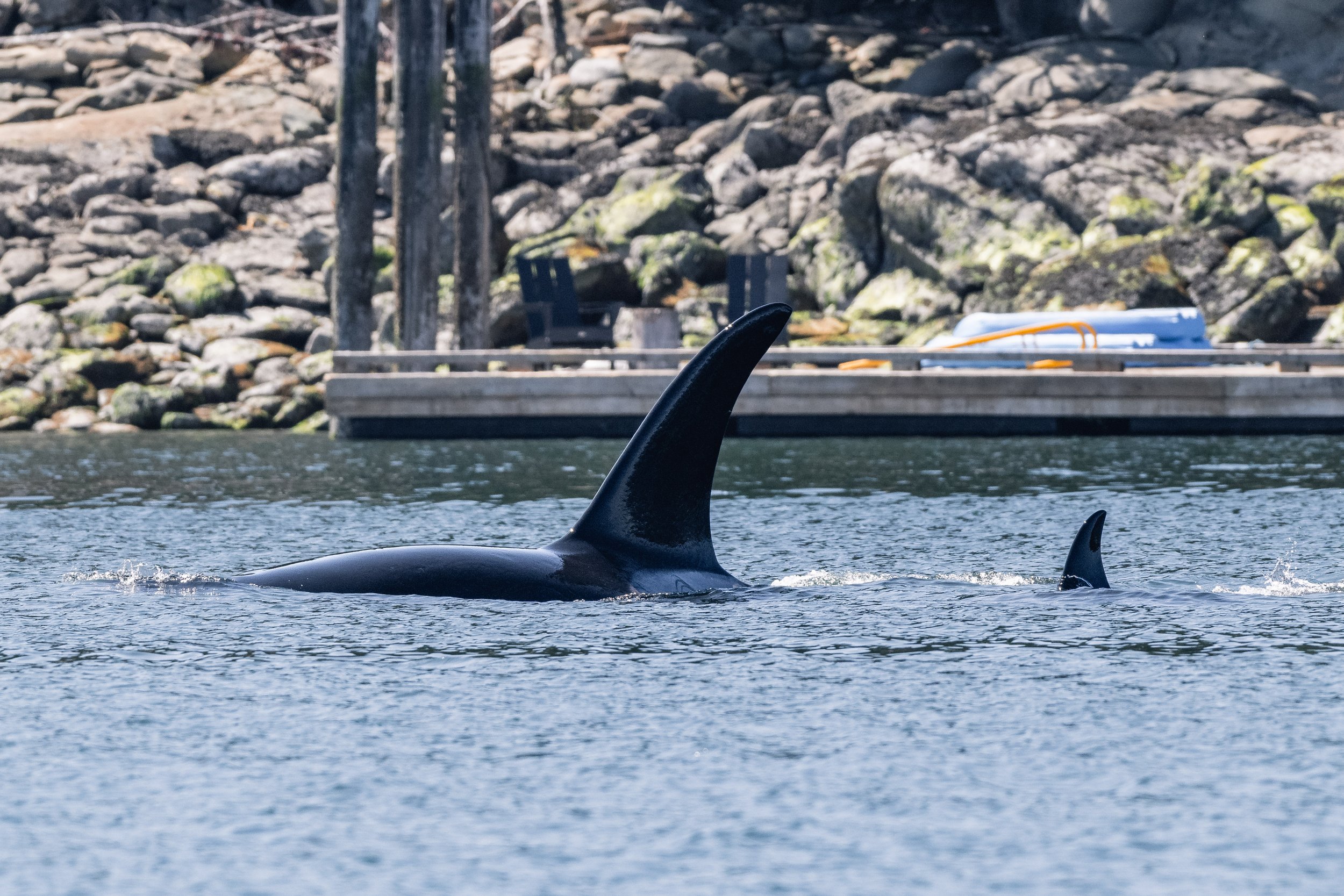
T049A3 Nat with a large new saddlepatch scar. Photo by Aly Kohlman.
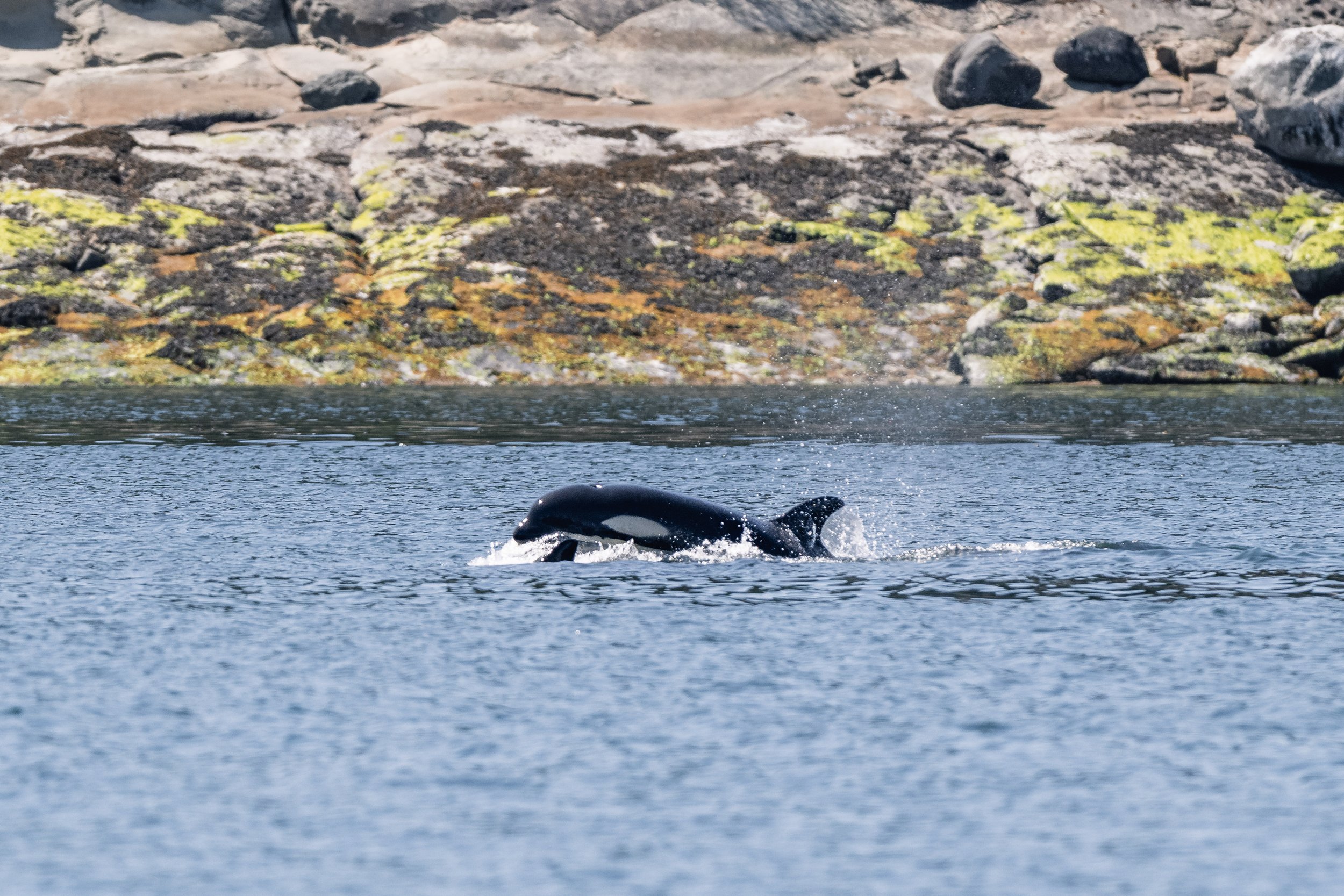
Tiny little T049A7 Nimbus racing to catch up with their family. Photo by Aly Kohlman.
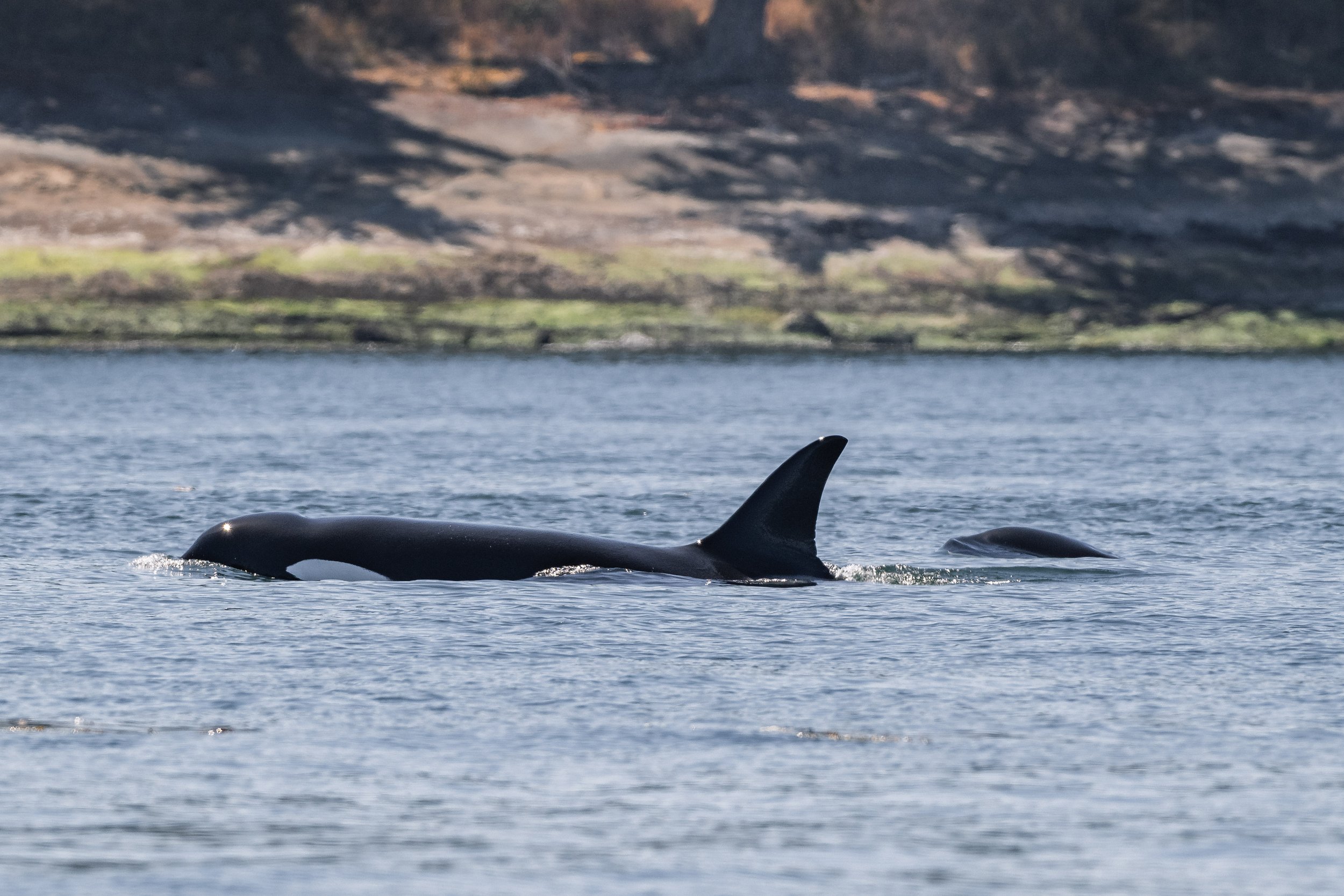
Ever present T049A Nan. Photo by Aly Kohlman.
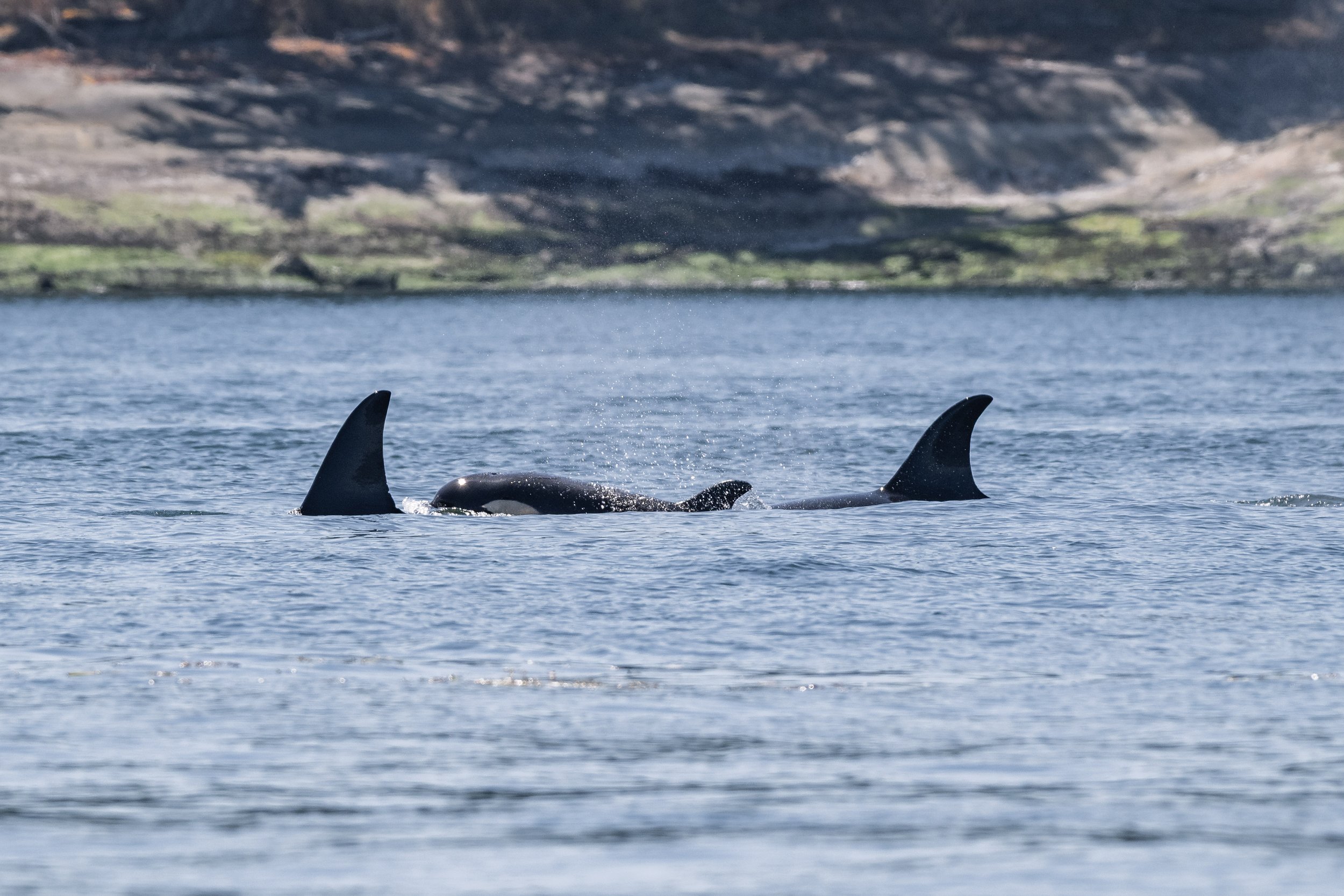
T049A Nan in the lead, T049A5 Nebula in the rear, and T049A7 Nimbus tucked between them. Photo by Aly Kohlman.
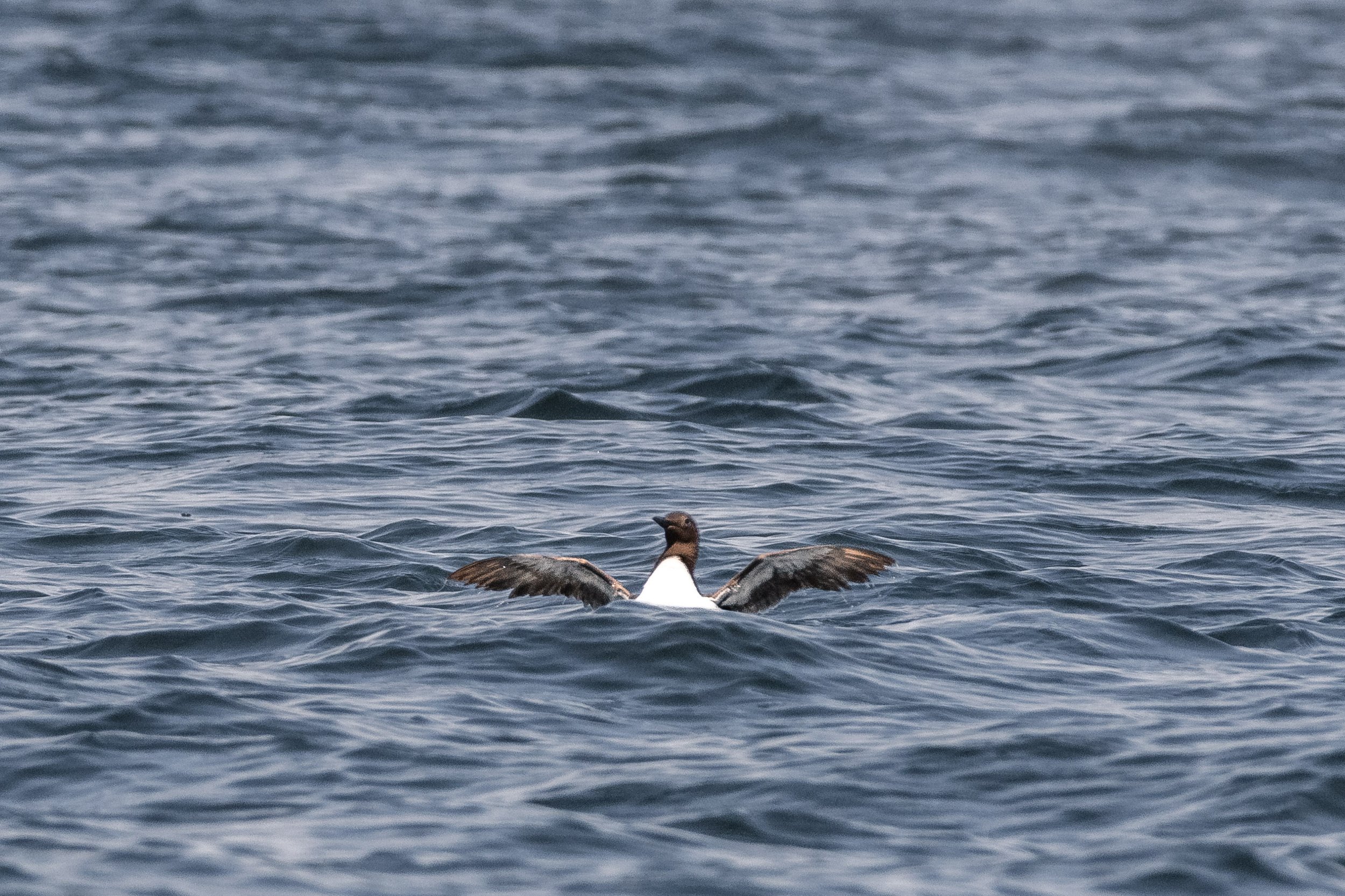
A very soggy Common Murre. Photo by Hayleigh Hilbert.
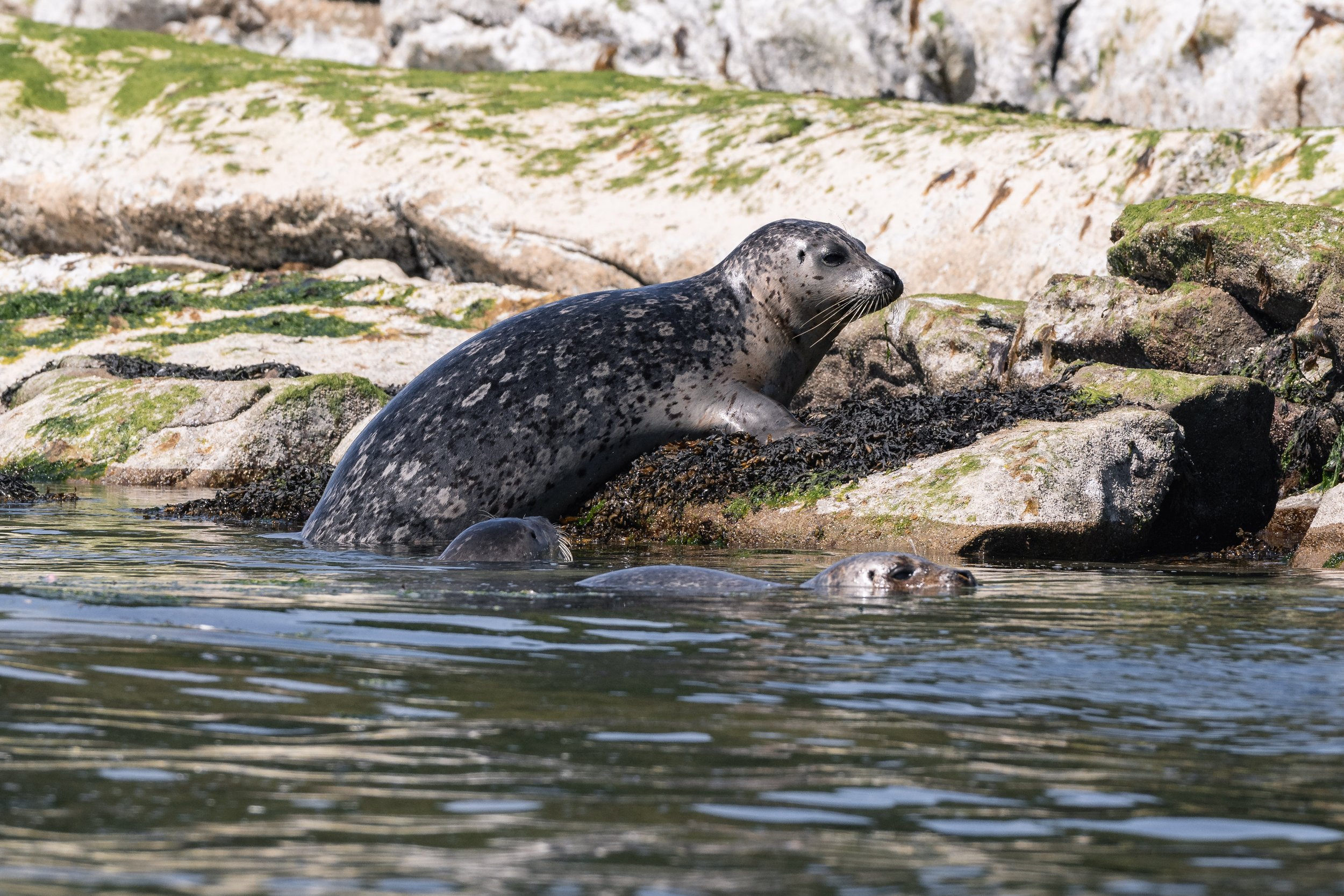
Sunbathing with the Harbour Seals. Photo by Aly Kohlman.
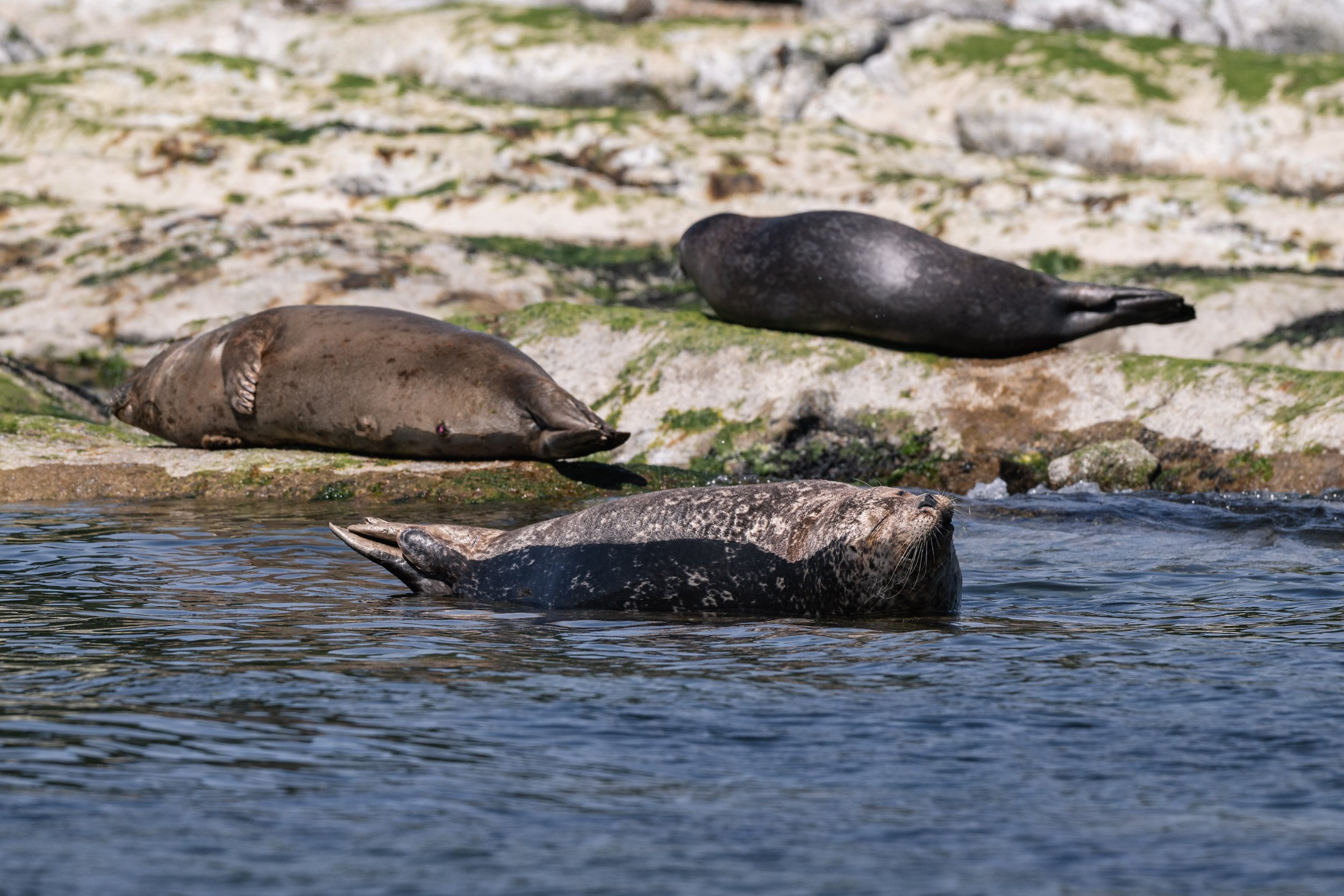
Relaxing on the rocks.Photo by Aly Kohlman.
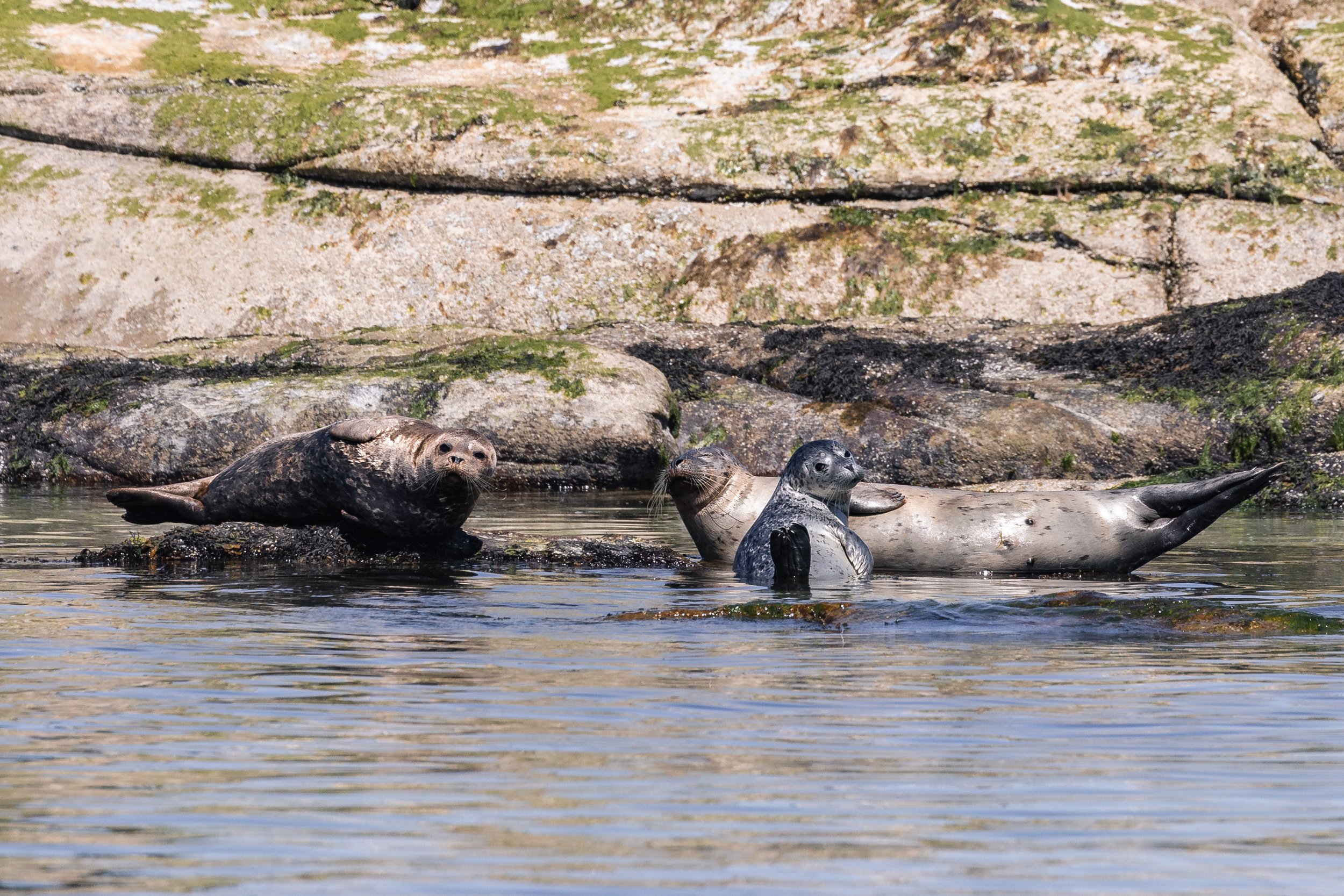
The banana pose is an interesting technique seals sometimes use to help them thermoregulate. Photo by Jordan Robinson.