
August 27, 2026, 3:30 PM - "Waving" hello to a T-Party, plus a "little" look at Cassiopeia
The day was a little wavy, but sometimes the prospect of a special encounter is enough to convince you that a few extra splashes are worth it. With word that another vessel had located a group of orca not far from Nanaimo, we decided to brave the waves and head into the Strait of Georgia. As we made our way out, we knew we might find them, but we didn't yet know how special the encounter would be.
Before long, we found the whales, and there were quite a few of them. What had initially been described as a pod turned out to be a group of around ten orca travelling together. As they moved through the waves, we began looking closely for the identifying features that would tell us exactly who we were watching.
Identifying individual orca is a little more complicated when the ocean is moving. Spray can obscure features naturalists rely on, including scars and markings on the saddle patch behind the dorsal fin. Waves can also make it harder to get clear photographs of the dorsal fin itself, one of the most important tools we have for identifying individual whales.
Fortunately, our Marine Naturalist captured enough photographs for us to work through those details. After looking closely at the images, we determined we were watching the T100s and T035As travelling together. This was not simply a larger-than-usual group of whales. We were witnessing what is known as a T-party.
T035A Lester ♀ (1998)
T035A1 Opal ♀ (2010)
T035A1A (2026)
T035A2 Topaz ♂ (2013)
T035A3 Garnet (2018)
T035A5 (2026)
T100 Hutchins ♀ (~1979)
T100C Laurel ♂ (2002)
T100F Estrella (2014)
Bigg's orca are often organized into smaller, relatively stable family groups called Matrilines. These matrilines are generally made up of related individuals, and members can spend much of their lives travelling and hunting together. But every so often, different pods come together. These gatherings are known as T-parties, and they are an important part of orca social life.
A T-party gives whales the opportunity to spend time with members of other pods. These gatherings can involve travelling, socializing, resting, and potentially breeding. They give whales opportunities to interact with individuals they may not encounter as often during their usual travels with their own family group. For researchers and naturalists, they can also offer an incredible window into the population's social structure. Even as they travelled together, their relationships with one another were different from the close family bonds that hold their individual pods together.
The waves added another interesting dimension to the encounter.
As the orca moved through the rougher water, they had to work against the movement of the waves as they travelled. The conditions also gave us some particularly good looks at features that are normally visible only briefly. As an orca surfaces, the angle of its body can reveal the eye patch and saddle patch behind the dorsal fin. These markings are incredibly useful for identification, particularly when combined with the shape and scars of the dorsal fin.
Among the whales travelling with the group was T100C, Laurel. We had some particularly beautiful looks at Laurel as he moved through the waves, including one memorable moment when a rainbow appeared behind him. It was the kind of scene that makes a challenging day on the water feel entirely worthwhile.
After spending some time with the T-party, we continued south. With the waves behind us, we were able to make our way along the coast, eventually reaching waters just south of Gabriola Island. There, another familiar sight was waiting for us. Steller sea lions were hauled out on the buoy marking the Gabriola Reef system. After the energy and movement of the orca encounter, the sea lions offered a very different wildlife experience as they rested together above the water.
From there, our attention shifted once again, this time to a single humpback whale: we found Cassiopeia (BCY0796). Cassiopeia is a particularly interesting humpback because we know that he is male. Scientists determined his sex through a biopsy collected as part of the SPLASH study, a large-scale research project that helped scientists learn more about humpback whales throughout the North Pacific.
Knowing the sex of a humpback is not something we can determine simply by looking at the whale from the surface. Male and female humpbacks look remarkably similar, and determining sex generally requires genetic information from a biopsy or other scientific sampling.
There are, however, some differences between male and female humpbacks when it comes to size. Females tend to be larger than males, which is thought to be partly related to the energetic demands of reproduction and raising calves.
Cassiopeia is 23 years old, so despite being a fully grown adult, he can sometimes appear surprisingly small when compared with some of the enormous female humpbacks we encounter in these waters. Whether his sex explains exactly how small he seemed from our perspective is impossible to say, but it was a fun reminder that even among adult humpbacks, there can be considerable variation in size.
After spending some time with Cassiopeia, we left him to continue whatever he had planned for the rest of his day and began our journey back toward Nanaimo. Rather than taking the most direct route, we travelled back through the Southern Gulf Islands. The islands offered a change of scenery after our time in the open waters of the Strait of Georgia, with rugged shorelines, forested slopes, and narrow passages guiding our way north. The route also positioned us perfectly for one final stop.
As we approached Nanaimo, we made our way toward the Gabriola Bluffs. The sandstone cliffs rose above the water, providing a striking backdrop for the trip's final moments. Along the cliffs and surrounding shoreline, seabirds gathered, using this coastal habitat as a place to rest and nest.
It was a beautiful way to end a day that had taken us through several very different marine environments. Please enjoy the photographs below, taken throughout the trip by Marine Naturalist Evan Hessels.
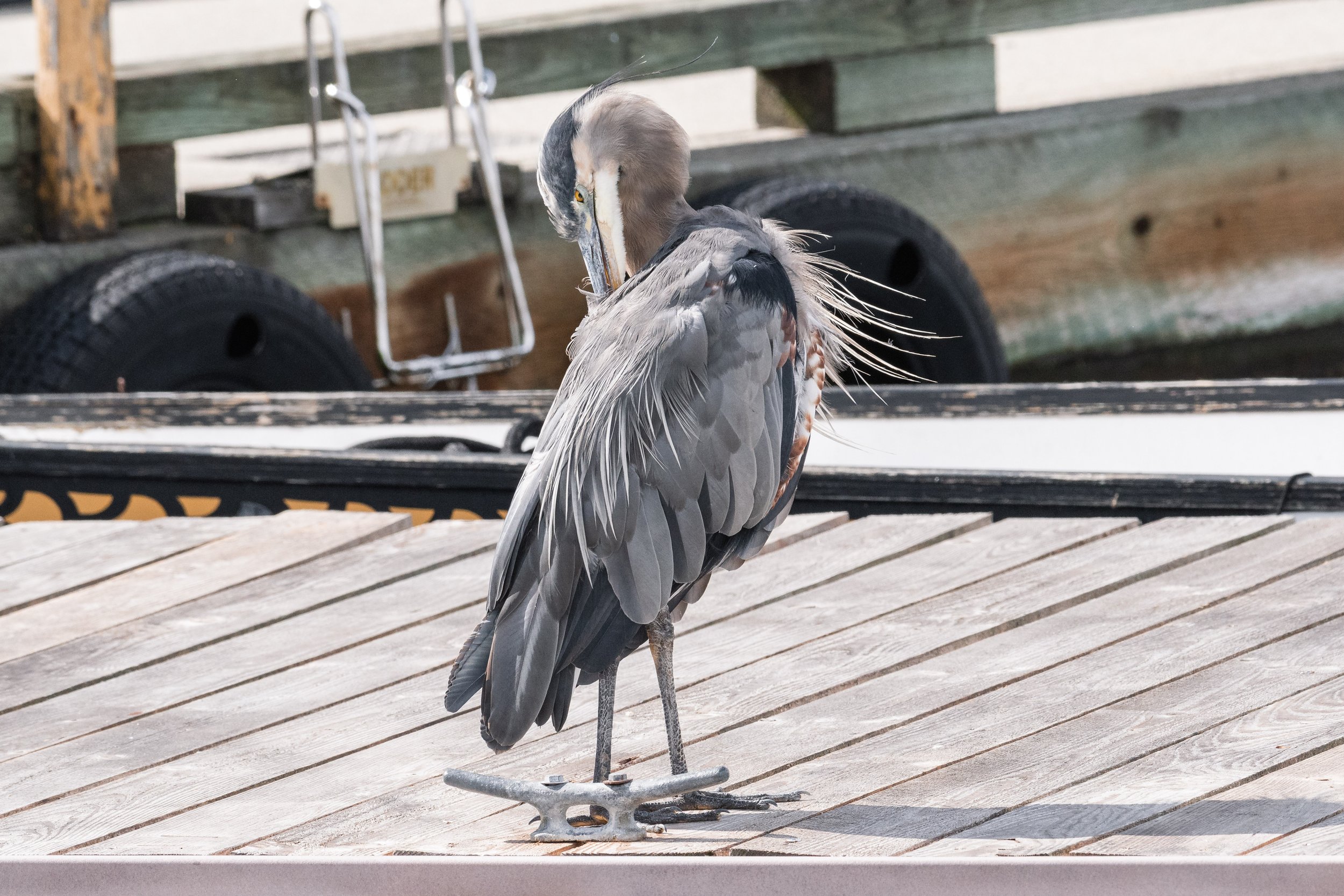
A Great Blue Heron on the docks cleaning it’s feathers.
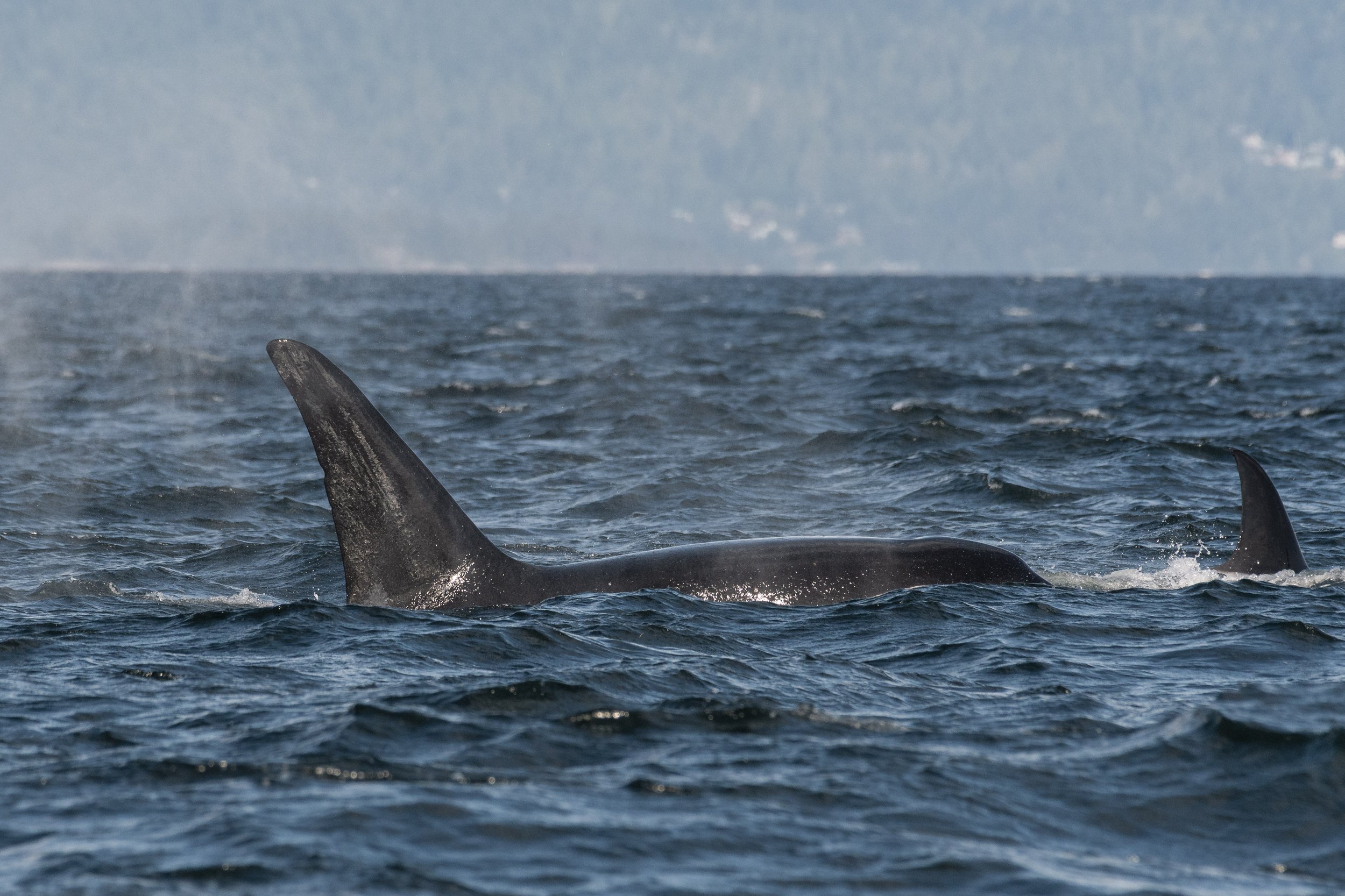
T100C Laurel surfacing with T035A Lester just ahead of him.
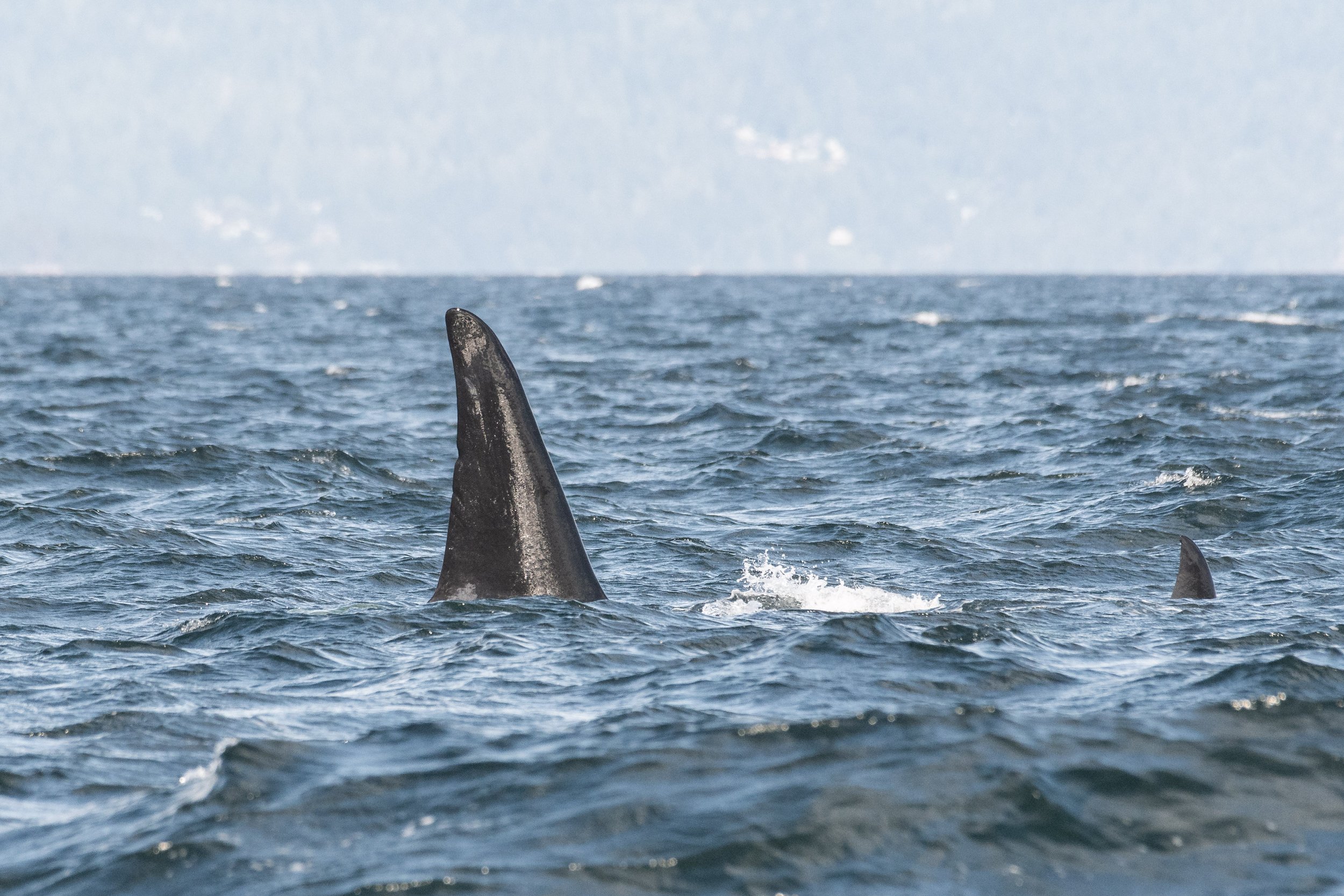
T100C Laurel surfacing with T035A Lester in the waves.
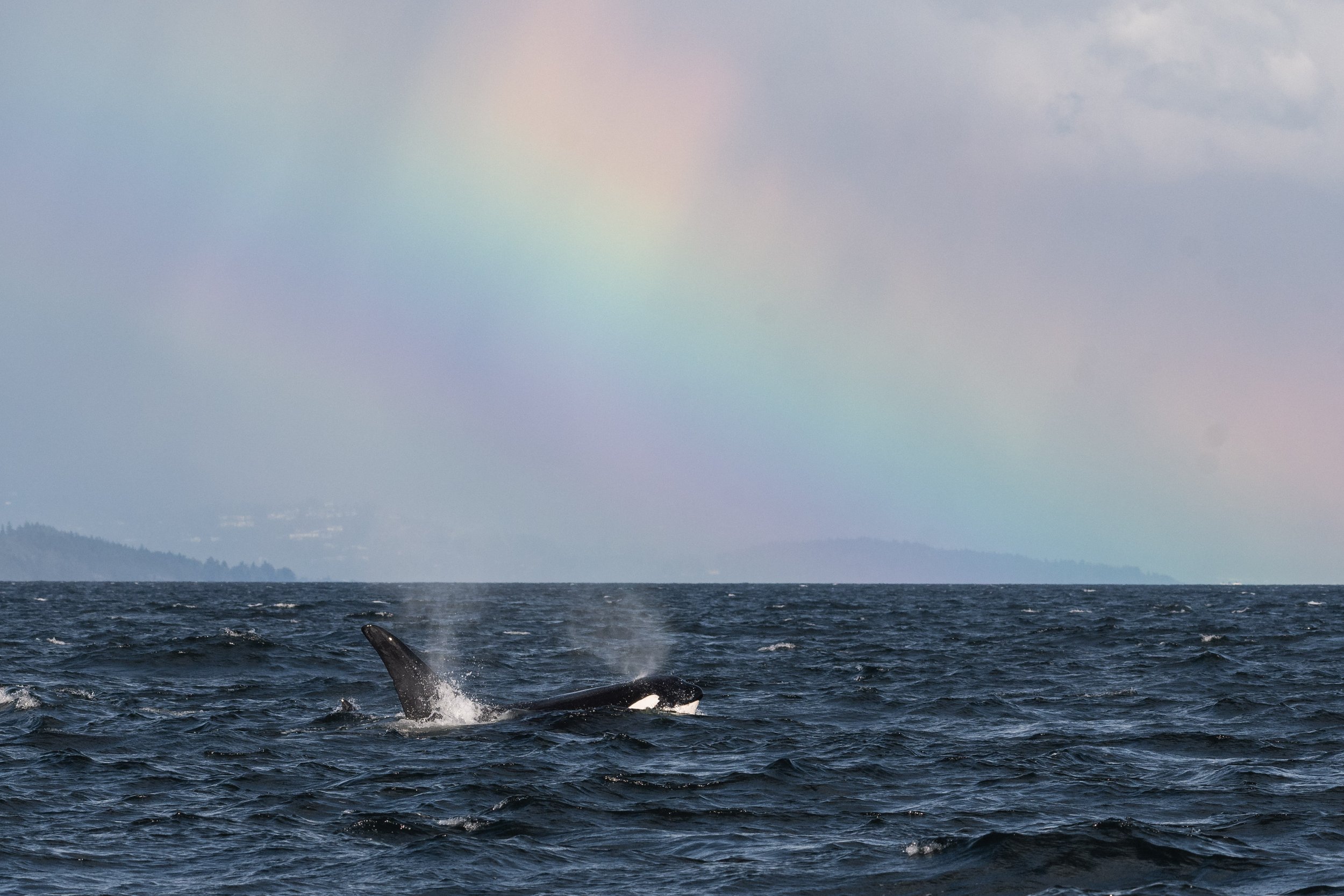
T100C Laurel moving through the waves with a rainbow behind him.
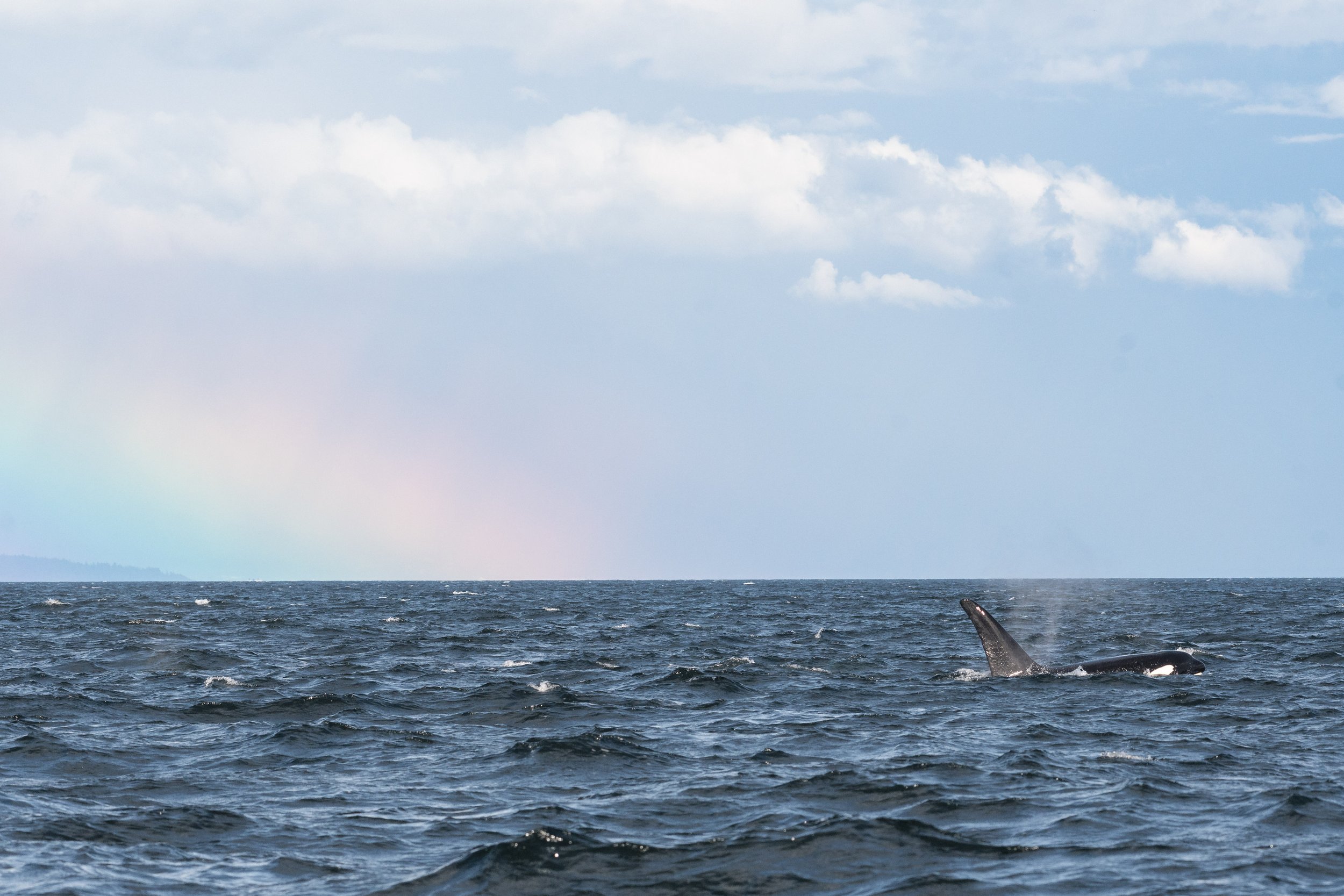
A great look at T100C Laurel and the rainbow.
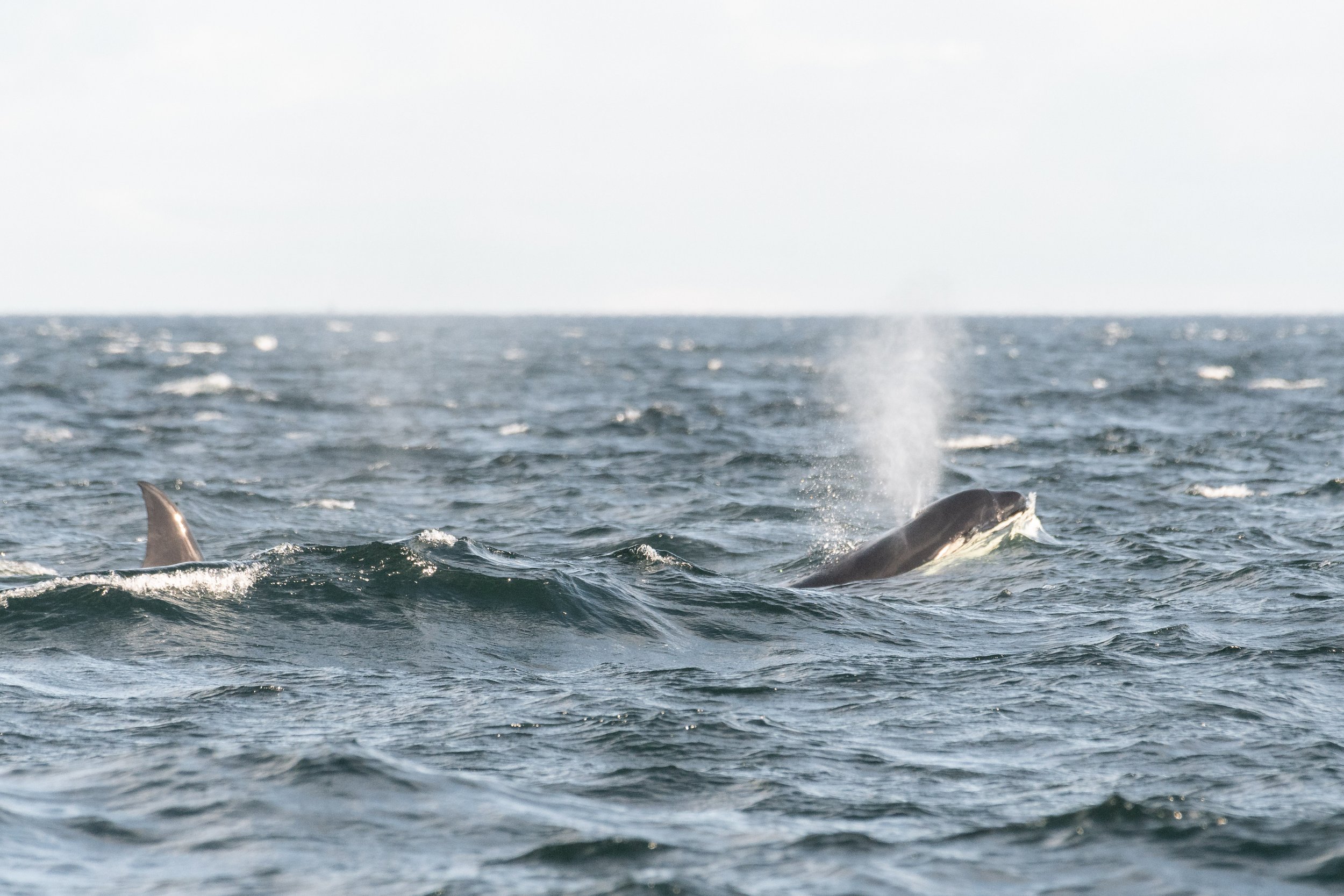
One of the T035As exhaling at the surface.
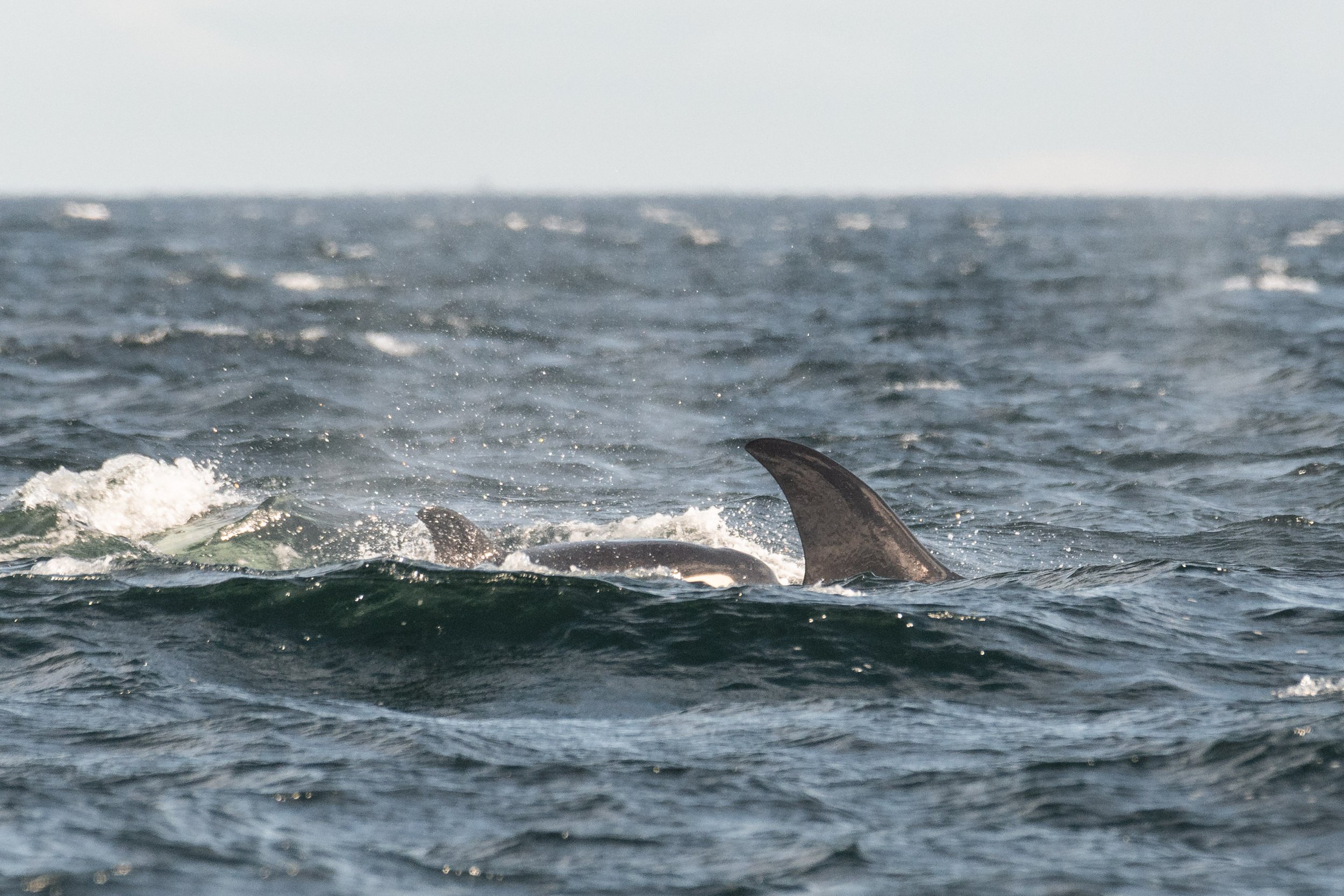
T035A1 Opal surfacing with her calf, T035A1A.
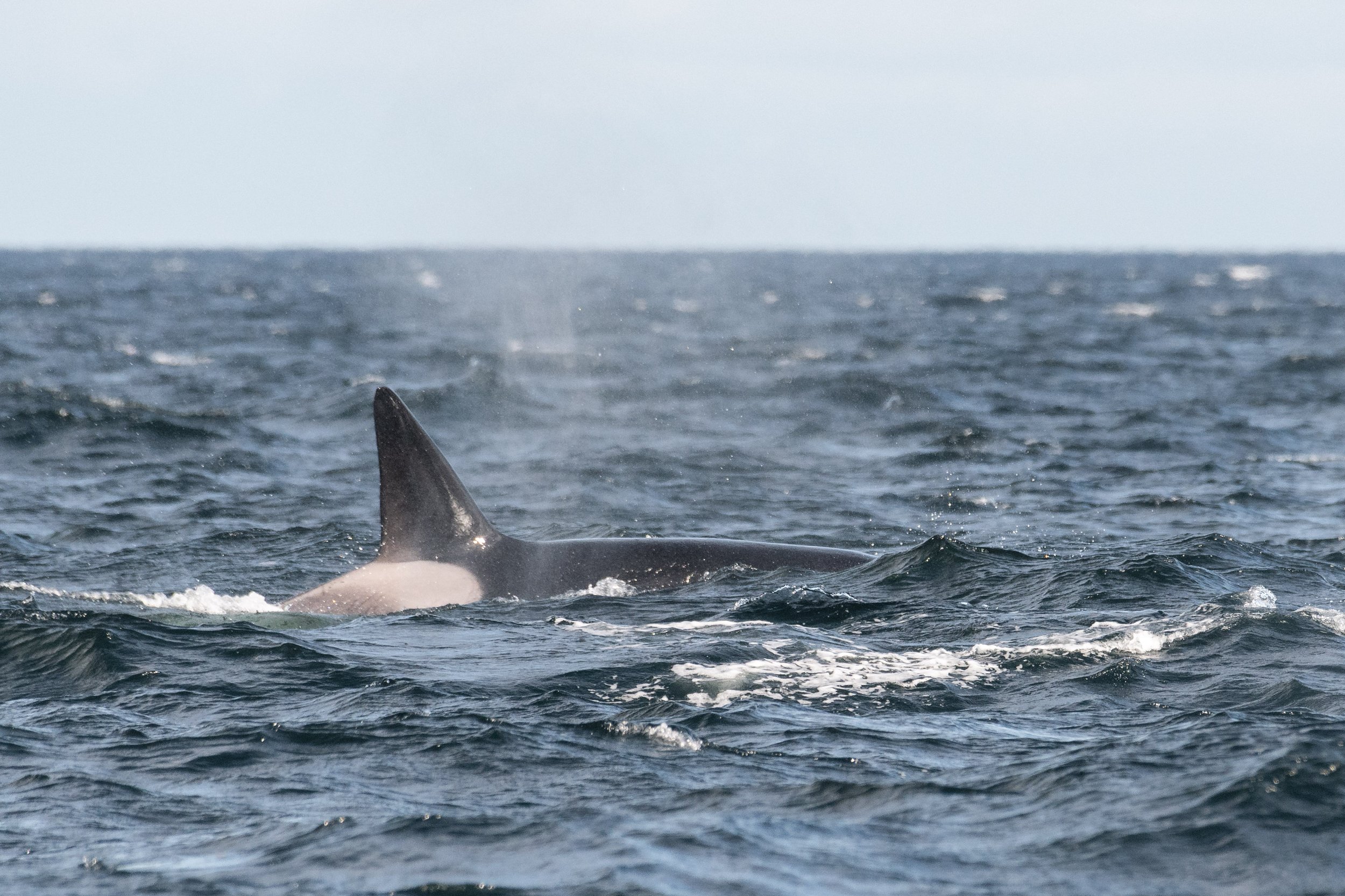
T035A2 Topaz surfacing in the waves.
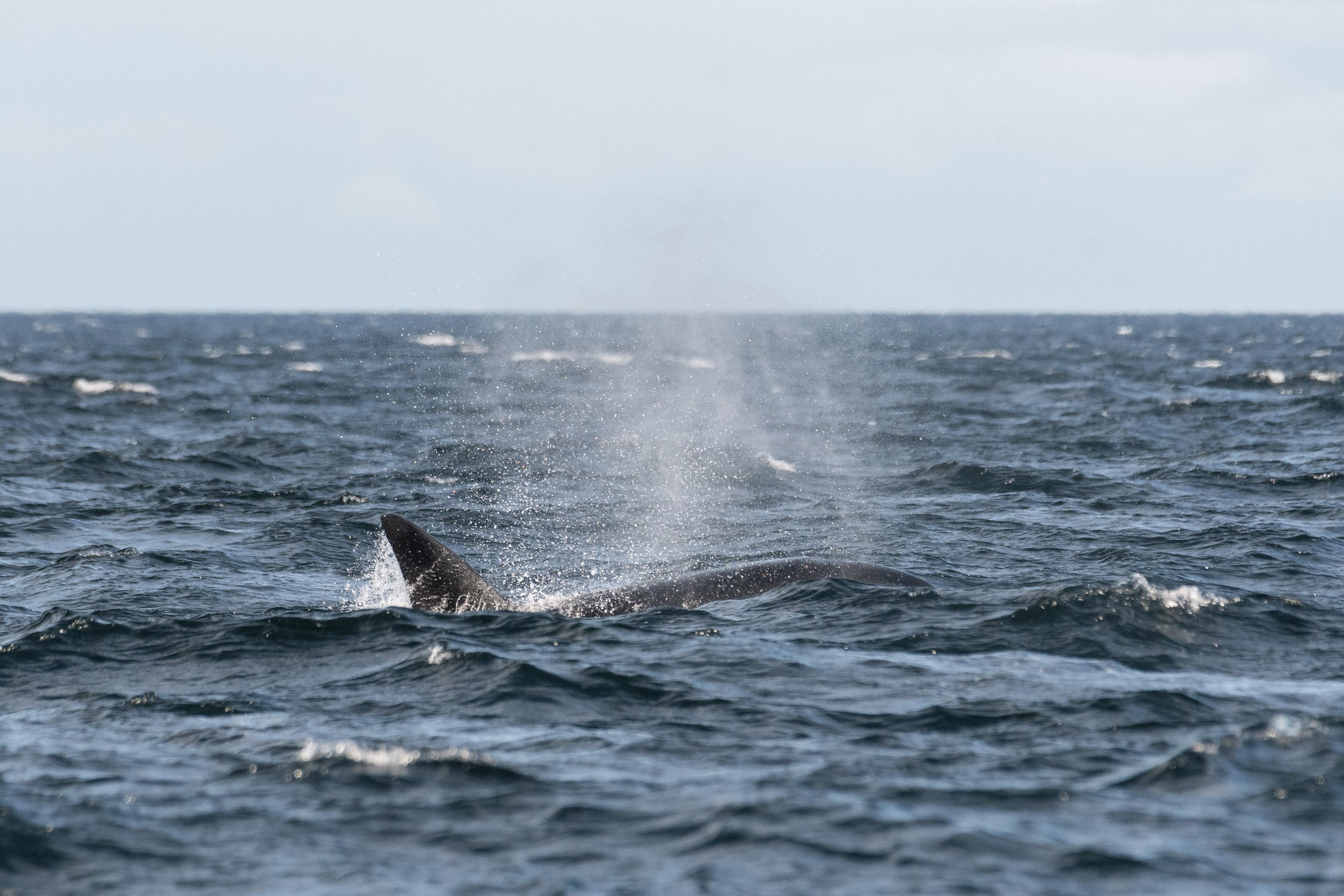
A big exhale from T035A2 Topaz.
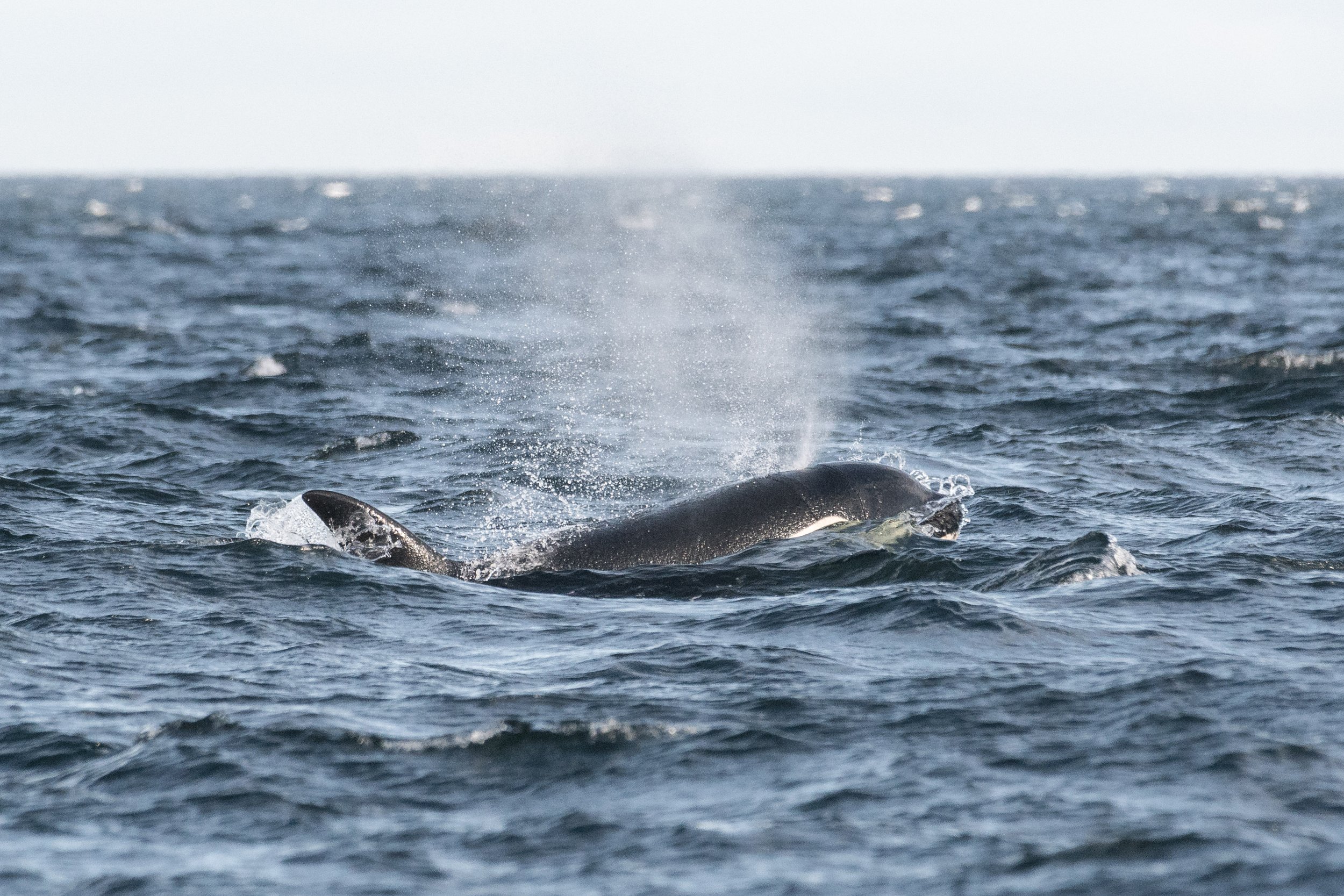
T035A3 Garnet surfacing in the waves.
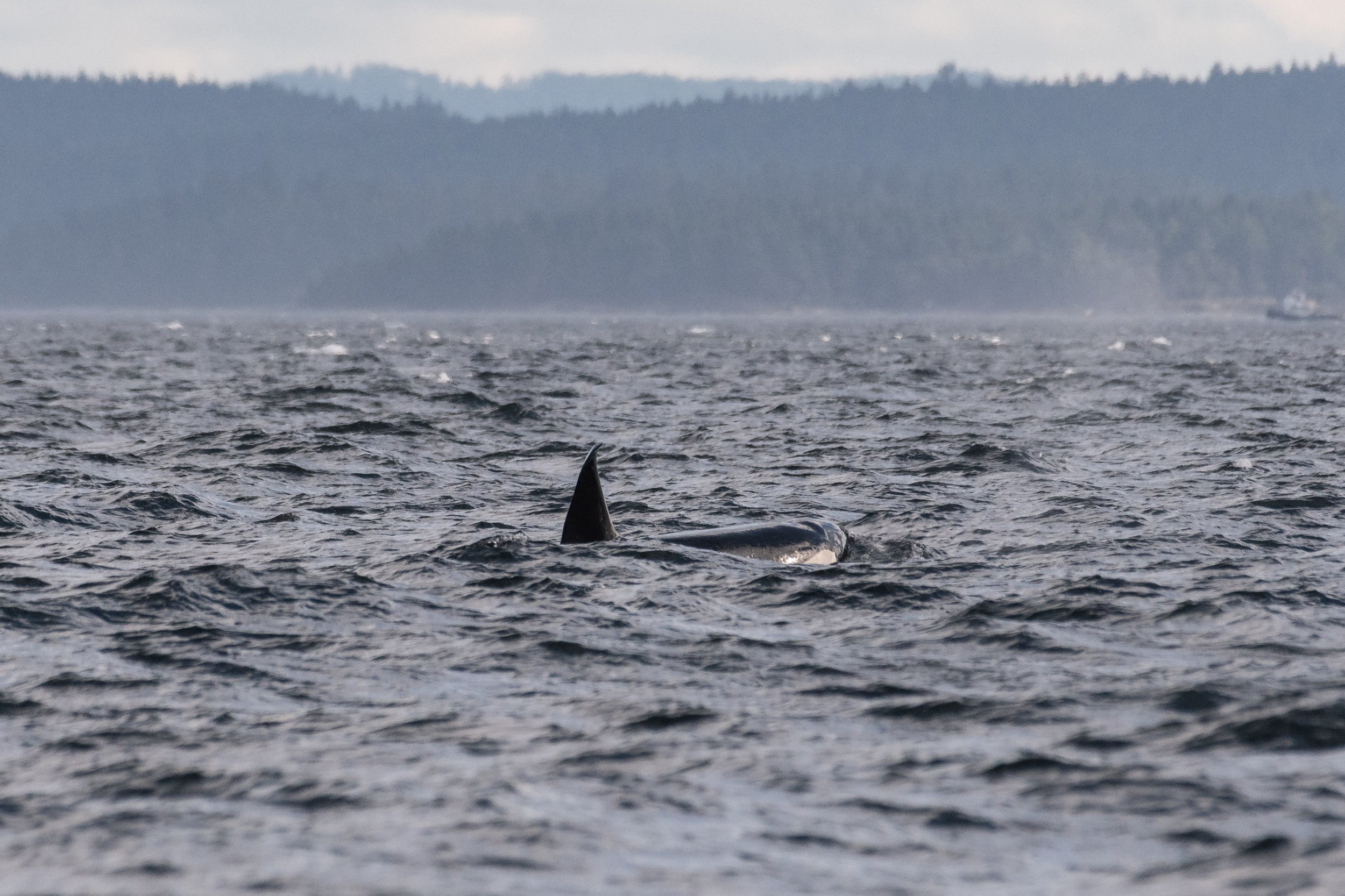
Just look at the bend in T035A2 Topaz’s dorsal fin as he travels.
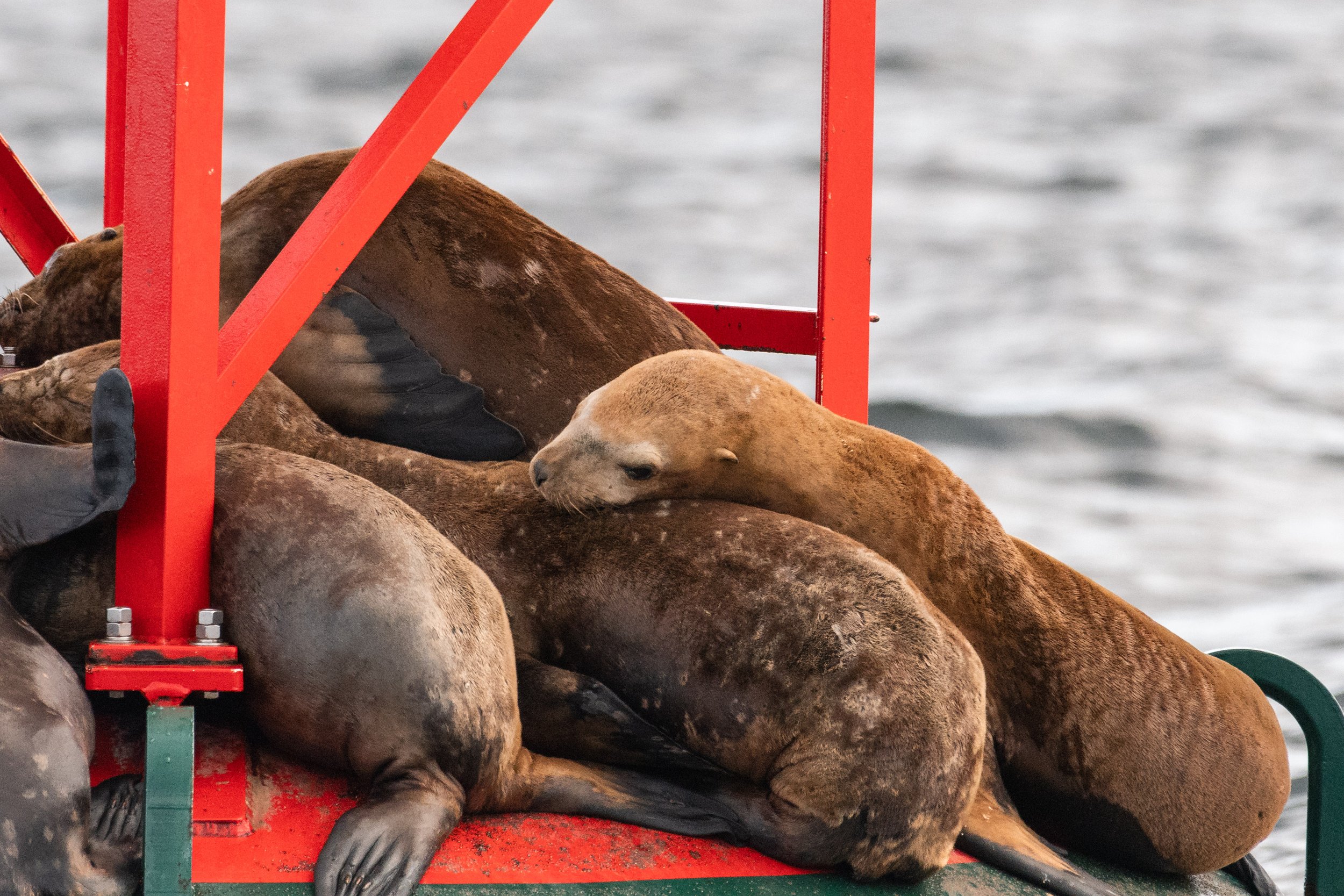
Steller Sea Lions cuddling on the UM buoy.
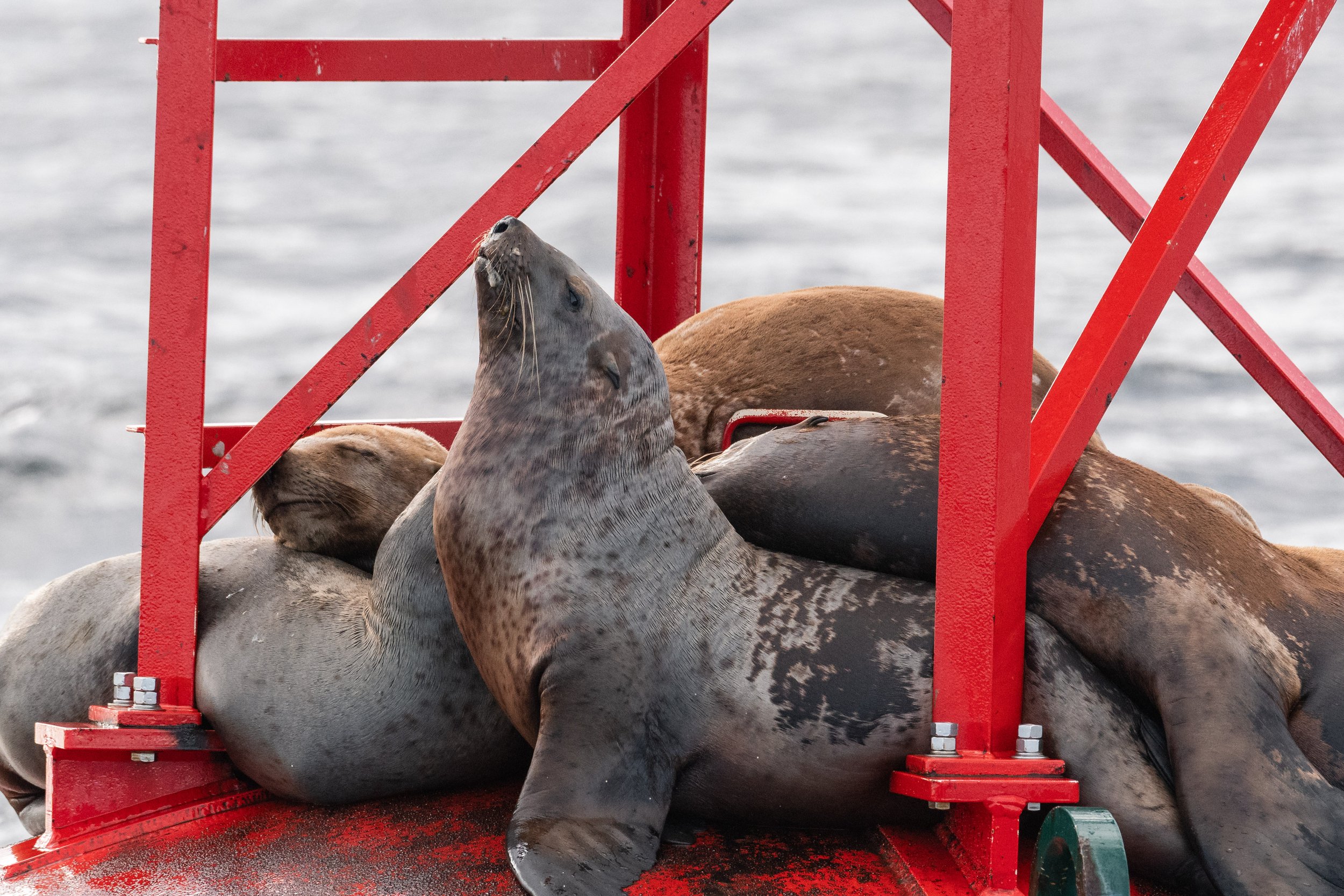
I think this Steller Sea Lion might needa tissue.
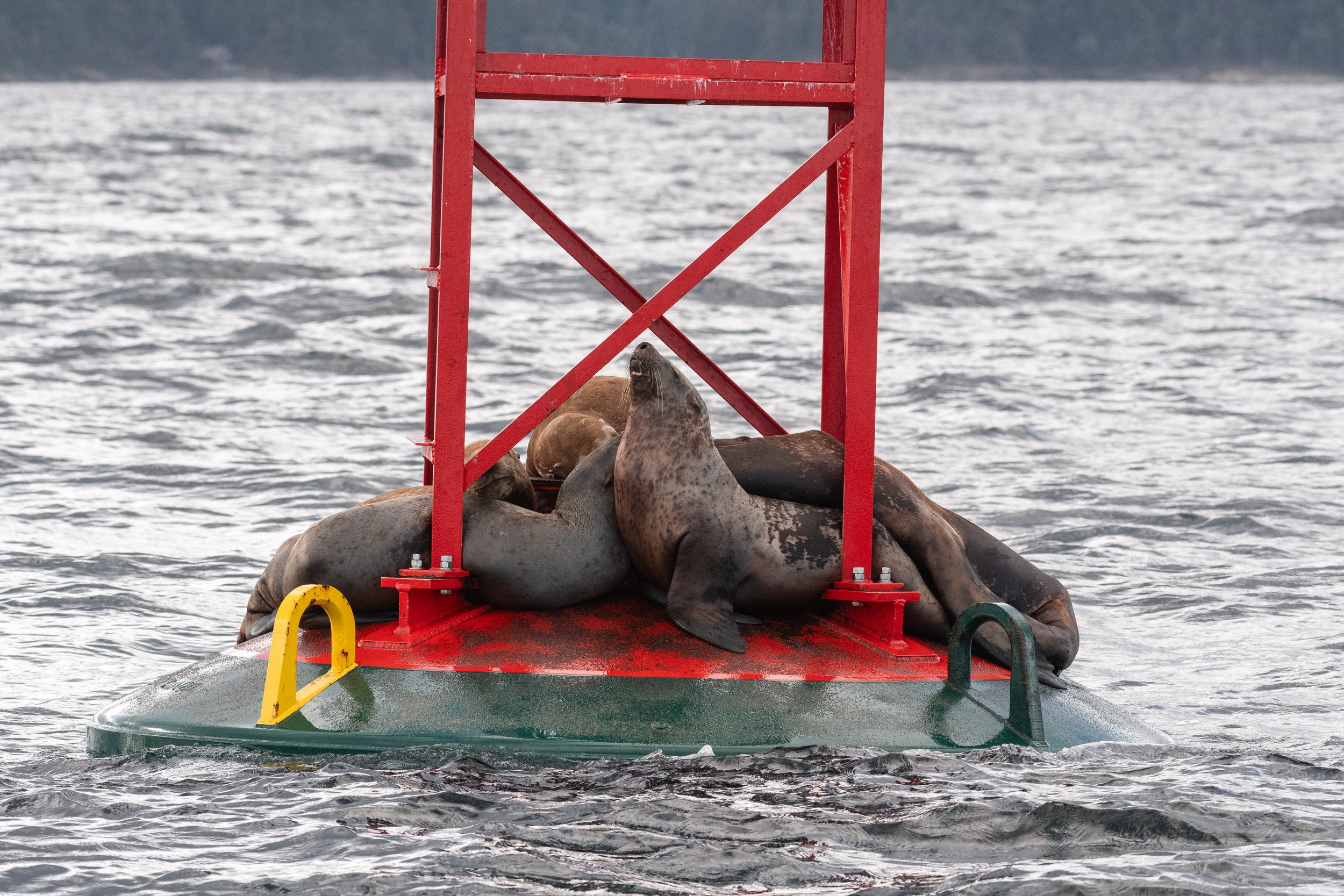
A look at all the Steller Sea Lions piled on the buoy.
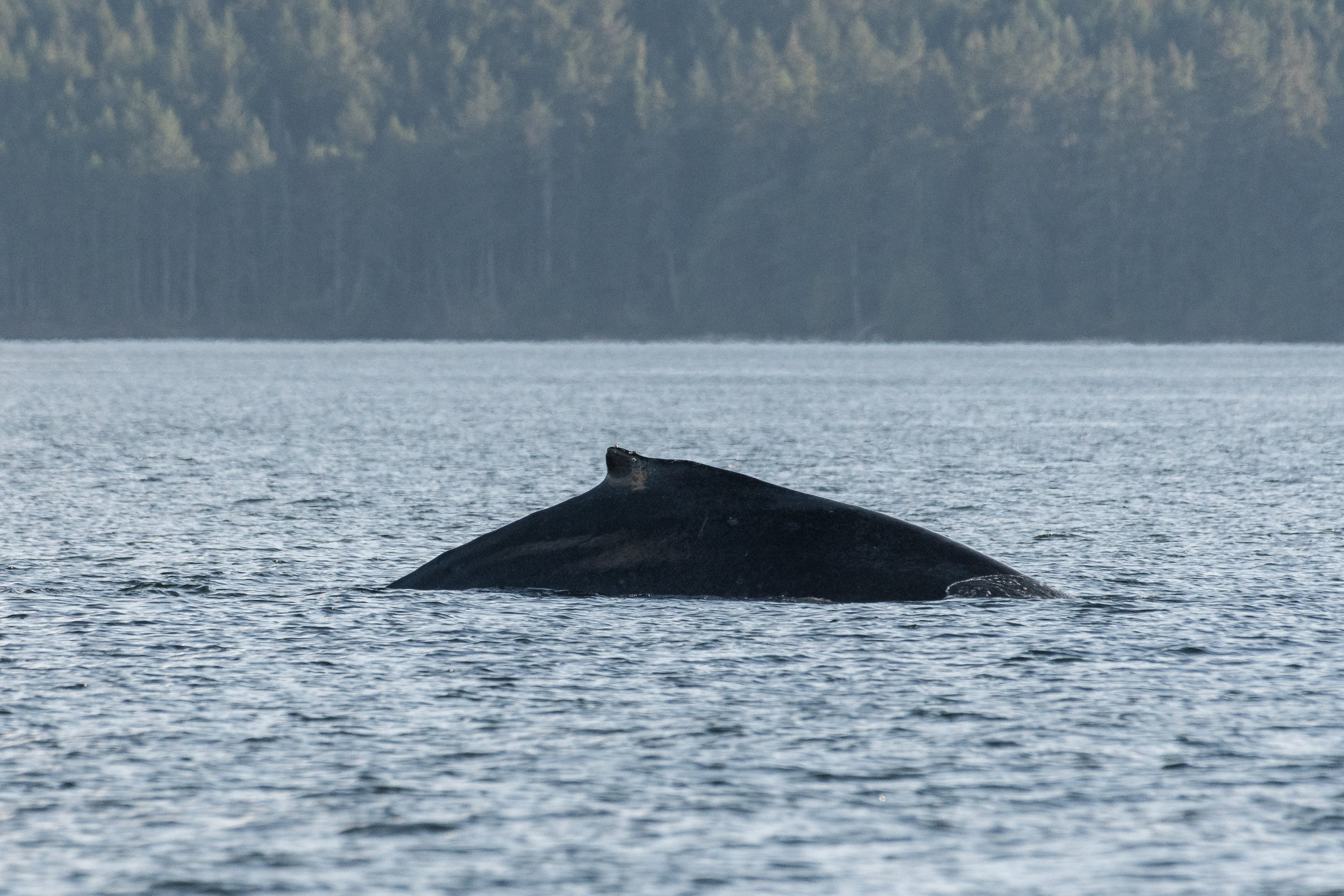
Cassiopeia’s dorsal fin as he prepares to dive.
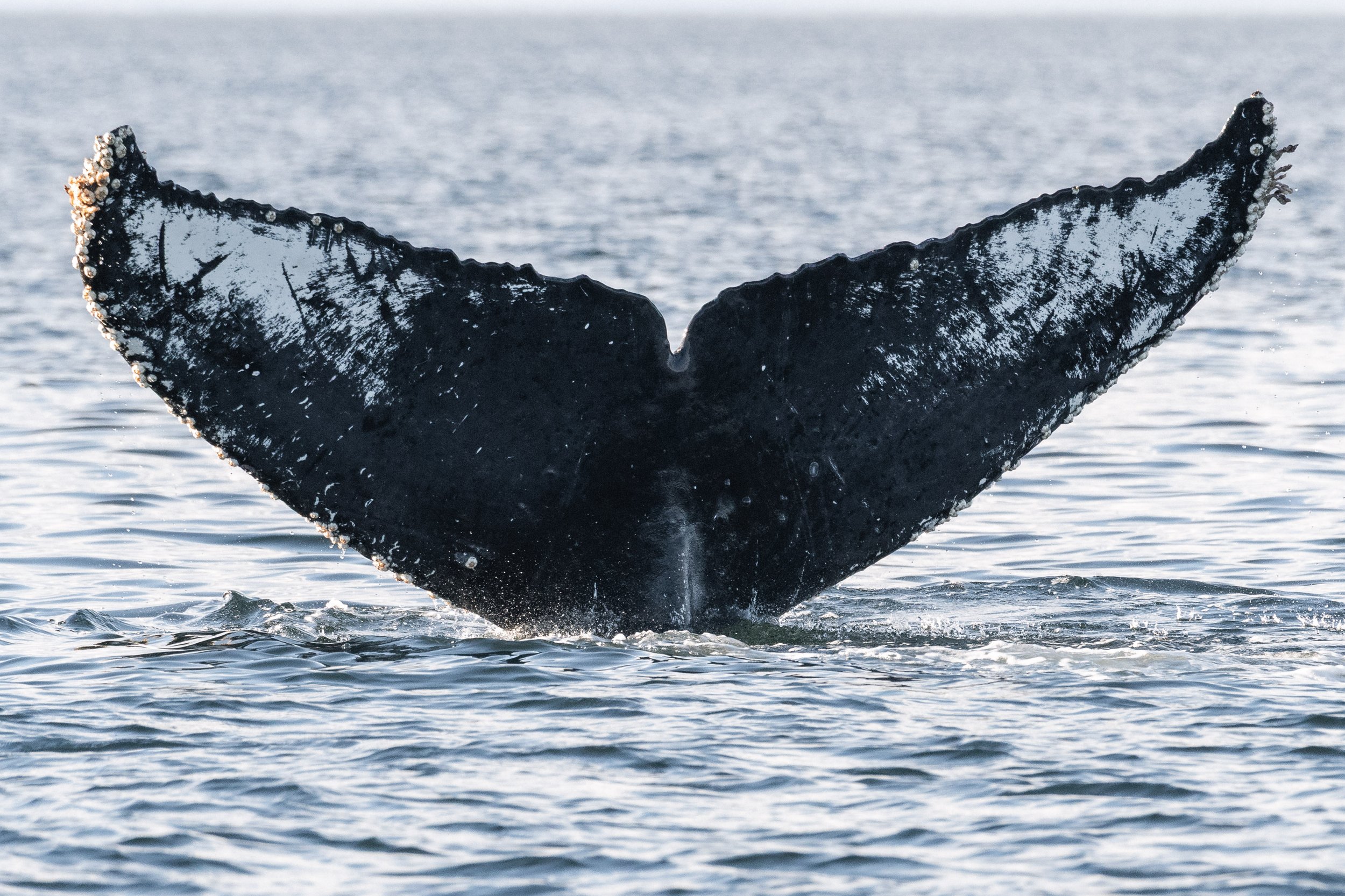
The beautiful underside of Cassiopeia’s tail flukes.
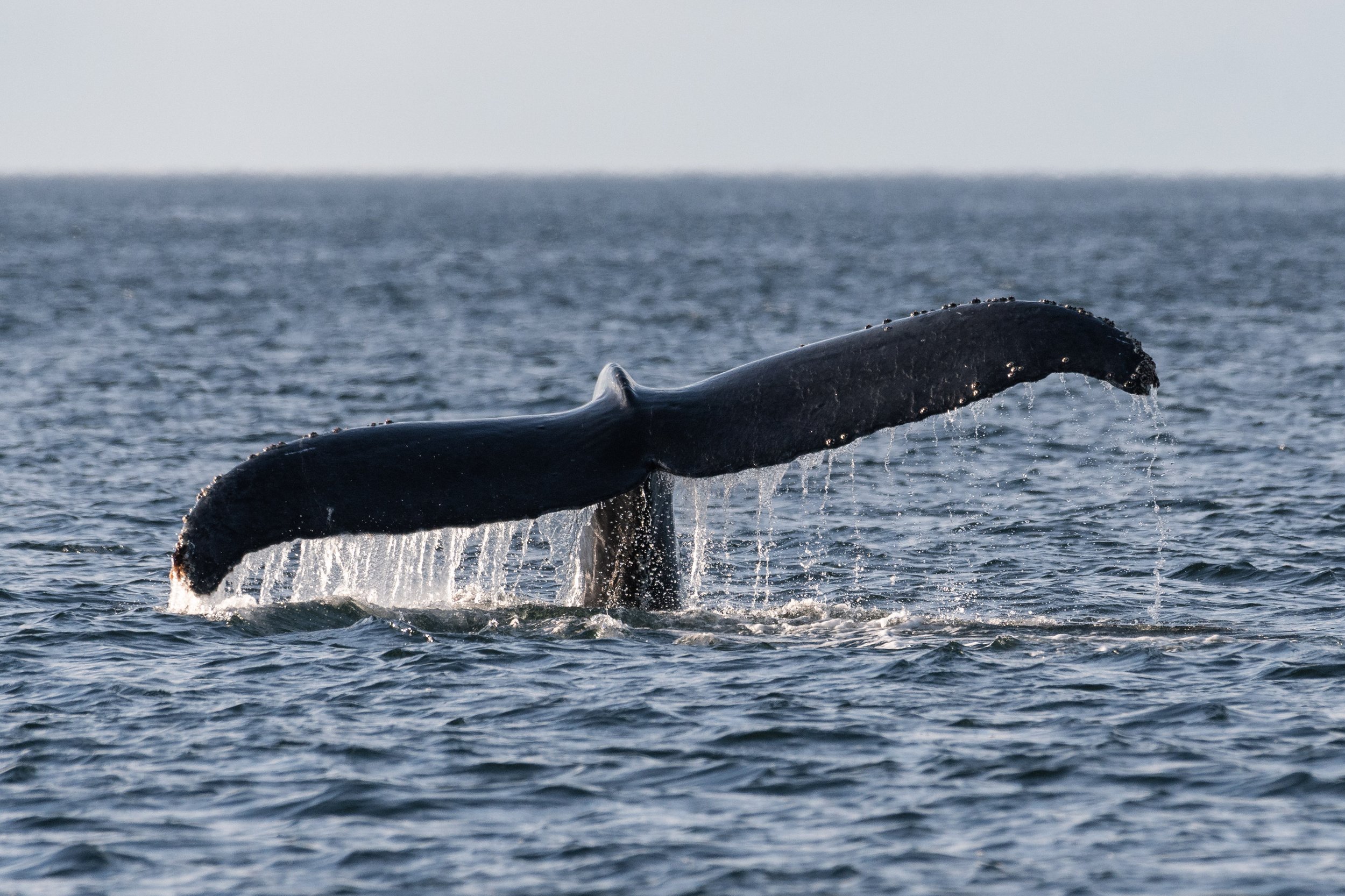
A lovely fluke waterfall from Cassiopeia.
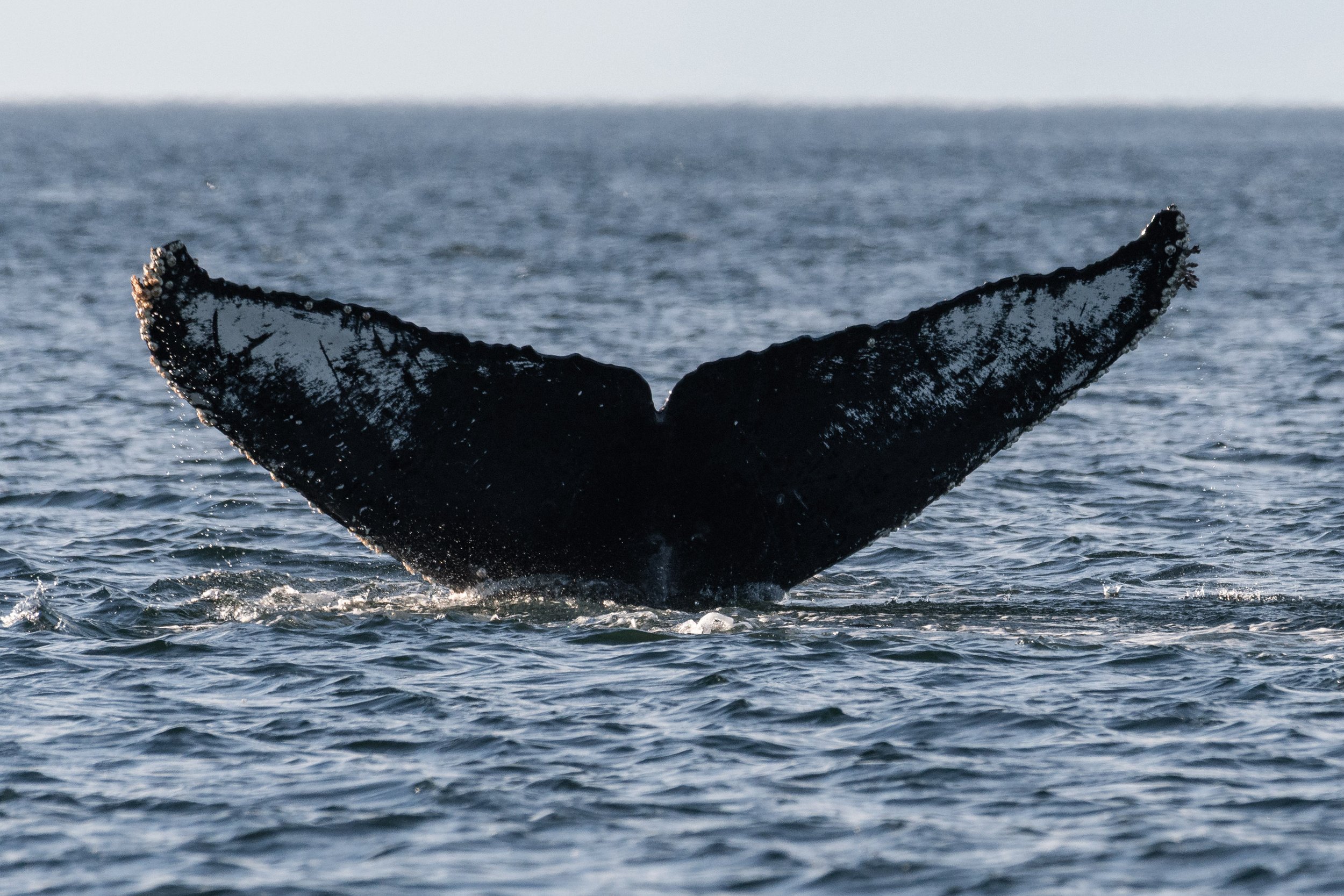
Can you spot all the barnacles on Cassiopeia’s tail?
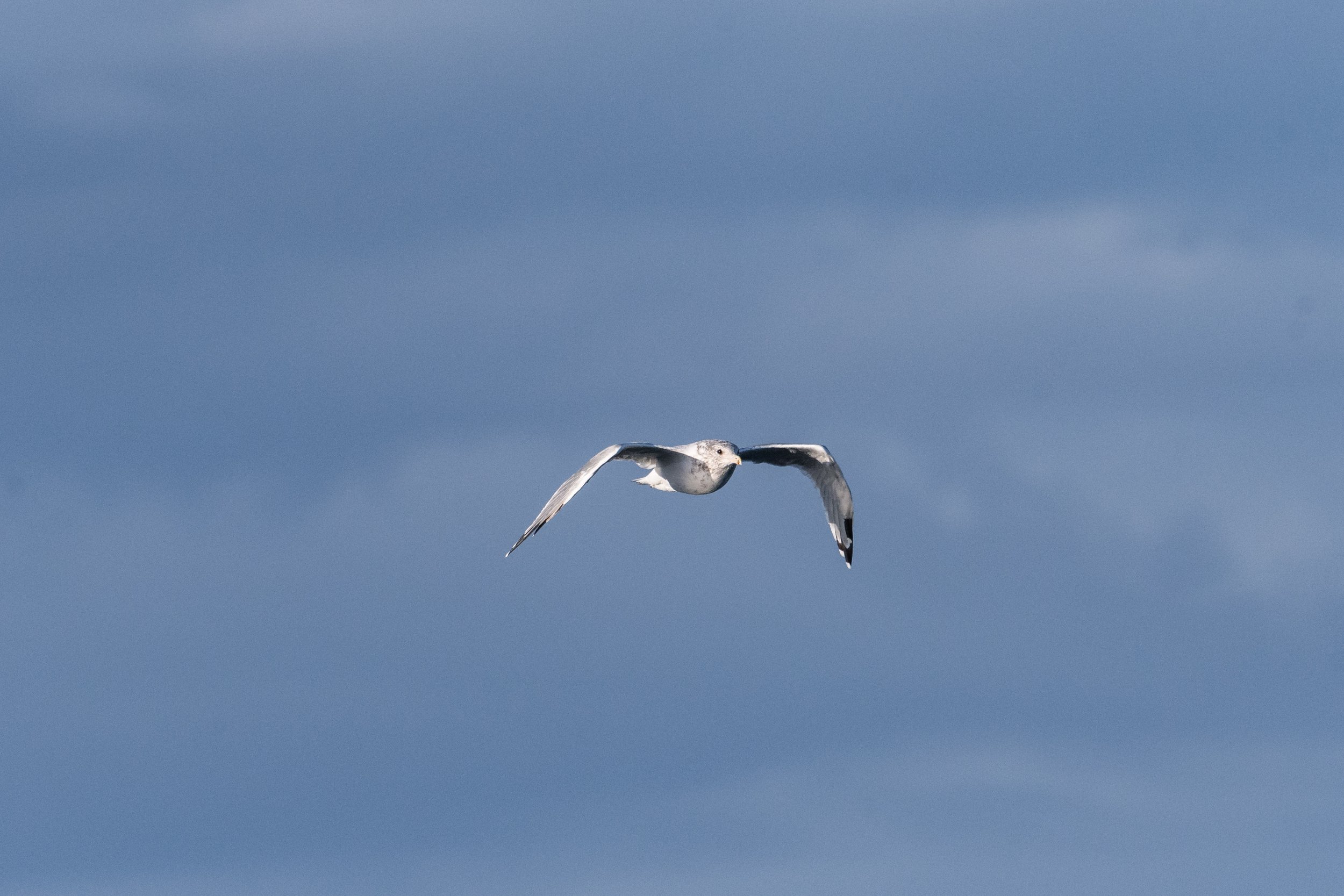
A gull flying by.
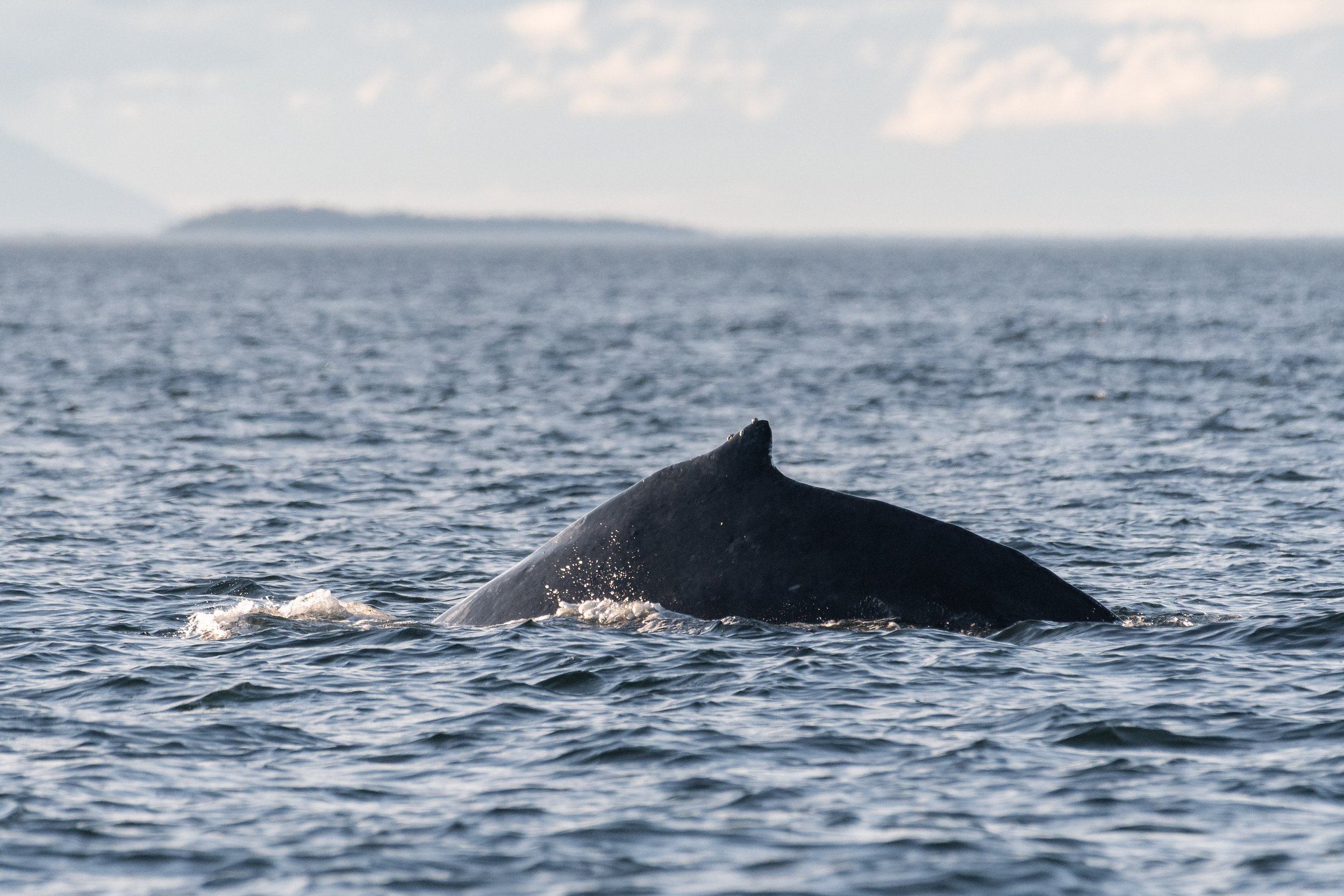
There are some unique barnacles on Cassiopeia’s dorsal fin as well.
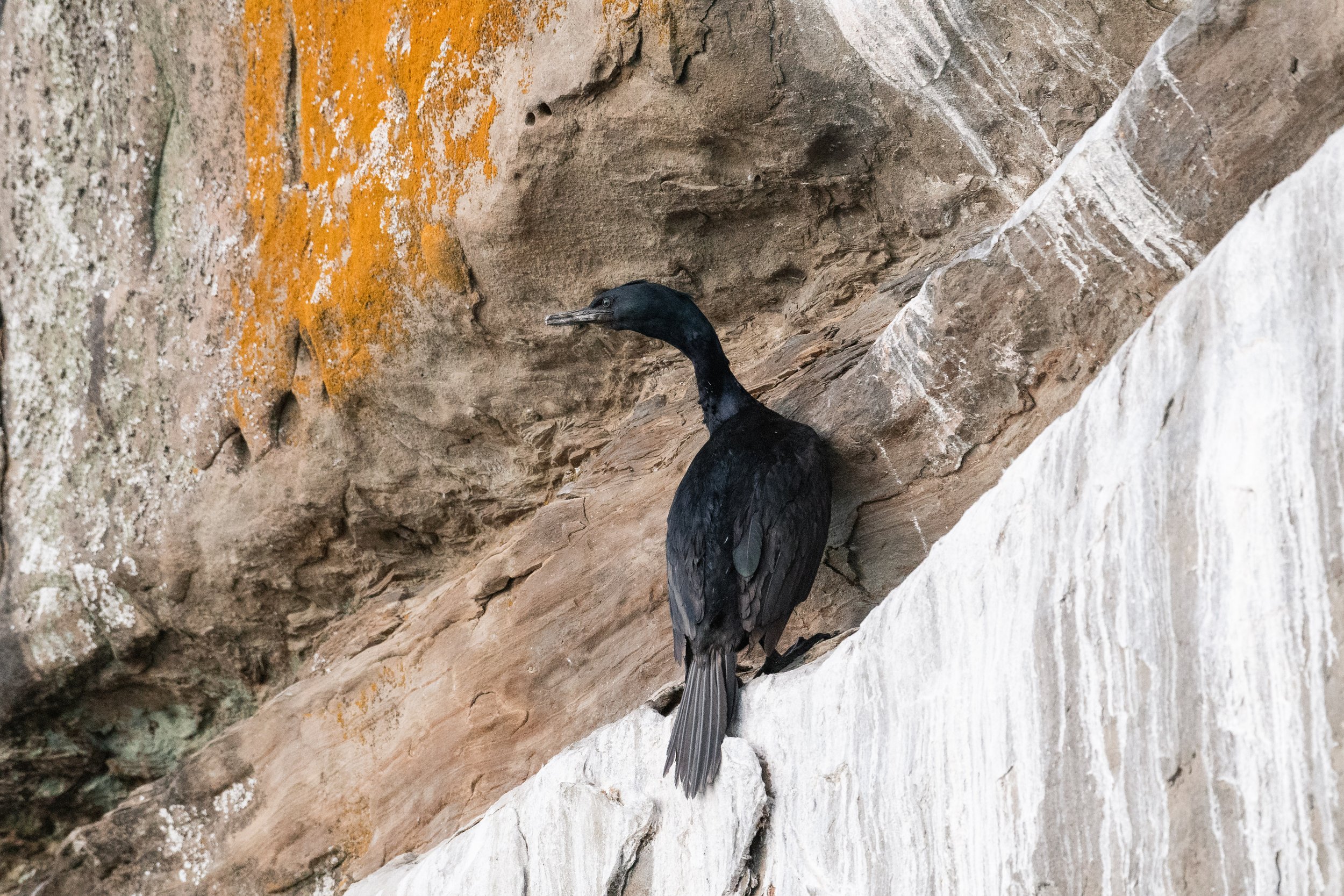
A cormorant striking a pose at the Gabriola Bluffs.
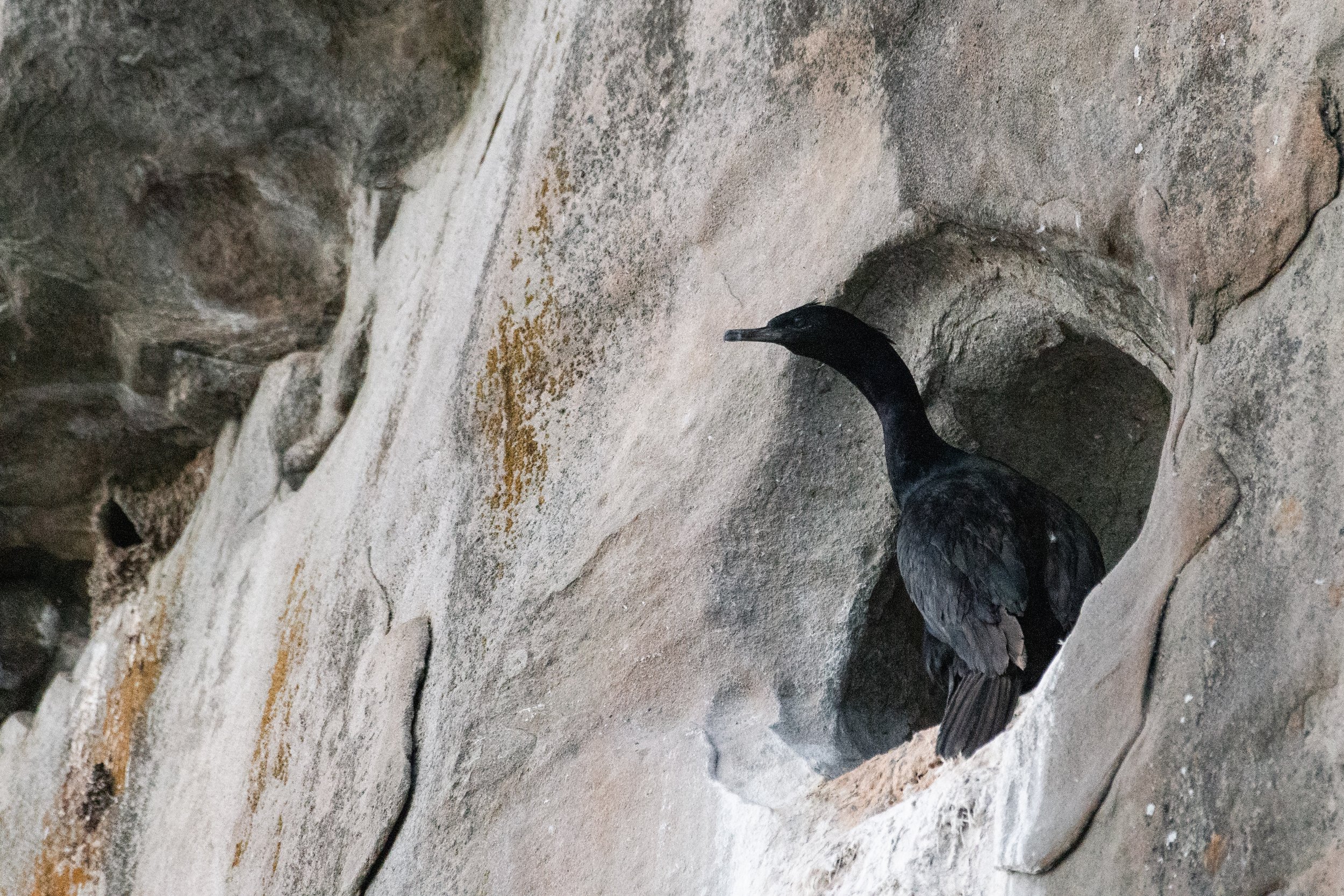
Another comorant preparing to leave it’s nest at the bluffs.
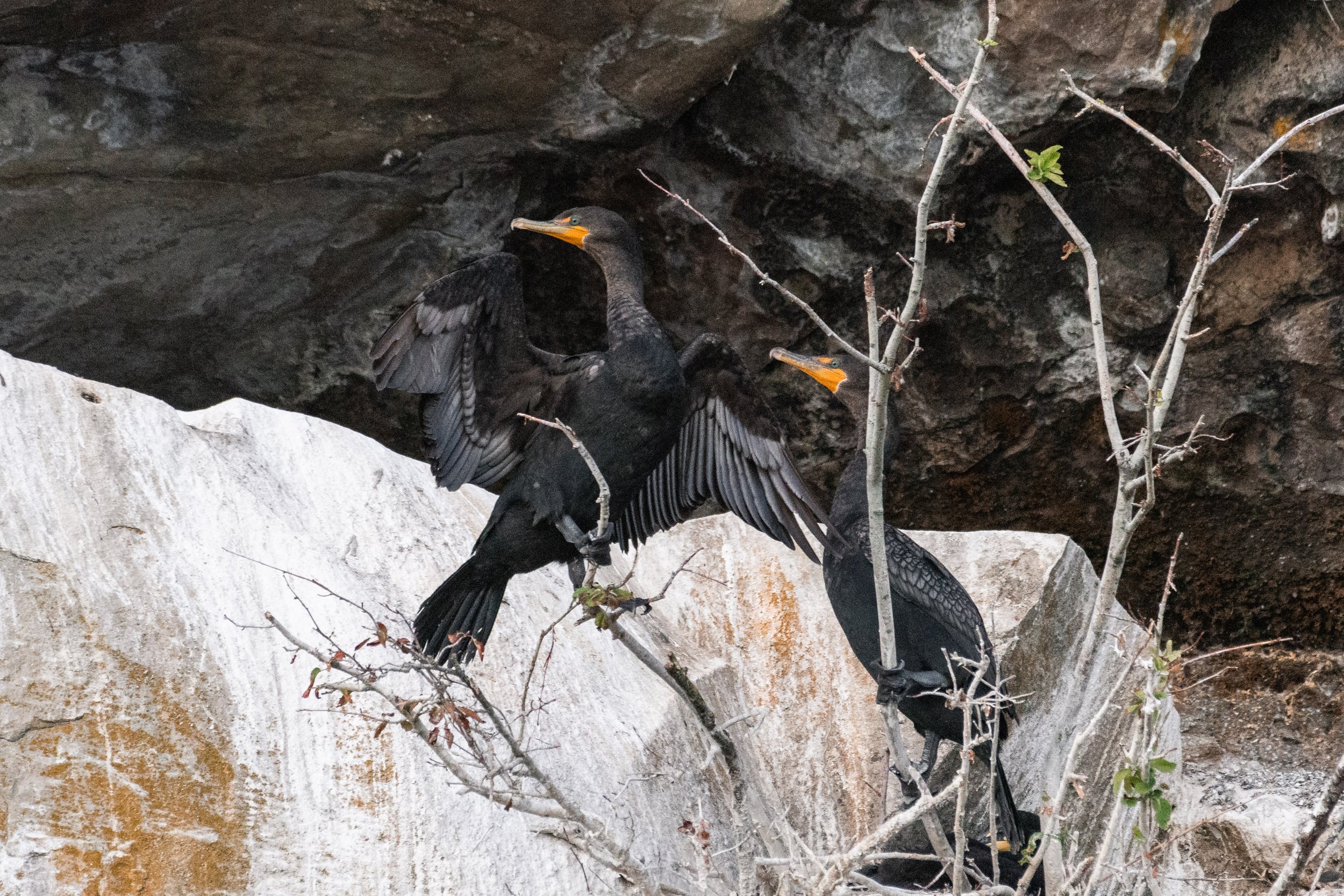
Comorant drying itself in the sun.