
August 28, 2026, 10:30 AM - Jude Close to home and Split Fluke and Prowler in the Strait
The day started with two of our vessels leaving Nanaimo and heading into Northumberland Channel, not knowing quite what the day might have in store. We did not have to travel far before our first whale of the day appeared. Travelling steadily north through the channel was T049A2 Jude, a member of the Bigg’s killer whale population and an individual who is about as recognizable as they come.
T049A2 Jude ♂ (2007)
Jude’s dorsal fin makes him especially easy to pick out. Near the top of his fin is a distinctive hook created by a partial collapse, giving the upper portion of his dorsal a shape that is difficult to mistake for anyone else. Partial dorsal fin collapses do occur among Bigg’s killer whales, but they are relatively uncommon, and when they do occur, they are often much less pronounced than Jude’s. His fin is one of those features that makes an identification almost immediate, even from a distance.
We had some great looks at Jude as he continued north, with his eye patch visible nearly every time he surfaced. His saddle patch was visible too, offering another chance to see the individual markings researchers and naturalists use to identify killer whales.
While Jude’s dorsal fin may make his identity obvious, the eye patch and saddle patch are important pieces of the identification puzzle for every killer whale. No two individuals have exactly the same combination of scars, pigmentation, nicks, shapes, and markings. The saddle patch, located just behind the dorsal fin, can contain distinctive areas of lighter pigmentation and scars, while the eye patch can also have its own unique shape and markings. When a dorsal fin is less immediately recognizable, these features become particularly useful for confirming who we are looking at.
For Jude, however, that unmistakable hook at the top of his dorsal made our job considerably easier. We enjoyed watching him travel north through Northumberland Channel before continuing on to see what else the area had waiting for us.
Our next stop was a familiar landmark for local wildlife: Stinky Rock. The rocky outcrop is a well-known haul-out location where marine mammals can leave the water and rest on the rocks. On this visit, we found some of the area's regular residents, including Harbour Seals and Steller Sea Lions.
Haul-out sites are important places for marine mammals. Spending time out of the water lets animals rest without continually swimming or maintaining their position in the water column. Steller Sea Lions can often be found piled together on rocky outcrops, while Harbour Seals tend to be a little more spread out, often lying close together with their heads raised and their bodies angled comfortably over the rocks.
But the Harbour Seals and Steller Sea Lions were not the only animals taking advantage of Stinky Rock. A River Otter was also using the area, giving us a particularly fun comparison between one of our local freshwater and coastal predators and the marine mammals we more commonly encounter here.
River Otters spend plenty of time in and around saltwater, so it is not unusual to see them swimming in the ocean or hunting along the shoreline. Their comfort in the marine environment can sometimes make them look surprisingly similar to Sea Otters at first glance. However, several useful clues can help tell them apart.
One of the easiest things to look at is the tail. River Otters have long, muscular tails that taper toward the end and are very useful for powerful swimming. Sea Otters have much shorter tails in proportion to their bodies. Their faces are also quite different. River Otters have a relatively narrow face, while Sea Otters have a broader, rounder appearance, often with a more noticeable light-coloured muzzle. Their behaviour on land can also provide a clue. River Otters are much more comfortable moving around on shore and can travel surprisingly quickly over land, while Sea Otters are far more closely associated with life in the water.
With the productive waters surrounding Stinky Rock attracting fish and other prey, it is not surprising that a River Otter would make use of the area too. Still, seeing one is always a treat. Wildlife reminds us that these habitats are shared by far more species than we might expect.
After spending some time around Stinky Rock, we headed back out toward the Strait of Georgia to see what else we might find. Before long, our search brought us to another pair of familiar giants.
Two humpback whales were travelling together, Prowler (BCX1660) and Split Fluke (BCX1068). At first, their behaviour seemed centred on feeding. Humpback whales can spend long periods travelling between feeding areas, diving beneath the surface, and returning with the characteristic blow that helps us track their movements. They may also change direction frequently while searching for prey patches.
But as we watched, the interaction between Prowler and Split Fluke began to look less like a focused feeding effort and more like something altogether different.
The two whales became increasingly active at the surface, with their movements taking on a playful quality. They flicked their tails as they prepared to dive and lifted their enormous pectoral fins into the air. For animals that can weigh tens of thousands of kilograms, watching them wave a pectoral fin above the surface is an impressive reminder of just how large these whales really are.
Humpback whales are known for a wide variety of surface behaviours, including breaching, tail slapping, pectoral fin slapping and rolling. While some of these behaviours can be connected to feeding, communication or other practical purposes, scientists are still cautious about assigning a single meaning to every dramatic behaviour we see at the surface. A whale lifting a pectoral fin into the air may be interacting socially, communicating with another whale, responding to its surroundings, or simply engaging in behaviour that we do not yet fully understand.
That uncertainty is part of what makes watching individual animals so interesting. We can observe what they do, document their behaviour, and look for patterns, but plenty about their lives remains beyond our view beneath the surface.
For Prowler and Split Fluke, whatever the motivation behind their interaction, it made for an incredible encounter. Watching two enormous humpbacks move together at the surface, tails and pectoral fins appearing above the water, was quite the sight.
Eventually, it was time for us to leave the pair behind and begin our journey back toward Nanaimo. From a uniquely marked killer whale in Northumberland Channel, to Harbour Seals, Steller Sea Lions and a River Otter at Stinky Rock, and finally two humpbacks putting on a remarkable display in the Strait of Georgia, the day had offered a little bit of everything.
Some days are defined by one extraordinary encounter. Others seem to collect small moments from throughout the ecosystem, each one adding another piece to the picture. Today was one of those days, with every stop offering a different glimpse into the wildlife that calls these waters home. Please enjoy the photos captured by the onboard marine naturalists, Hayleigh Hilbert and Aly Kohlman, throughout the tour.
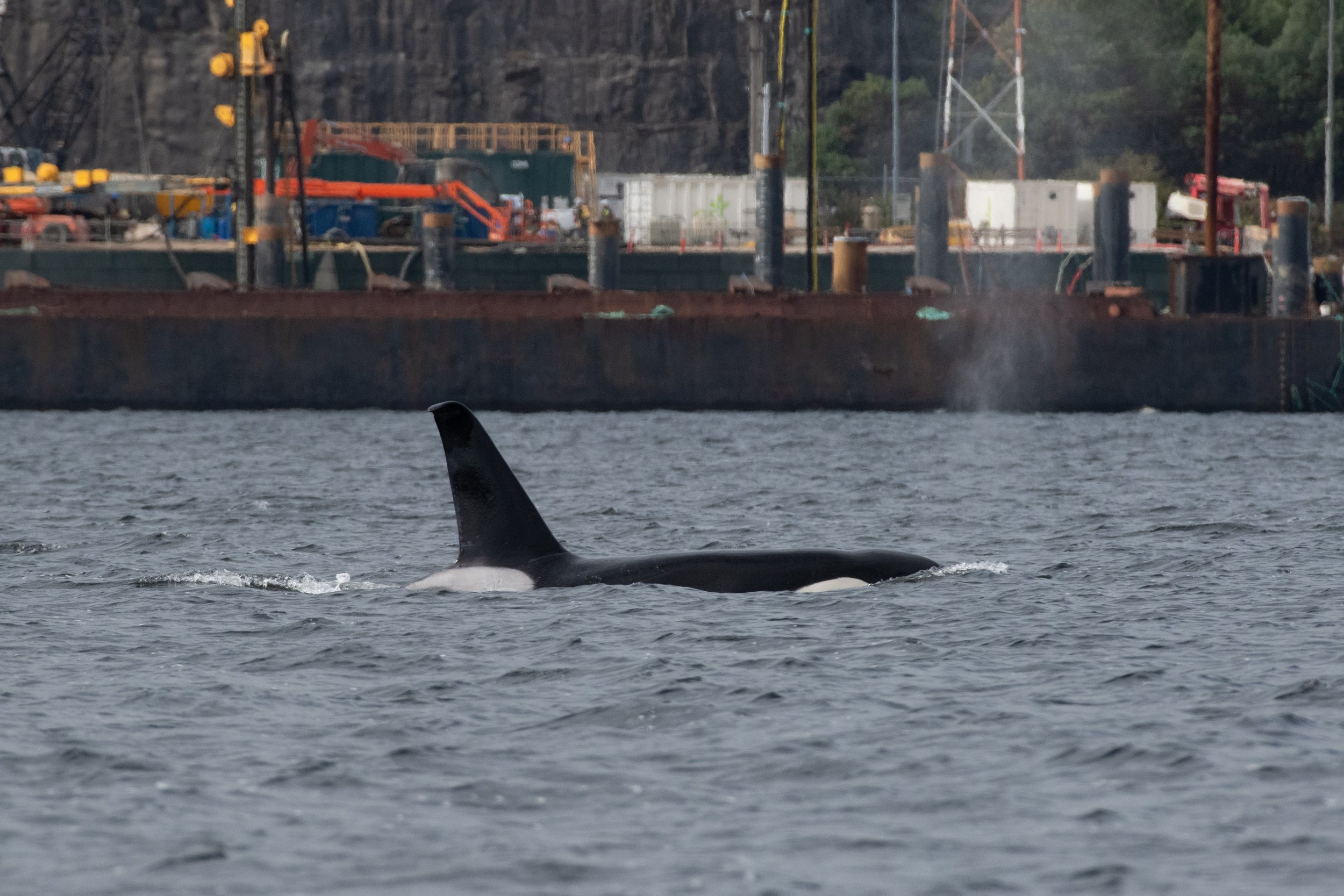
T049A2 Jude surfacing in Northumberland Channel. Photo by Hayleigh Hilbert.
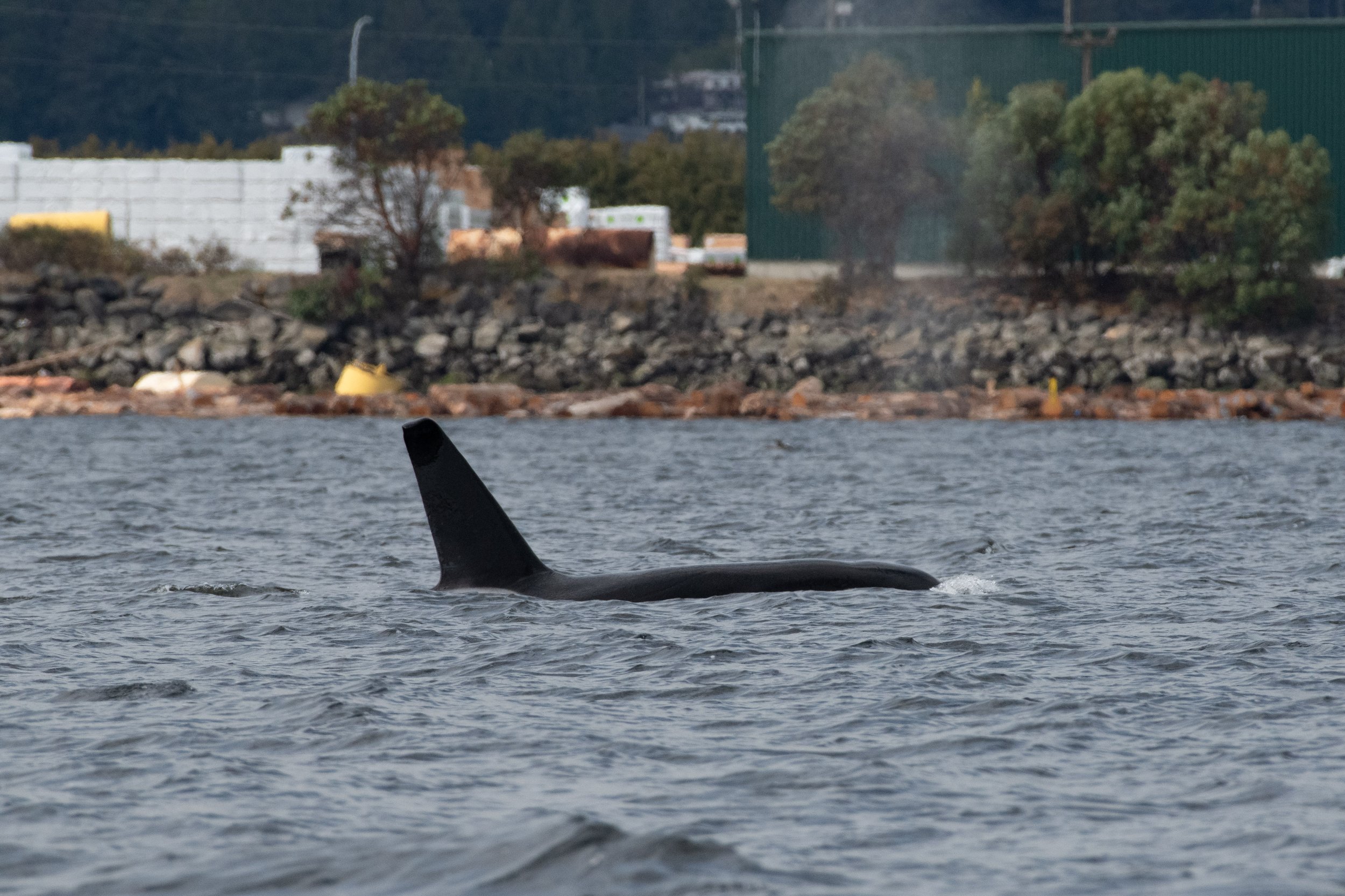
T049A2 Jude surfacing along the shoreline of Nanaimo. Photo by Hayleigh Hilbert.
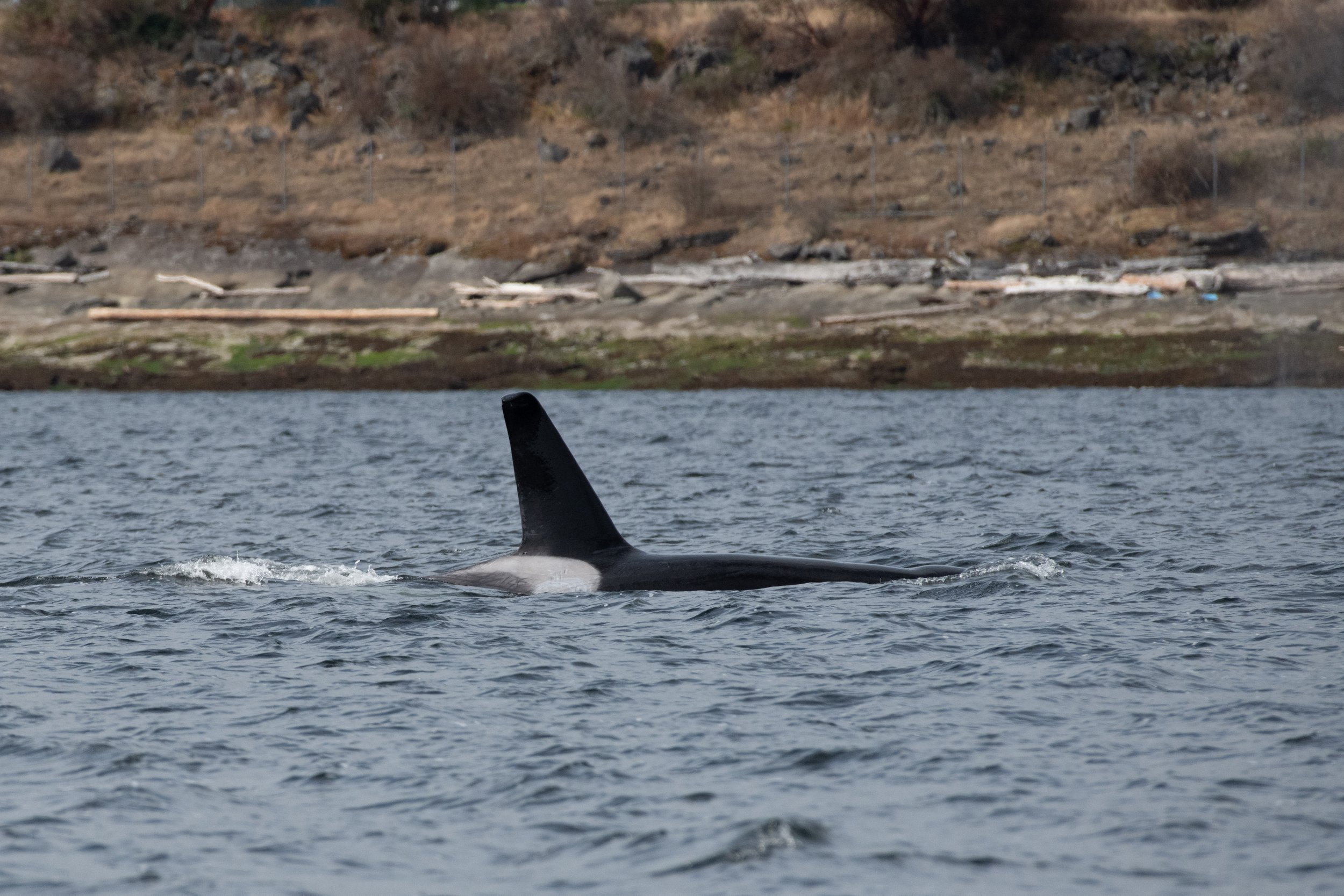
T049A2 Jude approaching Duke Point. Photo by Hayleigh Hilbert.
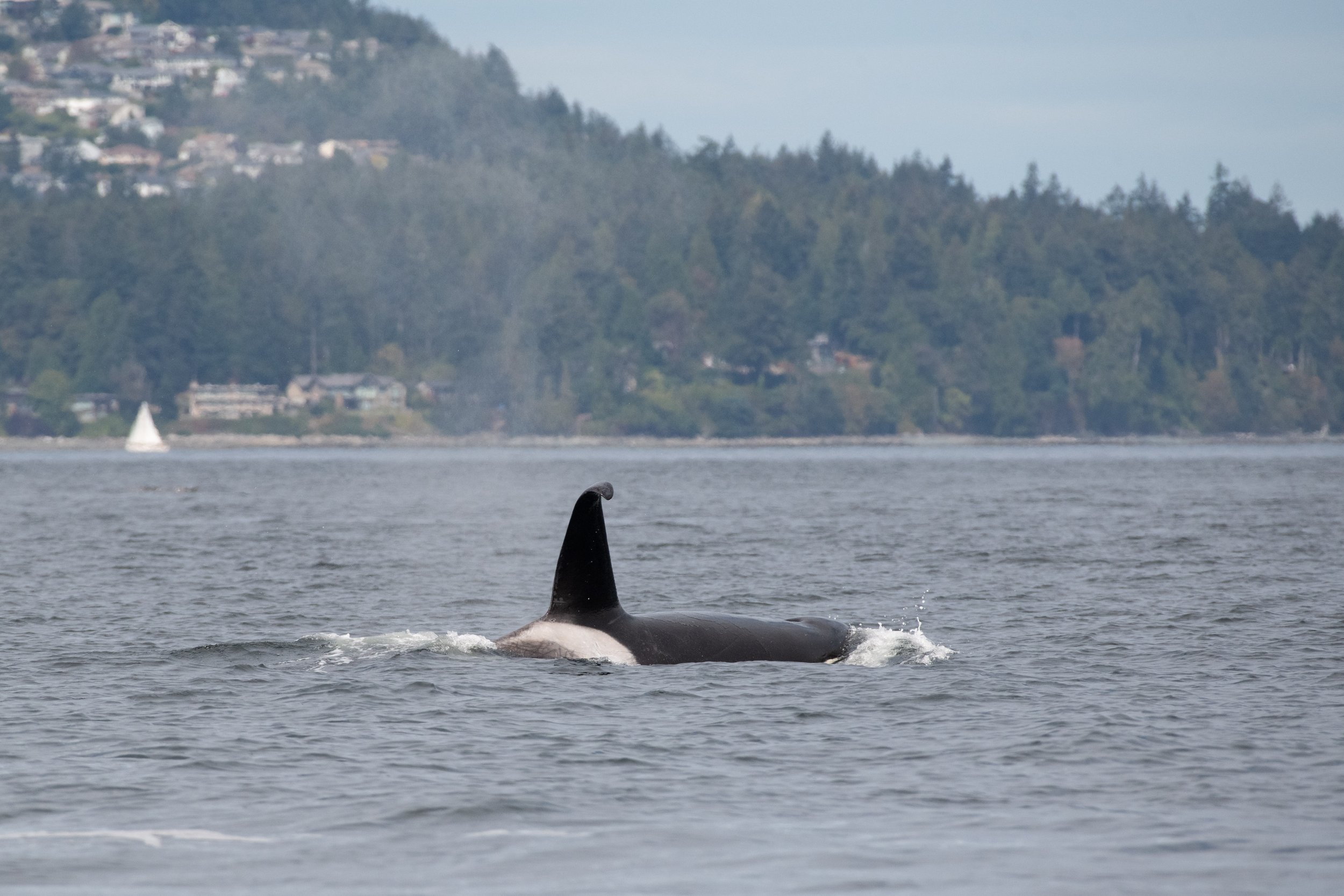
Just look at the hook at the top of T049A2 Jude’s dorsal fin. Photo by Hayleigh Hilbert.
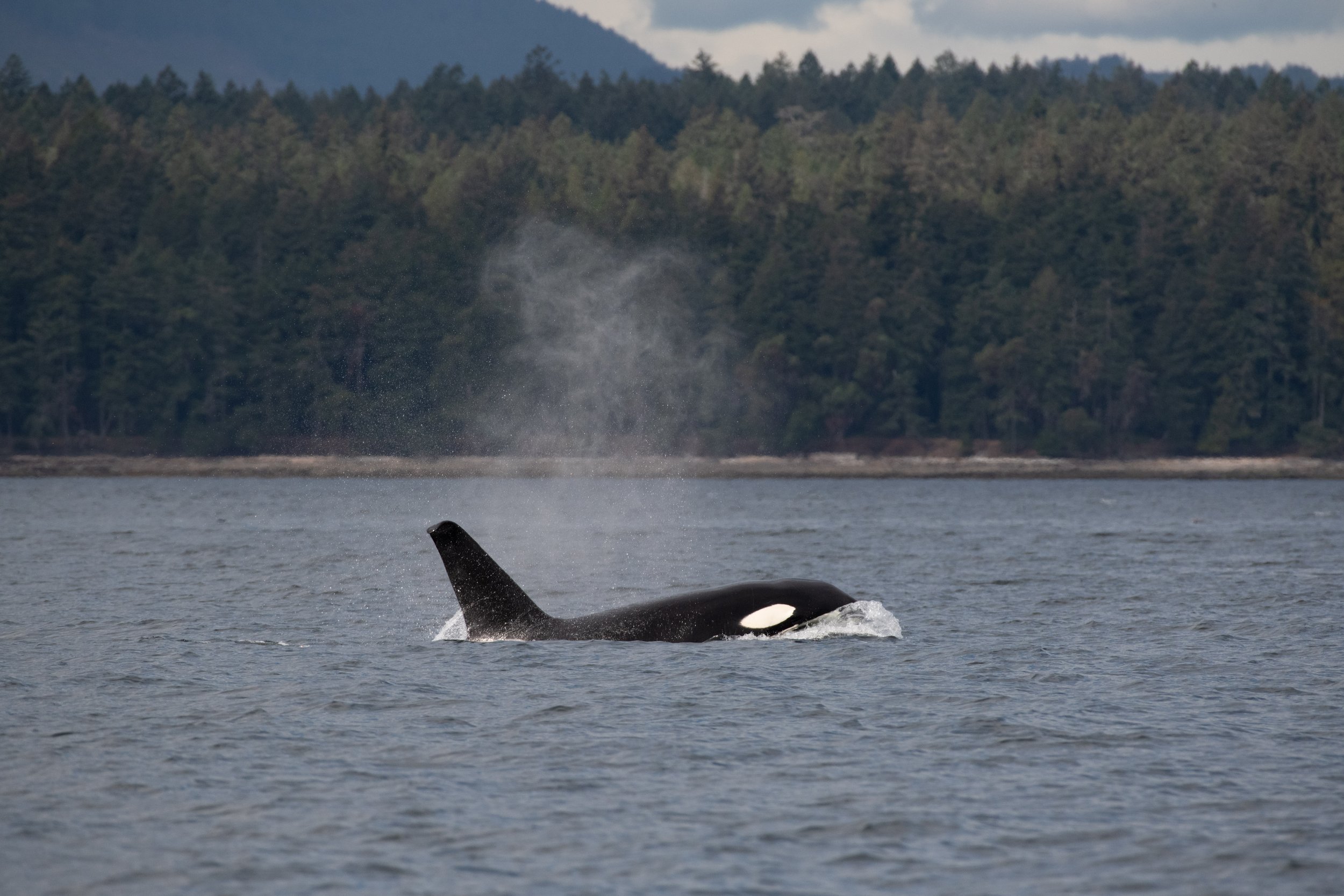
A fantistic photo of T049A2 Jude. Photo by Hayleigh Hilbert.
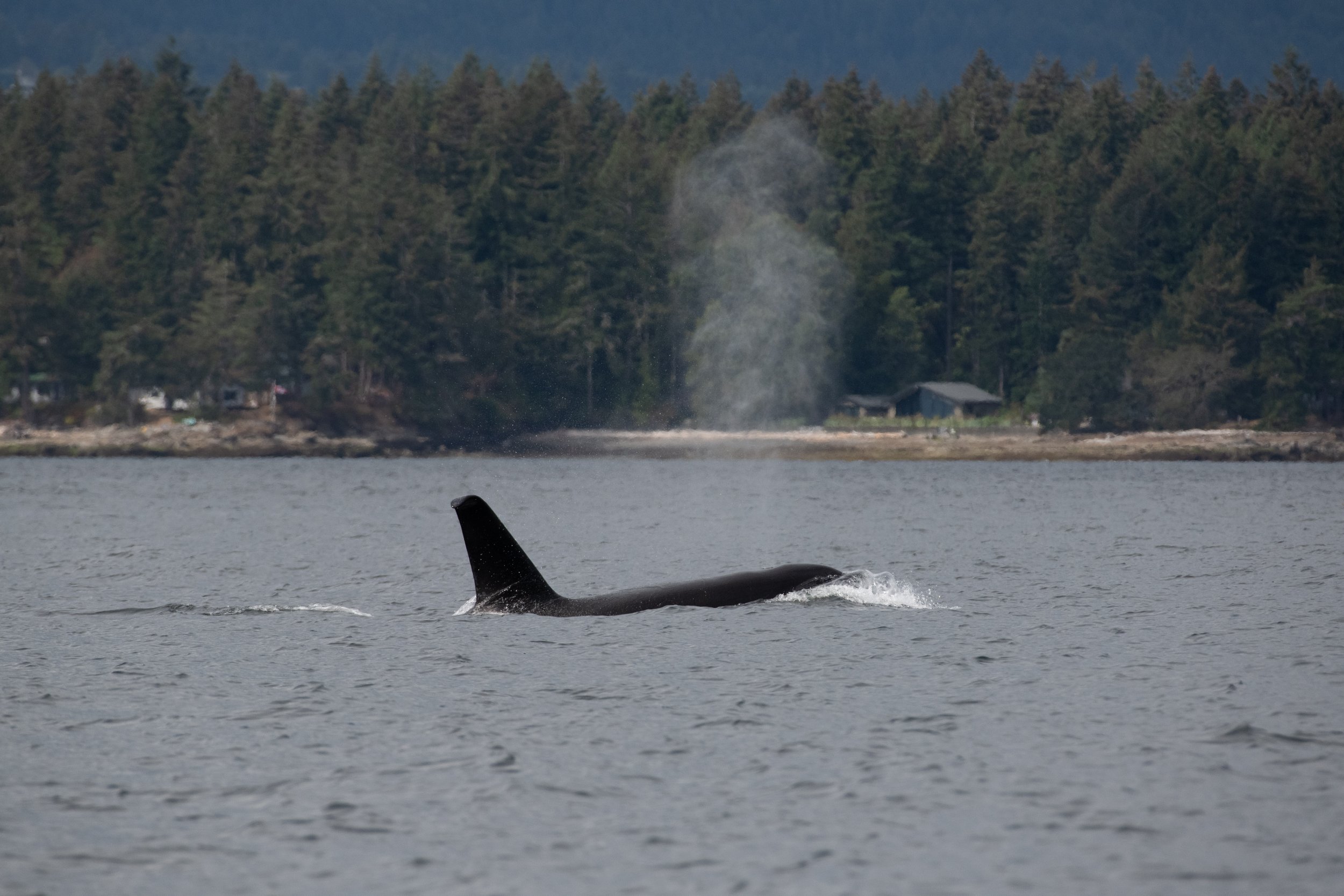
Jude surfacing in front of Protection Island. Photo by Hayleigh Hilbert.
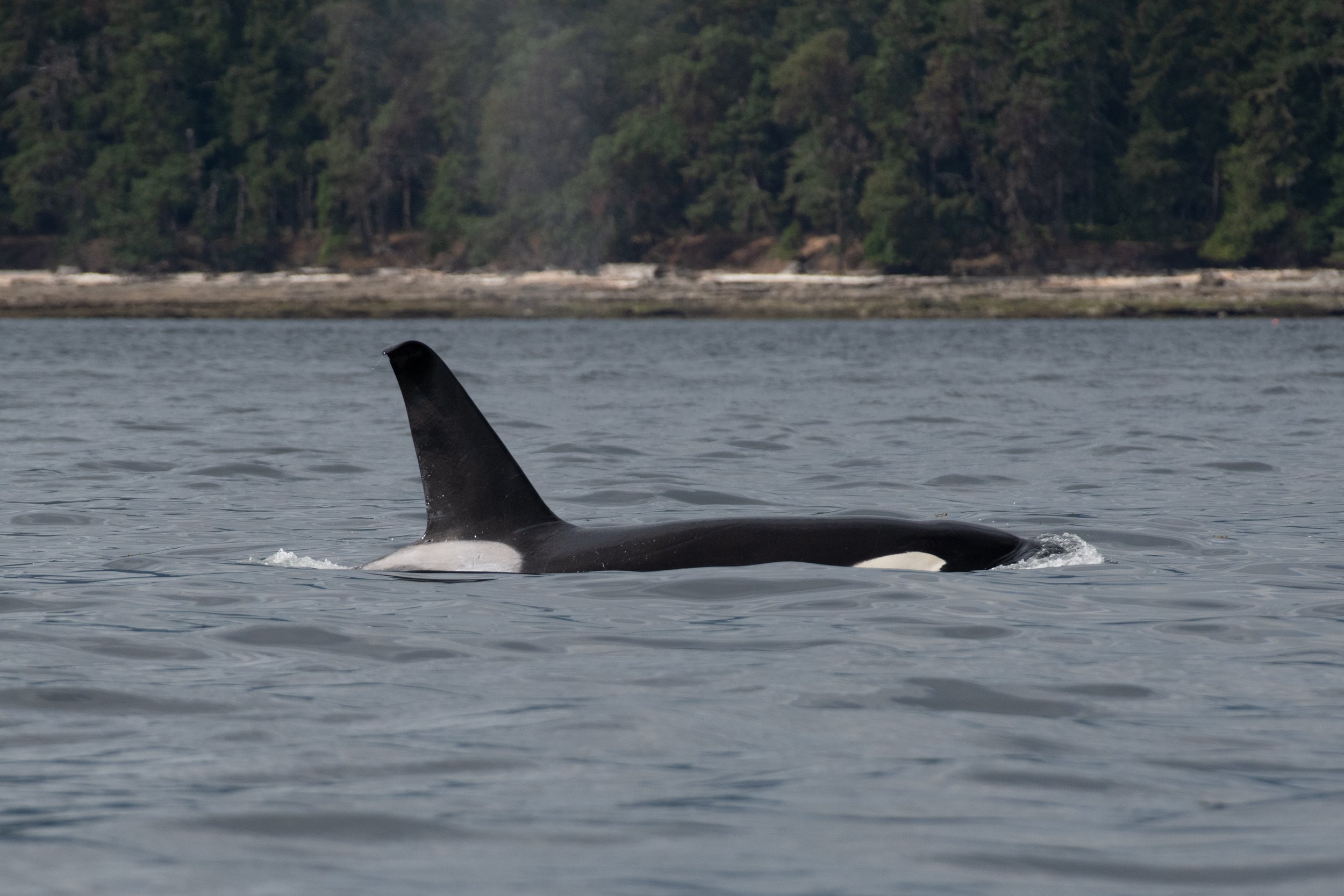
T049A2 Jude with his eye patch above the surface. Photo by Hayleigh Hilbert.
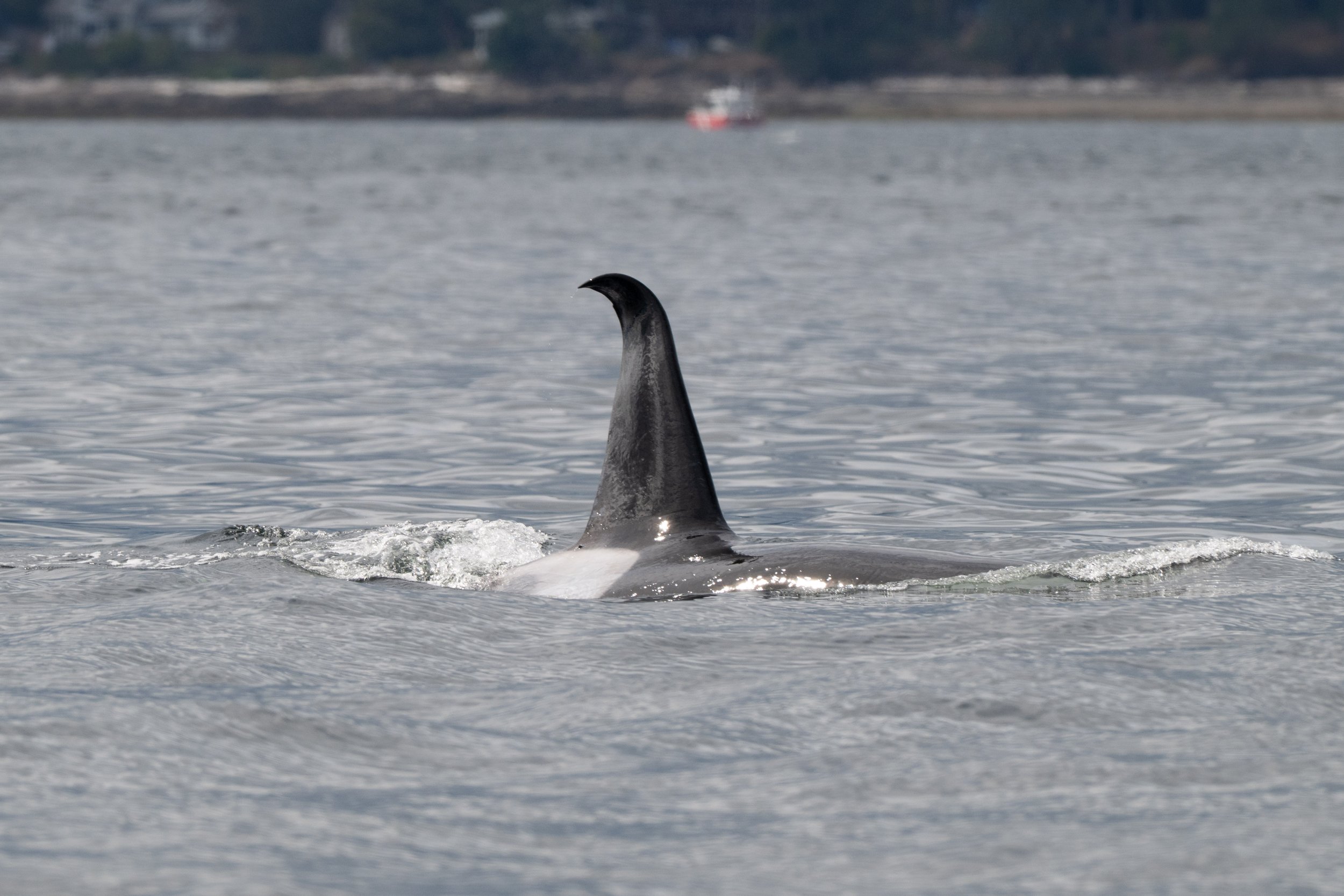
T049A2 Jude showing off his very hooked dosal fin. Photo by Aly Kohlman.
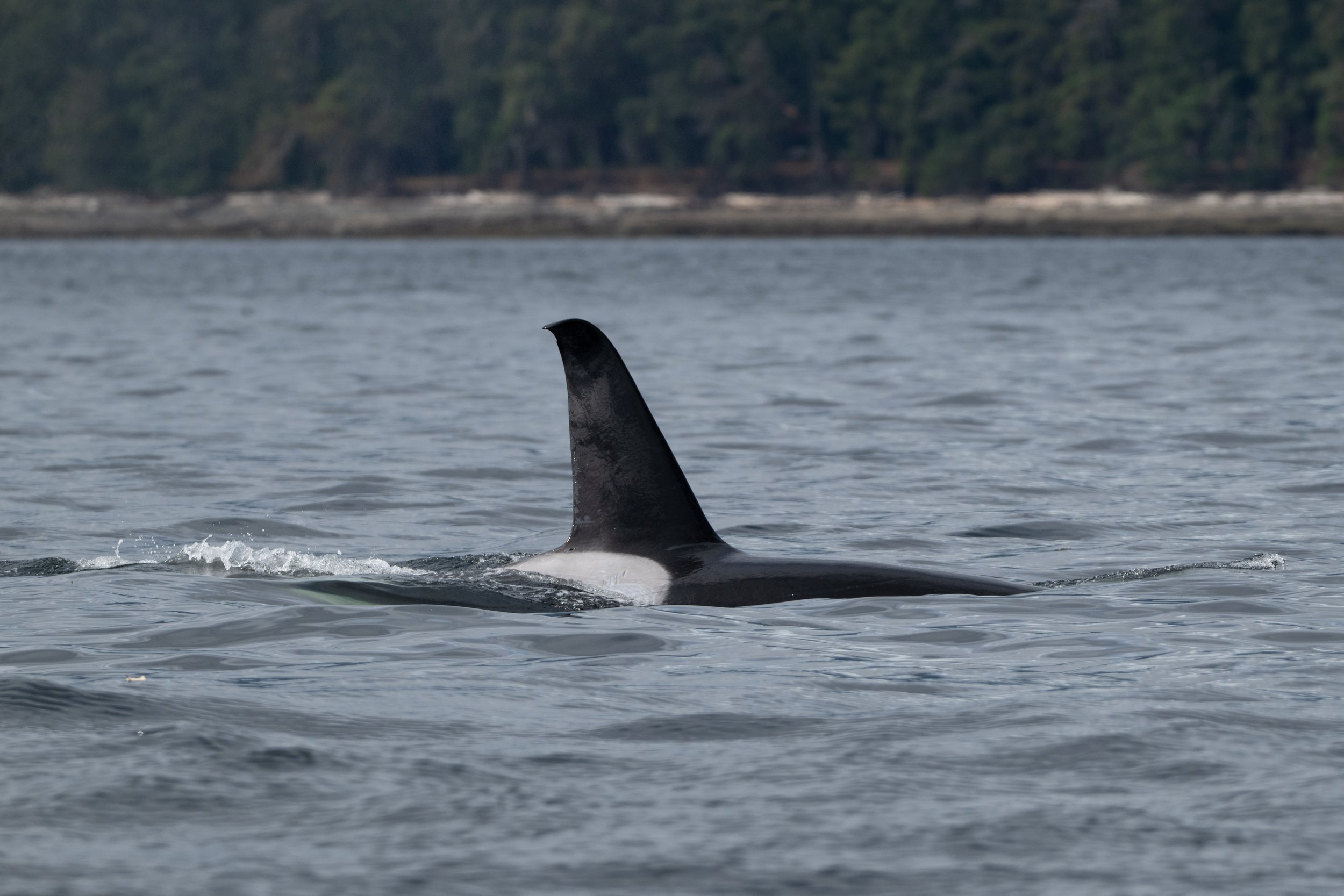
A great look at T049A2 Jude’s saddle patch. Photo by Aly Kohlman.
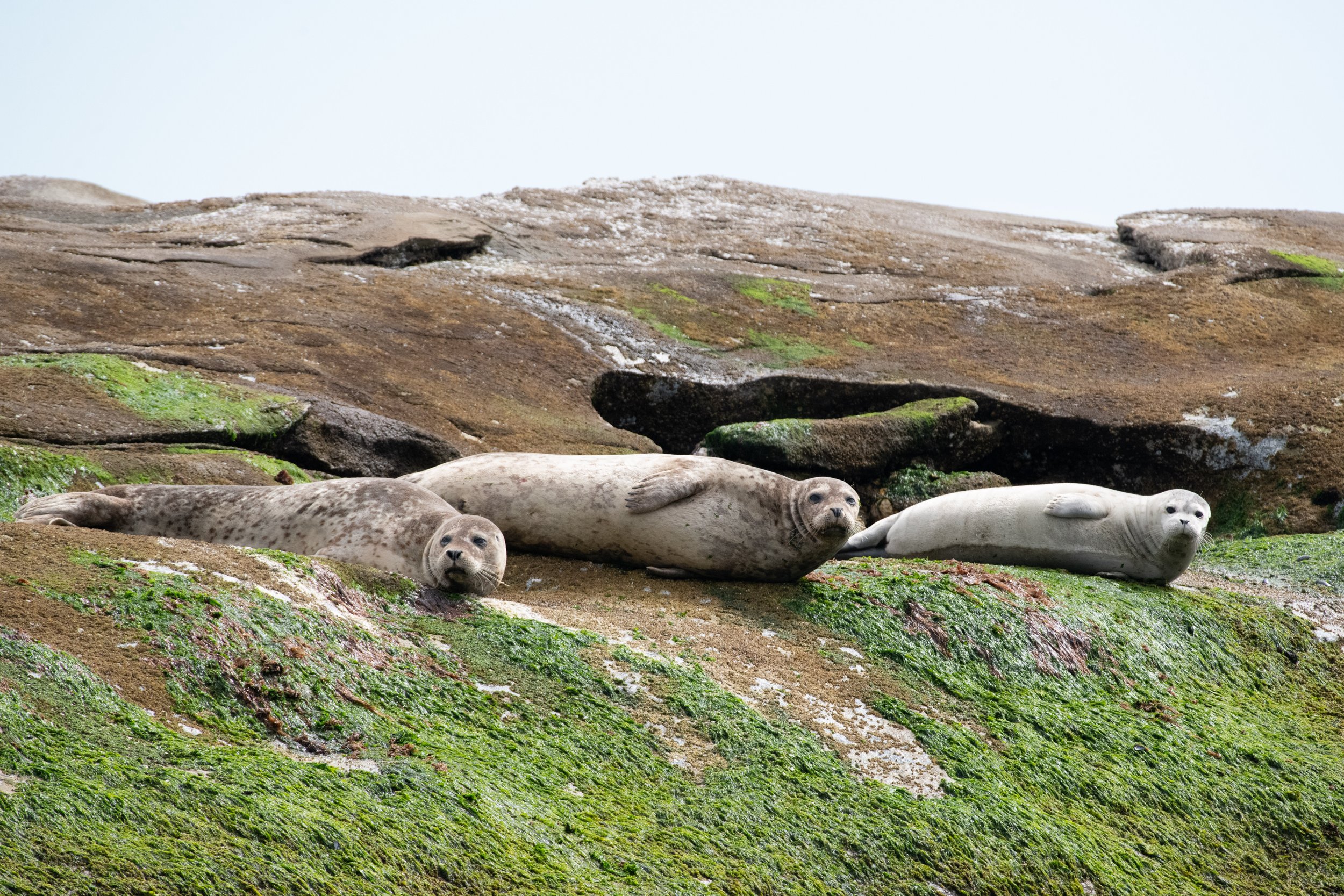
A trio of Harbour Seals posing along the rocks. Photo by Hayleigh Hilbert.
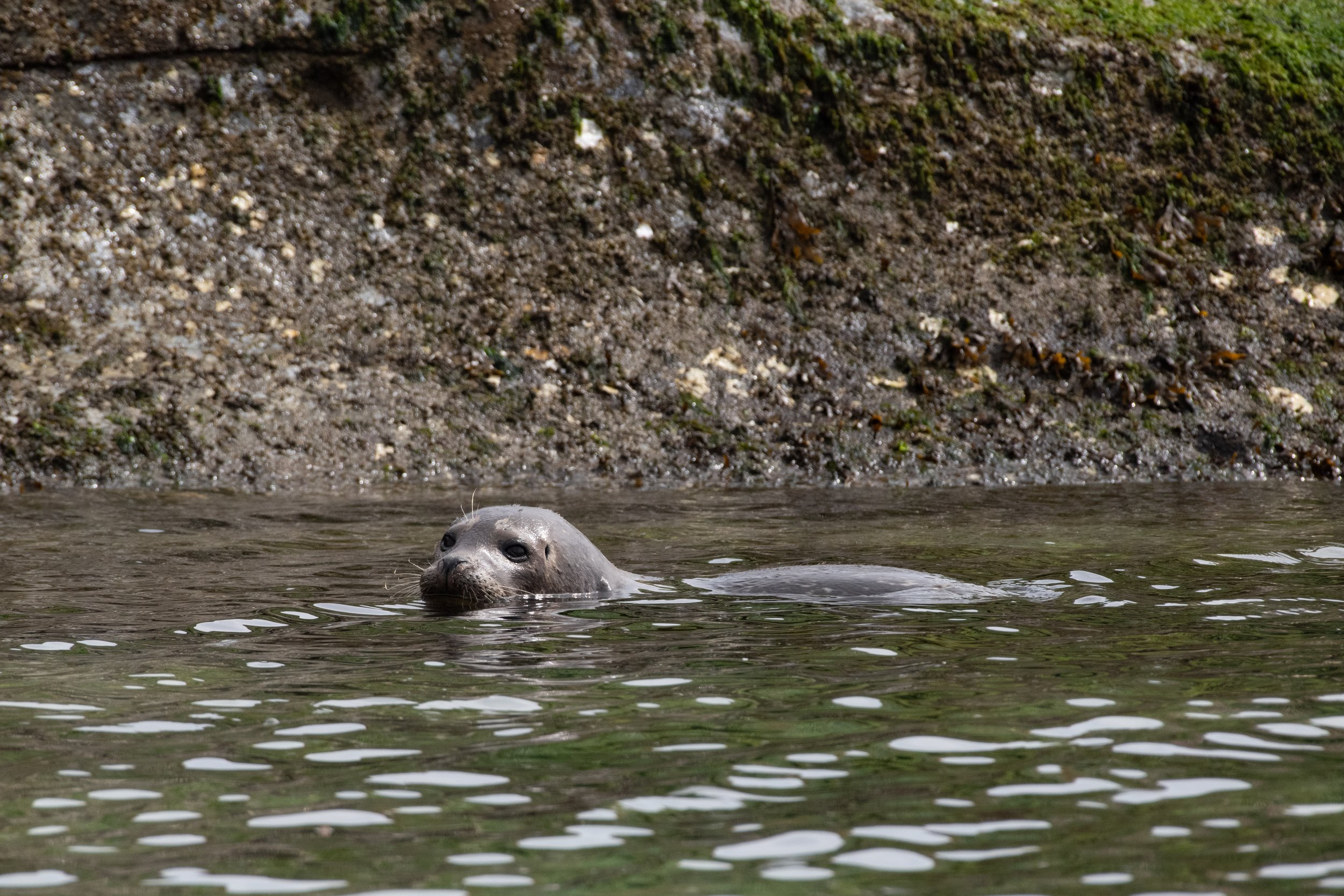
A Harbour Seal watching from the water. Photo by Hayleigh Hilbert.
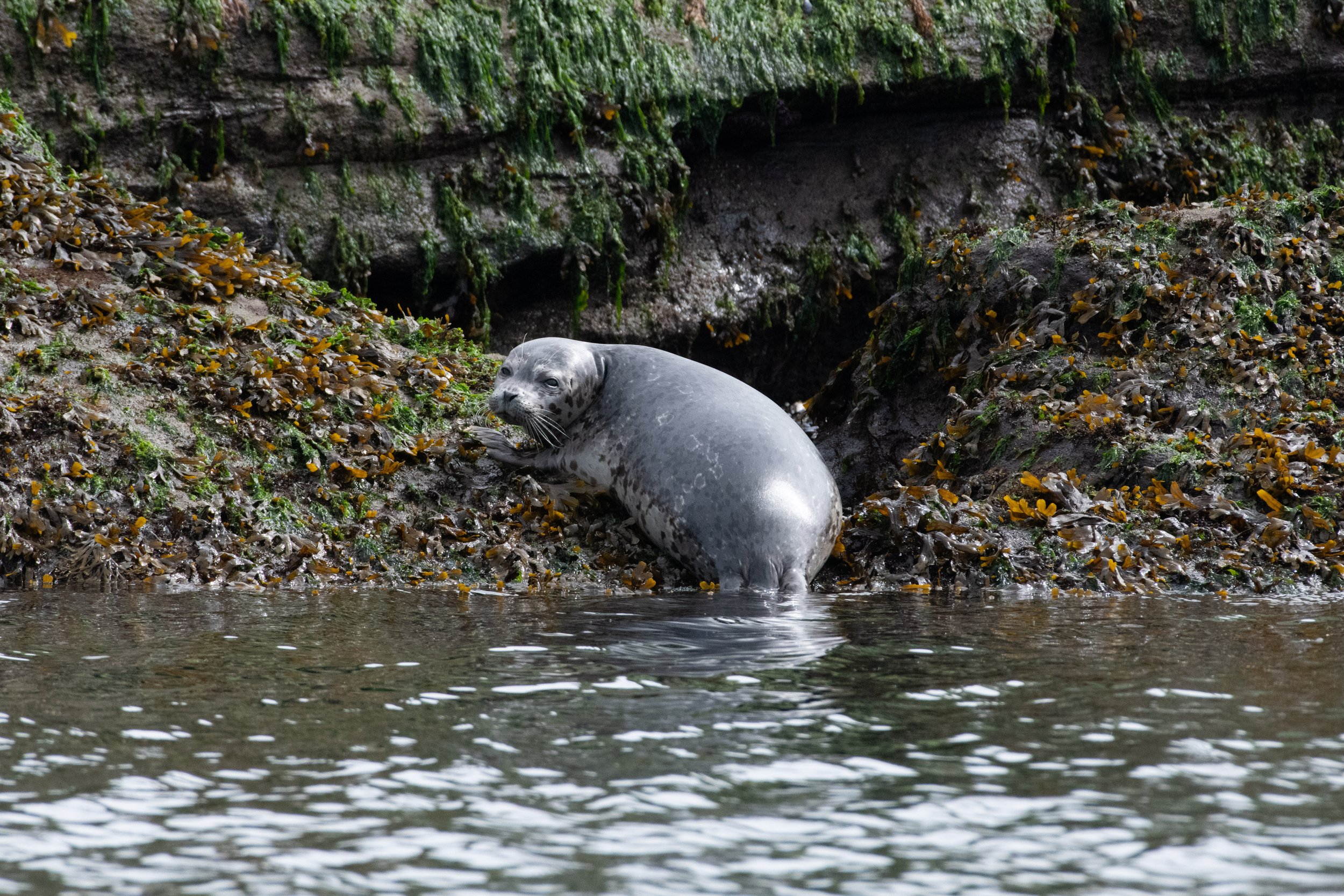
A Harbour Seal hauling itself out of the water. Photo by Hayleigh Hilbert.
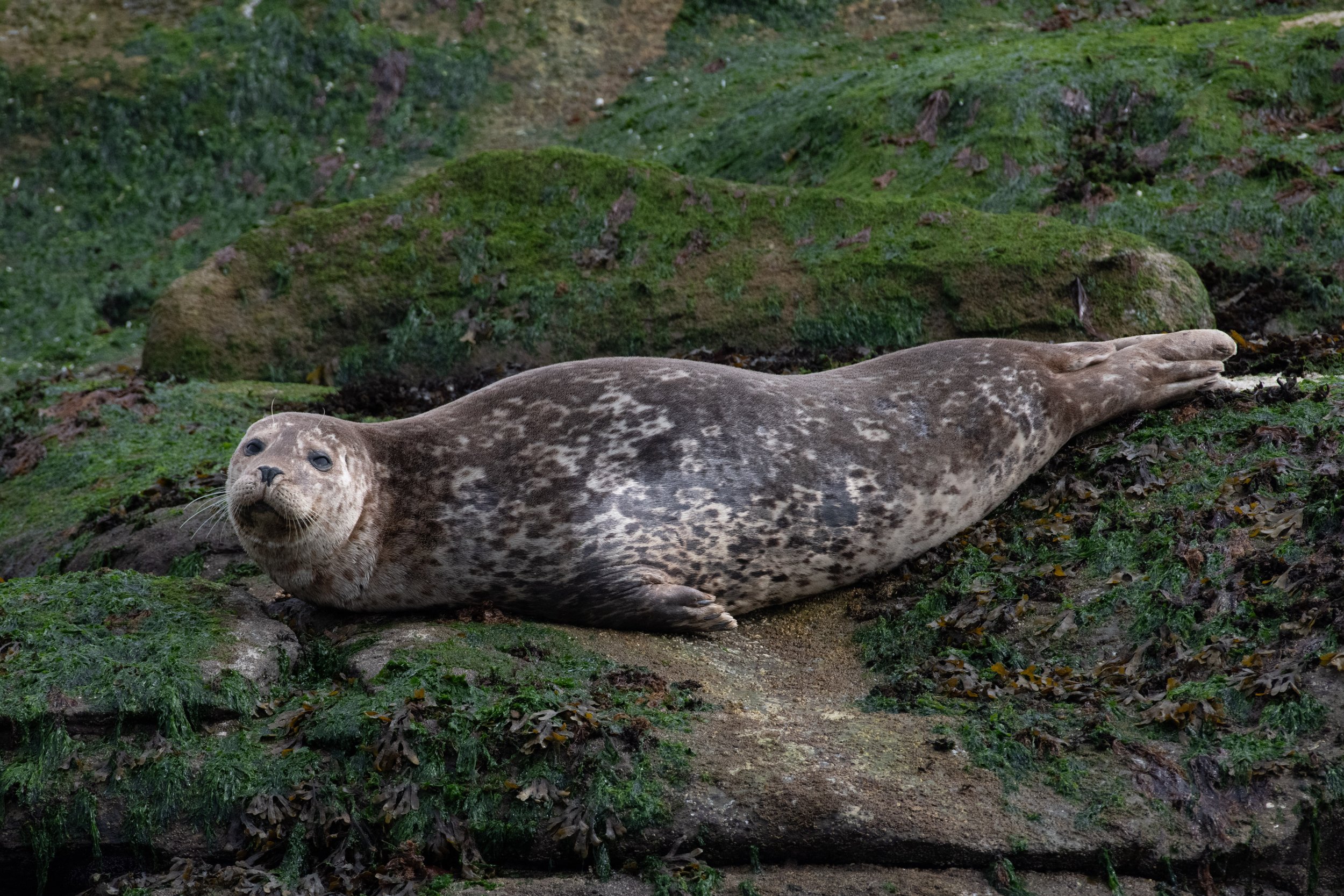
A very photogenic Harbour Seal on the intertidal zone. Photo by Hayleigh Hilbert.
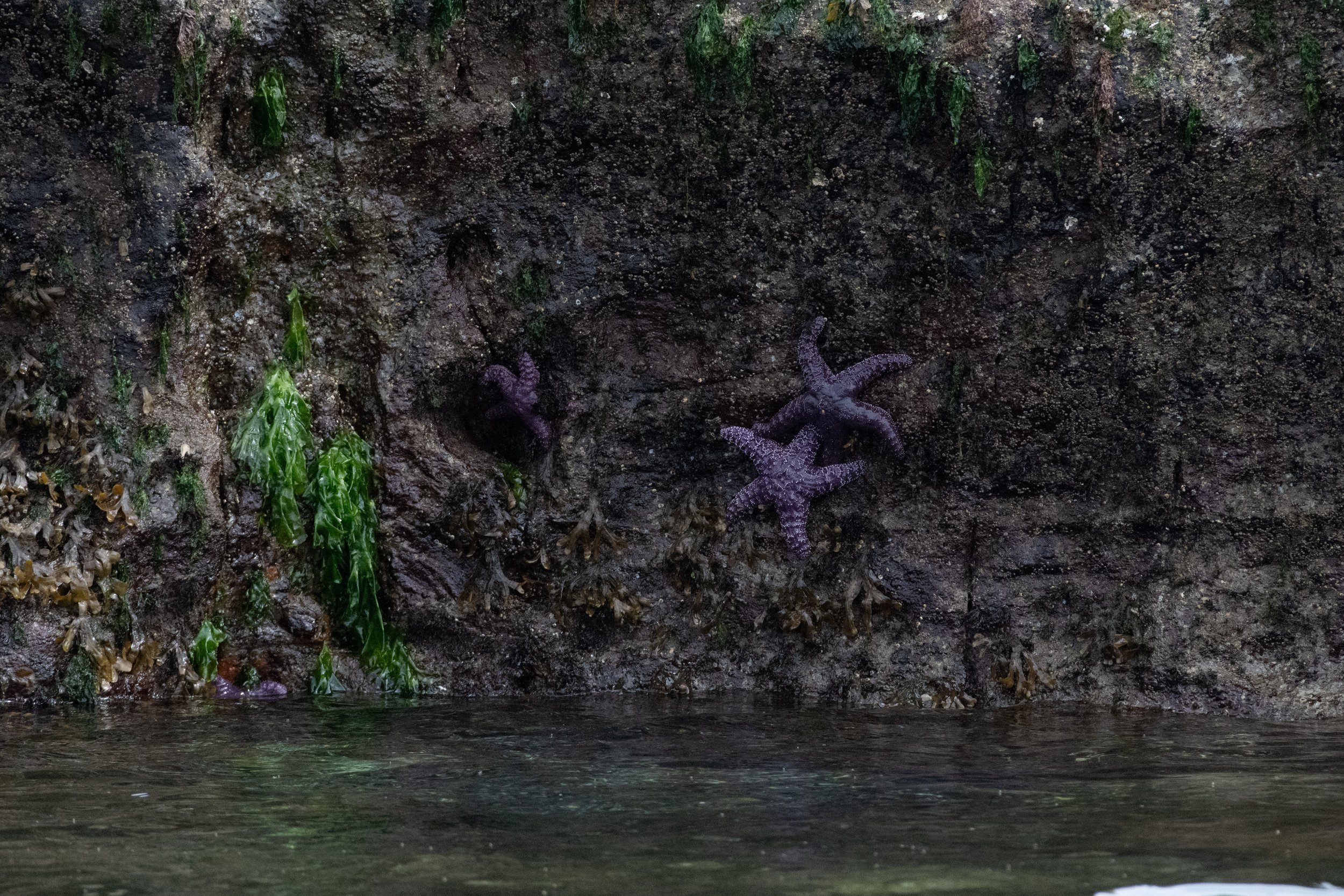
Some starfish visible at low tide. Photo by Hayleigh Hilbert.
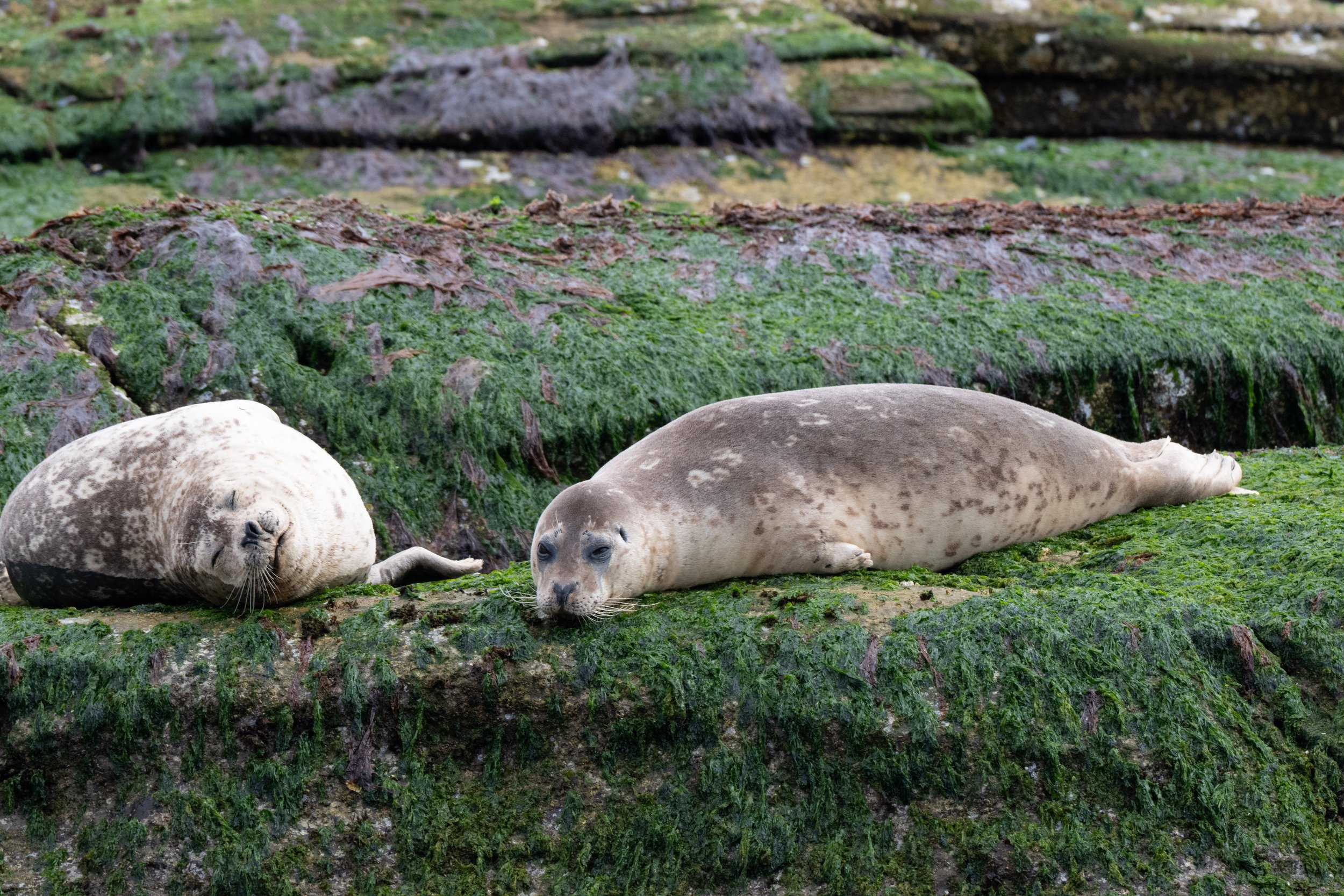
A pair of cute Harbour Seals. Photo by Aly Kohlman.
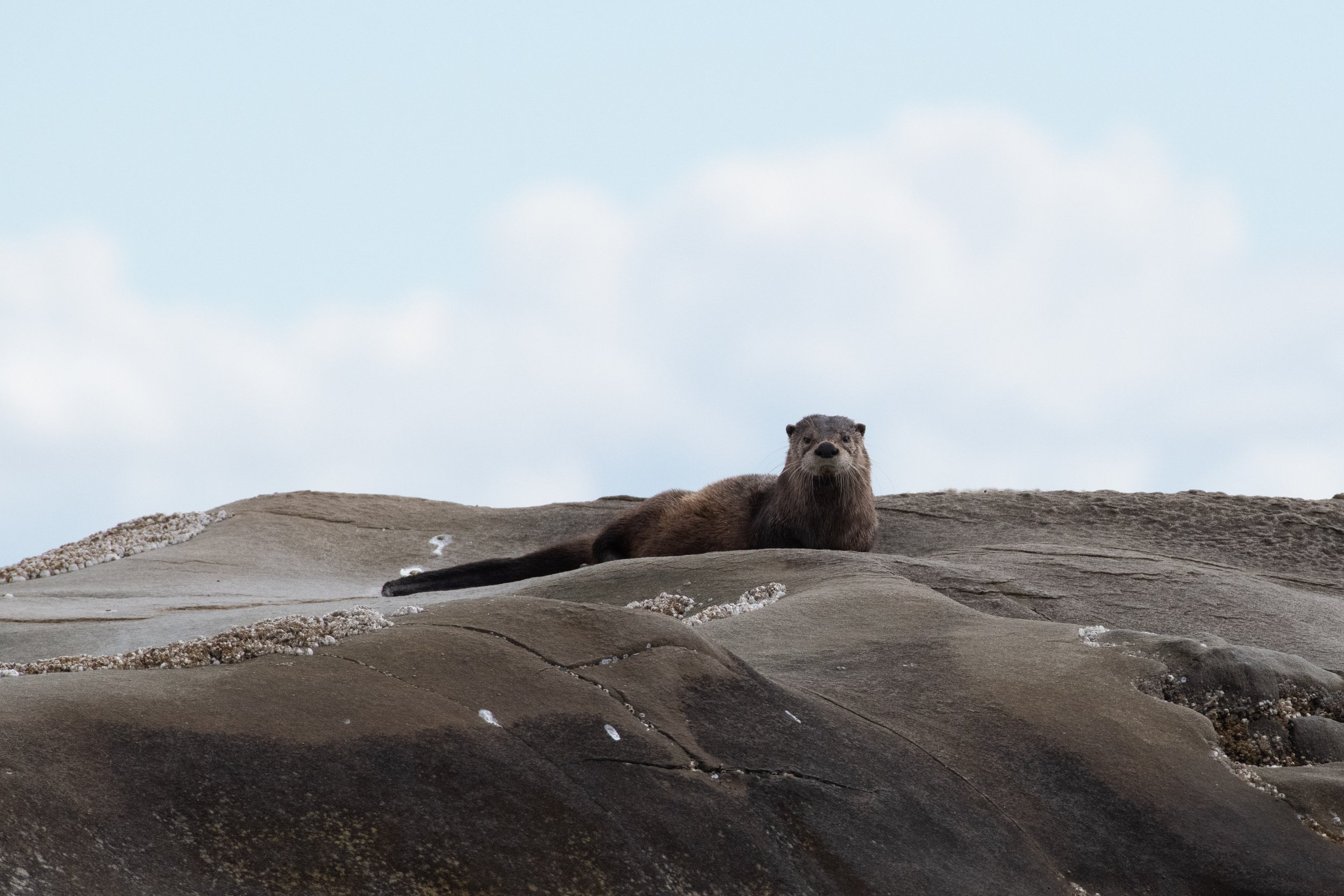
A river otter watching us from the rocks. Photo by Hayleigh Hilbert.
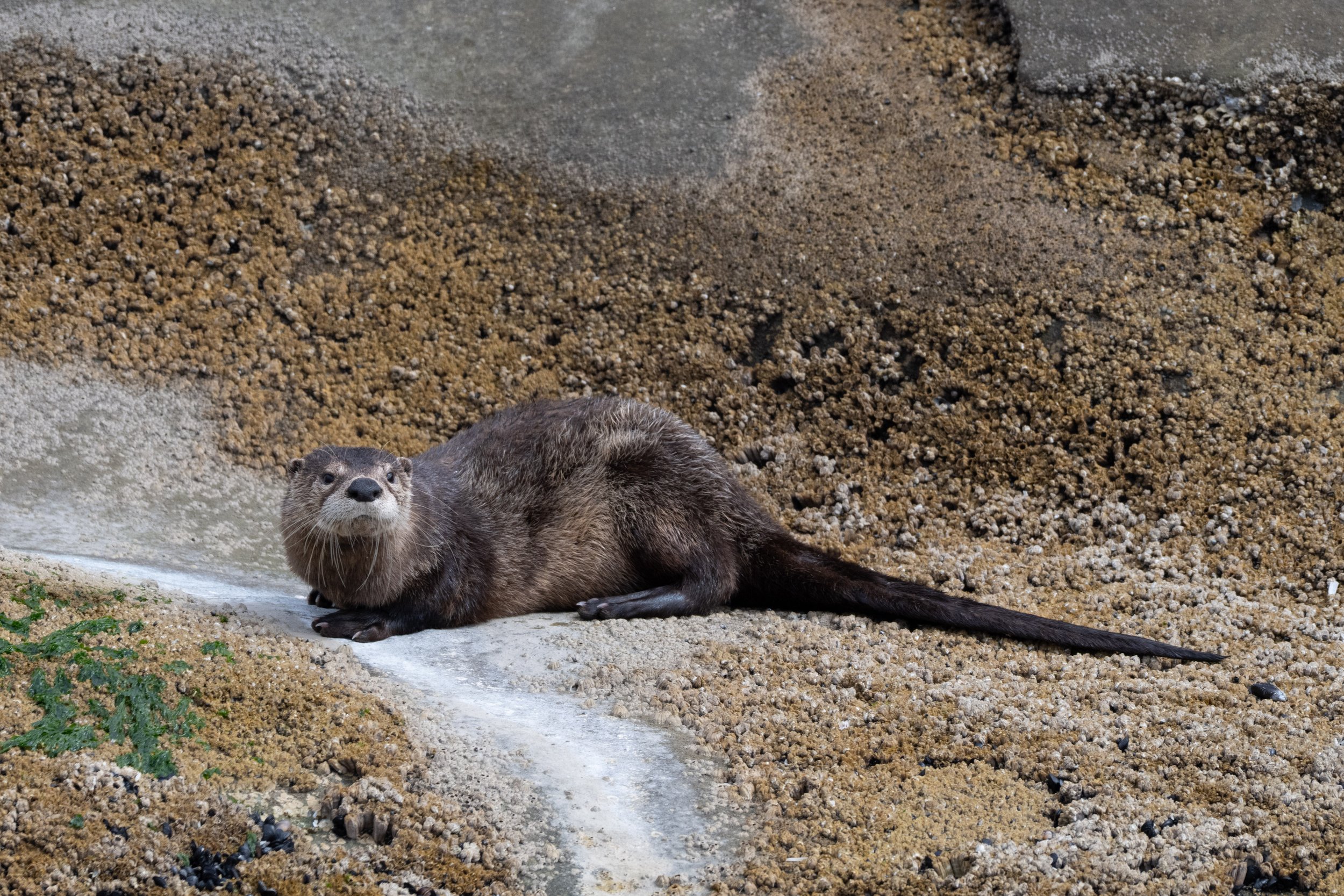
The River Otter at Stinky Rock. Photo by Aly Kohlman.
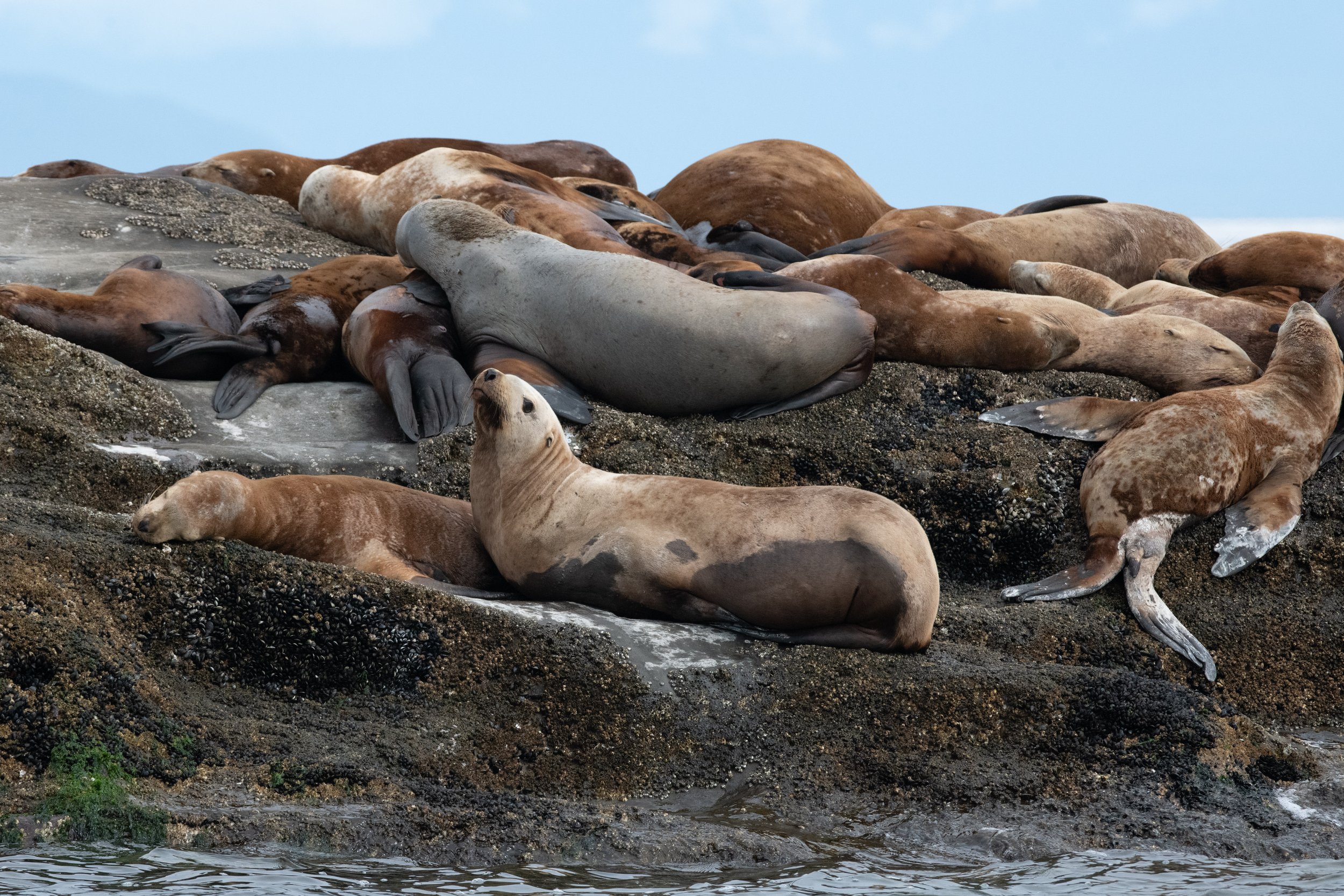
Steller Sea Lions hauled out at Stinky Rock. Photo by Hayleigh Hilbert.
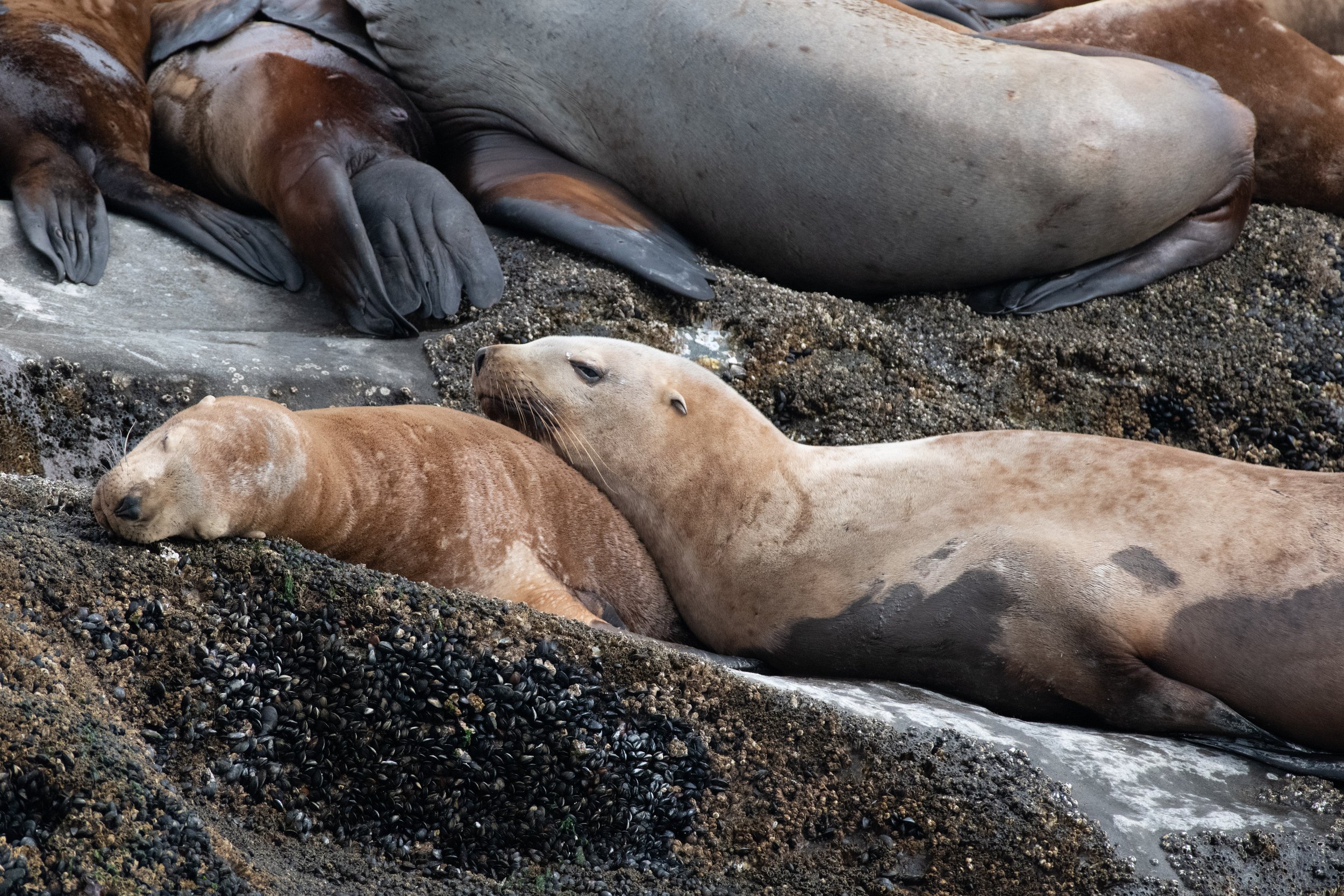
Nothing better than a Steller Sea Lion pillow, other than the occassional fight from it. Photo by Hayleigh Hilbert.
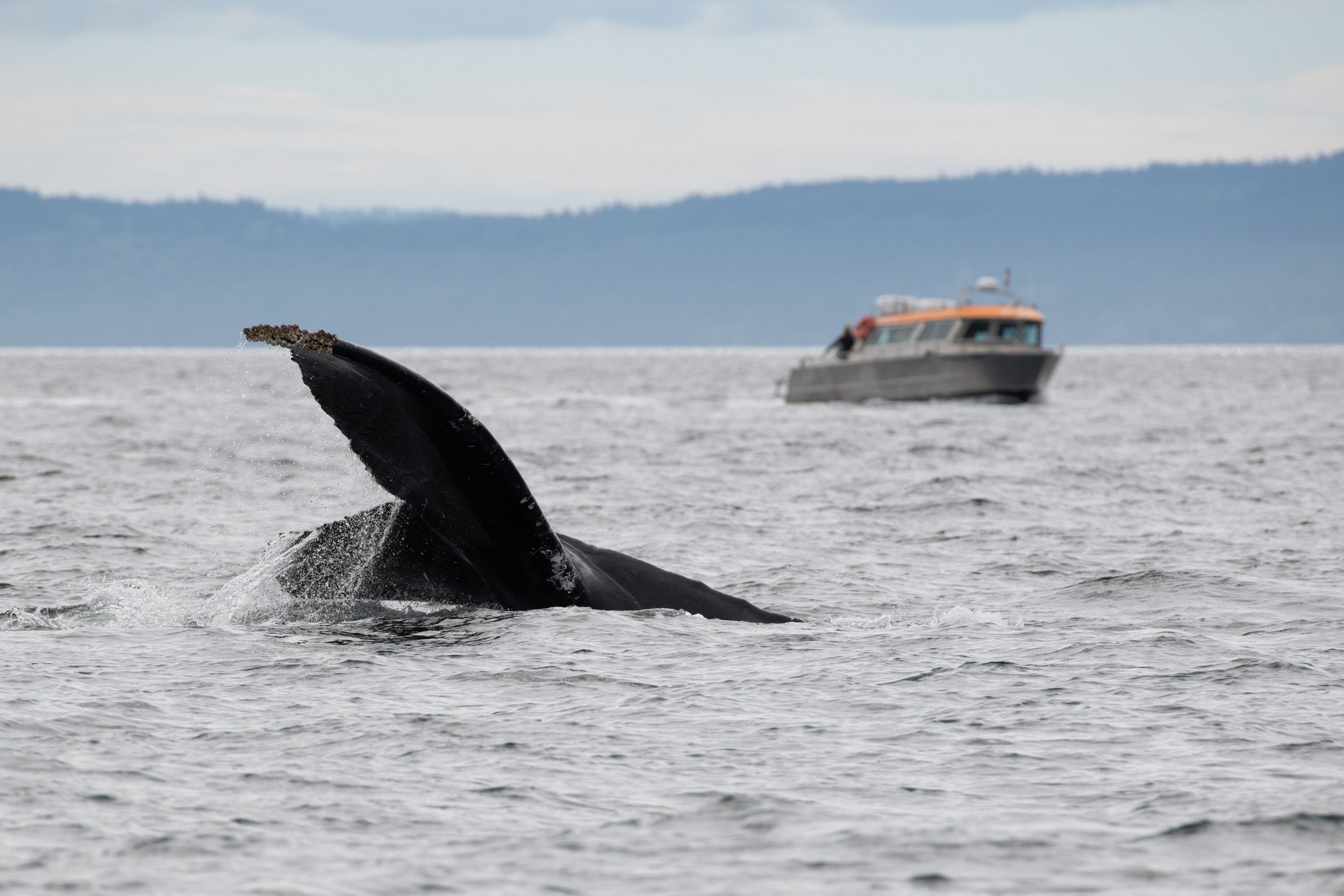
Split Fluke flicking her tail with Kula watching from behind. Photo by Hayleigh Hilbert.
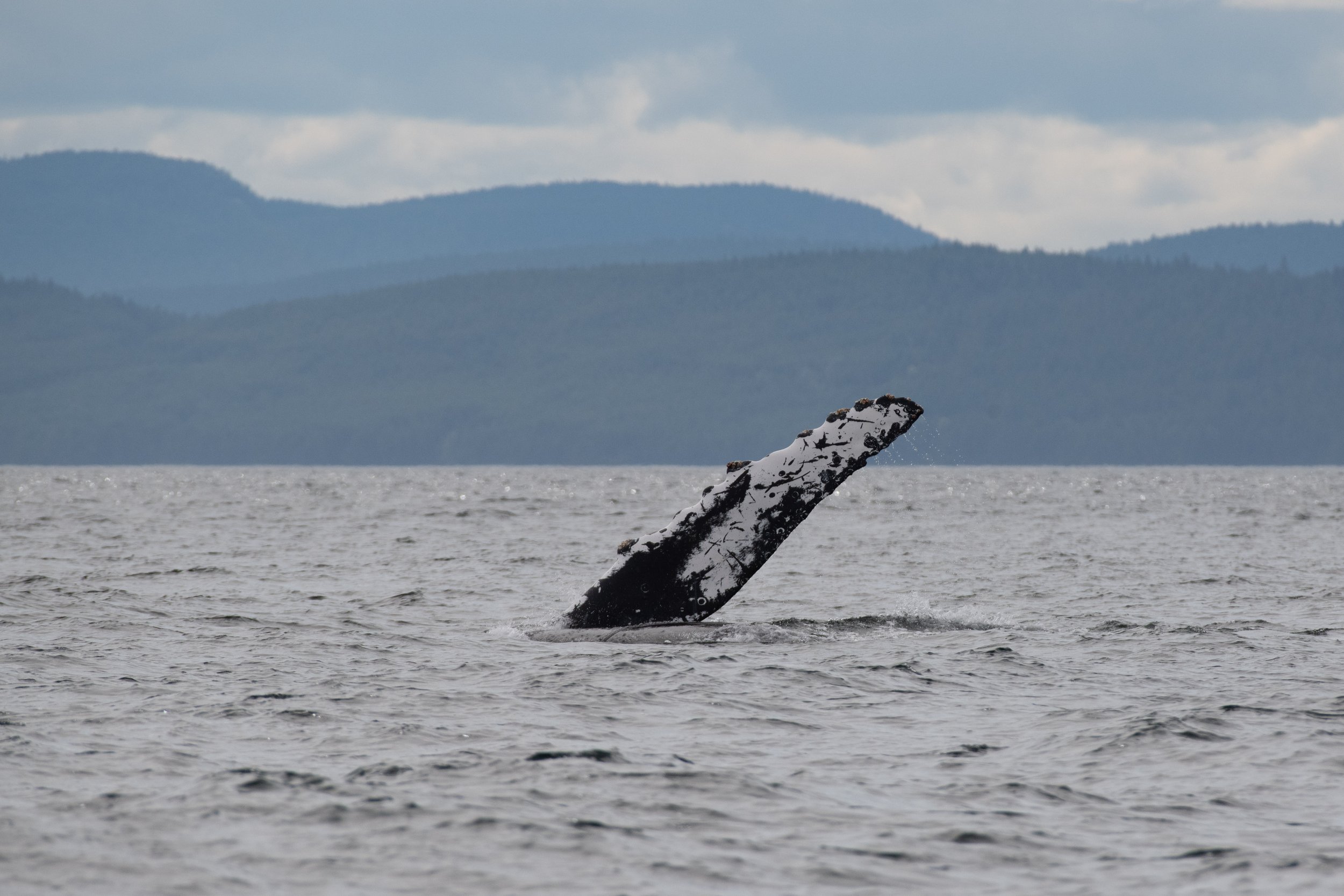
A lovely pectoral fin in the air. Photo by Hayleigh Hilbert.
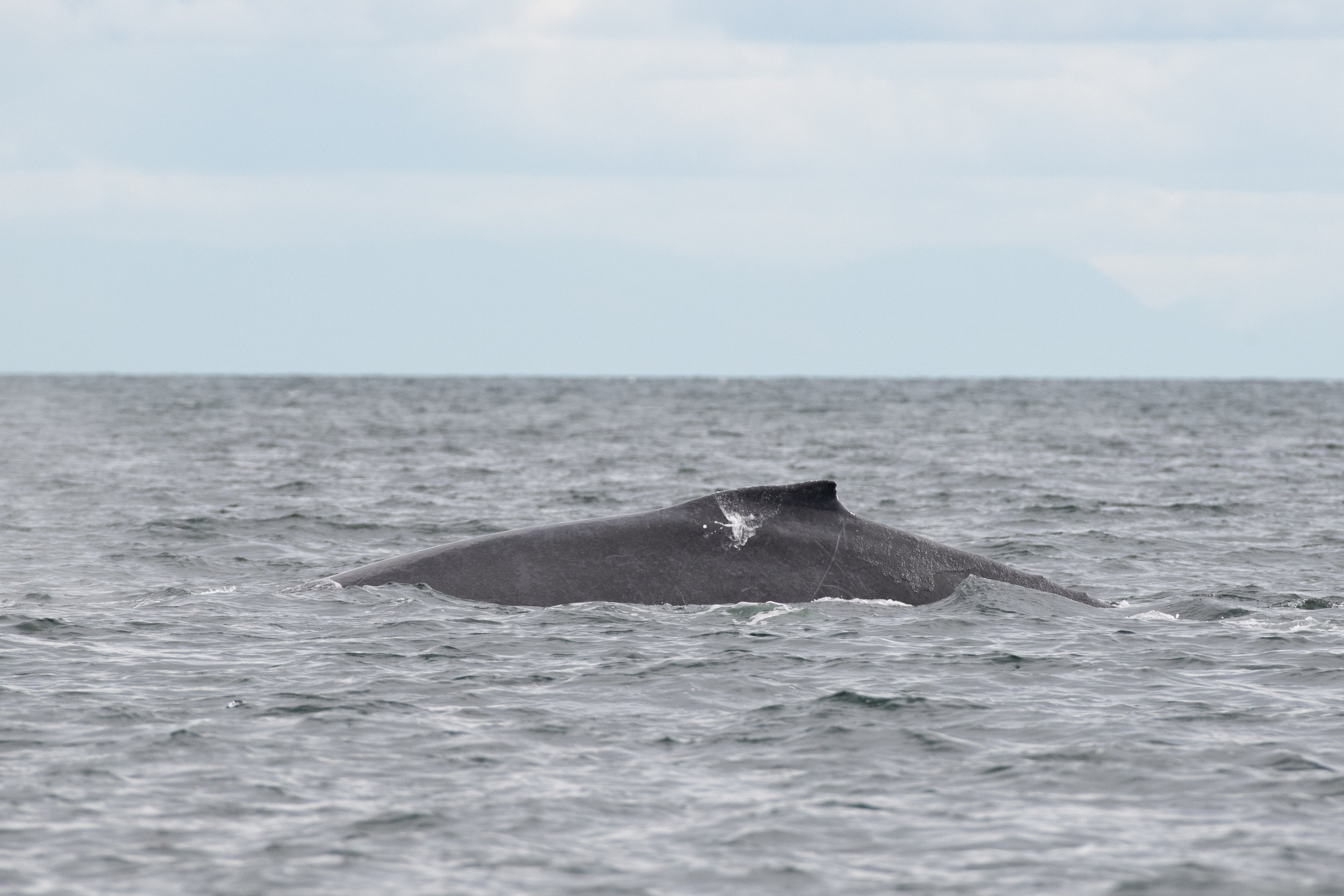
Prowler surfacing in the waves. Photo by Hayleigh Hilbert.
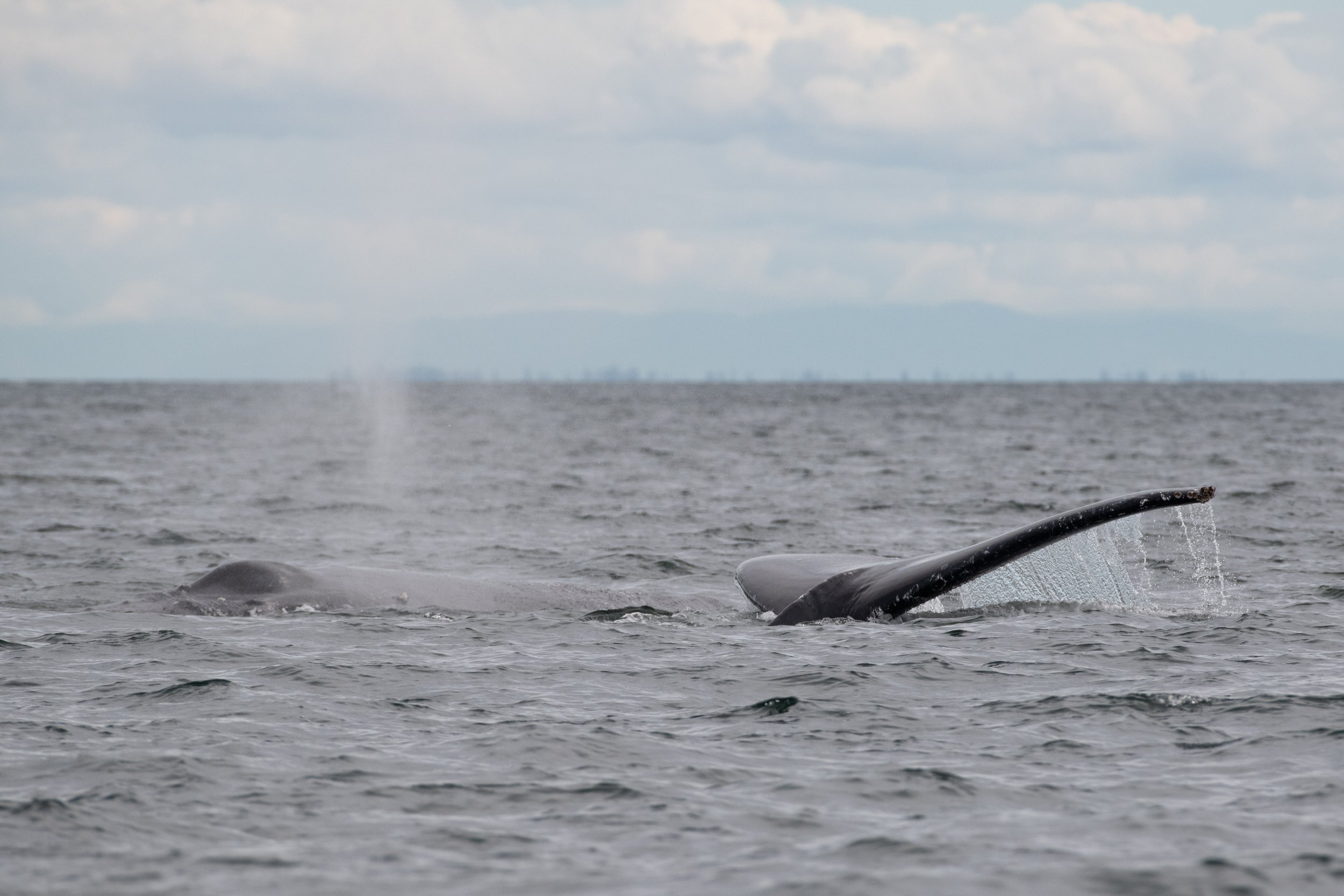
Split Fluke diving with Prowler surfacing just behind him. Photo by Hayleigh Hilbert.
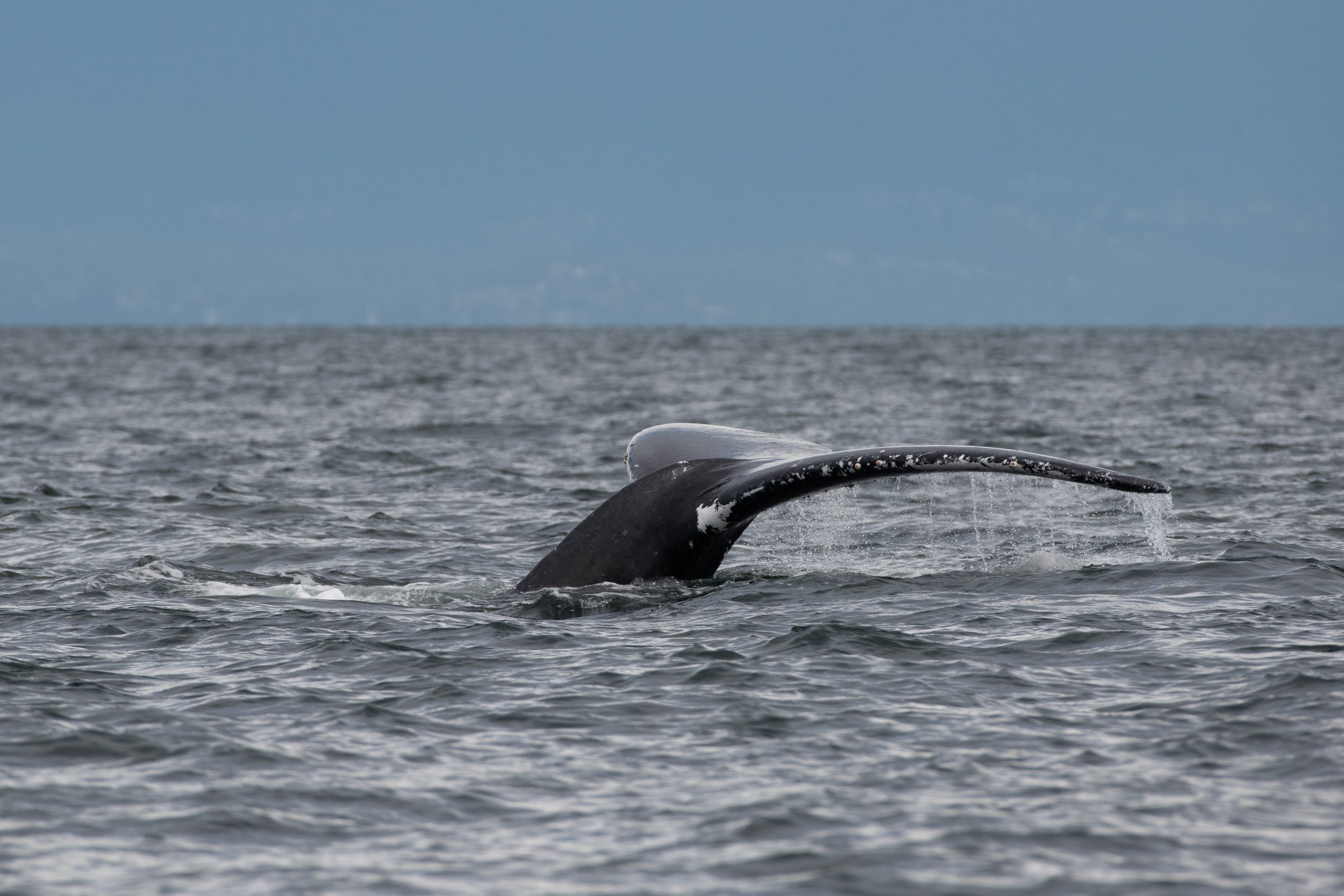
Prowler giving a lovely fluke waterfall as he dives. Photo by Hayleigh Hilbert.
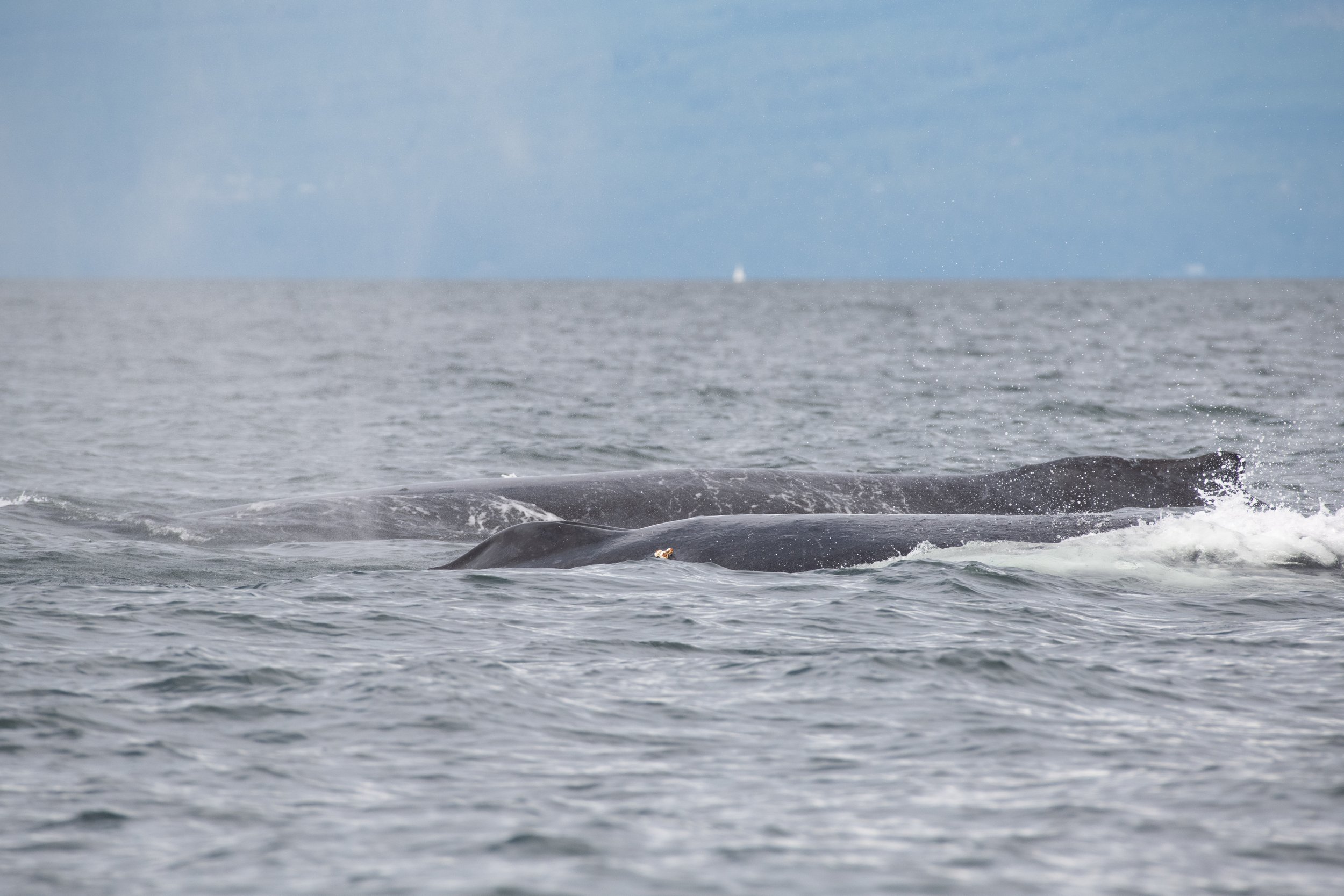
Split Fluke and Prowler surfacing together. Photo by Hayleigh Hilbert.
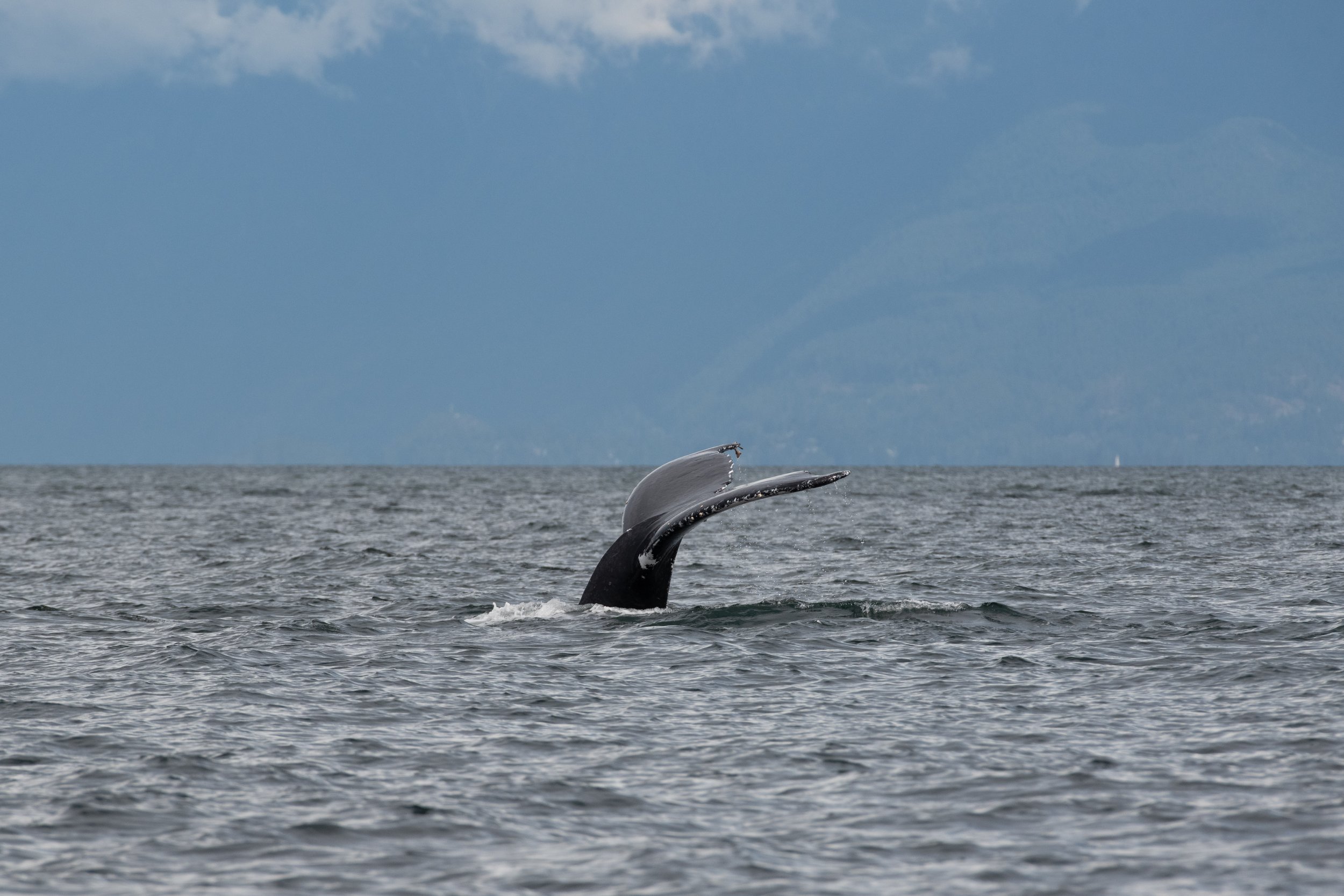
Prowler diving with the misty Coastal Mountains in the background. Photo by Hayleigh Hilbert.
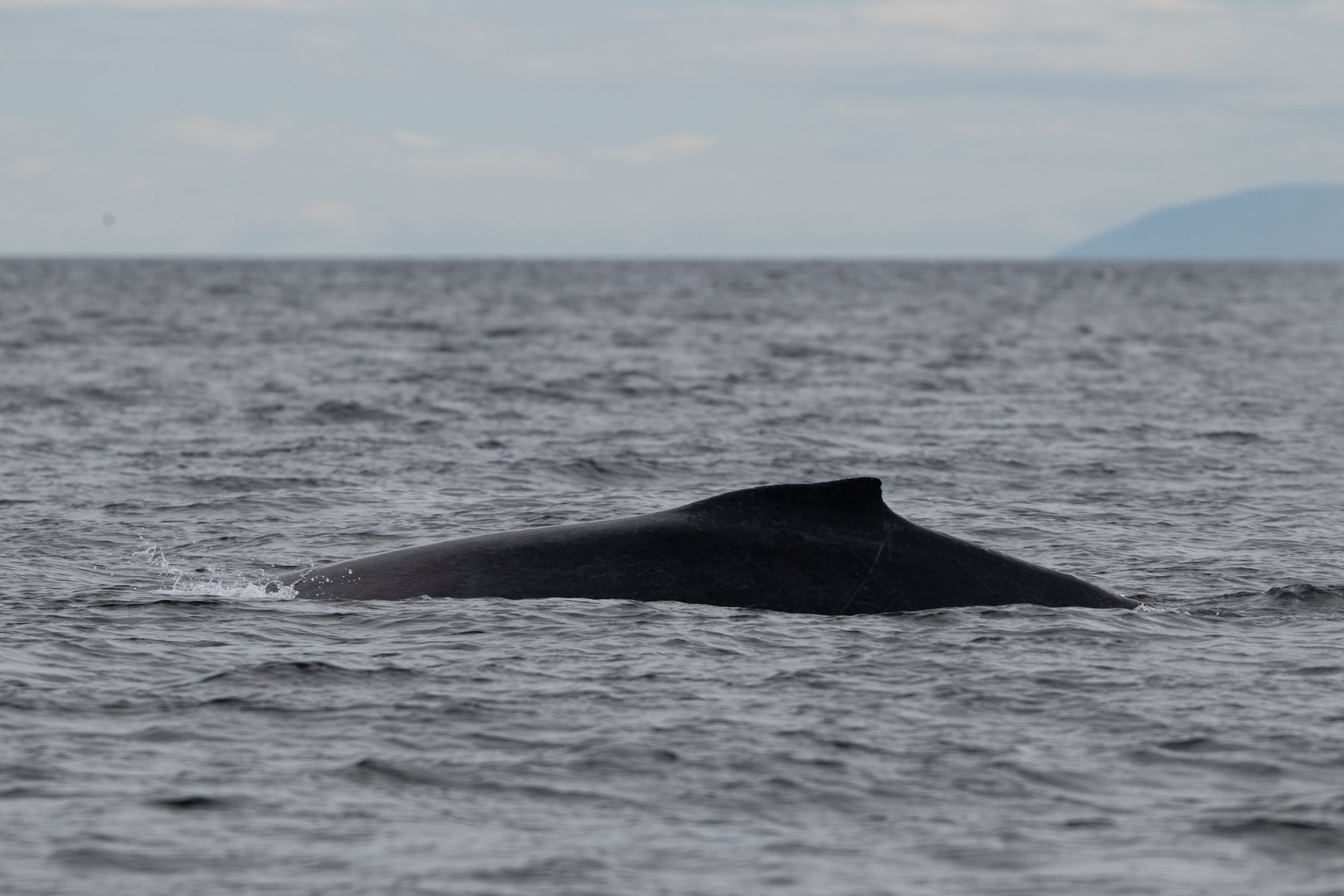
Prowler surfacing. Photo by Aly Kohlman.
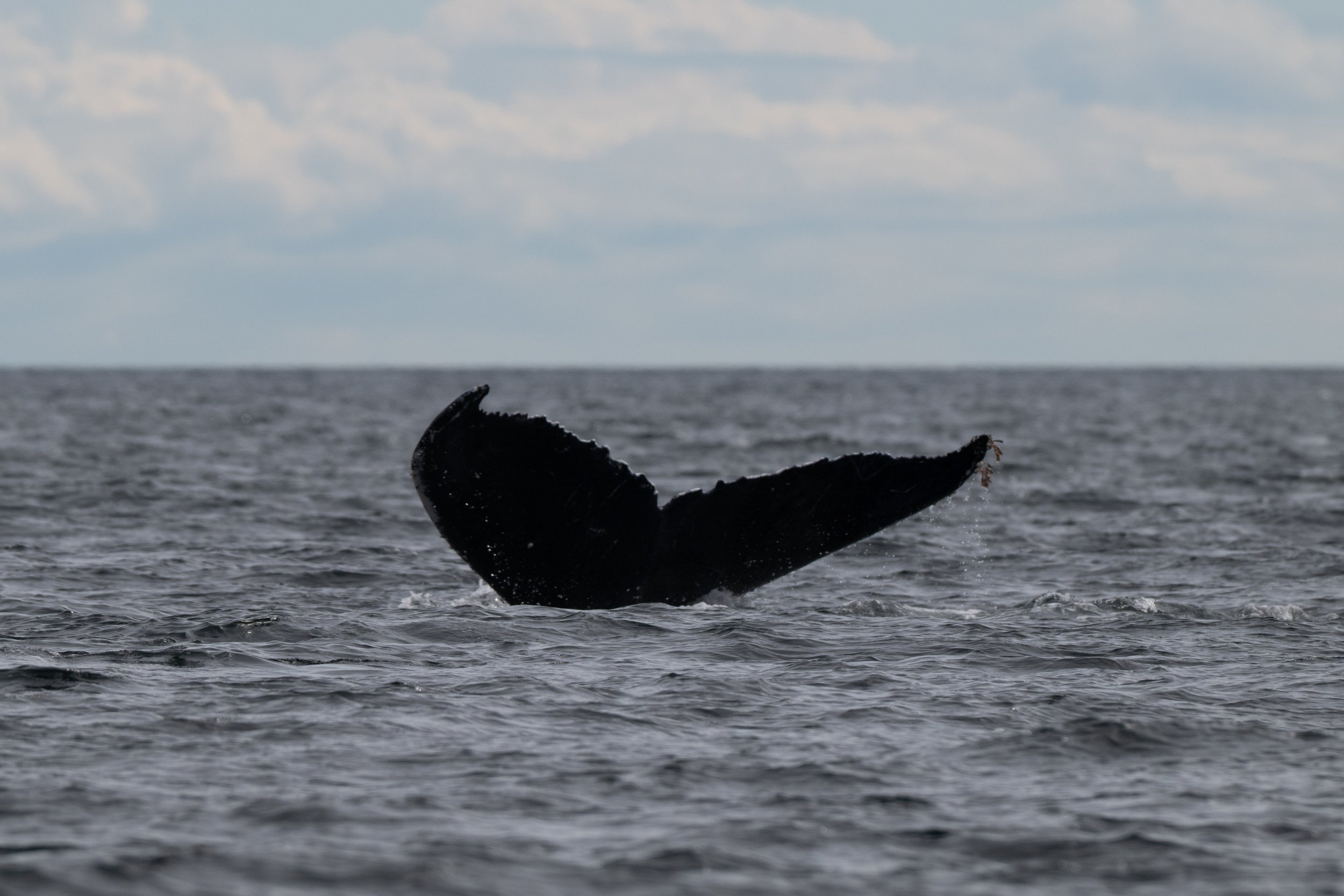
The underside of Prowler’s tail as he dives. Photo by Aly Kohlman.
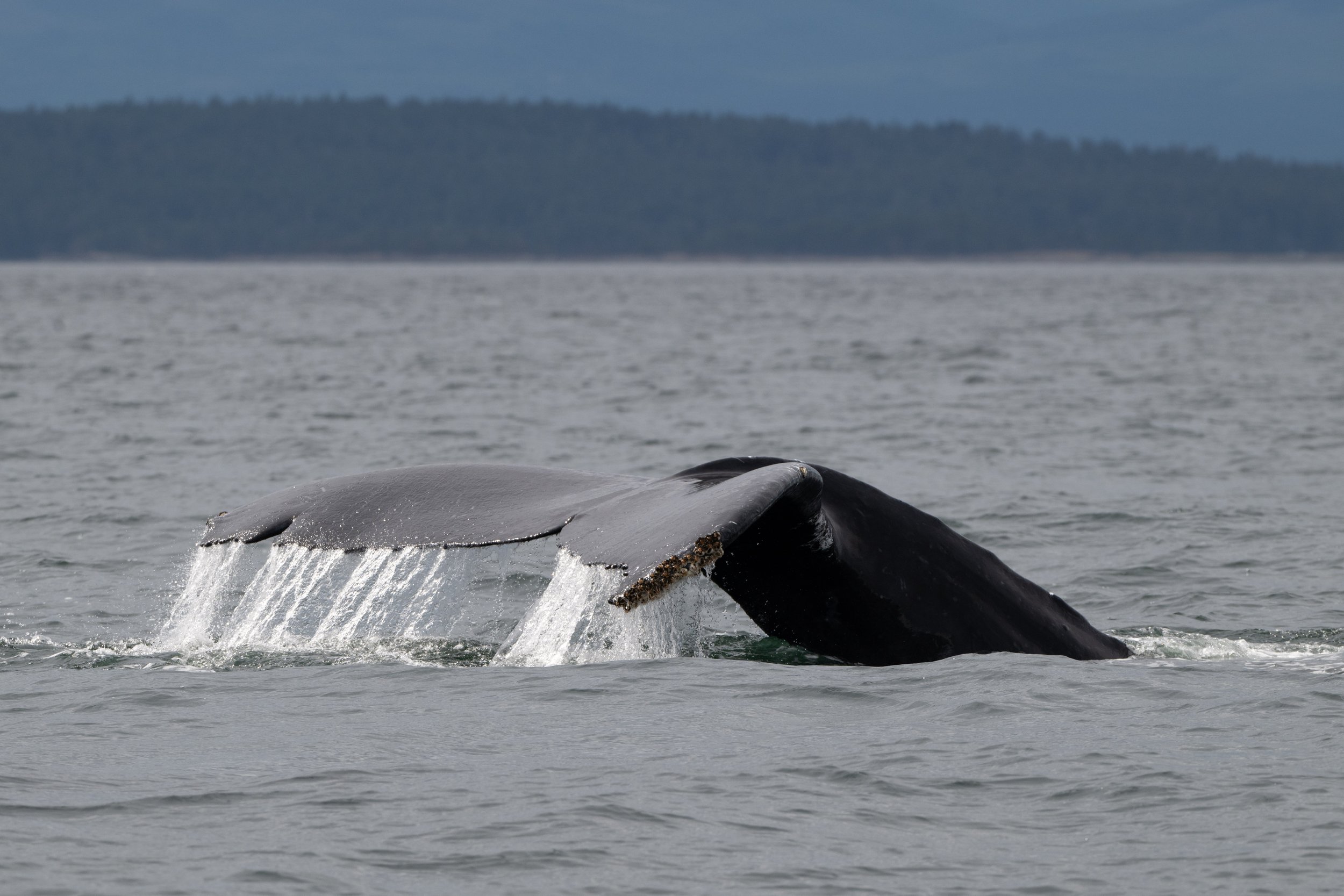
A lovely fluke waterfall from Split Fluke. Photo by Aly Kohlman.
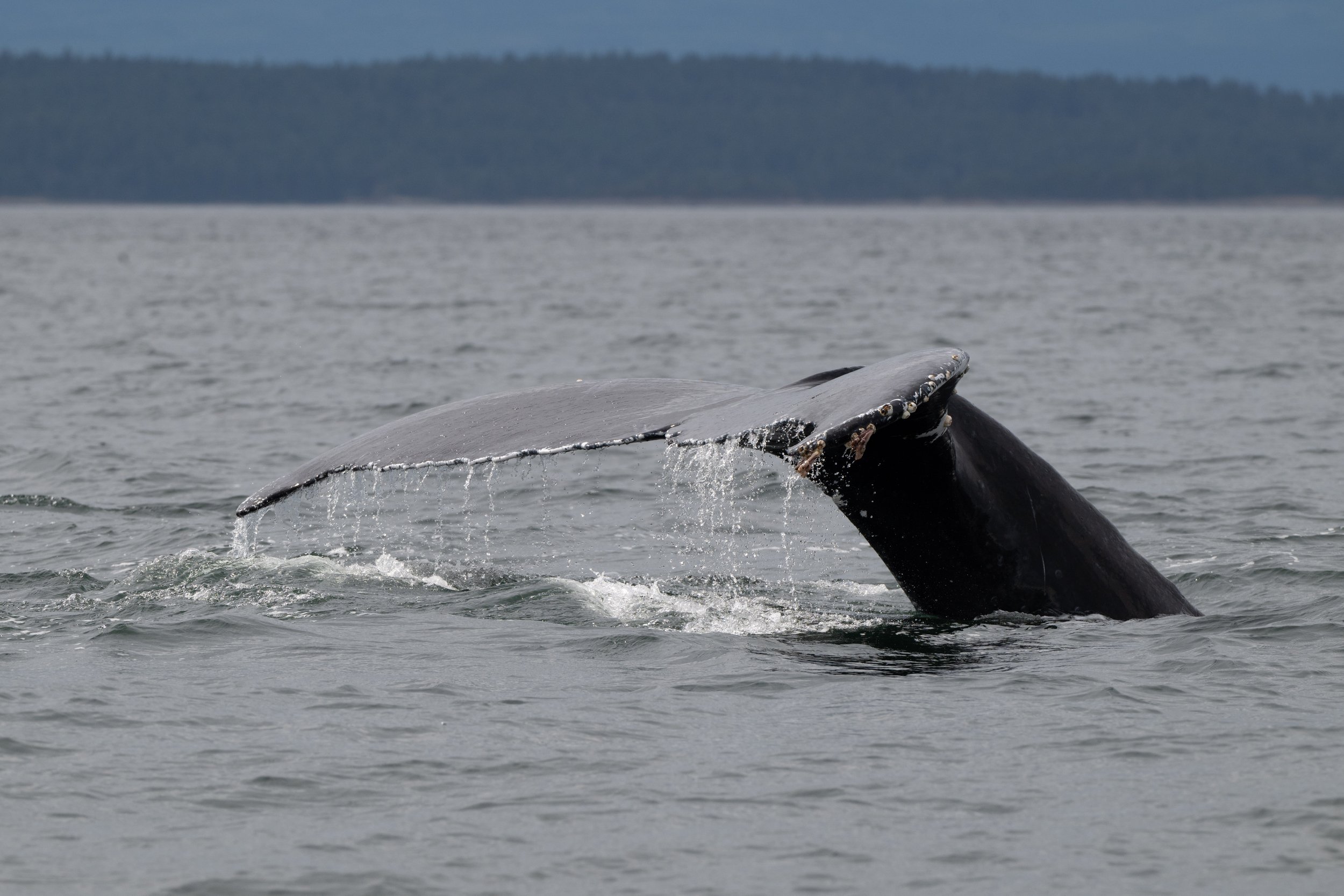
And one from Prowler! Photo by Aly Kohlman.
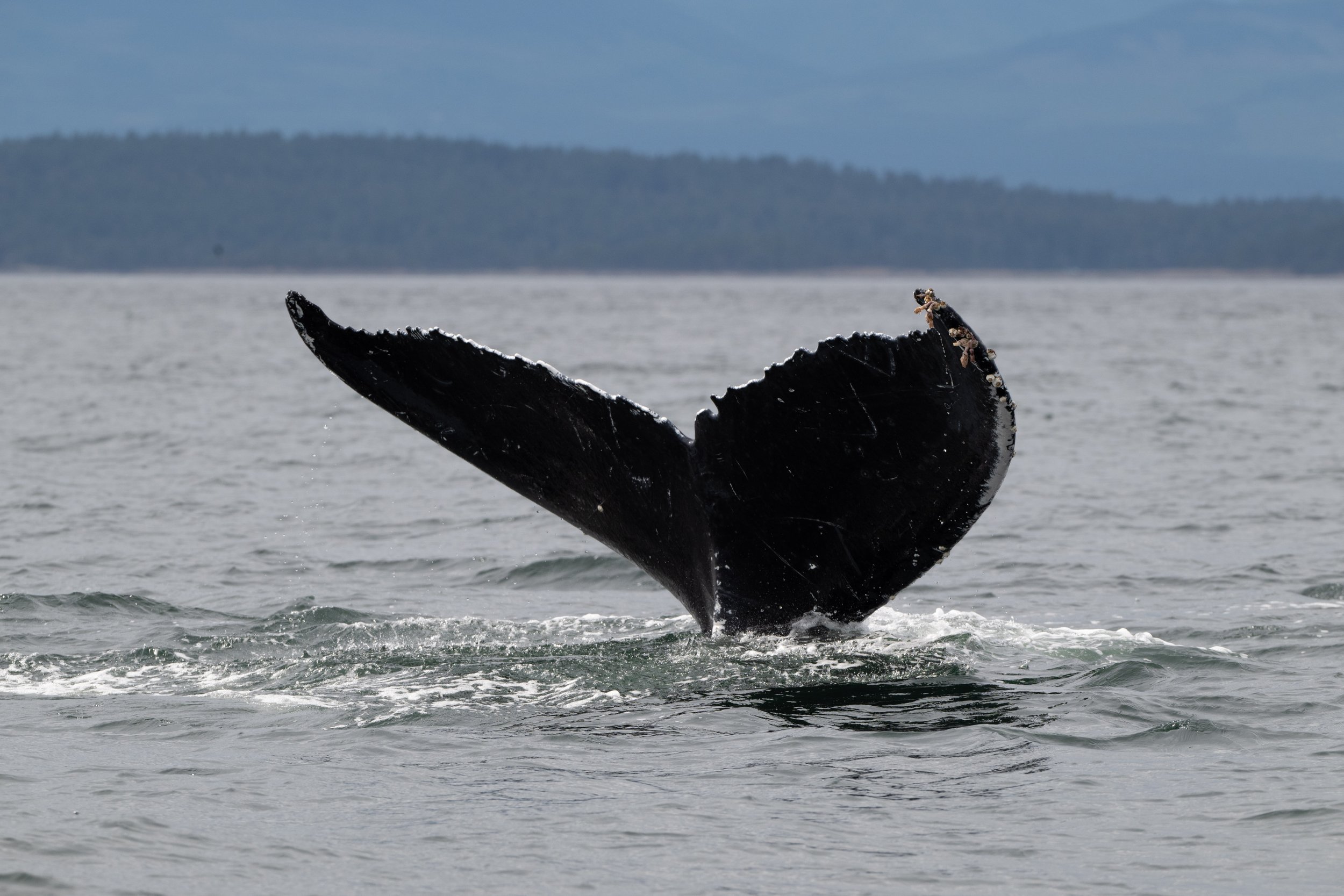
Prowler going for a dive. Photo by Aly Kohlman.