
August 22, 2026, 10:30 AM - A trio of humpbacks and a quartet of orca
Cascadia and Kula pushed off the dock today, eager to enjoy a late August morning. Reports had been a bit sparse so far, so it was up to us to head out and begin peeking around. It was a windier day, so we huddled up in our suits and coats before planning the route.
To start the day, though, the Captains decided to get a view of some of the other wildlife we could find in the area. Heading out through Gabriola Pass, we turned south and made our way down Valdes Island’s coastline. Partway down the island, a couple of small islets popped into view. This spot, lovingly dubbed “Stinky Rocks”, is a pinniped hot spot, with many of them residing here to rest and relax out of the sea. Many Harbour Seals were flopped out in the shallows, yawning and snoozing away. The Steller Sea Lions were also surprisingly calm, piling on top of each other to nap or scratching away at themselves like a dog. After enjoying some time with them, we turned off and started travelling through the Strait of Georgia.
Setting out across the Salish Sea, we faced some splashes along the way. We made our way across the open waters before angling towards Bowen Island, one of the largest islands in Howe Sound. Once over here, we soon had success when a couple of dark backs popped out of the water. It was humpback whales, travelling and associating together. Cameras came up, and we soon grabbed photos of the trio as they surfaced and fluked. Two of the whales fluked, allowing us to confirm the identities of two of them as Niagara (BCY0057) and Double Double (BCX2492). Interestingly, we could confirm both of these whales from their top fluke instead of the bottom pattern. Niagara has a distinct white marking near the middle of his top fluke, and Double Double’s trailing edge and hole placement can be matched. The third whale was being a bit more secretive, travelling along without fluking most of the time. Eventually, they shallowly fluked, leading to a tiny peek at one corner of their fluke. This small view was enough to confirm that they were Vivaldi’s 2025 calf (BCX1704calf2025).
This was a very interesting hodgepodge of whales, ranging from young to fairly old. This is Vivaldi’s 2025 calf’s first season travelling solo, meaning they are likely still experiencing new and exciting encounters regularly. Double Double is a bit older and is the 2022 calf of Kappa (BCX0158), one of our regular returning whales to our area. Niagara was the eldest of the bunch, being born back in 2000 to Houdini (BCX0022). Humpback whale lifespans are still widely unknown, due to the species being hunted to near extinction during the whaling era. It is believed they may live into their 70s or 80s, and we are excited to continue monitoring and documenting individuals to better understand their lifespan in the years to come.
After enjoying our time with the trio, we began traversing into Howe Sound, a beautiful glacial fjord just north of Vancouver. The waters here are a beautiful emerald green, and the tall mountains all around led to many picture-perfect moments as we explored the area. We made our way up and in, and soon we started skirting the eastern edge of the sound. Soon after, we caught word (and sight) of a few fins travelling along the shore. Two young ones surfaced tucked between two taller fins. Once again, cameras were raised, and IDs were worked on. For orca, we usually use dorsal fins instead of flukes to confirm individuals, but we can also use scarring in the saddle patch as well to confirm. A few minutes later, once we compared it to our catalogues, we confirmed that this was the T124Ds:
T124D Field ♀ (1996)
T124D1 Salish II (2014)
T124D3 Lupine ♀ (2022)
T124D4 Dune (2024)
We spent some time with the T124Ds as they continued moving through the area, eventually making their way deeper into Howe Sound, where their behaviour shifted from travelling to hunting. Picking up speed, they worked together, with T124D leading the charge. After some time, their efforts paid off and the group made a successful kill. While we rarely see much of a hunt itself, as most of the activity happens under the surface, we did see remnants as Field’s surfaced (see below - WARNING: mild gore). Hunting takes up a huge portion of an orca’s day-to-day life, especially in pods with multiple growing calves. This small pod is likely hunting 5 or more Harbour Seals daily, or upwards of 8 Harbour Porpoises to keep their weight up and support the young ones as they continue to grow and mature. While hunts can be sad to witness, it remains important to remember that every animal needs to eat to survive!
With the T124Ds concluding their meal and then returning to travelling, it was time for us to leave the whales and begin our journey back toward Nanaimo. We turned back around and began journeying across the Strait once more. Soon, Nanaimo came back into view, and in no time at all we were back at the dock, concluding another excellent morning exploring and seeing the plentiful wildlife in the Salish Sea!
Please enjoy these photos taken by Marine Naturalists Jordan Robinson and Evan Hessels.
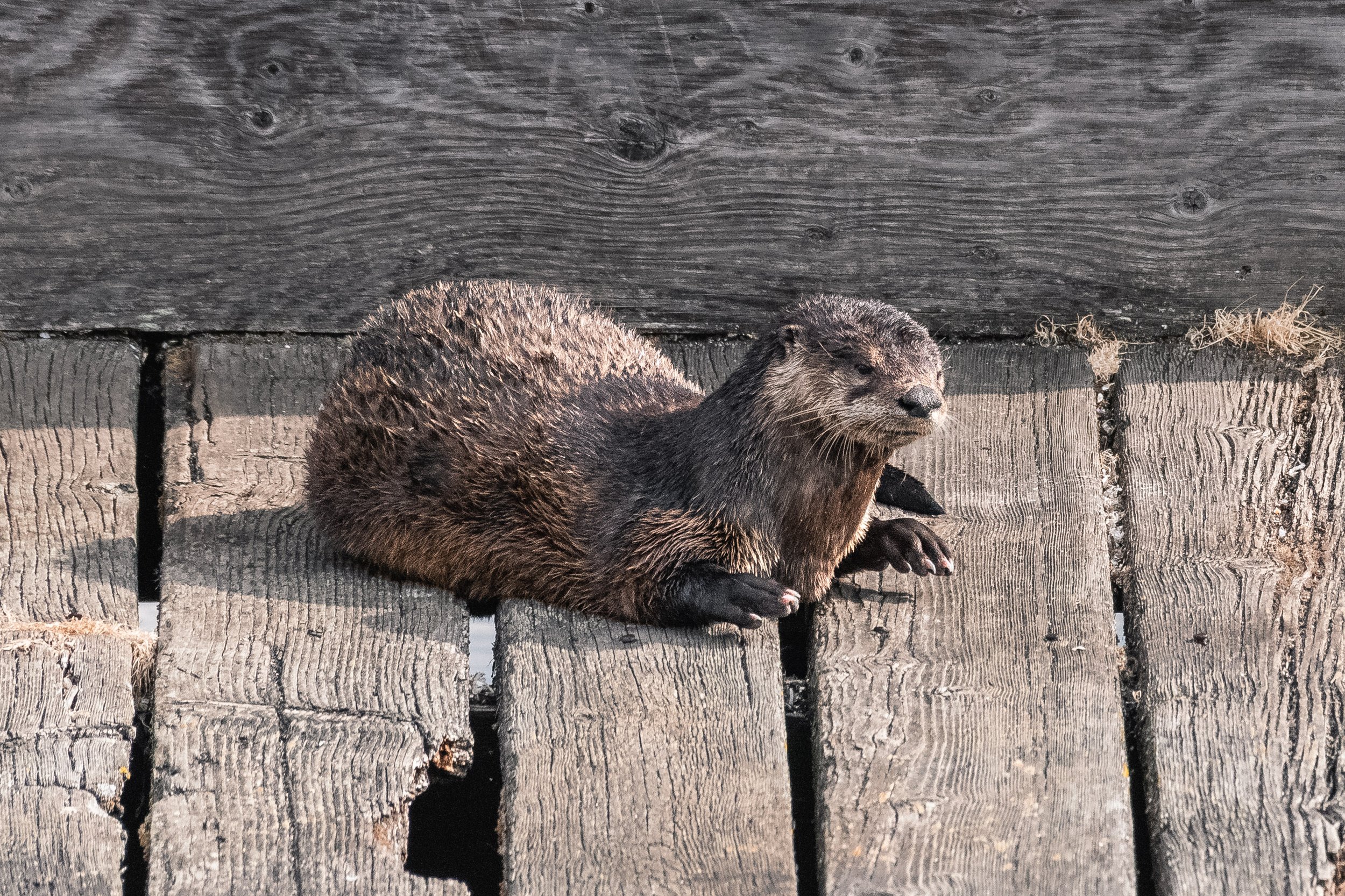
A River Otter at the docks, doing its best piano player impression. Photo by Evan Hessels.
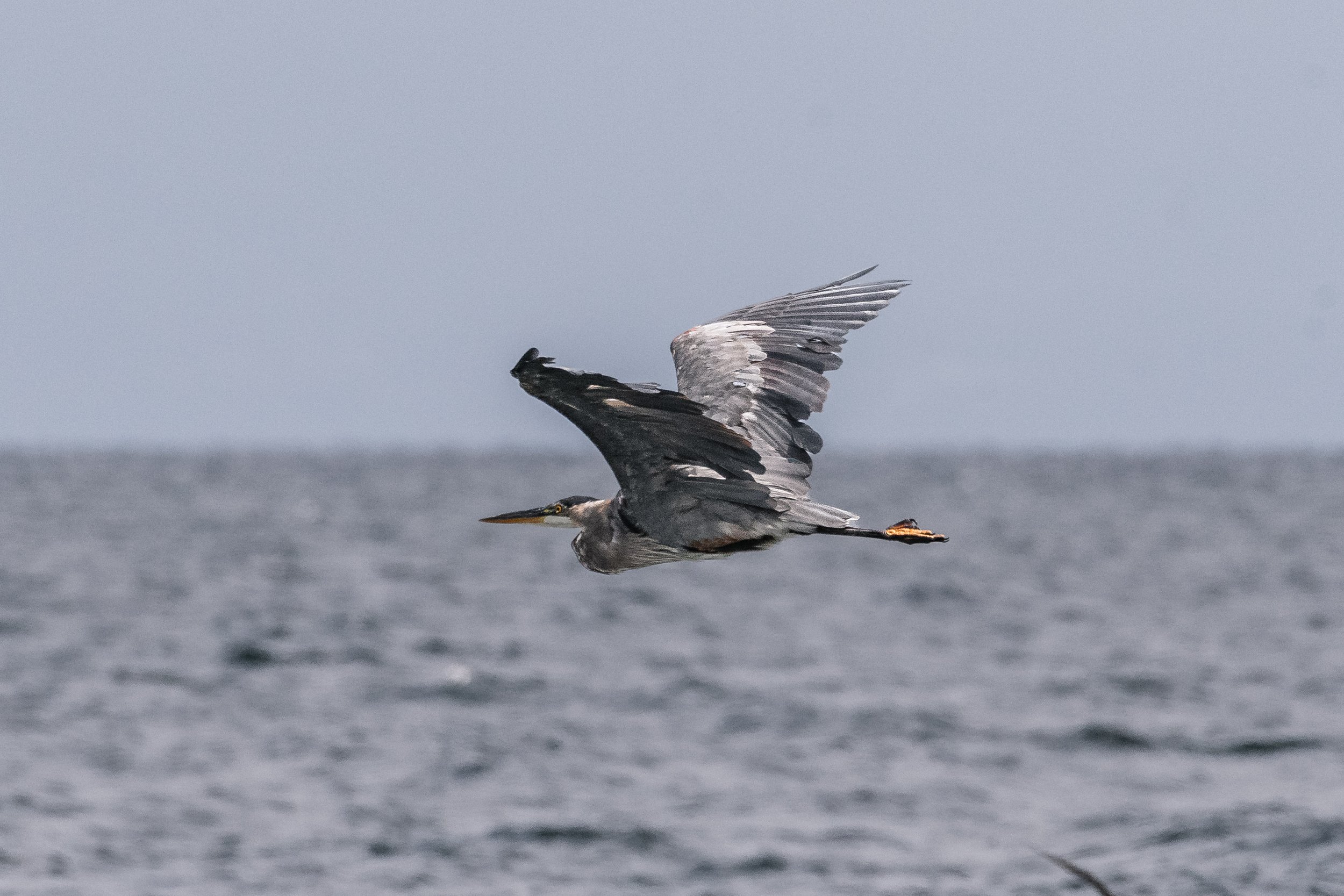
A Great Blue Heron soaring over Stinky Rocks. Photo by Evan Hessels.
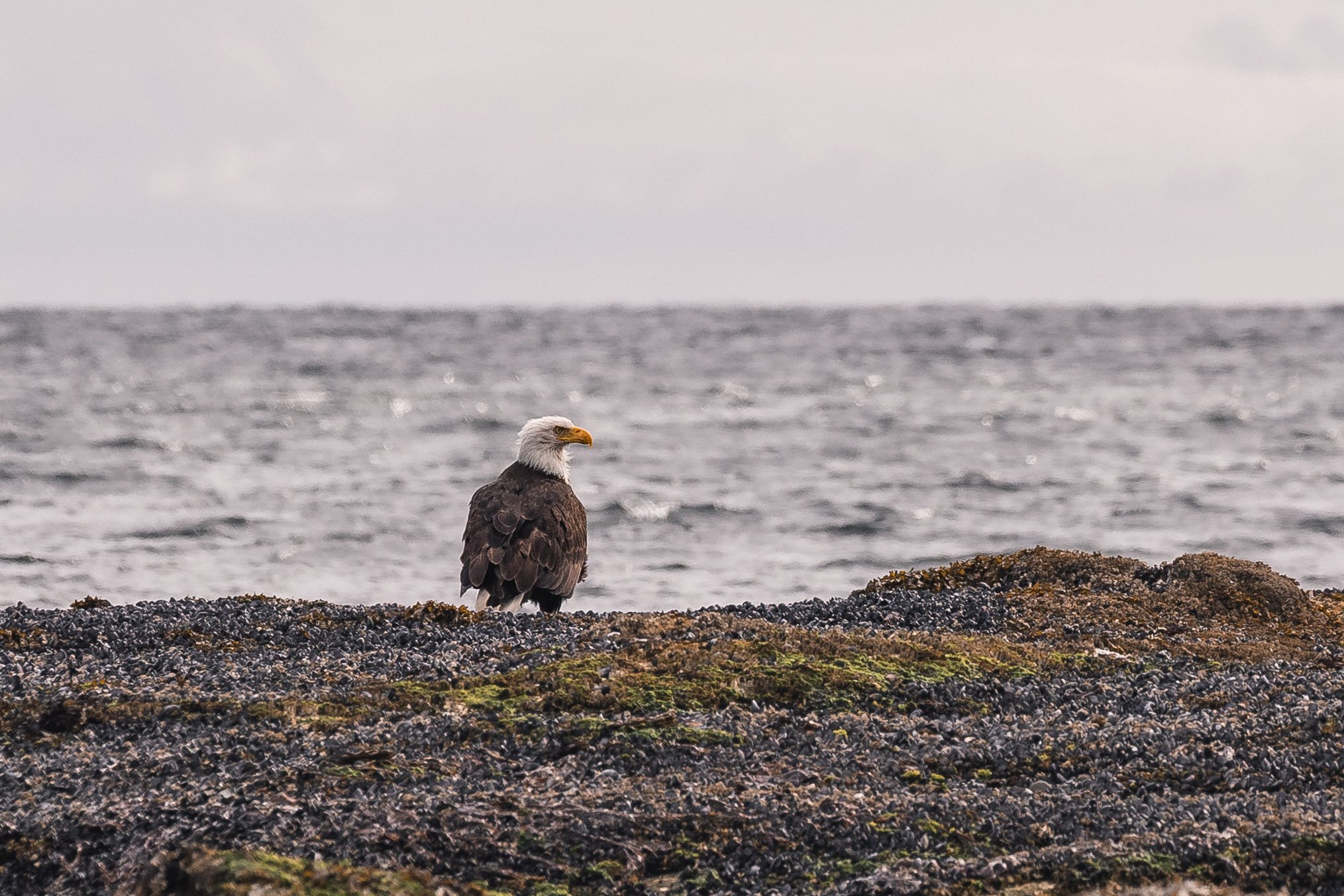
A Bald Eagle at the top of Stinky Rocks. Photo by Jordan Robinson.
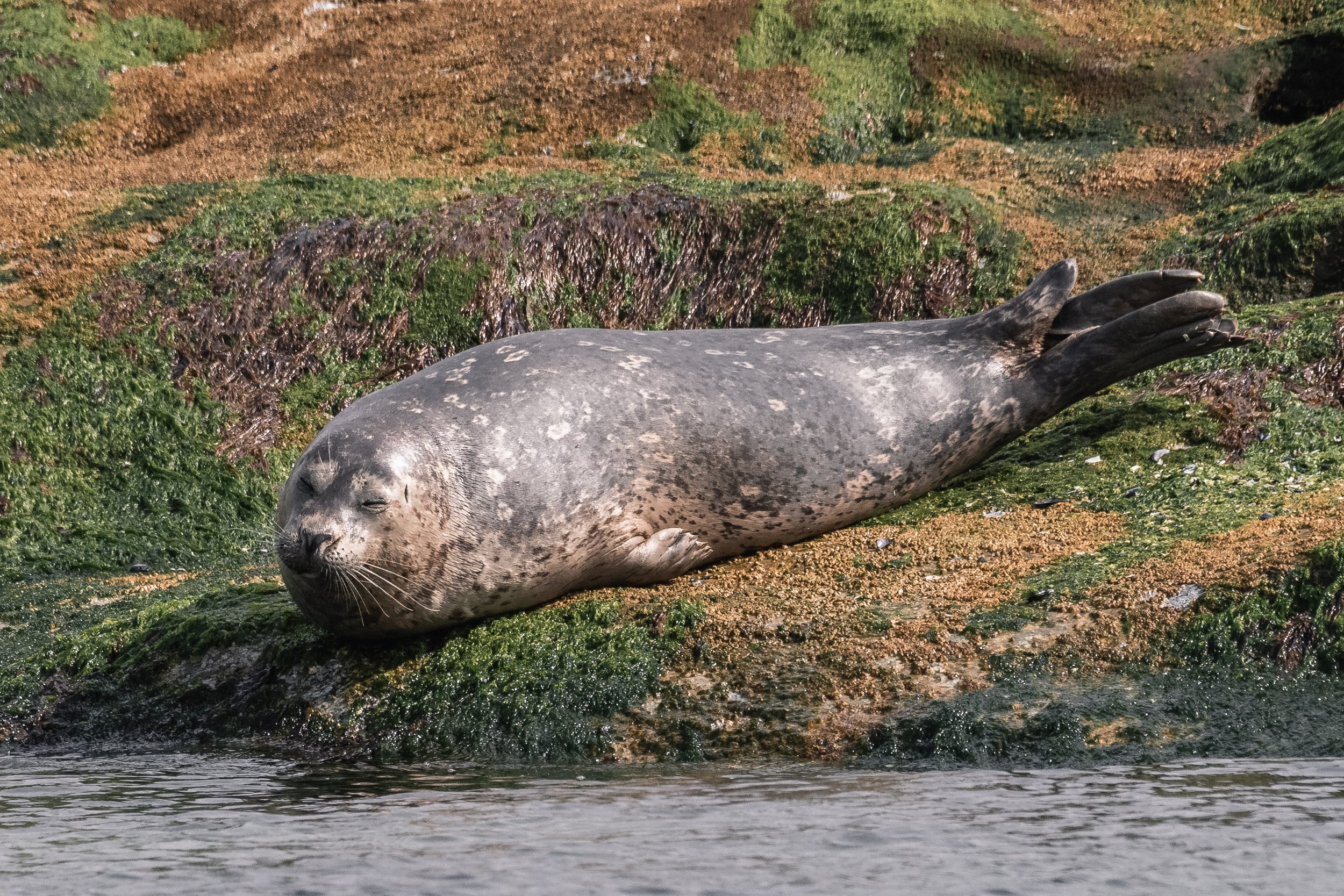
A biiiiiig stretch from a Harbour Seal. Photo by Evan Hessels.
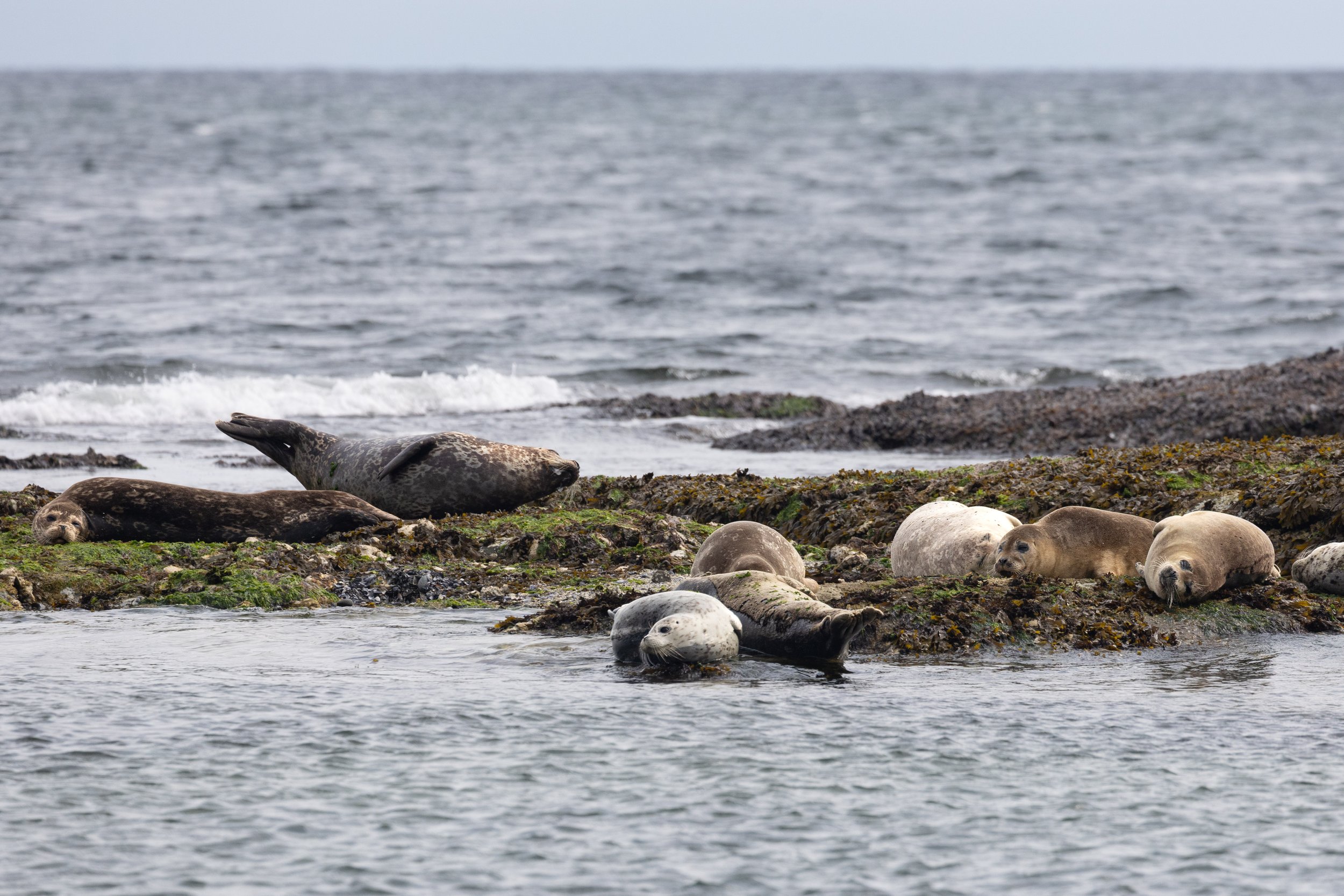
Harbour Seals situated all over the shallower side of Stinky Rocks. Photo by Jordan Robinson.
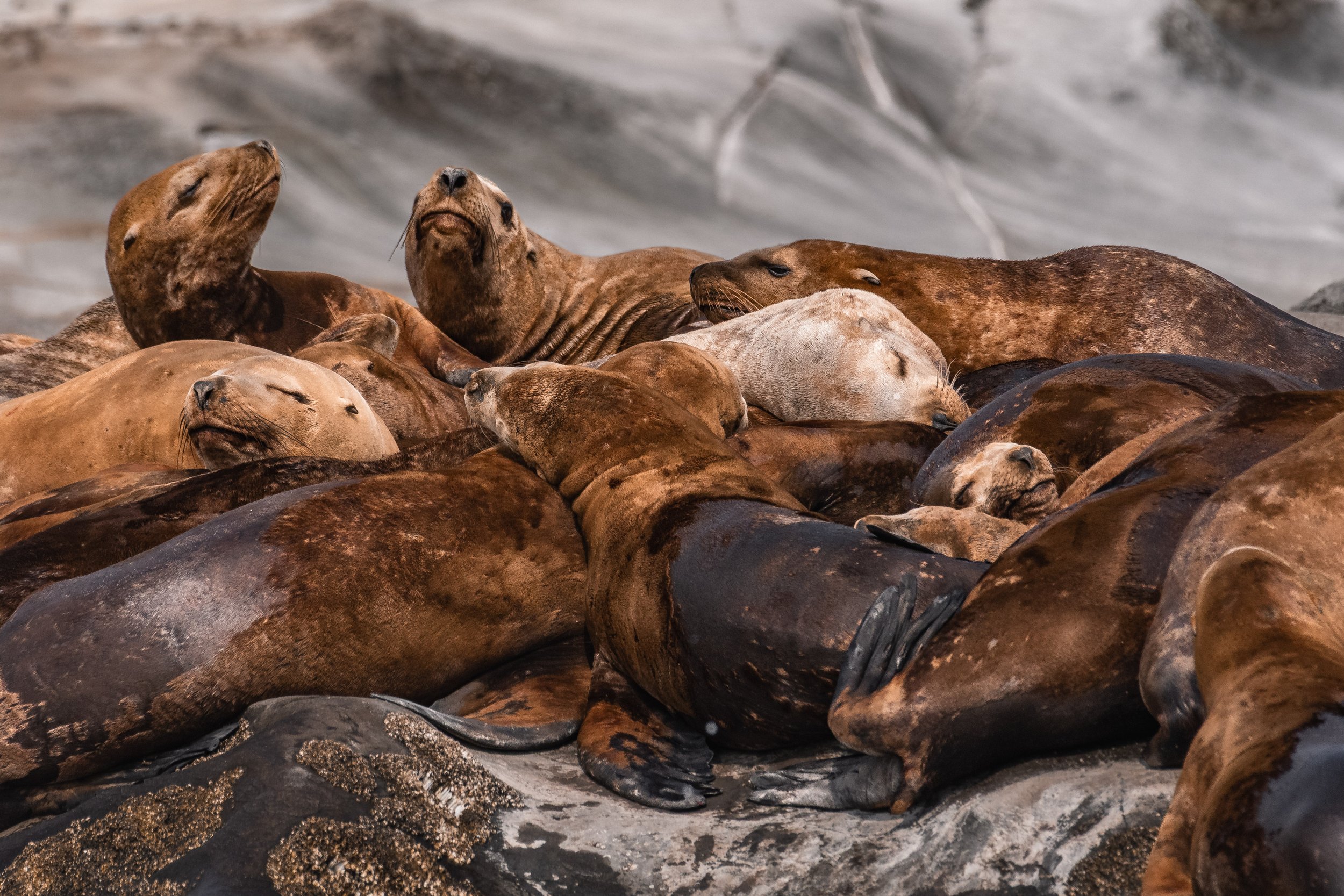
Relaxing in one giant cuddle puddle. Photo by Evan Hessels.
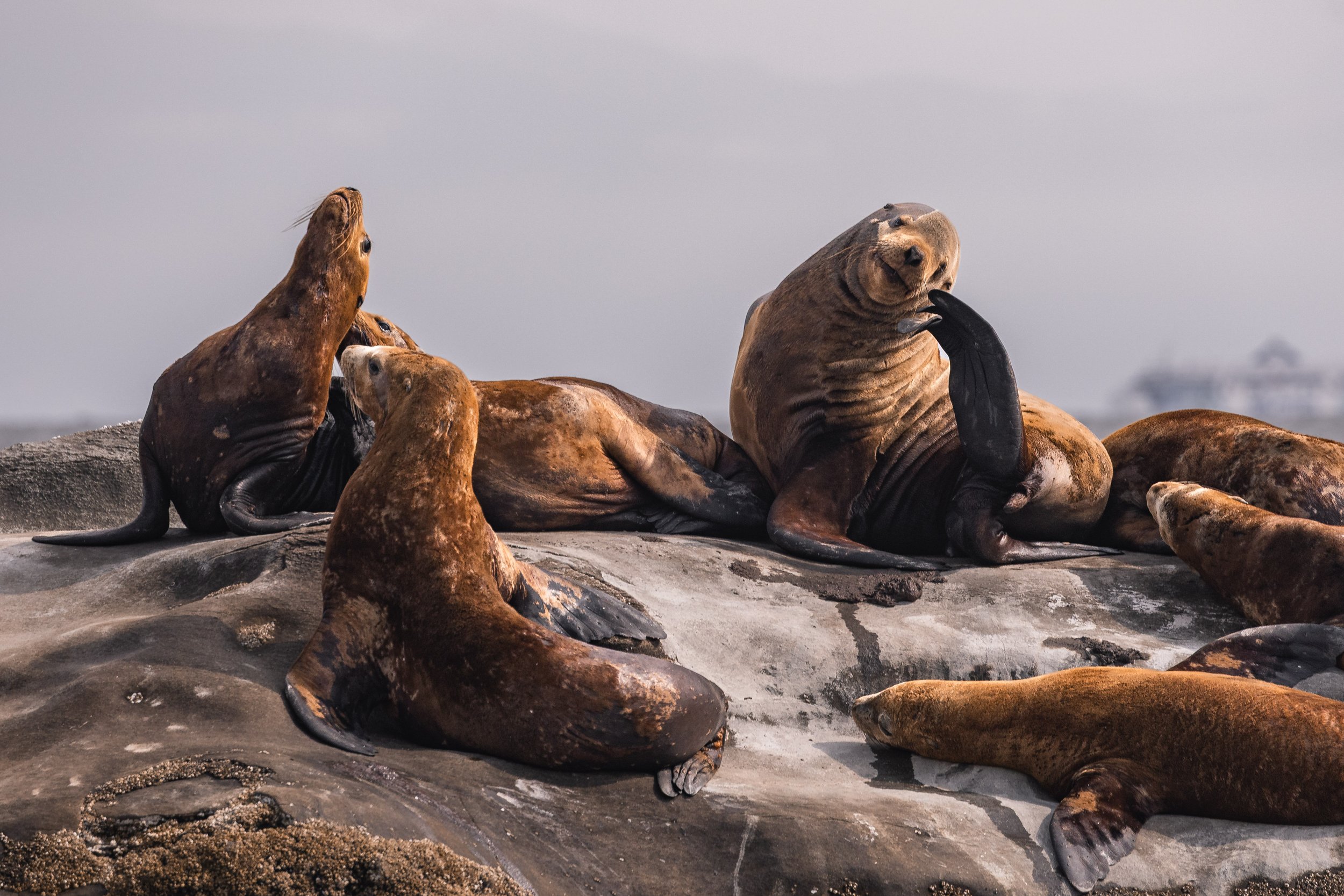
Steller Sea Lions scratching away while on land. Photo by Jordan Robinson.
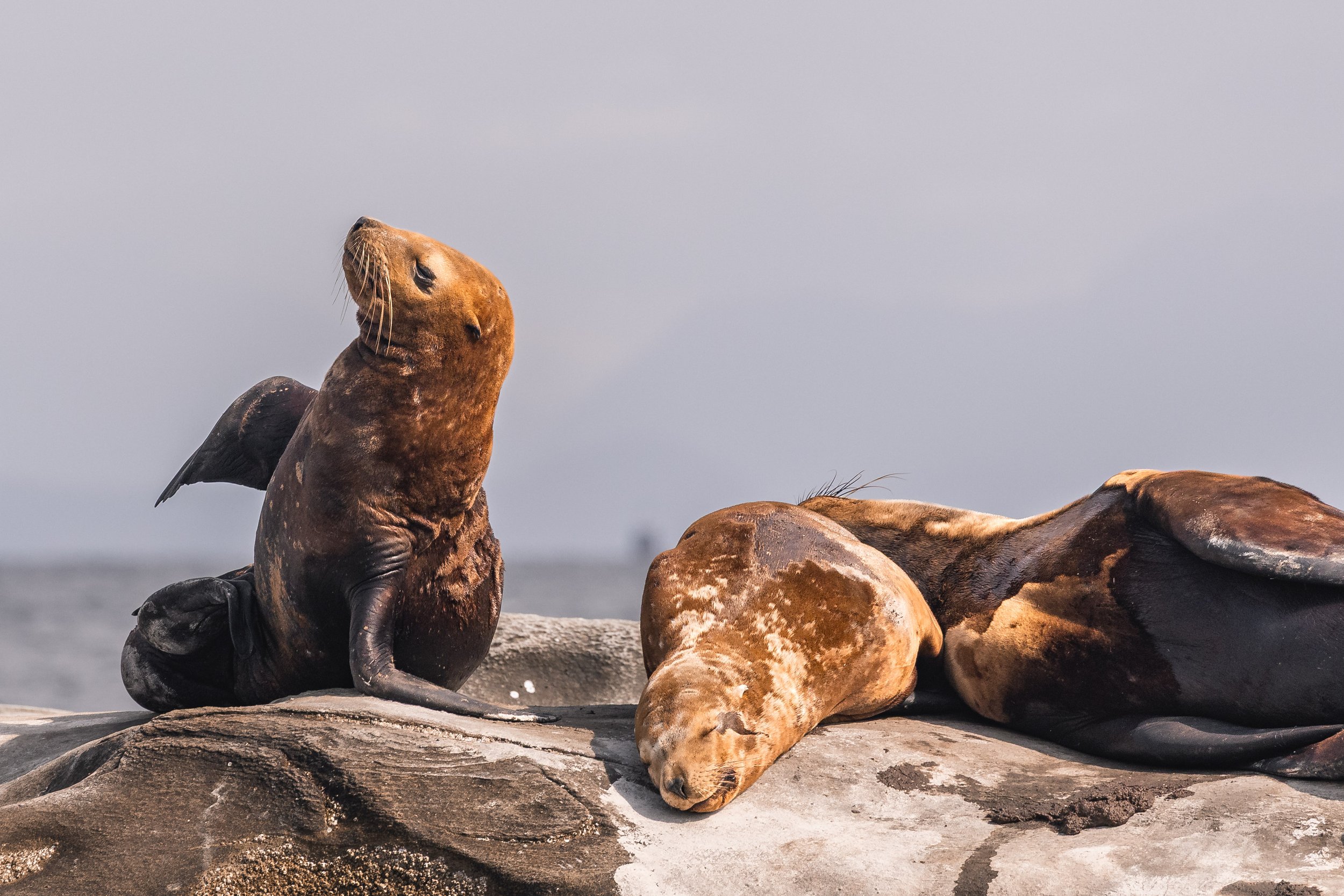
It was perfect nap weather on the rocks today! Photo by Jordan Robinson.
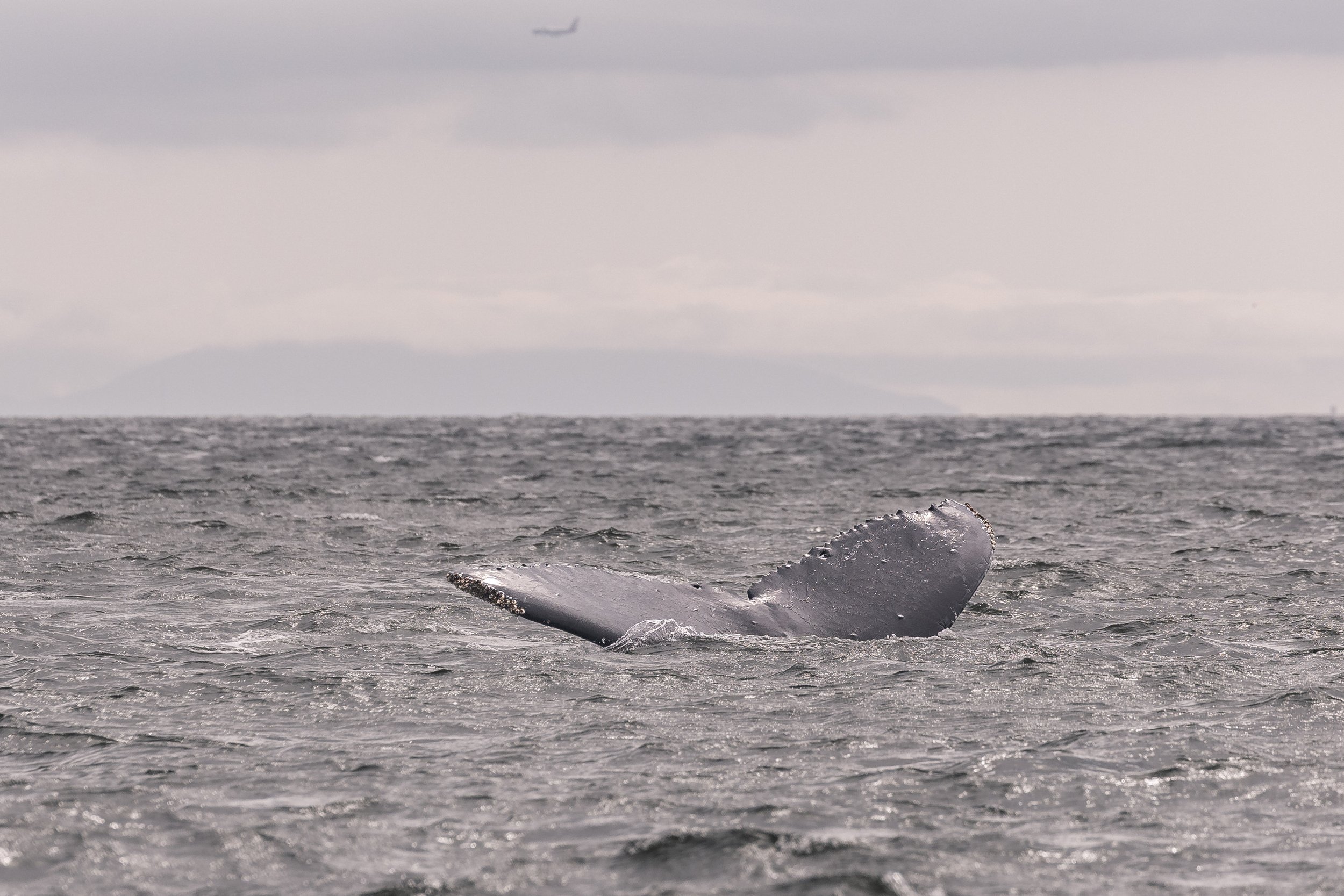
Double Double diving, with their unique trailing edge and two holes through their fluke visible. Photo by Jordan Robinson.
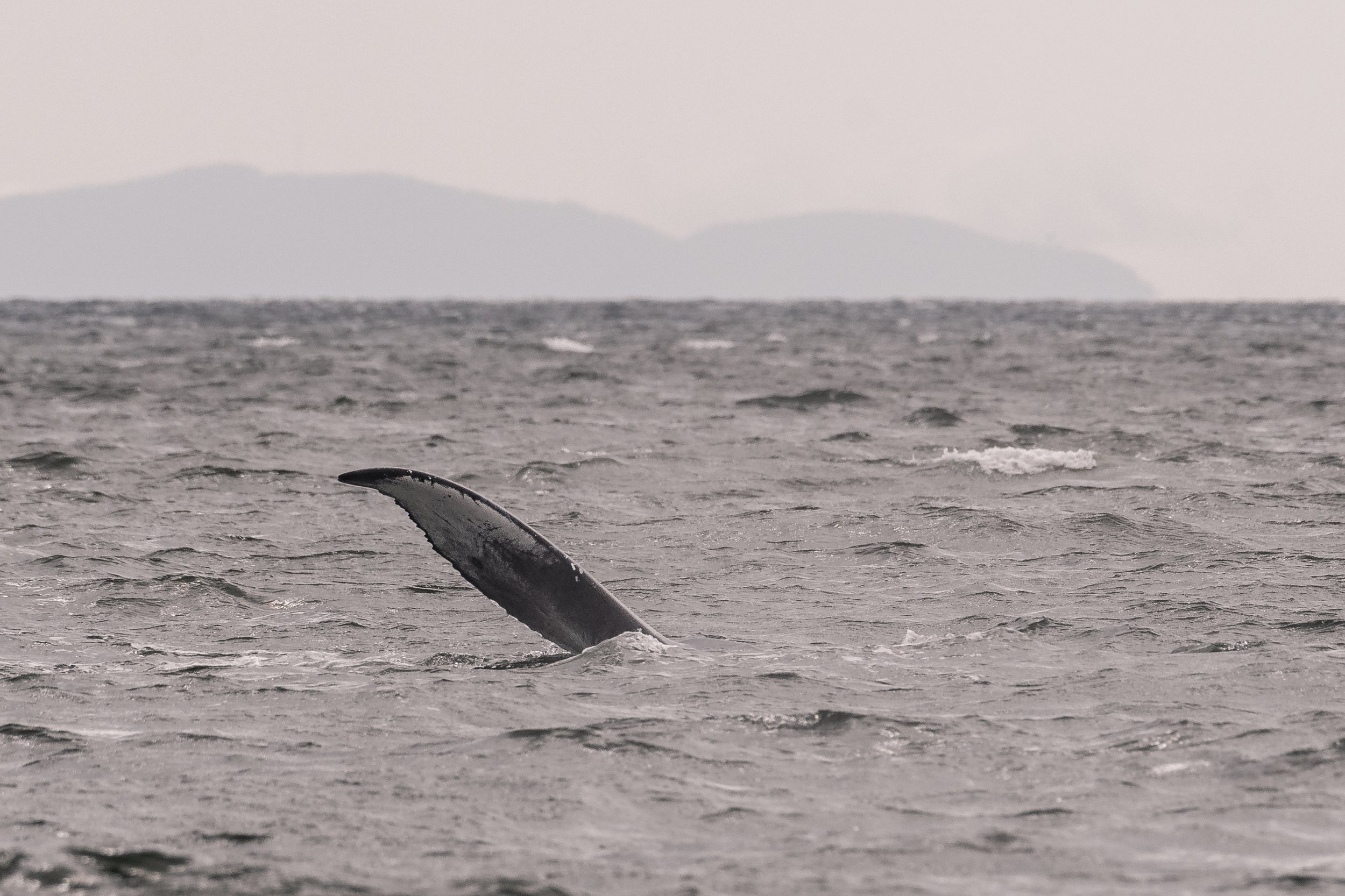
Vivaldi’s 2025 calf, a tiny peek at their unqiue fluke! Photo by Evan Hessels.
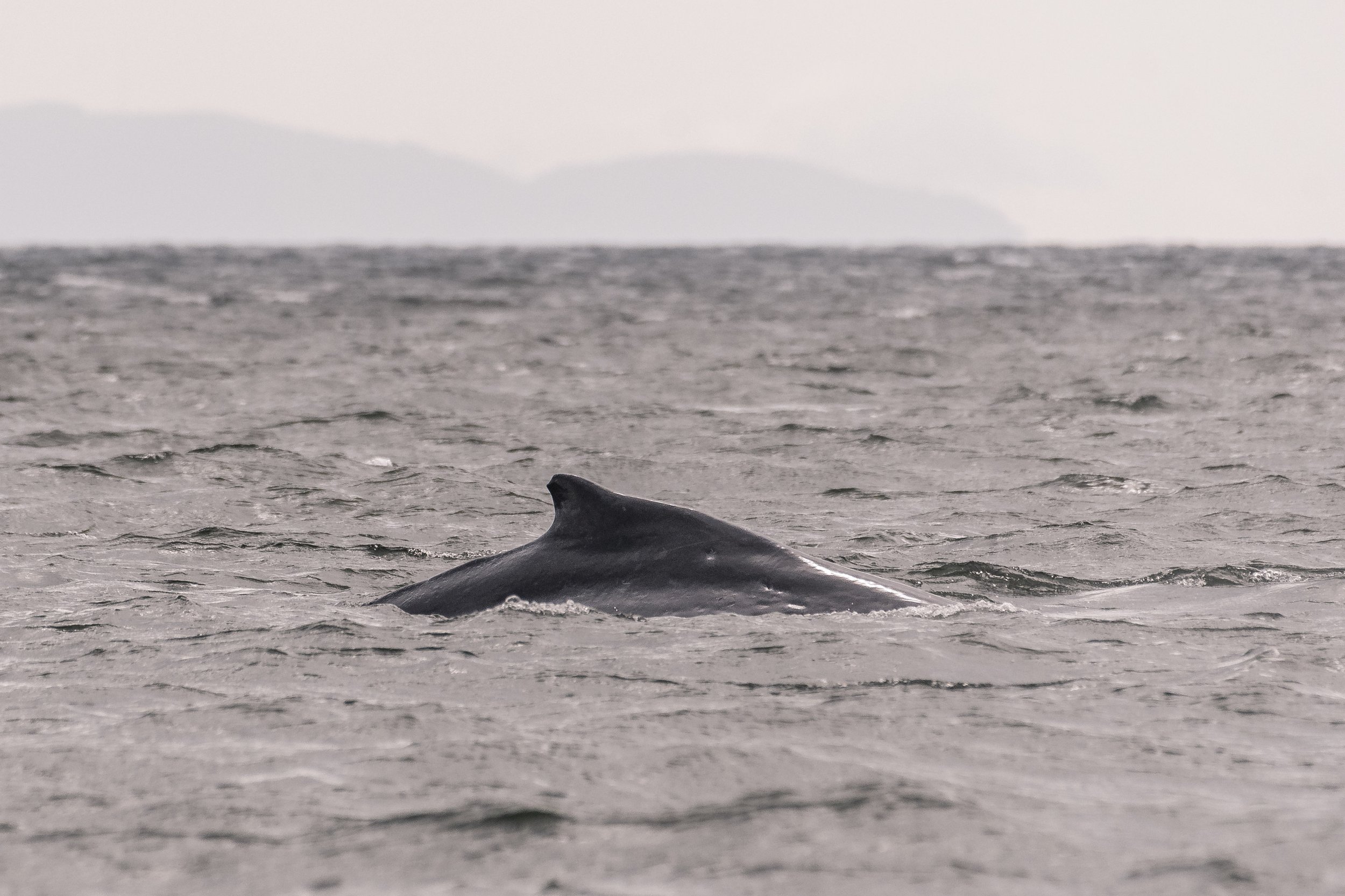
Niagara travelling. Photo by Evan Hessels.
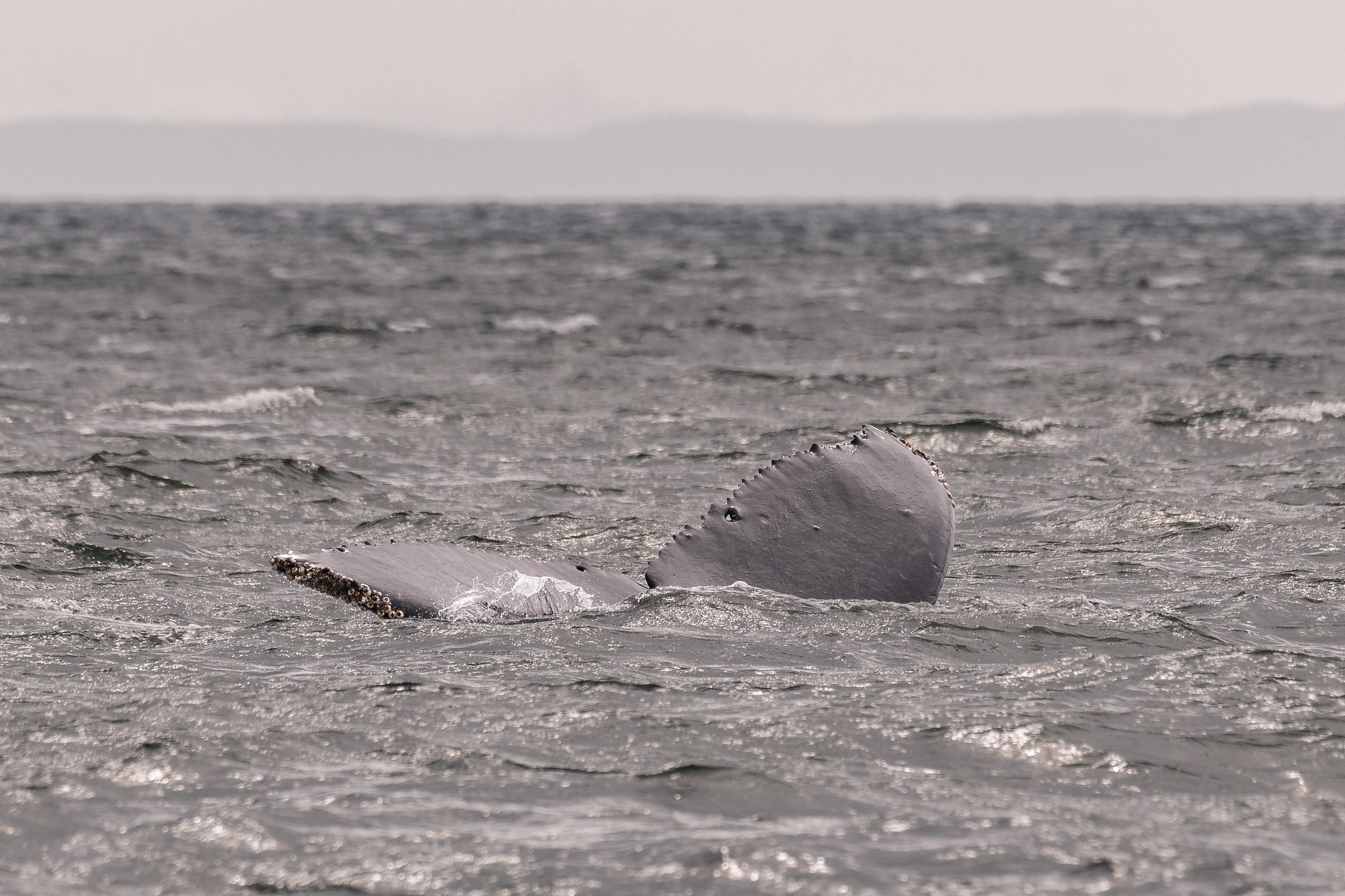
A clearer angle of Double Double’s unique top fluke. Photo by Evan Hessels.
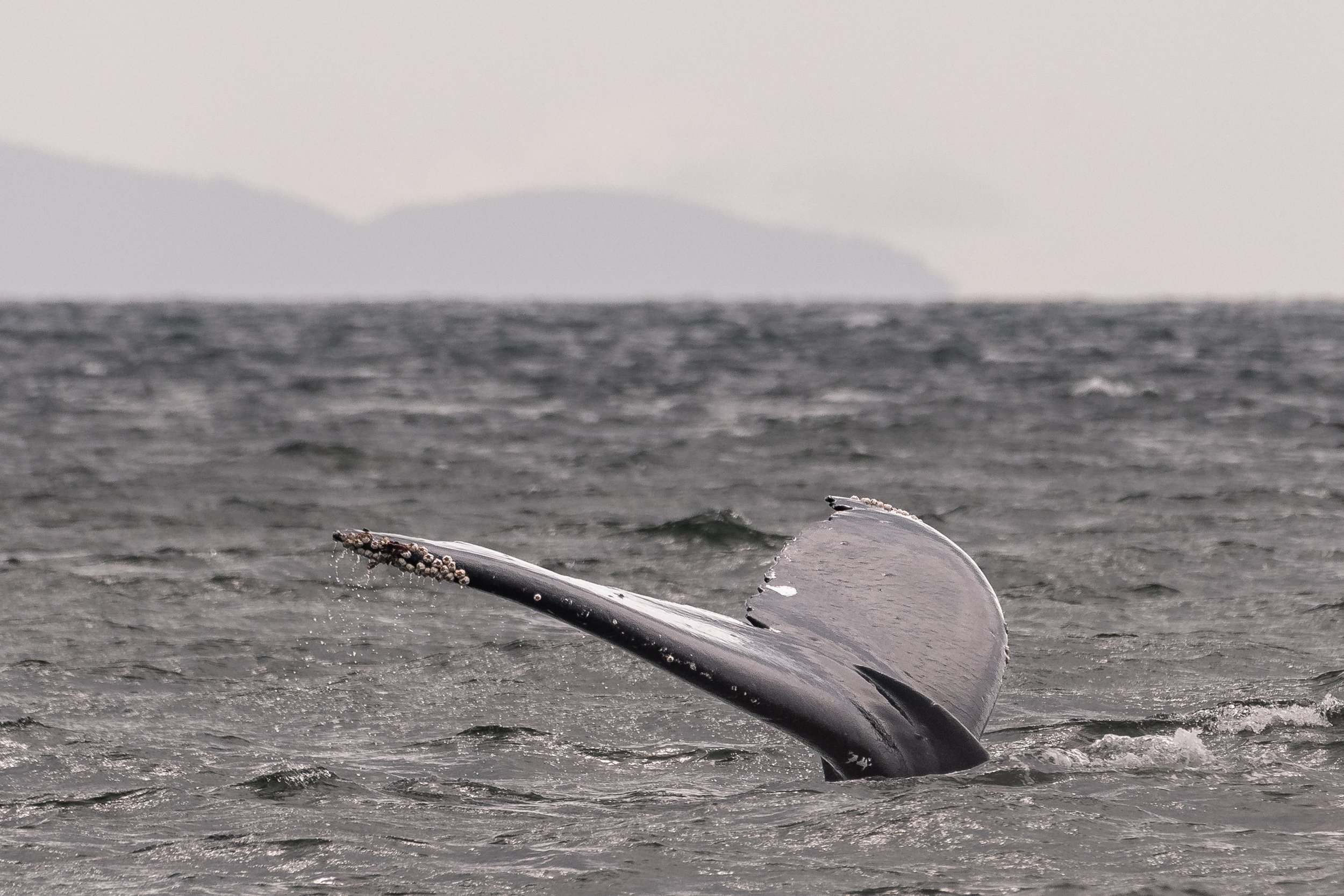
Niagara fluking, his unique white top fluke marking visible. Photo by Evan Hessels.
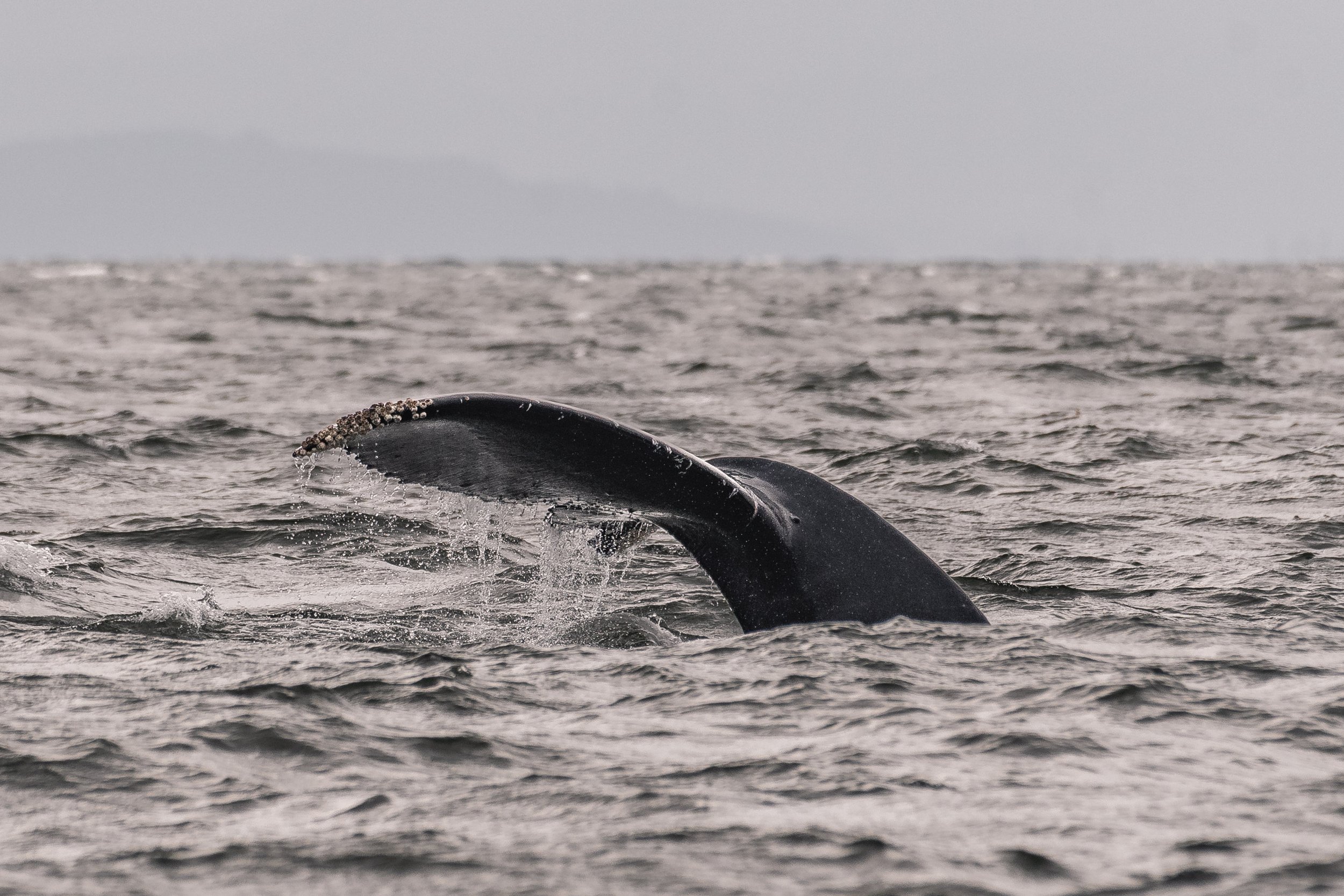
A beautiful fluke waterfall. Photo by Evan Hessels.
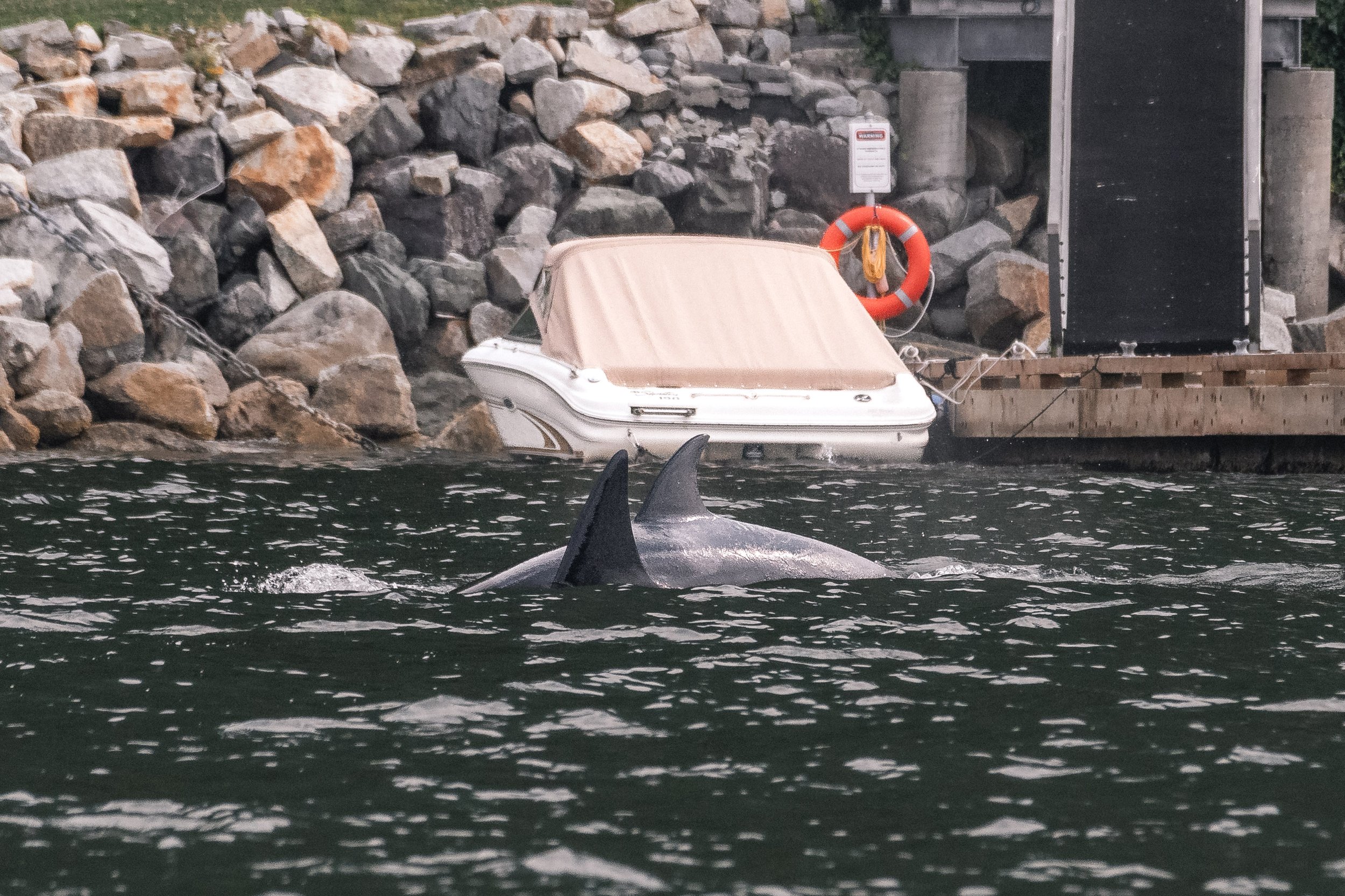
T124D1 Salish II and T124D4 Dune. Photo by Evan Hessels.
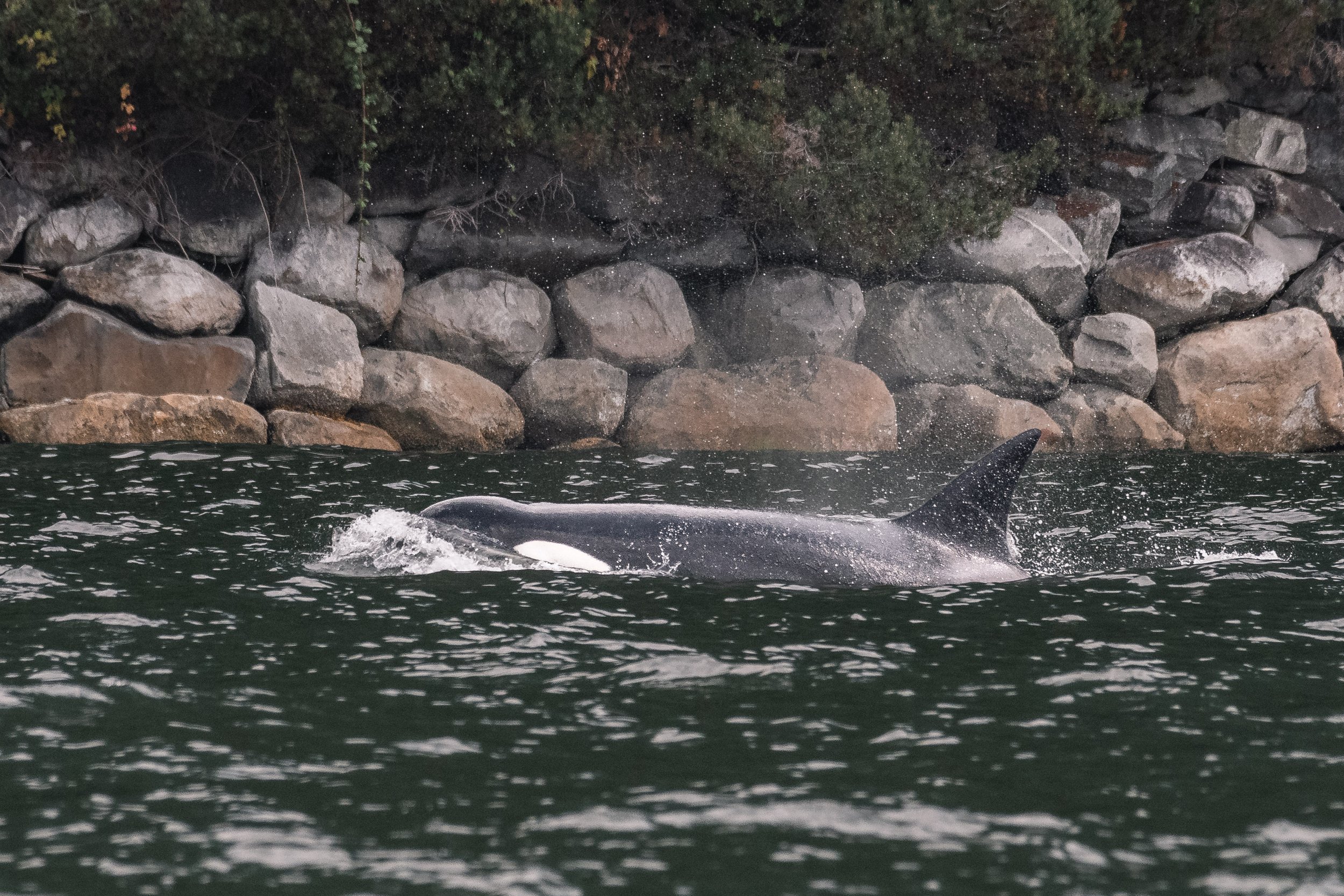
T124D Field with her eyepatch out of the water. Photo by Evan Hessels.
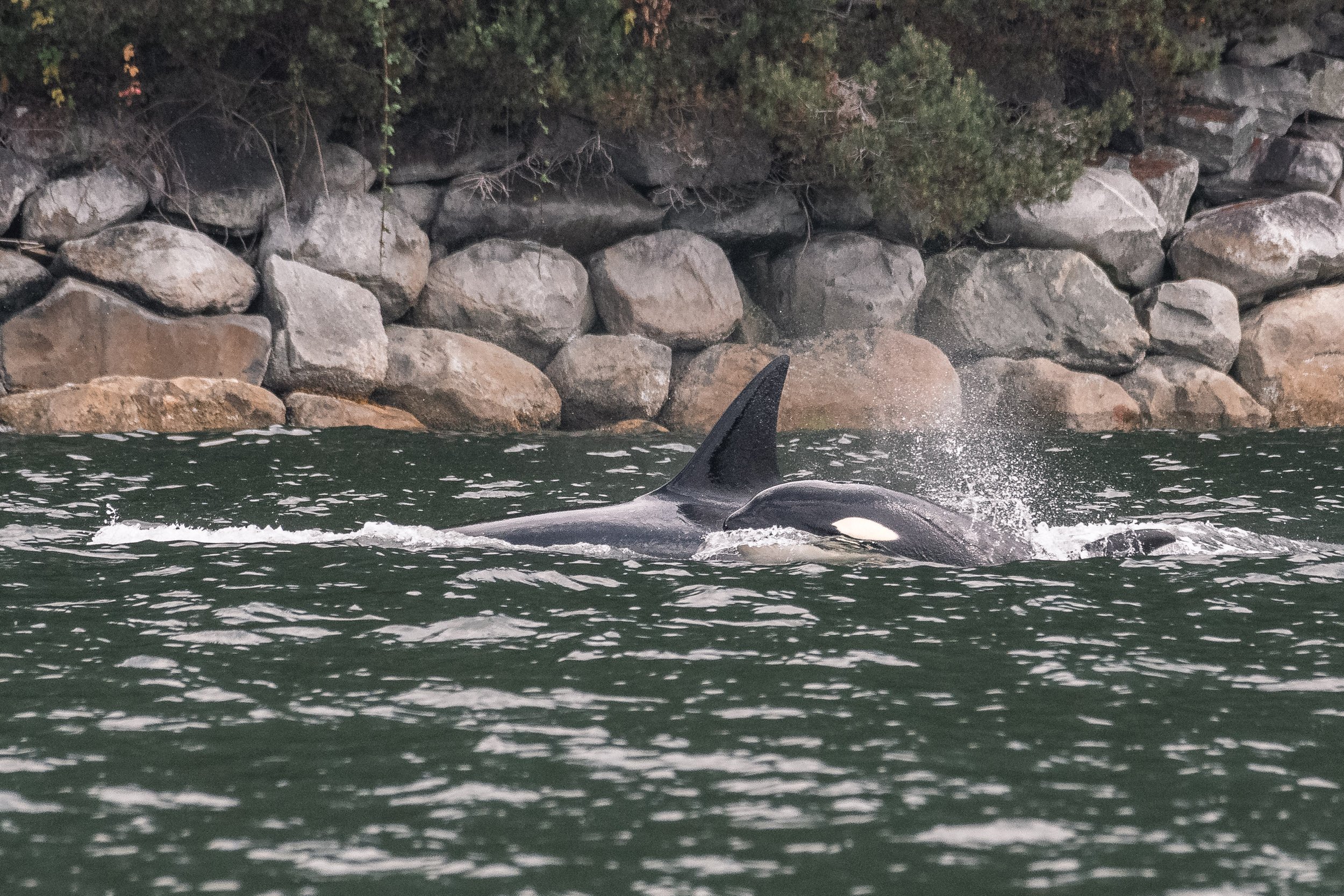
T124D Field and T124D4 Dune. Photo by Evan Hessels.
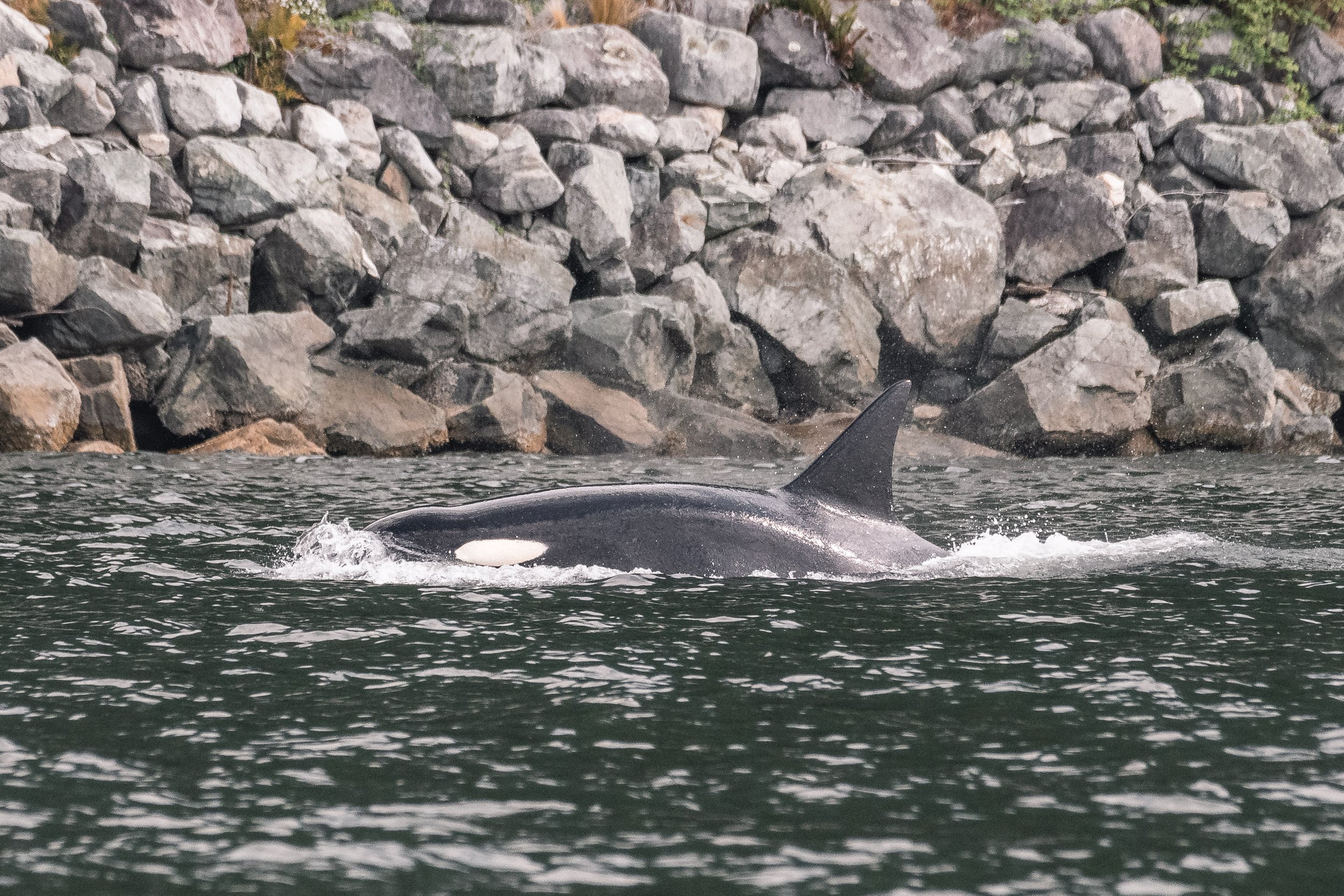
T124D1 Salish II, with their eyepatch, dorsal fin, and saddlepatch visible above the surface! Photo by Evan Hessels.
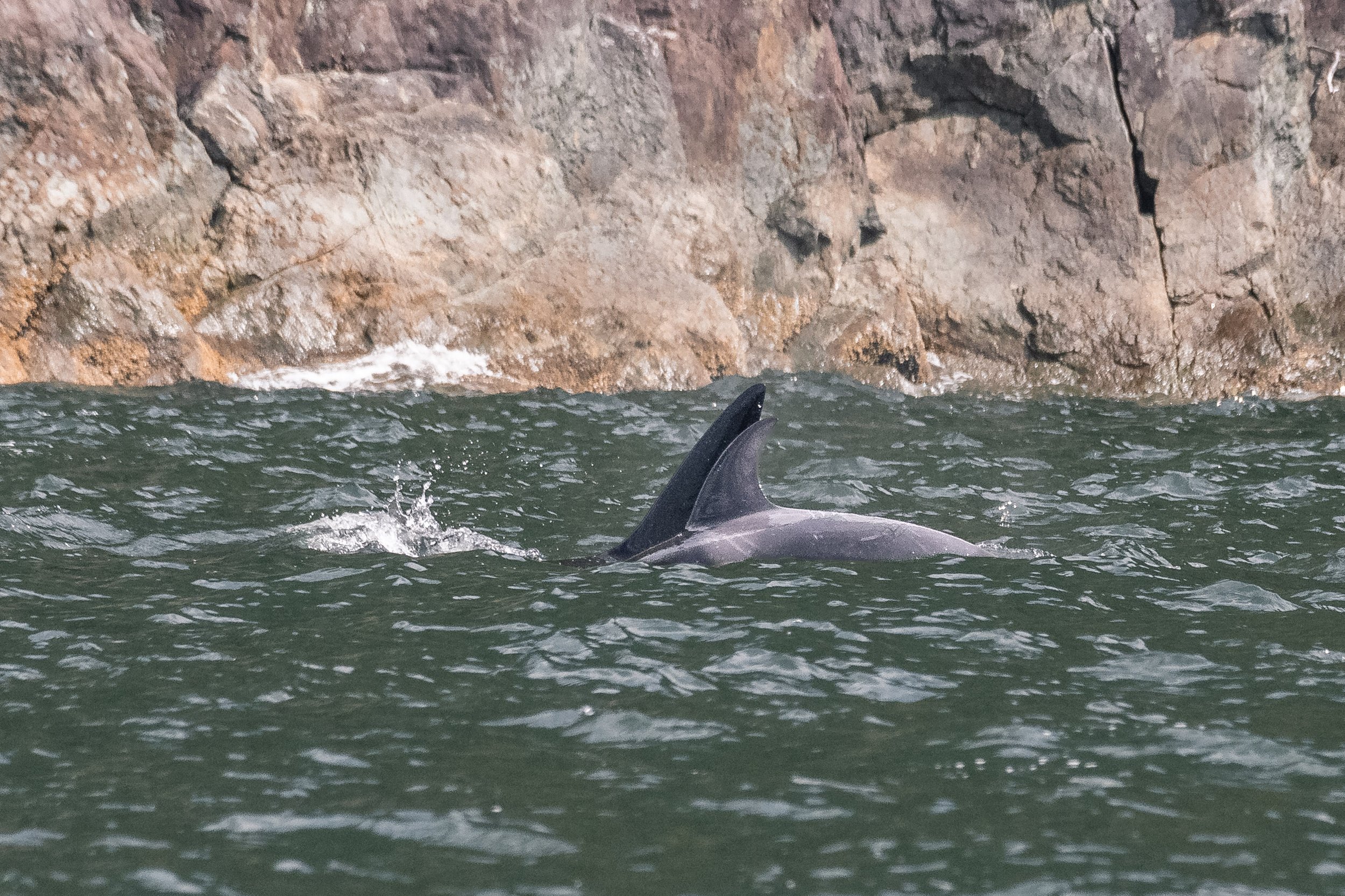
T124D4 Dune has a pair of scars along their saddlepatch that make them easy to ID! Photo by Evan Hessels.
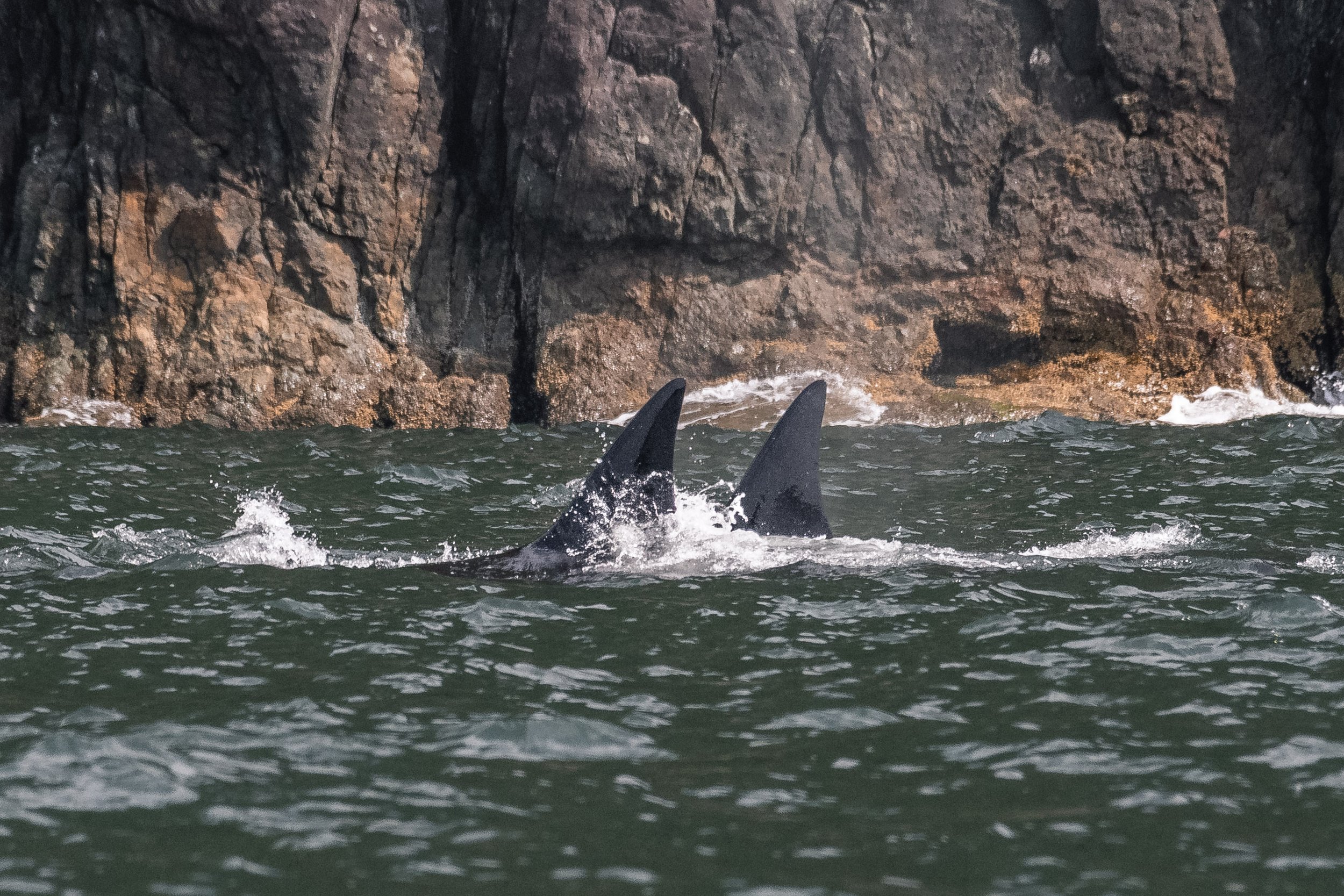
T124D Field and T124D1 Salish II travelling together. Photo by Evan Hessels.
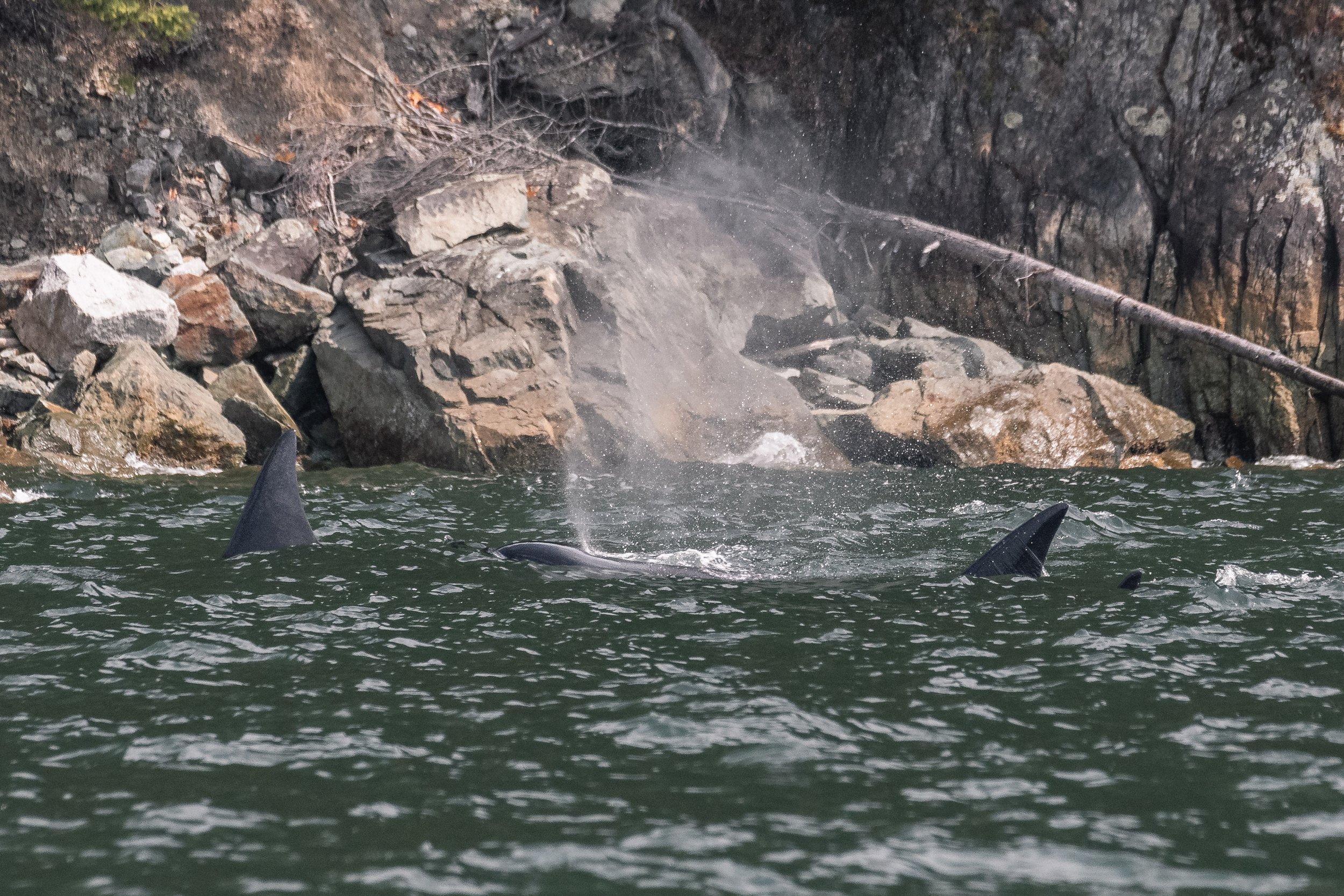
T124D1 Salish II in the lead, with T124D Field coming up for a big breath behind them. Photo by Evan Hessels.
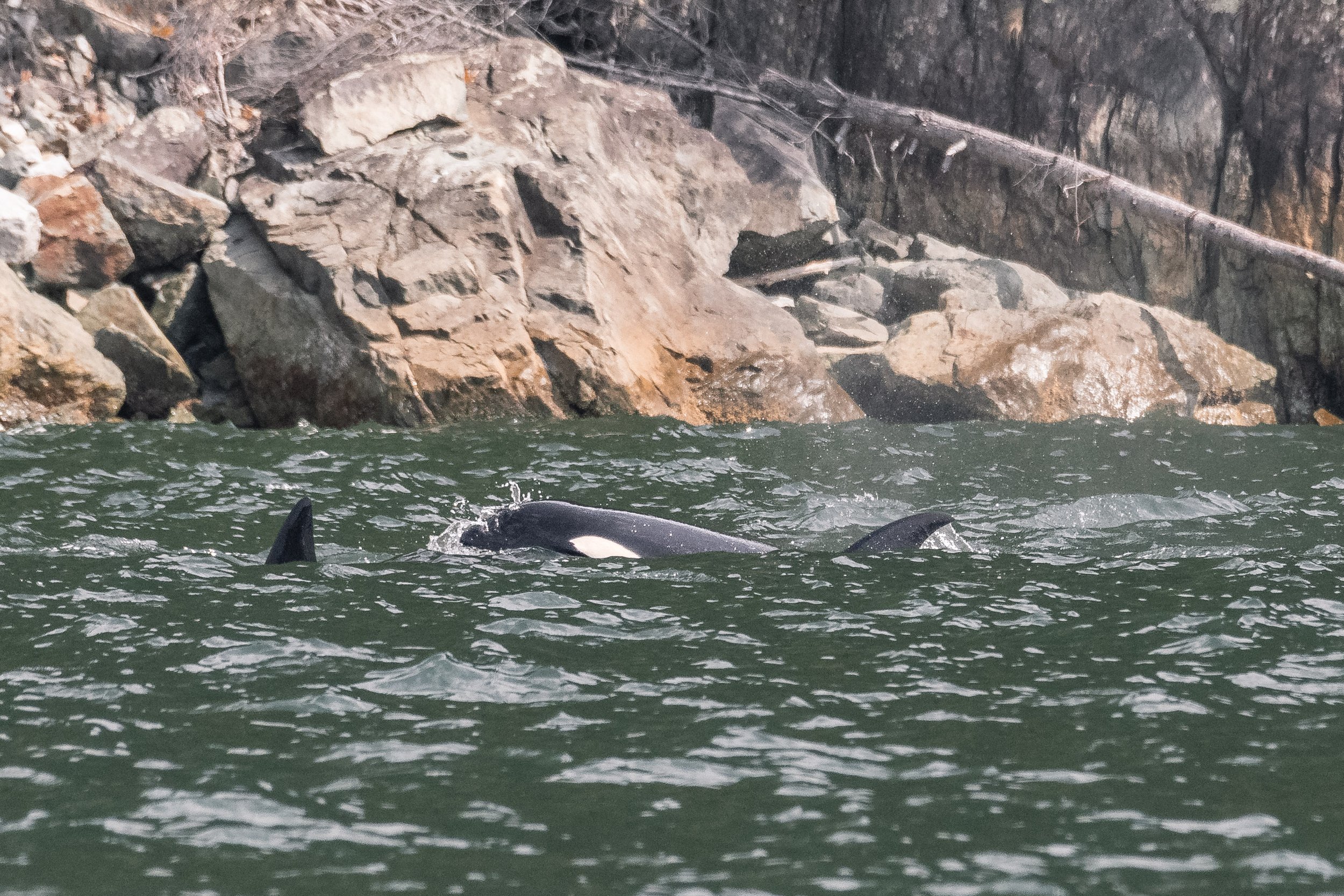
T124D4 Dune with their eyepatch out of the water. Photo by Evan Hessels.
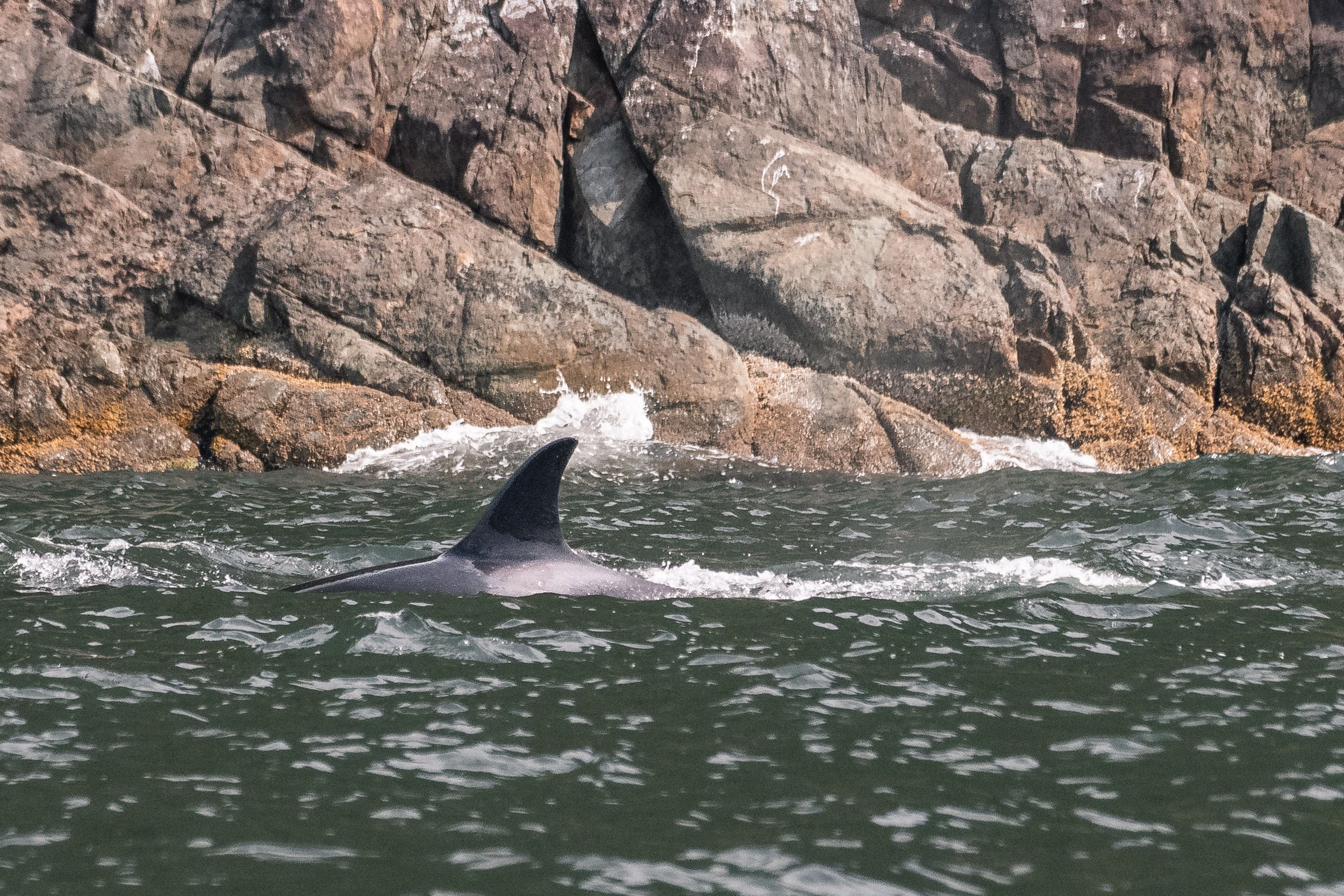
T124D3 Lupine skirting the shoreline. Photo by Evan Hessels.
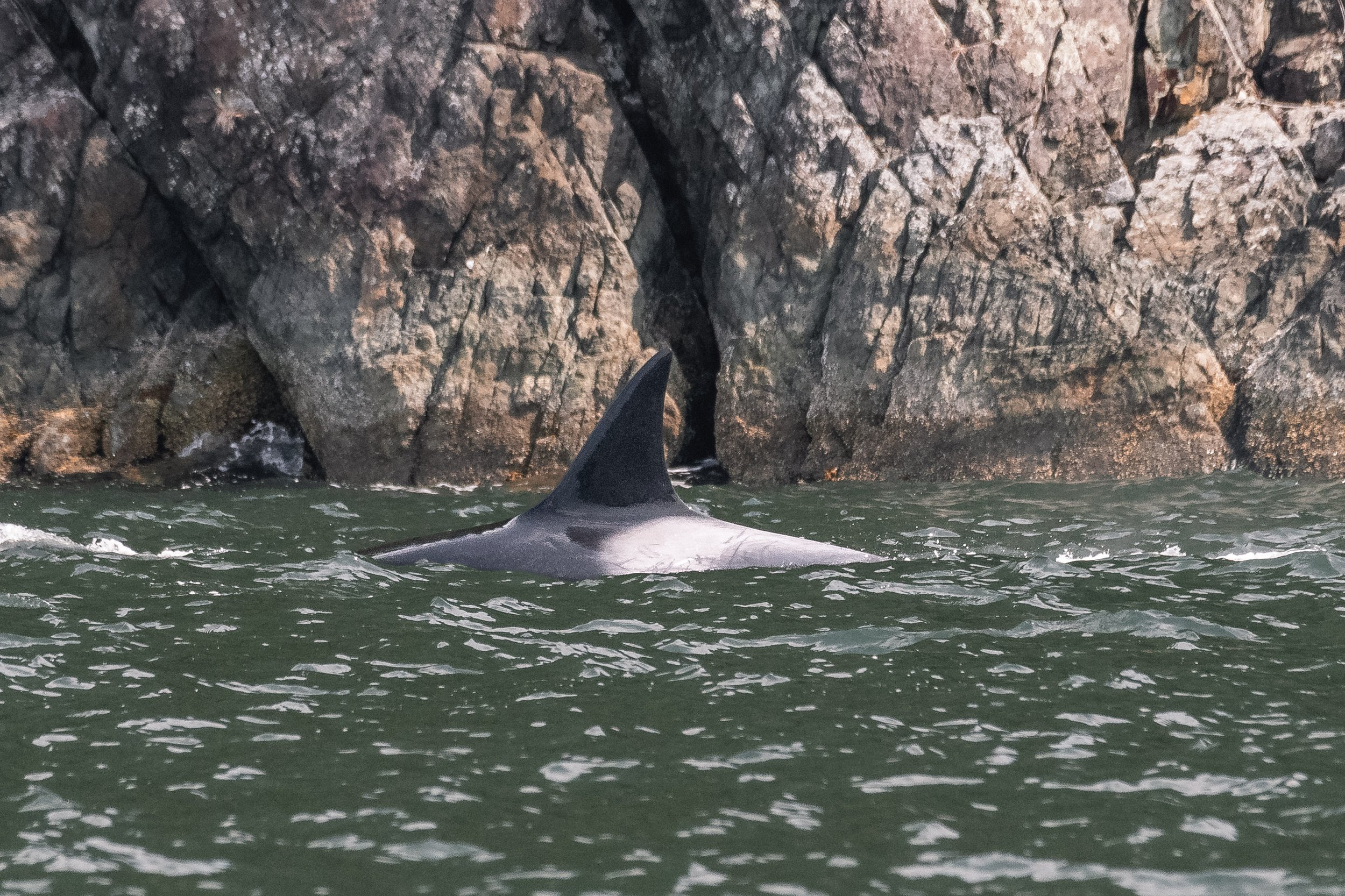
T124D Field has two unique scars at the back edge of their saddlepatch. Photo by Evan Hessels.
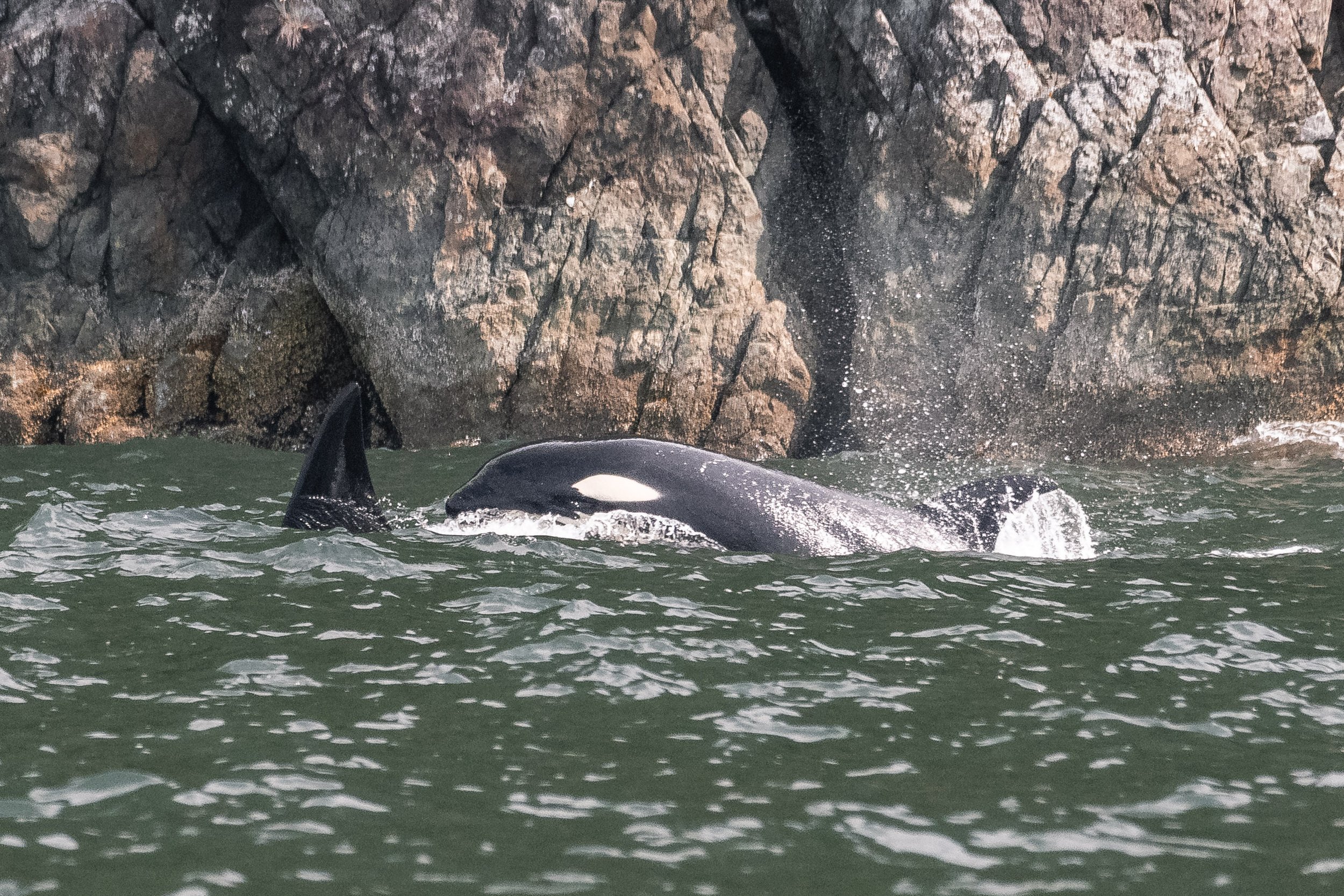
T124D4 Dune bringing their face out of the water! Photo by Evan Hessels.
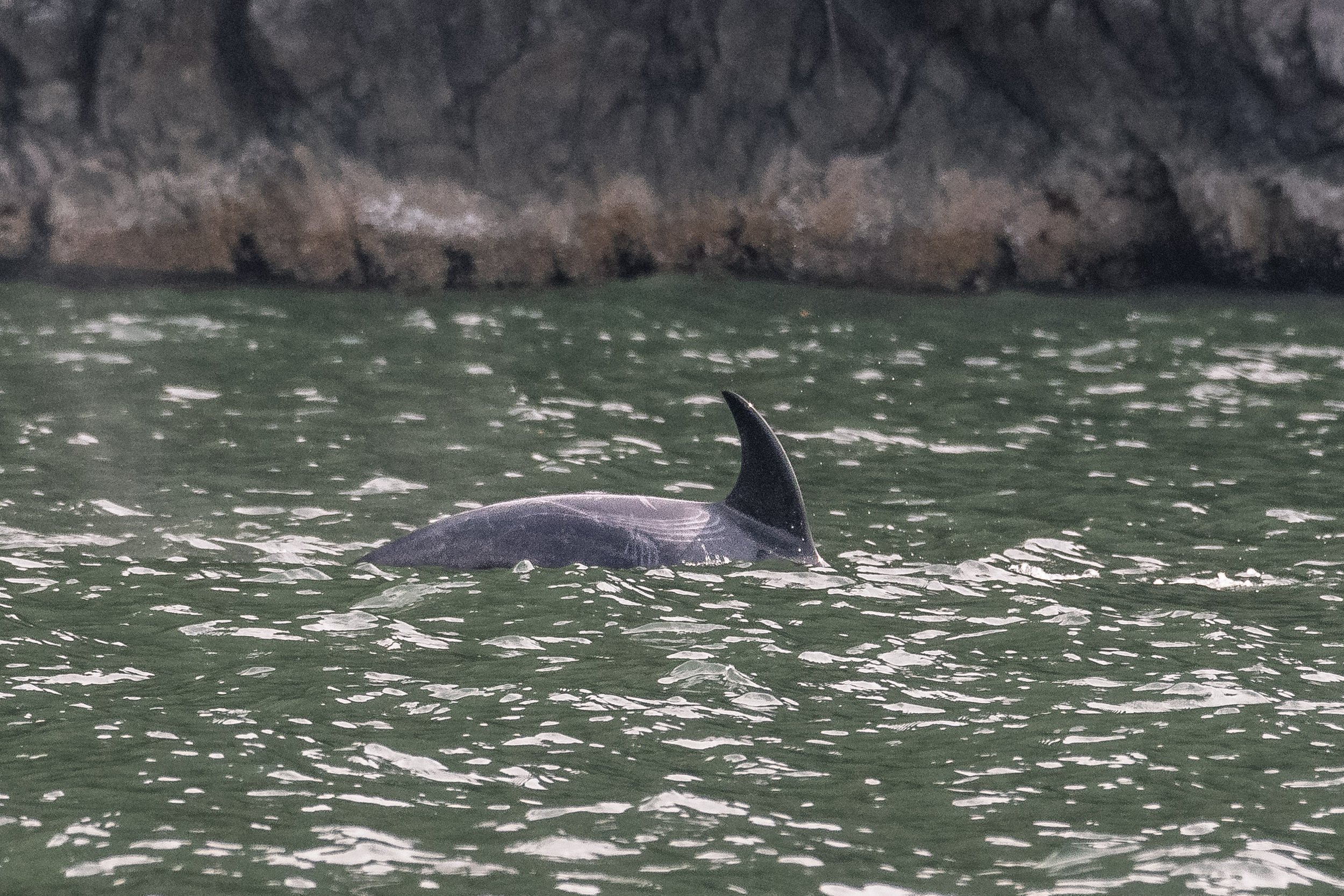
T124D4 Dune has quite a few new scars along their body, visible in this shot! Photo by Evan Hessels.
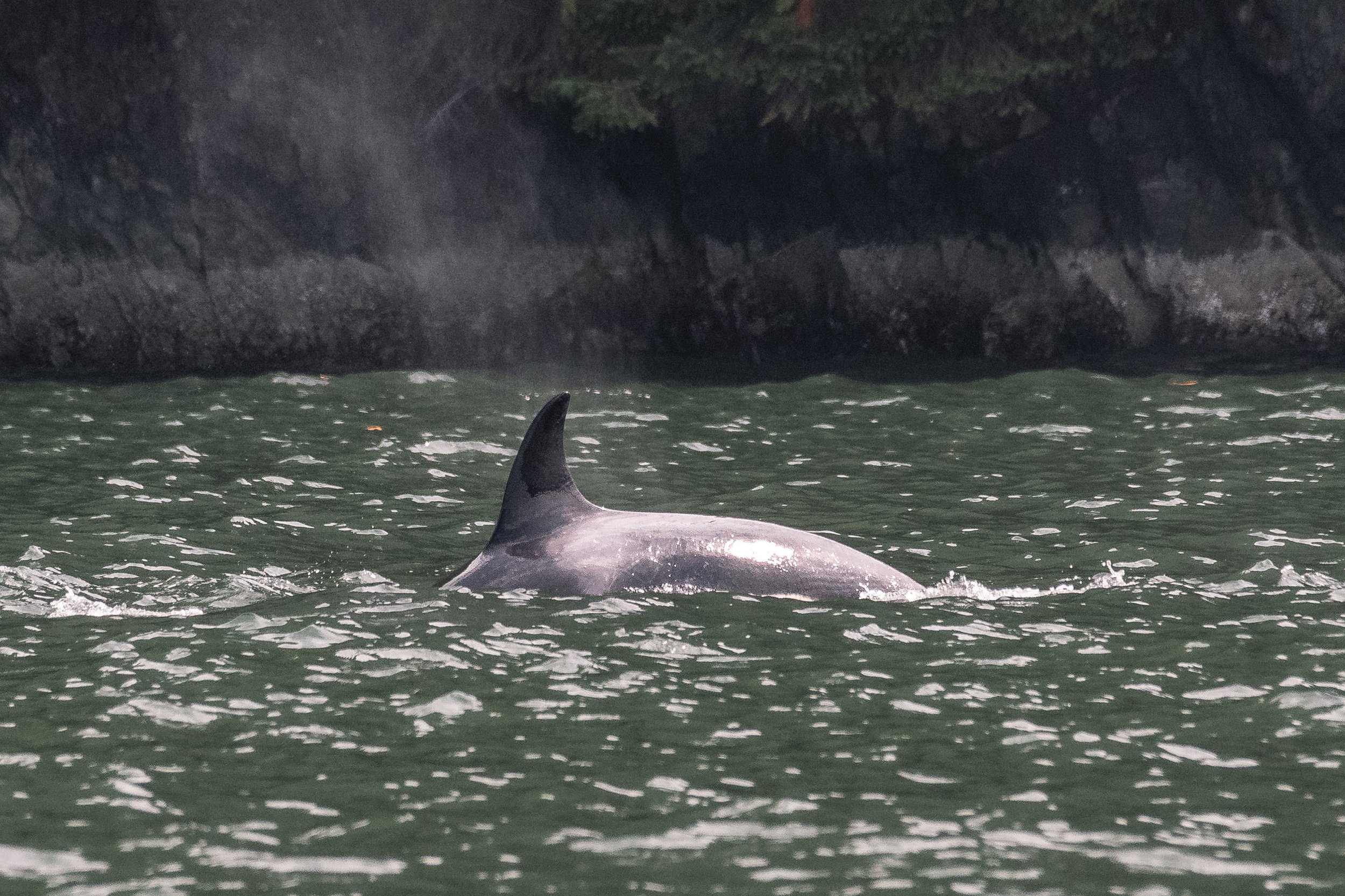
T124D3 Lupine going down for a dive. Photo by Evan Hessels.
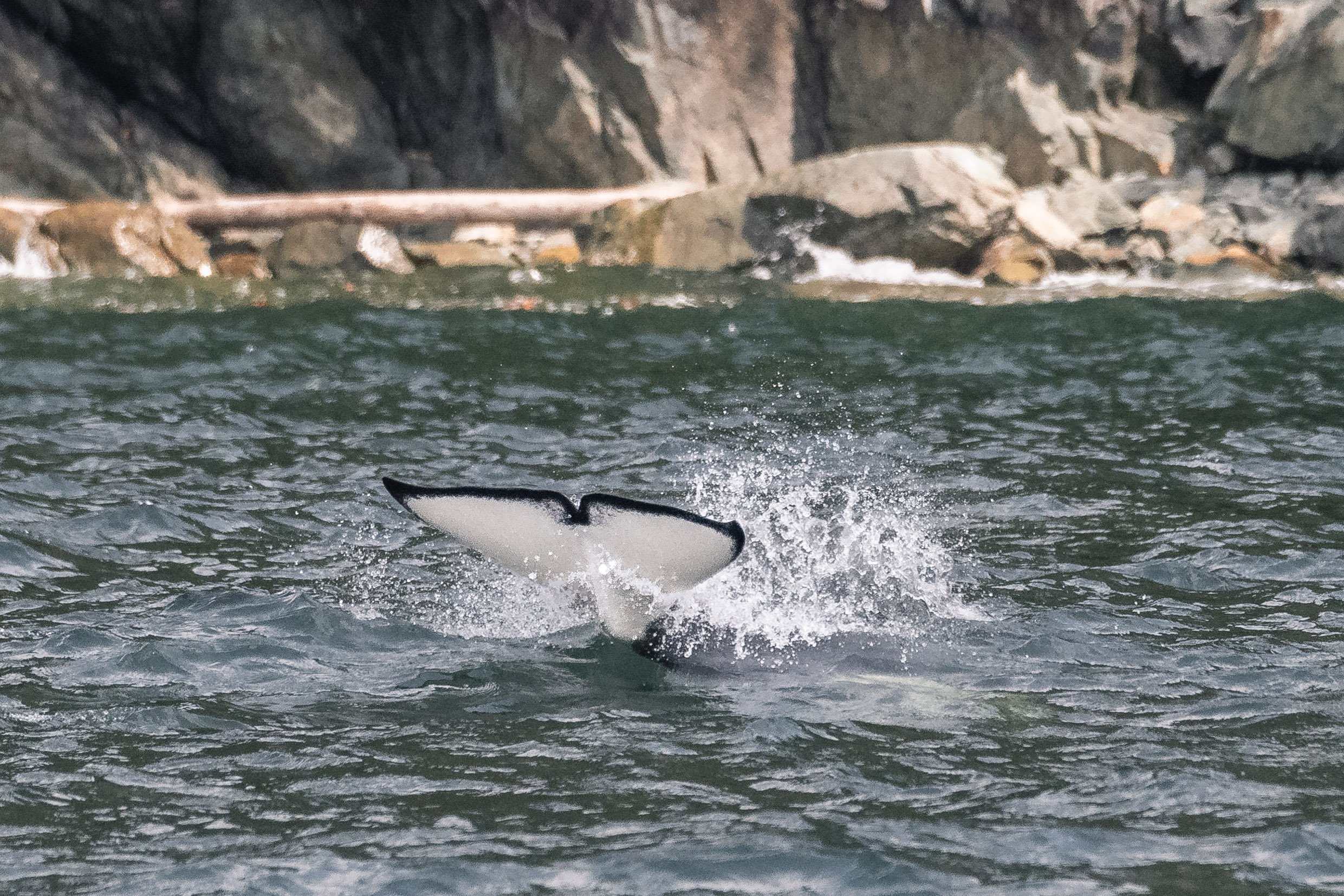
Flukes up! Photo by Evan Hessels.
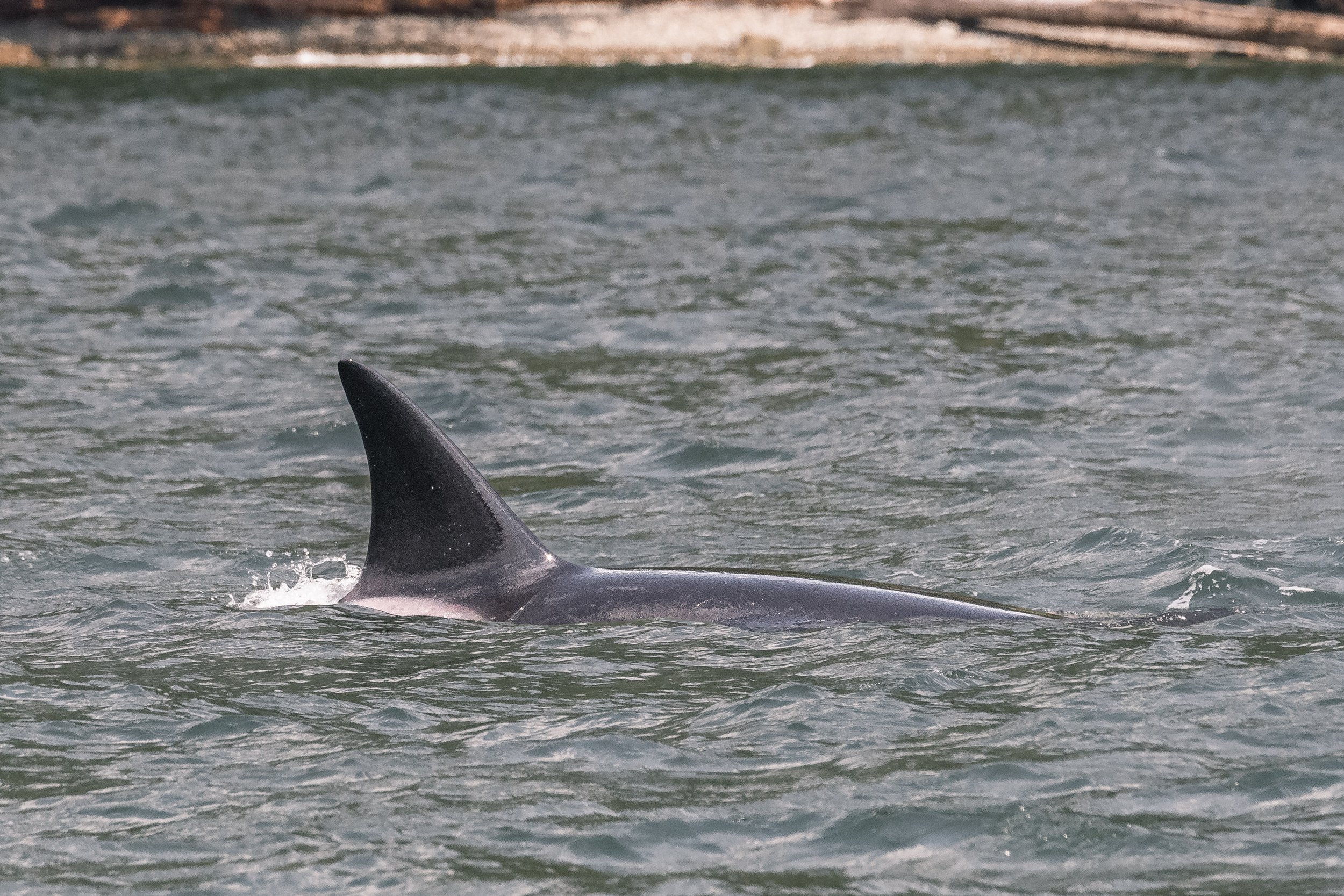
T124D1 Salish II travelling along. Photo by Evan Hessels.
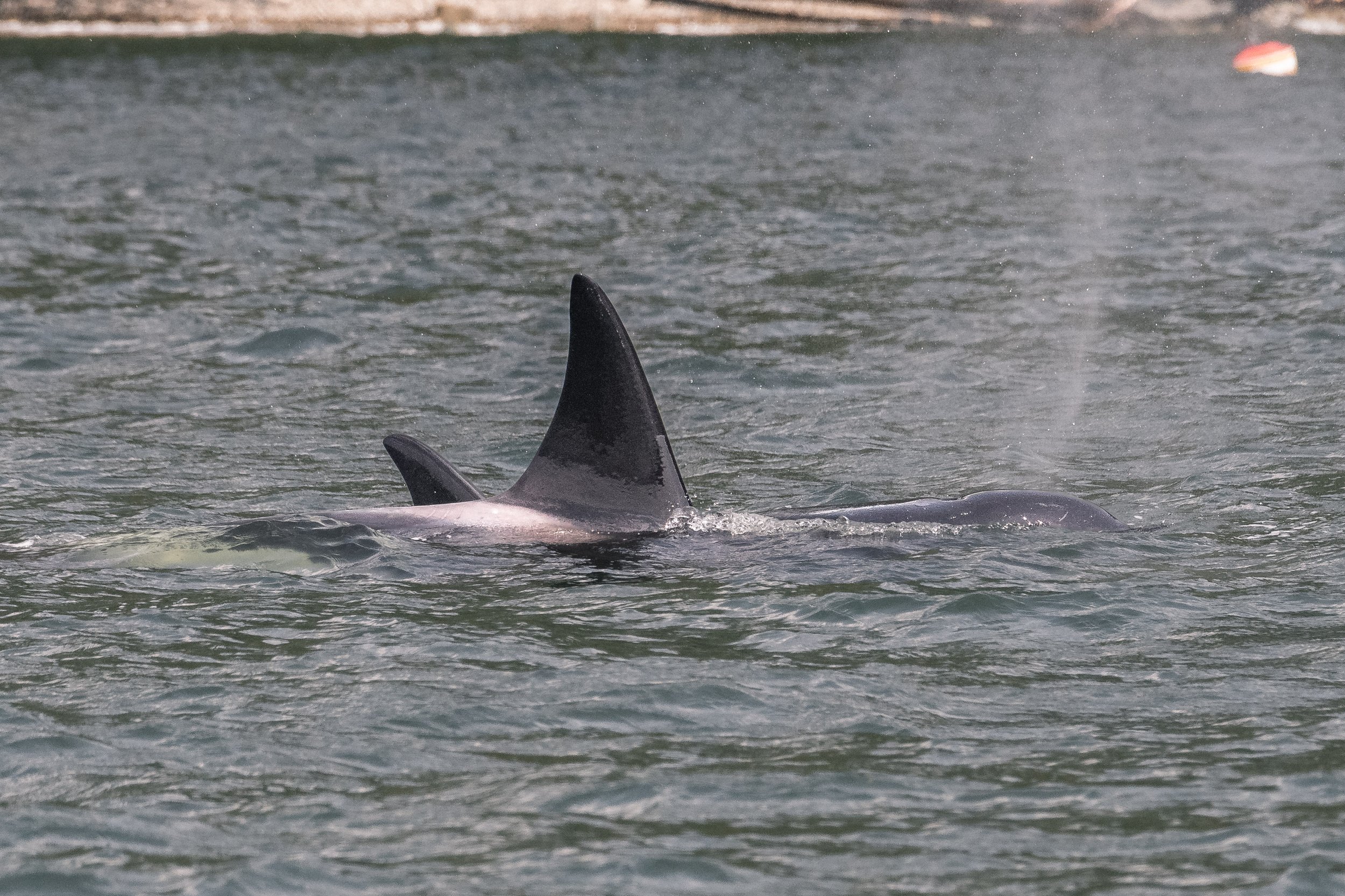
T124D1 Salish II with T124D3 Lupine beside them. Photo by Evan Hessels.
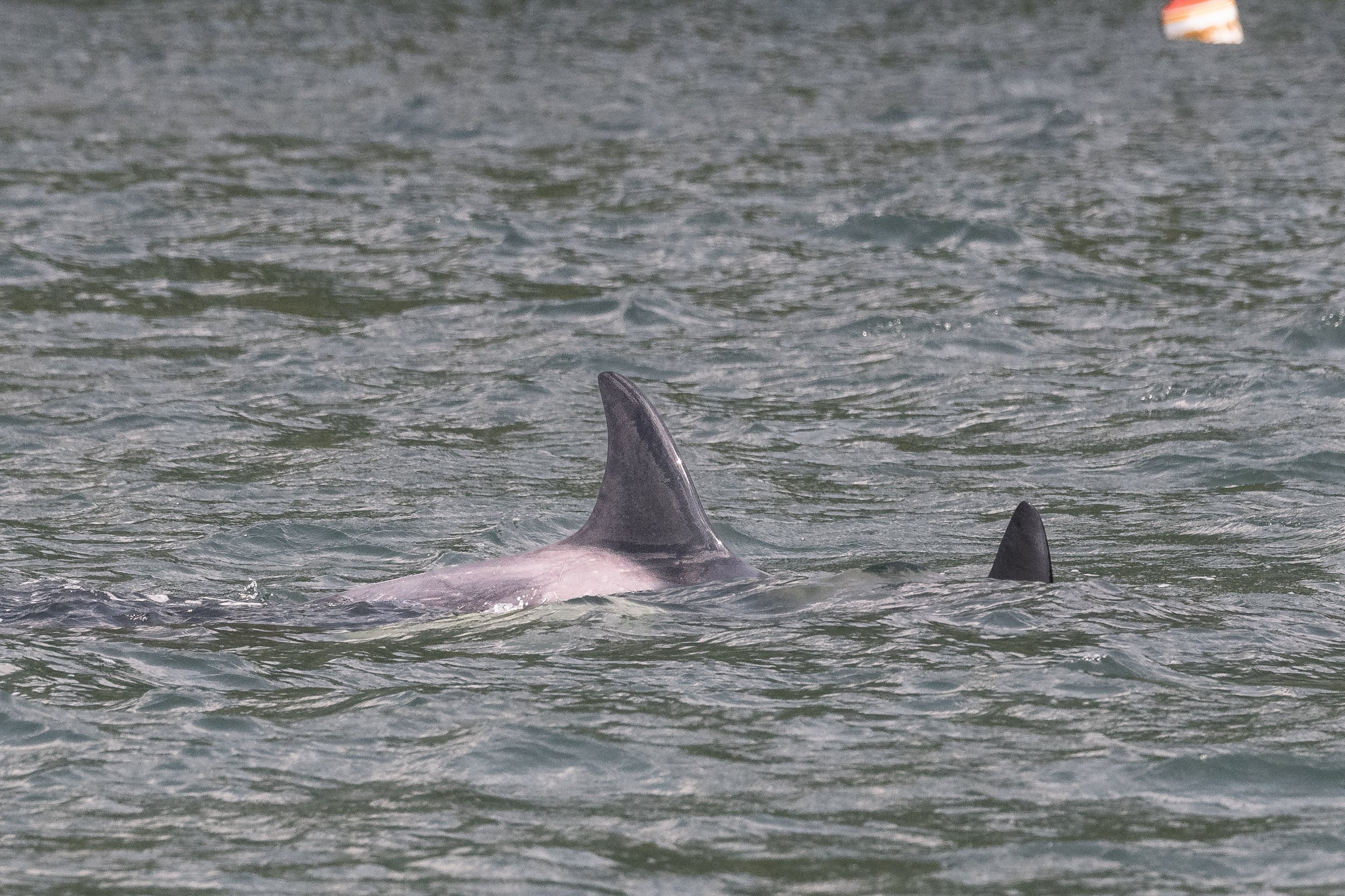
T124D3 Lupine preparing to go under. Photo by Evan Hessels.
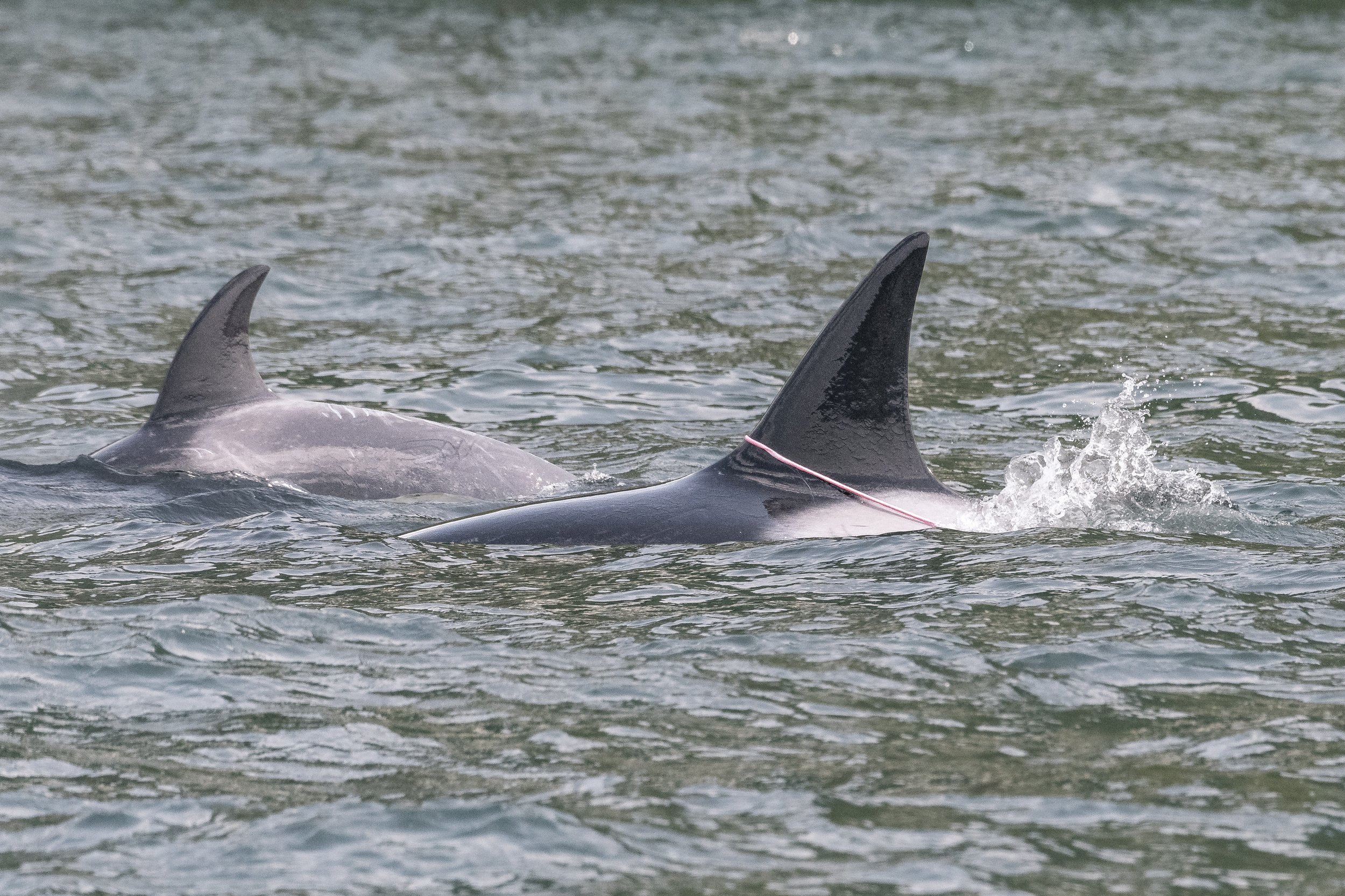
T124D4 Dune beside T124D Field, with the remains of their hunt draped over her dorsal fin. Photo by Evan Hessels.
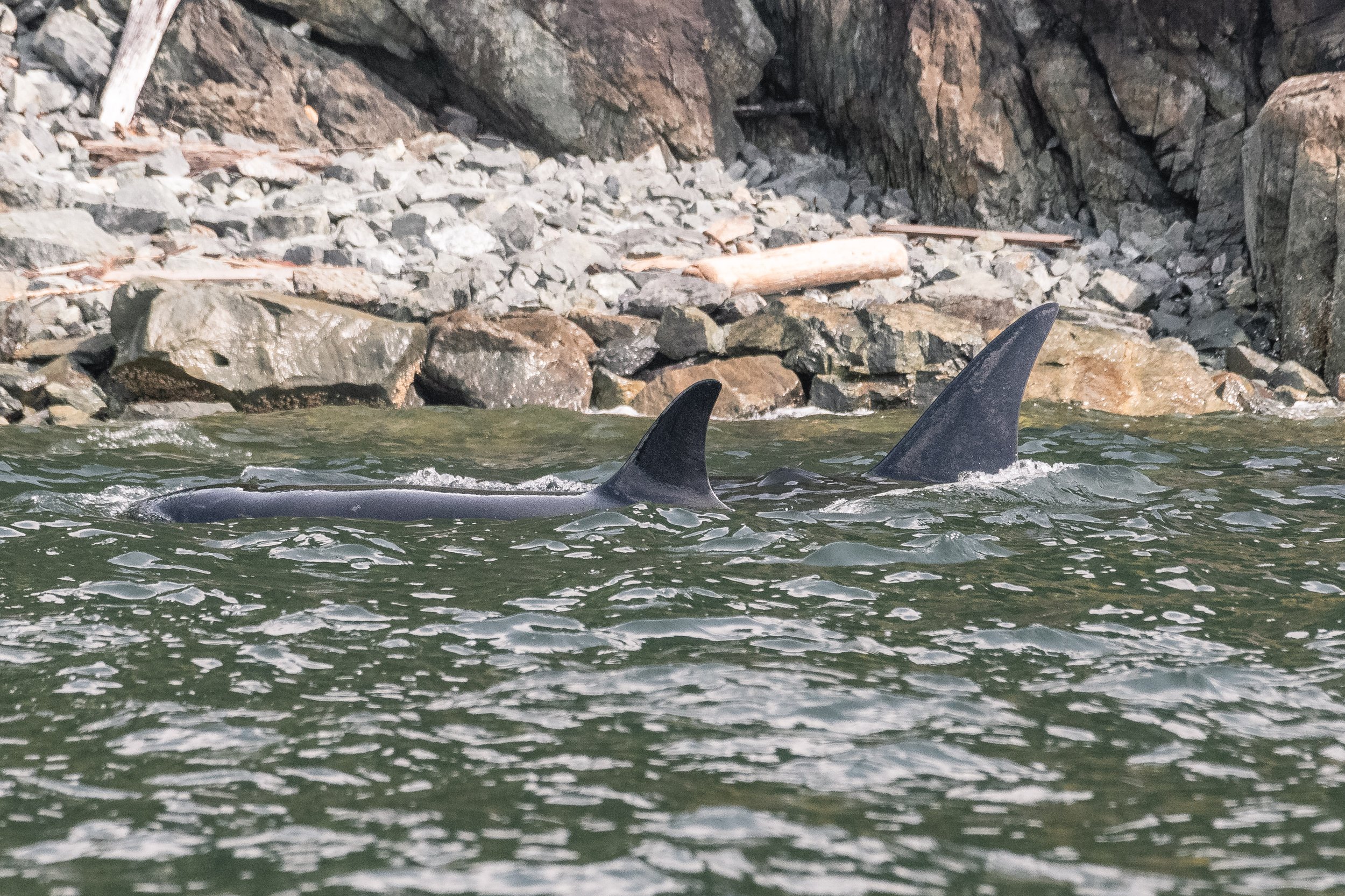
T124D3 Lupine and T124D1 Salish II together. Photo by Evan Hessels.
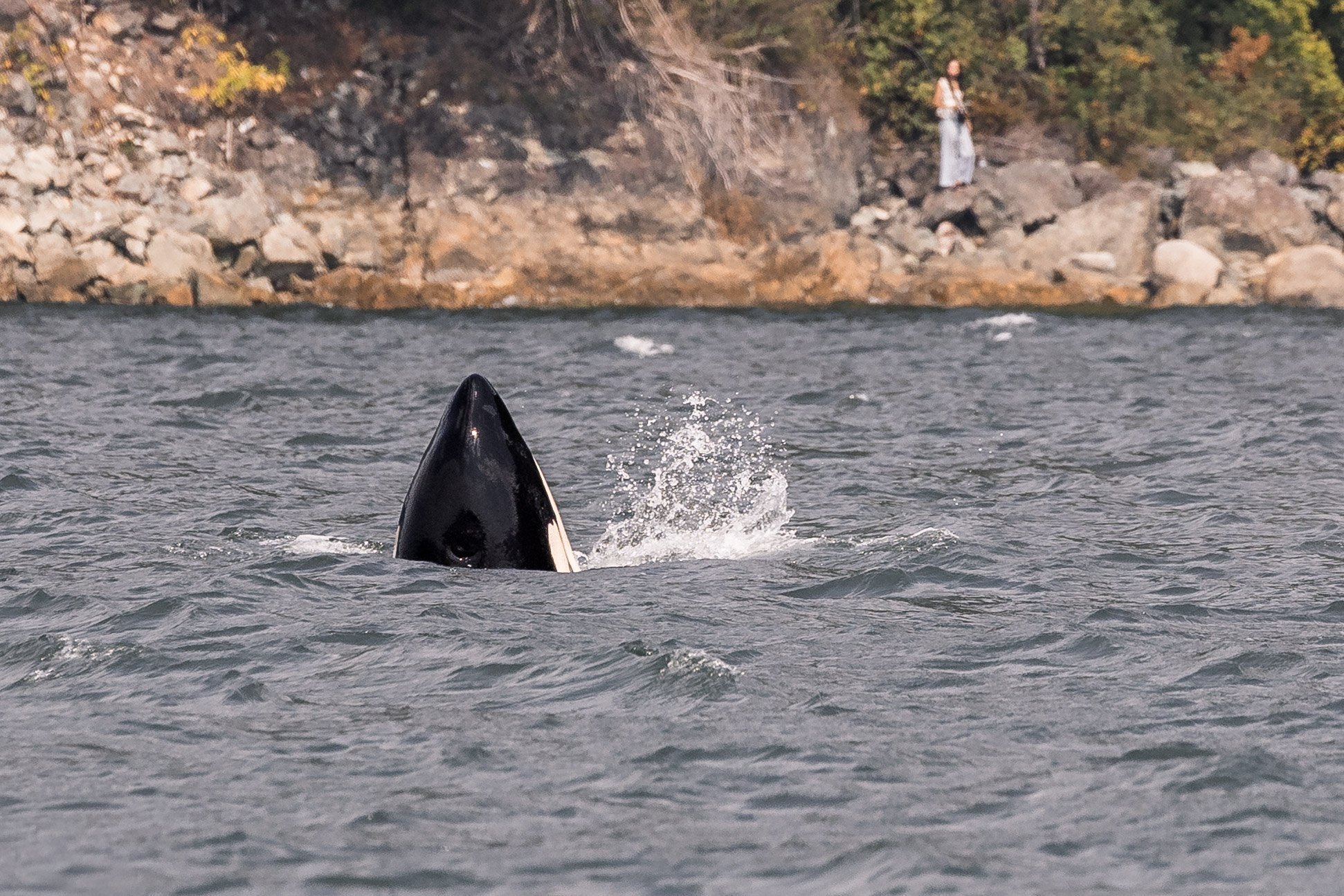
Spyhopping, and a little view of a blowhole! Photo by Jordan Robinson.
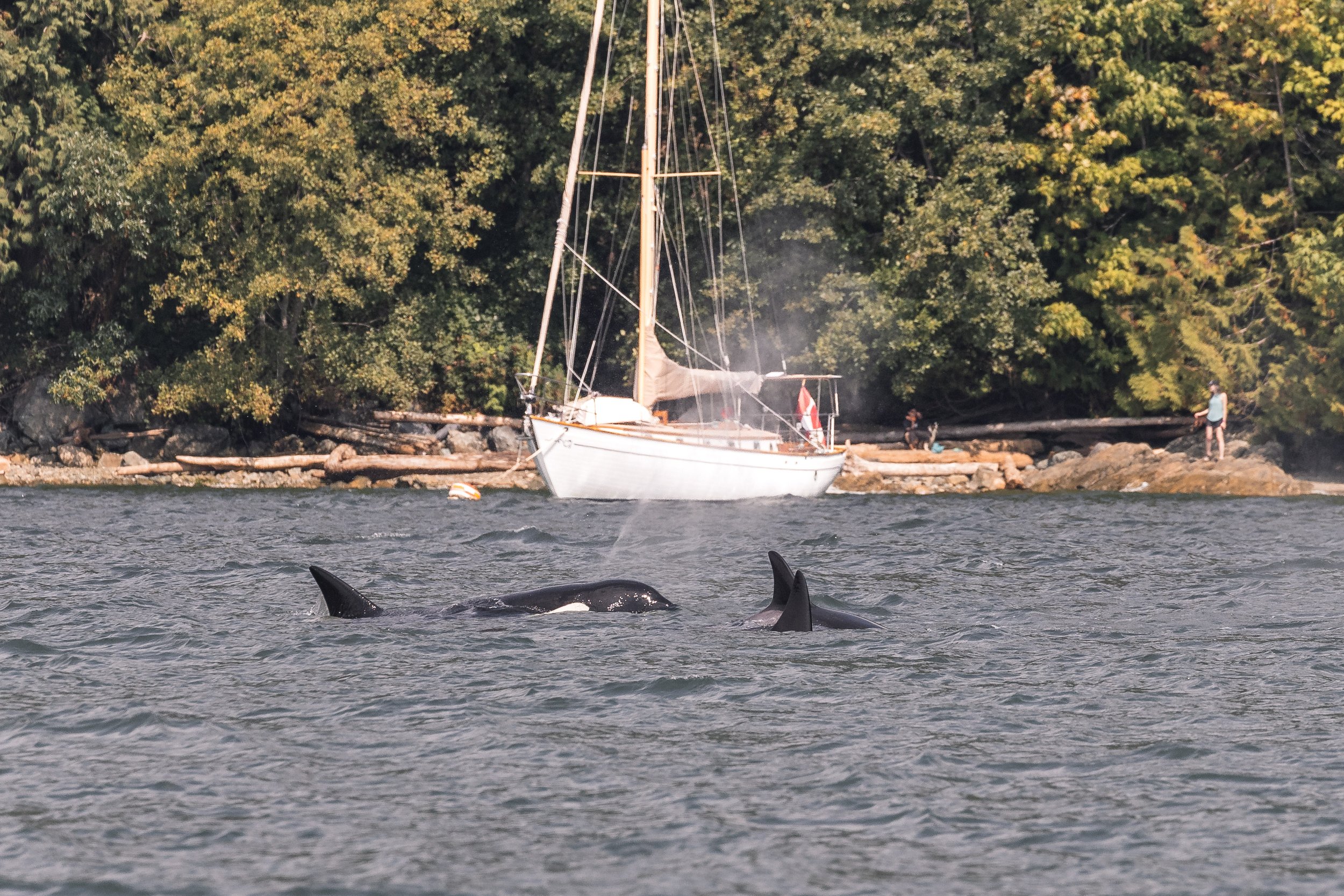
Photo by Jordan Robinson.