
August 22, 2026, 3:30 PM - A trio of sightings in a single trip!
We had a quiet evening ahead of us with only Kula pushing off the dock. Wind and waves greeted us as we began our search for this afternoon, eyes always scanning around us as we went. Peeking all around, we continued our search, until we prevailed when two fins were spotted ahead of us in the Strait of Georgia. Naturalist Jordan immediately recognized these two as T063 Chainsaw and T065 Whidbey II, two of the arugeably most distinctive members of the Transient orca population:
T065 Whidbey II ♀ (~1971)
T063 Chainsaw ♂ (~1978)
As we observed, the pair kept travelling and sometimes came closer together as they made their way along. Their behaviour suggested they were actively searching for their next meal, likely a Harbour Porpoise or Harbour Seal. Hunting takes up a large portion of an orca’s daily routine, as they require multiple hundreds of pounds of food to keep their weight up. Transient orcas are very skilled hunters and will alter their movements quickly when they spot possible prey, so you never really know what they will get up to when they are actively looking around!
After our time with the pair was up, we started searching once more, making our way south through the Salish Sea. Our next sighting was at Porlier Pass, where we spotted two humpback whales travelling together. The two whales surfaced and fluked close together, giving us a few good chances to see the undersides of their tails.
Seeing their flukes let us identify the whales as Frankenstein (BCX1358) and Dalmatian (BCY0994). Identification of humpback whales depends to a large extent on the distinctive patterns present on the underside of their tail flukes. Since each whale has its own particular combination of scars, pigmentation, and markings, the fluke is one of the most dependable methods known to researchers and naturalists for recognizing individual animals. However, unique shaping and pigmentation on their dorsal fins may also be used as a secondary method, and rarely, pectoral fin or scar matching on other areas of the body, such as the edge of the mouth, can be used too!
Once we had spent some time with the humpback whales, we departed and headed toward Stinky Rocks near Valdes Island. This rocky area is inhabited by a variety of wildlife, among them a large number of Steller Sea Lions and Harbour Seals that had come ashore on the rocks. Different from the continuous movement of the whales we had been observing earlier, these animals seemed to have only one thing on their minds: sleeping.
For both species, hauling out is a vital aspect of their lives. By resting on land, Harbour Seals and Steller Sea Lions can conserve their energy and regulate their body temperature, all while avoiding predators such as the Transient orca. Steller Sea Lions are often especially impressive when gathered together, as their massive size and interesting vocalizations are an interesting sight (and sound) to behold.
We finally left the quiet haulout behind and started off towards home, going up through Gabriola Pass. At the very moment it looked as if our evening was starting to conclude, we were surprised when we spotted another group of orca crossing through the narrow waterway!
Once more, we raised our camera and began documenting the individuals ahead. It was a trio of orca, one smaller than the other two, with the larger individuals both having distinct notches visible in their dorsal fins. A quick comparision to our guides confirmed this was the T036A1s travelling with T065A5:
T065A5 Indy ♂ (2014)
T036A1 Tierna ♀ (2005)
T036A1A Drift ♂ (2022)
This is a very interesting group to spot, as T065A5 Indy is often seen travelling by himself, and T036A1 Tierna and her calf have been bouncing around, briefly joining up with several other matrilines including the T035As, the T099s, and occasionally her aunt’s matriline, the T036Bs and T036 Flapjack. It is interesting to note that we now believe the T036s and T099s are related, with T099 Bella actually being T036 Flapjack’s first calf, and T036A Leland actually speculated to be Flapjack’s third calf, after T137 Loon! While T065A5 Indy, however, isn’t related to any of these matrilines. He is related to the pair of orca we had seen earlier on the trip, though, with T063 Chainsaw believed to be his uncle, and T065 Whidbey II being his grandmother.
With the evening light starting to set over the area, we continued our travels through the Southern Gulf Islands and back up through Dodd Narrows. We made our way back toward Nanaimo and wrapped up the trip after seeing all sorts of wildlife, from sleepy pinnipeds to speedy orcas and foraging humpback whales!
Please enjoy these photos taken by Marine Naturalist Jordan Robinson!
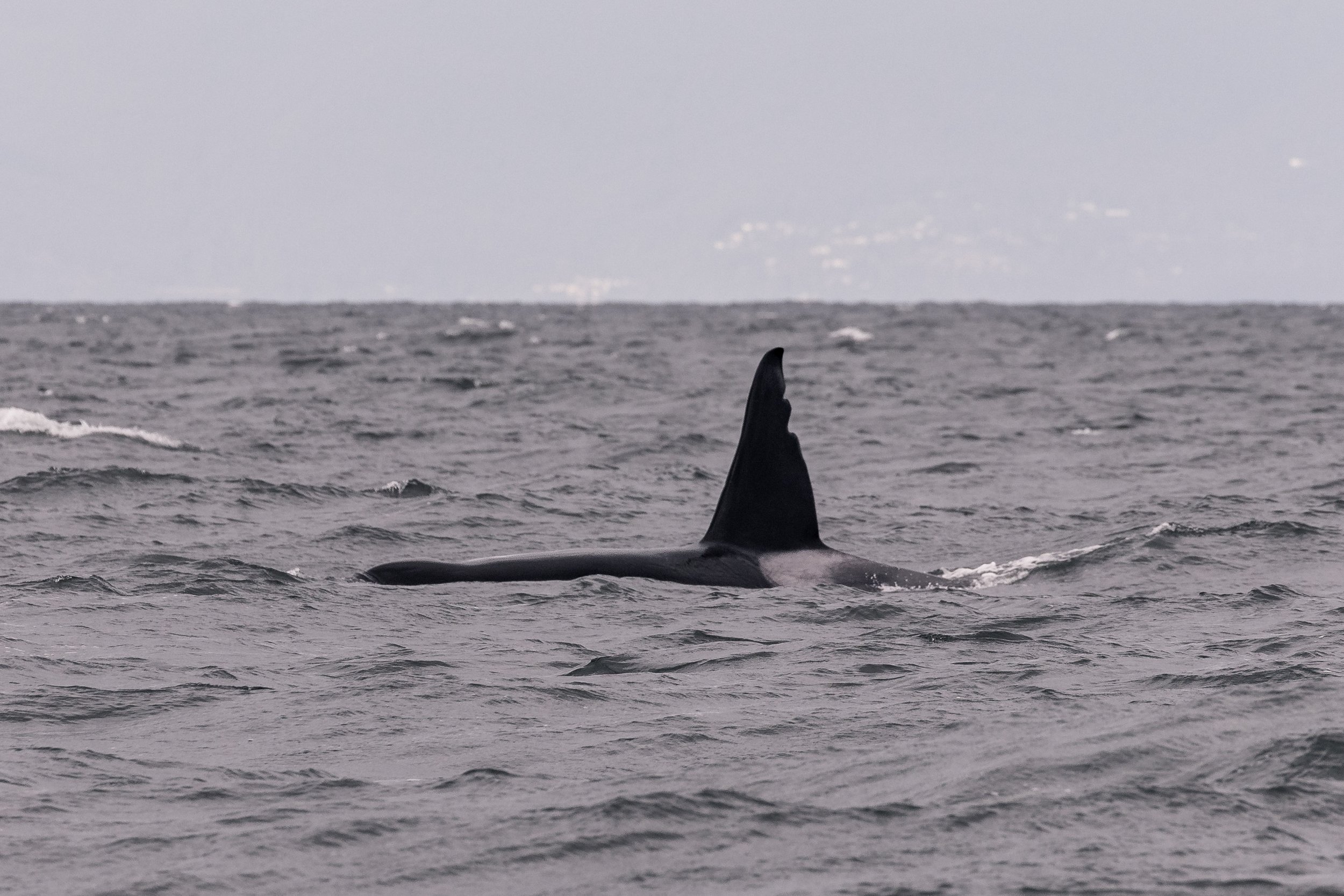
T063 Chainsaw in the waves.
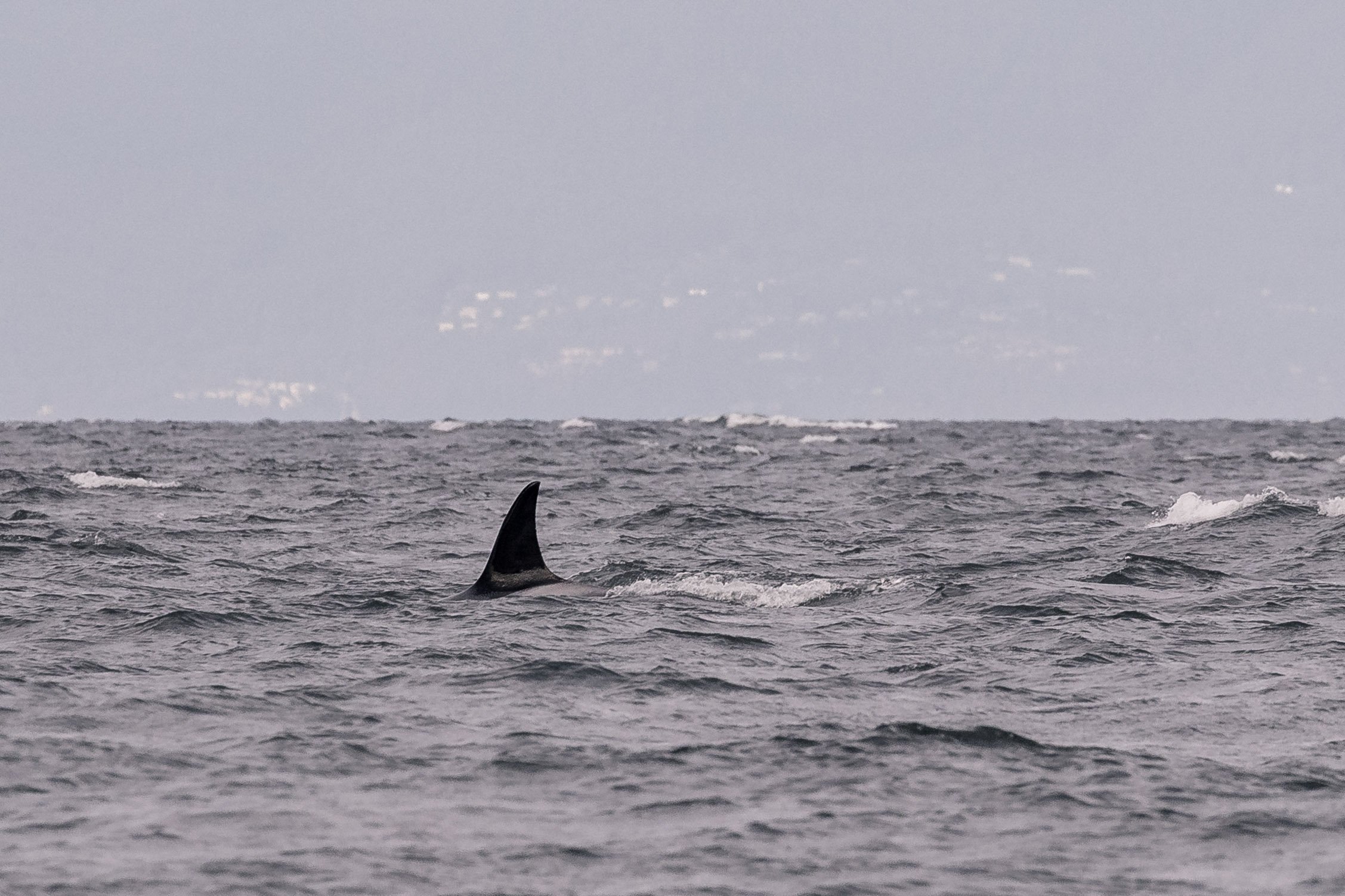
T065 Whidbey II travelling close by.
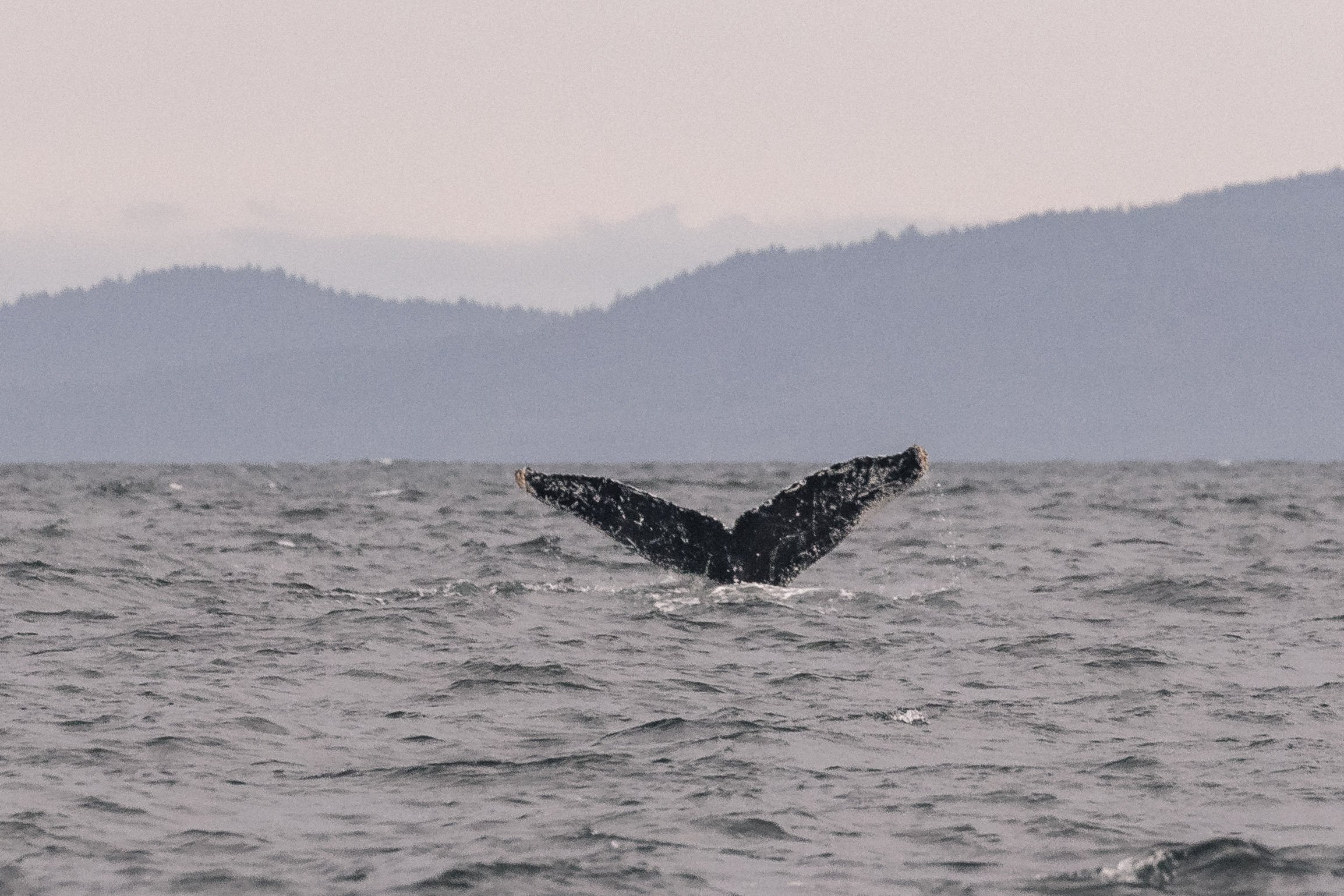
Frankenstein with their very unique fluke visible.
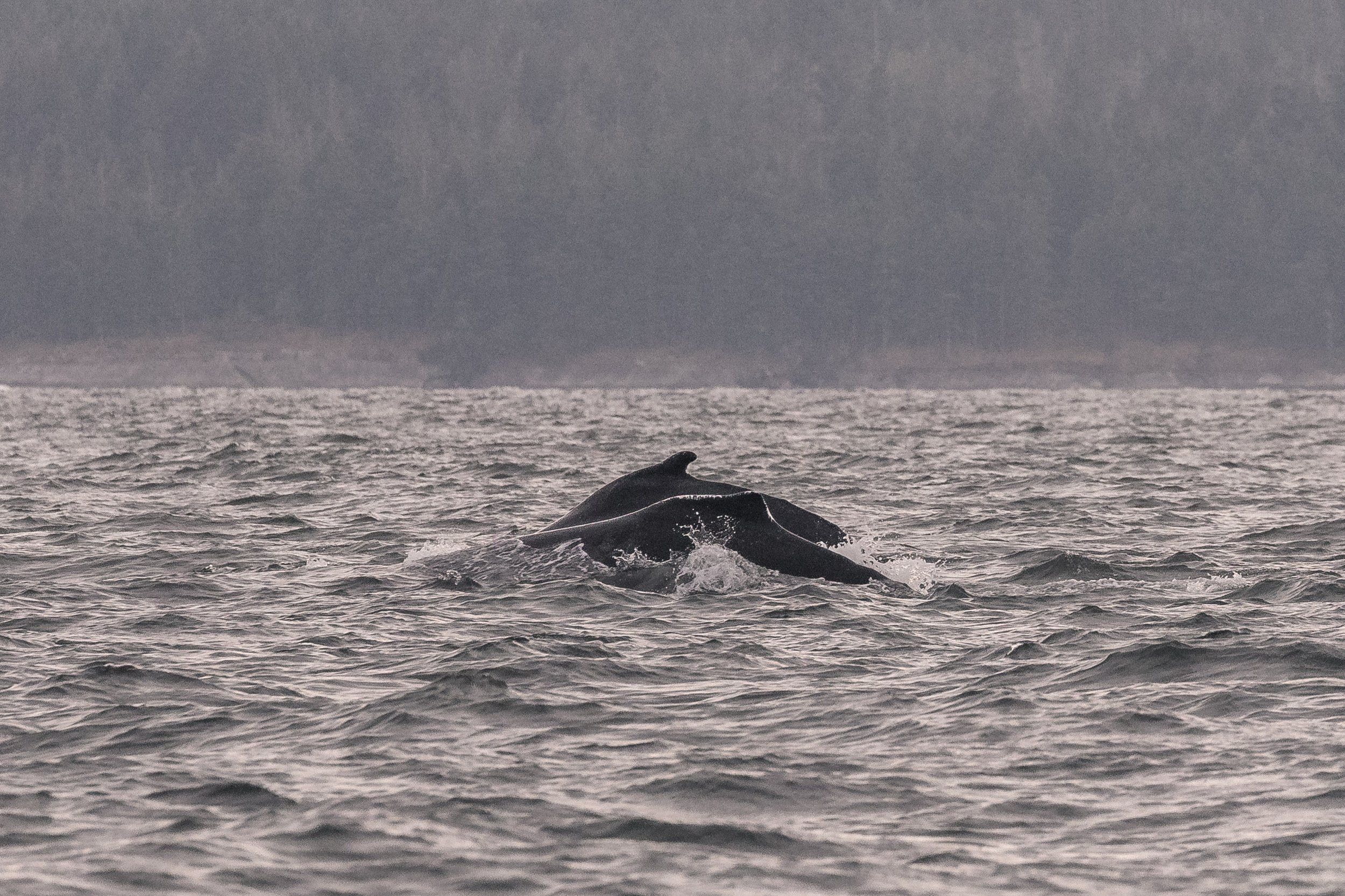
Frankenstein (front) and Dalmatian (back).
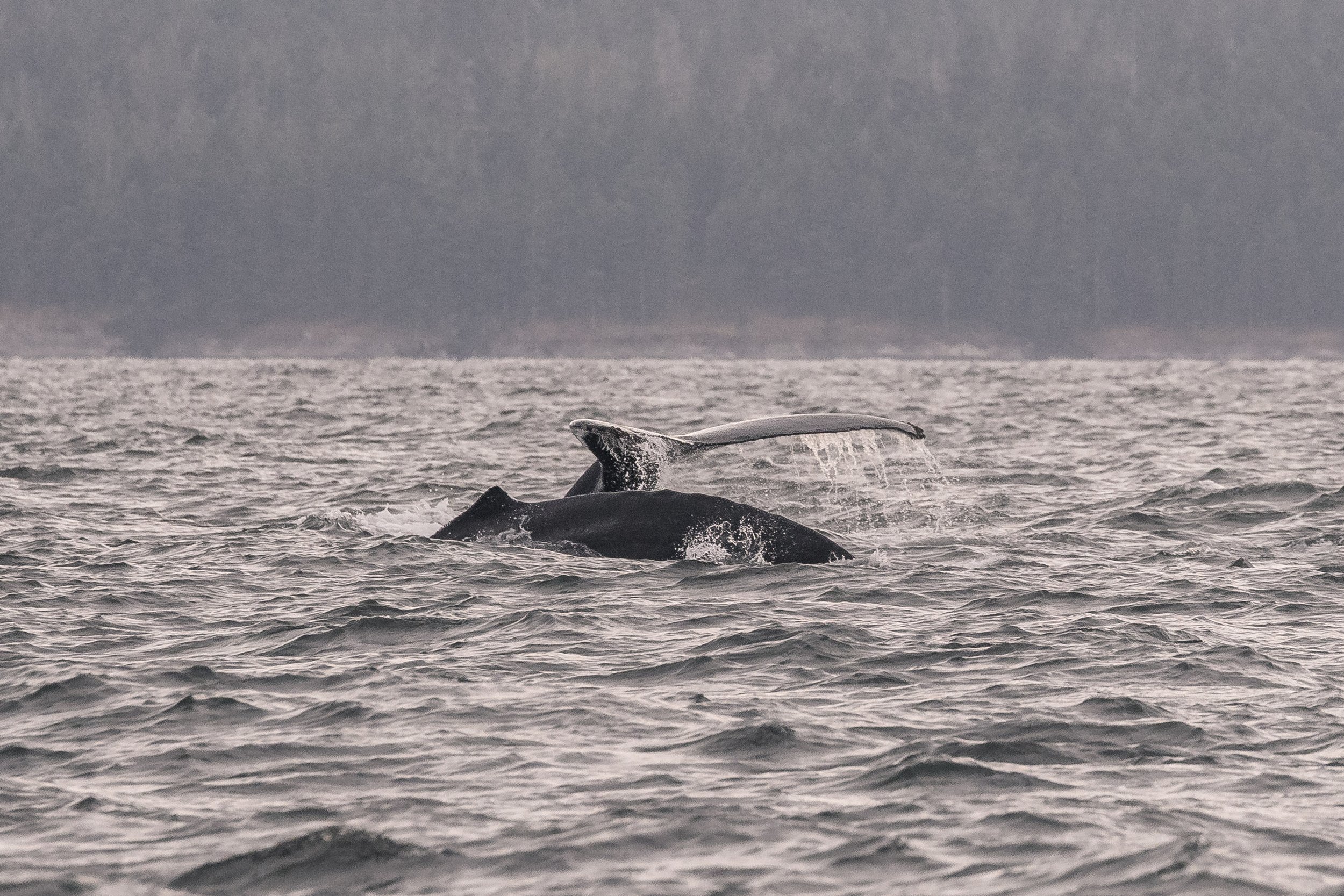
Frankenstein beginning to dive, with Dalmatian with their fluke out of the water.
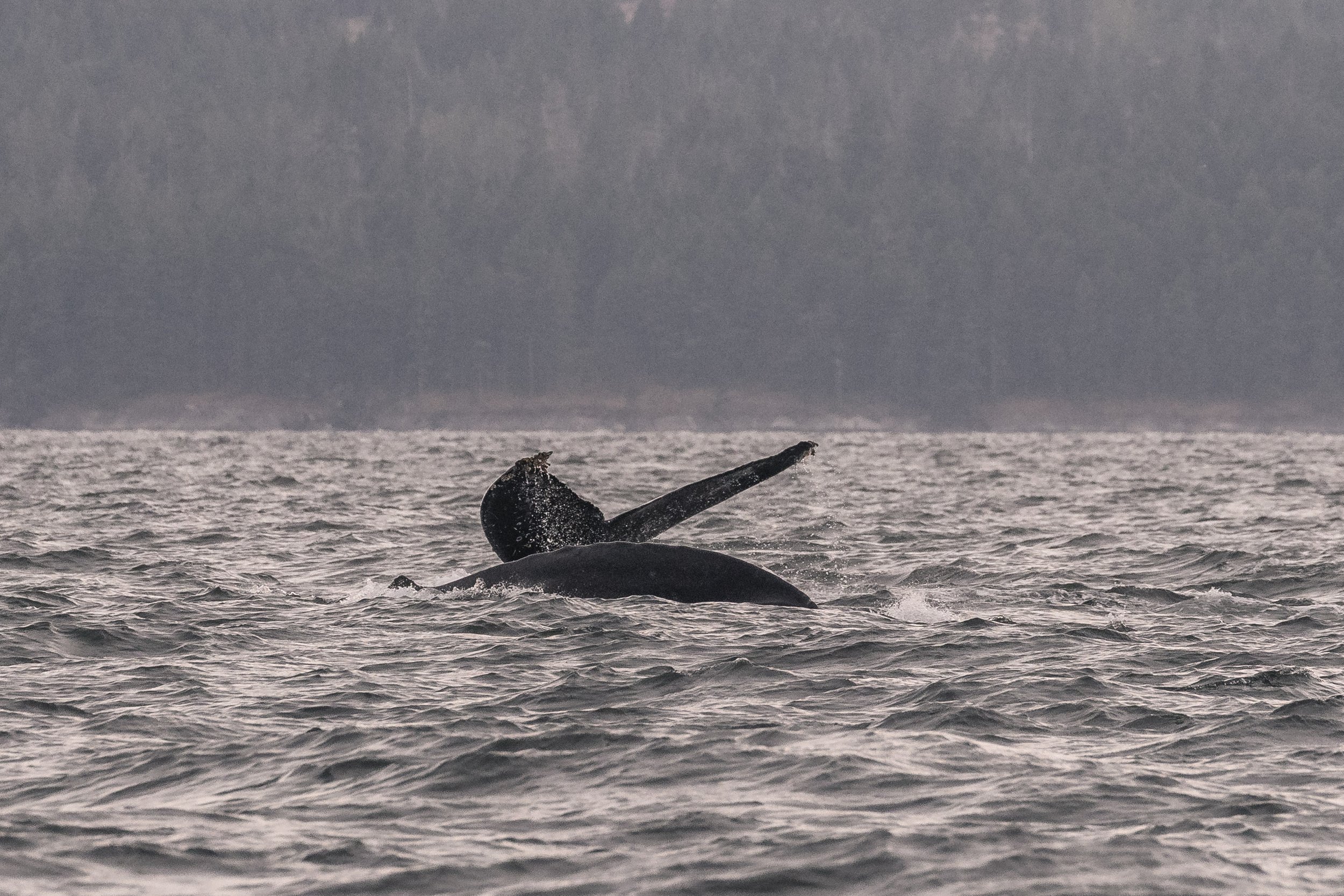
A peek at Dalmatian’s fluke as they dive.
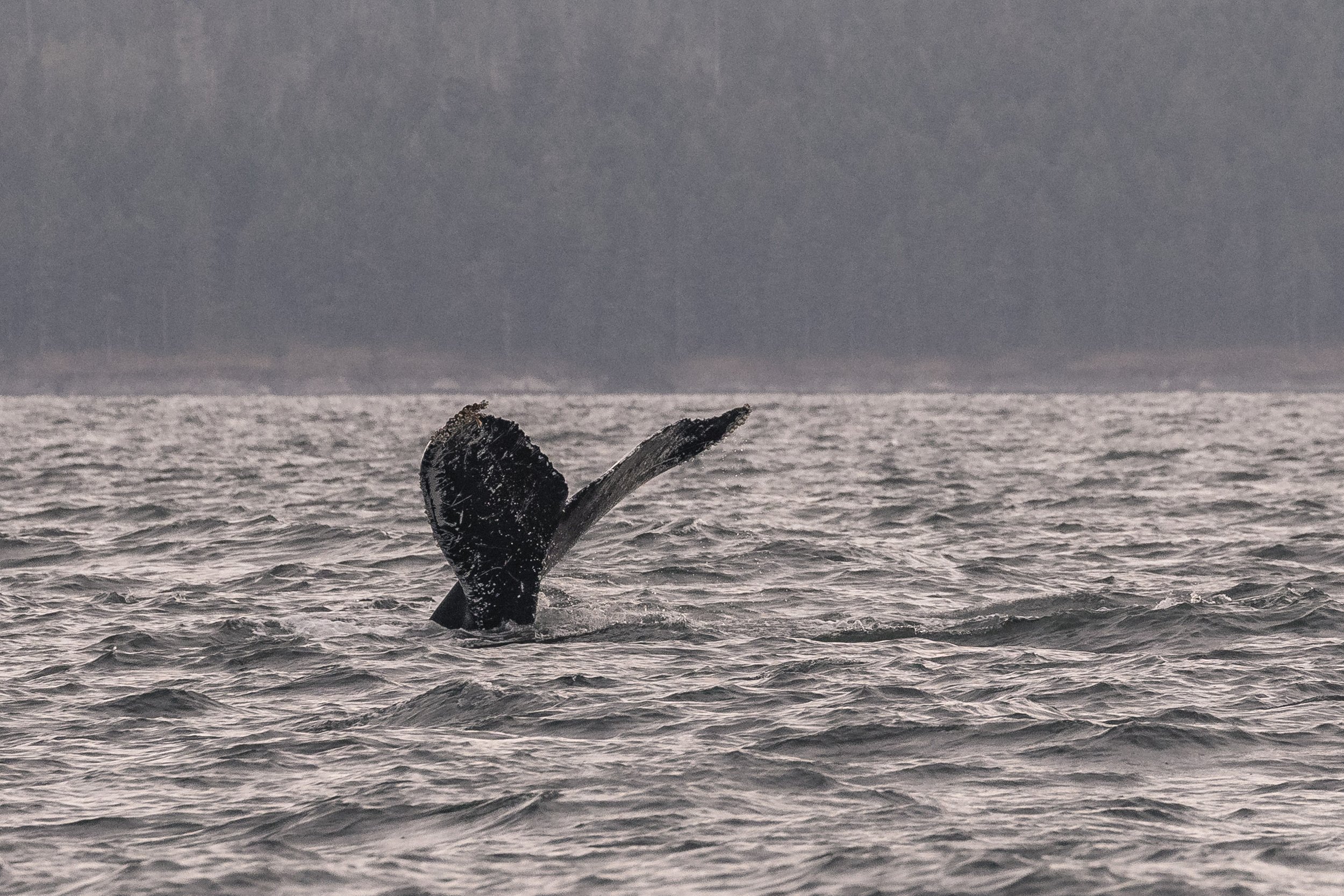
A side view of Frankenstein.
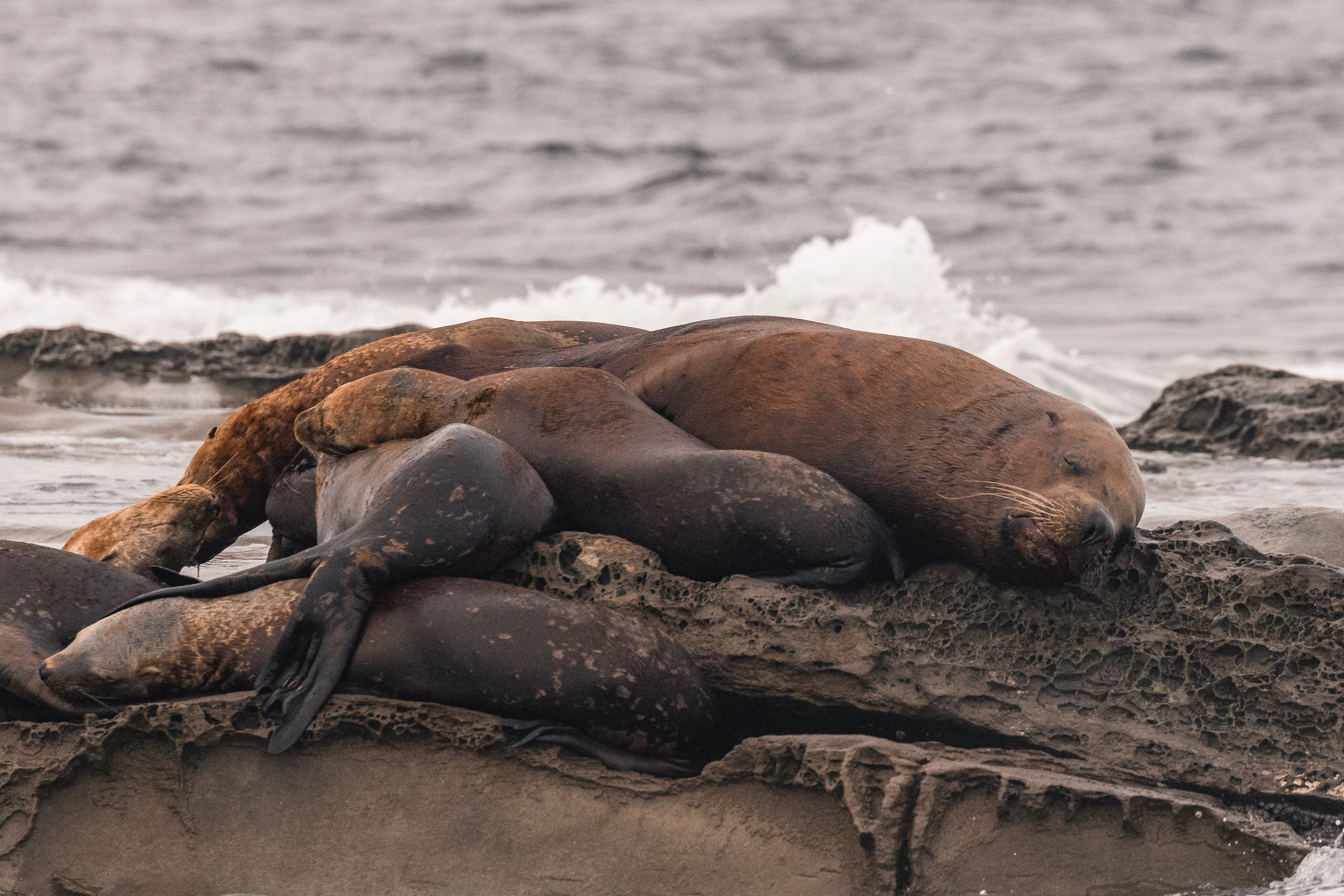
A cuddle puddle of Steller Sea Lions.
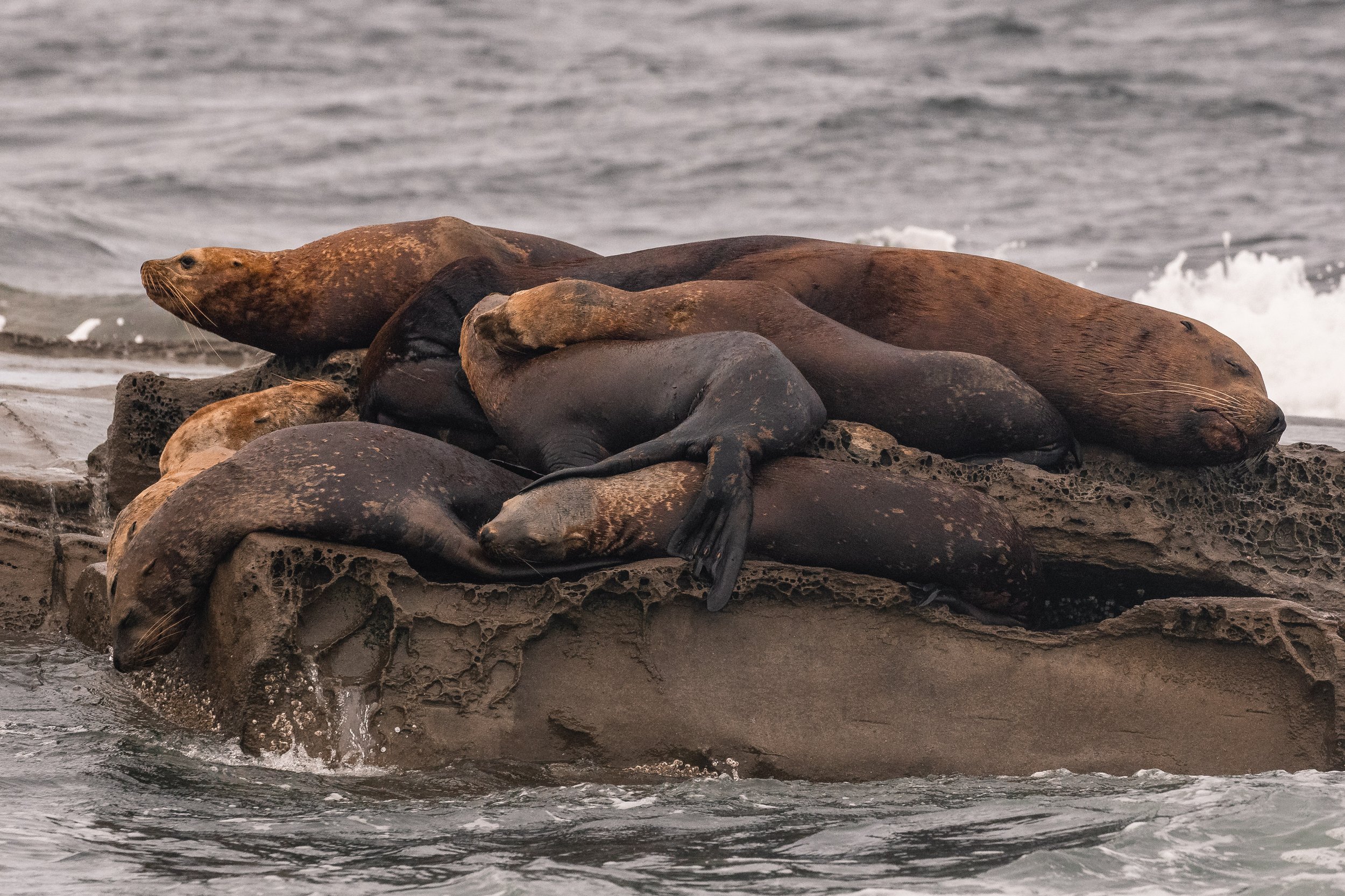
It is always interesting what positions pinnipeds get into when they decide to haul out.
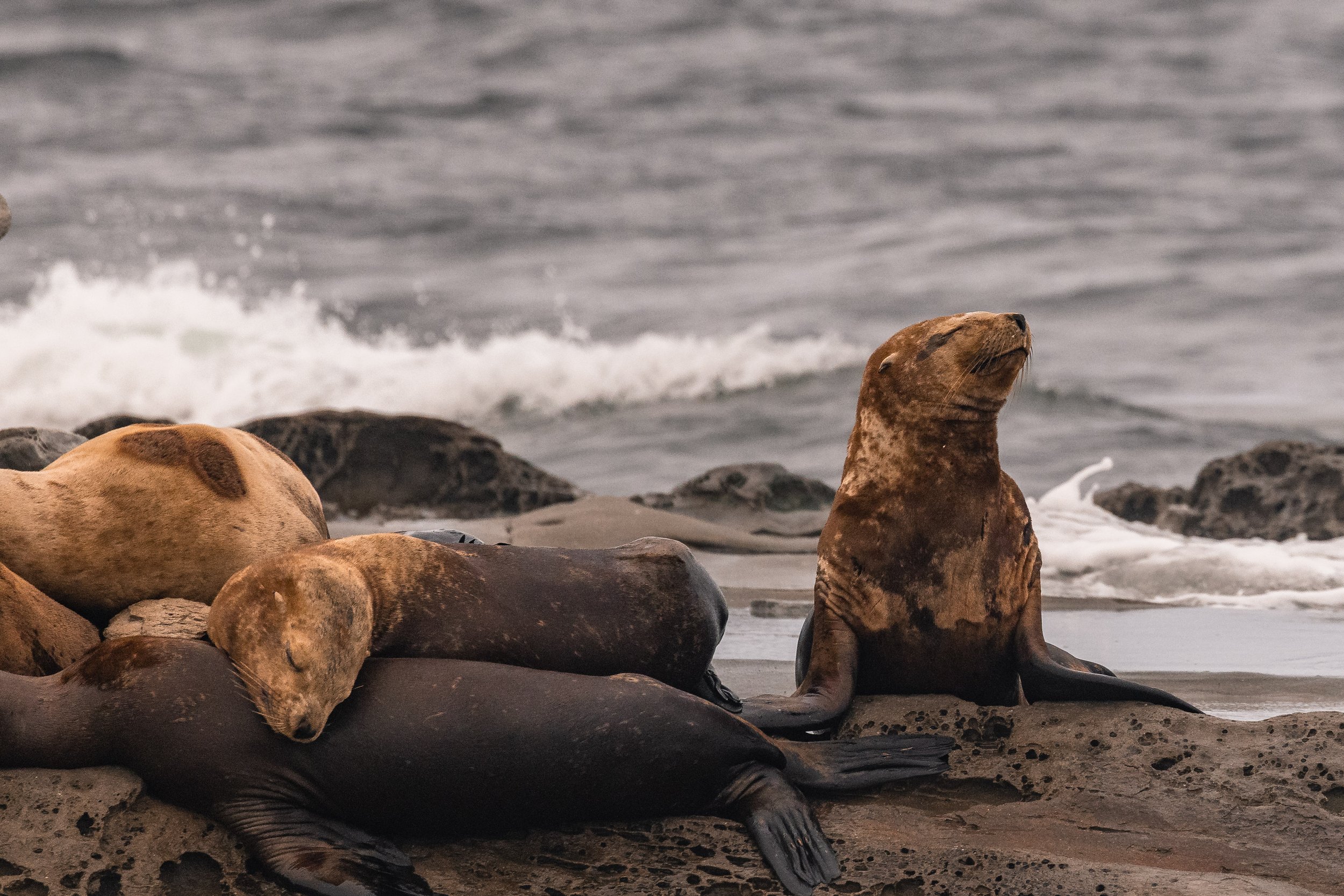
It was a very sleepy day during our time at Stinky Rocks today.
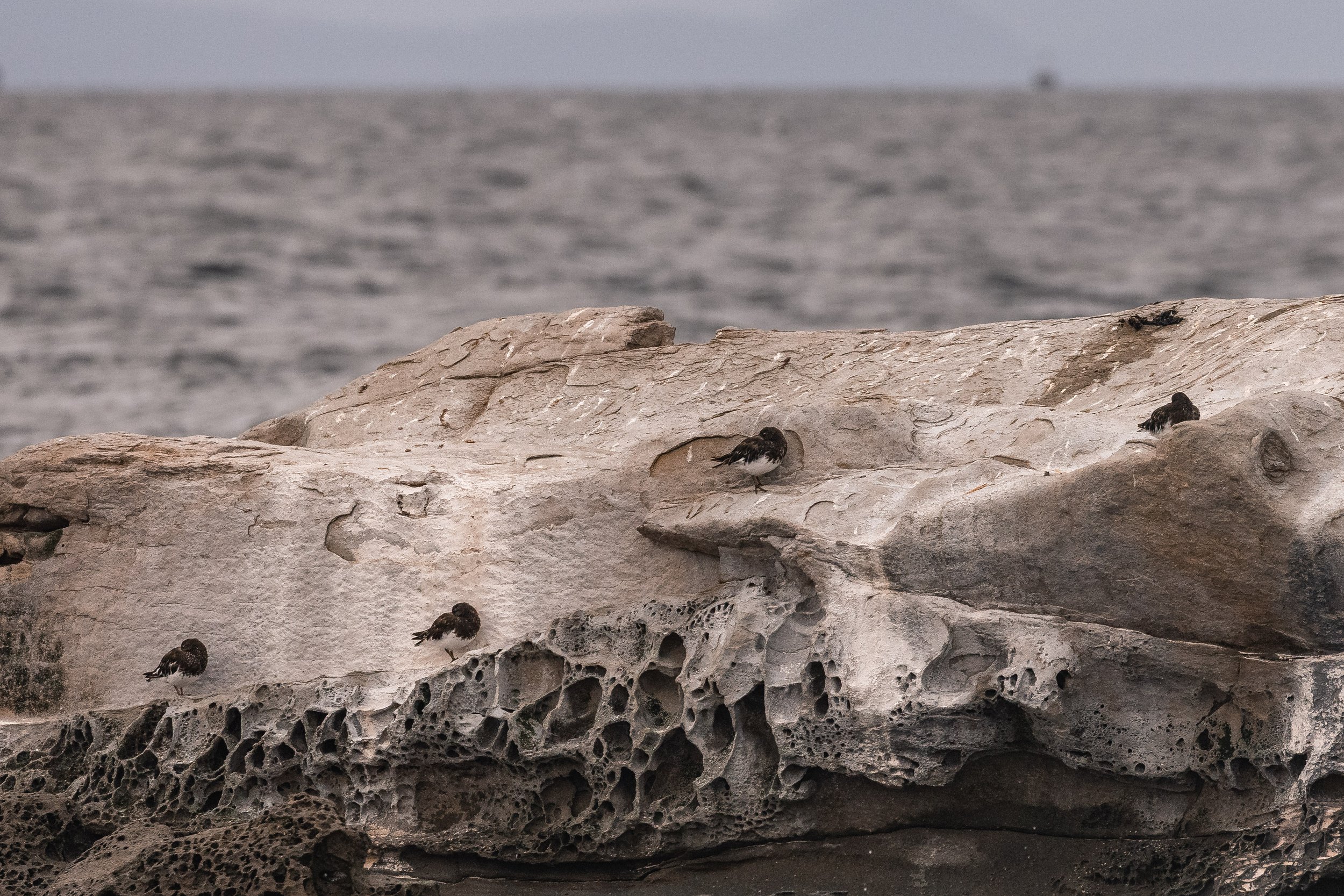
A line of Black Oystercatchers on the rocks.
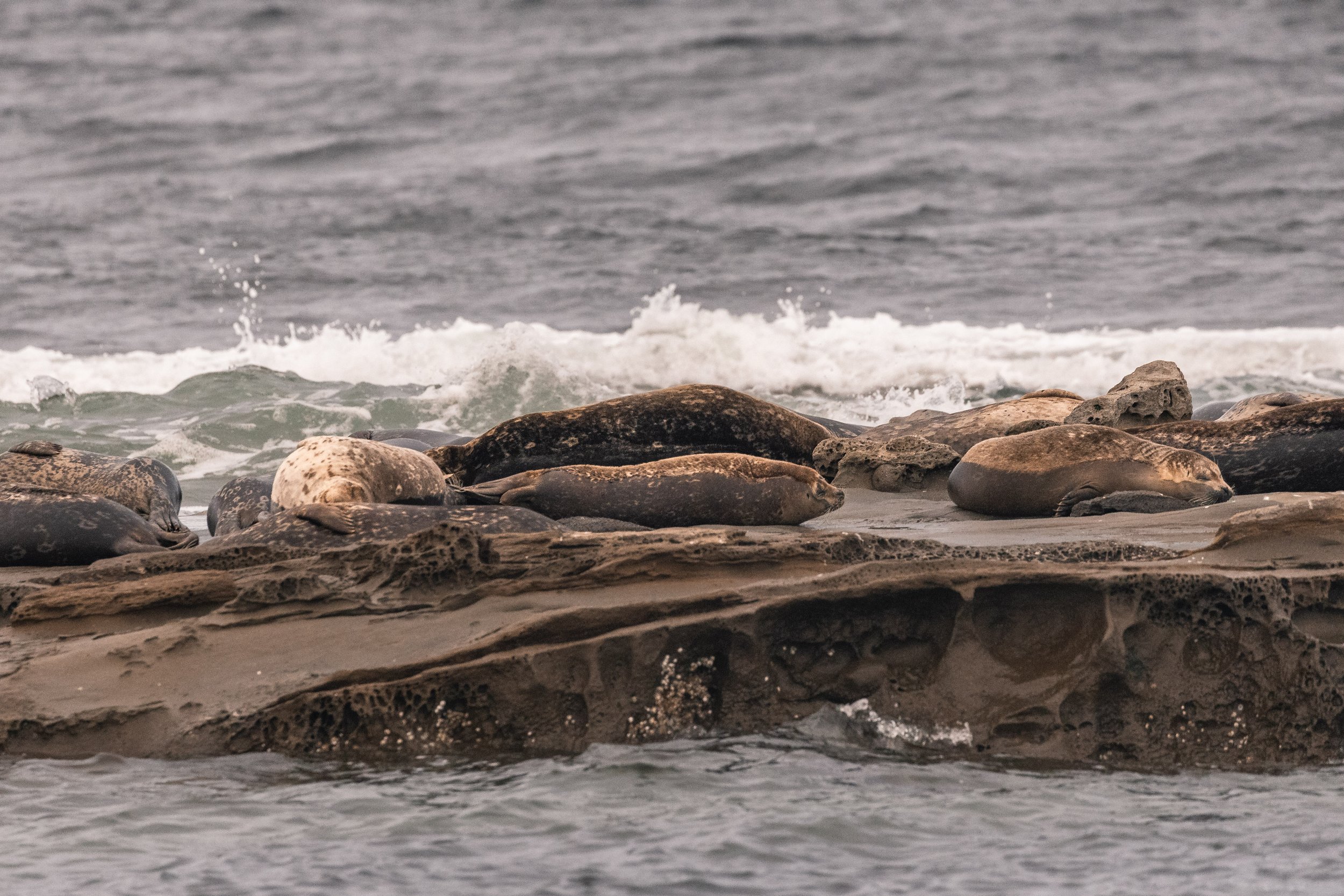
Harbour Seals hauled out together.
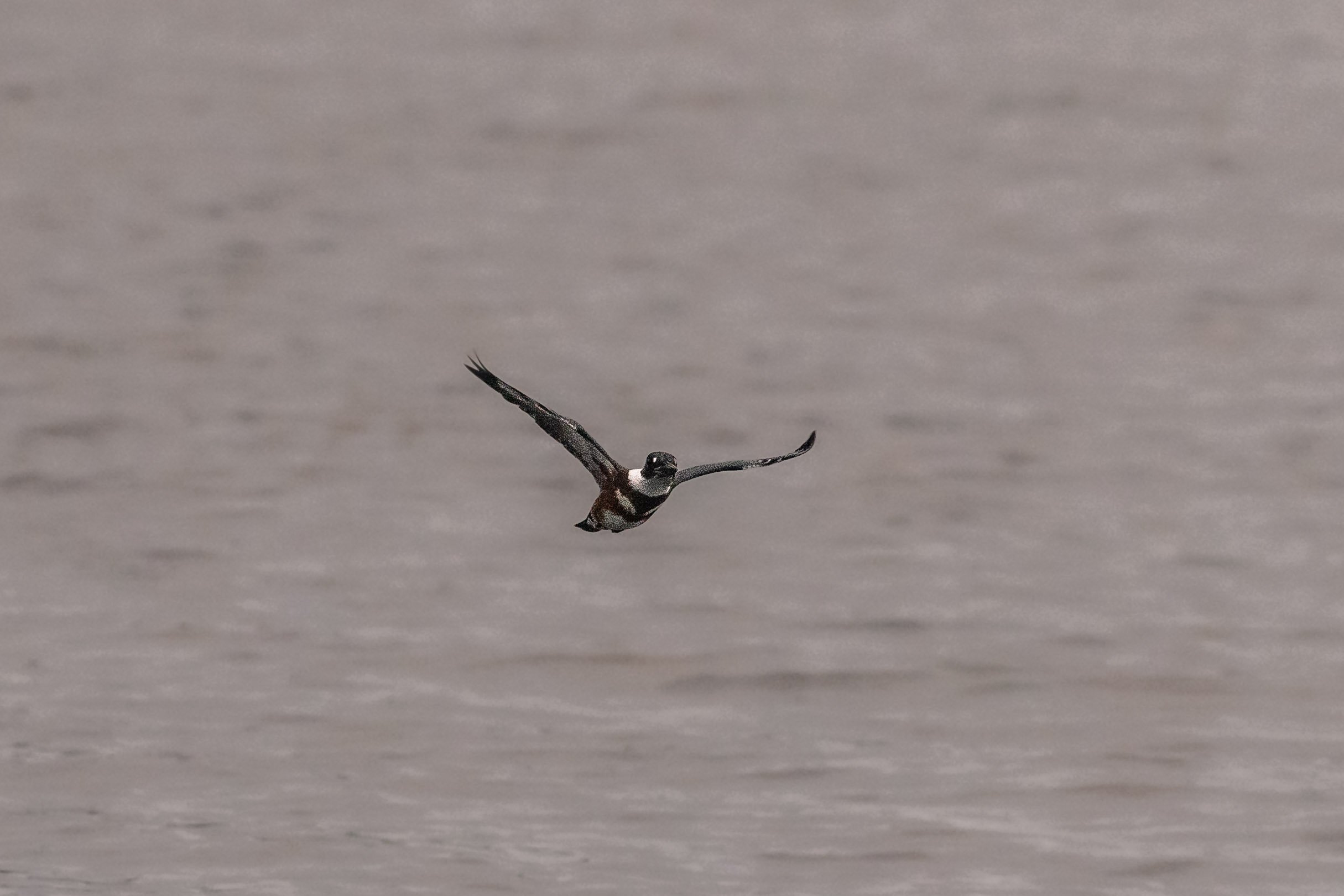
A Belted Kingfisher flying by.
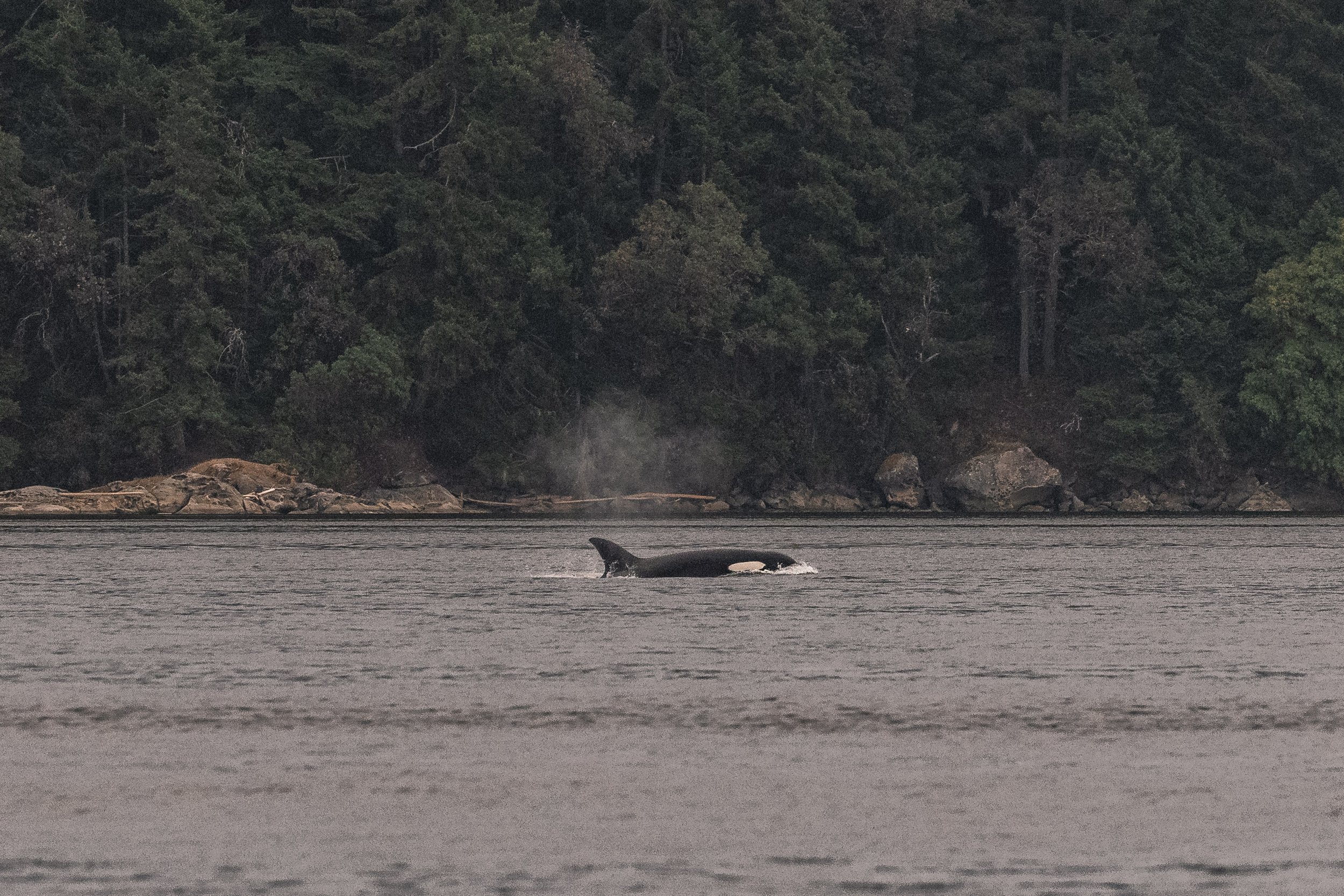
T036A1 Tierna with her eyepatch visible above the water.
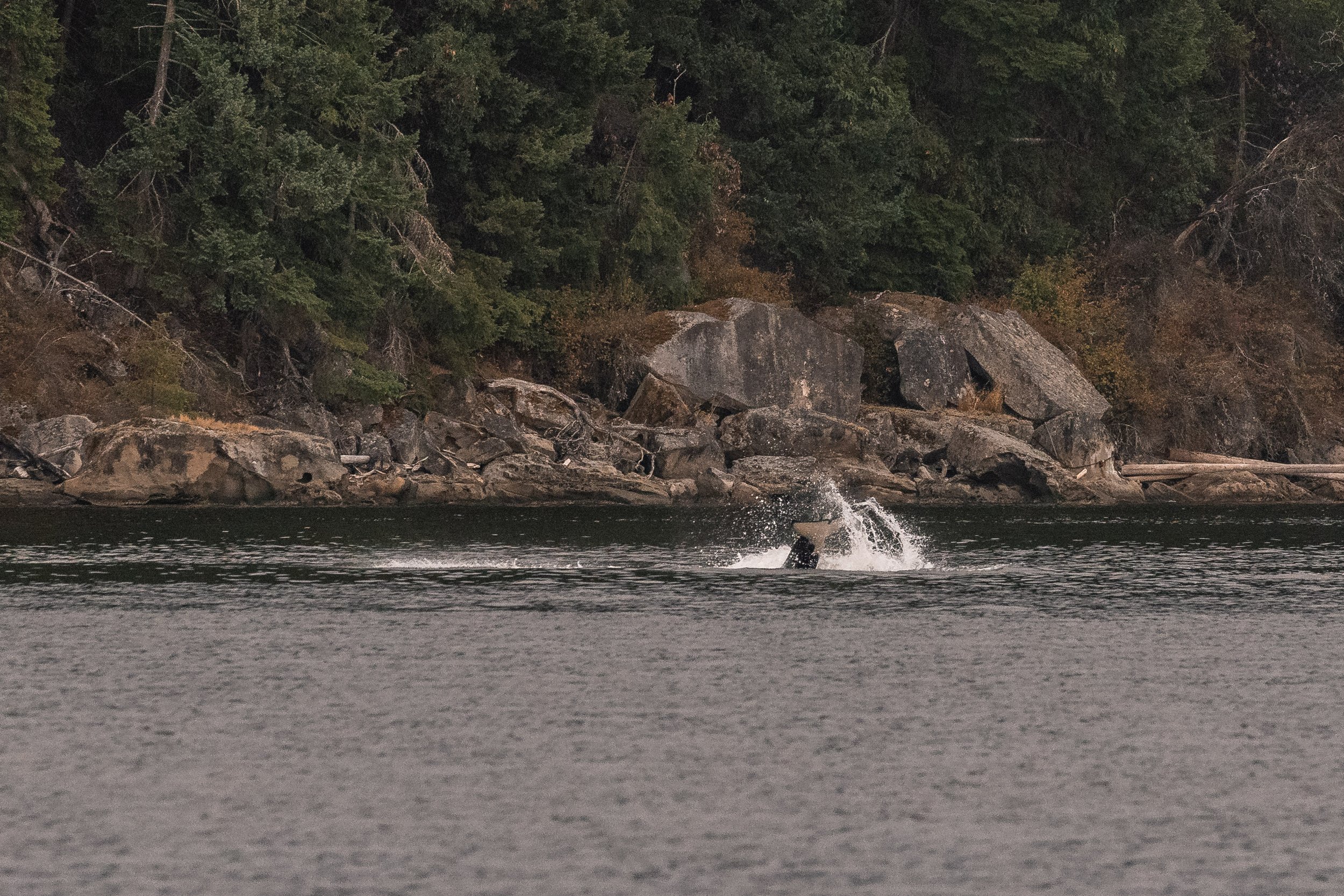
Flukes up!
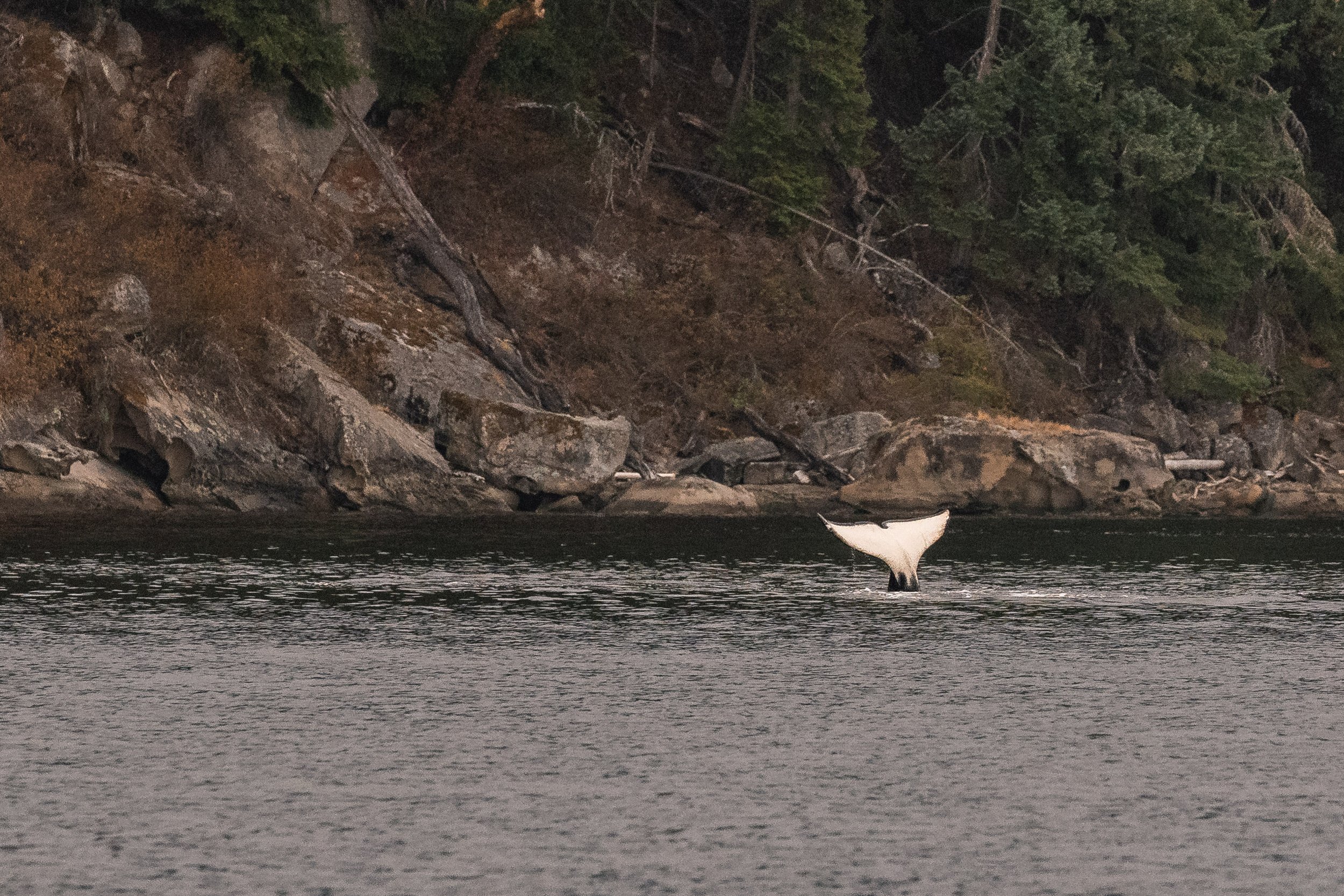
Can you spot the counter shading on this orca tail?
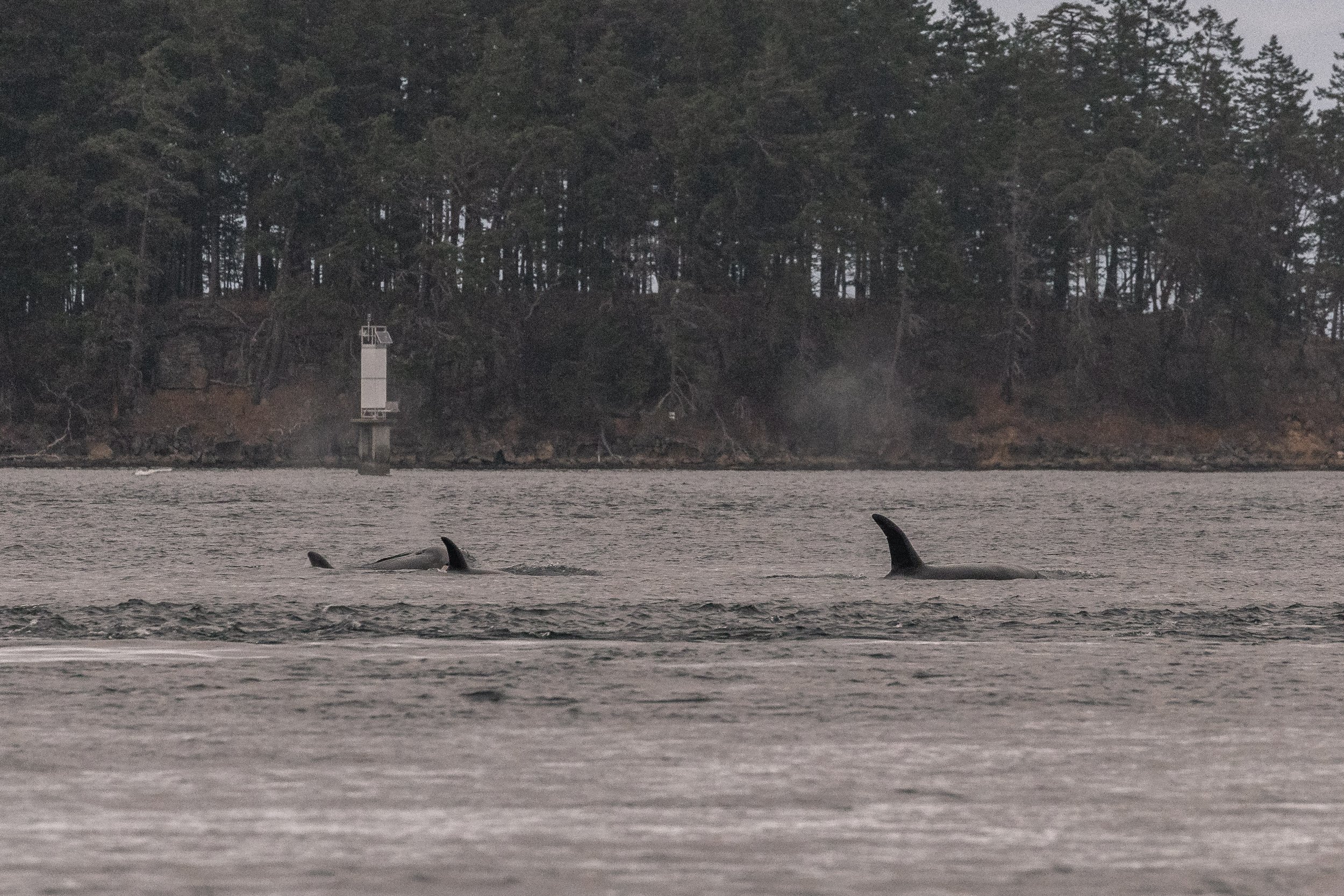
From left to right: T036A1 Tierna, T036A1A Drift, and T065A5 Indy.
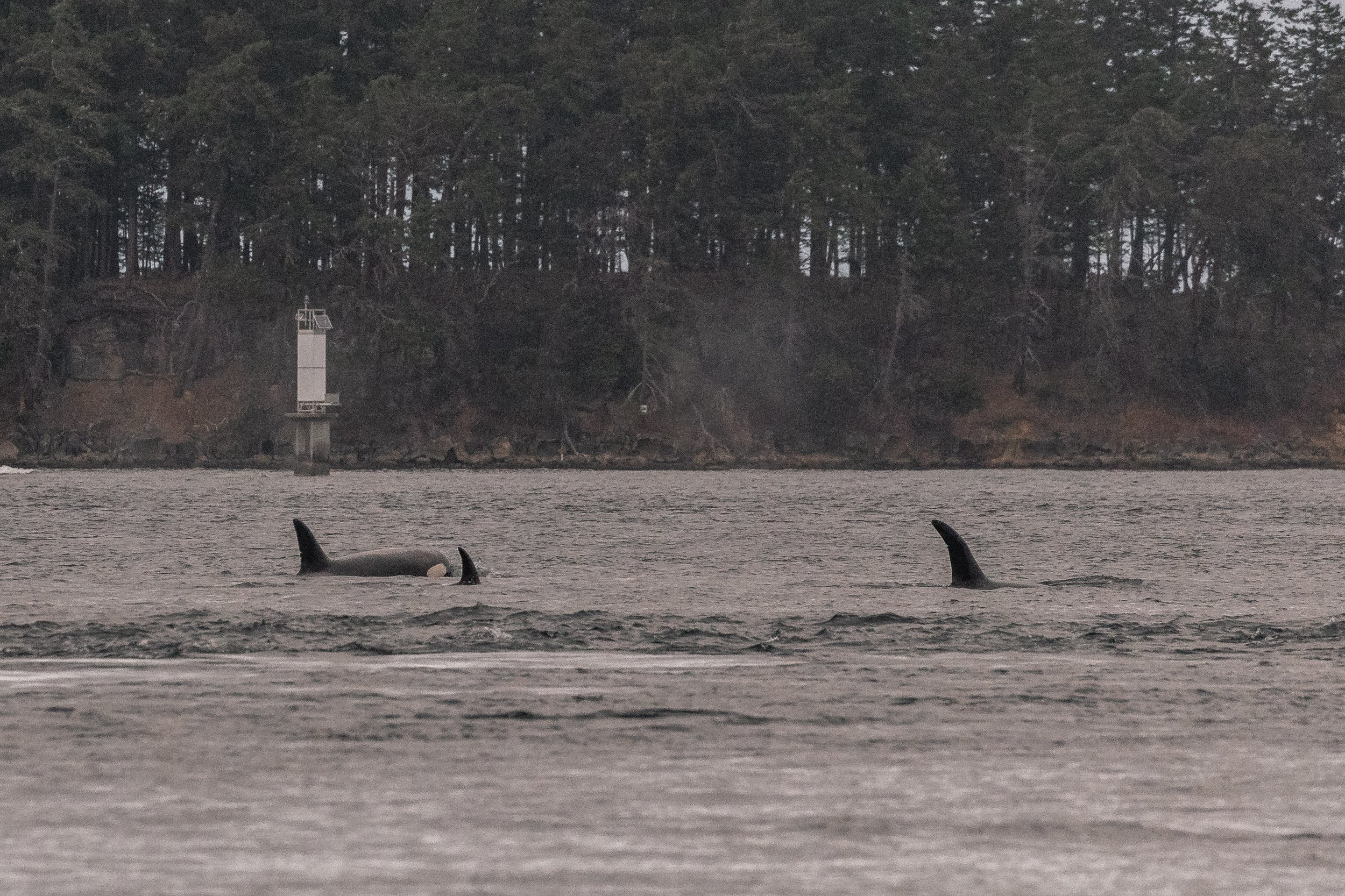
Tiny T036A1A Drift tucked close to his mother T036A1 Tierna, with T065A5 Indy further away.
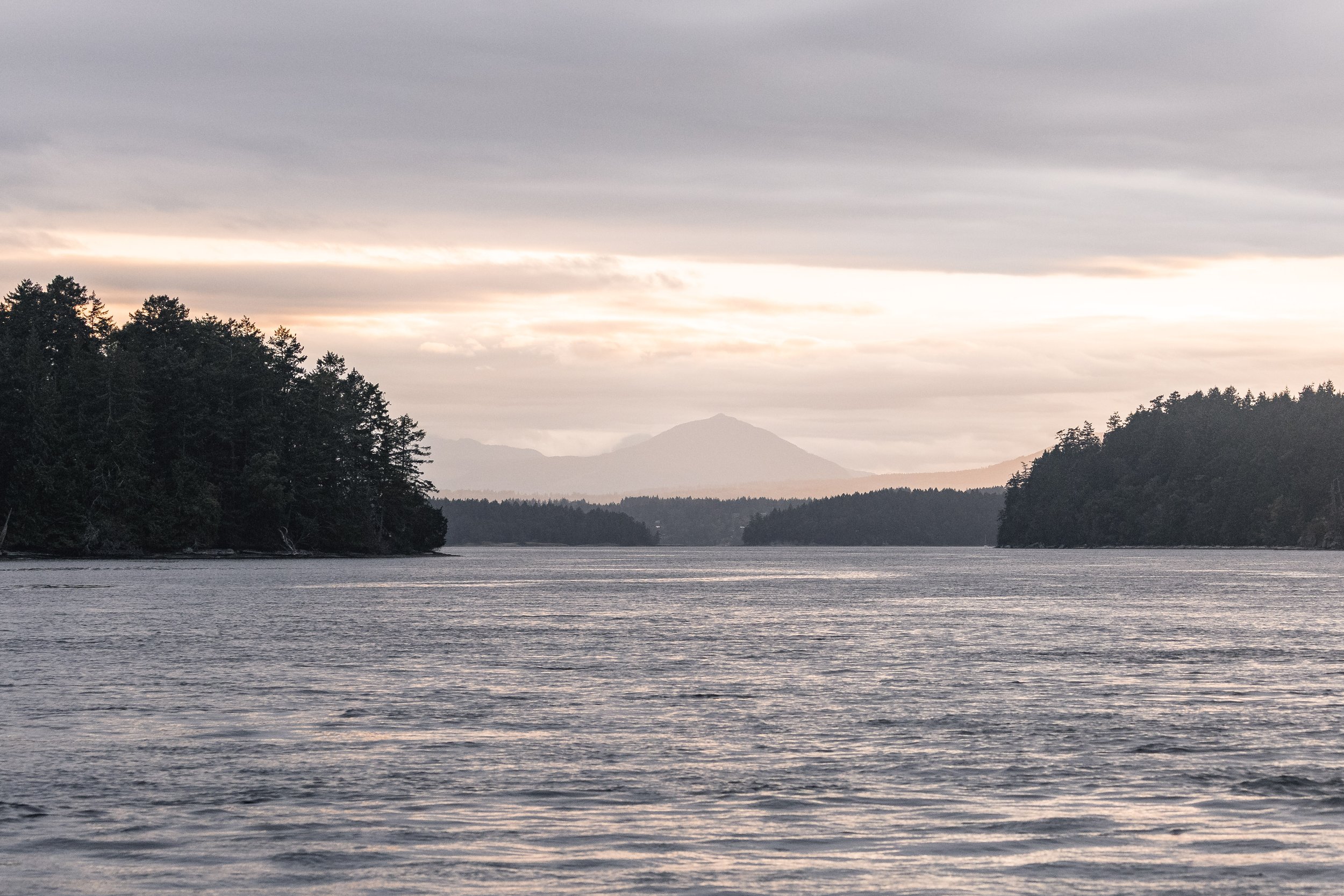
Gabriola Pass in the sunset.