
August 25, 2026, 3:30 PM - Three seperate orca encounters in one trip!
With no trackers or tags on any of our whales, we truly never know where they will show up day to day. Sometimes we have to travel for a while; other times, they are right in our own “backyard.” Boarding onto Cascadia and Kula, we set off and headed into Northumberland Channel. Today we experienced the latter, as within half an hour of departing, we found our first whales of the day!
Several small fins appeared, ducking into the depths as they travelled along. The onboard Naturalists raised their cameras and began taking photos of each pod member to compare with our ID guides. One of the larger orca had a large notch along the edge of their dorsal fin, and with this, we confirmed that this was the T046Bs:
T046B Raksha ♀ (1988)
T046B2 Akela ♀ (2008)
T046B2B Takaya ♀ (2023)
T046B3 Sedna ♀ (2011)
T046B3A Munro (2025)
T046B4 Quiver ♀ (2013)
T046B6 Sol ♀ (2019)
T046B7 Tala (2023)
T046B8 Pi (2026)
This matriline is impressively large, with many youngsters amongst the reproductive-age adult females. Calves take up a considerable amount of time and energy, so having 4 little ones under the age of 4 in one pod is very demanding. Each one requires care and nurturing as they learn how to navigate the seas, where to travel to ensure success in their hunts, and how to sneakily and quietly stalk up to their prey. All these skills are critical for their (and their pod members’) survival, and with four eager little ones to each, Raksha likely has her fins full at all times!
The matriline was extra energetic as we got into position to see them today. Speedily porpoising along, they came together side by side before diving, then breaching away. Breaching is an interesting behaviour, as scientists do not truly know why they do it. Many theories exist, but judging by their other behaviours today, we assume these breaches were simply from excitement as they socialized together. Seeing wild animals in their natural habitat is always awe-inspiring, but seeing them frolicking away makes for an extra special time!
After spending some time with them, we headed on out once more. We slowly departed, turned northward, and went back into search mode once more. This search didn’t last long, though, as another pair of black dorsal fins were spotted near North Nanaimo!
Cameras came up, and after a quick photo or two, we found out it was the T101s, one of our most commonly spotted pods lately:
T101 Reef ♀ (≤1969)
T101B Lagoon ♂ (1997)
Slowly meandering along together, T101 Reef and T101B Lagoon slowly surfaced along, glowing in the setting sun. They did not seem to have any particular direction in mind as they continued on, lazily surfacing and breathing away. We didn’t stay with them too long, and after a few surfaces, we continued onwards with the tour. Heading southbound, we skirted along the shoreline as we made our way along. Down towards Valdes Island, we started approaching Porlier Pass. Surprisingly, even more black dorsal fins came into view once more. This time, a group of small ones were together, and two others were off to the side. We identified the group as the T035As, and T063 and T065 were further away:
T035A Lester ♀ (1998)
T035A1 Opal ♀ (2010)
T035A1A (2026)
T035A2 Topaz ♂ (2013)
T035A3 Garnet (2018)
T035A5 (2026)
T065 Whidbey II ♀ (~1971)
T063 Chainsaw ♂ (~1978)
The T035As are another matriline with not one, but two little ones amongst them. One of them was extra exciting to see, as they are T035A1 Opal’s first calf, T035A1A. T063 Chainsaw and T065 Whidbey II were the odd ones out in this group, as they tend to travel with only each other.
We watched the pods travel together, surfacing slowly along the way. We stayed for a few more surfaces before turning away to continue on.
There were many other wildlife species to see throughout the Salish Sea, though. Up on the rocky haul-outs, sleepy Harbour Seals rested the afternoon away. Closer to Gabriola Pass, piled high on the green and red buoy, Steller Sea Lions dramatically draped over each other, equally tired and enjoying the slow evening. Haul-outs help pinnipeds conserve energy, as they need to stay plump to stay warm in the cold waters. These areas also help them avoid predators, such as the numerous Transient orca patrolling the waters.
With the sun now dipping low into the sky, we began to make our way back towards the harbour. It had been an amazing trip, full of encounters, and we chatted happily as we recounted our time on the water. We pulled back into the harbour, and soon we were docked, concluding the trip.
Photos by Marine Naturalists Jordan Robinson and Aly Kohlman - please enjoy!
The T046Bs

T046B2B Takaya, T046B2 Akela, and T046B Raksha. Photo by Jordan Robinson.
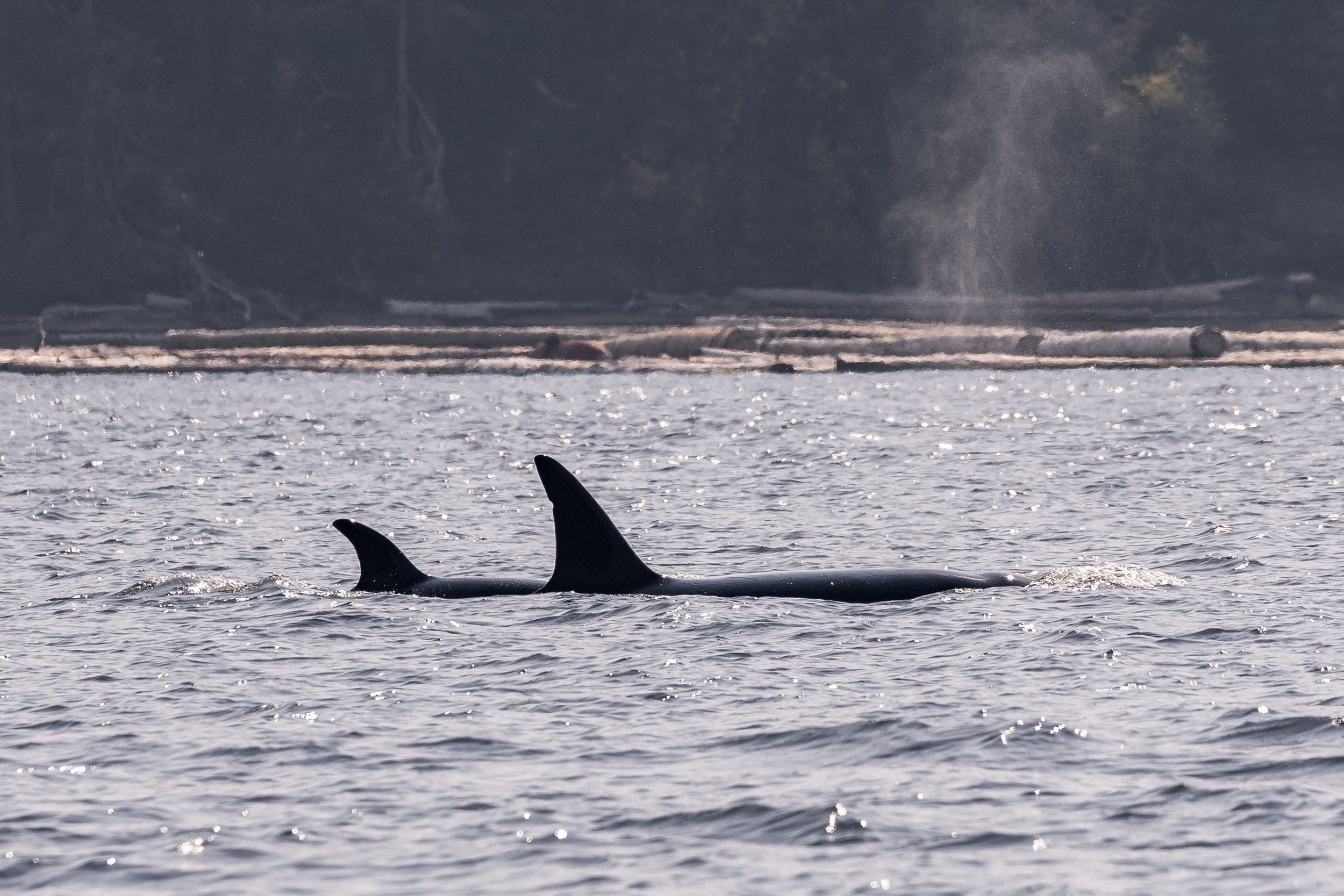
T046B2 Akela with her daughter T046B2B Takaya close behind. Photo by Jordan Robinson.
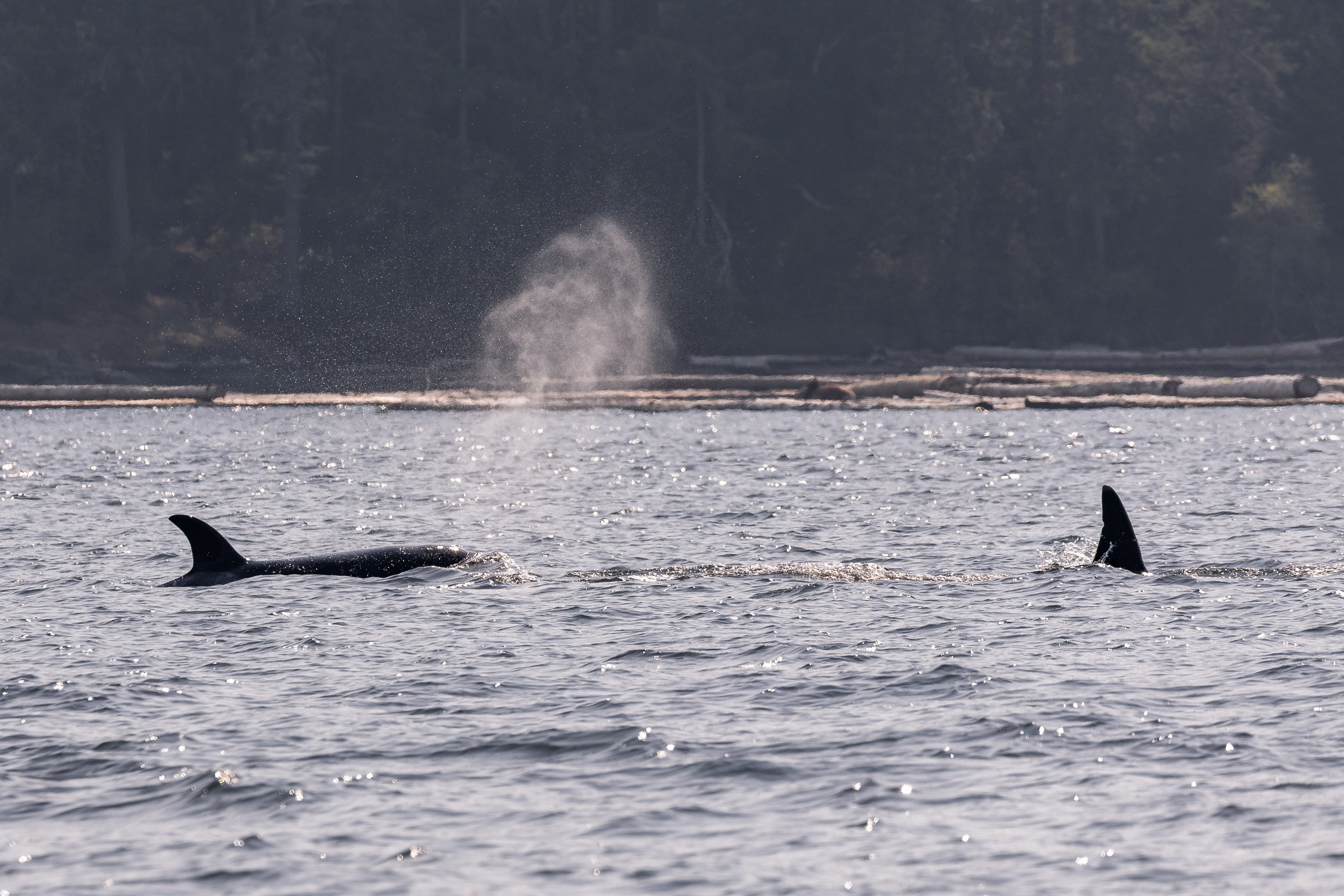
T046B2B Takaya rushing to catch up with her mother T046B2 Akela. Photo by Jordan Robinson.

T046B4 Quiver breaching in the distance. Photo by Jordan Robinson.
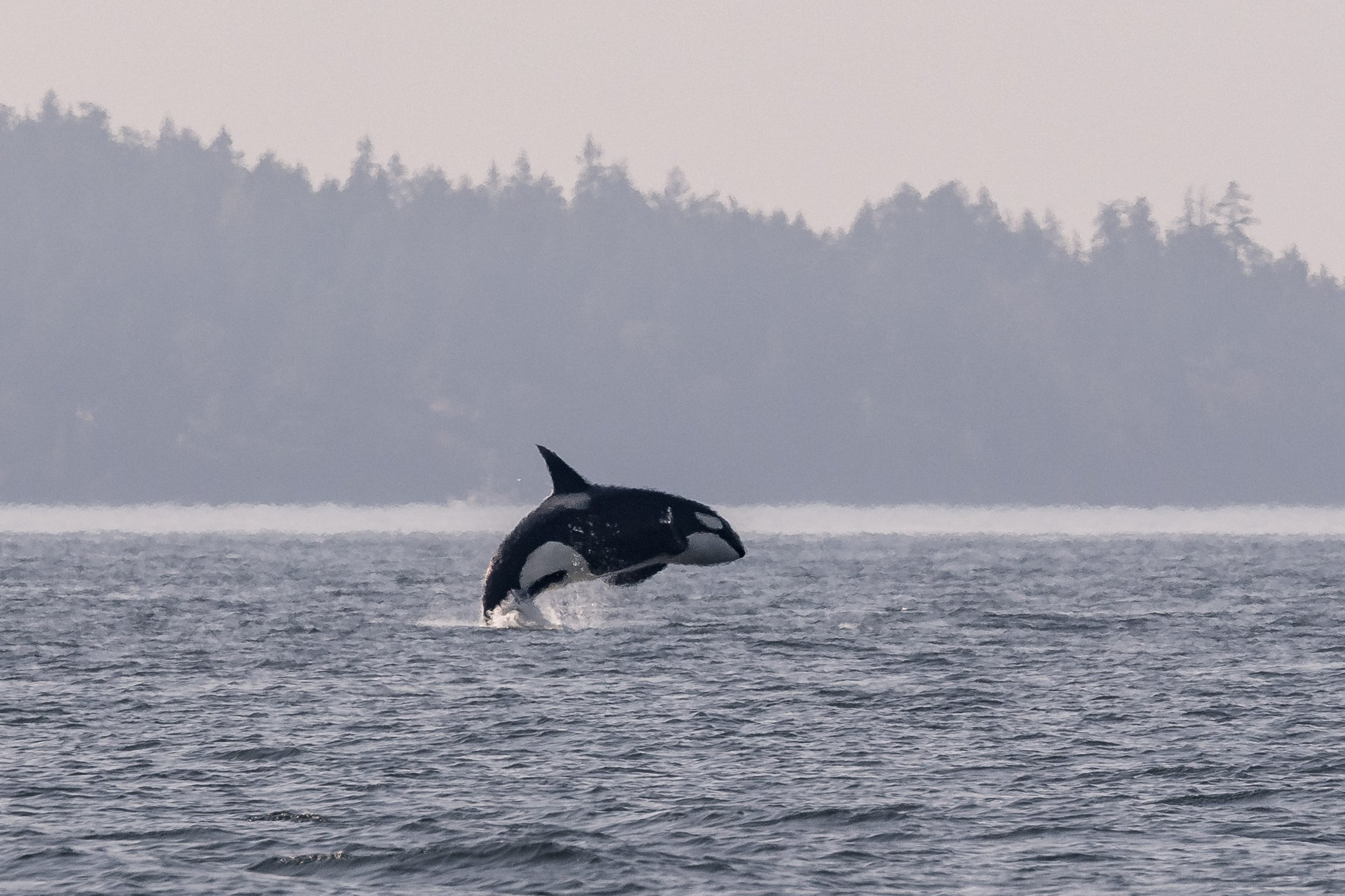
It was quite warm today, leading to some interesting heat waves amongst the photos, as seen here! Photo by Jordan Robinson.
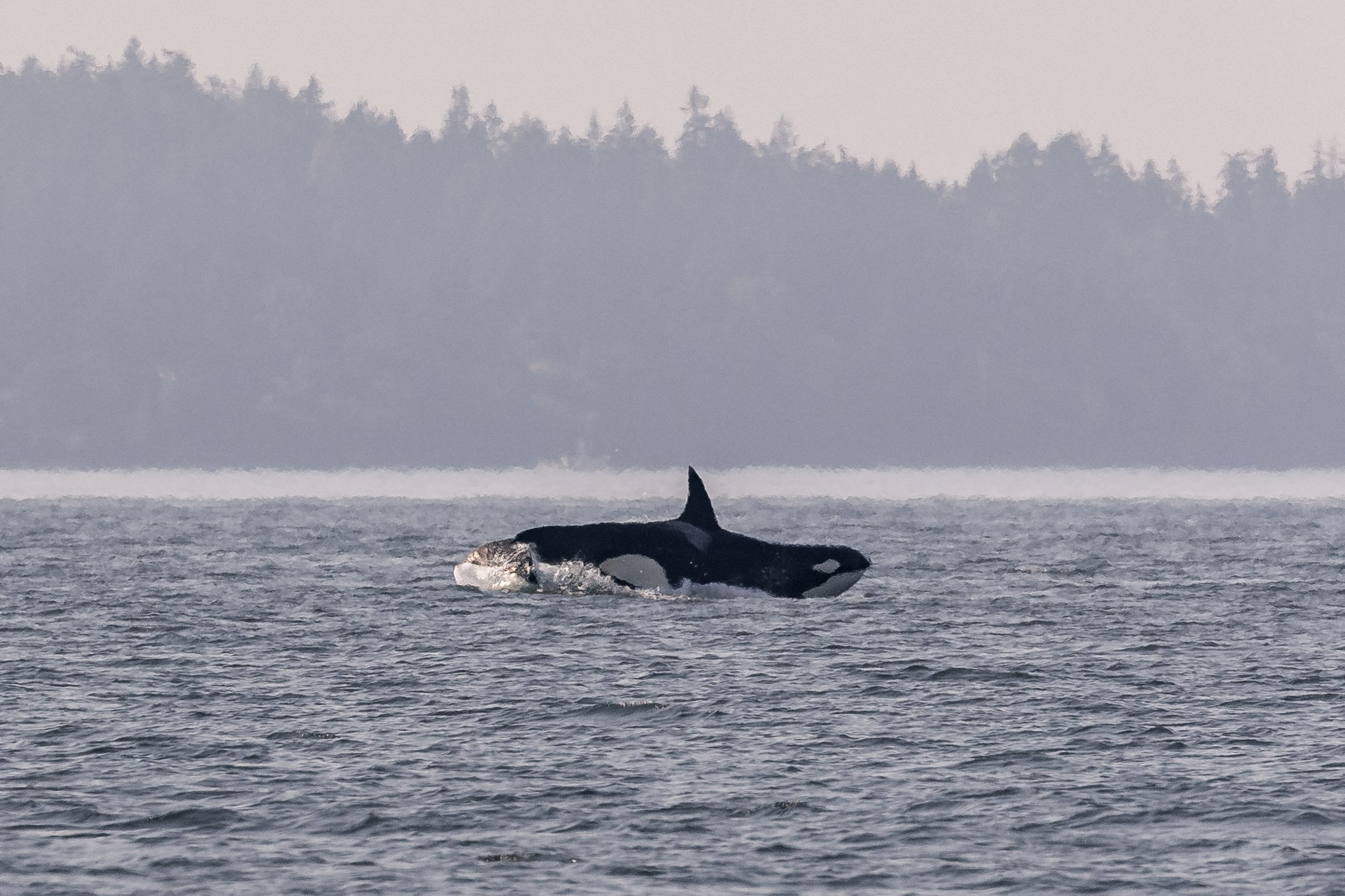
What an interesting angle! Photo by Jordan Robinson.
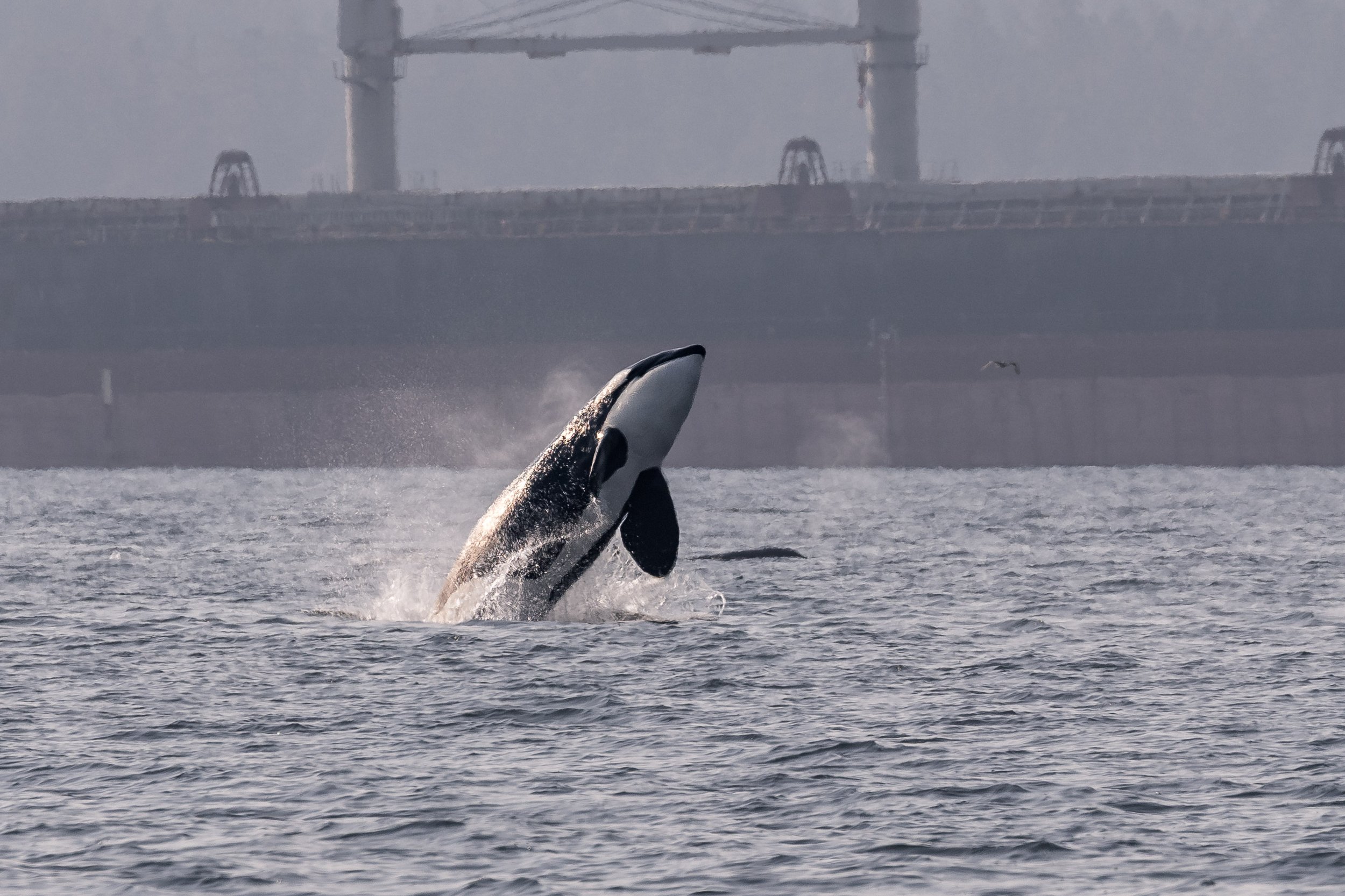
Breach for the sky! Photo by Jordan Robinson.
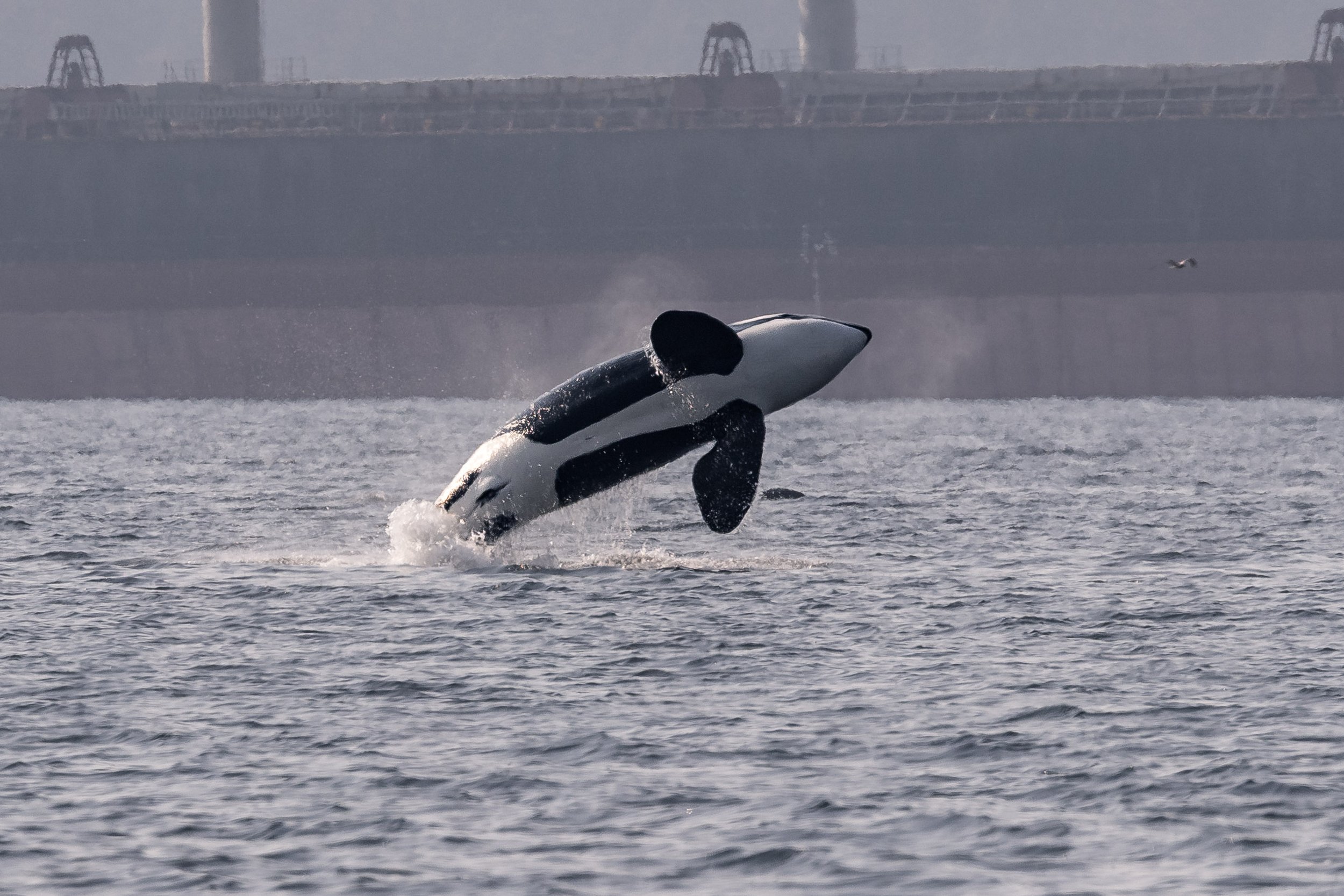
Coming in for a landing! Photo by Jordan Robinson.
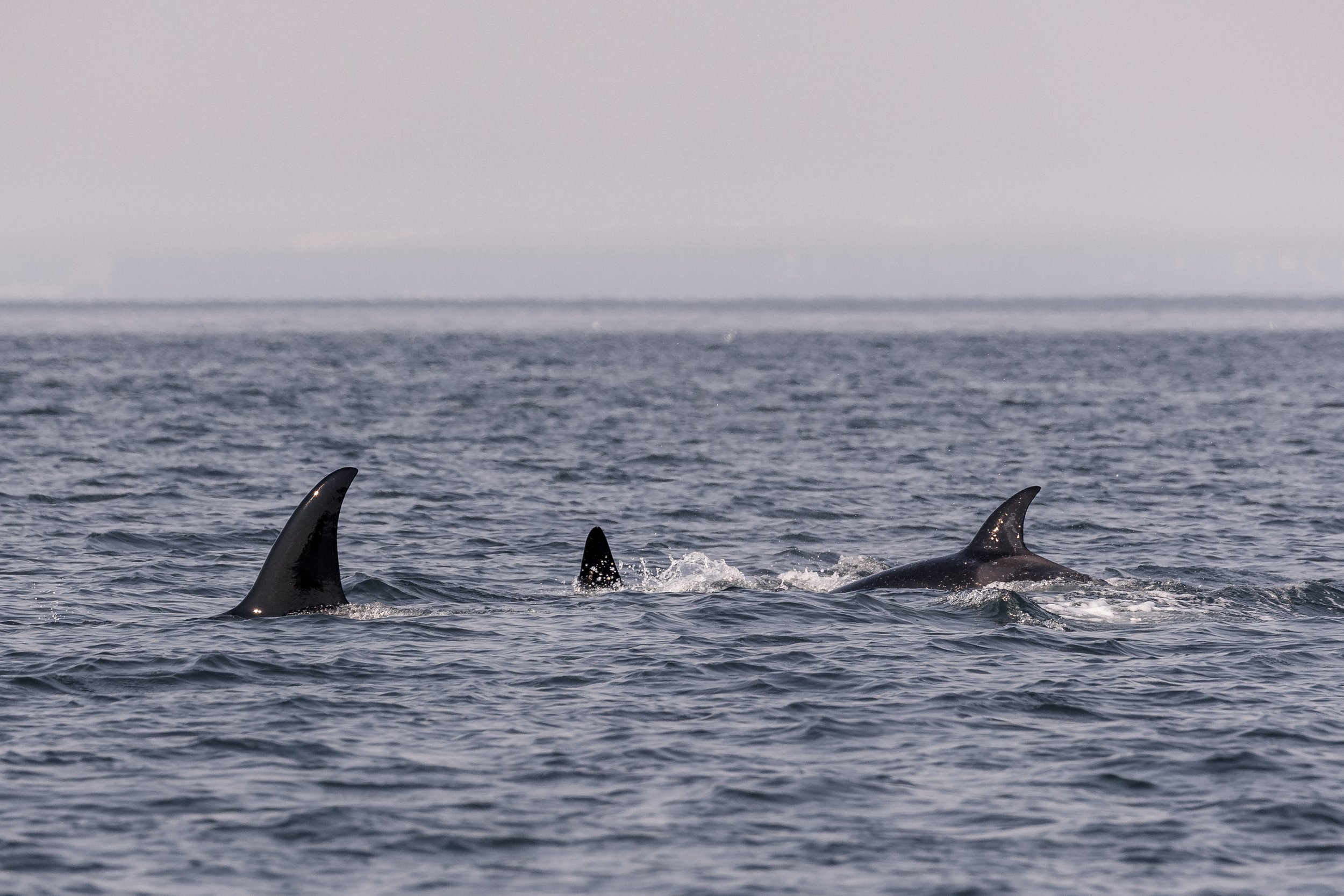
T046B Raksha, T046B3 Sedna, and T046B3A Munro. Photo by Jordan Robinson.

T046B2B Takaya rushing to catch up with her mother T046B2 Akela. Photo by Aly Kohlman.
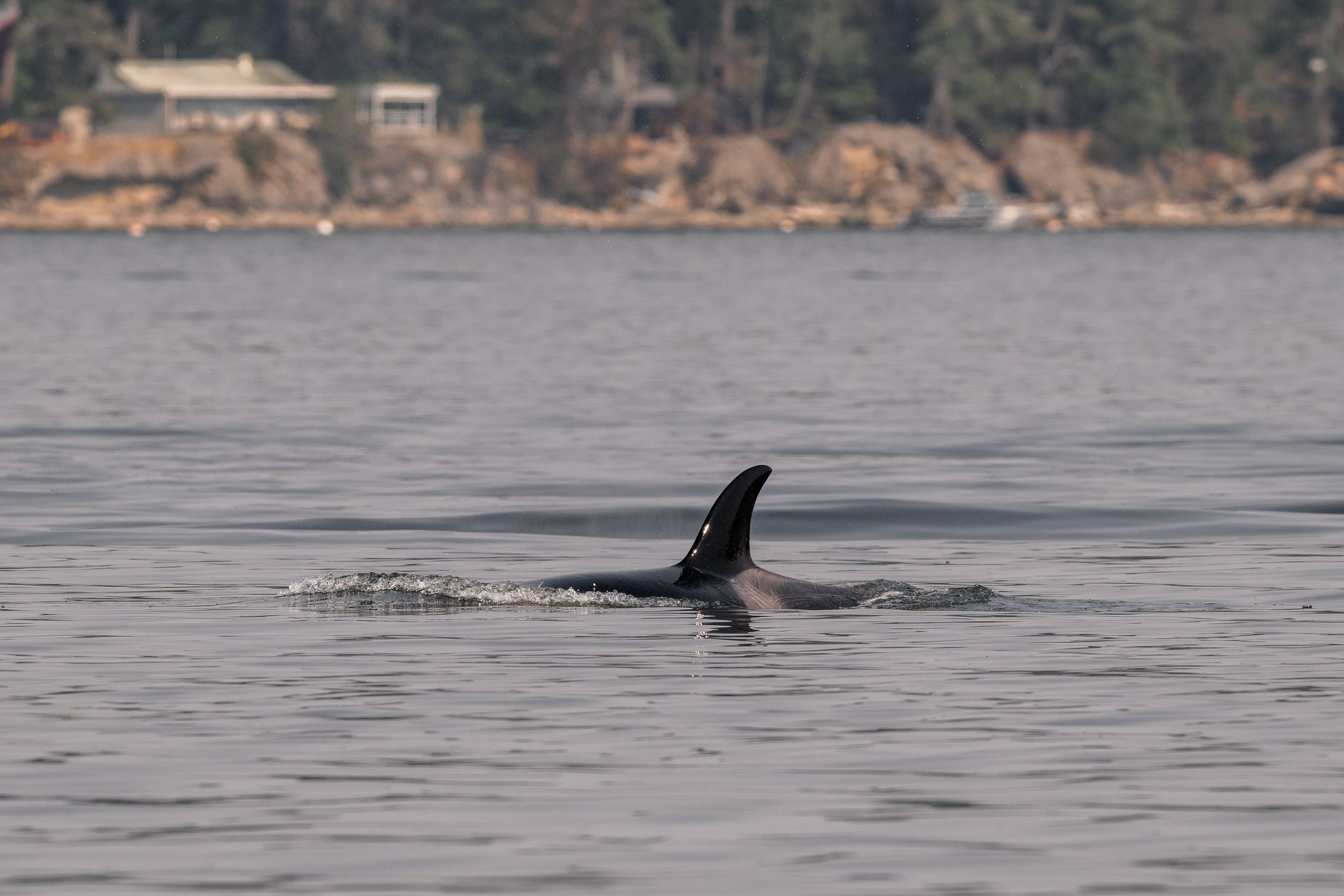
T046B6 Sol charging along. Photo by Aly Kohlman.
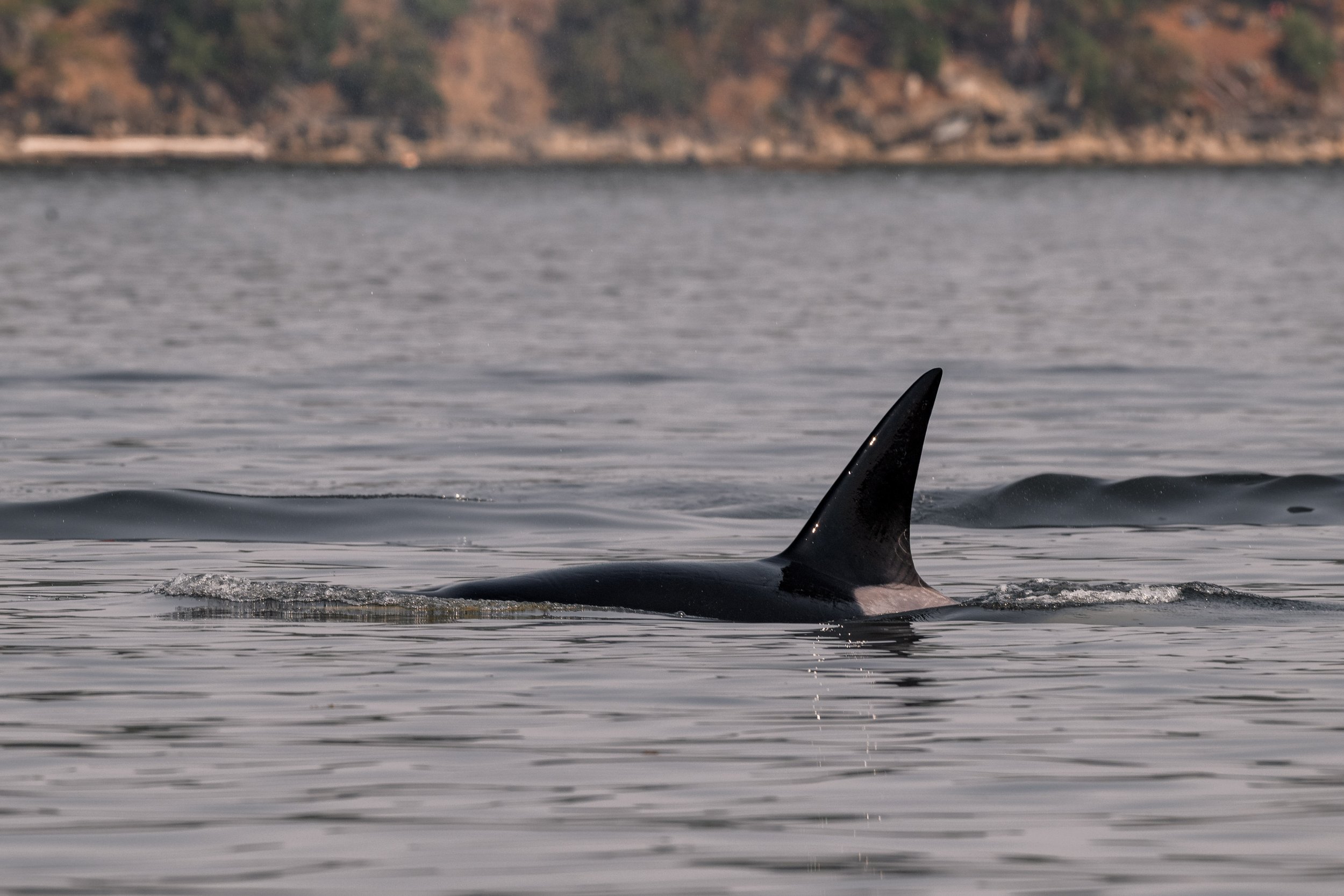
T046B4 Quiver with his uniquely scarred dorsal fin visible. Photo by Aly Kohlman.
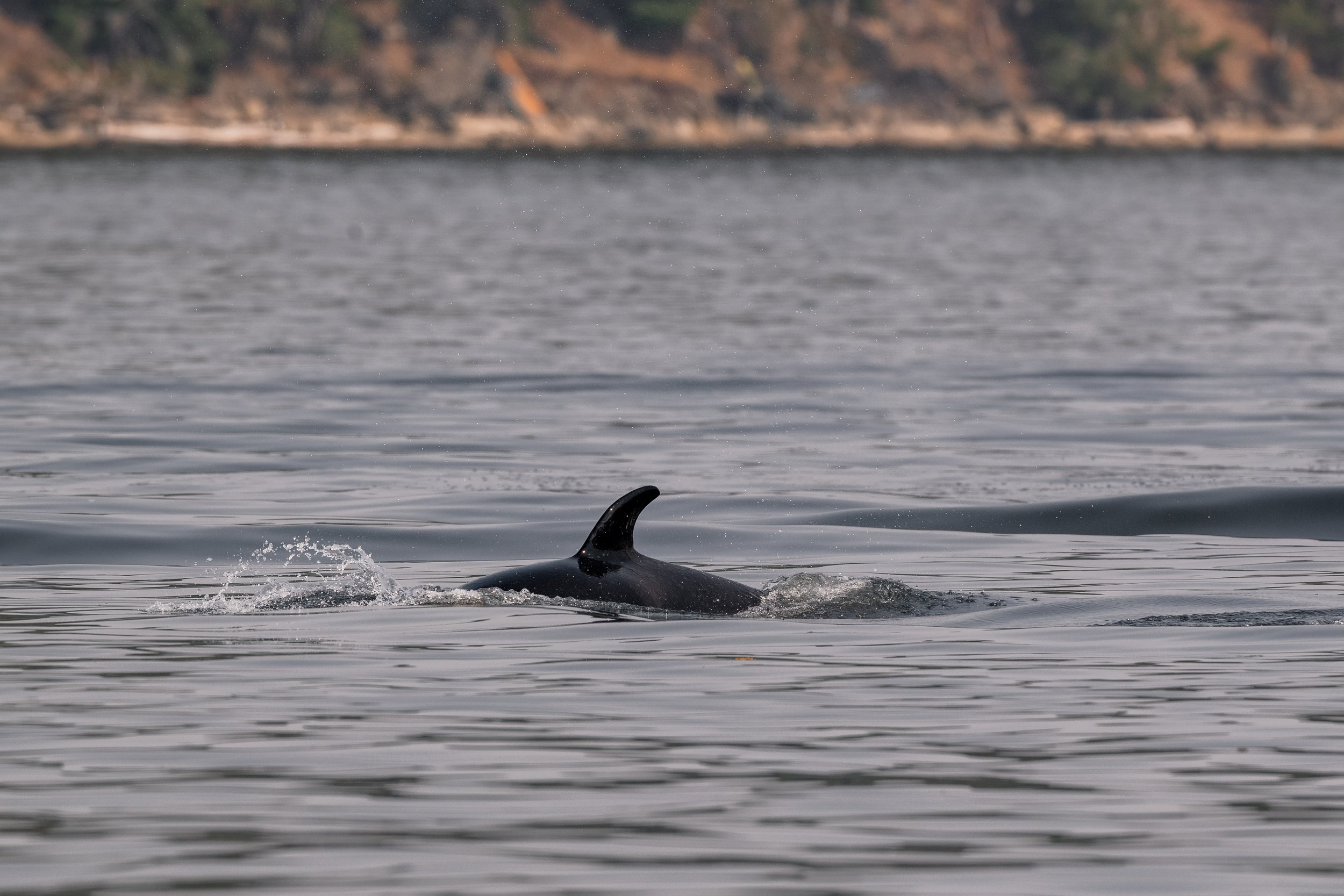
Tiny little T046B8 Pi! Photo by Aly Kohlman.
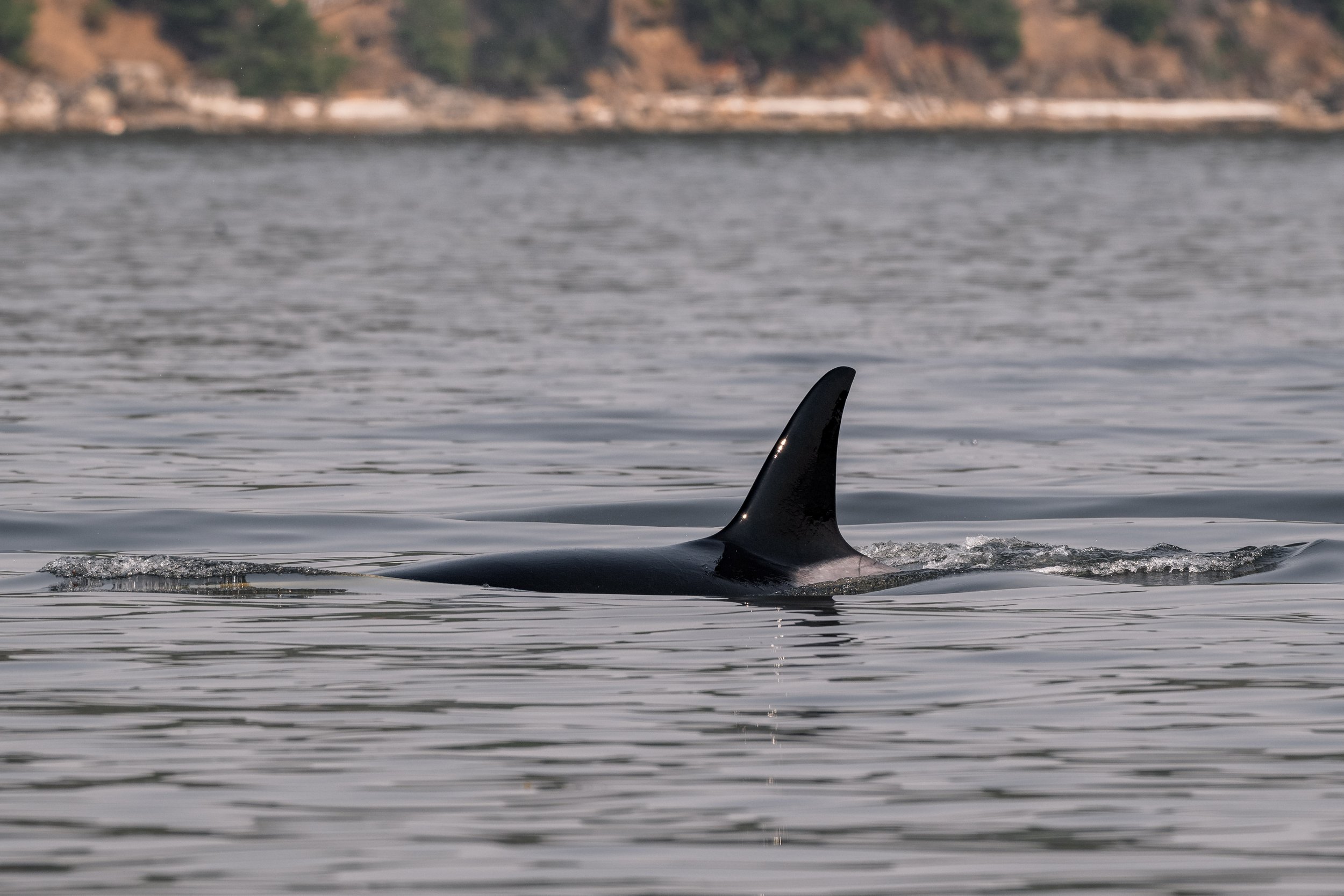
T046B Raksha with a bit of her saddlepatch visible. Photo by Aly Kohlman.

T046B2B Takaya with her face out of the water, and T046B2 Akela beside her. Photo by Aly Kohlman.

Mother and daughter, close together (T046B2 Akela and T046B2B Takaya). Photo by Aly Kohlman.
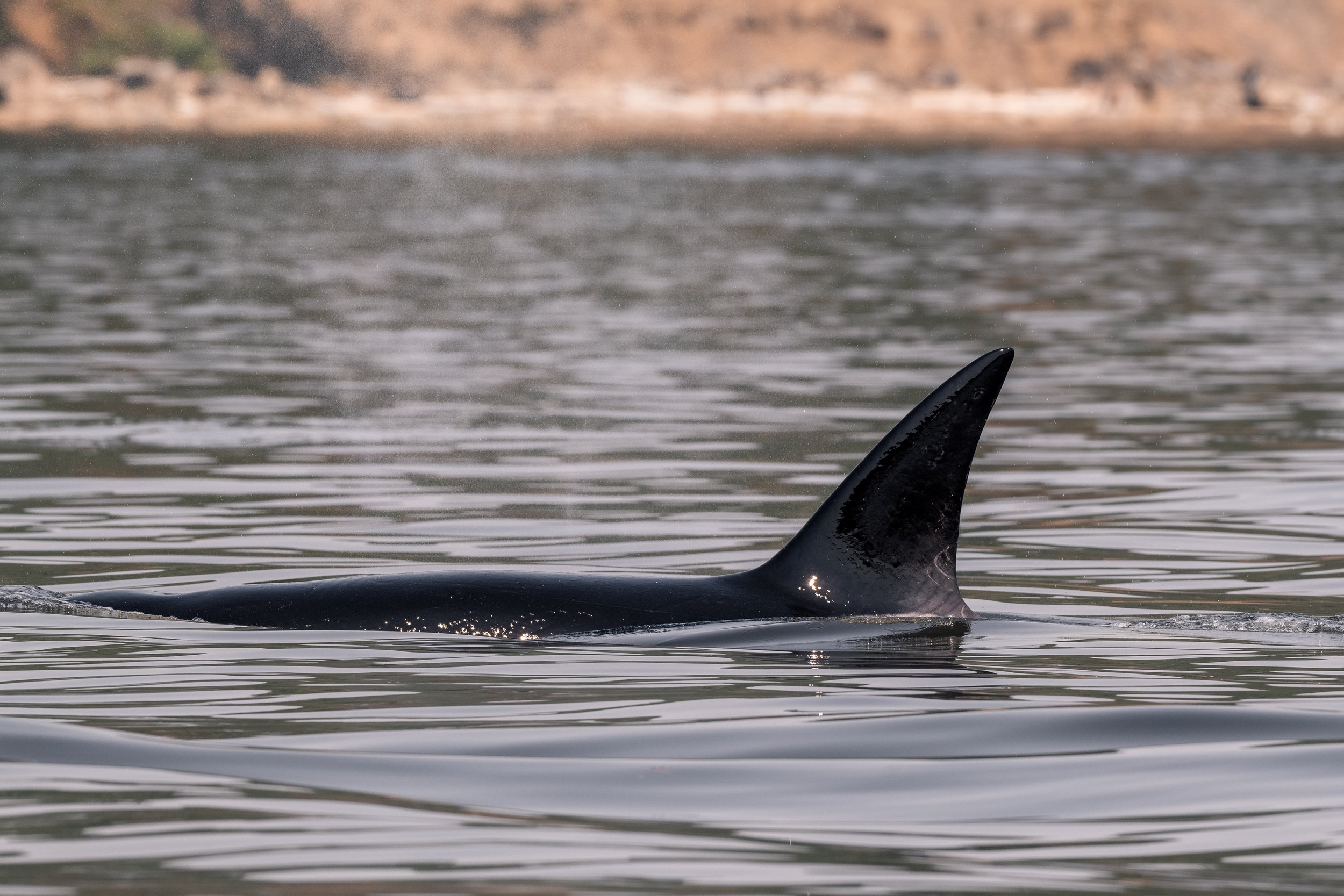
T046B4 Quiver with his back out of the water. Photo by Aly Kohlman.
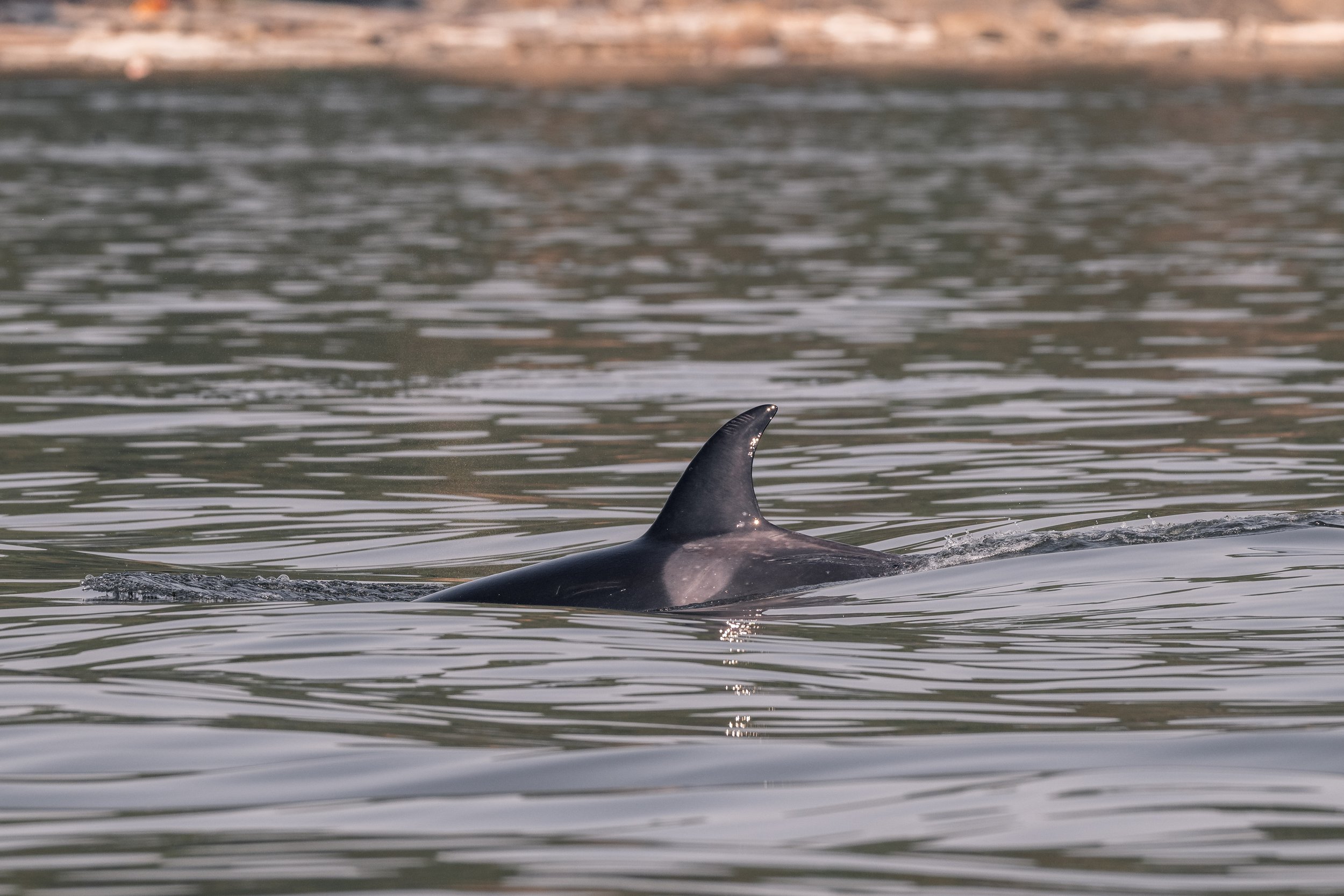
T046B7 Tala. Photo by Aly Kohlman.

T046B4 Quiver, T046B7 Tala, T046B Raksha, T046B2B Takaya, and T046B2 Akela all together. Photo by Aly Kohlman.
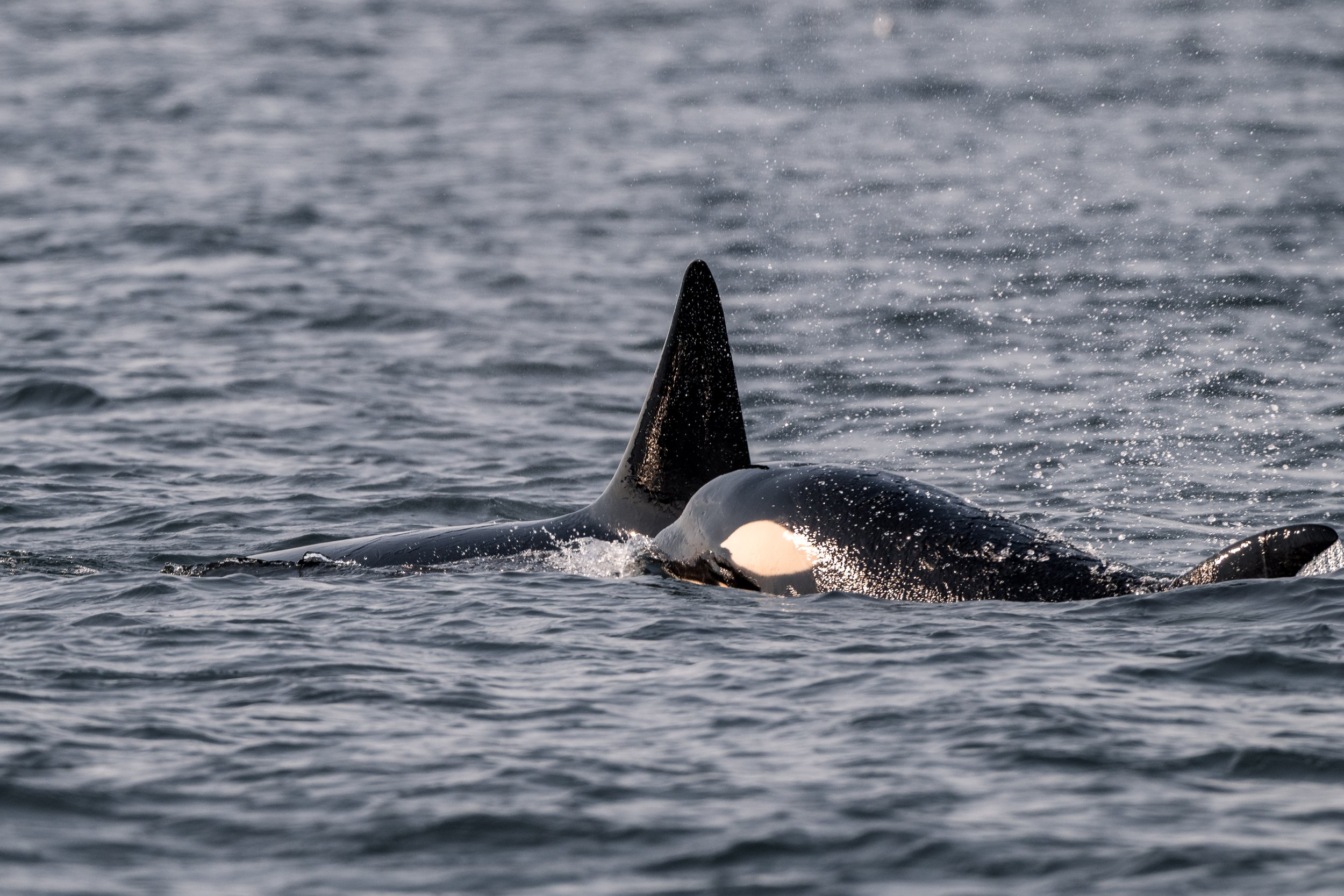
T046B3 Sedna with her calf T046B3A Munro beside her, eye out of the water! Photo by Aly Kohlman.
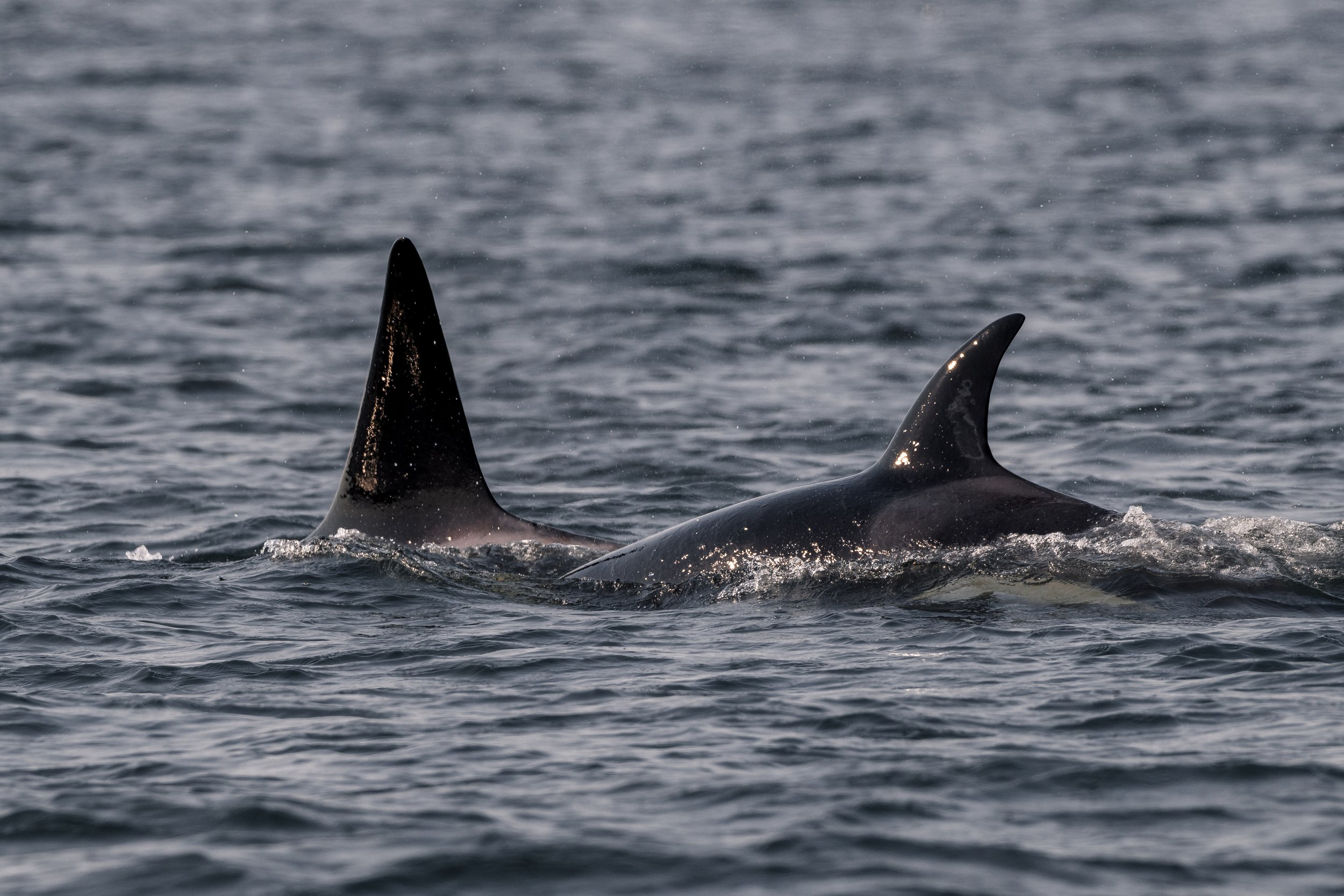
T046B3 Sedna and T046B3A Munro zooming by. Photo by Aly Kohlman.
The T101s

T101B Lagoon surfing by. Photo by Aly Kohlman.
T063 Chainsaw, T065 Whidbey II, and the T035As
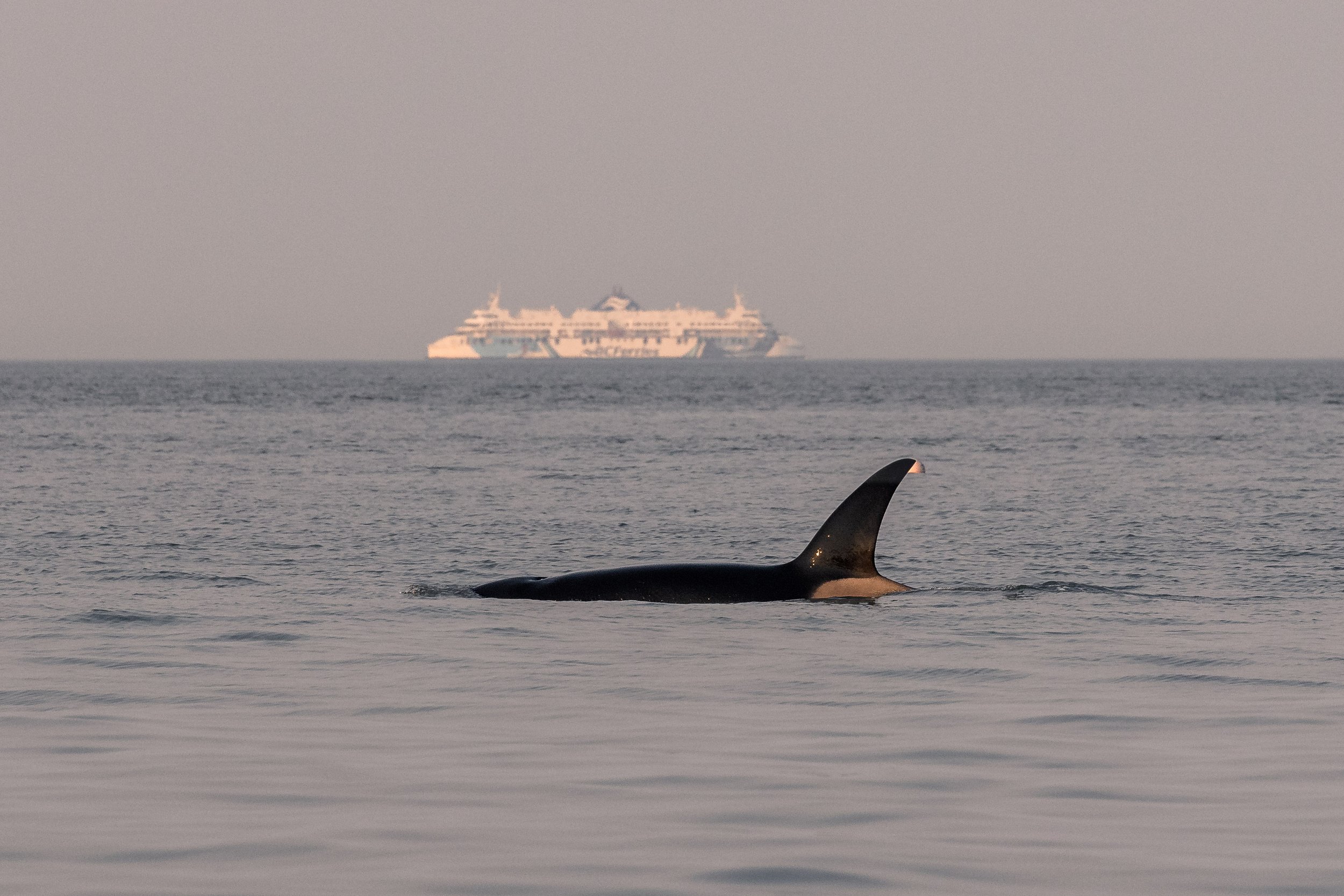
T035A2 Topaz is starting to sprout, and his dorsal fin is very wiggly right now. Photo by Jordan Robinson.
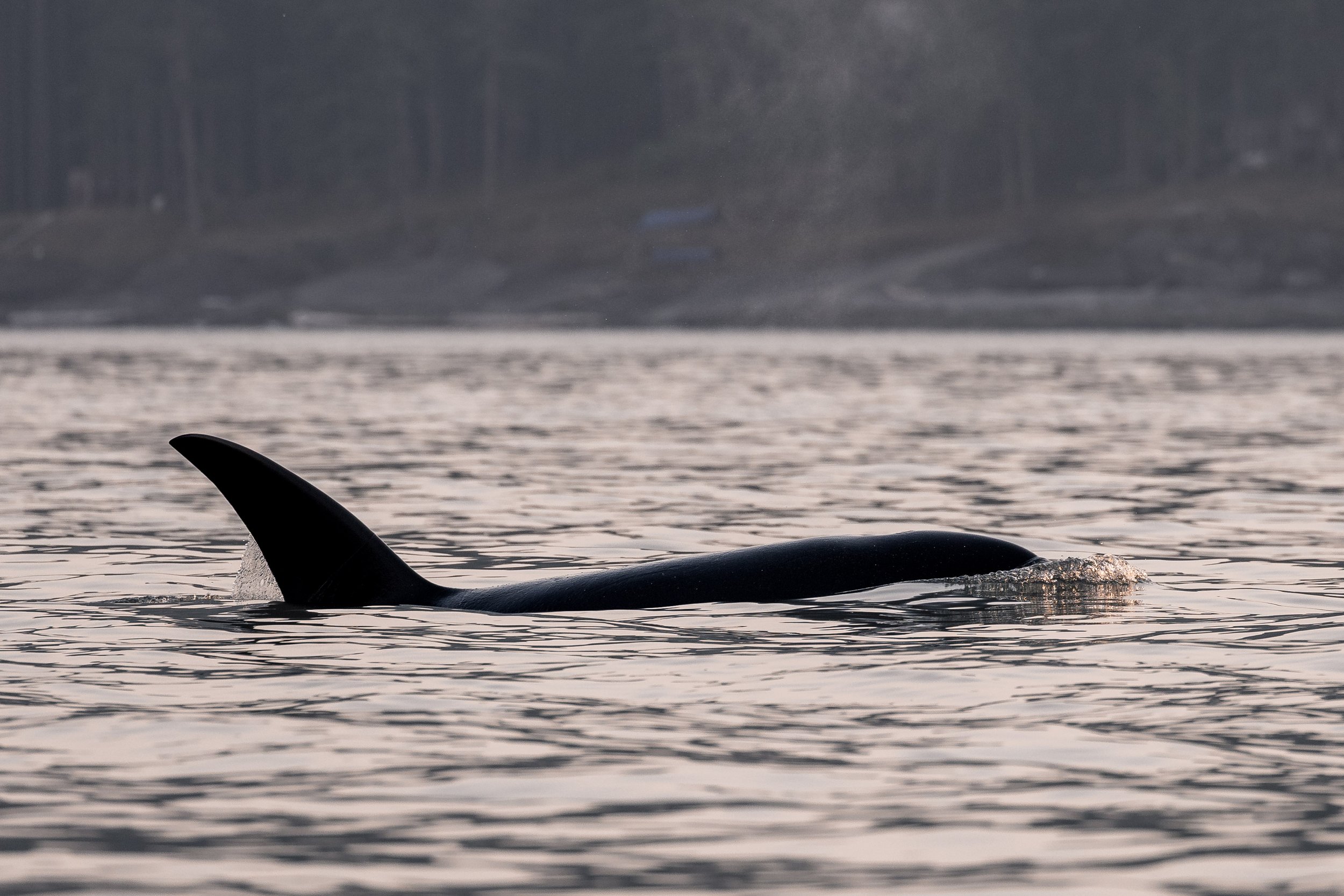
T035A2 Topaz making their way along. Photo by Jordan Robinson.

T035A3 Garnet and T035A2 Topaz. Photo by Jordan Robinson.

T035A1A close to T035A1 Opal. Photo by Aly Kohlman.

T035A1 Opal and her tiny calf T035A1A. Photo by Aly Kohlman.
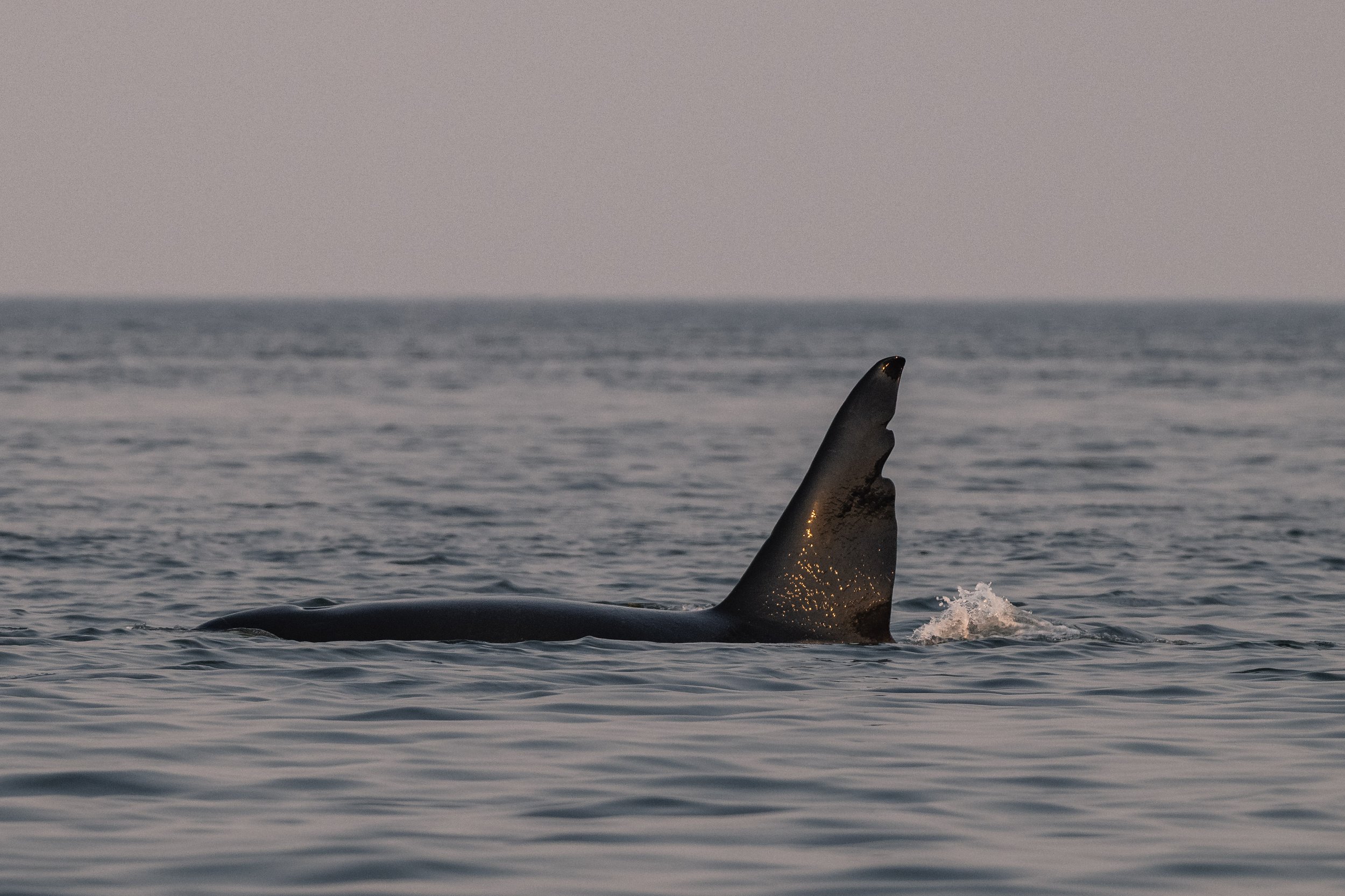
T063 Chainsaw in all his glory. Photo by Aly Kohlman.
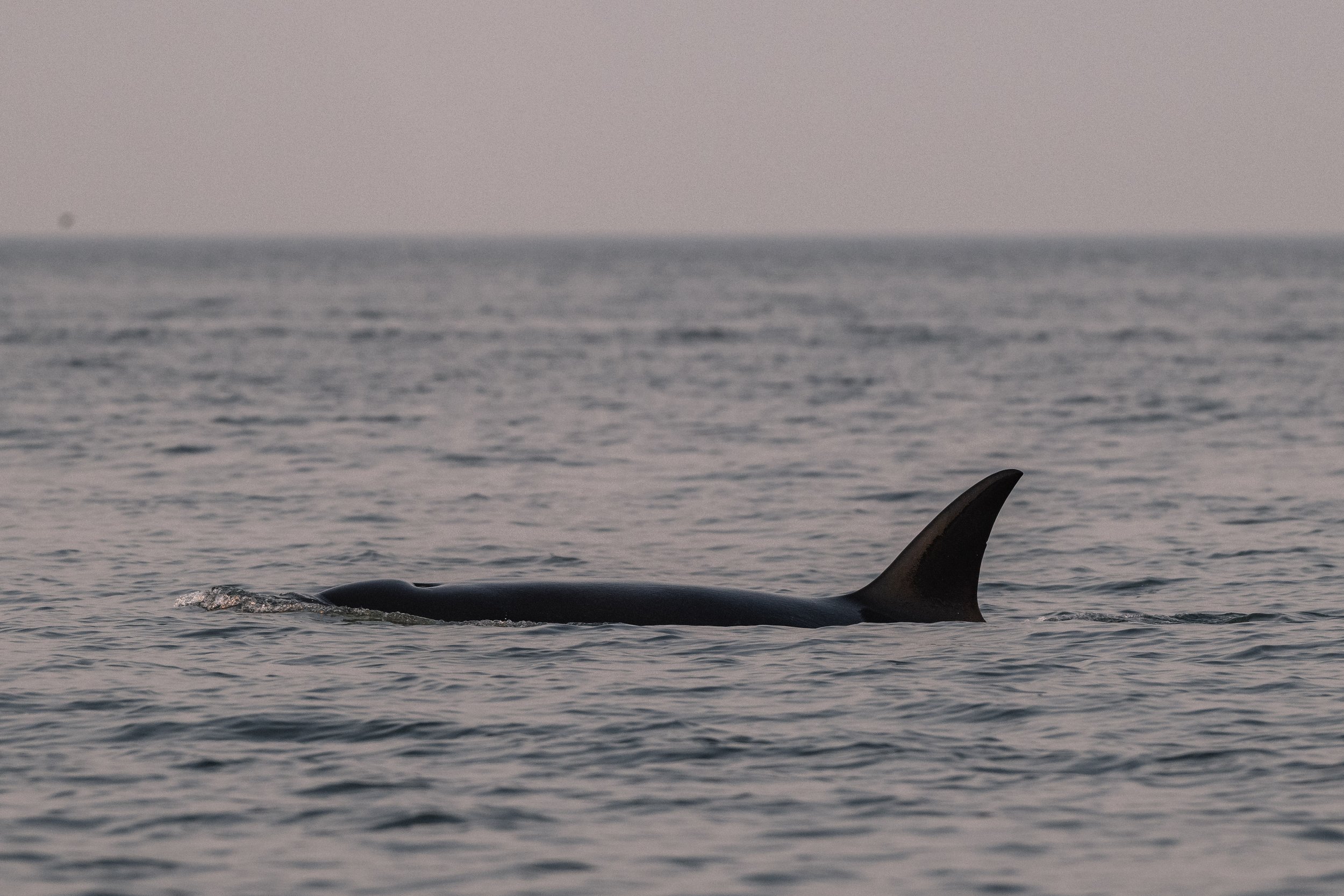
T065 Whidbey II. Photo by Aly Kohlman.
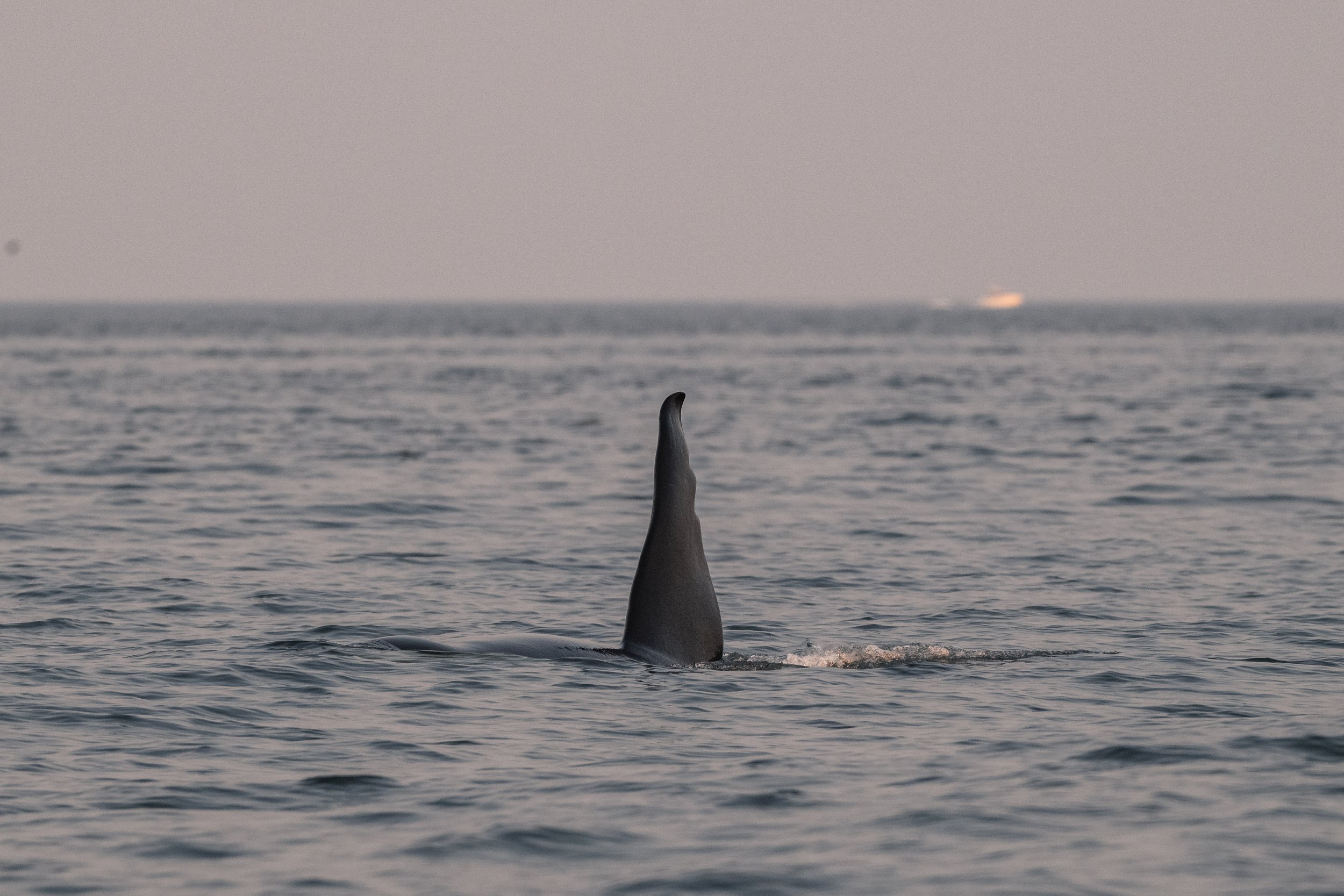
T063 Chainsaw and his wiggly dorsal fin. Photo by Aly Kohlman.
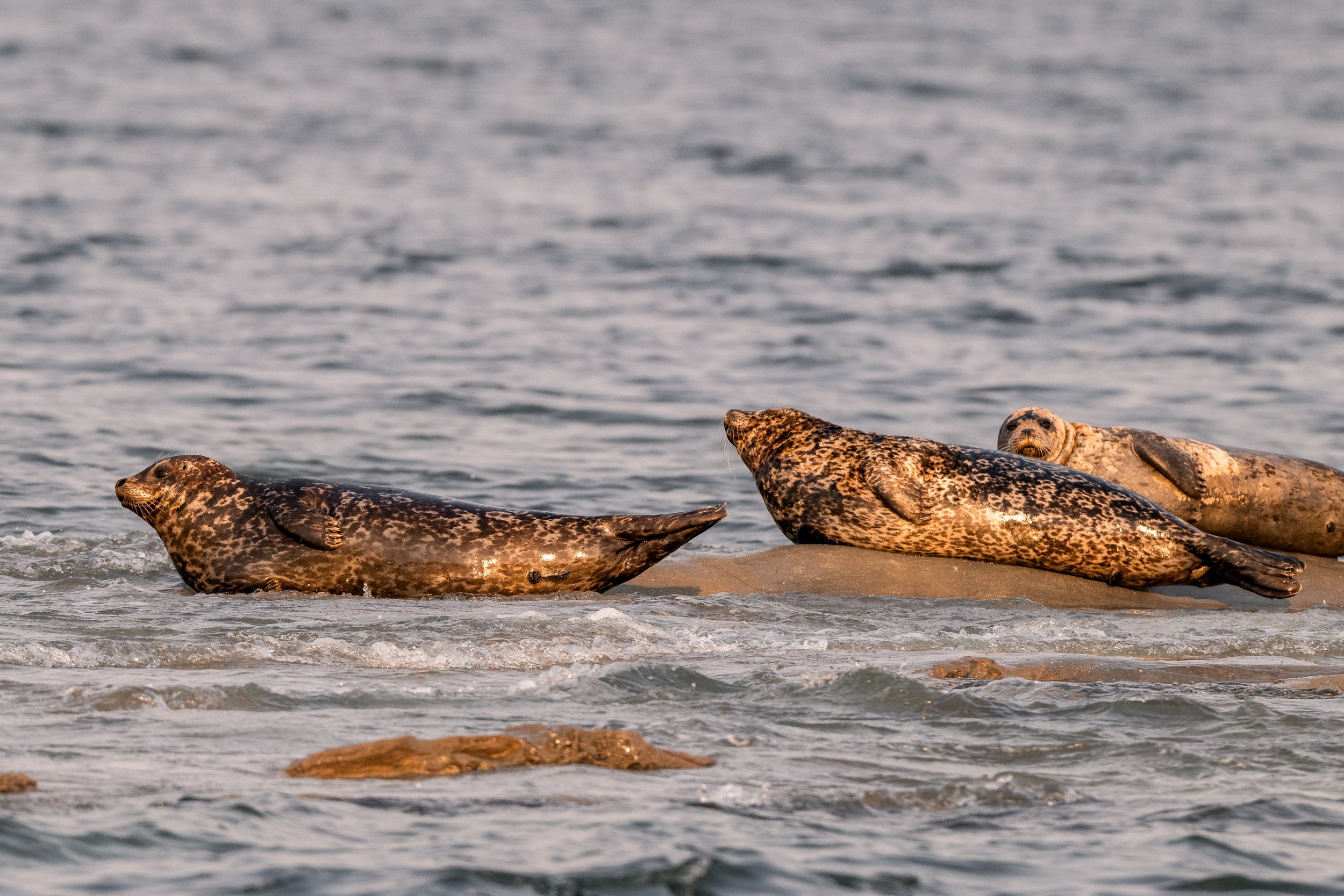
Harbour Seals hauled out at Stinky Rocks. Photo by Aly Kohlman.
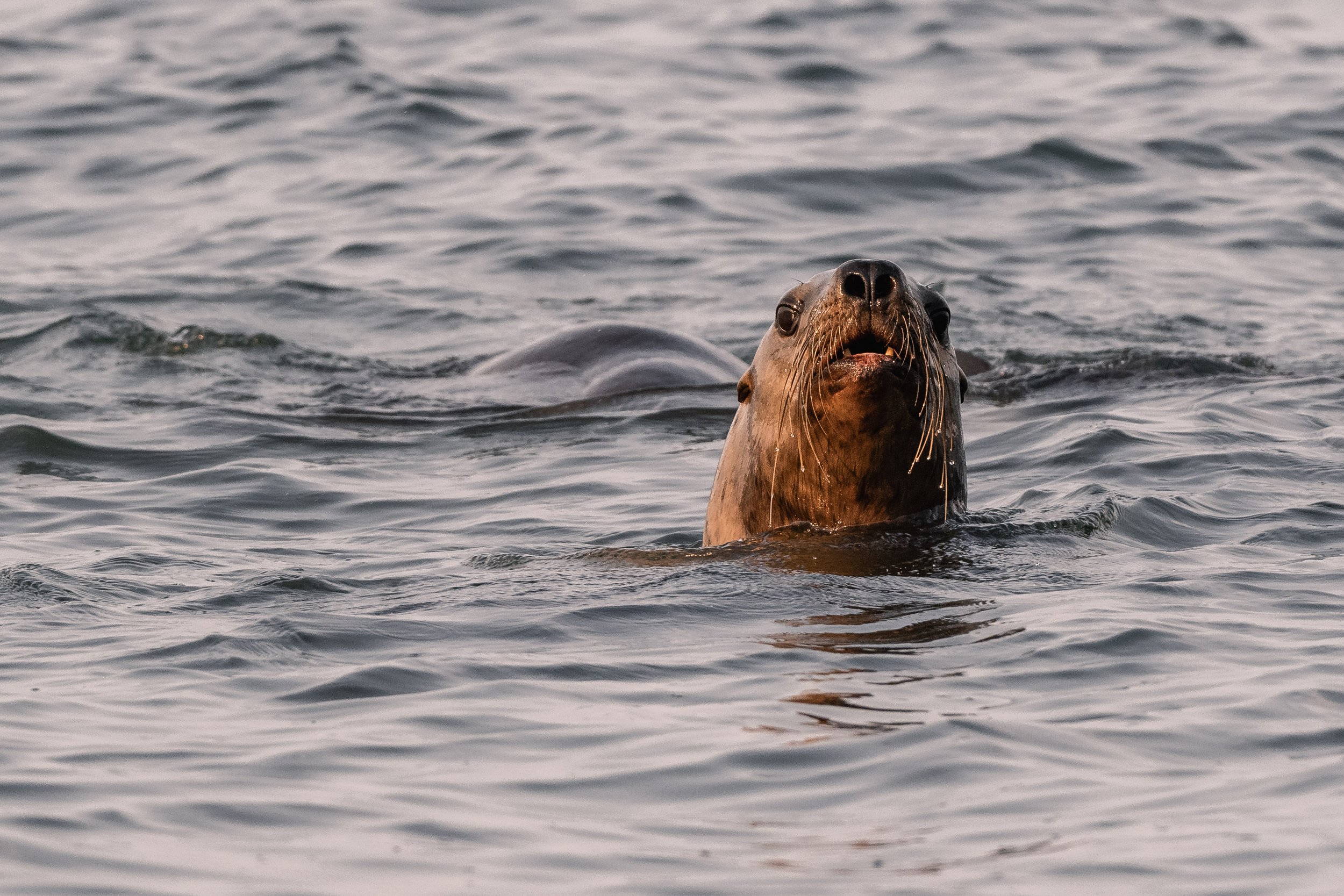
A Steller Sea Lion peeking at us! Photo by Aly Kohlman.
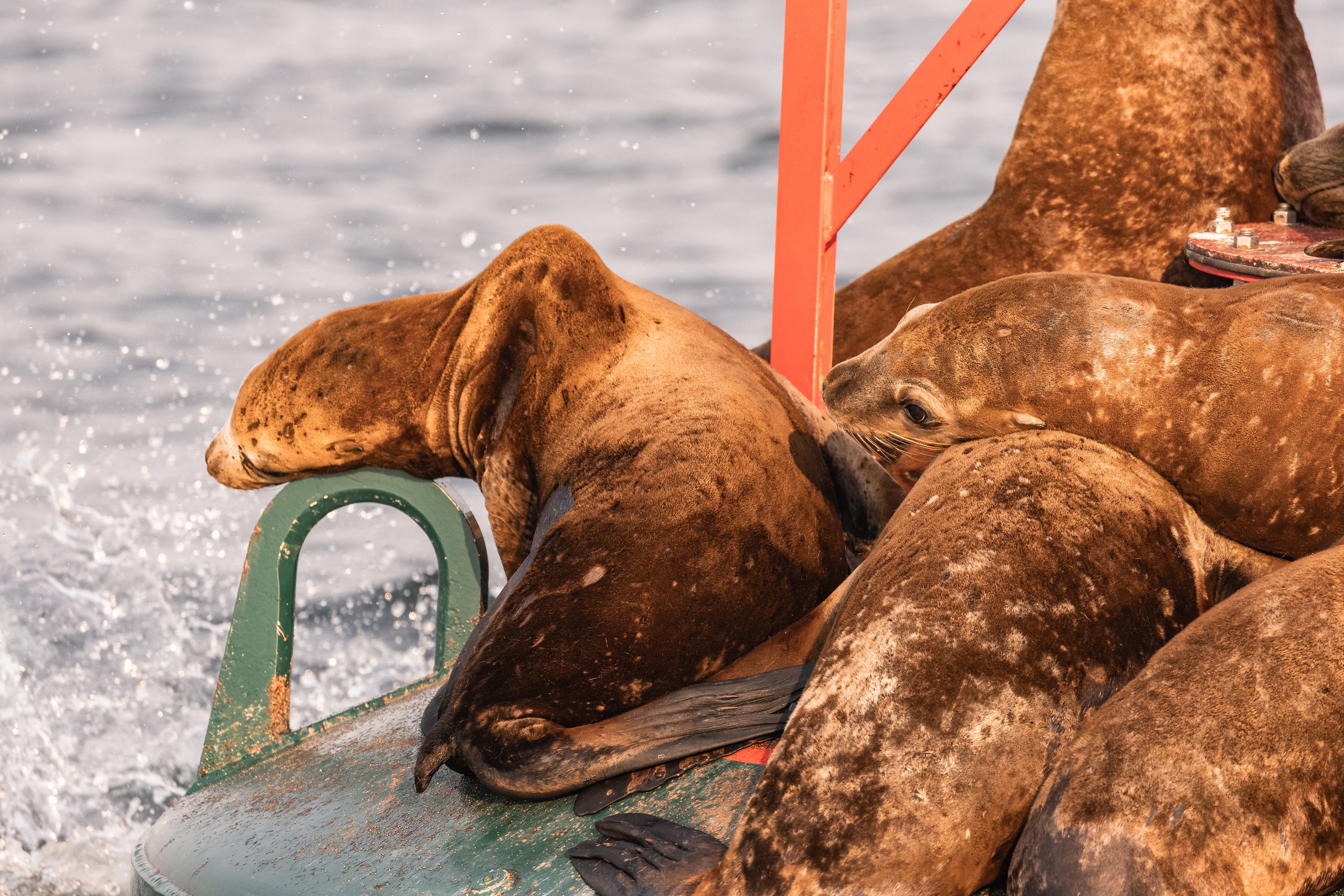
Hauled out together on one of the buoys. Photo by Jordan Robinson.
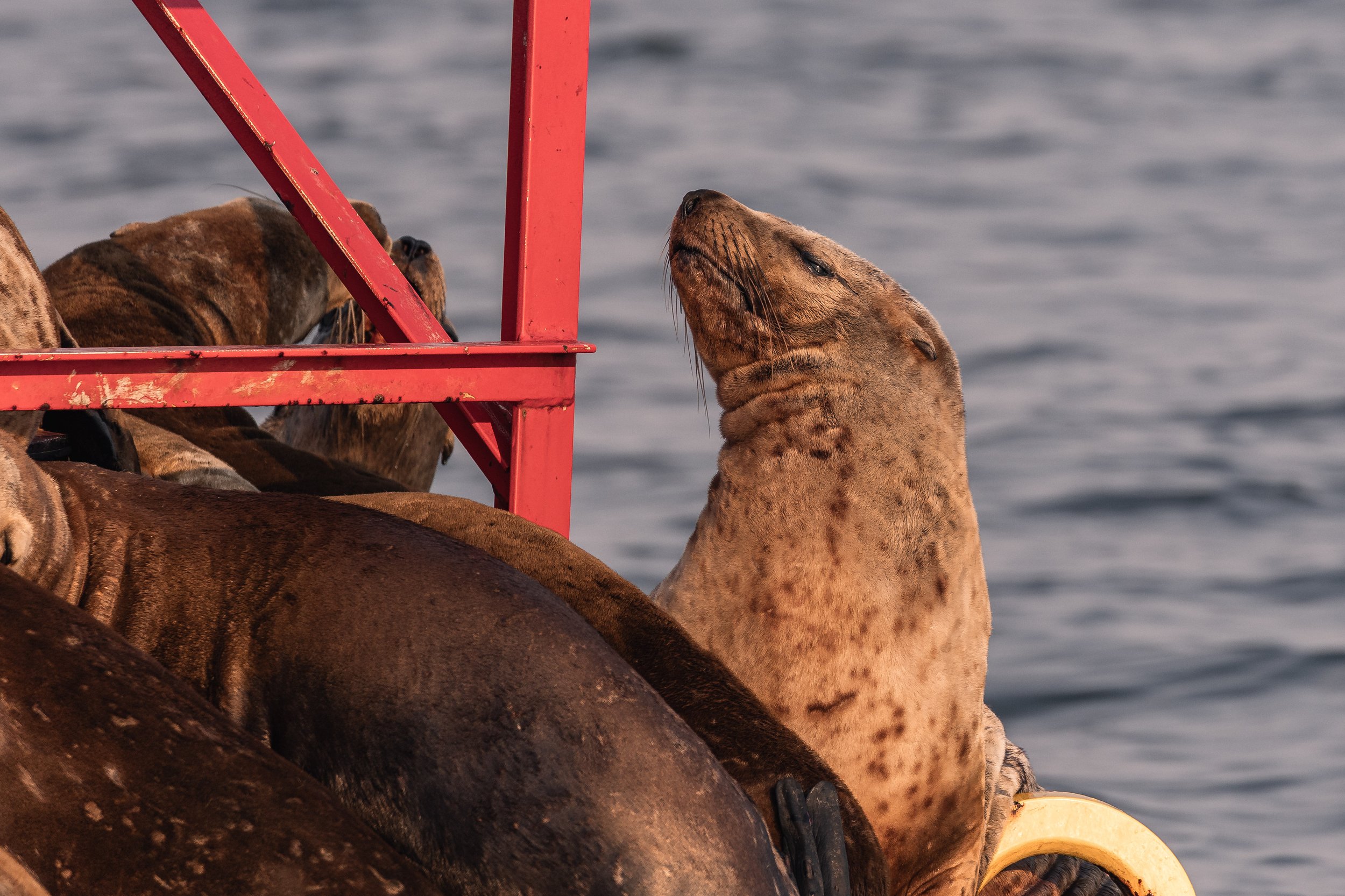
Dozing away in the evening light. Photo by Jordan Robinson.
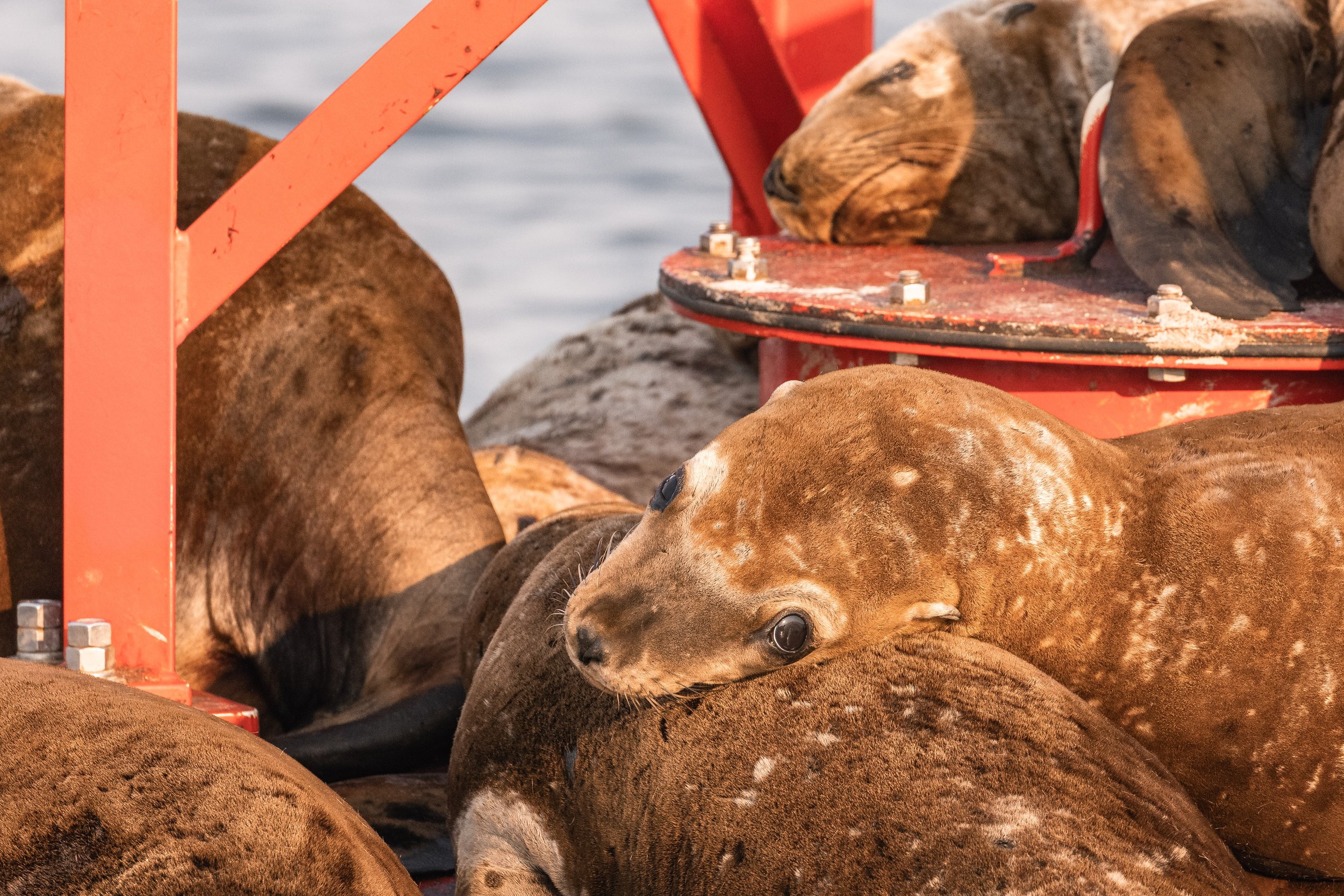
What a little cutie! Photo by Jordan Robinson.
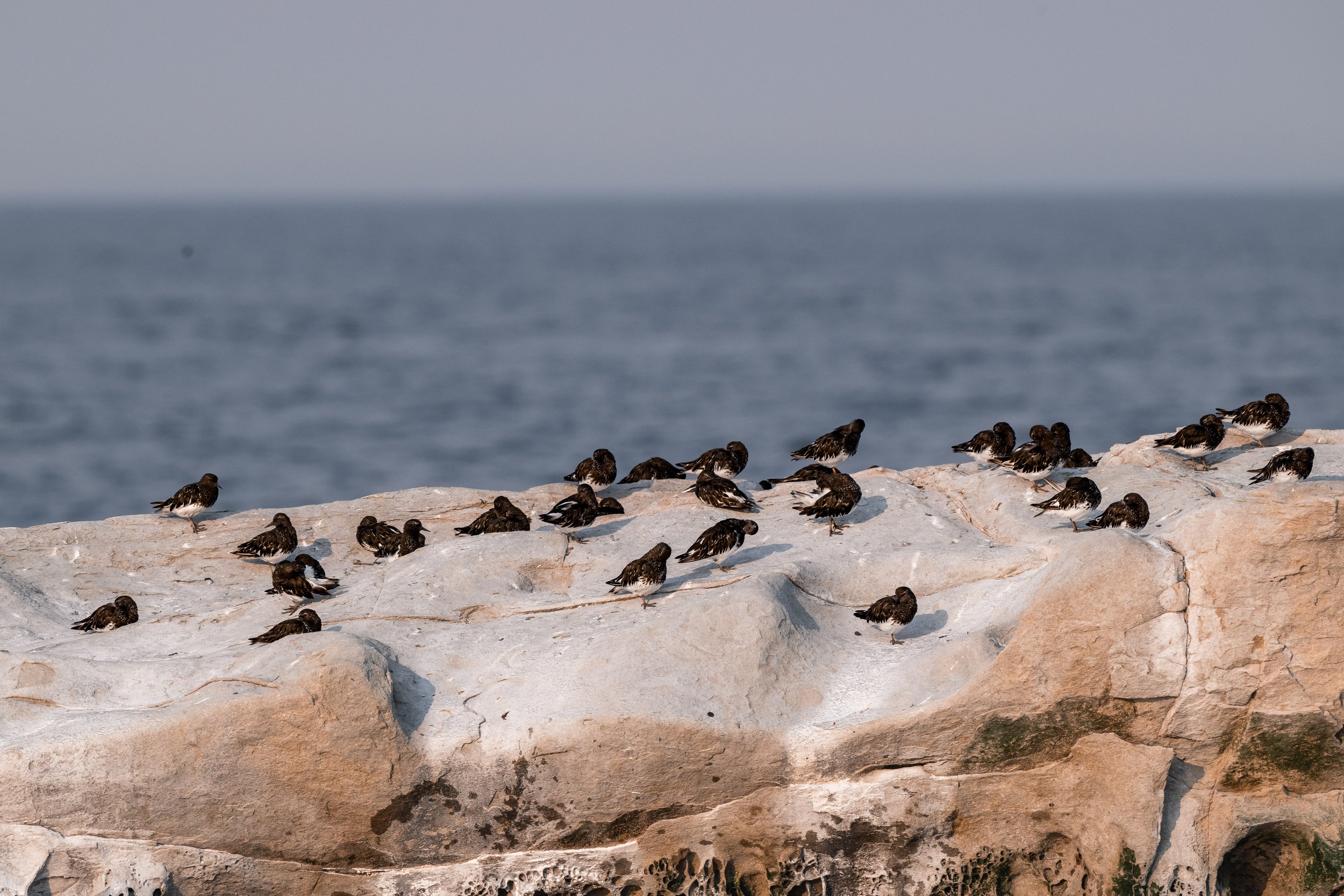
Black Turnstones together on the rocks. Photo by Aly Kohlman.
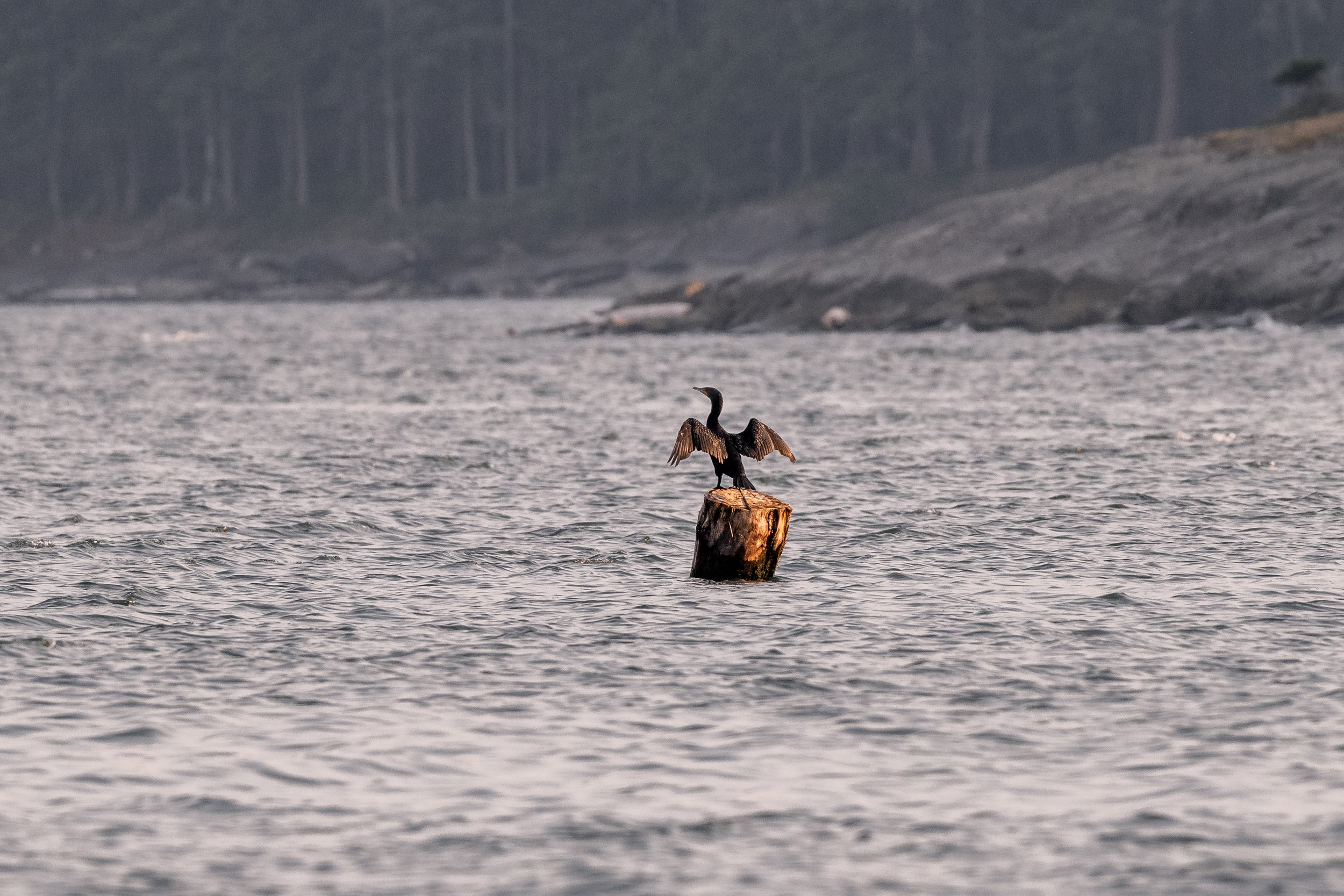
A Cormorant doing its best impression of the famous Titanic pose. Photo by Aly Kohlman.
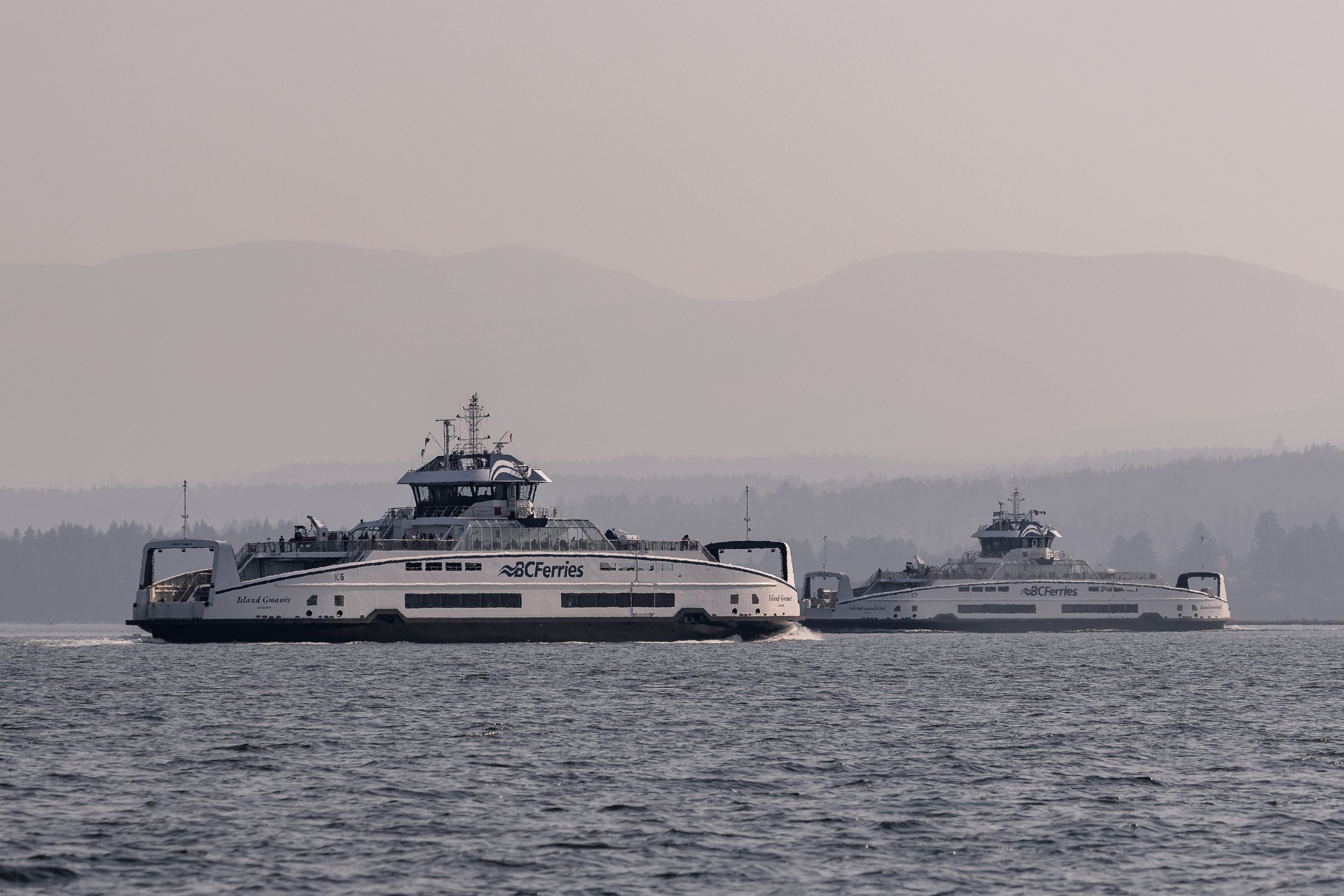
The Island Gwais and Island Xwsaluxul, Gabriola Island’s passenger ferries. Photo by Jordan Robinson.
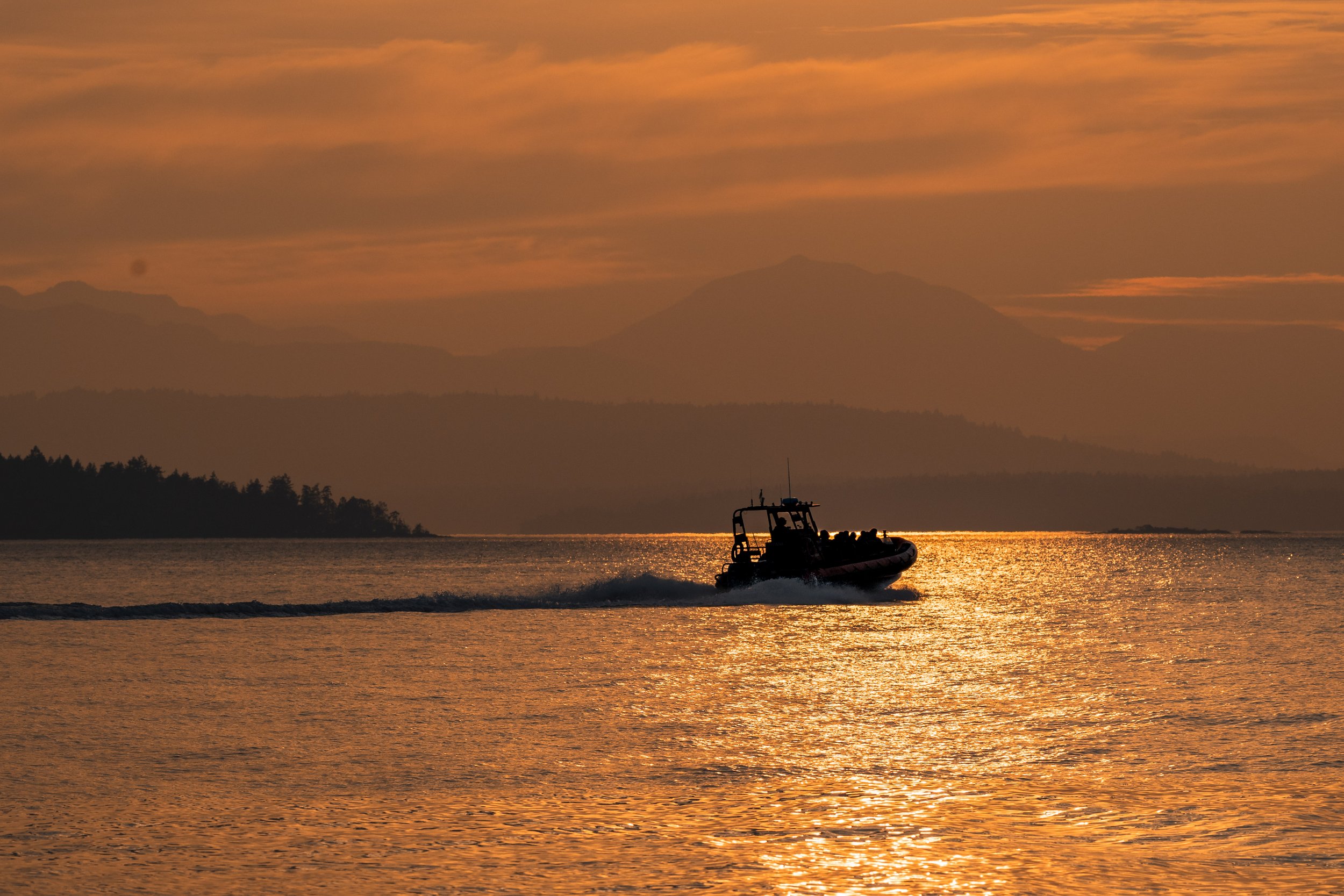
Cascadia in the late afternoon sun. Photo by Aly Kohlman.