
August 26, 2026, 3:30 PM - Crater/Mensa has a new friend
The afternoon began with two of our vessels heading out into the Salish Sea to begin the search. Earlier in the day, humpback whales had been spotted near Valdes Island, so we decided to make our way in that direction and see if they were still in the area.
With winds blowing across the waters farther north, we started by travelling through the Southern Gulf Islands, where the islands offered some protection from the breeze. It was a beautiful route to begin the afternoon, with rugged shorelines rising from the water and lush coastal forests stretching across the islands. As we travelled toward Porlier Pass, the landscape gradually opened around us before we made our way through the pass and into the Strait of Georgia.
Near the shelf along Valdes Island, we found our first humpback of the afternoon: Holey Moley (BCY1220).
We watched as Holey Moley disappeared beneath the surface on a dive, leaving us waiting for the next blow to appear. But the whale had other plans. Minutes passed without a sign, and eventually it became clear that Holey Moley was doing longer feeding dives, so we decided to leave him to it and continue on our way. From here, we continued north towards Stinky Rock.
There, we shifted our focus from humpbacks to other marine mammals that call these waters home. Harbour Seals rested on the rocks, while nearby, Steller Sea Lions were hauled out on a buoy. Both species are pinnipeds, but their lifestyles and physical adaptations differ greatly. Harbour seals are true seals, with smaller front flippers and no external ear flaps, while Steller sea lions are eared seals with large foreflippers that they can use to help support themselves on land.
After spending some time with the seals and sea lions, we continued our search.
It was not long before we found humpbacks again. At first, we thought we had found the same whales we had watched earlier that morning. The behaviour looked remarkably familiar, with whales spending plenty of time at the surface and putting on an impressive display of activity.
But a closer look at our photographs revealed something much more interesting.
It was Crater/Mensa (BCX1565) , but instead of travelling with Corona/Phi, as he had been earlier in the day, Crater/Mensa was now spending time with BCX2316.
This time, BCX2316 seemed to be leading the charge when it came to surface activity.
The pair gave us plenty to watch. Pectoral fins slapped against the water, tails broke the surface, and at one point one of the whales even swam upside down. It was a completely different combination of whales from the one we had seen that morning, even though the behaviour was remarkably similar.
This is one of the fascinating things about humpback whales. Their social relationships do not always follow the kinds of predictable family structures we see in some other whale species.
For many years, scientists had a relatively simple picture of humpback whale associations. Outside of the mother-calf relationship, humpbacks were often thought of as largely solitary animals. A mother and her calf would remain together during the calf's first year, while adults were generally expected to travel alone.
As humpback populations began to recover from the impacts of commercial whaling, however, researchers started documenting more frequent and varied associations between individuals. Pairs and groups of humpbacks became increasingly common, particularly around productive feeding areas.
These relationships can be remarkably fluid.
Two humpbacks might spend minutes together before separating, or they may remain associated for hours or even days. A pair seen together in the morning may have completely different companions by the afternoon, just as we witnessed with Crater/Mensa.
These associations are not necessarily based on family relationships. Instead, they seem influenced by factors such as feeding opportunities, prey availability, and other potential benefits of staying together. When food is concentrated in one area, being around another whale may provide opportunities to feed more efficiently or respond to changes in where prey is located.
We can't always determine exactly why two whales choose to spend time together from the surface. We can observe the association, the behaviours, and how long they remain together, but the motivations behind those interactions are often much harder to understand.
That uncertainty is part of what makes encounters like this so interesting. The ocean is constantly changing, and so are the relationships between the animals living in it.
While we were watching Crater/Mensa and BCX2316, another pair of blows appeared in the distance. This time, the pairing fit the more familiar picture of humpback association: Harpy (BCZ0503) and her 2026 calf.
Humpback calves spend the first year of their lives closely associated with their mothers. During this time, the calf is learning the skills it will need to survive, including how to travel, dive, and eventually find and capture food. The calf also benefits from its mother's protection and experience as it navigates the ocean for the first time.
For a long time, this mother-calf relationship was one of the primary associations people expected to see among humpbacks. Today, as populations continue to recover, we are seeing a much broader range of social interactions.
From mothers and calves to temporary pairs like Crater/Mensa and BCX2316, humpback associations can take many forms. Some may be connected to feeding, some may involve social behaviour, and others may simply be temporary encounters between whales whose paths happen to cross.
We did not have long with the mother and calf before it was time to continue on, but even a brief encounter added another piece to the afternoon's story.
What began as a search for the humpbacks reported near Valdes Island had turned into a lesson in just how dynamic their world can be. We had seen Holey Moley disappear into the depths, watched harbour seals and Steller sea lions around Stinky Rock, and then witnessed Crater/Mensa in a completely different partnership than the one we had seen just hours earlier.
For humpback whales, who they are travelling with can change quickly. And on an afternoon like this, sometimes the most interesting part is not simply finding the whales, but seeing how their relationships unfold from one encounter to the next. Please enjoy the photos taken throughout the trip included below by Marine Naturalists Evan Hessels and Aly Kohlman.

Holey Moley’s dorsal fin as they surface in the waves. Photo by Evan Hessels.

Holey Moley going for a dive. Photo by Evan Hessels.

A Harbour Seal in the waves. Photo by Evan Hessels.

“The wave is right behind me isn’t it?” Photo by Evan Hessels.

A variety of colours amongst this group of Harbour Seals. Photo by Evan Hessels.

Black Turnstones and Harlequin Ducks on Stinky Rocks. Photo by Evan Hessels.

A lot of action at Stinky Rock with the wildlife and the waves. Photo by Evan Hessels.

Harbour Seals soaking in the sun. Photo by Aly Kohlman.

Harbour Seals on the rocks. Photo by Aly Kohlman.

Steller Sea Lions on the UM buoy. Photo by Evan Hessels.

Steller Sea Lions on the Buoy. Photo by Aly Kohlman.

BCX2316 upside down in the waves. Photo by Evan Hessels.

BCX2316 going for a dive. Photo by Evan Hessels.

A floppy pectoral fin in the air. Photo by Evan Hessels.

A great look at BCX2316’s pectoral fin. Photo by Evan Hessels.

Just look at all the barnacles on this Pectoral Fin. Photo by Evan Hessels.
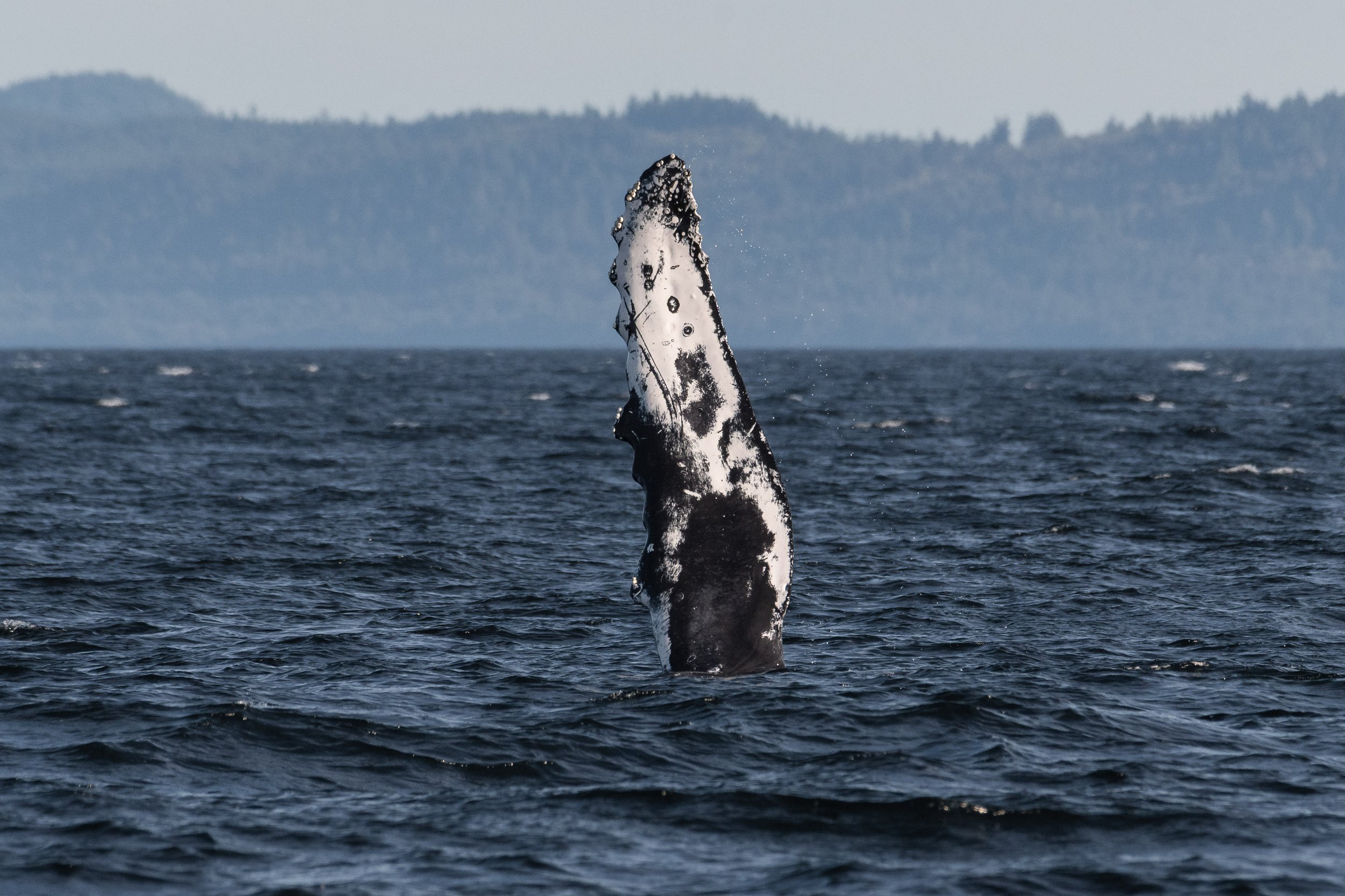
Another great look at BCX2316’s pectoral fin. Photo by Evan Hessels.

BCX2316 swimming on their back. Photo by Evan Hessels.

These pectoral fins are about 5 meters in length! Photo by Evan Hessels.

BCX2316 going for a dive. Photo by Evan Hessels.

Look at all the water being moved around by this pec! Photo by Evan Hessels.

BCX2316 slapping his pectoral fin around. Photo by Evan Hessels.
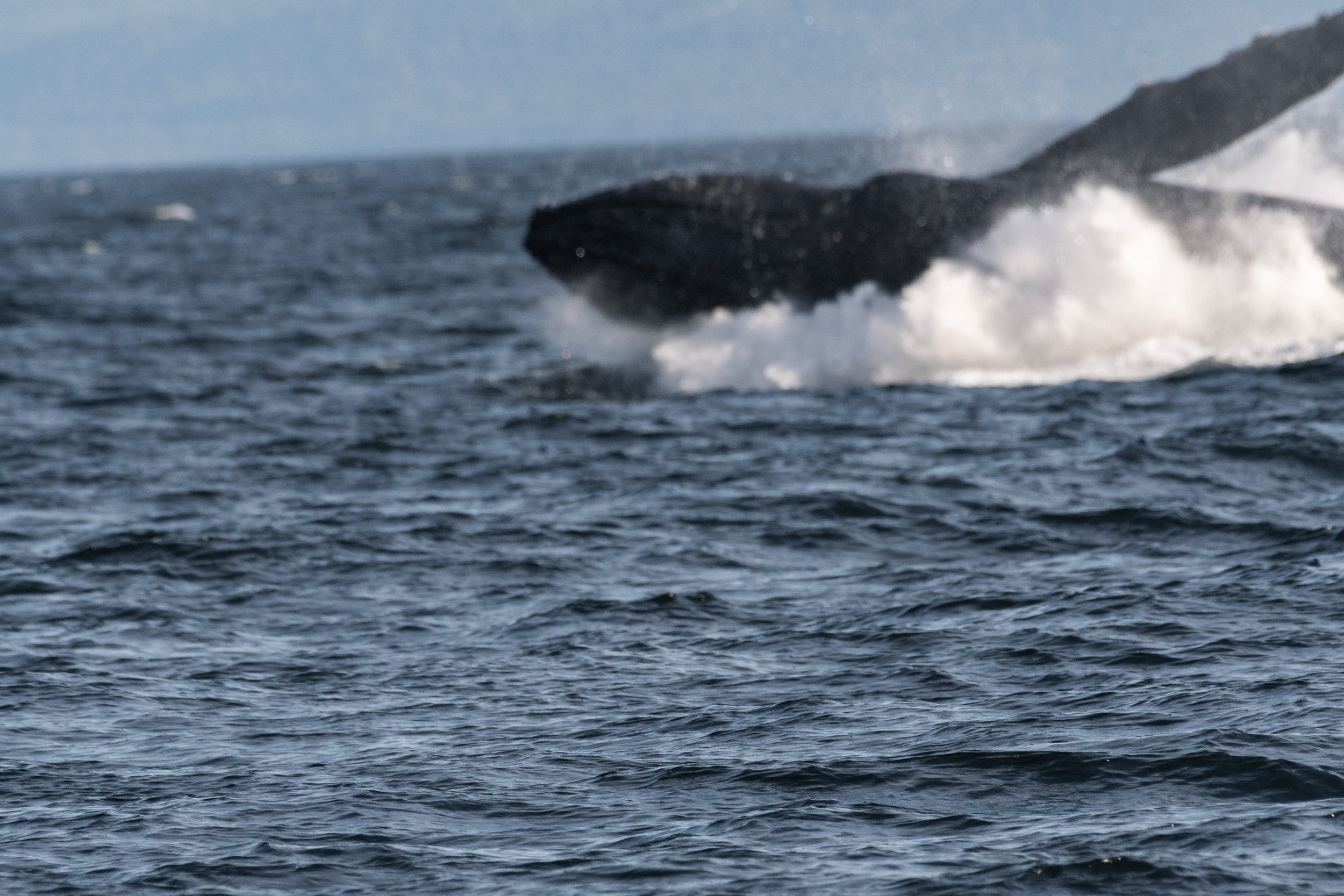
Although out of focus, this proves that they were also breaching! Photo by Evan Hessels.

Can you spot this humpbacks eye at the surface? Photo by Evan Hessels.

Just like their tails, pectoral fins have unique patterns. Photo by Evan Hessels.

BCX2316’s unique dorsal fin. Photo by Evan Hessels.

A common Murre flying by. Photo by Evan Hessels.

BCX2316 going for a dive. Photo by Evan Hessels.
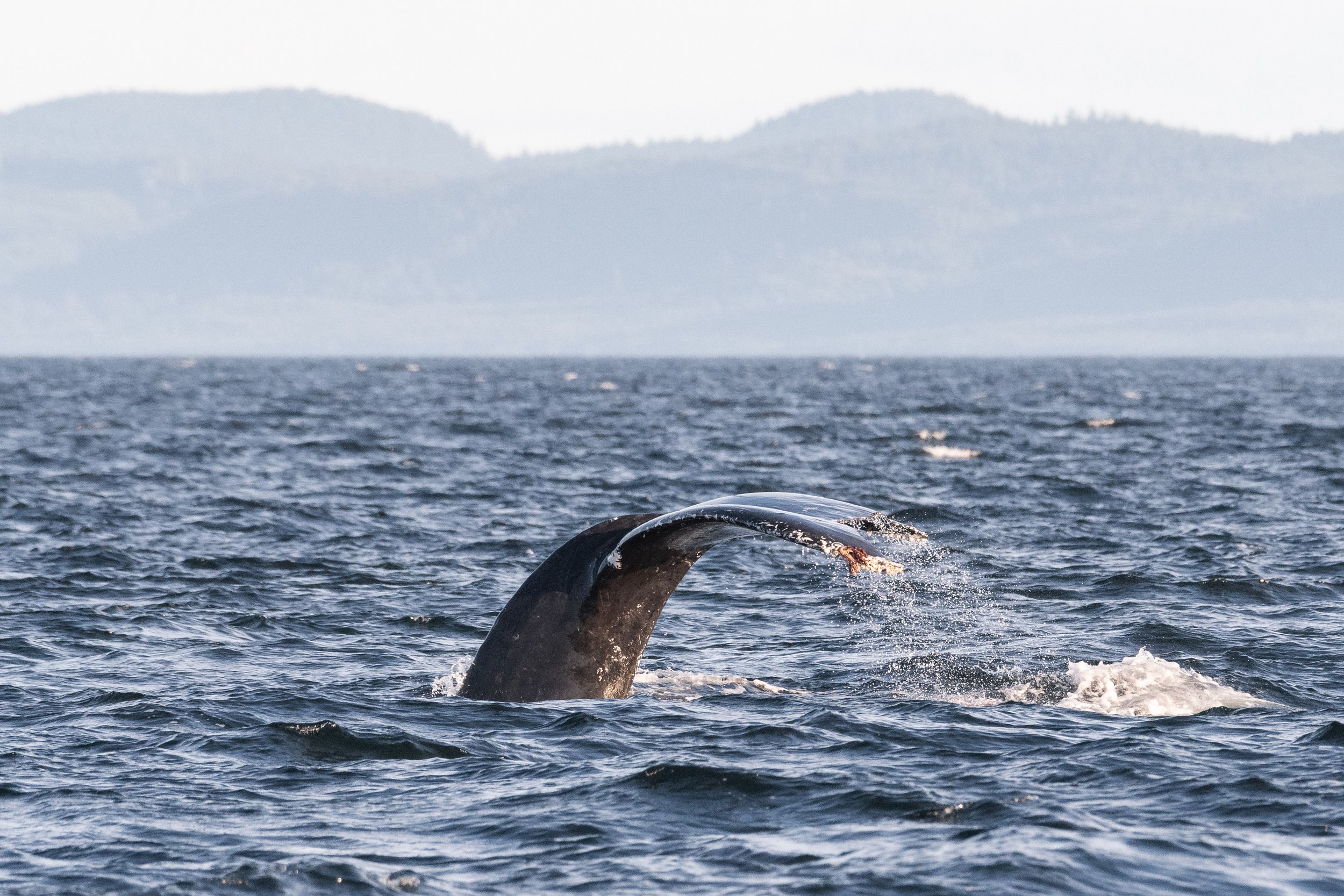
A lovely fluke waterfall from BCX2316. Photo by Evan Hessels.

Crater/Mensa going for a dive. Photo by Evan Hessels.

Harpy’s tail as she dives. Photo by Aly Kohlman.